SB 703: Employment: work hours: flexible work schedules.
- Session Year: 2023-2024
- House: Senate
- Latest Version Date: 2023-02-16
Current Status:
Failed
(2023-11-29: Returned to Secretary of Senate pursuant to Joint Rule 62(a).)
Introduced
In Committee
First Chamber
In Committee
Second Chamber
Enacted
Existing law, with certain exceptions, establishes 8 hours as a days work and a 40-hour workweek and requires payment of prescribed overtime compensation for additional hours worked. Existing law authorizes the adoption by 2/3 of employees in a work unit of alternative workweek schedules providing for workdays no longer than 10 hours within a 40-hour workweek.
This bill would enact the California Workplace Flexibility Act of 2023. The bill would permit an individual nonexempt employee to request an employee-selected flexible work schedule providing for workdays up to 10 hours per day within a 40-hour workweek and would allow the employer to implement this schedule without the obligation to pay overtime compensation for those additional hours in a workday. The bill would prescribe a method for calculating the payment of overtime for hours worked in excess of the permitted amounts and would establish requirements for termination of these agreements. The bill would except from its provisions employees covered by collective bargaining and public employees, as specified. The bill would require the Division of Labor Standards Enforcement in the Department of Industrial Relations to enforce this provision and adopt regulations.
This act shall be known and may be cited as the California Workplace Flexibility Act of 2023.
SEC. 2.Section 510 of the Labor Code is amended to read:510.(a)Eight hours of labor constitutes a days work. Any work in excess of eight hours in one workday and any work in excess of 40 hours in any one workweek and the first eight hours worked on the seventh day of work in any one workweek shall be compensated at the rate of no less than one and one-half times the regular rate of pay for an employee. Any work in excess of 12 hours in one day shall be compensated at the rate of no less than twice the regular rate of pay for an employee. In addition, any work in excess of eight hours on any seventh day of a workweek shall be compensated at the rate of no less than twice the regular rate of pay of an employee. Nothing in this section requires an employer to combine more than one rate of overtime compensation in order to calculate the amount to be paid to an employee for any hour of overtime work. The requirements of this section do not apply to the payment of overtime compensation to an employee working pursuant to any of the following:
(1)An alternative workweek schedule adopted pursuant to Section 511.
(2)An employee-selected flexible work schedule adopted pursuant to Section 511.5.
(2)(3)An alternative workweek schedule adopted pursuant to a collective bargaining agreement pursuant to Section 514.
(3)(4)An alternative workweek schedule to which this chapter is inapplicable pursuant to Section 554.
(b)Time spent commuting to and from the first place at which an employees presence is required by the employer shall not be considered to be a part of a days work, when the employee commutes in a vehicle that is owned, leased, or subsidized by the employer and is used for the purpose of ridesharing, as defined in Section 522 of the Vehicle Code.
(c)This section does not affect, change, or limit an employers liability under the workers compensation law.
SEC. 3.Section 511.5 is added to the Labor Code, to read:511.5.(a)Notwithstanding Section 511 or any other law or order of the Industrial Welfare Commission, an individual nonexempt employee may work up to 10 hours per workday without any obligation on the part of the employer to pay an overtime rate of compensation, except as provided in subdivision (b), if the employee requests this schedule in writing and the employer approves the request. This shall be referred to as an overtime exemption for an employee-selected flexible work schedule.
(b)If an employee-selected flexible work schedule is adopted pursuant to subdivision (a), the employer shall pay overtime at one and one-half times the employees regular rate of pay for all hours worked over 40 hours in a workweek or over 10 hours in a workday, whichever is the greater number of hours. All work performed in excess of 12 hours per workday and in excess of eight hours on a fifth, sixth, or seventh day in the workweek shall be paid at double the employees regular rate of pay.
(c)The employer may inform its employees that it is willing to consider an employee request to work an employee-selected flexible work schedule, but shall not induce a request by promising an employment benefit or threatening an employment detriment.
(d)The employee or employer may discontinue the employee-selected flexible work schedule at any time by giving written notice to the other party. The request will be effective the first day of the next pay period or the fifth day after notice is given if there are fewer than five days before the start of the next pay period, unless otherwise agreed to by the employer and the employee.
(e)This section does not apply to any employee covered by a valid collective bargaining agreement or employed by the state, a city, county, city and county, district, municipality, or other public, quasi-public, or municipal corporation, or any political subdivision of this state.
(f)This section shall be liberally construed to accomplish its purposes.
(g)(1)The Division of Labor Standards Enforcement shall enforce this section and shall adopt or revise regulations in a manner necessary to conform and implement this section.
(2)This section shall prevail over any inconsistent provisions in any wage order of the Industrial Welfare Commission.
|
Date
|
Status
|
|---|---|
| Nov 29, 2023 | Returned to Secretary of Senate pursuant to Joint Rule 62(a). |
| Apr 26, 2023 | April 26 set for first hearing. Failed passage in committee. (Ayes 1. Noes 4. Page 898.) |
| Apr 13, 2023 | Set for hearing April 26. |
| Mar 1, 2023 | Referred to Com. on L., P.E. & R. |
| Feb 17, 2023 | From printer. May be acted upon on or after March 19. |
| Feb 16, 2023 | Introduced. Read first time. To Com. on RLS. for assignment. To print. |
|
Date
|
Description
|
Location
|
Votes
|
|
|---|---|---|---|---|
| Apr 26, 2023 | Do pass, but first be re-referred to the Committee on [Appropriations] | Senate Standing Committee on Labor, Public Employment and Retirement |
Failed |
This list shows positions taken on this bill by organizations on the date displayed, which is linked to the original source.
Positions by individuals are not included.
|
Organization
|
Position
|
Date
|
|---|---|---|
| Murrieta Wildomar Chamber of Commerce | ** Support | |
| Acclamation Insurance Management Services | ** Support | |
| Allied Managed Care | ** Support | |
| Anaheim Chamber Of Commerce | ** Support | |
| Automotive Service Councils Of California | ** Support | |
| Building Owners and Managers Association | ** Support | |
| California Association For Health Services At Home | ** Support | |
| California Association Of Health Facilities | ** Support | |
| California Beer and Beverage Distributors | ** Support | |
| California Building Industry Association | ** Support | |
| California Business Properties Association | ** Support | |
| California Cattlemen'S Association | ** Support | |
| California Chamber Of Commerce | ** Support | |
| California Employment Lawyers Association | * Against | Apr 26, 2023 |
| California Farm Bureau Federation | * Support | Apr 26, 2023 |
| California Labor Federation | * Against | Apr 26, 2023 |
| California Landscape Contractor'S Association | ** Support | |
| California League Of Food Producers | * Support | Apr 26, 2023 |
| California Lodging Industry Association | ** Support | |
| California New Car Dealers Association | ** Support | |
| California Nurses Association | ** Against | |
| California Restaurant Association | ** Support | |
| California School Employees Association | * Against | Apr 26, 2023 |
| California State Council of Society of Human Resource Management | ** Support | |
| California Trucking Association | ** Support | |
| Carlsbad Chamber of Commerce | ** Support | |
| Chino Valley Chamber of Commerce | ** Support | |
| Citrus Heights Chamber of Commerce | ** Support | |
| Coalition of Small and Disabled Veteran Businesses | ** Support | |
| Commercial Real Estate Development Association, NAIOP of California | ** Support | |
| Danville Area Chamber of Commerce | ** Support | |
| Family Business Association Of California | * Support | Apr 26, 2023 |
| Flasher Barricade Association | ** Support | |
| Fresno Chamber of Commerce | ** Support | |
| Gilroy Chamber of Commerce | ** Support | |
| Greater High Desert Chamber of Commerce | ** Support | |
| Greater San Fernando Valley Chamber of Commerce | ** Support | |
| Green Global Resources | * Support | Apr 26, 2023 |
| Half Moon Bay Coastside Chamber of Commerce | ** Support | |
| Hollywood Chamber Of Commerce | * Support | Apr 26, 2023 |
| Independent Lodging Industry Association. | ** Support | |
| Industry Business Council | ** Support | |
| LA Canada Flintridge Chamber of Commerce | ** Support | |
| Laguna Nigel Chamber of Commerce | ** Support | |
| Lake Elsinore Valley Chamber of Commerce | ** Support | |
| Los Angeles Area Chamber Of Commerce | ** Support | |
| Mammoth Lakes Chamber of Commerce | ** Support | |
| Manteca Chamber of Commerce | ** Support | |
| Mariposa County Chamber of Commerce | ** Support | |
| Mission Viejo Chamber of Commerce | ** Support | |
| National Federation Of Independent Business | ** Support | |
| Oceanside Chamber of Commerce | ** Support | |
| Official Police Garage Association Of Los Angeles | ** Support | |
| Orange County Business Council | ** Support | |
| Pacific Grove Chamber of Commerce | ** Support | |
| Palos Verdes Peninsula Chamber Of Commerce | ** Support | |
| Plumbing-Heating-Cooling Contractors Association of California | ** Support | |
| Rancho Cordova Chamber of Commerce | * Support | Apr 26, 2023 |
| Roseville Area Chamber Of Commerce | ** Support | |
| Sacramento Metropolitan Chamber of Commerce | ** Support | |
| San Gabriel Valley Economic Partnership | ** Support | |
| San Rafael Chamber of Commerce | ** Support | |
| Santa Ana Chamber of Commerce | ** Support | |
| Santa Barbara South Coast Chamber of Commerce | ** Support | |
| Santa Clarita Valley Chamber of Commerce | ** Support | |
| Santa Maria Valley Chamber of Commerce | ** Support | |
| Santee Chamber of Commerce | ** Support | |
| Southwest California Legislative Council | ** Support | |
| Tri County Chamber Alliance | ** Support | |
| VALLEY INDUSTRY AND COMMERCE ASSOCIATION | ** Support | |
| West Ventura County Business Alliance | ** Support | |
| Western Electrical Contractors Association | ** Support | |
| Western United Diaries | ** Support |
SENATE COMMITTEE ON LABOR, PUBLIC EMPLOYMENT AND RETIREMENT
Senator Dave Cortese, Chair
2023 - 2024 Regular
Bill No: SB 703 Hearing Date: April 26, 2023
Author: | Niello | ||
Version: | February 16, 2023 | ||
Urgency: | No | Fiscal: | Yes |
Consultant: | Dawn Clover | ||
SUBJECT: Employment: work hours: flexible work schedules
KEY ISSUE
Should the Legislature exempt overtime laws applicable to private employers for employees to work a 10 hour per day/40 hour per week schedule?
ANALYSIS
Existing law:
- Provides that eight hours of labor constitutes a day’s work and requires an employer to compensate an employee at the rate of no less than one and one-half times the regular rate of pay for any work in excess of:
- Eight hours in one workday;
- Forty hours in any one workweek;
- The first eight hours worked on the seventh day of work in any one workweek.
- Eight hours in one workday;
(Labor Code §510)
- Requires an employer to compensate an employee at the rate of no less than twice the regular rate of pay of an employee for any work in excess of:
- Twelve hours in one day at the rate of no less than twice the regular rate of pay for an employee;
- Eight hours on any seventh day of a workweek. (Labor Code §510)
- Twelve hours in one day at the rate of no less than twice the regular rate of pay for an employee;
- Authorizes, upon the proposal of an employer, the employees of an employer may adopt a regularly scheduled alternative workweek that authorizes work by the affected employees for no longer than 10 hours per day within a 40-hour workweek without the payment to the affected employees of an overtime rate of compensation. (Labor Code §511)
- Does not apply overtime compensation to an employee covered by a valid collective bargaining agreement if the agreement expressly provides for the wages, hours of work, and working conditions of the employees, and if the agreement provides premium wage rates for all overtime hours worked and a regular hourly rate of pay for those employees of not less than 30 percent more than the state minimum wage. (Labor Code §514)
- Prohibits, as specified, a workweek longer than forty hours unless an employee receives compensation at a rate not less than one and one-half times the employee’s regular rate. (29 USC 207 (a))
This bill:
- Authorizes an individual nonexempt employee to request an employee-selected flexible work schedule providing for workdays up to ten hours per day within a 40-hour workweek, and would allow an employer to implement this schedule without the obligation to pay overtime compensation for those additional hours in a workday, with the following exceptions:
- The employer shall pay overtime at one and one-half times the employee’s regular rate of pay for all hours worked over 40 hours in a workweek or over 10 hours in a workday, whichever is the greater number of hours.
- All work performed in excess of 12 hours per workday and in excess of eight hours on a fifth, sixth, or seventh day in the workweek shall be paid at double the employee’s regular rate of pay.
- The employer shall pay overtime at one and one-half times the employee’s regular rate of pay for all hours worked over 40 hours in a workweek or over 10 hours in a workday, whichever is the greater number of hours.
- Provides that an employer may inform its employees that it is willing to consider an employee request to work an employee-selected flexible work schedule, but shall not induce a request by promising an employment benefit or threatening an employment detriment.
- Provides that either party may discontinue the employee-selected flexible work schedule at any time by giving written notice to the other party. The request would be effective the first day of the next pay period or the fifth day after notice is given if there are fewer than five days before the start of the next pay period, unless otherwise agreed to by the employer and the employee.
- Specifies the provisions of this bill would not apply to any employee covered by a valid collective bargaining agreement or employed by the state, a city, county, city and county, district, municipality, or other public, quasi-public, municipal corporation, or any political subdivision of the state.
- Requires the Division of Labor Standards Enforcement (DLSE) to enforce the provisions of this bill and adopt regulations.
- Specifies the provisions of this bill shall prevail over any inconsistent provisions in any wage order of the Industrial Welfare Commission (IWC).
COMMENTS
1. Background
The Eight Hour Workday and 40 Hour Workweek
The IWC was established by the Legislature in 1913 to regulate minimum wages, maximum hours of work, and standards for working conditions for women and minors. In 1916, the IWC issued its first wage order, setting the minimum wage rate at 16 cents per hour for the fruit and vegetable canning industry, with pay of one and a quarter times the normal rate after ten hours, a limit of 72 hours per week, and improved sanitary conditions. A few years later the IWC reduced the maximum hours to eight hours a day and 48 hours a week. By the sixties, the IWC faced ongoing legal challenges to its orders, especially over the issue of regulations only for women. In 1973, the Legislature extended the IWC’s powers to include all employees. During the eighties and nineties the IWC faced conflicting issues over standard work weeks and daily overtime. In 1997, after the IWC changed the order requiring overtime pay after eight hours in a day to overtime after 40 hours in one week, the Legislature revoked its funding.
In 1999, the legislature passed and Governor Davis signed AB 60 (Knox - Chapter 134, Statutes of 1999), which established a framework for the payment of daily overtime compensation. That framework included time and a half pay after eight hours of work per day, personal time off for a personal obligation of an employee which may be made up during a workweek without payment of overtime compensation, and the adoption through an employee election of an alternative work week schedule or menu of schedules offered by an employer. That year, the Governor reinstated the IWC, which remained in operation until July 2004, when its funding was again eliminated from the state budget. Though the IWC is currently not in operation, the DLSE continues to enforce the provisions of the wages orders issued by the IWC.
Flexible Work Schedules Already Authorized
AB 60 included provisions for flexible work schedules, providing for the adoption of alternative workweek schedules following an employee election. The alternative workweek schedule authorizes employees to work no more than ten hours per day within a 40 hour workweek without receiving overtime. Such an alternative schedule must be adopted in a secret ballot election by at least two-thirds of the affected employees. Labor Code Section 511(a) also provides that, "The regularly scheduled alternative workweek proposed by an employer for adoption by employees may be a single work schedule that would become the standard schedule for workers in the work unit, or a menu of work schedule options, from which each employee in the unit would be entitled to choose." Additionally, AB 60 allowed employees to take off time for a personal obligation and make up that time during the same workweek without overtime. Labor Code Section 513 provides that, if an employer approves a written request, an employee may makeup work time during the same workweek without incurring daily overtime, except for hours in excess of 11 in one workday.
Section 3(C)(1) of the IWC orders, enforced by DLSE, state "If the employer proposes a menu of work schedule options, the employee may, with the approval of the employer, move from one menu option to another." Section 3(B)(1) of the orders provide that, "Nothing in this section shall prohibit an employer, at the request of the employee, from substituting one day of work for another day of the same length in the shift provided by the alternative workweek agreement on an occasional basis to meet the personal needs of the employee without the payment of overtime." Section 3(C)(2) of the orders also provide that the term "affected employees in the work unit" may include all employees in a readily identifiable work unit, such as a division, a department, a job classification, a shift, a separate physical location, or a recognized subdivision of any such work unit. A work unit may consist of an individual employee as long as the criteria for an identifiable work unit are met.
Recent Movement Around the 40 Hour Workweek
In 2015 and 2016, Iceland shifted approximately 2,500 municipal employees to 35 or 36 hour workweeks without a reduction in pay. A subsequent report[1] found that employee and manager physical and mental well-being improved while productivity both maintained and increased. As a result of this trial, 86 percent of Iceland’s workforce has now either moved to working shorter hours or have had new mechanisms made available to them through which they can negotiate shorter hours in their workplace.
A 2022 trial in the UK involving 61 companies from diverse sectors and sizes had similar results. The report[2] found that workers’ stress decreased on average, and most workers found it easier to balance work and caregiving commitments. The employers also realized benefits with the decreased rate of workers quitting during the trial and revenues generally remaining steady and increasing by 1.4 percent on average. By the end of the seven month trial, 92 percent of the companies said they would continue the policy, and 18 percent decided to make a permanent change.
2. Need for this bill?
According to the author, “Employees are seeking more flexibility and alternative work schedules as both families and businesses seek a return to normal from Covid-19 impacts on our day to day lives. Workflex (the policy or ability to work four 10 hour days in lieu of five 8 hour days) is being requested more and more by today’s employees but California’s existing law makes is onerous to do so.
Existing law allows for state employees to have a variety of flexible work schedules, including the “4/10/40” in which the employee works four 10 hour shifts with one scheduled day off per week per the state’s human resource manual (Calhr).
Current law, however, requires non-exempt employees to be paid overtime in the private sector once they exceed 8 hours of work in a day. Non-exempt employees are workers who must be paid on a wage and hourly basis because their job duties do not fall within an overtime exemption. While there is an existing process for some flexibility, it is onerous and burdensome, requiring an election of all employees when it may be only a singular employee wishing for an alternate workweek. Furthermore, it is generally employer-not employee- initiated, while SB 703 streamlines a process that is beneficial to an individual employee and employer.
SB 703, The Workplace Flexibility Act, seeks to empower individuals who want more flexibility in their schedule by allowing a non-exempt employee to request a flexible work schedule with workdays of up to 10 hours per day within a 40-hour workweek, in lieu of overtime compensation for the two additional hours worked each day.
This proposal would also result in both traffic and environmental benefits for our state by reducing commuters on the road. It can also promote parent involvement in their children’s lives by allowing employees the opportunity to meet their work and life responsibilities and needs. Furthermore, it provides parity with existing law that allows public employees throughout our state this type of flexibility.”
2. Proponent Arguments:
According the a coalition letter, “California is one of the only states that requires employers to pay daily overtime after eight hours of work in addition to weekly overtime after 40 hours of work. Even other states that impose daily overtime requirements allow the employer and employee to essentially waive the daily eight-hour overtime requirement through a written agreement. California, however, provides no such common-sense alternative. Rather, California requires employers to navigate through a multi-step process to have employees elect an alternative workweek schedule that, once adopted, must be “regularly” scheduled. This process is filled with potential traps that could lead to costly litigation, as one misstep may render the entire alternative workweek schedule invalid and leave the employer on the hook for claims of unpaid overtime wages.
Currently, there are 44,837 reported alternative workweek schedules with the Division of Labor Standards Enforcement. According to the Employment Development Department, California has about 1.6 million employers. Therefore, about less than 3% of California employers utilize the alternative workweek schedule option. Further, more realistically, given that the information in the database is according to work unit instead of employer, it is likely that less than 1% of employers in California are utilizing this process.
Employees want flexibility in their work schedules. In a recent poll conducted by the California Chamber of Commerce, 88% of voters agreed (49% of them strongly) that the state’s overtime laws should be changed to make it easier for employees to work alternative schedules, such as four 10-hour days. A survey by the Society for Human Resource Management revealed that 91% of Human Resources professionals agree that flexible work arrangements positively influence employee engagement, job satisfaction, and retention. According to Corporate Voices for Working Families and WFD Consulting, an in-depth study of five organizations that allow their non-exempt employees to have flexibility in their schedules found that employee commitment was 55% higher and burnout and stress decreased by 57%.”
3. Opponent Arguments:
California Labor Federation states “The eight-hour day was established in California in 1868. This right was won through the struggle and strikes of working people demanding “8 hours for work, 8 hours for rest, 8 hours for what we will.” Essentially it was about ensuring that the working class was not forced to toil their lives away without adequate rest or the opportunity to enjoy life.
This right remained on the books until then Governor Pete Wilson used the Industrial Welfare Commission to roll back daily overtime in 1997. After Gray Davis was elected, the Legislature restored the eight-hour day in AB 60 (Knox, 1999). AB 60 also provided additional forms of flexibility without compromising the essential protection of daily overtime.
Under existing law, there are numerous ways for employers to adopt alternate schedules and for workers to have flexibility. Any employer can schedule an alternate workweek election to allow the workers to vote to adopt an alternate schedule in lieu if the eight-hour day. This requires a two-thirds majority, but employers control every aspect of the election to make it easier to reach this threshold. They can determine which unit of workers can participate, which shifts to offer, and the number of workers per shift. They can even offer a menu of schedules to accommodate both business needs and worker obligations. As a result, tens of thousands of employers have successfully adopted these schedules. An alternate schedule can also be adopted pursuant to a collective bargaining agreement.
In addition to modified schedules, there is also a provision to accommodate a short-term need for flexibility. The Labor Code currently allows workers to request make-up time, meaning they leave early one day and work late the next without accruing overtime.
There is no conflict between preserving the sanctity of the eight-hour day and allowing for flexibility. Current law strikes that balance. This bill would instead make daily overtime waivable by an individual. The Labor Code disfavors individual waivers of rights due to the power imbalance at the workplace where workers can easily feel pressured to give up core protections like overtime pay to keep their job. That is why current law provides for an election process to protect workers from coercion to give up hard-won rights.
The eight-hour day remains one of the most important protections workers have won. It allows workers to go home to their families at the end of the day or to be paid a premium for missing that family time. It supports worker health and safety. It spreads work around by limiting how much any single individual can do, thereby creating jobs.
The proponents for this bill will claim it is about limiting cars on the road, reducing greenhouse gases, or allowing workers to commute less. All of those can be easily achieved through existing law by moving start and end times to avoid rush hour, adopting a menu of alternate scheduling options, or allowing remote work. None require workers to sacrifice the eight-hour day.”
4. Prior Legislation:
SB 276 (Seyarto, 2023) would apply California labor law regulating overtime compensation to an individual currently employed by the Legislature. This bill will be heard in the Senate Committee on Labor, Public Employment and Retirement on May 26, 2023.
AB 2482 (Voepel, 2018) was substantively similar to this bill. The bill failed passage in the Assembly Committee on Labor and Employment.
AB 1173 (Harper) of 2017 would have established an overtime exemption for an employee-selected holiday season flexible work schedule. This bill failed passage in the Assembly Committee on Labor and Employment.
AB 1038 (Jones) of 2015 was substantively similar to this bill. The bill failed passage in the Assembly Committee on Labor and Employment.
AB 2448 (Jones) of 2014 was substantively similar to this bill. The bill failed passage in the Assembly Committee on Labor and Employment.
AB 907 (Conway) of 2014 was substantively similar to this bill. The bill failed passage in the Assembly Committee on Labor and Employment.
SB 607 (Berryhill) of 2013 was substantively similar to this bill. The bill failed passage in the Senate Committee on Labor and Industrial Relations.
AB 830 (Olsen) of 2011 was substantively similar to this bill. The bill failed passage in the Assembly Committee on Labor and Employment.
AB 60 (Knox – Chapter 134, Statutes of 1999) establishes a comprehensive framework for the payment of daily overtime compensation: 1) time and one-half pay after eight hours of daily work; 2) personal time off for a personal obligation of an employee which may be made up during a workweek without payment of overtime compensation within specified limits; and, 3) the adoption through an employee election of an alternative work week schedule or menu of schedules offered by an employer.
SUPPORT
Acclamation Insurance Management Services
Allied Managed Care
Anaheim Chamber of Commerce
Automotive Service Councils of California
Building Owners and Managers Association
California Association for Health Services At Home
California Association of Health Facilities
California Beer and Beverage Distributors
California Building Industry Association
California Business Properties Association
California Cattlemen's Association
California Chamber of Commerce
California Farm Bureau
California Landscape Contractor's Association
California League of Food Producers
California Lodging Industry Association
California New Car Dealers Association
California Restaurant Association
California State Council of Society of Human Resource Management
California Trucking Association
Carlsbad Chamber of Commerce
Chino Valley Chamber of Commerce
Citrus Heights Chamber of Commerce
Coalition of Small and Disabled Veteran Businesses
Commercial Real Estate Development Association, Naiop of California
Danville Area Chamber of Commerce
Family Business Association
Flasher Barricade Association
Fresno Chamber of Commerce
Gilroy Chamber of Commerce
Greater High Desert Chamber of Commerce
Greater San Fernando Valley Chamber of Commerce
Half Moon Bay Coastside Chamber of Commerce
Hollywood Chamber of Commerce
Independent Lodging Industry Association.
Industry Business Council
LA Canada Flintridge Chamber of Commerce
Laguna Niguel Chamber of Commerce
Lake Elsinore Valley Chamber of Commerce
Los Angeles Area Chamber of Commerce
Mammoth Lakes Chamber of Commerce
Manteca Chamber of Commerce
Mariposa County Chamber of Commerce
Mission Viejo Chamber of Commerce
Murrieta Wildomar Chamber of Commerce
National Federation of Independent Business
Oceanside Chamber of Commerce
Official Police Garage Association of Los Angeles
Orange County Business Council
Pacific Grove Chamber of Commerce
Palos Verdes Peninsula Chamber of Commerce
Plumbing-heating-cooling Contractors Association of California
Rancho Cordova Area Chamber of Commerce
Roseville Area Chamber of Commerce
Sacramento Metropolitan Chamber of Commerce
San Gabriel Valley Economic Partnership
San Rafael Chamber of Commerce
Santa Ana Chamber of Commerce
Santa Barbara South Coast Chamber of Commerce
Santa Clarita Valley Chamber of Commerce
Santa Maria Valley Chamber of Commerce
Santee Chamber of Commerce
Southwest California Legislative Council
Tri County Chamber Alliance
Valley Industry and Commerce Association (VICA)
West Ventura County Business Alliance
Western Electrical Contractors Association
Western United Diaries
OPPOSITION
California Labor Federation
California Nurses Association
California School Employees Association
-- END --
Discussed in Hearing
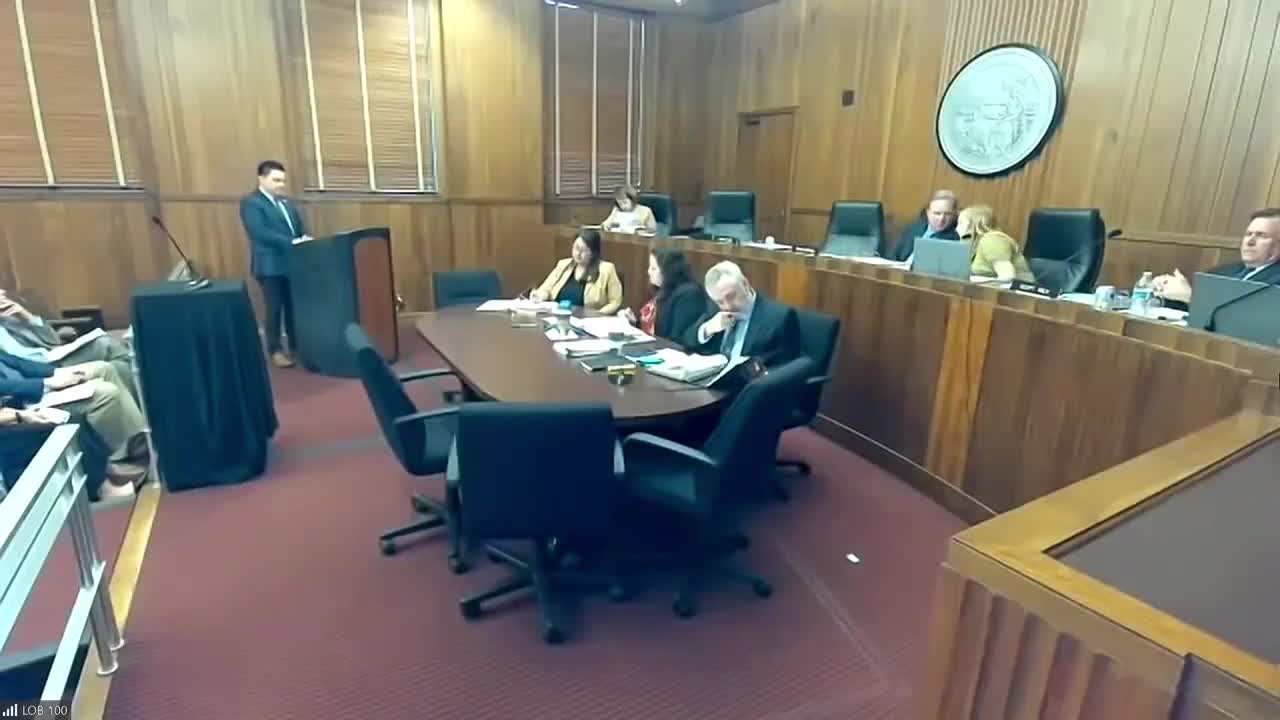 20MIN
Senate Standing Committee on Labor, Public Employment and Retirement
Bill Author

Bill Co-Author(s):
