SB 758: Firearms.
- Session Year: 2023-2024
- House: Senate
- Latest Version Date: 2024-09-24
Current Status:
Passed
(2024-09-24: Chaptered by Secretary of State. Chapter 543, Statutes of 2024.)
Introduced
In Committee
First Chamber
In Committee
Second Chamber
Enacted
What does this bill do?
The bill makes it a crime for a person, company, or gun dealer to bring or acquire a firearm in California if they intend to sell, loan, or transfer it in ways that avoid required transfer rules or to give it to a minor. It also makes certain illegal transfers involving centerfire semiautomatic rifles—such as selling to a minor or transferring without required dealer safeguards—punishable as a felony (a more serious crime) in the same situations where that already applies to handguns.
The summary is provided by generative AI which can make mistakes. For original language, please view the details in the table below.
(1)Existing law makes it a crime to acquire a firearm with the intent to transfer the firearm to a minor or to evade specified requirements on the transfer of firearms.
This bill would expand that crime to apply to firearms brought into the state with that intent. By expanding the definition of a crime, this bill would impose a state-mandated local program.
(2)Existing law generally makes the violation of laws relating to the illegal transfer of a firearm a misdemeanor, except that the illegal transfer of a handgun to a minor or the illegal transfer of a handgun without conducting the transaction through a firearms dealer may be punished as a felony. Existing law also allows a dealer transaction involving a handgun to be punished as a felony if the dealer delivers the handgun sooner than 10 days from the date of purchase, is not presented with clear evidence of the transferees identity and age, transfers the firearm after being notified that the transferee is prohibited from possessing a firearm, transfers a handgun to a person who does not present a handgun safety certificate, or delivers a handgun to a person who has made another application to purchase a handgun within the preceding 30 days.
This bill would allow those illegal firearms transactions to be prosecuted as felonies if they involve a centerfire semiautomatic rifle. By increasing the punishment for a crime, this bill would impose a state-mandated local program.
(3)The California Constitution requires the state to reimburse local agencies and school districts for certain costs mandated by the state. Statutory provisions establish procedures for making that reimbursement.
This bill would provide that no reimbursement is required by this act for a specified reason.
(1)Existing law makes it a crime to acquire a firearm with the intent to transfer the firearm to a minor or to evade specified requirements on the transfer of firearms.
This bill would expand that crime to apply to firearms brought into the state with that intent. By expanding the definition of a crime, this bill would impose a state-mandated local program.
(3)(2)Existing law generally makes the violation of laws relating to the illegal transfer of a firearm a misdemeanor, except that the illegal transfer of a handgun to a minor or the illegal transfer of a handgun without conducting the transaction through a firearms dealer may be punished as a felony. Existing law also allows a dealer transaction involving a handgun to be punished as a felony if the dealer delivers the handgun sooner than 10 days from the date of purchase, is not presented with clear evidence of the transferees identity and age, transfers the firearm after being notified that the transferee is prohibited from possessing a firearm, transfers a handgun to a person who does not present a handgun safety certificate, or delivers a handgun to a person who has made another application to purchase a handgun within the preceding 30 days.
This bill would allow those illegal firearms transactions to be prosecuted as felonies if they involve a centerfire semiautomatic rifle. By increasing the punishment for a crime, this bill would impose a state-mandated local program.
(4)(3)The California Constitution requires the state to reimburse local agencies and school districts for certain costs mandated by the state. Statutory provisions establish procedures for making that reimbursement.
This bill would provide that no reimbursement is required by this act for a specified reason.
(1)Existing law requires the Secretary of Food and Agriculture to maintain plant quarantine inspection stations. Existing law requires that a sign be conspicuously posted at an inspection station maintained at or near the California border stating that the federal Gun Control Act of 1968 may prohibit persons from bringing firearms into the state that were acquired outside of the state.
This bill would require that these inspection station signs also state, among other things, that California law may prohibit a person from bringing a firearm into the state that was acquired outside of the state. The bill would also require the signs to include a specified internet website address.
(2)Existing law, subject to exceptions, requires a firearm transaction to be conducted by a licensed firearms dealer. Existing law establishes requirements that dealers must adhere to in conducting firearms transactions and when delivering firearms, including, among others, a 10-day waiting period, purchaser background check, and possession of a handgun safety certificate by the purchaser. This bill would make it a crime for a person to purchase or receive a firearm from a dealer, knowing or having reasonable cause to believe that the delivery of that firearm by that dealer to that person violates specified provisions regulating the delivery of a firearm by a dealer. (3)(2)Existing law makes it a crime to acquire a firearm with the intent to transfer the firearm to a minor or to evade specified requirements on the transfer of firearms.
This bill would expand that crime to apply to firearms brought into the state with that intent. By expanding the definition of a crime, this bill would impose a state-mandated local program.
(4)(3)Existing law generally makes the violation of laws relating to the illegal transfer of a firearm a misdemeanor, except that the illegal transfer of a handgun to a minor or the illegal transfer of a handgun without conducting the transaction through a firearms dealer may be punished as a felony. Existing law also allows a dealer transaction involving a handgun to be punished as a felony if the dealer delivers the handgun sooner than 10 days from the date of purchase, is not presented with clear evidence of the transferees identity and age, transfers the firearm after being notified that the transferee is prohibited from possessing a firearm, transfers a handgun to a person who does not present a handgun safety certificate, or delivers a handgun to a person who has made another application to purchase a handgun within the preceding 30 days.
This bill would allow those illegal firearms transactions to be prosecuted as felonies if they involve a centerfire semiautomatic rifle. By increasing the punishment for a crime, this bill would impose a state-mandated local program.
(5)(4)The California Constitution requires the state to reimburse local agencies and school districts for certain costs mandated by the state. Statutory provisions establish procedures for making that reimbursement.
This bill would provide that no reimbursement is required by this act for a specified reason.
(1)Existing law requires the Secretary of Food and Agriculture to maintain plant quarantine inspection stations. Existing law requires that a sign be conspicuously posted at an inspection station maintained at or near the California border stating that the federal Gun Control Act of 1968 may prohibit persons from bringing firearms into the state that were acquired outside of the state.
This bill would require that these inspection station signs also state, among other things, that California law may prohibit a person from bringing a firearm into the state that was acquired outside of the state. The bill would also require the signs to include a specified internet website address.
(2)Existing law, subject to exceptions, requires a firearm transaction to be conducted by a licensed firearms dealer. Existing law establishes requirements that dealers must adhere to in conducting firearms transactions and when delivering firearms, including, among others, a 10-day waiting period, purchaser background check, and possession of a handgun safety certificate by the purchaser.
This bill would make it a crime for a person to purchase or receive a firearm from a dealer, knowing or having reasonable cause to believe that the delivery of that firearm by that dealer to that person violates specified provisions regulating the delivery of a firearm by a dealer.
(3)Existing law makes it a crime to acquire a firearm with the intent to transfer the firearm to a minor or to evade specified requirements on the transfer of firearms.
This bill would expand that crime to apply to firearms brought into the state with that intent. By expanding the definition of a crime, this bill would impose a state-mandated local program.
(4)Existing law generally makes the violation of laws relating to the illegal transfer of a firearm a misdemeanor, except that the illegal transfer of a handgun to a minor or the illegal transfer of a handgun without conducting the transaction through a firearms dealer may be punished as a felony. Existing law also allows a dealer transaction involving a handgun to be punished as a felony if the dealer delivers the handgun sooner than 10 days from the date of purchase, is not presented with clear evidence of the transferees identity and age, transfers the firearm after being notified that the transferee is prohibited from possessing a firearm, transfers a handgun to a person who does not present a handgun safety certificate, or delivers a handgun to a person who has made another application to purchase a handgun within the preceding 30 days.
This bill would allow those illegal firearms transactions to be prosecuted as felonies if they involve a centerfire semiautomatic rifle. By increasing the punishment for a crime, this bill would impose a state-mandated local program.
(5)The California Constitution requires the state to reimburse local agencies and school districts for certain costs mandated by the state. Statutory provisions establish procedures for making that reimbursement.
This bill would provide that no reimbursement is required by this act for a specified reason.
(a)A person, corporation, or dealer shall not acquire within this state or bring into this state a firearm for the purpose of selling, loaning, or transferring the firearm, if the person, corporation, or dealer has either of the following:
(1)In the case of a dealer, intent to violate Section 27510 or 27540.
(2)In any other case, intent to avoid either of the following:
(A)The provisions of Section 27545.
(B)The requirements of any exemption to the provisions of Section 27545.
(b)The provisions of this section are cumulative and shall not be construed as restricting the application of any other law. However, an act or omission punishable in different ways by different provisions of this code shall not be punished under more than one provision.
SEC. 2.Section 27590 of the Penal Code is amended to read:27590.(a)Except as provided in subdivision (b), (c), or (e), a violation of this article is a misdemeanor.
(b)If any of the following circumstances apply, a violation of this article is punishable by imprisonment pursuant to subdivision (h) of Section 1170 for two, three, or four years:
(1)If the violation is of subdivision (a) of Section 27500.
(2)If the defendant has a prior conviction of violating the provisions, other than Section 27535, Section 27560 involving a firearm that is not a handgun, or Section 27565 involving a firearm that is not a handgun, of this article or former Section 12100 of this code, as Section 12100 read at any time from when it was enacted by Section 3 of Chapter 1386 of the Statutes of 1988 to when it was repealed by Section 18 of Chapter 23 of the Statutes of 1994, or Section 8101 of the Welfare and Institutions Code.
(3)If the defendant has a prior conviction of violating any offense specified in Section 29905 or of a violation of Section 32625 or 33410, or of former Section 12560, as that section read at any time from when it was enacted by Section 4 of Chapter 931 of the Statutes of 1965 to when it was repealed by Section 14 of Chapter 9 of the Statutes of 1990, or of any provision listed in Section 16590.
(4)If the defendant is in a prohibited class described in Chapter 2 (commencing with Section 29800) or Chapter 3 (commencing with Section 29900) of Division 9 of this title, or Section 8100 or 8103 of the Welfare and Institutions Code.
(5)A violation of this article by a person who actively participates in a criminal street gang as defined in Section 186.22.
(6)A violation of Section 27510 involving the delivery of any firearm to a person who the dealer knows, or should know, is a minor.
(c)If any of the following circumstances apply, a violation of this article shall be punished by imprisonment in a county jail not exceeding one year or pursuant to subdivision (h) of Section 1170, or by a fine not to exceed one thousand dollars ($1,000), or by both that fine and imprisonment:
(1)A violation of Section 27515, 27520, or subdivision (b) of Section 27500.
(2)A violation of Section 27505 involving the sale, loan, or transfer of a handgun or a centerfire semiautomatic rifle to a minor.
(3)A violation of Section 27510 involving the delivery of a handgun or a centerfire semiautomatic rifle.
(4)A violation of subdivision (a), (c), (d), (e), or (f) of Section 27540 involving a handgun or a centerfire semiautomatic rifle.
(5)A violation of Section 27545 involving a handgun or a centerfire semiautomatic rifle.
(6)A violation of Section 27550.
(7)A violation of Section 27585 involving a handgun or a centerfire semiautomatic rifle.
(d)If both of the following circumstances apply, an additional term of imprisonment pursuant to subdivision (h) of Section 1170 for one, two, or three years shall be imposed in addition and consecutive to the sentence prescribed:
(1)A violation of Section 27510 or subdivision (b) of Section 27500.
(2)The firearm transferred in violation of Section 27510 or subdivision (b) of Section 27500 is used in the subsequent commission of a felony for which a conviction is obtained and the prescribed sentence is imposed.
(e)(1)A first violation of Section 27535 is an infraction punishable by a fine of fifty dollars ($50).
(2)A second violation of Section 27535 is an infraction punishable by a fine of one hundred dollars ($100).
(3)A third or subsequent violation of Section 27535 is a misdemeanor.
(4)For purposes of this subdivision, each application to purchase a handgun or semiautomatic centerfire rifle in violation of Section 27535 is a separate offense.
SEC. 3.No reimbursement is required by this act pursuant to Section 6 of Article XIIIB of the California Constitution because the only costs that may be incurred by a local agency or school district will be incurred because this act creates a new crime or infraction, eliminates a crime or infraction, or changes the penalty for a crime or infraction, within the meaning of Section 17556 of the Government Code, or changes the definition of a crime within the meaning of Section 6 of Article XIIIB of the California Constitution.
(a)A person, corporation, or dealer shall not acquire within this state or bring into this state a firearm for the purpose of selling, loaning, or transferring the firearm, if the person, corporation, or dealer has either of the following:
(1)In the case of a dealer, intent to violate Section 27510 or 27540.
(2)In any other case, intent to avoid either of the following:
(A)The provisions of Section 27545.
(B)The requirements of any exemption to the provisions of Section 27545.
(b)The provisions of this section are cumulative and shall not be construed as restricting the application of any other law. However, an act or omission punishable in different ways by different provisions of this code shall not be punished under more than one provision.
SEC. 3.SEC. 2.Section 27590 of the Penal Code is amended to read:27590.(a)Except as provided in subdivision (b), (c), or (e), a violation of this article is a misdemeanor.
(b)If any of the following circumstances apply, a violation of this article is punishable by imprisonment pursuant to subdivision (h) of Section 1170 for two, three, or four years:
(1)If the violation is of subdivision (a) of Section 27500.
(2)If the defendant has a prior conviction of violating the provisions, other than Section 27535, Section 27560 involving a firearm that is not a handgun, or Section 27565 involving a firearm that is not a handgun, of this article or former Section 12100 of this code, as Section 12100 read at any time from when it was enacted by Section 3 of Chapter 1386 of the Statutes of 1988 to when it was repealed by Section 18 of Chapter 23 of the Statutes of 1994, or Section 8101 of the Welfare and Institutions Code.
(3)If the defendant has a prior conviction of violating any offense specified in Section 29905 or of a violation of Section 32625 or 33410, or of former Section 12560, as that section read at any time from when it was enacted by Section 4 of Chapter 931 of the Statutes of 1965 to when it was repealed by Section 14 of Chapter 9 of the Statutes of 1990, or of any provision listed in Section 16590.
(4)If the defendant is in a prohibited class described in Chapter 2 (commencing with Section 29800) or Chapter 3 (commencing with Section 29900) of Division 9 of this title, or Section 8100 or 8103 of the Welfare and Institutions Code.
(5)A violation of this article by a person who actively participates in a criminal street gang as defined in Section 186.22.
(6)A violation of Section 27510 involving the delivery of any firearm to a person who the dealer knows, or should know, is a minor.
(c)If any of the following circumstances apply, a violation of this article shall be punished by imprisonment in a county jail not exceeding one year or pursuant to subdivision (h) of Section 1170, or by a fine not to exceed one thousand dollars ($1,000), or by both that fine and imprisonment:
(1)A violation of Section 27515, 27520, or subdivision (b) of Section 27500.
(2)A violation of Section 27505 involving the sale, loan, or transfer of a handgun or a centerfire semiautomatic rifle to a minor.
(3)A violation of Section 27510 involving the delivery of a handgun or a centerfire semiautomatic rifle.
(4)A violation of subdivision (a), (c), (d), (e), or (f) of Section 27540 involving a handgun or a centerfire semiautomatic rifle.
(5)A violation of Section 27545 involving a handgun or a centerfire semiautomatic rifle.
(6)A violation of Section 27550.
(7)A violation of Section 27585 involving a handgun or a centerfire semiautomatic rifle.
(d)If both of the following circumstances apply, an additional term of imprisonment pursuant to subdivision (h) of Section 1170 for one, two, or three years shall be imposed in addition and consecutive to the sentence prescribed:
(1)A violation of Section 27510 or subdivision (b) of Section 27500.
(2)The firearm transferred in violation of Section 27510 or subdivision (b) of Section 27500 is used in the subsequent commission of a felony for which a conviction is obtained and the prescribed sentence is imposed.
(e)(1)A first violation of Section 27535 is an infraction punishable by a fine of fifty dollars ($50).
(2)A second violation of Section 27535 is an infraction punishable by a fine of one hundred dollars ($100).
(3)A third or subsequent violation of Section 27535 is a misdemeanor.
(4)For purposes of this subdivision, each application to purchase a handgun or semiautomatic centerfire rifle in violation of Section 27535 is a separate offense.
SEC. 4.SEC. 3.No reimbursement is required by this act pursuant to Section 6 of Article XIIIB of the California Constitution because the only costs that may be incurred by a local agency or school district will be incurred because this act creates a new crime or infraction, eliminates a crime or infraction, or changes the penalty for a crime or infraction, within the meaning of Section 17556 of the Government Code, or changes the definition of a crime within the meaning of Section 6 of Article XIIIB of the California Constitution.
At any inspection station maintained at or near the California border by the director pursuant to Section 5341, the following sign shall be conspicuously posted in block letters not less than four inches in height:
NOTICE: IF YOU ARE A CALIFORNIA RESIDENT, CALIFORNIA LAW AND THE FEDERAL GUN CONTROL ACT MAY PROHIBIT YOU FROM BRINGING WITH YOU INTO THIS STATE FIREARMS THAT YOU ACQUIRED OUTSIDE OF THIS STATE AND MANDATE THAT SPECIFIC PROCEDURES BE FOLLOWED.
IN ADDITION, IF YOU ARE A NEW CALIFORNIA RESIDENT, STATE LAW REGULATES YOUR BRINGING INTO CALIFORNIA FIREARMS AND MANDATES THAT SPECIFIC PROCEDURES BE FOLLOWED.
IF YOU HAVE ANY QUESTIONS ABOUT THE PROCEDURES TO BE FOLLOWED IN BRINGING FIREARMS INTO CALIFORNIA OR TRANSFERRING FIREARMS WITHIN CALIFORNIA, YOU SHOULD CONTACT THE CALIFORNIA DEPARTMENT OF JUSTICE OR A LOCAL CALIFORNIA LAW ENFORCEMENT AGENCY.
FOR MORE INFORMATION, VISIT OAG.CA.GOV/FIREARMS.
SEC. 2.Section 27520 of the Penal Code is amended to read:27520.(a)A person, corporation, or dealer shall not acquire within this state or bring into this state a firearm for the purpose of selling, loaning, or transferring the firearm, if the person, corporation, or dealer has either of the following:
(1)In the case of a dealer, intent to violate Section 27510 or 27540.
(2)In any other case, intent to avoid either of the following:
(A)The provisions of Section 27545.
(B)The requirements of any exemption to the provisions of Section 27545.
(b)The provisions of this section are cumulative and shall not be construed as restricting the application of any other law. However, an act or omission punishable in different ways by different provisions of this code shall not be punished under more than one provision.
SEC. 3.Section 27580 is added to the Penal Code, to read:27580.(a)A person shall not purchase or receive a firearm from a dealer, knowing that the delivery of that firearm to that person violates subdivision (a), (c), or (d) of Section 27540.(b)The prohibitions of this section are cumulative and do not restrict the application of any other law. However, an act or omission punishable in different ways by this section and different provisions of this code shall not be punished under more than one provision.SEC. 4.SEC. 3.Section 27590 of the Penal Code is amended to read:27590.(a)Except as provided in subdivision (b), (c), or (e), a violation of this article is a misdemeanor.
(b)If any of the following circumstances apply, a violation of this article is punishable by imprisonment pursuant to subdivision (h) of Section 1170 for two, three, or four years:
(1)If the violation is of subdivision (a) of Section 27500.
(2)If the defendant has a prior conviction of violating the provisions, other than Section 27535, Section 27560 involving a firearm that is not a handgun, or Section 27565 involving a firearm that is not a handgun, of this article or former Section 12100 of this code, as Section 12100 read at any time from when it was enacted by Section 3 of Chapter 1386 of the Statutes of 1988 to when it was repealed by Section 18 of Chapter 23 of the Statutes of 1994, or Section 8101 of the Welfare and Institutions Code.
(3)If the defendant has a prior conviction of violating any offense specified in Section 29905 or of a violation of Section 32625 or 33410, or of former Section 12560, as that section read at any time from when it was enacted by Section 4 of Chapter 931 of the Statutes of 1965 to when it was repealed by Section 14 of Chapter 9 of the Statutes of 1990, or of any provision listed in Section 16590.
(4)If the defendant is in a prohibited class described in Chapter 2 (commencing with Section 29800) or Chapter 3 (commencing with Section 29900) of Division 9 of this title, or Section 8100 or 8103 of the Welfare and Institutions Code.
(5)A violation of this article by a person who actively participates in a criminal street gang as defined in Section 186.22.
(6)A violation of Section 27510 involving the delivery of any firearm to a person who the dealer knows, or should know, is a minor.
(c)If any of the following circumstances apply, a violation of this article shall be punished by imprisonment in a county jail not exceeding one year or pursuant to subdivision (h) of Section 1170, or by a fine not to exceed one thousand dollars ($1,000), or by both that fine and imprisonment:
(1)A violation of Section 27515, 27520, or subdivision (b) of Section 27500.
(2)A violation of Section 27505 involving the sale, loan, or transfer of a handgun or a centerfire semiautomatic rifle to a minor.
(3)A violation of Section 27510 involving the delivery of a handgun or a centerfire semiautomatic rifle.
(4)A violation of subdivision (a), (c), (d), (e), or (f) of Section 27540 involving a handgun or a centerfire semiautomatic rifle.
(5)A violation of Section 27545 involving a handgun or a centerfire semiautomatic rifle.
(6)A violation of Section 27550.
(7)A violation of Section 27580 involving a handgun or a centerfire semiautomatic rifle.(8)(7)A violation of Section 27585 involving a handgun or a centerfire semiautomatic rifle.
(d)If both of the following circumstances apply, an additional term of imprisonment pursuant to subdivision (h) of Section 1170 for one, two, or three years shall be imposed in addition and consecutive to the sentence prescribed:
(1)A violation of Section 27510 or subdivision (b) of Section 27500.
(2)The firearm transferred in violation of Section 27510 or subdivision (b) of Section 27500 is used in the subsequent commission of a felony for which a conviction is obtained and the prescribed sentence is imposed.
(e)(1)A first violation of Section 27535 is an infraction punishable by a fine of fifty dollars ($50).
(2)A second violation of Section 27535 is an infraction punishable by a fine of one hundred dollars ($100).
(3)A third or subsequent violation of Section 27535 is a misdemeanor.
(4)(A)Until July 1, 2021, for purposes of this subdivision, each application to purchase a handgun in violation of Section 27535 is a separate offense.(B)Commencing July 1, 2021, for(4)For purposes of this subdivision, each application to purchase a handgun or semiautomatic centerfire rifle in violation of Section 27535 is a separate offense.
SEC. 5.SEC. 4.No reimbursement is required by this act pursuant to Section 6 of Article XIIIB of the California Constitution because the only costs that may be incurred by a local agency or school district will be incurred because this act creates a new crime or infraction, eliminates a crime or infraction, or changes the penalty for a crime or infraction, within the meaning of Section 17556 of the Government Code, or changes the definition of a crime within the meaning of Section 6 of Article XIIIB of the California Constitution.
At any inspection station maintained at or near the California border by the director pursuant to Section 5341, the following sign shall be conspicuously posted in block letters not less than four inches in height:
NOTICE: IF YOU ARE A CALIFORNIA RESIDENT, CALIFORNIA LAW AND THE FEDERAL GUN CONTROL ACT MAY PROHIBIT YOU FROM BRINGING WITH YOU INTO THIS STATE FIREARMS THAT YOU ACQUIRED OUTSIDE OF THIS STATE AND MANDATE THAT SPECIFIC PROCEDURES BE FOLLOWED.
IN ADDITION, IF YOU ARE A NEW CALIFORNIA RESIDENT, STATE LAW REGULATES YOUR BRINGING INTO CALIFORNIA FIREARMS AND MANDATES THAT SPECIFIC PROCEDURES BE FOLLOWED.
IF YOU HAVE ANY QUESTIONS ABOUT THE PROCEDURES TO BE FOLLOWED IN BRINGING FIREARMS INTO CALIFORNIA OR TRANSFERRING FIREARMS WITHIN CALIFORNIA, YOU SHOULD CONTACT THE CALIFORNIA DEPARTMENT OF JUSTICE OR A LOCAL CALIFORNIA LAW ENFORCEMENT AGENCY.
FOR MORE INFORMATION, VISIT OAG.CA.GOV/FIREARMS.
SEC. 2.Section 27520 of the Penal Code is amended to read:27520.(a)A person, corporation, or dealer shall not acquire within this state or bring into this state a firearm for the purpose of selling, loaning, or transferring the firearm, if the person, corporation, or dealer has either of the following:
(1)In the case of a dealer, intent to violate Section 27510 or 27540.
(2)In any other case, intent to avoid either of the following:
(A)The provisions of Section 27545.
(B)The requirements of any exemption to the provisions of Section 27545.
(b)The provisions of this section are cumulative and shall not be construed as restricting the application of any other law. However, an act or omission punishable in different ways by different provisions of this code shall not be punished under more than one provision.
SEC. 3.Section 27580 is added to the Penal Code, to read:27580.(a)A person shall not purchase or receive a firearm from a dealer, knowing or having reasonable cause to believe that the delivery of that firearm by that dealer to that person violates subdivision (a), (c), (d), or (e) or (d) of Section 27540.
(b)The prohibitions of this section are cumulative and do not restrict the application of any other law. However, an act or omission punishable in different ways by this section and different provisions of this code shall not be punished under more than one provision.
SEC. 4.Section 27590 of the Penal Code is amended to read:27590.(a)Except as provided in subdivision (b), (c), or (e), a violation of this article is a misdemeanor.
(b)If any of the following circumstances apply, a violation of this article is punishable by imprisonment pursuant to subdivision (h) of Section 1170 for two, three, or four years:
(1)If the violation is of subdivision (a) of Section 27500.
(2)If the defendant has a prior conviction of violating the provisions, other than Section 27535, Section 27560 involving a firearm that is not a handgun, or Section 27565 involving a firearm that is not a handgun, of this article or former Section 12100 of this code, as Section 12100 read at any time from when it was enacted by Section 3 of Chapter 1386 of the Statutes of 1988 to when it was repealed by Section 18 of Chapter 23 of the Statutes of 1994, or Section 8101 of the Welfare and Institutions Code.
(3)If the defendant has a prior conviction of violating any offense specified in Section 29905 or of a violation of Section 32625 or 33410, or of former Section 12560, as that section read at any time from when it was enacted by Section 4 of Chapter 931 of the Statutes of 1965 to when it was repealed by Section 14 of Chapter 9 of the Statutes of 1990, or of any provision listed in Section 16590.
(4)If the defendant is in a prohibited class described in Chapter 2 (commencing with Section 29800) or Chapter 3 (commencing with Section 29900) of Division 9 of this title, or Section 8100 or 8103 of the Welfare and Institutions Code.
(5)A violation of this article by a person who actively participates in a criminal street gang as defined in Section 186.22.
(6)A violation of Section 27510 involving the delivery of any firearm to a person who the dealer knows, or should know, is a minor.
(c)If any of the following circumstances apply, a violation of this article shall be punished by imprisonment in a county jail not exceeding one year or pursuant to subdivision (h) of Section 1170, or by a fine not to exceed one thousand dollars ($1,000), or by both that fine and imprisonment:
(1)A violation of Section 27515, 27520, or subdivision (b) of Section 27500.
(2)A violation of Section 27505 involving the sale, loan, or transfer of a handgun or a centerfire semiautomatic rifle to a minor.
(3)A violation of Section 27510 involving the delivery of a handgun or a centerfire semiautomatic rifle.
(4)A violation of subdivision (a), (c), (d), (e), or (f) of Section 27540 involving a handgun or a centerfire semiautomatic rifle.
(5)A violation of Section 27545 involving a handgun or a centerfire semiautomatic rifle.
(6)A violation of Section 27550.
(7)A violation of Section 27580 involving a handgun or a centerfire semiautomatic rifle.
(8)A violation of Section 27585 involving a handgun or a centerfire semiautomatic rifle.
(d)If both of the following circumstances apply, an additional term of imprisonment pursuant to subdivision (h) of Section 1170 for one, two, or three years shall be imposed in addition and consecutive to the sentence prescribed:
(1)A violation of Section 27510 or subdivision (b) of Section 27500.
(2)The firearm transferred in violation of Section 27510 or subdivision (b) of Section 27500 is used in the subsequent commission of a felony for which a conviction is obtained and the prescribed sentence is imposed.
(e)(1)A first violation of Section 27535 is an infraction punishable by a fine of fifty dollars ($50).
(2)A second violation of Section 27535 is an infraction punishable by a fine of one hundred dollars ($100).
(3)A third or subsequent violation of Section 27535 is a misdemeanor.
(4)(A)Until July 1, 2021, for purposes of this subdivision, each application to purchase a handgun in violation of Section 27535 is a separate offense.
(B)Commencing July 1, 2021, for purposes of this subdivision, each application to purchase a handgun or semiautomatic centerfire rifle in violation of Section 27535 is a separate offense.
SEC. 5.No reimbursement is required by this act pursuant to Section 6 of Article XIIIB of the California Constitution because the only costs that may be incurred by a local agency or school district will be incurred because this act creates a new crime or infraction, eliminates a crime or infraction, or changes the penalty for a crime or infraction, within the meaning of Section 17556 of the Government Code, or changes the definition of a crime within the meaning of Section 6 of Article XIIIB of the California Constitution.
At any inspection station maintained at or near the California border by the director pursuant to Section 5341, the following sign shall be conspicuously posted in block letters not less than four inches in height:
NOTICE: IF YOU ARE A CALIFORNIA RESIDENT, CALIFORNIA LAW AND THE FEDERAL GUN CONTROL ACT MAY PROHIBIT YOU FROM BRINGING WITH YOU INTO THIS STATE FIREARMS THAT YOU ACQUIRED OUTSIDE OF THIS STATE. STATE AND MANDATE THAT SPECIFIC PROCEDURES BE FOLLOWED.
IN ADDITION, IF YOU ARE A NEW CALIFORNIA RESIDENT, STATE LAW REGULATES YOUR BRINGING INTO CALIFORNIA HANDGUNS AND OTHER DESIGNATED FIREARMS AND MANDATES THAT SPECIFIC PROCEDURES BE FOLLOWED.
IF YOU HAVE ANY QUESTIONS ABOUT THE PROCEDURES TO BE FOLLOWED IN BRINGING FIREARMS INTO CALIFORNIA OR TRANSFERRING FIREARMS WITHIN CALIFORNIA, YOU SHOULD CONTACT THE CALIFORNIA DEPARTMENT OF JUSTICE OR A LOCAL CALIFORNIA LAW ENFORCEMENT AGENCY. AGENCY.
FOR MORE INFORMATION, VISIT OAG.CA.GOV/FIREARMS.
SEC. 2.Section 27520 of the Penal Code is amended to read:27520.No (a)A person, corporation, or dealer shall acquire not acquire within this state or bring into this state a firearm for the purpose of selling, loaning, or transferring the firearm, if the person, corporation, or dealer has either of the following:
(a)(1)In the case of a dealer, intent to violate Section 27510 or 27540.
(b)(2)In any other case, intent to avoid either of the following:
(1)(A)The provisions of Section 27545.
(2)(B)The requirements of any exemption to the provisions of Section 27545.
(b)The provisions of this section are cumulative and shall not be construed as restricting the application of any other law. However, an act or omission punishable in different ways by different provisions of this code shall not be punished under more than one provision.
SEC. 3.Section 27580 is added to the Penal Code, to read:27580.(a)A person shall not purchase or receive a firearm from a dealer, knowing or having reasonable cause to believe that the delivery of that firearm by that dealer to that person violates subdivision (a), (c), (d), or (e) of Section 27540.
(b)The prohibitions of this section are cumulative and do not restrict the application of any other law. However, an act or omission punishable in different ways by this section and different provisions of this code shall not be punished under more than one provision.
SEC. 4.Section 27590 of the Penal Code is amended to read:27590.(a)Except as provided in subdivision (b), (c), or (e), a violation of this article is a misdemeanor.
(b)If any of the following circumstances apply, a violation of this article is punishable by imprisonment pursuant to subdivision (h) of Section 1170 for two, three, or four years:
(1)If the violation is of subdivision (a) of Section 27500.
(2)If the defendant has a prior conviction of violating the provisions, other than Section 27535, Section 27560 involving a firearm that is not a handgun, or Section 27565 involving a firearm that is not a handgun, of this article or former Section 12100 of this code, as Section 12100 read at any time from when it was enacted by Section 3 of Chapter 1386 of the Statutes of 1988 to when it was repealed by Section 18 of Chapter 23 of the Statutes of 1994, or Section 8101 of the Welfare and Institutions Code.
(3)If the defendant has a prior conviction of violating any offense specified in Section 29905 or of a violation of Section 32625 or 33410, or of former Section 12560, as that section read at any time from when it was enacted by Section 4 of Chapter 931 of the Statutes of 1965 to when it was repealed by Section 14 of Chapter 9 of the Statutes of 1990, or of any provision listed in Section 16590.
(4)If the defendant is in a prohibited class described in Chapter 2 (commencing with Section 29800) or Chapter 3 (commencing with Section 29900) of Division 9 of this title, or Section 8100 or 8103 of the Welfare and Institutions Code.
(5)A violation of this article by a person who actively participates in a criminal street gang as defined in Section 186.22.
(6)A violation of Section 27510 involving the delivery of any firearm to a person who the dealer knows, or should know, is a minor.
(c)If any of the following circumstances apply, a violation of this article shall be punished by imprisonment in a county jail not exceeding one year or pursuant to subdivision (h) of Section 1170, or by a fine not to exceed one thousand dollars ($1,000), or by both that fine and imprisonment:
(1)A violation of Section 27515, 27520, or subdivision (b) of Section 27500.
(2)A violation of Section 27505 involving the sale, loan, or transfer of a handgun or a centerfire semiautomatic rifle to a minor.
(3)A violation of Section 27510 involving the delivery of a handgun. handgun or a centerfire semiautomatic rifle.
(4)A violation of subdivision (a), (c), (d), (e), or (f) of Section 27540 involving a handgun. handgun or a centerfire semiautomatic rifle.
(5)A violation of Section 27545 involving a handgun. handgun or a centerfire semiautomatic rifle.
(6)A violation of Section 27550.
(7)A violation of Section 27580 involving a handgun or a centerfire semiautomatic rifle.
(7)(8)A violation of Section 27585 involving a handgun. handgun or a centerfire semiautomatic rifle.
(d)If both of the following circumstances apply, an additional term of imprisonment pursuant to subdivision (h) of Section 1170 for one, two, or three years shall be imposed in addition and consecutive to the sentence prescribed:
(1)A violation of Section 27510 or subdivision (b) of Section 27500.
(2)The firearm transferred in violation of Section 27510 or subdivision (b) of Section 27500 is used in the subsequent commission of a felony for which a conviction is obtained and the prescribed sentence is imposed.
(e)(1)A first violation of Section 27535 is an infraction punishable by a fine of fifty dollars ($50).
(2)A second violation of Section 27535 is an infraction punishable by a fine of one hundred dollars ($100).
(3)A third or subsequent violation of Section 27535 is a misdemeanor.
(4)(A)Until July 1, 2021, for purposes of this subdivision, each application to purchase a handgun in violation of Section 27535 is a separate offense.
(B)Commencing July 1, 2021, for purposes of this subdivision, each application to purchase a handgun or semiautomatic centerfire rifle in violation of Section 27535 is a separate offense.
SEC. 5.No reimbursement is required by this act pursuant to Section 6 of Article XIIIB of the California Constitution because the only costs that may be incurred by a local agency or school district will be incurred because this act creates a new crime or infraction, eliminates a crime or infraction, or changes the penalty for a crime or infraction, within the meaning of Section 17556 of the Government Code, or changes the definition of a crime within the meaning of Section 6 of Article XIIIB of the California Constitution.
|
Date
|
Status
|
|---|---|
| Sep 24, 2024 | Chaptered by Secretary of State. Chapter 543, Statutes of 2024. |
| Sep 24, 2024 | Approved by the Governor. |
| Sep 4, 2024 | Enrolled and presented to the Governor at 4 p.m. |
| Aug 28, 2024 | Assembly amendments concurred in. (Ayes 31. Noes 8. Page 5559.) Ordered to engrossing and enrolling. |
| Aug 26, 2024 | In Senate. Concurrence in Assembly amendments pending. |
| Aug 26, 2024 | Read third time. Passed. (Ayes 71. Noes 0. Page 6544.) Ordered to the Senate. |
| Aug 20, 2024 | Read second time. Ordered to third reading. |
| Aug 19, 2024 | Read second time and amended. Ordered to second reading. |
| Aug 15, 2024 | From committee: Do pass as amended. (Ayes 12. Noes 0.) (August 15). |
| Aug 7, 2024 | August 7 set for first hearing. Placed on suspense file. |
| Jun 5, 2024 | Read second time and amended. Re-referred to Com. on APPR. |
| Jun 4, 2024 | From committee: Do pass as amended and re-refer to Com. on APPR. (Ayes 7. Noes 0.) (June 4). |
| May 23, 2024 | From committee with author's amendments. Read second time and amended. Re-referred to Com. on PUB. S. |
| Jun 21, 2023 | June 27 set for first hearing canceled at the request of author. |
| Jun 1, 2023 | Referred to Com. on PUB. S. |
| May 25, 2023 | In Assembly. Read first time. Held at Desk. |
| May 24, 2023 | Read third time. Passed. (Ayes 30. Noes 6. Page 1260.) Ordered to the Assembly. |
| May 18, 2023 | Read second time. Ordered to third reading. |
| May 18, 2023 | From committee: Do pass. (Ayes 5. Noes 1. Page 1182.) (May 18). |
| May 12, 2023 | Set for hearing May 18. |
| May 1, 2023 | May 1 hearing: Placed on APPR suspense file. |
| Apr 21, 2023 | Set for hearing May 1. |
| Apr 11, 2023 | From committee: Do pass and re-refer to Com. on APPR. (Ayes 4. Noes 0. Page 660.) (April 11). Re-referred to Com. on APPR. |
| Mar 8, 2023 | Set for hearing April 11. |
| Mar 1, 2023 | Referred to Com. on PUB S. |
| Feb 21, 2023 | From printer. May be acted upon on or after March 20. |
| Feb 17, 2023 | Introduced. Read first time. To Com. on RLS. for assignment. To print. |
|
Date
|
Description
|
Location
|
Votes
|
|
|---|---|---|---|---|
| Aug 28, 2024 | Unfinished Business SB758 Umberg et al. Concurrence | Senate Floor |
Passed |
|
| Aug 26, 2024 | SB 758 Umberg Senate Third Reading By Grayson | Assembly Floor |
Passed |
|
| Aug 15, 2024 | Do pass as amended. | Assembly Standing Committee on Appropriations |
Passed |
|
| Jun 4, 2024 | Do pass as amended and be re-referred to the Committee on [Appropriations] | Assembly Standing Committee on Public Safety |
Passed |
|
| May 24, 2023 | Senate 3rd Reading SB758 Umberg | Senate Floor |
Passed |
|
| May 18, 2023 | Do pass | Senate Standing Committee on Appropriations |
Passed |
|
| May 1, 2023 | Placed on suspense file | Senate Standing Committee on Appropriations |
Passed |
|
| Apr 11, 2023 | Do pass, but first be re-referred to the Committee on [Appropriations] | Senate Standing Committee on Public Safety |
Passed |
This list shows positions taken on this bill by organizations on the date displayed, which is linked to the original source.
Positions by individuals are not included.
|
Organization
|
Position
|
Date
|
|---|---|---|
| California Public Defender's Association | * Support | Apr 11, 2023 |
SENATE RULES COMMITTEE Office of Senate Floor Analyses (916) 651-1520 Fax: (916) 327-4478 | SB 758 |
UNFINISHED BUSINESS
Bill No: SB 758
Author: Umberg (D), et al.
Amended: 8/19/24
Vote: 21
SENATE PUBLIC SAFETY COMMITTEE: 4-0, 4/11/23
AYES: Wahab, Bradford, Skinner, Wiener
NO VOTE RECORDED: Ochoa Bogh
SENATE APPROPRIATIONS COMMITTEE: 5-1, 5/18/23
AYES: Portantino, Ashby, Bradford, Wahab, Wiener
NOES: Jones
NO VOTE RECORDED: Seyarto
SENATE FLOOR: 30-6, 5/24/23
AYES: Allen, Archuleta, Ashby, Atkins, Becker, Blakespear, Bradford, Caballero, Cortese, Dodd, Durazo, Eggman, Glazer, Gonzalez, Hurtado, Laird, McGuire, Menjivar, Min, Newman, Padilla, Portantino, Roth, Rubio, Skinner, Smallwood-Cuevas, Stern, Umberg, Wahab, Wiener
NOES: Dahle, Grove, Jones, Niello, Seyarto, Wilk
NO VOTE RECORDED: Alvarado-Gil, Limón, Nguyen, Ochoa Bogh
ASSEMBLY FLOOR: 71-0, 8/26/24 - See last page for vote
SUBJECT: Firearms
SOURCE: Author
DIGEST:
This bill makes it a crime for a person, corporation or dealer to bring a firearm into the state with the intent to violate specific laws regarding the illegal transfer of a firearms; expands several crimes related to the illegal transfer of handguns that are punishable as wobblers so that they also apply to the illegal transfer of semiautomatic centerfire rifles.
Assembly Amendments
remove provisions of the bill creating crimes for specified firearms transfers and requiring border inspection station signs to include information relating to firearm importation.
ANALYSIS:
Existing law:
- Generally prohibits the sale, lease or transfer of firearms unless the person has been issued a license by the California Department of Justice, and establishes various exceptions to this prohibition. (Penal Code §§26500 – 26625.)
- Provides that a license to sell firearms is subject to forfeiture for any violation of a number of specified prohibitions and requirements, with limited exceptions. (Penal Code §§26800 – 26915.)
- Provides that where neither party to a firearms transaction holds a dealer’s license (i.e. a “private party transaction”), the parties shall complete the transaction through a licensed firearms dealer. (Penal Code §27545.)
- Provides that a licensed firearms dealer shall not sell, supply, deliver or give possession or control of a firearm to any person who is under 21 years of age. (Penal Code §27510(a).)
- Specifies that the prohibition above does not apply to or affect the sale, supplying, delivery, or giving possession or control of a firearm that is not a handgun, semiautomatic centerfire rifle, completed frame or receiver or firearm precursor part to a person 18 years of age or older who has a valid hunting license, or is a military veteran or peace officer. (Penal Code §27510(b).)
- Requires that, within 60 days of bringing, any firearm, into this state, a personal firearm importer shall do one of the following:
- Forward by prepaid mail or deliver in person to the Department of Justice, a report prescribed by the department including information concerning that individual and a description of the firearm in question;
- Sell or transfer the firearm, as specified;
- Sell or transfer the firearm to a licensed dealer, as specified; or
- Sell or transfer the firearm to a sheriff or police department. (Pen. Code, § 27560 (a).)
- Defines a “personal firearm importer” as non-licensed individual who has moved into the State of California, owns a firearm that is legal within the state, and intends to possess that firearm within the state, as specified. (Penal Code § 17000.)
- Requires a resident of this state who is importing into this state, bringing into this state, or transporting into this state, any firearm that he or she purchased or otherwise obtained from outside of this state, to have the firearm delivered to a licensed dealer in this state for redelivery to the resident, as specified. (Pen. Code, § 27585 (a).)
- Establishes various requirements dealers must adhere to in conducting firearms transactions and delivering firearms, including, among others, a 10-day waiting period, purchaser background check, and possession of a handgun safety certificate by the purchaser. (Penal Code §27540.)
- Provides that no dealer shall acquire a firearm for the purpose of selling, loaning, or transferring the firearm, if the dealer has the intent to violate the prohibition on the sale of a firearm to someone under 21 years of age or any of the requirements to firearms transactions or the delivery of firearms in Penal Code Section 27540. (Penal Code §27520(a).)
- Provides that no person or corporation shall acquire a firearm for the purpose of selling, loaning, or transferring the firearm, if the person or corporation has the intent to avoid the requirement that private party transactions be completed through a licensed dealer or any exemptions to that requirement. (Penal Code §27520(b).)
- Provides that unless otherwise specified, crimes related to the sale, lease or transfer of firearms within specified sections of the Penal Code are misdemeanors. (Penal Code §27690(a).)
- Specifies several circumstances related to the illegal transfers of a firearm that would make the violation punishable as a felony. (Penal Code §27590(b).)
- Specifies that the following illegal firearm transfers may be punished as either a misdemeanor or a felony:
- Transfers of a handgun to a person who is not the actual purchaser or transferee, when the seller or transferor knows or has cause to know that the person is not the actual purchaser or transferee.
- Transfers of handgun with the intent to violate or avoid other specified provisions of law.
- Transfers of a handgun to a prohibited person when the transferor has cause to believe the person is prohibited.
- Transfers of a handgun to a minor, as specified.
- Transfers of a handgun to a person under 21 years of age, as specified.
- Transfers of a handgun in violation of the several processes required for the delivery of a firearm per Penal Code §27540.
- Transfers of a handgun in violation of the requirement that private party transactions be completed through a licensed firearms dealer.
- Transfers of any firearm involving an act of collusion, as specified.
- Transfers of a handgun in violation of specified restrictions on the importation of a firearm purchased outside California by a resident of California, as specified. (Penal Code § 27590(c).)
This bill:
- Expands certain firearm restrictions on dealers, persons and corporations related to the transfer of firearms to apply to firearms brought into the state with the intent to violate or avoid specified firearms laws.
- Provides that the provisions of Penal Code Section 27520 are cumulative and shall not be construed as restricting the application of any other law, except that an act or omission punishable in different ways by different provisions shall not be punished under more than one provision.
- Provides that the violations listed above in (17) regarding handgun transfers that may be punished as misdemeanors or felonies also apply to illegal transfers involving semiautomatic centerfire rifles.
FISCAL EFFECT: Appropriation: No Fiscal Com.: Yes Local: Yes
According to the Assembly Appropriations Committee (referring to a prior version of the bill):
- Cost pressures (Trial Court Trust Fund, General Fund) to the courts to adjudicate the firearms offenses created and expanded by the bill. A defendant charged with a misdemeanor or felony is entitled to a jury trial and, if the defendant is indigent, legal representation provided by the government. Actual court costs will depend on the number of violations, prosecutorial discretion, and the amount of court time needed to adjudicate each case. It generally costs approximately $1,000 to operate a courtroom for one hour. Although courts are not funded on the basis of workload, increased pressure on the Trial Court Trust Fund may create a need for increased funding for courts from the General Fund. The fiscal year 2024-25 state budget provides $37.3 million ongoing General Fund to backfill declining revenue to the Trial Court Trust Fund.
- Costs (local funds, General Fund) to the counties and the California Department of Corrections and Rehabilitation to incarcerate people convicted of the offenses created and expanded by this bill. Actual incarceration costs will depend on the number of convictions, the length of each sentence, and whether each sentence must be served in county jail or state prison. The average annual cost to incarcerate one person in county jail is approximately $29,000. The Legislative Analyst’s Office (LAO) estimates the average annual cost to incarcerate one person in state prison is $133,000. Although county incarceration costs are generally not considered reimbursable state mandates pursuant to Proposition 30 (2012), overcrowding in county jails creates cost pressure on the General Fund because the state has historically granted new funding to counties to offset overcrowding resulting from 2011 public safety realignment.
SUPPORT: (Verified 8/26/24)
None received
OPPOSITION: (Verified 8/26/24)
None received
ASSEMBLY FLOOR: 71-0, 8/26/24
AYES: Addis, Aguiar-Curry, Alanis, Alvarez, Arambula, Bains, Bauer-Kahan, Bennett, Berman, Boerner, Bonta, Bryan, Calderon, Juan Carrillo, Wendy Carrillo, Chen, Connolly, Davies, Dixon, Flora, Mike Fong, Friedman, Gabriel, Garcia, Gipson, Grayson, Haney, Hart, Holden, Hoover, Irwin, Jackson, Jones-Sawyer, Kalra, Lee, Low, Lowenthal, Maienschein, Mathis, McCarty, McKinnor, Muratsuchi, Stephanie Nguyen, Pacheco, Papan, Jim Patterson, Pellerin, Petrie-Norris, Quirk-Silva, Ramos, Rendon, Reyes, Luz Rivas, Rodriguez, Blanca Rubio, Santiago, Schiavo, Soria, Ta, Ting, Valencia, Villapudua, Waldron, Wallis, Ward, Weber, Wicks, Wilson, Wood, Zbur, Robert Rivas
NO VOTE RECORDED: Cervantes, Megan Dahle, Essayli, Gallagher, Lackey, Ortega, Joe Patterson, Sanchez
Prepared by: Alex Barnett / PUB. S. /
8/26/24 21:34:22
**** END ****
SENATE THIRD READING
STR Bill Id:SB 758
Author:(Umberg)
As Amended Ver:August 19, 2024
Majority vote
SUMMARY
Increases the penalty from a misdemeanor to a wobbler for specified transfers of centerfire semiautomatic rifles; and clarifies that it is a crime to bring a firearm into the state with the intent to violate specific laws regarding the illegal transfer of firearms.
Major Provisions
- Increases the penalty from a misdemeanor to an alternate misdemeanor-felony punishable by up to three years in county jail for any of the following:
- Transfer of a centerfire semiautomatic rifle to a minor, as specified;
- Transfers of a centerfire semiautomatic rifle to a person under 21 years of age, as specified;
- Transfers of a centerfire semiautomatic rifle in violation of specified dealer delivery requirements, as specified;
- Transfers of a centerfire semiautomatic rifle in violation of the requirement that private party transactions be completed through a licensed firearms dealer;
- Transfers of a centerfire semiautomatic rifle in violation of specified restrictions on the importation of a firearm purchased outside California by a resident of California, as specified.
- Makes it a crime for a person, corporation or dealer to bring a firearm into the state with the intent to violate specific laws regarding the transfer of firearms.
COMMENTS
According to the Author
"By strengthening border controls and increasing the penalties for those caught attempting to smuggle guns into California, law enforcement can reduce the supply of illegal guns that end up in the hands of criminals.
"Additionally, stricter state border laws can help to disrupt trafficking networks that transport illegal firearms across state lines. By increasing surveillance and coordination with law enforcement agencies in neighboring states, California can better track and intercept illegal guns before they reach their intended destinations.
"Therefore, SB 758 will require that signage be placed at inspection sites at or near the state border which specify that state law prohibits bringing certain firearms into the state that were acquired outside of the state."
Arguments in Support
None Submitted.
Arguments in Opposition
No longer applicable.
FISCAL COMMENTS
According to the Assembly Appropriations Committee:
- Cost pressures (Trial Court Trust Fund, General Fund) to the courts to adjudicate the firearms offenses created and expanded by the bill. A defendant charged with a misdemeanor or felony is entitled to a jury trial and, if the defendant is indigent, legal representation provided by the government. Actual court costs will depend on the number of violations, prosecutorial discretion, and the amount of court time needed to adjudicate each case. It generally costs approximately $1,000 to operate a courtroom for one hour. Although courts are not funded on the basis of workload, increased pressure on the Trial Court Trust Fund may create a need for increased funding for courts from the General Fund. The fiscal year 2024-25 state budget provides $37.3 million ongoing General Fund to backfill declining revenue to the Trial Court Trust Fund.
- Costs (local funds, General Fund) to the counties and the California Department of Corrections and Rehabilitation to incarcerate people convicted of the offenses created and expanded by this bill. Actual incarceration costs will depend on the number of convictions, the length of each sentence, and whether each sentence must be served in county jail or state prison. The average annual cost to incarcerate one person in county jail is approximately $29,000. The Legislative Analyst's Office (LAO) estimates the average annual cost to incarcerate one person in state prison is $133,000. Although county incarceration costs are generally not considered reimbursable state mandates pursuant to Proposition 30 (2012), overcrowding in county jails creates cost pressure on the General Fund because the state has historically granted new funding to counties to offset overcrowding resulting from 2011 public safety realignment.
VOTES
SENATE FLOOR: 30-6-4
YES: Allen, Archuleta, Ashby, Atkins, Becker, Blakespear, Bradford, Caballero, Cortese, Dodd, Durazo, Eggman, Glazer, Gonzalez, Hurtado, Laird, McGuire, Menjivar, Min, Newman, Padilla, Portantino, Roth, Rubio, Skinner, Smallwood-Cuevas, Stern, Umberg, Wahab, Wiener
NO: Dahle, Grove, Jones, Niello, Seyarto, Wilk
ABS, ABST OR NV: Alvarado-Gil, Limón, Nguyen, Ochoa Bogh
ASM PUBLIC SAFETY: 7-0-1
YES: McCarty, Alanis, Stephanie Nguyen, Holden, Ting, Wilson, Zbur
ABS, ABST OR NV: Gallagher
ASM APPROPRIATIONS: 12-0-3
YES: Wicks, Arambula, Bryan, Calderon, Wendy Carrillo, Dixon, Mike Fong, Grayson, Haney, Hart, Pellerin, Villapudua
ABS, ABST OR NV: Sanchez, Jim Patterson, Ta
UPDATED
VERSION: August 19, 2024
CONSULTANT: Andrew Ironside / PUB. S. / (916) 319-3744 FN: 0004028
Date of Hearing: August 7, 2024
ASSEMBLY COMMITTEE ON APPROPRIATIONS
Buffy Wicks, Chair
SBPCA Bill Id:SB 758
Author:(Umberg) – As Amended Ver:June 5, 2024
Policy Committee: | Public Safety | Vote: | 7 - 0 |
|
| ||
|
|
Urgency: No State Mandated Local Program: Yes Reimbursable: No
SUMMARY:
This bill increases the criminal penalty for certain unlawful transfers of centerfire semiautomatic rifles, makes it a crime to bring a firearm into the state with the intent to violate firearms transfer laws, and changes the notifications about firearms posted at each inspection station near the state border.
Specifically, this bill:
- Increases, from a misdemeanor to an alternate felony-misdemeanor (“wobbler”), the penalty for the following offenses:
- Transfer of a centerfire semiautomatic rifle to a minor.
- Transfer of a centerfire semiautomatic rifle to a person under 21 years of age.
- Transfer of a centerfire semiautomatic rifle in violation of specified dealer delivery requirements.
- Transfer of a centerfire semiautomatic rifle in violation of the requirement that private party transactions be completed through a licensed firearms dealer.
- Transfer of a centerfire semiautomatic rifle in violation of specified restrictions on the importation of a firearm purchased outside California by a resident of California.
- Makes it a crime for a person, corporation, or dealer to bring a firearm into the state with the intent to violate specified laws regarding the transfer of firearms.
- Changes the text of notices about firearms that must be posted at each plant quarantine inspection station maintained at or near the California border.
FISCAL EFFECT:
- Cost pressures (Trial Court Trust Fund, General Fund) to the courts to adjudicate the firearms offenses created and expanded by the bill. A defendant charged with a misdemeanor or felony is entitled to a jury trial and, if the defendant is indigent, legal representation provided by the government. Actual court costs will depend on the number of violations, prosecutorial discretion, and the amount of court time needed to adjudicate each case. It generally costs approximately $1,000 to operate a courtroom for one hour. Although courts are not funded on the basis of workload, increased pressure on the Trial Court Trust Fund may create a need for increased funding for courts from the General Fund. The fiscal year 2024-25 state budget provides $37.3 million ongoing General Fund to backfill declining revenue to the Trial Court Trust Fund.
- Costs (local funds, General Fund) to the counties and the California Department of Corrections and Rehabilitation to incarcerate people convicted of the offenses created and expanded by this bill. Actual incarceration costs will depend on the number of convictions, the length of each sentence, and whether each sentence must be served in county jail or state prison. The average annual cost to incarcerate one person in county jail is approximately $29,000. The Legislative Analyst’s Office (LAO) estimates the average annual cost to incarcerate one person in state prison is $133,000. Although county incarceration costs are generally not considered reimbursable state mandates pursuant to Proposition 30 (2012), overcrowding in county jails creates cost pressure on the General Fund because the state has historically granted new funding to counties to offset overcrowding resulting from 2011 public safety realignment.
- Costs for new signs about firearms transfers at plant quarantine inspection stations. The California Department of Food and Agriculture (CDFA) estimates construction and installation costs of approximately $5,000 per sign, with new signs needed for 16 stations, for a total cost of $80,000. The fund source for the signs is unclear. Existing law authorizes DOJ to require a firearm dealer to charge a firearm purchaser a fee to help cover the costs of specified firearms notifications and reporting, including signage at inspection stations. However, DOJ reports it does not currently require this fee; DOJ indicates it would need to issue regulations to charge the fee, and the cost of issuing regulations would exceed the cost of the signs required by this bill. Absent another fund source, it seems likely the signs may be paid for through the Dealer Record of Sale Fund or the General Fund.
CDFA reports absorbable costs for its coordination with CalTrans and the California Highway Patrol on installation and compliance with state and federal laws and regulations.
According to the LAO, the General Fund faces a structural deficit in the tens of billions of dollars over the next several fiscal years.
COMMENTS:
- Purpose. According to the author:
By strengthening border controls and increasing the penalties for those caught attempting to smuggle guns into California, law enforcement can reduce the supply of illegal guns that end up in the hands of criminals. Additionally, stricter state border laws can help to disrupt trafficking networks that transport illegal firearms across state lines.
- Background. In most circumstances, unlawful transfer of a firearm is punishable as a misdemeanor. However, transfers of handguns to minors and most individuals under the age of 21, transfers of handguns in violation of specified delivery requirements, private party transfers of handguns completed without a licensed dealer, and prohibited importations of handguns by California residents are all punishable as wobblers. A wobbler is an offense that may be charged as a misdemeanor or felony at the discretion of a prosecutor.
This bill increases the punishment for the unlawful transfer of a semiautomatic centerfire rifle, in specified circumstances, from a misdemeanor to a wobbler. The bill also establishes that it is a crime to bring a firearm into the state with the intent of violating firearm transfer laws.
Analysis Prepared by: Annika Carlson / APPR. / (916) 319-2081
Date of Hearing: June 4, 2024
Counsel: Andrew Ironside
ASSEMBLY COMMITTEE ON PUBLIC SAFETY
Kevin McCarty, Chair
SBPCA Bill Id:SB 758
Author:(Umberg) – As Amended Ver:May 23, 2024
As Proposed to be Amended in Committee
SUMMARY: Increases the penalty from a misdemeanor to a wobbler for specified transfers of centerfire semiautomatic rifles; and clarifies that it is a crime to bring a firearm into the state with the intent to violate specific laws regarding the illegal transfer of firearms. Specifically, this bill:
- Increases the penalty from a misdemeanor to an alternate misdemeanor-felony punishable by up to 3 years in county jail for any of the following:
- Transfer of a centerfire semiautomatic rifle to a minor, as specified;
- Transfers of a centerfire semiautomatic rifle to a person under 21 years of age, as specified;
- Transfers of a centerfire semiautomatic rifle in violation of specified dealer delivery requirements, as specified;
- Transfers of a centerfire semiautomatic rifle in violation of the requirement that private party transactions be completed through a licensed firearms dealer;
- Transfers of a centerfire semiautomatic rifle in violation of specified restrictions on the importation of a firearm purchased outside California by a resident of California, as specified.
- Transfer of a centerfire semiautomatic rifle to a minor, as specified;
- Makes it a crime for a person, corporation or dealer to bring a firearm into the state with the intent to violate specific laws regarding the transfer of firearms.
- Makes technical changes to gun notices posted at inspection stations maintained at or near the California border by the director of the California Department of Food and Agriculture (CDFA).
EXISTING FEDERAL LAW:
- States that “[A] well regulated Militia, being necessary to the security of a free State, the right of the people to keep and bear Arms, shall not be infringed.” (U.S. Const., 2nd Amend.)
- Provides that notwithstanding any other provision of law or any rule or regulation of a State or any political subdivision thereof, any person who is not otherwise prohibited shall be entitled to transport a firearm for any lawful purpose from any place where he may lawfully possess and carry such firearm to any other place where he may lawfully possess and carry such firearm, as specified. (18 U.S.C. § 926A.)
EXISTING STATE LAW:
- Requires the Secretary of the CDFA to maintain plant quarantine inspection stations at such places as they deem necessary for the purpose of inspecting all conveyances which might carry plants or other things which are, or are liable to be, infested or infected with any pest. (Food & Agr. Code, § 5341.)
- Requires the placement of conspicuous signs at or near each inspection station which disclose the existence of the station. (Food & Agr. Code, § 5343.)
- Provides that at any inspection station maintained at or near the California border, a sign shall be conspicuously posted in block letters that includes the following notification: “Notice: If you are a California resident, the federal gun control act may prohibit you from bringing with you into this state firearms that you acquired outside of this state. In addition, if you are a new California resident, state law regulates your bringing into California handguns and other designated firearms and mandates that specific procedures be followed. If you have any questions about the procedures to be followed in bringing firearms into California or transferring firearms within California, you should contact the California Department of Justice (DOJ) or a local California law enforcement agency.” (Food & Agr. Code, § 5343.5.)
- Prohibits the sale, lease, or transfer of firearms unless the person has been issued a license by the DOJ, except for various exceptions to this prohibition. (Pen. Code, §§ 26500 – 26625.)
- Provides that a license to sell firearms is subject to forfeiture for any violation of a number of specified prohibitions and requirements, with limited exceptions. (Pen. Code, §§ 26800 – 26915.)
- Provides that where neither party to a firearms transaction holds a dealer’s license (i.e. a “private party transaction”), the parties shall complete the transaction through a licensed firearms dealer. (Pen. Code, § 27545.)
- Provides that a licensed firearms dealer shall not sell, supply, deliver or give possession or control of a firearm to any person who is under 21 years of age. (Pen. Code, § 27510, subd. (a).)
- Specifies that the prohibition above does not apply to or affect the sale, supplying, delivery, or giving possession or control of a firearm that is not a handgun, semiautomatic centerfire rifle, completed frame or receiver or firearm precursor part to a person 18 years of age or older who has a valid hunting license, or is a military veteran or peace officer. (Pen. Code, § 27510, subd. (b).)
- Requires that, within 60 days of bringing, any firearm, into this state, a personal firearm importer shall do one of the following:
- Forward by prepaid mail or deliver in person to the DOJ, a report prescribed by the department including information concerning that individual and a description of the firearm in question;
- Sell or transfer the firearm, as specified;
- Sell or transfer the firearm to a licensed dealer, as specified; or
- Sell or transfer the firearm to a sheriff or police department. (Pen. Code, § 27560, subd. (a).)
- Forward by prepaid mail or deliver in person to the DOJ, a report prescribed by the department including information concerning that individual and a description of the firearm in question;
- Defines a “personal firearm importer” as a non-licensed individual who has moved into the State of California, owns a firearm that is legal within the state, and intends to possess that firearm within the state, as specified. (Pen. Code, § 17000.)
- Requires a resident of this state who is importing into this state, bringing into this state, or transporting into this state, any firearm that he or she purchased or otherwise obtained from outside of this state, to have the firearm delivered to a licensed dealer in this state for redelivery to the resident, as specified. (Pen. Code, § 27585, subd. (a).)
- Establishes various requirements dealers must adhere to in conducting firearms transactions and delivering firearms, including, among others, a 10-day waiting period, purchaser background check, and possession of a handgun safety certificate by the purchaser. (Pen. Code, § 27540.)
- Provides that no dealer shall acquire a firearm for the purpose of selling, loaning, or transferring the firearm, if the dealer has the intent to violate the prohibition on the sale of a firearm to someone under 21 years of age or any of the specified requirements to firearms transactions or delivery of firearms. (Pen. Code, § 27520, subd. (a).)
- Provides that no person or corporation shall acquire a firearm for the purpose of selling, loaning, or transferring the firearm, if the person or corporation has the intent to avoid the requirement that private party transactions be completed through a licensed dealer or any exemptions to that requirement. (Pen. Code, § 27520, subd. (b).)
- Provides that, unless otherwise specified, crimes related to the sale, lease, or transfer of firearms, as specified, are misdemeanors. (Pen. Code, §27690, subd. (a).)
- Specifies several circumstances related to illegal transfers of a firearm that would make the violation punishable as a felony. (Pen. Code, § 27590, subd. (b).)
- Specifies that the following illegal firearm transfers may be punished as either a misdemeanor or a felony:
- Transfers of a handgun to a person who is not the actual purchaser or transferee, when the seller or transferor knows or has cause to know that the person is not the actual purchaser or transferee.
- Transfers of a handgun with the intent to violate or avoid other specified provisions of law.
- Transfers of a handgun to a prohibited person when the transferor has cause to believe the person is prohibited.
- Transfers of a handgun to a minor, as specified.
- Transfers of a handgun to a person under 21 years of age, as specified.
- Transfers of a handgun in violation of the several processes required for the delivery of a firearm, as specified.
- Transfers of a handgun in violation of the requirement that private party transactions be completed through a licensed firearms dealer.
- Transfers of any firearm involving an act of collusion, as specified.
- Transfers of a handgun in violation of specified restrictions on the importation of a firearm purchased outside California by a resident of California, as specified. (Pen. Code, § 27590, subd. (c).)
- Transfers of a handgun to a person who is not the actual purchaser or transferee, when the seller or transferor knows or has cause to know that the person is not the actual purchaser or transferee.
- Prohibits a person from making an application to purchase more than one handgun or semiautomatic centerfire rifle within any 30-day period. (Pen. Code, § 27535, subd. (a).)
FISCAL EFFECT: Unknown.
COMMENTS:
- Author's Statement: According to the author, "By strengthening border controls and increasing the penalties for those caught attempting to smuggle guns into California, law enforcement can reduce the supply of illegal guns that end up in the hands of criminals.
“Additionally, stricter state border laws can help to disrupt trafficking networks that transport illegal firearms across state lines. By increasing surveillance and coordination with law enforcement agencies in neighboring states, California can better track and intercept illegal guns before they reach their intended destinations.
“Therefore, SB 758 will require that signage be placed at inspection sites at or near the state border which specify that state law prohibits bringing certain firearms into the state that were acquired outside of the state.” - Transporting Firearms into California: California law imposes several restrictions on non-licensed individuals bringing a firearm into the state.[1] Firearm owners that move to California, also known as “personal firearm importers,” must either register their residency and firearm(s) with the DOJ, sell or transfer their firearm(s) to a licensed dealer or another eligible individual, or sell or transfer the firearm to a law enforcement agency. (Pen. Code, §§ 17000, 27560.) California residents are prohibited from bringing a firearm into California that was purchased outside the state, unless the resident arranges for the delivery of the firearm through a licensed firearm dealer. Individuals wishing to enter California temporarily while possessing a legal firearm are not subject to any registration or notification requirements, and may transport handguns provided they are unloaded and locked in the vehicle’s trunk or in a locked container. (Pen. Code, § 25610.) As California tends to have stricter firearms laws than many other states, signs posted at inspection stations along California’s border display a notice informing individuals entering the state that firearms acquired outside the state may be prohibited and that new residents are subject to specific procedures. (See Food & Agr. Code, § 5343.5.)
Despite California’s relatively strict gun laws, gun trafficking remains a persistent problem. According to the Author:
[…] Many incidents of gun violence [in California] have resulted from firearms acquired outside of the state. According to 2021 data from the Bureau of Alcohol, Tobacco, Firearms, and Explosives [ATF], 50.4% of traced guns in California were sold by an out-of-state retailer, which is the eighth highest rate in the country. Firearms traced by the ATF typically have been used, or are suspected to have been used, to commit a crime. Of these guns, the most significant contributors are Arizona and Nevada, which are border states.
ATF data shows that of all guns traced in California, 14.9% came from Arizona, the largest out-of-state source. Nevada and Texas accounted for the second and third largest shares, at 7.2% and 5.2% respectively. In 2021, of the top 15 states with the highest percentage of guns from out-of-state, California had the highest total number of traced guns that originated outside the state, with 15,942, with Illinois in a distant second at 7,837.[2]
This bill makes a minor change to the verbiage of the signs posted at inspection stations coming into California. More significantly, the bill makes it a crime for a person, corporation, or dealer to bring a firearm into the state with the intent to violate specific prohibitions related to the transfer of firearms. Particularly, for dealers, the bill makes it a crime to bring a firearm into the state with the intent to transfer the firearm to someone under 21 years of age (with exceptions) or to violate certain requirements related to the delivery of a firearm after it has been sold. For people and corporations, the bill makes it a crime to bring a firearm into the state with the intent to engage in a private party transaction without the involvement of a licensed firearm dealer, which is a requirement under existing law. This bill makes violation of these prohibitions punishable either an alternate misdemeanor-felony.
- Wobblers Related to Firearm Transfers: Existing law prescribes the punishment for prohibited firearm transfers, most of which are only punishable as misdemeanors. (Pen. Code, § 27590, subd. (a).) However, existing law also sets forth several circumstances under which a prohibited transfer may be punishable as a wobbler, most of which specifically involve the illegal transfer of a handgun. Currently, transfers of handguns to minors and most individuals under the age of 21, transfers of handguns in violation of specified delivery requirements, private party transfers of handguns completed without a licensed dealer, and prohibited importations of handguns by California residents are all punishable as wobblers. This bill provides that the illegal transfer of semiautomatic centerfire rifles in violation of these prohibitions can also be punished as wobblers.
- Increasing Penalties: This bill increases the penalty from a misdemeanor to a wobbler for specified transfers of centerfire semiautomatic rifles. The National Institute of Justice (NIJ) has looked into the concept of improving public safety through increased penalties. (https://nij.ojp.gov/about-nij.) As early as 2016, the NIJ has been publishing its findings that increasing punishment for given offenses does little to deter criminals from engaging in that behavior. (“Five Things About Deterrence,” NIJ, May 2016, available at: https://www.ojp.gov/pdffiles1/nij/247350.pdf].) The NIJ has found that increasing penalties are generally ineffective and may exacerbate recidivism and actually reduce public safety. (Ibid.) These findings are consistent with other research from national institutions of renown. (See Travis, The Growth of Incarceration in the United States: Exploring Causes and Consequences, National Research Council of the National Academies of Sciences, Engineering, and Medicine, April 2014, at pp. 130 -150 available at: https://academicworks.cuny.edu/cgi/viewcontent.cgi?article=1026&context=jj_pubs, [as of Feb. 25, 2022].) Rather than penalty increases, the NIJ, advocates for polices that “increase the perception that criminals will be caught and punished” because such perception is a vastly more powerful deterrent than increasing the punishment. (“Five Things About Deterrence,” supra.)
- Argument in Support: None submitted.
- Argument in Opposition: No longer applicable.
- Prior Legislation:
- SB 1375 (Umberg), of the 2019-2020 Legislative Session, was substantially similar to this bill. SB 1375 was referred to the Senate Public Safety Committee but did not receive a hearing.
- SB 61 (Portantino), Chapter 737, Statutes of 2019, prohibited the sale of a semiautomatic centerfire rifle to any person under 21 years of age, and prohibits a person from making an application to purchase more than one long gun in any 30-day period, except as specified.
- AB 1609 (Alejo), Chapter 878, Statutes of 2014, clarified the regulations for direct shipment requirements for transfer of ownership of firearms.
- AB 740 (Alejo), of the 2013-2014 Legislative Session, would have clarified the definition of infrequent transactions as they apply to all firearms transactions, specify the regulations for direct shipment sales of firearms, and requires electronic notification to the Department of Justice for specified conditions by state courts. AB 740 died in Assembly Appropriations Committee.
- SB 1375 (Umberg), of the 2019-2020 Legislative Session, was substantially similar to this bill. SB 1375 was referred to the Senate Public Safety Committee but did not receive a hearing.
REGISTERED SUPPORT / OPPOSITION:
Support
None.
Opposition
None
Analysis Prepared by: Andrew Ironside / PUB. S. / (916) 319-3744
For federally licensed gun dealers and manufacturers (FFLs) receiving shipments of weapons, California law contains a separate set of restrictions which, principally, requires mass importers to be on DOJs centralized list of eligible licensees. See Penal Code §§ 27555, 28465. ↑
“California Has a Gun Trafficking Problem.” 24/7 Wall Street. 30 December 2022. California Has a Gun Trafficking Problem – 24/7 Wall St. (247wallst.com) ↑
SENATE RULES COMMITTEE Office of Senate Floor Analyses (916) 651-1520 Fax: (916) 327-4478 | SB 758 |
THIRD READING
Bill No: SB 758
Author: Umberg (D)
Introduced: 2/17/23
Vote: 21
SENATE PUBLIC SAFETY COMMITTEE: 4-0, 4/11/23
AYES: Wahab, Bradford, Skinner, Wiener
NO VOTE RECORDED: Ochoa Bogh
SENATE APPROPRIATIONS COMMITTEE: 5-1, 5/18/23
AYES: Portantino, Ashby, Bradford, Wahab, Wiener
NOES: Jones
NO VOTE RECORDED: Seyarto
SUBJECT: Firearms
SOURCE: Author
DIGEST:
This bill makes it a crime for a person to purchase or receive a firearm from a dealer with knowledge or reasonable cause to believe that the delivery of that firearm violates specified requirements; makes it a crime for a person, corporation or dealer to bring a firearm into the state with the intent to violate specific laws regarding the illegal transfer of a firearms; and expands several crimes related to the illegal transfer of handguns that are punishable as wobblers so that they also apply to the illegal transfer of semiautomatic centerfire rifles.
ANALYSIS:
Existing law:
- Requires the Secretary of the California Department of Food and Agriculture (CDFA) to maintain plant quarantine inspection stations at such places as they deem necessary for the purpose of inspecting all conveyances which might carry plants or other things which are, or are liable to be, infested or infected with any pest. (Food and Agriculture Code §5341.)
- Requires the placement of conspicuous signs at or near each inspection station which disclose the existence of the station. (Food and Agriculture Code §5343.)
- Provides that at any inspection station maintained at or near the California border, a sign shall be conspicuously posted in block letters that includes the following notification:
- “Notice: If you are a California resident, the federal gun control act may prohibit you from bringing with you into this state firearms that you acquired outside of this state. In addition, if you are a new California resident, state law regulates your bringing into California handguns and other designated firearms and mandates that specific procedures be followed. If you have any questions about the procedures to be followed in bringing firearms into California or transferring firearms within California, you should contact the California Department of Justice or a local California law enforcement agency.” (Food and Agriculture Code §5343.5.)
- Prohibits, generally, the sale, lease or transfer of firearms unless the person has been issued a license by the California Department of Justice (DOJ), and establishes various exceptions to this prohibition. (Penal Code §§26500 – 26625.)
- Provides that a license to sell firearms is subject to forfeiture for any violation of a number of specified prohibitions and requirements, with limited exceptions. (Penal Code §§26800 – 26915.)
- Provides that where neither party to a firearms transaction holds a dealer’s license (i.e. a “private party transaction”), the parties shall complete the transaction through a licensed firearms dealer. (Penal Code §27545.)
- Provides that a licensed firearms dealer shall not sell, supply, deliver or give possession or control of a firearm to any person who is under 21 years of age. (Penal Code §27510(a).)
- Specifies that the prohibition above does not apply to or affect the sale, supplying, delivery, or giving possession or control of a firearm that is not a handgun, semiautomatic centerfire rifle, completed frame or receiver or firearm precursor part to a person 18 years of age or older who has a valid hunting license, or is a military veteran or peace officer. (Penal Code §27510(b).)
- Requires that, within 60 days of bringing, any firearm, into this state, a personal firearm importer shall do one of the following:
- Forward by prepaid mail or deliver in person to the DOJ, a report prescribed by the department including information concerning that individual and a description of the firearm in question;
- Sell or transfer the firearm, as specified;
- Sell or transfer the firearm to a licensed dealer, as specified; or
- Sell or transfer the firearm to a sheriff or police department. (Pen. Code, § 27560 (a).)
- Defines a “personal firearm importer” as non-licensed individual who has moved into the State of California, owns a firearm that is legal within the state, and intends to possess that firearm within the state, as specified. (Penal Code § 17000.)
- Requires a resident of this state who is importing into this state, bringing into this state, or transporting into this state, any firearm that he or she purchased or otherwise obtained from outside of this state, to have the firearm delivered to a licensed dealer in this state for redelivery to the resident, as specified. (Pen. Code, § 27585 (a).)
- Establishes various requirements dealers must adhere to in conducting firearms transactions and delivering firearms, including, among others, a 10-day waiting period, purchaser background check, and possession of a handgun safety certificate by the purchaser. (Penal Code §27540.)
- Provides that no dealer shall acquire a firearm for the purpose of selling, loaning, or transferring the firearm, if the dealer has the intent to violate the prohibition on the sale of a firearm to someone under 21 years of age or any of the requirements to firearms transactions or the delivery of firearms in Penal Code Section 27540. (Penal Code §27520(a).)
- Provides that no person or corporation shall acquire a firearm for the purpose of selling, loaning, or transferring the firearm, if the person or corporation has the intent to avoid the requirement that private party transactions be completed through a licensed dealer or any exemptions to that requirement. (Penal Code §27520(b).)
- Provides that unless otherwise specified, crimes related to the sale, lease or transfer of firearms within specified sections of the Penal Code are misdemeanors. (Penal Code §27690(a).)
- Specifies several circumstances related to the illegal transfers of a firearm that would make the violation punishable as a felony. (Penal Code §27590(b).)
- Specifies that the following illegal firearm transfers may be punished as either a misdemeanor or a felony:
- Transfers of a handgun to a person who is not the actual purchaser or transferee, when the seller or transferor knows or has cause to know that the person is not the actual purchaser or transferee.
- Transfers of handgun with the intent to violate or avoid other specified provisions of law.
- Transfers of a handgun to a prohibited person when the transferor has cause to believe the person is prohibited.
- Transfers of a handgun to a minor, as specified.
- Transfers of a handgun to a person under 21 years of age, as specified.
- Transfers of a handgun in violation of the several processes required for the delivery of a firearm per Penal Code §27540.
- Transfers of a handgun in violation of the requirement that private party transactions be completed through a licensed firearms dealer.
- Transfers of any firearm involving an act of collusion, as specified.
- Transfers of a handgun in violation of specified restrictions on the importation of a firearm purchased outside California by a resident of California, as specified. (Penal Code § 27590(c).)
This bill:
- Requires border inspection signs to also state that California law may prohibit a person from bringing a firearm into the state that was acquired outside the state, and to include the DOJ web address for the website containing various information on firearms.
- Expands certain firearm restrictions on dealers, persons and corporations related to the transfer of firearms to apply to firearms brought into the state with the intent to violate or avoid specified firearms laws.
- Provides that the provisions of Penal Code Section 27520 are cumulative and shall not be construed as restricting the application of any other law, except that an act or omission punishable in different ways by different provisions shall not be punished under more than one provision.
- Provides that a person shall not purchase or receive a firearm from a dealer, knowing or having reasonable cause to believe that the delivery of that firearm by that dealer to that person violates the requirements dealers must adhere to when conducting transactions and delivering firearms.
- Makes a violation of the above prohibition punishable as a misdemeanor or felony.
- Provides that prohibitions in the above provision are cumulative and do not restrict the application of any other law, except that an act or omission punishable in different ways by different provisions shall not be punished under more than one provision.
- Provides that the violations listed above regarding handgun transfers that may be punished as misdemeanors or felonies also apply to illegal transfers involving semiautomatic centerfire rifles.
Comments
According to the author, “By strengthening border controls and increasing the penalties for those caught attempting to smuggle guns into California, law enforcement can reduce the supply of illegal guns that end up in the hands of criminals. Additionally, stricter state border laws can help to disrupt trafficking networks that transport illegal firearms across state lines. By increasing surveillance and coordination with law enforcement agencies in neighboring states, California can better track and intercept illegal guns before they reach their intended destinations. Therefore, SB 758 will require that signage be placed at inspection sites at or near the state border which specify that state law prohibits bringing certain firearms into the state that were acquired outside of the state.”
California law imposes several restrictions on non-licensed individuals bringing a firearm into the state. Firearm owners that move to California, also known as “personal firearm importers,” must either register their residency and firearm(s) with the DOJ, sell or transfer their firearm(s) to a licensed dealer or another eligible individual, or sell or transfer the firearm to a law enforcement agency. California residents are prohibited from bringing a firearm into California that was purchased outside the state, unless the resident arranges for the delivery of the firearm through a licensed firearm dealer. Individuals wishing to enter California temporarily while possessing a legal firearm are not subject to any registration or notification requirements, and may transport handguns provided they are unloaded and locked in the vehicle’s trunk or in a locked container. As California tends to have stricter firearms laws than many other states, signs posted at inspection stations along California’s border display a notice informing individuals entering the state that firearms acquired outside the state may be prohibited and that new residents are subject to specific procedures.
This bill makes a minor change to the verbiage of the signs posted at inspection stations coming into California. More significantly, the bill makes it a crime for a person, corporation or dealer to bring a firearm into the state with the intent to violate specific prohibitions related to the transfer of firearms. Particularly, for dealers, this bill makes it a crime to bring a firearm into the state with the intent to transfer the firearm to someone under 21 years of age (with exceptions) or to violate certain requirements related to the delivery of a firearm after it has been sold. For people and corporations, this bill makes it a crime to bring a firearm into the state with the intent to engage in a private party transaction without the involvement of a licensed firearm dealer, which is a requirement under existing law. This bill makes violation of these prohibitions punishable either a misdemeanor or a felony (known as a “wobbler”). The author asserts that the effect of this new prohibition is that the moment the gun comes into the state with the requisite intent, the conduct can be prosecuted without the requirement of an illegal transfer or waiting for it to be a punishable attempt at an illegal transfer.
Existing law prescribes the punishment for prohibited firearm transfers, most of which are only punishable as misdemeanors. However, existing law also sets forth several circumstances under which a prohibited transfer may be punishable as a wobbler, most of which specifically involve the illegal transfer of a handgun. Currently, transfers of handguns to minors and most individuals under the age of 21, transfers of handguns in violation of specified delivery requirements, private party transfers of handguns completed without a licensed dealer, and prohibited importations of handguns by California residents are all punishable as wobblers. This bill provides that the illegal transfer of semiautomatic centerfire rifles in violation of these prohibitions can also be punished as wobblers.
Additionally, this bill creates an entirely new crime, prohibiting a person from purchasing or receiving a firearm from a dealer with knowledge or reasonable cause to believe that the delivery of that firearm by that dealer violates specific requirements related to firearm delivery. These requirements include the 10-day waiting period, that the firearm must be unloaded and securely wrapped or in a locked container, the presentation of buyer’s age, identity, and a firearms safety certificate, and notification by the DOJ that the buyer is not a prohibited person. The bill makes a violation of this new prohibition punishable as a wobbler.
FISCAL EFFECT: Appropriation: No Fiscal Com.: Yes Local: Yes
According to the Senate Appropriations Committee:
- CDFA: The Department of Food and Agriculture (CDFA) reports one-time costs of approximately $32,000 in order to construct and install new signage at 16 border locations (Dealer Record of Sale Special Account). Minor and absorbable costs to CDFA to coordinate with Caltrans and CHP on installation and compliance with state and federal laws and regulations.
- CDCR: Unknown potential incarceration costs for additional commitments to state prison (General Fund).
- Judicial Branch: Unknown court workload cost pressures to adjudicate additional felony and misdemeanor charges brought under the provisions of this bill (Trial Court Trust Fund, General Fund).
SUPPORT: (Verified 5/18/23)
None received
OPPOSITION: (Verified 5/18/23)
None received
Prepared by: Alex Barnett / PUB. S. /
5/20/23 13:05:46
**** END ****
SENATE COMMITTEE ON
Senator Anthony Portantino, Chair
2023 - 2024 Regular Session
SB 758 (Umberg) - Firearms
Version: | Policy Vote: |
Urgency: | Mandate: |
Hearing Date: | Consultant: |
Bill Summary:
SB 758 would expand criminal liability related to bringing firearms into this state and firearms transfers. The bill would also require changes to firearms notices that are posted at inspection stations coming into the state.
Fiscal Impact:
- CDFA: The Department of Food and Agriculture (CDFA) reports one-time costs of approximately $32,000 in order to construct and install new signage at 16 border locations (Dealer Record of Sale Special Account). Minor and absorbable costs to CDFA to coordinate with Caltrans and CHP on installation and compliance with state and federal laws and regulations.
- CDCR: Unknown potential incarceration costs for additional commitments to state prison (General Fund).*
- Judicial Branch: Unknown court workload cost pressures to adjudicate additional felony and misdemeanor charges brought under the provisions of this bill (Trial Court Trust Fund, General Fund).*
*See Staff Comments for additional detail
Background:
California law imposes several restrictions on non-licensed individuals bringing a firearm into the state. Firearm owners that move to California, also known as “personal firearm importers,” must either register their residency and firearm(s) with the Department of Justice, sell or transfer their firearm(s) to a licensed dealer or another eligible individual, or sell or transfer the firearm to a law enforcement agency. California residents are prohibited from bringing a firearm into California that was purchased outside the state, unless the resident arranges for the delivery of the firearm through a licensed firearm dealer. Individuals wishing to enter California temporarily while possessing a legal firearm are not subject to any registration or notification requirements, and may transport handguns provided they are unloaded and locked in the vehicle’s trunk or in a locked container. As California tends to have stricter firearms laws than many other states, signs posted at inspection stations along California’s border display a notice informing individuals entering the state that firearms acquired outside the state may be prohibited and that new residents are subject to specific procedures.
According to the author, many incidents of gun violence in California have resulted from firearms acquired outside of the state. The Bureau of Alcohol, Tobacco, Firearms, and Explosive (ATF) conducts firearm traces, which are designed to assist law enforcement authorities in conducting investigations by tracking the sale and possession of specific firearms. Although not all firearms used in crime are traced, and not all firearms traced are used in crime, trace data can be useful to provide a general idea of how many firearms that are used in a crime came into California from another state. Trace data shows that of all guns traced in California in 2021 (31,609), just over half came from out of state (15,942).
Proposed Law:
- Requires CDFA to alter inspection signs at California borders to state that California law may prohibit a person from bringing a firearm into the state that was acquired outside the state, and to include the Department of Justice web address for the website containing various information on firearms.
- Makes it an alternate felony/misdemeanor (a “wobbler”) for a person to purchase or receive a firearm from a dealer, knowing or having reasonable cause to believe that the delivery of that firearm by that dealer to that person violates specified provisions regulating the delivery of a firearm by a dealer.
- Provides that specified criminal offenses involving the transfer of handguns, that are punishable as a wobbler, apply to the transfer of semiautomatic centerfire rifles as well.
- Expands the crime of acquiring a firearm with the intent to violate specified laws to include bringing the firearm into this state from another state.
Related Legislation:
SB 1375 (Umberg, 2020), was nearly identical to this bill. SB 1375 was never heard in the Senate Public Safety Committee.
Staff Comments:
- Incarceration costs: This bill expands felony liability for various conduct. The provisions of the bill punish the conduct as a realigned felony, however, depending on a person’s criminal history they may be required to serve their term in the state prison. The fiscal impact to CDCR cannot be known with certainty, as the actual impact will depend on a number of factors, including, but not limited to, the frequency of SB 758 offenses committed in the future, prosecutorial discretion, the criminal history of the defendant, and the factors unique to each case. The proposed 2023-24 per capita cost to house a person in a state prison is $127,716 annually.
- Court Workload: SB 758 both creates new wobbler offenses, as well as expands existing ones. Wobblers are offenses that can be charged as either misdemeanors or felonies. It is unknown how many additional prosecutions will be brought as a result of SB 758. Felony and misdemeanor charges carry the potential for incarceration, therefore certain defendants’ rights are attached to the proceedings. These include the right to a jury trial and the right to counsel (at public expense if the defendants are unable to afford the costs of representation) which could lead to lengthier and more complex court proceedings. It generally costs about $1,000 to operate a courtroom for one hour. Although courts are not funded on the basis of workload, increased staff time and resources may create a need for increased funding for courts from the General Fund (GF) to perform existing duties. Numerous trial court operations are funded through the imposition and collection of criminal fines and fees. However, the Legislature has reduced and eliminated criminal fines and fees over the past decade. As a result, the 2023-24 proposed budget anticipates an ongoing annual allocation of $109.3 million from the GF to backfill declining revenue to the Trial Court Trust Fund.
-- END --
SENATE COMMITTEE ON PUBLIC SAFETY
Senator Aisha Wahab, Chair
2023 - 2024 Regular
Bill No: SB 758 Hearing Date: April 11, 2023
Author: | Umberg | ||
Version: | February 17, 2023 | ||
Urgency: | No | Fiscal: | Yes |
Consultant: | AB | ||
Subject: Firearms
HISTORY
Source: Author
Prior Legislation: SB 1375 (Umberg, 2020), not heard in Senate Public Safety
SB 61 (Portantino, Ch. 737, Stats of 2019)
AB 1609 (Alejo, Ch. 878, Stats. of 2014)
AB 740 (Alejo, 2013), died in Assembly Appropriations
Support: Unknown
Opposition: California Public Defenders Association (unless amended)
PURPOSE
The purpose of this bill is to:
- Make it a crime for a person to purchase or receive a firearm from a dealer with knowledge or reasonable cause to believe that the delivery of that firearm violates specified requirements regarding firearm delivery.
- Makes it a crime for a person, corporation or dealer to bring a firearm into the state with the intent to violate specific laws regarding the illegal transfer of firearms.
- Expand several crimes related to the illegal transfer of handguns that are punishable as wobblers so that they also apply to the illegal transfer of semiautomatic centerfire rifles.
- Make minor changes to gun notices posted at inspection stations coming into the state.
Existing law requires the Secretary of the California Department of Food and Agriculture (CDFA) to maintain plant quarantine inspection stations at such places as they deem necessary for the purpose of inspecting all conveyances which might carry plants or other things which are, or are liable to be, infested or infected with any pest. (Food and Agriculture Code §5341.)
Existing law requires the placement of conspicuous signs at or near each inspection station which disclose the existence of the station. (Food and Agriculture Code §5343.)
Existing law provides that at any inspection station maintained at or near the California border, a sign shall be conspicuously posted in block letters that includes the following notification:
- “Notice: If you are a California resident, the federal gun control act may prohibit you from bringing with you into this state firearms that you acquired outside of this state. In addition, if you are a new California resident, state law regulates your bringing into California handguns and other designated firearms and mandates that specific procedures be followed. If you have any questions about the procedures to be followed in bringing firearms into California or transferring firearms within California, you should contact the California Department of Justice or a local California law enforcement agency.” (Food and Agriculture Code §5343.5.)
This bill requires these inspection signs to also state that California law may prohibit a person from bringing a firearm into the state that was acquired outside the state, and to include the Department of Justice web address for the website containing various information on firearms.
Existing federal law provides that notwithstanding any other provision of law or any rule or regulation of a State or any political subdivision thereof, any person who is not otherwise prohibited shall be entitled to transport a firearm for any lawful purpose from any place where he may lawfully possess and carry such firearm to any other place where he may lawfully possess and carry such firearm, as specified. (18 U.S.C. §926A.)
Existing law generally prohibits the sale, lease or transfer of firearms unless the person has been issued a license by the California Department of Justice, and establishes various exceptions to this prohibition. (Penal Code §§26500 – 26625.)
Existing law provides that a license to sell firearms is subject to forfeiture for any violation of a number of specified prohibitions and requirements, with limited exceptions. (Penal Code §§26800 – 26915.)
Existing law provides that where neither party to a firearms transaction holds a dealer’s license (i.e. a “private party transaction”), the parties shall complete the transaction through a licensed firearms dealer. (Penal Code §27545.)
Existing law provides that a licensed firearms dealer shall not sell, supply, deliver or give possession or control of a firearm to any person who is under 21 years of age. (Penal Code §27510(a).)
Existing law specifies that the prohibition above does not apply to or affect the sale, supplying, delivery, or giving possession or control of a firearm that is not a handgun, semiautomatic centerfire rifle, completed frame or receiver or firearm precursor part to a person 18 years of age or older who has a valid hunting license, or is a military veteran or peace officer. (Penal Code §27510(b).)
Existing law requires that, within 60 days of bringing, any firearm, into this state, a personal firearm importer shall do one of the following:
- Forward by prepaid mail or deliver in person to the Department of Justice, a report prescribed by the department including information concerning that individual and a description of the firearm in question;
- Sell or transfer the firearm, as specified;
- Sell or transfer the firearm to a licensed dealer, as specified; or
- Sell or transfer the firearm to a sheriff or police department. (Pen. Code, § 27560 (a).)
Existing law defines a “personal firearm importer” as non-licensed individual who has moved into the State of California, owns a firearm that is legal within the state, and intends to possess that firearm within the state, as specified. (Penal Code § 17000.)
Existing law requires a resident of this state who is importing into this state, bringing into this state, or transporting into this state, any firearm that he or she purchased or otherwise obtained from outside of this state, to have the firearm delivered to a licensed dealer in this state for redelivery to the resident, as specified. (Pen. Code, § 27585 (a).)
Existing law establishes various requirements dealers must adhere to in conducting firearms transactions and delivering firearms, including, among others, a 10-day waiting period, purchaser background check, and possession of a handgun safety certificate by the purchaser. (Penal Code §27540.)
Existing law provides that no dealer shall acquire a firearm for the purpose of selling, loaning, or transferring the firearm, if the dealer has the intent to violate the prohibition on the sale of a firearm to someone under 21 years of age or any of the requirements to firearms transactions or the delivery of firearms in Penal Code Section 27540. (Penal Code §27520(a).)
Existing law provides that no person or corporation shall acquire a firearm for the purpose of selling, loaning, or transferring the firearm, if the person or corporation has the intent to avoid the requirement that private party transactions be completed through a licensed dealer or any exemptions to that requirement. (Penal Code §27520(b).)
This bill expands the above restrictions on dealers, persons and corporations to apply to firearms brought into the state with the intent to violate or avoid specified firearms laws.
This bill provides that the provisions of Penal Code Section 27520 are cumulative and shall not be construed as restricting the application of any other law, except that an act or omission punishable in different ways by different provisions shall not be punished under more than one provision.
This bill provides that a person shall not purchase or receive a firearm from a dealer, knowing or having reasonable cause to believe that the delivery of that firearm by that dealer to that person violates the requirements dealers must adhere to when conducting transactions and delivering firearms.
This bill makes a violation of the above prohibition punishable as a misdemeanor or felony.
This bill provides that prohibitions in the above provision are cumulative and do not restrict the application of any other law, except that an act or omission punishable in different ways by different provisions shall not be punished under more than one provision.
Existing law provides that unless otherwise specified, crimes related to the sale, lease or transfer of firearms within specified sections of the Penal Code are misdemeanors. (Penal Code §27690(a).)
Existing law specifies several circumstances related to the illegal transfers of a firearm that would make the violation punishable as a felony. (Penal Code §27590(b).)
Existing law specifies that the following illegal firearm transfers may be punished as either a misdemeanor or a felony:
- Transfers of a handgun to a person who is not the actual purchaser or transferee, when the seller or transferor knows or has cause to know that the person is not the actual purchaser or transferee.
- Transfers of handgun with the intent to violate or avoid other specified provisions of law.
- Transfers of a handgun to a prohibited person when the transferor has cause to believe the person is prohibited.
- Transfers of a handgun to a minor, as specified.
- Transfers of a handgun to a person under 21 years of age, as specified.
- Transfers of a handgun in violation of the several processes required for the delivery of a firearm per Penal Code §27540.
- Transfers of a handgun in violation of the requirement that private party transactions be completed through a licensed firearms dealer.
- Transfers of any firearm involving an act of collusion, as specified.
- Transfers of a handgun in violation of specified restrictions on the importation of a firearm purchased outside California by a resident of California, as specified. (Penal Code § 27590(c).)
This bill provides that the violations above also apply to illegal transfers involving semiautomatic centerfire rifles.
COMMENTS
- Need for This Bill
According to the Author:
By strengthening border controls and increasing the penalties for those caught attempting to smuggle guns into California, law enforcement can reduce the supply of illegal guns that end up in the hands of criminals.
Additionally, stricter state border laws can help to disrupt trafficking networks that transport illegal firearms across state lines. By increasing surveillance and coordination with law enforcement agencies in neighboring states, California can better track and intercept illegal guns before they reach their intended destinations.
Therefore, SB 758 will require that signage be placed at inspection sites at or near the state border which specify that state law prohibits bringing certain firearms into the state that were acquired outside of the state.
- Transporting Firearms into California
California law imposes several restrictions on non-licensed individuals bringing a firearm into the state.[1] Firearm owners that move to California, also known as “personal firearm importers,” must either register their residency and firearm(s) with the Department of Justice, sell or transfer their firearm(s) to a licensed dealer or another eligible individual, or sell or transfer the firearm to a law enforcement agency.[2] California residents are prohibited from bringing a firearm into California that was purchased outside the state, unless the resident arranges for the delivery of the firearm through a licensed firearm dealer. Individuals wishing to enter California temporarily while possessing a legal firearm are not subject to any registration or notification requirements, and may transport handguns provided they are unloaded and locked in the vehicle’s trunk or in a locked container.[3] As California tends to have stricter firearms laws than many other states, signs posted at inspection stations along California’s border display a notice informing individuals entering the state that firearms acquired outside the state may be prohibited and that new residents are subject to specific procedures.
Despite California’s relatively strict gun laws, gun trafficking remains a persistent problem. According to the Author:
[…] Many incidents of gun violence [in California] have resulted from firearms acquired outside of the state. According to 2021 data from the Bureau of Alcohol, Tobacco, Firearms, and Explosives [ATF], 50.4% of traced guns in California were sold by an out-of-state retailer, which is the eighth highest rate in the country. Firearms traced by the ATF typically have been used, or are suspected to have been used, to commit a crime. Of these guns, the most significant contributors are Arizona and Nevada, which are border states.
ATF data shows that of all guns traced in California, 14.9% came from Arizona, the largest out-of-state source. Nevada and Texas accounted for the second and third largest shares, at 7.2% and 5.2% respectively. In 2021, of the top 15 states with the highest percentage of guns from out-of-state, California had the highest total number of traced guns that originated outside the state, with 15,942, with Illinois in a distant second at 7,837.[4]
This bill makes a minor change to the verbiage of the signs posted at inspection stations coming into California. More significantly, the bill makes it a crime for a person, corporation or dealer to bring a firearm into the state with the intent to violate specific prohibitions related to the transfer of firearms. Particularly, for dealers, the bill makes it a crime to bring a firearm into the state with the intent to transfer the firearm to someone under 21 years of age (with exceptions) or to violate certain requirements related to the delivery of a firearm after it has been sold. For people and corporations, the bill makes it a crime to bring a firearm into the state with the intent to engage in a private party transaction without the involvement of a licensed firearm dealer, which is a requirement under existing law. This bill makes violation of these prohibitions punishable either a misdemeanor or a felony (known as a “wobbler”). The Author asserts that the effect of this new prohibition is that the moment the gun comes into the state with the requisite intent, the conduct can be prosecuted without the requirement of an illegal transfer or waiting for it to be a punishable attempt at an illegal transfer.
- Wobblers Related to Firearm Transfers
Existing law prescribes the punishment for prohibited firearm transfers, most of which are only punishable as misdemeanors.[5] However, existing law also sets forth several circumstances under which a prohibited transfer may be punishable as a wobbler, most of which specifically involve the illegal transfer of a handgun. Currently, transfers of handguns to minors and most individuals under the age of 21, transfers of handguns in violation of specified delivery requirements, private party transfers of handguns completed without a licensed dealer, and prohibited importations of handguns by California residents are all punishable as wobblers. This bill provides that the illegal transfer of semiautomatic centerfire rifles in violation of these prohibitions can also be punished as wobblers.
Additionally, the bill creates an entirely new crime, prohibiting a person from purchasing or receiving a firearm from a dealer with knowledge or reasonable cause to believe that the delivery of that firearm by that dealer violates specific requirements related to firearm delivery. These requirements include the 10-day waiting period, that the firearm must be unloaded and securely wrapped or in a locked container, the presentation of buyer’s age, identity, and a firearms safety certificate, and notification by the DOJ that the buyer is not a prohibited person. The bill makes a violation of this new prohibition punishable as a wobbler.
Given the bill’s expansion of several firearms crimes and the creation of an entirely new crime, which may be punishable as a felony, the Committee may wish to consider and discuss whether the severity of the crimes set forth in the bill will have the intended effect on curbing the conduct the Author is seeking to limit.
- Argument in Opposition
According to the California Public Defenders Association, which currently has an oppose unless amended position:
As public defenders we are well aware of the dangers of centerfire semiautomatic rifles. Although well intentioned, SB 758 is ill advised. It relies on the scientifically invalid premise that increasing punishment will deter the proliferation of guns and gun violence in our communities. If that policy had been effective, we would have controlled gun violence years ago when California prisons were so over-crowded that the prison system was under federal court orders to reduce the numbers of individuals incarcerated.
We have already seen what mass incarceration has done to black and brown Californians and their families. Resources were diverted to imprison people, while California schools, health care and housing went wanting for adequate funding. Adopting a public health approach to the pandemic of guns in our state would be more cost effective and humane. California has reduced smoking by a combination of taxes on cigarettes, bans on smoking in public spaces and education. Such a multi-pronged strategy should be employed to reduce the number of centerfire semiautomatic rifles in California.
Also, the Legislature should consider allowing individuals to bring public nuisance lawsuits against individuals and companies who manufacture centerfire semiautomatic rifles. Serious financial penalties are more likely to deter these individuals and their companies than criminal penalties against the unwitting individual who possesses such a weapon. SB 758 is not needed. There are already sufficient penalties for any individual who commits a crime while armed with any kind of firearm or using a firearm. These penalties range from an addition year in county jail or state prison to 25 years to life in state prison depending on the seriousness of the offense.
-- END –
For federally licensed gun dealers and manufacturers (FFLs) receiving shipments of weapons, California law contains a separate set of restrictions which, principally, requires mass importers to be on DOJs centralized list of eligible licensees. See Penal Code §§ 27555, 28465. ↑
Penal Code §§ 17000, 27560. The required form is a “New Resident Report of Firearm Ownership” (BOF 4010A), BOF 4010A - NEW RESIDENT REPORT OF FIREARM OWNERSHIP (ca.gov) ↑
Penal Code §25610. ↑
“California Has a Gun Trafficking Problem.” 24/7 Wall Street. 30 December 2022. California Has a Gun Trafficking Problem – 24/7 Wall St. (247wallst.com) ↑
Penal Code §27590(a). ↑
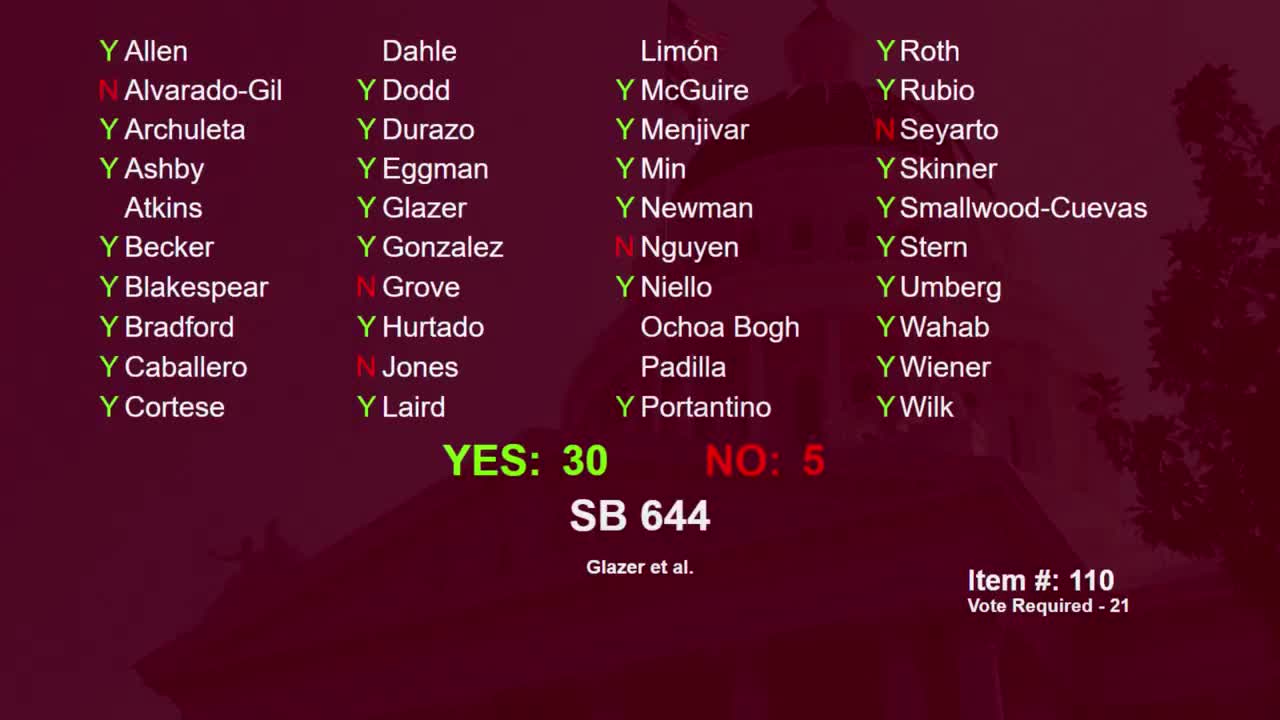
Bill Author

Bill Co-Author(s):
