SB 794: California Environmental Quality Act: judicial challenge: identification of contributors: housing projects.
- Session Year: 2023-2024
- House: Senate
- Latest Version Date: 2023-03-20
Current Status:
Failed
(2024-02-01: Returned to Secretary of Senate pursuant to Joint Rule 56.)
Introduced
In Committee
First Chamber
In Committee
Second Chamber
Enacted
What does this bill do?
The bill requires CEQA lawsuits that challenge commercial, housing, or public works projects addressing longstanding critical needs with at least $25 million in state investment to be resolved, as much as possible, within 365 days after the case record is filed. It also requires the person bringing such a CEQA case to disclose anyone who gives $100 or more (money or in‑kind) to prepare or fund the petition, to identify any financial or economic interest those contributors have in the project, and allows a court to compel compliance up to dismissing the action.
The summary is provided by generative AI which can make mistakes. For original language, please view the details in the table below.
The California Environmental Quality Act (CEQA) requires a lead agency, as defined, to prepare, or cause to be prepared, and certify the completion of an environmental impact report on a project that it proposes to carry out or approve that may have a significant effect on the environment, or to adopt a negative declaration if it finds that the project will not have that effect. CEQA authorizes specified entities to file and maintain with a court an action or proceeding to attack, review, set aside, void, or annul an act of a public agency on grounds of noncompliance with the requirements of the act.
This bill would require an action or proceeding brought to attack, review, set aside, void, or annual acts or decision of a public agency for a commercial, housing, or public works project that helps to address longstanding critical needs in the project area and that results in an investment of at least $25,000,000 in the state on the grounds of noncompliance with CEQA to be resolved, to the extent feasible, within 365 days of the filing of the certified record of proceedings with the court. The bill would require the Judicial Council to adopt a rule of court to implement this provision.
This bill would require a plaintiff or petitioner, in an action brought pursuant to CEQA, to disclose the identity of a person or entity that contributes in excess of $100, as specified, toward the plaintiffs or petitioners costs of the action. The bill also would require the plaintiff or petitioner to identify any pecuniary or economic interest related to the project of any person or entity that contributes in excess of $100 to the costs of the action, as specified. The bill would authorize a court to take any action necessary to compel compliance with these disclosure requirements, up to and including dismissal of the action.
(a)For purposes of this section, project means a commercial, housing, or public works project that helps to address longstanding critical needs in the project area and that results in an investment of at least twenty-five million dollars ($25,000,000) in the state.
(b)To the extent feasible, an action or proceeding filed pursuant to this division to attack, review, set aside, void, or annul acts or decisions of a public agency on the grounds of noncompliance with this division, including any potential appeals to the court of appeal or the Supreme Court, shall be resolved within 365 days of the filing of the certified record of proceedings prepared pursuant to Section 21167.6 or 21167.6.2 with the court.
(c)The Judicial Council shall adopt a rule of court to establish that establishes procedures to implement subdivision (b).
SEC. 2.Section 21175 is added to the Public Resources Code, to read:21175.SEC. 2.Section 21177.5 is added to the Public Resources Code, to read:21177.5.(a)(1)In an action or proceeding to attack, review, set aside, void, or annul any act or decision of a public agency on the grounds of noncompliance with this division, the plaintiff or petitioner shall include an affidavit identifying every person or entity who made or committed to make a monetary contribution of one hundred dollars ($100) or more, or who made or committed to make an in-kind contribution of one hundred dollars ($100) or more, to the preparation of the petition and subsequent action or proceeding.
(2)The plaintiff or petitioner shall have a continuing obligation throughout the course of the proceeding to identify any person or entity that has made a single or multiple contributions or commitments, the sum of which is one hundred dollars ($100) or more, or that has made or commits to make in-kind contribution of one hundred dollars ($100) or more, and that are intended to fund the action or proceeding.
(b)The disclosures required pursuant to subdivision (a) shall also include the identity of any pecuniary or economic interest of the person or entity related to the proposed project.
(c)A court may, upon its own motion or the motion of any party, take any action necessary to compel compliance with the requirements of this section, up to and including dismissal of the action or proceeding.
(a)For purposes of this section, project means a commercial, housing, or public works project that helps to address longstanding critical needs in the project area and that results in an investment of at least twenty-five million dollars ($25,000,000) in the state.
(b)To the extent feasible, an action or proceeding filed pursuant to this division to attack, review, set aside, void, or annul acts or decisions of a public agency on the grounds of noncompliance with this division, including any potential appeals to the court of appeal or the Supreme Court, shall be resolved within 365 days of the filing of the certified record of proceedings prepared pursuant to Section 21167.6 or 21167.6.2 with the court.
(c)The Judicial Council shall adopt a rule of court to establish procedures to implement subdivision (b).
SEC. 2.Section 21175 is added to the Public Resources Code, to read:21175.(a)(1)In an action or proceeding to attack, review, set aside, void, or annul any act or decision of a public agency on the grounds of noncompliance with this division, the plaintiff or petitioner shall include an affidavit identifying every person or entity who made or committed to make a monetary contribution of one hundred dollars ($100) or more, or who made or committed to make an in-kind contribution of one hundred dollars ($100) or more, to the preparation of the petition and subsequent action or proceeding.
(2)The plaintiff or petitioner shall have a continuing obligation throughout the course of the proceeding to identify any person or entity that has made a single or multiple contributions or commitments, the sum of which is one hundred dollars ($100) or more, or that has made or commits to make in-kind contribution of one hundred dollars ($100) or more, and that are intended to fund the action or proceeding.
(b)The disclosures required pursuant to subdivision (a) shall also include the identity of any pecuniary or economic interest of the person or entity related to the proposed project.
(c)A court may, upon its own motion or the motion of any party, take any action necessary to compel compliance with the requirements of this section, up to and including dismissal of the action or proceeding.
|
Date
|
Status
|
|---|---|
| Feb 1, 2024 | Returned to Secretary of Senate pursuant to Joint Rule 56. |
| Mar 29, 2023 | March 29 set for first hearing. Failed passage in committee. (Ayes 3. Noes 3. Page 572.) Reconsideration granted. |
| Mar 20, 2023 | From committee with author's amendments. Read second time and amended. Re-referred to Com. on E.Q. |
| Mar 7, 2023 | Set for hearing March 29. |
| Mar 1, 2023 | Referred to Coms. on E.Q. and JUD. |
| Feb 21, 2023 | From printer. May be acted upon on or after March 20. |
| Feb 17, 2023 | Introduced. Read first time. To Com. on RLS. for assignment. To print. |
|
Date
|
Description
|
Location
|
Votes
|
|
|---|---|---|---|---|
| Mar 29, 2023 | [First] hearing set for [03-29-2023]: Failed passage in Committee. Reconsideration granted | Senate Standing Committee on Environmental Quality |
Passed |
|
| Mar 29, 2023 | Do pass, but first be re-referred to the Committee on [Judiciary] | Senate Standing Committee on Environmental Quality |
Failed |
This list shows positions taken on this bill by organizations on the date displayed, which is linked to the original source.
Positions by individuals are not included.
|
Organization
|
Position
|
Date
|
|---|---|---|
| California Apartment Association | ** Support | |
| California Building Industry Association | * Support | Mar 29, 2023 |
| California Business Roundtable | ** Support | |
| California Labor Federation | * Against | Mar 29, 2023 |
| California State Building Trades | * Against | Mar 29, 2023 |
| California YIMBY | * Support | Mar 29, 2023 |
| Housing Contractors Of California | ** Support | |
| New Livable California Dba Livable California | ** Against | |
| Puente Latino Association | * Support | Mar 29, 2023 |
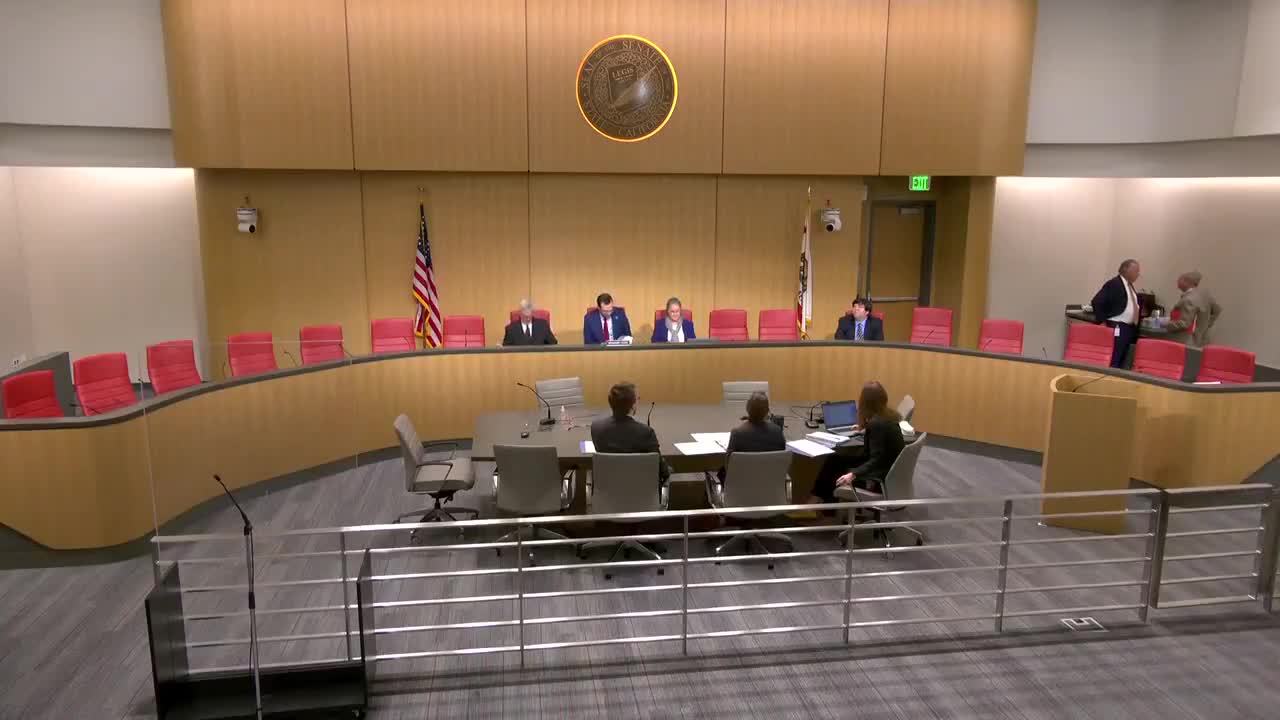
SENATE COMMITTEE ON ENVIRONMENTAL QUALITY
Senator Allen, Chair
2023 - 2024 Regular
Bill No: SB 794
Author: | Niello | ||
Version: | 3/20/2023 | Hearing Date: | 3/29/2023 |
Urgency: | No | Fiscal: | Yes |
Consultant: | Evan Goldberg | ||
SUBJECT: California Environmental Quality Act (CEQA): judicial challenge: identification of contributors: housing projects
DIGEST: This bill requires CEQA actions challenging a commercial, housing, or public works project that has at least $25 million invested in it to be resolved within 365 days of filing. It also requires a CEQA plaintiff to disclose any contributions he or she has received of $100 or more to help fund the legal action.
ANALYSIS:
Existing law:
- CEQA requires lead agencies with the principal responsibility for carrying out or approving a project to prepare a negative declaration (ND), mitigated negative declaration (MND), or environmental impact report (EIR) for the project, unless the project is exempt from CEQA. (Public Resources Code (PRC) §21000 et seq.). If a project may have a significant effect on the environment, the lead agency must prepare a draft EIR. (CEQA Guidelines §15064(a)(1), (f)(1))
- Establishes various timelines under which a person has a right to bring an action under CEQA. (PRC §21167)
- Requires counties with a population of over 200,000 to designate one or more judges to develop expertise on CEQA and hear CEQA cases. (PRC §21167.1 (b))
- Requires both the superior court and the court of appeal to give CEQA lawsuits preference over all other civil actions. (PRC §21167.1(a))
- Requires, if feasible, the court of appeal to hear a CEQA appeal within one year of filing. (PRC §21167.1(a)).
This bill:
- Defines “project” means a commercial, housing, or public works project that helps address longstanding critical needs in the project area and results in an investment of at least $25 million in the state.
- Requires, to the extent feasible, any actions to attack, review, set aside, void, or annul acts or decisions of a public agency on the grounds of noncompliance with CEQA regarding one of these projects – including any potential appeals to the court of appeal or the Supreme Court – be resolved within 365 days of filing.
- Requires the Judicial Council to adopt a rule of court to establish procedures to implement the requirement in (2).
- Requires a plaintiff or petitioner bringing a CEQA action to include an affidavit disclosing the identity of any person or entity contributing $100 or more – or committed to make an in-kind contribution of $100 or more – toward the plaintiff’s or petitioner’s costs of the action.
- States the plaintiff or petitioner has a “continuing obligation” throughout the proceeding to identify any person or entity that has made a single or multiple contributions or commitments that add up to $100 or more to fund the action or proceeding.
- Requires the plaintiff or petitioner to identify any pecuniary or business interest related to the project of any person or entity contributing $100 or more to the costs of the action.
- Allows a court to take any action necessary to compel compliance with this section, including dismissing the action or proceeding.
Background
- The A, B, C’s of CEQA. CEQA was enacted by the Legislature and signed into law by Governor Ronald Reagan in 1970. While it has evolved into a very complex Act over the past 53 years, at its core the basic principles of CEQA are relatively simple.
It is designed to (a) make government agencies and the public aware of the environmental impacts of a proposed project, (b) ensure the public can take part in the review process, and (c) identify and implement measures to mitigate or eliminate any negative impact the project may have on the environment.
CEQA is self-executing statute enforced by civil lawsuits that can challenge any project’s environmental review. Public agencies, as well as private individuals and organizations, can file lawsuits under CEQA.
- Let’s Pick Up The Pace. In 2011, AB 900 (Buchanan), Chapter 354, Statutes of 2011, and SB 292 (Padilla), Chapter 353, Statutes of 2011, established expedited CEQA judicial review procedures for a limited number of projects.
For AB 900, it was large-scale projects meeting extraordinary environmental standards and providing significant jobs and investment, now referred to as “environmental leadership development projects” (ELDP). For SB 292, it was a proposed downtown Los Angeles football stadium and convention center project achieving specified traffic and air quality mitigations.
For these eligible projects, the bills provided for original jurisdiction by the Court of Appeal and a compressed schedule requiring the court to render a decision on any lawsuit within 175 days. The provision granting original jurisdiction to the Court of Appeal was invalidated in 2013 by a decision in Alameda Superior Court in Planning and Conservation League v. State of California. AB 900 was subsequently revised to restore jurisdiction to superior courts and require resolution of lawsuits within 270 days, to the extent feasible.
Two years ago, SB 7 (Atkins), Chapter 19, Statutes of 2021, extended the AB 900 process and expended it to include housing projects that will result in an investment of $15-$100 million, provided at least 15% of the project is affordable to lower income households and the project is not used as a short-term rental.
Comments
- Purpose of Bill. According to the author, “CEQA has become an impediment to housing growth and business expansion, which is the very opposite of what we need in this state. As development in existing communities continues to be blocked by CEQA lawsuits, the development of new communities in suburban or rural areas is discouraged by the intent of the Act, whatever is possible to build becomes too expensive to afford for those with limited means. According to the California Building Industry Association, for every $1,000 added to the cost of a home, 10,000 Californians are priced out – and additional CEQA requirements or litigation will price individuals out of an area and force them further inland. In 2020, California’s population declined for the first time in the State’s history, and the lack of affordable housing can be looked at as one reason why.
“Transparency is the hallmark of good government. SB 794 would prevent those who seek an unfair business competition advantage or have ulterior motives, from improperly hiding behind CEQA to block a project through litigation. Stated simply, this measure would require full disclosure on all lawsuits filed for all parties involved. Removing the existing anonymity from those who file nameless ensures transparency for all.”
- Section One – Limiting The Court’s Review Time. When it comes to a commercial, housing, or public works project that has at least $25 million invested in it, this bill requires any action alleging noncompliance with CEQA – including any potential appeals to the court of appeal or the Supreme Court – to be resolved by the court, to the extent feasible, within 365 days of the case being filed.
Current law requires every party filing a CEQA lawsuit to report to the Attorney General and according to the Attorney General’s website, the number of CEQA lawsuits filed each year has averaged just under 196 between 2002 and 2021.
As noted earlier, exiting law requires counties with a population of over 200,000 (28 of California’s 58 counties) to designate one or more judges to develop expertise on CEQA and hear CEQA cases and requires both the superior court and the court of appeal to give CEQA lawsuits preference over all other civil actions. It also requires all ELDPs to be resolved within 270 days, if feasible.
At a minimum though, to the extent CEQA cases are required to be resolved within a time-certain (if feasible), it will serve to delay other cases filed in courts.
- Section Two – Contributions. Section 2 of the bill requires a plaintiff or petitioner bringing a CEQA action to include an affidavit disclosing the identity of any person or entity contributing $100 or more supporting the action. This is somewhat analogous to the reporting mandated regarding campaign contributions, which is governed by the Political Reform Act (PRA) and the Fair Political Practices Commission (FPPC). Given that the PRA and rules adopted by the FPPC would not apply to this bill, several questions arise:
- Timing. The bill makes it clear that when the initial CEQA challenge is filed, the plaintiff or petitioner must include an affidavit contain the names of people and entities that contributed $100 or more. It also says the plaintiff or petitioner has a “continuing obligation” to report any further contributions that are $100 or more – or push a person’s total contribution over that threshold. However, the bill isn’t clear when a plaintiff or petitioner is supposed to report those subsequent contributions to the court. Is it within 24 hours of receiving them – the law that applies to campaign contributions of $1,000 or more made within 90 days of an election – or some other timeframe? The author and committee may wish to consider clarifying how much time a plaintiff or petitioner has to report contributions.
- Reporting Exact Amounts & Increases – Or Just Over $100? The bill requires the reporting of contributions of $100 or more, but it doesn’t clearly require the exact amount of the contribution to be reported. The author and committee may wish to consider whether the exact amounts of the contributions should be disclosed.
Similarly, if, for example a person contributes $100 to support the CEQA lawsuit, they are reported to the court. However, if they subsequently make additional contributions toward the suit, it doesn’t appear the plaintiff or petitioner is required to disclose those additional contributions. The author and committee may wish to consider whether those additional contributions should be disclosed so the court and the public have a clear picture of how much in total a particular person or entity has contributed.
Under California election law and regulations adopted by FPPC, the cumulative totals of contributions must be reported when the total exceeds $1,000.
- Splitting & Laundering Contributions. Under the bill, there are ways a person or entity could avoid having to be reported by the plaintiff or petitioner as having made a $100 – or more – contribution in support of a CEQA suit. For example, a married couple could split a $180 contribution by giving $90 in each of their names and neither of them would have to be reported.
Similarly, an entity could take $990, split it between 10 people, have them all make $99 contributions, and nothing would have to be reported.
As such, the author and committee may wish to consider if the ability to split contributions in such a fashion undermines the intent of the bill and if so, whether and how the bill could be altered to preclude it.
Under California election law and regulations adopted by the FPPC, the true source of each contribution must be reported.
- Equitable Disclosure. There are two separate equity issues worthy of note.
First, the bill only requires plaintiffs, but not respondents or real parties in interest, to disclosure when they accept contributions of $100 or more in support of their CEQA lawsuit.
Second, while the disclosure of large contributions is important, there is no requirement to report an entity’s overall spending on a lawsuit. So, while Plaintiff A who accepts three $100 contributions in support of their lawsuit would have to report those to the court, the court and the public would have no idea how much Plaintiff A raised and spent overall to support their lawsuit. Plaintiff B, who may raise money in amounts less than $100 contributions, could actually raise more funds overall, but would never have to report anything to the court. Similarly, Plaintiff C who may not accept any contributions and may entirely self-finance a CEQA lawsuit also wouldn’t have to report anything to the court.
As a result, the snapshot of money raised in support of a CEQA lawsuit would be incomplete, at best.
- Haven’t We Seen This Movie Before? On March 15, the committee heard and approved SB 393 (Glazer). It was amended in committee to require plaintiffs and petitioners in a CEQA lawsuit to report contributions of $5,000 or more in suits involving a housing development project. That bill is pending in the Senate Judiciary Committee. Since the committee has addressed this issue in a very specific manner in passing SB 393, the author and committee may wish to consider if it is appropriate to pass a conflicting bill.
DOUBLE REFERRAL:
If this measure is approved by the Senate Environmental Quality Committee, the do pass motion must include the action to re-refer the bill to the Senate Judiciary Committee.
Related/Prior Legislation
SB 239 (Dahle) of 2023 requires, among other things, any CEQA actions to attack, review, set aside, void, or annul acts or decisions of a public agency on the grounds of noncompliance CEQA regarding one of these projects – including any potential appeals to the court of appeal or the Supreme Court – to be resolved within 365 days of filing. SB 239 is pending in the Senate Environmental Quality Committee.
SB 393 (Glazer) of 2023 seeks to, among other things, require a plaintiff or petitioner in a CEQA action involving a housing project to disclose the identity of a person or entity that contributes in excess of $5,000 toward the plaintiff’s or petitioner’s costs of the action. This bill was approved by the Senate Environmental Quality Committee on March 15, 2023, on a 6-0 vote and is currently pending in the Senate Judiciary Committee.
AB 2026 (Hadley) of 2016 sought to require a plaintiff or petitioner to, in a CEQA action, disclose the identity of a person or entity that contributes in excess of $1,000 toward the plaintiff’s or petitioner’s costs of the action. This bill was defeated in the Assembly Natural Resources Committee.
SB 1248 (Moorlach) of 2016 sought to require a plaintiff or petitioner to, in a CEQA action, disclose the identity of a person or entity that contributes in excess of $100 toward the plaintiff’s or petitioner’s costs of the action. This bill was defeated in the Senate Environmental Quality Committee.
SB 1341 (Glazer) of 2018 sought to require a plaintiff or petitioner, in an CEQA action, to disclose the identity of a person or entity that contributes in excess of $1,000, toward the plaintiff’s or petitioner’s costs of the action. It also sought to prohibit an action or proceeding from being brought in the court to attack, review, set aside, void, or annul an act of a public agency for housing projects on grounds of noncompliance with CEQA. This bill was assigned to the Senate Environmental Quality Committee but was never heard.
AB 1673 (Salas) of 2019 sought to require a plaintiff or petitioner to, in a CEQA action, disclose the identity of a person or entity that contributes in excess of $1,000 toward the plaintiff’s or petitioner’s costs of the action. This bill was defeated in the Assembly Natural Resources Committee.
AB 3054 (Salas) of 2020 sought to require a plaintiff or petitioner to, in a CEQA action, disclose the identity of a person or entity that contributes in excess of $1,000 toward the plaintiff’s or petitioner’s costs of the action. This bill was never heard in the Assembly Natural Resources Committee.
AB 3051 (Diep) of 2020 sought to require a plaintiff or petitioner to, in a CEQA action, disclose the identity of a person or entity that contributes in excess of $1,000 toward the plaintiff’s or petitioner’s costs of the action. This bill was never heard in the Assembly Natural Resources Committee.
SOURCE:
Author
SUPPORT:
California Apartment Association
California Building Industry Association
California Business Roundtable
Housing Contractors of California
OPPOSITION:
New Livable California Dba Livable California
ARGUMENTS IN SUPPORT:
The California Business Roundtable writes in support of this bill:
“In recent years, CEQA has become a tool of obstruction to block projects of any size when groups do not like it, even for non-environmental reasons. In 2020 alone, nearly 50% of California’s annual housing production were targets in CEQA lawsuits, and only 13% of these lawsuits are filed by environmental organizations that existed prior to filing. Without any changes, California is destined for never-ending litigation, increased costs, and ongoing delays that are counterproductive to the governor’s housing production and affordability targets. With high litigation costs and uncertainty comes increased project costs that may either be passed onto the future consumer of the development or result in abandoning the project altogether.
“SB 794 is a step in the right direction to fending off outsiders who may not necessarily have any stake in a project or be fighting it for true environmental reasons. This bill will ensure names of all entities involved in a CEQA lawsuit are listed to ensure they have a nexus to the project and are not simply trying to delay a project for non-environmental impact reasons.”
ARGUMENTS IN OPPOSITION:
Livable California writes in opposition to this bill:
“As to the mandate that CEQA litigation, including appeals, be completed within one year of the filing of the administrative record, similar legislation has been passed pertaining to a limited number of very high priority projects. The one-year deadline has been found by the courts to be unworkable. In addition, the mandates have strained the resources of both trial and appellate courts. This bill would greatly exacerbate those strains.
“As to the disclosure requirements, similar, but less onerous, requirements have been placed in Senate Bill 393 (Glazer). Even that bill may be problematic in its violation of the rights of free speech, association, and privacy under the California and United States Constitutions. This bill would be far more intrusive and less defensible.
“With the greatly increased rancor being generated around CEQA litigation by moneyed special interests, public disclosure of the names of contributors is likely to lead to threats of bodily harm, as has happened in the past to contributors to the civil rights and abortion rights movements.”
-- END --
Discussed in Hearing
 18MIN
Senate Standing Committee on Environmental Quality
Bill Author
Bill Co-Author(s):
