SB 855: Fair Employment and Housing Act: veterans.
- Session Year: 2023-2024
- House: Senate
- Latest Version Date: 2023-02-17
Current Status:
Failed
(2024-02-01: Returned to Secretary of Senate pursuant to Joint Rule 56.)
Introduced
In Committee
First Chamber
In Committee
Second Chamber
Enacted
Existing law, the California Fair Employment and Housing Act, prohibits an employer from discriminating against an employee on account of certain characteristics, including a persons veteran or military status. The act prescribes various unlawful employment practices and requires the Civil Rights Department to, among other things, receive, investigate, and prosecute complaints alleging violations of those unlawful practices.
This bill would make it an unlawful employment practice to require an employee who is a veteran, as defined, to work on November 11, known as Veterans Day, if specified conditions are met.
(a)It is an unlawful employment practice for an employer to require an employee who is a veteran to work on November 11, known as Veterans Day, and a state holiday pursuant to Section 6700, provided all of the following requirements are met:
(1)At least 21 days before November 11, the employee provides the employer notice that the employee intends to take November 11 as a holiday.
(2)The employee provides the employer with proof of the employees veteran status. Proof may include, but is not limited to, a DD Form 214 or other comparable certificate of discharge from the Armed Forces.
(3)The employees absence on November 11, either alone or in combination with other veteran employees absences pursuant to this section, does not negatively impact public health or safety or cause the employer significant economic or operational disruption, as determined by regulations promulgated pursuant to subdivision (e).
(b)An employee otherwise eligible to take November 11 as a holiday pursuant to this section but who is denied by reason of paragraph (3) of subdivision (a) is entitled to choose, with the employers approval, an alternate day within the next full year on which to observe Veterans Day in honor of the employees service.
(c)This section does not require or prevent an employer from providing their employees with a paid holiday in observation of Veterans Day.
(d)For purposes of this section, veteran means any of the following:
(1)A former member of the United States Armed Forces.
(2)A former or current member of a reserve of the United States Armed Forces who has been called into active military service of the United States.
(3)A former or current member of a California National Guard unit who has been called into active military service of the United States.
(e)The Civil Rights Department shall adopt regulations implementing this section.
|
Date
|
Status
|
|---|---|
| Feb 1, 2024 | Returned to Secretary of Senate pursuant to Joint Rule 56. |
| Apr 11, 2023 | April 11 set for second hearing canceled at the request of author. |
| Mar 27, 2023 | March 28 set for first hearing canceled at the request of author. |
| Mar 27, 2023 | Set for hearing April 11. |
| Mar 9, 2023 | Set for hearing March 28. |
| Mar 1, 2023 | Referred to Coms. on JUD. and M. & V.A. |
| Feb 21, 2023 | From printer. May be acted upon on or after March 20. |
| Feb 17, 2023 | Introduced. Read first time. To Com. on RLS. for assignment. To print. |
This list shows positions taken on this bill by organizations on the date displayed, which is linked to the original source.
Positions by individuals are not included.
|
Organization
|
Position
|
Date
|
|---|---|---|
| California Chamber Of Commerce | ** Against | |
| Veteran Strong USA | ** Support |
Senator Thomas Umberg, Chair
2023-2024 Regular Session
Bill No: SB 855 (Author:Archuleta)
Version: February 17, 2023
Hearing Date: April 11, 2023
Fiscal: Yes
Urgency: No
Consultant: TSG
SUBJECT
Fair Employment and Housing Act: veterans
DIGEST
This bill requires employers to give employees who are veterans the day off of work on Veterans Day, subject to specified exceptions and provided that the employee gives the employer 21 days’ advance notice.
EXECUTIVE SUMMARY
Veterans Day is a state and national holiday observed annually on November 11. It is intended as an occasion to honor the service and sacrifice of everyone who is or has been a member of the United States military. Parades, ceremonies, and gatherings of veterans are common. Where an employer refuses to give an employee who is a veteran the day off on Veteran’s Day, that veteran is excluded from participating in Veterans Day activities and events. This bill seeks to prevent such exclusion by requiring employers to give employees who are veterans the day off of work on Veterans Day, subject to certain exceptions and provided that the employee gives at least 21 days advance notice.
The bill is author-sponsored. Support comes from a veterans advocacy group. Opposition comes from a statewide advocacy organization representing employers which worries about the precedent it could set for future bills mandating time off for other holidays. If the bill passes out of this Committee, it will next be heard in the Senate Military and Veterans’ Affairs Committee.
PROPOSED CHANGES TO THE LAW
Existing law:
- Provides that November 11 is a state holiday known as Veterans Day. (Gov. Code § 6700(a)(16).)
- Establishes the Civil Rights Department within the Business, Consumer Services, and Housing Agency. (Gov. Code § 12901.)
- Prohibits employers from discriminating against an employee on account of certain characteristics, including a person’s veteran or military status. (Gov. Code § 12940.)
This bill:
- Defines “veteran” to mean any of the following:
a) a former member of the United States Armed Forces;
b) a former or current member of a reserve of the United States Armed Forces who has been called into active military service of the United States; or
c) a former or current member of a California National Guard unit who has been called into active military service of the United States.
- Makes it an unlawful employment practice for an employer to require an employee who is a veteran to work on Veterans Day provided that:
a) the employee gives at least 21 days advance notice;
b) the employee provides the employer with proof of veteran status; and
c) the employee’s absence, either alone or in combination with other veteran employees’ absences does not negatively impact public health or safety or cause the employer significant economic or operational disruption, as determined by regulations to be promulgated.
- Entitles an employee who is a veteran to choose an alternative day off of work on which to observe Veterans Day if the employer denies the employee’s request to take Veterans Day off based on (1)(c), above.
- Does not require or prevent an employer from providing their employees with a paid holiday in observation of Veterans Day.
- Directs the Civil Rights Department to adopt regulations implementing the bill.
COMMENTS
- Background on Veterans Day
Veterans Day is a federal and state holiday meant to honor those who have served in the United States Armed Forces. It is observed annually on November 11. (Gov. Code § 6700(a)(16).)
Veterans Day has its origins in Armistice Day, which commemorates the anniversary of the formal end to World War I, the “war to end all wars.” In accordance with the Armistice with Germany, fighting in that conflict officially came to an end on the 11th hour of the 11th day of the 11th month of 1918. The U.S. recognized Armistice Day on November 11 by Presidential Proclamation in 1919 and it was formalized as a federal holiday by Congress in 1938. (5 U. S. Code § 87a.)
Unfortunately, World War I did not result in an end of military conflict of course. Members of the U.S. military went on to fight in other wars. Accordingly, in 1954, Congress renamed the holiday Veterans Day at the urging of several major U.S. veterans’ organizations. [1] (Pub.L. No 380 (June 1, 1954) 68 Stat. 250; 5 U.S.C. § 87.)
2. Marking Veterans Day
Veterans in California and elsewhere around the country frequently mark Veterans Day by engaging in a variety of commemorative events and activities: ceremonies, parades, raising and retiring the flag in accordance with official protocol, gatherings, speeches, motorcycle rallies, service projects benefiting veterans, and cemetery visits, among other things.
Yet, according to information provided by the author, relatively few private sector employers give their employees Veterans Day off to participate in these activities. A 2018 survey revealed 97 percent of private sector employers gave their employees Thanksgiving and Christmas Day off, while only 11 percent gave their employees Veterans Day off. In the overall public and private sector workforce combined, only about 19 percent of workers get Veterans Day off as a paid holiday.
The intent of this bill is to provide veterans with the option of having the entirety of Veterans Day off as a non-paid holiday if they choose to take it.
3. Comparison to other states
The author reports that five states—Iowa, Massachusetts, New Hampshire, Oregon and Tennessee—currently require private employers to provide time off to veterans on Veterans Day. In all but Massachusetts, the time off can be unpaid. In Massachusetts, veterans are entitled to paid leave on Veterans Day if their employer has 50 or more employees and the employee taking the time off intends to participate in activities related to the holiday.[2]
4. Disparate impact considerations
Service in the United States Armed Forces has not always been available to everyone. Men predominate in military service.[3] Until 2011, LGBTQ individuals were not welcomed in the U.S. military.[4] Those who did serve were forced to keep that aspect of their identity secret or face discharge. Because of this gender disparity and legacy of discrimination, the overwhelming majority of veterans are cis-gendered, heterosexual men.
As a result, well-intentioned policies giving veterans preferential treatment in honor of their service have a discriminatory disparate impact on woman and LGBTQ individuals. For that reason, this Committee has sometimes looked disfavorably upon legislative proposals of this type in the past.
Those concerns are arguably less acute with respect to this bill, however. The benefit conferred by this bill (a day off from work in observance of Veterans Day) does not operate to deprive anyone else of an equal opportunity to advance in the same way that a hiring preference for veterans does. The day off proposed by this bill is more analogous to giving certain employees time away from work to observe a religious holiday. It respects a fundamental part of the employee’s identity by giving that person time off of work to honor and celebrate that aspect of themselves without adversely impacting any other workers.
5. Potential to increase employment discrimination against veterans?
The intent behind this bill is to honor the service of veterans by giving them the option of taking Veterans Day off. Ironically, however, there may be some danger that the bill could have the unintended consequence of increasing employment discrimination against veterans. Although there are already laws on the books prohibiting employers from holding military service against employees, in practice some employers are reticent to hire people whose military duties might require them to be away from work, perhaps for significant periods of time.[5] In this context, it could be that a requirement to give veterans the day off on Veterans Day might make employers like these even more reluctant to bring on employees who are veterans.
6. Arguments in support of the bill
According to the author:
To honor the service and sacrifice of military families, I introduced SB 855 to celebrate veterans for their love of country and willingness to serve. SB 855 will ensure veterans have the ability to take the entirety of Veterans Day off as a non-paid holiday. Every veteran deserves the right to have Veterans Day off to honor our Nation’s veterans who have given so much to protect our freedoms and freedom of others around the globe.
In support of the bill, Veteran Strong USA writes:
[…] [W]e give so much of ourselves as well as our families in support of our service. Veterans being deployed missing their spouses, kids and loved one’s birthdays, the birth of their children, celebrating holidays like Christmas and so much more. I can’t fathom anyone, business or organization opposing an unpaid day off for a veteran employee. Many California veterans take Veterans Day off, since it’s our day to reflect on our service, the people we served with, and or, the lives many veterans have seen taking their last breath.
7. Arguments in opposition to the bill
In opposition to the bill, the California Chamber of Commerce writes:
We sincerely appreciate that the spirit of SB 855 is to recognize our nation’s veterans annually on Veteran’s Day. Our concern is the precedent the bill sets regarding holidays. California employers have always had full discretion regarding the hours of their operations, when to offer employees time off for holidays, and whether pay is offered for holidays granted. If the state starts to dictate for which holidays time off must be provided, our concern is this will lead to more bills each year requiring time off for specific holidays and it will slowly erode employers’ autonomy over their operations. It may also impact employers’ decisions about how many other holidays they choose to voluntarily provide to employees.
SUPPORT
Veteran Strong USA
OPPOSITION
California Chamber of Commerce
RELATED LEGISLATION
Pending Legislation: SB 73 (Seyarto, 2023) permits employers to establish and maintain a voluntary preference for hiring veterans over other qualified applicants. SB 73 is set to be heard in this Committee on the same day as this bill.
Prior Legislation: None known.
**************
For a more detailed history of Veterans Day from which this summary was drawn, see History of Veterans Day. U.S. Department of Veterans’ Affairs https://department.va.gov/veterans-day/history-of-veterans-day/ (as of Mar. 6, 2023). ↑
Annotated Laws of Massachusetts, Ch. 149 § 52A1/2. ↑
See Demographics of the U.S. Military (Jul. 13, 2020) Council on Foreign Relations https://www.cfr.org/backgrounder/demographics-us-military (as of Mar. 6, 2023). ↑
McVeigh and Harris. US Military Lifts Ban on Openly Gay Troops (Sep. 20, 2011) The Guardian https://www.theguardian.com/world/2011/sep/20/us-military-lifts-ban-gay-troops (as of Mar. 6, 2023). ↑
See, e.g., Nagorny and Pick. 5 Reasons Why Employers Are Not Hiring Vets. U.S. Department of Veterans Affairs https://www.military.com/hiring-veterans/resources/5-reasons-why-employers-are-not-hiring-vets.html (as of Mar. 22, 2023). ↑
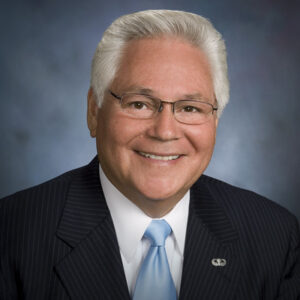
Bill Author
Bill Co-Author(s):