SB 901: The military: eligibility.
- Session Year: 2023-2024
- House: Senate
- Latest Version Date: 2024-09-27
Current Status:
Passed
(2024-09-27: Chaptered by Secretary of State. Chapter 774, Statutes of 2024.)
Introduced
In Committee
First Chamber
In Committee
Second Chamber
Enacted
Existing law establishes within state government a Military Department that includes, among other things, the office of the Adjutant General, the California National Guard, and the State Guard. Existing law generally governs the administration of the military, including its enlisted persons and officers. Existing law provides that an enlisted person may be discharged from the California National Guard under honorable, general, or undesirable conditions without a court-martial and requires a bad conduct or dishonorable discharge to be awarded only by a court-martial. Existing law specifies the causes for discharge of an enlisted person from the California National Guard and provides the conditions for the Governor or the Adjutant General to discharge an enlisted person. Existing law authorizes the discharge of an officer from the California National Guard only by sentence of a general court-martial and approval by the Governor. Existing law prohibits a person from being commissioned or enlisted in the State Guard if the person is not a citizen of the United States or has not declared their intent to become a citizen of the United States or has been expelled from a military or naval organization, as specified.
The bill would specify that a person is not eligible to commission or enlist in the California National Guard or State Guard if that person actively participates in, among other things, advocating for, or engaging in, the use of unlawful force, unlawful violence, or other illegal means to deprive an individual of their rights, as specified. This bill would require an officer or enlisted person to be discharged from the State Guard under undesirable conditions, or receive an other than honorable discharge from the California National Guard, if that person actively participates in that same conduct.
Existing law establishes within state government a Military Department that includes, among other things, the office of the Adjutant General, the California National Guard, and the State Guard. Existing law generally governs the administration of the military, including its enlisted persons and officers. Existing law provides that an enlisted person may be discharged from the California National Guard under honorable, general, or undesirable conditions without a court-martial and requires a bad conduct or dishonorable discharge to be awarded only by a court-martial. Existing law specifies the causes for discharge of an enlisted person from the California National Guard and provides the conditions for the Governor or the Adjutant General to discharge an enlisted person. Existing law authorizes the discharge of an officer from the California National Guard only by sentence of a general court-martial and approval by the Governor. Existing law prohibits a person from being commissioned or enlisted in the State Guard if the person is not a citizen of the United States or has not declared their intent to become a citizen of the United States or has been expelled from a military or naval organization, as specified.
The bill would specify that a person is not eligible to commission or enlist in the California National Guard or State Guard if that person actively participates in, among other things, advocating for, or engaging in, the use of unlawful force, unlawful violence, or other illegal means to deprive an individual of their rights, as specified. This bill would require an officer or enlisted person to be discharged from the California National Guard or State Guard under undesirable conditions conditions, or receive an other than honorable discharge from the California National Guard, if that person actively participates in that same conduct.
Existing law establishes within state government a Military Department that includes, among other things, the office of the Adjutant General, the California National Guard, and the State Guard. Existing law generally governs the administration of the military, including its enlisted persons and officers. Existing law provides that an enlisted person may be discharged from the California National Guard under honorable, general, or undesirable conditions without a court-martial and requires a bad conduct or dishonorable discharge to be awarded only by a court-martial. Existing law specifies the causes for discharge of an enlisted person from the California National Guard and provides the conditions for the Governor or the Adjutant General to discharge an enlisted person. Existing law authorizes the discharge of an officer from the California National Guard only by sentence of a general court-martial and approval by the Governor. Existing law prohibits a person from being commissioned or enlisted in the State Guard if the person is not a citizen of the United States or has not declared their intent to become a citizen of the United States or has been expelled from a military or naval organization, as specified.
The bill would specify that a person is not eligible to commission or enlist in the California National Guard or State Guard if that person actively participates to advocate for, or engages in, in, among other things, advocating for, or engaging in, the use of unlawful force, unlawful violence, or other illegal means to deprive an individual of their rights, as specified. This bill would require an officer or enlisted person to be discharged from the California National Guard or State Guard under undesirable conditions if that person actively participates to advocate for, or engages in, the use of unlawful force, unlawful violence, or other illegal means to deprive an individual of their rights, as specified. in that same conduct.
Existing law establishes within state government a Military Department that includes, among other things, the office of the Adjutant General, the California National Guard, and the State Guard. Existing law generally governs the administration of the military, including its enlisted persons and officers. Existing law provides that an enlisted person may be discharged from the California National Guard under honorable, general, or undesirable conditions without a court-martial and requires a bad conduct or dishonorable discharge to be awarded only by a court-martial. Existing law specifies the causes for discharge of an enlisted person from the California National Guard and provides the conditions for the Governor or the Adjutant General to discharge an enlisted person. Existing law authorizes the discharge of an officer from the California National Guard only by sentence of a general court-martial and approval by the Governor. Existing law prohibits a person from being commissioned or enlisted in the State Guard if the person is not a citizen of the United States or has not declared their intent to become a citizen of the United States or has been expelled from a military or naval organization, as specified.
The bill would specify that a person is not eligible to commission or enlist in the California National Guard or State Guard if that person advocates for or engages in, or is a member of an organization that advocates for or engages in, actively participates to advocate for, or engages in, the use of unlawful force, unlawful violence, or other illegal means to deprive an individual of their rights, as specified. This bill would require an officer or enlisted person to be discharged from the California National Guard or State Guard under undesirable conditions if that person advocates for or engages in, or is a member of an organization that advocates for or engages in, actively participates to advocate for, or engages in, the use of unlawful force, unlawful violence, or other illegal means to deprive an individual of their rights, as specified.
Existing law establishes within state government a Military Department that includes, among other things, the office of the Adjutant General, the California National Guard, and the State Guard. Existing law generally governs the administration of the military, including its enlisted persons and officers. Existing law provides that an enlisted person may be discharged from the California National Guard under honorable, general, or undesirable conditions without a court-martial and requires a bad conduct or dishonorable discharge to be awarded only by a court-martial. Existing law specifies the causes for discharge of an enlisted person from the California National Guard and provides the conditions for the Governor or the Adjutant General to discharge an enlisted person. Existing law authorizes the discharge of an officer from the California National Guard only by sentence of a general court-martial and approval by the Governor. Existing law prohibits a person from being commissioned or enlisted in the State Guard if the person is not a citizen of the United States or has not declared their intent to become a citizen of the United States or has been expelled from a military or naval organization, as specified.
The bill would specify that a person is not eligible to commission or enlist in the California National Guard or State Guard if that person advocates for or engages in, or is a member of an organization that advocates for or engages in, the use of unlawful force, unlawful violence, or other illegal means to deprive an individual of their rights, as specified. This bill would require an officer or enlisted person to be discharged from the California National Guard or State Guard under undesirable conditions if that person advocates for or engages in, or is a member of an organization that advocates for or engages in, the use of unlawful force, unlawful violence, or other illegal means to deprive an individual of their rights, as specified.
Existing law prohibits an action for breach of an unwritten lease of real property from being brought more than 2 years after breach of the lease and abandonment of the property, or more than 2 years after termination of the right of the lessee to possession of the property, whichever is the earlier time.This bill would make technical, nonsubstantive changes to this provision.Existing law prohibits an action for breach of an unwritten lease of real property from being brought more than 2 years after breach of the lease and abandonment of the property, or more than 2 years after termination of the right of the lessee to possession of the property, whichever is the earlier time.
This bill would make technical, nonsubstantive changes to this provision.
(a)A person is not eligible to commission as an officer or warrant officer in the California National Guard if they actively participate in any of the following:
(1)Advocating for, or engaging in, the use of unlawful force, unlawful violence, or other illegal means to deprive an individual of their rights under the United States Constitution or the laws of the United States, the California Constitution or the laws of this state, or a political subdivision thereof.
(2)Advocating for, or engaging in, the use of unlawful force or violence to achieve goals that are political, religious, discriminatory, or ideological in nature.
(3)Advocating for, engaging in, or supporting terrorism within the United States or abroad.
(4)Advocating for, engaging in, or supporting the overthrow of the government of the United States, or any political subdivision thereof, including the government of this state or that of any other state, commonwealth, territory, or the District of Columbia, by force of violence, or seeking to alter the form of these governments by unconstitutional or other unlawful means.
(5)Advocating or encouraging military, civilian, or contractor personnel within the California National Guard or State Guard to violate the laws of the United States, or any political subdivision thereof, including the laws of this state or those of any other state, commonwealth, territory, or the District of Columbia, or to disobey lawful orders or regulations, for the purpose of disrupting military activities, or personally undertaking the same.
(6)Advocating for widespread unlawful discrimination based on race, color, national origin, religion, sex, gender identity, or sexual orientation.
(7)Advocating for, engaging in, or supporting treason, as defined in Section 37 of the Penal Code or Section 2381 of Title 18 of the United States Code.
(8)Advocating for, engaging in, or supporting an act of rebellion or insurrection, as defined in Section 2383 of Title 18 of the United States Code.
(b)An officer who actively participates in any of the conduct set forth in subdivision (a) shall receive an other than honorable discharge, in accordance with United States Department of Defense regulations and any applicable procedures and regulations of the individual service branches.
(c)Active participation has the same meaning as in the Department of Defense Instruction 1325.06 or any successor instruction or regulation.
SEC. 2.Section 260 of the Military and Veterans Code is amended to read:260.The following are causes for discharge of enlisted personnel:
(a)Expiration of term of service.
(b)Attainment of the age of 64 years.
(c)Acceptance of appointment as a commissioned officer in the state or federal service.
(d)To enlist in the United States Army, Navy, Marine Corps, Air Force, Space Force, or Coast Guard.
(e)To accept appointment in the United States Military Academy, Naval Academy, Air Force Academy, or Coast Guard Academy.
(f)To accept appointment as a flying cadet.
(g)To re-enlist.
(h)Discontinuance of the organization in which the person is serving.
(i)Change of residence.
(j)Certificate of disability.
(k)Inaptness or misconduct.
(l)Fraudulent enlistment.
(m)Action of civil or military court.
(n)Draft into the service of the United States.
(o)Business or educational interference.
(p)Any other reason the Governor deems adequate and satisfactory.
(q)For the best interests of the military service.
(r)For the good of the service.
(s)For absence without leave.
(t)Active participation in any of the conduct set forth in subdivision (a) of Section 240.
SEC. 3.Section 261 of the Military and Veterans Code is amended to read:261.(a)(1)Except as provided in subdivision (b), the discharge of enlisted personnel under the provisions of Section 260 shall be effected by order of the Governor, under those regulations as may be prescribed, or as may be authorized by the laws and regulations prescribed for the government of the National Guard by the United States and that are not inconsistent with this code.
(2)An enlisted person shall receive an other than honorable discharge pursuant to subdivision (t) of Section 260, in accordance with United States Department of Defense regulations and any applicable procedures and regulations of the individual service branches.
(b)The Adjutant General may discharge a person who is absent without leave for a period of 90 days or more. The discharge under this subdivision shall be a general discharge under honorable conditions.
SEC. 4.Section 270 is added to the Military and Veterans Code, to read:270.A person is not eligible to enlist in the California National Guard if they actively participate in any of the conduct set forth in subdivision (a) of Section 240.
SEC. 5.Section 559 of the Military and Veterans Code is amended to read:559.(a)A person shall not be commissioned or enlisted in the State Guard if either of the following apply:
(1)The person is not a citizen of the United States or has not declared their intention to become a citizen of the United States.
(2)The person has been expelled or dishonorably discharged from a military or naval organization of this state, of another state, or of the United States.
(b)A person is not eligible to commission or enlist in the State Guard if they actively participate in any of the conduct set forth in subdivision (a) of Section 240.
(c)A person who is commissioned or enlisted in the State Guard shall be discharged under undesirable conditions if they actively participate in any of the conduct set forth in subdivision (a) of Section 240.
(a)A person is not eligible to commission as an officer or warrant officer in the California National Guard if they actively participate in any of the following:
(1)Advocating for, or engaging in, the use of unlawful force, unlawful violence, or other illegal means to deprive an individual of their rights under the United States Constitution or the laws of the United States, the California Constitution or the laws of this state, or the laws of any other state, commonwealth, territory, or the District of Columbia, or a political subdivision thereof.
(2)Advocating for, or engaging in, the use of unlawful force or violence to achieve goals that are political, religious, discriminatory, or ideological in nature.
(3)Advocating for, engaging in, or supporting terrorism within the United States or abroad.
(4)Advocating for, engaging in, or supporting the overthrow of the government of the United States, or any political subdivision thereof, including the government of this state or that of any other state, commonwealth, territory, or the District of Columbia, by force of violence, or seeking to alter the form of these governments by unconstitutional or other unlawful means.
(5)Advocating or encouraging military, civilian, or contractor personnel within the California National Guard or State Guard to violate the laws of the United States, or any political subdivision thereof, including the laws of this state or those of any other state, commonwealth, territory, or the District of Columbia, or to disobey lawful orders or regulations, for the purpose of disrupting military activities, or personally undertaking the same.
(6)Advocating for widespread unlawful discrimination based on race, color, national origin, religion, sex, gender identity, or sexual orientation.
(7)Advocating for, engaging in, or supporting treason, as defined in Section 37 of the Penal Code or Section 2381 of Title 18 of the United States Code.
(8)Advocating for, engaging in, or supporting an act of rebellion or insurrection, as defined in Section 2383 of Title 18 of the United States Code.
(b)An officer who actively participates in any of the conduct set forth in subdivision (a), shall be discharged under undesirable conditions, (a) shall receive an other than honorable discharge, in accordance with the United States Department of Defense regulations. regulations and any applicable procedures and regulations of the individual service branches.
(c)Active participation has the same meaning as in the Department of Defense Instruction 1325.06 or any successor instruction or regulation.
SEC. 2.Section 260 of the Military and Veterans Code is amended to read:260.The following are causes for discharge of enlisted personnel:
(a)Expiration of term of service.
(b)Attainment of the age of 64 years.
(c)Acceptance of appointment as a commissioned officer in the state or federal service.
(d)To enlist in the United States Army, Navy, Marine Corps, Air Force, Space Force, or Coast Guard.
(e)To accept appointment in the United States Military Academy, Naval Academy, Air Force Academy, or Coast Guard Academy.
(f)To accept appointment as a flying cadet.
(g)To re-enlist.
(h)Discontinuance of the organization in which the person is serving.
(i)Change of residence.
(j)Certificate of disability.
(k)Inaptness or misconduct.
(l)Fraudulent enlistment.
(m)Action of civil or military court.
(n)Draft into the service of the United States.
(o)Business or educational interference.
(p)Any other reason the Governor deems adequate and satisfactory.
(q)For the best interests of the military service.
(r)For the good of the service.
(s)For absence without leave.
(t)Active participation in any of the conduct set forth in subdivision (a) of Section 240.
SEC. 3.Section 261 of the Military and Veterans Code is amended to read:261.(a)(1)Except as provided in subdivision (b), the discharge of enlisted personnel under the provisions of Section 260 shall be effected by order of the Governor, under those regulations as may be prescribed, or as may be authorized by the laws and regulations prescribed for the government of the National Guard by the United States and that are not inconsistent with this code.
(2)An enlisted person shall be discharged receive an other than honorable discharge pursuant to subdivision (t) of Section 260 under undesirable conditions. 260, in accordance with United States Department of Defense regulations and any applicable procedures and regulations of the individual service branches.
(b)The Adjutant General may discharge a person who is absent without leave for a period of 90 days or more. The discharge under this subdivision shall be a general discharge under honorable conditions.
SEC. 4.Section 270 is added to the Military and Veterans Code, to read:270.A person is not eligible to enlist in the California National Guard if they actively participate in any of the conduct set forth in subdivision (a) of Section 240.
SEC. 5.Section 559 of the Military and Veterans Code is amended to read:559.(a)A person shall not be commissioned or enlisted in the State Guard if either of the following apply:
(1)The person is not a citizen of the United States or has not declared their intention to become a citizen of the United States.
(2)The person has been expelled or dishonorably discharged from a military or naval organization of this state, of another state, or of the United States.
(b)A person is not eligible to commission or enlist in the State Guard if they actively participate in any of the conduct set forth in subdivision (a) of Section 240.
(c)A person who is commissioned or enlisted in the State Guard shall be discharged under undesirable conditions if they actively participate in any of the conduct set forth in subdivision (a) of Section 240.
(a)A person is not eligible to commission as an officer or warrant officer in the California National Guard if they actively participate to advocate for, or if they engage in, the use of unlawful force, unlawful violence, or other illegal means to deprive an individual of their rights under the United States Constitution or the laws of the United States, including the laws of a state, commonwealth, territory, or the District of Columbia, or a political subdivision thereof, in accordance with the United States Department of Defense regulations. in any of the following:
(1)Advocating for, or engaging in, the use of unlawful force, unlawful violence, or other illegal means to deprive an individual of their rights under the United States Constitution or the laws of the United States, the California Constitution or the laws of this state, or the laws of any other state, commonwealth, territory, or the District of Columbia, or a political subdivision thereof.
(2)Advocating for, or engaging in, the use of unlawful force or violence to achieve goals that are political, religious, discriminatory, or ideological in nature.
(3)Advocating for, engaging in, or supporting terrorism within the United States or abroad.
(4)Advocating for, engaging in, or supporting the overthrow of the government of the United States, or any political subdivision thereof, including the government of this state or that of any other state, commonwealth, territory, or the District of Columbia, by force of violence, or seeking to alter the form of these governments by unconstitutional or other unlawful means.
(5)Advocating or encouraging military, civilian, or contractor personnel within the California National Guard or State Guard to violate the laws of the United States, or any political subdivision thereof, including the laws of this state or those of any other state, commonwealth, territory, or the District of Columbia, or to disobey lawful orders or regulations, for the purpose of disrupting military activities, or personally undertaking the same.
(6)Advocating for widespread unlawful discrimination based on race, color, national origin, religion, sex, gender identity, or sexual orientation.
(7)Advocating for, engaging in, or supporting treason, as defined in Section 37 of the Penal Code or Section 2381 of Title 18 of the United States Code.
(8)Advocating for, engaging in, or supporting an act of rebellion or insurrection, as defined in Section 2383 of Title 18 of the United States Code.
(b)An officer who actively participates to advocate for, or engages in, the use of unlawful force, unlawful violence, or other illegal means to deprive an individual of their rights under the United States Constitution or the laws of the United States, including the laws of a state, commonwealth, territory, or the District of Columbia, or a political subdivision thereof, in any of the conduct set forth in subdivision (a), shall be discharged under undesirable conditions, in accordance with the United States Department of Defense regulations.
(c)Active participation has the same meaning as in the Department of Defense Instruction 1325.06 or any successor instruction or regulation.
SEC. 2.Section 260 of the Military and Veterans Code is amended to read:260.The following are causes for discharge of enlisted personnel:
(a)Expiration of term of service.
(b)Attainment of the age of 64 years.
(c)Acceptance of appointment as a commissioned officer in the state or federal service.
(d)To enlist in the United States Army, Navy, Marine Corps, Air Force, Space Force, or Coast Guard.
(e)To accept appointment in the United States Military Academy, Naval Academy, Air Force Academy, or Coast Guard Academy.
(f)To accept appointment as a flying cadet.
(g)To re-enlist.
(h)Discontinuance of the organization in which the person is serving.
(i)Change of residence.
(j)Certificate of disability.
(k)Inaptness or misconduct.
(l)Fraudulent enlistment.
(m)Action of civil or military court.
(n)Draft into the service of the United States.
(o)Business or educational interference.
(p)Any other reason the Governor deems adequate and satisfactory.
(q)For the best interests of the military service.
(r)For the good of the service.
(s)For absence without leave.
(t)Active participation in advocating for, or engaging in, the use of unlawful force, unlawful violence, or other illegal means to deprive an individual of their rights under the United States Constitution or the laws of the United States, including the laws of a state, commonwealth, territory, or the District of Columbia, or a political subdivision thereof, in accordance with the United States Department of Defense regulations.(t)Active participation in any of the conduct set forth in subdivision (a) of Section 240.
SEC. 3.Section 261 of the Military and Veterans Code is amended to read:261.(a)(1)Except as provided in subdivision (b), the discharge of enlisted personnel under the provisions of Section 260 shall be effected by order of the Governor, under those regulations as may be prescribed, or as may be authorized by the laws and regulations prescribed for the government of the National Guard by the United States and that are not inconsistent with this code.
(2)An enlisted person shall be discharged pursuant to subdivision (t) of Section 260 under undesirable conditions.
(b)The Adjutant General may discharge a person who is absent without leave for a period of 90 days or more. The discharge under this subdivision shall be a general discharge under honorable conditions.
SEC. 4.Section 270 is added to the Military and Veterans Code, to read:270.A person is not eligible to enlist in the California National Guard if they actively participate to advocate for, or if they engage in, the use of unlawful force, unlawful violence, or other illegal means to deprive an individual of their rights under the United States Constitution or the laws of the United States, including the laws of a state, commonwealth, territory, or the District of Columbia, or a political subdivision thereof, in accordance with the United States Department of Defense regulations. in any of the conduct set forth in subdivision (a) of Section 240.
SEC. 5.Section 559 of the Military and Veterans Code is amended to read:559.(a)A person shall not be commissioned or enlisted in the State Guard if either of the following apply:
(1)The person is not a citizen of the United States or has not declared their intention to become a citizen of the United States.
(2)The person has been expelled or dishonorably discharged from a military or naval organization of this state, of another state, or of the United States.
(b)A person is not eligible to commission or enlist in the State Guard if they actively participate to advocate for, or if they engage in, the use of unlawful force, unlawful violence, or other illegal means to deprive an individual of their rights under the United States Constitution or the laws of the United States, including the laws of a state, commonwealth, territory, or the District of Columbia, or a political subdivision thereof, in accordance with the United States Department of Defense regulations. in any of the conduct set forth in subdivision (a) of Section 240.
(c)A person who is commissioned or enlisted in the State Guard shall be discharged under undesirable conditions if they actively participate to advocate for, or if they engage in, the use of unlawful force, unlawful violence, or other illegal means to deprive an individual of their rights under the United States Constitution or the laws of the United States, including the laws of a state, commonwealth, territory, or the District of Columbia, or a political subdivision thereof, in accordance with the United States Department of Defense regulations. in any of the conduct set forth in subdivision (a) of Section 240.
(a)A person is not eligible to commission as an officer or warrant officer in the California National Guard if they advocate for or engage in, or are a member of an organization that advocates for or engages in, actively participate to advocate for, or if they engage in, the use of unlawful force, unlawful violence, or other illegal means to deprive an individual of their rights under the United States Constitution or the laws of the United States, including the laws of a state, commonwealth, territory, or the District of Columbia, or a political subdivision thereof. thereof, in accordance with the United States Department of Defense regulations.
(b)An officer who advocates for or engages in, or is a member of an organization that advocates for or engages in, An officer who actively participates to advocate for, or engages in, the use of unlawful force, unlawful violence, or other illegal means to deprive an individual of their rights under the United States Constitution or the laws of the United States, including the laws of a state, commonwealth, territory, or the District of Columbia, or a political subdivision thereof, shall be discharged under undesirable conditions. conditions, in accordance with the United States Department of Defense regulations.
SEC. 2.Section 260 of the Military and Veterans Code is amended to read:260.The following are causes for discharge of enlisted personnel:
(a)Expiration of term of service.
(b)Attainment of the age of 64 years.
(c)Acceptance of appointment as a commissioned officer in the state or federal service.
(d)To enlist in the United States Army, Navy, Marine Corps, Air Force, Space Force, or Coast Guard.
(e)To accept appointment in the United States Military Academy, Naval Academy, Air Force Academy, or Coast Guard Academy.
(f)To accept appointment as a flying cadet.
(g)To re-enlist.
(h)Discontinuance of the organization in which the person is serving.
(i)Change of residence.
(j)Certificate of disability.
(k)Inaptness or misconduct.
(l)Fraudulent enlistment.
(m)Action of civil or military court.
(n)Draft into the service of the United States.
(o)Business or educational interference.
(p)Any other reason which the Governor deems adequate and satisfactory.
(q)For the best interests of the military service.
(r)For the good of the service.
(s)For absence without leave.
(t)Advocating for or engaging in, or being a member of an organization that advocates for or engages in, Active participation in advocating for, or engaging in, the use of unlawful force, unlawful violence, or other illegal means to deprive an individual of their rights under the United States Constitution or the laws of the United States, including the laws of a state, commonwealth, territory, or the District of Columbia, or a political subdivision thereof. thereof, in accordance with the United States Department of Defense regulations.
SEC. 3.Section 261 of the Military and Veterans Code is amended to read:261.(a)(1)Except as provided in subdivision (b), the discharge of enlisted personnel under the provisions of Section 260 shall be effected by order of the Governor, under such those regulations as may be prescribed, or as may be authorized by the laws and regulations prescribed for the government of the National Guard by the United States and which that are not inconsistent with this code.
(2)An enlisted person shall be discharged pursuant to subdivision (t) of Section 260 under undesirable conditions.
(b)The Adjutant General may discharge a person who is absent without leave for a period of 90 days or more. The discharge under this subdivision shall be a general discharge under honorable conditions.
SEC. 4.Section 270 is added to the Military and Veterans Code, to read:270.A person is not eligible to enlist in the California National Guard if they advocate for or engage in, or are a member of an organization that advocates for or engages in, actively participate to advocate for, or if they engage in, the use of unlawful force, unlawful violence, or other illegal means to deprive an individual of their rights under the United States Constitution or the laws of the United States, including the laws of a state, commonwealth, territory, or the District of Columbia, or a political subdivision thereof. thereof, in accordance with the United States Department of Defense regulations.
SEC. 5.Section 559 of the Military and Veterans Code is amended to read:559.(a)A person shall not be commissioned or enlisted in the State Guard if either of the following apply:
(1)The person is not a citizen of the United States or has not declared their intention to become a citizen of the United States.
(2)The person has been expelled or dishonorably discharged from a military or naval organization of this state, of another state, or of the United States.
(b)A person is not eligible to commission or enlist in the State Guard if they advocate for or engage in, or are a member of an organization that advocates for or engages in, actively participate to advocate for, or if they engage in, the use of unlawful force, unlawful violence, or other illegal means to deprive an individual of their rights under the United States Constitution or the laws of the United States, including the laws of a state, commonwealth, territory, or the District of Columbia, or a political subdivision thereof. thereof, in accordance with the United States Department of Defense regulations.
(c)A person who is commissioned or enlisted in the State Guard shall be discharged under undesirable conditions if they advocate for or engage in, or are a member of an organization that advocates for or engages in, actively participate to advocate for, or if they engage in, the use of unlawful force, unlawful violence, or other illegal means to deprive an individual of their rights under the United States Constitution or the laws of the United States, including the laws of a state, commonwealth, territory, or the District of Columbia, or a political subdivision thereof. thereof, in accordance with the United States Department of Defense regulations.
(a)A person is not eligible to commission as an officer or warrant officer in the California National Guard if they advocate for or engage in, or are a member of an organization that advocates for or engages in, the use of unlawful force, unlawful violence, or other illegal means to deprive an individual of their rights under the United States Constitution or the laws of the United States, including the laws of a state, commonwealth, territory, or the District of Columbia, or a political subdivision thereof.
(b)An officer who advocates for or engages in, or is a member of an organization that advocates for or engages in, the use of unlawful force, unlawful violence, or other illegal means to deprive an individual of their rights under the United States Constitution or the laws of the United States, including the laws of a state, commonwealth, territory, or the District of Columbia, or a political subdivision thereof, shall be discharged under undesirable conditions.
SEC. 2.Section 260 of the Military and Veterans Code is amended to read:260.The following shall be are causes for discharge of enlisted personnel:
(a)Expiration of term of service.
(b)Attainment of the age of 64 years.
(c)Acceptance of appointment as a commissioned officer in the state or federal service.
(d)To enlist in the United States Army, Navy, Marine Corps, Air Force, Space Force, or Coast Guard.
(e)To accept appointment in the United States Military Academy, Naval Academy, Air Force Academy, or Coast Guard Academy.
(f)To accept appointment as a flying cadet.
(g)To re-enlist.
(h)Discontinuance of the organization in which the person is serving.
(i)Change of residence.
(j)Certificate of disability.
(k)Inaptness or misconduct.
(l)Fraudulent enlistment.
(m)Action of civil or military court.
(n)Draft into the service of the United States.
(o)Business or educational interference.
(p)Any other reason which the Governor deems adequate and satisfactory.
(q)For the best interests of the military service.
(r)For the good of the service.
(s)For absence without leave.
(t)Advocating for or engaging in, or being a member of an organization that advocates for or engages in, the use of unlawful force, unlawful violence, or other illegal means to deprive an individual of their rights under the United States Constitution or the laws of the United States, including the laws of a state, commonwealth, territory, or the District of Columbia, or a political subdivision thereof.
SEC. 3.Section 261 of the Military and Veterans Code is amended to read:261.(a)(1)Except as provided in subdivision (b), the discharge of enlisted personnel under the provisions of Section 260 shall be effected by order of the Governor, under such regulations as may be prescribed, or as may be authorized by the laws and regulations prescribed for the government of the National Guard by the United States and which are not inconsistent with this code.
(2)An enlisted person shall be discharged pursuant to subdivision (t) of Section 260 under undesirable conditions.
(b)The Adjutant General may discharge a person who is absent without leave for a period of 90 days or more. The discharge under this subdivision shall be a general discharge under honorable conditions.
SEC. 4.Section 270 is added to the Military and Veterans Code, to read:270.A person is not eligible to enlist in the California National Guard if they advocate for or engage in, or are a member of an organization that advocates for or engages in, the use of unlawful force, unlawful violence, or other illegal means to deprive an individual of their rights under the United States Constitution or the laws of the United States, including the laws of a state, commonwealth, territory, or the District of Columbia, or a political subdivision thereof.
SEC. 5.Section 559 of the Military and Veterans Code is amended to read:559.No (a)A person shall not be commissioned or enlisted in such forces who is the State Guard if either of the following apply:
(1)The person is not a citizen of the United States or who has not declared his or her their intention to become such citizen or who has a citizen of the United States.
(2)The person has been expelled or dishonorably discharged from any a military or naval organization of this State, or state, of another state, or of the United States.
(b)A person is not eligible to commission or enlist in the State Guard if they advocate for or engage in, or are a member of an organization that advocates for or engages in, the use of unlawful force, unlawful violence, or other illegal means to deprive an individual of their rights under the United States Constitution or the laws of the United States, including the laws of a state, commonwealth, territory, or the District of Columbia, or a political subdivision thereof.
(c)A person who is commissioned or enlisted in the State Guard shall be discharged under undesirable conditions if they advocate for or engage in, or are a member of an organization that advocates for or engages in, the use of unlawful force, unlawful violence, or other illegal means to deprive an individual of their rights under the United States Constitution or the laws of the United States, including the laws of a state, commonwealth, territory, or the District of Columbia, or a political subdivision thereof.
SECTION 1.Section 339.5 of the Code of Civil Procedure is amended to read:339.5.Where a lease of real property is not in writing, an action shall not be brought under Section 1951.2 of the Civil Code more than two years after the breach of the lease and abandonment of the property, or more than two years after the termination of the right of the lessee to possess the property, whichever is the earlier time.Where a lease of real property is not in writing, no an action shall not be brought under Section 1951.2 of the Civil Code more than two years after the breach of the lease and abandonment of the property, or more than two years after the termination of the right of the lessee to possession of possess the property, whichever is the earlier time.
|
Date
|
Status
|
|---|---|
| Sep 27, 2024 | Chaptered by Secretary of State. Chapter 774, Statutes of 2024. |
| Sep 27, 2024 | Approved by the Governor. |
| Sep 9, 2024 | Enrolled and presented to the Governor at 3 p.m. |
| Aug 29, 2024 | Assembly amendments concurred in. (Ayes 33. Noes 0. Page 5647.) Ordered to engrossing and enrolling. |
| Aug 22, 2024 | In Senate. Concurrence in Assembly amendments pending. |
| Aug 22, 2024 | Read third time. Passed. (Ayes 54. Noes 0. Page 6443.) Ordered to the Senate. |
| Jul 3, 2024 | Read second time. Ordered to third reading. |
| Jul 2, 2024 | From committee: Do pass. (Ayes 12. Noes 0.) (July 2). |
| Jun 26, 2024 | June 26 hearing postponed by committee. |
| Jun 18, 2024 | From committee: Do pass and re-refer to Com. on APPR. (Ayes 11. Noes 0.) (June 18). Re-referred to Com. on APPR. |
| Jun 12, 2024 | Read second time and amended. Re-referred to Com. on JUD. |
| Jun 11, 2024 | From committee: Do pass as amended and re-refer to Com. on JUD. (Ayes 9. Noes 0.) (June 10). |
| Jun 4, 2024 | From committee with author's amendments. Read second time and amended. Re-referred to Com. on M. & V.A. |
| Jun 3, 2024 | Referred to Coms. on M. & V.A. and JUD. |
| May 16, 2024 | In Assembly. Read first time. Held at Desk. |
| May 16, 2024 | Read third time. Passed. (Ayes 38. Noes 0. Page 3920.) Ordered to the Assembly. |
| May 14, 2024 | Read second time. Ordered to consent calendar. |
| May 13, 2024 | From committee: Be ordered to second reading pursuant to Senate Rule 28.8 and ordered to consent calendar. |
| May 3, 2024 | Set for hearing May 13. |
| Apr 24, 2024 | From committee: Do pass and re-refer to Com. on APPR with recommendation: To consent calendar. (Ayes 11. Noes 0. Page 3724.) (April 23). Re-referred to Com. on APPR. |
| Apr 15, 2024 | Read second time and amended. Re-referred to Com. on JUD. |
| Apr 12, 2024 | Set for hearing April 23 in JUD. pending receipt. |
| Apr 11, 2024 | From committee: Do pass as amended and re-refer to Com. on JUD. (Ayes 5. Noes 0. Page 3512.) (April 8). |
| Apr 2, 2024 | Set for hearing April 8. |
| Mar 20, 2024 | Re-referred to Coms. on M. & V.A. and JUD. |
| Mar 11, 2024 | From committee with author's amendments. Read second time and amended. Re-referred to Com. on RLS. |
| Feb 14, 2024 | Referred to Com. on RLS. |
| Jan 4, 2024 | From printer. May be acted upon on or after February 3. |
| Jan 3, 2024 | Introduced. Read first time. To Com. on RLS. for assignment. To print. |
|
Date
|
Description
|
Location
|
Votes
|
|
|---|---|---|---|---|
| Aug 29, 2024 | Unfinished Business SB901 Umberg Concurrence | Senate Floor |
Passed |
|
| Aug 22, 2024 | SB 901 Umberg Senate Third Reading By Jackson | Assembly Floor |
Passed |
|
| Jul 2, 2024 | Do pass. | Assembly Standing Committee on Appropriations |
Passed |
|
| Jun 18, 2024 | Do pass and be re-referred to the Committee on [Appropriations] | Assembly Standing Committee on Judiciary |
Passed |
|
| Jun 10, 2024 | Do pass as amended and be re-referred to the Committee on [Judiciary] | Assembly Standing Committee on Military and Veterans Affairs |
Passed |
|
| Jun 10, 2024 | Amendments (Committee's) | Assembly Standing Committee on Military and Veterans Affairs |
Passed |
|
| May 16, 2024 | Consent Calendar 2nd SB901 Umberg | Senate Floor |
Passed |
|
| Apr 23, 2024 | Do pass, but first be re-referred to the Committee on [Appropriations] with the recommendation: To Consent Calendar | Senate Standing Committee on Judiciary |
Passed |
|
| Apr 8, 2024 | Do pass as amended, but first amend, and re-refer to the Committee on [Judiciary] | Senate Standing Committee on Military and Veterans Affairs |
Passed |
This list shows positions taken on this bill by organizations on the date displayed, which is linked to the original source.
Positions by individuals are not included.
SENATE RULES COMMITTEE Office of Senate Floor Analyses (916) 651-1520 Fax: (916) 327-4478 | SB 901 |
UNFINISHED BUSINESS
Bill No: SB 901
Author: Umberg (D)
Amended: 6/12/24
Vote: 21
SENATE MILITARY & VETERANS COMMITTEE: 5-0, 4/8/24
AYES: Archuleta, Grove, Alvarado-Gil, Menjivar, Umberg
SENATE JUDICIARY COMMITTEE: 11-0, 4/23/24
AYES: Umberg, Wilk, Allen, Ashby, Caballero, Durazo, Gonzalez, Laird, Min, Niello, Wahab
SENATE APPROPRIATIONS COMMITTEE: Senate Rule 28.8
SENATE FLOOR: 38-0, 5/16/24 (Consent)
AYES: Allen, Alvarado-Gil, Archuleta, Ashby, Atkins, Becker, Blakespear, Bradford, Caballero, Cortese, Dahle, Dodd, Durazo, Glazer, Gonzalez, Grove, Hurtado, Jones, Laird, Limón, McGuire, Menjivar, Min, Newman, Nguyen, Niello, Ochoa Bogh, Padilla, Portantino, Roth, Rubio, Seyarto, Skinner, Smallwood-Cuevas, Stern, Wahab, Wiener, Wilk
NO VOTE RECORDED: Eggman, Umberg
ASSEMBLY FLOOR: 54-0, 8/22/24 - See last page for vote
SUBJECT: The military: eligibility
SOURCE: Author
DIGEST:
This bill provides that a person is ineligible to commission or enlist in, and must be administratively discharged with an other than honorable characterization from the California National Guard or State Guard if they actively participate in, advocate for, or engage in, the use of unlawful force, unlawful violence, or other means to deprive an individual of their rights.
Assembly Amendments
add to the list of actionable offenses under which a member of the California National Guard shall be discharged under undesirable conditions:
(1) Advocating for, or engaging in, the use of unlawful force, unlawful violence, or other illegal means to deprive an individual of their rights under the United States Constitution or the laws of the United States, the California Constitution or the laws of this state, or the laws of any other state, commonwealth, territory, or the District of Columbia, or a political subdivision thereof.
(2) Advocating for, or engaging in, the use of unlawful force or violence to achieve goals that are political, religious, discriminatory, or ideological in nature.
(3) Advocating for, engaging in, or supporting terrorism within the United States or abroad.
(4) Advocating for, engaging in, or supporting the overthrow of the government of the United States, or any political subdivision thereof, including the government of this state or that of any other state, commonwealth, territory, or the District of Columbia, by force of violence, or seeking to alter the form of these governments by unconstitutional or other unlawful means.
(5) Advocating or encouraging military, civilian, or contractor personnel within the California National Guard or State Guard to violate the laws of the United States, or any political subdivision thereof, including the laws of this state or those of any other state, commonwealth, territory, or the District of Columbia, or to disobey lawful orders or regulations, for the purpose of disrupting military activities, or personally undertaking the same.
(6) Advocating for widespread unlawful discrimination based on race, color, national origin, religion, sex, gender identity, or sexual orientation.
(7) Advocating for, engaging in, or supporting treason, as defined in Section 37 of the Penal Code or Section 2381 of Title 18 of the United States Code.
(8) Advocating for, engaging in, or supporting an act of rebellion or insurrection, as defined in Section 2383 of Title 18 of the United States Code.
ANALYSIS:
Existing law:
- Establishes the California Military Department to oversee the California National Guard, the State Guard, the California Cadet Corps, and the Naval Militia. (Military and Veterans Code Sections 50 and 51.)
- Establishes the position of Adjutant General to oversee the Military Department. (Military and Veterans Code Section 52.)
- Establishes the Governor’s Military Council within the Military Department to advise the Governor on efforts to retain military installations and operations within this state that are necessary for the defense of the nation, and to coordinate and focus those efforts. (Military and Veterans Code Section 59.)
- Provides that all acts of Congress relating to the control, administration, and government of the Army of the United States and the United States Air Force and relating to the control, administration, and government of the United States Navy, and all rules and regulations adopted by the United States for the government of the National Guard and Naval Reserve or Naval Militia, so far as the same are not inconsistent with the rights reserved to this State and guaranteed under the Constitution of the State, constitute the rules and regulations for the government of the militia. (Military and Veterans Code Section 101.)
- Adopts the Uniform Code of Military Justice, and, in conjunction with the United States Manual for Courts-Martial, as part of the Military and Veterans Code and provides that they are applicable except as otherwise provided in the Military and Veterans Code or in the California Manual for Courts-Martial or other regulations adopted by the Governor Adjutant General, to the active militia, including the California National Guard. (Military and Veterans Code Section 102.)
- Provides that persons to be commissioned in the National Guard are to be selected from those eligible for federal recognition in accordance with Army and Air National Guard Regulations promulgated by the Department of the Army or the Department of the Air Force, and from former commissioned officers of the Army or Air Force, as specified. (Military and Veterans Code Section 222.)
- Provides that the qualifications for enlistment and re-enlistment in the National Guard and the term and form of oath shall at all times conform to the requirements of the laws of the United States and of this State and to regulations promulgated by the Department of the Army or the Department of the Air Force, as specified, or any reserve component thereof, as specified. (Military and Veterans Code Section 250.)
- Establishes the causes for discharge of enlisted National Guard personnel as any of the following:
- Expiration of term of service;
- Attainment of the age of 64 years;
- Acceptance of appointment as a commissioned officer in the state or federal service;
- To enlist in the United States Army, Navy, Marine Corps, Air Force, Space Force, or Coast Guard;
- To accept appointment in the United States Military Academy, Naval Academy, Air Force Academy, or Coast Guard Academy;
- To accept appointment as a flying cadet;
- To re-enlist;
- Discontinuance of the organization in which the person is serving;
- Change of residence;
- Certificate of disability;
- Inaptness or misconduct;
- Fraudulent enlistment;
- Action of civil or military court;
- Draft into the service of the United States;
- Business or educational interference;
- Any other reason which the Governor deems adequate and satisfactory;
- For the best interests of the military service;
- For the good of the service; or
- For absence without leave. (Military and Veterans Code Section 250.)
- Provides that treason against this state consists only in levying war against it, adhering to its enemies, or giving them aid and comfort, and can be committed only by persons owing allegiance to the state. (Penal Code Section 37 (a).)
- Provides, pursuant to federal law, that whoever incites, sets on foot, assists, or engages in any rebellion or insurrection against the authority of the United States or the laws thereof, or gives aid or comfort thereto, is to be fined and imprisoned not more than 10 years. (18 U.S.C. Section 2383.)
- Prohibits, pursuant to the United States Constitution, Congress from making any law that abridges the freedom of speech, or the right of the people to peaceably assemble, and to petition the government for redress of grievances. (U.S. Const., 1st amend.)
- Provides that every person may freely speak, write, and publish their sentiments on all subjects, and that a law may not restrain or abridge liberty of speech. (Cal. Const., art. I, Section 2.)
- Provides that the people have the right to petition for redress of grievances and assemble freely to consult for the common good. (Cal. Const., art. I, Section 3.)
This bill provides that a person is ineligible to commission or enlist in, and must be administratively discharged with an other than honorable characterization from the California National Guard or State Guard if they actively participate in, advocate for, or engage in, the use of unlawful force, unlawful violence, or other means to deprive an individual of their rights. Specifically, this bill:
- Provides that a person is not eligible to commission as an officer or warrant officer in the California National Guard or State Guard if they actively participate in any of the following:
- Advocating for, or engaging in, the use of unlawful force, unlawful violence, or other illegal means to deprive an individual of their rights under the United States Constitution or the laws of the United States, the California Constitution or the laws of this state, or a political subdivision thereof;
- Advocating for, or engaging in, the use of unlawful force or violence to achieve goals that are political, religious, discriminatory, or ideological in nature;
- Advocating for, engaging in, or supporting terrorism within the United States or abroad;
- Advocating for, engaging in, or supporting the overthrow of the government of the United States, or any political subdivision thereof, including the government of this state or that of any other state, commonwealth, territory, or the District of Columbia, by force of violence, or seeking to alter the form of these governments by unconstitutional or other unlawful means;
- Advocating or encouraging military, civilian, or contractor personnel within the California National Guard or State Guard to violate the laws of the United States, or any political subdivision thereof, including the laws of this state or those of any other state, commonwealth, territory, or the District of Columbia, or to disobey lawful orders or regulations, for the purpose of disrupting military activities, or personally undertaking the same;
- Advocating for widespread unlawful discrimination based on race, color, national origin, religion, sex, gender identity, or sexual orientation;
- Advocating for, engaging in, or supporting treason, as specified; or
- Advocating for, engaging in, or supporting an act of rebellion or insurrection, as specified.
- Requires an officer of the State Guard or National Guard who actively participates in any of the conduct set forth in 1) to receive an other than honorable discharge in accordance with the United States Department of Defense regulations, as specified.
- Adds to the list of authorized justifications for discharging an enlisted person from the National Guard or State Guard participation in any of the acts described in 1).
- Requires that an enlisted person discharged pursuant to 3) to receive an other than honorable discharge.
- Prohibits a person from enlisting in the State Guard or National Guard if they participate in any of the acts described in 1).
Background
The California National Guard is a part of the National Guard of the United States, a dual federal-state military reserve force. With a total strength of over 20,000 personnel, it is the largest National Guard in the United States. The California State Guard (CSG) (formerly the California State Military Reserve) is a unit that provides assistance and training to the California National Guard and is a military force of California. The CSG is a reserve force that supports the state missions and federal readiness of the Army and Air National Guard.
Members of the military and CNG members on federal orders fall under the Uniform Code of Military Justice (UCMJ). Members of the National Guard of the United States not under federal orders are exempt from the UCMJ, however, under Title 32 orders, National Guard soldiers are still subject to their respective state codes of military justice. Members of the California National Guard who have reverted from federal control to state control become members of the State Guard for the unexpired period of their enlistment or appointment, unless upon reversion the members are assigned to active units of the California National Guard which have not been called or ordered into federal service. Since 1969, the Department of Defense has provided policy guidance that enumerates the prohibition of specific activities, and has routinely updated its guidance to clarify prohibited activities, clarify the investigative authorities that commanders have at their disposal, and ensure that all military departments implement training on these policies. The overall intent of these policies has been to provide guidance to commanders and guidelines for military personnel regarding prohibited and dangerous activities — including violence, actions that undermine good order and discipline, and the inequitable treatment of service members.
In 2019, Congress directed the DOD to review existing policies and capabilities with the aim of closing gaps in personnel security vetting. A 2021 memoranda established Countering Extremist Activity Working Group (CEAWG) to, among other things:
- Review and update Department of Defense Instruction 1325.06 (DODI) “Handling Protest, Extremist, and Criminal Gang Activities Among Members of the Armed Forces” to clarify the definition of prohibited extremist activity.
- Commission an outside study on extremist activity in the Total Force.
Review and update DODI 1325.06 to clarify the definition of prohibited extremist activity. According to the “Report on Countering Extremist Activity Within the Department of Defense” published by the DOD in December 2021, Prior to its recent amendment, the DODI prohibited Service members from “active advocacy” of “supremacist, extremist, or criminal gang doctrine, ideology, or causes, including those that advance, encourage, or advocate the use of force, violence, or criminal activity or otherwise advance efforts to deprive individuals of their civil rights.” Service members were directed to reject “active participation” in organizations that do the same. The CEAWG concluded that the DODI needed to be revised to more clearly define the terms “extremist activities” and “active participation.” The group also recommended that the revisions emphasize the importance of the role of commanders and address online activities.
Revisions to DODI 1325.06, including definitions of “extremist activities” and “active participation” were thoroughly coordinated with the Military Departments and other DoD Components. The revised instruction identifies harms to the military from extremist activities, discusses the authority of the commander to maintain good order and discipline, and lists activities that are prohibited by members of the Armed Forces.
Commission an outside study on extremist activity in the Total Force. The study concludes that extremist activity within the Department of Defense is rare, but even the actions of a few can have an outsized impact on unit cohesion, morale and readiness – and the physical harm some of these activities can engender can undermine the safety of the Total Force. In 2023, the Institute for Defense Analyses (IDA) published a report on Prohibited Extremist Activities in the U.S. Department of Defense. The study objectives were to: gain greater fidelity on the scope and nature of extremist ideologies and behaviors in the military community; identify the sources of such ideologies and behaviors; assess their impact; and develop strategies for preventing, countering, and neutralizing that impact. The IDA’s review found no evidence that the number of violent extremists in the military is disproportionate to the number of violent extremists in the United States as a whole, although they found some indication that the rate of participation by former service members is slightly higher and may be growing. According to DODI 1325.06, it is Department of Defense policy that:
- The Department of Defense shall safeguard the security of the United States.
- A Service member’s right of expression should be preserved to the maximum extent possible in accordance with the First Amendment of the Constitution and statutory provisions of titles 10 and 18, United States Code (U.S.C.) (References (c) and (d), respectively) (examples of which are set forth in Enclosure 2 of this Instruction) and consistent with good order and discipline and the national security.
- A commander must not be indifferent to conduct that, if allowed to proceed unchecked, would destroy or diminish the effectiveness of his or her unit.
- The proper balancing of these interests depends largely upon the calm and prudent judgment of the responsible commander.
The DODI offers definitions for “extremist activities” and “active participation” which include over a dozen different types of violations. One of the definitions of “extremist activities” is: Advocating or engaging in unlawful force, unlawful violence, or other illegal means to deprive individuals of their rights under the United States Constitution or the laws of the United States, including those of any State, Commonwealth, Territory, or the District of Columbia, or any political subdivision thereof. The Senate Judiciary Committee notes that members of the U.S. Armed Forces are rightfully subject to restrictions of rights otherwise granted under the First Amendment, citing the majority opinion written by Supreme Court Justice William Rehnquist in Parker v. Levy (1974), who wrote, “the military constitutes a specialized community governed by a separate discipline from that of a civilian, and the rights of men in the armed forces must perforce be conditioned to meet certain overriding demands of discipline and duty.” As such:
“While the members of the military are not excluded from the protection granted by the First Amendment, the different character of the military community and of the military mission requires a different application of those protections. The fundamental necessity for obedience, and the consequent necessity for imposition of discipline, may render permissible within the military that which would be constitutionally impermissible outside of it.”
The Senate Judiciary Committee rightfully notes that the UCMJ, therefore, prohibits a range of behavior and conduct specific to the military, including “conduct unbecoming of an officer” and a general prohibition on “all disorders and neglects to the prejudice of good order and discipline in the armed forces, [and] all conduct of a nature to bring discredit upon the armed forces.” The Supreme Court has upheld restrictions allowing a commander to restrict what materials may be communicated to members of Congress, restrictions on wearing religious headgear while in uniform, and restrictions on speech questioning the restrictions on speech.
The Department of Defense has prohibited servicemembers from engaging in extremist activities for decades, and provided policy guidance enumerating specific prohibited activities since 1969. This prohibition arises from concerns about the strength of the armed forces: according to the DOD, “even a small number of cases [of extremist activity] can pose a significant problem, challenging safety and unit cohesion.”
FISCAL EFFECT: Appropriation: No Fiscal Com.: Yes Local: No
The California Military Department (CMD) anticipates minimal, if any, fiscal impact to the department as a result of this bill. CMD indicates it already follows Department of Defense regulations in regard to extremist activities and has processes in place to adjudicate cases of extremist behavior.
SUPPORT: (Verified 8/22/24)
None received
OPPOSITION: (Verified 8/22/24)
None received
ASSEMBLY FLOOR: 54-0, 8/22/24
AYES: Alanis, Alvarez, Arambula, Bains, Bennett, Berman, Boerner, Bryan, Calderon, Juan Carrillo, Wendy Carrillo, Chen, Connolly, Davies, Essayli, Flora, Friedman, Gabriel, Gipson, Grayson, Hart, Hoover, Jackson, Jones-Sawyer, Kalra, Lee, Lowenthal, Maienschein, Muratsuchi, Stephanie Nguyen, Pacheco, Papan, Joe Patterson, Pellerin, Quirk-Silva, Ramos, Rendon, Reyes, Luz Rivas, Rodriguez, Blanca Rubio, Sanchez, Santiago, Schiavo, Soria, Ting, Valencia, Villapudua, Waldron, Wallis, Ward, Wood, Zbur, Robert Rivas
NO VOTE RECORDED: Addis, Aguiar-Curry, Bauer-Kahan, Bonta, Cervantes, Megan Dahle, Dixon, Mike Fong, Gallagher, Garcia, Haney, Holden, Irwin, Lackey, Low, Mathis, McCarty, McKinnor, Ortega, Jim Patterson, Petrie-Norris, Ta, Weber, Wicks, Wilson
Prepared by: Jenny Callison / M.&V.A. / (916) 651-1503
8/23/24 19:16:33
**** END ****
SENATE THIRD READING
STR Bill Id:SB 901
Author:(Umberg)
As Amended Ver:June 12, 2024
Majority vote
SUMMARY
Provides that a person is ineligible to commission or enlist in, and must be administratively discharged with an other than honorable characterization from the California National Guard or State Guard if they actively participate in, advocate for, or engage in, the use of unlawful force, unlawful violence, or other means to deprive an individual of their rights.
Major Provisions
- Provides that a person is not eligible to commission as an officer or warrant officer in the California National Guard or State Guard if they actively participate in any of the following:
- Advocating for, or engaging in, the use of unlawful force, unlawful violence, or other illegal means to deprive an individual of their rights under the United States Constitution or the laws of the United States, the California Constitution or the laws of this state, or a political subdivision thereof;
- Advocating for, or engaging in, the use of unlawful force or violence to achieve goals that are political, religious, discriminatory, or ideological in nature;
- Advocating for, engaging in, or supporting terrorism within the United States or abroad;
- Advocating for, engaging in, or supporting the overthrow of the government of the United States, or any political subdivision thereof, including the government of this state or that of any other state, commonwealth, territory, or the District of Columbia, by force of violence, or seeking to alter the form of these governments by unconstitutional or other unlawful means;
- Advocating or encouraging military, civilian, or contractor personnel within the California National Guard or State Guard to violate the laws of the United States, or any political subdivision thereof, including the laws of this state or those of any other state, commonwealth, territory, or the District of Columbia, or to disobey lawful orders or regulations, for the purpose of disrupting military activities, or personally undertaking the same;
- Advocating for widespread unlawful discrimination based on race, color, national origin, religion, sex, gender identity, or sexual orientation;
- Advocating for, engaging in, or supporting treason, as specified; or
- Advocating for, engaging in, or supporting an act of rebellion or insurrection, as specified.
- Requires an officer of the State Guard or National Guard who actively participates in any of the conduct set forth in 1), above, to receive an other than honorable discharge in accordance with the United States Department of Defense regulations, as specified.
- Adds to the list of authorized justifications for discharging an enlisted person from the National Guard or State Guard participation in any of the acts described in 1), above.
- Requires that an enlisted person discharged pursuant to 3), above, to receive an other than honorable discharge.
- Prohibits a person from enlisting in the State Guard or National Guard if they participate in any of the acts described in 1). above.
COMMENTS
The California National Guard and the State Guard
The California National Guard is a part of the National Guard of the United States, a dual federal-state military reserve force. The California State Guard (CSG) (formerly the California State Military Reserve) is a unit that provides assistance and training to the California National Guard and is a military force of California. The CSG is a reserve force that supports state missions and the readiness of the Army and Air National Guard to fulfill federal missions.
Members of the military and CNG members on federal orders fall under the Uniform Code of Military Justice (UCMJ). Members of the National Guard of the United States not under federal orders are exempt from the UCMJ, however, under Title 32 orders, National Guard soldiers are still subject to their respective state codes of military justice. Members of the California National Guard who have reverted from federal control to state control become members of the State Guard for the unexpired period of their enlistment or appointment, unless upon reversion the members are assigned to active units of the California National Guard which have not been called or ordered into federal service.
Free speech and military service
Members of the U.S. Armed Forces are subject to restrictions of rights otherwise granted under the First Amendment, and the UCMJ prohibits a range of behavior and conduct specific to the military. The Supreme Court has upheld restrictions allowing a commander to restrict what materials may be communicated to members of Congress, restrictions on wearing religious headgear while in uniform, and restrictions on speech questioning the restrictions on speech.
Extremist behavior in the armed forces and the Department of Defense's response
The Department of Defense (DOD) has prohibited servicemembers from engaging in extremist activities for decades, and provided policy guidance enumerating specific prohibited activities since 1969. This prohibition arises from concerns about the strength of the armed forces: according to the DOD, "even a small number of cases [of extremist activity] can pose a significant problem, challenging safety and unit cohesion." However, the Inspector General for the U.S. Department of Defense (DODIG) found in 2022 that, "[a]lthough DoD and Service policies clearly prohibit extremist behavior by military Service members, recent surveys and incidents have raised concerns about the presence of ideological extremists within the U.S. military."
In April 2021, Secretary of Defense Lloyd J. Austin III directed the establishment of a working group to undertake specified actions and to formulate recommendations to address concerns about increased extremist activities within the Armed Forces. One of the specified actions was to clarify the definition of the Department of Defense instruction that prohibits active participation in extremist activities. The working group concluded the instruction needed to be revised to more clearly define the terms 'extremist activities' and 'active participation.' " The revised instruction, which was devised in coordination with the Military Departments and other DOD components, was adopted in December 2021. This bill draws heavily on the revised instruction.
Other than honorable (OTH) discharge
An OTH discharge is a type of administrative separation warranted when a pattern of misconduct reaches a threshold incompatible with continued military service. An OTH characterization is only authorized if a service member has had the opportunity to request an administrative board action, except when separation is requested, as permitted, by military service members in lieu of trial by court-martial. Separation from one of the uniformed services under other than honorable conditions terminates a person's entitlement to Uniformed Services Employment and Reemployment Rights Act (USERRA) protections and benefits, as well as the G.I. Bill and other benefits, though not homelessness prevention benefits or VA health care for service-connected conditions.
According to the Author
Within the National Guard, there are several procedures in place to discipline and effectively discharge guard members who participate in extremist organizations and activities. The effectiveness of these procedures came under scrutiny after it was found that several service members participated in the attempted insurrection on January 6th. Service members' involvement in the insurrection had made the spread of extremism a significant issue for the U.S. Military and has prompted investigations as well as regulatory changes that further define extremism along with prescribing punishments. The California National Guard has adopted army regulations that provide examples of prohibitive extremist activities/affiliations, but commanders are given a range of punishment options, one of which is an administrative discharge.
Members of the California National Guard may be administratively discharged for many reasons. This can range from failing physical fitness requirements and poor attitude, to disruptive and tortious conduct. If a member of the National Guard is found to have advocated or participated in extremist activity, a standardized approach should be applied.
SB 901 would prevent the enlistment of or require the administrative discharge of current members if they actively participate or engage in the use of unlawful force, unlawful violence, or other illegal means to deprive an individual of their rights under the United States Constitution or the laws of the United States.
Arguments in Support
The author has also cited a Pentagon report on prohibited extremist activities in the U.S. Department of Defense, which found that the Pentagon's effort to counter extremism was mired in a hodgepodge of sometimes contradictory policies, security clearance reviews that struggled to weed out extremists, and data collection efforts that were flawed and produced "inconsistent data at best." The problems uncovered by the report appear to be even more acute in the National Guard, where the members are far more attached to their communities than the military and its policies of equal inclusion.
Arguments in Opposition
None on file.
FISCAL COMMENTS
The California Military Department (CMD) anticipates minimal, if any, fiscal impact to the department as a result of this bill. CMD indicates it already follows Department of Defense regulations in regard to extremist activities and has processes in place to adjudicate cases of extremist behavior.
VOTES
SENATE FLOOR: 38-0-2
YES: Allen, Alvarado-Gil, Archuleta, Ashby, Atkins, Becker, Blakespear, Bradford, Caballero, Cortese, Dahle, Dodd, Durazo, Glazer, Gonzalez, Grove, Hurtado, Jones, Laird, Limón, McGuire, Menjivar, Min, Newman, Nguyen, Niello, Ochoa Bogh, Padilla, Portantino, Roth, Rubio, Seyarto, Skinner, Smallwood-Cuevas, Stern, Wahab, Wiener, Wilk
ABS, ABST OR NV: Eggman, Umberg
ASM MILITARY AND VETERANS AFFAIRS: 9-0-1
YES: Schiavo, Davies, Addis, Alanis, Alvarez, Boerner, Juan Carrillo, Valencia, Villapudua
ABS, ABST OR NV: Mathis
ASM JUDICIARY: 11-0-1
YES: Kalra, Bauer-Kahan, Bryan, Connolly, Haney, Maienschein, McKinnor, Pacheco, Joe Patterson, Reyes, Sanchez
ABS, ABST OR NV: Dixon
ASM APPROPRIATIONS: 12-0-3
YES: Wicks, Sanchez, Arambula, Bryan, Calderon, Wendy Carrillo, Mike Fong, Grayson, Haney, Hart, Pellerin, Villapudua
ABS, ABST OR NV: Dixon, Jim Patterson, Ta
ASM MILITARY AND VETERANS AFFAIRS: 9-0-1
YES: Schiavo, Davies, Addis, Alanis, Alvarez, Boerner, Juan Carrillo, Valencia, Villapudua
ABS, ABST OR NV: Mathis
UPDATED
VERSION: June 12, 2024
CONSULTANT: Christian Burkin / M. & V.A. / (916) 319-3550 FN: 0003706
Date of Hearing: July 2, 2024
ASSEMBLY COMMITTEE ON APPROPRIATIONS
Buffy Wicks, Chair
SBPCA Bill Id:SB 901
Author:(Umberg) – As Amended Ver:June 12, 2024
Policy Committee: | Military and Veterans Affairs | Vote: | 9 - 0 |
Judiciary | 11 - 0 | ||
|
Urgency: No State Mandated Local Program: No Reimbursable: No
SUMMARY:
This bill provides a person is ineligible to commission or enlist in the California National Guard or State Guard, and must be administratively discharged with an other than honorable characterization from the California National Guard or State Guard, if they actively participate in, advocate for, or engage in, the use of unlawful force, unlawful violence, or other means to deprive an individual of their rights.
Specifically, this bill:
- Provides a person is not eligible to commission as an officer or warrant officer in the California National Guard or State Guard if they actively participate in any of the following:
- Advocating for, or engaging in, the use of unlawful force, unlawful violence, or other illegal means to deprive an individual of their rights under the United States Constitution or the laws of the United States, the California Constitution or the laws of this state, or a political subdivision thereof.
- Advocating for, or engaging in, the use of unlawful force or violence to achieve goals that are political, religious, discriminatory, or ideological in nature.
- Advocating for, engaging in, or supporting terrorism within the United States or abroad.
- Advocating for, engaging in, or supporting the overthrow of the government of the United States, or any political subdivision thereof, as specified, by force of violence, or seeking to alter the form of these governments by unconstitutional or other unlawful means.
- Advocating or encouraging military, civilian, or contractor personnel within the California National Guard or State Guard to violate the laws of the United States, or any political subdivision thereof, as specified, or to disobey lawful orders or regulations, for the purpose of disrupting military activities, or personally undertaking the same.
- Advocating for widespread unlawful discrimination based on race, color, national origin, religion, sex, gender identity, or sexual orientation.
- Advocating for, engaging in, or supporting treason or an act of rebellion or insurrection, as specified.
- Requires an officer of the State Guard or National Guard who actively participates in any of the conduct set forth in 1, above, to receive an other than honorable discharge in accordance with the United States Department of Defense regulations, as specified.
- Adds to the list of authorized justifications for discharging an enlisted person from the National Guard or State Guard participation in any of the acts described in 1, above.
- Requires that an enlisted person discharged pursuant to 3, above, to receive an other than honorable discharge.
- Prohibits a person from enlisting in the State Guard or National Guard if they participate in any of the acts described in 1, above.
FISCAL EFFECT:
The California Military Department (CMD) anticipates minimal, if any, fiscal impact to the department as a result of this bill. CMD indicates it already follows Department of Defense regulations in regard to extremist activities and has processes in place to adjudicate cases of extremist behavior.
COMMENTS:
- Purpose. According to the author:
Within the National Guard, there are several procedures in place to discipline and effectively discharge guard members who participate in extremist organizations and activities. The effectiveness of these procedures came under scrutiny after it was found that several service members participated in the attempted insurrection on January 6th. Service members’ involvement in the insurrection had made the spread of extremism a significant issue for the U.S. Military and has prompted investigations as well as regulatory changes that further define extremism along with prescribing punishments. The California National Guard has adopted army regulations that provide examples of prohibitive extremist activities and affiliations, but commanders are given a range of punishment options, one of which is an administrative discharge. If a member of the National Guard is found to have advocated or participated in extremist activity, a standardized approach should be applied.
SB 901 would prevent enlistment or require an administrative discharge for members of the California National and State Guard if that person advocates for or engages in extremist activity.
- Background. The CMD is the state-level agency that oversees the California National Guard and the California State Guard. The California National Guard, and its 20,000 members, represent the dual state-federal military reserve force serving in California. The California State Guard provides assistance and training to the California National Guard and is a military force of California. Members of the California National Guard are subject to the rules and regulations stipulated in the Uniform Code of Military Justice, as well as state level rules of conduct.
Since 1969, the United States Department of Defense (DOD) through the Uniform Code of Military Justice and associated codes of conduct have prohibited members of the military from participating in activities that can be construed as extremist and anti-American. However, the DOD studies conducted in the wake of the January 6th insurrection have noted an uptick in the number of reports of ideological extremists in the military's ranks. The DOD noted about one-third of active duty respondents had witnessed signs of white supremacist or racist ideology within the military’s ranks. The DOD studies also found disproportionate overrepresentation of current and former military members within the ranks of those participating in the January 6th insurrection.
In response to the threat of extremism from within the ranks of the military, in April 2021, the United States Secretary of Defense established a working group to study the issue and formulate recommendations to the DOD to address extremism among service members. One of the proposals developed by the working group was an updated definition of “extremist activities.” This bill codifies many of the recommendations of the DOD’s working group in response to extremism in the military.
An other than honorable (OTH) discharge is a type of administrative separation warranted when a pattern of misconduct reaches a threshold incompatible with continued military service. An OTH characterization is authorized only if a service member has had the opportunity to request an administrative board action, except when separation is requested, as permitted, by military service members in lieu of trial by court-martial. Separation from one of the uniformed services under other than honorable conditions terminates a person’s entitlement to Uniformed Services Employment and Reemployment Rights Act (USERRA) protections and benefits, as well as the G.I. Bill and other benefits, though not homelessness prevention benefits or VA health care for service-connected conditions.
This bill does not override service branch regulations and procedures, or the established due process rights of service members.
Analysis Prepared by: Jennifer Swenson / APPR. / (916) 319-2081
Date of Hearing: June 18, 2024
ASSEMBLY COMMITTEE ON JUDICIARY
Ash Kalra, Chair
SBPCA Bill Id:SB 901
Author:(Umberg) – As Amended Ver:June 12, 2024
SENATE VOTE: 38-0
SUBJECT: The military: eligibility
KEY ISSUE: should a person receive a less than honorable discharge from, or otherwise be prohibited from enlisting in, or receiving a commission for, service in the national or state guard if the person actively advocated for, or engaged in, specified unlawful acts?
SYNOPSIS
Following the deadly insurrection on January 6, 2021 at the United States Capitol that sought to stop the certification of the 2020 election, the United States Department of Defense was forced to grapple with the outsized presence of current and former military members among the ranks of the insurrectionists. Accordingly, Defense Secretary Lloyd Austin III convened a Department of Defense working group to study the root causes of the uptick in the amount of service members reporting ideological extremists in the military's ’ranks. The working group proposed a number of changes to the Uniform Code of Military Justice to combat extremism in the military.
This measure adopts into state law some of the definitional changes to the Uniform Code of Military Justice that emanated from the working group to ensure that all members of the California National Guard and the State Guard are subject to the new standards. Additionally, in an effort to ensure that extremist behavior cannot take root in the California National Guard or State Guard, this measure would prohibit any person who actively participated in, engaged in, or advocated for the use of unlawful force, unlawful violence, or other means to deprive an individual of their rights from serving the California National Guard or State Guard. The bill would also require the discharge of active duty members of the National or State Guard who engaged in any of the above-described conduct.
This measure seeking to protect the integrity of the State of California’s armed forces has no registered support or opposition and was previously heard and approved by the Committee on Military and Veterans Affairs by a vote of 9-0.
SUMMARY: Provides that a person is ineligible to commission or enlist in, and must be administratively discharged with an other than honorable characterization from the California National Guard or State Guard if they actively participate in, advocate for, or engage in, the use of unlawful force, unlawful violence, or other means to deprive an individual of their rights. Specifically, this bill:
- Provides that a person is not eligible to commission as an officer or warrant officer in the California National Guard or State Guard if they actively participate in any of the following:
- Advocating for, or engaging in, the use of unlawful force, unlawful violence, or other illegal means to deprive an individual of their rights under the United States Constitution or the laws of the United States, the California Constitution or the laws of this state, or a political subdivision thereof;
- Advocating for, or engaging in, the use of unlawful force or violence to achieve goals that are political, religious, discriminatory, or ideological in nature;
- Advocating for, engaging in, or supporting terrorism within the United States or abroad;
- Advocating for, engaging in, or supporting the overthrow of the government of the United States, or any political subdivision thereof, including the government of this state or that of any other state, commonwealth, territory, or the District of Columbia, by force of violence, or seeking to alter the form of these governments by unconstitutional or other unlawful means;
- Advocating or encouraging military, civilian, or contractor personnel within the California National Guard or State Guard to violate the laws of the United States, or any political subdivision thereof, including the laws of this state or those of any other state, commonwealth, territory, or the District of Columbia, or to disobey lawful orders or regulations, for the purpose of disrupting military activities, or personally undertaking the same;
- Advocating for widespread unlawful discrimination based on race, color, national origin, religion, sex, gender identity, or sexual orientation;
- Advocating for, engaging in, or supporting treason, as specified; or
- Advocating for, engaging in, or supporting an act of rebellion or insurrection, as specified.
- Requires an officer of the State Guard or National Guard who actively participates in any of the conduct set forth in 1) to receive an other than honorable discharge in accordance with the United States Department of Defense regulations, as specified.
- Adds to the list of authorized justifications for discharging an enlisted person from the National Guard or State Guard participation in any of the acts described in 1).
- Requires that an enlisted person discharged pursuant to 3) to receive an other than honorable discharge.
- Prohibits a person from enlisting in the State Guard or National Guard if they participate in any of the acts described in 1).
EXISTING LAW:
- Establishes the California Military Department to oversee the California National Guard, the State Guard, the California Cadet Corps, and the Naval Militia. (Military and Veterans Code Sections 50 and 51.)
- Establishes the position of Adjutant General to oversee the Military Department. (Military and Veterans Code Section 52.)
- Establishes the Governor’s Military Council within the Military Department to advise the Governor on efforts to retain military installations and operations within this state that are necessary for the defense of the nation, and to coordinate and focus those efforts. (Military and Veterans Code Section 59.)
- Provides that all acts of Congress relating to the control, administration, and government of the Army of the United States and the United States Air Force and relating to the control, administration, and government of the United States Navy, and all rules and regulations adopted by the United States for the government of the National Guard and Naval Reserve or Naval Militia, so far as the same are not inconsistent with the rights reserved to this State and guaranteed under the Constitution of the State, constitute the rules and regulations for the government of the militia. (Military and Veterans Code Section 101.)
- Adopts the Uniform Code of Military Justice, and, in conjunction with the United States Manual for Courts-Martial, as part of the Military and Veterans Code and provides that they are applicable except as otherwise provided in the Military and Veterans Code or in the California Manual for Courts-Martial or other regulations adopted by the Governor Adjutant General, to the active militia, including the California National Guard. (Military and Veterans Code Section 102.)
- Provides that persons to be commissioned in the National Guard are to be selected from those eligible for federal recognition in accordance with Army and Air National Guard Regulations promulgated by the Department of the Army or the Department of the Air Force, and from former commissioned officers of the Army or Air Force, as specified. (Military and Veterans Code Section 222.)
- Provides that the qualifications for enlistment and re-enlistment in the National Guard and the term and form of oath shall at all times conform to the requirements of the laws of the United States and of this State and to regulations promulgated by the Department of the Army or the Department of the Air Force, as specified, or any reserve component thereof, as specified. (Military and Veterans Code Section 250.)
- Establishes the causes for discharge of enlisted National Guard personnel as any of the following:
- Expiration of term of service;
- Attainment of the age of 64 years;
- Acceptance of appointment as a commissioned officer in the state or federal service;
- To enlist in the United States Army, Navy, Marine Corps, Air Force, Space Force, or Coast Guard;
- To accept appointment in the United States Military Academy, Naval Academy, Air Force Academy, or Coast Guard Academy;
- To accept appointment as a flying cadet;
- To re-enlist;
- Discontinuance of the organization in which the person is serving;
- Change of residence;
- Certificate of disability;
- Inaptness or misconduct;
- Fraudulent enlistment;
- Action of civil or military court;
- Draft into the service of the United States;
- Business or educational interference;
- Any other reason which the Governor deems adequate and satisfactory;
- For the best interests of the military service;
- For the good of the service; or
- For absence without leave. (Military and Veterans Code Section 250.)
- Provides that treason against this state consists only in levying war against it, adhering to its enemies, or giving them aid and comfort, and can be committed only by persons owing allegiance to the state. (Penal Code Section 37 (a).)
- Provides, pursuant to federal law, that whoever incites, sets on foot, assists, or engages in any rebellion or insurrection against the authority of the United States or the laws thereof, or gives aid or comfort thereto, is to be fined and imprisoned not more than 10 years. (18 U.S.C. Section 2383.)
- Prohibits, pursuant to the United States Constitution, Congress from making any law that abridges the freedom of speech, or the right of the people to peaceably assemble, and to petition the government for redress of grievances. (U.S. Const., 1st amend.)
- Provides that every person may freely speak, write, and publish their sentiments on all subjects, and that a law may not restrain or abridge liberty of speech. (Cal. Const., art. I, Section 2.)
- Provides that the people have the right to petition for redress of grievances and assemble freely to consult for the common good. (Cal. Const., art. I, Section 3.)
FISCAL EFFECT: As currently in print this bill is keyed fiscal.
COMMENTS: The California National Guard is a part of the National Guard of the United States, a dual federal-state military reserve force. In keeping with the highest traditions of American military service, members of the National Guard are held to exacting standards of personal and professional conduct and take an oath to uphold and protect the Constitution. Unfortunately, a growing body of evidence suggests an increasing number of incidents of extremist behaviors within the ranks of the military. Seeking to provide the California National Guard with the tools to swiftly take action against service members who are found to be actively participating in actions that undercut the mission and purpose of the National Guard, this bill would expand the rationale for discharging a person from service in, or prohibiting a person from serving in, the California National Guard and the State Guard. In support of this bill, the author states:
SB 901 would prevent enlistment or require an administrative discharge for members of the California National and State Guard if that person advocates for or engages in extremist activity.
Within the National Guard, there are several procedures in place to discipline and effectively discharge guard members who participate in extremist organizations and activities. The effectiveness of these procedures came under scrutiny after it was found that several service members participated in the attempted insurrection on January 6th. Service members’ involvement in the insurrection had made the spread of extremism a significant issue for the U.S. Military and has prompted investigations as well as regulatory changes that further define extremism along with prescribing punishments. The California National Guard has adopted army regulations that provide examples of prohibitive extremist activities/affiliations, but commanders are given a range of punishment options, one of which is an administrative discharge.
Members of the California National Guard may be administratively discharged for many reasons. This can range from failing physical fitness requirements and poor attitude, to disruptive and tortious conduct. If a member of the National Guard is found to have advocated or participated in extremist activity, a standardized approach should be applied.
SB 901 would prevent the enlistment of or require the administrative discharge of current members if they actively participate in, among other things, advocating for or engage in the use of unlawful force, unlawful violence, or other illegal means to deprive an individual of their rights under the United States Constitution or the laws of the United States.
Background on the California National Guard and the Military Department. The Military Department is the state-level agency that oversees the California National Guard and the California State Guard. The California National Guard, and its 20,000 members, represent the dual state-federal military reserve force serving in California. The California State Guard provides assistance and training to the California National Guard and is a military force of California. According to the analysis of this measure by the Committee on Military and Veterans Affairs, the California State Guard serves to support state-level missions (like supporting disaster relief efforts) and federal readiness. Members of the California National Guard are subject to the rules and regulations stipulated in the Uniform Code of Military Justice, as well as state level rules of conduct.
Recent studies by the United States Department of Defense indicate a troubling growth of extremist behavior in the military. Since 1969, the United States Department of Defense through the Uniform Code of Military Justice and associated codes of conduct have prohibited members of the military from participating in activities that can be construed as extremist and anti-American. However, Department of Defense studies conducted in the wake of the January 6th insurrection have noted an uptick in the number of reports of ideological extremists in the military's ranks. (U.S. Department of Defense, Office of the Inspector General, Evaluation of Department of Defense Efforts to Address Ideological Extremism Within the Armed Forces, Report No. DODIG-2022-95 (May 12, 2022) p. 2. ) Indeed, the Department of Defense noted that about one-third of active duty respondents had witnessed signs of white supremacist or racist ideology within the military’s ranks. (Ibid.) Even more troubling was the disproportionate overrepresentation of current and former military members within the ranks of those participating in the January 6th insurrection itself. (Watson & Legare, Over 80 of those charged in the January 6 investigation have ties to the military, CBS News (Dec. 15, 2021), available at: https://www.cbsnews.com/news/capitol-riot-january-6-military-ties/.)
In response to the threat of extremism from within the ranks of the military, United States Secretary of Defense Lloyd Austin III created a working group to study the issue and formulate recommendations to the Department of Defense to address extremism among service members. One of the proposals developed by the working group was an updated definition of “extremist activities.” One such activity that is now prohibited conduct for members of the military includes, “advocating, engaging in, or supporting the overthrow of the government of the United States, or any political subdivision thereof, including that of any State, Commonwealth, Territory, or the District of Columbia, by force or violence; or seeking to alter the form of these governments by unconstitutional or other unlawful means.” (U.S. Department of Defense, Office of the Inspector General, Evaluation of Department of Defense Efforts to Address Ideological Extremism Within the Armed Forces, Report No. DODIG-2022-95, supra, at. 10.)
This bill codifies in California law many of the recommendations of the Department of Defense’s working group in response to extremism in the military. Notably this bill adopts many of the definitions of the working group into California law. The measure also prohibits the commissioning or enlistment of any person into the California National Guard and State Guard if that person actively participated in, advocated for, or engaged in the use of unlawful force, unlawful violence, or other means to deprive an individual of their rights. This measure also requires the discharge, in a manner other than honorable, from the National Guard or State Guard for any person committing the above-described acts. The bill will ensure that those seeking to use radical means to undermine the state and federal government will not be permitted to serve in the armed forces of this state.
Although the protections of the First Amendment cover military personnel, in order to maintain good discipline and morale, courts have held speech rights of military members are not absolute. All Americans are afforded the nearly unlimited right to speak free pursuant to the First Amendment. However, like virtually every other constitutional right, the right to free speech is not absolute. Because this measure limits the speech rights of a member, or prospective member, of the California National Guard or State Guard—by prohibiting such a person from “advocating” for the use of unlawful force, unlawful violence, or other means to deprive an individual of their rights—this bill does impose a restriction on speech. Notably, however, one area of speech that the Supreme Court has held can be subject to government regulation is speech by military personnel. As the Supreme Court noted, “the military constitutes a specialized community governed by a separate discipline from that of a civilian, and the rights of men in the armed forces must perforce be conditioned to meet certain overriding demands of discipline and duty.” (Parker v. Levy (1974) 417 U.S. 733, 744.) Accordingly, the Supreme Court held, “While the members of the military are not excluded from the protection granted by the First Amendment, the different character of the military community and of the military mission requires a different application of those protections. The fundamental necessity for obedience, and the consequent necessity for imposition of discipline, may render permissible within the military that which would be constitutionally impermissible outside of it.” (Id at. p. 758.) Building on this line of logic, the Supreme Court has upheld, as a valid, restrictions on speech of military members, restrictions on what may be communicated by a military member to Congress (Brown v, Glines (1980) 444 U.S. 348); limits on the use of religious headgear while in uniform (Goldman v. Weinberger (1986) 475 U.S. 503); and restrictions on speech questioning the very restriction on speech in the military. (Secretary of the Navy v. Avrech (1974) 418 U.S. 676.)
When compared with actively advocating violence and insurrection against the government, the limits on speech by military members previously upheld by the Supreme Court seem relatively minor. Especially in light of the fact that the ultimate duty of the military is to protect the United States, one would surmise that a restriction on speech—when the speech involved is speech actively threatening the safety and integrity of the country—would easily survive constitutional scrutiny. Accordingly, this bill does not appear to pose any significant First Amendment concerns.
REGISTERED SUPPORT / OPPOSITION:
Support
None on file
Opposition
None on file
Analysis Prepared by: Nicholas Liedtke / JUD. / (916) 319-2334
Date of Hearing: June 10, 2024
ASSEMBLY COMMITTEE ON MILITARY AND VETERANS AFFAIRS
Pilar Schiavo, Chair
SBPCA Bill Id:SB 901
Author:(Umberg) – As Amended Ver:June 4, 2024
SENATE VOTE: 38-0
SUBJECT: The military: eligibility
AS PROPOSED TO BE AMENDED
SUMMARY: This bill provides that a person is not eligible to commission or enlist in, and must be administratively discharged with an other than honorable characterization from, the California National Guard or State Guard if they actively participate to advocate for, or engage in, the use of unlawful force, unlawful violence, or other means to deprive an individual of their rights, as specified. Specifically, this bill:
- Renders a person ineligible to commission as an officer or warrant officer in the California National Guard if they actively participate in any of the following:
- Advocating for, or engaging in, the use of unlawful force, unlawful violence, or other illegal means to deprive an individual of their rights under the United States Constitution or the laws of the United States, the California Constitution or the laws of this state, or a political subdivision thereof.
- Advocating for, or engaging in, the use of unlawful force or violence to achieve goals that are political, religious, discriminatory, or ideological in nature.
- Advocating for, engaging in, or supporting terrorism within the United States or abroad.
- Advocating for, engaging in, or supporting the overthrow of the government of the United States, or any political subdivision thereof, including the government of this state or that of any other state, commonwealth, territory, or the District of Columbia, by force of violence, or seeking to alter the form of these governments by unconstitutional or other unlawful means.
- Advocating or encouraging military, civilian, or contractor personnel within the California National Guard or State Guard to violate the laws of the United States, or any political subdivision thereof, including the laws of this state or those of any other state, commonwealth, territory, or the District of Columbia, or to disobey lawful orders or regulations, for the purpose of disrupting military activities, or personally undertaking the same.
- Advocating for widespread unlawful discrimination based on race, color, national origin, religion, sex, gender identity, or sexual orientation.
- Advocating for, engaging in, or supporting treason, as defined in Section 37 of the Penal Code or Section 2381 of Title 18 of the United States Code.
- Advocating for, engaging in, or supporting an act of rebellion or insurrection, as defined in Section 2383 of Title 18 of the United States Code.
- Requires that an officer who actively participates in any of the conduct set forth in subdivision (a), shall receive an other than honorable discharge, in accordance with United States Department of Defense regulations, and applicable procedures and regulations of the individual service branches
- Defines “Active participation” to mean the same as in the Department of Defense Instruction 1325.06 or any successor instruction or regulation.
- Adds, as a basis for discharge of enlisted personnel, all of the acts listed above in 1).
- Renders a person ineligible for enlistment in the National Guard if they have engaged in any of the acts in 1).
- Renders a person ineligible for enlistment or commission in the State Guard if they have engaged in any of the acts in 1).
- Requires that a person who is commissioned or enlisted in the State Guard must be discharged under undesirable conditions if they have engaged in any of the acts in 1).
EXISTING LAW:
Existing U.S. constitutional law:
- Provides that Congress shall make no law abridging the freedom of speech, or the right of the people to peaceably assemble, and to petition the government for redress of grievances. (U.S. Const., 1st amend. & 14th amends.; see Gitlow v. People of State of New York (1925) 268 U.S. 652, 666 (First Amendment guarantees apply to the states through the due process clause of the Fourteenth Amendment).)
- Provides that every person may freely speak, write, and publish their sentiments on all subjects, and that a law may not restrain or abridge liberty of speech. (Cal. Const., art. I, § 2.)
- Provides that that the people have the right to petition for redress of grievances and assemble freely to consult for the common good. (Cal. Const., art. I, § 3.)
Existing federal law:
- Establishes the Army National Guard of the United States and the Air National Guard of the United States. (10 U.S.C. §§ 10105, 10111.)
- Provides that the Army National Guard is a component of the Army and Air National Guard is a component of the Air Force, when they are in the service of the United States. (10 U.S.C. §§ 10106, 10112.)
- Provides that members of the Army National Guard and Air National Guard are not in active Federal service except when ordered thereto under law. (10 U.S.C. § 12401.)
- Provides that members of the National Guard called into Federal service are, from the time when they are equipped to respond to the call, subject to the laws and regulations governing the Army or the Air Force, as the case may be, except those applicable only to members of the Regular Army or Regular Air Force. (10 U.S.C. § 12405.)
- Provides that, whenever Congress determines that more units and organizations are needed for the national security than are in the regular components of the ground and air forces, the Army National Guard and the Air National Guard, or such parts of them as are needed, shall be ordered to active Federal duty and retained as long as so needed. (32 U.S.C. § 102.)
- Provides that each State, the Commonwealth of Puerto Rico, Guam, and the Virgin Islands may fix the location of the units and headquarters of its National Guard, and unless as otherwise specifically provided in federal law, the organization and the composition of the Army National Guard and Air National Guard shall be the same as those prescribed for the Army and Air Force, respectively, subject to general exceptions as the Secretary of the Army or Secretary of the Air Force may authorize. (32 U.S.C. § 104.)
- Provides that, to be eligible for enlistment in the National Guard, a person must be at least 17 years of age and under 45, or under 64 years of age and a former member of the Regular Army, Regular Navy, Regular Air Force, or Regular Marine Corps. (32 U.S.C. § 313.)
- Provides that the discipline, including training, of the Army National Guard shall conform to that of the Army, and the discipline, including training, of the Air National guard shall conform to that of the Air Force; and the training of the National Guard shall be conducted by the States and listed territories. (32 U.S.C. § 501.)
Existing state law:
- Provides that all acts of Congress relating to the control, administration, and government of the Army of the United States and the United States Air Force and relating to the control, administration, and government of the United States Navy, and all rules and regulations adopted by the United States for the government of the National Guard and Naval Reserve or Naval Militia, so far as the same are not inconsistent with the rights reserved to this State and guaranteed under the Constitution of the State, constitute the rules and regulations for the government of the militia. (Military and Veterans Code (MVC) Section 101)
- Adopts the Uniform Code of Military Justice (UCMJ) and the rules and regulations adopted thereunder, together with the Manual for Courts-Martial, United States, as part of the Military and Veterans Code and provides that they are applicable except as otherwise provided in the Military and Veterans Code or in the California Manual for Courts-Martial or other regulations adopted by the Governor Adjutant General, to the active militia, including the California National Guard. (MVC Sec. 102)
- Provides that the California National Guard consists of general officers, the several staff corps and departments, as prescribed in specified tables of organization; the officers and enlisted persons on the retired and the reserve lists; and the organizations forming the National Guard and the persons enlisted or commissioned therein. (MVC Sec. 210)
- Provides that persons to be commissioned in the National Guard shall be selected from those eligible for federal recognition in accordance with Army and Air National Guard Regulations promulgated by the Department of the Army or the Department of the Air Force, and from former commissioned officers of the Army or Air Force, as specified. (MVC Sec. 222)
- Provides that the qualifications for enlistment and re-enlistment in the National Guard and the term and form of oath shall at all times conform to the requirements of the laws of the United States and of this State and to regulations promulgated by the Department of the Army or the Department of the Air Force, as specified, or any reserve component thereof, as specified. (MVC Sec. 250)
- Establishes the causes for discharge of enlisted National Guard personnel as:
- Expiration of term of service.
- Attainment of the age of 64 years.
- Acceptance of appointment as a commissioned officer in the state or federal service.
- To enlist in the United States Army, Navy, Marine Corps, Air Force, Space Force, or Coast Guard.
- To accept appointment in the United States Military Academy, Naval Academy, Air Force Academy, or Coast Guard Academy.
- To accept appointment as a flying cadet.
- To re-enlist.
- Discontinuance of the organization in which the person is serving.
- Change of residence.
- Certificate of disability.
- Inaptness or misconduct.
- Fraudulent enlistment.
- Action of civil or military court.
- Draft into the service of the United States.
- Business or educational interference.
- Any other reason which the Governor deems adequate and satisfactory.
- For the best interests of the military service.
- For the good of the service.
- For absence without leave. (MVC Sec. 250)
- Provides that the discharge of enlisted personnel under 6) must be effected by order of the Governor, under such regulations as may have been prescribed, or as authorized by provisions prescribed for the National Guard by the United States government, provided that those provisions are not inconsistent with state law; except that the Adjutant General may discharge a person who is absent without leave for 90 days or more. (MVC Sec. 261)
- Establishes the State Guard as a force additional and distinct from the National Guard as the reserve force that provides assistance and training to the California National Guard, as specified. (MVC Sec. 550)
- Provides that no person shall be commissioned or enlisted in the State Guard who is not a citizen of the United States or who has not declared their intention to become such a citizen, or who has been expelled or dishonorably discharged from any military or naval organization of this State, or of another state, or of the United States. (MVC Sec. 559)
FISCAL EFFECT: This bill has not been analyzed by a fiscal committee.
COMMENTS: The purpose of this bill is to prevent entry into the National Guard and State Guard by anyone who has actively engaged in extremist activity, as defined, and to speed the separation of National or State Guard members who have engaged in extremist activity.
According to the author:
“SB 901 would prevent enlistment or require an administrative discharge for members of the California National and State Guard if that person advocates for or engages in extremist activity.
Within the National Guard, there are several procedures in place to discipline and effectively discharge guard members who participate in extremist organizations and activities. The effectiveness of these procedures came under scrutiny after it was found that several service members participated in the attempted insurrection on January 6th. Service members’ involvement in the insurrection had made the spread of extremism a significant issue for the U.S. Military and has prompted investigations as well as regulatory changes that further define extremism along with prescribing punishments. The California National Guard has adopted army regulations that provide examples of prohibitive extremist activities/affiliations, but commanders are given a range of punishment options, one of which is an administrative discharge.
Members of the California National Guard may be administratively discharged for many reasons. This can range from failing physical fitness requirements and poor attitude, to disruptive and tortious conduct. If a member of the National Guard is found to have advocated or participated in extremist activity, a standardized approach should be applied.
SB 901 would prevent the enlistment of or require the administrative discharge of current members if they actively participate or engage in the use of unlawful force, unlawful violence, or other illegal means to deprive an individual of their rights under the United States Constitution or the laws of the United States.”
The California National Guard and the State Guard
The California National Guard is a part of the National Guard of the United States, a dual federal-state military reserve force. With a total strength of over 20,000 personnel, it is the largest National Guard in the United States. The California State Guard (CSG) (formerly the California State Military Reserve) is a unit that provides assistance and training to the California National Guard and is a military force of California. The CSG is a reserve force that supports the state missions and federal readiness of the Army and Air National Guard.
Members of the military and CNG members on federal orders fall under the Uniform Code of Military Justice (UCMJ). Members of the National Guard of the United States not under federal orders are exempt from the UCMJ, however, under Title 32 orders, National Guard soldiers are still subject to their respective state codes of military justice. Members of the California National Guard who have reverted from federal control to state control become members of the State Guard for the unexpired period of their enlistment or appointment, unless upon reversion the members are assigned to active units of the California National Guard which have not been called or ordered into federal service.
Free speech and military service
The Senate Judiciary Committee notes that members of the U.S. Armed Forces are rightfully subject to restrictions of rights otherwise granted under the First Amendment, citing the majority opinion written by Supreme Court Justice William Rehnquist in Parker v. Levy (1974), who wrote, “the military constitutes a specialized community governed by a separate discipline from that of a civilian, and the rights of men in the armed forces must perforce be conditioned to meet certain overriding demands of discipline and duty.” As such:
“While the members of the military are not excluded from the protection granted by the First Amendment, the different character of the military community and of the military mission requires a different application of those protections. The fundamental necessity for obedience, and the consequent necessity for imposition of discipline, may render permissible within the military that which would be constitutionally impermissible outside of it.”
The Senate Judiciary Committee rightfully notes that the UCMJ, therefore, prohibits a range of behavior and conduct specific to the military, including “conduct unbecoming of an officer” and a general prohibition on “all disorders and neglects to the prejudice of good order and discipline in the armed forces, [and] all conduct of a nature to bring discredit upon the armed forces.” The Supreme Court has upheld restrictions allowing a commander to restrict what materials may be communicated to members of Congress, restrictions on wearing religious headgear while in uniform, and restrictions on speech questioning the restrictions on speech.
However, this committee must note that this bill covers speech that occurred prior to one’s entry into the National or State Guard, when those restrictions would not have applied. This is mitigated by its requirement that disqualifying speech must meet the “active participation” threshold in order to prohibit enlistment.
Extremist behavior in the armed forces and the Department of Defense’s response
The Department of Defense (DOD) has prohibited servicemembers from engaging in extremist activities for decades, and provided policy guidance enumerating specific prohibited activities since 1969. This prohibition arises from concerns about the strength of the armed forces: according to the DOD, “even a small number of cases [of extremist activity] can pose a significant problem, challenging safety and unit cohesion.” Despite the longstanding ban, the Inspector General for the U.S. Department of Defense (DODIG) found in 2022 that, “[a]lthough DoD and Service policies clearly prohibit extremist behavior by military Service members, recent surveys and incidents have raised concerns about the presence of ideological extremists within the U.S. military.” One poll found that about one-third of active duty respondents had witnessed signs of white supremacist or racist ideology in the ranks.
Active duty and reserve servicemembers have been involved in incidents of politically-motivated extremist violence, including in California. In 2020, Steven Carrillo, an active duty member of the USAF stationed at Travis Air Force Base, targeted a federal courthouse in Oakland in a drive-by shooting, killing a federal security contractor named David Patrick Underwood. A week later, Carrillo ambushed Santa Cruz County Sheriff’s deputies in Ben Lomond, killing one, Sgt. Damon Gutzwiller, and wounding several others. Carrillo had declared his alignment with the “boogaloo movement” a loosely organized, anti-government extremist group that seeks to accelerate anticipated social and political collapse. Another example: The white supremacist organization Identity Evropa was founded by Nathan Damigo, a former marine from Oakdale who described himself as having been radicalized by his time in the military. There are more.
In April 2021, Secretary of Defense Lloyd J. Austin III directed the establishment of a working group to undertake specified actions and to formulate recommendations to address concerns about increased extremist activities within the Armed Forces. One of the specified actions was to clarify the definition of the Department of Defense instruction that prohibits active participation in extremist activities (DoDI 1325.06). The working group “concluded that DoDI 1325.06 needed to be revised to more clearly define the terms ‘extremist activities’ and ‘active participation.’ ”
The revised instruction, which was devised in coordination with the Military Departments and other DOD components, sets forth six groupings of activities that constitute “extremist activities,” which include:
• Advocating or engaging in unlawful force, unlawful violence, or other illegal means to deprive individuals of their rights under the United States Constitution or the laws of the United States, including those of any State, Commonwealth, Territory, or the District of Columbia, or any political subdivision thereof.
• Advocating or engaging in unlawful force or violence to achieve goals that are political, religious, discriminatory, or ideological in nature.
• Advocating, engaging in, or supporting the overthrow of the government of the United States, or any political subdivision thereof, including that of any State, Commonwealth, Territory, or the District of Columbia, by force or violence; or seeking to alter the form of these governments by unconstitutional or other unlawful means (e.g., sedition).
• Advocating widespread unlawful discrimination based on race, color, national origin, religion, sex (including pregnancy), gender identity, or sexual orientation.
The revised instruction also lists 14 sets of behaviors that can constitute “active participation,” including:
• Advocating or engaging in the use or threat of unlawful force or violence in support of extremist activities.
• Knowingly communicating information that compromises the operational security of any military organization or mission, in support of extremist activities.
• Creating, organizing, or taking a leadership role in a group or organization that engages in or advocates for extremist activities, with knowledge of those activities.
• Actively demonstrating or rallying in support of extremist activities (but not merely observing such demonstrations or rallies as a spectator).
• Knowingly displaying paraphernalia, words, or symbols in support of extremist activities or in support of groups or organizations that support extremist activities, such as flags, clothing, tattoos, and bumper stickers, whether on or off a military installation.
• Engaging in electronic and cyber activities regarding extremist activities, or groups that support extremist activities – including posting, liking, sharing, re-tweeting, or otherwise distributing content – when such action is taken with the intent to promote or otherwise endorse extremist activities. Military personnel are responsible for the content they publish on all personal and public Internet domains, including social media sites, blogs, websites, and applications.
The revised DoDI 1325.06 was adopted in December 2021.
Other than honorable (OTH) discharge
An OTH discharge is a type of administrative separation warranted when a pattern of misconduct reaches a threshold incompatible with continued military service. An OTH characterization is only authorized if a service member has had the opportunity to request an administrative board action, except when separation is requested, as permitted, by military service members in lieu of trial by court-martial. Separation from one of the uniformed services under other than honorable conditions terminates a person’s entitlement to Uniformed Services Employment and Reemployment Rights Act (USERRA) protections and benefits, as well as the G.I. Bill and other benefits, though not homelessness prevention benefits or VA health care for service-connected conditions.
The language of this bill does not override service branch regulations and procedures, or the established due process rights of service members. It directs that when it has been substantiated, through established procedures, that a given National or State Guard member has actively participated in extremist activity, and, when applicable, an administrative separation board rules it appropriate, that service member shall be discharged under other than honorable conditions.
This bill does cover conduct (treason, terrorism) that likely warrants prosecution under the UCMJ or federal law, as well as punitive (dishonorable) discharge. This bill does not preclude more serious punishment. The committee notes that though a discharge can be upgraded after it has been issued, a discharge can never be downgraded.
REGISTERED SUPPORT / OPPOSITION:
Support
None on file.
Opposition
None on file.
Analysis Prepared by: Christian Burkin / M. & V.A. / (916) 319-3550
SENATE RULES COMMITTEE Office of Senate Floor Analyses (916) 651-1520 Fax: (916) 327-4478 | SB 901 |
CONSENT
Bill No: SB 901
Author: Umberg (D)
Amended: 4/15/24
Vote: 21
SENATE MILITARY & VETERANS COMMITTEE: 5-0, 4/8/24
AYES: Archuleta, Grove, Alvarado-Gil, Menjivar, Umberg
SENATE JUDICIARY COMMITTEE: 11-0, 4/23/24
AYES: Umberg, Wilk, Allen, Ashby, Caballero, Durazo, Gonzalez, Laird, Min, Niello, Wahab
SENATE APPROPRIATIONS COMMITTEE: Senate Rule 28.8
SUBJECT: The military: eligibility
SOURCE: Author
DIGEST:
- This bill specifies that a person is not eligible to commission or enlist in the California National Guard or State Guard if that person advocates for or engages in, or is a member of an organization that advocates for or engages in, the use of unlawful force, unlawful violence, or other illegal means to deprive an individual of their rights. Discharges an officer or enlisted person from the California National Guard or State Guard under undesirable conditions if that person advocates for or engages in, or is a member of an organization that advocates for or engages in the use of unlawful force, unlawful violence, or other illegal means to deprive an individual of their rights.
ANALYSIS:
Existing law:
- Establishes that all acts of the Congress of the United States relating to the control, administration, and government of the Army of the United States and the United States Air Force and relating to the control, administration, and government of the United States Navy, and all rules and regulations adopted by the United States for the government of the National Guard and Naval Reserve or Naval Militia, so far as the same are not inconsistent with the rights reserved to this State and guaranteed under the Constitution of this State, constitute the rules and regulations for the government of the militia. (MVC 101)
- Specifies that the Uniform Code of Military Justice (UCMJ) (Chapter 47 (commencing with Section 801) of Title 10 of the United States Code) and the rules and regulations adopted thereunder, together with the Manual for Courts-Martial, United States, are hereby adopted as a part of this code and shall govern and be applicable, except as otherwise provided in this code or in the California Manual for Courts-Martial or other regulations adopted by the Governor or the Adjutant General, to the active militia, including the California National Guard. (MVC 102)
- Clarifies that whenever reference is made in the UCMJ or the Manual for Courts-Martial, United States, to military service, the Army of the United States, the United States Air Force, or the United States Navy, that reference includes the military and naval service of this state. (MVC 103)
- Requires the National Guard consist of:
- General officers.
- The several staff corps and departments prescribed in tables of organization of the United States Army or United States Air Force or tables of organization for the National Guard.
- The officers and enlisted persons on the retired and the reserve lists.
- The organizations forming the National Guard and persons enlisted or commissioned therein. (MVC 210)
- Lists causes for discharge of enlisted personnel as:
- Expiration of term of service.
- Attainment of the age of 64 years.
- Acceptance of appointment as a commissioned officer in the state or federal service.
- To enlist in the United States Army, Navy, Marine Corps, Air Force, Space Force, or Coast Guard.
- To accept appointment in the United States Military Academy, Naval Academy, Air Force Academy, or Coast Guard Academy.
- To accept appointment as a flying cadet.
- To re-enlist.
- Discontinuance of the organization in which the person is serving.
- Change of residence.
- Certificate of disability.
- Inaptness or misconduct.
- Fraudulent enlistment.
- Action of civil or military court.
- Draft into the service of the United States.
- Business or educational interference.
- Any other reason which the Governor deems adequate and satisfactory.
- For the best interests of the military service.
- For the good of the service.
- For absence without leave (MVC 260)
- Authorizes the Adjutant General to discharge a person who is absent without leave for a period of 90 days or more. The discharge under this subdivision shall be a general discharge under honorable conditions. (MVC 261)
This bill:
- Specifies that a person is not eligible to commission or enlist in the California National Guard or State Guard if that person advocates for or engages in, or is a member of an organization that advocates for or engages in, the use of unlawful force, unlawful violence, or other illegal means to deprive an individual of their rights, as specified.
- Requires an officer or enlisted person to be discharged from the California National Guard or State Guard under undesirable conditions if that person advocates for or engages in, or is a member of an organization that advocates for or engages in, the use of unlawful force, unlawful violence, or other illegal means to deprive an individual of their rights, as specified.
- Adds advocating for or engaging in, or being a member of an organization that advocates for or engages in, the use of unlawful force, unlawful violence, or other illegal means to deprive an individual of their rights under the United States Constitution or the laws of the United States, including the laws of a state, commonwealth, territory, or the District of Columbia, or a political subdivision thereof to the list of causes for discharge of enlisted personnel.
- Requires the discharge pursuant to the previous section to be under undesirable conditions.
- Clarifies that members of the State Guard who advocate for or engage in, or are a member of an organization that advocates for or engages in, the use of unlawful force, unlawful violence, or other illegal means to deprive an individual of their rights under the United States Constitution or the laws of the United States, including the laws of a state, commonwealth, territory, or the District of Columbia, or a political subdivision thereof shall be discharged under undesirable conditions.
- Makes a person ineligible to commission or enlist in the State Guard if they advocate for or engage in, or are a member of an organization that advocates for or engages in, the use of unlawful force, unlawful violence, or other illegal means to deprive an individual of their rights under the United States Constitution or the laws of the United States, including the laws of a state, commonwealth, territory, or the District of Columbia, or a political subdivision thereof.
Background
The California National Guard is a part of the National Guard of the United States, a dual federal-state military reserve force. With a total strength of over 20,000 personnel, it is the largest National Guard in the United States. The California State Guard (CSG) (formerly the California State Military Reserve) is a unit that provides assistance and training to the California National Guard and is a military force of California. The CSG is a reserve force that supports the state missions and federal readiness of the Army and Air National Guard.
Members of the military and CNG members on federal orders fall under the Uniform Code of Military Justice (UCMJ). Members of the National Guard of the United States not under federal orders are exempt from the UCMJ, however, under Title 32 orders, National Guard soldiers are still subject to their respective state codes of military justice. Members of the California National Guard who have reverted from federal control to state control become members of the State Guard for the unexpired period of their enlistment or appointment, unless upon reversion the members are assigned to active units of the California National Guard which have not been called or ordered into federal service.
Since 1969, the Department of Defense has provided policy guidance that enumerates the prohibition of specific activities, and has routinely updated its guidance to clarify prohibited activities, clarify the investigative authorities that commanders have at their disposal, and ensure that all military departments implement training on these policies. The overall intent of these policies has been to provide guidance to commanders and guidelines for military personnel regarding prohibited and dangerous activities — including violence, actions that undermine good order and discipline, and the inequitable treatment of service members.
In 2019, Congress directed the DOD to review existing policies and capabilities with the aim of closing gaps in personnel security vetting. A 2021 memoranda established Countering Extremist Activity Working Group (CEAWG) to, among other things:
- Review and update Department of Defense Instruction 1325.06 (DODI) “Handling Protest, Extremist, and Criminal Gang Activities among Members of the Armed Forces” to clarify the definition of prohibited extremist activity.
- Commission an outside study on extremist activity in the Total Force.
Review and update DODI 1325.06 to clarify the definition of prohibited extremist activity. According to the “Report on Countering Extremist Activity Within the Department of Defense” published by the DOD in December 2021, Prior to its recent amendment, the DODI prohibited Service members from “active advocacy” of “supremacist, extremist, or criminal gang doctrine, ideology, or causes, including those that advance, encourage, or advocate the use of force, violence, or criminal activity or otherwise advance efforts to deprive individuals of their civil rights.” Service members were directed to reject “active participation” in organizations that do the same. The CEAWG concluded that the DODI needed to be revised to more clearly define the terms “extremist activities” and “active participation.” The group also recommended that the revisions emphasize the importance of the role of commanders and address online activities.
Revisions to DODI 1325.06, including definitions of “extremist activities” and “active participation” were thoroughly coordinated with the Military Departments and other DoD Components. The revised instruction identifies harms to the military from extremist activities, discusses the authority of the commander to maintain good order and discipline, and lists activities that are prohibited by members of the Armed Forces.
Commission an outside study on extremist activity in the Total Force. The study concludes that extremist activity within the Department of Defense is rare, but even the actions of a few can have an outsized impact on unit cohesion, morale and readiness – and the physical harm some of these activities can engender can undermine the safety of the Total Force.
In 2023, the Institute for Defense Analyses (IDA) published a report on Prohibited Extremist Activities in the U.S. Department of Defense. The study objectives were to: (1) gain greater fidelity on the scope and nature of extremist ideologies and behaviors in the military community; (2) identify the sources of such ideologies and behaviors; (3) assess their impact; and (4) develop strategies for preventing, countering, and neutralizing that impact. The IDA’s review found no evidence that the number of violent extremists in the military is disproportionate to the number of violent extremists in the United States as a whole, although they found some indication that the rate of participation by former service members is slightly higher and may be growing.
Comments
According to DODI 1325.06, it is Department of Defense policy that:
- The Department of Defense shall safeguard the security of the United States.
- A Service member’s right of expression should be preserved to the maximum extent possible in accordance with the First Amendment of the Constitution and statutory provisions of titles 10 and 18, United States Code (U.S.C.) (References (c) and (d), respectively) (examples of which are set forth in Enclosure 2 of this Instruction) and consistent with good order and discipline and the national security.
- A commander must not be indifferent to conduct that, if allowed to proceed unchecked, would destroy or diminish the effectiveness of his or her unit.
- The proper balancing of these interests depends largely upon the calm and prudent judgment of the responsible commander.
The DODI offers definitions for “extremist activities” and “active participation” which include over a dozen different types of violations. One of the definitions of “extremist activities” is: Advocating or engaging in unlawful force, unlawful violence, or other illegal means to deprive individuals of their rights under the United States Constitution or the laws of the United States, including those of any State, Commonwealth, Territory, or the District of Columbia, or any political subdivision thereof.
The proposed policy adds to reasons to deny membership into the CNG or CSG, or to require discharge under undesirable conditions, the “members of an organization” which advocate for or engage in the use of unlawful force, unlawful violence, or other illegal means to deprive individuals of their rights under the United States Constitution or the laws of the United States, including those of any State, Commonwealth, Territory, or the District of Columbia, or any political subdivision thereof.
This bill requires that a violation by a member of the CNG/CSG is only punishable by a discharge under undesirable conditions. Similar law in MVC includes the verbiage “may be punishable by,” but it is unknown if there are other penalties for which California law determines the punishment of a member of the CNG/CSG outside of the commander’s discretion.
Author’s Statement:
SB 901 would prevent enlistment or require an administrative discharge for members of the California National and State Guard if that person advocates for or engages in extremist activity.
Within the National Guard, there are several procedures in place to discipline and effectively discharge guard members who participate in extremist organizations and activities. The effectiveness of these procedures came under scrutiny after it was found that several service members participated in the attempted insurrection on January 6th. Service members’ involvement in the insurrection had made the spread of extremism a significant issue for the U.S. Military and has prompted investigations as well as regulatory changes that further define extremism along with prescribing punishments. The California National Guard has adopted army regulations that provide examples of prohibitive extremist activities/affiliations, but commanders are given a range of punishment options, one of which is an administrative discharge.
Members of the California National Guard may be administratively discharged for many reason. This can range from failing physical fitness requirements and poor attitude, to disruptive and tortious conduct. If a member of the National Guard is found to have advocated or participated in extremist activity, a standardized approach should be applied.
SB 901 would prevent the enlistment of or require the administrative discharge of current members if they advocate for or engage in, or are members of an organization that advocates for or engages in, the use of unlawful force, unlawful violence, or other illegal means to deprive an individual of their rights under the United States Constitution or the laws of the United States.
FISCAL EFFECT: Appropriation: No Fiscal Com.: Yes Local: No
SUPPORT: (Verified 5/14/24)
None received
OPPOSITION: (Verified 5/14/24)
None received
Prepared by: Jenny Callison / M.&V.A. / (916) 651-1503
5/15/24 11:11:39
**** END ****
Senator Thomas Umberg, Chair
2023-2024 Regular Session
Bill No: SB 901 (Author:Umberg)
Version: April 15, 2024
Hearing Date: April 23, 2024
Fiscal: Yes
Urgency: No
Consultant: AWM
SUBJECT
The military: eligibility
DIGEST
This bill provides that a person is not eligible to commission or enlist in, and must be discharged from, the California National Guard or State Guard if they actively participate to advocate for, or engage in, the use of unlawful force, unlawful violence, or other means to deprive an individual of their rights, as specified.
EXECUTIVE SUMMARY
Extremism in the military has long been understood to pose a threat to unit safety and cohesion. At the federal level, servicemembers report that fellow servicemembers express extremist views disturbingly often; a Department of Defense study found a “disturbing” level of extremist beliefs and behavior within the ranks.
The California National Guard is a part of the National Guard of the United States, a dual federal-state military reserve force. The California State Guard is a unit that provides assistance and training to the California National Guard and is a military force of California. Both of these units fall under state control, with the California National Guard falling under federal control as well. Current law provides numerous bases prohibiting an individual from joining the California National Guard or the California State Guard.
This bill adds to the restrictions on who may enlist or be commissioned in the California National Guard and California State Guard, and adds bases for administrative discharge, relating to a servicemember or potential servicemember’s active participation in extremist activities, specifically, advocating for, or engaging in, the use of unlawful force, unlawful violence, or other illegal means to deprive an individual of their rights under the United States Constitution or the laws of the United States, including the laws of a state, commonwealth, territory, or the District of Columbia, or a political subdivision thereof, in accordance with Department of Defense regulations. The activities prohibited by the bill, and the requirement that the person be an active participant in those activities, is consistent with existing First Amendment restrictions on the conduct of members of the Armed Forces.
This bill is sponsored by the author. The Committee has not received timely opposition to this bill. The Senate Military and Veterans Affairs Committee passed this bill with a vote of 5-0.
PROPOSED CHANGES TO THE LAW
Existing constitutional law:
- Provides that Congress shall make no law abridging the freedom of speech, or the right of the people to peaceably assemble, and to petition the government for redress of grievances. (U.S. Const., 1st amend. & 14th amends.; see Gitlow v. People of State of New York (1925) 268 U.S. 652, 666 (First Amendment guarantees apply to the states through the due process clause of the Fourteenth Amendment).)
- Provides that every person may freely speak, write, and publish their sentiments on all subjects, and that a law may not restrain or abridge liberty of speech. (Cal. Const., art. I, § 2.)
- Provides that that the people have the right to petition for redress of grievances and assemble freely to consult for the common good. (Cal. Const., art. I, § 3.)
Existing federal law:
- Establishes the Army National Guard of the United States and the Air National Guard of the United States. (10 U.S.C. §§ 10105, 10111.)
- Provides that the Army National Guard is a component of the Army and Air National Guard is a component of the Air Force, when they are in the service of the United States. (10 U.S.C. §§ 10106, 10112.)
- Provides that members of the Army National Guard and Air National Guard are not in active Federal service except when ordered thereto under law. (10 U.S.C. § 12401.)
- Provides that members of the National Guard called into Federal service are, from the time when they are equipped to respond to the call, subject to the laws and regulations governing the Army or the Air Force, as the case may be, except those applicable only to members of the Regular Army or Regular Air Force. (10 U.S.C. § 12405.)
- Provides that, whenever Congress determines that more units and organizations are needed for the national security than are in the regular components of the ground and air forces, the Army National Guard and the Air National Guard, or such parts of them as are needed, shall be ordered to active Federal duty and retained as long as so needed. (32 U.S.C. § 102.)
- Provides that each State, the Commonwealth of Puerto Rico, Guam, and the Virgin Islands may fix the location of the units and headquarters of its National Guard, and unless as otherwise specifically provided in federal law, the organization and the composition of the Army National Guard and Air National Guard shall be the same as those prescribed for the Army and Air Force, respectively, subject to general exceptions as the Secretary of the Army or Secretary of the Air Force may authorize. (32 U.S.C. § 104.)
- Provides that, to be eligible for enlistment in the National Guard, a person must be at least 17 years of age and under 45, or under 64 years of age and a former member of the Regular Army, Regular Navy, Regular Air Force, or Regular Marine Corps. (32 U.S.C. § 313.)
- Provides that the discipline, including training, of the Army National Guard shall conform to that of the Army, and the discipline, including training, of the Air National guard shall conform to that of the Air Force; and the training of the National Guard shall be conducted by the States and listed territories. (32 U.S.C. § 501.)
Existing state law:
- Provides that all acts of Congress relating to the control, administration, and government of the Army of the United States and the United States Air Force and relating to the control, administration, and government of the United States Navy, and all rules and regulations adopted by the United States for the government of the National Guard and Naval Reserve or Naval Militia, so far as the same are not inconsistent with the rights reserved to this State and guaranteed under the Constitution of the State, constitute the rules and regulations for the government of the militia. (Mil. & Vet. Code, § 101.)
- Adopts the Uniform Code of Military Justice (UCMJ) and the rules and regulations adopted thereunder, together with the Manual for Courts-Martial, United States, as part of the Military and Veterans Code and provides that they are applicable except as otherwise provided in the Military and Veterans Code or in the California Manual for Courts-Martial or other regulations adopted by the Governor Adjutant General, to the active militia, including the California National Guard. (Mil. & Vet. Code, § 102.)
- Provides that the California National Guard consists of general officers, the several staff corps and departments, as prescribed in specified tables of organization; the officers and enlisted persons on the retired and the reserve lists; and the organizations forming the National Guard and the persons enlisted or commissioned therein. (Mil. & Vet. Code, § 210.)
- Provides that persons to be commissioned in the National Guard shall be selected from those eligible for federal recognition in accordance with Army and Air National Guard Regulations promulgated by the Department of the Army or the Department of the Air Force, and from former commissioned officers of the Army or Air Force, as specified. (Mil. & Vet. Code, § 222.)
- Provides that the qualifications for enlistment and re-enlistment in the National Guard and the term and form of oath shall at all times conform to the requirements of the laws of the United States and of this State and to regulations promulgated by the Department of the Army or the Department of the Air Force, as specified, or any reserve component thereof, as specified. (Mil. & Vet. Code, § 250.)
- Establishes the causes for discharge of enlisted National Guard personnel as:
- Expiration of term of service.
- Attainment of the age of 64 years.
- Acceptance of appointment as a commissioned officer in the state or federal service.
- To enlist in the United States Army, Navy, Marine Corps, Air Force, Space Force, or Coast Guard.
- To accept appointment in the United States Military Academy, Naval Academy, Air Force Academy, or Coast Guard Academy.
- To accept appointment as a flying cadet.
- To re-enlist.
- Discontinuance of the organization in which the person is serving.
- Change of residence.
- Certificate of disability.
- Inaptness or misconduct.
- Fraudulent enlistment.
- Action of civil or military court.
- Draft into the service of the United States.
- Business or educational interference.
- Any other reason which the Governor deems adequate and satisfactory.
- For the best interests of the military service.
- For the good of the service.
- For absence without leave. (Mil. & Vet. Code, § 260.)
- Provides that the discharge of enlisted personnel under 6) must be effected by order of the Governor, under such regulations as may have been prescribed, or as authorized by provisions prescribed for the National Guard by the United States government, provided that those provisions are not inconsistent with state law; except that the Adjutant General may discharge a person who is absent without leave for 90 days or more. (Mil. & Vet. Code, § 261.)
- Establishes the State Guard as a force additional and distinct from the National Guard as the reserve force that provides assistance and training to the California National Guard, as specified. (Mil. & Vet. Code, § 550.)
- Provides that no person shall be commissioned or enlisted in the State Guard who is not a citizen of the United States or who has not declared their intention to become such a citizen, or who has been expelled or dishonorably discharged from any military or naval organization of this State, or of another state, or of the United States. (Mil. & Vet. Code, § 559.)
This bill:
- Provides that a person is not eligible to commission as an officer or warrant officer in the California National Guard if they actively participate to advocate for, or if they engage in, the use of unlawful force, unlawful violence, or other illegal means to deprive an individual of their rights under the United States Constitution or the laws of the United States, including the laws of a state, commonwealth territory, or the District of Columbia, in accordance with the United States Department of Defense regulations.
- Provides that an officer who actively participates to advocate in, or engages in, the use of unlawful force, unlawful violence, or other illegal means to deprive an individual of their rights under the United States Constitution or the laws of the United States, including the laws of a state, commonwealth, territory, or the District of Columbia, or a political subdivision thereof, shall be charged under undesirable conditions, in accordance with the United States Department of Defense regulations.
- Adds, as a basis for discharge of enlisted personnel, active participation in advocating for, or engaging in, the use of unlawful force, unlawful violence, or other illegal means to deprive an individual of their rights under the United States Constitution or the laws of the United States, including the laws of a state, commonwealth, territory, or the District of Columbia, or a political subdivision thereof, shall be charged under undesirable conditions in accordance with the United States Department of Defense regulations.
- Provides that a person discharged pursuant to 3) shall be discharged under undesirable conditions.
- Provides that a person is not eligible to enlist in the California National Guard if they actively participate to advocate for, or if they engage in, the use of unlawful force, unlawful violence, or other illegal means to deprive an individual of their rights under the United States Constitution or the laws of the United States, including the laws of a state, commonwealth territory, or the District of Columbia, in accordance with the United States Department of Defense regulations.
- Provides that a person is not eligible to commission or enlist in the State Guard if they actively participate to advocate for, or if they engage in, the use of unlawful force, unlawful violence, or other illegal means to deprive an individual of their rights under the United States Constitution or the laws of the United States, including the laws of a state, commonwealth territory, or the District of Columbia, in accordance with the United States Department of Defense regulations.
- Provides that person who is commissioned or enlisted in the State Guard shall be discharged under undesirable conditions if they actively participate to advocate in, or engage in, the use of unlawful force, unlawful violence, or other illegal means to deprive an individual of their rights under the United States Constitution or the laws of the United States, including the laws of a state, commonwealth, territory, or the District of Columbia, or a political subdivision thereof, in accordance with the United States Department of Defense regulations.
COMMENTS
- Author’s comment
According to the author:
SB 901 would prevent enlistment or require an administrative discharge for members of the California National and State Guard if that person advocates for or engages in extremist activity.
Within the National Guard, there are several procedures in place to discipline and effectively discharge guard members who participate in extremist organizations and activities. The effectiveness of these procedures came under scrutiny after it was found that several service members participated in the attempted insurrection on January 6th. Service members’ involvement in the insurrection had made the spread of extremism a significant issue for the U.S. Military and has prompted investigations as well as regulatory changes that further define extremism along with prescribing punishments. The California National Guard has adopted army regulations that provide examples of prohibitive extremist activities/affiliations, but commanders are given a range of punishment options, one of which is an administrative discharge.
Members of the California National Guard may be administratively discharged for many reasons. This can range from failing physical fitness requirements and poor attitude, to disruptive and tortious conduct. If a member of the National Guard is found to have advocated or participated in extremist activity, a standardized approach should be applied.
SB 901 would prevent the enlistment of or require the administrative discharge of current members if they actively participate or engage in the use of unlawful force, unlawful violence, or other illegal means to deprive an individual of their rights under the United States Constitution or the laws of the United States.
- Background on the California National Guard and the State Guard
As explained by the Senate Military and Veterans Affairs Committee’s analysis of this bill:
The California National Guard is a part of the National Guard of the United States, a dual federal-state military reserve force. With a total strength of over 20,000 personnel, it is the largest National Guard in the United States. The California State Guard (CSG) (formerly the California State Military Reserve) is a unit that provides assistance and training to the California National Guard and is a military force of California. The CSG is a reserve force that supports the state missions and federal readiness of the Army and Air National Guard.
Members of the military and CNG members on federal orders fall under the Uniform Code of Military Justice (UCMJ). Members of the National Guard of the United States not under federal orders are exempt from the UCMJ, however, under Title 32 orders, National Guard soldiers are still subject to their respective state codes of military justice. Members of the California National Guard who have reverted from federal control to state control become members of the State Guard for the unexpired period of their enlistment or appointment, unless upon reversion the members are assigned to active units of the California National Guard which have not been called or ordered into federal service.
3. Members of the military do not enjoy the same First Amendment rights as civilians
According to the United States Supreme Court, “the military constitutes a specialized community governed by a separate discipline from that of a civilian, and the rights of men in the armed forces must perforce be conditioned to meet certain overriding demands of discipline and duty.”[1] As such:
While the members of the military are not excluded from the protection granted by the First Amendment, the different character of the military community and of the military mission requires a different application of those protections. The fundamental necessity for obedience, and the consequent necessity for imposition of discipline, may render permissible within the military that which would be constitutionally impermissible outside of it.[2]
The UCMJ, therefore, prohibits a range of behavior and conduct specific to the military, including “conduct unbecoming of an officer” and a general prohibition on “all disorders and neglects to the prejudice of good order and discipline in the armed forces, [and] all conduct of a nature to bring discredit upon the armed forces.”[3] The Supreme Court has upheld restrictions allowing a commander to restrict what materials may be communicated to members of Congress,[4] restrictions on wearing religious headgear while in uniform,[5] and restrictions on speech questioning the restrictions on speech.[6]
4. The concerning prevalence of extremist behavior in the armed forces and the Department of Defense’s response
The Department of Defense (DOD) has prohibited servicemembers from engaging in extremist activities for decades, and provided policy guidance enumerating specific prohibited activities since 1969.[7] This prohibition arises from concerns about the strength of the armed forces: according to the DOD, “even a small number of cases [of extremist activity] can pose a significant problem, challenging safety and unit cohesion.”[8] Despite the longstanding ban, the Inspector General for the U.S. Department of Defense (DODIG) found in 2022 that, “[a]lthough DoD and Service policies clearly prohibit extremist behavior by military Service members, recent surveys and incidents have raised concerns about the presence of ideological extremists within the U.S. military.”[9] One poll found that about one-third of active duty respondents had witnessed signs of white supremacist or racist ideology in the ranks.[10] Active duty and reserve servicemembers have been involved in the plot to kidnap Michigan Governor Gretchen Whitmer[11] and in the January 6, 2021, attack on the U.S. Capitol.[12] The DODIG has also reported that, although the DOD collects data relating to extremist activity, it has not been able to accurately identify all instances of extremist behavior within the armed forces and gaps remain in data collection and reporting.[13]
In April 2021, Secretary of Defense Lloyd J. Austin III directed the establishment of a working group to undertake specified actions and to formulate recommendations to address concerns about increased extremist activities within the Armed Forces.[14] One of the specified actions was to clarify the definition of the Department of Defense instruction that prohibits active participation in extremist activities (DoDI 1325.06).[15] The working group “concluded that DoDI 1325.06 needed to be revised to more clearly define the terms ‘extremist activities’ and ‘active participation.’ ”[16]
The revised instruction, which was devised in coordination with the Military Departments and other DOD components,[17] is remarkably thorough. The definition sets forth six groupings of activities that constitute “extremist activities,” which include:
- Advocating or engaging in unlawful force, unlawful violence, or other illegal means to deprive individuals of their rights under the United States Constitution or the laws of the United States, including those of any State, Commonwealth, Territory, or the District of Columbia, or any political subdivision thereof.
- Advocating or engaging in unlawful force or violence to achieve goals that are political, religious, discriminatory, or ideological in nature.
- Advocating, engaging in, or supporting the overthrow of the government of the United States, or any political subdivision thereof, including that of any State, Commonwealth, Territory, or the District of Columbia, by force or violence; or seeking to alter the form of these governments by unconstitutional or other unlawful means (e.g., sedition).
- Advocating widespread unlawful discrimination based on race, color, national origin, religion, sex (including pregnancy), gender identity, or sexual orientation.[18]
The revised instruction also lists 14 sets of behaviors that can constitute “active participation,” including:
- Advocating or engaging in the use or threat of unlawful force or violence in support of extremist activities.
- Knowingly communicating information that compromises the operational security of any military organization or mission, in support of extremist activities.
- Creating, organizing, or taking a leadership role in a group or organization that engages in or advocates for extremist activities, with knowledge of those activities.
- Actively demonstrating or rallying in support of extremist activities (but not merely observing such demonstrations or rallies as a spectator).
- Knowingly displaying paraphernalia, words, or symbols in support of extremist activities or in support of groups or organizations that support extremist activities, such as flags, clothing, tattoos, and bumper stickers, whether on or off a military installation.
- Engaging in electronic and cyber activities regarding extremist activities, or groups that support extremist activities – including posting, liking, sharing, re-tweeting, or otherwise distributing content – when such action is taken with the intent to promote or otherwise endorse extremist activities. Military personnel are responsible for the content they publish on all personal and public Internet domains, including social media sites, blogs, websites, and applications.[19]
The revised DoDI 1325.06 was adopted in December 2021.[20]
4. This bill prohibits California National Guard and State Guard members from actively participating in specified extremist activities
This bill is intended to ensure that the California National Guard and the State Guard are free from the types of extremist activities that will risk the safety and cohesion of our State’s forces. The bill both prohibits persons from enlisting or being commissioned in the California National Guard and State Guard if they actively participate in activities to advocate for, or engage in, the use of unlawful force, violence, or other illegal means to deprive individuals of their rights; the bill also makes active participation in those activities a basis for administrative discharge. The Senate Military and Veterans Affairs Committee considered this bill from the perspective of military policy; this Committee has jurisdiction over the bill with respect to the bill’s potential limitation on servicemembers’ First Amendment freedoms.
The bill’s prohibitions are modeled after DoDI 1325.06 and are carefully tailored to ensure that the limitations do not infringe on servicemembers’ First Amendment rights. As discussed above in Part 2, members of the military have fewer First Amendment freedoms than civilians. The bill’s terms are in line with the limitations established by the courts and the DOD, so it does not appear that the bill overly burdens servicemembers’ First Amendment rights.
SUPPORT
None received
OPPOSITION
None received
RELATED LEGISLATION
Pending Legislation: None known.
Prior Legislation: None known.
PRIOR VOTES:
Senate Military and Veterans Affairs Committee (Ayes 5, Noes 0)
**************
Parker v. Levy (1974) 417 U.S. 733, 744 (cleaned up). ↑
Id. at p. 758. ↑
10 U.S.C. §§ 933, 934 (UCMU articles 133, 134). ↑
See Brown v, Glines (1980) 444 U.S. 348, 361. ↑
See Goldman v. Weinberger (1986) 475 U.S. 503, 510. ↑
See Secretary of the Navy v. Avrech (1974) 418 U.S. 676, 678; id. at p. 679 (dis. opn. of Douglas, J.). ↑
U.S. Department of Defense, Report on Countering Extremist Activity Within the Department of Defense (Dec. 2021) (CEAWG Report), p. 3. ↑
Id. at p. 8. ↑
U.S. Department of Defense, Office of the Inspector General, Evaluation of Department of Defense Efforts to Address Ideological Extremism Within the Armed Forces, Report No. DODIG-2022-95 (May 12, 2022) (DODIG Report), p. 2. ↑
Ibid. ↑
Ibid. ↑
Watson & Legare, Over 80 of those charged in the January 6 investigation have ties to the military, CBS News (Dec. 15, 2021), https://www.cbsnews.com/news/capitol-riot-january-6-military-ties/ (link current as of April 18, 2024). ↑
DODIG Report, supra, p. 15. ↑
CEAWG Report, supra, at p. 6. ↑
Ibid. ↑
Id. at p. 9. ↑
Ibid. ↑
Id. at p. 10. ↑
Id. at pp. 10-11. ↑
U.S. Department of Defense, Instruction re Number 1325.06 (eff. December 20, 2021). ↑
SENATE COMMITTEE ON MILITARY AND VETERANS AFFAIRS
Senator Bob Archuleta, Chair
2023 - 2024 Regular
Bill No: SB 901 Hearing Date: 4/8/24
Author: | Umberg | ||
Version: | 3/11/24 Amended | ||
Urgency: | No | Fiscal: | Yes |
Consultant: | Jenny Callison | ||
Subject: The military: eligibility
DESCRIPTION
Summary:
- Specifies that a person is not eligible to commission or enlist in the California National Guard or State Guard if that person advocates for or engages in, or is a member of an organization that advocates for or engages in, the use of unlawful force, unlawful violence, or other illegal means to deprive an individual of their rights, as specified.
- Requires an officer or enlisted person to be discharged from the California National Guard or State Guard under undesirable conditions if that person advocates for or engages in, or is a member of an organization that advocates for or engages in the use of unlawful force, unlawful violence, or other illegal means to deprive an individual of their rights, as specified.
Existing law:
- Establishes that all acts of the Congress of the United States relating to the control, administration, and government of the Army of the United States and the United States Air Force and relating to the control, administration, and government of the United States Navy, and all rules and regulations adopted by the United States for the government of the National Guard and Naval Reserve or Naval Militia, so far as the same are not inconsistent with the rights reserved to this State and guaranteed under the Constitution of this State, constitute the rules and regulations for the government of the militia. (MVC 101)
- Specifies that the Uniform Code of Military Justice (UCMJ) (Chapter 47 (commencing with Section 801) of Title 10 of the United States Code) and the rules and regulations adopted thereunder, together with the Manual for Courts-Martial, United States, are hereby adopted as a part of this code and shall govern and be applicable, except as otherwise provided in this code or in the California Manual for Courts-Martial or other regulations adopted by the Governor or the Adjutant General, to the active militia, including the California National Guard. (MVC 102)
- Clarifies that whenever reference is made in the UCMJ or the Manual for Courts-Martial, United States, to military service, the Army of the United States, the United States Air Force, or the United States Navy, that reference includes the military and naval service of this state. (MVC 103)
- Requires the National Guard consist of:
(a) General officers.
(b) The several staff corps and departments prescribed in tables of organization of the United States Army or United States Air Force or tables of organization for the National Guard.
(c) The officers and enlisted persons on the retired and the reserve lists.
(d) The organizations forming the National Guard and persons enlisted or commissioned therein. (MVC 210)
- Lists causes for discharge of enlisted personnel as:
- Expiration of term of service.
- Attainment of the age of 64 years.
- Acceptance of appointment as a commissioned officer in the state or federal service.
- To enlist in the United States Army, Navy, Marine Corps, Air Force, Space Force, or Coast Guard.
- To accept appointment in the United States Military Academy, Naval Academy, Air Force Academy, or Coast Guard Academy.
- To accept appointment as a flying cadet.
- To re-enlist.
- Discontinuance of the organization in which the person is serving.
- Change of residence.
- Certificate of disability.
- Inaptness or misconduct.
- Fraudulent enlistment.
- Action of civil or military court.
- Draft into the service of the United States.
- Business or educational interference.
- Any other reason which the Governor deems adequate and satisfactory.
- For the best interests of the military service.
- For the good of the service.
- For absence without leave (MVC 260)
- Authorizes the Adjutant General to discharge a person who is absent without leave for a period of 90 days or more. The discharge under this subdivision shall be a general discharge under honorable conditions. (MVC 261)
This bill:
- Specifies that a person is not eligible to commission or enlist in the California National Guard or State Guard if that person advocates for or engages in, or is a member of an organization that advocates for or engages in, the use of unlawful force, unlawful violence, or other illegal means to deprive an individual of their rights, as specified.
- Requires an officer or enlisted person to be discharged from the California National Guard or State Guard under undesirable conditions if that person advocates for or engages in, or is a member of an organization that advocates for or engages in, the use of unlawful force, unlawful violence, or other illegal means to deprive an individual of their rights, as specified.
- Adds advocating for or engaging in, or being a member of an organization that advocates for or engages in, the use of unlawful force, unlawful violence, or other illegal means to deprive an individual of their rights under the United States Constitution or the laws of the United States, including the laws of a state, commonwealth, territory, or the District of Columbia, or a political subdivision thereof to the list of causes for discharge of enlisted personnel.
- Requires the discharge pursuant to the previous section to be under undesirable conditions.
- Clarifies that members of the State Guard who advocate for or engage in, or are a member of an organization that advocates for or engages in, the use of unlawful force, unlawful violence, or other illegal means to deprive an individual of their rights under the United States Constitution or the laws of the United States, including the laws of a state, commonwealth, territory, or the District of Columbia, or a political subdivision thereof shall be discharged under undesirable conditions.
- Makes a person ineligible to commission or enlist in the State Guard if they advocate for or engage in, or are a member of an organization that advocates for or engages in, the use of unlawful force, unlawful violence, or other illegal means to deprive an individual of their rights under the United States Constitution or the laws of the United States, including the laws of a state, commonwealth, territory, or the District of Columbia, or a political subdivision thereof.
BACKGROUND
The California National Guard is a part of the National Guard of the United States, a dual federal-state military reserve force. With a total strength of over 20,000 personnel, it is the largest National Guard in the United States. The California State Guard (CSG) (formerly the California State Military Reserve) is a unit that provides assistance and training to the California National Guard and is a military force of California. The CSG is a reserve force that supports the state missions and federal readiness of the Army and Air National Guard.
Members of the military and CNG members on federal orders fall under the Uniform Code of Military Justice (UCMJ). Members of the National Guard of the United States not under federal orders are exempt from the UCMJ, however, under Title 32 orders, National Guard soldiers are still subject to their respective state codes of military justice. Members of the California National Guard who have reverted from federal control to state control become members of the State Guard for the unexpired period of their enlistment or appointment, unless upon reversion the members are assigned to active units of the California National Guard which have not been called or ordered into federal service.
Since 1969, the Department of Defense has provided policy guidance that enumerates the prohibition of specific activities, and has routinely updated its guidance to clarify prohibited activities, clarify the investigative authorities that commanders have at their disposal, and ensure that all military departments implement training on these policies. The overall intent of these policies has been to provide guidance to commanders and guidelines for military personnel regarding prohibited and dangerous activities — including violence, actions that undermine good order and discipline, and the inequitable treatment of service members.
In 2019, Congress directed the DOD to review existing policies and capabilities with the aim of closing gaps in personnel security vetting. A 2021 memoranda established Countering Extremist Activity Working Group (CEAWG) to, among other things:
- Review and update Department of Defense Instruction 1325.06 (DODI) “Handling Protest, Extremist, and Criminal Gang Activities Among Members of the Armed Forces” to clarify the definition of prohibited extremist activity.
- Commission an outside study on extremist activity in the Total Force.
Review and update DODI 1325.06 to clarify the definition of prohibited extremist activity
According to the “Report on Countering Extremist Activity Within the Department of Defense” published by the DOD in December 2021, Prior to its recent amendment, the DODI prohibited Service members from “active advocacy” of “supremacist, extremist, or criminal gang doctrine, ideology, or causes, including those that advance, encourage, or advocate the use of force, violence, or criminal activity or otherwise advance efforts to deprive individuals of their civil rights.” Service members were directed to reject “active participation” in organizations that do the same. The CEAWG concluded that the DODI needed to be revised to more clearly define the terms “extremist activities” and “active participation.” The group also recommended that the revisions emphasize the importance of the role of commanders and address online activities.
Revisions to DODI 1325.06, including definitions of “extremist activities” and “active participation” were thoroughly coordinated with the Military Departments and other DoD Components. The revised instruction identifies harms to the military from extremist activities, discusses the authority of the commander to maintain good order and discipline, and lists activities that are prohibited by members of the Armed Forces.
Commission an outside study on extremist activity in the Total Force
The study concludes that extremist activity within the Department of Defense is rare, but even the actions of a few can have an outsized impact on unit cohesion, morale and readiness – and the physical harm some of these activities can engender can undermine the safety of the Total Force.
In 2023, the Institute for Defense Analyses (IDA) published a report on Prohibited Extremist Activities in the U.S. Department of Defense. The study objectives were to: gain greater fidelity on the scope and nature of extremist ideologies and behaviors in the military community; identify the sources of such ideologies and behaviors; assess their impact; and develop strategies for preventing, countering, and neutralizing that impact. The IDA’s review found no evidence that the number of violent extremists in the military is disproportionate to the number of violent extremists in the United States as a whole, although they found some indication that the rate of participation by former service members is slightly higher and may be growing.
COMMENT
According to DODI 1325.06, it is Department of Defense policy that:
- The Department of Defense shall safeguard the security of the United States.
- A Service member’s right of expression should be preserved to the maximum extent possible in accordance with the First Amendment of the Constitution and statutory provisions of titles 10 and 18, United States Code (U.S.C.) (References (c) and (d), respectively) (examples of which are set forth in Enclosure 2 of this Instruction) and consistent with good order and discipline and the national security.
- A commander must not be indifferent to conduct that, if allowed to proceed unchecked, would destroy or diminish the effectiveness of his or her unit.
- The proper balancing of these interests depends largely upon the calm and prudent judgment of the responsible commander.
The DODI offers definitions for “extremist activities” and “active participation” which include over a dozen different types of violations. One of the definitions of “extremist activities” is: Advocating or engaging in unlawful force, unlawful violence, or other illegal means to deprive individuals of their rights under the United States Constitution or the laws of the United States, including those of any State, Commonwealth, Territory, or the District of Columbia, or any political subdivision thereof.
The proposed policy adds to reasons to deny membership into the CNG or CSG, or to require discharge under undesirable conditions, the “members of an organization” which advocate for or engage in the use of unlawful force, unlawful violence, or other illegal means to deprive individuals of their rights under the United States Constitution or the laws of the United States, including those of any State, Commonwealth, Territory, or the District of Columbia, or any political subdivision thereof.
This bill requires that a violation by a member of the CNG/CSG is only punishable by a discharge under undesirable conditions. Similar law in MVC includes the verbiage “may be punishable by,” but it is unknown if there are other penalties for which California law determines the punishment of a member of the CNG/CSG outside of the commander’s discretion.
Author’s Statement:
SB 901 would prevent enlistment or require an administrative discharge for members of the California National and State Guard if that person advocates for or engages in extremist activity.
Within the National Guard, there are several procedures in place to discipline and effectively discharge guard members who participate in extremist organizations and activities. The effectiveness of these procedures came under scrutiny after it was found that several service members participated in the attempted insurrection on January 6th. Service members’ involvement in the insurrection had made the spread of extremism a significant issue for the U.S. Military and has prompted investigations as well as regulatory changes that further define extremism along with prescribing punishments. The California National Guard has adopted army regulations that provide examples of prohibitive extremist activities/affiliations, but commanders are given a range of punishment options, one of which is an administrative discharge.
Members of the California National Guard may be administratively discharged for many reason. This can range from failing physical fitness requirements and poor attitude, to disruptive and tortious conduct. If a member of the National Guard is found to have advocated or participated in extremist activity, a standardized approach should be applied.
SB 901 would prevent the enlistment of or require the administrative discharge of current members if they advocate for or engage in, or are members of an organization that advocates for or engages in, the use of unlawful force, unlawful violence, or other illegal means to deprive an individual of their rights under the United States Constitution or the laws of the United States.
Committee Amendments:
- Include the term “active participation” and “according to DOD regulations” in various sections to provide definitions and criteria.
- Remove the term “or are a member of an organization”.
POSITIONS
Sponsor: Author.
Support: None on File.
Oppose: None on File.
-- END --
Discussed in Hearing
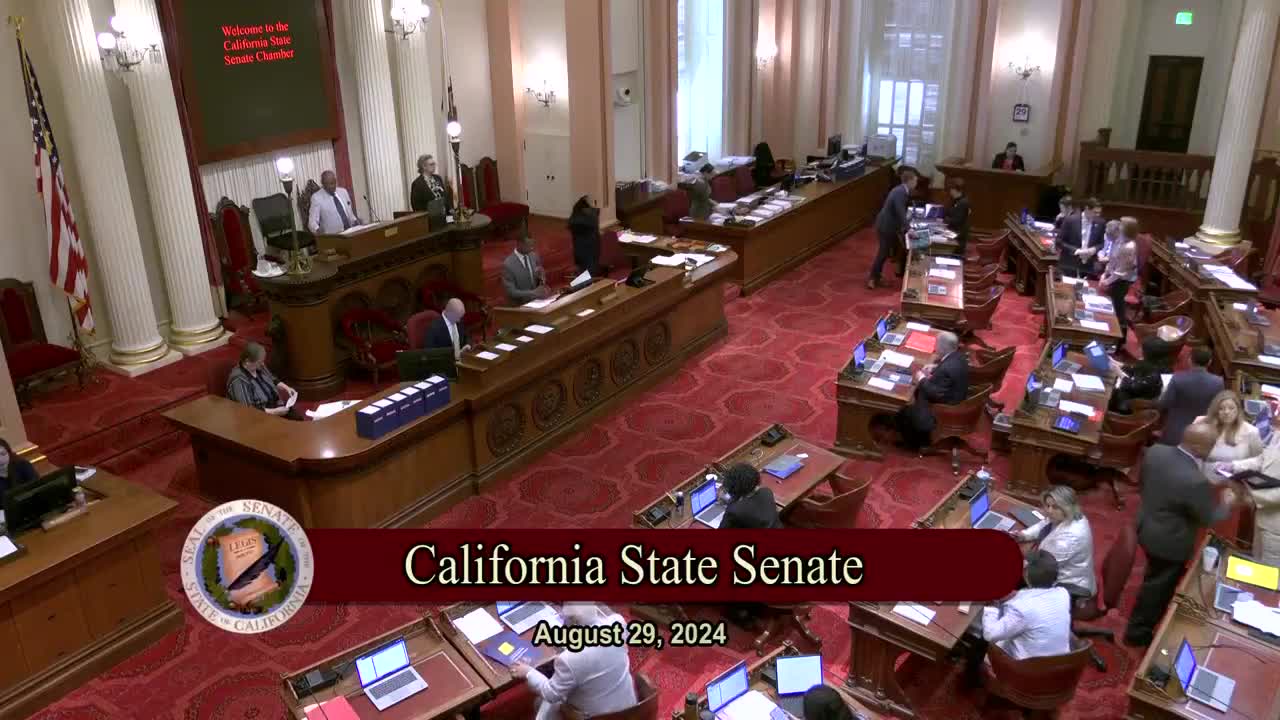 3MIN
Senate Floor
 1MIN
Assembly Floor
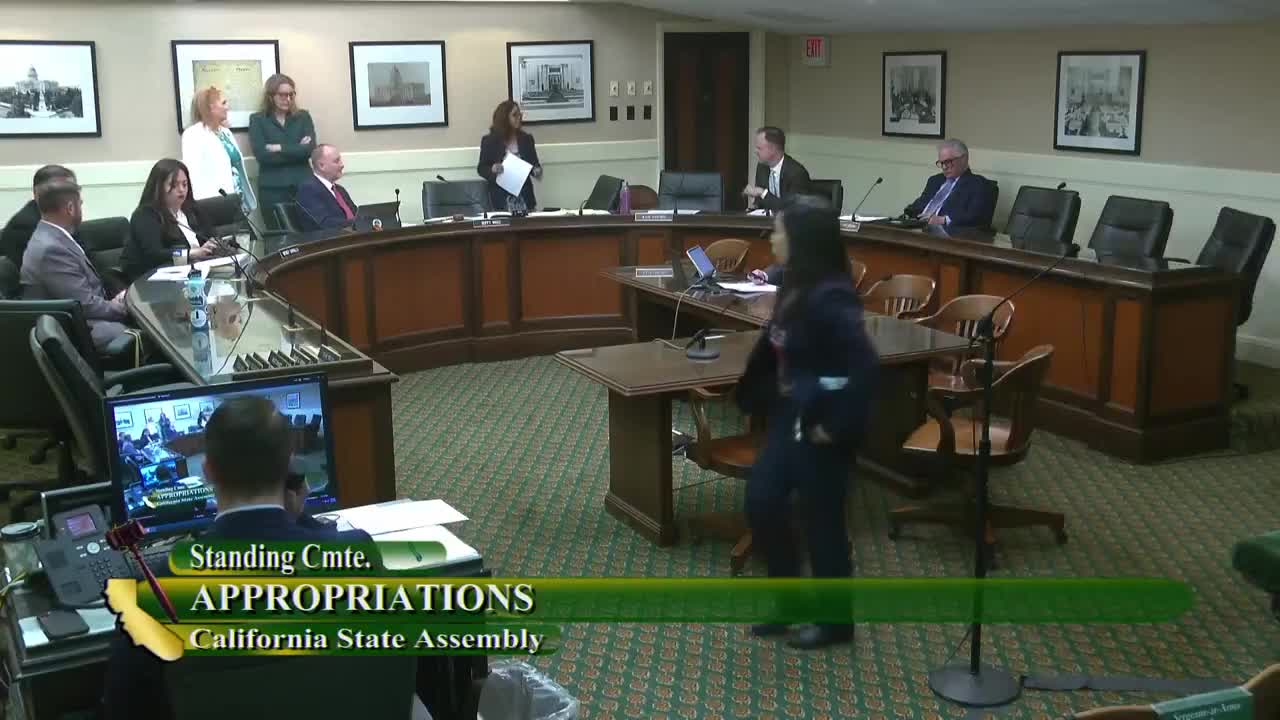 3MIN
Assembly Standing Committee on Appropriations
 14MIN
Assembly Standing Committee on Judiciary
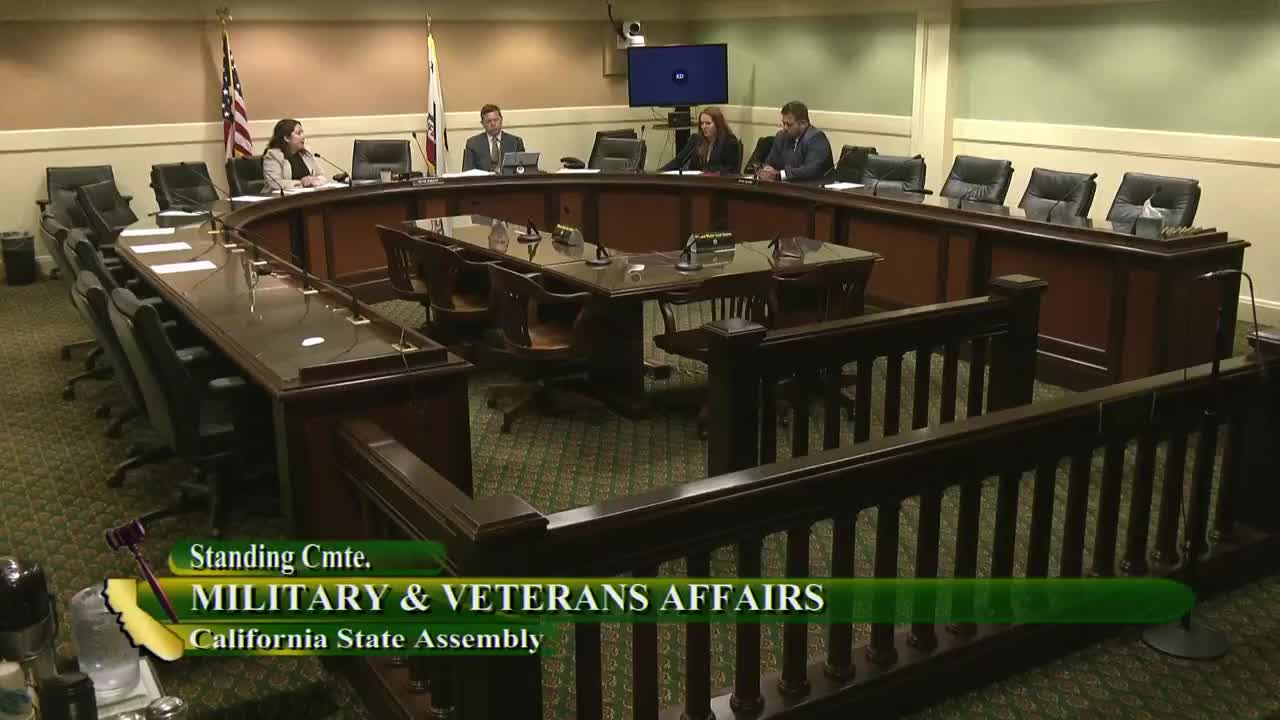 3MIN
Assembly Standing Committee on Military and Veterans Affairs
 6MIN
Senate Standing Committee on Military and Veterans Affairs
Bill Author
Bill Co-Author(s):