SB 906: Collegiate athletics: student athlete compensation.
- Session Year: 2023-2024
- House: Senate
- Latest Version Date: 2024-08-30
Current Status:
Failed
(2024-09-30: In Senate. Consideration of Governor's veto pending.)
Introduced
In Committee
First Chamber
In Committee
Second Chamber
Enacted
What does this bill do?
The bill requires any person or group that gives more than $5,000 to a college athlete, or to the athlete’s immediate family, tied to the athlete’s name, image, likeness, or athletic reputation to report the amount and other nonidentifying details to the athlete’s college. Colleges must publish yearly totals, broken down by sport and team gender, of those payments and of any material support, services, or revenue shared with their student athletes, while not publishing athletes’ names or other personal identifying information.
The summary is provided by generative AI which can make mistakes. For original language, please view the details in the table below.
Existing law prohibits California postsecondary educational institutions, and every athletic association, conference, or other group or organization with authority over intercollegiate athletics from (1) providing a prospective student athlete with compensation in relation to the athletes name, image, likeness, or athletic reputation, (2) preventing a student participating in intercollegiate athletics from earning compensation as a result of the use of the students name, image, likeness, or athletic reputation, and (3) preventing a student participating in intercollegiate athletics from obtaining professional representation in relation to contracts or legal matters. Existing law prohibits an athletic association, conference, or other group or organization with authority over intercollegiate athletics from preventing a postsecondary educational institution from participating in intercollegiate athletics as a result of the compensation of a student athlete for the use of the students name, image, likeness, or athletic reputation.
This bill would require a person or entity that provides compensation or any item of value or service in excess of $5,000 to a student athlete pursuant to the above provisions, or to the student athlete or student athletes immediate family in connection with, or in anticipation of, the student athletes participation in a postsecondary educational institutions athletic program, to disclose to the student athletes postsecondary educational institution, or anticipated postsecondary educational institution, certain information, including, among other information, the amount of compensation paid or the value of any item or service provided to the student athlete or the student athletes immediate family. The bill would prohibit the person or entity making those disclosures from including the name or any personally identifying information of a student athlete or their immediate family. The bill would require the postsecondary educational institution to make the total compensation and the value of the items and services publicly available, as provided.
This bill would require a postsecondary educational institution that provides material support or services to a student athlete in connection with the athletes receipt or potential receipt of compensation or items of value or services for the use of the athletes name, image, likeness, or athletic reputation to publicly disclose the total value of that material support or services provided to all of the postsecondary educational institutions student athletes, as provided. The bill would also require a postsecondary educational institution that shares revenues with student athletes to make publicly available the total value of the revenues shared with all of the postsecondary educational institutions student athletes, as provided.
To the extent the bill would impose additional duties on community college districts, the bill would impose a state-mandated local program.
The California Constitution requires the state to reimburse local agencies and school districts for certain costs mandated by the state. Statutory provisions establish procedures for making that reimbursement.
This bill would provide that, if the Commission on State Mandates determines that the bill contains costs mandated by the state, reimbursement for those costs shall be made pursuant to the statutory provisions noted above.
Existing law prohibits California postsecondary educational institutions, and every athletic association, conference, or other group or organization with authority over intercollegiate athletics from (1) providing a prospective student athlete with compensation in relation to the athletes name, image, likeness, or athletic reputation, (2) preventing a student participating in intercollegiate athletics from earning compensation as a result of the use of the students name, image, likeness, or athletic reputation, and (3) preventing a student participating in intercollegiate athletics from obtaining professional representation in relation to contracts or legal matters. Existing law prohibits an athletic association, conference, or other group or organization with authority over intercollegiate athletics from preventing a postsecondary educational institution from participating in intercollegiate athletics as a result of the compensation of a student athlete for the use of the students name, image, likeness, or athletic reputation.
This bill would require a person or entity that provides compensation or any item of value or service in excess of $5,000 to a student athlete pursuant to the above provisions, or to the student athlete or student athletes immediate family in connection with, or in anticipation of, the student athletes participation in a postsecondary educational institutions athletic program, to disclose to the student athletes postsecondary educational institution, or anticipated postsecondary educational institution, certain information, including, among other information, the amount of compensation paid or the value of any item or service provided to the student athlete or the student athletes immediate family. The bill would prohibit the person or entity making those disclosures from including the name or any personally identifying information of a student athlete or their immediate family. The bill would require the postsecondary educational institution to make the total compensation and the value of the items and services publicly available, as provided. The bill would also require
This bill would require a postsecondary educational institution that provides material support or services to a student athlete in connection with the athletes receipt or potential receipt of compensation or items of value or services for the use of the athletes name, image, likeness, or athletic reputation to publicly disclose the total value of that material support or services provided to all of the postsecondary educational institutions student athletes, as provided. To The bill would also require a postsecondary educational institution that shares revenues with student athletes to make publicly available the total value of the revenues shared with all of the postsecondary educational institutions student athletes, as provided.
To the extent the bill would impose additional duties on community college districts, the bill would impose a state-mandated local program.
The California Constitution requires the state to reimburse local agencies and school districts for certain costs mandated by the state. Statutory provisions establish procedures for making that reimbursement.
This bill would provide that, if the Commission on State Mandates determines that the bill contains costs mandated by the state, reimbursement for those costs shall be made pursuant to the statutory provisions noted above.
Existing law prohibits California postsecondary educational institutions, and every athletic association, conference, or other group or organization with authority over intercollegiate athletics from (1) providing a prospective student athlete with compensation in relation to the athletes name, image, likeness, or athletic reputation, (2) preventing a student participating in intercollegiate athletics from earning compensation as a result of the use of the students name, image, likeness, or athletic reputation, and (3) preventing a student participating in intercollegiate athletics from obtaining professional representation in relation to contracts or legal matters. Existing law prohibits an athletic association, conference, or other group or organization with authority over intercollegiate athletics from preventing a postsecondary educational institution from participating in intercollegiate athletics as a result of the compensation of a student athlete for the use of the students name, image, likeness, or athletic reputation.
This bill would require an a person or entity that provides compensation or any item of value or service in excess of $5,000 to a student athlete pursuant to the above provisions, or to the student athlete or student athletes immediate family in connection with, or in anticipation of, the student athletes participation in a postsecondary educational institutions athletic program, to disclose to the student athletes postsecondary educational institution institution, or anticipated postsecondary educational institution, certain information, including, among other information, the amount of compensation paid and or the value of any item or service provided to the student athlete or the student athletes immediate family. The bill would prohibit the person or entity making those disclosures from including the name or any personally identifying information of a student athlete or their immediate family. The bill would require the postsecondary educational institution to make the total compensation and the value of the items and services publicly available, as provided. The bill would also require a postsecondary educational institution that provides material support or services to a student athlete in relation to the athlete receiving connection with the athletes receipt or potential receipt of compensation or items of value or services for the use of the athletes name, image, likeness, or athletic reputation to publicly disclose the total value of that material support or services, services provided to all of the postsecondary educational institutions student athletes, as provided. To the extent the bill would impose additional duties on community college districts, the bill would impose a state-mandated local program.
The California Constitution requires the state to reimburse local agencies and school districts for certain costs mandated by the state. Statutory provisions establish procedures for making that reimbursement.
This bill would provide that, if the Commission on State Mandates determines that the bill contains costs mandated by the state, reimbursement for those costs shall be made pursuant to the statutory provisions noted above.
Existing law prohibits California postsecondary educational institutions, and every athletic association, conference, or other group or organization with authority over intercollegiate athletics from (1) providing a prospective student athlete with compensation in relation to the athletes name, image, likeness, or athletic reputation, (2) preventing a student participating in intercollegiate athletics from earning compensation as a result of the use of the students name, image, likeness, or athletic reputation, and (3) preventing a student participating in intercollegiate athletics from obtaining professional representation in relation to contracts or legal matters. Existing law prohibits an athletic association, conference, or other group or organization with authority over intercollegiate athletics from preventing a postsecondary educational institution from participating in intercollegiate athletics as a result of the compensation of a student athlete for the use of the students name, image, likeness, or athletic reputation.
This bill would require an entity that provides compensation or any item of value or service in excess of $5,000 to a student athlete pursuant to the above provisions, or to the student athletes immediate family in connection with, or in anticipation of, the student athletes participation in a postsecondary educational institutions athletic program, to disclose to the student athletes postsecondary educational institution certain information, including, among other information, the amount of compensation paid and the value of any item or service provided to the student athlete or the student athletes immediate family. The bill would require the postsecondary educational institution to make that information the total compensation and the value of the items and services publicly available. available, as provided. The bill would also require a postsecondary educational institution that provides material support or services to a student athlete in relation to the athlete receiving compensation or items of value or services for the use of the athletes name, image, likeness, or athletic reputation to publicly disclose the total value of that material support, support or services, as provided. To the extent the bill would impose additional duties on community college districts, the bill would impose a state-mandated local program.
The California Constitution requires the state to reimburse local agencies and school districts for certain costs mandated by the state. Statutory provisions establish procedures for making that reimbursement.
This bill would provide that, if the Commission on State Mandates determines that the bill contains costs mandated by the state, reimbursement for those costs shall be made pursuant to the statutory provisions noted above.
Existing law prohibits California postsecondary educational institutions, and every athletic association, conference, or other group or organization with authority over intercollegiate athletics from (1) providing a prospective student athlete with compensation in relation to the athletes name, image, likeness, or athletic reputation, (2) preventing a student participating in intercollegiate athletics from earning compensation as a result of the use of the students name, image, likeness, or athletic reputation, and (3) preventing a student participating in intercollegiate athletics from obtaining professional representation in relation to contracts or legal matters. Existing law prohibits an athletic association, conference, or other group or organization with authority over intercollegiate athletics from preventing a postsecondary educational institution from participating in intercollegiate athletics as a result of the compensation of a student athlete for the use of the students name, image, likeness, or athletic reputation.
This bill would require an entity that provides compensation or any item of value or service to a student athlete pursuant to the above provisions, or to the student athletes immediate family pursuant to the above provisions in connection with, or in anticipation of, the student athletes participation in a postsecondary educational institutions athletic program, to disclose to the student athletes postsecondary educational institution certain information, including, among other information, the amount of compensation paid and the value of any item or service provided to the student athlete or the student athletes immediate family. The bill would require the postsecondary educational institution to make that information publicly available. The bill would also require a postsecondary educational institution that provides material support or services to a student athlete in relation to the athlete receiving compensation or items of value or services for the use of the athletes name, image, likeness, or athletic reputation to publicly disclose the total value of that material support, as provided. To the extent the bill would impose additional duties on community college districts, the bill would impose a state-mandated local program.
The California Constitution requires the state to reimburse local agencies and school districts for certain costs mandated by the state. Statutory provisions establish procedures for making that reimbursement.
This bill would provide that, if the Commission on State Mandates determines that the bill contains costs mandated by the state, reimbursement for those costs shall be made pursuant to the statutory provisions noted above.
Existing law prohibits California postsecondary educational institutions, and every athletic association, conference, or other group or organization with authority over intercollegiate athletics from (1) providing a prospective student athlete with compensation in relation to the athletes name, image, likeness, or athletic reputation, (2) preventing a student participating in intercollegiate athletics from earning compensation as a result of the use of the students name, image, likeness, or athletic reputation, and (3) preventing a student participating in intercollegiate athletics from obtaining professional representation in relation to contracts or legal matters. Existing law prohibits an athletic association, conference, or other group or organization with authority over intercollegiate athletics from preventing a postsecondary educational institution from participating in intercollegiate athletics as a result of the compensation of a student athlete for the use of the students name, image, likeness, or athletic reputation.
This bill would require an entity that provides compensation or any item of value or service to a student athlete or the student athletes immediate family pursuant to the above provisions to disclose to the student athletes postsecondary educational institution certain information, including, among other information, the amount of compensation paid and the value of any item or service provided to the student athlete or the student athletes immediate family. The bill would require the postsecondary educational institution to make that information publicly available. The bill would also require a postsecondary educational institution that provides material support or services to a student athlete in relation to the athlete receiving compensation or items of value or services for the use of the athletes name, image, likeness, or athletic reputation to publicly disclose the total value of that material support, as provided. To the extent the bill would impose additional duties on community college districts, the bill would impose a state-mandated local program.
The California Constitution requires the state to reimburse local agencies and school districts for certain costs mandated by the state. Statutory provisions establish procedures for making that reimbursement.
This bill would provide that, if the Commission on State Mandates determines that the bill contains costs mandated by the state, reimbursement for those costs shall be made pursuant to the statutory provisions noted above.
Existing law establishes a Student Athlete Bill of Rights, which, among other things, provides for the protection of athletic scholarships for student athletes and requires certain institutions of higher education to pay the premiums for specified student athletes for insurance for claims resulting from their participation in those institutions athletic programs. Existing law defines terms for purposes of the provisions granting these rights to student athletes.This bill would make nonsubstantive changes to certain of these definitions.Existing law establishes a Student Athlete Bill of Rights, which, among other things, provides for the protection of athletic scholarships for student athletes and requires certain institutions of higher education to pay the premiums for specified student athletes for insurance for claims resulting from their participation in those institutions athletic programs. Existing law defines terms for purposes of the provisions granting these rights to student athletes.
This bill would make nonsubstantive changes to certain of these definitions.
(a)(1)A postsecondary educational institution shall not uphold any rule, requirement, standard, or other limitation that prevents a student of that institution participating in intercollegiate athletics from earning compensation as a result of the use of the students name, image, likeness, or athletic reputation. Earning compensation from the use of a students name, image, likeness, or athletic reputation shall not affect the students scholarship eligibility.
(2)An athletic association, conference, or other group or organization with authority over intercollegiate athletics, including, but not limited to, the National Collegiate Athletic Association, shall not prevent a student of a postsecondary educational institution participating in intercollegiate athletics from earning compensation as a result of the use of the students name, image, likeness, or athletic reputation.
(3)An athletic association, conference, or other group or organization with authority over intercollegiate athletics, including, but not limited to, the National Collegiate Athletic Association, shall not prevent a postsecondary educational institution from participating in intercollegiate athletics as a result of the compensation of a student athlete for the use of the students name, image, likeness, or athletic reputation.
(b)A postsecondary educational institution, athletic association, conference, or other group or organization with authority over intercollegiate athletics shall not provide a prospective student athlete with compensation in relation to the athletes name, image, likeness, or athletic reputation.
(c)(1)A postsecondary educational institution, athletic association, conference, or other group or organization with authority over intercollegiate athletics shall not prevent a California student participating in intercollegiate athletics from obtaining professional representation in relation to contracts or legal matters, including, but not limited to, representation provided by athlete agents or legal representation provided by attorneys.
(2)Professional representation obtained by student athletes shall be from persons licensed by the state. Professional representation provided by athlete agents shall be by persons licensed pursuant to Chapter 2.5 (commencing with Section 18895) of Division 8 of the Business and Professions Code. Legal representation of student athletes shall be by attorneys licensed pursuant to Article 1 (commencing with Section 6000) of Chapter 4 of Division 3 of the Business and Professions Code.
(3)Athlete agents representing student athletes shall comply with the federal Sports Agent Responsibility and Trust Act, established in Chapter 104 (commencing with Section 7801) of Title 15 of the United States Code, in their relationships with student athletes.
(d)A scholarship from the postsecondary educational institution in which a student is enrolled that provides the student with the cost of attendance at that institution is not compensation for purposes of this section, and a scholarship shall not be revoked as a result of earning compensation or obtaining legal representation pursuant to this section.
(e)(1)A student athlete shall not enter into a contract providing compensation to the athlete for use of the athletes name, image, likeness, or athletic reputation if a provision of the contract is in conflict with a provision of the athletes team contract.
(2)A student athlete who enters into a contract providing compensation to the athlete for use of the athletes name, image, likeness, or athletic reputation shall disclose the contract to an official of the institution, to be designated by the institution.
(3)An institution asserting a conflict described in paragraph (1) shall disclose to the athlete or the athletes legal representation the relevant contractual provisions that are in conflict.
(f)A team contract of a postsecondary educational institutions athletic program shall not prevent a student athlete from using the athletes name, image, likeness, or athletic reputation for a commercial purpose when the athlete is not engaged in official team activities. It is the intent of the Legislature that this prohibition shall apply only to contracts entered into, modified, or renewed on or after September 1, 2021.
(g)(1)(A)Any person or entity that provides compensation or any item of value or service in excess of five thousand dollars ($5,000) to a student athlete pursuant to this section, or to the student athlete or the student athletes immediate family in connection with, or in anticipation of, the student athletes participation in a postsecondary educational institutions athletic program, shall disclose to the student athletes postsecondary educational institution, or anticipated postsecondary educational institution, all of the following information:
(i)The amount of compensation or the value of the item or service provided to the student athlete or the student athletes immediate family.
(ii)The athletic team for which the student athlete currently plays or the team for which it is anticipated the student athlete will play, including whether the team is a mens team, womens team, or mixed-gender team.
(iii)The total amount of compensation and the value of the items and services provided to all student athletes at the postsecondary educational institution each academic year disaggregated by athletic sport and gender of the team.
(B)The person or entity making the disclosures required pursuant to subparagraph (A) shall not include the name or any personally identifying information of a student athlete or their immediate family.
(2)(A)The postsecondary educational institution shall make the information described in subparagraph (B) publicly available.
(B)The total amount of compensation and the value of the items and services provided to student athletes at the postsecondary educational institution each academic year as reported pursuant to clause (iii) of subparagraph (A) of paragraph (1) disaggregated by athletic sport and gender of the team.
(h)A postsecondary educational institution that provides material support or services to a student athlete in connection with the athletes receipt, or potential receipt, of compensation or items of value or services for the use of the athletes name, image, likeness, or athletic reputation shall make publicly available the total value of the material support or services provided to all of the postsecondary educational institutions student athletes each academic year, disaggregated by athletic sport and gender of the team.
(i)A postsecondary educational institution that shares revenues with student athletes shall make publicly available the total value of the revenues shared with all of the postsecondary educational institutions student athletes each academic year, disaggregated by athletic sport and gender of the team.
(j)For purposes of this section, the following definitions apply:
(1)Postsecondary educational institution means any campus of the University of California, the California State University, the California Community Colleges, an independent institution of higher education, as defined in Section 66010, or a private postsecondary educational institution, as defined in Section 94858.
(2)Student athlete means any college student who participates in an intercollegiate athletic program of a postsecondary educational institution, and includes student athletes who participate in basketball, football, and other intercollegiate sports.
SEC. 2.If the Commission on State Mandates determines that this act contains costs mandated by the state, reimbursement to local agencies and school districts for those costs shall be made pursuant to Part 7 (commencing with Section 17500) of Division 4 of Title 2 of the Government Code.
(a)(1)A postsecondary educational institution shall not uphold any rule, requirement, standard, or other limitation that prevents a student of that institution participating in intercollegiate athletics from earning compensation as a result of the use of the students name, image, likeness, or athletic reputation. Earning compensation from the use of a students name, image, likeness, or athletic reputation shall not affect the students scholarship eligibility.
(2)An athletic association, conference, or other group or organization with authority over intercollegiate athletics, including, but not limited to, the National Collegiate Athletic Association, shall not prevent a student of a postsecondary educational institution participating in intercollegiate athletics from earning compensation as a result of the use of the students name, image, likeness, or athletic reputation.
(3)An athletic association, conference, or other group or organization with authority over intercollegiate athletics, including, but not limited to, the National Collegiate Athletic Association, shall not prevent a postsecondary educational institution from participating in intercollegiate athletics as a result of the compensation of a student athlete for the use of the students name, image, likeness, or athletic reputation.
(b)A postsecondary educational institution, athletic association, conference, or other group or organization with authority over intercollegiate athletics shall not provide a prospective student athlete with compensation in relation to the athletes name, image, likeness, or athletic reputation.
(c)(1)A postsecondary educational institution, athletic association, conference, or other group or organization with authority over intercollegiate athletics shall not prevent a California student participating in intercollegiate athletics from obtaining professional representation in relation to contracts or legal matters, including, but not limited to, representation provided by athlete agents or legal representation provided by attorneys.
(2)Professional representation obtained by student athletes shall be from persons licensed by the state. Professional representation provided by athlete agents shall be by persons licensed pursuant to Chapter 2.5 (commencing with Section 18895) of Division 8 of the Business and Professions Code. Legal representation of student athletes shall be by attorneys licensed pursuant to Article 1 (commencing with Section 6000) of Chapter 4 of Division 3 of the Business and Professions Code.
(3)Athlete agents representing student athletes shall comply with the federal Sports Agent Responsibility and Trust Act, established in Chapter 104 (commencing with Section 7801) of Title 15 of the United States Code, in their relationships with student athletes.
(d)A scholarship from the postsecondary educational institution in which a student is enrolled that provides the student with the cost of attendance at that institution is not compensation for purposes of this section, and a scholarship shall not be revoked as a result of earning compensation or obtaining legal representation pursuant to this section.
(e)(1)A student athlete shall not enter into a contract providing compensation to the athlete for use of the athletes name, image, likeness, or athletic reputation if a provision of the contract is in conflict with a provision of the athletes team contract.
(2)A student athlete who enters into a contract providing compensation to the athlete for use of the athletes name, image, likeness, or athletic reputation shall disclose the contract to an official of the institution, to be designated by the institution.
(3)An institution asserting a conflict described in paragraph (1) shall disclose to the athlete or the athletes legal representation the relevant contractual provisions that are in conflict.
(f)A team contract of a postsecondary educational institutions athletic program shall not prevent a student athlete from using the athletes name, image, likeness, or athletic reputation for a commercial purpose when the athlete is not engaged in official team activities. It is the intent of the Legislature that this prohibition shall apply only to contracts entered into, modified, or renewed on or after September 1, 2021.
(g)(1)(A)Any person or entity that provides compensation or any item of value or service in excess of five thousand dollars ($5,000) to a student athlete pursuant to this section, or to the student athlete or the student athletes immediate family in connection with, or in anticipation of, the student athletes participation in a postsecondary educational institutions athletic program, shall disclose to the student athletes postsecondary educational institution, or anticipated postsecondary educational institution, all of the following information:
(i)The amount of compensation or the value of the item or service provided to the student athlete or the student athletes immediate family.
(ii)The athletic team for which the student athlete currently plays or the team for which it is anticipated the student athlete will play, including whether the team is a mens team, womens team, or mixed-gender team.
(iii)The total amount of compensation and the value of the items and services provided to all student athletes at the postsecondary educational institution each academic year disaggregated by athletic sport and gender of the team.
(B)The person or entity making the disclosures required pursuant to subparagraph (A) shall not include the name or any personally identifying information of a student athlete or their immediate family.
(2)(A)The postsecondary educational institution shall make the information described in subparagraph (B) publicly available.
(B)The total amount of compensation and the value of the items and services provided to student athletes at the postsecondary educational institution each academic year as reported pursuant to clause (iii) of subparagraph (A) of paragraph (1) disaggregated by athletic sport and gender of the team.
(h)A postsecondary educational institution that provides material support or services to a student athlete in connection with the athletes receipt, or potential receipt, of compensation or items of value or services for the use of the athletes name, image, likeness, or athletic reputation shall make publicly available the total value of the material support or services provided to all of the postsecondary educational institutions student athletes each academic year, disaggregated by athletic sport and gender of the team.
(i)A postsecondary educational institution that shares revenues with student athletes shall make publicly available the total value of the revenues shared with all of the postsecondary educational institutions student athletes each academic year, disaggregated by athletic sport and gender of the team.
(i)(j)For purposes of this section, the following definitions apply:
(1)Postsecondary educational institution means any campus of the University of California, the California State University, the California Community Colleges, an independent institution of higher education, as defined in Section 66010, or a private postsecondary educational institution, as defined in Section 94858.
(2)Student athlete means any college student who participates in an intercollegiate athletic program of a postsecondary educational institution, and includes student athletes who participate in basketball, football, and other intercollegiate sports.
SEC. 2.If the Commission on State Mandates determines that this act contains costs mandated by the state, reimbursement to local agencies and school districts for those costs shall be made pursuant to Part 7 (commencing with Section 17500) of Division 4 of Title 2 of the Government Code.
REVISIONS: HeadingLine 2.(a)(1)A postsecondary educational institution shall not uphold any rule, requirement, standard, or other limitation that prevents a student of that institution participating in intercollegiate athletics from earning compensation as a result of the use of the students name, image, likeness, or athletic reputation. Earning compensation from the use of a students name, image, likeness, or athletic reputation shall not affect the students scholarship eligibility.
(2)An athletic association, conference, or other group or organization with authority over intercollegiate athletics, including, but not limited to, the National Collegiate Athletic Association, shall not prevent a student of a postsecondary educational institution participating in intercollegiate athletics from earning compensation as a result of the use of the students name, image, likeness, or athletic reputation.
(3)An athletic association, conference, or other group or organization with authority over intercollegiate athletics, including, but not limited to, the National Collegiate Athletic Association, shall not prevent a postsecondary educational institution from participating in intercollegiate athletics as a result of the compensation of a student athlete for the use of the students name, image, likeness, or athletic reputation.
(b)A postsecondary educational institution, athletic association, conference, or other group or organization with authority over intercollegiate athletics shall not provide a prospective student athlete with compensation in relation to the athletes name, image, likeness, or athletic reputation.
(c)(1)A postsecondary educational institution, athletic association, conference, or other group or organization with authority over intercollegiate athletics shall not prevent a California student participating in intercollegiate athletics from obtaining professional representation in relation to contracts or legal matters, including, but not limited to, representation provided by athlete agents or legal representation provided by attorneys.
(2)Professional representation obtained by student athletes shall be from persons licensed by the state. Professional representation provided by athlete agents shall be by persons licensed pursuant to Chapter 2.5 (commencing with Section 18895) of Division 8 of the Business and Professions Code. Legal representation of student athletes shall be by attorneys licensed pursuant to Article 1 (commencing with Section 6000) of Chapter 4 of Division 3 of the Business and Professions Code.
(3)Athlete agents representing student athletes shall comply with the federal Sports Agent Responsibility and Trust Act, established in Chapter 104 (commencing with Section 7801) of Title 15 of the United States Code, in their relationships with student athletes.
(d)A scholarship from the postsecondary educational institution in which a student is enrolled that provides the student with the cost of attendance at that institution is not compensation for purposes of this section, and a scholarship shall not be revoked as a result of earning compensation or obtaining legal representation pursuant to this section.
(e)(1)A student athlete shall not enter into a contract providing compensation to the athlete for use of the athletes name, image, likeness, or athletic reputation if a provision of the contract is in conflict with a provision of the athletes team contract.
(2)A student athlete who enters into a contract providing compensation to the athlete for use of the athletes name, image, likeness, or athletic reputation shall disclose the contract to an official of the institution, to be designated by the institution.
(3)An institution asserting a conflict described in paragraph (1) shall disclose to the athlete or the athletes legal representation the relevant contractual provisions that are in conflict.
(f)A team contract of a postsecondary educational institutions athletic program shall not prevent a student athlete from using the athletes name, image, likeness, or athletic reputation for a commercial purpose when the athlete is not engaged in official team activities. It is the intent of the Legislature that this prohibition shall apply only to contracts entered into, modified, or renewed on or after September 1, 2021.
(g)(1)(A)Any person or entity that provides compensation or any item of value or service in excess of five thousand dollars ($5,000) to a student athlete pursuant to this section, or to the student athlete or the student athletes immediate family in connection with, or in anticipation of, the student athletes participation in a postsecondary educational institutions athletic program, shall disclose to the student athletes postsecondary educational institution institution, or anticipated postsecondary educational institution, all of the following information:
(A)(i)The amount of compensation and or the value of the item or service provided to the student athlete or the student athletes immediate family.
(B)(ii)The athletic team for which the student athlete currently plays or the team for which it is anticipated the student athlete will play. play, including whether the team is a mens team, womens team, or mixed-gender team.
(C)The student athletes gender identity.(D)(iii)The total amount of compensation and the value of the items and services provided to all student athletes at the postsecondary educational institution each academic year disaggregated by athletic sport and gender. gender of the team.
(B)The person or entity making the disclosures required pursuant to subparagraph (A) shall not include the name or any personally identifying information of a student athlete or their immediate family.
(2)(A)The postsecondary educational institution shall make the information described in subparagraph (B) publicly available.
(B)The total amount of compensation and the value of the items and services provided to student athletes at the postsecondary educational institution each academic year as reported pursuant to clause (iii) of subparagraph (D) (A) of paragraph (1) disaggregated by athletic sport and gender. gender of the team.
(h)(1)A postsecondary educational institution that provides material support or services to a student athlete in relation to the athlete receiving connection with the athletes receipt, or potential receipt, of compensation or items of value or services for the use of the athletes name, image, likeness, or athletic reputation shall make the information described in paragraph (2) publicly available.
(2)The available the total value of the material support or services provided to all of the postsecondary educational institutions student athletes in relation to those athletes receiving compensation or items of value or services for the use of the athletes name, image, likeness, or athletic reputation each academic year year, disaggregated by athletic sport and gender. gender of the team.
(i)For purposes of this section, postsecondary the following definitions apply:
(1)Postsecondary educational institution means any campus of the University of California, the California State University, the California Community Colleges, an independent institution of higher education, as defined in Section 66010, or a private postsecondary educational institution, as defined in Section 94858.
(2)Student athlete means any college student who participates in an intercollegiate athletic program of a postsecondary educational institution, and includes student athletes who participate in basketball, football, and other intercollegiate sports.
SEC. 2.If the Commission on State Mandates determines that this act contains costs mandated by the state, reimbursement to local agencies and school districts for those costs shall be made pursuant to Part 7 (commencing with Section 17500) of Division 4 of Title 2 of the Government Code.
(a)(1)A postsecondary educational institution shall not uphold any rule, requirement, standard, or other limitation that prevents a student of that institution participating in intercollegiate athletics from earning compensation as a result of the use of the students name, image, likeness, or athletic reputation. Earning compensation from the use of a students name, image, likeness, or athletic reputation shall not affect the students scholarship eligibility.
(2)An athletic association, conference, or other group or organization with authority over intercollegiate athletics, including, but not limited to, the National Collegiate Athletic Association, shall not prevent a student of a postsecondary educational institution participating in intercollegiate athletics from earning compensation as a result of the use of the students name, image, likeness, or athletic reputation.
(3)An athletic association, conference, or other group or organization with authority over intercollegiate athletics, including, but not limited to, the National Collegiate Athletic Association, shall not prevent a postsecondary educational institution from participating in intercollegiate athletics as a result of the compensation of a student athlete for the use of the students name, image, likeness, or athletic reputation.
(b)A postsecondary educational institution, athletic association, conference, or other group or organization with authority over intercollegiate athletics shall not provide a prospective student athlete with compensation in relation to the athletes name, image, likeness, or athletic reputation.
(c)(1)A postsecondary educational institution, athletic association, conference, or other group or organization with authority over intercollegiate athletics shall not prevent a California student participating in intercollegiate athletics from obtaining professional representation in relation to contracts or legal matters, including, but not limited to, representation provided by athlete agents or legal representation provided by attorneys.
(2)Professional representation obtained by student athletes shall be from persons licensed by the state. Professional representation provided by athlete agents shall be by persons licensed pursuant to Chapter 2.5 (commencing with Section 18895) of Division 8 of the Business and Professions Code. Legal representation of student athletes shall be by attorneys licensed pursuant to Article 1 (commencing with Section 6000) of Chapter 4 of Division 3 of the Business and Professions Code.
(3)Athlete agents representing student athletes shall comply with the federal Sports Agent Responsibility and Trust Act, established in Chapter 104 (commencing with Section 7801) of Title 15 of the United States Code, in their relationships with student athletes.
(d)A scholarship from the postsecondary educational institution in which a student is enrolled that provides the student with the cost of attendance at that institution is not compensation for purposes of this section, and a scholarship shall not be revoked as a result of earning compensation or obtaining legal representation pursuant to this section.
(e)(1)A student athlete shall not enter into a contract providing compensation to the athlete for use of the athletes name, image, likeness, or athletic reputation if a provision of the contract is in conflict with a provision of the athletes team contract.
(2)A student athlete who enters into a contract providing compensation to the athlete for use of the athletes name, image, likeness, or athletic reputation shall disclose the contract to an official of the institution, to be designated by the institution.
(3)An institution asserting a conflict described in paragraph (1) shall disclose to the athlete or the athletes legal representation the relevant contractual provisions that are in conflict.
(f)A team contract of a postsecondary educational institutions athletic program shall not prevent a student athlete from using the athletes name, image, likeness, or athletic reputation for a commercial purpose when the athlete is not engaged in official team activities. It is the intent of the Legislature that this prohibition shall apply only to contracts entered into, modified, or renewed on or after September 1, 2021.
(g)(1)Any entity that provides compensation or any item of value or service in excess of five thousand dollars ($5,000) to a student athlete pursuant to this section, or to the student athletes immediate family in connection with, or in anticipation of, the student athletes participation in a postsecondary educational institutions athletic program, shall disclose to the student athletes postsecondary educational institution all of the following information:
(A)The amount of compensation and the value of the item or service provided to the student athlete or the student athletes immediate family.
(B)The athletic team for which the student athlete currently plays or the team for which it is anticipated the student athlete will play.
(C)The student athletes gender. gender identity.
(D)The total amount of compensation and the value of the items and services provided to all student athletes at the postsecondary educational institution each academic year disaggregated by athletic sport and gender.
(2)(A)The postsecondary educational institution shall make the information received pursuant to paragraph (1) described in subparagraph (B) publicly available.
(B)The total amount of compensation and the value of the items and services provided to student athletes at the postsecondary educational institution each academic year as reported pursuant to subparagraph (D) of paragraph (1) disaggregated by athletic sport and gender.
(h)(1)A postsecondary educational institution that provides material support or services to a student athlete in relation to the athlete receiving compensation or items of value or services for the use of the athletes name, image, likeness, or athletic reputation shall make the information described in paragraph (2) publicly available.
(2)The total value of the material support or services provided to student athletes in relation to those athletes receiving compensation or items of value or services for the use of the athletes name, image, likeness, or athletic reputation each academic year disaggregated by athletic sport and gender.
(i)For purposes of this section, postsecondary educational institution means any campus of the University of California, the California State University, the California Community Colleges, an independent institution of higher education, as defined in Section 66010, or a private postsecondary educational institution, as defined in Section 94858.
SEC. 2.If the Commission on State Mandates determines that this act contains costs mandated by the state, reimbursement to local agencies and school districts for those costs shall be made pursuant to Part 7 (commencing with Section 17500) of Division 4 of Title 2 of the Government Code.
(a)(1)A postsecondary educational institution shall not uphold any rule, requirement, standard, or other limitation that prevents a student of that institution participating in intercollegiate athletics from earning compensation as a result of the use of the students name, image, likeness, or athletic reputation. Earning compensation from the use of a students name, image, likeness, or athletic reputation shall not affect the students scholarship eligibility.
(2)An athletic association, conference, or other group or organization with authority over intercollegiate athletics, including, but not limited to, the National Collegiate Athletic Association, shall not prevent a student of a postsecondary educational institution participating in intercollegiate athletics from earning compensation as a result of the use of the students name, image, likeness, or athletic reputation.
(3)An athletic association, conference, or other group or organization with authority over intercollegiate athletics, including, but not limited to, the National Collegiate Athletic Association, shall not prevent a postsecondary educational institution from participating in intercollegiate athletics as a result of the compensation of a student athlete for the use of the students name, image, likeness, or athletic reputation.
(b)A postsecondary educational institution, athletic association, conference, or other group or organization with authority over intercollegiate athletics shall not provide a prospective student athlete with compensation in relation to the athletes name, image, likeness, or athletic reputation.
(c)(1)A postsecondary educational institution, athletic association, conference, or other group or organization with authority over intercollegiate athletics shall not prevent a California student participating in intercollegiate athletics from obtaining professional representation in relation to contracts or legal matters, including, but not limited to, representation provided by athlete agents or legal representation provided by attorneys.
(2)Professional representation obtained by student athletes shall be from persons licensed by the state. Professional representation provided by athlete agents shall be by persons licensed pursuant to Chapter 2.5 (commencing with Section 18895) of Division 8 of the Business and Professions Code. Legal representation of student athletes shall be by attorneys licensed pursuant to Article 1 (commencing with Section 6000) of Chapter 4 of Division 3 of the Business and Professions Code.
(3)Athlete agents representing student athletes shall comply with the federal Sports Agent Responsibility and Trust Act, established in Chapter 104 (commencing with Section 7801) of Title 15 of the United States Code, in their relationships with student athletes.
(d)A scholarship from the postsecondary educational institution in which a student is enrolled that provides the student with the cost of attendance at that institution is not compensation for purposes of this section, and a scholarship shall not be revoked as a result of earning compensation or obtaining legal representation pursuant to this section.
(e)(1)A student athlete shall not enter into a contract providing compensation to the athlete for use of the athletes name, image, likeness, or athletic reputation if a provision of the contract is in conflict with a provision of the athletes team contract.
(2)A student athlete who enters into a contract providing compensation to the athlete for use of the athletes name, image, likeness, or athletic reputation shall disclose the contract to an official of the institution, to be designated by the institution.
(3)An institution asserting a conflict described in paragraph (1) shall disclose to the athlete or the athletes legal representation the relevant contractual provisions that are in conflict.
(f)A team contract of a postsecondary educational institutions athletic program shall not prevent a student athlete from using the athletes name, image, likeness, or athletic reputation for a commercial purpose when the athlete is not engaged in official team activities. It is the intent of the Legislature that this prohibition shall apply only to contracts entered into, modified, or renewed on or after September 1, 2021.
(g)(1)Any entity that provides compensation or any item of value or service to a student athlete pursuant to this section, or to the student athletes immediate family pursuant to this section in connection with, or in anticipation of, the student athletes participation in a postsecondary educational institutions athletic program, shall disclose to the student athletes postsecondary educational institution all of the following information:
(A)The amount of compensation and the value of the item or service provided to the student athlete or the student athletes immediate family.
(B)The athletic team for which the student athlete currently plays or the team for which it is anticipated the student athlete will play.
(C)The student athletes gender.
(D)The total amount of compensation and the value of the items and services provided to all student athletes at the postsecondary educational institution each academic year disaggregated by athletic sport and gender.
(2)The postsecondary educational institution shall make the information received pursuant to paragraph (1) publicly available.
(h)(1)A postsecondary educational institution that provides material support or services to a student athlete in relation to the athlete receiving compensation or items of value or services for the use of the athletes name, image, likeness, or athletic reputation shall make the following information described in paragraph (2) publicly available: available.
(2)The total value of the material support or services provided to student athletes in relation to those athletes receiving compensation or items of value or services for the use of the athletes name, image, likeness, or athletic reputation each academic year disaggregated by athletic sport and gender.
(i)For purposes of this section, postsecondary educational institution means any campus of the University of California, the California State University, the California Community Colleges, an independent institution of higher education, as defined in Section 66010, or a private postsecondary educational institution, as defined in Section 94858.
SEC. 2.If the Commission on State Mandates determines that this act contains costs mandated by the state, reimbursement to local agencies and school districts for those costs shall be made pursuant to Part 7 (commencing with Section 17500) of Division 4 of Title 2 of the Government Code.
(a)(1)A postsecondary educational institution shall not uphold any rule, requirement, standard, or other limitation that prevents a student of that institution participating in intercollegiate athletics from earning compensation as a result of the use of the students name, image, likeness, or athletic reputation. Earning compensation from the use of a students name, image, likeness, or athletic reputation shall not affect the students scholarship eligibility.
(2)An athletic association, conference, or other group or organization with authority over intercollegiate athletics, including, but not limited to, the National Collegiate Athletic Association, shall not prevent a student of a postsecondary educational institution participating in intercollegiate athletics from earning compensation as a result of the use of the students name, image, likeness, or athletic reputation.
(3)An athletic association, conference, or other group or organization with authority over intercollegiate athletics, including, but not limited to, the National Collegiate Athletic Association, shall not prevent a postsecondary educational institution from participating in intercollegiate athletics as a result of the compensation of a student athlete for the use of the students name, image, likeness, or athletic reputation.
(b)A postsecondary educational institution, athletic association, conference, or other group or organization with authority over intercollegiate athletics shall not provide a prospective student athlete with compensation in relation to the athletes name, image, likeness, or athletic reputation.
(c)(1)A postsecondary educational institution, athletic association, conference, or other group or organization with authority over intercollegiate athletics shall not prevent a California student participating in intercollegiate athletics from obtaining professional representation in relation to contracts or legal matters, including, but not limited to, representation provided by athlete agents or legal representation provided by attorneys.
(2)Professional representation obtained by student athletes shall be from persons licensed by the state. Professional representation provided by athlete agents shall be by persons licensed pursuant to Chapter 2.5 (commencing with Section 18895) of Division 8 of the Business and Professions Code. Legal representation of student athletes shall be by attorneys licensed pursuant to Article 1 (commencing with Section 6000) of Chapter 4 of Division 3 of the Business and Professions Code.
(3)Athlete agents representing student athletes shall comply with the federal Sports Agent Responsibility and Trust Act, established in Chapter 104 (commencing with Section 7801) of Title 15 of the United States Code, in their relationships with student athletes.
(d)A scholarship from the postsecondary educational institution in which a student is enrolled that provides the student with the cost of attendance at that institution is not compensation for purposes of this section, and a scholarship shall not be revoked as a result of earning compensation or obtaining legal representation pursuant to this section.
(e)(1)A student athlete shall not enter into a contract providing compensation to the athlete for use of the athletes name, image, likeness, or athletic reputation if a provision of the contract is in conflict with a provision of the athletes team contract.
(2)A student athlete who enters into a contract providing compensation to the athlete for use of the athletes name, image, likeness, or athletic reputation shall disclose the contract to an official of the institution, to be designated by the institution.
(3)An institution asserting a conflict described in paragraph (1) shall disclose to the athlete or the athletes legal representation the relevant contractual provisions that are in conflict.
(f)A team contract of a postsecondary educational institutions athletic program shall not prevent a student athlete from using the athletes name, image, likeness, or athletic reputation for a commercial purpose when the athlete is not engaged in official team activities. It is the intent of the Legislature that this prohibition shall apply only to contracts entered into, modified, or renewed on or after the enactment of this section. September 1, 2021.
(g)(1)Any entity that provides compensation or any item of value or service to a student athlete or the student athletes immediate family pursuant to this section shall disclose to the student athletes postsecondary educational institution all of the following information:
(A)The amount of compensation and the value of the item or service provided to the student athlete or the student athletes immediate family.
(B)The athletic team for which the student athlete currently plays or the team for which it is anticipated the student athlete will play.
(C)The student athletes gender.
(D)The total amount of compensation and the value of the items and services provided to all student athletes at the postsecondary institution each academic year disaggregated by athletic sport and gender.
(2)The postsecondary educational institution shall make the information received pursuant to paragraph (1) publicly available.
(h)(1)A postsecondary educational institution that provides material support or services to a student athlete in relation to the athlete receiving compensation or items of value or services for the use of the athletes name, image, likeness, or athletic reputation shall make the following information publicly available:
(2)The total value of the material support or services provided to student athletes in relation to those athletes receiving compensation or items of value or services for the use of the athletes name, image, likeness, or athletic reputation each academic year disaggregated by athletic sport and gender.
(g)(i)For purposes of this section, postsecondary educational institution means any campus of the University of California, the California State University, the California Community Colleges, an independent institution of higher education, as defined in Section 66010, or a private postsecondary educational institution, as defined in Section 94858.
(h)This section shall become operative on September 1, 2021.SEC. 2.If the Commission on State Mandates determines that this act contains costs mandated by the state, reimbursement to local agencies and school districts for those costs shall be made pursuant to Part 7 (commencing with Section 17500) of Division 4 of Title 2 of the Government Code.
SECTION 1.Section 67451 of the Education Code is amended to read:67451.For purposes of this part:(a)Athletic association means an organization that is responsible for governing intercollegiate athletic programs.(b)Athletic program means an intercollegiate athletic program at an institution of higher education within the meaning of subdivision (d).(c)Graduation success rate means the percentage of student athletes who graduate from an institution of higher education within six years of initial enrollment at that institution, excluding outgoing transfers in good academic standing with athletic eligibility remaining, and including incoming transfers. The rate shall be calculated by combining the rates of the four most recent classes that are available for the institution of higher education in the exact manner as the rate is calculated under National Collegiate Athletic Association rules.(d)Institution of higher education means a campus of the University of California or the California State University, or a four-year private university located in California, that maintains an intercollegiate athletic program.(e)Media rights means the rights to media coverage of intercollegiate athletics included in contracts that are entered into by intercollegiate athletic conferences and television networks and that generate monetary payments to individual institutions of higher education.(f)Office for Civil Rights means the Office for Civil Rights within the United States Department of Education.(g)Student athlete means any college student who participates in an intercollegiate athletic program of an institution of higher education, and includes student athletes who participate in basketball, football, and other intercollegiate sports.For purposes of this part:
(a)Athletic association means any an organization that is responsible for governing intercollegiate athletic programs.
(b)Athletic program means an intercollegiate athletic program at any an institution of higher education within the meaning of subdivision (d).
(c)Graduation success rate means the percentage of student athletes who graduate from an institution of higher education within six years of initial enrollment at that institution, excluding outgoing transfers in good academic standing with athletic eligibility remaining, and including incoming transfers. The rate is to shall be calculated by combining the rates of the four most recent classes that are available for the institution of higher education in the exact manner as the rate is calculated under National Collegiate Athletic Association rules.
(d)Institution of higher education means any a campus of the University of California or the California State University, or any a four-year private university located in California, that maintains an intercollegiate athletic program.
(e)Media rights means the rights to media coverage of intercollegiate athletics included in contracts that are entered into by intercollegiate athletic conferences and television networks and that generate monetary payments to individual institutions of higher education.
(f)Office for Civil Rights means the Office for Civil Rights within the United States Department of Education.
(g)Student athlete means any college student who participates in an intercollegiate athletic program of an institution of higher education, and includes student athletes who participate in basketball, football, and other intercollegiate sports.
|
Date
|
Status
|
|---|---|
| Sep 30, 2024 | In Senate. Consideration of Governor's veto pending. |
| Sep 30, 2024 | Vetoed by the Governor. |
| Sep 4, 2024 | Enrolled and presented to the Governor at 4 p.m. |
| Aug 28, 2024 | Assembly amendments concurred in. (Ayes 39. Noes 0. Page 5612.) Ordered to engrossing and enrolling. |
| Aug 27, 2024 | Ordered to special consent calendar. |
| Aug 26, 2024 | In Senate. Concurrence in Assembly amendments pending. |
| Aug 26, 2024 | Read third time. Passed. (Ayes 76. Noes 0. Page 6519.) Ordered to the Senate. |
| Aug 19, 2024 | Read second time. Ordered to third reading. |
| Aug 15, 2024 | From committee: Do pass. (Ayes 14. Noes 0.) (August 15). |
| Aug 7, 2024 | August 7 set for first hearing. Placed on suspense file. |
| Jul 2, 2024 | From committee: Do pass and re-refer to Com. on APPR. (Ayes 7. Noes 0.) (July 2). Re-referred to Com. on APPR. |
| Jun 19, 2024 | From committee: Do pass and re-refer to Com. on A., E., S., & T. (Ayes 8. Noes 0.) (June 18). Re-referred to Com. on A., E., S., & T. |
| Jun 19, 2024 | Coauthors revised. |
| Jun 6, 2024 | From committee with author's amendments. Read second time and amended. Re-referred to Com. on HIGHER ED. |
| Jun 3, 2024 | Referred to Coms. on HIGHER ED. and A., E., S., & T. |
| May 24, 2024 | In Assembly. Read first time. Held at Desk. |
| May 23, 2024 | Read third time. Passed. (Ayes 37. Noes 0. Page 4177.) Ordered to the Assembly. |
| May 20, 2024 | Ordered to special consent calendar. |
| May 16, 2024 | Read second time. Ordered to third reading. |
| May 16, 2024 | From committee: Do pass. (Ayes 7. Noes 0. Page 3963.) (May 16). |
| May 10, 2024 | Set for hearing May 16. |
| May 6, 2024 | May 6 hearing: Placed on APPR suspense file. |
| Apr 26, 2024 | Set for hearing May 6. |
| Apr 18, 2024 | Read second time and amended. Re-referred to Com. on APPR. |
| Apr 17, 2024 | From committee: Do pass as amended and re-refer to Com. on APPR. (Ayes 11. Noes 0. Page 3634.) (April 16). |
| Apr 3, 2024 | Set for hearing April 16. |
| Apr 2, 2024 | From committee with author's amendments. Read second time and amended. Re-referred to Com. on JUD. |
| Mar 21, 2024 | Read second time and amended. Re-referred to Com. on JUD. |
| Mar 20, 2024 | From committee: Do pass as amended and re-refer to Com. on JUD. (Ayes 6. Noes 0. Page 3377.) (March 20). |
| Mar 1, 2024 | Set for hearing March 20. |
| Feb 29, 2024 | Re-referred to Coms. on ED. and JUD. |
| Feb 15, 2024 | From committee with author's amendments. Read second time and amended. Re-referred to Com. on RLS. |
| Feb 14, 2024 | Referred to Com. on RLS. |
| Jan 5, 2024 | From printer. May be acted upon on or after February 4. |
| Jan 4, 2024 | Introduced. Read first time. To Com. on RLS. for assignment. To print. |
|
Date
|
Description
|
Location
|
Votes
|
|
|---|---|---|---|---|
| Aug 28, 2024 | Special Consent SB906 Skinner et al. | Senate Floor |
Passed |
|
| Aug 26, 2024 | SB 906 Skinner Senate Third Reading By Friedman | Assembly Floor |
Passed |
|
| Aug 15, 2024 | Do pass. | Assembly Standing Committee on Appropriations |
Passed |
|
| Jul 2, 2024 | Do pass and be re-referred to the Committee on [Appropriations] | Assembly Standing Committee on Arts, Entertainment, Sports, and Tourism |
Passed |
|
| Jun 18, 2024 | Do pass and be re-referred to the Committee on [Arts, Entertainment, Sports, and Tourism] | Assembly Standing Committee on Higher Education |
Passed |
|
| May 23, 2024 | Special Consent SB906 Skinner | Senate Floor |
Passed |
|
| May 16, 2024 | Do pass | Senate Standing Committee on Appropriations |
Passed |
|
| May 6, 2024 | Placed on suspense file | Senate Standing Committee on Appropriations |
Passed |
|
| Apr 16, 2024 | Do pass as amended, but first amend, and re-refer to the Committee on [Appropriations] | Senate Standing Committee on Judiciary |
Passed |
|
| Mar 20, 2024 | Do pass as amended, but first amend, and re-refer to the Committee on [Judiciary] | Senate Standing Committee on Education |
Passed |
This list shows positions taken on this bill by organizations on the date displayed, which is linked to the original source.
Positions by individuals are not included.
|
Organization
|
Position
|
Date
|
|---|---|---|
| California Broadcasters Association | ** Support | |
| California News Publisher Association | * Support | Jun 18, 2024 |
| California News Publishers Association | ** Support | |
| California Teachers Association | ** Support | |
| Media Alliance | ** Support | |
| National College Players Association | ** Support |
SENATE RULES COMMITTEE Office of Senate Floor Analyses (916) 651-1520 Fax: (916) 327-4478 | SB 906 |
VETO
Bill No: SB 906
Author: Skinner (D), et al.
Enrolled: 8/30/24
Vote: 27
SENATE EDUCATION COMMITTEE: 6-0, 3/20/24
AYES: Newman, Cortese, Glazer, Gonzalez, Smallwood-Cuevas, Wilk
NO VOTE RECORDED: Ochoa Bogh
SENATE JUDICIARY COMMITTEE: 11-0, 4/16/24
AYES: Umberg, Wilk, Allen, Ashby, Caballero, Durazo, Laird, Min, Niello, Stern, Wahab
SENATE APPROPRIATIONS COMMITTEE: 7-0, 5/16/24
AYES: Caballero, Jones, Ashby, Becker, Bradford, Seyarto, Wahab
SENATE FLOOR: 37-0, 5/23/24
AYES: Alvarado-Gil, Ashby, Atkins, Becker, Blakespear, Bradford, Caballero, Cortese, Dahle, Dodd, Durazo, Eggman, Glazer, Gonzalez, Grove, Hurtado, Jones, Laird, Limón, McGuire, Menjivar, Min, Nguyen, Niello, Ochoa Bogh, Padilla, Portantino, Roth, Rubio, Seyarto, Skinner, Smallwood-Cuevas, Stern, Umberg, Wahab, Wiener, Wilk
NO VOTE RECORDED: Allen, Archuleta, Newman
SENATE FLOOR: 39-0, 8/28/24
AYES: Allen, Archuleta, Ashby, Atkins, Becker, Blakespear, Bradford, Caballero, Cortese, Dahle, Dodd, Durazo, Eggman, Glazer, Gonzalez, Grove, Hurtado, Jones, Laird, Limón, McGuire, Menjivar, Min, Newman, Nguyen, Niello, Ochoa Bogh, Padilla, Portantino, Roth, Rubio, Seyarto, Skinner, Smallwood-Cuevas, Stern, Umberg, Wahab, Wiener, Wilk
NO VOTE RECORDED: Alvarado-Gil
ASSEMBLY FLOOR: 76-0, 8/26/24 - See last page for vote
SUBJECT: Collegiate athletics: student athlete compensation
SOURCE: Author
DIGEST:
This bill requires any person or entity that provides compensation or any item of value or service to a student athlete or to the student athlete’s immediate family, to disclose information, as specified, to the student athlete’s postsecondary educational institution (PEI) and requires the PEI to make that information publicly available.
ANALYSIS: Existing law requires a student athlete who enters into a contract providing compensation to the athlete for use of the athlete’s name, image, and likeness (NIL) to disclose the contract to an official of the Institution of Higher Education (IHE). (Education Code (EC) §67456 (e)(2))
(See the Senate Education Committee analysis for the complete list and citations.)
This bill:
- Requires any entity or person that provides compensation or any item of value or service to a student athlete, or to the student athletes immediate family, over $5,000 for athletic purposes, to disclose to the student athlete’s PEI, and be made publicly available by the PEI, without personally identifiable information, all of the following information:
- The amount of compensation and the value of the item or service provided to the student athlete or the student athlete’s immediate family.
- The athletic team for which the student athlete currently plays or the team for which it is anticipated the student athlete will play.
- The student athlete’s gender.
- The total amount of compensation and the value of the items and services provided to all student athletes at the PEI each academic year disaggregated by athletic sport and gender.
- Requires a PEI that provides material support or services to a student athlete in relation to the athlete receiving compensation or items of value or services for the use of the athlete’s NIL, or athletic reputation to make the total value of the material support or services provided to student athletes each academic year disaggregated by athletic sport and gender publically available.
- Requires a PEI that shares revenues with student athletes to make publicly available the total value of the revenues shared with all of the PEI’s student athletes each academic year, disaggregated by athletic sport and gender of the team.
- Makes the following definitions:
- “Postsecondary educational institution” means any campus of the University of California (UC), the California State University (CSU), the California Community Colleges (CCC), an independent institution of higher education, as specified, or a private postsecondary educational institution, as specified.
- “Student athlete” means any college student who participates in an intercollegiate athletic program of a postsecondary educational institution, and includes student athletes who participate in basketball, football, and other intercollegiate sports.
Comments
- Need for the bill. According to the author, “Prior to the enactment of my legislation, SB 206, the Fair Pay to Play Act, in 2019, student athletes were shut out financially from the multibillion-dollar business of college sports. With SB 206, California became the first state in the nation to open the door for college athletes to receive compensation for the use of their name, image, and likeness (NIL). SB 206 sparked a national movement and today every college athlete in the country can earn NIL money. But with the rapid growth of NIL nationwide, there is anecdotal evidence that so-called “collectives” and other strategies employed by college sports boosters are primarily benefitting men and shortchanging women athletes. However, because collectives and other NIL entities have, to date, operated primarily in secret, the extent to which NIL is contributing to gender inequity in California college sports is not clearly known. SB 906 is designed to pull back the veil on NIL in California and raise awareness about gender equity in the burgeoning NIL marketplace.”
- Name Image and Likeness. On September 30, 2019, California became the first state to enact legislation to prohibit IHE, amateur athletic associations and athletic conferences, and any other organization with authority over intercollegiate athletics from preventing student-athletes from earning compensation in connection with the use of the athlete’s NIL (see Education Code § 67456 et seq). California began a nationwide conversation and initiative to address primarily NCAA bylaws that have historically prohibited student-athletes from using or permitting others to use their NIL to earn compensation or promote the athlete’s athletic skills and abilities.
The popular phrasing - NIL - refers to what is legally defined as “publicity rights.” Publicity rights are the property rights associated with the personality and identity of an individual. These rights enable an individual to control the commercial use of their identity. The public image of a celebrity or athlete is of immense value and can produce significant amounts of money for the individual celebrity or athlete. The State of California protects publicity rights both through statute and common law. California Civil Code Section 3344 covers a person’s name, image, signature, photograph, and likeness. California courts use a “readily identifiable” test to determine if some characteristic or indicia of identity would fall into one of these five categories. Thus, if an individual is readily identifiable by the user’s representation of identity, it would be subject to the provisions of Section 3344. California jurisprudence on publicity rights is well-developed, frequently relied upon, and cited by courts outside California. Whether a student-athlete posts products on their social media, signs autographs, teach camps, or promotes a local business it is the decision of a student-athlete to use their NIL.
- NIL Collectives – What Are They and How Do They Operate? NIL collectives are organizations that operate independently of universities but exist to fund opportunities for student-athletes to monetize their NIL. These collectives are typically founded by well-known alumni and supporters of the PEI and are financed through contributions from boosters, businesses, fans, and other sources. The revenue generated is pooled together and used to create opportunities for student-athletes to earn compensation in exchange for leveraging their NIL.
These organizations can be categorized as either for-profit, typically registered as limited liability companies (LLCs), or 501(c)(3) status non-profits. Organizations designated with a 501(c)(3) status allow the collective to be tax-exempt and potentially enable the benefactors to receive tax deductions for their payments. The most used model for tax-exempt collectives involves college athletes picking a charity to provide their services in exchange for NIL payment from the collective. For-profit collectives combine the pass-through taxation of a partnership or sole proprietorship with the limited liability of a corporation. Each collective sets out to accomplish a separate list of goals. For some, it may be streamlining NIL opportunities. Others may want to crowdsource funds from boosters. Most often across the college sports landscape, of the at least 250 collectives already formed, three types of collectives have emerged:
- Marketplaces Collectives: This organization sets out to create a meeting place for athletes and businesses to connect and create opportunities. Sometimes, this collective can even serve as the agent representative for the athlete. Donations are typically earmarked to help support logistics—examples of this collective are Marketpryce Florida, Division Street, Happy Valley Talent, and TigerImpact.
- Donor-Driven Collective: In these collectives, athletic booster money is pooled and then given out to that school’s athletes in exchange for sponsorship or endorsement agreement that may include some specific activities that the athletes are to undertake. Examples of this collective are The Wildcats’ Den, The Foundation, The Fund, The Grove Collective, and Spyre Sports Group.
- Dual Collectives: These collectives feature a marketplace and a place for supporters to place their donations. Examples of this model include The Gator Collective, Rising Spear, and Classic City Collective.
Existing law requires student athletes who enter into a contract providing compensation to the athlete for use of the athlete’s NIL to disclose the contract to an official of the institution. In addition to a student athlete disclosing their contracts to their institution, this bill would require any entity that that provides compensation or any item of value or service to a student athlete or the student athlete’s immediate family to disclose to disclose that information to the student athlete’s PEI.
- Relationship between Collective and Postsecondary Educational Institutions. The relationship between collectives and universities can be complicated. Some states, like Tennessee and Mississippi, have laws that allow coaching staff to communicate directly with collectives. Meanwhile, other states, such as New York, are consider banning collectives altogether.
- NIL Collectives Criticized Due To Lack Of Transparency. Collectives have recently been the centerpiece of controversy due to NIL deals and involvement in recruiting activities. NCAA guidance prohibits PEI from using NIL as a recruiting inducement. Further, before NIL policies, college athletes received compensation only through university scholarship payments which are closely monitored by Title IX.
- NIL Collectives and Title IX. Some of the most notable NIL deals in college sports have been with women athletes. On3, a news site focusing on college sports, has reported that Livvy Dunne, Angel Reese, Flau’jae Johnson, Hailey Cavinder, Caitlin Clark, and Paige Bueckers are among the top earners. However, a report by Opendorse, a company that supports student-athletes with marketing deals and endorsements, revealed that male athletes receive 77% of NIL revenue. In comparison, women athletes receive only 23%, despite women athletes making up 39% of the participants. Even with football excluded, men’s sports still generate over half the revenue at 57.7%, while women’s sports generate 42.3%, with 60% of women participating compared to 40% of men.
Recruiting Activities. In 2021, the NCAA approved a temporary policy allowing student-athletes to earn money for their NIL. However, PEI cannot involve boosters or other collectives in recruiting. That means student-athletes can earn money from their NIL, but PEIs can't use NIL dollars to entice student-athletes to enroll, transfer, or stay at a particular PEI. The NCAA has released several guidance documents since the interim policy was issued, including additional student-athlete recruitment guidelines. These guidelines state that
“booster/NIL entities” are not allowed to talk to recruits about enrolling at a PEI or offer deals based on whether athletes select a particular PEI. In the past, college booster-supported athletic programs have provided financial contributions directly to the PEI. However, the NCAA has always had a strict rule prohibiting “pay for play” in recruiting student-athletes to participate in sports at their college or university. Despite this rule, some PEIs have been caught and punished. The most well-known case involved Southern Methodist University (SMU), which barred SMU from NCAA competition for two years. However, Tennessee AG Jonathan Skrmetti and Virginia AG Jason Miyares (collectively the plaintiffs) filed a lawsuit challenging this NCAA guidance regarding recruiting. They argue that the NIL recruiting ban is an illegal agreement to restrain and suppress competition within the relevant labor market, violating Section 1 of the Sherman Antitrust Act (The court has issued a preliminary injunction restricting the NCAA’s ability to enforce its prohibition on using of NIL as a recruiting inducement until there is a final decision).
With the introduction of the new NIL economy, whether these separate entities fall under the scope of Title IX enforcement is yet to be determined. Collectives are not required to publicize their deal making. This, of course, makes it difficult to determine the applicability of Title IX and third party entities (i.e., NIL Collectives).
FISCAL EFFECT: Appropriation: No Fiscal Com.: Yes Local: Yes
According to the Assembly Committee on Appropriations, “Ongoing General Fund costs of $135,000 annually to the University of California (UC) to collect and report the data required in the bill and one-time minor and absorbable costs related to guidance on how to implement the provisions around material support.
“Ongoing General Fund costs of between $69,000 and $115,000 annually to the California State University (CSU) to collect and report the data required in the bill. This represents costs of between $3,000 and $5,000 per campus.
“Unknown, though likely minor, ongoing Proposition 98 General Fund costs to the California Community Colleges (CCC) to collect and report the data required by this bill.
“According to the CCC Chancellor’s Office, while this bill applies to CCCs, it is not clear whether any college athletes receive compensation from other entities or whether colleges are providing material support or services or revenue sharing and, according to the CCC Chancellor’s Office, it is likely rare. However, if the Commission on State Mandates determines the bill’s requirements to be a reimbursable state mandate, the state would need to reimburse these costs to CCCs.”
SUPPORT: (Verified 10/10/24)
California Broadcasters Association
California News Publishers Association
California Teachers Association
Media Alliance
National College Players Association
OPPOSITION: (Verified 10/10/24)
None received
GOVERNOR'S VETO MESSAGE:
This bill would require any entity or person that provides compensation or any item of value or service to a student athlete, or to the student athlete's immediate family, over $5,000 for athletic purposes, to disclose specific information to the student athlete's college or university. It also would require the institution to make that information publicly available and listed with the athletic sport and gender makeup of the team.
I appreciate the author's partnership on name, image, and likeness (NIL). Since signing SB 206 (Skinner) in 2019, we have seen student athletes benefit from NIL across the nation. However, college sports are in a period of transition as many schools are changing athletic conferences and relevant issues are currently pending in the courts. As Governor, I want to ensure California's colleges continue to be competitive with other states. Further changes to this dynamic should be done nationally.
For this reason, I cannot sign this bill.
ASSEMBLY FLOOR: 76-0, 8/26/24
AYES: Addis, Aguiar-Curry, Alanis, Alvarez, Arambula, Bains, Bauer-Kahan, Bennett, Berman, Boerner, Bonta, Bryan, Calderon, Juan Carrillo, Wendy Carrillo, Chen, Connolly, Megan Dahle, Davies, Dixon, Essayli, Flora, Mike Fong, Friedman, Gabriel, Gallagher, Garcia, Gipson, Grayson, Haney, Hart, Holden, Hoover, Irwin, Jackson, Jones-Sawyer, Kalra, Lackey, Lee, Low, Lowenthal, Maienschein, Mathis, McCarty, McKinnor, Muratsuchi, Stephanie Nguyen, Pacheco, Papan, Jim Patterson, Pellerin, Petrie-Norris, Quirk-Silva, Ramos, Rendon, Reyes, Luz Rivas, Rodriguez, Blanca Rubio, Sanchez, Santiago, Schiavo, Soria, Ta, Ting, Valencia, Villapudua, Waldron, Wallis, Ward, Weber, Wicks, Wilson, Wood, Zbur, Robert Rivas
NO VOTE RECORDED: Cervantes, Ortega, Joe Patterson
Prepared by: Kordell Hampton / ED. / (916) 651-4105
10/18/24 16:22:33
**** END ****
SENATE RULES COMMITTEE Office of Senate Floor Analyses (916) 651-1520 Fax: (916) 327-4478 | SB 906 |
VETO
Bill No: SB 906
Author: Skinner (D), et al.
Enrolled: 8/30/24
Vote: 27
SENATE EDUCATION COMMITTEE: 6-0, 3/20/24
AYES: Newman, Cortese, Glazer, Gonzalez, Smallwood-Cuevas, Wilk
NO VOTE RECORDED: Ochoa Bogh
SENATE JUDICIARY COMMITTEE: 11-0, 4/16/24
AYES: Umberg, Wilk, Allen, Ashby, Caballero, Durazo, Laird, Min, Niello, Stern, Wahab
SENATE APPROPRIATIONS COMMITTEE: 7-0, 5/16/24
AYES: Caballero, Jones, Ashby, Becker, Bradford, Seyarto, Wahab
SENATE FLOOR: 37-0, 5/23/24
AYES: Alvarado-Gil, Ashby, Atkins, Becker, Blakespear, Bradford, Caballero, Cortese, Dahle, Dodd, Durazo, Eggman, Glazer, Gonzalez, Grove, Hurtado, Jones, Laird, Limón, McGuire, Menjivar, Min, Nguyen, Niello, Ochoa Bogh, Padilla, Portantino, Roth, Rubio, Seyarto, Skinner, Smallwood-Cuevas, Stern, Umberg, Wahab, Wiener, Wilk
NO VOTE RECORDED: Allen, Archuleta, Newman
SENATE FLOOR: 39-0, 8/28/24
AYES: Allen, Archuleta, Ashby, Atkins, Becker, Blakespear, Bradford, Caballero, Cortese, Dahle, Dodd, Durazo, Eggman, Glazer, Gonzalez, Grove, Hurtado, Jones, Laird, Limón, McGuire, Menjivar, Min, Newman, Nguyen, Niello, Ochoa Bogh, Padilla, Portantino, Roth, Rubio, Seyarto, Skinner, Smallwood-Cuevas, Stern, Umberg, Wahab, Wiener, Wilk
NO VOTE RECORDED: Alvarado-Gil
ASSEMBLY FLOOR: 76-0, 8/26/24 - See last page for vote
SUBJECT: Collegiate athletics: student athlete compensation
SOURCE: Author
DIGEST:
This bill requires any person or entity that provides compensation or any item of value or service to a student athlete or to the student athlete’s immediate family, to disclose information, as specified, to the student athlete’s postsecondary educational institution (PEI) and requires the PEI to make that information publicly available.
ANALYSIS: Existing law requires a student athlete who enters into a contract providing compensation to the athlete for use of the athlete’s name, image, and likeness (NIL) to disclose the contract to an official of the Institution of Higher Education (IHE). (Education Code (EC) §67456 (e)(2))
(See the Senate Education Committee analysis for the complete list and citations.)
This bill:
- Requires any entity or person that provides compensation or any item of value or service to a student athlete, or to the student athletes immediate family, over $5,000 for athletic purposes, to disclose to the student athlete’s PEI, and be made publicly available by the PEI, without personally identifiable information, all of the following information:
- The amount of compensation and the value of the item or service provided to the student athlete or the student athlete’s immediate family.
- The athletic team for which the student athlete currently plays or the team for which it is anticipated the student athlete will play.
- The student athlete’s gender.
- The total amount of compensation and the value of the items and services provided to all student athletes at the PEI each academic year disaggregated by athletic sport and gender.
- Requires a PEI that provides material support or services to a student athlete in relation to the athlete receiving compensation or items of value or services for the use of the athlete’s NIL, or athletic reputation to make the total value of the material support or services provided to student athletes each academic year disaggregated by athletic sport and gender publically available.
- Requires a PEI that shares revenues with student athletes to make publicly available the total value of the revenues shared with all of the PEI’s student athletes each academic year, disaggregated by athletic sport and gender of the team.
- Makes the following definitions:
- “Postsecondary educational institution” means any campus of the University of California (UC), the California State University (CSU), the California Community Colleges (CCC), an independent institution of higher education, as specified, or a private postsecondary educational institution, as specified.
- “Student athlete” means any college student who participates in an intercollegiate athletic program of a postsecondary educational institution, and includes student athletes who participate in basketball, football, and other intercollegiate sports.
Comments
- Need for the bill. According to the author, “Prior to the enactment of my legislation, SB 206, the Fair Pay to Play Act, in 2019, student athletes were shut out financially from the multibillion-dollar business of college sports. With SB 206, California became the first state in the nation to open the door for college athletes to receive compensation for the use of their name, image, and likeness (NIL). SB 206 sparked a national movement and today every college athlete in the country can earn NIL money. But with the rapid growth of NIL nationwide, there is anecdotal evidence that so-called “collectives” and other strategies employed by college sports boosters are primarily benefitting men and shortchanging women athletes. However, because collectives and other NIL entities have, to date, operated primarily in secret, the extent to which NIL is contributing to gender inequity in California college sports is not clearly known. SB 906 is designed to pull back the veil on NIL in California and raise awareness about gender equity in the burgeoning NIL marketplace.”
- Name Image and Likeness. On September 30, 2019, California became the first state to enact legislation to prohibit IHE, amateur athletic associations and athletic conferences, and any other organization with authority over intercollegiate athletics from preventing student-athletes from earning compensation in connection with the use of the athlete’s NIL (see Education Code § 67456 et seq). California began a nationwide conversation and initiative to address primarily NCAA bylaws that have historically prohibited student-athletes from using or permitting others to use their NIL to earn compensation or promote the athlete’s athletic skills and abilities.
The popular phrasing - NIL - refers to what is legally defined as “publicity rights.” Publicity rights are the property rights associated with the personality and identity of an individual. These rights enable an individual to control the commercial use of their identity. The public image of a celebrity or athlete is of immense value and can produce significant amounts of money for the individual celebrity or athlete. The State of California protects publicity rights both through statute and common law. California Civil Code Section 3344 covers a person’s name, image, signature, photograph, and likeness. California courts use a “readily identifiable” test to determine if some characteristic or indicia of identity would fall into one of these five categories. Thus, if an individual is readily identifiable by the user’s representation of identity, it would be subject to the provisions of Section 3344. California jurisprudence on publicity rights is well-developed, frequently relied upon, and cited by courts outside California. Whether a student-athlete posts products on their social media, signs autographs, teach camps, or promotes a local business it is the decision of a student-athlete to use their NIL.
- NIL Collectives – What Are They and How Do They Operate? NIL collectives are organizations that operate independently of universities but exist to fund opportunities for student-athletes to monetize their NIL. These collectives are typically founded by well-known alumni and supporters of the PEI and are financed through contributions from boosters, businesses, fans, and other sources. The revenue generated is pooled together and used to create opportunities for student-athletes to earn compensation in exchange for leveraging their NIL.
These organizations can be categorized as either for-profit, typically registered as limited liability companies (LLCs), or 501(c)(3) status non-profits. Organizations designated with a 501(c)(3) status allow the collective to be tax-exempt and potentially enable the benefactors to receive tax deductions for their payments. The most used model for tax-exempt collectives involves college athletes picking a charity to provide their services in exchange for NIL payment from the collective. For-profit collectives combine the pass-through taxation of a partnership or sole proprietorship with the limited liability of a corporation. Each collective sets out to accomplish a separate list of goals. For some, it may be streamlining NIL opportunities. Others may want to crowdsource funds from boosters. Most often across the college sports landscape, of the at least 250 collectives already formed, three types of collectives have emerged:
- Marketplaces Collectives: This organization sets out to create a meeting place for athletes and businesses to connect and create opportunities. Sometimes, this collective can even serve as the agent representative for the athlete. Donations are typically earmarked to help support logistics—examples of this collective are Marketpryce Florida, Division Street, Happy Valley Talent, and TigerImpact.
- Donor-Driven Collective: In these collectives, athletic booster money is pooled and then given out to that school’s athletes in exchange for sponsorship or endorsement agreement that may include some specific activities that the athletes are to undertake. Examples of this collective are The Wildcats’ Den, The Foundation, The Fund, The Grove Collective, and Spyre Sports Group.
- Dual Collectives: These collectives feature a marketplace and a place for supporters to place their donations. Examples of this model include The Gator Collective, Rising Spear, and Classic City Collective.
Existing law requires student athletes who enter into a contract providing compensation to the athlete for use of the athlete’s NIL to disclose the contract to an official of the institution. In addition to a student athlete disclosing their contracts to their institution, this bill would require any entity that that provides compensation or any item of value or service to a student athlete or the student athlete’s immediate family to disclose to disclose that information to the student athlete’s PEI.
- Relationship between Collective and Postsecondary Educational Institutions. The relationship between collectives and universities can be complicated. Some states, like Tennessee and Mississippi, have laws that allow coaching staff to communicate directly with collectives. Meanwhile, other states, such as New York, are consider banning collectives altogether.
- NIL Collectives Criticized Due To Lack Of Transparency. Collectives have recently been the centerpiece of controversy due to NIL deals and involvement in recruiting activities. NCAA guidance prohibits PEI from using NIL as a recruiting inducement. Further, before NIL policies, college athletes received compensation only through university scholarship payments which are closely monitored by Title IX.
- NIL Collectives and Title IX. Some of the most notable NIL deals in college sports have been with women athletes. On3, a news site focusing on college sports, has reported that Livvy Dunne, Angel Reese, Flau’jae Johnson, Hailey Cavinder, Caitlin Clark, and Paige Bueckers are among the top earners. However, a report by Opendorse, a company that supports student-athletes with marketing deals and endorsements, revealed that male athletes receive 77% of NIL revenue. In comparison, women athletes receive only 23%, despite women athletes making up 39% of the participants. Even with football excluded, men’s sports still generate over half the revenue at 57.7%, while women’s sports generate 42.3%, with 60% of women participating compared to 40% of men.
Recruiting Activities. In 2021, the NCAA approved a temporary policy allowing student-athletes to earn money for their NIL. However, PEI cannot involve boosters or other collectives in recruiting. That means student-athletes can earn money from their NIL, but PEIs can't use NIL dollars to entice student-athletes to enroll, transfer, or stay at a particular PEI. The NCAA has released several guidance documents since the interim policy was issued, including additional student-athlete recruitment guidelines. These guidelines state that
“booster/NIL entities” are not allowed to talk to recruits about enrolling at a PEI or offer deals based on whether athletes select a particular PEI. In the past, college booster-supported athletic programs have provided financial contributions directly to the PEI. However, the NCAA has always had a strict rule prohibiting “pay for play” in recruiting student-athletes to participate in sports at their college or university. Despite this rule, some PEIs have been caught and punished. The most well-known case involved Southern Methodist University (SMU), which barred SMU from NCAA competition for two years. However, Tennessee AG Jonathan Skrmetti and Virginia AG Jason Miyares (collectively the plaintiffs) filed a lawsuit challenging this NCAA guidance regarding recruiting. They argue that the NIL recruiting ban is an illegal agreement to restrain and suppress competition within the relevant labor market, violating Section 1 of the Sherman Antitrust Act (The court has issued a preliminary injunction restricting the NCAA’s ability to enforce its prohibition on using of NIL as a recruiting inducement until there is a final decision).
With the introduction of the new NIL economy, whether these separate entities fall under the scope of Title IX enforcement is yet to be determined. Collectives are not required to publicize their deal making. This, of course, makes it difficult to determine the applicability of Title IX and third party entities (i.e., NIL Collectives).
FISCAL EFFECT: Appropriation: No Fiscal Com.: Yes Local: Yes
According to the Assembly Committee on Appropriations, “Ongoing General Fund costs of $135,000 annually to the University of California (UC) to collect and report the data required in the bill and one-time minor and absorbable costs related to guidance on how to implement the provisions around material support.
“Ongoing General Fund costs of between $69,000 and $115,000 annually to the California State University (CSU) to collect and report the data required in the bill. This represents costs of between $3,000 and $5,000 per campus.
“Unknown, though likely minor, ongoing Proposition 98 General Fund costs to the California Community Colleges (CCC) to collect and report the data required by this bill.
“According to the CCC Chancellor’s Office, while this bill applies to CCCs, it is not clear whether any college athletes receive compensation from other entities or whether colleges are providing material support or services or revenue sharing and, according to the CCC Chancellor’s Office, it is likely rare. However, if the Commission on State Mandates determines the bill’s requirements to be a reimbursable state mandate, the state would need to reimburse these costs to CCCs.”
SUPPORT: (Verified 10/10/24)
California Broadcasters Association
California News Publishers Association
California Teachers Association
Media Alliance
National College Players Association
OPPOSITION: (Verified 10/10/24)
None received
GOVERNOR'S VETO MESSAGE:
This bill would require any entity or person that provides compensation or any item of value or service to a student athlete, or to the student athlete's immediate family, over $5,000 for athletic purposes, to disclose specific information to the student athlete's college or university. It also would require the institution to make that information publicly available and listed with the athletic sport and gender makeup of the team.
I appreciate the author's partnership on name, image, and likeness (NIL). Since signing SB 206 (Skinner) in 2019, we have seen student athletes benefit from NIL across the nation. However, college sports are in a period of transition as many schools are changing athletic conferences and relevant issues are currently pending in the courts. As Governor, I want to ensure California's colleges continue to be competitive with other states. Further changes to this dynamic should be done nationally.
For this reason, I cannot sign this bill.
ASSEMBLY FLOOR: 76-0, 8/26/24
AYES: Addis, Aguiar-Curry, Alanis, Alvarez, Arambula, Bains, Bauer-Kahan, Bennett, Berman, Boerner, Bonta, Bryan, Calderon, Juan Carrillo, Wendy Carrillo, Chen, Connolly, Megan Dahle, Davies, Dixon, Essayli, Flora, Mike Fong, Friedman, Gabriel, Gallagher, Garcia, Gipson, Grayson, Haney, Hart, Holden, Hoover, Irwin, Jackson, Jones-Sawyer, Kalra, Lackey, Lee, Low, Lowenthal, Maienschein, Mathis, McCarty, McKinnor, Muratsuchi, Stephanie Nguyen, Pacheco, Papan, Jim Patterson, Pellerin, Petrie-Norris, Quirk-Silva, Ramos, Rendon, Reyes, Luz Rivas, Rodriguez, Blanca Rubio, Sanchez, Santiago, Schiavo, Soria, Ta, Ting, Valencia, Villapudua, Waldron, Wallis, Ward, Weber, Wicks, Wilson, Wood, Zbur, Robert Rivas
NO VOTE RECORDED: Cervantes, Ortega, Joe Patterson
Prepared by: Kordell Hampton / ED. / (916) 651-4105
10/15/24 9:42:31
**** END ****
SENATE RULES COMMITTEE Office of Senate Floor Analyses (916) 651-1520 Fax: (916) 327-4478 | SB 906 |
VETO
Bill No: SB 906
Author: Skinner (D), et al.
Enrolled: 8/30/24
Vote: 27
SENATE EDUCATION COMMITTEE: 6-0, 3/20/24
AYES: Newman, Cortese, Glazer, Gonzalez, Smallwood-Cuevas, Wilk
NO VOTE RECORDED: Ochoa Bogh
SENATE JUDICIARY COMMITTEE: 11-0, 4/16/24
AYES: Umberg, Wilk, Allen, Ashby, Caballero, Durazo, Laird, Min, Niello, Stern, Wahab
SENATE APPROPRIATIONS COMMITTEE: 7-0, 5/16/24
AYES: Caballero, Jones, Ashby, Becker, Bradford, Seyarto, Wahab
SENATE FLOOR: 37-0, 5/23/24
AYES: Alvarado-Gil, Ashby, Atkins, Becker, Blakespear, Bradford, Caballero, Cortese, Dahle, Dodd, Durazo, Eggman, Glazer, Gonzalez, Grove, Hurtado, Jones, Laird, Limón, McGuire, Menjivar, Min, Nguyen, Niello, Ochoa Bogh, Padilla, Portantino, Roth, Rubio, Seyarto, Skinner, Smallwood-Cuevas, Stern, Umberg, Wahab, Wiener, Wilk
NO VOTE RECORDED: Allen, Archuleta, Newman
SENATE FLOOR: 39-0, 8/28/24
AYES: Allen, Archuleta, Ashby, Atkins, Becker, Blakespear, Bradford, Caballero, Cortese, Dahle, Dodd, Durazo, Eggman, Glazer, Gonzalez, Grove, Hurtado, Jones, Laird, Limón, McGuire, Menjivar, Min, Newman, Nguyen, Niello, Ochoa Bogh, Padilla, Portantino, Roth, Rubio, Seyarto, Skinner, Smallwood-Cuevas, Stern, Umberg, Wahab, Wiener, Wilk
NO VOTE RECORDED: Alvarado-Gil
ASSEMBLY FLOOR: 76-0, 8/26/24 - See last page for vote
SUBJECT: Collegiate athletics: student athlete compensation
SOURCE: Author
DIGEST:
This bill requires any person or entity that provides compensation or any item of value or service to a student athlete or to the student athlete’s immediate family, to disclose information, as specified, to the student athlete’s postsecondary educational institution (PEI) and requires the PEI to make that information publicly available.
ANALYSIS: Existing law requires a student athlete who enters into a contract providing compensation to the athlete for use of the athlete’s name, image, and likeness (NIL) to disclose the contract to an official of the Institution of Higher Education (IHE). (Education Code (EC) §67456 (e)(2))
(See the Senate Education Committee analysis for the complete list and citations.)
This bill:
- Requires any entity or person that provides compensation or any item of value or service to a student athlete, or to the student athletes immediate family, over $5,000 for athletic purposes, to disclose to the student athlete’s PEI, and be made publicly available by the PEI, without personally identifiable information, all of the following information:
- The amount of compensation and the value of the item or service provided to the student athlete or the student athlete’s immediate family.
- The athletic team for which the student athlete currently plays or the team for which it is anticipated the student athlete will play.
- The student athlete’s gender.
- The total amount of compensation and the value of the items and services provided to all student athletes at the PEI each academic year disaggregated by athletic sport and gender.
- Requires a PEI that provides material support or services to a student athlete in relation to the athlete receiving compensation or items of value or services for the use of the athlete’s NIL, or athletic reputation to make the total value of the material support or services provided to student athletes each academic year disaggregated by athletic sport and gender publically available.
- Requires a PEI that shares revenues with student athletes to make publicly available the total value of the revenues shared with all of the PEI’s student athletes each academic year, disaggregated by athletic sport and gender of the team.
- Makes the following definitions:
- “Postsecondary educational institution” means any campus of the University of California (UC), the California State University (CSU), the California Community Colleges (CCC), an independent institution of higher education, as specified, or a private postsecondary educational institution, as specified.
- “Student athlete” means any college student who participates in an intercollegiate athletic program of a postsecondary educational institution, and includes student athletes who participate in basketball, football, and other intercollegiate sports.
Comments
- Need for the bill. According to the author, “Prior to the enactment of my legislation, SB 206, the Fair Pay to Play Act, in 2019, student athletes were shut out financially from the multibillion-dollar business of college sports. With SB 206, California became the first state in the nation to open the door for college athletes to receive compensation for the use of their name, image, and likeness (NIL). SB 206 sparked a national movement and today every college athlete in the country can earn NIL money. But with the rapid growth of NIL nationwide, there is anecdotal evidence that so-called “collectives” and other strategies employed by college sports boosters are primarily benefitting men and shortchanging women athletes. However, because collectives and other NIL entities have, to date, operated primarily in secret, the extent to which NIL is contributing to gender inequity in California college sports is not clearly known. SB 906 is designed to pull back the veil on NIL in California and raise awareness about gender equity in the burgeoning NIL marketplace.”
- Name Image and Likeness. On September 30, 2019, California became the first state to enact legislation to prohibit IHE, amateur athletic associations and athletic conferences, and any other organization with authority over intercollegiate athletics from preventing student-athletes from earning compensation in connection with the use of the athlete’s NIL (see Education Code § 67456 et seq). California began a nationwide conversation and initiative to address primarily NCAA bylaws that have historically prohibited student-athletes from using or permitting others to use their NIL to earn compensation or promote the athlete’s athletic skills and abilities.
The popular phrasing - NIL - refers to what is legally defined as “publicity rights.” Publicity rights are the property rights associated with the personality and identity of an individual. These rights enable an individual to control the commercial use of their identity. The public image of a celebrity or athlete is of immense value and can produce significant amounts of money for the individual celebrity or athlete. The State of California protects publicity rights both through statute and common law. California Civil Code Section 3344 covers a person’s name, image, signature, photograph, and likeness. California courts use a “readily identifiable” test to determine if some characteristic or indicia of identity would fall into one of these five categories. Thus, if an individual is readily identifiable by the user’s representation of identity, it would be subject to the provisions of Section 3344. California jurisprudence on publicity rights is well-developed, frequently relied upon, and cited by courts outside California. Whether a student-athlete posts products on their social media, signs autographs, teach camps, or promotes a local business it is the decision of a student-athlete to use their NIL.
- NIL Collectives – What Are They and How Do They Operate? NIL collectives are organizations that operate independently of universities but exist to fund opportunities for student-athletes to monetize their NIL. These collectives are typically founded by well-known alumni and supporters of the PEI and are financed through contributions from boosters, businesses, fans, and other sources. The revenue generated is pooled together and used to create opportunities for student-athletes to earn compensation in exchange for leveraging their NIL.
These organizations can be categorized as either for-profit, typically registered as limited liability companies (LLCs), or 501(c)(3) status non-profits. Organizations designated with a 501(c)(3) status allow the collective to be tax-exempt and potentially enable the benefactors to receive tax deductions for their payments. The most used model for tax-exempt collectives involves college athletes picking a charity to provide their services in exchange for NIL payment from the collective. For-profit collectives combine the pass-through taxation of a partnership or sole proprietorship with the limited liability of a corporation. Each collective sets out to accomplish a separate list of goals. For some, it may be streamlining NIL opportunities. Others may want to crowdsource funds from boosters. Most often across the college sports landscape, of the at least 250 collectives already formed, three types of collectives have emerged:
- Marketplaces Collectives: This organization sets out to create a meeting place for athletes and businesses to connect and create opportunities. Sometimes, this collective can even serve as the agent representative for the athlete. Donations are typically earmarked to help support logistics—examples of this collective are Marketpryce Florida, Division Street, Happy Valley Talent, and TigerImpact.
- Donor-Driven Collective: In these collectives, athletic booster money is pooled and then given out to that school’s athletes in exchange for sponsorship or endorsement agreement that may include some specific activities that the athletes are to undertake. Examples of this collective are The Wildcats’ Den, The Foundation, The Fund, The Grove Collective, and Spyre Sports Group.
- Dual Collectives: These collectives feature a marketplace and a place for supporters to place their donations. Examples of this model include The Gator Collective, Rising Spear, and Classic City Collective.
Existing law requires student athletes who enter into a contract providing compensation to the athlete for use of the athlete’s NIL to disclose the contract to an official of the institution. In addition to a student athlete disclosing their contracts to their institution, this bill would require any entity that that provides compensation or any item of value or service to a student athlete or the student athlete’s immediate family to disclose to disclose that information to the student athlete’s PEI.
- Relationship Between Collective and Postsecondary Educational Institutions. The relationship between collectives and universities can be complicated. Some states, like Tennessee and Mississippi, have laws that allow coaching staff to communicate directly with collectives. Meanwhile, other states, such as New York, are consider banning collectives altogether.
- NIL Collectives Criticized Due To Lack Of Transparency. Collectives have recently been the centerpiece of controversy due to NIL deals and involvement in recruiting activities. NCAA guidance prohibits PEI from using NIL as a recruiting inducement. Further, before NIL policies, college athletes received compensation only through university scholarship payments which are closely monitored by Title IX.
- NIL Collectives and Title IX. Some of the most notable NIL deals in college sports have been with women athletes. On3, a news site focusing on college sports, has reported that Livvy Dunne, Angel Reese, Flau’jae Johnson, Hailey Cavinder, Caitlin Clark, and Paige Bueckers are among the top earners. However, a report by Opendorse, a company that supports student-athletes with marketing deals and endorsements, revealed that male athletes receive 77% of NIL revenue. In comparison, women athletes receive only 23%, despite women athletes making up 39% of the participants. Even with football excluded, men’s sports still generate over half the revenue at 57.7%, while women’s sports generate 42.3%, with 60% of women participating compared to 40% of men.
Recruiting Activities. In 2021, the NCAA approved a temporary policy allowing student-athletes to earn money for their NIL. However, PEI cannot involve boosters or other collectives in recruiting. That means student-athletes can earn money from their NIL, but PEIs can't use NIL dollars to entice student-athletes to enroll, transfer, or stay at a particular PEI. The NCAA has released several guidance documents since the interim policy was issued, including additional student-athlete recruitment guidelines. These guidelines state that
“booster/NIL entities” are not allowed to talk to recruits about enrolling at a PEI or offer deals based on whether athletes select a particular PEI. In the past, college booster-supported athletic programs have provided financial contributions directly to the PEI. However, the NCAA has always had a strict rule prohibiting “pay for play” in recruiting student-athletes to participate in sports at their college or university. Despite this rule, some PEIs have been caught and punished. The most well-known case involved Southern Methodist University (SMU), which barred SMU from NCAA competition for two years. However, Tennessee AG Jonathan Skrmetti and Virginia AG Jason Miyares (collectively the plaintiffs) filed a lawsuit challenging this NCAA guidance regarding recruiting. They argue that the NIL recruiting ban is an illegal agreement to restrain and suppress competition within the relevant labor market, violating Section 1 of the Sherman Antitrust Act (The court has issued a preliminary injunction restricting the NCAA’s ability to enforce its prohibition on using of NIL as a recruiting inducement until there is a final decision).
With the introduction of the new NIL economy, whether these separate entities fall under the scope of Title IX enforcement is yet to be determined. Collectives are not required to publicize their deal making. This, of course, makes it difficult to determine the applicability of Title IX and third party entities (i.e., NIL Collectives).
FISCAL EFFECT: Appropriation: No Fiscal Com.: Yes Local: Yes
According to the Assembly Committee on Appropriations, “Ongoing General Fund costs of $135,000 annually to the University of California (UC) to collect and report the data required in the bill and one-time minor and absorbable costs related to guidance on how to implement the provisions around material support.
“Ongoing General Fund costs of between $69,000 and $115,000 annually to the California State University (CSU) to collect and report the data required in the bill. This represents costs of between $3,000 and $5,000 per campus.
“Unknown, though likely minor, ongoing Proposition 98 General Fund costs to the California Community Colleges (CCC) to collect and report the data required by this bill.
“According to the CCC Chancellor’s Office, while this bill applies to CCCs, it is not clear whether any college athletes receive compensation from other entities or whether colleges are providing material support or services or revenue sharing and, according to the CCC Chancellor’s Office, it is likely rare. However, if the Commission on State Mandates determines the bill’s requirements to be a reimbursable state mandate, the state would need to reimburse these costs to CCCs.”
SUPPORT: (Verified 10/10/24)
California Broadcasters Association
California News Publishers Association
California Teachers Association
Media Alliance
National College Players Association
OPPOSITION: (Verified 10/10/24)
None received
GOVERNOR'S VETO MESSAGE:
This bill would require any entity or person that provides compensation or any item of value or service to a student athlete, or to the student athlete's immediate family, over $5,000 for athletic purposes, to disclose specific information to the student athlete's college or university. It also would require the institution to make that information publicly available and listed with the athletic sport and gender makeup of the team.
I appreciate the author's partnership on name, image, and likeness (NIL). Since signing SB 206 (Skinner) in 2019, we have seen student athletes benefit from NIL across the nation. However, college sports are in a period of transition as many schools are changing athletic conferences and relevant issues are currently pending in the courts. As Governor, I want to ensure California's colleges continue to be competitive with other states. Further changes to this dynamic should be done nationally.
For this reason, I cannot sign this bill.
ASSEMBLY FLOOR: 76-0, 8/26/24
AYES: Addis, Aguiar-Curry, Alanis, Alvarez, Arambula, Bains, Bauer-Kahan, Bennett, Berman, Boerner, Bonta, Bryan, Calderon, Juan Carrillo, Wendy Carrillo, Chen, Connolly, Megan Dahle, Davies, Dixon, Essayli, Flora, Mike Fong, Friedman, Gabriel, Gallagher, Garcia, Gipson, Grayson, Haney, Hart, Holden, Hoover, Irwin, Jackson, Jones-Sawyer, Kalra, Lackey, Lee, Low, Lowenthal, Maienschein, Mathis, McCarty, McKinnor, Muratsuchi, Stephanie Nguyen, Pacheco, Papan, Jim Patterson, Pellerin, Petrie-Norris, Quirk-Silva, Ramos, Rendon, Reyes, Luz Rivas, Rodriguez, Blanca Rubio, Sanchez, Santiago, Schiavo, Soria, Ta, Ting, Valencia, Villapudua, Waldron, Wallis, Ward, Weber, Wicks, Wilson, Wood, Zbur, Robert Rivas
NO VOTE RECORDED: Cervantes, Ortega, Joe Patterson
Prepared by: Kordell Hampton / ED. / (916) 651-4105
10/11/24 12:14:0010/11/24 12:14:00
**** END ****
SENATE RULES COMMITTEE Office of Senate Floor Analyses (916) 651-1520 Fax: (916) 327-4478 | SB 906 |
UNFINISHED BUSINESS
Bill No: SB 906
Author: Skinner (D), et al.
Amended: 6/6/24
Vote: 21
SENATE EDUCATION COMMITTEE: 6-0, 3/20/24
AYES: Newman, Cortese, Glazer, Gonzalez, Smallwood-Cuevas, Wilk
NO VOTE RECORDED: Ochoa Bogh
SENATE JUDICIARY COMMITTEE: 11-0, 4/16/24
AYES: Umberg, Wilk, Allen, Ashby, Caballero, Durazo, Laird, Min, Niello, Stern, Wahab
SENATE APPROPRIATIONS COMMITTEE: 7-0, 5/16/24
AYES: Caballero, Jones, Ashby, Becker, Bradford, Seyarto, Wahab
SENATE FLOOR: 37-0, 5/23/24
AYES: Alvarado-Gil, Ashby, Atkins, Becker, Blakespear, Bradford, Caballero, Cortese, Dahle, Dodd, Durazo, Eggman, Glazer, Gonzalez, Grove, Hurtado, Jones, Laird, Limón, McGuire, Menjivar, Min, Nguyen, Niello, Ochoa Bogh, Padilla, Portantino, Roth, Rubio, Seyarto, Skinner, Smallwood-Cuevas, Stern, Umberg, Wahab, Wiener, Wilk
NO VOTE RECORDED: Allen, Archuleta, Newman
ASSEMBLY FLOOR: 76-0, 8/26/24 - See last page for vote
SUBJECT: Collegiate athletics: student athlete compensation
SOURCE: Author
DIGEST:
This bill requires any person or entity that provides compensation or any item of value or service to a student athlete, or to the student athlete’s immediate family, to disclose information, as specified, to the student athlete’s postsecondary educational institution (PEI) and requires the postsecondary educational institution (PEI) to make that information publicly available.
Assembly Amendments
clarify that a PEI that provides material support or services to a student athlete in connection with the athlete’s receipt, or potential receipt, of compensation or items of value or services for the use of the athlete’s name, image, likeness, or athletic reputation must make publicly available the total value of the material support or services provided to all of the postsecondary educational institution’s student athletes each academic year, disaggregated by athletic sport and gender of the team, including a PEI revenue that it shares with student athletes.
ANALYSIS:
Existing law:
- Requires a student athlete who enters into a contract providing compensation to the athlete for use of the athlete’s NIL to disclose the contract to an official of the Institution of Higher Education (IHE). (Education Code (EC) 67456 (e)(2))
- Prohibits a student athlete from entering into a contract providing compensation to the athlete for use of the athlete’s NIL or athletic reputation if a provision of the contract is in conflict with a provision of the athlete’s team contract. (EC 67456 (e)(1))
- Prohibits a PEI from upholding any rule, requirement, standard, or other limitation that prevents a student of that institution from participating in intercollegiate athletics from earning compensation as a result of the use of the student’s NIL, or athletic reputation. Earning compensation from the use of a student’s NIL, or athletic reputation shall not affect the student’s scholarship eligibility. (EC 67456 (a)(1))
Prohibits an athletic association, conference, or other group or organization with authority over intercollegiate athletics, including, but not limited to, the National Collegiate Athletic Association (NCAA), from preventing a student of a PEI participating in intercollegiate athletics from earning compensation as a result of the use of the student’s NIL, or athletic reputation. (EC 67456 (a)(2))
- Prohibits an athletic association, conference, or other group or organization with authority over intercollegiate athletics, including, but not limited to, the NCAA, from preventing a PEI from participating in intercollegiate athletics as a result of the compensation of a student athlete for the use of the student’s NIL, or athletic reputation. (EC 67456 (a)(3))
- Prohibits a PEI, athletic association, conference, or other group or organization with authority over intercollegiate athletics from providing a prospective student athlete with compensation in relation to the athlete’s NIL, or athletic reputation. (EC 67456(b))
- Prohibits and IHE, athletic association, conference, or other group or organization with authority over intercollegiate athletics from preventing a California student participating in intercollegiate athletics from obtaining professional representation in relation to contracts or legal matters, including, but not limited to, representation provided by athlete agents or legal representation provided by attorneys. (EC 67456 (c)(1))
This bill:
- Requires any entity or person that provides compensation or any item of value or service to a student athlete, or to the student athlete's immediate family, over $5,000 for athletic purposes, to disclose to the student athlete's PEI, and be made publicly available by the PEI, without personally identifiable information, all of the following information:
- The amount of compensation and the value of the item or service provided to the student athlete or the student athlete's immediate family;
- The athletic team for which the student athlete currently plays or the team for which it is anticipated the student athlete will play;
- The student athlete's gender; and,
- The total amount of compensation and the value of the items and services provided to all student athletes at the PEI each academic year disaggregated by athletic sport and gender.
- Requires a PEI that provides material support or services to a student athlete in relation to the athlete receiving compensation or items of value or services for the use of the athlete's name, image, and likeness (NIL), or athletic reputation to make the total value of the material support or services provided to student athletes each academic year disaggregated by athletic sport and gender publically available.
- Requires a PEI that shares revenues with student athletes to make publicly available the total value of the revenues shared with all of the PEI’s student athletes each academic year, disaggregated by athletic sport and gender of the team.
- Makes the following definitions:
- “Postsecondary educational institution” means any campus of the University of California (UC), the California State University (CSU), the California Community Colleges (CCC), an independent institution of higher education, as specified, or a private postsecondary educational institution, as specified.
- “Student athlete” means any college student who participates in an intercollegiate athletic program of a postsecondary educational institution, and includes student athletes who participate in basketball, football, and other intercollegiate sports.
Comments
- Need for the bill. According to the author, “Prior to the enactment of my legislation, SB 206, the Fair Pay to Play Act, in 2019, student athletes were shut out financially from the multibillion-dollar business of college sports. With SB 206, California became the first state in the nation to open the door for college athletes to receive compensation for the use of their name, image, and likeness (NIL). SB 206 sparked a national movement and today every college athlete in the country can earn NIL money. But with the rapid growth of NIL nationwide, there is anecdotal evidence that so-called “collectives” and other strategies employed by college sports boosters are primarily benefitting men and shortchanging women athletes. However, because collectives and other NIL entities have, to date, operated primarily in secret, the extent to which NIL is contributing to gender inequity in California college sports is not clearly known.SB 906 is designed to pull back the veil on NIL in California and raise awareness about gender equity in the burgeoning NIL marketplace.”
- Name Image and Likeness. On September 30, 2019, California became the first state to enact legislation to prohibit IHE, amateur athletic associations and athletic conferences, and any other organization with authority over intercollegiate athletics from preventing student-athletes from earning compensation in connection with the use of the athlete’s NIL (see EC § 67456 et seq). California began a nationwide conversation and initiative to address primarily NCAA bylaws that have historically prohibited student-athletes from using or permitting others to use their NIL to earn compensation or promote the athlete’s athletic skills and abilities.
The popular phrasing - NIL - refers to what is legally defined as “publicity rights.” Publicity rights are the property rights associated with the personality and identity of an individual. These rights enable an individual to control the commercial use of their identity. The public image of a celebrity or athlete is of immense value and can produce significant amounts of money for the individual celebrity or athlete. The State of California protects publicity rights both through statute and common law. California Civil Code Section 3344 covers a person’s name, image, signature, photograph, and likeness. California courts use a “readily identifiable” test to determine if some characteristic or indicia of identity would fall into one of these five categories. Thus, if an individual is readily identifiable by the user’s representation of identity, it would be subject to the provisions of Section3344. California jurisprudence on publicity rights is well-developed, frequently relied upon, and cited by courts outside California. Whether a student-athlete posts products on their social media, signs autographs, teach camps, or promotes a local business it is the decision of an student-athlete to use their NIL.
- NIL Collectives – What Are They and How Do They Operate? NIL collectives are organizations that operate independently of universities but exist to fund opportunities for student-athletes to monetize their NIL. These collectives are typically founded by well-known alumni and supporters of the PEI and are financed through contributions from boosters, businesses, fans, and other sources. The revenue generated is pooled together and used to create opportunities for student-athletes to earn compensation in exchange for leveraging their NIL.
These organizations can be categorized as either for-profit, typically registered as limited liability companies (LLCs), or 501(c)(3) status non-profits. Organizations designated with a 501(c)(3) status allow the collective to be tax-exempt and potentially enable the benefactors to receive tax deductions for their payments. The most used model for tax-exempt collectives involves college athletes picking a charity to provide their services in exchange for NIL payment from the collective. For-profit collectives combine the pass-through taxation of a partnership or sole proprietorship with the limited liability of a corporation. Each collective sets out to accomplish a separate list of goals. For some, it may be streamlining NIL opportunities. Others may want to crowdsource funds from boosters. Most often across the college sports landscape, of the at least 250 collectives already formed, three types of collectives have emerged:
- Marketplaces Collectives: This organization sets out to create a meeting place for athletes and businesses to connect and create opportunities. Sometimes, this collective can even serve as the agent representative for the athlete. Donations are typically earmarked to help support logistics—examples of this collective are Marketpryce Florida, Division Street, Happy Valley Talent, and TigerImpact.
- Donor-Driven Collective: In these collectives, athletic booster money is pooled and then given out to that school’s athletes in exchange for sponsorship or endorsement agreement that may include some specific activities that the athletes are to undertake. Examples of this collective are The Wildcats’ Den, The Foundation, The Fund, The Grove Collective, and Spyre Sports Group.
- Dual Collectives: These collectives feature a marketplace and a place for supporters to place their donations. Examples of this model include The Gator Collective, Rising Spear, and Classic City Collective.
Existing law requires student athletes who enter into a contract providing compensation to the athlete for use of the athlete’s NIL to disclose the contract to an official of the institution. In addition to a student athlete disclosing their contracts to their institution, this bill would require any entity that that provides compensation or any item of value or service to a student athlete or the student athlete’s immediate family to disclose to disclose that information to the student athlete’s PEI. Relationship Between Collective and Postsecondary Educational Institutions. The relationship between collectives and universities can be complicated. Some states, like Tennessee and Mississippi, have laws that allow coaching staff to communicate directly with collectives. Meanwhile, other states, such as New York, are consider banning collectives altogether.
- NIL Collectives Criticized Due To Lack Of Transparency. Collectives have recently been the centerpiece of controversy due to NIL deals and involvement in recruiting activities. NCAA guidance prohibits PEI from using NIL as a recruiting inducement. Further, before NIL policies, college athletes received compensation only through university scholarship payments which are closely monitored by Title IX.
NIL Collectives and Title IX. Some of the most notable NIL deals in college sports have been with women athletes. On3, a news site focusing on college sports, has reported that Livvy Dunne, Angel Reese, Flau'jae Johnson, Hailey Cavinder, Caitlin Clark, and Paige Bueckers are among the top earners. However, a report by Opendorse, a company that supports student-athletes with marketing deals and endorsements, revealed that male athletes receive 77% of NIL revenue. In comparison, women athletes receive only 23%, despite women athletes making up 39% of the participants. Even with football excluded, men's sports still generate over half the revenue at 57.7%, while women's sports generate 42.3%, with 60% of women participating compared to 40% of men.
Recruiting Activities. In 2021, the NCAA approved a temporary policy allowing student-athletes to earn money for their NIL. However, PEI cannot involve boosters or other collectives in recruiting. That means student-athletes can earn money from their NIL, but PEIs can't use NIL dollars to entice student-athletes to enroll, transfer, or stay at a particular PEI. The NCAA has released several guidance documents since the interim policy was issued, including additional student-athlete recruitment guidelines. These guidelines state that "booster/NIL entities" are not allowed to talk to recruits about enrolling at a PEI or offer deals based on whether athletes select a particular PEI. In the past, college booster-supported athletic programs have provided financial contributions directly to the PEI. However, the NCAA has always had a strict rule prohibiting "pay for play" in recruiting student-athletes to participate in sports at their college or university. Despite this rule, some PEIs have been caught and punished. The most well-known case involved Southern Methodist University (SMU), which barred SMU from NCAA competition for two years. However, Tennessee AG Jonathan Skrmetti and Virginia AG Jason Miyares (collectively the plaintiffs) filed a lawsuit challenging this NCAA guidance regarding recruiting. They argue that the NIL recruiting ban is an illegal agreement to restrain and suppress competition within the relevant labor market, violating Section 1 of the Sherman Antitrust Act (The court has issued a preliminary injunction restricting the NCAA's ability to enforce its prohibition on using of NIL as a recruiting inducement until there is a final decision).
With the introduction of the new NIL economy, whether these separate entities fall under the scope of Title IX enforcement is yet to be determined. Collectives are not required to publicize their deal making. This, of course, makes it difficult to determine the applicability of Title IX and third party entities (i.e., NIL Collectives).
- Revised NCAA Rules Regarding Collectives and NIL Deals. The NCAA’s updated its interim policy on January 10, 2024. The NCAA Division I Council replaced the interim policy January 10, 2024 by adopting new rules on disclosure requirements for third-party NIL agreements and voluntary registration for NIL service providers (sports agents, financial advisers, athletic consultants, etc.). The new rules, will take effect Aug, 1, 2024. Additional proposals are anticipated to be adopted by the NCAA in April which would include defining an NIL entity, remove some of the existing restrictions on PEI involvement with enrolled students’ NIL activities, eliminate prohibitions on communications between PEIs and NIL entities (this would allow PEIs to reach out to entities, including collectives, concerning enrolled student-athletes for that PEI, but still be prohibited from directly or indirectly providing any financial support to collectives or other NIL entities, and prohibit NIL entities from engaging with or providing any sort of benefits to a student-athlete until that athlete: (1) signs a letter of intent, (2) participates in summer activities, (3) practices with the team, or (4) attends class at the PEI.
FISCAL EFFECT: Appropriation: No Fiscal Com.: Yes Local: Yes
According to the Assembly Committee on Appropriations, “Ongoing General Fund costs of $135,000 annually to the University of California (UC) to collect and report the data required in the bill and one-time minor and absorbable costs related to guidance on how to implement the provisions around material support.
“Ongoing General Fund costs of between $69,000 and $115,000 annually to the California State University (CSU) to collect and report the data required in the bill. This represents costs of between $3,000 and $5,000 per campus.
“Unknown, though likely minor, ongoing Proposition 98 General Fund costs to the California Community Colleges (CCC) to collect and report the data required by this bill.
“According to the CCC Chancellor's Office, while this bill applies to CCCs, it is not clear whether any college athletes receive compensation from other entities or whether colleges are providing material support or services or revenue sharing and, according to the CCC Chancellor's Office, it is likely rare. However, if the Commission on State Mandates determines the bill's requirements to be a reimbursable state mandate, the state would need to reimburse these costs to CCCs.”
SUPPORT: (Verified 8/27/24)
California Broadcasters Association
California News Publishers Association
California Teachers Association
Media Alliance
National College Players Association
OPPOSITION: (Verified 8/27/24)
None received
ASSEMBLY FLOOR: 76-0, 8/26/24
AYES: Addis, Aguiar-Curry, Alanis, Alvarez, Arambula, Bains, Bauer-Kahan, Bennett, Berman, Boerner, Bonta, Bryan, Calderon, Juan Carrillo, Wendy Carrillo, Chen, Connolly, Megan Dahle, Davies, Dixon, Essayli, Flora, Mike Fong, Friedman, Gabriel, Gallagher, Garcia, Gipson, Grayson, Haney, Hart, Holden, Hoover, Irwin, Jackson, Jones-Sawyer, Kalra, Lackey, Lee, Low, Lowenthal, Maienschein, Mathis, McCarty, McKinnor, Muratsuchi, Stephanie Nguyen, Pacheco, Papan, Jim Patterson, Pellerin, Petrie-Norris, Quirk-Silva, Ramos, Rendon, Reyes, Luz Rivas, Rodriguez, Blanca Rubio, Sanchez, Santiago, Schiavo, Soria, Ta, Ting, Valencia, Villapudua, Waldron, Wallis, Ward, Weber, Wicks, Wilson, Wood, Zbur, Robert Rivas
NO VOTE RECORDED: Cervantes, Ortega, Joe Patterson
Prepared by: Kordell Hampton / ED. / (916) 651-4105
8/27/24 12:54:24
**** END ****
SENATE THIRD READING
STR Bill Id:SB 906
Author:(Skinner)
As Amended Ver:June 6, 2024
Majority vote
SUMMARY
Requires any entity that provides compensation or any item of value or service to a student athlete, or to the student athlete's immediate family, to disclose information, as specified, to the student athlete's postsecondary educational institution (PEI) and requires the PEI to make that information publicly available. Requires a PEI that shares revenues with student athletes to make publicly available the total value of the revenues shared with all of the PEI's student athletes, as provided.
Major Provisions
- Requires any entity or person that provides compensation or any item of value or service to a student athlete, or to the student athlete's immediate family, over $5,000 for athletic purposes, to disclose to the student athlete's PEI, and be made publicly available by the PEI, without personally identifiable information, all of the following information:
- The amount of compensation and the value of the item or service provided to the student athlete or the student athlete's immediate family;
- The athletic team for which the student athlete currently plays or the team for which it is anticipated the student athlete will play;
- The student athlete's gender; and,
- The total amount of compensation and the value of the items and services provided to all student athletes at the PEI each academic year disaggregated by athletic sport and gender.
- Requires a PEI that provides material support or services to a student athlete in relation to the athlete receiving compensation or items of value or services for the use of the athlete's name, image, and likeness (NIL), or athletic reputation to make the total value of the material support or services provided to student athletes each academic year disaggregated by athletic sport and gender publically available.
- Requires a PEI that shares revenues with student athletes to make publicly available the total value of the revenues shared with all of the PEI's student athletes each academic year, disaggregated by athletic sport and gender of the team.
- Makes the following definitions:
- "Postsecondary educational institution" means any campus of the University of California (UC), the California State University (CSU), the California Community Colleges (CCC), an independent institution of higher education, as specified, or a private postsecondary educational institution, as specified.
- "Student athlete" means any college student who participates in an intercollegiate athletic program of a postsecondary educational institution, and includes student athletes who participate in basketball, football, and other intercollegiate sports.
COMMENTS
Name Image and Likeness. On September 30, 2019, California became the first state to enact legislation to prohibit PHIs, amateur athletic associations, athletic conferences, and any other organization with authority over intercollegiate athletics from preventing student-athletes from earning compensation in connection with the use of the athlete's NIL (see Existing Law). California began a nationwide conversation and initiative to address primarily NCAA bylaws that have historically prohibited student-athletes from using or permitting others to use their NIL to earn compensation or promote the athlete's athletic skills and abilities.
NIL refers to what is legally defined as "publicity rights." Publicity rights are the property rights associated with the personality and identity of an individual. These rights enable an individual to control the commercial use of their identity. The public image of a celebrity or athlete is of immense value and can produce significant amounts of money for the individual celebrity or athlete. Whether a student-athlete posts products on their social media, signs autographs, teaches camps, or promotes a local business it is the decision of a student-athlete to use their NIL.
NIL Collectives – What Are They and How Do They Operate? NIL collectives are organizations that operate independently of universities, but exist to fund opportunities for student-athletes to monetize their NIL. These collectives are typically founded by well-known alumni and supporters of the PEI and are financed through contributions from boosters, businesses, fans, and other sources. The revenue generated is pooled together and used to create opportunities for student-athletes to earn compensation in exchange for leveraging their NIL Each collective sets out to accomplish a separate list of goals. For some, it may be streamlining NIL opportunities. Others may want to crowdsource funds from boosters. Most often across the college sports landscape, of the at least 250 collectives already formed, three types of collectives have emerged:
- Marketplaces Collectives: This organization sets out to create a meeting place for athletes and businesses to connect and create opportunities. Sometimes, this collective can even serve as the agent representative for the athlete;
- Donor-Driven Collective: In these collectives, athletic booster money is pooled and then given out to that school's athletes in exchange for sponsorship or endorsement agreement that may include some specific activities that the athletes are to undertake. Each group has its own money collection format, with some opting for a subscription model while others welcome one-time payments.
- Dual Collectives: A dual collective performs the functions of both a marketplace collective and a donor collective. Essentially, they provide themselves enough flexibility to both accept donations and facilitate outside deals for athletes.
NIL Collectives criticized due to lack of transparency. Collectives have recently been the centerpiece of controversy due to NIL deals and involvement in recruiting activities. NCAA guidance prohibits PEI from using NIL as a recruiting inducement. Further, before NIL policies, college athletes received compensation only through university scholarship payments which are closely monitored by Title IX of the Education Amendments of 1972.
Some of the most notable NIL deals in college sports have been with women athletes. On3, a news site focusing on college sports, has reported that Livvy Dunne, Angel Reese, Flau'jae Johnson, Hailey Cavinder, Caitlin Clark, and Paige Bueckers are among the top earners. However, a report by Opendorse, a company that supports student-athletes with marketing deals and endorsements, revealed that male athletes receive 77% of NIL revenue. In comparison, women athletes receive only 23%, despite women athletes making up 39% of the participants. Even with football excluded, men's sports still generate over half the revenue at 57.7%, while women's sports generate 42.3%, with 60% of women participating compared to 40% of men.
Recruiting activities. In 2021, the NCAA approved a temporary policy allowing student-athletes to earn money for their NIL. However, PEI cannot involve boosters or other collectives in recruiting. That means student-athletes can earn money from their NIL, but PEIs can't use NIL dollars to entice student-athletes to enroll, transfer, or stay at a particular PEI. The NCAA has released several guidance documents since the interim policy was issued, including additional student-athlete recruitment guidelines. These guidelines state that "booster/NIL entities" are not allowed to talk to recruits about enrolling at a PEI or offer deals based on whether athletes select a particular PEI. In the past, college booster-supported athletic programs have provided financial contributions directly to the PEI. However, the NCAA has always had a strict rule prohibiting "pay for play" in recruiting student-athletes to participate in sports at their college or university.
Revised NCAA Rules regarding collectives and NIL deals. The NCAA's updated its interim policy on January 10, 2024. The NCAA Division I Council replaced the interim policy January 10, 2024 by adopting new rules on disclosure requirements for third-party NIL agreements and voluntary registration for NIL service providers (sports agents, financial advisers, athletic consultants, etc.). The new rules, will take effect August 1, 2024:
- Voluntary Registration: The NCAA will establish a voluntary registration process for NIL service providers, including potential agents, financial advisers, and consultants. This process aims to collect and publish information on service providers, making it available to student-athletes and PEIs in order to facilitate informed decision-making.
- Disclosure Requirements: Student-athletes will be required to disclose to their universities details and information on any NIL agreements greater than $600 in value no later than 30 days after entering into the NIL agreement. This includes disclosing contact information for all involved parties and NIL service providers; the terms of the agreement, including services rendered; term length of the agreement; amount compensated; and pay structure. PEIs will then provide deidentified data to the NCAA biannually for a database accessible to student-athletes schools to understand trends in NIL agreements and schools and administrators to use to make informed decisions related to NIL policy. Notably, many states already require disclosure of NIL deals; the NCAA's new rule establishes a national requirement.
- Standardized Contract: The NCAA will develop a template contract and recommended contract terms, and collaborate with PEIs to educate student-athletes on contractual obligations.
- Comprehensive NIL Education: The NCAA plans to create comprehensive education for student-athletes and their support networks, covering policies, rules and best practices related to NIL.
Recent court action. On May 23, 2024, the NCAA agreed to a court settlement that could have the effect of further expanding athletes' rights to monetize their NIL. The settlement in House v. NCAA would end the prohibition against colleges directly compensating their athletes, including for the use of their NIL. As part of the settlement, the NCAA also agreed to pay nearly $2.8 billion to current and former athletes who lost out on opportunities to capitalize on their NIL as a result of the old rules.
Recent amendments taken by the author in the call for additional transparency in those cases where a PEI that shares revenues with student athletes.
According to the Author
According to the author, "prior to the enactment of my legislation, SB 206, the Fair Pay to Play Act, in 2019, student athletes were shut out financially from the multibillion-dollar business of college sports. With SB 206, California became the first state in the nation to open the door for college athletes to receive compensation for the use of their name, image, and likeness (NIL). SB 206 sparked a national movement and today every college athlete in the country can earn NIL money."
"But with the rapid growth of NIL nationwide, there is anecdotal evidence that so-called 'collectives' and other strategies employed by college sports boosters are primarily benefitting men and shortchanging women athletes. However, because collectives and other NIL entities have, to date, operated primarily in secret, the extent to which NIL is contributing to gender inequity in California college sports is not clearly known. SB 906 is designed to pull back the veil on NIL in California and raise awareness about gender equity in the burgeoning NIL marketplace."
Arguments in Support
A coalition representing print and broadcast media wrote in support, noting that they, "…have fought tirelessly for decades to maintain and increase transparency in California so that the press and the public are informed about the issues that matter to them. This bill will improve the press and public's access to information about important information, since the allowing college athletes to be paid for the use of their name, image and likeness in 2019. Senator Skinner's SB 206 sparked a national movement and today every college athlete in the country can earn NIL money."
"The explosive growth of NIL has also given rise to so-called "collectives," entities loosely affiliated with colleges that facilitate NIL deals and are typically backed by boosters. To date, collectives appear to be mostly benefitting men's football and basketball players, but they operate in secret. SB 906 would bring transparency to NIL deals and provide important information on whether aspects of NIL contribute to gender inequity in college sports."
Arguments in Opposition
None on file.
FISCAL COMMENTS
According to the Assembly Committee on Appropriations:
- Ongoing General Fund costs of $135,000 annually to the University of California (UC) to collect and report the data required in the bill and one-time minor and absorbable costs related to guidance on how to implement the provisions around material support.
- Ongoing General Fund costs of between $69,000 and $115,000 annually to the California State University (CSU) to collect and report the data required in the bill. This represents costs of between $3,000 and $5,000 per campus.
- Unknown, though likely minor, ongoing Proposition 98 General Fund costs to the California Community Colleges (CCC) to collect and report the data required by this bill.
According to the CCC Chancellor's Office, while this bill applies to CCCs, it is not clear whether any college athletes receive compensation from other entities or whether colleges are providing material support or services or revenue sharing and, according to the CCC Chancellor's Office, it is likely rare. However, if the Commission on State Mandates determines the bill's requirements to be a reimbursable state mandate, the state would need to reimburse these costs to CCCs.
VOTES
SENATE FLOOR: 37-0-3
YES: Alvarado-Gil, Ashby, Atkins, Becker, Blakespear, Bradford, Caballero, Cortese, Dahle, Dodd, Durazo, Eggman, Glazer, Gonzalez, Grove, Hurtado, Jones, Laird, Limón, McGuire, Menjivar, Min, Nguyen, Niello, Ochoa Bogh, Padilla, Portantino, Roth, Rubio, Seyarto, Skinner, Smallwood-Cuevas, Stern, Umberg, Wahab, Wiener, Wilk
ABS, ABST OR NV: Allen, Archuleta, Newman
ASM HIGHER EDUCATION: 8-0-3
YES: Mike Fong, Ta, Arambula, Boerner, Essayli, Irwin, Jackson, Quirk-Silva
ABS, ABST OR NV: Chen, Low, Muratsuchi
ASM ARTS, ENTERTAINMENT, SPORTS, AND TOURISM: 7-0-0
YES: Gipson, Wallis, Mike Fong, Lackey, McKinnor, Santiago, Valencia
ASM APPROPRIATIONS: 14-0-1
YES: Wicks, Sanchez, Arambula, Bryan, Calderon, Wendy Carrillo, Dixon, Mike Fong, Grayson, Haney, Hart, Pellerin, Ta, Villapudua
ABS, ABST OR NV: Jim Patterson
UPDATED
VERSION: June 6, 2024
CONSULTANT: Kevin J. Powers / HIGHER ED. / (916) 319-3960 FN: 0003932
Date of Hearing: August 7, 2024
ASSEMBLY COMMITTEE ON APPROPRIATIONS
Buffy Wicks, Chair
SBPCA Bill Id:SB 906
Author:(Skinner) – As Amended Ver:June 6, 2024
Policy Committee: | Higher Education | Vote: | 8 - 0 |
Arts, Entertainment, Sports, and Tourism | 7 - 0 | ||
|
|
Urgency: No State Mandated Local Program: Yes Reimbursable: Yes
SUMMARY:
This bill requires entities providing compensation to college athletes to report certain information to the athlete’s institution of higher education and requires an institution to publically report this information. The bill also requires institutions of higher education that provide certain supports or share revenues with college athletes to report this information.
Specifically, this bill requires any entity that provides compensation, or any item of value or service, in excess of $5,000 to a college athlete, or to the college athlete’s immediate family, to disclose specified information to the college athlete’s institution of higher education. These disclosures are not to include any personally identifying information. The bill further requires the institution receiving this information to make publically available the amount of compensation and the value of the items and services provided to college athletes at the institution each academic year, disaggregated by athletic sport and gender of the team.
The bill also requires an institution of higher education that provides material support or services to a college athlete in connection with the athlete’s receipt, or potential receipt, of compensation or items of value or services for the use of the athlete’s name, image, likeness, (NIL) or athletic reputation to make publically available the total value of the material support or services provided to all of the institution’s college athletes each academic year, disaggregated by athletic sport and gender of the team.
In addition, the bill requires an institution of higher education that shares revenues with college athletes to make publically available the total value of the revenues shared with all of the institution’s college athletes, disaggregated by athletic sport and gender of the team.
FISCAL EFFECT:
- Ongoing General Fund costs of $135,000 annually to the University of California (UC) to collect and report the data required in the bill and one-time minor and absorbable costs related to guidance on how to implement the provisions around material support.
- Ongoing General Fund costs of between $69,000 and $115,000 annually to the California State University (CSU) to collect and report the data required in the bill. This represents costs of between $3,000 and $5,000 per campus.
- Unknown, though likely minor, ongoing Proposition 98 General Fund costs to the California Community Colleges (CCC) to collect and report the data required by this bill.
According to the CCC Chancellor’s Office, while this bill applies to CCCs, it is not clear whether any college athletes receive compensation from other entities or whether colleges are providing material support or services or revenue sharing and, according to the CCC Chancellor’s Office, it is likely rare. However, if the Commission on State Mandates determines the bill’s requirements to be a reimbursable state mandate, the state would need to reimburse these costs to CCCs.
COMMENTS:
- Purpose. According to the author:
With the rapid growth of NIL nationwide, there is anecdotal evidence that so-called ‘collectives’ and other strategies employed by college sports boosters are primarily benefitting men and shortchanging women athletes. However, because collectives and other NIL entities have, to date, operated primarily in secret, the extent to which NIL is contributing to gender inequity in California college sports is not clearly known. SB 906 is designed to pull back the veil on NIL in California and raise awareness about gender equity in the burgeoning NIL marketplace.
- Background. NIL compensation pertains to the ability to profit from the use of an athlete’s name or appearance. The term is broad and could include revenue from a video game with a player resembling an athlete or a sponsorship agreement with a merchandiser. However, it also can apply to less high-profile activities, such as income from coaching a summer sports camp. The National Collegiate Athletics Association (NCAA) has historically prohibited any college athlete from receiving compensation based on their NIL. SB 206 (Skinner), Chapter 383, Statutes of 2019, established a policy to allow college athletes in California to be compensated for the use of their NIL. Since that time, the NCAA has adopted a policy allowing college athletes to be compensated for the use of their NIL.
In the time since California and the NCAA sanctioned NIL compensation for college athletes, NIL “collectives” have emerged. According to the National College Players Association, the collectives exist to pool money together to offer NIL deals to current and prospective college athletes of a particular college that a collective is formally or informally affiliated with. Collectives typically are run by alumni and supporters of the institution and are financed through contributions from boosters, businesses, fans, and other sources. In some instances, collectives have been involved in recruiting athletes or offering deals to athletes to enroll in a certain institution of higher education.
There is currently debate surrounding the obligation of NIL collectives to adhere to the principles of federal Title IX statutes. Title IX prohibits sex discrimination in all educational institutions that receive federal funding. This applies to all aspects of education and types of sex discrimination, including athletics. With regard to athletics, Title IX substantial proportionality means an institution of higher education’s ratio of female athletic participation must be close to the ratio of female enrollment at the institution. Title IX also requires that female and male college athletes receive athletics scholarship dollars proportional to their participation.
This bill seeks to bring more transparency to the NIL landscape, and NIL collectives in particular, by requiring data collection and reporting on college athlete compensation. The data is to be disaggregated by athletic sport and gender of the team, with the goal of better understanding Title IX implications of college athlete compensation.
- Related Legislation. AB 252 (Holden) establishes the College Athlete Protection Act and program for the purpose of providing various rights, benefits, and protections to college athletes. The bill is pending in the Senate Education Committee.
Analysis Prepared by: Natasha Collins / APPR. / (916) 319-2081
Date of Hearing: July 2, 2024
ASSEMBLY COMMITTEE ON ARTS, ENTERTAINMENT, SPORTS, AND TOURISM
Mike Gipson, Chair
SBPCA Bill Id:SB 906
Author:(Skinner) – As Amended Ver:June 6, 2024
SENATE VOTE: 37-0
SUBJECT: Collegiate athletics: student athlete compensation
SUMMARY: This bill would require any entity that provides compensation, or any item of value or service, in excess of $5,000 to a student athlete, or to the student athlete’s immediate family, to disclose specified information to the student athlete’s postsecondary educational institution (PEI) and requires the PEI to make aggregated, anonymous information publicly available. The bill additionally requires a PEI that shares revenues with student athletes to make publicly available the total value of the revenues shared with all of the PEI’s student athletes, as provided.
Specifically, this bill:
- Requires any entity or person that provides compensation or any item of value or service over $5,000 to a student athlete, or to the student athlete’s immediate family, in connection with, or in anticipation of, the student athlete’s participation in a PEI’s athletic program, to disclose to the student athlete’s PEI, without personally identifiable information, all of the following information:
- The amount of compensation and the value of the item or service provided to the student athlete or the student athlete’s immediate family.
- The athletic team for which the student athlete currently plays or the team for which it is anticipated the student athlete will play.
- Whether the team is a men’s team, woman’s team, or mixed-gender team.
- The total amount of compensation and the value of the items and services provided to all student athletes at the PEI each academic year disaggregated by athletic sport and the gender of the team.
- Requires the PEI to make the total amount of compensation and the value of the items and services provided to student athletes at the PEI each academic year, disaggregated by athletic sport and gender of the team, publicly available.
- Requires a PEI that provides material support or services to a student athlete in relation to the athlete receiving compensation or items of value or services for the use of the athlete’s name, image, and likeness (NIL), or athletic reputation to make the total value of the material support or services provided to student athletes each academic year disaggregated by athletic sport and gender publically available.
- Requires a PEI that shares revenues with student athletes to make publicly available the total value of the revenues shared with all of the PEI’s student athletes each academic year, disaggregated by athletic sport and gender of the team.
- Makes the following definitions:
- “Postsecondary educational institution” means any campus of the University of California (UC), the California State University (CSU), the California Community Colleges (CCC), an independent institution of higher education, as specified, or a private postsecondary educational institution, as specified.
- “Student athlete” means any college student who participates in an intercollegiate athletic program of a postsecondary educational institution, and includes student athletes who participate in basketball, football, and other intercollegiate sports.
EXISTING LAW:
- Requires a student athlete who enters into a contract providing compensation to the athlete for use of the athlete’s NIL to disclose the contract to an official of the Institution of Higher Education (IHE). (Education Code (EDC) Section 67456 (e)(2))
- Prohibits a PEI from upholding any rule, requirement, standard, or other limitation that prevents a student of that institution from participating in intercollegiate athletics from earning compensation as a result of the use of the student’s NIL, or athletic reputation. Earning compensation from the use of a student’s NIL, or athletic reputation shall not affect the student’s scholarship eligibility. (EDC Section 67456 (a)(1))
- Prohibits an athletic association, conference, or other group or organization with authority over intercollegiate athletics, including, but not limited to, the National Collegiate Athletic Association (NCAA), from preventing a student of a PEI participating in intercollegiate athletics from earning compensation as a result of the use of the student’s NIL, or athletic reputation. (EDC Section 67456 (a)(2))
- Prohibits an athletic association, conference, or other group or organization with authority over intercollegiate athletics, including, but not limited to, the NCAA, from preventing a PEI from participating in intercollegiate athletics as a result of the compensation of a student athlete for the use of the student’s NIL, or athletic reputation. (EDC Section 67456 (a)(3))
- Prohibits any person in the United States, on the basis of sex, from being excluded from participation in, be denied the benefits of, or be subjected to discrimination under any education program or activity receiving Federal financial assistance, with exceptions. (Federal Title IX of the Education Amendments of 1972, 20 U.S. Code § 1681(a))
FISCAL EFFECT: According to the Senate Committee on Appropriations, the UC estimates General Fund costs of $135,000 each year to collect and report the data required in the bill and one-time minor and absorbable costs related to guidance on how to implement the provisions around material support. The CSU estimates General Fund administrative costs of $3,000 to $5,000 per campus, per year, to compile and publish the required information.
COMMENTS:
- Author’s Statement. According to the author, “Prior to the enactment of my legislation, SB 206, the Fair Pay to Play Act, in 2019, student athletes were shut out financially from the multibillion-dollar business of college sports. With SB 206, California became the first state in the nation to open the door for college athletes to receive compensation for the use of their NIL. SB 206 sparked a national movement and today every college athlete in the country can earn NIL money.
“But with the rapid growth of NIL nationwide, there is anecdotal evidence that so-called ‘collectives’ and other strategies employed by college sports boosters are primarily benefitting men and shortchanging women athletes. However, because collectives and other NIL entities have, to date, operated primarily in secret, the extent to which NIL is contributing to gender inequity in California college sports is not clearly known.
“SB 906 is designed to pull back the veil on NIL in California and raise awareness about gender equity in the burgeoning NIL marketplace.”
- Background. On September 30, 2019, California became the first state to enact legislation to prohibit PEIs, amateur athletic associations, athletic conferences, and any other organization with authority over intercollegiate athletics from preventing student-athletes from earning compensation in connection with the use of the athlete’s NIL. California began a nationwide conversation and initiative to address primarily NCAA bylaws that have historically prohibited student-athletes from using or permitting others to use their NIL to earn compensation or promote the athlete’s athletic skills and abilities.
NIL refers to what is legally defined as “publicity rights.” Publicity rights are the property rights associated with the personality and identity of an individual. These rights enable an individual to control the commercial use of their identity. The public image of a celebrity or athlete is of immense value and can produce significant amounts of money for the individual celebrity or athlete. Whether a student-athlete posts products on their social media, signs autographs, teaches camps, or promotes a local business it is the decision of a student-athlete to use their NIL.
NIL collectives are organizations that operate independently of universities, but exist to fund opportunities for student-athletes to monetize their NIL. These collectives are typically founded by well-known alumni and supporters of the PEI and are financed through contributions from boosters, businesses, fans, and other sources. The revenue generated is pooled together and used to create opportunities for student-athletes to earn compensation in exchange for leveraging their NIL Each collective sets out to accomplish a separate list of goals. For some, it may be streamlining NIL opportunities. Others may want to crowdsource funds from boosters. Most often across the college sports landscape, of the at least 250 collectives already formed, three types of collectives have emerged:
- Marketplaces Collectives – This organization sets out to create a meeting place for athletes and businesses to connect and create opportunities. Sometimes, this collective can even serve as the agent representative for the athlete.
- Donor-Driven Collective – In these collectives, athletic booster money is pooled and then given out to that school’s athletes in exchange for sponsorship or endorsement agreement that may include some specific activities that the athletes are to undertake. Each group has its own money collection format, with some opting for a subscription model while others welcome one-time payments.
- Dual Collectives – A dual collective performs the functions of both a marketplace collective and a donor collective. Essentially, they provide themselves enough flexibility to both accept donations and facilitate outside deals for athletes.
- Impacts to recruitment. In 2021, the NCAA approved a temporary policy allowing student-athletes to earn money for their NIL. However, PEI cannot involve boosters or other collectives in recruiting. That means student-athletes can earn money from their NIL, but PEIs can't use NIL dollars to entice student-athletes to enroll, transfer, or stay at a particular PEI. The NCAA has released several guidance documents since the interim policy was issued, including additional student-athlete recruitment guidelines. These guidelines state that "booster/NIL entities" are not allowed to talk to recruits about enrolling at a PEI or offer deals based on whether athletes select a particular PEI. In the past, college booster-supported athletic programs have provided financial contributions directly to the PEI. However, the NCAA has always had a strict rule prohibiting "pay for play" in recruiting student-athletes to participate in sports at their college or university.
Despite this rule, some PEIs have been caught and punished. The most well-known case involved Southern Methodist University (SMU), which barred SMU from NCAA competition for two years. However, Tennessee AG Jonathan Skrmetti and Virginia AG Jason Miyares (collectively the plaintiffs) filed a lawsuit challenging this NCAA guidance regarding recruiting. They argued that the NIL recruiting ban is an illegal agreement to restrain and suppress competition within the relevant labor market, violating Section 1 of the Sherman Antitrust Act.
With the introduction of the new NIL economy, whether these separate entities fall under the scope of Title IX enforcement is yet to be determined. Collectives are not required to publicize their deal making. This, understandably, makes it difficult to determine the applicability of Title IX and third party entities (i.e., NIL Collectives).
The NCAA’s updated its interim policy on January 10, 2024. The NCAA Division I Council replaced the interim policy January 10, 2024 by adopting new rules on disclosure requirements for third-party NIL agreements and voluntary registration for NIL service providers (sports agents, financial advisers, athletic consultants, etc.). The new rules, will take effect August 1, 2024:
- Voluntary Registration – The NCAA will establish a voluntary registration process for NIL service providers, including potential agents, financial advisers, and consultants. This process aims to collect and publish information on service providers, making it available to student-athletes and PEIs in order to facilitate informed decision-making.
- Disclosure Requirements – Student-athletes will be required to disclose to their universities details and information on any NIL agreements greater than $600 in value no later than 30 days after entering into the NIL agreement. This includes disclosing contact information for all involved parties and NIL service providers; the terms of the agreement, including services rendered; term length of the agreement; amount compensated; and pay structure. PEIs will then provide deidentified data to the NCAA biannually for a database accessible to student-athletes schools to understand trends in NIL agreements and schools and administrators to use to make informed decisions related to NIL policy. Notably, many states already require disclosure of NIL deals; the NCAA’s new rule establishes a national requirement.
- Standardized Contract – The NCAA will develop a template contract and recommended contract terms, and collaborate with PEIs to educate student-athletes on contractual obligations.
- Comprehensive NIL Education – The NCAA plans to create comprehensive education for student-athletes and their support networks, covering policies, rules and best practices related to NIL.
On May 23, 2024, the NCAA agreed to a court settlement that could have the effect of further expanding athletes' rights to monetize their NIL. The settlement in House v. NCAA would end the prohibition against colleges directly compensating their athletes, including for the use of their NIL. As part of the settlement, the NCAA also agreed to pay nearly $2.8 billion to current and former athletes who lost out on opportunities to capitalize on their NIL as a result of the old rules.
- Policy considerations. The section of the bill that would require PEIs that share revenue with student athletes to make the total value of the revenues shared publically available, hinges on judicial approval of House v. NCAA. The proposed settlement agreement in the case will relinquish the central tenant of the NCAA’s “amateur athletics” model and allow schools to compensate student-athletes directly, with the non-compulsory payments distributed as NIL payments via a revenue-sharing system. There are different interpretations on how this revenue-sharing should be implemented in regards to Title IX: Should any direct athletic compensation be proportionate to the PEI’s enrollment demographics, or are NIL payments are not considered financial assistance as defined by Title IX, and therefore would not have a requirement to be paid out in proportion to a PEI’s male and female student body.
Should this bill be signed into law, and if the settlement of House v. NCAA is approved, the revenue sharing information made public by PEIs could lead to future legislation to codify how those revenues are equitably and proportionately distributed. The interpretation of Title IX would have an impact on PEIs, and their recruiting advantages in sports including football and basketball, in a revenue-sharing system.
- Arguments in support. According to the National College Players Association, “There are a number of dimensions to the NIL marketplace, including colleges passively or actively acting in concert with NIL collectives that pool money together to offer NIL deals to current and prospective college athletes of a particular college that a collective is formally or informally affiliated with. The degree to which colleges participate in these efforts may have Title IX compliance implications. However, a lack of transparency around NIL deals makes it virtually impossible for such a determination to be made.
“SB 906 would mark a significant step toward understanding Title IX compliance in this area by requiring NIL deals over $5000 be disclosed to colleges and made public. SB 906 requires the disclosure of key information while protecting the identities of college athletes receiving NIL deals.
“The NCPA is in full support of Title IX in athletics. Title IX is an important federal law and the public should know the degree to which California colleges are complying with it in all aspects – including activities that involve college athlete NIL deals.”
- Double-referral. This measure was first referred to the Assembly Committee on Higher Education where the bill passed on an 8 to 0 vote.
- Prior and related legislation:
- SB 206 (Skinner, Chapter 383, Statutes of 2019) allowed, commencing on January 1, 2023, college student-athletes to earn compensation for using their NIL (athletic endorsements). This bill allows student-athletes to obtain professional legal representation about their college athletics, such as that provided by a sports agent. This bill protects student-athletes who elect to engage in the compensation and representation activities described therein.
- SB 26 (Skinner, Chapter 159, Statutes of 2021) expanded the existing authority for a collegiate student-athlete to receive compensation also to include compensation earned from the use of the student’s athletic reputation and moves up the implementation date of existing statutes relative to compensation earned from the use of a student athlete’s NIL.
REGISTERED SUPPORT / OPPOSITION:
Support
California Broadcasters Association
California News Publishers Association
California Teachers Association
Media Alliance
National College Players Association
Opposition
None on file.
Analysis Prepared by: Brian V. Anderson, Jr. / A.,E.,S., & T. / (916) 319-3450
Date of Hearing: June 18, 2024
ASSEMBLY COMMITTEE ON HIGHER EDUCATION
Mike Fong, Chair
SBPCA Bill Id:SB 906
Author:(Skinner) – As Amended Ver:June 6, 2024
[Note: This bill is double referred to the Assembly Committee on Arts, Entertainment, Sports, and Tourism and will be heard by that Committee as it relates to issues under its jurisdiction.]
SENATE VOTE: 37-0
SUBJECT: Collegiate athletics: student athlete compensation
SUMMARY: Requires any entity that provides compensation or any item of value or service to a student athlete, or to the student athlete’s immediate family, to disclose information, as specified, to the student athlete’s postsecondary educational institution (PEI) and requires the PEI to make that information publicly available. Requires a PEI that shares revenues with student athletes to make publicly available the total value of the revenues shared with all of the PEI’s student athletes, as provided. Specifically, this bill:
- Requires any entity or person that provides compensation or any item of value or service to a student athlete, or to the student athlete’s immediate family, over $5,000 for athletic purposes, to disclose to the student athlete’s PEI, and be made publicly available by the PEI, without personally identifiable information, all of the following information:
- The amount of compensation and the value of the item or service provided to the student athlete or the student athlete’s immediate family;
- The athletic team for which the student athlete currently plays or the team for which it is anticipated the student athlete will play;
- The student athlete’s gender; and,
- The total amount of compensation and the value of the items and services provided to all student athletes at the PEI each academic year disaggregated by athletic sport and gender.
- Requires a PEI that provides material support or services to a student athlete in relation to the athlete receiving compensation or items of value or services for the use of the athlete’s name, image, and likeness (NIL), or athletic reputation to make the total value of the material support or services provided to student athletes each academic year disaggregated by athletic sport and gender publically available.
- Requires a PEI that shares revenues with student athletes to make publicly available the total value of the revenues shared with all of the PEI’s student athletes each academic year, disaggregated by athletic sport and gender of the team.
- Makes the following definitions:
- “Postsecondary educational institution” means any campus of the University of California (UC), the California State University (CSU), the California Community Colleges (CCC), an independent institution of higher education, as specified, or a private postsecondary educational institution, as specified.
- “Student athlete” means any college student who participates in an intercollegiate athletic program of a postsecondary educational institution, and includes student athletes who participate in basketball, football, and other intercollegiate sports.
EXISTING LAW:
- Requires a student athlete who enters into a contract providing compensation to the athlete for use of the athlete’s NIL to disclose the contract to an official of the Institution of Higher Education (IHE). (Eeducation Code (EDC) Section 67456 (e)(2))
- Prohibits a PEI from upholding any rule, requirement, standard, or other limitation that prevents a student of that institution from participating in intercollegiate athletics from earning compensation as a result of the use of the student’s NIL, or athletic reputation. Earning compensation from the use of a student’s NIL, or athletic reputation shall not affect the student’s scholarship eligibility. (EDC Section 67456 (a)(1))
- Prohibits an athletic association, conference, or other group or organization with authority over intercollegiate athletics, including, but not limited to, the National Collegiate Athletic Association (NCAA), from preventing a student of a PEI participating in intercollegiate athletics from earning compensation as a result of the use of the student’s NIL, or athletic reputation. (EDC Section 67456 (a)(2))
- Prohibits an athletic association, conference, or other group or organization with authority over intercollegiate athletics, including, but not limited to, the NCAA, from preventing a PEI from participating in intercollegiate athletics as a result of the compensation of a student athlete for the use of the student’s NIL, or athletic reputation. (EDC Section 67456 (a)(3))
FISCAL EFFECT: According to the Senate Committee on Appropriations, the UC estimates General Fund costs of $135,000 each year to collect and report the data required in the bill and one-time minor and absorbable costs related to guidance on how to implement the provisions around material support. The CSU estimates General Fund administrative costs of $3,000 to $5,000 per campus, per year, to compile and publish the required information.
COMMENTS: Purpose. According to the author, “prior to the enactment of my legislation, SB 206, the Fair Pay to Play Act, in 2019, student athletes were shut out financially from the multibillion-dollar business of college sports. With SB 206, California became the first state in the nation to open the door for college athletes to receive compensation for the use of their name, image, and likeness (NIL). SB 206 sparked a national movement and today every college athlete in the country can earn NIL money.”
“But with the rapid growth of NIL nationwide, there is anecdotal evidence that so-called ‘collectives’ and other strategies employed by college sports boosters are primarily benefitting men and shortchanging women athletes. However, because collectives and other NIL entities have, to date, operated primarily in secret, the extent to which NIL is contributing to gender inequity in California college sports is not clearly known. SB 906 is designed to pull back the veil on NIL in California and raise awareness about gender equity in the burgeoning NIL marketplace.”
Name Image and Likeness. On September 30, 2019, California became the first state to enact legislation to prohibit PHIs, amateur athletic associations, athletic conferences, and any other organization with authority over intercollegiate athletics from preventing student-athletes from earning compensation in connection with the use of the athlete’s NIL (see Existing Law). California began a nationwide conversation and initiative to address primarily NCAA bylaws that have historically prohibited student-athletes from using or permitting others to use their NIL to earn compensation or promote the athlete’s athletic skills and abilities.
NIL refers to what is legally defined as “publicity rights.” Publicity rights are the property rights associated with the personality and identity of an individual. These rights enable an individual to control the commercial use of their identity. The public image of a celebrity or athlete is of immense value and can produce significant amounts of money for the individual celebrity or athlete. Whether a student-athlete posts products on their social media, signs autographs, teaches camps, or promotes a local business it is the decision of a student-athlete to use their NIL.
NIL Collectives – What Are They and How Do They Operate? NIL collectives are organizations that operate independently of universities, but exist to fund opportunities for student-athletes to monetize their NIL. These collectives are typically founded by well-known alumni and supporters of the PEI and are financed through contributions from boosters, businesses, fans, and other sources. The revenue generated is pooled together and used to create opportunities for student-athletes to earn compensation in exchange for leveraging their NIL Each collective sets out to accomplish a separate list of goals. For some, it may be streamlining NIL opportunities. Others may want to crowdsource funds from boosters. Most often across the college sports landscape, of the at least 250 collectives already formed, three types of collectives have emerged:
- Marketplaces Collectives: This organization sets out to create a meeting place for athletes and businesses to connect and create opportunities. Sometimes, this collective can even serve as the agent representative for the athlete;
- Donor-Driven Collective: In these collectives, athletic booster money is pooled and then given out to that school’s athletes in exchange for sponsorship or endorsement agreement that may include some specific activities that the athletes are to undertake. Each group has its own money collection format, with some opting for a subscription model while others welcome one-time payments.;
- Dual Collectives: A dual collective performs the functions of both a marketplace collective and a donor collective. Essentially, they provide themselves enough flexibility to both accept donations and facilitate outside deals for athletes.
NIL Collectives criticized due to lack of transparency. Collectives have recently been the centerpiece of controversy due to NIL deals and involvement in recruiting activities. NCAA guidance prohibits PEI from using NIL as a recruiting inducement. Further, before NIL policies, college athletes received compensation only through university scholarship payments which are closely monitored by Title IX of the Education Amendments of 1972.
Some of the most notable NIL deals in college sports have been with women athletes. On3, a news site focusing on college sports, has reported that Livvy Dunne, Angel Reese, Flau'jae Johnson, Hailey Cavinder, Caitlin Clark, and Paige Bueckers are among the top earners. However, a report by Opendorse, a company that supports student-athletes with marketing deals and endorsements, revealed that male athletes receive 77% of NIL revenue. In comparison, women athletes receive only 23%, despite women athletes making up 39% of the participants. Even with football excluded, men's sports still generate over half the revenue at 57.7%, while women's sports generate 42.3%, with 60% of women participating compared to 40% of men.
Recruiting activities. In 2021, the NCAA approved a temporary policy allowing student-athletes to earn money for their NIL. However, PEI cannot involve boosters or other collectives in recruiting. That means student-athletes can earn money from their NIL, but PEIs can't use NIL dollars to entice student-athletes to enroll, transfer, or stay at a particular PEI. The NCAA has released several guidance documents since the interim policy was issued, including additional student-athlete recruitment guidelines. These guidelines state that "booster/NIL entities" are not allowed to talk to recruits about enrolling at a PEI or offer deals based on whether athletes select a particular PEI. In the past, college booster-supported athletic programs have provided financial contributions directly to the PEI. However, the NCAA has always had a strict rule prohibiting "pay for play" in recruiting student-athletes to participate in sports at their college or university.
Despite this rule, some PEIs have been caught and punished. The most well-known case involved Southern Methodist University (SMU), which barred SMU from NCAA competition for two years. However, Tennessee AG Jonathan Skrmetti and Virginia AG Jason Miyares (collectively the plaintiffs) filed a lawsuit challenging this NCAA guidance regarding recruiting. They argued that the NIL recruiting ban is an illegal agreement to restrain and suppress competition within the relevant labor market, violating Section 1 of the Sherman Antitrust Act.
With the introduction of the new NIL economy, whether these separate entities fall under the scope of Title IX enforcement is yet to be determined. Collectives are not required to publicize their deal making. This, understandably, makes it difficult to determine the applicability of Title IX and third party entities (i.e., NIL Collectives).
Revised NCAA Rules regarding collectives and NIL deals. The NCAA’s updated its interim policy on January 10, 2024. The NCAA Division I Council replaced the interim policy January 10, 2024 by adopting new rules on disclosure requirements for third-party NIL agreements and voluntary registration for NIL service providers (sports agents, financial advisers, athletic consultants, etc.). The new rules, will take effect August 1, 2024:
- Voluntary Registration: The NCAA will establish a voluntary registration process for NIL service providers, including potential agents, financial advisers, and consultants. This process aims to collect and publish information on service providers, making it available to student-athletes and PEIs in order to facilitate informed decision-making.
- Disclosure Requirements: Student-athletes will be required to disclose to their universities details and information on any NIL agreements greater than $600 in value no later than 30 days after entering into the NIL agreement. This includes disclosing contact information for all involved parties and NIL service providers; the terms of the agreement, including services rendered; term length of the agreement; amount compensated; and pay structure. PEIs will then provide deidentified data to the NCAA biannually for a database accessible to student-athletes schools to understand trends in NIL agreements and schools and administrators to use to make informed decisions related to NIL policy. Notably, many states already require disclosure of NIL deals; the NCAA’s new rule establishes a national requirement.
- Standardized Contract: The NCAA will develop a template contract and recommended contract terms, and collaborate with PEIs to educate student-athletes on contractual obligations.
- Comprehensive NIL Education: The NCAA plans to create comprehensive education for student-athletes and their support networks, covering policies, rules and best practices related to NIL.
Recent court action. On May 23, 2024, the NCAA agreed to a court settlement that could have the effect of further expanding athletes' rights to monetize their NIL. The settlement in House v. NCAA would end the prohibition against colleges directly compensating their athletes, including for the use of their NIL. As part of the settlement, the NCAA also agreed to pay nearly $2.8 billion to current and former athletes who lost out on opportunities to capitalize on their NIL as a result of the old rules.
Recent amendments taken by the author in the call for additional transparency in those cases where a PEI that shares revenues with student athletes.
Arguments in support. A coalition representing print and broadcast media wrote in support, noting that they, “…have fought tirelessly for decades to maintain and increase transparency in California so that the press and the public are informed about the issues that matter to them. This bill will improve the press and public’s access to information about important information, since the allowing college athletes to be paid for the use of their name, image and likeness in 2019. Senator Skinner’s SB 206 sparked a national movement and today every college athlete in the country can earn NIL money.”
“The explosive growth of NIL has also given rise to so-called “collectives,” entities loosely affiliated with colleges that facilitate NIL deals and are typically backed by boosters. To date, collectives appear to be mostly benefitting men’s football and basketball players, but they operate in secret. SB 906 would bring transparency to NIL deals and provide important information on whether aspects of NIL contribute to gender inequity in college sports.”
Prior legislation. SB 206 (Skinner, Chapter 383, Statutes of 2019) allowed, commencing on January 1, 2023, college student-athletes to earn compensation for using their NIL (athletic endorsements). This bill allows student-athletes to obtain professional legal representation about their college athletics, such as that provided by a sports agent. This bill protects student-athletes who elect to engage in the compensation and representation activities described therein.
SB 26 (Skinner, Chapter 159, Statutes of 2021) expanded the existing authority for a collegiate student-athlete to receive compensation also to include compensation earned from the use of the student’s athletic reputation and moves up the implementation date of existing statutes relative to compensation earned from the use of a student athlete’s NIL.
REGISTERED SUPPORT / OPPOSITION:
Support
California Broadcasters Association
California News Publishers Association
California Teachers Association
Media Alliance
Opposition
None on file.
Analysis Prepared by: Kevin J. Powers / HIGHER ED. / (916) 319-3960
SENATE RULES COMMITTEE Office of Senate Floor Analyses (916) 651-1520 Fax: (916) 327-4478 | SB 906 |
THIRD READING
Bill No: SB 906
Author: Skinner (D)
Amended: 4/18/24
Vote: 21
SENATE EDUCATION COMMITTEE: 6-0, 3/20/24
AYES: Newman, Cortese, Glazer, Gonzalez, Smallwood-Cuevas, Wilk
NO VOTE RECORDED: Ochoa Bogh
SENATE JUDICIARY COMMITTEE: 11-0, 4/16/24
AYES: Umberg, Wilk, Allen, Ashby, Caballero, Durazo, Laird, Min, Niello, Stern, Wahab
SENATE APPROPRIATIONS COMMITTEE: 7-0, 5/16/24
AYES: Caballero, Jones, Ashby, Becker, Bradford, Seyarto, Wahab
SUBJECT: Collegiate athletics: student athlete compensation
SOURCE: Author
DIGEST:
This bill requires any entity that provides compensation or any item of value or service to a student athlete, or to the student athlete’s immediate family, to disclose information, as specified, to the student athlete’s postsecondary educational institution (PEI) and requires the postsecondary educational institution (PEI) to make that information publicly available.
ANALYSIS:
Existing law:
- Requires a student athlete who enters into a contract providing compensation to the athlete for use of the athlete’s NIL to disclose the contract to an official of the Institution of Higher Education (IHE). (EC 67456 (e)(2))
- Prohibits a PEI from upholding any rule, requirement, standard, or other limitation that prevents a student of that institution from participating in intercollegiate athletics from earning compensation as a result of the use of the student’s NIL, or athletic reputation. Earning compensation from the use of a student’s NIL, or athletic reputation shall not affect the student’s scholarship eligibility. (EC 67456 (a)(1))
Prohibits an athletic association, conference, or other group or organization with authority over intercollegiate athletics, including, but not limited to, the National Collegiate Athletic Association (NCAA), from preventing a student of a PEI participating in intercollegiate athletics from earning compensation as a result of the use of the student’s NIL, or athletic reputation. (EC 67456 (a)(2))
- Prohibits an athletic association, conference, or other group or organization with authority over intercollegiate athletics, including, but not limited to, the NCAA, from preventing a PEI from participating in intercollegiate athletics as a result of the compensation of a student athlete for the use of the student’s NIL, or athletic reputation. (EC 67456 (a)(3))
This bill:
- Requires any entity or person that provides compensation or any item of value or service to a student athlete, or to the student athlete’s immediate family, over $5,000 for athletic purposes, to disclose to the student athlete’s PEI, and be made publicly available by the PEI, without personally identifiable information, all of the following information:
- The amount of compensation and the value of the item or service provided to the student athlete or the student athlete’s immediate family.
- The athletic team for which the student athlete currently plays or the team for which it is anticipated the student athlete will play.
- The student athlete’s gender.
- The total amount of compensation and the value of the items and services provided to all student athletes at the postsecondary institution each academic year disaggregated by athletic sport and gender.
- Requires a PEI that provides material support or services to a student athlete in relation to the athlete receiving compensation or items of value or services for the use of the athlete’s NIL, or athletic reputation to make the total value of the material support or services provided to student athletes each academic year disaggregated by athletic sport and gender publically available.
Comments
- Need for the bill. According to the author, “Prior to the enactment of my legislation, SB 206, the Fair Pay to Play Act, in 2019, student athletes were shut out financially from the multibillion-dollar business of college sports. With SB 206, California became the first state in the nation to open the door for college athletes to receive compensation for the use of their name, image, and likeness (NIL). SB 206 sparked a national movement and today every college athlete in the country can earn NIL money. But with the rapid growth of NIL nationwide, there is anecdotal evidence that so-called “collectives” and other strategies employed by college sports boosters are primarily benefitting men and shortchanging women athletes. However, because collectives and other NIL entities have, to date, operated primarily in secret, the extent to which NIL is contributing to gender inequity in California college sports is not clearly known.SB 906 is designed to pull back the veil on NIL in California and raise awareness about gender equity in the burgeoning NIL marketplace.”
- Name Image and Likeness. On September 30, 2019, California became the first state to enact legislation to prohibit IHE, amateur athletic associations and athletic conferences, and any other organization with authority over intercollegiate athletics from preventing student-athletes from earning compensation in connection with the use of the athlete’s NIL (see EC § 67456 et seq). California began a nationwide conversation and initiative to address primarily NCAA bylaws that have historically prohibited student-athletes from using or permitting others to use their NIL to earn compensation or promote the athlete’s athletic skills and abilities.
The popular phrasing - NIL - refers to what is legally defined as “publicity rights.” Publicity rights are the property rights associated with the personality and identity of an individual. These rights enable an individual to control the commercial use of their identity. The public image of a celebrity or athlete is of immense value and can produce significant amounts of money for the individual celebrity or athlete. The State of California protects publicity rights both through statute and common law. California Civil Code § 3344 covers a person’s name, image, signature, photograph, and likeness. California courts use a “readily identifiable” test to determine if some characteristic or indicia of identity would fall into one of these five categories. Thus, if an individual is readily identifiable by the user’s representation of identity, it would be subject to the provisions of § 3344. California jurisprudence on publicity rights is well-developed, frequently relied upon, and cited by courts outside California.
Whether a student-athlete posts products on their social media, signs autographs, teach camps, or promotes a local business it is the decision of an student-athlete to use their NIL.
- NIL Collectives – What Are They and How Do They Operate? NIL collectives are organizations that operate independently of universities but exist to fund opportunities for student-athletes to monetize their NIL. These collectives are typically founded by well-known alumni and supporters of the PEI and are financed through contributions from boosters, businesses, fans, and other sources. The revenue generated is pooled together and used to create opportunities for student-athletes to earn compensation in exchange for leveraging their NIL.
These organizations can be categorized as either for-profit, typically registered as limited liability companies (LLCs), or 501(c)(3) status non-profits. Organizations designated with a 501(c)(3) status allow the collective to be tax-exempt and potentially enable the benefactors to receive tax deductions for their payments. The most used model for tax-exempt collectives involves college athletes picking a charity to provide their services in exchange for NIL payment from the collective. For-profit collectives combine the pass-through taxation of a partnership or sole proprietorship with the limited liability of a corporation. Each collective sets out to accomplish a separate list of goals. For some, it may be streamlining NIL opportunities. Others may want to crowdsource funds from boosters. Most often across the college sports landscape, of the at least 250 collectives already formed, three types of collectives have emerged:
- Marketplaces Collectives: This organization sets out to create a meeting place for athletes and businesses to connect and create opportunities. Sometimes, this collective can even serve as the agent representative for the athlete. Donations are typically earmarked to help support logistics—examples of this collective are Marketpryce Florida, Division Street, Happy Valley Talent, and TigerImpact.
- Donor-Driven Collective: In these collectives, athletic booster money is pooled and then given out to that school’s athletes in exchange for sponsorship or endorsement agreement that may include some specific activities that the athletes are to undertake. Examples of this collective are The Wildcats’ Den, The Foundation, The Fund, The Grove Collective, and Spyre Sports Group.
- Dual Collectives: These collectives feature a marketplace and a place for supporters to place their donations. Examples of this model include The Gator Collective, Rising Spear, and Classic City Collective.
Relationship Between Collective and Postsecondary Educational Institutions
The relationship between collectives and universities can be complicated. Some states, like Tennessee and Mississippi, have laws that allow coaching staff to communicate directly with collectives. Meanwhile, other states, such as New York, are consider banning collectives altogether.
- NIL Collectives Criticized Due To Lack Of Transparency. Collectives have recently been the centerpiece of controversy due to NIL deals and involvement in recruiting activities. NCAA guidance prohibits PEI from using NIL as a recruiting inducement. Further, before NIL policies, college athletes received compensation only through university scholarship payments which are closely monitored by Title IX.
NIL Collectives and Title IX
Some of the most notable NIL deals in college sports have been with women athletes. On3, a news site focusing on college sports, has reported that Livvy Dunne, Angel Reese, Flau'jae Johnson, Hailey Cavinder, Caitlin Clark, and Paige Bueckers are among the top earners. However, a report by Opendorse, a company that supports student-athletes with marketing deals and endorsements, revealed that male athletes receive 77% of NIL revenue. In comparison, women athletes receive only 23%, despite women athletes making up 39% of the participants. Even with football excluded, men's sports still generate over half the revenue at 57.7%, while women's sports generate 42.3%, with 60% of women participating compared to 40% of men.
Recruiting Activities
In 2021, the NCAA approved a temporary policy allowing student-athletes to earn money for their NIL. However, PEI cannot involve boosters or other collectives in recruiting. That means student-athletes can earn money from their NIL, but PEIs can't use NIL dollars to entice student-athletes to enroll, transfer, or stay at a particular PEI. The NCAA has released several guidance documents since the interim policy was issued, including additional student-athlete recruitment guidelines. These guidelines state that "booster/NIL entities" are not allowed to talk to recruits about enrolling at a PEI or offer deals based on whether athletes select a particular PEI. In the past, college booster-supported athletic programs have provided financial contributions directly to the PEI. However, the NCAA has always had a strict rule prohibiting "pay for play" in recruiting student-athletes to participate in sports at their college or university. Despite this rule, some PEIs have been caught and punished. The most well-known case involved Southern Methodist University (SMU), which barred SMU from NCAA competition for two years. However, Tennessee AG Jonathan Skrmetti and Virginia AG Jason Miyares (collectively the plaintiffs) filed a lawsuit challenging this NCAA guidance regarding recruiting. They argue that the NIL recruiting ban is an illegal agreement to restrain and suppress competition within the relevant labor market, violating Section 1 of the Sherman Antitrust Act.
With the introduction of the new NIL economy, whether these separate entities fall under the scope of Title IX enforcement is yet to be determined. Collectives are not required to publicize their deal making. This, of course, makes it difficult to determine the applicability of Title IX and third party entities (i.e., NIL Collectives).
- Revised NCAA Rules Regarding Collectives and NIL Deals. The NCAA’s updated its interim policy on January 10, 2024. The NCAA Division I Council replaced the interim policy January 10, 2024 by adopting new rules on disclosure requirements for third-party NIL agreements and voluntary registration for NIL service providers (sports agents, financial advisers, athletic consultants, etc.). The new rules, will take effect August 1, 2024:
- Voluntary Registration: The NCAA will establish a voluntary registration process for NIL service providers, including potential agents, financial advisers, and consultants. This process aims to collect and publish information on service providers, making it available to student-athletes and PEIs in order to facilitate informed decision-making.
- Disclosure Requirements: Student-athletes will be required to disclose to their universities details and information on any NIL agreements greater than $600 in value no later than 30 days after entering into the NIL agreement. This includes disclosing contact information for all involved parties and NIL service providers; the terms of the agreement, including services rendered; term length of the agreement; amount compensated; and pay structure. PEIs will then provide deidentified data to the NCAA biannually for a database accessible to student-athletes. Notably, many states already require disclosure of NIL deals; the NCAA’s new rule establishes a national requirement.
- Standardized Contract: The NCAA will develop a template contract and recommended contract terms, and collaborate with PEIs to educate student-athletes on contractual obligations.
- Comprehensive NIL Education: The NCAA plans to create comprehensive education for student-athletes and their support networks, covering policies, rules and best practices related to NIL.
Additional proposals are anticipated to be adopted by the NCAA in April which would include defining an NIL entity, remove some of the existing restrictions on PEI involvement with enrolled students’ NIL activities, eliminate prohibitions on communications between PEIs and NIL entities (this would allow PEIs to reach out to entities, including collectives, concerning enrolled student-athletes for that PEI, but still be prohibited from directly or indirectly providing any financial support to collectives or other NIL entities, and prohibit NIL entities from engaging with or providing any sort of benefits to a student-athlete until that athlete: (1) signs a letter of intent, (2) participates in summer activities, (3) practices with the team, or (4) attends class at the PEI.
Related/Prior Legislation
SB 206 (Skinner, Chapter 383, Statutes of 2019) allowed, commencing on January 1, 2023, college student-athletes to earn compensation for using their NIL (athletic endorsements). This bill allows student-athletes to obtain professional legal representation about their college athletics, such as that provided by a sports agent. This bill protects student-athletes who elect to engage in the compensation and representation activities described therein.
SB 26 (Skinner, Chapter 159, Statutes of 2021) expanded the existing authority for a collegiate student-athlete to receive compensation also to include compensation earned from the use of the student’s athletic reputation and moves up the implementation date of existing statutes relative to compensation earned from the use of a student athlete’s NIL.
FISCAL EFFECT: Appropriation: No Fiscal Com.: Yes Local: Yes
According to the Senate Appropriations Committee, “The University of California (UC) estimates General Fund costs of $135,000 each year to collect and report the data required in the bill and one-time minor and absorbable costs related to guidance on how to implement the provisions around material support. The California State University (CSU) estimates General Fund administrative costs of $3,000 to $5,000 per campus, per year, to compile and publish the required information.”
SUPPORT: (Verified 5/16/24)
California Broadcasters Association
California News Publishers Association
Media Alliance
OPPOSITION: (Verified 5/16/24)
None received
ARGUMENTS IN SUPPORT: According to the California Broadcasters Association, “CBA have fought tirelessly for decades to maintain and increase transparency in California so that the press and the public are informed about the issues that matter to them. This bill will improve the press and public’s access to information about important information, since the allowing college athletes to be paid for the use of their name, image and likeness in 2019. Senator Skinner’s SB 206 sparked a national movement and today every college athlete in the country can earn NIL money. The explosive growth of NIL has also given rise to so-called “collectives,” entities loosely affiliated with colleges that facilitate NIL deals and are typically backed by boosters. To date, collectives appear to be mostly benefitting men’s football and basketball players, but they operate in secret. SB 906 would bring transparency to NIL deals and provide important information on whether aspects of NIL contribute to gender inequity in college sports. It is for these reasons, CNPA, CBA, and Media Alliance are pleased to SUPPORT SB 906.”
Prepared by: Kordell Hampton / ED. / (916) 651-4105
5/17/24 15:28:54
**** END ****
SENATE COMMITTEE ON APPROPRIATIONS
Senator Anna Caballero, Chair
2023 - 2024 Regular Session
SB 906 (Skinner) - Collegiate athletics: student athlete compensation
Version: April 18, 2024 | Policy Vote: ED. 6 - 0, JUD. 11 - 0 |
Urgency: No | Mandate: Yes |
Hearing Date: May 6, 2024 | Consultant: Lenin Del Castillo |
Bill Summary:
This bill requires any entity that provides compensation or any item of value or service to a student athlete, or to the student athlete’s immediate family, to disclose specified information to the student athlete’s postsecondary educational institution.
Fiscal Impact:
- The University of California (UC) estimates General Fund costs of $135,000 each year to collect and report the data required in the bill and one-time minor and absorbable costs related to guidance on how to implement the provisions around material support.
- The California State University (CSU) estimates General Fund administrative costs of $3,000 to $5,000 per campus, per year, to compile and publish the required information.
Background:
Existing law requires a student athlete who enters into a contract providing compensation to the athlete for use of the athlete’s NIL to disclose the contract to an official of the Institution of Higher Education (IHE). The law prohibits a student athlete from entering into a contract providing compensation to the athlete for use of the athlete’s name, image and likeness (NIL) or athletic reputation if a provision of the contract is in conflict with a provision of the athlete’s team contract.
Existing law prohibits a postsecondary educational institution from upholding any rule, requirement, standard, or other limitation that prevents a student of that institution from participating in intercollegiate athletics from earning compensation as a result of the use of the student’s NIL, or athletic reputation. Earning compensation from the use of a student’s NIL, or athletic reputation shall not affect the student’s scholarship eligibility.
Existing law prohibits an athletic association, conference, or other group or organization with authority over intercollegiate athletics, including, but not limited to, the National Collegiate Athletic Association (NCAA), from preventing a student of an institution participating in intercollegiate athletics from earning compensation as a result of the use of the student’s NIL, or athletic reputation.
Existing law prohibits an athletic association, conference, or other group or organization with authority over intercollegiate athletics, including, but not limited to, the NCAA, from preventing a postsecondary educational institution from participating in intercollegiate athletics as a result of the compensation of a student athlete for the use of the student’s NIL, or athletic reputation.
Existing law prohibits a postsecondary educational institution, athletic association, conference, or other group or organization with authority over intercollegiate athletics from providing a prospective student athlete with compensation in relation to the athlete’s NIL, or athletic reputation.
Proposed Law:
This bill requires any entity that provides compensation or any item of value or service to a student athlete, or to the student athlete’s immediate family, to disclose to the student athlete’s postsecondary educational institution, and be made publicly available by the institution, all of the following information:
- The amount of compensation and the value of the item or service provided to the student athlete or the student athlete’s immediate family.
- The athletic team for which the student athlete currently plays or the team for which it is anticipated the student athlete will play.
- The student athlete’s gender.
- The total amount of compensation and the value of the items and services provided to all student athletes at the postsecondary institution each academic year disaggregated by athletic sport and gender.
This bill requires a postsecondary educational institution that provides material support or services to a student athlete in relation to the athlete receiving compensation or items of value or services for the use of the athlete’s NIL, or athletic reputation to make the total value of the material support or services provided to student athletes each academic year disaggregated by athletic sport and gender publically available.
This bill specifies that any entity that provides compensation or any item of value or service to a student athlete or to the student athlete’s immediate family must disclose information to the postsecondary educational institution, as specified, that is in connection with, or in anticipation of, the student athlete's participation in a postsecondary educational institution’s athletic program.
Related Legislation:
SB 661 (Bradford, Chapter 625, Statutes of 2023) expands the rights that student athletes who attend an IHE, as defined, and removes the requirement on IHE, to rely exclusively on revenue derived from media to defray any costs accrued from affording these benefits to student athletes.
SB 26 (Skinner, Chapter 159, Statutes of 2021) expands the existing authority for a collegiate student-athlete to receive compensation also to include compensation earned from the use of the student’s athletic reputation.
SB 206 (Skinner, Chapter 383, Statutes of 2019) allows, commencing on January 1, 2023, college student-athletes to earn compensation for using their NIL (athletic endorsements). This bill also allows student-athletes to obtain professional legal representation about their college athletics, such as that provided by a sports agent.
Staff Comments:
NIL collectives are organizations that operate independently of universities but exist to fund opportunities for student-athletes to monetize their NIL. These collectives are typically founded by well-known alumni and supporters of the institution and are financed through contributions from boosters, businesses, fans, and other sources. The revenue that is generated is pooled together and used to create opportunities for student-athletes to earn compensation in exchange for leveraging their NIL. The collectives have recently been the centerpiece of controversy due to NIL deals and involvement in recruiting. NCAA guidance prohibits postsecondary educational institutions from using NIL as a recruiting inducement. Further, before NIL policies, college athletes received compensation only through university scholarship payments which are closely monitored by Title IX. There is currently debate surrounding the obligation of NIL collectives to adhere to the principles of Title IX which prohibits discrimination based on sex in any education program or activity that receives financial assistance. This bill is intended to provide transparency on NIL in the state and raise awareness about gender equity in the NIL marketplace.
-- END --
SENATE COMMITTEE ON EDUCATION
Senator Josh Newman, Chair
2023 - 2024 Regular
Bill No: Hearing Date: March 20, 2024
Author: | |||
Version: |
| ||
Urgency: | Fiscal: | ||
Consultant: | |||
Subject:
NOTE: This bill has been referred to the Committees on Education and Judiciary. A "do pass" motion should include a referral to the Committee on Judiciary.
SUMMARY
This bill would requires any entity that provides compensation or any item of value or service to a student athlete, or to the student athlete’s immediate family, to disclose information, as specified, to the student athlete’s postsecondary educational institution (PEI) and requires the postsecondary educational institution (PEI) to make that information publicly available.
BACKGROUND
Existing Law:
Education Code (EC)
- Requires a student athlete who enters into a contract providing compensation to the athlete for use of the athlete’s NIL to disclose the contract to an official of the Institution of Higher Education (IHE). (EC 67456 (e)(2))
- Prohibits a student athlete from entering into a contract providing compensation to the athlete for use of the athlete’s NIL or athletic reputation if a provision of the contract is in conflict with a provision of the athlete’s team contract. (EC 67456 (e)(1))
- Prohibits a PEI from upholding any rule, requirement, standard, or other limitation that prevents a student of that institution from participating in intercollegiate athletics from earning compensation as a result of the use of the student’s NIL, or athletic reputation. Earning compensation from the use of a student’s NIL, or athletic reputation shall not affect the student’s scholarship eligibility. (EC 67456 (a)(1))
Prohibits an athletic association, conference, or other group or organization with authority over intercollegiate athletics, including, but not limited to, the National Collegiate Athletic Association (NCAA), from preventing a student of a PEI participating in intercollegiate athletics from earning compensation as a result of the use of the student’s NIL, or athletic reputation. (EC 67456 (a)(2))
- Prohibits an athletic association, conference, or other group or organization with authority over intercollegiate athletics, including, but not limited to, the NCAA, from preventing a PEI from participating in intercollegiate athletics as a result of the compensation of a student athlete for the use of the student’s NIL, or athletic reputation. (EC 67456 (a)(3))
- Prohibits a PEI, athletic association, conference, or other group or organization with authority over intercollegiate athletics from providing a prospective student athlete with compensation in relation to the athlete’s NIL, or athletic reputation. (EC 67456(b))
- Prohibits and IHE, athletic association, conference, or other group or organization with authority over intercollegiate athletics from preventing a California student participating in intercollegiate athletics from obtaining professional representation in relation to contracts or legal matters, including, but not limited to, representation provided by athlete agents or legal representation provided by attorneys. (EC 67456 (c)(1))
ANALYSIS
This bill:
- Requires any entity that provides compensation or any item of value or service to a student athlete, or to the student athlete’s immediate family, to disclose to the student athlete’s PEI, and be made publicly available by the PEI, all of the following information:
- The amount of compensation and the value of the item or service provided to the student athlete or the student athlete’s immediate family.
- The athletic team for which the student athlete currently plays or the team for which it is anticipated the student athlete will play.
- The student athlete’s gender.
- The total amount of compensation and the value of the items and services provided to all student athletes at the postsecondary institution each academic year disaggregated by athletic sport and gender.
- Requires a PEI that provides material support or services to a student athlete in relation to the athlete receiving compensation or items of value or services for the use of the athlete’s NIL, or athletic reputation to make the total value of the material support or services provided to student athletes each academic year disaggregated by athletic sport and gender publically available.
STAFF COMMENTS
- Need for the bill. According to the author, “Prior to the enactment of my legislation, SB 206, the Fair Pay to Play Act, in 2019, student athletes were shut out financially from the multibillion-dollar business of college sports. With SB 206, California became the first state in the nation to open the door for college athletes to receive compensation for the use of their name, image, and likeness (NIL). SB 206 sparked a national movement and today every college athlete in the country can earn NIL money. But with the rapid growth of NIL nationwide, there is anecdotal evidence that so-called “collectives” and other strategies employed by college sports boosters are primarily benefitting men and shortchanging women athletes. However, because collectives and other NIL entities have, to date, operated primarily in secret, the extent to which NIL is contributing to gender inequity in California college sports is not clearly known.SB 906 is designed to pull back the veil on NIL in California and raise awareness about gender equity in the burgeoning NIL marketplace.”
- Name Image and Likeness. On September 30, 2019, California became the first state to enact legislation to prohibit IHE, amateur athletic associations and athletic conferences, and any other organization with authority over intercollegiate athletics from preventing student-athletes from earning compensation in connection with the use of the athlete’s NIL (see EC § 67456 et seq). California began a nationwide conversation and initiative to address primarily NCAA bylaws that have historically prohibited student-athletes from using or permitting others to use their NIL to earn compensation or promote the athlete’s athletic skills and abilities.
The popular phrasing - NIL - refers to what is legally defined as “publicity rights.” Publicity rights are the property rights associated with the personality and identity of an individual. These rights enable an individual to control the commercial use of their identity. The public image of a celebrity or athlete is of immense value and can produce significant amounts of money for the individual celebrity or athlete. The State of California protects publicity rights both through statute and common law. California Civil Code § 3344 covers a person’s name, image, signature, photograph, and likeness. California courts use a “readily identifiable” test to determine if some characteristic or indicia of identity would fall into one of these five categories. Thus, if an individual is readily identifiable by the user’s representation of identity, it would be subject to the provisions of § 3344. California jurisprudence on publicity rights is well-developed, frequently relied upon, and cited by courts outside California.
Whether a student-athlete posts products on their social media, signs autographs, teach camps, or promotes a local business it is the decision of an student-athlete to use their NIL.
- NIL Collectives – What Are They and How Do They Operate? NIL collectives are organizations that operate independently of universities but exist to fund opportunities for student-athletes to monetize their NIL. These collectives are typically founded by well-known alumni and supporters of the PEI and are financed through contributions from boosters, businesses, fans, and other sources. The revenue generated is pooled together and used to create opportunities for student-athletes to earn compensation in exchange for leveraging their NIL.
These organizations can be categorized as either for-profit, typically registered as limited liability companies (LLCs), or 501(c)(3) status non-profits. Organizations designated with a 501(c)(3) status allow the collective to be tax-exempt and potentially enable the benefactors to receive tax deductions for their payments. The most used model for tax-exempt collectives involves college athletes picking a charity to provide their services in exchange for NIL payment from the collective. For-profit collectives combine the pass-through taxation of a partnership or sole proprietorship with the limited liability of a corporation. Each collective sets out to accomplish a separate list of goals. For some, it may be streamlining NIL opportunities. Others may want to crowdsource funds from boosters. Most often across the college sports landscape, of the at least 250 collectives already formed, three types of collectives have emerged:
- Marketplaces Collectives: This organization sets out to create a meeting place for athletes and businesses to connect and create opportunities. Sometimes, this collective can even serve as the agent representative for the athlete. Donations are typically earmarked to help support logistics—examples of this collective are Marketpryce Florida, Division Street, Happy Valley Talent, and TigerImpact.
- Donor-Driven Collective: In these collectives, athletic booster money is pooled and then given out to that school’s athletes in exchange for sponsorship or endorsement agreement that may include some specific activities that the athletes are to undertake. Examples of this collective are The Wildcats’ Den, The Foundation, The Fund, The Grove Collective, and Spyre Sports Group.
- Dual Collectives: These collectives feature a marketplace and a place for supporters to place their donations. Examples of this model include The Gator Collective, Rising Spear, and Classic City Collective.
Existing laws requires student athletes who enter into a contract providing compensation to the athlete for use of the athlete’s NIL to disclose the contract to an official of the institution. In addition to a student athlete disclosing their contracts to their institution, this bill would require any entity that that provides compensation or any item of value or service to a student athlete or the student athlete’s immediate family to disclose to disclose that information to the student athlete’s PEI.
Relationship Between Collective and Postsecondary Educational Institutions
The relationship between collectives and universities can be complicated. Some states, like Tennessee and Mississippi, have laws that allow coaching staff to communicate directly with collectives. Meanwhile, other states, such as New York, are consider banning collectives altogether.
- NIL Collectives Criticized Due To Lack Of Transparency. Collectives have recently been the centerpiece of controversy due to NIL deals and involvement in recruiting actives. NCAA guidance prohibits PEI from using NIL as a recruiting inducement. Further, before NIL policies, college athletes received compensation only through university scholarship payments which are closely monitored by Title IX.
NIL Collectives and Title IX
Some of the most notable NIL deals in college sports have been with women athletes. On3, a news site focusing on college sports, has reported that Livvy Dunne, Angel Reese, Flau'jae Johnson, Hailey Cavinder, Caitlin Clark, and Paige Bueckers are among the top earners. However, a report by Opendorse, a company that supports student-athletes with marketing deals and endorsements, revealed that male athletes receive 77% of NIL revenue. In comparison, women athletes receive only 23%, despite women athletes making up 39% of the participants. Even with football excluded, men's sports still generate over half the revenue at 57.7%, while women's sports generate 42.3%, with 60% of women participating compared to 40% of men.
There is currently a legal debate surrounding the obligation of NIL collectives to adhere to the principles of Title IX, a federal law passed in 1972 that prohibits discrimination based on sex in any education program or activity that receives federal financial assistance.
Recruiting Activities
In 2021, the NCAA approved a temporary policy allowing student-athletes to earn money for their NIL. However, PEI cannot involve boosters or other collectives in recruiting. That means student-athletes can earn money from their NIL, but PEIs can't use NIL dollars to entice student-athletes to enroll, transfer, or stay at a particular PEI. The NCAA has released several guidance documents since the interim policy was issued, including additional student-athlete recruitment guidelines. These guidelines state that "booster/NIL entities" are not allowed to talk to recruits about enrolling at a PEI or offer deals based on whether athletes select a particular PEI. In the past, college booster-supported athletic programs have provided financial contributions directly to the PEI. However, the NCAA has always had a strict rule prohibiting "pay for play" in recruiting student-athletes to participate in sports at their college or university. Despite this rule, some PEIs have been caught and punished. The most well-known case involved Southern Methodist University (SMU), which barred SMU from NCAA competition for two years. However, Tennessee AG Jonathan Skrmetti and Virginia AG Jason Miyares (collectively the plaintiffs) filed a lawsuit challenging this NCAA guidance regarding recruiting. They argue that the NIL recruiting ban is an illegal agreement to restrain and suppress competition within the relevant labor market, violating Section 1 of the Sherman Antitrust Act (The court has issued a preliminary injunction restricting the NCAA's ability to enforce its prohibition on using of NIL as a recruiting inducement until there is a final decision).
With the introduction of the new NIL economy, whether these separate entities fall under the scope of Title IX enforcement is yet to be determined. Collectives are not required to publicize their deal making. This, of course, makes it difficult to determine the applicability of Title IX and third party entities (i.e., NIL Collectives).
- Revised NCAA Rules Regarding Collectives and NIL Deals. The NCAA’s updated its interim policy on January 10, 2024. The NCAA Division I Council replaced the interim policy January 10, 2024 by adopting new rules on disclosure requirements for third-party NIL agreements and voluntary registration for NIL service providers (sports agents, financial advisers, athletic consultants, etc.). The new rules, will take effect Aug, 1, 2024:
- Voluntary Registration: The NCAA will establish a voluntary registration process for NIL service providers, including potential agents, financial advisers and consultants. This process aims to collect and publish information on service providers, making it available to student-athletes and PEIs in order to facilitate informed decision-making.
- Disclosure Requirements: Student-athletes will be required to disclose to their universities details and information on any NIL agreements greater than $600 in value no later than 30 days after entering into the NIL agreement. This includes disclosing contact information for all involved parties and NIL service providers; the terms of the agreement, including services rendered; term length of the agreement; amount compensated; and pay structure. PEIs will then provide deidentified data to the NCAA biannually for a database accessible to student-athletes. Notably, many states already require disclosure of NIL deals; the NCAA’s new rule establishes a national requirement.
- Standardized Contract: The NCAA will develop a template contract and recommended contract terms, and collaborate with PEIs to educate student-athletes on contractual obligations.
- Comprehensive NIL Education: The NCAA plans to create comprehensive education for student-athletes and their support networks, covering policies, rules and best practices related to NIL.
Additional proposals are anticipated to be adopted by the NCAA in April which would include defining an NIL entity, remove some of the existing restrictions on PEI involvement with enrolled students’ NIL activities, eliminate prohibitions on communications between PEIs and NIL entities (this would allow PEIs to reach out to entities, including collectives, concerning enrolled student-athletes for that PEI, but still be prohibited from directly or indirectly providing any financial support to collectives or other NIL entities, and prohibit NIL entities from engaging with or providing any sort of benefits to a student-athlete until that athlete: (1) signs a letter of intent, (2) participates in summer activities, (3) practices with the team, or (4) attends class at the PEI.
- Committee Amendments. The committee staff recommends, and the author has agreed to accept, the following amendment:
- Further clarify that any entity that provides compensation or any item of value or service to a student athlete or to the student athlete’s immediate family must disclose information to the PEI, as specified, that is in connection with, or in anticipation of, the student athlete's participation in a postsecondary educational institution’s athletic program.
- Related Legislation.
SB 206 (Skinner, Chapter 383, Statutes of 2019) allows, commencing on January 1, 2023, college student-athletes to earn compensation for using their NIL (athletic endorsements). This bill allows student-athletes to obtain professional legal representation about their college athletics, such as that provided by a sports agent. This bill protects student-athletes who elect to engage in the compensation and representation activities described therein.
SB 26 (Skinner, Chapter 159, Statutes of 2021) expands the existing authority for a collegiate student-athlete to receive compensation also to include compensation earned from the use of the student’s athletic reputation and moves up the implementation date of existing statutes relative to compensation earned from the use of a student athlete’s NIL.
SB 661 (Bradford, Chapter 625, Statutes of 2023) expands the rights that student athletes who attend an IHE, as defined, and removes the requirement on IHE, to rely exclusively on revenue derived from media to defray any costs accrued from affording these benefits to student athletes.
SUPPORT
California Broadcasters Association
California News Publishers Association
Media Alliance
OPPOSITION
None Received
-- END --
Discussed in Hearing
 2MIN
Assembly Floor
 7MIN
Assembly Standing Committee on Arts, Entertainment, Sports, and Tourism
 8MIN
Assembly Standing Committee on Higher Education
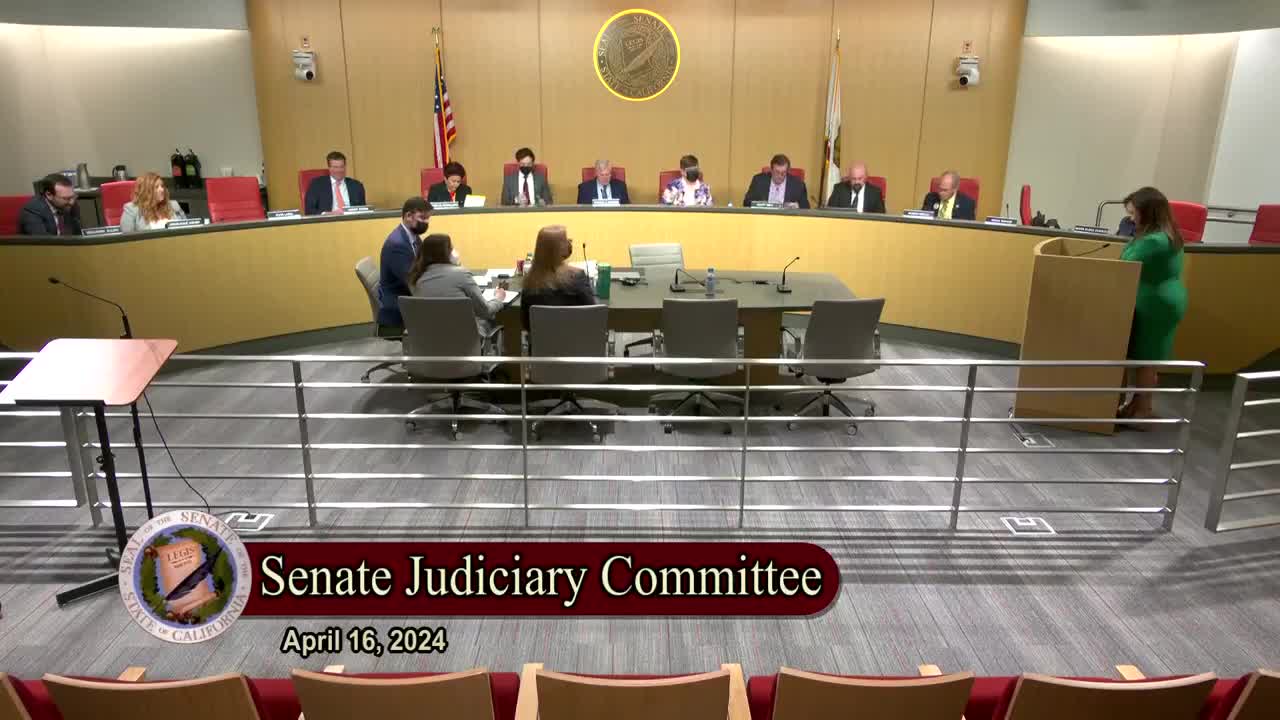 6MIN
Senate Standing Committee on Judiciary
 10MIN
Senate Standing Committee on Education
Bill Author


