SB 923: Theft.
- Session Year: 2023-2024
- House: Senate
- Latest Version Date: 2024-03-18
Current Status:
Failed
(2024-04-10: April 16 set for first hearing canceled at the request of author.)
Introduced
In Committee
First Chamber
In Committee
Second Chamber
Enacted
Existing law, the Safe Neighborhoods and Schools Act, enacted by Proposition 47, as approved by the voters at the November 4, 2014, statewide general election, defines and prohibits an act of shoplifting and prohibits prosecution for an act of shoplifting under any other law. Existing law defines shoplifting as entering a commercial establishment with intent to commit larceny while the establishment is open during regular business hours.
This bill would revise the definition of shoplifting to require an intent to steal retail property or merchandise.
Existing law provides that a person with a prior conviction for specified sex offenses may be charged with a felony for shoplifting or for theft of property not exceeding $950 in value.
This bill would require a person convicted of petty theft or shoplifting, if the person has 2 or more prior convictions for specified theft-related offenses, to be punished by imprisonment in the county jail for up to one year, or for 16 months, or 2 or 3 years, and would make conforming changes.
This bill would provide that its provisions would become effective only upon approval of the voters, and would provide for the submission of its provisions to the voters for approval at the next statewide general election.
(a)Notwithstanding Section 459, shoplifting is defined as entering a commercial establishment while that establishment is open during regular business hours, hours with the intent to steal retail property or merchandise, where the value of the property that is taken or intended to be taken does not exceed nine hundred fifty dollars ($950). Any other entry into a commercial establishment with intent to commit larceny is burglary. Shoplifting shall be punished as a misdemeanor, except as follows:
(1)A person with one or more prior convictions for an offense specified in clause (iv) of subparagraph (C) of paragraph (2) of subdivision (e) of Section 667 or for an offense requiring registration pursuant to subdivision (c) of Section 290 may be punished pursuant to subdivision (h) of Section 1170.
(2)A person who meets the requirements of Section 666.1 may be punished pursuant to that section.
(b)Any act of shoplifting as defined in subdivision (a) shall be charged as shoplifting. A person who is charged with shoplifting shall not also be charged with burglary or theft of the same property.
(c)As used in this section, the following terms have the following meanings:
(1)Retail property or merchandise means any article, product, commodity, item, or component intended to be sold in retail commerce.
(2)Value means the retail value of an item as advertised by the affected retail establishment, including applicable taxes.
SEC. 2.Section 490.2 of the Penal Code is amended to read:490.2.(a)Notwithstanding Section 487 or any other provision of law defining grand theft, obtaining any property by theft where the value of the money, labor, real or personal property taken does not exceed nine hundred fifty dollars ($950) shall be considered petty theft and shall be punished as a misdemeanor, except as follows:
(1)A person may instead be punished pursuant to subdivision (h) of Section 1170 if that person has one or more prior convictions for an offense specified in clause (iv) of subparagraph (C) of paragraph (2) of subdivision (e) of Section 667 or for an offense requiring registration pursuant to subdivision (c) of Section 290.
(2)A person who meets the requirements of Section 666.1 may be punished pursuant to that section.
(b)This section does not apply to any theft that may be charged as an infraction pursuant to any other law.
(c)This section does not apply to theft of a firearm.
SEC. 3.Section 666.1 is added to the Penal Code, to read:666.1.(a)(1)Notwithstanding any other law, a person who has two or more prior convictions for any of the offenses listed in paragraph (2), and who is convicted of petty theft or shoplifting, is punishable by imprisonment in the county jail not exceeding one year, or pursuant to subdivision (h) of Section 1170.
(2)This section applies to the following offenses:
(A)Petty theft, as described in Section 488 or 490.2.
(B)Grand theft, as described in Chapter 5 (commencing with Section 484) of Title 13.
(C)Theft from an elder or dependent adult as described in Section 368.
(D)The theft or unauthorized use of a vehicle, as described in Section 10851 of the Vehicle Code.
(E)Burglary, as described in Section 459.
(F)Carjacking, as described in Section 215.
(G)Robbery, as described in Section 211.
(H)Receiving stolen property, as described in Section 496.
(I)Shoplifting, as described in Section 459.5.
(J)Identity theft or mail theft, as described in Section 530.5.
(K)Embezzlement, as described in Chapter 6 (commencing with Section 503) of Title 13.
(L)Organized retail theft, as described in Section 490.4.
(b)This section does not preclude prosecution or punishment pursuant to any other law.
SEC. 4.This act amends the Safe Neighborhoods and Schools Act, an initiative statute approved by the voters at the November 4, 2014, statewide general election as Proposition 47, and shall become effective only when submitted to and approved by the voters. The Secretary of State shall submit this act for approval by the voters at a statewide election in accordance with Section 9040 of the Elections Code.
(a)Notwithstanding Section 459, shoplifting is defined as entering a commercial establishment with intent to commit larceny while that establishment is open during regular business hours, with the intent to steal retail property or merchandise, where the value of the property that is taken or intended to be taken does not exceed nine hundred fifty dollars ($950). Any other entry into a commercial establishment with intent to commit larceny is burglary. Shoplifting shall be punished as a misdemeanor, except that a person with one or more prior convictions for an offense specified in clause (iv) of subparagraph (C) of paragraph (2) of subdivision (e) of Section 667 or for an offense requiring registration pursuant to subdivision (c) of Section 290 may be punished pursuant to subdivision (h) of Section 1170. as follows:
(1)A person with one or more prior convictions for an offense specified in clause (iv) of subparagraph (C) of paragraph (2) of subdivision (e) of Section 667 or for an offense requiring registration pursuant to subdivision (c) of Section 290 may be punished pursuant to subdivision (h) of Section 1170.
(2)A person who meets the requirements of Section 666.1 may be punished pursuant to that section.
(b)Any act of shoplifting as defined in subdivision (a) shall be charged as shoplifting. No A person who is charged with shoplifting may shall not also be charged with burglary or theft of the same property.
(c)As used in this section, the following terms have the following meanings:
(1)Retail property or merchandise means any article, product, commodity, item, or component intended to be sold in retail commerce.
(2)Value means the retail value of an item as advertised by the affected retail establishment, including applicable taxes.
SEC. 2.Section 490.2 of the Penal Code is amended to read:490.2.(a)Notwithstanding Section 487 or any other provision of law defining grand theft, obtaining any property by theft where the value of the money, labor, real or personal property taken does not exceed nine hundred fifty dollars ($950) shall be considered petty theft and shall be punished as a misdemeanor, except that such person as follows:(1)A person may instead be punished pursuant to subdivision (h) of Section 1170 if that person has one or more prior convictions for an offense specified in clause (iv) of subparagraph (C) of paragraph (2) of subdivision (e) of Section 667 or for an offense requiring registration pursuant to subdivision (c) of Section 290.
(2)A person who meets the requirements of Section 666.1 may be punished pursuant to that section.
(b)This section shall does not be applicable apply to any theft that may be charged as an infraction pursuant to any other provision of law.
(c)This section shall does not apply to theft of a firearm.
SEC. 3.Section 666.1 is added to the Penal Code, to read:666.1.(a)(1)Notwithstanding any other law, a person who has two or more prior convictions for any of the offenses listed in paragraph (2), and who is convicted of petty theft or shoplifting, is punishable by imprisonment in the county jail not exceeding one year, or pursuant to subdivision (h) of Section 1170.
(2)This section applies to the following offenses:
(A)Petty theft, as described in Section 488 or 490.2.
(B)Grand theft, as described in Chapter 5 (commencing with Section 484) of Title 13.
(C)Theft from an elder or dependent adult as described in Section 368.
(D)The theft or unauthorized use of a vehicle, as described in Section 10851 of the Vehicle Code.
(E)Burglary, as described in Section 459.
(F)Carjacking, as described in Section 215.
(G)Robbery, as described in Section 211.
(H)Receiving stolen property, as described in Section 496.
(I)Shoplifting, as described in Section 459.5.
(J)Identity theft or mail theft, as described in Section 530.5.
(K)Embezzlement, as described in Chapter 6 (commencing with Section 503) of Title 13.
(L)Organized retail theft, as described in Section 490.4.
(b)This section does not preclude prosecution or punishment pursuant to any other law.
SEC. 4.This act amends the Safe Neighborhoods and Schools Act, an initiative statute approved by the voters at the November 4, 2014, statewide general election as Proposition 47, and shall become effective only when submitted to and approved by the voters. The Secretary of State shall submit this act for approval by the voters at a statewide election in accordance with Section 9040 of the Elections Code.
|
Date
|
Status
|
|---|---|
| Apr 10, 2024 | April 16 set for first hearing canceled at the request of author. |
| Mar 26, 2024 | Set for hearing April 16. |
| Mar 21, 2024 | April 2 hearing postponed by committee. |
| Mar 18, 2024 | From committee with author's amendments. Read second time and amended. Re-referred to Com. on PUB S. |
| Mar 1, 2024 | Set for hearing April 2. |
| Feb 14, 2024 | Referred to Com. on PUB S. |
| Jan 12, 2024 | From printer. May be acted upon on or after February 11. |
| Jan 11, 2024 | Introduced. Read first time. To Com. on RLS. for assignment. To print. |
This list shows positions taken on this bill by organizations on the date displayed, which is linked to the original source.
Positions by individuals are not included.
SENATE COMMITTEE ON PUBLIC SAFETY
Senator Aisha Wahab, Chair
2023 - 2024 Regular
Bill No: SB 923 Hearing Date: April 16, 2024
Author: | Archuleta | ||
Version: | March 18, 2024 | ||
Urgency: | No | Fiscal: | Yes |
Consultant: | SC | ||
Subject: Theft
HISTORY
Source: Orange County District Attorney
Prior Legislation: SB 319 (Niello), failed Sen. Public Safety, 2023
SB 1108 (Bates), failed Sen. Public Safety, 2022
SB 710 (Bates), failed Sen. Public Safety, 2020
SB 979 (Jones), failed Sen. Public Safety, 2020
AB 1326 (Cooper), failed Asm. Public Safety, 2017
AB 875 (Cooper), failed Asm. Public Safety, 2017
AB 2287 (Lackey), never heard in Sen. Public Safety, 2016
AB 2369 (Patterson), failed Asm. Public Safety, 2016
Support: California District Attorneys Association; California Police Chiefs Assoc.; California State Sheriffs’ Association; City of Downey; City of Laguna Beach; City of Norwalk; City of Santa Clarita; City of Whittier; League of California Cities
Opposition: ACLU California Action; All of Us or None Riverside; Asian Americans and Pacific Islanders for Civic Empowerment; Bend the Arc California; California Attorneys for Criminal Justice; California Black Power Network; California Public Defenders Association; Californians for Safety and Justice; Californians United for A Responsible Budget; Caravan 4 Justice; Communities United for Restorative Youth Justice (CURYJ); Congregations Organized for Prophetic Engagement (COPE); Decarcerate Inland Region; Ella Baker Center for Human Rights; Faith in Action East Bay; Felony Murder Elimination Project; Initiate Justice; Initiate Justice Action; Interfaith Coalition for Justice in Our Jails; Interfaith Movement for Human Integrity; Jacob Merlin Foundation; Jireh Shalom Foundation; Legal Services for Prisoners With Children; Pacific Juvenile Defender Center; Sacred Purpose LLC; Safer Together; Smart Justice California, a Project of Tides Advocacy; Starting Over, INC.; Uncommon Law; United Communities for Peace; Vera Institute of Justice; Whole Systems Learning; Young Women's Freedom Center
PURPOSE
The purpose of this bill is to increase the punishment for a person convicted of petty theft or shoplifting if the person has two or more prior convictions for shoplifting or for theft of property not exceeding $950.
Existing law divides theft into two degrees, petty theft and grand theft. (Pen. Code, § 486.)
Existing law defines grand theft as when the money, labor, or real or personal property taken is of a value exceeding $950 dollars, except as specified. (Pen. Code, § 487.)
Existing law states that petty theft is punishable by a fine not exceeding $1,000, by imprisonment in the county jail not exceeding six months, or both. (Penal Code § 490.)
Existing law defines “shoplifting” as entering a commercial establishment with intent to commit larceny while that establishment is open during regular business hours, where the value of the property that is taken or intended to be taken does not exceed $950 dollars. (Pen. Code, § 459.5, subd. (a).)
This bill changes the requisite intent to the crime of shoplifting to require intent to steal retail property or merchandise.
This bill defines “retail property or merchandise” to mean “any article, product, commodity, item, or component intended to be sold in retail commerce.
This bill defines “value” to mean the retail value of an item as advertised by the affected retail establishment, including applicable taxes.
Existing law states that any act of shoplifting must be charged as such, and that a person charged with shoplifting cannot also be charged with burglary or theft of the same property. (Pen. Code, § 459.5, subd. (b).)
Existing law punishes shoplifting as a misdemeanor, except where a person has a prior “super strike” or a registrable sex conviction, in which case the offense is punished as a felony by imprisonment in the county jail pursuant to realignment. (Pen. Code, § 459.5, subd. (a).)
Existing law designates the following offenses to be “super strikes”: specified sex offenses, homicide, solicitation to commit murder, assault with a machine gun on a peace officer or firefighter, possession of a weapon of mass destruction, and any serious or violent felony punishable by life imprisonment or death. (Pen. Code, § 667, subd. (e)(2)(C)(iv).)
Existing law provides that, notwithstanding the punishment for petty theft, if a person is required to register as a sex offender, has a prior “super strike conviction,” or has a conviction for a specified theft-related offense against an elder or dependent adult, and also has been convicted of a specified theft-related offense for which he or she was imprisoned, and is subsequently convicted of petty theft, then the person is to receive an enhanced punishment of imprisonment in the county jail not to exceed one year, or in the state prison. (Pen. Code, § 666.)
This bill states that notwithstanding any other law, a person who has two or more prior convictions for any of the offenses listed below, and who is convicted of petty theft or shoplifting, is guilty of a misdemeanor punishable by imprisonment in county jail not exceeding one year, or a felony punishable by 16 months, or 2 or 3 years:
- Petty theft;
- Grand theft;
- Theft from an elder or dependent adult;
- Theft or unauthorized use of a vehicle;
- Burglary;
- Carjacking;
- Robbery;
- Receiving stolen property;
- Shoplifting;
- Identity theft or mail theft;
- Embezzlement; or,
- Organized retail theft.
This bill states that its provisions amend the Safe Neighborhoods and Schools Act, an initiative statute approved by the voters at the November 4, 2014, statewide general election as Proposition 47, and shall become effective only when submitted to and approved by the voters.
COMMENTS
- Need for This Bill
According to the author of this bill:
California continues to suffer from increases in all types of theft, including organized retail theft, smash and grabs, and vehicle theft that negatively impacts crime victims, consumers, and business owners. The rising levels of retail theft and property crime has driven a national narrative that California is unable to keep our citizens safe and businesses open. This has driven Californians and businesses out of California. If California is going to meaningfully address the theft crisis in our state, we must ensure that law enforcement has every tool available to them to keep our communities safe. While well intentioned, it is clear that areas of Prop 47 require reform. SB 923 will improve California’s ability to stop the repeat, serial offenders that harm California by targeting theft enforcement efforts at individuals who have been convicted of multiple prior offenses.
- California Constitutional Limitations on Amending a Voter Initiative
Because Proposition 47 was a voter initiative, the Legislature may not amend the statute without subsequent voter approval unless the initiative permits such amendment, and then only upon whatever conditions the voters attached to the Legislature's amendatory powers. (People v. Superior Court (Pearson) (2010) 48 Cal.4th 564, 568; see also Cal. Const., art. II, § 10, subd. (c).) The California Constitution states, "The Legislature may amend or repeal referendum statutes. It may amend or repeal an initiative statute by another statute that becomes effective only when approved by the electors unless the initiative statute permits amendment or repeal without their approval." (Cal. Const., art. II, § 10, subd. (c).) Therefore, unless the initiative expressly authorizes the Legislature to amend, only the voters may alter statutes created by initiative.
The purpose of California's constitutional limitation on the Legislature's power to amend initiative statutes is to protect the people's initiative powers by precluding the Legislature from undoing what the people have done, without the electorate's consent. Courts have a duty to jealously guard the people's initiative power and, hence, to apply a liberal construction to this power wherever it is challenged in order that the right to resort to the initiative process is not improperly annulled by a legislative body. (Proposition 103 Enforcement Project v. Quackenbush (1998) 64 Cal.App.4th 1473.)
As to the Legislature's authority to amend the initiative, Proposition 47 states:
This act shall be broadly construed to accomplish its purposes. The provisions of this measure may be amended by a two‑thirds vote of the members of each house of the Legislature and signed by the Governor so long as the amendments are consistent with and further the intent of this act. The Legislature may by majority vote amend, add, or repeal provisions to further reduce the penalties for any of the offenses addressed by this act. (http://vig.cdn.sos.ca.gov/2014/general/pdf/text-of-proposed-laws1.pdf#prop47.)
This bill seeks to increase punishment for repeat offenders for the crimes which were reduced to misdemeanors by Proposition 47. As such, it is inconsistent with the purpose of Proposition 47. Therefore, pursuant to the above-referenced provisions of the California Constitution, only the voters may authorize the provisions.
This bill, if approved by the Legislature, would only become effective upon approval of the voters at the next statewide general election.
- Increased Penalties are Available for Repeat or Organized Theft Offenses
While Proposition 47 did reduce certain theft offenses to misdemeanors, there are still existing options for charging retail crime as felonies. Repeated acts of theft can be aggregated and prosecuted as one felony if they are conducted pursuant to one intention, one general impulse, and one plan. (See People v. Bailey (1961) 55 Cal.2d 514, 518-519.) AB 2356 (Rodriguez), Chapter 22, Statutes of 2022, codified this. The bill specified that if the value of property taken, or intended to be taken, exceeds $950 over the course of distinct but related acts, the value of the property taken, or intended to be taken, may properly be aggregated to charge a count of grand theft, if the acts are motivated by one intention, one general impulse, and one plan.
Separately, Penal Code section 490.4 punishes “organized retail theft” which include shoplifting schemes undertaken by two or more persons who have organized themselves to commit shoplifting for financial gain. (Pen. Code, § 490.4.) The punishment ranges from one year in the county jail (misdemeanor) to 16 months, or two, or three years in the county jail (felony), depending on the specific circumstances.
On March 19, 2024, the California Attorney General, announced felony charges against three people allegedly involved in organized retail theft, robbery, and grand theft carried out at high-end retail stores throughout California. From December 12, 2022, until February 12, 2024, there were commercial burglaries and attempted burglaries in Los Angeles, Orange, San Diego, Riverside, Alameda, and Santa Clara Counties that resulted in more than $300,000 in losses to the stores. This case was investigated by the Los Angeles Police Department (LAPD) Organized Retail Task Force (ORCTF) who collaborated with San Diego Police Department, Riverside County Sheriff’s Department, Costa Mesa Police Department, Newport Beach Police Department, Livermore Police Department, and Palo Alto Police Department. The suspects allegedly conducted smash and grab style thefts by running into stores, grabbing high-end items off of the displays and even items connected with locks, and running out. (https://oag.ca.gov/news/press-releases/attorney-general-bonta-announces-felony-charges-against-three-suspects-organized [as of Apr. 8, 2024].)
- Crime Data after Proposition 47
According to the Public Policy Institute of California (PPIC), despite an increase in shoplifting rates between 2019 and 2022, “[b]eginning with a statewide overview of the last decade or so, shoplifting remains 8% below pre-pandemic levels, despite a 29% jump in 2022 from 2019.” (Magnus Lofstrom, Testimony: Crime Data on Retail Theft and Robberies in California (Jan. 2024) https://www.ppic.org/blog/testimony-crime-data-on-retail-theft-and-robberies-in-california/ [as of Apr. 8, 2024].)
Data from the California Department of Justice also reports a decrease in shoplifting incidents: From around 97,000 in 2014, when Proposition 47 was approved, to about 82,000 in 2022. (Lagos, Prop 47’s impact on California’s Criminal Justice System, KQED (Feb. 14, 2024) https://www.kqed.org/news/11975692/prop-47s-impact-on-californias-criminal-justice-system [as of Apr. 8, 2024] citing DOJ’s Open Data Justice Portal.)
- Safe Neighborhoods and Schools Fund
Proposition 47 required the state savings generated by the reduction of several felony offenses to misdemeanor to be deposited annually into the Safe Neighborhoods and Schools Fund (SNSF). (Gov. Code, §§ 7599 et seq.) Under Proposition 47, monies in the fund would be continuously appropriated without further legislative action and allocated annually as follows: (1) 25% to the State Department of Education to administer grants aimed at reducing truancy, drop-outs, and victimization among K-12 students in public schools; (2) 10 percent to the Victim Compensation and Government Claims Board for victim services grants; and (3) 65% to the Board of State and Community Corrections to administer a grant program to public agencies aimed at supporting mental health and substance abuse treatment services and diversion programs for individuals in the criminal justice system. (Gov. Code, §7599.2.)
According to information provided by the Legislative Analyst’s Office, “In 2023-24, this transfer was $113 million. Of this amount, $99 million was associated with an estimated 3,809 average daily population (ADP) reduction in the prison population and $14 million was associated with an estimated 45 ADP reduction in the Department of State Hospitals (DSH) population as a result of Proposition 47.”
This bill authorizes felony punishment for persons convicted of petty theft or shoplifting who has two prior convictions for theft-related offenses. By reducing the impact of Proposition, this bill would reduce the state savings that would be deposited into the SNSF for education, mental health and victim compensation.
- Recent Initiatives to Amend Proposition 47
“The Homelessness, Drug Addition, and Theft Reduction Act” is a new initiative that would make changes to laws enacted by Proposition 47. Specifically, the initiative would reenact felony sentencing for petty theft with two prior thefts, allow multiple petty thefts to be aggregated to meet the $950 threshold without a showing that the acts were connected, and create new enhancements depending on the amount of property stolen or damaged. The initiative would also increase penalties for certain drug crimes, mandate treatment for certain offenders, and require courts to warn people convicted of drug distribution that they may be charged with murder in the future if someone dies after taking an illegal drug provided by that person. (https://ballotpedia.org/California_Drug_and_Theft_Crime_Penalties_and_Treatment-Mandated_Felonies_Initiative_(2024) [as of Mar. 18, 2024].) The initiative is supported by various law enforcement, public officials, district attorneys, and retail corporations. (Id.) To qualify for the November 2024 ballot, the law requires 546,651 valid signatures by June 27, 2024; as of January 25, 2024, the campaign had notified the Secretary of State that 25% of the required signatures had been collected. (Id.)
Prior initiative efforts to amend Proposition 47 have not been successful. In the November 2020 election, almost 62% of voters rejected a broad effort to roll back portions of Proposition 47. Proposition 20, among other things, would have created the crime of serial theft for a person with two or more prior convictions for theft-related crimes, would have created a separate crime of organized retail theft, and would have required DNA collection for crimes that were reduced to misdemeanors by Proposition 47. (https://ballotpedia.org/California_Proposition_20,_Criminal_Sentencing,_Parole,_and_DNA_Collection_Initiative_(2020) [as of March 18, 2024].)
In 2022, a proposed initiative for the November 2022 ballot would have authorized felony sentences repeat thefts. Specifically, the proposed initiative:
Authorizes prosecutors to file felony or misdemeanor charges for thefts of any amount under $950—currently chargeable as felonies only in certain circumstances—against any person with two or more prior specified theft convictions. Adds mandatory sentencing enhancement for any felony resulting in significant property loss or damage, ranging from one additional year for losses over $50,000, to four years for losses over $3,000,000, plus one year for each additional $3,000,000. Authorizes prosecution for theft in any county where acts in furtherance occurred.
(https://ballotpedia.org/California_Punishment_for_Repeat_Theft_Convictions_Initiative_(2022) [as of Mar. 18, 2024].) The proposed initiative needed to gather 623,212 signatures by June 30, 2022 in order to be certified for the 2022 ballot but failed to meet this requirement and thus did not qualify for the ballot.
- Legislative Efforts to Combat Property Crimes
On January 9, 2024, Governor Newsom called for legislation to crack down on large scale property crimes committed by organized groups who profit from resale of stolen goods. (https://www.gov.ca.gov/2024/01/09/property-crime-framework/ [as of Mar. 18, 2024).) The proposals include: 1) creating new penalties targeting those engaged in retail theft to resell, and those that resell the stolen property; 2) clarifying existing arrest authority so that police can arrest suspects of retail theft, even if they didn’t witness the crime in progress; 3) clarifying that theft amounts may be aggregated to reach the grand theft threshold; 4) creating new penalties for professional auto burglary, increasing penalties for the possession of items stolen from a vehicle with intent to resell, regardless of whether the vehicle was locked; 5) eliminating the sunset date for the organized retail crime statute; and 6) increasing penalties for large-scale resellers of stolen goods.
Both houses of the Legislature have announced legislative packages that include parts of the Governor’s proposals. (See https://www.latimes.com/california/story/2024-02-26/senate-leaders-respond-to-states-fentanyl-crisis-and-organized-retail-theft-problem-with-new-legislation [as of Mar. 1, 2024) and https://www.latimes.com/california/story/2024-02-15/democratic-lawmakers-introduce-legislation-to-target-organized-retail-theft-online-resellers#:~:text=If%20passed%2C%20the%20bill%20would,if%20there%20were%20separate%20victims [as of Mar. 18, 2024].) These proposals do not amend Proposition 47, and thus would not have to go on the ballot.
- Argument in Support
According to the City of Whittier:
This legislation is an important step toward rectifying the unintended consequences of the voter-approved Proposition 47, since it addresses the pressing issue of theft within our community and provides much needed measures to protect our residents and businesses. The city of Whittier has unfortunately experienced an increase in theft incidents in recent years, causing concern among our residents and local businesses. Compared to 2022, the City has experienced a 43% increase in reported commercial burglaries and an 11% increase in reported shoplifting as of August 31, 2023.
SB 923, with its comprehensive approach to addressing theft-related challenges, aligns with our City’s commitment to ensuring the safety and well-being of our community members by deterring individuals from engaging in repeated theft-related offenses by holding them accountable through jail time. The bill’s focus on individuals with two or more prior convictions for specified theft-related offenses acknowledges the issue of recidivism. By imposing more severe consequences for repeat offenders, the legislation aims to address and potentially reduce the cycle of criminal behavior.
- Argument in Opposition
According to Ella Baker Center for Human Rights:
Since the enactment of Prop 47 in late 2014, property crime has decreased in California. Furthermore, the savings from Prop 47 has resulted in hundreds of millions of dollars in reinvestment to improve community safety and well-being, including mental health and substance use services, truancy and dropout prevention, and victim services. The Public Policy Institute of California published findings in 2020 that credited Prop 47 with “notable decreases in racial/ethnic disparities in arrests and bookings,” as well as rates of pre-trial detention. Thus, Proposition 47 is aligned with the state's goal of reducing prison overcrowding. SB 923 would diminish these gains.
Increasing incarceration rates would also eliminate the more than $1 billion Prop. 47 is expected to save each decade in perpetuity. Portions of these savings are required to be reallocated back to the local, community-based programs that proved to be more effective in preventing crime and harm, such as drug treatment, mental health services, re-entry services and programs that help crime victims heal. As of 2022, Prop. 47 has saved the state more than $600 million.
Consequently, if passed by another costly ballot box do-over, SB 923 (Archuleta) would negate many of the benefits of Prop 47. Such an attempt is not justified by crime data, flies in the face of sensible criminal justice reform, and would force counties to shoulder the cost of imprisoning more people for years, at great human and fiscal cost. (Fn. omitted.)
-- END –
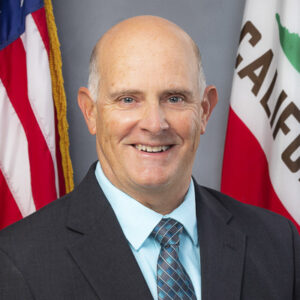
Bill Author