SB 927: Income taxes: gross income exclusions: state of emergency: natural disaster settlements.
- Session Year: 2023-2024
- House: Senate
- Latest Version Date: 2024-03-14
Current Status:
Failed
(2024-05-16: May 16 hearing: Held in committee and under submission.)
Introduced
In Committee
First Chamber
In Committee
Second Chamber
Enacted
The Personal Income Tax Law and the Corporation Tax Law, in conformity with federal income tax law, generally defines gross income as income from whatever source derived, except as specifically excluded, and provides various exclusions from gross income.
This bill, for taxable years beginning on or after January 1, 2023, and before January 1, 2033, would provide an exclusion from gross income for amounts received in settlement by a taxpayer from a settlement entity, as defined, by a qualified taxpayer, as defined, to replace property damaged or destroyed by a natural disaster that was declared a state of emergency by both the Governor and the President of the United States.
Existing law requires a bill authorizing a new tax expenditure to contain, among other things, specific goals, purposes, and objectives the tax expenditure will achieve, detailed performance indicators, and data collection requirements.
This bill would include additional information required for any bill authorizing a new tax expenditure.
This bill would take effect immediately as a tax levy.
The Personal Income Tax Law and the Corporation Tax Law, in conformity with federal income tax law, generally defines gross income as income from whatever source derived, except as specifically excluded, and provides various exclusions from gross income.
This bill, for taxable years beginning on or after January 1, 2023, would provide an exclusion from gross income for amounts received in settlement by a taxpayer to replace property damaged or destroyed by a natural disaster that was declared a state of emergency by both the Governor and the President of the United States.
Existing law requires a bill authorizing a new tax expenditure to contain, among other things, specific goals, purposes, and objectives the tax expenditure will achieve, detailed performance indicators, and data collection requirements.
This bill would include additional information required for any bill authorizing a new tax expenditure.
This bill would take effect immediately as a tax levy.
(a)For taxable years beginning on or after January 1, 2023, and before January 1, 2033, gross income does not include any qualified amount received by a qualified taxpayer.
(b)For purposes of this section, qualified the following definitions shall apply:
(1)Qualified amount means any amount received in settlement by a from a settlement entity by a qualified taxpayer to replace property damaged or destroyed by a natural disaster that was declared a state of emergency by both the Governor and the President of the United States.
(2)Qualified taxpayer means any of the following:
(A)Any taxpayer that owns real property located in an area damaged by a natural disaster who paid or incurred expenses, and received amounts from a settlement entity, arising out of or pursuant to the natural disaster.
(B)Any taxpayer that resides within an area damaged by a natural disaster who paid or incurred expenses, and received amounts from a settlement entity, arising out of or pursuant to the natural disaster.
(C)Any taxpayer that has a place of business within an area damaged by a natural disaster who paid or incurred expenses, and received amounts from a settlement entity, arising out of or pursuant to the natural disaster.
(3)Settlement entity means the entity, approved by a class action settlement administrator, making the settlement payment to a qualified taxpayer.
(c)The taxpayer settlement entity shall provide, upon request by the Franchise Tax Board, Board or the qualified taxpayer, documentation of the settlement payments in the form and manner requested by the Franchise Tax Board. Board or the qualified taxpayer, who may provide the documentation to the Franchise Tax Board upon request.
(d)(1)For the purpose of complying with Section 41 in regards to the exclusion provided by this section and Section 24309.8, the Legislature finds and declares the following:
(A)The specific goal, purpose, and objective of the exclusion is to provide essential relief to individuals who have suffered injury, loss, inconvenience, and expenses resulting from natural disasters.
(B)The performance indicators for the Legislature to use in determining whether the exclusion achieves the stated goal, purpose, and objective shall be the number of taxpayers that excluded qualified amounts from gross income.
(2)(A)On December 1, 2028, and every five years thereafter, the Franchise Tax Board shall deliver to the Legislature a written report that includes, to the extent feasible, the number of taxpayers that excluded qualified amounts from gross income as a result of the exclusion.
(B)The report required by this paragraph shall be delivered to the Legislature in compliance with Section 9795 of the Government Code.
(C)The disclosure provisions of this subdivision shall be treated as an exception to Section 19542.
(e)This section shall remain in effect only until December 1, 2033, and as of that date is repealed.
SEC. 2.Section 24309.8 is added to the Revenue and Taxation Code, to read:24309.8.(a)For taxable years beginning on or after January 1, 2023, and before January 1, 2033, gross income does not include any qualified amount received by a qualified taxpayer.
(b)For purposes of this section, qualified the following definitions shall apply:
(1)Qualified amount means any amount received in settlement by a from a settlement entity by a qualified taxpayer to replace property damaged or destroyed by a natural disaster that was declared a state of emergency by both the Governor and the President of the United States.
(2)Qualified taxpayer means any of the following:
(A)Any taxpayer that owns real property located in an area damaged by a natural disaster who paid or incurred expenses, and received amounts from a settlement entity, arising out of or pursuant to the natural disaster.
(B)Any taxpayer that resides within an area damaged by a natural disaster who paid or incurred expenses, and received amounts from a settlement entity, arising out of or pursuant to the natural disaster.
(C)Any taxpayer that has a place of business within an area damaged by a natural disaster who paid or incurred expenses, and received amounts from a settlement entity, arising out of or pursuant to the natural disaster.
(3)Settlement entity means the entity, approved by a class action settlement administrator, making the settlement payment to a qualified taxpayer.
(c)The taxpayer settlement entity shall provide, upon request by the Franchise Tax Board, Board or the qualified taxpayer, documentation of the settlement payments in the form and manner requested by the Franchise Tax Board. Board or the qualified taxpayer, who may provide the documentation to the Franchise Tax Board upon request.
(d)This section shall remain in effect only until December 1, 2033, and as of that date is repealed.
SEC. 3.This act provides for a tax levy within the meaning of Article IV of the California Constitution and shall go into immediate effect.
(a)For taxable years beginning on or after January 1, 2023, gross income does not include any qualified amount received by a taxpayer.
(b)For purposes of this section, qualified amount means any amount received in settlement by a taxpayer to replace property damaged or destroyed by a natural disaster that was declared a state of emergency by both the Governor and the President of the United States.
(c)The taxpayer shall provide, upon request by the Franchise Tax Board, documentation of the settlement payments in the form and manner requested by the Franchise Tax Board.
(d)(1)For the purpose of complying with Section 41 in regards to the exclusion provided by this section and Section 24309.8, the Legislature finds and declares the following:
(A)The specific goal, purpose, and objective of the exclusion is to provide essential relief to individuals who have suffered injury, loss, inconvenience, and expenses resulting from natural disasters.
(B)The performance indicators for the Legislature to use in determining whether the exclusion achieves the stated goal, purpose, and objective shall be the number of taxpayers that excluded qualified amounts from gross income.
(2)(A)On December 1, 2028, and every five years thereafter, the Franchise Tax Board shall deliver to the Legislature a written report that includes, to the extent feasible, the number of taxpayers that excluded qualified amounts from gross income as a result of the exclusion.
(B)The report required by this paragraph shall be delivered to the Legislature in compliance with Section 9795 of the Government Code.
(C)The disclosure provisions of this subdivision shall be treated as an exception to Section 19542.
SEC. 2.Section 24309.8 is added to the Revenue and Taxation Code, to read:24309.8.(a)For taxable years beginning on or after January 1, 2023, gross income does not include any qualified amount received by a taxpayer.
(b)For purposes of this section, qualified amount means any amount received in settlement by a taxpayer to replace property damaged or destroyed by a natural disaster that was declared a state of emergency by both the Governor and the President of the United States.
(c)The taxpayer shall provide, upon request by the Franchise Tax Board, documentation of the settlement payments in the form and manner requested by the Franchise Tax Board.
SEC. 3.This act provides for a tax levy within the meaning of Article IV of the California Constitution and shall go into immediate effect.
|
Date
|
Status
|
|---|---|
| May 16, 2024 | May 16 hearing: Held in committee and under submission. |
| May 10, 2024 | Set for hearing May 16. |
| Apr 8, 2024 | April 8 hearing: Placed on APPR suspense file. |
| Mar 28, 2024 | Set for hearing April 8. |
| Mar 14, 2024 | Read second time and amended. Re-referred to Com. on APPR. |
| Mar 13, 2024 | From committee: Do pass as amended and re-refer to Com. on APPR. (Ayes 6. Noes 0. Page 3290.) (March 13). |
| Mar 7, 2024 | Set for hearing March 13. |
| Feb 21, 2024 | Referred to Com. on REV. & TAX. |
| Jan 16, 2024 | From printer. May be acted upon on or after February 12. |
| Jan 12, 2024 | Introduced. Read first time. To Com. on RLS. for assignment. To print. |
|
Date
|
Description
|
Location
|
Votes
|
|
|---|---|---|---|---|
| Apr 8, 2024 | Placed on suspense file | Senate Standing Committee on Appropriations |
Passed |
|
| Mar 13, 2024 | Do pass as amended, but first amend, and re-refer to the Committee on [Appropriations] | Senate Standing Committee on Revenue and Taxation |
Passed |
This list shows positions taken on this bill by organizations on the date displayed, which is linked to the original source.
Positions by individuals are not included.
SENATE COMMITTEE ON APPROPRIATIONS
Senator Anna Caballero, Chair
2023 - 2024 Regular Session
SB 927 (Dahle) - Income taxes: gross income exclusions: state of emergency: natural disaster settlements
Version: March 14, 2024 | Policy Vote: REV. & TAX. 6 - 0 |
Urgency: No | Mandate: No |
Hearing Date: April 8, 2024 | Consultant: Robert Ingenito |
Bill Summary:
SB 927 would enact personal income and corporation tax exclusions for amounts received in settlement by a taxpayer to replace property damaged or destroyed by a natural disaster, as specified.
Fiscal Impact:
The Franchise Tax Board (FTB) estimates that for every $100 million in qualified settlement income received, the General Fund revenue loss would be approximately $7 million. FTB’s costs to implement the bill have yet to be identified.
Background:
Tax expenditure programs (TEPs) are special tax provisions that reduce the amount of revenues the “basic” tax system would otherwise generate in order to provide (1) benefits to certain groups of taxpayers, and/or (2) incentives to encourage certain types of behavior and activities, such as charitable giving. Specifically, current law provides for, among other things, various income and corporation tax credits and deductions, as well as exemptions from the sales and use tax. The Department of Finance is required to publish a list of TEPs (currently totaling several hundred), which currently exceed $87 billion annually.
Federal and state law generally allows taxpayers to exclude income from settlements from gross income if the amount received resulted from a personal physical injury or physical sickness. Additionally, payments received as a reimbursement of costs, such as those paid to rebuild a destroyed home, are excluded from gross income. However, amounts resulting from emotional distress are included when calculating gross income, unless the emotional distress is the result of physical injury or sickness. In some cases, federal and state law requires inclusion of attorney's fees resulting from a settlement in the calculation of gross income. To the extent that any settlement payment exceeds costs incurred or paid in connection with the event that caused the settlement, that income may be taxable.
The California Department of Forestry and Fire Protection indicates that in 2022, there were over 7,490 incidents and over 362,000 acres of scorched land. The previous year, wildfires destroyed 2.5 million acres statewide. Public utilities have subsequently entered into monetary settlements for many wildfire incidents where they were involved.
The Legislature has, in recent years, enacted personal income and corporation tax exclusions when disaster victims receive settlement payments to replace property damaged or destroyed by specific wildfire events, including:
- AB 1249 (Gallagher, 2022) which pertained to amounts received by a qualified taxpayer in settlement from Pacific Gas & Electric related to the 2015 Butte, 2017 North Bay, and 2018 Camp Fires.
- SB 1246 (Stern, 2022), which applied to pertained received by a qualified taxpayer in settlement from Southern California Edison related to the 2017 Thomas Fire and the 2018 Woolsey Fire.
- SB 131 (Committee on Budget & Fiscal Review, 2023) which pertained to amounts received in settlements by a qualified taxpayer associated with either the 2019 Kincade Fire in Sonoma County, or the 2020 Zogg Fire in Tehama and Shasta Counties.
However, victims of future natural disasters who receive settlement payments may not be able to exclude them from taxable income for state purposes absent legislation. Additionally, some taxpayers may have received settle payments in connection with other natural disasters in the past where the Legislature has not enacted an exclusion specific to that disaster.
Proposed Law:
This bill would, for taxable years 2023 through 2032, enact personal income and corporation tax exclusions for any amount received in settlement by a taxpayer to replace property damaged or destroyed by a natural disaster that was declared a state of emergency by both the Governor and the President of the United States.
Related Legislation:
SB 1004 (Wilk) is similar to SB 927, with a few differences. SB 1004 would enact a similar exclusion when taxpayers receive settlement payments due to a wildfire. SB 1004 applies retroactively to the 2020 taxable year, while SB 927 applies beginning in the 2023 taxable year.
- SB 1004 (Wilk) would, effective taxable year 2020, enact a similar exclusion when taxpayers receive settlement payments due to a wildfire. The bill is currently pending in this Committee.
- SB 1102 (Nguyen) would enact a personal income and corporation tax exclusion for settlement amounts received by qualified taxpayers from defendants in settlement for claims relating to the October 2, 2021, oil spill off the coast of the County of Orange near the City of Huntington Beach. The bill is currently pending in the Senate Committee on Revenue and Taxation.
- SB 542 (Dahle) would enact similar exclusions for qualified taxpayers receiving settlement payments from the 2021 Dixie Fire or the 2022 Mill Fire. The bill is currently pending in the Assembly Appropriations Committee.
Staff Comments:
FTB notes that, to determine the magnitude of the bill’s potential revenue loss, both the frequency of state and federally declared natural disasters and the dollar amounts arising from settlement payouts must be known. Because it is difficult to predict the frequency of natural disasters and settlement amounts paid, FTB indicates that the revenue impact to the General Fund is unknown. However, using an average tax rate of 7 percent, it is assumed that for every $100 million in qualified settlement income received, the estimated revenue loss would be approximately $7 million.
-- END --
SENATE COMMITTEE ON REVENUE AND TAXATION
Senator Steven Glazer, Chair
2023 - 2024 Regular
Bill No: | SB 927 | Hearing Date: | 03/13/24 |
Author: | Dahle | Tax Levy: | Yes |
Version: | 1/12/24 | Fiscal: | Yes |
Consultant: | Grinnell | ||
Income taxes: gross income exclusions: state of emergency: natural disaster settlements
Enacts Personal Income and Corporation Tax exclusions for amounts received in settlement by a taxpayer to replace property damaged or destroyed by a natural disaster declared a state of emergency by the Governor and the President.
Background
Tax expenditures. California law allows various income tax credits, deductions, exemptions, and exclusions. The Legislature enacts such tax incentives either to compensate taxpayers for incurring certain expenses, such as child adoption, or to influence certain behavior, such as charitable giving. The Legislature uses tax incentives to encourage taxpayers to do something that they would not otherwise do. The Department of Finance is required annually to publish a list of state tax expenditures, currently totaling around $87 billion per year.
Income. Existing federal and state laws provide that gross income includes all income from any source, including compensation for services, business income, gains from property, interest, dividends, rents, and royalties, unless specifically excluded. Existing federal and state laws provide that certain types of income are excluded from gross income, such as amounts received as a gift or inheritance, certain compensation for injuries and sickness, qualified scholarships, educational assistance programs, foster care payments, and interest received on certain state or federal obligations.
Treatment of settlement awards. Generally, federal and state law allows taxpayers to exclude income from settlements from gross income if the amount received resulted from a personal physical injury or physical sickness, unless its punitive damages. Additionally, payments received as a reimbursement of costs, such as those paid to rebuild a destroyed home, are excluded from gross income. However, amounts resulting from emotional distress are included when calculating gross income, unless the emotional distress is the result of physical injury or sickness. In some cases, federal and state law requires inclusion of attorney's fees resulting from a settlement in the calculation of gross income. To the extent that any settlement payment exceeds costs incurred or paid in connection with the event that caused the settlement, that income may be taxable.
California Fires. Over the last decade, California has experienced increased, intense, and record-breaking wildfires throughout the state. These fires have resulted in devastating loss of life and billions of dollars in damage to property and infrastructure. Fires attributed to power lines and electrical equipment comprise nine of the 20 most destructive fires in California history. According to Cal Fire, in 2022 alone there were over 7,490 incidents and over 362,000 million acres of scorched land. In 2021, wildfire destroyed 2.5 million acres. Public utilities have entered into settlements for many wildfire incidents where they were involved, where settlement entities such as the Fire Victim Trust make payments to those affected by the incident
Disaster tax relief. In recent years, the Legislature has enacted Personal Income and Corporation Tax exclusions when disaster victims receive settlement payments to replace property damaged or destroyed by specific wildfire events, including:
- AB 1249 (Gallagher, 2022) which applied to amounts received in settlement from the PG&E trust to fire victims by a qualified taxpayer from PG&E related to the 2015 Butte, 2017 North Bay, and 2018 Camp Fires.
- SB 1246 (Stern, 2022), which applied to amounts received in settlement from Southern California Edison related to the 2017 Thomas Fire and the 2018 Woolsey Fire.
- SB 131 (Committee on Budget & Fiscal Review, 2023) which applied to amounts received in settlements associated with either the 2019 Kincade Fire in the County of Sonoma, or the 2020 Zogg Fire in the Counties of Tehama and Shasta.
However, victims of future natural disasters who receive settlement payments may not be able to exclude them from taxable income for state purposes unless and until the Legislature enacts a bill. Additionally, some taxpayers may have received settle payments in connection with other natural disasters in the past where the Legislature has not enacted an exclusion specific to that disaster. The author wants to enact income exclusions that apply whenever a natural disaster declared a state of emergency by the President and the Governor gives rise to settlement payments to affected individuals and businesses.
Proposed Law
Senate Bill 927 enacts Personal Income and Corporation Tax exclusions for any amount received in settlement by a taxpayer to replace property damaged or destroyed by a natural disaster that was declared a state of emergency by both the Governor and the President of the United States. The measure applies commencing in the 2023 taxable year. The bill requires taxpayers to provide documentation to the Franchise Tax Board (FTB) upon request.
State Revenue Impact
According to FTB, “To determine the magnitude of the potential impact to the General Fund, both the frequency of state and federally declared natural disasters and the dollar amounts arising from settlement payouts must be known. Because it is difficult to predict the frequency of natural disasters and settlement amounts paid, the revenue impact to the General Fund is unknown. However, using an average tax rate of 7 percent, it is assumed that for every $100 million in qualified settlement income received, the estimated revenue loss would be approximately $7,000,000.”
Comments
1. Purpose of the bill. In California, we have unfortunately witnessed the devastating impact of wildfires, storms, and floods, leaving our neighbors to face the daunting task of rebuilding their lives after these natural disasters. In the past, we have worked on legislation to ease the financial burden of rebuilding homes. Last year, I had the privilege of authoring a bill that provided a tax exclusion for settlement payments related to the Zogg fire, and I'm proud to share that the Governor included this provision in the budget. However it’s time to take a proactive approach to future disasters. Victims of natural disasters should not be further penalized for circumstances beyond their control. SB 927 ensures that the Legislature does not have to introduce a new bill every time a disaster strikes, providing a seamless process for affected taxpayers to rebuild their lives and communities.”
2. Revenue loss. Existing tax law provides various credits, deductions, exclusions, and exemptions for certain taxpayers. Since these items are enacted to accomplish some governmental purpose and determined to have a cost — in the form of foregone revenues — state law refers to them as "tax expenditures." This bill would create a new tax expenditure, costing the General Fund in foregone revenue. As a result, the state will have to reduce spending or increase taxes to match the foregone revenue.
3. Standardization. Between 1991 and 2009, the Legislature responded to natural disasters by enacting specific bills for each disaster that typically contained three parts:
- First, allowing taxpayers to claim excess disaster losses, where taxpayers can immediately file amended returns claiming losses attributable to the disaster, often generating a refund of previous taxes paid,
- Second, directing the assessor not to revoke a taxpayer’s homeowners’ exemption because their residence was temporarily damaged, destroyed, was being reconstructed by the owner, or was temporarily uninhabited as a result of restricted access, as a result of the disaster.
- Third, backfilling property tax revenue losses for local agencies resulting from the disaster.
Over time, the Legislature enacted general statutes to apply the first two parts whenever the Governor declared a disaster. SB 1494 (Committee on Revenue and Taxation, 2010) precluded assessors from revoking homeowners’ exemptions for disaster-affected property upon a declaration of a state of emergency from the Governor. SB 35 (Wolk, 2015) allowed for disaster loss treatment for any loss sustained from a disaster in any city, county, or city and county in California that the Governor has proclaimed to be in a state of emergency through the 2023 taxable year; last year, the Legislature extended general disaster loss treatment another five years (SB 264, Niello). SB 927 continues the trend of the Legislature enacting general tax relief in the event of a future natural disaster declared a state of emergency by the Governor and the President, in this case for qualified taxpayers who receive settlement payments from those entities involved in the natural disaster.
4. No conformity. While following several precedents in state law, this bill creates an income exclusion not allowed for federal taxes unless and until Congress acts to enact a similar exclusion. As a result, taxpayers may have to include the same income for federal purposes that they would exclude for state purposes, which can create confusion for taxpayers. Currently pending in the United States Senate, HR 7024 would provide similar treatment for federal taxes as SB 927, but only for wildfires, not all natural disasters.
5. Related legislation. SB 1004 (Wilk) is similar to SB 927, with a few differences. SB 1004 would enact a similar exclusion when taxpayers receive settlement payments due to a wildfire. SB 1004 applies retroactively to the 2020 taxable year, while SB 927 applies beginning in the 2023 taxable year. Additionally, SB 1102 (Nguyen) enacts a Personal Income and Corporation Tax exclusion for settlement amounts received by qualified taxpayers from defendants in settlement for claims relating to the October 2, 2021, oil spill off the coast of the County of Orange near the City of Huntington Beach. Lastly, SB 542 (Dahle) is currently pending in the Assembly Appropriations Committee, which would enact similar exclusions for qualified taxpayers receiving settlement payments from the 2021 Dixie Fire or the 2022 Mill Fire.
6. Section 41. Section 41 of the Revenue and Taxation Code requires any bill authorizing a new tax expenditure to contain, among other things, specific goals, purposes, and objectives that the tax expenditure will achieve a detailed performance indicators, along with data collection and reporting requirements (SB 1335, Leno, 2014). To satisfy these requirements, SB 927 states that its goal, purpose, and objective is to provide essential relief to individuals who have suffered injury, loss, inconvenience, and expenses resulting from natural disasters. The measure then directs FTB report to the Legislature regarding the number of taxpayers that excluded qualified amounts from gross income as a result of the exclusion by December 1, 2028, and every five years thereafter.
7. Sunset? SB 927 both excludes from taxable income amounts paid to those affected by natural disasters who received settlement payments in the 2023 taxable year or after where the Legislature has not enacted a bill, and provides that similar payments resulting from future natural disasters are not taxable either. However, a future Legislature may want to evaluate the bill’s impacts. The Committee may wish to consider amending SB 927 to sunset its provisions after ten years.
8. Technicals. While SB 927’s exclusions are similar to SB 1004 and other measures previously enacted by the Legislature, it does not contain the same definitions for “qualified taxpayer” and “settlement entity,” as well as a requirement for any settlement entity to provide FTB or the qualified taxpayer with documentation of the settlement payments. The Committee may wish to consider adding those provisions to ensure consistency between SB 927 and these other measures.
Support and Opposition
(3/8/24)
Support: None submitted.
Opposition: None submitted.
-- END --
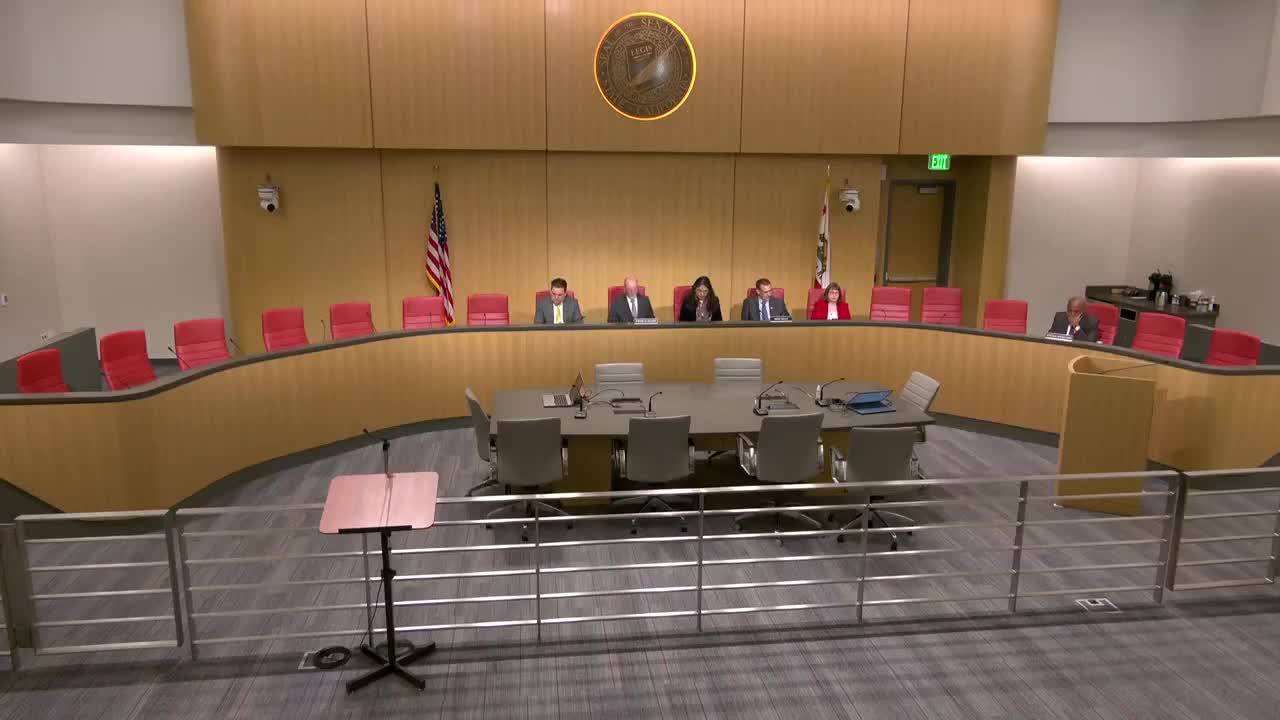
Discussed in Hearing
 3MIN
Senate Standing Committee on Revenue and Taxation
Bill Author