SB 932: Vehicles: registration fees and penalties.
- Session Year: 2023-2024
- House: Senate
- Latest Version Date: 2024-04-01
Current Status:
Failed
(2024-05-16: May 16 hearing: Held in committee and under submission.)
Introduced
In Committee
First Chamber
In Committee
Second Chamber
Enacted
Existing law imposes renewal fee penalties for late payment of vehicle registration except in limited specified cases. Existing law authorizes the Department of Motor Vehicles to waive the registration penalties accrued prior to before the purchase of a vehicle upon payment for the fees for registration due, if the transferee or purchaser was not aware that the fees were unpaid. Existing law also authorizes the department to waive the registration fees that became due prior to before the purchase of the vehicle if the transferee or purchaser was not aware that the fees were unpaid and the license plate assigned to the vehicle displays a validating device issued by the department that contains the year number of the registration year for which the transferee or purchaser is requesting a waiver of fees. Existing law further provides that these unpaid fees and penalties are the personal debt of the transferor of the vehicle and may be collected by the department in an appropriate civil action if the department has waived the fees and penalties.
This bill would instead require the department to waive delinquent registration fees and penalties when a transferee or purchaser of a vehicle applies for a transfer of registration if the department determines that the fees became due or the penalties accrued prior to before the purchase of the vehicle. The bill would require the department to create a system to collect these delinquent fees and penalties from the seller or transferor. The bill would repeal the provision authorizing the department to collect the waived fees and penalties in a civil action. These provisions would become operative on January 1, 2028.
Existing law imposes renewal fee penalties for late payment of vehicle registration except in limited specified cases. Existing law authorizes the Department of Motor Vehicles to waive the registration penalties accrued prior to the purchase of a vehicle upon payment for the fees for registration due, if the transferee or purchaser was not aware that the fees were unpaid. Existing law also authorizes the department to waive the registration fees that became due prior to the purchase of the vehicle if the transferee or purchaser was not aware that the fees were unpaid and the license plate assigned to the vehicle displays a validating device issued by the department that contains the year number of the registration year for which the transferee or purchaser is requesting a waiver of fees. Existing law further provides that these unpaid fees and penalties are the personal debt of the transferor of the vehicle and may be collected by the department in an appropriate civil action if the department has waived the fees and penalties.
This bill would instead require the department to waive delinquent registration fees and penalties when a transferee or purchaser of a vehicle applies for a transfer of registration if the department determines that the fees became due or the penalties accrued prior to the purchase of the vehicle. The bill would require the department to create a system to collect these delinquent fees and penalties from the seller or transferor.
(a)When a transferee or purchaser of a vehicle applies for transfer of registration, as provided in Section 5902, and it is determined by the department that registration penalties accrued prior to before the purchase of the vehicle, and that the transferee or purchaser was not cognizant of the nonpayment of the fees for registration for the current or prior registration years, the department may waive the registration penalties upon payment of the fees for registration due.
(b)Other provisions of this code notwithstanding, the director may, at his or her their discretion, investigate into the circumstances of any application for registration to ascertain if penalties had accrued through no fault or intent of the owner. If the director determines that the circumstances justify it, he or she the director may waive any penalties upon payment of the fees for registration then due.
(c)When a transferee or purchaser of a vehicle applies for transfer of registration of a vehicle, and it is determined by the department that fees for registration of the vehicle for any year are unpaid and due, that the fees became due prior to before the transfer or purchase of the vehicle by the transferee or purchaser and that the transferee or purchaser was not cognizant of the fact that the fees were unpaid and due, the department may waive the fees and any penalty thereon if the license plate assigned to the vehicle displays a validating device issued by the department and the validating device contains the year number of the registration year for which the transferee or purchaser is requesting a waiver of fees and penalties.
(d)Upon the transfer of a vehicle for which fees for registration and any penalties thereon are unpaid and due, the fees and penalties are, notwithstanding the provisions of Article 6 (commencing with Section 9800) of this chapter, the personal debt of the transferor of the vehicle who did not pay the fees and penalties when they became due or accrued. The fees and penalties may be collected by the department in an appropriate civil action if the department has waived the fees and penalties pursuant to subdivision (c).
(e)This section shall remain in effect only until January 1, 2028, and as of that date is repealed.
SECTION 1.Section 9562 of the Vehicle Code is amended to read:SEC. 2.Section 9562 is added to the Vehicle Code, to read:9562.(a)(1)When a transferee or purchaser of a vehicle applies for transfer of registration, as provided in Section 5902, and the department determines that registration fees for any year are unpaid and due, or that registration penalties have accrued, but the fees became due or the penalties accrued prior to before the purchase of the vehicle, the department shall waive the delinquent registration fees and penalties.
(b)(1)Upon the transfer of a vehicle for which fees for registration and any penalties thereon are unpaid and due, the fees and penalties are, notwithstanding the provisions of Article 6 (commencing with Section 9800) of this chapter, the personal debt of the seller or transferor of the vehicle who did not pay the fees and penalties when they became due or accrued.
(2)The department shall create a system to collect these delinquent fees and penalties from the seller or transferor. The department shall collect the delinquent fees and penalties when the seller or transferor registers another car or applies for a renewal of a license.
(3)The delinquent fees and penalties may also be collected by the department in an appropriate civil action.(c)This section shall become operative on January 1, 2028.
(a)(1)When a transferee or purchaser of a vehicle applies for transfer of registration, as provided in Section 5902, and it is determined by the department that registration the department determines that registration fees for any year are unpaid and due, or that registration penalties have accrued, but the fees became due or the penalties accrued prior to the purchase of the vehicle, and that the transferee or purchaser was not cognizant of the nonpayment of the fees for registration for the current or prior registration years, the department may shall waive the registration penalties upon payment of the fees for registration due. delinquent registration fees and penalties.
(b)Other provisions of this code notwithstanding, the director may, at his or her discretion, investigate into the circumstances of any application for registration to ascertain if penalties had accrued through no fault or intent of the owner. If the director determines that the circumstances justify it, he or she may waive any penalties upon payment of the fees for registration then due.(c)When a transferee or purchaser of a vehicle applies for transfer of registration of a vehicle, and it is determined by the department that fees for registration of the vehicle for any year are unpaid and due, that the fees became due prior to the transfer or purchase of the vehicle by the transferee or purchaser and that the transferee or purchaser was not cognizant of the fact that the fees were unpaid and due, the department may waive the fees and any penalty thereon if the license plate assigned to the vehicle displays a validating device issued by the department and the validating device contains the year number of the registration year for which the transferee or purchaser is requesting a waiver of fees and penalties.(d)(b)(1)Upon the transfer of a vehicle for which fees for registration and any penalties thereon are unpaid and due, the fees and penalties are, notwithstanding the provisions of Article 6 (commencing with Section 9800) of this chapter, the personal debt of the seller or transferor of the vehicle who did not pay the fees and penalties when they became due or accrued. The fees and penalties may be collected by the department in an appropriate civil action if the department has waived the fees and penalties pursuant to subdivision (c).
(2)The department shall create a system to collect these delinquent fees and penalties from the seller or transferor. The department shall collect the delinquent fees and penalties when the seller or transferor registers another car or applies for a renewal of a license.
(3)The delinquent fees and penalties may also be collected by the department in an appropriate civil action.
|
Date
|
Status
|
|---|---|
| May 16, 2024 | May 16 hearing: Held in committee and under submission. |
| May 10, 2024 | Set for hearing May 16. |
| Apr 22, 2024 | April 22 hearing: Placed on APPR suspense file. |
| Apr 12, 2024 | Set for hearing April 22. |
| Apr 10, 2024 | From committee: Do pass and re-refer to Com. on APPR with recommendation: To consent calendar. (Ayes 15. Noes 0. Page 3535.) (April 9). Re-referred to Com. on APPR. |
| Apr 1, 2024 | From committee with author's amendments. Read second time and amended. Re-referred to Com. on TRANS. |
| Feb 28, 2024 | Set for hearing April 9. |
| Feb 14, 2024 | Referred to Com. on TRANS. |
| Jan 17, 2024 | From printer. May be acted upon on or after February 16. |
| Jan 16, 2024 | Introduced. Read first time. To Com. on RLS. for assignment. To print. |
|
Date
|
Description
|
Location
|
Votes
|
|
|---|---|---|---|---|
| Apr 22, 2024 | Placed on suspense file | Senate Standing Committee on Appropriations |
Passed |
|
| Apr 9, 2024 | Do pass, but first be re-referred to the Committee on [Appropriations] with the recommendation: To Consent Calendar | Senate Standing Committee on Transportation |
Passed |
This list shows positions taken on this bill by organizations on the date displayed, which is linked to the original source.
Positions by individuals are not included.
|
Organization
|
Position
|
Date
|
|---|---|---|
| Chino Valley Chamber of Commerce | ** Support |
SENATE COMMITTEE ON
Senator Anna Caballero, Chair
2023 - 2024 Regular Session
SB 932 (Seyarto) - Vehicles: registration fees and penalties
Version: | Policy Vote: |
Urgency: | Mandate: |
Hearing Date: | Consultant: |
Bill Summary:
SB 932 would, as of January 1, 2028, require the Department of Motor Vehicles (DMV) to waive delinquent registration fees and penalties when a transferee (purchaser) of a used vehicle applies for a transfer of registration and DMV determines that the fees and penalties accrued prior to the purchase of the vehicle. Any such delinquent fees and penalties would become the personal debt of the transferor (seller) of the vehicle, and would be subject to collection by DMV, as specified.
Fiscal Impact:
- Unknown, likely significant one-time DMV costs to make IT systems changes to provide for fee and penalty waivers, capture delinquent debt amounts, and transfer them to a prior registered owner’s vehicle registration and driver’s license records. These costs are unknown because the changes must be implemented prior to January 1, 2028, which is after the completion of DMV’s current IT modernization efforts that are scheduled to be complete in the 2025-26 fiscal year. DMV cannot predict the costs to modify systems post modernization because its functionalities are currently under development. DMV would also incur one-time costs to establish processes and procedures for collection of delinquent fees and penalties from prior owners. (Motor Vehicle Account – MVA)
- Unknown, significant ongoing annual DMV administrative costs beginning in 2027-28, primarily as a result of the requirement for staff to cross check vehicle registration records of prior owners and match them to that person’s other vehicle registrations and driver’s license records to conduct collections of delinquent fees and penalties. DMV indicates that this process would be a manual and labor-intensive process. In some cases these costs would exceed the amount of delinquent charges that could potentially be collected. (MVA)
- DMV anticipates major vehicle registration fee and penalty losses as a result of the mandatory waiver of delinquent fees and penalties upon transfer of ownership. Precise revenue losses are unknown, but likely in the tens of millions annually. Staff notes that these revenue losses could be partially offset to the extent the department is able to successfully collect delinquent fees and penalties from sellers when they attempt to register another vehicle or renew a license. (primarily MVA and Motor Vehicle License Fee Account, but also local funds and other special funds)
Background:
Existing law generally requires that motor vehicles be registered annually and specifies certain fees and charges that must be paid to DMV at the time of registration, including a registration fee, vehicle license fee (VLF), applicable weight fees, applicable local fees, a California Highway Patrol fee, and transportation improvement fee. If a vehicle registration expires prior to the due date for renewal, the DMV levies late penalties pursuant to a statutorily established schedule, ranging from $10 for a delinquency period of 10 days or less to a penalty of $100 for a delinquency period of more than two years. Registration fees and penalties are tied to a vehicle record, not the vehicle owner.
Upon transfer of ownership of a vehicle, the transferee (purchaser) must apply for a transfer of registration within ten days. Past due fees and penalties must be paid prior to registration of a vehicle where the fees or penalties may have been incurred by a party other than the current owner. Existing law authorizes the DMV to waive payment of past due fees and penalties if they became due before transfer of ownership, the transferee was unaware of the past due fees and penalties, and the transferee submits a license plate with the appropriate registration validating tab. Upon the transfer of a vehicle for which registration fees and penalties are due, those fees and penalties are the personal debt of the transferor who failed to pay the fees and penalties when they were due. Existing law authorizes DMV to collect fees and penalties from the transferor (seller) in a civil action if the department has provided a waiver of delinquent fees and charges to the purchaser of a vehicle.
Proposed Law:
SB 932 would, as of January 1, 2028, repeal current provisions authorizing DMV to waive registration fees and penalties that accrued prior to the transfer of a vehicle, as specified, and instead do the following:
- Require DMV to waive delinquent registration fees and penalties when the purchaser of a vehicle applies for transfer of registration, and DMV determines that registration fees for any year are unpaid and due, or that registration penalties have accrued, but the fees and penalties were owed and accrued before the purchase of the vehicle.
- Specify that any unpaid registration fees and penalties that are due when a purchaser of a vehicle applies for transfer of registration become the personal debt of the seller of the vehicle who did not pay the fees and penalties when they became due or accrued.
- Require DMV to create a system to collect delinquent fees and penalties from the seller, and to collect these fees and penalties when the seller registers another car or applies for a renewal of license.
Related Legislation:
AB 3243 (Ta), which is currently pending in the Assembly Transportation Committee, would specify that a person who has a current income level to qualify for specified assistance programs would not be required to pay registration penalties in order to renew a vehicle registration, and would instead be authorized to delay payment of penalties up to the following expiration date of the vehicle’s registration.
AB 281 (Donnelly), which failed passage in the Assembly Transportation Committee in 2013, would have required DMV to waive unpaid registration fees and penalties if they accrued prior to the vehicle being purchased.
Staff Comments:
The DMV estimates that there are approximately 4 million private party vehicle sales each year that require a transfer of ownership. There is no data available on the number of these transfers that require the payment of delinquent registration fees and penalties. For illustrative purposes, if 5% of those transfers involve delinquencies that are over 30 days past due, but less than one year, and using the average combined registration late fee, CHP late fee, and late VLF fees of $121 for that delinquency duration, the revenue losses related to the bill’s waiver of those fees would be approximately $24 million.
The Motor Vehicle Account (MVA) is the primary funding source for the California Highway Patrol and DMV. The Legislative Analyst’s Office (LAO) recently published a report as part of its analysis of the Governor’s proposed 2024-25 Budget entitled “Insolvency Risks for Environmental and Transportation Special Funds” that includes an evaluation of the MVA. The report notes that between 2018-19 and 2023-24, MVA revenues have increased by $714 million while expenditures have increased by about $1 billion, and since 2021-22, annual expenditures have exceeded yearly revenues, resulting in a structural imbalance. The MVA is expected to fully exhaust its reserves and become insolvent in 2025-26 (Budget Year +1). Specifically, the administration projects expenditures will exceed available resources by roughly $140 million in 2025-26. Absent actions to address the MVA fund condition, approving any new proposals that would increase MVA expenditures would exacerbate the structural imbalance and hasten the insolvency timeline. As such, the LAO recommends that “the Legislature set a high bar for considering approval of any proposals that create additional MVA cost pressures and accelerate the risk of insolvency.” Staff notes that this bill would result in significant increases in MVA expenditures as well as MVA revenue losses that would make the structural imbalance of the MVA worse.
-- END --
SENATE COMMITTEE ON TRANSPORTATION
Senator Dave Cortese, Chair
2023 - 2024 Regular
Bill No: SB 932 Hearing Date: 4/9/2024
Author: | Seyarto | ||
Version: | 4/1/2024 Amended | ||
Urgency: | No | Fiscal: | Yes |
Consultant: | Jacob O'Connor | ||
SUBJECT: Vehicles: registration fees and penalties
DIGEST: This bill would, beginning January 1, 2028 require the DMV to waive delinquent vehicle registration fees and penalties when a transferee or purchaser of a used vehicle in a private sale applies for a transfer of registration. It also requires the DMV to create a system to collect these delinquent fees and penalties from the seller or transferor.
ANALYSIS:
Existing law:
- Establishes various vehicle registration fees to be paid to the Department of Motor Vehicles (DMV) and deposited in accounts for spending on priorities including regulating vehicles, administrating registration, maintaining streets and highways, and supporting the California Highway Patrol (CHP). (VEH §9250-§9808)
- Specifies that vehicle fees are delinquent whenever application for renewal of registration is made after midnight of the expiration day of the registration or 60 days after the registered owner is notified by the DMV, whichever is later. (VEH §9552)
- Establishes a schedule of penalties to be collected for any late registration alongside the original fee that have higher cost penalties for longer delinquency periods. (VEH §9554 and §9554.5)
- Requires any vehicle transferee who has received a properly endorsed certificate of ownership to forward the certificate with the proper transfer fee to the DMV within 10 days of receiving the certificate. (VEH §5902)
- Requires that when licensed dealers sell a vehicle they must submit to the DMV an application accompanied by all fees and penalties due for registration. (VC §4556)
- Authorizes the DMV to waive registration penalties when a transferee or purchaser of a vehicle applies for transfer of registration if the penalties accrued prior to the purchase of the vehicle, the transferee or purchaser was not cognizant of the nonpayment, and the original fees are paid. (VEH §9562)
- Authorizes the DMV to waive vehicle registration fees and penalties for a vehicle if the fees became due prior to the purchase of the vehicle and the transferee or purchaser was not cognizant of the nonpayment and the license plate assigned to the vehicle displays a valid registration
- Specifies that, if the outstanding fees have been waived, the unpaid fees and penalties are the personal debt of the transferor of the vehicle and may be collected by the DMV in appropriate civil action.
This bill:
- Requires, beginning January 1, 2028, the DMV to waive delinquent registration fees and any penalties that have accrued on fees due prior to the purchase of a vehicle when a transferee or purchaser of a vehicle applies for transfer of registration.
- Requires, beginning January 1, 2028, the DMV to create a system to collect the waived fees from the seller or transferor of the vehicle when the seller or transferor registers another car or applies for a renewal of license.
COMMENTS:
- Purpose of bill. According to the author “Transportation is commonly the second-biggest expenditure for the average family. California families hit by obscure fees can be left without transportation, or in a worse financial position. This bill will protect California families from surprise fees by enhancing consumer protections for the increasingly common practice of the private sales of vehicles; allowing for more options when buying a vehicle without adding further financial burdens to a new owner of a used car.”
- Vehicle fees. It is illegal to operate an unregistered vehicle in California. At the time of registration the Department of Motor Vehicles (DMV) collects a variety of registration fees. Most of these fees are deposited in the Motor Vehicle Account (MVA) where they are used to support the key functions of the DMV and the California Highway Patrol (CHP). There are also additional fees that have been added over time to support other state priorities such as a $3 fee for the California Transportation Program.
Registration fees and penalties are tied to a vehicle, not the vehicle owner. If a vehicle is not re-registered before the registration expires, the DMV levies late penalties pursuant to a statutorily established schedule, ranging from $10 for a delinquency period of 10 days or less to a penalty of $100 for a delinquency period of more than two years. The DMV does not offer a grace period for paying annual vehicle registration fees. Even though license plates display only the month and year, vehicle registration expires on a specific day. The DMV sends billing notices approximately 50 days before a vehicle’s registration expires.
- Let the buyer beware. California has established several consumer protections for sales of vehicles by licensed car dealers. These include requirements that dealers provide notices about price disclosures for items in monthly payments and that they meet certain inspection and notice standards to advertise the vehicle as “certified.” Licensed dealers are also required to submit to the DMV all fees and penalties due for registration and transfer when a vehicle is sold. The cost of these fees must be disclosed in the purchase agreement, so consumers should be aware when they purchase a used vehicle if they are paying for late registration penalties.
However, when it comes to vehicle transactions between private parties none of these protections apply. It is the onus of the buyer to assess the vehicle’s condition, including unpaid registration fees, and determine if it meets their needs. The DMV does have on their website a readily accessible fee calculator where anyone can enter a vehicle’s identification number and determine the amount of fees and penalties that would need to be paid to register the vehicle.
If a vehicle is sold with outstanding unpaid registration fees and penalties it is the responsibility of the new owner to pay these outstanding fees when they register the vehicle. This bill would change that system by forgiving outstanding fees and penalties that accrued prior to the sale of the vehicle. The seller of a vehicle would instead retain responsibility for paying any registration fees or penalties that accrued prior to the sale and the DMV would have to collect those delinquent fees when that person next registers a vehicle or renews a license.
- How big of a problem? Given the consumer protections for vehicle purchases from licensed dealers, a used car buyer should only be surprised about outstanding fees and penalties if they purchase the vehicle from a private party. Private vehicle sales make up a small percentage of total vehicle sales in California, so the number of consumers who run afoul of this issue is likely not large. In the cases where someone does unwittingly purchase a vehicle with late penalties the DMV has a statutory mechanism available to waive those penalties if the buyer signs a statement of fact asserting that they did not know the penalties were outstanding at the time of purchase. The process and form for this is available on the DMV website. However this authority is discretionary, the DMV could choose not to waive the fees. The DMV does not track how often people request fees to be waived through this mechanism or how often these requests are granted.
- MVA insolvency. Establishing a new process to track and collect vehicle fees from individuals will likely require a one-time expenditure to setup new IT systems as well as some ongoing fees to maintain and manage the system. Earlier this year the Legislative Analyst’s Office released a report evaluating the fiscal outlook of the MVA, which is the primary funding source for the CHP and DMV. According to this report the MVA is “rapidly heading for insolvency” as expenditures continue to outpace revenues. The report predicts that the fund will become insolvent in fiscal year 2025-2026. As such the report recommends the Legislature set a high bar for considering approval of any proposals that create additional MVA cost pressures and accelerate the risk of insolvency.
Related Legislation:
AB 3243 (Ta) would, until January 1, 2026, require the DMV to accept 20% of an outstanding registration amount in lieu of delinquent vehicle registration fees if an individual is below a certified income threshold. This bill is currently in the Assembly Transportation Committee.
AB 281 (Donnelly, 2013) would have required the DMV to waive unpaid registration fees and penalties if they accrued prior to the vehicle being purchased. The bill failed passage in the Assembly Transportation Committee.
FISCAL EFFECT: Appropriation: Fiscal Com.: Local:
POSITIONS: (Communicated to the committee before noon on Wednesday,
April 3rd.)
SUPPORT:
Chino Valley Chamber of Commerce
OPPOSITION:
None recieved
ARGUMENTS IN SUPPORT: According to the Chino Valley Chamber of Commerce, “Californians who take the time to do so, can often find better deals by purchasing used cars from private sellers instead of car dealers. However, if it is found after the sale that the car comes with back-fees, the new owner is now on the hook for those fees in addition to any other maintenance that comes with the car. With transportation already counting for a considerable costly chunk for the average household, unexpected fees can lead to more distress instead of less as a new owner of a used car.
The discovery of these fees can strain a family’s budget creating turmoil out of an initially beneficial situation. Additionally, costs have been found to be a key barrier to vehicle ownership, especially among low-income households, and providing protections for families in this increasingly prevalent scenario allows for monetary relief. SB-936 will enhance California’s hold harmless protections for private sales of used automobiles by tying outstanding fees to an individual’s driver’s license, as opposed to a given vehicle, to collect these delinquent fees and penalties from the seller under current practices used to collect fees on delinquent traffic tickets.”
ARGUMENTS IN OPPOSITION: According to the California Association of Highway Patrolmen “SB 932 would require the department to waive delinquent registration fees and penalties when a transferee or purchaser of a vehicle applies for a transfer of registration if the department determines that the fees became due or the penalties accrued before the purchase of the vehicle. The bill would require the department to create a system to collect these delinquent fees and penalties from the seller or transferor. SB 932 bill would also repeal the provision authorizing the department to collect the waived fees and penalties in a civil action.
CAHP believes that this bill will lead to the loss of revenue for the MVA. Registration fees and penalties make up a substantial part of the MVA. For this reason, CAHP must oppose SB 932.”
-- END --
Discussed in Hearing
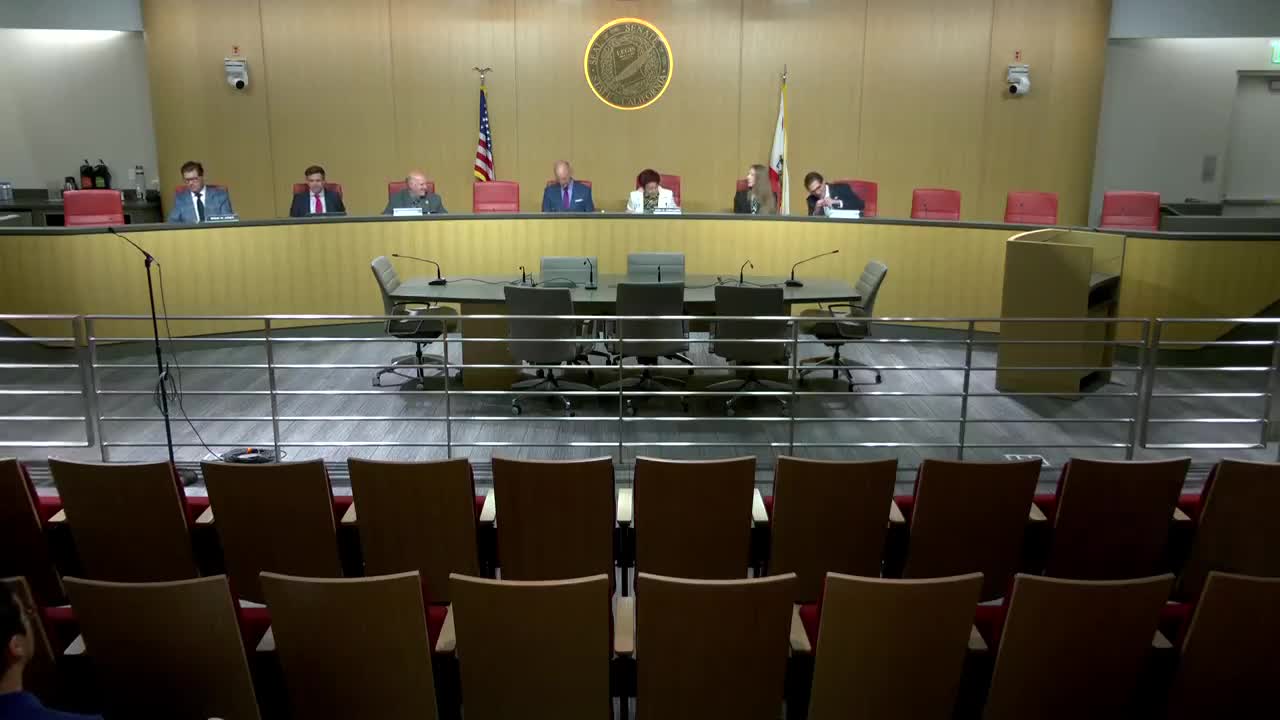 32SEC
Senate Standing Committee on Appropriations
Bill Author