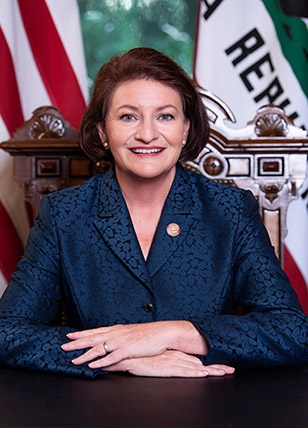
SCR 121: International Women’s Day.
- Session Year: 2023-2024
- House: Senate
- Latest Version Date: 2024-05-31
Current Status:
Passed
(2024-05-31: Chaptered by Secretary of State. Res. Chapter 76, Statutes of 2024.)
Introduced
In Committee
First Chamber
In Committee
Second Chamber
Enacted
This measure designates March 8, 2024, as International Womens Day.
This measure designates March 8, 2024, as International Womens Day.
This measure designates March 8, 2024, as International Womens Day.
This measure designates March 8, 2024, as International Womens Day.
WHEREAS, International Womens Day first emerged from the activities of labor movements at the turn of the 20th century in North America and across Europe; and
WHEREAS, The first National Womans Day was observed in the United States in 1909 in honor of the 1908 garment workers strike in New York, where women protested against working conditions; and
WHEREAS, International Womens Day was marked for the first time in 1911 by Austria, Denmark, Germany, and Switzerland, where more than one million women and men attended rallies demanding the rights for women to vote, to hold public office, to work, and to receive vocational training, and demanding an end to discrimination on the job; and
WHEREAS, In 191314, International Womens Day also became a mechanism for protesting World War I. As part of the peace movement, Russian women observed their first International Womens Day on the last Sunday in February, and elsewhere in Europe, on or around March 8 of the following year, women held rallies either to protest the war or to express solidarity with other activists; and
WHEREAS, In 1917, against the backdrop of the war, women in Russia again chose to protest and strike for Bread and Peace on the last Sunday in February, which fell on March 8 on the Gregorian calendar. Four days later, the Czar abdicated and the provisional government granted women the right to vote; and
WHEREAS, In 1975, during International Womens Year, the United Nations began celebrating International Womens Day on March 8; and
WHEREAS, In 1979, the Convention on the Elimination of All Forms of Discrimination against Women was adopted by the United Nations General Assembly and the international treaty, described as an international bill of rights for women, was instituted on September 3, 1981, and has been ratified by 189 states; and
WHEREAS, International Womens Day has assumed a new global dimension for women in developed and developing countries alike. The growing international womens movement has helped make the commemoration a rallying point to build support for womens rights and participation in the political and economic arenas; and
WHEREAS, International Womens Day is a time to reflect on progress made, to call for change, and to celebrate acts of courage and determination by ordinary women who have played an extraordinary role in the history of their countries and communities; and
WHEREAS, The United Nations has designated the theme for the 2024 International Womens Day as Invest in women: Accelerate progress. The theme uplifts the need to secure rights for women across all domains in order to ensure prosperous and just economies and a healthy planet for future generations; and
WHEREAS, One of the key challenges in achieving gender equality by 2030 is an alarming lack of financing with a staggering $360 billion annual deficit in spending on gender-equality measures; and
WHEREAS, Austerity negatively impacts women and crowds out public spending on essential public services and social protection; and
WHEREAS, To uphold womens rights and fully leverage the potential of womens leadership where funding and financing are concerned, the perspectives of women and girls in all of their diversity must be integrated in the formulation and implementation of policies and programs in all spheres and at all stages of economic recovery; and
WHEREAS, Innovation and technology provide unprecedented opportunities, yet trends indicate a growing gender digital divide, and women are underrepresented in the fields of science, technology, engineering, mathematics, and design. This prevents women from developing and influencing gender-responsive innovations to achieve transformative gains for society. From mobile banking to artificial intelligence and the internet, it is vital that womens ideas and experiences equally influence the design and implementation of the innovations that will shape our future societies; and
WHEREAS, International Womens Day stands as a reminder of the long history of womens social activism and organizing; calls attention to the fight for equal wages, better working conditions, and the right to vote; highlights the fact that while women make up more than one-half of our population, they are disproportionately represented in our state; and brings awareness that too few women are in leadership positions and too many live in poverty; now, therefore, be it
Resolved by the Senate of the State of California, the Assembly thereof concurring, That the Legislature designates March 8, 2024, as International Womens Day; and be it further
Resolved, That the Secretary of the Senate transmit copies of this resolution to the author for appropriate distribution.
WHEREAS, International Womens Day first emerged from the activities of labor movements at the turn of the 20th century in North America and across Europe; and
WHEREAS, The first National Womans Day was observed in the United States in 1909 in honor of the 1908 garment workers strike in New York, where women protested against working conditions; and
WHEREAS, International Womens Day was marked for the first time in 1911 by Austria, Denmark, Germany, and Switzerland, where more than one million women and men attended rallies demanding the rights for women to vote and vote, to hold public office, womens rights to work, and to receive vocational training, and to demanding an end to discrimination on the job; and
WHEREAS, In 191314, International Womens Day also became a mechanism for protesting World War I. As part of the peace movement, Russian women observed their first International Womens Day on the last Sunday in February, and elsewhere in Europe, on or around March 8 of the following year, women held rallies either to protest the war or to express solidarity with other activists; and
WHEREAS, In 1917, against the backdrop of the war, women in Russia again chose to protest and strike for Bread and Peace on the last Sunday in February, which fell on March 8 on the Gregorian calendar. Four days later, the Czar abdicated and the provisional government granted women the right to vote; and
WHEREAS, In 1975, during International Womens Year, the United Nations began celebrating International Womens Day on March 8; and
WHEREAS, In 1979, the Convention on the Elimination of All Forms of Discrimination against Women was adopted by the United Nations General Assembly and the international treaty, described as an international bill of rights for women, was instituted on September 3, 1981, and has been ratified by 189 states; and
WHEREAS, International Womens Day has assumed a new global dimension for women in developed and developing countries alike. The growing international womens movement has helped make the commemoration a rallying point to build support for womens rights and participation in the political and economic arenas; and
WHEREAS, International Womens Day is a time to reflect on progress made, to call for change, and to celebrate acts of courage and determination by ordinary women who have played an extraordinary role in the history of their countries and communities; and
WHEREAS, The United Nations has designated the theme for the 2024 International Womens Day as Invest in women: Accelerate progress. The theme uplifts the need to secure rights for women across all domains in order to ensure prosperous and just economies and a healthy planet for future generations; and
WHEREAS, One of the key challenges in achieving gender equality by 2030 is an alarming lack of financing with a staggering $360 billion annual deficit in spending on gender-equality measures; and
WHEREAS, Austerity negatively impacts women and crowds out public spending on essential public services and social protection; and
WHEREAS, To uphold womens rights and fully leverage the potential of womens leadership where funding and financing are concerned, the perspectives of women and girls in all of their diversity must be integrated in the formulation and implementation of policies and programs in all spheres and at all stages of economic recovery; and
WHEREAS, Innovation and technology provide unprecedented opportunities, yet trends indicate a growing gender digital divide, and women are underrepresented in the fields of science, technology, engineering, mathematics, and design. This prevents women from developing and influencing gender-responsive innovations to achieve transformative gains for society. From mobile banking to artificial intelligence and the internet, it is vital that womens ideas and experiences equally influence the design and implementation of the innovations that will shape our future societies; and
WHEREAS, International Womens Day stands as a reminder of the long history of womens social activism and organizing; calls attention to the fight for equal wages, better working conditions, and the right to vote; highlights the fact that while women make up more than one-half of our population, they are disproportionately represented in our state; and brings awareness that too few women are in leadership positions and too many live in poverty; now, therefore, be it
Resolved by the Senate of the State of California, the Assembly thereof concurring, That the Legislature designates March 8, 2024, as International Womens Day; and be it further
Resolved, That the Secretary of the Senate transmit copies of this resolution to the author for appropriate distribution.
WHEREAS, International Womens Day first emerged from the activities of labor movements at the turn of the 20th century in North America and across Europe; and
WHEREAS, The first National Womans Day was observed in the United States in 1909 in honor of the 1908 garment workers strike in New York, where women protested against working conditions; and
WHEREAS, International Womens Day was marked for the first time in 1911 by Austria, Denmark, Germany, and Switzerland, where more than one million women and men attended rallies demanding the rights for women to vote and to hold public office, womens rights to work, to vocational training, and to an end to discrimination on the job; and
WHEREAS, In 191314, International Womens Day also became a mechanism for protesting World War I. As part of the peace movement, Russian women observed their first International Womens Day on the last Sunday in February, and elsewhere in Europe, on or around March 8 of the following year, women held rallies either to protest the war or to express solidarity with other activists; and
WHEREAS, In 1917, against the backdrop of the war, women in Russia again chose to protest and strike for Bread and Peace on the last Sunday in February, which fell on March 8 on the Gregorian calendar. Four days later, the Czar abdicated and the provisional government granted women the right to vote; and
WHEREAS, In 1975, during International Womens Year, the United Nations began celebrating International Womens Day on March 8; and
WHEREAS, In 1979, the Convention on the Elimination of All Forms of Discrimination against Women was adopted by the United Nations General Assembly and the international treaty, described as an international bill of rights for women, was instituted on September 3, 1981, and has been ratified by 189 states; and
WHEREAS, International Womens Day has assumed a new global dimension for women in developed and developing countries alike. The growing international womens movement has helped make the commemoration a rallying point to build support for womens rights and participation in the political and economic arenas; and
WHEREAS, International Womens Day is a time to reflect on progress made, to call for change, and to celebrate acts of courage and determination by ordinary women who have played an extraordinary role in the history of their countries and communities; and
WHEREAS, The United Nations has designated the theme for the 2024 International Womens Day as Invest in women: Accelerate progress. The theme uplifts the need to secure rights for women across all domains in order to ensure prosperous and just economies and a healthy planet for future generations; and
WHEREAS, One of the key challenges in achieving gender equality by 2030 is an alarming lack of financing with a staggering $360 billion annual deficit in spending on gender-equality measures; and
WHEREAS, Austerity negatively impacts women and crowds out public spending on essential public services and social protection; and
WHEREAS, To uphold womens rights and fully leverage the potential of womens leadership where funding and financing are concerned, the perspectives of women and girls in all of their diversity must be integrated in the formulation and implementation of policies and programs in all spheres and at all stages of economic recovery; and
WHEREAS, Innovation and technology provide unprecedented opportunities, yet trends indicate a growing gender digital divide, and women are underrepresented in the fields of science, technology, engineering, mathematics, and design. This prevents women from developing and influencing gender-responsive innovations to achieve transformative gains for society. From mobile banking to artificial intelligence and the internet, it is vital that womens ideas and experiences equally influence the design and implementation of the innovations that will shape our future societies; and
WHEREAS, International Womens Day stands as a reminder of the long history of womens social activism and organizing; calls attention to the fight for equal wages, better working conditions, and the right to vote; highlights the fact that while women make up more than one-half of our population, they are disproportionately represented in our state; and brings awareness that too few women are in leadership positions and too many live in poverty; now, therefore, be it
Resolved by the Senate of the State of California, the Assembly thereof concurring, That the Legislature designates March 8, 2024, as International Womens Day; and be it further
Resolved, That the Secretary of the Senate transmit copies of this resolution to the author for appropriate distribution.
|
Date
|
Status
|
|---|---|
| May 31, 2024 | Chaptered by Secretary of State. Res. Chapter 76, Statutes of 2024. |
| May 31, 2024 | Enrolled and filed with the Secretary of State at 2 p.m. |
| May 23, 2024 | In Senate. Ordered to engrossing and enrolling. |
| May 22, 2024 | Read. Adopted. (Ayes 69. Noes 0. Page 5570.) Ordered to the Senate. |
| May 20, 2024 | From committee: Be adopted. Ordered to consent calendar. (Ayes 9. Noes 0.) (May 20). |
| Apr 1, 2024 | Referred to Com. on RLS. |
| Mar 18, 2024 | In Assembly. Held at Desk. |
| Mar 18, 2024 | Read. Adopted. (Ayes 40. Noes 0. Page 3325.) Ordered to the Assembly. |
| Mar 13, 2024 | From committee: Ordered to third reading. |
| Mar 12, 2024 | From committee with author's amendments. Read second time and amended. Re-referred to Com. on RLS. |
| Mar 5, 2024 | Introduced. Referred to Com. on RLS. |
|
Date
|
Description
|
Location
|
Votes
|
|
|---|---|---|---|---|
| May 22, 2024 | SCR 121 Wahab Consent Calendar Second Day Regular Session | Assembly Floor |
Passed |
|
| May 20, 2024 | Be adopted. To Consent Calendar. | Assembly Standing Committee on Rules |
Passed |
|
| Mar 18, 2024 | Senate 3rd Reading SCR121 Wahab et al. | Senate Floor |
Passed |
This list shows positions taken on this bill by organizations on the date displayed, which is linked to the original source.
Positions by individuals are not included.
Date of Hearing: May 20, 2024
ASSEMBLY COMMITTEE ON
, Chair
SBPCA Bill Id:
Author:() – As Ver:March 12, 2024
SENATE VOTE: 40-0
SUBJECT:
SUMMARY: Designates March 8, 2024, as International Women’s Day. Specifically, this resolution makes the following legislative findings:
- International Women’s Day first emerged from the activities of labor movements at the turn of the 20th century in North America and across Europe. The first National Woman’s Day was observed in the United States in 1909 in honor of the 1908 garment workers’ strike in New York, where women protested against working conditions.
- International Women’s Day has assumed a new global dimension for women in developed and developing countries alike. The growing international women’s movement has helped make the commemoration a rallying point to build support for women’s rights and participation in the political and economic arenas.
- International Women’s Day is a time to reflect on progress made, to call for change, and to celebrate acts of courage and determination by ordinary women who have played an extraordinary role in the history of their countries and communities.
- The United Nations has designated the theme for the 2024 International Women’s Day as “Invest in Women: Accelerate Progress.” The theme uplifts the need to secure rights for women across all domains in order to ensure prosperous and just economies and a healthy planet for future generations.
- International Women’s Day stands as a reminder of the long history of women’s social activism and organizing; calls attention to the fight for equal wages, better working conditions, and the right to vote; highlights the fact that while women make up more than one-half of our population, they are disproportionately represented in our state; and, brings awareness that too few women are in leadership positions and too many live in poverty.
FISCAL EFFECT: This resolution is keyed non-fiscal by Legislative Counsel.
REGISTERED SUPPORT / OPPOSITION:
Support
None on file
Opposition
None on file
Analysis Prepared by:
SENATE RULES COMMITTEE Office of Senate Floor Analyses (916) 651-1520 Fax: (916) 327-4478 | SCR 121 |
THIRD READING
Bill No: SCR 121
Author: Wahab (D), et al.
Amended: 3/12/24
Vote: 21
SUBJECT: International Women’s Day
SOURCE: Author
DIGEST:
This resolution designates March 8, 2024, as International Women’s Day.
ANALYSIS: This resolution makes the following legislative findings:
- International Women’s Day first emerged from the activities of labor movements at the turn of the 20th century in North America and across Europe.
- In 1975, during International Women’s Year, the United Nations began celebrating International Women’s Day on March 8.
- International Women’s Day has assumed a new global dimension for women in developed and developing countries alike. The growing international women’s movement has helped make the commemoration a rallying point to build support for women’s rights and participation in the political and economic arenas.
- International Women’s Day is a time to reflect on progress made, to call for change, and to celebrate acts of courage and determination by ordinary women who have played an extraordinary role in the history of their countries and communities.
- The United Nations has designated the theme for the 2024 International Women’s Day as “Invest in women: Accelerate progress.” The theme uplifts the need to secure rights for women across all domains in order to ensure prosperous and just economies and a healthy planet for future generations.
- Innovation and technology provide unprecedented opportunities, yet trends indicate a growing gender digital divide, and women are underrepresented in the fields of science, technology, engineering, mathematics, and design. This prevents women from developing and influencing gender-responsive innovations to achieve transformative gains for society. From mobile banking to artificial intelligence and the internet, it is vital that women’s ideas and experiences equally influence the design and implementation of the innovations that will shape our future societies.
- International Women’s Day stands as a reminder of the long history of women’s social activism and organizing; calls attention to the fight for equal wages, better working conditions, and the right to vote; highlights the fact that while women make up more than one-half of our population, they are disproportionately represented in our state; and brings awareness that too few women are in leadership positions and too many live in poverty.
This resolution designates March 8, 2024, as International Women’s Day.
Related/Prior Legislation
The following are the most recent measures proclaiming Cystic Fibrosis Awareness Month:
- SCR 13 (Jackson, Resolution Chapter 22, Statutes of 2019).
- SCR 113 (Jackson, Resolution Chapter 42, Statutes of 2018).
- ACR 30 (Limon, Resolution Chapter 18, Statutes of 2017).
FISCAL EFFECT: Appropriation: No Fiscal Com.: No Local: No
SUPPORT: (Verified 3/11/24)
None received
OPPOSITION: (Verified 3/11/24)
None received
Prepared by: Russell Manning / SFA / (916) 651-1520
3/13/24 13:46:08
**** END ****
Bill Author