ABX2 9: Transportation fuels: specifications: production enhancement strategies.
- Session Year: 2023-2024
- House: Assembly
- Latest Version Date: 2024-10-01
Current Status:
Failed
(2024-10-16: From Senate committee without further action.)
Introduced
In Committee
First Chamber
In Committee
Second Chamber
Enacted
Existing law authorizes the State Air Resources Board to adopt and implement motor vehicle fuel specifications for the control of air contaminants and sources of air pollution. Existing law prohibits the state board from adopting any regulation that establishes a specification for motor vehicle fuel unless that regulation, and a multimedia evaluation conducted by affected agencies and coordinated by the state board, are reviewed by the California Environmental Policy Council.
This bill would authorize the state board to adopt a schedule of fees, not to exceed a total amount collected of $5,000,000 over 3 years, to cover all or a portion of the state boards reasonable costs associated with the development, implementation, and enforcement of a specification for a blend of gasoline that contains more than 10% and up to 15% ethanol by volume for use as a transportation fuel, as provided. The bill would require that the revenues from those fees be deposited into the Cost of Implementation Account and be available, upon appropriation by the Legislature, for purposes of carrying out these provisions.
This bill would require the state board to ensure that the multimedia evaluation of gasoline containing up to 15% ethanol by volume conducted pursuant to those provisions is completed, and ready for review by the council, on or before July 1, 2025.
Existing law requires the State Energy Resources Conservation and Development Commission, on or before January 1, 2024, and every 3 years thereafter, to submit an assessment to the Governor and the Legislature that, among other things, identifies methods to ensure a reliable supply of affordable and safe transportation fuels in California, as provided.
This bill would require the commission commission, in consultation with the state board, to prepare and submit a report to the Legislature on or before July 1, 2025, regarding potential solutions to increase the supply of gasoline through the production enhancement strategies identified by the commission in its 2024 assessment submitted to the Legislature and the Governor, as specified.
This bill would declare that it is to take effect immediately as an urgency statute.
Existing law authorizes the State Air Resources Board to adopt and implement motor vehicle fuel specifications for the control of air contaminants and sources of air pollution. Existing law prohibits the state board from adopting any regulation that establishes a specification for motor vehicle fuel unless that regulation, and a multimedia evaluation conducted by affected agencies and coordinated by the state board, are reviewed by the California Environmental Policy Council.
This bill would require the state board to ensure that the multimedia evaluation of gasoline containing up to 15% ethanol by volume conducted pursuant to those provisions is completed, and ready for review by the council, on or before July 1, 2025.
Existing law requires the State Energy Resources Conservation and Development Commission, on or before January 1, 2024, and every 3 years thereafter, to submit an assessment to the Governor and the Legislature that, among other things, identifies methods to ensure a reliable supply of affordable and safe transportation fuels in California, as provided.
This bill would require the commission to prepare and submit a report to the Legislature on or before July 1, 2025, regarding potential solutions to increase the supply of gasoline through the production enhancement strategies identified by the commission in its 2024 assessment submitted to the Legislature and the Governor, as specified.
This bill would declare that it is to take effect immediately as an urgency statute.
(a)The state board may adopt a schedule of fees, not to exceed a total amount collected of five million dollars ($5,000,000) over three years, to cover all or a portion of the state boards reasonable costs associated with the development, implementation, and enforcement of a specification for a blend of gasoline that contains more than 10 percent and up to 15 percent ethanol by volume for use as a transportation fuel.
(b)The fees adopted pursuant to subdivision (a) shall apply only to entities that produce fuel ethanol for use in blended transportation fuels sold in California.
(c)The revenues collected pursuant to this section shall be deposited into the Cost of Implementation Account established in the Air Pollution Control Fund pursuant to Section 16428.95 of the Government Code and shall be available, upon appropriation by the Legislature, for purposes of carrying out this section.
(d)Failure to comply with the fee schedule shall not result in a violation of Section 43020.
(e)This section shall remain in effect only until January 1, 2028, and as of that date is repealed.
SECTION 1.SEC. 2.Section 43830.9 is added to the Health and Safety Code, to read:43830.9.The state board shall ensure that the multimedia evaluation of gasoline containing up to 15 percent ethanol by volume (E15 gasoline) conducted pursuant to Section 43830.8 is completed, and ready for review by the California Environmental Policy Council, established pursuant to Section 71017 of the Public Resources Code, on or before July 1, 2025.
SEC. 2.SEC. 3.Section 25371.4 is added to the Public Resources Code, to read:25371.4.(a)The commission commission, in consultation with the State Air Resources Board, shall prepare and submit a report to the Legislature on or before July 1, 2025, regarding potential solutions to increase the supply of gasoline through the production enhancement strategies identified by the commission on pages 63 to 66, inclusive, of its assessment submitted to the Legislature and the Governor on August 15, 2024, pursuant to Section 25371. As part of the report, the commission shall do both of the following:
(1)Conduct an analysis to resolve the outstanding issues identified by the commission in the 2024 report for each production enhancement strategy.
(2)Make recommendations on which potential solutions the state should pursue to increase the supply of gasoline and lower the cost of gasoline.
(b)(1)A report to be submitted pursuant to subdivision (a) shall be submitted in compliance with Section 9795 of the Government Code.
(2)Pursuant to Section 10231.5 of the Government Code, this section shall become inoperative on July 1, 2029, and, as of January 1, 2030, is repealed.
SEC. 3.SEC. 4.This act is an urgency statute necessary for the immediate preservation of the public peace, health, or safety within the meaning of Article IV of the California Constitution and shall go into immediate effect. The facts constituting the necessity are:
In order to develop solutions to help reduce the price of gasoline as soon as possible, it is necessary that this act take effect immediately.
The state board shall ensure that the multimedia evaluation of gasoline containing up to 15 percent ethanol by volume (E15 gasoline) conducted pursuant to Section 43830.8 is completed, and ready for review by the California Environmental Policy Council, established pursuant to Section 71017 of the Public Resources Code, on or before July 1, 2025.
SEC. 2.Section 25371.4 is added to the Public Resources Code, to read:25371.4.(a)The commission shall prepare and submit a report to the Legislature on or before July 1, 2025, regarding potential solutions to increase the supply of gasoline through the production enhancement strategies identified by the commission on pages 63 to 66, inclusive, of its assessment submitted to the Legislature and the Governor on August 15, 2024, pursuant to Section 25371. As part of the report, the commission shall do both of the following:
(1)Conduct an analysis to resolve the outstanding issues identified by the commission in the 2024 report for each production enhancement strategy.
(2)Make recommendations on which potential solutions the state should pursue to increase the supply of gasoline and lower the cost of gasoline.
(b)(1)A report to be submitted pursuant to subdivision (a) shall be submitted in compliance with Section 9795 of the Government Code.
(2)Pursuant to Section 10231.5 of the Government Code, this section shall become inoperative on July 1, 2029, and, as of January 1, 2030, is repealed.
SEC. 3.This act is an urgency statute necessary for the immediate preservation of the public peace, health, or safety within the meaning of Article IV of the California Constitution and shall go into immediate effect. The facts constituting the necessity are:
In order to develop solutions to help reduce the price of gasoline as soon as possible, it is necessary that this act take effect immediately.
The state board shall ensure that the multimedia evaluation of gasoline containing up to 15 percent ethanol by volume (E15 gasoline) conducted pursuant to Section 43830.8 is completed, and ready for review by the California Environmental Policy Council, on or before July 1, 2025.
SEC. 2.Section 25371.4 is added to the Public Resources Code, to read:25371.4.(a)The commission shall prepare and submit a report to the Legislature on or before July 1, 2025, regarding potential solutions to increase the supply of gasoline through the production enhancement strategies identified by the commission on pages 63 to 66, inclusive, of its assessment submitted to the Legislature and the Governor on August 15, 2024, pursuant to Section 25371. As part of the report, the commission shall do both of the following:
(1)Conduct an analysis to resolve the outstanding issues identified by the commission in the 2024 report for each production enhancement strategy.
(2)Make recommendations on which potential solutions the state should pursue to increase the supply of gasoline and lower the cost of gasoline.
(b)(1)A report to be submitted pursuant to subdivision (a) shall be submitted in compliance with Section 9795 of the Government Code.
(2)Pursuant to Section 10231.5 of the Government Code, this section shall become inoperative on July 1, 2029, and, as of January 1, 2030, is repealed.
SEC. 3.This act is an urgency statute necessary for the immediate preservation of the public peace, health, or safety within the meaning of Article IV of the California Constitution and shall go into immediate effect. The facts constituting the necessity are:
In order to develop solutions to help reduce the price of gasoline as soon as possible, it is necessary that this act take effect immediately.
|
Date
|
Status
|
|---|---|
| Oct 16, 2024 | From Senate committee without further action. |
| Oct 7, 2024 | In Senate. Read first time. To Com. on RLS. for assignment. |
| Oct 1, 2024 | Assembly Rule 63 suspended. (Ayes 54. Noes 16.) |
| Oct 1, 2024 | Read second time and amended. Ordered returned to second reading. |
| Oct 1, 2024 | Read third time. Urgency clause adopted. Passed. Ordered to the Senate. (Ayes 68. Noes 0.). |
| Sep 27, 2024 | From committee: Amend, and do pass as amended. (Ayes 16. Noes 0.) (September 26). |
| Sep 26, 2024 | From committee chair, with author's amendments: Amend, and re-refer to Com. on P. & G.S. Read second time and amended. |
| Sep 26, 2024 | Re-referred to Com. on P. & G.S. |
| Sep 25, 2024 | From printer. |
| Sep 25, 2024 | Read first time. |
| Sep 25, 2024 | Referred to Com. on P. & G.S. |
| Sep 24, 2024 | Assembly Rule 56 suspended. |
| Sep 24, 2024 | Introduced. To print. |
|
Date
|
Description
|
Location
|
Votes
|
|
|---|---|---|---|---|
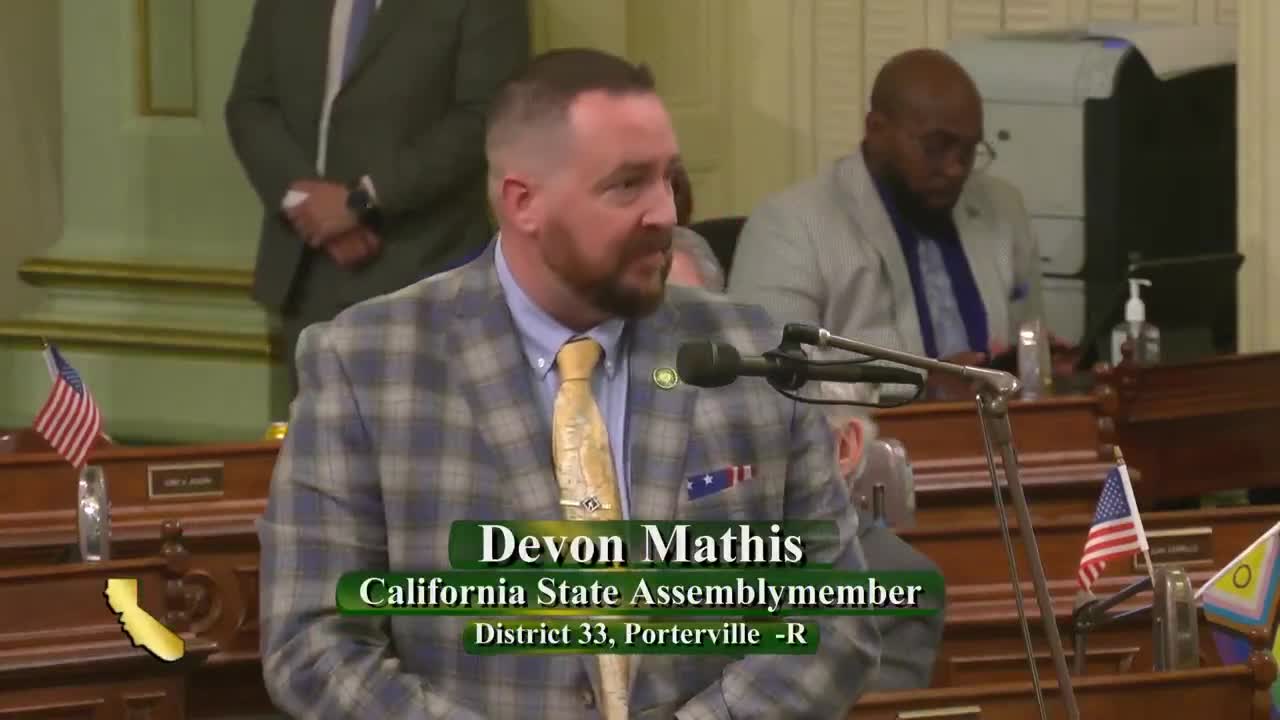
| Oct 1, 2024 | AB 9 PETRIE-NORRIS Third Reading Urgency Second Extraordinary Session | Assembly Floor |
Passed |
|
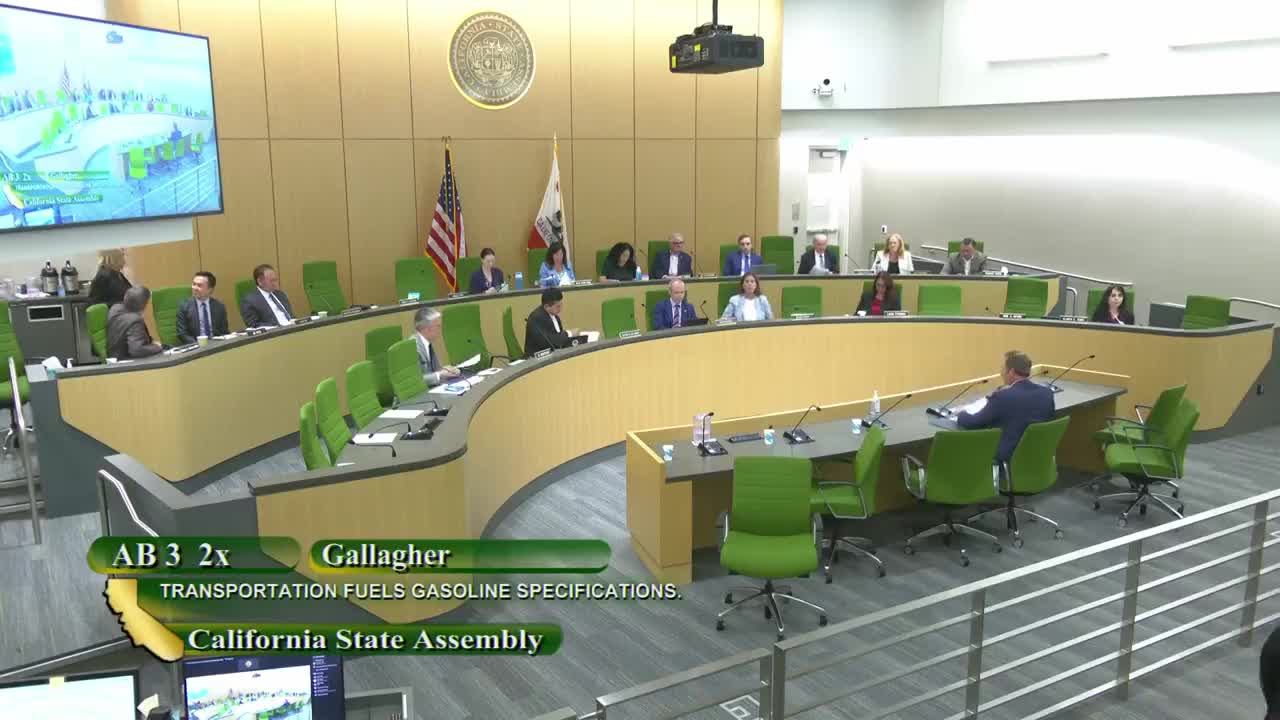
| Sep 26, 2024 | Do pass as amended. | Assembly Standing Committee on Petroleum and Gasoline Supply |
Passed |
This list shows positions taken on this bill by organizations on the date displayed, which is linked to the original source.
Positions by individuals are not included.
(Without Reference to File)
ASSEMBLY THIRD READING
ATR Bill Id:AB 9 X2
Author:(Petrie-Norris)
As Amended Ver:October 1, 2024
2/3 vote
SUMMARY
Requires the California Energy Commission (CEC), in consultation with the California Air Resources Board (CARB), to report to the Legislature by July 1, 2025, on specified potential solutions to increase the supply of gasoline as identified by the 2024 CEC Transportation Fuels Assessment. Permits CARB to adopt a fee on ethanol producers, as specified, to cover all or a portion of CARB's costs associated with the development, implementation, and enforcement of gasoline blends from >10% up to 15% ethanol by volume. Requires the fee cannot exceed $5 million, collected over three years. Requires CARB to complete its multimedia evaluation of gasoline containing up to 15% ethanol (E15) by July 1, 2025.
Major Provisions
COMMENTS
Production Enhancements for Fuel Blends. In August 2024, the CEC issued its first Transportation Fuels Assessment, as required by a provision of SBX1-2 (Skinner, Chapter 1, Statutes of 2023). The assessment included several potential strategies worthy of further analysis that could increase production of gasoline by modifying fuel standards, including:
- Increasing ethanol blending to 15% of fuel volume;
- Modifying the timing of summer-blend gasoline requirements;
- Allowing in-state use of non-CARBOB-compliant gasoline with a mitigation fee; and,
- Sending CARBOB fuel to Reno through its pipeline connection to California.
It is these potential policies by which this bill seeks to require the CEC to produce a timely recommendation to the Legislature. This action accelerates work underway, in an effort to lower gasoline prices in the immediate future, without proscribing an outcome.
Multimedia Evaluation. In the 1990s, a common gasoline additive, methyl tert-butyl ether (MTBE) was found to have contaminated groundwater in a number of wells throughout the state. MTBE was used as an alternative to lead in gasoline, permitted by fuel specifications at the time but not required. Partly as a result of this contamination episode, a series of reforms were made to the process by which fuel specifications are changed in the state. The multimedia evaluation is that process. It is conducted by a working group and typically takes 2-5 years, based on a structure developed by the Universities of California, Davis and Berkeley. That structure, according to CARB, includes the following assessment of fuels and the issues unique to that given fuel:
- Tier I: summary report (estimate: 1 year)
- Assesses existing scientific knowledge, identifies gaps, prepares experimental plan to fill knowledge gaps.
- Tier II: experimental report (estimate: up to 3 years)
- Experiments are conducted to address knowledge gaps and conduct a risk assessment.
- Tier III: multimedia risk assessment final report (estimate: 1 year)
- Final report is prepared, reviewed, subject to scientific peer review, and finalized.
CARB began the process of a multimedia evaluation for increasing ethanol blending in gasoline to up to 15% (E15) in 2018, completed Tier I of the multimedia evaluation in 2020, and the scientific testing (albeit not the final report) in Tier II in 2022. The ethanol industry has shared with the committee that CARB circulated its Tier III report to relevant agencies in late 2022; however, they opine little progress has been made since. CARB currently estimates at least another full year may be required to complete the entirety of the multimedia evaluation.
This bill does accelerate the process underway at CARB to evaluate E15, but it does so while preserving the existing statutory requirements of the multimedia evaluation. However, the slow progress since the Tier II scientific testing was circulated 2 years ago, raises concern about resources constraints at CARB to finish this work, especially under the accelerated timeline in this bill. As a result, this bill also levies a fee on ethanol producers to support CARB's work in finishing the E15 evaluation and developing regulations.
According to the Author
According to the author, "ABX2-9 is a direct reflection of the extensive conversations in recent informational hearings of the Petroleum and Gasoline Supply Committee, and builds off of policies from the CEC's Transportation Fuels Assessment. ABX2-9 requires a thorough review of policies that enhance the production of gasoline in two ways: requiring CARB to complete its analysis of 15% ethanol blended gasoline, and requiring the CEC to explore ways to expand the size of the Californian fuels market. These proposals will increase in-state supply through additional channels, complementing the Governor's proposal to increase gasoline supply in the state via inventory requirements on refiners. The potential in both of these proposals to increase supply and drive down costs at the pump is significant, and worthy of urgent action during this special session."
Arguments in Support
This bill is supported by the California Fuels and Convenience Alliance, who see the expanded availability of E15 as providing "immediate and long-lasting economic benefits for Californians." They note E15 is "less expensive to produce, offering an effective way to reduce prices at the pump;" that it would "increase the overall fuel supply in California;" and that it is "a cleaner alternative to traditional gasoline."
Arguments in Opposition
None on file.
FISCAL COMMENTS
None known. This bill has not received a hearing in a fiscal committee.
VOTES
ASM : 16-0-3
YES: Petrie-Norris, Jim Patterson, Aguiar-Curry, Alvarez, Bennett, Friedman, Garcia, Hart, Jackson, Lee, Papan, Joe Patterson, Pellerin, Blanca Rubio, Wood, Zbur
ABS, ABST OR NV: Flora, Gipson, Muratsuchi
UPDATED
VERSION: October 1, 2024
CONSULTANT: Laura Shybut / P. & G. S. / (916) 319-2083 FN: 0005130
Date of Hearing: September 26, 2024
ASSEMBLY COMMITTEE ON PETROLEUM AND GASOLINE SUPPLY
Cottie Petrie-Norris, Chair
ABPCA Bill Id:ABX2 9 (
Author:Petrie-Norris) – As Introduced Ver:September 24, 2024
SUBJECT: Transportation fuels: specifications: production enhancement strategies
SUMMARY: Requires the California Air Resources Board (CARB) to complete its multimedia evaluation of gasoline containing up to 15% ethanol (E15) by July 1, 2025. Requires the California Energy Commission (CEC) to report to the Legislature by July 1, 2025, on specified potential solutions to increase the supply of gasoline identified by the 2024 CEC Transportation Fuels Assessment.
EXISTING LAW:
Existing federal law:
- The Federal Clean Air Act (FCAA) and its implementing regulations set National Ambient Air Quality Standards (NAAQS) for six criteria pollutants, designate air basins that do not achieve NAAQS as nonattainment, allow only California to set vehicular emissions standards stricter than the federal government, and allow other states to adopt either the federal or California vehicular emissions standards. (42 U.S.C. § 7401 et seq.)
Existing state law:
- Establishes CARB as the air pollution control agency in California and requires CARB, among other things, to control emissions from a wide array of mobile sources and implement the FCAA. (Health and Safety Code § 39500 et seq.)
- Requires CARB to adopt and implement technologically feasible emission standards for new motor vehicles to, among other things, ensure compliance with state air quality laws and the FCAA, and prohibit vehicles that do not comply with those emissions standards from being certified for use in the state. (Health and Safety Code § 43100 et seq.)
- Requires, under the California Global Warming Solutions Act of 2006 (also known as AB 32), CARB to determine the 1990 statewide greenhouse gas (GHG) emissions level and approve a statewide GHG emissions limit that is equivalent to that level to be achieved by 2020. (Health and Safety Code §38500 et seq.)
- Requires CARB to ensure that statewide GHG emissions are reduced to at least 40% below the 1990 level by December 31, 2030. (Health and Safety Code §38566)
- Establishes Subarticle 7 (commencing with Section 95480) of Title 17 of the California Code of Regulations (Low-Carbon Fuel Standard (LCFS)), a market-based compliance mechanism administered by CARB to reduce the Carbon Intensity (CI) of transportation fuels in California, as specified.
- Creates the California Environmental Policy Council, consisting of the leaders of seven specified state entities: the Environmental Protection Agency, the Department of Pesticide Regulation, the Department of Toxic Substances Control, CARB, the State Water Resources Control Board, the Office of Environmental Health Hazard Assessment, and the Integrated Waste Management Board. (Public Resources Code § 71017).
- Prevents CARB from adopting any regulations setting specifications for motor vehicle fuels unless that regulation, and a multimedia evaluation of any significant adverse impacts on public health or the environment, have been reviewed by the California Environmental Policy Council; and, makes provision for how the Council shall review any such regulation. (Health and Safety Code § 43830.8).
- Requires CARB to adopt motor vehicle fuel specification requirements for the control of air contaminants and air pollution where it is necessary, cost effective, and technologically feasible to do so. (Health and Safety Code § 43013).
- Authorizes CARB to grant variances from motor vehicle gasoline fuel specifications and requires a fee be assessed for fuel that would not meet specifications. (Health and Safety Code § 43013).
- Requires CEC to submit an analysis every three years assessing the transportation fuels market in California. (Public Resources Code §§ 25371-25371.3).
- Requires CEC and CARB to produce, by December 31, 2024, a transportation fuels transition plan on how to maintain affordable, reliable, equitable, and adequate fuels supply as instate petroleum demand declines. (Public Resources Code § 25371.3).
FISCAL EFFECT: Unknown. This bill has not received a hearing from a fiscal committee.
BACKGROUND:
Multimedia Evaluations – In the 1990s, a common gasoline additive, methyl tert-butyl ether (MTBE) was found to have contaminated groundwater in a number of wells throughout the state. MTBE was used as an alternative to lead in gasoline, permitted by fuel specifications at the time but not required. It also easily dissolves in water. Partly as a result of this contamination episode, a series of reforms were made to the process by which fuel specifications are changed in the state, in an effort to avoid future, unintended consequences of such changes.
The multimedia evaluation is that process. It is conducted by a working group and typically takes 2-5 years, based on a structure developed by the Universities of California, Davis and Berkeley. That structure, according to CARB, includes the following assessment of fuels and the issues unique to that given fuel:
- Tier I: summary report (estimate: 1 year)
- Assesses existing scientific knowledge, identifies gaps, prepares experimental plan to fill knowledge gaps.
- Tier II: experimental report (estimate: up to 3 years)
- Experiments are conducted to address knowledge gaps and conduct a risk assessment.
- Tier III: multimedia risk assessment final report (estimate: 1 year)
- Final report is prepared, reviewed, subject to scientific peer review, and finalized.
This process is conducted by staff of various departments with a role in evaluating or permitting fuels, including CARB, the Department of Toxics Substances Control, the Office of Environmental Health Hazard Assessment, the State Water Resources Control Board, the Department of Pesticide Regulation, and the Office of the Fire Marshall. At the end of this process, a recommendation is issued to the Environmental Policy Committee. That committee then reviews the work of the multimedia evaluation and its working group, which then informs CARB’s potential adoption of modified fuel specifications.
Ethanol Blends – Today, California gasoline is blended to constitute 10% ethanol by volume (E10) at the pump, as is most gasoline in the U.S. Globally, this fuel ethanol is most commonly produced from corn starch or sugar cane. In the U.S., most fuel ethanol is produced in the Midwest from corn. Ethanol blends can be increased to 15% (E15) or 85% (E85) of total fuel volume, but not all vehicles and jurisdictions enable this. According to the ethanol industry, only California, Montana, and the Phoenix metro area do not have approved E15 blends. The federal Department of Energy notes that in states that do offer E15 blends do not require its sale; of the states that offer it, just over 3,000 stations make it available[1] (compared to more than 145,000 fueling stations across the U.S.).[2]
Slow Progress to Evaluate E15 – CARB began the process of a multimedia evaluation for increasing ethanol blending in gasoline to up to 15% in 2018, completed Tier I of the multimedia evaluation in 2020, and the scientific testing (albeit not the final report) in Tier II in 2022. The ethanol industry has shared with the committee that CARB circulated its Tier III report to relevant agencies in late 2022; however, they opine little progress has been made since. CARB currently estimates at least another full year may be required to complete the entirety of the multimedia evaluation.
COMMENTS:
- Author’s statement. According to the author, “ABX2-9 is a direct reflection of the extensive conversations in recent informational hearings of the Petroleum and Gasoline Supply Committee, and builds off of policies from the CEC’s Transportation Fuels Assessment. ABX2-9 requires a thorough review of policies that enhance the production of gasoline in two ways: requiring CARB to complete its analysis of 15% ethanol blended gasoline, and requiring the CEC to explore ways to expand the size of the Californian fuels market. These proposals will increase in-state supply through additional channels, complementing the Governor’s proposal to increase gasoline supply in the state via inventory requirements on refiners. The potential in both of these proposals to increase supply and drive down costs at the pump is significant, and worthy of urgent action during this special session.”
- Technical Amendment Adoption. This committee received author’s amendments making minor, technical changes that correct drafting errors and add statutory clarity. These amendments will be adopted ahead of the committee hearing as author’s amendments.
- Transportation Fuels Assessment. In August 2024, the CEC issued its first Transportation Fuels Assessment, as required by a provision of SBX1-2 (Skinner, Chapter 1, Statutes of 2023). The assessment included several potential strategies worthy of further analysis that could increase production of gasoline by modifying fuel standards, including:
- Increasing ethanol blending to 15% of fuel volume;
- Modifying the timing of summer-blend gasoline requirements;
- Allowing in-state use of non-CARBOB-compliant gasoline with a mitigation fee; and,
- Sending CARBOB fuel to Reno through its pipeline connection to California.
It is these potential policies on which Section 2 of this bill seeks to require the CEC to produce a timely recommendation to the Legislature. As elsewhere in this bill, this section accelerates work underway without proscribing an outcome.
- Expediting ethanol. Any decision to swap fuels involves trade-offs, including differences in cost, carbon intensity, land use, emissions, and engine compatibility, among other factors. As noted in the CEC’s Transportation Fuels Assessment evaluation of the potential tradeoffs of blending E15 into Californian gasoline, such action has the potential to lower the price of Californian fuel; presents fewer environmental harms than E10, with approximately 1% loss of fuel economy for the consumer; and is already permitted under federal rules. However, the Assessment likewise noted fueling equipment and vehicles may lack capability of operating with E15 and require upgrades. E15, while cleaner burning than gasoline, also increases the volatility of the fuel (ethanol is an alcohol that evaporates more quickly than most gasoline components), often leading to more ground-level air pollution.
This bill does accelerate the process underway at CARB to evaluate E15, but it does so while preserving the existing statutory requirements of the multimedia evaluation. However, the slow progress since the Tier II scientific testing was circulated 2 years ago, raises concern about resources constraints at CARB to finish this work, especially under the accelerated timeline in this bill. As a result, the committee recommends amendments that allow CARB to adopt a fee upon ethanol producers to cover CARB’s reasonable costs to complete its analysis and develop a regulatory standard for E15.
- Further amendments. This bill directs the CEC to produce more thorough analyses and produce recommendations to the Legislature on potential strategies to increase fuel production. This may involve inherent tradeoffs with considerations of air quality. As such, the committee recommends the work of the CEC in Section 2 of the bill be done in consultation with CARB.
- Prior legislation.
SBX2-1 (Skinner) requires wide-ranging data reporting to the CEC by various specified entities in the California petroleum and transportation fuels supply chain, authorizes the CEC to establish a maximum gross gasoline refining margin and penalty on gasoline sold in the state, creates an independent Division of Petroleum Market Oversight, and required reporting to the Legislature, including a recurring transportation fuels assessment and a one-time transportation fuels transition plan. Status: Chapter 1, Statutes of 2023.
AB 1279 (Muratsuchi) establishes that it is state policy to achieve net zero greenhouse gas emissions reductions no later than 2045. Status: Chapter 337, Statutes of 2022.
SB 529 (Bowen) established the multimedia evaluation review process for motor vehicle fuels, and made other related changes. Status: Chapter 813, Statutes of 1999.
REGISTERED SUPPORT / OPPOSITION:
Support
None on file.
Opposition
None on file.
Analysis Prepared by: Laura Shybut / P. & G. S. /(916) 319-2083
Discussed in Hearing
 7MIN
Assembly Floor
 18MIN
Assembly Standing Committee on Petroleum and Gasoline Supply
Bill Author

Bill Co-Author(s):