AB 1014: Traffic safety: speed limits.
- Session Year: 2025-2026
- House: Assembly
- Latest Version Date: 2025-10-03
Current Status:
Passed
(2025-10-03: Chaptered by Secretary of State - Chapter 287, Statutes of 2025.)
Introduced
In Committee
Awaiting First Chamber Vote
Passed First Chamber
In Committee
Awaiting Second Chamber Vote
Passed Second Chamber
Enacted
Existing law establishes various default speed limits for vehicles upon highways, as specified. Existing law requires the Department of Transportation, by regulation, to require speed limits to be rounded up or down to the nearest 5 miles per hour of the 85th percentile of free-flowing traffic. Existing law authorizes a local authority to additionally lower the speed limit in specified circumstances, or retain the currently adopted speed limit in certain circumstances.
This bill would authorize the department to additionally lower or retain the speed limit in those specified circumstances.
Existing law authorizes a local authority, if it finds the speed limit derived from the 85th percentile to be higher than reasonable or safe, to reduce the speed limit an additional 5 miles per hour for specified reasons, including, but not limited to, that the portion of highway is designated as a safety corridor, as defined by the department. Existing law also authorizes a local authority to retain or restore the immediately prior adopted speed limit under specified circumstances.This bill would similarly authorize the department to set, on a highway that is not a freeway, a speed limit, or retain or restore the immediately prior adopted speed limit under those specified circumstances.Under certain circumstances, existing law authorizes a local authority to set, by ordinance, a 25- or 20-mile-per-hour facie speed limit on specified highways.
This bill would similarly authorize the department to set, by regulation, for a highway that is not a freeway, a 25- or 20-mile-per-hour prima facie speed limit.
Existing law requires a local authority to issue only warning citations for specified speed limit violations for the first 30 days that a lower speed limit is in effect.
This bill would instead impose this requirement on any peace officer.
Existing law establishes various default speed limits for vehicles upon highways, as specified. Existing law requires the Department of Transportation, by regulation, to require speed limits to be rounded up or down to the nearest 5 miles per hour of the 85th percentile of free-flowing traffic. Existing law authorizes a local authority to additionally lower the speed limit in specified circumstances, or retain the currently adopted speed limit in certain circumstances.
This bill would authorize the department to additionally lower or retain the speed limit. limit in those specified circumstances.
Existing law authorizes a local authority, if it finds the speed limit derived from the 85th percentile to be higher than reasonable or safe, to reduce the speed limit an additional 5 miles per hour for specified reasons, including, but not limited to, that the portion of highway is designated as a safety corridor, as defined by the department. Existing law also authorizes a local authority to retain or restore the immediately prior adopted speed limit under specified circumstances.This bill would similarly authorize the department to set, on a highway that is not a freeway, a speed limit, or retain or restore the immediately prior adopted speed limit under those specified circumstances. The bill would authorize an additional reduction of 5 miles per hour in the speed limit for the reasons in existing law or if a local jurisdiction has reasonable concerns related to the safe crossing of the section of highway, as specified. The bill would specify additional considerations for the department when defining safety corridor.Under certain circumstances, existing law authorizes a local authority to set, by ordinance, a 25- or 20-mile-per-hour facie speed limit on specified highways.
This bill would similarly authorize the department to set, by regulation, for a highway that is not a freeway, a 25- or 20-mile-per-hour prima facie speed limit.
Existing law requires a local authority to issue only warning citations for specified speed limit violations for the first 30 days that a lower speed limit is in effect.
This bill would instead impose this requirement on any peace officer.
Existing law establishes various default speed limits for vehicles upon highways, as specified. Existing law requires the Department of Transportation, by regulation, to require speed limits to be rounded up or down to the nearest 5 miles per hour of the 85th percentile of free-flowing traffic. Existing law authorizes a local authority to additionally lower the speed limit in specified circumstances, or retain the currently adopted speed limit in certain circumstances.
This bill would authorize the department to additionally lower or retain the speed limit.
Existing law authorizes a local authority, if it finds the speed limit derived from the 85th percentile to be higher than reasonable or safe, to reduce the speed limit an additional 5 miles per hour for specified reasons, including, but not limited to, that the portion of highway is designated as a safety corridor, as defined by the department. Existing law also authorizes a local authority to retain or restore the immediately prior adopted speed limit under specified circumstances.
This bill would similarly authorize the department to set, on a highway that is not a freeway, a speed limit, or retain or restore the immediately prior adopted speed limit under specified circumstances. The bill would authorize an additional reduction of 5 miles per hour in the speed limit for the reasons in existing law or if a local jurisdiction has reasonable concerns related to the safe crossing of the section of highway, as specified. The bill would specify additional considerations for the department when defining safety corridor.
Under certain circumstances, existing law authorizes a local authority to set, by ordinance, a 25- or 20-mile-per-hour facie speed limit on specified highways.
This bill would similarly authorize the department to set, by regulation, for a highway that is not a freeway, a 25- or 20-mile-per-hour prima facie speed limit.
Existing law requires a local authority to issue warning citations for specified speed limit violations for the first 30 days that a lower speed limit is in effect.
This bill would instead impose this requirement on any peace officer.
The Legislature finds and declares all of the following:
(a)Speed is a major factor in traffic collisions that result in pedestrian fatalities or injuries along state highways that intersect state and national recreation areas, including, but not limited to, Route 199 in the County of Del Norte, which passes through portions of the Jedediah Smith Redwoods State Park, the Six Rivers National Forest, the Smith River National Recreation Area, and recreationally designated segments of the wild and scenic Smith River around the communities of Gasquet and Hiouchi.
(b)While local governments, contractors, and agencies are doing everything in their power to keep pedestrians safe, highways that intersect state and national recreation areas continue to be hazardous areas where pedestrians are at high risk of injury or death due to fast-moving vehicles and the added volume of cars and pedestrian traffic from bicyclists, fishermen, hikers, kayakers, and rafters. The unique conditions, in terms of visitor-serving and recreational activities, are not properly accounted for in current law, leading to speed limits in excess of what these communities generally consider to be safe.
(c)Traffic speed enforcement is critical to efforts in California to reduce factors that contribute to traffic collisions resulting in fatalities or injuries.
(d)In order to limit the risk of fatality or injury for pedestrians along state highways that intersect state and national recreation areas, state and local agencies may consider the safety of vulnerable pedestrian groups when they employ methods to reduce speeding, including the lowering of speed limits.
(e)Current law does not allow the Department of Transportation to lower or maintain speed limits on state highways it controls, and also limits the consideration of local input pertaining to pedestrian traffic along highways when determining speed limits, which is especially important to rural areas.
(f)California should do everything possible to protect the safety and well-being of vulnerable pedestrian groups.
(g)It is the intent of the Legislature to provide greater flexibility to the Department of Transportation to consider and incorporate local input in setting speed limits along state highways that intersect state and national recreation areas.
(h)Considering the safety of vulnerable pedestrian groups is a cost-effective strategy to improve the safety and health of the community, while maintaining important visitor-serving and recreational opportunities.
(i)This bill will help save lives, reduce injuries, and provide a safer environment for our vulnerable pedestrian groups.
SEC. 2.Section 22358.6 of the Vehicle Code is amended to read:22358.6.(a)The Department of Transportation shall, in the next scheduled revision, revise and thereafter maintain the California Manual on Uniform Traffic Control Devices to require the Department of Transportation or a local authority to round speed limits to the nearest five miles per hour of the 85th percentile of the free-flowing traffic.
(b)In cases in which the speed limit needs to be rounded down to the nearest five miles per hour increment of the 85th-percentile speed, the Department of Transportation or a local authority may lower the speed limit by five miles per hour from the nearest five-mile-per-hour increment of the 85th-percentile speed, in compliance with Sections 627 and 22358.5 and the California Manual on Uniform Traffic Control Devices, as it read on March 30, 2021, if the reasons for the lower speed limit are documented in an engineering and traffic survey. The Department of Transportation or a local authority may also take into consideration Sections 22353, 22353.2, 22353.3, 22353.4, and 22353.5, if applicable.
(c)In cases in which the speed limit needs to be rounded up to the nearest five-mile-per-hour increment of the 85th-percentile speed, the Department of Transportation or a local authority may decide to instead round down the speed limit to the lower five-mile-per-hour increment. If the speed limit is rounded down pursuant to this subdivision, the speed limit shall not be reduced any further pursuant to subdivision (b).
(d)In addition to subdivisions (b) and (c), the Department of Transportation or a local authority may additionally lower the speed limit as provided in Section 22358.7.
(e)The total reduction in the speed limit pursuant to subdivisions (a) to (d), inclusive, shall not exceed 12.4 miles per hour from the 85th-percentile speed.
(f)Notwithstanding subdivisions (a) to (e), inclusive, the Department of Transportation or a local authority may retain the currently adopted speed limit as provided in Section 22358.8 without further reduction, or restore the immediately prior adopted speed limit as provided in Section 22358.8 without further reduction.
SEC. 3.Section 22358.7 of the Vehicle Code is amended to read:22358.7.(a)If the Department of Transportation or a local authority, after completing an engineering and traffic survey, finds that the speed limit is still more than is reasonable or safe, the Department of Transportation may or the local authority may, by ordinance, determine and declare a prima facie speed limit that has been reduced an additional five miles per hour for either or both of the following reasons:
(1)The portion of highway has been designated as a safety corridor. The Department of Transportation or a local authority shall not deem more than one-fifth of their streets as safety corridors.
(2)The portion of highway is adjacent to any land or facility that generates high concentrations of bicyclists or pedestrians, especially those from vulnerable groups such as children, seniors, persons with disabilities, and the unhoused.
(b)(1)As used in this section, safety corridor shall be defined by the Department of Transportation in the next revision of the California Manual on Uniform Traffic Control Devices. In making this determination, the Department of Transportation shall consider highways that have the highest number of serious injuries and fatalities based on collision data that may be derived from, but not limited to, the Statewide Integrated Traffic Records System.
(2)The Department of Transportation shall, in the next revision of the California Manual on Uniform Traffic Control Devices, determine what constitutes land or facilities that generate high concentrations of bicyclists and pedestrians, as used in paragraph (2) of subdivision (a). In making this determination, the Department of Transportation shall consider density, road use type, and bicycle and pedestrian infrastructure present on a section of highway.
(c)A peace officer shall issue only warning citations for violations of exceeding the speed limit by 10 miles per hour or less for the first 30 days that a lower speed limit is in effect as authorized by this section.
SEC. 4.Section 22358.8 of the Vehicle Code is amended to read:22358.8.(a)If the Department of Transportation or a local authority, after completing an engineering and traffic survey, finds that the speed limit is still more than is reasonable or safe, the Department of Transportation may or the local authority may, by ordinance, retain the currently adopted speed limit or restore the immediately prior adopted speed limit on a highway that is not a freeway if that speed limit was established with an engineering and traffic survey and if a registered engineer has evaluated the section of highway and determined that no additional general purpose lanes have been added to the roadway since completion of the traffic survey that established that speed limit.
(b)This section does not authorize a speed limit to be reduced by any more than five miles per hour from the currently adopted speed limit nor below the immediately prior speed limit.
(c)A peace officer shall issue only warning citations for violations of exceeding the speed limit by 10 miles per hour or less for the first 30 days that a lower speed limit is in effect as authorized by this section.
SEC. 5.Section 22358.9 of the Vehicle Code is amended to read:22358.9.(a)(1)Notwithstanding any other law, the Department of Transportation may or a local authority may, by ordinance, determine and declare a 25- or 20-mile-per-hour prima facie speed limit on a highway that is not a freeway and that is contiguous to a business activity district when posted with a sign that indicates a speed limit of 25 or 20 miles per hour.
(2)The prima facie limits established under paragraph (1) apply only to highways that meet all of the following conditions:
(A)A maximum of four traffic lanes.
(B)A maximum posted 30-mile-per-hour prima facie speed limit immediately prior to and after the business activity district, if establishing a 25-mile-per-hour speed limit.
(C)A maximum posted 25-mile-per-hour prima facie speed limit immediately prior to and after the business activity district, if establishing a 20-mile-per-hour speed limit.
(b)As used in this section, a business activity district is that portion of a highway and the property contiguous thereto that includes central or neighborhood downtowns, urban villages, or zoning designations that prioritize commercial land uses at the downtown or neighborhood scale and meets at least three of the following requirements in paragraphs (1) to (4), inclusive:
(1)No less than 50 percent of the contiguous property fronting the highway consists of retail or dining commercial uses, including outdoor dining, that open directly onto sidewalks adjacent to the highway.
(2)Parking, including parallel, diagonal, or perpendicular spaces located alongside the highway.
(3)Traffic control signals or stop signs regulating traffic flow on the highway, located at intervals of no more than 600 feet.
(4)Marked crosswalks not controlled by a traffic control device.
(c)The Department of Transportation or a local authority shall not declare a prima facie speed limit under this section on a portion of a highway where the Department of Transportation or the local authority has already lowered the speed limit as permitted under Section 22358.7, has retained the currently adopted speed limit under Section 22358.8, or has restored the immediately prior adopted speed limit under Section 22358.8.
(d)A peace officer shall issue only warning citations for violations of exceeding the speed limit by 10 miles per hour or less for the first 30 days that a lower speed limit is in effect as authorized by this section.
The Legislature finds and declares all of the following:
(a)Speed is a major factor in traffic collisions that result in pedestrian fatalities or injuries along state highways that intersect state and national recreation areas, including, but not limited to, Route 199 in the County of Del Norte, which passes through portions of the Jedediah Smith Redwoods State Park, the Six Rivers National Forest, the Smith River National Recreation Area, and recreationally designated segments of the wild and scenic Smith River around the communities of Gasquet and Hiouchi.
(b)While local governments, contractors, and agencies are doing everything in their power to keep pedestrians safe, highways that intersect state and national recreation areas continue to be hazardous areas where pedestrians are at high risk of injury or death due to fast-moving vehicles and the added volume of cars and pedestrian traffic from bicyclists, fishermen, hikers, kayakers, and rafters. The unique conditions, in terms of visitor-serving and recreational activities, are not properly accounted for in current law, leading to speed limits in excess of what these communities generally consider to be safe.
(c)Traffic speed enforcement is critical to efforts in California to reduce factors that contribute to traffic collisions resulting in fatalities or injuries.
(d)In order to limit the risk of fatality or injury for pedestrians along state highways that intersect state and national recreation areas, state and local agencies may consider the safety of vulnerable pedestrian groups when they employ methods to reduce speeding, including the lowering of speed limits.
(e)Current law does not allow the Department of Transportation to lower or maintain speed limits on state highways it controls, and also limits the consideration of local input pertaining to pedestrian traffic along highways when determining speed limits, which is especially important to rural areas.
(f)California should do everything possible to protect the safety and well-being of vulnerable pedestrian groups.
(g)It is the intent of the Legislature to provide greater flexibility to the Department of Transportation to consider and incorporate local input in setting speed limits along state highways that intersect state and national recreation areas.
(h)Considering the safety of vulnerable pedestrian groups is a cost-effective strategy to improve the safety and health of the community, while maintaining important visitor-serving and recreational opportunities.
(i)This bill will help save lives, reduce injuries, and provide a safer environment for our vulnerable pedestrian groups.
SEC. 2.Section 22358.6 of the Vehicle Code is amended to read:22358.6.(a)The Department of Transportation shall, in the next scheduled revision, revise and thereafter maintain the California Manual on Uniform Traffic Control Devices to require the Department of Transportation or a local authority to round speed limits to the nearest five miles per hour of the 85th percentile of the free-flowing traffic.
(b)In cases in which the speed limit needs to be rounded down to the nearest five miles per hour increment of the 85th-percentile speed, the Department of Transportation or a local authority may lower the speed limit by five miles per hour from the nearest five-mile-per-hour increment of the 85th-percentile speed, in compliance with Sections 627 and 22358.5 and the California Manual on Uniform Traffic Control Devices, as it read on March 30, 2021, if the reasons for the lower speed limit are documented in an engineering and traffic survey. The Department of Transportation or a local authority may also take into consideration Sections 22353, 22353.2, 22353.3, 22353.4, and 22353.5, if applicable.
(c)In cases in which the speed limit needs to be rounded up to the nearest five-mile-per-hour increment of the 85th-percentile speed, the Department of Transportation or a local authority may decide to instead round down the speed limit to the lower five-mile-per-hour increment. If the speed limit is rounded down pursuant to this subdivision, the speed limit shall not be reduced any further pursuant to subdivision (b).
(d)In addition to subdivisions (b) and (c), the Department of Transportation or a local authority may additionally lower the speed limit as provided in Section 22358.7.
(e)The total reduction in the speed limit pursuant to subdivisions (a) to (d), inclusive, shall not exceed 12.4 miles per hour from the 85th percentile 85th-percentile speed.
(f)Notwithstanding subdivisions (a) to (e), inclusive, the Department of Transportation or a local authority may retain the currently adopted speed limit as provided in Section 22358.8 without further reduction, or restore the immediately prior adopted speed limit as provided in Section 22358.8 without further reduction.
SEC. 3.Section 22358.7 of the Vehicle Code is amended to read:22358.7.(a)If the Department of Transportation or a local authority, after completing an engineering and traffic survey, finds that the speed limit is still more than is reasonable or safe, the Department of Transportation may or the local authority may, by ordinance, determine and declare a prima facie speed limit that has been reduced an additional ten five miles per hour forany either or both of the following reasons:
(1)The portion of highway has been designated as a safety corridor. The Department of Transportation or a local authority shall not deem more than one-fifth of their streets as safety corridors.
(2)The portion of highway is adjacent to any land or facility that generates high concentrations of bicyclists or pedestrians, especially those from vulnerable groups such as children, seniors, persons with disabilities, and the unhoused.
(3)A local jurisdiction has reasonable concerns related to the safe crossing of the portion of highway by bicyclists or pedestrians, especially those from vulnerable groups such as children, seniors, persons with disabilities, the unhoused, tourists, or other persons less familiar with local road conditions.(b)(1)As used in this section, safety corridor shall be defined by the Department of Transportation in the next revision of the California Manual on Uniform Traffic Control Devices. In making this determination, the Department of Transportation shall consider highways that have the highest number of serious injuries and fatalities based on collision data that may be derived from, but not limited to, the Statewide Integrated Traffic Records System. The Department of Transportation shall also consider the potential for crashes, serious injuries, and fatalities in an area where a state highway bisects a city, county or unincorporated census designated area.
(2)The Department of Transportation shall, in the next revision of the California Manual on Uniform Traffic Control Devices, determine what constitutes land or facilities that generate high concentrations of bicyclists and pedestrians, as used in paragraph (2) of subdivision (a). In making this determination, the Department of Transportation shall consider density, road use type, and bicycle and pedestrian infrastructure present on a section of highway.
(c)A peace officer shall issue only warning citations for violations of exceeding the speed limit by 10 miles per hour or less for the first 30 days that a lower speed limit is in effect as authorized by this section.
SEC. 4.Section 22358.8 of the Vehicle Code is amended to read:22358.8.(a)If the Department of Transportation or a local authority, after completing an engineering and traffic survey, finds that the speed limit is still more than is reasonable or safe, the Department of Transportation may or the local authority may, by ordinance, retain the currently adopted speed limit or restore the immediately prior adopted speed limit on a highway that is not a freeway if that speed limit was established with an engineering and traffic survey and if a registered engineer has evaluated the section of highway and determined that no additional general purpose lanes have been added to the roadway since completion of the traffic survey that established that speed limit.
(b)This section does not authorize a speed limit to be reduced by any more than ten five miles per hour from the currently adopted speed limit nor below the immediately prior speed limit.
(c)A peace officer shall issue only warning citations for violations of exceeding the speed limit by 10 miles per hour or less for the first 30 days that a lower speed limit is in effect as authorized by this section.
SEC. 5.Section 22358.9 of the Vehicle Code is amended to read:22358.9.(a)(1)Notwithstanding any other law, the Department of Transportation may or a local authority may, by ordinance, determine and declare a 25- or 20-mile-per-hour prima facie speed limit on a highway that is not a freeway and that is contiguous to a business activity district when posted with a sign that indicates a speed limit of 25 or 20 miles per hour.
(2)The prima facie limits established under paragraph (1) apply only to highways that meet all of the following conditions:
(A)A maximum of four traffic lanes.
(B)A maximum posted 30-mile-per-hour prima facie speed limit immediately prior to and after the business activity district, if establishing a 25-mile-per-hour speed limit.
(C)A maximum posted 25-mile-per-hour prima facie speed limit immediately prior to and after the business activity district, if establishing a 20-mile-per-hour speed limit.
(b)As used in this section, a business activity district is that portion of a highway and the property contiguous thereto that includes central or neighborhood downtowns, urban villages, or zoning designations that prioritize commercial land uses at the downtown or neighborhood scale and meets at least three of the following requirements in paragraphs (1) to (4), inclusive:
(1)No less than 50 percent of the contiguous property fronting the highway consists of retail or dining commercial uses, including outdoor dining, that open directly onto sidewalks adjacent to the highway.
(2)Parking, including parallel, diagonal, or perpendicular spaces located alongside the highway.
(3)Traffic control signals or stop signs regulating traffic flow on the highway, located at intervals of no more than 600 feet.
(4)Marked crosswalks not controlled by a traffic control device.
(c)The Department of Transportation or a local authority shall not declare a prima facie speed limit under this section on a portion of a highway where the Department of Transportation or the local authority has already lowered the speed limit as permitted under Section 22358.7, has retained the currently adopted speed limit under Section 22358.8, or has restored the immediately prior adopted speed limit under Section 22358.8.
(d)A peace officer shall issue only warning citations for violations of exceeding the speed limit by 10 miles per hour or less for the first 30 days that a lower speed limit is in effect as authorized by this section.
The Legislature finds and declares all of the following:
(a)Speed is a major factor in traffic collisions that result in pedestrian fatalities or injuries along state highways that intersect state and national recreation areas, including, but not limited to, Route 199 in the County of Del Norte, which passes through portions of the Jedediah Smith Redwoods State Park, the Six Rivers National Forest, the Smith River National Recreation Area, and recreationally designated segments of the wild and scenic Smith River around the communities of Gasquet and Hiouchi.
(b)While local governments, contractors, and agencies are doing everything in their power to keep pedestrians safe, highways that intersect state and national recreation areas continue to be hazardous areas where pedestrians are at high risk of injury or death due to fast-moving vehicles and the added volume of cars and pedestrian traffic from bicyclists, fishermen, hikers, kayakers, and rafters. The unique conditions, in terms of visitor-serving and recreational activities, are not properly accounted for in current law, leading to speed limits in excess of what these communities generally consider to be safe.
(c)Traffic speed enforcement is critical to efforts in California to reduce factors that contribute to traffic collisions resulting in fatalities or injuries.
(d)In order to limit the risk of fatality or injury for pedestrians along state highways that intersect state and national recreation areas, state and local agencies may consider the safety of vulnerable pedestrian groups when they employ methods to reduce speeding, including the lowering of speed limits.
(e)Current law does not allow the Department of Transportation to lower or maintain speed limits on state highways it controls, and also limits the consideration of local input pertaining to pedestrian traffic along highways when determining speed limits, which is especially important to rural areas.
(f)California should do everything possible to protect the safety and well-being of vulnerable pedestrian groups.
(g)It is the intent of the Legislature to provide greater flexibility to the Department of Transportation to consider and incorporate local input in setting speed limits along state highways that intersect state and national recreation areas.
(h)Considering the safety of vulnerable pedestrian groups is a cost-effective strategy to improve the safety and health of the community, while maintaining important visitor-serving and recreational opportunities.
(i)This bill will help save lives, reduce injuries, and provide a safer environment for our vulnerable pedestrian groups.
SEC. 2.Section 22358.6 of the Vehicle Code is amended to read:22358.6.(a)The Department of Transportation shall, in the next scheduled revision, revise and thereafter maintain the California Manual on Uniform Traffic Control Devices to require the Department of Transportation or a local authority to round speed limits to the nearest five miles per hour of the 85th percentile of the free-flowing traffic.
(b)In cases in which the speed limit needs to be rounded down to the nearest five miles per hour increment of the 85th-percentile speed, the Department of Transportation or a local authority may lower the speed limit by five miles per hour from the nearest five mile per hour five-mile-per-hour increment of the 85th-percentile speed, in compliance with Sections 627 and 22358.5 and the California Manual on Uniform Traffic Control Devices, as it read on March 30, 2021, if the reasons for the lower speed limit are documented in an engineering and traffic survey. The Department of Transportation or a local authority may also take into consideration Sections 22353, 22353.2, 22353.3, 22353.4, and 22353.5, if applicable.
(c)In cases in which the speed limit needs to be rounded up to the nearest five miles per hour five-mile-per-hour increment of the 85th-percentile speed, the Department of Transportation or a local authority may decide to instead round down the speed limit to the lower five miles per hour five-mile-per-hour increment. If the speed limit is rounded down pursuant to this subdivision, the speed limit shall not be reduced any further pursuant to subdivision (b).
(d)In addition to subdivisions (b) and (c), the Department of Transportation or a local authority may additionally lower the speed limit as provided in Section 22358.7.
(e)The total reduction in the speed limit pursuant to subdivisions (a) to (d), inclusive, shall not exceed 12.4 miles per hour from the 85th percentile speed.
(f)Notwithstanding subdivisions (a) to (e), inclusive, the Department of Transportation or a local authority may retain the currently adopted speed limit as provided in Section 22358.8 without further reduction, or restore the immediately prior adopted speed limit as provided in Section 22358.8 without further reduction.
SEC. 3.Section 22358.7 of the Vehicle Code is amended to read:22358.7.(a)If the Department of Transportation or a local authority, after completing an engineering and traffic survey, finds that the speed limit is still more than is reasonable or safe, the Department of Transportation may or the local authority may, by ordinance, determine and declare a prima facie speed limit that has been reduced an additional five ten miles per hour for either any of the following reasons:
(1)The portion of highway has been designated as a safety corridor. A The Department of Transportation or a local authority shall not deem more than one-fifth of their streets as safety corridors.
(2)The portion of highway is adjacent to any land or facility that generates high concentrations of bicyclists or pedestrians, especially those from vulnerable groups such as children, seniors, persons with disabilities, and the unhoused.
(3)A local jurisdiction has reasonable concerns related to the safe crossing of the portion of highway by bicyclists or pedestrians, especially those from vulnerable groups such as children, seniors, persons with disabilities, the unhoused, tourists, or other persons less familiar with local road conditions.
(b)(1)As used in this section, safety corridor shall be defined by the Department of Transportation in the next revision of the California Manual on Uniform Traffic Control Devices. In making this determination, the department Department of Transportation shall consider highways that have the highest number of serious injuries and fatalities based on collision data that may be derived from, but not limited to, the Statewide Integrated Traffic Records System. The Department of Transportation shall also consider the potential for crashes, serious injuries, and fatalities in an area where a state highway bisects a city, county or unincorporated census designated area.
(2)The Department of Transportation shall, in the next revision of the California Manual on Uniform Traffic Control Devices, determine what constitutes land or facilities that generate high concentrations of bicyclists and pedestrians, as used in paragraph (2) of subdivision (a). In making this determination, the department Department of Transportation shall consider density, road use type, and bicycle and pedestrian infrastructure present on a section of highway.
(c)A local authority may not lower a speed limit as authorized by this section until June 30, 2024, or until the Judicial Council has developed an online tool for adjudicating infraction violations statewide as specified in Article 7 (commencing with Section 68645) of Chapter 2 of Title 8 of the Government Code, whichever is sooner.(d)(c)A local authority peace officer shall issue only warning citations for violations of exceeding the speed limit by 10 10 miles per hour or less for the first 30 days that a lower speed limit is in effect as authorized by this section.
SEC. 4.Section 22358.8 of the Vehicle Code is amended to read:22358.8.(a)If the Department of Transportation or a local authority, after completing an engineering and traffic survey, finds that the speed limit is still more than is reasonable or safe, the Department of Transportation may or the local authority may, by ordinance, retain the currently adopted speed limit or restore the immediately prior adopted speed limit on a highway that is not a freeway if that speed limit was established with an engineering and traffic survey and if a registered engineer has evaluated the section of highway and determined that no additional general purpose lanes have been added to the roadway since completion of the traffic survey that established that speed limit.
(b)This section does not authorize a speed limit to be reduced by any more than five ten miles per hour from the currently adopted speed limit nor below the immediately prior speed limit.
(c)A local authority peace officer shall issue only warning citations for violations of exceeding the speed limit by 10 miles per hour or less for the first 30 days that a lower speed limit is in effect as authorized by this section.
SEC. 5.Section 22358.9 of the Vehicle Code is amended to read:22358.9.(a)(1)Notwithstanding any other law, the Department of Transportation may or a local authority may, by ordinance, determine and declare a 25 or 20 miles per hour 25- or 20-mile-per-hour prima facie speed limit on a highway that is not a freeway and that is contiguous to a business activity district when posted with a sign that indicates a speed limit of 25 or 20 miles per hour.
(2)The prima facie limits established under paragraph (1) apply only to highways that meet all of the following conditions:
(A)A maximum of four traffic lanes.
(B)A maximum posted 30 miles per hour 30-mile-per-hour prima facie speed limit immediately prior to and after the business activity district, if establishing a 25 miles per hour 25-mile-per-hour speed limit.
(C)A maximum posted 25 miles per hour 25-mile-per-hour prima facie speed limit immediately prior to and after the business activity district, if establishing a 20 miles per hour 20-mile-per-hour speed limit.
(b)As used in this section, a business activity district is that portion of a highway and the property contiguous thereto that includes central or neighborhood downtowns, urban villages, or zoning designations that prioritize commercial land uses at the downtown or neighborhood scale and meets at least three of the following requirements in paragraphs (1) to (4), inclusive:
(1)No less than 50 percent of the contiguous property fronting the highway consists of retail or dining commercial uses, including outdoor dining, that open directly onto sidewalks adjacent to the highway.
(2)Parking, including parallel, diagonal, or perpendicular spaces located alongside the highway.
(3)Traffic control signals or stop signs regulating traffic flow on the highway, located at intervals of no more than 600 feet.
(4)Marked crosswalks not controlled by a traffic control device.
(c)A The Department of Transportation or a local authority shall not declare a prima facie speed limit under this section on a portion of a highway where the Department of Transportation or the local authority has already lowered the speed limit as permitted under Section 22358.7, has retained the currently adopted speed limit under Section 22358.8, or has restored the immediately prior adopted speed limit under Section 22358.8.
(d)A local authority peace officer shall issue only warning citations for violations of exceeding the speed limit by 10 miles per hour or less for the first 30 days that a lower speed limit is in effect as authorized by this section.
|
Date
|
Status
|
|---|---|
| Oct 3, 2025 | Chaptered by Secretary of State - Chapter 287, Statutes of 2025. |
| Oct 3, 2025 | Approved by the Governor. |
| Sep 9, 2025 | Enrolled and presented to the Governor at 3 p.m. |
| Sep 3, 2025 | In Assembly. Ordered to Engrossing and Enrolling. |
| Sep 3, 2025 | Read third time. Passed. Ordered to the Assembly. (Ayes 37. Noes 1. Page 2445.). |
| Jul 8, 2025 | Read second time. Ordered to third reading. |
| Jul 7, 2025 | From committee: Be ordered to second reading pursuant to Senate Rule 28.8. |
| Jun 25, 2025 | From committee: Do pass and re-refer to Com. on APPR. (Ayes 13. Noes 1.) (June 24). Re-referred to Com. on APPR. |
| Jun 4, 2025 | Referred to Com. on TRANS. |
| May 23, 2025 | In Senate. Read first time. To Com. on RLS. for assignment. |
| May 23, 2025 | Read third time. Passed. Ordered to the Senate. (Ayes 67. Noes 0. Page 1655.) |
| May 15, 2025 | Read second time. Ordered to third reading. |
| May 14, 2025 | From committee: Do pass. (Ayes 12. Noes 1.) (May 14). |
| Apr 22, 2025 | From committee: Do pass and re-refer to Com. on APPR. (Ayes 14. Noes 1.) (April 21). Re-referred to Com. on APPR. |
| Apr 9, 2025 | Re-referred to Com. on TRANS. |
| Apr 8, 2025 | From committee chair, with author's amendments: Amend, and re-refer to Com. on TRANS. Read second time and amended. |
| Mar 10, 2025 | Referred to Com. on TRANS. |
| Feb 21, 2025 | From printer. May be heard in committee March 23. |
| Feb 20, 2025 | Read first time. To print. |
|
Date
|
Description
|
Location
|
Votes
|
|
|---|---|---|---|---|
| Sep 3, 2025 | Assembly 3rd Reading AB1014 Rogers By Seyarto | Senate Floor |
Passed |
|
| Jun 24, 2025 | Do pass, but first be re-referred to the Committee on [Appropriations] | Senate Standing Committee on Transportation |
Passed |
|
| May 23, 2025 | AB 1014 Rogers Assembly Third Reading | Assembly Floor |
Passed |
|
| May 14, 2025 | Do pass. | Assembly Standing Committee on Appropriations |
Passed |
|
| Apr 21, 2025 | Do pass and be re-referred to the Committee on [Appropriations] | Assembly Standing Committee on Transportation |
Passed |
This list shows positions taken on this bill by organizations on the date displayed, which is linked to the original source.
Positions by individuals are not included.
|
Organization
|
Position
|
Date
|
|---|---|---|
| Amy Foell Consulting INC | ** Support | |
| Bike LA | ** Support | |
| Bike Long Beach | ** Support | |
| Bike SLO County | ** Support | |
| California Bicycle Coalition | ** Support | |
| County of Monterey | ** Support | |
| Del Norte County | ** Support | |
| Hopland Municipal Advisory Council | ** Support | |
| Los Angeles Walks | ** Support | |
| Marin County Bicycle Coalition | ** Support | |
| Monterey; County Of | ** Support | |
| Move California | ** Support | |
| Move Santa Barbara County | ** Support | |
| Nevada County Transportation Commission | ** Support | |
| Office of Monterey County Supervisor Chris Lopez | ** Support | |
| PeopleforBikes | ** Support | |
| Rural County Representatives of California | ** Support | |
| Sacramento Area Bicycle Advocates | ** Support | |
| Santa Monica Safe Streets Alliance | ** Support | |
| Santa Monica Spoke | ** Support | |
| Slow Down Sacramento | ** Support | |
| So Cal Cycling | ** Support | |
| Socal Families for Safe Streets | ** Support | |
| Sonoma County Bicycle Coalition | ** Support | |
| Sonoma County Transportation Authority/regional Climate Protection Authority | ** Support | |
| Street Racing Kills | ** Support | |
| Streets Are For Everyone | ** Support | |
| Streets for All | ** Support | |
| Transportation Agency For Monterey County | ** Support | |
| West Hollywood Bicycle Coalition | ** Support |
SENATE RULES COMMITTEE Office of Senate Floor Analyses (916) 651-1520 Fax: (916) 327-4478 | AB 1014 |
THIRD READING
Bill No: AB 1014
Author: Rogers (D)
Amended: 4/8/25 in Assembly
Vote: 21
SENATE TRANSPORTATION COMMITTEE: 13-1, 6/24/25
AYES: Cortese, Archuleta, Arreguín, Blakespear, Cervantes, Dahle, Gonzalez, Grayson, Limón, Menjivar, Richardson, Seyarto, Umberg
NOES: Strickland
NO VOTE RECORDED: Valladares
SENATE APPROPRIATIONS COMMITTEE: Senate Rule 28.8
ASSEMBLY FLOOR: 67-0, 5/23/25 - See last page for vote
SUBJECT: Traffic safety: speed limits
SOURCE: Del Norte County
Streets are For Everyone
DIGEST:
This bill extends to the Department of Transportation (Caltrans) the authority given to local authorities to lower speed limits by five miles per hour (mph).
ANALYSIS:
Existing law:
- Prohibits driving at a speed greater than is reasonable or prudent having due regard for weather, visibility, traffic, and the surface and width of the highway, and in no event at a speed which endangers the safety of persons or property. This is known as California’s Basic Speed Law. (Vehicle Code Section (VEH) § 22350).
- Establishes a maximum speed of 65 mph under most circumstances and allows for lower speed limits under numerous specified conditions. (VEH § 22354 and VEH § 22358)
- Defines “engineering and traffic survey” (ETS) as a survey of highway and traffic conditions in accordance with methods determined by Caltrans for use by state and local authorities. An ETS must consider prevailing speeds, accident records, and conditions not readily apparent to the driver. An ETS may consider residential density and bicycle and pedestrian safety. (VEH § 627)
- Authorizes Caltrans and local authorities to establish a speed limit on most streets of between 15 mph to 60 mph in five mph increments on the basis of an ETS. (VEH § 22354 and VEH § 22358)
- Authorizes a local authority to lower speed limits by an additional five mph, so long as the total speed limit is not reduced by a maximum of 12.4 mph from the 85th percentile speed, under the following circumstances:
- An area designated as a safety corridor (VEH § 22358.7);
- An area with a high concentration of pedestrians and cyclists, as determined by the Manual on Uniform Traffic Control Devices (MUTCD) (VEH § 22358.7);
- A business activity district (VEH § 22358.9); and,
- To maintain or go back to a preexisting speed limit set by a prior ETS and if a registered engineer has evaluated the section of highway and determined that no additional general purpose lanes have been added to the roadway since completion of the traffic survey that established that speed limit. (VEH § 22358.8)
- Provides that a “safety corridor” is defined by Caltrans in the California Manual on Uniform Traffic Control Devices (CA MUTCD). In making this determination, Caltrans was required to consider highways that have the highest number of serious injuries and fatalities based on collision data that may be derived from, but not limited to, the Statewide Integrated Traffic Records System. No more than 1/5th of a jurisdictions streets may be designated a safety corridor. (VEH § 22358.7)
- Provides that a “business activity district” is that portion of a highway that includes central or neighborhood downtowns, urban villages, or zoning designations that prioritize commercial land uses at the downtown or neighborhood scale and meets at least three of the following requirements:
a) No less than 50% of the contiguous property fronting the highway consists of retail or dining commercial uses, including outdoor dining, that open directly onto sidewalks adjacent to the highway;
- Parking, including parallel, diagonal, or perpendicular spaces located alongside the highway;
- Traffic control signals or stop signs regulating traffic flow on the highway, located at intervals of no more than 600 feet; and,
- Marked crosswalks not controlled by a traffic control device. (VEH § 22358.9)
This bill:
- Authorizes Caltrans to lower speed limits by five mph under the following circumstances:
- In an area designated as a safety corridor, as determined by the CA MUTCD;
- In an area with a high concentration of pedestrians and cyclists;
- In a business activity district on a highway that is not a freeway; and,
- To maintain or go back to a preexisting speed limit set on a highway that is not a freeway by a prior ETS and if a registered engineer has evaluated the section of highway and determined that no additional general purpose lanes have been added to the roadway since completion of the traffic survey that established that speed limit.
Comments
- Purpose of this bill. According to the author, “The current process for setting speed limits fails to adequately address safety concerns in high-traffic rural areas, where vulnerable road users such as pedestrians, cyclists, and individuals with disabilities are at significant risk. Existing speed limits, based on the 85th percentile speed, can lead to higher speed limits even in areas with heavy foot traffic or known safety issues. This bill provides CalTrans with the flexibility to adjust speed limits on state highways by up to five miles per hour based on specific safety concerns. By allowing CalTrans to respond to evolving safety needs, this bill aims to protect vulnerable populations and create safer road conditions.”
- AB 43 allowed lower speeds on local roads. AB 43 (Friedman, Chapter 690, Statutes of 2021) made various changes to how speed limits are set to give Caltrans and local governments more flexibility to lower speed limits, based on the recommendations made by the Zero Traffic Fatalities Task Force. The Zero Traffic Fatalities Task Force was created pursuant to AB 2363 (Friedman, Chapter 650, Statutes of 2018), which directed the California State Transportation Agency to convene a statewide task force to conduct an academic research synthesis to identify findings and recommendations for policy consideration to reduce traffic fatalities to zero. Based on the task force’s recommendations, AB 43 gave local jurisdictions the ability to lower speed limits by five mph on high injury streets, referred to as "safety corridors," streets with a high concentration of bicyclists and pedestrians, and in areas deemed a business activity district. This bill expands the flexibility granted to local authorities to lower speed limits based on these safety-related conditions to Caltrans.
- Do lower speed limits work? The National Highway Traffic Safety Administration identified lower speed limits as a highly effective and affordable speed management measure.[1] According to the Zero Traffic Fatalities Task Force report, “research synthesis found that research studies clearly indicate speed limit changes cause changes in drivers’ speed. Moreover, ‘reducing vehicle speed limits will likely reduce vehicle speeds and improve safety across most road environments.’” The task force’s report went on to find that, “[o]ther studies support the finding that even a small change in vehicle operating speed can have large safety impacts. According to one, ‘a reduction of 3 mph in average operating speed on a road with a baseline average operating speed of 30 mph is expected to produce a reduction of 27% in injury crashes and 49% in fatal crashes.’ Furthermore, since pedestrians and bicyclists are particularly vulnerable to severe injury and death when struck by higher-speed vehicles, ‘countermeasures aimed at reducing vehicle speeds have the potential to save lives.’ National research results, as well as the results of the UC ITS research synthesis, support the notion, which is advocated by many California cities and local governments, that lowering speed limits will make streets safer.” However, lower speed limits are most effective when paired with engineering measures and enforcement efforts.
- Slowing state highways. This bill would allow Caltrans to reduce the speed limit on state highways by five mph in certain areas after completing an engineering and traffic survey. One of the areas eligible for the reduction would be highway segments that have the highest number of serious injuries and fatalities, known as safety corridors. Another eligible area would be portions of highway adjacent to high concentrations of bicyclists or pedestrians, especially those from vulnerable groups such as children, seniors, persons with disabilities, and the unhoused.
Del Norte County, one of the sponsors of AB 1014, argues that lowering speed limits on state roads is particularly important in rural areas, where recreation is more likely to take place along the side of state highways. The County states, “[i]n Del Norte County, speed is a major factor in traffic collisions that result in pedestrian fatalities or injuries along state highways that intersect State and National Recreation Areas, such as U.S. Route 199 that passes portions of Jedediah Smith State Park, the Six Rivers National Forest/Smith River National
Recreation Area, and recreationally designated segments of the Wild and Scenic Smith River around the communities of Hiouchi and Gasquet. Highways that intersect State and National Recreation Areas continue to be hazardous areas, where pedestrians are at high risk of injury or death due to fast-moving vehicles and the added volume of cars and pedestrian traffic from kayakers, rafters, hikers, bicyclists, and fishermen; pedestrians may cross highways to travel between areas, or tourists may walk alongside highways to reach campsites. To complicate the matter, the unique conditions in terms of visitor-serving and recreational activities are not properly accounted for in current law, leading to speed limits in excess of what these communities generally consider to be safe.”
This bill also extends to Caltrans the authority local jurisdictions currently have to set a 25 or 20 mph speed limit in “business activity districts,” defined as neighborhood downtown areas. Nevada County Transportation Commission points out in support of the bill that, “[i]n many rural California communities like ours, Caltrans highways serve as the local main street or a general-purpose highway that connects small communities and carries local traffic, in addition to people on bikes and walking.”
FISCAL EFFECT: Appropriation: No Fiscal Com.: Yes Local: No
SUPPORT: (Verified 7/7/25)
Del Norte County (co-source)
Streets are for Everyone (co-source)
Amy Foell Consulting INC
Bike LA
Bike Long Beach
Bike Slo County
California Bicycle Coalition
County of Monterey
Hopland Municipal Advisory Council
Los Angeles Walks
Marin County Bicycle Coalition
Monterey; County of
Move California
Move Santa Barbara County
Nevada County Transportation Commission
Office of Monterey County Supervisor Chris Lopez
Peopleforbikes
Rural County Representatives of California
Sacramento Area Bicycle Advocates
Santa Monica Safe Streets Alliance
Santa Monica Spoke
Slow Down Sacramento
So Cal Cycling
Socal Families for Safe Streets
Sonoma County Bicycle Coalition
Sonoma County Transportation Authority/regional Climate Protection Authority
Street Racing Kills
Streets for All
Transportation Agency for Monterey County
West Hollywood Bicycle Coalition
OPPOSITION: (Verified 7/7/25)
None received
ASSEMBLY FLOOR: 67-0, 5/23/25
AYES: Addis, Aguiar-Curry, Ahrens, Alanis, Alvarez, Arambula, Ávila Farías, Bains, Bauer-Kahan, Bennett, Berman, Boerner, Bonta, Calderon, Caloza, Carrillo, Connolly, Davies, DeMaio, Elhawary, Flora, Fong, Gabriel, Garcia, Gipson, Jeff Gonzalez, Mark González, Hadwick, Haney, Harabedian, Hart, Irwin, Jackson, Kalra, Krell, Lackey, Lee, Lowenthal, Macedo, McKinnor, Muratsuchi, Ortega, Pacheco, Papan, Patel, Patterson, Pellerin, Petrie-Norris, Quirk-Silva, Ramos, Ransom, Celeste Rodriguez, Michelle Rodriguez, Rogers, Blanca Rubio, Schiavo, Schultz, Solache, Soria, Stefani, Tangipa, Valencia, Wallis, Ward, Wilson, Zbur, Rivas
NO VOTE RECORDED: Bryan, Castillo, Chen, Dixon, Ellis, Gallagher, Hoover, Nguyen, Sanchez, Sharp-Collins, Ta, Wicks
Prepared by: Isabelle LaSalle / TRANS. / (916) 651-4121
7/8/25 16:38:49
**** END ****
https://www.nhtsa.gov/book/countermeasures-that-work/speeding-and-speed-management/countermeasures ↑
SENATE COMMITTEE ON TRANSPORTATION
Senator Dave Cortese, Chair
2025 - 2026 Regular
Bill No: AB 1014 Hearing Date: 6/24/2025
Author: | Rogers | ||
Version: | 4/8/2025 Amended | ||
Urgency: | No | Fiscal: | Yes |
Consultant: | Isabelle LaSalle | ||
SUBJECT: Traffic safety: speed limits
DIGEST: This bill extends to the Department of Transportation (Caltrans) the authority given to local authorities to lower speed limits by five miles per hour (mph).
ANALYSIS:
Existing law:
- Prohibits driving at a speed greater than is reasonable or prudent having due regard for weather, visibility, traffic, and the surface and width of the highway, and in no event at a speed which endangers the safety of persons or property. This is known as California’s Basic Speed Law. (Vehicle Code Section (VEH) 22350).
- Establishes a maximum speed of 65 mph under most circumstances and allows for lower speed limits under numerous specified conditions. (VEH 22354 and VEH 22358)
- Defines “engineering and traffic survey” (ETS) as a survey of highway and traffic conditions in accordance with methods determined by Caltrans for use by state and local authorities. An ETS must consider prevailing speeds, accident records, and conditions not readily apparent to the driver. An ETS may consider residential density and bicycle and pedestrian safety. (VEH 627)
- Authorizes Caltrans and local authorities to establish a speed limit on most streets of between 15 mph to 60 mph in five mph increments on the basis of an ETS. (VEH 22354 and VEH 22358)
- Prohibits the use of speed traps, as defined, in arresting or prosecuting any violation of the Vehicle Code including speeding. (VEH 40802)
- Authorizes a local authority to lower speed limits by an additional five mph, so long as the total speed limit is not reduced by a maximum of 12.4 mph from the 85th percentile speed, under the following circumstances:
- An area designated as a safety corridor ( VEH 22358.7);
- An area with a high concentration of pedestrians and cyclists, as determined by the MUTCD (VEH 22358.7);
- A business activity district (VEH 22358.9); and,
- To maintain or go back to a preexisting speed limit set by a prior ETS and if a registered engineer has evaluated the section of highway and determined that no additional general purpose lanes have been added to the roadway since completion of the traffic survey that established that speed limit. (VEH 22358.8)
- Provides that a “safety corridor” is defined by Caltrans in the California Manual on Uniform Traffic Control Devices (CA MUTCD). In making this determination, Caltrans was required to consider highways that have the highest number of serious injuries and fatalities based on collision data that may be derived from, but not limited to, the Statewide Integrated Traffic Records System. No more than 1/5th of a jurisdictions streets may be designated a safety corridor. (VEH 22358.7)
- Provides that a “business activity district” is that portion of a highway that includes central or neighborhood downtowns, urban villages, or zoning designations that prioritize commercial land uses at the downtown or neighborhood scale and meets at least three of the following requirements:
a) No less than 50% of the contiguous property fronting the highway consists of retail or dining commercial uses, including outdoor dining, that open directly onto sidewalks adjacent to the highway;
- Parking, including parallel, diagonal, or perpendicular spaces located alongside the highway;
- Traffic control signals or stop signs regulating traffic flow on the highway, located at intervals of no more than 600 feet; and,
- Marked crosswalks not controlled by a traffic control device. (VEH 22358.9)
This bill:
- Authorizes Caltrans to lower speed limits by five mph under the following circumstances:
- In an area designated as a safety corridor, as determined by the CA MUTCD;
- In an area with a high concentration of pedestrians and cyclists;
- In a business activity district on a highway that is not a freeway; and,
- To maintain or go back to a preexisting speed limit set on a highway that is not a freeway by a prior ETS and if a registered engineer has evaluated the section of highway and determined that no additional general purpose lanes have been added to the roadway since completion of the traffic survey that established that speed limit.
COMMENTS:
- Purpose of the bill. According to the author, “The current process for setting speed limits fails to adequately address safety concerns in high-traffic rural areas, where vulnerable road users such as pedestrians, cyclists, and individuals with disabilities are at significant risk. Existing speed limits, based on the 85th percentile speed, can lead to higher speed limits even in areas with heavy foot traffic or known safety issues. This bill provides CalTrans with the flexibility to adjust speed limits on state highways by up to five miles per hour based on specific safety concerns. By allowing CalTrans to respond to evolving safety needs, this bill aims to protect vulnerable populations and create safer road conditions.”
- How are speed limits set? Currently, the maximum speed limit on a multilane state highway is 65 mph and 55 mph on a two-lane undivided roadway. Caltrans can implement a lower speed limit by conducting an ETS that considers the 85th percentile speed, collision history, and road conditions not readily apparent to the driver. 85th percentile speed, which is the most widely used method of determining the posted speed limit, is the speed at or below which 85% of the traffic is moving. It has historically been considered to be the most influential indicator of what is a reasonable speed limit, and it is still used by Caltrans to determine speed limits by rounding to the nearest 5 mph increment and posting the speed limit at that speed. For example, if 85% of drivers on a particular road are observed to travel at 42 mph or less, the speed limit would be set at 40 mph.
The 85th percentile rule was pioneered in the 1940s and, while it is still common practice, more recent research has raised questions about whether it is the most appropriate metric to use. In 2017 the National Transportation Safety Board (NTSB) reported that, “[r]aising speed limits to match the 85th percentile speed can result in unintended consequences. It may lead to higher operating speeds, and thus a higher 85th percentile speed. In general, there is not strong evidence that the 85th percentile speed within a given traffic flow equates to the speed with the lowest crash involvement rate for all road types.” NTSB questioned the antiquated and limited evidence behind the 85th percentile rule and the basic assumption that the majority of drivers are reasonable and prudent.
A UCLA Institute of Transportation Studies (ITS) report titled The Eight-Five Percent Solution: Is Crowdsourcing Speed Limits the Best Approach to Traffic Safety questioned the, “continuing wisdom of having motor vehicle drivers collectively determine appropriate travel speeds, particularly if public policy aims to reduce their share of urban street users over time. At the core of this debate is the question of whether drivers should get to decide how fast is safe, particularly since modern automobiles with crumple zones, airbags, antilock brakes, automated braking and collision avoidance systems better protect vehicle occupants moving at higher speeds relative to the pedestrians, cyclists, and other non-motor-vehicle street users with whom they interact.”
- AB 43 allowed lower speeds on local roads. AB 43 (Friedman, Chapter 690, Statutes of 2021) made various changes to how speed limits are set to give Caltrans and local governments more flexibility to lower speed limits, based on the recommendations made by the Zero Traffic Fatalities Task Force. The Zero Traffic Fatalities Task Force was created pursuant to AB 2363 (Friedman, Chapter 650, Statutes of 2018), which directed the California State Transportation Agency (CalSTA) to convene a statewide task force to conduct an academic research synthesis to identify findings and recommendations for policy consideration to reduce traffic fatalities to zero. Based on the task force’s recommendations, AB 43 gave local jurisdictions the ability to lower speed limits by five mph on high injury streets, referred to as "safety corridors," streets with a high concentration of bicyclists and pedestrians, and in areas deemed a business activity district. This bill expands the flexibility granted to local authorities to lower speed limits based on these safety-related conditions to Caltrans.
- Do lower speed limits work? The National Highway Traffic Safety Administration identified lower speed limits as a highly effective and affordable speed management measure.[1] According to the Zero Traffic Fatalities Task Force report, “research synthesis found that research studies clearly indicate speed limit changes cause changes in drivers’ speed. Moreover, ‘reducing vehicle speed limits will likely reduce vehicle speeds and improve safety across most road environments.’” The task force’s report went on to find that, “[o]ther studies support the finding that even a small change in vehicle operating speed can have large safety impacts. According to one, ‘a reduction of 3 mph in average operating speed on a road with a baseline average operating speed of 30 mph is expected to produce a reduction of 27% in injury crashes and 49% in fatal crashes.’ Furthermore, since pedestrians and bicyclists are particularly vulnerable to severe injury and death when struck by higher-speed vehicles, ‘countermeasures aimed at reducing vehicle speeds have the potential to save lives.’ National research results, as well as the results of the UC ITS research synthesis, support the notion, which is advocated by many California cities and local governments, that lowering speed limits will make streets safer.” However, lower speed limits are most effective when paired with engineering measures and enforcement efforts.
- Slowing state highways. The bill would allow Caltrans to reduce the speed limit on state highways by five mph in certain areas after completing an engineering and traffic survey. One of the areas eligible for the reduction would be highway segments that have the highest number of serious injuries and fatalities, known as safety corridors. Other areas would be portions of highway adjacent to high concentrations of bicyclists or pedestrians, especially those from vulnerable groups such as children, seniors, persons with disabilities, and the unhoused.
Del Norte County, one of the sponsors of AB 1014, argues that lowering speed limits on state roads is particularly important in rural areas, where recreation is more likely to take place along the side of state highways. The County states, “[i]n Del Norte County, speed is a major factor in traffic collisions that result in pedestrian fatalities or injuries along state highways that intersect State and National Recreation Areas, such as U.S. Route 199 that passes portions of Jedediah Smith State Park, the Six Rivers National Forest/Smith River National
Recreation Area, and recreationally designated segments of the Wild and Scenic Smith River around the communities of Hiouchi and Gasquet. Highways that intersect State and National Recreation Areas continue to be hazardous areas, where pedestrians are at high risk of injury or death due to fast-moving vehicles and the added volume of cars and pedestrian traffic from kayakers, rafters, hikers, bicyclists, and fishermen; pedestrians may cross highways to travel between areas, or tourists may walk alongside highways to reach campsites. To complicate the matter, the unique conditions in terms of visitor-serving and recreational activities are not properly accounted for in current law, leading to speed limits in excess of what these communities generally consider to be safe.”
This bill also extends to Caltrans the authority local jurisdictions currently have to set a 25 or 20 mph speed limit in “business activity districts,” defined as neighborhood downtown areas. Nevada County Transportation Commission points out in support of the bill that, “[i]n many rural California communities like ours, Caltrans highways serve as the local main street or a general-purpose highway that connects small communities and carries local traffic, in addition to people on bikes and walking.”
Related/previous Legislation:
AB 382 (Berman, 2025) – Sets the school zone speed limit from 25 mph to 20 mph. That bill is currently in this committee.
AB 1938 (Friedman Chapter 406, Statutes of 2022) – Made clarifying changes for the speed limit changes made by AB 43.
AB 43 (Friedman, Chapter 690, Statutes of 2021) – Granted Caltrans and local authorities greater flexibility in setting speed limits based on recommendations the Zero Traffic Fatality Task Force (Task Force) made in January 2020.
AB 2363 (Friedman, Chapter 650, Statutes of 2018) – Created the Zero Traffic Fatalities Task Force.
AB 529 (Gatto, Chapter 528, statutes of 2011) – Allowed, in instances where Caltrans or the local authority should round up to reach the nearest 5 mph, that Caltrans or the local authority may instead round down but then may not reduce the posted speed limit by a 5 mph increment for a safety-related factor.
AB 2767 (Jackson, Chapter 45, Statutes of 2000) – Allowed local authorities to consider residential density and bicycle and pedestrian safety as additional factors in engineering and traffic surveys conducted for purposes of setting speed limits.
FISCAL EFFECT: Appropriation: Fiscal Com.: Local:
POSITIONS: (Communicated to the committee before noon on Wednesday, June 18, 2025.)
SUPPORT:
Bike Long Beach
Bike Slo County
California Bicycle Coalition
County of Monterey
Del Norte County Board of Supervisors
Hopland Municipal Advisory Council
Los Angeles Walks
Marin County Bicycle Coalition
Monterey; County of
Move California
Move Santa Barbara County
Nevada County Transportation Commission
Office of Monterey County Supervisor Chris Lopez
Peopleforbikes
Rural County Representatives of California (RCRC)
Santa Monica Safe Streets Alliance
Santa Monica Spoke
Slow Down Sacramento
So Cal Cycling
Socal Families for Safe Streets
Sonoma County Bicycle Coalition
Sonoma County Transportation Authority/regional Climate Protection Authority
Street Racing Kills
Streets are for Everyone (SAFE) (ORG)
Streets for All
Transportation Agency for Monterey County (TAMC)
West Hollywood Bicycle Coalition
OPPOSITION:
None received.
-- END --
https://www.nhtsa.gov/book/countermeasures-that-work/speeding-and-speed-management/countermeasures ↑
ASSEMBLY THIRD READING
ATR Bill Id:AB 1014
Author:(Rogers)
As Amended Ver:April 8, 2025
Majority vote
SUMMARY
Expands to the Department of Transportation (Caltrans) the authority given to local authorities to lower speed limits by five miles per hour (mph).
Major Provisions
- Authorizes Caltrans to lower speed limits by five mph:
- In an area designated as a safety corridor;
- In an area with a high concentration of pedestrians and cyclists, as determined by the Manual on Uniform Traffic Control Devices (MUTCD);
- In a business activity district on a highway that is not a freeway; and,
- To maintain or go back to a preexisting speed limit set on a highway that is not a freeway by a prior engineering and traffic survey (ETS) and if a registered engineer has evaluated the section of highway and determined that no additional general purpose lanes have been added to the roadway since completion of the traffic survey that established that speed limit.
COMMENTS
AB 43 (Friedman), Chapter 690, Statutes of 2021 made various changes to how speed limits are set to give local governments and the state more flexibility to lower speed limits, based on the recommendations made by the Zero Traffic Fatalities Task Force. Those changes included the ability to lower speed limits by five mph on high injury streets, referred to as "safety corridors," streets with a high concentration of bicyclists and pedestrians, and in areas deemed a business activity district. This bill expands the flexibility granted to local authorities to lower speed limits to Caltrans.
According to the National Transportation Safety Board (NTSB), from 2005-14, crashes in which a law enforcement officer indicated a vehicle's speed was a factor resulted in 112,580 fatalities, representing 31% of all traffic fatalities. NTSB notes that speeding increases the risk of a crash and the severity of injuries.
In California and elsewhere, speed limits are generally set in accordance with engineering and traffic surveys, which measure prevailing vehicular speeds and establish the limit at or near the 85th percentile (i.e., the speed that 15% of motorists exceed). California uses the 85th percentile to set speed limits except in cases where the limit is set in state law, such as the 25 mph limit in residential districts and school zones, or where an engineering and traffic survey shows that other safety-related factors suggest that a lower speed limit is warranted. These safety-related factors, as prescribed by law, include accident data; highway, traffic, and roadway conditions not readily apparent to the driver; residential density; and pedestrian and bicyclist safety.
There has been a concerted effort across the country to change the way speed limits are set. NTSB, the National Association for City Transportation Officials, and more recently, the California State Transportation Agency (CalSTA), have all called for moving away from the 85th percentile as the basis for setting speed limits. AB 2363 (Friedman), Chapter 650, Statutes of 2018 established the Task Force in order to develop policies to reduce traffic fatalities to zero in California. CalSTA formed the 25-member Task Force on June 5th, 2019 and its members included representatives from the Department of the California Highway Patrol, the University of California and other academic institutions, Caltrans, the State Department of Public Health, local governments, bicycle safety organizations, statewide motorist service membership organizations, transportation advocacy organizations, and labor organizations.
In January 2020, CalSTA in conjunction with the Task Force, released the CalSTA Report of Findings: AB 2363 Zero Traffic Fatalities Task Force. The report includes 27 policy recommendations, and 16 findings recommendations that are broken into four categories: establishing speed limits, engineering, enforcement and education. This bill includes seven policy recommendations on establishing speed limits outlined in the report.
AB 43 gave additional direction for bicycle and pedestrian safety, asking traffic engineers to give increased consideration for vulnerable pedestrian groups including children, seniors, persons with disabilities, users of personal assistive mobility devices, and the unhoused. In recognition that lowering speed limits by five mph can have added safety benefits, AB 43 permitted cities to lower speed limits by an additional five mph if the street had a high concentration of bicyclist or pedestrians, or the street was determined to be one of the top 20% most dangerous streets within the cities jurisdiction (safety corridors). Cities could also lower speed limits by five mph in business activity districts on roads that already had speed limits 30 mph or lower. Finally local authorities could maintain or roll back a speed limit by five mph if a new ETS required them to increase the speed limit and no general purpose lanes were added to the roadway.
To demonstrate how AB 43 was implemented, below are two examples. For example one, if the 85th percentile speed was 42.4 mph, the speed limit would be rounded down to 40 mph. If justified by a traffic survey for the reasons stated above, it could then be lowered to 35 mph.
For example two, if the 85th percentile speed was 44 mph, the speed limit would be rounded up to 45 mph, and could be reduced to 40 mph either for no reason at all, as permitted by AB 529 (Gatto) Chapter 528, Statutes of 2011, or for the reasons listed above under VEH 627.
As a result of AB 43, a speed limit can be reduced by an additional 5 mph in a safety corridor or in an area with a high concentration of pedestrians and cyclists. This would allow a speed limit previously set at 35 mph, as explained in example one, to be lowered to 30 mph, and a speed limit previously set by example two at 40 mph to be lowered to 35 mph.
What effect do speed limits have on the speed of drivers? As part of the Task Force, the University of California Institute of Traffic Studies (UC ITS) compiled research on the dangers of speeding and the effect speed limits have on speeding. UC ITS notes that "reducing speed limits almost universally reduces speeds both on limited and mixed access roads. However, the absolutely magnitude of speed changes from speed limits alone are quite small…a five mph reduction in speed limit is likely to decrease mean speed by one to two mph. With stronger enforcement, the effect of a five mph speed limit reduction may be closer to three mph." While changing speed limits has a minor overall effect on the mean speed, it has a major effect on reducing speed-related injuries and fatalities. UC ITS notes that a five mph reduction in speed can reduce injuries by 8-15%. Other studies have reported reductions as great as 28% and 39%. The benefits may be even greater for pedestrians. UC ITS notes that research has shown that environments with five mph lower posted speed limits equate to 56-88% fewer serious pedestrian injuries and 80-96% fewer pedestrian fatalities.
A recent study shows that while speed limit reductions may not affect most drivers, it may get the most dangerous drivers to slow down. Oregon recently authorized residential speed limits to be reduced from 25 mph to 20 mph. A study of the impact of this change, found that the 85th and 50th percentile speed remained the same both before and after the speed limit change (27 mph and 22 mph respectively). However, and notably, the number of drivers going over 30 mph decreased from 6.5% of drivers to 4.8% of drivers.
According to the Author
"The current process for setting speed limits fails to adequately address safety concerns in high-traffic rural areas, where vulnerable road users such as pedestrians, cyclists, and individuals with disabilities are at significant risk. Existing speed limits, based on the 85th percentile speed, can lead to higher speed limits even in areas with heavy foot traffic or known safety issues. This bill provides Caltrans with the flexibility to adjust speed limits on state highways by up to ten miles per hour based on specific safety concerns. By allowing Caltrans to respond to evolving safety needs, this bill aims to protect vulnerable populations and create safer road conditions."
Arguments in Support
According to The Rural County Representatives of California, "State highways play an important role in the movement of people and goods throughout rural California. Ensuring the safety of our highways requires a careful balance between speed limits and usage. In many cases, highway crossings are unsafe for both the driver and the other users of the road, especially where state highways intersect with State and National Recreation Areas. Pedestrians and cyclists may need to use the road, or to cross with little or no signage in order to arrive at their destination. This has resulted in injuries and fatalities. While it is critical that traffic speed enforcement is conducted throughout California, the Department of Transportation (Caltrans) has little discretion in lowering or maintaining speed limits on the state highways it controls. Furthermore, the current calculation for setting speed limits at the 85th percentile may be altered by traffic through an area, even to the detriment of other users. This considers the driver but not necessarily the other, more vulnerable, users who may or may not be familiar with the area.
AB 1014 seeks to improve public safety by giving Caltrans additional tools to adjust speed limits in response to specific conditions, such as the presence of vulnerable populations and high-risk areas."
Arguments in Opposition
None on file
FISCAL COMMENTS
According to Assembly Appropriations Committee:
Caltrans reports it has a speed management specialist responsible for the speed limit manual, and it has an office devoted to the California Manual on Uniform Traffic Control Devices. Therefore, costs of this bill to Caltrans should be minor and absorbable.
VOTES
ASM TRANSPORTATION: 14-1-1
YES: Wilson, Davies, Aguiar-Curry, Ahrens, Carrillo, Harabedian, Hart, Jackson, Lackey, Lowenthal, Macedo, Ransom, Rogers, Ward
NO: Hoover
ABS, ABST OR NV: Papan
ASM APPROPRIATIONS: 12-1-2
YES: Wicks, Arambula, Calderon, Caloza, Elhawary, Fong, Mark González, Hart, Pacheco, Pellerin, Solache, Tangipa
NO: Dixon
ABS, ABST OR NV: Sanchez, Ta
UPDATED
VERSION: April 8, 2025
CONSULTANT: David Sforza / TRANS. / (916) 319-2093 FN: 0000406
Date of Hearing: May 14, 2025
ASSEMBLY COMMITTEE ON APPROPRIATIONS
Buffy Wicks, Chair
ABPCA Bill Id:AB 1014
Author:(Rogers) – As Amended Ver:April 8, 2025
Policy Committee: | Transportation | Vote: | 14 - 1 |
|
| ||
|
|
Urgency: No State Mandated Local Program: No Reimbursable: No
SUMMARY:
This bill provides to the Department of Transportation (Caltrans) authority to set the speed limits on certain roadways that are five miles an hour less than Caltrans would set the speed limits on those roadways on the basis of engineering and traffic surveys alone. Current law provides such authority to local authorities only, but not to Caltrans.
The bill lists the following types of roadways as those upon which Caltrans may exercise this new authority: (1) an area designated as a safety corridor; (2) an area with a high concentration of pedestrians and cyclists, as determined by the Manual on Uniform Traffic Control Devices (MUTCD); and (3) a business activity district on a highway that is not a freeway.
In addition, the bill authorizes Caltrans to exercise this new authority to maintain or go back to a preexisting speed limit set on a highway that is not a freeway by a prior engineering and traffic survey and if a registered engineer has evaluated the section of highway and determined that no additional general purpose lanes have been added to the roadway since completion of the traffic survey that established that speed limit.
FISCAL EFFECT:
Caltrans reports it has a speed management specialist responsible for the speed limit manual, and it has an office devoted to the California Manual on Uniform Traffic Control Devices. Therefore, costs of this bill to Caltrans should be minor and absorbable.
COMMENTS:
In California and elsewhere, speed limits are generally set in accordance with an engineering and traffic survey to measure prevailing vehicle speeds and establish the limit at or near the 85th percentile (meaning the speed 15% of motorists exceed, based on road design and average conditions). California uses the 85th percentile rule to set speed limits except in cases where the limit is set in state law, such as the 25 mph limit on residential streets and in school zones, or where an engineering and traffic survey shows other safety-related factors suggest a lower speed limit is warranted. These safety-related factors, as prescribed by law, include accident data; highway, traffic, and roadway conditions not readily apparent to the driver; residential density; and pedestrian and bicyclist safety.
Safety considerations notwithstanding, the way California and many other jurisdictions sets speed limits has not resulted in roadways that are particularly safe: every year, tens of thousands of people die in vehicular accidents. This fairly dismal safety record has led to an international movement, in the United States known as the Vision Zero Network, with the goal of eliminating all traffic fatalities and serious traffic injuries.
The Legislature has approved legislation to modify the way Caltrans and local authorities set speed limits. AB 43 (Friedman), Chapter 690, Statutes of 2021, generally provided more flexibility to both Caltrans and locals by allowing them to lower speed limits by an additional five mph in designated speed safety corridors, as that term is defined in statute.
Similar to AB 43, this bill authorizes Caltrans to set the speed limits on certain roadways that are five miles an hour less than Caltrans would set the speed limits on those roadways on the basis of engineering and traffic surveys alone, as described in the summary above. According to the author, this change is meant to increase safety in high-traffic rural areas, in particular, where, the author explains, “vulnerable road users such as pedestrians, cyclists, and individuals with disabilities are at significant risk.” The author further asserts, “By allowing Caltrans to respond to evolving safety needs, this bill aims to protect vulnerable populations and create safer road conditions.”
The committee is unaware of opposition to this bill.
Analysis Prepared by: Jay Dickenson / APPR. / (916) 319-2081
Date of Hearing: April 21, 2025
ASSEMBLY COMMITTEE ON TRANSPORTATION
Lori D. Wilson, Chair
ABPCA Bill Id:AB 1014 (
Author:Rogers) – As Amended Ver:April 8, 2025
SUBJECT: Traffic safety: speed limits
SUMMARY: Expands the authority given to local authorities to lower speed limits by five miles per hour (mph) to the Department of Transportation (Caltrans). Specifically, this bill:
- Authorizes Caltrans to lower speed limits by five mph:
- In an area designated as a safety corridor;
- In an area with a high concentration of pedestrians and cyclists, as determined by the Manual on Uniform Traffic Control Devices (MUTCD);
- In a business activity district on a highway that is not a freeway; and,
- To maintain or go back to a preexisting speed limit set on a highway that is not a freeway by a prior engineering and traffic survey (ETS) and if a registered engineer has evaluated the section of highway and determined that no additional general purpose lanes have been added to the roadway since completion of the traffic survey that established that speed limit.
EXISTING LAW:
- Prohibits driving at a speed greater than is reasonable or prudent having due regard for weather, visibility, traffic, and the surface and width of the highway, and in no event at a speed which endangers the safety of persons or property. This is known as California’s Basic Speed Law. (Vehicle Code Section (VEH) 22350).
- Establishes a maximum speed of 65 mph under most circumstances and allows for lower speed limits under numerous specified conditions. (VEH 22354 and VEH 22358)
- Defines “engineering and traffic survey” (ETS) as a survey of highway and traffic conditions in accordance with methods determined by Caltrans for use by state and local authorities. An ETS must consider prevailing speeds, accident records, and conditions not readily apparent to the driver. An ETS may consider residential density and bicycle and pedestrian safety. (VEH 627)
- Authorizes Caltrans and local authorities to establish a speed limit on most streets of between 15 mph to 60 mph in five mph increments on the basis of an ETS. (VEH 22354 and VEH 22358)
- Prohibits the use of speed traps, as defined, in arresting or prosecuting any violation of the Vehicle Code including speeding. (VEH 40802)
- Authorizes a local authority to lower speed limits by an additional five mph, so long as the total speed limit is not reduced by a maximum of 12.4 mph from the 85th percentile speed, under the following circumstances:
- An area designated as a safety corridor ( VEH 22358.7);
- An area with a high concentration of pedestrians and cyclists, as determined by the MUTCD (VEH 22358.7);
- A business activity district (VEH 22358.9); and,
- To maintain or go back to a preexisting speed limit set by a prior ETS and if a registered engineer has evaluated the section of highway and determined that no additional general purpose lanes have been added to the roadway since completion of the traffic survey that established that speed limit. (VEH 22358.8)
- Provides that a “safety corridor” is defined by Caltrans in the MUTCD. In making this determination, the Caltrans was required to consider highways that have the highest number of serious injuries and fatalities based on collision data that may be derived from, but not limited to, the Statewide Integrated Traffic Records System. No more than 1/5th of a jurisdictions streets may be designated a safety corridor. (VEH 22358.7)
- Provides that a “business activity district” is that portion of a highway that includes central or neighborhood downtowns, urban villages, or zoning designations that prioritize commercial land uses at the downtown or neighborhood scale and meets at least three of the following requirements:
a) No less than 50% of the contiguous property fronting the highway consists of retail or dining commercial uses, including outdoor dining, that open directly onto sidewalks adjacent to the highway;
- Parking, including parallel, diagonal, or perpendicular spaces located alongside the highway;
- Traffic control signals or stop signs regulating traffic flow on the highway, located at intervals of no more than 600 feet; and,
- Marked crosswalks not controlled by a traffic control device. (VEH 22358.9)
FISCAL EFFECT: Unknown
COMMENTS: AB 43 (Friedman), Chapter 690, Statutes of 2021 made various changes to how speed limits are set to give local governments and the state more flexibility to lower speed limits, based on the recommendations made by the Zero Traffic Fatalities Task Force. Those changes included the ability to lower speed limits by five mph on high injury streets, referred to as "safety corridors," streets with a high concentration of bicyclists and pedestrians, and in areas deemed a business activity district. This bill expands the flexibility granted to local authorities to lower speed limits to Caltrans.
According to the author, “The current process for setting speed limits fails to adequately address safety concerns in high-traffic rural areas, where vulnerable road users such as pedestrians, cyclists, and individuals with disabilities are at significant risk. Existing speed limits, based on the 85th percentile speed, can lead to higher speed limits even in areas with heavy foot traffic or known safety issues. This bill provides Caltrans with the flexibility to adjust speed limits on state highways by up to ten miles per hour based on specific safety concerns. By allowing Caltrans to respond to evolving safety needs, this bill aims to protect vulnerable populations and create safer road conditions.”
According to the National Transportation Safety Board (NTSB), from 2005-14, crashes in which a law enforcement officer indicated a vehicle's speed was a factor resulted in 112,580 fatalities, representing 31% of all traffic fatalities. NTSB notes that speeding increases the risk of a crash and the severity of injuries.
In California and elsewhere, speed limits are generally set in accordance with engineering and traffic surveys, which measure prevailing vehicular speeds and establish the limit at or near the 85th percentile (i.e., the speed that 15% of motorists exceed). California uses the 85th percentile to set speed limits except in cases where the limit is set in state law, such as the 25 mph limit in residential districts and school zones, or where an engineering and traffic survey shows that other safety-related factors suggest that a lower speed limit is warranted. These safety-related factors, as prescribed by law, include accident data; highway, traffic, and roadway conditions not readily apparent to the driver; residential density; and pedestrian and bicyclist safety.
There has been a concerted effort across the country to change the way speed limits are set. NTSB, the National Association for City Transportation Officials, and more recently, the California State Transportation Agency (CalSTA), have all called for moving away from the 85th percentile as the basis for setting speed limits. AB 2363 (Friedman), Chapter 650, Statutes of 2018 established the Task Force in order to develop policies to reduce traffic fatalities to zero in California. CalSTA formed the 25-member Task Force on June 5th, 2019 and its members included representatives from the Department of the California Highway Patrol, the University of California and other academic institutions, Caltrans, the State Department of Public Health, local governments, bicycle safety organizations, statewide motorist service membership organizations, transportation advocacy organizations, and labor organizations.
In January 2020, CalSTA in conjunction with the Task Force, released the CalSTA Report of Findings: AB 2363 Zero Traffic Fatalities Task Force. The report includes 27 policy recommendations, and 16 findings recommendations that are broken into four categories: establishing speed limits, engineering, enforcement and education. This bill includes seven policy recommendations on establishing speed limits outlined in the report.
AB 43 gave additional direction for bicycle and pedestrian safety, asking traffic engineers to give increased consideration for vulnerable pedestrian groups including children, seniors, persons with disabilities, users of personal assistive mobility devices, and the unhoused. In recognition that lowering speed limits by five mph can have added safety benefits, AB 43 permitted cities to lower speed limits by an additional five mph if the street had a high concentration of bicyclist or pedestrians, or the street was determined to be one of the top 20% most dangerous streets within the cities jurisdiction (safety corridors). Cities could also lower speed limits by five mph in business activity districts on roads that already had speed limits 30 mph or lower. Finally local authorities could maintain or roll back a speed limit by five mph if a new ETS required them to increase the speed limit and no general purpose lanes were added to the roadway.
To demonstrate how AB 43 was implemented, below are two examples. For example one, if the 85th percentile speed was 42.4 mph, the speed limit would be rounded down to 40 mph. If justified by a traffic survey for the reasons stated above, it could then be lowered to 35 mph.
For example two, if the 85th percentile speed was 44 mph, the speed limit would be rounded up to 45 mph, and could be reduced to 40 mph either for no reason at all, as permitted by AB 529 (Gatto) Chapter 528, Statutes of 2011, or for the reasons listed above under VEH 627.
As a result of AB 43, a speed limit can be reduced by an additional 5 mph in a safety corridor or in an area with a high concentration of pedestrians and cyclists. This would allow a speed limit previously set at 35 mph, as explained in example one, to be lowered to 30 mph, and a speed limit previously set by example two at 40 mph to be lowered to 35 mph.
For example:
85th Percentile (mph) | Initial rounding to nearest 5mph increment | AB 529 May round down to nearest if nearest initial rounding required rounding up | Additional 5 mph reduction permitted under VC 627 | AB 43 Non-Safety Corridor or high concentration of bicyclists and pedestrians speed limit | AB 43 Safety Corridor or high concentration of bicyclists and pedestrians speed limit |
47.5 - 50.0 | 50 | 45 | NO | 45 | 40 |
45.1 - 47.4 | 45 | n/a | 40 | 40 | 35 |
42.5 - 45.0 | 45 | 40 | NO | 40 | 35 |
40.1 - 42.4 | 40 | n/a | 35 | 35 | 30 |
What effect do speed limits have on the speed of drivers? As part of the Task Force, the University of California Institute of Traffic Studies (UC ITS) compiled research on the dangers of speeding and the effect speed limits have on speeding. UC ITS notes that “reducing speed limits almost universally reduces speeds both on limited and mixed access roads. However, the absolutely magnitude of speed changes from speed limits alone are quite small…a five mph reduction in speed limit is likely to decrease mean speed by one to two mph. With stronger enforcement, the effect of a five mph speed limit reduction may be closer to three mph.” While changing speed limits has a minor overall effect on the mean speed, it has a major effect on reducing speed-related injuries and fatalities. UC ITS notes that a five mph reduction in speed can reduce injuries by 8-15%. Other studies have reported reductions as great as 28% and 39%. The benefits may be even greater for pedestrians. UC ITS notes that research has shown that environments with five mph lower posted speed limits equate to 56-88% fewer serious pedestrian injuries and 80-96% fewer pedestrian fatalities.
A recent study shows that while speed limit reductions may not affect most drivers, it may get the most dangerous drivers to slow down. Oregon recently authorized residential speed limits to be reduced from 25 mph to 20 mph. A study of the impact of this change, found that the 85th and 50th percentile speed remained the same both before and after the speed limit change (27 mph and 22 mph respectively). However, and notably, the number of drivers going over 30 mph decreased from 6.5% of drivers to 4.8% of drivers.
Streets for All, writing in support of this bill, argues “California should do everything possible to protect the safety and well-being of vulnerable pedestrian groups, and by providing greater flexibility to CalTrans to incorporate local input in setting speed limits along state highways that intersect State and National Recreation Areas, AB 1014 will enhance public safety and ensure that local jurisdictions can respond effectively to evolving safety concerns in their communities.”
Related legislation: AB 382 (Berman) sets the school zone speed limit from 25 mph to 20 mph. That bill is set to be heard in this committee.
AB 1938 (Friedman) Chapter 406, Statutes of 2022 made clarifying changes for the speed limit changes made by AB 43.
AB 43 (Friedman), Chapter 690, Statutes of 2021 Granted Caltrans and local authorities greater flexibility in setting speed limits based on recommendations the Zero Traffic Fatality Task Force (Task Force) made in January 2020.
AB 2363 (Friedman), Chapter 650, Statutes of 2018, created the Zero Traffic Fatalities Task Force.
SB 632 (Cannella) of 2015 would have established a 15 mph prima facie speed limit in school zones. That bill died in Senate Transportation Committee.
AB 529 (Gatto), Chapter 528, statutes of 2011, allowed, in instances where Caltrans or the local authority should round up to reach the nearest 5 mph, that Caltrans or the local authority may instead round down but then may not reduce the posted speed limit by a 5 mph increment for a safety-related factor.
AB 2767 (Jackson), Chapter 45, Statutes of 2000, allowed local authorities to consider residential density and bicycle and pedestrian safety as additional factors in engineering and traffic surveys conducted for purposes of setting speed limits.
REGISTERED SUPPORT / OPPOSITION:
Support
California Bicycle Coalition
Del Norte County Board of Supervisors
Hopland Municipal Advisory Council
Nevada County Transportation Commission
Office of Monterey County Supervisor, Chris Lopez
PeopleForbikes
Rural County Representatives of California
Sonoma County Transportation Authority
Streets Are For Everyone
Streets for All
Opposition
None on file
Analysis Prepared by: David Sforza / TRANS. / (916) 319-2093
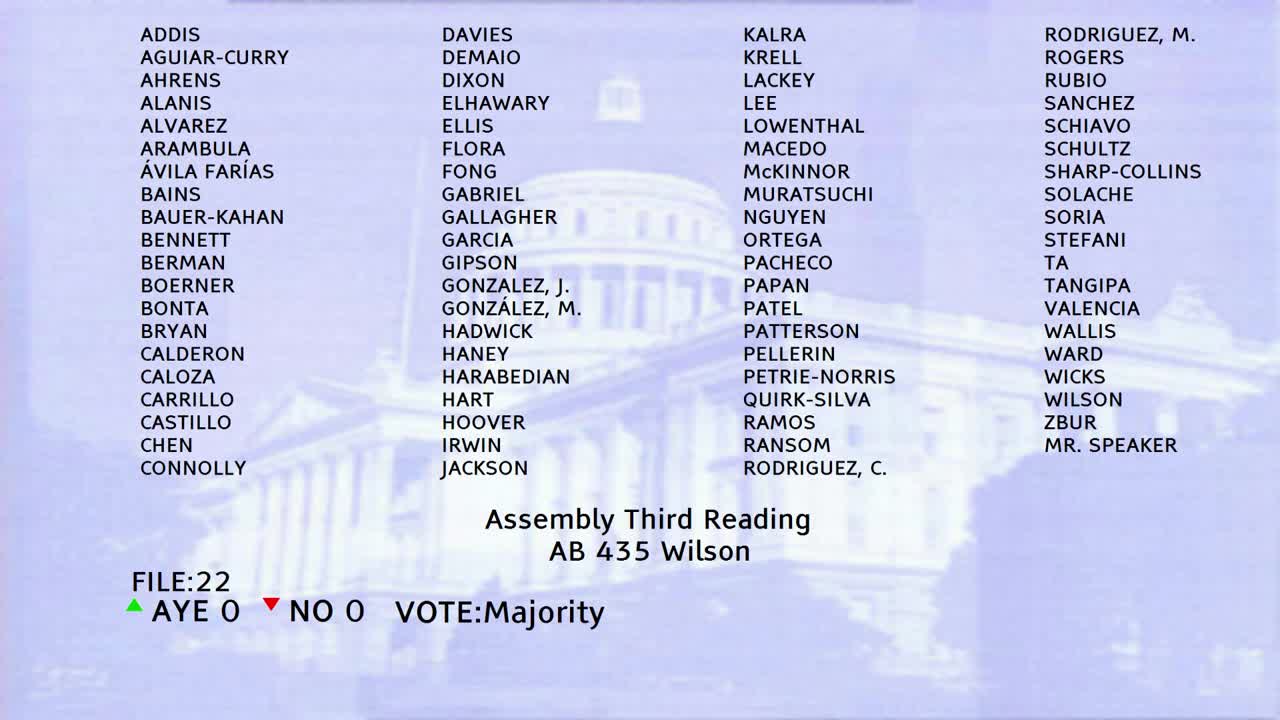
Bill Author

Bill Co-Author(s):