AB 1359: Jury service exemptions.
- Session Year: 2025-2026
- House: Assembly
- Latest Version Date: 2026-09-14
Current Status:
Passed
(2026-09-14: Chaptered by Secretary of State - Chapter 195, Statutes of 2026.)
Introduced
In Committee
Awaiting First Chamber Vote
Passed First Chamber
In Committee
Awaiting Second Chamber Vote
Passed Second Chamber
Enacted
What does this bill do?
The bill lets people who are 80 or older be permanently excused from jury duty for a medical impairment without needing a doctor’s note. They must give the jury commissioner a written statement saying they have an impairment that permanently prevents them from serving, and the commissioner must grant the permanent excuse without requiring additional medical paperwork.
The summary is provided by generative AI which can make mistakes. For original language, please view the details in the table below.
Existing law allows for an eligible person to be excused from jury service only for undue hardship upon themselves or the public, as defined by the Judicial Council. Existing rules of court allow a person with a disability or their representative to seek a permanent medical excuse from jury service and require the individual to submit a written request accompanied by a supporting letter, memo, or note from a treating health care provider, as specified.
This bill would, commencing January 1, 2028, authorize a person 80 years of age or older to seek a permanent excuse from jury service due to a medical impairment without providing a supporting letter, memorandum, or note from a treating health care provider. The bill would require the court to permanently excuse a person who seeks the above-described permanent excuse from jury service upon the jury commissioners receipt of a written attestation stating that the person has an impairment, as specified. The bill would authorize the Judicial Council to adopt or amend a rule of court and publish related judicial forms as necessary to implement these provisions.
Existing law allows for an eligible person to be excused from jury service only for undue hardship upon themselves or the public, as defined by the Judicial Council. Existing rules of court allow a person with a disability or their representative to seek a permanent medical excuse from jury service and require the individual to submit a written request accompanied by a supporting letter, memo, or note from a treating health care provider, as specified.
This bill would, on commencing January 1, 2028, authorize a person 80 years of age or older to seek a permanent excuse from jury service due to a medical impairment without providing a supporting letter, memorandum, or note from a treating health care provider. The bill would require the court to permanently excuse a person who seeks the above-described permanent excuse from jury service. service upon the jury commissioners receipt of a written attestation stating that the person has an impairment, as specified. The bill would authorize the Judicial Council to adopt or amend a rule of court and publish related judicial forms as necessary to implement these provisions.
Existing law allows for an eligible person to be excused from jury service only for undue hardship upon themselves or the public, as defined by the Judicial Council. Existing rules of court allow a person with a disability or their representative to seek a permanent medical excuse from jury service and require the individual to submit a written request accompanied by a supporting letter, memo, or note from a treating health care provider, as specified.
This bill would would, on January 1, 2028, authorize a person 80 years of age or older to seek a permanent excuse from jury service without providing a supporting letter, memorandum, or note from a treating health care provider. The bill would require the court to permanently excuse a person who seeks the above-described permanent excuse from jury service. The bill would authorize the Judicial Council to adopt or amend a rule of court and publish related judicial forms as necessary to implement these provisions.
Existing law allows for an eligible person to be excused from jury service only for undue hardship upon themselves or the public, as defined by the Judicial Council. Existing rules of court allow a person with a disability or their representative to seek a permanent medical excuse from jury service and require the individual to submit a written request accompanied by a supporting letter, memo, or note from a treating health care provider, as specified.
This bill would authorize a person 80 years of age or older to seek a permanent excuse from jury service without providing a supporting letter, memorandum, or note from a treating health care provider. The bill would require the court to permanently excuse a person who seeks the above-described permanent excuse from jury service. The bill would authorize the Judicial Council to adopt or amend a rule of court and publish related judicial forms as necessary to implement these provisions.
Existing law, the Planning and Zoning Law, requires a city or county to adopt a general plan for land use development within its boundaries that includes, among other things, a housing element. The housing element is required to be updated at specified intervals, and when updating the housing element, the local government is required to take into account regional housing needs for various income levels, as specified. Existing law requires the Department of Housing and Community Development (HCD) to determine whether the housing element is in substantial compliance with specified provisions of the Planning and Zoning Law, and requires HCD to designate jurisdictions as prohousing, as prescribed.The Planning and Zoning Law also provides for the creation of an accessory dwelling unit by local ordinance, or, if a local agency has not adopted an ordinance, by ministerial approval, in accordance with specified standards. The law prohibits a local agency from imposing certain standards, except as specified, when evaluating a proposed accessory dwelling unit.Existing law, commonly referred to as the Density Bonus Law, requires a city or county to provide a developer that proposes a housing development, as defined, within the city or county with a density bonus, waivers or reductions of development standards and parking ratios, and other incentives or concessions, as specified, if the developer agrees to construct, among other options, specified percentages of units for lower income households or very low income households, and meets other requirements.This bill would authorize a housing-forward jurisdiction, defined to mean a city, county, or city and county that is designated as a prohousing jurisdiction by HCD and has met or exceeded its share of the regional housing need allocation, as provided, to impose certain conditions on a development project, including prohibiting a developer from using a density bonus benefit, as defined, to reduce the number of bicycle parking or storage spaces, and requiring an impact fee for specified accessory dwelling units.Existing law, the Planning and Zoning Law, requires a city or county to adopt a general plan for land use development within its boundaries that includes, among other things, a housing element. The housing element is required to be updated at specified intervals, and when updating the housing element, the local government is required to take into account regional housing needs for various income levels, as specified. Existing law requires the Department of Housing and Community Development (HCD) to determine whether the housing element is in substantial compliance with specified provisions of the Planning and Zoning Law, and requires HCD to designate jurisdictions as prohousing, as prescribed.
The Planning and Zoning Law also provides for the creation of an accessory dwelling unit by local ordinance, or, if a local agency has not adopted an ordinance, by ministerial approval, in accordance with specified standards. The law prohibits a local agency from imposing certain standards, except as specified, when evaluating a proposed accessory dwelling unit.
Existing law, commonly referred to as the Density Bonus Law, requires a city or county to provide a developer that proposes a housing development, as defined, within the city or county with a density bonus, waivers or reductions of development standards and parking ratios, and other incentives or concessions, as specified, if the developer agrees to construct, among other options, specified percentages of units for lower income households or very low income households, and meets other requirements.
This bill would authorize a housing-forward jurisdiction, defined to mean a city, county, or city and county that is designated as a prohousing jurisdiction by HCD and has met or exceeded its share of the regional housing need allocation, as provided, to impose certain conditions on a development project, including prohibiting a developer from using a density bonus benefit, as defined, to reduce the number of bicycle parking or storage spaces, and requiring an impact fee for specified accessory dwelling units.
Existing law, the Planning and Zoning Law, requires a city or county to adopt a general plan for land use development within its boundaries that includes, among other things, a housing element. The housing element is required to be updated at specified intervals, and, when updating the housing element, the local government is required to take into account regional housing needs for various income levels, as specified. Existing law requires the Department of Housing and Community Development (HCD) to determine whether the housing element is in substantial compliance with specified provisions of the Planning and Zoning Law, and requires HCD to designate jurisdictions as prohousing, as prescribed.This bill would state the intent of the legislature to enact subsequent legislation that would authorize a housing forward jurisdiction, defined to mean a city, county, or city and county that is designated as a prohousing jurisdiction by HCD and has met or exceeded its regional housing needs allocation, to impose certain conditions on development projects.Existing law, the Planning and Zoning Law, requires a city or county to adopt a general plan for land use development within its boundaries that includes, among other things, a housing element. The housing element is required to be updated at specified intervals, and, when updating the housing element, the local government is required to take into account regional housing needs for various income levels, as specified. Existing law requires the Department of Housing and Community Development (HCD) to determine whether the housing element is in substantial compliance with specified provisions of the Planning and Zoning Law, and requires HCD to designate jurisdictions as prohousing, as prescribed.
This bill would state the intent of the legislature to enact subsequent legislation that would authorize a housing forward jurisdiction, defined to mean a city, county, or city and county that is designated as a prohousing jurisdiction by HCD and has met or exceeded its regional housing needs allocation, to impose certain conditions on development projects.
(a)An eligible person shall not be exempt from service as a trial juror by reason of occupation, economic status, or any characteristic listed or defined in Section 11135 of the Government Code, or for any other reason. A person shall not be excused from service as a trial juror except as specified in subdivision (b).
(b)An eligible person may be excused from jury service only for undue hardship, upon themselves or upon the public, as defined by the Judicial Council.
(c)This section shall remain in effect only until January 1, 2028, and as of that date is repealed.
SEC. 2.Section 204 is added to the Code of Civil Procedure, to read:204.(a)An eligible person shall not be exempt from service as a trial juror by reason of occupation, economic status, or any characteristic listed or defined in Section 11135 of the Government Code, or for any other reason. A person shall not be excused from service as a trial juror except as specified in subdivisions (b) and (c).
(b)An eligible person may be excused from jury service only for undue hardship, upon themselves or upon the public, as defined by the Judicial Council.
(c)(1)An eligible person 80 years of age or older may seek a permanent excuse from jury service due to a medical impairment without a supporting letter, memorandum, or note from a treating health care provider.
(2)A person 80 years of age or older who seeks a permanent excuse from jury service pursuant to paragraph (1) shall be permanently excused from jury service upon providing the jury commissioner with a written attestation stating they have an impairment permanently rendering them incapable of performing jury service. Additional medical documentation shall not be required from the person.
(3)The Judicial Council may adopt or amend a rule of court and publish related judicial forms as necessary to implement this subdivision.
(d)This section shall become operative on January 1, 2028.
(a)No An eligible person shall not be exempt from service as a trial juror by reason of occupation, economic status, or any characteristic listed or defined in Section 11135 of the Government Code, or for any other reason. No A person shall not be excused from service as a trial juror except as specified in subdivision (b).
(b)An eligible person may be excused from jury service only for undue hardship, upon themselves or upon the public, as defined by the Judicial Council.
(c)This section shall remain in effect only until January 1, 2028, and as of that date is repealed.
SEC. 2.Section 204 is added to the Code of Civil Procedure, to read:204.(a)An eligible person shall not be exempt from service as a trial juror by reason of occupation, economic status, or any characteristic listed or defined in Section 11135 of the Government Code, or for any other reason. A person shall not be excused from service as a trial juror except as specified in subdivisions (b) and (c).
(b)An eligible person may be excused from jury service only for undue hardship, upon themselves or upon the public, as defined by the Judicial Council.
(c)(1)An eligible person 80 years of age or older may seek a permanent excuse from jury service due to a medical impairment without a supporting letter, memorandum, or note from a treating health care provider.
(2)A person 80 years of age or older who seeks a permanent excuse from jury service pursuant to paragraph (1) shall be permanently excused from jury service upon providing the jury commissioner with a written attestation stating they have an impairment permanently rendering them incapable of performing jury service. Additional medical documentation shall not be required from the person.
(3)The Judicial Council may adopt or amend a rule of court and publish related judicial forms as necessary to implement this subdivision.
(d)This section shall become operative on January 1, 2028.
SECTION 1.Section 204 of the Code of Civil Procedure is amended to read:204.(a)No eligible person shall be exempt from service as a trial juror by reason of occupation, economic status, or any characteristic listed or defined in Section 11135 of the Government Code, or for any other reason. No person shall be excused from service as a trial juror except as specified in subdivisions (b) and (c).(b)An eligible person may be excused from jury service only for undue hardship, upon themselves or upon the public, as defined by the Judicial Council.(c)(1)An eligible person 80 years of age or older may seek a permanent excuse from jury service without a supporting letter, memorandum, or note from a treating health care provider.(2)A person 80 years of age or older who seeks a permanent excuse from jury service pursuant to paragraph (1) shall be permanently excused from jury service. The Judicial Council may adopt or amend a rule of court and publish related judicial forms as necessary to implement this subdivision.(d)This section shall become operative on January 1, 2028.(a)No eligible person shall be exempt from service as a trial juror by reason of occupation, economic status, or any characteristic listed or defined in Section 11135 of the Government Code, or for any other reason. No person shall be excused from service as a trial juror except as specified in subdivisions (b) and (c).
(b)An eligible person may be excused from jury service only for undue hardship, upon themselves or upon the public, as defined by the Judicial Council.
(c)(1)An eligible person 80 years of age or older may seek a permanent excuse from jury service without a supporting letter, memorandum, or note from a treating health care provider.
(2)A person 80 years of age or older who seeks a permanent excuse from jury service pursuant to paragraph (1) shall be permanently excused from jury service. The Judicial Council may adopt or amend a rule of court and publish related judicial forms as necessary to implement this subdivision.
(d)This section shall become operative on January 1, 2028.
(a)No eligible person shall be exempt from service as a trial juror by reason of occupation, economic status, or any characteristic listed or defined in Section 11135 of the Government Code, or for any other reason. No person shall be excused from service as a trial juror except as specified in subdivision (b). subdivisions (b) and (c).
(b)An eligible person may be excused from jury service only for undue hardship, upon themselves or upon the public, as defined by the Judicial Council.
(c)(1)An eligible person 80 years of age or older may seek a permanent excuse from jury service without a supporting letter, memorandum, or note from a treating health care provider.
(2)A person 80 years of age or older who seeks a permanent excuse from jury service pursuant to paragraph (1) shall be permanently excused from jury service. The Judicial Council may adopt or amend a rule of court and publish related judicial forms as necessary to implement this subdivision.
SECTION 1.Section 65914.91 is added to the Government Code, to read:65914.91.(a)Beginning on January 1, 2026, a housing-forward jurisdiction, notwithstanding any other law, may place any of the following reasonable conditions on a development project when approving the development application:(1)If the applicable objective standards require a commercial ground floor use, the housing-forward jurisdiction may prohibit a developer from using a density bonus benefit to reduce the commercial ground floor use to the lesser of either of the following:(A)The commercial ground floor square footage required by the jurisdictions objective standards.(B)One-half of the ground floor area.(2)If applicable objective standards require bicycle parking or storage, the housing-forward jurisdiction may prohibit a developer from using a density bonus benefit to reduce the number of bicycle parking or storage spaces in the development plan to the lesser of either of the following:(A)The number of bicycle parking spaces required by the applicable objective standard.(B)One long-term bicycle parking space per unit plus one short-term bicycle parking space per four units, where additional long-term spaces may be provided in lieu of short-term spaces on a one-to-one basis.(3)If applicable objective standards include a requirement for a mixed-use development with a commercial or industrial component to provide showers, the housing-forward jurisdiction may prohibit a developer from using a density bonus benefit to reduce the number of showers to the lesser of either of the following:(A)The number of showers required by the applicable objective standard.(B)The number of showers required by the following:Gross Floor Area of New Construction (in square feet)Number of showers required0-12,499012,500-29,999130,000-49,999250,000 or greater40-24,499025,000-99,99911000,000 or greater2(4)If the project involves multifamily housing and accessory dwelling units are proposed on the project site, the jurisdiction may require that impact fees be paid for the accessory dwelling units, including accessory dwelling units that are less than 750 square feet, subject to all of the following:(A)The accessory dwelling unit impact fee shall not exceed the impact fee for a multifamily unit, or for a single-family unit if the housing-forward jurisdictions fees do not distinguish between multifamily units and single-family units.(B)This paragraph does not authorize a housing-forward jurisdiction to impose an impact fee on a junior accessory dwelling unit, unless otherwise authorized by law.(C)This paragraph does not authorize a housing-forward jurisdiction to impose an impact fee on accessory dwelling units added to individually owned parcels, such as a townhouse, or within an individually owned airspace, such as a condominium. For purposes of this subparagraph, individually owned means the individual or entity that owns the parcel or airspace owns five or fewer parcels in the housing-forward jurisdiction.(b)This section shall apply to all housing development applications, regardless of whether they are submitted through a streamlined, ministerial approval process, through a conditional use permit, or through any other nonlegislative discretionary approval.(c)For purposes of this section, the following definitions shall apply:(1)Density bonus benefit means any concession or incentive, or waiver or reduction, of development standards authorized or required pursuant to Chapter 4.3 (commencing with Section 65915).(2)Housing-forward jurisdiction means a city, county, or city and county that meets all of the following requirements:(A)Met or exceeded applicable regional housing needs assessment targets in the most recent prior planning cycle for each income level specified.(B)Met or exceeded its share of the regional housing need, determined pursuant to Section 65584, for each income level specified.(C)Is designated as a prohousing jurisdiction pursuant to Section 65589.9.(3)Long-term bicycle parking means a locker, individually locked enclosure, or other supervised or secured area within a building that provides protection for each bicycle from theft, vandalism, and weather.(4)Regional housing needs assessment or RHNA means a representation of housing needs for all income levels in a jurisdiction pursuant to Article 10.6 (commencing with Section 65580) of Chapter 3.(5)Short-term bicycle parking means a bicycle rack constructed to enable the bicycle to have at least two points of contact with the rack and allows the user to secure the bicycle by locking the frame and one wheel. REVISIONS: HeadingLine 2.(a)Beginning on January 1, 2026, a housing-forward jurisdiction, notwithstanding any other law, may place any of the following reasonable conditions on a development project when approving the development application:
(1)If the applicable objective standards require a commercial ground floor use, the housing-forward jurisdiction may prohibit a developer from using a density bonus benefit to reduce the commercial ground floor use to the lesser of either of the following:
(A)The commercial ground floor square footage required by the jurisdictions objective standards.
(B)One-half of the ground floor area.
(2)If applicable objective standards require bicycle parking or storage, the housing-forward jurisdiction may prohibit a developer from using a density bonus benefit to reduce the number of bicycle parking or storage spaces in the development plan to the lesser of either of the following:
(A)The number of bicycle parking spaces required by the applicable objective standard.
(B)One long-term bicycle parking space per unit plus one short-term bicycle parking space per four units, where additional long-term spaces may be provided in lieu of short-term spaces on a one-to-one basis.
(3)If applicable objective standards include a requirement for a mixed-use development with a commercial or industrial component to provide showers, the housing-forward jurisdiction may prohibit a developer from using a density bonus benefit to reduce the number of showers to the lesser of either of the following:
(A)The number of showers required by the applicable objective standard.
(B)The number of showers required by the following:
| Gross Floor Area of New Construction (in square feet) | Number of showers required |
| 0-12,499 | 0 |
| 12,500-29,999 | 1 |
| 30,000-49,999 | 2 |
| 50,000 or greater | 4 |
| 0-24,499 | 0 |
| 25,000-99,999 | 1 |
| 1000,000 or greater | 2 |
(4)If the project involves multifamily housing and accessory dwelling units are proposed on the project site, the jurisdiction may require that impact fees be paid for the accessory dwelling units, including accessory dwelling units that are less than 750 square feet, subject to all of the following:
(A)The accessory dwelling unit impact fee shall not exceed the impact fee for a multifamily unit, or for a single-family unit if the housing-forward jurisdictions fees do not distinguish between multifamily units and single-family units.
(B)This paragraph does not authorize a housing-forward jurisdiction to impose an impact fee on a junior accessory dwelling unit, unless otherwise authorized by law.
(C)This paragraph does not authorize a housing-forward jurisdiction to impose an impact fee on accessory dwelling units added to individually owned parcels, such as a townhouse, or within an individually owned airspace, such as a condominium. For purposes of this subparagraph, individually owned means the individual or entity that owns the parcel or airspace owns five or fewer parcels in the housing-forward jurisdiction.
(b)This section shall apply to all housing development applications, regardless of whether they are submitted through a streamlined, ministerial approval process, through a conditional use permit, or through any other nonlegislative discretionary approval.
(c)For purposes of this section, the following definitions shall apply:
(1)Density bonus benefit means any concession or incentive, or waiver or reduction, of development standards authorized or required pursuant to Chapter 4.3 (commencing with Section 65915).
(2)Housing-forward jurisdiction means a city, county, or city and county that meets all of the following requirements:
(A)Met or exceeded applicable regional housing needs assessment targets in the most recent prior planning cycle for each income level specified.
(B)Met or exceeded its share of the regional housing need, determined pursuant to Section 65584, for each income level specified.
(C)Is designated as a prohousing jurisdiction pursuant to Section 65589.9.
(3)Long-term bicycle parking means a locker, individually locked enclosure, or other supervised or secured area within a building that provides protection for each bicycle from theft, vandalism, and weather.
(4)Regional housing needs assessment or RHNA means a representation of housing needs for all income levels in a jurisdiction pursuant to Article 10.6 (commencing with Section 65580) of Chapter 3.
(5)Short-term bicycle parking means a bicycle rack constructed to enable the bicycle to have at least two points of contact with the rack and allows the user to secure the bicycle by locking the frame and one wheel.
SECTION 1.It is the intent of the legislature to enact subsequent legislation that would authorize a housing forward jurisdiction, defined to mean a city, county, or city and county that is designated as a prohousing jurisdiction by the Department of Housing and Community Deveopment and has met or exceeded its regional housing needs allocation, to impose certain conditions on development projects.It is the intent of the legislature to enact subsequent legislation that would authorize a housing forward jurisdiction, defined to mean a city, county, or city and county that is designated as a prohousing jurisdiction by the Department of Housing and Community Deveopment and has met or exceeded its regional housing needs allocation, to impose certain conditions on development projects.
|
Date
|
Status
|
|---|---|
| Sep 15, 2026 | Chaptered by Secretary of State - Chapter 195, Statutes of 2026. |
| Sep 14, 2026 | Chaptered by Secretary of State - Chapter 195, Statutes of 2026. |
| Sep 15, 2026 | Approved by the Governor. |
| Sep 14, 2026 | Approved by the Governor. |
| Aug 27, 2026 | Enrolled and presented to the Governor at 4 p.m. |
| Aug 20, 2026 | Senate amendments concurred in. To Engrossing and Enrolling. (Ayes 75. Noes 0.). |
| Aug 20, 2026 | Senate amendments concurred in. To Engrossing and Enrolling. (Ayes 75. Noes 0. Page 6313.). |
| Aug 20, 2026 | Senate amendments concurred in. To Engrossing and Enrolling. |
| Aug 19, 2026 | In Assembly. Concurrence in Senate amendments pending. |
| Aug 19, 2026 | Read third time. Passed. Ordered to the Assembly. (Ayes 38. Noes 0. Page 5559.). |
| Aug 19, 2026 | Read third time. Passed. Ordered to the Assembly. (Ayes 37. Noes 0.). |
| Aug 17, 2026 | Read second time. Ordered to third reading. |
| Aug 13, 2026 | Read second time and amended. Ordered returned to second reading. |
| Aug 13, 2026 | From committee: Amend, and do pass as amended. (Ayes 7. Noes 0.) (August 13). |
| Jul 1, 2026 | From committee chair, with author's amendments: Amend, and re-refer to committee. Read second time, amended, and re-referred to Com. on APPR. |
| Jun 29, 2026 | In committee: Referred to APPR. suspense file. |
| Jun 17, 2026 | From committee: Do pass and re-refer to Com. on APPR. (Ayes 11. Noes 0.) (June 16). Re-referred to Com. on APPR. |
| May 6, 2026 | Referred to Com. on JUD. |
| Jan 27, 2026 | In Senate. Read first time. To Com. on RLS. for assignment. |
| Jan 26, 2026 | Read third time. Passed. Ordered to the Senate. (Ayes 73. Noes 1. Page 3837.) |
| Jan 22, 2026 | Read second time. Ordered to third reading. |
| Jan 22, 2026 | In committee: Set, first hearing. Referred to suspense file. |
| Jan 22, 2026 | From committee: Do pass. (Ayes 13. Noes 1.) (January 22). |
| Jan 22, 2026 | Assembly Rule 63 suspended. (Page 3806.) |
| Jan 13, 2026 | Coauthors revised. |
| Jan 13, 2026 | From committee: Do pass and re-refer to Com. on APPR. (Ayes 11. Noes 0.) (January 13). Re-referred to Com. on APPR. |
| Jan 5, 2026 | Re-referred to Com. on JUD. pursuant to Assembly Rule 96. |
| Jan 5, 2026 | Re-referred to Com. on H. & C.D. |
| Jan 5, 2026 | From committee chair, with author's amendments: Amend, and re-refer to Com. on H. & C.D. Read second time and amended. |
| Apr 1, 2025 | Re-referred to Com. on H. & C.D. |
| Mar 28, 2025 | Referred to Coms. on H. & C.D. and L. GOV. |
| Mar 28, 2025 | From committee chair, with author's amendments: Amend, and re-refer to Com. on H. & C.D. Read second time and amended. |
| Feb 24, 2025 | Read first time. |
| Feb 22, 2025 | From printer. May be heard in committee March 24. |
| Feb 21, 2025 | Introduced. To print. |
|
Date
|
Description
|
Location
|
Votes
|
|
|---|---|---|---|---|
| Aug 20, 2026 | AB 1359 Ahrens Concurrence in Senate Amendments | Assembly Floor |
Passed |
|
| Aug 19, 2026 | Assembly 3rd Reading AB1359 Ahrens et al. By Cortese | Senate Floor |
Passed |
|
| Aug 13, 2026 | Do pass as amended | Senate Standing Committee on Appropriations |
Passed |
|
| Jun 29, 2026 | Placed on suspense file | Senate Standing Committee on Appropriations |
Passed |
|
| Jun 16, 2026 | Do pass, but first be re-referred to the Committee on [Appropriations] | Senate Standing Committee on Judiciary |
Passed |
|
| Jan 26, 2026 | AB 1359 Ahrens Assembly Third Reading | Assembly Floor |
Passed |
|
| Jan 22, 2026 | Do pass. | Assembly Standing Committee on Appropriations |
Passed |
|
| Jan 13, 2026 | Do pass and be re-referred to the Committee on [Appropriations] | Assembly Standing Committee on Judiciary |
Passed |
This list shows positions taken on this bill by organizations on the date displayed, which is linked to the original source.
Positions by individuals are not included.
|
Organization
|
Position
|
Date
|
|---|---|---|
| Alzheimer’s Association | ** Support | |
| Alzheimer’s Association | ** Support | |
| California Senior Legislature | ** Support | |
| LeadingAge California | ** Support | |
| Retired Public Employees Association of California | ** Support |
CONCURRENCE IN SENATE AMENDMENTS
CSA1 Bill Id:AB 1359
Author:(Ahrens)
As Amended Ver:August 13, 2026
Majority vote
SUMMARY
Authorizes potential jurors who are at least 80 years old to seek a permanent excusal from jury duty due to a medical impairment without providing supporting documentation.
Major Provisions
- Authorizes an eligible person 80 years of age or older to seek a permanent excuse from jury service due to medical impairment without a supporting letter, memorandum, or note from a treating health care provider.
- Requires a person 80 years of age or older who seeks a permanent excuse from jury service pursuant to 1) be permanently excused from jury service.
- Authorizes the Judicial Council of California to adopt or amend a rule of court and publish related judicial forms as necessary to implement the bill's provisions.
Senate Amendments
Minor technical amendments and an amendment to delay implementation until January 1, 2028.
COMMENTS
While viewed by many as a nuisance that disrupts everyday life, jury duty is a fundamental pillar of this country's justice system. The Sixth Amendment to the United States Constitution promises criminal defendants the right to a jury trial, and the Supreme Court has held that this right necessitates "a jury drawn from a fair cross section of the community." (Taylor v. Louisiana (1975) 419 U.S. 522, 528.) California Code of Civil Procedure Section 204 prohibits the exemption of eligible jurors (those who meet the statutory requirements which, briefly summarized, require individuals to be U.S. citizens who are at least 18 years old). However, the statute also dictates that eligible jurors may be excused "for undue hardship, upon themselves or the public, as defined by the Judicial Council." Accordingly, prospective jurors may be excused from one summoned appearance, but may be reenrolled and selected for service at a later date. In keeping with this policy, California Rule of Court Rule 2.1008 allows a prospective juror to be excused if they have a physical or mental disability or impairment that would expose them to undue risk of harm. Of note to this bill, the Rules of Court allow for such an excusal without verification of the condition, such as medical documentation, so long as the person is at least 70 years old. Additionally, Rule 2.1009 allows a prospective juror to seek a permanent excusal from jury duty if they have a medical condition that is unlikely to resolve for the foreseeable future. However, the process for requesting the permanent excusal requires a written request and supporting documentation, and the jury commissioner may also ask the potential juror to provide additional documentation. There is also no similar age-based exemption to the documentation requirement under Rule 2.1009. Moreover, the author and proponents of this measure contend that Rule 2.1008 is not being consistently administered across California's 58 individual county superior courts and that some senior citizens are still being forced to provide documentation of medical conditions for temporary excusals, despite the existing court rules.
Acknowledging the burdens jury duty may impose on prospective jurors aged 80 and older, this bill provides a pathway for those individuals to obtain a permanent excusal from jury duty due to medical impairment. While making a permanent excusal available to a subset of the population initially appears to undermine the important goal of diversity in jury pools, there are elements of this proposal that may justify such an allowance. First, as identified by the author, there are unique circumstances, such as existing health problems, potential vulnerability to emerging pathogens, and mobility concerns that those 80 years and older experience at higher rates than younger demographics. Second, Rule 2.1008 already allows for those 70 years and older to seek the same excusal, although it does not make such an excusal permanent. Under the existing rule, a potential juror who is 70 years or older would need to seek an excusal each time they receive a summons. Considering that the risks and burdens to the potential juror are only likely to increase with age, it seems reasonable to provide an opportunity to seek a permanent excusal for those 80 years of age and older.
According to the Author
Senior citizens may have a harder time than the average adult when it comes to getting around and completing daily tasks. In a report titled "California's Aging Population" published in January 2025, the Public Policy Institute of California (PPIC) stated that one in three individuals over the age of 80 has difficulties at home without assistance, and one in five experiences self-care limitations. Furthermore, learning how to use technology is a barrier to accessing basic services for many elderly people.
Accordingly, arranging an appointment with a health care provider, obtaining a note with the required information, and submitting the exemption document to the court can pose significant challenges. This onerous process can induce stress, confusion, and potentially risk the physical and mental well-being of elderly individuals. Should a senior instead choose to show up at jury duty, the hardships may be even greater. They may be forced to wake up earlier than normal, search for transportation to and from court, and disrupt their daily routines. Although these steps are not required for those 70 years and older to get a one-time jury duty exemption, this is a temporary stopgap that forces senior citizens to confront the issue continuously.
By requiring Judicial Council to amend their rules of court, this bill creates a pathway to a permanent exemption from jury service for individuals aged 80 or older. In doing so, it removes the burdensome requirement to request a note from a health care provider and acquire approval from the jury commissioner. This will simplify the process for senior citizens who are no longer fit to serve on a jury, reducing confusion and enhancing peace of mind.
Arguments in Support
This bill is sponsored by the California Senior Legislature. They submit:
AB 1359 offers a practical, compassionate, and commonsense solution. The bill simply allows an eligible person who is 80 years of age or older to request a permanent excuse from jury service without requiring a supporting letter or note from a medical professional. Upon making such a request, the court would permanently excuse the individual from service. The bill also authorizes the Judicial Council to adopt or amend rules of court and related forms to ensure smooth implementation.
This measure recognizes the realities many older adults face, including mobility challenges, chronic health conditions, caregiving responsibilities, and limited access to medical appointments. Importantly, AB 1359 does not create an automatic exemption; it preserves individual choice while reducing unnecessary procedural hurdles for seniors who determine that jury service is no longer feasible for them.
By modernizing the jury excuse process for older Californians, AB 1359 promotes judicial efficiency, respects personal dignity, and reduces avoidable strain on both the courts and our aging population—all without undermining the integrity or representativeness of jury pool.
Arguments in Opposition
None on file
FISCAL COMMENTS
According to the Senate Appropriations Committee:
Fiscal Impact:
One-time significant costs to the Judicial Council (JC) for jury management system upgrades; minor, absorbable costs to create model summons that reflect the change in jury exemption policy.
Unknown, potentially moderate costs associated with mailing additional juror summons as responses to the exempted individuals are received. Unknown, potentially significant reductions in staff time associated with processing fewer excusal requests on a case-by-case basis. Courts do not have juror demographic data in their jury management systems and the potential impact on juror rolls is unknown.
Minor, absorbable costs to adopt or revise a rule of court. Generally, one year is needed to complete the approval process and provide a public comment period (General Fund).
VOTES:
ASM JUDICIARY: 11-0-1
YES: Kalra, Bauer-Kahan, Bryan, Connolly, Harabedian, Macedo, Pacheco, Papan, Sanchez, Stefani, Zbur
ABS, ABST OR NV: Dixon
ASM APPROPRIATIONS: 13-1-1
YES: Wicks, Hoover, Stefani, Calderon, Caloza, Fong, Mark González, Krell, Bauer-Kahan, Pacheco, Pellerin, Solache, Tangipa
NO: Dixon
ABS, ABST OR NV: Ta
ASSEMBLY FLOOR: 73-1-6
YES: Addis, Aguiar-Curry, Ahrens, Alanis, Alvarez, Ávila Farías, Bains, Bauer-Kahan, Bennett, Berman, Boerner, Bonta, Bryan, Calderon, Caloza, Carrillo, Castillo, Chen, Connolly, Davies, Elhawary, Ellis, Fong, Gabriel, Gallagher, Garcia, Gipson, Jeff Gonzalez, Mark González, Hadwick, Haney, Harabedian, Hart, Hoover, Irwin, Jackson, Johnson, Kalra, Krell, Lackey, Lee, Lowenthal, Macedo, McKinnor, Muratsuchi, Nguyen, Ortega, Pacheco, Patel, Patterson, Pellerin, Petrie-Norris, Quirk-Silva, Ramos, Ransom, Michelle Rodriguez, Rogers, Blanca Rubio, Sanchez, Schiavo, Schultz, Sharp-Collins, Solache, Soria, Stefani, Tangipa, Valencia, Wallis, Ward, Wicks, Wilson, Zbur, Rivas
NO: DeMaio
ABS, ABST OR NV: Arambula, Dixon, Flora, Papan, Celeste Rodriguez, Ta
SENATE FLOOR: 38-0-2
YES: Allen, Alvarado-Gil, Archuleta, Arreguín, Ashby, Becker, Cabaldon, Caballero, Cervantes, Choi, Cortese, Dahle, Durazo, Gonzalez, Grayson, Grove, Hurtado, Jones, Laird, McGuire, McNerney, Menjivar, Niello, Ochoa Bogh, Padilla, Pérez, Reyes, Richardson, Rubio, Seyarto, Smallwood-Cuevas, Stern, Strickland, Umberg, Valladares, Wahab, Weber Pierson, Wiener
ABS, ABST OR NV: Blakespear, Limón
UPDATED
VERSION: July 1, 2026
CONSULTANT: Manuela Boucher-de la Cadena / JUD. / (916) 319-2334 FN: 0003820
SENATE RULES COMMITTEE Office of Senate Floor Analyses (916) 651-4171 | AB 1359 |
THIRD READING
Bill No: AB 1359
Author: Ahrens (D), et al.
Amended: 8/13/26 in Senate
Vote: 21
SENATE JUDICIARY COMMITTEE: 11-0, 6/16/26
AYES: Umberg, Niello, Allen, Caballero, Durazo, Laird, Reyes, Stern, Valladares, Wahab, Wiener
NO VOTE RECORDED: Ashby, Weber Pierson
SENATE APPROPRIATIONS COMMITTEE: 7-0, 8/13/26
AYES: Cervantes, Seyarto, Cabaldon, Dahle, Grayson, Richardson, Wahab
ASSEMBLY FLOOR: 73-1, 1/26/26 - See last page for vote
SUBJECT: Jury service exemptions
SOURCE: California Senior Legislature
DIGEST:
This bill, starting January 1, 2028, streamlines and simplifies the process for a person 80 years of age or older to receive a permanent excuse from jury service.
ANALYSIS:
Existing law:
- Provides that no eligible person shall be exempt from service as a trial juror by reason of occupation, economic status, or any characteristic listed or defined in Section 11135 of the Government Code, or for any other reason. (Code of Civil Procedure (Civ. Proc.) § 204 (a).)
- Provides that no person shall be excused from service as a trial juror except that an eligible person may be excused from jury service only for undue hardship, upon themselves or upon the public, as defined by the Judicial Council. (Code Civ. Proc. § 204 (b).)
- Provides that all persons are eligible and qualified to be prospective trial jurors, except the following:
- Persons who are not citizens of the United States.
- Persons who are less than 18 years of age.
- Persons who are not domiciliaries of the State of California, as specified.
- Persons who are not residents of the jurisdiction wherein they are summoned to serve.
- Persons who have been convicted of malfeasance in office and whose civil rights have not been restored.
- Persons who are not possessed of sufficient knowledge of the English language, as specified.
- Persons who are serving as a grand or trial juror in any court of this state.
- Persons who are the subject of a conservatorship.
- Persons while they are incarcerated in any prison or jail.
- Persons who have been convicted of a felony and are currently on parole, postrelease community supervision, felony probation, or mandated supervision for the conviction of a felony.
- Persons who are currently required to register as a sex offender pursuant to Section 290 of the Penal Code based on a felony conviction. (Code Civ. Proc. § 203.)
This bill:
- Beginning January 1, 2028, specifies that an eligible person 80 years of age or older may seek a permanent excuse from jury service due to a medical impairment without providing a supporting letter, memorandum, or note from a treating health care provider.
- Provides that a person 80 years of age or older who seeks a permanent excuse from jury service pursuant to 1) shall be permanently excused from jury service upon the jury commissioner’s receipt of a written attestation stating that the person has an impairment, as specified.
- Permits the Judicial Council to adopt or amend a rule of court and publish related judicial forms as necessary to implement the revised law.
Comments
According to the author:
Attaining a permanent exemption from jury service in California can be a challenging process for older adults. Currently, it requires arranging an appointment with a health care provider, obtaining a note that describes one’s medical impairment, and submitting the exemption document to the court. This onerous process can induce stress, confusion, and potentially risk the physical and mental well-being of elderly individuals. Should a senior choose to attend jury duty, the hardships may be even greater. They may be forced to wake up earlier than normal, coordinate transportation to and from court, and experience disruptions in their daily routines.
By requiring Judicial Council to amend their Rules of Court, AB 1359 expedites the pathway to permanent exemption from jury service for individuals aged 80 or older. Specifically, it removes the burdensome requirement of requesting a note from a health care provider and acquiring approval from the jury commissioner. This will simplify the exemption process for senior citizens who are no longer fit to serve on a jury, reducing confusion and enhancing peace of mind.
Under current law, all persons are eligible and qualified to be prospective trial jurors, except in limited circumstances such as if a person is less than 18 years of age or is not a citizen of the United States, among other reasons. The law specifies that an eligible person cannot be exempt from service as a trial juror by reason of occupation, economic status, or any characteristic listed or defined in Section 11135 of the Government Code, or for any other reason. An eligible person may only be excused from jury service for undue hardship, upon themselves or upon the public, as defined by the Judicial Council.
Individuals may be excused from jury service if they have a physical or mental impairment that would cause undue hardship. If an individual is 70 years or older, they are not required to provide verification of impairment in order to be excused from jury service. However, that person remains in the jury pool and may be summoned in the future. Each time they are summoned they must again assert that they have a physical or mental impairment that would cause undue hardship. There is a mechanism by which an individual may be permanently excused from jury service for a medical reason. In order to receive the permanent excuse, the applicant must submit a written request for a permanent exemption to the jury commissioner and provide a supporting letter, memo, or note from a treating health care provider. The provider must state that the individual has a permanent disability rendering the individual incapable of jury duty and sign off on official letterhead. The author notes that the “process of obtaining a doctor’s note and sending it to the jury commissioner can be burdensome and challenging for older individuals, who may struggle to confront the technological expertise and physical demands that are required for this process.”
This bill streamlines and simplifies the process for a person 80 years or older to receive a permanent excuse from jury service, beginning January 1, 2028.
The Retired Public Employees Association of California writes the following in support of this bill:
This measure provides a common-sense accommodation by allowing individuals 80 years of age and older to obtain a permanent excuse from jury service without requiring documentation from a health care provider.
Many older Californians face mobility, transportation, caregiving, or health-related challenges that make jury service difficult, even if they do not have a specific medical condition requiring a physician's note. The bill reduces unnecessary burdens on seniors, courts, and health care providers while preserving the ability of older Californians who wish to serve to continue participating in the jury system.
LeadingAge California explains the following in support of this bill:
As California’s population continues to age, it is critical that state policies reflect the needs and realities of older adults. Many individuals over the age of 80 experience mobility challenges, chronic health conditions, or caregiving responsibilities that can make repeated jury summons difficult or disruptive. While current rules allow for temporary excusals, they often require older adults to repeatedly navigate processes that can be confusing, time-consuming, and stressful.
AB 1359 provides a commonsense solution by establishing a clear, permanent exemption for individuals who voluntarily request it. This approach will reduce stress and administrative complexity for residents who are frequently called for jury duty despite ongoing limitations.
AB 1359 respects the dignity and autonomy of older Californians while reducing unnecessary strain on both individuals and their caregivers.
FISCAL EFFECT: Appropriation: No Fiscal Com.: Yes Local: No
According to the Senate Appropriations Committee:
Fiscal Impact:
One-time significant costs to the Judicial Council (JC) for jury management system upgrades; minor, absorbable costs to create model summons that reflect the change in jury exemption policy.
Unknown, potentially moderate costs associated with mailing additional juror summons as responses to the exempted individuals are received. Unknown, potentially significant reductions in staff time associated with processing fewer excusal requests on a case-by-case basis. Courts do not have juror demographic data in their jury management systems and the potential impact on juror rolls is unknown.
Minor, absorbable costs to adopt or revise a rule of court. Generally, one year is needed to complete the approval process and provide a public comment period (General Fund).
SUPPORT: (Verified 8/14/26)
California Senior Legislature (sponsor)
Alzheimer’s Association
LeadingAge California
Retired Public Employees Association of California
OPPOSITION: (Verified 8/14/26)
None received
ASSEMBLY FLOOR: 73-1, 1/26/26
AYES: Addis, Aguiar-Curry, Ahrens, Alanis, Alvarez, Ávila Farías, Bains, Bauer-Kahan, Bennett, Berman, Boerner, Bonta, Bryan, Calderon, Caloza, Carrillo, Castillo, Chen, Connolly, Davies, Elhawary, Ellis, Fong, Gabriel, Gallagher, Garcia, Gipson, Jeff Gonzalez, Mark González, Hadwick, Haney, Harabedian, Hart, Hoover, Irwin, Jackson, Johnson, Kalra, Krell, Lackey, Lee, Lowenthal, Macedo, McKinnor, Muratsuchi, Nguyen, Ortega, Pacheco, Patel, Patterson, Pellerin, Petrie-Norris, Quirk-Silva, Ramos, Ransom, Michelle Rodriguez, Rogers, Blanca Rubio, Sanchez, Schiavo, Schultz, Sharp-Collins, Solache, Soria, Stefani, Tangipa, Valencia, Wallis, Ward, Wicks, Wilson, Zbur, Rivas
NOES: DeMaio
NO VOTE RECORDED: Arambula, Dixon, Flora, Papan, Celeste Rodriguez, Ta
Prepared by: Margie Estrada / JUD. / (916) 651-4113
8/17/26 10:34:26
**** END ****
SENATE COMMITTEE ON
Senator Sabrina Cervantes, Chair
2025 - 2026 Regular Session
AB 1359 (Ahrens) - Jury service exemptions
Version: | Policy Vote: |
Urgency: | Mandate: |
Hearing Date: | Consultant: |
Bill Summary:
AB 1359 would authorize a person 80 years of age or older to seek a permanent excuse from jury duty without providing a supporting letter, memorandum, or note from a treating health care provider.
*********** ANALYSIS ADDENDUM – SUSPENSE FILE ***********
The following information is revised to reflect amendments
adopted by the committee on August 13, 2026
Fiscal Impact:
One-time significant costs to the Judicial Council (JC) for jury management system upgrades; minor, absorbable costs to create model summons that reflect the change in jury exemption policy.
Unknown, potentially moderate costs associated with mailing additional juror summons as responses to the exempted individuals are received. Unknown, potentially significant reductions in staff time associated with processing fewer excusal requests on a case-by-case basis. Courts do not have juror demographic data in their jury management systems and the potential impact on juror rolls is unknown.
Minor, absorbable costs to adopt or revise a rule of court. Generally, one year is needed to complete the approval process and provide a public comment period (General Fund).
Author Amendments:
- Specify that individuals must request a permanent exemption as a result of a medical impairment and must submit a written letter to the jury commissioner detailing their impairment
- Add an operative date of January 1, 2028.
-- END --
SENATE COMMITTEE ON
Senator Sabrina Cervantes, Chair
2025 - 2026 Regular Session
AB 1359 (Ahrens) - Jury service exemptions
Version: | Policy Vote: |
Urgency: | Mandate: |
Hearing Date: | Consultant: |
Bill Summary:
AB 1359 would authorize a person 80 years of age or older to seek a permanent excuse from jury duty without providing a supporting letter, memorandum, or note from a treating health care provider.
Fiscal Impact:
One time significant costs to the Judicial Council (JC) for jury management system upgrades; minor, absorbable costs to create model summons that reflect the change in jury exemption policy.
Unknown, potentially moderate costs associated with mailing additional juror summons as responses to the exempted individuals are received. Unknown, potentially significant reductions in staff time associated with processing fewer excusal requests on a case-by-case basis. Courts do not have juror demographic data in their jury management systems and the potential impact on juror rolls is unknown.
Minor, absorbable costs to adopt or revise a rule of court. Generally, one year is needed to complete the approval process and provide a public comment period (General Fund).
Background:
No eligible person shall be exempt from service as a trial juror by reason of occupation, economic status, or any characteristic listed or defined in Section 11135 of the Government Code (discrimination), or for any other reason except that an eligible person may be excused from jury service only for undue hardship, upon themselves or upon the public, as defined by the JC.
Proposed Law:
A person 80 years of age or older who seeks a permanent excuse from jury service shall be permanently excused from jury service. The JC may adopt or amend a rule of court and publish related judicial forms as necessary.
Author Amendments:
The amendment (RN 17319) will make January 1, 2028 the operative date of the bill, thereby providing sufficient time for the JC to upgrade its jury management system and to adopt forms and rules amendments.
Senator Thomas Umberg, Chair
2025-2026 Regular Session
Bill No: AB 1359 (Author:Ahrens)
Version: January 5, 2026
Hearing Date: June 16, 2026
Fiscal: Yes
Urgency: No
Consultant: ME
SUBJECT
Jury service exemptions
DIGEST
This bill streamlines and simplifies the process for a person 80 years or older to receive a permanent excuse from jury service.
EXECUTIVE SUMMARY
Under current law all persons are eligible and qualified to be prospective trial jurors, except in limited circumstance such as if a person is less than 18 years of age or is not a citizen of the United States, among other reasons. The law specifies that an eligible person cannot generally be exempt from service as a trial juror. However, an eligible person may be excused from jury service for undue hardship, upon themselves or upon the public, as defined by the Judicial Council.
California Rules of Court Rule 2.1008 specifies the reasons a juror may be excused for undue hardship. One of the reasons is if the prospective juror has a physical or mental disability or impairment, not affecting that person's competence to act as a juror, that would expose the potential juror to undue risk of mental or physical harm. In any individual case, unless the person is aged 70 years or older, the prospective juror may be required to furnish verification or a method of verification of the disability or impairment, its probable duration, and the particular reasons for the person's inability to serve as a juror. That person remains in the jury pool and may be summoned in the future and again assert that they have a physical or mental impairment that would cause undue hardship.
California Rules of Court Rule 2.1009 provides a mechanism by which an individual may be permanently excused from jury service for a medical reason. In order to receive the permanent excuse, the applicant must submit a written request for a permanent exemption to the jury commissioner and provide a supporting letter, memo, or note from a treating health care provider. The provider must state that the individual has a permanent disability rendering the individual incapable of jury duty and sign off on official letterhead.
This bill allows individuals aged 80 or older to seek the permanent exemption without providing a supporting letter, memorandum, or note from a treating health care provider. This bill is intended to make it easier for the elderly to choose to be removed from their jury obligation permanently instead of having to repeatedly ask to be removed. If a person over the age of 80 wishes to continue serving on a jury, then they may choose to do so.
This bill is sponsored by the California Senior Legislature, and supported by the Retired Public Employees Association of California. There is no known opposition. Should the bill pass this Committee, it will next be referred to the Senate Appropriations Committee.
PROPOSED CHANGES TO THE LAW
Existing law:
- Provides that no eligible person shall be exempt from service as a trial juror by reason of occupation, economic status, or any characteristic listed or defined in Section 11135 of the Government Code, or for any other reason. (Code Civ. Proc. § 204 (a).)
- Provides that no person shall be excused from service as a trial juror except that an eligible person may be excused from jury service only for undue hardship, upon themselves or upon the public, as defined by the Judicial Council. (Code Civ. Proc. § 204 (b).)
- Provides that all persons are eligible and qualified to be prospective trial jurors, except the following:
- Persons who are not citizens of the United States.
- Persons who are less than 18 years of age.
- Persons who are not domiciliaries of the State of California, as specified.
- Persons who are not residents of the jurisdiction wherein they are summoned to serve.
- Persons who have been convicted of malfeasance in office and whose civil rights have not been restored.
- Persons who are not possessed of sufficient knowledge of the English language, as specified.
- Persons who are serving as a grand or trial juror in any court of this state.
- Persons who are the subject of a conservatorship.
- Persons while they are incarcerated in any prison or jail.
- Persons who have been convicted of a felony and are currently on parole, postrelease community supervision, felony probation, or mandated supervision for the conviction of a felony.
- Persons who are currently required to register as a sex offender pursuant to Section 290 of the Penal Code based on a felony conviction. (Code Civ. Proc. § 203.)
This bill:
- Specifies that an eligible person 80 years of age or older may seek a permanent excuse from jury service without a supporting letter, memorandum, or note from a treating health care provider.
- Provides that a person 80 years of age or older who seeks a permanent excuse from jury service pursuant to 1) shall be permanently excused from jury service.
- Permits the Judicial Council to adopt or amend a rule of court and publish related judicial forms as necessary to implement the revised law.
COMMENTS
- Stated need for the bill
According to the author:
Attaining a permanent exemption from jury service in California can be a challenging process for older adults. Currently, it requires arranging an appointment with a health care provider, obtaining a note that describes one’s medical impairment, and submitting the exemption document to the court. This onerous process can induce stress, confusion, and potentially risk the physical and mental well-being of elderly individuals. Should a senior choose to attend jury duty, the hardships may be even greater. They may be forced to wake up earlier than normal, coordinate transportation to and from court, and experience disruptions in their daily routines.
By requiring Judicial Council to amend their Rules of Court, AB 1359 expedites the pathway to permanent exemption from jury service for individuals aged 80 or older. Specifically, it removes the burdensome requirement of requesting a note from a health care provider and acquiring approval from the jury commissioner. This will simplify the exemption process for senior citizens who are no longer fit to serve on a jury, reducing confusion and enhancing peace of mind.
2. Would make it easier for eligible jurors over the age of 80 to be permanently exempted from jury service
Under current law, all persons are eligible and qualified to be prospective trial jurors, except in limited circumstances such as if a person is less than 18 years of age or is not a citizen of the United States, among other reasons. The law specifies that an eligible person cannot be exempt from service as a trial juror by reason of occupation, economic status, or any characteristic listed or defined in Section 11135 of the Government Code, or for any other reason. An eligible person may only be excused from jury service for undue hardship, upon themselves or upon the public, as defined by the Judicial Council.
Individuals may be excused from jury service if they have a physical or mental impairment that would cause undue hardship. If an individual is 70 years or older, they are not required to provide verification of impairment in order to be excused from jury service. However, that person remains in the jury pool and may be summoned in the future. Each time they are summoned they must again assert that they have a physical or mental impairment that would cause undue hardship. There is a mechanism by which an individual may be permanently excused from jury service for a medical reason. In order to receive the permanent excuse, the applicant must submit a written request for a permanent exemption to the jury commissioner and provide a supporting letter, memo, or note from a treating health care provider. The provider must state that the individual has a permanent disability rendering the individual incapable of jury duty and sign off on official letterhead. The author notes that the “process of obtaining a doctor’s note and sending it to the jury commissioner can be burdensome and challenging for older individuals, who may struggle to confront the technological expertise and physical demands that are required for this process.”
This bill would streamline and simplify the process for a person 80 years or older to receive a permanent excuse from jury service. This bill allows these older individuals to seek the permanent exemption without providing a supporting letter, memorandum, or note from a treating health care provider.
According to a 2025 policy brief by the Public Policy Institute of California, “California is on the cusp of an unprecedented demographic shift: projections indicate a dramatic increase in the state’s older adult population by 2040.” Additionally, the policy brief explains that “one in three adults over the age of 80 will have difficulties staying in their homes without assistance, and one in five will experience self-care limitations.”
This bill is intended to make it easier for people 80 years or older to choose to be removed from their jury obligation permanently instead of having to repeatedly ask to be removed. If a person over the age of 80 wishes to continue serving on a jury, then they may choose to do so.
The Retired Public Employees Association of California writes the following in support of the bill:
This measure provides a common-sense accommodation by allowing individuals 80 years of age and older to obtain a permanent excuse from jury service without requiring documentation from a health care provider.
Many older Californians face mobility, transportation, caregiving, or health-related challenges that make jury service difficult, even if they do not have a specific medical condition requiring a physician's note. The bill reduces unnecessary burdens on seniors, courts, and health care providers while preserving the ability of older Californians who wish to serve to continue participating in the jury system.
LeadingAge California explains the following in support of the bill:
As California’s population continues to age, it is critical that state policies reflect the needs and realities of older adults. Many individuals over the age of 80 experience mobility challenges, chronic health conditions, or caregiving responsibilities that can make repeated jury summons difficult or disruptive. While current rules allow for temporary excusals, they often require older adults to repeatedly navigate processes that can be confusing, time-consuming, and stressful.
AB 1359 provides a commonsense solution by establishing a clear, permanent exemption for individuals who voluntarily request it. This approach will reduce stress and administrative complexity for residents who are frequently called for jury duty despite ongoing limitations.
AB 1359 respects the dignity and autonomy of older Californians while reducing unnecessary strain on both individuals and their caregivers.
SUPPORT
California Senior Legislature (sponsor)
Alzheimer’s Association
LeadingAge California
Retired Public Employees Association of California
OPPOSITION
None known
RELATED LEGISLATION
Pending Legislation: None known.
Prior Legislation: None known.
PRIOR VOTES:
Assembly Floor (Ayes 73, Noes 1)
Assembly Appropriations Committee (Ayes 13, Noes 1)
Assembly Judiciary Committee (Ayes 11, Noes 0)
**************
ASSEMBLY THIRD READING
ATR Bill Id:AB 1359
Author:(Ahrens)
As Amended Ver:January 5, 2026
Majority vote
SUMMARY
Authorizes potential jurors who are at least 80 years old to seek a permanent excusal from jury duty without providing supporting documentation.
Major Provisions
- Authorizes an eligible person 80 years of age or older to seek a permanent excuse from jury service without a supporting letter, memorandum, or note from a treating health care provider.
- Requires a person 80 years of age or older who seeks a permanent excuse from jury service pursuant to 1) be permanently excused from jury service.
- Authorizes the Judicial Council of California to adopt or amend a rule of court and publish related judicial forms as necessary to implement the bill's provisions.
COMMENTS
While viewed by many as a nuisance that disrupts everyday life, jury duty is a fundamental pillar of this country's justice system. The Sixth Amendment to the United States Constitution promises criminal defendants the right to a jury trial, and the Supreme Court has held that this right necessitates "a jury drawn from a fair cross section of the community." (Taylor v. Louisiana (1975) 419 U.S. 522, 528.) California Code of Civil Procedure Section 204 prohibits the exemption of eligible jurors (those who meet the statutory requirements which, briefly summarized, require individuals to be U.S. citizens who are at least 18 years old). However, the statute also dictates that eligible jurors may be excused "for undue hardship, upon themselves or the public, as defined by the Judicial Council." Accordingly, prospective jurors may be excused from one summoned appearance, but may be reenrolled and selected for service at a later date. In keeping with this policy, California Rule of Court Rule 2.1008 allows a prospective juror to be excused if they have a physical or mental disability or impairment that would expose them to undue risk of harm. Of note to this bill, the Rules of Court allow for such an excusal without verification of the condition, such as medical documentation, so long as the person is at least 70 years old. Additionally, Rule 2.1009 allows a prospective juror to seek a permanent excusal from jury duty if they have a medical condition that is unlikely to resolve for the foreseeable future. However, the process for requesting the permanent excusal requires a written request and supporting documentation, and the jury commissioner may also ask the potential juror to provide additional documentation. There is also no similar age-based exemption to the documentation requirement under Rule 2.1009. Moreover, the author and proponents of this measure contend that Rule 2.1008 is not being consistently administered across California's 58 individual county superior courts and that some senior citizens are still being forced to provide documentation of medical conditions for temporary excusals, despite the existing court rules.
Acknowledging the burdens jury duty may impose on prospective jurors aged 80 and older, this bill provides a pathway for those individuals to obtain a permanent excusal from jury duty. While making a permanent excusal available to a subset of the population initially appears to undermine the important goal of diversity in jury pools, there are elements of this proposal that may justify such an allowance. First, as identified by the author, there are unique circumstances, such as existing health problems, potential vulnerability to emerging pathogens, and mobility concerns that those 80 years and older experience at higher rates than younger demographics. Second, Rule 2.1008 already allows for those 70 years and older to seek the same excusal, although it does not make such an excusal permanent. Under the existing rule, a potential juror who is 70 years or older would need to seek an excusal each time they receive a summons. Considering that the risks and burdens to the potential juror are only likely to increase with age, it seems reasonable to provide an opportunity to seek a permanent excusal for those 80 years of age and older.
According to the Author
Senior citizens may have a harder time than the average adult when it comes to getting around and completing daily tasks. In a report titled "California's Aging Population" published in January 2025, the Public Policy Institute of California (PPIC) stated that one in three individuals over the age of 80 has difficulties at home without assistance, and one in five experiences self-care limitations. Furthermore, learning how to use technology is a barrier to accessing basic services for many elderly people.
Accordingly, arranging an appointment with a health care provider, obtaining a note with the required information, and submitting the exemption document to the court can pose significant challenges. This onerous process can induce stress, confusion, and potentially risk the physical and mental well-being of elderly individuals. Should a senior instead choose to show up at jury duty, the hardships may be even greater. They may be forced to wake up earlier than normal, search for transportation to and from court, and disrupt their daily routines. Although these steps are not required for those 70 years and older to get a one-time jury duty exemption, this is a temporary stopgap that forces senior citizens to confront the issue continuously.
By requiring Judicial Council to amend their rules of court, this bill creates a pathway to a permanent exemption from jury service for individuals aged 80 or older. In doing so, it removes the burdensome requirement to request a note from a health care provider and acquire approval from the jury commissioner. This will simplify the process for senior citizens who are no longer fit to serve on a jury, reducing confusion and enhancing peace of mind.
Arguments in Support
This bill is sponsored by the California Senior Legislature. They submit:
AB 1359 offers a practical, compassionate, and commonsense solution. The bill simply allows an eligible person who is 80 years of age or older to request a permanent excuse from jury service without requiring a supporting letter or note from a medical professional. Upon making such a request, the court would permanently excuse the individual from service. The bill also authorizes the Judicial Council to adopt or amend rules of court and related forms to ensure smooth implementation.
This measure recognizes the realities many older adults face, including mobility challenges, chronic health conditions, caregiving responsibilities, and limited access to medical appointments. Importantly, AB 1359 does not create an automatic exemption; it preserves individual choice while reducing unnecessary procedural hurdles for seniors who determine that jury service is no longer feasible for them.
By modernizing the jury excuse process for older Californians, AB 1359 promotes judicial efficiency, respects personal dignity, and reduces avoidable strain on both the courts and our aging population—all without undermining the integrity or representativeness of jury pool.
Arguments in Opposition
None on file
FISCAL COMMENTS
According to the Assembly Appropriations analysis, the Judicial Council estimates a minor and absorbable impact to create or update a Rule of Court. The Judicial Council notes it needs a one-year delayed implementation to allow for the approval process and public comment periods. The courts have identified a rough estimate of up to $350,000 in one-time costs associated with jury management system upgrades that would need to be performed as well as minor and absorbable cost for Judicial Council staff to create model summons that reflect the change in policy. The Judicial Council notes unknown, potentially moderate costs associated with mailing additional juror summons as responses to the exempted individuals are received. There may be potential cost savings for reduced Judicial Council staff time in processing excusal requests and documentation on a case-by-case basis, as permitted under existing law. Judicial Council and courts do not have juror demographic data in their jury management systems and the potential impact on the juror rolls is unknown.
VOTES
ASM JUDICIARY: 11-0-1
YES: Kalra, Bauer-Kahan, Bryan, Connolly, Harabedian, Macedo, Pacheco, Papan, Sanchez, Stefani, Zbur
ABS, ABST OR NV: Dixon
ASM APPROPRIATIONS: 13-1-1
YES: Wicks, Hoover, Stefani, Calderon, Caloza, Fong, Mark González, Krell, Bauer-Kahan, Pacheco, Pellerin, Solache, Tangipa
NO: Dixon
ABS, ABST OR NV: Ta
UPDATED
VERSION: January 5, 2026
CONSULTANT: Manuela Boucher / JUD. / (916) 319-2334 FN: 0002226
Date of Hearing: January 22, 2026
ASSEMBLY COMMITTEE ON APPROPRIATIONS
Buffy Wicks, Chair
ABPCA Bill Id:AB 1359
Author:(Ahrens) – As Amended Ver:January 5, 2026
Policy Committee: | Judiciary | Vote: | 11 - 0 |
|
| ||
|
|
Urgency: No State Mandated Local Program: No Reimbursable: No
SUMMARY: This bill authorizes potential jurors who are at least 80 years old to opt out of jury service without providing supporting documentation. The bill also authorizes Judicial Council to adopt or amend relevant rules of court and judicial forms.
FISCAL EFFECT: The Judicial Council estimates a minor and absorbable impact to create or update a Rule of Court. The Judicial Council notes it needs a one-year delayed implementation to allow for the approval process and public comment periods. The courts have identified a rough estimate of up to $350,000 in one-time costs associated with jury management system upgrades that would need to be performed as well as minor and absorbable cost for Judicial Council staff to create model summons that reflect the change in policy. The Judicial Council notes unknown, potentially moderate costs associated with mailing additional juror summons as responses to the exempted individuals are received. There may be potential cost savings for reduced Judicial Council staff time in processing excusal requests and documentation on a case-by-case basis, as permitted under existing law. Judicial council and courts do not have juror demographic data in their jury management systems and the potential impact on the juror rolls is unknown.
COMMENTS: Existing law generally prohibits the exemption of eligible jurors from jury service but permits that eligible jurors may be excused on a case-by-case basis for undue hardship. The Rules of Court allow for such an excusal without verification of the condition, such as medical documentation, so long as the person is at least 70 years old. Existing law also allows a prospective juror to seek a permanent excusal from jury service if they have a medical condition that is unlikely to resolve for the foreseeable future, but this permanent excusal requires a written request and supporting documentation. This documentation requirement applies regardless of age. This bill would authorize anyone 80 years old and over to opt in for a permanent exemption, regardless of undue hardship, without providing any supporting documentation. The author notes that scheduling an appointment with a doctor, attaining a note with the necessary information, and transmitting it to the court can be a costly and burdensome process for older adults who may struggle to care for themselves.
Analysis Prepared by: Shiran Zohar / APPR. / (916) 319-2081
Date of Hearing: January 13, 2026
ASSEMBLY COMMITTEE ON JUDICIARY
Ash Kalra, Chair
ABPCA Bill Id:AB 1359
Author:(Ahrens) – As Amended Ver:January 5, 2026
SUBJECT: Jury service exemptions
KEY ISSUE: SHOULD POTENTIAL JURORS WHO ARE 80 YEARS of age or older BE AUTHORIZED TO SEEK A PERMANENT EXCUSAL FROM JURY?
SYNOPSIS
Under existing law no eligible juror may be exempted from jury duty except for undue hardship, as defined by the Judicial Council. Existing Rule of Court Rule 2.1008 allows jurors to be excused from jury duty when the prospective juror’s physical or mental disability or impairment would expose them to undue risk of harm. While most jurors are typically required to provide documentation to verify their qualifying condition, Rule 2.1008 allows prospective jurors aged 70 and older to seek such exemptions without providing any documentation. While this exemption certainly eases the burden for most senior prospective jurors, it is possible that the same juror may need to complete the exercise numerous times for the same condition, should they be called for service multiple times after their 70th birthday.. This bill proposes to allow prospective jurors who are at least 80 years old to seek a permanent exemption from jury duty. This bill is sponsored by the California Senior Legislature. Although based on prior bills seeking to exempt whole categories of persons from jury service it is likely that the Judicial Council of California may have concerns related to this measure, presently, there is no opposition on file.
SUMMARY: Authorizes potential jurors who are at least 80 years old to seek a permanent excusal from jury duty without providing supporting documentation. Specifically, this bill:
- Authorizes an eligible person 80 years of age or older to seek a permanent excuse from jury service without a supporting letter, memorandum, or note from a treating health care provider.
- Requires a person 80 years of age or older who seeks a permanent excuse from jury service pursuant to be permanently excused from jury service.
- Authorizes the Judicial Council of California to adopt or amend a rule of court and publish related judicial forms as necessary to implement the bill’s provisions.
EXISTING LAW:
- Establishes the Trial Jury Selection and Management Act. (Code of Civil Procedure Section 190 et seq. All further statutory references are to this code, unless otherwise indicated.)
- States the policy of the State of California is that all persons selected for jury service must be selected at random from the population of the area served by the court; that all qualified persons have an equal opportunity to be considered for jury service in the state, as specified, and it is an obligation of all Californians to serve as jurors when summoned for that purpose; and that it is the responsibility of jury commissioners to manage all jury systems in an efficient, equitable, and cost-effective manner. (Section 191.)
- Provides that all persons selected for jury service are to be selected at random, from a source or sources inclusive of a representative cross section of the population of the area served by the court, including but not limited to Department of Motor Vehicle records, voting rolls, tax filer lists, customer mailing lists, telephone directories, and utility company lists. (Section 197.)
- Provides that all persons are eligible and qualified to be prospective trial jurors, except the following:
- Persons who are not citizens of the United States.
- Persons who are less than 18 years of age.
- Persons who are not domiciliaries of the State of California, as specified.
- Persons who are not residents of the jurisdiction they are summoned to serve.
- Persons who have been convicted of malfeasance in office or a felony, and whose civil rights have not been restored.
- Persons who are not possessed of sufficient knowledge of the English language, provided that no person is to be deemed incompetent solely because of the loss of sight or hearing in any degree or other disability that impedes the person’s ability to communicate or that impairs or interferes with the person’s mobility.
- Persons who are serving as grand or trial jurors in any court of this state.
- Persons who are the subject of conservatorship. (Section 203(a).)
- Provides that no person is to be excluded from eligibility for jury service in the State of California, for any reason other than those reasons provided by 4). (Section 203(b).)
- Makes the names of qualified jurors drawn from the qualified juror list for the superior court available to the public upon request unless the court determines that a compelling interest requires the information to be kept confidential or its use limited in whole or in part. Allows any person to petition the court for access to these records. (Section 237(a) – (b).)
- Authorizes excusal of prospective jurors if the prospective juror has a physical or mental disability or impairment, not affecting that person’s competence to act as a juror, that would expose them to undue risk of mental or physical harm. In any individual case, unless the person is 70 years or older, the prospective juror may be required to furnish verification or a method of verification of the disability or impairment, its probable duration, and the particular reasons for the person’s inability to serve as a juror. (California Rules of Court Rule 2.1008.)
- Authorizes a potential juror to seek permanent medical excusal from jury duty if they have a disability whose condition is unlikely to resolve and who is unable for the foreseeable future to serve as a juror. (California Rules of Court Rule 2.1009.)
FISCAL EFFECT: As currently in print this bill is keyed fiscal.
COMMENTS: While viewed by many as a nuisance that disrupts everyday life, jury duty is a fundamental pillar of this country’s justice system. The Sixth Amendment to the United States Constitution promises criminal defendants the right to a jury trial, and the Supreme Court has held that this right necessitates “a jury drawn from a fair cross section of the community.” (Taylor v. Louisiana (1975) 419 U.S. 522, 528.) California Code of Civil Procedure Section 204 prohibits the exemption of eligible jurors (those who meet the statutory requirements which, briefly summarized, require individuals to be U.S. citizens who are at least 18 years old). However, the statute also dictates that eligible jurors may be excused “for undue hardship, upon themselves or the public, as defined by the Judicial Council.” Accordingly, prospective jurors may be excused from one summoned appearance, but may be reenrolled and selected for service at a later date. In keeping with this policy, California Rule of Court Rule 2.1008 allows a prospective juror to be excused if they have a physical or mental disability or impairment that would expose them to undue risk of harm. Of note to this bill, the Rules of Court allow for such an excusal without verification of the condition, such as medical documentation, so long as the person is at least 70 years old. Additionally, Rule 2.1009 allows a prospective juror to seek a permanent excusal from jury duty if they have a medical condition that is unlikely to resolve for the foreseeable future. However, the process for requesting the permanent excusal requires a written request and supporting documentation, and the jury commissioner may also ask the potential juror to provide additional documentation. There is also no similar age-based exemption to the documentation requirement under Rule 2.1009. Moreover, the author and proponents of this measure contend that Rule 2.1008 is not being consistently administered across California’s 58 individual county superior courts and that some senior citizens are still being forced to provide documentation of medical conditions for temporary excusals, despite the existing court rules.
According to the author:
Senior citizens may have a harder time than the average adult when it comes to getting around and completing daily tasks. In a report titled “California’s Aging Population” published in January 2025, the Public Policy Institute of California (PPIC) stated that one in three individuals over the age of 80 has difficulties at home without assistance, and one in five experiences self-care limitations. Furthermore, learning how to use technology is a barrier to accessing basic services for many elderly people.
Accordingly, arranging an appointment with a health care provider, obtaining a note with the required information, and submitting the exemption document to the court can pose significant challenges. This onerous process can induce stress, confusion, and potentially risk the physical and mental well-being of elderly individuals. Should a senior instead choose to show up at jury duty, the hardships may be even greater. They may be forced to wake up earlier than normal, search for transportation to and from court, and disrupt their daily routines. Although these steps are not required for those 70 years and older to get a one-time jury duty exemption, this is a temporary stopgap that forces senior citizens to confront the issue continuously.
By requiring Judicial Council to amend their rules of court, this bill creates a pathway to a permanent exemption from jury service for individuals aged 80 or older. In doing so, it removes the burdensome requirement to request a note from a health care provider and acquire approval from the jury commissioner. This will simplify the process for senior citizens who are no longer fit to serve on a jury, reducing confusion and enhancing peace of mind.
Acknowledging the burdens jury duty may impose on prospective jurors aged 80 and older, this bill provides a pathway for those individuals to obtain a permanent excusal from jury duty. While making a permanent excusal available to a subset of the population initially appears to undermine the important goal of diversity in jury pools, there are elements of this proposal that may justify such an allowance. First, as identified by the author, there are unique circumstances, such as existing health problems, potential vulnerability to emerging pathogens, and mobility concerns that those 80 years and older experience at higher rates than younger demographics. Second, Rule 2.1008 already allows for those 70 years and older to seek the same excusal, although it does not make such an excusal permanent. Under the existing rule, a potential juror who 70 years or older would need to seek an excusal each time they receive a summons. Considering that the risks and burdens to the potential juror are only likely to increase with age, it seems reasonable to provide an opportunity to seek a permanent excusal for those 80 years of age and older.
In addition to having a higher age barrier than the existing Rule of Court, this bill is also distinguishable in that it does not require the claimant to potentially face any undue hardship. It seems that the language would allow a potential juror who is 80 or older to request to be excused on the basis of their age alone. While this may no doubt be appropriate for many in that age range, there remains significant value in promoting participation of potential jurors of all ages. To encourage to continued diversity of the jury pool while promoting the safety of senior members of our communities the author may wish to consider amendments to incorporate reference to undue hardship. This would also bring the new statute into closer alignment with the existing rule of court and potentially streamline implementation by the Judicial Council.
Nonetheless, allowing for an opportunity to seek a permanent excusal without additional documentation requirements seems in keeping with the rationale underlying the existing rule to protect against risks to the potential juror’s mental or physical condition.
ARGUMENTS IN SUPPORT: This bill is sponsored by the California Senior Legislature. They submit:
AB 1359 offers a practical, compassionate, and commonsense solution. The bill simply allows an eligible person who is 80 years of age or older to request a permanent excuse from jury service without requiring a supporting letter or note from a medical professional. Upon making such a request, the court would permanently excuse the individual from service. The bill also authorizes the Judicial Council to adopt or amend rules of court and related forms to ensure smooth implementation.
This measure recognizes the realities many older adults face, including mobility challenges, chronic health conditions, caregiving responsibilities, and limited access to medical appointments. Importantly, AB 1359 does not create an automatic exemption; it preserves individual choice while reducing unnecessary procedural hurdles for seniors who determine that jury service is no longer feasible for them.
By modernizing the jury excuse process for older Californians, AB 1359 promotes judicial efficiency, respects personal dignity, and reduces avoidable strain on both the courts and our aging population—all without undermining the integrity or representativeness of jury pool.
REGISTERED SUPPORT / OPPOSITION:
Support
California Senior Legislature (sponsor)
Opposition
None on file
Analysis Prepared by: Manuela Boucher-de la Cadena / JUD. / (916) 319-2334
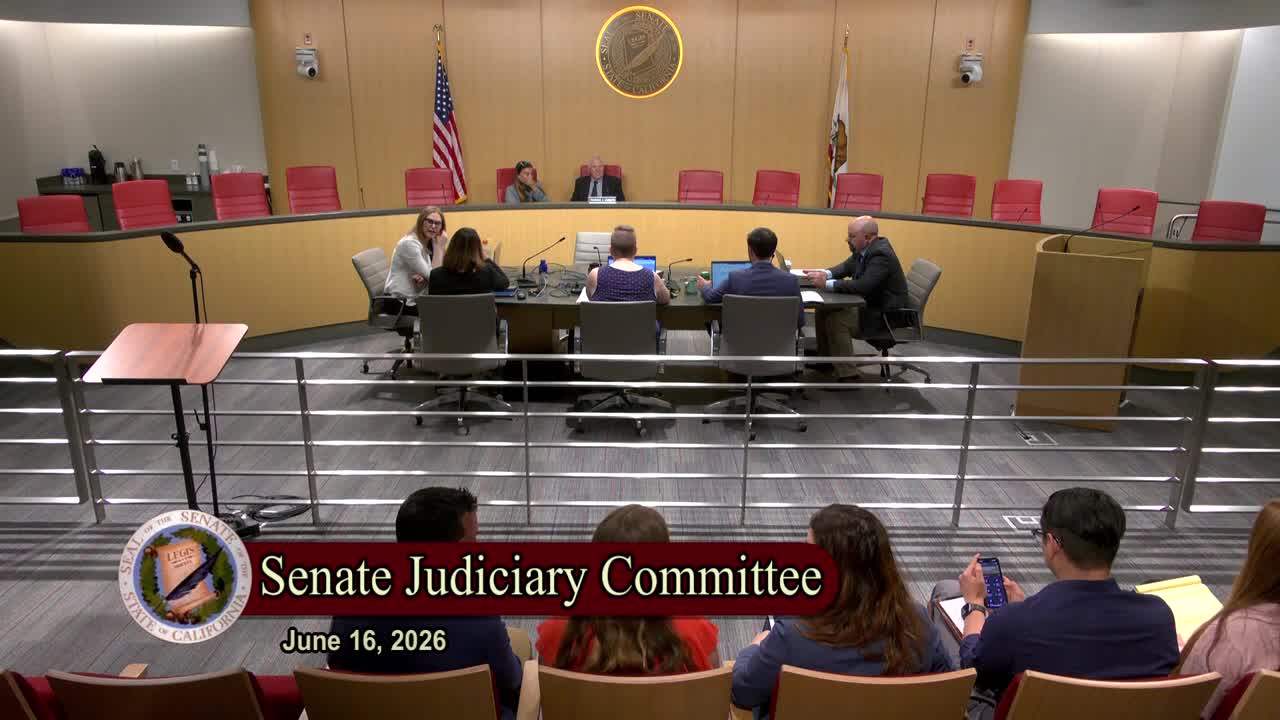
Bill Author

Bill Co-Author(s):
