AB 1513: Election procedures: certified mail and superior courts.
- Session Year: 2025-2026
- House: Assembly
- Latest Version Date: 2025-10-03
Current Status:
Passed
(2025-10-03: Chaptered by Secretary of State - Chapter 304, Statutes of 2025.)
Introduced
In Committee
Awaiting First Chamber Vote
Passed First Chamber
In Committee
Awaiting Second Chamber Vote
Passed Second Chamber
Enacted
(1)Existing law requires specified notices, affidavits, and communications regarding elections to be delivered by registered mail.
This bill would instead require delivery by certified mail or, for certain communications between local officials and the Secretary of State, by electronic delivery. By imposing new duties on local officials with respect to elections, this bill would create a state-mandated local program.
(2)Existing law provides procedures for the recall of enumerated elective officers, including, among others, trial court judges.
This bill would replace references to trial courts in these provisions with references to superior courts.
(3)This bill would incorporate additional changes to Section 15621 of the Elections Code proposed by Assembly Bill 930 to be operative only if this bill and Assembly Bill 930 are enacted and this bill is enacted last.
(4)The California Constitution requires the state to reimburse local agencies and school districts for certain costs mandated by the state. Statutory provisions establish procedures for making that reimbursement.
This bill would provide that, if the Commission on State Mandates determines that the bill contains costs mandated by the state, reimbursement for those costs shall be made pursuant to the statutory provisions noted above.
(1)Existing law requires specified notices, affidavits, and communications regarding elections be delivered by registered mail.
This bill would instead require delivery by certified mail or, for certain communications between local officials and the Secretary of State, by electronic delivery. By imposing new duties on local officials with respect to elections, this bill would create a state-mandated local program.
(2)Existing law provides procedures for the recall of enumerated elective officers, including, among others, trial court judges.
This bill would replace references to trial courts in these provisions with references to superior courts.
(3)This bill would incorporate additional changes to Section 15621 of the Elections Code proposed by Assembly Bill 930 to be operative only if this bill and Assembly Bill 930 are enacted and this bill is enacted last.
(3)(4)The California Constitution requires the state to reimburse local agencies and school districts for certain costs mandated by the state. Statutory provisions establish procedures for making that reimbursement.
This bill would provide that, if the Commission on State Mandates determines that the bill contains costs mandated by the state, reimbursement for those costs shall be made pursuant to the statutory provisions noted above.
(1)Existing law requires specified notices, affidavits, and communications regarding elections be delivered by registered mail.
This bill would instead require delivery by certified mail or, for certain communications between local officials and the Secretary of State, by electronic delivery. By imposing new duties on local officials with respect to elections, this bill would create a state-mandated local program.
(2)Existing law provides procedures for the recall of enumerated elective officers, including, among others, trial court judges.
This bill would replace references to trial courts in these provisions with references to superior courts.
(3)The California Constitution requires the state to reimburse local agencies and school districts for certain costs mandated by the state. Statutory provisions establish procedures for making that reimbursement.
This bill would provide that, if the Commission on State Mandates determines that the bill contains costs mandated by the state, reimbursement for those costs shall be made pursuant to the statutory provisions noted above.
Existing law provides procedures for the recall of enumerated elective officers, including, among others, trial court judges.
This bill would replace references to trial courts in these provisions with references to superior courts.
Whenever any candidate files a declaration of candidacy, nomination paper, or any other paper evidencing an intention to be a candidate for any public office at any election in this state with either the Secretary of State or a county elections official, the candidate shall by the filing irrevocably appoint the Secretary of State or the county elections official with whom the filing is made, and their successors in office, the candidates attorneys upon whom all process in any action or proceeding against the candidate concerning the candidacy or the election laws may be served with the same effect as if the candidate had been lawfully served with process. The appointment shall continue until the day of the election.
If in any action or proceeding arising out of or in connection with any matters concerning the candidates candidacy or the election laws it is shown by affidavit to the satisfaction of a court or judge that personal service of process against the candidate cannot be made with the exercise of due diligence, the court or judge may make an order that the service be made upon the candidate by delivering by hand to the Secretary of State or the county elections official appointed as the candidates attorney for service of process, or to any person employed in the office of the Secretary of State or the county elections official in the capacity of assistant or deputy, one copy of the process for the defendant to be served, together with a copy of the order authorizing the service. Service in this manner constitutes personal service upon the candidate. The Secretary of State and the county elections officials of all counties shall keep a record of all process served upon them under this section, and shall record therein the time of service and their action with reference thereto.
Upon the receipt of service of process the Secretary of State or the county elections official shall immediately give notice of the service of the process to the candidate by forwarding the copy of the process to the candidate at the address shown on the candidates declaration, nomination paper, affidavit, or other evidence of intention to be a candidate filed with that officer, by certified mail with request for return receipt.
SEC. 2.Section 5200 of the Elections Code is amended to read:5200.(a)Not less than 123 days before a primary or presidential general election, the Secretary of State shall, with the advice and consent of the Attorney General, determine which parties are disqualified to participate in any primary election under Section 5102 or a presidential general election under Section 5154. If it is proposed to disqualify a party that was qualified to participate in the next preceding direct primary, notice of intention to disqualify shall be served by certified mail on the chairperson of the state central committee of the party, as shown by the records of the Secretary of State. In any event, notice of intention to disqualify shall be given in each county of the state by publication pursuant to Section 6061 of the Government Code. If there is no newspaper of general circulation printed and published in any county, publication shall be made in a newspaper of general circulation printed and published in an adjoining county.
(b)If the party desires a hearing on the notice of intention to disqualify, it shall, within 10 days after service by mail or within 10 days after the last date upon which the notice was published in any county, whichever is later, file an affidavit in the Supreme Court pursuant to Section 13314 setting forth facts showing that the political party is not disqualified to participate in any primary election under Section 5102 or a presidential general election under Section 5154. If the party does not file the affidavit within the time specified, the notice of intention to disqualify shall constitute final disqualification. Before the affidavit is filed, a copy shall be personally served on the Secretary of State. When filed, the matter shall be set for return in not more than 10 days and shall have priority over any other pending cases.
(c)In connection with proceedings in the Supreme Court under this section, the Legislature hereby declares its intent to create a speedy and expeditious method for judicial determination of the vital questions involved, and urges the Supreme Court to accept jurisdiction in any such proceeding. The Legislature further urges that the court instruct any referee before whom the taking of evidence is ordered to report back to the court in sufficient time so that the courts final order may be made effective on or before the 80th day before the primary or presidential general election.
SEC. 3.Section 11000 of the Elections Code is amended to read:11000.This division governs the recall of elective officers of the State of California and of all counties, cities, school districts, county boards of education, community college districts, special districts, and judges of courts of appeal and superior courts. It does not supersede the provisions of a city charter or county charter, or of ordinances adopted pursuant to a city charter or county charter, relating to recall.
SEC. 4.Section 11001 of the Elections Code is amended to read:11001.For the purposes of this division, judges of courts of appeal shall be considered state officers, and judges of superior courts shall be considered county officers.
SEC. 5.Section 11002 of the Elections Code is amended to read:11002.For the purposes of this division, elections official means one of the following:
(a)A county elections official in the case of the recall of elective officers of a county, school district, county board of education, community college district, or resident voting district, and of judges of superior courts.
(b)A city elections official, including, but not necessarily limited to, a city clerk, in the case of the recall of elective officers of a city.
(c)The secretary of the governing board in the case of the recall of elective officers of a landowner voting district or any district in which, at a regular election, candidates nomination papers are filed with the secretary of the governing board.
SEC. 6.Section 11003 of the Elections Code is amended to read:11003.For the purposes of this division, governing board means a city council, the board of supervisors of a county, the board of trustees of a school district or community college district, or the legislative body of a special district, as the context requires. In the case of the recall of a superior court judge, governing board means the board of supervisors.
SEC. 7.Section 11004 of the Elections Code is amended to read:11004.For the purposes of this division, a local officer is an elective officer of a city, county, school district, community college district, or special district, or a judge of a superior court.
SEC. 8.Section 11221 of the Elections Code is amended to read:11221.The number of qualified signatures required in order to qualify a recall for the ballot shall be as follows:
(a)In the case of an officer of a city, county, school district, community college district, county board of education, or resident voting district, but not including a judge of a superior court, the number of signatures shall be equal in number to not less than the following percent of the registered voters in the electoral jurisdiction:
(1)Thirty percent if the registration is less than 1,000.
(2)Twenty-five percent if the registration is less than 10,000 but at least 1,000.
(3)Twenty percent if the registration is less than 50,000 but at least 10,000.
(4)Fifteen percent if the registration is less than 100,000 but at least 50,000.
(5)Ten percent if the registration is 100,000 or above.
(b)For purposes of this section, the number of registered voters shall be calculated as of the time of the last report of registration by the county elections official to the Secretary of State pursuant to Section 2187, and prior to the finding by the elections official or Secretary of State that no alterations are required in the form of the recall petition pursuant to Section 11042.
(c)(1)In the case of a state officer, including a judge of a court of appeal, and in the case of a judge of a superior court, the number of signatures shall be as provided for in subdivision (b) of Section 14 of Article II of the California Constitution. In the case of a judge of a superior court, which office has never appeared on the ballot since its creation, or did not appear on the ballot at its last election pursuant to Section 8203, the number of signatures shall be as provided in subdivision (b) of Section 14 of Article II of the California Constitution, except that the percentage shall be based on the number of votes cast within the judicial jurisdiction for the countywide office which had the least number of votes in the most recent general election in the county in which the judge holds office.
(2)For purposes of this subdivision, countywide office means an elective office wholly within the county which is voted on throughout the county.
(d)In the case of a landowner voting district, signatures of voters owning at least 10 percent of the assessed value of land within the electoral jurisdiction of the officer sought to be recalled.
SEC. 9.Section 13113 of the Elections Code is amended to read:13113.(a)In the case of an election of candidates in a special district, school district, charter city (whose charter does not provide to the contrary), or other local government body, occurring on other than one of the election dates specified in subdivision (b) of Section 13112, the official responsible for conducting the election shall, at the same time that the election is called, notify the Secretary of State by electronic delivery of the date of the election, the date of the close of filing, and the last possible date for filing in the event there is an extension of filing due to an incumbent failing to file, and the Secretary of State shall confirm receipt of that information in writing by electronic delivery. The Secretary of State shall conduct a randomized alphabet drawing pursuant to subdivision (a) of Section 13112 on the first weekday following the last possible day of filing in the event there is an extension for the election.
(b)Except as provided for runoff elections in subdivision (d), if two or more drawings for local government elections would occur on the same date, the Secretary of State may use a single randomized alphabet drawing for all of these elections. The Secretary of State shall communicate the results of the drawing by electronic delivery to each respective official responsible for conducting the election who shall use it to determine the order on the ballot of all candidates names. Each respective official shall confirm receipt of the drawing results in writing by electronic delivery to the Secretary of State.
(c)All drawings held pursuant to this section shall be open to the public.
(d)If a charter city conducts a runoff election, it shall use the results of a randomized alphabet drawing separate from the results of the randomized alphabet drawing used for the initial election for that runoff election. The city shall, within three days following the initial election, notify the Secretary of State by electronic delivery of the date of the election and request that the Secretary of State conduct a randomized alphabet drawing for the runoff election. The Secretary of State shall confirm receipt of the request in writing by electronic delivery to the city, and shall immediately conduct a randomized alphabet drawing for the runoff election and communicate the results of the drawing to the elections official responsible for conducting the runoff election who shall use the results to determine the order of all the candidates names on the ballot. The results of the randomized alphabet drawing shall be clearly labeled FOR USE IN A RUNOFF ELECTION ONLY.
SEC. 10.Section 15621 of the Elections Code is amended to read:15621.(a)Following completion of the official canvass any voter may, within five days beginning on the 31st day after a statewide election, file with the Secretary of State a written request for a recount of the votes cast for candidates for any statewide office or for or against any measure voted on statewide. The request filed pursuant to this section shall specify in which county or counties the recount is sought and shall specify on behalf of which candidate, slate of electors, or position on a measure (affirmative or negative) it is filed.
(b)The Secretary of State shall forthwith send by electronic delivery one copy of the request to the elections official of each county in which a recount of the votes is sought, and the elections official shall confirm receipt of the copy in writing by electronic delivery to the Secretary of State.
(c)All the other provisions of this article apply to recounts conducted under this section.
SEC. 10.5.Section 15621 of the Elections Code is amended to read:15621.(a)Following completion of the official canvass any voter may, within five calendar days beginning on the 31st day after a statewide election, file with the Secretary of State a written request for a recount of the votes cast for candidates for any statewide office or for or against any measure voted on statewide. The request filed pursuant to this section shall specify in which county or counties the recount is sought and shall specify on behalf of which candidate, slate of electors, or position on a measure (affirmative or negative) it is filed.
(b)The Secretary of State shall forthwith send by electronic delivery one copy of the request to the elections official of each county in which a recount of the votes is sought, and the elections official shall confirm receipt of the copy in writing by electronic delivery to the Secretary of State.
(c)All the other provisions of this article apply to recounts conducted under this section.
SEC. 11.Section 16442 of the Elections Code is amended to read:16442.After the affidavit is filed with the clerk of the superior court, a copy of the affidavit shall be personally served upon the defendant or sent to the defendant by certified mail in a sealed envelope with postage prepaid, addressed to the defendant at the place of residence named in the defendants affidavit of registration. The contestant shall make an affidavit of mailing if the contestant serves the affidavit by mail, and file it on the same day with the county elections official.
SEC. 12.Section 16462 of the Elections Code is amended to read:16462.No service other than as provided in this section need be made upon the defendant. The affidavit shall be filed in the office of the clerk of the superior court within five days after the completion of the official canvass. Upon the filing of the affidavit the county elections official shall forthwith post, in a conspicuous place in the officials office, a copy of the affidavit. Upon the filing of the affidavit and its posting, the superior court of the county shall have jurisdiction of the subject matter and of the parties to the contest. The contestant on the date of filing the affidavit shall send by certified mail a copy thereof to the defendant in a sealed envelope, with postage prepaid, addressed to the defendant at the place of residence named in the affidavit of registration of the defendant, and shall make and file an affidavit of mailing with the county elections official, which shall become a part of the records of the contest.
SEC. 13.Section 16464 of the Elections Code is amended to read:16464.At any time within three days after the filing of the affidavit of the contestant to the effect that the contestant has sent by certified mail a copy of the affidavit to the defendant, the defendant may file with the clerk of the superior court an affidavit in the defendants own behalf, setting up the defendants desire to have the votes counted in any precincts, designating them, in addition to the precincts designated in the affidavit of the contestant, and setting up the defendants grounds therefor. On the trial of the contest all of the precincts named in the affidavits of the contestant and the defendant shall be considered, and a recount had with reference to all of those precincts. The contestant shall have the same right to answer the affidavit of the defendant as is given to the defendant with reference to the affidavit of the contestant except that the contestants answer shall be filed not later than the first day of the trial of the contest.
SEC. 14.Section 10.5 of this bill incorporates amendments to Section 15621 of the Elections Code proposed by both this bill and Assembly Bill 930. That section of this bill shall only become operative if (1) both bills are enacted and become effective on or before January 1, 2026, (2) each bill amends Section 15621 of the Elections Code, and (3) this bill is enacted after Assembly Bill 930, in which case Section 10 of this bill shall not become operative.
SEC. 15.If the Commission on State Mandates determines that this act contains costs mandated by the state, reimbursement to local agencies and school districts for those costs shall be made pursuant to Part 7 (commencing with Section 17500) of Division 4 of Title 2 of the Government Code.
Whenever any candidate files a declaration of candidacy, nomination paper, or any other paper evidencing an intention to be a candidate for any public office at any election in this state with either the Secretary of State or a county elections official, the candidate shall by the filing irrevocably appoint the Secretary of State or the county elections official with whom the filing is made, and their successors in office, the candidates attorneys upon whom all process in any action or proceeding against the candidate concerning the candidacy or the election laws may be served with the same effect as if the candidate had been lawfully served with process. The appointment shall continue until the day of the election.
If in any action or proceeding arising out of or in connection with any matters concerning the candidates candidacy or the election laws it is shown by affidavit to the satisfaction of a court or judge that personal service of process against the candidate cannot be made with the exercise of due diligence, the court or judge may make an order that the service be made upon the candidate by delivering by hand to the Secretary of State or the county elections official appointed as the candidates attorney for service of process, or to any person employed in the office of the Secretary of State or the county elections official in the capacity of assistant or deputy, one copy of the process for the defendant to be served, together with a copy of the order authorizing the service. Service in this manner constitutes personal service upon the candidate. The Secretary of State and the county elections officials of all counties shall keep a record of all process served upon them under this section, and shall record therein the time of service and their action with reference thereto.
Upon the receipt of service of process the Secretary of State or the county elections official shall immediately give notice of the service of the process to the candidate by forwarding the copy of the process to the candidate at the address shown on the candidates declaration, nomination paper, affidavit, or other evidence of intention to be a candidate filed with that officer, by certified mail with request for return receipt.
SEC. 2.Section 5200 of the Elections Code is amended to read:5200.(a)Not less than 123 days before a primary or presidential general election, the Secretary of State shall, with the advice and consent of the Attorney General, determine which parties are disqualified to participate in any primary election under Section 5102 or a presidential general election under Section 5154. If it is proposed to disqualify a party that was qualified to participate in the next preceding direct primary, notice of intention to disqualify shall be served by certified mail on the chairperson of the state central committee of the party, as shown by the records of the Secretary of State. In any event, notice of intention to disqualify shall be given in each county of the state by publication pursuant to Section 6061 of the Government Code. If there is no newspaper of general circulation printed and published in any county, publication shall be made in a newspaper of general circulation printed and published in an adjoining county.
(b)If the party desires a hearing on the notice of intention to disqualify, it shall, within 10 days after service by mail or within 10 days after the last date upon which the notice was published in any county, whichever is later, file an affidavit in the Supreme Court pursuant to Section 13314 setting forth facts showing that the political party is not disqualified to participate in any primary election under Section 5102 or a presidential general election under Section 5154. If the party does not file the affidavit within the time specified, the notice of intention to disqualify shall constitute final disqualification. Before the affidavit is filed, a copy shall be personally served on the Secretary of State. When filed, the matter shall be set for return in not more than 10 days and shall have priority over any other pending cases.
(c)In connection with proceedings in the Supreme Court under this section, the Legislature hereby declares its intent to create a speedy and expeditious method for judicial determination of the vital questions involved, and urges the Supreme Court to accept jurisdiction in any such proceeding. The Legislature further urges that the court instruct any referee before whom the taking of evidence is ordered to report back to the court in sufficient time so that the courts final order may be made effective on or before the 80th day before the primary or presidential general election.
SEC. 3.Section 11000 of the Elections Code is amended to read:11000.This division governs the recall of elective officers of the State of California and of all counties, cities, school districts, county boards of education, community college districts, special districts, and judges of courts of appeal and superior courts. It does not supersede the provisions of a city charter or county charter, or of ordinances adopted pursuant to a city charter or county charter, relating to recall.
SEC. 4.Section 11001 of the Elections Code is amended to read:11001.For the purposes of this division, judges of courts of appeal shall be considered state officers, and judges of superior courts shall be considered county officers.
SEC. 5.Section 11002 of the Elections Code is amended to read:11002.For the purposes of this division, elections official means one of the following:
(a)A county elections official in the case of the recall of elective officers of a county, school district, county board of education, community college district, or resident voting district, and of judges of superior courts.
(b)A city elections official, including, but not necessarily limited to, a city clerk, in the case of the recall of elective officers of a city.
(c)The secretary of the governing board in the case of the recall of elective officers of a landowner voting district or any district in which, at a regular election, candidates nomination papers are filed with the secretary of the governing board.
SEC. 6.Section 11003 of the Elections Code is amended to read:11003.For the purposes of this division, governing board means a city council, the board of supervisors of a county, the board of trustees of a school district or community college district, or the legislative body of a special district, as the context requires. In the case of the recall of a superior court judge, governing board means the board of supervisors.
SEC. 7.Section 11004 of the Elections Code is amended to read:11004.For the purposes of this division, a local officer is an elective officer of a city, county, school district, community college district, or special district, or a judge of a superior court.
SEC. 8.Section 11221 of the Elections Code is amended to read:11221.The number of qualified signatures required in order to qualify a recall for the ballot shall be as follows:
(a)In the case of an officer of a city, county, school district, community college district, county board of education, or resident voting district, but not including a judge of a superior court, the number of signatures shall be equal in number to not less than the following percent of the registered voters in the electoral jurisdiction:
(1)Thirty percent if the registration is less than 1,000.
(2)Twenty-five percent if the registration is less than 10,000 but at least 1,000.
(3)Twenty percent if the registration is less than 50,000 but at least 10,000.
(4)Fifteen percent if the registration is less than 100,000 but at least 50,000.
(5)Ten percent if the registration is 100,000 or above.
(b)For purposes of this section, the number of registered voters shall be calculated as of the time of the last report of registration by the county elections official to the Secretary of State pursuant to Section 2187, and prior to the finding by the elections official or Secretary of State that no alterations are required in the form of the recall petition pursuant to Section 11042.
(c)(1)In the case of a state officer, including a judge of a court of appeal, and in the case of a judge of a superior court, the number of signatures shall be as provided for in subdivision (b) of Section 14 of Article II of the California Constitution. In the case of a judge of a superior court, which office has never appeared on the ballot since its creation, or did not appear on the ballot at its last election pursuant to Section 8203, the number of signatures shall be as provided in subdivision (b) of Section 14 of Article II of the California Constitution, except that the percentage shall be based on the number of votes cast within the judicial jurisdiction for the countywide office which had the least number of votes in the most recent general election in the county in which the judge holds office.
(2)For purposes of this subdivision, countywide office means an elective office wholly within the county which is voted on throughout the county.
(d)In the case of a landowner voting district, signatures of voters owning at least 10 percent of the assessed value of land within the electoral jurisdiction of the officer sought to be recalled.
SEC. 9.Section 13113 of the Elections Code is amended to read:13113.(a)In the case of an election of candidates in a special district, school district, charter city (whose charter does not provide to the contrary), or other local government body, occurring on other than one of the election dates specified in subdivision (b) of Section 13112, the official responsible for conducting the election shall, at the same time that the election is called, notify the Secretary of State by electronic delivery of the date of the election, the date of the close of filing, and the last possible date for filing in the event there is an extension of filing due to an incumbent failing to file, and the Secretary of State shall confirm receipt of that information in writing by electronic delivery. The Secretary of State shall conduct a randomized alphabet drawing pursuant to subdivision (a) of Section 13112 on the first weekday following the last possible day of filing in the event there is an extension for the election.
(b)Except as provided for runoff elections in subdivision (d), if two or more drawings for local government elections would occur on the same date, the Secretary of State may use a single randomized alphabet drawing for all of these elections. The Secretary of State shall communicate the results of the drawing by electronic delivery to each respective official responsible for conducting the election who shall use it to determine the order on the ballot of all candidates names. Each respective official shall confirm receipt of the drawing results in writing by electronic delivery to the Secretary of State.
(c)All drawings held pursuant to this section shall be open to the public.
(d)If a charter city conducts a runoff election, it shall use the results of a randomized alphabet drawing separate from the results of the randomized alphabet drawing used for the initial election for that runoff election. The city shall, within three days following the initial election, notify the Secretary of State by electronic delivery of the date of the election and request that the Secretary of State conduct a randomized alphabet drawing for the runoff election. The Secretary of State shall confirm receipt of the request in writing by electronic delivery to the city, and shall immediately conduct a randomized alphabet drawing for the runoff election and communicate the results of the drawing to the elections official responsible for conducting the runoff election who shall use the results to determine the order of all the candidates names on the ballot. The results of the randomized alphabet drawing shall be clearly labeled FOR USE IN A RUNOFF ELECTION ONLY.
SEC. 10.Section 15621 of the Elections Code is amended to read:15621.(a)Following completion of the official canvass any voter may, within five days beginning on the 31st day after a statewide election, file with the Secretary of State a written request for a recount of the votes cast for candidates for any statewide office or for or against any measure voted on statewide. The request filed pursuant to this section shall specify in which county or counties the recount is sought and shall specify on behalf of which candidate, slate of electors, or position on a measure (affirmative or negative) it is filed.
(b)The Secretary of State shall forthwith send by electronic delivery one copy of the request to the elections official of each county in which a recount of the votes is sought, and the elections official shall confirm receipt of the copy in writing by electronic delivery to the Secretary of State.
(c)All the other provisions of this article apply to recounts conducted under this section.
SEC. 10.5.Section 15621 of the Elections Code is amended to read:15621.(a)Following completion of the official canvass any voter may, within five calendar days beginning on the 31st day after a statewide election, file with the Secretary of State a written request for a recount of the votes cast for candidates for any statewide office or for or against any measure voted on statewide. The request filed pursuant to this section shall specify in which county or counties the recount is sought and shall specify on behalf of which candidate, slate of electors, or position on a measure (affirmative or negative) it is filed.
(b)The Secretary of State shall forthwith send by registered mail electronic delivery one copy of the request to the elections official of each county in which a recount of the votes is sought. sought, and the elections official shall confirm receipt of the copy in writing by electronic delivery to the Secretary of State.
(c)All the other provisions of this article apply to recounts conducted under this section.
SEC. 11.Section 16442 of the Elections Code is amended to read:16442.After the affidavit is filed with the clerk of the superior court, a copy of the affidavit shall be personally served upon the defendant or sent to the defendant by certified mail in a sealed envelope with postage prepaid, addressed to the defendant at the place of residence named in the defendants affidavit of registration. The contestant shall make an affidavit of mailing if the contestant serves the affidavit by mail, and file it on the same day with the county elections official.
SEC. 12.Section 16462 of the Elections Code is amended to read:16462.No service other than as provided in this section need be made upon the defendant. The affidavit shall be filed in the office of the clerk of the superior court within five days after the completion of the official canvass. Upon the filing of the affidavit the county elections official shall forthwith post, in a conspicuous place in the officials office, a copy of the affidavit. Upon the filing of the affidavit and its posting, the superior court of the county shall have jurisdiction of the subject matter and of the parties to the contest. The contestant on the date of filing the affidavit shall send by certified mail a copy thereof to the defendant in a sealed envelope, with postage prepaid, addressed to the defendant at the place of residence named in the affidavit of registration of the defendant, and shall make and file an affidavit of mailing with the county elections official, which shall become a part of the records of the contest.
SEC. 13.Section 16464 of the Elections Code is amended to read:16464.At any time within three days after the filing of the affidavit of the contestant to the effect that the contestant has sent by certified mail a copy of the affidavit to the defendant, the defendant may file with the clerk of the superior court an affidavit in the defendants own behalf, setting up the defendants desire to have the votes counted in any precincts, designating them, in addition to the precincts designated in the affidavit of the contestant, and setting up the defendants grounds therefor. On the trial of the contest all of the precincts named in the affidavits of the contestant and the defendant shall be considered, and a recount had with reference to all of those precincts. The contestant shall have the same right to answer the affidavit of the defendant as is given to the defendant with reference to the affidavit of the contestant except that the contestants answer shall be filed not later than the first day of the trial of the contest.
SEC. 14.Section 10.5 of this bill incorporates amendments to Section 15621 of the Elections Code proposed by both this bill and Assembly Bill 930. That section of this bill shall only become operative if (1) both bills are enacted and become effective on or before January 1, 2026, (2) each bill amends Section 15621 of the Elections Code, and (3) this bill is enacted after Assembly Bill 930, in which case Section 10 of this bill shall not become operative.
SEC. 14.SEC. 15.If the Commission on State Mandates determines that this act contains costs mandated by the state, reimbursement to local agencies and school districts for those costs shall be made pursuant to Part 7 (commencing with Section 17500) of Division 4 of Title 2 of the Government Code.
Whenever any candidate files a declaration of candidacy, nomination paper, or any other paper evidencing an intention to be a candidate for any public office at any election in this state with either the Secretary of State or a county elections official, the candidate shall by the filing irrevocably appoint the Secretary of State or the county elections official with whom the filing is made, and their successors in office, the candidates attorneys upon whom all process in any action or proceeding against him or her concerning his or her the candidate concerning the candidacy or the election laws may be served with the same effect as if the candidate had been lawfully served with process. The appointment shall continue until the day of the election.
If in any action or proceeding arising out of or in connection with any matters concerning his or her the candidates candidacy or the election laws it is shown by affidavit to the satisfaction of a court or judge that personal service of process against the candidate cannot be made with the exercise of due diligence, the court or judge may make an order that the service be made upon the candidate by delivering by hand to the Secretary of State or the county elections official appointed as the candidates attorney for service of process, or to any person employed in his or her office the office of the Secretary of State or the county elections official in the capacity of assistant or deputy, one copy of the process for the defendant to be served, together with a copy of the order authorizing the service. Service in this manner constitutes personal service upon the candidate. The Secretary of State and the county elections officials of all counties shall keep a record of all process served upon them under this section, and shall record therein the time of service and their action with reference thereto.
Upon the receipt of service of process the Secretary of State or the county elections official shall immediately give notice of the service of the process to the candidate by forwarding the copy of the process to the candidate at the address shown on his or her the candidates declaration, nomination paper, affidavit, or other evidence of intention to be a candidate filed with that officer, by special delivery registered certified mail with request for return receipt.
SEC. 2.Section 5200 of the Elections Code is amended to read:5200.(a)Not less than 123 days before a primary or presidential general election, the Secretary of State shall, with the advice and consent of the Attorney General, determine which parties are disqualified to participate in any primary election under Section 5102 or a presidential general election under Section 5154. If it is proposed to disqualify a party that was qualified to participate in the next preceding direct primary, notice of intention to disqualify shall be served by registered certified mail on the chairperson of the state central committee of the party, as shown by the records of the Secretary of State. In any event, notice of intention to disqualify shall be given in each county of the state by publication pursuant to Section 6061 of the Government Code. If there is no newspaper of general circulation printed and published in any county, publication shall be made in a newspaper of general circulation printed and published in an adjoining county.
(b)If the party desires a hearing on the notice of intention to disqualify, it shall, within 10 days after service by mail or within 10 days after the last date upon which the notice was published in any county, whichever is later, file an affidavit in the Supreme Court pursuant to Section 13314 setting forth facts showing that the political party is not disqualified to participate in any primary election under Section 5102 or a presidential general election under Section 5154. If the party does not file the affidavit within the time specified, the notice of intention to disqualify shall constitute final disqualification. Before the affidavit is filed, a copy shall be personally served on the Secretary of State. When filed, the matter shall be set for return in not more than 10 days and shall have priority over any other pending cases.
(c)In connection with proceedings in the Supreme Court under this section, the Legislature hereby declares its intent to create a speedy and expeditious method for judicial determination of the vital questions involved, and urges the Supreme Court to accept jurisdiction in any such proceeding. The Legislature further urges that the court instruct any referee before whom the taking of evidence is ordered to report back to the court in sufficient time so that the courts final order may be made effective on or before the 80th day before the primary or presidential general election.
SECTION 1.SEC. 3.Section 11000 of the Elections Code is amended to read:11000.This division governs the recall of elective officers of the State of California and of all counties, cities, school districts, county boards of education, community college districts, special districts, and judges of courts of appeal and superior courts. It does not supersede the provisions of a city charter or county charter, or of ordinances adopted pursuant to a city charter or county charter, relating to recall.
SEC. 2.SEC. 4.Section 11001 of the Elections Code is amended to read:11001.For the purposes of this division, judges of courts of appeal shall be considered state officers, and judges of superior courts shall be considered county officers.
SEC. 3.SEC. 5.Section 11002 of the Elections Code is amended to read:11002.For the purposes of this division, elections official means one of the following:
(a)A county elections official in the case of the recall of elective officers of a county, school district, county board of education, community college district, or resident voting district, and of judges of superior courts.
(b)A city elections official, including, but not necessarily limited to, a city clerk, in the case of the recall of elective officers of a city.
(c)The secretary of the governing board in the case of the recall of elective officers of a landowner voting district or any district in which, at a regular election, candidates nomination papers are filed with the secretary of the governing board.
SEC. 4.SEC. 6.Section 11003 of the Elections Code is amended to read:11003.For the purposes of this division, governing board means a city council, the board of supervisors of a county, the board of trustees of a school district or community college district, or the legislative body of a special district, as the context requires. In the case of the recall of a superior court judge, governing board means the board of supervisors.
SEC. 5.SEC. 7.Section 11004 of the Elections Code is amended to read:11004.For the purposes of this division, a local officer is an elective officer of a city, county, school district, community college district, or special district, or a judge of a superior court.
SEC. 6.SEC. 8.Section 11221 of the Elections Code is amended to read:11221.The number of qualified signatures required in order to qualify a recall for the ballot shall be as follows:
(a)In the case of an officer of a city, county, school district, community college district, county board of education, or resident voting district, but not including a judge of a superior court, the number of signatures shall be equal in number to not less than the following percent of the registered voters in the electoral jurisdiction:
(1)Thirty percent if the registration is less than 1,000.
(2)Twenty-five percent if the registration is less than 10,000 but at least 1,000.
(3)Twenty percent if the registration is less than 50,000 but at least 10,000.
(4)Fifteen percent if the registration is less than 100,000 but at least 50,000.
(5)Ten percent if the registration is 100,000 or above.
(b)For purposes of this section, the number of registered voters shall be calculated as of the time of the last report of registration by the county elections official to the Secretary of State pursuant to Section 2187, and prior to the finding by the elections official or Secretary of State that no alterations are required in the form of the recall petition pursuant to Section 11042.
(c)(1)In the case of a state officer, including a judge of a court of appeal, and in the case of a judge of a superior court, the number of signatures shall be as provided for in subdivision (b) of Section 14 of Article II of the California Constitution. In the case of a judge of a superior court, which office has never appeared on the ballot since its creation, or did not appear on the ballot at its last election pursuant to Section 8203, the number of signatures shall be as provided in subdivision (b) of Section 14 of Article II of the California Constitution, except that the percentage shall be based on the number of votes cast within the judicial jurisdiction for the countywide office which had the least number of votes in the most recent general election in the county in which the judge holds office.
(2)For purposes of this subdivision, countywide office means an elective office wholly within the county which is voted on throughout the county.
(d)In the case of a landowner voting district, signatures of voters owning at least 10 percent of the assessed value of land within the electoral jurisdiction of the officer sought to be recalled.
SEC. 9.Section 13113 of the Elections Code is amended to read:13113.(a)In the case of an election of candidates in a special district, school district, charter city (whose charter does not provide to the contrary), or other local government body, occurring on other than one of the election dates specified in subdivision (b) of Section 13112, the official responsible for conducting the election shall, at the same time that the election is called, notify the Secretary of State by registered mail electronic delivery of the date of the election, the date of the close of filing, and the last possible date for filing in the event there is an extension of filing due to an incumbent failing to file. file, and the Secretary of State shall confirm receipt of that information in writing by electronic delivery. The Secretary of State shall conduct a randomized alphabet drawing pursuant to subdivision (a) of Section 13112 on the first weekday following the last possible day of filing in the event there is an extension for the election.
(b)Except as provided for runoff elections in subdivision (d), if two or more drawings for local government elections would occur on the same date, the Secretary of State may use a single randomized alphabet drawing for all of these elections. The Secretary of State shall communicate the results of the drawing by registered mail electronic delivery to each respective official responsible for conducting the election who shall use it to determine the order on the ballot of all candidates names. Each respective official shall confirm receipt of the drawing results in writing by electronic delivery to the Secretary of State.
(c)All drawings held pursuant to this section shall be open to the public.
(d)If a charter city conducts a runoff election, it shall use the results of a randomized alphabet drawing separate from the results of the randomized alphabet drawing used for the initial election for that runoff election. The city shall, within three days following the initial election, notify the Secretary of State by registered mail electronic delivery of the date of the election and request that he or she the Secretary of State conduct a randomized alphabet drawing for the runoff election. The Secretary of State shall confirm receipt of the request in writing by electronic delivery to the city, and shall immediately conduct a randomized alphabet drawing for the runoff election and communicate the results of the drawing to the elections official responsible for conducting the runoff election who shall use the results to determine the order of all the candidates names on the ballot. The results of the randomized alphabet drawing shall be clearly labeled FOR USE IN A RUNOFF ELECTION ONLY.
SEC. 10.Section 15621 of the Elections Code is amended to read:15621.(a)Following completion of the official canvass any voter may, within five days beginning on the 31st day after a statewide election, file with the Secretary of State a written request for a recount of the votes cast for candidates for any statewide office or for or against any measure voted on statewide. The request filed pursuant to this section shall specify in which county or counties the recount is sought and shall specify on behalf of which candidate, slate of electors, or position on a measure (affirmative or negative) it is filed.
(b)The Secretary of State shall forthwith send by registered mail electronic delivery one copy of the request to the elections official of each county in which a recount of the votes is sought. sought, and the elections official shall confirm receipt of the copy in writing by electronic delivery to the Secretary of State.
(c)All the other provisions of this article apply to recounts conducted under this section.
SEC. 11.Section 16442 of the Elections Code is amended to read:16442.After the affidavit is filed with the clerk of the superior court, a copy of the affidavit shall be personally served upon the defendant or sent to him or her by registered the defendant by certified mail in a sealed envelope with postage prepaid, addressed to the defendant at the place of residence named in his or her the defendants affidavit of registration. The contestant shall make an affidavit of mailing if he or she the contestant serves the affidavit by mail, and file it on the same day with the county elections official.
SEC. 12.Section 16462 of the Elections Code is amended to read:16462.No service other than as provided in this section need be made upon the defendant. The affidavit shall be filed in the office of the clerk of the superior court within five days after the completion of the official canvass. Upon the filing of the affidavit the county elections official shall forthwith post, in a conspicuous place in his or her the officials office, a copy of the affidavit. Upon the filing of the affidavit and its posting, the superior court of the county shall have jurisdiction of the subject matter and of the parties to the contest. The contestant on the date of filing the affidavit shall send by registered certified mail a copy thereof to the defendant in a sealed envelope, with postage prepaid, addressed to the defendant at the place of residence named in the affidavit of registration of the defendant, and shall make and file an affidavit of mailing with the county elections official, which shall become a part of the records of the contest.
SEC. 13.Section 16464 of the Elections Code is amended to read:16464.At any time within three days after the filing of the affidavit of the contestant to the effect that he or she has sent by registered the contestant has sent by certified mail a copy of the affidavit to the defendant, the defendant may file with the clerk of the superior court an affidavit in his or her the defendants own behalf, setting up his or her the defendants desire to have the votes counted in any precincts, designating them, in addition to the precincts designated in the affidavit of the contestant, and setting up his or her the defendants grounds therefor. On the trial of the contest all of the precincts named in the affidavits of the contestant and the defendant shall be considered, and a recount had with reference to all of those precincts. The contestant shall have the same right to answer the affidavit of the defendant as is given to the defendant with reference to the affidavit of the contestant except that the contestants answer shall be filed not later than the first day of the trial of the contest.
SEC. 14.If the Commission on State Mandates determines that this act contains costs mandated by the state, reimbursement to local agencies and school districts for those costs shall be made pursuant to Part 7 (commencing with Section 17500) of Division 4 of Title 2 of the Government Code.
This division governs the recall of elective officers of the State of California and of all counties, cities, school districts, county boards of education, community college districts, special districts, and judges of courts of appeal and trial superior courts. It does not supersede the provisions of a city charter or county charter, or of ordinances adopted pursuant to a city charter or county charter, relating to recall.
SEC. 2.Section 11001 of the Elections Code is amended to read:11001.For the purposes of this division, judges of courts of appeal shall be considered state officers, and judges of trial superior courts shall be considered county officers.
SEC. 3.Section 11002 of the Elections Code is amended to read:11002.For the purposes of this division, elections official means one of the following:
(a)A county elections official in the case of the recall of elective officers of a county, school district, county board of education, community college district, or resident voting district, and of judges of trial superior courts.
(b)A city elections official, including, but not necessarily limited to, a city clerk, in the case of the recall of elective officers of a city.
(c)The secretary of the governing board in the case of the recall of elective officers of a landowner voting district or any district in which, at a regular election, candidates nomination papers are filed with the secretary of the governing board.
SEC. 4.Section 11003 of the Elections Code is amended to read:11003.For the purposes of this division, governing board means a city council, the board of supervisors of a county, the board of trustees of a school district or community college district, or the legislative body of a special district, as the context requires. In the case of the recall of a trial superior court judge, governing board means the board of supervisors.
SEC. 5.Section 11004 of the Elections Code is amended to read:11004.For the purposes of this division, a local officer is an elective officer of a city, county, school district, community college district, or special district, or a judge of a trial superior court.
SEC. 6.Section 11221 of the Elections Code is amended to read:11221.The number of qualified signatures required in order to qualify a recall for the ballot shall be as follows:
(a)In the case of an officer of a city, county, school district, community college district, county board of education, or resident voting district, but not including a judge of a superior court, the number of signatures shall be equal in number to not less than the following percent of the registered voters in the electoral jurisdiction:
(1)Thirty percent if the registration is less than 1,000.
(2)Twenty-five percent if the registration is less than 10,000 but at least 1,000.
(3)Twenty percent if the registration is less than 50,000 but at least 10,000.
(4)Fifteen percent if the registration is less than 100,000 but at least 50,000.
(5)Ten percent if the registration is 100,000 or above.
(b)For purposes of this section, the number of registered voters shall be calculated as of the time of the last report of registration by the county elections official to the Secretary of State pursuant to Section 2187, and prior to the finding by the elections official or Secretary of State that no alterations are required in the form of the recall petition pursuant to Section 11042.
(c)(1)In the case of a state officer, including judges of courts of appeal and trial courts, a judge of a court of appeal, and in the case of a judge of a superior court, the number of signatures shall be as provided for in subdivision (b) of Section 14 of Article II of the California Constitution. In the case of a judge of a superior court, which office has never appeared on the ballot since its creation, or did not appear on the ballot at its last election pursuant to Section 8203, the number of signatures shall be as provided in subdivision (b) of Section 14 of Article II of the California Constitution, except that the percentage shall be based on the number of votes cast within the judicial jurisdiction for the countywide office which had the least number of votes in the most recent general election in the county in which the judge holds his or her office.
(2)For purposes of this subdivision, countywide office means an elective office wholly within the county which is voted on throughout the county.
(d)In the case of a landowner voting district, signatures of voters owning at least 10 percent of the assessed value of land within the electoral jurisdiction of the officer sought to be recalled.
|
Date
|
Status
|
|---|---|
| Oct 3, 2025 | Chaptered by Secretary of State - Chapter 304, Statutes of 2025. |
| Oct 3, 2025 | Approved by the Governor. |
| Sep 22, 2025 | Enrolled and presented to the Governor at 3 p.m. |
| Sep 10, 2025 | Senate amendments concurred in. To Engrossing and Enrolling. (Ayes 79. Noes 0. Page 3183.). |
| Sep 8, 2025 | In Assembly. Concurrence in Senate amendments pending. |
| Sep 8, 2025 | Read third time. Passed. Ordered to the Assembly. (Ayes 38. Noes 0. Page 2610.). |
| Aug 29, 2025 | Read second time. Ordered to third reading. |
| Aug 28, 2025 | Read third time and amended. Ordered to second reading. |
| Aug 25, 2025 | Ordered to third reading. |
| Aug 25, 2025 | From Consent Calendar. |
| Aug 20, 2025 | Read second time. Ordered to Consent Calendar. |
| Aug 19, 2025 | From committee: Be ordered to second reading file pursuant to Senate Rule 28.8 and ordered to Consent Calendar. |
| Jul 15, 2025 | From committee: Do pass and re-refer to Com. on APPR. with recommendation: To Consent Calendar. (Ayes 5. Noes 0.) (July 15). Re-referred to Com. on APPR. |
| Jul 3, 2025 | From committee chair, with author's amendments: Amend, and re-refer to committee. Read second time, amended, and re-referred to Com. on E. & C.A. |
| May 21, 2025 | Referred to Com. on E. & C.A. |
| May 8, 2025 | In Senate. Read first time. To Com. on RLS. for assignment. |
| May 8, 2025 | Read third time. Passed. Ordered to the Senate. (Ayes 69. Noes 0. Page 1487.) |
| May 1, 2025 | Read second time. Ordered to Consent Calendar. |
| Apr 30, 2025 | From committee: Do pass. To Consent Calendar. (Ayes 7. Noes 0.) (April 30). |
| Mar 17, 2025 | Referred to Com. on ELECTIONS. |
| Mar 11, 2025 | From printer. May be heard in committee April 10. |
| Mar 10, 2025 | Read first time. To print. |
|
Date
|
Description
|
Location
|
Votes
|
|
|---|---|---|---|---|
| Sep 10, 2025 | AB 1513 Elections Concurrence in Senate Amendments By PELLERIN | Assembly Floor |
Passed |
|
| Sep 8, 2025 | Assembly 3rd Reading AB1513 ELECTIONS (Pellerin) By Cervantes | Senate Floor |
Passed |
|
| Jul 15, 2025 | Do pass, but first be re-referred to the Committee on [Appropriations] with the recommendation: To Consent Calendar | Senate Standing Committee on Elections and Constitutional Amendments |
Passed |
|
| May 8, 2025 | AB 1513 Elections Consent Calendar Second Day Regular Session | Assembly Floor |
Passed |
|
| Apr 30, 2025 | Do pass. To Consent Calendar. | Assembly Standing Committee on Elections |
Passed |
This list shows positions taken on this bill by organizations on the date displayed, which is linked to the original source.
Positions by individuals are not included.
|
Organization
|
Position
|
Date
|
|---|---|---|
| California Association of Clerks and Election Officials | ** Support |
CONCURRENCE IN SENATE AMENDMENTS
CSA1 Bill Id:AB 1513
Author:(Committee on Elections)
As Amended Ver:August 28, 2025
Majority vote
SUMMARY
Replaces the term "trial court" with "superior court" in provisions of the Elections Code related to the recall process, and makes related conforming and clarifying changes. Replaces the use of registered mail with electronic or certified mail for elections-related communications.
Senate Amendments
- Eliminate requirements that certain notices required by the Elections Code must be sent by registered mail, and instead require those notices to be sent either by electronic delivery or certified mail.
- Add double jointing language to avoid chaptering problems with AB 930 (Ward) of the current legislative session.
COMMENTS
Most provisions of the Elections Code related to the election of superior court judges use the term "superior court" when referring to those offices. The provisions of the Elections Code governing the recall of superior court judges, however, use the term "trial court" instead. The use of the "trial court" terminology predates the elimination of municipal and justice courts in the state. The term "trial court," however, is not defined in the Elections Code, so the use of that term exclusively in provisions of law related to the recall process can lead to confusion about the specific offices that are covered when the Elections Code refers to the recall of "trial court" judges. This bill replaces the term "trial court" with "superior court" in provisions of the Elections Code related to the recall process, and makes related conforming and clarifying changes.
Additionally, this bill eliminates all existing situations where the Elections Code requires something to be sent by registered mail, and instead requires that it be sent either electronically in the case of communications between different governmental bodies, or via certified mail, in the case of communication from a governmental body to an individual or non-governmental organization. This change will ensure that elections-related communications can be delivered electronically or via certified mail, which is a quicker and verifiable mail option.
The Senate amendments eliminate requirements that certain notices required by the Elections Code must be sent by registered mail, and instead require those notices to be sent either by electronic delivery or certified mail. These provisions previously were included in AB 502 (Pellerin) of the current legislative session, which was approved by the Assembly unanimously in that form. Additionally, Senate amendments add double jointing language to avoid chaptering problems with AB 930 (Ward) of the current legislative session. This bill, as amended in the Senate, is consistent with prior Assembly actions.
According to the Author
This is an Assembly Elections Committee omnibus bill, containing various minor and technical changes to the Elections Code.
Arguments in Support
In support of a prior version of this bill, the California Association of Clerks and Election Officials, wrote: "Current law requires county elections officials to notify the Secretary of State by registered mail of the ordering of a special local election and the close of the candidate nomination period for the election. The Secretary of State is likewise required to notify the county elections official by registered mail of the results of the randomized alphabet draw for the special election and of the filing of a written recount request for any statewide office election or statewide measure election. AB 1513 would instead require county elections officials and the Secretary of State to notify each other of these items by electronic delivery and to confirm receipt of the other's notification by electronic delivery."
Arguments in Opposition
None received.
FISCAL COMMENTS
According to the Senate Appropriations Committee, pursuant to Senate Rule 28.8, negligible state costs.
VOTES:
ASM ELECTIONS: 7-0-0
YES: Pellerin, Macedo, Bennett, Berman, Solache, Stefani, Lackey
ASSEMBLY FLOOR: 69-0-10
YES: Addis, Aguiar-Curry, Ahrens, Alanis, Alvarez, Ávila Farías, Bains, Bauer-Kahan, Bennett, Berman, Bonta, Bryan, Calderon, Caloza, Castillo, Chen, Connolly, Davies, DeMaio, Dixon, Elhawary, Ellis, Fong, Gabriel, Garcia, Gipson, Mark González, Hadwick, Haney, Harabedian, Hart, Hoover, Jackson, Kalra, Krell, Lackey, Lee, Lowenthal, Macedo, McKinnor, Muratsuchi, Nguyen, Ortega, Pacheco, Papan, Patel, Patterson, Pellerin, Petrie-Norris, Quirk-Silva, Ramos, Ransom, Michelle Rodriguez, Rogers, Blanca Rubio, Schiavo, Schultz, Sharp-Collins, Solache, Soria, Stefani, Ta, Tangipa, Valencia, Ward, Wicks, Wilson, Zbur, Rivas
ABS, ABST OR NV: Arambula, Boerner, Carrillo, Flora, Gallagher, Jeff Gonzalez, Irwin, Celeste Rodriguez, Sanchez, Wallis
UPDATED
VERSION: August 28, 2025
CONSULTANT: Nichole Becker & Ethan Jones / ELECTIONS / (916) 319-2094 FN: 0001622
SENATE RULES COMMITTEE Office of Senate Floor Analyses (916) 651-1520 Fax: (916) 327-4478 | AB 1513 |
CONSENT
Bill No: AB 1513
Author: Committee on Elections
Amended: 8/28/25 in Senate
Vote: 21
SENATE ELECTIONS & C.A. COMMITTEE: 5-0, 7/15/25
AYES: Cervantes, Choi, Allen, Limón, Umberg
SENATE APPROPRIATIONS COMMITTEE: Senate Rule 28.8
ASSEMBLY FLOOR: 69-0, 5/8/25 (Consent) - See last page for vote
SUBJECT: Election procedures: certified mail and superior courts
SOURCE: Author
DIGEST:
This bill replaces the term “trial court” with “superior court” in provisions of the Election Code that govern the recall process and also replaces the use of registered mail with electronic or certified mail for elections-related communications.
Senate Floor Amendments of 8/28/25 resolve chaptering conflicts.
ANALYSIS:
Existing law:
- Requires signatures to recall judges of courts of appeal and trial courts to equal 20% of the last vote for the office and makes provisions for when a trial court judge has not previously appeared on the ballot.
- Establishes procedures for the recall of elective officers of the State of California and of all counties, cities, school districts, county boards of education, community college districts, special districts, and judges of courts of appeal and trial courts.
- Allows service of process on a candidate to occur via the Secretary of State (SOS) or county election officials in specified circumstances. In such instances, the SOS or county election officials must forward notice of service of process to candidates via registered mail.
- Requires the SOS, when it is disqualifying a political party from participating in a primary election, to serve notice of this to the party chair via registered mail.
- Requires that when an elector challenges an election, the elector files an affidavit with the superior court of jurisdiction. That affidavit is then served either personally or via registered mail on the defendant.
- Requires that the SOS, after conducting a randomized alphabet drawing to determine the order of candidates on a ballot as prescribed, to inform the local elections official of the results by registered mail.
- Requires that the SOS, when receiving a request for a recount in specified counties, to send a copy of the request by registered mail to each elections official in those counties.
- Requires local election officials to notify the SOS of election dates and the closing of filing for offices and nominations via registered mail.
This bill:
- Replaces the term “trial court” with “superior court” in provisions of the Elections Code related to the recall process and makes related conforming and clarifying changes.
- Establishes that communication between county election officials and the SOS occur via electronic delivery and that communications from governmental offices to nongovernmental entities occur via certified mail.
Comments
- Committee Bill. This is one of the Assembly Elections Committee's annual omnibus bills, containing minor, technical, and conforming changes to the Elections Code.
- Recalls of Judges. The California Constitution once provided for three different types of trial courts in the state: superior, municipal, and justice courts. Proposition 191 in November 1994, Proposition 220 in June 1998, and Proposition 48 in November 2002 consolidated the trials courts, such that superior courts became the state’s only trial courts.
Most provisions of the Elections Code that relate to the election of superior court judges use the term “superior court” when referring to those offices. The provisions of the Elections Code governing the recall of superior court judges, however, use the term “trial court” instead. The term “trial court” predates trial court consolidation and is not defined in the Elections Code. Use of that term exclusively in provisions of law related to the recall process can lead to confusion. Accordingly, this bill replaces the term “trial court” with “superior court” in provisions of the Elections Code related to the recall process and makes related conforming and clarifying changes.
- Speeding Communications. This bill contains provisions to ensure that elections-related communications are delivered electronically or via certified mail option, rather than by registered mail, which is a slower option. This bill eliminates all existing situations in which the Elections Code requires something to be sent by registered mail, and instead requires that it be sent either electronically in the case of communications between different governmental bodies, or via certified mail, in the case of communication from a governmental body to an individual or non-governmental organization. AB 502 (Pellerin) included these changes, until it was amended on June 16, 2025 to relate to a different matter.
FISCAL EFFECT: Appropriation: No Fiscal Com.: Yes Local: Yes
SUPPORT: (Verified 8/28/25)
California Association of Clerks and Election Officials
OPPOSITION: (Verified 8/28/25)
None received
ASSEMBLY FLOOR: 69-0, 5/8/25
AYES: Addis, Aguiar-Curry, Ahrens, Alanis, Alvarez, Ávila Farías, Bains, Bauer-Kahan, Bennett, Berman, Bonta, Bryan, Calderon, Caloza, Castillo, Chen, Connolly, Davies, DeMaio, Dixon, Elhawary, Ellis, Fong, Gabriel, Garcia, Gipson, Mark González, Hadwick, Haney, Harabedian, Hart, Hoover, Jackson, Kalra, Krell, Lackey, Lee, Lowenthal, Macedo, McKinnor, Muratsuchi, Nguyen, Ortega, Pacheco, Papan, Patel, Patterson, Pellerin, Petrie-Norris, Quirk-Silva, Ramos, Ransom, Michelle Rodriguez, Rogers, Blanca Rubio, Schiavo, Schultz, Sharp-Collins, Solache, Soria, Stefani, Ta, Tangipa, Valencia, Ward, Wicks, Wilson, Zbur, Rivas
NO VOTE RECORDED: Arambula, Boerner, Carrillo, Flora, Gallagher, Jeff Gonzalez, Irwin, Celeste Rodriguez, Sanchez, Wallis
Prepared by: Carrie Cornwell / E. & C.A. / (916) 651-4106
9/2/25 12:12:55
**** END ****
SENATE RULES COMMITTEE Office of Senate Floor Analyses (916) 651-1520 Fax: (916) 327-4478 | AB 1513 |
THIRD READING
Bill No: AB 1513
Author: Committee on Elections
Amended: 7/3/25 in Senate
Vote: 21
SENATE ELECTIONS & C.A. COMMITTEE: 5-0, 7/15/25
AYES: Cervantes, Choi, Allen, Limón, Umberg
SENATE APPROPRIATIONS COMMITTEE: Senate Rule 28.8
ASSEMBLY FLOOR: 69-0, 5/8/25 (Consent) - See last page for vote
SUBJECT: Election procedures: certified mail and superior courts
SOURCE: Author
DIGEST:
This bill replaces the term “trial court” with “superior court” in provisions of the Election Code that govern the recall process and also replaces the use of registered mail with electronic or certified mail for elections-related communications.
ANALYSIS:
Existing law:
- Requires signatures to recall judges of courts of appeal and trial courts to equal 20% of the last vote for the office and makes provisions for when a trial court judge has not previously appeared on the ballot.
- Establishes procedures for the recall of elective officers of the State of California and of all counties, cities, school districts, county boards of education, community college districts, special districts, and judges of courts of appeal and trial courts.
- Allows service of process on a candidate to occur via the Secretary of State (SOS) or county election officials in specified circumstances. In such instances, the SOS or county election officials must forward notice of service of process to candidates via registered mail.
- Requires the SOS, when it is disqualifying a political party from participating in a primary election, to serve notice of this to the party chair via registered mail.
- Requires that when an elector challenges an election, the elector files an affidavit with the superior court of jurisdiction. That affidavit is then served either personally or via registered mail on the defendant.
- Requires that the SOS, after conducting a randomized alphabet drawing to determine the order of candidates on a ballot as prescribed, to inform the local elections official of the results by registered mail.
- Requires that the SOS, when receiving a request for a recount in specified counties, to send a copy of the request by registered mail to each elections official in those counties.
- Requires local election officials to notify the SOS of election dates and the closing of filing for offices and nominations via registered mail.
This bill:
- Replaces the term “trial court” with “superior court” in provisions of the Elections Code related to the recall process and makes related conforming and clarifying changes.
- Establishes that communication between county election officials and the SOS occur via electronic delivery and that communications from governmental offices to nongovernmental entities occur via certified mail.
Comments
- Committee Bill. This is one of the Assembly Elections Committee's annual omnibus bills, containing minor, technical, and conforming changes to the Elections Code.
- Recalls of Judges. The California Constitution once provided for three different types of trial courts in the state: superior, municipal, and justice courts. Proposition 191 in November 1994, Proposition 220 in June 1998, and Proposition 48 in November 2002 consolidated the trials courts, such that superior courts became the state’s only trial courts.
Most provisions of the Elections Code that relate to the election of superior court judges use the term “superior court” when referring to those offices. The provisions of the Elections Code governing the recall of superior court judges, however, use the term “trial court” instead. The term “trial court” predates trial court consolidation and is not defined in the Elections Code. Use of that term exclusively in provisions of law related to the recall process can lead to confusion. Accordingly, this bill replaces the term “trial court” with “superior court” in provisions of the Elections Code related to the recall process and makes related conforming and clarifying changes.
- Speeding Communications. This bill contains provisions to ensure that elections-related communications are delivered electronically or via certified mail option, rather than by registered mail, which is a slower option. This bill eliminates all existing situations in which the Elections Code requires something to be sent by registered mail, and instead requires that it be sent either electronically in the case of communications between different governmental bodies, or via certified mail, in the case of communication from a governmental body to an individual or non-governmental organization. AB 502 (Pellerin) included these changes, until it was amended on June 16, 2025 to relate to a different matter.
FISCAL EFFECT: Appropriation: No Fiscal Com.: Yes Local: Yes
SUPPORT: (Verified 8/20/25)
California Association of Clerks and Election Officials
OPPOSITION: (Verified 8/20/25)
None received
ASSEMBLY FLOOR: 69-0, 5/8/25
AYES: Addis, Aguiar-Curry, Ahrens, Alanis, Alvarez, Ávila Farías, Bains, Bauer-Kahan, Bennett, Berman, Bonta, Bryan, Calderon, Caloza, Castillo, Chen, Connolly, Davies, DeMaio, Dixon, Elhawary, Ellis, Fong, Gabriel, Garcia, Gipson, Mark González, Hadwick, Haney, Harabedian, Hart, Hoover, Jackson, Kalra, Krell, Lackey, Lee, Lowenthal, Macedo, McKinnor, Muratsuchi, Nguyen, Ortega, Pacheco, Papan, Patel, Patterson, Pellerin, Petrie-Norris, Quirk-Silva, Ramos, Ransom, Michelle Rodriguez, Rogers, Blanca Rubio, Schiavo, Schultz, Sharp-Collins, Solache, Soria, Stefani, Ta, Tangipa, Valencia, Ward, Wicks, Wilson, Zbur, Rivas
NO VOTE RECORDED: Arambula, Boerner, Carrillo, Flora, Gallagher, Jeff Gonzalez, Irwin, Celeste Rodriguez, Sanchez, Wallis
Prepared by: Carrie Cornwell / E. & C.A. / (916) 651-4106
8/25/25 16:33:45
**** END ****
SENATE RULES COMMITTEE Office of Senate Floor Analyses (916) 651-1520 Fax: (916) 327-4478 | AB 1513 |
CONSENT
Bill No: AB 1513
Author: Committee on Elections
Amended: 7/3/25 in Senate
Vote: 21
SENATE ELECTIONS & C.A. COMMITTEE: 5-0, 7/15/25
AYES: Cervantes, Choi, Allen, Limón, Umberg
SENATE APPROPRIATIONS COMMITTEE: Senate Rule 28.8
ASSEMBLY FLOOR: 69-0, 5/8/25 (Consent) - See last page for vote
SUBJECT: Election procedures: certified mail and superior courts
SOURCE: Author
DIGEST:
This bill replaces the term “trial court” with “superior court” in provisions of the Election Code that govern the recall process and also replaces the use of registered mail with electronic or certified mail for elections-related communications.
ANALYSIS:
Existing law:
- Requires signatures to recall judges of courts of appeal and trial courts to equal 20% of the last vote for the office and makes provisions for when a trial court judge has not previously appeared on the ballot.
- Establishes procedures for the recall of elective officers of the State of California and of all counties, cities, school districts, county boards of education, community college districts, special districts, and judges of courts of appeal and trial courts.
- Allows service of process on a candidate to occur via the Secretary of State (SOS) or county election officials in specified circumstances. In such instances, the SOS or county election officials must forward notice of service of process to candidates via registered mail.
- Requires the SOS, when it is disqualifying a political party from participating in a primary election, to serve notice of this to the party chair via registered mail.
- Requires that when an elector challenges an election, the elector files an affidavit with the superior court of jurisdiction. That affidavit is then served either personally or via registered mail on the defendant.
- Requires that the SOS, after conducting a randomized alphabet drawing to determine the order of candidates on a ballot as prescribed, to inform the local elections official of the results by registered mail.
- Requires that the SOS, when receiving a request for a recount in specified counties, to send a copy of the request by registered mail to each elections official in those counties.
- Requires local election officials to notify the SOS of election dates and the closing of filing for offices and nominations via registered mail.
This bill:
- Replaces the term “trial court” with “superior court” in provisions of the Elections Code related to the recall process and makes related conforming and clarifying changes.
- Establishes that communication between county election officials and the SOS occur via electronic delivery and that communications from governmental offices to nongovernmental entities occur via certified mail.
Comments
- Committee Bill. This is one of the Assembly Elections Committee's annual omnibus bills, containing minor, technical, and conforming changes to the Elections Code.
- Recalls of Judges. The California Constitution once provided for three different types of trial courts in the state: superior, municipal, and justice courts. Proposition 191 in November 1994, Proposition 220 in June 1998, and Proposition 48 in November 2002 consolidated the trials courts, such that superior courts became the state’s only trial courts.
Most provisions of the Elections Code that relate to the election of superior court judges use the term “superior court” when referring to those offices. The provisions of the Elections Code governing the recall of superior court judges, however, use the term “trial court” instead. The term “trial court” predates trial court consolidation and is not defined in the Elections Code. Use of that term exclusively in provisions of law related to the recall process can lead to confusion. Accordingly, this bill replaces the term “trial court” with “superior court” in provisions of the Elections Code related to the recall process and makes related conforming and clarifying changes.
- Speeding Communications. This bill contains provisions to ensure that elections-related communications are delivered electronically or via certified mail option, rather than by registered mail, which is a slower option. This bill eliminates all existing situations in which the Elections Code requires something to be sent by registered mail, and instead requires that it be sent either electronically in the case of communications between different governmental bodies, or via certified mail, in the case of communication from a governmental body to an individual or non-governmental organization. AB 502 (Pellerin) included these changes, until it was amended on June 16, 2025 to relate to a different matter.
FISCAL EFFECT: Appropriation: No Fiscal Com.: Yes Local: Yes
SUPPORT: (Verified 8/20/25)
California Association of Clerks and Election Officials
OPPOSITION: (Verified 8/20/25)
None received
ASSEMBLY FLOOR: 69-0, 5/8/25
AYES: Addis, Aguiar-Curry, Ahrens, Alanis, Alvarez, Ávila Farías, Bains, Bauer-Kahan, Bennett, Berman, Bonta, Bryan, Calderon, Caloza, Castillo, Chen, Connolly, Davies, DeMaio, Dixon, Elhawary, Ellis, Fong, Gabriel, Garcia, Gipson, Mark González, Hadwick, Haney, Harabedian, Hart, Hoover, Jackson, Kalra, Krell, Lackey, Lee, Lowenthal, Macedo, McKinnor, Muratsuchi, Nguyen, Ortega, Pacheco, Papan, Patel, Patterson, Pellerin, Petrie-Norris, Quirk-Silva, Ramos, Ransom, Michelle Rodriguez, Rogers, Blanca Rubio, Schiavo, Schultz, Sharp-Collins, Solache, Soria, Stefani, Ta, Tangipa, Valencia, Ward, Wicks, Wilson, Zbur, Rivas
NO VOTE RECORDED: Arambula, Boerner, Carrillo, Flora, Gallagher, Jeff Gonzalez, Irwin, Celeste Rodriguez, Sanchez, Wallis
Prepared by: Carrie Cornwell / E. & C.A. / (916) 651-4106
8/21/25 16:45:50
**** END ****
SENATE COMMITTEE ON
ELECTIONS AND CONSTITUTIONAL AMENDMENTS
Senator Sabrina Cervantes, Chair
2025 - 2026 Regular
Bill No: 1513 Hearing Date: 7/15/25
Author: | Committee on Elections | ||
Version: |
| ||
Urgency: | Fiscal: | Yes | |
Consultant: | |||
Subject:
DIGEST
This bill replaces the term “trial court” with “superior court” in provisions of the Election Code that govern the recall process and also replaces the use of registered mail with electronic or certified mail for elections-related communications.
ANALYSIS
Existing law:
- Requires signatures to recall judges of courts of appeal and trial courts to equal 20% of the last vote for the office and makes provisions for when a trial court judge has not previously appeared on the ballot.
- Establishes procedures for the recall of elective officers of the State of California and of all counties, cities, school districts, county boards of education, community college districts, special districts, and judges of courts of appeal and trial courts.
- Allows service of process on a candidate to occur via the Secretary of State (SOS) or county election officials in specified circumstances. In such instances, the SOS or county election officials must forward notice of service of process to candidates via registered mail.
- Requires the SOS, when it is disqualifying a political party from participating in a primary election, to serve notice of this to the party chair via registered mail.
- Requires that when an elector challenges an election, the elector files an affidavit with the superior court of jurisdiction. That affidavit is then served either personally or via registered mail on the defendant.
- Requires that the SOS, after conducting a randomized alphabet drawing to determine the order of candidates on a ballot as prescribed, to inform the local elections official of the results by registered mail.
- Requires that the SOS, when receiving a request for a recount in specified counties, to send a copy of the request by registered mail to each elections official in those counties.
- Requires local election officials to notify the SOS of election dates and the closing of filing for offices and nominations via registered mail.
This bill:
- Replaces the term “trial court” with “superior court” in provisions of the Elections Code related to the recall process and makes related conforming and clarifying changes.
- Establishes that communication between county election officials and the SOS occur via electronic delivery and that communications from governmental offices to nongovernmental entities occur via certified mail.
COMMENTS
- Committee Bill. This is one of the Assembly Elections Committee's annual omnibus bills, containing minor, technical, and conforming changes to the Elections Code.
- Recalls of Judges. The California Constitution once provided for three different types of trial courts in the state: superior, municipal, and justice courts. Proposition 191 in November 1994, Proposition 220 in June 1998, and Proposition 48 in November 2002 consolidated the trials courts, such that superior courts became the state’s only trial courts.
Most provisions of the Elections Code that relate to the election of superior court judges use the term “superior court” when referring to those offices. The provisions of the Elections Code governing the recall of superior court judges, however, use the term “trial court” instead. The term “trial court” predates trial court consolidation and is not defined in the Elections Code. Use of that term exclusively in provisions of law related to the recall process can lead to confusion. Accordingly, this bill replaces the term “trial court” with “superior court” in provisions of the Elections Code related to the recall process and makes related conforming and clarifying changes.
- Speeding Communications. This bill contains provisions to ensure that elections-related communications are delivered electronically or via certified mail option, rather than by registered mail, which is a slower option. This bill eliminates all existing situations in which the Elections Code requires something to be sent by registered mail, and instead requires that it be sent either electronically in the case of communications between different governmental bodies, or via certified mail, in the case of communication from a governmental body to an individual or non-governmental organization. AB 502 (Pellerin) included these changes, until it was amended on June 16, 2025 to relate to a different matter.
PRIOR ACTION
Assembly Floor: | 69 - 0 |
Assembly Committee: | 7 - 0 |
POSITIONS
Sponsor: Author
Support: None received
Oppose: None received
-- END --
Date of Hearing: April 30, 2025
ASSEMBLY COMMITTEE ON ELECTIONS
Gail Pellerin, Chair
ABPCA Bill Id:AB 1513 (
Author:Committee on Elections) – As Introduced Ver:March 10, 2025
SUBJECT: Recall elections: superior courts.
SUMMARY: Replaces the term “trial court” with “superior court” in provisions of the Elections Code related to the recall process, and makes related conforming and clarifying changes.
EXISTING LAW:
- Requires a petition to recall a statewide officer to be signed by electors equal in number to 12% of the last vote for the office, with signatures from each of 5 counties equal in number to 1% of the last vote for the office in the county. Requires signatures to recall Senators, members of the Assembly, members of the Board of Equalization, and judges of courts of appeal and trial courts to equal in number 20% of the last vote for the office. (California Constitution, Article II, §14 (b))
- Establishes procedures for the recall of elective officers of the State of California and of all counties, cities, school districts, county boards of education, community college districts, special districts, and judges of courts of appeal and trial courts. (Elections Code §§11000-11386)
- Requires, in the case of a state officer, including judges of courts of appeal and trial courts, the number of signatures required to qualify a recall for the ballot to be as provided for in the California Constitution. Provides that to qualify a recall for the ballot, in the case of a judge of a superior court, which office has never appeared on the ballot since its creation, or did not appear on the ballot at its last election, the number of signatures needed shall be as provided in the California Constitution, except that the percentage shall be based on the number of votes cast within the judicial jurisdiction for the countywide office which had the least number of votes in the most recent general election in the county in which the judge holds their office. (Elections Code §11221)
FISCAL EFFECT: None. This bill is keyed non-fiscal by the Legislative Counsel.
COMMENTS:
- Purpose of the Bill: This is an Assembly Elections Committee omnibus bill, containing various minor and technical changes to the Elections Code.
- Superior Court Recall Elections: Until the 1990s, the California Constitution provided for three different types of trial courts in the state: superior, municipal, and justice courts. Since that time, California voters approved measures to eliminate justice courts (Proposition 191 of the November 1994 statewide general election) and municipal courts (Proposition 220 of the June 1998 statewide primary election and Proposition 48 of the November 2002 statewide general election). As a result, superior courts are the state’s only trial courts.
Most provisions of the Elections Code related to the election of superior court judges use the term “superior court” when referring to those offices. The provisions of the Elections Code governing the recall of superior court judges, however, use the term “trail court” instead. The use of the “trail court” terminology predates the elimination of municipal and justice courts in the state. The term “trial court,” however, is not defined in the Elections Code, so the use of that term exclusively in provisions of law related to the recall process can lead to confusion about the specific offices that are covered when the Elections Code refers to the recall of “trial court” judges.
Accordingly, this bill replaces the term “trial court” with “superior court” in provisions of the Elections Code related to the recall process, and makes related conforming and clarifying changes.
REGISTERED SUPPORT / OPPOSITION:
Support
None on file.
Opposition
None on file.
Analysis Prepared by: Nichole Becker / ELECTIONS / (916) 319-2094
Discussed in Hearing
View Older Hearings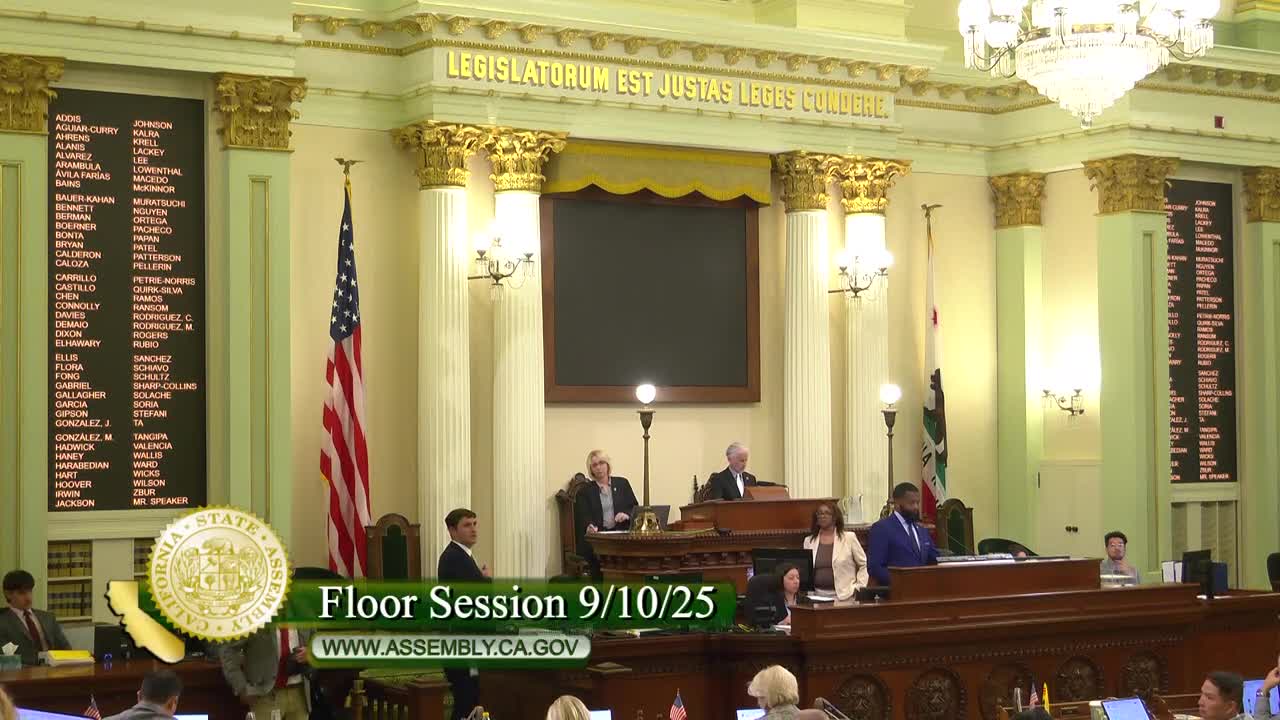
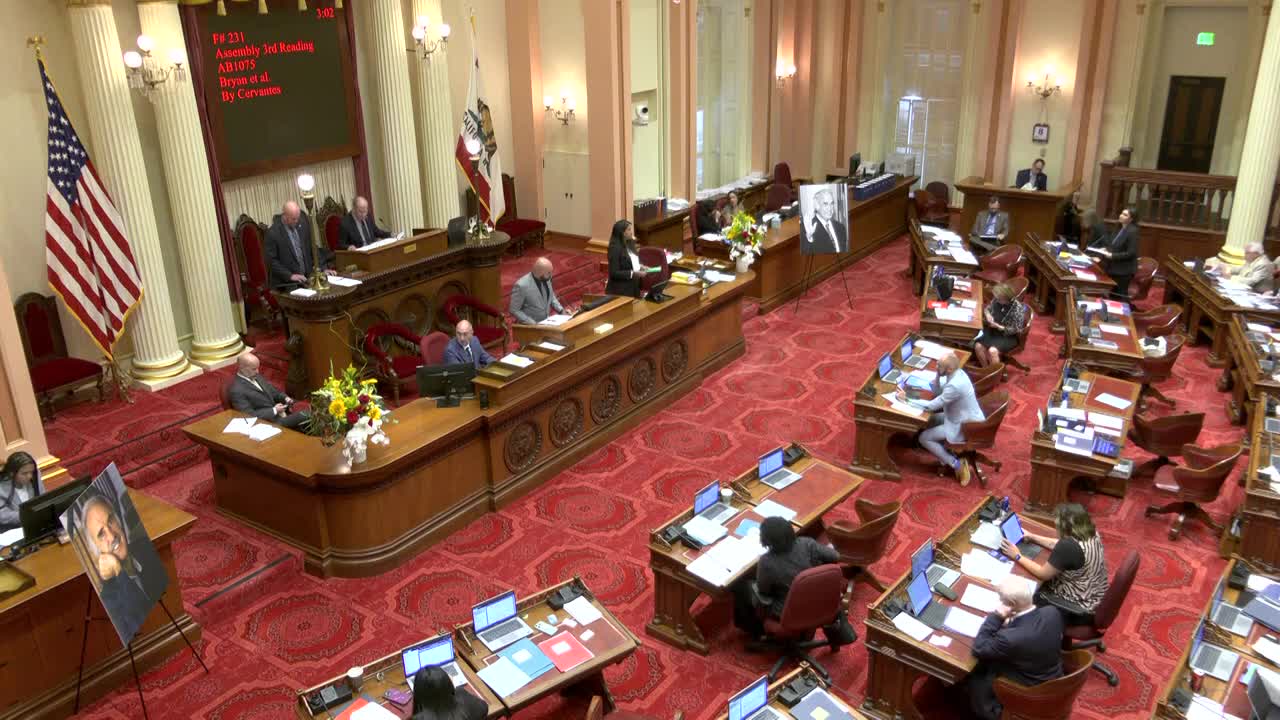
Bill Author
Bill Co-Author(s):