AB 1526: Horse racing: audits of the horsemen’s organizations: license fee deposits: minisatellite wagering facilities.
- Session Year: 2025-2026
- House: Assembly
- Latest Version Date: 2026-09-14
Current Status:
Passed
(2026-09-15: Chaptered by Secretary of State - Chapter 197, Statutes of 2026.)
Introduced
In Committee
Awaiting First Chamber Vote
Passed First Chamber
In Committee
Awaiting Second Chamber Vote
Passed Second Chamber
Enacted
Existing law requires an annual audit of the financial books and records of the horsemens organizations, with respect to pension funds received by the organizations pursuant to specified laws, to be conducted by a nationally recognized accounting firm within 90 days of the close of the funds business year.
This bill would eliminate the 90-day time limit on conducting the annual audit and would authorize the California Horse Racing Board to permit exceptions to the audit requirement.
The Horse Racing Law requires each application for a license to conduct a horse racing meeting to be accompanied by a deposit to secure the payment of any license fee imposed pursuant to specified provisions of that law, in the form of a certified check payable to the Treasurer of the State of California, in the amount of $10,000. Under the Horse Racing Law, a person engaged in the conduct of a recognized horse race meeting is required to pay a separate license fee imposed under other provisions of the Horse Racing Law in lieu of the license fee subject to that deposit requirement.
This bill would eliminate this deposit requirement and would make other conforming changes.
Existing law authorizes the board to approve minisatellite wagering sites, as defined, under specified conditions. Existing law requires an organization formed by associations or fairs to operate the audiovisual signal system to execute a specified agreement with the association conducting a racing meeting and the minisatellite wagering facility that specifies, among other things, the components of its racing program, including live, out-of-zone, out-of-state, and out-of-country races, that an association or fair will make available to the site.
This bill would explicitly require the agreement to specify which live in-state races would be provided by the association or fair to the site. The bill would also make nonsubstantive changes, including deleting obsolete language.
Existing law requires an annual audit of the financial books and records of the horsemens organizations, with respect to pension funds received by the organizations pursuant to specified laws, to be conducted by a nationally recognized accounting firm within 90 days of the close of the funds business year.
This bill would eliminate the 90-day time limit on conducting the annual audit and would authorize the California Horse Racing Board to permit exceptions to the audit requirement.
Existing law authorizes the California Horse Racing Board board to approve minisatellite wagering sites, as defined, under specified conditions. Existing law requires an organization formed by associations or fairs to operate the audiovisual signal system to execute a specified agreement with the association conducting a racing meeting and the minisatellite wagering facility that specifies, among other things, the components of its racing program, including live, out-of-zone, out-of-state, and out-of-country races, that an association or fair will make available to the site.
This bill would explicitly require the agreement to specify which live in-state races would be provided by the association or fair to the site. The bill would also make nonsubstantive changes, including deleting obsolete language.
Existing law authorizes the California Horse Racing Board to approve minisatellite wagering sites, as defined, under specified conditions. Existing law requires an organization formed by associations or fairs to operate the audiovisual signal system to execute a specified agreement with the association conducting a racing meeting and the minisatellite wagering facility that specifies, among other things, the components of its racing program, including live, out-of-zone, out-of-state, and out-of-country races, that an association or fair will make available to the site.
This bill would explicitly require the agreement to specify which live in-state races would be provided by the association or fair to the site. The bill would also make nonsubstantive changes, including deleting obsolete language.
An annual audit shall be conducted of the financial books and records of the horsemens organizations, including any subsidiaries of the horsemens organizations, by a nationally recognized accounting firm as follows:
(a)Except with the permission of the board, with respect to pension funds received by those organizations pursuant to Sections 19533, 19613, and 19613.1, the audit shall be conducted annually. The audit shall cover the period of time since the last audit, and a copy of the audit shall be filed with the board and the Senate and Assembly Committees on Governmental Organization.
(b)With respect to administrative funds and welfare funds received pursuant to Sections 19533, 19606.5, 19613, and 19641, the audit shall be conducted within 90 days of the close of the funds business year. The audit shall cover the period of time since the last audit, and a copy of the audit shall be filed with the board and the Senate and Assembly Committees on Governmental Organization.
(c)The horsemens organizations shall bear the cost of the audit.
SEC. 2.Section 19480 of the Business and Professions Code is amended to read:19480.(a)The board may issue to any person who makes application therefor in writing, and who has complied with this chapter, a license to conduct a horse racing meeting in accordance with this chapter at the track specified in the application if the board determines that the issuance thereof will be in the public interest and will subserve the purposes of this chapter.
(b)For purposes of this section, person means any officer, director, or partner, or any individual who holds 5 percent or more of outstanding shares, of a racing association.
SEC. 3.Section 19488 of the Business and Professions Code is amended to read:19488.Every license issued under this article shall specify all of the following:
(a)The name of the person to whom it is issued.
(b)The track where the horse racing meeting to which it relates is to be held or conducted.
(c)The days and hours of the day when the meeting will be permitted.
(d)The number and types of races to be run on each day of the meeting.
(e)The number of useable stalls available for the meeting.
(f)The name of the person responsible for supervising the maintenance of racetrack safety standards.
SEC. 4.Section 19490 of the Business and Professions Code is repealed.SEC. 5.Section 19493 of the Business and Professions Code is repealed.SEC. 6.Section 19547 of the Business and Professions Code is repealed.SEC. 7.Section 19605.25 of the Business and Professions Code is amended to read:19605.25.(a)The board may approve an additional 15 minisatellite wagering sites in each zone, if all of the following conditions are met:
(1)No site is within 20 miles of a racetrack, a satellite wagering facility, or a tribal casino that has a satellite wagering facility. If the proposed minisatellite wagering facility is within 20 miles of one of the above-referenced satellite facilities, then the consent of each facility within a 20-mile radius must be given before the proposed minisatellite wagering facility may be approved by the board.
(2)An agreement in accordance with subdivision (a) of Section 19605.3 has been executed and approved by the board. In addition to the requirements set forth in that provision, the agreement shall specify which components of its racing program, including live in-state, out-of-zone, out-of-state, and out-of-country races, an association or fair will make available to the site. The terms and conditions of the agreement, including all fees payable pursuant to paragraph (3) of that provision, a portion of which may be paid to horsemen and horsewomen in the form of purses, shall be subject to the approval of the horsemens and horsewomens organization responsible for negotiating purse agreements with the association or fair.
(3)The site is approved by the board.
(4)The wagers are accepted in an area that is accessible only to persons who are at least 21 years of age.
(5)The board has approved the accommodation, equipment used in conducting wagering at the site, communications system, technology, and method used by the site to accept wagers and transmit odds, results, and other data related to wagering.
(b)Parimutuel clerks shall be available to service the self-service tote machines at minisatellite wagering locations, and to cash wagering vouchers on a regularly scheduled basis.
(c)For purposes of commissions, deductions, and distribution of handle, wagers placed at minisatellite wagering sites shall be treated as if they were placed at satellite wagering facilities authorized under Section 19605, 19605.1, or 19605.2. Section 19608.4 shall apply to minisatellite wagering facilities.
(d)The written consent of the San Mateo County Fair shall be obtained before the approval of any minisatellite wagering site located within a 20-mile radius of its fairground.
(e)Minisatellite wagering facilities created pursuant to this section are not eligible for satellite wagering commission distributions pursuant to Section 19604.
(f)The board, in adopting regulations to implement this section, shall minimize the expense to both the operator of the minisatellite wagering facility and the host racetrack.
(g)If there are more than 15 applications for minisatellite wagering facilities in any zone, the board shall determine which facilities will generate the largest handle, and give priority to the approval of those facilities. The board shall license a minisatellite wagering facility for up to five years, and then review the operation and the size of the handle, and determine if it is in the best interest of horse racing to relicense the facility or, in the alternative, license another minisatellite wagering facility that might generate a greater handle.
(h)Except as may be provided in the agreement required pursuant to paragraph (2) of subdivision (a), no association or fair shall be required to make all or part of its racing program available to a minisatellite wagering facility. Notwithstanding subdivision (e) of Section 19608.2, all costs incurred by the organization executing that agreement in excess of the amounts distributable to the organization from wagers placed at the site on that racing program, shall be borne by the minisatellite wagering facility.
An annual audit shall be conducted of the financial books and records of the horsemens organizations, including any subsidiaries of the horsemens organizations, by a nationally recognized accounting firm as follows:
(a)Except with the permission of the board, with respect to pension funds received by those organizations pursuant to Sections 19533, 19613, and 19613.1, the audit shall be conducted annually. The audit shall cover the period of time since the last audit, and a copy of the audit shall be filed with the board and the Senate and Assembly Committees on Governmental Organization.
(b)With respect to administrative funds and welfare funds received pursuant to Sections 19533, 19606.5, 19613, and 19641, the audit shall be conducted within 90 days of the close of the funds business year. The audit shall cover the period of time since the last audit, and a copy of the audit shall be filed with the board and the Senate and Assembly Committees on Governmental Organization.
(c)The horsemens organizations shall bear the cost of the audit.
SEC. 2.Section 19480 of the Business and Professions Code is amended to read:19480.(a)The board may issue to any person who makes application therefor in writing, and who has complied with this chapter, and who makes the deposit to secure payment of the license fee imposed by this article, a license to conduct a horse racing meeting in accordance with this chapter at the track specified in the application if the board determines that the issuance thereof will be in the public interest and will subserve the purposes of this chapter.
(b)For purposes of this section, person means any officer, director, or partner, or any individual who holds 5 percent or more of outstanding shares, of a racing association.
SEC. 3.Section 19488 of the Business and Professions Code is amended to read:19488.(a)Every license issued under this article shall specify all of the following:
(1)(a)The name of the person to whom it is issued.
(2)(b)The track where the horse racing meeting to which it relates is to be held or conducted.
(3)(c)The days and hours of the day when the meeting will be permitted.
(4)(d)The number and types of races to be run on each day of the meeting.
(5)(e)The number of useable stalls available for the meeting.
(6)(f)The name of the person responsible for supervising the maintenance of racetrack safety standards.
(b)The license shall also recite the payment to, and receipt by, the board of the deposit to secure payment of the license fee required by this article.SEC. 4.Section 19490 of the Business and Professions Code is repealed.19490.Each application for a license to conduct a horse racing meeting shall be accompanied by a deposit to secure the payment of any license fee imposed by this article, in the form of a certified check payable to the Treasurer of the State of California, in the amount of ten thousand dollars ($10,000).SEC. 5.Section 19493 of the Business and Professions Code is repealed.19493.Upon the termination of the horse racing meeting for which a license has been granted:(a)If the licensee has fully paid the license fee imposed by this article, the sum deposited with the application for the license shall be returned to the licensee.(b)If the licensee fails, refuses, or neglects to pay such fee, the amount thereof shall be deducted from the sum deposited and the balance, if any, shall be returned to the licensee.SEC. 6.Section 19547 of the Business and Professions Code is repealed.19547.Notwithstanding Section 19490, no deposit shall be required for any horse racing meeting conducted by a fair.SEC. 2.SEC. 7.Section 19605.25 of the Business and Professions Code is amended to read:19605.25.(a)The board may approve an additional 15 minisatellite wagering sites in each zone, if all of the following conditions are met:
(1)No site is within 20 miles of a racetrack, a satellite wagering facility, or a tribal casino that has a satellite wagering facility. If the proposed minisatellite wagering facility is within 20 miles of one of the above-referenced satellite facilities, then the consent of each facility within a 20-mile radius must be given before the proposed minisatellite wagering facility may be approved by the board.
(2)An agreement in accordance with subdivision (a) of Section 19605.3 has been executed and approved by the board. In addition to the requirements set forth in that provision, the agreement shall specify which components of its racing program, including live in-state, out-of-zone, out-of-state, and out-of-country races, an association or fair will make available to the site. The terms and conditions of the agreement, including all fees payable pursuant to paragraph (3) of that provision, a portion of which may be paid to horsemen and horsewomen in the form of purses, shall be subject to the approval of the horsemens and horsewomens organization responsible for negotiating purse agreements with the association or fair.
(3)The site is approved by the board.
(4)The wagers are accepted in an area that is accessible only to persons who are at least 21 years of age.
(5)The board has approved the accommodation, equipment used in conducting wagering at the site, communications system, technology, and method used by the site to accept wagers and transmit odds, results, and other data related to wagering.
(b)Parimutuel clerks shall be available to service the self-service tote machines at minisatellite wagering locations, and to cash wagering vouchers on a regularly scheduled basis.
(c)For purposes of commissions, deductions, and distribution of handle, wagers placed at minisatellite wagering sites shall be treated as if they were placed at satellite wagering facilities authorized under Section 19605, 19605.1, or 19605.2. Section 19608.4 shall apply to minisatellite wagering facilities.
(d)The written consent of the San Mateo County Fair shall be obtained before the approval of any minisatellite wagering site located within a 20-mile radius of its fairground.
(e)Minisatellite wagering facilities created pursuant to this section are not eligible for satellite wagering commission distributions pursuant to Section 19604.
(f)The board, in adopting regulations to implement this section, shall minimize the expense to both the operator of the minisatellite wagering facility and the host racetrack.
(g)If there are more than 15 applications for minisatellite wagering facilities in any zone, the board shall determine which facilities will generate the largest handle, and give priority to the approval of those facilities. The board shall license a minisatellite wagering facility for up to five years, and then review the operation and the size of the handle, and determine if it is in the best interest of horse racing to relicense the facility or, in the alternative, license another minisatellite wagering facility that might generate a greater handle.
(h)Except as may be provided in the agreement required pursuant to paragraph (2) of subdivision (a), no association or fair shall be required to make all or part of its racing program available to a minisatellite wagering facility. Notwithstanding subdivision (e) of Section 19608.2, all costs incurred by the organization executing that agreement in excess of the amounts distributable to the organization from wagers placed at the site on that racing program, shall be borne by the minisatellite wagering facility.
An annual audit shall be conducted of the financial books and records of the horsemens organizations, including any subsidiaries of the horsemens organizations, by a nationally recognized accounting firm as follows:
(a)With Except with the permission of the board, with respect to pension funds received by those organizations pursuant to Sections 19533, 19613, and 19613.1, the audit shall be conducted within 90 days of the close of the funds business year. annually. The audit shall cover the period of time since the last audit, and a copy thereof of the audit shall be filed with the board, board and the Senate and Assembly Committees on Governmental Organization.
(b)With respect to administrative funds and welfare funds received pursuant to Sections 19533, 19606.5, 19613, and 19641, the audit shall be conducted within 90 days of the close of the funds business year. The audit shall cover the period of time since the last audit, and a copy thereof of the audit shall be filed with the board, board and the Senate and Assembly Committees on Governmental Organization.
(c)The horsemens organizations shall bear the cost of the audit.
SECTION 1.SEC. 2.Section 19605.25 of the Business and Professions Code is amended to read:19605.25.(a)The board may approve an additional 15 minisatellite wagering sites in each zone, if all of the following conditions are met:
(1)No site is within 20 miles of a racetrack, a satellite wagering facility, or a tribal casino that has a satellite wagering facility. If the proposed minisatellite wagering facility is within 20 miles of one of the above-referenced satellite facilities, then the consent of each facility within a 20-mile radius must be given before the proposed minisatellite wagering facility may be approved by the board.
(2)An agreement in accordance with subdivision (a) of Section 19605.3 has been executed and approved by the board. In addition to the requirements set forth in that provision, the agreement shall specify which components of its racing program, including live in-state, out-of-zone, out-of-state, and out-of-country races, an association or fair will make available to the site. The terms and conditions of the agreement, including all fees payable pursuant to paragraph (3) of that provision, a portion of which may be paid to horsemen and horsewomen in the form of purses, shall be subject to the approval of the horsemens and horsewomens organization responsible for negotiating purse agreements with the association or fair.
(3)The site is approved by the board.
(4)The wagers are accepted in an area that is accessible only to persons who are at least 21 years of age.
(5)The board has approved the accommodation, equipment used in conducting wagering at the site, communications system, technology, and method used by the site to accept wagers and transmit odds, results, and other data related to wagering.
(b)Parimutuel clerks shall be available to service the self-service tote machines at minisatellite wagering locations, and to cash wagering vouchers on a regularly scheduled basis.
(c)For purposes of commissions, deductions, and distribution of handle, wagers placed at minisatellite wagering sites shall be treated as if they were placed at satellite wagering facilities authorized under Section 19605, 19605.1, or 19605.2. Section 19608.4 shall apply to minisatellite wagering facilities.
(d)The written consent of the San Mateo County Fair shall be obtained before the approval of any minisatellite wagering site located within a 20-mile radius of its fairground.
(e)Minisatellite wagering facilities created pursuant to this section are not eligible for satellite wagering commission distributions pursuant to Section 19604.
(f)The board, in adopting regulations to implement this section, shall minimize the expense to both the operator of the minisatellite wagering facility and the host racetrack.
(g)If there are more than 15 applications for minisatellite wagering facilities in any zone, the board shall determine which facilities will generate the largest handle, and give priority to the approval of those facilities. The board shall license a minisatellite wagering facility for up to five years, and then review the operation and the size of the handle, and determine if it is in the best interest of horse racing to relicense the facility or, in the alternative, license another minisatellite wagering facility that might generate a greater handle.
(h)Except as may be provided in the agreement required pursuant to paragraph (2) of subdivision (a), no association or fair shall be required to make all or part of its racing program available to a minisatellite wagering facility. Notwithstanding subdivision (e) of Section 19608.2, all costs incurred by the organization executing that agreement in excess of the amounts distributable to the organization from wagers placed at the site on that racing program, shall be borne by the minisatellite wagering facility.
(a)The California Horse Racing Board board may approve an additional 15 minisatellite wagering sites in each zone, if all of the following conditions are met:
(1)No site is within 20 miles of a racetrack, a satellite wagering facility, or a tribal casino that has a satellite wagering facility. If the proposed minisatellite wagering facility is within 20 miles of one of the above-referenced satellite facilities, then the consent of each facility within a 20-mile radius must be given before the proposed minisatellite wagering facility may be approved by the board.
(2)An agreement in accordance with subdivision (a) of Section 19605.3 has been executed and approved by the board. In addition to the requirements set forth in that provision, the agreement shall specify which components of its racing program, including live, live in-state, out-of-zone, out-of-state, and out-of-country races, an association or fair will make available to the site. The terms and condition conditions of the agreement, including all fees payable pursuant to paragraph (3) of that provision, a portion of which may be paid to horsemen and horsewomen in the form of purses, shall be subject to the approval of the horsemens and horsewomens organization responsible for negotiating purse agreements with the association or fair.
(3)The site is approved by the board.
(4)The wagers are accepted in an area that is accessible only to those persons who are at least 21 years of age.
(5)The board has approved the accommodation, equipment used in conducting wagering at the site, communications system, technology, and method used by the site to accept wagers and transmit odds, results, and other data related to wagering.
(b)Parimutuel clerks shall be available to service the self-service tote machines at these minisatellite wagering locations, and to cash wagering vouchers on a regularly scheduled basis.
(c)Until January 1, 2013, if the proposed minisatellite wagering site is in the northern zone in a fair district where the fair has operated a satellite wagering facility for the previous five years, the approval of the fair must be obtained even if the proposed location is more than 20 miles from the existing satellite wagering facility operated by the fair.(d)(c)For purposes of commissions, deductions, and distribution of handle, wagers placed at minisatellite wagering sites shall be treated as if they were placed at satellite wagering facilities authorized under Section 19605, 19605.1, or 19605.2. Section 19608.4 shall apply to minisatellite wagering facilities.
(e)(d)The written consent of the San Mateo County Fair shall be obtained prior to before the approval of any minisatellite wagering site located within a 20-mile radius of its fairground.
(f)(e)Minisatellite wagering facilities created pursuant to this section are not eligible for satellite wagering commission distributions pursuant to Section 19604.
(g)(f)The board, in adopting regulations to implement this section, shall minimize the expense to both the operator of the minisatellite wagering facility and the host racetrack.
(h)(g)If there are more than 15 applications for minisatellite wagering facilities in any zone, the board shall determine which facilities will generate the largest handle, and give priority to the approval of those facilities. The board shall license a minisatellite wagering facility for up to five years, and then review the operation and the size of the handle, and determine if it is in the best interest of horse racing to relicense the facility or, in the alternative, license another minisatellite wagering facility that might generate a greater handle.
(i)(h)Except as may be provided in the agreement required pursuant to paragraph (2) of subdivision (a), no association or fair shall be required to make all or part of its racing program available to a minisatellite wagering facility. Notwithstanding subdivision (e) of Section 19608.2, all costs incurred by the organization executing that agreement in excess of the amounts distributable to the organization from wagers placed at the site on that racing program, shall be borne by the minisatellite wagering facility.
|
Date
|
Status
|
|---|---|
| Sep 15, 2026 | Chaptered by Secretary of State - Chapter 197, Statutes of 2026. |
| Sep 14, 2026 | Chaptered by Secretary of State - Chapter 197, Statutes of 2026. |
| Sep 15, 2026 | Approved by the Governor. |
| Sep 14, 2026 | Approved by the Governor. |
| Sep 8, 2026 | Enrolled and presented to the Governor at 3:30 p.m. |
| Aug 28, 2026 | Senate amendments concurred in. To Engrossing and Enrolling. (Ayes 77. Noes 0.). |
| Aug 28, 2026 | Senate amendments concurred in. To Engrossing and Enrolling. (Ayes 77. Noes 0. Page 6808.). |
| Aug 27, 2026 | In Assembly. Concurrence in Senate amendments pending. |
| Aug 27, 2026 | Read third time. Passed. Ordered to the Assembly. (Ayes 40. Noes 0.). |
| Aug 19, 2026 | Read second time. Ordered to third reading. |
| Aug 18, 2026 | Read third time and amended. Ordered to second reading. |
| Jun 16, 2026 | Read second time. Ordered to third reading. |
| Jun 15, 2026 | From committee: Be ordered to second reading pursuant to Senate Rule 28.8. |
| Jun 3, 2026 | Read second time. Ordered to third reading. |
| Jun 3, 2026 | Re-referred to Com. on APPR. pursuant to Joint Rule 10.5. |
| Jun 2, 2026 | Read third time and amended. Ordered to second reading. |
| May 26, 2026 | Read second time. Ordered to third reading. |
| May 22, 2026 | Ordered to second reading. |
| May 22, 2026 | From inactive file. |
| Sep 11, 2025 | Ordered to inactive file at the request of Senator Padilla. |
| Jul 10, 2025 | Ordered to third reading. |
| Jul 10, 2025 | From Consent Calendar. |
| Jul 9, 2025 | Read second time. Ordered to Consent Calendar. |
| Jul 8, 2025 | From committee: Do pass. To Consent Calendar. (Ayes 15. Noes 0.) (July 8). |
| May 14, 2025 | Referred to Com. on G.O. |
| May 1, 2025 | In Senate. Read first time. To Com. on RLS. for assignment. |
| May 1, 2025 | Read third time. Passed. Ordered to the Senate. (Ayes 76. Noes 0. Page 1388.) |
| Apr 28, 2025 | Read second time. Ordered to Consent Calendar. |
| Apr 24, 2025 | From committee: Do pass. To Consent Calendar. (Ayes 22. Noes 0.) (April 23). |
| Mar 24, 2025 | Referred to Com. on G.O. |
| Mar 19, 2025 | From printer. May be heard in committee April 18. |
| Mar 18, 2025 | Read first time. To print. |
|
Date
|
Description
|
Location
|
Votes
|
|
|---|---|---|---|---|
| Aug 28, 2026 | AB 1526 Governmental Organizatio Concurrence in Senate Amendments By RUBIO | Assembly Floor |
Passed |
|
| Aug 27, 2026 | Assembly 3rd Reading AB1526 G.O. (Blanca Rubio) By Rubio | Senate Floor |
Passed |
|
| Jul 8, 2025 | Do pass and be ordered to the Consent Calendar | Senate Standing Committee on Governmental Organization |
Passed |
|
| May 1, 2025 | AB 1526 Governmental Organization Consent Calendar Second Day Regular Session | Assembly Floor |
Passed |
|
| Apr 23, 2025 | Do pass. To Consent Calendar. | Assembly Standing Committee on Governmental Organization |
Passed |
This list shows positions taken on this bill by organizations on the date displayed, which is linked to the original source.
Positions by individuals are not included.
CONCURRENCE IN SENATE AMENDMENTS
CSA1 Bill Id:AB 1526
Author:(Committee on Governmental Organization)
As Amended Ver:August 18, 2026
Majority vote
SUMMARY
This bill makes various technical and non-substantive changes to provisions of the Horse Racing Law, as specified. It also removes the requirement for a private racing association to submit a $10,000 deposit with their license applications and makes related conforming changes.
Senate Amendments
- Eliminate the 90-day time limit on conducting the annual audit and authorize the California Horse Racing Board (CHRB) to permit exceptions to the audit requirement.
- Make non-substantive changes, including deleting obsolete statutes.
- Eliminate an existing obsolete statutory requirement that each application for a license to conduct a horse race meeting by a private racing association to include a $10,000 deposit and eliminate associated references in Horse Racing Law.
COMMENTS
Background.
Simulcasting. Simulcasting is the process of transmitting the audio and video signal of a live racing performance from one facility to a satellite for retransmission to other locations or venues where pari-mutuel wagering is permitted. Simulcasting provides racetracks with the opportunity to increase revenues by exporting their live racing content to as many satellite wagering locations as possible, such as other racetracks, fairs, and Indian casinos. Satellite wagering facilities accept wagers on races broadcast via simulcast from in-state and out-of-state racetracks. These locations, in turn, generate a great deal of revenue from satellite wagering. Sometimes, the facility is a simulcast facility without live horse racing.
For over 30 years, California has allowed off-track betting at satellite wagering facilities across the state. Satellite wagering was authorized when California racetracks were experiencing declining attendance and handle figures. At the time, the industry believed that making the product more accessible would expose and market horse racing to more customers and make it easier for existing customers to place bets more often. Currently, there are 24 satellite-wagering facilities throughout the state.
In 2007, AB 241 (Price), Chapter 594, Statutes of 2007, was enacted to allow for the creation of 15 additional "mini-satellites" in each racing zone, for a total of 45. The stated intent of this legislation was to make horse racing more accessible to would-be California bettors and to increase the daily wagering handle. To date, ten mini-satellites have opened statewide.
Status of the horse racing industry in California. The California horse racing industry's long-term health is threatened by a combination of factors, including competition from racing in other states, other forms of gaming within California, declining attendance, and the potential for higher return from development than operating revenues. As resources shrink, the industry is experiencing deficits in virtually every one of its revenue sources. Traditional take out, allocation and distribution formulas are no longer able to sustain ongoing operations.
As the value of racing operations declines, track ownership is struggling to maximize the necessary return on the investment and tempted by alternative uses of the property that yield higher returns. Consequently, the racing industry is suffering unprecedented instability and capital flight. Tens of thousands of industry jobs are in immediate jeopardy, along with breeding farms and precious open space in urban centers throughout California. Also at risk is a substantial amount of local and state revenue generated both directly and indirectly by the industry.
California Horse Racing Board. The CHRB designates the organizations that represent California horsemen for each breed. Pursuant to specified sections of the Business and Professions Code, CHRB rules, and requirements outlined in applicable license applications, recognized industry participants that receive statutory distributions are required to comply with annual reporting obligations.
Specifically, existing law requires an annual audit of the financial books and records of the horsemen's organizations, with respect to pension funds received by the organizations pursuant to specified laws, to be conducted by a nationally recognized accounting firm within 90 days of the close of the fund's business year.
Under Business and Professions Code section 19613.2(c), the CHRB may take disciplinary action against a horsemen's organization that fails to annually file its audited financial statements. Individuals seeking a copy of a horsemen's organization's complete audited financial statements may obtain one by contacting the CHRB headquarters office in Sacramento.
According to the California Thoroughbred Trainers (CTT), the current statutory timeframe is not workable because CTT must first obtain financial information and related data from other entities before it can complete and submit the report. Rather than routinely submitting the annual report late, CTT is seeking to revise the statute so that the reporting deadline more accurately reflects the time needed to receive the necessary information and data. Specifically, AB 1526 eliminates the 90-day time limit on conducting the annual audit and would authorize the CHRB to permit exceptions to the audit requirement.
Additionally, Horse Racing Law requires each application by a private racing association for a license to conduct a horse race meeting to include a $10,000 deposit. Relatedly, when the CHRB issues a license, it must specify certain information required by statute, including a recitation that the CHRB has received the deposit to secure payment of the license fee. The deposit was originally intended to secure payment of the license fee and provide upfront funding for the Board and its drug-testing program. However, the California Legislature has since overhauled the CHRB's license fee mechanisms several times, rendering the deposit unnecessary.
Currently, each racing association conducting racing pays a proportional amount as determined by an annual formula devised by the CHRB in consultation with stakeholders (Business and Professions Code Section 19616.51). Per statute, this proportional amount is considered a license fee and supports the CHRB and the equine drug testing program. The CHRB stopped collecting deposits from racing associations in 2015, yet it is still technically required by statute.
This bill would eliminate the $10,000 deposit requirement and the associated references in Horse Racing Law.
According to the Author
According to the author's office, "this bill removes an outdated provision concerning mini-satellite wagering sites and makes related technical updates. Furthermore, it defines 'live' for mini-satellite contractual purposes to mean 'live in-state' races as part of the organization's overall racing program. This bill also makes technical and clarifying changes to the Horse Racing Law, updating the statute to reflect recent shifts in industry operations."
Arguments in Support
None on file.
Arguments in Opposition
None on file.
FISCAL COMMENTS
According to the Senate Committee on Appropriations, pursuant to Senate Rule 28.8, negligible state costs.
VOTES:
ASM GOVERNMENTAL ORGANIZATION: 22-0-0
YES: Blanca Rubio, Davies, Alvarez, Berman, Bryan, Carrillo, Dixon, Fong, Gabriel, Gipson, Macedo, McKinnor, Nguyen, Pacheco, Ramos, Michelle Rodriguez, Sanchez, Solache, Soria, Ta, Valencia, Wallis
ASSEMBLY FLOOR: 76-0-3
YES: Addis, Aguiar-Curry, Ahrens, Alanis, Alvarez, Arambula, Ávila Farías, Bains, Bauer-Kahan, Bennett, Berman, Boerner, Bonta, Bryan, Calderon, Caloza, Carrillo, Castillo, Connolly, Davies, DeMaio, Dixon, Elhawary, Ellis, Flora, Fong, Gabriel, Gallagher, Garcia, Gipson, Jeff Gonzalez, Mark González, Hadwick, Haney, Harabedian, Hart, Hoover, Irwin, Jackson, Kalra, Krell, Lackey, Lee, Lowenthal, Macedo, Muratsuchi, Nguyen, Ortega, Pacheco, Patel, Patterson, Pellerin, Petrie-Norris, Quirk-Silva, Ramos, Ransom, Celeste Rodriguez, Michelle Rodriguez, Rogers, Blanca Rubio, Sanchez, Schiavo, Schultz, Sharp-Collins, Solache, Soria, Stefani, Ta, Tangipa, Valencia, Wallis, Ward, Wicks, Wilson, Zbur, Rivas
ABS, ABST OR NV: Chen, McKinnor, Papan
UPDATED
VERSION: August 18, 2026
CONSULTANT: Eric Johnson / G.O. / (916) 319-2531 FN: 0004019
SENATE RULES COMMITTEE Office of Senate Floor Analyses (916) 651-4171 | AB 1526 |
THIRD READING
Bill No: AB 1526
Author: Committee on Governmental Organization
Amended: 8/18/26 in Senate
Vote: 21
SENATE GOVERNMENTAL ORG. COMMITTEE: 15-0, 7/8/25
AYES: Padilla, Valladares, Archuleta, Ashby, Blakespear, Cervantes, Dahle, Hurtado, Jones, Ochoa Bogh, Richardson, Rubio, Smallwood-Cuevas, Wahab, Weber Pierson
SENATE APPROPRIATIONS COMMITTEE: Senate Rule 28.8
ASSEMBLY FLOOR: 76-0, 5/1/25 (Consent) - See last page for vote
SUBJECT: Horse racing: audits of the horsemen’s organizations: license fee deposits: minisatellite wagering facilities
SOURCE: Author
DIGEST:
This bill makes various technical and non-substantive changes to provisions of the Horse Racing Law including, among other things: eliminating the 90-day time limit on conducting specified audits and authorizes the California Horse Racing Board to permit exceptions to the requirement, and eliminates an existing statutory requirement that each application for a license to conduct a horse race meeting by a private racing association to include a $10,000 deposit, as specified.
Senate Floor Amendments of 8/18/26 eliminate an existing statutory requirement that each application for a license to conduct a horse race meeting by a private racing association to include a $10,000 deposit and eliminate associated references in Horse Racing Law.
Senate Floor Amendments of 6/2/26 eliminate the 90-day time limit on conducting the annual audit and authorize the California Horse Racing Board (CHRB) to permit exceptions to the audit requirement.
ANALYSIS:
Existing law:
- Authorizes the Legislature via Article IV, Section 19(b) of the Constitution of the State of California to provide for the regulation of horse races and grants the CHRB the authority to regulate the various forms of horse racing authorized in this state.
- Authorizes the CHRB to approve minisatellite wagering sites, as defined, under specified conditions.
- Requires an organization formed by associations or fairs to operate the audiovisual signal system to execute a specified agreement with the association conducting a racing meeting and the minisatellite wagering facility that specifies, among other things, the components of its racing program, including, out-of-zone, out-of-state, and out-of-country races, that an association or fair will make available to the site.
- Requires an annual audit of the financial books and records of the horsemen’s organizations, with respect to pension funds received by the organizations pursuant to specified laws, to be conducted by a nationally recognized accounting firm within 90 days of the close of the fund’s business year.
- Requires each application for a license to conduct a horse racing meeting to be accompanied by a deposit to secure the payment of any license fee imposed pursuant to specified provisions of that law, in the form of a certified check payable to the Treasurer of the State of California, in the amount of $10,000.
- Requires a person engaged in the conduct of a recognized horse racing meeting to pay a separate license fee imposed under other provisions of the Horse Racing Law in lieu of the license fee subject to that deposit requirement.
This bill:
- Requires explicitly the above-mentioned agreement to specify which live in-state races would be provided by the association or fair to the site.
- Eliminates the above-mentioned 90-day time limit on conducting the annual audit described above and authorizes the CHRB to permit exceptions to the audit requirement.
- Eliminates the above-mentioned $10,000 deposit requirement and eliminates associated references in the Horse Racing Law.
- Makes other non-substantive changes, including deleting obsolete statutes.
Background
Author’s Statement. According to the author’s office, “this bill removes an outdated provision concerning mini-satellite wagering sites and makes related technical updates. Furthermore, it defines ‘live’ for mini-satellite contractual purposes to mean ‘live in-state’ races as part of the organization’s overall racing program.”
Additionally, “the $10,000 deposit is no longer relevant as racing associations now pay their annual proportional share to support CHRB and related programs. Further, even if a racing association chose not to pay their share of the funding formula, a $10,000 deposit would be extremely ineffective. To compare, in FY 2024-25, associations paid a pro-rata proportion of over $18 million, far greater than a $10,000 deposit.”
And lastly, “staff are no longer collecting these outdated deposit checks from associations and instead state in their review that the ‘deposit is on file’ when the license is issued. The CHRB would prefer to remove the deposit requirement and related references and accurately represent that no deposit is necessary or has been collected to eliminate staff acting contrary to statute or collecting funds without merit from licensees.”
Satellite Wagering. Satellite wagering via an off-track facility has been legal in California since the 1980s when California racetracks started to experience declining attendance and handle figures. The industry believed that making the product easier to access not only would expose and market horse racing to potential customers but also would make it more convenient for the existing patrons to wager more often. However, while off-track-betting and simulcasting can open new revenue pathways, they often cannibalize traditional on-track income, putting tracks at further financial risk and potentially contributing to closures.
Simulcasting. Simulcasting is the process of transmitting the audio and video signal of a live racing performance from one facility to a satellite for re-transmission to other locations or venues where pari-mutuel wagering is permitted. Simulcasting provides racetracks with the opportunity to increase revenues by exporting their live racing content to as many wagering locations as possible, such as other racetracks, fair satellite facilities, and Indian casinos. Revenues increase because simulcasting provides racetracks that export their live content with additional customers in multiple locations who would not have otherwise been able to place wagers on the live racing event.
Distribution of Audiovisual Signals and Wagering. Thoroughbred racing associations and fairs in California can distribute the audiovisual signal and accept wagers on the results of out-of-state thoroughbred races during their own race meetings. This is allowed even on days when no live races are being held at their venues. There is a limit on the number of out-of-state races that can be imported into California for betting purposes. On days when there is live thoroughbred or fair racing happening in California, the total number of races imported from out-of-state must not exceed 75 races-per-day.
California Horse Racing Board. The CHRB designates the organizations that represent California horsemen for each breed. Pursuant to specified sections of the Business and Professions Code, CHRB rules, and requirements outlined in applicable license applications, recognized industry participants that receive statutory distributions are required to comply with annual reporting obligations.
Specifically, existing law requires an annual audit of the financial books and records of the horsemen’s organizations, with respect to pension funds received by the organizations pursuant to specified laws, to be conducted by a nationally recognized accounting firm within 90 days of the close of the fund’s business year.
Under Business and Professions Code section 19613.2(c), the CHRB may take disciplinary action against a horsemen’s organization that fails to annually file its audited financial statements.
Individuals seeking a copy of a horsemen’s organization’s complete audited financial statements may obtain one by contacting the CHRB headquarters office in Sacramento.
According to the California Thoroughbred Trainers (CTT), the current statutory timeframe is not workable because CTT must first obtain financial information and related data from other entities before it can complete and submit the report. Rather than routinely submitting the annual report late, CTT is seeking to revise the statute so that the reporting deadline more accurately reflects the time needed to receive the necessary information and data.
Specifically, AB 1526 eliminates the 90-day time limit on conducting the annual audit and would authorize the CHRB to permit exceptions to the audit requirement.
Additionally, Horse Racing Law requires that each application for a license to conduct a horse race meeting by a private racing association include a $10,000 deposit. Relatedly, when the CHRB issues a license, it must specify certain information per statute, including a recitation of the payment to and receipt by the CHRB of the deposit to secure payment of the license fee. This deposit was originally used to secure the license fee and provide upfront funding to the Board and drug testing program. However, the California Legislature has overhauled the CHRB’s license fee mechanisms several times, making this deposit unnecessary.
Currently, each racing association conducting racing pays a proportional amount as determined by an annual formula devised by the CHRB in consultation with stakeholders (Bus. & Prof. Code § 19616.51). Per statute, this proportional amount is considered a license fee and supports the CHRB and the equine drug testing program. The CHRB stopped collecting deposits from racing associations in 2015, yet it is still technically required by statute.
This bill eliminates the $10,000 deposit requirement and the associated references in Horse Racing Law.
Related/Prior Legislation
SB 397 (Strickland, 2025) authorizes thoroughbred and Appaloosa horses to enter into quarter horse races at any distance, as specified; and, amends the conditions that a licensed quarter horse racing association can conduct thoroughbred racing as part of its racing program, as specified. This bill was never heard in the Senate Governmental Organization Committee.
SB 844 (Rubio, 2025) increases the limit on the importation of out-of-state thoroughbred races by a California thoroughbred racing association or fair for pari-mutuel wagering from 75 to 80 races-per-day, as specified. This bill is pending in the Assembly Governmental Organization Committee.
AB 1389 (Rubio, Chapter 9, Statutes of 2026) adds the New York Stakes to the group of identified race meetings which are exempt from the current 75-race per day limit on imported races into California for the purposes of wagering.
FISCAL EFFECT: Appropriation: No Fiscal Com.: Yes Local: No
SUPPORT: (Verified 8/17/26)
None received
OPPOSITION: (Verified 8/17/26)
None received
ASSEMBLY FLOOR: 76-0, 5/1/25
AYES: Addis, Aguiar-Curry, Ahrens, Alanis, Alvarez, Arambula, Ávila Farías, Bains, Bauer-Kahan, Bennett, Berman, Boerner, Bonta, Bryan, Calderon, Caloza, Carrillo, Castillo, Connolly, Davies, DeMaio, Dixon, Elhawary, Ellis, Flora, Fong, Gabriel, Gallagher, Garcia, Gipson, Jeff Gonzalez, Mark González, Hadwick, Haney, Harabedian, Hart, Hoover, Irwin, Jackson, Kalra, Krell, Lackey, Lee, Lowenthal, Macedo, Muratsuchi, Nguyen, Ortega, Pacheco, Patel, Patterson, Pellerin, Petrie-Norris, Quirk-Silva, Ramos, Ransom, Celeste Rodriguez, Michelle Rodriguez, Rogers, Blanca Rubio, Sanchez, Schiavo, Schultz, Sharp-Collins, Solache, Soria, Stefani, Ta, Tangipa, Valencia, Wallis, Ward, Wicks, Wilson, Zbur, Rivas
NO VOTE RECORDED: Chen, McKinnor, Papan
Prepared by: Brian Duke / G.O. / (916) 651-1530
8/19/26 10:35:20
**** END ****
SENATE RULES COMMITTEE Office of Senate Floor Analyses (916) 651-4171 | AB 1526 |
THIRD READING
Bill No: AB 1526
Author: Committee on Governmental Organization
Amended: 6/2/26 in Senate
Vote: 21
SENATE GOVERNMENTAL ORG. COMMITTEE: 15-0, 7/8/25
AYES: Padilla, Valladares, Archuleta, Ashby, Blakespear, Cervantes, Dahle, Hurtado, Jones, Ochoa Bogh, Richardson, Rubio, Smallwood-Cuevas, Wahab, Weber Pierson
SENATE APPROPRIATIONS COMMITTEE: Senate Rule 28.8
ASSEMBLY FLOOR: 76-0, 5/1/25 (Consent) - See last page for vote
SUBJECT: Horse racing: audits of the horsemen’s organizations: minisatellite wagering facilities
SOURCE: Author
DIGEST:
This bill makes various technical and non-substantive changes to provisions of the Horse Racing Law, as specified.
Senate Floor Amendments of 6/2/26 eliminate the 90-day time limit on conducting the annual audit and authorize the California Horse Racing Board (CHRB) to permit exceptions to the audit requirement.
ANALYSIS:
Existing law:
- Authorizes the Legislature via Article IV, Section 19(b) of the Constitution of the State of California to provide for the regulation of horse races and grants the CHRB the authority to regulate the various forms of horse racing authorized in this state.
- Authorizes the CHRB to approve minisatellite wagering sites, as defined, under specified conditions.
- Requires an organization formed by associations or fairs to operate the audiovisual signal system to execute a specified agreement with the association conducting a racing meeting and the minisatellite wagering facility that specifies, among other things, the components of its racing program, including, out-of-zone, out-of-state, and out-of-country races, that an association or fair will make available to the site.
- Requires an annual audit of the financial books and records of the horsemen’s organizations, with respect to pension funds received by the organizations pursuant to specified laws, to be conducted by a nationally recognized accounting firm within 90 days of the close of the fund’s business year.
This bill:
- Requires explicitly the above mentioned agreement to specify which live in-state races would be provided by the association or fair to the site.
- Eliminates the 90-day time limit on conducting the annual audit described above and authorizes the CHRB to permit exceptions to the audit requirement.
- Makes other non-substantive changes, including deleting obsolete statute.
Background
Author’s Statement. According to the author’s office, “this bill removes an outdated provision concerning mini-satellite wagering sites and makes related technical updates. Furthermore, it defines ‘live’ for mini-satellite contractual purposes to mean ‘live in-state’ races as part of the organization’s overall racing program.”
Satellite Wagering. Satellite wagering via an off-track facility has been legal in California since the 1980s when California racetracks started to experience declining attendance and handle figures. The industry believed that making the product easier to access not only would expose and market horse racing to potential customers, but also would make it more convenient for the existing patrons to wager more often. However, while off-track-betting and simulcasting can open new revenue pathways, they often cannibalize traditional on-track income, putting tracks at further financial risk and potentially contributing to closures.
Simulcasting. Simulcasting is the process of transmitting the audio and video signal of a live racing performance from one facility to a satellite for re-transmission to other locations or venues where pari-mutuel wagering is permitted. Simulcasting provides racetracks with the opportunity to increase revenues by exporting their live racing content to as many wagering locations as possible, such as other racetracks, fair satellite facilities, and Indian casinos. Revenues increase because simulcasting provides racetracks that export their live content with additional customers in multiple locations who would not have otherwise been able to place wagers on the live racing event.
Distribution of Audiovisual Signals and Wagering. Thoroughbred racing associations and fairs in California can distribute the audiovisual signal and accept wagers on the results of out-of-state thoroughbred races during their own race meetings. This is allowed even on days when no live races are being held at their venues. There is a limit on the number of out-of-state races that can be imported into California for betting purposes. On days when there is live thoroughbred or fair racing happening in California, the total number of races imported from out-of-state must not exceed 75 races-per-day.
However, there are exceptions to this limit. Races that are part of specific major events like the Kentucky Derby, Breeder’s Cup, and other specified races can be imported without falling under the 75 race-per-day limit. Additional exceptions are made for importing races into certain geographical zones of California when no local live racing is occurring. Any wagering on these out-of-state races must comply with specific provisions of California’s Horse Racing Law that govern how betting should be conducted. Wagers on out-of-state races are not allowed after 7 p.m. Pacific Standard Time unless there is consent from the local harness or quarter horse racing associations conducting live racing in certain counties.
Racetrack Attendance. Prior to the COVID-19 Pandemic, and closure of non-essential businesses in California, the horse racing industry had already been experiencing a general decline in the number of people attending and wagering at live tracks in California. This has been occurring for more than three decades due to myriad factors including; increased competition from other forms of gaming, unwillingness of customers to travel a significant distance to racetracks, and the availability of off-track wagering.
Despite poor weather conditions and a sloppy racing surface, Churchill Downs reported that 147,406 people attended the 2025 Kentucky Derby. The all-sources betting handle on the Derby and the entire racing card reported records of $234.4 million and $349 million, respectively. NBC Sports reported an average of 17.7 million viewers across NBC and Peacock for their 25th Kentucky Derby broadcast, the largest television audience for the race since 1989. The declining attendance at live horse racing events in California has prompted racetracks to rely on revenues from in-state and out-of-state satellite wagering and account wagering.
Status of the Horse Racing Industry in California. The California horse racing industry's long-term health is threatened by a combination of factors, including competition from racing in other states, other forms of gaming within California, declining attendance, and the potential for higher return from development than operating revenues. As resources shrink, the industry is experiencing deficits in virtually every one of its revenue sources. Traditional take out, allocation and distribution formulas are no longer able to sustain ongoing operations.
As the value of racing operations decline, track ownership is struggling to maximize the necessary return on the investment and tempted by alternative uses of the property that yield higher returns. Consequently, the racing industry is suffering unprecedented instability and capital flight. Tens of thousands of industry jobs are in immediate jeopardy, along with breeding farms and precious open space in urban centers throughout California. Also at risk is a substantial amount of local and state revenue generated both directly and indirectly by the industry.
Further exacerbating the horse racing industries woes, the USA Today published an article in June of this year titled, “ICE raid on track workers sends shockwaves around racing, ‘puts horses at risk.’” In the article, USA Today reports that federal Immigration and Customs Enforcement (ICE) agents raided the Delta Downs racetrack in Vinton, Louisiana on June 17. More than 80 backstretch workers were reportedly detained, which the article notes “should be a wake-up call for an industry that would simply not be able to function without a workforce of grooms and hotwalkers and stall cleaners who are, by some credible estimates, 75% immigrants. They come from places like Venezuela, Panama, Colombia and Mexico, working low-wage jobs but filling indispensable roles, caring round-the-clock for animals worth hundreds of thousands, even millions of dollars.”
Prominent trainer Dale Romans told reporters during a Kentucky Derby-week news conference set up to address the threat posed by a potential ICE raid at a racetrack, “if we couldn’t have an immigrant workforce on the backside, I don’t know how horse racing exists.”
California Horse Racing Board. The CHRB designates the organizations that represent California horsemen for each breed. Pursuant to specified sections of the Business and Professions Code, CHRB rules, and requirements outlined in applicable license applications, recognized industry participants that receive statutory distributions are required to comply with annual reporting obligations.
Specifically, existing law requires an annual audit of the financial books and records of the horsemen’s organizations, with respect to pension funds received by the organizations pursuant to specified laws, to be conducted by a nationally recognized accounting firm within 90 days of the close of the fund’s business year.
Under Business and Professions Code section 19613.2(c), the CHRB may take disciplinary action against a horsemen’s organization that fails to annually file its audited financial statements.
Individuals seeking a copy of a horsemen’s organization’s complete audited financial statements may obtain one by contacting the CHRB headquarters office in Sacramento.
According to the California Thoroughbred Trainers (CTT), the current statutory timeframe is not workable because CTT must first obtain financial information and related data from other entities before it can complete and submit the report. Rather than routinely submitting the annual report late, CTT is seeking to revise the statute so that the reporting deadline more accurately reflects the time needed to receive the necessary information and data.
Specifically, AB 1526 eliminates the 90-day time limit on conducting the annual audit and would authorize the CHRB to permit exceptions to the audit requirement.
Related/Prior Legislation
SB 347 (Strickland, 2025) authorizes thoroughbred and Appaloosa horses to enter into quarter horse races at any distance, as specified; and, amends the conditions that a licensed quarter horse racing association can conduct thoroughbred racing as part of its racing program, as specified. This bill is pending in the Senate Governmental Organization Committee.
SB 844 (Rubio, 2025) increases the limit on the importation of out-of-state thoroughbred races by a California thoroughbred racing association or fair for pari-mutuel wagering from 75 to 80 races-per-day, as specified. This bill is pending in the Assembly Governmental Organization Committee.
AB 1389 (Rubio, 2025) adds the New York Stakes to the group of identified race meetings which are exempt from the current 75-race per day limit on imported races into California for the purposes of wagering. This bill is pending on the Senate Floor.
AB 1946 (Alanis, Chapter 366, Statutes of 2024) added the Whitney Stakes to the group of races which are exempt from the existing imported race-per-day limitation.
AB 3261 (M. Fong, Chapter 439, Statutes of 2024) raised the previous limit on the importation of out-of-state thoroughbred races, for the purposes of accepting wagers on those races, from 50 to 75 out-of-state races-per-day; and, prohibited, when the total number of those races imported is between 51 and 75 races-per-day, a thoroughbred association or fair from accepting wagers on those races commencing after 5:00 p.m. without the consent of the harness or quarter horse racing association that is then conducting a live race meeting in the County of Orange or the County of Sacramento.
FISCAL EFFECT: Appropriation: No Fiscal Com.: Yes Local: No
SUPPORT: (Verified 6/2/26)
None received
OPPOSITION: (Verified 6/2/26)
None received
ASSEMBLY FLOOR: 76-0, 5/1/25
AYES: Addis, Aguiar-Curry, Ahrens, Alanis, Alvarez, Arambula, Ávila Farías, Bains, Bauer-Kahan, Bennett, Berman, Boerner, Bonta, Bryan, Calderon, Caloza, Carrillo, Castillo, Connolly, Davies, DeMaio, Dixon, Elhawary, Ellis, Flora, Fong, Gabriel, Gallagher, Garcia, Gipson, Jeff Gonzalez, Mark González, Hadwick, Haney, Harabedian, Hart, Hoover, Irwin, Jackson, Kalra, Krell, Lackey, Lee, Lowenthal, Macedo, Muratsuchi, Nguyen, Ortega, Pacheco, Patel, Patterson, Pellerin, Petrie-Norris, Quirk-Silva, Ramos, Ransom, Celeste Rodriguez, Michelle Rodriguez, Rogers, Blanca Rubio, Sanchez, Schiavo, Schultz, Sharp-Collins, Solache, Soria, Stefani, Ta, Tangipa, Valencia, Wallis, Ward, Wicks, Wilson, Zbur, Rivas
NO VOTE RECORDED: Chen, McKinnor, Papan
Prepared by: Brian Duke / G.O. / (916) 651-1530
6/17/26 16:28:15
**** END ****
SENATE RULES COMMITTEE Office of Senate Floor Analyses (916) 651-1520 Fax: (916) 327-4478 | AB 1526 |
THIRD READING
Bill No: AB 1526
Author: Committee on Governmental Organization
Introduced: 3/18/25
Vote: 21
SENATE GOVERNMENTAL ORG. COMMITTEE: 15-0, 7/8/25
AYES: Padilla, Valladares, Archuleta, Ashby, Blakespear, Cervantes, Dahle, Hurtado, Jones, Ochoa Bogh, Richardson, Rubio, Smallwood-Cuevas, Wahab, Weber Pierson
ASSEMBLY FLOOR: 76-0, 5/1/25 (Consent) - See last page for vote
SUBJECT: Horse racing: minisatellite wagering facilities
SOURCE: Author
DIGEST:
This bill makes various technical and non-substantive changes to provisions of the Horse Racing Law, as specified.
ANALYSIS:
Existing law:
- Article IV, Section 19(b) of the Constitution of the State of California authorizes the Legislature to provide for the regulation of horse races and grants the California Horse Racing Board (CHRB) the authority to regulate the various forms of horse racing authorized in this state.
- Authorizes the CHRB to approve minisatellite wagering sites, as defined, under specified conditions.
- Requires an organization formed by associations or fairs to operate the audiovisual signal system to execute a specified agreement with the association conducting a racing meeting and the minisatellite wagering facility that specifies, among other things, the components of its racing program, including, out-of-zone, out-of-state, and out-of-country races, that an association or fair will make available to the site.
This bill:
- Explicitly requires the above mentioned agreement to specify which live in-state races would be provided by the association or fair to the site.
- Makes other non-substantive changes, including deleting obsolete statute.
Background
Author’s Statement. According to the author’s office, “this bill removes an outdated provision concerning mini-satellite wagering sites and makes related technical updates. Furthermore, it defines ‘live’ for mini-satellite contractual purposes to mean ‘live in-state’ races as part of the organization’s overall racing program.”
Satellite Wagering. Satellite wagering via an off-track facility has been legal in California since the 1980s when California racetracks started to experience declining attendance and handle figures. The industry believed that making the product easier to access not only would expose and market horse racing to potential customers, but also would make it more convenient for the existing patrons to wager more often. However, while off-track-betting and simulcasting can open new revenue pathways, they often cannibalize traditional on-track income, putting tracks at further financial risk and potentially contributing to closures.
Simulcasting. Simulcasting is the process of transmitting the audio and video signal of a live racing performance from one facility to a satellite for re-transmission to other locations or venues where pari-mutuel wagering is permitted. Simulcasting provides racetracks with the opportunity to increase revenues by exporting their live racing content to as many wagering locations as possible, such as other racetracks, fair satellite facilities, and Indian casinos. Revenues increase because simulcasting provides racetracks that export their live content with additional customers in multiple locations who would not have otherwise been able to place wagers on the live racing event.
Distribution of Audiovisual Signals and Wagering. Thoroughbred racing associations and fairs in California can distribute the audiovisual signal and accept wagers on the results of out-of-state thoroughbred races during their own race meetings. This is allowed even on days when no live races are being held at their venues. There is a limit on the number of out-of-state races that can be imported into California for betting purposes. On days when there is live thoroughbred or fair racing happening in California, the total number of races imported from out-of-state must not exceed 75 races-per-day.
However, there are exceptions to this limit. Races that are part of specific major events like the Kentucky Derby, Breeder’s Cup, and other specified races can be imported without falling under the 75 race-per-day limit. Additional exceptions are made for importing races into certain geographical zones of California when no local live racing is occurring. Any wagering on these out-of-state races must comply with specific provisions of California’s Horse Racing Law that govern how betting should be conducted. Wagers on out-of-state races are not allowed after 7 p.m. Pacific Standard Time unless there is consent from the local harness or quarter horse racing associations conducting live racing in certain counties.
Racetrack Attendance. Prior to the COVID-19 Pandemic, and closure of non-essential businesses in California, the horse racing industry had already been experiencing a general decline in the number of people attending and wagering at live tracks in California. This has been occurring for more than three decades due to myriad factors including; increased competition from other forms of gaming, unwillingness of customers to travel a significant distance to racetracks, and the availability of off-track wagering.
Despite poor weather conditions and a sloppy racing surface, Churchill Downs reported that 147,406 people attended the 2025 Kentucky Derby. The all-sources betting handle on the Derby and the entire racing card reported records of $234.4 million and $349 million, respectively. NBC Sports reported an average of 17.7 million viewers across NBC and Peacock for their 25th Kentucky Derby broadcast, the largest television audience for the race since 1989. The declining attendance at live horse racing events in California has prompted racetracks to rely on revenues from in-state and out-of-state satellite wagering and account wagering.
Status of the Horse Racing Industry in California. The California horse racing industry's long-term health is threatened by a combination of factors, including competition from racing in other states, other forms of gaming within California, declining attendance, and the potential for higher return from development than operating revenues. As resources shrink, the industry is experiencing deficits in virtually every one of its revenue sources. Traditional take out, allocation and distribution formulas are no longer able to sustain ongoing operations.
As the value of racing operations decline, track ownership is struggling to maximize the necessary return on the investment and tempted by alternative uses of the property that yield higher returns. Consequently, the racing industry is suffering unprecedented instability and capital flight. Tens of thousands of industry jobs are in immediate jeopardy, along with breeding farms and precious open space in urban centers throughout California. Also at risk is a substantial amount of local and state revenue generated both directly and indirectly by the industry.
Further exacerbating the horse racing industries woes, the USA Today published an article in June of this year titled, “ICE raid on track workers sends shockwaves around racing, ‘puts horses at risk.’” In the article, USA Today reports that federal Immigration and Customs Enforcement (ICE) agents raided the Delta Downs racetrack in Vinton, Louisiana on June 17. More than 80 backstretch workers were reportedly detained, which the article notes “should be a wake-up call for an industry that would simply not be able to function without a workforce of grooms and hotwalkers and stall cleaners who are, by some credible estimates, 75% immigrants. They come from places like Venezuela, Panama, Colombia and Mexico, working low-wage jobs but filling indispensable roles, caring round-the-clock for animals worth hundreds of thousands, even millions of dollars.”
Prominent trainer Dale Romans told reporters during a Kentucky Derby-week news conference set up to address the threat posed by a potential ICE raid at a racetrack, “if we couldn’t have an immigrant workforce on the backside, I don’t know how horse racing exists.”
Related/Prior Legislation
SB 347 (Strickland, 2025) authorizes thoroughbred and Appaloosa horses to enter into quarter horse races at any distance, as specified; and, amends the conditions that a licensed quarter horse racing association can conduct thoroughbred racing as part of its racing program, as specified. This bill is pending in the Senate Governmental Organization Committee.
SB 844 (Rubio, 2025) increases the limit on the importation of out-of-state thoroughbred races by a California thoroughbred racing association or fair for pari-mutuel wagering from 75 to 80 races-per-day, as specified. This bill is pending in the Assembly Governmental Organization Committee.
AB 1389 (Rubio, 2025) adds the New York Stakes to the group of identified race meetings which are exempt from the current 75-race per day limit on imported races into California for the purposes of wagering. This bill is pending on the Senate Floor.
AB 1946 (Alanis, Chapter 366, Statutes of 2024) added the Whitney Stakes to the group of races which are exempt from the existing imported race-per-day limitation.
AB 3261 (M. Fong, Chapter 439, Statutes of 2024) raised the previous limit on the importation of out-of-state thoroughbred races, for the purposes of accepting wagers on those races, from 50 to 75 out-of-state races-per-day; and, prohibited, when the total number of those races imported is between 51 and 75 races-per-day, a thoroughbred association or fair from accepting wagers on those races commencing after 5:00 p.m. without the consent of the harness or quarter horse racing association that is then conducting a live race meeting in the County of Orange or the County of Sacramento.
FISCAL EFFECT: Appropriation: No Fiscal Com.: No Local: No
SUPPORT: (Verified 7/8/25)
None received
OPPOSITION: (Verified 7/8/25)
None received
ASSEMBLY FLOOR: 76-0, 5/1/25
AYES: Addis, Aguiar-Curry, Ahrens, Alanis, Alvarez, Arambula, Ávila Farías, Bains, Bauer-Kahan, Bennett, Berman, Boerner, Bonta, Bryan, Calderon, Caloza, Carrillo, Castillo, Connolly, Davies, DeMaio, Dixon, Elhawary, Ellis, Flora, Fong, Gabriel, Gallagher, Garcia, Gipson, Jeff Gonzalez, Mark González, Hadwick, Haney, Harabedian, Hart, Hoover, Irwin, Jackson, Kalra, Krell, Lackey, Lee, Lowenthal, Macedo, Muratsuchi, Nguyen, Ortega, Pacheco, Patel, Patterson, Pellerin, Petrie-Norris, Quirk-Silva, Ramos, Ransom, Celeste Rodriguez, Michelle Rodriguez, Rogers, Blanca Rubio, Sanchez, Schiavo, Schultz, Sharp-Collins, Solache, Soria, Stefani, Ta, Tangipa, Valencia, Wallis, Ward, Wicks, Wilson, Zbur, Rivas
NO VOTE RECORDED: Chen, McKinnor, Papan
Prepared by: Brian Duke / G.O. / (916) 651-1530
7/10/25 15:52:58
**** END ****
Date of Hearing: April 23, 2025
ASSEMBLY COMMITTEE ON GOVERNMENTAL ORGANIZATION
Blanca Rubio, Chair
ABPCA Bill Id:AB 1526 (
Author:Committee on Governmental Organization) – As Introduced Ver:March 18, 2025
SUBJECT: Horse racing: minisatellite wagering facilities
SUMMARY: Makes various technical and non-substantive changes to provisions of law related to horse racing. Specifically, this bill:
1) Deletes an obsolete provision in the Horse Racing Law and makes relating technical amendments.
2) Clarifies that live also includes live in-state races as part of the organization’s racing program.
EXISTING LAW:
1) Article IV, Section 19(b) of the Constitution of the State of California provides that the Legislature may provide for the regulation of horse races and horse race meetings and wagering on the results.
2) Provides for the California Horse Racing Board (CHRB) that regulates the various forms of horse racing authorized in this state.
3) Authorizes the CHRB to approve an additional 15 mini-satellite wagering sites in each zone under certain conditions, including that no site is within 20 miles of a racetrack, a satellite wagering facility, or a tribal casino that has a satellite wagering facility. (California Business and Professions Code § 19605.25)
4) Provides that if the proposed facility is within 20 miles of one of the above-referenced satellite facilities, then the consent of each facility within a 20-mile radius must be given before the proposed facility may be approved by the CHRB. (California Business and Professions Code § 19605.25)
5) Provides that until January 1, 2013, if the proposed mini-satellite wagering site is in the northern zone in a fair district where the fair has operated a satellite wagering facility for the previous 5 years, the approval of the fair must be obtained even if the proposed location is more than 20 miles from the existing satellite wagering facility operated by the fair. (California Business and Professions Code § 19605.25)
6) Requires that the organization that will operate the mini-satellite wagering facility execute a specified agreement approved by the CHRB with the association conducting a racing meeting and the mini-satellite wagering facility that specifies, among other things, the components of its racing program, including live, out-of-zone, out-of-state, and out-of-country races, that an association or fair will make available to the site. (California Business and Professions Code § 19605.25)
FISCAL EFFECT: This bill is keyed non-fiscal by Legislative Counsel.
COMMENTS:
Purpose of the bill. The author’s office explains that this bill removes an outdated provision concerning mini-satellite wagering sites and makes related technical updates. Furthermore, it defines "live" for mini-satellite contractual purposes to mean "live in-state" races as part of the organization’s overall racing program.
Background.
Simulcasting is the process of transmitting the audio and video signal of a live racing performance from one facility to a satellite for retransmission to other locations or venues where pari-mutuel wagering is permitted. Simulcasting provides racetracks with the opportunity to increase revenues by exporting their live racing content to as many satellite wagering locations as possible, such as other racetracks, fairs, and Indian casinos. Satellite wagering facilities accept wagers on races broadcast via simulcast from in-state and out-of-state racetracks. These locations, in turn, generate a great deal of revenue from satellite wagering. Sometimes, the facility is a simulcast facility without live horse racing.
For over 30 years, California has allowed off-track betting at satellite wagering facilities across the state. Satellite wagering was authorized when California racetracks were experiencing declining attendance and handle figures. At the time, the industry believed that making the product more accessible would expose and market horse racing to more customers and make it easier for existing customers to place bets more often. Currently, there are 24 satellite-wagering facilities throughout the state.
In 2007, AB 241 (Price), Chapter 594, Statutes of 2007, was enacted to allow for the creation of 15 additional "mini-satellites" in each racing zone, for a total of 45. The stated intent of this legislation was to make horse racing more accessible to would-be California bettors and to increase the daily wagering handle. To date, ten mini-satellites have opened statewide.
Status of the horse racing industry in California. The California horse racing industry's long-term health is threatened by a combination of factors, including competition from racing in other states, other forms of gaming within California, declining attendance, and the potential for higher return from development than operating revenues. As resources shrink, the industry is experiencing deficits in virtually every one of its revenue sources. Traditional take out, allocation and distribution formulas are no longer able to sustain ongoing operations.
As the value of racing operations declines, track ownership is struggling to maximize the necessary return on the investment and tempted by alternative uses of the property that yield higher returns. Consequently, the racing industry is suffering unprecedented instability and capital flight. Tens of thousands of industry jobs are in immediate jeopardy, along with breeding farms and precious open space in urban centers throughout California. Also at risk is a substantial amount of local and state revenue generated both directly and indirectly by the industry.
Related legislation. AB 1389 (B. Rubio) of 2025. This bill adds the New York Stakes to the group of races which are exempt from the 75-race per day limit on imported races in California by a thoroughbred or fair racing association in the state when operating a race meeting. (Assembly Committee Appropriations)
SB 844 (S. Rubio) of 2025. This bill would increase a current cap on the importation of out-of-state thoroughbred races by a thoroughbred association or fair, on days when live thoroughbred or fair racing is being conducted in the state from 75 to 80 races-per-day. (Senate Committee on Governmental Organization)
Prior legislation. AB 3261 (M. Fong), Chapter 439, Statutes of 2024. Increased a prior cap on the importation of out-of-state thoroughbred races by a thoroughbred association or fair, on days when live thoroughbred or fair racing is being conducted in the state from 50 to 75 races-per-day.
AB 1074 (Alanis), Chapter 275, Statutes of 2023. Provided if the CHRB does not license a thoroughbred race meet at a racetrack (Golden Gate Fields) located in the cities of Berkeley and Albany after July 1, 2024, and no live horse racing is being conducted in the northern zone, this bill would deem a thoroughbred racing association or racing fair in the southern or central zone, as specified, to be operating in the northern zone for the purpose of conducting all permissible forms of wagering in the northern zone and making and receiving required distributions from those wagers.
SB 1439 (Price) of 2010. Would have decreased the exclusion zone in which a "mini-satellite" horse racing wagering facility can be situated in proximity to an existing horse racing satellite wagering facility or live horse racing racetrack from a 20 to 15 mile radius. (Failed passage on Senate Floor)
AB 2215 (Fuentes), Chapter 255, Statutes of 2010. Among other things, authorized a mini-satellite wagering facility to enter into an agreement with an advance deposit wagering (ADW) provider to accept and facilitate the placement of any wager at its facility that a California resident could make through that ADW provider.
AB 241 (Price), Chapter 594, Statutes of 2007. Increased up to 45 mini-satellite wagering sites throughout the State, as defined, that would be able to offer wagering on horse racing via satellite wagering in the northern, central and southern racing zones, as specified. This bill authorized any fair to operate a satellite wagering facility on leased premises within the boundaries of that fair, as specified.
REGISTERED SUPPORT / OPPOSITION:
Support
None on file
Opposition
None on file
Analysis Prepared by: Eric Johnson / G.O. / (916) 319-2531
Discussed in Hearing
View Older Hearings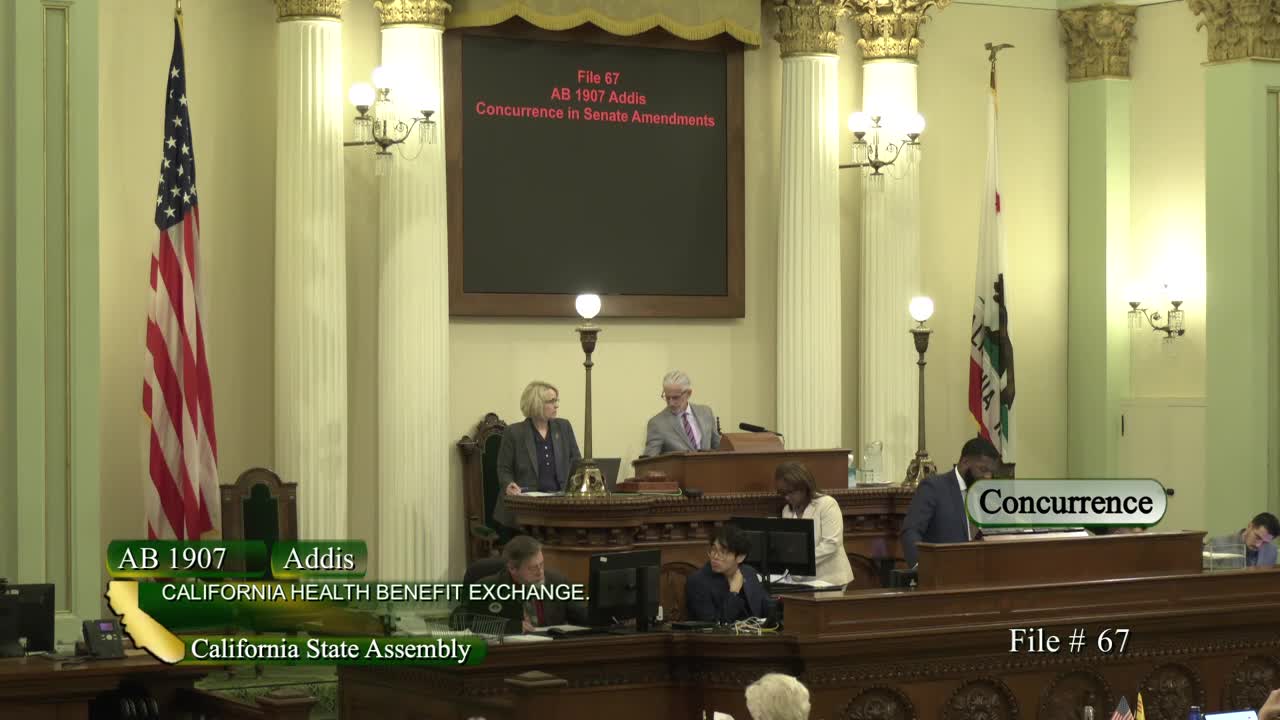
Bill Author
Bill Co-Author(s):