AB 1709: Covered platforms: age restriction: e-Safety Advisory Commission.
- Session Year: 2025-2026
- House: Assembly
- Latest Version Date: 2026-09-10
Current Status:
Passed
(2026-09-10: Chaptered by Secretary of State - Chapter 183, Statutes of 2026.)
Introduced
In Committee
Awaiting First Chamber Vote
Passed First Chamber
In Committee
Awaiting Second Chamber Vote
Passed Second Chamber
Enacted
Existing law, the Protecting Our Kids from Social Media Addiction Act, prohibits an operator of an addictive internet-based service or application from providing an addictive feed, as defined, to a user unless the operator does not have actual knowledge that the user is a minor, as specified, or the operator has obtained verifiable parental consent to provide an addictive feed to the user who is a minor.
Existing law, the Digital Age Assurance Act, beginning January 1, 2027, requires a person who owns, maintains, or controls a software application, as defined, to request age bracket data sent by a real-time secure application programming interface or operating system with respect to a particular user from an operating system provider or a covered application store when the application is downloaded and launched.
This bill would prohibit a covered platform, as defined, from providing an addictive feature, as defined, to a user who is under 16 years of age and would require a covered platform to implement reasonable measures to ensure that users under 16 years of age are not offered or provided any addictive feature on the covered platform. The bill would also authorize the Attorney General to adopt regulations to implement and enforce the bill in order to further the purpose of protecting minors online, including by altering the scope of covered platform if the Attorney General determines that doing so is necessary to ensure that covered platform applies to internet websites, online services, online applications, or mobile applications that make addictive features, as defined, available to users under 16 years of age.
This bill would impose a civil penalty upon a noncompliant platform and would require its provisions to be enforced by a civil action brought only by the Attorney General or a local public prosecutor, as specified.
This bill would also establish the e-Safety Advisory Commission within the Department of Justice as an independent advisory body that is only for administrative purposes to advise state government on certain matters related to online safety and would require the commission to, on or before January 1 of each year, report to the Legislature and the Governor on, among other things, its activities under the bill.
Existing law, the Protecting Our Kids from Social Media Addiction Act, prohibits an operator of an addictive internet-based service or application from providing an addictive feed, as defined, to a user unless the operator does not have actual knowledge that the user is a minor, as specified, or the operator has obtained verifiable parental consent to provide an addictive feed to the user who is a minor.
Existing law, the Digital Age Assurance Act, beginning January 1, 2027, requires a person who owns, maintains, or controls a software application, as defined, to request age bracket data sent by a real-time secure application programming interface or operating system with respect to a particular user from an operating system provider or a covered application store when the application is downloaded and launched.
This bill would prohibit a covered platform, as defined, from providing an addictive feature, as defined, to a user who is under 16 years of age and would require a covered platform to implement reasonable measures to ensure that users under 16 years of age are not offered or provided any addictive feature on the covered platform. The bill would also authorize the Attorney General to, in consultation with the e-Safety Advisory Commission, to adopt regulations to implement and enforce the bill in order to further the purpose of protecting minors online, including by altering the scope of covered platform if the Attorney General determines that doing so is necessary to ensure that covered platform applies to internet websites, online services, online applications, or mobile applications that make addictive features, as defined, available to users under 16 years of age.
This bill would impose a civil penalty upon a noncompliant platform and would require its provisions to be enforced by a civil action brought only by the Attorney General or a local public prosecutor, as specified.
This bill would also establish the e-Safety Advisory Commission within the Department of Justice as an independent advisory body that is only for administrative purposes to advise the Attorney General state government on certain matters related to online safety, including the implementation and enforcement of the provisions described above, safety and would require the commission to, on or before January 1 of each year, report to the Legislature and the Governor on on, among other things, its activities under the bill, as specified. bill.
Existing law, the Protecting Our Kids from Social Media Addiction Act, prohibits an operator of an addictive internet-based service or application from providing an addictive feed, as defined, to a user unless the operator does not have actual knowledge that the user is a minor, as specified, or the operator has obtained verifiable parental consent to provide an addictive feed to the user who is a minor.
Existing law, the Digital Age Assurance Act, beginning January 1, 2027, requires a person who owns, maintains, or controls a software application, as defined, to request age bracket data sent by a real-time secure application programming interface or operating system with respect to a particular user from an operating system provider or a covered application store when the application is downloaded and launched.
This bill would prohibit a covered platform, as defined, from permitting providing an addictive feature, as defined, to a user who is under 16 years of age to create or maintain an account on the covered platform and would require a covered platform to implement reasonable measures to prevent ensure that users under 16 years of age from accessing or using accounts are not offered or provided any addictive feature on the covered platform. The bill would also authorize the Attorney General to, in consultation with the e-Safety Advisory Commission, adopt regulations to implement and enforce the bill in order to further the purpose of protecting minors online, including by altering the scope of covered platform if the Attorney General determines that doing so is necessary to ensure that covered platform applies to internet websites, online services, online applications, or mobile applications that make addictive features, as defined, available to users under 16 years of age.
This bill would impose a civil penalty upon a noncompliant platform and would require its provisions to be enforced by a civil action brought only by the Attorney General or a local public prosecutor, as specified.
This bill would also establish the e-Safety Advisory Commission within the Department of Justice to advise the Attorney General on matters related to online safety, including the implementation and enforcement of the provisions described above, and would require the commission to, on or before January 1 of each year, report to the Legislature and the Governor on its activities under the bill, as specified.
Existing law, the Protecting Our Kids from Social Media Addiction Act, prohibits an operator of an addictive internet-based service or application from providing an addictive feed, as defined, to a user unless the operator does not have actual knowledge that the user is a minor, as specified, or the operator has obtained verifiable parental consent to provide an addictive feed to the user who is a minor.
Existing law, the Digital Age Assurance Act, beginning January 1, 2027, requires a person who owns, maintains, or controls a software application, as defined, to request age bracket data sent by a real-time secure application programming interface or operating system with respect to a particular user from an operating system provider or a covered application store when the application is downloaded and launched.
This bill would prohibit a covered platform, as defined, from permitting a user who is under 16 years of age to create or maintain an account on the covered platform and would require a covered platform to implement reasonable measures to prevent users under 16 years of age from accessing or using accounts on the covered platform. The bill would also authorize the Attorney General to, in consultation with the e-Safety Advisory Commission, adopt regulations to implement and enforce the bill in order to further the purpose of protecting minors online, including by altering the scope of covered platform if the Attorney General determines that doing so is necessary to ensure that covered platform applies to internet websites, online services, online applications, or mobile applications that make addictive features, as defined, available to users under 16 years of age.
This bill would impose an unspecified a civil penalty upon a noncompliant platform and would require its provisions to be enforced by a civil action brought only by the Attorney General or a local public prosecutor. prosecutor, as specified.
This bill would also establish the e-Safety Advisory Commission within the Department of Justice to advise the Attorney General on matters related to online safety, including the implementation and enforcement of the provisions described above, and would require the commission to, on or before January 1 of each year, report to the Legislature and the Governor on its activities under the bill, as specified.
Existing law, the Protecting Our Kids from Social Media Addiction Act, prohibits an operator of an addictive internet-based service or application from providing an addictive feed, as defined, to a user unless the operator does not have actual knowledge that the user is a minor, as specified, or the operator has obtained verifiable parental consent to provide an addictive feed to the user who is a minor.
Existing law, the Digital Age Assurance Act, beginning January 1, 2027, requires a person who owns, maintains, or controls a software application, as defined, to request age bracket data sent by a real-time secure application programming interface or operating system with respect to a particular user from an operating system provider or a covered application store when the application is downloaded and launched.
This bill would prohibit a covered platform platform, as defined, from permitting a user who is under 16 years of age to create or maintain an account on the covered platform and would require a covered platform to implement reasonable measures to prevent users under 16 years of age from accessing or using accounts on the covered platform. The bill would also authorize the Attorney General to, in consultation with the e-Safety Advisory Commission, adopt regulations to implement and enforce the bill in order to further the purpose of protecting minors online, including by altering the scope of covered platform if the Attorney General determines that doing so is necessary to ensure that covered platform applies to internet websites, online services, online applications, or mobile applications that make addictive features, as defined, available to users under 16 years of age.
This bill would impose an unspecified civil penalty upon a noncompliant platform and would require its provisions to be enforced by civil action brought only by the Attorney General, a district attorney, General or a city attorney. local public prosecutor.
This bill would also establish the e-Safety Advisory Commission within the Department of Justice to advise the Attorney General on matters related to online safety, including the implementation and enforcement of the provisions described above, and would require the commission to, on or before January 1 of each year, report to the Legislature and the Governor on its activities under the bill, as specified.
Existing law, the Protecting Our Kids from Social Media Addiction Act, prohibits an operator of an addictive internet-based service or application from providing an addictive feed, as defined, to a user unless the operator does not have actual knowledge that the user is a minor, as specified, or the operator has obtained verifiable parental consent to provide an addictive feed to the user who is a minor.
Existing law, the Digital Age Assurance Act, beginning January 1, 2027, requires a person who owns, maintains, or controls a software application, as defined, to request age bracket data sent by a real-time secure application programming interface or operating system with respect to a particular user from an operating system provider or a covered application store when the application is downloaded and launched.
This bill would prohibit a covered platform from permitting a user who is under 16 years of age to create or maintain an account on the covered platform and would require a covered platform to implement reasonable measures to prevent users under 16 years of age from accessing or using accounts on the covered platform.
This bill would impose an unspecified civil penalty upon a noncompliant platform and would require its provisions to be enforced by civil action brought only by the Attorney General, a district attorney, or a city attorney.
Existing law imposes various requirements on social media platforms, including, among other things, requiring platforms to post terms of service, disclose threat reporting procedures in their terms of service, and maintain a law enforcement contact process, as specified.This bill would declare the intent of the Legislature to enact legislation to establish a minimum age requirement to open or maintain a social media account.Existing law imposes various requirements on social media platforms, including, among other things, requiring platforms to post terms of service, disclose threat reporting procedures in their terms of service, and maintain a law enforcement contact process, as specified.
This bill would declare the intent of the Legislature to enact legislation to establish a minimum age requirement to open or maintain a social media account.
The Legislature finds and declares all of the following:
(a)Social media platforms are intentionally designed to maximize user engagement through features such as algorithmic content recommendation, infinite scroll, autoplay, and notifications, which mirror known behavioral reinforcement systems associated with addiction.
(b)Internal statements from social media company executives and researchers confirm that these platforms are engineered to encourage compulsive use, including through dopamine-driven feedback loops and reward systems designed to keep users returning repeatedly, often without regard to user well-being.
(c)Internal company documents further demonstrate that increasing time spent by young users has been a central business objective, including efforts to attract users at younger ages and maximize engagement during adolescence.
(d)Evidence from internal research and communications within social media companies indicates that employees and leadership have recognized that their products may foster addictive behaviors, including comparisons to slot machine-like reinforcement systems and acknowledgment that some users struggle to disengage despite limited benefit.
(e)Adolescents are uniquely vulnerable to these addictive design features due to ongoing brain development, including underdeveloped executive function, reduced impulse control, and heightened sensitivity to social reward and peer validation.
(f)Internal platform research has acknowledged that minor users are particularly sensitive to reinforcement in the form of social reward, have limited ability to self-regulate usage, and lack the neurological development necessary to effectively control screen time.
(g)Peer-reviewed research demonstrates that problematic social media and internet use is associated with measurable changes in the brains reward system, including increased sensitivity to rewards and structural and functional alterations, particularly among adolescents.
(h)Longitudinal neuroimaging research has found that habitual social media checking behaviors can alter brain development by increasing responsiveness to social rewards, which reinforces compulsive engagement patterns over time.
(i)A growing body of scientific literature shows that excessive and problematic social media use is associated with cognitive and behavioral harms, including diminished attention, reduced cognitive control, impaired memory and analytical skills, and decreased capacity for deep interpersonal interaction.
(j)Studies also demonstrate that problematic social media use is linked to increased psychological distress, including anxiety, depression, and sleep disruption, as well as interference with essential daily activities, including academic responsibilities, physical activity, and in-person social connection.
(k)Experts have concluded that social media harms adolescents at a scale that is sufficient to produce population-level effects on mental health and well-being.
(l)Despite growing evidence of harm, current regulatory frameworks do not adequately address the addictive design of social media platforms or provide consistent protections to prevent early exposure among minors.
(m)The State of California has a compelling interest in protecting children and adolescents from products and environments that are intentionally designed to exploit developmental vulnerabilities and reinforce compulsive use behaviors.
(n)Establishing a minimum age requirement for social media use is a reasonable and evidence-based measure to reduce exposure to addictive digital environments during critical stages of neurological and psychological development.
(o)The creation of an independent e-Safety Advisory Commission is necessary to provide ongoing advice related to digital platform safety, including outlining emerging risks associated with addictive design and ensuring age-appropriate protections for minors.
(p)It is the intent of the Legislature to align digital platform practices with established public health principles and to ensure that technological innovation does not come at the expense of the mental health, development, and well-being of Californias youth.
SEC. 2.Chapter 22.9 (commencing with Section 22682) is added to Division 8 of the Business and Professions Code, to read:22.9.Covered Platform Age Restriction22682.For purposes of this chapter:
(a)Addictive feature means any of the following psychologically exploitative features intended to maximize engagement that foreseeably lead to compulsive use:
(1)An addictive feed.
(2)Autoplay.
(3)Any other feature defined in regulations adopted pursuant to Section 22685 as an addictive feature.
(b)Addictive feed means an internet website, online service, online application, or mobile application, or a portion thereof, in which multiple pieces of media generated or shared by users are, either concurrently or sequentially, recommended, selected, or prioritized for display to a user based, in whole or in part, on information provided by the user, or otherwise associated with the user or the users device, unless any of the following conditions are met, alone or in combination with one another:
(1)The information is not persistently associated with the user or users device and does not concern the users previous interactions with media generated or shared by others.
(2)The information consists of search terms that are not persistently associated with the user or users device.
(3)The information consists of user-selected privacy or accessibility settings, technical information concerning the users device, or device communications or signals concerning whether the user is a minor.
(4)The user expressly and unambiguously requested the specific media or media by the author, creator, or poster of the media, or the blocking, prioritization, or deprioritization of that media, provided that the media is not recommended, selected, or prioritized for display based, in whole or in part, on other information associated with the user or the users device, except as otherwise permitted by this chapter and, in the case of audio or video content, is not automatically played.
(5)The media consists of direct, private communications between users.
(6)The media recommended, selected, or prioritized for display is exclusively the next media in a preexisting sequence from the same author, creator, poster, or source and, if the media is audio or video content, is not automatically played.
(7)The recommendation, selection, or prioritization of the media is necessary to comply with this chapter or any regulations adopted pursuant to this chapter.
(c)(1)Covered platform means, subject to regulations adopted pursuant to Section 22685, an internet website, online service, online application, or mobile application, including, but not limited to, a social media platform, as defined in Section 22675, that offers users or provides users with an addictive feature as a significant part of the service provided by that internet website, online service, online application, or mobile application.
(2)Covered platform does not include either of the following:
(A)An internet website, online service, online application, or mobile application for which interactions between users are limited to commercial transactions or to consumer reviews of products, sellers, services, events, or places, or any combination thereof.
(B)An internet website, online service, online application, or mobile application that operates a feed for the primary purpose of cloud storage.
(d)Personal information has the meaning defined in Section 1798.140 of the Civil Code.
(e)Social media platform has the same meaning defined in Section 22675.
(f)User means a natural person who resides in the state and accesses or seeks to create an account on a covered platform.
22683.(a)(1)A covered platform shall not provide an addictive feature to a user who is under 16 years of age.
(2)This subdivision does not prohibit a covered platform from permitting a user who is under 16 years of age to create or maintain an account on the covered platform if that user is not provided with any addictive feature.
(b)A covered platform shall implement reasonable measures to ensure that users under 16 years of age are not provided any addictive feature on the covered platform.
22684.(a)(1)Before providing an addictive feature to a user, a covered platform shall verify the age of a user pursuant to the Digital Age Assurance Act (Title 1.81.9 (commencing with Section 1798.500) of Part 4 of Division 3 of the Civil Code) subject to any regulation adopted by the Attorney General pursuant to Section 22685.
(2)If a covered platform is unable to verify the age of the user pursuant to paragraph (1), the covered platform shall instead rely on the age determination with respect to the user made pursuant to subparagraph (B) of paragraph (1) of subdivision (a) of Section 27001 of the Health and Safety Code.
(b)(1)Except as provided in paragraph (2), a covered platform shall delete the account of a user under 16 years of age and any personal information associated with the user of the account.
(2)This subdivision does not apply to a covered platform that permits a user under 16 years of age to create or maintain an account on the platform pursuant to paragraph (2) of subdivision (a) of Section 22683.
22685.(a)The Attorney General may adopt regulations to implement and enforce this chapter in order to further the purpose of protecting minors online.
(b)Pursuant to subdivision (a), the Attorney General may alter the scope of covered platform if the Attorney General determines that doing so is necessary to ensure that covered platform applies to internet websites, online services, online applications, or mobile applications that make addictive features available to users under 16 years of age.
22686.(a)This chapter shall be enforced by a civil action brought only by the Attorney General, or a local public prosecutor.
(b)A covered platform that violates this chapter shall be subject to a civil penalty of the following:
(1)Up to fifty thousand dollars ($50,000) per affected minor for a knowing violation.
(2)Up to twenty-five thousand dollars ($25,000) per affected minor for a negligent violation.
(c)In assessing a civil penalty under this section, a court shall consider the size of the covered platform, the severity and duration of the violation, and the covered platforms good faith efforts to comply with this chapter.
SEC. 3.Chapter 5.4 (commencing with Section 11530) is added to Part 1 of Division 3 of Title 2 of the Government Code, to read:5.4.e-Safety Advisory Commission11530.As used in this chapter:
(a)Commission means the independent e-Safety Advisory Commission established pursuant to this chapter.
(b)Covered entity means a person that provides online services subject to age assurance requirements under state or federal law.
(c)Minimum age means 16 years of age.
11530.1.(a)(1)The e-Safety Advisory Commission is hereby established as an independent advisory body that is only for administrative purposes within the Department of Justice.
(2)The commission shall not be considered a part of the Department of Justice for any other purpose, including for purposes of Section 11043. The commission is purely advisory. The commissions advice and recommendations are not binding upon, and shall not be imputed to, any agency or department of the state.
(b)(1)The e-Safety Advisory Commission shall consist of members who possess relevant expertise.
(2)The commission shall include individuals with expertise or experience in one or more of the following areas:
(A)Pediatrics.
(B)Child psychology, adolescent psychology, or social psychology.
(C)Technology, including platform design, online safety, or age assurance technologies.
(D)Civil society organizations with expertise in childrens online safety, online safety, or public health.
(E)Advocacy on behalf of marginalized youth, including, but not limited to, youth of color, foster youth, or youth with disabilities.
(F)Academia or research related to child development, public health, or online safety.
(G)Education, specifically those with expertise in K12 education.
(3)At least one member of the commission shall have experience working on LGBTQ+ civil rights or statewide public policy related to LGBTQ+ youth.
(c)The commission shall select a chair and a vice chair from among its members and shall consist of the following seven members:
(1)Four appointees by the Governor.
(2)One appointee by the President pro Tempore of the Senate.
(3)One appointee by the Speaker of the Assembly.
(4)One appointee by the Attorney General.
(d)A member of the commission shall be subject to the Political Reform Act of 1974 (Title 9 (commencing with Section 81000)).
(e)A member of the commission shall serve at the pleasure of the appointing authority for a maximum of eight consecutive years.
(f)A member of the commission shall serve without compensation but shall be reimbursed for all necessary expenses actually incurred in the performance of the members duties.
11530.2.(a)The commission may provide advice and recommendations to state government regarding all of the following:
(1)The state of age assurance and age assurance technologies, including their effectiveness, privacy implications, accuracy, and feasibility for implementation by covered entities.
(2)Feedback from social media users, parents of minors, and online safety and childrens safety organizations regarding the implementation of the states online safety laws.
(3)The differential impact of online age restrictions on various groups, including youth of different ages, backgrounds, and identities.
(4)Harmful design features in covered entities and their impacts on youth health and well-being.
(5)Safety practices of covered entities to protect children.
(6)State agency rulemaking under Section 22685 of the Business and Professions Code.
(7)Safe access to online community for isolated LGBTQ+ youth.
(b)On or before January 1 of each year, the commission shall report to the Legislature, pursuant to Section 9795, and the Governor on all of the following:
(1)The commissions activities under this chapter.
(2)Proposed actions taken and proposed statutory changes.
(3)Recommendations for legislative changes to enhance the protection of minors online.
SEC. 4.The provisions of this act are severable. If any provision of this act or its application is held invalid, that invalidity shall not affect other provisions or applications that can be given effect without the invalid provision or application.
The Legislature finds and declares all of the following:
(a)Social media platforms are intentionally designed to maximize user engagement through features such as algorithmic content recommendation, infinite scroll, autoplay, and notifications, which mirror known behavioral reinforcement systems associated with addiction.
(b)Internal statements from social media company executives and researchers confirm that these platforms are engineered to encourage compulsive use, including through dopamine-driven feedback loops and reward systems designed to keep users returning repeatedly, often without regard to user well-being.
(c)Internal company documents further demonstrate that increasing time spent by young users has been a central business objective, including efforts to attract users at younger ages and maximize engagement during adolescence.
(d)Evidence from internal research and communications within social media companies indicates that employees and leadership have recognized that their products may foster addictive behaviors, including comparisons to slot machine-like reinforcement systems and acknowledgment that some users struggle to disengage despite limited benefit.
(e)Adolescents are uniquely vulnerable to these addictive design features due to ongoing brain development, including underdeveloped executive function, reduced impulse control, and heightened sensitivity to social reward and peer validation.
(f)Internal platform research has acknowledged that minor users are particularly sensitive to reinforcement in the form of social reward, have limited ability to self-regulate usage, and lack the neurological development necessary to effectively control screen time.
(g)Peer-reviewed research demonstrates that problematic social media and internet use is associated with measurable changes in the brains reward system, including increased sensitivity to rewards and structural and functional alterations, particularly among adolescents.
(h)Longitudinal neuroimaging research has found that habitual social media checking behaviors can alter brain development by increasing responsiveness to social rewards, which reinforces compulsive engagement patterns over time.
(i)A growing body of scientific literature shows that excessive and problematic social media use is associated with cognitive and behavioral harms, including diminished attention, reduced cognitive control, impaired memory and analytical skills, and decreased capacity for deep interpersonal interaction.
(j)Studies also demonstrate that problematic social media use is linked to increased psychological distress, including anxiety, depression, and sleep disruption, as well as interference with essential daily activities, including academic responsibilities, physical activity, and in-person social connection.
(k)Experts have concluded that social media harms adolescents at a scale that is sufficient to produce population-level effects on mental health and well-being.
(l)Despite growing evidence of harm, current regulatory frameworks do not adequately address the addictive design of social media platforms or provide consistent protections to prevent early exposure among minors.
(m)The State of California has a compelling interest in protecting children and adolescents from products and environments that are intentionally designed to exploit developmental vulnerabilities and reinforce compulsive use behaviors.
(n)Establishing a minimum age requirement for social media use is a reasonable and evidence-based measure to reduce exposure to addictive digital environments during critical stages of neurological and psychological development.
(o)The creation of an independent e-Safety Advisory Commission is necessary to provide ongoing advice related to digital platform safety, including outlining emerging risks associated with addictive design and ensuring age-appropriate protections for minors.
(p)It is the intent of the Legislature to align digital platform practices with established public health principles and to ensure that technological innovation does not come at the expense of the mental health, development, and well-being of Californias youth.
SEC. 2.Chapter 22.9 (commencing with Section 22682) is added to Division 8 of the Business and Professions Code, to read:22.9.Covered Platform Age Restriction22682.For purposes of this chapter:
(a)Addictive feature means any of the following psychologically exploitative features intended to maximize engagement that foreseeably lead to compulsive use:
(1)An addictive feed.
(2)Autoplay.
(3)Any other feature defined in regulations adopted pursuant to Section 22685 as an addictive feature.
(b)Addictive feed means an internet website, online service, online application, or mobile application, or a portion thereof, in which multiple pieces of media generated or shared by users are, either concurrently or sequentially, recommended, selected, or prioritized for display to a user based, in whole or in part, on information provided by the user, or otherwise associated with the user or the users device, unless any of the following conditions are met: met, alone or in combination with one another:
(1)The information is not persistently associated with the user or users device and does not concern the users previous interactions with media generated or shared by others.
(2)The information consists of search terms that are not persistently associated with the user or users device.
(3)The information consists of user-selected privacy or accessibility settings, technical information concerning the users device, or device communications or signals concerning whether the user is a minor.
(4)The user expressly and unambiguously requested the specific media or media by the author, creator, or poster of the media, or the blocking, prioritization, or deprioritization of that media, provided that the media is not recommended, selected, or prioritized for display based, in whole or in part, on other information associated with the user or the users device, except as otherwise permitted by this chapter and, if the media is in the case of audio or video content, is not automatically played.
(5)The media consists of direct, private communications between users.
(6)The media recommended, selected, or prioritized for display is exclusively the next media in a preexisting sequence from the same author, creator, poster, or source and, if the media is audio or video content, is not automatically played.
(7)The recommendation, selection, or prioritization of the media is necessary to comply with state or federal law. this chapter or any regulations adopted pursuant to this chapter.
(c)(1)Covered platform means, subject to regulations adopted pursuant to Section 22685, an internet website, online service, online application, or mobile application, including, but not limited to, a social media platform, as defined in Section 22675, that offers users or provides users with an addictive feature as a significant part of the service provided by that internet website, online service, online application, or mobile application.
(2)Covered platform does not include either of the following:
(A)An internet website, online service, online application, or mobile application for which interactions between users are limited to commercial transactions or to consumer reviews of products, sellers, services, events, or places, or any combination thereof.
(B)An internet website, online service, online application, or mobile application that operates a feed for the primary purpose of cloud storage.
(d)Personal information has the meaning defined in Section 1798.140 of the Civil Code.
(e)Social media platform has the same meaning defined in Section 22675.
(e)(f)User means a natural person who resides in the state and accesses or seeks to create an account on a covered platform.
22683.(a)(1)A covered platform shall not provide an addictive feature to a user who is under 16 years of age.
(2)This subdivision does not prohibit a covered platform from permitting a user who is under 16 years of age to create or maintain an account on the covered platform if that user is not provided with any addictive feature.
(b)A covered platform shall implement reasonable measures to ensure that users under 16 years of age are not provided any addictive feature on the covered platform.
22684.(a)(1)Before providing an addictive feature to a user, a covered platform shall verify the age of a user pursuant to the Digital Age Assurance Act (Title 1.81.9 (commencing with Section 1798.500) of Part 4 of Division 3 of the Civil Code) subject to any regulation adopted by the Attorney General pursuant to Section 22685.
(2)If a covered platform is unable to verify the age of the user pursuant to paragraph (1), the covered platform shall instead rely on the age determination with respect to the user made pursuant to subparagraph (B) of paragraph (1) of subdivision (a) of Section 27001 of the Health and Safety Code.
(b)(1)Except as provided in paragraph (2), a covered platform shall delete the account of a user under 16 years of age and any personal information associated with the user of the account.
(2)This subdivision does not apply to a covered platform that permits a user under 16 years of age to create or maintain an account on the platform pursuant to paragraph (2) of subdivision (a) of Section 22683.
22685.(a)The Attorney General may adopt regulations to implement and enforce this chapter in order to further the purpose of protecting minors online.
(b)Pursuant to subdivision (a), the Attorney General may alter the scope of covered platform if the Attorney General determines that doing so is necessary to ensure that covered platform applies to internet websites, online services, online applications, or mobile applications that make addictive features available to users under 16 years of age.
22686.(a)This chapter shall be enforced by a civil action brought only by the Attorney General, or a local public prosecutor.
(b)A covered platform that violates this chapter shall be subject to a civil penalty of the following:
(1)Up to fifty thousand dollars ($50,000) per affected minor for a knowing violation.
(2)Up to twenty-five thousand dollars ($25,000) per affected minor for a negligent violation.
(c)In assessing a civil penalty under this section, a court shall consider the size of the covered platform, the severity and duration of the violation, and the covered platforms good faith efforts to comply with this chapter.
SEC. 3.Chapter 5.4 (commencing with Section 11530) is added to Part 1 of Division 3 of Title 2 of the Government Code, to read:5.4.e-Safety Advisory Commission11530.As used in this chapter:
(a)Commission means the independent e-Safety Advisory Commission established pursuant to this chapter.
(b)Covered entity means a person that provides online services subject to age assurance requirements under state or federal law.
(c)Minimum age means 16 years of age.
11530.1.(a)(1)The e-Safety Advisory Commission is hereby established as an independent advisory body that is only for administrative purposes within the Department of Justice.
(2)The commission shall not be considered a part of the Department of Justice for any other purpose, including for purposes of Section 11043. The commission is purely advisory. The commissions advice and recommendations are not binding upon, and shall not be imputed to, any agency or department of the state.
(b)(1)The e-Safety Advisory Commission shall consist of members who possess relevant expertise.
(2)The commission shall include individuals with expertise or experience in one or more of the following areas:
(A)Pediatrics.
(B)Child psychology, adolescent psychology, or social psychology.
(C)Technology, including platform design, online safety, or age assurance technologies.
(D)Civil society organizations with expertise in childrens online safety, online safety, or public health.
(E)Advocacy on behalf of marginalized youth, including, but not limited to, LGBTQ+ youth, youth of color, foster youth, or youth with disabilities.
(F)Academia or research related to child development, public health, or online safety.
(G)Education, specifically those with expertise in K12 education.
(3)At least one member of the commission shall have experience working on LGBTQ+ civil rights or statewide public policy related to LGBTQ+ youth.
(c)The commission shall select a chair and a vice chair from among its members and shall consist of the following five seven members:
(1)Two Four appointees by the Governor.
(2)One appointee by the President pro Tempore of the Senate.
(3)One appointee by the Speaker of the Assembly.
(4)One appointee by the Attorney General.
(d)A member of the commission shall be subject to the Political Reform Act of 1974 (Title 9 (commencing with Section 81000)).
(e)A member of the commission shall serve at the pleasure of the appointing authority for a maximum of eight consecutive years.
(f)A member of the commission shall serve without compensation but shall be reimbursed for all necessary expenses actually incurred in the performance of the members duties.
11530.2.(a)The commission may provide advice and recommendations to state government regarding all of the following:
(1)The state of age assurance and age assurance technologies, including their effectiveness, privacy implications, accuracy, and feasibility for implementation by covered entities.
(2)Feedback from social media users, parents of minors, and online safety and childrens safety organizations regarding the implementation of the states online safety laws.
(3)The differential impact of online age restrictions on various groups, including youth of different ages, backgrounds, and identities.
(4)Harmful design features in covered entities and their impacts on youth health and well-being.
(5)Safety practices of covered entities to protect children.
(6)State agency rulemaking under Section 22685 of the Business and Professions Code.
(7)Safe access to online community for isolated LGBTQ+ youth.
(b)On or before January 1 of each year, the commission shall report to the Legislature, pursuant to Section 9795, and the Governor on all of the following:
(1)The commissions activities under this chapter.
(2)Proposed actions taken and proposed statutory changes.
(3)Recommendations for legislative changes to enhance the protection of minors online.
SEC. 4.The provisions of this act are severable. If any provision of this act or its application is held invalid, that invalidity shall not affect other provisions or applications that can be given effect without the invalid provision or application.
The Legislature finds and declares all of the following:
(a)Social media platforms are intentionally designed to maximize user engagement through features such as algorithmic content recommendation, infinite scroll, autoplay, and notifications, which mirror known behavioral reinforcement systems associated with addiction.
(b)Internal statements from social media company executives and researchers confirm that these platforms are engineered to encourage compulsive use, including through dopamine-driven feedback loops and reward systems designed to keep users returning repeatedly, often without regard to user well-being.
(c)Internal company documents further demonstrate that increasing time spent by young users has been a central business objective, including efforts to attract users at younger ages and maximize engagement during adolescence.
(d)Evidence from internal research and communications within social media companies indicates that employees and leadership have recognized that their products may foster addictive behaviors, including comparisons to slot machine-like reinforcement systems and acknowledgment that some users struggle to disengage despite limited benefit.
(e)Adolescents are uniquely vulnerable to these addictive design features due to ongoing brain development, including underdeveloped executive function, reduced impulse control, and heightened sensitivity to social reward and peer validation.
(f)Internal platform research has acknowledged that minor users are particularly sensitive to reinforcement in the form of social reward, have limited ability to self-regulate usage, and lack the neurological development necessary to effectively control screen time.
(g)Peer-reviewed research demonstrates that problematic social media and internet use is associated with measurable changes in the brains reward system, including increased sensitivity to rewards and structural and functional alterations, particularly among adolescents.
(h)Longitudinal neuroimaging research has found that habitual social media checking behaviors can alter brain development by increasing responsiveness to social rewards, which reinforces compulsive engagement patterns over time.
(i)A growing body of scientific literature shows that excessive and problematic social media use is associated with cognitive and behavioral harms, including diminished attention, reduced cognitive control, impaired memory and analytical skills, and decreased capacity for deep interpersonal interaction.
(j)Studies also demonstrate that problematic social media use is linked to increased psychological distress, including anxiety, depression, and sleep disruption, as well as interference with essential daily activities, including academic responsibilities, physical activity, and in-person social connection.
(k)Experts have concluded that social media harms adolescents at a scale that is sufficient to produce population-level effects on mental health and well-being.
(l)Despite growing evidence of harm, current regulatory frameworks do not adequately address the addictive design of social media platforms or provide consistent protections to prevent early exposure among minors.
(m)The State of California has a compelling interest in protecting children and adolescents from products and environments that are intentionally designed to exploit developmental vulnerabilities and reinforce compulsive use behaviors.
(n)Establishing a minimum age requirement for social media use is a reasonable and evidence-based measure to reduce exposure to addictive digital environments during critical stages of neurological and psychological development.
(o)The creation of the an independent e-Safety Advisory Commission is necessary to provide ongoing oversight, research, and enforcement advice related to digital platform safety, including addressing outlining emerging risks associated with addictive design and ensuring age-appropriate protections for minors.
(p)It is the intent of the Legislature to align digital platform practices with established public health principles and to ensure that technological innovation does not come at the expense of the mental health, development, and well-being of Californias youth.
SEC. 2.Chapter 22.9 (commencing with Section 22682) is added to Division 8 of the Business and Professions Code, to read:22.9.Covered Platform Age Restriction22682.For purposes of this chapter:
(a)Addictive feature means any of the following psychologically exploitative features intended to maximize engagement that foreseeably lead to compulsive use:
(1)An addictive feed.
(2)Autoplay.
(3)Any other feature defined in regulations adopted pursuant to Section 22685 as an addictive feature.
(b)Addictive feed means an internet website, online service, online application, or mobile application, or a portion thereof, in which multiple pieces of media generated or shared by users are, either concurrently or sequentially, recommended, selected, or prioritized for display to a user based, in whole or in part, on information provided by the user, or otherwise associated with the user or the users device, unless any of the following conditions are met:
(1)The information is not persistently associated with the user or users device and does not concern the users previous interactions with media generated or shared by others.
(2)The information consists of search terms that are not persistently associated with the user or users device.
(3)The information consists of user-selected privacy or accessibility settings, technical information concerning the users device, or device communications or signals concerning whether the user is a minor.
(4)The user expressly and unambiguously requested the specific media or media by the author, creator, or poster of the media, or the blocking, prioritization, or deprioritization of that media, provided that the media is not recommended, selected, or prioritized for display based, in whole or in part, on other information associated with the user or the users device, except as otherwise permitted by this chapter and, if the media is audio or video content, is not automatically played.
(5)The media consists of direct, private communications between users.
(6)The media recommended, selected, or prioritized for display is exclusively the next media in a preexisting sequence from the same author, creator, poster, or source and, if the media is audio or video content, is not automatically played.
(7)The recommendation, selection, or prioritization of the media is necessary to comply with state or federal law.
(c)(1)Covered platform means, subject to regulations adopted pursuant to Section 22685, an internet website, online service, online application, or mobile application, including, but not limited to, a social media platform, as defined in Section 22675, that offers users or provides users with an addictive feature as a significant part of the service provided by that internet website, online service, online application, or mobile application.
(2)Covered platform does not include either of the following:
(A)An internet website, online service, online application, or mobile application for which interactions between users are limited to commercial transactions or to consumer reviews of products, sellers, services, events, or places, or any combination thereof.
(B)An internet website, online service, online application, or mobile application that operates a feed for the primary purpose of cloud storage.
(d)Personal information has the meaning defined in Section 1798.140 of the Civil Code.
(e)User means a natural person who resides in the state and accesses or seeks to create an account on a covered platform.
22683.(a)(1)A covered platform shall not provide an addictive feature to a user who is under 16 years of age.
(2)This subdivision does not prohibit a covered platform from permitting a user who is under 16 years of age to create or maintain an account on the covered platform if that user is not provided with any addictive feature.
(b)A covered platform shall implement reasonable measures to ensure that users under 16 years of age are not offered or provided any addictive feature on the covered platform.
22684.(a)(1)A Before providing an addictive feature to a user, a covered platform shall verify the age of a user pursuant to the Digital Age Assurance Act (Title 1.81.9 (commencing with Section 1798.500) of Part 4 of Division 3 of the Civil Code) subject to any regulation adopted by the Attorney General pursuant to Section 22685.
(2)If a covered platform is unable to verify the age of the user pursuant to paragraph (1), the covered platform shall instead rely on the age determination with respect to the user made pursuant to subparagraph (B) of paragraph (1) of subdivision (a) of Section 27001 of the Health and Safety Code.
(b)(1)Except as provided in paragraph (2), a covered platform shall delete the account of a user under 16 years of age and any personal information associated with the user of the account.
(2)This subdivision does not apply to a covered platform that permits a user under 16 years of age to create or maintain an account on the platform pursuant to paragraph (2) of subdivision (a) of Section 22683.
22685.(a)The Attorney General may, in consultation with the e-Safety Advisory Commission, may adopt regulations to implement and enforce this chapter in order to further the purpose of protecting minors online.
(b)Pursuant to subdivision (a), the Attorney General may alter the scope of covered platform if the Attorney General determines that doing so is necessary to ensure that covered platform applies to internet websites, online services, online applications, or mobile applications that make addictive features available to users under 16 years of age.
22686.(a)This chapter shall be enforced by a civil action brought only by the Attorney General, or a local public prosecutor.
(b)A covered platform that violates this chapter shall be subject to a civil penalty of the following:
(1)Up to fifty thousand dollars ($50,000) per affected minor for a knowing violation.
(2)Up to twenty-five thousand dollars ($25,000) per affected minor for a negligent violation.
(c)In assessing a civil penalty under this section, a court shall consider the size of the covered platform, the severity and duration of the violation, and the covered platforms good faith efforts to comply with this chapter.
SEC. 3.Chapter 5.4 (commencing with Section 11530) is added to Part 1 of Division 3 of Title 2 of the Government Code, to read:5.4.e-Safety Advisory Commission11530.As used in this chapter:
(a)Commission means the independent e-Safety Advisory Commission established pursuant to this chapter.
(b)Covered entity means a person that provides online services subject to age verification assurance requirements under state or federal law.
(c)Minimum age means 16 years of age.
11530.1.(a)(1)The e-Safety Advisory Commission is hereby established as an independent advisory body that is only for administrative purposes within the Department of Justice.
(2)The commission shall not be considered a part of the Department of Justice for any other purpose, including for purposes of Section 11043. The commission is purely advisory. The commissions advice and recommendations are not binding upon, and shall not be imputed to, any agency or department of the state.
(b)(1)The e-Safety Advisory Commission shall consist of members who possess relevant expertise.
(2)The commission shall include individuals with expertise or experience in one or more of the following areas:
(A)Pediatrics.
(B)Child psychology, adolescent psychology, or social psychology.
(C)Technology, including platform design, online safety, or age assurance technologies.
(D)Civil society organizations with expertise in childrens online safety, online safety, or public health.
(E)Advocacy on behalf of marginalized youth, including, but not limited to, LGBTQ+ youth, youth of color, foster youth, or youth with disabilities.
(F)Academia or research related to child development, public health, or online safety.
(G)Education, specifically those with expertise in K12 education.
(c)The commission shall select a chair and a vice chair from among its members and shall consist of the following five members:
(1)Two appointees by the Governor.
(2)One appointee by the President pro Tempore of the Senate.
(3)One appointee by the Speaker of the Assembly.
(4)One appointee by the Attorney General.
(b)(d)A member of the commission shall meet all of the following criteria: be subject to the Political Reform Act of 1974 (Title 9 (commencing with Section 81000)).
(1)The member shall be free of direct and indirect external influence and shall not seek or take instructions from another.(2)The member shall not take an action or engage in an occupation, whether gainful or not, that is incompatible with the members duties.(3)The member shall not, either at the time of the members appointment or during the members term, have a financial interest in an entity that is subject to regulation by the commission.(4)The(e)A member of the commission shall serve at the pleasure of the appointing authority for a maximum of eight consecutive years.
(f)A member of the commission shall serve without compensation but shall be reimbursed for all necessary expenses actually incurred in the performance of the members duties.
11530.2.(a)The commission shall advise the Attorney General on may provide advice and recommendations to state government regarding all of the following:
(1)The implementation and enforcement of Chapter 22.9 (commencing with Section 22682) of Division 8 of the Business and Professions Code.(2)(1)The state of age assurance and age verification assurance technologies, including their effectiveness, privacy implications, accuracy, and feasibility for implementation by covered entities.
(3)Covered entity compliance with the states online safety laws.(4)(2)Feedback from social media users, parents of minors, and online safety and childrens safety organizations regarding the implementation of the states online safety laws.
(5)(3)The differential impact of online age restrictions on various groups, including youth of different ages, backgrounds, and identities.
(6)Proposed and enacted online safety laws in other jurisdictions.(7)(4)Harmful design features in covered entities and their impacts on youth health and well-being.
(8)(5)Safety practices of covered entities to protect children.
(6)State agency rulemaking under Section 22685 of the Business and Professions Code.
(b)On or before January 1 of each year, the commission shall report to the Legislature, pursuant to Section 9795, and the Governor on all of the following:
(1)The commissions activities under this chapter.
(2)Compliance rates among covered entities.(3)Enforcement(2)Proposed actions taken and proposed statutory changes.
(4)(3)Recommendations for legislative changes to enhance the protection of minors online.
SEC. 4.The provisions of this act are severable. If any provision of this act or its application is held invalid, that invalidity shall not affect other provisions or applications that can be given effect without the invalid provision or application.
The Legislature finds and declares all of the following:
(a)Social media platforms are intentionally designed to maximize user engagement through features such as algorithmic content recommendation, infinite scroll, autoplay, and notifications, which mirror known behavioral reinforcement systems associated with addiction.
(b)Internal statements from social media company executives and researchers confirm that these platforms are engineered to encourage compulsive use, including through dopamine-driven feedback loops and reward systems designed to keep users returning repeatedly, often without regard to user well-being.
(c)Internal company documents further demonstrate that increasing time spent by young users has been a central business objective, including efforts to attract users at younger ages and maximize engagement during adolescence.
(d)Evidence from internal research and communications within social media companies indicates that employees and leadership have recognized that their products may foster addictive behaviors, including comparisons to slot machine-like reinforcement systems and acknowledgment that some users struggle to disengage despite limited benefit.
(e)Adolescents are uniquely vulnerable to these addictive design features due to ongoing brain development, including underdeveloped executive function, reduced impulse control, and heightened sensitivity to social reward and peer validation.
(f)Internal platform research has acknowledged that minor users are particularly sensitive to reinforcement in the form of social reward, have limited ability to self-regulate usage, and lack the neurological development necessary to effectively control screen time.
(g)Peer-reviewed research demonstrates that problematic social media and internet use is associated with measurable changes in the brains reward system, including increased sensitivity to rewards and structural and functional alterations, particularly among adolescents.
(h)Longitudinal neuroimaging research has found that habitual social media checking behaviors can alter brain development by increasing responsiveness to social rewards, which reinforces compulsive engagement patterns over time.
(i)A growing body of scientific literature shows that excessive and problematic social media use is associated with cognitive and behavioral harms, including diminished attention, reduced cognitive control, impaired memory and analytical skills, and decreased capacity for deep interpersonal interaction.
(j)Studies also demonstrate that problematic social media use is linked to increased psychological distress, including anxiety, depression, and sleep disruption, as well as interference with essential daily activities, including academic responsibilities, physical activity, and in-person social connection.
(k)Experts have concluded that social media harms adolescents at a scale that is sufficient to produce population-level effects on mental health and well-being.
(l)Despite growing evidence of harm, current regulatory frameworks do not adequately address the addictive design of social media platforms or provide consistent protections to prevent early exposure among minors.
(m)The State of California has a compelling interest in protecting children and adolescents from products and environments that are intentionally designed to exploit developmental vulnerabilities and reinforce compulsive use behaviors.
(n)Establishing a minimum age requirement for social media use is a reasonable and evidence-based measure to reduce exposure to addictive digital environments during critical stages of neurological and psychological development.
(o)The creation of the eSafety e-Safety Advisory Commission is necessary to provide ongoing oversight, research, and enforcement related to digital platform safety, including addressing emerging risks associated with addictive design and ensuring age-appropriate protections for minors.
(p)It is the intent of the Legislature to align digital platform practices with established public health principles and to ensure that technological innovation does not come at the expense of the mental health, development, and well-being of Californias youth.
SEC. 2.Chapter 22.9 (commencing with Section 22682) is added to Division 8 of the Business and Professions Code, to read:22.9.Covered Platform Age Restriction22682.For purposes of this chapter:
(a)Addictive feature means a any of the following psychologically exploitative feature features intended to maximize engagement that foreseeably leads lead to compulsive use, including, but not limited to, notifications, addictive feeds, endless scrolls, autoplay, and their functional equivalents, including any feature that learns from user information or behavior in order to prolong engagement with a particular internet website, online service, online application, or mobile application. use:
(1)An addictive feed.
(2)Autoplay.
(3)Any other feature defined in regulations adopted pursuant to Section 22685 as an addictive feature.
(b)Addictive feed means an internet website, online service, online application, or mobile application, or a portion thereof, in which multiple pieces of media generated or shared by users are, either concurrently or sequentially, recommended, selected, or prioritized for display to a user based, in whole or in part, on information provided by the user, or otherwise associated with the user or the users device, unless any of the following conditions are met:
(1)The information is not persistently associated with the user or users device and does not concern the users previous interactions with media generated or shared by others.
(2)The information consists of search terms that are not persistently associated with the user or users device.
(3)The information consists of user-selected privacy or accessibility settings, technical information concerning the users device, or device communications or signals concerning whether the user is a minor.
(4)The user expressly and unambiguously requested the specific media or media by the author, creator, or poster of the media, or the blocking, prioritization, or deprioritization of that media, provided that the media is not recommended, selected, or prioritized for display based, in whole or in part, on other information associated with the user or the users device, except as otherwise permitted by this chapter and, if the media is audio or video content, is not automatically played.
(5)The media consists of direct, private communications between users.
(6)The media recommended, selected, or prioritized for display is exclusively the next media in a preexisting sequence from the same author, creator, poster, or source and, if the media is audio or video content, is not automatically played.
(7)The recommendation, selection, or prioritization of the media is necessary to comply with state or federal law.
(c)(1)Covered platform means, subject to regulations adopted pursuant to Section 22687, 22685, an internet website, online service, online application, or mobile application, including, but not limited to, a social media platform, as defined in Section 22675, that offers users or provides users with an addictive feed feature as a significant part of the service provided by that internet website, online service, online application, or mobile application.
(2)Covered platform does not include either of the following:
(A)An internet website, online service, online application, or mobile application for which interactions between users are limited to commercial transactions or to consumer reviews of products, sellers, services, events, or places, or any combination thereof.
(B)An internet website, online service, online application, or mobile application that operates a feed for the primary purpose of cloud storage.
(d)Personal information has the meaning defined in Section 1798.140 of the Civil Code.
(e)User means a natural person who resides in the state and accesses or seeks to create an account on a covered platform.
22683.(a)(1)A covered platform shall not permit provide an addictive feature to a user who is under 16 years of age to create or maintain an account on the covered platform. age.
(2)This subdivision does not prohibit a covered platform from permitting a user who is under 16 years of age to create or maintain an account on the covered platform if that user is not provided with any addictive feature.
(b)A covered platform shall implement reasonable measures to prevent ensure that users under 16 years of age from accessing or using accounts are not offered or provided any addictive feature on the covered platform.
22684.(a)(1)A covered platform shall verify the age of a user pursuant to the Digital Age Assurance Act (Title 1.81.9 (commencing with Section 1798.500) of Part 4 of Division 3 of the Civil Code) subject to any regulation adopted by the Attorney General pursuant to Section 22686. 22685.
(2)If a covered platform is unable to verify the age of the user pursuant to paragraph (1), the covered platform shall instead rely on the age determination with respect to the user made pursuant to subparagraph (B) of paragraph (1) of subdivision (a) of Section 27001 of the Health and Safety Code.
(b)A (1)Except as provided in paragraph (2), a covered platform shall delete the account of a user under 16 years of age and any personal information associated with the user of the account.
(2)This subdivision does not apply to a covered platform that permits a user under 16 years of age to create or maintain an account on the platform pursuant to paragraph (2) of subdivision (a) of Section 22683.
22685.(a)Personal information collected for age assurance under this chapter shall be all of the following:(1)Used solely for age-related eligibility determinations.(2)Retained only for the minimum period necessary to complete the verification process.(3)Not used for advertising, profiling, or algorithmic recommendation purposes.(b)A covered platform shall implement reasonable security procedures and practices to protect age assurance data from unauthorized access, use, or disclosure.22686.22685.(a)The Attorney General may, in consultation with the e-Safety Advisory Commission, adopt regulations to implement and enforce this chapter in order to further the purpose of protecting minors online.
(b)Pursuant to subdivision (a), the Attorney General may alter the scope of covered platform if the Attorney General determines that doing so is necessary to ensure that covered platform applies to internet websites, online services, online applications, or mobile applications that make addictive features available to users under 16 years of age.
22687.22686.(a)This chapter shall be enforced by a civil action brought only by the Attorney General, or a local public prosecutor.
(b)A covered platform that violates this chapter shall be subject to a civil penalty of the following:
(1)Up to fifty thousand dollars ($50,000) per affected minor for a knowing violation.
(2)Up to twenty-five thousand dollars ($25,000) per affected minor for a negligent violation.
(c)In assessing a civil penalty under this section, a court shall consider the size of the covered platform, the severity and duration of the violation, and the covered platforms good faith efforts to comply with this chapter.
SEC. 3.Chapter 5.4 (commencing with Section 11530) is added to Part 1 of Division 3 of Title 2 of the Government Code, to read:5.4.e-Safety Advisory Commission11530.As used in this chapter:
(a)Commission means the e-Safety Advisory Commission established pursuant to this chapter.
(b)Covered entity means a person that provides online services subject to age verification requirements under state or federal law.
(c)Minimum age means 16 years of age.
11530.1.(a)The e-Safety Advisory Commission is hereby established within the Department of Justice.
(b)A member of the commission shall meet all of the following criteria:
(1)The member shall be free of direct and indirect external influence and shall not seek or take instructions from another.
(2)The member shall not take an action or engage in an occupation, whether gainful or not, that is incompatible with the members duties.
(3)The member shall not, either at the time of the members appointment or during the members term, have a financial interest in an entity that is subject to regulation by the commission.
(4)The member shall serve at the pleasure of the appointing authority for a maximum of eight consecutive years.
11530.2.(a)The commission shall advise the Attorney General on all of the following:
(1)The implementation and enforcement of Chapter 22.9 (commencing with Section 22682) of Division 8 of the Business and Professions Code.
(2)The state of age assurance and age verification technologies, including their effectiveness, privacy implications, accuracy, and feasibility for implementation by covered entities.
(3)Covered entity compliance with the states online safety laws.
(4)Feedback from social media users, parents of minors, and online safety and childrens safety organizations regarding the implementation of the states online safety laws.
(5)The differential impact of online age restrictions on various groups, including youth of different ages, backgrounds, and identities.
(6)Proposed and enacted online safety laws in other jurisdictions.
(7)Harmful design features in covered entities and their impacts on youth health and well-being.
(8)Safety practices of covered entities to protect children.
(b)On or before January 1 of each year, the commission shall report to the Legislature, pursuant to Section 9795, and the Governor on all of the following:
(1)The commissions activities under this chapter.
(2)Compliance rates among covered entities.
(3)Enforcement actions taken and proposed statutory changes.
(4)Recommendations for legislative changes to enhance the protection of minors online.
SEC. 4.The provisions of this act are severable. If any provision of this act or its application is held invalid, that invalidity shall not affect other provisions or applications that can be given effect without the invalid provision or application.
The Legislature finds and declares all of the following:
(a)Social media platforms are intentionally designed to maximize user engagement through features such as algorithmic content recommendation, infinite scroll, autoplay, and notifications, which mirror known behavioral reinforcement systems associated with addiction.
(b)Internal statements from social media company executives and researchers confirm that these platforms are engineered to encourage compulsive use, including through dopamine-driven feedback loops and reward systems designed to keep users returning repeatedly, often without regard to user well-being.
(c)Internal company documents further demonstrate that increasing time spent by young users has been a central business objective, including efforts to attract users at younger ages and maximize engagement during adolescence.
(d)Evidence from internal research and communications within social media companies indicates that employees and leadership have recognized that their products may foster addictive behaviors, including comparisons to slot machine-like reinforcement systems and acknowledgment that some users struggle to disengage despite limited benefit.
(e)Adolescents are uniquely vulnerable to these addictive design features due to ongoing brain development, including underdeveloped executive function, reduced impulse control, and heightened sensitivity to social reward and peer validation.
(f)Internal platform research has acknowledged that minor users are particularly sensitive to reinforcement in the form of social reward, have limited ability to self-regulate usage, and lack the neurological development necessary to effectively control screen time.
(g)Peer-reviewed research demonstrates that problematic social media and internet use is associated with measurable changes in the brains reward system, including increased sensitivity to rewards and structural and functional alterations, particularly among adolescents.
(h)Longitudinal neuroimaging research has found that habitual social media checking behaviors can alter brain development by increasing responsiveness to social rewards, which reinforces compulsive engagement patterns over time.
(i)A growing body of scientific literature shows that excessive and problematic social media use is associated with cognitive and behavioral harms, including diminished attention, reduced cognitive control, impaired memory and analytical skills, and decreased capacity for deep interpersonal interaction.
(j)Studies also demonstrate that problematic social media use is linked to increased psychological distress, including anxiety, depression, and sleep disruption, as well as interference with essential daily activities, including academic responsibilities, physical activity, and in-person social connection.
(k)Experts have concluded that social media harms adolescents at a scale that is sufficient to produce population-level effects on mental health and well-being.
(l)Despite growing evidence of harm, current regulatory frameworks do not adequately address the addictive design of social media platforms or provide consistent protections to prevent early exposure among minors.
(m)The State of California has a compelling interest in protecting children and adolescents from products and environments that are intentionally designed to exploit developmental vulnerabilities and reinforce compulsive use behaviors.
(n)Establishing a minimum age requirement for social media use is a reasonable and evidence-based measure to reduce exposure to addictive digital environments during critical stages of neurological and psychological development.
(o)The creation of the eSafety Advisory Commission is necessary to provide ongoing oversight, research, and enforcement related to digital platform safety, including addressing emerging risks associated with addictive design and ensuring age-appropriate protections for minors.
(p)It is the intent of the Legislature to align digital platform practices with established public health principles and to ensure that technological innovation does not come at the expense of the mental health, development, and well-being of Californias youth.
SEC. 2.Chapter 22.9 (commencing with Section 22682) is added to Division 8 of the Business and Professions Code, to read:22.9.Covered Platform Age Restriction22682.For purposes of this chapter:
(a)Addictive feature means a psychologically exploitative feature intended to maximize engagement that foreseeably leads to compulsive use, including, but not limited to, notifications, addictive feeds, endless scrolls, autoplay, and their functional equivalents, including any feature that learns from user information or behavior in order to prolong engagement with a particular internet website, online service, online application, or mobile application.
(b)Addictive feed means an internet website, online service, online application, or mobile application, or a portion thereof, in which multiple pieces of media generated or shared by users are, either concurrently or sequentially, recommended, selected, or prioritized for display to a user based, in whole or in part, on information provided by the user, or otherwise associated with the user or the users device, unless any of the following conditions are met:
(1)The information is not persistently associated with the user or users device and does not concern the users previous interactions with media generated or shared by others.
(2)The information consists of search terms that are not persistently associated with the user or users device.
(3)The information consists of user-selected privacy or accessibility settings, technical information concerning the users device, or device communications or signals concerning whether the user is a minor.
(4)The user expressly and unambiguously requested the specific media or media by the author, creator, or poster of the media, or the blocking, prioritization, or deprioritization of that media, provided that the media is not recommended, selected, or prioritized for display based, in whole or in part, on other information associated with the user or the users device, except as otherwise permitted by this chapter and, if the media is audio or video content, is not automatically played.
(5)The media consists of direct, private communications between users.
(6)The media recommended, selected, or prioritized for display is exclusively the next media in a preexisting sequence from the same author, creator, poster, or source and, if the media is audio or video content, is not automatically played.
(7)The recommendation, selection, or prioritization of the media is necessary to comply with state or federal law.
(c)(1)Covered platform means, subject to regulations adopted pursuant to Section 22687, an internet website, online service, online application, or mobile application, including, but not limited to, a social media platform, as defined in Section 22675, that offers users or provides users with an addictive feed as a significant part of the service provided by that internet website, online service, online application, or mobile application.
(2)Covered platform does not include either of the following:
(A)An internet website, online service, online application, or mobile application for which interactions between users are limited to commercial transactions or to consumer reviews of products, sellers, services, events, or places, or any combination thereof.
(B)An internet website, online service, online application, or mobile application that operates a feed for the primary purpose of cloud storage.
(d)Personal information has the meaning defined in Section 1798.140 of the Civil Code.
(e)User means a natural person who resides in the state and accesses or seeks to create an account on a covered platform.
22683.(a)A covered platform shall not permit a user who is under 16 years of age to create or maintain an account on the covered platform.
(b)A covered platform shall implement reasonable measures to prevent users under 16 years of age from accessing or using accounts on the covered platform.
22684.(a)A covered platform shall verify the age of a user pursuant to the Digital Age Assurance Act (Title 1.81.9 (commencing with Section 1798.500) of Part 4 of Division 3 of the Civil Code) subject to any regulation adopted by the Attorney General pursuant to Section 22686.
(b)A covered platform shall delete the account of a user under 16 years of age and any personal information associated with the user of the account.
22685.(a)Personal information collected for age assurance under this chapter shall be all of the following:
(1)Used solely for age-related eligibility determinations.
(2)Retained only for the minimum period necessary to complete the verification process.
(3)Not used for advertising, profiling, or algorithmic recommendation purposes.
(b)A covered platform shall implement reasonable security procedures and practices to protect age assurance data from unauthorized access, use, or disclosure.
22686.(a)The Attorney General may, in consultation with the e-Safety Advisory Commission, adopt regulations to implement and enforce this chapter in order to further the purpose of protecting minors online.
(b)Pursuant to subdivision (a), the Attorney General may alter the scope of covered platform if the Attorney General determines that doing so is necessary to ensure that covered platform applies to internet websites, online services, online applications, or mobile applications that make addictive features available to users under 16 years of age.
22687.(a)This chapter shall be enforced by a civil action brought only by the Attorney General, or a local public prosecutor.
(b)A covered platform that violates this chapter shall be subject to a civil penalty of the following:
(1)Up to ____ fifty thousand dollars ($____) ($50,000) per affected minor for a knowing violation.
(2)Up to ____ twenty-five thousand dollars ($____) ($25,000) per affected minor for a negligent violation.
(c)In assessing a civil penalty under this section, a court shall consider the size of the covered platform, the severity and duration of the violation, and the covered platforms good faith efforts to comply with this chapter.
SEC. 3.Chapter 5.4 (commencing with Section 11530) is added to Part 1 of Division 3 of Title 2 of the Government Code, to read:5.4.e-Safety Advisory Commission11530.As used in this chapter:
(a)Commission means the e-Safety Advisory Commission established pursuant to this chapter.
(b)Covered entity means a person that provides online services subject to age verification requirements under state or federal law.
(c)Minimum age means 16 years of age.
11530.1.(a)The e-Safety Advisory Commission is hereby established within the Department of Justice.
(b)A member of the commission shall meet all of the following criteria:
(1)The member shall be free of direct and indirect external influence and shall not seek or take instructions from another.
(2)The member shall not take an action or engage in an occupation, whether gainful or not, that is incompatible with the members duties.
(3)The member shall not, either at the time of the members appointment or during the members term, have a financial interest in an entity that is subject to regulation by the commission.
(4)The member shall serve at the pleasure of the appointing authority for a maximum of eight consecutive years.
11530.2.(a)The commission shall advise the Attorney General on all of the following:
(1)The implementation and enforcement of Chapter 22.9 (commencing with Section 22682) of Division 8 of the Business and Professions Code.
(2)The state of age assurance and age verification technologies, including their effectiveness, privacy implications, accuracy, and feasibility for implementation by covered entities.
(3)Covered entity compliance with the states online safety laws.
(4)Feedback from social media users, parents of minors, and online safety and childrens safety organizations regarding the implementation of the states online safety laws.
(5)The differential impact of online age restrictions on various groups, including youth of different ages, backgrounds, and identities.
(6)Proposed and enacted online safety laws in other jurisdictions.
(7)Harmful design features in covered entities and their impacts on youth health and well-being.
(8)Safety practices of covered entities to protect children.
(b)On or before January 1 of each year, the commission shall report to the Legislature, pursuant to Section 9795, and the Governor on all of the following:
(1)The commissions activities under this chapter.
(2)Compliance rates among covered entities.
(3)Enforcement actions taken and proposed statutory changes.
(4)Recommendations for legislative changes to enhance the protection of minors online.
SEC. 4.The provisions of this act are severable. If any provision of this act or its application is held invalid, that invalidity shall not affect other provisions or applications that can be given effect without the invalid provision or application.
The Legislature finds and declares all of the following:
(a)Social media platforms are intentionally designed to maximize user engagement through features such as algorithmic content recommendation, infinite scroll, autoplay, and notifications, which mirror known behavioral reinforcement systems associated with addiction.
(b)Internal statements from social media company executives and researchers confirm that these platforms are engineered to encourage compulsive use, including through dopamine-driven feedback loops and reward systems designed to keep users returning repeatedly, often without regard to user well-being.
(c)Internal company documents further demonstrate that increasing time spent by young users has been a central business objective, including efforts to attract users at younger ages and maximize engagement during adolescence.
(d)Evidence from internal research and communications within social media companies indicates that employees and leadership have recognized that their products may foster addictive behaviors, including comparisons to slot machine-like reinforcement systems and acknowledgment that some users struggle to disengage despite limited benefit.
(e)Adolescents are uniquely vulnerable to these addictive design features due to ongoing brain development, including underdeveloped executive function, reduced impulse control, and heightened sensitivity to social reward and peer validation.
(f)Internal platform research has acknowledged that minor users are particularly sensitive to reinforcement in the form of social reward, have limited ability to self-regulate usage, and lack the neurological development necessary to effectively control screen time.
(g)Peer-reviewed research demonstrates that problematic social media and internet use is associated with measurable changes in the brains reward system, including increased sensitivity to rewards and structural and functional alterations, particularly among adolescents.
(h)Longitudinal neuroimaging research has found that habitual social media checking behaviors can alter brain development by increasing responsiveness to social rewards, which reinforces compulsive engagement patterns over time.
(i)A growing body of scientific literature shows that excessive and problematic social media use is associated with cognitive and behavioral harms, including diminished attention, reduced cognitive control, impaired memory and analytical skills, and decreased capacity for deep interpersonal interaction.
(j)Studies also demonstrate that problematic social media use is linked to increased psychological distress, including anxiety, depression, and sleep disruption, as well as interference with essential daily activities, including academic responsibilities, physical activity, and in-person social connection.
(k)Experts have concluded that social media harms adolescents at a scale that is sufficient to produce population-level effects on mental health and well-being.
(l)Despite growing evidence of harm, current regulatory frameworks do not adequately address the addictive design of social media platforms or provide consistent protections to prevent early exposure among minors.
(m)The State of California has a compelling interest in protecting children and adolescents from products and environments that are intentionally designed to exploit developmental vulnerabilities and reinforce compulsive use behaviors.
(n)Establishing a minimum age requirement for social media use is a reasonable and evidence-based measure to reduce exposure to addictive digital environments during critical stages of neurological and psychological development.
(o)The creation of the eSafety Advisory Commission is necessary to provide ongoing oversight, research, and enforcement related to digital platform safety, including addressing emerging risks associated with addictive design and ensuring age-appropriate protections for minors.
(p)It is the intent of the Legislature to align digital platform practices with established public health principles and to ensure that technological innovation does not come at the expense of the mental health, development, and well-being of Californias youth.
SEC. 2.Chapter 22.9 (commencing with Section 22682) is added to Division 8 of the Business and Professions Code, to read:22.9.Covered Platform Age Restriction22682.For purposes of this chapter:
(a)Addictive feature means a psychologically exploitative feature intended to maximize engagement that foreseeably leads to compulsive use, including, but not limited to, notifications, addictive feeds, endless scrolls, autoplay, and their functional equivalents, including any feature that learns from user information or behavior in order to prolong engagement with a particular internet website, online service, online application, or mobile application.
(b)Addictive feed means an internet website, online service, online application, or mobile application, or a portion thereof, in which multiple pieces of media generated or shared by users are, either concurrently or sequentially, recommended, selected, or prioritized for display to a user based, in whole or in part, on information provided by the user, or otherwise associated with the user or the users device, unless any of the following conditions are met:
(1)The information is not persistently associated with the user or users device and does not concern the users previous interactions with media generated or shared by others.
(2)The information consists of search terms that are not persistently associated with the user or users device.
(3)The information consists of user-selected privacy or accessibility settings, technical information concerning the users device, or device communications or signals concerning whether the user is a minor.
(4)The user expressly and unambiguously requested the specific media or media by the author, creator, or poster of the media, or the blocking, prioritization, or deprioritization of that media, provided that the media is not recommended, selected, or prioritized for display based, in whole or in part, on other information associated with the user or the users device, except as otherwise permitted by this chapter and, if the media is audio or video content, is not automatically played.
(5)The media consists of direct, private communications between users.
(6)The media recommended, selected, or prioritized for display is exclusively the next media in a preexisting sequence from the same author, creator, poster, or source and, if the media is audio or video content, is not automatically played.
(7)The recommendation, selection, or prioritization of the media is necessary to comply with state or federal law.
(c)(1)Covered platform means, subject to regulations adopted pursuant to Section 22687, an internet website, online service, online application, or mobile application, including, but not limited to, a social media platform, as defined in Section 22675, that offers users or provides users with an addictive feed as a significant part of the service provided by that internet website, online service, online application, or mobile application.
(2)Covered platform does not include either of the following:
(A)An internet website, online service, online application, or mobile application for which interactions between users are limited to commercial transactions or to consumer reviews of products, sellers, services, events, or places, or any combination thereof.
(B)An internet website, online service, online application, or mobile application that operates a feed for the primary purpose of cloud storage.
(d)Personal information has the meaning defined in Section 1798.140 of the Civil Code.
(e)User means a natural person who resides in the state and accesses or seeks to create an account on a covered platform.
22682.22683.(a)A covered platform shall not permit a user who is under 16 years of age to create or maintain an account on the covered platform.
(b)A covered platform shall implement reasonable measures to prevent users under 16 years of age from accessing or using accounts on the covered platform.
22684.(a)A covered platform shall verify the age of a user pursuant to the Digital Age Assurance Act (Title 1.81.9 (commencing with Section 1798.500) of Part 4 of Division 3 of the Civil Code) subject to any regulation adopted by the Attorney General pursuant to Section 22686.
(b)A covered platform shall delete the account of a user under 16 years of age and any personal information associated with the user of the account.
22685.(a)Personal information collected for age assurance under this chapter shall be all of the following:
(1)Used solely for age-related eligibility determinations.
(2)Retained only for the minimum period necessary to complete the verification process.
(3)Not used for advertising, profiling, or algorithmic recommendation purposes.
(b)A covered platform shall implement reasonable security procedures and practices to protect age assurance data from unauthorized access, use, or disclosure.
22686.(a)The Attorney General may, in consultation with the e-Safety Advisory Commission, adopt regulations to implement and enforce this chapter in order to further the purpose of protecting minors online.
(b)Pursuant to subdivision (a), the Attorney General may alter the scope of covered platform if the Attorney General determines that doing so is necessary to ensure that covered platform applies to internet websites, online services, online applications, or mobile applications that make addictive features available to users under 16 years of age.
22683.22687.(a)This chapter shall be enforced by a civil action brought only by the Attorney General, a district attorney, or a city attorney. or a local public prosecutor.
(b)A covered platform that violates this chapter shall be subject to a civil penalty of the following:
(1)Up to ____ dollars ($____) per affected minor for a knowing violation.
(2)Up to ____ dollars ($____) per affected minor for a negligent violation.
(c)In assessing a civil penalty under this section, a court shall consider the size of the covered platform, the severity and duration of the violation, and the covered platforms good faith efforts to comply with this chapter.
SEC. 3.Chapter 5.4 (commencing with Section 11530) is added to Part 1 of Division 3 of Title 2 of the Government Code, to read:5.4.e-Safety Advisory Commission11530.As used in this chapter:
(a)Commission means the e-Safety Advisory Commission established pursuant to this chapter.
(b)Covered entity means a person that provides online services subject to age verification requirements under state or federal law.
(c)Minimum age means 16 years of age.
11530.1.(a)The e-Safety Advisory Commission is hereby established within the Department of Justice.
(b)A member of the commission shall meet all of the following criteria:
(1)The member shall be free of direct and indirect external influence and shall not seek or take instructions from another.
(2)The member shall not take an action or engage in an occupation, whether gainful or not, that is incompatible with the members duties.
(3)The member shall not, either at the time of the members appointment or during the members term, have a financial interest in an entity that is subject to regulation by the commission.
(4)The member shall serve at the pleasure of the appointing authority for a maximum of eight consecutive years.
11530.2.(a)The commission shall advise the Attorney General on all of the following:
(1)The implementation and enforcement of Chapter 22.9 (commencing with Section 22682) of Division 8 of the Business and Professions Code.
(2)The state of age assurance and age verification technologies, including their effectiveness, privacy implications, accuracy, and feasibility for implementation by covered entities.
(3)Covered entity compliance with the states online safety laws.
(4)Feedback from social media users, parents of minors, and online safety and childrens safety organizations regarding the implementation of the states online safety laws.
(5)The differential impact of online age restrictions on various groups, including youth of different ages, backgrounds, and identities.
(6)Proposed and enacted online safety laws in other jurisdictions.
(7)Harmful design features in covered entities and their impacts on youth health and well-being.
(8)Safety practices of covered entities to protect children.
(b)On or before January 1 of each year, the commission shall report to the Legislature, pursuant to Section 9795, and the Governor on all of the following:
(1)The commissions activities under this chapter.
(2)Compliance rates among covered entities.
(3)Enforcement actions taken and proposed statutory changes.
(4)Recommendations for legislative changes to enhance the protection of minors online.
SEC. 4.The provisions of this act are severable. If any provision of this act or its application is held invalid, that invalidity shall not affect other provisions or applications that can be given effect without the invalid provision or application.
The Legislature finds and declares both of the following:
(a)A substantial and growing body of research indicates that social media use by children under 16 years of age presents heightened risks, including exposure to harmful content, compulsive use patterns, exploitation, and adverse impacts on mental health and well-being.
(b)Existing age-based restrictions that rely primarily on user self-attestation have proven ineffective and place an unreasonable burden on children and families rather than on the entities that design, operate, and profit from social media platforms.
SEC. 2.Chapter 22.9 (commencing with Section 22682) is added to Division 8 of the Business and Professions Code, to read:22.9.Covered Platform Age Restriction22682.(a)A covered platform shall not permit a user who is under 16 years of age to create or maintain an account on the covered platform.
(b)A covered platform shall implement reasonable measures to prevent users under 16 years of age from accessing or using accounts on the covered platform.
22683.(a)This chapter shall be enforced by a civil action brought only by the Attorney General, a district attorney, or a city attorney.
(b)A covered platform that violates this chapter shall be subject to a civil penalty of the following:
(1)Up to ____ dollars ($____) per affected minor for a knowing violation.
(2)Up to ____ dollars ($____) per affected minor for a negligent violation.
(c)In assessing a civil penalty under this section, a court shall consider the size of the covered platform, the severity and duration of the violation, and the covered platforms good faith efforts to comply with this chapter.
SECTION 1.It is the intent of the Legislature to enact legislation to establish a minimum age requirement to open or maintain a social media account.It is the intent of the Legislature to enact legislation to establish a minimum age requirement to open or maintain a social media account.
|
Date
|
Status
|
|---|---|
| Sep 10, 2026 | Chaptered by Secretary of State - Chapter 183, Statutes of 2026. |
| Sep 10, 2026 | Approved by the Governor. |
| Sep 9, 2026 | Enrolled and presented to the Governor at 1 p.m. |
| Aug 31, 2026 | Senate amendments concurred in. To Engrossing and Enrolling. (Ayes 78. Noes 0.). |
| Aug 31, 2026 | Senate amendments concurred in. To Engrossing and Enrolling. (Ayes 78. Noes 0. Page 7003.). |
| Aug 31, 2026 | Senate amendments concurred in. To Engrossing and Enrolling. |
| Aug 31, 2026 | In Assembly. Concurrence in Senate amendments pending. |
| Aug 31, 2026 | Read third time. Passed. Ordered to the Assembly. (Ayes 39. Noes 0.). |
| Aug 30, 2026 | Read second time. Ordered to third reading. |
| Aug 28, 2026 | Read third time and amended. Ordered to second reading. |
| Aug 17, 2026 | Read second time. Ordered to third reading. |
| Aug 13, 2026 | Read second time and amended. Ordered returned to second reading. |
| Aug 13, 2026 | From committee: Amend, and do pass as amended. (Ayes 4. Noes 0.) (August 13). |
| Aug 3, 2026 | In committee: Referred to APPR. suspense file. |
| Jul 9, 2026 | Read second time and amended. Re-referred to Com. on APPR. |
| Jul 9, 2026 | From committee: Amend, and do pass as amended and re-refer to Com. on APPR. (Ayes 13. Noes 0.) (June 30). |
| Jun 23, 2026 | From committee: Do pass and re-refer to Com. on JUD. (Ayes 7. Noes 0.) (June 22). Re-referred to Com. on JUD. |
| Jun 10, 2026 | Referred to Coms. on P., D.T., & C.P. and JUD. |
| Jun 1, 2026 | In Senate. Read first time. To Com. on RLS. for assignment. |
| May 28, 2026 | Read third time. Passed. Ordered to the Senate. (Ayes 76. Noes 0.) |
| May 28, 2026 | Read third time. Passed. Ordered to the Senate. (Ayes 76. Noes 0. Page 5532.) |
| May 18, 2026 | Read second time. Ordered to third reading. |
| May 14, 2026 | Joint Rule 62(a), file notice suspended. (Page 5030.) |
| May 14, 2026 | Joint Rule 62(a), file notice suspended. |
| May 14, 2026 | From committee: Do pass. (Ayes 13. Noes 1.) (May 14). |
| May 13, 2026 | In committee: Set, first hearing. Referred to APPR. suspense file. |
| Apr 27, 2026 | Re-referred to Com. on APPR. |
| Apr 23, 2026 | Read second time and amended. |
| Apr 22, 2026 | From committee: Amend, and do pass as amended and re-refer to Com. on APPR. (Ayes 10. Noes 0.) (April 21). |
| Apr 16, 2026 | From committee: Do pass and re-refer to Com. on JUD. (Ayes 13. Noes 1.) (April 16). Re-referred to Com. on JUD. |
| Apr 15, 2026 | Re-referred to Com. on P. & C.P. |
| Apr 14, 2026 | From committee chair, with author's amendments: Amend, and re-refer to Com. on P. & C.P. Read second time and amended. |
| Mar 23, 2026 | Re-referred to Com. on P. & C.P. |
| Mar 19, 2026 | Referred to Coms. on P. & C.P. and JUD. |
| Mar 19, 2026 | From committee chair, with author's amendments: Amend, and re-refer to Com. on P. & C.P. Read second time and amended. |
| Feb 5, 2026 | From printer. May be heard in committee March 7. |
| Feb 4, 2026 | Read first time. To print. |
|
Date
|
Description
|
Location
|
Votes
|
|
|---|---|---|---|---|
| Aug 31, 2026 | AB 1709 Lowenthal Concurrence in Senate Amendments | Assembly Floor |
Passed |
|
| Aug 31, 2026 | Assembly 3rd Reading AB1709 Lowenthal et al. By Stern | Senate Floor |
Passed |
|
| Aug 13, 2026 | Do pass as amended | Senate Standing Committee on Appropriations |
Passed |
|
| Aug 3, 2026 | Placed on suspense file | Senate Standing Committee on Appropriations |
Passed |
|
| Jun 30, 2026 | Do pass as amended, but first amend, and re-refer to the Committee on [Appropriations] | Senate Standing Committee on Judiciary |
Passed |
|
| Jun 22, 2026 | Do pass, but first be re-referred to the Committee on [Judiciary] | Senate Standing Committee on Privacy, Digital Technologies, and Consumer Protection |
Passed |
|
| May 28, 2026 | AB 1709 Lowenthal Assembly Third Reading | Assembly Floor |
Passed |
|
| May 14, 2026 | Do pass. | Assembly Standing Committee on Appropriations |
Passed |
|
| Apr 21, 2026 | Do pass as amended and be re-referred to the Committee on [Appropriations] | Assembly Standing Committee on Judiciary |
Passed |
|
| Apr 16, 2026 | Do pass and be re-referred to the Committee on [Judiciary] | Assembly Standing Committee on Privacy and Consumer Protection |
Passed |
This list shows positions taken on this bill by organizations on the date displayed, which is linked to the original source.
Positions by individuals are not included.
|
Organization
|
Position
|
Date
|
|---|---|---|
| AAPI Equity Alliance | ** Against | |
| Aclu California Action | ** Against | |
| Advocates for Youth | ** Against | |
| American Academy Of Pediatrics, California | ** Support | |
| American Innovators Network | ** Against | |
| Anxious Generation | ** Support | |
| Bright Light Strategies | ** Support | |
| California Catholic Conference | ** Support | |
| California Commission on the Status of Women and Girls | ** Against | |
| California Initiative for Technology & Democracy, a Project of California Common Cause | ** Support | |
| California Police Chiefs Association | ** Support | |
| Chamber Of Progress | ** Against | |
| Children's Advocacy Institute | ** Support | |
| Children's Advocacy Institute, University of San Diego School of Law (if amended) | ** Support | |
| Children's Online Safety and Privacy Research | ** Against | |
| Children's Online Safety and Privacy Research (COSPR) | ** Against | |
| Children’s Advocacy Institute at the University of San Diego School of Law | ** Support | |
| Children’s Online Safety and Privacy Research | ** Against | |
| Children’s Online Safety and Privacy Research (COSPR) | ** Against | |
| Civil Justice Association of California (CJAC) | ** Against | |
| Colage | ** Against | |
| Common Sense Media | ** Support | |
| Common Sense Media (co-sponsor) | ** Support | |
| Computer & Communications Industry Association | ** Against | |
| Design It for US | ** Against | |
| Distraction-Free Schools California | ** Support | |
| EducateUs | ** Against | |
| Electronic Frontier Foundation | ** Against | |
| Fight For The Future | ** Against | |
| Gen-z for Change | ** Against | |
| If/when/how: Lawyering for Reproductive Justice | ** Against | |
| Internet.Works | ** Against | |
| Lawyers for Good Government | ** Against | |
| LGBT Tech | ** Against | |
| Los Angeles County Sheriff'S Department | ** Support | |
| Los Angeles County Sheriff’s Department | ** Support | |
| Mama - West LA | ** Support | |
| Mothers Against Media Addiction | ** Support | |
| NetChoice | ** Against | |
| Nexus of Privacy | ** Against | |
| Oakland Privacy | ** Against | |
| Organization of Social Media Safety | ** Support | |
| Secular Education Association | ** Against | |
| Siecus: Sex Ed for Social Change | ** Against | |
| Tech Oversight California | ** Support | |
| Technet | ** Against | |
| The Nexus of Privacy | ** Against | |
| The Organization for Social Media Safety | ** Support | |
| The Source Lgbt+ Center | ** Against | |
| The Trevor Project | ** Against | |
| Transparency Coalition.ai | ** Support | |
| trevor project | ** Against | |
| Woodhull Freedom Foundation | ** Against | |
| Youth People’s Alliance | ** Against | |
| Youth Power Project | ** Against |
CONCURRENCE IN SENATE AMENDMENTS
CSA1 Bill Id:AB 1709
Author:(Lowenthal, et al.)
As Amended Ver:August 28, 2026
Majority vote
SUMMARY
Prohibits covered platforms from providing addictive features, as defined, to users under age 16. Authorizes the Attorney General to adopt implementing regulations. Establishes the e-Safety Advisory Commission within the office of the Attorney General to provide advice and recommendations to state government regarding specified online safety matters.
Senate Amendments
- Recast "covered platform" to mean a platform that offers or provides users with an addictive feature, defined to include an addictive feed, autoplay, or any other feature defined in regulations adopted by the Attorney General.
- Require platforms to engage in age assurance under AB 1043 (Wicks) Chapter 675, Statutes of 2025) before providing an addictive feature to a user. If the platform is unable to verify age pursuant to AB 1043, require platforms to rely on age determination made pursuant to SB 976 (Skinner) Chapter 321, Statues of. 2024).
- Allow covered platforms to permit users under age 16 if the platform does not provide a user with an addictive feature.
- Require that the membership of the e-Safety Advisory Commission includes members with relevant expertise, including in pediatrics, psychology, technology, civil society, advocacy on behalf of marginalized youth, academic or research in specified areas, and K-12 education. At least one member of the Commission must have experience working on LGBTQ+ civil rights or statewide public policy related to LGBTQ+ youth.
- Grants four Commission appointments to the Governor, and one each to the Speaker of the Assembly, President Pro Tempore of the Senate, and Attorney General.
COMMENTS
Background. In December 2025, spurred in part by Jonathan Haidt's The Anxious Generation and a body of research indicating that platforms can be addictive and harmful to teen mental health, Australia enacted the world's first national age limit on social media, prohibiting users under age 16 from having social media accounts. The ban applies to specific platforms, including Facebook, Instagram, Snapchat, TikTok, X, YouTube, and Reddit. This led to the termination of 4.7 million accounts held by 2.5 million children between the ages of 8 and 15. Since then, several other countries including Indonesia, France, Denmark, Spain, Germany, Greece, and Malaysia have enacted or are currently considering age limits, typically at age 15 or 16.
This bill would add California to the growing list of jurisdictions across the world that are taking steps to keep young teens off social media. Specifically, the bill would prohibit covered platforms from providing addictive features – including autoplay and "addictive feeds" based on the definition from the Protecting Our Kids from Social Media Addiction Act (SB 976, Skinner; Ch. 321, Stats. 2024) – to users under age 16, using the device-based age verification system created by the Digital Age Assurance Act (AB 1043, Wicks; Ch. 675, Stats. 2025).
To remain evergreen, the bill authorizes the Attorney General to adopt regulations to alter the scope of "addictive features" or "covered platforms" to continue to ensure proper scoping consistent with the purposes of protecting minors from platforms that use addictive features. To help advise state government on matters relating to online safety, the bill would provide for the creation of an e-Safety Advisory Commission within the Office of the Attorney General.
According to the Author
AB 1709 would establish a state-wide minimum age requirement for users to create or maintain accounts on social media platforms that use addictive feeds as a significant part of the service provided by their platform. This bill is grounded in a substantial and growing body of research showing that early and unrestricted access to social media can harm children's mental health, cognitive development, and overall well-being. Children under 16 face heightened risks online, including compulsive use patterns, exposure to harmful content, and negative mental health outcomes. These risks are not incidental but are closely tied to how modern social media platforms are designed. Many platforms rely on algorithmically driven feeds that prioritize engagement, often by delivering highly stimulating or emotionally charged content. This design encourages prolonged use and can foster addictive behaviors, particularly in younger users whose self-regulation skills and executive functioning are still developing.
By requiring platforms to implement meaningful age verification and prevention measures, the bill shifts responsibility from individual users to the companies that control access and design. This approach aims to reduce early exposure to addictive platform features during a key developmental window and to encourage safer, age-appropriate digital environments.
Arguments in Support
The Organization for Social Media Safety writes:
AB 1709 is aimed at the mechanics of addictive platform design, not protected speech or online content. AB 1709 draws the correct public-safety line: children under 16 should not have to choose between social participation and exposure to addictive, compulsive-use design.
AB 1709 is a reasonable, evidence-based response to a well-documented problem. Younger adolescents should not be expected to navigate products engineered to capture and hold their attention during a critical stage of development, where the available evidence clearly and convincingly shows both the serious harms of these products and long-standing internal awareness by the companies themselves.
Arguments in Opposition
A coalition of industry groups, including Technet, write:
To be clear, our companies recognize the impacts their platforms can have and are committed to being part of the solution. However, social media is one factor, and any "solution" that ignores the scientific research, the individualized nature of mental health and the many other stressors impacting young people today, like academic pressure, school safety, socio-economic challenges, and substance abuse, is not actually responsive to this complex problem.
Against this backdrop, AB 1709 applies a blunt, one-size-fits-all restriction to a highly individualized issue. If passed and signed, this bill completely cuts off access, while the research instead identifies use patterns, individual vulnerability, and context as the relevant risk factors. The bill would eliminate the benefits that many teens find in social media and sever youth in marginalized communities from their online communities.
FISCAL COMMENTS
According to the Senate Appropriations Committee:
- Major costs to the Department of Justice, including enforcing the social media ban provisions and rulemaking. (General Fund)
- Significant to major costs annually to establish an e-Safety Advisory Commission. Costs may vary widely by year depending on workload. (General Fund)
- Potentially significant costs to the courts to adjudicate new penalties depending on violations that may be unique to every platform. An eight-hour court day costs approximately $10,500 based on the hourly rate of court personnel including at minimum the judge, clerk, bailiff, court reporter, jury administrator, administrative staff, and jury per-diems. While the courts are not funded on a workload basis, an increase in workload could result in delayed court services and would put pressure on the General Fund to fund additional staff and resources. The FY 2026-27 Budget appropriated $70 million General Fund for this purpose (Trial Court Trust Fund, General Fund).
VOTES:
ASM PRIVACY AND CONSUMER PROTECTION: 13-1-1
YES: Bauer-Kahan, Aguiar-Curry, Bryan, DeMaio, Hoover, Irwin, Lowenthal, McKinnor, Ortega, Patterson, Petrie-Norris, Ward, Wicks
NO: Macedo
ABS, ABST OR NV: Wilson
ASM JUDICIARY: 10-0-2
YES: Kalra, Bauer-Kahan, Bryan, Connolly, Dixon, Harabedian, Pacheco, Papan, Stefani, Zbur
ABS, ABST OR NV: Macedo, Sanchez
ASM APPROPRIATIONS: 13-1-1
YES: Wicks, Hoover, Aguiar-Curry, Calderon, Caloza, Dixon, Fong, Mark González, Krell, Pacheco, Pellerin, Sharp-Collins, Solache
NO: Tangipa
ABS, ABST OR NV: Ta
ASSEMBLY FLOOR: 76-0-4
YES: Addis, Aguiar-Curry, Ahrens, Alanis, Alvarez, Arambula, Ávila Farías, Bauer-Kahan, Bennett, Berman, Boerner, Bonta, Bryan, Calderon, Caloza, Carrillo, Castillo, Chen, Connolly, Davies, DeMaio, Dixon, Elhawary, Ellis, Flora, Fong, Gabriel, Gallagher, Garcia, Gipson, Jeff Gonzalez, Mark González, Hadwick, Haney, Harabedian, Hart, Hoover, Irwin, Jackson, Johnson, Kalra, Krell, Lackey, Lee, Lowenthal, Macedo, McKinnor, Muratsuchi, Nguyen, Ortega, Pacheco, Papan, Patel, Patterson, Pellerin, Petrie-Norris, Ramos, Ransom, Michelle Rodriguez, Rogers, Blanca Rubio, Sanchez, Schiavo, Schultz, Sharp-Collins, Solache, Soria, Stefani, Ta, Tangipa, Valencia, Wallis, Ward, Wicks, Zbur, Rivas
ABS, ABST OR NV: Bains, Quirk-Silva, Celeste Rodriguez, Wilson
UPDATED
VERSION: August 28, 2026
CONSULTANT: Josh Tosney / P. & C.P. / (916) 319-2200 FN: 0004557
SENATE RULES COMMITTEE Office of Senate Floor Analyses (916) 651-4171 | AB 1709 |
THIRD READING
Bill No: AB 1709
Author: Lowenthal (D), Alvarez (D), Bauer-Kahan (D), Bonta (D), Hoover (R), Muratsuchi (D), Patterson (R) and Wicks (D), et al.
Amended: 8/28/26 in Senate
Vote: 21
SENATE PRIV., DIGITAL TECH. & CONS. PROT. COMMITTEE: 7-0, 6/22/26
AYES: Jones, Gonzalez, McNerney, Ochoa Bogh, Padilla, Reyes, Wiener
NO VOTE RECORDED: Cabaldon, Umberg
SENATE JUDICIARY COMMITTEE: 13-0, 6/30/26
AYES: Umberg, Niello, Allen, Ashby, Caballero, Durazo, Laird, Reyes, Stern, Valladares, Wahab, Weber Pierson, Wiener
SENATE APPROPRIATIONS COMMITTEE: 4-0, 8/13/26
AYES: Cervantes, Grayson, Richardson, Wahab
NO VOTE RECORDED: Seyarto, Cabaldon, Dahle
ASSEMBLY FLOOR: 76-0, 5/28/26 - See last page for vote
SUBJECT: Covered platforms: age restriction: e-Safety Advisory Commission
SOURCE: Organization for Social Media Safety
DIGEST:
This bill 1) prohibits “covered platforms” from providing an addictive feature to a user under the age of 16. The Attorney General (AG) may adopt regulations, as provided; and 2) establishes the e-Safety Advisory Commission to advise the AG on, among other things, matters related to online safety.
Senate Floor Amendments of 8/28/26 refine definitions, make changes to the composition and duties of the commission, including requiring one member to have experience related to LGBTQ+ civil rights or public policy related to youth, and make technical changes.
ANALYSIS:
Existing law:
- Establishes the Protecting Our Kids from Social Media Addiction Act, prohibits an operator of an addictive internet-based service or application, including a social media platform, from providing an addictive feed, as defined, to a minor user. (Health & Saf. Code § 27000 et seq.)
- Defines “addictive feed” as an internet website, online service, online application, or mobile application, or a portion thereof, in which multiple pieces of media generated or shared by users are, either concurrently or sequentially, recommended, selected, or prioritized for display to a user based, in whole or in part, on information provided by the user, or otherwise associated with the user or the user’s device, unless any of the following conditions are met, alone or in combination with one another:
- The information is not persistently associated with the user or user’s device and does not concern the user’s previous interactions with media generated or shared by others.
- The information consists of search terms that are not persistently associated with the user or user’s device.
- The information consists of user-selected privacy or accessibility settings, technical information concerning the user’s device, or device communications or signals concerning whether the user is a minor.
- The user expressly and unambiguously requested the specific media or media by the author, creator, or poster of the media, or the blocking, prioritization, or deprioritization of such media, provided that the media is not recommended, selected, or prioritized for display based, in whole or in part, on other information associated with the user or the user’s device, except as otherwise permitted by this chapter and, in the case of audio or video content, is not automatically played.
- The media consists of direct, private communications between users.
- The media recommended, selected, or prioritized for display is exclusively the next media in a preexisting sequence from the same author, creator, poster, or source and, in the case of audio or video content, is not automatically played.
- The recommendation, selection, or prioritization of the media is necessary to comply with the act. (Health & Saf. Code § 27000.5(a).)
- Requires, for purposes of the Protecting Our Kids from Social Media Addiction Act, the Attorney General to adopt regulations regarding age assurance by January 1, 2027. (Health & Saf. Code § 27006(b).)
- Establishes the Digital Age Assurance Act, which establishes a device-based age verification system in which parents who allow their children to be the primary user of a device can enter a non-identifying age-bracket signal that operating systems and application stores must send to application developers. (Civ. Code § 1798.500 et seq.)
This bill:
- Prohibits a covered platform from providing an addictive feature to a user under the age of 16. It requires a covered platform to implement reasonable measures to ensure users under the age of 16 are not provided any addictive feature on their platform.
- Defines a “covered platform” as a website, online service, online application, or mobile application, including a social media platform, as defined in existing law, that offers users or providers users an addictive feature as a significant part of the service provided.
- Requires a covered platform, before providing an addictive feature to a user, to verify the age of a user pursuant to the Digital Age Assurance Act, subject to regulation by the AG. Provides that, if a covered platform is unable to verify the age of a user pursuant to the Act, then the platform shall instead rely on age determination made pursuant to regulations made by the AG under the Protecting Our Kids from Social Media Addiction Act.
- Provides that the AG may adopt regulations to implement and enforce these provisions.
- Provides that the AG may alter the scope of “covered platform” if they determine that doing so is necessary to ensure that a “covered platform” applies to websites, online services, online applications, or mobile applications that make addictive features available to users under the age of 16.
- Provides that a covered platform that violates the above provisions shall be subject to a civil penalty, brought only by the AG or a local public prosecutor, of up to $50,000 per affected minor for a knowing violation and $25,000 per affected minor for a negligent violation. Requires a court to consider the size of a covered platform, the severity and duration of the violation, and the platform’s good faith efforts to comply when assessing a civil penalty.
- Establishes the e-Safety Advisory Commission as an independent advisory commission only for administrative purposes within the Department of Justice. Provides that the commission is purely advisory and shall not be considered a part of the Department of Justice for any other purpose.
- Requires at least one member of the commission to have experience working on LGBTQ+ civil rights or statewide public policy related to LGBTQ+ youth. Requires the e-Safety Advisory Commission to consist of members who possess relevant experience and include individuals with expertise or experience in one or more of the following areas:
- Pediatrics.
- Child psychology, adolescent psychology, or social psychology.
- Technology.
- Civil society organizations with expertise in children’s online safety or public health.
- Advocacy on behalf of marginalized youth, including, but not limited to, youth of color, foster youth, or youth with disabilities.
- Academia or research related to child development, public health, or online safety.
- Education, specifically K-12 education.
- Provides that the commission may advise the AG on the following:
- The state of age assurance technologies.
- Feedback from social media users, parents of minors, and online safety and children’s safety organizations regarding implementation of California’s online safety laws.
- The differential impact of online age restrictions on various groups.
- Harmful design features in covered entities and their impacts on youth health and well-being.
- Safety practices of covered entities to protect children.
- State agency rulemaking under Section 22685 of the Business and Professions Code.
- Safe access to online community for isolated LGBTQ+ youth.
- Requires the commission to report to the Legislature and Governor all of the following:
- The commission’s activities.
- Proposed actions taken and statutory changes.
- Recommendations for legislative changes to enhance the protections of minors online.
Background
Since its inception, social media has exploded in popularity. People around the world use social media to connect with like-minded others, find various resources, and entertain themselves. However, these benefits did not come without a heavy price: a price that is felt the most by children. Youth mental health problems are skyrocketing, while digital consumption only increases. Social media use has been linked to increasing depression, anxiety, suicidality, eating disorders, and countless other harmful effects.
In response, this bill prohibits “covered platforms” from providing an addictive feature to children under 16 years of age and requires the platforms to verify users’ ages pursuant to the Digital Age Assurance Act before providing users with an addictive feature. The AG is authorized to promulgate necessary regulations and to alter the scope of what is considered a “covered platform,” as necessary. The bill also stands up the e-Safety Advisory Commission as an independent advisory body to provide advice and recommendations to the AG on various topics.
The bill is sponsored by the Organization for Social Media Safety. It is supported by a variety of groups, including the California Initiative for Technology & Democracy and the Los Angeles County Sheriff’s Department. The bill is opposed by a wide variety of groups, including Chamber of Progress and ACLU California Action. For a more thorough analysis, please see the Senate Privacy, Digital Technologies, and Consumer Protection Committee analysis of this bill.
Comments
According to the author:
AB 1709 would establish a state-wide minimum age requirement for users to create or maintain accounts on social media platforms that use addictive feeds as a significant part of the service provided by their platform. This bill is grounded in a substantial and growing body of research showing that early and unrestricted access to social media can harm children’s mental health, cognitive development, and overall well-being. Children under 16 face heightened risks online, including compulsive use patterns, exposure to harmful content, and negative mental health outcomes. These risks are not incidental but are closely tied to how modern social media platforms are designed. Many platforms rely on algorithmically driven feeds that prioritize engagement, often by delivering highly stimulating or emotionally charged content. This design encourages prolonged use and can foster addictive behaviors, particularly in younger users whose self-regulation skills and executive functioning are still developing.
By requiring platforms to implement meaningful age verification and prevention measures, the bill shifts responsibility from individual users to the companies that control access and design. This approach aims to reduce early exposure to addictive platform features during a key developmental window and to encourage safer, age-appropriate digital environments.
FISCAL EFFECT: Appropriation: No Fiscal Com.: Yes Local: No
According to the Senate Appropriations Committee:
- Major costs to the Department of Justice, including enforcing the social media ban provisions and rulemaking. (General Fund)
- Significant to major costs annually to establish an e-Safety Advisory Commission. Costs may vary widely by year depending on workload. (General Fund)
- Potentially significant costs to the courts to adjudicate new penalties depending on violations that may be unique to every platform. An eight-hour court day costs approximately $10,500 based on the hourly rate of court personnel including at minimum the judge, clerk, bailiff, court reporter, jury administrator, administrative staff, and jury per-diems. While the courts are not funded on a workload basis, an increase in workload could result in delayed court services and would put pressure on the General Fund to fund additional staff and resources. The FY 2026-27 Budget appropriated $70 million General Fund for this purpose (Trial Court Trust Fund, General Fund).
SUPPORT: (Verified 8/28/26)
Organization for Social Media Safety (Source)
American Academy of Pediatrics, California
Bright Light Strategies
California Catholic Conference
California Initiative for Technology & Democracy, a Project of California Common CAUSE
Children's Advocacy Institute
Common Sense Media
Distraction-free Schools California
Los Angeles County Sheriff's Department
Mama - West LA
Tech Oversight California
OPPOSITION: (Verified 8/28/26)
ACLU California Action
Advocates for Youth
American Innovators Network
California Commission on the Status of Women and Girls
Chamber of Progress
Children's Online Safety and Privacy Research (COSPR)
Civil Justice Association of California (CJAC)
Colage
Computer & Communications Industry Association
Educateus
Electronic Frontier Foundation
Fight for the Future
Gen-z for Change
If/when/how: Lawyering for Reproductive Justice
Internet.works
Lawyers for Good Government
Lgbt Tech
Netchoice
Secular Education Association
Siecus: Sex Ed for Social Change
Technet
The Nexus of Privacy
Woodhull Freedom Foundation
ARGUMENTS IN SUPPORT: The Organization for Social Media Safety writes:
AB 1709 is aimed at the mechanics of addictive platform design, not protected speech or online content. AB 1709 draws the correct public-safety line: children under 16 should not have to choose between social participation and exposure to addictive, compulsive-use design.
AB 1709 is a reasonable, evidence-based response to a well-documented problem. Younger adolescents should not be expected to navigate products engineered to capture and hold their attention during a critical stage of development, where the available evidence clearly and convincingly shows both the serious harms of these products and long-standing internal awareness by the companies themselves.
ARGUMENTS IN OPPOSITION: A coalition of industry groups, including Technet, write:
To be clear, our companies recognize the impacts their platforms can have and are committed to being part of the solution. However, social media is one factor, and any “solution” that ignores the scientific research, the individualized nature of mental health and the many other stressors impacting young people today, like academic pressure, school safety, socio-economic challenges, and substance abuse, is not actually responsive to this complex problem.
Against this backdrop, AB 1709 applies a blunt, one-size-fits-all restriction to a highly individualized issue. If passed and signed, this bill completely cuts off access, while the research instead identifies use patterns, individual vulnerability, and context as the relevant risk factors. The bill would eliminate the benefits that many teens find in social media and sever youth in marginalized communities from their online communities.
ASSEMBLY FLOOR: 76-0, 5/28/26
AYES: Addis, Aguiar-Curry, Ahrens, Alanis, Alvarez, Arambula, Ávila Farías, Bauer-Kahan, Bennett, Berman, Boerner, Bonta, Bryan, Calderon, Caloza, Carrillo, Castillo, Chen, Connolly, Davies, DeMaio, Dixon, Elhawary, Ellis, Flora, Fong, Gabriel, Gallagher, Garcia, Gipson, Jeff Gonzalez, Mark González, Hadwick, Haney, Harabedian, Hart, Hoover, Irwin, Jackson, Johnson, Kalra, Krell, Lackey, Lee, Lowenthal, Macedo, McKinnor, Muratsuchi, Nguyen, Ortega, Pacheco, Papan, Patel, Patterson, Pellerin, Petrie-Norris, Ramos, Ransom, Michelle Rodriguez, Rogers, Blanca Rubio, Sanchez, Schiavo, Schultz, Sharp-Collins, Solache, Soria, Stefani, Ta, Tangipa, Valencia, Wallis, Ward, Wicks, Zbur, Rivas
NO VOTE RECORDED: Bains, Quirk-Silva, Celeste Rodriguez, Wilson
Prepared by: Christian Kurpiewski / P., D.T., & C.P. / (916) 651-1548, Benjamin Diaz / P., D.T., & C.P. / (916) 651-1548
8/30/26 14:44:16
SENATE RULES COMMITTEE Office of Senate Floor Analyses (916) 651-4171 | AB 1709 |
THIRD READING
Bill No: AB 1709
Author: Lowenthal (D), Alvarez (D), Bauer-Kahan (D), Bonta (D), Hoover (R), Muratsuchi (D), Patterson (R) and Wicks (D), et al.
Amended: 8/13/26 in Senate
Vote: 21
SENATE PRIV., DIGITAL TECH. & CONS. PROT. COMMITTEE: 7-0, 6/22/26
AYES: Jones, Gonzalez, McNerney, Ochoa Bogh, Padilla, Reyes, Wiener
NO VOTE RECORDED: Cabaldon, Umberg
SENATE JUDICIARY COMMITTEE: 13-0, 6/30/26
AYES: Umberg, Niello, Allen, Ashby, Caballero, Durazo, Laird, Reyes, Stern, Valladares, Wahab, Weber Pierson, Wiener
SENATE APPROPRIATIONS COMMITTEE: 4-0, 8/13/26
AYES: Cervantes, Grayson, Richardson, Wahab
NO VOTE RECORDED: Seyarto, Cabaldon, Dahle
ASSEMBLY FLOOR: 76-0, 5/28/26 - See last page for vote
SUBJECT: Covered platforms: age restriction: e-Safety Advisory Commission
SOURCE: Organization for Social Media Safety
DIGEST:
This bill prohibits “covered platforms” from providing an addictive feature to a user under the age of 16. The Attorney General (AG) may adopt regulations, as provided. This bill establishes the e-Safety Advisory Commission to advise the AG on, among other things, matters related to online safety.
ANALYSIS:
Existing law:
- Establishes the Protecting Our Kids from Social Media Addiction Act, prohibits an operator of an addictive internet-based service or application, including a social media platform, from providing an addictive feed, as defined, to a minor user. (Health & Safety (Saf.) Code § 27000 et seq.)
- Defines “addictive feed” as an internet website, online service, online application, or mobile application, or a portion thereof, in which multiple pieces of media generated or shared by users are, either concurrently or sequentially, recommended, selected, or prioritized for display to a user based, in whole or in part, on information provided by the user, or otherwise associated with the user or the user’s device, unless any of the following conditions are met, alone or in combination with one another:
- The information is not persistently associated with the user or user’s device and does not concern the user’s previous interactions with media generated or shared by others.
- The information consists of search terms that are not persistently associated with the user or user’s device.
- The information consists of user-selected privacy or accessibility settings, technical information concerning the user’s device, or device communications or signals concerning whether the user is a minor.
- The user expressly and unambiguously requested the specific media or media by the author, creator, or poster of the media, or the blocking, prioritization, or deprioritization of such media, provided that the media is not recommended, selected, or prioritized for display based, in whole or in part, on other information associated with the user or the user’s device, except as otherwise permitted by this chapter and, in the case of audio or video content, is not automatically played.
- The media consists of direct, private communications between users.
- The media recommended, selected, or prioritized for display is exclusively the next media in a preexisting sequence from the same author, creator, poster, or source and, in the case of audio or video content, is not automatically played.
- The recommendation, selection, or prioritization of the media is necessary to comply with the act. (Health & Saf. Code § 27000.5(a).)
- Requires, for purposes of the Protecting Our Kids from Social Media Addiction Act, the Attorney General to adopt regulations regarding age assurance by January 1, 2027. (Health & Saf. Code § 27006(b).)
- Establishes the Digital Age Assurance Act, which establishes a device-based age verification system in which parents who allow their children to be the primary user of a device can enter a non-identifying age-bracket signal that operating systems and application stores must send to application developers. (Civil (Civ.) Code § 1798.500 et seq.)
This bill:
- Prohibits a covered platform from providing an addictive feature to a user under the age of 16. It requires a covered platform to implement reasonable measures to ensure users under the age of 16 are not provided any addictive feature on their platform.
- Requires a covered platform, before providing an addictive feature to a user, to verify the age of a user pursuant to the Digital Age Assurance Act, subject to regulation by the AG. Provides that, if a covered platform is unable to verify the age of a user pursuant to the Act, then the platform shall instead rely on age determination made pursuant to regulations made by the AG under the Protecting Our Kids from Social Media Addiction Act.
- Provides that the AG may adopt regulations to implement and enforce these provisions.
- Provides that the AG may alter the scope of “covered platform” if they determine that doing so is necessary to ensure that a “covered platform” applies to websites, online services, online applications, or mobile applications that make addictive features available to users under the age of 16.
- Provides that a covered platform that violates the above provisions shall be subject to a civil penalty, brought only by the AG or a local public prosecutor, of up to $50,000 per affected minor for a knowing violation and $25,000 per affected minor for a negligent violation. Requires a court to consider the size of a covered platform, the severity and duration of the violation, and the platform’s good faith efforts to comply when assessing a civil penalty.
- Establishes the e-Safety Advisory Commission as an independent advisory commission only for administrative purposes within the Department of Justice. Provides that the commission is purely advisory and shall not be considered a part of the Department of Justice for any other purpose.
- Requires the e-Safety Advisory Commission to consist of members who possess relevant experience and include individuals with expertise or experience in one or more of the following areas:
- Pediatrics.
- Child psychology, adolescent psychology, or social psychology.
- Technology.
- Civil society organizations with expertise in children’s online safety or public health.
- Advocacy on behalf of marginalized youth, including, but not limited to, LGBTQ+ youth, youth of color, foster youth, or youth with disabilities.
- Academia or research related to child development, public health, or online safety.
- Education, specifically K-12 education.
- Provides that the commission may advise the AG on the following:
- The state of age assurance technologies.
- Feedback from social media users, parents of minors, and online safety and children’s safety organizations regarding implementation of California’s online safety laws.
- The differential impact of online age restrictions on various groups.
- Harmful design features in covered entities and their impacts on youth health and well-being.
- Safety practices of covered entities to protect children.
- State agency rulemaking under Section 22685 of the Business and Professions Code.
- Requires the commission to report to the Legislature and Governor all of the following:
- The commission’s activities.
- Proposed actions taken and statutory changes.
- Recommendations for legislative changes to enhance the protections of minors online.
Background
Since its inception, social media has exploded in popularity. People around the world use social media to connect with like-minded others, find various resources, and entertain themselves. However, these benefits did not come without a heavy price: a price that is felt the most by children. Youth mental health problems are skyrocketing, while digital consumption only increases. Social media use has been linked to increasing depression, anxiety, suicidality, eating disorders, and countless other harmful effects.
In response, this bill prohibits “covered platforms,” including social media platforms, from providing an addictive feature to children under 16 years of age and requires the platforms to verify users’ ages pursuant to the Digital Age Assurance Act before providing users with an addictive feature. The AG is authorized to promulgate necessary regulations and to alter the scope of what is considered a “covered platform,” as necessary. The bill also stands up the e-Safety Advisory Commission as an independent advisory body to provide advice and recommendations to the AG on various topics.
The bill is sponsored by the Organization for Social Media Safety. It is supported by a variety of groups, including the California Initiative for Technology & Democracy and the Los Angeles County Sheriff’s Department. The bill is opposed by a wide variety of groups, including Chamber of Progress and ACLU California Action. For a more thorough analysis, please see the Senate Privacy, Digital Technologies, and Consumer Protection Committee analysis of this bill.
Comment
According to the author:
AB 1709 would establish a state-wide minimum age requirement for users to create or maintain accounts on social media platforms that use addictive feeds as a significant part of the service provided by their platform. This bill is grounded in a substantial and growing body of research showing that early and unrestricted access to social media can harm children’s mental health, cognitive development, and overall well-being. Children under 16 face heightened risks online, including compulsive use patterns, exposure to harmful content, and negative mental health outcomes. These risks are not incidental but are closely tied to how modern social media platforms are designed. Many platforms rely on algorithmically driven feeds that prioritize engagement, often by delivering highly stimulating or emotionally charged content. This design encourages prolonged use and can foster addictive behaviors, particularly in younger users whose self-regulation skills and executive functioning are still developing.
By requiring platforms to implement meaningful age verification and prevention measures, the bill shifts responsibility from individual users to the companies that control access and design. This approach aims to reduce early exposure to addictive platform features during a key developmental window and to encourage safer, age-appropriate digital environments.
FISCAL EFFECT: Appropriation: No Fiscal Com.: Yes Local: No
According to the Senate Appropriations Committee:
Major costs to the Department of Justice, including enforcing the social media ban provisions and rulemaking. (General Fund)
Significant to major costs annually to establish an e-Safety Advisory Commission. Costs may vary widely by year depending on workload. (General Fund)
Potentially significant costs to the courts to adjudicate new penalties depending on violations that may be unique to every platform. An eight-hour court day costs approximately $10,500 based on the hourly rate of court personnel including at minimum the judge, clerk, bailiff, court reporter, jury administrator, administrative staff, and jury per-diems. While the courts are not funded on a workload basis, an increase in workload could result in delayed court services and would put pressure on the General Fund to fund additional staff and resources. The FY 2026-27 Budget appropriated $70 million General Fund for this purpose (Trial Court Trust Fund, General Fund).
SUPPORT: (Verified 8/13/26)
Organization for Social Media Safety (Source)
American Academy of Pediatrics, California
Bright Light Strategies
California Catholic Conference
California Initiative for Technology & Democracy, a Project of California Common CAUSE
Children's Advocacy Institute
Common Sense Media
Distraction-free Schools California
Los Angeles County Sheriff's Department
Mama - West LA
OPPOSITION: (Verified 8/13/2026)
ACLU California Action
Advocates for Youth
American Innovators Network
Chamber of Progress
Children's Online Safety and Privacy Research
Civil Justice Association of California
Colage
Computer & Communications Industry Association
Educateus
Electronic Frontier Foundation
Fight for the Future
Gen-z for Change
If/when/how: Lawyering for Reproductive Justice
Internet.works
Lawyers for Good Government
Lgbt Tech
Netchoice
Secular Education Association
Siecus: Sex Ed for Social Change
Technet
The Nexus of Privacy
Woodhull Freedom Foundation
ARGUMENTS IN SUPPORT: The Organization for Social Media Safety writes:
AB 1709 is aimed at the mechanics of addictive platform design, not protected speech or online content. AB 1709 draws the correct public-safety line: children under 16 should not have to choose between social participation and exposure to addictive, compulsive-use design.
AB 1709 is a reasonable, evidence-based response to a well-documented problem. Younger adolescents should not be expected to navigate products engineered to capture and hold their attention during a critical stage of development, where the available evidence clearly and convincingly shows both the serious harms of these products and long-standing internal awareness by the companies themselves.
ARGUMENTS IN OPPOSITION: A coalition of industry groups, including Technet, write:
To be clear, our companies recognize the impacts their platforms can have and are committed to being part of the solution. However, social media is one factor, and any “solution” that ignores the scientific research, the individualized nature of mental health and the many other stressors impacting young people today, like academic pressure, school safety, socio-economic challenges, and substance abuse, is not actually responsive to this complex problem.
Against this backdrop, AB 1709 applies a blunt, one-size-fits-all restriction to a highly individualized issue. If passed and signed, this bill completely cuts off access, while the research instead identifies use patterns, individual vulnerability, and context as the relevant risk factors. The bill would eliminate the benefits that many teens find in social media and sever youth in marginalized communities from their online communities.
ASSEMBLY FLOOR: 76-0, 5/28/26
AYES: Addis, Aguiar-Curry, Ahrens, Alanis, Alvarez, Arambula, Ávila Farías, Bauer-Kahan, Bennett, Berman, Boerner, Bonta, Bryan, Calderon, Caloza, Carrillo, Castillo, Chen, Connolly, Davies, DeMaio, Dixon, Elhawary, Ellis, Flora, Fong, Gabriel, Gallagher, Garcia, Gipson, Jeff Gonzalez, Mark González, Hadwick, Haney, Harabedian, Hart, Hoover, Irwin, Jackson, Johnson, Kalra, Krell, Lackey, Lee, Lowenthal, Macedo, McKinnor, Muratsuchi, Nguyen, Ortega, Pacheco, Papan, Patel, Patterson, Pellerin, Petrie-Norris, Ramos, Ransom, Michelle Rodriguez, Rogers, Blanca Rubio, Sanchez, Schiavo, Schultz, Sharp-Collins, Solache, Soria, Stefani, Ta, Tangipa, Valencia, Wallis, Ward, Wicks, Zbur, Rivas
NO VOTE RECORDED: Bains, Quirk-Silva, Celeste Rodriguez, Wilson
Prepared by: Christian Kurpiewski / P., D.T., & C.P. / (916) 651-1548, Benjamin Diaz / P., D.T., & C.P. / (916) 651-1548
8/17/26 10:38:11
**** END ****
SENATE COMMITTEE ON
Senator Sabrina Cervantes, Chair
2025 - 2026 Regular Session
AB 1709 (Lowenthal) - Covered platforms: age restriction: e-Safety Advisory Commission
Version: | Policy Vote: |
Urgency: | Mandate: |
Hearing Date: | Consultant: |
Bill Summary:
This bill prohibits “covered platforms” that provide addictive feeds from allowing users under the age of 16 to create or maintain an account. The Attorney General (AG) may adopt regulations, as provided. The bill establishes the e-Safety Advisory Commission to advise the AG on, among other things, implementation and enforcement.
*********** ANALYSIS ADDENDUM – SUSPENSE FILE ***********
The following information is revised to reflect amendments
adopted by the committee on August 13, 2026
Fiscal Impact:
Major costs to the Department of Justice, including enforcing the social media ban provisions and rulemaking. (General Fund)
Significant to major costs annually to establish an e-Safety Advisory Commission. Costs may vary widely by year depending on workload. (General Fund)
Potentially significant costs to the courts to adjudicate new penalties depending on violations that may be unique to every platform. An eight-hour court day costs approximately $10,500 based on the hourly rate of court personnel including at minimum the judge, clerk, bailiff, court reporter, jury administrator, administrative staff, and jury per-diems. While the courts are not funded on a workload basis, an increase in workload could result in delayed court services and would put pressure on the General Fund to fund additional staff and resources. The FY 2026-27 Budget appropriated $70 million General Fund for this purpose (Trial Court Trust Fund, General Fund).
Committee Amendments:
- Provide that the e-Safety Advisory Commission is established as an independent advisory body that is only for administrative purposes within the Department of Justice. The commission shall not be considered a part of the Department of Justice for any other purpose. The commission is purely advisory. The commission’s advice and recommendations are not binding upon, and shall not be imputed to any agency or department of the state.
- Make other conforming changes related to the e-Safety Advisory Commission.
-- END --
SENATE COMMITTEE ON
Senator Sabrina Cervantes, Chair
2025 - 2026 Regular Session
AB 1709 (Lowenthal) - Covered platforms: age restriction: e-Safety Advisory Commission
Version: | Policy Vote: |
Urgency: | Mandate: |
Hearing Date: | Consultant: |
Bill Summary:
This bill prohibits “covered platforms” that provide addictive feeds from allowing users under the age of 16 to create or maintain an account. The Attorney General (AG) may adopt regulations, as provided. The bill establishes the e-Safety Advisory Commission to advise the AG on, among other things, implementation and enforcement.
Fiscal Impact:
Major costs to the Department of Justice, including enforcing the social media ban provisions and rulemaking. (General Fund)
Significant to major costs annually to establish an e-Safety Advisory Commission. Costs may vary widely by year depending on workload. The establishment of such a commission may result in conflicts with AG enforcement and litigation efforts. (General Fund)
Potentially significant costs to the courts to adjudicate new penalties depending on violations that may be unique to every platform. An eight-hour court day costs approximately $10,500 based on the hourly rate of court personnel including at minimum the judge, clerk, bailiff, court reporter, jury administrator, administrative staff, and jury per-diems. While the courts are not funded on a workload basis, an increase in workload could result in delayed court services and would put pressure on the General Fund to fund additional staff and resources. The FY 2026-27 Budget appropriated $70 million General Fund for this purpose (Trial Court Trust Fund, General Fund).
Background:
A covered platform is an internet website, online service, online application, or mobile application, including, but not limited to, a social media platform, that offers users or provides users with an addictive feature as a significant part of the service provided by that internet website, online service, online application, or mobile application. Covered platforms provide a forum for user-generated content, such as Facebook, Instagram, TikTok or YouTube.
Proposed Law:
- Establishes the e-Safety Advisory Commission within DOJ.
- Requires a member of the commission to meet all of the following criteria:
- Be free of direct and indirect external influence and not seek or take instructions from another.
- Not take an action or engage in an occupation, whether gainful or not, that is incompatible with the member’s duties.
- Not, either at the time of appointment or during the member’s term, have a financial interest in an entity subject to regulation by the commission.
- Serve at the pleasure of the appointing authority for a maximum of eight consecutive years.
- Requires the commission to advise the AG on the following:
- The implementation and enforcement of the above provisions.
- The state of age assurance and age verification technologies.
- Covered entity compliance with the state’s online safety laws.
- Feedback from social media users, parents of minors, and online safety and children’s safety organizations regarding implementation of California’s online safety laws.
- The differential impact of online age restrictions on various groups.
- Proposed and enacted online safety laws in other jurisdictions.
- Harmful design features in covered entities and their impacts on youth health and well-being.
- Safety practices of covered entities to protect children.
The provisions of this bill may be enforced by a civil action brought only by the Attorney General, or a local public prosecutor. A covered platform that violates this chapter shall be subject to a civil penalty of the following:
1) Up to $50,000 per affected minor for a knowing violation.
2) Up to $25,000 per affected minor for a negligent violation.
In assessing a civil penalty under this section, a court shall consider the size of the covered platform, the severity and duration of the violation, and the covered platform’s good faith efforts to comply with this chapter.
Senator Thomas Umberg, Chair
2025-2026 Regular Session
Bill No: AB 1709 (Author:Lowenthal)
Version: April 23, 2026
Hearing Date: June 30, 2026
Fiscal: Yes
Urgency: No
Consultant: AWM
SUBJECT
Covered platforms: age restriction: e-Safety Advisory Commission
DIGEST
This bill prohibits covered platforms, as defined, that provide addictive feeds from allowing users under the age of 16 to create or maintain an account; permits the Attorney General to adopt regulations to implement this prohibition; and establishes the e-Safety Advisory Commission to advise the Attorney General on, among other things, implementation and enforcement.
EXECUTIVE SUMMARY
Social media can be great. People build close connections with their “pocket friends” whom they’ve never met, and would never have met, in real life. People share jokes, trade memes, and commiserate over bad news. People hear from viewpoints they never would have heard and learn things about themselves they might never have discovered.
Social media can be awful. People are barraged with images of impossible beauty standards, unrealistic goals, and artifice. Every other post is an ad, or a scam, or an ad for a scam. Then there’s the harassment—if you’re queer, or a person of color, or fat, or a woman, personal attacks are just part of the experience.
All social media users are familiar with these highs and lows, but research indicates that no one feels them more acutely than children. Social media use has been linked to increasing depression, anxiety, suicidality, eating disorders, and countless other harmful effects. And while many youth are aware that social media is bad for them, many of them feel like they can’t quit it. This is, sadly, often by design: many social media platforms incorporate “addictive features” into their products to maximize user engagement, because more engagement means more ad sales means more profits.
Following the lead of Australia and a growing number of other jurisdictions, this bill prohibits “covered platforms,” including social media platforms and other online services that provide users “addictive feeds,” from allowing children under 16 years of age to create or maintain accounts, and requires the platforms to verify users’ ages pursuant to the Digital Age Assurance Act. The bill authorizes the Attorney General to promulgate necessary regulations and to alter the scope of what is considered a “covered platform,” as necessary. The bill also establishes the e-Safety Advisory Commission to provide guidance to the Attorney General in implementation and enforcement. The author has agreed to a number of amendments to change the scope of the bill, creating more opportunities for children under 16 years of age to experience the best of social media without suffering through the worst of it.
This bill is sponsored by the California Commission on the Status of Women and Girls and the Organization for Media Safety, and is supported by the American Academy of Pediatrics, the California Initiative for Technology & Democracy, the California Police Chiefs Association, the Children’s Advocacy Institute at the University of San Diego School of Law, and Common Sense Media. This bill is opposed by a number of organizations, including tech industry organizations, youth and LGBTQ advocacy groups, and privacy advocates. The Senate Privacy, Digital Technologies, and Consumer Protection Committee passed this bill with a vote of 7-0.
PROPOSED CHANGES TO THE LAW
Existing constitutional law:
- Provides that Congress shall make no law abridging the freedom of speech. (U.S. Const., 1st amend. (the First Amendment) & 14th amend.; see Gitlow v. People of State of New York (1925) 268 U.S. 652, 666 (First Amendment guarantees apply to the states through the due process clause of the Fourteenth Amendment).)
- Provides that every person may freely speak, write, and publish their sentiments on all subjects, and that a law may not restrain or abridge liberty of speech. (Cal. Const., art. I, § 2.)
Existing federal law:
- Provides that a provider or user of an interactive computer service shall not be treated as the publisher or speaker of any information provided by another information content provider. (47 U.S.C. § 230(c)(1) (Section 230).)
- Provides that a provider or user of an interactive computer service shall not be held liable on account of either of the following:
- Any action voluntarily taken in good faith to restrict access to or availability of material that the provider or user considers to be obscene, lewd, lascivious, filthy, excessively violent, harassing, or otherwise objectionable, whether or not such material is constitutionally protected.
- Any action taken to enable or make available to information content providers or others the technical means to restrict access to such material. (Section 230, subd. (c)(2).)
Existing state law:
- Defines “social media platform” as a public or semipublic internet-based service or application that has users in California and that meets both of the following criteria:
- A substantial function of the service or application is to connect users to allow users to interact socially with each other within the service or application. A service or application that provides email or direct messaging services is considered to meet this criterion based on that function alone.
- The service or application allows users to do all the following:
- Construct a public or semipublic profile for purposes of signing into and using the service or application.
- Populate a list of other users with whom an individual shares a social connection within the system.
- Create or post content viewable by other users, including, but not limited to, on message boards, in chat rooms, or through a landing page or main feed that presents the user with content generated by other users. (Bus. & Prof. Code, § 22675(f).)
- Establishes the Protecting Our Kids from Social Media Addiction Act, prohibits an operator of an addictive internet-based service or application, including a social media platform, from providing an addictive feed, as defined, to a minor user. (Health & Saf. Code, div. 20, ch. 24, §§ 27000 et seq.)
- Defines “addictive feed” as an internet website, online service, online application, or mobile application, or a portion thereof, in which multiple pieces of media generated or shared by users are, either concurrently or sequentially, recommended, selected, or prioritized for display to a user based, in whole or in part, on information provided by the user, or otherwise associated with the user or the user’s device, unless any of the following conditions are met, alone or in combination with one another:
- The information is not persistently associated with the user or user’s device and does not concern the user’s previous interactions with media generated or shared by others.
- The information consists of search terms that are not persistently associated with the user or user’s device.
- The information consists of user-selected privacy or accessibility settings, technical information concerning the user’s device, or device communications or signals concerning whether the user is a minor.
- The user expressly and unambiguously requested the specific media or media by the author, creator, or poster of the media, or the blocking, prioritization, or deprioritization of such media, provided that the media is not recommended, selected, or prioritized for display based, in whole or in part, on other information associated with the user or the user’s device, except as otherwise permitted by this chapter and, in the case of audio or video content, is not automatically played.
- The media consists of direct, private communications between users.
- The media recommended, selected, or prioritized for display is exclusively the next media in a preexisting sequence from the same author, creator, poster, or source and, in the case of audio or video content, is not automatically played.
- The recommendation, selection, or prioritization of the media is necessary to comply with the act. (Health & Saf. Code, § 27000.5(a).)
- Establishes the Digital Age Assurance Act, which establishes a device-based age verification system in which parents who allow their children to be the primary user of a device can enter a non-identifying age-bracket signal that operating systems and application stores must send to application developers. (Civ. Code, §§ 1798.500 et seq.)
- Provides that the Digital Age Assurance Act takes effect January 1, 2027. (Civ. Code, § 1798.505.)
This bill:
- Makes findings and declarations relating to the evidence about social media platforms’ addictive features, those features’ association with poor mental health outcomes, and the state’s compelling interest in protecting its children and youth from social media products designed to exploit their developmental vulnerabilities.
- Defines the following terms:
- “Addictive feature” means a psychologically exploitative feature intended to maximize engagement that foreseeably leads to compulsive use, including, but not limited to, notifications, addictive feeds, endless scrolls, autoplay, and their functional equivalents, including any feature that learns from user information or behavior in order to prolong engagement with a particular internet website, online service, online application, or mobile application.
- “Addictive feed” means a website, online service, online application, or mobile application, or a portion thereof, in which multiple pieces of media generated or shared by users are, either concurrently or sequentially, recommended, selected, or prioritized for display to a user based, in whole or in part, on information provided by the user, or otherwise associated with the user or the user’s device, unless any of the following conditions are met:
- The information is not persistently associated with the user or user’s device.
- The information consists of search terms that are not persistently associated with the user or user’s device.
- The information consists of user-selected privacy or accessibility settings, technical information concerning the user’s device, or device communications or signals concerning whether the user is a minor.
- The user expressly and unambiguously requested the specific media or media by the author, creator, or poster of the media, or the blocking, prioritization, or deprioritization of that media, provided that the media is not recommended, selected, or prioritized for display based, in whole or in part, on other information associated with the user or the user’s device, except as otherwise permitted by this chapter and, if the media is audio or video content, is not automatically played.
- The media consists of direct, private communications between users.
- The media recommended, selected, or prioritized for display is exclusively the next media in a preexisting sequence from the same author, creator, poster, or source and, if the media is audio or video content, is not automatically played.
- The recommendation, selection, or prioritization of the media is necessary to comply with state or federal law.
- “Covered platform” means, subject to regulations, a website, online service, online application, or mobile application, including a social media platform that offers or provides users with an addictive feed as a significant part of the service provided, but does not include the following:
- A website, online service, online application, or mobile application for which interactions between users are limited to commercial transactions or to consumer reviews of products, sellers, services, events, or places, or any combination thereof.
- A website, online service, online application, or mobile application that operates a feed for the primary purpose of cloud storage.
- Prohibits a covered platform from permitting a user under the age of 16 to create or maintain an account.
- Requires a covered platform to implement reasonable measures to prevent users under the age of 16 from accessing or using accounts.
- Requires a covered platform to verify the age of a user pursuant to the Digital Age Assurance Act, subject to regulation by the Attorney General. Requires personal information collected for age assurance to be all of the following:
- Used solely for age-related eligibility determinations.
- Retained only for the minimum period necessary to complete a verification process.
- Not used for advertising, profiling, or algorithmic recommendation purposes.
- Requires a covered platform to implement reasonable security practices to protect age assurance data.
- Permits the Attorney General, in consultation with the e-Safety Commission, to adopt regulations to implement and enforce these provisions.
COMMENTS
- Author’s comment
According to the author:
AB 1709 would establish a state-wide minimum age requirement for users to create or maintain accounts on social media platforms that use addictive feeds as a significant part of the service provided by their platform. This bill is grounded in a substantial and growing body of research showing that early and unrestricted access to social media can harm children’s mental health, cognitive development, and overall well-being. Children under 16 face heightened risks online, including compulsive use patterns, exposure to harmful content, and negative mental health outcomes. These risks are not incidental but are closely tied to how modern social media platforms are designed. Many platforms rely on algorithmically driven feeds that prioritize engagement, often by delivering highly stimulating or emotionally charged content. This design encourages prolonged use and can foster addictive behaviors, particularly in younger users whose self-regulation skills and executive functioning are still developing.
AB 1709 addresses these well researched and proven harms by establishing clear, enforceable minimum age of 16 for social media use. By requiring platforms to implement meaningful age verification and prevention measures, the bill shifts responsibility from individual users to the companies that control access and design. This approach aims to reduce early exposure to addictive platform features during a key developmental window and to encourage safer, age-appropriate digital environments.
2. The rise of social media, the decline of youth health, and other countries’ responses
As of 2025, the vast majority of American adults and teens use social media. Among adults, the top social media platforms are YouTube (84 percent of American adults), Facebook (71 percent), and Instagram (50 percent).[1] Among teens, the top social media platforms are YouTube (90 percent of American teens), TikTok (68 percent), and Instagram (63 percent).[2] About half of adults say that they go on Facebook or YouTube at least once a day.[3] Daily use of YouTube, TikTok, and Instagram is at 76 percent, 61 percent, and 55 percent of teens, respectively; 21 percent of teens report using TikTok, and 17 percent of teens report using YouTube, “almost constantly.”[4]
The Senate Privacy, Digital Technologies, and Consumer Protection Committee’s analysis of this bill sets forth the extensive evidence that social media usage is negatively correlated with youth mental health and that social media platforms are aware that their products harm children. That analysis is incorporated herein by reference. The crux of it is:
There are various features of social media that are believed to contribute to excessive social media use and preoccupation and attendant mental health issues in children, and that are repeatedly highlighted as the most problematic for users, especially children. They are pinpointed by academic research,[5] and lawsuits brought by most states’ Attorneys General,[6] as the core of the problem. These include the display of “likes” and other feedback on posted media that drive minors’ unhealthy comparisons to others and their obsessive usage. In addition, the constant notifications that are sent to users nudge them back onto a platform throughout the day and night to seek the next hit of dopamine. The biggest and most central of them all is the algorithmic feeds that are fueled by a user’s own information and inferences drawn from their past behavior and data collected from other sources. While these features can effectively serve up content curated for a user’s personal tastes and create social connections among users, it is these types of features that are most concerning to advocates for reform. The addictive features of online sites and services are the target of this bill
The American Academy of Pediatrics, writing in support, also explains:
Excessive screen time and social media use are associated with increased stress, anxiety, depression, and reduced coping abilities among adolescents. Researchers from UCSF who analyzed national data from the Adolescent Brain Cognitive Development Study found that increases in social media use among preteens predicted subsequent increases in depressive symptoms over time (Nagata, 2025). At the same time, approximately one in five teens themselves report that social media harms their mental health, with girls reporting negative impacts at particularly high rates (Pew Research Center, 2025).
At the end of 2025, Australia became the first county in the world to enact legislation prohibiting social media platforms from allowing users under the age of 16 to create or maintain accounts.[7] Since then, a number of other countries have proposed or enacted similar bans, although the precise details and enforcement mechanisms vary.
3. This bill, as currently in print, prohibits a “covered platform” from allowing a user under 16 years of age to create or maintain an account on the platform
This bill prohibits “covered platforms” from allowing children under 16 years of age from creating or maintaining accounts on their platforms. The definition of “covered platform” includes social media platforms, but also extends to any other website, online service, online application, or mobile application that offers or provides users with an “addictive feed” as part of the service. An “addictive feed” involves multiple pieces of media generated or shared by users that are, either concurrently or sequentially, recommended, selected, or prioritized for display to a user based, in whole or in part, on information provided by the user, or otherwise associated with the user or the user’s device.
A covered platform must implement reasonable measures to prevent children under 16 from accessing or using accounts and to verify the age of any users in accordance with the recently enacted Digital Age Assurance Act, i.e., using the age associated with the device. The Digital Age Assurance Act takes effect next year.[8] The bill also provides that personal information about the bill must be used solely for age-related eligibility determinations and not used for advertising, profiling, or algorithmic purposes. If the platform detects an account associated with a minor under the age of 16, it must delete the account, along with any personal information associated with the account or collected as part of their age assurance efforts.
The bill is enforceable only by the Attorney General or a local public prosecutor. A covered platform is subject to a civil penalty of up to $50,000 per minor for a knowing violation and $25,000 per minor for a negligent violation. The court should consider the size of the covered platform, the severity and the duration of the violation, and the covered platform’s good faith efforts to comply with this measure in determining the size of the penalty to assess.
This bill also creates the e-Safety Commission within the Department of Justice, which is tasked with advising the Attorney General on implementation and enforcement, as well as other issues relevant to covered platforms and minor users. The Commission is required to report annually to the Legislature about its activities, compliance rates by covered platforms, enforcement actions taken, and proposed changes to the law. The Attorney General may, in consultation with the e-Safety Commission, adopt regulations as needed to implement and enforce this measure. The Attorney General is also empowered to alter the scope of the definition of “covered platform” if the Attorney General determines that doing so is necessary to ensure that “covered platform” extends to all websites, online services and applications, or mobile applications that make addictive features available to users under 16 years of age.
4. Concerns about the bill in print
Although this bill does not affect a total ban on social media for users under 16 years of age, this bill does wholly prevent those users from being on a platform that provides an “addictive feed” to any users. To the extent minors want to be on social media, they will be limited to (1) platforms that don’t have addictive feeds, or (2) if any platform is willing to offer it, a kids-only version of existing platforms, where they would be completely walled off from the other 16+ version.
A number of concerns have been raised about this approach. For example, The Trevor Project writes:
We know from research – and from what LGBTQ+ young people tell our trained counselors at Trevor – that social media has the potential to cause harm. Social media can contribute to negative outcomes such as bullying, anxiety, depression, and eating disorders, and it’s important that these issues are addressed through proactive measures. We appreciate the intent behind AB 1709 to protect young people from harmful online experiences and platform design. We also support the bill’s recognition that online safety requires ongoing oversight and evidence-based policymaking, including the creation of the e-Safety Advisory Commission to advise on privacy implications, harmful design features, and the differential impact of online safety laws on young people of different backgrounds and identities.
However, we cannot ignore the reality that many LGBTQ+ young people – especially those who do not live in supportive homes or communities – turn to the internet to better understand themselves, and to find support and belonging. These online spaces can be life-saving; LGBTQ+ young people with access to affirming online spaces report significantly lower odds of attempting suicide. Properly designed and moderated, online platforms have demonstrated the ability to bring youth together, connect them to the support they need, and even positively impact their mental health and well-being.
ACLU California Action argues that a social media ban will be counterproductive:
Moreover, bans do not stop youth from seeking connection online. Evidence from UNICEF shows that when mainstream platforms become inaccessible, young people turn to workarounds or migrate to less regulated, less safe environments. This displacement undermines safety goals and can increase exposure to harmful content. Brookings Institute researchers have similarly noted that bans may fail to curb excessive use while raising serious concerns about free expression, privacy, and children’s rights.
A coalition of opponents, including Lawyers for Good Government and EducateUS, argues that this bill is unconstitutional:
First, there is no “kid exception” to the First Amendment. Just like adults, young people enjoy First Amendment rights to speak and to access speech on social media. Indeed, courts across the country have struck down laws banning young people from social media, ruling that the laws violate both young people’s and adults’ First Amendment rights. The Supreme Court has also repeatedly struck down laws that restrict minors’ speech or impose parental-permission requirements on non-sexual content. Banning young people entirely from social media is an extreme measure that doesn’t match the actual risks of online engagement. And California does not have a valid interest in overriding parents’ and children’s rights to decide for themselves how to use social media.
Constitutional scholar Erwin Chemerinsky agrees, writing in a recent op-ed:
These laws are motivated by the laudable goal of protecting children. Studies document that social media use is correlated to depression, low self-esteem, bullying and predatory behavior directed at children. The Assembly is following the lead of Australia, which adopted a law in 2025 that prohibits children under 16 from having access to 10 social media platforms, including TikTok, Instagram, YouTube, Snapchat, Facebook, X and Reddit.
But attempts — like AB 1709 — to have California join Australia in banning children from using social media ignore a critical difference between these countries: the First Amendment of the U.S. Constitution. Banning those under 16 from having access to social media is at odds with the fundamental premise of the First Amendment.
Furthermore, age verification laws not only restrict access by children, but also for adults who are unable or unwilling to link their government identification to their online activity.[9]
5. Amendments
In response to good faith stakeholder concerns, the author has proposed amendments that refine the bill and narrow it to a more targeted scope. Under this new framework:
- The definition of “covered platforms” is narrowed to mean only (1) a social media platform on which an addictive feature is a significant part of the service provided by the platform, or (2) any other website, online service, online application, or mobile application specified in regulations adopted by the Attorney General pursuant to this bill.
- Instead of banning under-16s from social media platforms with addictive features, the bill provides that, if a platform decides to allow under-16s on the site, those accounts must be set up without any addictive features. In other words, if those social media platforms like Instagram and YouTube[10] choose to allow users under the age of 16 to have accounts on their platforms, those accounts must be programmed to operate without the addictive features available to older users.
- “Addictive features” is defined to include addictive feeds and autoplay, as well as any other feature the Attorney General decides to identify as addictive by regulation.
- The age verification mechanism for this bill will be conducted through one of two mechanisms. First, if the individual’s device is configured to transmit an age range pursuant to the Digital Age Assurance Act, the platform shall rely on that data. If the account is being established on a device without a Digital Age Assurance Act signal, the platform shall follow the age assurance regulations adopted pursuant to the Protecting Our Kids from Social Media Addiction Act.[11] These changes ensure that social media platforms are not engaging in duplicative age verification efforts.
A full mock-up of the amendments is set forth at the end of this analysis as Appendix A.
6. Constitutional questions – as amended
The amendments proposed by the author alter the nature of the constitutional analysis, so this Comment examines the constitutional issues posed by bill as the author proposes to amend it.
Section 230
Section 230 provides that “[n]o provider or user of an interactive computer service shall be treated as the publisher or speaker of any information provided by another information content provider.”[12] Section 230 also provides a safe harbor for content moderation, by stating that no provider or user shall be held liable because of good-faith efforts to restrict access to material that is “obscene, lewd, lascivious, filthy, excessively violent, harassing, or otherwise objectionable, whether or not such material is constitutionally protected.”[13] Section 230 preempts any state law inconsistent with its terms.[14]
As amended, the bill does not address third-party content at all. Instead, it addresses a social media platform’s own conduct, i.e., features incorporated into the platform’s design to make it more addictive. Although a platform might use third-party content as fodder for those features, the specific content of any particular post is irrelevant; it is the platform’s own product design that is regulated by this bill. The United States Court of Appeals for the Ninth Circuit has already held that Section 230 does not immunize a social media platform for its own design choices.[15] This bill is consistent with that holding.
The First Amendment
“[M]inors are entitled to a significant measure of First Amendment protection, and only in relatively narrow and well-defined circumstances may government bar public dissemination of protected materials to them.”[16] “No doubt a State poses a legitimate power to protect children from harm, but that does not include a free-floating power to restrict the ideas to which children may be exposed.”[17] Any measure protecting children from the worst effects of social media, therefore, must still be respectful of minors’ First Amendment rights.
The first question is whether this bill imposes a restriction on speech at all. Facially, the bill does not restrict speech; it merely regulates social media platforms’ conduct. But a court will nevertheless apply First Amendment scrutiny to statutes which, “although directed at activity with no expressive component, impose a disproportionate burden upon those engaged in protected First Amendment activities.”[18] Because this bill affects minors under 16 years of age from creating the same type of social media accounts as persons aged 16 years or older, a First Amendment analysis seems appropriate.
The next question is whether this bill imposes a content-based or a content-neutral restriction on speech. As amended, the answer is probably content-neutral. There is nothing on the face of the bill that restricts any particular type of content; it merely restricts a platform’s ability to apply certain features to how content is presented. Moreover, the Ninth Circuit has already rejected the argument that a law is content-based merely because it focuses on social media.[19] Under this approach, the bill will likely be subjected to intermediate scrutiny.
The United States Supreme Court has explained:
To survive intermediate scrutiny, a regulation need not be the least-restrictive means of advancing the Government’s interests. Rather, the standard is satisfied so long as the regulation promotes a substantial government interest that would be achieved less affectively absent the regulation and does not burden substantially more speech than is necessary.[20]
Last year, the United States Court of Appeals for the Eleventh Circuit vacated an injunction issued against Florida’s law restricting social media access for minors.[21] Florida’s law is more restrictive than this bill as the author proposes to amend it: the bill prohibits social media platforms with addictive features from allowing persons under 14 years of age from creating accounts, and requires 14- and 15-year olds to obtain parental consent to open an account.[22] The Eleventh Circuit held that the law was content-neutral and therefore subject to intermediate scrutiny.[23] The Eleventh Circuit agreed that the governmental interest in protecting minors from platforms with addictive features was legitimate and substantial, and that there was a high likelihood that the state would prevail on the argument that the interest would be achieved less effectively without the law.[24]
This bill is similarly content-neutral. Moreover, as amended, the bill creates a path for minors to access the content they wish to access without being bombarded with addictive features. Under the amendments, a platform does not need to create a wholly different “kids” version of the platform; users of all ages can access the same platform, but for the under-16’s, the addictive features have to be turned off. By creating this pathway, instead of imposing an outright ban, this bill is clear that the goal is not to keep kids from the speech they truly wish to seek out; the goal is to keep them free of the exploitative features that social media platforms employ to sell more ad space. It appears, therefore, that this law could withstand intermediate scrutiny review.[25]
Although the bill’s opponents have not made the argument in connection with this particular bill, it’s worth mentioning that, in some cases, social media platforms have argued that their modes of presenting content to users is expressive content protected under the First Amendment. Whether a particular presentation of content is truly expressive or not will vary on a platform-by-platform basis. “[T]he more an algorithm implements human editorial decisions, the more it is likely to be expressive for First Amendment purposes…On the other hand, an algorithm that responds solely to how users act online, merely giving them the content they appear to want, probably is not expressive.”[26] Whether a particular addictive feature is, in fact, a platform’s expressive conduct, rather than the product of an algorithm, will need to be determined on an as-applied basis, but it does not appear likely that there are so many human-curated addictive features that this bill would be invalidated on a facial challenge.
The impending age verification question
As the author proposes to amend it, this bill requires a social media platform to verify a user’s age through one of two methods: first, through the age verification feature transmitted by the device pursuant to the Digital Age Assurance Act, if one is available; and if there is no device-level transmission, through the methods permitted under the Protecting Our Kids from Social Media Addiction Act (Act) and regulations adopted thereunder.[27] The Digital Age Assurance Act takes effect on, and regulations under the Act must be adopted on or before, January 1, 2027,[28] so both of these options will be feasible as of this bill’s operative date.
The question of age verification, and its implications for privacy and chilling speech, is a complicated one. NetChoice sought an injunction against the Act in 2024, before it even took effect. The district court enjoined portions of the Act unrelated to the age-verification requirement but declined to enjoin the age-verification portions because NetChoice’s challenge was not yet ripe.[29] The Ninth Circuit affirmed, noting that “without knowing what age-verification the Act will require, we cannot determine whether those procedures unconstitutionally chill the speech of users,” or “whether the requirements are unconstitutional in a substantial number of their applications.”[30]
The United States Supreme Court has upheld an age-verification requirement for pornographic websites, even though the requirement had the potential to chill adults’ access to speech, holding that “no person—adult or child—has a First Amendment right to access speech that is obscene to minors without first submitting proof of age.”[31] It is unclear, however, whether age verification to access non-obscene speech will be granted the same leeway. This unresolved issue is not particular to this bill; it is inherent to any law that attempts to create age-based requirements on the internet, and the state can only wait and see how the courts rule.
7. Arguments in support
According to Common Sense Media:
Children are uniquely vulnerable to manipulative design features engineered to maximize compulsive engagement. Features like infinite scroll, autoplay, and algorithmic feeds are intentionally engineered to maximize compulsive engagement among young users and adolescents underdeveloped executive function makes them especially susceptible to these “dopamine-driven” reinforcement systems. Peer-reviewed research continues to link problematic social media use to anxiety, depression, sleep disruption, diminished attention, and impaired cognitive control.
AB 1709 responds directly to these harms by requiring platforms to take meaningful steps to prevent under-16 access, ensure deletion of under-age accounts and associated data, and limit the use of age-assurance information to privacy-protective purposes. The bill also establishes an e-Safety Advisory Commission within the Department of Justice to guide implementation and enforcement—an essential structure for ensuring accountability and consistency across platforms.
8. Arguments in opposition
According to the Chamber of Progress:
Australia’s experience shows that a blanket under-16 social media ban is a blunt restriction, not a targeted safety measure. The law, in force since December 2025, requires platforms to take “reasonable steps” to block under-16s, backed by massive fines. But early evidence suggests it has not cleanly solved the problem it set out to address. As of March 2026, regulators reported that many under-16s still retained or created accounts and were able to bypass age-assurance systems, triggering investigations into major platforms. At the same time, the policy restricts young people’s rights in a sweeping way. Critics, including the Australian Human Rights Commission, argue that limiting youth access to communication platforms should be done through the least restrictive means possible, not a categorical ban. A blanket prohibition cuts off access to information, expression, and participation in public life, raising serious proportionality concerns…
Even where enforcement succeeds in part, it may simply displace risk rather than reduce it. Australia’s framework excludes messaging apps and gaming platforms, meaning young users can shift to less regulated or less visible spaces. Critics argue this fragmentation makes harms harder to monitor and address, rather than eliminating them. Finally, the burdens of a blanket ban fall unevenly. Teens who rely most on online communities, including LGBTQ+ youth, disabled youth, and those in rural or unsafe environments, face the greatest loss of access. At the same time, more resourced users are better positioned to circumvent restrictions.
SUPPORT
California Commission on the Status of Women and Girls (co-sponsor)
Organization of Social Media Safety (co-sponsor)
American Academy of Pediatrics
California Initiative for Technology & Democracy
California Police Chiefs Association
Children’s Advocacy Institute at the University of San Diego School of Law
Common Sense Media
OPPOSITION
Advocates for Youth
ACLU California Action
American Innovators Network
Chamber of Progress
Children’s Online Safety and Privacy Research
Civil Justice Association of California
COLAGE
Computer and Communications Industry Association
Design It For Us
EducateUS
Electronic Frontier Foundation
Fight for the Future
Gen-Z for Change
If/When/How: lawyering for Reproductive Justice
Internet Works
Lawyers for Good Government
NetChoice
Nexus of Privacy
Oakland Privacy
Secular Education Association
SIECUS: Sex Ed for Social Change
TechNet
The Trevor Project
Youth People’s Alliance
Youth Power Project
RELATED LEGISLATION
Pending legislation:
AB 1856 (Wicks, 2026) amends the Digital Age Assurance Act to address multi-user/family-account scenarios and expands its scope to create a parallel age-signal framework for browsers and certain websites that are otherwise required by law to verify users’ ages. AB 1856 is pending before the Senate Privacy, Digital Technologies, and Consumer Protection Committee.
AB 2 (Lowenthal, 2025) increases the penalties that can be sought against a social media platform, as defined, if the platform fails to exercise ordinary care or skill and injures a child. AB 2 is pending before this Committee and is set to be heard on the same date as this bill.
Prior legislation:
SB 976 (Skinner, Ch. 321, Stats. 2024) prohibited operators of “internet-based services or applications” from providing “addictive feeds,” as those terms are defined, to minors without parental consent and from sending notifications to minors at night and during school hours without parental consent, as provided, and required operators to make available to parents a series of protective measures for controlling access to and features of the platform for their children. The bill remains in effect despite ongoing litigation.[32]
AB 3172 (Lowenthal, 2024) was largely identical to this bill but took amendments that narrowed the enforcement to public prosecutors and raised the standard of liability to knowingly and willfully. AB 3172 died on the Senate Floor.
AB 2273 (Wicks, Ch. 320, Stats. 2022) established the California Age-Appropriate Design Code Act (AADC), placing a series of obligations and restrictions on businesses that provide online services, products, or features likely to be accessed by children, and requires these businesses to “[e]stimate the age of child users with a reasonable level of certainty appropriate to the risks that arise from the data management practices of the business or apply the privacy and data protections afforded to children to all consumers.” Portions of the AADC have been enjoined, and litigation is ongoing.[33]
PRIOR VOTES
Senate Privacy, Digital Technologies, and Consumer Protection Committee (Ayes 7, Noes 0)
Assembly Floor (Ayes 76, Noes 0)
Assembly Appropriations Committee (Ayes 13, Noes 1)
Assembly Judiciary Committee (Ayes 10, Noes 0)
Assembly Privacy and Consumer Protection Committee (Ayes 13, Noes 1)
**************
APPENDIX A
The agreed-upon amendments are set forth below, subject to any nonsubstantive changes the Office of Legislative Counsel may make. The amendments are to Section 2 of the bill only, so Sections 1, 3, and 4 are not included in this mockup. The amendments will also add co-authors and principal co-authors at the request of the author. Additions are in bold and underline; deletions are in strikethrough.
Amendments to AB 1709
SEC. 2. Chapter 22.9 (commencing with Section 22682) is added to Division 8 of the Business and Professions Code, to read:
CHAPTER 22.9. Covered Platform Age Restriction
22682. For purposes of this chapter:
(a) “Addictive feature” means any of the following a psychologically exploitative features intended to maximize engagement that foreseeably leads to compulsive use:, including, but not limited to, notifications, addictive feeds, endless scrolls, autoplay, and their functional equivalents, including any feature that learns from user information or behavior in order to prolong engagement with a particular internet website, online service, online application, or mobile application.
(1) An addictive feed.
(2) Autoplay.
(3) Any other feature defined in regulations adopted pursuant to Section 22686 as an addictive feature.
(b) “Addictive feed” means an internet website, online service, online application, or mobile application, or a portion thereof, in which multiple pieces of media generated or shared by users are, either concurrently or sequentially, recommended, selected, or prioritized for display to a user based, in whole or in part, on information provided by the user, or otherwise associated with the user or the user’s device, unless any of the following conditions are met:
(1) The information is not persistently associated with the user or user’s device and does not concern the user’s previous interactions with media generated or shared by others.
(2) The information consists of search terms that are not persistently associated with the user or user’s device.
(3) The information consists of user-selected privacy or accessibility settings, technical information concerning the user’s device, or device communications or signals concerning whether the user is a minor.
(4) The user expressly and unambiguously requested the specific media or media by the author, creator, or poster of the media, or the blocking, prioritization, or deprioritization of that media, provided that the media is not recommended, selected, or prioritized for display based, in whole or in part, on other information associated with the user or the user’s device, except as otherwise permitted by this chapter and, if the media is audio or video content, is not automatically played.
(5) The media consists of direct, private communications between users.
(6) The media recommended, selected, or prioritized for display is exclusively the next media in a preexisting sequence from the same author, creator, poster, or source and, if the media is audio or video content, is not automatically played.
(7) The recommendation, selection, or prioritization of the media is necessary to comply with state or federal law.
(c) (1) “Covered platform” means, subject to regulations adopted pursuant to Section 22687 22686, an internet website, online service, online application, or mobile application, including, but not limited to, that is a social media platform, as defined in Section 22675, that offers users or provides users with an addictive feed feature as a significant part of the service provided by that internet website, online service, online application, or mobile application.
(2) “Covered platform” does not include either of the following:
(A) An internet website, online service, online application, or mobile application for which interactions between users are limited to commercial transactions or to consumer reviews of products, sellers, services, events, or places, or any combination thereof.
(B) An internet website, online service, online application, or mobile application that operates a feed for the primary purpose of cloud storage.
(d) “Personal information” has the meaning defined in Section 1798.140 of the Civil Code.
(e) “Social media platform” has the meaning defined in Section 22675.
(ef) “User” means a natural person who resides in the state and accesses or seeks to create an account on a covered platform.
22683. (a) (1) A covered platform shall not permit provide an addictive feature to a user who is under 16 years of age to create or maintain an account on the covered platform.
(2) Paragraph (1) does not prohibit a covered platform from permitting a user who is under 16 years of age to create or maintain an account on the covered platform if that user is not provided with any addictive feature.
(b) A covered platform shall implement reasonable measures to prevent users under 16 years of age from accessing or using accounts on the covered platform that offer or provide any addictive feature.
22684. (a) (1) A covered platform shall verify the age of a user pursuant to the Digital Age Assurance Act (Title 1.81.9 (commencing with Section 1798.500) of Part 4 of Division 3 of the Civil Code) subject to any regulation adopted by the Attorney General pursuant to Section 22686.
(2) If a covered platform is unable to verify the age of the user pursuant to paragraph (1), the covered platform shall instead rely on the age determination with respect to the user made pursuant to Section 27001(a) of the Health and Safety Code.
(b) (1) A Except as provided in paragraph (2), a covered platform shall delete the account of a user under 16 years of age and any personal information associated with the user of the account.
(2) This subdivision does not apply to a covered platform that permits a user who is under 16 years of age to create or maintain an account on the platform pursuant to paragraph (2) of subdivision (a) of Section 22683.
22685. (a) Personal information collected for age assurance under this chapter shall be all of the following:
(1) Used solely for age-related eligibility determinations.
(2) Retained only for the minimum period necessary to complete the verification process.
(3) Not used for advertising, profiling, or algorithmic recommendation purposes.
(b) A covered platform shall implement reasonable security procedures and practices to protect age assurance data from unauthorized access, use, or disclosure.
22686. (a) The Attorney General may, in consultation with the e-Safety Advisory Commission, adopt regulations to implement and enforce this chapter in order to further the purpose of protecting minors online.
(b) Pursuant to subdivision (a), the Attorney General may alter the scope of “covered platform” if the Attorney General determines that doing so is necessary to ensure that “covered platform” applies to internet websites, online services, online applications, or mobile applications that make addictive features available to users under 16 years of age.
22687. (a) This chapter shall be enforced by a civil action brought only by the Attorney General, or a local public prosecutor.
(b) A covered platform that violates this chapter shall be subject to a civil penalty of the following:
(1) Up to fifty thousand dollars ($50,000) per affected minor for a knowing violation.
(2) Up to twenty-five thousand dollars ($25,000) per affected minor for a negligent violation.
(c) In assessing a civil penalty under this section, a court shall consider the size of the covered platform, the severity and duration of the violation, and the covered platform’s good faith efforts to comply with this chapter.
Gottfried & Park, Americans’ Social Media Use 2025 (Nov. 20, 2025) Pew Research Center, https://www.pewresearch.org/internet/2025/11/20/americans-social-media-use-2025/. All links in this analysis are current as of June 27, 2026. ↑
Faverio & Sidoti, Teens, Social Media and AI Chatbots 2025 (Dec. 9, 2025) Pew Research Center, https://www.pewresearch.org/internet/2025/12/09/teens-social-media-and-ai-chatbots-2025/. Snapchat, used by 55 percent of American teens, is a close fourth. (Ibid.) ↑
Gottfried & Park, supra. ↑
Faverio & Sidoti, supra. ↑
Kirsten Weir, Social media brings benefits and risks to teens. Here’s how psychology can help identify a path forward (September 1, 2023) American Psychological Association, https://www.apa.org/monitor/2023/09/protecting-teens-on-social-media. ↑
Matt Richtel, Is Social Media Addictive? Here’s What the Science Says (October 25, 2023) The New York Times, https://www.nytimes.com/2023/10/25/health/social-media-addiction.html. ↑
Reuters staff, From Australia to Europe, countries move to curb children’s social media access (Jun. 8, 2026) Reuters, https://www.reuters.com/legal/government/australia-europe-countries-move-curb-childrens-social-media-access-2026-06-08/. ↑
Civ. Code, § 1798.505. ↑
Chemerinsky, A well-intentioned California social media bill is unconstitutional (Jun. 10, 2026) The Sacramento Bee, https://www.sacbee.com/opinion/article316048947.html. ↑
Committee staff are aware that questions have been raised over whether YouTube is a social media platform. It is, both under the statutory definition and as a matter of common understanding. (See, e.g., Moody v. NetChoice, LLC (2024) 603 U.S. 707, 719 (“The biggest social-media companies—entities like Facebook and YouTube—host a staggering amount of content”); Murthy v. Missouri (2024) 603 U.S. 43, 50 (“With their billions of active users, the world’s major social-media companies host a ‘staggering’ amount of content on their platforms…Yet for many of these companies, including Facebook, Twitter, and YouTube, anything goes.”); NetChoice v. Bonta (9th Cir. 2025) 152 F.4th 1002 (NetChoice asserted institutional standing to challenge the Protecting Our Kids From Social Media Act on behalf of “YouTube, Facebook, Instagram, Nextdoor, Pinterest, and X”).) ↑
See SB 976 (Skinner, Ch. 321, Stats. 2024). ↑
47 U.S.C. § 230(c)(1). ↑
Id., § 230(c)(1) & (2). ↑
Id., § 230(e)(1) & (3). ↑
See Lemmon v. Snap, Inc. (2021) 995 F.3d 1085, 1092. ↑
Brown v. Entertainment Merchants Ass’n (2011) 564 U.S. 786, 795 (internal quotation marks omitted). ↑
Ibid. (internal citation omitted). ↑
Arcara v. Cloud Books, Inc. (1996) 478 U.S. 697, 704-705. ↑
NetChoice, supra, 152 F.4th at p. 1016. ↑
TikTok Inc. v. Garland (2025) 604 U.S. 56, 76 (cleaned up). ↑
Computer & Communications Industry Association v. Uthmeier (11th Cir., Nov. 25, 2025) 2025 WL 3458571. ↑
Id. at p. *1. ↑
Id. at p. *6. ↑
Computer & Communications Industry Association, supra, 2025 WL 3458571 at p. *6. ↑
The United States Court of Appeals for the Sixth Circuit recently held that an Ohio law requiring a child under 16 years of age to obtain parental consent to create or maintain a social media account, if the platform targets or is reasonably anticipated to be accessed by children, was content-based and subject to strict scrutiny, but then held that the law survived strict scrutiny on NetChoice’s facial challenge. (NetChoice v. Yost (6th Cir. 2026) —F.4th — 2026 WL 1758907.) Precedent thus suggests that, even if a court applied strict scrutiny to this bill, it could be upheld. ↑
NetChoice, supra, 152 F.4th at p. 1014 (cleaned up). ↑
Health & Saf. Code, div. 20, ch. 24, § 27000 et seq. ↑
Id., § 27006. ↑
NetChoice v. Bonta, supra, 152 F.4th at p. 1011-1012. ↑
Id. at p. 1022. ↑
Free Speech Coalition, Inc. v. Paxton (2025) 606 U.S. 461, 478. ↑
See NetChoice, LLC v. Bonta (9th Cir. 2025) 152 F.4th 1002, 1025. ↑
See NetChoice, LLC v. Bonta (9th Cir. 2026) 170 F.4th 744, 751-752 (NetChoice II). ↑
SENATE PRIVACY, DIGITAL TECHNOLOGIES, AND CONSUMER PROTECTION COMMITTEE
Senator Christopher Cabaldon, Chair
2025-2026 Regular Session
Bill No: AB 1709 (Author:Lowenthal)
Version: April 23, 2026
Hearing Date: June 22, 2026
Fiscal: Yes
Urgency: No
BD/Consultant: CK
SUBJECT
Covered platforms: age restriction: e-Safety Advisory Commission
DIGEST
This bill prohibits “covered platforms” that provide addictive feeds from allowing users under the age of 16 to create or maintain an account. The Attorney General (AG) may adopt regulations, as provided. The bill establishes the e-Safety Advisory Commission to advise the AG on, among other things, implementation and enforcement.
EXECUTIVE SUMMARY
Since its inception, social media has exploded in popularity. People around the world use social media to connect with like-minded others, find various resources, and entertain themselves. However, these benefits did not come without a heavy price: a price that is felt the most by children. Youth mental health problems are skyrocketing, while digital consumption only increases. Social media use has been linked to increasing depression, anxiety, suicidality, eating disorders, and countless other harmful effects.
Following the lead of Australia and a growing number of other jurisdictions, this bill prohibits “covered platforms,” including social media platforms and other online services that provide users “addictive feeds,” from allowing children under 16 years of age to create or maintain accounts and requires the platforms to verify users’ ages pursuant to the Digital Age Assurance Act. The AG is authorized to promulgate necessary regulations and to alter the scope of what is considered a “covered platform,” as necessary. The bill also stands up the e-Safety Advisory Commission to provide guidance to the AG in implementation and enforcement.
The bill is sponsored by the Organization for Social Media Safety and the California Commission on the Status of Women and Girls. It is supported by a variety of groups, including the California Initiative for Technology & Democracy and the Los Angeles County Sheriff’s Department. The bill is opposed by a wide variety of groups, including Chamber of Progress and the Trevor Project. Should the bill pass out of this Committee, it will next be heard by the Senate Judiciary Committee.
PROPOSED CHANGES TO THE LAW
Existing law:
- Defines “social media platform” as a public or semipublic internet-based service or application that has users in California and that meets both of the following criteria:
- A substantial function of the service or application is to connect users to allow users to interact socially with each other within the service or application. A service or application that provides email or direct messaging services is considered to meet this criterion based on that function alone.
- The service or application allows users to do all the following:
- Construct a public or semipublic profile for purposes of signing into and using the service or application.
- Populate a list of other users with whom an individual shares a social connection within the system.
- Create or post content viewable by other users, including, but not limited to, on message boards, in chat rooms, or through a landing page or main feed that presents the user with content generated by other users. (Bus. & Prof. Code § 22675(f).)
- Establishes the Protecting Our Kids from Social Media Addiction Act, prohibits an operator of an addictive internet-based service or application, including a social media platform, from providing an addictive feed, as defined, to a minor user. (Health & Saf. Code § 27000 et seq.)
- Defines “addictive feed” as an internet website, online service, online application, or mobile application, or a portion thereof, in which multiple pieces of media generated or shared by users are, either concurrently or sequentially, recommended, selected, or prioritized for display to a user based, in whole or in part, on information provided by the user, or otherwise associated with the user or the user’s device, unless any of the following conditions are met, alone or in combination with one another:
- The information is not persistently associated with the user or user’s device and does not concern the user’s previous interactions with media generated or shared by others.
- The information consists of search terms that are not persistently associated with the user or user’s device.
- The information consists of user-selected privacy or accessibility settings, technical information concerning the user’s device, or device communications or signals concerning whether the user is a minor.
- The user expressly and unambiguously requested the specific media or media by the author, creator, or poster of the media, or the blocking, prioritization, or deprioritization of such media, provided that the media is not recommended, selected, or prioritized for display based, in whole or in part, on other information associated with the user or the user’s device, except as otherwise permitted by this chapter and, in the case of audio or video content, is not automatically played.
- The media consists of direct, private communications between users.
- The media recommended, selected, or prioritized for display is exclusively the next media in a preexisting sequence from the same author, creator, poster, or source and, in the case of audio or video content, is not automatically played.
- The recommendation, selection, or prioritization of the media is necessary to comply with the act. (Health & Saf. Code § 27000.5(a).)
- Requires, for purposes of the Protecting Our Kids from Social Media Addiction Act, the Attorney General to adopt regulations regarding age assurance by January 1, 2027. (Health & Saf. Code § 27006(b).)
- Establishes the Digital Age Assurance Act, which establishes a device-based age verification system in which parents who allow their children to be the primary user of a device can enter a non-identifying age-bracket signal that operating systems and application stores must send to application developers. (Civ. Code § 1798.500 et seq.)
This bill:
- Defines the following terms:
- “Addictive feature” means a psychologically exploitative feature intended to maximize engagement that foreseeably leads to compulsive use, including, but not limited to, notifications, addictive feeds, endless scrolls, autoplay, and their functional equivalents, including any feature that learns from user information or behavior in order to prolong engagement with a particular internet website, online service, online application, or mobile application.
- “Addictive feed” means a website, online service, online application, or mobile application, or a portion thereof, in which multiple pieces of media generated or shared by users are, either concurrently or sequentially, recommended, selected, or prioritized for display to a user based, in whole or in part, on information provided by the user, or otherwise associated with the user or the user’s device, unless any of the following conditions are met:
- The information is not persistently associated with the user or user’s device
- The information consists of search terms that are not persistently associated with the user or user’s device.
- The information consists of user-selected privacy or accessibility settings, technical information concerning the user’s device, or device communications or signals concerning whether the user is a minor.
- The user expressly and unambiguously requested the specific media or media by the author, creator, or poster of the media, or the blocking, prioritization, or deprioritization of that media, provided that the media is not recommended, selected, or prioritized for display based, in whole or in part, on other information associated with the user or the user’s device, except as otherwise permitted by this chapter and, if the media is audio or video content, is not automatically played.
- The media consists of direct, private communications between users.
- The media recommended, selected, or prioritized for display is exclusively the next media in a preexisting sequence from the same author, creator, poster, or source and, if the media is audio or video content, is not automatically played.
- The recommendation, selection, or prioritization of the media is necessary to comply with state or federal law.
- “Covered platform” means, subject to regulations, a website, online service, online application, or mobile application, including a social media platform that offers or provides users with an addictive feed as a significant part of the service provided. Provides that a “covered platform” does not include the following:
- A website, online service, online application, or mobile application for which interactions between users are limited to commercial transactions or to consumer reviews of products, sellers, services, events, or places, or any combination thereof.
- A website, online service, online application, or mobile application that operates a feed for the primary purpose of cloud storage.
- Prohibits a covered platform from permitting a user under the age of 16 to create or maintain an account. It requires a covered platform to implement reasonable measures to prevent users under the age of 16 from accessing or using accounts.
- Requires a covered platform to verify the age of a user pursuant to the Digital Age Assurance Act, subject to regulation by the AG. Requires personal information collected for age assurance to be all of the following:
- Used solely for age-related eligibility determinations.
- Retained only for the minimum period necessary to complete a verification process.
- Not used for advertising, profiling, or algorithmic recommendation purposes.
- Requires a covered platform to implement reasonable security practices to protect age assurance data.
- Provides that the AG may, in consultation with the e-Safety Commission, adopt regulations to implement and enforce these provisions.
- Provides that the AG may alter the scope of “covered platform” if they determine that doing so is necessary to ensure that a “covered platform” applies to websites, online services, online applications, or mobile applications that make addictive features available to users under the age of 16.
- Provides that a covered platform that violates the above provisions shall be subject to a civil penalty, brought only by the AG or a local public prosecutor, of up to $50,000 per affected minor for a knowing violation and $25,000 per affected minor for a negligent violation. Requires a court to consider the size of a covered platform, the severity and duration of the violation, and the platform’s good faith efforts to comply when assessing a civil penalty.
- Establishes the e-Safety Advisory Commission within the Department of Justice.
- Requires a member of the commission to meet all of the following criteria:
- Be free of direct and indirect external influence and not seek or take instructions from another.
- Not take an action or engage in an occupation, whether gainful or not, that is incompatible with the member’s duties.
- Not, either at the time of appointment or during the member’s term, have a financial interest in an entity subject to regulation by the commission.
- Serve at the pleasure of the appointing authority for a maximum of eight consecutive years.
- Requires the commission to advise the AG on the following:
- The implementation and enforcement of the above provisions.
- The state of age assurance and age verification technologies.
- Covered entity compliance with California’s online safety laws.
- Feedback from social media users, parents of minors, and online safety and children’s safety organizations regarding implementation of California’s online safety laws.
- The differential impact of online age restrictions on various groups.
- Proposed and enacted online safety laws in other jurisdictions.
- Harmful design features in covered entities and their impacts on youth health and well-being.
- Safety practices of covered entities to protect children.
- Requires the commission to report to the Legislature and Governor all of the following:
- The commission’s activities.
- Compliance rates among covered entities.
- Enforcement actions taken and proposed statutory changes.
- Recommendations for legislative changes to enhance the protections of minors online.
- Includes a severability clause.
COMMENTS
- The rise of social media and the decline of youth health
Since the social media website, MySpace, first reached one million active monthly users in 2004, social media has only continued to grow.[1] Today, there are countless social media platforms, and the giants include Facebook, Instagram, TikTok, Snapchat, YouTube, X, and Reddit. Each one of these platforms, based on statistics from 2025,[2] are estimated to have over 500 million monthly active users. A select few platforms, like Instagram, have reached over 3 billion monthly active users. As demonstrated by The Pew Research Center, adults use many forms of social media:

The same surveys demonstrate that, of the age groups surveyed, the one that has used social media platforms the most is adults aged 18-29.[3] When narrowing the scope to youth social media usage, up to 95 percent of youth between the ages of 13 and 17 report using a social media platform.[4] Research has shown that amongst American teenagers, YouTube, Instagram, and Snapchat are the most popular social media sites, and 45 percent of teenagers stated that they are “online almost constantly.”[5] Many social media platforms have policies that restrict access to those over the age of 13; however, nearly 40 percent of children aged 8 to 12 use social media.[6]
In 2023, the Office of the Surgeon General published an advisory on social media and youth mental health. The advisory primarily focused on two consequences of social media: harmful content and problematic use. To address the former, the Surgeon General notes:
Despite social media providing a sense of community for some, a systematic review of more than two dozen studies found that some social media platforms show live depictions of self-harm acts like partial asphyxiation, leading to seizures, and cutting, leading to significant bleeding. Further, these studies found that discussing or showing this content can normalize such behaviors, including through the formation of suicide pacts and posting of self-harm models for others to follow.[7]
Violent content is just one of many forms of harmful content on social media. One scoping review focused on examining the relationship between social media usage, body image, and eating disorders across young people indicated that social media use led to body image concerns, disordered eating behaviors, clinical/subclinical eating disorders, and poor mental health.[8] Youth frequently experience cyberbullying on social media platforms, and one study notes that 71 percent of participants report that platforms do not do enough to prevent it.[9] Like other forms of harmful content, cyberbullying on social media has a strong correlation with adverse mental health outcomes.[10]
As it relates to problematic use, the Surgeon General’s advisory notes:
Excessive and problematic social media use, such as compulsive or uncontrollable use, has been linked to sleep problems, attention problems, and feelings of exclusion among adolescents. Sleep is essential for the healthy development of adolescents. A systematic review of 42 studies on the effects of excessive social media use found a consistent relationship between social media use and poor sleep quality, reduced sleep duration, sleep difficulties, and depression among youth. Poor sleep has been linked to altered neurological development in adolescent brains, depressive symptoms, and suicidal thoughts and behaviors. On a typical weekday, nearly 1-in-3 adolescents report using screen media until midnight or later. While screen media use encompasses various digital activities, social media applications are the most commonly used applications by adolescents.
In a recent narrative review of multiple studies, problematic social media use has also been linked to both self-reported and diagnosed attention-deficit/ hyperactivity disorder (ADHD) in adolescents, although more research is necessary to understand whether one causes the other. A longitudinal prospective study of adolescents without ADHD symptoms at the beginning of the study found that, over a 2-year follow-up, high-frequency use of digital media, with social media as one of the most common activities, was associated with a modest yet statistically significant increased odds of developing ADHD symptoms (OR 1.10; 95% CI, 1.05-1.15). Additionally, social media-induced fear of missing out, or “the pervasive apprehension that others might be having rewarding experiences from which one is absent,” has been associated with depression, anxiety, and neuroticism.[11]
Likewise, a meta-analysis of research on social networking site (SNS) use concluded that the studies supported an association between problematic SNS use and psychiatric disorder symptoms, particularly in adolescents.[12] The study found most associations were with depression and anxiety.
As pointed out by the Wall Street Journal reporting, the companies’ employees are aware of the dangers:
A Facebook Inc. team had a blunt message for senior executives. The company’s algorithms weren’t bringing people together. They were driving people apart.
“Our algorithms exploit the human brain’s attraction to divisiveness,” read a slide from a 2018 presentation. “If left unchecked,” it warned, Facebook would feed users “more and more divisive content in an effort to gain user attention & increase time on the platform.”
That presentation went to the heart of a question dogging Facebook almost since its founding: Does its platform aggravate polarization and tribal behavior? The answer it found, in some cases, was yes.[13]
A New York Times article on leadership at Facebook elaborates:
To achieve its record-setting growth, [Facebook] had continued building on its core technology, making business decisions based on how many hours of the day people spent on Facebook and how many times a day they returned. Facebook’s algorithms didn’t measure if the magnetic force pulling them back to Facebook was the habit of wishing a friend happy birthday, or a rabbit hole of conspiracies and misinformation.
Facebook’s problems were features, not bugs.[14]
A series of startling revelations unfolded after a Facebook whistle-blower, Frances Haugen, began sharing internal documents. The Wall Street Journal published many of the findings, including research that showed the effect on children’s self-image:
[R]esearchers inside Instagram, which is owned by Facebook Inc., were studying this kind of experience and asking whether it was part of a broader phenomenon. Their findings confirmed some serious problems.
“Thirty-two percent of teen girls said that when they felt bad about their bodies, Instagram made them feel worse,” the researchers said in a March 2020 slide presentation posted to Facebook’s internal message board, reviewed by The Wall Street Journal. “Comparisons on Instagram can change how young women view and describe themselves.”
For the past three years, Facebook has been conducting studies into how its photo-sharing app affects its millions of young users. Repeatedly, the company’s researchers found that Instagram is harmful for a sizable percentage of them, most notably teenage girls.
“We make body image issues worse for one in three teen girls,” said one slide from 2019, summarizing research about teen girls who experience the issues.
“Teens blame Instagram for increases in the rate of anxiety and depression,” said another slide. “This reaction was unprompted and consistent across all groups.”
Among teens who reported suicidal thoughts, 13% of British users and 6% of American users traced the desire to kill themselves to Instagram, one presentation showed.
Expanding its base of young users is vital to the company’s more than $100 billion in annual revenue, and it doesn’t want to jeopardize their engagement with the platform.
More than 40% of Instagram’s users are 22 years old and younger, and about 22 million teens log onto Instagram in the U.S. each day . . . .[15]
The released documents from Instagram make clear that “Facebook is acutely aware that the products and systems central to its business success routinely fail”:
The features that Instagram identifies as most harmful to teens appear to be at the platform’s core.
The tendency to share only the best moments, a pressure to look perfect and an addictive product can send teens spiraling toward eating disorders, an unhealthy sense of their own bodies and depression, March 2020 internal research states. It warns that the Explore page, which serves users photos and videos curated by an algorithm, can send users deep into content that can be harmful.
“Aspects of Instagram exacerbate each other to create a perfect storm,” the research states.[16]
The referenced documents revealed that Facebook’s own internal research found “1 in 8 of its users reported compulsive social media use that interfered with their sleep, work, and relationships— what the social media platform calls ‘problematic use’ but is more commonly known as ‘internet addiction.’”[17]
There are various features of social media that are believed to contribute to excessive social media use and preoccupation and attendant mental health issues in children, and that are repeatedly highlighted as the most problematic for users, especially children. They are pinpointed by academic research,[18] and lawsuits brought by most states’ Attorneys General,[19] as the core of the problem. These include the display of “likes” and other feedback on posted media that drive minors’ unhealthy comparisons to others and their obsessive usage. In addition, the constant notifications that are sent to users nudge them back onto a platform throughout the day and night to seek the next hit of dopamine. The biggest and most central of them all is the algorithmic feeds that are fueled by a user’s own information and inferences drawn from their past behavior and data collected from other sources. While these features can effectively serve up content curated for a user’s personal tastes and create social connections among users, it is these types of features that are most concerning to advocates for reform. The addictive features of online sites and services are the target of this bill.
- Other countries have had enough
On December 10, 2025, Australia became the first country in the world to implement a nationwide ban on children under the age of 16 from having social media accounts. The move emerged from heightened concerns over the impact of social media on youth health. It received widespread support from parents, with 77 percent of Australians supporting the ban at the time of its passage.[20] The ban applied to Facebook, Instagram, Kick, Reddit, Snapchat, Threads, TikTok, X, YouTube, and Twitch.[21]
Early results from this policy shift have been mixed. According to a YouGov poll, 43 percent of parents with children under the age of 16 noticed more in-person social interactions, with 38 percent noting an improved relationship with their child.[22] Similarly, a study by the Family Online Safety Institute (FOSI) found that, following the ban, both parents’ and youth’s confidence increased in the ban’s ability to protect mental health and well-being, soaring from 42 percent to 62 percent and 33 percent to 58 percent, respectively.[23] However, Australian children are finding ways to circumvent the ban, with one survey noting that 31 percent of parents claim their child still has access to one or more social media accounts. When narrowed to Instagram, Snapchat, and TikTok, that number surges to 70 percent.[24] The same FOSI report that found increased confidence in mental health protections also found that there was reduced confidence in the ban’s ability to reduce children’s screen time.[25]
Nevertheless, since Australia has banned social media for users under 16, other countries have swiftly followed suit:
DENMARK
Denmark said in November it would ban social media for children under 15, while parents could provide access to certain platforms to kids down to the age of 13.
FRANCE
France’s National Assembly in January approved legislation to ban children under 15 from social media amid growing concerns about online bullying and mental health risks. The bill needs to pass through the Senate before a final vote in the lower house.
GERMANY
Minors aged 13 to 16 are allowed to use social media only if their parents provide consent. Child protection advocates say controls are insufficient.
GREECE
Greece is “very close” to announcing a social media ban for children under 15, a senior government source told Reuters on February 3…
ITALY
Children under 14 need parental consent to sign up for social media accounts, while no consent is required above that age.
MALAYSIA
Malaysia has begun barring those under 16 from registering accounts on social media platforms, its communications regulator said on June 1.
NORWAY
The Norwegian government in 2024 proposed raising the age at which children can consent to the terms required to use social media to 15 from 13, although parents would still be permitted to sign off on their behalf if they are under the age limit.
The government has also begun work on legislation to set an absolute minimum age limit of 15 for social media use.
POLAND
Poland’s ruling party is preparing new legislation to ban social media for children under 15 and to hold platforms responsible for age verification, it said on February 27.
SLOVENIA
Slovenia is drafting a law that would prohibit children under 15 from accessing social media, Deputy Prime Minister Matej Arcon said on February 6.
SPAIN
Spain will push ahead with new rules to make social networks and AI safer despite intense lobbying from the tech industry, Digital Transformation Minister Oscar Lopez told Reuters in May.
Prime Minister Pedro Sanchez had said in February that Spain would ban access to social media for minors under 16, with platforms required to implement age verification systems.
SWEDEN
Sweden should introduce a minimum age of 15 for the use of social media, a government-appointed commission recommended on June 2.
A ban can be formulated in a way that the platforms would be responsible for age verification, investigator Lisa Englund Krafft told a news conference with Social Affairs and Public Health Minister Jakob Forssmed.
TURKEY
Turkey’s parliament on April 24 passed legislation banning the use of social media by children under 15 and introducing new rules for digital platforms, including game software companies.[26]
This trend is not limited to foreign nations, as multiple states in America are also currently considering a ban on social media or have already passed one. For instance, Florida, in 2024, prohibits social media platforms with addictive features from offering accounts to children under the age of 14.[27] While the law is currently under litigation, the Eleventh Circuit recently denied an attempt to block the ban.[28]
- California has entered the chat
Taking the lead from these other jurisdictions, this bill prohibits “covered platforms” from allowing children under 16 years of age from creating or maintaining accounts on their platforms.
A “covered platform” is a website, online service, online application, or mobile application, including a social media platform, that offers or provides users with an addictive feed as a significant part of the service. “Addictive feed” involves multiple pieces of media generated or shared by users that are, either concurrently or sequentially, recommended, selected, or prioritized for display to a user based, in whole or in part, on information provided by the user, or otherwise associated with the user or the user’s device.
Covered platforms are required to implement reasonable measures to prevent children under 16 from accessing or using accounts and to verify the age of any users in accordance with the recently enacted Digital Age Assurance Act. Any accounts belonging to such minors must be deleted, as must any personal information associated with the account or collected as part of their age assurance efforts.
The bill also establishes the e-Safety Advisory Commission within the Department of Justice, which is tasked with advising the AG on implementation and enforcement, as well as other issues relevant to covered platforms and minor users. The Commission is required to report annually to the Legislature about its activities, compliance rates by covered platforms, enforcement actions taken, and proposed changes to the law.
For their part, the AG is authorized to adopt regulations as needed and is specifically granted the power to alter the scope of what is considered a “covered platform.” The AG, along with local public prosecutors, are authorized to bring civil actions against covered platforms in violation seeking civil penalties of up to $25,000 for negligent violations and up to double that for knowing violations.
According to the author:
AB 1709 would establish a state-wide minimum age requirement for users to create or maintain accounts on social media platforms that use addictive feeds as a significant part of the service provided by their platform. This bill is grounded in a substantial and growing body of research showing that early and unrestricted access to social media can harm children’s mental health, cognitive development, and overall well-being. Children under 16 face heightened risks online, including compulsive use patterns, exposure to harmful content, and negative mental health outcomes. These risks are not incidental but are closely tied to how modern social media platforms are designed. Many platforms rely on algorithmically driven feeds that prioritize engagement, often by delivering highly stimulating or emotionally charged content. This design encourages prolonged use and can foster addictive behaviors, particularly in younger users whose self-regulation skills and executive functioning are still developing.
AB 1709 addresses these well researched and proven harms by establishing clear, enforceable minimum age of 16 for social media use. By requiring platforms to implement meaningful age verification and prevention measures, the bill shifts responsibility from individual users to the companies that control access and design. This approach aims to reduce early exposure to addictive platform features during a key developmental window and to encourage safer, age-appropriate digital environments.
- Legal landscape
The Legislature has introduced a multitude of bills over the years to address the harms of social media. In addition, a number of lawsuits have been brought against the major platforms seeking to hold them accountable for the harms they have caused. However, federal statutory and constitutional law have posed significant obstacles in navigating this space at the state legislative level and in the courts. These hurdles include Section 230 of the Communications Decency Act, 47 U.S.C. § 230, and the First Amendment to the United States Constitution.
- Section 230
Section 230 does not apply to the users of social media (or the internet generally), but rather applies to the platforms themselves. In the early 1990s, prior to the enactment of Section 230, two trial court orders—one in the United States District Court for the Southern District of New York, and New York state court—suggested that internet platforms could be held liable for allegedly defamatory statements made by the platforms’ users if the platforms engaged in any sort of content moderation (e.g., filtering out offensive material).[29] In response, two federal legislators and members of the burgeoning internet industry crafted a law that would give internet platforms immunity from liability for users’ statements, even if they might have reason to know that statements might be false, defamatory, or otherwise actionable.[30] The result—Section 230—was relatively uncontroversial at the time, in part because of the relative novelty of the internet and in part because Section 230 was incorporated into a much more controversial internet regulation scheme that was the subject of greater debate.[31]
The crux of Section 230 is laid out in two parts. The first provides that “[n]o provider or user of an interactive computer service shall be treated as the publisher or speaker of any information provided by another information content provider.”[32] The second provides a safe harbor for content moderation, by stating that no provider or user shall be held liable because of good-faith efforts to restrict access to material that is “obscene, lewd, lascivious, filthy, excessively violent, harassing, or otherwise objectionable, whether or not such material is constitutionally protected.”[33]
Together, these two provisions give platforms immunity from any civil or criminal liability that could be incurred by user statements, while explicitly authorizing platforms to engage in their own content moderation without risking that immunity. Section 230 specifies that “[n]o cause of action may be brought and no liability may be imposed under any State law that is inconsistent with this section.”[34] Courts have applied Section 230 in a vast range of cases to immunize internet platforms from “virtually all suits arising from third-party content.”[35]
The Ninth Circuit Court of Appeals in Barnes v. Yahoo!, Inc. (9th Cir. 2009) 570 F.3d 1096, 1100-01 established a three-part test for assessing the immunities of Section 230 on claims against platforms: “[I]t appears that subsection (c)(1) only protects from liability (1) a provider or user of an interactive computer service (2) whom a plaintiff seeks to treat, under a state law cause of action, as a publisher or speaker (3) of information provided by another information content provider.”
- The First Amendment
The First Amendment, as applied to the states through the Fourteenth Amendment, prohibits Congress or the states from passing any law “abridging the freedom of speech.”[36] “[A]s a general matter, the First Amendment means that government has no power to restrict expression because of its message, its ideas, its subject matter, or its content.”[37] However, while the amendment is written in absolute terms, the courts have created a handful of narrow exceptions to the First Amendment’s protections, including “true threats,”[38] “fighting words,”[39] incitement to imminent lawless action,[40] defamation,[41] and obscenity.[42] Expression on the internet is given the same measure of protection granted to in-person speech or statements published in a physical medium.[43]
A constitutional challenge to a restriction on speech is generally analyzed under one of two frameworks, depending on whether the courts deem it to be “content neutral” or “content based,” i.e., targeting a particular type of speech. A law is content neutral when it “serves purposes unrelated to the content of the expression.”[44] On the other hand, a law is content based when the proscribed speech is “defined solely on the basis of the content of the suppressed speech.”[45]
If a law is determined to be content neutral, it will be subject to intermediate scrutiny, which requires that the law “be ‘narrowly tailored to serve a significant government interest.’”[46] In other words, the law “‘need not be the least restrictive or least intrusive means of’ serving the government’s interests,” but “‘may not regulate expression in such a manner that a substantial portion of the burden on speech does not serve to advance its goals.’”[47]
If a restriction on speech is determined to be content based, it will be subject to strict scrutiny.[48] A restriction is content based “if it require[s] ‘enforcement authorities’ to ‘examine the content of the message that is conveyed to determine whether’ a violation has occurred.”[49] Content-based restrictions subject to strict scrutiny are “presumptively unconstitutional.”[50] A restriction can survive strict scrutiny only if it uses the least-restrictive means available to achieve a compelling government purpose.[51]
- Signs of progress in the courts
Existing negligence law has always applied to social media platforms, and as seen in cases such as Lemmon, platforms can be held liable for the injuries they negligently cause without triggering Section 230 preemption.
Recently, several high-profile cases have been filed against some of the biggest social media platforms, alleging their negligence caused harm to children. One such case in Los Angeles focused not on the content present on the platforms but on the “defective design” of the platforms that caused the children’s harm, including the use of features such as infinite scroll, constant notifications, autoplaying videos, and beauty filters:
A California jury … found that Meta and Google were to blame for the depression and anxiety of a woman who compulsively used social media as a small child, awarding her $6 million in a rare verdict holding Silicon Valley accountable for its role in fueling a youth mental health crisis.
The jurors concluded that Meta and Google should pay the woman $3 million in compensatory damages and an additional $3 million in punitive damages, with Meta on the hook for 70% of that amount.
While the financial punishment is miniscule for companies each worth trillions of dollars, the decision is still consequential. It represents the first time a jury has found that social media apps should be treated as defective products for being engineered to exploit the developing brains of kids and teenagers.[52]
A separate trial in New Mexico also resulted in a verdict against Meta, ordering it to pay extensive damages for “failing to protect young users from child predators on Instagram and Facebook. The New Mexico jury found Meta responsible for misleading consumers about the safety of its platforms, declaring that the tech company had flouted state consumer protection laws.”[53]
As this bill does not target the content on these platforms, but rather the features provided, it is unlikely to trigger Section 230 issues. However, a number of First Amendment concerns with the current bill have been raised.
Reason Foundation writes:
While the goal of Assembly Bill 1709 (AB 1709) to protect children online is well-intentioned, its categorical ban on users under 16 and the associated compliance burdens would violate the First Amendment and create several unintended consequences that undermine parental choice and family autonomy.
AB 1709 would impose a broad restriction on minors’ access to social media, which means banning access to constitutionally protected online speech. This is a direct violation of the First Amendment. Social media is a forum for expression, association, education, news, political participation, and community engagement. A law that would broadly exclude an entire class of minors from those spaces, regardless of whether their parents choose to allow them online, is an unconstitutional burden on protected speech.
AB 1709 would also displace parental judgment with a one-size-fits-all law. Parents are better positioned to decide whether, when, and how their children should use online platforms. A blanket statutory ban would remove that discretion and replace family choice with state compulsion, even though many families already rely on tools that allow them to supervise and limit use in more tailored ways.
Well-known constitutional scholar Erwin Chemerinsky recently weighed in on the First Amendment implications of the bill in an op-ed:
Banning those under 16 from having access to social media is at odds with the fundamental premise of the First Amendment. Furthermore, age verification laws not only restrict access by children, but also for adults who are unable or unwilling to link their government identification to their online activity. The Supreme Court’s 2011 decision in Brown v. Entertainment Merchants Association is particularly important: The case concerned the constitutionality of a California law that made it a crime to sell or rent violent video games to minors under 18 without parental consent. Like bans on access to social media, the California law and similar ones in other states were motivated by studies showing a link between playing violent video games and harmful behavior. And video games, like social media, are designed to be addictive and to keep people playing.
In a 7-2 decision, the court declared the California law unconstitutional, in violation of the First Amendment. Justice Antonin Scalia wrote the opinion for the court and rejected the state’s argument that states have great latitude in regulating the speech of children. “(Minors) are entitled to a significant measure of First Amendment protection, and only in relatively narrow and well-defined circumstances may government bar public dissemination of protected materials to them,” Scalia wrote. This same reasoning dooms the constitutionality of AB 1709. Children have First Amendment rights, and the government cannot deny access without meeting a strict requirement of proving that the medium causes harm and that there is no other way to prevent it. California would not be the first state to try and restrict access by minors to social media. In December 2025, a federal district court in Louisiana declared unconstitutional a law requiring age verification for access to social media. Similarly, last year, a federal court declared unconstitutional the Arkansas Social Media Safety Act, which requires all users to verify their age and imposes a parental-consent requirement for minors creating accounts.
Last summer, the Supreme Court allowed to go into effect a Mississippi law, HB 1126, that mandated age verification for all users on social media sites and requires platforms to prevent minors from accessing harmful material. There was no opinion of the court, but Justice Brett Kavanaugh wrote a brief concurring opinion saying that “the Mississippi law is likely unconstitutional,” though he agreed with not enjoining the law at this stage. It is also questionable whether AB 1709 could succeed in its goals. As new media have developed, there has been a recognition of how the speech on them can harm children and a call for government action to protect them.[54]
Writing in opposition, Oakland Privacy echoes the legal assessment:
AB 1709 will almost inevitably place California in a long legal process whose outcome is uncertain. Young people do have First Amendment rights and while there is a balancing act that will be in play in the courts, it is extremely unclear that a broadside ban will hold up. That kind of lengthy litigation is not only expensive, but means that whatever benefits the bill hopes to deliver to younger Californians won’t be effective any time soon or possibly ever. We would respectively offer that regulation aimed at specific negative features and practices of social media companies may deliver more results more expeditiously.
In response, the author’s office asserts:
AB 1709 is aimed at addressing the kinds of features these platforms use. Specifically, the design and provision of addictive product features to minors, and not speech or content. Recent cases and ongoing litigation have made clear that these laws are grounded in product safety and consumer protection, similar to regulations on other harmful or addictive products. The policy does not restrict viewpoints or categories of lawful speech.
This policy is not content-based or viewpoint-based. It addresses structural product features, such as infinite scroll, algorithmic design, and engagement-maximizing design, that are engineered to be addictive for minors. Courts and recent litigation have increasingly recognized these design features, not speech, as the part of these platforms causing the harm.
The Eleventh Circuit Court of Appeals, in a 2-1 decision, denied an attempt to block Florida’s ban on accounts for kids under 14, finding the law was content neutral and likely to survive intermediate scrutiny. Like this bill, Florida’s law focuses on platforms with addictive features. The court stated that neither the “definition of ‘social media platform’ nor of ‘addictive features’ makes any reference to the type of content involved”.
It should be noted that the Florida bill referenced above is more narrowly tailored than the present approach in a few ways. That law, Florida Statute § 501.1736, applies only to “social media platforms,” which definition requires a certain level of usage by a proportion of the child users in addition to the deployment of addictive features. The law does prohibit accounts for children, but is limited to those under 14. Children who are 14 or 15 years of age are still allowed access with parental consent. Therefore, in certain respects, the law takes a narrower approach.
Arguably, there is no discounting the significant government interest in protecting children from online harms. The question then is whether the approach envisioned by this bill is narrowly tailored to serve that interest. Here, the definition of “covered platform” includes any website, application, or online service that provides or offers an addictive feed as a significant part of the service provided. Children must be kept from establishing accounts on such platforms. Therefore, a child is prohibited from accessing a platform even if the platform is able to successfully wall off a version of its service for children that does not include an addictive feed, if it still provides adults and children 16 years or older with a service that includes such a feed. The author may wish to consider more narrowly focusing the prohibition on the provision of addictive feeds to children under 16.
As stated above, should the bill get out of this Committee, it will next be heard in the Senate Judiciary Committee.
- Additional stakeholder positions
The Organization for Social Media Safety, the sponsor of the bill, writes:
Addictive design is central to the public-safety problem AB 1709 addresses. The harms described above are amplified when platforms use engagement-maximizing design to keep children on social media platforms longer, repeatedly re-engage them after they try to leave, and move them from one interaction to the next with little friction.
As summarized above, longer time spent on social media is associated with increased exposure to cyberbullying; adolescents who spend more than three hours per day on social media face double the risk of poor mental health outcomes; and OFSMS’s research with UCLA has found a significant negative correlation between average daily hours on social media and life satisfaction among students. The same design dynamics also increase the scope and impact of acute harms by creating more repeated opportunities for children to encounter drug sales, sextortion, sexual exploitation, dangerous challenges, self-harm content, and disordered-eating content. AB 1709 targets this product architecture that turns discrete risks into persistent, amplified, predictable harms to children.
Some have suggested that California could achieve the same public-safety objective by simply making addictive features “voluntary,” through opt-ins, settings, or family-by-family parental choice. But that approach misunderstands the market trap families face. Social media is not an ordinary consumer product used by a child in isolation; it is a social environment whose pressure and value are created by the fact that a child’s peers interact through the platform. When parents or caregivers try to set limits alone, teens
may experience deprivation, parent-child conflict can increase, evasion becomes more prevalent, ultimately forcing families into a no-win tradeoff between protecting a child from addictive design and social deprivation. Likewise, a voluntary, family-by-family opt-out approach would leave families who opt out to bear social costs alone, while platforms retain the same incentives to maximize engagement in a way that poses severe risk to California’s youth.
That is why AB 1709 must establish a uniform baseline.
Common Sense Media writes in support:
Children are uniquely vulnerable to manipulative design features engineered to maximize compulsive engagement. Features like infinite scroll, autoplay, and algorithmic feeds are intentionally engineered to maximize compulsive engagement among young users and adolescents underdeveloped executive function makes them especially susceptible to these “dopamine-driven” reinforcement systems. Peer-reviewed research continues to link problematic social media use to anxiety, depression, sleep disruption, diminished attention, and impaired cognitive control.
AB 1709 responds directly to these harms by requiring platforms to take meaningful steps to prevent under-16 access, ensure deletion of under-age accounts and associated data, and limit the use of age-assurance information to privacy-protective purposes. The bill also establishes an e-Safety Advisory Commission within the Department of Justice to guide implementation and enforcement—an essential structure for ensuring accountability and consistency across platforms.
A coalition of advocacy groups, including LGBT Tech and the Electronic Frontier Foundation, writes in strong opposition to the bill:
For LGBTQ+ youth in particular, social media provides an essential lifeline of support. A 2025 survey by The Trevor Project revealed that most LGBTQ+ young people agreed that they go online to connect with people because it is difficult finding others to relate to and connect with in their daily lives. Compared to their cisgender peers, trans and non-binary youth were more likely to agree that they go online to find others because it is hard to make in-person connections (79% vs. 65%), and because they feel they can be their complete selves online (78% vs. 64%).
The harms of a total social media ban like A.B. 1709 are further magnified for other members of marginalized groups, including young people who are rural, homeschooled, in foster care, have a disability, or are living in an unsupportive or abusive home. Additionally, social media can be a very useful tool for adolescents to obtain factual and scientifically accurate information about a wide array of topics, including sexuality and gender identities. These resources can be particularly crucial for young people living in places where open discussions of sexuality are restricted. Finally, adolescents also face increasing obstacles to information on sex, reproductive health, and abortion services. Studies have shown that social media is the primary information source for that population.
SUPPORT
Organization for Social Media Safety (co-sponsor)
California Commission on the Status of Women and Girls (co-sponsor)
American Academy of Pediatrics, California
California Catholic Conference
Common Sense Media
California Initiative for Technology & Democracy, a Project of California Common CAUSE
Los Angeles County Sheriff’s Department
OPPOSITION
Advocates for Youth
Chamber of Progress
Children’s Online Safety and Privacy Research (COSPR)
Civil Justice Association of California
Colage
Computer and Communications Industry Association
Educateus
Electronic Frontier Foundation
Fight for the Future
Gen-z for Change
If/when/how: Lawyering for Reproductive Justice
Internet.works
Lawyers for Good Government
LGBT Tech
Netchoice
Oakland Privacy
Secular Education Association
Siecus: Sex Ed for Social Change
Technet
The Nexus of Privacy
The Trevor Project
Woodhull Freedom Foundation
RELATED LEGISLATION
AB 1856 (Wicks, 2026) amends the Digital Age Assurance Act to address multi-user/family-account scenarios and expands its scope to create a parallel age-signal framework for browsers and certain websites that are otherwise required by law to verify users’ ages. AB 1856 is set to be heard in this Committee the same day as this bill.
AB 2 (Lowenthal, 2025) increases the penalties that can be sought against a social media platform, as defined, if the platform fails to exercise ordinary care or skill and injures a child. AB 2 is currently in the Senate Judiciary Committee.
SB 976 (Skinner, Ch. 321, Stats. 2024) prohibited operators of “internet-based services or applications” from providing “addictive feeds,” as those terms are defined, to minors without parental consent and from sending notifications to minors at night and during school hours without parental consent, as provided. SB 976 required operators to make available to parents a series of protective measures for controlling access to and features of the platform for their children. It also required reporting on data regarding children on their platforms, as specified. The bill remains in effect despite ongoing litigation.[55]
AB 3172 (Lowenthal, 2024) was largely identical to this bill but took amendments that narrowed the enforcement to public prosecutors and raised the standard of liability to knowingly and willfully. AB 3172 died on the Senate Floor.
AB 1394 (Wicks, Ch. 579, Stats. 2023) required social media platforms to provide a reporting mechanism for suspected child sexual abuse material and requires them to permanently block the material, as provided. It also prohibits platforms from knowingly facilitating, aiding, or abetting minor’s commercial sexual exploitation.
SB 1056 (Umberg, Ch. 881, Stats. 2022) required a social media platform, as defined, to clearly and conspicuously state whether it has a mechanism for reporting violent posts, as defined; and allows a person who is the target, or who believes they are the target, of a violent post to seek an injunction to have the violent post removed.
AB 587 (Gabriel, Ch. 269, Stats. 2022) required social media companies, as defined, to post their terms of service and report certain information to the Attorney General on a quarterly basis.
AB 1628 (Ramos, Ch. 432, Stats. 2022) required a social media platform, as defined, that operates in this state to create and publicly post a policy statement including specified information pertaining to the use of the platform to illegally distribute controlled substances, until January 1, 2028.
AB 2273 (Wicks, Ch. 320, Stats. 2022) established the California Age-Appropriate Design Code Act, placing a series of obligations and restrictions on businesses that provide online services, products, or features likely to be accessed by children. This includes a prohibition on using the personal information of any child in a way that the business knows or has reason to know is materially detrimental to the physical health, mental health, or well-being of a child. It also requires these businesses to “[e]stimate the age of child users with a reasonable level of certainty appropriate to the risks that arise from the data management practices of the business or apply the privacy and data protections afforded to children to all consumers.”
AB 2408 (Cunningham, 2022) would have prohibited a social media platform from using a design, feature, or affordance that the platform knew, or which by the exercise of reasonable care it should have known, causes child users to become addicted to the platform. AB 2408 died in the Senate Appropriations Committee.
PRIOR VOTES:
Assembly Floor (Ayes 76, Noes 0)
Assembly Appropriations Committee (Ayes 13, Noes 1)
Assembly Judiciary Committee (Ayes 10, Noes 0)
Assembly Privacy and Consumer Protection Committee (Ayes 13, Noes 1)
**************
Esteban Ortiz-Ospina. The Rise of Social Media. Our World in Data (2019), https://ourworldindata.org/rise-of-social-media. All internet citations are current as of June 15, 2026. ↑
Most Popular Social Networks Worldwide as of October 2025, by Number of Monthly Active Users (2025) Statista, https://www.statista.com/statistics/272014/global-social-networks-ranked-by-number-of-users/?srsltid=AfmBOooEqF59LTTgjrtHVD7ft-pjux9hnRFLDgKAUuJm1AMDvXWlpl2k. ↑
Social Media Fact Sheet, (November 20, 2025) Pew Research Center, https://www.pewresearch.org/internet/fact-sheet/social-media/. ↑
Social Media and Youth Mental Health: The U.S. Surgeon General’s Advisory (2023) Office of the Surgeon General, https://www.hhs.gov/surgeongeneral/reports-and-publications/youth-mental-health/social-media/index.html. ↑
Zaheer Hussain and Mark D Griffiths, Problematic Social Networking Site Use and Comorbid Psychiatric Disorders: A Systematic Review of Recent Large-Scale Studies.”
(December 14, 2018) Frontiers in psychiatry vol. 9 686, https://www.ncbi.nlm.nih.gov/pmc/articles/PMC6302102/pdf/fpsyt-09-00686.pdf. ↑Social Media and Youth Mental Health (2023) Office of the Surgeon General, https://www.ncbi.nlm.nih.gov/books/NBK594759/. ↑
Ibid. ↑
Alexandra Dane and Komal Bhatia, The social media diet: A scoping review to investigate the association between social media, body image and eating disorders amongst young people (March 22, 2023) PLOS Global Public Health 3(3), https://journals.plos.org/globalpublichealth/article?id=10.1371/journal.pgph.0001091. ↑
Raphael Cohen-Almagor, Social Responsibility on the Internet: Addressing the Challenge of Cyberbullying (2018) Aggression and Violent Behavior (39), https://www.sciencedirect.com/science/article/abs/pii/S1359178917301200. ↑
Geraldine Ray et al., Cyberbullying on Social Media: Definitions, Prevalence, and Impact Challenges (December 19, 2024) Journal of Cybersecurity, https://academic.oup.com/cybersecurity/article/10/1/tyae026/7928395. ↑
See fn. 6. ↑
Zaheer Hussain and Mark D Griffiths, Problematic Social Networking Site Use and Comorbid Psychiatric Disorders: A Systematic Review of Recent Large-Scale Studies.”
(December 14, 2018) Frontiers in psychiatry vol. 9 686, https://www.ncbi.nlm.nih.gov/pmc/articles/PMC6302102/pdf/fpsyt-09-00686.pdf. ↑Jeff Horowitz & Deepa Seetharaman, Facebook Executives Shut Down Efforts to Make the Site Less Divisive (May 26, 2020) Wall Street Journal, https://www.wsj.com/articles/facebook-knows-it-encourages-division-top-executives-nixed-solutions-11590507499. ↑
Sheera Frenkel & Cecilia Kang, Mark Zuckerberg and Sheryl Sandberg’s Partnership Did Not Survive Trump (July 8, 2021) The New York Times, https://www.nytimes.com/2021/07/08/business/mark-zuckerberg-sheryl-sandberg-facebook.html. ↑
Georgia Wells et al., Facebook Knows Instagram Is Toxic for Teen Girls, Company Documents Show (September 14, 2021) The Wall Street Journal, https://www.wsj.com/articles/facebook-knows-instagram-is-toxic-for-teen-girls-company-documents-show-11631620739?mod=article_inline. ↑
Ibid. ↑
Kim Lyons, Facebook reportedly is aware of the level of ‘problematic use’ among its users (November 6, 2021) The Verge, www.theverge.com/2021/11/6/22766935/facebook-meta-aware-problematic-use-addiction-wellbeing. ↑
Kirsten Weir, Social media brings benefits and risks to teens. Here’s how psychology can help identify a path forward (September 1, 2023) American Psychological Association, https://www.apa.org/monitor/2023/09/protecting-teens-on-social-media. ↑
Matt Richtel, Is Social Media Addictive? Here’s What the Science Says (October 25, 2023) The New York Times, https://www.nytimes.com/2023/10/25/health/social-media-addiction.html. ↑
Support for under-16 social media ban soars to 77% among Australians (November 25, 2024) YouGov, https://yougov.com/articles/51000-support-for-under-16-social-media-ban-soars-to-77-among-australians. ↑
Social media ban for children under 16 starts in Australia (June 10, 2026) NPR, https://www.npr.org/2025/12/10/nx-s1-5639694/social-media-ban-children-australia. ↑
New YouGov research shows cautious optimism as Australians assess impact of under-16 social media ban (March 16, 2026) YouGov, https://yougov.com/articles/54334-new-yougov-research-shows-cautious-optimism-as-australians-assess-impact-of-under-16-social-media-ban. ↑
Alanna Powers-O’Brien, Australian Children’s and Parents’ Perceptions of the Recent Social Media Ban (June 8, 2026) Family Online Safety Institute, https://fosi.org/research/australian-childrens-and-parents-perceptions-of-the-recent-social-media-ban/. ↑
Josh Butler, Two-thirds of under-16s with accounts of Instagram, Snapchat or TikTok kept access despite ban (March 31, 2026) The Guardian, https://www.theguardian.com/australia-news/2026/mar/31/meta-tiktok-snapchat-google-under-investigation-australia-social-media-ban. ↑
Alanna Powers-O’Brien, Australian Children’s and Parents’ Perceptions of the Recent Social Media Ban (June 8, 2026) Family Online Safety Institute, https://fosi.org/research/australian-childrens-and-parents-perceptions-of-the-recent-social-media-ban/. ↑
From Australia to Europe, countries move to curb children’s social media access (June 8, 2026) Reuters, https://www.reuters.com/legal/government/australia-europe-countries-move-curb-childrens-social-media-access-2026-06-08/. Emphasis in original. ↑
Jay Waagmeester, TikTok is not complying with social media law restricting minors, state says (June 15, 2026) Florida Phoenix, https://floridaphoenix.com/2026/06/15/tiktok-is-not-complying-with-social-media-law-restricting-minors-state-says/. ↑
Comput. & Commc’ns Industry Ass’n v. Uthmeier (11th Cir. Nov. 25, 2025, No. 25-11881) 2025 LX 577701. ↑
See Cubby, Inc. v. Compuserve, Inc. (S.D.N.Y. 1991) 776 F.Supp. 135, 141; Stratton Oakmont v. Prodigy Servs. Co. (N.Y. Sup. Ct., May 26, 1995) 1995 N.Y. Misc. LEXIS 229, *10-14. These opinions relied on case law developed in the context of other media, such as whether bookstores and libraries could be held liable for distributing defamatory material when they had no reason to know the material was defamatory. (See Cubby, Inc., 776 F. Supp. at p. 139; Smith v. California (1959) 361 U.S. 147, 152-153.) ↑
Kosseff, The Twenty-Six Words That Created The Internet (2019) pp. 57-65. ↑
Id. at pp. 68-73. Section 230 was added to the Communications Decency Act of 1996 (title 5 of the Telecommunications Act of 1996, Pub. L. 104-104, 110 Stat. 56), which would have imposed criminal liability on internet platforms if they did not take steps to prevent minors from obtaining “obscene or indecent” material online. The Supreme Court invalidated the CDA, except for Section 230, on the basis that it violated the First Amendment. (See Reno v. ACLU (1997) 521 U.S. 844, 874.) ↑
Id., § 230(c)(1). ↑
Id., § 230(c)(1) & (2). ↑
Id., § 230(e)(1) & (3). ↑
Kosseff, supra, fn. 13, at pp. 94-95; see, e.g., Doe v. MySpace Inc. (5th Cir. 2008) 528 F.3d 413, 421-422; Carfano v. Metrospalsh.com, Inc. (9th Cir. 2003) 339 F.3d 1119, 1125; Zeran v. America Online, Inc. (4th Cir. 1997) 129 F.3d 327, 333-334. ↑
U.S. Const., 1st & 14th amends. ↑
Ashcroft v. American Civil Liberties Union (2002) 535 U.S. 564, 573. ↑
Snyder v. Phelps (2011) 562 U.S. 443, 452. ↑
Cohen v. California (1971) 403 U.S. 15, 20. ↑
Virginia v. Black (2003) 538 U.S. 343, 359. ↑
R.A.V. v. St. Paul (1992) 505 U.S. 377, 383. ↑
Ibid. ↑
Reno v. ACLU (1997) 521 U.S. 844, 870. ↑
Ward v. Rock Against Racism (1989) 491 U.S. 781, 791. ↑
FCC v. League of Women Voters (1984) 468 U.S. 364, 383. ↑
Packingham v. North Carolina (2017) 582 U.S. 98, 105. ↑
McCullen v. Coakley (2014) 573 U.S. 464, 486 (McCullen). ↑
Id. at p. 478. ↑
Id. at p. 479. ↑
Reed v. Town of Gilbert (2015) 135 S.Ct. 2218, 2226 (Reed). ↑
United States v. Playboy Entertainment Group (2000) 529 U.S. 803, 813. ↑
Bobby Allyn, Jury finds Meta and Google negligent in social media harms trial (March 25, 2026) NPR, https://www.npr.org/2026/03/25/nx-s1-5746125/meta-youtube-social-media-trial-verdict. ↑
Ibid. ↑
Erwin Chemerinksy, A well-intentioned California social media bill is unconstitutional (June 10, 2026) Sacramento Bee, https://www.sacbee.com/opinion/article316048947.html. ↑
NetChoice, LLC v. Bonta (9th Cir. 2025) 152 F.4th 1002, 1025. ↑
ASSEMBLY THIRD READING
ATR Bill Id:AB 1709
Author:(Lowenthal, et al.)
As Amended Ver:April 23, 2026
Majority vote
SUMMARY
Prohibits social media accounts that use addictive feeds for youth under age 16 and creates an e-Safety Advisory Commission.
Major Provisions
- Defines:
- "Covered platform" using language that is virtually identical to the definition of "addictive internet-based service or application" and "addictive feed” from the Protecting Our Kids from Social Media Addiction Act, as set forth above.
- "Addictive feature" as a psychologically exploitative feature intended to maximize engagement that foreseeably leads to compulsive use. Such features may include notifications, addictive feeds, endless scrolls, autoplay, and their functional equivalents, including any feature that learns from user information or behavior in order to prolong engagement with a particular internet website, online service, online application, or mobile application.
- "User" as a natural person who resides in the state and accesses or seeks to create an account on a covered platform.
- Prohibits a covered platform from permitting a user who is under 16 years of age to create or maintain an account on the covered platform.
- Requires a covered platform to implement reasonable measures to prevent users under 16 years of age from accessing or using accounts on the covered platform.
- Requires a covered platform to request a signal with respect to a particular user from an operating system provider or a covered application store pursuant to the Digital Age Assurance Act, and to comply with any applicable regulations adopted by the Attorney General. Requires that any personal information collected for age assurance under the bill must be used solely for that purpose, retained for the minimum period necessary to complete verification, and not used for advertising, profiling, or algorithmic recommendation purposes.
- Requires a covered platform to delete the account of a user under the age of 16, along with any associated personal information.
- Authorizes the Attorney General, in consultation with the e-Safety Advisory Commission, to adopt regulations to alter the scope of "covered platform" if the Attorney General determines that doing so is necessary to ensure that "covered platform" applies to internet websites, online services, online applications, or mobile applications that make addictive features available to users under 16 years of age.
- Provides for enforcement by the Attorney General or a local public prosecutor for specified civil penalties. Authorizes a court to consider the size of the covered platform, the severity and duration of the violation, and the covered platform's good faith efforts to comply with the bill.
- Establishes the e-Safety Advisory Commission within the Office of the Attorney General.
- Requires a member of the commission to meet specified criteria and provides that members serve up to two four-year terms at the pleasure of their appointing authority.
- Requires the commission to advise the Attorney General on various issues in connection with the implementation and enforcement of the bill and online safety laws, and to issue a yearly report to the Legislature that, among other things, includes recommendations for legislative changes to enhance protection of minors online.
COMMENTS
Background. In December 2025, spurred in part by Jonathan Haidt's The Anxious Generation and a body of research indicating that platforms can be addictive and harmful to teen mental health, Australia enacted the world's first national age limit on social media, prohibiting users under age 16 from having social media accounts. The ban applies to specific platforms, including Facebook, Instagram, Snapchat, TikTok, X, YouTube, and Reddit. This led to the termination of 4.7 million accounts held by 2.5 million children between the ages of 8 and 15. Since then, several other countries including Indonesia, France, Denmark, Spain, Germany, Greece, and Malaysia have enacted or are currently considering age limits, typically at age 15 or 16. This bill would add California to the growing list of jurisdictions across the world that are taking steps to keep young teens off social media. Specifically, the bill would require covered platforms – based on the "addictive internet-based service or application" definition from the Protecting Our Kids from Social Media Addiction Act (SB 976, Skinner; Ch. 321, Stats. 2024) – to prevent minors under age 16 from having accounts, using the device-based age verification system created by the Digital Age Assurance Act (AB 1043, Wicks; Ch. 675, Stats. 2025). Notably, the bill does not apply to platforms with chronological feeds. Nor does it prevent minors from accessing social media to find information and resources; it simply prohibits them from having a personalized account. To remain evergreen, the bill authorizes the Attorney General to adopt regulations to alter the scope of covered platforms if the Attorney General determines that doing so is necessary to ensure that the bill applies to services and applications that make addictive features available to users under 16 years of age. To help advise the Attorney General on implementation, enforcement, and other online safety matters, the bill would provide for the creation of an e-Safety Advisory Commission within the Office of the Attorney General.
According to the Author
AB 1709 is a commonsense measure to protect children from social media platforms designed to maximize engagement through addictive features like infinite scroll, autoplay, constant notifications, and algorithm-driven feeds. Research continues to show links between excessive social media use and rising rates of anxiety, depression, sleep disruption, and low self-esteem, with young people especially vulnerable during critical stages of brain development. This bill sets a clear minimum age of 16 for covered platforms and requires meaningful age assurance so companies, not families alone, share responsibility for keeping children safe.
AB 1709 also creates the e-Safety Advisory Commission under the Attorney General to help oversee implementation, measure effectiveness, and advise on emerging online risks. This bill is not about speech or content, it is about harmful product design and protecting public health. California has long led the nation to ensure consumer safety, and AB 1709 ensures we do the same for children growing up in today's digital world.
Arguments in Support
The Organization for Social Media Safety, a co-sponsor of the bill, writes:
By establishing a minimum age requirement, AB 1709 is a reasonable, evidence-based response to a well-documented problem. Younger adolescents should not be expected to navigate products engineered to capture and hold their attention during a critical stage of development, where the available evidence clearly and convincingly shows both the serious harms of these products and long-standing internal awareness by the companies themselves.
Arguments in Opposition
A coalition of organizations, including the Trevor Project, LGBT Tech, Electronic Frontier Foundation, and others, in opposition, writes:
The undersigned organizations write today in strong opposition to A.B. 1709, which would prohibit all Californians under the age of 16 from accessing social media platforms. The bill violates young people's First Amendment rights to speak and get information online. And in the process, the bill also burdens adults' free speech rights, inhibits people's rights to anonymity online, and jeopardizes everyone’s privacy and data security. It also removes power from parents and young people to decide for themselves whether to use social media and jeopardizes young people's wellbeing. Lawmakers must not sacrifice their constituents’ First Amendment and privacy rights, and should instead be working on constitutional measures to help young people use the internet safely.
FISCAL COMMENTS
According to the Appropriations Committee:
- Significant ongoing General Fund costs to the Department of Justice (DOJ) to (a) develop and adopt regulations implementing the bill, including regulations to alter the scope of "covered platform" to keep pace with evolving platform features; (b) bring civil enforcement actions against covered platforms; (c) provide staff and operational support to the e-Safety Advisory Commission, including coordinating commission meetings, supporting the commission's research and policy work, and producing the annual report; and (d) coordinate with operating system providers, covered application stores, and developers under the Digital Age Assurance Act framework. Costs are likely to be substantial given the scope of the regulatory undertaking, the complexity of "covered platform" line-drawing, and the breadth of the commission's advisory duties. The bill authorizes civil penalties of up to $50,000 per affected minor for knowing violations and up to $25,000 per affected minor for negligent violations. To the extent enforcement actions result in penalties, those would offset enforcement costs. DOJ is unable to provide an estimate of costs at this time.
- Significant ongoing General Fund costs to DOJ for the e-Safety Advisory Commission, including member compensation (if any), administrative support, research and analytical capacity, and annual reporting. The Commission's responsibilities — covering age assurance technology, compliance monitoring, stakeholder feedback, comparative analysis of out-of-state online safety laws, and harmful design features — require sustained staff and contracted research support. DOJ is unable to provide an estimate of costs at this time.
VOTES
ASM PRIVACY AND CONSUMER PROTECTION: 13-1-1
YES: Bauer-Kahan, Aguiar-Curry, Bryan, DeMaio, Hoover, Irwin, Lowenthal, McKinnor, Ortega, Patterson, Petrie-Norris, Ward, Wicks
NO: Macedo
ABS, ABST OR NV: Wilson
ASM JUDICIARY: 10-0-2
YES: Kalra, Bauer-Kahan, Bryan, Connolly, Dixon, Harabedian, Pacheco, Papan, Stefani, Zbur
ABS, ABST OR NV: Macedo, Sanchez
ASM APPROPRIATIONS: 13-1-1
YES: Wicks, Hoover, Aguiar-Curry, Calderon, Caloza, Dixon, Fong, Mark González, Krell, Pacheco, Pellerin, Sharp-Collins, Solache
NO: Tangipa
ABS, ABST OR NV: Ta
UPDATED
VERSION: April 23, 2026
CONSULTANT: Josh Tosney / P. & C.P. / (916) 319-2200 FN: 0002948
Date of Hearing: May 13, 2026
ASSEMBLY COMMITTEE ON APPROPRIATIONS
Buffy Wicks, Chair
ABPCA Bill Id:AB 1709
Author:(Lowenthal) – As Amended Ver:April 23, 2026
Policy Committee: | Privacy and Consumer Protection | Vote: | 13 - 1 |
Judiciary | 10 - 0 | ||
|
|
Urgency: No State Mandated Local Program: No Reimbursable: No
SUMMARY:
This bill prohibits a covered platform from permitting a user under 16 years of age to create or maintain an account on the platform, requires covered platforms to verify user age pursuant to the Digital Age Assurance Act, requires deletion of accounts and personal information of users under 16, and establishes the e-Safety Advisory Commission within the Department of Justice (DOJ) to advise the Attorney General on implementation, enforcement, and other online safety matters.
Specifically, this bill:
- Defines “covered platform” as an internet website, online service, online application, or mobile application that offers users an "addictive feed" as a significant part of the service, excluding platforms limited to commercial transactions, consumer reviews, or cloud storage.
- Requires covered platforms to implement reasonable measures to prevent users under 16 from accessing or using accounts.
- Requires covered platforms to verify user age pursuant to the Digital Age Assurance Act with personal information collected for age assurance used solely for age-related eligibility, retained for the minimum period necessary, and not used for advertising, profiling, or algorithmic recommendation.
- Authorizes the Attorney General, in consultation with the e-Safety Advisory Commission, to adopt regulations to implement and enforce the bill, including regulations to alter the scope of “covered platform” to ensure the bill applies to platforms that make addictive features available to users under 16.
- Authorizes enforcement by the Attorney General or a local public prosecutor, with civil penalties of up to $50,000 per affected minor for a knowing violation and up to $25,000 per affected minor for a negligent violation.
- Establishes the e-Safety Advisory Commission within DOJ, with members serving up to eight consecutive years and meeting specified independence and conflict-of-interest criteria.
- Requires the Commission to advise the Attorney General on the bill’s implementation and enforcement, age assurance technologies, covered entity compliance, user and stakeholder feedback, the differential impact of online age restrictions on various groups, online safety laws in other jurisdictions, harmful design features, and covered entity safety practices.
- Requires the Commission to submit an annual report to the Legislature and Governor on its activities, compliance rates, enforcement actions, and recommendations for legislative changes.
FISCAL EFFECT:
- Significant ongoing General Fund costs to the Department of Justice (DOJ) to (a) develop and adopt regulations implementing the bill, including regulations to alter the scope of “covered platform” to keep pace with evolving platform features; (b) bring civil enforcement actions against covered platforms; (c) provide staff and operational support to the e-Safety Advisory Commission, including coordinating commission meetings, supporting the commission’s research and policy work, and producing the annual report; and (d) coordinate with operating system providers, covered application stores, and developers under the Digital Age Assurance Act framework. Costs are likely to be substantial given the scope of the regulatory undertaking, the complexity of “covered platform” line-drawing, and the breadth of the commission’s advisory duties. The bill authorizes civil penalties of up to $50,000 per affected minor for knowing violations and up to $25,000 per affected minor for negligent violations. To the extent enforcement actions result in penalties, those would offset enforcement costs. DOJ is unable to provide an estimate of costs at this time.
- Significant ongoing General Fund costs to DOJ for the e-Safety Advisory Commission, including member compensation (if any), administrative support, research and analytical capacity, and annual reporting. The Commission's responsibilities — covering age assurance technology, compliance monitoring, stakeholder feedback, comparative analysis of out-of-state online safety laws, and harmful design features — require sustained staff and contracted research support. DOJ is unable to provide an estimate of costs at this time.
The Legislative Analyst’s Office recently warned of General Fund structural deficits of around $35 billion per year beginning in the 2027-28 fiscal year.
COMMENTS:
- Purpose. According to the author:
AB 1709 is a commonsense measure to protect children from social media platforms designed to maximize engagement through addictive features like infinite scroll, autoplay, constant notifications, and algorithm-driven feeds. […] This bill is not about speech or content, it is about harmful product design and protecting public health.
- Background. The Privacy and Consumer Protection Committee analysis describes a body of correlational, experimental, and longitudinal research linking adolescent social media use to increased rates of anxiety, depression, sleep disruption, and self-harm, with effects concentrated among heavy users (three or more hours per day) and disproportionately affecting adolescent girls. The U.S. Surgeon General issued a 2023 advisory warning of social media's potential mental health impacts on young people, identifying harmful content and excessive and problematic use as the primary risk factors. Internal research from social media companies, made public through litigation and leaks, has shown that platforms recognize the engagement-maximizing properties of design features such as recommendation algorithms, infinite scroll, autoplay, and notifications, and have studied the resulting harms to younger users.
California has enacted several measures to protect children online. This bill builds on that framework by establishing a minimum-age requirement for covered platforms and creating a permanent advisory commission. Australia enacted the world’s first national age limit on social media in December 2025, prohibiting users under age 16 from having social media accounts on specified platforms. Implementation resulted in the deactivation of approximately 4.7 million accounts held by 2.5 million children. Indonesia, France, Denmark, Spain, Germany, Greece, and Malaysia have enacted or are considering similar age limits, generally at age 15 or 16.
Industry opponents argue the bill is unconstitutional under the First Amendment. The policy committee analyses note that recent appellate decisions — NetChoice, LLC v. Bonta (9th Cir. 2025) 152 F.4th 1002, addressing SB 976, and Computer & Communications Industry Ass’n v. Uthmeier (11th Cir. 2025), addressing Florida’s analogous addictive-features law — have applied intermediate scrutiny to content-neutral regulations of platforms employing addictive features. The bill’s design-based definition of “covered platform” (incorporating language from SB 976) is intended to align with this content-neutral framework. To the extent this bill is challenged in court, any litigation defense costs would be borne by the DOJ.
- Support and Opposition. Co-sponsors and supporters, including Common Sense Media and the California Commission on the Status of Women and Girls, state that evidence of harm from addictive design features is substantial, that platform-level voluntary changes have been insufficient, and that age-based restrictions are an effective population-level prevention tool. A coalition of industry organizations including TechNet and NetChoice opposes the bill, arguing that it is unconstitutional under the First Amendment, that available research does not establish a causal relationship between social media use and youth mental health outcomes, that age verification will prove ineffective, and that displaced teens will migrate to less safe platforms.
- Related Legislation. AB 2246 (Wicks), of the 2025-2026 Legislative Session, amends the California Age-Appropriate Design Code Act to address constitutional concerns identified in NetChoice, LLC v. Bonta. The bill is pending in this committee.
AB 1856 (Wicks), of the 2025-2026 Legislative Session, extends the Digital Age Assurance Act to websites. The bill is pending in this committee.
Prior Legislation. AB 56 (Bauer-Kahan), Chapter 671, Statutes of 2025, requires social media warning labels beginning in 2027.
AB 1043 (Wicks), Chapter 675, Statutes of 2025, the Digital Age Assurance Act, establishes a device-based age verification system effective in 2027.
SB 976 (Skinner), Chapter 321, Statutes of 2024, the Protecting Our Kids from Social Media Addiction Act, restricts minor access to algorithmic feeds and requires the Attorney General to adopt age assurance regulations by January 1, 2027.
AB 2273 (Wicks), Chapter 320, Statutes of 2022, established the California Age-Appropriate Design Code Act, portions of which have been blocked pending litigation.
Analysis Prepared by: Shiran Zohar / APPR. / (916) 319-2081
Date of Hearing: April 21, 2026
ASSEMBLY COMMITTEE ON JUDICIARY
Ash Kalra, Chair
ABPCA Bill Id:AB 1709
Author:Lowenthal – As Amended Ver:April 14, 2026
As Proposed to be Amended
SUBJECT: Covered platforms: age restriction: e-Safety Advisory Commission
KEY ISSUE: SHOULD ONLINE PLATFORMS THAT EMPLOY ADDICTIVE FEEDS ALLOW CHILDREN UNDER THE AGE OF 16 TO HAVE USER ACCOUNTS?
SYNOPSIS
Children today spend more time online than any generation before them—but the internet was not built with them in mind. While minors increasingly rely on digital platforms for education, entertainment, and socialization, they are routinely exposed to harms including exploitative content, manipulative design features, and addictive engagement mechanisms. Parents do their best to monitor their children’s technological habits, but the ever-pervasiveness of mobile devices and the internet means that often, parents are outmatched. Recent efforts to limit cell phones at school have been shown to improve academic performance and enhance social connectedness amongst students. But as soon as children leave the schoolhouse door, the addictive feeds of internet platforms draw children right back in.
This bill responds to the mounting concerns that social media platforms, with addictive features and feeds, can cause real substantial harm to young people. To protect children from these harms, this bill prohibits covered platforms from allowing children under the age of 16 to have user accounts on their platforms. This bill also establishes an e-Service Safety Advisory Commission to further study, implement, enforce, and report on online safety issues.
This bill is co-sponsored by the California Commission on the Status of Women & Girls and Common Sense Media. It is supported by child and online safety advocacy organizations. It is opposed by ACLU California Action, LGBT advocacy organizations, and tech industry groups. This bill was approved by the Assembly Committee on Privacy and Consumer Protection, where it passed by a vote of 13 to one. The author will amend the bill in this Committee; the amendments are reflected in the analysis.
SUMMARY: Prohibits online platforms that utilize addictive feeds from allowing users under the age of 16 on to the platform, and establishes an e-Safety Advisory Commission. Specifically, this bill:
- Makes various findings and declarations, including:
- The State of California has a compelling interest in protecting children and adolescents from products and environments that are intentionally designed to exploit developmental vulnerabilities and reinforce compulsive use behaviors;
- Establishing a minimum age requirement for social media use is a reasonable and evidence-based measure to reduce exposure to addictive digital environments during critical stages of neurological and psychological development;
- The creation of the eSafety Advisory Commission is necessary to provide ongoing oversight, research, and enforcement related to digital platform safety, including addressing emerging risks associated with addictive design and ensuring age-appropriate protections for minors.
- Prohibits a covered platform from allowing a user who is under 16 years of age to create or maintain an account on the covered platform.
- Requires a covered platform to implement reasonable measures to prevent a user under 16 years of age from accessing or using accounts on the platform.
- Requires covered platforms to verify the age of a user pursuant to the Digital Age Assurance Act.
- Requires a covered platform to delete the account of a user under 16 years of age and any personal information associated with the user of the account.
- Requires personal information collected for age assurance to be:
- Used solely for age-related eligibility determinations;
- Retained only for the minimum period necessary to complete the verification process;
- Not used for advertising, profiling, or algorithmic recommendation purposes.
- Requires a covered platform to implement reasonable security procedures and practices to protect age assurance data from unauthorized access, use, or disclosure.
- Authorizes the Attorney General, in consultation with the e-Safety Advisory Commission, to adopt regulations to implement and enforce this bill and to alter the scope of “covered platform.”
- Authorizes the Attorney General or local public prosecutor to enforce this bill and provides the following penalties for a covered platform that violates this bill:
- Up to twenty-five thousand dollars ($25,000) per affected minor for a negligent violation; or
- Up to fifty thousand dollars ($50,000) per affected minor for an intentional violation.
- Establishes the e-Safety Advisory Commission within the Department of Justice.
- Directs the e-Safety Advisory Commission to advise the Attorney General on:
- The enforcement of this bill;
- The state of age assurance and age verification technologies, including their effectiveness, privacy implications, accuracy, and feasibility for implementation by covered entities;
- Covered entity compliance with the state’s online safety laws;
- Feedback from social media users, parents of minors, and online safety and children’s safety organizations regarding the implementation of the state’s online safety laws;
- The differential impact of online age restrictions on various groups, including youth of different ages, backgrounds, and identities;
- Proposed and enacted online safety laws in other jurisdictions;
- Harmful design features in covered entities and their impacts on youth health and well-being;
- Safety practices of covered entities to protect children.
- Requires the e-Safety Advisory Commission to annually submit to the Legislature and the Governor a report that includes:
- The commission’s activities;
- Compliance rates among covered entities;
- Enforcement actions taken and proposed statutory changes;
- Recommendations for legislative changes to enhance the protection of minors online.
- Defines the following terms:
- “Addictive feature” means a psychologically exploitative feature intended to maximize engagement that foreseeably leads to compulsive use, including, but not limited to, notifications, addictive feeds, endless scrolls, autoplay, and their functional equivalents, including any feature that learns from user information or behavior in order to prolong engagement with a particular internet website, online service, online application, or mobile application.
- “Addictive feed” means an internet website, online service, online application, or mobile application, or a portion thereof, in which multiple pieces of media generated or shared by users are, either concurrently or sequentially, recommended, selected, or prioritized for display to a user based, in whole or in part, on information provided by the user, or otherwise associated with the user or the user’s device, unless any of the following conditions are met:
- The information is not persistently associated with the user or user’s device and does not concern the user’s previous interactions with media generated or shared by others;
- The information consists of search terms that are not persistently associated with the user or user’s device;
- The information consists of user-selected privacy or accessibility settings, technical information concerning the user’s device, or device communications or signals concerning whether the user is a minor;
- The user expressly and unambiguously requested the specific media or media by the author, creator, or poster of the media, or the blocking, prioritization, or deprioritization of that media, provided that the media is not recommended, selected, or prioritized for display based, in whole or in part, on other information associated with the user or the user’s device, except as otherwise permitted by this chapter and, if the media is audio or video content, is not automatically played;
- The media consists of direct, private communications between users;
- The media recommended, selected, or prioritized for display is exclusively the next media in a preexisting sequence from the same author, creator, poster, or source and, if the media is audio or video content, is not automatically played;
- The recommendation, selection, or prioritization of the media is necessary to comply with state or federal law.
- “Commission” means the e-Safety Advisory Commission established pursuant to this chapter.
- “Covered entity” means a person that provides online services subject to age verification requirements under state or federal law.
- “Covered platform” means, subject to regulations adopted pursuant to this chapter, an internet website, online service, online application, or mobile application, including, but not limited to, a social media platform, that offers users or provides users with an addictive feed as a significant part of the service provided by that internet website, online service, online application, or mobile application. Platforms that are limited to commercial transactions, customer reviews, or cloud storage are not included.
- “Minimum age” means 16 years of age.
- “User” means a natural person who resides in the state and accesses or seeks to create an account on a covered platform.
- Specifies that provisions of this bill are severable, and that if any provision of this bill or its application is held invalid, that invalidity shall not affect other provisions or applications that can be given effect without the invalid provision or application.
EXISTING LAW:
- Defines “social media platform” as a public or semipublic internet-based service or application that has users in California and that meets both of the following criteria:
- A substantial function of the service or application is to connect users in order to allow users to interact socially with each other within the service or application (email or direct messaging services do not meet these criteria on those functions alone.)
- The service or application allows users to construct a public or semipublic profile for purposes of signing into and using the service or application, populate a list of other users with whom an individual shares a social connection within the system, and create or post content viewable by other users, including, but not limited to, on message boards, in chat rooms, or through a landing page or main feed that presents the user with content generated by other users. (Business and Professions Code Section 22675 (f).)
- Defines “personal information” as information that identifies, relates to, describes, is reasonably capable of being associated with, or could reasonably be linked, directly or indirectly, with a particular consumer or household. Personal information includes, but is not limited to, the following if it identifies, relates to, describes, is reasonably capable of being associated with, or could be reasonably linked, directly or indirectly, with a particular consumer or household:
- Identifiers such as a real name, alias, postal address, unique personal identifier, online identifier, Internet Protocol address, email address, account name, social security number, driver’s license number, passport number, or other similar identifiers;
- Characteristics of protected classifications under California or federal law;
- Commercial information, including records of personal property, products or services purchased, obtained, or considered, or other purchasing or consuming histories or tendencies;
- Biometric information;
- Internet or other electronic network activity information, including, but not limited to, browsing history, search history, and information regarding a consumer’s interaction with an internet website application, or advertisement;
- Geolocation data;
- Audio, electronic, visual, thermal, olfactory, or similar information;
- Professional or employment-related information;
- Education information, defined as information that is not publicly available personally identifiable information as defined in the Family Educational Rights and Privacy Act;
- Inferences drawn from any of the information identified in this subdivision to create a profile about a consumer reflecting the consumer’s preferences, characteristics, psychological trends, predispositions, behavior, attitudes, intelligence, abilities, and aptitudes;
- Sensitive personal information. (Civil Code Section 1798.140.)
- Defines “personal information” as any information that identifies, relates to, describes, or is capable of being associated with, a particular individual, including, but not limited to, his or her name, signature, social security number, physical characteristics or description, address, telephone number, passport number, driver’s license or state identification card number, insurance policy number, education, employment, employment history, bank account number, credit card number, debit card number, or any other financial information, medical information, or health insurance information. “Personal information” does not include publicly available information that is lawfully made available to the general public from federal, state, or local government records. (Civil Code Section 1798.80 (e).)
- Establishes the Digital Age Assurance Act, which establishes a device-based age verification system in which parents who allow their children to be the primary user of a device can enter a non-identifying age-bracket signal that operating systems and application stores must send to application developers. (Civil Code Section 1798.500 et seq.)
- Provides that the government shall make no law abridging the freedom of speech, or of the press. (U.S. Constitution, Amendments I, applied to the states by Amendment XIV.)
FISCAL EFFECT: As currently in print this bill is keyed fiscal.
COMMENTS: Children today spend more time online than any generation before them—but the internet was not built with them in mind. While minors increasingly rely on digital platforms for education, entertainment, and socialization, they are routinely exposed to harms including exploitative content, manipulative design features, and addictive engagement mechanisms.
Parents do their best to monitor their children’s technological habits, but the ever-pervasiveness of mobile devices and the internet means that often, parents are outmatched. Recent efforts to limit cell phones at school have shown to improve academic performance and enhance social connectedness amongst students. But when not at school, the addictive feeds of internet platforms can still draw children back in.
The author writes in support of this bill:
AB 1709 is a commonsense measure to protect children from social media platforms designed to maximize engagement through addictive features like infinite scroll, autoplay, constant notifications, and algorithm-driven feeds. Research continues to show links between excessive social media use and rising rates of anxiety, depression, sleep disruption, and low self-esteem, with young people especially vulnerable during critical stages of brain development. This bill sets a clear minimum age of 16 for covered platforms and requires meaningful age assurance so companies, not families alone, share responsibility for keeping children safe.
AB 1709 also creates the e-Safety Advisory Commission under the Attorney General to help oversee implementation, measure effectiveness, and advise on emerging online risks. This bill is not about speech or content, it is about harmful product design and protecting public health. California has long led the nation on consumer safety, and AB 1709 ensures we do the same for children growing up in today’s digital world.
The Kids Aren’t Alright. The proliferation of digital technologies has significantly transformed the landscape of youth interaction, education, and entertainment. While these advancements offer numerous benefits, they have also introduced a spectrum of risks that disproportionately affect minors.
Exposure to Inappropriate Content. Exposure to inappropriate or harmful content by minors is not a new cultural anxiety, but rather the latest iteration of a long-standing societal concern about the influence of media on youth. From Elvis Presley’s “gyrating hips” in the 1950s to the moral panic over Marilyn Manson’s lyrics in the 1990s, to controversies over Dungeons & Dragons and violent video games like Mortal Kombat and Grand Theft Auto in the 1990s and early 2000s, American culture has long wrestled with moral panics over youth exposure to “inappropriate content.” These episodes—each in their time criticized as corrupting influences—reflect an enduring societal impulse to shield children from potentially harmful media. Yet while history offers no shortage of examples, the proliferation of internet-based platforms and algorithmic targeting has transformed an old concern into an exponentially more potent threat. This is not merely a case of “the same song in a different key”—the scale, speed, and sophistication of digital engagement with minors today is without historical parallel.
Unlike past controversies that were often limited to specific media channels or required parental purchase or access (e.g., buying a CD, renting a video game), today’s minors can access sexually explicit, violent, or otherwise developmentally inappropriate content instantly and anonymously, often through platforms specifically designed to maximize engagement and time-on-site. Online pornography, violent imagery, drug-related content, and pro-eating-disorder forums are widely accessible—often without intentional searching. The rise of deepfake and AI-generated sexually explicit content has only magnified the risk that minors may be targeted, depicted, or desensitized.
Mental Health and Addictive Use Patterns. The prior U.S. Surgeon General has declared youth mental health a national emergency, identifying social media as a significant contributing factor. Adolescents who spend more than three hours per day on social media double their risk of experiencing symptoms of anxiety and depression. (Dr. Vivek Murthy, Surgeon General: Why I’m Calling for a Warning Label on Social Media Platforms, N.Y. Times (Jun. 17, 2024) available at: https://www.nytimes.com/2024/06/17/opinion/social-media-health-warning.html.) Despite these risks, the average adolescent use exceeds 4.5 hours of daily time online. (Id.) Design features such as push notifications, auto-play, infinite scroll, and algorithmic engagement loops have been shown to foster excessive use, trigger addiction-like responses in adolescents, and disrupt sleep cycles. (Id. Burhan & Moradzadeh, Neurotransmitter Dopamine and its Role in the Development of Social Media Addiction 11 Journal of Neurology & Neurophysiology 507 (2020), available at: https://www.iomcworld.org/open-access/neurotransmitter-dopamine-da-and-its-role-in-the-development-of-social-mediaaddiction.pdf.)
Internal research from social media companies corroborates these findings. Meta’s own documents indicate that Instagram use worsens body image issues for one in three teenage girls, with a disturbing subset of teens attributing suicidal thoughts to their social media use. Teens report feeling worse about themselves due to social comparison—a phenomenon that is often amplified through platform design. (Alex Hern, ‘Never get high on your own supply’ – why social media bosses don’t use social media, The Guardian (Jan. 23, 2018) available at: https://www.theguardian.com/media/2018/jan/23/never-get-high-on-your-own-supply-why-social-media-bosses-dont-use-social-media.)
Bullying and Harassment. According to the Surgeon General’s advisory, and corroborating internal platform data, approximately two-thirds of adolescents frequently encounter hate-based or harassing content online. Nearly 75 percent of youth report that platforms perform poorly at preventing online bullying. (Alhajji et al., Cyberbullying, Mental Health, and Violence in Adolescents and Associations With Sex and Race: Data From the 2015 Youth Risk Behavior Survey, Global pediatric health (2019), available at: https://journals.sagepub.com/doi/10.1177/2333794X19868887; Vogels, Teens and Cyberbullying, Pew Research Center: Internet, Science & Tech (2022), available at: https://www.pewresearch.org/internet/2022/12/15/teens-and-cyberbullying-2022/.) Girls and LGBTQ+ youth are disproportionately affected, with rates of online sexual harassment particularly high among adolescent girls. Platform policies and moderation practices often fail to prevent repeat exposure to harmful content, while lax privacy settings facilitate unwanted contact from adult strangers.
California’s Actions. In recent years, California has enacted several laws to address the challenges and potential harms of social media to children. However, some of those efforts have been, if not blocked, at least put on hold by the courts.
AB 2273 (2022). Known as the California Age-Appropriate Design Code Act (AADC), it requires businesses that provide online services, products, or features likely to be accessed by children to comply with specified standards. (Chap. 320, Stats. 2022.) Those standards include setting the default privacy setting to the most protective; providing terms of service, policies, and standards in clear language; prohibiting the use of dark patterns; and restriction on data usage. The AADC also requires covered businesses to complete a Data Protection Impact Assessment before offering services to children. (Ibid.)
NetChoice, an internet trade association that includes Google, Meta, and X, challenged the AADC in court. In NetChoice, LLC v. Bonta (2026) 170 F.4th 744, both the district and appellate courts enjoined AB 2273 on the grounds that its requirements—such as compelled age estimation, data protection impact assessments (DPIAs), and design justifications—constituted content-based regulations of protected speech, and failed strict scrutiny. AB 2246 (Wicks, 2026) would remedy the unconstitutional portions of the AADC and will be heard the same day as this bill in the Judiciary Committee.
SB 976 (2024). Known as the Protecting Our Kids from Social Media Addiction Act, it prohibits internet platforms from providing users that are minors with an addictive feed, without parental consent. (Chap. 321, Stats. 2024.) The Act places additional restrictions on notifications, like counts, and privacy settings. The Act also requires internet platforms to disclose the number of minor users of its service, including the number that have received parental consent to utilize an addictive feed.
NetChoice challenged this Act in court as well. Although litigation is ongoing, in NetChoice, LLC v. Bonta (2025) 152 F.4th 1002, the 9th Circuit held that the prohibition on showing likes or feedback on posts to minors was a content-based restriction and thus failed strict scrutiny. The Court held that the requirement minors’ accounts default to private mode was content-neutral and narrowly-tailored enough to support the State’s efforts to protect minors’ mental health. The Court did not rule on the Act’s age-verification requirements, since the Act was not yet ripe, as it will not go into effect until 2027.
AB 56 (2025). Enacted as the Social Media Warning Law, which, beginning in 2027, will require covered platforms to display a daily warning, and after extended use, about the potential harms of social media to younger users. (Chap. 671, Stats. 2025.)
AB 1043 (2025). Known as the Digital Age Assurance Act (DAAA), it requires operating system providers to enable an age verification signal, beginning in 2027. (Chap. 675, Stats. 2025.) If enabled, this signal would be sent to developers and anonymously provide the developers with the user’s age bracket. The developer would be required to use that signal as the indicator of the user’s age.
Florida’s Effort. In Comput. & Commc’ns Industry Ass’n v. Uthmeier, the Eleventh Circuit Court of Appeals upheld a Florida law that prohibits social media platforms that utilize specific addictive features. ((11th Cir. Nov. 25, 2025, No. 25-11881) 2025 LX 577701.) The specific addictive features, as stated in the law, are (1) infinite scrolling; (2) push notifications that alert the user about activity on the user’s account; (3) personal interactive metrics that indicate other users’ reaction to, sharing of, or reposting of content; (4) auto-play video; and (5) live-streaming or the ability to broadcast live video content in real-time. (501.1736, Fla. Stat.)
In its opinion, the Court determined that Florida’s law is content-neutral because the Florida’s law definition of “social media platform” and “addictive features” make no reference to the type of content involved, just the form of expression. Since the Court determined Florida’s law was content-neutral, it applied intermediate scrutiny. Intermediate scrutiny requires that a law is (1) "grounded in a substantial governmental interest, and (2) the incidental restriction on speech is no broader than necessary to further that interest." (Comput. & Commc’ns Industry Ass’n v. Uthmeier, supra, 2025 U.S. App. LEXIS 30966 at p. 14.) The Court concluded that Florida has a substantial government interest in “regulating young minors’ use of platforms employing addictive features.” (Ibid.) The Court further found that the law is no broader than necessary to further the government interest, since it did not block children from accessing social media altogether, but instead just on platforms that use the specified addictive features. (Id. at p. 16.)
This bill does two main things: (1) prohibits covered platforms from allowing minors under the age of 16 to create or utilize user accounts on the platform and (2) establishes the e-Safety Advisory Commission within the Department of Justice.
Covered platform age restriction. This bill’s definition of a “covered platform” is inclusive of social media platforms but not limited to them. The key component, under this bill, of a covered platform is that it provides users with an “addictive feed.” An addictive feed is one in which multiple pieces of media are prioritized or recommended for display to a user based on information either provided by the user or associated with the user’s device. The bill includes a list of ways a feed can be exempted from the definition of “addictive.” Therefore, this bill does not prohibit users under the age of 16 from using social media. It only prohibits the use of platforms that utilize an addictive feed. In theory, a platform could create youth-oriented accounts that remove the addictive feed component and would not be prohibited under this bill.
In tandem with the prohibition on accounts for users under the age of 16, this bill requires covered platforms to verify the age of users, pursuant to the DAAA. (Civil Code Section 1798.500 et seq.) Covered platforms must also delete any accounts of users under 16 years of age and may only use personal information collected for age assurance for limited means. For any violation of this chapter, an Attorney General or local public prosecutor may bring a civil action against the violating platform.
e-Safety Advisory Commission. This bill also establishes an e-Safety Advisory Commission, which will advise the Attorney General on implementation and enforcement, the effectiveness of age verification, compliance, feedback from users, parents, and online safety organizations, and several other topics. The e-Safety Advisory Commission may consult with the Attorney General regarding the adoption of regulations for the purpose of protecting minors online. Lastly, the e-Safety Advisory Commission will submit an annual report to the Governor and Legislature.
The First Amendment: Content-Neutral or Content-Based? The main legal argument against this bill is that it will violate minors’ First Amendment rights. When it comes to the regulation of speech, the crucial question is whether the restriction in question is content-based or content-neutral. If a law attempts to regulate the content of speech, then the law is presumed unconstitutional, and must survive “strict scrutiny.” (Reed v. Town of Gilbert (2015) 576 U.S. 155, 163.) On the other hand, content-neutral laws are only subject to “intermediate scrutiny” which is a lower standard to clear. (City of Austin v. Reagan Nat’l Adver. of Austin, LLC (2022) 596 U.S. 61, 76.)
Likely Content-Neutral. From the recent decisions discussed above, this bill is more aligned with statutes upheld as content-neutral bill. While a Committee analysis can never predict the holding of a court, the prohibitions on speech are focused on the form of expression, not the content of what is being expressed. This bill uses very similar definitions as the Florida law, both of which focus on addictive feeds and the platforms that provide those feeds. Concurring with the Assembly Committee on Privacy and Consumer Protection analysis, the case raised by the opposition, Brown v. Entm’t Merchs. Ass’n (2011), does not apply to this situation. (564 U.S. 786.) In that case, the restriction the government was attempting to implement was to restrict violent video games. That restriction is clearly content-based, since it does not apply to all video games, just those that express violent content. But in this situation, the restrictions are not on the content of any individual posts, image, or video, they are restrictions on the methods to which that content is shared.
Intermediate Scrutiny. If viewed as a content-neutral restriction, as the case law generally indicates this bill should be viewed, then any courts will apply intermediate scrutiny. As stated above, intermediate scrutiny requires the restriction (1) "grounded in a substantial governmental interest, and (2) the incidental restriction on speech is no broader than necessary to further that interest." (Comput. & Commc’ns Industry Ass’n v. Uthmeier, supra, 2025 U.S. App. LEXIS 30966 at p. *14.) Here, the substantial government interest is clearly identified in the bill language:
The State of California has a compelling interest in protecting children and adolescents from products and environments that are intentionally designed to exploit developmental vulnerabilities and reinforce compulsive behaviors.
As discussed above, recent court decisions have found substantially similar government interests to meet the required standard. The second requirement, that the restriction on speech be no broader than necessary, is met here, just the same as it was for the Florida law. Since this bill does not ban children under the age of 16 from using all social media, and just targets the platforms that include addictive feeds, the restriction is no broader than necessary. If this was an outright ban for children under 16, and the bill provided no specific clarification of the features or aspect of the platforms that it was attempting to regulate, then a court would likely find the restriction was overbroad. But that is not the case here, and this bill would likely survive a First Amendment challenge.
Author’s Amendments. As now in print, this bill includes an enforcement provision that allows for the Attorney General, or a local public prosecutor, to bring a civil action to enforce the bill. However, there are currently no stated amounts for the knowing and negligent violations. Thus, the author has asked to include specific dollar amounts for the civil penalties. To accomplish this, the author proposes to amend the bill as follows:
On page 7, line 25-26, change to “Up to fifty thousand dollars ($50,000) per affected minor for a knowing violation.”
On page 7, line 27-28, change to “Up to twenty-five thousand dollars ($25,000) per affected minor for a negligent violation.”
ARGUMENTS IN SUPPORT: This bill is co-sponsored by California Commission on the Status of Women and Girls (CCSWG) and Common Sense Media, and supported by children’s safety and online safety advocacy organizations. CCSWG write in support:
For nearly 60 years, CCSWG has advocated for the rights of women and girls, working to eliminate systemic inequities designed to impact more than 19.6 million residents of the state of California. Our mission encompasses promoting equality and justice through research, policy development, education, outreach, and strategic partnerships.
As the emergence of new technologies continue to shape our society, it remains critical that California put in place safeguards that protect younger girls and young users generally from harm. AB 1709 ensures platforms take reasonable steps to keep users under 16 years of age from maintaining accounts before it is developmentally appropriate for their age and before they receive the literacy and tools to safely navigate these online spaces.
Common Sense Media write in support:
Social media platforms are designed to maximize engagement through features like infinite scroll, algorithmic feeds, and persistent notifications. Our research, along with a growing body of independent studies, shows that these features exploit developmental vulnerabilities in younger adolescents, contributing to compulsive use and making it difficult for children to disengage.
Heavy social media use among youth has been linked to increased rates of anxiety, depression, sleep disruption, and reduced attention span. Adolescents who spend more than three hours per day on social media face significantly higher risks of poor mental health outcomes.
Current safeguards are insufficient. Age restrictions today rely largely on self reported information and are easily bypassed. AB 1709 creates a meaningful standard by placing responsibility on platforms to prevent access by users under 16.
As co sponsors, we believe this bill strikes the right balance between protecting young people and creating a clear, enforceable expectation for industry.
ARGUMENTS IN OPPOSITION: This bill is opposed by civil rights advocacy organizations, LGBT advocacy organizations, and technology industry groups. ACLU California Action write in opposition:
Age minimum social media bans, such as those proposed in AB 1709 pose significant risks to free expression and youth well-being. AB 1709’s removal of anonymity is especially concerning. Courts and civil liberties groups have repeatedly emphasized that anonymity is a core component of free speech, and mandatory age verification systems inevitably reverse that protection for all users, not just minors. In Massachusetts, for example, advocacy groups warned that age verification requirements would “kill anonymity online for all users regardless of age” and force adults to submit biometric data simply to prove they are over 16. (Katie Lannan, Mass. House passes bill to ban kids under 14 from social media, GBH (Apr. 8, 2016) available at: https://www.wgbh.org/news/politics/2026-04-08/mass-house-passes-bill-to-ban-kids-under-14-from-social-media.)
Broad bans on social media access for minors under 16 restrict far more than specific harmful behaviors they cut young people off from the primary communication and community spaces of modern life. Courts across multiple states have struck down similar laws for this reason. Judges in Georgia, Florida, and Utah found that such bans “curb the speech rights of youth” and impose “immense, potentially intrusive burdens” on everyone, including adults. (Xillion, The Harms of Social Media Restrictions and Bans for Minors, NYRA (Apr. 3, 2026) available at: https://www.youthrights.org/the-harms-of-social-media-restrictions-and-bans-for-minors/.) These rulings underscore a consistent message: while protecting children is important, sweeping prohibitions on lawful online participation violate constitutional rights.
A coalition of organizations, including the Trevor Project, LGBT Tech, Electronic Frontier Foundation, and others, in opposition, write:
The undersigned organizations write today in strong opposition to A.B. 1709, which would prohibit all Californians under the age of 16 from accessing social media platforms. The bill violates young people’s First Amendment rights to speak and get information online. And in the process, the bill also burdens adults’ free speech rights, inhibits people’s rights to anonymity online, and jeopardizes everyone’s privacy and data security. It also removes power from parents and young people to decide for themselves whether to use social media and jeopardizes young people’s wellbeing. Lawmakers must not sacrifice their constituents’ First Amendment and privacy rights, and should instead be working on constitutional measures to help young people use the internet safely.
Banning Youth From Social Media is Unconstitutional
First, there is no “kid exception” to the First Amendment. Just like adults, young people enjoy First Amendment rights to speak and to access speech on social media. Indeed, courts across the country have struck down laws banning young people from social media, ruling that the laws violate both young people’s and adults’ First Amendment rights. And the Supreme Court has repeatedly struck down laws that restrict minors’ speech or impose parental-permission requirements on non-sexual content. Banning young people entirely from social media is an extreme measure that doesn’t match the actual risks of online engagement. And California does not have a valid interest in overriding parents’ and children’s rights to decide for themselves how to use social media.
REGISTERED SUPPORT / OPPOSITION:
Support
California Commission on the Status of Women and Girls (co-sponsor)
Common Sense Media (co-sponsor)
Anxious Generation
California Initiative for Technology & Democracy, a Project of California Common CAUSE
Children's Advocacy Institute, University of San Diego School of Law (if amended)
Mothers Against Media Addiction
Organization for Social Media Safety
Transparency Coalition.ai
Opposition
AAPI Equity Alliance
ACLU California Action
Advocates for Youth
Chamber of Progress
Children's Online Safety and Privacy Research (COSPR)
Civil Justice Association of California (CJAC)
Colage
Computer and Communications Industry Association
EducateUS
Electronic Frontier Foundation
Fight for the Future
If/when/how: Lawyering for Reproductive Justice
Internet.works
LGBT Tech
Netchoice
Oakland Privacy
Secular Education Association
Siecus: Sex Ed for Social Change
Technet
The Source LGBT+ Center
The Trevor Project
Woodhull Freedom Foundation
Analysis Prepared by: Griff Ryan-Roberts / JUD. / (916) 319-2334
Date of Hearing: April 16, 2026
Fiscal:
ASSEMBLY COMMITTEE ON PRIVACY AND CONSUMER PROTECTION
Rebecca Bauer-Kahan, Chair
ABPCA Bill Id:AB 1709 (
Author:Lowenthal) – As Amended Ver:April 14, 2026
SUBJECT: Covered platforms: age restriction: e-Safety Advisory Commission
SYNOPSIS
In December 2025, spurred in part by Jonathan Haidt’s The Anxious Generation and a body of research indicating that platforms can be addictive and harmful to teen mental health, Australia enacted the world’s first national age limit on social media, prohibiting users under age 16 from having social media accounts. The ban applies to specific platforms, including Facebook, Instagram, Snapchat, TikTok, X, YouTube, and Reddit. This led to the termination of 4.7 million accounts held by 2.5 million children between the ages of 8 and 15. Since then, several other countries including Indonesia, France, Denmark, Spain, Germany, Greece, and Malaysia have enacted or are currently considering age limits, typically at age 15 or 16.
This bill would add California to the growing list of jurisdictions across the world that are taking steps to keep young teens off social media. Specifically, the bill would require covered platforms – based on the “addictive internet-based service or application” definition from the Protecting Our Kids from Social Media Addiction Act (SB 976, Skinner; Ch. 321, Stats. 2024) – to prevent minors under age 16 from having accounts, using the device-based age verification system created by the Digital Age Assurance Act (AB 1043, Wicks; Ch. 675, Stats. 2025). Notably, the bill does not prevent minors from accessing social media to find information and resources; it simply prohibits them from having a personalized account.
To remain evergreen, the bill authorizes the Attorney General to adopt regulations to alter the scope of covered platforms if the Attorney General determines that doing so is necessary to ensure that the bill applies to services and applications that make addictive features available to users under 16 years of age. To help advise the Attorney General on implementation, enforcement, and other online safety matters, the bill would provide for the creation of an e-Safety Advisory Commission within the Office of the Attorney General.
The bill is sponsored by Common Sense Media, the Organization for Social Media Safety, and the and the California Commission on the Status of Women and Girls, and is supported by the Anxious Generation Movement, California Initiative for Technology & Democracy (CITED), and Mothers Against Media Addiction. They argue that the evidence of harm is compelling, platforms cannot be trusted to mitigate harms, and that age restrictions are effective and necessary to protect youth online.
The bill is opposed by an array of industry opponents, digital rights and privacy advocates, and LGBTQ+ rights associations. They argue the evidence of harm is unclear at best, the bill unconstitutionally restricts free speech, age verification is ineffective, and that the bill harms youth who depend on social media for access to critical content and communities.
If passed by this Committee, the bill will be referred to the Judiciary Committee.
EXISTING LAW:
- Defines “social media platform” means a public or semipublic internet-based service or application that has users in California and that meets both of the following criteria:
- A substantial function of the service or application is to connect users to allow users to interact socially with each other within the service or application. A service or application that provides email or direct messaging services is considered to meet this criterion based on that function alone.
- The service or application allows users to do all the following:
- Construct a public or semipublic profile for purposes of signing into and using the service or application.
- Populate a list of other users with whom an individual shares a social connection within the system.
- Create or post content viewable by other users, including, but not limited to, on message boards, in chat rooms, or through a landing page or main feed that presents the user with content generated by other users. (Bus. & Prof. Code § 22675(f).)
- Under the Protecting Our Kids from Social Media Addiction Act, prohibits an operator of an addictive internet-based service or application, including a social media platform, from providing an addictive feed, as defined, to a minor user. (Health & Saf. Code § 27000 et seq.)
- Defines “addictive feed” as an internet website, online service, online application, or mobile application, or a portion thereof, in which multiple pieces of media generated or shared by users are, either concurrently or sequentially, recommended, selected, or prioritized for display to a user based, in whole or in part, on information provided by the user, or otherwise associated with the user or the user’s device, unless any of the following conditions are met, alone or in combination with one another:
- The information is not persistently associated with the user or user’s device and does not concern the user’s previous interactions with media generated or shared by others.
- The information consists of search terms that are not persistently associated with the user or user’s device.
- The information consists of user-selected privacy or accessibility settings, technical information concerning the user’s device, or device communications or signals concerning whether the user is a minor.
- The user expressly and unambiguously requested the specific media or media by the author, creator, or poster of the media, or the blocking, prioritization, or deprioritization of such media, provided that the media is not recommended, selected, or prioritized for display based, in whole or in part, on other information associated with the user or the user’s device, except as otherwise permitted by this chapter and, in the case of audio or video content, is not automatically played.
- The media consists of direct, private communications between users.
- The media recommended, selected, or prioritized for display is exclusively the next media in a preexisting sequence from the same author, creator, poster, or source and, in the case of audio or video content, is not automatically played.
- The recommendation, selection, or prioritization of the media is necessary to comply with the act. (Health & Saf. Code § 27000.5(a).)
- Requires, for purposes of the Protecting Our Kids from Social Media Addiction Act, the Attorney General to adopt regulations regarding age assurance by January 1, 2027. (Health & Saf. Code § 27006(b).)
- Establishes the Digital Age Assurance Act, which establishes a device-based age verification system in which parents who allow their children to be the primary user of a device can enter a non-identifying age-bracket signal that operating systems and application stores must send to application developers. (Civ. Code § 1798.500 et seq.)
THIS BILL:
- Makes certain findings and declarations.
- Defines:
- “Covered platform” using language that is virtually identical to the definition of “addictive internet-based service or application” and “addictive feed” from the Protecting Our Kids from Social Media Addiction Act, as set forth above.
- “Addictive feature” as a psychologically exploitative feature intended to maximize engagement that foreseeably leads to compulsive use. Such features may include notifications, addictive feeds, endless scrolls, autoplay, and their functional equivalents, including any feature that learns from user information or behavior in order to prolong engagement with a particular internet website, online service, online application, or mobile application.
- “User” as a natural person who resides in the state and accesses or seeks to create an account on a covered platform.
- Prohibits a covered platform from permitting a user who is under 16 years of age to create or maintain an account on the covered platform.
- Requires a covered platform to implement reasonable measures to prevent users under 16 years of age from accessing or using accounts on the covered platform.
- Requires a covered platform to request a signal with respect to a particular user from an operating system provider or a covered application store pursuant to the Digital Age Assurance Act, and to comply with any applicable regulations adopted by the Attorney General. Requires that any personal information collected for age assurance under the bill must be used solely for that purpose, retained for the minimum period necessary to complete verification, and not used for advertising, profiling, or algorithmic recommendation purposes.
- Requires a covered platform to delete the account of a user under the age of 16, along with any associated personal information.
- Authorizes the Attorney General, in consultation with the e-Safety Advisory Commission, to adopt regulations to alter the scope of “covered platform” if the Attorney General determines that doing so is necessary to ensure that “covered platform” applies to internet websites, online services, online applications, or mobile applications that make addictive features available to users under 16 years of age.
- Provides for enforcement by the Attorney General or a local public prosecutor for unspecified civil penalties. Authorizes a court to consider the size of the covered platform, the severity and duration of the violation, and the covered platform’s good faith efforts to comply with the bill.
- Establishes the e-Safety Advisory Commission within the Office of the Attorney General.
- Requires a member of the commission to meet specified criteria and provides that members serve up to two four-year terms at the pleasure of their appointing authority.
- Requires the commission to advise the Attorney General on various issues in connection with the implementation and enforcement of the bill and online safety laws, and to issue a yearly report to the Legislature that, among other things, includes recommendations for legislative changes to enhance protection of minors online.
- Includes a severability clause.
COMMENTS:
- Author’s statement. The author writes:
AB 1709 is a commonsense measure to protect children from social media platforms designed to maximize engagement through addictive features like infinite scroll, autoplay, constant notifications, and algorithm-driven feeds. Research continues to show links between excessive social media use and rising rates of anxiety, depression, sleep disruption, and low self-esteem, with young people especially vulnerable during critical stages of brain development. This bill sets a clear minimum age of 16 for covered platforms and requires meaningful age assurance so companies, not families alone, share responsibility for keeping children safe.
AB 1709 also creates the e-Safety Advisory Commission under the Attorney General to help oversee implementation, measure effectiveness, and advise on emerging online risks. This bill is not about speech or content, it is about harmful product design and protecting public health. California has long led the nation on consumer safety, and AB 1709 ensures we do the same for children growing up in today’s digital world.
2) The recent, international spike in youth mental health disorders. The early 2010s saw a major upsurge in adolescent depression and anxiety, self-harm, and suicide. The trend is concentrated in Gen Z, and girls are more impacted than boys:

Figure 1. Percent US anxiety prevalence. National Survey on Drug Use and Health (NSDUH).[1]
As of 2021, relative rates of depression among teen girls and boys had increased by roughly 150% compared to 2010:

Figure 2. US teen depression prevalence. NSDUH data.[2]
The trend is reflected in objective measures, including hospitalizations from self-harm. In 2020, young teenage girls were hospitalized for self-harm, primarily from cutting, at three times the rate they were in 2010:

Figure 3. Hospital admissions for self-harm, ages 10-14. CDC data.[3]
Young teen suicide more than doubled in this timeframe:

Figure 4. Suicide rate per 100,000 of US population, ages 10-14.[4]
Similar trends have been observed in several western countries.[5] These trends track “the years when adolescents in rich countries traded their flip phones for smartphones and moved much more of their social lives online – particularly onto social-media platforms designed for virality and addiction.”[6]
3) Social media use is associated with significant mental health harms to young people. In May 2023, former Surgeon General Murthy issued an advisory warning of the potential mental health impacts of social media on young people. The advisory recognizes the benefits of social media for some users:
Social media can provide benefits for some youth by providing positive community and connection with others who share identities, abilities, and interests. It can provide access to important information and create a space for self-expression. The ability to form and maintain friendships online and develop social connections are among the positive effects of social media use for youth. These relationships can afford opportunities to have positive interactions with more diverse peer groups than are available to them offline and can provide important social support to youth. The buffering effects against stress that online social support from peers may provide can be especially important for youth who are often marginalized, including racial, ethnic, and sexual and gender minorities.[7]
The advisory calls for more research and concludes that “the current body of evidence indicates that while social media may have benefits for some children and adolescents, there are ample indicators that social media can also have a profound risk of harm to the mental health and well-being of children and adolescents.”[8] A large and growing body of evidence, highlighted below, suggests the conclusion is well founded.
Evidence of correlation. A vast body of research, summarized in large literature reviews, establishes a correlation between social media use and poor mental health outcomes for youth.[9] For example, a 2020 review of 13 studies synthesized evidence on the influence of social media on depression, anxiety, and psychological distress in a total of 21,231 adolescents in various countries across four domains of social media: time spent, activity, investment, and addiction. The authors concluded: “All domains correlated with depression, anxiety and psychological distress,” but noted there was complexity and need for further study.[10] In an open-source review of studies of social media and mental health, Haidt et al conclude that, although the research was not sufficiently clear just a few years ago, today nearly all researchers agree that there is a relationship between time spent using social media and mental health problems, although there is considerable disagreement as to the size and significance of this effect.[11]
Some researchers have found the relationship between social media and mental health negligible. Most prominently, Orben & Przybylski (2019) concluded the risk of social media use was comparable to “eating potatoes” or wearing eyeglasses.[12] However, the study applied to all screen-based activities, including watching television[13] – an activity that pre-dated the recent spike in youth mental health disorders. Professor Orben subsequently concluded that the associations between social media use and a decline in well-being ranged from r = 0.10 to r = 0.15, where r = 1.0 indicates a perfect relationship and r = 0 indicates no relationship.[14] For comparison, the correlation for lead and child IQ was r = 0.11, enough to justify a public health campaign.[15]
The correlation appears to be strongest for heavy users. While some light users – roughly an hour a day – may have better mental health outcomes than non-users,[16] several studies indicate that heavy users – around three or more hours a day – experience a sharp increase in the risk of mental health outcomes, with girls more impacted than boys:
- A study of 6,595 adolescents found that those who spend more than three hours a day on social media face double the risk of experiencing symptoms of depression and anxiety.[17]
- A study of over 10,904 14-year-olds in the UK found that compared to those who used social media less than three hours a day, the increase in depressive symptoms for girls and boys, respectively, was as follows:
- 3-5 hours of daily use: 26% and 21%
- Over five hours of daily use: 50% and 35%.[18]

Figure 5: Percentage of clinically relevant depressive symptoms as a function of social media use.[19]
- A review of three large surveys of a total of 221,096 adolescents in two countries found that, compared to those who use social media less than one hour a day, those who used social media three hours a day were 28% more likely to report they were low in wellbeing, a figure that increased to 64% for those who used social media more than five hours a day.[20]
- A meta-analysis of 26 studies with a total of 55,340 adolescents found that time spent on social media was significantly associated with a higher risk of depression symptoms, with a stronger association for girls.[21]
- A recent study of more than 2,300 UK students found that those who used social media for more than three hours a day when they were aged 11-12 were more likely to have developed depression symptoms by the time they were aged 13-15, with a stronger association for girls.[22]
As of 2024, the average daily social media usage for US adolescents was 4.8 hours.[23]
Evidence of causation. Causal evidence for social media’s effect on adolescent mental health is difficult to ascertain due to the ethical and logistical limits on experimentation. As a result, some scholars, such as UC Irvine professor of psychology Candice Odgers, assert that the data are at most correlative and does not show causation.[24] By contrast, the Strategic Training Initiative for the Prevention of Eating Disorders, a research program based at the Harvard School of Public Health and Boston Children’s Hospital, recently concluded “rigorous experimental and longitudinal public health studies of social media effects strongly suggest social media has a harmful impact on the mental health of young users.”[25]
Haidt et al list 24 experimental and quasi-experimental studies, 19 of which found significant evidence of harm.[26] For example, Facebook’s adoption on college campuses across the US was staggered, providing a natural experiment with control groups on campuses where Facebook had not yet been adopted. One study found that the roll-out of the platform was associated with a 9% increase in depression and a 12% increase in anxiety.[27] Conversely, a Canadian university performed a randomized study on undergraduates with symptoms of anxiety and depression and found that the group assigned to limited social media activity for one month had improvements in subjective mental wellbeing.[28] Similarly, studies show mental health improvements when schools go phone free.[29]
Longitudinal cohort studies that track mental health impacts on groups across time also suggest a causal link between time spent on social media and mental health problems. Professor Haidt discusses 33 such studies that looked at intervals longer than a month, 25 of which found evidence indicating causation.[30] One study of US high school students found that the use of image-related social media was associated with the emergence of depressive symptoms one year later.[31] Another study found that adolescent girls who used social media two or three hours a day early in adolescence, and subsequently increased use over time, had increased suicide risk ten years later.[32]
However, a more recent longitudinal study of over 100,000 Australian adolescents over the course of three years found “a U-shaped association emerged where moderate social media use was associated with the best well-being outcomes, while both no use and highest use were associated with poorer well-being. For girls, moderate use became most favorable from middle adolescence onward, while for boys, no use became increasingly problematic from midadolescence, exceeding risks of high use by late adolescence.”[33] The authors concluded: “While heavy use was associated with poorer well-being and abstinence sometimes coincided with less favorable outcomes, these findings are observational and should be interpreted cautiously.”[34]
Internal research from social media companies. Internal studies from social media obtained from leaks or in litigation provide additional evidence for the connection between social media use and mental health impacts. For example, leaked research from Meta, Instagram’s parent company revealed that Instagram made “body image issues worse for one in three teen girls.”[35] More alarmingly, the report also found that of users who reported having suicidal thoughts, 13% of UK and 6% of US teenagers suggested that they were the result of Instagram use.[36] Their internal research goes on to state that: “Teens blame Instagram for increases in the rate of anxiety and depression . . . This reaction was unprompted and consistent across all groups.”[37] An open-source compilation of 35 of Meta’s internal research concludes:
Across these 35 studies, which used a variety of methods, the company learned repeatedly that its products — particularly Instagram — are harming young people on a vast scale. The company’s leaders know about many of these harms, and in several identifiable cases they failed to act. Meta researchers talked with each other about their findings, noting that Meta’s leadership reacted negatively, not constructively, when they learned about harms.[38]
Absence of compelling alternative explanations. Some scholars have argued that the apparent spike in youth mental health issues can be attributed to changing diagnostic criteria and the willingness of Gen Z to report distress as stigma around mental illness declined.[39] Others, such as Professor Odgers, have argued that a broader set of social ills, including “access to guns, exposure to violence, structural discrimination and racism, sexual abuse, the opioid epidemic, economic hardship, and social isolation,” better explain the rapid onset of anxiety and depression.[40] But such explanations fail to account for the fact that the spike in mental health disorders has been observed in numerous other countries, is largely concentrated in Gen Z, has impacted girls more than boys, and began suddenly in the early 2010s – around the time that smartphones became widely adopted.
4) How does social media contribute to mental health harms? According to Surgeon General Murthy, adolescents, in a critical formative period of brain development, are especially vulnerable to potential mental health impacts of social media.[41] While noting that several complex factors shape social media’s influence on children and adolescents, the Surgeon General points to two primary risk factors: 1) harmful content, and 2) excessive and problematic use.
Harmful content. According to the Surgeon General, “extreme, inappropriate, and harmful content continues to be easily and widely accessible by children and adolescents” and is “spread through direct pushes, unwanted content exchanges, and algorithmic designs.”[42] Such content includes:
- Extreme content such as live depictions of self-harm acts, like asphyxiation or cutting, “which can normalize such behaviors, including through the formation of suicide pacts and posing of self-harm models for others to follow.”[43]
- Bullying and harassment: roughly two-thirds of adolescents are “often” or “sometimes” exposed to hate-based content, with nearly 75% of adolescents stating that social media sites do a fair to poor job of addressing online harassment and bullying.[44]
- Predatory behaviors, including financial or sexual exploitation of children and adolescents; nearly 6-in-10 adolescent girls surveyed had received unwanted advances from strangers on social media platforms.[45]
Leaked internal platform studies indicate that youth exposure to unwanted, disturbing, graphic, or sexual content is common and facilitated by platform design.[46] According to documents obtained by the Wall Street Journal, one in eight users under the age of 16 experienced unwanted sexual advances on Instagram, facilitated by lax privacy settings.[47]
Additionally, the advisory cites a synthesis of 20 studies demonstrating that many users, especially adolescent girls, experience envy and social comparison, leading to body dissatisfaction, disordered eating behaviors, and low self-esteem. “When asked about the impact of social media on their body image, nearly half (46%) of adolescents aged 13–17 said social media makes them feel worse, 40% said it makes them feel neither better nor worse, and only 14% said it makes them feel better.”[48] Internal studies by platforms also indicate similar patterns of social comparison, with negative effects on wellbeing.[49] In an internal Meta study, younger and female users reported much greater rates of feeling “worse about yourself because of other peoples’ posts on Instagram,” with 27.4% of 13-15 year old girls reporting this experience over a 7-day period, compared to 14.6% of boys in the same age group.[50]
Excessive and problematic use. The advisory cites studies showing that on a typical weekday, nearly one in three adolescents report using screens – most commonly, social media – until midnight or later.[51] One third or more of girls aged 11-15 feel “addicted” to certain platforms. Excessive use correlates with attention problems, feelings of exclusion, and sleep problems.[52] Poor sleep, in turn, is linked with neurological development issues, depression, and suicidality.[53]
Excessive use is driven in part by systems that are optimized to maximize user engagement through design features, such as recommendation algorithms, likes, push notifications, auto-play, and endless scroll.[54] According to a former social media company executive’s statements, such features were designed intentionally to increase time spent through features that “give you a little dopamine hit every once in awhile.”[55] These features “can trigger pathways comparable to addiction.”[56] Young people with still-developing pre-frontal cortexes who crave social reward and lack inhibition are especially susceptible.[57]
Summing it all up, Jonathan Haidt and Ravi Iyer of the Anxious Generation Movement, write in support of the bill:
The displacement of essential health behaviors is particularly well-documented. Pew Research Center data from 2025 indicates that 45% of teens report social media harms their sleep, and 40% report negative effects on productivity. These perceptions are corroborated by epidemiological research: high social media users were roughly 70% more likely than average users to fall asleep after 11 p.m. on school nights, according to UK Millennium Cohort data. A 2024 study across 40 countries published in the Journal of Adolescence found that problematic social media use is consistently associated with sleep difficulties among adolescents internationally.
Multiple experimental studies limiting social media use or changing platform designs have reported improved health outcomes. Meta’s own internal randomized experiment, Project Mercury, found that users who stopped using Facebook and Instagram reported lower feelings of depression, anxiety, loneliness, and social comparison. Another internal Meta project, Project Daisy, found that hiding public “Like” counts on posts reduced negative social comparison among teenagers. A randomized controlled trial published in 2025 found that reducing social media use to one hour per day for three weeks led to reductions in depression, anxiety, FOMO, and sleep problems.
Beyond mental health, children face exposure to inappropriate content and contact on these platforms. Meta’s internal research shows that 13% of 13- to 15-year-olds reported seeing violent or disturbing images on Instagram in a given week, and 19% reported seeing unwanted sexually explicit content. Court documents against Snap Inc. revealed that Snapchat receives around 10,000 reports of sextortion every month—likely a fraction of the actual abuse. Design features such as infinite scroll, autoplay, and engagement gamification through likes, streaks, and follower counts create significant pressures for social validation among young people.
5) Recent lawsuits. For decades, social media companies have been able to evade liability by invoking Section 230 of the federal Communications Decency Act of 1996, which shields online platforms for harms associated with content posted on the platforms by third-party users. Two recent groundbreaking lawsuits have found social media liable for harming users, based on the novel legal theory that social media design features, as opposed to third party content, were the source of harm.
First, a New Mexico jury found Meta violated the state’s Unfair Practices Act by hiding what it knew about the dangers of child sexual exploitation on its platforms and impacts to child mental health. “Meta’s design features enabled pedophiles and predators to engage in child sexual exploitation on Meta’s platforms. Evidence from those witnesses and other industry experts also demonstrated that Meta intentionally designs its platforms to addict young people and, contrary to Meta’s public commitments, expose them to dangerous content related to eating disorders and self harm.”[58] The jury ordered Meta to pay a total of $375 million in civil penalties.
Second, a jury in Los Angeles found YouTube and Meta’s negligent design of their products was a substantial factor in causing the plaintiff’s mental health distress. She testified that her compulsive use of social media as a child led to anxiety, depression, and thoughts of self-harm. The jury agreed that addictive features like infinite scroll, autoplay, push notifications, and algorithmic curation of content exacerbated her mental health condition. The jury ordered Meta and YouTube to pay the plaintiff $3 million in compensatory damages, with 70% assigned to Meta.[59]
6) California’s efforts to protect children online. California has enacted several measures to proactively protect children online, including:
Safe-by-design provisions. AB 2273 (Wicks, Ch. 320, Stats. 2022) establishes the California Age-Appropriate Design Code Act (AADC), which imposes obligations and restrictions on businesses that provide online services, products, or features likely to be accessed by children. Key provisions include a prohibition on profiling and the collection of a child’s precise geolocation; data minimization and purpose limitations; age estimation; prohibitions on dark patterns; and a requirement that covered entities prepare data protection impact assessments (DPIA) before offering online services likely to be accessed by children. NetChoice, a trade association of online businesses, sued on several grounds. Some portions of the AADC – including the provisions relating to DPIAs, dark patterns, profiling, and data restrictions – have been blocked from implementation, while others have been allowed to go into effect, including the coverage definition, age estimation provisions, and limits on geolocation data.[60] Litigation is ongoing. AB 2246 (Wicks, 2026) would excise the unconstitutional portions of the AADC. The bill will be heard in this Committee on the same day as this bill.
Addictive feeds. SB 976 (Skinner, Ch. 321, Stats. 2024), the “Protecting Our Kids from Social Media Addiction Act” regulates how internet platforms allow minors to access personalized recommendation algorithms. The Act restricts minors’ access to algorithmic feeds, requires certain default settings, including restricting notifications, hiding like counts, and making accounts private, and mandates that the Attorney General adopt regulations governing age assurance by 2027. The Act also requires covered companies to annually disclose the number of minors that use their services. NetChoice has challenged the Act on First Amendment grounds. Provisions governing notifications, like-counts, and disclosures have been blocked pending the ruling on the merits, while the rest of the Act has been allowed to stand.[61] Litigation is ongoing.
Social media warning labels. AB 56 (Bauer-Kahan, Ch. 671, Stats. 2025) responds to former Surgeon General Vivek Murthy’s call for safety warning labels on social media platforms. Beginning in 2027, social media platforms must display mental health warning labels about the harms associated with social media when a child logs on to the platform and after extended use.
Device-based age assurance. AB 1043 (Wicks, Ch. 675, Stats. 2025) enacted the Digital Age Assurance Act, which establishes an age verification system for users of mobile devices and computers. Beginning in 2027, parents who allow their children to be the main users of such devices will be able to configure the device to send a non-identifying age bracket signal – under 13, between 13 and 16, between 16 and 18, or at least 18 – that operating systems and application stores must send to application developers. Developers, in turn, must treat the signal as the primary indicator of the user’s age, thereby ensuring that they cannot turn a blind eye to children on apps intended for more mature audiences. AB 1856 (Wicks, 2026) would update the law to, among other things, include websites.
7) Global trend toward social media age limits. In December 2025, Australia enacted the world’s first national age limit on social media, prohibiting users under age 16 from having social media accounts. The ban applies to Facebook, Instagram, Snapchat, Threads, TikTok, X, YouTube, Reddit, Twitch, and Kick. This led to the termination of 4.7 million accounts held by 2.5 million children between the ages of 8 and 15. However, a recent report indicates that nearly 70% of the under 16s still maintained access, in part due to lax age verification from the social media companies.[62] Nevertheless, Jonathan Haidt and Ravi Iyer, who support the bill, write that the effort is working so far:
Early evidence from Australia’s age-based restriction is promising. Within the first month of implementation, platforms deactivated approximately 4.7 million underage accounts. One report found that Snapchat teen usage has dropped from 33% to 20%, which translates to thousands of children being at reduced risk of sextortion. While some young people have found workarounds through VPNs, this does not negate the benefit for the majority. Many young Australians have welcomed the change and reported finding value in alternative activities. As the Australian eSafety commissioner has observed, we have speed limits that set norms, even though we acknowledge that many people will continue to speed. If we can make it normal not to have an account on these platforms, kids without social media accounts will no longer feel left out.
Age-based access restrictions may be the most effective population-level prevention tool compared to alternative policy measures. Social media platforms are subject to what researchers call product market traps—situations where users would prefer not to consume the product, but still consume it to avoid the social cost of abstaining. This trap is particularly dangerous for children and teenagers in puberty, when they experience low self-regulation and a high need for social belonging. Research published in the American Economic Review in 2025 documented this dynamic. Policies that partially limit usage, such as teen accounts, have been shown to be less effective and do not address the collective action problem. A clear age-based restriction is the strongest tool available.
Since Australia’s enactment of an age restriction, several other countries including Indonesia, France, Denmark, Spain, Germany, Greece, and Malaysia have enacted or are currently considering age limits, typically at age 15 or 16.[63]
8) Why age 16? Setting the age at 16 is based on recommendations from Jon Haidt’s The Anxious Generation, which argues that puberty – which typically lasts until 15 or 16 for girls and 16 or 17 for boys – is an especially sensitive period for brain development during which harmful or addictive content can do the greatest damage, leading to mental health impacts.[64] In support of the bill, Jonathan Haidt and Ravi Iyer write:
Puberty, which begins for most children in the early tween years and ends in the mid to late teens, is a particularly sensitive period for the brain. Half or more of girls and boys are still in puberty on their 15th and 16th birthday, respectively, making this a crucial time for brain and identity development. The brain is changing from the child form to the adult form, and those changes are guided by whatever a child does repeatedly.
The evidence linking social media use to adverse mental health outcomes among children and adolescents is now substantial and methodologically diverse. Multiple longitudinal studies have found that social media use at one point in time predicted later increases in internalizing symptoms, including depression. Analyses of the UK Millennium Cohort Study found that adolescents who spent five or more hours per day on social media were significantly more likely to meet criteria for depression compared to those who used it for less than one hour per day. Crucially, this evidence is now supported by experimental research: a 2025 meta-analysis of 32 randomized controlled trials of social media reduction experiments found significant improvements in mental health and wellbeing when social media use was reduced.
In California specifically, the crisis is acute. A 2025 survey by Blue Shield of California and Children Now found that 94% of young Californians reported experiencing regular mental health challenges—up from 87% in 2023. Nearly a third said social media was harmful to their mental health, about one in three reported being cyberbullied on social media, and roughly seven in ten said social media contributed to a negative body image. Every year that California can delay social media use is another year free of brain-sculpting by addictive algorithms during the period when young brains are at their most vulnerable.
9) This bill prohibits social media accounts for youth under age 16 and creates an e-Safety Advisory Commission. This bill would add California to the growing list of jurisdictions across the world that are moving to keep kids and young teens off social media. Specifically, the bill would prohibit covered platforms – based on the “addictive internet-based service or application” definition from SB 976 – from permitting a user who is under 16 years of age to create or maintain an account on the covered platform, and would require platforms to implement reasonable measures to prevent users under 16 years of age from accessing or using accounts on the covered platform. Existing and subsequently-discovered under-16 accounts, along with the user’s personal information, would have to be deleted.
To accomplish this, covered platforms would be required to comply with AB 1043 by requesting and honoring an age signal for a particular child from an operating system or application store, subject to regulations adopted by the Attorney General. Any personal information gathered in connection with the age verification process may be used solely for that purpose and retained no longer than necessary.
The bill allows the Attorney General to adopt regulations to alter the scope of “covered platform” if the Attorney General determines that doing so is necessary to ensure that “covered platform” applies to internet websites, online services, online applications, or mobile applications that make addictive features available to users under 16 years of age. This provision is intended to ensure that the bill can be updated to remain focused solely on those platforms that use addictive features that foster compulsive use and are genuinely harmful to minors. As such the Attorney General would have the discretion, through duly enacted regulations, to exclude categories of online services and products that do not make addictive features available to minors under age 16, as well as to add addictive services and products that are the functional equivalent in terms of risks they pose to minors online.
To help advise the Attorney General on implementation and enforcement, the bill would provide for the creation of an e-Safety Advisory Commission. The Commission would enhance the Office of the Attorney General’s expertise on online safety matters, particularly those pertaining to youth online safety. Among other duties, the Commission would be required to submit an annual report to the Legislature that includes recommendations for further legislation.
The Commission was inspired by Australia’s e-Safety Commission, an independent online safety regulator. The creation of the Commission as a standalone entity was initially proposed in AB 1700 (Lowenthal, 2026), which will not be moving forward.
10) First Amendment considerations. Opponents argue the bill violates the First Amendment. Key to this analysis is whether the bill regulates speech based on its content. If so, it is presumptively unconstitutional and subject to “strict scrutiny,” the most exacting standard of judicial review.[65] Content-based laws include those that are based on “the topic discussed or the idea or message expressed” as well as more subtle “laws that cannot be justified without reference to the content of the regulated speech.”[66] If, on the other hand, the bill is content neutral, it will be subject to “intermediate scrutiny,” a more lenient standard.[67]
Several state laws addressing minors’ access to or treatment on social media have been blocked as content-based speech regulations.[68] However, as discussed above, AB 1709 incorporates the definition of “addictive internet-based service or application” – essentially, online spaces with algorithmic feeds that curate media using individualized data – from SB 976. Recently, a panel of the Ninth Circuit Court of Appeals unanimously rejected the argument that this definition is content based. NetChoice, an internet trade association that includes Google, Meta, and X, contended that the exemption for websites dedicated to commercial transactions or consumer reviews rendered the bill content based. But the court concluded that the Act “‘applies evenhandedly to all who wish to distribute and sell’ online.”[69] The court also rejected NetChoice’s argument that the definition’s incorporation of “social media” platforms was content specific, stating that “California’s use of ‘social media’ platform as statutory shorthand does not render the Act content based, since it applies to websites whether they facilitate social interaction or other forms of content.”[70]
Similarly, the Eleventh Circuit Court of Appeals, in a 2-1 decision, denied an attempt to block Florida’s ban on accounts for kids under age 14, finding the law was content neutral and likely to survive intermediate scrutiny. Like this bill and SB 976, Florida’s law focuses on platforms with addictive features. The Court stated that neither the “definition of ‘social media platform’ nor of ‘addictive features’ makes any reference to the type of content involved.”[71] Rather the law “defines social media platforms by reference to a form of expression, not a subject matter.”[72]
These precedents suggest that this bill’s design-based framing would be subject to intermediate scrutiny, which requires that the law “advances important governmental interests unrelated to the suppression of free speech and does not burden substantially more speech than necessary to further those interests.”[73] Here, California is following several other countries by advancing the important interest of protecting younger teens and children from what is widely acknowledged to be a key factor in the apparent increase in youth mental health disorders. Notably, the bill focuses only on the most vulnerable age group – adolescents who are still in a highly formative and impressionable stage – and does not prohibit them from accessing covered platforms. Rather, it simply prohibits the creation of an account that allows for engagement-maximizing design features to be personalized – making it more likely the youth will use the platform compulsively, leading to a greater likelihood that they experience the types of harms described earlier in this analysis. As such, the burden imposed on speech is limited to the riskiest use cases. Therefore, although far from certain, the bill appears to have a strong chance of withstanding a First Amendment challenge.
In a joint letter, TechNet, Computer & Communications Industry Association, Chamber of Progress, and NetChoice rely heavily on Brown v. Entm’t Merchs. Ass’n,[74] a decision written by Justice Antonin Scalia that struck down a California law restricting minors’ access to violent video games, “a wholly new category of content-based regulation”[75] that failed strict scrutiny. As discussed above, this bill uses a content-neutral definition that will likely face the less exacting standard of intermediate scrutiny. Thus, opposition’s reliance on this case appears to be misplaced.
11) Concerns about the impact to young people. A coalition of organizations, including the Trevor Project, LGBT Tech, Electronic Frontier Foundation, and others, asserts the bill will harm young people by blocking access to essential online resources:
[ . . . ] While efforts like A.B. 1709 are often intended to protect youth, cutting off their online access will both erase their important voices and perspectives and frustrate their development, ability to form in-person relationships, and autonomy. After all, social media sites are not just sources of entertainment; they provide crucial spaces for young people to explore their identities—whether by creating and sharing art, practicing religion, community building, or civic engagement.
For many young people, especially those who lack support in their physical environments, these online communities can provide meaningful connection and a sense of belonging. Research has disproven the oft-assumed link between social media use and poor mental health in youth; in fact, young people actually benefit from online connection. In one major study of 100,000 adolescents, a “U-shaped association emerged where moderate social media use was associated with the best well-being outcomes, while both no use and highest use were associated with poorer well-being.”
For LGBTQ+ youth in particular, social media provides an essential lifeline of support. A 2025 survey by The Trevor Project revealed that most LGBTQ+ young people agreed that they go online to connect with people because it is difficult finding others to relate to and connect with in their daily lives. Compared to their cisgender peers, trans and non-binary youth were more likely to agree that they go online to find others because it is hard to make in-person connections (79% vs. 65%), and because they feel they can be their complete selves online (78% vs. 64%).
The harms of a total social media ban like A.B. 1709 are further magnified for other members of marginalized groups, including young people who are rural, homeschooled, in foster care, have a disability, or are living in an unsupportive or abusive home. Additionally, social media can be a very useful tool for adolescents to obtain factual and scientifically accurate information about a wide array of topics, including sexuality and gender identities. These resources can be particularly crucial for young people living in places where open discussions of sexuality are restricted. Finally, adolescents also face increasing obstacles to information on sex, reproductive health, and abortion services. Studies have shown that social media is the primary information source for that population.
Blocking our youth from these diverse online spaces robs them of opportunities to develop as
individuals and participate in public life, and to find knowledge and safety in supportive online communities that they can’t always access in the physical world.
Two points may allay these concerns to a degree. First, the bill does not block youth from accessing social media; it only prohibits them from having accounts. Young people will still have access to the full panoply of information and resources on social media. But they will not have a curated feed and, crucially for some isolated youth, a community of friends. As Jonathan Haidt and Ravi Iyer write:
AB 1709 wisely focuses on account creation, not access to content. Children under 16 would still be able to search sites such as YouTube or Reddit for any content they want. They can view any video a teacher assigns or a friend recommends. But without an account and a contract with the company, they cannot compare the popularity of pictures of themselves, receive tailored late-night notifications, be served ever more personalized extreme content, or be contacted by strangers via messaging.”
Second, the bill allows the AG to adopt regulations to alter its scope to ensure it applies to those platforms that have truly addictive features. Through this process, online spaces that are sufficiently safe-by-design may potentially be excluded from the bill’s ambit.
ARGUMENTS IN SUPPORT: The Organization for Social Media Safety, a co-sponsor of the bill, writes:
By establishing a minimum age requirement, AB 1709 is a reasonable, evidence-based response to a well-documented problem. Younger adolescents should not be expected to navigate products engineered to capture and hold their attention during a critical stage of development, where the available evidence clearly and convincingly shows both the serious harms of these products and long-standing internal awareness by the companies themselves.
Jonathan Haidt and Ravi Iyer of the Anxious Generation Movement, in support, write:
A Chance for California to Lead
Momentum on this issue has been building around the world. Australia led the way. Countries across Europe, Asia, and Latin America are following. California—already a global leader in technology policy —has both the credibility and the responsibility to set the standard in the United States.
Platform-level voluntary changes have been implemented but have not mitigated harm at the scale of the problem. These measures demonstrate that platforms recognize the risks of their own design features, yet they apply mitigations inconsistently and insufficiently. For services that intrinsically rely on features designed to maximize engagement, age limits would eliminate the cycle where platforms make minimal changes to preserve business models built on monopolizing youth attention.
It Will Be Imperfect. And That Is Okay.
Research continues to mount that social media causes harm to adolescents, and in fact to people of all ages. But we allow adults to do things they know are dangerous or addictive—smoking, drinking, gambling. Just as some minors will obtain alcohol before the legal age, some will defy these restrictions. Flawless implementation is not the goal. A healthier childhood is. And the best time to begin building it is now.
Without action, we resign another generation of California’s children to grow up under the influence of a handful of tech companies whose business models depend on capturing as much of children’s time and attention as possible. Children and families should not have to fight this battle alone.
We urge you to pass AB 1709. For the sake of California’s children, and for the parents who are counting on you to help free them from the collective action trap that no family can escape on its own.
Mothers Against Media Addiction, in support, writes:
[ . . .] In 2021, the American Academy of Pediatrics, the American Academy of Child and Adolescent Psychiatry, and Children’s Hospital Association jointly declared that the U.S. is in a national state of emergency for child and adolescent mental health. We are still in that state of emergency and eager for states to follow the lead of other countries and take decisive action to prioritize youth mental well-being.
Right now, social media has a stranglehold on the time and attention of children in California and nationwide. Today’s youth spend nearly 9 hours on screens daily, much of that time using social media platforms. This extensive use of social media is linked to an increase in depression, anxiety, and even suicide in children and adolescents.
When children use these platforms, they are often exposed to dangerous, disturbing, and inappropriate content. In 2024, Meta reported that it removed 52.4 million pieces of content that “encouraged suicide, self-injury, and eating disorders” on Facebook and Instagram. Over 16 million more posts of this nature were removed in the first quarter of 2025 alone.
ARGUMENTS IN OPPOSITION: In a joint letter, TechNet, Computer & Communications Industry Association, Chamber of Progress, and NetChoice write:
While we share the Legislature’s concern about rising rates of youth depression and
anxiety, and recognize that there has been a significant focus on the role social media
can play for some young people, AB 1709 takes an overly simplistic approach to a
complicated issue. Research increasingly shows that the impacts of social media are
highly individualized, and indeed, many youth benefit from the use of digital tools. The
best available research does not establish a causal relationship between social media
use and youth mental health outcomes broadly, and even if it did, AB 1709 would not
effectively address those risks. First, it is highly likely that AB 1709 will be struck down
as an unconstitutional violation of minors’ First Amendment rights. Second, it will prove
ineffective, as demonstrated by similar laws in other jurisdictions, as teens, aided by
their parents, will find ways to access social media. Third, to the extent that it does
displace teens from the platforms this bill covers, those teens will seek the same
interaction and community elsewhere, including on sites and platforms that do not offer
and invest in the same levels of safety and protection. This predictable shift will likely
make teens less safe.
Oakland Privacy, in opposition, writes:
What we would like to see, and what we advocate for, is targeted legislation that focuses on identifying tech features that contribute to harm like unqualified engagement metrics that reward anger, disgust and conflict, bullying controls, behaviorally-based algorithms, invasive push notifications, and privacy abuses. In addition, we would like to see accountability legislation that imposes meaningful consequences when harm does occur and imposes online safety audits; educational legislation that makes digital literacy as central a subject as mathematics or history in our schools; and finally support for parents in navigating social media for their kids when they lack leisure time and knowledge of how the systems work.
A coalition of organizations, including the Trevor Project, LGBT Tech, Electronic Frontier Foundation, and others, in opposition, writes:
The undersigned organizations write today in strong opposition to A.B. 1709, which would
prohibit all Californians under the age of 16 from accessing social media platforms. The bill
violates young people’s First Amendment rights to speak and get information online. And in the process, the bill also burdens adults’ free speech rights, inhibits people’s rights to anonymity online, and jeopardizes everyone’s privacy and data security. It also removes power from parents and young people to decide for themselves whether to use social media and jeopardizes young people’s wellbeing. Lawmakers must not sacrifice their constituents’ First Amendment and privacy rights, and should instead be working on constitutional measures to help young people use the internet safely.
REGISTERED SUPPORT / OPPOSITION:
Support
California Commission on the Status of Women and Girls (Co-Sponsor)
Common Sense Media (Co-Sponsor)
Organization for Social Media Safety (Co-Sponsor)
Anxious Generation
California Initiative for Technology & Democracy, a Project of California Common CAUSE
Mothers Against Media Addiction
Opposition
AAPI Equity Alliance (UNREG)
Advocates for Youth
Chamber of Progress
Civil Justice Association of California (CJAC)
Colage
Computer and Communications Industry Association
Educateus
Electronic Frontier Foundation
Fight for the Future
If/when/how: Lawyering for Reproductive Justice
Internet.works
Lgbt Tech
Netchoice
Oakland Privacy
Secular Education Association
Siecus: Sex Ed for Social Change
Technet
The Source Lgbt+ Center
The Trevor Project
Woodhull Freedom Foundation
Analysis Prepared by: Josh Tosney / P. & C.P. / (916) 319-2200
Haidt, “The Teen Mental Illness Began Around 2012” After Babel (2023), https://www.afterbabel.com/p/the-teen-mental-illness-epidemic, summarizing Haidt et al, “Adolescent mood disorders since 2010: A collaborative review” (ongoing) available at https://docs.google.com/document/d/1diMvsMeRphUH7E6D1d_J7R6WbDdgnzFHDHPx9HXzR5o/edit?tab=t.0#. ↑
“The Teen Mental Illness Began Around 2012,” supra. ↑
Ibid. For older teens, the increase for girls was 48%; for boys, 37%. ↑
Ibid. For older teens, the increase for girls was 63.9%; for boys, 35%. ↑
A series of articles from Haidt and Rausch addresses this issue under the header “The International Mental Health Crisis” on Haidt’s Substack, After Babel, https://www.afterbabel.com/t/the-international-mental-health-crisis. ↑
Haidt, “End the Phone-Based Childhood Now” The Atlantic (March 13, 2024), https://www.theatlantic.com/technology/archive/2024/03/teen-childhood-smartphone-use-mental-health-effects/677722/. ↑
“Social Media and Youth Mental Health: The U.S. Surgeon General’s Advisory” (May 23, 2023) p. 6 (emphasis added), https://www.hhs.gov/sites/default/files/sg-youth-mental-health-social-media-advisory.pdf. (“Surgeon General’s Advisory”) ↑
Id. at p. 4. ↑
Costello et. al, “Algorithms, Addiction, and Adolescent Mental Health: An Interdisciplinary Study to Inform State-level Policy Action to Protect Youth from the Dangers of Social Media” (2023) 49 Am. J. L. and Med. 135, fn. 60 (listing studies). ↑
Betul Keles et al., “A Systematic Review: The Influence of Social Media on Depression, Anxiety and Psychological Distress in Adolescents” (2020) 25 Int’l J. Adolescence & Youth 79, 84-86, https://www.tandfonline.com/doi/full/10.1080/02673843.2019.1590851#d1e1197. ↑
Haidt, et al., “Social media and mental health: A collaborative review” (Ongoing) Unpublished manuscript, New York University, See Discussion Question 1, https://docs.google.com/document/d/1w-HOfseF2wF9YIpXwUUtP65-olnkPyWcgF5BiAtBEy0/edit. (“Social media and mental health.”) ↑
Orben & Przybylski, “The association between adolescent well-being and digital technology use” Nature (2019), https://www.nature.com/articles/s41562-018-0506-1. ↑
See response paper from Twenge et al, “Underestimating digital media harm,” Nature (2019), https://www.nature.com/articles/s41562-020-0839-4.epdf. ↑
Ibid. ↑
The range was from r =.10 to r = .15, where r = 1.0 indicates a perfect relationship and r = 0 indicates no relationship. (See ibid.) The correlation for lead and child IQ is r =.11. (Reuben et al, “Association of Childhood Blood Lead Levels With Cognitive Function and Socioeconomic Status at Age 38 Years and With IQ Change and Socioeconomic Mobility Between Childhood and Adulthood” (2017), https://jamanetwork.com/journals/jama/fullarticle/2613157.) ↑
Id. p. 311. ↑
Riehm, K. E., et al., “Associations Between Time Spent Using Social Media and Internalizing and Externalizing Problems Among US Youth” JAMA psychiatry, 76 (12), 1266–1273 (2019), https://pubmed.ncbi.nlm.nih.gov/31509167/. ↑
Kelly et al, “Social Media Use and Adolescent Mental Health: Findings From the UK Millennium Cohort Study” EClinicalMedicine (2019), https://pmc.ncbi.nlm.nih.gov/articles/PMC6537508/. ↑
Graph based on data from Kelly et al., supra, by Haidt and Twenge in Social media and mental health, supra, Section 1.1.4. ↑
Twenge & Campbell “Digital media use is linked to lower psychological well-being: Evidence from Three Datasets,” Psychiatric Quarterly (Mar. 2019), Tables 1 & 2, https://pubmed.ncbi.nlm.nih.gov/30859387/. ↑
Liu et al, “Time Spent on Social Media and Risk of Depression in Adolescents: A Dose-Response Meta-Analysis” PubMed (2022), https://pubmed.ncbi.nlm.nih.gov/35564559/#:~:text=The%20risk%20of%20depression%20increased,of%20adolescent%20social%20media%20use. ↑
Shen, et al, “Social networking site use, depressive and anxiety symptoms in adolescents: evidence from a longitudinal cohort study (SCAMP)” BMC Medicine (2026), https://link.springer.com/article/10.1186/s12916-026-04667-5. ↑
Dr. Vivek Murthy, “Surgeon General: Why I’m Calling for a Warning Label on Social Media Platforms” New York Times (Jun. 17, 2024), https://www.nytimes.com/2024/06/17/opinion/social-media-health-warning.html. ↑
Odgers, “The great rewiring: is social media really behind an epidemic of teenage mental illness?” Nature (2024), https://www.nature.com/articles/d41586-024-00902-2. ↑
Costello et. al, supra, p. 142. ↑
“Social media and mental health,” supra, at Sections 3.1-3.4, see Discussion Question 3. ↑
Braghieri et al, “Social Media and Mental Health” American Economic Review (2022), https://www.aeaweb.org/articles?id=10.1257/aer.20211218. ↑
Davis & Goldfield, “Limiting social media use decreases depression, anxiety, and fear of missing out in youth with emotional distress: A randomized controlled trial,” Psychology of Popular Media (2024), https://psycnet.apa.org/doiLanding?doi=10.1037%2Fppm0000536. ↑
Abrahamsson, “Smartphone Bans, Student Outcomes and Mental Health,” Discussion paper, https://openaccess.nhh.no/nhh-xmlui/handle/11250/3119200. ↑
Haidt, “Social Media is a Major Cause of the Mental Illness Epidemic in Teen Girls. Here’s the Evidence” After Babel (Feb. 22, 2023), https://www.afterbabel.com/p/social-media-mental-illness-epidemic. By contrast, for studies in which the reduction in social media use was a week or less, just one in seven showed an improvement in mental health, suggesting that “[g]oing cold turkey doesn’t make you happy” (Ibid.) ↑
Nesi, et al, “Emotional responses to social media experiences among adolescents: Longitudinal associations with depressive symptoms” Journal of Clinical Child and Adolescent Psychology (2021), https://pubmed.ncbi.nlm.nih.gov/34424131/. ↑
Coyne et al., “Suicide Risk in Emerging Adulthood: Associations with Screen Time over 10 Years” (2021) 50 J. Youth & Adolescence 2324, 2326-27. ↑
Singh et al, “Social Media Use and Well-Being Across Adolescent Development” JAMA Pediatrics (Jan. 2026), https://jamanetwork.com/journals/jamapediatrics/article-abstract/2843720. ↑
Ibid. ↑
Wells et al. “Facebook Knows Instagram Is Toxic for Teen Girls, Company Documents Show” Wall Street Journal (Sept. 14, 2021), https://www.wsj.com/articles/facebook-knows-instagram-is-toxic-for-teen-girls-company-documents-show-11631620739?mod=hp_lead_pos7&mod=article_inline. ↑
Ibid. ↑
Ibid. ↑
Sippel et al., “Meta’s Internal Research: What The Company Learned About Social Media and Harms to Mental Health from Dozens of Studies,” NYU Stern, Tech and Society Lab, https://metasinternalresearch.org/. ↑
See discussion in Rausch, “The Girls Are Not Alright: Responses to Three Claims that the Youth Mental Health Crisis Is Exaggerated” After Babel (Apr. 11, 2024), https://www.afterbabel.com/p/the-girls-are-not-alright-responses?utm_source=publication-search. ↑
“The Great Rewiring: Is Social Media Really Behind an Epidemic of Teenage Mental Illness?” supra. For a response to this article, see Haidt, “Yes, Social Media Really Is a Cause of the Epidemic of Teenage Mental Illness: Two problem with a review in Nature” After Babel (Apr. 9, 2024), https://www.afterbabel.com/p/phone-based-childhood-cause-epidemic. ↑
Surgeon General’s Advisory, supra, at p. 8. ↑
Ibid. ↑
Ibid. ↑
Alhajji et al., “Cyberbullying, Mental Health, and Violence in Adolescents and Associations With Sex and Race: Data From the 2015 Youth Risk Behavior Survey” Global pediatric health (2019), https://journals.sagepub.com/doi/10.1177/2333794X19868887; Vogels, “Teens and Cyberbullying,” Pew Research Center: Internet, Science & Tech (2022), https://www.pewresearch.org/internet/2022/12/15/teens-and-cyberbullying-2022/. ↑
Nesi, et al., “Teens and mental health: How girls really feel about social media” Common Sense Media (2023), https://www.commonsensemedia.org/research/teens-and-mental-health-how-girls-really-feel-about-social-media. ↑
“Minnesota Attorney General’s Report on Emerging Technology and Its Effects on Youth Well-Being” (Feb. 2025), p. 10-11. https://www.ag.state.mn.us/Office/Reports/EmergingTechnology_2025.pdf. (“Minnesota Attorney General’s Report”) ↑
Jeff Horwitz, “His Job Was to Make Instagram Safe for Teens. His 14-Year-Old Showed Him What the App Was Really Like” The Wall Street Journal (Nov. 2, 2023), https://www.wsj.com/tech/instagram-facebook-teens-harassment-safety-5d991be1?mod=hp_featst_pos3. ↑
Bickham et al., “Adolescent Media Use: Attitudes, Effects, and Online Experiences” Boston Children’s Hospital Digital Wellness Lab (2022), https://digitalwellnesslab.org/wpcontent/uploads/Pulse-Survey_Adolescent-Attitudes-Effectsand-Experiences.pdf . ↑
Minnesota Attorney General’s Report, supra, pp. 11-12. ↑
Arizona et al. v. Meta Platforms, Inc., et al., Case No. 4:23-cv-05448, Complaint (N.D. Cal. Oct. 24, 2023), https://storage.courtlistener.com/recap/gov.uscourts.nmd.496039/gov.uscourts.nmd.496039.36.2.pdf. ↑
Rideout, V., & Robb, M. B. “Social media, social life: Teens reveal their experiences” Common Sense Media (2018), https://www.commonsensemedia.org/sites/default/files/research/report/2018-social-mediasocial-life-executive-summary-web.pdf. ↑
Surgeon General’s Advisory, supra, at p. 10. ↑
Ibid. ↑
Burhan & Moradzadeh, “Neurotransmitter Dopamine and its Role in the Development of Social Media Addiction” 11 Journal of Neurology & Neurophysiology 507 (2020), https://www.iomcworld.org/open-access/neurotransmitter-dopamine-da-and-its-role-in-the-development-of-social-mediaaddiction.pdf. ↑
Alex Hern, “‘Never get high on your own supply’ – why social media bosses don’t use social media,” The Guardian (Jan. 23, 2018), https://www.theguardian.com/media/2018/jan/23/never-get-high-on-your-own-supply-why-social-media-bosses-dont-use-social-media. ↑
Surgeon General’s Advisory, supra, at p. 9. ↑
Ibid. ↑
New Mexico Department of Justice, “New Mexico Department of Justice Wins Landmark Verdict Against Meta” (Mar. 24, 2026), https://nmdoj.gov/press-release/new-mexico-department-of-justice-wins-landmark-verdict-against-meta/. ↑
Tyler Katzenberger, “Meta, YouTube found liable for social media addiction in landmark trial,” Politico (Mar. 25, 2026), https://www.politico.com/news/2026/03/25/meta-youtube-found-liable-for-social-media-addiction-in-landmark-trial-00844625. ↑
NetChoice, LLC v. Bonta (March 12, 2026) No. 25-2366 D.C. No. 5:22-cv-08861- BLF. ↑
NetChoice, LLC v. Bonta (9th Cir. 2025) 152 F.4th 1002, 1025. ↑
Josh Butler, “Two-thirds of under-16s with accounts on Instagram, Snapchat or TikTok kept access despite ban” The Guardian (Mar. 31, 2026), https://www.theguardian.com/australia-news/2026/mar/31/meta-tiktok-snapchat-google-under-investigation-australia-social-media-ban. ↑
Aisha Malik, “These are the countries moving to ban social media for children” TechCrunch (Mar. 6, 2026), https://techcrunch.com/2026/03/06/social-media-ban-children-countries-list/. ↑
Jon Haidt & Ravi Iyer, “Why Every Country Should Set 16 (or Higher) as the Minimum Age for Social Media Accounts,” After Babel (Jan. 13, 2026), https://www.afterbabel.com/p/why-every-country-should-set-16. ↑
Reed v. Town of Gilbert (2015) 576 U.S. 155, 163. ↑
Id. at 163, 164. ↑
City of Austin v. Reagan Nat’l Adver. of Austin, LLC (2022) 596 U.S. 61, 76. ↑
See “US State Age Assurance Laws for Social Media,” Age Verification Providers Association (Feb. 2026), https://avpassociation.com/us-state-age-assurance-laws-for-social-media (listing cases). ↑
NetChoice, LLC v. Bonta (9th Cir. 2025) 152 F.4th 1002, 1016. ↑
Ibid. ↑
Comput. & Commc’ns Industry Ass’n v. Uthmeier (11th Cir. Nov. 25, 2025, No. 25-11881) 2025 LX 577701, at *12-13. ↑
Id. at *13, emphasis in original. ↑
Free Speech Coalition, Inc. v. Paxton (2025) 145 S. Ct. 2291, 2317 (majority opinion), quoting Turner Broad. Sys., Inc. v. FCC (1997) 520 U.S. 180, 189. ↑
(2011) 564 U.S. 786. ↑
Id. at p. 794, emphasis added. ↑
Discussed in Hearing
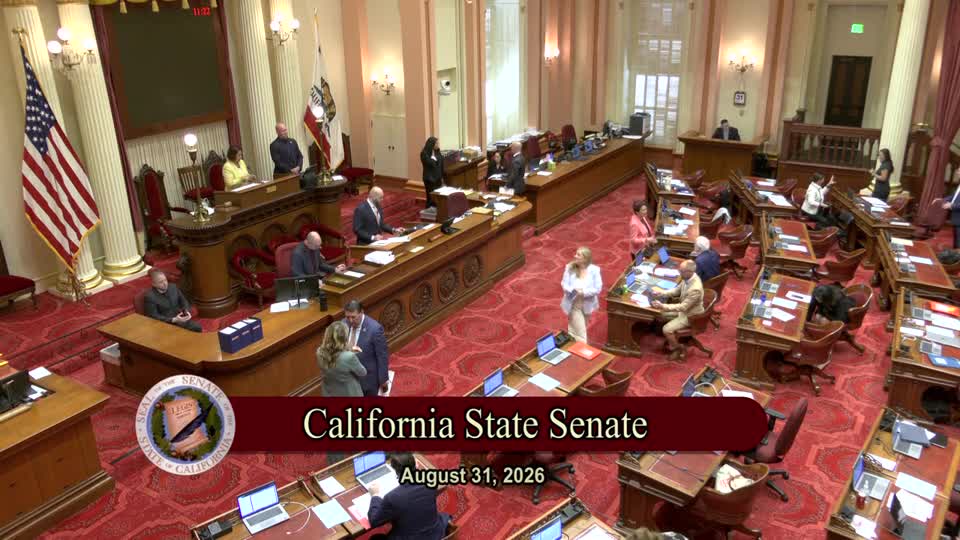 3MIN
Senate Floor
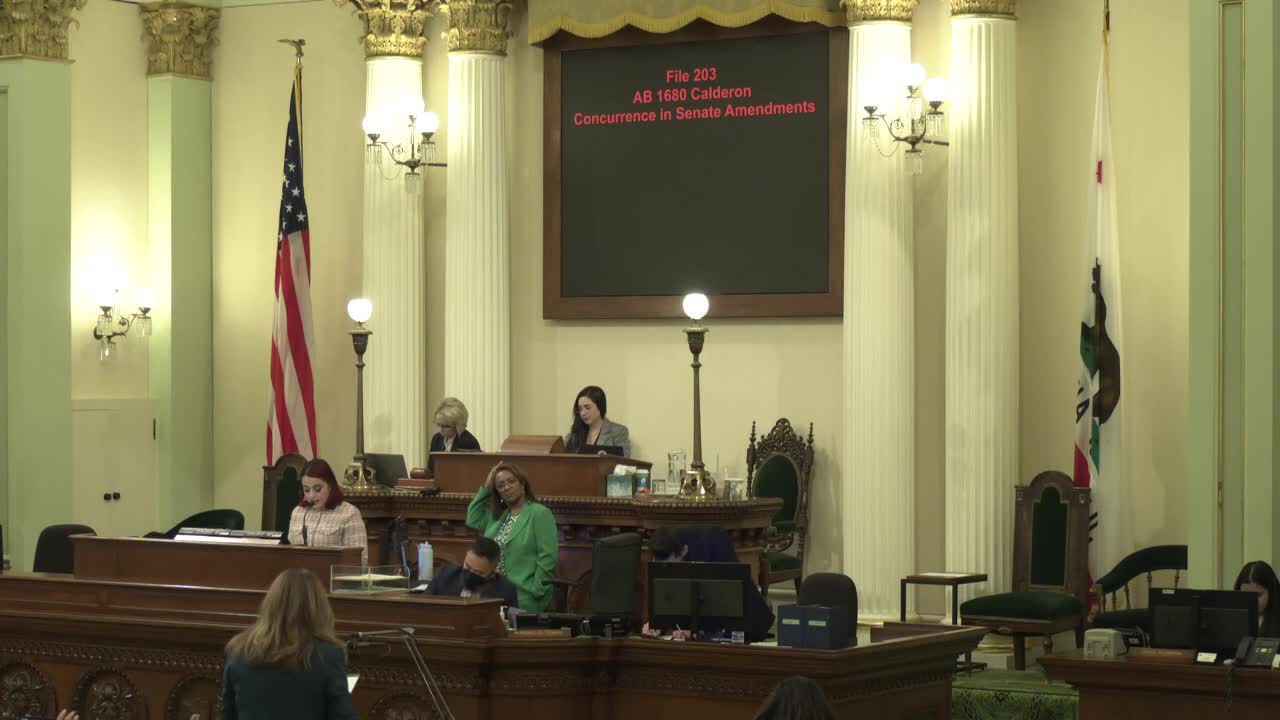 23MIN
Assembly Floor
 25MIN
Senate Standing Committee on Judiciary
 1H
Senate Standing Committee on Privacy, Digital Technologies, and Consumer Protection
 1H
Assembly Floor
 1H
Assembly Standing Committee on Judiciary
 2H
Assembly Standing Committee on Privacy and Consumer Protection
Bill Author








Bill Co-Author(s):