AB 1985: Student health: athletic coaches and trainers: mental health training.
- Session Year: 2025-2026
- House: Assembly
- Latest Version Date: 2026-09-30
Current Status:
Passed
(2026-09-30: Chaptered by Secretary of State - Chapter 912, Statutes of 2026.)
Introduced
In Committee
Awaiting First Chamber Vote
Passed First Chamber
In Committee
Awaiting Second Chamber Vote
Passed Second Chamber
Enacted
What does this bill do?
The bill requires coaches and athletic trainers at California State University campuses, community colleges, and private colleges that receive state funding to complete student mental health training. The training must include suicide prevention, may include mental health first aid, can be offered online or for free by other providers, and must be renewed every two years.
The summary is provided by generative AI which can make mistakes. For original language, please view the details in the table below.
Existing law establishes the California Community Colleges, the California State University, the University of California, independent institutions of higher education, and private postsecondary educational institutions as the segments of postsecondary education in the state.
This bill, which would be known as Sarah Shulzes Law, would require each campus of the California State University, each community college of a community college district, and each private postsecondary educational institution and independent institution of higher education that receives state financial assistance, and would request each campus of the University of California, to require a person who serves as a coach or trainer in an athletic program, as a condition of the persons employment or volunteer service, to complete a student mental health training on or before July 1, 2028, and every 2 years thereafter. The bill would require the training, at a minimum, to cover suicide prevention education and would authorize the training to be provided by an entity that offers free, online, or other types of training courses. By imposing new duties on community college districts, the bill would impose a state-mandated local program.
The California Constitution requires the state to reimburse local agencies and school districts for certain costs mandated by the state. Statutory provisions establish procedures for making that reimbursement.
This bill would provide that, if the Commission on State Mandates determines that the bill contains costs mandated by the state, reimbursement for those costs shall be made pursuant to the statutory provisions noted above.
Existing law establishes the California Community Colleges, the California State University, the University of California, independent institutions of higher education, and private postsecondary educational institutions as the segments of postsecondary education in the state.
This bill, which would be known as Sarah Shulzes Law, would require the California State University, the office of the Chancellor of the California Community Colleges, and each private postsecondary educational institution and independent institution of higher education that receives state financial assistance, and would request the University of California, on or before July 1, 2028, to identify and compile a list of mental health training programs that can be used to train athletic coaches. The bill would require the trainings, at a minimum, to cover suicide prevention education. The bill would require each campus of the California State University, each community college of a community college district, and each private postsecondary educational institution and independent institution of higher education that receives state financial assistance, and would request each campus of the University of California, to require a person who serves as a coach or trainer in an athletic program, as a condition of the persons employment or volunteer service, to complete one of the identified a student mental health trainings training on or before July 1, 2028, and every 2 years thereafter. The bill would require the training, at minimum, to cover suicide prevention education and would authorize the training to be provided by an entity that offers free, online, or other types of training courses. By imposing new duties on community college districts, the bill would impose a state-mandated local program.
The California Constitution requires the state to reimburse local agencies and school districts for certain costs mandated by the state. Statutory provisions establish procedures for making that reimbursement.
This bill would provide that, if the Commission on State Mandates determines that the bill contains costs mandated by the state, reimbursement for those costs shall be made pursuant to the statutory provisions noted above.
Existing law establishes the California Community Colleges, the California State University, the University of California, independent institutions of higher education, and private postsecondary educational institutions as the segments of postsecondary education in the state.
This bill, which would be known as Sarah Shulzes Law, would require the California State University, the office of the Chancellor of the California Community Colleges, and each private postsecondary educational institution and independent institution of higher education that receives state financial assistance, and would request the University of California, on or before July 1, 2028, to identify and compile a list of mental health training programs that can be used to train athletic coaches. The bill would require the trainings, at a minimum, to cover suicide prevention education. The bill would require each campus of the California State University, each community college of a community college district, and each private postsecondary educational institution and independent institution of higher education that receives state financial assistance, and would request each campus of the University of California, to require a person who serves as a coach in an athletic program, as a condition of the persons employment or volunteer service, to complete one of the identified student mental health trainings on or before July 1, 2028, and every 2 years thereafter. By imposing new duties on community college districts, the bill would impose a state-mandated local program.
The California Constitution requires the state to reimburse local agencies and school districts for certain costs mandated by the state. Statutory provisions establish procedures for making that reimbursement.
This bill would provide that, if the Commission on State Mandates determines that the bill contains costs mandated by the state, reimbursement for those costs shall be made pursuant to the statutory provisions noted above.
Existing law establishes the California Community Colleges, the California State University, the University of California, independent institutions of higher education, and private postsecondary educational institutions as the segments of postsecondary education in the state.
This bill, which would be known as Sarah Shulzes Law, would require the Surgeon General, California State University, the California Community Colleges, and each private postsecondary educational institution and independent institution of higher education that receives state financial assistance, and would request the University of California, on or before July 1, 2027, 2028, to identify and compile a list of mental health training programs that postsecondary educational institutions can use can be used to train athletic coaches that meet minimum standards, which the Surgeon General would be required to establish. coaches. The bill would require the trainings, at a minimum, to cover suicide prevention education. The bill would require each campus of the California State University, each community college of a community college district, and each private postsecondary educational institution and independent institution of higher education that receives state financial assistance to, assistance, and would request each campus of the University of California to, California, to require a person who serves as a coach in an athletic program, as a condition of the persons employment or volunteer service, to complete a one of the identified student mental health training that has been approved by the Surgeon General. trainings on or before July 1, 2028, and every 2 years thereafter. By imposing new duties on community college districts, the bill would impose a state-mandated local program.
The California Constitution requires the state to reimburse local agencies and school districts for certain costs mandated by the state. Statutory provisions establish procedures for making that reimbursement.
This bill would provide that, if the Commission on State Mandates determines that the bill contains costs mandated by the state, reimbursement for those costs shall be made pursuant to the statutory provisions noted above.
Existing law establishes the Office of the Surgeon General, within the California Health and Human Services Agency, to, among other things, advise the Governor, the Secretary of the California Health and Human Services Agency, and policymakers on a comprehensive approach to address health issues and challenges as effectively and early as possible, as provided. Existing law designates the Surgeon General as the director of the office.
Existing law establishes the California Community Colleges, the California State University, the University of California, independent institutions of higher education, and private postsecondary educational institutions as the segments of postsecondary education in the state.
Existing law provides that each school district governing board shall have general control of, and be responsible for, all aspects of the interscholastic athletic policies, programs, and activities in its district, including, but not limited to, eligibility, season of sport, number of sports, personnel, and sports facilities.This bill, which would be known as Sarah Shulzes Law, would require the Surgeon General, on or before July 1, 2027, to identify and compile a list of age-appropriate mental health training programs that local educational agencies and postsecondary educational institutions can use to train athletic coaches that meet minimum standards, which the Surgeon General would be required to establish. The bill would require the California State University, each community college district, and each private postsecondary educational institution and independent institution of higher education that receives state financial assistance to, and would request the University of California to, require a person hired to an athletic coach position who serves as a coach in an athletic program, as a condition of the persons employment or volunteer service, to complete a student mental health training that has been approved by the Surgeon General. By imposing new duties on community college districts, the bill would impose a state-mandated local program.
If a school district, county office of education, or charter school offers an interscholastic athletic program, the bill would require the governing board or body of the local educational agency to require a person hired to an athletic coach position to complete a pupil mental health training that has been approved by the Surgeon General.The California Constitution requires the state to reimburse local agencies and school districts for certain costs mandated by the state. Statutory provisions establish procedures for making that reimbursement.
This bill would provide that, if the Commission on State Mandates determines that the bill contains costs mandated by the state, reimbursement for those costs shall be made pursuant to the statutory provisions noted above.
Existing law establishes the Office of the Surgeon General, within the California Health and Human Services Agency, to, among other things, advise the Governor, the Secretary of the California Health and Human Services Agency, and policymakers on a comprehensive approach to address health issues and challenges as effectively and early as possible, as provided. Existing law designates the Surgeon General as the director of the office.
Existing law establishes the California Community Colleges, the California State University, the University of California, independent institutions of higher education, and private postsecondary educational institutions as the segments of postsecondary education in the state.
Existing law provides that each school district governing board shall have general control of, and be responsible for, all aspects of the interscholastic athletic policies, programs, and activities in its district, including, but not limited to, eligibility, season of sport, number of sports, personnel, and sports facilities.
This bill, which would be known as Sarah Shulzes Law, would require the Surgeon General, on or before July 1, 2027, to identify and compile a list of age-appropriate mental health training programs that local educational agencies and postsecondary educational institutions can use to train athletic coaches that meet minimum standards, which the Surgeon General would be required to establish. The bill would require the California State University, each community college district, and each private postsecondary educational institution and independent institution of higher education that receives state financial assistance to, and would request the University of California to, require a person hired to an athletic coach position to complete a student mental health training that has been approved by the Surgeon General. By imposing new duties on community college districts, the bill would impose a state-mandated local program.
If a school district, county office of education, or charter school offers an interscholastic athletic program, the bill would require the governing board or body of the local educational agency to require a person hired to an athletic coach position to complete a pupil mental health training that has been approved by the Surgeon General.
The California Constitution requires the state to reimburse local agencies and school districts for certain costs mandated by the state. Statutory provisions establish procedures for making that reimbursement.
This bill would provide that, if the Commission on State Mandates determines that the bill contains costs mandated by the state, reimbursement for those costs shall be made pursuant to the statutory provisions noted above.
(a)This section shall be known, and may be cited, as Sarah Shulzes Law.
(b)On or before July 1, 2028, and every two years thereafter, each campus of the California State University, each community college of a community college district, and each private postsecondary educational institution and independent institution of higher education that receives state financial assistance shall, and each campus of the University of California is requested to, require a person who serves as a coach, including an assistant coach, or trainer in an athletic program, as a condition of the persons employment or volunteer service, to complete a student mental health training that, at a minimum, covers suicide prevention education. The student mental health training may cover mental health first aid education and may be provided by an entity that offers free, online, or other types of training courses.
SEC. 2.If the Commission on State Mandates determines that this act contains costs mandated by the state, reimbursement to local agencies and school districts for those costs shall be made pursuant to Part 7 (commencing with Section 17500) of Division 4 of Title 2 of the Government Code.
(a)This section shall be known, and may be cited, as Sarah Shulzes Law.
(b)On or before July 1, 2028, the California State University, the office of the Chancellor of the California Community Colleges, and each private postsecondary educational institution and independent institution of higher education that receives state financial assistance shall, and the University of California is requested to, identify and compile a list of mental health training programs that can be used to train athletic coaches. All trainings shall, at a minimum, cover suicide prevention education. Trainings may also cover mental health first aid education if suicide prevention education is included.(c)(b)On or before July 1, 2028, and every two years thereafter, each campus of the California State University, each community college of a community college district, and each private postsecondary educational institution and independent institution of higher education that receives state financial assistance shall, and each campus of the University of California is requested to, require a person who serves as a coach coach, including an assistant coach, or trainer in an athletic program, as a condition of the persons employment or volunteer service, to complete a student mental health training that has been identified pursuant to subdivision (b). that, at minimum, covers suicide prevention education. The student mental health training may cover mental health first aid education and may be provided by an entity that offers free, online, or other types of training courses.
SEC. 2.If the Commission on State Mandates determines that this act contains costs mandated by the state, reimbursement to local agencies and school districts for those costs shall be made pursuant to Part 7 (commencing with Section 17500) of Division 4 of Title 2 of the Government Code.
(a)This section shall be known, and may be cited, as Sarah Shulzes Law.
(b)On or before July 1, 2028, the California State University, the office of the Chancellor of the California Community Colleges, and each private postsecondary educational institution and independent institution of higher education that receives state financial assistance shall, and the University of California is requested to, identify and compile a list of mental health training programs that can be used to train athletic coaches. All trainings shall, at a minimum, cover suicide prevention education. Trainings may also cover mental health first aid education if suicide prevention education is included.
(c)On or before July 1, 2028, and every two years thereafter, each campus of the California State University, each community college of a community college district, and each private postsecondary educational institution and independent institution of higher education that receives state financial assistance shall, and each campus of the University of California is requested to, require a person who serves as a coach in an athletic program, as a condition of the persons employment or volunteer service, to complete a student mental health training that has been identified pursuant to subdivision (b).
SEC. 2.If the Commission on State Mandates determines that this act contains costs mandated by the state, reimbursement to local agencies and school districts for those costs shall be made pursuant to Part 7 (commencing with Section 17500) of Division 4 of Title 2 of the Government Code.
(a)This section shall be known, and may be cited, as Sarah Shulzes Law.
(b)On or before July 1, 2027, the Surgeon General shall 2028, the California State University, the California Community Colleges, and each private postsecondary educational institution and independent institution of higher education that receives state financial assistance shall, and the University of California is requested to, identify and compile a list of mental health training programs that postsecondary educational institutions can use can be used to train athletic coaches. All trainings shall meet minimum standards, which the Surgeon General shall establish. shall, at a minimum, cover suicide prevention education. Trainings may also cover mental health first aid education if suicide prevention education is included.
(c)The On or before July 1, 2028, and every two years thereafter, each campus of the California State University, each community college of a community college district, and each private postsecondary educational institution and independent institution of higher education that receives state financial assistance shall, and each campus of the University of California is requested to, require a person who serves as a coach in an athletic program, as a condition of the persons employment or volunteer service, to complete a student mental health training that has been approved by the Surgeon General identified pursuant to subdivision (b).
SEC. 2.If the Commission on State Mandates determines that this act contains costs mandated by the state, reimbursement to local agencies and school districts for those costs shall be made pursuant to Part 7 (commencing with Section 17500) of Division 4 of Title 2 of the Government Code.
(a)This section shall be known, and may be cited, as Sarah Shulzes Law.
(b)On or before July 1, 2027, the Surgeon General shall identify and compile a list of mental health training programs that postsecondary educational institutions can use to train athletic coaches. All trainings shall meet minimum standards, which the Surgeon General shall establish.
(c)The California State University, each community college district, and each private postsecondary educational institution and independent institution of higher education that receives state financial assistance shall, and the University of California is requested to, require a person hired to an athletic coach position who serves as a coach in an athletic program, as a condition of the persons employment or volunteer service, to complete a student mental health training that has been approved by the Surgeon General pursuant to Section 290.1. subdivision (b).
SEC. 4.SEC. 2.If the Commission on State Mandates determines that this act contains costs mandated by the state, reimbursement to local agencies and school districts for those costs shall be made pursuant to Part 7 (commencing with Section 17500) of Division 4 of Title 2 of the Government Code.
This article, together with Sections 35179.9 and 66024.7, shall be known, and may be cited, as Sarah Shulzes Law.
290.1.On or before July 1, 2027, the Surgeon General shall identify and compile a list of age-appropriate mental health training programs that local educational agencies and postsecondary educational institutions can use to train athletic coaches. All trainings shall meet minimum standards, which the Surgeon General shall establish.
SEC. 2.Section 35179.9 is added to the Education Code, immediately following Section 35179.8, to read:35179.9.If a school district, county office of education, or charter school offers an interscholastic athletic program, the governing board or body of the local educational agency shall require a person hired to an athletic coach position to complete a pupil mental health training that has been approved by the Surgeon General pursuant to Section 290.1.
SEC. 3.Section 66024.7 is added to the Education Code, to read:66024.7.The California State University, each community college district, and each private postsecondary educational institution and independent institution of higher education that receives state financial assistance shall, and the University of California is requested to, require a person hired to an athletic coach position to complete a student mental health training that has been approved by the Surgeon General pursuant to Section 290.1.
SEC. 4.If the Commission on State Mandates determines that this act contains costs mandated by the state, reimbursement to local agencies and school districts for those costs shall be made pursuant to Part 7 (commencing with Section 17500) of Division 4 of Title 2 of the Government Code.
|
Date
|
Status
|
|---|---|
| Sep 30, 2026 | Chaptered by Secretary of State - Chapter 912, Statutes of 2026. |
| Sep 30, 2026 | Approved by the Governor. |
| Sep 8, 2026 | Enrolled and presented to the Governor at 3:30 p.m. |
| Aug 28, 2026 | Senate amendments concurred in. To Engrossing and Enrolling. (Ayes 78. Noes 0.). |
| Aug 28, 2026 | Senate amendments concurred in. To Engrossing and Enrolling. (Ayes 78. Noes 0. Page 6803.). |
| Aug 27, 2026 | In Assembly. Concurrence in Senate amendments pending. |
| Aug 27, 2026 | Read third time. Passed. Ordered to the Assembly. (Ayes 39. Noes 0.). |
| Aug 25, 2026 | Ordered to special consent calendar. |
| Aug 17, 2026 | Read second time. Ordered to third reading. |
| Aug 13, 2026 | Read second time and amended. Ordered returned to second reading. |
| Aug 13, 2026 | From committee: Amend, and do pass as amended. (Ayes 7. Noes 0.) (August 13). |
| Aug 3, 2026 | In committee: Referred to APPR. suspense file. |
| Jun 18, 2026 | Read second time and amended. Re-referred to Com. on APPR. |
| Jun 17, 2026 | From committee: Amend, and do pass as amended and re-refer to Com. on APPR. (Ayes 7. Noes 0.) (June 17). |
| Jun 3, 2026 | Referred to Com. on ED. |
| May 21, 2026 | In Senate. Read first time. To Com. on RLS. for assignment. |
| May 21, 2026 | Read third time. Passed. Ordered to the Senate. (Ayes 71. Noes 0.) |
| May 21, 2026 | Read third time. Passed. Ordered to the Senate. (Ayes 71. Noes 0. Page 5214.) |
| May 18, 2026 | Read second time. Ordered to third reading. |
| May 14, 2026 | From committee: Do pass. (Ayes 15. Noes 0.) (May 14). |
| May 6, 2026 | In committee: Set, first hearing. Referred to APPR. suspense file. |
| Apr 27, 2026 | Re-referred to Com. on APPR. |
| Apr 23, 2026 | Read second time and amended. |
| Apr 22, 2026 | From committee: Amend, and do pass as amended and re-refer to Com. on APPR. with recommendation: To Consent Calendar. (Ayes 10. Noes 0.) (April 21). |
| Apr 13, 2026 | Re-referred to Com. on HIGHER ED. |
| Apr 9, 2026 | Read second time and amended. |
| Apr 8, 2026 | From committee: Amend, and do pass as amended and re-refer to Com. on HIGHER ED. with recommendation: To Consent Calendar. (Ayes 16. Noes 0.) (April 7). |
| Mar 17, 2026 | Re-referred to Com. on HEALTH. |
| Mar 16, 2026 | From committee chair, with author's amendments: Amend, and re-refer to Com. on HEALTH. Read second time and amended. |
| Mar 2, 2026 | Referred to Coms. on HEALTH and ED. |
| Feb 14, 2026 | From printer. May be heard in committee March 16. |
| Feb 13, 2026 | Read first time. To print. |
|
Date
|
Description
|
Location
|
Votes
|
|
|---|---|---|---|---|
| Aug 28, 2026 | AB 1985 Irwin Concurrence in Senate Amendments | Assembly Floor |
Passed |
|
| Aug 27, 2026 | Special Consent AB1985 Irwin et al. By Stern | Senate Floor |
Passed |
|
| Aug 13, 2026 | Do pass as amended | Senate Standing Committee on Appropriations |
Passed |
|
| Aug 3, 2026 | Placed on suspense file | Senate Standing Committee on Appropriations |
Passed |
|
| Jun 17, 2026 | Do pass as amended, but first amend, and re-refer to the Committee on [Appropriations] | Senate Standing Committee on Education |
Passed |
|
| May 21, 2026 | AB 1985 Irwin Assembly Third Reading | Assembly Floor |
Passed |
|
| May 14, 2026 | Do pass. | Assembly Standing Committee on Appropriations |
Passed |
|
| Apr 21, 2026 | Do pass as amended, and be re-referred to the Committee on [Appropriations] with recommendation: To Consent Calendar | Assembly Standing Committee on Higher Education |
Passed |
|
| Apr 7, 2026 | Do pass as amended, and be re-referred to the Committee on [Higher Education] with recommendation: To Consent Calendar | Assembly Standing Committee on Health |
Passed |
This list shows positions taken on this bill by organizations on the date displayed, which is linked to the original source.
Positions by individuals are not included.
|
Organization
|
Position
|
Date
|
|---|---|---|
| American Academy Of Pediatrics, California | ** Support | |
| California Alliance of Caregivers | ** Support | |
| California Association Of Marriage And Family Therapists | ** Support | |
| California Behavioral Health Association | ** Support | |
| California Hospital Association | ** Support | |
| National Alliance on Mental Illness | ** Support | |
| Sarah Shulze Foundation | ** Support | |
| University of California | ** Support | |
| University of California Office of the President | ** Support |
CONCURRENCE IN SENATE AMENDMENTS
CSA1 Bill Id:AB 1985
Author:(Irwin and Pacheco)
As Amended Ver:August 13, 2026
Majority vote
SUMMARY
Requires, on or before July 1, 2028, and every two years thereafter, each campus of the California State University (CSU), each community college of a community college district (CCD), and each private postsecondary educational institution and independent institution of higher education that receives state financial assistance, and requests each campus of the University of California (UC), require a person who serves as a coach, including an assistant coach, or trainer in an athletic program to complete a student mental health training. Requires the training, at minimum, to cover suicide prevention education and authorizes the training to be provided by an entity that offers free, online, or other types of training courses. States that the provisions of this bill may be cited as Sarah Shulze′s Law.
Senate Amendments
- Strike the requirement that an institution identify and compile a list of mental health training programs that can be used to train athletic coaches.
- Permit the required training to be provided by an entity that offers free, online, or other types of training courses.
- Add coauthors.
COMMENTS
Mental health on college campuses. According to the 2024-25 Healthy Minds Survey, a nationwide survey on mental health and related issues in college student populations from the Healthy Minds Network, college students continue to report poor mental health, with more than one in three students saying they experience moderate anxiety or depression. Data from the most recent survey found that only 36% of college students are thriving, reporting high levels of success in relationships, self-esteem, purpose and optimism, down slightly from 38% the previous year. There is slight improvement since the COVID-19 pandemic, with fewer students reporting anxiety, self-harm and suicidal ideation than in 2021–22. Student usage of mental health resources also continues to climb; 37% of all respondents said they had accessed therapy or counseling in the past 12 months, compared to 30% in 2018–19.
According to ″Suicide in National Collegiate Athletic Association athletes: a 20-year analysis,″ published in the British Journal of Sports Medicine (but focusing on athletes in the United States from 2002-2022), the rate of suicide in National Collegiate Athletic Association (NCAA) collegiate athletes has increased over the last 20 years and over the last decade has become the second most common cause of death, after accidents. The study concludes that additional mental health resources including efforts to raise awareness, screening for early risk identification, training coaches and support staff on how to identify athletes at risk, and providing access to mental health providers trained in sport psychology are examples of ways to help prevent suicide in this population.
NCAA pilot program. In August 2025 the NCAA announced a partnership with the National Council for Mental Wellbeing to offer fully funded Mental Health First Aid (MHFA) for Higher Education training to Division III institutions to focus on head coaches and athletic trainers. Division III schools are eligible to receive one fully funded training during the program, which will be in effect until August 1, 2027. According to the NCAA, the 2022 NCAA Coach Well-Being Study underscored the need for expanded mental health support in college athletics. NCAA says that more than 80% of coaches reported spending increased time addressing mental health concerns with their student-athletes compared with pre-COVID-19 pandemic levels, and many identified mental health as the top issue facing their teams. As of late July 2025, 66 Division III institutions had completed the MHFA training. Through this program, up to 30 individuals at each active Division III school are eligible to participate in a 7.5-hour, in-person training with expert MHFA instructors on their campus. Upon completion, participants will be certified in MHFA for Higher Education for three years.
According to the Author
According to the author, there is currently no standard in state law that requires athletic coaches at college and universities to be trained on mental health awareness and best practices for their student-athletes. Without a state standard, individual institutions and campuses are left to create their own standards if they voluntarily train coaches on mental health. The author argues that this leaves room for potentially no standard at all, inconsistent implementation if there is a policy, and generally a lack of oversight from the state to ensure coaches are receiving training on the most up-to-date and evidence-based best practices.
Arguments in Support
The California Hospital Association (CHA) states in support of this bill that hospitals see firsthand the growing number of young people in mental health crisis. Being able to spot the signs that a person is struggling and help them find support before their condition worsens is an important step toward improving this crisis. Athletic coaches have a unique perspective and ability to support their athletes′ physical and mental health needs. CHA says that research shows that students who are struggling are often most comfortable reaching out to people with whom they already have relationships; as such, it is important to equip athletic coaches with tools to support their student-athletes′ mental health.
The University of California (UC) supports this bill stating that the mental health of student-athletes is a recognized and ongoing priority across UC campuses, and we have invested in the programs, protocols, and training infrastructure necessary to support student-athlete well-being. UC states its campus athletics programs already require coaches and athletic staff to complete mental health training as part of their professional development obligations. Several campuses utilize nationally recognized training frameworks, including modules developed by the U.S. Council for Athletes′ Health, that are consistent with both the intent of this legislation and NCAA Mental Health Best Practices guidelines. UC concludes they are committed to ensuring our campuses continue to meet or exceed the standards this legislation envisions, and look forward to supporting implementation of Sarah Shulze′s Law.
Arguments in Opposition
None on file.
FISCAL COMMENTS
According to the Senate Appropriations Committee, the Chancellor′s Office estimates minor, ongoing Proposition 98 General Funds costs for community colleges to identify and provide the required training, with the understanding they would opt to offer an existing or free training that is available, or an existing training that may already be offered to mental health employees that satisfies the requirement. However, to the extent a community college decides to develop its own training, the Proposition 98 General Fund costs could range from the tens of thousands to the hundreds of thousands of dollars. This bill′s costs for CSU and UC are expected to be minor and absorbable within existing resources.
VOTES:
ASM HEALTH: 16-0-0
YES: Bonta, Chen, Addis, Aguiar-Curry, Ahrens, Caloza, Carrillo, Mark González, Johnson, Patel, Patterson, Rogers, Sanchez, Schiavo, Sharp-Collins, Stefani
ASM HIGHER EDUCATION: 10-0-0
YES: Fong, DeMaio, Boerner, Macedo, Jackson, Muratsuchi, Patel, Ramos, Sharp-Collins, Tangipa
ASM APPROPRIATIONS: 15-0-0
YES: Wicks, Hoover, Aguiar-Curry, Calderon, Caloza, Dixon, Fong, Mark González, Krell, Pacheco, Pellerin, Sharp-Collins, Solache, Ta, Tangipa
ASSEMBLY FLOOR: 71-0-9
YES: Addis, Aguiar-Curry, Ahrens, Alanis, Alvarez, Ávila Farías, Bains, Bauer-Kahan, Bennett, Berman, Boerner, Bonta, Bryan, Calderon, Caloza, Carrillo, Castillo, Connolly, Davies, DeMaio, Dixon, Elhawary, Ellis, Flora, Fong, Gabriel, Gallagher, Gipson, Jeff Gonzalez, Mark González, Hadwick, Haney, Harabedian, Hart, Irwin, Jackson, Johnson, Kalra, Krell, Lee, Lowenthal, Macedo, McKinnor, Muratsuchi, Nguyen, Ortega, Pacheco, Papan, Patel, Patterson, Pellerin, Petrie-Norris, Quirk-Silva, Ransom, Michelle Rodriguez, Rogers, Blanca Rubio, Schiavo, Sharp-Collins, Solache, Soria, Stefani, Ta, Tangipa, Valencia, Wallis, Ward, Wicks, Wilson, Zbur, Rivas
ABS, ABST OR NV: Arambula, Chen, Garcia, Hoover, Lackey, Ramos, Celeste Rodriguez, Sanchez, Schultz
UPDATED
VERSION: August 13, 2026
CONSULTANT: Logan Hess / HEALTH / (916) 319-2097 FN: 0004111
SENATE RULES COMMITTEE Office of Senate Floor Analyses (916) 651-4171 | AB 1985 |
THIRD READING
Bill No: AB 1985
Author: Irwin (D) and Pacheco (D), et al.
Amended: 8/13/26 in Senate
Vote: 21
SENATE EDUCATION COMMITTEE: 7-0, 6/17/26
AYES: Pérez, Ochoa Bogh, Cabaldon, Choi, Cortese, Gonzalez, Reyes
SENATE APPROPRIATIONS COMMITTEE: 7-0, 8/13/26
AYES: Cervantes, Seyarto, Cabaldon, Dahle, Grayson, Richardson, Wahab
ASSEMBLY FLOOR: 71-0, 5/21/26 - See last page for vote
SUBJECT: Student health: athletic coaches and trainers: mental health training
SOURCE: Sarah Shulze Foundation
DIGEST:
This bill requires, by July 1, 2028, and every two years thereafter, the campuses of the California State University (CSU), the California Community Colleges (CCCs), and each private postsecondary educational institution and independent institution of higher education that receives state financial assistance, and requests of the campuses of the University of California (UC), a coach of an athletic program—including an assistant coach or trainer—to complete a training on student mental health, as specified, as a condition of the coach’s employment or volunteer service.
ANALYSIS:
Existing law:
- Establishes the UC as a public trust to be administered by the Regents of the UC; and grants the Regents full powers of organization and government, subject only to such legislative control as may be necessary to insure security of its funds, compliance with the terms of its endowments, statutory requirements around competitive bidding and contracts, sales of property and the purchase of materials, goods and services. (Article IX § 9 of the California Constitution)
- Establishes UC, CSU, and the CCCs as the three segments of public higher education and defines “independent institutions of higher education” as nonpublic higher education institutions that grant undergraduate degrees, graduate degrees, or both, and that are formed as nonprofit corporations in California and are accredited by an agency recognized by the United States Department of Education (USDE). For purposes of any code or statute, a national or regional accrediting agency recognized by the USDE as of January 1, 2025, shall retain that recognition until July 1, 2029, provided that the accrediting agency continues to operate in substantially the same manner as it did on January 1, 2025. (Education Code (EC) § 66010, et seq.)
- Requires the governing board of each community college district (CCD), the Trustees of the CSU, the Board of Directors of the College of Law, San Francisco, and the Regents of the UC to, within existing resources, adopt and implement a rape and sexual assault education program for, and ensure maximum feasible participation of, students and student services professional staff members or student affairs professional staff members at each of their respective campuses or other facilities. (EC § 67391)
- Finds and declares that colleges should provide special sexual assault seminars for all athletic coaches and administrators and members of athletic teams, and states that these seminars should take place during a student athlete orientation program or prior to the first team meeting. (EC § 67390)
This bill:
- Requires, by July 1, 2028, and every two years thereafter, each campus of the CSU, each CCC, and each private postsecondary educational institution and independent institution of higher education that receives state financial assistance, and requests of the UC, a coach in an athletic program—including an assistant coach or trainer—to complete a training on student mental health, as specified, as a condition of the person’s employment or volunteer service.
- Requires the specified training to cover suicide prevention education, at a minimum, and permits the specified trainings to cover mental health first aid education.
- Permits that the specified training be provided by an entity that offers free, online, or other types of training courses.
- Requires that this legislation be known, and may be cited, as Sarah Shulze’s Law.
Comments
Need for the bill. According to the author, “There is currently no standard in state law that requires athletic coaches at college and universities to be trained on mental health awareness and best practices for their student-athletes. Without a state standard, individual institutions and campuses are left to create their own standards if they voluntarily train coaches on mental health. This leaves room for potentially no standard at all, inconsistent implementation if there is a policy, and generally a lack of oversight from the state to ensure coaches are receiving training on the most up-to-date and evidence-based best practices.”
Slate of bills from 2025-26 Regular Session promoting wellness and improved mental health for pupil athletes. This bill, along with AB 1626 (Gabriel of 2026) and AB 1665 (Pacheco of 2026), recognizes the unique role that athletic coaches have in young athletes’ lives and aims to equip coaches with the tools and the understanding so that they can appropriately respond and provide support to young men and women during an age when this support is critical. This bill aims to provide mental health training for athletic coaches at the collegiate level, and AB 1626 (Gabriel of 2026) and AB 1665 (Pacheco of 2026) address providing mental health training for athletic coaches in K-12 schools and youth organizations.
Mental health challenges on college campuses and for college athletes. Historical data suggests the prevalence of mental health issues among college students nationally has increased over the long term. More recent data suggests the COVID-19 pandemic exacerbated this trend. Since the onset of the pandemic, several studies have found further increases in a variety of student mental health issues. For example, a 2024-25 study from the Healthy Minds Network, which is a research organization focused on the mental health of young adults, reports that college students continue to report poor mental health, with more than one in three students saying they experience moderate anxiety or depression. Data from the most recent survey found that only 36% of college students are thriving, reporting high levels of success in relationships, self-esteem, purpose, and optimism, down slightly from 38% the previous year.
For college athletes in particular, the pressures of balancing their academics and the time spent traveling, practicing, and competing in competitions are draining and leave many student athletes overwhelmed. Moreover, with more colleges moving into conferences that are not geographically close to the campuses, college athletes are traveling farther than ever as part of their regular season. This bill requires training on student mental health for athletic coaches, with the intent for coaches to be equipped to recognize signs of mental illness and behavioral distress in students participating in athletic programs. The UC has indicated that they already mandate their athletic coaches to take the trainings required by this bill.
Related/Prior Legislation
AB 1626 (Gabriel of 2026) would establish training content areas, related to behavioral and mental health challenges specific to pupil athletes, to be used for trainings for coaches of interscholastic athletic programs, non-interscholastic athletic programs, and youth sports organizations. This bill requires the CDE, by September 1, 2027, to identify an existing training or develop a model youth athletics behavioral and mental health training, as specified, for coaches in youth sports organizations. AB 1626 is currently on the Assembly Floor.
AB 1665 (Pacheco of 2026) would require, commencing July 1, 2027: (1) a coach for an interscholastic athletic program at a high school that is a member of the California Interscholastic Federation to complete an initial training, and subsequent training every two years, on a coaching education and training program on mental health, and (2) that a local educational agency (LEA) ensure a coach of a non-interscholastic athletic program complete an initial training, and subsequent training every two years, covering sudden cardiac arrest and youth athletics behavioral and mental health, if the LEA chooses to offer a non-interscholastic athletic program. AB 1665 is currently on the Senate Floor.
FISCAL EFFECT: Appropriation: No Fiscal Com.: Yes Local: Yes
According to the Senate Appropriations Committee:
- The California Community Colleges Chancellor’s Office estimates minor, ongoing Proposition 98 General Funds costs for community colleges to identify and provide the required training, with the understanding they would opt to offer an existing or free training that is available, or an existing training that may already be offered to mental health employees that satisfies the requirement. However, to the extent a community college decides to develop its own training, the Proposition 98 General Fund costs could range from the tens of thousands to the hundreds of thousands of dollars.
- The bill’s costs for CSU and UC are expected to be minor and absorbable within existing resources.
SUPPORT: (Verified 8/14/26)
Sarah Shulze Foundation (source)
California Alliance of Caregivers
California Behavioral Health Association
National Alliance on Mental Illness
University of California
OPPOSITION: (Verified 8/14/26)
None received
ASSEMBLY FLOOR: 71-0, 5/21/26
AYES: Addis, Aguiar-Curry, Ahrens, Alanis, Alvarez, Ávila Farías, Bains, Bauer-Kahan, Bennett, Berman, Boerner, Bonta, Bryan, Calderon, Caloza, Carrillo, Castillo, Connolly, Davies, DeMaio, Dixon, Elhawary, Ellis, Flora, Fong, Gabriel, Gallagher, Gipson, Jeff Gonzalez, Mark González, Hadwick, Haney, Harabedian, Hart, Irwin, Jackson, Johnson, Kalra, Krell, Lee, Lowenthal, Macedo, McKinnor, Muratsuchi, Nguyen, Ortega, Pacheco, Papan, Patel, Patterson, Pellerin, Petrie-Norris, Quirk-Silva, Ransom, Michelle Rodriguez, Rogers, Blanca Rubio, Schiavo, Sharp-Collins, Solache, Soria, Stefani, Ta, Tangipa, Valencia, Wallis, Ward, Wicks, Wilson, Zbur, Rivas
NO VOTE RECORDED: Arambula, Chen, Garcia, Hoover, Lackey, Ramos, Celeste Rodriguez, Sanchez, Schultz
Prepared by: Michelle Nguyen / ED. / (916) 651-4105
8/17/26 10:47:33
**** END ****
SENATE COMMITTEE ON
Senator Sabrina Cervantes, Chair
2025 - 2026 Regular Session
AB 1985 (Irwin) - Student health: athletic coaches and trainers: mental health training
Version: | Policy Vote: |
Urgency: | Mandate: |
Hearing Date: | Consultant: |
Bill Summary:
This bill requires a coach of an athletic program at the California State University (CSU), the California Community Colleges (CCCs), and each private postsecondary educational institution and independent institution of higher education that receives state financial assistance, and requests of the University of California (UC), to complete a training on student mental health as a condition of the coach’s employment or volunteer service.
*********** ANALYSIS ADDENDUM – SUSPENSE FILE ***********
The following information is revised to reflect amendments
adopted by the committee on August 13, 2026
Fiscal Impact:
- The Chancellor’s Office estimates minor, ongoing Proposition 98 General Funds costs for community colleges to identify and provide the required training, with the understanding they would opt to offer an existing or free training that is available, or an existing training that may already be offered to mental health employees that satisfies the requirement. However, to the extent a community college decides to develop its own training, the Proposition 98 General Fund costs could range from the tens of thousands to the hundreds of thousands of dollars.
- The bill’s costs for CSU and UC are expected to be minor and absorbable within existing resources.
Author Amendments:
Add Assembly Member Flora as a coauthor.
-- END --
SENATE COMMITTEE ON
Senator Sabrina Cervantes, Chair
2025 - 2026 Regular Session
AB 1985 (Irwin) - Student health: athletic coaches and trainers: mental health training
Version: | Policy Vote: |
Urgency: | Mandate: |
Hearing Date: | Consultant: |
Bill Summary:
This bill requires a coach of an athletic program at the California State University (CSU), the California Community Colleges (CCCs), and each private postsecondary educational institution and independent institution of higher education that receives state financial assistance, and requests of the University of California (UC), to complete a training on student mental health as a condition of the coach’s employment or volunteer service.
Fiscal Impact:
- The Chancellor’s Office estimates minor, ongoing Proposition 98 General Funds costs for community colleges to identify and provide the required training, with the understanding they would opt to offer an existing or free training that is available, or an existing training that may already be offered to mental health employees that satisfies the requirement. However, to the extent a community college decides to develop its own training, the Proposition 98 General Fund costs could range from the tens of thousands to the hundreds of thousands of dollars.
- The bill’s costs for CSU and UC are expected to be minor and absorbable within existing resources.
Background:
Existing law establishes the UC, CSU, and the CCCs as the three segments of public higher education and defines “independent institutions of higher education” as nonpublic higher education institutions that grant undergraduate degrees, graduate degrees, or both, and that are formed as nonprofit corporations in California and are accredited by an agency recognized by the United States Department of Education.
Existing law requires the governing board of each community college district, the Trustees of the CSU, the Board of Directors of the College of Law, San Francisco, and the Regents of the UC to, within existing resources, adopt and implement a rape and sexual assault education program for, and ensure maximum feasible participation of, students and student services professional staff members or student affairs professional staff members at each of their respective campuses or other facilities.
Proposed Law:
This bill requires, by July 1, 2028, and every two years thereafter, for each campus of the CSU, CCC, and each private postsecondary educational institution and independent institution of higher education that receives state financial assistance, and requests of the UC, a coach in an athletic program, including an assistant coach, to complete a training on student mental health, as specified, as a condition of the person’s employment or volunteer service. The training shall cover at minimum, suicide prevention education and may also cover mental health first aid education. The bill specifies that the training may be provided by entities offering free, online, or other types of training courses.
Related Legislation:
AB 1626 (Gabriel, 2026) would establish training content areas, related to behavioral and mental health challenges specific to pupil athletes, to be used for trainings for coaches of interscholastic athletic programs, non-interscholastic athletic programs, and youth sports organizations. This bill is pending on the Senate Floor.
AB 1665 (Pacheco, 2026) would require a coach for high school interscholastic athletic program that is a member of the California Interscholastic Federation to complete an initial training, and subsequent training every two years, on a coaching education and training program on mental health, and for that a local educational agencies to ensure a coach of a non-interscholastic athletic program completes a training covering sudden cardiac arrest and youth athletics behavioral and mental health if the LEA chooses to offer a non-interscholastic athletic program. This bill is pending on the Senate Floor.
Staff Comments:
This bill aims to provide mental health training for athletic coaches at the collegiate level. According to the author, “There is currently no standard in state law that requires athletic coaches at college and universities to be trained on mental health awareness and best practices for their student-athletes. Without a state standard, individual institutions and campuses are left to create their own standards if they voluntarily train coaches on mental health. This leaves room for potentially no standard at all, inconsistent implementation if there is a policy, and generally a lack of oversight from the state to ensure coaches are receiving training on the most up-to-date and evidence-based best practices.”
-- END --
SENATE COMMITTEE ON EDUCATION
Senator Sasha Renée Pérez, Chair
2025 - 2026 Regular
Bill No: Hearing Date: June 17, 2026
Author: | |||
Version: |
| ||
Urgency: | Fiscal: | ||
Consultant: | |||
Subject:
SUMMARY
This bill requires, by July 1, 2028, and every two years thereafter, the campuses of the California State University (CSU), the California Community Colleges (CCCs), and each private postsecondary educational institution and independent institution of higher education that receives state financial assistance, and requests of the campuses of the University of California (UC), a coach of an athletic program to complete a training on student mental health, as specified, as a condition of the coach’s employment or volunteer service.
BACKGROUND
Existing law:
- Establishes the UC as a public trust to be administered by the Regents of the UC; and grants the Regents full powers of organization and government, subject only to such legislative control as may be necessary to insure security of its funds, compliance with the terms of its endowments, statutory requirements around competitive bidding and contracts, sales of property and the purchase of materials, goods and services. (Article IX § 9 of the California Constitution)
- Establishes UC, CSU, and the CCCs as the three segments of public higher education and defines “independent institutions of higher education” as nonpublic higher education institutions that grant undergraduate degrees, graduate degrees, or both, and that are formed as nonprofit corporations in California and are accredited by an agency recognized by the United States Department of Education (USDE). For purposes of any code or statute, a national or regional accrediting agency recognized by the USDE as of January 1, 2025, shall retain that recognition until July 1, 2029, provided that the accrediting agency continues to operate in substantially the same manner as it did on January 1, 2025. (Education Code (EC) § 66010, et seq.)
- Requires the governing board of each community college district (CCD), the Trustees of the CSU, the Board of Directors of the College of Law, San Francisco, and the Regents of the UC to, within existing resources, adopt and implement a rape and sexual assault education program for, and ensure maximum feasible participation of, students and student services professional staff members or student affairs professional staff members at each of their respective campuses or other facilities. (EC § 67391)
- Finds and declares that colleges should provide special sexual assault seminars for all athletic coaches and administrators and members of athletic teams, and states that these seminars should take place during a student athlete orientation program or prior to the first team meeting. (EC § 67390)
ANALYSIS
This bill:
- Requires, by July 1, 2028, the CSU, the California Community Colleges Chancellor’s Office (CCCCO), and each private postsecondary educational institution and independent institution of higher education that receives state financial assistance, and requests of the UC, to identify and compile a list of mental health programs that can be used to train athletic coaches.
- Requires the specified trainings to cover suicide prevention education, and allows the specified trainings to cover mental health first aid education if suicide prevention education is included.
- Requires, by July 1, 2028, and every two years thereafter, each campus of the CSU, each CCC, and each private postsecondary educational institution and independent institution of higher education that receives state financial assistance, and requests of the UC, a coach in an athletic program to complete a training on student mental health, as specified, as a condition of the person’s employment or volunteer service.
- Requires that this legislation be known, and may be cited, as Sarah Shulze’s Law.
STAFF COMMENTS
- Need for the bill. According to the author, “There is currently no standard in state law that requires athletic coaches at college and universities to be trained on mental health awareness and best practices for their student-athletes. Without a state standard, individual institutions and campuses are left to create their own standards if they voluntarily train coaches on mental health. This leaves room for potentially no standard at all, inconsistent implementation if there is a policy, and generally a lack of oversight from the state to ensure coaches are receiving training on the most up-to-date and evidence-based best practices.”
- Slate of bills from 2025-26 Regular Session promoting wellness and improved mental health for pupil athletes. This bill, along with AB 1626 (Gabriel, 2026) and AB 1665 (Pacheco, 2026), recognizes the unique role that athletic coaches have in young athletes’ lives and aims to equip coaches with the tools and the understanding so that they can appropriately respond and provide support to young men and women during an age when this support is critical. This bill aims to provide mental health training for athletic coaches at the collegiate level, and AB 1626 (Gabriel, 2026) and AB 1665 (Pacheco, 2026) address providing mental health training for athletic coaches in K-12 schools and youth organizations.
- Mental health challenges on college campuses and for college athletes. Historical data suggests the prevalence of mental health issues among college students nationally has increased over the long term. More recent data suggests the COVID-19 pandemic exacerbated this trend. Since the onset of the pandemic, several studies have found further increases in a variety of student mental health issues. For example, a 2024-25 study from the Healthy Minds Network, which is a research organization focused on the mental health of young adults, reports that college students continue to report poor mental health, with more than one in three students saying they experience moderate anxiety or depression. Data from the most recent survey found that only 36% of college students are thriving, reporting high levels of success in relationships, self-esteem, purpose and optimism, down slightly from 38% the previous year.
For college athletes in particular, the pressures of balancing their academics and the time spent traveling, practicing, and competing in competitions are draining and leave many student athletes overwhelmed. Moreover, with more colleges moving into conferences that are not geographically close to the campuses, college athletes are traveling farther than ever as part of their regular season. This bill requires training on student mental health for athletic coaches, with the intent for coaches to be equipped to recognize signs of mental illness and behavioral distress in students participating in athletic programs. The UC has indicated that they already mandate their athletic coaches to take the trainings required by this bill.
- Author’s amendments to be taken as committee amendments. To simplify the bill and clarify the coaches who are required to take the specified trainings on student mental health, the author suggests amending the bill, and committee staff concurs, with the following:
- Remove the requirement for institutions to compile a list of trainings.
- Explicitly requires that assistant coaches and athletic trainers complete trainings on student mental health.
- Adds that the training required by this bill may be provided by entities offering free, online, or other types of training courses.
- Related and Prior Legislation.
AB 1626 (Gabriel, 2026) would establish training content areas, related to behavioral and mental health challenges specific to pupil athletes, to be used for trainings for coaches of interscholastic athletic programs, non-interscholastic athletic programs, and youth sports organizations. This bill requires the CDE, by September 1, 2027, to identify an existing training or develop a model youth athletics behavioral and mental health training, as specified, for coaches in youth sports organizations.
AB 1665 (Pacheco, 2026) would require, commencing July 1, 2027: (1) a coach for an interscholastic athletic program at a high school that is a member of the California Interscholastic Federation to complete an initial training, and subsequent training every two years, on a coaching education and training program on mental health, and (2) that a local educational agency (LEA) ensure a coach of a non-interscholastic athletic program complete an initial training, and subsequent training every two years, covering sudden cardiac arrest and youth athletics behavioral and mental health, if the LEA chooses to offer a non-interscholastic athletic program.
SUPPORT
California Alliance of Caregivers
California Behavioral Health Association
National Alliance on Mental Illness
University of California
OPPOSITION
None received
-- END --
ASSEMBLY THIRD READING
ATR Bill Id:AB 1985
Author:(Irwin and Pacheco)
As Amended Ver:April 23, 2026
Majority vote
SUMMARY
Requires, on or before July 1, 2028, and every two years thereafter, each campus of the California State University (CSU), each community college of a community college district (CCD), and each private postsecondary educational institution and independent institution of higher education that receives state financial assistance, and requests each campus of the University of California (UC), require a person who serves as a coach in an athletic program to complete a student mental health training, as specified. States that the provisions of this bill may be cited as Sarah Shulze's Law.
Major Provisions
COMMENTS
Mental health on college campuses. According to the 2024-25 Healthy Minds Survey, a nationwide survey on mental health and related issues in college student populations from the Healthy Minds Network, college students continue to report poor mental health, with more than one in three students saying they experience moderate anxiety or depression. Data from the most recent survey found that only 36% of college students are thriving, reporting high levels of success in relationships, self-esteem, purpose and optimism, down slightly from 38% the previous year. There is slight improvement since the COVID-19 pandemic, with fewer students reporting anxiety, self-harm and suicidal ideation than in 2021–22. Student usage of mental health resources also continues to climb; 37% of all respondents said they had accessed therapy or counseling in the past 12 months, compared to 30% in 2018–19.
According to "Suicide in National Collegiate Athletic Association athletes: a 20-year analysis," published in the British Journal of Sports Medicine (but focusing on athletes in the United States from 2002-2022), the rate of suicide in National Collegiate Athletic Association (NCAA) collegiate athletes has increased over the last 20 years and over the last decade has become the second most common cause of death, after accidents. The study concludes that additional mental health resources including efforts to raise awareness, screening for early risk identification, training coaches and support staff on how to identify athletes at risk, and providing access to mental health providers trained in sport psychology are examples of ways to help prevent suicide in this population.
NCAA pilot program. In August 2025 the NCAA announced a partnership with the National Council for Mental Wellbeing to offer fully funded Mental Health First Aid (MHFA) for Higher Education training to Division III institutions to focus on head coaches and athletic trainers. Division III schools are eligible to receive one fully funded training during the program, which will be in effect until August 1, 2027. According to the NCAA, the 2022 NCAA Coach Well-Being Study underscored the need for expanded mental health support in college athletics. NCAA says that more than 80% of coaches reported spending increased time addressing mental health concerns with their student-athletes compared with pre-COVID-19 pandemic levels, and many identified mental health as the top issue facing their teams. As of late July 2025, 66 Division III institutions had completed the MHFA training. Through this program, up to 30 individuals at each active Division III school are eligible to participate in a 7.5-hour, in-person training with expert MHFA instructors on their campus. Upon completion, participants will be certified in MHFA for Higher Education for three years.
According to the Author
Athletic coaches play a crucial role in the lives of students as mentors and role models, often spending extended periods of time with students outside the traditional academic environment. Experiences on-and-off the field provide various opportunities for appropriate mental health interventions where coaches can provide mental health first-aid and hand-off care to parents and mental health professionals. However, requirements for mental health trainings for every coach at the collegiate-level do not currently exist in California. The author states this bill will require the Surgeon General to identify and compile a list of mental health trainings for colleges and universities to train athletic coaches. Additionally, every coach at a college or university in California will be required to complete a training approved by the Surgeon General. The author argues these trainings will ensure coaches are equipped with the tools to recognize signs of mental illness and behavioral distress in students participating in athletic programs. This bill is named in honor of Sarah Shulze, a Division I student-athlete from California that died by suicide while enrolled at the University of Wisconsin. The author states Sarah was an incredible multi-disciplined runner with a devoted spirit for change-making and compassion for others, and concludes that through her memory, her parents created the Sarah Shulze Foundation to advocate for the causes dearest to her: Mental Health, Student Athletics, and Women's Rights.
Arguments in Support
The California Hospital Association (CHA) states in support of this bill that hospitals see firsthand the growing number of young people in mental health crisis. Being able to spot the signs that a person is struggling and help them find support before their condition worsens is an important step toward improving this crisis. Athletic coaches have a unique perspective and ability to support their athletes' physical and mental health needs. CHA says that research shows that students who are struggling are often most comfortable reaching out to people with whom they already have relationships; as such, it is important to equip athletic coaches with tools to support their student-athletes' mental health.
The University of California (UC) supports this bill stating that the mental health of student-athletes is a recognized and ongoing priority across UC campuses, and we have invested in the programs, protocols, and training infrastructure necessary to support student-athlete well-being. UC states its campus athletics programs already require coaches and athletic staff to complete mental health training as part of their professional development obligations. Several campuses utilize nationally recognized training frameworks, including modules developed by the U.S. Council for Athletes' Health, that are consistent with both the intent of this legislation and NCAA Mental Health Best Practices guidelines. UC concludes they are committed to ensuring our campuses continue to meet or exceed the standards this legislation envisions, and look forward to supporting implementation of Sarah Shulze's Law.
Arguments in Opposition
None on file.
FISCAL COMMENTS
According to the Assembly Appropriations Committee:
- Ongoing Proposition 98 General Fund costs between approximately $1.7 million and $6.7 million for CCDs, collectively statewide, to implement and provide required training.
- One-time General Fund costs of an unknown amount, possibly in the tens of thousands of dollars, for the CSU, UC, and the Office of the Chancellor of the California Community Colleges, collectively, to compile a list of appropriate mental health trainings.
- The Legislative Analyst's Office recently warned of General Fund structural deficits of around $35 billion per year in the 2027-28 fiscal year and ongoing.
VOTES
ASM HEALTH: 16-0-0
YES: Bonta, Chen, Addis, Aguiar-Curry, Ahrens, Caloza, Carrillo, Mark González, Johnson, Patel, Patterson, Rogers, Sanchez, Schiavo, Sharp-Collins, Stefani
ASM HIGHER EDUCATION: 10-0-0
YES: Fong, DeMaio, Boerner, Macedo, Jackson, Muratsuchi, Patel, Ramos, Sharp-Collins, Tangipa
ASM APPROPRIATIONS: 15-0-0
YES: Wicks, Hoover, Aguiar-Curry, Calderon, Caloza, Dixon, Fong, Mark González, Krell, Pacheco, Pellerin, Sharp-Collins, Solache, Ta, Tangipa
UPDATED
VERSION: March 16, 2026
CONSULTANT: Logan Hess / HEALTH / (916) 319-2097 FN: 0002899
Date of Hearing: May 6, 2026
ASSEMBLY COMMITTEE ON APPROPRIATIONS
Buffy Wicks, Chair
ABPCA Bill Id:AB 1985
Author:(Irwin) – As Amended Ver:April 23, 2026
Policy Committee: | Health | Vote: | 16 - 0 |
Higher Education | 10 - 0 | ||
|
|
Urgency: No State Mandated Local Program: Yes Reimbursable: Yes
SUMMARY:
This bill requires the California State University (CSU), the office of the Chancellor of the California Community Colleges (CCCCO), and each private and independent institution of higher education (IHE) receiving state financial assistance, and requests the University of California (UC), on or before July 1, 2028, to identify and compile a list of mental health training programs for use by athletic coaches which cover, at a minimum, suicide prevention education. The bill also requires an IHE, and requests the UC, to require an athletic program coach to complete student mental health training as a condition of their employment, on or before July 1, 2028, and every two years thereafter.
FISCAL EFFECT:
- Ongoing Proposition 98 General Fund costs between approximately $1.7 million and $6.7 million for community college districts (CCDs), collectively statewide, to implement and provide required training.
- One-time General Fund costs of an unknown amount, possibly in the tens of thousands of dollars, for the CSU, UC, and CCCCO, collectively, to compile a list of appropriate mental health trainings.
The Legislative Analyst’s Office recently warned of General Fund structural deficits of around $35 billion per year in the 2027-28 fiscal year and ongoing.
COMMENTS:
- Background. Several studies suggest higher education student athletes suffer from poor mental health at an increasing rate, with a report published in the British Journal of Sports Medicine focused on United States student athletes over a 20-year span finding that suicide has become the second most common cause of death, after accidents. According to the National Collegiate Athletic Association (NCAA), “more than 80% of coaches reported spending increased time addressing mental health concerns with their student-athletes compared with pre-COVID-19 pandemic levels.” The author claims this bill “will ensure coaches are equipped with the tools to recognize signs of mental illness and behavioral distress in” student athletes and accomplishes this by requiring every coach at a college or university in California to complete a mental health training program as a condition of their employment.
- Related Legislation. AB 1665 (Pacheco), of the current legislative session, requires an interscholastic athletic program coach at a high school, including a private school, to undertake regular pupil mental health training. AB 1665 is pending hearing in this committee.
Analysis Prepared by: Aaron Heredia / APPR. / (916) 319-2081
Date of Hearing: April 21, 2026
ASSEMBLY COMMITTEE ON HIGHER EDUCATION
Mike Fong, Chair
ABPCA Bill Id:AB 1985 (
Author:Irwin) – As Amended Ver:April 9, 2026
SUBJECT: Student health: athletic coaches: mental health training
SUMMARY: Requires, on or before July 1, 2028, and every two years thereafter, each campus of the California State University (CSU), each community college of a community college district (CCD), and each private postsecondary educational institution and independent institution of higher education that receives state financial assistance, and requests each campus of the University of California (UC), require a person who serves as a coach in an athletic program to complete a student mental health training, as specified. Specifically, this bill:
- Specifies that these will be titled, and may be cited, as Sarah Shulze’s Law.
- Requires, on or before July 1, 2028, the CSU, the California Community Colleges (CCC), and each private postsecondary educational institution and independent institution of higher education that receives state financial assistance, and requests the UC to, identify and compile a list of mental health training programs that can be used to train athletic coaches. The training:
- Must, at a minimum, cover suicide prevention education; and,
- May also cover mental health first aid education if suicide prevention education is included.
- Requires, on or before July 1, 2028, and every two years thereafter, each campus of the CSU, each community college of a CCD, and each private postsecondary educational institution and independent institution of higher education that receives state financial assistance, and each campus of the UC is requested to, require a person who serves as a coach in an athletic program, as a condition of the person’s employment or volunteer service, to complete a student mental health training that has been identified pursuant to 2) above.
- Requires that, if the Commission on State Mandates determines that this act contains costs mandated by the state, reimbursement to local agencies and school districts for those costs shall be made as specified.
EXISTING LAW:
- Establishes the UC as a public trust to be administered by the Regents of the UC; and, grants the Regents full powers of organization and government, subject only to such legislative control as may be necessary to insure security of its funds, compliance with the terms of its endowments, statutory requirements around competitive bidding and contracts, sales of property and the purchase of materials, goods and services (Article IX, Section (9)(a) of the California Constitution).
- Establishes UC, CSU, and California Community Colleges (CCC) as the three segments of public higher education (Education Code (EC) Section 66010, et seq.). and, defines "independent institutions of higher education" as nonpublic higher education institutions that grant undergraduate degrees, graduate degrees, or both, and that are formed as nonprofit corporations in California and are accredited by an agency recognized by the United States Department of Education. For purposes of any code or statute, a national or regional accrediting agency recognized by the United States Department of Education as of January 1, 2025, shall retain that recognition until July 1, 2029, provided that the accrediting agency continues to operate in substantially the same manner as it did on January 1, 2025. (Education Code (EC) Section 66010, et seq.).
- Requires the governing board of each CCD, the Trustees of the CSU, the Board of Directors of the College of Law, San Francisco, and the Regents of the UC to, within existing resources, adopt and implement a rape and sexual assault education program for, and ensure maximum feasible participation of, students and student services professional staff members or student affairs professional staff members at each of their respective campuses or other facilities. (EDC Section 67391)
- Finds and declares that colleges should provide special sexual assault seminars for all athletic coaches and administrators and members of athletic teams, among other things. States that these seminars should take place during a student athlete orientation program or prior to the first team meeting. (EDC Section 67391 (k))
FISCAL EFFECT: Unknown.
COMMENTS: Double referral. This measure was heard by the Assembly Committee on Health on April 8, 2026, and passed with a 16-0 vote.
Purpose. According to the author, “athletic coaches play a crucial role in the lives of students as mentors and role models, often spending extended periods of time with students outside the traditional academic environment. Experiences on-and-off the field provide various opportunities for appropriate mental health interventions where coaches can provide mental health first-aid and hand-off care to parents and mental health professionals. However, requirements for collegiate-level coaches to take mental health trainings do not currently exist in California.”
The author continues that, “AB 1985 will require the [higher education segments] to identify and compile a list of mental health trainings for colleges and universities to train athletic coaches. Additionally, every coach at a college or university in California will be required to complete a training program approved by the Surgeon General. These trainings will ensure coaches are equipped with the tools to recognize signs of mental illness and behavioral distress in students participating in athletic programs.”
According to the author, “this bill is named in honor of Sarah Shulze, a Division I student-athlete from California that died by suicide while enrolled at the University of Wisconsin. Sarah was an incredible multi-disciplined runner with a devoted spirit for change-making and compassion for others. Through her memory, her parents created the Sarah Shulze Foundation to advocate for the causes dearest to her: Mental Health, Student Athletics and Women’s Rights.”
Mental health on college campuses. According to the 2024-25 Healthy Minds Survey, a nationwide survey on mental health and related issues in college student populations from the Healthy Minds Network, college students continue to report poor mental health, with more than one in three students saying they experience moderate anxiety or depression. Data from the most recent survey found that only 36% of college students are thriving, reporting high levels of success in relationships, self-esteem, purpose and optimism, down slightly from 38% the previous year. There is slight improvement since the COVID-19 pandemic, with fewer students reporting anxiety, self-harm and suicidal ideation than in 2021–22. Student usage of mental health resources also continues to climb; 37% of all respondents said they had accessed therapy or counseling in the past 12 months, compared to 30% in 2018–19.
According to “Suicide in National Collegiate Athletic Association athletes: a 20-year analysis,” published in the British Journal of Sports Medicine (but focusing on athletes in the United States from 2002-2022), the rate of suicide in National Collegiate Athletic Association (NCAA) collegiate athletes has increased over the last 20 years and over the last decade has become the second most common cause of death, after accidents. The study concludes that additional mental health resources including efforts to raise awareness, screening for early risk identification, training coaches and support staff on how to identify athletes at risk, and providing access to mental health providers trained in sport psychology are examples of ways to help prevent suicide in this population.
NCAA pilot program. In August 2025 the NCAA announced a partnership with the National Council for Mental Wellbeing to offer fully funded Mental Health First Aid (MHFA) for Higher Education training to Division III institutions to focus on head coaches and athletic trainers. Division III schools are eligible to receive one fully funded training during the program, which will be in effect until August 1, 2027. According to the NCAA, the 2022 NCAA Coach Well-Being Study underscored the need for expanded mental health support in college athletics. NCAA says that more than 80% of coaches reported spending increased time addressing mental health concerns with their student-athletes compared with pre-COVID-19 pandemic levels, and many identified mental health as the top issue facing their teams. As of late July 2025, 66 Division III institutions had completed the MHFA training. Through this program, up to 30 individuals at each active Division III school are eligible to participate in a 7.5-hour, in-person training with expert MHFA instructors on their campus. Upon completion, participants will be certified in MHFA for Higher Education for three years.
Arguments in support. The American Academy of Pediatrics wrote in support, stating that AB 1985 (Irwin) “…represents a critical and timely step toward addressing the growing mental health crisis among young people and student-athletes. By ensuring that coaches are equipped with foundational training in mental health awareness and suicide prevention, AB 1985 will help create safer, more supportive campus environments where students can thrive both academically and personally.”
They continue, noting that “mental health challenges among children, adolescents, and young adults in California have reached alarming levels. Suicide is the second leading cause of death among youth ages 10–24 in California. According to the California Health Care Foundation, more than 1 in 3 California adolescents report persistent feelings of sadness or hopelessness. Data from the California Healthy Kids Survey indicates that nearly 20% of high school students have seriously considered attempting suicide. Among college-aged young adults, anxiety, depression, and stress-related disorders have sharply increased, with campus counseling centers reporting record demand for services.”
The Academy notes that “student-athletes face unique pressures, including performance expectations, injuries, time demands, and identity challenges, that can exacerbate mental health struggles. Yet they often have frequent and trusted contact with coaches, making those adults uniquely positioned to recognize warning signs and intervene early. AB 1985 appropriately recognizes that coaches are often on the front lines of student engagement. Requiring mental health training…improves early identification of warning signs such as depression, anxiety, and suicidal ideation, educes stigma around mental health conversations within athletic programs, promotes timely referrals to campus mental health services, [and] builds trust and communication between students and adults in leadership roles. Importantly, the bill sets a clear and reasonable framework by requiring training completion by July 1, 2028, with renewal every two years. The requirement that training programs include suicide prevention education ensures a minimum standard that aligns with best practices in public health.”
Committee comments. Committee staff recommends, and the author has accepted, amendments that specify that the CCC Chancellor’s Office will be responsible for identifying and compiling a list of mental health training programs that can be used to train athletic coaches.
Related legislation. AB 1626 (Gabriel) would add a component on behavioral and mental health and trauma-informed care to the list of components to be emphasized by the 1998 California High School Coaching Education and Training Program.
AB 1665 (Pacheco) would add a component on pupil mental health training, as specified, to the list of components to be emphasized by the 1998 California High School Coaching Education and Training Program, and would require a person who serves as a coach in an interscholastic athletic program at a high school, including a private school, that is a member of the CIF to complete annual training in pupil mental health.
Prior legislation. AB 602 (Haney), Chapter 159, Statutes of 2025, requires in July 2026, CSU and UC campuses to offer students rehab services for drug and alcohol use, including overdoses, rather than immediately imposing disciplinary actions.
SB 153 (Committee on Budget and Fiscal Review), Chapter 38, Statutes of 2024, among other things, requires CDE to develop model referral protocols for addressing student behavioral health concerns by January 1, 2025, requires local educational agencies to certify that its employees received youth behavioral training by July 1, 2029.
SB 224 (Portantino), Chapter 675, Statutes of 2021, requires schools that offer one or more courses in health education to pupils in middle school or high school to include in those courses instruction in mental health.
REGISTERED SUPPORT / OPPOSITION:
Support
American Academy of Pediatrics, California
California Alliance of Caregivers
California Association of Marriage and Family Therapists
California Hospital Association
National Alliance on Mental Illness (NAMI-CA)
Sarah Shulze Foundation
University of California Office of the President
Opposition
None on file.
Analysis Prepared by: Kevin J. Powers / HIGHER ED. / (916) 319-3960
Date of Hearing: April 7, 2026
ASSEMBLY COMMITTEE ON HEALTH
Mia Bonta, Chair
ABPCA Bill Id:AB 1985
Author:(Irwin) – As Amended Ver:March 16, 2026
SUBJECT: Student health: athletic coaches: mental health training.
SUMMARY: Requires the Surgeon General of California to establish minimum standards for mental health training programs for postsecondary athletic coaches and, on or before July 1, 2027, to identify and compile a list of trainings that meet those minimum standards that postsecondary educational institutions can use to train coaches. Requires the California State University, each community college district, and each private postsecondary educational institution and independent institution of higher education that receives state financial assistance to, and requests the University of California to, require who serves as a coach in an athletic program, as a condition of the person’s employment or volunteer service, to complete a student mental health training that has been approved by the Surgeon General. States that the provisions of this bill may be cited as Sarah Shulze’s Law.
EXISTING LAW:
- Establishes the Office of the Surgeon General within the California Health and Human Services Agency (CHHSA) and tasks the office with the following:
- Raising public awareness on and coordinating policies governing scientific screening and treatment for toxic stress and adverse childhood events (ACEs);
- Advising the Governor, the Secretary of CHHSA, and policymakers on a comprehensive approach to address health issues and challenges, including toxic stress and ACEs, as effectively and early as possible; and,
- Marshalling the insights and energy of medical professionals, scientists, and other academic experts, public health experts, public servants, and everyday Californians to solve our most pressing health challenges, including toxic stress and adverse childhood events. [Health and Safety Code (HSC) § 438]
- Requires the Surgeon General to be appointed by the Governor and, on or after July 1, 2019, confirmed by the Senate. Requires the Surgeon General to be the director of the Office of the Surgeon General. [HSC § 439]
- Requires the governing board of each community college district, the Trustees of the California State University, the Board of Directors of the College of Law, San Francisco, and the Regents of the University of California to, within existing resources, adopt and implement a rape and sexual assault education program for, and ensure maximum feasible participation of, students and student services professional staff members or student affairs professional staff members at each of their respective campuses or other facilities. [Education Code (EDC) § 67391]
- Finds and declares that colleges should provide special sexual assault seminars for all athletic coaches and administrators and members of athletic teams, among other things. States that these seminars should take place during a student athlete orientation program or prior to the first team meeting. [EDC § 67391 (k)]
FISCAL EFFECT: Unknown. This bill has not been analyzed by a fiscal committee.
COMMENTS:
- PURPOSE OF THIS BILL. According to the author, athletic coaches play a crucial role in the lives of students as mentors and role models, often spending extended periods of time with students outside the traditional academic environment. Experiences on-and-off the field provide various opportunities for appropriate mental health interventions where coaches can provide mental health first-aid and hand-off care to parents and mental health professionals. However, requirements for mental health trainings for every coach at the collegiate-level do not currently exist in California. The author states this bill will require the Surgeon General to identify and compile a list of mental health trainings for colleges and universities to train athletic coaches. Additionally, every coach at a college or university in California will be required to complete a training approved by the Surgeon General. The author argues these trainings will ensure coaches are equipped with the tools to recognize signs of mental illness and behavioral distress in students participating in athletic programs. This bill is named in honor of Sarah Shulze, a Division I student-athlete from California that died by suicide while enrolled at the University of Wisconsin. The author states Sarah was an incredible multi-disciplined runner with a devoted spirit for change-making and compassion for others, and concludes that through her memory, her parents created the Sarah Shulze Foundation to advocate for the causes dearest to her: Mental Health, Student Athletics, and Women’s Rights.
- BACKGROUND.
- California Surgeon General. According to the Surgeon General’s website, the role of was created in 2019 by Governor Newsom with the understanding that some of the most pernicious, but least addressed health challenges are the upstream factors that eventually become chronic and acute conditions that are far more difficult and expensive to treat. The position’s responsibilities include advising the Governor, serving as a leading spokesperson on matters of public health, and driving solutions to our most pressing public health challenges. Currently, the Surgeon General has three major priority areas: addressing ACEs and toxic stress; providing public resources to improve maternal mental health; and providing public resources on reproductive health and menopause.
- Mental health on college campuses. According to the 2024-25 Healthy Minds Survey, a nationwide survey on mental health and related issues in college student populations from the Healthy Minds Network, college students continue to report poor mental health, with more than one in three students saying they experience moderate anxiety or depression. Data from the most recent survey found that only 36% of college students are thriving, reporting high levels of success in relationships, self-esteem, purpose and optimism, down slightly from 38% the previous year. There is slight improvement since the COVID-19 pandemic, with fewer students reporting anxiety, self-harm and suicidal ideation than in 2021–22. Student usage of mental health resources also continues to climb; 37% of all respondents said they had accessed therapy or counseling in the past 12 months, compared to 30% in 2018–19.
According to “Suicide in National Collegiate Athletic Association athletes: a 20-year analysis,” published in the British Journal of Sports Medicine (but focusing on athletes in the United States from 2002-2022), the rate of suicide in National Collegiate Athletic Association (NCAA) collegiate athletes has increased over the last 20 years and over the last decade has become the second most common cause of death, after accidents. The study concludes that additional mental health resources including efforts to raise awareness, screening for early risk identification, training coaches and support staff on how to identify athletes at risk, and providing access to mental health providers trained in sport psychology are examples of ways to help prevent suicide in this population.
- NCAA pilot program. In August 2025 the NCAA announced a partnership with the National Council for Mental Wellbeing to offer fully funded Mental Health First Aid (MHFA) for Higher Education training to Division III institutions to focus on head coaches and athletic trainers. Division III schools are eligible to receive one fully funded training during the program, which will be in effect until August 1, 2027. According to the NCAA, the 2022 NCAA Coach Well-Being Study underscored the need for expanded mental health support in college athletics. NCAA says that more than 80% of coaches reported spending increased time addressing mental health concerns with their student-athletes compared with pre-COVID-19 pandemic levels, and many identified mental health as the top issue facing their teams. As of late July 2025, 66 Division III institutions had completed the MHFA training. Through this program, up to 30 individuals at each active Division III school are eligible to participate in a 7.5-hour, in-person training with expert MHFA instructors on their campus. Upon completion, participants will be certified in MHFA for Higher Education for three years.
- SUPPORT. The California Hospital Association (CHA) states in support of this bill that hospitals see firsthand the growing number of young people in mental health crisis. Being able to spot the signs that a person is struggling and help them find support before their condition worsens is an important step toward improving this crisis. Athletic coaches have a unique perspective and ability to support their athletes’ physical and mental health needs. CHA says that research shows that students who are struggling are often most comfortable reaching out to people with whom they already have relationships; as such, it is important to equip athletic coaches with tools to support their student-athletes’ mental health.
The University of California (UC) supports this bill stating that the mental health of student-athletes is a recognized and ongoing priority across UC campuses, and we have invested in the programs, protocols, and training infrastructure necessary to support student-athlete well-being. UC states its campus athletics programs already require coaches and athletic staff to complete mental health training as part of their professional development obligations. Several campuses utilize nationally recognized training frameworks, including modules developed by the U.S. Council for Athletes' Health, that are consistent with both the intent of this legislation and NCAA Mental Health Best Practices guidelines. UC concludes they are committed to ensuring our campuses continue to meet or exceed the standards this legislation envisions, and look forward to supporting implementation of Sarah Shulze's Law.
- DOUBLE REFERRAL. This bill has been double referred; upon passage in this committee, this bill will be referred to the Assembly Higher Education Committee.
- RELATED LEGISLATION.
- AB 1626 (Gabriel) would add a component on behavioral and mental health and trauma-informed care to the list of components to be emphasized by the 1998 California High School Coaching Education and Training Program. Would require as a condition of employment or volunteer service all persons who serve as coaches in interscholastic athletic programs at high schools, including private high schools, that are members of the California Interscholastic Federation (CIF) to complete initial training, and subsequent training every 2 years, that covers specified mental health-related topics. Would require the California Department of Education (CDE), on or before September 1, 2027, to develop and post on its website a model youth athletics behavioral and mental health training for persons who serve as coaches in youth sports organizations, both for recreational leagues and competitive or club leagues.
- AB 1665 (Pacheco) would add a component on pupil mental health training, as specified, to the list of components to be emphasized by the 1998 California High School Coaching Education and Training Program, and would require a person who serves as a coach in an interscholastic athletic program at a high school, including a private school, that is a member of the CIF to complete annual training in pupil mental health. Would require a school district, county office of education, or charter school that elects to offer an athletic program, other than an interscholastic athletic program, to ensure that the athletic program’s coaches complete an initial training, and a subsequent training every two years, that covers sudden cardiac arrest and pupil mental health.
- PREVIOUS LEGISLATION.
- AB 602 (Haney), Chapter 159, Statutes of 2025, requires in July 2026, CSU and UC campuses to offer students rehab services for drug and alcohol use, including overdoses, rather than immediately imposing disciplinary actions.
- SB 153 (Committee on Budget and Fiscal Review), Chapter 38, Statutes of 2024, among other things, requires CDE to develop model referral protocols for addressing student behavioral health concerns by January 1, 2025, requires local educational agencies to certify that its employees received youth behavioral training by July 1, 2029.
- SB 224 (Portantino), Chapter 675, Statutes of 2021, requires schools that offer one or more courses in health education to pupils in middle school or high school to include in those courses instruction in mental health.
- POLICY COMMENT. As currently drafted, this bill requires the Surgeon General to establish minimum training requirements and to identify and compile training programs that meet those requirements. The Surgeon General may not be the appropriate entity to carry out this task. The author may wish to identify an alternative entity to compile appropriate programs in collaboration with the segments of higher education and may wish to establish appropriate minimum standards rather than leaving that to an implementing entity.
- COMMITTEE AMENDMENTS. The committee may wish to amend this bill to require the higher education segments, rather than the Surgeon General, to identify appropriate mental health trainings, including suicide prevention, for their athletic coaches, and require trainings to be completed by July 1, 2028.
REGISTERED SUPPORT / OPPOSITION:
Support
California Hospital Association
University of California
Opposition
None on file
Analysis Prepared by: Logan Hess / HEALTH / (916) 319-2097
Discussed in Hearing
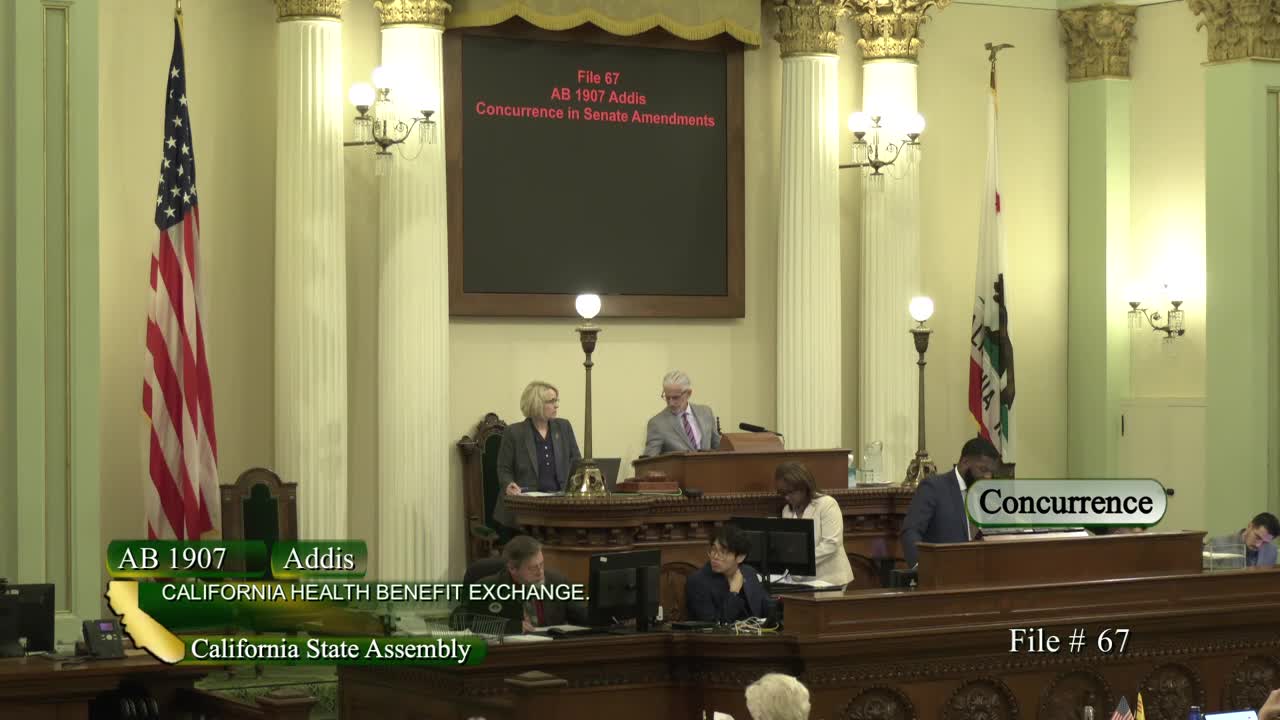 36SEC
Assembly Floor
 8MIN
Senate Standing Committee on Education
 1MIN