AB 2058: California Factory-Built Housing Law.
- Session Year: 2025-2026
- House: Assembly
- Latest Version Date: 2026-09-29
Current Status:
Passed
(2026-09-29: Chaptered by Secretary of State - Chapter 783, Statutes of 2026.)
Introduced
In Committee
Awaiting First Chamber Vote
Passed First Chamber
In Committee
Awaiting Second Chamber Vote
Passed Second Chamber
Enacted
What does this bill do?
The bill lets private quality assurance agencies, if approved under new state rules, perform on-site installation inspections of factory-built homes instead of local building departments when the first user (the initial buyer or occupant) chooses that option. It also caps local inspection and permit fees for factory-built housing at 50% of equivalent fees for site-built homes unless the local agency shows higher costs, and bars inspectors from disassembling or damaging factory-built homes during inspections.
The summary is provided by generative AI which can make mistakes. For original language, please view the details in the table below.
(1)Existing law, the California Factory-Built Housing Law, generally regulates the design, manufacture, and installation of factory-built housing and defines terms for its purposes. The law authorizes the Department of Housing and Community Development, among other things, to regulate quality assurance agencies to perform inspections of factory-built housing manufacturers. The law requires a local enforcement agency, among other things, to enforce and inspect the installation of factory-built housing. The law provides that any person who violates any of its provisions and other specified law is guilty of a misdemeanor, as specified.
This bill would revise these provisions, among other things, to authorize a quality assurance agency to also perform an installation inspection of factory-built housing, at the choice of a first user, after the department adopts regulations regarding the requirements for a quality assurance agency to perform these inspections. The bill would require the department to adopt those regulations by January 1, 2029. The bill would set the maximum fees that a local enforcement agency is authorized to impose for the inspection or permitting of factory-built housing, and prohibit a local enforcement agency from imposing fees under certain circumstances. The bill would prohibit a quality assurance agency or a local enforcement agency from disassembling, damaging, or destroying factory-built housing while inspecting the installation. The bill would make conforming changes and define terms for its purposes.
By increasing the duties of local officials, and by expanding the scope of a crime, this bill would impose a state-mandated local program.
(2)The bill would include findings that changes proposed by this bill address a matter of statewide concern rather than a municipal affair and, therefore, apply to all cities, including charter cities.
(3)The California Constitution requires the state to reimburse local agencies and school districts for certain costs mandated by the state. Statutory provisions establish procedures for making that reimbursement.
This bill would provide that with regard to certain mandates no reimbursement is required by this act for a specified reason.
With regard to any other mandates, this bill would provide that, if the Commission on State Mandates determines that the bill contains costs so mandated by the state, reimbursement for those costs shall be made pursuant to the statutory provisions noted above.
(1)Existing law, the California Factory-Built Housing Law, generally regulates the design, manufacture, and installation of factory-built housing and defines terms for its purposes. The law authorizes the Department of Housing and Community Development, among other things, to regulate quality assurance agencies to perform inspections of factory-built housing manufacturers. The law requires a local enforcement agency, among other things, to enforce and inspect the installation of factory-built housing. The law provides that any person who violates any of its provisions and other specified law is guilty of a misdemeanor, as specified.
This bill would revise these provisions, among other things, to authorize a quality assurance agency to also perform an installation inspection of factory-built housing, at the choice of a first user, after the department adopts regulations regarding the requirements for a quality assurance agency to perform these inspections. The bill would require the department to adopt those regulations by January 1, 2029. The bill would set the maximum fees that a local enforcement agency is authorized to impose for the inspection or permitting of factory-built housing, and prohibit a local enforcement agency from imposing fees under certain circumstances. The bill would prohibit a quality assurance agency or a local enforcement agency from disassembling, damaging, or destroying factory-built housing while inspecting the installation. The bill would make conforming changes and define terms for its purposes.
By increasing the duties of local officials, and by expanding the scope of a crime, this bill would impose a state-mandated local program.
(2)Existing law requires the department, by rule and regulation, to establish a schedule of fees to pay the costs incurred by the department for the work related to the administration and enforcement of the law. Existing law requires the fees collected to be placed in the Mobilehome-Manufactured Home Revolving Fund and makes those funds continuously appropriated to the department for expenditure in carrying out the California Factory-Built Housing Law.This bill would require the department, by rule and regulation, to establish a schedule of fees to pay and recover the costs incurred by the department for the work related to the administration and enforcement of the California Factory-Built Housing Law. By expanding the purposes for which moneys in the Mobilehome-Manufactured Home Revolving Fund, a continuously appropriated fund, may be used, and increasing moneys deposited into a continuously appropriated fund, the bill would make an appropriation.(3)(2)The bill would include findings that changes proposed by this bill address a matter of statewide concern rather than a municipal affair and, therefore, apply to all cities, including charter cities.
(4)(3)The California Constitution requires the state to reimburse local agencies and school districts for certain costs mandated by the state. Statutory provisions establish procedures for making that reimbursement.
This bill would provide that with regard to certain mandates no reimbursement is required by this act for a specified reason.
With regard to any other mandates, this bill would provide that, if the Commission on State Mandates determines that the bill contains costs so mandated by the state, reimbursement for those costs shall be made pursuant to the statutory provisions noted above.
(1)Existing law, the California Factory-Built Housing Law, requires all factory-built housing manufactured after a specified date that is sold or offered for sale to first users within the state to bear insignia of approval issued by the department, deems that housing to comply with the requirements of all ordinances or regulations enacted by any city, city and county, county, or district that may be applicable to the construction of housing, as specified, and prohibits a city, city and county, county, and district from requiring submittal of plans for any factory-built housing manufactured, or to be manufactured, pursuant to these provisions, as specified. The law requires the Department of Housing and Community Development to enforce its provisions, except for in-plant inspections of the manufacture and installation of factory-built housing by local enforcement or inspection agencies, as specified. Existing law authorizes the local enforcement agency to, by ordinance, establish an inspection fee for the inspection of the installation of factory-built housing. Existing law authorizes the department to provide by regulation for the qualification and disqualification of quality assurance agencies to perform inspections of factory-built housing manufacturers. The law requires the department to adopt rules and regulations to interpret and make specific these provisions, as specified. generally regulates the design, manufacture, and installation of factory-built housing and defines terms for its purposes. The law authorizes the Department of Housing and Community Development, among other things, to regulate quality assurance agencies to perform inspections of factory-built housing manufacturers. The law requires a local enforcement agency, among other things, to enforce and inspect the installation of factory-built housing. The law provides that any person who violates any of these its provisions and other specified law is guilty of a misdemeanor, as specified.
This bill would remove the requirement that a local enforcement agency enforce and inspect the installation of factory-built housing and, instead, require a first user to choose to have either the local enforcement agency or a quality assurance agency, acting on behalf and subject to the supervision of the department, enforce and inspect the installation of factory-built housing. The bill would require the first user to cover the cost of the inspection if the first user chooses to have a quality assurance agency enforce and inspect the installation of factory-built housing. The bill would limit a local enforcement agencys inspection fee to no more than 50% of the equivalent inspection fee for nonfactory-built housing, except as specified. The bill would prohibit a local enforcement agency from charging an inspection fee if a first user chooses to have a quality assurance agency enforce and inspect the installation. The bill would also prohibit a local enforcement agency from imposing any permitting fee related to factory-built housing that exceeds 50% of the equivalent permitting fee for nonfactory-built housing, except as specified. The bill would prohibit a local enforcement agency or quality assurance agency from disassembling, damaging, or destroying factory-built housing while inspecting the installation of that factory-built housing. The bill would prohibit provisions relating to the application and scope of the California Factory-Built Housing Law, including the bills provisions, from being construed to alter the authority of a local enforcement agency to issue or withhold a certificate of occupancy, as specified. The bill would also make conforming changes.This bill would revise these provisions, among other things, to authorize a quality assurance agency to also perform an installation inspection of factory-built housing, at the choice of a first user, after the department adopts regulations regarding the requirements for a quality assurance agency to perform these inspections. The bill would require the department to adopt those regulations by January 1, 2029. The bill would set the maximum fees that a local enforcement agency is authorized to impose for the inspection or permitting of factory-built housing, and prohibit a local enforcement agency from imposing fees under certain circumstances. The bill would prohibit a quality assurance agency or a local enforcement agency from disassembling, damaging, or destroying factory-built housing while inspecting the installation. The bill would make conforming changes and define terms for its purposes.
By increasing the duties of local officials, and by expanding the scope of a crime, this bill would impose a state-mandated local program.
(2)Existing law requires the department, by rule and regulation, to establish a schedule of fees to pay the costs incurred by the department for the work related to the administration and enforcement of the law. Existing law requires the fees collected to be placed in the Mobilehome-Manufactured Home Revolving Fund and makes those funds continuously appropriated to the department for expenditure in carrying out the California Factory-Built Housing Law.
This bill would require the department, by rule and regulation, to establish a schedule of fees to pay and recover the costs incurred by the department for the work related to the administration and enforcement of the California Factory-Built Housing Law. By expanding the purposes for which moneys in the Mobilehome-Manufactured Home Revolving Fund, a continuously appropriated fund, may be used, and increasing moneys deposited into a continuously appropriated fund, the bill would make an appropriation.
(3)The bill would include findings that changes proposed by this bill address a matter of statewide concern rather than a municipal affair and, therefore, apply to all cities, including charter cities.
(4)The California Constitution requires the state to reimburse local agencies and school districts for certain costs mandated by the state. Statutory provisions establish procedures for making that reimbursement.
This bill would provide that with regard to certain mandates no reimbursement is required by this act for a specified reason.
With regard to any other mandates, this bill would provide that, if the Commission on State Mandates determines that the bill contains costs so mandated by the state, reimbursement for those costs shall be made pursuant to the statutory provisions noted above.
(1)Existing law, the California Factory-Built Housing Law, requires all factory-built housing manufactured after a specified date that is sold or offered for sale to first users within the state to bear insignia of approval issued by the department, deems that housing to comply with the requirements of all ordinances or regulations enacted by any city, city and county, county, or district that may be applicable to the construction of housing, as specified, and prohibits a city, city and county, county, and district from requiring submittal of plans for any factory-built housing manufactured, or to be manufactured, pursuant to these provisions, as specified. The law requires the Department of Housing and Community Development to enforce its provisions, except for in-plant inspections of the manufacture and installation of factory-built housing by local enforcement or inspection agencies, as specified. Existing law authorizes the local enforcement agency to, by ordinance, establish an inspection fee for the inspection of the installation of factory-built housing. Existing law authorizes the department to provide by regulation for the qualification and disqualification of quality assurance agencies to perform inspections of factory-built housing manufacturers. The law requires the department to adopt rules and regulations to interpret and make specific these provisions, as specified. The law provides that any person who violates any of these provisions and other specified law is guilty of a misdemeanor, as specified.
This bill would remove the requirement that a local enforcement agency enforce and inspect the installation of factory-built housing and, instead, require a first user to choose to have either the local enforcement agency or a quality assurance agency, acting on behalf and subject to the supervision of the department, enforce and inspect the installation of factory-built housing. The bill would require the first user to cover the cost of the inspection if the first user chooses to have a quality assurance agency enforce and inspect the installation of factory-built housing. The bill would limit a local enforcement agencys inspection fee to no more than 50% of the equivalent inspection fee for nonfactory-built housing. housing, except as specified. The bill would prohibit a local enforcement agency from charging an inspection fee if a first user chooses to have a quality assurance agency enforce and inspect the installation. The bill would also prohibit a local enforcement agency from establishing imposing any permitting fee related to factory-built housing that exceeds 50% of the equivalent permitting fee for nonfactory-built housing. housing, except as specified. The bill would prohibit a local enforcement agency or quality assurance agency from disassembling, damaging, or destroying factory-built housing while inspecting the installation of that factory-built housing. The bill would prohibit provisions relating to the application and scope of the California Factory-Built Housing Law, including the bills provisions, from being construed to alter the authority of a local enforcement agency to issue or withhold a certificate of occupancy, as specified. The bill would also make conforming changes.
By increasing the duties of local officials, and by expanding the scope of a crime, this bill would impose a state-mandated local program.
(2)Existing law requires the department, by rule and regulation, to establish a schedule of fees to pay the costs incurred by the department for the work related to the administration and enforcement of the law. Existing law requires the fees collected to be placed in the Mobilehome-Manufactured Home Revolving Fund and makes those funds continuously appropriated to the department for expenditure in carrying out the California Factory-Built Housing Law.
The
This bill would require the department, by rule and regulation, to establish a schedule of fees to pay and recover the costs incurred by the department for the work related to the administration and enforcement of the California Factory-Built Housing Law. By expanding the purposes for which moneys in the Mobilehome-Manufactured Home Revolving Fund, a continuously appropriated fund, may be used, and increasing moneys deposited into a continuously appropriated fund, the bill would make an appropriation.
(3)The bill would include findings that changes proposed by this bill address a matter of statewide concern rather than a municipal affair and, therefore, apply to all cities, including charter cities.
(4)The California Constitution requires the state to reimburse local agencies and school districts for certain costs mandated by the state. Statutory provisions establish procedures for making that reimbursement.
This bill would provide that with regard to certain mandates no reimbursement is required by this act for a specified reason.
With regard to any other mandates, this bill would provide that, if the Commission on State Mandates determines that the bill contains costs so mandated by the state, reimbursement for those costs shall be made pursuant to the statutory provisions noted above.
(1)Existing law, the California Factory-Built Housing Law, requires all factory-built housing manufactured after a specified date that is sold or offered for sale to first users within the state to bear insignia of approval issued by the department, deems that housing to comply with the requirements of all ordinances or regulations enacted by any city, city and county, county, or district that may be applicable to the construction of housing, as specified, and prohibits a city, city and county, county, and district from requiring submittal of plans for any factory-built housing manufactured, or to be manufactured, pursuant to these provisions, as specified. The law requires the Department of Housing and Community Development to enforce its provisions, except for in-plant inspections of the manufacture and installation of factory-built housing by local enforcement or inspection agencies, as specified. Existing law authorizes the local enforcement agency to, by ordinance, establish an inspection fee for the inspection of the installation of factory-built housing. Existing law authorizes the department to provide by regulation for the qualification and disqualification of quality assurance agencies to perform inspections of factory-built housing manufacturers. The law requires the department to adopt rules and regulations to interpret and make specific these provisions, as specified. The law provides that any person who violates any of these provisions and other specified law is guilty of a misdemeanor, as specified.
This bill would remove the requirement that a local enforcement agency enforce and inspect the installation of factory-built housing and, instead, require a first user to choose to have either the local enforcement agency or a quality assurance agency, acting on behalf and subject to the supervision of the department, enforce and inspect the installation of factory-built housing. The bill would require the first user to cover the cost of the inspection if the first user chooses to have a quality assurance agency enforce and inspect the installation of factory-built housing. The bill would limit a local enforcement agencys inspection fee to no more than 50% of the equivalent inspection fee for nonfactory-built housing. The bill would prohibit a local enforcement agency from charging an inspection fee if a first user chooses to have a quality assurance agency enforce and inspect the installation. The bill would also prohibit a local enforcement agency from establishing any permitting fee related to factory-built housing that exceeds 50% of the equivalent permitting fee for nonfactory-built housing. The bill would prohibit a local enforcement agency or quality assurance agency from disassembling, damaging, or destroying factory-built housing while inspecting the installation of that factory-built housing. The bill would also make conforming changes.
By increasing the duties of local officials, and by expanding the scope of a crime, this bill would impose a state-mandated local program.
(2)Existing law requires the department, by rule and regulation, to establish a schedule of fees to pay the costs incurred by the department for the work related to the administration and enforcement of the law. Existing law requires the fees collected to be placed in the Mobilehome-Manufactured Home Revolving Fund and makes those funds continuously appropriated to the department for expenditure in carrying out the California Factory-Built Housing Law.
The bill would require the department, by rule and regulation, to establish a schedule of fees to pay and recover the costs incurred by the department for the work related to the administration and enforcement of the California Factory-Built Housing Law. By expanding the purposes for which moneys in the Mobilehome-Manufactured Home Revolving Fund, a continuously appropriated fund, may be used, and increasing moneys deposited into a continuously appropriated fund, the bill would make an appropriation.
(2)(3)The bill would include findings that changes proposed by this bill address a matter of statewide concern rather than a municipal affair and, therefore, apply to all cities, including charter cities.
(3)(4)The California Constitution requires the state to reimburse local agencies and school districts for certain costs mandated by the state. Statutory provisions establish procedures for making that reimbursement.
This bill would provide that with regard to certain mandates no reimbursement is required by this act for a specified reason.
With regard to any other mandates, this bill would provide that, if the Commission on State Mandates determines that the bill contains costs so mandated by the state, reimbursement for those costs shall be made pursuant to the statutory provisions noted above.
(1)Existing law, the California Factory-Built Housing Law, requires all factory-built housing manufactured after a specified date that is sold or offered for sale to first users within the state to bear insignia of approval issued by the department, deems that housing to comply with the requirements of all ordinances or regulations enacted by any city, city and county, county, or district that may be applicable to the construction of housing, as specified, and prohibits a city, city and county, county, and district from requiring submittal of plans for any factory-built housing manufactured, or to be manufactured, pursuant to these provisions, as specified. The law requires the Department of Housing and Community Development to enforce its provisions, except for in-plant inspections of the manufacture and installation of factory-built housing by local enforcement or inspection agencies, as specified. Existing law authorizes the local enforcement agency to, by ordinance, establish an inspection fee for the inspection of the installation of factory-built housing. Existing law authorizes the department to provide by regulation for the qualification and disqualification of quality assurance agencies to perform inspections of factory-built housing manufacturers. The law requires the department to adopt rules and regulations to interpret and make specific these provisions, as specified. The law provides that any person who violates any of these provisions and other specified law is guilty of a misdemeanor, as specified.
This bill would remove the requirement that a local enforcement agency enforce and inspect the installation of factory-built housing and, instead, require a first user to choose to have either the local enforcement agency or a quality assurance agency, acting on behalf and subject to the supervision of the department, enforce and inspect the installation of factory-built housing. The bill would limit a local enforcement agencys inspection fee to no more than 50% of the equivalent inspection fee for nonfactory-built housing. The bill would prohibit a local enforcement agency from charging an inspection fee if a first user chooses to have a quality assurance agency enforce and inspect the installation. The bill would also prohibit a local enforcement agency from establishing any permitting fee related to factory-built housing that exceeds 50% of the equivalent permitting fee for nonfactory-built housing. The bill would prohibit a local enforcement agency or quality assurance agency from disassembling, damaging, or destroying factory-built housing while inspecting the installation of that factory-built housing. The bill would also make conforming changes.
By increasing the duties of local officials, and by expanding the scope of a crime, this bill would impose a state-mandated local program.
(2)The bill would include findings that changes proposed by this bill address a matter of statewide concern rather than a municipal affair and, therefore, apply to all cities, including charter cities.
(3)The California Constitution requires the state to reimburse local agencies and school districts for certain costs mandated by the state. Statutory provisions establish procedures for making that reimbursement.
This bill would provide that with regard to certain mandates no reimbursement is required by this act for a specified reason.
With regard to any other mandates, this bill would provide that, if the Commission on State Mandates determines that the bill contains costs so mandated by the state, reimbursement for those costs shall be made pursuant to the statutory provisions noted above.
Existing law authorizes the governing body of any city, county, or city and county to, by ordinance, elect to have its building department assume responsibility for in-plant inspections of all factory-built housing in all places of manufacture within the political limits of the jurisdiction of that city, county, or city and county.This bill would make nonsubstantive changes to that provision.Existing law authorizes the governing body of any city, county, or city and county to, by ordinance, elect to have its building department assume responsibility for in-plant inspections of all factory-built housing in all places of manufacture within the political limits of the jurisdiction of that city, county, or city and county.
This bill would make nonsubstantive changes to that provision.
Quality assurance agency means a private organization meeting the requirements specified in regulations of the department to perform in-plant inspections of the manufacture of factory-built housing and onsite installation inspections of factory-built housing.
SEC. 2.Section 19991 of the Health and Safety Code is amended to read:19991.(a)The department shall enforce every provision of this part, the building standards published in the State Building Standards Code relating to factory-built housing, and the other regulations adopted pursuant to this part, except as provided in Sections 19991.1, 19991.3, 19991.4, 19992, 19992.1, and 19992.2.
(b)Nothing in this chapter shall be construed to alter the authority of a local enforcement agency to issue or withhold a certificate of occupancy in accordance with any other law.
SEC. 3.Section 19992 of the Health and Safety Code is amended to read:19992.Local enforcement agencies shall enforce the installation of factory-built housing. The installation of factory-built housing shall be conducted in accordance with the requirements of the building standards published in the State Building Standards Code relating to factory-built housing and the other requirements of Part 1.5 (commencing with Section 17910), subject to the provisions of Section 19990. A local enforcement agency or quality assurance agency shall not disassemble, damage, or destroy factory-built housing while inspecting the installation of that factory-built housing, pursuant to Section 19992.1.
SEC. 4.Section 19992.1 is added to the Health and Safety Code, to read:19992.1.(a)(1)A local enforcement agency shall offer the inspection of the installation of factory-built housing. After the department adopts regulations pursuant to subdivision (d), a first user shall choose to have either the local enforcement agency or a quality assurance agency, acting on behalf of and subject to the supervision of the department, inspect the installation of factory-built housing.
(2)If a first user chooses to have a quality assurance agency inspect the installation of factory-built housing, the first user shall cover the cost of the inspections.
(b)(1)The local enforcement agency may, by ordinance, impose an inspection fee for the inspection of the installation of factory-built housing, provided that the fee is no more than 50 percent of the equivalent inspection fee for nonfactory-built housing.
(2)Notwithstanding paragraph (1), a local enforcement agency may impose an inspection fee for the inspection of the installation of factory-built housing that exceeds 50 percent of the equivalent inspection fee for nonfactory-built housing if the local enforcement agency, as part of a written finding and an adopted resolution or ordinance, provides substantial evidence of the reasonable cost to conduct the inspections.
(c)If a first user chooses to have a quality assurance agency inspect the installation of factory-built housing, the local enforcement agency shall not charge an inspection fee, but may charge fees for inspection of sitework for items not related to the installation of the factory-built housing, including, but not limited to, grading, foundations, and landscaping other nonfactory-built housing.
(d)By January 1, 2029, the department shall adopt regulations pursuant to this part to establish standards, qualifications, procedures, and oversight requirements governing quality assurance agencies performing installation inspections pursuant to this section, including, but not limited to, approval criteria, inspection requirements, reporting obligations, and conditions for suspension, revocation, or other enforcement actions related to certification to perform installation inspections.
(e)Subdivisions (a) to (c), inclusive, shall not authorize a quality assurance agency to perform installation inspections of factory-built housing, and subdivisions (b) and (c) shall not become operative until the department adopts regulations pursuant to subdivision (d).
(f)A quality assurance agency performing installation inspections of factory-built housing pursuant to this section shall, to the extent practicable, coordinate with the local enforcement agency having jurisdiction and shall ensure that installation inspections are conducted in a manner consistent with applicable local requirements that are not preempted by this part.
SEC. 5.Section 19992.2 is added to the Health and Safety Code, to read:19992.2.(a)A local enforcement agency shall not impose any permitting fee related to a factory-built housing structure that exceeds 50 percent of the equivalent permitting fee for a nonfactory-built housing structure.
(b)Notwithstanding subdivision (a), a local enforcement agency may impose a permitting fee related to a factory-built housing structure that exceeds 50 percent of the equivalent permitting fee for a nonfactory-built housing structure if the local enforcement agency, as part of a written finding and an adopted resolution or ordinance, provides substantial evidence of the reasonable cost to review the permits.
SEC. 6.The Legislature finds and declares that the provision of adequate housing, in light of the severe shortage of housing at all income levels in the state, is a matter of statewide concern and is not a municipal affair as that term is used in Section 5 of Article XI of the California Constitution. Therefore, Sections 1, 2, 3, 4, and 5 of this act amending Sections 19976.05, 19991, and 19992 of, and adding Sections 19992.1 and 19992.2 to, the Health and Safety Code, respectively, apply to all cities, including charter cities.
SEC. 7.No reimbursement is required by this act pursuant to Section 6 of Article XIIIB of the California Constitution for certain costs that may be incurred by a local agency or school district because, in that regard, this act creates a new crime or infraction, eliminates a crime or infraction, or changes the penalty for a crime or infraction, within the meaning of Section 17556 of the Government Code, or changes the definition of a crime within the meaning of Section 6 of Article XIIIB of the California Constitution.
However, if the Commission on State Mandates determines that this act contains other costs mandated by the state, reimbursement to local agencies and school districts for those costs shall be made pursuant to Part 7 (commencing with Section 17500) of Division 4 of Title 2 of the Government Code.
Quality assurance agency means a private organization meeting the requirements specified in regulations of the department to perform in-plant inspections of the manufacture of factory-built housing and onsite installation inspections of factory-built housing.
SEC. 2.Section 19982 of the Health and Safety Code is amended to read:19982.(a)The department by rule and regulation shall establish a schedule of fees to pay and recover the costs incurred by the department for the work related to the administration and enforcement of this part. Notwithstanding Section 13340 of the Government Code, the fees collected shall be placed in the Mobilehome-Manufactured Home Revolving Fund established by Section 18016.5, and are continuously appropriated to the department for expenditure in carrying out this part.(b)The total amount of money collected pursuant to this part and contained in the Mobilehome-Manufactured Home Revolving Fund on June 30 of each fiscal year shall not exceed the amount needed for operating expenses for one year for the enforcement of this part. If the total amount of money collected pursuant to this part in the fund exceeds this amount, the department shall make appropriate reductions in the schedule of fees authorized by this section.SEC. 3.SEC. 2.Section 19991 of the Health and Safety Code is amended to read:19991.(a)The department shall enforce every provision of this part, the building standards published in the State Building Standards Code relating to factory-built housing, and the other regulations adopted pursuant to this part, except as provided in Sections 19991.1, 19991.3, 19991.4, 19992, 19992.1, and 19992.2.
(b)Nothing in this chapter shall be construed to alter the authority of a local enforcement agency to issue or withhold a certificate of occupancy in accordance with any other law.
SEC. 4.SEC. 3.Section 19992 of the Health and Safety Code is amended to read:19992.Local enforcement agencies shall enforce the installation of factory-built housing. The installation of factory-built housing shall be conducted in accordance with the requirements of the building standards published in the State Building Standards Code relating to factory-built housing and the other requirements of Part 1.5 (commencing with Section 17910), subject to the provisions of Section 19990. A local enforcement agency or quality assurance agency shall not disassemble, damage, or destroy factory-built housing while inspecting the installation of that factory-built housing, pursuant to Section 19992.1.
SEC. 5.SEC. 4.Section 19992.1 is added to the Health and Safety Code, to read:19992.1.(a)(1)A local enforcement agency shall offer the inspection of the installation of factory-built housing. After the department adopts regulations pursuant to subdivision (d), a first user shall choose to have either the local enforcement agency or a quality assurance agency, acting on behalf of and subject to the supervision of the department, inspect the installation of factory-built housing.
(2)If a first user chooses to have a quality assurance agency inspect the installation of factory-built housing, the first user shall cover the cost of the inspections.
(b)(1)The local enforcement agency may, by ordinance, impose an inspection fee for the inspection of the installation of factory-built housing, provided that the fee is no more than 50 percent of the equivalent inspection fee for nonfactory-built housing.
(2)Notwithstanding paragraph (1), a local enforcement agency may impose an inspection fee for the inspection of the installation of factory-built housing that exceeds 50 percent of the equivalent inspection fee for nonfactory-built housing if the local enforcement agency, as part of a written finding and an adopted resolution or ordinance, provides substantial evidence of the reasonable cost to conduct the inspections.
(c)If a first user chooses to have a quality assurance agency inspect the installation of factory-built housing, the local enforcement agency shall not charge an inspection fee, but may charge fees for inspection of sitework for items not related to the installation of the factory-built housing, including, but not limited to, grading, foundations, and landscaping other nonfactory-built housing.
(d)By January 1, 2029, the department shall adopt regulations pursuant to this part to establish standards, qualifications, procedures, and oversight requirements governing quality assurance agencies performing installation inspections pursuant to this section, including, but not limited to, approval criteria, inspection requirements, reporting obligations, and conditions for suspension, revocation, or other enforcement actions related to certification to perform installation inspections.
(e)Subdivisions (a) to (c), inclusive, shall not authorize a quality assurance agency to perform installation inspections of factory-built housing, and subdivisions (b) and (c) shall not become operative until the department adopts regulations pursuant to subdivision (d).
(f)A quality assurance agency performing installation inspections of factory-built housing pursuant to this section shall, to the extent practicable, coordinate with the local enforcement agency having jurisdiction and shall ensure that installation inspections are conducted in a manner consistent with applicable local requirements that are not preempted by this part.
SEC. 6.SEC. 5.Section 19992.2 is added to the Health and Safety Code, to read:19992.2.(a)A local enforcement agency shall not impose any permitting fee related to a factory-built housing structure that exceeds 50 percent of the equivalent permitting fee for a nonfactory-built housing. housing structure.
(b)Notwithstanding subdivision (a), a local enforcement agency may impose a permitting fee related to a factory-built housing structure that exceeds 50 percent of the equivalent permitting fee for a nonfactory-built housing structure if the local enforcement agency, as part of a written finding and an adopted resolution or ordinance, provides substantial evidence of the reasonable cost to review the permits.
SEC. 7.SEC. 6.The Legislature finds and declares that the provision of adequate housing, in light of the severe shortage of housing at all income levels in the state, is a matter of statewide concern and is not a municipal affair as that term is used in Section 5 of Article XI of the California Constitution. Therefore, Sections 1, 2, 3, 4, 5, and 6 and 5 of this act amending Sections 19976.05, 19982, 19991, and 19992 of, and adding Sections 19992.1 and 19992.2 to, the Health and Safety Code, respectively, apply to all cities, including charter cities.
SEC. 8.SEC. 7.No reimbursement is required by this act pursuant to Section 6 of Article XIIIB of the California Constitution for certain costs that may be incurred by a local agency or school district because, in that regard, this act creates a new crime or infraction, eliminates a crime or infraction, or changes the penalty for a crime or infraction, within the meaning of Section 17556 of the Government Code, or changes the definition of a crime within the meaning of Section 6 of Article XIIIB of the California Constitution.
However, if the Commission on State Mandates determines that this act contains other costs mandated by the state, reimbursement to local agencies and school districts for those costs shall be made pursuant to Part 7 (commencing with Section 17500) of Division 4 of Title 2 of the Government Code.
Quality assurance agency means a private organization meeting the requirements specified in regulations of the department to perform in-plant inspections of the construction manufacture of factory-built housing. housing and onsite inspections of factory-built housing.
SECTION 1.SEC. 2.Section 19982 of the Health and Safety Code is amended to read:19982.(a)The department by rule and regulation shall establish a schedule of fees to pay and recover the costs incurred by the department for the work related to the administration and enforcement of this part. Notwithstanding Section 13340 of the Government Code, the fees collected shall be placed in the Mobilehome-Manufactured Home Revolving Fund established by Section 18016.5, and are continuously appropriated to the department for expenditure in carrying out this part.
(b)The total amount of money collected pursuant to this part and contained in the Mobilehome-Manufactured Home Revolving Fund on June 30 of each fiscal year shall not exceed the amount needed for operating expenses for one year for the enforcement of this part. If the total amount of money collected pursuant to this part in the fund exceeds this amount, the department shall make appropriate reductions in the schedule of fees authorized by this section.
SEC. 2.SEC. 3.Section 19991 of the Health and Safety Code is amended to read:19991.(a)The department shall enforce every provision of this part, the building standards published in the State Building Standards Code relating to factory-built housing, and the other regulations adopted pursuant to this part, except as provided in Sections 19991.1, 19991.3, 19991.4, 19992, 19992.1, and 19992.2.
(b)Nothing in this chapter shall be construed to alter the authority of a local enforcement agency to issue or withhold a certificate of occupancy in accordance with any other law.
SEC. 3.SEC. 4.Section 19992 of the Health and Safety Code is amended to read:19992.The installation of factory-built housing shall be conducted in accordance with the requirements of the building standards published in the State Building Standards Code relating to factory-built housing and the other requirements of Part 1.5 (commencing with Section 17910), subject to the provisions of Section 19990. A local enforcement agency or quality assurance agency shall not disassemble, damage, or destroy factory-built housing while inspecting the installation of that factory-built housing, pursuant to Section 19992.1.
SEC. 4.SEC. 5.Section 19992.1 is added to the Health and Safety Code, to read:19992.1.(a)(1)A first user shall choose to have either the local enforcement agency or a quality assurance agency, acting on behalf and subject to the supervision of the department, enforce and inspect the installation of factory-built housing.19992.1.(a)(1)A local enforcement agency shall offer the inspection of the installation of factory-built housing. After the department adopts regulations pursuant to subdivision (d), a first user shall choose to have either the local enforcement agency or a quality assurance agency, acting on behalf of and subject to the supervision of the department, inspect the installation of factory-built housing.
(2)If a first user chooses to have a quality assurance agency enforce and inspect the installation of factory-built housing, the first user shall cover the cost of the inspection. inspections.
(b)(1)The local enforcement agency may, by ordinance, impose an inspection fee for the inspection of the installation of factory-built housing, provided that the fee is no more than 50 percent of the equivalent inspection fee for nonfactory-built housing.
(2)Notwithstanding paragraph (1), a local enforcement agency may impose an inspection fee for the inspection of the installation of factory-built housing that exceeds 50 percent of the equivalent inspection fee for nonfactory-built housing if the local enforcement agency, as part of a written finding and an adopted resolution or ordinance, provides substantial evidence of the reasonable cost to conduct the inspections.
(c)If a first user chooses to have a quality assurance agency enforce and inspect the installation of factory-built housing, the local enforcement agency shall not charge an inspection fee. fee, but may charge fees for inspection of sitework for items not related to the installation of the factory-built housing, including, but not limited to, grading, foundations, and landscaping other nonfactory-built housing.
(d)By January 1, 2029, the department shall adopt regulations pursuant to this part to establish standards, qualifications, procedures, and oversight requirements governing quality assurance agencies performing installation inspections pursuant to this section, including, but not limited to, approval criteria, inspection requirements, reporting obligations, and conditions for suspension, revocation, or other enforcement actions related to certification to perform installation inspections.
(e)Subdivisions (a) to (c), inclusive, shall not authorize a quality assurance agency to perform installation inspections of factory-built housing, and subdivisions (b) and (c) shall not become operative until the department adopts regulations pursuant to subdivision (d).
(f)A quality assurance agency performing installation inspections of factory-built housing pursuant to this section shall, to the extent practicable, coordinate with the local enforcement agency having jurisdiction and shall ensure that installation inspections are conducted in a manner consistent with applicable local requirements that are not preempted by this part.
SEC. 5.SEC. 6.Section 19992.2 is added to the Health and Safety Code, to read:19992.2.(a)A local enforcement agency shall not impose any permitting fee related to factory-built housing that exceeds 50 percent of the equivalent permitting fee for nonfactory-built housing.
(b)Notwithstanding subdivision (a), a local enforcement agency may impose a permitting fee related to factory-built housing that exceeds 50 percent of the equivalent permitting fee for nonfactory-built housing if the local enforcement agency, as part of a written finding and an adopted resolution or ordinance, provides substantial evidence of the reasonable cost to review the permits.
SEC. 6.SEC. 7.The Legislature finds and declares that the provision of adequate housing, in light of the severe shortage of housing at all income levels in the state, is a matter of statewide concern and is not a municipal affair as that term is used in Section 5 of Article XI of the California Constitution. Therefore, Sections 1, 2, 3, 4, and 5 5, and 6 of this act amending Sections 19991 and 19976.05, 19982, 19991, and 19992 of, and adding Sections 19992.1 and 19992.2 to, the Health and Safety Code, respectively, apply to all cities, including charter cities.
SEC. 7.SEC. 8.No reimbursement is required by this act pursuant to Section 6 of Article XIIIB of the California Constitution for certain costs that may be incurred by a local agency or school district because, in that regard, this act creates a new crime or infraction, eliminates a crime or infraction, or changes the penalty for a crime or infraction, within the meaning of Section 17556 of the Government Code, or changes the definition of a crime within the meaning of Section 6 of Article XIIIB of the California Constitution.
However, if the Commission on State Mandates determines that this act contains other costs mandated by the state, reimbursement to local agencies and school districts for those costs shall be made pursuant to Part 7 (commencing with Section 17500) of Division 4 of Title 2 of the Government Code.
(a)The department by rule and regulation shall establish a schedule of fees to pay and recover the costs incurred by the department for the work related to the administration and enforcement of this part. Notwithstanding Section 13340 of the Government Code, the fees collected shall be placed in the Mobilehome-Manufactured Home Revolving Fund established by Section 18016.5, and are continuously appropriated to the department for expenditure in carrying out this part.
(b)The total amount of money collected pursuant to this part and contained in the Mobilehome-Manufactured Home Revolving Fund on June 30 of each fiscal year shall not exceed the amount needed for operating expenses for one year for the enforcement of this part. If the total amount of money collected pursuant to this part in the fund exceeds this amount, the department shall make appropriate reductions in the schedule of fees authorized by this section.
SEC. 2.Section 19991 of the Health and Safety Code is amended to read:19991.(a)The department shall enforce every provision of this part, the building standards published in the State Building Standards Code relating to factory-built housing, and the other regulations adopted pursuant to this part, except as provided in Sections 19991.1, 19991.3, 19991.4, 19992, 19992.1, and 19992.2.
(b)Nothing in this chapter shall be construed to alter the authority of a local enforcement agency to issue or withhold a certificate of occupancy in accordance with any other law.
SEC. 3.Section 19992 of the Health and Safety Code is amended to read:19992.The installation of factory-built housing shall be conducted in accordance with the requirements of the building standards published in the State Building Standards Code relating to factory-built housing and the other requirements of Part 1.5 (commencing with Section 17910), subject to the provisions of Section 19990. A local enforcement agency or quality assurance agency shall not disassemble, damage, or destroy factory-built housing while inspecting the installation of that factory-built housing, pursuant to Section 19992.1.
SEC. 4.Section 19992.1 is added to the Health and Safety Code, to read:19992.1.(a)(1)A first user shall choose to have either the local enforcement agency or a quality assurance agency, acting on behalf and subject to the supervision of the department, enforce and inspect the installation of factory-built housing.
(2)If a first user chooses to have a quality assurance agency enforce and inspect the installation of factory-built housing, the first user shall cover the cost of the inspection.
(b)(1)The local enforcement agency may, by ordinance, establish impose an inspection fee for the inspection of the installation of factory-built housing, provided that the fee is no more than 50 percent of the equivalent inspection fee for nonfactory-built housing.
(2)Notwithstanding paragraph (1), a local enforcement agency may impose an inspection fee for the inspection of the installation of factory-built housing that exceeds 50 percent of the equivalent inspection fee for nonfactory-built housing if the local enforcement agency, as part of a written finding and an adopted resolution or ordinance, provides substantial evidence of the reasonable cost to conduct the inspections.
(c)If a first user chooses to have a quality assurance agency enforce and inspect the installation of factory-built housing, the local enforcement agency shall not charge an inspection fee.
SEC. 5.Section 19992.2 is added to the Health and Safety Code, to read:19992.2.(a)A local enforcement agency shall not establish impose any permitting fee related to factory-built housing that exceeds 50 percent of the equivalent permitting fee for nonfactory-built housing.
(b)Notwithstanding subdivision (a), a local enforcement agency may impose a permitting fee related to factory-built housing that exceeds 50 percent of the equivalent permitting fee for nonfactory-built housing if the local enforcement agency, as part of a written finding and an adopted resolution or ordinance, provides substantial evidence of the reasonable cost to review the permits.
SEC. 6.The Legislature finds and declares that the provision of adequate housing, in light of the severe shortage of housing at all income levels in the state, is a matter of statewide concern and is not a municipal affair as that term is used in Section 5 of Article XI of the California Constitution. Therefore, Sections 2, 3, 4, and 5 of this act amending Sections 19991 and 19992 of, and adding Sections 19992.1 and 19992.2 to, the Health and Safety Code, respectively, apply to all cities, including charter cities.
SEC. 7.No reimbursement is required by this act pursuant to Section 6 of Article XIIIB of the California Constitution for certain costs that may be incurred by a local agency or school district because, in that regard, this act creates a new crime or infraction, eliminates a crime or infraction, or changes the penalty for a crime or infraction, within the meaning of Section 17556 of the Government Code, or changes the definition of a crime within the meaning of Section 6 of Article XIIIB of the California Constitution.
However, if the Commission on State Mandates determines that this act contains other costs mandated by the state, reimbursement to local agencies and school districts for those costs shall be made pursuant to Part 7 (commencing with Section 17500) of Division 4 of Title 2 of the Government Code.
(a)The department by rule and regulation shall establish a schedule of fees to pay and recover the costs incurred by the department for the work related to the administration and enforcement of this part. Notwithstanding Section 13340 of the Government Code, the fees collected shall be placed in the Mobilehome-Manufactured Home Revolving Fund established by Section 18016.5, and are continuously appropriated to the department for expenditure in carrying out this part.
(b)The total amount of money collected pursuant to this part and contained in the Mobilehome-Manufactured Home Revolving Fund on June 30 of each fiscal year shall not exceed the amount needed for operating expenses for one year for the enforcement of this part. If the total amount of money collected pursuant to this part in the fund exceeds this amount, the department shall make appropriate reductions in the schedule of fees authorized by this section.
SECTION 1.SEC. 2.Section 19991 of the Health and Safety Code is amended to read:19991.The department shall enforce every provision of this part, the building standards published in the State Building Standards Code relating to factory-built housing, and the other regulations adopted pursuant to this part, except as provided in Sections 19991.1, 19991.3, 19991.4, 19992, 19992.1, and 19992.2.
SEC. 2.SEC. 3.Section 19992 of the Health and Safety Code is amended to read:19992.The installation of factory-built housing shall be conducted in accordance with the requirements of the building standards published in the State Building Standards Code relating to factory-built housing and the other requirements of Part 1.5 (commencing with Section 17910), subject to the provisions of Section 19990. A local enforcement agency or quality assurance agency shall not disassemble, damage, or destroy factory-built housing while inspecting the installation of that factory-built housing, pursuant to Section 19992.1.
SEC. 3.SEC. 4.Section 19992.1 is added to the Health and Safety Code, to read:19992.1.(a)(1)A first user shall choose to have either the local enforcement agency or a quality assurance agency, acting on behalf and subject to the supervision of the department, enforce and inspect the installation of factory-built housing.
(2)If a first user chooses to have a quality assurance agency enforce and inspect the installation of factory-built housing, the first user shall cover the cost of the inspection.
(b)The local enforcement agency may, by ordinance, establish an inspection fee for the inspection of the installation of factory-built housing, provided that the fee is no more than 50 percent of the equivalent inspection fee for nonfactory-built housing.
(c)If a first user chooses to have a quality assurance agency enforce and inspect the installation of factory-built housing, the local enforcement agency shall not charge an inspection fee.
SEC. 4.SEC. 5.Section 19992.2 is added to the Health and Safety Code, to read:19992.2.A local enforcement agency shall not establish any permitting fee related to factory-built housing that exceeds 50 percent of the equivalent permitting fee for nonfactory-built housing.
SEC. 5.SEC. 6.The Legislature finds and declares that the provision of adequate housing, in light of the severe shortage of housing at all income levels in the state, is a matter of statewide concern and is not a municipal affair as that term is used in Section 5 of Article XI of the California Constitution. Therefore, Sections 1, 2, 3, and 4 2, 3, 4, and 5 of this act amending Sections 19991 and 19992 of, and adding Sections 19992.1 and 19992.2 to, the Health and Safety Code, respectively, apply to all cities, including charter cities.
SEC. 6.SEC. 7.No reimbursement is required by this act pursuant to Section 6 of Article XIIIB of the California Constitution for certain costs that may be incurred by a local agency or school district because, in that regard, this act creates a new crime or infraction, eliminates a crime or infraction, or changes the penalty for a crime or infraction, within the meaning of Section 17556 of the Government Code, or changes the definition of a crime within the meaning of Section 6 of Article XIIIB of the California Constitution.
However, if the Commission on State Mandates determines that this act contains other costs mandated by the state, reimbursement to local agencies and school districts for those costs shall be made pursuant to Part 7 (commencing with Section 17500) of Division 4 of Title 2 of the Government Code.
The department shall enforce every provision of this part, the building standards published in the State Building Standards Code relating to factory-built housing, and the other regulations adopted pursuant to this part, except as provided in Sections 19991.1, 19991.3, 19991.4, and 19992. 19992, 19992.1, and 19992.2.
SEC. 2.Section 19992 of the Health and Safety Code is amended to read:19992.Local enforcement agencies shall enforce and inspect the installation of factory-built housing. The installation of factory-built housing shall be conducted in accordance with the requirements of the building standards published in the State Building Standards Code relating to factory-built housing and the other requirements of Part 1.5 (commencing with Section 17910), subject to the provisions of Section 19990. The local enforcement agency may, by ordinance, establish an inspection fee for the inspection of the installation of factory-built housing. A local enforcement agency or quality assurance agency shall not disassemble, damage, or destroy factory-built housing while inspecting the installation of that factory-built housing, pursuant to Section 19992.1.
SEC. 3.Section 19992.1 is added to the Health and Safety Code, to read:19992.1.(a)A first user shall choose to have either the local enforcement agency or a quality assurance agency, acting on behalf and subject to the supervision of the department, enforce and inspect the installation of factory-built housing.
(b)The local enforcement agency may, by ordinance, establish an inspection fee for the inspection of the installation of factory-built housing, provided that the fee is no more than 50 percent of the equivalent inspection fee for nonfactory-built housing.
(c)If a first user chooses to have a quality assurance agency enforce and inspect the installation of factory-built housing, the local enforcement agency shall not charge an inspection fee.
SEC. 4.Section 19992.2 is added to the Health and Safety Code, to read:19992.2.A local enforcement agency shall not establish any permitting fee related to factory-built housing that exceeds 50 percent of the equivalent permitting fee for nonfactory-built housing.
SEC. 5.The Legislature finds and declares that the provision of adequate housing, in light of the severe shortage of housing at all income levels in the state, is a matter of statewide concern and is not a municipal affair as that term is used in Section 5 of Article XI of the California Constitution. Therefore, Sections 1, 2, 3, and 4 of this act amending Sections 19991 and 19992 of, and adding Sections 19992.1 and 19992.2 to, the Health and Safety Code, respectively, apply to all cities, including charter cities.
SEC. 6.No reimbursement is required by this act pursuant to Section 6 of Article XIIIB of the California Constitution for certain costs that may be incurred by a local agency or school district because, in that regard, this act creates a new crime or infraction, eliminates a crime or infraction, or changes the penalty for a crime or infraction, within the meaning of Section 17556 of the Government Code, or changes the definition of a crime within the meaning of Section 6 of Article XIIIB of the California Constitution.
However, if the Commission on State Mandates determines that this act contains other costs mandated by the state, reimbursement to local agencies and school districts for those costs shall be made pursuant to Part 7 (commencing with Section 17500) of Division 4 of Title 2 of the Government Code.
SECTION 1.Section 19991.1 of the Health and Safety Code is amended to read:19991.1.The governing body of any city, county, or city and county may by ordinance elect to have its building department assume responsibility, for in-plant inspections of all factory-built housing in all places of manufacture within the political limits of the jurisdiction of that city, county, or city and county. If certified by the department as qualified to perform the inspections, the building department shall be the local inspection agency within the city, county, or city and county. The governing body of any city, county, or city and county having a local inspection agency may, by ordinance, establish a reasonable inspection fee for in-plant inspections to defray the actual cost of inspections. REVISIONS: HeadingLine 2.The governing body of any city, county, or city and county may by ordinance elect to have its building department assume responsibility, for in-plant inspections of all factory-built housing in all places of manufacture within the political limits of the jurisdiction of such that city, county, or city and county. If certified by the department as qualified to perform such the inspections, the building department shall be the local inspection agency within the city, county, or city and county. The governing body of any city, county, or city and county having a local inspection agency may, by ordinance, establish a reasonable inspection fee for in-plant inspections to defray the actual cost of inspections.
|
Date
|
Status
|
|---|---|
| Sep 29, 2026 | Chaptered by Secretary of State - Chapter 783, Statutes of 2026. |
| Sep 29, 2026 | Approved by the Governor. |
| Sep 8, 2026 | Enrolled and presented to the Governor at 3:30 p.m. |
| Aug 28, 2026 | Senate amendments concurred in. To Engrossing and Enrolling. (Ayes 78. Noes 0.). |
| Aug 28, 2026 | Senate amendments concurred in. To Engrossing and Enrolling. (Ayes 78. Noes 0. Page 6805.). |
| Aug 27, 2026 | In Assembly. Concurrence in Senate amendments pending. |
| Aug 27, 2026 | Read third time. Passed. Ordered to the Assembly. (Ayes 39. Noes 0.). |
| Aug 24, 2026 | Read second time. Ordered to third reading. |
| Aug 21, 2026 | Read third time and amended. Ordered to second reading. |
| Aug 17, 2026 | Read second time. Ordered to third reading. |
| Aug 13, 2026 | Read second time and amended. Ordered returned to second reading. |
| Aug 13, 2026 | From committee: Amend, and do pass as amended. (Ayes 7. Noes 0.) (August 13). |
| Aug 10, 2026 | In committee: Referred to APPR. suspense file. |
| Aug 3, 2026 | In committee: Hearing postponed by committee. |
| Jun 25, 2026 | Read second time and amended. Re-referred to Com. on APPR. |
| Jun 24, 2026 | From committee: Amend, and do pass as amended and re-refer to Com. on APPR. (Ayes 7. Noes 0.) (June 23). |
| Jun 18, 2026 | Read second time and amended. Re-referred to Com. on L. GOV. |
| Jun 17, 2026 | From committee: Amend, and do pass as amended and re-refer to Com. on L. GOV. with recommendation: To Consent Calendar. (Ayes 10. Noes 0.) (June 16). |
| Jun 10, 2026 | Referred to Coms. on HOUSING and L. GOV. |
| May 22, 2026 | In Senate. Read first time. To Com. on RLS. for assignment. |
| May 22, 2026 | Read third time. Passed. Ordered to the Senate. (Ayes 73. Noes 0.) |
| May 22, 2026 | Read third time. Passed. Ordered to the Senate. (Ayes 73. Noes 0. Page 5262.) |
| May 18, 2026 | Read second time. Ordered to third reading. |
| May 14, 2026 | From committee: Do pass. (Ayes 15. Noes 0.) (May 14). |
| May 14, 2026 | Joint Rule 62(a), file notice suspended. |
| May 14, 2026 | Joint Rule 62(a), file notice suspended. (Page 5030.) |
| May 13, 2026 | In committee: Set, first hearing. Referred to APPR. suspense file. |
| Apr 23, 2026 | From committee: Do pass and re-refer to Com. on APPR. (Ayes 10. Noes 0.) (April 22). Re-referred to Com. on APPR. |
| Apr 15, 2026 | From committee: Do pass and re-refer to Com. on L. GOV. (Ayes 12. Noes 0.) (April 15). Re-referred to Com. on L. GOV. |
| Apr 15, 2026 | Coauthors revised. |
| Mar 23, 2026 | Re-referred to Com. on H. & C.D. |
| Mar 19, 2026 | Referred to Coms. on H. & C.D. and L. GOV. |
| Mar 19, 2026 | From committee chair, with author's amendments: Amend, and re-refer to Com. on H. & C.D. Read second time and amended. |
| Feb 19, 2026 | From printer. May be heard in committee March 21. |
| Feb 18, 2026 | Read first time. To print. |
|
Date
|
Description
|
Location
|
Votes
|
|
|---|---|---|---|---|
| Aug 28, 2026 | AB 2058 Harabedian Concurrence in Senate Amendments | Assembly Floor |
Passed |
|
| Aug 27, 2026 | Assembly 3rd Reading AB2058 Harabedian et al. By Arreguín | Senate Floor |
Passed |
|
| Aug 13, 2026 | Do pass as amended | Senate Standing Committee on Appropriations |
Passed |
|
| Aug 10, 2026 | Placed on suspense file | Senate Standing Committee on Appropriations |
Passed |
|
| Jun 23, 2026 | Do pass as amended, but first amend, and re-refer to the Committee on [Appropriations] | Senate Standing Committee on Local Government |
Passed |
|
| Jun 16, 2026 | Do pass as amended, but first amend, and re-refer to the Committee on [Local Government] with the recommendation: To Consent Calendar | Senate Standing Committee on Housing |
Passed |
|
| May 22, 2026 | AB 2058 Harabedian Assembly Third Reading | Assembly Floor |
Passed |
|
| May 14, 2026 | Do pass. | Assembly Standing Committee on Appropriations |
Passed |
|
| Apr 22, 2026 | Do pass and be re-referred to the Committee on [Appropriations] | Assembly Standing Committee on Local Government |
Passed |
|
| Apr 15, 2026 | Do pass and be re-referred to the Committee on [Local Government] | Assembly Standing Committee on Housing and Community Development |
Passed |
This list shows positions taken on this bill by organizations on the date displayed, which is linked to the original source.
Positions by individuals are not included.
|
Organization
|
Position
|
Date
|
|---|---|---|
| ABUNDANT HOUSING L.A. | ** Support | |
| Abundant Housing Los Angeles | ** Support | |
| Aids Healthcare Foundation | ** Support | |
| Autodesk, Inc. | ** Support | |
| Bay Area Council | ** Support | |
| California Council For Affordable Housing | ** Support | |
| California Home Building Alliance | ** Support | |
| California Housing Consortium | ** Support | |
| California YIMBY | ** Support | |
| Casita Coalition | ** Support | |
| East Bay YIMBY | ** Support | |
| Eden Housing | ** Support | |
| Grow the Richmond | ** Support | |
| Inner City Law Center | ** Support | |
| LeadingAge California | ** Support | |
| Mountain View YIMBY | ** Support | |
| Napa-Solano for Everyone | ** Support | |
| Northern Neighbors Sf | ** Support | |
| Peninsula for Everyone | ** Support | |
| San Francisco Bay Area Planning & Urban Research Association | ** Support | |
| San Francisco Yimby | ** Support | |
| San Jose Yimby | ** Support | |
| San Mateo Forward | ** Support | |
| Santa Cruz Yimby | ** Support | |
| Santa Rosa Yimby | ** Support | |
| South Bay Yimby | ** Support | |
| SPUR | ** Support | |
| Student Homes Coalition | ** Support | |
| Ventura County YIMBY | ** Support | |
| Yes! in Redwood City | ** Support | |
| Yimby Action | ** Support | |
| YIMBY Los Angeles | ** Support | |
| Yimby Monterey Peninsula | ** Support | |
| Yimby SLO | ** Support |
CONCURRENCE IN SENATE AMENDMENTS
CSA1 Bill Id:AB 2058
Author:(Harabedian and Wicks)
As Amended Ver:August 21, 2026
Majority vote
SUMMARY
Eliminates the requirement that local enforcement agencies must inspect the installation of factory-built housing (FBH) and instead requires a first user to choose to have either the local enforcement agency or a quality assurance agency (QAA), as specified, inspect the installation of the FBH. Establishes a cap on fees by local enforcement agencies related to the installation of FBH and permitting of FBH structures, as defined.
Senate Amendments
- Require the Department of Housing and Community Development (HCD) to adopt regulations to establish standards, qualifications, procedures, and oversight requirements governing QAAs performing inspection installations by January 1, 2029, as specified.
- Specify that a QAA shall not perform installation inspections of FBH until the regulations in 1) are adopted.
- Authorize a local enforcement agency to impose an inspection fee for the installation of FBH that exceeds 50% of the equivalent inspection for the nonfactory-built housing if the local enforcement agency, as part of a written finding and an adopted resolution or ordinance, provides substantial evidence of the reasonable cost to conduct the inspections.
- Narrow the provision prohibiting a local enforcement agency from imposing any permitting fee related to FBH that exceeds 50% of the equivalent permitting fee for nonfactory-built housing to instead apply to a factory-built housing structure.
- Authorize a local enforcement agency to impose a permitting fee related to a factory-built housing structure that exceeds 50% of the equivalent permitting fee for a nonfactory-built housing structure if the local enforcement agency, as part of a written finding and an adopted resolution or ordinance, provide substantial evidence of the reasonable cost to review the permits.
COMMENTS
Select Committee on Housing Construction Innovation: In late 2025, the Assembly Select Committee on Housing Construction Innovation (Select Committee) was established with the purpose of exploring how the state can play a role in reducing housing costs by facilitating innovation in housing construction. The Select Committee held two hearings in January 2026 and received testimony from industry experts.
Stakeholders identified instances in which building elements were inspected by local jurisdictions despite having already been reviewed during the in-factory inspection process by HCD-approved QAAs, per HCD guidelines. The Terner Center′s white paper identified consensus among stakeholders for consolidated review and inspection authority at the state level, though less consensus on the form of such consolidated review. One potential policy identified by some stakeholders was to allow third-party inspectors, hired by the project developer, to perform on-site inspections. Some stakeholders noted that allowing FBH projects to use third-party inspectors for an entire project, including on-site work, would reduce local friction and may increase efficiency. This bill allows first users of FBH projects to use third-party inspectors to perform on-site inspections.
FBH: FBH, often referred to as modular, manufactured, or prefabricated housing, involves the construction or assembly of various components of a housing unit or room in a factory and the transport of those components or structures to the construction site, where they are installed and fixed to a building foundation. FBH is a specific subset of industrialized construction, which refers to a broad spectrum of practices that apply the ideas and methods from the manufacturing industry to housing design and construction. This is in contrast to traditional (″site-built″ or ″stick-built″) homes, which are built piece by piece on top of the foundation at the actual construction site. FBH units and building components are generally assembled in factories located inside or outside of California. The mass production techniques in a factory environment can sometimes be faster and cheaper than site-built construction methods and are not as impacted by weather constraints that might hamper construction progress on a site, though benefits will vary widely between projects.
FBH in California: FBH may be installed where other similar types of dwelling units are zoned. Existing law allows local governments to exercise specified local land use requirements with respect to FBH, but the Attorney General has ruled that local governments may not require use permits for FBH built in residential areas. Local requirements imposed on FBH may not differ substantially from requirements imposed on other residential buildings of the same size.
HCD has maintained building code and plan approval authority over FBH. HCD currently contracts with various Design Approval Agencies who perform third-party review and approval of FBH designs according to regulations established by HCD and the building standards governing FBH. HCD approves QAAs that inspect FBH during the production phase in the manufacturing facility or offsite. In-plant inspections are conducted by a third party agent certified by HCD to ensure FBH and modular buildings meet state codes and standards during the manufacturing process. Approved FBH must bear a California Insignia of Approval on each FBH system or component in the project.
The role of local governments: Existing law establishes three primary responsibilities of local governments related to the installation of FBH. These include plan review of the portions of the project that are not designated as FBH or have not been approved previously by HCD or an HCD third-party agency, permit issuance and inspection of the installation and assembly of FBH units at the building site, and an authority to establish an inspection fee for the inspection involved in the installation of the FBH structure. Local agencies maintain authority over a variety of post-manufacture elements of these projects (for example, snow load, wind pressure, building setback, and architectural requirements) and are also responsible for inspecting and approving the installation of the FBH at the project site. Local building standards related to local conditions are incorporated into the design of FBH units in factory. During installation, local inspectors verify the presence of the HCD insignia and inspect on-site assembly and non-factory components.
QAAs: Existing law allows these private organizations, on behalf of HCD, to perform in-plant inspections of FBH once certified by HCD and subjects QAAs to other requirements related to reporting and certification outlined in the California Code of Regulations. As part of an application for certification, QAAs must include a statement under penalty of perjury that the agency is not under the control or jurisdiction of any manufacturer or supplier for any industry affected by the California FBH law, except by contract approved by HCD. QAAs must report and maintain written reports of all inspection activities and submit monthly reports to HCD that summarize inspection activity conducted in the previous month with information about the manufacturer′s quality control program and the number of units with FBH insignia, among other requirements. QAAs must also notify HCD of any discovery of units shipped from factory without required inspection or insignia within 24 hours of discovery.
This bill: This bill makes three changes to the installation inspection and local permitting processes for FBH. First, this bill eliminates the requirement that local enforcement agencies inspect the installation of FBH at the project site. This bill, instead, offers first users the option to choose to have a local enforcement agency or a QAA inspect the installation of the FBH. However, a QAA is only authorized to inspect the installation once HCD has adopted the relevant regulations outlined above. Second, this bill prohibits local enforcement agencies and QAAs, if selected by the first user, from disassembling, damaging, or destroying FBH while inspecting the installation of that FBH. The author contends that FBH with HCD insignia have already undergone adequate inspection by the state and subsequent inspections of the FBH and its components by the local enforcement agencies are unnecessary and redundant. This bill expands the roles and responsibilities of QAAs by allowing a first user to choose them for the on-site inspection of installation at project sites around the state.
This bill also imposes caps on two categories of fees. Fees for inspections of installations conducted by the local enforcement agency (if selected by the first user) would be capped at 50% of the equivalent inspection fee for site-built housing. If the first user chooses the QAA, the bill prohibits a local enforcement agency from imposing an inspection fee. This bill also caps all permitting fees related to factory-built housing structures at 50% of the equivalent permitting fee for nonfactory-built housing structures. This bill makes an important distinction in the permitting fee provisions by applying the provisions to factory-built housing structures. This provision is intended to apply the benefits of the cap on permitting fees to factory-built housing structures, an indirect reference to pending legislation from this legislative session. AB 1815 (Wicks, 2026) defines the new term "factory-built housing structure" to mean a residential building where at least two-thirds of the new or converted square footage is designed for residential use and in which at least 30% of the residential use portion of the building is using FBH, as specified. In other words, only factory-built housing structures as defined by AB 1815 would be eligible for the cap on permitting fees established in this bill.
According to the Author
"The housing crisis in California is making life increasingly unaffordable for families, young adults, and working communities, and it is forcing many people to leave the state simply because they cannot find a home within their budget. Factory-built homes offer a solution by getting homes built faster and cheaper, but current laws allow unnecessary inspections, delays, and high fees that drive up costs and slow construction. AB 2058 will streamline inspections, protect homes from damage during installation, and reduce permitting fees, making it faster and more affordable to bring these homes to Californians. By removing these barriers, the bill will help more people to achieve the dream of homeownership."
Arguments in Support
According to the California Home Building Alliance writes in a support position: ″Under the current framework, the state conducts in-factory inspections and local jurisdictions conduct on-site inspections. In some cases, local jurisdictions inspect building components that have already been reviewed in the factory by the State. Current law allows redundant inspections, the disassembly of homes during installation, and excessive permitting fees – all of which slow construction and raises costs.
Arguments in Opposition
None on file.
FISCAL COMMENTS
According to the Senate Appropriations Committee, as amended August 13, 2026:
The Department of Housing and Community Development (HCD) estimates one-time costs of approximately $240,000 in 2027-28 for IT system changes and development of additional reporting functionality, and ongoing costs, likely in the mid-millions of dollars annually beginning in 2027-28 significant staffing resources. HCD anticipates significant and complex workload to implement and administer a process of certifying QAAs to conduct site inspections throughout the state and overseeing administrative operations of certified inspectors, compliance and enforcement. HCD notes that implementation may require access to licensed engineering expertise for complex specialized issues related to FBH installation inspections, and that ongoing costs could be higher depending on QAA certification volume and the complexity of any complaints and enforcement actions. Staff notes that there are only 14 QAA entities that conduct inspections at a limited number of manufacturing facilities, while this bill would require a statewide network of QAAs that would be responsible for enforcing and inspecting FBH at construction sites throughout the state for projects that may include mixed amounts of FBH components and standard construction. (General Fund)
Unknown local costs to update permitting and inspection processes and procedures related to FBH projects, and to implement specified permitting and inspection fee caps. These costs would not be reimbursable by the state because local agencies have the authority to charge and adjust planning and permitting fees to cover any costs related to new planning mandates. Staff notes that the bill imposes limits on FBH local agency inspection and permitting fees related to FBH, but allows local agencies to charge fees that are commensurate to their reasonable costs, as part of a written finding and adopted resolution or ordinance, as specified. (local funds)
VOTES:
ASM HOUSING AND COMMUNITY DEVELOPMENT: 12-0-0
YES: Haney, Patterson, Ávila Farías, Caloza, Garcia, Kalra, Lee, Quirk-Silva, Ta, Tangipa, Wicks, Wilson
ASM LOCAL GOVERNMENT: 10-0-0
YES: Carrillo, Ta, Johnson, Pacheco, Ramos, Ransom, Blanca Rubio, Stefani, Ward, Wilson
ASM APPROPRIATIONS: 15-0-0
YES: Wicks, Hoover, Aguiar-Curry, Calderon, Caloza, Dixon, Fong, Mark González, Krell, Pacheco, Pellerin, Sharp-Collins, Solache, Ta, Tangipa
ASSEMBLY FLOOR: 73-0-7
YES: Addis, Aguiar-Curry, Ahrens, Alanis, Alvarez, Ávila Farías, Bains, Bennett, Berman, Boerner, Bonta, Bryan, Calderon, Caloza, Carrillo, Castillo, Connolly, Davies, DeMaio, Dixon, Elhawary, Ellis, Flora, Fong, Gallagher, Garcia, Gipson, Jeff Gonzalez, Mark González, Hadwick, Haney, Harabedian, Hart, Hoover, Irwin, Jackson, Johnson, Kalra, Krell, Lackey, Lee, Lowenthal, Macedo, McKinnor, Muratsuchi, Nguyen, Ortega, Pacheco, Papan, Patel, Patterson, Pellerin, Petrie-Norris, Quirk-Silva, Ramos, Ransom, Michelle Rodriguez, Rogers, Blanca Rubio, Sanchez, Schiavo, Schultz, Sharp-Collins, Solache, Soria, Stefani, Tangipa, Valencia, Wallis, Ward, Wilson, Zbur, Rivas
ABS, ABST OR NV: Arambula, Bauer-Kahan, Chen, Gabriel, Celeste Rodriguez, Ta, Wicks
UPDATED
VERSION: August 21, 2026
CONSULTANT: Juan Reyes / H. & C.D. / (916) 319-2085 FN: 0004284
SENATE RULES COMMITTEE Office of Senate Floor Analyses (916) 651-4171 | AB 2058 |
THIRD READING
Bill No: AB 2058
Author: Harabedian (D) and Wicks (D), et al.
Amended: 8/21/26 in Senate
Vote: 27
SENATE HOUSING COMMITTEE: 10-0, 6/16/26
AYES: Arreguín, Seyarto, Cabaldon, Caballero, Cortese, Durazo, Gonzalez, Grayson, Ochoa Bogh, Padilla
SENATE LOCAL GOVERNMENT COMMITTEE: 7-0, 6/23/26
AYES: Durazo, Choi, Arreguín, Ashby, Cervantes, Laird, Seyarto
SENATE APPROPRIATIONS COMMITTEE: 7-0, 8/13/26
AYES: Cervantes, Seyarto, Cabaldon, Dahle, Grayson, Richardson, Wahab
ASSEMBLY FLOOR: 73-0, 5/22/26 - See last page for vote
SUBJECT: California Factory-Built Housing Law
SOURCE: California Housing Consortium
DIGEST:
This bill authorizes a first user of factory built housing (FBH) to select either a local enforcement agency (LEA) or a quality assurance agency (QAA) to enforce and inspect the installation of the FBH structure, and caps the fees LEAs may charge for FBH permits and inspections when selected by the first user.
Senate floor amendments of 8/21/26 remove requirements for the Department of Housing and Community Development (HCD) to establish rules and regulations for cost recovery and make minor clarifying changes.
ANALYSIS:
Existing law:
- Establishes the Factory-Built Housing Law, which provides uniform health and safety standards and inspection procedures for FBH throughout the state.
- Defines FBH to mean a residential building, dwelling unit, or an individual dwelling room or combination of rooms thereof, or building component, assembly, or system that is manufactured in such a manner that all concealed parts or processes of manufacture cannot be inspected before installation at the building site without disassembly, damage, or destruction of the part, including units designed for use as part of an institution for resident or patient care, that is either wholly manufactured or in substantial part manufactured at an offsite location to be wholly or partially assembled onsite in accordance with specified building standards and regulations. FBH does not include a mobilehome, a recreational vehicle, or a commercial modular, as specified.
- Defines LEA to mean the city, county, or city and county in which factory-built housing is installed.
- Defines QAA to mean a private organization meeting the requirements in regulations of HCD to perform in-plant inspections of FBH construction.
- Defines “first user” to mean the person, firm, or corporation who initially installs FBH. Excludes from the definition of first user anyone who subsequently purchases FBH from the first user.
- Deems all FBH bearing an Insignia of Approval, as specified, to comply with the requirements of all ordinances or regulations enacted by any city, county, city and county, or district which may be applicable to the construction of housing, except as specified.
- Requires LEAs to enforce and inspect the installation of FBH and requires the installation of FBH to be conducted in accordance with the requirements of the State Building Standards Code and State Housing Law relating to FBH.
- Authorizes local jurisdictions to maintain their own local use zone requirements, local snow load requirements, local wind pressure requirements, local fire zones, building setback, side and rear yard requirements, site development and property line requirements, as well as the review and regulation of architectural and aesthetic requirements.
- Prohibits those local requirements imposed on FBH from varying substantially from the requirements imposed on other residential buildings of similar size.
- Authorizes HCD to provide by regulation for the qualification and disqualification of QAAs to perform inspections of FBH manufacturers, acting on behalf and under the supervision of HCD.
This bill:
- Expands definition of QAA to mean a private organization meeting the requirements specified in regulations of the department to perform in-plant inspections of the manufacture of FBH and onsite inspections of FBH.
- Eliminates the requirement that only LEAs enforce and inspect the installation of FBH. Requires a first user of FBH to select either an LEA or a QAA, acting on behalf of and subject to HCD approval, to inspect the installation of FBH.
- Prohibits an LEA or QAA from disassembling, damaging, or destroying FBH while inspecting the installation of that FBH housing, as specified.
- Authorizes an LEA, by ordinance, to establish an inspection fee for the inspection of the installation of FBH. The fee shall be capped at no more than 50% of the equivalent inspection fee for non-FBH units and components, unless it makes a written finding and an adopted resolution or ordinance that provides substantial evidence of the reasonable cost to conduct the inspections.
- Prohibits an LEA from charging an inspection fee if a first user chooses to instead have a QAA enforce and inspect the installation of FBH. Clarifies an LEA may charge fees for inspection of sitework for items not related to the installation of the FBH, including, but not limited to, grading, foundations, and landscaping other non-FBH.
- Prohibits an LEA from establishing any permitting fee related to FBH that exceeds 50% of the equivalent fee for non-FBH, unless it makes a written finding and an adopted resolution or ordinance that provides substantial evidence of the reasonable cost to permitting review the permits.
Background
Factory-Built Housing. FBH refers to industrialized housing construction, where either the entirety of, or components of, a housing unit are produced or assembled in an offsite factory, or both, and then transported to the housing site. FBH is often colloquially referred to as modular, manufactured, or prefabricated housing. Where traditional “site-built” or “stick-built” housing is entirely constructed on a foundation at the actual housing site, FBH utilizes the efficiencies of an assembly line, similar to a car or an appliance. Entire units and modules are assembled in a climate-controlled factory and are much less susceptible to construction delays associated with traditional housing construction (e.g., disruptive weather). While benefits may vary by project and jurisdiction, the Terner Center for Housing Innovation at University of California, Berkeley (Terner Center), finds that using FBH methods has the potential to reduce hard costs for a project by 10-25% and significantly reduce build times, compared to traditional construction.[1]
Select Committee on Housing Construction Innovation. In late 2025, the Assembly Select Committee on Housing Innovation (Select Committee) was established with the purpose of exploring how the state can play a role in reducing housing costs by facilitating innovation in housing construction. The Select Committee conducted two hearings in January 2026 and received testimony from industry experts. These experts discussed all of the following: the benefits and risks of industrialized construction methods, including potential cost savings; the ability to reduce project timelines; and, regulatory, labor, and budget considerations. The hearings also explored barriers to opportunities for scaling construction innovation.
The Select Committee requested support from the Terner Center to conduct research, including interviews with people familiar with the industry. The Terner Center interviewed 65 people representing different perspectives in the industry, including market-rate and affordable housing developers, general contractors, off-site manufacturers, architects, investors, lenders, union members, state and regional government staff, building code experts, and representatives from companies using 3D printing, A.I., and other emerging technologies.
Stakeholders identified instances in which building elements were inspected by local jurisdictions despite having already been reviewed during the in-factory inspection process by HCD-approved QAAs, per HCD regulations. The Terner Center’s white paper identified consensus among stakeholders for consolidated review and inspection authority at the state level, though less consensus on the form of such consolidated review. One potential policy identified by some stakeholders was to allow third-party inspectors, hired by the project developer, to perform on-site inspections. Some stakeholders noted that allowing FBH projects to use third-party inspectors for an entire project, including on-site work, would reduce local inspection duplication and inconsistency and may improve project approval efficiency.
International FBH Models. FBH has achieved notable success in countries like Sweden and Japan, where it has become a prominent method of delivering housing at scale. In Sweden, an advanced industrialized construction ecosystem integrates forestry, manufacturing, and housing development, allowing firms to standardize designs and use assembly-line production to deliver high-quality, multi-family housing efficiently, using more sustainable and durable materials like mass timber. Academic research on Swedish prefabrication systems shows that companies have successfully translated manufacturing principles, like repeatability, supply-chain integration, and quality control, into housing production, resulting in strong performance across cost, time, and quality dimensions.
Prefabrication has also been institutionalized for decades in Japan through coordinated industry and government support. According to research from the Harvard Joint Center for Housing Studies, prefabricated housing accounted for about 14% of all housing starts in Japan as of 2019. Large firms have refined factory-based production systems that can assemble a majority of a home in a matter of days, emphasizing precision, durability, and customization at scale. Studies of Japanese and Swedish firms also find that prefabricated housing can deliver higher and more consistent quality than site-built construction due to controlled factory environments and advanced automation, even when costs are comparable or slightly higher. These models position FBH as a promising strategy to address housing shortages by improving productivity and reducing construction risk when aided by standardized regulations and stable demand pipelines.
Comments
- Author’s statement. “The housing crisis in California is making life increasingly unaffordable for families, young adults, and working communities, and it is forcing many people to leave the state simply because they cannot find a home within their budget. Factory-built homes offer a solution by getting homes built faster and cheaper, but current laws allow unnecessary inspections, delays, and high fees that drive up costs and slow construction. AB 2058 will streamline inspections, protect homes from damage during installation, and reduce permitting fees, making it faster and more affordable to bring these homes to Californians. By removing these barriers, the bill will help more people to achieve the dream of homeownership.”
- The FBH Approval Process. Under the FBH Law, factory-built units and building components are regulated by HCD, which promulgates health and safety regulations to benefit users and purchasers of FBH.
There are three primary components of the current FBH Approval Process:
1. Design Approval | A third-party QAA, approved by HCD, reviews design plans submitted by an FBH manufacturer to ensure compliance with state building codes. Approved designs must also provide a document describing in detail all of the installation and assembly methods required onsite to clarify the onsite inspection responsibilities of the local building departments. |
2. In-Plant Inspection | An in-plant inspection is conducted by a third-party QAA within the factory (“in the plant”) manufacturing the units and components to ensure all output is manufactured in accordance with the approved design plans and relevant building codes, prior to transportation to the housing site. |
3. Site Inspection | Under current law, when an FBH unit or building components are delivered to a housing site, an LEA is responsible for ensuring the installation meets building standards, and that no previously approved components were changed since the QAA’s inspection. An LEA may also enforce local reach codes that apply to the site, as well as other local requirements like setbacks. |
- Who is best equipped to handle this? LEAs (i.e., local building departments) are currently the sole entity responsible for inspecting on-site FBH installations. Similar to site-built homes, these agencies are responsible for ensuring a housing unit and its components adhere to state and local building standards. However, Terner Center research found that some building departments are conducting duplicative reviews of FBH building elements.[2] Unlike site-built housing, the FBH program ensures that FBH building elements have already gone through multiple stages of review and approval prior to installation at the building site. As such, unnecessary reviews can lead to frustrating outcomes for all parties involved, causing unnecessary work for inspectors and increasing time and costs expended by the first user of the FBH. These duplicative reviews, as well as reports of LEA inspectors tearing apart and damaging building components that are already cleared, have culminated in a desire to allow QAAs more experienced in the field to conduct these inspections instead. While this bill would still allow first users to select an LEA as their on-site inspector, it would give them the option to instead select a QAA.
- Prohibition of fees. This bill prohibits LEAs from charging more than 50% of the cost of a site-built inspection for an FBH site inspection. This change recognizes that many site-built units have more components, which take more time and resources to inspect; FBH units and components, on the other hand, are often less complex are structurally different, and have already gone through pre-approval processes. Capping inspection fees will ensure cost efficiencies of FBH are not lost due to an LEA equating FBH inspections with those of site-built units. This bill would also prohibit an LEA from charging an inspection fee if a QAA assumes the responsibility for inspection at the request of the first user, instead of an LEA. Lastly, this bill would prohibit an LEA from establishing any permitting fee related to FBH that exceeds 50% of the equivalent permitting fee for non-FBH. This change recognizes that FBH units and components that benefit from standardized designs and strict adherence to state building standards are not treated like traditional site-built units with design and construction variants that may complicate permitting. As amended, this bill allows LEAs to impose higher inspection and permitting fees by ordinance if they make certain findings with specified evidence.
- Double-referral. This bill was also heard in the Senate Local Government Committee on June 23rd, 2026, where it received a vote of 7-0.
Related/Prior Legislation
AB 557 (McKinnor, 2025) – required FBH plans be assigned a serial number, and be automatically approved for subsequent use in different projects if approved for use in one prior. Required HCD and QAAs to limit their reviews to the portions of a plan or specification that have not already received approval, as specified. This bill was held at the request of the author.
FISCAL EFFECT: Appropriation: Yes Fiscal Com.: Yes Local: Yes
SUPPORT: (Verified 8/21/26)
California Housing Consortium (Source)
Abundant Housing L.a.
Abundant Housing Los Angeles
Aids Healthcare Foundation
Autodesk, INC.
Bay Area Council
California Council for Affordable Housing
California Yimby
Casita Coalition
East Bay Yimby
Eden Housing
Grow the Richmond
Inner City Law Center
Mountain View Yimby
Napa-solano for Everyone
Northern Neighbors Sf
Peninsula for Everyone
San Francisco Bay Area Planning & Urban Research Association
San Francisco Yimby
San Jose Yimby
San Mateo Forward
Santa Cruz Yimby
Santa Rosa Yimby
South Bay Yimby
Spur
Student Homes Coalition
Ventura County Yimby
Yes! in Redwood City
Yimby Action
Yimby Los Angeles
Yimby Monterey Peninsula
Yimby Slo
OPPOSITION: (Verified 8/21/26)
None received.
ARGUMENTS IN SUPPORT: Supporters of this bill argue that it would protect the cost-savings and efficiencies of FBH by authorizing QAAs, which have more expertise in FBH, to perform both in-plant and installation inspections.
ASSEMBLY FLOOR: 73-0, 5/22/26
AYES: Addis, Aguiar-Curry, Ahrens, Alanis, Alvarez, Ávila Farías, Bains, Bennett, Berman, Boerner, Bonta, Bryan, Calderon, Caloza, Carrillo, Castillo, Connolly, Davies, DeMaio, Dixon, Elhawary, Ellis, Flora, Fong, Gallagher, Garcia, Gipson, Jeff Gonzalez, Mark González, Hadwick, Haney, Harabedian, Hart, Hoover, Irwin, Jackson, Johnson, Kalra, Krell, Lackey, Lee, Lowenthal, Macedo, McKinnor, Muratsuchi, Nguyen, Ortega, Pacheco, Papan, Patel, Patterson, Pellerin, Petrie-Norris, Quirk-Silva, Ramos, Ransom, Michelle Rodriguez, Rogers, Blanca Rubio, Sanchez, Schiavo, Schultz, Sharp-Collins, Solache, Soria, Stefani, Tangipa, Valencia, Wallis, Ward, Wilson, Zbur, Rivas
NO VOTE RECORDED: Arambula, Bauer-Kahan, Chen, Gabriel, Celeste Rodriguez, Ta, Wicks
Prepared by: Ryan Hardmeyer / HOUSING / (916) 651-4124
8/24/26 12:20:35
**** END ****
Stephanie Hawke, et. al. Potential Pathways to Scale Innovative Construction Methods in California. Accessible here: https://ternercenter.berkeley.edu/wp-content/uploads/2026/03/PathwaystoScaleInnovativeConstruction2026.pdf. March 2026. ↑
Hawke, Stephanie, et. al. Potential Pathways to Scale Innovative Construction Methods in California. Accessible here: https://ternercenter.berkeley.edu/wp-content/uploads/2026/03/PathwaystoScaleInnovativeConstruction2026.pdf. March 2026. ↑
SENATE RULES COMMITTEE Office of Senate Floor Analyses (916) 651-4171 | AB 2058 |
THIRD READING
Bill No: AB 2058
Author: Harabedian (D) and Wicks (D), et al.
Amended: 8/13/26 in Senate
Vote: 27
SENATE HOUSING COMMITTEE: 10-0, 6/16/26
AYES: Arreguín, Seyarto, Cabaldon, Caballero, Cortese, Durazo, Gonzalez, Grayson, Ochoa Bogh, Padilla
SENATE LOCAL GOVERNMENT COMMITTEE: 7-0, 6/23/26
AYES: Durazo, Choi, Arreguín, Ashby, Cervantes, Laird, Seyarto
SENATE APPROPRIATIONS COMMITTEE: 7-0, 8/13/26
AYES: Cervantes, Seyarto, Cabaldon, Dahle, Grayson, Richardson, Wahab
ASSEMBLY FLOOR: 73-0, 5/22/26 - See last page for vote
SUBJECT: California Factory-Built Housing Law
SOURCE: California Housing Consortium
DIGEST:
This bill authorizes a first user of factory built housing (FBH) to select either a local enforcement agency (LEA) or a quality assurance agency (QAA) to enforce and inspect the installation, and caps the fees LEAs may charge for FBH permits and inspections when selected by the first user.
ANALYSIS:
Existing law:
- Establishes the Factory-Built Housing Law, which provides uniform health and safety standards and inspection procedures for FBH throughout the state.
- Defines FBH to mean a residential building, dwelling unit, or an individual dwelling room or combination of rooms thereof, or building component, assembly, or system that is manufactured in such a manner that all concealed parts or processes of manufacture cannot be inspected before installation at the building site without disassembly, damage, or destruction of the part, including units designed for use as part of an institution for resident or patient care, that is either wholly manufactured or in substantial part manufactured at an offsite location to be wholly or partially assembled onsite in accordance with specified building standards and regulations. FBH does not include a mobilehome, a recreational vehicle, or a commercial modular, as specified.
- Defines LEA to mean the city, county, or city and county in which factory-built housing is installed.
- Defines QAA to mean a private organization meeting the requirements in regulations of the Department of Housing and Community Development (HCD) to perform in-plant inspections of FBH construction.
- Defines “first user” to mean the person, firm, or corporation who initially installs FBH. Excludes from the definition of first user anyone who subsequently purchases FBH from the first user.
- Deems all FBH bearing an Insignia of Approval, as specified, to comply with the requirements of all ordinances or regulations enacted by any city, county, city and county, or district which may be applicable to the construction of housing, except as specified.
- Requires LEAs to enforce and inspect the installation of FBH and requires the installation of FBH to be conducted in accordance with the requirements of the State Building Standards Code and State Housing Law relating to FBH.
- Authorizes local jurisdictions to maintain their own local use zone requirements, local snow load requirements, local wind pressure requirements, local fire zones, building setback, side and rear yard requirements, site development and property line requirements, as well as the review and regulation of architectural and aesthetic requirements.
- Prohibits those local requirements imposed on FBH from varying substantially from the requirements imposed on other residential buildings of similar size.
- Authorizes HCD to provide by regulation for the qualification and disqualification of QAAs to perform inspections of FBH manufacturers, acting on behalf and under the supervision of HCD.
This bill:
- Expands definition of QAA to mean a private organization meeting the requirements specified in regulations of the department to perform in-plant inspections of the manufacture of FBH and onsite inspections of FBH.
- Eliminates the requirement that only LEAs enforce and inspect the installation of FBH. Requires a first user of FBH to select either an LEA or a QAA, acting on behalf of and subject to HCD approval, to inspect the installation of FBH.
- Prohibits an LEA or QAA from disassembling, damaging, or destroying FBH while inspecting the installation of that FBH housing, as specified.
- Authorizes an LEA, by ordinance, to establish an inspection fee for the inspection of the installation of FBH. The fee shall be capped at no more than 50% of the equivalent inspection fee for non-FBH units and components, unless it makes a written finding and an adopted resolution or ordinance that provides substantial evidence of the reasonable cost to conduct the inspections.
- Prohibits an LEA from charging an inspection fee if a first user chooses to instead have a QAA enforce and inspect the installation of FBH. Clarifies an LEA may charge fees for inspection of sitework for items not related to the installation of the FBH, including, but not limited to, grading, foundations, and landscaping other non-FBH.
- Prohibits an LEA from establishing any permitting fee related to FBH that exceeds 50% of the equivalent fee for non-FBH, unless it makes a written finding and an adopted resolution or ordinance that provides substantial evidence of the reasonable cost to permitting review the permits.
- Requires HCD, by January 1, 2029, to adopt regulations to establish standards, qualifications, procedures, and oversight requirements governing QAAs performing installation inspections, including, but not limited to, approval criteria, inspection requirements, reporting obligations, and conditions for suspension, revocation, or other enforcement actions related to certification to perform installation inspections.
- Prohibits QAAs from performing FBH installation inspections until the regulations required by 7) are published.
Background
Factory-Built Housing. FBH refers to industrialized housing construction, where either the entirety of, or components of, a housing unit are produced or assembled in an offsite factory, or both, and then transported to the housing site. FBH is often colloquially referred to as modular, manufactured, or prefabricated housing. Where traditional “site-built” or “stick-built” housing is entirely constructed on a foundation at the actual housing site, FBH utilizes the efficiencies of an assembly line, similar to a car or an appliance. Entire units and modules are assembled in a climate-controlled factory and are much less susceptible to construction delays associated with traditional housing construction (e.g., disruptive weather). While benefits may vary by project and jurisdiction, the Terner Center for Housing Innovation at University of California, Berkeley (Terner Center), finds that using FBH methods has the potential to reduce hard costs for a project by 10-25% and significantly reduce build times, compared to traditional construction.[1]
Select Committee on Housing Construction Innovation. In late 2025, the Assembly Select Committee on Housing Innovation (Select Committee) was established with the purpose of exploring how the state can play a role in reducing housing costs by facilitating innovation in housing construction. The Select Committee conducted two hearings in January 2026 and received testimony from industry experts. These experts discussed all of the following: the benefits and risks of industrialized construction methods, including potential cost savings; the ability to reduce project timelines; and, regulatory, labor, and budget considerations. The hearings also explored barriers to opportunities for scaling construction innovation.
The Select Committee requested support from the Terner Center to conduct research, including interviews with people familiar with the industry. The Terner Center interviewed 65 people representing different perspectives in the industry, including market-rate and affordable housing developers, general contractors, off-site manufacturers, architects, investors, lenders, union members, state and regional government staff, building code experts, and representatives from companies using 3D printing, A.I., and other emerging technologies.
Stakeholders identified instances in which building elements were inspected by local jurisdictions despite having already been reviewed during the in-factory inspection process by HCD-approved QAAs, per HCD regulations. The Terner Center’s white paper identified consensus among stakeholders for consolidated review and inspection authority at the state level, though less consensus on the form of such consolidated review. One potential policy identified by some stakeholders was to allow third-party inspectors, hired by the project developer, to perform on-site inspections. Some stakeholders noted that allowing FBH projects to use third-party inspectors for an entire project, including on-site work, would reduce local inspection duplication and inconsistency and may improve project approval efficiency.
International FBH Models. FBH has achieved notable success in countries like Sweden and Japan, where it has become a prominent method of delivering housing at scale. In Sweden, an advanced industrialized construction ecosystem integrates forestry, manufacturing, and housing development, allowing firms to standardize designs and use assembly-line production to deliver high-quality, multi-family housing efficiently, using more sustainable and durable materials like mass timber. Academic research on Swedish prefabrication systems shows that companies have successfully translated manufacturing principles, like repeatability, supply-chain integration, and quality control, into housing production, resulting in strong performance across cost, time, and quality dimensions.
Prefabrication has also been institutionalized for decades in Japan through coordinated industry and government support. According to research from the Harvard Joint Center for Housing Studies, prefabricated housing accounted for about 14% of all housing starts in Japan as of 2019. Large firms have refined factory-based production systems that can assemble a majority of a home in a matter of days, emphasizing precision, durability, and customization at scale. Studies of Japanese and Swedish firms also find that prefabricated housing can deliver higher and more consistent quality than site-built construction due to controlled factory environments and advanced automation, even when costs are comparable or slightly higher. These models position FBH as a promising strategy to address housing shortages by improving productivity and reducing construction risk when aided by standardized regulations and stable demand pipelines.
Comments
- Author’s statement. “The housing crisis in California is making life increasingly unaffordable for families, young adults, and working communities, and it is forcing many people to leave the state simply because they cannot find a home within their budget. Factory-built homes offer a solution by getting homes built faster and cheaper, but current laws allow unnecessary inspections, delays, and high fees that drive up costs and slow construction. AB 2058 will streamline inspections, protect homes from damage during installation, and reduce permitting fees, making it faster and more affordable to bring these homes to Californians. By removing these barriers, the bill will help more people to achieve the dream of homeownership.”
- The FBH Approval Process. Under the FBH Law, factory-built units and building components are regulated by HCD, which promulgates health and safety regulations to benefit users and purchasers of FBH.
There are three primary components of the current FBH Approval Process:
1. Design Approval | A third-party QAA, approved by HCD, reviews design plans submitted by an FBH manufacturer to ensure compliance with state building codes. Approved designs must also provide a document describing in detail all of the installation and assembly methods required onsite to clarify the onsite inspection responsibilities of the local building departments. |
2. In-Plant Inspection | An in-plant inspection is conducted by a third-party QAA within the factory (“in the plant”) manufacturing the units and components to ensure all output is manufactured in accordance with the approved design plans and relevant building codes, prior to transportation to the housing site. |
3. Site Inspection | Under current law, when an FBH unit or building components are delivered to a housing site, an LEA is responsible for ensuring the installation meets building standards, and that no previously approved components were changed since the QAA’s inspection. An LEA may also enforce local reach codes that apply to the site, as well as other local requirements like setbacks. |
- Who is best equipped to handle this? LEAs (i.e., local building departments) are currently the sole entity responsible for inspecting on-site FBH installations. Similar to site-built homes, these agencies are responsible for ensuring a housing unit and its components adhere to state and local building standards. However, Terner Center research found that some building departments are conducting duplicative reviews of FBH building elements.[2] Unlike site-built housing, the FBH program ensures that FBH building elements have already gone through multiple stages of review and approval prior to installation at the building site. As such, unnecessary reviews can lead to frustrating outcomes for all parties involved, causing unnecessary work for inspectors and increasing time and costs expended by the first user of the FBH. These duplicative reviews, as well as reports of LEA inspectors tearing apart and damaging building components that are already cleared, have culminated in a desire to allow QAAs more experienced in the field to conduct these inspections instead. While this bill would still allow first users to select an LEA as their on-site inspector, it would give them the option to instead select a QAA.
- Prohibition of fees. This bill would prohibit LEAs from charging more than 50% of the cost of a site-built inspection for an FBH site inspection. This change recognizes that many site-built units have more components, which take more time and resources to inspect; FBH units and components, on the other hand, are often less complex are structurally different, and have already gone through pre-approval processes. Capping inspection fees will ensure cost efficiencies of FBH are not lost due to an LEA equating FBH inspections with those of site-built units. This bill would also prohibit an LEA from charging an inspection fee if a QAA assumes the responsibility for inspection at the request of the first user, instead of an LEA. Lastly, this bill would prohibit an LEA from establishing any permitting fee related to FBH that exceeds 50% of the equivalent permitting fee for non-FBH. This change recognizes that FBH units and components that benefit from standardized designs and strict adherence to state building standards are not treated like traditional site-built units with design and construction variants that may complicate permitting. As amended, this bill allows LEAs to impose higher inspection and permitting fees by ordinance if they make certain findings with specified evidence.
- Double-referral. This bill was also heard in the Senate Local Government Committee on June 23rd, 2026, where it received a vote of 7-0.
Related/Prior Legislation
AB 557 (McKinnor, 2025) – required FBH plans be assigned a serial number, and be automatically approved for subsequent use in different projects if approved for use in one prior. Required HCD and QAAs to limit their reviews to the portions of a plan or specification that have not already received approval, as specified. This bill was held at the request of the author.
FISCAL EFFECT: Appropriation: Yes Fiscal Com.: Yes Local: Yes
SUPPORT: (Verified 8/14/26)
California Housing Consortium (Source)
Abundant Housing L.a.
Abundant Housing Los Angeles
Aids Healthcare Foundation
Autodesk, INC.
Bay Area Council
California Council for Affordable Housing
California Yimby
Casita Coalition
East Bay Yimby
Eden Housing
Grow the Richmond
Inner City Law Center
Mountain View Yimby
Napa-solano for Everyone
Northern Neighbors Sf
Peninsula for Everyone
San Francisco Bay Area Planning & Urban Research Association
San Francisco Yimby
San Jose Yimby
San Mateo Forward
Santa Cruz Yimby
Santa Rosa Yimby
South Bay Yimby
Spur
Student Homes Coalition
Ventura County Yimby
Yes! in Redwood City
Yimby Action
Yimby Los Angeles
Yimby Monterey Peninsula
Yimby Slo
OPPOSITION: (Verified 8/14/26)
None received.
ARGUMENTS IN SUPPORT: Supporters of this bill argue that it would protect the cost-savings and efficiencies of FBH by authorizing QAAs, which have more expertise in FBH, to perform both manufacture and installation inspections.
ASSEMBLY FLOOR: 73-0, 5/22/26
AYES: Addis, Aguiar-Curry, Ahrens, Alanis, Alvarez, Ávila Farías, Bains, Bennett, Berman, Boerner, Bonta, Bryan, Calderon, Caloza, Carrillo, Castillo, Connolly, Davies, DeMaio, Dixon, Elhawary, Ellis, Flora, Fong, Gallagher, Garcia, Gipson, Jeff Gonzalez, Mark González, Hadwick, Haney, Harabedian, Hart, Hoover, Irwin, Jackson, Johnson, Kalra, Krell, Lackey, Lee, Lowenthal, Macedo, McKinnor, Muratsuchi, Nguyen, Ortega, Pacheco, Papan, Patel, Patterson, Pellerin, Petrie-Norris, Quirk-Silva, Ramos, Ransom, Michelle Rodriguez, Rogers, Blanca Rubio, Sanchez, Schiavo, Schultz, Sharp-Collins, Solache, Soria, Stefani, Tangipa, Valencia, Wallis, Ward, Wilson, Zbur, Rivas
NO VOTE RECORDED: Arambula, Bauer-Kahan, Chen, Gabriel, Celeste Rodriguez, Ta, Wicks
Prepared by: Ryan Hardmeyer / HOUSING / (916) 651-4124
8/17/26 10:47:41
**** END ****
Stephanie Hawke, et. al. Potential Pathways to Scale Innovative Construction Methods in California. Accessible here: https://ternercenter.berkeley.edu/wp-content/uploads/2026/03/PathwaystoScaleInnovativeConstruction2026.pdf. March 2026. ↑
Hawke, Stephanie, et. al. Potential Pathways to Scale Innovative Construction Methods in California. Accessible here: https://ternercenter.berkeley.edu/wp-content/uploads/2026/03/PathwaystoScaleInnovativeConstruction2026.pdf. March 2026. ↑
SENATE COMMITTEE ON
Senator Sabrina Cervantes, Chair
2025 - 2026 Regular Session
AB 2058 (Harabedian) - California Factory-Built Housing Law: inspection: permitting
Version: | Policy Vote: |
Urgency: | Mandate: |
Hearing Date: | Consultant: |
Bill Summary:
AB 2058 would allow a “first user” of factory-built housing (FBH) to choose to have either a local enforcement agency or a quality assurance agency (QAA) enforce and inspect the installation of FBH, as specified. The bill would also prohibit a local agency from imposing any permitting fee related to FBH that exceeds 50% of the equivalent permitting fee for non-FBH, unless it makes a specified written finding.
*********** ANALYSIS ADDENDUM – SUSPENSE FILE ***********
The following information is revised to reflect amendments
adopted by the committee on August 13, 2026
Fiscal Impact:
- The Department of Housing and Community Development (HCD) estimates one-time costs of approximately $240,000 in 2027-28 for IT system changes and development of additional reporting functionality, and ongoing costs, likely in the mid-millions of dollars annually beginning in 2027-28 significant staffing resources. HCD anticipates significant and complex workload to implement and administer a process of certifying QAAs to conduct site inspections throughout the state and overseeing administrative operations of certified inspectors, compliance and enforcement. HCD notes that implementation may require access to licensed engineering expertise for complex specialized issues related to FBH installation inspections, and that ongoing costs could be higher depending on QAA certification volume and the complexity of any complaints and enforcement actions. Staff notes that there are only 14 QAA entities that conduct inspections at a limited number of manufacturing facilities, while this bill would require a statewide network of QAAs that would be responsible for enforcing and inspecting FBH at construction sites throughout the state for projects that may include mixed amounts of FBH components and standard construction. (General Fund)
- Unknown local costs to update permitting and inspection processes and procedures related to FBH projects, and to implement specified permitting and inspection fee caps. These costs would not be reimbursable by the state because local agencies have the authority to charge and adjust planning and permitting fees to cover any costs related to new planning mandates. Staff notes that the bill imposes limits on FBH local agency inspection and permitting fees related to FBH, but allows local agencies to charge fees that are commensurate to their reasonable costs, as part of a written finding and adopted resolution or ordinance, as specified. (local funds)
Author Amendments:
- Delete the authority for a QAA to conduct enforcement, and limit QAA authority to inspections of FBH installations.
- Clarify the definition of a QAA as an entity that performs onsite inspections of FBH, in addition to in-plant inspections of the manufacture of FBH.
- Require HCD, by January 1, 2029, to adopt regulations to establish standards, qualifications, procedures, and oversight requirements governing QAAs performing installation inspections, as specified.
- Specify that the option for a first user to use a QAA to conduct inspections of FBH installations is not operative until HCD adopts those regulations.
- Authorize a local enforcement agency to charge fees for inspection of sitework for items note related to the installation of FBH, if a first user opts to have a QAA inspect the installation of FBH, as specified.
- Require a QAA performing installation inspections of FBH to coordinate with a local enforcement agency and ensure that installation inspections are conducted in a manner consistent with applicable local requirements that are not preempted by these provisions.
-- END --
SENATE COMMITTEE ON
Senator Sabrina Cervantes, Chair
2025 - 2026 Regular Session
AB 2058 (Harabedian) - California Factory-Built Housing Law: inspection: permitting
Version: | Policy Vote: |
Urgency: | Mandate: |
Hearing Date: | Consultant: |
Bill Summary:
AB 2058 would allow a “first user” of factory-built housing (FBH) to choose to have either a local enforcement agency or a quality assurance agency (QAA) enforce and inspect the installation of FBH, as specified. The bill would also prohibit a local agency from imposing any permitting fee related to FBH that exceeds 50% of the equivalent permitting fee for non-FBH, unless it makes a specified written finding.
Fiscal Impact:
- The Department of Housing and Community Development (HCD) estimates one-time costs of approximately $240,000 in 2027-28 for IT system changes and development of additional reporting functionality, and ongoing costs of approximately $1.09 million annually beginning in 2027-28 for 5.0 PY of staff. HCD anticipates significant and complex workload to implement and administer the process of certifying QAAs and overseeing administrative operations of certified inspectors, compliance and enforcement. HCD notes that implementation may require access to licensed engineering expertise for complex specialized issues related to FBH installation inspections, and that ongoing costs could be higher depending on QAA certification volume and the complexity of any complaints and enforcement actions. (General Fund)
- Unknown local costs to update permitting and inspection processes and procedures related to FBH projects, and to implement specified permitting and inspection fee caps. These costs would not be reimbursable by the state because local agencies have the authority to charge and adjust planning and permitting fees to cover any costs related to new planning mandates. Staff notes that the bill imposes limits on FBH local agency inspection and permitting fees related to FBH, but allows local agencies to charge fees that are commensurate to their reasonable costs, as part of a written finding and adopted resolution or ordinance, as specified. (local funds)
Background:
Existing law, the California FBH Law, defines FBH as a residential building, dwelling unit, or an individual dwelling room or combination of rooms thereof, or building component, assembly, or system manufactured in such a manner that all concealed parts or processes of manufacture cannot be inspected before installation at the building site without disassembly, damage, or deconstruction of the part, including units designed for use as part of an institution for resident or patient care, that is either wholly manufactured or is in substantial part manufactured at an offsite location to be wholly or partially assembled onsite in accordance with specified building standards and regulations. Existing law explicitly excludes a mobilehome, recreational vehicle, or a commercial modular from the definition of FBH, as specified. Existing law defines a “first user” as a person, firm, or corporation who initially installs FBH within this state. A person who subsequently purchases a building which wholly or partially consists of factory-built housing is not a first user within the meaning of this definition. Existing law requires HCD to establish a schedule of fees to pay the costs incurred by the department for work related to the administration and enforcement of the FBH Law. All fee revenues are deposited into the Mobilehome-Manufactured Home Revolving Fund, and are continuously appropriated to HCD for expenditure in carrying out FBH Law.
FBH, often referred to as modular, manufactured, or prefabricated housing, involves the construction or assembly of various components of a housing unit or room in a factory and the transport of those components or structures to a construction site, where they are installed and fixed to a building foundation. This is in contrast to traditional “site-built” or “stick-built” housing projects, which are built piece-by-piece on a foundation at the actual construction site. The mass production techniques in a factory environment can sometimes be faster and cheaper than site-built construction methods and are not as impacted by weather constraints that might hamper progress on a traditional construction site, though benefits will vary widely between projects. Existing law authorizes the installation of FBH where other similar types of dwelling units are allowed. Local governments may exercise specified local land use requirements with respect to FBH, but local requirements imposed on FBH may not differ substantially from requirements imposed on other residential buildings of the same size.
HCD maintains building code and plan approval authority over FBH through an established process to approve designs submitted by an FBH manufacturer, inspections conducted within factories, and installation approvals by local enforcement agencies. Specifically, HCD currently contracts with various Design Approval Agencies (DAAs) who perform third-party review and approval of FBH designs according to regulations established by HCD and the building standards governing FBH. HCD also approves Quality Assurance Agencies (QAAs) that inspect FBH during the production phase in the manufacturing facility or offsite. In-plant inspections are conducted by a third-party agent certified by HCD to ensure FBH and modular buildings meet state codes and standards during the manufacturing process, and approved FBH must bear a California Insignia of Approval on each FBH system or component on a project.
Local governments are responsible for issuing building permits for housing development projects, including FBH, and may establish and charge a fee for inspections of the installation and assembly of FBH at the building site. Local enforcement agencies are responsible for ensuring installation meets building standards, and that no approved components have changed since the QAA inspection. During installation, local inspectors verify the presence of the HCD insignia and inspect on-site assembly and non-factory components to ensure compliance with building standards.
Proposed Law:
AB 2058 would allow a “first user” of FBH to choose to have either a local enforcement agency or a QAA enforce and inspect the installation of FBH. Specifically, this bill would:
- Repeal the requirement that local enforcement agencies enforce and inspect the installation of FBH.
- Prohibit a local enforcement agency or QAA from disassembling, damaging, or destroying FBH while inspecting the installation of that FBH, as specified.
- Require a “first user” to choose to have either a local enforcement agency or QAA, acting on behalf and subject to the supervision of HCD, enforce and inspect the installation of FBH.
- Require a first user to cover the costs of the inspection if it chooses to have a QAA enforce and inspect the FBH installation.
- Authorize a local enforcement agency, by ordinance, to impose an inspection fee for the inspection of FBH installation, provided that the fee is no more than 50% of the equivalent inspection fee for non-FBH housing.
- Prohibit a local enforcement agency from imposing any permitting fee related to FBH that exceeds 50% of the equivalent permitting fee for non-FBH housing.
- Authorize a local enforcement agency to impose a higher inspection or permitting fee if it makes a written finding and adopts a resolution or ordinance providing substantial evidence of the reasonable cost to conduct the inspections.
Related Legislation:
AB 1815 (Wicks), which is currently pending in this Committee, would prohibit cities and counties from imposing or enforcing building standards that exceed the state minimum standards in the California Building Standards Code for factory-built housing projects, as specified.
AB 2185 (Quirk-Silva), which is currently pending in this Committee, would require relevant state entities, when administering specified multifamily affordable housing programs, to update guidelines and regulations to facilitate the production and use of FBH, and clarify that FBH projects are an allowable use of funding under those programs, as specified.
Staff Comments:
At the request of the Assembly’s Select Committee on Housing Construction Innovation, the Terner Center for Housing Innovation at University of California, Berkeley (Terner Center) conducted research on potential pathways to reducing barriers to accelerating industrialized construction, including FBH, at scale. The Terner Center issued a report, Potential Pathways to Scale Innovative Construction, finding that using FBH methods has the potential to reduce hard costs for a project by 10-25% and significantly reduce build times, compared to traditional construction. This bill would implement one of report’s recommendations: allow third-party inspectors, hired by the project developer, to perform on-site inspections.
HCD indicates that its current QAA fee authority would not be sufficient to support the significant staffing and resources needed for oversight and enforcement and other requirements in the bill. As such, the costs for staffing resources noted above will be borne by the General Fund rather than the Mobilehome-Manufactured Home Revolving Fund.
-- END --
SENATE COMMITTEE ON LOCAL GOVERNMENT
Senator María Elena Durazo, Chair
2025 - 2026 Regular
Bill No: | AB 2058 | Hearing Date: | 6/23/26 |
Author: | Harabedian | Fiscal: | Yes |
Version: | 6/18/26 Amended | Consultant: | Favorini-Csorba |
California Factory-Built Housing Law: inspection: permitting
Allows a “first user” of factory-built housing to choose to have either the applicable local agency or a third-party quality assurance agency to inspect the installation of the factory-built housing.
Background
Factory-built housing. Factory-built housing (FBH) refers to industrialized housing construction where part or all of a housing unit is produced or assembled in an offsite factory and then transported to the housing site. FBH is often colloquially referred to as modular, manufactured, or prefabricated housing. Where traditional “site-built” or “stick-built” housing is entirely constructed on a foundation at the housing site, FBH is constructed like other manufactured products, on an assembly line similar to a car or an appliance.
FBH Law. Enacted in 1969, the California Factory-Built Housing Law (FBH Law) regulates the production, permitting, construction, and inspection of FBH. The Department of Housing and Community Development (HCD) and local agencies share responsibilities under the FBH Law. HCD regulates and enforces most of the regulations on FBH, including to establish building codes for FBH and certify that the FBH that is produced complies with those codes. Any FBH sold to a “first user” of FBH—the entity that installs the FBH (not the first resident of the home)—must bear HCD’s insignia that it is compliant with all state standards.
Any FBH bearing HCD’s insignia is deemed to comply with the requirements of all ordinances or regulations enacted by any city or county. However, cities and counties can impose limited additional requirements on FBH. Specifically, they may only impose local zoning requirements, local snow load requirements, local wind pressure requirements, local fire zones, building setback, side and rear yard requirements, site development and property line requirements, and design review standards. These requirements cannot substantially differ from requirements that apply to other residential buildings of similar size.
The process for manufacturing and installing FBH entails three steps:
- First, a third-party design approval agency (DAA), certified by HCD, reviews design plans submitted by a FBH manufacturer to ensure compliance with state building codes. Approved designs must also provide a document describing in detail the installation and assembly methods required onsite to clarify the onsite inspection responsibilities of the local building departments;
- Second, a third-party quality assurance agency (QAA), certified by HCD, inspects the FBH in the factory to ensure the FBH produced matches the plans and building code requirements before leaving the factory. A city or county may assume responsibility for these inspections if certified by HCD; and
- Finally, a city or county building department inspects the installation of the FBH on the final site for the unit. A city or county inspector checks to ensure that the installation meets building standards, and that no previously approved components were changed since the QAA’s inspection.
DAAs and QAAs must not have a conflict of interest and must act on behalf of HCD, as prescribed in regulations promulgated by HCD.
HCD and cities and counties may charge fees for their responsibilities. Anyone who violates FBH Law is guilty of a misdemeanor, punishable by a fine not exceeding one thousand dollars ($1,000) or by imprisonment not exceeding 30 days, or both. Violations of the DAA and QAA regulations are punishable by civil penalties of between $250 and $10,000.
Select Committee on Housing Construction Innovation. In late 2025, the Assembly Select Committee on Housing Innovation (Select Committee) was established with the purpose of exploring how the state can play a role in reducing housing costs by facilitating innovation in housing construction. The Select Committee conducted two hearings in January 2026 and received testimony from academics, developers, manufacturers, governmental entities, investors, and labor groups about their experiences with innovative construction techniques. The Select Committee investigated the benefits and risks of industrialized construction methods, including potential cost savings; the ability to reduce project timelines; and regulatory, labor, and budget considerations.
The Select Committee requested support from the University of California, Berkeley’s Terner Center for Housing Innovation (Terner Center) to conduct research, including interviews with people familiar with the industry. The Terner Center published a white paper titled, “Potential Pathways to Scale Innovative Construction Methods in California.” The Terner Center’s white paper details seven categories of approximately 40 policy proposals identified by stakeholders (not including local governments) as potential pathways to reducing barriers to accelerating industrialized construction, including FBH, at scale. These categories of proposals include to:
- Increase certainty through building code reform;
- Increase consistency and certainty through other process reforms;
- Reduce financial risk and liability to encourage industry growth;
- Support pipeline certainty through demand aggregation;
- Increase long-term industry certainty by developing a strong workforce pipeline;
- Modify existing state funding streams to better align with the realities of FBH; and
- Address negative perceptions of industrialized construction through education and data.
Stakeholders identified instances in which building elements were inspected by local jurisdictions despite having already been reviewed during the in-factory inspection process by HCD-approved QAAs. The Terner Center’s white paper identified consensus among stakeholders for consolidated review and inspection authority at the state level, though less consensus on the form of such consolidated review. One potential policy identified by some stakeholders was to allow third-party inspectors, hired by the project developer, to perform on-site inspections. Some stakeholders noted that allowing FBH projects to use third-party inspectors for an entire project, including on-site work, would reduce local friction and may increase efficiency.
While benefits may vary by project and jurisdiction, the Terner Center found that using FBH methods has the potential to reduce construction costs for a project by 10% to 25% and significantly reduce build times (by as much as half) when compared to traditional construction. These benefits derive from the ability to use standardized designs and mass production techniques, and to avoid common delays associated with building on site, such as delays in delivery of materials or inclement weather. FBH can also benefit workers, who have the ability to travel to a single site, rather than switching jobsites frequently.
The author wants to address barriers to greater adoption of FBH.
Proposed Law
Assembly Bill 2058 repeals the requirement that local agencies enforce and inspect the installation of factory-built housing. The bill instead allows a first user of factory-built housing to choose to have either the local agency or a QAA to inspect the installation. It prohibits the local agency or quality assurance agency from disassembling, damaging, or destroying the housing while inspecting.
If a first user chooses to have a quality assurance agency enforce and inspect the installation of factory-built housing, the first user shall cover the cost of the inspection. A local government may establish an inspection fee, but:
- The fee must be 50% or less of the equivalent inspection fee for nonfactory-built housing; and
- If a first user chooses a quality assurance agency, a local agency cannot impose an inspection fee.
A local agency also cannot establish any permitting fee related to factory-built housing that exceeds 50 percent of the equivalent permitting fee for nonfactory-built housing.
AB 2058 allows HCD to impose a fee to recover the cost of administering FBH Law.
Comments
1. Purpose of the bill. According to the author, “The housing crisis in California is making life increasingly unaffordable for families, young adults, and working communities, and it is forcing many people to leave the state simply because they cannot find a home within their budget. Factory-built homes offer a solution by getting homes built faster and cheaper, but current laws allow unnecessary inspections, delays, and high fees that drive up costs and slow construction. AB 2058 will streamline inspections, protect homes from damage during installation, and reduce permitting fees, making it faster and more affordable to bring these homes to Californians. By removing these barriers, the bill will help more people to achieve the dream of homeownership.”
2. It’s not what you pay a person, but what they cost you that counts. The California Constitution prohibits local governments from imposing charges that exceed their reasonable cost of issuing permits or conducting inspections (Article XIIIC, Section 1). AB 2058 limits cities and counties to establishing FBH fees of no more than 50% of the fee for permits and inspections for equivalent site-built homes. Since local agency permitting and inspection fees on FBH must follow the Constitutional requirements, any fees cities and counties currently charge for permitting or inspection of FBH can only recover their costs. Because AB 2058 imposes a limitation on permitting and inspection fees, the bill’s caps threaten city and county authority to fully recover their costs for permit reviews and inspections. By doing so, the bill could require cities and counties to choose between scaling back their inspection activities or using general fund, supported by taxpayers in the jurisdiction, to make up the gap. This may push the costs associated with approving FBH onto taxpayers as a whole. AB 2058 also provides that a local agency can “establish” these fees. Generally, the Constitution and state law refers to “imposing” fees to be clear that existing fees must abide by any limitations or grants of authority provided by state law. To ensure that cities and counties can fully recover the costs of their permitting and inspection activities, the Committee may wish to consider amending AB 2058 to:
- Allow a city or county to exceed the bill’s caps if it adopts a finding that provides substantial evidence of the reasonable cost to conduct the inspections; and
- Strike “establish” and insert “impose” in the fee provisions of the bill.
3. Sure, but will it work? In 1969, when adopting the FBH Law, the Legislature proclaimed that mass production techniques could substantially reduce housing construction costs, and that by minimizing the problems of standards and inspection procedures, the Legislature intended to encourage the reduction of housing construction costs and to make housing and home ownership more feasible for all residents of the state. Nearly 60 years later, the promise of FBH remains unfulfilled: fewer than 5% of housing units built in California annually are FBH, according to the Terner Center’s research. AB 2058 modifies inspection procedures and allows first users of FBH to choose whether to use a QAA to inspect the installation or the local agency. The purpose of this change is to reduce friction with the local inspection process, including concerns that local building inspectors sometimes disassemble FBH during the inspection process or are unaware that the scope of their inspections must be limited to the installation of FBH under state law. However, it is unclear whether these changes will spur significant additional FBH. Specifically, availability of QAAs may be limited. There are approximately 10 certified QAAs located in-state, whereas every city or county employs or contracts for building officials. Those officials may be closer to installation sites and more familiar with local requirements than QAAs. Additionally, where available, first users that hire QAAs will have to pay those firms—who are not bound by the Constitution to charge only their costs and who themselves must pay HCD’s costs for certifying them—to inspect FBH. Meanwhile, allowing the installers of FBH to hire their own inspectors raises questions regarding whether those inspections will be as carefully executed as those conducted by public officials whose allegiance is to public safety above all. The Committee may wish to consider whether AB 2058’s benefits outweigh its potential costs.
4. Let’s be clear. Cities and counties issue certificates of occupancy as the final regulatory document that allows a home to be inhabited in order to certify that a structure complies with building codes and is safe for occupancy. AB 2058 takes the inspection authority out of the hands of cities and counties, at the request of the first user, and gives it to QAAs, but it is unclear whether this impairs the ability of local agencies to issue a certificate of occupancy. To ensure that the bill doesn’t unintentionally remove this important safety check, the Committee may wish to consider amending AB 2058 to clarify that the bill does not alter the ability of a city or county to issue or withhold a certificate of occupancy under other applicable laws.
5. Mandate. The California Constitution requires the state to reimburse local governments for the costs of new or expanded state mandated local programs. Because AB 2058 expands the violations of FBH law that are subject to punishment by a misdemeanor and imposes new duties on local officials, Legislative Counsel says that it imposes a new state mandate. AB 2058 disclaims the state’s responsibility for providing reimbursement because the bill expands an existing crime. However, if the Commission on State Mandates determines that there are other mandates in the bill, the bill provides that reimbursement must be made pursuant to existing statutory provisions.
6. Charter city. The California Constitution allows cities that adopt charters to control their own “municipal affairs.” In all other matters, charter cities must follow the general, statewide laws. Because the Constitution doesn’t define “municipal affairs,” the courts determine whether a topic is a municipal affair or whether it’s an issue of statewide concern. AB 2058 says that it applies to all cities, including charter cities. To support this assertion, the bill includes a legislative finding and declaration that the provision of adequate housing, in light of the severe shortage of housing at all income levels in the state is a matter of statewide concern.
7. Incoming! The Committee on Housing approved AB 2058 at its June 16th hearing by a vote of 10 to 0. The Committee on Local Government is hearing the measure as the committee of second reference.
Assembly Actions
Assembly Housing and Community Development Committee: 12-0
Assembly Local Government Committee: 10-0
Assembly Appropriations Committee: 15-0
Assembly Floor: 73-0
Support and Opposition
(6/19/2026)
Support: Abundant Housing Los Angeles
Aids Healthcare Foundation
Autodesk, INC.
Bay Area Council
California Council for Affordable Housing
California Housing Consortium
California Yimby
Casita Coalition
East Bay Yimby
Eden Housing
Grow the Richmond
Inner City Law Center
Leadingage California
Mountain View Yimby
Napa-solano for Everyone
Northern Neighbors Sf
Peninsula for Everyone
San Francisco Bay Area Planning & Urban Research Association (SPUR)
San Francisco Yimby
San Jose Yimby
San Mateo Forward
Santa Cruz Yimby
Santa Rosa Yimby
South Bay Yimby
Spur
Student Homes Coalition
Ventura County Yimby
Yes! in Redwood City
Yimby Action
Yimby Los Angeles
Yimby Monterey Peninsula
Yimby Slo
Opposition: None Submitted
-- END --
SENATE COMMITTEE ON HOUSING
Senator Jesse Arreguín, Chair
2025 - 2026 Regular
Bill No: AB 2058 Hearing Date: 6/10/2026
Author: | Harabedian | ||
Version: | 3/19/2026 Amended | ||
Urgency: | No | Fiscal: | Yes |
Consultant: | Ryan Hardmeyer | ||
SUBJECT: California Factory-Built Housing Law: inspection: permitting
DIGEST: This bill authorizes a first user of factory built housing (FBH) to select either a local enforcement agency (LEA) or a quality assurance agency (QAA) to enforce and inspect the installation, and caps the fees LEAs may charge for FBH permits and inspections when selected by the first user.
ANALYSIS:
Existing law:
- Establishes the Factory-Built Housing Law, which provides uniform health and safety standards and inspection procedures for FBH throughout the state.
- Defines FBH to mean a residential building, dwelling unit, or an individual dwelling room or combination of rooms thereof, or building component, assembly, or system that is manufactured in such a manner that all concealed parts or processes of manufacture cannot be inspected before installation at the building site without disassembly, damage, or destruction of the part, including units designed for use as part of an institution for resident or patient care, that is either wholly manufactured or in substantial part manufactured at an offsite location to be wholly or partially assembled onsite in accordance with specified building standards and regulations. FBH does not include a mobilehome, a recreational vehicle, or a commercial modular, as specified.
- Defines LEA to mean the city, county, or city and county in which factory-built housing is installed.
- Defines QAA to mean a private organization meeting the requirements in regulations of the Department of Housing and Community Development (HCD) to perform in-plant inspections of FBH construction.
- Defines “first user” to mean the person, firm, or corporation who initially installs FBH. Excludes from the definition of first user anyone who subsequently purchases FBH from the first user.
- Deems all FBH bearing an Insignia of Approval, as specified, to comply with the requirements of all ordinances or regulations enacted by any city, county, city and county, or district which may be applicable to the construction of housing, except as specified.
- Requires LEAs to enforce and inspect the installation of FBH and requires the installation of FBH to be conducted in accordance with the requirements of the State Building Standards Code and State Housing Law relating to FBH.
- Authorizes local jurisdictions to maintain their own local use zone requirements, local snow load requirements, local wind pressure requirements, local fire zones, building setback, side and rear yard requirements, site development and property line requirements, as well as the review and regulation of architectural and aesthetic requirements.
- Prohibits those local requirements imposed on FBH from varying substantially from the requirements imposed on other residential buildings of similar size.
- Authorizes HCD to provide by regulation for the qualification and disqualification of QAAs to perform inspections of FBH manufacturers, acting on behalf and under the supervision of HCD.
This bill:
- Eliminates the requirement that only LEAs enforce and inspect the installation of FBH. Requires a first user of FBH to select either an LEA or a QAA, acting on behalf of and subject to HCD approval, to inspect the installation of FBH.
- Prohibits an LEA or QAA from disassembling, damaging, or destroying FBH while inspecting the installation of that FBH housing, as specified.
- Authorizes an LEA, by ordinance, to establish an inspection fee for the inspection of the installation of FBH. The fee shall be capped at no more than 50% of the equivalent inspection fee for non-FBH units and components.
- Prohibits an LEA from charging an inspection fee if a first user chooses to instead have a QAA enforce and inspect the installation of FBH.
- Prohibits an LEA from establishing any permitting fee related to FBH that exceeds 50% of the equivalent permitting fee for non-FBH.
Background
Factory-Built Housing. FBH refers to industrialized housing construction, where either the entirety of, or components of, a housing unit are produced or assembled in an offsite factory, or both, and then transported to the housing site. FBH is often colloquially referred to as modular, manufactured, or prefabricated housing. Where traditional “site-built” or “stick-built” housing is entirely constructed on a foundation at the actual housing site, FBH utilizes the efficiencies of an assembly line, similar to a car or an appliance. Entire units and modules are assembled in a climate-controlled factory and are much less susceptible to construction delays associated with traditional housing construction (e.g., disruptive weather). While benefits may vary by project and jurisdiction, the Terner Center for Housing Innovation at University of California, Berkeley (Terner Center), finds that using FBH methods has the potential to reduce hard costs for a project by 10-25% and significantly reduce build times, compared to traditional construction.[1]
Select Committee on Housing Construction Innovation. In late 2025, the Assembly Select Committee on Housing Innovation (Select Committee) was established with the purpose of exploring how the state can play a role in reducing housing costs by facilitating innovation in housing construction. The Select Committee conducted two hearings in January 2026 and received testimony from industry experts. These experts discussed all of the following: the benefits and risks of industrialized construction methods, including potential cost savings; the ability to reduce project timelines; and, regulatory, labor, and budget considerations. The hearings also explored barriers to opportunities for scaling construction innovation.
The Select Committee requested support from the Terner Center to conduct research, including interviews with people familiar with the industry. The Terner Center interviewed 65 people representing different perspectives in the industry, including market-rate and affordable housing developers, general contractors, off-site manufacturers, architects, investors, lenders, union members, state and regional government staff, building code experts, and representatives from companies using 3D printing, A.I., and other emerging technologies.
Stakeholders identified instances in which building elements were inspected by local jurisdictions despite having already been reviewed during the in-factory inspection process by HCD-approved QAAs, per HCD regulations. The Terner Center’s white paper identified consensus among stakeholders for consolidated review and inspection authority at the state level, though less consensus on the form of such consolidated review. One potential policy identified by some stakeholders was to allow third-party inspectors, hired by the project developer, to perform on-site inspections. Some stakeholders noted that allowing FBH projects to use third-party inspectors for an entire project, including on-site work, would reduce local inspection duplication and inconsistency and may improve project approval efficiency.
International FBH Models. FBH has achieved notable success in countries like Sweden and Japan, where it has become a prominent method of delivering housing at scale. In Sweden, an advanced industrialized construction ecosystem integrates forestry, manufacturing, and housing development, allowing firms to standardize designs and use assembly-line production to deliver high-quality, multi-family housing efficiently, using more sustainable and durable materials like mass timber. Academic research on Swedish prefabrication systems shows that companies have successfully translated manufacturing principles, like repeatability, supply-chain integration, and quality control, into housing production, resulting in strong performance across cost, time, and quality dimensions.
Prefabrication has also been institutionalized for decades in Japan through coordinated industry and government support. According to research from the Harvard Joint Center for Housing Studies, prefabricated housing accounted for about 14% of all housing starts in Japan as of 2019. Large firms have refined factory-based production systems that can assemble a majority of a home in a matter of days, emphasizing precision, durability, and customization at scale. Studies of Japanese and Swedish firms also find that prefabricated housing can deliver higher and more consistent quality than site-built construction due to controlled factory environments and advanced automation, even when costs are comparable or slightly higher. These models position FBH as a promising strategy to address housing shortages by improving productivity and reducing construction risk when aided by standardized regulations and stable demand pipelines.
Comments
- Author’s statement. “The housing crisis in California is making life increasingly unaffordable for families, young adults, and working communities, and it is forcing many people to leave the state simply because they cannot find a home within their budget. Factory-built homes offer a solution by getting homes built faster and cheaper, but current laws allow unnecessary inspections, delays, and high fees that drive up costs and slow construction. AB 2058 will streamline inspections, protect homes from damage during installation, and reduce permitting fees, making it faster and more affordable to bring these homes to Californians. By removing these barriers, the bill will help more people to achieve the dream of homeownership.”
- The FBH Approval Process. Under the FBH Law, factory-built units and building components are regulated by HCD, which promulgates health and safety regulations to benefit users and purchasers of FBH.
There are three primary components of the current FBH Approval Process:
1. Design Approval | A third-party QAA, approved by HCD, reviews design plans submitted by an FBH manufacturer to ensure compliance with state building codes. Approved designs must also provide a document describing in detail all of the installation and assembly methods required onsite to clarify the onsite inspection responsibilities of the local building departments. |
2. In-Plant Inspection | An in-plant inspection is conducted by a third-party QAA within the factory (“in the plant”) manufacturing the units and components to ensure all output is manufactured in accordance with the approved design plans and relevant building codes, prior to transportation to the housing site. |
3. Site Inspection | Under current law, when an FBH unit or building components are delivered to a housing site, an LEA is responsible for ensuring the installation meets building standards, and that no previously approved components were changed since the QAA’s inspection. An LEA may also enforce local reach codes that apply to the site, as well as other local requirements like setbacks. |
- Who is best equipped to handle this? LEAs (i.e., local building departments) are currently the sole entity responsible for inspecting on-site FBH installations. Similar to site-built homes, these agencies are responsible for ensuring a housing unit and its components adhere to state and local building standards. However, Terner Center research found that some building departments are conducting duplicative reviews of FBH building elements.[2] Unlike site-built housing, the FBH program ensures that FBH building elements have already gone through multiple stages of review and approval prior to installation at the building site. As such, unnecessary reviews can lead to frustrating outcomes for all parties involved, causing unnecessary work for inspectors and increasing time and costs expended by the first user of the FBH. These duplicative reviews, as well as reports of LEA inspectors tearing apart and damaging building components that are already cleared, have culminated in a desire to allow QAAs more experienced in the field to conduct these inspections instead. While this bill would still allow first users to select an LEA as their on-site inspector, it would give them the option to instead select a QAA.
- Prohibition of fees. This bill would prohibit LEAs from charging more than 50% of the cost of a site-built inspection for an FBH site inspection. This change recognizes that many site-built units have more components, which take more time and resources to inspect; FBH units and components, on the other hand, are often less complex are structurally different, and have already gone through pre-approval processes. Capping inspection fees will ensure cost efficiencies of FBH are not lost due to an LEA equating FBH inspections with those of site-built units. This bill would also prohibit an LEA from charging an inspection fee if a QAA assumes the responsibility for inspection at the request of the first user, instead of an LEA. Lastly, this bill would prohibit an LEA from establishing any permitting fee related to FBH that exceeds 50% of the equivalent permitting fee for non-FBH. This change recognizes that FBH units and components that benefit from standardized designs and strict adherence to state building standards are not treated like traditional site-built units with design and construction variants that may complicate permitting.
- Author’s Amends. Due to timing, the committee may wish to consider adopting the following author’s amendments as committee amendments:
- Establish the ability of HCD to recover costs for additional responsibilities associated with the expanded use of QAAs, which are overseen and approved by HCD.
- Double-referral. This bill was also referred to the Local Government Committee.
Related/Prior Legislation
AB 557 (McKinnor, 2025) – require FBH plans be assigned a serial number, and be automatically approved for subsequent use in different projects if approved for use in one prior. Require HCD and QAAs to limit their reviews to the portions of a plan or specification that have not already received approval, as specified. This bill was held at the request of the author.
FISCAL EFFECT: Appropriation: Fiscal Com.: Local:
POSITIONS: (Communicated to the committee before noon on Wednesday, June 10th, 2026.)
SUPPORT:
Abundant Housing Los Angeles
Aids Healthcare Foundation
Autodesk, INC.
Bay Area Council
California Council for Affordable Housing
California Housing Consortium
California Yimby
Casita Coalition
East Bay Yimby
Grow the Richmond
Inner City Law Center
Mountain View Yimby
Napa-solano for Everyone
Northern Neighbors Sf
Peninsula for Everyone
San Francisco Yimby
San Jose Yimby
San Mateo Forward
Santa Cruz Yimby
Santa Rosa Yimby
South Bay Yimby
Spur
Student Homes Coalition
Ventura County Yimby
Yes! in Redwood City
Yimby Action
Yimby Los Angeles
Yimby Monterey Peninsula
Yimby Slo
OPPOSITION:
None received.
-- END --
Stephanie Hawke, et. al. Potential Pathways to Scale Innovative Construction Methods in California. Accessible here: https://ternercenter.berkeley.edu/wp-content/uploads/2026/03/PathwaystoScaleInnovativeConstruction2026.pdf. March 2026. ↑
Hawke, Stephanie, et. al. Potential Pathways to Scale Innovative Construction Methods in California. Accessible here: https://ternercenter.berkeley.edu/wp-content/uploads/2026/03/PathwaystoScaleInnovativeConstruction2026.pdf. March 2026. ↑
ASSEMBLY THIRD READING
ATR Bill Id:AB 2058
Author:(Harabedian and Wicks)
As Amended Ver:March 19, 2026
Majority vote
SUMMARY
Eliminates the requirement that local enforcement agencies enforce and inspect the installation of factory-built housing (FBH) and instead requires a first user of FBH to select either the local enforcement agency or a quality assurance agency (QAA) to enforce and inspect the installation. Establishes caps on fees by local enforcement agencies related to the installation and permitting of FBH.
Major Provisions
- Eliminates the requirement that local enforcement agencies enforce and inspect the installation of FBH.
- Prohibits a local enforcement agency or QAA from disassembling, damaging, or destroying FBH while inspecting the installation of that FBH housing, as specified.
- Requires a first user to choose to have either the local enforcement agency or a QAA, acting on behalf and subject to the supervision of the California Department of Housing and Community Development (HCD), inspect the installation of FBH.
- Caps an inspection fee established by a local enforcement agency for the inspection of the installation of FBH to no more than 50% of the equivalent inspection fee for non-FBH.
- Prohibits a local enforcement agency from charging an inspection fee if a first user chooses to have a QAA enforce and inspect the installation of FBH.
- Prohibits a local enforcement agency from establishing any permitting fee related to FBH that exceeds 50% of the equivalent permitting fee for non-FBH.
COMMENTS
Select Committee on Housing Construction Innovation: In late 2025, the Assembly Select Committee on Housing Construction Innovation (Select Committee) was established with the purpose of exploring how the state can play a role in reducing housing costs by facilitating innovation in housing construction. The Select Committee held two hearings in January 2026 and received testimony from industry experts.
Stakeholders identified instances in which building elements were inspected by local jurisdictions despite having already been reviewed during the in-factory inspection process by HCD-approved QAAs, per HCD guidelines. The Terner Center′s white paper identified consensus among stakeholders for consolidated review and inspection authority at the state level, though less consensus on the form of such consolidated review. One potential policy identified by some stakeholders was to allow third-party inspectors, hired by the project developer, to perform on-site inspections. Some stakeholders noted that allowing FBH projects to use third-party inspectors for an entire project, including on-site work, would reduce local friction and may increase efficiency. This bill allows first users of FBH projects to use third-party inspectors to perform on-site inspections.
FBH: FBH, often referred to as modular, manufactured, or prefabricated housing, involves the construction or assembly of various components of a housing unit or room in a factory and the transport of those components or structures to the construction site, where they are installed and fixed to a building foundation. FBH is a specific subset of industrialized construction, which refers to a broad spectrum of practices that apply the ideas and methods from the manufacturing industry to housing design and construction. This is in contrast to traditional (″site-built″ or ″stick-built″) homes, which are built piece by piece on top of the foundation at the actual construction site. FBH units and building components are generally assembled in factories located inside or outside of California. The mass production techniques in a factory environment can sometimes be faster and cheaper than site-built construction methods and are not as impacted by weather constraints that might hamper construction progress on a site, though benefits will vary widely between projects.
FBH in California: FBH may be installed where other similar types of dwelling units are zoned. Existing law allows local governments to exercise specified local land use requirements with respect to FBH, but the Attorney General has ruled that local governments may not require use permits for FBH built in residential areas. Local requirements imposed on FBH may not differ substantially from requirements imposed on other residential buildings of the same size.
HCD has maintained building code and plan approval authority over FBH. HCD currently contracts with various Design Approval Agencies who perform third-party review and approval of FBH designs according to regulations established by HCD and the building standards governing FBH. HCD approves QAAs that inspect FBH during the production phase in the manufacturing facility or offsite. In-plant inspections are conducted by a third party agent certified by HCD to ensure FBH and modular buildings meet state codes and standards during the manufacturing process. Approved FBH must bear a California Insignia of Approval on each FBH system or component in the project.
The role of local governments: Existing law establishes three primary responsibilities of local governments related to the installation of FBH. These include plan review of the portions of the project that are not designated as FBH or have not been approved previously by HCD or an HCD third-party agency, permit issuance and inspection of the installation and assembly of FBH units at the building site, and an authority to establish an inspection fee for the inspection involved in the installation of the FBH structure. Local agencies maintain authority over a variety of post-manufacture elements of these projects (for example, snow load, wind pressure, building setback, and architectural requirements) and are also responsible for inspecting and approving the installation of the FBH at the project site. Local building standards related to local conditions are incorporated into the design of FBH units in factory. During installation, local inspectors verify the presence of the HCD insignia and inspect on-site assembly and non-factory components.
QAAs: Existing law allows these private organizations, on behalf of HCD, to perform in-plant inspections of FBH once certified by HCD and subjects QAAs to other requirements related to reporting and certification outlined in the California Code of Regulations. As part of an application for certification, QAAs must include a statement under penalty of perjury that the agency is not under the control or jurisdiction of any manufacturer or supplier for any industry affected by the California FBH law, except by contract approved by HCD. QAAs must report and maintain written reports of all inspection activities and submit monthly reports to HCD that summarize inspection activity conducted in the previous month with information about the manufacturer′s quality control program and the number of units with FBH insignia, among other requirements. QAAs must also notify HCD of any discovery of units shipped from factory without required inspection or insignia within 24 hours of discovery.
This bill: This bill makes three changes to the installation and local permitting processes for FBH. First, this bill eliminates the requirement that local enforcement agencies enforce and inspect the installation of FBH at the project site. This bill, instead, offers first users the option to choose to have a local enforcement agency or a QAA enforce and inspect the installation of the FBH. Second, this bill prohibits local enforcement agencies and QAAs, if selected by the first user, from disassembling, damaging, or destroying FBH while inspecting the installation of that FBH. The author contends that FBH with HCD insignia have already undergone adequate inspection by the state and subsequent inspections of the FBH and its components by the local enforcement agencies are unnecessary and redundant. This bill expands the roles and responsibilities of QAAs by allowing a first user to choose them for the on-site inspection of installation at project sites around the state.
This bill also imposes caps on two categories of fees. Fees for inspections of installations conducted by the local enforcement agency (if selected by the first user) would be capped at 50% of the equivalent inspection fee for site-built housing. If the first user chooses the QAA, the bill prohibits a local enforcement agency from imposing an inspection fee. This bill also caps all permitting fees related to FBH at 50% of the equivalent permitting fee for non-FBH.
According to the Author
″The housing crisis in California is making life increasingly unaffordable for families, young adults, and working communities, and it is forcing many people to leave the state simply because they cannot find a home within their budget. Factory-built homes offer a solution, but current laws allow unnecessary inspections, delays, and high fees that drive up costs and slow construction. AB 2058 will streamline inspections, protect homes from damage during installation, and reduce permitting fees, making it faster and more affordable to bring these homes to Californians. By removing these barriers, the bill will help more people to achieve the dream of homeownership.″
Arguments in Support
The California Home Building Alliance writes in a support position: ″Under the current framework, the state conducts in-factory inspections and local jurisdictions conduct on-site inspections. In some cases, local jurisdictions inspect building components that have already been reviewed in the factory by the State. Current law allows redundant inspections, the disassembly of homes during installation, and excessive permitting fees – all of which slow construction and raises costs.
Arguments in Opposition
None on file.
FISCAL COMMENTS
According to the Assembly Committee on Appropriations:
- HCD anticipates significant and complex workload to implement and administer the process of certifying QAAs and overseeing administrative operations of certified inspectors, compliance, and enforcement.
Specifically, to implement the program HCD estimates General Fund costs of $1.33 million in fiscal year 2027-27 and $1.09 million annually thereafter for five additional positions, IT infrastructure, and administrative overhead. Staff would be responsible for the development of program standards, including stakeholder engagement; certification of QAAs; oversight of installation inspections and complaint investigations; and providing ongoing technical assistance and support.
Included in the first-year estimate are one-time costs to implement required system changes of approximately $180,000, inclusive of analysis, design, development, testing, and ongoing support, as well as estimated costs of approximately $60,000 for reporting development related to QAA activity and installation inspections.
HCD observes this bill identifies no funding. It also contends existing QAA-related fee authority cannot support the significant staffing and resources needed for oversight and enforcement and other requirements of the bill. For these reasons, HCD concludes it will need ongoing General Fund support to implement the bill.
- Ongoing local agency costs, potentially significant statewide, to the extent the fee caps proposed in the bill do not allow a local agency to fully recover the costs of its permitting or inspection functions for FBH. Additional one-time costs to local agencies of an unknown amount to make administrative changes to their FBH inspection programs. These costs are potentially reimbursable by the state, subject to a determination by the Commission on State Mandates (General Fund).
The Legislative Analyst′s Office recently warned of General Fund structural deficits of around $35 billion per year in the 2027-28 fiscal year and ongoing.
VOTES
ASM HOUSING AND COMMUNITY DEVELOPMENT: 12-0-0
YES: Haney, Patterson, Ávila Farías, Caloza, Garcia, Kalra, Lee, Quirk-Silva, Ta, Tangipa, Wicks, Wilson
ASM LOCAL GOVERNMENT: 10-0-0
YES: Carrillo, Ta, Johnson, Pacheco, Ramos, Ransom, Blanca Rubio, Stefani, Ward, Wilson
ASM APPROPRIATIONS: 15-0-0
YES: Wicks, Hoover, Aguiar-Curry, Calderon, Caloza, Dixon, Fong, Mark González, Krell, Pacheco, Pellerin, Sharp-Collins, Solache, Ta, Tangipa
UPDATED
VERSION: March 19, 2026
CONSULTANT: Juan Reyes / H. & C.D. / (916) 319-2085 FN: 0002614
Date of Hearing: May 13, 2026
ASSEMBLY COMMITTEE ON APPROPRIATIONS
Buffy Wicks, Chair
ABPCA Bill Id:AB 2058
Author:(Harabedian) – As Amended Ver:March 19, 2026
Policy Committee: | Housing and Community Development | Vote: | 12 - 0 |
Local Government | 10 - 0 | ||
|
|
Urgency: No State Mandated Local Program: Yes Reimbursable: No
SUMMARY:
This bill allows a first user of factory-built housing (FBH) to use either the local enforcement agency or a quality assurance agency (QAA) to enforce and inspect the installation. This bill also limits inspection and permitting fees charged by a local agency to 50% of the equivalent fees for non-FBH.
Specifically, this bill:
- Deletes the requirement that local enforcement agencies enforce and inspect the installation of FBH and instead allows a first user of FBH to choose either the local enforcement agency or a QAA acting on behalf and subject to the supervision of the California Department of Housing and Community Development (HCD), to inspect the installation of FBH.
- Prohibits a local enforcement agency or QAA from disassembling, damaging, or destroying FBH while inspecting the installation of that FBH housing, as specified.
- Authorizes a local enforcement agency to establish by ordinance an inspection fee for the inspection of the installation of FBH, not to exceed 50% of the equivalent inspection fee for non-FBH.
- Prohibits a local enforcement agency from charging an inspection fee if a first user chooses to have a QAA enforce and inspect the installation of FBH.
- Prohibits a local enforcement agency from establishing a permitting fee related to FBH that exceeds 50% of the equivalent permitting fee for non-FBH.
FISCAL EFFECT:
- HCD anticipates significant and complex workload to implement and administer the process of certifying QAAs and overseeing administrative operations of certified inspectors, compliance, and enforcement.
Specifically, to implement the program HCD estimates General Fund costs of $1.33 million in fiscal year 2027-27 and $1.09 million annually thereafter for five additional positions, IT infrastructure, and administrative overhead. Staff would be responsible for the development of program standards, including stakeholder engagement; certification of QAAs; oversight of installation inspections and complaint investigations; and providing ongoing technical assistance and support.
Included in the first-year estimate are one-time costs to implement required system changes of approximately $180,000, inclusive of analysis, design, development, testing, and ongoing support, as well as estimated costs of approximately $60,000 for reporting development related to QAA activity and installation inspections.
HCD observes this bill identifies no funding. It also contends existing QAA-related fee authority cannot support the significant staffing and resources needed for oversight and enforcement and other requirements of the bill. For these reasons, HCD concludes it will need ongoing General Fund support to implement the bill.
- Ongoing local agency costs, potentially significant statewide, to the extent the fee caps proposed in the bill do not allow a local agency to fully recover the costs of its permitting or inspection functions for FBH. Additional one-time costs to local agencies of an unknown amount to make administrative changes to their FBH inspection programs. These costs are potentially reimbursable by the state, subject to a determination by the Commission on State Mandates (General Fund).
The Legislative Analyst’s Office recently warned of General Fund structural deficits of around $35 billion per year in the 2027-28 fiscal year and ongoing.
COMMENTS:
- Purpose. According to the author:
The housing crisis in California is making life increasingly unaffordable for families, young adults, and working communities, and it is forcing many people to leave the state simply because they cannot find a home within their budget. Factory-built homes offer a solution, but current laws allow unnecessary inspections, delays, and high fees that drive up costs and slow construction. [This bill] will streamline inspections, protect homes from damage during installation, and reduce permitting fees, making it faster and more affordable to bring these homes to Californians. By removing these barriers, the bill will help more people to achieve the dream of homeownership.
- Background. Factory-Built Housing. FBH, often referred to as modular, manufactured, or prefabricated housing, involves the construction or assembly of various components of a housing unit or room in a factory and then transporting those components or structures to the construction site, where they are installed and fixed to a building foundation. Under the California Factory-Built Housing Law, HCD maintains building code and plan approval authority over FBH.
HCD contracts with various QAAs who perform third-party review and approval of FBH designs according to regulations established by HCD and the building standards governing FBH. HCD also approves QAAs that inspect FBH during the production phase in the manufacturing facility or offsite.
Under existing law local governments are responsible for permit issuance and inspection of the installation and assembly of FBH units at the building site. Local governments have authority to establish an inspection fee for the inspection of the installation of the FBH structure. Local building standards related to local conditions are incorporated into the design of FBH units in factory. During installation, local inspectors verify the presence of the HCD insignia and inspect on-site assembly and non-factory components.
Assembly Select Committee on Housing Innovation (Select Committee). The Select Committee was established in 2025 to explore the state’s role in reducing housing costs through facilitating innovation in housing construction. The Select Committee requested support from the University of California, Berkeley’s Terner Center for Housing Innovation (Terner Center) to conduct research, including interviews with people familiar with the industry. The Terner Center produced a white paper detailing seven categories of approximately 40 policy proposals identified by stakeholders as potential pathways to reducing barriers to accelerating industrialized construction, including FBH, at scale.
Included among the policy recommendations for FBH, was allowing third-party inspectors, hired by the project developer, to perform on-site inspections. This bill implements that recommendation.
- Related Legislation. AB 1815 (Wicks), of this legislative session, prohibits a city or county from imposing or enforcing building standards that exceed state building standards in the California Building Standards Code on a housing project that utilizes FBH, as specified. AB 1815 is pending in this committee.
Analysis Prepared by: Jennifer Swenson / APPR. / (916) 319-2081
Date of Hearing: April 22, 2026
ASSEMBLY COMMITTEE ON LOCAL GOVERNMENT
Juan Carrillo, Chair
ABPCA Bill Id:AB 2058 (
Author:Harabedian) – As Amended Ver:March 19, 2026
SUBJECT: California Factory-Built Housing Law: inspection: permitting.
SUMMARY: Eliminates the requirement that local enforcement agencies enforce and inspect the installation of factory-built housing (FBH) and instead requires a first user of FBH to select either the local enforcement agency or a quality assurance agency (QAA) to enforce and inspect the installation, and caps the fees local enforcement agencies may charge for permits and inspections of FBH. Specifically, this bill:
- Eliminates the requirement that local enforcement agencies enforce and inspect the installation of FBH.
- Prohibits a local enforcement agency or QAA from disassembling, damaging, or destroying FBH while inspecting the installation of that FBH housing, as specified.
- Requires a first user to choose to have either the local enforcement agency or a QAA, acting on behalf and subject to the supervision of the California Department of Housing and Community Development (HCD), enforce and inspect the installation of FBH.
- Authorizes a local enforcement agency, by ordinance, to establish an inspection fee for the inspection of the installation of FBH.
- Caps the fee in 4) to no more than 50% of the equivalent inspection fee for non-FBH.
- Prohibits a local enforcement agency from charging an inspection fee if a first user chooses to have a QAA enforce and inspect the installation of FBH.
- Prohibits a local enforcement agency from establishing any permitting fee related to FBH that exceeds 50% of the equivalent permitting fee for non-FBH.
- Finds and declares that the provision of adequate housing, in light of the severe shortage of housing at all income levels in the state, is a matter of statewide concern and is not a municipal affair as the term is used in Section 5 of Article XI of the California Constitution, applies this bill to all cities, including charter cities.
- Provides that no reimbursement is required by this bill pursuant to Section 6 of Article XIII B of the California Constitution for certain costs that may be incurred by a local agency or school district because, in that regard, this act creates a new crime or infraction, eliminates a crime or infraction, or changes the penalty for a crime or infraction, within the meaning of Section 17556 of the Government Code, or changes the definition of a crime within the meaning of Section 6 of Article XIII B of the California Constitution. However, if the Commission on State Mandates determines that this bill contains other costs mandated by the state, reimbursement to local agencies and school districts for those costs shall be made pursuant to Part 7 (commencing with Section 17500) of Division 4 of Title 2 of the Government Code.
EXISTING LAW:
- Establishes the California FBH Law. (Health and Safety Code (HSC) Section 19960 et seq.)
- Defines “FBH” to mean a residential building, dwelling unit, or an individual dwelling room or combination of rooms thereof, or building component, assembly, or system manufactured in such a manner that all concealed parts or processes of manufacture cannot be inspected before installation at the building site without disassembly, damage, or destruction of the part, including units designed for use as part of an institution for resident or patient care, that is either wholly manufactured or in substantial part manufactured at an offsite location to be wholly or partially assembled onsite in accordance with specified building standards and regulations. Excludes from the definition of FBH a mobile home, a recreational vehicle, or a commercial modular, as specified. (HSC 19971)
- Defines “design approval agency” (DAA) as a private organization meeting the requirements of HCD regulations to perform evaluation of FBH plans and specifications. (HSC 19969.3)
- Defines “first user” as the person, firm, or corporation who initially install FBH within this state. Excludes from the definition of first user a person who subsequently purchases a building which wholly or partially consists of FBH. (HSC 19972)
- Defines “QAA” as a private organization meeting the requirements specified in regulations of HCD to perform in-plant inspections of the construction of FBH. (HSC 19976.05)
- Deems all FBH bearing an Insignia of Approval, as specified, to comply with the requirements of all ordinances or regulations enacted by any city, county, city and county, or district which may be applicable to the construction of housing, except as specified. (HSC 19981(a))
- Requires local enforcement agencies to enforce and inspect the installation of FBH and requires the installation of FBH to be conducted in accordance with the requirements of the State Building Standards Code and State Housing Law relating to FBH. (HSC 19992)
- Reserves to local jurisdictions local use zone requirements, local snow load requirements, local wind pressure requirements, local fire zones, building setback, side and rear yard requirements, site development and property line requirements, as well as the review and regulation of architectural and aesthetic requirements. (HSC 19993)
- Prohibits those local requirements imposed on FBH from varying substantially from the requirements imposed on other residential buildings of similar size. (HSC 19993)
- Authorizes HCD to provide by regulation for the qualification and disqualification of QAAs to perform inspections of FBH manufacturers, acting on behalf and under the supervision of HCD. (HSC 19991.4)
FISCAL EFFECT: This bill is keyed fiscal and contains a state-mandated local program.
COMMENTS:
- Bill Summary. This bill eliminates the requirement that local enforcement agencies enforce and inspect the installation of FBH and instead requires a first user of FBH to select either the local enforcement agency or a QAA to enforce and inspect the installation.
This bill authorizes a local enforcement agency to establish an inspection fee for the inspection of the installation of FBH and caps the fee at no more than 50% of the equivalent inspection fee for non-FBH. A local enforcement agency shall not charge an inspection fee if a first user chooses to have a QAA enforce and inspect the installation of FBH. This bill also prohibits a local enforcement agency from establishing any permitting fee related to FBH that exceeds 50% of the equivalent permitting fee for non-FBH.
This bill also prohibits a local enforcement agency or QAA from disassembling, damaging, or destroying FBH while inspecting the installation of that FBH. This bill applies to all cities, including charter cities.
This bill is sponsored by the author.
- Author’s Statement. According to the author, “The housing crisis in California is making life increasingly unaffordable for families, young adults, and working communities, and it is forcing many people to leave the state simply because they cannot find a home within their budget. Factory-built homes offer a solution by getting homes built faster and cheaper, but current laws allow unnecessary inspections, delays, and high fees that drive up costs and slow construction. AB 2058 will streamline inspections, protect homes from damage during installation, and reduce permitting fees, making it faster and more affordable to bring these homes to Californians. By removing these barriers, the bill will help more people to achieve the dream of homeownership.
- Police Power. The California Constitution allows cities and counties to “make and enforce within its limits, all local, police, sanitary and other ordinances and regulations not in conflict with general laws.” It is from this fundamental power (commonly called the police power) that cities and counties derive their authority to regulate behavior to preserve the health, safety, and welfare of the public—including land use authority.
- Building Codes. The California Building Standards Code (Title 24 of the California Code of Regulations) contains building standards and regulations as adopted by the CBSC. These standards include, among other requirements, structural standards for building safety (the Building Code), fire safety standards (the Fire Code), energy efficiency standards (the Energy Code), and standards for green buildings (CalGreen). The CBSC updates the Building Standards Code on a three-year cycle—the CBSC published new standards that went into effect on January 1, 2023. Once adopted at the state level, cities and counties in California then enact an ordinance to adopt the codes. Improvements to existing buildings must comply with the current building codes, and may trigger additional code upgrades for other parts of the building.
- Building Permit Approvals. A builder may need a range of administrative permits from the local agency to actually complete the work to construct or modify a building. These permits can include building permits and other permits for: demolition; grading; excavation; electrical, plumbing, or mechanical work; encroachment in the public right-of-way; roofing; water and sewer connections or septic systems; fire sprinklers; and home occupations.
City and county building departments enforce the provisions of the State Housing Law, the California Building Standards Code, and local zoning codes that specify the allowable forms and uses of buildings within a city or county’s jurisdiction. Within building departments, the positions responsible for evaluating building permits for compliance include building officials, inspectors, plan checkers, and civil engineers. State Housing Law also allows local agencies to hire private entities on a temporary basis to perform plan checking services. Some agencies contract out a portion of their workload during especially busy times, or certain portions of the building permit review process, such as reviewing compliance with energy efficiency requirements. Other local agencies contract out nearly all plan checking functions to a private firm.
- The Permit Streamlining Act (PSA). The PSA requires public agencies to act fairly and promptly on applications for development proposals. Under the PSA, public agencies have 30 days to determine whether applications for development projects are complete and request additional information; failure to act results in an application being “deemed complete.” The PSA applies to the discretionary approval phase of a development review process; this is the phase where the agency, in its discretion, decides whether it approves of the concept outlined in the development proposal. Because the local agency is exercising discretion, these approval decisions are subject to CEQA. Discretionary permits often apply to new developments, significant renovation, or changes in use that may impact the community. Tenant improvements may or may not require discretionary permits.
- Post-entitlement Permits. A development proposal that does not require any discretionary approvals, or has been approved and entitled by a local agency, is still required to obtain approval for a range of post-entitlement permits, including building, health, and safety permits. This stage of the review process is often ministerial, as these post-entitlement permits are typically objective in nature.
In order to expedite this stage of the development approval process for housing developments, AB 2234 (Robert Rivas), Chapter 651, Statutes of 2022, established parameters for a local agency’s review of non-discretionary post-entitlement phase permits, including requiring a local agency to determine whether an application for a post-entitlement building permit is complete within 15 days of the agency receiving the application. Post-entitlement building permits must be approved by local agencies within 30 days for small housing development projects and 60 days for large housing development projects.
AB 1114 (Haney), Chapter 753, Statutes of 2023, expanded the post-entitlement permits subject to the expedited review process and timelines established by AB 2234 to include all building permits and other permits issued under the California Building Standards Code, or any applicable local building code for the construction, demolition, or alteration of buildings, whether discretionary or nondiscretionary.
AB 301 (Schiavo and Rivas), Chapter 488, Statutes of 2025, extended these post-entitlement phase permitting provisions to state agencies.
- Select Committee on Housing Construction Innovation. In late 2025, the Assembly Select Committee on Housing Innovation (Select Committee) was established with the purpose of exploring how the state can play a role in reducing housing costs by facilitating innovation in housing construction. The Select Committee conducted two hearings in January 2026 and received testimony from industry experts. These experts discussed all of the following: the benefits and risks of industrialized construction methods, including potential cost savings; the ability to reduce project timelines; and, regulatory, labor, and budget considerations.
The hearings also explored barriers to opportunities for scaling construction innovation.
The Select Committee requested support from the University of California, Berkeley’s Terner Center for Housing Innovation (Terner Center) to conduct research, including interviews with people familiar with the industry. The Terner Center interviewed 65 people representing different perspectives in the industry, including market-rate and affordable housing developers, general contractors, off-site manufacturers, architects, investors, lenders, building trades unions and carpenters union members, state and regional government staff, building code experts, and representatives from companies using 3D printing, artificial intelligence, or other emerging technologies.
The Terner Center published a white paper titled, “Potential Pathways to Scale Innovative Construction Methods in California.” The Terner Center’s white paper details seven categories of approximately 40 policy proposals identified by stakeholders as potential pathways to reducing barriers to accelerating industrialized construction, including FBH, at scale. These categories of proposals include:
• increase certainty through building code reform;
• increase consistency and certainty through other process reforms;
• reduce financial risk and liability to encourage industry growth;
• support pipeline certainty through demand aggregation;
• increase long-term industry certainty by developing a strong workforce pipeline;
• modify existing state funding streams to better align with the realities of FBH; and
• address negative perceptions of industrialized construction through education and data.
Stakeholders identified instances in which building elements were inspected by local jurisdictions despite having already been reviewed during the in-factory inspection process by HCD-approved QAAs, per HCD guidelines. The Terner Center’s white paper identified consensus among stakeholders for consolidated review and inspection authority at the state level, though less consensus on the form of such consolidated review. One potential policy identified by some stakeholders was to allow third-party inspectors, hired by the project developer, to perform on-site inspections. Some stakeholders noted that allowing FBH projects to use third-party inspectors for an entire project, including on-site work, would reduce local friction and may increase efficiency.
- Factory Built Housing. FBH, often referred to as modular, manufactured, or prefabricated housing, involves the construction or assembly of various components of a housing unit or room in a factory and the transport of those components or structures to the construction site, where they are installed and fixed to a building foundation. FBH is a specific subset of industrialized construction, which refers to a broad spectrum of practices that apply the ideas and methods from the manufacturing industry to housing design and construction. This is in contrast to traditional (“site-built” or “stick-built”) homes, which are built piece by piece on top of the foundation at the actual construction site. FBH units and building components are generally assembled in factories located inside or outside of California. The mass production techniques in a factory environment can sometimes be faster and cheaper than site-built construction methods and are not as impacted by weather constraints that might hamper construction progress on a site, though benefits will vary widely between projects. Research reviewed by the Terner Center finds that using factory-based methods has the potential to reduce hard costs by 10% to 25% compared to traditional construction while also reducing build times significantly.
- FBH in California. FBH may be installed where other similar types of dwelling units are zoned. Existing law allows local governments to exercise specified local land use requirements with respect to FBH, but the Attorney General has ruled that local governments may not require use permits for FBH built in residential areas. Local requirements imposed on FBH may not differ substantially from requirements imposed on other residential buildings of the same size.
HCD has maintained building code and plan approval authority over FBH. HCD currently contracts with various DAAs who perform third-party review and approval of FBH designs according to regulations established by HCD and the building standards governing FBH. HCD approves QAAs that inspect FBH during the production phase in the manufacturing facility or offsite. In-plant inspections are conducted by a third-party agent certified by HCD to ensure FBH and modular buildings meet state codes and standards during the manufacturing process. Approved FBH must bear a California Insignia of Approval on each FBH system or component in the project.
Existing law establishes three primary responsibilities of local governments related to the installation of FBH. These include plan review of the portions of the project that are not designated as FBH or have not been approved previously by HCD or an HCD third-party agency, permit issuance and inspection of the installation and assembly of FBH units at the building site, and an authority to establish an inspection fee for the inspection involved in the installation of the FBH structure. Local agencies maintain authority over a variety of post-manufacture elements of these projects (for example, snow load, wind pressure, building setback, and architectural requirements) and are also responsible for inspecting and approving the installation of the FBH at the project site. Local building standards related to local conditions are incorporated into the design of FBH units in factory. During installation, local inspectors verify the presence of the HCD insignia and inspect on-site assembly and non-factory components.
- In-plant Inspections. The inspection of FBH manufactured products may be made either by HCD, third-parties approved by HCD, or local building departments that are specifically approved by HCD. These agencies conduct in-plant inspections to monitor the manufacturer’s compliance with approved plans and the applicable California Building Standards Code. Under existing law, city and county building departments may request a reciprocity agreement with HCD to conduct in-plant inspections within their jurisdiction.
- QAAs. Existing law allows these private organizations, on behalf of HCD, to perform in-plant inspections of FBH once certified by HCD and subjects QAAs to other requirements related to reporting and certification outlined in the California Code of Regulations. As part of an application for certification, QAAs must include a statement under penalty of perjury that the agency is not under the control or jurisdiction of any manufacturer or supplier for any industry affected by the California FBH law, except by contract approved by HCD. QAAs must report and maintain written reports of all inspection activities and submit monthly reports to HCD that summarize inspection activity conducted in the previous month with information about the manufacturer’s quality control program and the number of units with FBH insignia, among other requirements. QAAs must also notify HCD of any discovery of units shipped from factory without required inspection or insignia within 24 hours of discovery.
- Assembly and Installation of FBH. Existing law requires local enforcement agencies to enforce and inspect the installation of FBH. Regulations require a manufacturer of FBH with plan approval to provide two sets of the approved FBH plans to the installer. The installer must provide one set of the approved plans to the local enforcement agency prior to installation. The plan includes a list of the installation work to be done on-site. Local enforcement agencies are required to accept plans approved by HCD or a DAA for purposes of issuing an installation permit after determining the design criteria are consistent with the requirements for the local jurisdiction.
- Related Legislation. AB 1621 (Wilson) makes several changes to law governing the approval and issuance of post entitlement phase permits by state and local agencies for housing development projects. AB 1621 is pending in the Appropriations Committee.
AB 1693 (Zbur) requires a local building department to allow a qualified professional certifier to certify compliance with applicable building, health, and safety codes for a tenant improvement relating to a retailer. AB 1693 is pending in the Business and Professions committee.
AB 2418 (Mark González) requires, until January 1, 2037, local agencies to contract with or employ, or allow an applicant to retain, a private provider to check plans and specifications for specified nonresidential buildings if there is an excessive delay in the local agency’s estimate or performance of this function; specifies requirements for fees that local agencies may prescribe for nonresidential building permits; and, requires inspections of specified nonresidential buildings or structures to be conducted within 10 business days of a notice of completion of permitted work for those projects. AB 2418 is pending in the Judiciary Committee.
- Previous Legislation. AB 253 (Ward), Chapter 487, Statutes of 2025, allowed, until January 1, 2036, an applicant for specified residential building permits to contract with or employ a private professional provider to check plans and specifications if the county or city estimates a timeframe for this plan-checking function that exceeds 30 days, or does not complete this plan-checking function within 30 days.
AB 301 AB 301 (Schiavo), Chapter 488, Statutes of 2025, established specific timeframes for state departments to review and approve any required permits and approvals in the post-entitlement phase for housing development projects.
AB 660 (Wilson) would have various changes to the time limits and procedures for local agency review and approval of post-entitlement permits. AB 660 was held in the Senate Appropriations Committee.
AB 671 (Wicks), Chapter 470, Statutes of 2025, required a local building department or permitting department to allow a qualified professional certifier to certify compliance with applicable building, health, and safety codes for a tenant improvement relating to a restaurant.
AB 1007 (Blanca Rubio), Chapter 502, Statutes of 2025, expedited timelines for approval or disapproval by a public agency acting as the "responsible agency" for residential and mixed-use development projects.
AB 1308 (Hoover), Chapter 509, Statutes of 2025, required the building department of every city or county to conduct an inspection of permitted work within 10 business days of receiving notice of the completion of permitted work authorized by a building permit issued for specified housing projects.
AB 281 (Grayson and Robert Rivas), Chapter 735, Statutes of 2023, required special districts to comply with specified timeframes, similar to those for cities and counties, when reviewing and approving post-entitlement phase permit applications from housing developers.
AB 1114 (Haney), Chapter 753, Statutes of 2023, expanded the scope of post-entitlement phase permits subject to mandated processing timelines and other requirements to include discretionary permits.
AB 2234 (Robert Rivas), Chapter 651, Statutes of 2022, required local agencies to process non-discretionary permits within 30 days for small housing development projects and 60 days for large housing development projects.
- Arguments in Support. The California Housing Consortium writes in support, “The UC Berkeley Terner Center for Housing Innovation recently released a report titled ‘Potential Pathways to Scale Innovative Construction Methods in California,’ which explores opportunities to adopt industrialized construction methods, including factory-built housing, in California. Factory-built housing, where substantial portions of a home are built off-site and installed on-site, can reduce construction costs and accelerate construction timelines. However, the report states that stakeholders have noted that the dual inspection framework that exists for factory-built housing stands as a barrier to scaling its use. Under the current framework, the state conducts in-factory inspections and local jurisdictions conduct on-site inspections. In some cases, local jurisdictions inspect building components that have already been reviewed in the factory by the State. Current law allows redundant inspections, the disassembly of homes during installation, and excessive permitting fees – all of which slow construction and raise costs. AB 2058 addresses these barriers by protecting factory-built housing units during inspections to prevent disassembly or damage, allowing developers to choose whether a local agency or a third-party quality assurance agency conducts the inspection, and capping inspection and permitting fees to make installation more affordable. These changes reduce unnecessary delays while maintaining safety standards and facilitating the use of factory-built housing in California.”
- Arguments in Opposition. None on file.
- Double-Referral. This bill is double-referred to the Housing and Community Development Committee, where it passed on a 12-0 vote on April 15, 2026.
REGISTERED SUPPORT / OPPOSITION:
Support
Abundant Housing Los Angeles
Aids Healthcare Foundation
Autodesk, INC.
California Council for Affordable Housing (CCAH)
California Housing Consortium
California Yimby
SPUR
Student Homes Coalition
Opposition
None on file
Analysis Prepared by: Angela Mapp / L. GOV. / (916) 319-3958
Date of Hearing: April 15, 2026
ASSEMBLY COMMITTEE ON HOUSING AND COMMUNITY DEVELOPMENT
Matt Haney, Chair
ABPCA Bill Id:AB 2058 (
Author:Harabedian) – As Amended Ver:March 19, 2026
SUBJECT: California Factory-Built Housing Law: inspection: permitting
SUMMARY: Eliminates the requirement that local enforcement agencies enforce and inspect the installation of factory-built housing (FBH) and instead requires a first user of FBH to select either the local enforcement agency or a quality assurance agency (QAA) to enforce and inspect the installation. Establishes caps on fees by local enforcement agencies related to the installation and permitting of FBH. Specifically, this bill:
- Eliminates the requirement that local enforcement agencies enforce and inspect the installation of FBH.
- Prohibits a local enforcement agency or QAA from disassembling, damaging, or destroying FBH while inspecting the installation of that FBH housing, as specified.
- Requires a first user to choose to have either the local enforcement agency or a QAA, acting on behalf and subject to the supervision of the California Department of Housing and Community Development (HCD), inspect the installation of FBH.
- Authorizes a local enforcement agency, by ordinance, to establish an inspection fee for the inspection of the installation of FBH.
- Caps the fee in 4) to no more than 50% of the equivalent inspection fee for non-FBH.
- Prohibits a local enforcement agency from charging an inspection fee if a first user chooses to have a QAA enforce and inspect the installation of FBH.
- Prohibits a local enforcement agency from establishing any permitting fee related to FBH that exceeds 50% of the equivalent permitting fee for non-FBH.
- Declares that the provision of adequate housing, in light of the severe shortage of housing at all income levels in the state, is a matter of statewide concern and is not a municipal affair as the term is used in Section 5 of Article XI of the California Constitution, applies this bill to all cities, including charter cities.
EXISTING LAW:
- Establishes the California FBH Law. (Health and Safety Code (HSC) Section 19960 et seq.)
- Defines “FBH” to mean a residential building, dwelling unit, or an individual dwelling room or combination of rooms thereof, or building component, assembly, or system manufactured in such a manner that all concealed parts or processes of manufacture cannot be inspected before installation at the building site without disassembly, damage, or destruction of the part, including units designed for use as part of an institution for resident or patient care, that is either wholly manufactured or in substantial part manufactured at an offsite location to be wholly or partially assembled onsite in accordance with specified building standards and regulations. Excludes from the definition of FBH a mobilehome, a recreational vehicle, or a commercial modular, as specified. (HSC 19971)
- Defines “design approval agency” (DAA) as a private organization meeting the requirements of HCD regulations to perform evaluation of FBH plans and specifications. (HSC 19969.3)
- Defines “first user” as the person, firm, or corporation who initially install FBH within this state. Excludes from the definition of first user a person who subsequently purchases a building which wholly or partially consists of FBH. (HSC 19972)
- Defines “QAA” as a private organization meeting the requirements specified in regulations of HCD to perform in-plant inspections of the construction of FBH. (HSC 19976.05)
- Deems all FBH bearing an Insignia of Approval, as specified, to comply with the requirements of all ordinances or regulations enacted by any city, county, city and county, or district which may be applicable to the construction of housing, except as specified. (HSC 19981(a))
- Requires local enforcement agencies to enforce and inspect the installation of FBH and requires the installation of FBH to be conducted in accordance with the requirements of the State Building Standards Code and State Housing Law relating to FBH. (HSC 19992)
- Reserves to local jurisdictions local use zone requirements, local snow load requirements, local wind pressure requirements, local fire zones, building setback, side and rear yard requirements, site development and property line requirements, as well as the review and regulation of architectural and aesthetic requirements. (HSC 19993)
- Prohibits those local requirements imposed on FBH from varying substantially from the requirements imposed on other residential buildings of similar size. (HSC 19993)
- Authorizes HCD to provide by regulation for the qualification and disqualification of QAAs to perform inspections of FBH manufacturers, acting on behalf and under the supervision of HCD. (HSC 19991.4)
FISCAL EFFECT: Unknown.
COMMENTS:
Author’s Statement: According to the author, “The housing crisis in California is making life increasingly unaffordable for families, young adults, and working communities, and it is forcing many people to leave the state simply because they cannot find a home within their budget. Factory-built homes offer a solution, but current laws allow unnecessary inspections, delays, and high fees that drive up costs and slow construction. AB 2058 will streamline inspections, protect homes from damage during installation, and reduce permitting fees, making it faster and more affordable to bring these homes to Californians. By removing these barriers, the bill will help more people to achieve the dream of homeownership.”
California’s Housing Crisis: Californians across the state continue to experience a housing affordability crisis. Due to years of underproduction, the number of low-income households significantly exceeds the number of affordable and available homes in California. According to the California Housing Partnership’s (CHP) Housing Needs Dashboard, 1,306,149 low-income renter households in California do not have access to an affordable home in today’s market. In the absence of affordable housing, renters are forced to secure housing that leaves little flexibility to fulfill other obligations, such as food, child care, or transportation. Renters are cost-burdened when they must pay more than 30% of their income towards rent. According to the CHP dashboard, 68% of low-income renter households in California are cost-burdened by their rent. The numbers of very low-income households and extremely low-income households that are cost-burdened by housing costs are even greater, with 85% and 90% of households being cost-burdened, respectively.
Select Committee on Housing Construction Innovation: In late 2025, the Assembly Select Committee on Housing Innovation (Select Committee) was established with the purpose of exploring how the state can play a role in reducing housing costs by facilitating innovation in housing construction. The Select Committee conducted two hearings in January 2026 and received testimony from industry experts. These experts discussed all of the following: the benefits and risks of industrialized construction methods, including potential cost savings; the ability to reduce project timelines; and, regulatory, labor, and budget considerations. The hearings also explored barriers to opportunities for scaling construction innovation.
The Select Committee requested support from the University of California, Berkeley’s Terner Center for Housing Innovation (Terner Center) to conduct research, including interviews with people familiar with the industry. The Terner Center interviewed 65 people representing different perspectives in the industry, including market-rate and affordable housing developers, general contractors, off-site manufacturers, architects, investors, lenders, building trades unions and carpenters union members, state and regional government staff, building code experts, and representatives from companies using 3D printing, artificial intelligence, or other emerging technologies.
The Terner Center published a white paper, titled “Potential Pathways to Scale Innovative Construction Methods in California.” The Terner Center’s white paper details seven categories of approximately 40 policy proposals identified by stakeholders as potential pathways to reducing barriers to accelerating industrialized construction, including FBH, at scale. These categories of proposals include:
- increase certainty through building code reform;
- increase consistency and certainty through other process reforms;
- reduce financial risk and liability to encourage industry growth;
- support pipeline certainty through demand aggregation;
- increase long-term industry certainty by developing a strong workforce pipeline;
- modify existing state funding stream to better align with the realities of FBH; and
- address negative perceptions of industrialized construction through education and data.
Stakeholders identified instances in which building elements were inspected by local jurisdictions despite having already been reviewed during the in-factory inspection process by HCD-approved QAAs, per HCD guidelines. The Terner Center’s white paper identified consensus among stakeholders for consolidated review and inspection authority at the state level, though less consensus on the form of such consolidated review. One potential policy identified by some stakeholders was to allow third-party inspectors, hired by the project developer, to perform on-site inspections. Some stakeholders noted that allowing FBH projects to use third-party inspectors for an entire project, including on-site work, would reduce local friction and may increase efficiency. This bill allows first users of FBH projects to use third-party inspectors to perform on-site inspections.
FBH: FBH, often referred to as modular, manufactured, or prefabricated housing, involves the construction or assembly of various components of a housing unit or room in a factory and the transport of those components or structures to the construction site, where they are installed and fixed to a building foundation. FBH is a specific subset of industrialized construction, which refers to a broad spectrum of practices that apply the ideas and methods from the manufacturing industry to housing design and construction. This is in contrast to traditional (“site-built” or “stick-built”) homes, which are built piece by piece on top of the foundation at the actual construction site. FBH units and building components are generally assembled in factories located inside or outside of California. The mass production techniques in a factory environment can sometimes be faster and cheaper than site-built construction methods and are not as impacted by weather constraints that might hamper construction progress on a site, though benefits will vary widely between projects. Research reviewed by the Terner Center finds that using factory-based methods has the potential to reduce hard costs by 10% to 25% compared to traditional construction while also reducing build times significantly.
Around the world: FBH has achieved notable success in countries like Sweden and Japan, where it has become a prominent method of delivering housing at scale. In Sweden, an advanced industrialized construction ecosystem integrates forestry, manufacturing, and housing development, allowing firms to standardize designs and use assembly-line production to deliver high-quality multi-family housing efficiently. Academic research on Swedish prefabrication systems shows that companies have successfully translated manufacturing principles, like repeatability, supply-chain integration, and quality control, into housing production, resulting in strong performance across cost, time, and quality dimensions.
Prefabrication has been institutionalized for decades in Japan through coordinated industry and government support. According to research from the Harvard Joint Center for Housing Studies, prefabricated housing accounted for about 14% of all housing starts in Japan as of 2019, with even conventional construction incorporating highly modularized and pre-cut components. Large firms have refined factory-based production systems that can assemble a majority of a home in a matter of days, emphasizing precision, durability, and customization at scale. Studies of Japanese and Swedish firms also find that prefabricated housing can deliver higher and more consistent quality than site-built construction due to controlled factory environments and advanced automation, even when costs are comparable or slightly higher. International research, including analyses by the RAND Corporation, has highlighted FBH as a promising strategy to address housing shortages by improving productivity and reducing construction risk, particularly when supported by standardized regulations and stable demand pipelines.
FBH in California: FBH may be installed where other similar types of dwelling units are zoned. Existing law allows local governments to exercise specified local land use requirements with respect to FBH, but the Attorney General has ruled that local governments may not require use permits for FBH built in residential areas. Local requirements imposed on FBH may not differ substantially from requirements imposed on other residential buildings of the same size.
HCD has maintained building code and plan approval authority over FBH. HCD currently contracts with various DAAs who perform third-party review and approval of FBH designs according to regulations established by HCD and the building standards governing FBH. HCD approves QAAs that inspect FBH during the production phase in the manufacturing facility or offsite. In-plant inspections are conducted by a third party agent certified by HCD to ensure FBH and modular buildings meet state codes and standards during the manufacturing process. Approved FBH must bear a California Insignia of Approval on each FBH system or component in the project.
The role of local governments: Existing law establishes three primary responsibilities of local governments related to the installation of FBH. These include plan review of the portions of the project that are not designated as FBH or have not been approved previously by HCD or an HCD third-party agency, permit issuance and inspection of the installation and assembly of FBH units at the building site, and an authority to establish an inspection fee for the inspection involved in the installation of the FBH structure. Local agencies maintain authority over a variety of post-manufacture elements of these projects (for example, snow load, wind pressure, building setback, and architectural requirements) and are also responsible for inspecting and approving the installation of the FBH at the project site. Local building standards related to local conditions are incorporated into the design of FBH units in factory. During installation, local inspectors verify the presence of the HCD insignia and inspect on-site assembly and non-factory components.
In-plant inspections: The inspection of FBH manufactured products may be made either by HCD, third-parties approved by HCD, or local building departments that are specifically approved by HCD. These agencies conduct in-plant inspections to monitor the manufacturer’s compliance with approved plans and the applicable California Building Standards Code. Under existing law, city and county building departments may request a reciprocity agreement with HCD to conduct in-plant inspections within their jurisdiction.
QAAs: Existing law allows these private organizations, on behalf of HCD, to perform in-plant inspections of FBH once certified by HCD and subjects QAAs to other requirements related to reporting and certification outlined in the California Code of Regulations. As part of an application for certification, QAAs must include a statement under penalty of perjury that the agency is not under the control or jurisdiction of any manufacturer or supplier for any industry affected by the California FBH law, except by contract approved by HCD. QAAs must report and maintain written reports of all inspection activities and submit monthly reports to HCD that summarize inspection activity conducted in the previous month with information about the manufacturer’s quality control program and the number of units with FBH insignia, among other requirements. QAAs must also notify HCD of any discovery of units shipped from factory without required inspection or insignia within 24 hours of discovery.
Assembly and Installation: Existing law requires local enforcement agencies to enforce and inspect the installation of FBH. Regulations require a manufacturer of FBH with plan approval to provide two sets of the approved FBH plans to the installer. The installer must provide one set of the approved plans to the local enforcement agency prior to installation. The plan includes a list of the installation work to be done on-site. Local enforcement agencies are required to accept plans approved by HCD or a DAA for purposes of issuing an installation permit after determining the design criteria are consistent with the requirements for the local jurisdiction.
This bill: This bill makes three changes to the installation and local permitting processes for FBH. First, this bill eliminates the requirement that local enforcement agencies enforce and inspect the installation of FBH at the project site. This bill, instead, offers first users the option to choose to have a local enforcement agency or a QAA enforce and inspect the installation of the FBH. Second, this bill prohibits local enforcement agencies and QAAs, if selected by the first user, from disassembling, damaging, or destroying FBH while inspecting the installation of that FBH. The author contends that FBH with HCD insignia have already undergone adequate inspection by the state and subsequent inspections of the FBH and its components by the local enforcement agencies are unnecessary and redundant. This bill expands the roles and responsibilities of QAAs by allowing a first user to choose them for the on-site inspection of installation at project sites around the state.
This bill also imposes caps on two categories of fees. Fees for inspections of installations conducted by the local enforcement agency (if selected by the first user) would be capped at 50% of the equivalent inspection fee for site-built housing. If the first user chooses the QAA, the bill prohibits a local enforcement agency from imposing an inspection fee. This bill also caps all permitting fees related to FBH at 50% of the equivalent permitting fee for non-FBH.
Policy consideration:
Utilization of FBH: Housing development projects utilizing FBH are often categorized as volumetric modular or panelized. Projects utilizing volumetric modular FBH are entire sections of a building, like a full room or the entire unit. These “box-like” structures are delivered to the site and installed on-site to complete the final project. Some developers may use volumetric modular for a portion of the development -like the bathrooms – but the rest of the development is stick-built. Projects utilizing panelized FBH, sometimes referred to as “flat packs,” include flat panels of components like walls, floors, or roofs. Panels are shipped from the factory to the site and assembled on-site for installation. Both types of FBH projects may still utilize site-built components. As mentioned previously, this bill caps permitting fees related to FBH at 50% of the equivalent permitting fee for non-FBH, no matter the amount of FBH used as part of the project. If this bill continues through the legislative process, the author may wish to consider including a threshold amount of FBH be a part of the project to receive the benefit of a cap in permitting fees.
Arguments in Support: According to the AIDS Healthcare Foundation (AHF), “The attention to factory-built housing that has arisen this year is welcome. AHF has seriously engaged in pursuing factory-built housing in its efforts over the last 7 years to develop housing for extremely low-income Californians; however, the many challenges that stand in the way of that being a viable option have been a deterrent. AB 2058 is one piece of the effort this year to remove some of those challenges. Minimizing the impediments and potentially excessive costs of inspecting the installation of factory-built housing is a substantial step forward in making this housing option more viable.”
According to the California Housing Consortium, “The UC Berkeley Terner Center for Housing Innovation recently released a report titled ‘Potential Pathways to Scale Innovative Construction Methods in California,’ which explores opportunities to adopt industrialized construction methods, including factory-built housing, in California. Factory-built housing, where substantial portions of a home are built off-site and installed on-site, can reduce construction costs and accelerate construction timelines. However, the report states that stakeholders have noted that the dual inspection framework that exists for factory-built housing stands as a barrier to scaling its use. Under the current framework, the state conducts in-factory inspections and local jurisdictions conduct on-site inspections. In some cases, local jurisdictions inspect building components that have already been reviewed in the factory by the State. Current law allows redundant inspections, the disassembly of homes during installation, and excessive permitting fees – all of which slow construction and raise costs. AB 2058 addresses these barriers by protecting factory-built housing units during inspections to prevent disassembly or damage, allowing developers to choose whether a local agency or a third-party quality assurance agency conducts the inspection, and capping inspection and permitting fees to make installation more affordable. These changes reduce unnecessary delays while maintaining safety standards and facilitating the use of factory-built housing in California.”
Arguments in Opposition: None on file.
Related legislation:
AB 1815 (Wicks), of this legislative session. Prohibits a city or county from imposing or enforcing building standards that exceed state building standards in the California Building Standards Code on a housing project that utilizes FBH, as specified. AB 1815 is pending consideration in this committee.
AB 2166 (Carrillo), of this legislative session. Establishes the Multifamily Backstop Financing Program at the California Housing Finance Agency for purposes of supporting multifamily projects through the provision of state-backed credit backstops that would enable surety companies to issue payment and performance bonds to offsite housing factories in the state, as specified. AB 2166 is pending consideration in this committee.
AB 557 (McKinnor), of this legislative session. Allows for the reuse of certain plans or specifications for FBH if the plans have previously been approved by HCD or a qualified DAA in the same building code cycle, with conditions. AB 557 is pending consideration in the Senate Committee on Housing.
Double-referred: This bill was also referred to the Assembly Committee on Local Government where it will be heard should it pass out of this committee.
REGISTERED SUPPORT / OPPOSITION:
Support
AIDS Healthcare Foundation
California Housing Consortium
Opposition
None on file.
Analysis Prepared by: Juan Reyes / H. & C.D. / (916) 319-2085
Discussed in Hearing
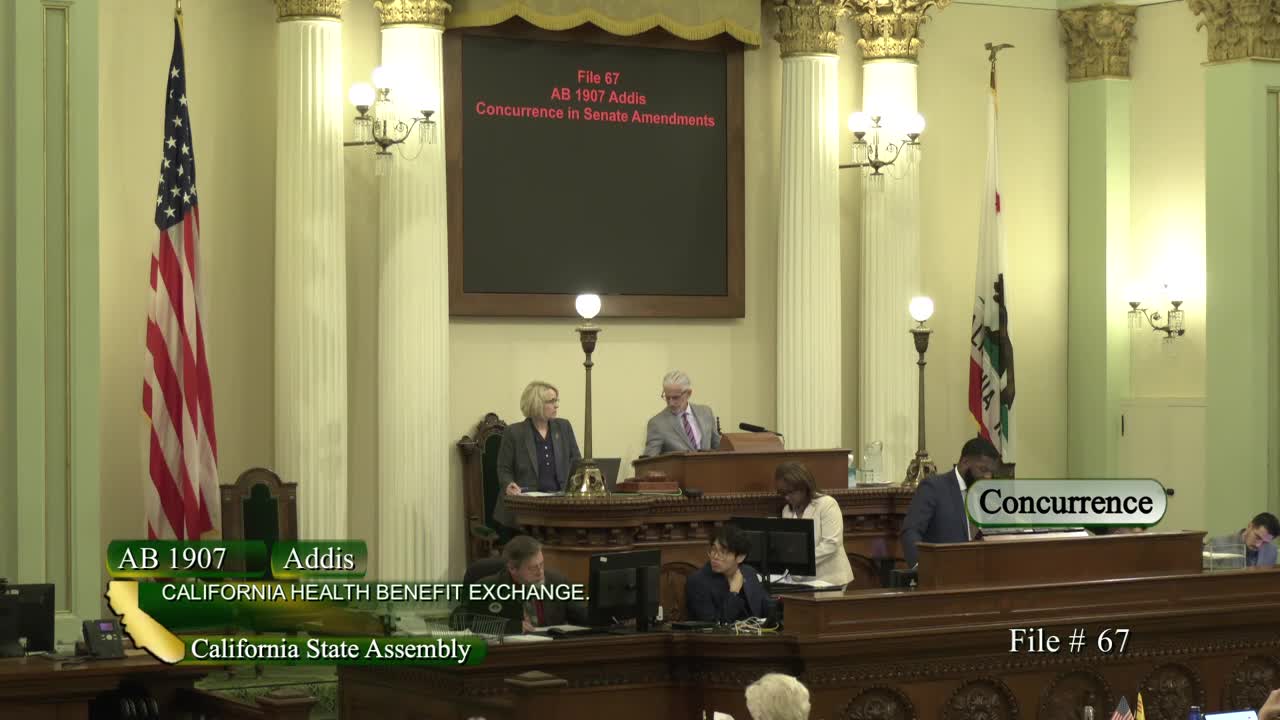 1MIN
Assembly Floor
 3MIN
Senate Floor
 8MIN
Senate Standing Committee on Local Government
 36SEC
Assembly Floor
 5MIN
Assembly Standing Committee on Local Government
 10MIN
Assembly Standing Committee on Housing and Community Development


Bill Co-Author(s):