AB 2106: Malpractice actions: architects, engineers, or surveyors.
- Session Year: 2025-2026
- House: Assembly
- Latest Version Date: 2026-08-27
Current Status:
Passed
(2026-08-27: Chaptered by Secretary of State - Chapter 137, Statutes of 2026.)
Introduced
In Committee
Awaiting First Chamber Vote
Passed First Chamber
In Committee
Awaiting Second Chamber Vote
Passed Second Chamber
Enacted
What does this bill do?
The bill adds landscape architects and geologists/geophysicists to the professionals covered by California’s certificate-of-merit rule in professional negligence lawsuits. It requires the plaintiff’s lawyer to consult a practitioner in the same field who is licensed to practice in California and to file a written certificate saying the lawyer received an opinion that the case is reasonable. The rule allows limited exceptions, generally protects the consultant’s identity and opinion from disclosure, and makes failure to file the certificate subject to legal challenge or possible discipline for the lawyer.
The summary is provided by generative AI which can make mistakes. For original language, please view the details in the table below.
Existing law requires the attorney for the plaintiff or cross-complainant in any action arising out of the professional negligence of an architect, professional engineer, or land surveyor to file and serve a certificate declaring either that the attorney has consulted and received an opinion that the action is reasonable and meritorious from an architect, professional engineer, or land surveyor, licensed to practice in this state or in any other state, or that the attorney was unable to obtain that consultation for specified reasons.
This bill would expand the malpractice complaints covered by the provision to include those against landscape architects and geologists or geophysicists. This bill would limit the practitioners that may be consulted to those who are licensed in this state. The bill would specify that these provisions only apply to actions filed on or after January 1, 2027.
Existing law requires the attorney for the plaintiff or cross-complainant in any action arising out of the professional negligence of an architect, professional engineer, or land surveyor to file and serve a certificate declaring either that the attorney has consulted and received an opinion that the action is reasonable and meritorious from an architect, professional engineer, or land surveyor, licensed to practice in this state or in any other state, or that the attorney was unable to obtain that consultation for specified reasons.
This bill would expand the malpractice complaints covered by the provision to include those against landscape architects. architects and geologists or geophysicists. This bill would limit the practitioners that may be consulted to those who are licensed in this state. The bill would specify that these provisions only apply to actions filed on or after January 1, 2027.
Existing law requires the attorney for the plaintiff or cross-complainant in any action arising out of the professional negligence of an architect, professional engineer, or land surveyor to file and serve a certificate declaring either that the attorney has consulted and received an opinion that the action is reasonable and meritorious from an architect, professional engineer, or land surveyor, licensed to practice in this state or in any other state, or that the attorney was unable to obtain that consultation for specified reasons.
This bill would expand the malpractice complaints covered by the provision to include those against landscape architects, professional geologists, and professional geophysicists. This bill would recast the requirements of the certificate to require a practitioner, licensed in this state in same discipline as the defendant or cross-defendant, not the attorney, to complete the certificate. The bill would specify required elements of the certificate pertaining to the licensure and experience of the practitioner, their lack of interest in the litigation, and their professional opinion regarding the reasonableness and merit of the action. The bill would remove the exception that an attorney can file a certification that states they were unable to obtain a consultation with a practitioner. The bill would make additional conforming changes. architects. This bill would limit the practitioners that may be consulted to those who are licensed in this state.
Existing law requires the attorney for the plaintiff or cross-complainant in any action arising out of the professional negligence of an architect, professional engineer, or land surveyor to file and serve a certificate declaring either that the attorney has consulted and received an opinion that the action is reasonable and meritorious from an architect, professional engineer, or land surveyor, licensed to practice in this state or in any other state, or that the attorney was unable to obtain that consultation for specified reasons.
This bill would expand the malpractice complaints covered by the provision to include those against landscape architects, professional geologists, and professional geophysicists. This bill would recast the requirements of the certificate to require a practitioner, licensed in this state in same discipline as the defendant or cross-defendant, not the attorney, to complete the certificate. The bill would specify required elements of the certificate pertaining to the licensure and experience of the practitioner, their lack of interest in the litigation, and their professional opinion regarding the reasonableness and merit of the action. The bill would remove the exception that an attorney can file a certification that states they were unable to obtain a consultation with a practitioner. The bill would make additional conforming changes.
(a)In every action, including a cross-complaint for damages or indemnity, arising out of the professional negligence of a person holding a valid architects certificate issued pursuant to Chapter 3 (commencing with Section 5500) of Division 3 of the Business and Professions Code, or of a person holding a valid landscape architects license issued pursuant to Chapter 3.5 (commencing with Section 5615) of Division 3 of the Business and Professions Code, or of a person holding a valid registration as a professional engineer issued pursuant to Chapter 7 (commencing with Section 6700) of Division 3 of the Business and Professions Code, or of a person holding a valid registration as a professional geologist or a professional geophysicist issued pursuant to Chapter 12.5 (commencing with Section 7800) of Division 3 of the Business and Professions Code, or of a person holding a valid land surveyors license issued pursuant to Chapter 15 (commencing with Section 8700) of Division 3 of the Business and Professions Code on or before the date of service of the complaint or cross-complaint on any defendant or cross-defendant, the attorney for the plaintiff or cross-complainant shall file and serve the certificate specified by subdivision (b). The certificate specified by subdivision (b) shall be a filing separate and distinct from the complaint or cross-complaint.
(b)A certificate declaring one of the following shall be executed by the attorney for the plaintiff or cross-complainant:
(1)(A)The attorney has reviewed the facts of the case.
(B)The attorney has consulted with and received an opinion from at least one architect, landscape architect, professional engineer, geologist or geophysicist, or land surveyor who is licensed to practice and practices in this state, or who teaches at an accredited college or university and is licensed to practice in this state, in the same discipline as the defendant or cross-defendant and who the attorney reasonably believes is knowledgeable in the relevant issues involved in the particular action.
(C)The attorney has concluded on the basis of this review and consultation that there is reasonable and meritorious cause for the filing of this action.
(D)The person consulted is not a party to the litigation.
(E)The person consulted has rendered their opinion that the named defendant or cross-defendant was negligent in the performance of the applicable professional services.
(2)That the attorney was unable to obtain the consultation required by paragraph (1) because a statute of limitations would impair the action and that the certificate required by paragraph (1) could not be obtained before the impairment of the action. If a certificate is executed pursuant to this paragraph, the certificate required by paragraph (1) shall be filed within 60 days after filing the complaint.
(3)That the attorney was unable to obtain the consultation required by paragraph (1) because the attorney made three separate good faith attempts with three separate architects, landscape architects, professional engineers, geologists or geophysicists, or land surveyors to obtain this consultation and none of those contacted would agree to the consultation.
(c)Where a certificate is required pursuant to this section, only one certificate shall be filed, notwithstanding that multiple defendants have been named in the complaint or may be named at a later time.
(d)Where the attorney intends to rely solely on the doctrine of res ipsa loquitur, as defined in Section 646 of the Evidence Code, or exclusively on a failure to inform of the consequences of a procedure, or both, this section shall be inapplicable. The attorney shall certify upon filing of the complaint that the attorney is solely relying on the doctrines of res ipsa loquitur or failure to inform of the consequences of a procedure or both, and for that reason is not filing a certificate required by this section.
(e)For purposes of this section, and subject to Section 912 of the Evidence Code, an attorney who submits a certificate as required by paragraph (1) or (2) of subdivision (b) has a privilege to refuse to disclose the identity of the architect, landscape architect, professional engineer, geologist or geophysicist, or land surveyor consulted and the contents of the consultation. The privilege shall also be held by the architect, landscape architect, professional engineer, geologist or geophysicist, or land surveyor so consulted. If, however, the attorney makes a claim under paragraph (3) of subdivision (b) that they were unable to obtain the required consultation with the architect, landscape architect, professional engineer, geologist or geophysicist, or land surveyor, the court may require the attorney to divulge the names of architects, landscape architects, professional engineers, geologists or geophysicists, or land surveyors refusing the consultation.
(f)A violation of this section may constitute unprofessional conduct and be grounds for discipline against the attorney, except that the failure to file the certificate required by paragraph (1) of subdivision (b), within 60 days after filing the complaint and certificate provided for by paragraph (2) of subdivision (b), shall not be grounds for discipline against the attorney.
(g)The failure to file a certificate in accordance with this section shall be grounds for a demurrer pursuant to Section 430.10 or a motion to strike pursuant to Section 435.
(h)Upon the favorable conclusion of the litigation with respect to any party for whom a certificate of merit was filed or for whom a certificate of merit should have been filed pursuant to this section, the trial court may, upon the motion of a party or upon the courts own motion, verify compliance with this section, by requiring the attorney for the plaintiff or cross-complainant who was required by subdivision (b) to execute the certificate to reveal the name, address, and telephone number of the person or persons consulted with pursuant to subdivision (b) that were relied upon by the attorney in preparation of the certificate of merit. The name, address, and telephone number shall be disclosed to the trial judge in an in-camera proceeding at which the moving party shall not be present. If the trial judge finds there has been a failure to comply with this section, the court may order a party, a partys attorney, or both, to pay any reasonable expenses, including attorneys fees, incurred by another party as a result of the failure to comply with this section.
(i)For purposes of this section, action includes a complaint or cross-complaint for equitable indemnity arising out of the rendition of professional services whether or not the complaint or cross-complaint specifically asserts or utilizes the terms professional negligence or negligence.
(j)The changes made to this section by the act that added this subdivision shall only apply to an action filed on or after January 1, 2027.
(a)In every action, including a cross-complaint for damages or indemnity, arising out of the professional negligence of a person holding a valid architects certificate issued pursuant to Chapter 3 (commencing with Section 5500) of Division 3 of the Business and Professions Code, or of a person holding a valid landscape architects license issued pursuant to Chapter 3.5 (commencing with Section 5615) of Division 3 of the Business and Professions Code, or of a person holding a valid registration as a professional engineer issued pursuant to Chapter 7 (commencing with Section 6700) of Division 3 of the Business and Professions Code, or of a person holding a valid registration as a professional geologist or a professional geophysicist issued pursuant to Chapter 12.5 (commencing with Section 7800) of Division 3 of the Business and Professions Code, or of a person holding a valid land surveyors license issued pursuant to Chapter 15 (commencing with Section 8700) of Division 3 of the Business and Professions Code on or before the date of service of the complaint or cross-complaint on any defendant or cross-defendant, the attorney for the plaintiff or cross-complainant shall file and serve the certificate specified by subdivision (b). The certificate specified by subdivision (b) shall be a filing separate and distinct from the complaint or cross-complaint.
(b)A certificate declaring one of the following shall be executed by the attorney for the plaintiff or cross-complainant declaring the following: cross-complainant:
(1)(A)The attorney has reviewed the facts of the case.
(B)The attorney has consulted with and received an opinion from at least one architect, landscape architect, professional engineer, geologist or geophysicist, or land surveyor who is licensed to practice and practices in this state, or who teaches at an accredited college or university and is licensed to practice in this state, in the same discipline as the defendant or cross-defendant and who the attorney reasonably believes is knowledgeable in the relevant issues involved in the particular action.
(C)The attorney has concluded on the basis of this review and consultation that there is reasonable and meritorious cause for the filing of this action.
(D)The person consulted may not be is not a party to the litigation.
(E)The person consulted shall render has rendered their opinion that the named defendant or cross-defendant was negligent or was not negligent in the performance of the applicable professional services.
(2)That the attorney was unable to obtain the consultation required by paragraph (1) because a statute of limitations would impair the action and that the certificate required by paragraph (1) could not be obtained before the impairment of the action. If a certificate is executed pursuant to this paragraph, the certificate required by paragraph (1) shall be filed within 60 days after filing the complaint.
(3)That the attorney was unable to obtain the consultation required by paragraph (1) because the attorney made three separate good faith attempts with three separate architects, landscape architects, professional engineers, geologists or geophysicists, or land surveyors to obtain this consultation and none of those contacted would agree to the consultation.
(c)Where a certificate is required pursuant to this section, only one certificate shall be filed, notwithstanding that multiple defendants have been named in the complaint or may be named at a later time.
(d)Where the attorney intends to rely solely on the doctrine of res ipsa loquitur, as defined in Section 646 of the Evidence Code, or exclusively on a failure to inform of the consequences of a procedure, or both, this section shall be inapplicable. The attorney shall certify upon filing of the complaint that the attorney is solely relying on the doctrines of res ipsa loquitur or failure to inform of the consequences of a procedure or both, and for that reason is not filing a certificate required by this section.
(e)For purposes of this section, and subject to Section 912 of the Evidence Code, an attorney who submits a certificate as required by paragraph (1) or (2) of subdivision (b) has a privilege to refuse to disclose the identity of the architect, landscape architect, professional engineer, geologist or geophysicist, or land surveyor consulted and the contents of the consultation. The privilege shall also be held by the architect, landscape architect, professional engineer, geologist or geophysicist, or land surveyor so consulted. If, however, the attorney makes a claim under paragraph (3) of subdivision (b) that they were unable to obtain the required consultation with the architect, landscape architect, professional engineer, geologist or geophysicist, or land surveyor, the court may require the attorney to divulge the names of architects, landscape architects, professional engineers, geologists or geophysicists, or land surveyors refusing the consultation.
(f)A violation of this section may constitute unprofessional conduct and be grounds for discipline against the attorney, except that the failure to file the certificate required by paragraph (1) of subdivision (b), within 60 days after filing the complaint and certificate provided for by paragraph (2) of subdivision (b), shall not be grounds for discipline against the attorney.
(g)The failure to file a certificate in accordance with this section shall be grounds for a demurrer pursuant to Section 430.10 or a motion to strike pursuant to Section 435.
(h)Upon the favorable conclusion of the litigation with respect to any party for whom a certificate of merit was filed or for whom a certificate of merit should have been filed pursuant to this section, the trial court may, upon the motion of a party or upon the courts own motion, verify compliance with this section, by requiring the attorney for the plaintiff or cross-complainant who was required by subdivision (b) to execute the certificate to reveal the name, address, and telephone number of the person or persons consulted with pursuant to subdivision (b) that were relied upon by the attorney in preparation of the certificate of merit. The name, address, and telephone number shall be disclosed to the trial judge in an in-camera proceeding at which the moving party shall not be present. If the trial judge finds there has been a failure to comply with this section, the court may order a party, a partys attorney, or both, to pay any reasonable expenses, including attorneys fees, incurred by another party as a result of the failure to comply with this section.
(i)For purposes of this section, action includes a complaint or cross-complaint for equitable indemnity arising out of the rendition of professional services whether or not the complaint or cross-complaint specifically asserts or utilizes the terms professional negligence or negligence.
(j)The changes made to this section by the act that added this subdivision shall only apply to an action filed on or after January 1, 2027.
(a)In every action, including a cross-complaint for damages or indemnity, arising out of the professional negligence of a person holding a valid architects certificate issued pursuant to Chapter 3 (commencing with Section 5500) of Division 3 of the Business and Professions Code, or of a person holding a valid landscape architects license issued pursuant to Chapter 3.5 (commencing with Section 5615) of Division 3 of the Business and Professions Code, or of a person holding a valid registration as a professional engineer issued pursuant to Chapter 7 (commencing with Section 6700) of Division 3 of the Business and Professions Code, or a person holding a valid land surveyors license issued pursuant to Chapter 15 (commencing with Section 8700) of Division 3 of the Business and Professions Code on or before the date of service of the complaint or cross-complaint on any defendant or cross-defendant, the attorney for the plaintiff or cross-complainant shall file and serve the certificate specified by subdivision (b). The certificate specified by subdivision (b) shall be a filing separate and distinct from the complaint or cross-complaint.
(b)A certificate declaring the following shall be executed by the attorney for the plaintiff or cross-complainant declaring one of the following:
(1)(A)The attorney has reviewed the facts of the case.
(1)(B)That the attorney has reviewed the facts of the case, that the The attorney has consulted with and received an opinion from at least one architect, landscape architect, professional engineer, or land surveyor who is licensed to practice and practices in this state or any other state, state, or who teaches at an accredited college or university and is licensed to practice in this state or any other state, state, in the same discipline as the defendant or cross-defendant and who the attorney reasonably believes is knowledgeable in the relevant issues involved in the particular action, and that the action.
(C)The attorney has concluded on the basis of this review and consultation that there is reasonable and meritorious cause for the filing of this action. The
(D)The person consulted may not be a party to the litigation. The
(E)The person consulted shall render his or her their opinion that the named defendant or cross-defendant was negligent or was not negligent in the performance of the applicable professional services.
(2)That the attorney was unable to obtain the consultation required by paragraph (1) because a statute of limitations would impair the action and that the certificate required by paragraph (1) could not be obtained before the impairment of the action. If a certificate is executed pursuant to this paragraph, the certificate required by paragraph (1) shall be filed within 60 days after filing the complaint.
(3)That the attorney was unable to obtain the consultation required by paragraph (1) because the attorney had made three separate good faith attempts with three separate architects, landscape architects, professional engineers, or land surveyors to obtain this consultation and none of those contacted would agree to the consultation.
(c)Where a certificate is required pursuant to this section, only one certificate shall be filed, notwithstanding that multiple defendants have been named in the complaint or may be named at a later time.
(d)Where the attorney intends to rely solely on the doctrine of res ipsa loquitur, as defined in Section 646 of the Evidence Code, or exclusively on a failure to inform of the consequences of a procedure, or both, this section shall be inapplicable. The attorney shall certify upon filing of the complaint that the attorney is solely relying on the doctrines of res ipsa loquitur or failure to inform of the consequences of a procedure or both, and for that reason is not filing a certificate required by this section.
(e)For purposes of this section, and subject to Section 912 of the Evidence Code, an attorney who submits a certificate as required by paragraph (1) or (2) of subdivision (b) has a privilege to refuse to disclose the identity of the architect, landscape architect, professional engineer, or land surveyor consulted and the contents of the consultation. The privilege shall also be held by the architect, landscape architect, professional engineer, or land surveyor so consulted. If, however, the attorney makes a claim under paragraph (3) of subdivision (b) that he or she was they were unable to obtain the required consultation with the architect, landscape architect, professional engineer, or land surveyor, the court may require the attorney to divulge the names of architects, landscape architects, professional engineers, or land surveyors refusing the consultation.
(f)A violation of this section may constitute unprofessional conduct and be grounds for discipline against the attorney, except that the failure to file the certificate required by paragraph (1) of subdivision (b), within 60 days after filing the complaint and certificate provided for by paragraph (2) of subdivision (b), shall not be grounds for discipline against the attorney.
(g)The failure to file a certificate in accordance with this section shall be grounds for a demurrer pursuant to Section 430.10 or a motion to strike pursuant to Section 435.
(h)Upon the favorable conclusion of the litigation with respect to any party for whom a certificate of merit was filed or for whom a certificate of merit should have been filed pursuant to this section, the trial court may, upon the motion of a party or upon the courts own motion, verify compliance with this section, by requiring the attorney for the plaintiff or cross-complainant who was required by subdivision (b) to execute the certificate to reveal the name, address, and telephone number of the person or persons consulted with pursuant to subdivision (b) that were relied upon by the attorney in preparation of the certificate of merit. The name, address, and telephone number shall be disclosed to the trial judge in an in-camera proceeding at which the moving party shall not be present. If the trial judge finds there has been a failure to comply with this section, the court may order a party, a partys attorney, or both, to pay any reasonable expenses, including attorneys fees, incurred by another party as a result of the failure to comply with this section.
(i)For purposes of this section, action includes a complaint or cross-complaint for equitable indemnity arising out of the rendition of professional services whether or not the complaint or cross-complaint specifically asserts or utilizes the terms professional negligence or negligence.
SECTION 1.Section 411.35 of the Code of Civil Procedure is amended to read:411.35.(a)In every action, including a cross-complaint for damages or indemnity, arising out of the professional negligence of a person holding a valid architects certificate issued pursuant to Chapter 3 (commencing with Section 5500) of Division 3 of the Business and Professions Code, or of a person holding a valid landscape architects license issued pursuant to Chapter 3.5 (commencing with Section 5615) of Division 3 of the Business and Professions Code, or of a person holding a valid registration as a professional engineer issued pursuant to Chapter 7 (commencing with Section 6700) of Division 3 of the Business and Professions Code, or of a person holding a valid registration as a professional geologist or a professional geophysicist issued pursuant to Chapter 12.5 (commencing with section 7800) of Division 3 of the Business and Professions Code, or a person holding a valid land surveyors license issued pursuant to Chapter 15 (commencing with Section 8700) of Division 3 of the Business and Professions Code on or before the date of service of the complaint or cross-complaint on any defendant or cross-defendant, the attorney for the plaintiff or cross-complainant shall file and serve the certificate specified by subdivision (b). The certificate specified by subdivision (b) shall be a filing separate and distinct from the complaint or cross-complaint.(b)A certificate declaring the following shall be executed by a licensed practitioner as described below and filed by the attorney for the plaintiff or cross-complainant declaring the following:(1)The practitioner has reviewed the facts of the case.(2)The practitioner is not a party to the litigation or a current or former employee of a party to the litigation.(3)The practitioner is not currently serving, and has not previously served, as the design professional in charge of the project that is the subject matter of the action.(4)The practitioner is an architect, landscape architect, professional engineer, professional geologist, professional geophysicist, or land surveyor.(5)The practitioners license number.(6)Either of the following:(A)The practitioner is licensed to practice in this state in the same discipline as the defendant or cross-defendant, has been licensed to practice for at least 15 years in that discipline, and practices that discipline in this state.(B)The practitioner teaches at an accredited college or university in the same discipline as the defendant or cross-defendant, is licensed in this state to practice in that discipline, and has been licensed to practice that discipline for at least 15 years.(7)The practitioner is knowledgeable in the relevant issues involved in the action.(8)In the practitioners opinion, the named defendant or cross-defendant was either negligent or not negligent in the performance of the professional services at issue in the case.(9)On the basis of the practitioners review and consultation, there is a reasonable and meritorious cause for the filing of the action by the attorney.(c)Where a certificate is required pursuant to this section, one certificate shall be filed for each named defendant or cross-defendant covering the respective discipline and licensure of each named defendant or cross-defendant.(d)Where the attorney intends to rely solely on the doctrine of res ipsa loquitur, as defined in Section 646 of the Evidence Code, or exclusively on a failure to inform of the consequences of a procedure, or both, this section shall be inapplicable. The attorney shall certify upon filing of the complaint that the attorney is solely relying on the doctrines of res ipsa loquitur or failure to inform of the consequences of a procedure or both, and for that reason is not filing a certificate required by this section.(e)For purposes of this section, and subject to Section 912 of the Evidence Code, the practitioner who submits, signs, and lists their license number on a certificate as required by of subdivision (b) has a privilege to refuse to disclose the contents of the consultation with the attorney for the plaintiff or cross-complainant. The privilege shall also be held by the attorney for the plaintiff or cross-complainant.(f)A violation of this section may constitute unprofessional conduct and be grounds for discipline against the attorney.(g)The failure to file a certificate in accordance with this section shall be grounds for a demurrer pursuant to Section 430.10 or a motion to strike pursuant to Section 435.(h)Notwithstanding subdivision (e), upon the favorable conclusion of the litigation with respect to any party for whom a certificate of merit was filed or for whom a certificate of merit should have been filed pursuant to this section, the trial court may, upon the motion of a party or upon the courts own motion, verify compliance with this section, by requiring the attorney for the plaintiff or cross-complainant and the practitioner who was required by subdivision (b) to execute the certificate to reveal the contents on the consultation that were relied upon by the practitioner in preparation of the certificate of merit. If the trial judge finds there has been a failure to comply with this section, the court may order a party, a partys attorney, or both, to pay any reasonable expenses, including attorneys fees, incurred by another party as a result of the failure to comply with this section.(i)For purposes of this section, action includes a complaint or cross-complaint for equitable indemnity, misrepresentation, fraud, nuisance, or any other act, error, breach or omission arising out of the rendition of professional services whether or not the complaint or cross-complaint specifically asserts or utilizes the terms professional negligence or negligence.(a)In every action, including a cross-complaint for damages or indemnity, arising out of the professional negligence of a person holding a valid architects certificate issued pursuant to Chapter 3 (commencing with Section 5500) of Division 3 of the Business and Professions Code, or of a person holding a valid landscape architects license issued pursuant to Chapter 3.5 (commencing with Section 5615) of Division 3 of the Business and Professions Code, or of a person holding a valid registration as a professional engineer issued pursuant to Chapter 7 (commencing with Section 6700) of Division 3 of the Business and Professions Code, or of a person holding a valid registration as a professional geologist or a professional geophysicist issued pursuant to Chapter 12.5 (commencing with section 7800) of Division 3 of the Business and Professions Code, or a person holding a valid land surveyors license issued pursuant to Chapter 15 (commencing with Section 8700) of Division 3 of the Business and Professions Code on or before the date of service of the complaint or cross-complaint on any defendant or cross-defendant, the attorney for the plaintiff or cross-complainant shall file and serve the certificate specified by subdivision (b). The certificate specified by subdivision (b) shall be a filing separate and distinct from the complaint or cross-complaint.
(b)A certificate declaring the following shall be executed by a licensed practitioner as described below and filed by the attorney for the plaintiff or cross-complainant declaring one of the following:
(1)That the attorney has reviewed the facts of the case, that the attorney has consulted with and received an opinion from at least one architect, professional engineer, or land surveyor who is licensed to practice and practices in this state or any other state, or who teaches at an accredited college or university and is licensed to practice in this state or any other state, in the same discipline as the defendant or cross-defendant and who the attorney reasonably believes is knowledgeable in the relevant issues involved in the particular action, and that the attorney has concluded on the basis of this review and consultation that there is reasonable and meritorious cause for the filing of this action. The person consulted may not be a party to the litigation. The person consulted shall render his or her opinion that the named defendant or cross-defendant was negligent or was not negligent in the performance of the applicable professional services.(2)That the attorney was unable to obtain the consultation required by paragraph (1) because a statute of limitations would impair the action and that the certificate required by paragraph (1) could not be obtained before the impairment of the action. If a certificate is executed pursuant to this paragraph, the certificate required by paragraph (1) shall be filed within 60 days after filing the complaint.(3)That the attorney was unable to obtain the consultation required by paragraph (1) because the attorney had made three separate good faith attempts with three separate architects, professional engineers, or land surveyors to obtain this consultation and none of those contacted would agree to the consultation.(1)The practitioner has reviewed the facts of the case.
(2)The practitioner is not a party to the litigation or a current or former employee of a party to the litigation.
(3)The practitioner is not currently serving, and has not previously served, as the design professional in charge of the project that is the subject matter of the action.
(4)The practitioner is an architect, landscape architect, professional engineer, professional geologist, professional geophysicist, or land surveyor.
(5)The practitioners license number.
(6)Either of the following:
(A)The practitioner is licensed to practice in this state in the same discipline as the defendant or cross-defendant, has been licensed to practice for at least 15 years in that discipline, and practices that discipline in this state.
(B)The practitioner teaches at an accredited college or university in the same discipline as the defendant or cross-defendant, is licensed in this state to practice in that discipline, and has been licensed to practice that discipline for at least 15 years.
(7)The practitioner is knowledgeable in the relevant issues involved in the action.
(8)In the practitioners opinion, the named defendant or cross-defendant was either negligent or not negligent in the performance of the professional services at issue in the case.
(9)On the basis of the practitioners review and consultation, there is a reasonable and meritorious cause for the filing of the action by the attorney.
(c)Where a certificate is required pursuant to this section, only one certificate shall be filed, notwithstanding that multiple defendants have been named in the complaint or may be named at a later time. one certificate shall be filed for each named defendant or cross-defendant covering the respective discipline and licensure of each named defendant or cross-defendant.
(d)Where the attorney intends to rely solely on the doctrine of res ipsa loquitur, as defined in Section 646 of the Evidence Code, or exclusively on a failure to inform of the consequences of a procedure, or both, this section shall be inapplicable. The attorney shall certify upon filing of the complaint that the attorney is solely relying on the doctrines of res ipsa loquitur or failure to inform of the consequences of a procedure or both, and for that reason is not filing a certificate required by this section.
(e)For purposes of this section, and subject to Section 912 of the Evidence Code, an attorney the practitioner who submits submits, signs, and lists their license number on a certificate as required by paragraph (1) or (2) of subdivision (b) has a privilege to refuse to disclose the identity of the architect, professional engineer, or land surveyor consulted and the contents of the consultation. consultation with the attorney for the plaintiff or cross-complainant. The privilege shall also be held by the architect, professional engineer, or land surveyor so consulted. If, however, the attorney makes a claim under paragraph (3) of subdivision (b) that he or she was unable to obtain the required consultation with the architect, professional engineer, or land surveyor, the court may require the attorney to divulge the names of architects, professional engineers, or land surveyors refusing the consultation. the attorney for the plaintiff or cross-complainant.
(f)A violation of this section may constitute unprofessional conduct and be grounds for discipline against the attorney, except that the failure to file the certificate required by paragraph (1) of subdivision (b), within 60 days after filing the complaint and certificate provided for by paragraph (2) of subdivision (b), shall not be grounds for discipline against the attorney. attorney.
(g)The failure to file a certificate in accordance with this section shall be grounds for a demurrer pursuant to Section 430.10 or a motion to strike pursuant to Section 435.
(h)Upon Notwithstanding subdivision (e), upon the favorable conclusion of the litigation with respect to any party for whom a certificate of merit was filed or for whom a certificate of merit should have been filed pursuant to this section, the trial court may, upon the motion of a party or upon the courts own motion, verify compliance with this section, by requiring the attorney for the plaintiff or cross-complainant and the practitioner who was required by subdivision (b) to execute the certificate to reveal the name, address, and telephone number of the person or persons consulted with pursuant to subdivision (b) the contents on the consultation that were relied upon by the attorney practitioner in preparation of the certificate of merit. The name, address, and telephone number shall be disclosed to the trial judge in an in-camera proceeding at which the moving party shall not be present. If the trial judge finds there has been a failure to comply with this section, the court may order a party, a partys attorney, or both, to pay any reasonable expenses, including attorneys fees, incurred by another party as a result of the failure to comply with this section.
(i)For purposes of this section, action includes a complaint or cross-complaint for equitable indemnity indemnity, misrepresentation, fraud, nuisance, or any other act, error, breach or omission arising out of the rendition of professional services whether or not the complaint or cross-complaint specifically asserts or utilizes the terms professional negligence or negligence.
|
Date
|
Status
|
|---|---|
| Aug 27, 2026 | Chaptered by Secretary of State - Chapter 137, Statutes of 2026. |
| Aug 27, 2026 | Approved by the Governor. |
| Aug 18, 2026 | Enrolled and presented to the Governor at 3:30 p.m. |
| Aug 10, 2026 | Senate amendments concurred in. To Engrossing and Enrolling. (Ayes 77. Noes 0.). |
| Aug 10, 2026 | Senate amendments concurred in. To Engrossing and Enrolling. (Ayes 77. Noes 0. Page 6101.). |
| Aug 10, 2026 | Senate amendments concurred in. To Engrossing and Enrolling. |
| Jul 2, 2026 | In Assembly. Concurrence in Senate amendments pending. |
| Jul 2, 2026 | Read third time. Passed. Ordered to the Assembly. (Ayes 37. Noes 0.). |
| Jul 2, 2026 | Read third time. Passed. Ordered to the Assembly. (Ayes 37. Noes 0. Page 5188.). |
| Jun 25, 2026 | Read second time. Ordered to Consent Calendar. |
| Jun 24, 2026 | From committee: Do pass. To Consent Calendar. (Ayes 13. Noes 0.) (June 23). |
| Jun 15, 2026 | From committee chair, with author's amendments: Amend, and re-refer to committee. Read second time, amended, and re-referred to Com. on JUD. |
| Jun 8, 2026 | In committee: Set, first hearing. Hearing canceled at the request of author. |
| May 20, 2026 | Referred to Com. on JUD. |
| May 12, 2026 | In Senate. Read first time. To Com. on RLS. for assignment. |
| May 11, 2026 | Read third time. Passed. Ordered to the Senate. (Ayes 73. Noes 0.) |
| May 11, 2026 | Read third time. Passed. Ordered to the Senate. (Ayes 73. Noes 0. Page 4989.) |
| May 11, 2026 | Read third time. Passed. Ordered to the Senate. |
| Apr 30, 2026 | Read second time. Ordered to third reading. |
| Apr 29, 2026 | Read second time and amended. Ordered returned to second reading. |
| Apr 28, 2026 | From committee: Amend, and do pass as amended. (Ayes 12. Noes 0.) (April 28). |
| Mar 2, 2026 | Referred to Com. on JUD. |
| Feb 19, 2026 | From printer. May be heard in committee March 21. |
| Feb 18, 2026 | Read first time. To print. |
|
Date
|
Description
|
Location
|
Votes
|
|
|---|---|---|---|---|
| Aug 10, 2026 | AB 2106 Patel Concurrence in Senate Amendments | Assembly Floor |
Passed |
|
| Jul 2, 2026 | Consent Calendar 2nd AB2106 Patel | Senate Floor |
Passed |
|
| Jun 23, 2026 | Do pass and be ordered to the Consent Calendar | Senate Standing Committee on Judiciary |
Passed |
|
| May 11, 2026 | AB 2106 Patel Assembly Third Reading | Assembly Floor |
Passed |
|
| Apr 28, 2026 | Do pass as amended. | Assembly Standing Committee on Judiciary |
Passed |
This list shows positions taken on this bill by organizations on the date displayed, which is linked to the original source.
Positions by individuals are not included.
|
Organization
|
Position
|
Date
|
|---|---|---|
| American Council of Engineering Companies (ACEC) of California | ** Support | |
| American Council of Engineering Companies of California | ** Support | |
| American Institute of Architects (AIA) California | ** Support | |
| American Institute Of Architects California | ** Support | |
| American Property Casualty Insurance Association | ** Support | |
| American Society of Civil Engineers - Region 9 | ** Support | |
| California & Nevada Civil Engineers and Land Surveyors Association | ** Support | |
| California Building Industry Association (CBIA) | ** Support | |
| Civil Justice Association of California (CJAC) | ** Support | |
| Parikh Consultants, Inc. | ** Support | |
| Structural Engineers Association of California | ** Support | |
| Verdantas | ** Support | |
| WMH Corporation | ** Support |
CONCURRENCE IN SENATE AMENDMENTS
CSA1 Bill Id:AB 2106
Author:(Patel)
As Amended Ver:June 15, 2026
Majority vote
SUMMARY
Requires design professionals that are consulted for a certificate of merit to be licensed in California.
Major Provisions
- Adds "landscape architect," "geologists," and "geophysicists" to the list of licensed professionals that require consultation and a certificate of merit to be filed by a plaintiff or cross-complainant in a professional negligence action.
- Requires architects, landscape architects, professional engineers, and land surveyors who are consulted for a certificate of merit in a professional negligence action, to be licensed in the state of California.
Senate Amendments
Add "geologists" and "geophysicists" to the list of licensed professionals requiring a certificate of merit to be filed. Clarify that the bill's provisions only apply to actions filed on or after January 1, 2027.
COMMENTS
In order to prevent frivolous lawsuits and save courts time and money, lawsuits filed against design professionals—specifically architects, engineers, and land surveyors—must be filed with a certificate of merit. This certificate requires the attorney bringing the action to consult with another design professional, not a party to the action, to confirm there is a potential negligence claim, and the case is warranted. However, existing law does not require that design professional to be licensed in California. Therefore, the consulted professional may not understand the requirements and intricacies that are unique to this state.
The Certificate of Merit. A party alleging professional malpractice—an action arising out of the negligence of a design professional—must also file with the court and serve the alleged violator with a "certificate of merit." The certificate of merit is a document that states that the plaintiff (or cross-complainant) has consulted with one or more licensed professionals with relevant and appropriate experience or expertise, and who have reviewed the facts of the case and support the finding that the defendant was negligent. (Code of Civil Procedure Section 411.35.) Existing law requires this certificate of merit when an action involves an architect, professional engineer, or land surveyor. The certificate of merit is designed to limit frivolous lawsuits against these professionals. However, the law currently allows for the consulted professional to be licensed in any state, not just in California. Therefore, the consulting professional may not know the specifics or nuances of California's design laws, regulations, and procedures. Similarly, should the consulted professional themselves engage in malfeasance, they would be outside the reach of California regulators.
The bill adds landscape architects, geologists, and geophysicists to the group of design professionals that require a certificate of merit to be filed. The bill's sponsor notes that landscape architects are now increasingly involved in this type of litigation, and often, their duties now overlap with those of architects and engineers. This bill also requires any consulted design professional, including landscape architects, geologists, and geophysicists to be licensed in California, and not just any state in the United States, as is currently the requirement.
According to the Author
Current law allows out of state licensees to serve a Certificate of Merit. AB 2106 ensures that California licensees - professionals that understand California's laws and regulations - are the ones determining if there has been a breach in standard of care.
Arguments in Support
This bill is sponsored by the American Council of Engineering Companies (ACEC) of California and supported by industry advocacy organizations. In a joint statement, ACEC, the American Institute of Architects (AIA) California, the California Building Industry Association (CBIA), and the California & Nevada Civil Engineers and Land Surveyors Association write in support:
AB 2106 provides a reasonable and targeted solution by requiring that the subject matter expert be licensed in California . . . The bill also addresses an oversight in which the current statute's protections do not extend to other design professionals, namely landscape architects. These reforms promote accountability, ensure that claims are evaluated by individuals who understand California-specific standards, and restore confidence in the integrity of the Certificate of Merit process.
The bill does not limit the ability of any party to seek claims, nor does it reduce accountability for design professionals. Rather, it ensures that claims are grounded in California's professional standards, protects the consumers of design professional services and all parties to a potential lawsuit from the high costs, uncertainty, and duration associated with pursuing a case that lacks proper review.
Civil Justice Association of California (CJAC) writes in support:
AB 2106 provides a reasonable and targeted solution by requiring that the consulting professional be licensed in California . . . The bill also extends the protections to landscape architects . . . These reforms promote accountability, ensure that claims are evaluated by individuals who understand California-specific standards, and restore confidence in the integrity of the Certificate of Merit process.
Arguments in Opposition
None on file
FISCAL COMMENTS
None
VOTES:
ASM JUDICIARY: 12-0-0
YES: Kalra, Bauer-Kahan, Bryan, Connolly, Dixon, Harabedian, Johnson, Pacheco, Papan, Sanchez, Lee, Zbur
ASSEMBLY FLOOR: 73-0-7
YES: Addis, Aguiar-Curry, Ahrens, Alanis, Alvarez, Ávila Farías, Bains, Bauer-Kahan, Bennett, Berman, Boerner, Bonta, Bryan, Calderon, Caloza, Carrillo, Castillo, Chen, Connolly, Davies, DeMaio, Dixon, Elhawary, Ellis, Flora, Fong, Gabriel, Gallagher, Garcia, Gipson, Jeff Gonzalez, Mark González, Hadwick, Haney, Harabedian, Hart, Hoover, Irwin, Jackson, Johnson, Kalra, Krell, Lackey, Lee, Macedo, McKinnor, Muratsuchi, Nguyen, Ortega, Pacheco, Papan, Patel, Patterson, Pellerin, Petrie-Norris, Ramos, Ransom, Rogers, Blanca Rubio, Sanchez, Schiavo, Schultz, Sharp-Collins, Stefani, Ta, Tangipa, Valencia, Wallis, Ward, Wicks, Wilson, Zbur, Rivas
ABS, ABST OR NV: Arambula, Lowenthal, Quirk-Silva, Celeste Rodriguez, Michelle Rodriguez, Solache, Soria
SENATE FLOOR: 37-0-3
YES: Allen, Archuleta, Arreguín, Ashby, Becker, Blakespear, Cabaldon, Caballero, Cervantes, Choi, Cortese, Dahle, Durazo, Gonzalez, Grayson, Grove, Hurtado, Jones, Laird, Limón, McGuire, McNerney, Menjivar, Niello, Ochoa Bogh, Padilla, Pérez, Reyes, Seyarto, Smallwood-Cuevas, Stern, Strickland, Umberg, Valladares, Wahab, Weber Pierson, Wiener
ABS, ABST OR NV: Alvarado-Gil, Richardson, Rubio
UPDATED
VERSION: June 15, 2026
CONSULTANT: Griff Ryan-Roberts / JUD. / (916) 319-2334 FN: 0003286
SENATE RULES COMMITTEE Office of Senate Floor Analyses (916) 651-4171 | AB 2106 |
CONSENT
Bill No: AB 2106
Author: Patel (D)
Amended: 6/15/26 in Senate
Vote: 21
SENATE JUDICIARY COMMITTEE: 13-0, 6/23/26
AYES: Umberg, Niello, Allen, Ashby, Caballero, Durazo, Laird, Reyes, Stern, Valladares, Wahab, Weber Pierson, Wiener
ASSEMBLY FLOOR: 73-0, 5/11/26 - See last page for vote
SUBJECT: Malpractice actions: architects, engineers, or surveyors
SOURCE: American Council of Engineering Companies of California
DIGEST:
(1) This bill expands the existing certificate of merit requirements for a cause of action alleging negligence against an architect, professional engineer, or land surveyor to also apply to landscape architects, geologists, and geophysicists. (2) This bill also requires that the person the attorney consults with to get an opinion of whether there was negligence on behalf of a design professional must be licensed in this state.
ANALYSIS: Existing law:
- Provides for the licensure and regulation of landscape architects in this state. (Business & Professions (Bus. & Prof.) Code §§ 5615 et seq.)
- Establishes the Architects Practice Act for the licensure and regulation of architects in this state. (Bus. & Prof. Code §§ 5500 et seq.)
- Establishes the Professional Engineers Act for the licensure and regulation of professional engineers in this state. (Bus. & Prof. Code §§ 6700 et seq.)
- Establishes the Professional Land Surveyors’ Act for the licensure and regulation of land surveyors in this state. (Bus. & Prof. Code §§ 8700 et seq.)
- Establishes the Geologist and Geophysicist Act for the licensure and regulation of geologists and geophysicists in this state. (Bus. & Prof. Code §§ 7800 et seq.)
- Requires an attorney for a plaintiff or cross-complainant in an action that arises from the professional negligence of an architect, professional engineer, or land surveyor to file and serve a certificate of merit on a defendant or cross-defendant, on or before the date of service of the complaint or cross-complaint. (Code of Civil Procedure (Civ. Proc.) § 411.35(a).)
- Requires the certificate in 6) to declare one of the following:
- The attorney has reviewed the facts of the case, and:
- the attorney has consulted with and received an opinion from at least one architect, professional engineer, or land surveyor who is licensed and practices in any state, or who teaches at an accredited college or university and is licensed to practice in any state, in the same discipline as the defendant or cross-defendant and who the attorney reasonably believes is knowledgeable in the relevant issues involved in the particular action;
- the attorney has concluded on the basis of this review and consultation that there is reasonable and meritorious cause for the filing of this action;
- the person consulted is not a party to the litigation; and
- the person consulted will provide their opinion that the named defendant or cross-defendant was negligent or was not negligent in the performance of the applicable professional services.
- The attorney was unable to obtain the consultation because a statute of limitations would impair the action and the certificate could not be obtained before the impairment of the action. The attorney must file the certificate from a), above, within 60 days after filing the complaint.
- The attorney was unable to obtain the consultation because the attorney had made three separate good faith attempts with three separate architects, professional engineers, or land surveyors to obtain this consultation and none of those contacted would agree to the consultation. (Code Civ. Proc. § 411.35(b).)
- Requires only one certificate to be filed, even if multiple defendants have been named in the complaint or may be named at a later time. (Code Civ. Proc. § 411.35(c).)
- Makes the failure to file a certificate in accordance with these provisions grounds for a demurrer or a motion to strike. (Code Civ. Proc. § 411.35(g).)
This bill:
- Expands these provisions to also apply to licensed landscaped architects, registered professional geologists, and registered professional geophysicists.
- Specifies that the certificate described in 6), above, is to be filed separate and distinct from the complaint or cross-complaint.
- Limits the licensed practitioners that can be consulted with under 7)a)i), above, to those who are licensed in this state.
- Specifies that the changes made by the bill apply to actions filed on and after January 1, 2027.
- Makes various clarifying and nonsubstantive changes.
Comments
The American Council of Engineering Companies of California, the sponsor of this bill, notes that the “use of out-of-state or anonymous consultant[s] – who may lack familiarity with California’s standards – has undermined the credibility of the process and contributed to increased litigation and pressure to settle, regardless
of the merits of a case.” They argue that requiring the consulted with design professional to be licensed in this state will ensure “that evaluations are conducted by individuals who understand California’s regulatory environment and applicable standard of care.”
This bill also expands the provisions of Section 411.35 of the Code of Civil Procedure to apply to more design professionals, specifically licensed landscape architects, registered professional geologists, and registered professional geophysicists.
FISCAL EFFECT: Appropriation: No Fiscal Com.: No Local: No
SUPPORT: (Verified 6/24/26)
American Council of Engineering Companies of California (sponsor)
American Institute of Architects California
American Property Casualty Insurance Association
American Society of Civil Engineers - Region 9
California & Nevada Civil Engineers and Land Surveyors Association
California Building Industry Association
Civil Justice Association of California
Parikh Consultants, Inc.
Structural Engineers Association of California
Verdantas
WMH Corporation
OPPOSITION: (Verified 6/24/26)
None received
ARGUMENTS IN SUPPORT:
The author writes:
“Current law allows out of state licensees to serve a Certificate of Merit. AB 2106 ensures that California licensees - professionals that understand California’s laws and regulations - are the ones determining if there has been a breach in standard of care.”
A coalition of supporters write in support stating:
“California’s Certificate of Merit law was established to ensure that claims against licensed design professionals – such as engineers, architects, and land surveyors – are reviewed by a qualified expert before proceeding, since these cases typically require an understanding of highly specialized and technical design requirements. While well-intentioned, gaps in the current statute have undermined its effectiveness. Under existing law, the subject matter expert consulted in these cases is not required to be licensed in California and may remain anonymous. This has led to situations where lawsuits are initiated based on opinions from out-of-state or unidentified individuals who may lack familiarity with California’s unique regulatory environment, including seismic standards, building codes, and environmental requirements.
As a result, design professionals are increasingly subject to claims that do not reflect California’s standard of practice. When these claims are filed without a properly licensed subject matter expert who is clearly identified, design professionals will and do defend themselves vigorously. For both sides, this means spending substantial time and resources litigating issues that could be resolved early if the validity of the Certificate of Merit review were clearly established at the beginning of the case.”
ASSEMBLY FLOOR: 73-0, 5/11/26
AYES: Addis, Aguiar-Curry, Ahrens, Alanis, Alvarez, Ávila Farías, Bains, Bauer-Kahan, Bennett, Berman, Boerner, Bonta, Bryan, Calderon, Caloza, Carrillo, Castillo, Chen, Connolly, Davies, DeMaio, Dixon, Elhawary, Ellis, Flora, Fong, Gabriel, Gallagher, Garcia, Gipson, Jeff Gonzalez, Mark González, Hadwick, Haney, Harabedian, Hart, Hoover, Irwin, Jackson, Johnson, Kalra, Krell, Lackey, Lee, Macedo, McKinnor, Muratsuchi, Nguyen, Ortega, Pacheco, Papan, Patel, Patterson, Pellerin, Petrie-Norris, Ramos, Ransom, Rogers, Blanca Rubio, Sanchez, Schiavo, Schultz, Sharp-Collins, Stefani, Ta, Tangipa, Valencia, Wallis, Ward, Wicks, Wilson, Zbur, Rivas
NO VOTE RECORDED: Arambula, Lowenthal, Quirk-Silva, Celeste Rodriguez, Michelle Rodriguez, Solache, Soria
Prepared by: Amanda Mattson / JUD. / (916) 651-4113
6/26/26 13:09:14
**** END ****
Senator Thomas Umberg, Chair
2025-2026 Regular Session
Bill No: AB 2106 (Author:Patel)
Version: June 15, 2026
Hearing Date: June 23, 2026
Fiscal: No
Urgency: No
Consultant: AM
SUBJECT
Malpractice actions: architects, engineers, or surveyors
DIGEST
This bill expands the existing certificate of merit requirements for a cause of action alleging negligence against an architect, professional engineer, or land surveyor to also apply to landscape architects, geologists, and geophysicists. The bill also requires that the person the attorney consults with to get an opinion of whether there was negligence on behalf of a design professional must be licensed in this state.
EXECUTIVE SUMMARY
Existing law requires a party alleging professional malpractice against an architect, professional engineer, or land surveyor (design professional) to file with the court a certificate of merit. (Code Civ. Proc. § 411.35.) This certificate is intended to prevent frivolous lawsuits and conserve judicial resources. The attorney bringing the action must consult with another design professional who is not a party to the action and in the same discipline as the defendant to determine if there is a reasonable and meritorious claim for negligence. Under existing law, the design professional consulted with by the attorney can be licensed in this state or any other state. This bill would limit the design professional that can be consulted with to only those licensed in this state. Additionally, the bill expands its provisions to also include landscape architects, geologists, and geophysicists.
This bill is sponsored by the American Council of Engineering Companies of California and supported by industry advocacy organizations and professional design businesses. No timely opposition was received by the Committee.
PROPOSED CHANGES TO THE LAW
Existing law:
- Establishes the Architects Practice Act for the licensure and regulation of architects in this state. (Bus. & Prof. Code §§ 5500 et seq.)
- Provides for the licensure and regulation of landscape architects in this state. (Bus. & Prof. Code §§ 5615 et seq.)
- Establishes the Professional Engineers Act for the licensure and regulation of professional engineers in this state. (Bus. & Prof. Code §§ 6700 et seq.)
- Establishes the Professional Land Surveyors’ Act for the licensure and regulation of land surveyors in this state. (Bus. & Prof. Code §§ 8700 et seq.)
- Establishes the Geologist and Geophysicist Act for the licensure and regulation of geologists and geophysicists in this state. (Bus. & Prof. Code §§ 7800 et seq.)
- Requires an attorney for a plaintiff or cross-complainant in an action that arises from the professional negligence of an architect, professional engineer, or land surveyor to file and serve a certificate of merit on a defendant or cross-defendant, on or before the date of service of the complaint or cross-complaint. (Code Civ. Proc. § 411.35(a).)
- Requires the certificate in 6) to declare one of the following:
- The attorney has reviewed the facts of the case, and:
- the attorney has consulted with and received an opinion from at least one architect, professional engineer, or land surveyor who is licensed and practices in any state, or who teaches at an accredited college or university and is licensed to practice in any state, in the same discipline as the defendant or cross-defendant and who the attorney reasonably believes is knowledgeable in the relevant issues involved in the particular action;
- the attorney has concluded on the basis of this review and consultation that there is reasonable and meritorious cause for the filing of this action;
- the person consulted is not a party to the litigation; and
- the person consulted will provide their opinion that the named defendant or cross-defendant was negligent or was not negligent in the performance of the applicable professional services.
- The attorney was unable to obtain the consultation because a statute of limitations would impair the action and the certificate could not be obtained before the impairment of the action. The attorney must file the certificate from a), above, within 60 days after filing the complaint.
- The attorney was unable to obtain the consultation because the attorney had made three separate good faith attempts with three separate architects, professional engineers, or land surveyors to obtain this consultation and none of those contacted would agree to the consultation. (Code Civ. Proc. § 411.35(b).)
- Requires only one certificate to be filed, even if multiple defendants have been named in the complaint or may be named at a later time. (Code Civ. Proc. § 411.35(c).)
- Allows an attorney who submits a certificate to refuse to disclose the identity of the architect, professional engineer, or land surveyor consulted and the contents of the consultation. This privilege is also held by the architect, professional engineer, or land surveyor consulted. If, however, the attorney makes a claim that they were unable to obtain the required consultation with the architect, professional engineer, or land surveyor, the court may require the attorney to divulge the names of architects, professional engineers, or land surveyors refusing the consultation. (Code Civ. Proc. § 411.35(e).)
- Provides that a violation of these provisions may constitute unprofessional conduct against the attorney, except that failure to file a certificate within 60 days pursuant to 7)b) is not grounds for discipline. (Code Civ. Proc. § 411.35(f).)
- Makes the failure to file a certificate in accordance with these provisions grounds for a demurrer or a motion to strike. (Code Civ. Proc. § 411.35(g).)
This bill:
- Expands these provisions to also apply to licensed landscaped architects, registered professional geologists, and registered professional geophysicists.
- Specifies that the certificate described in 6), above, is to be filed separate and distinct from the complaint or cross-complaint.
- Limits the licensed practitioners that can be consulted with under 7)a)i), above, to those who are licensed in this state.
- Specifies that the changes made by the bill apply to actions filed on and after January 1, 2027.
- Makes various clarifying and nonsubstantive changes.
COMMENTS
- Stated need for the bill
The author writes:
Current law allows out of state licensees to serve a Certificate of Merit. AB 2106 ensures that California licensees - professionals that understand California’s laws and regulations - are the ones determining if there has been a breach in standard of care.
- This bill requires the design professional consulted with for the certificate of merit to be licensed in this state, and expands the certificate of merit provisions to include landscape architects, geologists, and geophysicists
The American Council of Engineering Companies of California, the sponsor of the bill, notes that the “use of out-of-state or anonymous consultant[s] – who may lack familiarity with California’s standards – has undermined the credibility of the process and contributed to increased litigation and pressure to settle, regardless
of the merits of a case.” They argue that requiring the consulted with design professional to be licensed in this state will ensure “that evaluations are conducted by individuals who understand California’s regulatory environment and applicable standard of care.”
The bill also expands the provisions of Section 411.35 of the Code of Civil Procedure to apply to more design professionals, specifically licensed landscape architects, registered professional geologists, and registered professional geophysicists.
- Statements in support
A coalition of supporters, including the sponsor of the bill, write in support stating:
California’s Certificate of Merit law was established to ensure that claims against licensed design professionals – such as engineers, architects, and land surveyors – are reviewed by a qualified expert before proceeding, since these cases typically require an understanding of highly specialized and technical design requirements. While well-intentioned, gaps in the current statute have undermined its effectiveness. Under existing law, the subject matter expert consulted in these cases is not required to be licensed in California and may remain anonymous. This has led to situations where lawsuits are initiated based on opinions from out-of-state or unidentified individuals who may lack familiarity with California’s unique regulatory environment, including seismic standards, building codes, and environmental requirements.
As a result, design professionals are increasingly subject to claims that do not reflect California’s standard of practice. When these claims are filed without a properly licensed subject matter expert who is clearly identified, design professionals will and do defend themselves vigorously. For both sides, this means spending substantial time and resources litigating issues that could be resolved early if the validity of the Certificate of Merit review were clearly established at the beginning of the case.
SUPPORT
American Council of Engineering Companies of California (sponsor)
American Institute of Architects California
American Property Casualty Insurance Association
American Society of Civil Engineers - Region 9
California & Nevada Civil Engineers and Land Surveyors Association
California Building Industry Association
Civil Justice Association of California
Parikh Consultants, Inc.
Structural Engineers Association of California
Verdantas
WMH Corporation
OPPOSITION
None received
RELATED LEGISLATION
Pending Legislation: None known.
Prior Legislation: AB 1444 (Jerome Horton, 2005) would have expanded the certificate of merit provisions to also apply to a real estate broker or salesperson. AB 1444 died in this Committee.
PRIOR VOTES
Assembly Floor (Ayes 73, Noes 0)
Assembly Judiciary Committee (Ayes 12, Noes 0)
**************
ASSEMBLY THIRD READING
ATR Bill Id:AB 2106
Author:(Patel)
As Amended Ver:April 29, 2026
Majority vote
SUMMARY
Requires design professionals that are consulted for a certificate of merit to be licensed in California.
Major Provisions
- Adds "landscape architect" to the list of licensed professionals that require consultation and a certificate of merit to be filed by a plaintiff or cross-complainant in a professional negligence action.
- Requires architects, landscape architects, professional engineers, and land surveyors who are consulted for a certificate of merit in a professional negligence action, to be licensed in the state of California.
COMMENTS
In order to prevent frivolous lawsuits and save courts time and money, lawsuits filed against design professionals—specifically architects, engineers, and land surveyors—must be filed with a certificate of merit. This certificate requires the attorney bringing the action to consult with another design professional, not a party to the action, to confirm there is a potential negligence claim, and the case is warranted. However, existing law does not require that design professional to be licensed in California. Therefore, the consulted professional may not understand the requirements and intricacies that are unique to this state.
The Certificate of Merit. A party alleging professional malpractice—an action arising out of the negligence of a design professional—must also file with the court and serve the alleged violator with a "certificate of merit." The certificate of merit is a document that states that the plaintiff (or cross-complainant) has consulted with one or more licensed professionals with relevant and appropriate experience or expertise, and who have reviewed the facts of the case and support the finding that the defendant was negligent. (Code of Civil Procedure Section 411.35.) Existing law requires this certificate of merit when an action involves an architect, professional engineer, or land surveyor. The certificate of merit is designed to limit frivolous lawsuits against these professionals. However, the law currently allows for the consulted professional to be licensed in any state, not just in California. Therefore, the consulting professional may not know the specifics or nuances of California's design laws, regulations, and procedures. Similarly, should the consulted professional themselves engage in malfeasance, they would be outside the reach of California regulators.
The bill adds landscape architects to the group of design professionals that require a certificate of merit to be filed. The bill's sponsor note that landscape architects are now increasingly involved in this type of litigation, and often, their duties now overlap with those of architects and engineers. This bill also requires any consulted design professional, including landscape architects, to be licensed in California, and not just any state in the United States, as is currently the requirement.
According to the Author
Current law allows out of state licensees to serve a Certificate of Merit. AB 2106 ensures that California licensees - professionals that understand California's laws and regulations - are the ones determining if there has been a breach in standard of care.
Arguments in Support
This bill is sponsored by the American Council of Engineering Companies (ACEC) of California and supported by industry advocacy organizations. In a joint statement, ACEC, the American Institute of Architects (AIA) California, the California Building Industry Association (CBIA), and the California & Nevada Civil Engineers and Land Surveyors Association write in support:
AB 2106 provides a reasonable and targeted solution by requiring that the subject matter expert be licensed in California . . . The bill also addresses an oversight in which the current statute's protections do not extend to other design professionals, namely landscape architects .These reforms promote accountability, ensure that claims are evaluated by individuals who understand California-specific standards, and restore confidence in the integrity of the Certificate of Merit process.
The bill does not limit the ability of any party to seek claims, nor does it reduce accountability for design professionals. Rather, it ensures that claims are grounded in California's professional standards, protects the consumers of design professional services and all parties to a potential lawsuit from the high costs, uncertainty, and duration associated with pursuing a case that lacks proper review.
Civil Justice Association of California (CJAC) writes in support:
AB 2106 provides a reasonable and targeted solution by requiring that the consulting professional be licensed in California . . . The bill also extends the protections to landscape architects . . . These reforms promote accountability, ensure that claims are evaluated by individuals who understand California-specific standards, and restore confidence in the integrity of the Certificate of Merit process.
Arguments in Opposition
None on file
FISCAL COMMENTS
None
VOTES
ASM JUDICIARY: 12-0-0
YES: Kalra, Bauer-Kahan, Bryan, Connolly, Dixon, Harabedian, Johnson, Pacheco, Papan, Sanchez, Lee, Zbur
UPDATED
VERSION: April 29, 2026
CONSULTANT: Griff Ryan-Roberts / JUD. / (916) 319-2334 FN: 0002432
Date of Hearing: April 28, 2026
ASSEMBLY COMMITTEE ON JUDICIARY
Ash Kalra, Chair
ABPCA Bill Id:AB 2106
Author:(Patel) – As Introduced Ver:February 18, 2026
As Proposed to be Amended
SUBJECT: Malpractice actions: architects, engineers, or surveyors
KEY ISSUE: should design professionals be required to be licensed in california for the purposes of certificate of merit consultation?
SYNOPSIS
In order to prevent frivolous lawsuits and save courts time and money, lawsuits filed against design professionals—specifically architects, engineers, and land surveyors—must be filed with a certificate of merit. This certificate requires the attorney bringing the action to consult with another design professional, not a party to the action, to confirm there is a potential negligence claim, and the case is warranted. However, existing law does not require that design professional to be licensed in California. Therefore, the consulted professional may not understand the requirements and intricacies that are unique to this state or be subject to the disciplinary authorities of this state. This bill would require these professionals to be licensed in California and would include landscape architects in the group of professionals that require the certificate of merit.
This bill is sponsored by the American Council of Engineering Companies of California and supported by other building industry groups. The bill has no registered opposition. The author has agreed to take amendments in this Committee. The amendments are reflected in the summary and discussed in the analysis.
SUMMARY: Requires design professionals that are consulted for a certificate of merit to be licensed in California. Specifically, this bill:
- Adds “landscape architect” to the list of licensed professionals that require consultation and a certificate of merit to be filed by a plaintiff or cross-complainant in a professional negligence action.
- Requires architects, landscape architects, professional engineers, and land surveyors who are consulted for a certificate of merit in a professional negligence action, to be licensed in the state of California.
EXISTING LAW:
- Provides the requirements to be licensed as an architect. (Business and Professions Code Section 5500 et seq.)
- Provides the requirements to be licensed as a landscape architect. (Business and Professions Code Section 5615 et seq.)
- Provides the requirements to be licensed as a professional engineer. (Business and Professions Code Section 6700 et seq.)
- Provides the requirements to be licensed as a land surveyor. (Business and Professions Code Section 8700 et seq.)
- Requires an attorney for a plaintiff or cross-complainant in an action that arises from the professional negligence of an architect, professional engineer, or land surveyor to file and serve a certificate of merit on a defendant or cross-defendant, on or before the date of service of the complaint or cross-complaint.
- Requires the certificate in 5) to declare one of the following:
- The attorney has reviewed the facts of the case, and:
- The attorney has consulted with and received an opinion from at least one architect, professional engineer, or land surveyor who is licensed and practices in any state, or who teaches at an accredited college or university and is licensed to practice in any state, in the same discipline as the defendant or cross-defendant and who the attorney reasonably believes is knowledgeable in the relevant issues involved in the particular action;
- The attorney has concluded on the basis of this review and consultation that there is reasonable and meritorious cause for the filing of this action;
- The person consulted is not a party to the litigation;
- The person consulted will provide their opinion that the named defendant or cross-defendant was negligent or was not negligent in the performance of the applicable professional services.
- The attorney was unable to obtain the consultation because a statute of limitations would impair the action and that the certificate could not be obtained before the impairment of the action. The attorney must file the certificate from a) within 60 days after filing the complaint.
- The attorney was unable to obtain the consultation because the attorney had made three separate good faith attempts with three separate architects, professional engineers, or land surveyors to obtain this consultation and none of those contacted would agree to the consultation.
- Requires only one certificate to be filed, even if multiple defendants have been named in the complaint or may be named at a later time.
- Allows an attorney who submits a certificate to refuse to disclose the identity of the architect, professional engineer, or land surveyor consulted and the contents of the consultation. This privilege is also held by the architect, professional engineer, or land surveyor consulted. If, however, the attorney makes a claim that they were unable to obtain the required consultation with the architect, professional engineer, or land surveyor, the court may require the attorney to divulge the names of architects, professional engineers, or land surveyors refusing the consultation.
- Allows for discipline against the attorney for a violation of this section, except for the failure to file a certificate within 60 days pursuant to b) of 6).
- Allows for the failure to file a certificate in accordance with this section to be grounds for a demurrer or a motion to strike.
- Allows the trial court, upon the motion of a party or upon the court’s own motion, to verify compliance with this section, by requiring the attorney for the plaintiff or cross-complainant to reveal the name, address, and telephone number of the person or persons consulted with that were relied upon by the attorney in preparation of the certificate of merit. If the trial judge finds there has been a failure to comply with this section, the court may order a party, a party’s attorney, or both, to pay any reasonable expenses, including attorney’s fees, incurred by another party as a result of the failure to comply with this section.
- Defines “action” as a complaint or cross-complaint for equitable indemnity arising out of the rendition of professional services whether or not the complaint or cross-complaint specifically asserts or utilizes the terms “professional negligence” or “negligence.” (Civil Procedure Code Section 411.35.)
FISCAL EFFECT: As currently in print this bill is keyed non-fiscal.
COMMENTS: In order to prevent frivolous lawsuits and save courts time and money, lawsuits filed against design professionals—specifically architects, engineers, and land surveyors—must be filed with a certificate of merit. This certificate requires the attorney bringing the action to consult with another design professional, not a party to the action, to confirm there is a potential negligence claim, and the case is warranted. However, existing law does not require that design professional to be licensed in California. Therefore, the consulted professional may not understand the requirements and intricacies that are unique to this state.
In support of the bill, the author writes:
Current law allows out of state licensees to serve a Certificate of Merit. AB 2106 ensures that California licensees - professionals that understand California’s laws and regulations - are the ones determining if there has been a breach in standard of care.
The Certificate of Merit. A party alleging professional malpractice—an action arising out of the negligence of a design professional—must also file with the court and serve the alleged violator with a "certificate of merit." The certificate of merit is a document that states that the plaintiff (or cross-complainant) has consulted with one or more licensed professionals with relevant and appropriate experience or expertise, and who have reviewed the facts of the case and support the finding that the defendant was negligent. (Civil Procedure Code Section 411.35.) Existing law requires this certificate of merit when an action involves an architect, professional engineer, or land surveyor. The certificate of merit is designed to limit frivolous lawsuits against these professionals. However, the law currently allows for the consulted professional to be licensed in any state, not just in California. Therefore, the consulting professional may not know the specifics or nuances of California’s design laws, regulations, and procedures. Similarly, should the consulted professional themselves engage in malfeasance, they would be outside the reach of California regulators.
The bill in print and proposed amendments. As now in print, this bill adds landscape architects, geologists and geophysicists to the group of design professionals where a certificate of merit would be required. The bill also would require the consulted professional to have over 15 years of experience and would not allow exceptions to the certificate of merit requirement that are currently in existing law. However, advocates have raised concerns about the limitations this may place on bringing professional negligence actions forward. Thus, the author proposes to amend the bill to only change two aspects of existing law, the identified design professionals and the licensing requirement.
As amended, the bill will add landscape architects to the group of design professionals that require a certificate of merit to be filed. The bill’s sponsor argues that landscape architects are now increasingly involved in this type of litigation, and often, their duties now overlap with those of architects and engineers. This bill, as amended, will also require any consulted design professional, including landscape architects, to be licensed in California, and not just any state in the United States, as is currently the requirement.
To accomplish this, the author proposes to amend the bill so as to return most of the original language from existing law back into the bill. Civil Procedure Code Section 411.35 will be amended to read:
- In every action, including a cross-complaint for damages or indemnity, arising out of the professional negligence of a person holding a valid architect’s certificate issued pursuant to Chapter 3 (commencing with Section 5500) of Division 3 of the Business and Professions Code, or of a person holding a valid landscape architect’s license issued pursuant to Chapter 3.5 (commencing with Section 5615) of Division 3 of the Business and Professions Code, or of a person holding a valid registration as a professional engineer issued pursuant to Chapter 7 (commencing with Section 6700) of Division 3 of the Business and Professions Code, or a person holding a valid land surveyor’s license issued pursuant to Chapter 15 (commencing with Section 8700) of Division 3 of the Business and Professions Code on or before the date of service of the complaint or cross-complaint on any defendant or cross-defendant, the attorney for the plaintiff or cross-complainant shall file and serve the certificate specified by subdivision (b).
- A certificate shall be executed by the attorney for the plaintiff or cross-complainant declaring one of the following:
- That the attorney has reviewed the facts of the case, that the attorney has consulted with and received an opinion from at least one architect, landscape architect, professional engineer, or land surveyor who is licensed to practice and practices in this state
or any other state, or who teaches at an accredited college or university and is licensed to practice in this stateor any other state, in the same discipline as the defendant or cross-defendant and who the attorney reasonably believes is knowledgeable in the relevant issues involved in the particular action, and that the attorney has concluded on the basis of this review and consultation that there is reasonable and meritorious cause for the filing of this action. The person consulted may not be a party to the litigation. The person consulted shall render his or her opinion that the named defendant or cross-defendant was negligent or was not negligent in the performance of the applicable professional services. - That the attorney was unable to obtain the consultation required by paragraph (1) because a statute of limitations would impair the action and that the certificate required by paragraph (1) could not be obtained before the impairment of the action. If a certificate is executed pursuant to this paragraph, the certificate required by paragraph (1) shall be filed within 60 days after filing the complaint.
- That the attorney was unable to obtain the consultation required by paragraph (1) because the attorney had made three separate good faith attempts with three separate architects, landscape architects, professional engineers, or land surveyors to obtain this consultation and none of those contacted would agree to the consultation.
- Where a certificate is required pursuant to this section, only one certificate shall be filed, notwithstanding that multiple defendants have been named in the complaint or may be named at a later time.
- Where the attorney intends to rely solely on the doctrine of “res ipsa loquitur,” as defined in Section 646 of the Evidence Code, or exclusively on a failure to inform of the consequences of a procedure, or both, this section shall be inapplicable. The attorney shall certify upon filing of the complaint that the attorney is solely relying on the doctrines of “res ipsa loquitur” or failure to inform of the consequences of a procedure or both, and for that reason is not filing a certificate required by this section.
- For purposes of this section, and subject to Section 912 of the Evidence Code, an attorney who submits a certificate as required by paragraph (1) or (2) of subdivision (b) has a privilege to refuse to disclose the identity of the architect, landscape architect, professional engineer, or land surveyor consulted and the contents of the consultation. The privilege shall also be held by the architect, landscape architect, professional engineer, or land surveyor so consulted. If, however, the attorney makes a claim under paragraph (3) of subdivision (b) that he or she was unable to obtain the required consultation with the architect, landscape architect, professional engineer, or land surveyor, the court may require the attorney to divulge the names of architects, landscape architects, professional engineers, or land surveyors refusing the consultation.
ARGUMENTS IN SUPPORT: This bill is sponsored by the American Council of Engineering Companies (ACEC) of California and supported by industry advocacy organizations. In a joint statement, ACEC, the American Institute of Architects (AIA) California, the California Building Industry Association (CBIA), and the California & Nevada Civil Engineers and Land Surveyors Association write in support:
AB 2106 provides a reasonable and targeted solution by requiring that the subject matter expert be licensed in California and that their identity be disclosed upon request. The bill also addresses an oversight in which the current statute’s protections do not extend to other design professionals, namely landscape architects, professional geologists, and professional geophysicists. These reforms promote accountability, ensure that claims are evaluated by individuals who understand California-specific standards, and restore confidence in the integrity of the Certificate of Merit process.
The bill does not limit the ability of any party to seek claims, nor does it reduce accountability for design professionals. Rather, it ensures that claims are grounded in California’s professional standards, protects the consumers of design professional services and all parties to a potential lawsuit from the high costs, uncertainty, and duration associated with pursuing a case that lacks proper review.
Civil Justice Association of California (CJAC) writes in support:
AB 2106 provides a reasonable and targeted solution by requiring that the consulting professional be licensed in California and that their identity be disclosed upon request. The bill also extends the protections to landscape architects, professional geologists, and professional geophysicists. These reforms promote accountability, ensure that claims are evaluated by individuals who understand California-specific standards, and restore confidence in the integrity of the Certificate of Merit process.
The bill does not limit valid claims or reduce accountability. Rather, it ensures that only claims grounded in California’s professional standards move forward – protecting both consumers design professionals who serve them.
REGISTERED SUPPORT / OPPOSITION:
Support
American Council of Engineering Companies of California (sponsor)
American Institute of Architects California
American Property Casualty Insurance Association
California & Nevada Civil Engineers and Land Surveyors Association
California Building Industry Association
Civil Justice Association of California (CJAC)
Parikh Consultants, INC.
Structural Engineers Association of California
Verdantas
WMH Corporation
Opposition
None on file
Analysis Prepared by: Griff Ryan-Roberts / JUD. / (916) 319-2334
Discussed in Hearing
 1MIN
Assembly Floor
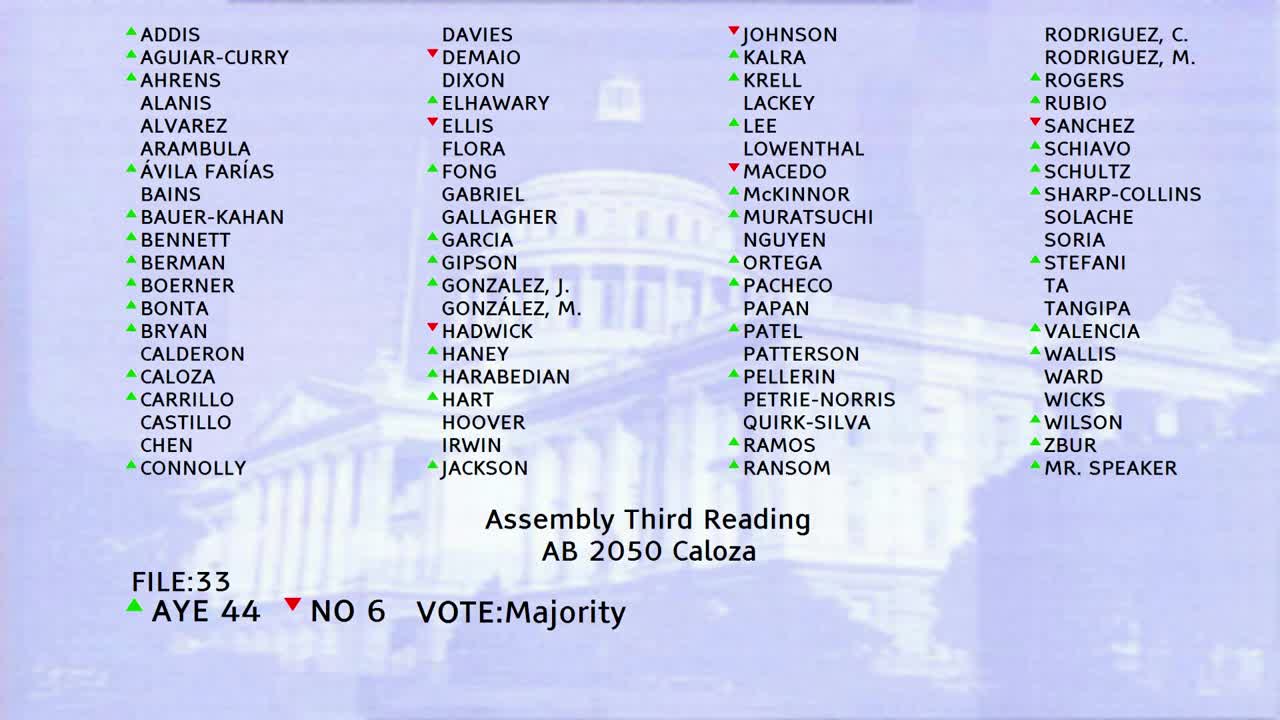 1MIN
Assembly Floor
 7MIN
Assembly Standing Committee on Judiciary
Bill Author

Bill Co-Author(s):