AB 2330: Public health: cold spas and cold plunge tubs.
- Session Year: 2025-2026
- House: Assembly
- Latest Version Date: 2026-04-16
Current Status:
In Progress
(2026-05-14: Joint Rule 62(a), file notice suspended. (Page 5030.))
Introduced
In Committee
Awaiting First Chamber Vote
Passed First Chamber
In Committee
Awaiting Second Chamber Vote
Passed Second Chamber
Enacted
Existing law requires that every person, including both public and private entities, operating or maintaining a public swimming pool do so in a sanitary, healthful, and safe manner, and authorizes the State Department of Public Health to supervise the sanitation, healthfulness, and safety of public swimming pools. Existing law requires the department to make and enforce regulations pertaining to public swimming pools as it deems proper and to enforce specified building standards relating to public swimming pools. Existing law also requires every health officer to enforce the specified building standards relating to swimming pools and other regulations adopted by the department. Existing law defines public swimming pool for these purposes. Existing law makes a person who violates these provisions guilty of a misdemeanor, punishable by a specified fine or by imprisonment for not more than six months, or both.
This bill would expand the definition of a public swimming pool to include a cold spa. The bill would define a cold spa for these purposes, and would require cold spas to be subject to specified requirements related to the construction and operation of a spa or spa pool, except as specified. Because this bill would expand the scope of an existing crime, the bill would impose a state-mandated local program.
This bill would also establish requirements for a cold plunge tub, including, among other things, that the cold plunge tub is prohibited from being placed or used within the same enclosure as a public pool or spa. The bill would define a cold plunge tub to mean an aboveground, individual use therapeutic tub that is maintained at temperatures between 35 degrees Fahrenheit and 60 degrees Fahrenheit by use of a mechanical chiller, among other things. The bill would specify that a cold plunge tub is not considered a public swimming pool and is not subject to any of the construction or sanitation standards mentioned above.
The California Constitution requires the state to reimburse local agencies and school districts for certain costs mandated by the state. Statutory provisions establish procedures for making that reimbursement.
This bill would provide that no reimbursement is required by this act for a specified reason.
Existing law requires that every person, including both public and private entities, operating or maintaining a public swimming pool do so in a sanitary, healthful, and safe manner, and authorizes the State Department of Public Health to supervise the sanitation, healthfulness, and safety of public swimming pools. Existing law requires the department to make and enforce regulations pertaining to public swimming pools as it deems proper and to enforce specified building standards relating to public swimming pools. Existing law also requires every health officer to enforce the specified building standards relating to swimming pools and other regulations adopted by the department. Existing law defines public swimming pool for these purposes. Existing law makes a person who violates these provisions guilty of a misdemeanor, punishable by a specified fine or by imprisonment for not more than six months, or both.
This bill would establish requirements for a cold spa, as defined. The bill would require a cold spa to include a mechanical recirculation system that continuously or intermittently circulates, filters, and disinfects water in accordance with the provisions described above, and would authorize a cold spa to maintain a lifeguard onsite when operated in accordance with an approved operational safety plan. The bill would also state that the regulation of cold spas addresses a matter of statewide concern, and not a municipal affair, and would prohibit a county, city, city and county, or local health department from adopting, enforcing, or administering an ordinance, rule, or regulation that is more stringent than these provisions.This bill would expand the definition of a public swimming pool to include a cold spa. The bill would define a cold spa for these purposes, and would require cold spas to be subject to specified requirements related to the construction and operation of a spa or spa pool, except as specified. Because this bill would expand the scope of an existing crime, the bill would impose a state-mandated local program.
This bill would also establish requirements for a cold plunge tub, including, among other things, that the cold plunge tub is prohibited from being placed or used within the same enclosure as a public pool or spa. The bill would define a cold plunge tub to mean an aboveground, individual use therapeutic tub that is maintained at temperatures between 35 degrees Fahrenheit and 60 degrees Fahrenheit by use of a mechanical chiller, among other things. The bill would specify that a cold plunge tub is not considered a public swimming pool and is not subject to any of the construction or sanitation standards mentioned above.
The California Constitution requires the state to reimburse local agencies and school districts for certain costs mandated by the state. Statutory provisions establish procedures for making that reimbursement.
This bill would provide that no reimbursement is required by this act for a specified reason.
Existing law requires that every person, including both public and private entities, operating or maintaining a public swimming pool do so in a sanitary, healthful, and safe manner, and authorizes the State Department of Public Health to supervise the sanitation, healthfulness, and safety of public swimming pools.
This bill would establish requirements for a cold spa, as defined. The bill would require a cold spa to include a mechanical recirculation system that continuously or intermittently circulates, filters, and disinfects water in accordance with the provisions described above, and would authorize a cold spa to maintain a lifeguard onsite when operated in accordance with an approved operational safety plan. The bill would also state that the regulation of cold spas addresses a matter of statewide concern, and not a municipal affair, and would prohibit a county, city, city and county, or local health department from adopting, enforcing, or administering an ordinance, rule, or regulation that is more stringent than these provisions.
Public swimming pool, as used in this article, means any public swimming pool, bathhouse, public swimming and bathing place, cold spa, and all related appurtenances.
SEC. 2.Section 116026 is added to the Health and Safety Code, to read:116026.(a)Cold plunge tub means any aboveground, individual use therapeutic tub that meets all of the following:
(1)Designed and used solely for brief therapeutic or recovery immersion in water.
(2)Maintained at temperatures between 35 degrees Fahrenheit and 60 degrees Fahrenheit by use of a mechanical chiller.
(3)Has mechanical recirculation.
(4)Has an automatic disinfecting system dispensing chlorine or bromine, which could also include the use of ozone or ultraviolet (UV) as a secondary disinfection option.
(5)Is not used for swimming or general recreational bathing.
(6)Is drained at the end of each operating day and filled at the start of the next operating day.
(b)Cold plunge tubs shall not be placed or used within the same enclosure as a public pool or spa.
(c)Cold plunge tubs shall have signage posted in a visible area on the tub with a minimum of one-inch letters in contrasting colors indicating the following: This Cold Plunge Tub is not under health regulation as a public swimming pool, use at your own risk.
(d)Cold plunge tubs are not considered public swimming pools and are not subject to any construction or sanitation standards as set forth in this article and the regulations adopted pursuant thereto.
SEC. 3.Section 116027 is added to the Health and Safety Code, to read:116027.(a)Cold Spa means any in-ground public swimming pool that is designed and used for brief therapeutic or recovery immersion in water that is maintained at temperatures between 35 degrees Fahrenheit and 60 degrees Fahrenheit by use of a mechanical chiller, or other approved method to chill the water, and can support multiple users at one time.
(b)Cold Spas are subject to all applicable requirements related to the construction and operation of a spa or spa pool as prescribed in Article 2.7 (commencing with Section 115950), this chapter, Title 22 (commencing with Section 65501) of the California Code of Regulations, and Title 24 (commencing with Section 3101B) of the California Building Standards Code, except for the requirement that the spa or spa pool must incorporate a water jet system, an aeration system, or a combination of the two systems used in conjunction with heated water, and instead must operate with the use of a chiller, or other approved method, to maintain proper water temperature.
SEC. 4.No reimbursement is required by this act pursuant to Section 6 of Article XIIIB of the California Constitution because the only costs that may be incurred by a local agency or school district will be incurred because this act creates a new crime or infraction, eliminates a crime or infraction, or changes the penalty for a crime or infraction, within the meaning of Section 17556 of the Government Code, or changes the definition of a crime within the meaning of Section 6 of Article XIIIB of the California Constitution.
Public swimming pool, as used in this article, means any public swimming pool, bathhouse, public swimming and bathing place place, cold spa, and all related appurtenances.
SEC. 2.Section 116026 is added to the Health and Safety Code, to read:116026.(a)Cold plunge tub means any aboveground, individual use therapeutic tub that meets all of the following:
(1)Designed and used solely for brief therapeutic or recovery immersion in water.
(2)Maintained at temperatures between 35 degrees Fahrenheit and 60 degrees Fahrenheit by use of a mechanical chiller.
(3)Has mechanical recirculation.
(4)Has an automatic disinfecting system dispensing chlorine or bromine, which could also include the use of ozone or ultraviolet (UV) as a secondary disinfection option.
(5)Is not used for swimming or general recreational bathing.
(6)Is drained at the end of each operating day and filled at the start of the next operating day.
(b)Cold plunge tubs shall not be placed or used within the same enclosure as a public pool or spa.
(c)Cold plunge tubs shall have signage posted in a visible area on the tub with a minimum of one-inch letters in contrasting colors indicating the following: This Cold Plunge Tub is not under health regulation as a public swimming pool, use at your own risk.
(d)Cold plunge tubs are not considered public swimming pools and are not subject to any construction or sanitation standards as set forth in this article and the regulations adopted pursuant thereto.
SEC. 3.Section 116027 is added to the Health and Safety Code, to read:116027.(a)Cold Spa means any in-ground public swimming pool that is designed and used for brief therapeutic or recovery immersion in water that is maintained at temperatures between 35 degrees Fahrenheit and 60 degrees Fahrenheit by use of a mechanical chiller, or other approved method to chill the water, and can support multiple users at one time.
(b)Cold Spas are subject to all applicable requirements related to the construction and operation of a spa or spa pool as prescribed in Article 2.7 (commencing with Section 115950), Title 22 (commencing with Section 65501) of the California Code of Regulations, and Title 24 (commencing with Section 3101B) of the California Building Standards Code, except for the requirement that the spa or spa pool must incorporate a water jet system, an aeration system, or a combination of the two systems used in conjunction with heated water, and instead must operate with the use of a chiller, or other approved method, to maintain proper water temperature.
SEC. 4.No reimbursement is required by this act pursuant to Section 6 of Article XIIIB of the California Constitution because the only costs that may be incurred by a local agency or school district will be incurred because this act creates a new crime or infraction, eliminates a crime or infraction, or changes the penalty for a crime or infraction, within the meaning of Section 17556 of the Government Code, or changes the definition of a crime within the meaning of Section 6 of Article XIIIB of the California Constitution.
SECTION 1.Article 5.5 (commencing with Section 116069) is added to Chapter 5 of Part 10 of Division 104 of the Health and Safety Code, to read:5.5.Cold Spas116069.(a)The regulation of cold spas, as defined in this article, addresses a matter of statewide concern and not a municipal affair, as that term is used in Section 5 of Article XI of the California Constitution.(b)A county, city, city and county, or local health department shall not adopt, enforce, or administer any ordinance, rule, or regulation that is more stringent than the requirements of this article or regulations adopted pursuant to it, including, but not limited to, provisions concerning any of the following:(1)Lifeguard staffing or supervision requirements.(2)Onsite medical personnel.(3)Construction classifications.(4)Drain-and-fill or water replacement frequency.(5)Permitting or plan review standards.(c)An existing local ordinance, rule, or regulation that conflicts with or imposes requirements beyond those established by state law shall be preempted and void as applied to cold spas.116069.5.(a)For purposes of this article, a cold spa means a structure, device, or installation, not intended for swimming or general recreational bathing, whether constructed in ground, above ground, portable, or integrated into another pool or spa facility, that meets the requirements of this section, including cold plunge tanks, cold immersion pools, and similar installations.(b)A cold spa shall meet all of the following requirements:(1)Be designed and primarily used for brief therapeutic or recovery immersion in water maintained at temperatures between 35 degrees Fahrenheit and 60 degrees Fahrenheit. The water temperature shall not fall below 35 degrees Fahrenheit at any time during operation.(2)Include a mechanical recirculation system that continuously or intermittently circulates, filters, and disinfects water in accordance with the requirements of this chapter.(c)A cold spa may meet the following requirements:(1)Utilize ozone and ultraviolet (UV) disinfection technologies as part of its approved sanitation process. These systems may eliminate the need to manually drain and refill the spa after each use, provided that the circulation and disinfection system maintains water quality standards required by this chapter and Title 23 of the California Code of Regulations.(2)Be constructed in ground or above ground. An in-ground construction shall not be a prerequisite for approval or operation.(3)Maintain a lifeguard onsite when operated in accordance with an approved operational safety plan, posted supervision, and warning signage, and when patrons are brief immersion users rather than swimmers.(4)Have a medical director, physician, or other licensed medical personnel onsite.(5)Be classified as a special purpose pool as defined under state regulation.(a)The regulation of cold spas, as defined in this article, addresses a matter of statewide concern and not a municipal affair, as that term is used in Section 5 of Article XI of the California Constitution.
(b)A county, city, city and county, or local health department shall not adopt, enforce, or administer any ordinance, rule, or regulation that is more stringent than the requirements of this article or regulations adopted pursuant to it, including, but not limited to, provisions concerning any of the following:
(1)Lifeguard staffing or supervision requirements.
(2)Onsite medical personnel.
(3)Construction classifications.
(4)Drain-and-fill or water replacement frequency.
(5)Permitting or plan review standards.
(c)An existing local ordinance, rule, or regulation that conflicts with or imposes requirements beyond those established by state law shall be preempted and void as applied to cold spas.
116069.5.(a)For purposes of this article, a cold spa means a structure, device, or installation, not intended for swimming or general recreational bathing, whether constructed in ground, above ground, portable, or integrated into another pool or spa facility, that meets the requirements of this section, including cold plunge tanks, cold immersion pools, and similar installations.
(b)A cold spa shall meet all of the following requirements:
(1)Be designed and primarily used for brief therapeutic or recovery immersion in water maintained at temperatures between 35 degrees Fahrenheit and 60 degrees Fahrenheit. The water temperature shall not fall below 35 degrees Fahrenheit at any time during operation.
(2)Include a mechanical recirculation system that continuously or intermittently circulates, filters, and disinfects water in accordance with the requirements of this chapter.
(c)A cold spa may meet the following requirements:
(1)Utilize ozone and ultraviolet (UV) disinfection technologies as part of its approved sanitation process. These systems may eliminate the need to manually drain and refill the spa after each use, provided that the circulation and disinfection system maintains water quality standards required by this chapter and Title 23 of the California Code of Regulations.
(2)Be constructed in ground or above ground. An in-ground construction shall not be a prerequisite for approval or operation.
(3)Maintain a lifeguard onsite when operated in accordance with an approved operational safety plan, posted supervision, and warning signage, and when patrons are brief immersion users rather than swimmers.
(4)Have a medical director, physician, or other licensed medical personnel onsite.
(5)Be classified as a special purpose pool as defined under state regulation.
|
Date
|
Status
|
|---|---|
| May 14, 2026 | In committee: Held under submission. |
| May 14, 2026 | Joint Rule 62(a), file notice suspended. |
| May 14, 2026 | Joint Rule 62(a), file notice suspended. (Page 5030.) |
| May 13, 2026 | In committee: Set, first hearing. Referred to APPR. suspense file. |
| Apr 20, 2026 | Re-referred to Com. on APPR. |
| Apr 16, 2026 | Read second time and amended. |
| Apr 15, 2026 | From committee: Amend, and do pass as amended and re-refer to Com. on APPR. (Ayes 16. Noes 0.) (April 14). |
| Apr 7, 2026 | Re-referred to Com. on HEALTH. |
| Apr 6, 2026 | From committee chair, with author's amendments: Amend, and re-refer to Com. on HEALTH. Read second time and amended. |
| Mar 9, 2026 | Referred to Com. on HEALTH. |
| Feb 20, 2026 | From printer. May be heard in committee March 22. |
| Feb 19, 2026 | Read first time. To print. |
|
Date
|
Description
|
Location
|
Votes
|
|
|---|---|---|---|---|
| Apr 14, 2026 | Do pass as amended and be re-referred to the Committee on [Appropriations] | Assembly Standing Committee on Health |
Passed |
This list shows positions taken on this bill by organizations on the date displayed, which is linked to the original source.
Positions by individuals are not included.
|
Organization
|
Position
|
Date
|
|---|---|---|
| Health and Fitness Association | ** Support | |
| National Health and Fitness Association | ** Support |
Date of Hearing: May 13, 2026
ASSEMBLY COMMITTEE ON APPROPRIATIONS
Buffy Wicks, Chair
ABPCA Bill Id:AB 2330
Author:(Boerner) – As Amended Ver:April 16, 2026
Policy Committee: | Health | Vote: | 16 - 0 |
|
| ||
|
|
Urgency: No State Mandated Local Program: Yes Reimbursable: No
SUMMARY:
This bill establishes a regulatory framework for cold spas and cold plunge tubs. The bill defines a cold spa and specifies requirements related to the construction and operation of a cold spa. The bill also defines a cold plunge tub and prohibits a cold plunge tub from being placed within the same enclosure as a public pool or spa, among other requirements.
Specifically, this bill:
- Defines “cold spa” to mean any in-ground public swimming pool that is designed and used for brief therapeutic or recovery immersion in water that is maintained at temperatures between 35 degrees and 60 degrees Fahrenheit by use of a mechanical chiller, or other approved method to chill the water, and can support multiple users at one time.
- Makes a cold spa subject to requirements related to the construction and operation of a spa or spa pool, except for the requirement that the spa or spa pool incorporate a water jet or aeration system in conjunction with heated water, and instead requires a cold spa operate with the use of a chiller or other approved method to maintain proper water temperature.
- Defines “cold plunge tub” to mean any aboveground, individual use therapeutic tub that is designed and used solely for brief therapeutic or recovery immersion in water; is maintained at temperatures between 35 degrees Fahrenheit and 60 degrees Fahrenheit by use of a mechanical chiller; has mechanical recirculation and an automatic disinfecting system dispensing chlorine or bromine, which could also include the use of ozone or ultraviolet (UV) as a secondary disinfection option; is not used for swimming or general recreational bathing; and is drained at the end of each operating day and filled at the start of the next day.
- Prohibits a cold plunge tub from being placed or used within the same enclosure as a public pool or spa.
- Requires a cold plunge tub to have signage stating, as specified, “This Cold Plunge Tub is not under health regulation as a public swimming pool, use at your own risk.”
- Specifies that a cold plunge tub is not considered a public swimming pool and is not subject to construction or sanitation standards governing public swimming pools.
FISCAL EFFECT:
- One-time costs of an unknown amount, likely hundreds of thousands of dollars, for the California Department of Public Health to adopt regulations (Recreational Health Fund).
- No costs to local environmental health agencies.
- Minor and absorbable costs to the Building Standards Commission.
COMMENTS:
- Purpose. This bill is sponsored by Health and Fitness Association. According to the author:
[This bill] would create a distinct regulatory category for cold spas. Restorative cold-water immersion has become a cornerstone of athletic recovery and holistic wellness for many in our state. The current opaque nature of regulation regarding cold plunges means spas might unintentionally be exposing their clients to unsafe environments. [This bill] would establish a formal legal definition for cold plunges and baths, effectively distinguishing them from recreational swimming pools and hot tubs. This would help create a predictable business environment for wellness providers and ensure that all California consumers are protected by consistent health and safety standards.
- Background. The sponsor of this bill states that California currently lacks a specific regulatory framework for cold water immersion facilities and businesses face a "regulatory grey space" characterized by inconsistent enforcement across different counties and a lack of operational certainty for wellness centers, fitness facilities, and recovery clinics.
Cold water immersion has become a popular activity. Some use it to support athletic recovery and others participate in cold water immersion for overall wellness. Research suggests cold water immersion may reduce delayed-onset muscle soreness in athletes. There is also some evidence suggesting benefits on wellness. However, the American Heart Association states plunging into cold water triggers a sudden, rapid increase in breathing, heart rate and blood pressure known as the cold shock response, which could result in drowning. Cold water plunges could also lead to hypothermia and other adverse effects.
Analysis Prepared by: Allegra Kim / APPR. / (916) 319-2081
Date of Hearing: April 14, 2026
ASSEMBLY COMMITTEE ON HEALTH
Mia Bonta, Chair
ABPCA Bill Id:AB 2330
Author:(Boerner) – As Amended Ver:April 6, 2026
SUBJECT: Public health: cold spas and cold plunge tubs.
SUMMARY: Establishes a regulatory framework for cold spas and cold plunge tubs. Specifically, this bill:
- Defines “cold plunge tub” to mean any aboveground, individual use therapeutic tub that meets all of the following:
- Designed and used solely for brief therapeutic or recovery immersion in water;
- Maintained at temperatures between 35 degrees Fahrenheit and 60 degrees Fahrenheit by use of a mechanical chiller;
- Has mechanical recirculation;
- Has an automatic disinfecting system dispensing chlorine or bromine, which could also include the use of ozone or ultraviolet (UV) as a secondary disinfection option;
- Is not used for swimming or general recreational bathing; and,
- Is drained at the end of each operating day and filled at the start of the next operating day.
- Prohibits cold plunge tubs from being placed or used within the same enclosure as a public pool or spa.
- Requires cold plunge tubs to have signage posted in a visible area on the tub with a minimum of one-inch letters in contrasting colors indicating the following: “This Cold Plunge Tub is not under health regulation as a public swimming pool, use at your own risk.”
- Specifies that cold plunge tubs are not considered public swimming pools and are not subject to any construction or sanitation standards as set forth in existing law and regulations governing public swimming pools.
- Defines “cold spa” to mean any in-ground public swimming pool that is designed and used for brief therapeutic or recovery immersion in water that is maintained at temperatures between 35 degrees Fahrenheit and 60 degrees Fahrenheit by use of a mechanical chiller, or other approved method to chill the water, and can support multiple users at one time.
- Makes cold spas subject to all applicable requirements related to the construction and operation of a spa or spa pool as prescribed in existing law 16), 17) and 20) below, except for the requirement that the spa or spa pool must incorporate a water jet system, an aeration system, or a combination of the two systems used in conjunction with heated water, and instead must operate with the use of a chiller, or other approved method, to maintain proper water temperature.
EXISTING LAW:
- Establishes the Department of Public Health (DPH), which among other things, regulates safe recreational water use and supervises the sanitation, healthfulness, and safety of public swimming pools. [Health and Safety Code (HSC) § 115825, et seq.]
- Defines “swimming pool” or “pool” to mean any structure intended for swimming or recreational bathing that contains water over 18 inches deep. Specifies that “swimming pool” includes in-ground and aboveground structures and includes, but is not limited to, hot tubs, spas, portable spas, and nonportable wading pools. [HSC § 115921]
- Defines “public swimming pool” to mean a swimming pool operated for the use of the general public with or without charge, or for the use of the members and guests of a private club. Excludes from this definition a swimming pool located on the grounds of a private single-family home. [Ibid.]
- Requires whenever a building permit is issued for the construction of a new swimming pool or spa, the pool or spa to meet specified requirements, including being equipped with suction outlets equipped to provide circulation throughout the pool or spa, covered with antientrapment grates. [HSC §115928]
- Requires every person proposing to construct a public swimming pool to file a copy of the plans prior to construction, with the local health officer having jurisdiction for approval. [HSC § 116038]
- Requires every public swimming pool, including swimming pool structure, appurtenances, operation, source of water supply, amount and quality of water recirculated and in the pool, method of water purification, lifesaving apparatus, measures to insure safety of bathers, and measures to insure personal cleanliness of bathers to be such that the public swimming pool is at all times sanitary, healthful and safe. [HSC § 116038]
- Requires lifeguard service to be provided for any public swimming pool that is of wholly artificial construction and for the use of which a direct fee is charged. For all other public swimming pools, requires lifeguard service to be provided or requires signs to be erected clearly indicating that the service is not provided. [HSC § 116045]
- Requires every public swimming pool that is required to provide lifeguard services and that charges a direct fee to provide on its premises an Automated External Defibrillator (AED) unit. Requires the AED unit to be readily available during pool operations. [Ibid.]
- Requires the design and installation of all underwater lighting systems, operating at more than 15 volts, supplied from a branch circuit either directly or by way of a transformer, to be installed in a public swimming pool so that there is no shock hazard with any likely combination of fault conditions during normal use and comply with the following:
- Requires an approved ground-fault circuit interrupter to be installed in the branch circuit that supplies all fixtures operating at more than 15 volts; and,
- Requires only approved underwater lighting fixtures to be used. Prohibits lighting fixtures to be installed for operations at more than 150 volts between conductors. [HSC § 116049.1.]
- Requires the owner or operator of a public swimming pool to comply with both of the following:
- Obtain an inspection of its public swimming pool by the local health officer or a qualified contractor; and,
- Certify to the local health officer that the public swimming pool facility is in compliance 4) above. [Ibid.]
- Requires DPH to make and enforce regulations pertaining to public swimming pools as it deems proper and to enforce building standards published in the State Building Standards Code relating to public swimming pools, as specified. [HSC § 116050]
- Requires every health officer to enforce the building standards published in the State Building Standards Code relating to swimming pools and the other regulations adopted by DPH in their jurisdiction. [HSC § 116053]
- Makes every person who violates any provision of specified swimming pool sanitation and safety requirements, building standards published in the State Building Standards Code relating to swimming pools, or DPH’s swimming pool regulations, guilty of a misdemeanor, punishable by a fine of not less than fifty dollars ($50) nor more than one thousand dollars ($1,000), or by imprisonment for not more than six months, or both. [HSC § 116065]
- Establishes requirements for wave pools, including:
- A wave pool operator to offer United States Coast Guard-approved Type II or Type III life vests to nonswimmers (persons who cannot swim or are weak, inexperienced swimmers) and children under 48 inches;
- Nonswimmers and children under 48 inches to wear United States Coast Guard-approved Type II or Type III life vests;
- A warning for impending waves in cases where wave action is suspended for any reason;
- Signage indicating the requirements of a) b) and c) at the ticket booth or entrance of facility where the wave pool is located;
- Lifeguards to guard a pool;
- Emergency stop for the wave equipment; and,
- The wave pool operator to ensure the wave pool has regular periods without breaking waves, as specified. [HSC § 115950, et seq.]
- Establishes DPH’s regulations for public swimming pools. Defines in regulation “spa” to mean a public pool that incorporates a water jet system, an aeration system, or a combination of the two systems used in conjunction with heated water. [Title 22, California Code of Regulations (CCR) § 65501, et seq.]
- Requires in regulation, except after seasonal closures, the enforcing agent to give written approval before a public pool is authorized to be placed in operation. [Title 22, CCR § 65511]
- Establishes various requirements related to operation procedures records, recirculation and water treatment systems, water clarity, quality, cleanliness, maintenance, swim apparel furnished by the pool operator, lifeguard services, safety and first aid, health of employees and public pool users, incident response, compressed chlorine gas safety, and cleaning of ancillary facilities (e.g. restrooms and dressing rooms) under the supervision of a pool operator. [Title 22, CCR § 65521, et seq.]
- Establishes within the Building Standards Code requirements for the construction, installation, and use of any public pool and its ancillary facilities. Requires a person proposing to construct, renovate or alter a pool, ancillary facilities, or equipment and appurtenances to submit plans and specifications detailing compliance with the Building Standards Code to the enforcing agent for review and written approval prior to commencing construction. Requires the plan to first be cleared by the enforcing agent before substitution if not an exact duplicate of the units being changed or replaced. Prohibits a local building department from issuing a permit for the public pool or ancillary facility until the plans have been approved by the enforcing agent. Requires construction, renovation and alterations to be in compliance with the plan submitted. Establishes specified requirements on several topics, including, among others: pool construction; pool geometry; permanent markings; steps, recessed steps, ladders and stairs; handholds; diving boards and platforms; pool decks; pool lighting; signage; ancillary facilities, as specified. [Title 24, CCR, Chapter 31B § 3130B, et seq.]
- Establishes special requirements for spa pools, including requiring: the aeration system to be separate from the recirculation system, requiring the maximum operating temperature to be no more than 104F, establishing a maximum water surface area of 250 feet, establishing a maximum water depth of four feet, and requiring a clearly labeled emergency shut off switch for the control of both the recirculation system and the aeration or jet system to be installed adjacent to the spa pool. [Title 24, CCR, Chapter 31B § 3138B]
FISCAL EFFECT: Unknown. This bill has not been analyzed by a fiscal committee.
COMMENTS:
- PURPOSE OF THIS BILL. According to the author, this bill would create a distinct regulatory category for cold spas. The author states that restorative cold-water immersion has become a cornerstone of athletic recovery and holistic wellness for many in our state. The author continues that the current opaque nature of regulation regarding cold plunges means spas might unintentionally be exposing their clients to unsafe environments. The author states that this bill would establish a formal legal definition for cold plunges and baths, effectively distinguishing them from recreational swimming pools and hot tubs. The author concludes that this bill would help create a predictable business environment for wellness providers and ensure that all California consumers are protected by consistent health and safety standards.
- BACKGROUND. Cold water immersion, typically maintained between 39 degrees Fahrenheit and 50 degrees Fahrenheit , has become a popular activity to support athletic recovery and holistic wellness.
Research on the impact of cold water immersion is emerging. According to a 2022 literature review published in the International Journal of Circumpolar Health titled “Health effects of voluntary exposure to cold water – a continuing subject of debate,” ice bathing has been suggested to have many health benefits. It has been claimed that it can boost the immune system, treat depression, enhance peripheral circulation, increase libido, burn calories and reduce stress. The literature review states that many of the proclaimed health benefits are based on subjective claims and anecdotal cases. A 2008 study published in the Scandinavian Journal of Clinical and Laboratory Investigation titled “Effects of long-term whole-body cold exposures on plasma concentrations of ACTH, beta-endorphin, cortisol, catecholamines and cytokines in healthy females,” suggested that regular cold exposure can be effective in treatment of chronic autoimmune inflammation and have a positive effect on stress regulation. Further, a 2015 study titled “Brown fat activation reduces hypercholesterolaemia and protects from atherosclerosis development” published in Nature Communications suggested that cold exposure brown adipose tissue activation which is linked to a reduction in obesity. The 2022 literature review states that many of the health benefits claimed from regular cold-water exposure may not be causal and may, instead, be explained by other factors, including, among others an active lifestyle, social interactions, and healthy food.
According to a 2021 meta-analysis published in Frontiers in Physiology titled, “Effects of cold water immersion after exercise on fatigue recovery and exercise performance: a meta-analysis,” cold water immersion is very popular as a method reducing post-exercise muscle stiffness, eliminating fatigue, decreasing exercise-induced muscle damage (EIMD), and recovering sports performance. The meta-analysis reviewed a total of 20 studies from 2002 and 2022 to examine the effect on cold water immersion on fatigue and recovery after high-intensity exercise and performance and stated that pooled data showed that cold water immersion resulted in a significant decline of delayed-onset muscle soreness.
Cold water therapy is not without risks. According to a 2022 article published by the American Heart Association (AHA) titled, “You're not a polar bear: The plunge into cold water comes with risks,” plunging the body into cold water triggers a sudden, rapid increase in breathing, heart rate and blood pressure known as the cold shock response. That can cause a person to drown within seconds if they involuntarily gasp while their head is submerged. The shock also places stress on the heart and makes it work harder. Within minutes, the loss of heat begins causing other problems. Blood rushes away from the extremities to the body's core to protect vital organs, leaving the arms and legs without good circulation, which can lead to a loss of strength and coordination. The rapid loss of heat also can lead to hypothermia, making it harder to think clearly or move well. Being immersed in cold water triggers hypothermia faster than just being out in the cold, because water takes heat away from the body 25 times faster than air. AHA states that some studies suggests that people who adapt to cold water immersion through routine ice bathing or winter swimming may reduce inflammation and other cardiovascular risks, others have found evidence of higher levels of troponin (a protein found in heart muscle cells) in people who compete in winter swims, suggesting that prolonged cold water immersion could lead to heart muscle damage.
This bill establishes a definition and regulatory framework for cold plunges and cold spas, including requirements to promote cleanliness, safety, and awareness of the risks associated with cold plunges.
- SUPPORT. The Health & Fitness Association (HFA) is the sponsor of this bill. HFA states that California currently lacks a specific regulatory framework for cold water immersion facilities. HFA continues that by default, these facilities are often subjected to the same rigorous regulations as large-scale swimming pools. AB 2330 addresses this gap by creating two distinct categories: cold plunge tubs—aboveground, individual-use units that are exempt from public pool construction and sanitation standards provided they meet specific operational requirements—and cold spas, which are in-ground, multi-user facilities subject to modified spa standards tailored to their unique cold-water operation. This tiered approach ensures that regulatory requirements are appropriately calibrated to the actual risk profile of each facility type. HFA states that without this much needed addition to state health and safety code, businesses face a "regulatory grey space" characterized by inconsistent enforcement across different counties, unjust fines for failing to meet inapplicable standards, and a lack of operational certainty for wellness centers, fitness facilities, and recovery clinics. HFA concludes that the addition of these definitions would help create a predictable business environment for wellness providers and ensure that all California consumers are protected by consistent, appropriately scaled health and safety standards.
- PREVIOUS LEGISLATION.
- AB 2384 (Wilson) of 2024 would have required a public swimming pool constructed on or after January 1, 2025, to comply with the standards and requirements of the federal Virginia Graeme Baker Pool and Spa Safety Act (act). Would have required an existing public swimming pool to be retrofitted to comply with the act whenever a construction permit is issued to alter the public swimming pool. Would have required, to the extent that the above-described existing requirements for public wading pools and public swimming pools conflict with the act, the requirements of the act would prevail. AB 2384 was not heard in the Assembly Health Committee.
- AB 1020 (Emmerson), Chapter 267, Statutes of 2010 requires public swimming pools to be equipped with anti-entrap devices or systems that meet federal requirements.
- AMENDMENTS. While the author’s intent is to reference state law focused on Safe Recreational Water Use (commencing with HSC § 115825) with regard to all applicable requirements related to the construction and operation of a spa or spa pool as prescribed, this bill incorrectly references HSC § 115950, the Wave Pool Safety Act.
The Committee may wish to amend this bill to correct the incorrect cross reference described in 6) above.
REGISTERED SUPPORT / OPPOSITION:
Support
National Health and Fitness Association (sponsor)
Opposition
None on file
Analysis Prepared by: Eliza Brooks / HEALTH / (916) 319-2097
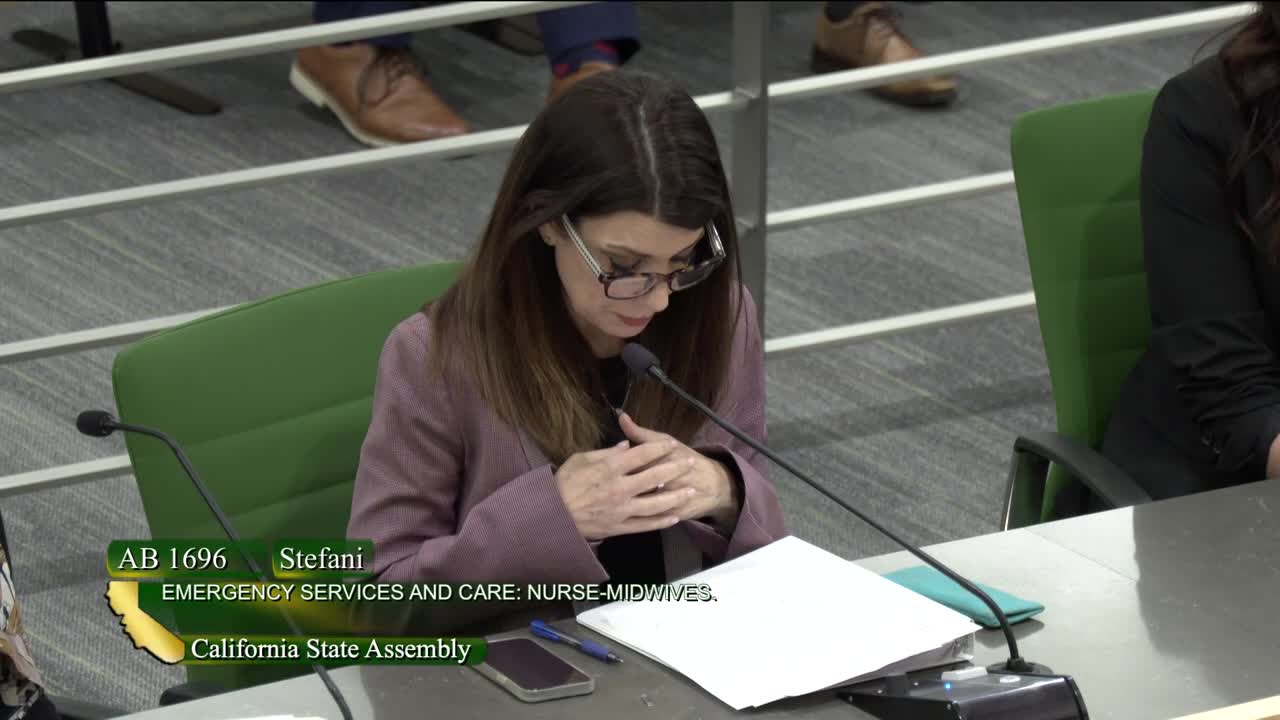
Bill Author

Bill Co-Author(s):