AB 25: California Voter ID and Election Integrity Act of 2025.
- Session Year: 2025-2026
- House: Assembly
- Latest Version Date: 2025-02-24
Current Status:
Failed
(2025-04-09: From committee: Without further action pursuant to Joint Rule 62(a).)
Introduced
In Committee
Awaiting First Chamber Vote
Passed First Chamber
In Committee
Awaiting Second Chamber Vote
Passed Second Chamber
Enacted
(1)Under the California Constitution, a person may vote if the person is a United States citizen, at least 18 years of age, and a resident in the state. Existing law authorizes a person to prove citizenship for voting purposes by certification under penalty of perjury on the persons affidavit of voter registration.
This bill would repeal the authorization for a person to prove citizenship by certification and would instead require a person to provide appropriate documentation of citizenship with the affidavit of registration. The bill would prohibit an elections official from registering to vote a person who does not provide appropriate documentation of citizenship or a person whose citizenship cannot be verified based on the documentation provided. The bill would require an elections official to verify the citizenship of voters registered to vote in the county as of January 1, 2026, and would authorize the elections official to require a person to provide documentation of citizenship for that purpose. By increasing the duties of county elections officials, this bill would impose a state-mandated local program.
The bill would require the State Auditor to periodically review a random sample of a countys roster of voters to identify persons listed on the roster who are not qualified electors in that county.
(2)Existing law prohibits a local government from enacting or enforcing any charter provision, ordinance, or regulation requiring a person to present identification for the purpose of voting.
This bill would repeal that prohibition. The bill would instead require a person desiring to vote at a polling place to present a valid government-issued form of identification to a precinct board member before the person may vote. The bill would require a person voting a vote by mail ballot to include on the ballot identification envelope the last 4 digits of the voters valid government-issued form of identification. The bill would require an elections official, before processing and counting a vote by mail ballot, to confirm that the last 4 digits of the voters form of identification listed on the identification envelope match the voters form of identification listed on the voters affidavit of registration. By increasing the duties of county elections officials, this bill would impose a state-mandated local program.
(3)Existing law requires an elections official, upon receiving a vote by mail ballot, to compare the signature on the ballot identification envelope with the signature appearing on specified voter registration records to determine if the signatures compare, as provided. If the elections official determines that the signatures do not match, or if the envelope does not contain a signature, existing law requires the elections official, no later than 8 days before the certification of the election, to mail a notice to the voter of the opportunity to verify the voters signature or provide a signature, as applicable.
This bill would require the State Auditor to audit elections officials by reviewing random samples of signature comparisons to determine whether the signature comparisons comply with the applicable requirements. The bill would require the State Auditor to report the audit findings no later than 90 days after each election. The bill would require an elections official, if the State Auditor determines that the elections official has a signature comparison error rate of 5% or greater, to prepare a remediation plan and submit it to the Secretary of State.
(4)Existing law requires the official canvass of all ballots received in an election to commence no later than the Thursday following the election and to continue daily, except on weekends and holidays, for not less than 6 hours each day until completed. Existing law requires elections officials to prepare a certified statement of the results of the election and submit that certified statement to the governing body of the jurisdiction within 30 days of the election.
This bill would require an elections official to count all ballots, except provisional ballots and vote by mail ballots for which a voter has the opportunity either to verify or provide a signature, by no later than 72 hours after the election. By increasing the duties of county elections officials, this bill would impose a state-mandated local program.
(5)Existing law requires an elections official, no later than 29 days before the day of each election, to begin mailing a vote by mail ballot to every registered voter.
If the State Auditor determines that fewer than 98% of the persons listed on a countys roster of voters are qualified electors in that county or if an elections official fails to count all ballots, except provisional ballots and vote by mail ballots for which a voter has the opportunity either to verify or provide a signature, by no later than 72 hours after the election, this bill would prohibit the elections official from mailing a vote by mail ballot to every registered voter in the next statewide election. The bill would authorize a voter to apply for a vote by mail ballot in an election subject to that prohibition.
(6)The California Constitution requires the state to reimburse local agencies and school districts for certain costs mandated by the state. Statutory provisions establish procedures for making that reimbursement.
This bill would provide that, if the Commission on State Mandates determines that the bill contains costs mandated by the state, reimbursement for those costs shall be made pursuant to the statutory provisions noted above.
Under the California Constitution, a person may vote if the person is a United States citizen, 18 years of age, and a resident in the state. Existing law prohibits a local government from enacting or enforcing any charter provision, ordinance, or regulation requiring a person to present identification for the purpose of voting.This bill would express the intent of the Legislature to enact legislation to improve the integrity of state and local elections by requiring a government-issued ID to vote, verifying the citizenship of voters, maintaining accurate voter lists, incentivizing timely counting of ballots, and enhancing the signature review process.Under the California Constitution, a person may vote if the person is a United States citizen, 18 years of age, and a resident in the state. Existing law prohibits a local government from enacting or enforcing any charter provision, ordinance, or regulation requiring a person to present identification for the purpose of voting.
This bill would express the intent of the Legislature to enact legislation to improve the integrity of state and local elections by requiring a government-issued ID to vote, verifying the citizenship of voters, maintaining accurate voter lists, incentivizing timely counting of ballots, and enhancing the signature review process.
This act shall be known, and may be cited, as the California Voter ID and Election Integrity Act of 2025.
SEC. 2.Section 2110 is added to the Elections Code, to read:2110.(a)(1)On the affidavit of registration, a person shall certify under penalty of perjury that the person is a citizen. The person shall provide appropriate documentation of citizenship with the affidavit of registration.
(2)Based on the documentation of citizenship provided pursuant to paragraph (1), the elections official shall verify whether the person is a citizen.
(3)A person who does not provide appropriate documentation of citizenship with the affidavit of registration, or a person whose citizenship cannot be verified by the elections official based on the documentation provided, shall not be registered to vote.
(b)An elections official shall verify the citizenship of voters registered to vote in the county as of January 1, 2026. The elections official may require a person to provide appropriate documentation of citizenship for purposes of verifying the persons citizenship pursuant to this subdivision.
SEC. 3.Section 2111 of the Elections Code is repealed.2111.A person may prove he or she is a citizen by his or her certification under penalty of perjury on the affidavit of registration.SEC. 4.Section 2112 of the Elections Code is repealed.2112.Notwithstanding any other provision of law to the contrary, the fact that a person certifies to his or her United States citizenship by signing his or her affidavit of registration shall be deemed evidence of citizenship for voting purposes only.SEC. 5.Section 2186 is added to the Elections Code, to read:2186.(a)Upon request, the elections official shall furnish the roster to the State Auditor for purposes of this section.
(b)(1)The State Auditor shall periodically review a random sample of a countys roster to identify persons listed on the roster who are not qualified electors in that county.
(2)If in the review described in paragraph (1) the State Auditor determines that fewer than 98 percent of the persons listed on the roster are qualified electors in that county, for the next statewide election the elections official shall not mail the materials specified in Section 3010 to every registered voter pursuant to Section 3000.5. For the next statewide election, the elections official shall mail a vote by mail ballot to any qualified elector who requests a vote by mail ballot pursuant to Chapter 3 (commencing with Section 3200) of Division 3.
SEC. 6.Section 3000.5 of the Elections Code is amended to read:3000.5.(a)Notwithstanding any other law, for each election, the elections official shall, no later than 29 days before the day of the election, begin mailing the materials specified in Section 3010 to every registered voter. voter, except as provided in Sections 2186 and 15301. The elections official shall have five days to mail a ballot to each person who is registered to vote on the 29th day before the day of the election and five days to mail a ballot to each person who is subsequently registered to vote. The elections official shall not discriminate against any region or precinct in choosing which ballots to mail first within the prescribed five-day mailing period.
(b)The distribution of vote by mail ballots to all registered voters does not prevent a voter from voting in person at a polling place, vote center, or other authorized location.
(c)Consistent with paragraph (2) of subdivision (a) of Section 2226, this section is not intended and shall not be construed to authorize a voter with an inactive voter registration status to receive a vote by mail ballot for an election.
SEC. 7.Section 3011 of the Elections Code is amended to read:3011.(a)The identification envelope shall contain all of the following:
(1)A declaration, under penalty of perjury, stating that the voter resides within the precinct in which the voter is voting and is the person whose name appears on the envelope.
(2)The signature of the voter.
(3)The residence address of the voter as shown on the affidavit of registration.
(4)The last four digits of the voters valid government-issued form of identification.
(4)(5)The date of signing.
(5)(6)A notice that the envelope contains an official ballot and is to be opened only by the canvassing board.
(6)(7)A warning plainly stamped or printed on it that voting twice constitutes a crime.
(7)(8)A warning plainly stamped or printed on it that the voter must sign the envelope in the voters own handwriting in order for the ballot to be counted.
(8)(9)A statement that the voter has neither voted nor intends to vote a ballot from any other jurisdiction for the same election.
(9)(10)The name and signature of the person authorized by the voter to return the vote by mail ballot pursuant to Section 3017.
(b)Except at a primary election for partisan office, and notwithstanding any other provision of law, the voters party preference may not be stamped or printed on the identification envelope.
(c)Notwithstanding paragraph (9) of subdivision (a), a ballot shall not be disqualified solely because the person authorized to return it did not provide on the identification envelope their name or signature.
(d)County elections officials may continue to use existing supplies prior to printing new identification envelopes that reflect the changes made to this section by the act adding this subdivision.
SEC. 8.Section 3019 of the Elections Code is amended to read:3019.(a)(1)Upon receiving a vote by mail ballot, the elections official shall compare the signature on the identification envelope with either of the following to determine if the signatures compare:
(A)The signature appearing on the voters affidavit of registration or any previous affidavit of registration of the voter.
(B)The signature appearing on a form issued by an elections official that contains the voters signature and that is part of the voters registration record.
(2)All of the following apply to the comparison of signatures pursuant to this section, including the comparison of a voters signature on a signature verification statement, an unsigned identification envelope statement, or a combined vote by mail ballot signature verification statement and unsigned identification envelope statement, with the signature that is part of the voters registration record:
(A)A presumption exists that the signature on the identification envelope, signature verification statement, unsigned identification envelope statement, or provisional ballot envelope is the voters signature.
(B)An exact match is not required for an elections official to determine that a voters signature is valid. The fact that signatures share similar characteristics is sufficient to determine that a signature is valid.
(C)Except as provided in subparagraph (D), the elections official shall consider explanations for discrepancies between signatures that are specified in regulations promulgated by the Secretary of State. For purposes of this subparagraph, explanations include a variation in signature style over time and the haste with which a signature is written.
(D)When comparing signatures, an elections official shall not review or consider a voters party preference, race, or ethnicity.
(E)The elections official may consider characteristics of the written signature that are specified in regulations promulgated by the Secretary of State. For purposes of this subparagraph, characteristics include the slant of the signature, letter formation, and whether the signature is printed or written in cursive.
(F)The elections official may use facsimiles of voters signatures, provided that the method of preparing and displaying the facsimiles complies with the law.
(G)In comparing signatures pursuant to this section, an elections official may use signature verification technology. If signature verification technology determines that the signatures do not compare, the signature is subject to the additional procedures described in paragraph (2) of subdivision (c).
(H)The variation of a signature caused by the substitution of initials for the first or middle name, or both, is not grounds for the elections official to determine that the signatures do not compare.
(I)A signature made using a mark such as an X, or made by a signature stamp, shall be presumed valid and shall be accepted if the signature meets the requirements of Section 354.5.
(b)If upon conducting the comparison of signatures pursuant to subdivision (a) the elections official determines that the signatures compare, and if the elections official determines that the identification envelope contains the information required pursuant to Section 3019.3, the elections official shall deposit the ballot, still in the identification envelope, in a ballot container in the elections officials office.
(c)(1)If upon conducting the comparison of signatures pursuant to subdivision (a) the elections official determines that the signature possesses multiple, significant, and obvious differing characteristics when compared to all signatures in the voters registration record, the signature is subject to the additional procedures described in paragraph (2).
(2)If the elections official makes the determination described in paragraph (1), the signature shall be rejected only if two additional elections officials each find beyond a reasonable doubt that the signature differs in multiple, significant, and obvious respects from all signatures in the voters registration record. If the officials determine that the signatures do not compare, the identification envelope shall not be opened and the ballot shall not be counted. The elections official shall write the cause of the rejection on the face of the identification envelope only after completing the procedures described in subdivision (d).
(d)(1)(A)Except as provided in subparagraph (E), on or before the next business day after a determination that a voters signature does not compare pursuant to subdivision (c), but not later than eight days prior to the certification of the election, the elections official shall send by first-class mail notice to the voter of the opportunity to verify the voters signature no later than 5 p.m. two days prior to the certification of the election. The notice shall include a return envelope, with postage paid, for the voter to return a signature verification statement.
(B)If an elections official has a telephone number or email address on file for a voter whose signature does not compare pursuant to subdivision (c), the elections official shall notify the voter by telephone, a text message, or email of the opportunity to verify the voters signature. If an elections official calls the voter and the voter does not answer, the elections official shall attempt to leave a voicemail message.
(C)Unless required pursuant to Section 3026, the elections official may send additional written notices to a voter identified pursuant to subdivision (c), and may also notify the voter in person or by other means of the opportunity to verify the voters signature.
(D)Unless required pursuant to Section 3026, the elections official may use any information in a countys election management system, or otherwise in the elections officials possession, for the purpose of notifying the voter of the opportunity to verify the voters signature.
(E)If it is impracticable under the circumstances for the elections official to send the notice described in subparagraph (A) on or before the next business day, including in the event of technological failure, the elections official shall send the notice as soon as practicable, but not later than eight days prior to the certification of the election.
(2)The notice and instructions shall be in substantially the following form:
READ THESE INSTRUCTIONS CAREFULLY. FAILURE TO FOLLOW THESE INSTRUCTIONS MAY CAUSE YOUR VOTE BY MAIL BALLOT NOT TO COUNT. | |
1. We have determined that the signature you provided on your vote by mail ballot does not compare with the signature(s) on file in your voter record. In order to ensure that your vote by mail ballot will be counted, the signature verification statement must be completed and returned as soon as possible. | |
2. The signature verification statement must be received by the elections official of the county where you are registered to vote no later than 5 p.m. two days prior to certification of the election. | |
3. You must sign your name where specified on the signature verification statement (Voters Signature). | |
4. Place the signature verification statement into the postage-paid return envelope if it is included with these instructions. If a return envelope is not included with these instructions, use your own mailing envelope addressed to your local elections official. Mail, deliver, or have the completed statement delivered to the elections official. If you mail your completed statement using your own envelope, be sure there is sufficient postage and that the address of the elections official is correct. | |
5. If you do not wish to send the signature verification statement by mail or have it delivered, you may submit your completed statement by email or facsimile transmission to your local elections official, or by other electronic means made available by your local elections official, or submit your completed statement to a polling place within the county or a ballot dropoff box before the close of the polls on election day. |
(3)The notice and instructions shall be translated in all languages required in that county by Section 203 of the federal Voting Rights Act of 1965 (52 U.S.C. Sec. 10503).
(4)The elections official shall not reject a vote by mail ballot identified pursuant to subdivision (c) if each of the following conditions is satisfied:
(A)The voter delivers, in person, by mail, by fax, by email, or by other means, a signature verification statement signed by the voter and the elections official receives the statement no later than 5 p.m. two days prior to the certification of the election, or the voter, before the close of the polls on election day, completes and submits a signature verification statement to a polling place within the county or a ballot dropoff box.
(B)Upon receipt of the signature verification statement, the elections official shall compare the signature on the statement with the signature on file in the voters record.
(i)If upon conducting the comparison of signatures the elections official determines that the signatures compare, the elections official shall deposit the ballot, still in the identification envelope, in a ballot container in the elections officials office.
(ii)If, under the standards and procedures of subdivision (c), a determination is made that the signatures do not compare, the identification envelope shall not be opened and the ballot shall not be counted. The elections official shall write the cause of the rejection on the face of the identification envelope.
(5)The signature verification statement shall be in substantially the following form and may be included on the same page as the notice and instructions specified in paragraph (2):
SIGNATURE VERIFICATION STATEMENT | |
I,, am a registered voter of __________ County, | |
State of California. I declare under penalty of perjury that I received and returned a vote by mail ballot. I am a resident of the precinct in which I have voted, and I am the person whose name appears on the vote by mail ballot envelope. I understand that if I commit or attempt any fraud in connection with voting, or if I aid or abet fraud or attempt to aid or abet fraud in connection with voting, I may be convicted of a felony punishable by imprisonment for 16 months or two or three years. I understand that my failure to sign this statement means that my vote by mail ballot will be invalidated. | |
Voters Signature | |
Address |
(6)If the elections official determines that the signatures compare, the official shall use the signature in the signature verification statement, even if returned untimely, to update the voters signature for future elections.
(e)(1)(A)Notwithstanding any other law, if an elections official determines that a voter has failed to sign the identification envelope, the elections official shall not reject the vote by mail ballot if the voter does any of the following:
(i)Signs the identification envelope at the office of the elections official during regular business hours no later than 5 p.m. two days prior to the certification of the election.
(ii)No later than 5 p.m. two days prior to the certification of the election, completes and submits an unsigned identification envelope statement in substantially the following form:
UNSIGNED IDENTIFICATION ENVELOPE STATEMENT | |
I,, am a registered voter of __________ County, | |
State of California. I declare under penalty of perjury that I received and returned a vote by mail
ballot and that I have not and will not vote more than one ballot in this election. I am a resident of the precinct in which I have voted, and I am the person whose name appears on the vote by mail ballot envelope. I understand that if I commit or attempt any fraud in connection with voting, or if I aid or abet fraud or attempt to aid or abet fraud in connection with voting, I may be convicted of a felony punishable by imprisonment for 16 months or two or three years. I understand that my failure to sign this statement means that my vote by mail ballot will be invalidated. | |
Voters Signature | |
Address |
(iii)Before the close of the polls on election day, completes and submits an unsigned identification envelope statement, in the form described in clause (ii), to a polling place within the county or a ballot dropoff box.
(B)(i)Except as provided in clause (v), or before the next business day after discovering that a voter has failed to sign the identification envelope, but not later than eight days prior to the certification of the election, the elections official shall send by first-class mail notice and instructions to the voter of the opportunity to provide a signature no later than 5 p.m. two days prior to the certification of the election. The notice shall include a return envelope, with postage paid, for the voter to return the unsigned identification envelope statement.
(ii)If an elections official has a telephone number or email address on file for a voter who has failed to sign the identification envelope, the elections official shall notify the voter by telephone, a text message, or email of the opportunity to provide a signature. If an elections official calls the voter and the voter does not answer, the elections official shall attempt to leave a voicemail message.
(iii)Unless required pursuant to Section 3026, the elections official may send additional written notices to a voter identified pursuant to this subdivision, and may also notify the voter in person or by other means of the opportunity to provide a signature.
(iv)Unless required pursuant to Section 3026, the elections official may use any information in the countys election management system, or otherwise in the elections officials possession, for the purpose of notifying the voter of the opportunity to provide a signature.
(v)If it is impracticable under the circumstances for the elections official to send the notice described in clause (i) on or before the next business day, including in the event of technological failure, the elections official shall send the notice as soon as practicable, but not later than eight days prior to the certification of the election.
(C)If timely submitted, the elections official shall accept any completed unsigned identification envelope statement. Upon receipt of the unsigned identification envelope statement, the elections official shall compare the voters signature on the statement in the manner provided by this section.
(i)If the elections official determines that the signatures compare, the elections official shall attach the unsigned identification envelope statement to the identification envelope and deposit the ballot, still in the identification envelope, in a ballot container in the elections officials office.
(ii)If, under the standards and procedures of subdivision (c), a determination is made that the signatures do not compare, the identification envelope shall not be opened and the elections official shall provide notice to the voter pursuant to subdivisions (c) and (d).
(D)An elections official may use methods other than those described in subparagraph (A) to obtain a voters signature on an unsigned identification envelope statement.
(2)Instructions shall accompany the unsigned identification envelope statement in substantially the following form:
READ THESE INSTRUCTIONS CAREFULLY BEFORE COMPLETING THE STATEMENT. FAILURE TO FOLLOW THESE INSTRUCTIONS MAY CAUSE YOUR BALLOT NOT TO COUNT. | |
1. In order to ensure that your vote by mail ballot will be counted, your statement should be completed and returned as soon as possible, but no later than 5 p.m. two days prior to the certification of the election. | |
2. You must sign your name on the line above (Voters Signature). | |
3.Place the statement into the postage-paid return envelope if it is included with these instructions. If a return envelope is not included with these instructions, use your own mailing envelope addressed to your local elections official. Mail, deliver, or have delivered the completed statement to the elections official. If you mail your completed statement using your own envelope, be sure there is sufficient postage and that the address of the elections official is correct. | |
4. If you do not wish to send the statement by mail or have it delivered, you may submit your completed statement by facsimile or email transmission to your local elections official, or by other electronic means made available by your local elections official, or submit your completed statement to a polling place within the county or a ballot dropoff box before the close of the polls on election day. |
(3)The notice and instructions shall be translated in all languages required in that county by Section 203 of the federal Voting Rights Act of 1965 (52 U.S.C. Sec. 10503).
(f)An elections official shall include a single, combined vote by mail ballot signature verification statement and unsigned ballot identification envelope statement, along with the instructions provided in this section for the completion of the statement, on the elections officials internet website and shall provide the elections officials mailing address, email address, and facsimile transmission number on the internet web page containing the statement and instructions. The elections official shall accept the combined statement from a voter for the purpose of satisfying the requirements of paragraph (4) of subdivision (d) or subparagraph (C) of paragraph (1) of subdivision (e). An elections official may mail the combined statement to a voter pursuant to subdivision (d) or (e) in lieu of the signature verification statement or unsigned ballot identification envelope statement.
(g)A local elections official offering other electronic means for submission of a statement described in this section shall establish appropriate privacy and security protocols that ensure that the information transmitted is received directly and securely by the elections official and is only used for the stated purposes of verifying the signature on the voters ballot.
(h)A ballot shall not be removed from its identification envelope until the time for processing ballots. A ballot shall not be rejected for cause after the identification envelope has been opened.
(i)For purposes of this section, certification of the election means the date the particular elections official submits a certified statement of the results of the election to the governing body pursuant to Section 15372, even if that occurs before the deadline to submit the certified statement of the election results set forth in Section 15372.
(j)In comparing signatures pursuant to this section, including when using signature verification software or other technology, an elections official shall adhere to all applicable regulations promulgated by the Secretary of State.
(k)An elections official is authorized to use contact information provided on a voters affidavit of registration to contact a voter for purposes consistent with this section.
SEC. 9.Section 3019.1 is added to the Elections Code, to read:3019.1.(a)The State Auditor shall audit county elections officials by reviewing random samples of the signature comparisons conducted by the elections official. The State Auditor shall determine whether the signature comparisons comply with the requirements set forth in Section 3019.
(b)The State Auditor shall report the findings of the audits described in subdivision (a) no later than 90 days after each election.
(c)If the State Auditor determines in an audit that an elections official has a signature comparison error rate of 5 percent or greater, the elections official shall prepare a remediation plan identifying the steps the elections official will take to correct the errors identified by the State Auditor. The elections official shall submit the remediation plan to the Secretary of State.
SEC. 10.Section 3019.3 is added to the Elections Code, to read:3019.3.In addition to the requirements of Section 3019, before an elections official may process and count a vote by mail ballot, the elections official shall confirm that the last four digits of the voters valid government-issued form of identification listed on the identification envelope match the voters valid government-issued form of identification listed on the voters affidavit of registration.
SEC. 11.Chapter 3 (commencing with Section 3200) is added to Division 3 of the Elections Code, to read:3.Vote by Mail Procedures in Counties with Inaccurate Voter Rosters or Counties that Fail to Count Ballots in a Timely Manner3200.This chapter applies in either of the following circumstances:
(a)A statewide election in a county immediately following a determination by the State Auditor pursuant to Section 2186 that fewer than 98 percent of the persons listed on the roster are qualified electors in that county.
(b)A statewide election in a county immediately following an election for which the elections official in that county failed to count all ballots, except provisional ballots and vote by mail ballots for which a voter has the opportunity either to verify their signature pursuant to subdivision (d) of Section 3019 or to provide their signature pursuant to subdivision (e) of Section 3019, by no later than 10 days after the election pursuant to Section 15301.
3201.(a)Any voter may apply for a vote by mail ballot. The voter shall complete an application, which shall be available from the elections official, and which shall contain all of the following:
(1)The applicants name at length.
(2)The applicants residence address.
(3)The address where the ballot is to be mailed, if different from the place of residence.
(4)The signature of the applicant.
(b)Upon receipt of an application for a vote by mail ballot and a determination that the applicant is an eligible voter, the elections official shall add the applicant to a list of voters to be provided vote by mail ballots for the next statewide election.
3202.No later than 29 days before the day of the statewide election, the elections official shall begin mailing the materials specified in Section 3010 to every voter eligible for a vote by mail ballot pursuant to Section 3201.
SEC. 12.Section 10005 of the Elections Code is repealed.10005.A local government shall not enact or enforce any charter provision, ordinance, or regulation requiring a person to present identification for the purpose of voting or submitting a ballot at any polling place, vote center, or other location where ballots are cast or submitted, unless required by state or federal law. For the purpose of this section, local government means any charter or general law city, charter or general law county, or any city and county.SEC. 13.Section 14216.5 is added to the Elections Code, to read:14216.5.In addition to the requirements of Section 14216, before a person desiring to vote at a polling place may vote, the person shall present a valid government-issued form of identification to a precinct board member.
SEC. 14.Section 15301 of the Elections Code is amended to read:15301.(a)The canvass shall commence no later than the Thursday following the election, shall be open to the public, and, for state or statewide elections, shall result in a report of results to the Secretary of State. The
(b)(1)The canvass shall be continued daily, Saturdays, Sundays, and holidays excepted, for not less than six hours each day until completed.
(2)(A)The elections official shall count all ballots, except provisional ballots and vote by mail ballots for which a voter has the opportunity either to verify their signature pursuant to subdivision (d) of Section 3019 or to provide their signature pursuant to subdivision (e) of Section 3019, by no later than 72 hours after the election.
(B)An elections official that fails to meet the requirement in subparagraph (A) shall not mail the materials specified in Section 3010 to every registered voter pursuant to Section 3000.5 for the next statewide election. For the next statewide election, the elections official shall mail a vote by mail ballot to any qualified elector who requests a vote by mail ballot pursuant to Chapter 3 (commencing with Section 3200) of Division 3.
SEC. 15.If the Commission on State Mandates determines that this act contains costs mandated by the state, reimbursement to local agencies and school districts for those costs shall be made pursuant to Part 7 (commencing with Section 17500) of Division 4 of Title 2 of the Government Code.
SECTION 1.It is the intent of the Legislature to enact legislation to improve the integrity of state and local elections by requiring a government-issued ID to vote, verifying the citizenship of voters, maintaining accurate voter lists, incentivizing timely counting of ballots, and enhancing the signature review process.It is the intent of the Legislature to enact legislation to improve the integrity of state and local elections by requiring a government-issued ID to vote, verifying the citizenship of voters, maintaining accurate voter lists, incentivizing timely counting of ballots, and enhancing the signature review process.
|
Date
|
Status
|
|---|---|
| Apr 9, 2025 | From committee: Without further action pursuant to Joint Rule 62(a). |
| Apr 9, 2025 | In committee: Reconsideration refused. |
| Apr 9, 2025 | In committee: Set, first hearing. Failed passage. |
| Feb 25, 2025 | Re-referred to Com. on ELECTIONS. |
| Feb 24, 2025 | From committee chair, with author's amendments: Amend, and re-refer to Com. on ELECTIONS. Read second time and amended. |
| Feb 24, 2025 | Referred to Coms. on ELECTIONS and JUD. |
| Dec 3, 2024 | From printer. May be heard in committee January 2. |
| Dec 2, 2024 | Read first time. To print. |
|
Date
|
Description
|
Location
|
Votes
|
|
|---|---|---|---|---|
| Apr 9, 2025 | Reconsideration. | Assembly Standing Committee on Elections |
Failed |
|
| Apr 9, 2025 | Do pass and be re-referred to the Committee on [Judiciary] | Assembly Standing Committee on Elections |
Failed |
This list shows positions taken on this bill by organizations on the date displayed, which is linked to the original source.
Positions by individuals are not included.
|
Organization
|
Position
|
Date
|
|---|---|---|
| Aclu California Action | ** Against | |
| American Federation Of State, County And Municipal Employees, Afl-Cio | ** Against | |
| California Association Of Psychiatric Technicians | ** Against | |
| CFT- a Union of Educators & Classified Professionals, Aft, Afl-cio | ** Against | |
| Disability Rights California | ** Against | |
| Election Integrity Project California | ** Support | |
| League Of Women Voters Of California | ** Against |
Date of Hearing: April 9, 2025
ASSEMBLY COMMITTEE ON ELECTIONS
Gail Pellerin, Chair
ABPCA Bill Id:AB 25 (
Author:DeMaio) – As Amended Ver:February 24, 2025
SUBJECT: California Voter ID and Election Integrity Act of 2025.
SUMMARY: Requires a person to provide documentation of citizenship when registering to vote. Requires a person to provide government-issued photo identification when voting in-person. Requires a voter to provide the last four digits of a government-issued identification number on a vote by mail (VBM) ballot envelope and requires the voter’s ballot to be disqualified if that information does not match information on the voter’s registration. Requires the State Auditor (Auditor) to audit specified decisions of county elections officials. Requires elections officials to count all ballots within 72 hours of an election, except as specified. Repeals a provision of law that prohibits local governments from enacting voter identification requirements that are not required by state or federal law. Specifically, this bill:
- Requires a person who is submitting a voter registration affidavit to provide “appropriate documentation” of that person’s citizenship with the affidavit. Requires an elections official, based on that documentation, to verify whether the person is a citizen. Prohibits a person from being registered to vote if they do not provide appropriate documentation of citizenship with the affidavit of registration, or if the person’s citizenship cannot be verified by the elections official based on the documentation provided. Requires elections officials to verify the citizenship of all voters registered to vote as of January 1, 2026.
- Requires a VBM ballot return envelope to include a space for the voter to provide the last four digits of the voter’s valid government-issued form of identification, and requires the elections official to reject the VBM ballot if the information provided does not match information listed on the voter’s registration.
- Repeals a provision of law that prohibits a local government from enacting or enforcing any charter provision, ordinance, or regulation requiring a person to present identification for the purpose of voting or submitting a ballot at any polling place, vote center, or other location where ballots are cast or submitted, unless required by state or federal law.
- Requires a county elections official to furnish a copy of the roster of registered voters to the Auditor upon request. Requires the Auditor to periodically review a random sample of a county’s roster to identify persons listed on the roster who are not qualified electors in that county.
- Requires the Auditor to audit county elections officials by reviewing random samples of signature comparisons conducted by the elections official to determine whether those comparisons comply with the requirements in state law for comparisons of signatures on VBM ballot return envelopes to signatures that are part of the voters’ registration records. Requires the findings of the audits to be reported no later than 90 days after each election. Requires the elections official to prepare a remediation plan and to submit that plan to the Secretary of State (SOS) if the audit determines that the elections official has a signature comparison error rate of 5 percent or greater.
- Requires a person to present a valid government-issued form of identification to a precinct board member prior to voting at a polling place.
- Requires an elections official to count all ballots, except provisional ballots and VBM ballots for which the voter has the opportunity either to verify their signature or to provide a signature, by no later than 72 hours after the election.
- Prohibits a county elections official from mailing a ballot to a registered voter, unless the voter applies for a VBM ballot, for a statewide election if either of the following are true:
- The Auditor determined through a review before that statewide election that fewer than 98% of the persons listed on the roster are qualified electors in that county.
- The elections official did not count all ballots, except for provisional ballots and specified VBM ballots, by either 72 hours or 10 days after the preceding election (the bill contains conflicting requirements).
- Makes corresponding and conforming changes.
EXISTING STATE LAW:
- Provides that a person may vote if the person is a United States (US) citizen, at least 18 years of age, and a resident in the state. (California Constitution, Article II, §2)
- Provides that a person entitled to register to vote shall be a US citizen, a resident of California, not imprisoned for the conviction of a felony, and at least 18 years of age at the time of the next election. Requires a person, when registering to vote, to attest under penalty of perjury that the person is eligible to vote, and is a citizen. Permits a person to prove their citizenship for voting purposes by certification under penalty of perjury on the person’s affidavit of voter registration. (Elections Code §§2101, 2111, 2112, 2150)
- Requires a person, when registering to vote, to provide their driver’s license number or state identification card number, and the last four digits of their Social Security number, among other information, and requires the elections official to validate the information provided against the relevant database(s). Requires a person who registers to vote by mail and who does not provide this information, or who provides the information but it cannot be verified by the elections official, to provide identification the first time that the person votes in a federal election. (Elections Code §§2150, 2153, 2196; 2 Code of California Regulations §§19073, 20107)
- Provides that perjury is a felony. (Penal Code §126)
- Makes it a felony for a person to willfully cause, procure, or allow themself to be registered as a voter when the person knows that they are not entitled to register. (Elections Code §18100(a))
- Makes it a felony for a person who is not entitled to vote in an election to fraudulently vote or attempt to vote in that election. (Elections Code §18560(a))
- Requires an elections official to mail a ballot to every active registered voter for every election in which the voter is eligible to participate. Requires the elections official to begin mailing VBM ballots not later than 29 days before the election, as specified. (Elections Code §§3000.5, 3001, 3010)
- Requires a county elections official, upon receiving a VBM ballot, to compare the signature on the VBM ballot identification envelope with signatures that are part of the voter's registration record, as specified. Requires, in the case of a VBM ballot identification envelope that was not signed by the voter, or in the case of an identification envelope that was signed but where the signature on the envelope did not compare to the signatures that are part of the voter’s registration record, that the voter be given the opportunity to verify the ballot so that it may be counted, as specified. Requires county elections officials to comply with specified detailed requirements when comparing signatures from a VBM ballot identification envelope with signatures that are part of the voter’s registration record. (Elections Code §3019; 2 Code of California Regulations §§20960-20962)
- Requires any person desiring to vote to provide their name and address and, upon the precinct officers finding the name in the roster, requires the voter to sign their name in the space provided, as specified. (Elections Code §14216)
- Prohibits a local government from enacting or enforcing any charter provision, ordinance, or regulation that requires a person to present identification for the purpose of voting or submitting a ballot, unless required by state or federal law. (Elections Code §10005)
- Requires each county elections official to conduct a pre-election residency confirmation of each registered voter, as specified, prior to each primary election, and to update voters’ registration records based on information receives as part of that residency confirmation process. (Elections Code §§2220-2227)
- Requires an official canvass of an election to commence no later than the Thursday following the election. Requires the official canvass to be open to the public and, for state elections, to result in a report of results to the SOS. Requires the official canvass be continued daily (except for Saturdays, Sundays, and holidays) for not less than six hours each day until completed. (Elections Code §15301)
- Requires the elections official to prepare a certified statement of the results of an election and submit it to the governing body within 30 days of the election, except as specified. (Elections Code §15372)
EXISTING FEDERAL LAW:
- Requires the federal Election Assistance Commission to develop a mail voter registration application form for elections for federal office. Provides that such a form may require only such identifying information as is necessary to enable the appropriate election official to assess the eligibility of the applicant and to administer voter registration and other parts of the election process, and requires the form to include a statement that specifies each eligibility requirement (including citizenship), contains an attestation that the applicant meets each such requirement, and requires the signature of the applicant, under penalty of perjury. Requires each state (including California), except as specified, to accept and use that form for registration of voters in elections for federal office. (52 USC §§20501 et seq.)
- Makes it a crime, punishable by up to a year in prison, for a non-citizen to vote in any federal election. (18 USC §611)
- Makes it a crime, punishable by up to five years of imprisonment, for a person to knowingly make any false statement or claim that the person is a citizen of the US in order to register to vote or to vote in any Federal, State, or local election. (18 USC §1015)
- Provides that noncitizens who are found guilty of voting in violation of federal or state law, or of falsely representing themselves as citizens for any purpose under any federal or state law, face deportation and revocation of legal status under federal immigration law. (8 USC 1182(a)(6)(C)(ii), 8 USC §1182(a)(10)(D), 8 USC §1227(a)(3)(D)(i), 8 USC §1227(a)(6)(A))
FISCAL EFFECT: Unknown. State-mandated local program; contains reimbursement direction.
COMMENTS:
- Purpose of the Bill: According to the author, “The people of California are losing their trust and confidence in the election system. This bill will help to restore that trust and confidence in the election system by increasing the accuracy and security of the elections system in the areas of registration, mail-in ballots, voter rolls, and signature and citizenship verification.”
- Documentary Proof of Citizenship: This bill would require a person registering to vote in California to present “appropriate documentation” of proof of citizenship when registering to vote. However, the bill does not specify what constitutes “appropriate documentation,” does not specify the format in which that documentation must be provided, and does not specify how the elections official will verify whether that documentation demonstrates whether the person is a citizen. Without these key details, it is difficult to evaluate the exact impacts of this bill. Nonetheless, regardless of those details, it appears likely that many voters will face significant burdens when complying with that requirement, and it may prevent large numbers of eligible Californians from being able to register to vote. Additionally, this requirement is likely to have significant impacts on county and state elections officials.
- Impact on Voters: As noted above, this bill does not specify the types of documents that are considered to be “appropriate documentation” of citizenship. Driver’s licenses and state identification cards in California and in most other states generally do not indicate whether the person is a citizen, and thus are not likely to be considered “appropriate documentation” of citizenship.
Generally, a US passport is considered to be documentary proof of US citizenship (though US passports can be issued to non-citizen nationals of the US). Based on information from the US Department of State on the number of valid passports in circulation, it appears that approximately 50% of Americans have passports. A passport costs $165 to obtain, and $130 to renew, and an application can take several weeks to process. Additionally, issuance of a passport itself requires the applicant to provide evidence of US citizenship.
Naturalization papers similarly would generally be considered documentary proof of US citizenship, but are only issued to people who are not US citizens by birth. If a person’s naturalization documents are lost, stolen, or destroyed, it can be expensive ($505-$555) to obtain a replacement, and it currently takes around six months for a replacement to be issued once an application has been submitted.
It is unclear whether a birth certificate demonstrating that the person was born in the US would be considered “appropriate documentation” of citizenship under this bill. While the US State Department accepts a birth certificate as evidence of citizenship when a person applies for a passport if the birth certificate was issued by the city, county, or state of birth and if it complies with other specified requirements, an executive order recently issued by President Trump that seeks to require a federal voter registration form to be amended to require documentary proof of US citizenship when registering to vote did not list a government-issued birth certificate demonstrating that the person was born in the US among the list of documents that constitutes documentary proof of US citizenship. Furthermore, another executive order issued by President Trump in January of this year purported to outline two situations in which a person who was born in the US would no longer be considered a US citizen at birth. While that executive order has been temporarily enjoined from implementation and enforcement nationwide, if those injunctions are lifted and the order goes into effect, it seems clear that there will be many people who have government-issued birth certificates demonstrating that the person was born in the US who would not be considered citizens under the terms of the executive order.
Even if birth certificates are considered “appropriate documentation” of citizenship under this bill, it is unclear which types of birth certificates would be acceptable. Would a certificate of live birth issued by a hospital meet the requirement? Would a birth certificate card or short-form birth certificate comply? Could a person submit a photocopy of their birth certificate, or would a certified copy with a raised seal be required? If a certified copy is required, would this bill effectively require a new registrant to register to vote in person in order to ensure that the person is not without the official copies of a vital document for an extended period of time?
Furthermore, it is unclear what documentation requirements would apply in situations where a person’s personal information that appears on the document that demonstrates citizenship has changed since that document was issued. People often change their names, especially when getting married. According to research by the Pew Research Center, 79% of women in opposite-sex marriages took their spouse’s last name when they got married, and another 5% hyphenated both their name and their spouse’s name. While men were much more likely to keep their last name, the same Pew Research Center report found that 5% of men in opposite-sex marriages took their spouse’s last name, and another 1% hyphenated both names. Similarly, transgender people may change their names to align with their gender identities. People also may change their names for many other reasons, including people who change their surnames to align with that of an adoptive parent, people who change their names for religious reasons, people who change their names following a divorce, and people who change their names for other personal reasons. In such situations, would a person need to provide documentation that demonstrated their name change along with documentary proof of citizenship? If so, what sort of documentation would be considered acceptable?
Many of the documents described above are ones that people do not normally carry with them, but instead store in a safe location, like a safety deposit box. As a result, many people may not have immediate access to those documents at all times. Furthermore, these documents can be expensive to obtain or replace, and can take a significant period of time to be issued or replaced once an application has been submitted. All of those factors could create considerable barriers to people who are seeking to register to vote. Some US citizens may not have access to documentary proof of citizenship at all, including people for whom there is no birth certificate on file in the state where they were born. The US Department of State allows such individuals who are applying for a passport to provide secondary citizenship evidence, consisting of a delayed birth certificate or official certification from public officials that there is no record of the person’s birth, along with early public or private records or documents from the first five years of the person’s life. It is unclear whether such a procedure would be appropriate documentation of citizenship for the purpose of this bill.
Research conducted in 2023 by the Brennan Center for Justice and other groups found that large numbers of people who are eligible to vote nonetheless may not have ready access to documentary proof of citizenship. According to that research, more than 9% of voting age citizens—or approximately 21.3 million people nationwide—cannot readily access documentary proof of citizenship, either because they do not have it at all or because they could not access it easily if needed. The same research found that about 3.8 million voting-age citizens nationwide lacked any form of documentary proof of citizenship. Those individuals without documentary proof of citizenship, or without ready access to such proof, were disproportionately people of color and Independent voters.
The experience in other states that have adopted documentary proof of citizenship requirements helps illustrate the degree to which those requirements can be a barrier to registration for people who are eligible to vote. In Arizona, voters who do not provide documentary proof of citizenship when registering to vote can vote in federal elections but not state elections. In all, according to voter registration statistics released by the Arizona Secretary of State shortly before the November 2024 presidential general election, about 45,000 Arizona voters attested to being US citizens under penalty of perjury, but are prohibited from voting in state elections because they did not provide documentary proof of citizenship. For three years, Kansas had a law requiring people to provide documentary proof of citizenship when registering to vote. According to reporting by the Associated Press (AP), that law blocked more than 31,000 registrations during the three years that it was in effect—about 12% of the number of people seeking to register during that time. The AP additionally reported that the state’s own expert estimated that almost all of the people who were prevented from registering to vote during that time were US citizens who were eligible to vote.
In light of all the foregoing information, it appears likely that there will be a non-trivial number of Californians who are eligible to vote under state law, but who may have considerable difficulty complying with the requirement to provide documentary proof of citizenship when registering to vote.
On the other hand, it is unclear whether existing law is insufficient to protect against illegal voting by non-citizens. As detailed above under the Existing Law section of this analysis, a non-citizen who illegally registered to vote and voted in an election for federal or state office could face multiple felony charges under both state and federal law. In addition to potential prison time, a non-citizen found guilty of such crimes would also face deportation and revocation of legal status under federal immigration law. Furthermore, studies and investigations regularly find that voting by non-citizens is rare, and the author has not provided any evidence that demonstrates that non-citizens are illegally voting or registering to vote in significant numbers. In all, it appears that this bill’s requirement to provide proof of citizenship in order to register to vote is likely to prevent far more eligible individuals from voting than the number of ineligible individuals that it prevents from voting. - Impact on Election Administration: In addition to the effect on voters, this bill likely would also create significant challenges for election administration by county elections officials. Under the provisions of this bill, elections officials would be required to verify whether a person is a citizen based on the documentation of citizenship that the person provides, but the bill does not specify how the elections official is to make that determination. Verifying the validity of that documentation, and determining whether the documentation constitutes appropriate documentation of citizenship could be challenging in the absence of such guidance. Federal officials have estimated that there are more than 14,000 different versions of legitimate birth certificates that exist and are in circulation in the US, and there may be thousands of other different types of documents (including different forms of marriage licenses and court orders from different jurisdictions around the country) that could be submitted by voters as documentation of citizenship.
Furthermore, this bill not only requires new voter registration applications to be accompanied by documentation of citizenship, but also requires elections officials to verify the citizenship of all voters registered to vote in the county as of January 1, 2026, and provides that elections officials may require existing registered voters to provide documentation of citizenship for that purpose. There are almost 23 million registered voters in California; if county elections officials need to request documentation of citizenship from all or even a non-trivial portion of those voters, this bill will create significant new workload for those elections officials.
- Impact on Voters: As noted above, this bill does not specify the types of documents that are considered to be “appropriate documentation” of citizenship. Driver’s licenses and state identification cards in California and in most other states generally do not indicate whether the person is a citizen, and thus are not likely to be considered “appropriate documentation” of citizenship.
- Voter Identification Requirements: This bill requires a voter who is voting in person at a polling place or vote center to provide a valid government-issued form of identification prior voting. Additionally, this bill requires voters who are voting by mail to provide the last four digits of the voter’s valid government-issued form of identification that matches the information provided by the voter at the time the person registered to vote. Both requirements lack many crucial details on how they would be implemented. Furthermore, the author has not provided any evidence that the type of fraud that potentially could be prevented by those requirements is a significant problem.
A database on election fraud maintained by the Heritage Foundation identifies just 69 instances of fraud in California between 1982 and 2024—a number that includes not only ineligible voting, false voter registrations, and voting more than once, but also includes election crimes unrelated to voting, including initiative petition fraud and falsifying candidacy documents. Over that same period of time, more than 400 million ballots have been cast in California in statewide elections alone. Given the small number of identified instances of election fraud in more than 40 years, it is reasonable to believe that the current efforts to thwart voter fraud are working.- In-Person Identification: California law already requires a voter who wishes to vote at the polls on election day to state their name and address, which is confirmed against the roster of voters. If a voter's name is not on the roster, that person is allowed to vote a provisional ballot, which is later reviewed by the elections official to determine the person's right to vote, before being included in the official canvass. Current law requires county elections officials to take several steps to ensure that the voter rolls are accurate, such as continuous review and maintenance of the rolls to remove obsolete, duplicative, and non-eligible names.
Other efforts to reduce potential fraud include a voter fraud hotline maintained by the SOS, the ability of a member of the precinct board to challenge any person attempting to vote at the polls if the voter's qualifications to vote are in question, and vigorous prosecutions by local law enforcement agencies working together with the SOS's office.
While this bill would require a voter who is voting in person to provide a valid government-issued form of identification prior voting, it does not specify the type of identification that would be considered acceptable. To the extent that this requirement is interpreted or applied to require voters to present a current, non-expired form of government issued photo identification that reflects the name under which and the address at which the voter is registered to vote, this requirement could create barriers to voting by large numbers of people. Research conducted in 2023 by the Brennan Center for Justice and other groups found that 15% of adult citizens either do not have a driver’s license or state identification, or have such documents but they do not reflect the voter’s current name and/or address.
- VBM Ballot Identification: When voting by mail, voters must sign the ballot return envelope. The county elections official compares that signature with other signatures in the voter’s record to verify that the voter who was issued the ballot is the voter who cast and returned the ballot. If the signatures compare, the ballot is counted. If they do not, the elections official contacts the voter who is provided an opportunity to cure a signature that does not compare or provide a missing signature. Signature verification is the same process that is used for validating VBM ballots in 40 states.
This bill additionally would require a VBM voter to provide, on the ballot return envelope, the last four digits of the voter’s valid government-issued form of identification that matches the information provided by the voter at the time the person registered to vote. It is unclear why the author believes that the existing signature comparison process is insufficient verification of VBM ballots. Nonetheless, this bill’s requirements that voters also provide the last four digits of a government issued identification on the ballot return envelope—and that the elections official also validate that information before counting the ballot—likely will significantly increase the number of otherwise valid ballots that are unable to be counted. If a voter inadvertently transposed digits from their identification number on the ballot return envelope, or otherwise provided inaccurate information, this bill requires rejection of the voter’s ballot even where the signature on the ballot matches the signature from the voter’s registration. If a voter forgot to provide that information, or omitted it from the outside of the envelope due to privacy concerns, this bill similarly would require that voter’s ballot to be rejected. Furthermore, this bill does not establish a “cure” process that would allow voters to correct such errors so that their ballots can be counted.
Perhaps most significantly, it appears that this bill would require VBM ballots to be rejected in certain situations even where the signatures and identification numbers provided by the voter match those in the voter’s registration records. Specifically, this bill requires the identification number provided by the voter on the ballot return envelope to match the form of identification listed on the voter’s affidavit of registration. For instance, if a voter did not have a driver’s license at the time the person initially registered to vote, and so that person listed the last 4 digits of their Social Security number on the voter registration affidavit, this bill appears to require the voter to provide that same identifying information on any VBM ballot that the voter subsequently casts. If the voter subsequently obtained a driver’s license, and provided that number on the ballot return envelope, this bill appears to require the rejection of that ballot, even if there was no question about the voter’s identity or eligibility. According to reporting by NPR and The Texas Tribune, a similar law that was enacted in Texas in 2021 increased the rate of VBM ballot rejections from less than 1% in the 2020 general election to more than 12% in the 2022 primary election. NPR reported that local officials attributed the increased rate of ballot rejections to voters who missed the new ID portion of the return envelope or had mismatched IDs.
- VBM Ballot Identification: When voting by mail, voters must sign the ballot return envelope. The county elections official compares that signature with other signatures in the voter’s record to verify that the voter who was issued the ballot is the voter who cast and returned the ballot. If the signatures compare, the ballot is counted. If they do not, the elections official contacts the voter who is provided an opportunity to cure a signature that does not compare or provide a missing signature. Signature verification is the same process that is used for validating VBM ballots in 40 states.
- State Auditor: While this bill requires the Auditor to audit specified decisions and procedures of county elections officials, it lacks sufficient detail to allow for an evaluation of potential effects of those audits, to assess whether the workload associated with them is feasible, and to assess the level of resources that would be needed for the Auditor to perform those tasks. For example, while this bill requires the Auditor to reviewing random samples of the signature comparisons conducted by elections officials after each election, it does not specify the number of counties or the number of signatures to be reviewed, nor is it clear whether those reviews occur after every election, including standalone local elections and special elections, or whether the reviews are limited to statewide elections. The bill also requires the Auditor to report the findings of those reviews no later than 90 days after each election. It is unclear whether such a timeline is realistic, particularly in light of the lack of detail that this bill provides on the number of signatures that would need to be reviewed. This bill similarly requires the Auditor to review a random sample of a county’s roster to identify persons listed on the roster who are not qualified electors in that county, but lacks detail about how often the Auditor must complete such a review or how many records must be reviewed, nor does it specify how the Auditor would make a determination about whether a person listed on the roster is a “qualified elector in that county.”
Finally, it is unclear whether it is reasonable to expect the Auditor’s staff, which likely has limited familiarity with laws and procedures governing these election processes, to reach the same decisions as trained elections officials when determining whether voters’ signatures compare as required by state law, or whether a person has met the requirements of federal and state law to register to vote. That’s particularly true given that the Auditor’s work would be conducted under different conditions and timelines than apply to elections officials when they are completing those tasks. - Processing Ballots and Reporting of Election Results: This bill requires an elections official to count all ballots, except provisional ballots and VBM ballots for which the voter has the opportunity either to verify their signature or to provide a signature, by no later than 72 hours after the election. However, this bill fails to attempt to address other requirements of existing law that would make it impossible for elections officials to comply with that deadline.
For example, existing law provides that a VBM ballot is timely, and is able to be counted, if the ballot is cast by election day and received by the elections official by mail by the seventh day after the election. This bill does not propose to modify that requirement. Instead, this bill purports to require the elections official to count such a VBM ballot no later than 72 hours after the election, even if the elections official does not yet have possession of the ballot.
In light of the fact that this bill fails to address various changes that would be needed to California election laws in order for it to be feasible to comply with a requirement to count most ballots no later than 72 hours after the election, it is impossible to evaluate the potential effects of such a change. Furthermore, in the absence of such detail, it is unclear how the members of the committee can evaluate the policy tradeoffs that would be involved in such a change. In light of those facts, this analysis does not contain a detailed discussion of this provision of this bill. For a more detailed analysis of the policy issues involved in changing the speed at which elections officials are required to count ballots, please see this committee’s analyses of AB 5 (Berman) and AB 1214 (Patterson) of the current legislative session, both of which are also scheduled to be heard at the same hearing as this bill. - Mailing of VBM Ballots to Voters: As an accommodation to facilitate voting at the 2020 general election during the height of the COVID-19 pandemic, the Legislature approved and Governor Newsom signed AB 860 (Berman), Chapter 4, Statutes of 2020, which required county elections officials to mail a ballot to every active registered voter for the November 3, 2020 statewide general election, among other provisions. The policy of requiring county elections officials to mail a ballot to all active registered voters ultimately was made permanent through the passage of AB 37 (Berman), Chapter 312, Statutes of 2021.
This bill would eliminate that requirement for a county—and instead would require voters to apply in order to receive a VBM ballot—if the county did not meet this bill’s deadline for reporting election results, or if the Auditor determined that fewer than 98% of the persons listed on the county’s roster of registered voters were qualified electors in that county.
While it is important that elections officials comply with the requirements of state law when conducting elections, it is unclear whether the remedy proposed by this bill—automatically changing the election procedures in that county and stopping the mailing of ballots to voters unless the voters specifically apply—is appropriate. VBM ballots have been mailed to all active registered California voters for each of the last six statewide elections, as well as for standalone local and special elections conducted since 2021. At every statewide election held since California began mailing a ballot to every active registered voter, more than 80% of Californians who voted did so using a VBM ballot. If a county immediately stopped mailing ballots to all active registered voters as required by this bill, such a change likely would create significant confusion among voters, and could create barriers to participation for voters who have come to expect that a ballot will be mailed to them for each election in which they are able to vote. (This concern is particularly significant in light of the fact that this bill does not establish a procedure for voters to be notified that their county will no longer automatically be mailing ballots out to voters.)
Furthermore, if a county was required to stop automatically mailing ballots to voters pursuant to this bill, one likely result of that change would be a need for the county to process a substantial number of VBM ballot applications from voters for future elections. Given that one trigger for this requirement is a county failing to meet a deadline set by this bill for completing certain tasks, it would seem to be counterproductive to add such a substantial additional workload to those county elections officials. - SAVE Act: Some of the provisions of this bill are similar to provisions found in the federal Safeguard American Voter Eligibility Act (SAVE Act)—pending federal legislation that would require individuals to provide documentary proof of citizenship to register to vote in federal elections. The SAVE Act additionally could subject elections officials to criminal penalties for erroneously registering a noncitizen to vote.
- Arguments in Support: In support of this bill, Election Integrity Project California writes:
AB 25 addresses a large majority of citizen concerns:
1. The potential that non-citizens are registering to vote and voting. Proof and verification of citizenship is not a hardship, and is favored by a vast majority of Americans across all racial, ethnic, political and socio-economic groups.
2. Lack of legitimate Voter ID. 75-80% of the electorate nationwide by all polling favors robust voter ID requirements. Nowhere else in society, public or private, business or government are people taken “at their word”.
3. Subjective signature verification. AB 25’s mandated audits of the voter rolls through random sampling will give continued reassurance that ballots from illegitimate and phantom voters are not skewing election results.
4. 30-day delay in election results…While complete certification of election results cannot be produced by California in an acceptable timely fashion until several laws are modified or eliminated, the demands of AB 25 for all in-person and VBM ballots to be counted within 72 hours of Election Day can be met without compromising the legitimacy of verification.
- Arguments in Opposition: In opposition to this bill, the League of Women Voters of California (LWVC) writes:
California has a robust system of laws in place to ensure the integrity of our elections. We already require voter identification, attestation of citizenship under penalty of perjury, and signature comparison and voter roll maintenance performed by experts. Furthermore, California provides sufficient time to accurately and carefully process and count ballots. Our laws in these areas are time-tested and carefully constructed to balance safeguarding the voting process with minimizing unnecessary burdens on voters. The LWVC stands for the principle that the right to vote should not be nullified by draconian voter identification requirements, unnecessary documentary proof of citizenship, the rejection of valid ballots, back door purges of our voting rolls, and chaotic processes that raise the risk of error.
Among the greatest threats to our democracy are inaccuracies, misinformation, and fearmongering related to the security of our elections. The idea that voter fraud and non-citizen voting are significant problems has been debunked by elections officials, experts, courts, and studies. The truth is that both are exceedingly rare, and to build policy on a bed of lies is folly.
- Related Legislation: AB 5 (Berman), which is also being heard in this committee today, requires county elections officials to report election results for all ballots, except ballots requiring special processing, by the 10th day after the election.
AB 16 (Alanis), which is also being heard in this committee today, removes discretion from county elections officials on whether to process VBM ballot return envelopes and ballots prior to the election, and instead requires elections officials to process those materials before election day.
AB 1214 (Patterson), which is also being heard in this committee today, reduces the amount of time that elections officials have to complete the official canvass of the election and certify the election from 30 days to 21 days, among other provisions.
SB 3 (Cervantes) requires a county elections official, beginning the Thursday after an election, to post updated election results on their website at least twice a week, rather than once a week as is required under existing law, among other provisions. SB 3 is pending in the Senate Elections & Constitutional Amendments Committee.
SB 405 (Choi) repeals a prohibition on local governments enacting and enforcing provisions requiring a person to present identification for voting. SB 405 is pending in the Senate Elections & Constitutional Amendments Committee.
SB 407 (Choi) requires elections officials to certify results within 10 days of an election, among other provisions. SB 407 is pending in the Senate Elections & Constitutional Amendments Committee. - Previous Legislation: SB 1174 (Min), Chapter 990, Statutes of 2024, prohibits a local government from enacting or enforcing any local requirement that a person must present identification when voting or submitting a ballot at a polling location, unless required by state or federal law. SB 1174 was enacted, in response, in part, to a city charter amendment in Huntington Beach that permitted the city to verify the eligibility of electors by voter identification. This bill proposes to repeal the provisions of SB 1174.
- Double-Referral: This bill has been double-referred to the Assembly Judiciary Committee.
REGISTERED SUPPORT / OPPOSITION:
Support
Election Integrity Project California
Opposition
ACLU California Action
American Federation of State, County and Municipal Employees, AFL-CIO
California Association of Psychiatric Technicians
CFT—a Union of Educators & Classified Professionals, AFT, AFL-CIO
Disability Rights California
League of Women Voters of California
Analysis Prepared by: Ethan Jones / ELECTIONS / (916) 319-2094
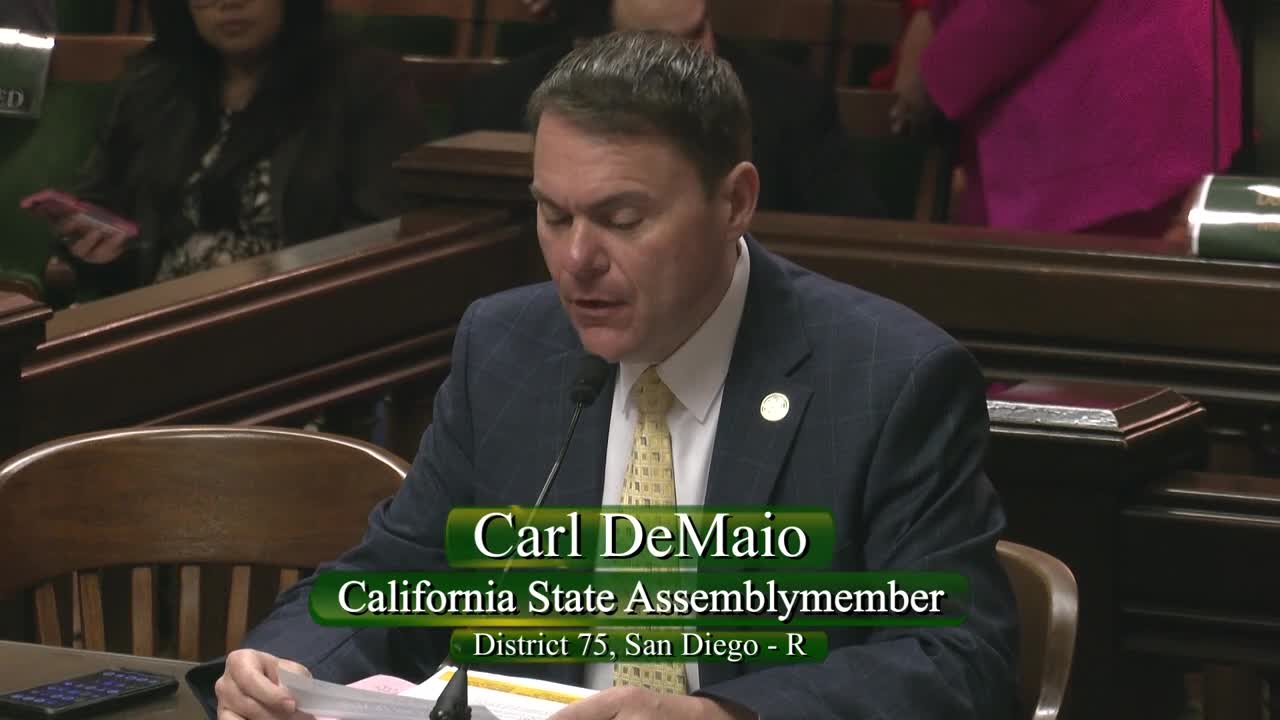


Bill Co-Author(s):