AB 2605: State Public Defender: county public defenders: data collection.
- Session Year: 2025-2026
- House: Assembly
- Latest Version Date: 2026-09-27
Current Status:
Passed
(2026-09-27: Chaptered by Secretary of State - Chapter 629, Statutes of 2026.)
Introduced
In Committee
Awaiting First Chamber Vote
Passed First Chamber
In Committee
Awaiting Second Chamber Vote
Passed Second Chamber
Enacted
What does this bill do?
The bill requires each county board of supervisors to name a contact person and collect detailed information about the county’s public defense services. Counties must report every two years to the State Public Defender’s office on system type (public defender, alternate public defender, or private attorney program), case assignment methods, budgets and spending, staffing levels and funded positions, case counts by type, and how attorneys are paid, and the State Public Defender must publish a summary report online.
The summary is provided by generative AI which can make mistakes. For original language, please view the details in the table below.
Under existing law, the board of supervisors of any county may establish the office of public defender for the county and authorize reciprocal or mutual assistance agreements with boards of supervisors of other counties authorizing their respective public defenders to enter into reciprocal or mutual assistance agreements, or authorize reciprocal or mutual assistance agreements with the State Public Defender, if the public defender of the county is unable to perform public defender duties because of, among other reasons, lack of personnel, lack of expertise, or lack of other resources by the local office.
Existing law, subject to an appropriation by the Legislature, requires the State Public Defender, in consultation with the California Public Defenders Association and other subject matter experts, to undertake a study to assess appropriate workloads for public defenders and indigent defense attorneys and to submit a report with their findings and recommendations to the Legislature no later than January 1, 2024.
This bill would require the board of supervisors of each county to specify a contact person with the applicable oversight and to collect specified information on public defense services provided in the county, and report that data to the Office of the State Public Defender every 2 years beginning on January 1, 2029. Because the bill would require local officials to perform additional duties, it would impose a state-mandated local program. The bill would require the Office of the State Public Defender to create and post on its internet website a summary report on public defense services, as specified. The bill would make its provisions operative upon appropriation by the Legislature for these purposes.
The California Constitution requires the state to reimburse local agencies and school districts for certain costs mandated by the state. Statutory provisions establish procedures for making that reimbursement.
This bill would provide that, if the Commission on State Mandates determines that the bill contains costs mandated by the state, reimbursement for those costs shall be made pursuant to the statutory provisions noted above.
Under existing law, the board of supervisors of any county may establish the office of public defender for the county and authorize reciprocal or mutual assistance agreements with boards of supervisors of other counties authorizing their respective public defenders to enter into reciprocal or mutual assistance agreements, or authorize reciprocal or mutual assistance agreements with the State Public Defender, if the public defender of the county is unable to perform public defender duties because of, among other reasons, lack of personnel, lack of expertise, or lack of other resources by the local office.
Existing law, subject to an appropriation by the Legislature, requires the State Public Defender, in consultation with the California Public Defenders Association and other subject matter experts, to undertake a study to assess appropriate workloads for public defenders and indigent defense attorneys and to submit a report with their findings and recommendations to the Legislature no later than January 1, 2024.
This bill would require the board of supervisors of each county to specify a contact person for the office of public defender, with the applicable oversight and to collect specified information on public defense services provided in the county, and report that data to the Office of the State Public Defender every 2 years beginning on January 1, 2029. Because the bill would require local officials to perform additional duties, it would impose a state-mandated local program. The bill would require the Office of the State Public Defender to create and post on its internet website a summary report on public defense services, as specified. The bill would make its provisions operative upon appropriation by the Legislature for these purposes.
The California Constitution requires the state to reimburse local agencies and school districts for certain costs mandated by the state. Statutory provisions establish procedures for making that reimbursement.
This bill would provide that, if the Commission on State Mandates determines that the bill contains costs mandated by the state, reimbursement for those costs shall be made pursuant to the statutory provisions noted above.
Under existing law, the board of supervisors of any county may establish the office of public defender for the county and authorize reciprocal or mutual assistance agreements with boards of supervisors of other counties authorizing their respective public defenders to enter into reciprocal or mutual assistance agreements, or authorize reciprocal or mutual assistance agreements with the State Public Defender, if the public defender of the county is unable to perform public defender duties because of, among other reasons, lack of personnel, lack of expertise, or lack of other resources by the local office.
Existing law, subject to an appropriation by the Legislature, requires the State Public Defender, in consultation with the California Public Defenders Association and other subject matter experts, to undertake a study to assess appropriate workloads for public defenders and indigent defense attorneys and to submit a report with their findings and recommendations to the Legislature no later than January 1, 2024.
This bill would require the board of supervisors of any county that has established the each county to specify a contact person for the office of public defender to defender, collect specified information on public defense services provided in the county and to county, and report that data to the Office of the State Public Defender every 2 years beginning on January 1, 2029. Because the bill would require local officials to perform additional duties, it would impose a state-mandated local program. The bill would require the Office of the State Public Defender to collect the same information with regard to counties that have not established the office of public defender and to create and post on its internet website a summary report on public defense services, as specified.
The California Constitution requires the state to reimburse local agencies and school districts for certain costs mandated by the state. Statutory provisions establish procedures for making that reimbursement.
This bill would provide that, if the Commission on State Mandates determines that the bill contains costs mandated by the state, reimbursement for those costs shall be made pursuant to the statutory provisions noted above.
Under existing law, the board of supervisors of any county may establish the office of public defender for the county and authorize reciprocal or mutual assistance agreements with boards of supervisors of other counties authorizing their respective public defenders to enter into reciprocal or mutual assistance agreements, or authorize reciprocal or mutual assistance agreements with the State Public Defender, if the public defender of the county is unable to perform public defender duties because of, among other reasons, lack of personnel, lack of expertise, or lack of other resources by the local office.
Existing law, subject to an appropriation by the Legislature, requires the State Public Defender, in consultation with the California Public Defenders Association and other subject matter experts, to undertake a study to assess appropriate workloads for public defenders and indigent defense attorneys and to submit a report with their findings and recommendations to the Legislature no later than January 1, 2024.
This bill would require the board of supervisors of any county that has established the office of public defender to collect specified information on public defense services provided in the county and to report that data to the Office of the State Public Defender every 2 years beginning on January 1, 2029. The bill would require the Office of the State Public Defender to collect the same information with regard to counties that have not established the office of public defender and to create and post on its internet website a summary report on public defense services, as specified.
Existing law requires the Governor to appoint a State Public Defender subject to confirmation by the Senate, as prescribed.This bill would make a nonsubstantive change to that provision.Existing law requires the Governor to appoint a State Public Defender subject to confirmation by the Senate, as prescribed.
This bill would make a nonsubstantive change to that provision.
(a)The board of supervisors of each county shall specify a contact person with the applicable oversight and collect the following information on public defense services provided in that county, including, but not limited to, all of the following:
(1)Brief explanation of whether the public defense system is a public defender (PD), an alternate public defender (APD), a private attorney program, or a combination of any of these systems.
(2)Method and timing of case assignment.
(3)Budget and expenditures for each PD, APD, or private attorney system.
(4)Funded and filled public defense positions by type, including PD attorney positions, APD attorney positions, and number of active private attorneys in private attorney programs.
(5)The number of cases assigned to each PD, APD, or private attorney system specifying the number of homicide, other felony, and misdemeanor cases in adult and juvenile court.
(6)Description of the compensation model for each PD, APD, or private attorney program.
(b)The data collected by a county pursuant to subdivision (a) shall be reported to the Office of the State Public Defender every two years beginning on January 1, 2029. Any reporting procedures established by the office shall account for structural differences between counties.
(c)The Office of the State Public Defender shall create and post on its internet website a summary report of the information reported to it pursuant to subdivision (b).
(d)This section shall become operative upon appropriation by the Legislature for these purposes.
SEC. 2.If the Commission on State Mandates determines that this act contains costs mandated by the state, reimbursement to local agencies and school districts for those costs shall be made pursuant to Part 7 (commencing with Section 17500) of Division 4 of Title 2 of the Government Code.
(a)The board of supervisors of each county shall specify a contact person with the applicable oversight and collect the following information on public defense services provided in the that county, including, but not limited to, all of the following:
(1)Brief explanation of whether the public defense system is a public defender (PD), an alternate public defender (APD), a private attorney program, or a combination of any of these systems.
(2)Method and timing of case assignment.
(3)Budget and expenditures for each PD, APD, or private attorney system.
(4)Funded and filled public defense positions by type, including PD attorney positions, APD attorney positions, and number of active private attorneys in private attorney programs.
(5)The number of cases assigned to each PD, APD, or private attorney system specifying the number of homicide, other felony, and misdemeanor cases in adult and juvenile court.
(6)Description of the compensation model for each PD, APD, or private attorney program.
(b)The data collected by a county pursuant to subdivision (a) shall be reported to the Office of the State Public Defender every two years beginning on January 1, 2029. Any reporting procedures established by the office shall account for structural differences between counties.
(c)The Office of the State Public Defender shall create and post on its internet website a summary report of the information reported to it pursuant to subdivision (b).
(d)This section shall become operative upon appropriation by the Legislature for these purposes.
SEC. 2.If the Commission on State Mandates determines that this act contains costs mandated by the state, reimbursement to local agencies and school districts for those costs shall be made pursuant to Part 7 (commencing with Section 17500) of Division 4 of Title 2 of the Government Code.
(a)The board of supervisors of each county shall specify a contact person for the office of the public defender with the applicable oversight and collect the following information on public defense services provided in the county, including, but not limited to, all of the following:
(1)Type of primary and conflict public defense systems used.(1)Brief explanation of whether the public defense system is a public defender (PD), an alternate public defender (APD), a private attorney program, or a combination of any of these systems.
(2)Method and timing of case assignment.
(3)Budget and expenditures on public defense. for each PD, APD, or private attorney system.
(4)Funded and filled public defense positions by type. type, including PD attorney positions, APD attorney positions, and number of active private attorneys in private attorney programs.
(5)The number of cases assigned to the public defense system. each PD, APD, or private attorney system specifying the number of homicide, other felony, and misdemeanor cases in adult and juvenile court.
(6)Description of the compensation model for each PD, APD, or private attorney program.
(b)The data collected by a county pursuant to subdivision (a) shall be reported to the Office of the State Public Defender every two years beginning on January 1, 2029. Any reporting procedures established by the office shall account for structural differences between counties.
(c)The Office of the State Public Defender shall create and post on its internet website a summary report of the information reported to it pursuant to subdivision (b).
(d)This section shall become operative upon appropriation by the Legislature for these purposes.
SEC. 2.If the Commission on State Mandates determines that this act contains costs mandated by the state, reimbursement to local agencies and school districts for those costs shall be made pursuant to Part 7 (commencing with Section 17500) of Division 4 of Title 2 of the Government Code.
(a)The board of supervisors of any county that has established the office of public defender pursuant to Section 27700 each county shall specify a contact person for the office of the public defender and collect the following information on public defense services provided in the county, including, but not limited to, all of the following:
(1)Type of primary and conflict public defense systems used.
(2)Method and timing of case assignment.
(3)Budget and expenditures on public defense.
(4)Funded and filled public defense positions by type.
(5)The number of cases assigned to the public defense system.
(b)The data collected by the a county pursuant to subdivision (a) shall be reported to the Office of the State Public Defender every two years beginning on January 1, 2029.
(c)The Office of the State Public Defender shall collect and compile the information described in subdivision (a) on public defense services provided in a county with regard to counties that have not established the office of public defender pursuant to Section 27700.(d)(c)The Office of the State Public Defender shall create and post on its internet website a summary report of the information collected reported to it pursuant to subdivisions (b) and (c). subdivision (b).
SEC. 2.If the Commission on State Mandates determines that this act contains costs mandated by the state, reimbursement to local agencies and school districts for those costs shall be made pursuant to Part 7 (commencing with Section 17500) of Division 4 of Title 2 of the Government Code.
REVISIONS: HeadingLine 2.(a)The board of supervisors of any county that has established the office of public defender pursuant to Section 27700 shall collect the following information on public defense services provided in the county, including, but not limited to, all of the following:
(1)Type of primary and conflict public defense systems used.
(2)Method and timing of case assignment.
(3)Budget and expenditures on public defense.
(4)Funded and filled public defense positions by type.
(b)The data collected by the county pursuant to subdivision (a) shall be reported to the Office of the State Public Defender every two years beginning on January 1, 2029.
(c)The Office of the State Public Defender shall collect and compile the information described in subdivision (a) on public defense services provided in a county with regard to counties that have not established the office of public defender pursuant to Section 27700.
(d)The Office of the State Public Defender shall create and post on its internet website a summary report of the information collected pursuant to subdivisions (b) and (c).
SECTION 1.Section 15400 of the Government Code is amended to read:15400.The Governor shall appoint a State Public Defender subject to confirmation by the Senate. The State Public Defender shall be a member of the State Bar, shall have been a member of the State Bar during the five years preceding appointment, and shall have had substantial experience in the representation of accused or convicted persons in criminal or juvenile proceedings during that time.The Governor shall appoint a State Public Defender, Defender subject to confirmation by the Senate. The State Public Defender shall be a member of the State Bar, shall have been a member of the State Bar during the five years preceding appointment, and shall have had substantial experience in the representation of accused or convicted persons in criminal or juvenile proceedings during that time.
|
Date
|
Status
|
|---|---|
| Sep 27, 2026 | Chaptered by Secretary of State - Chapter 629, Statutes of 2026. |
| Sep 27, 2026 | Approved by the Governor. |
| Sep 3, 2026 | Enrolled and presented to the Governor at 4 p.m. |
| Aug 26, 2026 | Senate amendments concurred in. To Engrossing and Enrolling. (Ayes 79. Noes 0.). |
| Aug 26, 2026 | Senate amendments concurred in. To Engrossing and Enrolling. (Ayes 79. Noes 0. Page 6651.). |
| Aug 26, 2026 | In Assembly. Concurrence in Senate amendments pending. |
| Aug 26, 2026 | Read third time. Passed. Ordered to the Assembly. (Ayes 39. Noes 0.). |
| Aug 13, 2026 | Read second time. Ordered to third reading. |
| Aug 13, 2026 | From committee: Do pass. (Ayes 7. Noes 0.) (August 13). |
| Aug 3, 2026 | In committee: Referred to APPR. suspense file. |
| Jul 2, 2026 | Read second time and amended. Re-referred to Com. on APPR. |
| Jul 1, 2026 | From committee: Amend, and do pass as amended and re-refer to Com. on APPR. (Ayes 6. Noes 0.) (June 30). |
| Jun 17, 2026 | From committee: Do pass and re-refer to Com. on PUB. S. (Ayes 6. Noes 0.) (June 17). Re-referred to Com. on PUB. S. |
| Jun 10, 2026 | Referred to Coms. on L. GOV. and PUB. S. |
| May 28, 2026 | In Senate. Read first time. To Com. on RLS. for assignment. |
| May 27, 2026 | Read third time. Passed. Ordered to the Senate. (Ayes 79. Noes 0. Page 5485.) |
| May 27, 2026 | Read third time. Passed. Ordered to the Senate. (Ayes 79. Noes 0.) |
| May 27, 2026 | Read third time. Passed. Ordered to the Senate. |
| May 19, 2026 | Read second time. Ordered to third reading. |
| May 18, 2026 | Read second time and amended. Ordered returned to second reading. |
| May 14, 2026 | Joint Rule 62(a), file notice suspended. (Page 5030.) |
| May 14, 2026 | Joint Rule 62(a), file notice suspended. |
| May 14, 2026 | From committee: Amend, and do pass as amended. (Ayes 11. Noes 0.) (May 14). |
| May 13, 2026 | In committee: Set, first hearing. Referred to APPR. suspense file. |
| Apr 22, 2026 | From committee: Do pass and re-refer to Com. on APPR. (Ayes 9. Noes 0.) (April 21). Re-referred to Com. on APPR. |
| Apr 22, 2026 | Coauthors revised. |
| Apr 16, 2026 | From committee: Do pass and re-refer to Com. on PUB. S. (Ayes 10. Noes 0.) (April 15). Re-referred to Com. on PUB. S. |
| Apr 9, 2026 | Re-referred to Com. on L. GOV. |
| Apr 8, 2026 | From committee chair, with author's amendments: Amend, and re-refer to Com. on L. GOV. Read second time and amended. |
| Mar 23, 2026 | Re-referred to Com. on L. GOV. |
| Mar 19, 2026 | Referred to Coms. on L. GOV. and PUB. S. |
| Mar 19, 2026 | From committee chair, with author's amendments: Amend, and re-refer to Com. on L. GOV. Read second time and amended. |
| Feb 21, 2026 | From printer. May be heard in committee March 23. |
| Feb 20, 2026 | Read first time. To print. |
|
Date
|
Description
|
Location
|
Votes
|
|
|---|---|---|---|---|
| Aug 26, 2026 | AB 2605 Arambula Concurrence in Senate Amendments | Assembly Floor |
Passed |
|
| Aug 26, 2026 | Assembly 3rd Reading AB2605 Arambula et al. By Cortese | Senate Floor |
Passed |
|
| Aug 13, 2026 | Do pass | Senate Standing Committee on Appropriations |
Passed |
|
| Aug 3, 2026 | Placed on suspense file | Senate Standing Committee on Appropriations |
Passed |
|
| Jun 30, 2026 | Do pass as amended, but first amend, and re-refer to the Committee on [Appropriations] | Senate Standing Committee on Public Safety |
Passed |
|
| Jun 17, 2026 | Do pass, but first be re-referred to the Committee on [Public Safety] | Senate Standing Committee on Local Government |
Passed |
|
| May 27, 2026 | AB 2605 Arambula Assembly Third Reading | Assembly Floor |
Passed |
|
| May 14, 2026 | Do pass as amended. | Assembly Standing Committee on Appropriations |
Passed |
|
| Apr 21, 2026 | Do pass and be re-referred to the Committee on [Appropriations] | Assembly Standing Committee on Public Safety |
Passed |
|
| Apr 15, 2026 | Do pass and be re-referred to the Committee on [Public Safety] | Assembly Standing Committee on Local Government |
Passed |
This list shows positions taken on this bill by organizations on the date displayed, which is linked to the original source.
Positions by individuals are not included.
|
Organization
|
Position
|
Date
|
|---|---|---|
| California Attorneys For Criminal Justice | ** Support | |
| California Public Defenders Association | ** Support | |
| California State Association Of Counties | ** Against | |
| Fresno County Board of Supervisors | ** Against | |
| Responsive Gov Action | ** Support | |
| Rural County Representatives of California | ** Against | |
| Smart Justice California, a Project of Beyond Impact | ** Support | |
| Urban Counties of California | ** Against | |
| Wren Collective | ** Support |
CONCURRENCE IN SENATE AMENDMENTS
CSA1 Bill Id:AB 2605
Author:(Arambula)
As Amended Ver:July 2, 2026
Majority vote
SUMMARY
Requires, upon appropriation by the Legislature, the board of supervisors of each county to collect specified information on public defense services provided in the county and to submit that information to the Office of the State Public Defender every two years, beginning on January 1, 2029.
Senate Amendments
Add a co-author and make a minor, technical change.
COMMENTS
Existing law requires the Governor to appoint a State Public Defender, subject to confirmation by the Senate, and sets forth the eligibility requirements and duties of the State Public Defender. The purpose of the office is to handle direct appeals of death penalty cases. Any defendant convicted and sentenced to death in California is granted an automatic appeal to the California Supreme Court. A deputy state public defender is appointed as representation free of cost. The office has authority to contract with other indigent defense counsel, county public defender offices and non-profit organizations in performance of their duties.
Existing law allows the board of supervisors of any county to establish the office of public defender for the county. Any county may join with one or more counties to establish and maintain the office of public defender to serve such counties. The public defender provides criminal defense services to people who are not able financially to employ counsel. In some counties the public defender is a county employee; in other counties the Board of Supervisors contracts with a private firm to provide public defender services.
AB 625 (Arambula), Chapter 583, Statutes of 2021, required the State Public Defender, in consultation with the California Public Defenders Association, to conduct a study to assess the workload of public defenders and indigent defense attorneys and submit a report with their findings and recommendations to the Legislature by January 1, 2024. The report made a number of recommendations including: limiting attorney workloads; requiring appropriate staffing; and providing attorney recruitment and retention support, particularly in rural counties. The report also suggested:
To assess public defense workloads and staffing sufficiency, the state must regularly collect reliable data on public defense. At present, the state collects some staffing data from counties with public defender offices, but no staffing data from counties relying on contract or assigned counsel public defense systems. And the state collects no data at all on public defense caseloads. To better understand and assess California's public defense systems, the state should regularly collect data on public defense services from all counties.
This bill implements this recommendation.
According to the Author
California's longstanding issues providing public defense to individuals accused of crimes has a real cost to some of the state's poorest and most under-resourced counties. Though the Sixth Amendment enshrines the right to counsel for defendants in criminal prosecution, the state does not currently collect data on how this public defense is provided at a county level.
Most other states appropriate significant funding for public defense services and California is an outlier in shifting this responsibility to the local level. This has created an overburdened and underfunded system wherein rural, low-income communities are overlooked and defendants are routinely convicted without appropriate investigation into the charges being made. AB 2605 requires that the Office of the State Public Defender work with counties to collect data on the type of primary and conflict public defense system used, method and timing of case assignment, funded and filled public defense positions by type, and budget/expenditure information.
Arguments in Support
The California Attorneys for Criminal Justice write, "Unlike many other states, that allocate primary funding to public defense, California's current public defense system is primarily funded by the responsibility of local counties. This is turn leaves a lot of low-income areas without access proper public defense services.
"Increasing transparency is critical to ensuring our public defense systems have adequate resources and run effectively. Public defenders are central to ensuring many people have access to constitutional and due process rights, but the system does not currently have a way of ensuring these necessities are being provided, specifically those in low-income areas are being AB 2605 will help identify disparities across counties and provide information on where improvements can be made in the public defender system statewide. This bill promotes a more fair and effective justice system for all of California."
Arguments in Opposition
The Fresno County Board of Supervisors writes, "AB 2605 would impose new reporting requirements on counties regarding the type of public defense system utilized, detailed information on case assignments, budgeting and expenditures, employment data, and case management data, creating additional administrative burdens without providing the necessary resources to support compliance. While data is critical in evaluating the efficacy of any program or system, these new requirements would divert limited local resources away from essential county services, including the provision of constitutionally mandated legal representation.
"Local government budgets are increasingly constrained by a combination of effectively static or decreasing local revenues and ever-rising local costs and unfunded state mandates. While a portion of these costs may be recovered through the Commission on State Mandates, the process is lengthy, requires significant staff time and resources, and if approved by the commission, counties are rarely funded at an adequate level."
FISCAL COMMENTS
According to the Senate Appropriations Committee:
- Unknown, significant local costs for counties to collect and biennially report specified information on public defense services to the State Public Defender. These costs are likely to be reimbursable from the General Fund, subject to a determination by the Commission on State Mandates. Staff notes, however, that the mandated duties imposed upon counties would only be operative upon appropriation of funds by the Legislature, so the bill creates significant General Fund cost pressures to fund county costs to collect and report information on public defense services. See Staff Comments.
- The State Public Defender would incur minor one-time and ongoing costs to specify county reporting procedures, biennially receive county data, and post a summary report of this information on its website. (General Fund)
VOTES:
ASM LOCAL GOVERNMENT: 10-0-0
YES: Carrillo, Ta, Johnson, Pacheco, Ramos, Ransom, Blanca Rubio, Stefani, Ward, Wilson
ASM PUBLIC SAFETY: 9-0-0
YES: Schultz, Alanis, Mark González, Haney, Harabedian, Lackey, Nguyen, Ramos, Sharp-Collins
ASM APPROPRIATIONS: 11-0-4
YES: Wicks, Aguiar-Curry, Calderon, Caloza, Fong, Mark González, Krell, Pacheco, Pellerin, Sharp-Collins, Solache
ABS, ABST OR NV: Hoover, Dixon, Ta, Tangipa
ASSEMBLY FLOOR: 79-0-1
YES: Addis, Aguiar-Curry, Ahrens, Alanis, Alvarez, Arambula, Ávila Farías, Bains, Bauer-Kahan, Bennett, Berman, Boerner, Bonta, Bryan, Calderon, Caloza, Carrillo, Castillo, Chen, Connolly, Davies, DeMaio, Dixon, Elhawary, Ellis, Flora, Fong, Gabriel, Gallagher, Garcia, Gipson, Jeff Gonzalez, Mark González, Hadwick, Haney, Harabedian, Hart, Hoover, Irwin, Jackson, Johnson, Kalra, Krell, Lackey, Lee, Lowenthal, Macedo, McKinnor, Muratsuchi, Nguyen, Ortega, Pacheco, Papan, Patel, Patterson, Pellerin, Petrie-Norris, Quirk-Silva, Ramos, Ransom, Michelle Rodriguez, Rogers, Blanca Rubio, Sanchez, Schiavo, Schultz, Sharp-Collins, Solache, Soria, Stefani, Ta, Tangipa, Valencia, Wallis, Ward, Wicks, Wilson, Zbur, Rivas
ABS, ABST OR NV: Celeste Rodriguez
UPDATED
VERSION: July 2, 2026
CONSULTANT: Angela Mapp / L. GOV. / (916) 319-3958 FN: 0003779
SENATE RULES COMMITTEE Office of Senate Floor Analyses (916) 651-4171 | AB 2605 |
THIRD READING
Bill No: AB 2605
Author: Arambula (D), et al.
Amended: 7/2/26 in Senate
Vote: 21
SENATE LOCAL GOVERNMENT COMMITTEE: 6-0, 6/17/26
AYES: Durazo, Choi, Arreguín, Cervantes, Laird, Seyarto
NO VOTE RECORDED: Ashby
SENATE PUBLIC SAFETY COMMITTEE: 6-0, 6/30/26
AYES: Arreguín, Seyarto, Caballero, Cortese, Pérez, Wiener
SENATE APPROPRIATIONS COMMITTEE: 7-0, 8/13/26
AYES: Cervantes, Seyarto, Cabaldon, Dahle, Grayson, Richardson, Wahab
ASSEMBLY FLOOR: 79-0, 5/27/26 - See last page for vote
SUBJECT: State Public Defender: county public defenders: data collection
SOURCE: California Attorneys for Criminal Justice
DIGEST:
This bill requires county boards of supervisors to collect data on public defenders and submit that data to the State Public Defender.
ANALYSIS:
Existing law:
- Establishes counties, which fall into two types: “general law” and “charter.” General law counties are organized according to the generally applicable laws for county governance established by the Legislature that set the number, appointment, and election procedures for county officials, including the board of supervisors.
- Allows counties elect or appoint a variety of county officials. The California Constitution requires all counties to elect a sheriff, district attorney, assessor, and board of supervisors, and state law lists the officers general law counties must have. State law gives county boards of supervisors the authority to consolidate the duties of certain county offices by ordinance. Other county offices may be elected or appointed, like the public defender.
- Establishes the office of the State Public Defender to provide high quality legal representation to indigent defendants in appellate courts. The State Public Defender also provides support for county-level public defense.
This bill:
- Requires the board of supervisors of each county to specify a contact person with the appropriate access to public defense data to collect the following information:
- Whether the public defense system works through a public defender, alternative public defender, private attorney program, or a combination;
- The method and timing of case assignment;
- The budget and expenditures for the public defender, alternative public defender, and private attorney programs;
- Funded and filled positions by each of public defense type listed above;
- The number of cases assigned to each public defense type listed above and specified information on the types of cases they work on; and
- The compensation model for each public defense type.
- Requires the county to report this data to the State Public Defender every two years beginning on January 1, 2029. The State Public Defender must create and post a summary report of this information on its website.
- Provides that these requirements only become operative if the Legislature appropriates funds for these purposes.
Background
To ensure individuals charged with a crime receive equal protection and due process under the law, the U.S. and California Constitutions guarantee the right to effective attorney assistance (unless knowingly and intelligently waived) to ensure that defendants in criminal proceedings receive equal protection under law and due process before being deprived of life or liberty. The U.S. Supreme Court’s decision in Gideon v. Wainwright (1963) found that the right to counsel is “fundamental and essential to fair trials” in the United States and that defendants who are too poor to hire attorneys cannot be assured of a fair trial unless attorneys are provided by the government, also known as indigent defense. The U.S. Supreme Court further noted that even an intelligent and educated person would be in danger of conviction due to a lack of skill and knowledge for adequately preparing a defense to establish innocence. As such, effective defense counsel is necessary to ensure a defendant has a fair trial against government funded and trained prosecutors—irrespective of their income level. In many counties, this is accomplished through the establishment of a public defender’s office.
Of California’s 58 counties, there are 34 public defender offices. Counties without a public defender office contract with law offices to provide indigent defense. Some counties share a public defender. When counties establish a public defender’s office, the board of supervisors can elect to have an elected or appointed public defender. Of the state’s 34 public defender offices, only San Francisco elects its public defender. Unlike county counsels, which can only be removed for neglect of duty, malfeasance or misconduct in office, or other good cause, an appointed public defender serves at the will of the board of supervisors, meaning the board can remove them for any reason.
AB 625 (Arambula, Chapter 583, Statutes of 2021) required the State Public Defender, in consultation with the California Public Defenders Association, to conduct a study to assess the workload of public defenders, indigent defense attorneys, and contracted services, and submit a report with their findings and recommendations to the Legislature by January 1, 2024. The report made various recommendations, including requiring counties to regularly report data on public defense.
Comments
Purpose of the bill. According to the author, “California’s longstanding issues providing public defense to individuals accused of crimes has a real cost to some of the state’s poorest and most under-resourced counties. Though the Sixth Amendment enshrines the right to counsel for defendants in criminal prosecution, the state does not currently collect data on how this public defense is provided at a county level. Most other states appropriate significant funding for public defense services and California is an outlier in shifting this responsibility to the local level. This has created an overburdened and underfunded system wherein rural, low-income communities are overlooked and defendants are routinely convicted without appropriate investigation into the charges being made. AB 2605 requires that the Office of the State Public Defender work with counties to collect data on the type of public defense system being used, method and timing of case assignment, budget and expenditure information, funded and filled positions by type, number of cases assigned, and a description of the compensation model for each system being used.”
No free lunch. This bill imposes significant new reporting requirements on counties when it comes to the public defender offices. This information then gets posted on the State Public Defender’s website. The California Constitution requires the state to reimburse local governments for the costs of new or expanded state mandated local programs. Because this bill imposes new duties on local agencies in terms of these additional reporting requirements, Legislative Counsel says it imposes a new state mandate. The measure states that if the Commission on State Mandates determines that the bill imposes a reimbursable mandate, then reimbursement must be made pursuant to existing statutory provisions. This means the state will be on the hook to finance this data collection. Data collection can be a valuable tool to guide policymaking, but it can also be costly. There is little doubt that public defender’s offices are under resourced. The state may make better use of the resources it would take to implement this bill by increasing funding for public defender offices.
FISCAL EFFECT: Appropriation: No Fiscal Com.: Yes Local: Yes
According to the Senate Appropriations Committee:
- Unknown, significant local costs for counties to collect and biennially report specified information on public defense services to the State Public Defender. These costs are likely to be reimbursable from the General Fund, subject to a determination by the Commission on State Mandates. Staff notes, however, that the mandated duties imposed upon counties would only be operative upon appropriation of funds by the Legislature, so the bill creates significant General Fund cost pressures to fund county costs to collect and report information on public defense services.
- The State Public Defender would incur minor one-time and ongoing costs to specify county reporting procedures, biennially receive county data, and post a summary report of this information on its website. (General Fund)
SUPPORT: (Verified 8/14/26)
California Attorneys for Criminal Justice (source)
Responsive Gov Action
Smart Justice California, a Project of Beyond Impact
OPPOSITION: (Verified 8/14/26)
County of Fresno
ASSEMBLY FLOOR: 79-0, 5/27/26
AYES: Addis, Aguiar-Curry, Ahrens, Alanis, Alvarez, Arambula, Ávila Farías, Bains, Bauer-Kahan, Bennett, Berman, Boerner, Bonta, Bryan, Calderon, Caloza, Carrillo, Castillo, Chen, Connolly, Davies, DeMaio, Dixon, Elhawary, Ellis, Flora, Fong, Gabriel, Gallagher, Garcia, Gipson, Jeff Gonzalez, Mark González, Hadwick, Haney, Harabedian, Hart, Hoover, Irwin, Jackson, Johnson, Kalra, Krell, Lackey, Lee, Lowenthal, Macedo, McKinnor, Muratsuchi, Nguyen, Ortega, Pacheco, Papan, Patel, Patterson, Pellerin, Petrie-Norris, Quirk-Silva, Ramos, Ransom, Michelle Rodriguez, Rogers, Blanca Rubio, Sanchez, Schiavo, Schultz, Sharp-Collins, Solache, Soria, Stefani, Ta, Tangipa, Valencia, Wallis, Ward, Wicks, Wilson, Zbur, Rivas
NO VOTE RECORDED: Celeste Rodriguez
Prepared by: Jonathan Peterson / L. GOV. / (916) 651-4119
8/14/26 16:32:03
**** END ****
SENATE COMMITTEE ON
Senator Sabrina Cervantes, Chair
2025 - 2026 Regular Session
AB 2605 (Arambula) - State Public Defender: county public defenders: data collection
Version: | Policy Vote: |
Urgency: | Mandate: |
Hearing Date: | Consultant: |
Bill Summary:
AB 2605 would require each county to collect specified information and data on public defense services provided through a public defender, alternate public defender, and/or private attorney program in the county and to biennially report that data to the Office of the State Public Defender. These provisions would only be operative to the extent the Legislature appropriates funds for these purposes.
Fiscal Impact:
- Unknown, significant local costs for counties to collect and biennially report specified information on public defense services to the State Public Defender. These costs are likely to be reimbursable from the General Fund, subject to a determination by the Commission on State Mandates. Staff notes, however, that the mandated duties imposed upon counties would only be operative upon appropriation of funds by the Legislature, so the bill creates significant General Fund cost pressures to fund county costs to collect and report information on public defense services. See Staff Comments.
- The State Public Defender would incur minor one-time and ongoing costs to specify county reporting procedures, biennially receive county data, and post a summary report of this information on its website. (General Fund)
Background:
The U.S. and California Constitutions guarantee the right to effective attorney assistance (unless knowingly and intelligently waived) to ensure that defendants in criminal proceedings receive equal protection under law and due process before being deprived of life or liberty. The U.S. Supreme Court’s decision in Gideon v. Wainwright (1963) found that the right to counsel is “fundamental and essential to fair trials” in the United States and that defendants who are too poor to hire attorneys cannot be assured of a fair trial unless attorneys are provided by the government, also known as indigent defense. As such, effective defense counsel is necessary to ensure a defendant has a fair trial against government‑funded and trained prosecutors, regardless of a defendant’s income level.
Existing law authorizes a county board of supervisors to establish the office of public defender with either an elected or appointed public defender, and allows any county to join with one or more other counties to establish and maintain a joint office of public defender to serve those counties. Of California’s 58 counties, there are 34 public defender offices, and counties without a public defender office contract with law offices to provide indigent defense. Of the state’s 34 public defender offices, only San Francisco elects its public defender.
In 2022, the Legislative Analyst’s Office (LAO) reported that local offices that provide indigent defense receive 82% less funding, on average, than prosecutorial offices. The LAO found that “[t]he state currently lacks comprehensive and consistent data that directly measures the effectiveness or quality of indigent defense across the state. This makes it difficult for the Legislature to ensure effective indigent defense is being provided.”
Existing law, as enacted by AB 625 (Arambula), Chap. 583/2021, requires the State Public Defender, in consultation with the California Public Defenders Association and other subject matter experts, to undertake a study to assess appropriate workloads for public defenders and indigent defense attorneys, and to submit a report with their findings and recommendations to the Legislature no later than January 1, 2024. The report found, among other things, that California is one of only three states without statewide oversight or standards for public defenders, public defenders are almost universally burdened by excessive workloads that exceed nationally recommended standards, and that public defenders often lack necessary support staff, such as paralegals and investigators. The report made a number of recommendations, including that the state should regularly collect data on public defense services from all counties. Specifically, the report recommended that the state should:
- Require counties to submit annual public defense plans that detail how the county provides defense services and reports staffing levels.
- Provide funding to increase data collection capacity and enable compliance with data reporting requirements.
- Increase the data reporting requirements over time to include caseloads by case type categories.
- Make aggregated data available to the public.
Proposed Law:
AB 2605 would require the board of supervisors of each county to specify a contact person with applicable oversight to collect information on public defense services provide in the county, including all of the following:
- A brief explanation of whether the public defense system is a public defender, an alternate public defender, a private attorney program, or a combination of these.
- The method and timing of case management.
- The budget and expenditures for the public defender, alternate public defender, or private attorney system.
- Funded and filled positions for each specified public defense type.
- The number of cases assigned to each public defender, alternate public defender, or private attorney system specifying the number of homicide, other felony, and misdemeanor cases in adult and juvenile court.
- A description of the compensation model for each public defense type.
The bill would require data collected by each county to be reported to the State Public Defender every two years beginning on January 1, 2029, and require the State Public Defender to create and post a summary report of this information on its website.
AB 2605 specifies that these requirements would only be operative upon appropriation of funds for these purposes.
Related Legislation:
AB 625 (Arambula), Chap. 583/2021, required the State Public Defender, in consultation with the California Public Defenders Association and other subject matter experts and subject to an appropriation of funds by the Legislature, to undertake a study to assess appropriate workloads for public defenders and indigent defense attorneys, and to submit a report with their findings and recommendations to the Legislature no later than January 1, 2024.
Staff Comments:
This bill imposes a state-mandated local program by requiring each county to collect specified information and data on public defense services provided through a public defender, alternate public defender, or private attorney program in the county and to biennially report that data to the State Public Defender beginning on January 1, 2029. Local costs to comply with these requirements would likely be reimbursable from the state General Fund, subject to a determination by the Commission on State Mandates indicating what specific local duties and costs are reimbursable.
Staff notes, however, that the bill specifies that its requirements, including county data collection and reporting, would not be operative unless and until the Legislature appropriates funds for these purposes. This creates cost pressures to provide funding to cover the bill’s costs, but this mechanism also raises several questions. It is unclear on the front end precisely how much funding would be necessary to fully fund local agency costs to comply with these requirements, and how individual amounts would be distributed to each county. It appears that a one-time appropriation of any amount could be made to trigger the operation of the bill’s requirements, and budget language could be drafted to specify the method of distributing funds to counties or to provide for reimbursement of county costs (which could create additional costs for a state entity to administer and oversee such a process). If insufficient amounts are appropriated to fully offset each county’s one-time and ongoing costs, counties could still submit claims for reimbursement of any deficiencies through the Commission on State Mandates. Ultimately, any costs imposed by the bill would be a General Fund expense, whether funding is provided through direct appropriations, or through mandate reimbursement claims following the Commission on State Mandates determination process.
-- END --
SENATE COMMITTEE ON PUBLIC SAFETY
Senator Jesse Arreguín, Chair
2025 - 2026 Regular
Bill No: AB 2605 Hearing Date: June 30, 2026
Author: | Arambula | ||
Version: | May 18, 2026 | ||
Urgency: | No | Fiscal: | Yes |
Consultant: | NDT | ||
Subject: State Public Defender: county public defenders: data collection
HISTORY
Source: California Attorneys for Criminal Justice; Wren Collective
Prior Legislation: AB 690 (Schultz), held in Senate Appropriations, 2025
AB 625 (Arambula), Ch. 583, Stats. of 2021
Support: California Public Defenders Association; Smart Justice California
Opposition: Fresno County Board of Supervisors
Assembly Floor Vote: 79 - 0
PURPOSE
The purpose of this bill is to require the board of supervisors for any county that has established the office of the public defender to collect specified information on public defense services provided in the county and to submit that information to the State Public Defender every two years.
Existing law provides that the Governor shall appoint a State Public Defender, subject to confirmation by the Senate and sets forth the eligibility requirements and duties of the State Public Defender. (Gov. Code, § 15400 et seq.)
Existing law provides that the board of supervisors of any county may establish the office of public defender for the county and sets for the duties for a county public defender. (Gov. Code, § 27700, et seq.)
This bill provides that the board of supervisors each county specifies a contact person for the office of the public defender and collects the following information from the office every two years:
- Type of primary and conflict public defense systems used.
- Method and timing of case assignment.
- Budget and expenditures on public defense.
- Funded and filled public defense positions by type.
- The number of cases assigned to the public defense system.
This bill provides that the data collected by a county shall be reported to the Office of the State Public Defender every two years beginning on January 1, 2029.
This bill provides that the Office of the State Public Defender shall create and post on its internet website a summary report of the information reported to it pursuant to this bill.
COMMENTS
Need for This Bill
According to the author:
California’s longstanding issues providing public defense to individuals accused of crimes has a real cost to some of the state’s poorest and most under-resourced counties. Though the Sixth Amendment enshrines the right to counsel for defendants in criminal prosecution, the state does not currently collect data on how this public defense is provided at a county level. Most other states appropriate significant funding for public defense services and California is an outlier in shifting this responsibility to the local level. This has created an overburdened and underfunded system wherein rural, low-income communities are overlooked and defendants are routinely convicted without appropriate investigation into the charges being made. AB 2605 requires that the Office of the State Public Defender work with counties to collect data on the type of public defense system being used, method and timing of case assignment, budget and expenditure information, funded and filled positions by type, number of cases assigned, and a description of the compensation model for each system being used.
Recent Legislation Regarding Reports on Public Defenders
The Sixth Amendment of the U.S. Constitution guarantees criminal defendants a right to counsel, often provided by a public defender. The Public Defender of a county is appointed by the board of supervisors to provide criminal defense services to people who are not able to financially employ counsel. (Gov. Code, § 27706.) In some counties, the public defender is a county employee; in other counties, the Board of Supervisors contracts with a private firm to provide public defender services. Counties also have either a list of attorneys or a second office to deal with issues where the Public Defender’s Office cannot take a case because of a conflict.
In 2015, a civil case out of Fresno County drew attention to the long waiting times an arrestee may face before they were able to speak to a public defender; specifically, in that case, one plaintiff waited in custody for over a month before speaking to their public defender.[1] When the case settled in 2020, the state, through the Attorney General’s Office, agreed to expand the mission of the Office of the State Public Defender, make a good-faith effort to train attorneys providing indigent criminal defense on behalf of California counties, as specified, and identify further steps that could be taken to improve California counties’ provision of trial-level indigent criminal defense.[2]
In 2022, the Legislative Analyst’s Office (LAO) reported that offices that provide indigent defense receive on average 82% less funding than prosecutorial offices.[3] The LAO found that “[t]he state currently lacks comprehensive and consistent data that directly measures the effectiveness or quality of indigent defense across the state. This makes it difficult for the Legislature to ensure effective indigent defense is being provided.”[4]
AB 625 (Arambula) Chapter 583, Statutes of 2021, required the State Public Defender, in consultation with the California Public Defenders Association, to undertake a study to assess appropriate workloads for public defenders and indigent defense attorneys and submit a report no later than January 1, 2024. (Gov. Code, § 15403.) The report found that while “the vast majority of California’s public defense attorneys are devoted to their profession” they are “almost universally burdened by excessive workloads” and “lack support staff-investigators, social workers, paralegals and administrative assistants-necessary to efficiently and effectively represent their clients.”[5] The report also found that the “situation is often worse in less populous more rural counties.”[6]
The report made a number of recommendations including: limiting attorney workloads; requiring appropriate staffing; and providing attorney recruitment and retention support, particularly in rural counties.
The report also specifically suggested that:
To assess public defense workloads and staffing sufficiency, the state must regularly collect reliable data on public defense. At present, the state collects some staffing data from counties with public defender offices, but no staffing data from counties relying on contract or assigned counsel public defense systems. And the state collects no data at all on public defense caseloads. To better understand and assess California’s public defense systems, the state should regularly collect data on public defense services from all counties:
- Require counties to submit annual public defense plans that detail how the county provides defense services and reports staffing levels.
- Provide funding to increase data collection capacity and enable compliance with data reporting requirements.
- Increase the data reporting requirements over time to include caseloads by case type categories.
- Make aggregated data available to the public.[7]
Effect of This Bill
This bill requires county public defenders to provide information on what type of primary and conflict systems used; method and timing of case assignment; budget and expenditures on public defense; funded and filled defense positions by type; and the number of cases assigned to the public defense system. The information will be provided to the state public defender every two years. Most of the information required to be submitted addresses issues with the type of office and budget or caseload.
Argument in Support
According to this bill’s co-sponsor, California Attorneys for Criminal Justice:
AB 2605 requires counties to collect and report key data on indigent defense services, such as caseload data, staffing levels, funding, how cases are assigned and other information about the public defense system being used. All of this information is required to be published in a statewide report.
Unlike many other states, that allocate primary funding to public defense, California’s current public defense system is primarily funded by the responsibility of local counties. This is turn leaves a lot of low-income areas without access proper public defense services.
Increasing transparency is critical to ensuring our public defense systems have adequate resources and run effectively. Public defenders are central to ensuring many people have access to constitutional and due process rights, but the system does not currently have a way of ensuring these necessities are being provided, specifically those in low-income areas are being AB 2605 will help identify disparities across counties and provide information on where improvements can be made in the public defender system statewide.
This bill promotes a more fair and effective justice system for all of California.
Argument in Opposition
According to the Fresno County Board of Supervisors:
AB 2605 would impose new reporting requirements on counties regarding the type of public defense system utilized, detailed information on case assignments, budgeting and expenditures, employment data, and case management data, creating additional administrative burdens without providing the necessary resources to support compliance. While data is critical in evaluating the efficacy of any program or system, these new requirements would divert limited local resources away from essential county services, including the provision of constitutionally mandated legal representation.
Local government budgets are increasingly constrained by a combination of effectively static or decreasing local revenues and ever-rising local costs and unfunded state mandates. While a portion of these costs may be recovered through the Commission on State Mandates, the process is lengthy, requires significant staff time and resources, and if approved by the commission, counties are rarely funded at an adequate level.
-- END --
American Civil Liberties Union (July 2015) Phillips v. State of California Complaint https://www.aclu.org/cases/phillips-v-state-california?document=phillips-v-state-california-complaint ↑
American Civil Liberties Union (Jan. 2020) Phillips v. State of California: California State Settlement Agreement https://www.aclu.org/cases/phillips-v-state-california?document=phillips-v-state-california-california-state-settlement-agreement ↑
Legislative Analyst’s Office (Sept. 2022) Assessing the Provision of Criminal Indigent Defense https://lao.ca.gov/reports/2022/4623/indigent-defense-092222.pdf ↑
Ibid. ↑
Office of the State Public Defender (Sept. 2025) California Public Defense Workloads and Staffing https://www.ospd.ca.gov/wp-content/uploads/2025/09/CA-Full-Report-FINAL-9.29.25-r.pdf ↑
Ibid. at p. 4. ↑
Ibid. at p. 5. ↑
SENATE COMMITTEE ON LOCAL GOVERNMENT
Senator María Elena Durazo, Chair
2025 - 2026 Regular
Bill No: | AB 2605 | Hearing Date: | 6/17/26 |
Author: | Arambula | Fiscal: | Yes |
Version: | 5/18/26 | Consultant: | Peterson |
State Public Defender: county public defenders: data collection
Requires county boards of supervisors to collect data on public defenders and submit that data to the State Public Defender.
Background
County governance. Counties fall into two types: “general law” and “charter.” General law counties are organized according to the generally applicable laws for county governance established by the Legislature that set the number, appointment, and election procedures for county officials, including the board of supervisors.
Charter counties have greater leeway to determine their own governance structure, including to elect additional supervisors, appoint or elect additional officers, and select the length of their terms. A new charter, or the amendment of an existing charter, may be proposed by the board of supervisors, a charter commission, or an initiative petition. There are 14 charter counties: Alameda, Butte, El Dorado, Fresno, Los Angeles, Orange, Placer, Sacramento, San Bernardino, San Diego, San Francisco, San Mateo, Santa Clara, and Tehama. Most large counties are charter counties: eight of the ten largest counties by population have adopted charters.
All counties elect or appoint a variety of county officials. The California Constitution requires all counties to elect a sheriff, district attorney, assessor, and board of supervisors, and state law lists the officers general law counties must have. State law gives county boards of supervisors the authority to consolidate the duties of certain county offices by ordinance. Other county offices may be elected or appointed, like the public defender.
Public defenders. To ensure individuals charged with a crime receive equal protection and due process under the law, the U.S. and California Constitutions guarantee the right to effective attorney assistance (unless knowingly and intelligently waived) to ensure that defendants in criminal proceedings receive equal protection under law and due process before being deprived of life or liberty. The U.S. Supreme Court’s decision in Gideon v. Wainwright (1963) found that the right to counsel is “fundamental and essential to fair trials” in the United States and that defendants who are too poor to hire attorneys cannot be assured of a fair trial unless attorneys are provided by the government, also known as indigent defense. The U.S. Supreme Court further noted that even an intelligent and educated person would be in danger of conviction due to a lack of skill and knowledge for adequately preparing a defense to establish innocence. As such, effective defense counsel is necessary to ensure a defendant has a fair trial against government‑funded and trained prosecutors—irrespective of their income level. In many counties, this is accomplished through the establishment of a public defender’s office.
Of California’s 58 counties, there are 34 public defender offices. Counties without a public defender office contract with law offices to provide indigent defense. Some counties share a public defender. When counties establish a public defender’s office, the board of supervisors can elect to have an elected or appointed public defender. Of the state’s 34 public defender offices, only San Francisco elects its public defender. Unlike county counsels, which can only be removed for neglect of duty, malfeasance or misconduct in office, or other good cause, an appointed public defender serves at the will of the board of supervisors (AB 1796, Watson, 1943), meaning the board can remove them for any reason.
In 1976, the Legislature created the State Public Defender to provide high quality legal representation to indigent defendants in appellate courts (SB 1018, Song). Over time, the State Public Defender increasingly focused on death penalty cases. In 2020, the Legislature expanded the State Public Defender’s responsibilities beyond appellate work to include support for county-level public defense, enhancing attorney training, supporting county initiatives, and spearheading innovative defense strategies (SB 118, Committee on Budget and Fiscal Review.)
AB 625 (Arambula, 2021) required the State Public Defender, in consultation with the California Public Defenders Association, to conduct a study to assess the workload of public defenders, indigent defense attorneys, and contracted services, and submit a report with their findings and recommendations to the Legislature by January 1, 2024. Some of the key findings of the AB 625 report include:
- California is one of only three states without statewide oversight or standards for public defenders;
- California public defenders are almost universally burdened by excessive workloads that exceed nationally recommended standards; and
- California public defenders often lack the support staff necessary such as paralegals and investigators.
The report’s recommendations include:
- Developing standards to both limit attorney workloads and ensure appropriate support staffing for public defense providers;
- Funds for public defenders so they can meet the new standards;
- Protection for public defenders who decline cases due to excessive workload;
- Attorney recruitment and retention support especially in small and rural counties; and
- Requiring counties to regularly report data on public defense.
The author wants to develop county reporting requirements for public defense.
Proposed Law
Assembly Bill 2605 requires the board of supervisors of each county to specify a contact person with the appropriate access to public defense data to collect the following information:
- Whether the public defense system works through a public defender, alternative public defender, private attorney program, or a combination;
- The method and timing of case assignment;
- The budget and expenditures for the public defender, alternative public defender, and private attorney programs;
- Funded and filled positions by each of public defense type listed above;
- The number of cases assigned to each public defense type listed above and specified information on the types of cases they work on; and
- The compensation model for each public defense type.
The county must report this data to the State Public Defender every two years beginning on January 1, 2029. The State Public Defender must create and post a summary report of this information on its website.
AB 2605 also provides that these requirements only become operative if the Legislature appropriates funds for these purposes.
Comments
1. Purpose of the bill. According to the author, “California’s longstanding issues providing public defense to individuals accused of crimes has a real cost to some of the state’s poorest and most under-resourced counties. Though the Sixth Amendment enshrines the right to counsel for defendants in criminal prosecution, the state does not currently collect data on how this public defense is provided at a county level. Most other states appropriate significant funding for public defense services and California is an outlier in shifting this responsibility to the local level. This has created an overburdened and underfunded system wherein rural, low-income communities are overlooked and defendants are routinely convicted without appropriate investigation into the charges being made. AB 2605 requires that the Office of the State Public Defender work with counties to collect data on the type of public defense system being used, method and timing of case assignment, budget and expenditure information, funded and filled positions by type, number of cases assigned, and a description of the compensation model for each system being used.”
2. No free lunch. AB 2605 imposes significant new reporting requirements on counties when it comes to the public defender offices. This information then gets posted on the State Public Defender’s website. The California Constitution requires the state to reimburse local governments for the costs of new or expanded state mandated local programs. Because AB 2605 imposes new duties on local agencies in terms of these additional reporting requirements, Legislative Counsel says it imposes a new state mandate. The measure states that if the Commission on State Mandates determines that the bill imposes a reimbursable mandate, then reimbursement must be made pursuant to existing statutory provisions. This means the state will be on the hook to finance this data collection. Data collection can be a valuable tool to guide policymaking, but it can also be costly. There is little doubt that public defender’s offices are under resourced. The state may make better use of the resources it would take to implement AB 2605 by increasing funding for public defender offices.
3. Related legislation. SB 485 (Reyes, 2025) limited the authority of the county board of supervisors to remove an appointed public defender at will, instead requiring a three-fifths vote of the board for neglect of duty, malfeasance or misconduct in office, or other good cause. Governor Newsom vetoed the legislation with the following message:
“I am returning Senate Bill 485 without my signature.
“This bill would allow an appointed county public defender to be removed from office only upon a three-fifths vote of the board of supervisors and a showing of good cause.
“I appreciate the importance of protecting public defenders from undue political interference, as their role sometimes requires taking unpopular positions to fulfill their legal and ethical duties to their clients.
“That said, I have not been presented with evidence that California's current system in any way impairs the effectiveness or independence of public defenders. Proponents only cite a handful of examples from other states of public defenders being removed from office for controversial advocacy.
“Further, since the law does not place term limits on public defenders, this bill may ultimately make it unduly difficult to replace public defenders for legitimate reasons and leave incumbents entrenched, which I do not support.”
4. Coming and going. The Senate Rules Committee has ordered a double referral of AB 2605: first to the Committee on Local Government to hear issues related to local government, and second to the Committee on Public Safety.
Assembly Actions
Assembly Committee on Local Government: 10-0
Assembly Committee on Public Safety: 9-0
Assembly Committee on Appropriations: 11-0
Assembly Floor: 79-0
Support and Opposition
(6/12/2026)
Opposition: None Submitted
-- END --
ASSEMBLY THIRD READING
ATR Bill Id:AB 2605
Author:(Arambula)
As Amended Ver:May 18, 2026
Majority vote
SUMMARY
Requires, upon appropriation by the Legislature, the board of supervisors of each county to collect specified information on public defense services provided in the county and to submit that information to the Office of the State Public Defender every two years, beginning on January 1, 2029.
Major Provisions
- Requires the board of supervisors of each county to specify a contact person with the applicable oversight and collect the following information on public defense services provided in the county, including, but not limited to, all of the following:
- Brief explanation of whether the public defense system is a public defender (PD), an alternate public defender (APD), a private attorney program, or a combination of any of those systems.
- Method and timing of case assignment.
- Budget and expenditures for each PD, APD, or private attorney system.
- Funded and filled public defense positions by type, including PD attorney positions, APD attorney positions, and number of active private attorneys in private attorney programs.
- The number of cases assigned to each PD, APD, or private attorney system specifying the number of homicide, other felony, and misdemeanor cases in adult and juvenile court.
- Description of the compensation model for each PD, APD, or private attorney program.
- Requires the data collected by a county pursuant to this bill to be reported to the Office of the State Public Defender every two years beginning on January 1, 2029, and requires any reporting procedures established by the office to account for structural differences between counties.
- Requires the State Public Defender to create and post on its internet website a summary report of the information reported to it pursuant to this bill.
- Requires this bill to become operative upon appropriation by the Legislature for these purposes.
COMMENTS
Existing law requires the Governor to appoint a State Public Defender, subject to confirmation by the Senate, and sets forth the eligibility requirements and duties of the State Public Defender. The purpose of the office is to handle direct appeals of death penalty cases. Any defendant convicted and sentenced to death in California is granted an automatic appeal to the California Supreme Court. A deputy state public defender is appointed as representation free of cost. The office has authority to contract with other indigent defense counsel, county public defender offices and non-profit organizations in performance of their duties.
Existing law allows the board of supervisors of any county to establish the office of public defender for the county. Any county may join with one or more counties to establish and maintain the office of public defender to serve such counties. The public defender provides criminal defense services to people who are not able financially to employ counsel. In some counties the public defender is a county employee; in other counties the Board of Supervisors contracts with a private firm to provide public defender services.
AB 625 (Arambula), Chapter 583, Statutes of 2021, required the State Public Defender, in consultation with the California Public Defenders Association, to conduct a study to assess the workload of public defenders and indigent defense attorneys and submit a report with their findings and recommendations to the Legislature by January 1, 2024. The report made a number of recommendations including: limiting attorney workloads; requiring appropriate staffing; and providing attorney recruitment and retention support, particularly in rural counties. The report also suggested:
To assess public defense workloads and staffing sufficiency, the state must regularly collect reliable data on public defense. At present, the state collects some staffing data from counties with public defender offices, but no staffing data from counties relying on contract or assigned counsel public defense systems. And the state collects no data at all on public defense caseloads. To better understand and assess California's public defense systems, the state should regularly collect data on public defense services from all counties.
This bill implements this recommendation.
According to the Author
California's longstanding issues providing public defense to individuals accused of crimes has a real cost to some of the state's poorest and most under-resourced counties. Though the Sixth Amendment enshrines the right to counsel for defendants in criminal prosecution, the state does not currently collect data on how this public defense is provided at a county level.
Most other states appropriate significant funding for public defense services and California is an outlier in shifting this responsibility to the local level. This has created an overburdened and underfunded system wherein rural, low-income communities are overlooked and defendants are routinely convicted without appropriate investigation into the charges being made. AB 2605 requires that the Office of the State Public Defender work with counties to collect data on the type of primary and conflict public defense system used, method and timing of case assignment, funded and filled public defense positions by type, and budget/expenditure information.
Arguments in Support
The California Attorneys for Criminal Justice write in support of a prior version of this bill, "Unlike many other states, that allocate primary funding to public defense, California's current public defense system is primarily funded by the responsibility of local counties. This is turn leaves a lot of low-income areas without access proper public defense services.
"Increasing transparency is critical to ensuring our public defense systems have adequate resources and run effectively. Public defenders are central to ensuring many people have access to constitutional and due process rights, but the system does not currently have a way of ensuring these necessities are being provided, specifically those in low-income areas are being AB 2605 will help identify disparities within the system and where improvements van be made in the public defender system statewide. This bill promotes a more fair and effective justice system for all of California."
Arguments in Opposition
The Rural County Representatives of California (RCRC), the California State Association of Counties (CSAC), and the Urban Counties of California (UCC) write in opposition to a prior version of this bill, "…we must regretfully oppose Assembly Bill 2605 (Arambula) unless amended to include a full and ongoing state appropriation to support its implementation. This bill would create new reporting requirements for counties in relation to public defense services.
"The California and U.S. Constitution enshrine the right to effective assistance of legal counsel and equal protection through due process for all criminal defendants. Thus, the government is required to provide access to attorneys and pay for the cost of representation for those who cannot afford counsel. In California, the state has delegated to counties the responsibility of both funding and administering indigent defense services at the trial court level. Counties have the authority and flexibility to design systems that best suit local needs. However, California is one of only four states that do not provide full or partial funding to counties for the delivery of this constitutionally mandated service. Counties, particularly small and rural counties, simply cannot absorb additional ongoing state-mandated costs without state funding.
"AB 2605 would impose new reporting requirements on counties regarding the type of public defense system utilized, detailed information on case assignments, budgeting and expenditures, employment data, and case management data, creating additional administrative burdens without providing the necessary resources to support compliance. While data is critical in evaluating the efficacy of any program or system, these new requirements would divert limited local resources away from essential county services, including the provision of constitutionally mandated legal representation.
"Local government budgets are increasingly constrained by a combination of effectively static or decreasing local revenues and ever-rising local costs and unfunded state mandates. Most notably, counties are also facing a looming fiscal crisis associated with the implementation of H.R. 1, which is expected to increase demands on county safety net programs and indigent health services in the tune of up to $9.5 billion annually for counties alone. H.R. 1 and other state and federal policy decisions, over which local governments have no control, are crippling the ability of counties to continue to deliver high quality services on behalf of the state and federal government. While a portion of these costs may be recovered through the Commission on State Mandates, the process is lengthy, requires significant staff time and resources, and if approved by the commission, counties are rarely funded at an adequate level. As such, we respectfully request this bill be amended to include an appropriation of funds sufficient to cover the full costs that local governments will incur for implementation."
FISCAL COMMENTS
Subject to an appropriation by the Legislature for purposes of the bill:
- Minor and absorbable General Fund costs to the Office of the State Public Defender to provide and post on its webpage a summary report every two years.
- Ongoing costs to counties, potentially significant and in excess of $150,000 statewide to collect and provide the required information to the State Public Defender. These costs are potentially reimbursable by the state, subject to a determination by the Commission on State Mandates.
VOTES
ASM LOCAL GOVERNMENT: 10-0-0
YES: Carrillo, Ta, Johnson, Pacheco, Ramos, Ransom, Blanca Rubio, Stefani, Ward, Wilson
ASM PUBLIC SAFETY: 9-0-0
YES: Schultz, Alanis, Mark González, Haney, Harabedian, Lackey, Nguyen, Ramos, Sharp-Collins
ASM APPROPRIATIONS: 11-0-4
YES: Wicks, Aguiar-Curry, Calderon, Caloza, Fong, Mark González, Krell, Pacheco, Pellerin, Sharp-Collins, Solache
ABS, ABST OR NV: Hoover, Dixon, Ta, Tangipa
UPDATED
VERSION: May 18, 2026
CONSULTANT: Angela Mapp / L. GOV. / (916) 319-3958 FN: 0002655
Date of Hearing: May 13, 2026
ASSEMBLY COMMITTEE ON APPROPRIATIONS
Buffy Wicks, Chair
ABPCA Bill Id:AB 2605
Author:(Arambula) – As Amended Ver:April 8, 2026
Policy Committee: | Local Government | Vote: | 10 - 0 |
Public Safety | 9 - 0 | ||
|
|
Urgency: No State Mandated Local Program: Yes Reimbursable: Yes
SUMMARY:
This bill requires the board of supervisors for any county that has established the office of the public defender to collect specified information on public defense services provided in the county and to submit that information to the Office of the State Public Defender every two years, beginning on January 1, 2029.
Specifically, this bill:
- Requires the board of supervisors of each county to specify a contact person for the office of the public defender and collect the following information from the office every two years:
- Type of primary and conflict public defense systems used.
- Method and timing of case assignment.
- Budget and expenditures on public defense.
- Funded and filled public defense positions by type.
- The number of cases assigned to the public defense system.
- Requires each county to report the data collected to the Office of the State Public Defender every two years beginning on January 1, 2029.
- Requires the Office of the State Public Defender to create and post on its website a summary report of the information reported to it pursuant to this bill.
FISCAL EFFECT:
- Ongoing General Fund costs to the Office of the State Public Defender to provide and post on its webpage a summary report every two years are likely minor and absorbable.
- Ongoing costs to counties, potentially significant and in excess of $150,000 statewide to collect and provide the required information to the State Public Defender. These costs are potentially reimbursable by the state, subject to a determination by the Commission on State Mandates.
The Legislative Analyst’s Office recently warned of General Fund structural deficits of around $35 billion per year in the 2027-28 fiscal year and ongoing.
COMMENTS:
- Purpose. According to the author:
California’s longstanding issues providing public defense to individuals accused of crimes has a real cost to some of the state’s poorest and most under-resourced counties. Though the Sixth Amendment enshrines the right to counsel for defendants in criminal prosecution, the state does not currently collect data on how this public defense is provided at a county level. [This bill] requires that the Office of the State Public Defender work with counties to collect data on the type of primary and conflict public defense system used, number of cases assigned to the public defense system, method and timing of case assignment, funded and filled public defense positions by type, and budget/expenditure information.
- Background. Public Defenders. Existing law allows the board of supervisors of any county to establish the office of public defender for the county. Any county may join with one or more counties to establish and maintain the office of public defender to serve such counties. The public defender provides criminal defense services to people who are not able to financially employ counsel. In some counties the public defender is a county employee; in other counties the Board of Supervisors contracts with a private firm to provide public defender services.
AB 625 (Arambula) Chapter 583, Statutes of 2021, required the State Public Defender, in consultation with the California Public Defenders Association, to undertake a study to assess appropriate workloads for public defenders and indigent defense attorneys and submit a report no later than January 1, 2024. The report made a number of recommendations including limiting attorney workloads; requiring appropriate staffing; and providing attorney recruitment and retention support, particularly in rural counties. The report also suggested:
To assess public defense workloads and staffing sufficiency, the state must regularly collect reliable data on public defense. At present, the state collects some staffing data from counties with public defender offices, but no staffing data from counties relying on contract or assigned counsel public defense systems. And the state collects no data at all on public defense caseloads. To better understand and assess California’s public defense systems, the state should regularly collect data on public defense services from all counties.
This bill implements this recommendation.
Office of the State Public Defender. Existing law requires the Governor to appoint a State Public Defender, subject to confirmation by the Senate and sets forth the eligibility requirements and duties of the State Public Defender. The purpose of the office is to handle direct appeals of death penalty cases. Any defendant convicted and sentenced to death in California is granted an automatic appeal to the California Supreme Court. A deputy state public defender is appointed as representation free of cost. The office has authority to contract with other indigent defense counsel, county public defender offices and non-profit organizations in performance of their duties.
- Support and Opposition. The California Attorneys for Criminal Justice (CACJ), in support, asserts:
Unlike many other states, that allocate primary funding to public defense, California’s current public defense system is primarily funded by the responsibility of local counties. This is turn leaves a lot of low-income areas without access proper public defense services. Increasing transparency is critical to ensuring our public defense systems have adequate resources and run effectively.
The Rural County Representatives of California, the California State Association of Counties, and the Urban Counties of California, oppose this bill and collectively assert:
While data is critical in evaluating the efficacy of any program or system, these new requirements would divert limited local resources away from essential county services, including the provision of constitutionally mandated legal representation. Local government budgets are increasingly constrained by a combination of effectively static or decreasing local revenues and ever-rising local costs and unfunded state mandates. Most notably, counties are also facing a looming fiscal crisis associated with the implementation of H.R. 1, which is expected to increase demands on county safety net programs and indigent health services to the tune of up to $9.5 billion annually for counties alone.
Analysis Prepared by: Jennifer Swenson / APPR. / (916) 319-2081
Date of Hearing:
Counsel: Mary Kennedy
ASSEMBLY COMMITTEE ON PUBLIC SAFETY
Nick Schultz, Chair
ABPCA Bill Id:AB 2605
Author:(Arambula) – As Amended Ver:April 8, 2026
SUMMARY: Requires the board of supervisors for any county that has established the office of the public defender to collect specified information on public defense services provided in the county and to submit that information to the State Public Defender every two years. Specifically, this bill:
- Provides that the board of supervisors each county specify a contact person for the office of the public defender and collect the following information from the office every two years:
- Type of primary and conflict public defense systems used.
- Method and timing of case assignment.
- Budget and expenditures on public defense.
- Funded and filled public defense positions by type.
- The number of cases assigned to the public defense system.
- Provides that the data collected by a county shall be reported to the Office of the State Public Defender every two years beginning on January 1, 2029.
- Provides that the Office of the State Public Defender shall create and post on its internet website a summary report of the information reported to it pursuant to this bill.
EXISTING LAW:
- Provides that the Governor shall appoint a State Public Defender, subject to confirmation by the Senate and sets forth the eligibility requirements and duties of the State Public Defender. (Gov. Code, § 15400 et seq.)
- Provides that the board of supervisors of any county may establish the office of public defender for the county and sets for the duties for a county public defender. (Gov. Code, § 27700, et seq)
FISCAL EFFECT: Unknown
COMMENTS:
- Author’s statement: According to the author: “California’s longstanding issues providing public defense to individuals accused of crimes has a real cost to some of the state’s poorest and most under-resourced counties. Though the Sixth Amendment enshrines the right to counsel for defendants in criminal prosecution, the state does not currently collect data on how this public defense is provided at a county level. Most other states appropriate significant funding for public defense services and California is an outlier in shifting this responsibility to the local level. This has created an overburdened and underfunded system wherein rural, low-income communities are overlooked and defendants are routinely convicted without appropriate investigation into the charges being made. AB 2605 requires that the Office of the State Public Defender work with counties to collect data on the type of primary and conflict public defense system used, number of cases assigned to the public defense system, method and timing of case assignment, funded and filled public defense positions by type, and budget/expenditure information.”
- AB 625 (Arambula) Report: AB 625 (Arambula) Chapter 583, Statutes of 2021, required the State Public Defender, in consultation with the California Public Defenders Association, to undertake a study to assess appropriate workloads for public defenders and indigent defense attorneys and submit a report no later than January 1, 2024. The report found that while “the vast majority of California’s public defense attorneys are devoted to their profession” they are “almost universally burdened by excessive workloads” and “lack support staff-investigators, social workers, paralegals and administrative assistants-necessary to efficiently and effectively represent their clients.” The report also found that the “situation is often worse in less populous more rural counties.”
The report made a number of recommendations including: limiting attorney workloads; requiring appropriate staffing; and providing attorney recruitment and retention support, particularly in rural counties.
The report also specifically suggested that to “assess public defense workloads and staffing sufficiency, the state must regularly collect reliable data on public defense. At present, the state collects some staffing data from counties with public defender offices, but no staffing data from counties relying on contract or assigned counsel public defense systems. And the state collects no data at all on public defense caseloads. To better understand and assess California’s public defense systems, the state should regularly collect data on public defense services from all counties:
• Require counties to submit annual public defense plans that detail how the
county provides defense services and reports staffing levels.
• Provide funding to increase data collection capacity and enable compliance with
data reporting requirements.
• Increase the data reporting requirements over time to include caseloads by case
type categories.
• Make aggregated data available to the public. (California Public Defense Workloads and Staffing, SMU Dedman School of Law p. 2-5)
- Information on Public Defender services: The Public Defender of a county is appointed by the board of supervisors to provide criminal defense services to people who are not able to financially employ counsel. (Gov. Code, § 27706) Some counties the public defender is a county employee in other counties the Board of Supervisors contracts with a private firm to provide public defender services. Counties also have either a list of attorneys or a second office to deal with issues where the Public Defender’s Office can’t take a case because of a conflict.
This bill requires county public defenders to provide information on what type of primary and conflict systems used; method and timing of case assignment; budget and expenditures on public defense; funded and filled defense positions by type; and the number of cases assigned to the public defense system. The information will be provided to the state public defender every two years.
Most of the information required to be submitted addresses issues with the type of office and budget or caseload. It is unclear why data on method of case assignment would be relevant for data collection and how an office would even report that information. - Data collected submitted to Office of the State Public Defender and released online: The information required to be submitted by the county must be submitted to the State Public Defender and then the State Public Defender shall report a summary of the information on their website.
The State Public Defender focuses on post-conviction proceedings in criminal cases. Are they the proper collector of this information? It was recommended in the Report on Public Defense Workloads that data collected be made public but what is meant to be gained by posting this information online? Does it help the general public? - Argument in Support: According to The Wren Collective,
“AB 2605 is essential to reforming our public defense system
“Our extensive research on California public defense shows that AB 2605 does two key things: 1) it provides a uniform way of tracking public defense caseloads throughout the state and, 2) does so in a way that places minimal to no burdens on local practice.
“Caseload data is urgently needed
“Uniform and reliable caseload data is urgent. As outlined below, many counties actually do have this information in some form, but it is not uniformly collected or reported. Our own research has found counties operating where lawyers have, by our best estimates, over 400 or 500 cases a year, including full felony caseloads. Recent reports by the Office of the State Public Defender, the Sixth Amendment Center, and a recent CalMatters exposé all found evidence of disturbingly high caseloads in at least 6 specific counties. The AB 625 Report cited 7 counties that had so many cases that their defense institutions had to decline new clients (p. 156).
“And that report was not the first warning that a lack of consistent caseload data collection was a problem. The Legislative Analyst’s Office raised the same issue in 2022 (p 8). The California Commission on the Fair Administration of Justice, made up of top law enforcement officials around the state, did so in 2008 (p. 96-98). The State Bar of California raised the issue in 2006 (p. 33). And it has long been a tenant of the American Bar Association and National Legal Aid & Defender Association.
“The law places minimal burdens on counties
“The law is also crafted to be modest, with due consideration of the existing burdens of counties. The AB 625 Report recommended 9 specific data points for collection (p. 85-86), while AB 2605 is limited to 5, several of which counties already track yearly as part of their budgeting process. The caseload data exists in some non-uniform way in most counties. Counties in California that have institutional defenders and many jurisdictions that rely on private contractors, use case management systems where reporting the total number of cases would be straightforward.
“Those counties that do not have those systems would not be required to implement them to comply with AB 2605, because they either 1) are collecting that data in the form of monthly or quarterly or annual reports on opened or closed cases or 2) the terms of their contracts with private attorneys require those lawyers to either track their caseloads or not take on excessive cases, and make their records subject to county audits. Attorneys, writ large, are responsible under existing ethical rules for managing their own caseloads and ensuring they are not handling excessive caseloads. This applies to private contractors under every indigent defense contract in the state, such that the cost of reporting that information is largely already borne by the contractors, in those cases where the data is not already readily accessible, discussed above.
“Simply put, AB 2605 would be an important step forward to bringing our public defense system up to code by implementing a uniform caseload reporting system that is long overdue.
“Public defenders are vital to protecting the civil rights of all Californians. And in an environment where the federal government is using low-level criminal charges to widen the net of its horrific mass deportation, even for those who have been in the country for decades with lawful status, it is urgent that we shore up public defense in our state.”
- Argument in Opposition: The California State Association of Counties, “The California and U.S. Constitution enshrine the right to effective assistance of legal counsel and equal protection through due process for all criminal defendants. Thus, the government is required to provide access to attorneys and pay for the cost of representation for those who cannot afford counsel. In California, the state has delegated to counties the responsibility of both funding and administering indigent defense services at the trial court level. Counties have the authority and flexibility to design systems that best suit local needs. However, California is one of only four states that do not provide full or partial funding to counties for the delivery of this constitutionally mandated service. Counties, particularly small and rural counties, simply cannot absorb additional ongoing state-mandated costs without state funding.
“AB 2605 would impose new reporting requirements on counties regarding the type of public defense system utilized, detailed information on case assignments, budgeting and expenditures, employment data, and case management data, creating additional administrative burdens without providing the necessary resources to support compliance. While data is critical in evaluating the efficacy of any program or system, these new requirements would divert limited local resources away from essential county services, including the provision of constitutionally mandated legal representation.
“Local government budgets are increasingly constrained by a combination of effectively static or decreasing local revenues and ever-rising local costs and unfunded state mandates. Most notably, counties are also facing a looming fiscal crisis associated with the implementation of H.R. 1, which is expected to increase demands on county safety net programs and indigent health services in the tune of up to $9.5 billion annually for counties alone. H.R. 1 and other state and federal policy decisions, over which local governments have no control, are crippling the ability of counties to continue to deliver high quality services on behalf of the state and federal government. While a portion of these costs may be recovered through the Commission on State Mandates, the process is lengthy, requires significant staff time and resources, and if approved by the commission, counties are rarely funded at an adequate level. As such, we respectfully request this bill be amended to include an appropriation of funds sufficient to cover the full costs that local governments will incur for implementation.
“For these reasons, RCRC, CSAC, and UCC must oppose AB 2605 as currently drafted. If you should have any questions, please do not hesitate to contact us.” - Prior Legislation: AB 625 (Arambula) Chapter 583, Statutes of 2021, required the State Public Defender, in consultation with the California Public Defenders Association, to undertake a study to assess appropriate workloads for public defenders and indigent defense attorneys and submit a report no later than January 1, 2024.
REGISTERED SUPPORT / OPPOSITION:
Support
Wren Collective
Opposition
California State Association of Counties (CSAC)
Rural County Representatives of California (RCRC)
Urban Counties of California (UCC)
Analysis Prepared by:
Mary Kennedy / PUB. S. / (916) 319-3744
Date of Hearing: April 15, 2026
ASSEMBLY COMMITTEE ON LOCAL GOVERNMENT
Juan Carrillo, Chair
ABPCA Bill Id:AB 2605 (
Author:Arambula) – As Amended Ver:April 8, 2026
SUBJECT: State Public Defender: county public defenders: data collection
SUMMARY: Requires county boards of supervisors and the Office of the State Public Defender (State Public Defender) to collect and report specified information on public defense services. Specifically, this bill:
- Requires the board of supervisors of each county to specify a contact person for the office of the public defender and collect the following information on public defense services provided in the county, including, but not limited to, all of the following:
- Type of primary and conflict public defense systems used.
- Method and timing of case assignment.
- Budget and expenditures on public defense.
- Funded and filled public defense positions by type.
- The number of cases assigned to the public defense system.
- Requires the data collected by a county pursuant to this bill to be reported to the State Public Defender every two years beginning on January 1, 2029.
- Requires the State Public Defender to create and post on its internet website a summary report of the information reported to it pursuant to this bill.
- Requires, if the Commission on State Mandates determines that this bill contains costs mandated by the state, reimbursement to local agencies and school districts for those costs shall be made, as specified.
EXISTING LAW:
- Allows the board of supervisors of any county to establish the office of public defender for the county. Any county may join with one or more counties to establish and maintain the office of public defender to serve such counties. [Government Code (GOV) § 27700]
- Establishes the State Public Defender, appointed by the Governor and confirmed by the Senate. The State Public Defender shall be a member of the State Bar, shall have been a member of the State Bar during the five years preceding appointment, and shall have had substantial experience in the representation of accused or convicted persons in criminal or juvenile proceedings during that time. (GOV § 15400)
- States the State Public Defender shall be appointed for a term of four years commencing on January 1, 1976, and shall serve until the appointment and qualification of their successor. Any vacancy shall be filled for the balance of the unexpired term. (GOV § 15401)
- States that the State Public Defender may employ deputies and other employees, contract with county public defenders, private attorneys, and nonprofit corporations and establish and operate offices as they may need for the proper performance of their duties. The State Public Defender may provide for participation by those attorneys and organizations in the performance of the State Public Defender duties. The attorneys and organizations shall serve under the supervision and control of the State Public Defender and shall be compensated for their services, as specified. The State Public Defender may also enter into reciprocal or mutual assistance agreements with the board of supervisors of one or more counties to provide for the exchange of personnel on a temporary basis to perform public defender duties in a county where the public defender has properly refused to represent a party because of a conflict of interest. (GOV § 15402)
- Requires the State Public Defender, in consultation with the California Public Defenders Association, to conduct a study to assess the workload of public defenders and indigent defense attorneys and submit a report with their findings and recommendations to the Legislature by January 1, 2024. (GOV § 15403)
FISCAL EFFECT: This bill is keyed fiscal and contains a state-mandated local program.
COMMENTS:
- Bill Summary. This bill requires the board of supervisors of each county to specify a contact person for the office of the public defender and collect the information on public defense services provided in the county, including, but not limited to, the following:
a) Type of primary and conflict public defense systems used.
b) Method and timing of case assignment.
c) Budget and expenditures on public defense.
d) Funded and filled public defense positions by type.
e) The number of cases assigned to the public defense system.
This data must be reported to the State Public Defender every two years beginning January 1, 2029. The State Public Defender must create and post on its internet website a summary report of the information reported to it by each county.
This bill is sponsored by the author.
- Author’s Statement. According to the author, “California’s longstanding issues providing public defense to individuals accused of crimes has a real cost to some of the state’s poorest and most under-resourced counties. Though the Sixth Amendment enshrines the right to counsel for defendants in criminal prosecution, the state does not currently collect data on how this public defense is provided at a county level.
“Most other states appropriate significant funding for public defense services and California is an outlier in shifting this responsibility to the local level. This has created an overburdened and underfunded system wherein rural, low-income communities are overlooked and defendants are routinely convicted without appropriate investigation into the charges being made. AB 2605 requires that the Office of the State Public Defender work with counties to collect data on the type of primary and conflict public defense system used, method and timing of case assignment, funded and filled public defense positions by type, and budget/expenditure information.”
- Background. AB 625 (Arambula), Chapter 583, Statutes of 2021, required the State Public Defender, in consultation with the California Public Defenders Association, to conduct a study to assess the workload of public defenders and indigent defense attorneys and submit a report with their findings and recommendations to the Legislature by January 1, 2024.
According to a summary of the AB 625 report:
“California is one of only three states in the country with no statewide oversight or standards for its public defense systems. To assess the current workload and staffing of California public defense providers and to provide recommendations of the needed staffing standards in today’s public defense systems, the experts at the Deason Center conducted a comprehensive literature review, convened an Advisory Group, conducted site visits to nine California counties, held ten focus groups, and surveyed California’s chief public defenders. The report incorporates the recently published National Public Defense Workload Standards published by RAND and the American Bar Association.
“The Deason Center found that California’s public defense attorneys are almost universally burdened by excessive workloads. The best available data demonstrates that public defense attorneys’ caseloads far exceed nationally recommended standards. The Deason Center also found that public defense providers in California lack the investigators, social workers, paralegals, and administrative assistants necessary to efficiently and effectively represent their clients.
“The report addresses the problems in California’s less-populous, more rural counties, which include decreasing attorney availability in counties that incarcerate individuals at a higher rate, pointing to what will become a growing problem. The report makes recommendations based on expert analysis of the data and public defense standards. These recommendations include:
- Standards to both limit attorney workloads and ensure appropriate support staffing for public defense providers
- Funds for California’s public defense programs to ensure that they can meet standards
- Protection of public defense offices and independent providers who decline case appointments due to excessive workload
- Attorney recruitment and retention support, particularly for small and rural counties facing attorney deserts
- Requiring counties to regularly report data on public defense services.”
- Previous Legislation. SB 485 (Reyes) would have allowed an appointed public defender to be removed from office by a county board of supervisors by a three-fifths vote for neglect of duty, malfeasance or misconduct in office, or other good cause. This bill was vetoed with the following message:
“I appreciate the importance of protecting public defenders from undue political interference, as their role sometimes requires taking unpopular positions to fulfill their legal and ethical duties to their clients. That said, I have not been presented with evidence that California's current system in any way impairs the effectiveness or independence of public defenders. Proponents only cite a handful of examples from other states of public defenders being removed from office for controversial advocacy.
“Further, since the law does not place term limits on public defenders, this bill may ultimately make it unduly difficult to replace public defenders for legitimate reasons and leave incumbents entrenched, which I do not support. For these reasons, I cannot sign this bill.”
AB 625 (Arambula), Chapter 583, Statutes of 2021, required the State Public Defender, in consultation with the California Public Defenders Association, to conduct a study to assess the workload of public defenders and indigent defense attorneys and submit a report with their findings and recommendations to the Legislature by January 1, 2024.
- Arguments in Support. None on file.
- Arguments in Opposition. The Rural County Representatives of California (RCRC), the California State Association of Counties (CSAC), and the Urban Counties of California (UCC) write in opposition, “…we must regretfully oppose Assembly Bill 2605 (Arambula) unless amended to include a full and ongoing state appropriation to support its implementation. This bill would create new reporting requirements for counties in relation to public defense services.
“The California and U.S. Constitution enshrine the right to effective assistance of legal counsel and equal protection through due process for all criminal defendants. Thus, the government is required to provide access to attorneys and pay for the cost of representation for those who cannot afford counsel. In California, the state has delegated to counties the responsibility of both funding and administering indigent defense services at the trial court level. Counties have the authority and flexibility to design systems that best suit local needs. However, California is one of only four states that do not provide full or partial funding to counties for the delivery of this constitutionally mandated service. Counties, particularly small and rural counties, simply cannot absorb additional ongoing state-mandated costs without state funding.
“AB 2605 would impose new reporting requirements on counties regarding the type of public defense system utilized, detailed information on case assignments, budgeting and expenditures, employment data, and case management data, creating additional administrative burdens without providing the necessary resources to support compliance. While data is critical in evaluating the efficacy of any program or system, these new requirements would divert limited local resources away from essential county services, including the provision of constitutionally mandated legal representation.
“Local government budgets are increasingly constrained by a combination of effectively static or decreasing local revenues and ever-rising local costs and unfunded state mandates. Most notably, counties are also facing a looming fiscal crisis associated with the implementation of H.R. 1, which is expected to increase demands on county safety net programs and indigent health services in the tune of up to $9.5 billion annually for counties alone. H.R. 1 and other state and federal policy decisions, over which local governments have no control, are crippling the ability of counties to continue to deliver high quality services on behalf of the state and federal government. While a portion of these costs may be recovered through the Commission on State Mandates, the process is lengthy, requires significant staff time and resources, and if approved by the commission, counties are rarely funded at an adequate level. As such, we respectfully request this bill be amended to include an appropriation of funds sufficient to cover the full costs that local governments will incur for implementation.”
- Double-Referral. This bill is double-referred to the Public Safety Committee.
REGISTERED SUPPORT / OPPOSITION:
Support
None on file
Opposition
California State Association of Counties (CSAC)
Rural County Representatives of California (RCRC)
Urban Counties of California (UCC)
Analysis Prepared by: Angela Mapp / L. GOV. / (916) 319-3958
Discussed in Hearing
 1MIN
Assembly Floor
 55SEC
Senate Floor
 1MIN
Senate Standing Committee on Appropriations
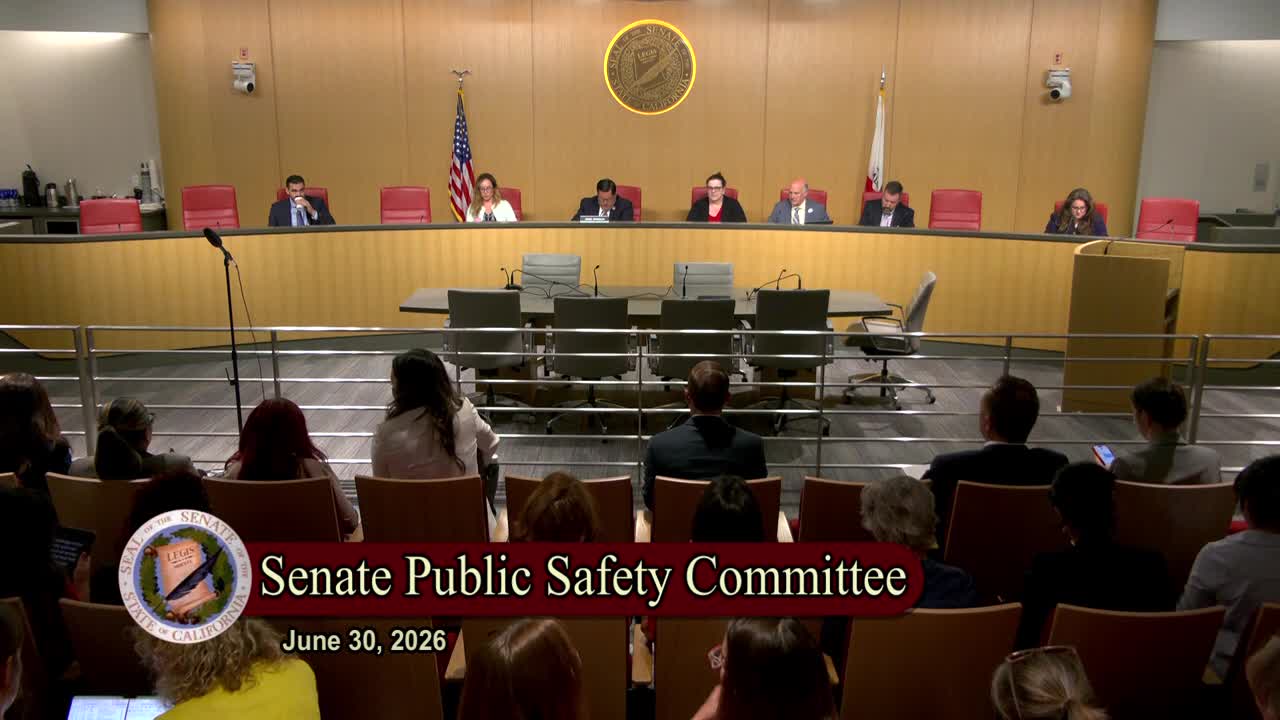 4MIN
Senate Standing Committee on Public Safety
 8MIN
Senate Standing Committee on Local Government
 1MIN
Assembly Floor
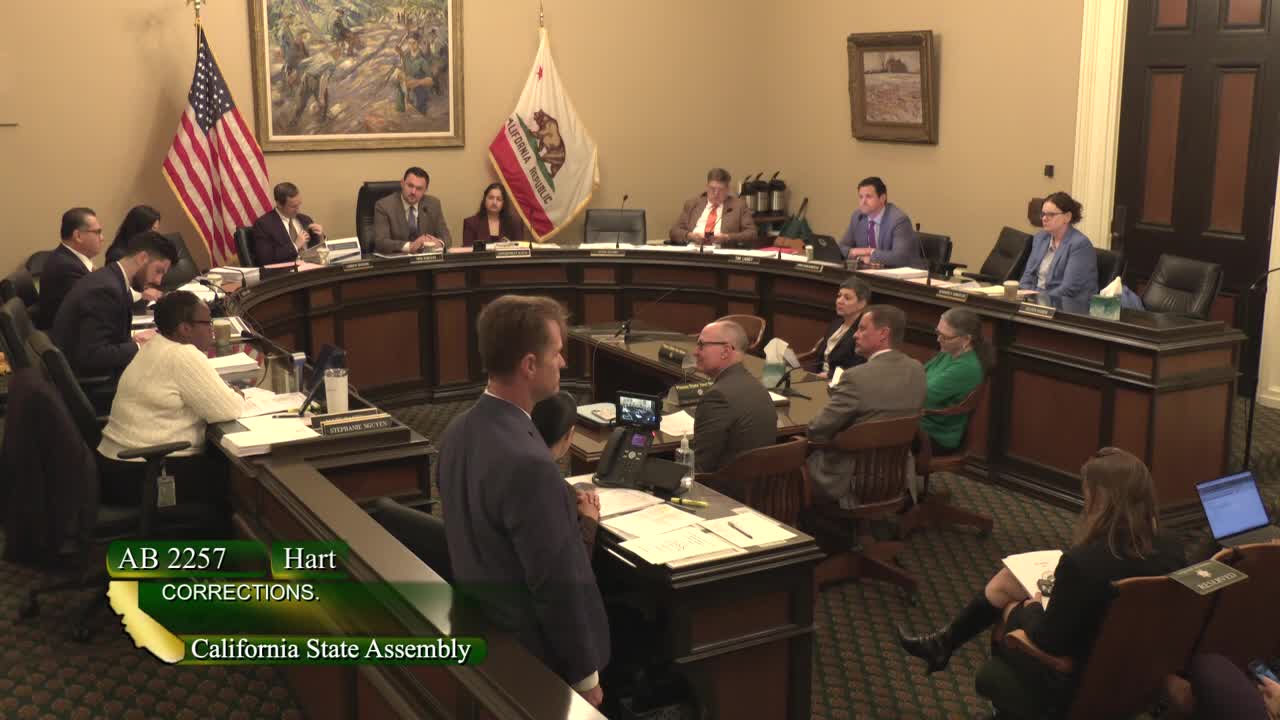 7MIN
Assembly Standing Committee on Public Safety
 9MIN
Assembly Standing Committee on Local Government
Bill Author