AB 268: State holidays: Diwali.
- Session Year: 2025-2026
- House: Assembly
- Latest Version Date: 2025-10-06
Current Status:
Passed
(2025-10-06: Chaptered by Secretary of State - Chapter 358, Statutes of 2025.)
Introduced
In Committee
Awaiting First Chamber Vote
Passed First Chamber
In Committee
Awaiting Second Chamber Vote
Passed Second Chamber
Enacted
Existing law designates specific days as holidays in this state. Existing law designates holidays on which community colleges and public schools are authorized to close pursuant to a memorandum of understanding between the governing board and represented employees, including Native American Day on the 4th Friday in September. Existing law entitles state employees, with specified exceptions, and authorizes certain community college and public school employees, to be given time off with pay for specified holidays, as specified.
This bill would add Diwali to the list of state holidays. The bill would authorize community colleges and public schools to close on Diwali, as specified. The bill would authorize state employees to elect to take, and would authorize certain community college and public school employees to be given, time off with pay in recognition of Diwali, as specified. The bill would authorize public schools and educational institutions throughout the state to include exercises acknowledging and celebrating the meaning and importance of Diwali, as specified.
Existing law adopts state holidays as judicial holidays, with certain exceptions, including Admission Day and Columbus Day.
This bill would add Diwali to the list of holidays that are excluded from designation as a judicial holiday.
This bill would make related findings and declarations.
Existing law designates specific days as holidays in this state. Existing law designates holidays on which community colleges and public schools are authorized to close pursuant to a memorandum of understanding between the governing board and represented employees, including Native American Day on the 4th Friday in September. Existing law entitles state employees, with specified exceptions, to be given time off with pay for specified holidays.
This bill would add Diwali to the list of state holidays. The bill would authorize community colleges and public schools to close on Diwali, as specified. The bill would authorize state employees to elect to take time off with pay in recognition of Diwali, as specified.
Existing law adopts state holidays as judicial holidays, with certain exceptions, including Admission Day and Columbus Day.
This bill would add Diwali to the list of holidays that are excluded from designation as a judicial holiday.
Existing law designates specific days as holidays in this state.This bill would state the intent of the Legislature to enact legislation to designate Diwali as an official state holiday.Existing law designates specific days as holidays in this state.
This bill would state the intent of the Legislature to enact legislation to designate Diwali as an official state holiday.
The Legislature finds and declares all of the following:
(a)Diwali, a festival of great significance to Indian Americans and South Asian Americans, is celebrated annually by Hindus, Sikhs, Buddhists, and Jains throughout the United States and across the globe.
(b)The word Diwali is a shortened version of the Sanskrit term Deepavali, which means a row of lamps.
(c)Diwali, one of the worlds oldest continuing religious holidays, brings together families, friends, and communities here in California, the United States, and around the globe in goodwill, peace, and a shared sense of renewal.
(d)Diwali is a festival of lights during which celebrants light small oil lamps, place them around the home, and pray for health, knowledge, and peace.
(e)Hindu celebrants of Diwali believe that the rows of lamps symbolize the light of knowledge and truth within the individual that signifies the destruction of all negative qualities such as violence, anger, jealousy, ignorance, greed, fear, or suffering; Diwali celebrates the victory of good over evil.
(f)For Sikhs, Diwali coincides with Bandi Chhor Divas, meaning Day of Liberation, marking the day that the sixth founding Sikh Guru, revered teacher Guru Hargobind, was released from captivity by the Mughal Emperor Jahangir after his wrongful imprisonment.
(g)For Jains, Diwali marks the anniversary of the attainment of moksha, or liberation, by Mahavira, the last of the Tirthankaras, the great teachers of Jain Dharma, at the end of his life in 527 B.C.
(h)For Buddhists, especially Newar Buddhists, Diwali is commemorated as Ashok Vijayadashami, the day the great Emperor Ashoka embraced Buddhism as his faith.
SEC. 2.Section 135 of the Code of Civil Procedure is amended to read:135.Every full day designated as a holiday by Section 6700 of the Government Code, including that Thursday of November declared by the President to be Thanksgiving Day, is a judicial holiday, except the date corresponding with the second new moon following the winter solstice, or the third new moon following the winter solstice should an intercalary month intervene, known as Lunar New Year, the 15th day of the month of Kartik in the Hindu lunar calendar of each year, known as Diwali, April 24, known as Genocide Remembrance Day, September 9, known as Admission Day, the second Monday in October, known as Columbus Day, and any other day appointed by the President, but not by the Governor, for a public fast, thanksgiving, or holiday. If a judicial holiday falls on a Saturday or a Sunday, the Judicial Council may designate an alternative day for observance of the holiday. Every Saturday and the day after Thanksgiving Day are judicial holidays. Officers and employees of the courts shall observe only the judicial holidays established pursuant to this section.
SEC. 3.Section 37220.7 of the Education Code is amended to read:37220.7.(a)In addition to the holidays prescribed in Section 37220, public schools may be closed on April 24, known as Genocide Remembrance Day, the 15th day of the month of Kartik in the Hindu lunar calendar of each year, known as Diwali, and the fourth Friday in September, known as Native American Day, if the governing board, pursuant to a memorandum of understanding reached pursuant to Chapter 10.7 (commencing with Section 3540) of Division 4 of Title 1 of the Government Code, agrees to close schools for that purpose.
(b)On the fourth Friday in September, or if schools are closed on that date as specified in subdivision (a), on an alternate day determined by the governing board, public schools and educational institutions throughout this state may include exercises, funded through existing resources, commemorating and directing attention to the many contributions that Native Americans have made to this country. The State Board of Education may adopt a model curriculum guide to be available for use by public schools for exercises related to Native American Day.
(c)On April 24, or if schools are closed on that date as specified in subdivision (a), on an alternate day determined by the governing board, public schools and educational institutions throughout this state may include exercises, funded through existing resources, remembering and honoring the many contributions that survivors of genocide have made to this country. The State Board of Education may adopt a model curriculum guide to be available for use by public schools for exercises related to Genocide Remembrance Day.
(d)On the 15th day of the month of Kartik in the Hindu lunar calendar of each year, or if schools are closed on that date as specified in subdivision (a), on an alternate day determined by the governing board, public schools and educational institutions throughout this state may include exercises, funded through existing resources, acknowledging and celebrating the meaning and importance of Diwali. The State Board of Education may adopt a model curriculum guide to be available for use by public schools for exercises related to Diwali.
SEC. 4.Section 45203 of the Education Code is amended to read:45203.All probationary or permanent employees that are a part of the classified service shall be entitled to the following paid holidays provided they are in a paid status during any portion of the working day immediately preceding or succeeding the holiday: January 1, February 12 known as Lincoln Day, the third Monday in February known as Washington Day, the last Monday in May known as Memorial Day, July 4, the first Monday in September known as Labor Day, November 11 known as Veterans Day, that Thursday in November proclaimed by the President as Thanksgiving Day, December 25, every day appointed by the President, or the Governor of this state, as provided for in paragraphs (11) and (12) of subdivision (a) of Section 37220 for a public fast, thanksgiving, or holiday, or any day declared a holiday under Section 1318 or 37222 for classified or certificated employees. School recesses during the Christmas, Easter, and mid-February periods shall not be considered holidays for classified employees who are normally required to work during that period. However, this shall not be construed as affecting vacation rights specified in this section. For purposes of this section, appointed by the President includes the President signing into law legislation that creates a nationwide federal holiday, including the legal public holidays listed in subsection (a) of Section 6103 of Title 5 of the United States Code, but does not include Columbus Day. This definition is declaratory of existing law.
Regular employees of the district who are not normally assigned to duty during the school holidays of December 25 and January 1 shall be paid for those two holidays provided that they were in a paid status during any portion of the working day of their normal assignment immediately preceding or succeeding the holiday period.
When a holiday listed in this section falls on a Sunday, the following Monday shall be deemed to be the holiday in lieu of the day observed. When a holiday listed in this section falls on a Saturday, the preceding Friday shall be deemed to be the holiday in lieu of the day observed. When a classified employee is required to work on any of these holidays, they shall be paid compensation, or given compensating time off, for such work, in addition to the regular pay received for the holiday, at the rate of time and one-half the employees regular rate of pay.
The provisions of Article 3 (commencing with Section 37220) of Chapter 2 of Part 22 shall not be construed to in any way limit the provisions of this section, nor shall anything in this section be construed to prohibit the governing board from adopting separate work schedules for the certificated and the classified services, or from providing holiday pay for employees who have not been in paid status on the days specified herein. Notwithstanding the adoption of separate work schedules for the certificated and the classified services, on any schoolday during which pupils would otherwise have been in attendance but are not and for which certificated personnel receive regular pay, classified personnel shall also receive regular pay whether or not they are required to report for duty that day.
In addition to the other paid holidays specified in this section, the classified service may be entitled to a paid holiday on March 31 known as Cesar Chavez Day, a paid holiday on April 24 known as Genocide Remembrance Day, a paid holiday on the 15th day of the month of Kartik in the Hindu lunar calendar of each year, known as Diwali, and a paid holiday on the fourth Friday in September known as Native American Day, provided they are in a paid status during any portion of the working day immediately preceding or succeeding the holiday, if the governing board, pursuant to a memorandum of understanding reached pursuant to Chapter 10.7 (commencing with Section 3540) of Division 4 of Title 1 of the Government Code, agrees to the paid holiday.
This section shall apply to districts that have adopted the merit system in the same manner and effect as if it were a part of Article 6 (commencing with Section 45240).
SEC. 5.Section 79020 of the Education Code is amended to read:79020.Except as otherwise provided, the community colleges shall continue in session or close on specified holidays as follows:
(a)The community colleges shall close on January 1, the third Monday in January, commencing in the 198990 fiscal year, known as Dr. Martin Luther King, Jr. Day, February 12 known as Lincoln Day, the third Monday in February known as Washington Day, the last Monday in May known as Memorial Day, July 4, the first Monday in September known as Labor Day, November 11 known as Veterans Day, that Thursday in November proclaimed by the President as Thanksgiving Day, and December 25.
(b)Any contractual provision between any community college district and its employees in effect on the effective date of the act that adds this subdivision shall prevail over any conflict regarding Dr. Martin Luther King, Jr. Day until the termination date of the contract or upon termination by mutual agreement of the parties, whichever occurs first.
(c)The Governor in appointing any other day for a public fast, thanksgiving, or holiday may provide whether the community colleges shall close on the day. If the Governor does not provide whether the community colleges shall close, they shall continue in session on all special or limited holidays appointed by the Governor, but shall close on all other days appointed by the Governor for a public fast, thanksgiving, or holiday.
(d)(1)The community colleges shall close on every day appointed by the President as a public fast, thanksgiving, or holiday, unless it is a special or limited holiday.
(2)For purposes of this subdivision, appointed by the President includes the President signing into law legislation that creates a nationwide federal holiday, including the legal public holidays listed in subsection (a) of Section 6103 of Title 5 of the United States Code, but does not include Columbus Day. This definition is declaratory of existing law.
(e)The community colleges shall continue in session on all legal holidays other than those designated by or pursuant to this section, and shall hold proper exercises commemorating the day.
(f)When any of the holidays on which the schools would be closed fall on Sunday, the community colleges shall close on the Monday following, except that (1) if Lincoln Day falls on a Sunday, the community colleges may observe this holiday on the preceding or following Friday, the following Monday, or the following Tuesday, and maintain classes on the date specified in subdivision (a) where applicable, or (2) if Lincoln Day falls on a Monday, the community colleges may observe this holiday on the preceding or following Friday, that Monday, or the following Tuesday, and maintain classes on the date specified in subdivision (a) where applicable.
(g)When any of the holidays on which the schools would be closed, except Lincoln Day, fall on Saturday, the community colleges shall close on the preceding Friday, and that Friday shall be declared a state holiday.
(h)If any holiday on which the community colleges are required to close pursuant to subdivision (a) occurs under federal law on a date different than the date specified in subdivision (a), the governing board of any community college district may close the community colleges of the district on the date recognized by federal law and maintain classes on the date specified in subdivision (a).
(i)When Veterans Day would fall on Tuesday, the governing board of a community college district may close the colleges on the preceding Monday, and maintain classes on the date specified in subdivision (a). When Veterans Day would fall on Wednesday, the governing board of a community college district may close the colleges on either the preceding Monday or the following Friday, and maintain classes on the date specified in subdivision (a). When Veterans Day would fall on Thursday, the governing board of a community college district may close the colleges on the following Friday, and maintain classes on the date specified in subdivision (a).
(j)When Lincoln Day would fall on Tuesday, the governing board of a community college district may close the colleges on the preceding Monday, the preceding Friday, or the following Friday, and maintain classes on the date specified in subdivision (a) where appropriate. When Lincoln Day would fall on Wednesday, the governing board of a community college district may close the colleges on the preceding Monday, the preceding Friday, or the following Friday, and maintain classes on the date specified in subdivision (a). When Lincoln Day would fall on Thursday, the governing board of a community college district may close the colleges on the preceding Friday or the following Friday, and maintain classes on the date specified in subdivision (a). When Lincoln Day falls on Saturday, the governing board of a community college district may close the colleges on the preceding Friday or the following Friday, and maintain classes on the date specified in subdivision (a) where appropriate.
(k)In addition to the holidays specified in subdivision (a), a community college may close on March 31, known as Cesar Chavez Day, if the governing board, pursuant to a memorandum of understanding reached pursuant to Chapter 10.7 (commencing with Section 3540) of Division 4 of Title 1 of the Government Code, agrees to close the community college for that purpose.
(l)In addition to the holidays specified in subdivision (a), a community college may close on April 24, known as Genocide Remembrance Day, the 15th day of the month of Kartik in the Hindu lunar calendar of each year, known as Diwali, and the fourth Friday in September, known as Native American Day, if the governing board, pursuant to a memorandum of understanding reached pursuant to Chapter 10.7 (commencing with Section 3540) of Division 4 of Title 1 of the Government Code, agrees to close the community college for that purpose.
(m)In addition to the holidays specified in subdivision (a), Glendale Community College may close on April 24, known as Genocide Remembrance Day, if the governing board, pursuant to a memorandum of understanding reached pursuant to Chapter 10.7 (commencing with Section 3540) of Division 4 of Title 1 of the Government Code, agrees to close the community college for that purpose.
(n)Notwithstanding subdivision (a), a community college may replace closing on February 12, Lincoln Day, or the third Monday in February, Washington Day, with the date corresponding with the second new moon following the winter solstice, or the third new moon following the winter solstice should an intercalary month intervene, known as Lunar New Year, if the governing board of the community college district, pursuant to a memorandum of understanding reached pursuant to Chapter 10.7 (commencing with Section 3540) of Division 4 of Title 1 of the Government Code, agrees to close the community college for that purpose. When Lunar New Year falls on another holiday, the community college shall observe Lunar New Year on a preceding or following weekday.
(o)This section shall not be interpreted as authorizing a community college district governing board to maintain community colleges in its district for a lesser number of days during the college year than the minimum established by law.
SEC. 6.Section 88203 of the Education Code is amended to read:88203.(a)(1)All probationary or permanent employees who are part of the classified service shall be entitled to the following paid holidays if they are in a paid status during any portion of the working day immediately preceding or succeeding the holiday:
(A)January 1.
(B)February 12 known as Lincoln Day.
(C)The third Monday in February known as Washington Day.
(D)The last Monday in May known as Memorial Day.
(E)July 4.
(F)The first Monday in September known as Labor Day.
(G)November 11 known as Veterans Day.
(H)That Thursday in November proclaimed by the President as Thanksgiving Day.
(I)December 25.
(J)Every day appointed by the President, or the Governor of this state, as provided for in subdivisions (c) and (d) of Section 79020 for a public fast, thanksgiving, or holiday.
(K)Any day declared a holiday under Section 1318 for classified or academic employees.
(2)College recesses during the Christmas and Easter periods shall not be considered holidays for classified employees who are normally required to work during that period; provided, however, that this shall not be construed as affecting vacation rights specified in this section.
(3)For purposes of this section, appointed by the President includes the President signing into law legislation that creates a nationwide federal holiday, including the legal public holidays listed in subsection (a) of Section 6103 of Title 5 of the United States Code, but does not include Columbus Day. This definition is declaratory of existing law.
(b)Regular employees of the community college district who are not normally assigned to duty during the community college holidays of December 25 and January 1 shall be paid for those two holidays if they were in a paid status during any portion of the working day of their normal assignment immediately preceding or succeeding the holiday period.
(c)When a holiday listed in this section falls on a Sunday, the following Monday shall be deemed to be the holiday in lieu of the day observed. When a holiday listed in this section falls on a Saturday, the preceding Friday shall be deemed to be the holiday in lieu of the day observed. When a classified employee is required to work on any of the holidays listed in this section, they shall be paid compensation, or given compensating time off, for such work, in addition to the regular pay received for the holiday, at the rate of time and one-half their regular rate of pay.
(d)Article 3 (commencing with Section 79020) of Chapter 8 of Part 48 shall not be construed to in any way limit this section, nor shall anything in this section be construed to prohibit the governing board of a community college district from adopting separate work schedules for the academic and the classified services, or from providing holiday pay for employees who have not been in paid status on the days specified in this section. Notwithstanding the adoption of separate work schedules for the academic and the classified services, on any schoolday during which students would otherwise have been in attendance, but are not and for which faculty receive regular pay, classified personnel shall also receive regular pay whether or not they are required to report for duty that day.
(e)In addition to the other paid holidays specified in this section, the classified service may be entitled to a paid holiday on March 31 known as Cesar Chavez Day, a paid holiday on April 24 known as Genocide Remembrance Day, a paid holiday on the 15th day of the month of Kartik in the Hindu lunar calendar of each year, known as Diwali, and a paid holiday on the fourth Friday in September known as Native American Day, if they are in a paid status during any portion of the working day immediately preceding or succeeding the holiday, if the governing board of the community college district, pursuant to a memorandum of understanding reached pursuant to Chapter 10.7 (commencing with Section 3540) of Division 4 of Title 1 of the Government Code, agrees to the paid holiday.
(f)In lieu of a paid holiday on February 12, Lincoln Day, or the third Monday in February, Washington Day, as specified in this section, the classified service shall be entitled to a paid holiday on the date corresponding to the Lunar New Year holiday selected pursuant to subdivision (n) of Section 79020, if they are in a paid status during any portion of the working day immediately preceding or succeeding the Lunar New Year holiday, if the governing board of the community college district, pursuant to a memorandum of understanding reached pursuant to Chapter 10.7 (commencing with Section 3540) of Division 4 of Title 1 of the Government Code, agrees to the replacement holiday pursuant to subdivision (n) of Section 79020.
(g)This section shall apply to community college districts that have adopted the merit system in the same manner and effect as if it were a part of Article 3 (commencing with Section 88060).
SEC. 7.Section 6700 of the Government Code is amended to read:6700.(a)The holidays in this state are:
(1)Every Sunday.
(2)January 1.
(3)The third Monday in January, known as Dr. Martin Luther King, Jr. Day.
(4)The date corresponding with the second new moon following the winter solstice, or the third new moon following the winter solstice should an intercalary month intervene, known as Lunar New Year.
(5)February 12, known as Lincoln Day.
(6)The third Monday in February.
(7)March 31, known as Cesar Chavez Day.
(8)April 24, known as Genocide Remembrance Day.
(9)The 15th day of the month of Kartik in the Hindu lunar calendar of each year, known as Diwali.
(10)The last Monday in May.
(11)June 19, known as Juneteenth.
(12)July 4.
(13)The first Monday in September.
(14)September 9, known as Admission Day.
(15)The fourth Friday in September, known as Native American Day.
(16)The second Monday in October, known as Columbus Day.
(17)November 11, known as Veterans Day.
(18)December 25.
(19)Good Friday from 12 noon until 3 p.m.
(20)(A)Every day appointed by the President or Governor for a public fast, thanksgiving, or holiday.
(B)Except for the Thursday in November appointed as Thanksgiving Day, this paragraph and paragraphs (3), (4), and (7) shall not apply to a city, county, or district unless made applicable by charter, or by ordinance or resolution of the governing body thereof.
(b)If this section is in conflict with the provisions of a memorandum of understanding reached pursuant to Chapter 12 (commencing with Section 3560) of Division 4 of Title 1, the memorandum of understanding shall be controlling without further legislative action, except that if those provisions of a memorandum of understanding require the expenditure of funds, the provisions shall not become effective unless approved by the Legislature in the annual Budget Act.
SEC. 8.Section 19853 of the Government Code is amended to read:19853.(a)All state employees shall be entitled to the following holidays: January 1, the third Monday in January, the third Monday in February, March 31, the last Monday in May, July 4, the first Monday in September, November 11, Thanksgiving Day, the day after Thanksgiving, December 25, the day chosen by an employee pursuant to Section 19854, and every day appointed by the Governor of this state for a public fast, thanksgiving, or holiday.
(b)If a day listed in this subdivision falls on a Sunday, the following Monday shall be deemed to be the holiday in lieu of the day observed. If November 11 falls upon a Saturday, the preceding Friday shall be deemed to be the holiday in lieu of the day observed.
(c)(1)Any state employee who may be required to work on any of the holidays included in this section, and who does work on any of these holidays, shall be entitled to receive straight-time pay and eight hours of holiday credit.
(2)Notwithstanding paragraph (1), an employee who is excluded from the definition of state employee in subdivision (c) of Section 3513 and who is required to work on January 1, the last Monday in May, July 4, the first Monday in September, Thanksgiving Day, or December 25 shall be subject to the following:
(A)Excluded employees who are eligible for overtime payments under the federal Fair Labor Standards Act shall be paid one and one-half times their salary rate for all hours worked on the holiday and up to eight hours of holiday credit. This pay shall count toward any premium overtime compensation earned during the same workweek. Part-time employees shall receive prorated amounts subject to department rules.
(B)Excluded employees who are ineligible for overtime payments under the federal Fair Labor Standards Act shall receive up to eight hours of holiday credit and four hours of informal time off. Part-time employees shall receive prorated amounts of holiday credit and informal time off, subject to department rules.
(d)For the purpose of computing the number of hours worked, time when an employee is excused from work because of holidays, sick leave, vacation, annual leave, compensating time off, or any other leave shall not be considered as time worked by the employee for the purpose of computing cash compensation for overtime or compensating time off for overtime.
(e)Any state employee, as defined in subdivision (c) of Section 3513, may elect to receive eight hours of holiday credit for the date corresponding with the new moon following the winter solstice, or the third new moon following the winter solstice should an intercalary month intervene, known as Lunar New Year, April 24, known as Genocide Remembrance Day, the 15th day of the month of Kartik in the Hindu lunar calendar of each year, known as Diwali, June 19, known as Juneteenth, or the fourth Friday in September, known as Native American Day, in lieu of receiving eight hours of personal holiday credit in accordance with Section 19854.
(f)Persons employed on less than a full-time basis shall receive holidays in accordance with the Department of Human Resources rules.
(g)If subdivision (a), (c), or (d) is in conflict with the provisions of a memorandum of understanding executed or amended pursuant to Section 3517.5 on or after February 1, 2009, or the date that the act adding this section takes effect, whichever is later, the memorandum of understanding shall be controlling without further legislative action, except that if those provisions of the memorandum of understanding require the expenditure of funds, the provisions shall not become effective unless approved by the Legislature in the annual Budget Act.
SEC. 9.Section 19853.1 of the Government Code is amended to read:19853.1.(a)Notwithstanding Section 19853, this section shall apply to state employees in State Bargaining Unit 5.
(b)Except as provided in subdivision (c), all employees shall be entitled to the following holidays: January 1, the third Monday in January, the third Monday in February, March 31, the last Monday in May, July 4, the first Monday in September, November 11, the day after Thanksgiving, December 25, and every day appointed by the Governor of this state for a public fast, thanksgiving, or holiday.
If a day listed in this subdivision falls on a Sunday, the following Monday shall be deemed to be the holiday in lieu of the day observed. If November 11 falls upon a Saturday, the preceding Friday shall be deemed to be the holiday in lieu of the day observed. Any employee who may be required to work on any of the holidays included in this section and who does work on any of these holidays shall be entitled to be paid compensation or given compensating time off for that work in accordance with their classifications assigned workweek group.
(c)If the provisions of subdivision (b) are in conflict with the provisions of a memorandum of understanding reached pursuant to Section 3517.5, the memorandum of understanding shall be controlling without further legislative action, except that if the provisions of a memorandum of understanding require the expenditure of funds, the provisions shall not become effective unless approved by the Legislature in the annual Budget Act.
(d)Any employee who either is excluded from the definition of state employee in subdivision (c) of Section 3513, or is a nonelected officer or employee of the executive branch of government who is not a member of the civil service, is entitled to the following holidays, with pay, in addition to any official state holiday appointed by the Governor:
(1)January 1, the third Monday in January, the third Monday in February, March 31, the last Monday in May, July 4, the first Monday in September, November 11, Thanksgiving Day, the day after Thanksgiving, and December 25.
(2)When November 11 falls on a Saturday, employees shall be entitled to the preceding Friday as a holiday with pay.
(3)When a holiday, other than a personal holiday, falls on a Saturday, an employee shall, regardless of whether the employee works on the holiday, accrue only an additional eight hours of personal holiday credit per fiscal year for the holiday. The holiday credit shall be accrued on the actual date of the holiday and shall be used within the same fiscal year.
(4)When a holiday other than a personal holiday falls on Sunday, employees shall be entitled to the following Monday as a holiday with pay.
(5)Employees who are required to work on a holiday shall be entitled to pay or compensating time off for this work in accordance with their classifications assigned workweek group.
(6)Persons employed on less than a full-time basis shall receive holidays in accordance with the Department of Human Resources rules.
(e)Any employee, as defined in subdivision (c) of Section 3513, may elect to use eight hours of vacation, annual leave, or compensating time off consistent with departmental operational needs and collective bargaining agreements for the date corresponding with the second new moon following the winter solstice, or the third new moon following the winter solstice should an intercalary month intervene, known as Lunar New Year, April 24, known as Genocide Remembrance Day, the 15th day of the month of Kartik in the Hindu lunar calendar of each year, known as Diwali, June 19, known as Juneteenth, and the fourth Friday in September, known as Native American Day.
(f)This section shall become effective with regard to the March 31 holiday only when the Department of Human Resources notifies the Legislature that the language contained in this section has been agreed to by all exclusive representatives, and the Department of Human Resources authorizes this holiday to be applied to employees designated as excluded from the Ralph C. Dills Act (Chapter 10.3 (commencing with Section 3512), Division 4, Title 1), and the necessary statutes are amended to reflect this change.
The Legislature finds and declares all of the following:
(a)Diwali, a festival of great significance to Indian Americans and South Asian Americans, is celebrated annually by Hindus, Sikhs, Buddhists, and Jains throughout the United States and across the globe.
(b)The word Diwali is a shortened version of the Sanskrit term Deepavali, which means a row of lamps.
(c)Diwali, one of the worlds oldest continuing religious holidays, brings together families, friends, and communities here in California, the United States, and around the globe in goodwill, peace, and a shared sense of renewal.
(d)Diwali is a festival of lights during which celebrants light small oil lamps, place them around the home, and pray for health, knowledge, and peace.
(e)Hindu celebrants of Diwali believe that the rows of lamps symbolize the light of knowledge and truth within the individual that signifies the destruction of all negative qualities such as violence, anger, jealousy, ignorance, greed, fear, or suffering; Diwali celebrates the victory of good over evil.
(f)For Sikhs, Diwali coincides with Bandi Chhor Divas, meaning Day of Liberation, marking the day that the sixth founding Sikh Guru, revered teacher Guru Hargobind, was released from captivity by the Mughal Emperor Jahangir after his wrongful imprisonment.
(g)For Jains, Diwali marks the anniversary of the attainment of moksha, or liberation, by Mahavira, the last of the Tirthankaras, the great teachers of Jain Dharma, at the end of his life in 527 B.C.
(h)For Buddhists, especially Newar Buddhists, Diwali is commemorated as Ashok Vijayadashami, the day the great Emperor Ashoka embraced Buddhism as his faith.
SECTION 1.SEC. 2.Section 135 of the Code of Civil Procedure is amended to read:135.Every full day designated as a holiday by Section 6700 of the Government Code, including that Thursday of November declared by the President to be Thanksgiving Day, is a judicial holiday, except the date corresponding with the second new moon following the winter solstice, or the third new moon following the winter solstice should an intercalary month intervene, known as Lunar New Year, the 15th day of the month of Kartik in the Hindu lunar calendar of each year, known as Diwali, April 24, known as Genocide Remembrance Day, September 9, known as Admission Day, the second Monday in October, known as Columbus Day, and any other day appointed by the President, but not by the Governor, for a public fast, thanksgiving, or holiday. If a judicial holiday falls on a Saturday or a Sunday, the Judicial Council may designate an alternative day for observance of the holiday. Every Saturday and the day after Thanksgiving Day are judicial holidays. Officers and employees of the courts shall observe only the judicial holidays established pursuant to this section.
SEC. 2.SEC. 3.Section 37220.7 of the Education Code is amended to read:37220.7.(a)In addition to the holidays prescribed in Section 37220, public schools may be closed on April 24, known as Genocide Remembrance Day, the 15th day of the month of Kartik in the Hindu lunar calendar of each year, known as Diwali, and the fourth Friday in September, known as Native American Day, if the governing board, pursuant to a memorandum of understanding reached pursuant to Chapter 10.7 (commencing with Section 3540) of Division 4 of Title 1 of the Government Code, agrees to close schools for that purpose.
(b)On the fourth Friday in September, or if schools are closed on that date as specified in subdivision (a), on an alternate day determined by the governing board, public schools and educational institutions throughout this state may include exercises, funded through existing resources, commemorating and directing attention to the many contributions that Native Americans have made to this country. The State Board of Education may adopt a model curriculum guide to be available for use by public schools for exercises related to Native American Day.
(c)On April 24, or if schools are closed on that date as specified in subdivision (a), on an alternate day determined by the governing board, public schools and educational institutions throughout this state may include exercises, funded through existing resources, remembering and honoring the many contributions that survivors of genocide have made to this country. The State Board of Education may adopt a model curriculum guide to be available for use by public schools for exercises related to Genocide Remembrance Day.
(d)On the 15th day of the month of Kartik in the Hindu lunar calendar of each year, or if schools are closed on that date as specified in subdivision (a), on an alternate day determined by the governing board, public schools and educational institutions throughout this state may include exercises, funded through existing resources, acknowledging and celebrating the meaning and importance of Diwali. The State Board of Education may adopt a model curriculum guide to be available for use by public schools for exercises related to Diwali.
SEC. 3.SEC. 4.Section 45203 of the Education Code is amended to read:45203.All probationary or permanent employees that are a part of the classified service shall be entitled to the following paid holidays provided they are in a paid status during any portion of the working day immediately preceding or succeeding the holiday: January 1, February 12 known as Lincoln Day, the third Monday in February known as Washington Day, the last Monday in May known as Memorial Day, July 4, the first Monday in September known as Labor Day, November 11 known as Veterans Day, that Thursday in November proclaimed by the President as Thanksgiving Day, December 25, every day appointed by the President, or the Governor of this state, as provided for in paragraphs (11) and (12) of subdivision (a) of Section 37220 for a public fast, thanksgiving, or holiday, or any day declared a holiday under Section 1318 or 37222 for classified or certificated employees. School recesses during the Christmas, Easter, and mid-February periods shall not be considered holidays for classified employees who are normally required to work during that period. However, this shall not be construed as affecting vacation rights specified in this section. For purposes of this section, appointed by the President includes the President signing into law legislation that creates a nationwide federal holiday, including the legal public holidays listed in subsection (a) of Section 6103 of Title 5 of the United States Code, but does not include Columbus Day. This definition is declaratory of existing law.
Regular employees of the district who are not normally assigned to duty during the school holidays of December 25 and January 1 shall be paid for those two holidays provided that they were in a paid status during any portion of the working day of their normal assignment immediately preceding or succeeding the holiday period.
When a holiday listed in this section falls on a Sunday, the following Monday shall be deemed to be the holiday in lieu of the day observed. When a holiday listed in this section falls on a Saturday, the preceding Friday shall be deemed to be the holiday in lieu of the day observed. When a classified employee is required to work on any of these holidays, they shall be paid compensation, or given compensating time off, for such work, in addition to the regular pay received for the holiday, at the rate of time and one-half the employees regular rate of pay.
The provisions of Article 3 (commencing with Section 37220) of Chapter 2 of Part 22 shall not be construed to in any way limit the provisions of this section, nor shall anything in this section be construed to prohibit the governing board from adopting separate work schedules for the certificated and the classified services, or from providing holiday pay for employees who have not been in paid status on the days specified herein. Notwithstanding the adoption of separate work schedules for the certificated and the classified services, on any schoolday during which pupils would otherwise have been in attendance but are not and for which certificated personnel receive regular pay, classified personnel shall also receive regular pay whether or not they are required to report for duty that day.
In addition to the other paid holidays specified in this section, the classified service may be entitled to a paid holiday on March 31 known as Cesar Chavez Day, a paid holiday on April 24 known as Genocide Remembrance Day, a paid holiday on the 15th day of the month of Kartik in the Hindu lunar calendar of each year, known as Diwali, and a paid holiday on the fourth Friday in September known as Native American Day, provided they are in a paid status during any portion of the working day immediately preceding or succeeding the holiday, if the governing board, pursuant to a memorandum of understanding reached pursuant to Chapter 10.7 (commencing with Section 3540) of Division 4 of Title 1 of the Government Code, agrees to the paid holiday.
This section shall apply to districts that have adopted the merit system in the same manner and effect as if it were a part of Article 6 (commencing with Section 45240).
SEC. 4.SEC. 5.Section 79020 of the Education Code is amended to read:79020.Except as otherwise provided provided, the community colleges shall continue in session or close on specified holidays as follows:
(a)The community colleges shall close on January 1, the third Monday in January, commencing in the 198990 fiscal year, known as Dr. Martin Luther King, Jr. Day, February 12 known as Lincoln Day, the third Monday in February known as Washington Day, the last Monday in May known as Memorial Day, July 4, the first Monday in September known as Labor Day, November 11 known as Veterans Day, that Thursday in November proclaimed by the President as Thanksgiving Day, and December 25.
(b)Any contractual provision between any community college district and its employees in effect on the effective date of the act that adds this subdivision shall prevail over any conflict regarding Dr. Martin Luther King, Jr. Day until the termination date of the contract or upon termination by mutual agreement of the parties, whichever occurs first.
(c)The Governor in appointing any other day for a public fast, thanksgiving, or holiday may provide whether the community colleges shall close on the day. If the Governor does not provide whether the community colleges shall close, they shall continue in session on all special or limited holidays appointed by the Governor, but shall close on all other days appointed by the Governor for a public fast, thanksgiving, or holiday.
(d)(1)The community colleges shall close on every day appointed by the President as a public fast, thanksgiving, or holiday, unless it is a special or limited holiday.
(2)For purposes of this subdivision, appointed by the President includes the President signing into law legislation that creates a nationwide federal holiday, including the legal public holidays listed in subsection (a) of Section 6103 of Title 5 of the United States Code, but does not include Columbus Day. This definition is declaratory of existing law.
(e)The community colleges shall continue in session on all legal holidays other than those designated by or pursuant to this section, and shall hold proper exercises commemorating the day.
(f)When any of the holidays on which the schools would be closed fall on Sunday, the community colleges shall close on the Monday following, except that (1) if Lincoln Day falls on a Sunday, the community colleges may observe this holiday on the preceding or following Friday, the following Monday, or the following Tuesday, and maintain classes on the date specified in subdivision (a) where applicable, or (2) if Lincoln Day falls on a Monday, the community colleges may observe this holiday on the preceding or following Friday, that Monday, or the following Tuesday, and maintain classes on the date specified in subdivision (a) where applicable.
(g)When any of the holidays on which the schools would be closed, except Lincoln Day, fall on Saturday, the community colleges shall close on the preceding Friday, and that Friday shall be declared a state holiday.
(h)If any holiday on which the community colleges are required to close pursuant to subdivision (a) occurs under federal law on a date different than the date specified in subdivision (a), the governing board of any community college district may close the community colleges of the district on the date recognized by federal law and maintain classes on the date specified in subdivision (a).
(i)When Veterans Day would fall on Tuesday, the governing board of a community college district may close the colleges on the preceding Monday, and maintain classes on the date specified in subdivision (a). When Veterans Day would fall on Wednesday, the governing board of a community college district may close the colleges on either the preceding Monday or the following Friday, and maintain classes on the date specified in subdivision (a). When Veterans Day would fall on Thursday, the governing board of a community college district may close the colleges on the following Friday, and maintain classes on the date specified in subdivision (a).
(j)When Lincoln Day would fall on Tuesday, the governing board of a community college district may close the colleges on the preceding Monday, the preceding Friday, or the following Friday, and maintain classes on the date specified in subdivision (a) where appropriate. When Lincoln Day would fall on Wednesday, the governing board of a community college district may close the colleges on the preceding Monday, the preceding Friday, or the following Friday, and maintain classes on the date specified in subdivision (a). When Lincoln Day would fall on Thursday, the governing board of a community college district may close the colleges on the preceding Friday or the following Friday, and maintain classes on the date specified in subdivision (a). When Lincoln Day falls on Saturday, the governing board of a community college district may close the colleges on the preceding Friday or the following Friday, and maintain classes on the date specified in subdivision (a) where appropriate.
(k)In addition to the holidays specified in subdivision (a), a community college may close on March 31, known as Cesar Chavez Day, if the governing board, pursuant to a memorandum of understanding reached pursuant to Chapter 10.7 (commencing with Section 3540) of Division 4 of Title 1 of the Government Code, agrees to close the community college for that purpose.
(l)In addition to the holidays specified in subdivision (a), a community college may close on April 24, known as Genocide Remembrance Day, the 15th day of the month of Kartik in the Hindu lunar calendar of each year, known as Diwali, and the fourth Friday in September, known as Native American Day, if the governing board, pursuant to a memorandum of understanding reached pursuant to Chapter 10.7 (commencing with Section 3540) of Division 4 of Title 1 of the Government Code, agrees to close the community college for that purpose.
(m)In addition to the holidays specified in subdivision (a), Glendale Community College may close on April 24, known as Genocide Remembrance Day, if the governing board, pursuant to a memorandum of understanding reached pursuant to Chapter 10.7 (commencing with Section 3540) of Division 4 of Title 1 of the Government Code, agrees to close the community college for that purpose.
(n)Notwithstanding subdivision (a), a community college may replace closing on February 12, Lincoln Day, or the third Monday in February, Washington Day, with the date corresponding with the second new moon following the winter solstice, or the third new moon following the winter solstice should an intercalary month intervene, known as Lunar New Year, if the governing board of the community college district, pursuant to a memorandum of understanding reached pursuant to Chapter 10.7 (commencing with Section 3540) of Division 4 of Title 1 of the Government Code, agrees to close the community college for that purpose. When Lunar New Year falls on another holiday, the community college shall observe Lunar New Year on a preceding or following weekday.
(o)This section shall not be interpreted as authorizing a community college district governing board to maintain community colleges in its district for a lesser number of days during the college year than the minimum established by law.
SEC. 5.SEC. 6.Section 88203 of the Education Code is amended to read:88203.(a)(1)All probationary or permanent employees who are part of the classified service shall be entitled to the following paid holidays if they are in a paid status during any portion of the working day immediately preceding or succeeding the holiday:
(A)January 1.
(B)February 12 known as Lincoln Day.
(C)The third Monday in February known as Washington Day.
(D)The last Monday in May known as Memorial Day.
(E)July 4.
(F)The first Monday in September known as Labor Day.
(G)November 11 known as Veterans Day.
(H)That Thursday in November proclaimed by the President as Thanksgiving Day.
(I)December 25.
(J)Every day appointed by the President, or the Governor of this state, as provided for in subdivisions (c) and (d) of Section 79020 for a public fast, thanksgiving, or holiday.
(K)Any day declared a holiday under Section 1318 for classified or academic employees.
(2)College recesses during the Christmas and Easter periods shall not be considered holidays for classified employees who are normally required to work during that period; provided, however, that this shall not be construed as affecting vacation rights specified in this section.
(3)For purposes of this section, appointed by the President includes the President signing into law legislation that creates a nationwide federal holiday, including the legal public holidays listed in subsection (a) of Section 6103 of Title 5 of the United States Code, but does not include Columbus Day. This definition is declaratory of existing law.
(b)Regular employees of the community college district who are not normally assigned to duty during the community college holidays of December 25 and January 1 shall be paid for those two holidays if they were in a paid status during any portion of the working day of their normal assignment immediately preceding or succeeding the holiday period.
(c)When a holiday listed in this section falls on a Sunday, the following Monday shall be deemed to be the holiday in lieu of the day observed. When a holiday listed in this section falls on a Saturday, the preceding Friday shall be deemed to be the holiday in lieu of the day observed. When a classified employee is required to work on any of the holidays listed in this section, they shall be paid compensation, or given compensating time off, for such work, in addition to the regular pay received for the holiday, at the rate of time and one-half their regular rate of pay.
(d)Article 3 (commencing with Section 79020) of Chapter 8 of Part 48 shall not be construed to in any way limit this section, nor shall anything in this section be construed to prohibit the governing board of a community college district from adopting separate work schedules for the academic and the classified services, or from providing holiday pay for employees who have not been in paid status on the days specified in this section. Notwithstanding the adoption of separate work schedules for the academic and the classified services, on any schoolday during which students would otherwise have been in attendance, but are not and for which faculty receive regular pay, classified personnel shall also receive regular pay whether or not they are required to report for duty that day.
(e)In addition to the other paid holidays specified in this section, the classified service may be entitled to a paid holiday on March 31 known as Cesar Chavez Day, a paid holiday on April 24 known as Genocide Remembrance Day, a paid holiday on the 15th day of the month of Kartik in the Hindu lunar calendar of each year, known as Diwali, and a paid holiday on the fourth Friday in September known as Native American Day, if they are in a paid status during any portion of the working day immediately preceding or succeeding the holiday, if the governing board of the community college district, pursuant to a memorandum of understanding reached pursuant to Chapter 10.7 (commencing with Section 3540) of Division 4 of Title 1 of the Government Code, agrees to the paid holiday.
(f)In lieu of a paid holiday on February 12, Lincoln Day, or the third Monday in February, Washington Day, as specified in this section, the classified service shall be entitled to a paid holiday on the date corresponding to the Lunar New Year holiday selected pursuant to subdivision (n) of Section 79020, if they are in a paid status during any portion of the working day immediately preceding or succeeding the Lunar New Year holiday, if the governing board of the community college district, pursuant to a memorandum of understanding reached pursuant to Chapter 10.7 (commencing with Section 3540) of Division 4 of Title 1 of the Government Code, agrees to the replacement holiday pursuant to subdivision (n) of Section 79020.
(g)This section shall apply to community college districts that have adopted the merit system in the same manner and effect as if it were a part of Article 3 (commencing with Section 88060).
SEC. 6.SEC. 7.Section 6700 of the Government Code is amended to read:6700.(a)The holidays in this state are:
(1)Every Sunday.
(2)January 1.
(3)The third Monday in January, known as Dr. Martin Luther King, Jr. Day.
(4)The date corresponding with the second new moon following the winter solstice, or the third new moon following the winter solstice should an intercalary month intervene, known as Lunar New Year.
(5)February 12, known as Lincoln Day.
(6)The third Monday in February.
(7)March 31, known as Cesar Chavez Day.
(8)April 24, known as Genocide Remembrance Day.
(9)The 15th day of the month of Kartik in the Hindu lunar calendar of each year, known as Diwali.
(10)The last Monday in May.
(11)June 19, known as Juneteenth.
(12)July 4.
(13)The first Monday in September.
(14)September 9, known as Admission Day.
(15)The fourth Friday in September, known as Native American Day.
(16)The second Monday in October, known as Columbus Day.
(17)November 11, known as Veterans Day.
(18)December 25.
(19)Good Friday from 12 noon until 3 p.m.
(20)(A)Every day appointed by the President or Governor for a public fast, thanksgiving, or holiday.
(B)Except for the Thursday in November appointed as Thanksgiving Day, this paragraph and paragraphs (3), (4), and (7) shall not apply to a city, county, or district unless made applicable by charter, or by ordinance or resolution of the governing body thereof.
(b)If this section is in conflict with the provisions of a memorandum of understanding reached pursuant to Chapter 12 (commencing with Section 3560) of Division 4 of Title 1, the memorandum of understanding shall be controlling without further legislative action, except that if those provisions of a memorandum of understanding require the expenditure of funds, the provisions shall not become effective unless approved by the Legislature in the annual Budget Act.
SEC. 7.SEC. 8.Section 19853 of the Government Code is amended to read:19853.(a)All state employees shall be entitled to the following holidays: January 1, the third Monday in January, the third Monday in February, March 31, the last Monday in May, July 4, the first Monday in September, November 11, Thanksgiving Day, the day after Thanksgiving, December 25, the day chosen by an employee pursuant to Section 19854, and every day appointed by the Governor of this state for a public fast, thanksgiving, or holiday.
(b)If a day listed in this subdivision falls on a Sunday, the following Monday shall be deemed to be the holiday in lieu of the day observed. If November 11 falls upon a Saturday, the preceding Friday shall be deemed to be the holiday in lieu of the day observed.
(c)(1)Any state employee who may be required to work on any of the holidays included in this section, and who does work on any of these holidays, shall be entitled to receive straight-time pay and eight hours of holiday credit.
(2)Notwithstanding paragraph (1), an employee who is excluded from the definition of state employee in subdivision (c) of Section 3513 and who is required to work on January 1, the last Monday in May, July 4, the first Monday in September, Thanksgiving Day, or December 25 shall be subject to the following:
(A)Excluded employees who are eligible for overtime payments under the federal Fair Labor Standards Act shall be paid one and one-half times their salary rate for all hours worked on the holiday and up to eight hours of holiday credit. This pay shall count toward any premium overtime compensation earned during the same workweek. Part-time employees shall receive prorated amounts subject to department rules.
(B)Excluded employees who are ineligible for overtime payments under the federal Fair Labor Standards Act shall receive up to eight hours of holiday credit and four hours of informal time off. Part-time employees shall receive prorated amounts of holiday credit and informal time off, subject to department rules.
(d)For the purpose of computing the number of hours worked, time when an employee is excused from work because of holidays, sick leave, vacation, annual leave, compensating time off, or any other leave shall not be considered as time worked by the employee for the purpose of computing cash compensation for overtime or compensating time off for overtime.
(e)Any state employee, as defined in subdivision (c) of Section 3513, may elect to receive eight hours of holiday credit for the date corresponding with the new moon following the winter solstice, or the third new moon following the winter solstice should an intercalary month intervene, known as Lunar New Year, April 24, known as Genocide Remembrance Day, the 15th day of the month of Kartik in the Hindu lunar calendar of each year, known as Diwali, June 19, known as Juneteenth, or the fourth Friday in September, known as Native American Day, in lieu of receiving eight hours of personal holiday credit in accordance with Section 19854.
(f)Persons employed on less than a full-time basis shall receive holidays in accordance with the Department of Human Resources rules.
(g)If subdivision (a), (c), or (d) is in conflict with the provisions of a memorandum of understanding executed or amended pursuant to Section 3517.5 on or after February 1, 2009, or the date that the act adding this section takes effect, whichever is later, the memorandum of understanding shall be controlling without further legislative action, except that if those provisions of the memorandum of understanding require the expenditure of funds, the provisions shall not become effective unless approved by the Legislature in the annual Budget Act.
SEC. 8.SEC. 9.Section 19853.1 of the Government Code is amended to read:19853.1.(a)Notwithstanding Section 19853, this section shall apply to state employees in State Bargaining Unit 5.
(b)Except as provided in subdivision (c), all employees shall be entitled to the following holidays: January 1, the third Monday in January, the third Monday in February, March 31, the last Monday in May, July 4, the first Monday in September, November 11, the day after Thanksgiving, December 25, and every day appointed by the Governor of this state for a public fast, thanksgiving, or holiday.
If a day listed in this subdivision falls on a Sunday, the following Monday shall be deemed to be the holiday in lieu of the day observed. If November 11 falls upon a Saturday, the preceding Friday shall be deemed to be the holiday in lieu of the day observed. Any employee who may be required to work on any of the holidays included in this section and who does work on any of these holidays shall be entitled to be paid compensation or given compensating time off for that work in accordance with their classifications assigned workweek group.
(c)If the provisions of subdivision (b) are in conflict with the provisions of a memorandum of understanding reached pursuant to Section 3517.5, the memorandum of understanding shall be controlling without further legislative action, except that if the provisions of a memorandum of understanding require the expenditure of funds, the provisions shall not become effective unless approved by the Legislature in the annual Budget Act.
(d)Any employee who either is excluded from the definition of state employee in subdivision (c) of Section 3513, or is a nonelected officer or employee of the executive branch of government who is not a member of the civil service, is entitled to the following holidays, with pay, in addition to any official state holiday appointed by the Governor:
(1)January 1, the third Monday in January, the third Monday in February, March 31, the last Monday in May, July 4, the first Monday in September, November 11, Thanksgiving Day, the day after Thanksgiving, and December 25.
(2)When November 11 falls on a Saturday, employees shall be entitled to the preceding Friday as a holiday with pay.
(3)When a holiday, other than a personal holiday, falls on a Saturday, an employee shall, regardless of whether the employee works on the holiday, accrue only an additional eight hours of personal holiday credit per fiscal year for the holiday. The holiday credit shall be accrued on the actual date of the holiday and shall be used within the same fiscal year.
(4)When a holiday other than a personal holiday falls on Sunday, employees shall be entitled to the following Monday as a holiday with pay.
(5)Employees who are required to work on a holiday shall be entitled to pay or compensating time off for this work in accordance with their classifications assigned workweek group.
(6)Persons employed on less than a full-time basis shall receive holidays in accordance with the Department of Human Resources rules.
(e)Any employee, as defined in subdivision (c) of Section 3513, may elect to use eight hours of vacation, annual leave, or compensating time off consistent with departmental operational needs and collective bargaining agreements for the date corresponding with the second new moon following the winter solstice, or the third new moon following the winter solstice should an intercalary month intervene, known as Lunar New Year, April 24, known as Genocide Remembrance Day, the 15th day of the month of Kartik in the Hindu lunar calendar of each year, known as Diwali, June 19, known as Juneteenth, and the fourth Friday in September, known as Native American Day.
(f)This section shall become effective with regard to the March 31 holiday only when the Department of Human Resources notifies the Legislature that the language contained in this section has been agreed to by all exclusive representatives, and the Department of Human Resources authorizes this holiday to be applied to employees designated as excluded from the Ralph C. Dills Act (Chapter 10.3 (commencing with Section 3512), Division 4, Title 1), and the necessary statutes are amended to reflect this change.
Every full day designated as a holiday by Section 6700 of the Government Code, including that Thursday of November declared by the President to be Thanksgiving Day, is a judicial holiday, except the date corresponding with the second new moon following the winter solstice, or the third new moon following the winter solstice should an intercalary month intervene, known as Lunar New Year, the 15th day of the month of Kartik in the Hindu lunar calendar of each year, known as Diwali, April 24, known as Genocide Remembrance Day, September 9, known as Admission Day, the second Monday in October, known as Columbus Day, and any other day appointed by the President, but not by the Governor, for a public fast, thanksgiving, or holiday. If a judicial holiday falls on a Saturday or a Sunday, the Judicial Council may designate an alternative day for observance of the holiday. Every Saturday and the day after Thanksgiving Day are judicial holidays. Officers and employees of the courts shall observe only the judicial holidays established pursuant to this section.
SEC. 2.Section 37220.7 of the Education Code is amended to read:37220.7.(a)In addition to the holidays prescribed in Section 37220, public schools may be closed on April 24, known as Genocide Remembrance Day, the 15th day of the month of Kartik in the Hindu lunar calendar of each year, known as Diwali, and the fourth Friday in September, known as Native American Day, if the governing board, pursuant to a memorandum of understanding reached pursuant to Chapter 10.7 (commencing with Section 3540) of Division 4 of Title 1 of the Government Code, agrees to close schools for that purpose.
(b)On the fourth Friday in September, or if schools are closed on that date as specified in subdivision (a), on an alternate day determined by the governing board, public schools and educational institutions throughout this state may include exercises, funded through existing resources, commemorating and directing attention to the many contributions that Native Americans have made to this country. The State Board of Education may adopt a model curriculum guide to be available for use by public schools for exercises related to Native American Day.
(c)On April 24, or if schools are closed on that date as specified in subdivision (a), on an alternate day determined by the governing board, public schools and educational institutions throughout this state may include exercises, funded through existing resources, remembering and honoring the many contributions that survivors of genocide have made to this country. The State Board of Education may adopt a model curriculum guide to be available for use by public schools for exercises related to Genocide Remembrance Day.
(d)On the 15th day of the month of Kartik in the Hindu lunar calendar of each year, or if schools are closed on that date as specified in subdivision (a), on an alternate day determined by the governing board, public schools and educational institutions throughout this state may include exercises, funded through existing resources, acknowledging and celebrating the meaning and importance of Diwali. The State Board of Education may adopt a model curriculum guide to be available for use by public schools for exercises related to Diwali.
SEC. 3.Section 45203 of the Education Code is amended to read:45203.All probationary or permanent employees that are a part of the classified service shall be entitled to the following paid holidays provided they are in a paid status during any portion of the working day immediately preceding or succeeding the holiday: January 1, February 12 known as Lincoln Day, the third Monday in February known as Washington Day, the last Monday in May known as Memorial Day, July 4, the first Monday in September known as Labor Day, November 11 known as Veterans Day, that Thursday in November proclaimed by the President as Thanksgiving Day, December 25, every day appointed by the President, or the Governor of this state, as provided for in paragraphs (11) and (12) of subdivision (a) of Section 37220 for a public fast, thanksgiving, or holiday, or any day declared a holiday under Section 1318 or 37222 for classified or certificated employees. School recesses during the Christmas, Easter, and mid-February periods shall not be considered holidays for classified employees who are normally required to work during that period. However, this shall not be construed as affecting vacation rights specified in this section. For purposes of this section, appointed by the President includes the President signing into law legislation that creates a nationwide federal holiday, including the legal public holidays listed in subsection (a) of Section 6103 of Title 5 of the United States Code, but does not include Columbus Day. This definition is declaratory of existing law.
Regular employees of the district who are not normally assigned to duty during the school holidays of December 25 and January 1 shall be paid for those two holidays provided that they were in a paid status during any portion of the working day of their normal assignment immediately preceding or succeeding the holiday period.
When a holiday listed in this section falls on a Sunday, the following Monday shall be deemed to be the holiday in lieu of the day observed. When a holiday listed in this section falls on a Saturday, the preceding Friday shall be deemed to be the holiday in lieu of the day observed. When a classified employee is required to work on any of these holidays, they shall be paid compensation, or given compensating time off, for such work, in addition to the regular pay received for the holiday, at the rate of time and one-half the employees regular rate of pay.
The provisions of Article 3 (commencing with Section 37220) of Chapter 2 of Part 22 shall not be construed to in any way limit the provisions of this section, nor shall anything in this section be construed to prohibit the governing board from adopting separate work schedules for the certificated and the classified services, or from providing holiday pay for employees who have not been in paid status on the days specified herein. Notwithstanding the adoption of separate work schedules for the certificated and the classified services, on any schoolday during which pupils would otherwise have been in attendance but are not and for which certificated personnel receive regular pay, classified personnel shall also receive regular pay whether or not they are required to report for duty that day.
In addition to the other paid holidays specified in this section, the classified service may be entitled to a paid holiday on March 31 known as Cesar Chavez Day, a paid holiday on April 24 known as Genocide Remembrance Day, a paid holiday on the 15th day of the month of Kartik in the Hindu lunar calendar of each year, known as Diwali, and a paid holiday on the fourth Friday in September known as Native American Day, provided they are in a paid status during any portion of the working day immediately preceding or succeeding the holiday, if the governing board, pursuant to a memorandum of understanding reached pursuant to Chapter 10.7 (commencing with Section 3540) of Division 4 of Title 1 of the Government Code, agrees to the paid holiday.
This section shall apply to districts that have adopted the merit system in the same manner and effect as if it were a part of Article 6 (commencing with Section 45240).
SEC. 4.Section 79020 of the Education Code is amended to read:79020.Except as otherwise provided the community colleges shall continue in session or close on specified holidays as follows:
(a)The community colleges shall close on January 1, the third Monday in January, commencing in the 198990 fiscal year, known as Dr. Martin Luther King, Jr. Day, February 12 known as Lincoln Day, the third Monday in February known as Washington Day, the last Monday in May known as Memorial Day, July 4, the first Monday in September known as Labor Day, November 11 known as Veterans Day, that Thursday in November proclaimed by the President as Thanksgiving Day, and December 25.
(b)Any contractual provision between any community college district and its employees in effect on the effective date of the act that adds this subdivision shall prevail over any conflict regarding Dr. Martin Luther King, Jr. Day until the termination date of the contract or upon termination by mutual agreement of the parties, whichever occurs first.
(c)The Governor in appointing any other day for a public fast, thanksgiving, or holiday may provide whether the community colleges shall close on the day. If the Governor does not provide whether the community colleges shall close, they shall continue in session on all special or limited holidays appointed by the Governor, but shall close on all other days appointed by the Governor for a public fast, thanksgiving, or holiday.
(d)(1)The community colleges shall close on every day appointed by the President as a public fast, thanksgiving, or holiday, unless it is a special or limited holiday.
(2)For purposes of this subdivision, appointed by the President includes the President signing into law legislation that creates a nationwide federal holiday, including the legal public holidays listed in subsection (a) of Section 6103 of Title 5 of the United States Code, but does not include Columbus Day. This definition is declaratory of existing law.
(e)The community colleges shall continue in session on all legal holidays other than those designated by or pursuant to this section, and shall hold proper exercises commemorating the day.
(f)When any of the holidays on which the schools would be closed fall on Sunday, the community colleges shall close on the Monday following, except that (1) if Lincoln Day falls on a Sunday, the community colleges may observe this holiday on the preceding or following Friday, the following Monday, or the following Tuesday, and maintain classes on the date specified in subdivision (a) where applicable, or (2) if Lincoln Day falls on a Monday, the community colleges may observe this holiday on the preceding or following Friday, that Monday, or the following Tuesday, and maintain classes on the date specified in subdivision (a) where applicable.
(g)When any of the holidays on which the schools would be closed, except Lincoln Day, fall on Saturday, the community colleges shall close on the preceding Friday, and that Friday shall be declared a state holiday.
(h)If any holiday on which the community colleges are required to close pursuant to subdivision (a) occurs under federal law on a date different than the date specified in subdivision (a), the governing board of any community college district may close the community colleges of the district on the date recognized by federal law and maintain classes on the date specified in subdivision (a).
(i)When Veterans Day would fall on Tuesday, the governing board of a community college district may close the colleges on the preceding Monday, and maintain classes on the date specified in subdivision (a). When Veterans Day would fall on Wednesday, the governing board of a community college district may close the colleges on either the preceding Monday or the following Friday, and maintain classes on the date specified in subdivision (a). When Veterans Day would fall on Thursday, the governing board of a community college district may close the colleges on the following Friday, and maintain classes on the date specified in subdivision (a).
(j)When Lincoln Day would fall on Tuesday, the governing board of a community college district may close the colleges on the preceding Monday, the preceding Friday, or the following Friday, and maintain classes on the date specified in subdivision (a) where appropriate. When Lincoln Day would fall on Wednesday, the governing board of a community college district may close the colleges on the preceding Monday, the preceding Friday, or the following Friday, and maintain classes on the date specified in subdivision (a). When Lincoln Day would fall on Thursday, the governing board of a community college district may close the colleges on the preceding Friday or the following Friday, and maintain classes on the date specified in subdivision (a). When Lincoln Day falls on Saturday, the governing board of a community college district may close the colleges on the preceding Friday or the following Friday, and maintain classes on the date specified in subdivision (a) where appropriate.
(k)In addition to the holidays specified in subdivision (a), a community college may close on March 31, known as Cesar Chavez Day, if the governing board, pursuant to a memorandum of understanding reached pursuant to Chapter 10.7 (commencing with Section 3540) of Division 4 of Title 1 of the Government Code, agrees to close the community college for that purpose.
(l)In addition to the holidays specified in subdivision (a), a community college may close on April 24, known as Genocide Remembrance Day, the 15th day of the month of Kartik in the Hindu lunar calendar of each year, known as Diwali, and the fourth Friday in September, known as Native American Day, if the governing board, pursuant to a memorandum of understanding reached pursuant to Chapter 10.7 (commencing with Section 3540) of Division 4 of Title 1 of the Government Code, agrees to close the community college for that purpose.
(m)In addition to the holidays specified in subdivision (a), Glendale Community College may close on April 24, known as Genocide Remembrance Day, if the governing board, pursuant to a memorandum of understanding reached pursuant to Chapter 10.7 (commencing with Section 3540) of Division 4 of Title 1 of the Government Code, agrees to close the community college for that purpose.
(n)Notwithstanding subdivision (a), a community college may replace closing on February 12, Lincoln Day, or the third Monday in February, Washington Day, with the date corresponding with the second new moon following the winter solstice, or the third new moon following the winter solstice should an intercalary month intervene, known as Lunar New Year, if the governing board of the community college district, pursuant to a memorandum of understanding reached pursuant to Chapter 10.7 (commencing with Section 3540) of Division 4 of Title 1 of the Government Code, agrees to close the community college for that purpose. When Lunar New Year falls on another holiday, the community college shall observe Lunar New Year on a preceding or following weekday.
(o)This section shall not be interpreted as authorizing a community college district governing board to maintain community colleges in its district for a lesser number of days during the college year than the minimum established by law.
SEC. 5.Section 88203 of the Education Code is amended to read:88203.(a)(1)All probationary or permanent employees who are part of the classified service shall be entitled to the following paid holidays if they are in a paid status during any portion of the working day immediately preceding or succeeding the holiday:
(A)January 1.
(B)February 12 known as Lincoln Day.
(C)The third Monday in February known as Washington Day.
(D)The last Monday in May known as Memorial Day.
(E)July 4.
(F)The first Monday in September known as Labor Day.
(G)November 11 known as Veterans Day.
(H)That Thursday in November proclaimed by the President as Thanksgiving Day.
(I)December 25.
(J)Every day appointed by the President, or the Governor of this state, as provided for in subdivisions (c) and (d) of Section 79020 for a public fast, thanksgiving, or holiday.
(K)Any day declared a holiday under Section 1318 for classified or academic employees.
(2)College recesses during the Christmas and Easter periods shall not be considered holidays for classified employees who are normally required to work during that period; provided, however, that this shall not be construed as affecting vacation rights specified in this section.
(3)For purposes of this section, appointed by the President includes the President signing into law legislation that creates a nationwide federal holiday, including the legal public holidays listed in subsection (a) of Section 6103 of Title 5 of the United States Code, but does not include Columbus Day. This definition is declaratory of existing law.
(b)Regular employees of the community college district who are not normally assigned to duty during the community college holidays of December 25 and January 1 shall be paid for those two holidays if they were in a paid status during any portion of the working day of their normal assignment immediately preceding or succeeding the holiday period.
(c)When a holiday listed in this section falls on a Sunday, the following Monday shall be deemed to be the holiday in lieu of the day observed. When a holiday listed in this section falls on a Saturday, the preceding Friday shall be deemed to be the holiday in lieu of the day observed. When a classified employee is required to work on any of the holidays listed in this section, they shall be paid compensation, or given compensating time off, for such work, in addition to the regular pay received for the holiday, at the rate of time and one-half their regular rate of pay.
(d)Article 3 (commencing with Section 79020) of Chapter 8 of Part 48 shall not be construed to in any way limit this section, nor shall anything in this section be construed to prohibit the governing board of a community college district from adopting separate work schedules for the academic and the classified services, or from providing holiday pay for employees who have not been in paid status on the days specified in this section. Notwithstanding the adoption of separate work schedules for the academic and the classified services, on any schoolday during which students would otherwise have been in attendance, but are not and for which faculty receive regular pay, classified personnel shall also receive regular pay whether or not they are required to report for duty that day.
(e)In addition to the other paid holidays specified in this section, the classified service may be entitled to a paid holiday on March 31 known as Cesar Chavez Day, a paid holiday on April 24 known as Genocide Remembrance Day, a paid holiday on the 15th day of the month of Kartik in the Hindu lunar calendar of each year, known as Diwali, and a paid holiday on the fourth Friday in September known as Native American Day, if they are in a paid status during any portion of the working day immediately preceding or succeeding the holiday, if the governing board of the community college district, pursuant to a memorandum of understanding reached pursuant to Chapter 10.7 (commencing with Section 3540) of Division 4 of Title 1 of the Government Code, agrees to the paid holiday.
(f)In lieu of a paid holiday on February 12, Lincoln Day, or the third Monday in February, Washington Day, as specified in this section, the classified service shall be entitled to a paid holiday on the date corresponding to the Lunar New Year holiday selected pursuant to subdivision (n) of Section 79020, if they are in a paid status during any portion of the working day immediately preceding or succeeding the Lunar New Year holiday, if the governing board of the community college district, pursuant to a memorandum of understanding reached pursuant to Chapter 10.7 (commencing with Section 3540) of Division 4 of Title 1 of the Government Code, agrees to the replacement holiday pursuant to subdivision (n) of Section 79020.
(g)This section shall apply to community college districts that have adopted the merit system in the same manner and effect as if it were a part of Article 3 (commencing with Section 88060).
SEC. 6.Section 6700 of the Government Code is amended to read:6700.(a)The holidays in this state are:
(1)Every Sunday.
(2)January 1.
(3)The third Monday in January, known as Dr. Martin Luther King, Jr. Day.
(4)The date corresponding with the second new moon following the winter solstice, or the third new moon following the winter solstice should an intercalary month intervene, known as Lunar New Year.
(5)February 12, known as Lincoln Day.
(6)The third Monday in February.
(7)March 31, known as Cesar Chavez Day.
(8)April 24, known as Genocide Remembrance Day.
(9)The 15th day of the month of Kartik in the Hindu lunar calendar of each year, known as Diwali.
(9)(10)The last Monday in May.
(10)(11)June 19, known as Juneteenth.
(11)(12)July 4.
(12)(13)The first Monday in September.
(13)(14)September 9, known as Admission Day.
(14)(15)The fourth Friday in September, known as Native American Day.
(15)(16)The second Monday in October, known as Columbus Day.
(16)(17)November 11, known as Veterans Day.
(17)(18)December 25.
(18)(19)Good Friday from 12 noon until 3 p.m.
(19)(20)(A)Every day appointed by the President or Governor for a public fast, thanksgiving, or holiday.
(B)Except for the Thursday in November appointed as Thanksgiving Day, this paragraph and paragraphs (3), (4), and (7) shall not apply to a city, county, or district unless made applicable by charter, or by ordinance or resolution of the governing body thereof.
(b)If this section is in conflict with the provisions of a memorandum of understanding reached pursuant to Chapter 12 (commencing with Section 3560) of Division 4 of Title 1, the memorandum of understanding shall be controlling without further legislative action, except that if those provisions of a memorandum of understanding require the expenditure of funds, the provisions shall not become effective unless approved by the Legislature in the annual Budget Act.
SEC. 7.Section 19853 of the Government Code is amended to read:19853.(a)All state employees shall be entitled to the following holidays: January 1, the third Monday in January, the third Monday in February, March 31, the last Monday in May, July 4, the first Monday in September, November 11, Thanksgiving Day, the day after Thanksgiving, December 25, the day chosen by an employee pursuant to Section 19854, and every day appointed by the Governor of this state for a public fast, thanksgiving, or holiday.
(b)If a day listed in this subdivision falls on a Sunday, the following Monday shall be deemed to be the holiday in lieu of the day observed. If November 11 falls upon a Saturday, the preceding Friday shall be deemed to be the holiday in lieu of the day observed.
(c)(1)Any state employee who may be required to work on any of the holidays included in this section, and who does work on any of these holidays, shall be entitled to receive straight-time pay and eight hours of holiday credit.
(2)Notwithstanding paragraph (1), an employee who is excluded from the definition of state employee in subdivision (c) of Section 3513 and who is required to work on January 1, the last Monday in May, July 4, the first Monday in September, Thanksgiving Day, or December 25 shall be subject to the following:
(A)Excluded employees who are eligible for overtime payments under the federal Fair Labor Standards Act shall be paid one and one-half times their salary rate for all hours worked on the holiday and up to eight hours of holiday credit. This pay shall count toward any premium overtime compensation earned during the same workweek. Part-time employees shall receive prorated amounts subject to department rules.
(B)Excluded employees who are ineligible for overtime payments under the federal Fair Labor Standards Act shall receive up to eight hours of holiday credit and four hours of informal time off. Part-time employees shall receive prorated amounts of holiday credit and informal time off, subject to department rules.
(d)For the purpose of computing the number of hours worked, time when an employee is excused from work because of holidays, sick leave, vacation, annual leave, compensating time off, or any other leave shall not be considered as time worked by the employee for the purpose of computing cash compensation for overtime or compensating time off for overtime.
(e)Any state employee, as defined in subdivision (c) of Section 3513, may elect to receive eight hours of holiday credit for the date corresponding with the new moon following the winter solstice, or the third new moon following the winter solstice should an intercalary month intervene, known as Lunar New Year, April 24, known as Genocide Remembrance Day, the 15th day of the month of Kartik in the Hindu lunar calendar of each year, known as Diwali, June 19, known as Juneteenth, or the fourth Friday in September, known as Native American Day, in lieu of receiving eight hours of personal holiday credit in accordance with Section 19854.
(f)Persons employed on less than a full-time basis shall receive holidays in accordance with the Department of Human Resources rules.
(g)If subdivision (a), (c), or (d) is in conflict with the provisions of a memorandum of understanding executed or amended pursuant to Section 3517.5 on or after February 1, 2009, or the date that the act adding this section takes effect, whichever is later, the memorandum of understanding shall be controlling without further legislative action, except that if those provisions of the memorandum of understanding require the expenditure of funds, the provisions shall not become effective unless approved by the Legislature in the annual Budget Act.
SEC. 8.Section 19853.1 of the Government Code is amended to read:19853.1.(a)Notwithstanding Section 19853, this section shall apply to state employees in State Bargaining Unit 5.
(b)Except as provided in subdivision (c), all employees shall be entitled to the following holidays: January 1, the third Monday in January, the third Monday in February, March 31, the last Monday in May, July 4, the first Monday in September, November 11, the day after Thanksgiving, December 25, and every day appointed by the Governor of this state for a public fast, thanksgiving, or holiday.
If a day listed in this subdivision falls on a Sunday, the following Monday shall be deemed to be the holiday in lieu of the day observed. If November 11 falls upon a Saturday, the preceding Friday shall be deemed to be the holiday in lieu of the day observed. Any employee who may be required to work on any of the holidays included in this section and who does work on any of these holidays shall be entitled to be paid compensation or given compensating time off for that work in accordance with their classifications assigned workweek group.
(c)If the provisions of subdivision (b) are in conflict with the provisions of a memorandum of understanding reached pursuant to Section 3517.5, the memorandum of understanding shall be controlling without further legislative action, except that if the provisions of a memorandum of understanding require the expenditure of funds, the provisions shall not become effective unless approved by the Legislature in the annual Budget Act.
(d)Any employee who either is excluded from the definition of state employee in subdivision (c) of Section 3513, or is a nonelected officer or employee of the executive branch of government who is not a member of the civil service, is entitled to the following holidays, with pay, in addition to any official state holiday appointed by the Governor:
(1)January 1, the third Monday in January, the third Monday in February, March 31, the last Monday in May, July 4, the first Monday in September, November 11, Thanksgiving Day, the day after Thanksgiving, and December 25.
(2)When November 11 falls on a Saturday, employees shall be entitled to the preceding Friday as a holiday with pay.
(3)When a holiday, other than a personal holiday, falls on a Saturday, an employee shall, regardless of whether the employee works on the holiday, accrue only an additional eight hours of personal holiday credit per fiscal year for the holiday. The holiday credit shall be accrued on the actual date of the holiday and shall be used within the same fiscal year.
(4)When a holiday other than a personal holiday falls on Sunday, employees shall be entitled to the following Monday as a holiday with pay.
(5)Employees who are required to work on a holiday shall be entitled to pay or compensating time off for this work in accordance with their classifications assigned workweek group.
(6)Persons employed on less than a full-time basis shall receive holidays in accordance with the Department of Human Resources rules.
(e)Any employee, as defined in subdivision (c) of Section 3513, may elect to use eight hours of vacation, annual leave, or compensating time off consistent with departmental operational needs and collective bargaining agreements for the date corresponding with the second new moon following the winter solstice, or the third new moon following the winter solstice should an intercalary month intervene, known as Lunar New Year, April 24, known as Genocide Remembrance Day, the 15th day of the month of Kartik in the Hindu lunar calendar of each year, known as Diwali, June 19, known as Juneteenth, and the fourth Friday in September, known as Native American Day.
(f)This section shall become effective with regard to the March 31 holiday only when the Department of Human Resources notifies the Legislature that the language contained in this section has been agreed to by all exclusive representatives, and the Department of Human Resources authorizes this holiday to be applied to employees designated as excluded from the Ralph C. Dills Act (Chapter 10.3 (commencing with Section 3512), Division 4, Title 1), and the necessary statutes are amended to reflect this change.
SECTION 1.It is the intent of the Legislature to enact legislation to designate Diwali as an official state holiday. REVISIONS: HeadingLine 3.It is the intent of the Legislature to enact legislation to designate Diwali as an official state holiday.
|
Date
|
Status
|
|---|---|
| Oct 6, 2025 | Chaptered by Secretary of State - Chapter 358, Statutes of 2025. |
| Oct 6, 2025 | Approved by the Governor. |
| Sep 23, 2025 | Enrolled and presented to the Governor at 4 p.m. |
| Sep 11, 2025 | Senate amendments concurred in. To Engrossing and Enrolling. (Ayes 76. Noes 0. Page 3290.). |
| Sep 10, 2025 | In Assembly. Concurrence in Senate amendments pending. |
| Sep 10, 2025 | Read third time. Passed. Ordered to the Assembly. (Ayes 36. Noes 0. Page 2796.). |
| Aug 29, 2025 | Read second time. Ordered to third reading. |
| Aug 29, 2025 | From committee: Do pass. (Ayes 7. Noes 0.) (August 29). |
| Aug 18, 2025 | In committee: Referred to suspense file. |
| Jul 9, 2025 | From committee: Do pass and re-refer to Com. on APPR. (Ayes 5. Noes 0.) (July 9). Re-referred to Com. on APPR. |
| Jun 24, 2025 | From committee: Do pass and re-refer to Com. on ED. (Ayes 13. Noes 0.) (June 24). Re-referred to Com. on ED. |
| Jun 13, 2025 | From committee chair, with author's amendments: Amend, and re-refer to committee. Read second time, amended, and re-referred to Com. on G.O. |
| Jun 11, 2025 | Referred to Coms. on G.O. and ED. |
| Jun 3, 2025 | In Senate. Read first time. To Com. on RLS. for assignment. |
| Jun 2, 2025 | Read third time. Passed. Ordered to the Senate. (Ayes 78. Noes 0. Page 1817.) |
| May 27, 2025 | Read second time. Ordered to third reading. |
| May 23, 2025 | From committee: Do pass. (Ayes 14. Noes 0.) (May 23). |
| May 7, 2025 | In committee: Set, first hearing. Referred to APPR. suspense file. |
| Apr 23, 2025 | From committee: Do pass and re-refer to Com. on APPR. (Ayes 7. Noes 0.) (April 23). Re-referred to Com. on APPR. |
| Apr 23, 2025 | Coauthors revised. |
| Apr 3, 2025 | From committee: Do pass and re-refer to Com. on P. E. & R. (Ayes 19. Noes 0.) (April 2). Re-referred to Com. on P. E. & R. |
| Mar 17, 2025 | Re-referred to Com. on G.O. |
| Mar 13, 2025 | Referred to Coms. on G.O. and P. E. & R. |
| Mar 13, 2025 | From committee chair, with author's amendments: Amend, and re-refer to Com. on G.O. Read second time and amended. |
| Jan 18, 2025 | From printer. May be heard in committee February 17. |
| Jan 17, 2025 | Read first time. To print. |
|
Date
|
Description
|
Location
|
Votes
|
|
|---|---|---|---|---|
| Sep 11, 2025 | AB 268 Kalra Concurrence in Senate Amendments | Assembly Floor |
Passed |
|
| Sep 10, 2025 | Assembly 3rd Reading AB268 Kalra et al. By Allen | Senate Floor |
Passed |
|
| Aug 29, 2025 | Do pass | Senate Standing Committee on Appropriations |
Passed |
|
| Aug 18, 2025 | Placed on suspense file | Senate Standing Committee on Appropriations |
Passed |
|
| Jul 9, 2025 | Do pass, but first be re-referred to the Committee on [Appropriations] | Senate Standing Committee on Education |
Passed |
|
| Jun 24, 2025 | Do pass, but first be re-referred to the Committee on [Education] | Senate Standing Committee on Governmental Organization |
Passed |
|
| Jun 2, 2025 | AB 268 Kalra Assembly Third Reading | Assembly Floor |
Passed |
|
| May 23, 2025 | Do pass. | Assembly Standing Committee on Appropriations |
Passed |
|
| Apr 23, 2025 | Do pass and be re-referred to the Committee on [Appropriations] | Assembly Standing Committee on Public Employment and Retirement |
Passed |
|
| Apr 2, 2025 | Do pass and be re-referred to the Committee on [Public Employment and Retirement] | Assembly Standing Committee on Governmental Organization |
Passed |
This list shows positions taken on this bill by organizations on the date displayed, which is linked to the original source.
Positions by individuals are not included.
|
Organization
|
Position
|
Date
|
|---|---|---|
| Aantorik INC. | ** Support | |
| Americans4Hindus | ** Support | |
| Annapoorna USA Foundation | ** Support | |
| Asian-Indian American Women’s Group of Orange County | ** Support | |
| Baps Shri Swaminarayan Sanstha | ** Support | |
| Bay Area Youth Vaishnav Parivar | ** Support | |
| California Family Council | ** Against | |
| Caring Hand for Children | ** Support | |
| Center for Spiritual Enlightenment | ** Support | |
| Church State Council | ** Against | |
| Coalition of Hindus of North America | ** Support | |
| Department of Industrial Relations | ** Support | |
| Fia Foundation | ** Support | |
| Folsom Hindu Temple and Cultural Center | ** Support | |
| Fresno Unified School District | ** Support | |
| Global Organization of People of Indian Origin of Fremont | ** Support | |
| Global Organization of People of Indian Origin of Los Angeles | ** Support | |
| Global Organization People of Indian Origin | ** Support | |
| Gurudwara Sant Sagar | ** Support | |
| Hindu American Foundation | ** Support | |
| Hindu Americans of San Diego | ** Support | |
| Hindu Swayamsevak Sangh | ** Support | |
| Hindu Yuva | ** Support | |
| Hindupact - Hindu Policy Research and Advocacy Collective | ** Support | |
| Hongkonger Community Center Foundation | ** Support | |
| Indian Friends Association | ** Support | |
| Indiaspora | ** Support | |
| Indo-american Community Federation, Fremont CA | ** Support | |
| Iskon | ** Support | |
| Jain Center of Greater Sacramento | ** Support | |
| Jain Center of Northern California | ** Support | |
| Jewish Community Relations Council, Sacramento | ** Support | |
| Kashmir Hindu Foundation | ** Support | |
| Laxmi Narayan Temple | ** Support | |
| Lighthouse Baptist Church | ** Against | |
| Lunch Bag Initiative | ** Support | |
| Mandir | ** Support | |
| My Temple | ** Support | |
| Orange County Hindus | ** Support | |
| Overseas Volunteer For A Better India | ** Support | |
| Pacific Justice Institute Center for Public Policy | ** Against | |
| Saahas for Cause | ** Support | |
| Sailen Saha | ** Support | |
| Saisevasadan | ** Support | |
| San Fernando Valley Gujarati Association | ** Support | |
| Santa Clara County District Attorneys Office | ** Support | |
| Saratoga Hindu Temple and Community Center | ** Support | |
| Sewa International | ** Support | |
| Shree Ganesh Utsav Samiti | ** Support | |
| Shri Darshan | ** Support | |
| Sikh Coalition | ** Support | |
| Silicon Valley Interreligious Council | ** Support | |
| Smvs Shri Swaminarayan Mandir | ** Support | |
| Sri Krishna Balram Mandir | ** Support | |
| StandWithUs | ** Support | |
| Temple Emanuel | ** Support | |
| The Avanti Foundation | ** Support | |
| The Intersection of Faith & Culture | ** Against | |
| The Jewish Coalition of Berkeley | ** Support | |
| The Khalsa Today | ** Support | |
| Thinc Foundation | ** Support | |
| Thrilokya | ** Support | |
| United Hindu Coalition of Cc | ** Support | |
| United Hindu Council | ** Support | |
| United Nations Association of the United States of America, Inland Empire, California | ** Support | |
| US Indian Seniors | ** Support | |
| Utsav Sacramento | ** Support | |
| Valley Indian Seniors Association | ** Support | |
| Vedic Dharma Samaj | ** Support | |
| Vijay’s Sherawali Temple | ** Support | |
| Voice of Cupertino Desi | ** Support | |
| Yoga Bharati | ** Support |
CONCURRENCE IN SENATE AMENDMENTS
CSA1 Bill Id:AB 268
Author:(Kalra and Patel)
As Amended Ver:June 13, 2025
Majority vote
SUMMARY
This bill would add Diwali to the list of state holidays, authorizes public schools and community colleges to close on Diwali, and authorizes state employees to elect to take specified leave in recognition of Diwali.
Major Provisions:
- Adds "Diwali," the 15th day of the month of Kartik in the Hindu lunar calendar of each year, to the list of state holidays.
- Adds Diwali to the list of holidays that are excluded from designation as a judicial holiday.
- Authorizes public schools and community colleges to close on Diwali, as specified.
- Authorizes state employees to elect to take time off with pay in recognition of Diwali, as specified.
- States legislative findings and declarations.
Senate Amendments
Make various legislative findings as to the significance of Diwali.
COMMENTS
Background.
According to information provided by the author's office, Diwali, a festival of great significance to Indian Americans and South Asian Americans, is celebrated annually by Hindus, Sikhs, Buddhists, and Jains of all ethnic backgrounds throughout the United States and across the globe. It is also considered India's most important holiday and is typically celebrated around mid-October and ends in mid-November.
The word "Diwali" is a shortened version of the Sanskrit term "Deepavali," which means a row of lamps. Diwali, a five-day festival of lights, during which celebrants light small oil lamps and place them around the home. In addition to the spectacular lights, the festival is marked by firecrackers, traditional sweets, and the exchange of gifts. Like most celebrations worldwide, food is also a major part of the holiday, especially sweets such as jalebi (a fried bread soaked in syrup) and barfi (a fudge made with condensed milk and other flavors like pistachio). In 2025, Diwali will be observed on Monday, October 20.
Specifically, Hindu celebrants of Diwali believe that the rows of lamps symbolize the light of knowledge and truth within the individual that signifies the destruction of all negative qualities – be they violence, anger, jealousy, ignorance, greed, fear, or suffering. In other words, Diwali celebrates the victory of good over evil.
For Sikhs, Diwali coincides with Bandi Chhor Divas, meaning Day of Liberation, marking the day that the sixth founding Sikh Guru, revered teacher Guru Hargobind, was released from captivity by the Mughal Emperor Jahangir after wrongful imprisonment. For Jains, it marks the anniversary of the attainment of moksha, or liberation, by Mahavira, the last of the Tirthankaras (the great teachers of Jain dharma), at the end of his life in 527 B.C. For Buddhists, especially Newar Buddhists, Diwali is commemorated as Ashok Vijayadashami, the day the great Emperor Ashoka embraced Buddhism as his faith.
Diwali is known for uniting families, friends, and communities across California, the United States, and around the world, fostering goodwill, peace, and a collective sense of renewal."
According to the Author
According to the author, "California is home to largest population of Indian Americans, many of whom recognize and celebrate the religious and historical significance of Diwali and its festivities. Recognizing Diwali as an official state holiday embraces California's values in its diversity and affords those within the state to better observe and celebrate Diwali. AB 268 adds Diwali to the list of state holidays in California law, which is associated with a festival of great significance to Indian Americans and South Asian Americans and is celebrated annually by Hindus, Sikhs, Buddhists, and Jains across the globe."
Arguments in Support
According to the Hindu American Foundation, "AB 268 would recognize the religious and historical significance of the festival of Diwali, or Deepawali. Diwali is a festival of deep significance to Indian Americans and South Asian Americans, and is celebrated annually by Hindus, Sikhs, Buddhists, and Jains of all ethnic backgrounds throughout California, the United States, and across the globe. The bill will help foster an environment of inclusiveness and pluralism in California by officially acknowledging and honoring the religious and historical significance of Diwali. It will help increase inter-religious and cultural understanding about California's Hindu American population and Indian American community."
Arguments in Opposition
The Pacific Justice Institute – Center for Public Policy writes (PJI-CPP), " While PJI-CPP acknowledges both the cultural and religious importance of Diwali to Indian Americans and South Asian communities, including Hindus, Sikhs, Buddhists, and Jains, we have significant concerns about the bill's significant implications for parental authority as well as its potential to exacerbate perceptions of anti-Christian bias within California's public education system. California's public schools must foster an environment that respects parental rights and religious diversity without favoring one faith over another."
FISCAL COMMENTS
According to the Senate Committee on Appropriations analysis:
- Unknown, potentially significant fiscal impact to local educational agencies (LEAs), to the extent their governing boards agree to the paid holiday (Proposition 98 General Fund). The California Department of Education (CDE) notes in Fiscal Year 2023-24, the total amount LEAs paid in classified salaries was $17,781,260,179. With 260 possible working days not adjusted for holidays and vacation, the statewide cost of one day of pay for classified employees of school districts, county offices of education, charter schools, and K-12 joint powers authorities is approximately $68.8 million. CDE notes that there would be no direct fiscal impact to the department from the bill.
- Unknown total fiscal impact, potentially ranging in the tens to low hundreds of thousands of dollars to the California Community Colleges (CCCs), to the extent that districts decide to enter into a memorandum of understanding with faculty or staff unions to observe Diwali (Proposition 98 General Fund). The CCCs Chancellor's Office notes there may be workload costs in the low thousands of dollars per district to develop the policy, and additional cost pressures to add a corresponding instructional day. Other workload for each CCC district would include minor costs to update guidance and other documents related to community college holidays. There are 73 community college districts in California.
- Unknown fiscal impact to the California State University (CSU), to the extent collective bargaining agreements with staff may need to be renegotiated and the academic calendar needs to be rearranged. The CSU notes an additional holiday presents a cost of approximately $25.4 million to the CSU associated with a loss of productivity.
- Unknown, potentially absorbable costs to the California Department of Human Resources to update holiday policies.
VOTES:"
ASM GOVERNMENTAL ORGANIZATION: 19-0-3
YES: Blanca Rubio, Davies, Alvarez, Berman, Bryan, Dixon, Fong, Gabriel, Gipson, McKinnor, Nguyen, Pacheco, Ramos, Michelle Rodriguez, Sanchez, Solache, Soria, Valencia, Wallis
ABS, ABST OR NV: Carrillo, DeMaio, Ta
ASM PUBLIC EMPLOYMENT AND RETIREMENT: 7-0-0
YES: McKinnor, Lackey, Alanis, Boerner, Elhawary, Garcia, Nguyen
ASM APPROPRIATIONS: 14-0-1
YES: Wicks, Arambula, Calderon, Caloza, Dixon, Elhawary, Fong, Mark González, Hart, Pacheco, Pellerin, Solache, Ta, Tangipa
ABS, ABST OR NV: Sanchez
ASSEMBLY FLOOR: 78-0-1
YES: Addis, Aguiar-Curry, Ahrens, Alanis, Alvarez, Arambula, Ávila Farías, Bains, Bauer-Kahan, Bennett, Berman, Boerner, Bonta, Bryan, Calderon, Caloza, Carrillo, Castillo, Chen, Connolly, Davies, Dixon, Elhawary, Ellis, Flora, Fong, Gabriel, Gallagher, Garcia, Gipson, Jeff Gonzalez, Mark González, Hadwick, Haney, Harabedian, Hart, Hoover, Irwin, Jackson, Kalra, Krell, Lackey, Lee, Lowenthal, Macedo, McKinnor, Muratsuchi, Nguyen, Ortega, Pacheco, Papan, Patel, Patterson, Pellerin, Petrie-Norris, Quirk-Silva, Ramos, Ransom, Celeste Rodriguez, Michelle Rodriguez, Rogers, Blanca Rubio, Sanchez, Schiavo, Schultz, Sharp-Collins, Solache, Soria, Stefani, Ta, Tangipa, Valencia, Wallis, Ward, Wicks, Wilson, Zbur, Rivas
ABS, ABST OR NV: DeMaio
UPDATED
VERSION: June 13, 2025
CONSULTANT: Eric Johnson / G.O. / (916) 319-2531 FN: 0001556
SENATE RULES COMMITTEE Office of Senate Floor Analyses (916) 651-1520 Fax: (916) 327-4478 | AB 268 |
THIRD READING
Bill No: AB 268
Author: Kalra (D) and Patel (D), et al.
Amended: 6/13/25 in Senate
Vote: 21
SENATE GOVERNMENTAL ORG. COMMITTEE: 13-0, 6/24/25
AYES: Padilla, Archuleta, Ashby, Blakespear, Cervantes, Dahle, Hurtado, Jones, Richardson, Rubio, Smallwood-Cuevas, Wahab, Weber Pierson
NO VOTE RECORDED: Choi, Ochoa Bogh
SENATE EDUCATION COMMITTEE: 5-0, 7/9/25
AYES: Pérez, Cabaldon, Cortese, Gonzalez, Laird
NO VOTE RECORDED: Ochoa Bogh, Choi
SENATE APPROPRIATIONS COMMITTEE: 7-0, 8/29/25
AYES: Caballero, Seyarto, Cabaldon, Dahle, Grayson, Richardson, Wahab
ASSEMBLY FLOOR: 78-0, 6/2/25 - See last page for vote
SUBJECT: State holidays: Diwali
SOURCE: Author
DIGEST: This bill adds Diwali to the list of state holidays, and authorizes public schools to close and state employees to take a certain type of leave in recognition of Diwali, as specified.
ANALYSIS:
Existing law:
- Recognizes various state holidays including:
- January 1st (New Year);
- Third Monday in January (Dr. Martin Luther King, Jr. Day);
- February 12th (Lincoln Day);
- Third Monday in February (Washington Day);
- March 31st (Cesar Chavez Day);
- April 24, known as “Genocide Remembrance Day.”
- Last Monday in May (Memorial Day);
- June 19, known as “Juneteenth.”
- July 4th;
- September 9 (Admission day);
- Fourth Friday in September (Native American Day);
- Second Monday in October (Columbus Day);
- November 11th (Veterans Day);
- December 25th;
- Good Friday from 12 noon until 3 p.m.
- Specifies that if the above holidays are in conflict with the provisions of a memorandum of understanding, the memorandum of understanding shall be controlling without further legislative action.
- Specifies that the above holidays, except for “Cesar Chavez Day” and “Dr. Martin Luther King, Jr. Day,” shall not apply to a city, county, or district unless made applicable by charter, or by ordinance or resolution of the governing body.
- Authorizes a state employee, as defined, to elect to receive eight hours of holiday credit for the fourth Friday in September, known as “Native American Day,” in lieu of receiving eight hours of personal holiday credit, as specified.
- Authorizes an employee in State Bargaining Unit 5, to elect to use eight hours of vacation, annual leave, or compensating time off consistent with departmental operational needs and collective bargaining agreements for the fourth Friday in September, known as “Native American Day.”
- Adopts state holidays as judicial holidays, with certain exceptions, including Admission Day and Columbus day.
This bill:
- Adds Diwali to the list of state holidays.
- Adds Diwali to the list of holidays that are excluded from designation as a judicial holiday.
- Authorizes public schools and community colleges to close on Diwali, as specified.
- Authorizes state employees to elect to take time off with pay in recognition of Diwali, as specified.
- Makes various legislative findings as to the significance of Diwali.
Background
Author Statement. According to the author’s office, “California is home to largest population of Indian Americans, many of whom recognize and celebrate the religious and historical significance of Diwali and its festivities. Recognizing Diwali as an official state holiday embraces California’s values in its diversity and affords those within the state to better observe and celebrate Diwali. AB 268 adds Diwali to the list of state holidays in California law, which is associated with a festival of great significance to Indian Americans and South Asian Americans and is celebrated annually by Hindus, Sikhs, Buddhists, and Jains across the globe.”
Background on Diwali. Diwali, also known as Deepavali, is a major festival in India and among Indian communities across the world. Often referred to as the Festival of Lights, Diwali is a celebration of the triumph of light over darkness, good over evil, and hope over despair. Diwali typically falls in October or November, based on the Hindu lunar calendar, and spans five days of festivities. The word "Diwali" comes from the Sanskrit word deepavali, meaning "row of lights," which reflects the custom of lighting oil lamps, or diyas, to illuminate homes, temples, and public spaces. Each day of Diwali holds its own religious and cultural significance, but the third day—often associated with Lakshmi Puja—is generally the most widely celebrated and recognized.
The meaning and stories behind Diwali can vary across India’s many regions and religious traditions. In northern India, Diwali marks the return of Lord Rama to his kingdom of Ayodhya after fourteen years in exile and his victory over the demon king Ravana, as described in the ancient Hindu epic, the Ramayana. People lit rows of lamps to guide Rama home, a tradition that continues to this day. In southern India, Diwali celebrates Lord Krishna’s defeat of the demon Narakasura, symbolizing the end of evil and oppression. For Jains, the holiday commemorates the spiritual awakening (moksha) of Lord Mahavira, the 24th Tirthankara, while Sikhs observe Bandi Chhor Divas, honoring the release of Guru Hargobind Ji and 52 princes from imprisonment by the Mughal emperor.
Diwali is celebrated with great enthusiasm and preparation. Families tend to thoroughly clean and decorate their homes, symbolizing the removal of negative energy and the welcoming of prosperity. Colorful patterns made from dyed powders or flower petals are laid at entrances to invite good fortune. On the main night of the festival, people perform Lakshmi Puja to honor the goddess of wealth and prosperity, praying for blessings in the coming year. Ganesha, the god of wisdom and new beginnings, is also worshipped. After prayers, families light hundreds of candles and fireworks, enjoy feasts filled with traditional sweets like ladoos and barfis, and exchange gifts and well-wishes with friends and neighbors.
Beyond its religious roots, Diwali serves as a cultural event, bringing together people of diverse backgrounds in a shared celebration of renewal, generosity, and light. For many, Diwali also marks the start of a new financial year, especially in the business community, where ledgers are opened fresh and blessings are sought for future success. Across the globe, Diwali has become a symbol of Indian culture and spirituality, celebrated not only in India but in countries like Nepal, Sri Lanka, Singapore, Malaysia, the UK, the United States, and beyond.
Unpaid/Paid holidays. California law does not require a private employer to provide its employees with paid holidays, that it closes its business on any holiday, or that employees be given the day off for any particular holiday. If an employer closes its business on holidays and gives its employees time off from work with pay, that occurred pursuant to a policy or practice adopted by the employer, pursuant to the terms of a collective bargaining agreement, or pursuant to the terms of an employment agreement between the employer and employee, as there is nothing in law that requires such a practice.
At the local level, cities have the liberty to specify by charter, ordinance or resolution what paid holidays the city will provide to its city employees. Similarly, most state workers are bound by the memorandum of understanding that they have negotiated with the Governor.
For all other state employees, they are generally entitled to the following holidays: January 1, the third Monday in January, the third Monday in February, March 31, the last Monday in May, July 4, the first Monday in September, November 11, Thanksgiving Day, the day after Thanksgiving, December 25, a personal holiday after six months of work, and every day appointed by the Governor for a public fast, thanksgiving, or holiday.
This bill adds “Diwali” to the list of state holidays.
Related/Prior Legislation
AB 1655 (Jones-Sawyer, Chapter 753, Statutes of 2022) adds June 19, known as “Juneteenth,” to the list of state holidays and authorize state employees to elect to take time off with pay in recognition of Juneteenth, as specified.
AB 1741 (Low, 2022) would have required the Governor to annually proclaim November 20 as “Transgender Day of Remembrance.” (Vetoed by Governor Newsom)
AB 1801 (Nazarian, Chapter 761, Statutes of 2022) added April 24, known as “Genocide Awareness Day,” to the list of state holidays and authorize community colleges and public schools to close on April 24, known as “Genocide Awareness Day,” as specified. Additionally, the bill would authorize state employees to elect to take time off with pay in recognition of “Genocide Awareness Day,” as specified.
AB 1872 (Low, 2022) makes the day of statewide general elections even-numbered years a state holiday, and eliminates Washington day as a holiday in those years. (Held in the Assembly Appropriations Suspense File)
AB 2596 (Low, Chapter 792, Statutes of 2022) repealed provisions requiring the Governor to annually proclaim the Lunar New year, and instead recognized the Lunar Year as a state holiday and authorizes state employees, with specified exceptions, to elect to receive eight hours of holiday credit for the Lunar New Year in lieu of receiving eight hours of personal holiday credit, as specified.
SB 383 (Stone, 2017) would have required state employees be given time off with pay for the day after Thanksgiving, or for Yom Kippur, whichever the day is chosen by the employee and recognizes Yom Kippur as a state holiday. (Failed Passage in the Senate Governmental Organization Committee)
AB 674 (Low, 2017) would make the first Tuesday after the first Monday in November of each year in which a statewide or national election is held as a state holiday. (Held in the Assembly Appropriations Suspense File)
AB 1973 (Hernandez, Chapter, Statutes of 2014) established the Fourth Friday in September as a state holiday known as Native American Day.
AB 55 (Hernandez, 2013) would have recognized the 4th Friday in September as a state holiday to be known as Native American Day. (Held in Assembly Appropriations Suspense File)
AB 1953 (Baca, Chapter 637, Statutes of 1998) renamed "American Indian Day" to "Native American Day" and authorized the State Board of Education to adopt a model curriculum guide related to "Native American Day."
SBX3 8 (Ducheny, Chapter 4, Statues of 2009) changed Lincoln and Columbus Day from paid holidays to unpaid holidays. Both Lincoln Day and Columbus Day remain as recognized holidays in California, but state employees are no longer compensated for a day of paid leave unless specified in existing bargaining agreements.
SB 984 (Polanco, Chapter 213, Statutes of 2000) established a paid holiday for state employees each March 31, which would be designated as “Cesar Chavez Day.”
FISCAL EFFECT: Appropriation: No Fiscal Com.: Yes Local: No
According to the Senate Appropriations Committee, unknown, potentially significant fiscal impact to local educational agencies (LEAs), to the extent their governing boards agree to the paid holiday (Proposition 98 General Fund). The California Department of Education (CDE) notes in Fiscal Year 2023-24, the total amount LEAs paid in classified salaries was $17,781,260,179. With 260 possible working days not adjusted for holidays and vacation, the statewide cost of one day of pay for classified employees of school districts, county offices of education, charter schools, and K-12 joint powers authorities is approximately $68.8 million. CDE notes that there would be no direct fiscal impact to the department from this bill.
Also, unknown total fiscal impact, potentially ranging in the tens to low hundreds of thousands of dollars to the California Community Colleges (CCCs), to the extent that districts decide to enter into a memorandum of understanding with faculty or staff unions to observe Diwali (Proposition 98 General Fund). The CCCs Chancellor’s Office notes there may be workload costs in the low thousands of dollars per district to develop the policy, and additional cost pressures to add a corresponding instructional day. Other workload for each CCC district would include minor costs to update guidance and other documents related to community college holidays. There are 73 community college districts in California.
Additionally, unknown fiscal impact to the California State University (CSU), to the extent collective bargaining agreements with staff may need to be renegotiated and the academic calendar needs to be rearranged. The CSU notes an additional holiday presents a cost of approximately $25.4 million to the CSU associated with a loss of productivity.
Finally, unknown, potentially absorbable costs to the California Department of Human Resources to update holiday policies.
SUPPORT: (Verified 8/28/25)
Aantorik INC.
Americans4hindus
Annapoorna USA Foundation
Asian-Indian American Women’s Group of Orange County
Baps Shri Swaminarayan Sanstha
Bay Area Youth Vaishnav Parivar
Caring Hands for Children
Center for Spiritual Enlightenment
Coalition of Hindus of North America
Department of Industrial Relations
Fia Foundation
Folsom Hindu Temple and Cultural Center
Fresno Unified School District
Global Organization of People of Indian Origin of Fremont
Global Organization of People of Indian Origin of Los Angeles
Gurudwara Sant Sagar
Hindu American Foundation
Hindu American Political Action Committee
Hindu American Political Action Committee of Florida
Hindu Americans of San Diego
Hindu Swayamsevak Sangh
Hindu Yuva
Hindupact - Hindu Policy Research and Advocacy Collective
Hongkonger Community Center Foundation
Indiaspora
Indo-american Community Federation, Fremont CA
Iskon
Jain Center of Northern California
Jewish Community Relations Council (SACRAMENTO)
Kashmir Hindu Foundation
Laxmi Narayan Temple
Lunch Bag Initiative
Mandir
My Temple
Orange County Hindus
Overseas Volunteers for a Better India
Sailen Saha
Saisevasadan
Santa Clara County District Attorney’s Office
Saratoga Hindu Temple and Community Center
Sewa International
Shree Ganesh Utsav Samiti
Shri Darshan
Sikh Coalition
Silicon Valley Interreligious Council
Smvs Shri Swaminarayan Mandir
Sri Krishna Balram Mandir
Standwithus
Temple Emanu-el
The Avanti Foundation
The Jewish Coalition of Berkeley
The Khalsa Today
Thinc Foundation
Thrilokya
United Hindu Coalition of Cc
United Hindu Council
United Nations Association of the United States of America, Inland Empire, California
Utsav Sacramento
Valley Indian Seniors Association
Vedic Dharma Samaj
Vijay’s Sherawali Temple
Voice of Cupertino Desi
Yoga Bharati
OPPOSITION: (Verified 8/28/25)
California Family Council
Church State Council
The Intersection of Faith & Culture
Lighthouse Baptist Church
ARGUMENTS IN SUPPORT: According to the Hindu American Foundation, “AB 268 will help foster an environment of inclusiveness and pluralism in California by officially acknowledging an honoring the religious and historical significance of Diwali. It will help increase inter-religious and cultural understanding about California’s Hindu American population and Indian American Community.”
ARGUMENTS IN OPPOSITION: According to the Church State Council, “unlike many Christian Organizations, the Church State council believes strongly that it is not the government’s role to promote religions, or to favor any religion above any other. For example, we are opposed to Christian Nationalism or any kind of religious nationalism. Nor is it government’s role to recognize a religious holy day, like Diwali, as a state holiday. Our opposition to this bill is not based on any animus toward Hinduism. In fact, we believe in religious freedom for all people, even those with no fait at all, and our legal services arm provides representation to people regardless of their faith. And we are consistent in our stance, recently opposing a bill in Utah that made Easter Sunday a state holiday there, for the same reasons that we are opposing this bill.”
ASSEMBLY FLOOR: 78-0, 6/2/25
AYES: Addis, Aguiar-Curry, Ahrens, Alanis, Alvarez, Arambula, Ávila Farías, Bains, Bauer-Kahan, Bennett, Berman, Boerner, Bonta, Bryan, Calderon, Caloza, Carrillo, Castillo, Chen, Connolly, Davies, Dixon, Elhawary, Ellis, Flora, Fong, Gabriel, Gallagher, Garcia, Gipson, Jeff Gonzalez, Mark González, Hadwick, Haney, Harabedian, Hart, Hoover, Irwin, Jackson, Kalra, Krell, Lackey, Lee, Lowenthal, Macedo, McKinnor, Muratsuchi, Nguyen, Ortega, Pacheco, Papan, Patel, Patterson, Pellerin, Petrie-Norris, Quirk-Silva, Ramos, Ransom, Celeste Rodriguez, Michelle Rodriguez, Rogers, Blanca Rubio, Sanchez, Schiavo, Schultz, Sharp-Collins, Solache, Soria, Stefani, Ta, Tangipa, Valencia, Wallis, Ward, Wicks, Wilson, Zbur, Rivas
NO VOTE RECORDED: DeMaio
Prepared by: Felipe Lopez / G.O. / (916) 651-1530
8/29/25 20:33:23
SENATE COMMITTEE ON APPROPRIATIONS
Senator Anna Caballero, Chair
2025 - 2026 Regular Session
AB 268 (Kalra) - State holidays: Diwali
Version: June 13, 2025 | Policy Vote: G.O. 13 - 0, ED. 5 - 0 |
Urgency: No | Mandate: No |
Hearing Date: August 18, 2025 | Consultant: Janelle Miyashiro |
Bill Summary:
AB 268 adds Diwali to the list of state holidays, authorizes public schools and community colleges to close on Diwali, and authorizes state employees to elect to take specified leave in recognition of Diwali.
Fiscal Impact:
- Unknown, potentially significant fiscal impact to local educational agencies (LEAs), to the extent their governing boards agree to the paid holiday (Proposition 98 General Fund). The California Department of Education (CDE) notes in Fiscal Year 2023-24, the total amount LEAs paid in classified salaries was $17,781,260,179. With 260 possible working days not adjusted for holidays and vacation, the statewide cost of one day of pay for classified employees of school districts, county offices of education, charter schools, and K-12 joint powers authorities is approximately $68.8 million. CDE notes that there would be no direct fiscal impact to the department from the bill.
- Unknown total fiscal impact, potentially ranging in the tens to low hundreds of thousands of dollars to the California Community Colleges (CCCs), to the extent that districts decide to enter into a memorandum of understanding with faculty or staff unions to observe Diwali (Proposition 98 General Fund). The CCCs Chancellor’s Office notes there may be workload costs in the low thousands of dollars per district to develop the policy, and additional cost pressures to add a corresponding instructional day. Other workload for each CCC district would include minor costs to update guidance and other documents related to community college holidays. There are 73 community college districts in California.
- Unknown fiscal impact to the California State University (CSU), to the extent collective bargaining agreements with staff may need to be renegotiated and the academic calendar needs to be rearranged. The CSU notes an additional holiday presents a cost of approximately $25.4 million to the CSU associated with a loss of productivity.
- Unknown, potentially absorbable costs to the California Department of Human Resources to update holiday policies.
Background:
Diwali, also known as Deepavali, is a major festival in India and among Indian communities across the world. Often referred to as the Festival of Lights, Diwali is a celebration of the triumph of light over darkness, good over evil, and hope over despair. Diwali typically falls in October or November, based on the Hindu lunar calendar, and spans five days of festivities. The word "Diwali" comes from the Sanskrit word deepavali, meaning "row of lights," which reflects the custom of lighting oil lamps, or diyas, to illuminate homes, temples, and public spaces. Each day of Diwali holds its own religious and cultural significance, but the third day—often associated with Lakshmi Puja—is generally the most widely celebrated and recognized.
Proposed Law:
- Adds “Diwali,” the 15th day of the month of Kartik in the Hindu lunar calendar of each year, to the list of state holidays.
- Adds Diwali to the list of holidays that are excluded from designation as a judicial holiday.
- Authorizes public schools and community colleges to close on Diwali.
- Authorizes state employees to elect to receive eight hours of holiday credit for Diwali in lieu of receiving eight hours of personal holiday credit.
- States legislative findings and declarations.
-- END --
SENATE COMMITTEE ON EDUCATION
Senator Sasha Renée Pérez, Chair
2025 - 2026 Regular
Bill No: AB 268 Hearing Date: July 9, 2025
Author: | |||
Version: | June 13, 2025 | ||
Urgency: | No | Fiscal: | Yes |
Consultant: | Lynn Lorber | ||
Subject: State holidays: Diwali.
SUMMARY
This bill (1) authorizes K-12 public schools and community colleges to close on the 15th day of the month of Kartik in the Hindu lunar calendar of each year, known as “Diwali”; (2) establishes Diwali as a state holiday; and, (3) authorizes any state employee to elect to receive eight hours of holiday credit for Diwali, in lieu of receiving eight hours of personal holiday credit.
BACKGROUND
Existing law:
K-12 public schools
- Requires public schools to close on the following holidays, except as otherwise provided:
- January 1.
- The third Monday in January or the Monday or Friday in the week in which January 15 occurs, known as “Dr. Martin Luther King, Jr. Day.” On the Friday preceding the day on which schools are closed, schools shall include exercises commemorating and directing attention to the history of the civil rights movement in the United States and particularly the role therein of Dr. Martin Luther King, Jr.
- The Monday or Friday of the week in which February 12 occurs, known as “Lincoln Day.” On the day that school is in session prior to the day on which schools are closed for that purpose, all public schools and educational institutions throughout the state shall hold exercises in memory of Abraham Lincoln.
- The third Monday in February, known as “Washington Day.” On the Friday preceding, all public schools and educational institutions throughout the state shall hold exercises in memory of George Washington.
- The last Monday in May, known as “Memorial Day.”
- June 19, known as “Juneteenth.”
- July 4.
- The first Monday in September, known as “Labor Day.”
- November 11, known as “Veterans Day.”
- That Thursday in November proclaimed by the President as “Thanksgiving Day.”
- December 25.
- All days appointed by the Governor for a public fast, thanksgiving, or holiday, and all special or limited holidays on which the Governor provides that the schools shall close.
- All days appointed by the President as a public fast, thanksgiving, or holiday, unless it is a special or limited holiday.
- Any other day designated as a holiday by the governing board of the school district. (Education Code § 37220)
- January 1.
- Authorizes public schools to be closed, in addition to the holidays prescribed above, on the following holidays, if the governing board agrees to close schools for that purpose:
- March 31, known as “Cesar Chavez Day,” or the appropriate Monday or Friday following or preceding that date.
- April 24, known as “Genocide Remembrance Day.”
- The fourth Friday in September, known as “Native American Day.” (EC § 37220, § 37220.7 and § 45203)
- March 31, known as “Cesar Chavez Day,” or the appropriate Monday or Friday following or preceding that date.
- Provides that schools are to provide a minimum of 180 days of instruction, with exception. (EC § 46200)
California Community Colleges (CCC)
- Requires community colleges to continue in session or close on specified holidays as follows:
- Requires community colleges to close on January 1st, the third Monday in January, known as “Dr. Martin Luther King, Jr. Day,” February 12th known as “Lincoln Day,” the third Monday in February known as “Washington Day,” the last Monday in May known as “Memorial Day,” July 4th, the first Monday in September known as “Labor Day,” November 11th known as “Veterans Day,” that Thursday in November proclaimed by the President as “Thanksgiving Day,” and December 25th.
- Requires community colleges to close on every day appointed by the President as a public fast, thanksgiving, or holiday, unless it is a special or limited holiday (including federal holidays listed in specified federal regulations, which adds June 19, known as Juneteenth); requires community colleges to continue in session on all legal holidays other than those designated in statute, and requires community colleges to hold proper exercises commemorating the day. (EC § 79020)
- Requires community colleges to close on January 1st, the third Monday in January, known as “Dr. Martin Luther King, Jr. Day,” February 12th known as “Lincoln Day,” the third Monday in February known as “Washington Day,” the last Monday in May known as “Memorial Day,” July 4th, the first Monday in September known as “Labor Day,” November 11th known as “Veterans Day,” that Thursday in November proclaimed by the President as “Thanksgiving Day,” and December 25th.
- Authorizes community colleges to be closed, in addition to the holidays prescribed above, on the following holidays if the governing board agrees to close the community college for that purpose:
- March 31, known as “Cesar Chavez Day.”
- April 24, known as “Genocide Remembrance Day,”
- The fourth Friday in September, known as “Native American Day.” (EC § 79020 and § 88203)
- March 31, known as “Cesar Chavez Day.”
State holidays
- Provides that holidays in this state are:
- Every Sunday.
- January 1st.
- The third Monday in January, known as “Dr. Martin Luther King, Jr. Day.”
- February 12th, known as “Lincoln Day.”
- The third Monday in February.
- March 31st, known as “Cesar Chavez Day.”
- April 24, known as “Genocide Remembrance Day.”
- The last Monday in May.
- June 19, known as “Juneteenth.”
- July 4th.
- The first Monday in September.
- September 9th, known as “Admission Day.”
- The fourth Friday in September, known as “Native American Day.”
- The second Monday in October, known as “Columbus Day.”
- November 11th, known as “Veterans Day.”
- December 25th.
- Good Friday from 12 noon until 3 p.m.
- Every day appointed by the President or Governor for a public fast, thanksgiving, or holiday. (Government Code § 6700)
- Every Sunday.
- Authorizes any state employee to elect to receive eight hours of holiday credit for the date corresponding with the new moon following the winter solstice, or the third new moon following the winter solstice should an intercalary month intervene, known as “Lunar New Year,” April 24, known as “Genocide Remembrance Day,” June 19, known as “Juneteenth,” or the fourth Friday in September, known as “Native American Day,” in lieu of receiving eight hours of personal holiday credit. (Government Code § 19853)
ANALYSIS
This bill:
K-12 public schools
- Authorizes K-12 public schools to close on the 15th day of the month of Kartik in the Hindu lunar calendar of each year, known as “Diwali,” if the governing board, agrees to close schools for that purpose pursuant to a memorandum of understanding.
- Authorizes schools to include exercises, funded through existing resources, acknowledging and celebrating the meaning and importance of Diwali.
- Authorizes the State Board of Education (SBE) to adopt a model curriculum guide to be available for use by public schools for exercises related to Diwali.
- Authorizes public K-12 school employees to a paid holiday on the 15th day of the month of Kartik in the Hindu lunar calendar of each year, known as “Diwali,” if the governing board, agrees to close schools for that purpose pursuant to a memorandum of understanding (MOU).
Community colleges
- Authorizes a community college to close on the 15th day of the month of Kartik in the Hindu lunar calendar of each year, known as “Diwali,” if the governing board, agrees to close the community college for that purpose pursuant to a MOU.
- Authorizes community college employees to a paid holiday on the 15th day of the month of Kartik in the Hindu lunar calendar of each year, known as “Diwali,” if the governing board of the community college district, agrees to the paid holiday pursuant to a MOU.
State holiday
- Establishes the 15th day of the month of Kartik in the Hindu lunar calendar of each year, known as “Diwali,” as a state holiday.
- Authorizes any state employee to elect to receive eight hours of holiday credit for the date corresponding with the 15th day of the month of Kartik in the Hindu lunar calendar of each year, known as “Diwali,” in lieu of receiving eight hours of personal holiday credit.
Other provisions
- Excludes Diwali from being a judicial holiday.
- States findings and declarations relative to the importance of Diwali as a festival of great significance to Indian Americans and South Asian Americans, which is celebrated annually by Hindus, Sikhs, Buddhists, and Jains throughout the United States and across the globe.
STAFF COMMENTS
- Need for the bill. According to the author, “California is home to the largest population of Indian Americans, many of whom recognize and celebrate the religious and historical significance of Diwali and its festivities. Recognizing Diwali as an official state holiday embraces California’s values in its diversity and affords those within the state to better observe and celebrate Diwali.
“AB 268 adds Diwali to the list of state holidays in California law, which is associated with a festival of great significance to Indian Americans and South Asian Americans and is celebrated annually by Hindus, Sikhs, Buddhists, and Jains across the globe.” - Authorizes but does not require school/community college holiday. K-12 public schools and community colleges are required to provide a minimum number of days of instruction per year. Community colleges are specifically required to be in session unless closed on specified holidays. This bill grants K-12 public schools and community colleges the authority to close on the 15th day of the month of Kartik in the Hindu lunar calendar. Similarly, this bill establishes the 15th day of the month of Kartik in the Hindu lunar calendar as a state holiday yet authorizes state employees to elect to receive eight hours of holiday credit that day in lieu of receiving eight hours of personal holiday credit.
An additional state holiday does not equate to an additional paid day off. Public employees earn personal holidays that they may use to take any day off with pay. - Resources for schools. This bill authorizes schools to include exercises, funded through existing resources, acknowledging and celebrating the meaning and importance of Diwali. This bill further authorizes SBE to adopt a model curriculum guide to be available for use by public schools for exercises related to Diwali.
While the California Constitution prohibits public schools from teaching any sectarian or denominational doctrine, it does not prohibit instruction about religion. Section 51511 of the Education Code states “Nothing in this code shall be construed to prevent, or exclude from the public schools, references to religion or references to or the use of religious literature, dance, music, theatre, and visual arts or other things having a religious significance when such references or uses do not constitute instruction in religious principles or aid to any religious sect, church, creed, or sectarian purpose and when such references or uses are incidental to or illustrative of matters properly included in the course of study.”
This bill authorizes K-12 public schools to include exercises, funded through existing resources, acknowledging and celebrating the meaning and importance of Diwali, but does not authorize religious indoctrination. - Paid vs unpaid holidays. As noted in the Senate Governmental Organization Committee’s analysis, California law does not require a private employer to provide its employees with paid holidays, that it closes its business on any holiday, or that employees be given the day off for any particular holiday. If an employer closes its business on holidays and gives its employees time off from work with pay, that occurred pursuant to a policy or practice adopted by the employer, pursuant to the terms of a collective bargaining agreement, or pursuant to the terms of an employment agreement between the employer and employee, as there is nothing in law that requires such a practice.
At the local level, cities have the liberty to specify by charter, ordinance or resolution what paid holidays the city will provide to its city employees. Similarly, most state workers are bound by the MOU that they have negotiated with the Governor.
For all other state employees, they are generally entitled to the following paid holidays: January 1, the third Monday in January, the third Monday in February, March 31, the last Monday in May, July 4, the first Monday in September, November 11, Thanksgiving Day, the day after Thanksgiving, December 25, a personal holiday after six months of work, and every day appointed by the Governor for a public fast, thanksgiving, or holiday.
SUPPORT
Coalition of Hindus of North America
Fresno Unified School District
Hindu American Foundation
Santa Clara County District Attorney’s Office
OPPOSITION
California Family Council
Lighthouse Baptist Church
-- END --
SENATE COMMITTEE ON GOVERNMENTAL ORGANIZATION
Senator Steve Padilla
Chair
2025 - 2026 Regular
Bill No: 268 Hearing Date: 6/24/2025
Author: | , et al. | ||
Version: | 6/13/2025 Amended | ||
Urgency: | No | Fiscal: | Yes |
Consultant: | Felipe Lopez | ||
SUBJECT: State holidays: Diwali
DIGEST: This bill adds Diwali to the list of state holidays, and authorizes public schools to close and state employees to take a certain type of leave in recognition of Diwali, as specified.
ANALYSIS:
Existing law:
- Recognizes various state holidays including:
- January 1st (New Year);
- Third Monday in January (Dr. Martin Luther King, Jr. Day);
- February 12th (Lincoln Day);
- Third Monday in February (Washington Day);
- March 31st (Cesar Chavez Day);
- April 24, known as “Genocide Remembrance Day.”
- Last Monday in May (Memorial Day);
- June 19, known as “Juneteenth.”
- July 4th;
- September 9 (Admission day);
- Fourth Friday in September (Native American Day);
- Second Monday in October (Columbus Day);
- November 11th (Veterans Day);
- December 25th;
- Good Friday from 12 noon until 3 p.m.
- Specifies that if the above holidays are in conflict with the provisions of a memorandum of understanding, the memorandum of understanding shall be controlling without further legislative action.
- Specifies that the above holidays, except for “Cesar Chavez Day” and “Dr. Martin Luther King, Jr. Day,” shall not apply to a city, county, or district unless made applicable by charter, or by ordinance or resolution of the governing body.
- Authorizes a state employee, as defined, to elect to receive eight hours of holiday credit for the fourth Friday in September, known as “Native American Day,” in lieu of receiving eight hours of personal holiday credit, as specified.
- Authorizes an employee in State Bargaining Unit 5, to elect to use eight hours of vacation, annual leave, or compensating time off consistent with departmental operational needs and collective bargaining agreements for the fourth Friday in September, known as “Native American Day.”
- Adopts state holidays as judicial holidays, with certain exceptions, including Admission Day and Columbus day.
This bill:
- Adds Diwali to the list of state holidays.
- Adds Diwali to the list of holidays that are excluded from designation as a judicial holiday.
- Authorizes public schools and community colleges to close on Diwali, as specified.
- Authorizes state employees to elect to take time off with pay in recognition of Diwali, as specified.
- Makes various legislative findings as to the significance of Diwali.
Background
Author Statement. According to the author’s office, “California is home to largest population of Indian Americans, many of whom recognize and celebrate the religious and historical significance of Diwali and its festivities. Recognizing Diwali as an official state holiday embraces California’s values in its diversity and affords those within the state to better observe and celebrate Diwali. AB 268 adds Diwali to the list of state holidays in California law, which is associated with a festival of great significance to Indian Americans and South Asian Americans and is celebrated annually by Hindus, Sikhs, Buddhists, and Jains across the globe.”
Background on Diwali. Diwali, also known as Deepavali, is a major festival in India and among Indian communities across the world. Often referred to as the Festival of Lights, Diwali is a celebration of the triumph of light over darkness, good over evil, and hope over despair. Diwali typically falls in October or November, based on the Hindu lunar calendar, and spans five days of festivities. The word "Diwali" comes from the Sanskrit word deepavali, meaning "row of lights," which reflects the custom of lighting oil lamps, or diyas, to illuminate homes, temples, and public spaces. Each day of Diwali holds its own religious and cultural significance, but the third day—often associated with Lakshmi Puja—is generally the most widely celebrated and recognized.
The meaning and stories behind Diwali can vary across India’s many regions and religious traditions. In northern India, Diwali marks the return of Lord Rama to his kingdom of Ayodhya after fourteen years in exile and his victory over the demon king Ravana, as described in the ancient Hindu epic, the Ramayana. People lit rows of lamps to guide Rama home, a tradition that continues to this day. In southern India, Diwali celebrates Lord Krishna’s defeat of the demon Narakasura, symbolizing the end of evil and oppression. For Jains, the holiday commemorates the spiritual awakening (moksha) of Lord Mahavira, the 24th Tirthankara, while Sikhs observe Bandi Chhor Divas, honoring the release of Guru Hargobind Ji and 52 princes from imprisonment by the Mughal emperor.
Diwali is celebrated with great enthusiasm and preparation. Families tend to thoroughly clean and decorate their homes, symbolizing the removal of negative energy and the welcoming of prosperity. Colorful patterns made from dyed powders or flower petals are laid at entrances to invite good fortune. On the main night of the festival, people perform Lakshmi Puja to honor the goddess of wealth and prosperity, praying for blessings in the coming year. Ganesha, the god of wisdom and new beginnings, is also worshipped. After prayers, families light hundreds of candles and fireworks, enjoy feasts filled with traditional sweets like ladoos and barfis, and exchange gifts and well-wishes with friends and neighbors.
Beyond its religious roots, Diwali serves as a cultural event, bringing together people of diverse backgrounds in a shared celebration of renewal, generosity, and light. For many, Diwali also marks the start of a new financial year, especially in the business community, where ledgers are opened fresh and blessings are sought for future success. Across the globe, Diwali has become a symbol of Indian culture and spirituality, celebrated not only in India but in countries like Nepal, Sri Lanka, Singapore, Malaysia, the UK, the United States, and beyond.
Unpaid/Paid holidays. California law does not require a private employer to provide its employees with paid holidays, that it closes its business on any holiday, or that employees be given the day off for any particular holiday. If an employer closes its business on holidays and gives its employees time off from work with pay, that occurred pursuant to a policy or practice adopted by the employer, pursuant to the terms of a collective bargaining agreement, or pursuant to the terms of an employment agreement between the employer and employee, as there is nothing in law that requires such a practice.
At the local level, cities have the liberty to specify by charter, ordinance or resolution what paid holidays the city will provide to its city employees. Similarly, most state workers are bound by the memorandum of understanding that they have negotiated with the Governor.
For all other state employees, they are generally entitled to the following holidays: January 1, the third Monday in January, the third Monday in February, March 31, the last Monday in May, July 4, the first Monday in September, November 11, Thanksgiving Day, the day after Thanksgiving, December 25, a personal holiday after six months of work, and every day appointed by the Governor for a public fast, thanksgiving, or holiday.
This bill adds “Diwali” to the list of state holidays.
Prior/Related Legislation
AB 1655 (Jones-Sawyer, Chapter 753, Statutes of 2022) adds June 19, known as “Juneteenth,” to the list of state holidays and authorize state employees to elect to take time off with pay in recognition of Juneteenth, as specified.
AB 1741 (Low, 2022) requires the Governor to annually proclaim November 20 as “Transgender Day of Remembrance.” (Vetoed by Governor Newsom)
AB 1801 (Nazarian, Chapter 761, Statutes of 2022) added April 24, known as “Genocide Awareness Day,” to the list of state holidsays and authorize community colleges and public schools to close on April 24, known as “Genocide Awareness Day,” as specified. Additionally, the bill would authorize state employees to elect to take time off with pay in recognition of “Genocide Awareness Day,” as specified.
AB 1872 (Low, 2022) makes the day of statewide general elections even-numbered years a state holiday, and eliminates Washington day as a holiday in those years. (Held in the Assembly Appropriations Suspense File)
AB 2596 (Low, Chapter 792, Statutes of 2022) repealed provisions requiring the Governor to annually proclaim the Lunar New year, and instead recognized the Lunar Year as a state holiday and authorizes state employees, with specified exceptions, to elect to receive eight hours of holiday credit for the Lunar New Year in lieu of receiving eight hours of personal holiday credit, as specified.
SB 383 (Stone, 2017) would have required state employees be given time off with pay for the day after Thanksgiving, or for Yom Kippur, whichever the day is chosen by the employee and recognizes Yom Kippur as a state holiday. (Failed Passage in the Senate Governmental Organization Committee)
AB 674 (Low, 2017) would make the first Tuesday after the first Monday in November of each year in which a statewide or national election is held as a state holiday. (Held in the Assembly Appropriations Suspense File)
AB 1973 (Hernandez, Chapter, Statutes of 2014) established the Fourth Friday in September as a state holiday known as Native American Day.
AB 55 (Hernandez, 2013) would have recognized the 4th Friday in September as a state holiday to be known as Native American Day. (Held in Assembly Appropriations Suspense File)
AB 1953 (Baca, Chapter 637, Statutes of 1998) renamed "American Indian Day" to "Native American Day" and authorized the State Board of Education to adopt a model curriculum guide related to "Native American Day."
SBX3 8 (Ducheny, Chapter 4, Statues of 2009) changed Lincoln and Columbus Day from paid holidays to unpaid holidays. Both Lincoln Day and Columbus Day remain as recognized holidays in California, but state employees are no longer compensated for a day of paid leave unless specified in existing bargaining agreements.
SB 984 (Polanco, Chapter 213, Statutes of 2000) established a paid holiday for state employees each March 31, which would be designated as “Cesar Chavez Day.”
FISCAL EFFECT: Appropriation: Fiscal Com.: Local:
SUPPORT:
Americans4Hindus
Caring Hand for Children
Coalition of Hindus of North America
Jain Center of Greater Sacramento
Hindu American Foundation
Shri Darshan
Sikh Coalition
Thrilokya
Valley Indian Seniors Association
OPPOSITION:
California Family Council
Church State Council
ARGUMENTS IN SUPPORT: According to the Hindu American Foundation, “AB 268 will help foster an environment of inclusiveness and pluralism in California by officially acknowledging an honoring the religious and historical significance of Diwali. It will help increase inter-religious and cultural understanding about California’s Hindu American population and Indian American Community.”
ARGUMENTS IN OPPOSITION: According to the Church State Council, “unlike many Christian Organizations, the Church State council believes strongly that it is not the government’s role to promote religions, or to favor any religion above any other. For example, we are opposed to Christian Nationalism or any kind of religious nationalism. Nor is it government’s role to recognize a religious holy day, like Diwali, as a state holiday. Our opposition to this bill is not based on any animus toward Hinduism. In fact, we believe in religious freedom for all people, even those with no fait at all, and our legal services arm provides representation to people regardless of their faith. And we are consistent in our stance, recently opposing a bill in Utah that made Easter Sunday a state holiday there, for the same reasons that we are opposing this bill.”
DUAL-REFERRAL: Senate Governmental Organization Committee and Senate Education Committee
ASSEMBLY THIRD READING
ATR Bill Id:AB 268
Author:(Kalra and Patel)
As Amended Ver:March 13, 2025
Majority vote
SUMMARY
This bill adds Diwali to the list of state holidays, and authorizes public schools to close and state employees to take a certain type of leave in recognition of Diwali.
Major Provisions
- Adds "the 15th day of the month of Kartik in the Hindu lunar calendar of each year, known as "Diwali," to the list of state holidays.
- Authorizes any state employee, as defined, to elect to receive eight hours of holiday credit for the 15th day of the month of Kartik in the Hindu lunar calendar of each year, known as "Diwali," in lieu of receiving eight hours of personal holiday credit, as specified.
- Authorizes a state employee, in State Bargaining Unit 5, to elect to use eight hours of vacation, annual leave, or compensating time off consistent with departmental operational needs and collective bargaining agreements for the 15th day of the month of Kartik in the Hindu lunar calendar of each year, known as "Diwali."
- Provides that public schools may be closed on the 15th day of the month of Kartik in the Hindu lunar calendar of each year, known as "Diwali," if the governing board, pursuant to a memorandum of understanding, agrees to close school for that purpose. On the 15th day of the month of Kartik in the Hindu lunar calendar of each year, or if schools are closed on that date as specified, on an alternate day determined by the governing board, public schools and educational institutions throughout this state may include exercises, funded through existing resources, acknowledging and celebrating the meaning and importance of "Diwali."
- Authorizes the State Board of Education to adopt a model curriculum guide to be available for use by public schools for exercises related to "Diwali."
- Provides that classified service employees may be entitled to a paid holiday on the 15th day of the month of Kartik in the Hindu lunar calendar of each year, known as "Diwali," provided they are in paid status during any portion of the working day immediately preceding or succeeding the holiday, if the governing board, pursuant to a memorandum of understanding (MOU), as specified, agrees to the paid holiday.
- Authorizes a community college to close on the 15th day of the month of Kartik in the Hindu lunar calendar of each year, known as "Diwali," if the governing board, pursuant to a MOU, as defined, agrees to close the community college for that purpose.
- Adds the 15th day of the month of Kartik in the Hindu lunar calendar of each year, known as "Diwali," to the list of holidays that are excluded from designation as a judicial holiday.
COMMENTS
Background.
According to information provided by the author's office, Diwali, a festival of great significance to Indian Americans and South Asian Americans, is celebrated annually by Hindus, Sikhs, Buddhists, and Jains of all ethnic backgrounds throughout the United States and across the globe. It is also considered India's most important holiday and is typically celebrated around mid-October and ends in mid-November.
The word "Diwali" is a shortened version of the Sanskrit term "Deepavali," which means a row of lamps. Diwali, a five-day festival of lights, during which celebrants light small oil lamps and place them around the home. In addition to the spectacular lights, the festival is marked by firecrackers, traditional sweets, and the exchange of gifts. Like most celebrations worldwide, food is also a major part of the holiday, especially sweets such as jalebi (a fried bread soaked in syrup) and barfi (a fudge made with condensed milk and other flavors like pistachio). In 2025, Diwali will be observed on Monday, October 20.
Specifically, Hindu celebrants of Diwali believe that the rows of lamps symbolize the light of knowledge and truth within the individual that signifies the destruction of all negative qualities – be they violence, anger, jealousy, ignorance, greed, fear, or suffering. In other words, Diwali celebrates the victory of good over evil.
For Sikhs, Diwali coincides with Bandi Chhor Divas, meaning Day of Liberation, marking the day that the sixth founding Sikh Guru, revered teacher Guru Hargobind, was released from captivity by the Mughal Emperor Jahangir after wrongful imprisonment. For Jains, it marks the anniversary of the attainment of moksha, or liberation, by Mahavira, the last of the Tirthankaras (the great teachers of Jain dharma), at the end of his life in 527 B.C. For Buddhists, especially Newar Buddhists, Diwali is commemorated as Ashok Vijayadashami, the day the great Emperor Ashoka embraced Buddhism as his faith.
Diwali is known for uniting families, friends, and communities across California, the United States, and around the world, fostering goodwill, peace, and a collective sense of renewal."
According to the Author
"California is home to the largest population of Indian Americans, many of whom recognize and celebrate the religious and historical significance of Diwali and its festivities. Recognizing Diwali as an official state holiday embraces California's values in its diversity and affords those within the state to better observe and celebrate Diwali. This bill adds Diwali to the list of state holidays in California law, which is associated with a festival of great significance to Indian Americans and South Asian Americans and is celebrated annually by Hindus, Sikhs, Buddhists, and Jains across the globe."
Arguments in Support
This bill is supported by various community organizations. The Hindu American Foundation writes, "AB 268 will help foster an environment of inclusiveness and pluralism in California by officially acknowledging and honoring the religious and historical significance of Diwali. It will help increase inter-religious and cultural understanding about California's Hindu American population and Indian American community."
Arguments in Opposition
None on file
FISCAL COMMENTS
According to the Assembly Committee on Appropriations analysis:
- Cost pressures of an unknown, but potentially significant amount, in excess of $150,000, across school districts and community college districts by entitling classified employees to a paid holiday on Diwali, subject to a memorandum of understanding (Proposition 98 General Fund). The statewide cost of one day of pay for classified employees across local education agencies was approximately $68.8 million in fiscal year 2023-24. Additionally districts that close on Diwali would incur costs to update holiday policies and calendar an additional corresponding instructional day. The California Community Colleges expects workload costs to be in the low thousands of dollars per district. There are over 900 school districts and 73 community college districts in California.
Additionally, according to school district officials, when holidays fall on Tuesdays or Thursdays, there is a noticeable reduction in attendance on Mondays (for the Tuesday holiday) and Fridays (for the Thursday holiday) due to parents taking four-day weekends. Since K-12 public schools are funded by student attendance, if Diwali falls on a Tuesday or Thursday, this bill could result in reduced school funding.
- Cost pressures of an unknown amount to the State Board of Education to adopt a model curriculum for Diwali.
- Minor and absorbable costs to the California Department of Human Resources to update holiday policies, consistent with departmental operational needs and collective bargaining agreements.
VOTES
ASM GOVERNMENTAL ORGANIZATION: 19-0-3
YES: Blanca Rubio, Davies, Alvarez, Berman, Bryan, Dixon, Fong, Gabriel, Gipson, McKinnor, Nguyen, Pacheco, Ramos, Michelle Rodriguez, Sanchez, Solache, Soria, Valencia, Wallis
ABS, ABST OR NV: Carrillo, DeMaio, Ta
ASM PUBLIC EMPLOYMENT AND RETIREMENT: 7-0-0
YES: McKinnor, Lackey, Alanis, Boerner, Elhawary, Garcia, Nguyen
ASM APPROPRIATIONS: 14-0-1
YES: Wicks, Arambula, Calderon, Caloza, Dixon, Elhawary, Fong, Mark González, Hart, Pacheco, Pellerin, Solache, Ta, Tangipa
ABS, ABST OR NV: Sanchez
UPDATED
VERSION: March 13, 2025
CONSULTANT: Eric Johnson / G.O. / (916) 319-2531 FN: 0000931
Date of Hearing: May 7, 2025
ASSEMBLY COMMITTEE ON APPROPRIATIONS
Buffy Wicks, Chair
ABPCA Bill Id:AB 268
Author:(Kalra) – As Amended Ver:March 13, 2025
Policy Committee: | Governmental Organization | Vote: | 19 - 0 |
Public Employment and Retirement | 7 - 0 | ||
|
|
Urgency: No State Mandated Local Program: No Reimbursable: No
SUMMARY:
This bill adds Diwali to the list of state holidays, and authorizes public schools to close and state employees to take a certain type of leave in recognition of Diwali.
Specifically, this bill:
- Adds the 15th day of the month of Kartik in the Hindu lunar calendar of each year, known as “Diwali,” to the list of state holidays, but provides that Diwali is not a judicial holiday.
- Authorizes K-12 public schools and community colleges to close on Diwali and provides that classified employees may be entitled to a paid holiday on Diwali.
- Allows the State Board of Education to adopt a model curriculum guide related to Diwali for public schools.
- Allows a state employee to elect to receive eight hours of holiday credit for Diwali in lieu of receiving eight hours of personal holiday credit.
FISCAL EFFECT:
- Cost pressures of an unknown, but potentially significant amount, in excess of $150,000, across school districts and community college districts by entitling classified employees to a paid holiday on Diwali, subject to a memorandum of understanding (Proposition 98 General Fund). Additionally districts that close on Diwali would incur costs to update holiday policies and calendar an additional corresponding instructional day. The California Community Colleges expects workload costs to be in the low thousands of dollars per district. There are over 900 school districts and 73 community college districts in California.
Additionally, according to school district officials, when holidays fall on Tuesdays or Thursdays, there is a noticeable reduction in attendance on Mondays (for the Tuesday holiday) and Fridays (for the Thursday holiday) due to parents taking four-day weekends. Since K-12 public schools are funded by student attendance, if Diwali falls on a Tuesday or Thursday, this bill could result in reduced school funding.
- Cost pressures of an unknown amount to the State Board of Education to adopt a model curriculum for Diwali.
- Minor and absorbable costs to the California Department of Human Resources to update holiday policies, consistent with departmental operational needs and collective bargaining agreements.
COMMENTS:
- Purpose. According to the author:
California is home to the largest population of Indian Americans, many of whom recognize and celebrate the religious and historical significance of Diwali and its festivities. Recognizing Diwali as an official state holiday embraces California’s values in its diversity and affords those within the state to better observe and celebrate Diwali.
This bill is supported by various community organizations.
- Background. Diwali. Diwali is a five-day festival of lights celebrated annually by Hindus, Sikhs, Buddhists, and Jains of all ethnic backgrounds throughout the world. Diwali is timed according the Hindu lunar calendar and generally falls around mid-October to mid-November.
Religious, Cultural, and Heritage Holidays. Existing law requires public schools to close on certain holidays and designates other holidays on which K-12 public schools and community colleges are authorized to close if agreed to by the governing board and employees pursuant to a memorandum of understanding. The latter holidays are Genocide Remembrance Day and Native American Day. This bill adds Diwali to that list.
Existing law provides state employees with paid time off for certain holidays, such as New Year’s Day, Cesar Chavez Day, and Thanksgiving, and also provides state employees with one personal holiday per year. Existing law also authorizes a state employee to elect to receive holiday credit for certain additional holidays in lieu of receiving personal holiday credit. A state employer may require an employee to provide five working days’ advance notice before a personal holiday is taken, and allows the employer to deny use of the personal holiday, subject to operational needs. The eligible additional holidays are Lunar New Year, Genocide Remembrance Day, Juneteenth, and Native American Day. This bill adds Diwali to that list. However, SB 461 (Wahab), Chapter 398, Statutes of 2023, already broadly authorizes a state employee to elect to holiday credit in lieu of personal holiday credit for the observance of a holiday or ceremony of the employee’s religion, culture, or heritage. To that end, SB 461 listed in the bill’s findings and declarations specific holidays or ceremonies from various religions, cultures, and heritages that have not traditionally received official state recognition, including Diwali.
- Related Legislation. AB 989 (Ramos) makes Native American Day a paid holiday for state employees. AB 989 is pending a hearing by this committee.
Analysis Prepared by: Irene Ho / APPR. / (916) 319-2081
Date of Hearing: April 23, 2025
ASSEMBLY COMMITTEE ON PUBLIC EMPLOYMENT AND RETIREMENT
Tina S. McKinnor, Chair
ABPCA Bill Id:AB 268 (
Author:Kalra) – As Amended Ver:March 13, 2025
SUBJECT: State holidays: Diwali
SUMMARY: Adds “Diwali” to the list of state holidays; authorizes state employees to elect to take time off with pay for this day; authorizes community colleges and public schools to close on Diwali, as specified; and, adds this day to the list of holidays excluded from designation as a judicial holiday. Specifically, this bill:
- Adds “the 15th day of the month of Kartik in the Hindu lunar calendar of each year, known as “Diwali,” to the list of state holidays.
- Authorizes any state employee, as defined, to elect to receive eight hours of holiday credit for the 15th day of the month of Kartik in the Hindu lunar calendar of each year, known as “Diwali,” in lieu of receiving eight hours of personal holiday credit, as specified.
- Authorizes a state employee, in State Bargaining Unit 5, to elect to use eight hours of vacation, annual leave, or compensating time off consistent with departmental operational needs and collective bargaining agreements for the 15th day of the month of Kartik in the Hindu lunar calendar of each year, known as “Diwali.”
- Provides that public schools may be closed on the 15th day of the month of Kartik in the Hindu lunar calendar of each year, known as “Diwali,” if the governing board, pursuant to a memorandum of understanding, agrees to close school for that purpose. On the 15th day of the month of Kartik in the Hindu lunar calendar of each year, or if schools are closed on that date as specified, on an alternate day determined by the governing board, public schools and educational institutions throughout this state may include exercises, funded through existing resources, acknowledging and celebrating the meaning and importance of “Diwali.”
- Authorizes the State Board of Education to adopt a model curriculum guide to be available for use by public schools for exercises related to “Diwali.”
- Provides that classified service employees may be entitled to a paid holiday on the 15th day of the month of Kartik in the Hindu lunar calendar of each year, known as “Diwali,” provided they are in paid status during any portion of the working day immediately preceding or succeeding the holiday, if the governing board, pursuant to a memorandum of understanding (MOU), as specified, agrees to the paid holiday.
- Authorizes a community college to close on the 15th day of the month of Kartik in the Hindu lunar calendar of each year, known as “Diwali,” if the governing board, pursuant to a MOU, as defined, agrees to close the community college for that purpose.
- Adds the 15th day of the month of Kartik in the Hindu lunar calendar of each year, known as “Diwali,” to the list of holidays that are excluded from designation as a judicial holiday.
9) Makes related conforming and technical changes.
EXISTING LAW:
- Authorizes a state employee to elect to receive holiday credit to observe their religion, culture, or heritage, among other provisions, including those relating to collective bargaining. (Section 19853.2, Government (Gov.) Code.)
- Establishes the holidays of the state. These holidays are: Every Sunday; January 1st, Dr. Martin Luther King, Jr. Day, Lincoln Day, the third Monday in February, Cesar Chavez Day, the last Monday in May, July 4th, the first Monday in September, Admission Day (September 9th), Native American Day (the fourth Friday in September), Columbus Day (the second Monday in October), Veterans Day, December 25th, Good Friday (from 12 noon until 3 p.m.), and every day appointed by the President or Governor as a public fast, thanksgiving, or holiday. (Section 6700, Gov. Code.)
- Specifies that if the above holidays are in conflict with the provisions of a MOU pursuant to the provisions of the Higher Education Employer-Employee Relations Act, the MOU must control without further legislative action. (Section 6700 (b), Gov. Code.)
- Entitles state employees to the following holidays: January 1, the third Monday in January, the third Monday in February, March 31, the last Monday in May, July 4, the first Monday in September, November 11, Thanksgiving Day, the day after Thanksgiving, December 25, the day chosen by an employee pursuant to GC § 19854 (“Personal Holiday”), and every day appointed by the Governor of this state for a public fast, thanksgiving, or holiday. (Section 19853 (a), Gov. Code.)
- Establishes the observance of a state holiday when the holiday falls on a Saturday or Sunday. (Section 6701, Gov. Code.)
- Provides that if specified holidays fall on a Sunday, the following Monday must be deemed to be the holiday in lieu of the day observed. If November 11 falls upon a Saturday, the preceding Friday must be deemed to be the holiday in lieu of the day observed. (Section 19853 (b), Gov. Code.)
- Entitles a state employee required to work on specified holidays to receive straight-time pay and eight hours of holiday credit. (Section 19853 (c), Gov. Code.)
- Excludes holidays and other specified time off from the calculation for overtime pay or compensating time off. (Section 19853 (d), Gov. Code.)
- Allows a state employee to elect to receive eight hours of holiday credit for the Lunar New Year, Genocide Remembrance Day, Juneteenth, or Native American Day in lieu of receiving eight hours of personal holiday credit. (Section 19853 (e), Gov. Code.)
- Provides that if the current statutory provisions entitling state employees to specified holidays, straight time and a holiday credit for working holidays, and the exclusion of holiday and other time off from overtime calculations conflicts with an MOU pursuant to Ralph C. Dills Act, the MOU shall control, as specified. (Section 19853 (g), Gov. Code.)
- Establishes the days for transacting judicial business, and provides certain exceptions to court closure on judicial holidays. (Sections 133 and 134, Code of Civil Procedure (CCP).)
- Establishes judicial holidays, including alternate days of observance from Saturday or a Sunday. These days mirror existing law referenced in “2)”, above. (Section 135, CCP.)
In addition, pursuant to case law, “legal holiday” is a day designated by legislative enactment for purpose within the meaning of the term “holiday,” and the term “holiday” has reference to a day set apart for worship; reverence to member of a great leader and benefactor; to rejoice over some great national or historical event: or, to rekindle the flame of an ideal. (Vidal v. Backs (1933) 218 Cal.99.) Moreover, if a day appointed for the holding or sitting of a court, or to which it has adjourned, falls on judicial holiday, it must be deemed appointed for, or adjourned to, the next day. (Section 136, CCP.)
- Sets forth, among other things, holidays in which K-12 public schools, community colleges, and postsecondary education institutions are closed. (Sections 37200 et. seq., 45203 et seq., 79020 et. seq., and 88203 et. seq., Education (Educ.) Code.)
- Governs collective bargaining in the private sector under the federal National Labor Relations Act (NLRA), but leaves it to the states to regulate collective bargaining in their respective public sectors. (Sections 151 et seq., Title 29, United States Code.)
While the NLRA and the decisions of its National Labor Relations Board (NLRB) often provide persuasive precedent in interpreting state collective bargaining law, public employees have no collective bargaining rights absent specific statutory authority establishing those rights.
- Provides several statutory frameworks under California law to provide public employees collective bargaining rights, govern public employer-employee relations, and limit labor strife and economic disruption in the public sector through a reasonable method of resolving disputes regarding wages, hours and other terms and conditions of employment between public employers and recognized public employee organizations or their exclusive representatives.
- Establishes the Public Employment Relations Board (PERB), a quasi-judicial administrative agency charged with administering certain statutory frameworks governing employer-employee relations, resolving disputes, and enforcing the statutory obligations and rights of public agencies, their employees, and employee organizations, but provides the City and County of Los Angeles a local alternative to PERB oversight. (Sections 3541 et seq., Gov. Code.)
FISCAL EFFECT: Unknown. This bill is flagged as fiscal by Legislative Counsel.
COMMENTS:
- Dual Referral’
The committee is informed that this bill was dual referred from the Assembly Committee on Government Organization, which heard and passed this bill (13-0) on April 2, 2025.
- Background
Information provided that author states, “California is home to the largest population of Indian Americans, many of whom recognize and celebrate the religious and historical significance of Diwali and its festivities. However, official state holiday recognition does not recognize Diwali as an official state holiday and does not afford similar allowances for public schools and state employees to makes accommodations in order to partake in celebration. In contrast, other Western holidays are designated official state holidays in California law. There is importance and symbolic value in a diverse state such as California to officially list Diwali as a state holiday. For many [Indian Americans] and South [Asian Americans], including Hindus, Sikhs, Buddhists, and Jains, Diwali is of great significance. It is also considered India’s most important holiday and is typically celebrated in October or November.
“The word “Diwali” is a shortened version of the Sanskrit term “Deepavali,” which means a row of lamps, [and…] is a festival of lights, during which celebrants light small oil lamps and place them around the home. Specifically, Hindu celebrants of Diwali believe that the rows of lamps symbolize the light of knowledge and truth within the individual that signifies the destruction of all negative qualities – be they violence, anger, jealousy, ignorance, greed, fear, or suffering. In other words, Diwali celebrates the victory of good over evil. For Sikhs, Diwali coincides with Bandi Chhor Divas, meaning Day of Liberation, marking the day that the sixth founding Sikh Guru, revered teacher Guru Hargobind, was released from captivity by the Mughal Emperor Jahangir after wrongful imprisonment. For Jains, it marks the anniversary of the attainment of moksha, or liberation, by Mahavira, the last of the Tirthankaras (the great teachers of Jain dharma), at the end of his life in 527 B.C. For Buddhists, especially Newar Buddhists, Diwali is commemorated as Ashok Vijayadashami, the day the great Emperor Ashoka embraced Buddhism as his faith.”
In addition, “[this bill] similar to other important celebratory holidays, would allow community colleges and public schools to close on Diwali and allow state employees to elect to take time off with pay in recognition of Diwali.”
- The Committee’s Prior Action on a Similar Aspirational Bill
The committee is informed that legislation with similar aspirational objectives in 2023 previously proposed to add “Diwali” to the list of “elective” state holidays, among 23 other specifically identified and enumerated cultural, religious, or heritage days. (Senate Bill 461 (Wahab, 2023), as amended in Assembly September 1, 2023.)
That bill was previously heard and passed by this committee (7-0) on June 28, 2023, after the author accepted the committee’s proposed amendments. As to that bill, the committee proposed amendments due to concerns regarding its overly and unnecessarily prescriptive approach towards recognizing the rich tapestry of California’s population diversity that could result in deficiency towards achieving that objective by alienating and offending various communities since it did not explicitly identify or recognize a host of others, among other concerns. The committee’s proposed amendments accepted by the author, instead, provided a broad inclusive approach that culminated in its effectuation as Chapter 398, Statutes of 2023.
This current bill departs from the committee’s prior broad approach and reverts to specific identification and recognition of “Diwali” celebrated by certain communities.
- Suggestions to the Author for Future Consideration
To resolve the aforementioned concerns, effectively maintain the aspirational objectives of this bill, and support legislative and statutory effectiveness and efficiency, the author may wish to consider amending this bill in the future as described below:
- Strike from this bill, Section 6700, Gov. Code, inclusive; Section 19853, Gov. Code, inclusive; and, Section 19853.1, Gov. Code, inclusive. Section 19853.2 (ibid.) provides a broad and inclusive approach applicable to state employees, and this bill is duplicative of existing law as to these employees.
- Amend each remaining section of the various Codes proposed to be affected by this bill such that they approximately are aligned with the broad and inclusive approach utilized in Section 19853.2 (a), Gov. Code. This would necessitate removal of all prescriptive provisions as follows: (a) “Diwali,” (b) “the 15th day of the month of Kartik in the Hindu lunar calendar of each year, known as “Diwali;” and, (c) “a paid holiday on the 15th day of the month of Kartik in the Hindu lunar calendar of each year, known as “Diwali;” and (c) “[On] the 15th day of the month of Kartik in the Hindu lunar calendar of each year, or if schools are closed on that date as specified in subdivision (a), on an alternate day determined by the governing board, public schools and educational institutions throughout this state may include exercises, funded through existing resources, acknowledging and celebrating the meaning and importance of Diwali. The State Board of Education may adopt a model curriculum guide to be available for use by public schools for exercises related to Diwali,” that include similar prescriptive provisions.
- Because “hours” is a mandatory subject of collective bargaining, and an “elective” holiday relates to “hours,” include provisions in the remaining sections of code proposed to be affected, Sections 37720.7, 45203, 79020, and 88023, Educ. Code, such that this “elective” holiday only applies to contracts into or renewed on or after January 1, 2026. Subject to bargaining, this would operate prospectively; thereby, eliminating an alluding to, or potentially requiring, existing MOUs being reopened and negotiated specifically with respect to this “elective” holiday.
- Again, because “hours” is a mandatory subject of collective bargaining, Section 135, CCP of this bill, should be amended to include similar MOU provisions, immediately-discussed, and in toto.
Further, the author is informed that, in the future, should this bill be amended as immediately-described, to include legislative findings, declarations or intent to specifically mention or discuss “Diwali,” such findings, declarations or intent should be aligned and consistent with the operative provisions of this bill. The necessity for this alignment and consistency serves to provide additional clarity while guarding against ambiguity, confusion, misinterpretation, and administrative complexity among those and the operative provisions, and as a potential guide to assist in judicial review and interpretation of the statute should a need arise for such review and interpretation.
- Conflict Notice to the Author
The author is informed that a Conflict Notice has been issued by the Office of Legislative Counsel regarding this bill and Assembly Bill 989 (Ramos, 2025).
A conflict exists when two or more bills and/or constitutional amendments amend, add, repeal, or amend and renumber the same section, article, chapter, division, title, or heading. The enactment of these measures in their present form could give rise to a serious legal problem that may be avoided by appropriate amendments.
As such, the author is advised to address this matter at earliest or appropriate opportunity.
- Statement by the Author
“California is home to the largest population of Indian Americans, many of whom recognize and celebrate the religious and historical significance of Diwali and its festivities. Recognizing Diwali as an official state holiday embraces California’s values in its diversity and affords those within the state to better observe and celebrate Diwali. [This bill] adds Diwali to the list of state holidays in California law, which is associated with a festival of great significance to Indian Americans and South Asian Americans and is celebrated annually by Hindus, Sikhs, Buddhists, and Jains across the globe.”
- Comments by Supporters
The several supporters of this bill offer information and statements similar to those of the author, including the background information provided to the committee by the author.
- Comments by Opponents
None.
- Prior or Related Legislation
Assembly Bill 989 (Ramos, 2025) proposes to add the fourth Friday in September, known as Native American Day, as a state holiday, and remove this same day from the existing discretionary holidays afforded to state employees. This bill is currently pending in the Assembly Committee on Public Employment and Retirement.
Resolution Chapter 166, Statutes of 2024 (Assembly Concurrent Resolution 140, Ramos) recognized the importance of California Native American Day, as provided.
Resolution Chapter 164, Statutes of 2023 (Assembly Concurrent Resolution 17, Ramos) recognized the importance of California Native American Day, as provided.
Resolution Chapter 70, Statutes of 2023 (Senate Concurrent Resolution 37, Wahab) celebrates “NowRoz,” Tuesday, March 21, 2023 as the beginning of the Persian New Year and extends best wishes for a peaceful and prosperous “NowRuz” to all Californians.
Resolution Chapter 122, Statutes of 2023 (Assembly Concurrent Resolution 94, Jones-Sawyer) recognizes June 19, 2023, as Juneteenth and urges the people of California to join in celebrating this day as a day of honor and reflect on the significant role that African Americans have played in the history of the United States and how they enriched society through their steadfast commitment to promoting unity and equality.
Chapter 792, Statutes of 2022 (Assembly Bill 2596, Low) recognizes Lunar New Year as a state holiday and authorizes eligible state employees to elect to receive eight hours of holiday credit for that date in lieu of receiving eight hours of personal credit, as provided.
Assembly Bill 1872 (Low, 2022) proposed to make the day of a statewide general election in even-numbered years a state holiday, and eliminate Washington Day (sometimes referred to as Presidents’ Day) as a holiday in those years. This bill was held in the Assembly Appropriations Committee.
Chapter 753, Statutes of 2022 (Assembly Bill 1655, Jones-Sawyer) added June 19, known as “Juneteenth,” to the list of state holidays and authorized state employees to elect to take time off with pay in recognition of Juneteenth, as specified.
Chapter 761, Statutes of 2022 (Assembly Bill 1801, Nazarian), added April 24, known as “Genocide Remembrance Day,” to the list of state holidays and authorized state employees to elect to take time off with pay in recognition of this day, as specified.
Assembly Bill 53 (Low, 2021) was substantially similar to Assembly Bill 1872 (Low, 2022). This bill was held in the Assembly Committee on Appropriations.
Resolution Chapter 95, Statutes of 2021 (Assembly Concurrent Resolution 82, Cooper) recognized June 19, 2021, as “Juneteenth,’ and urged the people of California to join in celebrating Juneteenth as a day to honor and reflect on the significant role that African Americans have played in the history of the United States, and how they have enriched society through their steadfast commitment to promoting unity and equality.
Assembly Bill 177 (Low, 2019) proposed to make the first Tuesday after the first Monday in November of each even-numbered year a state holiday. This bill was held in the Assembly Committee on Appropriations.
Assembly Bill 2165 (Low, 2018) was substantially similar to Assembly Bill 177 (Low, 2019). This bill was held in the Assembly Committee on Appropriations.
Resolution Chapter 112, Statutes of 2018 (Senate Concurrent Resolution 145, Bradford) was substantially similar to Resolution Chapter 95, Statutes of 2021 (Assembly Concurrent Resolution 82, Cooper).
Assembly Bill 674 (Low, 2017) was substantially similar to Assembly Bills 2165 (Low, 2018). This bill was held in the Assembly Committee on Appropriations.
Senate Resolution 47 (Bradford, 2017) recognized June 19, 2017, as “Juneteenth.” This resolution was adopted by the Senate.
Resolution Chapter 116, Statutes of 2017 (Assembly Concurrent Resolution 100, Holden) was substantially similar to Resolution Chapter 112, Statutes of 2018 (Senate Concurrent Resolution 145, Bradford).
Assembly Bill 1023 (Brough, 2017) proposed to recognize February 6 as “Ronald Reagan Day,” as a state holiday, among other provisions. This bill was held in the Assembly Committee on Public Employees, Retirement, and Social Security.
Chapter 114, Statutes of 2010 (Senate Bill 944, Runner), designates February 6 each year as “Ronald Reagan Day;” encourages public schools and educational institutions to engage in exercises remembering the life of Ronald Reagan; and, requires the Governor to annually proclaim February 6 as “Ronald Reagan Day.”
Assembly Bill 2634 (Torrico, 2008) proposed to make the first Tuesday after the first Monday in November of each year in which a statewide or national election is held a state holiday. This bill was held in the Assembly Committee on Governmental Organization.
Resolution Chapter 10, Statutes of 2004 (Assembly Concurrent Resolution 164, Haynes) recognized February 6, as “Ronald Reagan Day.”
Resolution Chapter 88, Statutes of 2003 (Senate Concurrent Resolution 37, Vincent) was substantially similar to Resolution Chapter 112, Statutes of 2018 (Senate Concurrent Resolution 145, Bradford).
Chapter 213, Statutes of 2000 (Senate Bill 984, Polanco) established and designated March 31 as “Cesar Chavez Day” a state holiday in which employees receive compensated time off from work.
REGISTERED SUPPORT / OPPOSITION:
Support
Caring Hand for Children
Coalition of Hindus of North America
Hindu American Foundation, INC.
Jain Center of Greater Sacramento
US Indian Seniors
Valley Indian Seniors Association (“On behalf of the organizations listed below that are indented”)
Americans4Hindus
Global Organization of People of Indian Origin
Indian Friends Association
Saahas for Cause
San Fernando Valley Gujarati Association
Opposition
None on file.
Analysis Prepared by: Michael Bolden / P. E. & R. / (916) 319-3957
Date of Hearing: April 2, 2025
ASSEMBLY COMMITTEE ON GOVERNMENTAL ORGANIZATION
Blanca Rubio, Chair
ABPCA Bill Id:AB 268 (
Author:Kalra) – As Amended Ver:March 13, 2025
SUBJECT: State holidays: Diwali
SUMMARY: Adds for the 15th day of the month of Kartik in the Hindu lunar calendar of each year, known as “Diwali,” to the list of state holidays. The bill would authorize community colleges and public schools to close on “Diwali,” as specified. The bill would authorize state employees to elect to take time off with pay in recognition of "Diwali," as specified. Specifically, this bill:
1) Adds for the 15th day of the month of Kartik in the Hindu lunar calendar of each year, known as “Diwali,” to the list of state holidays.
2) Authorizes any state employee, as defined, to elect to receive eight hours of holiday credit for the 15th day of the month of Kartik in the Hindu lunar calendar of each year, known as “Diwali,” in lieu of receiving eight hours of personal holiday credit, as specified.
3) Authorizes a state employee, in State Bargaining Unit 5, to elect to use eight hours of vacation, annual leave, or compensating time off consistent with departmental operational needs and collective bargaining agreements for the 15th day of the month of Kartik in the Hindu lunar calendar of each year, known as “Diwali,”
4) Provides that public schools may be closed on the 15th day of the month of Kartik in the Hindu lunar calendar of each year, known as “Diwali,” if the governing board, pursuant to a memorandum of understanding, agrees to close school for that purpose. On the 15th day of the month of Kartik in the Hindu lunar calendar of each year, or if schools are closed on that date as specified, on an alternate day determined by the governing board, public schools and educational institutions throughout this state may include exercises, funded through existing resources, acknowledging and celebrating the meaning and importance of Diwali.
5) Provides s the State Board of Education may adopt a model curriculum guide to be available for use by public schools for exercises related to Diwali.
6) Provides that classified service employees may be entitled to a paid holiday on the 15th day of the month of Kartik in the Hindu lunar calendar of each year, known as “Diwali,” provided they are in paid status during any portion of the working day immediately preceding or succeeding the holiday, if the governing board, pursuant to a memorandum of understanding, as specified, agrees to the paid holiday.
7) Authorizes a community college to close on the 15th day of the month of Kartik in the Hindu lunar calendar of each year, known as “Diwali,” if the governing board, pursuant to a memorandum of understanding, as defined, agrees to close the community college for that purpose.
8) Provides that classified service employees may be entitled to a paid holiday on 15th day of the month of Kartik in the Hindu lunar calendar of each year, known as “Diwali,” if they are in a paid status during any portion of the working day immediately preceding or succeeding the holiday, if the governing board, pursuant to a memorandum, as defined, agrees to the paid holiday.
9) Adds the 15th day of the month of Kartik in the Hindu lunar calendar of each year, known as “Diwali,” to the list of holidays that are excluded from designation as a judicial holiday.
10) Makes conforming and technical changes.
EXISTING LAW:
1) Establishes the holidays of the state. These holidays are: Every Sunday; January 1st, Dr. Martin Luther King, Jr. day, Lincoln Day, the third Monday in February, Cesar Chavez Day, the last Monday in May, July 4th, the first Monday in September, Admission Day (September 9th), Native American Day (the fourth Friday in September), Columbus Day (the second Monday in October), Veterans Day, December 25th, Good Friday (from 12 noon until 3 p.m.), and every day appointed by the President or Governor as a public fast, thanksgiving, or holiday. (Government Code (GC) § 6700)
2) Entitles state employees to the following holidays: January 1, the third Monday in January, the third Monday in February, March 31, the last Monday in May, July 4, the first Monday in September, November 11, Thanksgiving Day, the day after Thanksgiving, December 25, the day chosen by an employee pursuant to GC § 19854 (“Personal Holiday”), and every day appointed by the Governor of this state for a public fast, thanksgiving, or holiday. (GC § 19853 (a))
3) Allows a state employee to elect to receive eight hours of holiday credit for the Lunar New Year, Genocide Remembrance Day, Juneteenth, or Native American Day in lieu of receiving eight hours of personal holiday credit. (GC § 19853 (e))
4) Designates holidays on which community colleges and public schools are authorized to close pursuant to a memorandum of understanding between the governing board and represented employees, including “Native American Day” on the 4th Friday in September.
5) Recognizes various state holidays.
6) Adopts state holidays as judicial holidays, with certain exceptions, including Admission Day and Columbus Day.
FISCAL EFFECT: This bill is keyed fiscal by Legislative Counsel.
COMMENTS:
Purpose of the bill. According to the author, “California is home to the largest population of Indian Americans, many of whom recognize and celebrate the religious and historical significance of Diwali and its festivities. Recognizing Diwali as an official state holiday embraces California’s values in its diversity and affords those within the state to better observe and celebrate Diwali.”
The author further states that AB 268 simply “adds Diwali to the list of state holidays in California law, which is associated with a festival of great significance to Indian Americans and South Asian Americans and is celebrated annually by Hindus, Sikhs, Buddhists, and Jains across the globe.”
Background.
According to information provided by the author’s office, Diwali, a festival of great significance to Indian Americans and South Asian Americans, is celebrated annually by Hindus, Sikhs, Buddhists, and Jains of all ethnic backgrounds throughout the United States and across the globe. It is also considered India’s most important holiday and is typically celebrated around mid-October and ends in mid-November.
The word “Diwali” is a shortened version of the Sanskrit term “Deepavali,” which means a row of lamps. Diwali, a five-day festival of lights, during which celebrants light small oil lamps and place them around the home. In addition to the spectacular lights, the festival is marked by firecrackers, traditional sweets, and the exchange of gifts. Like most celebrations worldwide, food is also a major part of the holiday, especially sweets such as jalebi (a fried bread soaked in syrup) and barfi (a fudge made with condensed milk and other flavors like pistachio). In 2025, Diwali will be observed on Monday, October 20.
Specifically, Hindu celebrants of Diwali believe that the rows of lamps symbolize the light of knowledge and truth within the individual that signifies the destruction of all negative qualities – be they violence, anger, jealousy, ignorance, greed, fear, or suffering. In other words, Diwali celebrates the victory of good over evil.
For Sikhs, Diwali coincides with Bandi Chhor Divas, meaning Day of Liberation, marking the day that the sixth founding Sikh Guru, revered teacher Guru Hargobind, was released from captivity by the Mughal Emperor Jahangir after wrongful imprisonment. For Jains, it marks the anniversary of the attainment of moksha, or liberation, by Mahavira, the last of the Tirthankaras (the great teachers of Jain dharma), at the end of his life in 527 B.C. For Buddhists, especially Newar Buddhists, Diwali is commemorated as Ashok Vijayadashami, the day the great Emperor Ashoka embraced Buddhism as his faith.
In 2024, Pennsylvania became the first state to officially recognize Diwali as a state holiday. Additionally, public schools in New York and New Jersey permit the recognition of Diwali as a school holiday, allowing students to celebrate cultural festivities with their families
Diwali is known for uniting families, friends, and communities across California, the United States, and around the world, fostering goodwill, peace, and a collective sense of renewal."
Supporters of this bill note that California is home to the largest population of Indian Americans, many of whom recognize and celebrate the religious and historical significance of Diwali and its festivities. Recognizing Diwali as an official state holiday embraces California’s values in its diversity and affords those within the state to better observe and celebrate Diwali.
Unpaid/Paid holidays. California law does not require a private employer to provide its employees with paid holidays, that it close its business on any holiday, or that employees be given the day off for any particular holiday. If an employer closes its business on holidays and gives its employees time off from work with pay, that occurred pursuant to a policy or practice adopted by the employer, pursuant to the terms of a collective bargaining agreement, or pursuant to the terms of an employment agreement between the employer and employee, as there is nothing in law that requires such a practice. At the local level, cities have the liberty to specify by charter, ordinance or resolution what paid holidays the city will provide to its city employees. Similarly, most state workers are bound by the memorandum of understanding that they have negotiated with the Governor. For all other state employees, they are entitled to the” holidays prescribed in the Existing Law section of this analysis.
In support. In support of this measure, the Hindu American Foundation (HAF) writes, “AB 268 will help foster an environment of inclusiveness and pluralism in California by officially acknowledging and honoring the religious and historical significance of Diwali. It will help increase inter-religious and cultural understanding about California’s Hindu American population and Indian American community.”
Dual-referral. This bill has been double-referred to the Assembly Committee on Public Employment and Retirement.
Related legislation. AB 989 (Ramos) of 2025. This bill would provide that the 4th Friday in September, known as “Native American Day,” is a paid holiday for state employees, as specified. (Pending in the Assembly Committee on Governmental Organization)
Prior legislation. SB 461 (Wahab), Chapter 398, Statutes of 2023. Authorized a state employee to choose to receive eight hours of holiday credit specifically for observance of a holiday or ceremony of the state employee’s religion, culture, or heritage in lieu of receiving eight hours of personal holiday credit.
AB 1655 (Jones-Sawyer), Chapter 753, Statutes of 2022. Added June 19, known as "Juneteenth," to the list of state holidays, requires public schools, as specified, to close on June 19, and authorized specified state employees to elect to take time off with pay in recognition of Juneteenth, as specified.
AB 1801 (Nazarian), Chapter 761, Statutes of 2022. Added April 24, known as "Genocide Remembrance Day," to the list of state holidays. The bill authorized community colleges and public schools to close on April 24, known as "Genocide Remembrance Day," as specified. The bill authorized state employees to elect to take time off with pay in recognition of "Genocide Remembrance Day," as specified.
AB 1872 (Low) of 2022. This bill would have made the day of a statewide general election in even-numbered years a state holiday, and eliminates Washington Day (sometimes referred to as Presidents’ Day) as a holiday in those years. (Held on the Assembly Appropriations Committee’s Suspense File)
AB 2596 (Low), Chapter 792, Statutes of 2022. Recognized Lunar New Year as a state holiday and authorized eligible state employees to elect to receive eight hours of holiday credit for that date in lieu of receiving eight hours of personal credit, as provided.
AB 53 (Low) of 2021. Makes the day of statewide general elections in even-numbered years a state holiday, and eliminates Washington Day as a holiday in those years. (Assembly Appropriations Committee – Held under submission)
AB 177 (Low) of 2019-2020. Would have made the first Tuesday after the first Monday in November of each even-numbered year a state holiday. (Assembly Appropriations Committee – Held under submission)
SB 892 (Pan), Chapter 199, Statutes of 2018. Required the Governor to annually proclaim the “Lunar New Year,” as provided.
AB 2165 (Low) of 2018 and AB 674 (Low) of 2017 were similar to AB 177 (listed above). (Assembly Appropriations Committee – Held under submission)
AB 1023 (Brough) of 2017. Proposed to designate February 6 as Ronald Reagan Day, a state holiday that would permit any state employee, as defined, to elect to receive this day as a holiday in lieu of other holidays, among other provisions. (Held in the Assembly Committee on Public Employees, Retirement, and Social Security)
SB 944 (Runner), Chapter 114, Statutes of 2010. Designated February 6 each year as “Ronald Reagan Day;” and encouraged public schools and educational institutions to engage in exercises commemorating the life of Ronald Reagan, and requires the Governor to annually proclaim February 6 as “Ronald Reagan Day.”
SB 984 (Polanco), Chapter 213, Statutes of 2000. Established a paid holiday for state employees each March 31, which would be designated as "Cesar Chavez Day."
AB 1953 (Baca), Chapter 637, Statutes of 1998. Designated the fourth Friday in September as "Native American Day" and makes that day a state holiday.
REGISTERED SUPPORT / OPPOSITION:
Support
Hindu American Foundation, INC.
Jain Center of Greater Sacramento
Opposition
None on file
Analysis Prepared by: Eric Johnson / G.O. / (916) 319-2531
Discussed in Hearing
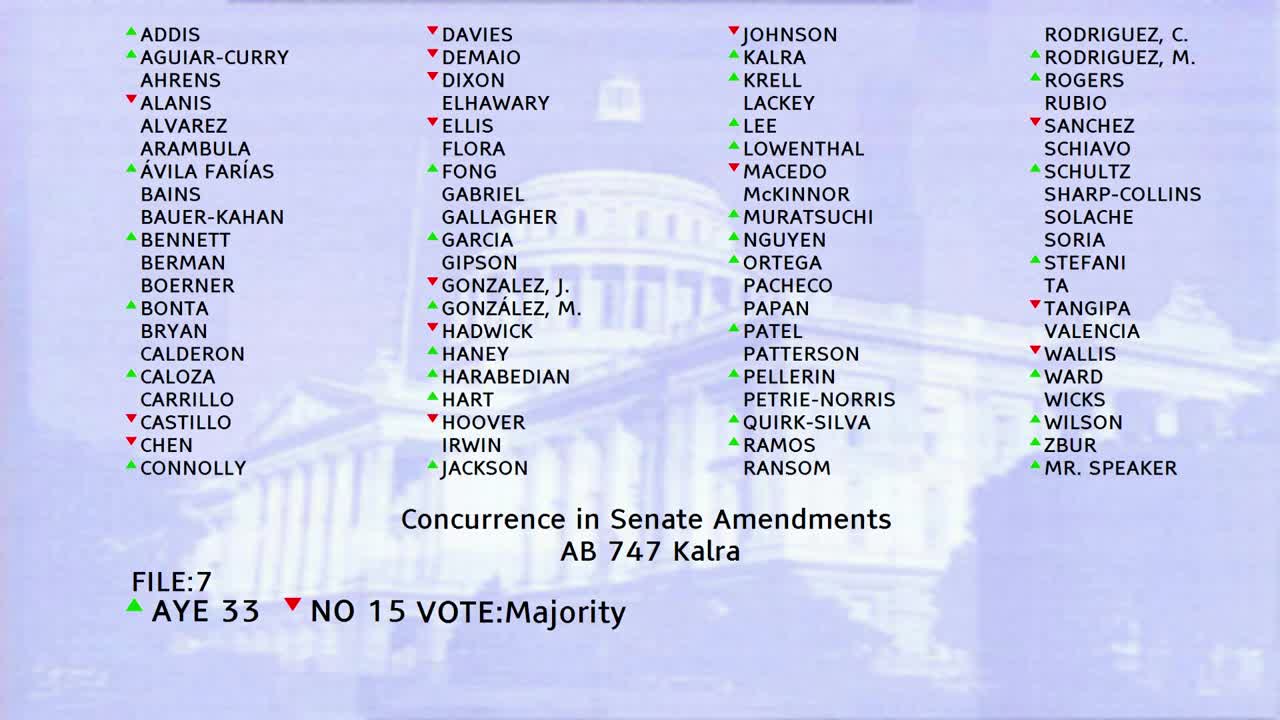 1MIN
Assembly Floor
 2MIN
Senate Floor
 17MIN
Senate Standing Committee on Education
 18MIN
Senate Standing Committee on Governmental Organization
 2MIN
Assembly Floor
 5MIN
Assembly Standing Committee on Public Employment and Retirement
 10MIN
Assembly Standing Committee on Governmental Organization

Bill Co-Author(s):