AB 2689: Low-income housing tax credits: lease nonrenewal: good cause.
- Session Year: 2025-2026
- House: Assembly
- Latest Version Date: 2026-09-30
Current Status:
Passed
(2026-09-30: Chaptered by Secretary of State - Chapter 958, Statutes of 2026.)
Introduced
In Committee
Awaiting First Chamber Vote
Passed First Chamber
In Committee
Awaiting Second Chamber Vote
Passed Second Chamber
Enacted
Existing law, in modified conformity with federal income tax laws, establishes a low-income housing tax credit program through which the California Tax Credit Allocation Committee allocates low-income housing tax credits aimed at providing affordable low-income housing within and throughout the state. Existing federal law sets limitations and guidelines regarding what projects are eligible for credits, including a requirement that an extended low-income housing commitment is in effect, and a prohibition against eviction except for good cause.
This bill would specify, for housing projects where the low-income housing commitment requires 100% of the units, not including any managers units, to be restricted to lower income households, as defined, that good cause for nonrenewal of a lease includes cases where the nonrenewal relates to a household whose income exceeds 140% of the area median income for at least 2 consecutive years and 30% of the households monthly income exceeds the fair market rent, determined as specified. The bill would require an owner to provide notice of the potential of good cause for nonrenewal described above if the households income exceeds 140% of the area median income during any income certification, as specified. The bill would also require an owner electing to not renew a lease as described above to issue a notice of nonrenewal describing the basis of good cause for nonrenewal at least 90 days prior to the expiration of the lease, as specified.
Existing law, in modified conformity with federal income tax laws, establishes a low-income housing tax credit program through which the California Tax Credit Allocation Committee allocates low-income housing tax credits aimed at providing affordable low-income housing within and throughout the state. Existing federal law sets limitations and guidelines regarding what projects are eligible for credits, including a requirement that an extended low-income housing commitment is in effect, and a prohibition against eviction except for good cause.
This bill would specify, for housing projects where the low-income housing commitment requires 100% of the units, not including any managers units, to be restricted to lower income households, as defined, that good cause for nonrenewal of a lease includes cases where the nonrenewal relates to a household whose income exceeds 140% of the area median income for at least 2 consecutive years and 30% of the households monthly income exceeds the fair market rent, determined as specified. The bill would require an owner to provide notice of the potential of good cause for nonrenewal described above if the households income exceeds 140% of the area median income during any income certification, as specified. The bill would also require an owner electing to not renew a lease as described above to issue a notice of nonrenewal describing the basis of good cause for nonrenewal at least 90 days prior to the expiration of the lease, as specified.
Existing law, in modified conformity with federal income tax laws, establishes a low-income housing tax credit program through which the California Tax Credit Allocation Committee allocates low-income housing tax credits aimed at providing affordable low-income housing within and throughout the state. Existing federal law sets limitations and guidelines regarding what projects are eligible for credits, including a requirement that an extended low-income housing commitment is in effect, and a prohibition against eviction except for good cause.
This bill would specify, for housing projects where the low-income housing commitment requires 100% of the units, not including any managers units, to be restricted to lower income households, as defined, that good cause for nonrenewal of a lease includes cases where the nonrenewal relates to a household whose income exceeds 140% of the area median income for at least 2 consecutive years and 30% of the households monthly income exceeds the fair market rent for the county where they reside. rent, determined as specified. The bill would require an owner to provide notice of the potential of good cause for nonrenewal described above if the households income exceeds 140% of the area median income during any income certification, as specified. The bill would also require an owner electing to not renew a lease as described above to issue a notice of nonrenewal describing the basis of good cause for nonrenewal at least 90 days prior to the expiration of the lease, as specified.
Existing law, in modified conformity with federal income tax laws, establishes a low-income housing tax credit program through which the California Tax Credit Allocation Committee allocates low-income housing tax credits aimed at providing affordable low-income housing within and throughout the state. Existing federal law sets limitations and guidelines regarding what projects are eligible for credits, including a requirement that an extended low-income housing commitment is in effect, and a prohibition against eviction except for good cause.
This bill would specify, for housing projects where the low-income housing commitment requires 100% of the units, not including any managers units, to be restricted to lower income households, as defined, that good cause for nonrenewal of a lease includes cases where the nonrenewal relates to a household whose income exceeds 140% of the area median income for at least 2 consecutive years and 30% of the households monthly income exceeds the fair market rent for the county where they reside. The bill would require an owner to provide notice of the potential of good cause for nonrenewal described above if the households income exceeds 140% of the area median income during any income certification, as specified. The bill would also require an owner electing to not renew a lease as described above to issue a notice of nonrenewal describing the basis of good cause for nonrenewal at least 90 days prior to the expiration of the lease, as specified.
Existing law, in modified conformity with federal income tax laws, establishes a low-income housing tax credit program through which the California Tax Credit Allocation Committee allocates low-income housing tax credits aimed at providing affordable low-income housing within and throughout the state. Existing federal law sets limitations and guidelines regarding what projects are eligible for credits, including a requirement that an extended low-income housing commitment is in effect, and a prohibition against eviction except for good cause.
This bill would specify, for housing projects where the low-income housing commitment requires 100% of the units, not including any managers units, to be restricted to lower income households, as defined, that good cause for nonrenewal of a lease includes cases where the nonrenewal relates to a household whose income exceeds 140% of the area median income for at least 2 consecutive years and 30% of the households monthly income exceeds the fair market rent for the county where they reside.
Existing law, the Planning and Zoning Law, provides for the creation of an accessory dwelling unit by local ordinance or, if a local agency has not adopted an ordinance, by ministerial approval, in accordance with specified standards. Existing law prohibits an accessory dwelling unit from being sold or otherwise conveyed separate from the primary residence, except under certain conditions, including if a local agency adopts a local ordinance to allow the separate conveyance of the primary dwelling unit and accessory dwelling unit or units as condominiums, subject to certain requirements. Among these requirements, the ordinance must require a safety inspection of the accessory dwelling unit, as specified, before recordation of the condominium plan.This bill would remove the above-described requirement for a safety inspection before recordation of the condominium plan in connection with the separate conveyance of an accessory dwelling unit under these provisions. The bill would authorize a condominium plan to be submitted with a parcel map or a tentative and final map and, after the recordation of the condominium plan, would authorize that portion of the parcel, including the accessory dwelling unit to be sold or otherwise conveyed separate from the primary residence.Existing law, the Planning and Zoning Law, provides for the creation of an accessory dwelling unit by local ordinance or, if a local agency has not adopted an ordinance, by ministerial approval, in accordance with specified standards. Existing law prohibits an accessory dwelling unit from being sold or otherwise conveyed separate from the primary residence, except under certain conditions, including if a local agency adopts a local ordinance to allow the separate conveyance of the primary dwelling unit and accessory dwelling unit or units as condominiums, subject to certain requirements. Among these requirements, the ordinance must require a safety inspection of the accessory dwelling unit, as specified, before recordation of the condominium plan.
This bill would remove the above-described requirement for a safety inspection before recordation of the condominium plan in connection with the separate conveyance of an accessory dwelling unit under these provisions. The bill would authorize a condominium plan to be submitted with a parcel map or a tentative and final map and, after the recordation of the condominium plan, would authorize that portion of the parcel, including the accessory dwelling unit to be sold or otherwise conveyed separate from the primary residence.
Existing law establishes the California Community Colleges Economic and Workforce Development Program to, among other things, advance Californias economic growth and global competitiveness through education, training, and services that contribute to continuous workforce improvement. Existing law authorizes the Board of Governors of the California Community Colleges to award grants and project funds to community college districts for the program, as specified. Existing law requires the program to be implemented only during those fiscal years for which funds are appropriated for its purposes. Existing law repeals the program on January 1, 2030.This bill would make nonsubstantive changes to that latter provision.Existing law establishes the California Community Colleges Economic and Workforce Development Program to, among other things, advance Californias economic growth and global competitiveness through education, training, and services that contribute to continuous workforce improvement. Existing law authorizes the Board of Governors of the California Community Colleges to award grants and project funds to community college districts for the program, as specified. Existing law requires the program to be implemented only during those fiscal years for which funds are appropriated for its purposes. Existing law repeals the program on January 1, 2030.
This bill would make nonsubstantive changes to that latter provision.
(a)For purposes of implementing Section 42(h)(6) of the Internal Revenue Code, for any qualified low-income building where 100 percent of the units, except for any managers unit, are restricted to lower income households, as defined in Section 50093, by an enforceable regulatory agreement with a government entity, good cause for nonrenewal of a lease shall include cases where both of the following apply:
(1)The households income exceeds 140 percent of the area median income for at least two consecutive years.
(2)Thirty percent of the households monthly income exceeds the greater of the following:
(A)The United States Department of Housing and Urban Developments Fair Market Rent for an equivalent-sized unit for the county where the unit is located, as updated annually.
(B)The United States Department of Housing and Urban Developments Small Area Fair Market Rent for an equivalent-sized unit for the ZIP Code where the unit is located, as updated annually.
(b)If, during any income certification, the households income exceeds 140 percent of the area median income, the owner shall provide the household with written notice of the households income threshold exceedance within 30 days of the certification. The notice shall include a statement that the households income exceeds 140 percent of the area median income and that if the households income exceeds 140 percent of the area median income for two consecutive years, and if 30 percent of the households monthly income exceeds the applicable fair market rent provided by paragraph (2) of subdivision (a), the owner may have good cause for nonrenewal of the lease pursuant to this section.
(c)If paragraphs (1) and (2) of subdivision (a) are satisfied and the owner elects to not renew the lease pursuant to this section, the owner shall issue a notice of nonrenewal at least 90 days prior to the expiration of the lease term and include a citation to this section as the basis for nonrenewal and a statement that the nonrenewal is for good cause because the households income has exceeded 140 percent of the area median income for two consecutive years and 30 percent of the households monthly income exceeds the applicable fair market rent provided by paragraph (2) of subdivision (a).
(a)For purposes of implementing Section 42(h)(6) of the Internal Revenue Code, for any qualified low-income building where 100 percent of the units, except for any managers unit, are restricted to lower income households, as defined in Section 50093, by an enforceable regulatory agreement with a government entity, good cause for nonrenewal of a lease shall include cases where both of the following apply:
(1)The households income exceeds 140 percent of the area median income for at least two consecutive years.
(2)Thirty percent of the households monthly income exceeds the greater of the following:
(A)The United States Department of Housing and Urban Developments Fair Market Rent for an equivalent-sized unit for the county where the unit is located, as updated annually.
(B)The United States Department of Housing and Urban Developments Small Area Fair Market Rent for an equivalent-sized unit for the ZIP Code where the unit is located, as updated annually.
(b)If, during any income certification, the households income exceeds 140 percent of the area median income, the owner shall provide the household with written notice of the households income threshold exceedance within 30 days of the certification. The notice shall include a statement that the households income exceeds 140 percent of the area median income and that if the households income exceeds 140 percent of the area median income for two consecutive years, and if 30 percent of the households monthly income exceeds the applicable fair market rent provided by paragraph (2) of subdivision (a), the owner may have good cause for nonrenewal of the lease pursuant to this section.
(c)If paragraphs (1) and (2) of subdivision (a) are satisfied and the owner elects to not renew the lease pursuant to this section, the owner shall issue a notice of nonrenewal at least 90 days prior to the expiration of the lease term and include a citation to this section as the basis for nonrenewal and a statement that the nonrenewal is for good cause because the households income has exceeded 140 percent of the area median income for two consecutive years and 30 percent of the households monthly income exceeds the applicable fair market rent provided by paragraph (2) of subdivision (a).
(a)For purposes of implementing Section 42(h)(6) of the Internal Revenue Code, for any qualified low-income building where 100 percent of the units, except for any managers unit, are restricted to lower income households, as defined in Section 50093, by an enforceable regulatory agreement with a government entity, good cause for nonrenewal of a lease shall include cases where both of the following apply:
(1)The households income exceeds 140 percent of the area median income for at least two consecutive years.
(2)Thirty percent of the households monthly income exceeds the fair market rent for the county where the unit is located. greater of the following:
(A)The United States Department of Housing and Urban Developments Fair Market Rent for an equivalent-sized unit for the county where the unit is located, as updated annually.
(B)The United States Department of Housing and Urban Developments Small Area Fair Market Rent for an equivalent-sized unit for the ZIP Code where the unit is located, as updated annually.
(b)If, during any income certification, the households income exceeds 140 percent of the area median income, the owner shall provide the household with written notice of the households income threshold exceedance within 30 days of the certification. The notice shall include a statement that the households income exceeds 140 percent of the area median income and that if the households income exceeds 140 percent of the area median income for two consecutive years, and if 30 percent of the households monthly income exceeds the applicable fair market rent, rent provided by paragraph (2) of subdivision (a), the owner may have good cause for nonrenewal of the lease pursuant to this section.
(c)If paragraphs (1) and (2) of subdivision (a) are satisfied and the owner elects to not renew the lease pursuant to this section, the owner shall issue a notice of nonrenewal at least 90 days prior to the expiration of the lease term and include a citation to this section as the basis for nonrenewal and a statement that the nonrenewal is for good cause because the households income has exceeded 140 percent of the area median income for two consecutive years and 30 percent of the households monthly income exceeds the applicable fair market rent for the county. provided by paragraph (2) of subdivision (a).
(a)For purposes of implementing Section 42(h)(6) of the Internal Revenue Code, for any qualified low-income building where 100 percent of the units, except for any managers unit, are restricted to lower income households, as defined in Section 50093, by an enforceable regulatory agreement with a government entity, good cause for nonrenewal of a lease shall include cases where both of the following apply:
(a)(1)The households income exceeds 140% 140 percent of the area median income for at least two consecutive years.
(b)(2)Thirty percent of the households monthly income exceeds the fair market rent for the county where the unit is located.
(b)If, during any income certification, the households income exceeds 140 percent of the area median income, the owner shall provide the household with written notice of the households income threshold exceedance within 30 days of the certification. The notice shall include a statement that the households income exceeds 140 percent of the area median income and that if the households income exceeds 140 percent of the area median income for two consecutive years, and if 30 percent of the households monthly income exceeds the fair market rent, the owner may have good cause for nonrenewal of the lease pursuant to this section.
(c)If paragraphs (1) and (2) of subdivision (a) are satisfied and the owner elects to not renew the lease pursuant to this section, the owner shall issue a notice of nonrenewal at least 90 days prior to the expiration of the lease term and include a citation to this section as the basis for nonrenewal and a statement that the nonrenewal is for good cause because the households income has exceeded 140 percent of the area median income for two consecutive years and 30 percent of the households monthly income exceeds the fair market rent for the county.
For purposes of implementing Section 42(h)(6) of the Internal Revenue Code, for any qualified low-income building where 100 percent of the units, except for any managers unit, are restricted to lower income households, as defined in Section 50093, by an enforceable regulatory agreement with a government entity, good cause for nonrenewal of a lease shall include cases where both of the following apply:
(a)The households income exceeds 140% of the area median income for at least two consecutive years.
(b)Thirty percent of the households monthly income exceeds the fair market rent for the county where the unit is located.
SECTION 1.Section 66342 of the Government Code is amended to read:66342.(a) In addition to the requirement that a local agency allow the separate sale or conveyance of an accessory dwelling unit pursuant to Section 66341, a local agency may also adopt a local ordinance to allow the separate conveyance of the primary dwelling unit and accessory dwelling unit or units as condominiums. An ordinance shall include all of the following requirements:(1)The condominiums shall be created pursuant to the Davis-Stirling Common Interest Development Act (Part 5 (commencing with Section 4000) of Division 4 of the Civil Code).(2)The condominiums shall be created in conformance with all applicable objective requirements of the Subdivision Map Act (Division 2 (commencing with Section 66410)) and all objective requirements of a local subdivision ordinance.(3)(A)A subdivision map or a condominium plan shall not be recorded with the county recorder in the county where the real property is located without each lienholders consent. The following shall apply to the consent of a lienholder:(i)A lienholder may refuse to give consent.(ii)A lienholder may consent provided that any terms and conditions required by the lienholder are satisfied.(B)Prior to recordation of the initial or any subsequent modifications to the condominium plan, written evidence of the lienholders consent shall be provided to the county recorder along with a signed statement from each lienholder that states as follows:(Name of lienholder) hereby consents to the recording of this condominium plan in their sole and absolute discretion and the borrower has or will satisfy any additional terms and conditions the lienholder may have.(C)The lienholders consent shall be included on the condominium plan or a separate form attached to the condominium plan that includes the following information:(i)The lienholders signature.(ii)The name of the record owner or ground lessee.(iii)The legal description of the real property.(iv)The identities of all parties with an interest in the real property as reflected in the real property records.(v)The lienholders consent shall be recorded in the office of the county recorder of the county in which the real property is located.(4)The local agency shall include the following notice to consumers on any accessory dwelling or junior accessory dwelling unit submittal checklist or public information issued describing requirements and permitting for accessory dwelling units, including as standard condition of any accessory dwelling unit building permit or condominium plan approval:NOTICE: If you are considering establishing your primary dwelling unit and accessory dwelling unit as a condominium, please ensure that your building permitting agency allows this practice. If you decide to establish your primary dwelling unit and accessory dwelling unit as a condominium, your condominium plan or any future modifications to the condominium plan must be recorded with the County Recorder. Prior to recordation or modification of your subdivision map and condominium plan, any lienholder with a lien on your title must provide a form of written consent either on the condominium plan, or on the lienholders consent form attached to the condominium plan, with text that clearly states that the lender approves recordation of the condominium plan and that you have satisfied their terms and conditions, if any.In order to secure lender consent, you may be required to follow additional lender requirements, which may include, but are not limited to, one or more of the following:(a)Paying off your current lender.You may pay off your mortgage and any liens through a refinance or a new loan. Be aware that refinancing or using a new loan may result in changes to your interest rate or tax basis. Also, be aware that any subsequent modification to your subdivision map or condominium plan must also be consented to by your lender, which consent may be denied.(b)Securing your lenders approval of a modification to their loan collateral due to the change of your current property legal description into one or more condominium parcels.(c)Securing your lenders consent to the details of any construction loan or ground lease.This may include a copy of the improvement contract entered in good faith with a licensed contractor, evidence that the record owner or ground lessee has the funds to complete the work, and a signed statement made by the record owner or ground lessor that the information in the consent above is true and correct.(5)If an accessory dwelling unit is established as a condominium, the local government shall require the homeowner to notify providers of utilities, including water, sewer, gas, and electricity, of the condominium creation and separate conveyance.(6)(A)The owner of a property or a separate interest within an existing planned development that has an existing association, as defined in Section 4080 of the Civil Code, shall not record a condominium plan to create a common interest development under Section 4100 of the Civil Code without the express written authorization by the existing association.(B)For purposes of this paragraph, written authorization by the existing association means approval by the board at a duly noticed board meeting, as defined in Section 4090 of the Civil Code, and if needed pursuant to the existing associations governing documents, membership approval of the existing association.(b)(1)The ordinance may authorize a condominium plan to be submitted with a parcel map or a tentative and final map.(2)After the recordation of the condominium plan submitted pursuant to paragraph (1), the portion of the parcel including the accessory dwelling unit may be sold or otherwise conveyed separate from the primary residence.(c)An accessory dwelling unit shall be sold or otherwise conveyed separate from the primary residence only under the conditions outlined in this section or pursuant to this article.(a) In addition to the requirement that a local agency allow the separate sale or conveyance of an accessory dwelling unit pursuant to Section 66341, a local agency may also adopt a local ordinance to allow the separate conveyance of the primary dwelling unit and accessory dwelling unit or units as condominiums. Any such An ordinance shall include all of the following requirements:
(a)(1)The condominiums shall be created pursuant to the Davis-Stirling Common Interest Development Act (Part 5 (commencing with Section 4000) of Division 4 of the Civil Code).
(b)(2)The condominiums shall be created in conformance with all applicable objective requirements of the Subdivision Map Act (Division 2 (commencing with Section 66410)) and all objective requirements of a local subdivision ordinance.
(c)Before recordation of the condominium plan, a safety inspection of the accessory dwelling unit shall be conducted as evidenced either through a certificate of occupancy from the local agency or a housing quality standards report from a building inspector certified by the United States Department of Housing and Urban Development. (d)(1)(3)(A)Neither a A subdivision map nor or a condominium plan shall not be recorded with the county recorder in the county where the real property is located without each lienholders consent. The following shall apply to the consent of a lienholder:
(A)(i)A lienholder may refuse to give consent.
(B)(ii)A lienholder may consent provided that any terms and conditions required by the lienholder are satisfied.
(2)(B)Prior to recordation of the initial or any subsequent modifications to the condominium plan, written evidence of the lienholders consent shall be provided to the county recorder along with a signed statement from each lienholder that states as follows:
(Name of lienholder) hereby consents to the recording of this condominium plan in their sole and absolute discretion and the borrower has or will satisfy any additional terms and conditions the lienholder may have.
(3)(C)The lienholders consent shall be included on the condominium plan or a separate form attached to the condominium plan that includes the following information:
(A)(i)The lienholders signature.
(B)(ii)The name of the record owner or ground lessee.
(C)(iii)The legal description of the real property.
(D)(iv)The identities of all parties with an interest in the real property as reflected in the real property records.
(E)(v)The lienholders consent shall be recorded in the office of the county recorder of the county in which the real property is located.
(e)(4)The local agency shall include the following notice to consumers on any accessory dwelling or junior accessory dwelling unit submittal checklist or public information issued describing requirements and permitting for accessory dwelling units, including as standard condition of any accessory dwelling unit building permit or condominium plan approval:
NOTICE: If you are considering establishing your primary dwelling unit and accessory dwelling unit as a condominium, please ensure that your building permitting agency allows this practice. If you decide to establish your primary dwelling unit and accessory dwelling unit as a condominium, your condominium plan or any future modifications to the condominium plan must be recorded with the County Recorder. Prior to recordation or modification of your subdivision map and condominium plan, any lienholder with a lien on your title must provide a form of written consent either on the condominium plan, or on the lienholders consent form attached to the condominium plan, with text that clearly states that the lender approves recordation of the condominium plan and that you have satisfied their terms and conditions, if any.
In order to secure lender consent, you may be required to follow additional lender requirements, which may include, but are not limited to, one or more of the following:
(a)Paying off your current lender.
You may pay off your mortgage and any liens through a refinance or a new loan. Be aware that refinancing or using a new loan may result in changes to your interest rate or tax basis. Also, be aware that any subsequent modification to your subdivision map or condominium plan must also be consented to by your lender, which consent may be denied.
(b)Securing your lenders approval of a modification to their loan collateral due to the change of your current property legal description into one or more condominium parcels.
(c)Securing your lenders consent to the details of any construction loan or ground lease.
This may include a copy of the improvement contract entered in good faith with a licensed contractor, evidence that the record owner or ground lessee has the funds to complete the work, and a signed statement made by the record owner or ground lessor that the information in the consent above is true and correct.
(f)(5)If an accessory dwelling unit is established as a condominium, the local government shall require the homeowner to notify providers of utilities, including water, sewer, gas, and electricity, of the condominium creation and separate conveyance.
(g)(1)(6)(A)The owner of a property or a separate interest within an existing planned development that has an existing association, as defined in Section 4080 of the Civil Code, shall not record a condominium plan to create a common interest development under Section 4100 of the Civil Code without the express written authorization by the existing association.
(2)(B)For purposes of this subdivision, paragraph, written authorization by the existing association means approval by the board at a duly noticed board meeting, as defined in Section 4090 of the Civil Code, and if needed pursuant to the existing associations governing documents, membership approval of the existing association.
(b)(1)The ordinance may authorize a condominium plan to be submitted with a parcel map or a tentative and final map.
(2)After the recordation of the condominium plan submitted pursuant to paragraph (1), the portion of the parcel including the accessory dwelling unit may be sold or otherwise conveyed separate from the primary residence.
(h)(c)An accessory dwelling unit shall be sold or otherwise conveyed separate from the primary residence only under the conditions outlined in this paragraph section or pursuant to this article.
SECTION 1.Section 88651 of the Education Code is amended to read:88651.This part shall remain in effect only until January 1, 2030, and, as of that date, is repealed, unless a later enacted statute, that is enacted before January 1, 2030, deletes or extends that date.This part shall remain in effect only until January 1, 2030, and and, as of that date date, is repealed, unless a later enacted statute, that is enacted before January 1, 2030, deletes or extends that date.
|
Date
|
Status
|
|---|---|
| Sep 30, 2026 | Chaptered by Secretary of State - Chapter 958, Statutes of 2026. |
| Sep 30, 2026 | Approved by the Governor. |
| Sep 10, 2026 | Enrolled and presented to the Governor at 3 p.m. |
| Aug 30, 2026 | Senate amendments concurred in. To Engrossing and Enrolling. (Ayes 69. Noes 2.). |
| Aug 30, 2026 | Senate amendments concurred in. To Engrossing and Enrolling. (Ayes 69. Noes 2. Page 6884.). |
| Aug 30, 2026 | Senate amendments concurred in. To Engrossing and Enrolling. |
| Aug 28, 2026 | In Assembly. Concurrence in Senate amendments pending. |
| Aug 27, 2026 | Read third time. Passed. Ordered to the Assembly. (Ayes 40. Noes 0.). |
| Jul 2, 2026 | Read second time. Ordered to third reading. |
| Jul 1, 2026 | From committee: Do pass. (Ayes 11. Noes 0.) (June 30). |
| Jun 22, 2026 | From committee chair, with author's amendments: Amend, and re-refer to committee. Read second time, amended, and re-referred to Com. on JUD. |
| Jun 17, 2026 | From committee: Do pass and re-refer to Com. on JUD. with recommendation: To Consent Calendar. (Ayes 10. Noes 0.) (June 16). Re-referred to Com. on JUD. |
| Jun 10, 2026 | Referred to Coms. on HOUSING and JUD. |
| Jun 1, 2026 | In Senate. Read first time. To Com. on RLS. for assignment. |
| May 28, 2026 | Read third time. Passed. Ordered to the Senate. (Ayes 68. Noes 1.) |
| May 28, 2026 | Read third time. Passed. Ordered to the Senate. (Ayes 68. Noes 1. Page 5549.) |
| May 4, 2026 | Read second time. Ordered to third reading. |
| Apr 30, 2026 | Read second time and amended. Ordered returned to second reading. |
| Apr 29, 2026 | From committee: Amend, and do pass as amended. (Ayes 11. Noes 1.) (April 29). |
| Apr 9, 2026 | In committee: Hearing postponed by committee. |
| Apr 7, 2026 | Re-referred to Com. on H. & C.D. |
| Apr 6, 2026 | From committee chair, with author's amendments: Amend, and re-refer to Com. on H. & C.D. Read second time and amended. |
| Mar 23, 2026 | Re-referred to Com. on H. & C.D. |
| Mar 19, 2026 | Referred to Coms. on H. & C.D. and L. GOV. |
| Mar 19, 2026 | From committee chair, with author's amendments: Amend, and re-refer to Com. on H. & C.D. Read second time and amended. |
| Feb 21, 2026 | From printer. May be heard in committee March 23. |
| Feb 20, 2026 | Read first time. To print. |
|
Date
|
Description
|
Location
|
Votes
|
|
|---|---|---|---|---|
| Aug 30, 2026 | AB 2689 Ávila Farías Concurrence in Senate Amendments | Assembly Floor |
Passed |
|
| Aug 27, 2026 | Assembly 3rd Reading AB2689 Ávila Farías et al. By Caballero | Senate Floor |
Passed |
|
| Jun 30, 2026 | Do pass | Senate Standing Committee on Judiciary |
Passed |
|
| Jun 16, 2026 | Do pass, but first be re-referred to the Committee on [Judiciary] with the recommendation: To Consent Calendar | Senate Standing Committee on Housing |
Passed |
|
| May 28, 2026 | AB 2689 Ávila Farías Assembly Third Reading | Assembly Floor |
Passed |
|
| Apr 29, 2026 | Do pass as amended. | Assembly Standing Committee on Housing and Community Development |
Passed |
This list shows positions taken on this bill by organizations on the date displayed, which is linked to the original source.
Positions by individuals are not included.
|
Organization
|
Position
|
Date
|
|---|---|---|
| California Democratic Renters Council | ** Against | |
| California Housing Partnership | ** Support | |
| Southern California Association of Nonprofit Housing | ** Support |
CONCURRENCE IN SENATE AMENDMENTS
CSA1 Bill Id:AB 2689
Author:(Ávila Farías)
As Amended Ver:June 22, 2026
Majority vote
SUMMARY
Provides for the Low Income Housing Tax Credit (LIHTC) program, for any 100% affordable low income building that is subject to an enforceable regulatory agreement with a government entity, good cause for a nonrenewal of a lease includes when both a household's income exceeds 140% of the area median income (AMI) for at least two years and 30% of the households monthly income exceeds the fair market rent, as specified.
Senate Amendments
Requires that when determining if a tenant is paying less than 30% of their income toward rent, the amount fair market rent is the greater of either: 1) the U.S, Department of Housing and Urban Development's (HUD's) fair market rent for the county where the unit is located or 2) the U.S. HUD small area fair market rent for an equivalent sized unit for the ZIP Code where the unit is located.
COMMENTS
Affordable Housing Need: According to the California Housing Partnership, California funded upwards of 23,000 new affordable homes in 2025, yet the state is only funding 20% of what is needed to meet its goals. Renters need to earn 2.8 times the state minimum wage to afford average asking rent in California, which increased by 1.8% from last year. Seventy-nine percent of extremely low-income (ELI) renter households pay more than half of their income on housing costs compared to 6% of moderate-income renter households. The U.S Department of Housing and Urban Development considers housing to be affordable when a household spends 30% or less of its income on housing costs. For households that spend more than that, are considered "rent burdened."
LIHTC: In 1986, the federal government authorized the LIHTC program to enable affordable housing developers to raise private capital through the sale of tax credits to investors. Two types of federal tax credits are available and are generally referred to as 9% and 4% credits. TCAC administers the program and awards credits to qualified developers who can then sell those credits to private investors who use the credits to reduce their federal tax liability. The developer in turn invests the capital into the affordable housing project.
Each state receives an annual ceiling of 9% federal tax credits. Federal LIHTCs are oversubscribed by a 3:1 ratio. Unlike 9% LIHTC, federal 4% tax credits are not capped; however, they must be used in conjunction with tax-exempt private activity bonds (PABs) which are capped and are administered by the California Debt Limit Allocation Committee (CDLAC). In 1987, the Legislature authorized a state LIHTC program to augment the federal tax credit program. Projects that receive either state or federal tax credits are required to maintain the housing at affordable levels for 55 years. Statute authorizes $70 million in state tax credits each year, which has been annually adjusted for inflation and now hovers around $100 million each year.
In 2025, H.R.1 lowered the PAB financing threshold from 50% to 25% of land and building costs. Due to this change, affordable housing developments financed with PABs issued after Dec. 31, 2025, qualify for 4% LIHTCs with much fewer bonds than before. As a result, the PABs and 4% LIHTC will be able to stretch much further than in the past. To fully leverage this change, the state will need additional gap financing to pair with these PABS and credits. Estimates suggest that the state may be able to double our affordable housing production, from 20,000 to 40,000 units, with the additional bond cap.
Property Tax Welfare Exemption: Article XIII, Section 4(b) of the California Constitution authorizes the Legislature to exempt property used exclusively for religious, hospital, or charitable purposes, as specified, from taxation. The Legislature has implemented this "welfare exemption" in R&TC Section 214. AB 2144 (Filante), Statutes of 1989 amended R&TC Section 214 to specifically exempt low-income housing developments operated by non-profit organizations. As noted in the Senate Revenue and Taxation Committee analysis, AB 2144's proponents argued that the property tax funds then being paid "could better be used in furtherance of the goals of providing low-income housing." Generally, to qualify for the welfare exemption, the law requires that the rental housing be financed with specified tax-exempt bonds, government loans, or grants, or that the property's owner receives LIHTC under IRC Section 42. The welfare exemption extends to "units serving lower income households." To qualify, the State Board of Equalization has noted that a unit must be occupied by a lower income household (with a maximum income of 80% AMI).
In 2017, AB 1193 (Gloria), Chapter 756, Statutes of 2017 provided that, in cases where a property owner is eligible for the LIHTC, a unit shall continue to be treated as occupied by a lower income household if the occupants was lower income on the lien date in the fiscal year in which occupancy began and the unit continues to be rent restricted, notwithstanding an increase in the income of the occupants to 140% of AMI. However, under AB 1193, if the occupants' income increases over this threshold, the unit ceases to be treated as a lower income unit. This law was designed to provide income flexibility roughly in line with federal law governing the LIHTC.
Income Qualifying: The average income of a LIHTC project is 60% of AMI. To qualify for a LIHTC unit, tenants must income-qualify when first renting the unit. There are no federal tax laws limiting how much a tenant's income can increase once they are in a LIHTC unit. In addition, a developer can receive the property tax welfare exemption on any units where the tenant's income when first occupying the unit was 80% of AMI or less. State law allows a property owner to continue to receive the welfare exemption until the tenant's income reaches 140% of AMI. Once a tenant's income exceeds 140% of AMI, a property owner can no longer receive the property tax welfare exemption. There are no financial penalties in federal tax law governing LIHTC if a tenant's income exceeds 140% of AMI.
In a LIHTC project where there is a mix of lower income units and market rate units, federal law dictates the "The Available Unit Rule" (Rule). Under the Rule, a property owner is required to maintain the level of affordability agreed to receive the LIHTC. If development is required to have 20% of the unit's deed restricted to lower income units and a tenant in a deed-restricted units income exceeds 140% of AMI, the property owner must move that person to a market rate unit when one is available and replace the lower income unit with an income qualified tenant. In developments that are 100% affordable, developers cannot move tenants because all of the units are deed restricted to lower-income and a property owner cannot raise the rent if the tenant's income exceeds 140% of AMI because the unit is deed restricted to lower income. As a result, the property owner loses the property tax welfare exemption on that unit, subsidy that is needed to support the operation on the development because the rents are below market rent.
This bill would give a developer the option to not renew a tenant's lease if, for two years, their income exceeds 140% of AMI and they can rent a unit in the county in which they live and only pay 30% of their income toward rent. Housing costs are considered affordable if an individual pays 30% of their income toward the cost of housing. This policy would give property owners the option to fill a deed restricted lower income unit with an income qualified tenant, only if an existing tenant's income has grown to above moderate income and renting a unit in the private market allows them to continue to keep their housing costs at an affordable level. The intent of this bill is to ensure that scarce, state-subsidized units are made available to tenants who are lower-income, while ensuring that tenants whose incomes grow to more than triple the income required to initially qualify for a lower income unit are not displaced in high-cost markets. Tenants whose income grows to 140% of AMI would only have their leases not renewed if they could afford fair market rent, while paying 30% toward their rent. This ensures that tenants' housing costs remain affordable. Owners would notify tenants when their income reaches 140% of AMI so they can begin preparing for a market rate rental, including saving up for a security deposit and any other moving expenses.
According to the Author
"Millions of Californians struggle to find and afford housing. However, the demand far outweighs the supply. Waitlists for public housing or federal housing voucher units can be extensive, with families often waiting months and even years before there is an open unit. Furthermore, current law does not provide a transition for tenants in deed-restricted units who begin to earn significantly more in annual income. AB 2689 creates metrics for affordable housing managers to transition higher income tenants out of units intended for the low-income families. This bill would establish that good cause for nonrenewal of a lease where the nonrenewal relates to a household whose income exceeds 140% of the area median income for at least 2 consecutive years and 30% of the household's monthly income exceeds the fair market rent for the county where they reside. This in return would allow 100% affordable housing managers to transition higher income tenants out of units intended for the low-income families. This bill is about providing a fair, dignified process for affordable housing managers to transition units from over-income tenants to families who desperately need them."
Arguments in Support
According to the California Housing Partnership, "There is an urgent need for additional affordable housing development to provide relief to many Californians who are rent-burdened or experiencing the risk of homelessness, and address the affordable housing crisis in California, the most populous and second most expensive state in the country. The cost for affordable housing development is increasing, though, with affordable housing developers seeing insurance premiums rise, if they can get insurance at all. For example, in 2023, one in three affordable housing providers experienced insurance premium increases of 25 percent or higher, according to a national report. In California, many affordable housing developers are reporting over 100 percent insurance premiums increases. This not only prevents affordable housing developers from building more affordable housing. It could also prevent them from preserving the affordable housing units they already have. AB 2689 bill looks to ensure that deed-restricted units are made available to low-income tenants without displacing over-income individuals into high-cost markets."
Arguments in Opposition
According to the California Democratic Renters Council, "faced with the possibility of losing housing and close relationships with neighbors, tenants will be incentivized to pass up better jobs or promotions, harming themselves and also the state's economy and income tax revenue. Finally, there is value in having a range of incomes within one building. Affordable housing tenants who moved in at low income and have since reached higher income are often community leaders and role models who help others in their building succeed. If the issue is the unit losing the property tax welfare exemption, that issue should be addressed directly by changing the law to allow the exemption to be maintained, or by allowing the rents in a unit occupied by a higher income tenant to be proportionally higher. But forcing people to move out should never be the answer."
FISCAL COMMENTS
None. This bill was keyed non-fiscal by Legislative Counsel.
VOTES:
ASM HOUSING AND COMMUNITY DEVELOPMENT: 11-1-0
YES: Haney, Patterson, Ávila Farías, Caloza, Garcia, Kalra, Quirk-Silva, Ta, Tangipa, Wicks, Wilson
NO: Lee
ASSEMBLY FLOOR: 68-1-11
YES: Addis, Aguiar-Curry, Ahrens, Alanis, Alvarez, Ávila Farías, Bains, Bauer-Kahan, Bennett, Berman, Boerner, Calderon, Caloza, Carrillo, Castillo, Chen, Connolly, Davies, DeMaio, Dixon, Elhawary, Ellis, Fong, Gabriel, Gallagher, Garcia, Gipson, Jeff Gonzalez, Hadwick, Haney, Harabedian, Hart, Hoover, Irwin, Jackson, Johnson, Kalra, Krell, Lackey, Lowenthal, Macedo, McKinnor, Muratsuchi, Nguyen, Pacheco, Papan, Patel, Patterson, Pellerin, Petrie-Norris, Ransom, Michelle Rodriguez, Rogers, Blanca Rubio, Sanchez, Schiavo, Schultz, Sharp-Collins, Solache, Soria, Ta, Tangipa, Valencia, Wallis, Ward, Wicks, Wilson, Rivas
NO: Lee
ABS, ABST OR NV: Arambula, Bonta, Bryan, Flora, Mark González, Ortega, Quirk-Silva, Ramos, Celeste Rodriguez, Stefani, Zbur
UPDATED
VERSION: June 22, 2026
CONSULTANT: Lisa Engel / H. & C.D. / (916) 319-2085 FN: 0003916
SENATE RULES COMMITTEE Office of Senate Floor Analyses (916) 651-4171 | AB 2689 |
THIRD READING
Bill No: AB 2689
Author: Ávila Farías (D), et al.
Amended: 6/22/26 in Senate
Vote: 21
SENATE HOUSING COMMITTEE: 10-0, 6/16/26
AYES: Arreguín, Seyarto, Cabaldon, Caballero, Cortese, Durazo, Gonzalez, Grayson, Ochoa Bogh, Padilla
SENATE JUDICIARY COMMITTEE: 11-0, 6/30/26
AYES: Umberg, Niello, Ashby, Caballero, Durazo, Laird, Reyes, Stern, Valladares, Weber Pierson, Wiener
NO VOTE RECORDED: Allen, Wahab
ASSEMBLY FLOOR: 68-1, 5/28/26 - See last page for vote
SUBJECT: Low-income housing tax credits: lease nonrenewal: good cause
SOURCE: Author
DIGEST:
This bill provides for the Low Income Housing Tax Credit (LIHTC) program, for any low income building that is subject to an enforceable regulatory agreement with a government entity, good cause for a nonrenewal of a lease includes when both a household's income exceeds 140% of the area median income (AMI) for at least two years and the 30% of the households monthly income fair market rent, as specified.
ANALYSIS:
Existing law:
- Authorizers, under the tax on the gross premiums of insurers, the personal income tax (PIT) Law, and the corporate tax (CT) Law, a state LIHTC that is calculated in partial conformity with the federal LIHTC and may only be claimed over a period of four years.
- Allocates $70 million on an ongoing basis to the California Tax Credit Allocation Committee (CTCAC) for the purposes of administering the LIHTC and adjusts this amount for inflation beginning in the 2002 calendar year, plus any unused amounts for the preceding calendar year and any amount returned in the calendar year.
- Provides that an owner of a property financed using LIHTCs shall continue to be treated as occupied by a lower income household for purposes of the property tax welfare exemption if the occupants qualified as lower income (80% or less of AMI) when they first occupied the unit even if their income increases to 140% of AMI, adjusted for family size. However, the unit shall cease to be treated as a lower income unit if the income of the occupants of the unit increases above 140% of AMI, adjusted for family size.
This bill:
- Provides for the LIHTC program, for any low income building that is subject to an enforceable regulatory agreement with a government entity, good cause for a nonrenewal of a lease includes when both a household's income exceeds 140% of AMI for at least two years and the 30% of the households monthly income exceeds the fair market rent for the county or the for the ZIP code, in which the unit is located.
- Requires a property owner to provide specified notice to a tenant whose income exceeds 140% of AMI.
2) Requires a property owner to provide 90 days' notice prior to the expiration of the lease term if the basis for non-renewal of a lease is that a household's income has exceeded 140% of the AMI for two consecutive years and 30% of the household's monthly income exceeds the fair market rent for the county or the for the ZIP code, in which the unit is located.
Background
LIHTC. State and federal law allow a LIHTC to qualified taxpayers for incurring certain costs related to the construction, rehabilitation, or acquisition of low-income rental housing. In practice, low-income rental housing developers design projects and apply to the CTCAC for credits. If the CTCAC authorizes credits, the CTCAC enters a regulatory agreement with the housing developer that stipulates income and rent restrictions. The CTCAC then reserves the credit amount for that application. Subsequently, the developer forms a partnership with investors that exchange equity financing for the credits, and the investors may then claim the credit over the authorized period. Rather than expecting the investment in a LIHTC project to produce income, investors rely on the credit to realize a return in the form of reducing their tax liabilities. The equity raised from this exchange lowers the financing costs for developers such that they can feasibly charge lower rents, thereby potentially expanding the supply of affordable rental housing.
There are two types of the LIHTC, the 9% credit and the 4% credit, which are awarded to projects that are non-federally subsidized or federally subsidized, respectively. The 9% credit is subject to a federally prescribed annual ceiling based on the population of a state; whereas, the 4% credit must have 50% of the project financed by federally tax-exempt bonds.
Comments
Author’s statement. “Millions of Californians struggle to find and afford housing. However, the demand far outweighs the supply. Waitlists for public housing or federal housing voucher units can be extensive, with families often waiting months and even years before there is an open unit. Furthermore, current law does not provide a transition for tenants in deed-restricted units who begin to earn significantly more in annual income. AB 2689 would establish good cause for nonrenewal in households at 100% affordable housing sites for those tenants whose income exceeds 140% of the area median income (AMI) for at least 2 consecutive years. Tenants whose income grows to 140% of AMI would only have their leases not renewed if they could afford fair market rent, while paying 30% toward their rent. This in return would allow 100% affordable housing managers to transition higher income tenants out of units intended for the low-income families. This bill does not require affordable housing managers to transition over-income tenants – it only provides dignified metrics should they choose to do so. AB 2689 is about providing a fair, dignified process for affordable housing managers to transition units from over-income tenants to families who desperately need them.”
Property Tax Welfare Exemption. Article XIII, Section 4(b) of the California Constitution authorizes the Legislature to exempt property used exclusively for religious, hospital, or charitable purposes, as specified, from taxation. Stemming from this authority, the Legislature implemented this "welfare exemption.” To exempt certain activities from property taxes, AB 2144 (Filante, Chapter 1469, Statutes of 1989) added low-income housing developments operated by non-profit organizations to this exemption because property tax funds "could better be used in furtherance of the goals of providing low-income housing." Generally, to qualify for the welfare exemption, the law requires that the rental housing be financed with specified tax-exempt bonds, government loans, or grants, or that the property's owner receives LIHTC. The welfare exemption extends to "units serving lower income households." To qualify, the State Board of Equalization has noted that a unit must be occupied by a lower income household (with a maximum income of 80% AMI).
In 2017, AB 1193 (Gloria, Chapter 756, Statutes of 2017) provided that, in cases where a property owner is eligible for the LIHTC, a unit shall continue to be treated as occupied by a lower income household if the occupants was lower income on the lien date in the fiscal year in which occupancy began and the unit continues to be rent restricted, notwithstanding an increase in the income of the occupants to 140% of AMI. However, under AB 1193, if the occupants' income increases over this threshold, the unit ceases to be treated as a lower income unit. This law was designed to provide income flexibility roughly in line with federal law governing the LIHTC.
Income Qualifying. The average income of a LIHTC project is 60% of AMI. To qualify for a LIHTC unit, tenants must income-qualify when first renting the unit. There are no federal tax laws limiting how much a tenant's income can increase once they are in a LIHTC unit. In addition, a developer can receive the property tax welfare exemption on any units where the tenant's income when first occupying the unit was 80% of AMI or less. State law allows a property owner to continue to receive the welfare exemption until the tenant's income reaches 140% of AMI. Once a tenant's income exceeds 140% of AMI, a property owner can no longer receive the property tax welfare exemption. There are no financial penalties in federal tax law governing LIHTC if a tenant's income exceeds 140% of AMI.
In a LIHTC project where there is a mix of lower income units and market rate units, federal law dictates the "The Available Unit Rule" (Rule). Under the Rule, a property owner is required to maintain the level of affordability agreed to receive the LIHTC. If development is required to have 20% of the unit's deed restricted to lower income units and a tenant in a deed-restricted units income exceeds 140% of AMI, the property owner must move that person to a market rate unit when one is available and replace the lower income unit with an income qualified tenant. In developments that are 100% affordable, developers cannot move tenants because all of the units are deed restricted to lower-income and a property owner cannot raise the rent if the tenant's income exceeds 140% of AMI because the unit is deed restricted to lower income. As a result, the property owner loses the property tax welfare exemption on that unit. Forfeiting this subsidy can compromise the nonprofit’s ability to support the operation on the development because the rents remain below market rent.
This bill gives a developer the option not to renew a tenant's lease if, for two years, their income exceeds 140% of AMI and they can rent a unit in the county or ZIP code in which they live and only pay 30% of their income toward rent. Housing costs are considered affordable if an individual pays 30% of their income toward the cost of housing. This policy would give property owners the option to fill a deed restricted lower income unit with an income qualified tenant, only if an existing tenant's income has grown to above moderate income and renting a unit in the private market allows them to continue to keep their housing costs at an affordable level. The intent of this bill is to ensure that scarce, state-subsidized units are made available to tenants who are lower-income, while ensuring that tenants whose incomes grow to more than triple the income required to initially qualify for a lower income unit are not displaced in high-cost markets. Tenants whose income grows to 140% of AMI would only have their leases not renewed if they could afford fair market rent, while paying 30% toward their rent. This ensures that tenants' housing costs remain affordable. Owners would notify tenants when their income reaches 140% of AMI so they can begin preparing for a market rate rental, including saving up for a security deposit and any other moving expenses.
FISCAL EFFECT: Appropriation: No Fiscal Com.: No Local: No
SUPPORT: (Verified 7/15/26)
California Housing Partnership
OPPOSITION: (Verified 7/15/26)
None received
ASSEMBLY FLOOR: 68-1, 5/28/26
AYES: Addis, Aguiar-Curry, Ahrens, Alanis, Alvarez, Ávila Farías, Bains, Bauer-Kahan, Bennett, Berman, Boerner, Calderon, Caloza, Carrillo, Castillo, Chen, Connolly, Davies, DeMaio, Dixon, Elhawary, Ellis, Fong, Gabriel, Gallagher, Garcia, Gipson, Jeff Gonzalez, Hadwick, Haney, Harabedian, Hart, Hoover, Irwin, Jackson, Johnson, Kalra, Krell, Lackey, Lowenthal, Macedo, McKinnor, Muratsuchi, Nguyen, Pacheco, Papan, Patel, Patterson, Pellerin, Petrie-Norris, Ransom, Michelle Rodriguez, Rogers, Blanca Rubio, Sanchez, Schiavo, Schultz, Sharp-Collins, Solache, Soria, Ta, Tangipa, Valencia, Wallis, Ward, Wicks, Wilson, Rivas
NOES: Lee
NO VOTE RECORDED: Arambula, Bonta, Bryan, Flora, Mark González, Ortega, Quirk-Silva, Ramos, Celeste Rodriguez, Stefani, Zbur
Prepared by: Alison Hughes / HOUSING / (916) 651-4124
7/30/26 14:49:28
**** END ****
Senator Thomas Umberg, Chair
2025-2026 Regular Session
Bill No: AB 2689 (Author:Ávila Farías)
Version: June 22, 2026
Hearing Date: June 30, 2026
Fiscal: No
Urgency: No
Consultant: ID
SUBJECT
Low-income housing tax credits: lease nonrenewal: good cause
DIGEST
This bill permits the nonrenewal of a lease for a household in a low-income building where 100 percent of the units are restricted to lower income households when the household’s income exceeds 140 percent o the area median income for at least two consecutive years and 30 percent of the household’s monthly income exceeds fair market rent, as provided, and requires specified notices related to such lease nonrenewal.
EXECUTIVE SUMMARY
The Low-Income Housing Tax Credit (LIHTC) program was created by the Tax Reform Act of 1986 (Pub. L. 99-514, 100 Stat. 2085) to promote the creation of affordable housing across the United States. The LIHTC program helps develop affordable housing by allowing housing developers to sell tax credits to raise capital for affordable housing projects from investors. The investors who purchase the tax credits can then use the tax credits to offset their federal tax liability. In 1987, the state created its own LIHTC program (state LIHTC) to augment the federal LIHTC program. In California, LIHTC programs must remain rent and income restricted for 55 years. These income requirements apply at the beginning of a tenant’s lease, but there are otherwise no limits upon eligibility for continuing or renewing a lease based on income, and tenants can only be evicted from LIHTC units for good cause. AB 2689 permits an owner of a LIHTC project to not renew a tenant’s lease when the tenant’s household income exceeds 140 percent of the area median income (AMI) for at least two consecutive years and 30 percent of the household’s monthly income exceeds fair market rent. AB 2689 requires that the owner provide the tenant notice when their income exceeds 140 percent of the AMI, and to provide a notice at least 90 days before the expiration of the tenant’s lease if they intend not to renew the lease under these provisions.
AB 2689 is author-sponsored, and is supported by the Southern California Association of Non-Profit Housing. The Committee has received no timely letters of opposition. AB 2689 previously passed out of the Senate Housing Committee by a vote of 10 to 0.
PROPOSED CHANGES TO THE LAW
Existing federal law:
- Establishes the LIHTC program to promote the creation of affordable housing across the United States by awarding housing developers tax credits that they can sell to investors in order to raise capital for affordable housing projects, and requires that LIHTC projects maintain affordability requirements, as specified. (26 U.S.C. §§ 42 et seq.)
- Permits the eviction or termination of a tenancy for a tenant of an LIHTC project only for “good cause.” (26 U.S.C. § 42(h)(6)(E)(ii).) Defines “good cause” as “serious or repeated violations of a material term of the lease.” (IRS Revenue Ruling 2004-82.)
Existing state law:
- Authorizes, under the tax on the gross premiums of insurers, the Personal Income Tax (PIT) Law and the Corporate Tax (CT) Law, a state LIHTC that is calculated in partial conformity with the federal LIHTC and may only be claimed over a period of four years. (Rev. & Tax. Code §§ 12206, 17058, and 23610.5.)
- Allocates $70 million on an ongoing basis to the California Tax Credit Allocation Committee (TCAC) for the purposes of administering the LIHTC program and adjusts this amount for inflation beginning in the 2002 calendar year, plus any unused amounts for the preceding calendar year and any amount returned in the calendar year. (Rev. & Tax. Code §§ 12206, 17058, & 23620.5.)
- Provides that a property financed using LIHTCs shall continue to be treated as occupied by a lower income household for purposes of the property tax welfare exemption if the occupants qualified as lower income (80% or less of AMI) when they first occupied the unit even if their income increases to 140% of AMI, adjusted for family size. However, the unit shall cease to be treated as a lower income unit if the income of the occupants of the unit increases above 140% of AMI, adjusted for family size. (Rev. & Tax. Code § 214.)
- Permits, for specified tenants in the state, eviction after the tenant has lived in the unit for a year or more only for “just cause,” as specified. (Civ. Code § 1946.2.)
This bill:
- Specifies that, for the purposes of implementing the LIHTC program, for any qualified low-income building where 100 percent of the units, except for any manager’s unit, are restricted to lower income households by an enforceable regulatory agreement with a government entity, good cause for nonrenewal of a lease includes cases where:
- The household’s income exceeds 140 percent of the AMI for at least two consecutive years; and
- 30 percent of the household’s monthly income exceeds the greater of:
- The U.S. Department of Housing and Urban Development’s (HUD) Fair Market Rent for an equivalent-sized unit in the county where the unit is located, as updated annually; or
- HUD’s Small Area Fair Market Rent for an equivalent-sized unit for the ZIP code where the unit is located, as updated annually.
- Requires, if during any income certification a household’s income exceeds 140 percent of the AMI, that the owner provide the household with written notice of the household’s income threshold exceedance within 30 days of the certification. Requires this notice to include a statement that the household’s income exceeds 140 percent of the AMI and that, if the household’s income exceeds this amount for two consecutive years, and if 30 percent of the household’s monthly income exceeds the applicable fair market rent, the owner may have good cause not to renew the household’s lease.
- Requires, if the owner elects not to renew a lease pursuant to these provisions, the owner must issue a notice of nonrenewal at least 90 days before the expiration of the lease term, and include a citation to this section as the basis for that nonrenewal along with a statement that the nonrenewal is for good cause, as provided.
COMMENTS
- Author’s statement
According to the author:
Millions of Californians struggle to find and afford housing. However, the demand far outweighs the supply. Waitlists for public housing or federal housing voucher units can be extensive, with families often waiting months and even years before there is an open unit. Furthermore, current law does not provide a transition for tenants in deed-restricted units who begin to earn significantly more in annual income.
AB 2689 creates metrics for affordable housing managers the option to transition higher income tenants out of units intended for the low-income families. This bill would establish that good cause for nonrenewal of a lease where the nonrenewal relates to a household whose income exceeds 140% of the area median income for at least 2 consecutive years and 30% of the household’s monthly income exceeds the fair market rent for the county where they reside. This in return would allow 100% affordable housing managers to transition higher income tenants out of units intended for the low-income families. This bill is about providing a fair, dignified process for affordable housing managers to transition units from over-income tenants to families who desperately need them.
- The LIHTC program
The Low-Income Housing Tax Credit (LIHTC) program was created by the Tax Reform Act of 1986 (Pub. L. 99-514, 100 Stat. 2085) to promote the creation of affordable housing across the United States. The LIHTC program helps develop affordable housing by allowing housing developers to sell tax credits to raise capital for affordable housing projects from investors. The investors who purchase the tax credits can then use the tax credits to offset their federal tax liability. In 1987, the state created its own LIHTC program (state LIHTC) to augment the federal LIHTC program by providing additional tax credits to projects that receive federal LIHTCs.[1] Since 2020, the state budget has included an additional $500 million in state LIHTCs for new construction of multifamily housing projects. (AB 101, Committee on the Budget, Ch. 159, Stats. 2019.) In California, the LIHTC program is administered by the California Tax Credit Allocation Committee (CTCAC). The state LIHTC program has provided tax credits for more than 550,000 affordable housing units, and the federal LIHTC program has generated more than 3.6 million units since its inception.[2]
In California, LIHTC projects must remain rent and income restricted for 55 years. LIHTC projects typically must reserve a certain percentage of the units for households with incomes of 40, 50, or 60 percent of the Area Median Income (AMI).[3] These income requirements apply at the beginning of a tenant’s lease, but there are otherwise no limits upon eligibility for continuing or renewing a lease based on income. If a tenant’s income increases, even above the income limitation for the unit, the tenant may continue residing in the unit. Rents are also limited, and are typically 30 percent of the AMI. Thus, the rents charged to LIHTC tenants are not based on the tenant’s income, but on the median income for the area.
In LIHTC projects that have a mix of low-income units and market rate units, the owner must maintain the level of affordability agreed to in order to receive the LIHTC. If the income of a tenant in a deed-restricted unit grows beyond 140 percent of the AMI, the owner must move the tenant to a market-rate unit when one is available (this is called the “next unit available rule”). (26 U.S.C. § 42(g)(2)(D).) Under this rule, the unit deed-restricted to a certain income and rent can be rented by a tenant who meets the income requirements of the restriction. However, if the development is 100 percent affordable housing units, the owner cannot move tenants under the next unit available rule. In such a scenario, the allowable rent for the unit cannot be changed, because the unit is restricted by deed to certain levels of rent.
- The property tax welfare exemption
This can cause a problem when compounded with the property tax welfare exemption. Article XIII, Section 4(b) of the California Constitution authorizes the Legislature to exempt property used exclusively for religious, hospital, or charitable purposes, as specified, from taxation. Low-income housing developments operated by nonprofits are exempted from property taxes under this provision. (Rev. & Tax Code § 214.) However, the welfare exemption is only available to units serving low-income households, and once an occupant’s income surpasses 140 percent of AMI, the unit cannot be counted as a low-income household for the purposes of the property tax welfare exemption.
- AB 2689 expands evictions for LIHTC programs
The LIHTC program also includes some tenant protections for residents in LIHTC units. Specifically, a tenant can only be evicted for “good cause.” (26 U.S.C. § 42(h)(6)(E)(ii).) Federal regulations define “good cause” as “serious or repeated violations of a material term of the lease.” (IRS Revenue Ruling 2004-82.) Outside of LIHTC projects, most tenants in California cannot be evicted but for “just cause,” which is defined in statute as both “at fault” and “no fault” just cause. (Civ. Code § 1946.2.)
AB 2689 proposes to allow LIHTC projects with 100 percent of units restricted to affordable housing to terminate the tenancy of a tenant under “good cause” when the tenant’s household income exceeds 140 percent AMI for at least two years. In addition, the fair market rent for an equivalent-sized unit in the area, as determined by federal standards, must be less than 30 percent of the tenant’s monthly income. If both requirements are met, AB 2689 would permit the owner of the development to elect not to renew the tenant’s lease at the end of lease term. However, to do so, it must provide a notice of this nonrenewal at least 90 days before the expiration of the lease. If, during an income certification, the tenant’s household income exceeds 140 percent of AMI, AB 2689 also requires the owner to notify the tenant of that fact and of the non-renewal provisions created by AB 2689.
The author asserts that AB 2689 is about ensuring that deed-restricted, affordable units will be kept available for the low-income families that need them. Indeed, it would open up previously-occupied units for low-income tenants, and the deed restrictions on the unit will mean that the new tenants are low-income. This is certainly a laudable goal, especially considering the state’s housing crisis and the lack of affordable housing.
However, by expanding what constitutes good cause, AB 2689 also would result in more families being evicted from their homes. While in theory these families will be able to afford market rate rental housing, this may not actually be the case in some areas of the state where rents and the cost of living are particularly high. Additionally, evicting a tenant has serious negative financial consequences, as the tenant must take time to find new housing, which may be hard if the tenant needs to take time off of work or hire child care to do so, come up with a security deposit for the new rental, and possibly hire someone to help move their possessions. The insecurity that an eviction can cause can have serious consequences in all aspects of a tenant’s life, and in some markets, finding a new unit in the same area may not be easy, even for higher income tenants. The state has long worked to protect tenants from eviction, and has in recent years imposed limits on when landlords can evict tenants. These actions by the Legislature recognize the importance of stable housing and of helping tenants stay in their homes. AB 2689, on the other hand, can increase the risks of eviction for some tenants. While well-intended with the goal of keeping affordable units available to low-income residents, AB 2689 nonetheless has important implications for residents of LIHTC projects, and the interests of such residents in keeping their homes and not being evicted should be carefully considered and weighed against the policy goal of preserving affordable units for low-income tenants.
SUPPORT
Southern California Association of Nonprofit Housing
OPPOSITION
None received
RELATED LEGISLATION
Pending Legislation: AB 2581 (Arambula, 2026) requires, by January 1, 2028, the California Department of Housing and Community Development and the California Housing Finance Agency to develop and implement strategies to promote the movement of tenants of deed-restricted affordable housing into home ownership through existing home ownership programs, as specified. AB 2581 is currently pending before the Assembly Appropriations Committee.
Prior Legislation:
AB 101 (Committee on the Budget, Ch. 159, Stats. 2019) included $500 million in state LIHTCs for new construction of multifamily housing projects as part of the state budget.
AB 1193 (Gloria, Ch. 756, Stats. 2017) provided that, in cases where a property owner is eligible for the LIHTC program, a unit shall continue to be treated as occupied by a lower income household if the occupants were lower income on the lien date in the fiscal year in which occupancy began and the unit continues to be rent restricted, notwithstanding an increase in the income of the occupants to 140% of AMI.
PRIOR VOTES:
Senate Housing Committee (Ayes 10, Noes 0)
Assembly Floor (Ayes 68, Noes 1)
Assembly Housing and Community Development Committee (Ayes 11, Noes 1)
**************
Office of the State Treasurer, “California Tax Credit Allocation Committee” (accessed Jun. 26, 2026) https://www.treasurer.ca.gov/ctcac/tax. ↑
Cal. Tax Credit Allocation Committee, 2025 Annual Report (2025), available at https://www.treasurer.ca.gov/ctcac/annual-reports; Tax Policy Center, “What is the low-income housing tax credit and how does it work?” (Jan. 2024) https://taxpolicycenter.org/briefing-book/what-low-income-housing-tax-credit-and-how-does-it-work. ↑
Cal. Tax Credit Allocation Committee, “Low-income housing tax credit (LIHTC) rent requirement: frequently asked questions (FAQ),” available at https://www.treasurer.ca.gov/ctcac/tax. ↑
SENATE COMMITTEE ON HOUSING
Senator Jesse Arreguín, Chair
2025 - 2026 Regular
Bill No: AB 2689 Hearing Date: 6/16/2026
Author: | Ávila Farías | ||
Version: | 4/30/2026 Amended | ||
Urgency: | No | Fiscal: | No |
Consultant: | Alison Hughes | ||
SUBJECT: Low-income housing tax credits: lease nonrenewal: good cause
DIGEST: This bill provides for the Low Income Housing Tax Credit (LIHTC) program, for any low income building that is subject to an enforceable regulatory agreement with a government entity, good cause for a nonrenewal of a lease includes when both a household's income exceeds 140% of the area median income (AMI) for at least two years and the 30% of the households monthly income exceeds the fair market rent for the county in which the unit is located.
ANALYSIS:
Existing law:
- Authorizers, under the tax on the gross premiums of insurers, the personal income tax (PIT) Law, and the corporate tax (CT) Law, a state LIHTC that is calculated in partial conformity with the federal LIHTC and may only be claimed over a period of four years.
- Allocates $70 million on an ongoing basis to the TCAC for the purposes of administering the LIHTC and adjusts this amount for inflation beginning in the 2002 calendar year, plus any unused amounts for the preceding calendar year and any amount returned in the calendar year.
- Provides that an owner of a property financed using LIHTCs shall continue to be treated as occupied by a lower income household for purposes of the property tax welfare exemption if the occupants qualified as lower income (80% or less of AMI) when they first occupied the unit even if their income increases to 140% of AMI, adjusted for family size. However, the unit shall cease to be treated as a lower income unit if the income of the occupants of the unit increases above 140% of AMI, adjusted for family size.
This bill:
- Provides for the Low Income Housing Tax Credit (LIHTC) program, for any low income building that is subject to an enforceable regulatory agreement with a government entity, good cause for a nonrenewal of a lease includes when both a household's income exceeds 140% of the area median income (AMI) for at least two years and the 30% of the households monthly income exceeds the fair market rent for the county in which the unit is located.
- Requires a property owner to provide specified notice to a tenant whose income exceeds 140% of AMI.
2) Requires a property owner to provide 90 days' notice prior to the expiration of the lease term if the basis for non-renewal of a lease is that a household's income has exceeded 140% of the AMI for two consecutive years and 30% of the household's monthly income exceeds the fair market rent for the county.
Background
LIHTC. State and federal law allow a LIHTC to qualified taxpayers for incurring certain costs related to the construction, rehabilitation, or acquisition of low-income rental housing. In practice, low-income rental housing developers design projects and apply to the CTCAC for credits. If the CTCAC authorizes credits, the CTCAC enters a regulatory agreement with the housing developer that stipulates income and rent restrictions. The CTCAC then reserves the credit amount for that application. Subsequently, the developer forms a partnership with investors that exchange equity financing for the credits, and the investors may then claim the credit over the authorized period. Rather than expecting the investment in a LIHTC project to produce income, investors rely on the credit to realize a return in the form of reducing their tax liabilities. The equity raised from this exchange lowers the financing costs for developers such that they can feasibly charge lower rents, thereby potentially expanding the supply of affordable rental housing.
There are two types of the LIHTC, the 9% credit and the 4% credit, which are awarded to projects that are non-federally subsidized or federally subsidized, respectively. The 9% credit is subject to a federally prescribed annual ceiling based on the population of a state; whereas, the 4% credit must have 50% of the project financed by federally tax-exempt bonds.
Comments
- Author’s statement. “Millions of Californians struggle to find and afford housing. However, the demand far outweighs the supply. Waitlists for public housing or federal housing voucher units can be extensive, with families often waiting months and even years before there is an open unit. Furthermore, current law does not provide a transition for tenants in deed-restricted units who begin to earn significantly more in annual income. AB 2689 would establish good cause for nonrenewal in households at 100% affordable housing sites for those tenants whose income exceeds 140% of the area median income (AMI) for at least 2 consecutive years. Tenants whose income grows to 140% of AMI would only have their leases not renewed if they could afford fair market rent, while paying 30% toward their rent. This in return would allow 100% affordable housing managers to transition higher income tenants out of units intended for the low-income families. This bill does not require affordable housing managers to transition over-income tenants – it only provides dignified metrics should they choose to do so. AB 2689 is about providing a fair, dignified process for affordable housing managers to transition units from over-income tenants to families who desperately need them.”
- Property Tax Welfare Exemption. Article XIII, Section 4(b) of the California Constitution authorizes the Legislature to exempt property used exclusively for religious, hospital, or charitable purposes, as specified, from taxation. Stemming from this authority, the Legislature implemented this "welfare exemption.” To exempt certain activities from property taxes, AB 2144 (Filante, Statutes of 1989) added low-income housing developments operated by non-profit organizations to this exemption because property tax funds "could better be used in furtherance of the goals of providing low-income housing." Generally, to qualify for the welfare exemption, the law requires that the rental housing be financed with specified tax-exempt bonds, government loans, or grants, or that the property's owner receives LIHTC. The welfare exemption extends to "units serving lower income households." To qualify, the State Board of Equalization has noted that a unit must be occupied by a lower income household (with a maximum income of 80% AMI).
In 2017, AB 1193 (Gloria, Chapter 756, Statutes of 2017) provided that, in cases where a property owner is eligible for the LIHTC, a unit shall continue to be treated as occupied by a lower income household if the occupants was lower income on the lien date in the fiscal year in which occupancy began and the unit continues to be rent restricted, notwithstanding an increase in the income of the occupants to 140% of AMI. However, under AB 1193, if the occupants' income increases over this threshold, the unit ceases to be treated as a lower income unit. This law was designed to provide income flexibility roughly in line with federal law governing the LIHTC.
- Income Qualifying. The average income of a LIHTC project is 60% of AMI. To qualify for a LIHTC unit, tenants must income-qualify when first renting the unit. There are no federal tax laws limiting how much a tenant's income can increase once they are in a LIHTC unit. In addition, a developer can receive the property tax welfare exemption on any units where the tenant's income when first occupying the unit was 80% of AMI or less. State law allows a property owner to continue to receive the welfare exemption until the tenant's income reaches 140% of AMI. Once a tenant's income exceeds 140% of AMI, a property owner can no longer receive the property tax welfare exemption. There are no financial penalties in federal tax law governing LIHTC if a tenant's income exceeds 140% of AMI.
In a LIHTC project where there is a mix of lower income units and market rate units, federal law dictates the "The Available Unit Rule" (Rule). Under the Rule, a property owner is required to maintain the level of affordability agreed to receive the LIHTC. If development is required to have 20% of the unit's deed restricted to lower income units and a tenant in a deed-restricted units income exceeds 140% of AMI, the property owner must move that person to a market rate unit when one is available and replace the lower income unit with an income qualified tenant. In developments that are 100% affordable, developers cannot move tenants because all of the units are deed restricted to lower-income and a property owner cannot raise the rent if the tenant's income exceeds 140% of AMI because the unit is deed restricted to lower income. As a result, the property owner loses the property tax welfare exemption on that unit. Forfeiting this subsidy can compromise the nonprofit’s ability to support the operation on the development because the rents remain below market rent.
This bill would give a developer the option not to renew a tenant's lease if, for two years, their income exceeds 140% of AMI and they can rent a unit in the county in which they live and only pay 30% of their income toward rent. Housing costs are considered affordable if an individual pays 30% of their income toward the cost of housing. This policy would give property owners the option to fill a deed restricted lower income unit with an income qualified tenant, only if an existing tenant's income has grown to above moderate income and renting a unit in the private market allows them to continue to keep their housing costs at an affordable level. The intent of this bill is to ensure that scarce, state-subsidized units are made available to tenants who are lower-income, while ensuring that tenants whose incomes grow to more than triple the income required to initially qualify for a lower income unit are not displaced in high-cost markets. Tenants whose income grows to 140% of AMI would only have their leases not renewed if they could afford fair market rent, while paying 30% toward their rent. This ensures that tenants' housing costs remain affordable. Owners would notify tenants when their income reaches 140% of AMI so they can begin preparing for a market rate rental, including saving up for a security deposit and any other moving expenses.
- Double-referral. This bill was also referred to the Judiciary Committee.
Related/Prior Legislation
AB 1193 (Gloria, Chapter 756, Statutes of 2017) --- provided that, in cases where a property owner is eligible for the LIHTC, a unit shall continue to be treated as occupied by a lower income household if the occupants was lower income on the lien date in the fiscal year in which occupancy began and the unit continues to be rent restricted, notwithstanding an increase in the income of the occupants to 140% of AMI.
FISCAL EFFECT: Appropriation: Fiscal Com.: Local:
POSITIONS: (Communicated to the committee before noon on Wednesday, June 10th, 2026.)
SUPPORT:
None received
OPPOSITION:
None received.
-- END --
ASSEMBLY THIRD READING
ATR Bill Id:AB 2689
Author:(Ávila Farías)
As Amended Ver:April 30, 2026
Majority vote
SUMMARY
Provides for the Low Income Housing Tax Credit (LIHTC) program, for any low income building that is subject to an enforceable regulatory agreement with a government entity, good cause for a nonrenewal of a lease includes when both a household's income exceeds 140% of the area median income (AMI) for at least two years and the 30% of the households monthly income exceeds the fair market rent for the county in which the unit is located.
Major Provisions
- Requires a property owner to provide specified notice to a tenant whose income exceeds 140% of AMI.
- Requires a property owner to provide 90 days' notice prior to the expiration of the lease term if the basis for non-renewal of a lease is that a household's income has exceeded 140% of the AMI for two consecutive years and 30% of the household's monthly income exceeds the fair market rent for the county.
COMMENTS
Affordable Housing Need: According to the California Housing Partnership, California funded upwards of 23,000 new affordable homes in 2025, yet the state is only funding 20% of what is needed to meet its goals. Renters need to earn 2.8 times the state minimum wage to afford average asking rent in California, which increased by 1.8% from last year. Seventy-nine percent of extremely low-income (ELI) renter households pay more than half of their income on housing costs compared to 6% of moderate-income renter households. The U.S Department of Housing and Urban Development considers housing to be affordable when a household spends 30% or less of its income on housing costs. For households that spend more than that, are considered "rent burdened."
LIHTC: In 1986, the federal government authorized the LIHTC program to enable affordable housing developers to raise private capital through the sale of tax credits to investors. Two types of federal tax credits are available and are generally referred to as 9% and 4% credits. Tax Credit Allocation Committee (TCAC) administers the program and awards credits to qualified developers who can then sell those credits to private investors who use the credits to reduce their federal tax liability. The developer in turn invests the capital into the affordable housing project.
Each state receives an annual ceiling of 9% federal tax credits. Federal LIHTCs are oversubscribed by a 3:1 ratio. Unlike 9% LIHTC, federal 4% tax credits are not capped; however, they must be used in conjunction with tax-exempt private activity bonds (PABs) which are capped and are administered by the California Debt Limit Allocation Committee (CDLAC). In 1987, the Legislature authorized a state LIHTC program to augment the federal tax credit program. Projects that receive either state or federal tax credits are required to maintain the housing at affordable levels for 55 years. Statute authorizes $70 million in state tax credits each year, which has been annually adjusted for inflation and now hovers around $100 million each year.
In 2025, H.R.1 lowered the PAB financing threshold from 50% to 25% of land and building costs. Due to this change, affordable housing developments financed with PABs issued after Dec. 31, 2025, qualify for 4% LIHTCs with much fewer bonds than before. As a result, the PABs and 4% LIHTC will be able to stretch much further than in the past. To fully leverage this change, the state will need additional gap financing to pair with these PABS and credits. Estimates suggest that the state may be able to double our affordable housing production, from 20,000 to 40,000 units, with the additional bond cap.
Property Tax Welfare Exemption: Article XIII, Section 4(b) of the California Constitution authorizes the Legislature to exempt property used exclusively for religious, hospital, or charitable purposes, as specified, from taxation. The Legislature has implemented this "welfare exemption" in Revenue and Taxation Code (R&TC) Section 214. AB 2144 (Filante), Statutes of 1989 amended R&TC Section 214 to specifically exempt low-income housing developments operated by non-profit organizations. As noted in the Senate Revenue and Taxation Committee analysis, AB 2144's proponents argued that the property tax funds then being paid "could better be used in furtherance of the goals of providing low-income housing." Generally, to qualify for the welfare exemption, the law requires that the rental housing be financed with specified tax-exempt bonds, government loans, or grants, or that the property's owner receives LIHTC under IRC Section 42. The welfare exemption extends to "units serving lower income households." To qualify, the State Board of Equalization has noted that a unit must be occupied by a lower income household (with a maximum income of 80% AMI).
In 2017, AB 1193 (Gloria), Chapter 756, Statutes of 2017 provided that, in cases where a property owner is eligible for the LIHTC, a unit shall continue to be treated as occupied by a lower income household if the occupants was lower income on the lien date in the fiscal year in which occupancy began and the unit continues to be rent restricted, notwithstanding an increase in the income of the occupants to 140% of AMI. However, under AB 1193, if the occupants' income increases over this threshold, the unit ceases to be treated as a lower income unit. This law was designed to provide income flexibility roughly in line with federal law governing the LIHTC.
Income Qualifying: The average income of a LIHTC project is 60% of AMI. To qualify for a LIHTC unit, tenants must income-qualify when first renting the unit. There are no federal tax laws limiting how much a tenant's income can increase once they are in a LIHTC unit. In addition, a developer can receive the property tax welfare exemption on any units where the tenant's income when first occupying the unit was 80% of AMI or less. State law allows a property owner to continue to receive the welfare exemption until the tenant's income reaches 140% of AMI. Once a tenant's income exceeds 140% of AMI, a property owner can no longer receive the property tax welfare exemption. There are no financial penalties in federal tax law governing LIHTC if a tenant's income exceeds 140% of AMI.
In a LIHTC project where there is a mix of lower income units and market rate units, federal law dictates the "The Available Unit Rule" (Rule). Under the Rule, a property owner is required to maintain the level of affordability agreed to receive the LIHTC. If development is required to have 20% of the unit's deed restricted to lower income units and a tenant in a deed-restricted units income exceeds 140% of AMI, the property owner must move that person to a market rate unit when one is available and replace the lower income unit with an income qualified tenant. In developments that are 100% affordable, developers cannot move tenants because all of the units are deed restricted to lower-income and a property owner cannot raise the rent if the tenant's income exceeds 140% of AMI because the unit is deed restricted to lower income. As a result, the property owner loses the property tax welfare exemption on that unit, subsidy that is needed to support the operation on the development because the rents are below market rent.
This bill would give a developer the option not to renew a tenant's lease if, for two years, their income exceeds 140% of AMI and they can rent a unit in the county in which they live and only pay 30% of their income toward rent. Housing costs are considered affordable if an individual pays 30% of their income toward the cost of housing. This policy would give property owners the option to fill a deed restricted lower income unit with an income qualified tenant, only if an existing tenant's income has grown to above moderate income and renting a unit in the private market allows them to continue to keep their housing costs at an affordable level. The intent of this bill is to ensure that scarce, state-subsidized units are made available to tenants who are lower-income, while ensuring that tenants whose incomes grow to more than triple the income required to initially qualify for a lower income unit are not displaced in high-cost markets. Tenants whose income grows to 140% of AMI would only have their leases not renewed if they could afford fair market rent, while paying 30% toward their rent. This ensures that tenants' housing costs remain affordable. Owners would notify tenants when their income reaches 140% of AMI so they can begin preparing for a market rate rental, including saving up for a security deposit and any other moving expenses.
According to the Author
"Millions of Californians struggle to find and afford housing. However, the demand far outweighs the supply. Waitlists for public housing or federal housing voucher units can be extensive, with families often waiting months and even years before there is an open unit. Furthermore, current law does not provide a transition for tenants in deed-restricted units who begin to earn significantly more in annual income. AB 2689 creates metrics for affordable housing managers to transition higher income tenants out of units intended for the low-income families. This bill would establish that good cause for nonrenewal of a lease where the nonrenewal relates to a household whose income exceeds 140% of the area median income for at least 2 consecutive years and 30% of the household's monthly income exceeds the fair market rent for the county where they reside. This in return would allow 100% affordable housing managers to transition higher income tenants out of units intended for the low-income families. This bill is about providing a fair, dignified process for affordable housing managers to transition units from over-income tenants to families who desperately need them."
Arguments in Support
None on file.
Arguments in Opposition
None on file.
FISCAL COMMENTS
None. This bill was keyed non-fiscal by Legislative Counsel.
VOTES
ASM HOUSING AND COMMUNITY DEVELOPMENT: 11-1-0
YES: Haney, Patterson, Ávila Farías, Caloza, Garcia, Kalra, Quirk-Silva, Ta, Tangipa, Wicks, Wilson
NO: Lee
UPDATED
VERSION: April 30, 2026
CONSULTANT: Lisa Engel / H. & C.D. / (916) 319-2085 FN: 0002448
ASSEMBLY THIRD READING
ATR Bill Id:AB 2689
Author:(Ávila Farías)
As Amended Ver:April 6, 2026
Majority vote
SUMMARY
Provides for the Low Income Housing Tax Credit (LIHTC) program, for any low income building that is subject to an enforceable regulatory agreement with a government entity, good cause for a nonrenewal of a lease includes when both a household's income exceeds 140% of the area median income (AMI) for at least two years and the 30% of the households monthly income exceeds the fair market rent for the county in which the unit is located.
Major Provisions
- Requires a property owner to provide specified notice to a tenant whose income exceeds 140% of AMI.
- Requires a property owner to provide 90 days' notice prior to the expiration of the lease term if the basis for non-renewal of a lease is that a household's income has exceeded 140% of the AMI for two consecutive years and 30% of the household's monthly income exceeds the fair market rent for the county.
COMMENTS
Affordable Housing Need: According to the California Housing Partnership, California funded upwards of 23,000 new affordable homes in 2025, yet the state is only funding 20% of what is needed to meet its goals. Renters need to earn 2.8 times the state minimum wage to afford average asking rent in California, which increased by 1.8% from last year. Seventy-nine percent of extremely low-income (ELI) renter households pay more than half of their income on housing costs compared to 6% of moderate-income renter households. The U.S Department of Housing and Urban Development considers housing to be affordable when a household spends 30% or less of its income on housing costs. For households that spend more than that, are considered "rent burdened."
LIHTC: In 1986, the federal government authorized the LIHTC program to enable affordable housing developers to raise private capital through the sale of tax credits to investors. Two types of federal tax credits are available and are generally referred to as 9% and 4% credits. Tax Credit Allocation Committee (TCAC) administers the program and awards credits to qualified developers who can then sell those credits to private investors who use the credits to reduce their federal tax liability. The developer in turn invests the capital into the affordable housing project.
Each state receives an annual ceiling of 9% federal tax credits. Federal LIHTCs are oversubscribed by a 3:1 ratio. Unlike 9% LIHTC, federal 4% tax credits are not capped; however, they must be used in conjunction with tax-exempt private activity bonds (PABs) which are capped and are administered by the California Debt Limit Allocation Committee (CDLAC). In 1987, the Legislature authorized a state LIHTC program to augment the federal tax credit program. Projects that receive either state or federal tax credits are required to maintain the housing at affordable levels for 55 years. Statute authorizes $70 million in state tax credits each year, which has been annually adjusted for inflation and now hovers around $100 million each year.
In 2025, H.R.1 lowered the PAB financing threshold from 50% to 25% of land and building costs. Due to this change, affordable housing developments financed with PABs issued after Dec. 31, 2025, qualify for 4% LIHTCs with much fewer bonds than before. As a result, the PABs and 4% LIHTC will be able to stretch much further than in the past. To fully leverage this change, the state will need additional gap financing to pair with these PABS and credits. Estimates suggest that the state may be able to double our affordable housing production, from 20,000 to 40,000 units, with the additional bond cap.
Property Tax Welfare Exemption: Article XIII, Section 4(b) of the California Constitution authorizes the Legislature to exempt property used exclusively for religious, hospital, or charitable purposes, as specified, from taxation. The Legislature has implemented this "welfare exemption" in Revenue and Taxation Code (R&TC) Section 214. AB 2144 (Filante), Statutes of 1989 amended R&TC Section 214 to specifically exempt low-income housing developments operated by non-profit organizations. As noted in the Senate Revenue and Taxation Committee analysis, AB 2144's proponents argued that the property tax funds then being paid "could better be used in furtherance of the goals of providing low-income housing." Generally, to qualify for the welfare exemption, the law requires that the rental housing be financed with specified tax-exempt bonds, government loans, or grants, or that the property's owner receives LIHTC under IRC Section 42. The welfare exemption extends to "units serving lower income households." To qualify, the State Board of Equalization has noted that a unit must be occupied by a lower income household (with a maximum income of 80% AMI).
In 2017, AB 1193 (Gloria), Chapter 756, Statutes of 2017 provided that, in cases where a property owner is eligible for the LIHTC, a unit shall continue to be treated as occupied by a lower income household if the occupants was lower income on the lien date in the fiscal year in which occupancy began and the unit continues to be rent restricted, notwithstanding an increase in the income of the occupants to 140% of AMI. However, under AB 1193, if the occupants' income increases over this threshold, the unit ceases to be treated as a lower income unit. This law was designed to provide income flexibility roughly in line with federal law governing the LIHTC.
Income Qualifying: The average income of a LIHTC project is 60% of AMI. To qualify for a LIHTC unit, tenants must income-qualify when first renting the unit. There are no federal tax laws limiting how much a tenant's income can increase once they are in a LIHTC unit. In addition, a developer can receive the property tax welfare exemption on any units where the tenant's income when first occupying the unit was 80% of AMI or less. State law allows a property owner to continue to receive the welfare exemption until the tenant's income reaches 140% of AMI. Once a tenant's income exceeds 140% of AMI, a property owner can no longer receive the property tax welfare exemption. There are no financial penalties in federal tax law governing LIHTC if a tenant's income exceeds 140% of AMI.
In a LIHTC project where there is a mix of lower income units and market rate units, federal law dictates the "The Available Unit Rule" (Rule). Under the Rule, a property owner is required to maintain the level of affordability agreed to receive the LIHTC. If development is required to have 20% of the unit's deed restricted to lower income units and a tenant in a deed-restricted units income exceeds 140% of AMI, the property owner must move that person to a market rate unit when one is available and replace the lower income unit with an income qualified tenant. In developments that are 100% affordable, developers cannot move tenants because all of the units are deed restricted to lower-income and a property owner cannot raise the rent if the tenant's income exceeds 140% of AMI because the unit is deed restricted to lower income. As a result, the property owner loses the property tax welfare exemption on that unit, subsidy that is needed to support the operation on the development because the rents are below market rent.
This bill would give a developer the option not to renew a tenant's lease if, for two years, their income exceeds 140% of AMI and they can rent a unit in the county in which they live and only pay 30% of their income toward rent. Housing costs are considered affordable if an individual pays 30% of their income toward the cost of housing. This policy would give property owners the option to fill a deed restricted lower income unit with an income qualified tenant, only if an existing tenant's income has grown to above moderate income and renting a unit in the private market allows them to continue to keep their housing costs at an affordable level. The intent of this bill is to ensure that scarce, state-subsidized units are made available to tenants who are lower-income, while ensuring that tenants whose incomes grow to more than triple the income required to initially qualify for a lower income unit are not displaced in high-cost markets. Tenants whose income grows to 140% of AMI would only have their leases not renewed if they could afford fair market rent, while paying 30% toward their rent. This ensures that tenants' housing costs remain affordable. Owners would notify tenants when their income reaches 140% of AMI so they can begin preparing for a market rate rental, including saving up for a security deposit and any other moving expenses.
According to the Author
"Millions of Californians struggle to find and afford housing. However, the demand far outweighs the supply. Waitlists for public housing or federal housing voucher units can be extensive, with families often waiting months and even years before there is an open unit. Furthermore, current law does not provide a transition for tenants in deed-restricted units who begin to earn significantly more in annual income. AB 2689 creates metrics for affordable housing managers to transition higher income tenants out of units intended for the low-income families. This bill would establish that good cause for nonrenewal of a lease where the nonrenewal relates to a household whose income exceeds 140% of the area median income for at least 2 consecutive years and 30% of the household's monthly income exceeds the fair market rent for the county where they reside. This in return would allow 100% affordable housing managers to transition higher income tenants out of units intended for the low-income families. This bill is about providing a fair, dignified process for affordable housing managers to transition units from over-income tenants to families who desperately need them."
Arguments in Support
None on file.
Arguments in Opposition
None on file.
FISCAL COMMENTS
None. This bill was keyed non-fiscal by Legislative Counsel.
VOTES
ASM HOUSING AND COMMUNITY DEVELOPMENT: 11-1-0
YES: Haney, Patterson, Ávila Farías, Caloza, Garcia, Kalra, Quirk-Silva, Ta, Tangipa, Wicks, Wilson
NO: Lee
UPDATED
VERSION: April 6, 2026
CONSULTANT: Lisa Engel / H. & C.D. / (916) 319-2085 FN: 0002448
Date of Hearing: April 29, 2026
ASSEMBLY COMMITTEE ON HOUSING AND COMMUNITY DEVELOPMENT
Matt Haney, Chair
ABPCA Bill Id:AB 2689 (
Author:Ávila Farías) – As Amended Ver:April 6, 2026
SUBJECT: Low-income housing tax credits: lease nonrenewal: good cause
SUMMARY: Provides for the Low Income Housing Tax Credit (LIHTC) program, for any low income building that is subject to an enforceable regulatory agreement with a government entity, good cause for a nonrenewal of a lease includes when both a household’s income exceeds 140% of the area median income (AMI) for at least two years and the 30% of the households monthly income exceeds the fair market rent for the county in which the unit is located.
EXISTING LAW:
- Authorizers, under the tax on the gross premiums of insurers, the personal income tax (PIT) Law, and the corporate tax (CT) Law, a state LIHTC that is calculated in partial conformity with the federal LIHTC and may only be claimed over a period of four years. (Revenue and Taxation Code (R&TC) Sections 12206, 17058, and 23610.5.)
- Allocates $70 million on an ongoing basis to the TCAC for the purposes of administering the LIHTC and adjusts this amount for inflation beginning in the 2002 calendar year, plus any unused amounts for the preceding calendar year and any amount returned in the calendar year. (R&TC Sections 12206, 17058, and 23620.5.)
- Provides that an owner of a property financed using LIHTCs shall continue to be treated as occupied by a lower income household for purposes of the property tax welfare exemption if the occupants qualified as lower income (80% or less of AMI) when they first occupied the unit even if their income increases to 140% of AMI, adjusted for family size. However, the unit shall cease to be treated as a lower income unit if the income of the occupants of the unit increases above 140% of AMI, adjusted for family size. (R&TC 214)
FISCAL EFFECT: Unknown. This bill has been keyed non-fiscal by the Legislative Counsel.
COMMENTS:
Author’s Statement: According to the author, “Millions of Californians struggle to find and afford housing. However, the demand far outweighs the supply. Waitlists for public housing or federal housing voucher units can be extensive, with families often waiting months and even years before there is an open unit. Furthermore, current law does not provide a transition for tenants in deed-restricted units who begin to earn significantly more in annual income. AB 2689 creates metrics for affordable housing managers to transition higher income tenants out of units intended for the low-income families. This bill would establish that good cause for nonrenewal of a lease where the nonrenewal relates to a household whose income exceeds 140% of the area median income for at least 2 consecutive years and 30% of the household’s monthly income exceeds the fair market rent for the county where they reside. This in return would allow 100% affordable housing managers to transition higher income tenants out of units intended for the low-income families. This bill is about providing a fair, dignified process for affordable housing managers to transition units from over-income tenants to families who desperately need them.”
Affordable Housing Need: According to the California Housing Partnership, California funded upwards of 23,000 new affordable homes in 2025, yet the state is only funding 20% of what is needed to meet its goals. Renters need to earn 2.8 times the state minimum wage to afford average asking rent in California, which increased by 1.8% from last year. Seventy-nine percent of extremely low-income (ELI) renter households pay more than half of their income on housing costs compared to 6% of moderate-income renter households. The U.S Department of Housing and Urban Development considers housing to be affordable when a household spends 30% or less of its income on housing costs. For households that spend more than that, are considered “rent burdened.”
Vacancy Rates: Low vacancy rates contribute to the challenges for both lower income and moderate-income households finding housing that is affordable. The California Housing Partnership found that lower income households face more significant challenges in finding available units in areas with low vacancy rates, but median income households are also impacted. Extremely low-income households (earning 30% or less of AMI) cannot afford the average rent in any county in the state and lower-income households (60% AMI) can only afford average rents in 18 counties. The California Housing Partnership analyzed vacancy rates in all California counties and found that median-income households (100% AMI) face substantial accessibility challenges—with an average statewide two-bedroom vacancy rate of 4.95% for apartments with asking rents affordable to households making between 80% and 100% AMI, 41 of 58 counties experience vacancy rates below 5%.
LIHTC: In 1986, the federal government authorized the LIHTC program to enable affordable housing developers to raise private capital through the sale of tax credits to investors. Two types of federal tax credits are available and are generally referred to as 9% and 4% credits. TCAC administers the program and awards credits to qualified developers who can then sell those credits to private investors who use the credits to reduce their federal tax liability. The developer in turn invests the capital into the affordable housing project.
Each state receives an annual ceiling of 9% federal tax credits. Federal LIHTCs are oversubscribed by a 3:1 ratio. Unlike 9% LIHTC, federal 4% tax credits are not capped; however, they must be used in conjunction with tax-exempt private activity bonds (PABs) which are capped and are administered by the California Debt Limit Allocation Committee (CDLAC). In 1987, the Legislature authorized a state LIHTC program to augment the federal tax credit program. Projects that receive either state or federal tax credits are required to maintain the housing at affordable levels for 55 years. Statute authorizes $70 million in state tax credits each year, which has been annually adjusted for inflation and now hovers around $100 million each year.
In 2019, AB 101 (Committee on Budget), Chapter 159, provided an additional $500 million in state LIHTCs. When the additional $500 million was first made available, the federal tax-exempt bond ceiling of approximately $4 billion had not yet been reached. The additional $500 million was coupled with PABs and the 4% credit, in part, to encourage developers to fully utilize any remaining federal PABs that were unused. After the $500 million was made available, 4% credit applications increased significantly and the bonds became oversubscribed. As a result, CDLAC instituted a competitive process for awarding PABs.
In 2025, H.R.1 lowered the PAB financing threshold from 50% to 25% of land and building costs. Due to this change, affordable housing developments financed with PABs issued after Dec. 31, 2025, qualify for 4% LIHTCs with much fewer bonds than before. As a result, the PABs and 4% LIHTC will be able to stretch much further than in the past. To fully leverage this change, the state will need additional gap financing to pair with these PABS and credits. Estimates suggest that the state may be able to double our affordable housing production, from 20,000 to 40,000 units, with the additional bond cap.
Property Tax Welfare Exemption: Article XIII, Section 4(b) of the California Constitution authorizes the Legislature to exempt property used exclusively for religious, hospital, or charitable purposes, as specified, from taxation. The Legislature has implemented this “welfare exemption” in R&TC Section 214. AB 2144 (Filante), Statutes of 1989 amended R&TC Section 214 to specifically exempt low-income housing developments operated by non-profit organizations. As noted in the Senate Revenue and Taxation Committee analysis, AB 2144's proponents argued that the property tax funds then being paid “could better be used in furtherance of the goals of providing low-income housing.” Generally, to qualify for the welfare exemption, the law requires that the rental housing be financed with specified tax-exempt bonds, government loans, or grants, or that the property's owner receives LIHTC under IRC Section 42. The welfare exemption extends to “units serving lower income households.” To qualify, the State Board of Equalization has noted that a unit must be occupied by a lower income household (with a maximum income of 80% AMI).
In 2017, AB 1193 (Gloria), Chapter 756, Statutes of 2017 provided that, in cases where a property owner is eligible for the LIHTC, a unit shall continue to be treated as occupied by a lower income household if the occupants was lower income on the lien date in the fiscal year in which occupancy began and the unit continues to be rent restricted, notwithstanding an increase in the income of the occupants to 140% of AMI. However, under AB 1193, if the occupants' income increases over this threshold, the unit ceases to be treated as a lower income unit. This law was designed to provide income flexibility roughly in line with federal law governing the LIHTC.
Income Qualifying: The average income of a LIHTC project is 60% of AMI. To qualify for a LIHTC unit, tenants must income-qualify when first renting the unit. There are no federal tax laws limiting how much a tenant’s income can increase once they are in a LIHTC unit. In addition, a developer can receive the property tax welfare exemption on any units where the tenant’s income when first occupying the unit was 80% of AMI or less. State law allows a property owner to continue to receive the welfare exemption until the tenant’s income reaches 140% of AMI. Once a tenant’s income exceeds 140% of AMI, a property owner can no longer receive the property tax welfare exemption. There are no financial penalties in federal tax law governing LIHTC if a tenant’s income exceeds 140% of AMI.
In a LIHTC project where there is a mix of lower income units and market rate units, federal law dictates the “The Available Unit Rule” (Rule). Under the Rule, a property owner is required to maintain the level of affordability agreed to receive the LIHTC. If development is required to have 20% of the unit’s deed restricted to lower income units and a tenant in a deed-restricted units income exceeds 140% of AMI, the property owner must move that person to a market rate unit when one is available and replace the lower income unit with an income qualified tenant. In developments that are 100% affordable, developers cannot move tenants because all of the units are deed restricted to lower-income and a property owner cannot raise the rent if the tenant’s income exceeds 140% of AMI because the unit is deed restricted to lower income. As a result, the property owner loses the property tax welfare exemption on that unit, subsidy that is needed to support the operation on the development because the rents are below market rent.
This bill would give a developer the option to not renew a tenant’s lease if, for two years, their income exceeds 140% of AMI and they can rent a unit in the county in which they live and only pay 30% of their income toward rent. Housing costs are considered affordable if an individual pays 30% of their income toward the cost of housing. This policy would give property owners the option to fill a deed restricted lower income unit with an income qualified tenant, only if an existing tenant’s income has grown to above moderate income and renting a unit in the private market allows them to continue to keep their housing costs at an affordable level. The intent of this bill is to ensure that scarce, state-subsidized units are made available to tenants who are lower-income, while ensuring that tenants whose incomes grow to more than triple the income required to initially qualify for a lower income unit are not displaced in high-cost markets. Tenants whose income grows to 140% of AMI would only have their leases not renewed if they could afford fair market rent, while paying 30% toward their rent. This ensures that tenants’ house costs remain affordable. The Committee may wish to consider adding a notice requirement to the bill so that when tenants’ income reaches 140% of AMI, they are notified and can begin preparing for a market rate rental, including saving up for a security deposit and any other moving expenses.
Arguments in Support: None on file.
Arguments in Opposition: None on file.
Committee Amendments: The Committee may wish to consider adding a notice requirement to the bill for tenants whose income exceeds 140% of AMI.
(b) If, during any income certification, the household’s income exceeds 140 percent of the area median income, the owner shall provide the household with written notice of the household’s income threshold exceedance within 30 days of the certification and include a statement that the household's income exceeds 140 percent of the area median income and that if the household’s income exceeds 140 percent of the area median income for two consecutive years, and if 30 percent of the household’s monthly income exceeds the fair market rent, the owner may have good cause for nonrenewal of the lease pursuant to this section.
(c) If paragraphs (1) and (2) of subdivision (b) are satisfied and the owner elects to not renew the lease pursuant to this section, the owner shall issue a Notice of Nonrenewal at least 90 days prior to the expiration of the lease term and include a citation to this section as the basis for nonrenewal and a statement that the nonrenewal is for good cause because the household’s income has exceeded 140 percent of the area median income for two consecutive years and 30 percent of the household’s monthly income exceeds the fair market rent for the county.
REGISTERED SUPPORT / OPPOSITION:
Support
None on file.
Opposition
None on file.
Analysis Prepared by: Lisa Engel / H. & C.D. / (916) 319-2085
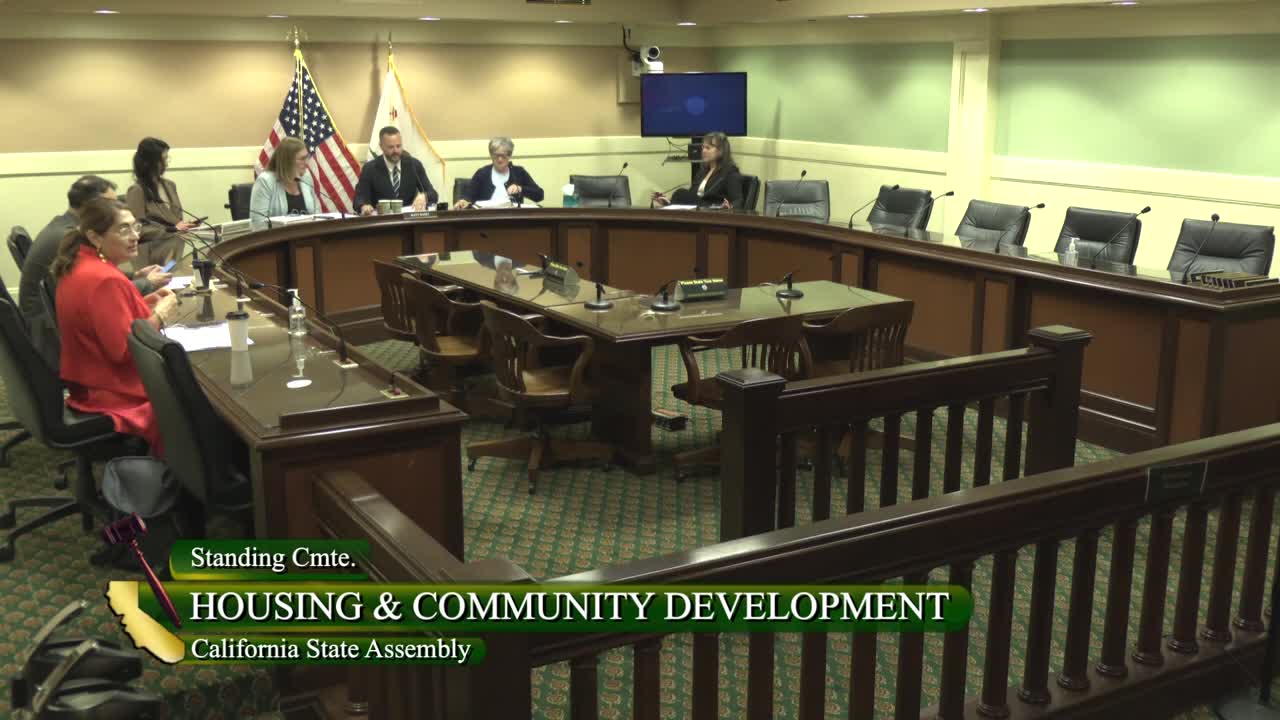
Bill Author

Bill Co-Author(s):