AB 293: Groundwater sustainability agency: transparency.
- Session Year: 2025-2026
- House: Assembly
- Latest Version Date: 2025-10-06
Current Status:
Passed
(2025-10-06: Chaptered by Secretary of State - Chapter 359, Statutes of 2025.)
Introduced
In Committee
Awaiting First Chamber Vote
Passed First Chamber
In Committee
Awaiting Second Chamber Vote
Passed Second Chamber
Enacted
Existing law, the Sustainable Groundwater Management Act, requires all groundwater basins designated as high- or medium-priority basins by the Department of Water Resources to be managed under a groundwater sustainability plan or coordinated groundwater sustainability plans, except as specified. Existing law requires a groundwater sustainability plan to be developed and implemented for each medium- or high-priority basin by a groundwater sustainability agency. Existing law authorizes any local agency or combination of local agencies overlying a groundwater basin to decide to become a groundwater sustainability agency for that basin, as provided. Existing law requires members of the board of directors and the executive, as defined, of a groundwater sustainability agency to file statements of economic interests with the Fair Political Practices Commission using the commissions online system for filing statements of economic interests.
This bill would require each groundwater sustainability agency to publish the membership of its board of directors on its internet website, or on the local agencys internet website, as provided. The bill would also require each groundwater sustainability agency to publish a link on its internet website or its local agencys internet website to the location on the Fair Political Practices Commissions internet website where the statements of economic interests, filed by the members of the board and executives of the agency, can be viewed.
No later than January 1, 2026, each groundwater sustainability agency shall do both of the following:
(a)Publish on its internet website or its local agencys internet website the membership of its board of directors.
(b)Publish on its internet website or its local agencys internet website an electronic link to the location on the Fair Political Practices Commissions internet website where the statements of economic interests, filed pursuant to Section 87200.5 of the Government Code by the members of the groundwater sustainability agencys board of directors and executives, can be viewed.
|
Date
|
Status
|
|---|---|
| Oct 6, 2025 | Chaptered by Secretary of State - Chapter 359, Statutes of 2025. |
| Oct 6, 2025 | Approved by the Governor. |
| Sep 9, 2025 | Enrolled and presented to the Governor at 3 p.m. |
| Sep 3, 2025 | In Assembly. Ordered to Engrossing and Enrolling. |
| Sep 3, 2025 | Read third time. Passed. Ordered to the Assembly. (Ayes 31. Noes 3. Page 2426.). |
| Jun 11, 2025 | Read second time. Ordered to third reading. |
| Jun 10, 2025 | From committee: Do pass. (Ayes 5. Noes 0.) (June 10). |
| May 7, 2025 | Referred to Com. on N.R. & W. |
| Apr 2, 2025 | In Senate. Read first time. To Com. on RLS. for assignment. |
| Apr 1, 2025 | Read third time. Passed. Ordered to the Senate. (Ayes 62. Noes 5. Page 958.) |
| Apr 1, 2025 | Read third time. Passed. Ordered to the Senate. (Ayes 62. Noes 5.) |
| Mar 26, 2025 | Read second time. Ordered to third reading. |
| Mar 25, 2025 | From committee: Do pass. (Ayes 11. Noes 2.) (March 25). |
| Feb 18, 2025 | Referred to Com. on W. P., & W. |
| Jan 23, 2025 | From printer. May be heard in committee February 22. |
| Jan 22, 2025 | Read first time. To print. |
|
Date
|
Description
|
Location
|
Votes
|
|
|---|---|---|---|---|
| Sep 3, 2025 | Assembly 3rd Reading AB293 Bennett By Hurtado | Senate Floor |
Passed |
|
| Jun 10, 2025 | Do pass | Senate Standing Committee on Natural Resources and Water |
Passed |
|
| Apr 1, 2025 | AB 293 Bennett Assembly Third Reading | Assembly Floor |
Passed |
|
| Mar 25, 2025 | Do pass. | Assembly Standing Committee on Water, Parks, and Wildlife |
Passed |
This list shows positions taken on this bill by organizations on the date displayed, which is linked to the original source.
Positions by individuals are not included.
|
Organization
|
Position
|
Date
|
|---|---|---|
| Association Of California Water Agencies | ** Against | |
| Community Alliance With Family Farmers | ** Support | |
| Community Water Center | ** Support | |
| Environmental Defense Fund | ** Support | |
| Sierra Club | ** Support | |
| Valley Ag Water Coalition | ** Against |
SENATE RULES COMMITTEE Office of Senate Floor Analyses (916) 651-1520 Fax: (916) 327-4478 | AB 293 |
THIRD READING
Bill No: AB 293
Author: Bennett (D)
Introduced: 1/22/25
Vote: 21
SENATE NATURAL RES. & WATER COMMITTEE: 5-0, 6/10/25
AYES: Limón, Allen, Hurtado, Laird, Stern
NO VOTE RECORDED: Seyarto, Grove
ASSEMBLY FLOOR: 62-5, 4/1/25 - See last page for vote
SUBJECT: Groundwater sustainability agency: transparency
SOURCE: Author
DIGEST:
This bill requires groundwater sustainability agencies (GSAs), by January 1, 2026, to publish information regarding their board membership and their board members’ and executives’ economic interests on its internet website or its local agency’s internet website.
ANALYSIS:
Existing law:
- Under the Sustainable Groundwater Management Act (SGMA),
- Requires high- or medium-priority basins that are subject to critical conditions of overdraft to be managed by a groundwater sustainability plan (GSP) or coordinated GSPs by January 31, 2020, and requires all other high- or medium-priority basins to be managed under a GSP or coordinated GSPs by January 31, 2022. (Water Code (WAT.) §10720.7(a)).
- Authorizes a local agency or combination of local agencies overlying a groundwater basin to become a GSA for that basin. (WAT. §10723)
- Requires high- or medium-priority basins that are subject to critical conditions of overdraft to be managed by a groundwater sustainability plan (GSP) or coordinated GSPs by January 31, 2020, and requires all other high- or medium-priority basins to be managed under a GSP or coordinated GSPs by January 31, 2022. (Water Code (WAT.) §10720.7(a)).
- Under the Political Reform Act (PRA),
- Creates the Fair Political Practices Commission (FPPC), and makes it responsible for the impartial, effective administration and implementation of the PRA. (Government Code (GOV.) §§81000 et seq.).
- Prohibits a public official at any level of state or local government from making, participating in making, or in any way attempting to use the public official’s official position to influence a governmental decision in which the official knows or has reason to know that the official has a financial interest. (GOV. §§87100 et seq.).
- Requires candidates for, and current holders of, specified elected or appointed state and local officers and designated employees of state and local agencies to file statements of economic interest (SEI) disclosing their financial interest, including investments, real property interests, and income. (GOV. §§81009 et seq.).
- Creates the Fair Political Practices Commission (FPPC), and makes it responsible for the impartial, effective administration and implementation of the PRA. (Government Code (GOV.) §§81000 et seq.).
This bill:
- Requires each GSA, by January 1, 2026, to do both of the following:
- Publish on its internet website or its local agency’s internet website the membership of its board of directors.
- Publish on its internet website or its local agency’s internet website an electronic link to the location on the FPPC’s website where the SEIs, filed by members of the GSA’s board of directors and executives, can be viewed.
Background
Sustainable Groundwater Management Act (SGMA). Under SGMA, a local agency or combination of local agencies overlying a groundwater basin may become a GSA for that basin. A GSA has broad management authority of the groundwater basin or basins under their jurisdiction including defining the basin’s or basins’ sustainable yield, limiting groundwater extraction, and imposing fees. GSAs are required to consider the interests of all beneficial uses and users of groundwater, including, but not limited to, holders of overlying groundwater rights, municipal well operators, public water systems, local land use planning agencies, environmental users of groundwater, surface water uses, the federal government, California Native American tribes, and disadvantaged communities. GSAs are authorized to perform any act necessary to carry out the purposes of SGMA, including adopting rules, regulations, and ordinances and developing the GSP.
There are currently more than 260 GSAs formed in 140 basins.
Department of Water Resources (DWR’s) SGMA Portal. The SGMA Portal is a tool that gives the public the ability to view and download information related to GSAs, GSPs and alternatives to GSPs, adjudicated areas, and basin boundary modifications. A GSP may include the governance structure of its GSA, including the composition of its Executive Committee.
Political Reform Act of 1974 (PRA). The PRA was a voter-approved initiative that, among other provisions, imposed strict conflict of interest laws and required state and local agencies to establish conflict of interest codes, requiring agency officials who routinely participate in decisions to publicly disclose personal financial information, imposed restrictions on lobbyists, and established the FPPC to enforce the PRA (GOV §§81000 – 91014).
[See Senate Natural Resources and Water Committee analysis for more detailed background.]
Comments
Is information already available? AB 293 requires a GSA to post two things on its website: (1) board of directors membership and (2) a link to the location on the FPPC’s website where the SEIs of GSA board members and executives can be found.
Board of directors membership. A random sample of GSPs posted to DWR’s SGMA Portal shows that while a GSP will contain a point of contact person, it does not necessarily contain board of directors membership. It is unclear if board membership might be available elsewhere in either the SGMA Portal or DWR’s website.
The author’s office has provided examples of GSAs that do not post board membership information on their website: Aliso Water District GSA, County of Fresno GSA for the Westside Subbasin, and Grassland GSA. While it is possible to determine Aliso Water District GSA board membership by looking at past board meeting minutes, it would be unclear to the public whether the minutes of a past board meeting will reflect current membership. For County of Fresno, it does not appear that board membership is posted on its website, nor board meeting minutes. However, SGMA Working Group meeting minutes are posted, with the most recent being from March 2018. The Grassland GSA also does not appear to publish board membership.
However, a random sample of GSA websites, whose information was found through the SGMA Portal, also shows that many GSAs do post board membership information on their website (i.e. Omochumne Hartnell Water District, Santa Clarita Valley GSA, Arvin GSA, Pioneer GSA, and Mid Kaweah GSA).
Thus, posting of board membership across GSAs is inconsistent.
Link to FPPC website. Opponents to the bill argue that with the enactment of SB 1156 (Hurtado, Chapter 458, Statutes of 2024), each board member’s SEI is already available on the FPPC website and that AB 293 would single out GSAs by requiring GSAs to post links on its websites to its board members’ SEIs. It is also argued that some GSAs have limited staffing and resources and this bill would only add to the extensive list of responsibilities, in addition to trying to achieving groundwater sustainability. However, supporters of this bill argue that providing the link will make it easier for the public to access that information.
FISCAL EFFECT: Appropriation: No Fiscal Com.: No Local: No
SUPPORT: (Verified 6/10/25)
Community Alliance with Family Farmers
Community Water Center
Environmental Defense Fund
Sierra Club
OPPOSITION: (Verified 6/10/25)
Association of California Water Agencies
Valley Ag Water Coalition
ARGUMENTS IN SUPPORT: According to the author, “AB 293 is a simple step to build public trust, strengthen accountability, and protect one of California’s most vital resources for future generations. California’s groundwater is a critical resource, supplying anywhere from 30% to 46% of the state’s water needs in an average year. Millions of residents, businesses, and farms rely on sustainable groundwater management to ensure long-term water security. Given the growing pressures of climate change and competing demands for water, it is vital that groundwater sustainability agencies (GSAs) operate with the highest level of transparency and accountability. This bill simply requires GSAs to publish the membership of their Board of Directors on their website as well as a link to the Fair Political Practices Commission (FPPC) for access to their statements of economic interest, ensuring that the public can easily access information about the individuals responsible for managing our groundwater.”
ARGUMENTS IN OPPOSITION: According to the Association of California Water Agencies, “it is unclear why AB 293 is needed” as “existing law already compels special districts to maintain a website, post contact information, and to file statements of economic interest with the FPPC, which houses on its website an easy-to-use transparency portal.” Further, “ACWA is not aware of any other special district or public entity subject to the Political Reform Act that has been specifically required to post their board membership online or a link to the FPPC website.” ACWA further argues that “existing transparency laws, with which all special districts already comply, adequately provide for the goals of this bill without the need for new legislation.”
Additionally, Valley Ag Water Coalition expresses concern that “AB 293 will expose the personal financial affairs of GSA governing board members to greater public scrutiny that will only serve as yet another disincentive to service on GSA governing boards.”
ASSEMBLY FLOOR: 62-5, 4/1/25
AYES: Addis, Aguiar-Curry, Ahrens, Alanis, Arambula, Ávila Farías, Bains, Bauer-Kahan, Bennett, Berman, Boerner, Bonta, Bryan, Caloza, Carrillo, Connolly, DeMaio, Elhawary, Fong, Gabriel, Garcia, Gipson, Mark González, Haney, Harabedian, Hart, Hoover, Irwin, Jackson, Kalra, Krell, Lackey, Lee, Lowenthal, McKinnor, Muratsuchi, Nguyen, Ortega, Papan, Patel, Patterson, Pellerin, Petrie-Norris, Quirk-Silva, Ramos, Ransom, Celeste Rodriguez, Michelle Rodriguez, Rogers, Blanca Rubio, Sanchez, Schiavo, Schultz, Sharp-Collins, Solache, Stefani, Valencia, Wallis, Ward, Wilson, Zbur, Rivas
NOES: Dixon, Ellis, Gallagher, Macedo, Tangipa
NO VOTE RECORDED: Alvarez, Calderon, Castillo, Chen, Davies, Essayli, Flora, Jeff Gonzalez, Hadwick, Pacheco, Soria, Ta, Wicks
Prepared by: Genevieve Wong / N.R. & W. / (916) 651-4116
6/11/25 15:55:35
**** END ****
SENATE COMMITTEE ON NATURAL RESOURCES AND WATER
Senator Monique Limón, Chair
2025 - 2026 Regular
Bill No: AB 293 Hearing Date: June 10, 2025
Author: | |||
Version: | Introduced | ||
Urgency: | Fiscal: | ||
Consultant: | |||
Subject: Groundwater sustainability agency: transparency
SUMMARY
This bill would require groundwater sustainability agencies, by January 1, 2026, to publish information regarding their board membership and their board members’ and executives’ economic interests on its internet website or its local agency’s internet website.
BACKGROUND AND EXISTING LAW
Sustainable Groundwater Management Act. In contrast to other environmental legislation, California was the last state in the West to adopt a statewide groundwater management system. In 2014, the Legislature passed and then-Governor Brown signed SB 1168 (Pavley), SB 1319 (Pavley) and AB 1739 (Dickinson). Those three bills established the Sustainable Groundwater Management Act (SGMA), and made other related changes to the California Water Code (WAT). Together, those bills provide a framework for sustainable groundwater management, with the goal of managing and using groundwater in a manner that can be maintained during relevant planning and implementation horizons without causing undesirable results.
Under SGMA, a local agency or combination of local agencies overlying a groundwater basin may become a groundwater sustainability agency (GSA) for that basin. A GSA has broad management authority of the groundwater basin or basins under their jurisdiction including defining the basin’s or basins’ sustainable yield, limiting groundwater extraction, and imposing fees. GSAs are required to consider the interests of all beneficial uses and users of groundwater, including, but not limited to, holders of overlying groundwater rights, municipal well operators, public water systems, local land use planning agencies, environmental users of groundwater, surface water uses, the federal government, California Native American tribes, and disadvantaged communities. GSAs are authorized to perform any act necessary to carry out the purposes of SGMA, including adopting rules, regulations, and ordinances and developing the groundwater sustainability plan (GSP).
SGMA requires GSAs in medium- and high-priority groundwater basins, which includes 21 critically overdrafted basins, to develop and implement GSPs. GSAs may customize their GSPs to their regional economic and environmental circumstances. Thus, while SGMA provides for the sustainable management of groundwater basins, it does so by empowering local agencies to manage groundwater basins, while minimizing state intervention.
A local agency or combination of local agencies that decides to become or form a GSA is required to inform the Department of Water Resources (DWR) of its decision and its intent to undertake sustainable groundwater management. The GSA formation notification includes service area boundaries, a copy of the resolution forming the new agency, a copy of any new bylaws, ordinances, or new authorities adopted by the local agency, and a list of all parties that have an interest in the groundwater.
There are currently more than 260 GSAs formed in 140 basins.
DWR’s SGMA Portal. The SGMA Portal is a tool that gives the public the ability to view and download information related to GSAs, GSPs and alternatives to GSPs, adjudicated areas, and basin boundary modifications. A GSP may include the governance structure of its GSA, including the composition of its Executive Committee. Because the GSP is developed before the formation of a Board of Directors or Executive Committee, it is unlikely to include specific names. For example, the Atascadero Basin GSP indicates that the Atascadero Basin GSA is comprised of four forming parties and six participating parties and specifies which entities will appoint a member to sit on the GSA Executive Committee or the Executive Committee that coordinates activities for the GSA (see Atascadero Basin GSA, 2.2 Agency Organization and Management Structure, submitted to DWR 1/30/2022). The Atascadero Basin GSA also contains contact information for the GSP manager, which is also posted directly on the SGMA Portal.
Political Reform Act of 1974 (PRA). The PRA was a voter-approved initiative that, among other provisions, imposed strict conflict of interest laws and required state and local agencies to establish conflict of interest codes, requiring agency officials who routinely participate in decisions to publicly disclose personal financial information, imposed restrictions on lobbyists, and established the Fair Political Practices Commission (FPPC) to enforce the PRA (Government Code (GOV) §§81000 – 91014).
Existing law:
- Under SGMA,
- Requires high- or medium-priority basins that are subject to critical conditions of overdraft to be managed by a GSP or coordinated GSPs by January 31, 2020, and requires all other high- or medium-priority basins to be managed under a GSP or coordinated GSPs by January 31, 2022. (WAT. §10720.7(a)).
- Authorizes a local agency or combination of local agencies overlying a groundwater basin to decide to become a GSA for that basin. (WAT. §10723)
- Requires a GSA of each medium- and high-priority basin to develop and implement a GSP to meet the sustainability goal of implementing one or more GSPs that achieve sustainable groundwater management, as specified. (WAT. §§10721, 10727).
- Requires high- or medium-priority basins that are subject to critical conditions of overdraft to be managed by a GSP or coordinated GSPs by January 31, 2020, and requires all other high- or medium-priority basins to be managed under a GSP or coordinated GSPs by January 31, 2022. (WAT. §10720.7(a)).
- Under the PRA,
- Creates the FPPC, and makes it responsible for the impartial, effective administration and implementation of the PRA. (GOV. §§81000 et seq.).
- Makes violations of the PRA subject to administrative, civil, and criminal penalties. (GOV. §§83116, 91000-91005.5).
- Defines a local government agency with the PRA to mean a county, city, or district of any kind including a school district, or any other local or regional political subdivision, or any department, division, bureau, office, board, commission, or other agency of the foregoing. (GOV. §§82041).
- Prohibits a public official at any level of state or local government from making, participating in making, or in any way attempting to use the public official’s official position to influence a governmental decision in which the official knows or has reason to know that the official has a financial interest. (GOV. §§87100 et seq.).
- Requires candidates for, and current holders of, specified elected or appointed state and local officers and designated employees of state and local agencies to file statements of economic interest (SEI) disclosing their financial interest, including investments, real property interests, and income. (GOV. §§81009 et seq.).
- Creates the FPPC, and makes it responsible for the impartial, effective administration and implementation of the PRA. (GOV. §§81000 et seq.).
PROPOSED LAW
This bill would require each GSA, by January 1, 2026, to do both of the following:
- Publish on its internet website or its local agency’s internet website the membership of its board of directors.
- Publish on its internet website or its local agency’s internet website an electronic link to the location on the FPPC’s website where the SEIs, filed by members of the GSA’s board of directors and executives, can be viewed.
ARGUMENTS IN SUPPORT
According to the author, “AB 293 is a simple step to build public trust, strengthen accountability, and protect one of California’s most vital resources for future generations. California’s groundwater is a critical resource, supplying anywhere from 30% to 46% of the state’s water needs in an average year. Millions of residents, businesses, and farms rely on sustainable groundwater management to ensure long-term water security. Given the growing pressures of climate change and competing demands for water, it is vital that groundwater sustainability agencies (GSAs) operate with the highest level of transparency and accountability. This bill simply requires GSAs to publish the membership of their Board of Directors on their website as well as a link to the Fair Political Practices Commission (FPPC) for access to their statements of economic interest, ensuring that the public can easily access information about the individuals responsible for managing our groundwater.”
ARGUMENTS IN OPPOSITION
According to the Association of California Water Agencies, “it is unclear why AB 293 is needed” as “existing law already compels special districts to maintain a website, post contact information, and to file statements of economic interest with the FPPC, which houses on its website an easy-to-use transparency portal.” Further, “ACWA is not aware of any other special district or public entity subject to the Political Reform Act that has been specifically required to post their board membership online or a link to the FPPC website.” ACWA further argues that “existing transparency laws, with which all special districts already comply, adequately provide for the goals of this bill without the need for new legislation.”
Additionally, Valley Ag Water Coalition expresses concern that “AB 293 will expose the personal financial affairs of GSA governing board members to greater public scrutiny that will only serve as yet another disincentive to service on GSA governing boards.”
COMMENTS
Is information already available? AB 293 requires a GSA to post two things on its website: (1) board of directors membership and (2) a link to the location on the FPPC’s website where the SEIs of GSA board members and executives can be found.
Board of directors membership. A random sample of GSPs posted to DWR’s SGMA Portal shows that while a GSP will contain a point of contact person, it does not necessarily contain board of directors membership. This could be due to a number of factors - a GSP may be developed before board membership is established or that board membership is often subject change. It is unclear if board membership might be available elsewhere in either the SGMA Portal or DWR’s website.
The author’s office has provided examples of GSAs that do not post board membership information on their website: Aliso Water District GSA, County of Fresno GSA for the Westside Subbasin, and Grassland GSA. While it is possible to determine Aliso Water District GSA board membership by looking at past board meeting minutes, it would be unclear to the public whether the minutes of a past board meeting will reflect current membership. For County of Fresno, it does not appear that board membership is posted on its website, nor board meeting minutes. However, SGMA Working Group meeting minutes are posted, with the most recent being from March 2018. The Grassland GSA also does not appear to publish board membership.
However, a random sample of GSA websites, whose information was found through the SGMA Portal, also shows that many GSAs do post board membership information on their website (i.e. Omochumne Hartnell Water District, Santa Clarita Valley GSA, Arvin GSA, Pioneer GSA, and Mid Kaweah GSA).
Thus, posting of board membership across GSAs is inconsistent. This bill may help ensure easily accessible information and consistent transparency of GSA governance.
Link to FPPC website. Opponents to the bill argue that with the enactment of SB 1156 (Hurtado, Chapter 458, Statutes of 2024), each board member’s SEI is already available on the FPPC website and that AB 293 would single out GSAs by requiring GSAs to post links on its websites to its board members’ SEIs. It is also argued that some GSAs have limited staffing and resources and this bill would only add to the extensive list of responsibilities, in addition to trying to achieving groundwater sustainability. However, supporters of the bill argue that providing the link will make it easier for the public to access that information.
SUPPORT
Community Alliance with Family Farmers
Community Water Center
Environmental Defense Fund
Sierra Club
OPPOSITION
Association of California Water Agencies
Valley Ag Water Coalition (unless amended)
-- END --
ASSEMBLY THIRD READING
ATR Bill Id:AB 293
Author:(Bennett)
As Introduced Ver:January 22, 2025
Majority vote
SUMMARY
Requires a groundwater sustainability agency (GSA) to post information regarding its board membership and its board members' economic interests on the GSA's web site by January 1, 2026.
Major Provisions
- Requires a GSA to post the membership of its board of directors on the GSA's website or its local agency's website by January 1, 2026.
- Requires a GSA to post a link to the Fair Political Practices Commission's website where one can view the statements of economic interests of the GSA's board members and executives on the GSA's website or its local agency's web site by January 1, 2026.
COMMENTS
According to the Assembly Committee on Elections, as part of the Political Reform Act's comprehensive scheme to prevent conflicts of interest by state and local public officials, certain elected and other high-level state and local officials must file an statement of economic interest (SEI) (commonly referred to as a Form 700). The information that must be disclosed on an SEI, and the location at which an SEI is filed, varies depending on the position held by the individual who is required to file an SEI. Although there are some exceptions, individuals who are required to file an SEI typically must file that document with the agency of which they are an elected official or by which they are employed. In some cases, original SEIs or copies thereof are filed with the FPPC.
The requirement for public officials to file SEIs serves two purposes: first, to provide necessary information to the public about an official's personal financial interests so there is assurance that officials are making decisions that do not enhance their personal finances; and second, to serve as a reminder to the public official of potential conflicts of interests so the official can recuse themselves from making or participating in governmental decisions that are deemed conflicts.
According to the Author
"[This bill] is a simple step to build public trust, strengthen accountability, and protect one of California's most vital resources for future generations. California's groundwater is a critical resource, supplying anywhere from 30% to 46% of the state's water needs in an average year. Millions of residents, businesses, and farms rely on sustainable groundwater management to ensure long-term water security. Given the growing pressures of climate change and competing demands for water, it is vital that (GSAs) operate with the highest level of transparency and accountability." The author maintains that this bill will increase GSA transparency and points to several examples of GSAs that have not listed their board membership as impetus for this bill.
Arguments in Support
None on file.
Arguments in Opposition
The Association of California Water Agencies (ACWA) opposes this bill arguing that this bill establishes requirements for GSAs that are unique and do not apply to any other special district. Furthermore, ACWA asserts that with the passage of SB 1156 (Hurtado) last year, existing transparency laws are sufficient and this bill is, therefore, unnecessary.
FISCAL COMMENTS
This bill is keyed non-fiscal and has no fiscal impact.
VOTES
ASM WATER, PARKS, AND WILDLIFE: 11-2-0
YES: Papan, Jeff Gonzalez, Alvarez, Ávila Farías, Bains, Bennett, Boerner, Caloza, Hart, Celeste Rodriguez, Rogers
NO: Macedo, Tangipa
UPDATED
VERSION: January 22, 2025
CONSULTANT: Pablo Garza / W., P., & W. / (916) 319-2096 FN: 0000186
Date of Hearing: March 25, 2025
ASSEMBLY COMMITTEE ON WATER, PARKS, AND WILDLIFE
Diane Papan, Chair
ABPCA Bill Id:AB 293 (
Author:Bennett) – As Introduced Ver:January 22, 2025
SUBJECT: Groundwater sustainability agency: transparency
SUMMARY: Requires a groundwater sustainability agency (GSA) to post information regarding its board membership and its board members’ economic interests on the GSA’s web site by January 1, 2026. Specifically, this bill:
- Requires a GSA to post the membership of its board of directors on the GSA’s website or its local agency’s website by January 1, 2026.
- Requires a GSA to post a link to the Fair Political Practices Commission’s (FPPC) website where one can view the statements of economic interests of the GSA’s board members and executives on the GSA’s website or its local agency’s web site by January 1, 2026.
EXISTING LAW:
- Requires, under the Sustainable Groundwater Management Act (SGMA) of 2014, local agencies to establish GSAs and sustainably manage groundwater in critically overdrafted groundwater basins by 2040 and in high- or medium-priority groundwater basins by 2042. Defines sustainable management of groundwater as the avoidance of the following six “undesirable results:” (a) chronic lowering of groundwater levels; (b) reduction of groundwater storage; (c) seawater intrusion; (d) degraded water quality; (e) land subsidence; and (f) depletions of interconnected surface water (Water Code § 10720 et seq.).
- Permits any local agency or combination of local agencies overlying a groundwater basin subject to SGMA to form a GSA. Requires the local agency or local agencies to hold a public hearing before deciding to become a GSA and designates specified local agencies as exclusive GSAs for their respective groundwater basins (Water Code § 10723).
- Permits a combination of local agencies to form a GSA via a joint powers agreement, memorandum of understanding, or other legal agreement. Permits water corporations regulated by the Public Utilities Commission and mutual water companies to participate in a GSA (Water Code § 10723.6).
- Creates the FPPC, and makes it responsible for the impartial, effective administration and implementation of the Political Reform Act (PRA) (Government Code §§ 81000 et seq.).
- Makes violations of the PRA subject to administrative, civil, and criminal penalties. (Government Code §§ 83116, 91000-91005.5).
- Defines a local government agency within the PRA to mean a county, city, or district of any kind including school district, or any other local or regional political subdivision, or any department, division, bureau, office, board, commission, or other agency of the foregoing (Government Code § 82041).
- Prohibits a public official at any level of state or local government from making, participating in making, or in any way attempting to use the public official’s official position to influence a governmental decision in which the official knows or has reason to know that the official has a financial interest (Government Code § 87100 et seq.).
- Requires candidates for, and current holders of, specified elected or appointed state and local offices and designated employees of state and local agencies to file statements of economic interest (SEI) disclosing their financial interests, including investments, real property interests, and income (Government Code §81009 et seq.).
FISCAL EFFECT: None. This bill is keyed non-fiscal.
COMMENTS:
- Purpose of this bill. According to the author, “[This bill] is a simple step to build public trust, strengthen accountability, and protect one of California’s most vital resources for future generations. California’s groundwater is a critical resource, supplying anywhere from 30% to 46% of the state’s water needs in an average year. Millions of residents, businesses, and farms rely on sustainable groundwater management to ensure long-term water security. Given the growing pressures of climate change and competing demands for water, it is vital that (GSAs) operate with the highest level of transparency and accountability.” The author maintains that this bill will increase GSA transparency and points to several examples of GSAs that have not listed their board membership as impetus for this bill.
- Background. According to the Assembly Committee on Elections, as part of the PRA’s comprehensive scheme to prevent conflicts of interest by state and local public officials, certain elected and other high-level state and local officials must file an SEI (commonly referred to as a Form 700). The information that must be disclosed on an SEI, and the location at which an SEI is filed, varies depending on the position held by the individual who is required to file an SEI. Although there are some exceptions, individuals who are required to file an SEI typically must file that document with the agency of which they are an elected official or by which they are employed. In some cases, original SEIs or copies thereof are filed with the FPPC.
The requirement for public officials to file SEIs serves two purposes: first, to provide necessary information to the public about an official’s personal financial interests so there is assurance that officials are making decisions that do not enhance their personal finances; and second, to serve as a reminder to the public official of potential conflicts of interests so the official can recuse themselves from making or participating in governmental decisions that are deemed conflicts. - Arguments in opposition. The Association of California Water Agencies (ACWA) opposes this bill arguing that this bill establishes requirements for GSAs that are unique and do not apply to any other special district. Furthermore, ACWA asserts that with the passage of SB 1156 last year, existing transparency laws are sufficient and this bill is, therefore, unnecessary.
- Related legislation. SB 1156 (Hurtado), Chapter 458, Statutes of 2024, requires the executive officer and members of the board of directors of a GSA to file a statement of economic interests with FPPC utilizing the FPPC’s online filing system.
REGISTERED SUPPORT / OPPOSITION:
Support
None on file
Opposition
Association of California Water Agencies
Oppose Unless Amended
Valley Ag Water Coalition
Analysis Prepared by: Pablo Garza / W., P., & W. / (916) 319-2096
Discussed in Hearing
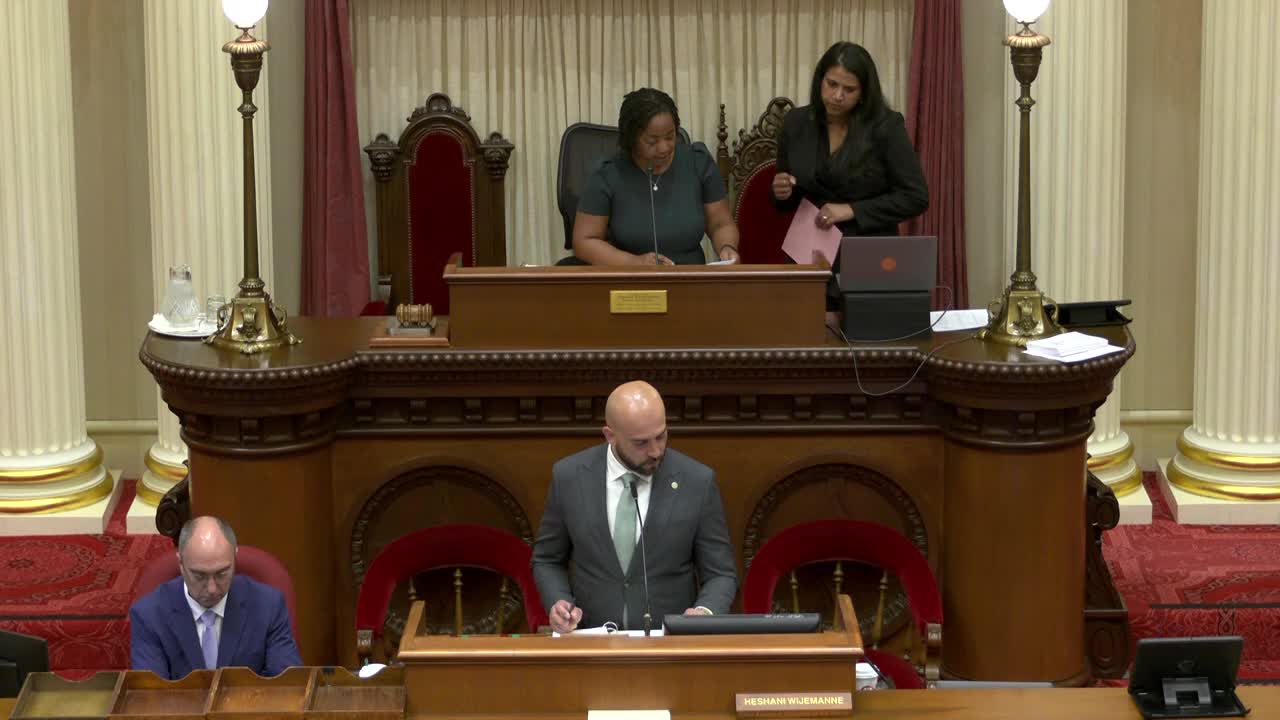 2MIN
Senate Floor
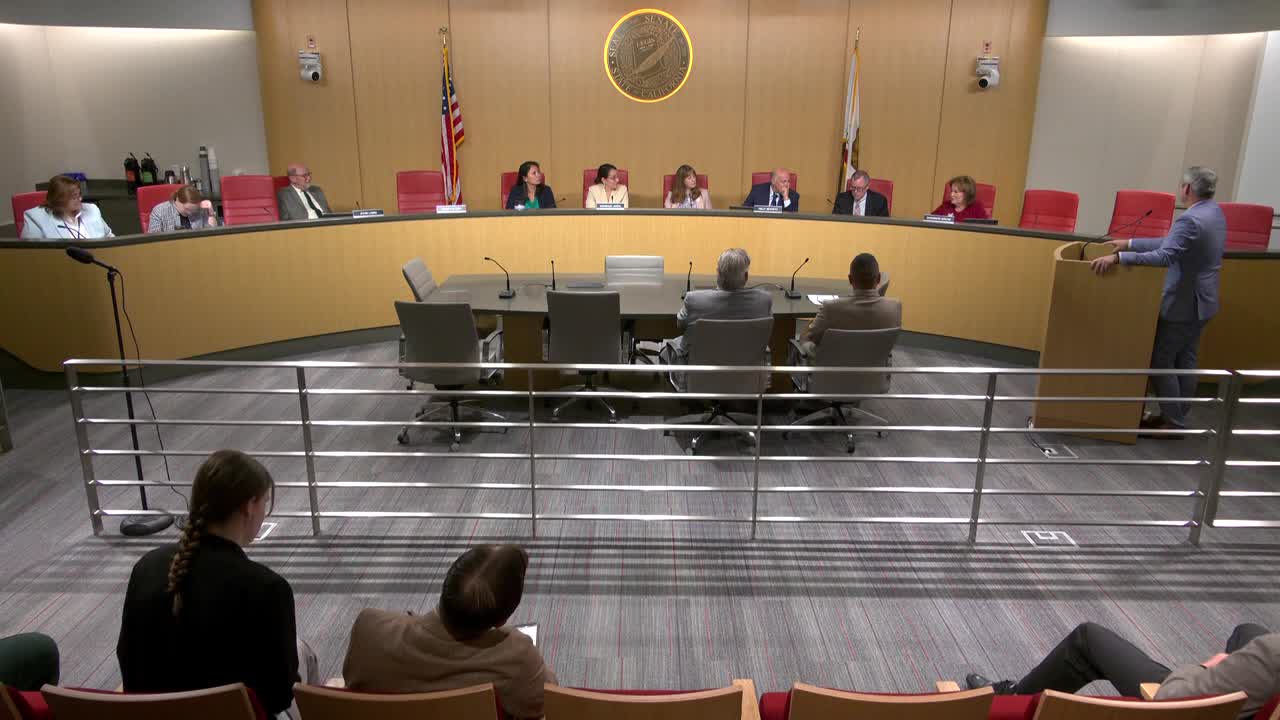 6MIN
Senate Standing Committee on Natural Resources and Water
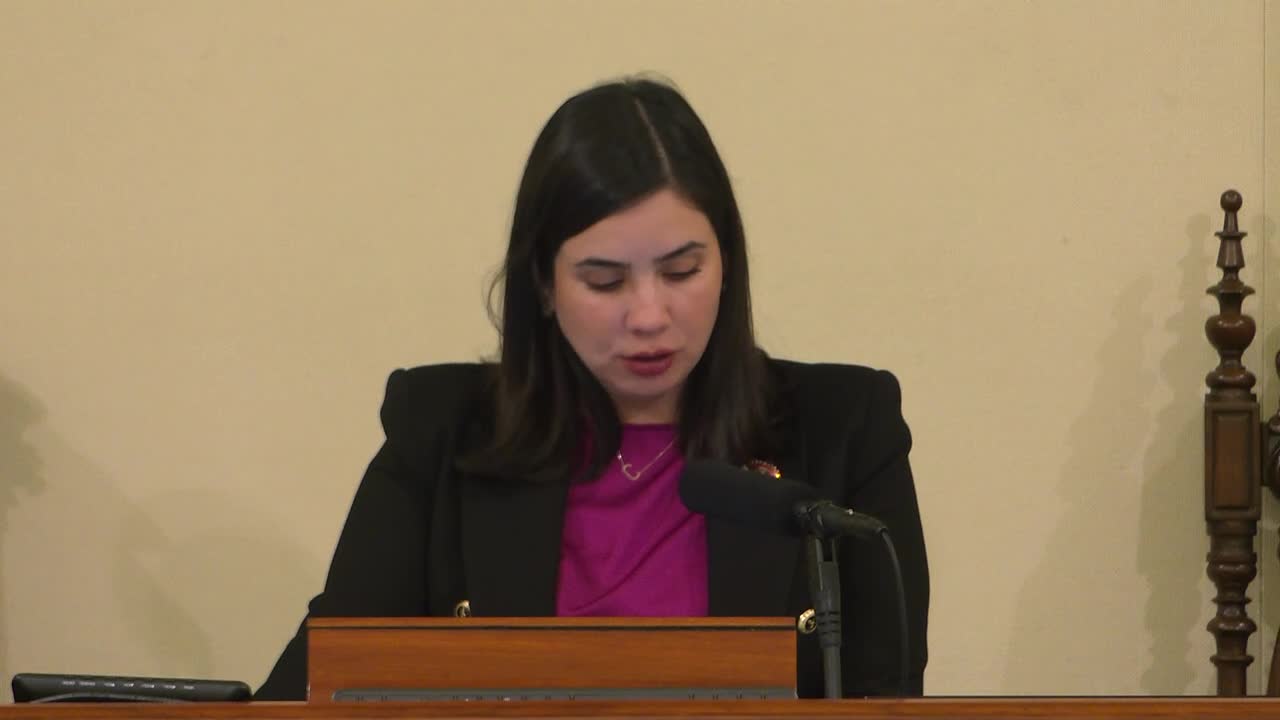 3MIN
Assembly Floor
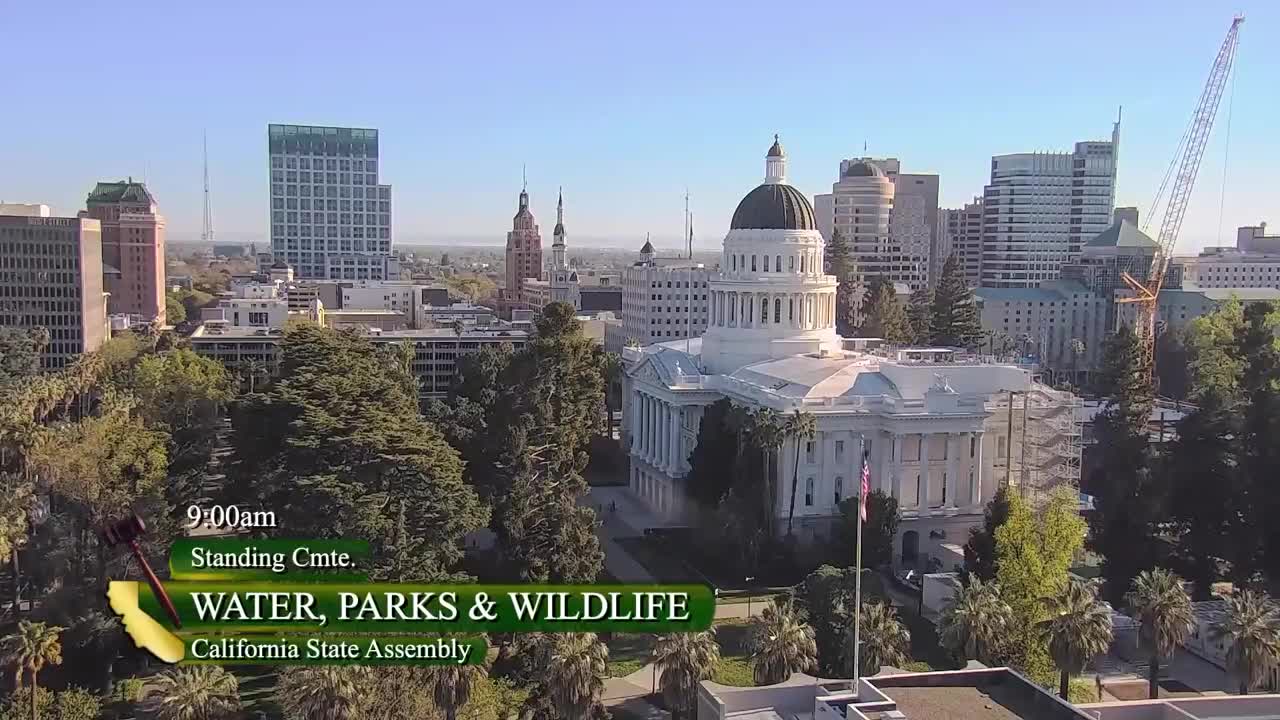 8MIN
Assembly Standing Committee on Water, Parks, and Wildlife
Bill Author

Bill Co-Author(s):