AB 369: Emergency services: liability.
- Session Year: 2025-2026
- House: Assembly
- Latest Version Date: 2025-07-14
Current Status:
Passed
(2025-07-14: Chaptered by Secretary of State - Chapter 33, Statutes of 2025.)
Introduced
In Committee
Awaiting First Chamber Vote
Passed First Chamber
In Committee
Awaiting Second Chamber Vote
Passed Second Chamber
Enacted
Existing law, the Seizure Safe Schools Act, if a pupil diagnosed with seizures, a seizure disorder, or epilepsy has been prescribed an emergency anti-seizure medication by the pupils health care provider, authorizes the pupils local educational agency, upon receipt of a request from the pupils parent or guardian, to designate one or more volunteers at the pupils school to receive initial and annual refresher training regarding the emergency use of anti-seizure medication and authorizes a school nurse or, if the school does not have a school nurse or the school nurse is not onsite or available, a volunteer who has been designated and received training regarding the emergency use of anti-seizure medication, to administer emergency anti-seizure medication to a pupil diagnosed with seizures, a seizure disorder, or epilepsy if the pupil is suffering from a seizure. Existing law, notwithstanding any other law, excuses a person trained as required who administers emergency anti-seizure medication or medication prescribed for seizure disorder symptoms in compliance with these provisions, in good faith and not for compensation, to a pupil diagnosed with seizures, a seizure disorder, or epilepsy who appears to be experiencing a seizure, from professional review, liability in a civil action, or criminal prosecution for the persons acts or omissions in administering the emergency anti-seizure medication, as specified. Existing law also, notwithstanding any other law, similarly excuses a person who is not otherwise licensed to administer an opioid antagonist but who has required training, who acts with reasonable care in administering an opioid antagonist, in good faith and not for compensation, to a person who is experiencing or is suspected of experiencing an overdose, from professional review, liability in a civil action, or criminal prosecution for this administration.
This bill, notwithstanding any other law, and except as provided in the Seizure Safe Schools Act, would excuse a person who is otherwise not licensed to administer anti-seizure rescue medication, but who administers anti-seizure rescue medication at the scene of an emergency, in good faith and not for compensation, to a person who is experiencing, or is suspected of experiencing, a seizure, from professional review, liability in a civil action, or criminal prosecution for that administration of anti-seizure rescue medication so long as the persons conduct is not grossly negligent and does not constitute willful or wanton misconduct.
Existing law, the Seizure Safe Schools Act, if a pupil diagnosed with seizures, a seizure disorder, or epilepsy has been prescribed an emergency anti-seizure medication by the pupils health care provider, authorizes the pupils local educational agency, upon receipt of a request from the pupils parent or guardian, to designate one or more volunteers at the pupils school to receive initial and annual refresher training regarding the emergency use of anti-seizure medication and authorizes a school nurse or, if the school does not have a school nurse or the school nurse is not onsite or available, a volunteer who has been designated and received training regarding the emergency use of anti-seizure medication, to administer emergency anti-seizure medication to a pupil diagnosed with seizures, a seizure disorder, or epilepsy if the pupil is suffering from a seizure. Existing law, notwithstanding any other law, excuses a person trained as required who administers emergency anti-seizure medication or medication prescribed for seizure disorder symptoms in compliance with these provisions, in good faith and not for compensation, to a pupil diagnosed with seizures, a seizure disorder, or epilepsy who appears to be experiencing a seizure, from professional review, liability in a civil action, or criminal prosecution for the persons acts or omissions in administering the emergency anti-seizure medication, as specified. Existing law also, notwithstanding any other law, similarly excuses a person who is not otherwise licensed to administer an opioid antagonist but who has required training, who acts with reasonable care in administering an opioid antagonist, in good faith and not for compensation, to a person who is experiencing or is suspected of experiencing an overdose, from professional review, liability in a civil action, or criminal prosecution for this administration.
This bill, notwithstanding any other law, would excuse a person who is otherwise not licensed to administer anti-seizure rescue medication, but who acts with reasonable care in administering administers anti-seizure rescue medication, medication at the scene of an emergency, in good faith and not for compensation, to a person who is experiencing, or is suspected of experiencing, a seizure, from professional review, liability in a civil action, or criminal prosecution for that administration of anti-seizure rescue medication. medication so long as the persons conduct is not grossly negligent and does not constitute willful or wanton misconduct.
Existing law, the Seizure Safe Schools Act, if a pupil diagnosed with seizures, a seizure disorder, or epilepsy has been prescribed an emergency anti-seizure medication by the pupils health care provider, authorizes the pupils local educational agency, upon receipt of a request from the pupils parent or guardian, to designate one or more volunteers at the pupils school to receive initial and annual refresher training regarding the emergency use of anti-seizure medication and authorizes a school nurse or, if the school does not have a school nurse or the school nurse is not onsite or available, a volunteer who has been designated and received training regarding the emergency use of anti-seizure medication, to administer emergency anti-seizure medication to a pupil diagnosed with seizures, a seizure disorder, or epilepsy if the pupil is suffering from a seizure. Existing law, notwithstanding any other law, excuses a person trained as required who administers emergency anti-seizure medication or medication prescribed for seizure disorder symptoms in compliance with these provisions, in good faith and not for compensation, to a pupil diagnosed with seizures, a seizure disorder, or epilepsy who appears to be experiencing a seizure, from professional review, liability in a civil action, or criminal prosecution for the persons acts or omissions in administering the emergency anti-seizure medication, as specified. Existing law also, notwithstanding any other law, similarly excuses a person who is not otherwise licensed to administer an opioid antagonist but who has required training, who acts with reasonable care in administering an opioid antagonist, in good faith and not for compensation, to a person who is experiencing or is suspected of experiencing an overdose, from professional review, liability in a civil action, or criminal prosecution for this administration.
This bill, notwithstanding any other law, would excuse a person who is otherwise not licensed to administer anti-seizure rescue medication, but who acts with reasonable care in administering anti-seizure rescue medication, in good faith and not for compensation, to a person who is experiencing, or is suspected of experiencing, a seizure, from professional review, liability in a civil action, or criminal prosecution for that administration of anti-seizure rescue medication.
Existing law provides that a person who has completed a basic cardiopulmonary resuscitation course, as specified, and who, in good faith, renders emergency cardiopulmonary resuscitation at the scene of an emergency shall not be liable for any civil damages as a result of any acts or omissions by such person rendering the emergency care, as specified. Existing law provides similar protections to specified government agencies and instructors.This bill would make nonsubstantive changes to those provisions.Existing law provides that a person who has completed a basic cardiopulmonary resuscitation course, as specified, and who, in good faith, renders emergency cardiopulmonary resuscitation at the scene of an emergency shall not be liable for any civil damages as a result of any acts or omissions by such person rendering the emergency care, as specified. Existing law provides similar protections to specified government agencies and instructors.
This bill would make nonsubstantive changes to those provisions.
(a)Notwithstanding any other law, and except as provided in subdivision (b), a person not otherwise licensed to administer anti-seizure rescue medication, but who administers anti-seizure rescue medication at the scene of an emergency, in good faith and not for compensation, to a person who is experiencing, or is suspected of experiencing, a seizure shall not be subject to professional review, be liable in a civil action, or be subject to criminal prosecution for this administration so long as the persons conduct is not grossly negligent and does not constitute willful or wanton misconduct.
(b)Subdivision (a) shall not apply to administration of anti-seizure rescue medication to a pupil on a school site which shall, instead, comply with Article 4.6 (commencing with Section 49468) of Chapter 9 of Part 27 of Division 4 of Title 2 of the Education Code.
Notwithstanding any other law, a person not otherwise licensed to administer anti-seizure rescue medication, but who acts with reasonable care in administering administers anti-seizure rescue medication, medication at the scene of an emergency, in good faith and not for compensation, to a person who is experiencing, or is suspected of experiencing, a seizure shall not be subject to professional review, be liable in a civil action, or be subject to criminal prosecution for this administration. administration so long as the persons conduct is not grossly negligent and does not constitute willful or wanton misconduct.
Notwithstanding any other law, a person not otherwise licensed to administer anti-seizure rescue medication, but who acts with reasonable care in administering anti-seizure rescue medication, in good faith and not for compensation, to a person who is experiencing, or is suspected of experiencing, a seizure shall not be subject to professional review, be liable in a civil action, or be subject to criminal prosecution for this administration.
SECTION 1.Section 1714.2 of the Civil Code is amended to read:1714.2.(a)In order to encourage citizens to participate in emergency medical services training programs and to render emergency medical services to fellow citizens, a person who has completed a basic cardiopulmonary resuscitation course which complies with the standards adopted by the American Heart Association or the American Red Cross for cardiopulmonary resuscitation and emergency cardiac care, and who, in good faith, renders emergency cardiopulmonary resuscitation at the scene of an emergency shall not be liable for any civil damages as a result of any acts or omissions by that person rendering the emergency care.(b)This section shall not be construed to grant immunity from civil damages to any person whose conduct in rendering that emergency care constitutes gross negligence.(c)In order to encourage local agencies and other organizations to train citizens in cardiopulmonary resuscitation techniques, a local agency, entity of state or local government, or other public or private organization which sponsors, authorizes, supports, finances, or supervises the training of citizens in cardiopulmonary resuscitation shall not be liable for any civil damages alleged to result from those training programs.(d)In order to encourage qualified individuals to instruct citizens in cardiopulmonary resuscitation, a person who is certified to instruct in cardiopulmonary resuscitation by either the American Heart Association or the American Red Cross shall not be liable for any civil damages alleged to result from the acts or omissions of an individual who received instruction on cardiopulmonary resuscitation by that certified instructor.(e)This section shall not be construed to grant immunity from civil damages to any person who renders such emergency care to an individual with the expectation of receiving compensation from the individual for providing the emergency care.(a)In order to encourage citizens to participate in emergency medical services training programs and to render emergency medical services to fellow citizens, no a person who has completed a basic cardiopulmonary resuscitation course which complies with the standards adopted by the American Heart Association or the American Red Cross for cardiopulmonary resuscitation and emergency cardiac care, and who, in good faith, renders emergency cardiopulmonary resuscitation at the scene of an emergency shall not be liable for any civil damages as a result of any acts or omissions by such that person rendering the emergency care.
(b)This section shall not be construed to grant immunity from civil damages to any person whose conduct in rendering such that emergency care constitutes gross negligence.
(c)In order to encourage local agencies and other organizations to train citizens in cardiopulmonary resuscitation techniques, no a local agency, entity of state or local government, or other public or private organization which sponsors, authorizes, supports, finances, or supervises the training of citizens in cardiopulmonary resuscitation shall not be liable for any civil damages alleged to result from such those training programs.
(d)In order to encourage qualified individuals to instruct citizens in cardiopulmonary resuscitation, no a person who is certified to instruct in cardiopulmonary resuscitation by either the American Heart Association or the American Red Cross shall not be liable for any civil damages alleged to result from the acts or omissions of an individual who received instruction on cardiopulmonary resuscitation by that certified instructor.
(e)This section shall not be construed to grant immunity from civil damages to any person who renders such emergency care to an individual with the expectation of receiving compensation from the individual for providing the emergency care.
|
Date
|
Status
|
|---|---|
| Jul 14, 2025 | Chaptered by Secretary of State - Chapter 33, Statutes of 2025. |
| Jul 14, 2025 | Approved by the Governor. |
| Jul 9, 2025 | Enrolled and presented to the Governor at 11:30 a.m. |
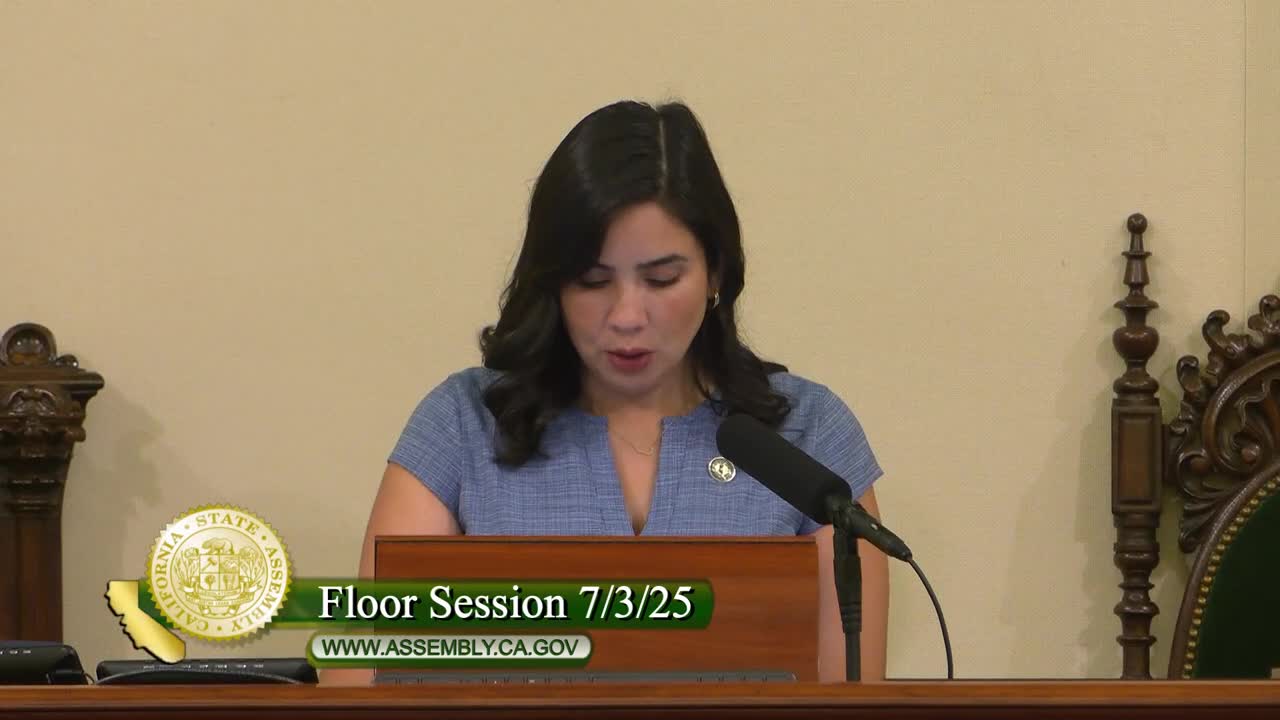
| Jul 3, 2025 | Senate amendments concurred in. To Engrossing and Enrolling. (Ayes 75. Noes 0. Page 2423.). |
| Jun 24, 2025 | In Assembly. Concurrence in Senate amendments pending. |
| Jun 23, 2025 | Read third time. Passed. Ordered to the Assembly. (Ayes 37. Noes 0. Page 1705.). |
| Jun 18, 2025 | Read second time. Ordered to Consent Calendar. |
| Jun 17, 2025 | From committee: Do pass. To Consent Calendar. (Ayes 12. Noes 0.) (June 17). |
| May 21, 2025 | From committee chair, with author's amendments: Amend, and re-refer to committee. Read second time, amended, and re-referred to Com. on JUD. |
| May 7, 2025 | Referred to Com. on JUD. |
| Apr 24, 2025 | In Senate. Read first time. To Com. on RLS. for assignment. |
| Apr 24, 2025 | Read third time. Passed. Ordered to the Senate. (Ayes 75. Noes 0. Page 1278.) |
| Apr 10, 2025 | Read second time. Ordered to Consent Calendar. |
| Apr 9, 2025 | Read second time and amended. Ordered returned to second reading. |
| Apr 8, 2025 | From committee: Amend, and do pass as amended. To Consent Calendar. (Ayes 12. Noes 0.) (April 8). |
| Mar 11, 2025 | Re-referred to Com. on JUD. |
| Mar 10, 2025 | Referred to Com. on JUD. |
| Mar 10, 2025 | From committee chair, with author's amendments: Amend, and re-refer to Com. on JUD. Read second time and amended. |
| Feb 4, 2025 | From printer. May be heard in committee March 6. |
| Feb 3, 2025 | Read first time. To print. |
|
Date
|
Description
|
Location
|
Votes
|
|
|---|---|---|---|---|
| Jul 3, 2025 | AB 369 Michelle Rodriguez Concurrence in Senate Amendments | Assembly Floor |
Passed |
|
| Jun 23, 2025 | Consent Calendar 2nd AB369 Michelle Rodriguez | Senate Floor |
Passed |
|
| Jun 17, 2025 | Do pass and be ordered to the Consent Calendar | Senate Standing Committee on Judiciary |
Passed |
|
| Apr 24, 2025 | AB 369 Michelle Rodriguez Consent Calendar Second Day | Assembly Floor |
Passed |
|
| Apr 8, 2025 | Do pass as amended. To Consent Calendar. | Assembly Standing Committee on Judiciary |
Passed |
This list shows positions taken on this bill by organizations on the date displayed, which is linked to the original source.
Positions by individuals are not included.
|
Organization
|
Position
|
Date
|
|---|---|---|
| California Collaboration For Youth | ** Support | |
| California Neurology Society | ** Support | |
| Civil Justice Association Of California | ** Support | |
| Neurelis, Inc. | ** Support | |
| UCB | ** Support | |
| Union Chimique Belge | ** Support |
CONCURRENCE IN SENATE AMENDMENTS
CSA1 Bill Id:AB 369
Author:(Michelle Rodriguez)
As Amended Ver:May 21, 2025
Majority vote
SUMMARY
Encourages the administration of anti-seizure rescue medication by providing immunity to the unlicensed person who does so. Specifically, this bill provides that notwithstanding any other law, a person other than a person on a school site who is not licensed to administer anti-seizure rescue medication, but who administers anti-seizure rescue medication at the scene of an emergency, in good faith and not for compensation, to a person who is experiencing, or is suspected of experiencing, a seizure shall not be subject to professional review, be liable in a civil action, or be subject to criminal prosecution for this administration so long as the person′s conduct is not grossly negligent and does not constitute willful or wanton misconduct.
Senate Amendments
Exempt school sites from the application of the bill, instead clarifying that administration of anti-seizure rescue medication to a pupil on a school site shall, instead, comply with Article 4.6 (commencing with Section 49468) of Chapter 9 of Part 27 of Division 4 of Title 2 of the Education Code.
COMMENTS
This bill seeks to encourage the use of anti-seizure rescue medication by laypersons by codifying that a person other than a person on a school site who administers such medications under specified conditions at the scene of an emergency is not subject to civil liability, professional review, or criminal liability. The bill also clarifies that administration of anti-seizure rescue medication to a pupil on a school site shall, instead, comply with Article 4.6 (commencing with Section 49468) of Chapter 9 of Part 27 of Division 4 of Title 2 of the Education Code.
The ″Good Samaritan″ Law. Under existing common law tort rules, a person who voluntarily comes to the aid of another person suffering a medical emergency is immune from liability for injuries and even death, so long as that person acts in a reasonably prudent manner under the circumstances. In addition, in 2009, California adopted a so-called ″Good Samaritan″ statute. (The term refers to the parable in the Gospel of Luke about the ″lowly″ Samaritan who came to the aid of a stranger left for dead while supposedly more upstanding citizens ignored the cries of the dying man.) California′s Good Samaritan statute (Health & Safety Code (HSC) Section 1799.102) grants qualified immunity to any person who renders medical or non-medical aid in an emergency, so long as that person acts in good faith and not for compensation, and so long as that person′s conduct is not grossly negligent or does not constitute willful or wanton misconduct.
In recent years, the Legislature has enacted bills providing express immunity from liability for lay people (as well as off-duty professionals) who voluntarily render medical aid in a specific emergency situation, such as administering cardiopulmonary resuscitation (CPR), applying an AED, or giving an opioid antidote, among other voluntary actions. These provisions are not necessary given that any of these methods of administering medical care at the scene of an emergency would certainly qualify as rendering medical aid in an emergency by a Good Samaritan, regardless of the mechanism or medication; and regardless of whether a statute specifically recognizes that particular mechanism or medication.
Prevalence of Epilepsy in the United States. In the United States, an estimated 3,400,000 people – of which 470,000 are children – have been diagnosed with epilepsy, a neurological disorder involving recurrent unprovoked seizures, according to the CDC. Epilepsy is the fourth most common neurological disorder in the nation; and one in 26 people will develop epilepsy during their lifetime. According to the Epilepsy Foundation, ″There are approximately 59,800 children living with epilepsy and seizures in California.″ The Foundation also points out that seizures are unpredictable in terms of when and where they occur:
Our organization knows that seizures are unpredictable and can occur at any time—including during school hours. While school nurses are trained to recognize and respond to seizures, a nurse may not always be on site at school or available when one occurs. It is crucial that other school employees have the opportunity to be trained properly to recognize and, if necessary, to respond to a seizure and help the child.″
Aside from those who have the disorder, many lives are affected by epilepsy. Seizures can occur at any time and in any place. Thus, in 2022, the Legislature approved and the governor signed legislation to provide immunity to school personnel who administer anti-seizure medication at a school site or school-related activity pursuant to AB 1810 (Levine), Chap. 906, Stats. 2022. The reasoning was that while school nurses are trained to administer medication, school nurses may not be onsite or available when a seizure occurs and when administration of anti-seizure medication is therefore necessary. Although school personnel were previously allowed to administer medication at the direction of a medical provider with the consent of a parent or guardian, and some school districts at least offered training in the administration of anti-seizure medication to students with epilepsy, AB 1810 formalized and standardized that practice so that all school districts would participate. AB 1810 also provided additional (but arguably duplicative) liability protections to school personnel—so school personnel who administer prescribed anti-seizure medication as allowed under the bill would be immune from civil liability, criminal liability, and professional review, in virtually all cases.
This bill seeks to encourage the use of anti-seizure rescue medication in emergencies. Like AB 1810 and other past bills that have provided immunity to a Good Samaritan, is not technically or legally necessary. As detailed above, HSC Section 1799.102 protects from civil liability any person who renders medical or non-medical aid in an emergency, so long as that person acts in good faith and not for compensation, and so long as that person′s conduct is not grossly negligent or does not constitute willful or wanton misconduct. The administration of anti-seizure medication constitutes the administration of medical aid, so HSC Section 1799.102 should provide immunity from civil liability to anyone who administers it in an emergency. Given that special conditions apply to the administration of anti-seizure medication on school sites, the bill clarifies that administration of anti-seizure rescue medication to a pupil on a school site shall, instead, comply with Article 4.6 (commencing with Section 49468) of Chapter 9 of Part 27 of Division 4 of Title 2 of the Education Code.
Nevertheless, the author and sponsor argue that it would be helpful to clarify the law in order to incentivize bystanders to administer anti-seizure medication at the scene of a medical emergency without fear of civil liability. The author explains that, ″Staff at adult day and other community-based programs may assist clients with self-administered prescription and nonprescription medications. However, they may not administer medication unless statutorily authorized to do so.″ This bill could provide the reassurance that such program administrators require.
The bill goes further than some, but not all, of these past measures regarding the good faith administration of a specific form of emergency medical assistance by also providing (1) immunity from professional review, and (2) immunity from criminal prosecution. The bill anticipates that the person administering the anti-seizure medication may be licensed to administer some medications, but not licensed to administer anti-seizure medication (or licensed for some other purpose). In the unlikely scenario that a licensing entity might seek to sanction the person for acting outside the scope of their license, the language of this bill would prevent the licensing entity from doing so. Likewise, in the unlikely scenario that criminal charges were filed against the emergency rescuer for possessing or administering a controlled substance, the bill would prevent such a prosecution.
Sponsorship of the bill. It is noteworthy that the sponsor of the bill, Union Chimique Belge (UCB), a global biopharma company that, according to the author, is ″the manufacturer of one of the anti-seizure rescue medications available today,″ has an apparent financial interest in the bill becoming law. Art. IV Section 16 of the California Constitution requires the state to pass uniform and not local or special statutes. The case law generally focuses on benefits being general and not conferring to just one entity. ″An act which applies uniformly to the whole of any single class of individuals or objects, when the classification is founded upon some natural, intrinsic, or constitutional distinction, is a general law.″ (Abeel v. Clack (1898) 84 Cal. 226.) Given that this bill would confer an indirect financial benefit on all manufacturers of anti-seizure medication, and not just UCB, the bill appears to have a general application and does not appear to be a special statute.
According to the Author
Because there is no current statutory authorization for anti-seizure rescue products to be administered by lay staff in non-healthcare settings, individuals who are prescribed and carry these medications have been turned away from certain programs, including adult day programs.
. . . This bill would remove barriers for the administration of emergency rescue medications for children and adults with a history of seizure disorders.
Arguments in Support
The California Collaboration for Youth (CCFY), comprised of children′s camping organizations throughout the state, including but not limited to, the American Camp Association, Western Association of Independent Camps, Scouting America, Girls Scouts of America, Salvation Army Camps, Christian Camps and Conference Centers, Foundation for Jewish Camping, Campfire USA, Rally Camps, and Guided Discoveries, among others, writes the following in support of the bill:
[AB 369] provides that in the event someone is having a seizure, a person acting in good faith who provides anti-seizure medicine, may not be subject to professional review, liability in a civil action, or criminal prosecution for that administration of anti-seizure rescue medication. Day camps typically operate on tight budgets so there is no practical way they can employ someone who is licensed to administer anti-seizure medication. In the event that a camper has a seizure, camp counselors should not be subject to civil liability for acting in good faith and administering anti-seizure medication for the sole purpose of saving a child.
Arguments in Opposition
None on file
FISCAL COMMENTS
None
VOTES:
ASM JUDICIARY: 12-0-0
YES: Kalra, Dixon, Wicks, Bryan, Connolly, Harabedian, Pacheco, Papan, Sanchez, Stefani, Zbur, Tangipa
ASSEMBLY FLOOR: 75-0-4
YES: Addis, Aguiar-Curry, Ahrens, Alanis, Alvarez, Arambula, Ávila Farías, Bains, Bauer-Kahan, Bennett, Berman, Boerner, Bonta, Bryan, Calderon, Caloza, Carrillo, Castillo, Connolly, Davies, DeMaio, Dixon, Elhawary, Ellis, Flora, Fong, Gabriel, Garcia, Gipson, Jeff Gonzalez, Mark González, Hadwick, Haney, Hart, Hoover, Irwin, Jackson, Kalra, Krell, Lee, Lowenthal, Macedo, McKinnor, Muratsuchi, Nguyen, Ortega, Pacheco, Papan, Patel, Patterson, Pellerin, Petrie-Norris, Quirk-Silva, Ramos, Ransom, Celeste Rodriguez, Michelle Rodriguez, Rogers, Blanca Rubio, Sanchez, Schiavo, Schultz, Sharp-Collins, Solache, Soria, Stefani, Ta, Tangipa, Valencia, Wallis, Ward, Wicks, Wilson, Zbur, Rivas
ABS, ABST OR NV: Chen, Gallagher, Harabedian, Lackey
SENATE FLOOR: 37-0-3
YES: Allen, Alvarado-Gil, Archuleta, Arreguín, Ashby, Becker, Blakespear, Cabaldon, Caballero, Choi, Cortese, Dahle, Durazo, Gonzalez, Grayson, Grove, Hurtado, Jones, Laird, Limón, McGuire, McNerney, Menjivar, Niello, Ochoa Bogh, Padilla, Pérez, Richardson, Seyarto, Smallwood-Cuevas, Stern, Strickland, Umberg, Valladares, Wahab, Weber Pierson, Wiener
ABS, ABST OR NV: Cervantes, Reyes, Rubio
UPDATED
VERSION: May 21, 2025
CONSULTANT: Alison Merrilees / JUD. / (916) 319-2334 FN: 0000989
SENATE RULES COMMITTEE Office of Senate Floor Analyses (916) 651-1520 Fax: (916) 327-4478 | AB 369 |
CONSENT
Bill No: AB 369
Author: Michelle Rodriguez (D)
Amended: 5/21/25 in Senate
Vote: 21
SENATE JUDICIARY COMMITTEE: 12-0, 6/17/25
AYES: Umberg, Niello, Allen, Arreguín, Caballero, Durazo, Laird, Stern, Valladares, Wahab, Weber Pierson, Wiener
NO VOTE RECORDED: Ashby
ASSEMBLY FLOOR: 75-0, 4/24/25 (Consent) - See last page for vote
SUBJECT: Emergency services: liability
SOURCE: UCB
DIGEST:
This bill provides qualified immunity to those administering, in good faith, anti-seizure rescue medication at the scene of an emergency, as provided.
ANALYSIS:
Existing law:
- Provides that every person is responsible, not only for the result of their willful acts, but also for an injury occasioned to another by the person’s want of ordinary care or skill in the management of their property or person, except so far as the latter has, willfully or by want of ordinary care, brought the injury upon themselves. (Civil (Civ.) Code § 1714(a).)
- Provides that no person who, in good faith, and not for compensation, renders emergency medical or nonmedical care at the scene of an emergency shall be liable for any civil damages resulting from any act or omission. The scene of an emergency shall not include emergency departments and other places where medical care is usually offered. This applies only to medical, law enforcement, and emergency personnel, as specified. (Health & Safety (Saf.) Code § 1799.102(a).)
- Extends to all other persons not covered by the above who are rendering medical or nonmedical care or other assistance in such situations immunity from civil damages resulting from any act or omission other than acts or omissions constituting gross negligence or willful or wanton misconduct. (Health & Saf. Code § 1799.102(b).)
- Establishes the Seizure Safe Schools Act, whereby a trained person who administers emergency anti-seizure medication or other prescribed medication, as provided and in good faith and not for compensation, on a school site to a pupil diagnosed with seizures, a seizure disorder, or epilepsy who appears to be experiencing a seizure shall not be subject to professional review, be liable in a civil action, or be subject to criminal prosecution for the person’s acts or omissions in administering the emergency anti-seizure medication. Such immunity does not extend to an act or omission that constitutes gross negligence or willful or wanton misconduct and does not affect the ability of a licensing board to take disciplinary action against a licensed health care professional for an act not specifically authorized. (Education (Educ.) Code § 49468 et seq.)
This bill:
- Provides that, notwithstanding any other law, a person not otherwise licensed to administer anti-seizure rescue medication, but who administers such medication at the scene of an emergency, in good faith and not for compensation, to a person who is experiencing, or is suspected of experiencing, a seizure shall not be subject to professional review, be liable in a civil action, or be subject to criminal prosecution for this administration so long as the person’s conduct is not grossly negligent and does not constitute willful or wanton misconduct.
- Clarifies that it does not apply to administration of anti-seizure rescue medication to a pupil on a school site which shall, instead, comply with the Seizure Safe Schools Act.
Background
There are tens of thousands of children diagnosed with seizures, a seizure disorder, or epilepsy in California. Their seizures are often unpredictable and can quickly become medical emergencies.
In 2022, AB 1810 (Levine, Chapter 906, Statutes of 2022) authorized a local educational agency (LEA), upon receipt of a request from the parent or guardian of a pupil diagnosed with seizures, a seizure disorder, or epilepsy to designate volunteers at the school to receive training regarding the emergency use of anti-seizure medication. School nurses or, if none, a trained volunteer, are authorized to administer emergency anti-seizure medication to a diagnosed pupil if the pupil is suffering from a seizure. LEAs must provide written assurance that each trained employee who volunteers will be provided defense and indemnification for any and all civil liability. A trained person who, in good faith and not for compensation, administers emergency anti-seizure medication in compliance with AB 1810 to a pupil who appears to be experiencing a seizure is shielded from professional review and is provided qualified immunity for attendant civil and criminal claims.
This bill extends nearly identical qualified immunity to a person that administers such medication outside of a school site. This bill is sponsored by UCB. It is supported by the California Neurology Society and Neurelis, Inc. No timely opposition has been received. For a more thorough analysis of the bill, please see the Senate Judiciary Committee analysis.
Comment
According to the author:
The U.S Food and Drug Administration (FDA) has approved new rescue medications for acute treatment of seizures outside of a healthcare setting and can be administered by laypersons (people who are not healthcare professionals). This medication is meant to be used to prevent seizure emergencies, either by stopping a prolonged seizure or stopping a seizure cluster.
Because there is no current statutory authorization for anti-seizure rescue products to be administered by lay staff in non-healthcare settings, individuals who are prescribed and carry these medications have been turned away from certain programs, including adult day programs.
Staff at adult day and other community-based programs may assist clients with self-administered prescription and nonprescription medications. However, they may not administer medication unless statutorily authorized to do so.
While this issue was originally raised from the perspective of community-based programs, the FDA has approved nasal rescue medications for the acute treatment of seizure clusters in patients with epilepsy 6 years of age and older. For that reason, this bill goes beyond community-based programs to remove liability for anyone who administers these types of medications in order to capture additional settings.
FISCAL EFFECT: Appropriation: No Fiscal Com.: No Local: No
SUPPORT: (Verified 6/17/25)
UCB (Source)
California Neurology Society
Civil Justice Association of California
Neurelis, Inc.
OPPOSITION: (Verified 6/17/25)
None received
ARGUMENTS IN SUPPORT: UCB writes:
This measure is crucial as it removes barriers to the administration of emergency rescue medications for individuals with a history of seizure disorders. AB 369 authorizes non-licensed healthcare professionals to administer rescue medications during seizure emergencies, ensuring timely and potentially lifesaving intervention.
ASSEMBLY FLOOR: 75-0, 4/24/25
AYES: Addis, Aguiar-Curry, Ahrens, Alanis, Alvarez, Arambula, Ávila Farías, Bains, Bauer-Kahan, Bennett, Berman, Boerner, Bonta, Bryan, Calderon, Caloza, Carrillo, Castillo, Connolly, Davies, DeMaio, Dixon, Elhawary, Ellis, Flora, Fong, Gabriel, Garcia, Gipson, Jeff Gonzalez, Mark González, Hadwick, Haney, Hart, Hoover, Irwin, Jackson, Kalra, Krell, Lee, Lowenthal, Macedo, McKinnor, Muratsuchi, Nguyen, Ortega, Pacheco, Papan, Patel, Patterson, Pellerin, Petrie-Norris, Quirk-Silva, Ramos, Ransom, Celeste Rodriguez, Michelle Rodriguez, Rogers, Blanca Rubio, Sanchez, Schiavo, Schultz, Sharp-Collins, Solache, Soria, Stefani, Ta, Tangipa, Valencia, Wallis, Ward, Wicks, Wilson, Zbur, Rivas
NO VOTE RECORDED: Chen, Gallagher, Harabedian, Lackey
Prepared by: Christian Kurpiewski / JUD. / (916) 651-4113
6/19/25 16:25:42
**** END ****
Senator Thomas Umberg, Chair
2025-2026 Regular Session
Bill No: AB 369 (Author:Michelle Rodriguez)
Version: May 21, 2025
Hearing Date: June 17, 2025
Fiscal: No
Urgency: No
Consultant: CK
SUBJECT
Emergency services: liability
DIGEST
This bill provides qualified immunity to those administering, in good faith, anti-seizure rescue medication at the scene of an emergency, as provided.
EXECUTIVE SUMMARY
There are tens of thousands of children diagnosed with seizures, a seizure disorder, or epilepsy in California. Their seizures are often unpredictable and can quickly become medical emergencies.
In 2022, AB 1810 (Levine, Ch. 906, Stats. 2022) authorized a local educational agency (LEA), upon receipt of a request from the parent or guardian of a pupil diagnosed with seizures, a seizure disorder, or epilepsy to designate volunteers at the school to receive training regarding the emergency use of anti-seizure medication. School nurses or, if none, a trained volunteer, are authorized to administer emergency anti-seizure medication to a diagnosed pupil if the pupil is suffering from a seizure. LEAs must provide written assurance that each trained employee who volunteers will be provided defense and indemnification for any and all civil liability. A trained person who, in good faith and not for compensation, administers emergency anti-seizure medication in compliance with AB 1810 to a pupil who appears to be experiencing a seizure is shielded from professional review and is provided qualified immunity for attendant civil and criminal claims.
This bill extends nearly identical qualified immunity to a person that administers such medication outside of a school site. This bill is sponsored by UCB. It is supported by the California Neurology Society and Neurelis, Inc. No timely opposition has been received by the Committee.
PROPOSED CHANGES TO THE LAW
Existing law:
- Provides that every person is responsible, not only for the result of their willful acts, but also for an injury occasioned to another by the person’s want of ordinary care or skill in the management of their property or person, except so far as the latter has, willfully or by want of ordinary care, brought the injury upon themselves. (Civ. Code § 1714(a).)
- Provides that no person who, in good faith, and not for compensation, renders emergency medical or nonmedical care at the scene of an emergency shall be liable for any civil damages resulting from any act or omission. The scene of an emergency shall not include emergency departments and other places where medical care is usually offered. This applies only to medical, law enforcement, and emergency personnel, as specified. (Health & Saf. Code § 1799.102(a).)
- Extends to all other persons not covered by the above who are rendering medical or nonmedical care or other assistance in such situations immunity from civil damages resulting from any act or omission other than acts or omissions constituting gross negligence or willful or wanton misconduct. (Health & Saf. Code § 1799.102(b).)
- Establishes the Seizure Safe Schools Act, whereby a trained person who administers emergency anti-seizure medication or other prescribed medication, as provided and in good faith and not for compensation, on a school site to a pupil diagnosed with seizures, a seizure disorder, or epilepsy who appears to be experiencing a seizure shall not be subject to professional review, be liable in a civil action, or be subject to criminal prosecution for the person’s acts or omissions in administering the emergency anti-seizure medication. Such immunity does not extend to an act or omission that constitutes gross negligence or willful or wanton misconduct and does not affect the ability of a licensing board to take disciplinary action against a licensed health care professional for an act not specifically authorized. (Educ. Code § 49468 et seq.)
This bill:
- Provides that, notwithstanding any other law, a person not otherwise licensed to administer anti-seizure rescue medication, but who administers such medication at the scene of an emergency, in good faith and not for compensation, to a person who is experiencing, or is suspected of experiencing, a seizure shall not be subject to professional review, be liable in a civil action, or be subject to criminal prosecution for this administration so long as the person’s conduct is not grossly negligent and does not constitute willful or wanton misconduct.
- Clarifies that it does not apply to administration of anti-seizure rescue medication to a pupil on a school site which shall, instead, comply with the Seizure Safe Schools Act.
COMMENTS
- Civil liability and immunity
As a general rule, California law provides that persons are responsible, not only for the result of their willful acts, but also for an injury occasioned to another by their want of ordinary care or skill in the management of their property or person, except so far as the latter has, willfully or by want of ordinary care, brought the injury upon themselves. (Civ. Code § 1714(a).) Liability has the primary effect of ensuring that some measure of recourse exists for those persons injured by the negligent or willful acts of others; the risk of that liability has the primary effect of ensuring parties act reasonably to avoid harm to those to whom they owe a duty.
Conversely, immunity from liability disincentivizes careful planning and acting on the part of individuals and entities. When one enjoys immunity from civil liability, they are relieved of the responsibility to act with due regard and an appropriate level of care in the conduct of their activities. Immunity provisions are also disfavored because they, by their nature, preclude parties from recovering when they are injured, and force injured parties to absorb losses for which they are not responsible. Liability acts not only to allow a victim to be made whole, but to encourage appropriate compliance with legal requirements.
Although immunity provisions are rarely preferable, the Legislature has, in limited scenarios, approved measured immunity from liability (as opposed to blanket immunities) to promote other policy goals that could benefit the public. Immunities are generally afforded when needed to ensure the willingness of individuals to continue taking on certain roles that may involve some risk and to incentivize certain conduct, such as the provision of life-saving or other critical services. Examples include protections for use of CPR (Civ. Code § 1714.2); use of an automated external defibrillator (Civ. Code § 1714.21); providing emergency care at the scene of an emergency (Health & Saf. Code §§ 1799.102, 1799.106); and performing emergency rescue services (Health & Saf. Code § 1799.107). However, as indicated above, rarely is immunity absolute, and these immunities generally do not cover grossly negligent conduct or intentional misconduct.
- Emergency care for epilepsy and seizure disorders
According to the Mayo Clinic:
Epilepsy — also known as a seizure disorder — is a brain condition that causes recurring seizures. There are many types of epilepsy. In some people, the cause can be identified. In others, the cause is not known.
Epilepsy is common. It's estimated that 1.2% of people in the United States have active epilepsy, according to the Centers for Disease Control and Prevention. Epilepsy affects people of all genders, races, ethnic backgrounds and ages.
Seizure symptoms can vary widely. Some people may lose awareness during a seizure while others don't. Some people stare blankly for a few seconds during a seizure. Others may repeatedly twitch their arms or legs, movements known as convulsions.
Having a single seizure doesn't mean you have epilepsy. Epilepsy is diagnosed if you've had at least two unprovoked seizures at least 24 hours apart. Unprovoked seizures don't have a clear cause.
Treatment with medicines or sometimes surgery can control seizures for most people with epilepsy. Some people require lifelong treatment. For others, seizures go away. Some children with epilepsy may outgrow the condition with age.[1]
The CDC reports that about one in ten people may have a seizure in their lifetime, but that most seizures usually do not require emergency medical attention.[2] This bill addresses situation when they do.
Building off of AB 1810, this bill provides immunity to a person not otherwise licensed to administer anti-seizure rescue medication, but who administers such medication at the scene of an emergency, in good faith and not for compensation, to a person who is experiencing, or is suspected of experiencing, a seizure. This shields the individual from being subject to professional review, being liable in a civil action, or being subject to criminal prosecution for this administration so long as the person’s conduct is not grossly negligent and does not constitute willful or wanton misconduct. The bill specifically exempts such administration on school sites, clarifying that the Seizure Safe Schools Act applies in such situations.
It should be noted that the existing Good Samaritan statute already provides a level of qualified immunity in such situations.
According to the author:
The U.S Food and Drug Administration (FDA) has approved new rescue medications for acute treatment of seizures outside of a healthcare setting and can be administered by laypersons (people who are not healthcare professionals). This medication is meant to be used to prevent seizure emergencies, either by stopping a prolonged seizure or stopping a seizure cluster.
Because there is no current statutory authorization for anti-seizure rescue products to be administered by lay staff in non-healthcare settings, individuals who are prescribed and carry these medications have been turned away from certain programs, including adult day programs.
Staff at adult day and other community-based programs may assist clients with self-administered prescription and nonprescription medications. However, they may not administer medication unless statutorily authorized to do so.
While this issue was originally raised from the perspective of community-based programs, the FDA has approved nasal rescue medications for the acute treatment of seizure clusters in patients with epilepsy 6 years of age and older. For that reason, this bill goes beyond community-based programs to remove liability for anyone who administers these types of medications in order to capture additional settings.
UCB, the sponsor of the bill, writes in support: “This measure is crucial as it removes barriers to the administration of emergency rescue medications for individuals with a history of seizure disorders. AB 369 authorizes non-licensed healthcare professionals to administer rescue medications during seizure emergencies, ensuring timely and potentially lifesaving intervention.”
SUPPORT
UCB (sponsor)
California Neurology Society
Civil Justice Association of California
Neurelis, Inc.
OPPOSITION
None received
RELATED LEGISLATION
Pending Legislation: SB 466 (Caballero, 2025) provides total immunity from liability to a public water system in a civil case brought by non-governmental entities or individuals harmed by the water system’s acts or failure to act related to hexavalent chromium in drinking water during specified time periods. SB 466 is currently in the Assembly Environmental Safety and Toxic Materials Committee.
AB 1172 (Nguyen, 2025) authorizes individuals with developmental disabilities to receive emergency seizure medication by creating a training pathway for employees of licensed facilities that choose to volunteer to administer the medication. It provides qualified immunity to volunteers who so administer the medication. AB 1172 is currently pending referral in the Senate.
Prior Legislation:
SB 234 (Portantino, Ch. 596, Stats. 2023) requires public schools, institutions of higher education, stadiums, concert venues, and amusement parks to maintain unexpired doses of naloxone hydrochloride or another opioid antagonist on its premises and provides qualified immunity to those administering such opioid antagonists and to medical professionals for prescribing it.
AB 1166 (Bains, Ch. 97, Stats. 2023) extended qualified immunity to a person who, in good faith, and not for compensation, renders emergency treatment at the scene of an opioid overdose or suspected opioid overdose by administering an opioid antagonist.
AB 1810 (Levine, Ch. 906, Stats. 2022) See Executive Summary.
AB 635 (Ammiano, Ch. 707, Stats. 2013) afforded qualified immunity from civil liability, criminal prosecution, or professional review to licensed health care providers who issue prescriptions or standing orders, as specified; and immunity from civil action or criminal prosecution, or professional review, to any persons who possess or distribute naloxone pursuant to a prescription or standing order, or acting with reasonable care in administering naloxone, as specified.
PRIOR VOTES:
Assembly Floor (Ayes 75, Noes 0)
Assembly Judiciary Committee (Ayes 12, Noes 0)
**************
Epilepsy: Overview (October 14, 2023) Mayo Clinic, https://www.mayoclinic.org/diseases-conditions/epilepsy/symptoms-causes/syc-20350093. All internet citations are current as of June 4, 2025. ↑
First Aid for Seizures (May 15, 2024) CDC, https://www.cdc.gov/epilepsy/first-aid-for-seizures/index.html. ↑
Date of Hearing: April 8, 2025
ASSEMBLY COMMITTEE ON JUDICIARY
Ash Kalra, Chair
ABPCA Bill Id:AB 369
Author:(Michelle Rodriguez) – As Amended Ver:March 10, 2025
PROPOSED CONSENT (As Proposed to be Amended)
SUBJECT: Emergency services: liability
KEY ISSUE: should a person who administers anti-seizure rescue medication at the scene of an emergency, in good faith and not for compensation, to a person who appears to be experiencing a seizure be protected from professional review, civil liability, and criminal liability, as long as the person's conduct is not grossly negligent and does not constitute willful or wanton misconduct?
SYNOPSIS
Under existing common law tort rules, a person who voluntarily comes to the aid of another person suffering a medical emergency is immune from liability for injuries and even death, so long as that person acts in a reasonably prudent manner under the circumstances. In 2009, California adopted a so-called "Good Samaritan" statute. In recent years, this Committee has heard, and the Legislature has enacted, bills providing express immunity from liability for lay people (as well as off-duty professionals) who voluntarily render medical aid in a specific emergency situation, such as administering cardiopulmonary resuscitation (CPR), applying an AED, or giving an opioid antidote, among other voluntary actions. These provisions are not necessary given that any of these methods of administering medical or non-medical care by a lay rescuer at the scene of an emergency would most certainly qualify as rendering medical aid in an emergency by a Good Samaritan, regardless of the mechanism by which the person administers the medical or non-medical care.
This bill seeks to encourage the use of anti-seizure rescue medication by laypersons by codifying that a person who administers such medications under specified conditions at the scene of an emergency is not subject to civil liability, professional review, or criminal liability. Like other past bills that have provided immunity to a Good Samaritan who administers a specific type of emergency medical care at the scene of an emergency, the bill is not technically or legally necessary. Nevertheless, the author and sponsor argue that it would be helpful to clarify the law in order to incentivize bystanders to administer anti-seizure medication at the scene of a medical emergency without fear of civil liability, professional review, or criminal prosecution.
The author proposes minor clarifying amendments that are incorporated into the SUMMARY, and explained in the analysis. It is sponsored by Union Chimique Belge (UCB), a global biopharma company that, according to the author, is “the manufacturer of one of the anti-seizure rescue medications available today.” It is supported by a consortium of children’s camping organizations and has no opposition on file.
SUMMARY: Encourages the administration of anti-seizure rescue medication by providing immunity to the unlicensed person who does so. Specifically, this bill provides that notwithstanding any other law, a person who is not licensed to administer anti-seizure rescue medication, but who administers anti-seizure rescue medication at the scene of an emergency, in good faith and not for compensation, to a person who is experiencing, or is suspected of experiencing, a seizure shall not be subject to professional review, be liable in a civil action, or be subject to criminal prosecution for this administration so long as the person's conduct is not grossly negligent and does not constitute willful or wanton misconduct.
EXISTING LAW:
- Provides that, “everyone is responsible, not only for the result of his or her willful acts, but also for an injury occasioned to another by his or her want of ordinary care or skill in the management of his or her property or person, except so far as the latter has, willfully or by want of ordinary care, brought the injury upon himself or herself.” (Civil Code Section 1714 (a).)
- Provides that a “Good Samaritan” who in good faith, and not for compensation, renders medical or nonmedical care at the scene of an emergency shall not be liable for any civil damages resulting from any act or omission other than an act or omission constituting gross negligence or willful or wanton misconduct. (Civil Code Section 1799.102.)
- Provides that any person who, in good faith and not for compensation, renders emergency care or treatment by the use of an AED at the scene of an emergency is not liable for any civil damages resulting from any acts or omissions in rendering the emergency care, except in the case of gross negligence or willful or wanton misconduct of the person who renders emergency care or treatment by the use of an AED. (Civil Code Section 1714.21.)
- Provides that any person who has voluntarily completed a training course who administers an epinephrine auto-injector, in good faith and not for compensation, to another person who appears to be experiencing anaphylaxis at the scene of an emergency situation is not liable for any civil damages resulting from his or her acts or omissions in administering the epinephrine auto-injector, if that person has complied with the requirements and standards governing how that auto-injector is obtained and stored, and with the express or implied consent of the person, to treat anaphylaxis. (Civil Code Section 1714.23 (b)(1).)
- Provides that notwithstanding any other law, a person who is trained and who administers emergency anti-seizure medication or medication prescribed for seizure disorder symptoms, in good faith and not for compensation, to a pupil diagnosed with seizures, a seizure disorder, or epilepsy who appears to be experiencing a seizure shall not be subject to professional review, be liable in a civil action, or be subject to criminal prosecution for the person’s acts or omissions in administering the emergency anti-seizure medication; but that this provision does not affect a person’s liability for an act or omission that constitutes gross negligence or willful or wanton misconduct. (Education Code Section 49468.5 (b).)
FISCAL EFFECT: As currently in print this bill is keyed non-fiscal.
COMMENTS: This bill seeks to encourage the use of anti-seizure rescue medication by laypersons by codifying that a person who administers such medications under specified conditions at the scene of an emergency is not subject to civil liability, professional review, or criminal liability. According to the author:
Because there is no current statutory authorization for anti-seizure rescue products to be administered by lay staff in non-healthcare settings, individuals who are prescribed and carry these medications have been turned away from certain programs, including adult day programs.
. . . This bill would remove barriers for the administration of emergency rescue medications for children and adults with a history of seizure disorders.
The "Good Samaritan" Law. Under existing common law tort rules, a person who voluntarily comes to the aid of another person suffering a medical emergency is immune from liability for injuries and even death, so long as that person acts in a reasonably prudent manner under the circumstances. In addition, in 2009, California adopted a so-called "Good Samaritan" statute. (The term refers to the parable in the Gospel of Luke about the "lowly" Samaritan who came to the aid of a stranger left for dead while supposedly more upstanding citizens ignored the cries of the dying man.) California's Good Samaritan statute (Health & Safety Code (HSC) Section 1799.102) grants qualified immunity to any person who renders medical or non-medical aid in an emergency, so long as that person acts in good faith and not for compensation, and so long as that person's conduct is not grossly negligent or does not constitute willful or wanton misconduct.
In recent years, this Committee has heard, and the Legislature has enacted, bills providing express immunity from liability for lay people (as well as off-duty professionals) who voluntarily render medical aid in a specific emergency situation, such as administering cardiopulmonary resuscitation (CPR), applying an AED, or giving an opioid antidote, among other voluntary actions. These provisions are not necessary given that any of these methods of administering medical care at the scene of an emergency would certainly qualify as rendering medical aid in an emergency by a Good Samaritan, regardless of the mechanism or medication; and regardless of whether a statute specifically recognizes that particular mechanism or medication.
Prevalence of Epilepsy in the United States. In the United States, an estimated 3,400,000 people – of which 470,000 are children – have been diagnosed with epilepsy, a neurological disorder involving recurrent unprovoked seizures, according to the CDC. Epilepsy is the fourth most common neurological disorder in the nation; and one in 26 people will develop epilepsy during their lifetime. According to the Epilepsy Foundation, “There are approximately 59,800 children living with epilepsy and seizures in California.” The Foundation also points out that seizures are unpredictable in terms of when and where they occur:
Our organization knows that seizures are unpredictable and can occur at any time—including during school hours. While school nurses are trained to recognize and respond to seizures, a nurse may not always be on site at school or available when one occurs. It is crucial that other school employees have the opportunity to be trained properly to recognize and, if necessary, to respond to a seizure and help the child.”
Aside from those who have the disorder, many lives are affected by epilepsy. Seizures can occur at any time and in any place. Thus, in 2022, the Legislature approved and the governor signed legislation to provide immunity to school personnel who administer anti-seizure medication at a school site or school-related activity pursuant to AB 1810 (Levine), Chap. 906, Stats. 2022. The reasoning was that while school nurses are trained to administer medication, school nurses may not be onsite or available when a seizure occurs and when administration of anti-seizure medication is therefore necessary. Although school personnel were previously allowed to administer medication at the direction of a medical provider with the consent of a parent or guardian, and some school districts at least offered training in the administration of anti-seizure medication to students with epilepsy, AB 1810 formalized and standardized that practice so that all school districts would participate. AB 1810 also provided additional (but arguably duplicative) liability protections to school personnel—so school personnel who administer prescribed anti-seizure medication as allowed under the bill would be immune from civil liability, criminal liability, and professional review, in virtually all cases.
This bill seeks to encourage the use of anti-seizure rescue medication in emergencies. Like AB 1810 and other past bills that have provided immunity to a Good Samaritan, is not technically or legally necessary. As detailed above, HSC Section 1799.102 protects from civil liability any person who renders medical or non-medical aid in an emergency, so long as that person acts in good faith and not for compensation, and so long as that person's conduct is not grossly negligent or does not constitute willful or wanton misconduct. The administration of anti-seizure medication constitutes the administration of medical aid, so HSC Section 1799.102 should provide immunity from civil liability to anyone who administers it in an emergency.
Nevertheless, the author and sponsor argue that it would be helpful to clarify the law in order to incentivize bystanders to administer anti-seizure medication at the scene of a medical emergency without fear of civil liability. The author explains that, “Staff at adult day and other community-based programs may assist clients with self-administered prescription and nonprescription medications. However, they may not administer medication unless statutorily authorized to do so.” This bill could provide the reassurance that such program administrators require.
The bill goes further than some, but not all, of these past measures regarding the good faith administration of a specific form of emergency medical assistance by also providing (1) immunity from professional review, and (2) immunity from criminal prosecution. The bill anticipates that the person administering the anti-seizure medication may be licensed to administer some medications, but not licensed to administer anti-seizure medication (or licensed for some other purpose). In the unlikely scenario that a licensing entity might seek to sanction the person for acting outside the scope of their license, the language of this bill would prevent the licensing entity from doing so. Likewise, in the unlikely scenario that criminal charges were filed against the emergency rescuer for possessing or administering a controlled substance, the bill would prevent such a prosecution.
Sponsorship of the bill. It is noteworthy that the sponsor of the bill, Union Chimique Belge (UCB), a global biopharma company that, according to the author, is “the manufacturer of one of the anti-seizure rescue medications available today,” has an apparent financial interest in the bill becoming law. Art. IV Section 16 of the California Constitution requires the state to pass uniform and not local or special statutes. The case law generally focuses on benefits being general and not conferring to just one entity. “An act which applies uniformly to the whole of any single class of individuals or objects, when the classification is founded upon some natural, intrinsic, or constitutional distinction, is a general law.” (Abeel v. Clack (1898) 84 Cal. 226.) Given that this bill would confer an indirect financial benefit on all manufacturers of anti-seizure medication, and not just UCB, the bill appears to have a general application and does not appear to be a special statute.
Author’s amendments. The bill in print requires a person to act with reasonable care (in which case no immunity would be necessary), but does not contain the standard exemptions to Good Samaritan immunity for acts that constitute gross negligence or willful or wanton misconduct. Therefore, the author proposes the following clarifying amendment:
1714.27. Notwithstanding any other law, a person not otherwise licensed to administer anti-seizure rescue medication, but who acts with reasonable care in administering administers anti-seizure rescue medication at the scene of an emergency, in good faith and not for compensation, to a person who is experiencing, or is suspected of experiencing, a seizure shall not be subject to professional review, be liable in a civil action, or be subject to criminal prosecution for this administration so long as the person's conduct is not grossly negligent and does not constitute willful or wanton misconduct.
ARGUMENTS IN SUPPORT: The California Collaboration for Youth (CCFY), comprised of children’s camping organizations throughout the state, including but not limited to, the American Camp Association, Western Association of Independent Camps, Scouting America, Girls Scouts of America, Salvation Army Camps, Christian Camps and Conference Centers, Foundation for Jewish Camping, Campfire USA, Rally Camps, and Guided Discoveries, among others, writes the following in support of the bill:
[AB 369] provides that in the event someone is having a seizure, a person acting in good faith who provides anti-seizure medicine, may not be subject to professional review, liability in a civil action, or criminal prosecution for that administration of anti-seizure rescue medication. Day camps typically operate on tight budgets so there is no practical way they can employ someone who is licensed to administer anti-seizure medication. In the event that a camper has a seizure, camp counselors should not be subject to civil liability for acting in good faith and administering anti-seizure medication for the sole purpose of saving a child.
REGISTERED SUPPORT / OPPOSITION:
Support
California Collaboration for Youth (CCFY)
Union Chimique Belge (UCB) (sponsor)
Opposition
None on file
Analysis Prepared by: Alison Merrilees / JUD. / (916) 319-2334
Bill Author

Bill Co-Author(s):