AB 392: Pornographic internet websites: consent.
- Session Year: 2025-2026
- House: Assembly
- Latest Version Date: 2025-07-10
Current Status:
In Progress
(2025-08-29: In committee: Held under submission.)
Introduced
In Committee
Awaiting First Chamber Vote
Passed First Chamber
In Committee
Awaiting Second Chamber Vote
Passed Second Chamber
Enacted
Existing law generally regulates obscene content on internet websites, including by requiring a social media platform to provide, in a mechanism that is reasonably accessible to users, a means for a user who is a California resident to report material to the social media platform that the user reasonably believes is, among other things, child sexual abuse material.
This bill would require a person who operates an internet website to exercise ordinary care and reasonable diligence to ensure that any sexually explicit content, as defined, uploaded to the operators pornographic internet website does not include a depicted individual, as defined. The bill would require a user to, before uploading sexually explicit content to a pornographic internet website, submit, among other things, a statement certifying, not under penalty of perjury, that any individual depicted in the sexually explicit content was not a minor at the time the sexually explicit content was created, consented to being depicted in the sexually explicit content, and consents to the sexually explicit content being uploaded to the internet on the pornographic internet website. The bill would make knowingly providing false information in that statement an infraction punishable by a fine, as specified. By creating a new infraction, this bill would impose a state-mandated local program. The bill would require an operator of a pornographic internet website to verify a users email address before permitting the user to upload sexually explicit content to the operators pornographic internet website.
This bill would authorize a depicted individual and a public prosecutor to bring a civil action to enforce the bill, as prescribed.
The California Constitution requires the state to reimburse local agencies and school districts for certain costs mandated by the state. Statutory provisions establish procedures for making that reimbursement.
This bill would provide that no reimbursement is required by this act for a specified reason.
Existing law generally regulates obscene content on internet websites, including by requiring a social media platform to provide, in a mechanism that is reasonably accessible to users, a means for a user who is a California resident to report material to the social media platform that the user reasonably believes is, among other things, child sexual abuse material.
This bill would require a person who operates a pornographic an internet website to exercise ordinary care and reasonable diligence to ensure that any sexually explicit content, as defined, uploaded to the operators pornographic internet website does not include a depicted individual, as defined. The bill would require a user to, before uploading sexually explicit content to a pornographic internet website, submit, among other things, a statement, statement certifying, not under penalty of perjury, that any individual depicted in the sexually explicit content was not a minor at the time the sexually explicit content was created, consented to being depicted in the sexually explicit content, and consents to the sexually explicit content being uploaded to the internet on the pornographic internet website. The bill would make knowingly providing false information in that statement an infraction punishable by a fine, as specified. By expanding the scope of the crime of perjury, creating a new infraction, this bill would impose a state-mandated local program. The bill would also require an operator to establish a clear and conspicuous mechanism that permits a depicted individual to submit a takedown request, that meets certain criteria, on the basis that the depicted individual did not consent to being depicted in sexually explicit content uploaded to the pornographic internet website, did not consent to that sexually explicit content being uploaded to the pornographic internet website, or was a minor at the time of the creation of that sexually explicit content. The bill would require the operator to remove and permanently block the sexually explicit content and any substantially identical content from its pornographic internet website within 48 hours, as specified. The bill would require an operator of a pornographic internet website to verify a users email address before permitting the user to upload sexually explicit content to the operators pornographic internet website.
This bill would authorize a depicted individual and a public prosecutor to bring a civil action to enforce the bill, as prescribed.
The California Constitution requires the state to reimburse local agencies and school districts for certain costs mandated by the state. Statutory provisions establish procedures for making that reimbursement.
This bill would provide that no reimbursement is required by this act for a specified reason.
Existing law generally regulates obscene content on internet websites, including by requiring a social media platform to provide, in a mechanism that is reasonably accessible to users, a means for a user who is a California resident to report material to the social media platform that the user reasonably believes is, among other things, child sexual abuse material.
This bill would require a person who operates a pornographic internet website to take reasonable steps exercise ordinary care and reasonable diligence to ensure that any sexually explicit content, as defined, uploaded to the operators pornographic internet website does not contain include a depicted individual, as defined. The bill would require a user to, before uploading sexually explicit content to a pornographic internet website, submit, among other things, a statement, under penalty of perjury, that any individual depicted in the sexually explicit content was not a minor at the time the sexually explicit content was created, consented to being depicted in the sexually explicit content, and consents to the sexually explicit content being uploaded to the internet. internet on the pornographic internet website. By expanding the scope of the crime of perjury, this bill would impose a state-mandated local program. The bill would also, if a depicted individual provides an operator with information also require an operator to establish a clear and conspicuous mechanism that permits a depicted individual to submit a takedown request, that meets certain criteria, on the basis that the depicted individual did not consent to being depicted in sexually explicit content uploaded to the pornographic internet website, did not consent to that sexually explicit content being uploaded to the pornographic internet website, or was a minor at the time of the creation of that sexually explicit content, content. The bill would require the operator to remove and permanently block the sexually explicit content and any substantially identical content from its pornographic internet website within 48 hours. hours, as specified.
This bill would authorize a depicted individual and a public prosecutor to bring a civil action to enforce the bill, as prescribed.
The California Constitution requires the state to reimburse local agencies and school districts for certain costs mandated by the state. Statutory provisions establish procedures for making that reimbursement.
This bill would provide that no reimbursement is required by this act for a specified reason.
Existing law generally regulates obscene content on internet websites, including by requiring a social media platform to provide, in a mechanism that is reasonably accessible to users, a means for a user who is a California resident to report material to the social media platform that the user reasonably believes is, among other things, child sexual abuse material.
This bill would require a person who operates a pornographic internet website to take reasonable steps to ensure that any sexually explicit content, as defined, uploaded to the operators pornographic internet website does not contain a depicted individual, as defined. The bill would require a user to, before uploading sexually explicit content to a pornographic internet website, submit, among other things, a statement, under penalty of perjury, that any individual depicted in the sexually explicit content was not a minor at the time the sexually explicit content was created, consented to being depicted in the sexually explicit content, and consents to the sexually explicit content being uploaded to the internet. By expanding the scope of the crime of perjury, this bill would impose a state-mandated local program. The bill would also, if a depicted individual provides an operator with information that the depicted individual did not consent to being depicted in sexually explicit content uploaded to the pornographic internet website, did not consent to that sexually explicit content being uploaded to the pornographic internet website, or was a minor at the time of the creation of that sexually explicit content, require the operator to remove the sexually explicit content from its pornographic internet website within 48 hours.
This bill would authorize a depicted individual and a public prosecutor to bring a civil action to enforce the bill, as prescribed.
The California Constitution requires the state to reimburse local agencies and school districts for certain costs mandated by the state. Statutory provisions establish procedures for making that reimbursement.
This bill would provide that no reimbursement is required by this act for a specified reason.
Existing law generally regulates obscene content on internet websites, including by requiring a social media platform to provide, in a mechanism that is reasonably accessible to users, a means for a user who is a California resident to report material to the social media platform that the user reasonably believes is, among other things, child sexual abuse material.
This bill would prohibit require a person who operates a pornographic internet website from knowingly allowing a user to upload to take reasonable steps to ensure that any sexually explicit content, as defined, uploaded to the operators pornographic internet website unless the user has submitted to the operator a statement, under penalty of perjury, that any individual depicted in the sexually explicit content is at least 18 years of age and has consented to the sexually explicit content being uploaded to the internet, and the user has submitted information sufficient to enable the operator to contact the user. does not contain a depicted individual, as defined. The bill would require a user to, before uploading sexually explicit content to a pornographic internet website, submit, among other things, a statement, under penalty of perjury, that any individual depicted in the sexually explicit content was not a minor at the time the sexually explicit content was created, consented to being depicted in the sexually explicit content, and consents to the sexually explicit content being uploaded to the internet. By expanding the scope of the crime of perjury, this bill would impose a state-mandated local program. The bill would also, if a depicted individual provides an operator with information that the depicted individual did not consent to being depicted in sexually explicit content uploaded to the pornographic internet website, did not consent to that sexually explicit content being uploaded to the pornographic internet website, or was a minor at the time of the creation of that sexually explicit content, require the operator to remove the sexually explicit content from its pornographic internet website within 48 hours.
This bill would authorize a depicted individual and a public prosecutor to bring a civil action to enforce the bill, as prescribed.
The California Constitution requires the state to reimburse local agencies and school districts for certain costs mandated by the state. Statutory provisions establish procedures for making that reimbursement.
This bill would provide that no reimbursement is required by this act for a specified reason.
Existing law generally regulates obscene content on internet websites, including by requiring a social media platform to provide, in a mechanism that is reasonably accessible to users, a means for a user who is a California resident to report material to the social media platform that the user reasonably believes is, among other things, child sexual abuse material.
This bill would prohibit a person who operates a pornographic internet website from knowingly allowing a user to upload sexually explicit content, as defined, to the pornographic internet website unless the user has submitted to the operator a statement, under penalty of perjury, that any individual depicted in the sexually explicit content is at least 18 years of age and has consented to the sexually explicit content being uploaded to the internet, and the user has submitted information sufficient to enable the operator to contact the user. By expanding the scope of the crime of perjury, this bill would impose a state-mandated local program.
The California Constitution requires the state to reimburse local agencies and school districts for certain costs mandated by the state. Statutory provisions establish procedures for making that reimbursement.
This bill would provide that no reimbursement is required by this act for a specified reason.
As used in this chapter:
(a)Clear and conspicuous shall have the meaning defined in Section 17601.
(b)Depicted individual means an individual who is depicted as in the nude or engaging in sexual acts in sexually explicit content and who meets any of the following criteria:
(1)The individual did not consent to being depicted in the sexually explicit content.
(2)The individual was a minor at the time the sexually explicit content was created.
(3)When the sexually explicit content was uploaded to the pornographic internet website, the individual did not consent to that uploading.
(c)Internet website does not include either of the following:
(1)A service or application that provides email or direct messaging services, on the basis of that function alone.
(2)A service or application that provides cloud storage, file transfer services, or file collaboration, on the basis of that function alone.
(c)
(d)Operator means a person who operates an internet website.
(d)
(e)Pornographic internet website means an internet website that the owner or operator of the internet website holds out as featuring sexually explicit content or invites users to upload, or solicits from users, sexually explicit content for display on the internet website.
(e)
(f)(1)Sexually explicit content means visual imagery, any portion of a visual or audiovisual work, including imagery generated by artificial intelligence or created or substantially altered through digitization, of an that shows a depicted individual or individuals in the nude or engaging in an act of masturbation, sexual intercourse, oral copulation, or other overtly sexual conduct that, taken as a whole, lacks serious literary, artistic, political, or scientific value. sexual conduct.
(f)Takedown request means a request by a depicted individual made through the mechanism established pursuant to Section 22608.(2)Sexually explicit content does not mean content that, taken as a whole, has serious literary, artistic political, or scientific value.
(g)Sexual conduct has the same meaning as in Section 1708.86 of the Civil Code.
(g)
(h)User means a person or entity that uploads or otherwise provides sexually explicit content to a pornographic internet website.
22606.An operator shall exercise ordinary care, as described in subdivision (a) of Section 1714 of the Civil Code, and reasonable diligence to ensure that each instance of sexually explicit content displayed on the operators internet website does not include a depicted individual.
22607.(a)Before uploading sexually explicit content to a pornographic internet website, a user shall submit both of the following to the operator of the pornographic internet website:
(1)(A)A statement certifying, not under penalty of perjury, that each individual depicted in the sexually explicit content meets all of the following criteria:
(i)The individual was not a minor at the time the sexually explicit content was created.
(ii)The individual consents to the sexually explicit content being uploaded to the internet on the pornographic internet website.
(iii)The individual consented to being depicted in the sexually explicit content.
(B)(i)An operator of a pornographic internet website who does not obtain the statement described in subparagraph (A) shall be presumed to have violated Section 22606.
(ii)The presumption created by clause (i) may be rebutted if the operator establishes, by a preponderance of the evidence, that the operator took other steps to verify that material uploaded to, and displayed on, the pornographic website satisfied the criteria described in subparagraph (A) that were consistent with its duty of care described in Section 22606.
(C)Knowingly providing false information in the statement described in subparagraph (A) is an infraction punishable by a one-thousand-dollar ($1,000) fine.
(2)Information sufficient to enable the operator to contact the user, including, at a minimum, an email address.
(b)An operator shall retain the statement and information required by subdivision (a) in a readily available format for at least seven years after the statement and information are submitted.
(c)An operator of a pornographic internet website shall verify a users email address before permitting the user to upload sexually explicit content to the operators pornographic internet website.
(d)An operator of a pornographic internet website may require a user to submit the information required by paragraph (1) of subdivision (a) through a specific mechanism or medium.
22608.(a)A depicted individual who suffers harm as a result of sexually explicit content depicting the individual being displayed on a pornographic internet website may bring a civil action against the operator of the pornographic internet website if the operator allowed that content to be uploaded to, or displayed on, its pornographic internet website in violation of Section 22606 or 22607 and may bring a civil action against the user for uploading sexually explicit content that the user knew, or should have known, included a depicted individual.
(b)A depicted individual who prevails in a civil action pursuant to this section may obtain all of the following relief:
(1)Actual damages or statutory damages in an amount that is not greater than seventy-five thousand dollars ($75,000) per violation, whichever amount is greater.
(2)Punitive damages.
(3)Reasonable attorneys fees and costs.
(4)Any other available relief, including injunctive relief.
(c)A public prosecutor may bring a civil action to enforce this chapter to obtain all of the following relief:
(1)A civil penalty of twenty-five thousand dollars ($25,000) per violation.
(2)Injunctive and other equitable relief.
(3)Reasonable attorneys fees and costs.
(4)Any other relief the court deems appropriate.
(d)Each full calendar day that sexually explicit content, subject to removal under content uploaded or displayed in violation of this chapter, chapter remains accessible on the internet website beyond the 48-hour removal window constitutes a separate violation of this chapter.
22609.The remedies provided by this chapter are cumulative and shall not be construed as restricting a remedy that is available under any other law.
SEC. 2.No reimbursement is required by this act pursuant to Section 6 of Article XIIIB of the California Constitution because the only costs that may be incurred by a local agency or school district will be incurred because this act creates a new crime or infraction, eliminates a crime or infraction, or changes the penalty for a crime or infraction, within the meaning of Section 17556 of the Government Code, or changes the definition of a crime within the meaning of Section 6 of Article XIIIB of the California Constitution.
As used in this chapter:
(a)Clear and conspicuous shall have the meaning defined in Section 17601.
(b)Depicted individual means an individual who is depicted as engaging in sexual acts in sexually explicit content who meets any of the following criteria:
(1)The individual did not consent to being depicted in the sexually explicit content.
(2)The individual was a minor at the time the sexually explicit content was created.
(3)When the sexually explicit content was uploaded to the pornographic internet website, the individual did not consent to that uploading.
(c)Operator means a person who operates a pornographic an internet website.
(d)Pornographic internet website means an internet website on which that the owner or operator of the internet website, for commercial gain, knowingly uploads, or allows others to website holds out as featuring sexually explicit content or invites users to upload, or solicits from users, sexually explicit content that, on an annual basis, exceeds one-third of the contents published for display on the internet website.
(e)Sexually explicit content means visual imagery, including imagery generated by artificial intelligence or through digitization, of an individual or individuals engaging in an act of masturbation, sexual intercourse, oral copulation, or other overtly sexual conduct that, taken as a whole, lacks serious literary, artistic, political, or scientific value.
(f)Takedown request means a request by a depicted individual made through the mechanism established pursuant to Section 22608.
(g)User means a person or entity that uploads or otherwise provides sexually explicit content to a pornographic internet website.
22606.An operator shall exercise ordinary care, as described in subdivision (a) of Section 1714 of the Civil Code, and reasonable diligence to ensure that each instance of sexually explicit content uploaded to displayed on the operators pornographic internet website does not include a depicted individual.
22607.(a)Before uploading sexually explicit content to a pornographic internet website, a user shall submit both of the following to the operator of the pornographic internet website:
(1)(A)A statement, statement certifying, not under penalty of perjury, that each individual depicted in the sexually explicit content meets all of the following criteria:
(i)The individual was not a minor at the time the sexually explicit content was created.
(ii)The individual consents to the sexually explicit content being uploaded to the internet on the pornographic internet website.
(iii)The individual consented to being depicted in the sexually explicit content.
(B)(i)An operator of a pornographic internet website who does not obtain the statement described in subparagraph (A) shall be presumed to have violated this section and Section 22606.
(ii)The presumption created by clause (i) may be rebutted if the operator establishes, by a preponderance of the evidence, that the operator took other steps to verify that material uploaded to, and displayed on, the pornographic website satisfied the criteria described in subparagraph (A) that were consistent with its duty of care described in Section 22606.
(C)Knowingly providing false information in the statement described in subparagraph (A) is an infraction punishable by a one-thousand-dollar ($1,000) fine.
(2)Information sufficient to enable the operator to contact the user. user, including, at a minimum, an email address.
(b)An operator shall retain the statement and information required by subdivision (a) in a readily available format for at least seven years after the statement and information are submitted.
(c)An operator of a pornographic internet website shall verify a users email address before permitting the user to upload sexually explicit content to the operators pornographic internet website.
(d)An operator of a pornographic internet website may require a user to submit the information required by paragraph (1) of subdivision (a) through a specific mechanism or medium.
22608.(a)(1)An operator shall establish a clear and conspicuous mechanism that permits a depicted individual to submit a takedown request.(2)The mechanism established pursuant to paragraph (1) shall be prominently accessible on any page of the internet website on which sexually explicit content is available.(b)(1)If a depicted individual submits a takedown request on the basis that the depicted individual did not consent to being depicted in sexually explicit content uploaded to the pornographic internet website, did not consent to that sexually explicit content being uploaded to the pornographic internet website, or was a minor at the time of the creation of that sexually explicit content, the operator shall remove and permanently block the sexually explicit content and any substantially identical content, or the portion of the content showing the depicted individual, from its pornographic internet website within 48 hours.(2)A takedown request shall include all of the following:(A)An assertion that the depicted individual is depicted in the content and meets one or more of the criteria in paragraph (1) that is physically or electronically signed by the depicted individual or an authorized person acting on behalf of the depicted individual.(B)An identification of, and information reasonably sufficient for the operator to locate, the sexually explicit content that depicts the depicted individual.(C)A brief statement that the depicted individual has a good faith belief that any sexually explicit content depicting the depicted individual is not consensual, including any relevant information for the operator to determine if the sexually explicit content was uploaded without the consent of the depicted individual.(D)Information sufficient to enable to the operator to contact the depicted individual or an authorized person acting on behalf of the depicted individual.(c)(1)An operator who receives a takedown request shall respond in writing to the depicted individual within 24 hours to acknowledge receipt of the request.(2)If a takedown request does not meet the requirements of paragraph (2) of subdivision (b), the operator shall inform the depicted individual of the deficiency in the takedown request and provide the depicted individual with a reasonable opportunity to correct the takedown request.(3)The operator shall inform the depicted individual that the sexually explicit content has been blocked within 24 hours of blocking the sexually explicit material.(4)The method of responding to the depicted individual may include, but is not limited to, a telephone number for purposes of sending text messages or an email address if the method is both of the following:(A)Chosen by the depicted individual.(B)Not within the control of the operator.22609.22608.(a)A depicted individual who suffers harm as a result of sexually explicit content depicting the individual being displayed on a pornographic internet website may bring a civil action against the operator of the pornographic internet website, website if the operator allowed that content to be uploaded to, or remain displayed on, its pornographic internet website, website in violation of Section 22606 or 22607 and may bring a civil action against the user for uploading sexually explicit content that the user knew, or should have known, included a depicted individual.
(b)A depicted individual who prevails in a civil action pursuant to this section may obtain all of the following relief:
(1)Actual damages or statutory damages in an amount that is not greater than seventy-five thousand dollars ($75,000) per violation, whichever amount is greater.
(2)Punitive damages.
(3)Reasonable attorneys fees and costs.
(4)Any other available relief, including injunctive relief.
(c)A public prosecutor may bring a civil action to enforce this chapter to obtain all of the following relief:
(1)A civil penalty of twenty-five thousand dollars ($25,000) per violation.
(2)Injunctive and other equitable relief.
(3)Reasonable attorneys fees and costs.
(4)Any other relief the court deems appropriate.
(d)Each full calendar day that sexually explicit content, subject to removal under this chapter, remains accessible on the internet website beyond the 48-hour removal window constitutes a separate violation of this chapter.
22610.22609.The remedies provided by this chapter are cumulative and shall not be construed as restricting a remedy that is available under any other law.
SEC. 2.No reimbursement is required by this act pursuant to Section 6 of Article XIIIB of the California Constitution because the only costs that may be incurred by a local agency or school district will be incurred because this act creates a new crime or infraction, eliminates a crime or infraction, or changes the penalty for a crime or infraction, within the meaning of Section 17556 of the Government Code, or changes the definition of a crime within the meaning of Section 6 of Article XIIIB of the California Constitution.
As used in this chapter:
(a)Clear and conspicuous shall have the meaning defined in Section 17601.
(a)(b)Depicted individual means an individual who is depicted as engaging in sexual acts in sexually explicit content who meets any of the following criteria:
(1)The individual did not consent to being depicted in the sexually explicit content.
(2)The individual was a minor at the time the sexually explicit content was created.
(3)When the sexually explicit content was uploaded to the pornographic internet website, the individual did not consent to that uploading.
(b)(c)Operator means a person who operates a pornographic internet website.
(c)(d)Pornographic internet website means an internet website on which the owner of the internet website, for commercial gain, knowingly uploads, or allows others to upload, sexually explicit content that, on an annual basis, exceeds one-third of the contents published on the internet website.
(d)(e)Sexually explicit content means visual imagery, including imagery generated by artificial intelligence, intelligence or through digitization, of an individual or individuals engaging in an act of masturbation, sexual intercourse, oral copulation, or other overtly sexual conduct that, taken as a whole, lacks serious literary, artistic, political, or scientific value.
(f)Takedown request means a request by a depicted individual made through the mechanism established pursuant to Section 22608.
(g)User means a person or entity that uploads or otherwise provides sexually explicit content to a pornographic internet website.
22606.(a)(1)(A)An22606.An operator shall take exercise ordinary care, as described in subdivision (a) of Section 1714 of the Civil Code, and reasonable steps diligence to ensure that any each instance of sexually explicit content uploaded to the operators pornographic internet website does not include a depicted individual.
(B)Before uploading sexually explicit content to a pornographic internet website, a user shall submit all of the following to the operator of the pornographic internet website: (i)A statement, under penalty of perjury, that any individual depicted in the sexually explicit content meets all of the following criteria:(I)The individual was not a minor at the time the sexually explicit content was created.(II)The individual consents to the sexually explicit content being uploaded to the internet.(III)The individual consented to being depicted in the sexually explicit content.(ii)Information sufficient to enable the operator to contact the user.(2)An operator shall be presumed to have violated this subdivision if the operator did not obtain a statement described in clause (i) of subparagraph (B) of paragraph (1).(b)(1)If a depicted individual provides an operator with information that the depicted individual did not consent to being depicted in sexually explicit content uploaded to the pornographic internet website, did not consent to that sexually explicit content being uploaded to the pornographic internet website, or was a minor at the time of the creation of that sexually explicit content, the operator shall remove the sexually explicit content from its pornographic internet website within 48 hours.(2)Each day that an operator is in violation of paragraph (1) constitutes a separate violation.22607.(a)Before uploading sexually explicit content to a pornographic internet website, a user shall submit both of the following to the operator of the pornographic internet website:
(1)(A)A statement, under penalty of perjury, that each individual depicted in the sexually explicit content meets all of the following criteria:
(i)The individual was not a minor at the time the sexually explicit content was created.
(ii)The individual consents to the sexually explicit content being uploaded to the internet on the pornographic internet website.
(iii)The individual consented to being depicted in the sexually explicit content.
(B)An operator who does not obtain the statement described in subparagraph (A) shall be presumed to have violated this section and Section 22606.
(2)Information sufficient to enable the operator to contact the user.
(b)An operator shall retain the statement and information required by subdivision (a) in a readily available format for at least seven years after the statement and information are submitted.
22608.(a)(1)An operator shall establish a clear and conspicuous mechanism that permits a depicted individual to submit a takedown request.
(2)The mechanism established pursuant to paragraph (1) shall be prominently accessible on any page of the internet website on which sexually explicit content is available.
(b)(1)If a depicted individual submits a takedown request on the basis that the depicted individual did not consent to being depicted in sexually explicit content uploaded to the pornographic internet website, did not consent to that sexually explicit content being uploaded to the pornographic internet website, or was a minor at the time of the creation of that sexually explicit content, the operator shall remove and permanently block the sexually explicit content and any substantially identical content, or the portion of the content showing the depicted individual, from its pornographic internet website within 48 hours.
(2)A takedown request shall include all of the following:
(A)An assertion that the depicted individual is depicted in the content and meets one or more of the criteria in paragraph (1) that is physically or electronically signed by the depicted individual or an authorized person acting on behalf of the depicted individual.
(B)An identification of, and information reasonably sufficient for the operator to locate, the sexually explicit content that depicts the depicted individual.
(C)A brief statement that the depicted individual has a good faith belief that any sexually explicit content depicting the depicted individual is not consensual, including any relevant information for the operator to determine if the sexually explicit content was uploaded without the consent of the depicted individual.
(D)Information sufficient to enable to the operator to contact the depicted individual or an authorized person acting on behalf of the depicted individual.
(c)(1)An operator who receives a takedown request shall respond in writing to the depicted individual within 24 hours to acknowledge receipt of the request.
(2)If a takedown request does not meet the requirements of paragraph (2) of subdivision (b), the operator shall inform the depicted individual of the deficiency in the takedown request and provide the depicted individual with a reasonable opportunity to correct the takedown request.
(3)The operator shall inform the depicted individual that the sexually explicit content has been blocked within 24 hours of blocking the sexually explicit material.
(4)The method of responding to the depicted individual may include, but is not limited to, a telephone number for purposes of sending text messages or an email address if the method is both of the following:
(A)Chosen by the depicted individual.
(B)Not within the control of the operator.
22607.22609.(a)A depicted individual who suffers harm as a result of sexually explicit content depicting the individual being displayed on a pornographic internet website may bring a civil action against the operator of the pornographic internet website, if the operator allowed that content to be uploaded to, or remain on, its internet website, in violation of Section 22606 or 22607 and may bring a civil action against the user for uploading sexually explicit content that the user knew, or should have known, included a depicted individual.
(b)A depicted individual who brings prevails in a civil action pursuant to this section may obtain all of the following relief:
(1)Actual damages or statutory damages in an amount that is not greater than seventy-five thousand dollars ($75,000) per violation, whichever amount is greater.
(2)Punitive damages.
(3)Reasonable attorneys fees and costs.
(4)Any other available relief, including injunctive relief.
(c)A public prosecutor may bring a civil action to enforce this chapter to obtain all of the following relief:
(1)A civil penalty of twenty-five thousand dollars ($25,000) per violation.
(2)Injunctive and other equitable relief.
(3)Reasonable attorneys fees and costs.
(4)Any other relief the court deems appropriate.
(d)Each full calendar day that sexually explicit content, subject to removal under this chapter, remains accessible on the internet website beyond the 48-hour removal window constitutes a separate violation of this chapter.
22608.22610.The remedies provided by this section chapter are cumulative and shall not be construed as restricting a remedy that is available under any other law.
SEC. 2.No reimbursement is required by this act pursuant to Section 6 of Article XIIIB of the California Constitution because the only costs that may be incurred by a local agency or school district will be incurred because this act creates a new crime or infraction, eliminates a crime or infraction, or changes the penalty for a crime or infraction, within the meaning of Section 17556 of the Government Code, or changes the definition of a crime within the meaning of Section 6 of Article XIIIB of the California Constitution.
As used in this chapter:
(a)Depicted individual means an individual who is depicted as engaging in sexual acts in sexually explicit content who meets any of the following criteria:
(1)The individual did not consent to being depicted in the sexually explicit content.
(2)The individual was a minor at the time the sexually explicit content was created.
(3)When the sexually explicit content was uploaded to the pornographic internet website, the individual did not consent to that uploading.
(b)Operator means a person who operates a pornographic internet website.
(c)Pornographic internet website means an internet website on which the owner of the internet website, for commercial gain, knowingly uploads, or allows others to upload, sexually explicit content that, on an annual basis, exceeds one-third of the contents published on the internet website.
(d)Sexually explicit content means visual imagery, including imagery generated by artificial intelligence, of an individual or individuals engaging in an act of masturbation, sexual intercourse, oral copulation, or other overtly sexual conduct that, taken as a whole, lacks serious literary, artistic, political, or scientific value.
22606.(a)(1)(A)An operator shall take reasonable steps to ensure that any sexually explicit content uploaded to the operators pornographic internet website does not include a depicted individual.
(B)Before uploading sexually explicit content to a pornographic internet website, a user shall submit all of the following to the operator of the pornographic internet website:
(i)A statement, under penalty of perjury, that any individual depicted in the sexually explicit content meets all of the following criteria:
(I)The individual was not a minor at the time the sexually explicit content was created.
(II)The individual consents to the sexually explicit content being uploaded to the internet.
(III)The individual consented to being depicted in the sexually explicit content.
(ii)Information sufficient to enable the operator to contact the user.
(2)An operator shall be presumed to have violated this subdivision if the operator did not obtain a statement described in clause (i) of subparagraph (B) of paragraph (1).
(b)(1)If a depicted individual provides an operator with information that the depicted individual did not consent to being depicted in sexually explicit content uploaded to the pornographic internet website, did not consent to that sexually explicit content being uploaded to the pornographic internet website, or was a minor at the time of the creation of that sexually explicit content, the operator shall remove the sexually explicit content from its pornographic internet website within 48 hours.
(2)Each day that an operator is in violation of paragraph (1) constitutes a separate violation.
22607.(a)A depicted individual who suffers harm as a result of sexually explicit content depicting the individual being displayed on a pornographic internet website may bring a civil action against the operator of the pornographic internet website, if the operator allowed that content to be uploaded to, or remain on, its internet website, in violation of Section 22606 and may bring a civil action against the user for uploading sexually explicit content that the user knew, or should have known, included a depicted individual.
(b)A depicted individual who brings a civil action pursuant to this section may obtain all of the following relief:
(1)Statutory Actual damages or statutory damages in an amount that is not greater than seventy-five thousand dollars ($75,000) per violation. violation, whichever amount is greater.
(2)Punitive damages.
(3)Reasonable attorneys fees and costs.
(4)Any other available relief, including injunctive relief.
(c)A public prosecutor may bring a civil action to enforce this chapter to obtain all of the following relief:
(1)A civil penalty of twenty-five thousand dollars ($25,000) per violation.
(2)Injunctive and other equitable relief.
(3)Reasonable attorneys fees and costs.
(4)Any other relief the court deems appropriate.
22608.The remedies provided by this section are cumulative and shall not be construed as restricting a remedy that is available under any other law.
SEC. 2.No reimbursement is required by this act pursuant to Section 6 of Article XIIIB of the California Constitution because the only costs that may be incurred by a local agency or school district will be incurred because this act creates a new crime or infraction, eliminates a crime or infraction, or changes the penalty for a crime or infraction, within the meaning of Section 17556 of the Government Code, or changes the definition of a crime within the meaning of Section 6 of Article XIIIB of the California Constitution.
As used in this chapter:
(a)Depicted individual means an individual who is depicted as engaging in sexual acts in sexually explicit content who meets any of the following criteria:
(1)The individual did not consent to being depicted in the sexually explicit content.
(2)The individual was a minor at the time the sexually explicit content was created.
(3)When the sexually explicit content was uploaded to the pornographic internet website, the individual did not consent to that uploading.
(a)(b)Operator means a person who operates a pornographic internet website.
(b)(c)Pornographic internet website means an internet website on which the owner of the internet website, for commercial gain, knowingly uploads, or allows others to upload, sexually explicit content that, on an annual basis, exceeds one-third of the contents published on the internet website.
(c)(d)Sexually explicit content means visual imagery imagery, including imagery generated by artificial intelligence, of an individual or individuals engaging in an act of masturbation, sexual intercourse, oral copulation, or other overtly sexual conduct that, taken as a whole, lacks serious literary, artistic, political, or scientific value.
22606.(a)(1)(A)An operator shall not knowingly allow a user to upload sexually explicit content to the pornographic internet website unless the user has submitted both of the following to the operator: take reasonable steps to ensure that any sexually explicit content uploaded to the operators pornographic internet website does not include a depicted individual.
(B)Before uploading sexually explicit content to a pornographic internet website, a user shall submit all of the following to the operator of the pornographic internet website:
(a)(i)A statement, under penalty of perjury, that any individual depicted in the sexually explicit content meets both all of the following criteria:
(1)(I)The individual is at least 18 years of age. was not a minor at the time the sexually explicit content was created.
(2)(II)The individual has consented consents to the sexually explicit content being uploaded to the internet.
(III)The individual consented to being depicted in the sexually explicit content.
(b)(ii)Information sufficient to enable the operator to contact the user.
(2)An operator shall be presumed to have violated this subdivision if the operator did not obtain a statement described in clause (i) of subparagraph (B) of paragraph (1).
(b)If a depicted individual provides an operator with information that the depicted individual did not consent to being depicted in sexually explicit content uploaded to the pornographic internet website, did not consent to that sexually explicit content being uploaded to the pornographic internet website, or was a minor at the time of the creation of that sexually explicit content, the operator shall remove the sexually explicit content from its pornographic internet website within 48 hours.
22607.(a)A depicted individual who suffers harm as a result of sexually explicit content depicting the individual being displayed on a pornographic internet website may bring a civil action against the operator of the pornographic internet website, if the operator allowed that content to be uploaded to, or remain on, its internet website, in violation of Section 22606 and may bring a civil action against the user for uploading sexually explicit content that the user knew, or should have known, included a depicted individual.
(b)A depicted individual who brings a civil action pursuant to this section may obtain all of the following relief:
(1)Statutory damages in an amount that is not greater than seventy-five thousand dollars ($75,000) per violation.
(2)Punitive damages.
(3)Reasonable attorneys fees and costs.
(4)Any other available relief, including injunctive relief.
(c)A public prosecutor may bring a civil action to enforce this chapter to obtain all of the following relief:
(1)A civil penalty of twenty-five thousand dollars ($25,000) per violation.
(2)Injunctive and other equitable relief.
(3)Reasonable attorneys fees and costs.
(4)Any other relief the court deems appropriate.
22608.The remedies provided by this section are cumulative and shall not be construed as restricting a remedy that is available under any other law.
SEC. 2.No reimbursement is required by this act pursuant to Section 6 of Article XIIIB of the California Constitution because the only costs that may be incurred by a local agency or school district will be incurred because this act creates a new crime or infraction, eliminates a crime or infraction, or changes the penalty for a crime or infraction, within the meaning of Section 17556 of the Government Code, or changes the definition of a crime within the meaning of Section 6 of Article XIIIB of the California Constitution.
As used in this chapter:
(a)Operator means a person who operates a pornographic internet website.
(b)Pornographic internet website means an internet website on which the owner of the internet website, for commercial gain, knowingly uploads, or allows others to upload, sexually explicit content that, on an annual basis, exceeds one-third of the contents published on the internet website.
(c)Sexually explicit content means visual imagery of an individual or individuals engaging in an act of masturbation, sexual intercourse, oral copulation, or other overtly sexual conduct that, taken as a whole, lacks serious literary, artistic, political, or scientific value.
22606.An operator shall not knowingly allow a user to upload sexually explicit content to the pornographic internet website unless the user has submitted both of the following to the operator:
(a)A statement, under penalty of perjury, that any individual depicted in the sexually explicit content meets both of the following criteria:
(1)The individual is at least 18 years of age.
(2)The individual has consented to the sexually explicit content being uploaded to the internet.
(b)Information sufficient to enable the operator to contact the user.
SEC. 2.No reimbursement is required by this act pursuant to Section 6 of Article XIIIB of the California Constitution because the only costs that may be incurred by a local agency or school district will be incurred because this act creates a new crime or infraction, eliminates a crime or infraction, or changes the penalty for a crime or infraction, within the meaning of Section 17556 of the Government Code, or changes the definition of a crime within the meaning of Section 6 of Article XIIIB of the California Constitution.
|
Date
|
Status
|
|---|---|
| Aug 29, 2025 | In committee: Held under submission. |
| Aug 18, 2025 | In committee: Referred to suspense file. |
| Jul 14, 2025 | Withdrawn from committee. |
| Jul 14, 2025 | Re-referred to Com. on APPR. |
| Jul 10, 2025 | Read second time and amended. Re-referred to Com. on PUB. S. |
| Jul 9, 2025 | From committee: Amend, and do pass as amended and re-refer to Com. on PUB. S. (Ayes 13. Noes 0.) (July 8). |
| Jun 30, 2025 | From committee chair, with author's amendments: Amend, and re-refer to committee. Read second time, amended, and re-referred to Com. on JUD. |
| Jun 18, 2025 | Referred to Coms. on JUD. and PUB. S. |
| Jun 9, 2025 | In Senate. Read first time. To Com. on RLS. for assignment. |
| Jun 5, 2025 | Read third time. Passed. Ordered to the Senate. (Ayes 78. Noes 0. Page 2111.) |
| May 27, 2025 | Read second time. Ordered to third reading. |
| May 23, 2025 | From committee: Amend, and do pass as amended. (Ayes 14. Noes 0.) (May 23). |
| May 23, 2025 | Read second time and amended. Ordered returned to second reading. |
| May 23, 2025 | Assembly Rule 63 suspended. (Ayes 51. Noes 16. Page 1644.) |
| Apr 30, 2025 | In committee: Set, first hearing. Referred to suspense file. |
| Apr 24, 2025 | Re-referred to Com. on APPR. |
| Apr 23, 2025 | Read second time and amended. |
| Apr 22, 2025 | From committee: Amend, and do pass as amended and re-refer to Com. on APPR. (Ayes 12. Noes 0.) (April 22). |
| Apr 2, 2025 | From committee: Do pass and re-refer to Com. on JUD. (Ayes 14. Noes 0.) (April 1). Re-referred to Com. on JUD. |
| Mar 27, 2025 | Re-referred to Com. on P. & C.P. |
| Mar 26, 2025 | From committee chair, with author's amendments: Amend, and re-refer to Com. on P. & C.P. Read second time and amended. |
| Mar 11, 2025 | In committee: Hearing postponed by committee. |
| Mar 3, 2025 | Referred to Coms. on P. & C.P. and JUD. |
| Feb 4, 2025 | From printer. May be heard in committee March 6. |
| Feb 3, 2025 | Read first time. To print. |
|
Date
|
Description
|
Location
|
Votes
|
|
|---|---|---|---|---|
| Aug 18, 2025 | Placed on suspense file | Senate Standing Committee on Appropriations |
Passed |
|
| Jul 8, 2025 | Do pass as amended, but first amend, and re-refer to the Committee on [Public Safety] | Senate Standing Committee on Judiciary |
Passed |
|
| Jun 5, 2025 | AB 392 Dixon Assembly Third Reading | Assembly Floor |
Passed |
|
| May 23, 2025 | Do pass as amended. | Assembly Standing Committee on Appropriations |
Passed |
|
| Apr 22, 2025 | Do pass as amended and be re-referred to the Committee on [Appropriations] | Assembly Standing Committee on Judiciary |
Passed |
|
| Apr 1, 2025 | Do pass and be re-referred to the Committee on [Judiciary] | Assembly Standing Committee on Privacy and Consumer Protection |
Passed |
This list shows positions taken on this bill by organizations on the date displayed, which is linked to the original source.
Positions by individuals are not included.
|
Organization
|
Position
|
Date
|
|---|---|---|
| California Catholic Conference | ** Support | |
| California Civil Liberties Advocacy | ** Against | |
| Foundation Ra | ** Support | |
| Free Speech Coalition | ** Against | |
| Our Duty | ** Support |
SENATE COMMITTEE ON APPROPRIATIONS
Senator Anna Caballero, Chair
2025 - 2026 Regular Session
AB 392 (Dixon) - Pornographic internet websites: consent
Version: July 10, 2025 | Policy Vote: JUD. 13 - 0 |
Urgency: No | Mandate: Yes |
Hearing Date: August 18, 2025 | Consultant: Liah Burnley |
Bill Summary:
AB 392 requires, before uploading sexually explicit content to a pornographic website, a person to submit a statement certifying that any individual depicted in the content was not a minor, consented to being depicted, and consents to the content being uploaded to the website.
Fiscal Impact:
- Unknown, potentially significant costs to the state funded trial court system (Trial Court Trust Fund, General Fund) to adjudicate civil actions. Creating a new cause of action that allows for the recovery of attorney’s fees and statutory damages, may lead to additional case filings that otherwise would not have been commenced. Expanding civil penalties could lead to lengthier and more complex court proceedings with attendant workload and resource costs to the court. The fiscal impact of this bill to the courts will depend on many unknowns, including the number of cases filed and the factors unique to each case. An eight-hour court day costs approximately $10,500 in staff in workload. If court days exceed 10, costs to the trial courts could reach hundreds of thousands of dollars. While the courts are not funded on a workload basis, an increase in workload could result in delayed court services and would put pressure on the General Fund to fund additional staff and resources and to increase the amount appropriated to backfill for trial court operations.
- Unknown, potentially significant costs (General Fund, local funds, special funds) to state and local prosecutors to prosecute civil enforcement actions for violations of this bill.
Background:
Proliferation of nonconsensual pornography and deepfake pornography has increased dramatically because digital technology makes it much easier to create and share these images than could be done with previous technology. As described in more detail in the policy committee analyses of this bill, California has enacted multiple laws in recent years to hold accountable people who create and distribute deepfake pornography or nonconsensual pornography and discourage its proliferation. Currently, a person who creates or distributes these sexual images may be subject to criminal penalties and may be sued in civil court by the person depicted in the images.
Proposed Law:
- Requires website operators to exercise ordinary care and reasonable diligence to ensure that each instance of sexually explicit content displayed on their website does not include a depicted individual, as defined.
- Requires, before uploading sexually explicit content to a pornographic website, a user to submit both of the following to the operator of the website:
- Information sufficient to enable the operator to contact the user, including, at a minimum, an email address; and,
- A statement certifying, not under penalty of perjury, that each individual depicted in the sexually explicit content meets all of the following criteria:
- The individual was not a minor at the time the sexually explicit content was created;
- The individual consents to the sexually explicit content being uploaded to the internet on the pornographic internet website; and,
- The individual consented to being depicted in the sexually explicit content.
- Provides that an operator of a website who does not obtain the statement described above shall be presumed to have violated Section 22606. The presumption may be rebutted if the operator establishes, by a preponderance of the evidence, that they took other steps to verify that material uploaded to, and displayed on, the website satisfied the criteria and was consistent with its duty of care.
- Makes knowingly providing false information in the statement an infraction punishable by a $1,000 fine.
- Requires an operator to retain the statement and information in a readily available format for at least seven years after the statement and information are submitted.
- Requires an operator to verify a user’s email address before permitting the user to upload sexually explicit content to the website.
- Allows an operator to require a user to submit the information through a specific mechanism or medium.
- Provides that a depicted individual who suffers harm as a result of sexually explicit content depicting the individual being displayed on a pornographic website may bring a civil action against the operator if the operator allowed that content to be uploaded to, or displayed on, its website and a civil action against the user for uploading sexually explicit content that the user knew, or should have known, included a depicted individual.
- Provides that a depicted individual who prevails in a civil action may obtain all of the following relief:
- Actual damages or statutory damages in an amount not greater than $75,000 per violation, whichever amount is greater;
- Punitive damages;
- Reasonable attorney’s fees and costs; and,
- Any other available relief, including injunctive relief.
- Provides that a public prosecutor may bring a civil enforcement action to obtain all of the following relief:
- A civil penalty of $25,000 per violation;
- Injunctive and other equitable relief;
- Reasonable attorney’s fees and costs; and,
- Any other relief the court deems appropriate.
- States that each full calendar day that sexually explicit content uploaded or displayed in violation of this chapter remains accessible on the website constitutes a separate violation.
- Defines “Depicted individual” as an individual who is depicted in the nude or engaging in sexual acts in sexually explicit content and who meets any of the following criteria:
- The individual did not consent to being depicted in the sexually explicit content;
- The individual was a minor at the time the sexually explicit content was created; or,
- When the sexually explicit content was uploaded to the pornographic internet website, the individual did not consent to that uploading.
- Defines “Pornographic internet website” as an internet website that the owner or operator of the internet website holds out as featuring sexually explicit content or invites users to upload, or solicits from users, sexually explicit content for display on the internet website.
- Defines “Sexually explicit content” as any portion of a visual or audiovisual work, including imagery created or substantially altered through digitization, that shows a depicted individual or individuals in the nude or engaging in sexual conduct. “Sexually explicit content” does not mean content that, taken as a whole, has serious literary, artistic political, or scientific value.
- Defines “User” as a person or entity that uploads or otherwise provides sexually explicit content to a pornographic internet website.
-- END --
ASSEMBLY THIRD READING
ATR Bill Id:AB 392
Author:(Dixon)
As Amended Ver:May 23, 2025
Majority vote
SUMMARY
Establishes civil liability and removal obligations for commercial pornographic websites that host sexually explicit content involving individuals who did not consent to the depiction, did not consent to the uploading, or were minors at the time of the content's creation.
Major Provisions
- Defines the following:
- "Depicted individual" is an individual depicted as engaging in sexual acts in sexual explicit content who meets any of the following:
- The individual did not consent to being depicted.
- The individual was a minor at the time the content was created.
- The individual did not consent to the uploading of the content to a pornographic internet website.
- "Operator" is a person who operates a pornographic internet website.
- "Pornographic internet website" is a website on which the owner, for commercial gain, knowingly uploads, or allows others to upload, sexually explicit content that exceeds one-third of the content published on the website annually.
- "Sexually explicit content" is visual imagery, including AI generated imagery or digitization, of an individual or individuals engaging in an act of masturbation, sexual intercourse, oral copulation, or other overtly sexual conduct that taken as a whole lacks serious literary, artistic, political, or scientific value.
- "User" means a person or entity that uploads or otherwise provides sexually explicit content to a pornographic internet website.
- "Depicted individual" is an individual depicted as engaging in sexual acts in sexual explicit content who meets any of the following:
- Requires an operator to exercise ordinary care and reasonable diligence to ensure that each instance of content uploaded to the operator's website does not include a depicted individual.
- Requires a user uploading content to submit all of the following:
- A statement, under penalty of perjury, that any individual depicted meets all of the following criteria:
- Was not a minor at the time the content was created.
- Consents to the content being uploaded.
- Consented to being depicted in the content.
- Information sufficient to enable the operator to contact the user.
- A statement, under penalty of perjury, that any individual depicted meets all of the following criteria:
- Requires an operator to establish a clear and conspicuous mechanism that permits a depicted individual to request that content be taken down.
- Requires the operator to remove and permanently block content, including any substantially identical content, within 48 hours of receiving information that a depicted individual, a minor or individual who did not consent, was included in the sexually explicit content.
- Requires an operator who receives a takedown request to respond in writing within 24 hours acknowledging receipt of the request.
- Authorizes a depicted individual who is harmed as a result of sexually explicit content being displayed on a pornographic internet website to bring a civil action against the operator of the website and the user who uploaded the content.
COMMENTS
Proliferation of nonconsensual and deepfake pornography. The rise of easily accessible content creation and uploading tools, paired with mass distribution platforms like Pornhub, YouPorn, and OnlyFans has radically changed the landscape of digital sexual abuse. The internet has facilitated the rapid spread of nonconsensual images and videos—whether stolen, leaked, or AI-generated—often with no effective pathway for removal or redress.
Victims face an uphill battle: platforms frequently require extensive documentation to remove illegal content, take days or weeks to act on takedown requests, and rarely assist victims in identifying uploaders. With the emergence of generative artificial intelligence (GenAI), the problem has reached a new level of harm and scale. Deepfake pornography—explicit content digitally altered to include a real person's face—has spread rapidly, affecting celebrities, teenagers, and private individuals alike.
In 2018, fewer than 2,000 deepfake pornography videos had been uploaded to the best-known deepfake streaming site; by 2022, that number had grown to over 13,000 with 16 million views every month.[1] By 2023, researchers had determined that in the previous seven years at least 244,625 deepfake image-based sexual abuse videos had been uploaded to the top 35 websites that had been set up to either exclusively or at least partially host deepfake pornography videos. In addition, over the first nine months of 2023, 113,000 videos were uploaded to these websites.[2]
The impact of sexual abuse imagery on women and girls. Regardless of the form the image-based sexual abuse takes, the weaponizing of these images and videos can destroy the lives of women and girls. Maintaining a "good" online identity has become essential in contemporary society. Applying for college or a job, online dating, even ordering an Uber or food delivery depend on a person's ability to create a good online identity.[3] Beyond the damage to their future, women and girls often face deep emotional and psychological harm. Thirty years after the theft of her intimate video with her husband, Pamela Anderson, a rape survivor, equates the theft and release of the tape to being raped again.[4]
Other women who have experienced image-based sexual abuse, whether deepfakes or otherwise, also compare the experience to being sexually assaulted. Women have reported feeling so much shame about their body because of deepfake images that they couldn't look in a mirror. One woman reported that she could not shower for days after she discovered deepfaked images of her online because she felt "so gross" and "didn't want to see her body." The first time she showered, "[when] she took her clothes off, and she walked past the mirror in the bathroom she just sobbed."[5] The vulnerability of women and girls and their inability to protect themselves from the threat of image-based sexual abuse stops them from being able to fully and equally participate in public life, chilling their fundamental rights of association and free speech.
Pornhub. In a 2020 New York Times opinion piece, Nicholas Kristof exposed an ugly side of a platform whose parent company prides itself on providing world-class adult entertainment on some of the internet's safest platforms.[6] "It is infested with rape videos. It monetizes child rapes, revenge pornography, spy cam videos of women showering, racist and misogynist content, and footage of women being asphyxiated in plastic bags."[7] Kristoff interviewed a number of young women who had been trafficked when they were young and sexually abusive videos of them had shown up on Pornhub. He mentions one 15 year old girl who went missing in Florida and her mother found her on Pornhub "in 58 sex videos." In another interview, a young woman said that "Pornhub became [her] trafficker." Her adoptive family had forced her to appear in pornographic videos beginning when she was nine years old. "Some videos of her being abused ended up on Pornhub and regularly reappear there," she said. The young woman is now 23.[8]
In a recent update to his 2020 piece, Kristof, after reviewing thousands of pages of internal documents from Pornhub that were meant to be sealed but were released thanks to a filing error in a Federal District Court, reported on some employees laughing about what could be found on their site. "I hope I never get in trouble for having those vids on my computer LOOOOL," one messaged another. In other messages, employees expressed concern about the amount of child sexual abuse material that could be found on their site. "There is A LOT of very, very obvious and disturbing CSAM here."[9]
According to the Author
AB 392 would require users to verify age and consent when uploading sexually explicit material to adult media sites. With our hyper-technological age, it is easy for individuals to share nonconsensual sexually explicit materials online. We must look for every opportunity to protect all Californians from having their personal images and videos uploaded without their consent. One in 12 people has been a victim of image-based sexual abuse and anyone can become the next victim. AB 392 is a barrier to block abuse from happening in the first place and hold both the websites and the uploaders accountable.
Arguments in Support
Foundation Ra, the sponsors of the bill, write:
In our increasingly digital world, it is alarmingly easy for individuals to publish non-consensual sexually explicit materials online. Statistics show that one in 12 people experience image-based sexual abuse, and anyone can become a victim. AB 392 serves as a vital safeguard against such abuse and empowers victims to seek essential legal recourse against both the uploaders and the websites involved.
Arguments in Opposition
Writing with an "oppose unless amended" position to a previous version of the bill, Free Speech Coalition argues that other take down regulations are "extremely specific about how their notice and takedown schemes are required to function. In contrast, AB-392 leaves too many vital questions unanswered". They also note:
Notice and takedown provisions are uncommon in legislation because the equities are very complex and the resulting mechanisms can easily be weaponized against content creators by ex-partners, harassers, or third parties falsely reporting content in order to have it taken down, as we have seen with the [Digital Millennium Copyright Act].
The recent amendments, creating specific criteria for the takedown mechanism, may have helped address the concerns of the coalition.
FISCAL COMMENTS
- Possible enforcement costs (General Fund, special funds) to the Department of Justice (DOJ) of an unknown amount. Actual costs will depend on whether the Attorney General pursues enforcement actions, and, if so, the level of additional staffing DOJ needs to handle the related workload. If DOJ hires staff to handle enforcement actions authorized by this bill, the department would incur significant costs, likely in the low hundreds of thousands of dollars annually at a minimum. If DOJ does not pursue enforcement as authorized by this bill, the department would likely not incur any costs.
- Cost pressures (Trial Court Trust Fund, General Fund) of an unknown but potentially significant amount, possibly in the hundreds of thousands of dollars, to the courts to adjudicate civil lawsuits and enforcement actions authorized by this bill. Actual costs will depend on the number of cases filed and the amount of court time needed to resolve each case. It generally costs approximately $1,000 to operate a courtroom for one hour. If 50 cases are filed and each requires four hours of court time, the resulting costs to the court would be approximately $200,000.
Although courts are not funded on the basis of workload, increased pressure on the Trial Court Trust Fund may create a demand for increased funding for courts from the General Fund. The fiscal year 2024-25 state budget provides $37.3 million ongoing General Fund to backfill declining revenue to the Trial Court Trust Fund.
VOTES
ASM PRIVACY AND CONSUMER PROTECTION: 14-0-1
YES: Dixon, Berman, Bryan, DeMaio, Irwin, Lowenthal, Macedo, McKinnor, Ortega, Patterson, Pellerin, Petrie-Norris, Ward, Wilson
ABS, ABST OR NV: Bauer-Kahan
ASM JUDICIARY: 12-0-0
YES: Kalra, Dixon, Bauer-Kahan, Bryan, Connolly, Harabedian, Macedo, Pacheco, Lee, Sanchez, Stefani, Zbur
ASM APPROPRIATIONS: 14-0-1
YES: Wicks, Arambula, Calderon, Caloza, Dixon, Elhawary, Fong, Mark González, Hart, Pacheco, Pellerin, Solache, Ta, Tangipa
ABS, ABST OR NV: Sanchez
UPDATED
VERSION: May 23, 2025
CONSULTANT: Julie Salley / P. & C.P. / (916) 319-2200 FN: 0000933
Moira Donegan, “Demand for deepfake pornography is exploding. We aren’t ready for this assault on consent,” The Guardian (Mar. 13, 2023). ↑
Matt Burges, “Deepfake Porn is Out of Control,” Wired (Oct. 16, 2023) https://www.wired.com/story/deepfake-porn-is-out-of-control/. ↑
Sophie Maddocks, Image-Based Abuse: A Threat to Privacy, Safety, and Speech, MediaWell (Mar. 15, 2023) https://mediawell.ssrc.org/research-reviews/image-based-abuse-a-threat-to-privacy-safety-and-speech/. ↑
PAMELA a love story, 2023, available on Netflix. ↑
Jess Davies. “I investigated deepfake technology and found hundreds of men using it to create non-consensual porn,” Glamour UK (Feb. 6, 2024) https://www.glamourmagazine.co.uk/article/deepfake-porn-twitch-scandal ↑
https://aylo.com/ ↑
Nicholas Kristof. “The Children of Pornhub” New York Times (Dec. 4, 2020) https://www.nytimes.com/2020/12/04/opinion/sunday/pornhub-rape-trafficking.html. ↑
Ibid. ↑
Nicholas Kristoff, “These Internal Documents Show Why We Shouldn’t Trust Porn Companies,” The New York Times (May 10, 2025) https://www.nytimes.com/2025/05/10/opinion/pornhub-children-documents.html. ↑
Date of Hearing: April 30, 2025
ASSEMBLY COMMITTEE ON APPROPRIATIONS
Buffy Wicks, Chair
ABPCA Bill Id:AB 392
Author:(Dixon) – As Amended Ver:April 23, 2025
Policy Committee: | Privacy and Consumer Protection | Vote: | 14 - 0 |
Judiciary | 12 - 0 | ||
|
|
Urgency: No State Mandated Local Program: Yes Reimbursable: No
SUMMARY:
This bill requires an operator of a commercial pornographic website to take reasonable steps to ensure any content uploaded to the website does not include depictions of a person who did not consent to being depicted, a person who was a minor at the time the content was created, or a person who did not consent to the content being uploaded to a pornographic website (collectively, “depicted person”).
The bill authorizes a depicted person who is harmed as a result of sexually explicit content being displayed on a pornographic website to bring a civil action against the operator of the website and the user who uploaded the content. The bill also authorizes civil enforcement by public prosecutors.
FISCAL EFFECT:
- Possible enforcement costs (General Fund, special funds) to the Department of Justice (DOJ) of an unknown amount. Actual costs will depend on whether the Attorney General pursues enforcement actions, and, if so, the level of additional staffing DOJ needs to handle the related workload. If DOJ hires staff to handle enforcement actions authorized by this bill, the department would incur significant costs, likely in the low hundreds of thousands of dollars annually at a minimum. If DOJ does not pursue enforcement as authorized by this bill, the department would likely not incur any costs.
- Cost pressures (Trial Court Trust Fund, General Fund) of an unknown but potentially significant amount, possibly in the hundreds of thousands of dollars, to the courts to adjudicate civil lawsuits and enforcement actions authorized by this bill. Actual costs will depend on the number of cases filed and the amount of court time needed to resolve each case. It generally costs approximately $1,000 to operate a courtroom for one hour. If 50 cases are filed and each requires four hours of court time, the resulting costs to the court would be approximately $200,000.
Although courts are not funded on the basis of workload, increased pressure on the Trial Court Trust Fund may create a demand for increased funding for courts from the General Fund. The fiscal year 2024-25 state budget provides $37.3 million ongoing General Fund to backfill declining revenue to the Trial Court Trust Fund.
COMMENTS:
- Purpose. According to the author:
The Protect Act would require users to verify age and consent when uploading sexually explicit material to adult media sites. With our hyper-technological age, it is easy for individuals to share nonconsensual sexually explicit materials online. We must look for every opportunity to protect all Californians from having their personal images and videos uploaded without their consent. One in 12 people has been a victim of image-based sexual abuse and anyone can become the next victim. AB 392 is a barrier to block abuse from happening in the first place.
- Background. “Nonconsensual pornography” refers to sexual images created or distributed without the consent of the person depicted in the image. This is sometimes also called “revenge pornography.” “Deepfake pornography” refers to an image of a real, identifiable person that has been digitally altered to show the person’s naked body or show the person engaged in sexual activity. Proliferation of nonconsensual pornography and deepfake pornography has increased dramatically because digital technology makes it much easier to create and share these images than could be done with previous technology. As described in more detail in the policy committee analyses of this bill, California has enacted multiple laws in recent years to hold accountable people who create and distribute deepfake pornography or nonconsensual pornography and discourage its proliferation. Currently, a person who creates or distributes these sexual images may be subject to criminal penalties and may be sued in civil court by the person depicted in the images.
This bill creates civil liability for a pornographic website that allows a user to upload a nonconsensual pornographic image without taking reasonable steps to determine whether the image is consensual, and for failing to remove the image on a timely basis once the website is notified that the person depicted in the image did not consent to its creation or distribution. The bill also creates civil liability for a user who uploads such an image to a pornographic website, provided the user knew or should have known it included a depicted person. These provisions may be enforce through civil claims brought by a depicted person who was harmed by the posting of their image, or by a public prosecutor.
- Related Legislation. AB 621 (Bauer-Kahan) increases civil liability for knowingly or recklessly aiding or abetting the creation or distribution of nonconsensual deepfake pornography and authorizes specified public prosecutors to enforce deepfake pornography laws. AB 621 is pending on this committee’s suspense file.
Analysis Prepared by: Annika Carlson / APPR. / (916) 319-2081
Date of Hearing: April 22, 2025
ASSEMBLY COMMITTEE ON JUDICIARY
Ash Kalra, Chair
ABPCA Bill Id:AB 392
Author:Dixon – As Amended Ver:March 26, 2025
As Proposed to be Amended
SUBJECT: Pornographic internet websites: consent
KEY ISSUE: Should operators of commercial pornography websites be required to take reasonable steps to prevent the upload of nonconsensual or underage sexually explicit content and be subject to civil liability and takedown obligations when that content is published on their platforms?
SYNOPSIS
Over the past decade, California has enacted a series of reforms to address image-based sexual abuse, including nonconsensual pornography, child sexual exploitation, and digitally altered deepfake content. Despite these efforts, major gaps remain in the current legal framework—particularly in the context of commercial pornography websites that host vast volumes of user-generated content. Victims of nonconsensual sexual content often face daunting, opaque, or ineffective takedown procedures, while the platforms profiting from that content typically avoid accountability, citing user anonymity or lack of notice. AB 392, the Protect Act, seeks to close this gap by establishing an enforceable duty of care for operators of commercial pornographic websites. The bill requires platforms to implement a pre-upload compliance mechanism that ensures sexually explicit content involves only consenting adults and is not distributed without authorization. Operators are also required to collect uploader contact information and remove content within 48 hours of being notified by a depicted individual that they did not consent or were a minor when the content was created. This measure is sponsored by Foundation Ra, and supported by the California Catholic Conference and Our Duty. AB 392 is opposed unless amended by the Free Speech Coalition and California Civil Liberties Advocacy. This bill was previously heard by the Assembly Committee on Privacy and Consumer Protection which voted to approve the bill on a vote of 14 – 0.
SUMMARY: Establishes civil liability and removal obligations for commercial pornographic websites that host sexually explicit content involving individuals who did not consent to the depiction, did not consent to the uploading, or were minors at the time of the content’s creation. Specifically, this bill:
- Defines the following:
- “Depicted individual” is an individual depicted as engaging in sexual acts in sexually explicit content who meets any of the following:
- The individual did not consent to being depicted.
- The individual was a minor at the time the content was created.
- The individual did not consent to the uploading of the content to a pornographic internet website.
- “Operator” is a person who operates a pornographic internet website.
- “Pornographic internet website” is a website on which the owner, for commercial gain, knowingly uploads, or allows others to upload, sexually explicit content that exceeds one-third of the content published on the website annually.
- “Sexually explicit content” is visual imagery, including AI generated imagery, of an individual or individuals engaging in an act of masturbation, sexual intercourse, oral copulation, or other overtly sexual conduct that taken as a whole lacks serious literary, artistic, political, or scientific value.
- “Depicted individual” is an individual depicted as engaging in sexual acts in sexually explicit content who meets any of the following:
- Requires an operator to take reasonable steps to ensure that any content uploaded to the operator’s website does not include a depicted individual.
- Requires a user uploading content to submit all of the following:
- A statement, under penalty of perjury, that any individual depicted meets all of the following criteria:
- Was not a minor at the time the content was created.
- Consents to the content being uploaded.
- Consented to being depicted in the content.
- Information sufficient to enable the operator to contact the user.
- A statement, under penalty of perjury, that any individual depicted meets all of the following criteria:
- Establishes a presumption that the operator violated 2) if the operator does not obtain the statement required in a) of 3).
- Requires the operator to remove content within 48 hours of receiving information that a depicted individual, a minor or individual who did not consent, was included in the sexually explicit content.
- Establishes that each day an operator is in violation of 5) constitutes a separate violation.
- Authorizes a depicted individual who is harmed as a result of sexually explicit content being displayed on a pornographic internet website to bring a civil action against the operator of the website and the user who uploaded the content.
- A prevailing plaintiff is entitled to all of the following:
- Actual damages or statutory damages up to $75,000 per violation, whichever amount is greater.
- Punitive damages.
- Attorney’s fees and costs.
- Any other available relief, including injunctive relief.
- A public prosecutor may bring a civil action to enforce this statute to obtain the following relief:
- A civil penalty of up to $25,000 per violation.
- Injunctive and other equitable relief.
- Attorney’s fees and costs.
- Any other relief the court deems appropriate.
EXISTING STATE LAW:
- Prohibits a person who intentionally distributes the image of the intimate body part or parts of another identifiable person, or an image of the person depicted engaged in an act of sexual intercourse, sodomy, oral copulation, sexual penetration, or an image of masturbation by the person depicted or in which the person depicted participates, under circumstances in which the persons agree or understand that the image shall remain private, the person distributing the image knows or should know that distribution of the image will cause serious emotional distress, and the person depicted suffers that distress. (Penal Code Section 647 (j) (4) (A).)
- Creates a private right of action against a person who intentionally distributes a photograph or recorded image of another that exposes that person’s intimate body parts, or shows the other person engaging in an act of intercourse, oral copulation, sodomy, or other act of sexual penetration without that person’s consent, knowing, or where they should have reasonable known, that the other person had a reasonable expectation that the material would remain private, and causes the other person to suffer damages. (Civil Code Section 1708.85 (a). Unless otherwise specified all future references are to the Civil Code.)
- Defines “intimate body part” as any portion of the genitals, and, in the case of a female, also includes any portion of the breast below the top of the areola, that is uncovered or visible through less than fully opaque clothing. (Section 1708.85 (b).)
- Exempts the person distributing material from liability pursuant to the above under any of the following circumstances:
- The distributed material was created under an agreement by the person appearing in the material for its public use and distribution or otherwise intended by that person for public use and distribution;
- The person possessing or viewing the distributed material has permission from the person appearing in the material to publish by any means or post the material on an Internet Web site;
- The person appearing in the material waived any reasonable expectation of privacy in the distributed material by making it accessible to the general public;
- The distributed material constitutes a matter of public concern;
- The distributed material was photographed, filmed, videotaped, recorded, or otherwise reproduced in a public place and under circumstances in which the person depicted had no reasonable expectation of privacy; or
- The distributed material was previously distributed by another, except where the person has received notice from the depicted individual to cease distribution, as specified. (Section 1708.85 (c).)
- Authorizes the court to award specified remedies and to issue a temporary restraining order, or a preliminary injunction or a permanent injunction against the defendant, ordering the defendant to cease distribution of material. (Section 1708.85 (d), (e).)
- Provides an individual who appears, as a result of digitization, to be giving a performance they did not actually perform or to be performing in an altered depiction (“depicted individual”) a cause of action against a person who does either of the following:
- Creates and intentionally discloses sexually explicit material and the person knows or reasonably should have known the depicted individual in that material did not consent to its creation or disclosure; or,
- Intentionally discloses sexually explicit material that the person did not create and the person knows the depicted individual in that material did not consent to the creation of the sexually explicit material. (Section 1708.86.)
- Defines “sexually explicit material,” for the purposes of the above action, to mean any portion of an audiovisual work that shows the depicted individual performing in the nude or appearing to engage in, or being subjected to, sexual conduct, as those terms are defined. (Section 1708.86 (a).)
- Exempts a person from liability in the above action if the person discloses the sexually explicit material in the course of reporting unlawful activity; exercising the person’s law enforcement duties; or in hearings, trials, or other legal proceedings. The person is also exempt if the material is any of the following:
- A matter of legitimate public concern;
- A work of political or newsworthy value or similar work; or
- A commentary, criticism, or disclosure that is otherwise protected by the California Constitution or the United States Constitution. (Section 1708.86 (c).)
- Authorizes the court to award specified remedies to a prevailing plaintiff that suffers harm, including economic and noneconomic damages or statutory damages. (Section 1708.86.)
EXISTING FEDERAL LAW:
- Provides that no provider or user of a website shall be treated as the publisher or speaker of any information provided by another information content provider, and that no provider of a website shall be held liable on account of any action voluntarily taken in good faith to restrict the availability of materials that the provider determines to be obscene, lewd, lascivious, filthy, excessively violent, harassing, or otherwise objectionable, whether or not such material is constitutionally protected. (47 U.S.C. Section 230 (c) (Section 230).)
- Provides that no cause of action may be brought and no liability may be imposed under any state or local law that is inconsistent with Section 230. (47 U.S.C. Section 230 (e).)
- Authorizes any person who, while a minor, was a victim of a violation of 18 U.SC. § 1589, 1590, 1591, 2241(c), 2242, 2243, 2251, 2251A, 2252, 2252A, 2260, 2421, 2422, or 2423, and who suffers personal injury as a result of such violation, regardless of whether the injury occurred while such person was a minor, to sue in any appropriate United States District Court and provides for recovery of the actual damages such person sustains or liquidated damages in the amount of $150,000, and the cost of the action, including reasonable attorney’s fees and other litigation costs reasonably incurred. The court may also award punitive damages and such other preliminary and equitable relief as the court determines to be appropriate. There is no statute of limitations for such actions. (18 U.S.C. Section 2255.)
- Provides a right to free speech and expression. (U.S. Const., 1st amend; Cal. Const., art 1, Section 2.)
- Requires adult content producers to maintain records verifying performers’ ages and identities. (18 U.S.C. Section 2257.)
FISCAL EFFECT: As currently in print this bill is keyed fiscal.
COMMENTS: Over the last decade, California has taken significant steps to address various forms of image-based sexual abuse, including nonconsensual pornography, child sexual exploitation, and more recently, AI-generated deepfake pornography. However, these efforts have not fully addressed the structural gaps that allow perpetrators to remain anonymous, content to proliferate unchecked, and leaves victims without meaningful recourse. The author brings AB 392, the Protect Act, to address these gaps. As explained by the author:
The Protect Act would require users to verify age and consent when uploading sexually explicit material to adult media sites. With our hyper-technological age, it is easy for individuals to share nonconsensual sexually explicit materials online. We must look for every opportunity to protect all Californians from having their personal images and videos uploaded without their consent. One in 12 people has been a victim of image-based sexual abuse and anyone can become the next victim. AB 392 is a barrier to block abuse from happening in the first place.
Proliferation of nonconsensual and deepfake pornography. The rise of easily accessible content creation and uploading tools, paired with mass distribution platforms like Pornhub, YouPorn, and OnlyFans has radically changed the landscape of digital sexual abuse. The internet has facilitated the rapid spread of nonconsensual images and videos—whether stolen, leaked, or AI-generated—often with no effective pathway for removal or redress.
Victims face an uphill battle: platforms frequently require extensive documentation to remove illegal content, take days or weeks to act on takedown requests, and rarely assist victims in identifying uploaders. With the emergence of generative artificial intelligence (GenAI), the problem has reached a new level of harm and scale. Deepfake pornography—explicit content digitally altered to include a real person’s face—has spread rapidly, affecting celebrities, teenagers, and private individuals alike.
The proliferation of nonconsensual and deepfake pornography is overwhelming. As discussed in the Privacy and Consumer Protection’s analysis of this measure:
In 2018, fewer than 2,000 deepfake pornography videos had been uploaded to the best-known deepfake streaming site; by 2022, that number had grown to over 13,000 with 16 million views every month. (Moira Donegan, Demand for deepfake pornography is exploding. We aren’t ready for this assault on consent, The Guardian (Mar. 13, 2023).) By 2023, researchers had determined that in the previous seven years at least 244,625 deepfake image-based sexual abuse videos had been uploaded to the top 35 websites that had been set up to either exclusively or at least partially host deepfake pornography videos. In addition, over the first nine months of 2023, 113,000 videos were uploaded to these websites. (Matt Burges, Deepfake Porn is Out of Control, Wired (Oct. 16, 2023) https://www.wired.com/story/deepfake-porn-is-out-of-control/.)
This bill establishes a civil enforcement regime targeting the unauthorized depiction and distribution of sexually explicit content on commercial pornography platforms. The statutory scheme applies only to “pornographic internet websites” as defined, i.e., commercial websites where sexually explicit content comprises more than one-third of the published content annually.
At the core of the bill is a new duty of care imposed on such operators. Operators must take “reasonable steps” to ensure that no “depicted individual”—defined to include any person who either did not consent to being depicted, did not consent to the upload, or was a minor at the time of creation—is featured in uploaded content. In practice, this duty is fulfilled by requiring users to submit (prior to upload) a signed statement under penalty of perjury affirming three facts:
- That no one depicted was a minor at the time of creation;
- That all depicted individuals consented to being depicted in the sexual content;
- And that all such individuals consented to the online upload.
Operators are further required to collect identifying contact information from the uploading user. If an operator fails to obtain this certification from the uploader, a rebuttable presumption arises that the operator violated its obligations under the statute. In the event that a depicted individual later informs the operator that the content was unauthorized—either because they were underage, did not consent to the creation of the content, or did not consent to the upload—the operator is required to remove the material within 48 hours. Failure to do so invites civil liability by both public and private enforcement.
How this bill would work in practice. Imagine a woman discovers that an explicit video of her has been uploaded to a well-known commercial pornography website. She did not consent to being filmed and had no idea the video existed until a friend saw it online. She was 19 when the footage was secretly recorded, and she never agreed to have it posted anywhere, let alone on a public adult platform.
Under this bill, the platform hosting the video would have had a legal duty to take reasonable steps to prevent that upload from occurring in the first place. Before accepting the content, the platform should have required the uploader—let’s say a former boyfriend—to submit a signed declaration, under penalty of perjury, stating that the person in the video was not a minor, that she consented to being filmed, and that she consented to the video being posted online. The uploader would also need to provide contact information so that the platform could reach them if concerns arose later.
If the platform failed to collect that declaration, it would be presumed to have violated its legal duty. Even if it did collect the declaration, but otherwise did not take reasonable steps (e.g., using basic screening tools, human moderation, or content verification practices), it could still be liable.
When the depicted individual contacts the website and informs them that she never consented to being recorded or having her image uploaded, the bill requires the operator to remove the video within 48 hours of receiving her notice.If the website ignores her request or delays beyond the 48-hour window, she can file a civil lawsuit under this bill. She can sue both the platform and the individual who uploaded the content. If she prevails, the court may award her up to $75,000 in statutory damages per violation, or actual damages, plus punitive damages, attorneys’ fees, and injunctive relief to ensure the content is removed and not reposted. Alternatively, a public prosecutor could step in and bring an enforcement action, seeking civil penalties of $25,000 per violation and a court order requiring broader compliance measures.
Enforcement mechanisms. The bill provides a dual enforcement pathway: private rights of action and public enforcement. As recently amended, AB 392 enables both a depicted individual and public prosecutor to bring claims against both 1) the operator of the site, for permitting the upload or failing to timely remove content once notified; and 2) the user who uploaded the content, provided the user knew or should have known it included a depicted individual.
The statute is clear that all remedies are cumulative and do not preclude claims under other laws, including rights under Civil Code Section 1708.85 (nonconsensual pornography), Section 1708.86 (deepfake or digitally altered sexual content), or other common law and statutory privacy protections.
To strengthen the bill’s enforceability and prevent circumvention of its core protections, the author may wish to consider an amendment to explicitly prohibit an operator from knowingly allowing the upload of sexually explicit content depicting a “depicted individual,” in addition to the bill’s existing duty to take reasonable steps. While the current language appropriately requires platforms to implement compliance mechanisms such as user attestations, this standard alone may inadvertently shield operators who adopt minimal procedural safeguards—such as a check-box or form declaration—but otherwise ignore or remain willfully blind to red flags suggesting the content is unlawful. By adding a narrow prohibition on knowing facilitation, the bill would ensure that operators cannot escape liability when they are aware—or should reasonably be aware—that uploaded content violates the law. This addition is consistent with how courts and legislatures balance intermediary liability: imposing affirmative duties of care while preserving liability in cases of actual knowledge or willful disregard of harm. Such an amendment would close a key loophole and reinforce the bill’s core purpose of protecting individuals from the nonconsensual distribution of intimate content.
Adding a knowledge-based standard would also help insulate the bill from facial First Amendment invalidation by narrowing its application to conduct involving actual or constructive awareness of harm, thereby improving its tailoring under strict scrutiny. Moreover, tying liability to actual or willful disregard of unlawful uploads would further distance the bill from the core immunity provided by Section 230(c)(1), which only bars treating platforms as the “publisher or speaker” of third-party content. A knowing facilitation clause would clarify that liability arises not from the content of speech, but from the operator’s own conduct in permitting known violations, reinforcing the bill’s enforceability and survivability under federal law.
The First Amendment. This bill is drafted to regulate only commercial pornographic websites and focuses exclusively on issues of consent, minor status, and prompt removal upon notice. It imposes duties on platforms to take reasonable steps to ensure that the content uploaded does not include a minor or someone who did not consent to its creation or its uploading. The bill requires uploaders to provide attestations of consent before permitting uploads of sexually explicit material, and creates clear takedown obligations on the operator once notified by a depicted individual. These obligations do not regulate expressive content based on viewpoint, nor do they prohibit publication of sexually explicit content altogether. Instead, they regulate the conditions under which such content may be lawfully uploaded, based on well-established state interests in preventing exploitation and abuse.
Courts have long held that sexually explicit but non-obscene content is protected by the First Amendment (Reno v. ACLU (1997) 521 U.S. 844), and that pornography involving adults cannot be banned outright unless it meets the definition of obscenity under Miller v. California (1973) 413 U.S. 15. However, where the content involves actual minors or is uploaded or distributed without consent, the government’s interest in protecting individuals—especially minors—has repeatedly been recognized as compelling. In New York v. Ferber (1982) 458 U.S. 747, the Court upheld a categorical prohibition on child pornography, holding that the First Amendment does not prevent the government from banning such material—even if it is not obscene—because of the state’s compelling interest in “safeguarding the physical and psychological well-being of minors” (Id. at p. 756). Later, in United States v. Williams (2008) 553 U.S. 285, 297–305, the Court reaffirmed that laws targeting offers or solicitations to produce or distribute child pornography are not facially invalid where they do not reach lawful speech.
To the extent operators of adult websites argue that requiring uploader verification and consent documentation constitutes a prior restraint or imposes a chilling effect on expressive conduct, those claims are unlikely to succeed. The obligations imposed by this bill are not content-based bans. Rather, this bill contemplates procedural safeguards designed to prevent illegal or nonconsensual distribution—an area where courts have recognized diminished First Amendment protections. (See Ferber, supra, at pp. 761–763.)
Notably, in Ashcroft v. Free Speech Coalition (2002) 535 U.S. 234, the Supreme Court struck down portions of the Child Pornography Prevention Act of 1996 that banned depictions that “appear to be” of minors or were “pandered” as such. The Court emphasized that content created without involving real children cannot be criminalized simply because of its appearance or marketing. However, this bill does not attempt to regulate expressive content that “appears to be” nonconsensual or depicting a minor. Rather, it focuses on ensuring that content actually is nonconsensual or uploaded without consent—a distinction that both Ashcroft and Williams recognized as crucial in avoiding overbreadth.
Recent litigation surrounding state age-verification laws for user access to pornography platforms raises distinct First Amendment questions. Free Speech Coalition v. Paxton—currently pending before the U.S. Supreme Court—concerns whether age-verification mandates for users seeking access to adult content unlawfully burden adults’ right to anonymous access to constitutionally protected speech. By contrast, AB 392 imposes duties on uploaders, who seek to disseminate sexually explicit material—often for commercial gain, often involving others whose consent to the underlying act and legal status who’s must be verified. While the Supreme Court has not held that the monetization of adult content alone places it within the category of commercial speech subject to reduced protection under Central Hudson (see Central Hudson Gas & Elec. Corp. v. Public Serv. Comm'n (1980) 447 U.S. 557), courts have long upheld procedural obligations imposed on platforms and producers where speech implicates the rights of third parties—particularly where the content involves minors or is disseminated without consent. This bill imposes obligations on platforms and uploaders based on the risks of nonconsensual dissemination and exploitation uniquely associated with sexually explicit content. While the regulation is content-based in the First Amendment sense, it should likely survive strict scrutiny because it serves a compelling government interest—protecting privacy, bodily autonomy, and minors—and is narrowly tailored to that interest. Courts have upheld similar regulation where the focus is on preventing third-party harm, as in Ferber, supra, 458 U.S. 747 and Williams, supra, 553 U.S. 285.
Furthermore, as noted by the Free Speech Coalition in its letter regarding this measure, the requirements in this bill are not unlike record-keeping requirements for performers in sexually explicit conduct (which has withstood constitutional challenge), and mirror much of what the industry is already doing as part of its best practices to ensure that uploaded content is consensual:
By way of background, professional adult content production is subject to a variety of laws and regulations, including 18 U.S.C. § 2257, the record-keeping requirements mandating that adult content producers maintain records verifying performers’ ages and identities. Additionally, in order to use content for commercial purposes such as uploading it to the internet, performers must give permission in writing (often referred to as a model release).
Adult websites like Pornhub that allow user uploads employ strict Non-Consensual Content Policies and sophisticated procedures for detecting and preventing NDII (non-consensual distribution of intimate images) uploads, which include requiring proof of the performers’ ages, proof of consent, and verification of the identity of the uploader.
Section 230 Preemption. Since the rise of social media and user-generated content platforms, courts have grappled with the scope of immunity under Section 230(c)(1) of the Communications Decency Act, which prohibits treating online platforms as the “publisher or speaker” of third-party content. While early decisions interpreted this provision expansively, subsequent case law has clarified that immunity does not apply where a platform materially contributes to illegal content or is sued for conduct separate from its role as a publisher.
In Fair Housing Council of San Fernando Valley v. Roommates.com, LLC (2008) 521 F.3d 1157, the Ninth Circuit held that a housing platform was not immune under Section 230 where it required users to answer discriminatory questions and used that information to match roommates. The court explained that an online platform may be both a service provider and a content provider—and loses Section 230 protection when it “is responsible, in whole or in part, for the creation or development of content.” (Id. at p. 1163.)
Subsequently, in Barnes v. Yahoo!, Inc. (9th Cir. 2009) 570 F.3d 1096, the court articulated a three-part test for determining Section 230 protection. The court held that immunity applies only when (1) the defendant is a provider or user of an interactive computer service; (2) the plaintiff’s claim seeks to treat the defendant as the publisher or speaker; and (3) the content in question was provided by another information content provider. (Id. at pp. 1100–1101.)
More recently, in Twitter, Inc. v. Taamneh (2023) 143 S.Ct. 1206, the U.S. Supreme Court rejected a theory of aiding and abetting liability against social media platforms for terrorist content, holding that mere failure to prevent or remove harmful content—without more active participation—was insufficient to state a claim. The Court emphasized that treating platforms as culpable based solely on knowledge of misuse would “effectively hold any sort of communications provider liable for any sort of wrongdoing merely for knowing that the wrongdoers were using its services and failing to stop them.” (Id. at p. 1213.)
Taken together, these cases clarify that while Section 230 provides broad protection for hosting third-party content, it does not shield platforms from liability for their own conduct, including where they develop, solicit, or materially contribute to unlawful activity.
In this context, it is important to note that his bill imposes liability only where an operator of a commercial pornographic website:
- Fails to obtain a declaration and contact information from a user attesting, under penalty of perjury, that all depicted individuals were adults who consented to both the depiction and uploading of the content;
- Fails take reasonable steps to ensure that sexually explicit content uploaded to its platform does not include a “depicted individual,” as defined; and
- Fails to remove sexually explicit content from its website within 48 hours of receiving a takedown notice from a depicted individual asserting lack of consent or minor status at the time of creation.
This bill may invite challenges under Section 230 because it touches on a highly litigated and evolving area of law: civil liability for online platforms in connection with user-generated content. While it is difficult to predict with certainty how courts will continue to interpret Section 230 in this evolving context, the bill is structured in a manner that is likely to withstand preemption challenges.
Liability under this bill is grounded in an operator’s own failure to comply with affirmative legal obligations, not in the content of any specific post or the decision to publish or remove it. The proposed Business and Professions Code Section 22606 imposes an independent duty on commercial pornographic websites to take reasonable steps to prevent the upload of sexually explicit content involving individuals who did not consent or who were minors at the time of creation. This includes a mandatory pre-upload verification process requiring users to submit attestations under penalty of perjury and provide contact information, as well as a takedown obligation upon receipt of notice from a depicted individual.
Courts have held that Section 230 immunity does not apply where a claim arises from a platform’s own conduct, as opposed to its role in disseminating third-party speech. In Fair Housing Council v. Roommates.com, LLC (9th Cir. 2008) 521 F.3d 1157 (en banc), the Ninth Circuit denied immunity where the platform materially contributed to unlawful content by requiring users to submit discriminatory information. In Doe v. Internet Brands, Inc. (9th Cir. 2016) 824 F.3d 846, the court likewise held that a platform could be held liable for failing to warn users of known threats, where that duty existed independently of the platform’s publishing activities. Similarly, in Barnes v. Yahoo!, Inc. (9th Cir. 2009) 570 F.3d 1096, the court held that a promissory estoppel claim—based on Yahoo!’s express promise to remove defamatory content—was not preempted, because liability arose from the breach of a voluntary undertaking, not from Yahoo!’s role as a publisher. In contrast, the California Supreme Court in Hassell v. Bird (2018) 5 Cal.5th 522 found that an injunction compelling Yelp to remove third-party content was preempted, because it effectively treated the platform as the publisher of that content.
Together, these cases illustrate the critical distinction that Section 230 does not shield platforms from liability when the claim arises from an independent legal duty or affirmative conduct, but does bar claims that effectively impose editorial control obligations over user content.
The duties imposed by this bill follow the conduct-based path: operators are required to implement compliance mechanisms (such as collecting attestations and contact information) and to act upon direct notice from affected individuals. These obligations stem from the operator’s role as a commercial facilitator of user uploads—not from any editorial decision about what content to publish or suppress.
Nevertheless, because the bill’s removal and verification provisions relate to the platform’s handling of third-party content, operators are likely to argue that the law conflicts with Section 230 and is therefore preempted. Courts remain divided on the scope of Section 230 in this context, and litigation risk is real. Still, by framing the statute around an operator’s failure to implement procedural safeguards and respond to actual notice, the bill is carefully tailored to regulate platform conduct, not content moderation—a distinction courts have upheld in analogous cases. Ultimately, courts have emphasized that Section 230 is not a “lawless no-man’s-land” allowing platforms to ignore legally imposed obligations. (HomeAway.com, Inc. v. City of Santa Monica (9th Cir. 2018) 918 F.3d 676, 683.) To the extent plaintiffs pursue claims against an operator solely for hosting third-party content, Section 230 may still apply. But where liability arises from an operator’s failure to verify uploader information or to act after actual notice of nonconsensual or unlawful material, Section 230 immunity is unlikely to attach.
In sum, while Section 230 may be raised as a defense, it should not shield operators from liability under this statute when claims are properly framed to focus on the operator’s failure to fulfill affirmative statutory duties, rather than its decisions to publish, remove, or retain user content.
Author’s amendments. As proposed to be amended, a violation of the requirement to takedown would be subject to recurring violation for each day beyond the 48-hour period within which the operator is obligated to comply.
22606. (b) (1) If a depicted individual provides an operator with information that the depicted individual did not consent to being depicted in sexually explicit content uploaded to the pornographic internet website, did not consent to that sexually explicit content being uploaded to the pornographic internet website, or was a minor at the time of the creation of that sexually explicit content, the operator shall remove the sexually explicit content from its pornographic internet website within 48 hours.
(2) Each day that an operator is in violation of paragraph (1) constitutes a separate violation.
Additionally, as proposed to be amended, the bill provides for “actual damages or statutory damages, whichever is greater” for actions brought by the depicted individual. These amendments are meant to ensure that victims—i.e., depicted individuals—are fully compensated for the harm they suffer from the unauthorized and exploitative distribution of their sexually explicit images. While statutory damages offer a predictable floor—especially helpful in cases where harm is hard to quantify—actual damages allow for full compensation in high-impact cases.
22607. (a) A depicted individual who suffers harm as a result of sexually explicit content depicting the individual being displayed on a pornographic internet website may bring a civil action against the operator of the pornographic internet website, if the operator allowed that content to be uploaded to, or remain on, its internet website, in violation of Section 22606 and may bring a civil action against the user for uploading sexually explicit content that the user knew, or should have known, included a depicted individual.
(b) A depicted individual who brings a civil action pursuant to this section may obtain all of the following relief:
(1) Statutory Actual damages or statutory damages in an amount that is not greater than seventy-five thousand dollars ($75,000) per violation. violation, whichever amount is greater.
(2) Punitive damages.
(3) Reasonable attorney’s fees and costs.
(4) Any other available relief, including injunctive relief.
(c) A public prosecutor may bring a civil action to enforce this chapter to obtain all of the following relief:
(1) A civil penalty of twenty-five thousand dollars ($25,000) per violation.
(2) Injunctive and other equitable relief.
(3) Reasonable attorney’s fees and costs.
(4) Any other relief the court deems appropriate.
ARGUMENTS IN SUPPORT: The California Catholic Conference explain their support of this measure:
Commercial sexual exploitation occurs via force, fraud or coercion against adults, or when a minor is engaged in a commercial sex act. With both image-based sexual abuse and child sexual abuse material (CSAM), the digital footprint of such images results in lasting and repeated trauma for the victim. Each time that material is downloaded, shared or viewed, their trauma is compounded and re-lived.
Online sexual exploitation is a growing concern, especially on emerging social media platforms. PornHub, the largest pornographic site in the world, had to remove over 10 million pornographic videos in December 2020 because they did not verify users, could not confirm consent was obtained, and had multiple cases of reuploads of the real sexual abuse of children, teenagers and adults.
This bill will help to deter perpetrators from sharing sexually exploitive material and will empower survivors with the tools to have their images removed – helping them to recover their dignity and rebuild their lives.
ARGUMENTS IN OPPOSITION: The Free Speech Coalition raises concerns with what it describes as the “unworkable” content removal requirement:
Requirements of this kind are usually referred to as a “notice and takedown” mechanisms. The best-known example of this type of provision is in the Digital Millennium Copyright Act (DMCA) which is used to request the removal of copyright-infringing content from a website. More recently, the European Union’s Digital Services Act (DSA) went into effect, which requires platforms to implement notice and takedown regimes for illegal content, as well as mechanisms for users to appeal content moderation decisions.
The DMCA and DSA are extremely specific about how their notice and takedown schemes are required to function. In contrast, AB-392 leaves too many vital questions unanswered, including (but not limited to):
● How, exactly, can a depicted individual (DI) request content be taken down? Would platforms be required to publish a form or an email address for complaints? Where should links to it appear?
● Can a DI can empower a representative to request content takedowns on their behalf?
● What information is required/specific enough for a request to be actionable by a platform?
● How may the platform verify that the person making the request is actually the DI? 1
● Can the platform/uploader can republish content if the platform makes a good-faith assessment that the content depicts an adult who gave consent for its creation and upload?
● What content is within the scope of the law – surely, platforms can't be expected to obtain statements for content that was uploaded many years ago?
Notice and takedown provisions are uncommon in legislation because the equities are very complex and the resulting mechanisms can easily be weaponized against content creators by ex-partners, harassers, or third parties falsely reporting content in order to have it taken down, as we have seen with the DMCA.
REGISTERED SUPPORT / OPPOSITION:
Support
Foundation Ra (sponsor)
California Catholic Conference
Our Duty
Opposition (unless amended)
California Civil Liberties Advocacy
Free Speech Coalition
Analysis Prepared by: Shiran Zohar / JUD. / (916) 319-2334
Date of Hearing: April 1, 2025
Fiscal: Yes
ASSEMBLY COMMITTEE ON PRIVACY AND CONSUMER PROTECTION
Rebecca Bauer-Kahan, Chair
ABPCA Bill Id:AB 392 (
Author:Dixon) – As Amended Ver:March 26, 2025
SUBJECT: Pornographic internet websites: consent
SYNOPSIS
In February, this Committee held an informational hearing on “Technology-Facilitated Male Violence against Women and Girls.” During that hearing, nationally recognized experts discussed the pervasiveness of the abuse that women and girls face on the internet. Writer Moira Donegan testified at length about the impact of nonconsensual pornography (more appropriately referred to as image-based sexual abuse) – including realistic deepfakes – on women and girls.
This bill, sponsored by Foundation Ra, establishes liability for any pornographic website that fails to take reasonable steps to ensure that no videos uploaded to their website contain children who were under 18 at the time the video was filmed or people who did not consent to both the making of the video and to it being uploaded. In the event that the operator of the website receives a complaint that a video violating these conditions has been uploaded, the operator will have 48 hours to remove the content. The bill also subjects the user who uploads the video to liability. Because this bill is solely focused on verifying the age and the consent of individuals, it does not regulate the ability of consenting adults to continue to create and share sexually explicit content.
Currently, the only organization opposing the bill is California Civil Liberties Advocacy. They have an “oppose unless amended” position with respect to the prior version of the bill, arguing that the definition of “sexually explicit content” and “pornographic internet website” are too broad.
If passed by this Committee, this bill will next be heard by the Assembly Judiciary Committee.
THIS BILL:
- Defines the following:
- “Depicted individual” is an individual depicted as engaging in sexual acts in sexual explicit content who meets any of the following:
- The individual did not consent to being depicted.
- The individual was a minor at the time the content was created.
- The individual did not consent to the uploading of the content to a pornographic internet website.
- “Operator” is a person who operates a pornographic internet website.
- “Pornographic internet website” is a website on which the owner, for commercial gain, knowingly uploads, or allows others to upload, sexually explicit content that exceeds one-third of the content published on the website annually.
- “Sexually explicit content” is visual imagery, including AI generated imagery, of an individual or individuals engaging in an act of masturbation, sexual intercourse, oral copulation, or other overtly sexual conduct that taken as a whole lacks serious literary, artistic, political, or scientific value.
- “Depicted individual” is an individual depicted as engaging in sexual acts in sexual explicit content who meets any of the following:
- Requires an operator to take reasonable steps to ensure that any content uploaded to the operator’s website does not include a depicted individual.
- Requires a user uploading content to submit all of the following:
- A statement, under penalty of perjury, that any individual depicted meets all of the following criteria:
- Was not a minor at the time the content was created.
- Consents to the content being uploaded.
- Consented to being depicted in the content.
- Information sufficient to enable the operator to contact the user.
- A statement, under penalty of perjury, that any individual depicted meets all of the following criteria:
- Establishes a presumption that the operator violated 3) if the operator does not obtain the required information.
- Requires the operator to remove content within 48 hours of receiving information that a depicted individual, a minor or individual who did not consent, was included in the sexually explicit content.
- Authorizes a depicted individual who is harmed as a result of sexually explicit content being displayed on a pornographic internet website to bring a civil action against the operator of the website and the user who uploaded the content.
- A prevailing plaintiff is entitled to all of the following:
- Statutory damages up to $75,000 per violation.
- Punitive damages.
- Attorney’s fees and costs.
- Any other available relief, including injunctive relief.
- A public prosecutor may bring a civil action to enforce this statute to obtain the following relief:
- A civil penalty of up to $25,000 per violation.
- Injunctive and other equitable relief.
- Attorney’s fees and costs.
- Any other relief the court deems appropriate.
EXISTING LAW:
- Establishes the standard for obscenity: “(a) whether the average person, applying contemporary community standards would find that the work, taken as a whole, appeals to the prurient interest; (b) whether the work depicts or describes, in a patently offensive way, sexual conduct specifically defined by the applicable state law; and (c) whether the work, taken as a whole, lacks serious literary, artistic, political, or scientific value.” (Miller v. California (1973) 414 U.S. 15, 24 [internal quotation marks and citations omitted].)
- Defines various terms for purposes of child pornography statutes, including:
- “Matter” means any book, magazine, newspaper, or other printed or written material, or any picture, drawing, photograph, motion picture, or other pictorial representation, or any statue or other figure, or any recording, transcription, or mechanical, chemical, or electrical reproduction, or any other article, equipment, machine, or material. “Matter” also means live or recorded telephone messages if transmitted, disseminated, or distributed as part of a commercial transaction.
- “Obscene matter” incorporates the Miller v. California standard in 1). (Pen. Code § 311(a), (b).)
- Makes it a crime to do any of the following:
- Knowingly produce, develop, duplicate, distribute, or possess, in various specified formats, obscene matter depicting a minor personally engaging in or simulating sexual conduct, with the intent to provide the obscene matter to others. (Pen. Code § 311.1(a).)
- Engage in conduct under (a) for commercial consideration. (Pen. Code § 311.2(b).)
- Knowingly develop, duplicate, print, or exchange any representation of information, data, or image that depicts a minor engaged in an act of sexual conduct, regardless of whether the minor personally engaged in the sexual conduct or the depiction is obscene. (Pen. Code § 311.3(a).)
- Knowingly employ, use, persuade, induce, or coerce—or in the case of parents or guardians, permit—a minor to engage or assist in posing or modeling in a performance involving sexual conduct, regardless of whether it is obscene, for a commercial purpose (Pen. Code § 311.4(b)) or not for a commercial purpose. (Pen. Code § 311.4(c))
- Knowingly possess or control any matter, representation of information, data, or image, in various specified formats, the production of which involves the use of a person under 18 years of age personally engaging in or simulating sexual conduct. (Pen. Code § 311.11(a).)
- Provides an enhanced punishment for the crimes specified above, if the minor personally engages or simulates the sexual conduct, when committed on or via government-owned computers or property. (Pen. Code § 311.12(a).)
- Authorizes the forfeiture and destruction of matter or obscene matter depicting a minor personally engaging in or simulating sexual conduct, regardless of whether a conviction is sought or obtained. (Pen. Code § 312.3 (a), (f).)
- Grants a cause of action for a depicted individual against a person who does either of the following:
- Creates and intentionally discloses sexually explicit material and the person knows or reasonably should have known the depicted individual in that material did not consent to its creation or disclosure.
- Intentionally discloses sexually explicit material that the person did not create and the person knows the depicted individual in that material did not consent to the creation of the sexually explicit material. (Civ. Code § 1708.86.)
- Establishes, under Section 230 of the Communications Decency Act, that no provider or user of an interactive computer service shall be treated as the publisher or speaker of any information provided by another information content provider. (47 U.S.C. § 230(c)(1).)
- Exempts from Section 230 protection violations of federal criminal law, intellectual property law, state law that is consistent with Section 230, communications privacy law, and sex trafficking law. (47 U.S.C. § 230(e).)
- Defines “child pornography” as any visual depiction of sexually explicit conduct, where any of the following is true:
- The production of such visual depiction involves the use of a minor engaging in sexually explicit conduct.
- The visual depiction is a digital image, computer image, or computer-generated image that is, or is indistinguishable from, that of a minor engaging in sexually explicit conduct.
- The visual depiction has been created, adapted, or modified to appear that an identifiable minor is engaging in sexually explicit conduct. (18 U.S.C. § 2256.)
COMMENTS:
1) Author’s statement. According to the author:
AB 392 would require users to verify age and consent when uploading sexually explicit material to adult media sites. With our hyper-technological age, it is easy for individuals to share nonconsensual sexually explicit materials online. We must look for every opportunity to protect all Californians from having their personal images and videos uploaded without their consent. One in 12 people has been a victim of image-based sexual abuse and anyone can become the next victim. AB 392 is a barrier to block abuse from happening in the first place and hold both the websites and the uploaders accountable.
2) Image-based sexual abuse. There are several ways to classify the different types of weaponized intimate images based on the various ways that men and boys[1] obtain those images that they use to abuse their victim:
- Revenge porn. The most predominant case is the nonconsensual distribution online of images that were originally consensually, but privately, shared with the offender. Often the man is the victim’s current or former partner.
- Up-skirting, down-blousing, or spy cam pornography. This constitutes the sharing of images that were taken secretly, without the victim’s knowledge. Pornhub advertises free “Spy Porn Videos” and xhamster offers “Voyeur Videos and Naughty Peeping Porn.”
- Rape porn. Sometimes the men will film or photograph a sexual assault on an unconscious, inebriated, or otherwise nonconsenting woman or girl and then share it with friends or upload it online. On Pornhub and other pornography websites, these videos fall into the category of “Force Porn Videos.” There are also websites like “RapeLust” and “Rape Porn TV” entirely dedicated these types of videos.
- Sextortion. These are nude or lewd images that are obtained coercively or fraudulently from victims through threats or deceit, with the men then going on to either distribute the images or threaten to do so unless money, more images, or sex are provided to them.
- Deepfake Pornography. This is an exploding genre of image-based sexual abuse where sexually explicit videos and images are forged using Artificial Intelligence and are often indistinguishable from genuine images.[2] Pornhub offers “deepfake porn videos” and “adultdeepfakes.” The AdultDeepFakes.com website advertises the “Best Celebrity DeepFake Porn Videos.”
The use of sexual abuse images to harass, humiliate, and harm women and girls predates the internet. What is new is the ease with which the images can be created and that the abuse can spread further and faster. Image-based sexual abuse is a very old form of sexual degradation and violation that has taken on new significance with emerging technologies and the growing move of social and professional life into digital spaces.[3]
In 1953, nude images of Marilyn Monroe were published on the cover of Playboy without her consent. The first Black woman to be crowned Miss America, Vanessa Williams, was forced to give up her crown in 1984 when Penthouse published nude photos of her without her consent. Every decade since Marilyn Monroe suffered from image-based abuse, high-profile women have been victimized.[4] In 1995, actress Pamela Anderson and her husband, Tommy Lee, had a private sex tape stolen from their home by a disgruntled contractor. The private tape was made on their honeymoon and was never intended for public consumption. The VHS tape was copied and sold through underground channels before being widely distributed online. This incident remains in the zeitgeist 30 years later.[5] It marked a shift in how private videos could be exploited for profit on a large scale, foreshadowing the digital age of non-consensual intimate images and videos.
With the mainstream adoption of the internet, the circulation of stolen and leaked intimate content became easier. Mass file-sharing made it almost impossible for victims to regain control over their private images once they were online. During this period, websites dedicated to leaked celebrity content began appearing, often profiting off stolen or hacked material. As video-sharing sites like YouTube (2005), and later Pornhub (2007), became dominant, uploading and accessing explicit content became more accessible than ever.
One of the most infamous examples of websites facilitating the posting and sharing of revenge pornography was the website “Is Anyone Up?" (2010-2012), which specialized in revenge pornography. The website encouraged users to submit explicit photos of their ex-partners, often including their full names, social media handles, and locations. The owner of the site, Hunter Moore, became known as one of the first internet trolls, as his website was developed explicitly to humiliate people, primarily women.[6] In 2014, an iCloud hack, that became known as “The Fappening,” saw hundreds of private nude photos of female celebrities—such as Jennifer Lawrence, Kate Upton, and Rihanna—leaked online after hackers accessed their cloud storage accounts. This brought the nonconsensual distribution of private images into the evening news headlines. Almost 500 photos were published, showing mostly women, mostly naked, none of which were intended for the public’s eyes. Three years later, in 2017, it happened again. Images of Amanda Seyfried, Rosario Dawson and Miley Cyrus were posted on a number of websites, including 4chan and Reddit.
By the late 2010s, deepfake pornography emerged as a new threat impacting women with public profiles and middle school girls alike. Using generative artificial intelligence (GenAI), deepfake creators can superimpose a woman’s face onto an explicit video, making it appear as though they had actually engaged in the depicted acts. While high-profile celebrities were most often targeted when this technology was first developed, open-source GenAI models have been exploited to make this technology more accessible and affordable.[7] This has led to a proliferation of websites and phone-based apps that offer user-friendly interfaces for uploading clothed images of real people to generate photorealistic nude images of not only adults, but also children. According to a recent New York Times article:
Boys in several states have used widely available “nudification” apps to pervert real, identifiable photos of their clothed female classmates, shown attending events like school proms, into graphic, convincing-looking images of the girls with exposed A.I.-generated breasts and genitalia. In some cases, boys shared the faked images in the school lunchroom, on the school bus or through group chats on platforms like Snapchat and Instagram, according to school and police reports.[8]
In 2018, fewer than 2,000 deepfake pornography videos had been uploaded to the best-known deepfake streaming site; by 2022, that number had grown to over 13,000 with 16 million views every month.[9] By 2023, researchers had determined that in the previous seven years at least 244,625 deepfake image-based sexual abuse videos had been uploaded to the top 35 websites that had been set up to either exclusively or at least partially host deepfake pornography videos. In addition, over the first nine months of 2023, 113,000 videos were uploaded to these websites.[10]
In February 2024, deepfake nude images of 16 eighth-grade students were circulated among students at a California middle school.[11] Similar reports of abuses, almost always against girls, have been reported across the country and show no sign of abating.[12] In the first six months of 2024, these sites had been visited over 200 million times.[13] Meanwhile, a 2024 study from Center on Democracy and Technology reports that 40% of students were aware of deepfakes being shared at school, 15% of which depicted an individual in a sexually explicit or intimate manner. In over 60% of these cases, the images were distributed via social media.[14] This provides a potent means of amplifying deepfake nonconsensual pornography, extending the content’s reach by, in effect, and crowdsourcing abuse, potentially reaching thousands or even millions of viewers.
Women who have been victims of the non-consensual sharing of their intimate images have often been blamed for consenting to the creation of the private photos and videos. Young women and girls are regularly cautioned to not take and share nude pictures. But, what are women to do about the creation of deepfaked images and videos? How can women protect themselves from AI-enabled revenge pornography and the damage it will inevitably do to their lives? This can inflict profound psychological trauma.
In a recent Guardian article, gender equity expert and journalist Luba Kassova argues that “nonconsensual deepfake pornography has become a growing human rights crisis.” She asks readers to:
Imagine finding that someone has taken a picture of you from the internet and superimposed it on a sexually explicit image available online. Or that a video appears showing you having sex with someone you have never met.
Imagine worrying that your children, partner, parents or colleagues might see this and believe it is really you. And that your frantic attempts to take it off social media keep failing, and the fake “you” keeps reappearing and multiplying. Imagine realising that these images could remain online forever and discovering that no laws exist to prosecute the people who created it.[15]
Image-based abuse has become a general risk faced by millions of women and girls and there is very little they can reasonably do to prevent their own victimization.
3) The impact of sexual abuse imagery on women and girls. Regardless of the form the image-based sexual abuse takes, the weaponizing of these images and videos can destroy the lives of women and girls. Maintaining a “good” online identity has become essential in contemporary society. Applying for college or a job, online dating, even ordering an Uber or food delivery depend on a person’s ability to create a good online identity.[16] Beyond the damage to their future, women and girls often face deep emotional and psychological harm. Thirty years after the theft of her intimate video with her husband, Pamela Anderson, a rape survivor, equates the theft and release of the tape to being raped again.[17]
Other women who have experienced image-based sexual abuse, whether deepfakes or otherwise, also compare the experience to being sexually assaulted. Women have reported feeling so much shame about their body because of deepfake images that they couldn’t look in a mirror. One woman reported that she could not shower for days after she discovered deepfaked images of her online because she felt “so gross” and “didn’t want to see her body.” The first time she showered, “[when] she took her clothes off, and she walked past the mirror in the bathroom she just sobbed.”[18]
Post-traumatic stress disorder is common among victims who often “can’t reach a place of psychological safety because their images are never fully deleted.”[19] Studies of victims indicate that these women and girls suffer other severe mental health affects as well, including anxiety, depression, suicidal ideation, and difficulty trusting loved ones. They are at increased risk of substance abuse, eating disorders, and self-harm. They are more likely to leave their jobs and they are more likely to experience major disruptions in their education.[20] The vulnerability of women and girls and their inability to protect themselves from the threat of image-based sexual abuse stops them from being able to fully and equally participate in public life, chilling their fundamental rights of association and free speech.
4) Why do men and boys commit this type of abuse. Moira Donegan, Writer in Residence at the Michelle R. Clayman Institute for Gender Research at Stanford University, testified in February at an informational hearing held by this Committee on technology-facilitated male violence against women and girls:
One investigation by a researcher at Michigan State University found that perpetrators cite three types of motivation: to show off; to bully; and to seek revenge. . . Nonconsensual pornography aims to punish women for a perceived grievance men have against them, or to discipline a perceived transgression on the women’s part. It is wielded against women and girls who break up with men in whom they were no longer romantically interested, enforcing a punishment for defying men’s wishes. It is wielded against women who speak or behave in ways that men disagree with, enforcing a punishment for defying men’s standards.
In all cases, the message sent by nonconsensual pornography is one of men’s social domination over women. The message is that women and men are not equals, but that women must defer to men and that those who do not will be humiliated and made to suffer. And the infliction of this suffering is very much deliberate.[21]
For many perpetrators, causing women and girls trauma and humiliating them is the point.
5) Pornhub. Aylo (formerly MindGeek), the multinational pornographic conglomerate was launched in 2004 and purchased by Ethical Capital Partners, a privately held equity firm, in 2023. The company owns Pornhub, RedTube, and YouPorn, among other platforms. In addition to platforms, the company owns a number of pornography studios including Brazzers, Digital Playground, Men.com, Reality Kings, Sean Cody, and WhyNotBi.com.[22] In January 2024, Pornhub saw over three billion visits to its website in the United States alone. In November 2024, Pornhub was the seventh most popular website in the world with 5.25 billion visits.[23]
The platform offers a revenue sharing for its users who upload videos. Its “Tiers Monetization Program” allows individuals in the model program to receive a portion of the advertising revenue based upon the number of videos they upload. In order to be eligible to revenue sharing, a user must appear in the videos. “Consistently uploading new, high-quality videos that are 7 minutes or longer will help you reach higher Tiers and a higher payout.”[24] In addition to sharing the advertising revenue, Pornhub offers monthly and annual cash rewards between $50 and $2,500 for the videos that are viewed the most.[25] Users in the United States who are participating in the revenue sharing programs are able to receive payment through direct deposit, a paper check, or crypto currency.[26]
In a 2020 New York Times opinion piece, Nicholas Kristof exposed an uglier side of the platform whose parent company prides itself on providing world-class adult entertainment on some of the internet’s safest platforms.[27] “It is infested with rape videos. It monetizes child rapes, revenge pornography, spy cam videos of women showering, racist and misogynist content, and footage of women being asphyxiated in plastic bags.”[28] Kristoff interviewed a number of young women who had been trafficked when they were young and sexually abusive videos of them had shown up on Pornhub. He mentions one 15 year old girl who went missing in Florida and her mother found her on Pornhub “in 58 sex videos.” In another interview, a young woman said that “Pornhub became [her] trafficker.” Her adoptive family had forced her to appear in pornographic videos beginning when she was nine years old. “Some videos of her being abused ended up on Pornhub and regularly reappear there,” she said. The young woman is now 23.[29] Just days after that article was published, Visa and Mastercard announced that they would no longer allow cardholders to use their cards on Pornhub. In December 2023, the company that operates Pornhub, acknowledged in federal court that it had profited for years from pornographic content that depicted sex trafficking victims.[30]
Soon after the Times article, Pornhub announced a series of changes to its platform. Users now need to be verified in order to upload videos making it easier for users to be held accountable for the content they upload. According to the site’s trust and safety statement, verified users must maintain proof of identification, age, and consent for all performers in uploaded content. Additionally, along with human moderators the platform employs automated tools and artificial intelligence to search for illegal content.[31] Finally, Pornhub started publishing regular transparency reports. According to their most recent report, in September 2024 they began requiring that users provide the platform with evidence that they are maintaining the required consent documents and the required identity documentation.[32] They also reported a total of 1.27 million pieces of content were uploaded to the platform in the second half of 2024. Of those, 92,792 were blocked or removed for violating the terms of service. An additional 114,684 pieces of content that had been uploaded before July 2024 were also removed and labeled as terms of service violations during the second half of 2024.[33]
6) What this bill would do. This bill is intended to hold those profiting off of the uploading of image-based sexual abuse of women and girls liable for the distribution and sharing of those images. Specifically, this bill:
- Requires the operator of a pornography platform to take “reasonable steps” to make sure that uploaded content does not include anyone who was under 18 at the time the video was made or contain anyone who did not consent to the making and the uploading of the video.
- Requires a user to submit a statement attesting to the fact that content meets the requirements, similar to Pornhub’s current policies, and provide information that allows the platform to contact the user if necessary.
- Requires the platform to remove illegal content within 48 hours of receiving information that someone in the content did not consent or was under age.
- Establishes a private right of action against both the platform and the user for an individual who suffers harm as a result of a violation of the provisions described above. Enables depicted individuals to obtain up to $75,000 in statutory damages per violation, as well as punitive damages, attorney’s fees, and any other available relief.
- Public prosecutors may also bring actions and obtain the same remedies, although the civil penalty in those cases is capped at $25,000 per violation.
Nothing in this bill restricts the uploading of pornography that is made by consenting adults.
7) Constitutional considerations. By imposing liability for the posting of nonconsensual sexually explicit content on users of pornographic websites and the websites themselves, this bill implicates the First Amendment and federal preemption under Section 230 of the federal Communications Decency Act of 1996.
First Amendment. The United States and California Constitutions prohibit abridging, among other fundamental rights, freedom of speech.[34] Sexual expression that is indecent but not obscene is protected by the First Amendment.[35] The test for obscenity was set forth in Miller v. California: “(a) whether the average person, applying contemporary community standards would find that the work, taken as a whole, appeals to the prurient interest; (b) whether the work depicts or describes, in a patently offensive way, sexual conduct specifically defined by the applicable state law; and (c) whether the work, taken as a whole, lacks serious literary, artistic, political, or scientific value.”[36] This bill, like several statutes outlawing nonconsensual pornography, incorporates the subjective criteria from (c) into the definition of “sexually explicit content.” Moreover, the bill incorporates objective criteria into the material it covers by applying only to sexually explicit content depicting a person who did not, or could not, consent to its creation or distribution – namely child, rape, revenge, or deepfake pornography. Such materials – depicting crimes – have not historically received First Amendment protection.[37] Nonetheless, to avoid chilling the posting of consensual sexual materials, the author may wish to work with stakeholders to continue to refine the bill’s liability provisions in the Assembly Judiciary Committee, which awaits the bill.
Federal preemption. Section 230(c)(1) of the federal Communications Decency Act of 1996 shields online platforms from liability for third-party content: “No provider or user of an interactive computer service shall be treated as the publisher or speaker of any information provided by another information content provider.”[38] This provision has been hailed as the law that created the modern internet, fostering free expression online and allowing an array of innovative services and spaces to flourish, from search engines to social media.[39] It has also come with a destructive side, absolving platforms of responsibility for virtually all third-party harms arising from the use of their services – “a protection not available to print material or television broadcasts.”[40]
Section 230 was intended to promote investment in online companies and encourage “‘Good Samaritan’ blocking and screening of offensive material” [41] without fear of liability for defamation.[42] Courts soon adopted an expansive interpretation – a key early decision construed “publisher” immunity as encompassing “traditional editorial functions” such as deciding whether to publish, remove, or even alter content.[43] Consequently, the plaintiff, a victim of online defamation by an anonymous user, had no recourse against the platform despite its failure to timely remove the content, which would have resulted in liability in the offline world. Following this logic, courts have extended Section 230 well beyond the defamation context, routinely concluding that online intermediaries are not liable for harms related to third-party illicit content.[44] “The common thread weaving through these cases is that the courts have sapped §230’s Good Samaritan concept of its meaning.”[45]
This sweeping grant of immunity has been the subject of widespread criticism and calls for reform.[46] Senators Lindsey Graham and Dick Durbin are planning to introduce a bill that would sunset Section 230.[47] Justice Clarence Thomas has called for the Supreme Court to review the scope of Section 230.[48] Ninth Circuit Judge Ryan Nelson recently stated that courts have “stretch[ed] the statute’s plain meaning beyond recognition,” leading to “perverse effects.”[49] The Ninth Circuit “should revisit our precedent,” he urged, particularly in light of “artificial intelligence raising the specter of lawless and limitless protections.”[50]
Courts have emphasized, however, that Section 230 immunity is not limitless.[51] Section 230 is not “an all-purpose get-out-of-jail-free card”[52] that “create[s] a lawless no-man’s-land on the internet.’”[53] The Ninth Circuit has “consistently eschewed an expansive reading of the statute that would render unlawful conduct ‘magically . . . lawful when [conducted] online,’ and therefore ‘giv[ing] online businesses an unfair advantage over their real-world counterparts.’”[54]
Under Ninth Circuit precedent, Section 230(c)(1) immunity exists for “(1) a provider or user of an interactive computer service (2) whom a plaintiff seeks to treat, under a state law cause of action, as a publisher or speaker (3) of information provided by another information content provider.”[55] With respect to the third prong, Section 230 protection extends only to claims that “derive[] from the defendant’s status or conduct as a publisher or speaker.”[56] If, instead, the claim “springs from something separate from the defendant’s status as a publisher, such as from . . . obligations the defendant has in a different capacity,” Section 230 immunity does not apply.[57] Examples of such cases include:
- Yahoo’s promise and subsequent failure to remove revenge pornography and defamatory content, as the asserted liability derived from contract principles.[58]
- A networking website owner’s unlawful failure to warn a woman who was raped by two users of the website who posed as talent scouts to lure her to a fake audition, where it was alleged that an outside source had informed the owner about the predatory scheme.[59]
- A city ordinance that required short-term home rental websites to refrain from completing booking transactions for properties not registered with the city, and to refrain from collecting or receiving a fee for “facilitating or providing services ancillary to a vacation rental or unregistered home-share.”[60]
- Snap’s allegedly defectively-designed app, which promoted content that encouraged two teen boys who died in a high-speed car accident to drive at dangerous speeds.[61]
- The claim that Google aided and abetted terrorism by sharing advertising revenue with ISIS.[62]
- Platforms that processed payments for unlawful purchases of virtual chips for illegal casino apps.[63]
While these cases are highly fact-specific, taken together they establish that Section 230 does not shield conduct, including sharing revenue or otherwise facilitating illegality, that can be characterized as the platform’s own unlawful act.[64] Here, a persuasive argument can be made that liability for commercial pornographic websites that share revenue or facilitate creators and distributors of child, rape, revenge, or deepfake pornography “springs from something separate from the defendant’s status as a publisher, such as from . . . obligations the defendant has in a different capacity.” Thus, such claims may survive a Section 230 defense.
8) Related legislation. This Committee passed AB 621 (Bauer-Kahan), a bill that updates an existing law that provides a civil cause of action against creators and distributors of sexually explicit deepfakes by expressly incorporating “nudification” websites and those that knowingly or recklessly facilitate violations of the law, including by providing essential services to nudification websites. Taken together, both bills arguably could significantly reduce the creation and distribution of image-based sexual abuse.
ARGUMENTS IN OPPOSITION: In opposition to the prior version of the bill, California Civil Liberties Advocacy argues:
[A]s currently drafted, AB 392 is overly broad in scope and risks suppressing protected forms of expression beyond its intended purpose. Specifically, we are concerned about the following provisions:
The definition of “sexually explicit content” encompasses “masturbation, sexual intercourse, oral sex, or other overt sexual conduct lacking serious literary, artistic, political, or scientific value.” This language mirrors elements of the Miller v. California obscenity test but fails to provide objective criteria for determining value, creating ambiguity and raising First Amendment concerns. Courts have long held that content should not be restricted simply based on its sexual nature unless it meets the full constitutional standard for obscenity.
The definition of “pornographic internet website” as a site where “one-third or more of its content consists of sexually explicit material” is arbitrary and vague. Many mainstream platforms host adult content, but this threshold could inadvertently categorize legitimate platforms—including artistic, educational, or sex-positive health websites—as pornographic, exposing them to regulatory burdens and legal liability.
We believe AB 392 in its current form could lead to unintended consequences, including suppressing lawful content and disproportionately impacting platforms that serve educational, artistic, and advocacy purposes related to sexuality and human rights.
REGISTERED SUPPORT / OPPOSITION:
Support
None on file.
Opposition
None on file.
Oppose Unless Amended
California Civil Liberties Advocacy
Analysis Prepared by: Julie Salley and Josh Tosney / P. & C.P. / (916) 319-2200
According to Sophie Maddocks’ review of image-based abuse research, “it has been borne our across the research literature that perpetrators. . .are mostly male.” Along with being male, they are usually heterosexual and hold victim-blaming attitudes toward women. So, for purposes of this analysis the offenders will be referred to as men and boys. That does not mean, however, that women and girls do not commit image-based sexual abuse. It is just far less likely. https://mediawell.ssrc.org/research-reviews/image-based-abuse-a-threat-to-privacy-safety-and-speech/ ↑
Testimony by Moira Donegan before this Committee on February 25, 2025. ↑
Ibid. ↑
Maddocks, Sophie. Image-Based Abuse: A Threat to Privacy, Safety, and Speech. Social Science Research Council, MediaWell. (Mar. 15, 2023) https://mediawell.ssrc.org/research-reviews/image-based-abuse-a-threat-to-privacy-safety-and-speech/. ↑
Lucy Cocoran, “The True Story Behind Pamela And Tommy’s Leaked Sex Tape Is Almost Too Crazy To Believe,” Elle magazine (May 17, 2021) accessed at https://www.elle.com.au/culture/news/true-story-behind-pamela-anderson-and-tommy-lee-leaked-sex-tape-25256/ ↑
“Operator of ‘Revenge Porn’ Website Sentenced to 2½ Years in Federal Prison in Email Hacking Scheme to Obtain Nude Photos,” United States Attorney’s Office, Central District of California (Dec.. 2, 2015) accessed at https://www.justice.gov/usao-cdca/pr/operator-revenge-porn-website-sentenced-2-years-federal-prison-email-hacking-scheme. ↑
Brian Contreras, “Tougher AI Policies Could Protect Taylor Swift—And Everyone Else—From Deepfakes,” Scientific American (Feb. 8. 2024) accessed at www.scientificamerican.com/article/tougher-ai-policies-could-protect-taylor-swift-and-everyone-else-from-deepfakes/. ↑
Natasha Singer, “Teen Girls Confront an Epidemic of Deepfake Nudes in Schools,” New York Times (Apr. 8, 2024) https://www.nytimes.com/2024/04/08/technology/deepfake-ai-nudes-westfield-high-school.html. ↑
Moira Donegan, “Demand for deepfake pornography is exploding. We aren’t ready for this assault on consent,” The Guardian (Mar. 13, 2023). ↑
Matt Burges, “Deepfake Porn is Out of Control,” Wired (Oct. 16, 2023) https://www.wired.com/story/deepfake-porn-is-out-of-control/. ↑
Mackenzie Tatananni, “ ‘Inappropriate images’ circulate at yet another California high school, as officials grapple with how to protect teens from AI porn created by classmates,” Daily Mail (Apr. 11, 2024) https://www.dailymail.co.uk/news/article-13295475/Inappropriate-images-California-Fairfax-High-School-AI-deepfake.html. ↑
Tim McNicholas, “New Jersey high school students accused of making AI-generated pornographic images of classmates,” CBS News (Nov. 2, 2023) https://www.cbsnews.com/newyork/news/westfield-high-school-ai-pornographic-images-students/; Lauraine Langreo, “Students Are Sharing Sexually Explicit ‘Deepfakes.’ Are Schools Prepared?” Ed Week (Sept. 26, 2024) https://www.edweek.org/leadership/studentsare-sharing-sexually-explicit-deepfakes-are-schools-prepared/2024/09; Gabrielle Hunt and Daryl Higgens “AI nudes of Victorian students were allegedly shared online. How can schools and parents respond to deepfake porn?,” The Guardian (June, 12, 2024)
https://www.theguardian.com/australia-news/article/2024/jun/12/ai-nudes-of-victorian-students-were-allegedly-shared-online-how-canschools-and-parents-respond-to-deepfake-porn. ↑
People of the State of California v. Sol Ecom, Inc, et al. (2024) Case No. CGC-24-617237, p. 2, https://www.sfcityattorney.org/wp-content/uploads/2024/08/2024-08-16-First-Amended-Complaint_Redacted.pdf ↑
Elizabeth Laird, Maddy Dwyer and Kristin Woelfel, “In Deep Trouble: Surfacing Tech-Powered Sexual Harassment in K-12 Schools,” Center for Democracy & Technology (Sept. 26, 2024) https://cdt.org/wp-content/uploads/2024/09/FINAL-UPDATED-CDT-2024-NCII-Polling-Slide-Deck. Pdf. ↑
Kassova, Luba. “Tech bros need to realise deepfake porn ruins lives – and the law has to catch up,” The Guardian (Mar. 1, 2024) https://www.theguardian.com/global-development/2024/mar/01/tech-bros-nonconsensual-sexual-deepfakes-videos-porn-law-taylor-swift. ↑
Sophie Maddocks, Image-Based Abuse: A Threat to Privacy, Safety, and Speech, MediaWell (Mar. 15, 2023) https://mediawell.ssrc.org/research-reviews/image-based-abuse-a-threat-to-privacy-safety-and-speech/. ↑
PAMELA a love story, 2023, available on Netflix. ↑
Jess Davies. “I investigated deepfake technology and found hundreds of men using it to create non-consensual porn,” Glamour UK (Feb. 6, 2024) https://www.glamourmagazine.co.uk/article/deepfake-porn-twitch-scandal ↑
Sophie Maddocks (2023) ↑
Testimony by Moira Donegan before this Committee on February 25, 2025. ↑
Testimony taken from an automatically generated transcript of Ms. Donegan’s testimony. https://calmatters.digitaldemocracy.org/hearings/258546. ↑
Wikipedia. https://en.wikipedia.org/wiki/Aylo. ↑
https://www.statista.com/statistics/1201880/most-visited-websites-worldwide/. ↑
https://help.pornhub.com/hc/en-us/articles/26163424150035-How-Do-Tiers-Work. ↑
https://help.pornhub.com/hc/en-us/articles/4419900622355-Contests-and-Awards. ↑
https://help.pornhub.com/hc/en-us/articles/4419872101139-Earnings-and-Payments. ↑
Nicholas Kristof. “The Children of Pornhub” New York Times (Dec. 4, 2020) https://www.nytimes.com/2020/12/04/opinion/sunday/pornhub-rape-trafficking.html. ↑
Ibid. ↑
Erin Nolan. “Pornhub’s Parent Company Admits to Profiting From Sex Trafficking,” New York Times (Dec. 21, 2023) https://www.nytimes.com/2023/12/21/nyregion/pornhub-aylo-profits-sex-trafficking.html?searchResultPosition=2 ↑
https://help.pornhub.com/hc/en-us/categories/4419836212499 ↑
2024 Transparency Report (Second Half). https://help.pornhub.com/hc/en-us/articles/38743689517715-2024-Transparency-Report-Second-Half. ↑
Ibid. ↑
U.S. Const., 1st and 14th Amends; Cal. Const. art. I, § 2. ↑
Sable Communications of Cal. v. FCC (1989) 492 U.S. 115, 126. ↑
(1973) 414 U.S. 15, 24. ↑
See this Committee’s recent analysis of AB 621 (Bauer-Kahan), quoting First Amendment scholar and professor of constitutional law Erwin Chemerinsky. ↑
42 U.S.C. § 230(c)(1). Section 230 also (1) provides a safe harbor for good faith content moderation, (2) preempts contrary state laws, and (3) enumerates exemptions for enforcement of federal criminal statutes, intellectual property laws, communications privacy laws, and sex trafficking. ↑
See e.g., Kosseff, The Twenty-Six Words that Created the Internet (2019). ↑
Quinta Jurecic, “The politics of Section 230 reform: Learning from FOSTA’s mistakes” Brookings (Mar. 1, 2022), https://www.brookings.edu/articles/the-politics-of-section-230-reform-learning-from-fostas-mistakes. ↑
§ 230(c). ↑
Fair Hous. Council v. Roommates.com, LLC (9th Cir. 2008) 521 F.3d 1157, 1163. ↑
Zeran v. Am. Online, Inc (4th Cir. 1997) 129 F.3d 327. ↑
Michael Rustad & Thomas Koenig, “The Case for a CDA Section 230 Notice-and-Takedown Duty” (2023) 23 Nev.L.J. 533, 561-574. ↑
Danielle Keats Citron, “How to Fix Section 230” (2023) 103 B.U.L. Rev. 713, 727. ↑
E.g., John Lucas, “AG Moody Joins with Other Attorneys General to Urge Congress to Stop Protecting Illegal Activity on the Net,” Capitolist (May 23, 2019), https://thecapitolist.com/ag-moody-joins-with-other-attorneys-general-to-urge-congress-to-stop-protecting-illegal-activity-on-the-net. ↑
Lauren Feiner, “Lawmakers are tyring to repeal section 230 again” The Verge (Mar. 21, 2025), https://www.msn.com/en-us/politics/government/lawmakers-are-trying-to-repeal-section-230-again/ar-AA1BptAI?ocid=BingNewsVerp. ↑
Doe ex rel. Roe v. Snap, Inc. (2024) 144 S. Ct. 2493 (Thomas, J., dissenting from denial of certiorari). ↑
Calise v. Meta Platforms, Inc. (9th Cir. 2024) 103 F.4th 732, 747 (Nelson, J. concurring) (Calise). ↑
Ibid. ↑
Calise, supra, 103 F.4th at p. 739, citing cases. ↑
Doe v. Internet Brands, Inc. (9th Cir. 2016) 824 F.3d 846, 853. ↑
HomeAway.com v. City of Santa Monica (9th Cir. 2018) 918 F.3d 676, 683. ↑
Ibid. ↑
Barnes v. Yahoo!, Inc. (9th Cir. 2009) 570 F.3d 1096, 1109. ↑
Id. at p. 1102. ↑
Calise, supra, 103 F.4th at p. 742. ↑
Barnes, supra, 570 F.3d at p. 1109. ↑
Doe v. Internet Brands, Inc., supra, pp. 852-853 ↑
HomeAway.com, Inc. v. City of Santa Monica (9th Cir. 2019) 918 F.3d 676, 682 (HomeAway). ↑
Lemmon v. Snap, Inc. (9th Cir. 2021) 995 F.3d 1085, 1092. ↑
Gonzalez v. Google LLC (9th Cir. 2021) 2 F.4th 871, 890 (Gonzalez). This case was eventually resolved on the grounds that the plaintiffs did not allege facts sufficient to show a violation of anti-terrorism laws. ↑
In re Apple Inc. Litig. (N.D.Cal. 2022) 625 F. Supp. 3d 971, 994. ↑
See ibid. ↑
Discussed in Hearing
 7MIN
Senate Standing Committee on Judiciary
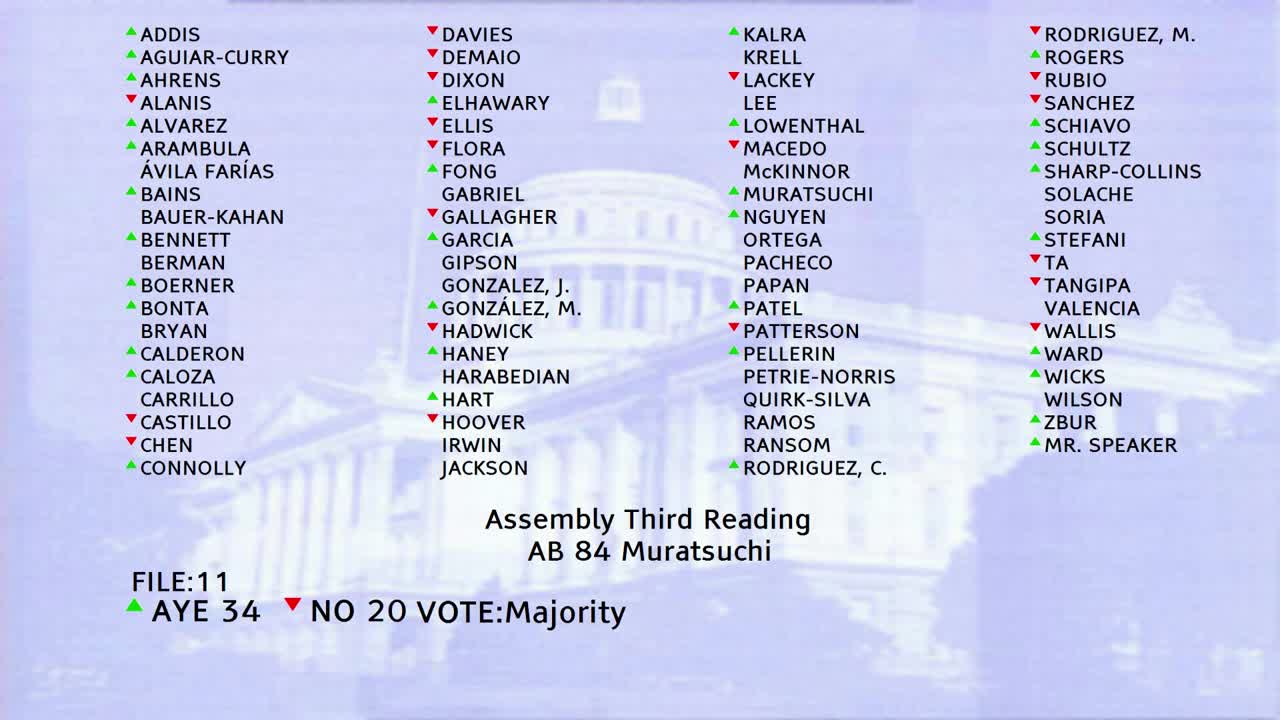 2MIN
Assembly Floor
 10MIN
Assembly Standing Committee on Judiciary
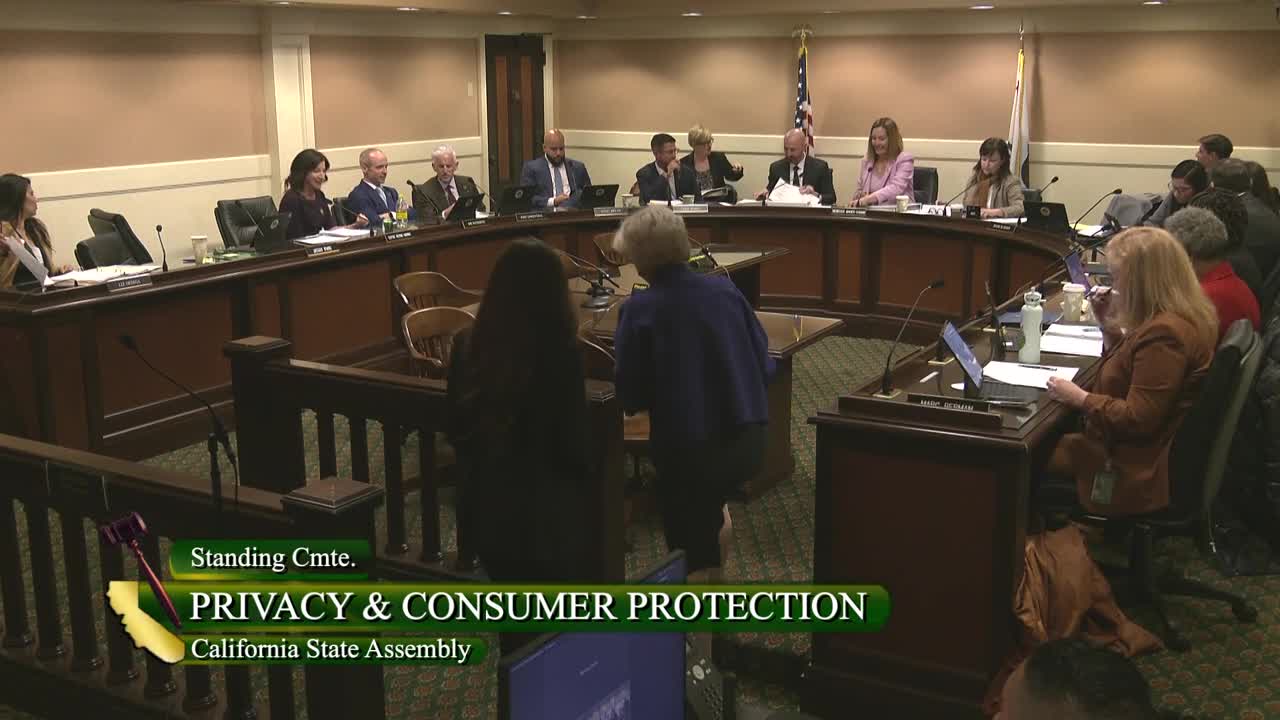 10MIN
Assembly Standing Committee on Privacy and Consumer Protection
Bill Author

Bill Co-Author(s):