AB 418: Property taxation: tax-defaulted property.
- Session Year: 2025-2026
- House: Assembly
- Latest Version Date: 2025-10-01
Current Status:
Passed
(2025-10-01: Chaptered by Secretary of State - Chapter 149, Statutes of 2025.)
Introduced
In Committee
Awaiting First Chamber Vote
Passed First Chamber
In Committee
Awaiting Second Chamber Vote
Passed Second Chamber
Enacted
Existing law generally authorizes a taxing agency to sell tax-defaulted property 5 or more years after the real property has become tax defaulted. Existing law authorizes the board of supervisors of the county in which the property is situated, or the state, county, any revenue district the taxes of which on the property are collected by county officers, or a redevelopment agency, to purchase the property, as specified, if certain conditions are met. Existing law also authorizes a nonprofit organization to purchase residential or vacant property, with the approval of the board of supervisors of the county in which it is located, if the property is used for low-income housing or public use, as specified. Existing law requires any sale under these provisions to be approved by the board of supervisors and to meet specified requirements, including notice requirements of an agreement under these provisions.
This bill would prohibit a board of supervisors from approving the sale of tax-defaulted property, as described above, unless it conducts a hearing, with notice, and makes a specified finding that either the sale price is greater than or equal to the tax sale value, as defined, of the property or the tax sale value of the property is less than the amount necessary to redeem the property, as specified. The bill would require the notice of the hearing to be mailed at least 45 days prior to the hearing to the last assessee of each portion of the property and to parties of interest, and to contain, among other things, a description of the property, the proposed sale price, and the date, time, and location of the hearing. The bill would require any costs incurred in conducting the hearing and making the findings to be paid by the taxing agency or nonprofit organization by which the property is to be or may be purchased. The bill would also authorize the challenge of a board of supervisors determination by the filing of a petition for judicial review in the superior court of the county within 45 days following the issuance of the boards decision, as specified. The bill would require the board to provide a written notice of the right to judicial review and the applicable deadlines to all parties who appeared at the hearing or submitted written evidence. The bill would authorize the superior court to vacate the boards decision and remand the matter to the board of supervisors if the court determines that the decision was not supported by substantial evidence or that the board otherwise failed to follow certain requirements. By requiring a board of supervisors to engage in specified actions relating to approving a sale of tax-defaulted property, the bill would impose a state-mandated local program.
The California Constitution requires the state to reimburse local agencies and school districts for certain costs mandated by the state. Statutory provisions establish procedures for making that reimbursement.
This bill would provide that, if the Commission on State Mandates determines that the bill contains costs mandated by the state, reimbursement for those costs shall be made pursuant to the statutory provisions noted above.
Existing law generally authorizes a taxing agency to sell tax-defaulted property 5 or more years after the real property has become tax defaulted. Existing law authorizes the board of supervisors of the county in which the property is situated, or the state, county, any revenue district the taxes of which on the property are collected by county officers, or a redevelopment agency, to purchase the property, as specified, if certain conditions are met. Existing law also authorizes a nonprofit organization to purchase residential or vacant property, with the approval of the board of supervisors of the county in which it is located, if the property is used for low-income housing or public use, as specified. Existing law requires any sale under these provisions to be approved by the board of supervisors and to meet specified requirements, including notice requirements of an agreement under these provisions.
This bill would prohibit a board of supervisors from approving the sale of tax-defaulted property, as described above, unless it conducts a hearing, with notice, and makes a specified finding that either the sale price is greater than or equal to the tax sale value, as defined, of the property or the tax sale value of the property is less than the amount necessary to redeem the property, as specified. The bill would require the notice of the hearing to be mailed at least 45 days prior to the hearing to the last assessee of each portion of the property and to parties of interest, and to contain, among other things, a description of the property, the proposed sale price, and the date, time, and location of the hearing. The bill would require any costs incurred in conducting the hearing and making the findings to be paid by the taxing agency or nonprofit organization by which the property is to be or may be purchased. The bill would also authorize the challenge of a board of supervisors determination by the filing of a petition for judicial review in the superior court of the county within 45 days following the issuance of the boards decision, as specified. The bill would require the board to provide a written notice of the right to judicial review and the applicable deadlines to all parties who appeared at the hearing or submitted written evidence. The bill would authorize the superior court to vacate the boards decision and remand the matter to the board of supervisors if the court determines that the decision was not supported by substantial evidence or that the board otherwise failed to follow certain requirements. By requiring a board of supervisors to engage in specified actions relating to approving a sale of tax-defaulted property, the bill would impose a state-mandated local program.
The California Constitution requires the state to reimburse local agencies and school districts for certain costs mandated by the state. Statutory provisions establish procedures for making that reimbursement.
This bill would provide that, if the Commission on State Mandates determines that the bill contains costs mandated by the state, reimbursement for those costs shall be made pursuant to the statutory provisions noted above.
Existing law generally authorizes a taxing agency to sell tax-defaulted property 5 or more years after the real property has become tax defaulted. Existing law authorizes the board of supervisors of the county in which the property is situated, or the state, county, any revenue district the taxes of which on the property are collected by county officers, or a redevelopment agency, to purchase the property, as specified, if certain conditions are met. Existing law also authorizes a nonprofit organization to purchase residential or vacant property, with the approval of the board of supervisors of the county in which it is located, if the property is used for low-income housing or public use, as specified. Existing law requires any sale under these provisions to be approved by the board of supervisors and to meet specified requirements, including notice requirements of an agreement under these provisions.
This bill would prohibit a board of supervisors from approving the sale of tax-defaulted property, as described above, unless it conducts a hearing, with notice, and makes a specified finding that either the sale price is greater than or equal to the tax sale value, as defined, of the property or the tax sale value of the property is less than the amount necessary to redeem the property, as specified. The bill would require the notice of the hearing to be mailed at least 45 days prior to the hearing to the last assessee of each portion of the property and to parties of interest, and to contain, among other things, a description of the property, the proposed sale price, and the date, time, and location of the hearing. The bill would require any costs incurred in conducting the hearing and making the findings to be paid by the taxing agency or nonprofit organization by which the property is to be or may be purchased. The bill would also authorize the challenge of a board of supervisors determination by the filing of a petition for judicial review in the superior court of the county within 45 days following the issuance of the boards decision, as specified. The bill would require the board to provide a written notice of the right to judicial review and the applicable deadlines to all parties who appeared at the hearing or submitted written evidence. The bill would authorize the superior court to vacate the boards decision and remand the matter to the board of supervisors if the court determines that the decision was not supported by substantial evidence or that the board otherwise failed to follow certain requirements. By requiring a board of supervisors to engage in specified actions prior relating to approving a sale of tax-defaulted property, the bill would impose a state-mandated local program.
The California Constitution requires the state to reimburse local agencies and school districts for certain costs mandated by the state. Statutory provisions establish procedures for making that reimbursement.
This bill would provide that, if the Commission on State Mandates determines that the bill contains costs mandated by the state, reimbursement for those costs shall be made pursuant to the statutory provisions noted above.
Existing law generally authorizes a taxing agency to sell tax-defaulted property 5 or more years after the real property has become tax defaulted. Existing law authorizes the board of supervisors of the county in which the property is situated, or the state, county, any revenue district the taxes of which on the property are collected by county officers, or a redevelopment agency, to purchase the property, as specified, if certain conditions are met. Existing law also authorizes a nonprofit organization to purchase residential or vacant property, with the approval of the board of supervisors of the county in which it is located, if the property is used for low-income housing or public use, as specified. Existing law requires any sale under these provisions to be approved by the board of supervisors and to meet specified requirements, including notice requirements of an agreement under these provisions.
This bill would prohibit a board of supervisors from approving the sale of tax-defaulted property, as described above, unless it conducts a hearing, with notice, and makes a specified finding that either the sale price is greater than or equal to the tax sale value, as defined, of the property or the tax sale value of the property is less than the amount necessary to redeem the property, as specified. The bill would require the notice of the hearing to be mailed at least 30 45 days prior to the hearing to the last assessee of each portion of the property and to parties of interest, and to contain, among other things, a description of the property, the proposed sale price, and the date, time, and location of the hearing. The bill would require any costs incurred in conducting the hearing and making the findings to be paid by the taxing agency or nonprofit organization by which the property is to be or may be purchased. By requiring a board of supervisors to engage in specified actions prior to approving a sale of tax-defaulted property, the bill would impose a state-mandated local program.
The California Constitution requires the state to reimburse local agencies and school districts for certain costs mandated by the state. Statutory provisions establish procedures for making that reimbursement.
This bill would provide that, if the Commission on State Mandates determines that the bill contains costs mandated by the state, reimbursement for those costs shall be made pursuant to the statutory provisions noted above.
Existing law generally authorizes a taxing agency to sell tax-defaulted property 5 or more years after the real property has become tax defaulted. Existing law authorizes the board of supervisors of the county in which the property is situated, or the state, county, any revenue district the taxes of which on the property are collected by county officers, or a redevelopment agency, to purchase the property, as specified, if certain conditions are met. Existing law also authorizes a nonprofit organization to purchase residential or vacant property, with the approval of the board of supervisors of the county in which it is located, if the property is used for low-income housing or public use, as specified. Existing law requires any sale under these provisions to be approved by the board of supervisors and to meet specified requirements, including notice requirements of an agreement under these provisions.
This bill would prohibit a board of supervisors from approving the sale of tax-defaulted property, as described above, unless it conducts a hearing, with notice, and makes a specified finding that either the sale price is greater than or equal to the tax sale value, as defined, of the property or the tax sale value of the property is less than the amount necessary to redeem the property, as specified. The bill would require the notice of the hearing to be mailed at least 30 days prior to the hearing to the last assessee of each portion of the property and to parties of interest, and to contain, among other things, a description of the property, the proposed sale price, and the date, time, and location of the hearing. The bill would require any costs incurred in conducting the hearing and making the findings to be paid by the taxing agency or nonprofit organization by which the property is to be or may be purchased. By requiring a board of supervisors to engage in specified actions prior to approving a sale of tax-defaulted property, the bill would impose a state-mandated local program.
The California Constitution requires the state to reimburse local agencies and school districts for certain costs mandated by the state. Statutory provisions establish procedures for making that reimbursement.
This bill would provide that, if the Commission on State Mandates determines that the bill contains costs mandated by the state, reimbursement for those costs shall be made pursuant to the statutory provisions noted above.
(a)A sale under this chapter shall take place only if approved by the board of supervisors.
(b)The board of supervisors shall not approve a sale under this chapter unless it conducts a hearing, with notice, and based upon substantial evidence in light of the whole record, makes either of the following findings:
(1)The sale price is greater than or equal to the tax sale value of the property.
(2)The tax sale value of the property is less than the amount necessary to redeem the property in accordance with Section 4102, such that there would be no excess proceeds from a sale under the provisions of Chapter 7 (commencing with Section 3691).
(c)Notice of the hearing required in subdivision (b) shall meet the following requirements:
(1)(A)The tax collector shall mail a copy of the notice at least 45 days prior to the hearing, by registered mail, to the last assessee of each portion of the property and to parties of interest, as defined in Section 4675, at their last known address.
(B)To ascertain the address of the last assessee of the property, an examination shall be made of the assessment of this property on the rolls beginning with the year of delinquency to, and including that of, the last equalized roll. The tax collector shall make reasonable efforts to ascertain the identity and address of parties of interest.
(C)It is not necessary to mail a copy of the notice to any party who files with the tax collector a written acknowledgment of receipt of a copy of the notice or a waiver of the notice. The validity of any sale under this chapter shall not be affected if the tax collectors reasonable effort fails to disclose the name and last known mailing address of parties of interest or if a party of interest does not receive mailed notice.
(2)The notice shall include all of the following:
(A)A description of the property substantially as described in the agreement.
(B)The name of the last assessee of the property. To ascertain the name of the last assessee of the tax-defaulted property an examination shall be made of the assessment of this property on the last equalized roll, or if this property does not appear thereon, the last previous roll on which it was assessed.
(C)A statement that an agreement for the sale of the property or for an option to purchase it, or both, as applicable, has been proposed with the taxing agency or nonprofit organization named in the agreement.
(D)The proposed sale price of the property.
(E)The date, time, and location of the hearing set forth in subdivision (b).
(F)A statement informing the parties of their rights to appear and present evidence under subdivision (d), and that the sale will not take place unless the board of supervisors makes one of the findings set forth in subdivision (b).
(G)A statement in substantially the following form:
If you challenge the proposed sale in court, you may be limited to raising only those issues you or someone else raised at the hearing described in this notice, or in written correspondence delivered to the county at, or prior to, the hearing.
(d)The assessee and all parties of interest shall each have the right to appear at the hearing and to present any relevant evidence regarding the value of the property or the existence or amount of excess proceeds to which they may be entitled under Section 3797. That evidence may be presented to the board of supervisors at the hearing or in writing any time prior to the hearing. Any evidence presented will become part of the record considered by the board of supervisors under subdivision (b).
(e)Any costs incurred in conducting the hearing and making the findings set forth in this section shall be paid by the taxing agency or nonprofit organization by which the property is to be or may be purchased.
(f)Any determination made by the board of supervisors under subdivision (b) may be challenged by filing a petition for judicial review in the superior court of the county within 45 days following the issuance of the decision by the board. The petition shall name the county as a respondent and shall clearly state the grounds upon which the petitioner alleges the determination is unlawful or unsupported by substantial evidence.
(g)Judicial review under subdivision (f) shall be conducted pursuant to Section 1094.5 of the Code of Civil Procedure. The court shall review the administrative record of the hearing before the board of supervisors to determine whether the boards decision is supported by substantial evidence in the administrative record. No new evidence shall be introduced in the judicial review proceeding, except as provided in subdivision (e) of Section 1094.5 of the Code of Civil Procedure.
(h)Notice of the right to judicial review and the applicable deadlines shall be included in the written notice of the boards determination provided to all parties who appeared at the hearing or submitted written evidence.
(i)If the superior court determines that the decision of the board of supervisors was not supported by substantial evidence or that the board otherwise failed to follow the requirements of this chapter, the court may vacate the decision and remand the matter to the board of supervisors for further proceedings consistent with the courts determination.
(j)For purposes of this section, tax sale value means the amount that typically could be realized from the sale of the property at a properly advertised and conducted public auction under the provisions of Chapter 7 (commencing with Section 3691).
SEC. 2.If the Commission on State Mandates determines that this act contains costs mandated by the state, reimbursement to local agencies and school districts for those costs shall be made pursuant to Part 7 (commencing with Section 17500) of Division 4 of Title 2 of the Government Code.
(a)A sale under this chapter shall take place only if approved by the board of supervisors.
(b)The board of supervisors shall not approve a sale under this chapter unless it conducts a hearing, with notice, and based upon substantial evidence in light of the whole record, makes either of the following findings:
(1)The sale price is greater than or equal to the tax sale value of the property.
(2)The tax sale value of the property is less than the amount necessary to redeem the property in accordance with Section 4102, such that there would be no excess proceeds from a sale under the provisions of Chapter 7 (commencing with Section 3691).
(c)Notice of the hearing required in subdivision (b) shall meet the following requirements:
(1)(A)The tax collector shall mail a copy of the notice at least 45 days prior to the hearing, by registered mail, to the last assessee of each portion of the property and to parties of interest, as defined in Section 4675, at their last known address.
(B)To ascertain the address of the last assessee of the property, an examination shall be made of the assessment of this property on the rolls beginning with the year of delinquency to, and including that of, the last equalized roll. The tax collector shall make reasonable efforts to ascertain the identity and address of parties of interest.
(C)It is not necessary to mail a copy of the notice to any party who files with the tax collector a written acknowledgment of receipt of a copy of the notice or a waiver of the notice. The validity of any sale under this chapter shall not be affected if the tax collectors reasonable effort fails to disclose the name and last known mailing address of parties of interest or if a party of interest does not receive mailed notice.
(2)The notice shall include all of the following:
(A)A description of the property substantially as described in the agreement.
(B)The name of the last assessee of the property. To ascertain the name of the last assessee of the tax-defaulted property an examination shall be made of the assessment of this property on the last equalized roll, or if this property does not appear thereon, the last previous roll on which it was assessed.
(C)A statement that an agreement for the sale of the property or for an option to purchase it, or both, as applicable, has been proposed with the taxing agency or nonprofit organization named in the agreement.
(D)The proposed sale price of the property.
(E)The date, time, and location of the hearing set forth in subdivision (b).
(F)A statement informing the parties of their rights to appear and present evidence under subdivision (d), and that the sale will not take place unless the board of supervisors makes one of the findings set forth in subdivision (b).
(G)A statement in substantially the following form:
If you challenge the proposed sale in court, you may be limited to raising only those issues you or someone else raised at the hearing described in this notice, or in written correspondence delivered to the county at, or prior to, the hearing.
(d)The assessee and all parties of interest shall each have the right to appear at the hearing and to present any relevant evidence regarding the value of the property or the existence or amount of excess proceeds to which they may be entitled under Section 3797. That evidence may be presented to the board of supervisors at the hearing or in writing any time prior to the hearing. Any evidence presented will become part of the record considered by the board of supervisors under subdivision (b).
(e)Any costs incurred in conducting the hearing and making the findings set forth in this section shall be paid by the taxing agency or nonprofit organization by which the property is to be or may be purchased.
(f)Any determination made by the board of supervisors under subdivision (b) may be challenged by filing a petition for judicial review in the superior court of the county within 45 days following the issuance of the decision by the board. The petition shall name the county as a respondent and shall clearly state the grounds upon which the petitioner alleges the determination is unlawful or unsupported by substantial evidence.
(g)Judicial review under subdivision (f) shall be conducted pursuant to Section 1094.5 of the Code of Civil Procedure. The court shall review the administrative record of the hearing before the board of supervisors to determine whether the boards decision is supported by substantial evidence in the administrative record. No new evidence shall be introduced in the judicial review proceeding, except as provided in subdivision (e) of Section 1094.5 of the Code of Civil Procedure.
(h)Notice of the right to judicial review and the applicable deadlines shall be included in the written notice of the boards determination provided to all parties who appeared at the hearing or submitted written evidence.
(i)If the superior court determines that the decision of the board of supervisors was not supported by substantial evidence or that the board otherwise failed to follow the requirements of this chapter, the court may vacate the decision and remand the matter to the board of supervisors for further proceedings consistent with the courts determination.
(j)For purposes of this section, tax sale value means the amount that typically could be realized from the sale of the property at a properly advertised and conducted public auction under the provisions of Chapter 7 (commencing with Section 3691).
SEC. 2.If the Commission on State Mandates determines that this act contains costs mandated by the state, reimbursement to local agencies and school districts for those costs shall be made pursuant to Part 7 (commencing with Section 17500) of Division 4 of Title 2 of the Government Code.
(a)A sale under this chapter shall take place only if approved by the board of supervisors.
(b)The board of supervisors shall not approve a sale under this chapter unless it conducts a hearing, with notice, and based upon substantial evidence in light of the whole record, makes either of the following findings:
(1)The sale price is greater than or equal to the tax sale value of the property.
(2)The tax sale value of the property is less than the amount necessary to redeem the property in accordance with Section 4102, such that there would be no excess proceeds from a sale under the provisions of Chapter 7 (commencing with Section 3691).
(c)Notice of the hearing required in subdivision (b) shall meet the following requirements:
(1)(A)The tax collector shall mail a copy of the notice at least 45 days prior to the hearing, by registered mail, to the last assessee of each portion of the property and to parties of interest, as defined in Section 4675, at their last known address.
(B)To ascertain the address of the last assessee of the property, an examination shall be made of the assessment of this property on the rolls beginning with the year of delinquency to, and including that of, the last equalized roll. The tax collector shall make reasonable efforts to ascertain the identity and address of parties of interest.
(C)It is not necessary to mail a copy of the notice to any party who files with the tax collector a written acknowledgment of receipt of a copy of the notice or a waiver of the notice. The validity of any sale under this chapter shall not be affected if the tax collectors reasonable effort fails to disclose the name and last known mailing address of parties of interest or if a party of interest does not receive mailed notice.
(2)The notice shall include all of the following:
(A)A description of the property substantially as described in the agreement.
(B)The name of the last assessee of the property. To ascertain the name of the last assessee of the tax-defaulted property an examination shall be made of the assessment of this property on the last equalized roll, or if this property does not appear thereon, the last previous roll on which it was assessed.
(C)A statement that an agreement for the sale of the property or for an option to purchase it, or both, as applicable, has been proposed with the taxing agency or nonprofit organization named in the agreement.
(D)The proposed sale price of the property.
(E)The date, time, and location of the hearing set forth in subdivision (b).
(F)A statement informing the parties of their rights to appear and present evidence under subdivision (d), and that the sale will not take place unless the board of supervisors makes one of the findings set forth in subdivision (b).
(G)A statement in substantially the following form:
If you challenge the proposed sale in court, you may be limited to raising only those issues you or someone else raised at the hearing described in this notice, or in written correspondence delivered to the county at, or prior to, the hearing.
(d)The assessee and all parties of interest shall each have the right to appear at the hearing and to present any relevant evidence regarding the value of the property or the existence or amount of excess proceeds to which they may be entitled under Section 3797. That evidence may be presented to the board of supervisors at the hearing or in writing any time prior to the hearing. Any evidence presented will become part of the record considered by the board of supervisors under subdivision (b).
(e)Any costs incurred in conducting the hearing and making the findings set forth in this section shall be paid by the taxing agency or nonprofit organization by which the property is to be or may be purchased.
(f)Any determination made by the board of supervisors under subdivision (b) may be challenged by filing a petition for judicial review in the superior court of the county within 45 days following the issuance of the decision by the board. The petition shall name the county as a respondent and shall clearly state the grounds upon which the petitioner alleges the determination is unlawful or unsupported by substantial evidence.
(g)Judicial review under subdivision (f) shall be conducted pursuant to Section 1094.5 of the Code of Civil Procedure. The court shall review the administrative record of the hearing before the board of supervisors to determine whether the boards decision is supported by substantial evidence in the administrative record. No new evidence shall be introduced in the judicial review proceeding, except as provided in subdivision (e) of Section 1094.5 of the Code of Civil Procedure.
(h)Notice of the right to judicial review and the applicable deadlines shall be included in the written notice of the boards determination provided to all parties who appeared at the hearing or submitted written evidence.
(i)If the superior court determines that the decision of the board of supervisors was not supported by substantial evidence or that the board otherwise failed to follow the requirements of this chapter, the court may vacate the decision and remand the matter to the board of supervisors for further proceedings consistent with the courts determination.
(f)(j)For purposes of this section, tax sale value means the amount that typically could be realized from the sale of the property at a properly advertised and conducted public auction under the provisions of Chapter 7 (commencing with Section 3691).
SEC. 2.If the Commission on State Mandates determines that this act contains costs mandated by the state, reimbursement to local agencies and school districts for those costs shall be made pursuant to Part 7 (commencing with Section 17500) of Division 4 of Title 2 of the Government Code.
REVISIONS: HeadingLine 2.(a)A sale under this chapter shall take place only if approved by the board of supervisors.
(b)The board of supervisors shall not approve a sale under this chapter unless it conducts a hearing, with notice, and based upon substantial evidence in light of the whole record, makes either of the following findings:
(1)The sale price is greater than or equal to the tax sale value of the property.
(2)The tax sale value of the property is less than the amount necessary to redeem the property in accordance with Section 4102, such that there would be no excess proceeds from a sale under the provisions of Chapter 7 (commencing with Section 3691).
(c)Notice of the hearing required in subdivision (b) shall meet the following requirements:
(1)(A)The tax collector shall mail a copy of the notice at least 30 45 days prior to the hearing, by registered mail, to the last assessee of each portion of the property and to parties of interest, as defined in Section 4675, at their last known address.
(B)To ascertain the address of the last assessee of the property, an examination shall be made of the assessment of this property on the rolls beginning with the year of delinquency to, and including that of, the last equalized roll. The tax collector shall make reasonable efforts to ascertain the identity and address of parties of interest.
(C)It is not necessary to mail a copy of the notice to any party who files with the tax collector a written acknowledgment of receipt of a copy of the notice or a waiver of the notice. The validity of any sale under this chapter shall not be affected if the tax collectors reasonable effort fails to disclose the name and last known mailing address of parties of interest or if a party of interest does not receive mailed notice.
(2)The notice shall include all of the following:
(A)A description of the property substantially as described in the agreement.
(B)The name of the last assessee of the property. To ascertain the name of the last assessee of the tax-defaulted property an examination shall be made of the assessment of this property on the last equalized roll, or if this property does not appear thereon, the last previous roll on which it was assessed.
(C)A statement that an agreement for the sale of the property or for an option to purchase it, or both, as applicable, has been proposed with the taxing agency or nonprofit organization named in the agreement.
(D)The proposed sale price of the property.
(E)The date, time, and location of the hearing set forth in subdivision (b).
(F)A statement informing the parties of their rights to appear and present evidence under subdivision (d), and that the sale will not take place unless the board of supervisors makes one of the findings set forth in subdivision (b).
(G)The following statement: A statement in substantially the following form:
If you challenge the proposed sale in court, you may be limited to raising only those issues you or someone else raised at the hearing described in this notice, or in written correspondence delivered to the county at, or prior to, the hearing.
(d)The assessee and all parties of interest shall each have the right to appear at the hearing and to present any relevant evidence regarding the value of the property or the existence or amount of excess proceeds to which they may be entitled under Section 3797. That evidence may be presented to the board of supervisors at the hearing or in writing any time prior to the hearing. Any evidence presented will become part of the record considered by the board of supervisors under subdivision (b).
(e)Any costs incurred in conducting the hearing and making the findings set forth in this section shall be paid by the taxing agency or nonprofit organization by which the property is to be or may be purchased.
(f)For purposes of this section, tax sale value means the amount that typically could be realized from the sale of the property at a properly advertised and conducted public auction under the provisions of Chapter 7 (commencing with Section 3691).
SEC. 2.If the Commission on State Mandates determines that this act contains costs mandated by the state, reimbursement to local agencies and school districts for those costs shall be made pursuant to Part 7 (commencing with Section 17500) of Division 4 of Title 2 of the Government Code.
(a)A sale under this chapter shall take place only if approved by the board of supervisors.
(b)The board of supervisors shall not approve a sale under this chapter unless it conducts a hearing, with notice, and based upon substantial evidence in light of the whole record, makes either of the following findings:
(1)The sale price is greater than or equal to the tax sale value of the property.
(2)The tax sale value of the property is less than the amount necessary to redeem the property in accordance with Section 4102, such that there would be no excess proceeds from a sale under the provisions of Chapter 7 (commencing with Section 3691).
(c)Notice of the hearing required in subdivision (b) shall meet the following requirements:
(1)(A)The tax collector shall mail a copy of the notice at least 30 days prior to the hearing, by registered mail, to the last assessee of each portion of the property and to parties of interest, as defined in Section 4675, at their last known address.
(B)To ascertain the address of the last assessee of the property, an examination shall be made of the assessment of this property on the rolls beginning with the year of delinquency to, and including that of, the last equalized roll. The tax collector shall make reasonable efforts to ascertain the identity and address of parties of interest.
(C)It is not necessary to mail a copy of the notice to any party who files with the tax collector a written acknowledgment of receipt of a copy of the notice or a waiver of the notice. The validity of any sale under this chapter shall not be affected if the tax collectors reasonable effort fails to disclose the name and last known mailing address of parties of interest or if a party of interest does not receive mailed notice.
(2)The notice shall include all of the following:
(A)A description of the property substantially as described in the agreement.
(B)The name of the last assessee of the property. To ascertain the name of the last assessee of the tax-defaulted property an examination shall be made of the assessment of this property on the last equalized roll, or if this property does not appear thereon, the last previous roll on which it was assessed.
(C)A statement that an agreement for the sale of the property or for an option to purchase it, or both, as applicable, has been proposed with the taxing agency or nonprofit organization named in the agreement.
(D)The proposed sale price of the property.
(E)The date, time, and location of the hearing set forth in subdivision (b).
(F)A statement informing the parties of their rights to appear and present evidence under subdivision (d), and that the sale will not take place unless the board of supervisors makes one of the findings set forth in subdivision (b).
(G)The following statement:
If you challenge the proposed sale in court, you may be limited to raising only those issues you or someone else raised at the hearing described in this notice, or in written correspondence delivered to the county at, or prior to, the hearing.
(d)The assessee and all parties of interest shall each have the right to appear at the hearing and to present any relevant evidence regarding the value of the property or the existence or amount of excess proceeds to which they may be entitled under Section 3797. That evidence may be presented to the board of supervisors at the hearing or in writing any time prior to the hearing. Any evidence presented will become part of the record considered by the board of supervisors under subdivision (b).
(e)Any costs incurred in conducting the hearing and making the findings set forth in this section shall be paid by the taxing agency or nonprofit organization by which the property is to be or may be purchased.
(f)For purposes of this section, tax sale value means the amount that typically could be realized from the sale of the property at a properly advertised and conducted public auction under the provisions of Chapter 7 (commencing with Section 3691).
SEC. 2.If the Commission on State Mandates determines that this act contains costs mandated by the state, reimbursement to local agencies and school districts for those costs shall be made pursuant to Part 7 (commencing with Section 17500) of Division 4 of Title 2 of the Government Code.
|
Date
|
Status
|
|---|---|
| Oct 1, 2025 | Chaptered by Secretary of State - Chapter 149, Statutes of 2025. |
| Oct 1, 2025 | Approved by the Governor. |
| Sep 2, 2025 | Enrolled and presented to the Governor at 3 p.m. |
| Aug 26, 2025 | In Assembly. Ordered to Engrossing and Enrolling. |
| Aug 25, 2025 | Read third time. Passed. Ordered to the Assembly. (Ayes 37. Noes 0. Page 2250.). |
| Aug 20, 2025 | Read second time. Ordered to Consent Calendar. |
| Aug 19, 2025 | From committee: Be ordered to second reading file pursuant to Senate Rule 28.8 and ordered to Consent Calendar. |
| Jul 9, 2025 | From committee: Do pass and re-refer to Com. on APPR. with recommendation: To Consent Calendar. (Ayes 13. Noes 0.) (July 8). Re-referred to Com. on APPR. |
| Jun 25, 2025 | From committee: Do pass and re-refer to Com. on JUD. (Ayes 5. Noes 0.) (June 25). Re-referred to Com. on JUD. |
| May 7, 2025 | Referred to Coms. on REV. & TAX. and JUD. |
| Apr 24, 2025 | In Senate. Read first time. To Com. on RLS. for assignment. |
| Apr 24, 2025 | Read third time. Passed. Ordered to the Senate. (Ayes 75. Noes 0. Page 1278.) |
| Apr 24, 2025 | Read third time. Passed. Ordered to the Senate. (Ayes 75. Noes 0.) |
| Apr 10, 2025 | Read second time. Ordered to Consent Calendar. |
| Apr 9, 2025 | From committee: Do pass. To Consent Calendar. (Ayes 14. Noes 0.) (April 9). |
| Mar 26, 2025 | From committee: Do pass and re-refer to Com. on APPR. with recommendation: To Consent Calendar. (Ayes 12. Noes 0.) (March 25). Re-referred to Com. on APPR. |
| Mar 26, 2025 | Coauthors revised. |
| Mar 18, 2025 | Re-referred to Com. on JUD. |
| Mar 17, 2025 | From committee chair, with author's amendments: Amend, and re-refer to Com. on JUD. Read second time and amended. |
| Mar 13, 2025 | Re-referred to Com. on JUD. pursuant to Assembly Rule 96. |
| Mar 13, 2025 | From committee: Do pass and re-refer to Com. on APPR. (Ayes 7. Noes 0.) (March 10). Re-referred to Com. on APPR. |
| Mar 4, 2025 | Re-referred to Com. on REV. & TAX. |
| Mar 3, 2025 | From committee chair, with author's amendments: Amend, and re-refer to Com. on REV. & TAX. Read second time and amended. |
| Feb 18, 2025 | Referred to Coms. on REV. & TAX. and JUD. |
| Feb 6, 2025 | From printer. May be heard in committee March 8. |
| Feb 5, 2025 | Read first time. To print. |
|
Date
|
Description
|
Location
|
Votes
|
|
|---|---|---|---|---|
| Aug 25, 2025 | Consent Calendar 2nd AB418 Wilson et al. By Seyarto | Senate Floor |
Passed |
|
| Jul 8, 2025 | Do pass, but first be re-referred to the Committee on [Appropriations] with the recommendation: To Consent Calendar | Senate Standing Committee on Judiciary |
Passed |
|
| Jun 25, 2025 | Do pass, but first be re-referred to the Committee on [Judiciary] | Senate Standing Committee on Revenue and Taxation |
Passed |
|
| Apr 24, 2025 | AB 418 Wilson Consent Calendar Second Day Regular Session | Assembly Floor |
Passed |
|
| Apr 9, 2025 | Do pass. To Consent Calendar. | Assembly Standing Committee on Appropriations |
Passed |
|
| Mar 25, 2025 | Do pass and be re-referred to the Committee on [Appropriations] with recommendation: To Consent Calendar | Assembly Standing Committee on Judiciary |
Passed |
|
| Mar 10, 2025 | Do pass and be re-referred to the Committee on [Appropriations] | Assembly Standing Committee on Revenue and Taxation |
Passed |
This list shows positions taken on this bill by organizations on the date displayed, which is linked to the original source.
Positions by individuals are not included.
|
Organization
|
Position
|
Date
|
|---|---|---|
| California Association Of County Treasurers & Tax Collectors | ** Support | |
| California Association of County Treasurers & Tax Collectors (Source) | ** Support | |
| California Association of Treasurers and Tax Collectors | ** Support | |
| California Housing Partnership | ** Support | |
| California State Association Of Counties | ** Support | |
| City and County of San Francisco | ** Support | |
| County of Lake | ** Support | |
| County of Merced | ** Support | |
| Howard Jarvis Taxpayers Association | ** Support | |
| Rural County Representatives of California | ** Support | |
| Urban Counties of California | ** Support |
SENATE RULES COMMITTEE Office of Senate Floor Analyses (916) 651-1520 Fax: (916) 327-4478 | AB 418 |
CONSENT
Bill No: AB 418
Author: Wilson (D), et al.
Amended: 3/17/25 in Assembly
Vote: 21
SENATE REVENUE AND TAXATION COMMITTEE: 5-0, 6/25/25
AYES: McNerney, Valladares, Ashby, Grayson, Umberg
SENATE JUDICIARY COMMITTEE: 13-0, 7/8/25
AYES: Umberg, Niello, Allen, Arreguín, Ashby, Caballero, Durazo, Laird, Stern, Valladares, Wahab, Weber Pierson, Wiener
ASSEMBLY FLOOR: 75-0, 4/24/25 (Consent) - See last page for vote
SUBJECT: Property taxation: tax-defaulted property
SOURCE: California Association of County Treasurer-Tax Collectors
DIGEST:
This bill enacts new requirements on counties before a property can be sold pursuant to a Chapter 8 tax sale.
ANALYSIS:
Existing law:
- Provides that property taxes are due in two installments, the first on November 1st and the second on February 1st, with delinquency for the second installment occurring on April 10th.
- Requires county tax collectors to begin imposing penalties for nonpayment of property taxes for each amount due, plus administrative charges, once taxes become delinquent.
- Provides that property becomes tax-defaulted and can be subject to tax sale to satisfy outstanding taxes, penalties, and administrative charges if a property owner does not pay the property taxes due in the current fiscal year before June 30th.
- Requires tax collectors to first send a notice of impending default, then a notice of default, to taxpayers whose property may be subject to tax sale by registered mail to the taxpayer’s last known address.
- Affords the property owner a right to redeem the status of the property by paying the “redemption amount,” equal to the total of all taxes, assessments, penalties, and fees.
- Allows tax collectors to offer delinquent taxpayers installment agreements to cure a default before a tax sale.
- Permits a tax collector to sell a residential property that has been in default for five years, or three years for a commercial property, unless the board of supervisors sets a five-year period for commercial property; however, the tax collector must sell property within four years of it becoming subject to sale.
- Directs the tax collector to transmit to the board of supervisors a notice of the properties they intend to sell.
- Requires the tax collector after approval by the board of supervisors to publish a notice of power and intent to sell all property that will be tax defaulted, which commences the tax sale process.
- Directs the tax collector to make a reasonable effort to ascertain the names and last known addresses of parties of interest to the tax sale, including the owner and other lienholders.
- Requires the tax collector to send notice of the sale to parties of interest not less than 45 days nor more than 120 days before the proposed sale.
- Directs the tax collector to send a notice to all taxing agencies having the right to levy taxes or assessments on the property and to each city having jurisdiction over a property scheduled for the tax sale.
- Allows a taxing agency, the state, or a city, to object to the sale of a portion of the property and try to purchase it themselves if it is needed for public use.
- Directs the tax collector to also forward a copy of the notice to any nonprofit organization that has requested a copy, which can also object to a tax sale and propose to purchase the property themselves, but only for the purposes of:
- Constructing or rehabilitating currently substandard residential property to rent or sell to low-income persons, or otherwise use the property to serve low-income persons, or
- Dedicating vacant land for open space purposes, or for constructing residential dwellings for subsequent sale or rent to low-income persons, or for other uses to serve low-income persons.
- Provides that a public agency or nonprofit may purchase residential or vacant property that has been tax defaulted by agreement with the board of supervisors, known as a “Chapter 8 sale.”
- Allows the board of supervisors to establish conditions of sale to a nonprofit, including reporting, to ensure the completion of rehabilitation within a reasonable time and to maximize the benefit to low-income persons.
- Requires the tax collector to send a copy of the executed Chapter 8 agreement to the State Controller for approval.
- Directs the tax collector to then complete almost all of the same steps for the Chapter 8 sale as a regular tax sale, such as sending the agreement to the current property owner and any parties of interest not less than 45 nor more than 60 days prior to the effective date of the agreement, and publishing the notice of agreement.
- Allocates proceeds from a tax sale proceeds to pay the costs of newspaper publishing and recording fees, then to taxing agencies with valid claims, and next to the tax collector to pay for notices and contacting taxpayers. After that, proceeds satisfy liens held by parties in interest, who can file a claim at any time up to one year after the tax collector records the deed transferring from the property to the tax sale purchaser.
- States that the county board of supervisors, or one or more assessment appeals boards created by the county board of supervisors, shall constitute the county board of equalization for a county (California Constitution, Article XIII, Section 19).
This bill:
- Requires a board of supervisors to approve any Chapter 8 tax sale, and conduct a hearing at which it finds that, based on substantial evidence in light of the whole record:
- The sale price (the price paid by the nonprofit organization or local agency acquiring the property in Chapter 8) is greater than or equal to the property’s “tax sale value,” or
- The “tax sale value” is less than the redemption amount.
- Defines “tax sale value” as the amount that typically could be realized from the sale of the property at a properly advertised and conducted Chapter 7 tax sale.
- Requires the tax collector to send a notice of the hearing with specified contents by registered mail to the last assessee of each portion of the property, and to each party of interest, at their last known address.
- Directs tax collectors to examine assessment records starting with the first year of delinquency to ascertain the assessee’s last address.
- Requires tax collectors to make reasonable efforts to ascertain the identity and address of parties of interest if they do not receive a notice.
- Provides that it is not necessary to mail a copy of the notice to any party who files a written acknowledgement of the receipt or a waiver of the notice.
- Clarifies that the validity of a Chapter 8 sale is not affected if the tax collector’s reasonable efforts fail to disclose the name and last known address of parties of interest, or if a party of interest does not receive a notice.
- Requires the notice to contain the following:
- A description of the property as described in the Chapter 8 agreement.
- The name of the last assessee based on assessments on previous property tax rolls.
- A statement that an agreement for the sale or option to purchase the property has been proposed.
- The proposed sale price.
- The date, time, and location of the hearing.
- A statement informing parties of their right to appear and present evidence at the hearing, and that the sale will not take place unless the board makes the specified finding.
- A statement that substantially reads, “If you challenge the proposed sale in court, you may be limited to raising only those issues you or someone else raised at the hearing described in this notice, or in written correspondence delivered to the county at, or prior to, the hearing.”
- Creates a right for the assessee and parties of interest to appear at the hearing, and present any relevant evidence regarding the value of the property or the amount of any excess proceeds.
- States that the assessee or parties of interest can provide the evidence at the hearing or in writing before the hearing, which must become part of the record considered by the Board when making its finding.
- Provides that any costs incurred conducting the hearing and making any findings must be paid by the taxing entity or nonprofit organization seeking to purchase the property.
- Allows the board’s determination to be challenged by filing a petition for judicial review in the superior court of the county within 45 days following the issuance of the board’s decision.
- Requires the petition to name the county as the respondent and clearly state the grounds upon which the petitioner alleges that the determination is unlawful or unsupported by substantial evidence.
- Provides that review must be conducted under the provisions of the Code of Civil Procedure for a writ of administrative mandate.
- Limits court review to the administrative record at the hearing when determining whether the board’s decision is supported by substantial evidence, except for evidence that could not have been introduced at the administrative hearing in exercise of reasonable diligence.
- Provides that if the superior court determines that the decision of the board of supervisors was not supported by substantial evidence or that the board otherwise failed to follow the Chapter 8 requirements, the court may vacate the board’s determination and remand the matter to the board of supervisors for further proceedings consistent with the court’s opinion.
Background
Generally, counties paused tax sales during the COVID-19 pandemic. Though they have resumed, Chapter 8 sales are rare, with only 16 in six counties in 2022, and 30 in 12 counties in 2023, according to the State Controller. However, many counties have also ceased Chapter 8 sales because of a recent U.S. Supreme Court case, Tyler v. Hennepin County, Minnesota, 598 U.S. 631, 143 S. Ct. 1369. In Tyler, the Court ruled that a Minnesota county violated the United States Constitution’s Fifth Amendment takings clause when it retained $25,000 after a condominium was sold was sold for $40,000 to satisfy a $15,000 property tax delinquency. Unlike in California, where taxpayers can claim excess proceeds from a tax sale, under Minnesota law, the state can either keep a tax-defaulted property for public use or sell it, retaining all proceeds, including those in excess of the tax due. In Chief Justice Roberts’ final remarks in the case, he wrote, “The taxpayer must render unto Caesar what is Caesar’s, but no more.” AB 418 creates new procedural requirements for counties to ensure that California’s Chapter 8 process operates in accordance with Tyler.
FISCAL EFFECT: Appropriation: No Fiscal Com.: Yes Local: Yes
Senate Rule 28.8
SUPPORT: (Verified 8/19/25)
California Association of County Treasurers & Tax Collectors (Source)
California Housing Partnership
California State Association of Counties
City and County of San Francisco
County of Lake
County of Merced
Howard Jarvis Taxpayers Association
Rural County Representatives of California
Urban Counties of California
OPPOSITION: (Verified 8/19/25)
None received
ARGUMENTS IN SUPPORT: According to the author, “AB 418 establishes a process that California’s county tax collectors will follow, when utilizing the Chapter 8 sale process, to ensure that the property is disposed of in a way that is transparent and affords property owners an administrative remedy if the property owner disputes the price set at a Chapter 8 tax sale. These additional steps still preserve the Treasurer-Tax Collector’s informed discretion to utilize options to manage those properties for which appraisals are not financially logical. AB 418 aims to ensure that the sale of tax-defaulted property within California is aligned with the ruling of Tyler v Hennepin County and reflects the decision of the Supreme Court. AB 418 provides a middle-ground solution allowing Tax Collectors to continue their use of the Chapter 8 sales process, while also protecting the rights of the owners or last assesse of said properties.”
ASSEMBLY FLOOR: 75-0, 4/24/25
AYES: Addis, Aguiar-Curry, Ahrens, Alanis, Alvarez, Arambula, Ávila Farías, Bains, Bauer-Kahan, Bennett, Berman, Boerner, Bonta, Bryan, Calderon, Caloza, Carrillo, Castillo, Connolly, Davies, DeMaio, Dixon, Elhawary, Ellis, Flora, Fong, Gabriel, Garcia, Gipson, Jeff Gonzalez, Mark González, Hadwick, Haney, Hart, Hoover, Irwin, Jackson, Kalra, Krell, Lee, Lowenthal, Macedo, McKinnor, Muratsuchi, Nguyen, Ortega, Pacheco, Papan, Patel, Patterson, Pellerin, Petrie-Norris, Quirk-Silva, Ramos, Ransom, Celeste Rodriguez, Michelle Rodriguez, Rogers, Blanca Rubio, Sanchez, Schiavo, Schultz, Sharp-Collins, Solache, Soria, Stefani, Ta, Tangipa, Valencia, Wallis, Ward, Wicks, Wilson, Zbur, Rivas
NO VOTE RECORDED: Chen, Gallagher, Harabedian, Lackey
Prepared by: Colin Grinnell / REV. & TAX. / (916) 651-4117
8/21/25 16:45:22
**** END ****
SENATE COMMITTEE ON REVENUE AND TAXATION
Senator Jerry McNerney, Chair
2025 - 2026 Regular
Bill No: | AB 418 | Hearing Date: | 6/25/25 |
Author: | Wilson | Tax Levy: | No |
Version: | 3/17/25 | Fiscal: | Yes |
Consultant: | Grinnell | ||
Property taxation: tax-defaulted property
Enacts new requirements on counties before a property can be sold pursuant to a Chapter 8 tax sale.
Background
Property taxes are due in two installments: November 1 and February 1, with delinquency for the second installment occurring on April 10. Generally, state law requires county tax collectors to begin imposing penalties for nonpayment of property taxes of 10% of each amount due, plus administrative charges, once taxes become delinquent. If a property owner does not pay the property taxes due in the current fiscal year before June 30th, their property becomes tax-defaulted and can be subject to tax sale to satisfy outstanding taxes, penalties, and administrative charges.
Tax sales. Tax sales deprive persons of property ownership, so the Legislature has added specific procedural requirements to ensure tax collectors notify delinquent taxpayers when their property is subject to tax sale, and offer them an opportunity to retain their property. Among these, tax collectors must first send a notice of impending default, then a notice of default, to taxpayers whose property may be subject to tax sale by registered mail to the taxpayer’s last known address. During the period between the property being declared in default and the sale of the property, the property owner has a right to redeem the status of the property by paying the “redemption amount,” equal to the total of all taxes, assessments, penalties, and fees. Tax collectors can also offer delinquent taxpayers installment agreements to cure a default before a tax sale.
The tax collector can then sell a residential property that has been in default for five years, or three years for a commercial property, unless the board of supervisors sets a five-year period for commercial property. However, the tax collector must sell property within four years of it being subject to sale. To conduct a tax sale, the tax collector must transmit to the board of supervisors a notice of the properties they intend to sell. After approval by the board of supervisors, every June 8th, the tax collector publishes a notice of power and intent to sell all property that will be tax defaulted with specified contents, which commences the tax sale process.
At least 30 days before publishing the notice of intended sale, the tax collector must send a notice to all taxing agencies having the right to levy taxes or assessments on the property and to each city having jurisdiction over a property scheduled for the tax sale. The State, a city, or any taxing agency or revenue district may object to the sale of a portion of the property and try to purchase it themselves if it is needed for public use. The tax collector must also forward a copy of the notice to any nonprofit organization that has requested a copy, which can also object to a tax sale and propose to purchase the property themselves, but only for the purposes of:
- Constructing or rehabilitating currently substandard residential property to rent or sell to low-income persons, or otherwise use the property to serve low-income persons, or
- Dedicating vacant land for open space purposes, or for constructing residential dwellings for subsequent sale or rent to low-income persons, or for other uses to serve low-income persons.
Nonprofit agencies can also request that the tax collector send to tax sale a property eligible, but not scheduled, for tax sale. When a public agency or nonprofit proposes to purchase the property, it can then be sold under Chapter 8 (see below).
The tax collector must then send notice of a proposed tax sale to the State Controller’s Office. During this period, the tax collector must also make a reasonable effort to ascertain the names and last known addresses of parties of interest to the sale, including the owner and other lienholders. Not less than 45 days nor more than 120 days before the proposed sale, the tax collector must send notice of the sale to these parties of interest. The tax collector or their agent must make a reasonable effort to contact in person any owner-occupant of a property before the tax sale, based on either a valid homeowner’s exemption or the fact that the mailing address for the last tax bill is the same address as the property. If the tax collector or their agent cannot make personal contact, they must attempt to serve written notice, no less than five days prior to the date of the sale. The tax collector then publishes the notice of tax sale, generally in a newspaper of general circulation published in the county seat and in the public notice district where the property is situated, at least 21 days before the sale. Upon completion of the sale, the property owner’s right of redemption terminates, and the title to the property is deeded to the purchaser.
Excess proceeds. After a tax sale, proceeds from the sale first pay for the costs of newspaper publishing and recording fees. Funds are then distributed to taxing agencies with valid claims, and to the tax collector to pay for notices and contacting taxpayers. After that, proceeds satisfy liens held by parties in interest. Any amounts left over are then divided between each taxing entity according to their appropriate share of the property tax, after the county deducts specified costs. Any party of interest can file a claim at any time prior to one year passing after the tax collector records the deed transferring from the property to the purchaser. The county board of supervisors then decides to distribute excess proceeds, after which parties of interest can then file an action or proceeding to review within 90 days.
Chapter 8 Sales. As noted above, government entities and nonprofit organizations can enter into agreements to purchase residential or vacant property that has been tax defaulted, known as a “Chapter 8 sale.” A Chapter 8 sale is not held by auction; instead it requires only payment of the delinquent taxes, redemption penalties, and other costs. In some cases, the tax collector can further reduce the price. The state, local agency, or nonprofit submits an application to the county, along with a purchase price, which must be approved by the board of supervisors.
The board of supervisors may establish conditions of sale to a nonprofit, including reporting, to ensure the completion of rehabilitation within a reasonable time and to maximize the benefit to low-income persons. After approval, the tax collector must send a copy of the executed agreement to the State Controller for approval. If approved, the tax collector publishes notice of the agreement. The tax collector must then complete almost all of the same steps as a Chapter 7 sale, such as sending the agreement to the current property owner and any parties of interest not less than 45 nor more than 60 days prior to the effective date of the agreement, and publishing the notice of agreement. The sale cannot become effective less than 21 days from the date the tax collector publishes notice of the agreement.
Generally, counties paused tax sales during the COVID-19 pandemic. Though they have resumed, Chapter 8 sales are rare, with only 16 in six counties in 2022, and 30 in 12 counties in 2023, according to the State Controller. However, many counties have ceased Chapter 8 sales because of a recent U.S. Supreme Court case (see below).
Tyler v. Hennepin County. In 2023, the United States Supreme Court decided Tyler v. Hennepin County, Minnesota, 598 U.S. 631, 143 S. Ct. 1369. In Tyler, the Court ruled that a Minnesota county violated the United States Constitution’s Fifth Amendment takings clause when it retained $25,000 after a condominium was sold was sold for $40,000 to satisfy a $15,000 property tax delinquency. Unlike in California, where taxpayers can claim excess proceeds from a tax sale, under Minnesota law, the state can either keep a tax-defaulted property for public use or sell it, retaining all proceeds, including those in excess of the tax due. In Chief Justice Roberts’ final remarks in the case, he wrote, “The taxpayer must render unto Caesar what is Caesar’s, but no more.”
Equalization. Section One of Article XIII of the California Constitution provides that all property is taxable unless explicitly exempted by the Constitution or federal law. The Constitution limits the maximum amount of any ad valorem tax on real property at 1% of full cash value, plus any locally-authorized bonded indebtedness. Assessors reappraise property whenever it is purchased, newly constructed, or when ownership changes. Assessors must notify each assessee of the assessed value that will appear on the completed local property tax roll. The notice must include a notification of hearings by the county board of equalization, which shall include the period during which assessment protests will be accepted and the place where they may be filed.
Section 16 of the California Constitution states that the county board of supervisors, or one or more assessment appeals boards created by the county board of supervisors, shall constitute the county board of equalization for a county. In some counties, boards of supervisors hear appeals directly, while others have created one or more assessment appeals boards to perform the quasi-judicial role of holding a hearing to determine the value of the taxpayer’s property.
Tyler made clear that public agencies cannot claim excess proceeds that rightfully belong to the property owner. While Chapter 7 contains a clear process for ensuring that property owners can claim any excess proceeds, if the sales price in Chapter 8 is below the price the property would have been purchased for in a Chapter 7 sale, a taking may occur due to a lack of just compensation for property equity in violation of the Fifth Amendment. The California Association of County Treasurer-Tax Collectors wants to create a public notice and hearing process to ensure that Chapter 8 remains a vital tool for non-profit organizations and public agencies, while also reducing the potential of takings violations.
Proposed Law
Assembly Bill 418 enacts new requirements that must be met before a property can be sold under Chapter 8. Specifically, the board of supervisors must approve the sale, and conduct a hearing at which it finds that, based on substantial evidence in light of the whole record:
- The sale price (the price paid by the nonprofit organization or local agency acquiring the property in Chapter 8) is greater than or equal to the property’s “tax sale value,” or
- The “tax sale value” is less than the redemption amount.
The bill defines “tax sale value” as the amount that typically could be realized from the sale of the property at a properly advertised and conducted Chapter 7 tax sale.
Notice. At least 45 days before the hearing, the tax collector must send a notice of the hearing with specified contents by registered mail to the last assessee of each portion of the property, and to each party of interest, at their last known address. Tax collectors must examine assessment records starting with the first year of delinquency to ascertain the last assessee’s address. Tax collectors must also make reasonable efforts to ascertain the identity and address of parties of interest if they do not receive a notice. The bill provides that it is not necessary to mail a copy of the notice to any party who files a written acknowledgement of the receipt or a waiver of the notice. AB 418 clarifies that the validity of a Chapter 8 Sale is not affected if the tax collector’s reasonable efforts fail to disclose the name and last known address of parties of interest, or if a party of interest does not receive a notice.
The notice must contain:
- A description of the property as described in the Chapter 8 agreement.
- The name of the last assessee based on assessments on previous property tax rolls.
- A statement that an agreement for the sale or option to purchase the property has been proposed.
- The proposed sale price.
- The date, time, and location of the hearing.
- A statement informing parties of their right to appear and present evidence at the hearing, and that the sale will not take place unless the board makes the specified finding.
- A statement that substantially reads, “If you challenge the proposed sale in court, you may be limited to raising only those issues you or someone else raised at the hearing described in this notice, or in written correspondence delivered to the county at, or prior to, the hearing.”
Hearing. AB 418 creates a right for the assessee and parties of interest to appear at the hearing, and present any relevant evidence regarding the value of the property or the amount of any excess proceeds. The assessee or parties of interest can provide the evidence at the hearing or in writing before the hearing. Any evidence must become part of the record considered by the Board when making its finding. Any costs incurred conducting the hearing and making any findings must be paid by the taxing entity or nonprofit organization seeking to purchase the property.
Appeals. The measure allows the board’s determination to be challenged by filing a petition for judicial review in the superior court of the county within 45 days following the issuance of the board’s decision. The petition must name the county as the respondent and clearly state the grounds upon which the petitioner alleges that the determination is unlawful or unsupported by substantial evidence. Review must be conducted under the provisions of the Code of Civil Procedure for a writ of administrative mandate. Courts can only review the administrative record at the hearing when determining whether the board’s decision is supported by substantial evidence, except for evidence that could not have been introduced at the administrative hearing in exercise of reasonable diligence. The Board must include notice of the right to judicial review and applicable deadlines in the written notice of its determination, provided to all parties who appeared at the hearing or supplied evidence. If the superior court determines that the decision of the board of supervisors was not supported by substantial evidence or that the board otherwise failed to follow the Chapter 8 requirements, the court may vacate the board’s determination and remand the matter to the board of supervisors for further proceedings consistent with the court’s opinion.
State Revenue Impact
No estimate.
Comments
1. Purpose of the bill. According to the author, “AB 418 establishes a process that California’s county tax collectors will follow, when utilizing the Chapter 8 sale process, to ensure that the property is disposed of in a way that is transparent and affords property owners an administrative remedy if the property owner disputes the price set at a Chapter 8 tax sale. These additional steps still preserve the Treasurer-Tax Collector’s informed discretion to utilize options to manage those properties for which appraisals are not financially logical. AB 418 aims to ensure that the sale of tax-defaulted property within California is aligned with the ruling of Tyler v Hennepin County and reflects the decision of the Supreme Court. AB 418 provides a middle-ground solution allowing Tax Collectors to continue their use of the Chapter 8 sales process, while also protecting the rights of the owners or last assesse of said properties.”
2. Eight is enough. While infrequent, Chapter 8 sales are an important tool for public agencies and non-profit organizations to acquire property for either governmental purposes or to provide housing to low-income persons. Instead of bidding against other potential purchasers at a Chapter 7 sale, the public agency or nonprofit can purchase the property at the redemption amount, or sometimes even less. However, Chapter 8 sales could result in a taking if the value at a Chapter 7 tax sale would have exceeded the Chapter 8 redemption amount, because the property owner may be denied proceeds from this difference. As a result, many counties have become reluctant to sell property using Chapter 8 since the Court entered its decision, or have stopped doing so entirely. AB 418 should reduce the potential for a taking by erecting a process whereby the board of supervisors, which is already the entity under the California Constitution responsible for ultimately determining the value of locally-assessed property, conducts a hearing to determine the value the property would bring in a Chapter 7 sale. Tax collectors must inform the assessee as well as any parties of interest that they can supply evidence regarding a property’s value, and appear at the hearing where the board makes its decision. The county must then make a specific finding based on substantial evidence in the record that the Chapter 8 price either is below the amount of defaulted taxes, interest, or penalties, or the Chapter 8 price is more than the one that would be paid at a Chapter 7 sale. If the assessee or a party of interest disagrees with the board’s finding, the measure provides a clear process to challenge the determination or anything else about the sale in superior court, albeit one where the court is limited to the administrative record before the board, with some exceptions. As such, the measure creates safeguards that do not currently exist and adds significant transparency and fairness to the Chapter 8 process.
3. Related legislation. In 2024, the Committee on Governance & Finance approved SB 964 (Seyarto), which generally prohibited Chapter 8 tax sales unless the tax collector first offers the property in a Chapter 7 sale, or the State Board of Equalization conducts a property valuation that shows the value of the property interest is worth less than the amount of the defaulted debt. The measure was subsequently held on the Senate Appropriations Committee’s Suspense File.
4. Render unto pharaoh. According to various sources, property taxes began in ancient Egypt, spread around the world to Europe and Asia, and today remain one of the primary ways governments raise money to finance public services. For governments, property taxes have several advantages over other taxes; most notably, assessors can physically locate and value the property subject to tax, and tax collectors can sell it when tax-defaulted. While imposing a severe penalty, tax sales not only serve as a significant deterrent for non-payment, they allow land that is abandoned or defunct, as evidenced by non-payment of taxes, to be transferred to others who can put it to productive use, improving a community’s general wealth. Additionally, tax sales convert a property where owners are not paying taxes into one where not only are delinquent taxes repaid, but so are current taxes. Because deprivation of property is among the most severe penalties governments can impose for violations of law, state law sets forth an exhaustive process of notices, notifications, publications, and approvals that ensure taxpayers and parties of interest are aware of property tax delinquency, impending sale, and the ability to claim any excess proceeds. There are few categorical exemptions from property tax, so any property owner cannot reasonably claim ignorance of their property tax obligations. Any deprivation of property resulting from a tax sale can only legally occur after tax collectors have satisfied several steps to collect lawfully due and payable taxes from taxpayers who have failed to pay taxes for several years.
Assembly Actions
Assembly Revenue & Taxation Committee: 7-0
Assembly Judiciary Committee: 12-0
Assembly Appropriations Committee: 14-0
Assembly Floor: 75-0
Support and Opposition
(6/19/25)
Support: California Association of County Treasurers & Tax Collectors (Sponsor)
California Housing Partnership
California State Association of Counties
City and County of San Francisco
County of Lake
County of Merced
Howard Jarvis Taxpayers Association
Rural County Representatives of California
Urban Counties of California
Opposition: None received.
-- END --
Date of Hearing: April 9, 2025
ASSEMBLY COMMITTEE ON APPROPRIATIONS
Buffy Wicks, Chair
ABPCA Bill Id:AB 418
Author:(Wilson) – As Amended Ver:March 17, 2025
Policy Committee: | Revenue and Taxation | Vote: | 7 - 0 |
Judiciary | 12 - 0 | ||
|
|
Urgency: No State Mandated Local Program: Yes Reimbursable: No
SUMMARY:
This bill establishes local and judicial procedures for “Chapter 8” tax-defaulted property sales.
Specifically, this bill:
- Prohibits a board of supervisors from approving the “Chapter 8” sale of tax-defaulted property unless the board conducts a hearing, after providing at least 45-day notice to interested parties, and subsequently makes a finding that either: (a) the sale price is greater than or equal to the tax sale value of the property, or (b) the tax sale value of the property is less than the amount necessary to redeem the property.
- Requires the taxing agency or non-profit organization purchasing the property to pay the costs incurred by the board to conduct the hearing and make the relevant finding.
- Requires a written notice of the board’s decision be provided to all parties who participated in the hearing and include notice of the right to judicial review and related deadlines.
- Authorizes a petitioner to challenge the board’s decision by filing a petition for judicial review in the applicable county’s superior court within 45 days of the decision. The court may vacate the board’s decision and remand the matter back to the board if the court determines the board’s decision did not meet evidentiary or other requirements.
FISCAL EFFECT:
- By requiring a county to follow certain notice, hearing, and finding requirements to sell a tax-defaulted property via the Chapter 8 process, this bill may create a state-mandated local program. However, by requiring a property purchaser to pay related costs, this bill provides counties with an applicable revenue source to cover any mandated costs, which thus become not reimbursable by the state.
- By authorizing a petitioner to file a judicial challenge to a county’s sale determination, this bill may result in minor cost pressures to the courts in additional workload. However, the administrative procedures established by this bill already add significant due process to a Chapter 8 sale. Thus, this bill should reduce the need to pursue additional review of a county’s sale determination through the courts, despite creating a mechanism to do so.
COMMENTS:
- Purpose. According to the author:
AB 418 establishes a process that California’s county tax collectors will follow, when utilizing the Chapter 8 sale process, to ensure that the property is disposed of in a way that is transparent and affords property owners an administrative remedy if the property owner disputes the price set at a Chapter 8 tax sale. These additional steps still preserve the Treasurer-Tax Collector’s informed discretion to utilize options to manage those properties for which appraisals are not financially logical.
This bill is sponsored by the California Association of County Treasurers and Tax Collectors and supported by other local government entities, as well as the California Housing Partnership Corporation and Howard Jarvis Taxpayers Association.
- Background.
Tax-defaulted Property. When an owner fails to pay property taxes on a property, the property is said to be “tax-defaulted” and eventually becomes subject to the power of sale by the county tax collector. Prior to any sale, however, the tax collector must issue notices to the owner regarding the property’s status and the intent to sell the property. During this period, the owner has the right to redeem the status of the property by paying all taxes, assessments, penalties, and fees. A sale may occur in three ways: (a) sale via sealed bids, (b) Chapter 7 sale, or competitive auction, or (c) Chapter 8 sale, or sale by agreement, where a sales price is negotiated with an eligible entity for a public purpose, such as another public agency or a non-profit organization that builds affordable housing.
Chapter 8 Sales. During the Chapter 8 sale process, an eligible entity submits an application to the county with a purchase price. The application must be approved by the board of supervisors and then the State Controller, after which the tax collector must publish notice of the agreement. Upon completion of the sale, the tax-defaulted owner’s right to redemption terminates and the property’s title is deeded to the purchaser. Following a 2023 U.S. Supreme Court decision, Tyler v. Hennepin County, county tax collectors have faced increased scrutiny over their use of Chapter 8 sales. This bill adds additional administrative and judicial procedures to the Chapter 8 sale process to increase transparency for the tax-defaulted property owner and the public. Before approving a Chapter 8 sale, this bill requires the board of supervisors to hold a noticed hearing and make a finding, based on substantial evidence, regarding the tax sale value of the property. This bill also allows a petitioner to challenge the board’s decision by filing a petition for judicial review, providing further accountability over the administrative process.
- Related Legislation. SB 288 (Seyarto) allows a Chapter 8 sale only if the property has been previously offered at a Chapter 7 sale or other criteria are satisfied. SB 288 is pending hearing by the Senate Revenue and Taxation Committee.
- Prior Legislation. SB 964 (Seyarto), of the 2023-24 Legislative Session, was similar to SB 288, but specified different sales criteria. SB 964 was held on the Senate Appropriations Committee’s suspense file.
Analysis Prepared by: Irene Ho / APPR. / (916) 319-2081
Date of Hearing: March 25, 2025
ASSEMBLY COMMITTEE ON JUDICIARY
Ash Kalra, Chair
ABPCA Bill Id:AB 418
Author:(Wilson) – As Amended Ver:March 17, 2025
PROPOSED CONSENT
SUBJECT: Property taxation: tax-defaulted property
KEY ISSUE: IN ORDER TO AFFORD PROPERTY OWNERS THEIR FULL CONSTITUTIONAL RIGHTS, Should the Legislature Establish procedures for administrative and Judicial Review of Tax-Defaulted Property Sales?
SYNOPSIS
When a property owner fails to pay their property taxes, a structured process begins that can eventually lead to the loss of the property through a tax sale. California’s county tax collectors, with the approval of their respective boards of supervisors, can dispose of tax-defaulted properties in three ways: (1) a Chapter 7 sale, or a competitive auction, where it is possible for the property to be sold for more than the amount of defaulted taxes owed; (2) a sale via sealed bids where bidders make an offer on the property; or (3) a Chapter 8 sale, where a sale price is negotiated with an eligible entity (public agencies and non-profit organizations that build affordable housing or preserve open space). Under both Chapter 7 and Chapter 8 sales, California law establishes specific procedures to ensure that tax collectors notify delinquent property owners about impending tax sales and provide them with opportunities to reclaim their property prior to the sale. Existing law mandates that any proceeds from a tax sale that remain after all taxes are paid are then made available to parties of interest (i.e., the owner) to that property, and those parties have one year to file a claim for those excess proceeds.
This bill would add additional procedures that provide the public and the property owner a transparent process by which the tax collector sets the sales price, and establishes administrative and legal procedures consistent with recent Supreme Court guidance. The bill in print would establish a judicial review mechanism for the property owner following a board of supervisors’ determination. This language was added in order to explicitly confirm that any determination by the board is subject to review by a court via a writ of mandate, under which a court determines whether the board’s decision was supported by substantial evidence. By including this express judicial review mechanism, this bill safeguards the rights of property owners and affords them all constitutional protections before their property is sold by the government. This measure is sponsored by the California Association of County Treasurers and Tax Collectors. It has a broad coalition of support, including the City and County of San Francisco, the Howard Jarvis Taxpayer Association, and the California Housing Partnership Corporation. It has no known opposition. It was unanimously passed out of the Assembly Committee on Revenue and Taxation by a 7-0 vote.
SUMMARY: Establishes a transparent process for Chapter 8 tax-default property sales that includes an administrative and judicial review mechanism. Specifically, this bill:
- Requires a county board of supervisors, before authorizing a tax-defaulted property to be sold by agreement, to conduct a hearing, as specified, finding that:
- The sale price is greater than or equal to the “tax sale value” of the property; or,
- The “tax sale value” of the property is less than the amount necessary to redeem the property in accordance with existing law, such that there would be no excess proceeds from a sale under the provisions of Chapter 7.
- Defines the “tax sale value” as the amount that typically could be realized from the sale of the property at a properly advertised and conducted public auction under existing law.
- Requires a notice for hearing to include:
- A description of the property substantially as described in the agreement;
- The name of the last assessee of the property, subject to a specified examination by the tax collector;
- A statement that an agreement for the sale of the property or for an option to purchase it, or both, as applicable, has been proposed with the taxing agency or nonprofit organization named in the agreement;
- The proposed sale price of the property;
- The date, time, and location of the hearing;
- A statement informing the parties of their rights to appear and present evidence, as provided, and that the sale will not take place unless the board of supervisors makes one of the findings required for approval of a sale by agreement pursuant to this bill; and,
- A statement in substantially the following form: “If you challenge the proposed sale in court, you may be limited to raising only those issues you or someone else raised at the hearing described in this notice, or in written correspondence delivered to the county at, or prior to, the hearing.”
- Requires a county tax collector to mail, by registered mail, a copy of a hearing notice 45 days prior to the hearing, to the last assessee of each portion of the property and to parties of interest, as defined, at their last known address.
- Establishes that it is not necessary to mail a copy of the notice to any party who files with the tax collector a written acknowledgment of receipt of a copy of the notice or a waiver of the notice.
- Provides that the validity of any sale is not affected if the tax collector’s reasonable effort fails to disclose the name and last known mailing address of parties of interest or if a party of interest does not receive mailed notice.
- Provides that the assessee and all parties of interest in the property each have the right to appear at the hearing and to present any relevant evidence regarding the value of the property or the existence or amount of excess proceeds to which they may be entitled under existing law.
- Provides that evidence may be presented to the board of supervisors at the hearing or in writing any time prior to the hearing.
- Establishes that any evidence presented will become part of the record when the board of supervisors considers authorizing a sale by agreement.
- Requires any costs incurred in conducting the hearing and making the findings set forth in this bill be paid by the taxing agency or nonprofit organization by which the property is to be or may be purchased.
- Clarifies that any determination made by the board of supervisors may be challenged by filing a petition for judicial review in the superior court of the county within 45 days following the decision issued by the board.
- Requires the petition for judicial review to name the county as the respondent and to clearly state the grounds upon which the petitioner alleges the determination is unlawful or unsupported by substantial evidence.
- Establishes that judicial review must comply with the procedures already established in law.
- Requires the reviewing court to review the administrative record to determine whether the board’s decision is supported by substantial evidence in the administrative record.
- Prohibits any new evidence from being introduced in the judicial review proceeding, except as provided.
- Requires that the notice of the right to judicial review and the applicable deadlines be included in the written notice of the board’s determination provided to all parties who appeared at the hearing or submitted written evidence.
- Permits a reviewing court to vacate and remand, if it determines that the decision of the board of supervisors was not supported by substantial evidence or failed to follow the requirements, as provided.
EXISTING LAW:
- Stipulates that all property is taxable, unless otherwise provided by the California Constitution or federal law. (California Constitution, Article XIII, Section 1.)
- Guarantees that no person may be deprived of life, liberty, or property without due process of law, ensuring notice and an opportunity to be heard before the government takes property. (California Constitution, Article I, Section 7; U.S. Constitution, Fifth and Fourteenth Amendments.)
- Details the series of actions a tax collector must follow, such as notices and publications, in the case of tax-defaulted property. (Revenue and Taxation Code Sections 3365 and 3691.)
- Provides that a property becomes tax-defaulted if taxes remain unpaid after a certain date, and subject to sale by the county tax collector if the taxpayer fails to redeem the property by repaying in full the defaulted taxes, interest, and penalties within certain time periods. (Revenue and Taxation Code Sections 3436, 3693, and 126.)
- Generally requires the tax collector to attempt to sell tax-defaulted property at a public auction to the highest bidder within four years of the property becoming subject to sale. Provides that certain properties, such as properties with oil, gas, or mineral rights or property rendered unusable by size or location shall be sold via a sealed bid to the highest bidder. (Revenue and Taxation Code Section 3692.)
- Requires the minimum bid amount in a sale by public auction, sealed bid, or agreement sale to be no less than the amount of the sum of defaulted taxes, delinquent penalties and costs, redemption penalties, a redemption fee, and any outstanding balance of any property tax postponement loan, as defined. (Revenue and Taxation Code Sections 3698.5 and 3793.1.)
- Requires revenues resulting from the sale of a tax-defaulted property to be allocated according to a specific schedule and stipulates that any excess proceeds may be claimed by parties of interest, which include lienholders of record and any persons with title of record to the property. (Revenue and Taxation Code Sections 4675 and 4676.)
- Permits the State, taxing agencies, revenue districts, and special districts to object to the sale by public auction or sealed bid of a tax-defaulted property on the basis that it is needed for public use and forbids the tax collector from conducting the sale of the property subject to the objection (Section 3695.4). Requires a sale by agreement to be submitted to the State Controller for approval. (Revenue and Taxation Code Section 3795.)
- Authorizes, under certain conditions, a nonprofit organization to purchase the real property by an agreement sale if the nonprofit organization will rehabilitate or construct residential dwellings for sale or rent to low- or moderate-income persons or families. (Revenue and Taxation Code Section 3791.4.)
- Establishes the process for adjudicating writs of mandate for the purpose of determining the validity of any final administrative order or decision. (Code of Civil Procedure Sections 1094.5 – 1094.6.)
- Provides that where a writ is issued for the purpose of inquiring into the validity of any final administrative order or decision made as the result of a proceeding in which by law a hearing is required to be given, evidence is required to be taken, and discretion in the determination of facts is vested in the inferior tribunal, corporation, board, or officer, the case must be heard by the court sitting without a jury. (Code of Civil Procedure Section 1094.5 (a).)
- Provides all or part of the record of the proceedings before the inferior tribunal, corporation, board, or officer may be filed with the petition, may be filed with respondent’s points and authorities, or may be ordered to be filed by the court. (Ibid.)
- Provides that the inquiry in such any action described in 10) shall extend to the questions of whether the respondent agency has proceeded without, or in excess of, jurisdiction, whether there was a fair trial, and whether there was any prejudicial abuse of discretion. (Code of Civil Procedure Section 1094.5 (b).)
- Provides that abuse of discretion, pursuant to 13), is established if the respondent agency has not proceeded in the manner required by law, the order or decision is not supported by the findings, or the findings are not supported by the evidence. (Ibid.)
- Provides that in any action pursuant to 10), if it is claimed that the findings are not supported by the evidence, in cases in which the court is authorized by law to exercise its independent judgment on the evidence, abuse of discretion is established if the court determines that the findings are not supported by the weight of the evidence. In all other cases, abuse of discretion is established if the court determines that the findings are not supported by substantial evidence in the light of the whole record. (Code of Civil Procedure Section 1094.5 (c).)
- Provides that if the court, in a proceeding pursuant to 10) finds that there is relevant evidence that, in the exercise of reasonable diligence, could not have been produced or that was improperly excluded at the hearing before respondent, it may enter judgment remanding the case to be reconsidered in the light of that evidence; or, in cases in which the court is authorized by law to exercise its independent judgment on the evidence, the court may admit the evidence at the hearing on the writ without remanding the case. (Code of Civil Procedure Section 1094.5 (d).)
- Provides that, in any action pursuant to 10), the court shall enter judgment either commanding respondent to set aside the order or decision, or denying the writ. Where the judgment commands that the order or decision be set aside, it may order the reconsideration of the case in light of the court’s opinion and judgment and may order respondent to take such further action as is specially enjoined upon it by law, but the judgment shall not limit or control in any way the discretion legally vested in the respondent. (Code of Civil Procedure Section 1094.5 (e).)
FISCAL EFFECT: As currently in print this bill is keyed fiscal.
COMMENTS: When a property owner fails to pay their property taxes, a structured process begins that can eventually lead to the loss of the property through a tax sale. The author brings this measure to clarify the process of sales of tax-defaulted properties in California, and to ensure that the sales process complies with a recent Supreme Court decision. As explained by the author:
AB 418 establishes a process that California’s county tax collectors will follow, when utilizing the Chapter 8 sale process, to ensure that the property is disposed of in a way that is transparent and affords property owners an administrative remedy if the property owner disputes the price set at a Chapter 8 tax sale. These additional steps still preserve the Treasurer-Tax Collector’s informed discretion to utilize options to manage those properties for which appraisals are not financially logical. AB 418 aims to ensure that the sale of tax-defaulted property within California is aligned with the ruling of Tyler v Hennepin County and reflects the decision of the Supreme Court. AB 418 provides a middle-ground solution allowing Tax Collectors to continue their use of the Chapter 8 sales process, while also protecting the rights of the owners or last assessee of said properties.
Existing law. California’s county tax collectors, with the approval of their respective boards of supervisors, can dispose of tax-defaulted properties in three ways: (1) a Chapter 7 sale, or a competitive auction, where it is possible for the property to be sold for more than the amount of defaulted taxes owed; (2) a sale via sealed bids where bidders make an offer on the property; or (3) a Chapter 8 sale, which is a negotiated sale price with an eligible entity (public agencies and non-profit organizations that build affordable housing or preserve open space).
The analysis of this bill by the Committee on Revenue on Taxation (pp. 4-5) explains the process for tax sales:
Existing law generally declares real property for which taxes have not been paid by July 1 in default. After a period of five years, or three years in the case of a nonresidential commercial property or property subject to a nuisance abatement lien, the defaulted property becomes subject to the power to sell by the tax collector. The tax collector is required to issue notices to owners of defaulted property informing them of the property's status, and to subsequently inform the property owner of the intent to sell the property at auction, after certain requirements are met.
…
During the period between the property being declared in default and the sale of the property, the property owner has a right to redeem the status of the property by paying all taxes, assessments, penalties, and fees. Upon completion of the sale, however, this right terminates, and the title to the property is deeded to the purchaser. The property must be sold at the minimum bid price, unless certain circumstances apply. Any party of interest in the property may claim the excess proceeds resulting from the sale of a property up to one year after the date of the sale. If no party of interest claims any excess proceeds after a period of one year, the balance may be transferred to the county general fund after reimbursing certain costs incurred by specified entities. The process for selling a tax-defaulted property by public auction is also referred to as a Chapter 7 sale.
Eligible entities may object to the sale of a property at public auction and request a sale by agreement if the property may be used for a public purpose, including use of the property by an eligible nonprofit organization to rehabilitate or construct residential dwellings for sale or rent to low- or moderate-income persons or families. A sale by agreement schedule commences after a tax collector receives a correctly completed application, with approval from the State Controller, and an objection letter from an eligible taxing agency or nonprofit organization if the property is scheduled to be sold at open auction or by sealed bid. The property must be sold at the minimum bid price. Upon completion of the sale, the right to redemption terminates and the title is deeded to the purchaser, which has the same effect as the completion of a sale by public auction or sealed bid. The process for selling a tax-defaulted property by agreement is also referred to as a Chapter 8 sale.
Under both Chapter 7 and Chapter 8 sales, California law establishes specific procedures to ensure that tax collectors notify delinquent property owners about impending tax sales and provide them with opportunities to reclaim their property prior to the sale. California law mandates that any proceeds from a tax sale that remain after all taxes are paid are then made available to parties of interest (i.e., the owner) to that property, and those parties have one year to file a claim for those excess proceeds.
Despite the safeguards under existing law, the author brings this bill to address concerns raised in the aftermath of a recent U.S. Supreme Court decision, Tyler v. Hennepin Cty. ((2023) 598 U.S. 631), related to tax sales and excess proceeds. In that case, Geraldine Tyler, a property owner in Hennepin County, Minnesota, filed suit against the county in the U.S. District Court of Minnesota, alleging an unconstitutional taking in violation of the Fifth Amendment. Tyler’s tax-defaulted property was sold for $40,000, fulfilling the $15,000 in unpaid taxes and additional charges, but no amount of the $25,000 in excess proceeds was returned to Tyler. The Supreme Court overturned the lower courts’ decisions, holding that “[t]he County had the power to sell Tyler’s home to recover the unpaid property taxes. But it could not use the toehold of the tax debt to confiscate more property than was due.” (Id. at p. 639.)
This bill. Although the scenario in Tyler is already prohibited under existing California law, the sponsors of this measure point to “the myriad public record act requests that county tax collectors are fielding to provide information on their use of Chapter 8 sales” in the aftermath of the Tyler case as the impetus for this measure. AB 418 would add additional procedures that provide the public and the property owner a transparent process by which the tax collector sets the sales price, and establish administrative and legal procedures consistent with Tyler v. Hennepin County.
Specifically, it would require the board of supervisors to hold a noticed hearing, based on substantial evidence prior to approving a Chapter 8 sale. In order to approve the sale, the board would need to make a finding that either: 1) the agreed sale price of the property is greater than or equal to the tax sale value; or 2) that the tax value of the property is less than the amount it would cost the property owner to redeem it, meaning that there would be no excess funds.
Importantly, this bill affords the property owner and all parties in interest the right to appear at the hearing and present relevant evidence regarding the sale of the property or the existence or amount of excess proceeds to which they may be entitled.
Amendments taken in this Committee, and reflected in the bill in print, establish a judicial review mechanism for the property owner following a board of supervisors’ determination. This language was added in order to explicitly confirm that any determination by the board is subject to review by a court via a writ of mandate, under which a court examines the evidence and determines whether the board’s decision was supported by substantial evidence.
The goal of the writ of mandate is to provide a means to ensure accountability in the administrative decision making process. Ideally, the findings generated by the administrative body serve to bridge the analytical gap between the evidence presented and the ultimate decision, highlighting the agency’s thought making process. (Academy of Our Lady of Peace v. City of San Diego (2011) 835 F. Supp. 2d 895.) By including this express judicial review mechanism, this bill safeguards the rights of property owners and affords them all constitutional protections before their property is sold by the government.
ARGUMENTS IN SUPPORT: Writing as sponsors of this bill, the California Association of County Treasurers and Tax Collectors explains:
When a tax collector uses a Chapter 8 sale to dispose of a property, oftentimes, the defaulted tax amount on the property far exceeds the value of the property [original emphasis]. Given those circumstances, it would make it difficult for the county to dispose of the property at an auction and recover the full amount of taxes owed, let alone realize any excess proceeds for the property owner. Preparing a property for tax sale takes staff time, and incurs costs such as research, publication, and more […] [T]housands of parcels routinely cycle through Chapter 7 sales every few years as owners buy them at auction, and then realize there is no potential to improve the lot and then abandon the property and the default cycle perpetuates. However, in light of Tyler v. Hennepin [County], and the myriad public record act requests that county tax collectors are fielding to provide information on their use of Chapter 8 sales, some additional procedures that provide the public and the property owner a transparent process by which the tax collector sets the sales price, that is then approved by both the Board of Supervisors and the State Controller, are called for to address any concerns regarding California county tax collection procedures being consistent with Tyler v. Hennepin County.
The Howard Jarvis Taxpayers Association supports this measure:
AB 418 would ensure that property owners be compensated for their seized property by prohibiting the Board of Supervisors from approving the sale of tax-defaulted property unless it conducts a hearing, with notice, and makes a specified finding that either the sale price is greater than or equal to the tax sale value of the property or the tax sale value of the property is less than the amount necessary to redeem the property.
The City and County of San Francisco, likewise are in support, citing the need for Chapter 8 sales, and the importance of the procedural safeguards this bill puts into place:
In California, there are thousands of tax-defaulted parcels that hold little to no value or otherwise present unusual challenges to sell through a traditional tax sale. In these situations, using the Chapter 8 tax sale process can make the best sense for local agencies and the property owner. This measure establishes a process that California’s county tax collectors will follow when utilizing the Chapter 8 sale process, which ensures that the property is sold in a way that is transparent and affords property owners an administrative remedy if the owner disputes the price. These additional steps, which include a hearing at the Board of Supervisors where a party of interest may present evidence to dispute the tax sale price, allow an administrative process for property owners while preserving the tax collector’s informed discretion to utilize options to manage those properties.
Prior legislative efforts. This bill takes a different approach than the ones proposed in prior legislative efforts, which would have required that a Chapter 7 sale occur prior to a Chapter 8 sale.
AB 445 (Essayli), of the 2023-24 Legislative Session. AB 445 failed passage in the Assembly Committee on Revenue and Taxation.
SB 964 (Seyarto), of the 2023-24 Legislative Session. SB 964 was held on the Senate Appropriations Committee’s Suspense File.
AB 1839 (Choi), of the 2021-22 Legislative Session, was essentially identical to AB 445. AB 1839 failed passage in Assembly Committee on Revenue and Taxation.
A similar bill (SB 288 Seyarto) is now pending hearing in the Senate Committee on Revenue and Taxation.
REGISTERED SUPPORT / OPPOSITION:
Support
California Association of County Treasurers & Tax Collectors (sponsor)
California Housing Partnership Corporation
California State Association of Counties (CSAC)
City and County of San Francisco
Howard Jarvis Taxpayers Association (HJTA)
Rural County Representatives of California (RCRC)
Urban Counties of California (UCC)
Analysis Prepared by: Shiran Zohar / JUD. / (916) 319-2334
Date of Hearing: March 10, 2025
ASSEMBLY COMMITTEE ON REVENUE AND TAXATION
Mike Gipson, Chair
ABPCA Bill Id:AB 418 (
Author:Wilson) – As Amended Ver:March 3, 2025
Majority vote. Fiscal committee.
SUBJECT: Property taxation: tax-defaulted property
SUMMARY: Requires a county board of supervisors to make certain determinations before a tax defaulted property may be sold by agreement. Specifically, this bill:
- Requires a county board of supervisors, before authorizing a tax defaulted property to be sold by agreement, to conduct a hearing, as specified, finding that:
- The sale price is greater than or equal to the "tax sale value" of the property; or,
- The "tax sale value" of the property is less than the amount necessary to redeem the property in accordance with existing law, such that there would be no excess proceeds from a sale under the provisions of Chapter 7.
- Requires a county tax collector to mail a copy of a hearing notice 45 days prior to the hearing, by registered mail, to the last assessee of each portion of the property and to parties of interest, as defined, at their last known address. A county tax collector must examine the assessment rolls beginning with the year of delinquency to, and including that of, the last equalized roll to determine the address of the property's last assessee. A notice of hearing is not required to be sent to a party who files a written acknowledgement of receipt of the notice, or a waiver of the notice, with the county tax collector. The validity of a sale by agreement is not affected if the tax collector's reasonable effort fails to disclose the name and last known mailing address of parties of interest or if a party of interest does not receive mailed notice.
- Defines the "tax sale value" as the amount that typically could be realized from the sale of the property at a properly advertised and conducted public auction under existing law.
- Requires a notice for hearing to include:
- A description of the property substantially as described in the agreement;
- The name of the last assessee of the property, subject to a specified examination by the tax collector;
- A statement that an agreement for the sale of the property or for an option to purchase it, or both, as applicable, has been proposed with the taxing agency or nonprofit organization named in the agreement;
- The proposed sale price of the property;
- The date, time, and location of the hearing;
- A statement informing the parties of their rights to appear and present evidence, as provided, and that the sale will not take place unless the board of supervisors makes one of the findings required for approval of a sale by agreement pursuant to this bill; and,
- A statement in substantially the following form: "If you challenge the proposed sale in court, you may be limited to raising only those issues you or someone else raised at the hearing described in this notice, or in written correspondence delivered to the county at, or prior to, the hearing."
- Provides that the assessee and all parties of interest in the property shall each have the right to appear at the hearing and to present any relevant evidence regarding the value of the property or the existence or amount of excess proceeds to which they may be entitled under existing law. That evidence may be presented to the board of supervisors at the hearing or in writing any time prior to the hearing, and any evidence presented will become part of the record when the board of supervisors considers authorizing a sale by agreement.
- Requires any costs incurred in conducting the hearing and making the findings set forth in this bill be paid by the taxing agency or nonprofit organization by which the property is to be or may be purchased.
- Requires the state to reimburse local agencies and school districts for costs arising from this bill if the Commission on State Mandates determines that this bill contains costs mandated by the state.
EXISTING LAW:
- Stipulates that all property is taxable, unless otherwise provided by the California Constitution or federal law (California Constitution, Article XIII, Section 1).
- Requires taxpayers to pay their property tax bills on real property in two installments, which become delinquent on December 10 and April 10, respectively, and subject to penalties (Revenue and Taxation Code (R&TC) Sections 2617 and 2618).
- Details the series of actions a tax collector must follow, such as notices and publications, in the case of tax-defaulted property (R&TC Section 3365 and Section 3691 et seq.).
- Provides that a property becomes tax-defaulted if taxes remain unpaid after June 30, and subject to sale by the county tax collector if the taxpayer fails to redeem the property by repaying in full the defaulted taxes, interest, and penalties within five years, or three years in the case of nonresidential commercial property (R&TC Sections 3436, 3693, and 126).
- Generally requires the tax collector to attempt to sell tax-defaulted property at a public auction to the highest bidder within four years of the property becoming subject to sale. Provides that certain properties, such as properties with oil, gas, or mineral rights or property rendered unusable by size or location shall be sold via a sealed bid to the highest bidder (R&TC Section 3692).
- Requires the minimum bid amount in a sale by public auction, sealed bid, or agreement sale to be no less than the amount of the sum of defaulted taxes, delinquent penalties and costs, redemption penalties, a redemption fee, and any outstanding balance of any property tax postponement loan, as defined (R&TC Section 3698.5 and 3793.1).
- Requires revenues resulting from the sale of a tax-defaulted property to be allocated according to a specific schedule and stipulates that any excess proceeds may be claimed by parties of interest, which include lienholders of record and any persons with title of record to the property. Requires the county to provide notice to parties of interest within 90 days of the sale of a property if the excess proceeds are more than $150 (R&TC Sections 4675 and 4676).
- Permits, subject to application of certain affordability requirements, an eligible nonprofit organization, among other entities, to request the tax collector to bring any residential real property to the next scheduled tax sale if that property has been delinquent for three years, would serve the public benefit of providing housing directly related to low- or moderate-income households, and is not occupied by the owner as their principal place of residence. Requires the tax collector to bring the real property for which such a request has been submitted to the next scheduled tax sale (R&TC Section 3692.4).
- Permits the State, taxing agencies, revenue districts, and special districts to object to the sale by public auction or sealed bid of a tax-defaulted property on the basis that it is needed for public use and forbids the tax collector from conducting the sale of the property subject to the objection (R&TC Section 3695.4). Requires a sale by agreement to be submitted to the State Controller for approval (R&TC Section 3795).
- Authorizes, for real property that has been defaulted for five or more years, or three or more years if the property is subject to a nuisance abatement lien, a nonprofit organization to purchase the real property by an agreement sale if the nonprofit organization will rehabilitate or construct residential dwellings for sale or rent to low- or moderate-income persons or families (R&TC Section 3791.4).
- Stipulates that the transfer of deed resulting from an agreement sale has the same effect as a deed conveyed to a private purchaser after sale of tax-defaulted property pursuant to a public auction or sealed bid (R&TC Section 3806).
FISCAL EFFECT: Unknown, but likely no impact to state revenues.
COMMENTS:
- The author has submitted the following statement in support of this bill:
AB 418 establishes a process that California's county tax collectors will follow, when utilizing the Chapter 8 sale process, to ensure that the property is disposed of in a way that is transparent and affords property owners an administrative remedy if the property owner disputes the price set at a Chapter 8 tax sale. These additional steps still preserve the Treasurer-Tax Collector's informed discretion to utilize options to manage those properties for which appraisals are not financially logical. AB 418 aims to ensure that the sale of tax-defaulted property within California is aligned with the ruling of Tyler v Hennepin County and reflects the decision of the Supreme Court. AB 418 provides a middle-ground solution allowing Tax Collectors to continue their use of the Chapter 8 sales process, while also protecting the rights of the owners or last assessee of said properties.
- Writing as sponsors of this bill, the California Association of County Treasurers and Tax Collectors (CACTTC) states, in part:
When a tax collector uses a Chapter 8 sale to dispose of a property, oftentimes, the defaulted tax amount on the property far exceeds the value of the property [original emphasis]. Given those circumstances, it would make it difficult for the county to dispose of the property at an auction and recover the full amount of taxes owed, let alone realize any excess proceeds for the property owner. Preparing a property for tax sale takes staff time, and incurs costs such as research, publication, and more […] [T]housands of parcels routinely cycle through Chapter 7 sales every few years as owners buy them at auction, and then realize there is no potential to improve the lot and then abandon the property and the default cycle perpetuates. However, in light of Tyler v. Hennepin [County], and the myriad public record act requests that county tax collectors are fielding to provide information on their use of Chapter 8 sales, some additional procedures that provide the public and the property owner a transparent process by which the tax collector sets the sales price, that is then approved by both the Board of Supervisors and the State Controller, are called for to address any concerns regarding California county tax collection procedures being consistent with Tyler v. Hennepin County.
- Writing as supporters of a previous, but substantially similar version of this bill, a coalition representing various counties states, in part:
Unlike the laws in Minnesota, California's laws require that if a property is sold at a tax auction, any proceeds from the auction that remain after all delinquencies are paid are then made available to parties of interest (i.e. the owner) of that property, and those parties have one year to file a claim for those excess proceeds. Under current law, a county is prohibited from depriving a property owner of their excess proceeds without first providing public notice and certified mailing to the last known address, notifying the owner of the existence of excess proceeds and of the one-year timeframe to file a claim. […] In California, there are thousands of tax-defaulted properties that hold little to no value or otherwise present specific or unusual challenges to dispose of through a traditional tax auction. Using a Chapter 8 tax sale process to dispose of such properties can make the most sense for the local agency and for the property owner.
- Committee Staff comments:
- Tax-defaulted property: Existing law generally declares real property for which taxes have not been paid by July 1 in default. After a period of five years, or three years in the case of a nonresidential commercial property or property subject to a nuisance abatement lien, the defaulted property becomes subject to the power to sell by the tax collector. The tax collector is required to issue notices to owners of defaulted property informing them of the property's status, and to subsequently inform the property owner of the intent to sell the property at auction, after certain requirements are met. According to the County Tax Collectors' Reference Manual, published by the State Controller, current tax sale practice allows the title of tax-defaulted property to remain with the property owner or successor in interest while the property is subject to the tax collector's power to sell; ownership terminates upon completion of the tax sale by the tax collector and payment of the purchase amount. During the period between the property being declared in default and the sale of the property, the property owner has a right to redeem the status of the property by paying all taxes, assessments, penalties, and fees. Upon completion of the sale, however, this right terminates, and the title to the property is deeded to the purchaser. The property must be sold at the minimum bid price, unless certain circumstances apply. Any party of interest in the property may claim the excess proceeds resulting from the sale of a property up to one year after the date of the sale. If no party of interest claims any excess proceeds after a period of one year, the balance may be transferred to the county general fund after reimbursing certain costs incurred by specified entities. The process for selling a tax-defaulted property by public auction is also referred to as a Chapter 7 sale.
- Sale by agreement: Eligible entities may object to the sale of a property at public auction and request a sale by agreement if the property may be used for a public purpose, including use of the property by an eligible nonprofit organization to rehabilitate or construct residential dwellings for sale or rent to low- or moderate-income persons or families. A sale by agreement schedule commences after a tax collector receives a correctly completed application, with approval from the State Controller, and an objection letter from an eligible taxing agency or nonprofit organization if the property is scheduled to be sold at open auction or by sealed bid. The property must be sold at the minimum bid price. Upon completion of the sale, the right to redemption terminates and the title is deeded to the purchaser, which has the same effect as the completion of a sale by public auction or sealed bid. The process for selling a tax-defaulted property by agreement is also referred to as a Chapter 8 sale.
- Tyler v. Hennepin County: In 2023, the U.S. Supreme Court ruled in favor of the plaintiff in Tyler v. Hennepin Cty., [598 U.S. 631, 143 S. Ct. 1369 (2023)]. Geraldine Tyler, a property owner in Hennepin County, Minnesota, filed suit against the county in the U.S. District Court of Minnesota, alleging an unconstitutional taking in violation of the Fifth Amendment. Tyler's tax-defaulted property was sold for $40,000, fulfilling the $15,000 in unpaid taxes and additional charges, but no amount of the $25,000 in excess proceeds was returned to Tyler. The U.S. District Court of Minnesota held that where state law recognizes no property interest in surplus proceeds from a tax-foreclosure sale conducted after adequate notice to the owner, there is no unconstitutional taking, citing a case adjudicated by the U.S. Supreme Court, Nelson v. City of New York (1956) 352 U.S. 103 [77 S.Ct. 195, 1 L.Ed.2d 171]. The US Court of Appeals for the Eighth Circuit upheld the District Court's ruling, before being overturned by the U.S. Supreme Court, which held "[t]he County had the power to sell Tyler's home to recover the unpaid property taxes. But it could not use the toehold of the tax debt to confiscate more property than was due."
- California legislation in response to Tyler v. Hennepin County: In 2022 and 2023, this Committee heard two bills that would have responded to the ongoing suit working its way through the process of judicial review. AB 1839 (Choi), of the 2021-22 Legislative Session, and AB 445 (Essayli), of the 2023-24 Legislative Session, were essentially identical and both were sponsored by the Howard Jarvis Taxpayers Association. The authors claimed that California's Chapter 8 process to dispose of tax-defaulted property circumvented the Chapter 7 process, and sought to force a Chapter 7 sale before a Chapter 8 sale could take place. Those bills failed consideration in this Committee, and no evidence was presented, anecdotally or otherwise, substantiating the claim of circumvention.
- This bill: As opposed to previous proposals modifying the tax-defaulted property sale process in response to Tyler v. Hennepin County, this bill takes a different tack. Rather than subjecting a property to a Chapter 7 sale before a Chapter 8 sale, this bill proposes a valuation examination, where the county must determine that the amount for which a property would be sold at public auction is less than the price proposed in a sale by agreement. A county board of supervisors may not authorize the sale of a property unless this examination determines that a Chapter 8 sale will not result in a sale price lower than the price in a Chapter 7 sale.
As noted by the CACTTC, the Chapter 8 sale process provides counties flexibility to dispose of tax-defaulted properties that would otherwise continually cycle through the tax-defaulted property sales process, which increases costs for counties, undermining the very purpose of selling tax-defaulted properties. This bill maintains the existing process, while ensuring that a county fully examines the potential for excess proceeds such that no property owner suffers from an unconstitutional taking.
- Related legislation: SB 288 (Seyarto) requires that a property be subject to a certain examination before being offered for a Chapter 8 sale, including that a property be first offered at a Chapter 7 sale, that the assessed value of the property be $10,000 or less, or that the owner of the property has provided affirmative consent, among others. SB 288 is pending hearing by the Senate Committee on Revenue and Taxation.
- Prior legislation:
- AB 445 (Essayli), of the 2023-24 Legislative Session, would have modified the process of a sale by agreement for a tax-defaulted property and increased the claim period for excess proceeds resulting from a sale by public auction or sealed bid. AB 445 failed passage in this Committee.
- SB 964 (Seyarto), of the 2023-24 Legislative Session, would have required, before a Chapter 8 sale can occur, that the State Board of Equalization determine that the value of the property to be sold at a Chapter 8 sale is less than the amount of unpaid property tax liability, or that a Chapter 7 sale be held first. SB 964 was held on the Senate Appropriations Committee's Suspense File.
- AB 1839 (Choi), of the 2021-22 Legislative Session, was essentially identical to AB 445. AB 1839 failed passage in this Committee.
REGISTERED SUPPORT / OPPOSITION:
Support
California Association of Treasurers and Tax Collectors
California Housing Partnership Corporation
California State Association of Counties
Howard Jarvis Taxpayers Association
Rural County Representatives of California
San Francisco, City and County of
Urban Counties of California
Opposition
None on file
Analysis Prepared by: Harrison Bowlby / REV. & TAX. / (916) 319-2098
Discussed in Hearing
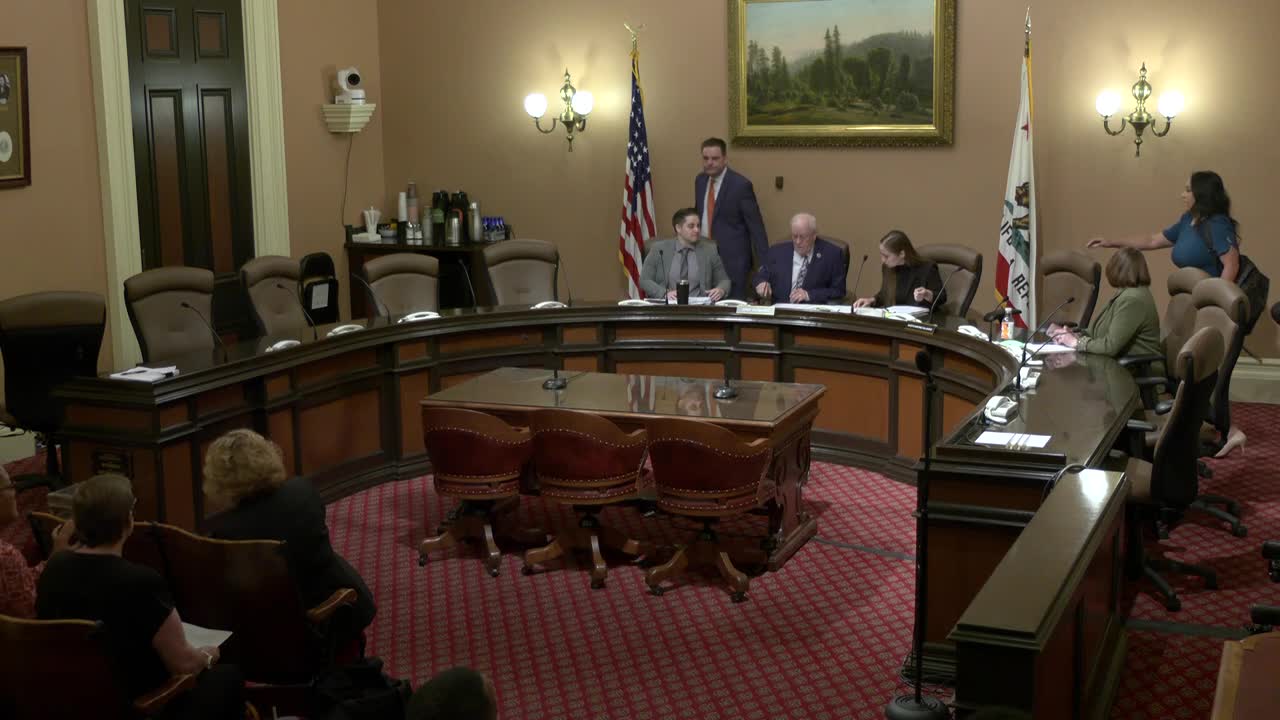 7MIN
Senate Standing Committee on Revenue and Taxation
 9MIN
Assembly Standing Committee on Revenue and Taxation
Bill Author

Bill Co-Author(s):