AB 441: Wildfire prevention: wildfire mitigation program.
- Session Year: 2025-2026
- House: Assembly
- Latest Version Date: 2026-06-10
Current Status:
In Progress
(2026-08-13: In committee: Held under submission.)
Introduced
In Committee
Awaiting First Chamber Vote
Passed First Chamber
In Committee
Awaiting Second Chamber Vote
Passed Second Chamber
Enacted
Existing law, upon appropriation of the Legislature, requires the Office of Emergency Services to enter into a joint powers agreement with the Department of Forestry and Fire Protection to develop and administer a comprehensive wildfire mitigation program. Existing law requires the department to delegate its duties and responsibilities for this program to the Office of the State Fire Marshal. Existing law requires the State Fire Marshal, in consultation with other officials, to identify measures eligible for financial assistance under the wildfire mitigation program that are both cost effective and provide for appropriate site or structure fire risk reduction, as specified. Existing law requires the joint powers authority to develop eligibility criteria for property owners, community organizations, and local governments who may receive financial assistance under the wildfire mitigation program. Existing law requires the joint powers authority to submit a report to the Legislature regarding the implementation of the wildfire mitigation financial assistance program that includes, among other things, an evaluation of the cost-effectiveness of the wildfire mitigation program compared to other structure hardening, defensible space, vegetation management, and fuel reduction incentive programs and an evaluation of the overall wildfire risk reduction achieved statewide through awards of financial assistance under the wildfire mitigation program. Existing law repeals these provisions on July 1, 2029.
This bill would extend the repeal date of the above provisions to July 1, 2031. January 1, 2030.
(1)Existing law establishes the Office of Wildfire Technology Research and Development in state government within the Department of Forestry and Fire Protection to study, test, and advise regarding procurement of emerging technologies and tools in order to more effectively prevent and suppress wildfires within the state. For those purposes, existing law requires the office to, among other things, develop a balanced, multimodal research and development program designed to identify, research, test, and evaluate emerging technologies and tools designed to improve the states preparation for, and response to, wildfires in the state, as specified. Existing law repeals these provisions on January 1, 2029.
This bill would extend the repeal date of the above provisions to January 1, 2033. 2031.
(2)Existing law, upon appropriation of the Legislature, requires the Office of Emergency Services to enter into a joint powers agreement with the Department of Forestry and Fire Protection to develop and administer a comprehensive wildfire mitigation program. Existing law requires the department to delegate its duties and responsibilities for this program to the Office of the State Fire Marshal. Existing law requires the State Fire Marshal, in consultation with other officials, to identify measures eligible for financial assistance under the wildfire mitigation program that are both cost effective and provide for appropriate site or structure fire risk reduction, as specified. Existing law requires the joint powers authority to develop eligibility criteria for property owners, community organizations, and local governments who may receive financial assistance under the wildfire mitigation program. Existing law requires the joint powers authority to submit a report to the Legislature regarding the implementation of the wildfire mitigation financial assistance program that includes, among other things, an evaluation of the cost-effectiveness of the wildfire mitigation program compared to other structure hardening, defensible space, vegetation management, and fuel reduction incentive programs and an evaluation of the overall wildfire risk reduction achieved statewide through awards of financial assistance under the wildfire mitigation program. Existing law repeals these provisions on July 1, 2029.
This bill would delete the July 1, 2029, repeal date described above, thereby extending these provisions indefinitely. extend the repeal date of the above provisions to July 1, 2031.
(1)Existing law establishes the Office of Wildfire Technology Research and Development in state government within the Department of Forestry and Fire Protection to study, test, and advise regarding procurement of emerging technologies and tools in order to more effectively prevent and suppress wildfires within the state. For those purposes, existing law requires the office to, among other things, develop a balanced, multimodal research and development program designed to identify, research, test, and evaluate emerging technologies and tools designed to improve the states preparation for, and response to, wildfires in the state, as specified. Existing law repeals these provisions on January 1, 2029.
This bill would extend the repeal date of the above provisions to January 1, 2033.
(2)Existing law, upon appropriation of the Legislature, requires the Office of Emergency Services to enter into a joint powers agreement with the Department of Forestry and Fire Protection to develop and administer a comprehensive wildfire mitigation program. Existing law requires the department to delegate its duties and responsibilities for this program to the Office of the State Fire Marshal. Existing law requires the State Fire Marshal, in consultation with other officials, to identify measures eligible for financial assistance under the wildfire mitigation program that are both cost effective and provide for appropriate site or structure fire risk reduction, as specified. Existing law requires the joint powers authority to develop eligibility criteria for property owners, community organizations, and local governments who may receive financial assistance under the wildfire mitigation program. Existing law requires the joint powers authority to submit a report to the Legislature regarding the implementation of the wildfire mitigation financial assistance program that includes, among other things, an evaluation of the cost-effectiveness of the wildfire mitigation program compared to other structure hardening, defensible space, vegetation management, and fuel reduction incentive programs and an evaluation of the overall wildfire risk reduction achieved statewide through awards of financial assistance under the wildfire mitigation program. Existing law repeals these provisions on July 1, 2029.
This bill would delete the July 1, 2029, repeal date described above, thereby extending these provisions indefinitely.
(a)The operation of this article is contingent upon an appropriation by the Legislature in the annual Budget Act or another statute for purposes of this article.
(b)No later than July 1, 2028, the joint powers authority shall submit a report to the Legislature, in compliance with Section 9795, regarding the implementation of the wildfire mitigation financial assistance program administered pursuant to this article. The report shall include, but is not limited to, all of the following:
(1)An evaluation of the cost-effectiveness of the wildfire mitigation program compared to other structure hardening, defensible space, vegetation management, and fuel reduction incentive programs.
(2)An evaluation of the overall wildfire risk reduction achieved statewide through awards of financial assistance under the wildfire mitigation program.
(3)Detailed information about the quantity, monetary value, geographic distribution, and categories of awards of financial assistance made under the wildfire mitigation program.
(4)Detailed information about the sources and amounts of funds appropriated or granted to the wildfire mitigation program.
(5)Detailed information about barriers encountered to completing work awarded financial assistance under the wildfire mitigation program, including state, regional, or local permitting requirements.
(6)Any other information the Office of Emergency Services determines is necessary or convenient to evaluate the financial assistance awarded under the program.
(c)This article shall remain in effect only until July 1, 2031, January 1, 2030, and as of that date is repealed.
(a)For purposes of this section, office means the Office of Wildfire Technology Research and Development.
(b)The Office of Wildfire Technology Research and Development is hereby established in state government within the Department of Forestry and Fire Protection to study, test, and advise regarding procurement of emerging technologies and tools in order to more effectively prevent and suppress wildfires within the state. The office shall serve as the central organizing hub for the state governments identification of emerging wildfire technologies.
(c)The office shall be under the direct control of the Director of Forestry and Fire Protection.
(d)The office shall undertake, but is not limited to, the following activities:
(1)Develop a balanced, multimodal research and development program designed to identify, research, test, and evaluate emerging technologies and tools designed to improve the states preparation for, and response to, wildfires in the state, including, but not limited to, fire retardants and ground, aerial, mobile, portable, communication, predictive modeling, software, or stationary equipment used for Californias wildfire preparedness and by first responders.
(2)Consult with public, private, and nonprofit entities in identifying new technologies tools, software, and other advances in wildfire preparedness and response.
(3)Make recommendations to state and local agencies on the most effective and useful technologies and tools for procurement.
(e)The office shall be subject to review by the Wildfire Technology Research and Development Review Advisory Board, which shall serve in an advisory capacity, and shall consist of the following nine members:
(1)The Secretary of the Natural Resources Agency, or their designee.
(2)The Director of the Office of Emergency Services, or their designee.
(3)The Director of the Department of Forestry and Fire Protection, or their designee.
(4)Four members who are appointed by the Governor for a term of four years each, as follows:
(A)One representative from academia involved in the field of wildfire research and technology development.
(B)One representative from the private wildfire response science, engineering, and technology industry.
(C)One representative from local government.
(D)One member of the public employed as a first responder.
(5)One member who is appointed by the Senate for a term of four years who is involved in victim services.
(6)One member who is appointed by the Assembly for a term of four years who is involved in the protection of privacy and civil liberties.
(f)The board shall meet at least four times per year to review, analyze, and assess the activities and progress of the Office of Wildfire Technology Research and Development, and to consult with public, private, and nonprofit entities regarding their interaction and responsiveness of the office.
(1)The findings and recommendations of the board shall be compiled and delivered to the office of the Governor and the Legislature as a report no later than January 1, 2024, and annually thereafter.
(2)The report developed by the board pursuant to this section shall be submitted in compliance with Section 9795.
(g)Members of the board shall serve without compensation, but they may be reimbursed for actual expenses incurred in connection with their duties.
(h)This section shall remain in effect only until January 1, 2033, 2031, and as of that date is repealed.
SEC. 2.Section 8654.10 of the Government Code is amended to read:8654.10.(a)The operation of this article is contingent upon an appropriation by the Legislature in the annual Budget Act or another statute for purposes of this article.
(b)No later than July 1, 2028, the joint powers authority shall submit a report to the Legislature, in compliance with Section 9795, regarding the implementation of the wildfire mitigation financial assistance program administered pursuant to this article. The report shall include, but is not limited to, all of the following:
(1)An evaluation of the cost-effectiveness of the wildfire mitigation program compared to other structure hardening, defensible space, vegetation management, and fuel reduction incentive programs.
(2)An evaluation of the overall wildfire risk reduction achieved statewide through awards of financial assistance under the wildfire mitigation program.
(3)Detailed information about the quantity, monetary value, geographic distribution, and categories of awards of financial assistance made under the wildfire mitigation program.
(4)Detailed information about the sources and amounts of funds appropriated or granted to the wildfire mitigation program.
(5)Detailed information about barriers encountered to completing work awarded financial assistance under the wildfire mitigation program, including state, regional, or local permitting requirements.
(6)Any other information the Office of Emergency Services determines is necessary or convenient to evaluate the financial assistance awarded under the program.
(c)This article shall remain in effect only until July 1, 2031, and as of that date is repealed.
(a)For purposes of this section, office means the Office of Wildfire Technology Research and Development.
(b)The Office of Wildfire Technology Research and Development is hereby established in state government within the Department of Forestry and Fire Protection to study, test, and advise regarding procurement of emerging technologies and tools in order to more effectively prevent and suppress wildfires within the state. The office shall serve as the central organizing hub for the state governments identification of emerging wildfire technologies.
(c)The office shall be under the direct control of the Director of Forestry and Fire Protection.
(d)The office shall undertake, but is not limited to, the following activities:
(1)Develop a balanced, multimodal research and development program designed to identify, research, test, and evaluate emerging technologies and tools designed to improve the states preparation for, and response to, wildfires in the state, including, but not limited to, fire retardants and ground, aerial, mobile, portable, communication, predictive modeling, software, or stationary equipment used for Californias wildfire preparedness and by first responders.
(2)Consult with public, private, and nonprofit entities in identifying new technologies tools, software, and other advances in wildfire preparedness and response.
(3)Make recommendations to state and local agencies on the most effective and useful technologies and tools for procurement.
(e)The office shall be subject to review by the Wildfire Technology Research and Development Review Advisory Board, which shall serve in an advisory capacity, and shall consist of the following nine members:
(1)The Secretary of the Natural Resources Agency, or their designee.
(2)The Director of the Office of Emergency Services, or their designee.
(3)The Director of the Department of Forestry and Fire Protection, or their designee.
(4)Four members who are appointed by the Governor for a term of four years each, as follows:
(A)One representative from academia involved in the field of wildfire research and technology development.
(B)One representative from the private wildfire response science, engineering, and technology industry.
(C)One representative from local government.
(D)One member of the public employed as a first responder.
(5)One member who is appointed by the Senate for a term of four years who is involved in victim services.
(6)One member who is appointed by the Assembly for a term of four years who is involved in the protection of privacy and civil liberties.
(f)The board shall meet at least four times per year to review, analyze, and assess the activities and progress of the Office of Wildfire Technology Research and Development, and to consult with public, private, and nonprofit entities regarding their interaction and responsiveness of the office.
(1)The findings and recommendations of the board shall be compiled and delivered to the office of the Governor and the Legislature as a report no later than January 1, 2024, and annually thereafter.
(2)The report developed by the board pursuant to this section shall be submitted in compliance with Section 9795.
(g)Members of the board shall serve without compensation, but they may be reimbursed for actual expenses incurred in connection with their duties.
(h)This section shall remain in effect only until January 1, 2029, 2033, and as of that date is repealed.
SEC. 2.Section 8654.10 of the Government Code is amended to read:8654.10.(a)The operation of this article is contingent upon an appropriation by the Legislature in the annual Budget Act or another statute for purposes of this article.
(b)No later than July 1, 2028, the joint powers authority shall submit a report to the Legislature, in compliance with Section 9795, regarding the implementation of the wildfire mitigation financial assistance program administered pursuant to this article. The report shall include, but is not limited to, all of the following:
(1)An evaluation of the cost-effectiveness of the wildfire mitigation program compared to other structure hardening, defensible space, vegetation management, and fuel reduction incentive programs.
(2)An evaluation of the overall wildfire risk reduction achieved statewide through awards of financial assistance under the wildfire mitigation program.
(3)Detailed information about the quantity, monetary value, geographic distribution, and categories of awards of financial assistance made under the wildfire mitigation program.
(4)Detailed information about the sources and amounts of funds appropriated or granted to the wildfire mitigation program.
(5)Detailed information about barriers encountered to completing work awarded financial assistance under the wildfire mitigation program, including state, regional, or local permitting requirements.
(6)Any other information the Office of Emergency Services determines is necessary or convenient to evaluate the financial assistance awarded under the program.
(c)This article shall remain in effect only until July 1, 2029, and as of that date is repealed.|
Date
|
Status
|
|---|---|
| Aug 13, 2026 | In committee: Held under submission. |
| Jun 29, 2026 | In committee: Referred to APPR. suspense file. |
| Jun 10, 2026 | Read second time and amended. Re-referred to Com. on APPR. |
| Jun 9, 2026 | From committee: Amend, and do pass as amended and re-refer to Com. on APPR. with recommendation: To Consent Calendar. (Ayes 7. Noes 0.) (June 9). |
| Jul 2, 2025 | In committee: Set, first hearing. Hearing canceled at the request of author. |
| Jun 24, 2025 | From committee: Do pass and re-refer to Com. on N.R. & W. with recommendation: To Consent Calendar. (Ayes 15. Noes 0.) (June 24). Re-referred to Com. on N.R. & W. |
| Jun 18, 2025 | Referred to Coms. on G.O. and N.R. & W. |
| Jun 5, 2025 | In Senate. Read first time. To Com. on RLS. for assignment. |
| Jun 4, 2025 | Read third time. Passed. Ordered to the Senate. (Ayes 78. Noes 0. Page 2065.) |
| May 27, 2025 | Read second time. Ordered to third reading. |
| May 23, 2025 | Read second time and amended. Ordered returned to second reading. |
| May 23, 2025 | From committee: Amend, and do pass as amended. (Ayes 14. Noes 0.) (May 23). |
| May 23, 2025 | Assembly Rule 63 suspended. (Ayes 51. Noes 16. Page 1644.) |
| Apr 30, 2025 | In committee: Set, first hearing. Referred to suspense file. |
| Apr 23, 2025 | In committee: Hearing postponed by committee. |
| Apr 8, 2025 | From committee: Do pass and re-refer to Com. on APPR. (Ayes 7. Noes 0.) (April 7). Re-referred to Com. on APPR. |
| Feb 18, 2025 | Referred to Com. on E.M. |
| Feb 7, 2025 | From printer. May be heard in committee March 9. |
| Feb 6, 2025 | Read first time. To print. |
|
Date
|
Description
|
Location
|
Votes
|
|
|---|---|---|---|---|
| Jun 29, 2026 | Placed on suspense file | Senate Standing Committee on Appropriations |
Passed |
|
| Jun 9, 2026 | Do pass as amended, but first amend, and re-refer to the Committee on [Appropriations] with the recommendation: To Consent Calendar | Senate Standing Committee on Natural Resources and Water |
Passed |
|
| Jun 24, 2025 | Do pass, but first be re-referred to the Committee on [Natural Resources and Water] with the recommendation: To Consent Calendar | Senate Standing Committee on Governmental Organization |
Passed |
|
| Jun 4, 2025 | AB 441 Hadwick Assembly Third Reading | Assembly Floor |
Passed |
|
| May 23, 2025 | Do pass as amended. | Assembly Standing Committee on Appropriations |
Passed |
|
| Apr 7, 2025 | Do pass and be re-referred to the Committee on [Appropriations] | Assembly Standing Committee on Emergency Management |
Passed |
This list shows positions taken on this bill by organizations on the date displayed, which is linked to the original source.
Positions by individuals are not included.
|
Organization
|
Position
|
Date
|
|---|---|---|
| California State Association of Counties (CSAC) | ** Support | |
| Emergency Medical Service Administrators Association of California | ** Support | |
| Emergency Medical Services Administrators' Association of California (EMSAAC) | ** Support | |
| Orange County Fire Authority | ** Support | |
| Rural County Representatives of California (RCRC) | ** Support |
SENATE COMMITTEE ON
Senator Sabrina Cervantes, Chair
2025 - 2026 Regular Session
AB 441 (Hadwick) - Wildfire prevention: wildfire mitigation program
Version: | Policy Vote: |
Urgency: | Mandate: |
Hearing Date: | Consultant: |
Bill Summary:
AB 441 extends the sunset date for the California Wildfire Mitigation Financial Assistance Program (CWMP) from July 1, 2029, to January 1, 2030.
Fiscal Impact:
Unknown cost pressures, ranging from the mid hundreds of thousands to the low millions of dollars, to extend the CWMP and its continued administration by the Office of Emergency Services (OES) and the Department of Forestry and Fire Protection (CAL FIRE) for an additional six months (General Fund and federal funds).
Background:
Created in 2019 by AB 38 (Wood, Chapter 391, Statutes of 2019), the California Wildfire Mitigation Financial Assistance Program, also known as the California Wildfire Mitigation Program, or CWMP, is a partnership between CAL FIRE and the Governor’s Office of Emergency Services (Cal OES). AB 38 directed Cal OES to enter into a joint powers agreement (JPA) with CAL FIRE to develop and implement this program. The JPA provides that CWMP is administered by a governing board consisting of two members selected by CAL FIRE and two members selected by Cal OES. The purpose of the CWMP is to provide neighborhood or communitywide benefits against wildfire by retrofitting and hardening buildings, including homes and businesses, and facilitating vegetation management, including defensible space. CWMP also provides community and homeowner education on wildfire home hardening and is creating a wildfire home hardening framework that communities can use to create their own home hardening initiatives.
Pursuant to AB 38, CWMP developed criteria and scoring methodology to prioritize financial assistance to areas and communities based on criteria such as vulnerability to wildfire; impact of future climate risk factors on area and community wildfire vulnerability assessments; and factors that lead some populations to experience greater risk of wildfire, adverse health outcomes, or an inhibited ability to respond to wildfire. All 58 counties were ranked on nine factors and each county received a Wildfire Risk Ranking and Social Vulnerability Ranking based on the sum of their respective factors. Each county also received a Final Ranking based on the sum of the Wildfire Risk Ranking and Social Vulnerability Ranking.1 CWMP appears to be working with six counties in implementation: El Dorado (Final Rank 5), Lake (Final Rank 1), San Diego (Final Rank 6), Shasta (Final Rank 4), Siskiyou (Final Rank 2), and Tuolumne (Final Rank 3) Counties. According to the CWMP dashboard, the program has completed 383 home assessments (which inform what retrofits will be implemented). Seventeen projects are in progress and 161 have been completed.
In 2024, AB 2469 (Committee on Emergency Management, Chapter 402, Statutes of 2024) added a report, to be submitted to the Legislature by July 1, 2028, and extended the program’s repeal date by another four years, from July 1, 2025, to July 1, 2029.
Proposed Law:
Extends the sunset date for the CWMP from July 1, 2029, to January 1, 2030.
Related Legislation:
SB 1079 (Stern, 2026) would establish the Fire Innovation Unit within CAL FIRE to serve as CAL FIRE’s innovation arm and as the state’s principal hub for wildfire technology research, coordination, procurement, and deployment for technologies that improve ecosystem and landscape scale resilience, community risk reduction, ignition reduction, early detection, fast fire suppression, and decision support tools until January 1, 2033. SB 1079 is pending in the Assembly Committee on Emergency Management.
SB 1270 (Richardson, 2026) would have required the CWMP to provide financial assistance to additional counties with the greatest combined risk of wildfire and social vulnerability, based on eligibility criteria as determined by the administering JPA and contingent upon appropriation or receipt of additional federal funding. SB 1270 was held on the Suspense File in this committee.
-- END --
SENATE COMMITTEE ON NATURAL RESOURCES AND WATER
Senator Josh Becker, Chair
2025 - 2026 Regular
Bill No: AB Hearing Date: June 9, 2026
Author: | |||
Version: | Amended | ||
Urgency: | Fiscal: | ||
Consultant: | |||
Subject: Wildfire prevention: Office of Wildfire Technology Research and Development: wildfire mitigation program
SUMMARY
This bill would extend the authorization for both the Office of Wildfire Technology Research and Development and the California Wildfire Mitigation Financial Assistance Program for an additional two years, until January 1, 2031, and July 1, 2031, respectively.
BACKGROUND AND EXISTING LAW
Wildfire in California. Catastrophic and devastating wildfires have occurred repeatedly in the state in recent years. Thirteen of the 20 largest and 15 of the 20 most destructive wildland fires in state history have occurred since 2015. The 2020 August Complex Fire in northern California – the largest fire in California’s modern history – burned over one million acres, and the 2021 Dixie Fire was almost one million acres. Two wildland fires in recent years burned over the crest of the Sierras, which had not been previously observed. In the last several years, tens of thousands of structures – mostly homes – have been destroyed from wildland fire, insured losses incurred are in the billions of dollars, prime habitat has been destroyed or damaged, and, tragically, hundreds of lives have been lost. Last year, the Palisades and Eaton Fires in Los Angeles in January resulted in the loss of approximately 16,250 structures and 29 deaths.
While wildland fires have always been present in the state, the number of days with extreme fire risk has more than doubled in the last 40 years. This is likely to continue to increase. One of the impacts of climate change in the state is an increase in the frequency and intensity of wildfires. In forested regions, decades of fire suppression, historic logging practices, and drought have produced unhealthy forests; in some forests, the current tree density is up to an order of magnitude greater than the density a century ago. These conditions exacerbate the risk of an extreme wildfire developing when a fire occurs. Further, the proliferation of new homes in the wildland urban interface (WUI) magnify the threat and place substantially more people and property at risk than in preceding decades. More than 25 million acres of California wildlands are classified as under very high or extreme fire threat, extending that risk over one-quarter of the state.
Wildfire resilience strategies. Wildland fires in the state can be broadly separated into two different types: fuel-driven and wind-driven. In a fuel-driven fire, fire prevention efforts and fuels management, including prescribed fire, may be the most effective methods to reduce risk and promote healthier and more resilient forests. In a wind-driven fire, however, home and community-hardening, including maintaining a defensible space buffer around a home are critical factors. Wildland fires may exhibit both wind-driven and fuel-driven behaviors.
Home hardening seeks to improve a home’s chance of surviving a wildfire by retrofitting the home with ignition-resistant materials and preventing embers or flames from entering the house. Creating and maintaining defensible space seeks to slow or halt the progress of wildfire toward a building. It also can help to protect firefighters defending the area. Of note, there are multiple methods available to help reduce the risk wildland fire poses to communities across the state, and optimal resilience is achieved through coordinated implementation of those most suited for the particular location.
Office of Wildfire Technology Research and Development.
According to the Department of Forestry and Fire Protection (CAL FIRE) website, the Office of Wildfire Technology Research and Development (OWTRD) serves as the central organizing hub for the state government’s identification of emerging wildfire technologies. OWTRD’s goal is to drive meaningful advancements and tap innovation from the public and private sectors. Subject to review by the Wildfire Technology Research and Development Review Advisory Board (Advisory Board), OWTRD is focused on driving innovation and in constant search of the best and most effective technologies available in the ongoing battle against wildfire.
According to OWTRD’s website, areas of focus include artificial intelligence (AI), last mile connectivity, and the Internet of Things (IoT). AI improves wildfire suppression by detecting fires early, predicting their occurrence, guiding firefighting efforts, and aiding in post-fire analysis and restoration. Last mile connectivity is crucial for effective wildland firefighting and enables real-time data collection and analysis, allowing first responders to communicate and coordinate their efforts. IoT technologies can play a critical role in wildland firefighting by improving situational awareness, enhancing firefighter safety, and optimizing resource management.
Interested parties with emerging technology that they feel may produce meaningful advancement in the prevention and suppression of wildfire may complete and submit a form online.
Existing law requires the Advisory Board to provide findings and recommendations in an annual report, with the first report due to the Legislature by January 1, 2024. According to the 2023 annual report, OWTRD prioritized recruitment, hiring, and training of personnel, and created a database and management system to support its work. OWTRD conducted internal outreach with CAL FIRE and external outreach with federal and local agencies, private vendors, academic institutions, and other relevant entities to raise awareness of its mission. OWTRD conducted evaluations and field tests in focus areas including last mile connectivity, dismounted firefighter location, enhanced situational awareness, firefighter health and safety, and data availability and integration. The 2024 report covered the OWTRD’s continued focus on consulting with public, private, and non-profit entities working on emerging technologies for the wildfire community. OWTRD continued its focus on last-mile connectivity, dismounted firefighter location, enhanced situational awareness, firefighter health and safety, and data availability and integration. The 2025 report includes updates on the areas of focus, a summary of activities of OWTRD and its Advisory Board, and other technological efforts in the wildfire community, a summary of the Dismounted Firefighter/Dismounted Resources Tracking Proof of Concept pilot, an overview of the FireStat Protoflight launch, and a description of upgrades to the CAL FIRE website.
California Wildfire Mitigation Financial Assistance Program.
Created in 2019 by AB 38 (Wood, Chapter 391, Statutes of 2019), the California Wildfire Mitigation Financial Assistance Program, also known as the California Wildfire Mitigation Program, or CWMP, is a partnership between CAL FIRE and the Governor’s Office of Emergency Services (Cal OES). AB 38 directed Cal OES to enter into a joint powers agreement (JPA) with CAL FIRE to develop and implement this program. The JPA provides that CWMP is administered by a governing board consisting of two members selected by CAL FIRE and two members selected by Cal OES. The purpose of the CWMP is to provide neighborhood or communitywide benefits against wildfire by retrofitting and hardening buildings, including homes and businesses, and facilitating vegetation management, including defensible space. CWMP also provides community and homeowner education on wildfire home hardening and is creating a wildfire home hardening framework that communities can use to create their own home hardening initiatives.
Pursuant to AB 38, CWMP developed criteria and scoring methodology to prioritize financial assistance to areas and communities based on criteria such as vulnerability to wildfire; impact of future climate risk factors on area and community wildfire vulnerability assessments; and factors that lead some populations to experience greater risk of wildfire, adverse health outcomes, or an inhibited ability to respond to wildfire. All 58 counties were ranked on nine factors and each county received a Wildfire Risk Ranking and Social Vulnerability Ranking based on the sum of their respective factors. Each county also received a Final Ranking based on the sum of the Wildfire Risk Ranking and Social Vulnerability Ranking.[1] CWMP appears to be working with six counties in implementation: El Dorado (Final Rank 5), Lake (Final Rank 1), San Diego (Final Rank 6), Shasta (Final Rank 4), Siskiyou (Final Rank 2), and Tuolumne (Final Rank 3) Counties. According to the CWMP dashboard, the program has completed 383 home assessments (which inform what retrofits will be implemented). Seventeen projects are in progress and 161 have been completed.
In 2024, AB 2469 (Committee on Emergency Management, Chapter 402, Statutes of 2024) added a report, to be submitted to the Legislature by July 1, 2028, and extended the program’s repeal date by another four years, from July 1, 2025, to July 1, 2029.
Existing law:
- Establishes, until January 1, 2029, the OWTRD within CAL FIRE to study, test, and advise regarding procurement of emerging technologies and tools to more effectively prevent and suppress wildfires in the state. (Government Code (GOV) §8586.8(b))
- Requires OWTRD to develop a balanced, multimodal research and development program designed to identify, research, test, and evaluate emerging technologies and tools to improve the state’s preparation for, and response to, wildfires; to consult with public, private, and nonprofit entities in identifying new technologies tools, software, and other advances in wildfire preparedness and response; and make recommendations on effective and useful technologies and tools for procurement. (GOV §8586.8(d))
- Subjects OWTRD to review by the Advisory Board. (GOV §8586.8(e))
- Requires the Advisory Board to meet at least four times annually to review, analyze, and assess the activities and progress of OWTRD. (GOV §8586.8(f))
- Requires the Advisory Board’s findings and recommendations be reported to the Governor and Legislature by January 1, 2024, and annually thereafter. (GOV §8586.8(f)(1))
- Requires the Advisory Board to meet at least four times annually to review, analyze, and assess the activities and progress of OWTRD. (GOV §8586.8(f))
- Requires OWTRD to develop a balanced, multimodal research and development program designed to identify, research, test, and evaluate emerging technologies and tools to improve the state’s preparation for, and response to, wildfires; to consult with public, private, and nonprofit entities in identifying new technologies tools, software, and other advances in wildfire preparedness and response; and make recommendations on effective and useful technologies and tools for procurement. (GOV §8586.8(d))
- Establishes Cal OES to be responsible for the state’s emergency and disaster response services for natural, technological, or man-made disasters and emergencies. (GOV §8585)
- Pursuant to the CWMP, contingent upon appropriation and operative until July 1, 2029: (GOV §§8654.2 et seq.)
- Requires Cal OES to enter into a JPA with CAL FIRE for the creation of a joint powers authority (Authority) that would develop and administer a comprehensive wildfire mitigation program that would (1) encourage cost-effective structure hardening and retrofitting that creates fire-resistant homes, businesses, and public buildings, and (2) facilitate vegetation management, the creation of defensible space, and other fuel modification activities that provide neighborhood or communitywide benefits against wildfire. (GOV §8654.4(a))
- Requires CAL FIRE to delegate its duties and responsibilities for this program to the Office of the State Fire Marshal (SFM). (GOV §8654.4(b))
- Requires SFM, in consultation with CAL FIRE and the Director of Housing and Community Development, to identify building retrofits and structure hardening measures eligible for financial assistance under this program that are cost effective and provide site or structure fire risk reduction. (GOV §8654.5)
- Designates local responsibility areas within very high fire hazard severity zones, state responsibility areas located within any fire hazard severity zones, and any other land designed by the Authority as areas eligible for financial assistance under this program. (GOV §8654.6)
- Requires the Authority to develop eligibility criteria for property owners, community organizations, and local governments who receive financial assistance under this program. (GOV §8654.8)
- Authorizes the Authority to enter into cooperative agreements with specified entities to perform actions eligible for financial assistance under this program. (GOV §8654.9)
- Requires the Authority, no later than July 1, 2028, to submit a report to the Legislature regarding implementation of the program. (GOV §8654.10)
- Requires Cal OES to enter into a JPA with CAL FIRE for the creation of a joint powers authority (Authority) that would develop and administer a comprehensive wildfire mitigation program that would (1) encourage cost-effective structure hardening and retrofitting that creates fire-resistant homes, businesses, and public buildings, and (2) facilitate vegetation management, the creation of defensible space, and other fuel modification activities that provide neighborhood or communitywide benefits against wildfire. (GOV §8654.4(a))
PROPOSED LAW
This bill would extend the authorization for both OWTRD and CWMP for an additional two years, until January 1, 2031 and July 1, 2031, respectively.
ARGUMENTS IN SUPPORT
According to the author, “Assembly Bill 441 is a crucial step in strengthening California's wildfire mitigation efforts. By extending the sunset date of the Office of Wildfire Technology Research and Development and the California Wildfire Mitigation Program, the bill ensures continued access to cutting-edge technologies and financial assistance for high-risk communities. With increasing disaster frequency and intensity, home retrofitting and fire-hardening initiatives are essential to protecting vulnerable residents, particularly in rural areas. Strengthening these programs guarantees that Californians will have the support needed to mitigate wildfire impacts.”
ARGUMENTS IN OPPOSITION
None received.
COMMENTS
This bill is double-referred. This bill has been referred to both the Senate Committee on Government Organization and this Committee for hearing. This Committee is the second Committee of referral. This bill was heard in the Senate Committee on Governmental Organization on June 24, 2025, and passed out with a vote of 15 - 0. Elements of this bill under the jurisdiction of the Senate Committee on Government Organization are included here for completeness and context only.
What does the Legislature lose when it extends a sunset too early? Under existing law, OWTRD is authorized until January 1, 2029. This bill proposes to extend the sunset until January 1, 2031. As discussed above, the OTWRD governing board has released 3 annual reports so far – for 2023, 2024, and 2025. Under the existing sunset date in 2029, the Legislature will be able to additionally utilize the annual reports for 2026 and 2027, before considering a sunset extension in 2028. At that time, the Legislature, based on those reports, will be given the opportunity to modify the OWTRD and make any other related legislative changes to the program.
If the sunset date is extended until 2031, the Legislature might not review the implementation of the OWTRD until 2030, potentially missing an opportunity to evaluate the efficacy of the office and make any adjustments, as deemed appropriate.
To provide the Legislature with an earlier “check-in” with the program and an opportunity to ensure effective implementation of the office, the committee may wish to remove the proposed sunset extension from the bill. See Amendment 1.
Back so soon? In 2024, AB 2469 (Committee on Emergency Management, Chapter 402, Statutes of 2024) added a report, to be submitted to the Legislature by the JPA no later than July 1, 2028. To accommodate this new report, the bill also extended the program’s operation from July 1, 2025, until July 1, 2029. Two years later, this bill seeks to extend the program’s operation for an additional 2 years, until July 1, 2031.
A question arises whether this extension is premature because (1) the Legislature will not receive the Authority’s report on program implementation until July 1, 2028, and (2) the program does not become inoperative until July 1, 2029. The report may provide the Legislature with helpful insight into the program and ways that the program could be improved. Would it be prudent to extend the program before having the opportunity review the report?
By extending the program sunset until 2031, the Legislature may miss out on an earlier opportunity learn from the Authority’s report and adjust the program as necessary.
However, if the Legislature does not receive the Authority’s report until July 1, 2028, it is likely that a bill proposal containing appropriate program modifications based on the report, if any, will not be introduced until the following year – 2029. Unless enacted as an urgency bill, that bill would not take effect until January 1, 2030 – 6 months after the program is set to sunset under existing law.
In order to give the Legislature the opportunity to review and incorporate the Authority report before extending the program’s sunset and give such bill enough time to proceed through the normal legislative process, the committee may wish to amend the bill to sunset the program on January 1, 2030. See Amendment 2.
Related legislation
SB 1079 (Stern), of the current legislative session, would establish the Fire Innovation Unit within CAL FIRE to serve as CAL FIRE’s innovation arm and as the state’s principal hub for wildfire technology research, coordination, procurement, and deployment for technologies that improve ecosystem and landscape scale resilience, community risk reduction, ignition reduction, early detection, fast fire suppression, and decision support tools until January 1, 2033. The Fire Innovation Unit which would consist of OWTRD, the Innovation, Outreach, and Coordination Program, and the Rapid Acquisition and Deployment Program. SB 1079 is pending before the Assembly Natural Resources Committee.
SB 1270 (Richardson), of the current legislative session, would have required the CWMP to provide financial assistance to additional counties with the greatest combined risk of wildfire and social vulnerability, based on eligibility criteria determined by the administering joint powers authority and contingent upon appropriation or receipt of additional federal funding. SB 1270 was held in the Senate Appropriations Committee.
AB 1531 (Committee on Emergency Management, Chapter 204, Statutes of 2025) requires the California Department of Insurance to be added to the CWMP governing board by July 1, 2026.
AB 2469 (Committee on Emergency Management, Chapter 402, Statutes of 2024) extended CWMP operation from July 1, 2025 to July 1, 2029, and added an implementation report due July 1, 2028.
SB 74 (Dodd, 2024) would have extended the authorization for OWRTRD indefinitely. SB 74 was held in the Assembly Appropriations Committee.
AB 609 (Papan, 2023) would have required OWTRD to submit a report to the Legislature that assesses the feasibility of CAL FIRE and California Office of Emergency Services to conduct an evaluation of innovative new aerial firefighting technologies and whether any new technologies exist that might meet CAL FIRE standards of water retardant and delivery systems. AB 609 was held in the Senate Appropriations Committee.
SUGGESTED AMENDMENTS
AMENDMENT 1
Strike Section 1 from the bill.
AMENDMENT 2
Amend Government Code §8654.10(c) as follows:
8654.10(c) This article shall remain in effect only until July 1, 2031, January 1, 2030, and as of that date is repealed.
SUPPORT
California State Association of Counties (CSAC)
Emergency Medical Services Administrators' Association of California (EMSAAC)
Orange County Fire Authority
Rural County Representatives of California (RCRC)
OPPOSITION
None Received
-- END --
See CWMP’s County Selection Methods, published January 29, 2025, for more information. https://www.caloes.ca.gov/wp-content/uploads/Recovery/CWMP-County-Selection-Methods-01.29.2025.pdf ↑
SENATE COMMITTEE ON GOVERNMENTAL ORGANIZATION
Senator Steve Padilla
Chair
2025 - 2026 Regular
Bill No: 441 Hearing Date: 6/24/2025
Author: | |||
Version: | 5/23/2025 Amended | ||
Urgency: | No | Fiscal: | Yes |
Consultant: | Brian Duke | ||
SUBJECT: Wildfire prevention: Office of Wildfire Technology Research and Development: wildfire mitigation program
DIGEST: This bill extends the 2029 repeal dates of the Office of Wildfire Technology Research and Development (OWTRD) and the California Wildfire Mitigation Program (CWMP) to January 1, 2031; and, July 1, 2031, respectively.
ANALYSIS:
Existing law:
- Establishes the OWTRD, within the Department of Forestry and Fire Protection (CAL FIRE) to study, test, and advise regarding procurement of emerging technologies and tools in order to more effectively prevent and suppress wildfires within the state, as specified.
- Repeals OWTRD’s authorizing statute on January 1, 2029.
- Requires the Office of Emergency Services (OES) to enter into a joint powers agreement (JPA) with CAL FIRE to develop and administer a comprehensive wildfire mitigation program known as the CWMP, as specified.
- Requires CAL FIRE to delegate its duties and responsibilities for this program to the Office of the State Fire Marshal (SFM).
- Repeals the JPA’s authorizing statute on July 1, 2029.
This bill:
- Extends the repeal date of the OWTRD by two years until January 1, 2031.
- Extends the repeal date of the JPA by two years until July 1, 2031.
Background
Author Statement. According to the author’s office, “Assembly Bill 441 is a crucial step in strengthening California's wildfire mitigation efforts. By extending the sunset date of the Office of Wildfire Technology Research and Development and the California Wildfire Mitigation Program, the bill ensures continued access to cutting-edge technologies and financial assistance for high-risk communities. With increasing disaster frequency and intensity, home retrofitting and fire-hardening initiatives are essential to protecting vulnerable residents, particularly in rural areas. Strengthening these programs guarantees that Californians will have the support needed to mitigate wildfire impacts long into the future.”
Office of Wildfire Technology Research and Development. The OWTRD was established as a permanent technology and research capability within CAL FIRE by SB 109 (Dodd, Chapter 239, Statutes of 2021). The OWTRD helps develop advancements and taps innovation from the public and private sectors. The OWTRD focuses on evaluating new and novel approaches to fighting wildfire. Public, private, and non-profit organizations and companies work closely with the OWTRD to advance the application of technology to wildland firefighting. Guided by an advisory board, the OWTRD also plays a unique role in providing recommendations to state and local agencies on what the best and most effective technologies are available to them in the ongoing battle against wildfires.
According to the OWTRD’s internet website, areas of focus include artificial intelligence (AI), last mile connectivity, and the Internet of Things (IoT). AI improves wildfire suppression by detecting fires early, predicting their occurrence, guiding firefighting efforts, and aiding in post-fire analysis and restoration. Last mile connectivity is crucial for effective wildland firefighting and enables real-time data collection and analysis, allowing first responders to communicate and coordinate their efforts. IoT technologies can play a critical role in wildland firefighting by improving situational awareness, enhancing firefighter safety, and optimizing resource management.
Interested parties with technology that they feel worthy of research are directed online to complete and submit a form. The form asks for information that may be useful and pertinent to the mission of the OWTRD. The OWTRD reviews every submission and assesses it for consideration in the current research and development plan for CAL FIRE and for inclusion in OWTRD’s annual and quarterly reports to the OWTRD Advisory Board. It is important for those interested in submitting requests to the OWTRD to note that the online form is not suitable for marketing pre-existing products to CAL FIRE. Any promotional or sales-related content must follow the appropriate procurement procedures.
The OWTRD carefully reviews and evaluates all submissions and may reach out to applicants for additional information, which may entail scheduling a meeting to further discuss the proposal. Due to a high volume of submissions, the OWTRD asks to wait at least 12 weeks before inquiring about a submission. All OWTRD findings will be published to the Advisory Board and will be publicly available on the CAL FIRE website. Existing law requires the OWTRD to report the findings and recommendations of the Board to the Legislature no later than January 1, 2024, and annually thereafter.
Existing law sunsets the OWTRD on January 1, 2029. This bill extends the repeal date by two years until January 1, 2029.
California Wildfire Mitigation Program. AB 38 (Wood, Chapter 391, Statutes of 2019) requires OES to enter into a joint powers agreement with CAL FIRE to develop and administer a comprehensive wildfire mitigation program to encourage cost-effective structure hardening and retrofitting and to facilitate vegetation management, as specified. Known as the CWMP, this effort encourages cost-effective wildfire resilience measures to create fire-resistant homes, businesses, public buildings, and public spaces. Mitigation measures such as home hardening, vegetation management, defensible space, and other fuel modification activities provide neighborhood and community-wide benefits against wildfire.
As part of the 2020 Budget Act, the state committed $21.9 million from the General Fund (GF) to help unlock federal funding through the Federal Emergency Management Agency’s (FEMA) Hazard Mitigation Grant Program (HMGP), which covers up to 75% of the cost for eligible hazard mitigation projects. OES has been partnering with FEMA to use the state’s $21.9 million contribution to meet the 25% non-federal match requirement – making it easier for communities across California to access these critical funds.
By matching federal dollars, California is stretching the investment further, putting more resources on the ground for wildfire home hardening and the creation of defensible space. Working hand-in-hand with local and state partners, OES and Cal FIRE are building a statewide wildfire home hardening framework that can be adapted for use in fire-prone communities across California. The goal is to help communities tap into state and federal funding to build local programs that strengthen wildfire resilience. To jumpstart the effort, the state is providing funding and hands-on support to demonstration communities, targeting areas with the highest wildfire risk and social vulnerability. Community-scale home hardening pilot projects will inform the statewide model. Existing law repeals the CWMP on July 1, 2029.
The CWMP Board meets every third Tuesday of every month at the California Natural Resources Agency building in downtown Sacramento. The meetings are open to the public except when specifically noticed otherwise in accordance with the Bagley-Keene open Meeting Act. The virtual meeting waiting room opens 15 minutes before via Zoom.
Existing law sunsets the CWMP on January 1, 2029. This bill extends the repeal of the CWMP until January 1, 2031.
Prior/Related Legislation
SB 74 (Dodd, 2024) would have deleted the OWTRD’s January 1, 2029 sunset date. (Held in the Assembly Appropriations Committee Suspense File)
AB 609 (Papan, 2024) would have required the OWTRD to submit a report to the Legislature assessing the feasibility to conduct an evaluation of innovative new aerial firefighting technologies, as specified. (Held in the Senate Appropriations Committee Suspense File)
AB 2469 (Committee on Emergency Management, Chapter 402, Statutes of 2024) extended the repeal dates for the Emergency Management Assistance Compact and the CWMP, as specified.
AB 9 (Wood, Chapter 225, Statutes of 2021) among other things, established the Community Wildfire Mitigation Assistance Program to coordinate regional and local efforts with state policies, strategies, and programs for community wildfire mitigation in order to improve wildfire preparedness and prevention, with an emphasis on the most vulnerable communities, as specified.
AB 38 (Wood, Chapter 391, Statutes of 2019) among other things, required OES to enter into a joint powers agreement with Cal FIRE to administer a comprehensive wildfire mitigation and assistance program to encourage cost-effective structure hardening and facilitate vegetation management, as specified.
FISCAL EFFECT: Appropriation: Fiscal Com.: Local:
SUPPORT:
California State Association of Counties
Emergency Medical Services Administrators' Association of California
Rural County Representatives of California
OPPOSITION:
None received
ARGUMENTS IN SUPPORT: In support of the bill, the Emergency Medical Services Administrators Association of California write that, “California is experiencing more frequent and destructive wildfires than ever before, which directly and indirectly impact EMS systems throughout the state. To combat these growing threats, the state must continue investing in innovative firefighting and prevention tools while empowering community wildfire resilience. Losing both the CWMP and the OWTRD will harm fire-threatened Californians, especially in underserved and rural communities, and jeopardize California’s ability to invest in and deploy innovative, life-saving wildfire response capabilities when they are needed most.”
DUAL-REFERRAL: Senate Governmental Organization Committee and Senate Natural Resources & Water Committee
ASSEMBLY THIRD READING
ATR Bill Id:AB 441
Author:(Hadwick)
As Amended Ver:May 23, 2025
Majority vote
SUMMARY
This bill extends the sunset date for the Office of Wildfire Technology Research and Development and the California Wildfire Mitigation Financial Assistance Program.
Major Provisions
- Extends the sunset date for the Office of Wildfire Technology Research and Development from January 1, 2029 to January 1, 2031.
- Extends the sunset date for the California Wildfire Mitigation Financial Assistance Program from July 1, 2029 to July 1, 2031.
COMMENTS
Equity Impact: According to the author's staff, "Strengthening Californians' wildfire resilience is an expensive undertaking, and one that primarily impacts residents in rural communities. According to a 2024 report by the University of California Agriculture and Natural Resources, the cost of retrofitting a typical 2,000-square-foot home in California can range from $2,000 to upwards of $100,000. For many Californians, these high expenditures are not feasible. These high costs are particularly distressing to many rural Californians, 85% of whom live in high wildfire risk areas. Within the rural population, 15.5% live at or below the poverty rate."
They continue "The CWMP focuses on high socially-vulnerable communities and provides financial assistance for low- and moderate-income households – offering rural and low-income families the ability to fortify their infrastructure against future wildfires. If this program were to sunset, thousands of vulnerable Californians are at risk of losing their homes, businesses, and communities to wildfires. Now more than ever, Californians need help protecting themselves from wildfires – and as more families experience financial hardship, families are being forced to choose between hardening their home or affording groceries. The CWMP is critical and not only is it needed today, but based on California's wildfire trends, will continue to remain in demand for the foreseeable future."
Office of Wildfire Technology Research and Development: The Office of Wildfire Technology Research and Development (OWTRD) was established within the California Department of Forestry and Fire Protection (CAL FIRE) by Senate Bill 109 (Dodd), Chapter 239, Statutes of 2021) to serve as California's central organizing hub for identifying emerging wildfire technologies. The OWTRD has developed a balanced multimodal research and development program designed to identify, research, test, and evaluate emerging technologies and tools designed to improve the State's preparation for, and response to, wildfires within the State. Senate Bill 109 also established the Wildfire Technology Research and Development Advisory Review Board (Advisory Board). The Advisory Board is required to submit its findings annually to the Governor and Legislature beginning in January 2024 and every year thereafter until the scheduled date of repeal, January 1, 2029.
According to Cal FIRE, "In 2023, the Office prioritized recruitment, hiring, and training of personnel, and created a bespoke database and management system to support its work. The Office conducted internal outreach within CAL FIRE and external outreach with federal and local agencies, private vendors, academic institutions, and other relevant entities to raise awareness of its mission and identify priority areas of focus related to emerging technologies. Current focus areas include last-mile connectivity, dismounted firefighter location, enhanced situational awareness, firefighter health and safety, and data availability and integration. The Office conducted evaluations and field tests in these areas, including in Jackson Demonstration State Forest in Mendocino County, and expects to work with the Advisory Board to fine-tune these focus areas in the coming year."
The OWTRD is also now prioritizing Artificial Intelligence (AI) and IoT (internet of things) technology. AI can be used to improve wildfire suppression by detecting fires early, predicting their occurrence, analyzing satellite imagery and environmental data, providing real-time mapping and tracking, guiding firefighting efforts, deploying AI-powered drones for aerial surveys, and aiding in post-fire analysis and restoration. IoT improves wildland firefighting by enhancing situational awareness, firefighter safety, and resource management through connected technologies. IoT capabilities are only expected to grow as this technology continues to emerge and be implemented in this field.
Additionally, the OWTRD developed business processes for capturing, screening, and evaluating prospective emerging technologies, which will inform product development and innovation by communicating the specific needs of the wildfire industry to entities developing emerging technologies.
California Wildfire Mitigation Program: In 2019, the Legislature passed and the Governor signed into law AB 38 to create the California Wildfire Mitigation Program (CWMP). The law authorized a joint exercise of powers agreement between Cal OES and Cal FIRE to strengthen community-wide resilience against wildfires. This included developing a state home hardening initiative to retrofit, harden, and create defensible space for homes at high risk of wildfires, focusing on high socially-vulnerable communities, and providing financial assistance for low- and moderate-income households. The effort is meant to encourage cost-effective wildfire resilience measures to create fire-resistant homes, businesses, public buildings, and public spaces. This includes a community hardening approach to achieve wildfire resilience, low-cost retrofits with ignition-resistant materials to bring homes up to the standard of the California Building Code Chapter 7A, community and homeowner wildfire education on defensible space and home retrofitting, and providing financial assistance to support home hardening work for qualifying homeowners.
In coordination with state and local partners, Cal OES and CAL FIRE also established a state wildfire home hardening framework that can be modeled throughout vulnerable California communities. The framework provides the opportunity for California communities to leverage state and federal resources and develop local wildfire home hardening programs that address community resiliency needs. To help expedite local wildfire home hardening program development and inform the build-out of the state's framework, Cal OES and CAL FIRE will provide state funding, resources, and support for demonstration communities to implement community wildfire home hardening projects in areas with high social vulnerability and wildfire risk.
The pilot program was first launched in 2023 and is intended to provide funding for defensible space and ignition resistant retrofits to harden approximately 2,500 homes in six counties. According to Cal OES's website, there are 252 active applications, 134 assessments are currently complete, 24 homes are in progress, and 18 homes are fully completed.
According to the Author
"Assembly Bill 441 is a crucial step in strengthening California's wildfire mitigation efforts. By extending the sunset date of the Office of Wildfire Technology Research and Development (OWTRD) and the California Wildfire Mitigation Program (CWMP), the bill ensures continued access to cutting-edge technologies and financial assistance for high-risk communities. With increasing disaster frequency and intensity, home retrofitting and fire-hardening initiatives are essential to protecting vulnerable residents, particularly in rural areas. Strengthening these programs guarantees that Californians will have the support needed to mitigate wildfire impacts long into the future."
Arguments in Support
According to the Emergency Medical Services Administrators' Association of California (EMSAAC), " California is experiencing more frequent and destructive wildfires than ever before, which directly and indirectly impact EMS systems throughout the state. To combat these growing threats, the state must continue investing in innovative firefighting and prevention tools while empowering community wildfire resilience. Losing both the CWMP and the OWTRD will harm fire-threatened Californians, especially in underserved and rural communities, and jeopardize California's ability to invest in and deploy innovative, life-saving wildfire response capabilities when they are needed most."
Arguments in Opposition
None on file.
FISCAL COMMENTS
According to the Assembly Committee on Appropriations:
- Annual cost pressures of approximately $1.7 million to Department of Forestry and Fire Protection (CAL FIRE) to continue the seven staff positions for the OWTRD an additional two years (General Fund (GF)). Although the Budget Act of 2022 provided ongoing funding and positions for the OWTRD, those GF resources could be re-appropriated to support other state priorities if the OWTRD's authorizing statute is repealed.
Additionally, CAL FIRE may need additional resources, approximately $850,000 annually, beginning January 1, 2029, for travel and external consulting costs to support the OWTRD's study and testing of emerging technologies and tools (GF). Of those costs, $800,000 would support external consulting and professional services to collaborate with technology companies, as CAL FIRE asserts the OWTRD has previously been overlooked for collaboration opportunities because of this lack of funds. For example, CAL FIRE notes it is competing with the private sector for consulting contracts, as well as for aerial technologies that generally cost $300,000 to $500,000 per contract. Although CAL FIRE did not initially seek funding for the OWTRD to enter into contracts, experience demonstrates such funding would help the OWTRD engage the technology industry on certain projects.
Likely minor and absorbable costs to the Natural Resources Agency and Office of Emergency Services (OES) to continue their roles on the OWTRD Advisory Board.
- Annual cost pressures of an unknown, but likely significant amount, in the millions of dollars, between OES and CAL FIRE to extend the CWMP an additional two years (GF, special fund, and Proposition 4). Even if OES and CAL FIRE do not need additional staff resources to continue administering the CWMP, those resources could be re-appropriated to support other state priorities if the CWMP's authorizing statute is repealed, and there would be continued demand to distribute additional community grants. Since 2020, approximately $35 million has been allocated across budget years to support CWMP administrative costs and grants.
VOTES
ASM EMERGENCY MANAGEMENT: 7-0-0
YES: Ransom, Hadwick, Arambula, Bains, Bennett, Calderon, DeMaio
ASM APPROPRIATIONS: 14-0-1
YES: Wicks, Arambula, Calderon, Caloza, Dixon, Elhawary, Fong, Mark González, Hart, Pacheco, Pellerin, Solache, Ta, Tangipa
ABS, ABST OR NV: Sanchez
UPDATED
VERSION: May 23, 2025
CONSULTANT: Ryan Fleming / E.M. / (916) 319-3802 FN: 0000909
Date of Hearing: April 30, 2025
ASSEMBLY COMMITTEE ON APPROPRIATIONS
Buffy Wicks, Chair
ABPCA Bill Id:AB 441
Author:(Hadwick) – As Introduced Ver:February 6, 2025
Policy Committee: | Emergency Management | Vote: | 7 - 0 |
|
| ||
|
|
Urgency: No State Mandated Local Program: No Reimbursable: No
SUMMARY:
This bill extends, by four years, the January 1, 2029, repeal date of the Office of Wildfire Technology Research and Development (OWTRD) and eliminates the July 1, 2029, repeal date of the California Wildfire Mitigation Program (CWMP).
This bill similarly extends operation of the Wildfire Technology Research and Development Review Advisory Board (OWTRD Advisory Board) that reviews and advises the OWTRD.
FISCAL EFFECT:
- Annual cost pressures of approximately $1.7 million to Department of Forestry and Fire Protection (CAL FIRE) to continue the seven staff positions for the OWTRD after January 1, 2029 (General Fund (GF)). Although the Budget Act of 2022 provided ongoing funding and positions for the OWTRD, those GF resources could be re-appropriated to support other state priorities if the OWTRD’s authorizing statute is repealed.
Additionally, CAL FIRE may need additional resources, approximately $850,000 annually, beginning January 1, 2029, for travel and external consulting costs to support the OWTRD’s study and testing of emerging technologies and tools (GF). Of those costs, $800,000 would support external consulting and professional services to collaborate with technology companies, as CAL FIRE asserts the OWTRD has previously been overlooked for collaboration opportunities because of this lack of funds. For example, CAL FIRE notes it is competing with the private sector for consulting contracts, as well as for aerial technologies that generally cost $300,000 to $500,000 per contract. Although CAL FIRE did not initially seek funding for the OWTRD to enter into contracts, experience demonstrates such funding would help the OWTRD engage the technology industry on certain projects.
Likely minor and absorbable costs to the Natural Resources Agency and Office of Emergency Services (OES) to continue their roles on the OWTRD Advisory Board.
- Annual cost pressures of an unknown, but likely significant amount, in the tens of millions of dollars, between OES and CAL FIRE to extend the CWMP indefinitely (GF, special fund, and Proposition 4). Even if OES and CAL FIRE do not need additional staff resources to continue administering the CWMP, those resources could be re-appropriated to support other state priorities if the CWMP’s authorizing statute is repealed, and there would be continued demand to distribute additional community grants. Since 2020, approximately $35 million has been allocated across budget years to support CWMP administrative costs and grants.
COMMENTS:
- Purpose. According to the author:
By extending the sunset date of the [OWTRD] and permanently establishing the [CWMP], the bill ensures continued access to cutting-edge technologies and financial assistance for high-risk communities. With increasing disaster frequency and intensity, home retrofitting and fire-hardening initiatives are essential to protecting vulnerable residents, particularly in rural areas.
This bill is supported by various local government associations.
- Background.
OWTRD. SB 109 (Dodd), Chapter 239, Statutes of 2021, established the OWTRD to serve, until January 1, 2029, as the state’s central organizing hub for identifying emerging wildfire technologies. Advanced technologies can improve state and local agencies’ detection of and response to emergencies. For example, drones can help identify fires and determine best routes for firefighters and other first responders. SB 109 also established the nine-member OWTRD Advisory Board to: (a) meet at least four times per year to review, analyze, and assess the OWTRD’s activities and progress, (b) consult with public and private entities regarding the entities’ experience with the OWTRD, and (c) annually report findings and recommendations to the Governor and Legislature. This bill extends the sunset date for the OWTRD and the OWTRD Advisory Board to January 1, 2033.
CWMP. AB 38 (Wood), Chapter 391, Statutes of 2019, created the CWMP, a joint powers authority between OES and CAL FIRE to develop and administer a comprehensive wildfire mitigation program to encourage cost-effective structure hardening and retrofitting in high-risk, socially vulnerable communities and provide financial assistance for low- and moderate-income households, thus creating more fire-resistant homes, businesses, and public buildings.
The Budget Act of 2020 provided $21.9 million GF to match federal Hazard Mitigation Grant Program (HMGP) funds earmarked for the CWMP. HMGP is a post-disaster Federal Emergency Management Agency (FEMA) funding program that provides up to 75% of the costs of eligible hazard mitigation projects. After conducting a statewide assessment of regions with elevated wildfire threat and social vulnerability, OES and CAL FIRE chose six counties as initial pilot sites for the CWMP. However, as part of HMGP requirements, projects must comply with federal and state environmental and historic preservation laws and complete a review and approval process before FEMA can obligate HMGP funds and OES can encumber the money. The CWMP was originally slated to sunset on July 1, 2025, before the completion of approved pilot projects, but AB 2469 (Committee on Emergency Management), Chapter 402, Statutes of 2024, extended the sunset date to July 1, 2029. This bill repeals the sunset date for the CWMP.
The Legislative Analyst’s Office’s (LAO’s) April 23, 2025, presentation to the Assembly Budget Subcommittee on Climate Crisis, Resources, Energy and Transportation notes that “CWMP has been slow to launch. Despite receiving funding starting in 2020-21, recent reports indicate that roughly 20 homes have completed retrofits. The average cost per home has been roughly $50,000.” The LAO adds:
The state lacks clear cost-effectiveness data both on how pursuing defensible space and home hardening efforts compares to other risk-reduction activities, as well as on the relative performance of different programs designed to improve defensible space compliance and home hardening adoption. [AB 38], as subsequently modified, requires CalFire and [OES] to submit a report evaluating the cost-effectiveness of the [CWMP] compared to other programs by July 2028, which may help provide insights.
- Prior Legislation. SB 74 (Dodd), of the 2023-24 Legislative Session, would have repealed the January 1, 2029, sunset date for the OWTRD and OWTRD Advisory Board. SB 74 was held in this committee’s suspense file.
Analysis Prepared by: Irene Ho / APPR. / (916) 319-2081
Date of Hearing: April 7, 2025
ASSEMBLY COMMITTEE ON EMERGENCY MANAGEMENT
Rhodesia Ransom, Chair
ABPCA Bill Id:AB 441 (
Author:Hadwick) – As Introduced Ver:February 6, 2025
SUBJECT: Wildfire prevention: Office of Wildfire Technology Research and Development: wildfire mitigation program
SUMMARY: This bill extends the sunset date for the Office of Wildfire Technology Research and Development and removes the sunset date for the California Wildfire Mitigation Financial Assistance Program. Specifically, this bill:
- Extends the sunset date for the Office of Wildfire Technology Research and Development from January 1, 2029 to January 1, 2033.
- Repeals the sunset date for the California Wildfire Mitigation Financial Assistance Program.
EXISTING LAW:
- Establishes Cal FIRE within the California Natural Resources Agency, and establishes various programs for the prevention and suppression of wildfires at Cal FIRE, as provided. (Public Resources Code § 701)
- Establishes the Office of Wildfire Technology Research and Development within Cal FIRE. (Government Code § 8586.8)
- Provides the Office of Wildfire Technology Research and Development shall serve as the central organizing hub for the state government’s identification of emerging wildfire technologies and is under the direct control of the Director of Forestry and Fire Protection. (Government Code § 8586.8)
- Provides the Office of Wildfire Technology Research and Development shall undertake, but is not limited to, the following activities:
- Develop a balanced, multimodal research and development program designed to identify, research, test, and evaluate emerging technologies and tools designed to improve the state’s preparation for, and response to, wildfires in the state, including, but not limited to, fire retardants and ground, aerial, mobile, portable, communication, predictive modeling, software, or stationary equipment used for California’s wildfire preparedness and by first responders.
- Consult with public, private, and nonprofit entities in identifying new technologies tools, software, and other advances in wildfire preparedness and response.
- Make recommendations to state and local agencies on the most effective and useful technologies and tools for procurement. (Government Code § 8586.8)
- Establishes a sunset date of January 1, 2029 for the Office of Wildfire Technology Research and Development (Government Code § 8586.8)
- Authorizes the California Office of Emergency Services (Cal OES) to enter into a joint powers agreement with the Department of Forestry and Fire (Cal FIRE) to develop and administer a comprehensive wildfire mitigation program. (Government Code § 8654.4)
- Asserts that wildfires pose a catastrophic threat to California lives, property, and resources, and that this threat is magnified by climate change (Government Code § 8654.2).
- Asserts the intent of the State of California to offer financial assistance to communities in support of a comprehensive mitigation and risk reduction in order to promote faster recovery after disasters and a more resilient state (Government Code § 8654.2.d).
- Asserts the intent of the State of California to develop a comprehensive financial assistance program to help property owners, whole communities and local governments retrofit existing housing, commercial, and public properties in wildfire hazard areas to a cost-effective standard that provides comprehensive risk reduction to protect structures from fires spreading from adjacent structures or vegetation, and to prevent vegetation from spreading fires to adjacent structures Government Code § 8654.2.e).
- Establishes a sunset date of July 1, 2029 for the California Wildfire Mitigation Financial Assistance Program (Government Code § 8654.10).
FISCAL EFFECT: Unknown. A fiscal committee has not analyzed this bill.
COMMENTS:
Purpose: According to the author, “Assembly Bill 441 is a crucial step in strengthening California's wildfire mitigation efforts. By extending the sunset date of the Office of Wildfire Technology Research and Development (OWTRD) and permanently establishing the California Wildfire Mitigation Program (CWMP), the bill ensures continued access to cutting-edge technologies and financial assistance for high-risk communities. With increasing disaster frequency and intensity, home retrofitting and fire-hardening initiatives are essential to protecting vulnerable residents, particularly in rural areas. Strengthening these programs guarantees that Californians will have the support needed to mitigate wildfire impacts long into the future.”
Equity Impact: According to the author’s staff, “Strengthening Californians’ wildfire resilience is an expensive undertaking, and one that primarily impacts residents in rural communities. According to a 2024 report by the University of California Agriculture and Natural Resources, the cost of retrofitting a typical 2,000-square-foot home in California can range from $2,000 to upwards of $100,000. For many Californians, these high expenditures are not feasible. These high costs are particularly distressing to many rural Californians, 85% of whom live in high wildfire risk areas. Within the rural population, 15.5% live at or below the poverty rate.”
They continue “The CWMP focuses on high socially-vulnerable communities and provides financial assistance for low- and moderate-income households – offering rural and low-income families the ability to fortify their infrastructure against future wildfires. If this program were to sunset, thousands of vulnerable Californians are at risk of losing their homes, businesses, and communities to wildfires. Now more than ever, Californians need help protecting themselves from wildfires – and as more families experience financial hardship, families are being forced to choose between hardening their home or affording groceries. The CWMP is critical and not only is it needed today, but based on California’s wildfire trends, will continue to remain in demand for the foreseeable future.”
Office of Wildfire Technology Research and Development: The Office of Wildfire Technology Research and Development (OWTRD) was established within the California Department of Forestry and Fire Protection (CAL FIRE) by Senate Bill 109 (Dodd, Ch. 239, Stats. 2021) to serve as California’s central organizing hub for identifying emerging wildfire technologies. The OWTRD has developed a balanced multimodal research and development program designed to identify, research, test, and evaluate emerging technologies and tools designed to improve the State’s preparation for, and response to, wildfires within the State. Senate Bill 109 also established the Wildfire Technology Research and Development Advisory Review Board (Advisory Board). The Advisory Board is required to submit its findings annually to the Governor and Legislature beginning in January 2024 and every year thereafter until the scheduled date of repeal, January 1, 2029.
Advisory Board Members:
• Secretary of the Natural Resources Agency, or their designee.
• The Director of the Office of Emergency Services, or their designee.
• The Director of the Department of Forestry and Fire Protection, or their designee.
• One representative from academia involved in the field of wildfire research and technology development (Appointed by the Governor).
• One representative from the private wildfire response science, engineering, and technology industry (Appointed by the Governor).
• One representative from local government (Appointed by the Governor).
• One member of the public employed as a first responder (Appointed by the Governor).
• One member who is appointed by the Senate for a term of four years who is involved in victim services.
• One member who is appointed by the Assembly for a term of four years who is involved in the protection of privacy and civil liberties.
According to Cal FIRE, “In 2023, the Office prioritized recruitment, hiring, and training of personnel, and created a bespoke database and management system to support its work. The Office conducted internal outreach within CAL FIRE and external outreach with federal and local agencies, private vendors, academic institutions, and other relevant entities to raise awareness of its mission and identify priority areas of focus related to emerging technologies. Current focus areas include last-mile connectivity, dismounted firefighter location, enhanced situational awareness, firefighter health and safety, and data availability and integration. The Office conducted evaluations and field tests in these areas, including in Jackson Demonstration State Forest in Mendocino County, and expects to work with the Advisory Board to fine-tune these focus areas in the coming year.” The office is also now prioritizing Artificial Intelligence (AI) and IoT (internet of things) technology. AI can be used to improve wildfire suppression by detecting fires early, predicting their occurrence, analyzing satellite imagery and environmental data, providing real-time mapping and tracking, guiding firefighting efforts, deploying AI-powered drones for aerial surveys, and aiding in post-fire analysis and restoration. IoT improves wildland firefighting by enhancing situational awareness, firefighter safety, and resource management through connected technologies. IoT capabilities are only expected to grow as this technology continues to emerge and be implemented in this field.
Additionally, the office developed business processes for capturing, screening, and evaluating prospective emerging technologies, which will inform product development and innovation by communicating the specific needs of the wildfire industry to entities developing emerging technologies.
California Wildfire Mitigation Program: In 2019, the Legislature passed and the Governor signed into law AB 38 to create the California Wildfire Mitigation Program (CWMP). The law authorized a joint exercise of powers agreement between Cal OES and Cal FIRE to strengthen community-wide resilience against wildfires. This included developing a state home hardening initiative to retrofit, harden, and create defensible space for homes at high risk of wildfires, focusing on high socially-vulnerable communities, and providing financial assistance for low- and moderate-income households. The effort is meant to encourage cost-effective wildfire resilience measures to create fire-resistant homes, businesses, public buildings, and public spaces. This includes a community hardening approach to achieve wildfire resilience, low-cost retrofits with ignition-resistant materials to bring homes up to the standard of the California Building Code Chapter 7A, community and homeowner wildfire education on defensible space and home retrofitting, and providing financial assistance to support home hardening work for qualifying homeowners.
In coordination with state and local partners, Cal OES and CAL FIRE also established a state wildfire home hardening framework that can be modeled throughout vulnerable California communities. The framework provides the opportunity for California communities to leverage state and federal resources and develop local wildfire home hardening programs that address community resiliency needs. To help expedite local wildfire home hardening program development and inform the build-out of the state’s framework, Cal OES and CAL FIRE will provide state funding, resources, and support for demonstration communities to implement community wildfire home hardening projects in areas with high social vulnerability and wildfire risk.
The pilot program was first launched in 2023 and is intended to provide funding for defensible space and ignition resistant retrofits to harden approximately 2,500 homes in six counties. According to Cal OES’s website, there are 252 active applications, 134 assessments are currently complete, 24 homes are in progress, and 18 homes are fully completed.
Related/Prior legislation: SB 896 (Dodd), Chapter 928, Statutes of 2024. The Generative Artificial Intelligence Accountability Act establishes guidelines for the use of generative AI within state government operations, as specified.
AB 609 (Papan, 2023) would have required Cal FIRE to submit a report to the Legislature that assesses the feasibility of conducting an evaluation of innovative new aerial firefighting technologies. (Held on the Senate Appropriations Committee Suspense File)
SB 109 (Dodd) Chapter 239, Statutes of 2021 established, within Cal FIRE, the Office of Wildfire Technology Research and Development and the Advisory Review Board to conduct research and testing on emerging technologies to prevent, predict, and fight wildfires.
AB 2469 (Committee on Emergency Management) Chapter 402, Statutes of 2024. Extended the sunset dates for the Emergency Management Assistance Compact and the California Wildfire Mitigation Program.
AB 38 (Wood) Chapter 391, Statutes of 2019: This bill established the Joint Powers Agreement that would develop and administer the Wildfire Mitigation Program, to encourage cost-effective structure hardening and retrofitting to create fire-resistant homes, businesses, and public buildings.
AB 2983 (Rodriguez, 2024): This bill proposed to add a member of the Department of Insurance to the Wildfire Mitigation Program Board in order to better facilitate coordination between wildfire mitigation efforts and the availability and affordability of wildfire insurance. (Vetoed)
AB 2344 (Petrie-Norris, 2024): This bill would require the Wildfire and Forest Resilience Task Force to compile and publish information about state and federal fire prevention programs before July 1, 2025 (Held in Assembly Appropriations)
AB 1 (Connolly) of this session, would require the Department of Insurance, on or before January 1, 2030, and every 5 years thereafter, to consider whether or not to update its regulations to include additional building hardening measures for property-level mitigation efforts and communitywide wildfire mitigation programs. (Assembly Committee on Insurance)
SB 616 (Rubio, et al) of this session, would require Cal OES and CAL FIRE to revise the CWMP in accordance with prescribed community hardening standards and guidelines developed pursuant to the bill’s provisions, as specified. (Senate Committee on Insurance)
AB 270 (Petrie-Norris) of this session, would require the Office of Emergency Services to establish a pilot program to equip the state with the nation’s first testbed autonomous firefighting helicopter. (Currently in Assembly Committee on Emergency Management)
AB 275 (Petrie-Norris) of this session, would require the Office of Emergency Services to establish, on or before December 31, 2026, a working group to study the feasibility of making the SoCal Edison-funded Quick Reaction Force firefighting helitanker program permanent (Currently in Assembly Committee on Emergency Management)
AB 372 (Bennett) of this session, would establish the Rural Water Infrastructure for Wildfire Resilience Program within the OES for the distribution of state matching funds to communities within the Wildland Urban Interface, as specified (Assembly Desk)
AB 550 (Petrie-Norris) of this session, would require the Wildfire and Forest Resilience Task Force to annually compile and post on its internet website specified information relating to specified state and federal grant programs relating to fire prevention, as specified. (Assembly Committee on Natural Resources)
AB 227 (Gabriel) and SB 65 (Weiner) of this Session: Both house budget bills currently include an $8 million dollar allocation for the WMP, (Currently in the Assembly Budget and Senate Budget and Fiscal Review Committees.)
AB 433 (Chen) of the 2021-2022 Session: This bill would have authorized the joint powers authority implementing the WMP to accept voluntary contributions from utility customers and would require the contributions be deposited in the California Wildfire Mitigation Financial Assistance Fund, which the bill would establish in the State Treasury. (Rescinded by the author.)
REGISTERED SUPPORT / OPPOSITION:
Support
None on file.
Opposition
None on file.
Analysis Prepared by: Ryan Fleming / E.M. / (916) 319-3802
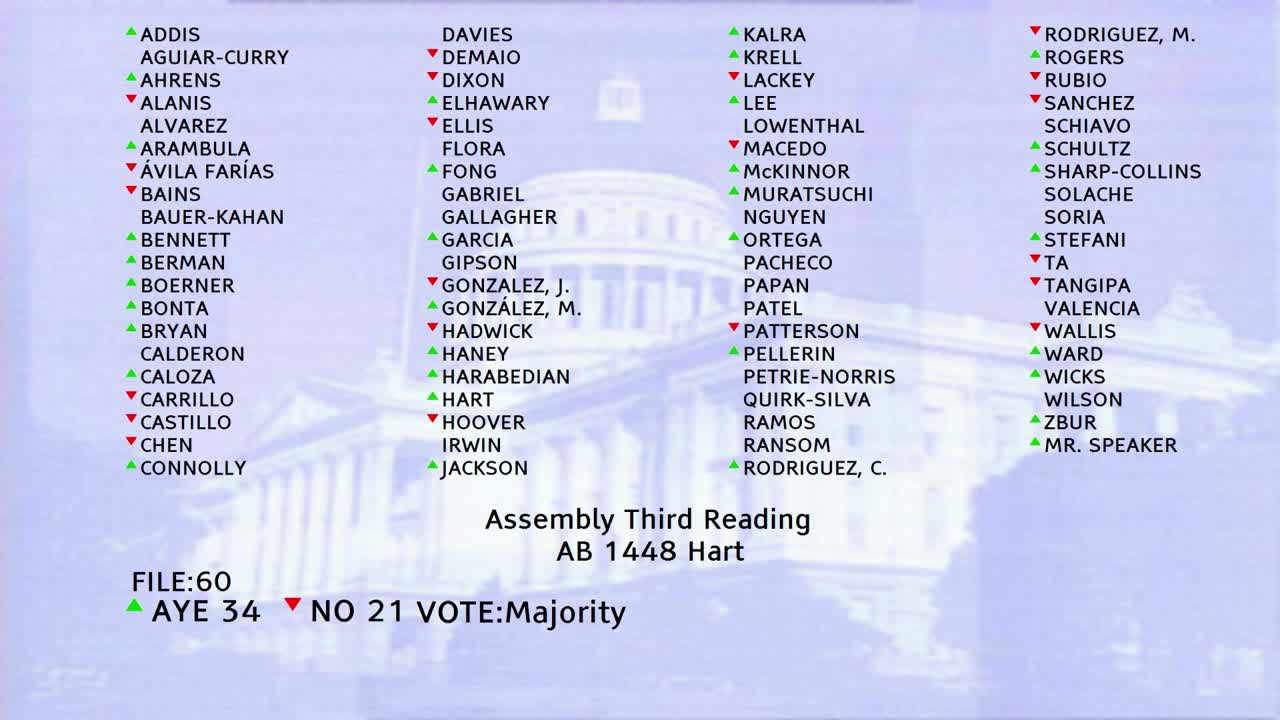
Bill Author

Bill Co-Author(s):