AB 442: Z’berg-Nejedly Forest Practice Act of 1973: working forest management plans: nonindustrial timber management plans.
- Session Year: 2025-2026
- House: Assembly
- Latest Version Date: 2026-09-27
Current Status:
Passed
(2026-09-27: Chaptered by Secretary of State - Chapter 504, Statutes of 2026.)
Introduced
In Committee
Awaiting First Chamber Vote
Passed First Chamber
In Committee
Awaiting Second Chamber Vote
Passed Second Chamber
Enacted
Under the Zberg-Nejedly Forest Practice Act of 1973, the Legislature finds and declares that it is the policy of the state to encourage prudent and responsible forest management of nonindustrial timberlands by approving working forest management plans in advance. Existing law regulates nonindustrial tree farmers and working forest landowners for timberland management purposes, including by setting a maximum acreage each may own, and authorizes a person who intends to become a nonindustrial tree farmer or a working forest landowner to submit to the Department of Forestry and Fire Protection a nonindustrial timber management plan or a working forest harvest plan, respectively, regarding that acreage. Existing law provides a maximum of 2,500 acres owned for nonindustrial tree farmers and nonindustrial timber management plans and a maximum of 10,000 acres owned for working forest landowners and working forest management plans.
This bill would increase the maximum acreage for nonindustrial tree farmers and nonindustrial management plans to 4,000 acres and for working forest landowners and working forest management plans to 15,000 acres.
Existing law requires the harvest area of a working forest management plan to be contained within a single hydrological area, as defined.
This bill would eliminate the requirement that the harvest area of a working forest management plan be contained within a single hydrological area.
Existing law requires the working forest landowner who owns, leases, or otherwise controls or operates on all or any portion of any timberland within the boundaries of an approved working forest management plan, and who plans to harvest any of the timber during a given year, to file a working forest harvest notice, as defined, with the department in writing. Existing law exempts the Southern Subdistrict of the Coast Forest District, as described in regulations, from these provisions regarding working forest management plans.
This bill would eliminate this exemption.
Under the Zberg-Nejedly Forest Practice Act of 1973, the Legislature finds and declares the policy of the state to encourage prudent and responsible forest management of nonindustrial timberlands by approving working forest management plans in advance. Existing This bill would increase the maximum acreage for nonindustrial tree farmers and nonindustrial management plans to 4,000 acres and for working forest landowners and working forest management plans to 15,000 acres. Existing law regulates nonindustrial tree farmers and working forest landowners for timberland management purposes, including by setting a maximum acreage each may own, and authorizes a person who intends to become a nonindustrial tree farmer or a working forest landowner to submit to the Department of Forestry and Fire Protection a nonindustrial timber management plan or a working forest harvest plan, respectively, regarding that acreage. Existing law provides a maximum of 2,500 acres owned for nonindustrial tree farmers and nonindustrial timber management plans and a maximum of 10,000 acres owned for working forest landowners and working forest management plans.
Existing law requires the harvest area of a working forest management plan to be contained within a single hydrological area, as defined.
This bill would delete eliminate the requirement that the harvest area of a working forest management plan be contained within a single hydrological area.
Existing law requires the working forest landowner who owns, leases, or otherwise controls or operates on all or any portion of any timberland within the boundaries of an approved working forest management plan, and who plans to harvest any of the timber during a given year, to file a working forest harvest notice, as defined, with the department in writing. Existing law exempts the Southern Subdistrict of the Coast Forest District, as described in regulations, from these provisions regarding working forest management plans.
This bill would eliminate this exemption.
Under the Zberg-Nejedly Forest Practice Act of 1973, the Legislature finds and declares the policy of the state to encourage prudent and responsible forest management of nonindustrial timberlands by approving working forest management plans in advance. Existing law requires the harvest area of a working forest management plan to be contained within a single hydrological area, as defined.
This bill would delete the requirement that the harvest area of a working forest management plan be contained within a single hydrological area.
The California Environmental Quality Act (CEQA) requires a lead agency, as defined, to prepare, or cause to be prepared, and certify the completion of an environmental impact report on a project that it proposes to carry out or approve that may have a significant effect on the environment or to adopt a negative declaration if it finds that the project will not have that effect. CEQA also requires a lead agency to prepare a mitigated negative declaration for a project that may have a significant effect on the environment if revisions in the project would avoid or mitigate that effect and there is no substantial evidence that the project, as revised, would have a significant effect on the environment. CEQA exempts from its requirements prescribed fire, reforestation, habitat restoration, thinning, or fuel reduction projects, and certain related activities, undertaken in whole or in part on federal lands to reduce the risk of high-severity wildfire, if those projects and activities meet certain requirements.This bill would exempt from CEQA prescribed fire, thinning, or fuel reduction projects undertaken within a community with a single ingress and egress evacuation route.Because the bill would require the lead agency to determine whether the exemption is applicable to a project, this bill would impose a state-mandated local program.The California Constitution requires the state to reimburse local agencies and school districts for certain costs mandated by the state. Statutory provisions establish procedures for making that reimbursement.This bill would provide that no reimbursement is required by this act for a specified reason.The California Environmental Quality Act (CEQA) requires a lead agency, as defined, to prepare, or cause to be prepared, and certify the completion of an environmental impact report on a project that it proposes to carry out or approve that may have a significant effect on the environment or to adopt a negative declaration if it finds that the project will not have that effect. CEQA also requires a lead agency to prepare a mitigated negative declaration for a project that may have a significant effect on the environment if revisions in the project would avoid or mitigate that effect and there is no substantial evidence that the project, as revised, would have a significant effect on the environment.
CEQA exempts from its requirements prescribed fire, reforestation, habitat restoration, thinning, or fuel reduction projects, and certain related activities, undertaken in whole or in part on federal lands to reduce the risk of high-severity wildfire, if those projects and activities meet certain requirements.
This bill would exempt from CEQA prescribed fire, thinning, or fuel reduction projects undertaken within a community with a single ingress and egress evacuation route.
Because the bill would require the lead agency to determine whether the exemption is applicable to a project, this bill would impose a state-mandated local program.
The California Constitution requires the state to reimburse local agencies and school districts for certain costs mandated by the state. Statutory provisions establish procedures for making that reimbursement.
This bill would provide that no reimbursement is required by this act for a specified reason.
Notwithstanding Section 4521, unless the context otherwise requires, the following definitions govern construction of this article:
(a)Nonindustrial timberlands means timberland owned by a nonindustrial tree farmer.
(b)Nonindustrial tree farmer means an owner of timberland with less than 4,000 acres who has an approved nonindustrial management plan and is not primarily engaged in the manufacture of forest products.
(c)Uneven aged management means the management of a specific forest, with the goal of establishing a well stocked stand of various age classes and which permits the periodic harvest of individual or small groups of trees to realize the yield and continually establish a new crop.
(d)Sustained yield means the yield of commercial wood that an area of commercial timberland can produce continuously at a given intensity of management consistent with required environmental protection and which is professionally planned to achieve over time a balance between growth and removal.
(e)Nonindustrial timber management plan means a management plan for nonindustrial timberlands with an objective of an uneven aged managed timber stand and sustained yield for each parcel or group of contiguous parcels meeting the requirements of Section 4593.3. A nonindustrial timber management plan may include multiple nonindustrial tree farmers, but shall not cover more than 4,000 acres.
(f)Nonindustrial timber harvest notice means notice of timber harvest operations pursuant to an approved nonindustrial timber management plan and meeting the requirements of Section 4594.
SEC. 2.Section 4597.1 of the Public Resources Code is amended to read:4597.1.Notwithstanding Section 4521, unless the context otherwise requires, the following definitions govern construction of this article:
(a)Long-term sustained yield means the average annual growth sustainable by the inventory predicted at the end of a 100-year planning horizon, or a shorter planning horizon if the forest encompassed by the working forest management plan has reached a balance between growth and yield.
(b)Major stand type means a stand that occupies an area equal to or greater than 25 percent of a working forest management plan.
(c)Management unit means a geographically identifiable area delineated for silviculture or management purposes. A management unit is intended to reflect an area scheduled for harvest under the plan in any given year, but may also be designated to address specific resource sensitivities.
(d)Stand means a geographically identifiable group of trees sufficiently uniform in age-class distribution, composition, and structure and growing on a site of sufficiently uniform quality to be a distinguishable unit.
(e)Strata means a grouping of similar stands defined for silvicultural or management purposes, usually according to similarities in stand composition, structure, and age.
(f)Sustained yield means the yield of commercial wood that an area of commercial timberland can produce continuously at a given intensity of management consistent with required environmental protection and that is professionally planned to achieve over time a balance between growth and removal. Sustained yield management implies continuous production planned so as to achieve, at the earliest practical time, a balance between growth and harvest.
(g)Uneven aged management means forest management with the goal of establishing a well-stocked stand of various age classes, which permits the periodic harvest of individual or small groups of trees to achieve sustained yield objectives of the working forest management plan, and provide for regeneration of trees and maintenance of age class structure.
(h)Working forest harvest notice means notice of timber harvest operations, pursuant to an approved working forest management plan, which meets the requirements of Section 4597.11.
(i)Working forest landowner means an owner of timberland with less than 15,000 acres who has an approved working forest management plan and is not primarily engaged in the manufacture of forest products.
(j)Working forest management plan means a management plan for working forest timberlands, with objectives of maintaining, restoring, or creating uneven aged managed timber stand conditions, achieving sustained yield, and promoting forestland stewardship that protects watersheds, fisheries and wildlife habitats, and other important values. A working forest management plan may include multiple working forest landowners, but shall cover no more than 15,000 acres of timberland.
(k)Working forest timberlands means timberland owned by a working forest landowner.
SEC. 3.Section 4597.22 of the Public Resources Code is repealed.Notwithstanding Section 4521, unless the context otherwise requires, the following definitions govern construction of this article:
(a)Nonindustrial timberlands means timberland owned by a nonindustrial tree farmer.
(b)Nonindustrial tree farmer means an owner of timberland with less than 2,500 4,000 acres who has an approved nonindustrial management plan and is not primarily engaged in the manufacture of forest products.
(c)Uneven aged management means the management of a specific forest, with the goal of establishing a well stocked stand of various age classes and which permits the periodic harvest of individual or small groups of trees to realize the yield and continually establish a new crop.
(d)Sustained yield means the yield of commercial wood that an area of commercial timberland can produce continuously at a given intensity of management consistent with required environmental protection and which is professionally planned to achieve over time a balance between growth and removal.
(e)Nonindustrial timber management plan means a management plan for nonindustrial timberlands with an objective of an uneven aged managed timber stand and sustained yield for each parcel or group of contiguous parcels meeting the requirements of Section 4593.3. A nonindustrial timber management plan may include multiple nonindustrial tree farmers, but shall not cover more than 2,500 4,000 acres.
(f)Nonindustrial timber harvest notice means notice of timber harvest operations pursuant to an approved nonindustrial timber management plan and meeting the requirements of Section 4594.
SECTION 1.SEC. 2.Section 4597.1 of the Public Resources Code is amended to read:4597.1.Notwithstanding Section 4521, unless the context otherwise requires, the following definitions govern construction of this article:
(a)Long-term sustained yield means the average annual growth sustainable by the inventory predicted at the end of a 100-year planning horizon, or a shorter planning horizon if the forest encompassed by the working forest management plan has reached a balance between growth and yield.
(b)Major stand type means a stand that occupies an area equal to or greater than 25 percent of a working forest management plan.
(c)Management unit means a geographically identifiable area delineated for silviculture or management purposes. A management unit is intended to reflect an area scheduled for harvest under the plan in any given year, but may also be designated to address specific resource sensitivities.
(d)Stand means a geographically identifiable group of trees sufficiently uniform in age-class distribution, composition, and structure and growing on a site of sufficiently uniform quality to be a distinguishable unit.
(e)Strata means a grouping of similar stands defined for silvicultural or management purposes, usually according to similarities in stand composition, structure, and age.
(f)Sustained yield means the yield of commercial wood that an area of commercial timberland can produce continuously at a given intensity of management consistent with required environmental protection and that is professionally planned to achieve over time a balance between growth and removal. Sustained yield management implies continuous production planned so as to achieve, at the earliest practical time, a balance between growth and harvest.
(g)Uneven aged management means forest management with the goal of establishing a well-stocked stand of various age classes, which permits the periodic harvest of individual or small groups of trees to achieve sustained yield objectives of the working forest management plan, and provide for regeneration of trees and maintenance of age class structure.
(h)Working forest harvest notice means notice of timber harvest operations, pursuant to an approved working forest management plan, which meets the requirements of Section 4597.11.
(i)Working forest landowner means an owner of timberland with less than 10,000 15,000 acres who has an approved working forest management plan and is not primarily engaged in the manufacture of forest products.
(j)Working forest management plan means a management plan for working forest timberlands, with objectives of maintaining, restoring, or creating uneven aged managed timber stand conditions, achieving sustained yield, and promoting forestland stewardship that protects watersheds, fisheries and wildlife habitats, and other important values. A working forest management plan may include multiple working forest landowners, but shall cover no more than 10,000 15,000 acres of timberland.
(k)Working forest timberlands means timberland owned by a working forest landowner.
SEC. 3.Section 4597.22 of the Public Resources Code is repealed.4597.22.This article does not apply to the Southern Subdistrict of the Coast Forest District, as described in Section 895.1 of Title 14 of the California Code of Regulations.Notwithstanding Section 4521, unless the context otherwise requires, the following definitions govern construction of this article:
(a)Long-term sustained yield means the average annual growth sustainable by the inventory predicted at the end of a 100-year planning horizon, or a shorter planning horizon if the forest encompassed by the working forest management plan has reached a balance between growth and yield.
(b)Major stand type means a stand that occupies an area equal to or greater than 25 percent of a working forest management plan.
(c)Management unit means a geographically identifiable area delineated for silviculture or management purposes. A management unit is intended to reflect an area scheduled for harvest under the plan in any given year, but may also be designated to address specific resource sensitivities.
(d)Stand means a geographically identifiable group of trees sufficiently uniform in age-class distribution, composition, and structure and growing on a site of sufficiently uniform quality to be a distinguishable unit.
(e)Strata means a grouping of similar stands defined for silvicultural or management purposes, usually according to similarities in stand composition, structure, and age.
(f)Sustained yield means the yield of commercial wood that an area of commercial timberland can produce continuously at a given intensity of management consistent with required environmental protection and that is professionally planned to achieve over time a balance between growth and removal. Sustained yield management implies continuous production planned so as to achieve, at the earliest practical time, a balance between growth and harvest.
(g)Uneven aged management means forest management with the goal of establishing a well-stocked stand of various age classes, which permits the periodic harvest of individual or small groups of trees to achieve sustained yield objectives of the working forest management plan, and provide for regeneration of trees and maintenance of age class structure.
(h)Working forest harvest notice means notice of timber harvest operations, pursuant to an approved working forest management plan, which meets the requirements of Section 4597.11.
(i)Working forest landowner means an owner of timberland with less than 10,000 acres who has an approved working forest management plan and is not primarily engaged in the manufacture of forest products.
(j)Working forest management plan means a management plan for working forest timberlands, with objectives of maintaining, restoring, or creating uneven aged managed timber stand conditions, achieving sustained yield, and promoting forestland stewardship that protects watersheds, fisheries and wildlife habitats, and other important values. A working forest management plan may include multiple working forest landowners, but shall cover no more than 10,000 acres of timberland. The harvest area, as defined in Section 895.1 of Title 14 of the California Code of Regulations, of a working forest management plan must be contained within a single hydrologic area as defined by State Water Resources Control Boards CalWater 2.2.
(k)Working forest timberlands means timberland owned by a working forest landowner.
SECTION 1.Section 21080.52 is added to the Public Resources Code, to read:21080.52.This division does not apply to prescribed fire, thinning, or fuel reduction projects undertaken within a community with a single ingress and egress evacuation route.SEC. 2.No reimbursement is required by this act pursuant to Section 6 of Article XIIIB of the California Constitution because a local agency or school district has the authority to levy service charges, fees, or assessments sufficient to pay for the program or level of service mandated by this act, within the meaning of Section 17556 of the Government Code.This division does not apply to prescribed fire, thinning, or fuel reduction projects undertaken within a community with a single ingress and egress evacuation route.
SEC. 2.No reimbursement is required by this act pursuant to Section 6 of Article XIIIB of the California Constitution because a local agency or school district has the authority to levy service charges, fees, or assessments sufficient to pay for the program or level of service mandated by this act, within the meaning of Section 17556 of the Government Code.
|
Date
|
Status
|
|---|---|
| Sep 27, 2026 | Chaptered by Secretary of State - Chapter 504, Statutes of 2026. |
| Sep 27, 2026 | Approved by the Governor. |
| Aug 24, 2026 | Enrolled and presented to the Governor at 4:30 p.m. |
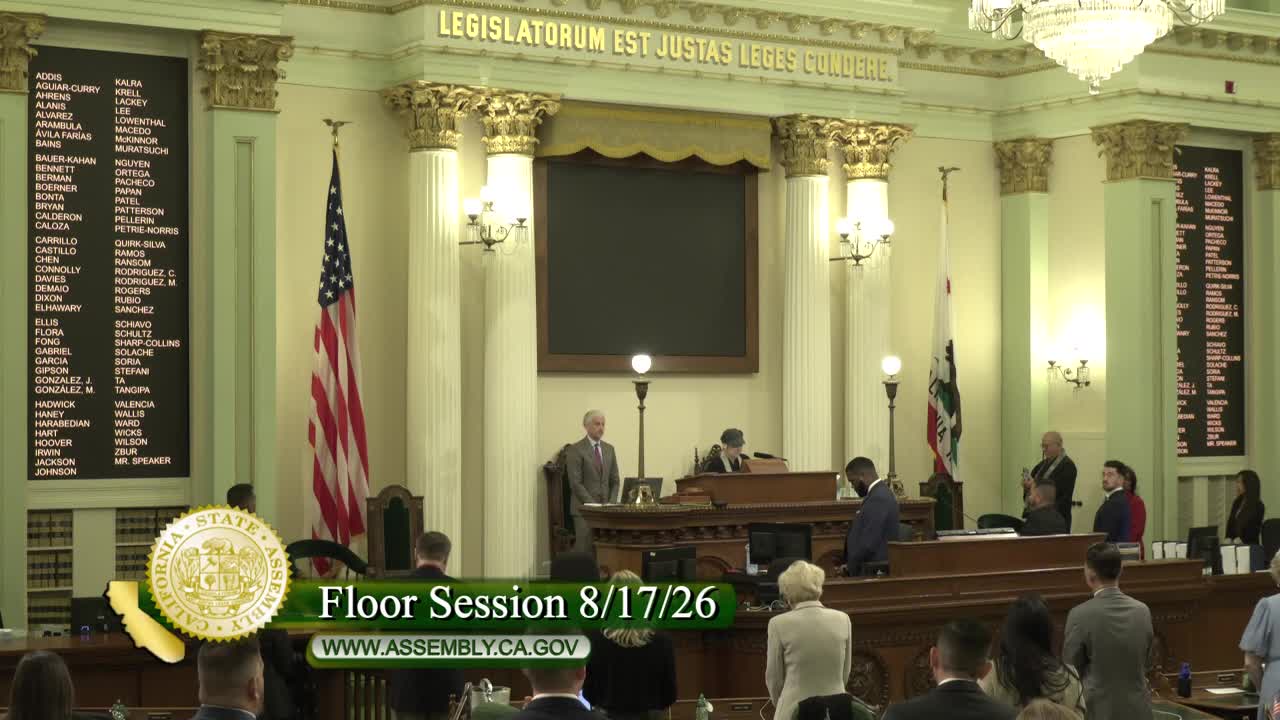
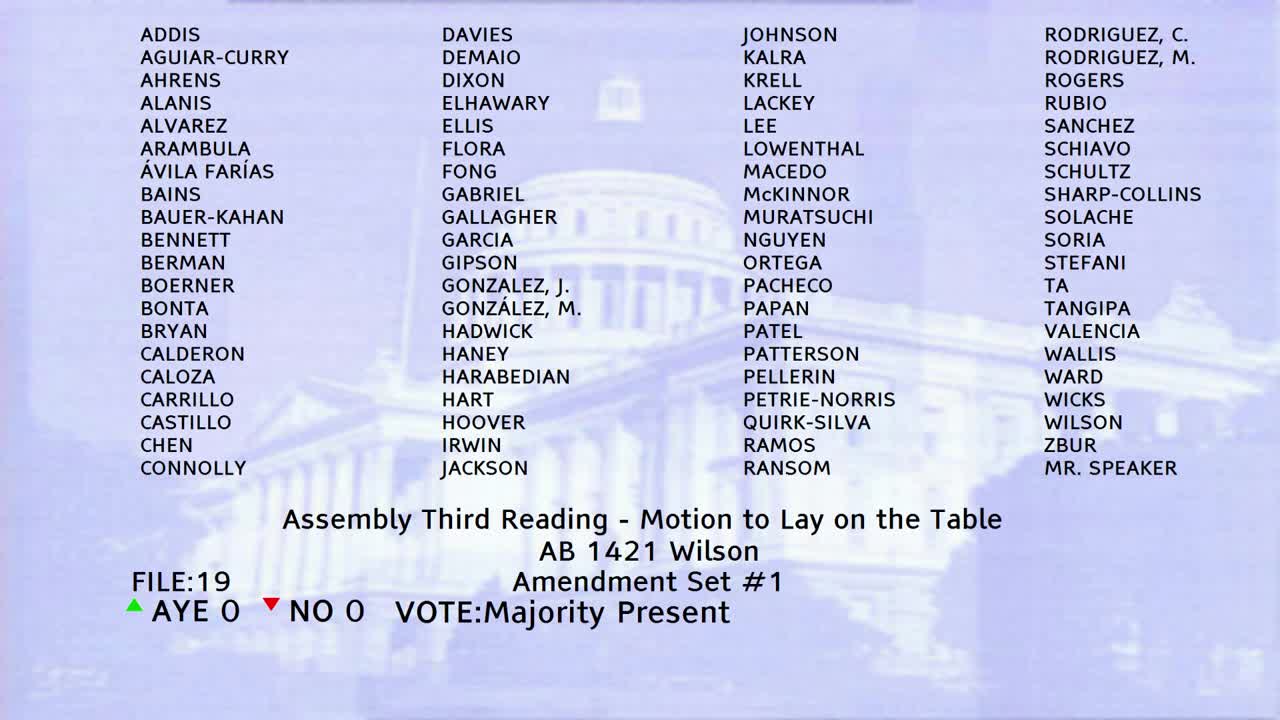
| Aug 17, 2026 | Senate amendments concurred in. To Engrossing and Enrolling. (Ayes 74. Noes 0. Page 6199.). |
| Aug 17, 2026 | Senate amendments concurred in. To Engrossing and Enrolling. |
| Jul 2, 2026 | In Assembly. Concurrence in Senate amendments pending. |
| Jul 2, 2026 | Read third time. Passed. Ordered to the Assembly. (Ayes 37. Noes 0.). |
| Jul 2, 2026 | Read third time. Passed. Ordered to the Assembly. (Ayes 37. Noes 0. Page 5188.). |
| Jun 30, 2026 | Read second time. Ordered to Consent Calendar. |
| Jun 29, 2026 | From committee: Be ordered to second reading file pursuant to Senate Rule 28.8 and ordered to Consent Calendar. |
| Jun 22, 2026 | In committee: Hearing postponed by committee. |
| Jun 9, 2026 | From committee: Do pass and re-refer to Com. on APPR. with recommendation: To Consent Calendar. (Ayes 7. Noes 0.) (June 9). Re-referred to Com. on APPR. |
| Jun 1, 2026 | From committee chair, with author's amendments: Amend, and re-refer to committee. Read second time, amended, and re-referred to Com. on N.R. & W. |
| May 6, 2026 | Referred to Com. on N.R. & W. |
| Jan 29, 2026 | In Senate. Read first time. To Com. on RLS. for assignment. |
| Jan 29, 2026 | Read third time. Passed. Ordered to the Senate. (Ayes 74. Noes 0. Page 3871.) |
| Jan 22, 2026 | Read second time. Ordered to third reading. |
| Jan 22, 2026 | From committee: Do pass. (Ayes 15. Noes 0.) (January 22). |
| Jan 22, 2026 | Assembly Rule 63 suspended. (Page 3806.) |
| Jan 13, 2026 | From committee: Do pass and re-refer to Com. on APPR. (Ayes 13. Noes 0.) (January 12). Re-referred to Com. on APPR. |
| Apr 22, 2025 | Re-referred to Com. on NAT. RES. |
| Apr 21, 2025 | From committee chair, with author's amendments: Amend, and re-refer to Com. on NAT. RES. Read second time and amended. |
| Feb 18, 2025 | Referred to Com. on NAT. RES. |
| Feb 7, 2025 | From printer. May be heard in committee March 9. |
| Feb 6, 2025 | Read first time. To print. |
|
Date
|
Description
|
Location
|
Votes
|
|
|---|---|---|---|---|
| Aug 17, 2026 | AB 442 Hadwick Concurrence in Senate Amendments | Assembly Floor |
Passed |
|
| Jul 2, 2026 | Consent Calendar 2nd AB442 Hadwick et al. | Senate Floor |
Passed |
|
| Jun 9, 2026 | Do pass, but first be re-referred to the Committee on [Appropriations] with the recommendation: To Consent Calendar | Senate Standing Committee on Natural Resources and Water |
Passed |
|
| Jan 29, 2026 | AB 442 Hadwick Assembly Third Reading | Assembly Floor |
Passed |
|
| Jan 22, 2026 | Do pass. | Assembly Standing Committee on Appropriations |
Passed |
|
| Jan 12, 2026 | Do pass and be re-referred to the Committee on [Appropriations] | Assembly Standing Committee on Natural Resources |
Passed |
This list shows positions taken on this bill by organizations on the date displayed, which is linked to the original source.
Positions by individuals are not included.
|
Organization
|
Position
|
Date
|
|---|---|---|
| American Council of Engineering Companies of California | ** Support | |
| Arcata, City of | ** Support | |
| Bbw & Associates | ** Support | |
| BBW & Associates (BBWA) | ** Support | |
| California Forestry Association | ** Support | |
| California Licensed Foresters Association | ** Support | |
| California Rangeland Trust | ** Support | |
| City of Arcata | ** Support | |
| Eddie Ranch | ** Support | |
| Forest Landowners Of California | ** Support | |
| Humboldt Redwood Company LLC | ** Support | |
| Jefferson Resource Company | ** Support | |
| Jim Ostrowski Forestry | ** Support | |
| Mailliard Ranch | ** Support | |
| Matt Greene Forestry & Biological Consulting | ** Support | |
| North Coast Resource Management | ** Support | |
| North Coast Resource Mangement | ** Support | |
| Pacific Forest Trust | ** Support | |
| Rural County Representatives of California | ** Support | |
| The Buckeye Conservancy | ** Support | |
| Yosemite Mountain Ranch | ** Support |
CONCURRENCE IN SENATE AMENDMENTS
CSA1 Bill Id:AB 442
Author:(Hadwick)
As Amended Ver:June 1, 2026
Majority vote
SUMMARY
Eliminates the requirement that the harvest area of a working forest management plan (WFMP) be contained within a single hydrological area.
Senate Amendments
- Increase, under the definitions for ″nonindustrial tree farmer″ and ″nonindustrial timber management plan,″ the timberland acreage cap from 2,500 to 4,000 acres.
- Increase, under the definition for ″working forest landowner,″ the timberland acreage cap from 10,000 to 15,000 acres.
- Repeal Public Resources Code 4597.22 requiring the Southern Subdistrict of the Coast Forest District to comply with requirements to file a working forest harvest notice with the Department of Forestry and Fire Protection (CAL FIRE).
COMMENTS
A WFMP is a long-term management plan approved by CAL FIRE for landowners with fewer than 10,000 acres of land and not primarily engaged in the manufacture of forest products. Established by AB 904 (Chesbro), Chapter 648, Statutes of 2013, the objectives of a WFMP include maintaining, restoring, or creating uneven aged managed timber stand conditions, achieving sustained yield, and promoting forestland stewardship that protects watersheds, fisheries, and wildlife habitats. According to CAL FIRE data, there is only one approved WFMP.
Under the Z′berg-Nejedly Forest Practice Act, the harvest area under a WFMP cannot include more than one watershed (single hydrological area) as defined by State Water Resources Control Board′s CalWater 2.2.
This restriction poses significant burdens on landowners by forcing them to develop a patchwork of WFPMs, Nonindustrial Timber Management Plans, and Timber Harvest Permits to accommodate watershed boundaries instead of a single WFPM for a harvest area. For example, cutting a tree down pursuant to a WFPM on the top of a ridgeline would violate existing law. The creation of multiple plans instead of a single plan appears to have no environmental benefit. Further, developing multiple plans costs several hundred thousand dollars that could be better be used toward fuels management. This bill would delete the requirement that the WFMP be in a single hydrological area.
According to the Author
California′s forests are one of our most vital natural resources, contributing to the environmental, economic, and cultural health of our state. Poorly managed forests create catastrophic wildfire risk, threatening communities, wildlife, and critical infrastructure. Assembly Bill 442 streamlines WMFPs by removing a requirement that they cannot include more than one watershed. This bill promotes long-term, sustainable forestry practices for non-industrial landowners while protecting California′s natural resources.
Arguments in Support
Pacific Forest Trust writes that as the law is currently drafted, a harvest unit cannot straddle watershed boundaries. This is cumbersome and serves no meaningful environmental protection purpose. Removing this restriction will make this timber harvest planning document – which commits the landowner to sustainable uneven-age management – much more usable.
Arguments in Opposition
None on file
FISCAL COMMENTS
The Senate Appropriations Committee determined this bill has negligible state costs pursuant to Senate Rule 28.8.
VOTES:
ASM NATURAL RESOURCES: 13-0-1
YES: Bryan, Alanis, Connolly, Ellis, Garcia, Haney, Hoover, Kalra, Macedo, Muratsuchi, Pellerin, Schultz, Zbur
ABS, ABST OR NV: Wicks
ASM APPROPRIATIONS: 15-0-0
YES: Wicks, Hoover, Stefani, Calderon, Caloza, Dixon, Fong, Mark González, Krell, Bauer-Kahan, Pacheco, Pellerin, Solache, Ta, Tangipa
ASSEMBLY FLOOR: 74-0-6
YES: Addis, Aguiar-Curry, Ahrens, Alanis, Alvarez, Ávila Farías, Bains, Bauer-Kahan, Bennett, Berman, Boerner, Bonta, Bryan, Calderon, Caloza, Carrillo, Castillo, Chen, Connolly, Davies, DeMaio, Dixon, Elhawary, Ellis, Flora, Fong, Gabriel, Gallagher, Garcia, Jeff Gonzalez, Mark González, Hadwick, Haney, Harabedian, Hart, Hoover, Irwin, Johnson, Kalra, Krell, Lackey, Lee, Lowenthal, Macedo, McKinnor, Muratsuchi, Nguyen, Ortega, Pacheco, Papan, Patel, Patterson, Pellerin, Petrie-Norris, Quirk-Silva, Ramos, Michelle Rodriguez, Rogers, Blanca Rubio, Sanchez, Schiavo, Schultz, Sharp-Collins, Solache, Soria, Stefani, Ta, Tangipa, Wallis, Ward, Wicks, Wilson, Zbur, Rivas
ABS, ABST OR NV: Arambula, Gipson, Jackson, Ransom, Celeste Rodriguez, Valencia
SENATE FLOOR: 37-0-3
YES: Allen, Archuleta, Arreguín, Ashby, Becker, Blakespear, Cabaldon, Caballero, Cervantes, Choi, Cortese, Dahle, Durazo, Gonzalez, Grayson, Grove, Hurtado, Jones, Laird, Limón, McGuire, McNerney, Menjivar, Niello, Ochoa Bogh, Padilla, Pérez, Reyes, Seyarto, Smallwood-Cuevas, Stern, Strickland, Umberg, Valladares, Wahab, Weber Pierson, Wiener
ABS, ABST OR NV: Alvarado-Gil, Richardson, Rubio
UPDATED
VERSION: June 1, 2026
CONSULTANT: Paige Brokaw / NAT. RES. / (916) 319-2092 FN: 0003287
SENATE RULES COMMITTEE Office of Senate Floor Analyses (916) 651-4171 | AB 442 |
CONSENT
Bill No: AB 442
Author: Hadwick (R), et al.
Amended: 6/1/26 in Senate
Vote: 21
SENATE NATURAL RES. & WATER COMMITTEE: 7-0, 6/9/26
AYES: Becker, Seyarto, Allen, Cabaldon, Grove, Laird, Reyes
SENATE APPROPRIATIONS COMMITTEE: Senate Rule 28.8
ASSEMBLY FLOOR: 74-0, 1/29/26 - See last page for vote
SUBJECT: Z’berg-Nejedly Forest Practice Act of 1973: working forest management plans: nonindustrial timber management plans
SOURCE: Author
DIGEST:
This bill makes changes to the areas eligible for timber harvest under a Working Forest Management Plan (WFMP) or a Nonindustrial Timber Management Plan (NTMP).
ANALYSIS:
Existing law:
- Defines a “nonindustrial tree farmer” as an owner of timberland with less than 2,500 acres, with an approved NTMP, and who is not primarily engaged in the manufacture of forest products (Public Resources Code (PRC) § 4593.2(b)).
- Defines a “nonindustrial timber management plan” as a management plan for nonindustrial timberlands that may include multiple nonindustrial tree farmers, but covers no more than 2,500 acres (PRC § 4593(e)).
- Defines a “working forest landowner” as an owner of timberland with less than 10,000 acres, with an approved WFMP, who is not primarily engaged in the manufacture of forest products (PRC § 4597.1(i)).
- Defines a “working forest management plan” as a management plan for working forests that may include multiple working forest landowners, but covers no more than 10,000 acres and is contained within a single hydrologic unit (PRC § 4597.1(j)).
- Excludes landowners in the Southern Subdistrict of the Coast Forest District from using a WFMP to manage their forests (PRC § 4597.22).
This bill:
- Increases the allowable acreage owned by a nonindustrial tree farmer from 2,500 to 4,000 acres.
- Increases the allowable acreage managed under a NTMP from 2,500 to 4,000 acres.
- Increases the allowable acreage owned by a working forest landowner from 10,000 to 15,000 acres.
- Increases the allowable acreage managed under a WFMP from 10,000 to 15,000 acres.
- Repeals the requirement that all the land managed under a WFMP be contained in a single hydrological area.
- Repeals the restriction on the use of the WFMP in the Southern Subdistrict of the Coast Forest District.
Background
Nonindustrial Timber Management Plan (NTMP). In the late 1980s, the Legislature declared that “a substantial acreage of timberlands of the state are held by private nonindustrial owners and that it is the policy of the state to increase the productivity of these timberlands under prudent management plans to serve the public’s need for timber and other forest products” (PRC § 4593).
The Legislature also noted that prudent management of nonindustrial timberlands causes minimal environmental, and such prudent and responsible management would be encouraged by approving NTMPs in advance and removing government discretion to disapprove harvest notices that are submitted pursuant to an approved NTMPs (PRC § 4593).
The Legislature defined the terms for what timberland owners are eligible to use a NTMP, which include nonindustrial tree farmers. A “nonindustrial tree farmer” is an owner of less than 2,500 acres who has an approved NTMP and is not primarily engaged in the manufacture of forest products (PRC § 4593.2).
Working Forest Management Plan (WFMP). For smaller timberland owners who intend to become a working forest landowner, the Legislature implemented an alternative timber harvest plan document that allows them to achieve the long-term objectives of an uneven aged timber stand and sustained yield. The WFMP is a management plan “for working forest timberlands, with objectives of maintaining, restoring, or creating uneven aged managed timber stand conditions, achieving sustained yield, and promoting forestland stewardship that protects watersheds, fisheries and wildlife habitats, and other important values” (PRC § 4597.1).
The Legislature defined a working forest landowner as a timberland owner with less than 10,000 acres, and limited WFMPs to include land that was contained within only one hydrologic area. Additionally, timberland owners in the Southern Subdistrict of the Coast Forest District were excluded from utilizing the WFMP to manage their forests. The Southern Subdistrict is composed of the timberlands in the Counties of Santa Cruz, Santa Clara, San Mateo, San Francisco, and Marin situated within the boundaries of the Coast Forest District.
Increasing Options for Smaller Landowners. Since the NTMP program was initiated in 1989, 75 NTMPs have been filed. A useful tool for smaller landowners who wish to achieve long-term objectives relating to uneven aged timber stands and sustained yield, it can be much more cost-effective for a smaller landowner than filing a full timber harvest plan (THP). Additionally, there are opportunities for cost-share funding under the California Forest Improvement Program (CFIP) that a NTMP could take advantage of. CFIP funding is available for projects up to 5,000 acres, and can fund things like preparation of a forest management plan, forestation, stand improvement, and other forestland conservation practices or fish and wildlife habitat improvement.
By increasing the acreage allowable under an NTMP, additional forest landowners will be able to take advantage of the streamlined NTMP permitting as well as CFIP funds. This provides additional financial incentives to landowners to prudently manage their forests.
Limited uptake of WFMP. According to Department data, only one WFMP has been filed since the program’s inception in 2013. One identified barrier to the use of the WFMP is the requirement that the plan be entirely contained within one hydrologic unit. Parcel lines and ownership patterns typically do not closely follow hydrologic units, preventing landowners who might otherwise qualify for a WFMP to use it for their land.
The State Water Board notes that neither CalWater 2.2.1 nor any of its predecessors is a "pure" watershed map because administrative boundaries such as the state border were used to delineate watershed areas. Some of the boundaries, particularly in developed valley areas, also have legal and administrative purposes other than the representation of actual drainage divides. Further, CalWater is not a legal map document, as it does not represent the Regional Water Quality Control Board jurisdictions.
This restriction poses significant burdens on landowners by forcing them to develop a patchwork of WFPMs, NTMPs, and THPs to accommodate watershed boundaries instead of a single WFPM for a harvest area. For example, cutting a tree down pursuant to a WFPM on the top of a ridgeline would violate existing law. The creation of multiple plans instead of a single plan appears to have no environmental benefit. Further, developing multiple plans costs several hundred thousand dollars that could be better used toward fuels management.
Other changes to law proposed in this bill would also increase availability of the WFMP for landowners, by increasing the acreage allowed to be managed under a WFMP to 15,000 acres and repealing a provision that prevented the use of the WFMP in the Southern Subdistrict of the Coast Foast District.
Related/Prior Legislation
SB 901 (Dodd, Chapter 626, Statutes of 2018) specified that a NTMP may include multiple nonindustrial tree farmers, but shall not cover more than 2,500 acres). SB 901 also reduced the acreage eligible for a WFMP from 15,000 to 10,000 acres, and specified that the WFMP must be contained within a single hydrologic area.
FISCAL EFFECT: Appropriation: No Fiscal Com.: Yes Local: No
SUPPORT: (Verified 6/29/26)
Arcata, City of
Bbw & Associates
California Forestry Association
California Licensed Foresters Association
California Rangeland Trust
City of Arcata
Eddie Ranch
Forest Landowners of California
Jefferson Resource Company
Jim Ostrowski Forestry
Mailliard Ranch
Matt Greene Forestry & Biological Consulting
North Coast Resource Mangement
Rural County Representatives of California
The Buckeye Conservancy
Yosemite Mountain Ranch
OPPOSITION: (Verified 6/29/26)
None received
ARGUMENTS IN SUPPORT: According to the author, “California’s forests are one of our most vital natural resources, contributing to the environmental, economic, and cultural health of our state. Poorly managed forests create catastrophic wildfire risk, threatening communities, wildlife, and critical infrastructure. Assembly Bill 442 streamlines Working Forest Management Plans by removing a requirement that they cannot include more than one watershed. This bill promotes long-term, sustainable forestry practices for non-industrial landowners while protecting California’s natural resources.”
ASSEMBLY FLOOR: 74-0, 1/29/26
AYES: Addis, Aguiar-Curry, Ahrens, Alanis, Alvarez, Ávila Farías, Bains, Bauer-Kahan, Bennett, Berman, Boerner, Bonta, Bryan, Calderon, Caloza, Carrillo, Castillo, Chen, Connolly, Davies, DeMaio, Dixon, Elhawary, Ellis, Flora, Fong, Gabriel, Gallagher, Garcia, Jeff Gonzalez, Mark González, Hadwick, Haney, Harabedian, Hart, Hoover, Irwin, Johnson, Kalra, Krell, Lackey, Lee, Lowenthal, Macedo, McKinnor, Muratsuchi, Nguyen, Ortega, Pacheco, Papan, Patel, Patterson, Pellerin, Petrie-Norris, Quirk-Silva, Ramos, Michelle Rodriguez, Rogers, Blanca Rubio, Sanchez, Schiavo, Schultz, Sharp-Collins, Solache, Soria, Stefani, Ta, Tangipa, Wallis, Ward, Wicks, Wilson, Zbur, Rivas
NO VOTE RECORDED: Arambula, Gipson, Jackson, Ransom, Celeste Rodriguez, Valencia
Prepared by: Edith Hannigan / N.R. & W. / (916) 651-4116
7/1/26 16:54:54
**** END ****
SENATE COMMITTEE ON
Senator Sabrina Cervantes, Chair
2025 - 2026 Regular Session
AB 442 (Hadwick) - Z’berg-Nejedly Forest Practice Act of 1973: working forest management plans: nonindustrial timber management plans
Version: | Policy Vote: |
Urgency: | Mandate: |
Hearing Date: | Consultant: |
Bill Summary:
This bill would make changes to the areas eligible for timber harvest under a Working Forest Management Plan (WFMP) or a Nonindustrial Timber Management Plan (NTMP).
Fiscal Impact:
- Unknown, potentially significant costs and cost pressures, possibly in excess of $150,000 annually (Timber Harvest and Forest Restoration Fund [TRFRF] and California Forest Improvement Program [CFIP]) by increasing the acreage allowable under an NTMP, thereby allowing additional forest landowners to be able to take advantage of the streamlined NTMP permitting as well as CFIP funds, as well as potentially increased uptake of WFMP due to changes made by this bill.
Background:
The Z’berg-Nejedly Forest Practice Act (Act) of 1973 establishes the intent of the Legislature to promote sound public policy encouraging prudent and responsible forest management that serves the public’s need for timber and other forest products while giving consideration to watershed protection, fisheries and wildlife, sequestration of carbon dioxide, and recreational opportunities for this and future generations (PRC § 4512). The Act establishes minimum rules for resource conservation, equipment operations, and licensing related to the commercial harvesting of timber, known as timber operations.
The Board adopts regulations, known as the Forest Practice Rules (Rules), under the Administrative Procedures Act process to implement, interpret, and make specific the Act. Together, the Act and Rules provide a regulatory framework for timber operations in the state, which are enforced by foresters at the Department.
A sustainable timber industry. Pursuant to the established policy of the state to serve the public’s need for wood products, the Act establishes resource conservation standards for timber operations “to ensure a cover of trees of commercial species, sufficient to utilize adequately the suitable and available growing space, is maintained or established after timber operations” (PRC § 4561). The Legislature establishes the intent of the Act to restore, enhance, and maintain the productivity of timberlands and the goal of maximum sustained production of high-quality timber products (PRC § 4513).
Nonindustrial Timber Management Plan (NTMP). In the late 1980s, the Legislature declared that “a substantial acreage of timberlands of the state are held by private nonindustrial owners and that it is the policy of the state to increase the productivity of these timberlands under prudent management plans to serve the public’s need for timber and other forest products” (PRC § 4593).
The Legislature also noted that prudent management of nonindustrial timberlands causes minimal environmental, and such prudent and responsible management would be encouraged by approving NTMPs in advance and removing government discretion to disapprove harvest notices that are submitted pursuant to an approved NTMPs (PRC § 4593).
The Legislature defined the terms for what timberland owners are eligible to use a NTMP, which include nonindustrial tree farmers. A “nonindustrial tree farmer” is an owner of less than 2,500 acres who has an approved NTMP and is not primarily engaged in the manufacture of forest products (PRC § 4593.2).
Working Forest Management Plan (WFMP). For smaller timberland owners who intend to become a working forest landowner, the Legislature implemented an alternative timber harvest plan document that allows them to achieve the long-term objectives of an uneven aged timber stand and sustained yield. The WFMP is a management plan “for working forest timberlands, with objectives of maintaining, restoring, or creating uneven aged managed timber stand conditions, achieving sustained yield, and promoting forestland stewardship that protects watersheds, fisheries and wildlife habitats, and other important values” (PRC § 4597.1).
The Legislature defined a working forest landowner as a timberland owner with less than 10,000 acres, and limited WFMPs to include land that was contained within only one hydrologic area. Additionally, timberland owners in the Southern Subdistrict of the Coast Forest District were excluded from utilizing the WFMP to manage their forests. The Southern Subdistrict is composed of the timberlands in the Counties of Santa Cruz, Santa Clara, San Mateo, San Francisco, and Marin situated within the boundaries of the Coast Forest District.
California hydrologic areas. Under the Act, the harvest area under a WFMP cannot include more than one watershed (single hydrological area) as defined by State Water Resources Control Board’s (State Water Board’s) CalWater 2.2.
The California Interagency Watershed Map of 1999 (CalWater 2.2, updated May 2004) is the state’s working definition of watershed boundaries. Each hydrologic region is progressively subdivided into six smaller, nested levels: the Hydrologic Unit (major rivers), Hydrologic Area (major tributaries), Hydrologic Sub-Area, Super Planning Watershed, and Planning Watershed. At the Planning Watershed (the most detailed level), where implemented, polygons range in size from approximately 3,000 to 10,000 acres. At all levels, a total of 7,035 polygons represent the state's watersheds.
Proposed Law:
This bill would:
- Increase the allowable acreage owned by a nonindustrial tree farmer from 2,500 to 4,000 acres.
- Increase the allowable acreage managed under a NTMP from 2,500 to 4,000 acres.
- Increase the allowable acreage owned by a working forest landowner from 10,000 to 15,000 acres.
- Increase the allowable acreage managed under a WFMP from 10,000 to 15,000 acres.
- Repeal the requirement that all the land managed under a WFMP be contained in a single hydrological area.
- Repeal the restriction on the use of the WFMP in the Southern Subdistrict of the Coast Forest District.
Related Legislation:
SB 901 (Dodd, Chapter 626, Statutes of 2018) specified that a NTMP may include multiple nonindustrial tree farmers, but shall not cover more than 2,500 acres). SB 901 also reduced the acreage eligible for a WFMP from 15,000 to 10,000 acres, and specified that the WFMP must be contained within a single hydrologic area.
Staff Comments:
Options for Smaller Landowners. Since the NTMP program was initiated in 1989, 75 NTMPs have been filed. A useful tool for smaller landowners who wish to achieve long-term objectives relating to uneven aged timber stands and sustained yield, it can be much more cost-effective for a smaller landowner than filing a full timber harvest plan (THP). Additionally, there are opportunities for cost-share funding under the California Forest Improvement Program (CFIP) that a NTMP could take advantage of. CFIP funding is available for projects up to 5,000 acres, and can fund things like preparation of a forest management plan, forestation, stand improvement, and other forestland conservation practices or fish and wildlife habitat improvement.
By increasing the acreage allowable under an NTMP, additional forest landowners will be able to take advantage of the streamlined NTMP permitting as well as CFIP funds. This provides additional financial incentives to landowners to prudently manage their forests.
Uptake of WFMP. According to Department data, only one WFMP has been filed since the program’s inception in 2013. One identified barrier to the use of the WFMP is the requirement that the plan be entirely contained within one hydrologic unit. Parcel lines and ownership patterns typically do not closely follow hydrologic units, preventing landowners who might otherwise qualify for a WFMP to use it for their land.
The State Water Board notes that neither CalWater 2.2.1 nor any of its predecessors is a "pure" watershed map because administrative boundaries such as the state border were used to delineate watershed areas. Some of the boundaries, particularly in developed valley areas, also have legal and administrative purposes other than the representation of actual drainage divides. Further, CalWater is not a legal map document, as it does not represent the Regional Water Quality Control Board jurisdictions.
This restriction poses significant burdens on landowners by forcing them to develop a patchwork of WFPMs, NTMPs, and THPs to accommodate watershed boundaries instead of a single WFPM for a harvest area. For example, cutting a tree down pursuant to a WFPM on the top of a ridgeline would violate existing law. The creation of multiple plans instead of a single plan appears to have no environmental benefit. Further, developing multiple plans costs several hundred thousand dollars that could be better used toward fuels management.
Other changes to law proposed in this bill would also increase availability of the WFMP for landowners, by increasing the acreage allowed to be managed under a WFMP to 15,000 acres and repealing a provision that prevented the use of the WFMP in the Southern Subdistrict of the Coast Foast District.
-- END --
SENATE COMMITTEE ON NATURAL RESOURCES AND WATER
Senator Josh Becker, Chair
2025 - 2026 Regular
Bill No: AB Hearing Date: June 9, 2026
Author: | |||
Version: | Amended | ||
Urgency: | Fiscal: | ||
Consultant: | |||
Subject: Z’berg-Nejedly Forest Practice Act of 1973: working forest management plans: nonindustrial timber management plans
SUMMARY
This bill would make changes to the areas eligible for timber harvest under a Working Forest Management Plan or a Nonindustrial Timber Management Plan.
BACKGROUND AND EXISTING LAW
State Board of Forestry and Fire Protection (Board). In 1885, the Governor of California approved an act that authorized the appointment of a three-man State Board of Forestry, the first such body in the nation. That original Board or Commission of Forestry was abolished in 1893. In 1905, an “Act of March 18, 1905”, became law, creating a new Board of Forestry and the first State Forester. In 1927, the Division of Forestry was organized.
In 1947, the original Forest Practice Act was passed by the State Legislature. Throughout the period of the 1950s and 1960s, the Board functioned under the mandate of the 1947 Act by formulating forest policy for the state.
At the time of passage of the Z'berg-Nejedly Forestry Practice Act of 1973, the Legislature reorganized the Board and concomitantly expanded its powers and responsibilities (Public Resources Code (PRC) §§ 730 et seq.). For example, the 1973 statute changed the Board's function in relation to forest practice rules from a ratification role to an adoptive role. In addition, the present general public five (5), forest products industry three (3), and range-livestock industry one (1) membership ratio was enacted to increase the public input into Board matters.
Department of Forestry and Fire Protection (Department). The Department is established within the Natural Resources Agency (PRC § 701). The Department is responsible for the fire protection, fire prevention, maintenance, and enhancement of the state’s forest, range, and brushland resources, contract fire protection, associated emergency services, and assistance in civil disasters and other nonfire emergencies (PRC § 713). The Department, through its Forest Practice Program, enforces the applicable provisions of the Forest Practice Act and Rules.
Forest Practice Act and Rules. The Z’berg-Nejedly Forest Practice Act (Act) of 1973 establishes the intent of the Legislature to promote sound public policy encouraging prudent and responsible forest management that serves the public’s need for timber and other forest products while giving consideration to watershed protection, fisheries and wildlife, sequestration of carbon dioxide, and recreational opportunities for this and future generations (PRC § 4512). The Act establishes minimum rules for resource conservation, equipment operations, and licensing related to the commercial harvesting of timber, known as timber operations.
The Board adopts regulations, known as the Forest Practice Rules (Rules), under the Administrative Procedures Act process to implement, interpret, and make specific the Act. Together, the Act and Rules provide a regulatory framework for timber operations in the state, which are enforced by foresters at the Department.
A sustainable timber industry. Pursuant to the established policy of the state to serve the public’s need for wood products, the Act establishes resource conservation standards for timber operations “to ensure a cover of trees of commercial species, sufficient to utilize adequately the suitable and available growing space, is maintained or established after timber operations” (PRC § 4561). The Legislature establishes the intent of the Act to restore, enhance, and maintain the productivity of timberlands and the goal of maximum sustained production of high-quality timber products (PRC § 4513).
Nonindustrial Timber Management Plan (NTMP). In the late 1980s, the Legislature declared that “a substantial acreage of timberlands of the state are held by private nonindustrial owners and that it is the policy of the state to increase the productivity of these timberlands under prudent management plans to serve the public’s need for timber and other forest products” (PRC § 4593).
The Legislature also noted that prudent management of nonindustrial timberlands causes minimal environmental, and such prudent and responsible management would be encouraged by approving NTMPs in advance and removing government discretion to disapprove harvest notices that are submitted pursuant to an approved NTMPs (PRC § 4593).
The Legislature defined the terms for what timberland owners are eligible to use a NTMP, which include nonindustrial tree farmers. A “nonindustrial tree farmer” is an owner of less than 2,500 acres who has an approved NTMP and is not primarily engaged in the manufacture of forest products (PRC § 4593.2).
Working Forest Management Plan (WFMP). For smaller timberland owners who intend to become a working forest landowner, the Legislature implemented an alternative timber harvest plan document that allows them to achieve the long-term objectives of an uneven aged timber stand and sustained yield. The WFMP is a management plan “for working forest timberlands, with objectives of maintaining, restoring, or creating uneven aged managed timber stand conditions, achieving sustained yield, and promoting forestland stewardship that protects watersheds, fisheries and wildlife habitats, and other important values” (PRC § 4597.1).
The Legislature defined a working forest landowner as a timberland owner with less than 10,000 acres, and limited WFMPs to include land that was contained within only one hydrologic area. Additionally, timberland owners in the Southern Subdistrict of the Coast Forest District were excluded from utilizing the WFMP to manage their forests. The Southern Subdistrict is composed of the timberlands in the Counties of Santa Cruz, Santa Clara, San Mateo, San Francisco, and Marin situated within the boundaries of the Coast Forest District.
California hydrologic areas. Under the Act, the harvest area under a WFMP cannot include more than one watershed (single hydrological area) as defined by State Water Resources Control Board’s (State Water Board’s) CalWater 2.2.
The California Interagency Watershed Map of 1999 (CalWater 2.2, updated May 2004) is the state’s working definition of watershed boundaries. Each hydrologic region is progressively subdivided into six smaller, nested levels: the Hydrologic Unit (major rivers), Hydrologic Area (major tributaries), Hydrologic Sub-Area, Super Planning Watershed, and Planning Watershed. At the Planning Watershed (the most detailed level), where implemented, polygons range in size from approximately 3,000 to 10,000 acres. At all levels, a total of 7,035 polygons represent the state's watersheds.
Existing Law
- Defines a “nonindustrial tree farmer” as an owner of timberland with less than 2,500 acres, with an approved NTMP, and who is not primarily engaged in the manufacture of forest products (PRC § 4593.2(b)).
- Defines a “nonindustrial timber management plan” as a management plan for nonindustrial timberlands that may include multiple nonindustrial tree farmers, but covers no more than 2,500 acres (PRC § 4593(e)).
- Defines a “working forest landowner” as an owner of timberland with less than 10,000 acres, with an approved WFMP, who is not primarily engaged in the manufacture of forest products (PRC § 4597.1(i)).
- Defines a “working forest management plan” as a management plan for working forests that may include multiple working forest landowners, but covers no more than 10,000 acres and is contained within a single hydrologic unit (PRC § 4597.1(j)).
- Excludes landowners in the Southern Subdistrict of the Coast Forest District from using a WFMP to manage their forests (PRC § 4597.22).
PROPOSED LAW
This bill would:
- Increase the allowable acreage owned by a nonindustrial tree farmer from 2,500 to 4,000 acres.
- Increase the allowable acreage managed under a NTMP from 2,500 to 4,000 acres.
- Increase the allowable acreage owned by a working forest landowner from 10,000 to 15,000 acres.
- Increase the allowable acreage managed under a WFMP from 10,000 to 15,000 acres.
- Repeal the requirement that all the land managed under a WFMP be contained in a single hydrological area.
- Repeal the restriction on the use of the WFMP in the Southern Subdistrict of the Coast Forest District.
ARGUMENTS IN SUPPORT
According to the author, “California’s forests are one of our most vital natural resources, contributing to the environmental, economic, and cultural health of our state. Poorly managed forests create catastrophic wildfire risk, threatening communities, wildlife, and critical infrastructure. Assembly Bill 442 streamlines Working Forest Management Plans by removing a requirement that they cannot include more than one watershed. This bill promotes long-term, sustainable forestry practices for non-industrial landowners while protecting California’s natural resources.”
ARGUMENTS IN OPPOSITION
None received.
COMMENTS
Increasing Options for Smaller Landowners. Since the NTMP program was initiated in 1989, 75 NTMPs have been filed. A useful tool for smaller landowners who wish to achieve long-term objectives relating to uneven aged timber stands and sustained yield, it can be much more cost-effective for a smaller landowner than filing a full timber harvest plan (THP). Additionally, there are opportunities for cost-share funding under the California Forest Improvement Program (CFIP) that a NTMP could take advantage of. CFIP funding is available for projects up to 5,000 acres, and can fund things like preparation of a forest management plan, forestation, stand improvement, and other forestland conservation practices or fish and wildlife habitat improvement.
By increasing the acreage allowable under an NTMP, additional forest landowners will be able to take advantage of the streamlined NTMP permitting as well as CFIP funds. This provides additional financial incentives to landowners to prudently manage their forests.
Limited uptake of WFMP. According to Department data, only one WFMP has been filed since the program’s inception in 2013. One identified barrier to the use of the WFMP is the requirement that the plan be entirely contained within one hydrologic unit. Parcel lines and ownership patterns typically do not closely follow hydrologic units, preventing landowners who might otherwise qualify for a WFMP to use it for their land.
The State Water Board notes that neither CalWater 2.2.1 nor any of its predecessors is a "pure" watershed map because administrative boundaries such as the state border were used to delineate watershed areas. Some of the boundaries, particularly in developed valley areas, also have legal and administrative purposes other than the representation of actual drainage divides. Further, CalWater is not a legal map document, as it does not represent the Regional Water Quality Control Board jurisdictions.
This restriction poses significant burdens on landowners by forcing them to develop a patchwork of WFPMs, NTMPs, and THPs to accommodate watershed boundaries instead of a single WFPM for a harvest area. For example, cutting a tree down pursuant to a WFPM on the top of a ridgeline would violate existing law. The creation of multiple plans instead of a single plan appears to have no environmental benefit. Further, developing multiple plans costs several hundred thousand dollars that could be better used toward fuels management.
Other changes to law proposed in this bill would also increase availability of the WFMP for landowners, by increasing the acreage allowed to be managed under a WFMP to 15,000 acres and repealing a provision that prevented the use of the WFMP in the Southern Subdistrict of the Coast Foast District.
Related Legislation
SB 901 (Dodd, Chapter 626, Statutes of 2018) specified that a NTMP may include multiple nonindustrial tree farmers, but shall not cover more than 2,500 acres). SB 901 also reduced the acreage eligible for a WFMP from 15,000 to 10,000 acres, and specified that the WFMP must be contained within a single hydrologic area.
SUGGESTED AMENDMENTS: none
SUPPORT
BBW & Associates (BBWA)
California Forestry Association
California Licensed Foresters Association
California Rangeland Trust
City of Arcata
Eddie Ranch
Forest Landowners of California
Jefferson Resource Company
Jim Ostrowski Forestry
Mailliard Ranch
Matt Greene Forestry & Biological Consulting
North Coast Resource Management
Rural County Representatives of California (RCRC)
The Buckeye Conservancy
Yosemite Mountain Ranch
OPPOSITION
None Received
-- END --
ASSEMBLY THIRD READING
ATR Bill Id:AB 442
Author:(Hadwick)
As Amended Ver:April 21, 2025
Majority vote
SUMMARY
Deletes the requirement that the harvest area of a working forest management plan (WFMP) be contained within a single hydrological area.
Major Provisions
COMMENTS
A WFMP is a long-term management plan approved by the Department of Forestry and Fire Protection (CAL FIRE) for landowners with fewer than 10,000 acres of land and not primarily engaged in the manufacture of forest products. Established by AB 904 (Chesbro), Chapter 648, Statutes of 2013, the objectives of a WFMP include maintaining, restoring, or creating uneven aged managed timber stand conditions, achieving sustained yield, and promoting forestland stewardship that protects watersheds, fisheries, and wildlife habitats. According to CAL FIRE data, there is only one approved WFMP.
Under the Z’berg-Nejedly Forest Practice Act, the harvest area under a WFMP cannot include more than one watershed (single hydrological area) as defined by State Water Resources Control Board’s CalWater 2.2.
This restriction poses significant burdens on landowners by forcing them to develop a patchwork of WFPMs, Nonindustrial Timber Management Plans, and Timber Harvest Permits to accommodate watershed boundaries instead of a single WFPM for a harvest area. For example, cutting a tree down pursuant to a WFPM on the top of a ridgeline would violate existing law. The creation of multiple plans instead of a single plan appears to have no environmental benefit. Further, developing multiple plans costs several hundred thousand dollars that could be better be used toward fuels management. This bill would delete the requirement that the WFMP be in a single hydrological area.
According to the Author
California’s forests are one of our most vital natural resources, contributing to the environmental, economic, and cultural health of our state. Poorly managed forests create catastrophic wildfire risk, threatening communities, wildlife, and critical infrastructure. Assembly Bill 442 streamlines WMFPs by removing a requirement that they cannot include more than one watershed. This bill promotes long-term, sustainable forestry practices for non-industrial landowners while protecting California’s natural resources.
Arguments in Support
Pacific Forest Trust writes that as the law is currently drafted, a harvest unit cannot straddle watershed boundaries. This is cumbersome and serves no meaningful environmental protection purpose. Removing this restriction will make this timber harvest planning document – which commits the landowner to sustainable uneven-age management – much more usable.
Arguments in Opposition
None on file
FISCAL COMMENTS
According to the Assembly Appropriations Committee, costs to CAL FIRE are likely minor and absorbable.
VOTES
ASM NATURAL RESOURCES: 13-0-1
YES: Bryan, Alanis, Connolly, Ellis, Garcia, Haney, Hoover, Kalra, Macedo, Muratsuchi, Pellerin, Schultz, Zbur
ABS, ABST OR NV: Wicks
ASM APPROPRIATIONS: 15-0-0
YES: Wicks, Hoover, Stefani, Calderon, Caloza, Dixon, Fong, Mark González, Krell, Bauer-Kahan, Pacheco, Pellerin, Solache, Ta, Tangipa
UPDATED
VERSION: April 21, 2025
CONSULTANT: Paige Brokaw / NAT. RES. / FN: 0002225
Date of Hearing: January 22, 2026
ASSEMBLY COMMITTEE ON APPROPRIATIONS
Buffy Wicks, Chair
ABPCA Bill Id:AB 442
Author:(Hadwick) – As Amended Ver:April 21, 2025
Policy Committee: | Natural Resources | Vote: | 13 - 0 |
|
| ||
|
|
Urgency: No State Mandated Local Program: No Reimbursable: No
SUMMARY:
This bill deletes the requirement that the harvest area of a working forest management plan (WFMP) be contained within a single hydrologic area, as specified.
FISCAL EFFECT:
Costs to the Department of Forestry and Fire Protection (CAL FIRE) are likely minor and absorbable. CAL FIRE notes that while eliminating the single hydrologic area requirement may potentially increase the department’s workload associated with reviewing and approving a greater number of WFMPs, CAL FIRE anticipates this workload to be absorbable, particularly because the department anticipated reviewing a higher volume of WFMPs when the program was first established in statute.
COMMENTS:
1) Purpose. According to the author:
California’s forests are one of our most vital natural resources, contributing to the environmental, economic, and cultural health of our state. Poorly managed forests create catastrophic wildfire risk, threatening communities, wildlife, and critical infrastructure. Assembly Bill 442 streamlines WMFPs by removing a requirement that they cannot include more than one watershed. This bill promotes long-term, sustainable forestry practices for non-industrial landowners while protecting California’s natural resources.
2) Background. Established by AB 904 (Chesbro), Chapter 648, Statutes of 2013, a WFMP is a long-term management plan approved by CAL FIRE for landowners with fewer than 10,000 acres of land and not primarily engaged in the manufacture of forest products. The objectives of a WFMP include maintaining, restoring, or creating uneven aged managed timber stand conditions, achieving sustained yield, and promoting forestland stewardship that protects watersheds, fisheries, and wildlife habitats and other important values on non-federal lands in the state. WFMPs are living documents that do not expire; however, the plans undergo multi-agency reviews every five years.
According to the California Forestry Association (Calforests), the sponsor of this bill, WFMPs offer small landowners a more efficient and cost-effective way to manage their lands for the long-term rather than relying upon a Timber Harvest Plan (THP). CAL FIRE enforces the Forest Practice Rules for timber landowners on non-federal, state, and private lands through a variety of THPs and ministerial notices submitted by registered professional foresters, timberland owners, and licensed timber operators. THPs detail how timber operations are to occur, and THP approval includes an extensive multi-agency and public review process and can take, on average, around 100 days to review and approve.
Under the Z’berg-Nejedly Forest Practice Act, the harvest area under a WFMP may not include more than one watershed (single hydrologic area), as defined in regulations. Calforests contends the reliance on the topographical designation of a hydrological unit has
been “a significant hindrance to the WFMP program, as parcel lines and ownership patterns do not follow topographic or watershed boundaries. As such, this provision significantly limits the use of the WFMP program.” According to CAL FIRE data, there is only one approved WFMP for one landowner, which has been used 14 times for a total acreage of 4,470 (some of which may be overlapping among its uses). Calforests argues that by removing the single hydrologic area limitation, “this legislation will allow more small landowners to utilize the WFMP process and contribute more to the collective effort to improve forest health and reduce catastrophic wildfires in the state.”
Analysis Prepared by: Nikita Koraddi / APPR. / (916) 319-2081
Date of Hearing: January 12, 2026
ASSEMBLY COMMITTEE ON NATURAL RESOURCES
Isaac G. Bryan, Chair
ABPCA Bill Id:AB 442 (
Author:Hadwick) – As Amended Ver:April 21, 2025
SUBJECT: Z’berg-Nejedly Forest Practice Act of 1973: working forest management plans: harvest area
SUMMARY: Deletes the requirement that the harvest area of a working forest management plan (WFMP) be contained within a single hydrological area.
EXISTING LAW:
- Under the Z’berg-Nejedly Forest Practice Act of 1973, the Legislature finds and declares the policy of the state to encourage prudent and responsible forest management of nonindustrial timberlands by approving working forest management plans in advance. (Public Resources Code (PRC) 4511-4630.2)
- Defines “WFMP” as a management plan for working forest timberlands, with objectives of maintaining, restoring, or creating uneven aged managed timber stand conditions, achieving sustained yield, and promoting forestland stewardship that protects watersheds, fisheries and wildlife habitats, and other important values. The harvest area of a WFMA must be contained within a single hydrologic area. (PRC 4597.1 (j))
- Establishes a process for a WFMP prepared by a registered professional forester to be submitted to the California Department of Forestry and Fire Protection (CAL FIRE). PRC 4597.2)
FISCAL EFFECT: Unknown
COMMENTS:
- Author’s statement:
California’s forests are one of our most vital natural resources, contributing to the environmental, economic, and cultural health of our state. Poorly managed forests create catastrophic wildfire risk, threatening communities, wildlife, and critical infrastructure. Assembly Bill 442 streamlines WMFPs by removing a requirement that they cannot include more than one watershed. This bill promotes long-term, sustainable forestry practices for non-industrial landowners while protecting California’s natural resources.
- Working Forest Management Plan. A WFMP is a long-term management plan approved by CAL FIRE for landowners with fewer than 10,000 acres of land and not primarily engaged in the manufacture of forest products. Established by AB 904 (Chesbro), Chapter 648, Statutes of 2013, the objectives of a WFMP include maintaining, restoring, or creating uneven aged managed timber stand conditions, achieving sustained yield, and promoting forestland stewardship that protects watersheds, fisheries, and wildlife habitats.
According to CAL FIRE data, there is only approved one WFMP for one landowner (Region 2), which has been used 14 times for a total acreage of 4,470 (some of which may be overlapping among its uses).
- California hydrologic areas. Under the Z’berg-Nejedly Forest Practice Act, the harvest area under a WFMP cannot include more than one watershed (single hydrological area) as defined by State Water Resources Control Board’s CalWater 2.2. This bill would delete the requirement that the WFMP be in a single hydrological area.
The California Interagency Watershed Map of 1999 (CalWater 2.2, updated May 2004) is the state’s working definition of watershed boundaries. Each hydrologic region is progressively subdivided into six smaller, nested levels: the Hydrologic Unit (major rivers), Hydrologic Area (major tributaries), Hydrologic Sub-Area, Super Planning Watershed, and Planning Watershed. At the Planning Watershed (the most detailed level), where implemented, polygons range in size from approximately 3,000 to 10,000 acres. At all levels, a total of 7,035 polygons represent the state's watersheds.
The State Water Board notes that neither CalWater 2.2.1 nor any of its predecessors is a "pure" watershed map because administrative boundaries such as the state border were used to delineate watershed areas. Some of the boundaries, particularly in developed valley areas, also have legal and administrative purposes other than the representation of actual drainage divides. Further, CalWater is not a legal map document, as it does not represent the Regional Water Quality Control Board jurisdictions.
This restriction poses significant burdens on landowners by forcing them to develop a patchwork of WFPMs, Nonindustrial Timber Management Plans, and Timber Harvest Permits to accommodate watershed boundaries instead of a single WFPM for a harvest area. For example, cutting a tree down pursuant to a WFPM on the top of a ridgeline would violate existing law. The creation of multiple plans instead of a single plan appears to have no environmental benefit. Further, developing multiple plans costs several hundred thousand dollars that could be better be used toward fuels management.
- This bill. AB 442 deletes the requirement that the harvest area of a WFMP be contained within a single hydrological area.
REGISTERED SUPPORT / OPPOSITION:
Support
American Council of Engineering Companies of California
California Forestry Association
Humboldt Redwood Company LLC
Pacific Forest Trust
Opposition
None on file
Analysis Prepared by: Paige Brokaw / NAT. RES. /
Discussed in Hearing
 40SEC
Assembly Floor
 1MIN
Assembly Floor
 4MIN
Assembly Standing Committee on Natural Resources
Bill Author

Bill Co-Author(s):