AB 574: Prior authorization: physical therapy.
- Session Year: 2025-2026
- House: Assembly
- Latest Version Date: 2025-09-05
Current Status:
Failed
(2026-01-22: Consideration of Governor's veto stricken from file.)
Introduced
In Committee
Awaiting First Chamber Vote
Passed First Chamber
In Committee
Awaiting Second Chamber Vote
Passed Second Chamber
Enacted
What does this bill do?
The bill stops health plans and insurers from requiring prior authorization for the first 12 physical therapy visits for a new condition; plans may still require authorization if a patient returns for the same condition within 180 days of their last treatment. It also requires physical therapy providers to check a patient’s coverage, disclose any out‑of‑pocket cost if coverage is denied, and get a separate written consent with a written cost estimate provided in the patient’s language when that language is a Medi‑Cal threshold language.
The summary is provided by generative AI which can make mistakes. For original language, please view the details in the table below.
Existing law, the Knox-Keene Health Care Service Plan Act of 1975, provides for the licensure and regulation of health care service plans by the Department of Managed Health Care, and makes a willful violation of the act a crime. Existing law provides for the regulation of health insurers by the Department of Insurance. Existing law sets forth specified prior authorization limitations for health care service plans and health insurers.
This bill would prohibit a health care service plan contract or health insurance policy issued, amended, or renewed on or after January 1, 2027, that provides coverage for physical therapy from imposing prior authorization for the initial 12 physical therapy treatment visits for a new condition. The bill would authorize prior authorization for physical therapy for a recurring condition, as specified. The bill would require a physical therapy provider to verify an enrollees or an insureds coverage and disclose their share of the cost of care, as specified. The bill would require a physical therapy provider to obtain separate written consent for costs that may not be covered by the enrollees or insureds plan contract or policy, that includes a written estimate of the cost of care for which the enrollee or insured is responsible if coverage is denied or otherwise not applicable. With respect to health care service plans, the bill would specify that its provisions do not apply to Medi-Cal managed care plan contracts. Because a willful violation of this provision by a health care service plan would be a crime, the bill would impose a state-mandated local program.
The California Constitution requires the state to reimburse local agencies and school districts for certain costs mandated by the state. Statutory provisions establish procedures for making that reimbursement.
This bill would provide that no reimbursement is required by this act for a specified reason.
Existing law, the Knox-Keene Health Care Service Plan Act of 1975, provides for the licensure and regulation of health care service plans by the Department of Managed Health Care, and makes a willful violation of the act a crime. Existing law provides for the regulation of health insurers by the Department of Insurance. Existing law sets forth specified prior authorization limitations for health care service plans and health insurers.
This bill would prohibit a health care service plan contract or health insurance policy issued, amended, or renewed on or after January 1, 2027, that provides coverage for physical therapy from imposing prior authorization for the initial 12 physical therapy treatment visits for a new episode of care for physical therapy. condition. The bill would authorize prior authorization for physical therapy for a recurring condition, as specified. The bill would require a physical therapy provider to verify an enrollees or an insureds coverage and disclose their share of the cost of care, as specified. The bill would require a physical therapy provider to obtain separate written consent for costs that may not be covered by the enrollees or insureds plan contract or policy, that includes a written estimate of the cost of care for which the enrollee or insured is responsible if coverage is denied or otherwise not applicable. With respect to health care service plans, the bill would specify that its provisions do not apply to Medi-Cal managed care plan contracts. Because a willful violation of this provision by a health care service plan would be a crime, the bill would impose a state-mandated local program.
The California Constitution requires the state to reimburse local agencies and school districts for certain costs mandated by the state. Statutory provisions establish procedures for making that reimbursement.
This bill would provide that no reimbursement is required by this act for a specified reason.
Existing law, the Knox-Keene Health Care Service Plan Act of 1975, provides for the licensure and regulation of health care service plans by the Department of Managed Health Care, and makes a willful violation of the act a crime. Existing law provides for the regulation of health insurers by the Department of Insurance. Existing law sets forth specified prior authorization limitations for health care service plans and health insurers.
This bill would prohibit a health care service plan contract or health insurance policy issued, amended, or renewed on or after January 1, 2027, that provides coverage for physical therapy from imposing prior authorization for the initial 12 treatment visits for a new episode of care for physical therapy. The bill would require a physical therapy provider to verify an enrollees or an insureds coverage and disclose their share of the cost of care, as specified. The bill would require a physical therapy provider to obtain separate written consent for costs that may not be covered by the enrollees or insureds plan contract or policy, that includes a written estimate of the cost of care for which the enrollee or insured is responsible if coverage is denied or otherwise not applicable. With respect to health care service plans, the bill would specify that its provisions do not apply to Medi-Cal managed care plan contracts. Because a willful violation of this provision by a health care service plan would be a crime, the bill would impose a state-mandated local program.
The California Constitution requires the state to reimburse local agencies and school districts for certain costs mandated by the state. Statutory provisions establish procedures for making that reimbursement.
This bill would provide that no reimbursement is required by this act for a specified reason.
Existing law, as part of the hazardous waste control laws, requires a facility handling hazardous waste to obtain a hazardous waste facilities permit from the Department of Toxic Substances Control. Existing law requires an application for a hazardous waste facilities permit or other grant of authorization to use and operate a hazardous waste facility to include a disclosure statement, as specified.This bill would make a nonsubstantive change to the requirement that the application include a disclosure statement.Existing law, as part of the hazardous waste control laws, requires a facility handling hazardous waste to obtain a hazardous waste facilities permit from the Department of Toxic Substances Control. Existing law requires an application for a hazardous waste facilities permit or other grant of authorization to use and operate a hazardous waste facility to include a disclosure statement, as specified.
This bill would make a nonsubstantive change to the requirement that the application include a disclosure statement.
The Legislature finds and declares all of the following:
(a)The Legislature remains committed to ensuring that health care service plans and health insurers provide patients with the right care at the right time, without requiring patients or the clinicians who provide that care to have to navigate arduous, opaque, or clinically inappropriate authorization processes that delay access to care.
(b)Recent practices by various health care service plans, health insurers, and their agents to limit the availability of physical therapy, including the use of computer-generated denials or modifications of treatment plans recommended by the patients treating clinician, are interfering in this ongoing goal of timely, appropriate care.
(c)The practice to create barriers to physical therapy at levels significantly below the number of visits recognized in research literature as medically necessary to treat various conditions and consistent with visit limits specified in patients Evidence of Coverage disclosures creates confusion for patients reasonable expectations of coverage and puts patients at risk for poor outcomes, which affects their long-term health.
SEC. 2.Section 1367.26 is added to the Health and Safety Code, to read:1367.26.(a)A health care service plan contract issued, amended, or renewed on or after January 1, 2027, that provides coverage for physical therapy shall not, for a new condition, require prior authorization for the initial 12 treatment visits for physical therapy. For a recurring condition, the plan may impose prior authorization if the individual seeks care within 180 days of their last physical therapy intervention for that condition.
(b)(1)Prior to treatment, a physical therapy provider shall verify the enrollees coverage and disclose the enrollees cost sharing, including the maximum out-of-pocket expense the enrollee may be charged per visit if the health care service plan denies coverage for services rendered. The disclosure shall encourage the enrollee to contact the plan for coverage information and shall indicate that by signing the separate written consent, an enrollee does not give up any rights otherwise applicable to an enrollee under this chapter, including under Section 1379. The physical therapy provider shall also disclose if the physical therapy provider is not in the network of the enrollees health care service plan.
(2)For costs that may not be covered by the enrollees plan contract, the provider shall obtain separate written consent that includes a written estimate of the cost of care for which the enrollee is responsible if coverage is denied or otherwise not applicable. The consent document and cost estimate shall be provided to the enrollee in the language spoken by the enrollee if the language is a Medi-Cal threshold language, as defined in Section 128552.
(c)This section does not exempt a noncontracting individual health professional providing services at a contracting health facility from the requirements of Section 1371.9.
(d)This section shall not apply to a Medi-Cal managed care plan that contracts with the State Department of Health Care Services pursuant to Chapter 7 (commencing with Section 14000) of, Chapter 8 (commencing with Section 14200) of, or Chapter 8.75 (commencing with Section 14591) of, Part 3 of Division 9 of the Welfare and Institutions Code.
SEC. 3.Section 10123.75 is added to the Insurance Code, to read:10123.75.(a)A health insurance policy issued, amended, or renewed on or after January 1, 2027, that provides coverage for physical therapy shall not, for a new condition, require prior authorization for the initial 12 treatment visits for physical therapy. For a recurring condition, the insurer may impose prior authorization if the individual seeks care within 180 days of their last physical therapy intervention for that condition.
(b)(1)Prior to treatment, a physical therapy provider shall verify the insureds coverage and disclose the insureds cost sharing, including the maximum out-of-pocket expense the insured may be charged per visit if the health insurer denies coverage for services rendered. The disclosure shall encourage the insured to contact the insurer for coverage information, and indicate that by signing the separate written consent, an insured does not give up any rights otherwise applicable to the insured under this chapter. The physical therapy provider shall also disclose if the physical therapy provider is not in the network of the insureds health insurance policy.
(2)For costs that may not be covered by the insureds policy, the provider shall obtain separate written consent that includes a written estimate of the cost of care for which the insured is responsible if coverage is denied or otherwise not applicable. The consent document and cost estimate shall be provided to the insured in the language spoken by the insured if the language is a Medi-Cal threshold language, as defined in Section 128552 of the Health and Safety Code.
(c)This section does not exempt a noncontracting individual health professional providing services at a contracting health facility from the requirements of Section 10112.8.
SEC. 4.No reimbursement is required by this act pursuant to Section 6 of Article XIIIB of the California Constitution because the only costs that may be incurred by a local agency or school district will be incurred because this act creates a new crime or infraction, eliminates a crime or infraction, or changes the penalty for a crime or infraction, within the meaning of Section 17556 of the Government Code, or changes the definition of a crime within the meaning of Section 6 of Article XIIIB of the California Constitution.
The Legislature finds and declares all of the following:
(a)The Legislature remains committed to ensuring that health care service plans and health insurers provide patients with the right care at the right time, without requiring patients or the clinicians who provide that care to have to navigate arduous, opaque, or clinically inappropriate authorization processes that delay access to care.
(b)Recent practices by various health care service plans, health insurers, and their agents to limit the availability of physical therapy, including the use of computer-generated denials or modifications of treatment plans recommended by the patients treating clinician, are interfering in this ongoing goal of timely, appropriate care.
(c)The practice to create barriers to physical therapy at levels significantly below the number of visits recognized in research literature as medically necessary to treat various conditions and consistent with visit limits specified in patients Evidence of Coverage disclosures creates confusion for patients reasonable expectations of coverage and puts patients at risk for poor outcomes, which affects their long-term health.
SEC. 2.Section 1367.26 is added to the Health and Safety Code, to read:1367.26.(a)A health care service plan contract issued, amended, or renewed on or after January 1, 2027, that provides coverage for physical therapy shall not, for a new episode of care, condition, require prior authorization for the initial 12 treatment visits for physical therapy. For a recurring condition, the plan may impose prior authorization if the individual seeks care within 180 days of their last physical therapy intervention for that condition.
(b)For purposes of this section, new episode of care means treatment for a new or recurring condition for which the enrollee has not been treated by the provider within the previous 90 days and is not currently undergoing active treatment.(c)(b)(1)Prior to treatment, a physical therapy provider shall verify the enrollees coverage and disclose the enrollees cost sharing, including the maximum out-of-pocket expense the enrollee may be charged per visit if the health care service plan denies coverage for services rendered. The disclosure shall encourage the enrollee to contact the plan for coverage information and shall indicate that by signing the separate written consent, an enrollee does not give up any rights otherwise applicable to an enrollee under this chapter, including under Section 1379. The physical therapy provider shall also disclose if the physical therapy provider is not in the network of the enrollees health care service plan.
(2)For costs that may not be covered by the enrollees plan contract, the provider shall obtain separate written consent that includes a written estimate of the cost of care for which the enrollee is responsible if coverage is denied or otherwise not applicable. The consent document and cost estimate shall be provided to the enrollee in the language spoken by the enrollee if the language is a Medi-Cal threshold language, as defined in Section 128552.
(d)(c)This section does not exempt a noncontracting individual health professional providing services at a contracting health facility from the requirements of Section 1371.9.
(e)(d)This section shall not apply to a Medi-Cal managed care plan that contracts with the State Department of Health Care Services pursuant to Chapter 7 (commencing with Section 14000) of, Chapter 8 (commencing with Section 14200) of, or Chapter 8.75 (commencing with Section 14591) of, Part 3 of Division 9 of the Welfare and Institutions Code.
SEC. 3.Section 10123.75 is added to the Insurance Code, to read:10123.75.(a)A health insurance policy issued, amended, or renewed on or after January 1, 2027, that provides coverage for physical therapy shall not, for a new episode of care, condition, require prior authorization for the initial 12 treatment visits for physical therapy. For a recurring condition, the insurer may impose prior authorization if the individual seeks care within 180 days of their last physical therapy intervention for that condition.
(b)For purposes of this section, new episode of care means treatment for a new or recurring condition for which the insured has not been treated by the provider within the previous 90 days and is not currently undergoing active treatment.(c)(b)(1)Prior to treatment, a physical therapy provider shall verify the insureds coverage and disclose the insureds cost sharing, including the maximum out-of-pocket expense the insured may be charged per visit if the health insurer denies coverage for services rendered. The disclosure shall encourage the insured to contact the insurer for coverage information, and indicate that by signing the separate written consent, an insured does not give up any rights otherwise applicable to the insured under this chapter. The physical therapy provider shall also disclose if the physical therapy provider is not in the network of the insureds health insurance policy.
(2)For costs that may not be covered by the insureds policy, the provider shall obtain separate written consent that includes a written estimate of the cost of care for which the insured is responsible if coverage is denied or otherwise not applicable. The consent document and cost estimate shall be provided to the insured in the language spoken by the insured if the language is a Medi-Cal threshold language, as defined in Section 128552 of the Health and Safety Code.
(d)(c)This section does not exempt a noncontracting individual health professional providing services at a contracting health facility from the requirements of Section 10112.8.
SEC. 4.No reimbursement is required by this act pursuant to Section 6 of Article XIIIB of the California Constitution because the only costs that may be incurred by a local agency or school district will be incurred because this act creates a new crime or infraction, eliminates a crime or infraction, or changes the penalty for a crime or infraction, within the meaning of Section 17556 of the Government Code, or changes the definition of a crime within the meaning of Section 6 of Article XIIIB of the California Constitution.
The Legislature finds and declares all of the following:
(a)The Legislature remains committed to ensuring that health care service plans and health insurers provide patients with the right care at the right time, without requiring patients or the clinicians who provide that care to have to navigate arduous, opaque, or clinically inappropriate authorization processes that delay access to care.
(b)Recent practices by various health care service plans, health insurers, and their agents to limit the availability of physical therapy, including the use of computer-generated denials or modifications of treatment plans recommended by the patients treating clinician, are interfering in this ongoing goal of timely, appropriate care.
(c)The practice to create barriers to physical therapy at levels significantly below the number of visits recognized in research literature as medically necessary to treat various conditions and consistent with visit limits specified in patients Evidence of Coverage disclosures creates confusion for patients reasonable expectations of coverage and puts patients at risk for poor outcomes, which affects their long-term health.
SEC. 2.Section 1367.26 is added to the Health and Safety Code, to read:1367.26.(a)A health care service plan contract issued, amended, or renewed on or after January 1, 2027, that provides coverage for physical therapy shall not, for a new episode of care, require prior authorization for the initial 12 treatment visits for physical therapy.
(b)For purposes of this section, new episode of care means treatment for a new or recurring condition for which the enrollee has not been treated by the provider within the previous 90 days and is not currently undergoing active treatment.
(c)(1)Prior to treatment, a physical therapy provider shall verify the enrollees coverage and disclose the enrollees cost sharing, including the maximum out-of-pocket expense the enrollee may be charged per visit if the health care service plan denies coverage for services rendered. The disclosure shall encourage the enrollee to contact the plan for coverage information and shall indicate that by signing the separate written consent, an enrollee does not give up any rights otherwise applicable to an enrollee under this chapter, including under Section 1379. The physical therapy provider shall also disclose if the physical therapy provider is not in the network of the enrollees health care service plan.
(2)For costs that may not be covered by the enrollees plan contract, the provider shall obtain separate written consent that includes a written estimate of the cost of care for which the enrollee is responsible if coverage is denied or otherwise not applicable. The consent document and cost estimate shall be provided to the enrollee in the language spoken by the enrollee if the language is a Medi-Cal threshold language, as defined in Section 128552.
(d)This section does not exempt a noncontracting individual health professional providing services at a contracting health facility from the requirements of Section 1371.9.
(e)This section shall not apply to a Medi-Cal managed care plan that contracts with the State Department of Health Care Services pursuant to Chapter 7 (commencing with Section 14000) of, Chapter 8 (commencing with Section 14200) of, or Chapter 8.75 (commencing with Section 14591) of, Part 3 of Division 9 of the Welfare and Institutions Code.
SEC. 3.Section 10123.75 is added to the Insurance Code, to read:10123.75.(a)A health insurance policy issued, amended, or renewed on or after January 1, 2027, that provides coverage for physical therapy shall not, for a new episode of care, require prior authorization for the initial 12 treatment visits for physical therapy.
(b)For purposes of this section, new episode of care means treatment for a new or recurring condition for which the insured has not been treated by the provider within the previous 90 days and is not currently undergoing active treatment.
(c)(1)Prior to treatment, a physical therapy provider shall verify the insureds coverage and disclose the insureds cost sharing, including the maximum out-of-pocket expense the insured may be charged per visit if the health insurer denies coverage for services rendered. The disclosure shall encourage the insured to contact the insurer for coverage information, and indicate that by signing the separate written consent, an insured does not give up any rights otherwise applicable to the insured under this chapter. The physical therapy provider shall also disclose if the physical therapy provider is not in the network of the insureds health insurance policy.
(2)For costs that may not be covered by the insureds policy, the provider shall obtain separate written consent that includes a written estimate of the cost of care for which the insured is responsible if coverage is denied or otherwise not applicable. The consent document and cost estimate shall be provided to the insured in the language spoken by the insured if the language is a Medi-Cal threshold language, as defined in Section 128552 of the Health and Safety Code.
(d)This section does not exempt a noncontracting individual health professional providing services at a contracting health facility from the requirements of Section 10112.8.
SEC. 4.No reimbursement is required by this act pursuant to Section 6 of Article XIIIB of the California Constitution because the only costs that may be incurred by a local agency or school district will be incurred because this act creates a new crime or infraction, eliminates a crime or infraction, or changes the penalty for a crime or infraction, within the meaning of Section 17556 of the Government Code, or changes the definition of a crime within the meaning of Section 6 of Article XIIIB of the California Constitution.
SECTION 1.Section 25200.4 of the Health and Safety Code is amended to read:25200.4.(a)An application for a hazardous waste facilities permit or other grant of authorization to use and operate a hazardous waste facility made pursuant to this article, except for an application made by a federal, state, or local agency, shall include a disclosure statement, as defined in Section 25112.5.(b)The requirements of this section do not apply to a person operating pursuant to a permit-by-rule, conditional authorization, or conditional exemption.(c)Notwithstanding subdivision (a), an applicant for a series C standardized permit, as specified in Section 25201.6, shall submit a disclosure statement to the department only upon request.(a)Any An application for a hazardous waste facilities permit or other grant of authorization to use and operate a hazardous waste facility made pursuant to this article, except for an application made by a federal, state, or local agency, shall include a disclosure statement, as defined in Section 25112.5.
(b)The requirements of this section do not apply to a person operating pursuant to a permit-by-rule, conditional authorization, or conditional exemption.
(c)Notwithstanding subdivision (a), an applicant for a series C standardized permit, as specified in Section 25201.6, shall submit a disclosure statement to the department only upon request.
|
Date
|
Status
|
|---|---|
| Jan 22, 2026 | Consideration of Governor's veto stricken from file. |
| Oct 6, 2025 | Consideration of Governor's veto pending. |
| Oct 6, 2025 | Vetoed by Governor. |
| Sep 9, 2025 | Enrolled and presented to the Governor at 3 p.m. |
| Sep 3, 2025 | Senate amendments concurred in. To Engrossing and Enrolling. (Ayes 76. Noes 1. Page 2859.). |
| Sep 2, 2025 | In Assembly. Concurrence in Senate amendments pending. |
| Sep 2, 2025 | Read third time. Passed. Ordered to the Assembly. (Ayes 39. Noes 0. Page 2388.). |
| Jul 1, 2025 | Read second time. Ordered to third reading. |
| Jun 30, 2025 | From committee: Be ordered to second reading pursuant to Senate Rule 28.8. |
| Jun 16, 2025 | Read second time and amended. Re-referred to Com. on APPR. |
| Jun 13, 2025 | From committee: Amend, and do pass as amended and re-refer to Com. on APPR. (Ayes 7. Noes 0.) (June 11). |
| May 21, 2025 | Referred to Com. on HEALTH. |
| May 13, 2025 | In Senate. Read first time. To Com. on RLS. for assignment. |
| May 12, 2025 | Read third time. Passed. Ordered to the Senate. (Ayes 73. Noes 1. Page 1511.) |
| May 1, 2025 | Read second time. Ordered to third reading. |
| Apr 30, 2025 | From committee: Do pass. (Ayes 14. Noes 0.) (April 30). |
| Apr 23, 2025 | From committee: Do pass and re-refer to Com. on APPR. (Ayes 16. Noes 0.) (April 22). Re-referred to Com. on APPR. |
| Mar 11, 2025 | Re-referred to Com. on HEALTH. |
| Mar 10, 2025 | Referred to Com. on HEALTH. |
| Mar 10, 2025 | From committee chair, with author's amendments: Amend, and re-refer to Com. on HEALTH. Read second time and amended. |
| Feb 13, 2025 | From printer. May be heard in committee March 15. |
| Feb 12, 2025 | Read first time. To print. |
|
Date
|
Description
|
Location
|
Votes
|
|
|---|---|---|---|---|
| Sep 3, 2025 | Reconsideration of action taken on Friday, 03-28-25. | Assembly Floor |
Passed |
|
| Sep 2, 2025 | The committee on WAL recommend that the measure be PASSED, WITH AMENDMENTS | Senate Floor |
Passed |
|
| Jun 11, 2025 | Do pass as amended, but first amend, and re-refer to the Committee on [Appropriations] | Senate Standing Committee on Health |
Passed |
|
| May 12, 2025 | AB 574 Mark González Assembly Third Reading | Assembly Floor |
Passed |
|
| Apr 30, 2025 | Do pass. | Assembly Standing Committee on Appropriations |
Passed |
|
| Apr 22, 2025 | Do pass and be re-referred to the Committee on [Appropriations] | Assembly Standing Committee on Health |
Passed |
This list shows positions taken on this bill by organizations on the date displayed, which is linked to the original source.
Positions by individuals are not included.
|
Organization
|
Position
|
Date
|
|---|---|---|
| Association Of California Life And Health Insurance Companies | ** Against | |
| ASSOCIATION OF CALIFORNIA LIFE AND HEALTH INSURANCE COMPANIES (ACLHIC PAC) | ** Against | |
| Benicia Bay Physical Therapy | ** Support | |
| California Association Of Health Plans | ** Against | |
| California Chronic Care Coalition | ** Support | |
| California Physical Therapy Association | ** Support | |
| National Multiple Sclerosis Society | ** Support | |
| U.S. Pain Foundation | ** Support |
GOVERNOR'S VETO
GV Bill Id:AB 574
Author:(Mark González)
As Enrolled Ver:September 5, 2025
2/3 vote
SUMMARY
Prohibits a health care service plan (health plan) or health insurer that provides coverage for physical therapy (PT) from requiring prior authorization (PA) for the initial 12 treatment visits for a new condition PT. Permits a health plan and health insurer, for a recurring condition, to impose PA if the individual seeks care within 180 days of their last PT intervention for that condition. Exempts Medi-Cal managed care plans from the requirements of this bill.
Senate Amendments
Change the requirement in the Assembly-approved version prohibiting PA for a "new episode of care" to a "new condition" and add the above described language permitting PA for a recurring condition if the individual seeks care within 180 days of their last PT intervention for that condition.
Governor's Veto Message
This bill would prohibit health plans or insurers from requiring prior authorization (PA) for the initial 12 physical therapy visits for a new condition.
Prior authorization, when applied appropriately, is a crucial tool for containing healthcare costs, protecting patients from unanticipated billing, and ensuring patients receive medically necessary care. Further, existing law requires health plans to provide appointments within a timely access minimum standard, even when prior authorization is required.
I support the author's goals of improving the PA process and ensuring that enrollees receive timely responses to requests for physical therapy. To this end, I recently signed SB 306 (Becker), which provides a more comprehensive solution to improve the PA process. This new law will require health plans and health insurers to submit data to the California Department of Managed Health Care and the California Department of Insurance, respectively, regarding the types of health care services subject to PA requirements, and require the departments to analyze the data and then issue a list of services that should not be subject to a PA requirement. This approach strikes a reasonable balance that will lead to improved transparency in the PA system as a whole, alleviate burdens for providers, and ultimately enhance patient outcomes. It would be premature to establish limitations on the use of PA as proposed by this bill, until SB 306 is fully implemented.
COMMENTS
Utilization management (UM) and utilization review (UR) are processes used by health plans to evaluate and manage the use of health care services. UR can occur prospectively, retrospectively, or concurrently and a plan can approve, modify, delay or deny in whole or in part a request based on its medical necessity. PA is a UR technique used by health plans that requires patients to obtain approval of a service or medication before care is provided. PA is intended to allow plans to evaluate whether care that has been prescribed is medically necessary for purposes of coverage. PA is one type of UM tool that's used by health plans, along with others such as concurrent review and step therapy, to control costs, limit unnecessary care, and evaluate safety and appropriateness of a service.
In 2023, the California Health Benefits Review Program (CHBRP) published a report to help the Legislature better understand the ways in which PA is used in California. CHBRP noted that PA is an imperfect instrument that is utilized in a myriad of ways. This poses a challenge for policymakers, payers, patients, and providers since PA is generally intended to decrease costs and waste, but it may also contribute to delays in treatment and additional barriers to care. Currently, evidence is limited as to the extent to which health insurance uses PA and its impact on the performance of the health care system, patient access to appropriate care, and the health and financial interests of the general public. Despite the limited evidence, there is clear frustration from both patients and providers regarding PA practices. According to CHBRP, complaints range from the time required to complete the initial authorization request and pursue denials, to delays in care, to a general lack of transparency regarding the process and criteria used to evaluate PA requests. CHBRP further notes that people with disabilities, younger patients, African Americans, and people with lower incomes are more likely to report administrative burdens, including delays in care, due to PA.
One common reason PA is used is to reduce and control health care spending. Total national health expenditures as a share of the gross domestic product have increased steadily over time. While the overall increase in health care spending can be largely attributed to increased cost of services and increased utilization, there is another important piece that drives both increased utilization and cost of services. Unnecessary medical care or wasteful health care spending, such as administrative complexities and fraud, are additional drivers. CHBRP cites recent study estimates that between 20% and 25% of all health care spending in the United States is a result of wasteful and unnecessary spending, as well as missed opportunities to provide appropriate care. Health plans and insurers operating in California responding to CHBRP's query on areas of highest fraud and abuse noted that waste and abuse may occur more frequently when low value or medically unnecessary care is delivered. Behavioral health – particularly applied behavioral analysis – was identified by health plans/insurers as a leading fraud risk.
Across state-regulated commercial health plans and policies, 100% of enrollees are subject to some sort of PA in their benefits. Plans reported that between 5% to 15% of all covered medical services and 16% to 25% of pharmacy services were subject to PA. Evidence regarding whether PA improves patient safety and ensures medically appropriate care is provided is mixed. Across studies reviewed by CHBRP, a sizable share of PA denials were overturned upon appeal, ranging from 40% to 82% of denials being overturned. In instances when PA is initially denied, a patient may need to pay out-of-pocket for services or may delay treatment due to lack of coverage. Much of the published literature regarding the impact of PA focuses on prescription medications, finding that PA requirements result in lower utilization of medications and decreases medication adherence.
According to CHBRP, many aspects of PA workflow still rely on the resource-intense use of paper forms, telephone calls, facsimile communications, and portal access. Contributing to the resource intense process is the type of technology (or lack of) used by providers and plans. Although many providers have transitioned to electronic health records (EHRs), for some providers, the cost to do so is prohibitive. Additionally, not all EHRs easily communicate with other EHRs, thereby still requiring a person to manually transfer information from one system to another. In light of these challenges, there are ongoing state and federal efforts to improve data sharing across health care entities to improve processes such as PA.
According to the Author
Barriers to medically necessary PT present significant challenges for patients seeking to recover. The author states that such barriers can negatively impact patient outcomes and hinder the effective delivery of health care. The author shares an example that patients in chronic pain may be forced to rely on painkillers while waiting for authorization to proceed with prescribed PT. The author continues that some insurers base prior authorization and UR decisions on provider profiles or computer algorithms rather than the patient's specific medical needs. The author argues that currently there is no practical accountability for insurers or third-party UM companies when a denied or delayed PT treatment results in negative patient outcomes. The author continues that these delays and denials frequently lead to reductions in the frequency and duration of prescribed treatments. The author concludes that the appeals process is often lengthy, making it untimely for patients in need of care.
Arguments in Support
The California Physical Therapy Association (CPTA), sponsor of this bill, states that an increasing number of health plans, insurers and third-party administrators are using computer algorithms and automated systems for decision-making over the care their beneficiaries may receive. CPTA continues that such practices often have no basis in research and are inconsistent with community standards of care for the symptoms and diagnoses presented by patients and seem more directed toward limiting the number of visits patients may obtain. CPTA states that these practices create barriers and challenges for patients by delaying access to medically necessary care and increasing the administrative burden required to navigate prior authorization, unnecessary reviews, and manage appeals. CPTA notes that research studies indicate that delays in treatment can result in poorer outcomes for patients. CPTA cites a recent study of patients with neck pain which showed that delays in access to PT increased overall health care costs, as well as reliance upon opioids as a treatment alternative. CPTA shared another study of patients with low back pain which showed that early referral to PT resulted in lower utilization and overall costs. CPTA continues that the 12 PT visits defined in this bill are consistent with research and studies indicating that most conditions resolve within this treatment range. CPTA states that more serious conditions necessitate further treatment, and it is logical for a plan or insurer in those instances to monitor the development of such conditions more closely in determining medical necessity for ongoing care. Doing so at earlier intervals, according to CPTA, only results in unnecessary administrative burdens on providers and delays in patient treatment intervals.
Arguments in Opposition
The California Association of Health Plans (CAHP) and Association of California Life and Health Insurance Companies (ACLHIC) oppose this bill, stating that PA protocols promote safe, effective, and affordable care for plan enrollees while ensuring that patients receive the right care, at the right time, from the right provider. CAHP and ACLHIC continue that this bill would undermine this process by allowing PT providers to provide their patients with up to 12 visits without any oversight or review by the patient's health plan or primary care physician. CAHP and ACLHIC argue that in essence, this policy change would grant unfettered access to this particular service, restricting the health plan or insurer's ability to determine if the treatments and visits are medically necessary or follow the standard clinical guidelines. CAHP and ACLHIC continue that without this assessment, they are concerned that patients may receive unnecessary and/or inappropriate treatments or therapies that are not tailored to their specific needs. CAHP and ACLHIC conclude that they believe this bill will unnecessarily increase administrative costs, decrease affordability, and potentially lead to unneeded and unnecessary care delivery for their members.
FISCAL COMMENTS
According to the Senate Appropriations Committee, pursuant to Senate Rule 28.8, negligible state costs.
VOTES
ASM HEALTH: 16-0-0
YES: Bonta, Chen, Addis, Aguiar-Curry, Rogers, Carrillo, Flora, Mark González, Krell, Patel, Patterson, Celeste Rodriguez, Sanchez, Schiavo, Sharp-Collins, Stefani
ASM APPROPRIATIONS: 14-0-1
YES: Wicks, Sanchez, Arambula, Calderon, Caloza, Dixon, Elhawary, Fong, Mark González, Hart, Pacheco, Solache, Ta, Alanis
ABS, ABST OR NV: Pellerin
ASSEMBLY FLOOR: 73-1-5
YES: Addis, Aguiar-Curry, Ahrens, Alanis, Alvarez, Arambula, Ávila Farías, Bains, Bauer-Kahan, Bennett, Berman, Boerner, Bonta, Bryan, Calderon, Caloza, Carrillo, Castillo, Chen, Connolly, Davies, Dixon, Elhawary, Ellis, Flora, Fong, Gallagher, Garcia, Gipson, Jeff Gonzalez, Mark González, Hadwick, Haney, Harabedian, Hart, Hoover, Irwin, Jackson, Kalra, Krell, Lackey, Lee, Lowenthal, Macedo, McKinnor, Muratsuchi, Nguyen, Ortega, Pacheco, Papan, Patel, Pellerin, Quirk-Silva, Ramos, Ransom, Celeste Rodriguez, Michelle Rodriguez, Rogers, Blanca Rubio, Sanchez, Schiavo, Schultz, Sharp-Collins, Solache, Soria, Ta, Valencia, Wallis, Ward, Wicks, Wilson, Zbur, Rivas
NO: DeMaio
ABS, ABST OR NV: Gabriel, Patterson, Petrie-Norris, Stefani, Tangipa
SENATE FLOOR: 39-0-1
YES: Allen, Alvarado-Gil, Archuleta, Arreguín, Ashby, Becker, Blakespear, Cabaldon, Caballero, Cervantes, Choi, Cortese, Dahle, Durazo, Gonzalez, Grayson, Grove, Hurtado, Jones, Laird, Limón, McGuire, McNerney, Menjivar, Niello, Ochoa Bogh, Padilla, Pérez, Reyes, Richardson, Rubio, Seyarto, Smallwood-Cuevas, Stern, Strickland, Umberg, Valladares, Wahab, Wiener
ABS, ABST OR NV: Weber Pierson
ASSEMBLY FLOOR: 76-1-2
YES: Addis, Aguiar-Curry, Ahrens, Alanis, Alvarez, Arambula, Ávila Farías, Bains, Bauer-Kahan, Bennett, Berman, Boerner, Bonta, Bryan, Calderon, Caloza, Carrillo, Castillo, Chen, Connolly, Davies, Dixon, Elhawary, Ellis, Flora, Fong, Gallagher, Garcia, Gipson, Jeff Gonzalez, Mark González, Hadwick, Haney, Harabedian, Hart, Hoover, Irwin, Jackson, Kalra, Krell, Lackey, Lee, Lowenthal, Macedo, McKinnor, Muratsuchi, Nguyen, Ortega, Pacheco, Papan, Patel, Patterson, Pellerin, Petrie-Norris, Quirk-Silva, Ramos, Ransom, Celeste Rodriguez, Michelle Rodriguez, Rogers, Blanca Rubio, Sanchez, Schiavo, Schultz, Sharp-Collins, Solache, Soria, Stefani, Ta, Valencia, Wallis, Ward, Wicks, Wilson, Zbur, Rivas
NO: DeMaio
ABS, ABST OR NV: Gabriel, Tangipa
UPDATED
VERSION: September 5, 2025
CONSULTANT: Riana King and Scott Bain / HEALTH / (916) 319-2097 FN: 0002155
CONCURRENCE IN SENATE AMENDMENTS
CSA1 Bill Id:AB 574
Author:(Mark González)
As Amended Ver:June 16, 2025
Majority vote
SUMMARY
Prohibits a health care service plan (health plan) or health insurer that provides coverage for physical therapy (PT) from requiring prior authorization (PA) for the initial 12 treatment visits for a new condition PT. Permits a health plan and health insurer, for a recurring condition, to impose PA if the individual seeks care within 180 days of their last PT intervention for that condition. Exempts Medi-Cal managed care plans from the requirements of this bill.
Senate Amendments
Change the requirement in the Assembly-approved version prohibiting PA for a "new episode of care" to a "new condition" and add the above described language permitting PA for a recurring condition if the individual seeks care within 180 days of their last PT intervention for that condition.
COMMENTS
Utilization management (UM) and utilization review (UR) are processes used by health plans to evaluate and manage the use of health care services. UR can occur prospectively, retrospectively, or concurrently and a plan can approve, modify, delay or deny in whole or in part a request based on its medical necessity. PA is a UR technique used by health plans that requires patients to obtain approval of a service or medication before care is provided. PA is intended to allow plans to evaluate whether care that has been prescribed is medically necessary for purposes of coverage. PA is one type of UM tool that's used by health plans, along with others such as concurrent review and step therapy, to control costs, limit unnecessary care, and evaluate safety and appropriateness of a service.
In 2023, the California Health Benefits Review Program (CHBRP) published a report to help the Legislature better understand the ways in which PA is used in California. CHBRP noted that PA is an imperfect instrument that is utilized in a myriad of ways. This poses a challenge for policymakers, payers, patients, and providers since PA is generally intended to decrease costs and waste, but it may also contribute to delays in treatment and additional barriers to care. Currently, evidence is limited as to the extent to which health insurance uses PA and its impact on the performance of the health care system, patient access to appropriate care, and the health and financial interests of the general public. Despite the limited evidence, there is clear frustration from both patients and providers regarding PA practices. According to CHBRP, complaints range from the time required to complete the initial authorization request and pursue denials, to delays in care, to a general lack of transparency regarding the process and criteria used to evaluate PA requests. CHBRP further notes that people with disabilities, younger patients, African Americans, and people with lower incomes are more likely to report administrative burdens, including delays in care, due to PA.
One common reason PA is used is to reduce and control health care spending. Total national health expenditures as a share of the gross domestic product have increased steadily over time. While the overall increase in health care spending can be largely attributed to increased cost of services and increased utilization, there is another important piece that drives both increased utilization and cost of services. Unnecessary medical care or wasteful health care spending, such as administrative complexities and fraud, are additional drivers. CHBRP cites recent study estimates that between 20% and 25% of all health care spending in the United States is a result of wasteful and unnecessary spending, as well as missed opportunities to provide appropriate care. Health plans and insurers operating in California responding to CHBRP's query on areas of highest fraud and abuse noted that waste and abuse may occur more frequently when low value or medically unnecessary care is delivered. Behavioral health – particularly applied behavioral analysis – was identified by health plans/insurers as a leading fraud risk.
Across state-regulated commercial health plans and policies, 100% of enrollees are subject to some sort of PA in their benefits. Plans reported that between 5% to 15% of all covered medical services and 16% to 25% of pharmacy services were subject to PA. Evidence regarding whether PA improves patient safety and ensures medically appropriate care is provided is mixed. Across studies reviewed by CHBRP, a sizable share of PA denials were overturned upon appeal, ranging from 40% to 82% of denials being overturned. In instances when PA is initially denied, a patient may need to pay out-of-pocket for services or may delay treatment due to lack of coverage. Much of the published literature regarding the impact of PA focuses on prescription medications, finding that PA requirements result in lower utilization of medications and decreases medication adherence.
According to CHBRP, many aspects of PA workflow still rely on the resource-intense use of paper forms, telephone calls, facsimile communications, and portal access. Contributing to the resource intense process is the type of technology (or lack of) used by providers and plans. Although many providers have transitioned to electronic health records (EHRs), for some providers, the cost to do so is prohibitive. Additionally, not all EHRs easily communicate with other EHRs, thereby still requiring a person to manually transfer information from one system to another. In light of these challenges, there are ongoing state and federal efforts to improve data sharing across health care entities to improve processes such as PA.
According to the Author
Barriers to medically necessary PT present significant challenges for patients seeking to recover. The author states that such barriers can negatively impact patient outcomes and hinder the effective delivery of health care. The author shares an example that patients in chronic pain may be forced to rely on painkillers while waiting for authorization to proceed with prescribed PT. The author continues that some insurers base prior authorization and UR decisions on provider profiles or computer algorithms rather than the patient's specific medical needs. The author argues that currently there is no practical accountability for insurers or third-party UM companies when a denied or delayed PT treatment results in negative patient outcomes. The author continues that these delays and denials frequently lead to reductions in the frequency and duration of prescribed treatments. The author concludes that the appeals process is often lengthy, making it untimely for patients in need of care.
Arguments in Support
The California Physical Therapy Association (CPTA), sponsor of this bill, states that an increasing number of health plans, insurers and third-party administrators are using computer algorithms and automated systems for decision-making over the care their beneficiaries may receive. CPTA continues that such practices often have no basis in research and are inconsistent with community standards of care for the symptoms and diagnoses presented by patients and seem more directed toward limiting the number of visits patients may obtain. CPTA states that these practices create barriers and challenges for patients by delaying access to medically necessary care and increasing the administrative burden required to navigate prior authorization, unnecessary reviews, and manage appeals. CPTA notes that research studies indicate that delays in treatment can result in poorer outcomes for patients. CPTA cites a recent study of patients with neck pain which showed that delays in access to PT increased overall health care costs, as well as reliance upon opioids as a treatment alternative. CPTA shared another study of patients with low back pain which showed that early referral to PT resulted in lower utilization and overall costs. CPTA continues that the 12 PT visits defined in this bill are consistent with research and studies indicating that most conditions resolve within this treatment range. CPTA states that more serious conditions necessitate further treatment, and it is logical for a plan or insurer in those instances to monitor the development of such conditions more closely in determining medical necessity for ongoing care. Doing so at earlier intervals, according to CPTA, only results in unnecessary administrative burdens on providers and delays in patient treatment intervals.
Arguments in Opposition
The California Association of Health Plans (CAHP) and Association of California Life and Health Insurance Companies (ACLHIC) oppose this bill, stating that PA protocols promote safe, effective, and affordable care for plan enrollees while ensuring that patients receive the right care, at the right time, from the right provider. CAHP and ACLHIC continue that this bill would undermine this process by allowing PT providers to provide their patients with up to 12 visits without any oversight or review by the patient's health plan or primary care physician. CAHP and ACLHIC argue that in essence, this policy change would grant unfettered access to this particular service, restricting the health plan or insurer's ability to determine if the treatments and visits are medically necessary or follow the standard clinical guidelines. CAHP and ACLHIC continue that without this assessment, they are concerned that patients may receive unnecessary and/or inappropriate treatments or therapies that are not tailored to their specific needs. CAHP and ACLHIC conclude that they believe this bill will unnecessarily increase administrative costs, decrease affordability, and potentially lead to unneeded and unnecessary care delivery for their members.
FISCAL COMMENTS
According to the Senate Appropriations Committee, pursuant to Senate Rule 28.8, negligible state costs.
VOTES:
ASM HEALTH: 16-0-0
YES: Bonta, Chen, Addis, Aguiar-Curry, Rogers, Carrillo, Flora, Mark González, Krell, Patel, Patterson, Celeste Rodriguez, Sanchez, Schiavo, Sharp-Collins, Stefani
ASM APPROPRIATIONS: 14-0-1
YES: Wicks, Sanchez, Arambula, Calderon, Caloza, Dixon, Elhawary, Fong, Mark González, Hart, Pacheco, Solache, Ta, Alanis
ABS, ABST OR NV: Pellerin
ASSEMBLY FLOOR: 73-1-5
YES: Addis, Aguiar-Curry, Ahrens, Alanis, Alvarez, Arambula, Ávila Farías, Bains, Bauer-Kahan, Bennett, Berman, Boerner, Bonta, Bryan, Calderon, Caloza, Carrillo, Castillo, Chen, Connolly, Davies, Dixon, Elhawary, Ellis, Flora, Fong, Gallagher, Garcia, Gipson, Jeff Gonzalez, Mark González, Hadwick, Haney, Harabedian, Hart, Hoover, Irwin, Jackson, Kalra, Krell, Lackey, Lee, Lowenthal, Macedo, McKinnor, Muratsuchi, Nguyen, Ortega, Pacheco, Papan, Patel, Pellerin, Quirk-Silva, Ramos, Ransom, Celeste Rodriguez, Michelle Rodriguez, Rogers, Blanca Rubio, Sanchez, Schiavo, Schultz, Sharp-Collins, Solache, Soria, Ta, Valencia, Wallis, Ward, Wicks, Wilson, Zbur, Rivas
NO: DeMaio
ABS, ABST OR NV: Gabriel, Patterson, Petrie-Norris, Stefani, Tangipa
SENATE FLOOR: 39-0-1
YES: Allen, Alvarado-Gil, Archuleta, Arreguín, Ashby, Becker, Blakespear, Cabaldon, Caballero, Cervantes, Choi, Cortese, Dahle, Durazo, Gonzalez, Grayson, Grove, Hurtado, Jones, Laird, Limón, McGuire, McNerney, Menjivar, Niello, Ochoa Bogh, Padilla, Pérez, Reyes, Richardson, Rubio, Seyarto, Smallwood-Cuevas, Stern, Strickland, Umberg, Valladares, Wahab, Wiener
ABS, ABST OR NV: Weber Pierson
UPDATED
VERSION: June 16, 2025
CONSULTANT: Riana King and Scott Bain / HEALTH / (916) 319-2097 FN: 0001517
SENATE COMMITTEE ON HEALTH
Senator Caroline Menjivar, Chair
BILL NO: AB 574
AUTHOR: | Mark González | ||
VERSION: | March 10, 2025 | ||
HEARING DATE: | June 11, 2025 | ||
CONSULTANT: | Teri Boughton | ||
SUBJECT: Prior authorization: physical therapy
SUMMARY:
Prohibits a health plan or insurer that provides coverage for physical therapy from requiring prior authorization for the initial 12 physical therapy treatments for a new episode of care.
Existing law:
- Establishes the Department of Managed Health Care (DMHC) to regulate health plans under the Knox-Keene Health Care Services Plan Act of 1975; the California Department of Insurance (CDI) to regulate health and other insurers; the Department of Health Care Services (DHCS) to administer the Medi-Cal program. [HSC §1340, et seq., INS §106, et seq., and WIC §14000, et seq.]
- Requires the criteria or guidelines used by health plans and insurers, or any entities with which plans or insurers contract for utilization review or utilization management functions, to determine whether to authorize, modify, or deny health care services to:
- Be developed with involvement from actively practicing health care providers;
- Be consistent with sound clinical principles and processes;
- Be evaluated, and updated if necessary, at least annually;
- If used as the basis of a decision to modify, delay, or deny services in a specified case under review, be disclosed to the provider and the enrollee or insured in that specified case; and,
- Be available to the public upon request. [HSC §1363.5 and INS §10123.135]
- Requires health plans and insurers, and any contracted entity that performs utilization review or utilization management functions, prospectively, retrospectively, or concurrently, based on medical necessity requests to comply with specified requirements, including a decision within five business days of receiving reasonable information to make a decision, conducting retrospective review within 30 days and decisions associated with imminent and serious threat within 72 hours or sooner. [HSC §1367.01 and INS §10123.135]
- Prohibits any individual, other than a licensed physician or a licensed health care professional who is competent to evaluate the specific clinical issues involved in the health care services requested by the provider, from denying or modifying requests for authorization of services for an enrollee or insured for reasons of medical necessity. Requires the decision to be communicated to the provider within 24 hours of the decision, and the enrollee or insured (in writing) within two business days of the decision. In the case of concurrent review, prohibits discontinuance of care until the treating provider has been notified and has agreed to a care plan that is appropriate for the medical needs of the patient. [HSC §1367.01 and INS §10123.135]
- Establishes requirements for health plans and insurers that use an artificial intelligence (AI), algorithm, or other software tool for utilization review or utilization management functions, and prohibits the AI, algorithm, or other software tool from denying, delaying, or modifying health care services based in whole or in part on medical necessity. [HSC §1367.01 and INS §10123.135]
- Requires a health plan contract or health insurance policy to require that, when an enrollee or insured receives covered services from a contracting health facility, at which, or as a result of which, the enrollee or insured receives covered services provided by a noncontracting health professional, the enrollee or insured to pay the same cost sharing required if the services were provided by a contracting health professional. Permits, if an enrollee or insured has coverage for out-of-network benefits, a noncontracting health professional to bill or collect from the enrollee or insured the out-of-network cost-sharing, if applicable, only when the enrollee or insured consents in writing and the written consent demonstrates satisfaction of specified criteria, such as:
- At least 24 hours in advance of care, the enrollee or insured consents in writing to receive services from the identified noncontracting individual health professional;
- The consent is obtained in a document that is separate from the document used to obtain the consent for any other part of the care or procedure, not be obtained by the facility or any representative of the facility, and not obtained at the time of admission or at any time when the enrollee or insured is being prepared for surgery or any other procedure;
- At the time consent is provided, the noncontracting individual health professional gives the enrollee or insured a written estimate of the total out-of-pocket cost of care, based on the professional’s billed charges for the service to be provided. The noncontracting individual health professional cannot attempt to collect more than the estimated amount without receiving separate written consent unless circumstances arise during delivery of services that were unforeseeable at the time the estimate was given that would require the provider to change the estimate;
- The consent to advise the enrollee or insured that he or she may elect to seek care from a contracted provider or may contact the health plan or insurer to arrange to receive the health service from a contracted provider for lower out-of-pocket costs;
- The consent and estimate is provided to the enrollee or insured in the language spoken by the enrollee, if the language is a Medi-Cal threshold language, as defined; and,
- The consent to also advise the enrollee or insured that any costs incurred as a result of the enrollee’s or insured’s use of the out-of-network benefit are in addition to in-network cost-sharing amounts and may not count toward the annual out-of-pocket maximum on in-network benefits or a deductible, if any, for in-network benefits. [HSC §1371.9 and INS §10112.8]
- Protects the enrollee and subscriber from liability to the provider for any sums owed by the plan for covered services. [HSC §1379]
- Defines “Medi-Cal threshold languages” to mean primary languages spoken by limited-English-proficient (LEP) population groups meeting a numeric threshold of 3,000, eligible LEP Medi-Cal enrollees residing in a county, 1,000 Medi-Cal eligible LEP enrollees residing in a single ZIP Code, or 1,500 LEP Medi-Cal enrollees residing in two contiguous ZIP Codes. [HSC §128552]
- Permits a person to initiate physical therapy treatment directly from a licensed physical therapist, within the physical therapists’ scope of practice, if specified conditions are met, including:
- Requires the physical therapist to refer to other specified health professionals if there is reason to believe the patient has a condition that is beyond their scope of practice or not progressing, as specified;
- Requires disclosure of financial interests, as specified;
- Requires notification of the patient’s physician and surgeon, with patient authorization; and,
- Prohibits the physical therapist from continuing treatment beyond 45 calendar days or 12 visits, whichever occurs first, without a signature on plan of care from specified physicians. [BPC §2620.1]
- States nothing in 9) above requires a health plan, insurer, workers’ compensation insurance plan, employer, or state program to provide coverage for direct access to treatment by a physical therapist, and requires specified disclosures to the patient. [BPC §2620.1]
This bill:
- Prohibits a health care plan contract or health insurance policy issued, amended, or renewed on or after January 1, 2027, that provides coverage for physical therapy from requiring prior authorization for the initial 12 physical therapy treatment visits for a new episode of care.
- Defines “new episode of care” to mean treatment for a new or recurring condition for which the enrollee or insured has not been treated by the provider within the previous 90 days and is not currently undergoing active treatment.
- Requires, prior to treatment, a physical therapy provider to verify the coverage and disclose the cost-sharing, including the maximum out-of-pocket expense that may be charged per visit if the plan or insurer denies coverage for services rendered. Requires the disclosure to encourage the enrollee or insured to contact the plan or insurer for coverage information and indicate that by signing the separate written consent, an enrollee or insured does not give up any rights otherwise applicable under the law. Requires the physical therapy provider to also disclose if the physical therapy provider is not in the network of the enrollee’s health plan or health insurer.
- Requires the provider, for costs that may not be covered by the plan contract or insurance policy, to obtain separate written consent that includes a written estimate of the cost of care for which the enrollee or insured is responsible if coverage is denied or otherwise not applicable. Requires the consent document and cost estimate to be provided in the language spoken by the enrollee or insured if the language is a Medi-Cal threshold language.
- Indicates a noncontracting individual health professional providing services at a contracting health facility is not exempt from the requirements of existing law regarding payment for covered services at a contracted facility provided by a noncontracting provider.
- Exempts a Medi-Cal managed care plan that contracts with DHCS.
FISCAL EFFECT:
According to the Assembly Appropriations Committee:
CDI estimates costs of $6,000 in fiscal year (FY) 2025-26 and $18,000 in FY 2026-27 (Insurance Fund). DMHC estimates minor and absorbable costs.
PRIOR VOTES:
Assembly Floor: | 73 - 1 |
Assembly Appropriations Committee: | 14 - 0 |
Assembly Health Committee: | 16 - 0 |
COMMENTS:
- Author’s statement. According to the author, barriers to medically necessary physical therapy present significant challenges for patients seeking to recover. Such barriers can negatively impact patient outcomes and hinder the effective delivery of health care. For example, patients in chronic pain may be forced to rely on painkillers while waiting for authorization to proceed with prescribed therapy. Some insurers base prior authorization and utilization review decisions on provider profiles or computer algorithms rather than the patient’s specific medical needs. Currently, there is no practical accountability for insurers or third-party utilization management companies when a denied or delayed physical therapy treatment results in negative patient outcomes. These delays and denials frequently lead to reductions in the frequency and duration of prescribed treatments. Additionally, the appeals process is often lengthy, making it untimely for patients in need of care.
- Physical Therapy. According to the Physical Therapy Board of California (PTBC) a physical therapist is a licensed health care professional who evaluates a patient's physical status, establishes a plan of care and goals, then administers treatments to promote optimal health. Physical therapists seek to relieve pain, improve the body's movement and function, maintain cardiopulmonary function, and limit disabilities resulting from injury or disease. Physical therapists, as part of the evaluation, will among other things, take a patient’s health history, observe a patient’s posture and movement or any limitations a patient may have, and use their hands to palpate and evaluate problem areas. From this evaluation, the physical therapist then establishes a plan of care with goals and an estimated time to expect these goals to be achieved. Physical therapists practice in a wide variety of settings, including hospitals, rehabilitation clinics, private practices, home care, and schools. Treatment may include, but is not limited to: therapeutic use of hands, exercise programs, application of therapeutic modalities such as ultrasound and electrical stimulation, training in daily living activities, and patient education.
- Delays and cost. This bill’s sponsor, the California Association of Physical Therapy (CAPT), submitted two studies that suggest delays in access to physical therapy increase health care costs to the system. One study by Horn and Fritz (2018) published in BMC Health Services Research indicated there was an association with the timing of physical therapy consultation on healthcare utilization and costs, where later consultation was associated with increased costs and healthcare utilization. Specifically the increased utilization and costs were related to opioid prescription, MRI and CT Scans. Another study by Childs, et al. (2015) in BMC Health Services Research showed that early referral to guideline adherent physical therapy was associated with significantly lower utilization for all outcomes and 60% lower total lower back pain-related costs.
- Related legislation. AB 512 (Harabedian) requires utilization review or utilization management decisions based on medical necessity to approve, modify, or deny requests by providers prior to the provision of health care services to enrollees to be made in a timely fashion appropriate for the nature of the enrollee’s condition, not to exceed 48 hours for standard requests, or 24 hours for urgent requests, from the plan’s receipt of the information reasonably necessary and requested by the plan to make the determination. AB 512 is pending on in the Senate Rules Committee.
AB 539 (Schiavo) requires a prior authorization for a health care service to remain valid for a period of at least one year from the date of approval or throughout the course of the prescribed treatment if less than one year. AB 539 is set for hearing on June 18, 2025 in this Committee.
- Prior legislation. SB 1120 (Becker, Chapter 879, Statutes of 2024) establishes requirements on health plans and insurers applicable to their use of AI for utilization review and utilization management decisions, including, that the use of AI, algorithm, or other software must be based upon a patient’s medical or other clinical history and individual clinical circumstances as presented by the requesting provider and not supplant health care provider decision making.
AB 931 (Irwin of 2023) was substantially similar to this bill. AB 931 was vetoed by Governor Newsom, who wrote in the veto message:
Beginning January 1, 2025, this bill would prohibit a health plan or insurer from requiring prior authorization for the initial 12 physical therapy treatment visits for a new episode of care. The bill would also require that, prior to treatment, the provider verify an enrollee's coverage and disclose the enrollee's cost sharing, maximum out-of-pocket expense per visit, and whether the provider is in-network for the enrollee.
I appreciate the author's intent to increase access to physical therapy treatment. However, prior authorization, when applied appropriately, can be an important tool to contain health care costs, protect patients from unanticipated billing, and ensure medically necessary care. Further, existing law requires health plans to provide appointments within a timely access minimum standard, even when prior authorization is required.
- Support. Sponsor, CPTA writes this bill prevents unnecessary reviews and administrative burden and allows prompt access to medically necessary physical therapy treatment by allowing patients to receive up to 12 visits before being interrupted in the treatment by authorization requirements that often delay access to vital care. CPTA believes filing a complaint with DMHC is ineffective remedy because it results in the delays and stoppages in care that produce poor outcomes. CPTA says 12 visits is a number consistent with research and studies indicating that most conditions resolve within this treatment range. The National Multiple Sclerosis Society writes that physical therapists play an integral role in the management of multiple sclerosis throughout the disease course, and, this bill will help patients more efficiently access physical therapy in a timely manner and contribute significantly to their quality of life. The California Advocacy Team of the U.S. Pain Foundation writes this bill addresses one of the most significant barriers to recovery for individuals living with chronic pain and other disabling conditions: delays in care caused by unnecessary prior authorization processes. They also indicate that timely access to physical therapy is critical for improving outcomes, minimizing opioid reliance, and reducing overall health care costs.
- Opposition. The California Association of Health Plans and the Association of Life and Health Insurance Companies believe this bill would undermine the prior authorization process by allowing up to 12 visits without oversight or review by the health plan or physician. The opposition writes that this would grant unfettered access to physical therapy, restricting the plan or insurer’s ability to determine medical necessity or follow standard clinical guidelines. The opposition is concerned patients may receive unnecessary and/or inappropriate treatment not tailored to the patient’s needs.
- Amendments. The Chair and author have agreed to the following amendment to tighten up this bill with respect to recurring conditions. Similar changes would be made in the Insurance Code.
1367.26. (a) A health care service plan contract issued, amended, or renewed on or after January 1, 2027, that provides coverage for physical therapy shall not, for a new episode of care, condition, require prior authorization for the initial 12 treatment visits for physical therapy. In the case of a recurring condition, the payer can impose prior authorization should the individual seek care within 180 days of their last physical therapy intervention for that condition. For purposes of this section, “new episode of care” means treatment for a new or recurring condition for which the enrollee has not been treated by the provider within the previous 90 days line 18 and is not currently undergoing active treatment.
SUPPORT AND OPPOSITION:
Support: California Physical Therapy Association (sponsor)
Benicia Bay Physical Therapy
California Chronic Care Coalition
National Multiple Sclerosis Society
U.S. Pain Foundation
Oppose: Association of Life and Health Insurance Companies
California Association of Health Plans
-- END --
ASSEMBLY THIRD READING
ATR Bill Id:AB 574
Author:(Mark González)
As Amended Ver:March 10, 2025
Majority vote
SUMMARY
Prohibits a health care service plan (health plan) or health insurer that provides coverage for physical therapy (PT) from requiring prior authorization for the initial 12 treatment visits for a new episode of care for PT.
Major Provisions
COMMENTS
Background. Utilization management (UM) and utilization review (UR) are processes used by health plans to evaluate and manage the use of health care services. UR can occur prospectively, retrospectively, or concurrently and a plan can approve, modify, delay or deny in whole or in part a request based on its medical necessity. Prior authorization is a UR technique used by health plans that requires patients to obtain approval of a service or medication before care is provided. Prior authorization is intended to allow plans to evaluate whether care that has been prescribed is medically necessary for purposes of coverage. Prior authorization is one type of UM tool that's used by health plans, along with others such as concurrent review and step therapy, to control costs, limit unnecessary care, and evaluate safety and appropriateness of a service.
Overall impact of prior authorization. In 2023, the California Health Benefits Review Program (CHBRP) published a report to help the Legislature better understand the ways in which prior authorization is used in California. CHBRP noted that prior authorization is an imperfect instrument that's utilized in a myriad of ways. This poses a challenge for policymakers, payers, patients, and providers since prior authorization is generally intended to decrease costs and waste, but it may also contribute to delays in treatment and additional barriers to care. Currently, evidence is limited as to the extent to which health insurance uses prior authorization and its impact on the performance of the health care system, patient access to appropriate care, and the health and financial interests of the general public. Despite the limited evidence, there is clear frustration from both patients and providers regarding prior authorization practices. According to CHBRP, complaints range from the time required to complete the initial authorization request and pursue denials, to delays in care, to a general lack of transparency regarding the process and criteria used to evaluate prior authorization requests. CHBRP further notes that people with disabilities, younger patients, African Americans, and people with lower incomes are more likely to report administrative burdens, including delays in care, due to prior authorization.
Cost impacts. One common reason prior authorization is used is to reduce and control health care spending. Total national health expenditures as a share of the gross domestic product have increased steadily over time. While the overall increase in health care spending can be largely attributed to increased cost of services and increased utilization, there is another important piece that drives both increased utilization and cost of services. Unnecessary medical care or wasteful health care spending, such as administrative complexities and fraud, are additional drivers. CHBRP cites recent study estimates that between 20% and 25% of all health care spending in the United States is a result of wasteful and unnecessary spending, as well as missed opportunities to provide appropriate care. Health plans and insurers operating in California responding to CHBRP's query on areas of highest fraud and abuse noted that waste and abuse may occur more frequently when low value or medically unnecessary care is delivered. Behavioral health, particularly applied behavioral analysis, was identified by health plans/insurers as a leading fraud risk.
Access to and utilization of care. Across state-regulated commercial plans and policies, 100% of enrollees are subject to some sort of prior authorization in their benefits. Plans reported that between 5% to 15% of all covered medical services and 16% to 25% of pharmacy services were subject to prior authorization. Evidence regarding whether prior authorization improves patient safety and ensures medically appropriate care is provided is mixed. Across studies reviewed by CHBRP, a sizable share of prior authorization denials were overturned upon appeal, ranging from 40% to 82% of denials being overturned. In instances when prior authorization is initially denied, a patient may need to pay out of pocket for services or may delay treatment due to lack of coverage. Much of the published literature regarding the impact of prior authorization focuses on prescription medications, finding that prior authorization requirements result in lower utilization of medications and decreases medication adherence.
According to the Author
Barriers to medically necessary PT present significant challenges for patients seeking to recover. The author states that such barriers can negatively impact patient outcomes and hinder the effective delivery of health care. The author shares an example that patients in chronic pain may be forced to rely on painkillers while waiting for authorization to proceed with prescribed PT. The author continues that some insurers base prior authorization and UR decisions on provider profiles or computer algorithms rather than the patient's specific medical needs. The author argues that currently there is no practical accountability for insurers or third-party UM companies when a denied or delayed PT treatment results in negative patient outcomes. The author continues that these delays and denials frequently lead to reductions in the frequency and duration of prescribed treatments. The author concludes that the appeals process is often lengthy, making it untimely for patients in need of care.
Arguments in Support
The California Physical Therapy Association (CPTA), sponsor of this bill, states that an increasing number of health plans, insurers and third-party administrators are using computer algorithms and automated systems for decision-making over the care their beneficiaries may receive. CPTA continues that such practices often have no basis in research and are inconsistent with community standards of care for the symptoms and diagnoses presented by patients and seem more directed toward limiting the number of visits patients may obtain. CPTA states that these practices create barriers and challenges for patients by delaying access to medically necessary care and increasing the administrative burden required to navigate prior authorization, unnecessary reviews, and manage appeals. CPTA notes that research studies indicate that delays in treatment can result in poorer outcomes for patients. CPTA cites a recent study of patients with neck pain which showed that delays in access to PT increased overall health care costs, as well as reliance upon opioids as a treatment alternative. CPTA shared another study of patients with low back pain which showed that early referral to PT resulted in lower utilization and overall costs. CPTA continues that the 12 PT visits defined in this bill are consistent with research and studies indicating that most conditions resolve within this treatment range. CPTA states that more serious conditions necessitate further treatment, and it is logical for a plan or insurer in those instances to monitor the development of such conditions more closely in determining medical necessity for ongoing care. Doing so at earlier intervals, according to CPTA, only results in unnecessary administrative burdens on providers and delays in patient treatment intervals.
Arguments in Opposition
The California Association of Health Plans (CAHP) and Association of California Life and Health Insurance Companies (ACLHIC) oppose this bill, stating that prior authorization protocols promote safe, effective, and affordable care for plan enrollees while ensuring that patients receive the right care, at the right time, from the right provider. CAHP and ACLHIC continue that this bill would undermine this process by allowing PT providers to provide their patients with up to 12 visits without any oversight or review by the patient's health plan or primary care physician. CAHP and ACLHIC argue that in essence, this policy change would grant unfettered access to this particular service, restricting the health plan or insurer's ability to determine if the treatments and visits are medically necessary or follow the standard clinical guidelines. CAHP and ACLHIC continue that without this assessment, they are concerned that patients may receive unnecessary and/or inappropriate treatments or therapies that are not tailored to their specific needs. CAHP and ACLHIC conclude that they believe this bill will unnecessarily increase administrative costs, decrease affordability, and potentially lead to unneeded and unnecessary care delivery for their members.
FISCAL COMMENTS
According to the Assembly Appropriations Committee:
- The Department of Insurance estimates costs of $6,000 in fiscal year (FY) 2025-26 and $18,000 in FY 2026-27 (Insurance Fund).
- The Department of Managed Health Care estimates minor and absorbable costs.
VOTES
ASM HEALTH: 16-0-0
YES: Bonta, Chen, Addis, Aguiar-Curry, Rogers, Carrillo, Flora, Mark González, Krell, Patel, Patterson, Celeste Rodriguez, Sanchez, Schiavo, Sharp-Collins, Stefani
ASM APPROPRIATIONS: 14-0-1
YES: Wicks, Sanchez, Arambula, Calderon, Caloza, Dixon, Elhawary, Fong, Mark González, Hart, Pacheco, Solache, Ta, Alanis
ABS, ABST OR NV: Pellerin
UPDATED
VERSION: March 10, 2025
CONSULTANT: Riana King / HEALTH / (916) 319-2097 FN: 0000309
Date of Hearing: April 30, 2025
ASSEMBLY COMMITTEE ON APPROPRIATIONS
Buffy Wicks, Chair
ABPCA Bill Id:AB 574
Author:(Mark González) – As Amended Ver:March 10, 2025
Policy Committee: | Health | Vote: | 16 - 0 |
|
| ||
|
|
Urgency: No State Mandated Local Program: Yes Reimbursable: No
SUMMARY:
This bill prohibits a health care service plan (health plan) or health insurance policy from requiring prior authorization (PA) for the initial 12 physical therapy (PT) treatment visits for a new episode of care.
Specifically, this bill:
- Prohibits a health plan or health insurance policy issued, amended, or renewed on or after January 1, 2027, that provides coverage for PT from requiring PA for the initial 12 treatment visits for a new episode of care.
- Defines “new episode of care” as treatment for a new or recurring condition for which the enrollee or insured (“enrollee”) has not been treated by the provider within the previous 90 days and is not currently undergoing treatment.
- Requires, prior to treatment, a PT provider verify the enrollee’s coverage and disclose cost sharing, including the maximum out-of-pocket expense the enrollee may be charged per visit if the health plan or health insurer denies coverage for services rendered. Requires the disclosure to encourage the enrollee to contact the plan or insurer for coverage information and indicate that, by signing the separate written consent, the enrollee does not give up any applicable rights. Requires the PT provider to disclose if they are not in-network with the enrollee’s plan.
- Requires, for costs that may not be covered by the enrollee’s contract, the PT provider to obtain separate written consent that includes a written estimate of the cost of care for which the enrollee is responsible if coverage is denied or otherwise not applicable. Requires the consent document and cost estimate to be provided in the language spoken by the enrollee.
- Exempts Medi-Cal managed care plans from the provisions of this bill.
FISCAL EFFECT:
The Department of Insurance estimates costs of $6,000 in fiscal year (FY) 2025-26 and $18,000 in FY 2026-27 (Insurance Fund).
The Department of Managed Health Care estimates minor and absorbable costs.
COMMENTS:
Purpose. This bill is sponsored by the California Physical Therapy Association. According to the author:
Barriers to medically necessary physical therapy present significant challenges for patients seeking to recover. Such barriers can negatively impact patient outcomes and hinder the effective delivery of health care. For example, patients in chronic pain may be forced to rely on painkillers while waiting for authorization to proceed with prescribed therapy. Some insurers base prior authorization and utilization review decisions on provider profiles or computer algorithms rather than the patient’s specific medical needs. Currently, there is no practical accountability for insurers or third-party utilization management companies when a denied or delayed physical therapy treatment results in negative patient outcomes. These delays and denials frequently lead to reductions in the frequency and duration of prescribed treatments. Additionally, the appeals process is often lengthy, making it untimely for patients in need of care.
Prior Legislation. AB 931 (Irwin), of the 2023-24 Legislative Session, was identical to this bill. Governor Newsom vetoed AB 931, stating:
I appreciate the author's intent to increase access to physical therapy treatment. However, prior authorization, when applied appropriately, can be an important tool to contain health care costs, protect patients from unanticipated billing, and ensure medically necessary care. Further, existing law requires health plans to provide appointments within a timely access minimum standard, even when prior authorization is required.
Analysis Prepared by: Allegra Kim / APPR. / (916) 319-2081
Date of Hearing: April 22, 2025
ASSEMBLY COMMITTEE ON HEALTH
Mia Bonta, Chair
ABPCA Bill Id:AB 574
Author:(Mark González) – As Amended Ver:March 10, 2025
SUBJECT: Prior authorization: physical therapy.
SUMMARY: Prohibits a health care service plan (health plan) or health insurer that provides coverage for physical therapy (PT) from requiring prior authorization for the initial 12 treatment visits for a new episode of care for PT. Specifically, this bill:
- Prohibits a health plan contract or health insurance policy issued, amended, or renewed on or after January 1, 2027, that provides coverage for PT from requiring prior authorization for the initial 12 treatment visits for a new episode of care for PT.
- Requires a PT provider to verify the enrollee or insured’s coverage and disclose cost sharing, including the maximum out-of-pocket expense the enrollee or insured may be charged per visit if the health plan or health insurer denies coverage for services rendered. Requires the disclosure to encourage the enrollee or insured to contact the plan or insurer for coverage information and indicate that by signing the separate written consent, the enrollee or insured does not give up any applicable rights. Requires the PT provider to disclose if they are not in-network with the enrollee or insured’s plan.
- Requires, for costs that may not be covered by the enrollee or insured’s contract, the PT provider to obtain separate written consent that includes a written estimate of the cost of care for which the enrollee or insured is responsible if coverage is denied or otherwise not applicable. Requires the consent document and cost estimate to be provided in the language spoken by the enrollee or insured.
- Specifies that this bill does not apply to Medi-Cal managed care plans.
- Defines “new episode of care” as treatment for a new or recurring condition for which the enrollee has not been treated by the provider within the previous 90 days and is not currently undergoing active treatment.
EXISTING LAW:
- Establishes the Department of Managed Health Care (DMHC) to regulate health plans under the Knox-Keene Health Care Service Plan Act of 1975 and the California Department of Insurance (CDI) to regulate health insurance under the Insurance Code. [Health and Safety Code (HSC) § 1340, et seq., Insurance Code (INS) § 106, et seq.]
- Requires the criteria or guidelines used by health plans and insurers, or any entities with which plans or insurers contract for utilization review (UR) or utilization management (UM) functions, to determine whether to authorize, modify, or deny health care services to:
- Be developed with involvement from actively practicing health care providers;
- Be consistent with sound clinical principles and processes;
- Be evaluated, and updated if necessary, at least annually;
- If used as the basis of a decision to modify, delay, or deny services in a specified case under review, be disclosed to the provider and the enrollee or insured in that specified case; and,
- Be available to the public upon request. [HSC § 1363.5 and INS § 10123.135]
- Requires health plans to demonstrate that medical decisions are rendered by qualified medical providers, unhindered by fiscal and administrative management. [HSC § 1367]
- Requires health plans and disability insurers and any contracted entity that performs UR or UM functions, prospectively, retrospectively, or concurrently, based on medical necessity requests to comply with specified requirements. [HSC § 1367.01 and INS § 10123.135]
FISCAL EFFECT: Unknown. This bill has not yet been analyzed by a fiscal committee.
COMMENTS:
- PURPOSE OF THIS BILL. According to the author, barriers to medically necessary PT present significant challenges for patients seeking to recover. The author states that such barriers can negatively impact patient outcomes and hinder the effective delivery of health care. The author shares an example that patients in chronic pain may be forced to rely on painkillers while waiting for authorization to proceed with prescribed PT. The author continues that some insurers base prior authorization and UR decisions on provider profiles or computer algorithms rather than the patient’s specific medical needs. The author argues that currently there is no practical accountability for insurers or third-party UM companies when a denied or delayed PT treatment results in negative patient outcomes. The author continues that these delays and denials frequently lead to reductions in the frequency and duration of prescribed treatments. The author concludes that the appeals process is often lengthy, making it untimely for patients in need of care.
- BACKGROUND. UM and UR are processes used by health plans to evaluate and manage the use of health care services. UR can occur prospectively, retrospectively, or concurrently and a plan can approve, modify, delay or deny in whole or in part a request based on its medical necessity. Prior authorization is a UR technique used by health plans that requires patients to obtain approval of a service or medication before care is provided. Prior authorization is intended to allow plans to evaluate whether care that has been prescribed is medically necessary for purposes of coverage. Prior authorization is one type of UM tool that’s used by health plans, along with others such as concurrent review and step therapy, to control costs, limit unnecessary care, and evaluate safety and appropriateness of a service.
- Overall impact of prior authorization. In 2023, the California Health Benefits Review Program (CHBRP) published a report to help the Legislature better understand the ways in which prior authorization is used in California. CHBRP noted that prior authorization is an imperfect instrument that’s utilized in a myriad of ways. This poses a challenge for policymakers, payers, patients, and providers since prior authorization is generally intended to decrease costs and waste, but it may also contribute to delays in treatment and additional barriers to care. Currently, evidence is limited as to the extent to which health insurance uses prior authorization and its impact on the performance of the health care system, patient access to appropriate care, and the health and financial interests of the general public. Despite the limited evidence, there is clear frustration from both patients and providers regarding prior authorization practices. According to CHBRP, complaints range from the time required to complete the initial authorization request and pursue denials, to delays in care, to a general lack of transparency regarding the process and criteria used to evaluate prior authorization requests. CHBRP further notes that people with disabilities, younger patients, African Americans, and people with lower incomes are more likely to report administrative burdens, including delays in care, due to prior authorization.
- Cost impacts. One common reason prior authorization is used is to reduce and control health care spending. Total national health expenditures as a share of the gross domestic product have increased steadily over time. While the overall increase in health care spending can be largely attributed to increased cost of services and increased utilization, there is another important piece that drives both increased utilization and cost of services. Unnecessary medical care or wasteful health care spending, such as administrative complexities and fraud, are additional drivers. CHBRP cites recent study estimates that between 20% and 25% of all health care spending in the United States is a result of wasteful and unnecessary spending, as well as missed opportunities to provide appropriate care. Health plans and insurers operating in California responding to CHBRP’s query on areas of highest fraud and abuse noted that waste and abuse may occur more frequently when low value or medically unnecessary care is delivered. Behavioral health, particularly applied behavioral analysis, was identified by health plans/insurers as a leading fraud risk.
- Access to and utilization of care. Across state-regulated commercial plans and policies, 100% of enrollees are subject to some sort of prior authorization in their benefits. Plans reported that between 5% to 15% of all covered medical services and 16% to 25% of pharmacy services were subject to prior authorization. Evidence regarding whether prior authorization improves patient safety and ensures medically appropriate care is provided is mixed. Across studies reviewed by CHBRP, a sizable share of prior authorization denials were overturned upon appeal, ranging from 40% to 82% of denials being overturned. In instances when prior authorization is initially denied, a patient may need to pay out of pocket for services or may delay treatment due to lack of coverage. Much of the published literature regarding the impact of prior authorization focuses on prescription medications, finding that prior authorization requirements result in lower utilization of medications and decreases medication adherence.
- SUPPORT. The California Physical Therapy Association (CPTA), sponsor of this bill, states that an increasing number of health plans, insurers and third-party administrators are using computer algorithms and automated systems for decision-making over the care their beneficiaries may receive. CPTA continues that such practices often have no basis in research and are inconsistent with community standards of care for the symptoms and diagnoses presented by patients and seem more directed toward limiting the number of visits patients may obtain. CPTA states that these practices create barriers and challenges for patients by delaying access to medically necessary care and increasing the administrative burden required to navigate prior authorization, unnecessary reviews, and manage appeals. CPTA notes that research studies indicate that delays in treatment can result in poorer outcomes for patients. CPTA cites a recent study of patients with neck pain which showed that delays in access to PT increased overall health care costs, as well as reliance upon opioids as a treatment alternative. CPTA shared another study of patients with low back pain which showed that early referral to PT resulted in lower utilization and overall costs. CPTA continues that the 12 PT visits defined in this bill are consistent with research and studies indicating that most conditions resolve within this treatment range. CPTA states that more serious conditions necessitate further treatment, and it is logical for a plan or insurer in those instances to monitor the development of such conditions more closely in determining medical necessity for ongoing care. Doing so at earlier intervals, according to CPTA, only results in unnecessary administrative burdens on providers and delays in patient treatment intervals.
- OPPOSITION. The California Association of Health Plans (CAHP) and Association of California Life and Health Insurance Companies (ACLHIC) oppose this bill, stating that prior authorization protocols promote safe, effective and affordable care for plan enrollees while ensuring that patients receive the right care, at the right time, from the right provider.
CAHP and ACLHIC continue that this bill would undermine this process by allowing PT providers to provide their patients with up to 12 visits without any oversight or review by the patient’s health plan or primary care physician. CAHP and ACLHIC argue that in essence, this policy change would grant unfettered access to this particular service, restricting the health plan or insurer’s ability to determine if the treatments and visits are medically necessary or follow the standard clinical guidelines. CAHP and ACLHIC continue that without this assessment, they are concerned that patients may receive unnecessary and/or inappropriate treatments or therapies that are not tailored to their specific needs. CAHP and ACLHIC conclude that they believe this bill will unnecessarily increase administrative costs, decrease affordability, and potentially lead to unneeded and unnecessary care delivery for their members.
- RELATED LEGISLATION.
- AB 384 (Connolly) would prohibit a health plan, health insurer, or Medi-Cal from requiring prior authorization for an individual to be admitted to medically necessary 24-hour inpatient settings for mental health and substance use disorders (SUDs) and for any medically necessary health care services provided to an individual while admitted for that care. AB 384 is currently pending in the Assembly Health Committee.
- AB 510 (Addis) would require, upon request, an appeal or grievance regarding a decision by a health plan or health insurer delaying, denying, or modifying a health care service based in whole or in part on medical necessity, to be reviewed by a peer physician or health care professional of the same or similar specialty as the requesting provider. AB 510 is currently pending in the Assembly Health Committee.
- AB 512 (Harabedian) would shorten the timeline for prior authorization requests to be no longer than 48 hours for standard requests or 24 hours for urgent requests. AB 512 is currently pending in the Assembly Health Committee.
- AB 539 (Schiavo) would require a prior authorization for a health care service to remain valid for a period of at least one year from the date of approval. AB 539 is currently pending in the Assembly Health Committee.
- AB 669 (Haney) would prohibit concurrent or retrospective review of medical necessity for the first 28 days of in-network inpatient SUD stay. Would prohibit concurrent or retrospective review of medical necessity of in-network outpatient SUD visits. Would prohibit retrospective review of medical necessity for the first 28 days of in-network intensive outpatient or partial hospitalization SUD services, as specified. Would prohibit prior authorization for in-network coverage of medically necessary outpatient prescription drugs to treat SUD. AB 669 is currently pending in the Assembly Health Committee.
- SB 306 (Becker) would prohibit a health plan or health insurer, or an entity with which the plan or insurer contracts, from imposing prior authorization or prior notification for one calendar year on a covered service that was approved 90% or more of the time in the prior calendar year. SB 306 is currently pending in the Senate Health Committee.
- PREVIOUS LEGISLATION.
- SB 516 (Skinner) of 2024 would have required DMHC and CDI, by July 1, 2025, to issue instructions, including a standard reporting template, to health plans and insurers to report specified information, including all covered health care services, items, and supplies subject to prior authorization. SB 516 was not heard in the Assembly Health Committee.
- AB 931 (Irwin) of 2023 was substantially similar to this bill. AB 931 was vetoed by Governor Newsom, who stated in part:
“Beginning January 1, 2025, this bill would prohibit a health plan or insurer from requiring prior authorization for the initial 12 physical therapy treatment visits for a new episode of care. The bill would also require that, prior to treatment, the provider verify an enrollee's coverage and disclose the enrollee's cost sharing, maximum out-of-pocket expense per visit, and whether the provider is in-network for the enrollee.
I appreciate the author's intent to increase access to physical therapy treatment. However, prior authorization, when applied appropriately, can be an important tool to contain health care costs, protect patients from unanticipated billing, and ensure medically necessary care. Further, existing law requires health plans to provide appointments within a timely access minimum standard, even when prior authorization is required.”
- SB 598 (Skinner) of 2023 would have prohibited a health plan or insurer from requiring a contracted health professional to complete or obtain a prior authorization for any covered health care services if the plan or insurer approved or would have approved not less than 90% of the prior authorization requests they submitted in the most recent completed one-year contracted period. SB 598 was held on suspense in the Assembly Appropriations Committee.
- SB 250 (Pan) of 2022 was similar to SB 598 and was held on suspense in the Assembly Appropriations Committee.
- POLICY COMMENT. This committee is reviewing a number of bills aiming to address the problems that current UR and UM processes create in terms of access to care and physician burden. The volume of bills introduced on the topic demonstrate the level of Legislative determination to improve UR and UM processes for Californians. However, there is a divide on how to best approach such improvements. Some bills aim to address UR and UM processes at the systemic level by speeding up processing times, reducing the overall volume of services that require prior authorization, or extending authorization periods. Others aim to tackle problems at a more individual level by removing or altering UM and UR processes for specific services or conditions. While there is a clear need and desire for progress on improving the UR and UM experience, the Legislature will need to consider what the best approach is for all Californians. Altering structural processes? Or removing barriers for priority services and conditions?
REGISTERED SUPPORT / OPPOSITION:
Support
California Physical Therapy Association (sponsor)
Benicia Bay Physical Therapy
California Chronic Care Coalition
70 individuals
Opposition
Association of California Life & Health Insurance Companies
California Association of Health Plans
Analysis Prepared by: Riana King / HEALTH / (916) 319-2097
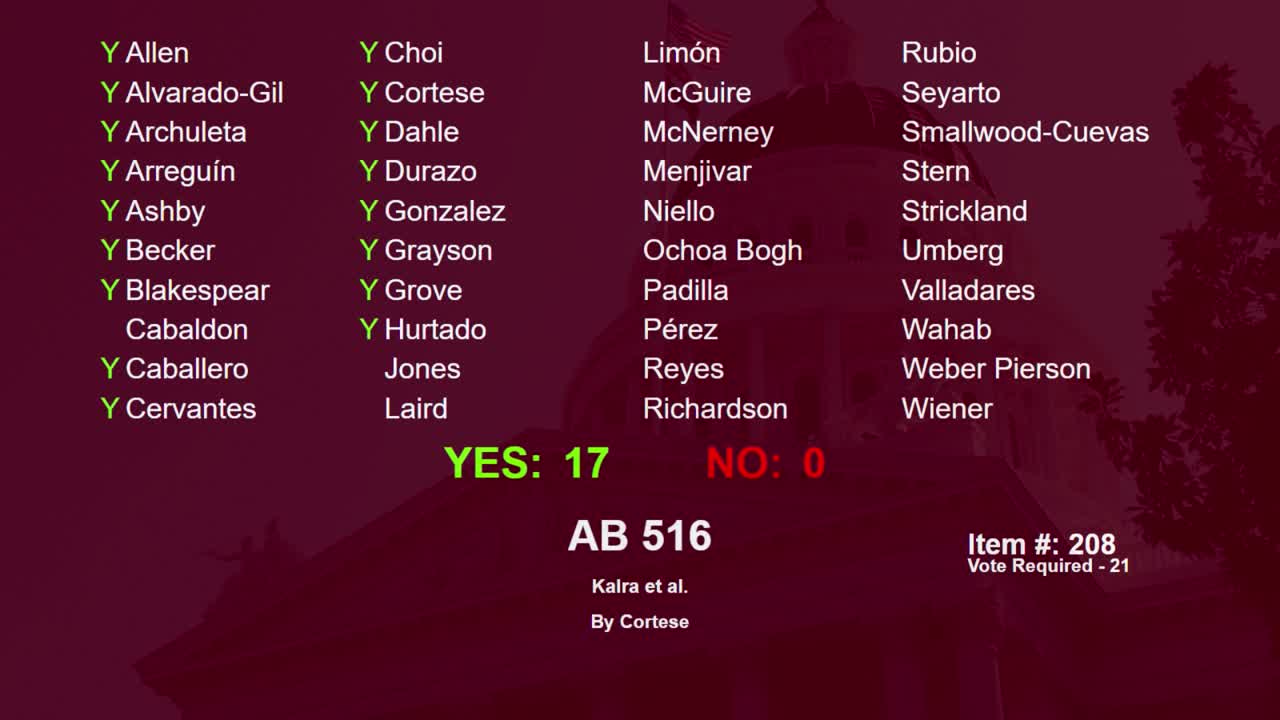

Bill Author