AB 583: Death certificates.
- Session Year: 2025-2026
- House: Assembly
- Latest Version Date: 2025-10-03
Current Status:
Passed
(2025-10-03: Chaptered by Secretary of State - Chapter 271, Statutes of 2025.)
Introduced
In Committee
Awaiting First Chamber Vote
Passed First Chamber
In Committee
Awaiting Second Chamber Vote
Passed Second Chamber
Enacted
(1)Existing law requires that each death be registered with the local registrar of births and deaths in the district in which the death was officially pronounced or the body was found. Existing law establishes the required contents of the death certificate, including, but not limited to, the decedents name, sex, race, and other relevant identifying and medical information. Existing law requires that the medical and health section data and the time of death be completed and attested to by the physician and surgeon last in attendance or, in the case of a patient in a skilled nursing or intermediate care facility, by the physician and surgeon last in attendance or by a licensed physician assistant meeting certain qualifications. Existing law also requires the individuals responsible for completing a death certificate to specify certain information on the certificate, including the time they last saw the deceased person alive. Existing law requires a physician and surgeon, physician assistant, or other specified individuals to immediately notify the coroner when they have knowledge of a death occurring under specified circumstances, including where suicide is suspected. A violation of that requirement is a crime.
This bill would, commencing July 1, 2026, additionally authorize the medical and health section data and the time of death on a death certificate to be completed and attested to by a nurse practitioner last in attendance. The bill would make conforming changes. Commencing July 1, 2026, the bill would also include a nurse practitioner to the group of individuals required to notify the coroner when they have knowledge of a death under certain specified circumstances. Because this bill would expand the application of an existing crime to nurse practitioners, this bill would impose a state-mandated local program.
(2)Existing law requires a funeral director, or a person acting in lieu of a funeral director if there is no funeral director, to prepare a certificate of fetal death and register it with the local registrar. Existing law requires the attending physician, if any, to state on the certificate of fetal death specific information, including the time and causes of fetal death. Existing law requires the physician, within 15 hours after the fetal death, to deposit the fetal death certificate at the place of death or deliver it to the attending funeral director or the office of the physician, as specified.
Commencing July 1, 2026, this bill would add a nurse practitioner in those provisions for purposes of preparing and depositing or delivering a certificate of fetal death.
(3)Existing law provides a procedure to, and authorizes a certifying physician or coroner to, amend a record of death, fetal death, or live birth with supplemental information by filing a declaration under penalty of perjury.
Commencing July 1, 2026, this bill would also authorize a nurse practitioner to use that procedure to file a declaration to amend a record of death, fetal death, or live birth. By expanding the scope of the crime of perjury, this bill would impose a state-mandated local program.
The California Constitution requires the state to reimburse local agencies and school districts for certain costs mandated by the state. Statutory provisions establish procedures for making that reimbursement.
This bill would provide that no reimbursement is required by this act for a specified reason.
Existing
(1)Existing law requires that each death be registered with the local registrar of births and deaths in the district in which the death was officially pronounced or the body was found. Existing law establishes the required contents of the death certificate, including, but not limited to, the decedents name, sex, race, and other relevant identifying and medical information. Existing law requires that the medical and health section data and the time of death be completed and attested to by the physician and surgeon last in attendance or, in the case of a patient in a skilled nursing or intermediate care facility, by the physician and surgeon last in attendance or by a licensed physician assistant meeting certain qualifications. Existing law also requires the individuals responsible for completing a death certificate to specify certain information on the certificate, including the time they last saw the deceased person alive. Existing law requires a physician and surgeon, physician assistant, or other specified individuals to immediately notify the coroner when they have knowledge of a death occurring under specified circumstances, including where suicide is suspected. Certain violations of these requirements are A violation of that requirement is a crime.
This bill would would, commencing July 1, 2026, additionally authorize the medical and health section data and the time of death on a death certificate to be completed and attested to by a licensed nurse practitioner last in attendance. The bill would make additional conforming changes. The Commencing July 1, 2026, the bill would also include a licensed nurse practitioner to the group of individuals required to notify the coroner when they have knowledge of a death under certain specified circumstances. Because this bill would expand the application of an existing crime to licensed nurse practitioners, this bill would impose a state-mandated local program.
(2)Existing law requires a funeral director, or a person acting in lieu of a funeral director if there is no funeral director, to prepare a certificate of fetal death and register it with the local registrar. Existing law requires the attending physician, if any, to state on the certificate of fetal death specific information, including the time and causes of fetal death. Existing law requires the physician, within 15 hours after the fetal death, to deposit the fetal death certificate at the place of death or deliver it to the attending funeral director or the office of the physician, as specified.
Commencing July 1, 2026, this bill would add a nurse practitioner in those provisions for purposes of preparing and depositing or delivering a certificate of fetal death.
(3)Existing law provides a procedure to, and authorizes a certifying physician or coroner to, amend a record of death, fetal death, or live birth with supplemental information by filing a declaration under penalty of perjury.
Commencing July 1, 2026, this bill would also authorize a nurse practitioner to use that procedure to file a declaration to amend a record of death, fetal death, or live birth. By expanding the scope of the crime of perjury, this bill would impose a state-mandated local program.
The California Constitution requires the state to reimburse local agencies and school districts for certain costs mandated by the state. Statutory provisions establish procedures for making that reimbursement.
This bill would provide that no reimbursement is required by this act for a specified reason.
Existing law requires that each death be registered with the local registrar of births and deaths in the district in which the death was officially pronounced or the body was found. Existing law establishes the required contents of the death certificate, including, but not limited to, the decedents name, sex, race, and other relevant identifying and medical information. Existing law requires that the medical and health section data and the time of death be completed and attested to by the physician and surgeon last in attendance or, in the case of a patient in a skilled nursing or intermediate care facility, by the physician and surgeon last in attendance or by a licensed physician assistant meeting certain qualifications. Existing law also requires the individuals responsible for completing a death certificate to specify certain information on the certificate, including the time they last saw the deceased person alive. Existing law requires a physician and surgeon, physician assistant, or other specified individuals to immediately notify the coroner when they have knowledge of a death occurring under specified circumstances, including where suicide is suspected. Certain violations of these requirements are a crime.
This bill would additionally authorize the medical and health section data and the time of death on a death certificate to be completed and attested to by a licensed nurse practitioner in the case where a patient is in a skilled nursing or intermediate care facility. last in attendance. The bill would make additional conforming changes. The bill would also include a licensed nurse practitioner to the group of individuals required to notify the coroner when they have knowledge of a death under certain specified circumstances. Because this bill would expand the application of an existing crime to licensed nurse practitioners, this bill would impose a state-mandated local program.
The California Constitution requires the state to reimburse local agencies and school districts for certain costs mandated by the state. Statutory provisions establish procedures for making that reimbursement.
This bill would provide that no reimbursement is required by this act for a specified reason.
Existing law requires that each death be registered with the local registrar of births and deaths in the district in which the death was officially pronounced or the body was found. Existing law establishes the required contents of the death certificate, including, but not limited to, the decedents name, sex, race, and other relevant identifying and medical information. Existing law requires that the medical and health section data and the time of death be completed and attested to by the physician and surgeon last in attendance or, in the case of a patient in a skilled nursing or intermediate care facility, by the physician and surgeon last in attendance or by a licensed physician assistant meeting certain qualifications. Existing law also requires the individuals responsible for completing a death certificate to specify certain information on the certificate, including the time they last saw the deceased person alive. Existing law requires a physician and surgeon, physician assistant, or other specified individuals to immediately notify the coroner when they have knowledge of a death occurring under specified circumstances, including where suicide is suspected. Certain violations of these requirements are a crime.
This bill would authorize the medical and health section data and the time of death on a death certificate to be completed and attested to by a licensed nurse practitioner in the case where a patient is in a skilled nursing or intermediate care facility. The bill would make additional conforming changes. The bill would also include a licensed nurse practitioner to the group of individuals required to notify the coroner when they have knowledge of a death under certain specified circumstances. Because this bill would expand the application of an existing crime to licensed nurse practitioners, this bill would impose a state-mandated local program.
The California Constitution requires the state to reimburse local agencies and school districts for certain costs mandated by the state. Statutory provisions establish procedures for making that reimbursement.
This bill would provide that no reimbursement is required by this act for a specified reason.
(a)The medical and health section data and the time of death shall be completed and attested to by the physician and surgeon last in attendance, or in the case of a patient in a skilled nursing or intermediate care facility at the time of death, by the physician and surgeon last in attendance or by a licensed physician assistant under the supervision of the physician and surgeon last in attendance if the physician and surgeon or licensed physician assistant is legally authorized to certify and attest to these facts, and if the physician assistant has visited the patient within 72 hours of the patients death. In the event the licensed physician assistant certifies the medical and health section data and the time of death, then the physician assistant shall also provide on the document the name of the last attending physician and surgeon and provide the coroner with a copy of the certificate of death. However, the medical health section data and the time of death shall be completed and attested to by the coroner in those cases in which they are required to complete the medical and health section data and certify and attest to these facts.
(b)This section shall become inoperative on July 1, 2026, and, as of January 1, 2027, is repealed.
SEC. 2.Section 102795 is added to the Health and Safety Code, to read:102795.(a)The medical and health section data and the time of death shall be completed and attested to by the physician and surgeon or nurse practitioner last in attendance.
(b)In the case of a patient in a skilled nursing or intermediate care facility at the time of death, the medical and health section data and the time of death shall be completed and attested to by the physician and surgeon or nurse practitioner last in attendance or by a licensed physician assistant under the supervision of the physician and surgeon last in attendance if the physician and surgeon or licensed physician assistant is legally authorized to certify and attest to these facts and if the physician assistant has visited the patient within 72 hours of the patients death. If the licensed physician assistant certifies the medical and health section data and the time of death, then the physician assistant shall also provide on the document the name of the last attending physician and surgeon and provide the coroner with a copy of the certificate of death. However, the medical health section data and the time of death shall be completed and attested to by the coroner in a case in which they are required to complete the medical and health section data and certify and attest to these facts.
(c)This section shall become operative on July 1, 2026.
SEC. 3.Section 102800 of the Health and Safety Code is amended to read:102800.(a)The medical and health section data and the physicians or coroners certification shall be completed by the attending physician within 15 hours after the death, or by the coroner within three days after examination of the body.
The physician shall within 15 hours after the death deposit the certificate at the place of death, or deliver it to the attending funeral director at their place of business or at the office of the physician.
(b)This section shall become inoperative on July 1, 2026, and, as of January 1, 2027, is repealed.
SEC. 4.Section 102800 is added to the Health and Safety Code, to read:102800.(a)The medical and health section data and the physicians, nurse practitioners, or coroners certification shall be completed by the attending physician or nurse practitioner within 15 hours after the death or by the coroner within three days after examination of the body.
(b)The physician or nurse practitioner shall, within 15 hours after the death, deposit the certificate at the place of death or deliver it to the attending funeral director at their place of business or at the office of the physician or nurse practitioner.
(c)This section shall become operative on July 1, 2026.
SEC. 5.Section 102825 of the Health and Safety Code is amended to read:102825.(a)The physician and surgeon last in attendance, or in the case of a patient in a skilled nursing or intermediate care facility at the time of death, the physician and surgeon last in attendance or a licensed physician assistant under the supervision of the physician and surgeon last in attendance, on a deceased person shall state on the certificate of death the disease or condition directly leading to death, antecedent causes, other significant conditions contributing to death and any other medical and health section data as may be required on the certificate; they shall also specify the time in attendance, the time they last saw the deceased person alive, and the hour and day on which death occurred, except in deaths required to be investigated by the coroner. The physician and surgeon or physician assistant shall specifically indicate the existence of any cancer as defined in subdivision (h) of Section 103885, of which the physician and surgeon or physician assistant has actual knowledge.
(b)A physician and surgeon may designate, one or more other physicians and surgeons who have access to the physician and surgeons records, to act as agent for the physician and surgeon for purposes of the performance of their duties under this section, provided that any person so designated acts in consultation with the physician and surgeon.
(c)This section shall become inoperative on July 1, 2026, and, as of January 1, 2027, is repealed.
SEC. 6.Section 102825 is added to the Health and Safety Code, to read:102825.(a)The physician and surgeon or nurse practitioner last in attendance, or in the case of a patient in a skilled nursing or intermediate care facility at the time of death, the physician and surgeon or nurse practitioner last in attendance or a licensed physician assistant under the supervision of the physician and surgeon last in attendance, on a deceased person shall state on the certificate of death the disease or condition directly leading to death, antecedent causes, other significant conditions contributing to death, and any other medical and health section data as may be required on the certificate.
(b)The individuals identified in subdivision (a) shall also specify all of the following on the certificate:
(1)The time in attendance.
(2)The time they last saw the deceased person alive.
(3)The hour and day on which the death occurred, except in a death required to be investigated by the coroner.
(c)The physician and surgeon, nurse practitioner, or physician assistant shall specifically indicate the existence of cancer, as defined in subdivision (h) of Section 103885, of which the physician and surgeon, nurse practitioner, or physician assistant has actual knowledge.
(d)A physician and surgeon may designate one or more other physicians and surgeons who have access to the physician and surgeons records to act as agent for the physician and surgeon for purposes of the performance of their duties under this section, provided that a person so designated acts in consultation with the physician and surgeon.
(e)This section shall become operative on July 1, 2026.
SEC. 7.Section 102850 of the Health and Safety Code is amended to read:102850.A physician and surgeon, physician assistant, funeral director, or other person shall immediately notify the coroner when they have knowledge of a death that occurred or has charge of a body in which death occurred under any of the following circumstances:
(a)Without medical attendance.
(b)During the continued absence of the attending physician and surgeon.
(c)Where the attending physician and surgeon or the physician assistant is unable to state the cause of death.
(d)Where suicide is suspected.
(e)Following an injury or an accident.
(f)Under circumstances as to afford a reasonable ground to suspect that the death was caused by the criminal act of another.
A person who does not notify the coroner as required by this section is guilty of a misdemeanor.
(g)This section shall become inoperative on July 1, 2026, and, as of January 1, 2027, is repealed.
SEC. 8.Section 102850 is added to the Health and Safety Code, to read:102850.(a)A physician and surgeon, nurse practitioner, physician assistant, funeral director, or other person shall immediately notify the coroner if they have knowledge of a death that occurred or have charge of a body in which death occurred under any of the following circumstances:
(1)Without medical attendance.
(2)During the continued absence of the attending physician and surgeon.
(3)If the attending physician and surgeon, nurse practitioner, or the physician assistant is unable to state the cause of death.
(4)If suicide is suspected.
(5)Following an injury or an accident.
(6)Under circumstances as to afford a reasonable ground to suspect that the death was caused by the criminal act of another.
(b)A person who does not notify the coroner as required by this section is guilty of a misdemeanor.
(c)This section shall become operative on July 1, 2026.
SEC. 9.Section 102875 of the Health and Safety Code is amended to read:102875.The certificate of death shall be divided into two sections.
(a)The first section shall contain those items necessary to establish the fact of the death, including all of the following and those other items as the State Registrar may designate:
(1)(A)Personal data of the decedent including full name, sex, color or race, marital status, name of spouse, date of birth and age at death, birthplace, usual residence, occupation and industry or business, and whether the decedent was ever in the Armed Forces of the United States.
(B)A person completing the certificate shall record the decedents sex to reflect the decedents gender identity as female, male, or nonbinary. The decedents gender identity shall be reported by the informant, unless the person completing the certificate is presented with a birth certificate, a drivers license, a social security record, a court order approving a name or gender change, a passport, an advanced health care directive, or proof of clinical treatment for gender transition, in which case the person completing the certificate shall record the decedents sex as that which corresponds to the decedents gender identity as indicated in that document. If none of these documents are presented and the person with the right, or a majority of persons who have equal rights, to control the disposition of the remains pursuant to Section 7100 is in disagreement with the gender identity reported by the informant, the gender identity of the decedent recorded on the death certificate shall be as reported by that person or majority of persons.
(C)If a document specified in subparagraph (B) is not presented and a majority of persons who have equal rights to control the disposition of the remains pursuant to Section 7100 do not agree with the gender identity of the decedent as reported by the informant, any one of those persons may file a petition, in the superior court in the county in which the decedent resided at the time of the decedents death, or in which the remains are located, naming as a party to the action those persons who otherwise have equal rights to control the disposition and seeking an order of the court determining, as appropriate, who among those parties shall determine the gender identity of the decedent.
(D)A person completing the death certificate in compliance with subparagraph (B) is not liable for any damages or costs arising from claims related to the sex of the decedent as entered on the certificate of death.
(E)A person completing the death certificate shall comply with the data and certification requirements described in Section 102800 by using the information available to the person prior to the deadlines for completion specified in that section.
(2)Date of death, including month, day, and year.
(3)Place of death.
(4)(A)Current first and middle names, birth last names, and the birthplaces of the parents, without reference to the parents gendered relationship to the decedent.
(B)The State Registrar shall electronically capture the following information, which shall not be transcribed onto the actual hard copy of the death certificate:
(i)The parents relationship to the decedent.
(ii)Any additional last names used by the parents, if any.
(C)The State Registrar shall implement the changes made by the act that added this subparagraph no later than July 1, 2024.
(5)Informant.
(6)Disposition of body information, including signature and license number of embalmer, if the body is embalmed, or name of embalmer if affixed by attorney-in-fact; name of funeral director, or person acting as such; and date and place of interment or removal. Notwithstanding any other law, an electronic signature substitute, or some other indicator of authenticity, approved by the State Registrar may be used in lieu of the actual signature of the embalmer.
(7)Certification and signature of attending physician and surgeon or certification and signature of coroner when required to act by law. Notwithstanding any other law, the person completing the portion of the certificate setting forth the cause of death may attest to its accuracy by use of an electronic signature substitute, or some other indicator of authenticity, approved by the State Registrar in lieu of a signature.
(8)Date accepted for registration and signature of local registrar. Notwithstanding any other law, the local registrar may elect to use an electronic signature substitute, or some other indicator of authenticity, approved by the State Registrar in lieu of a signature.
(b)The second section shall contain those items relating to medical and health data, including all of the following and other items as the State Registrar may designate:
(1)Disease or conditions leading directly to death and antecedent causes.
(2)Operations and major findings thereof.
(3)Accident and injury information.
(4)Information indicating whether the decedent was pregnant at the time of death, or within a year prior to the death, if known, as determined by observation, autopsy, or review of the medical record. The electronic death registration system shall capture additional information regarding the pregnancy status of the decedent consistent with the data elements on the U.S. Standard Certificate of Death. This paragraph shall not be interpreted to require the performance of a pregnancy test on a decedent, or to require a review of medical records in order to determine pregnancy.
(c)This section shall become inoperative on July 1, 2026, and, as of January 1, 2027, is repealed.
SEC. 10.Section 102875 is added to the Health and Safety Code, to read:102875.The certificate of death shall be divided into two sections:
(a)The first section shall contain those items necessary to establish the fact of the death, including all of the following and those other items as the State Registrar may designate:
(1)(A)Personal data of the decedent including full name, sex, color or race, marital status, name of spouse, date of birth and age at death, birthplace, usual residence, occupation and industry or business, and whether the decedent was ever in the Armed Forces of the United States.
(B)A person completing the certificate shall record the decedents sex to reflect the decedents gender identity as female, male, or nonbinary. The decedents gender identity shall be reported by the informant, unless the person completing the certificate is presented with a birth certificate, a drivers license, a social security record, a court order approving a name or gender change, a passport, an advanced health care directive, or proof of clinical treatment for gender transition, in which case the person completing the certificate shall record the decedents sex as that which corresponds to the decedents gender identity as indicated in that document. If none of these documents are presented and the person with the right, or a majority of persons who have equal rights, to control the disposition of the remains pursuant to Section 7100 is in disagreement with the gender identity reported by the informant, the gender identity of the decedent recorded on the death certificate shall be as reported by that person or majority of persons.
(C)If a document specified in subparagraph (B) is not presented and a majority of persons who have equal rights to control the disposition of the remains pursuant to Section 7100 do not agree with the gender identity of the decedent as reported by the informant, any one of those persons may file a petition, in the superior court in the county in which the decedent resided at the time of the decedents death, or in which the remains are located, naming as a party to the action those persons who otherwise have equal rights to control the disposition and seeking an order of the court determining, as appropriate, who among those parties shall determine the gender identity of the decedent.
(D)A person completing the death certificate in compliance with subparagraph (B) is not liable for any damages or costs arising from claims related to the sex of the decedent as entered on the certificate of death.
(E)A person completing the death certificate shall comply with the data and certification requirements described in Section 102800 by using the information available to the person prior to the deadlines for completion specified in that section.
(2)Date of death, including month, day, and year.
(3)Place of death.
(4)(A)Current first and middle names, birth last names, and the birthplaces of the parents, without reference to the parents gendered relationship to the decedent.
(B)The State Registrar shall electronically capture the following information, which shall not be transcribed onto the actual hard copy of the death certificate:
(i)The parents relationship to the decedent.
(ii)Additional last names used by the parents, if any.
(C)The State Registrar shall implement the changes made by the act that added this subparagraph no later than July 1, 2024.
(5)Informant.
(6)Disposition of body information, including signature and license number of embalmer, if the body is embalmed, or name of embalmer if affixed by attorney-in-fact; name of funeral director, or person acting as such; and date and place of interment or removal. Notwithstanding any other law, an electronic signature substitute, or some other indicator of authenticity, approved by the State Registrar may be used in lieu of the actual signature of the embalmer.
(7)Certification and signature of attending physician and surgeon or nurse practitioner or certification and signature of coroner when required to act by law. Notwithstanding any other law, the person completing the portion of the certificate setting forth the cause of death may attest to its accuracy by use of an electronic signature substitute, or some other indicator of authenticity, approved by the State Registrar in lieu of a signature.
(8)Date accepted for registration and signature of local registrar. Notwithstanding any other law, the local registrar may elect to use an electronic signature substitute, or some other indicator of authenticity, approved by the State Registrar in lieu of a signature.
(b)The second section shall contain those items relating to medical and health data, including all of the following and other items as the State Registrar may designate:
(1)Disease or conditions leading directly to death and antecedent causes.
(2)Operations and major findings thereof.
(3)Accident and injury information.
(4)Information indicating whether the decedent was pregnant at the time of death, or within a year prior to the death, if known, as determined by observation, autopsy, or review of the medical record. The electronic death registration system shall capture additional information regarding the pregnancy status of the decedent consistent with the data elements on the U.S. Standard Certificate of Death. This paragraph shall not be interpreted to require the performance of a pregnancy test on a decedent, or to require a review of medical records in order to determine pregnancy.
(c)This section shall become operative on July 1, 2026.
SEC. 11.Section 102975 of the Health and Safety Code is amended to read:102975.(a)The physician, if any, in attendance on the delivery of a fetus shall within 15 hours after the delivery state on the certificate of fetal death the time of fetal death or delivery, the direct causes of the fetal death, the conditions, if any, that gave rise to these causes, and other medical and health section data as may be required on the certificate, and shall sign the certificate in attest to these facts.
The physician shall within 15 hours after the death deposit the certificate at the place of death, or deliver it to the attending funeral director at their place of business or at the office of the physician.
(b)This section shall become inoperative on July 1, 2026, and, as of January 1, 2027, is repealed.
SEC. 12.Section 102975 is added to the Health and Safety Code, to read:102975.(a)The physician or nurse practitioner, if any, in attendance on the delivery of a fetus shall, within 15 hours after the delivery, state on the certificate of fetal death the time of fetal death or delivery, the direct causes of the fetal death, the conditions, if any, that gave rise to these causes, and other medical and health section data as may be required on the certificate and shall sign the certificate in attest to these facts.
(b)The physician or nurse practitioner shall, within 15 hours after the death, deposit the certificate at the place of death, deliver it to the attending funeral director at their place of business, or deliver it to the office of the physician or nurse practitioner.
(c)This section shall become operative on July 1, 2026.
SEC. 13.Section 103300 of the Health and Safety Code is amended to read:103300.(a)Notwithstanding other provisions in this part relative to amendment of records, whenever the information originally furnished in the medical and health data section of any record of death, fetal death or live birth is modified by supplemental information relative thereto, the certifying physician or coroner having knowledge of this information may make a declaration as provided in Section 2015.5 of the Code of Civil Procedure stating the changes necessary to make the information correct and file it with the state or local registrar.
(b)This section shall become inoperative on July 1, 2026, and, as of January 1, 2027, is repealed.
SEC. 14.Section 103300 is added to the Health and Safety Code, to read:103300.(a)Notwithstanding other provisions in this part relative to amendment of a record, if the information originally furnished in the medical and health data section of a record of death, fetal death, or live birth is modified by supplemental information relative thereto, the certifying physician, nurse practitioner, or coroner having knowledge of this information may make a declaration, as provided in Section 2015.5 of the Code of Civil Procedure, stating the changes are necessary to make the information correct and file the declaration with the state or local registrar.
(b)This section shall become operative on July 1, 2026.
SEC. 15.No reimbursement is required by this act pursuant to Section 6 of Article XIIIB of the California Constitution because the only costs that may be incurred by a local agency or school district will be incurred because this act creates a new crime or infraction, eliminates a crime or infraction, or changes the penalty for a crime or infraction, within the meaning of Section 17556 of the Government Code, or changes the definition of a crime within the meaning of Section 6 of Article XIIIB of the California Constitution.
(a)The medical and health section data and the time of death shall be completed and attested to by the physician and surgeon last in attendance, or in the case of a patient in a skilled nursing or intermediate care facility at the time of death, by the physician and surgeon last in attendance or by a licensed physician assistant under the supervision of the physician and surgeon last in attendance if the physician and surgeon or licensed physician assistant is legally authorized to certify and attest to these facts, and if the physician assistant has visited the patient within 72 hours of the patients death. In the event the licensed physician assistant certifies the medical and health section data and the time of death, then the physician assistant shall also provide on the document the name of the last attending physician and surgeon and provide the coroner with a copy of the certificate of death. However, the medical health section data and the time of death shall be completed and attested to by the coroner in those cases in which he or she is they are required to complete the medical and health section data and certify and attest to these facts.
(b)This section shall become inoperative on July 1, 2026, and, as of January 1, 2027, is repealed.
SEC. 2.Section 102795 is added to the Health and Safety Code, to read:102795.(a)The medical and health section data and the time of death shall be completed and attested to by the physician and surgeon or nurse practitioner last in attendance.
(b)In the case of a patient in a skilled nursing or intermediate care facility at the time of death, the medical and health section data and the time of death shall be completed and attested to by the physician and surgeon or nurse practitioner last in attendance or by a licensed physician assistant under the supervision of the physician and surgeon last in attendance if the physician and surgeon or licensed physician assistant is legally authorized to certify and attest to these facts and if the physician assistant has visited the patient within 72 hours of the patients death. If the licensed physician assistant certifies the medical and health section data and the time of death, then the physician assistant shall also provide on the document the name of the last attending physician and surgeon and provide the coroner with a copy of the certificate of death. However, the medical health section data and the time of death shall be completed and attested to by the coroner in a case in which they are required to complete the medical and health section data and certify and attest to these facts.
(c)This section shall become operative on July 1, 2026.
SEC. 3.Section 102800 of the Health and Safety Code is amended to read:102800.(a)The medical and health section data and the physicians or coroners certification shall be completed by the attending physician within 15 hours after the death, or by the coroner within three days after examination of the body.
The physician shall within 15 hours after the death deposit the certificate at the place of death, or deliver it to the attending funeral director at his or her their place of business or at the office of the physician.
(b)This section shall become inoperative on July 1, 2026, and, as of January 1, 2027, is repealed.
SEC. 4.Section 102800 is added to the Health and Safety Code, to read:102800.(a)The medical and health section data and the physicians, nurse practitioners, or coroners certification shall be completed by the attending physician or nurse practitioner within 15 hours after the death or by the coroner within three days after examination of the body.
(b)The physician or nurse practitioner shall, within 15 hours after the death, deposit the certificate at the place of death or deliver it to the attending funeral director at their place of business or at the office of the physician or nurse practitioner.
(c)This section shall become operative on July 1, 2026.
SEC. 5.Section 102825 of the Health and Safety Code is amended to read:102825.(a)The physician and surgeon last in attendance, or in the case of a patient in a skilled nursing or intermediate care facility at the time of death, the physician and surgeon last in attendance or a licensed physician assistant under the supervision of the physician and surgeon last in attendance, on a deceased person shall state on the certificate of death the disease or condition directly leading to death, antecedent causes, other significant conditions contributing to death and any other medical and health section data as may be required on the certificate; he or she they shall also specify the time in attendance, the time he or she they last saw the deceased person alive, and the hour and day on which death occurred, except in deaths required to be investigated by the coroner. The physician and surgeon or physician assistant shall specifically indicate the existence of any cancer as defined in subdivision (h) of Section 103885, of which the physician and surgeon or physician assistant has actual knowledge.
(b)A physician and surgeon may designate, one or more other physicians and surgeons who have access to the physician and surgeons records, to act as agent for the physician and surgeon for purposes of the performance of his or her their duties under this section, provided that any person so designated acts in consultation with the physician and surgeon.
(c)This section shall become inoperative on July 1, 2026, and, as of January 1, 2027, is repealed.
SEC. 6.Section 102825 is added to the Health and Safety Code, to read:102825.(a)The physician and surgeon or nurse practitioner last in attendance, or in the case of a patient in a skilled nursing or intermediate care facility at the time of death, the physician and surgeon or nurse practitioner last in attendance or a licensed physician assistant under the supervision of the physician and surgeon last in attendance, on a deceased person shall state on the certificate of death the disease or condition directly leading to death, antecedent causes, other significant conditions contributing to death, and any other medical and health section data as may be required on the certificate.
(b)The individuals identified in subdivision (a) shall also specify all of the following on the certificate:
(1)The time in attendance.
(2)The time they last saw the deceased person alive.
(3)The hour and day on which the death occurred, except in a death required to be investigated by the coroner.
(c)The physician and surgeon, nurse practitioner, or physician assistant shall specifically indicate the existence of cancer, as defined in subdivision (h) of Section 103885, of which the physician and surgeon, nurse practitioner, or physician assistant has actual knowledge.
(d)A physician and surgeon may designate one or more other physicians and surgeons who have access to the physician and surgeons records to act as agent for the physician and surgeon for purposes of the performance of their duties under this section, provided that a person so designated acts in consultation with the physician and surgeon.
(e)This section shall become operative on July 1, 2026.
SEC. 7.Section 102850 of the Health and Safety Code is amended to read:102850.A physician and surgeon, physician assistant, funeral director, or other person shall immediately notify the coroner when he or she has they have knowledge of a death that occurred or has charge of a body in which death occurred under any of the following circumstances:
(a)Without medical attendance.
(b)During the continued absence of the attending physician and surgeon.
(c)Where the attending physician and surgeon or the physician assistant is unable to state the cause of death.
(d)Where suicide is suspected.
(e)Following an injury or an accident.
(f)Under circumstances as to afford a reasonable ground to suspect that the death was caused by the criminal act of another.
AnyA person who does not notify the coroner as required by this section is guilty of a misdemeanor.
(g)This section shall become inoperative on July 1, 2026, and, as of January 1, 2027, is repealed.
SEC. 8.Section 102850 is added to the Health and Safety Code, to read:102850.(a)A physician and surgeon, nurse practitioner, physician assistant, funeral director, or other person shall immediately notify the coroner if they have knowledge of a death that occurred or have charge of a body in which death occurred under any of the following circumstances:
(1)Without medical attendance.
(2)During the continued absence of the attending physician and surgeon.
(3)If the attending physician and surgeon, nurse practitioner, or the physician assistant is unable to state the cause of death.
(4)If suicide is suspected.
(5)Following an injury or an accident.
(6)Under circumstances as to afford a reasonable ground to suspect that the death was caused by the criminal act of another.
(b)A person who does not notify the coroner as required by this section is guilty of a misdemeanor.
(c)This section shall become operative on July 1, 2026.
SEC. 9.Section 102875 of the Health and Safety Code is amended to read:102875.The certificate of death shall be divided into two sections.
(a)The first section shall contain those items necessary to establish the fact of the death, including all of the following and those other items as the State Registrar may designate:
(1)(A)Personal data of the decedent including full name, sex, color or race, marital status, name of spouse, date of birth and age at death, birthplace, usual residence, occupation and industry or business, and whether the decedent was ever in the Armed Forces of the United States.
(B)A person completing the certificate shall record the decedents sex to reflect the decedents gender identity as female, male, or nonbinary. The decedents gender identity shall be reported by the informant, unless the person completing the certificate is presented with a birth certificate, a drivers license, a social security record, a court order approving a name or gender change, a passport, an advanced health care directive, or proof of clinical treatment for gender transition, in which case the person completing the certificate shall record the decedents sex as that which corresponds to the decedents gender identity as indicated in that document. If none of these documents are presented and the person with the right, or a majority of persons who have equal rights, to control the disposition of the remains pursuant to Section 7100 is in disagreement with the gender identity reported by the informant, the gender identity of the decedent recorded on the death certificate shall be as reported by that person or majority of persons.
(C)If a document specified in subparagraph (B) is not presented and a majority of persons who have equal rights to control the disposition of the remains pursuant to Section 7100 do not agree with the gender identity of the decedent as reported by the informant, any one of those persons may file a petition, in the superior court in the county in which the decedent resided at the time of the decedents death, or in which the remains are located, naming as a party to the action those persons who otherwise have equal rights to control the disposition and seeking an order of the court determining, as appropriate, who among those parties shall determine the gender identity of the decedent.
(D)A person completing the death certificate in compliance with subparagraph (B) is not liable for any damages or costs arising from claims related to the sex of the decedent as entered on the certificate of death.
(E)A person completing the death certificate shall comply with the data and certification requirements described in Section 102800 by using the information available to the person prior to the deadlines for completion specified in that section.
(2)Date of death, including month, day, and year.
(3)Place of death.
(4)(A)Current first and middle names, birth last names, and the birthplaces of the parents, without reference to the parents gendered relationship to the decedent.
(B)The State Registrar shall electronically capture the following information, which shall not be transcribed onto the actual hard copy of the death certificate:
(i)The parents relationship to the decedent.
(ii)Any additional last names used by the parents, if any.
(C)The State Registrar shall implement the changes made by the act that added this subparagraph no later than July 1, 2024.
(5)Informant.
(6)Disposition of body information, including signature and license number of embalmer, if the body is embalmed, or name of embalmer if affixed by attorney-in-fact; name of funeral director, or person acting as such; and date and place of interment or removal. Notwithstanding any other law, an electronic signature substitute, or some other indicator of authenticity, approved by the State Registrar may be used in lieu of the actual signature of the embalmer.
(7)Certification and signature of attending physician and surgeon or certification and signature of coroner when required to act by law. Notwithstanding any other law, the person completing the portion of the certificate setting forth the cause of death may attest to its accuracy by use of an electronic signature substitute, or some other indicator of authenticity, approved by the State Registrar in lieu of a signature.
(8)Date accepted for registration and signature of local registrar. Notwithstanding any other law, the local registrar may elect to use an electronic signature substitute, or some other indicator of authenticity, approved by the State Registrar in lieu of a signature.
(b)The second section shall contain those items relating to medical and health data, including all of the following and other items as the State Registrar may designate:
(1)Disease or conditions leading directly to death and antecedent causes.
(2)Operations and major findings thereof.
(3)Accident and injury information.
(4)Information indicating whether the decedent was pregnant at the time of death, or within a year prior to the death, if known, as determined by observation, autopsy, or review of the medical record. The electronic death registration system shall capture additional information regarding the pregnancy status of the decedent consistent with the data elements on the U.S. Standard Certificate of Death. This paragraph shall not be interpreted to require the performance of a pregnancy test on a decedent, or to require a review of medical records in order to determine pregnancy.
(c)This section shall become inoperative on July 1, 2026, and, as of January 1, 2027, is repealed.
SEC. 10.Section 102875 is added to the Health and Safety Code, to read:102875.The certificate of death shall be divided into two sections:
(a)The first section shall contain those items necessary to establish the fact of the death, including all of the following and those other items as the State Registrar may designate:
(1)(A)Personal data of the decedent including full name, sex, color or race, marital status, name of spouse, date of birth and age at death, birthplace, usual residence, occupation and industry or business, and whether the decedent was ever in the Armed Forces of the United States.
(B)A person completing the certificate shall record the decedents sex to reflect the decedents gender identity as female, male, or nonbinary. The decedents gender identity shall be reported by the informant, unless the person completing the certificate is presented with a birth certificate, a drivers license, a social security record, a court order approving a name or gender change, a passport, an advanced health care directive, or proof of clinical treatment for gender transition, in which case the person completing the certificate shall record the decedents sex as that which corresponds to the decedents gender identity as indicated in that document. If none of these documents are presented and the person with the right, or a majority of persons who have equal rights, to control the disposition of the remains pursuant to Section 7100 is in disagreement with the gender identity reported by the informant, the gender identity of the decedent recorded on the death certificate shall be as reported by that person or majority of persons.
(C)If a document specified in subparagraph (B) is not presented and a majority of persons who have equal rights to control the disposition of the remains pursuant to Section 7100 do not agree with the gender identity of the decedent as reported by the informant, any one of those persons may file a petition, in the superior court in the county in which the decedent resided at the time of the decedents death, or in which the remains are located, naming as a party to the action those persons who otherwise have equal rights to control the disposition and seeking an order of the court determining, as appropriate, who among those parties shall determine the gender identity of the decedent.
(D)A person completing the death certificate in compliance with subparagraph (B) is not liable for any damages or costs arising from claims related to the sex of the decedent as entered on the certificate of death.
(E)A person completing the death certificate shall comply with the data and certification requirements described in Section 102800 by using the information available to the person prior to the deadlines for completion specified in that section.
(2)Date of death, including month, day, and year.
(3)Place of death.
(4)(A)Current first and middle names, birth last names, and the birthplaces of the parents, without reference to the parents gendered relationship to the decedent.
(B)The State Registrar shall electronically capture the following information, which shall not be transcribed onto the actual hard copy of the death certificate:
(i)The parents relationship to the decedent.
(ii)Additional last names used by the parents, if any.
(C)The State Registrar shall implement the changes made by the act that added this subparagraph no later than July 1, 2024.
(5)Informant.
(6)Disposition of body information, including signature and license number of embalmer, if the body is embalmed, or name of embalmer if affixed by attorney-in-fact; name of funeral director, or person acting as such; and date and place of interment or removal. Notwithstanding any other law, an electronic signature substitute, or some other indicator of authenticity, approved by the State Registrar may be used in lieu of the actual signature of the embalmer.
(7)Certification and signature of attending physician and surgeon or nurse practitioner or certification and signature of coroner when required to act by law. Notwithstanding any other law, the person completing the portion of the certificate setting forth the cause of death may attest to its accuracy by use of an electronic signature substitute, or some other indicator of authenticity, approved by the State Registrar in lieu of a signature.
(8)Date accepted for registration and signature of local registrar. Notwithstanding any other law, the local registrar may elect to use an electronic signature substitute, or some other indicator of authenticity, approved by the State Registrar in lieu of a signature.
(b)The second section shall contain those items relating to medical and health data, including all of the following and other items as the State Registrar may designate:
(1)Disease or conditions leading directly to death and antecedent causes.
(2)Operations and major findings thereof.
(3)Accident and injury information.
(4)Information indicating whether the decedent was pregnant at the time of death, or within a year prior to the death, if known, as determined by observation, autopsy, or review of the medical record. The electronic death registration system shall capture additional information regarding the pregnancy status of the decedent consistent with the data elements on the U.S. Standard Certificate of Death. This paragraph shall not be interpreted to require the performance of a pregnancy test on a decedent, or to require a review of medical records in order to determine pregnancy.
(c)This section shall become operative on July 1, 2026.
SEC. 11.Section 102975 of the Health and Safety Code is amended to read:102975.(a)The physician, if any, in attendance on the delivery of a fetus shall within 15 hours after the delivery state on the certificate of fetal death the time of fetal death or delivery, the direct causes of the fetal death, the conditions, if any, that gave rise to these causes, and other medical and health section data as may be required on the certificate, and shall sign the certificate in attest to these facts.
The physician shall within 15 hours after the death deposit the certificate at the place of death, or deliver it to the attending funeral director at his or her their place of business or at the office of the physician.
(b)This section shall become inoperative on July 1, 2026, and, as of January 1, 2027, is repealed.
SEC. 12.Section 102975 is added to the Health and Safety Code, to read:102975.(a)The physician or nurse practitioner, if any, in attendance on the delivery of a fetus shall, within 15 hours after the delivery, state on the certificate of fetal death the time of fetal death or delivery, the direct causes of the fetal death, the conditions, if any, that gave rise to these causes, and other medical and health section data as may be required on the certificate and shall sign the certificate in attest to these facts.
(b)The physician or nurse practitioner shall, within 15 hours after the death, deposit the certificate at the place of death, deliver it to the attending funeral director at their place of business, or deliver it to the office of the physician or nurse practitioner.
(c)This section shall become operative on July 1, 2026.
SEC. 13.Section 103300 of the Health and Safety Code is amended to read:103300.(a)Notwithstanding other provisions in this part relative to amendment of records, whenever the information originally furnished in the medical and health data section of any record of death, fetal death or live birth is modified by supplemental information relative thereto, the certifying physician or coroner having knowledge of this information may make a declaration as provided in Section 2015.5 of the Code of Civil Procedure stating the changes necessary to make the information correct and file it with the state or local registrar.
(b)This section shall become inoperative on July 1, 2026, and, as of January 1, 2027, is repealed.
SEC. 14.Section 103300 is added to the Health and Safety Code, to read:103300.(a)Notwithstanding other provisions in this part relative to amendment of a record, if the information originally furnished in the medical and health data section of a record of death, fetal death, or live birth is modified by supplemental information relative thereto, the certifying physician, nurse practitioner, or coroner having knowledge of this information may make a declaration, as provided in Section 2015.5 of the Code of Civil Procedure, stating the changes are necessary to make the information correct and file the declaration with the state or local registrar.
(b)This section shall become operative on July 1, 2026.
SEC. 15.No reimbursement is required by this act pursuant to Section 6 of Article XIIIB of the California Constitution because the only costs that may be incurred by a local agency or school district will be incurred because this act creates a new crime or infraction, eliminates a crime or infraction, or changes the penalty for a crime or infraction, within the meaning of Section 17556 of the Government Code, or changes the definition of a crime within the meaning of Section 6 of Article XIIIB of the California Constitution.
SECTION 1.Section 102795 of the Health and Safety Code is amended to read:102795.(a)The medical and health section data and the time of death shall be completed and attested to by the physician and surgeon or licensed nurse practitioner last in attendance.(b)In the case of a patient in a skilled nursing or intermediate care facility at the time of death, the medical and health section data and the time of death shall be completed and attested to by the physician and surgeon or licensed nurse practitioner last in attendance or by a licensed physician assistant under the supervision of the physician and surgeon last in attendance if the physician and surgeon or licensed physician assistant is legally authorized to certify and attest to these facts, and if the physician assistant has visited the patient within 72 hours of the patients death. In the event the licensed physician assistant certifies the medical and health section data and the time of death, then the physician assistant shall also provide on the document the name of the last attending physician and surgeon and provide the coroner with a copy of the certificate of death. However, the medical health section data and the time of death shall be completed and attested to by the coroner in those cases in which they are required to complete the medical and health section data and certify and attest to these facts.SEC. 2.Section 102800 of the Health and Safety Code is amended to read:102800.(a)The medical and health section data and the physicians, licensed nurse practitioners, or coroners certification shall be completed by the attending physician or licensed nurse practitioner within 15 hours after the death, or by the coroner within three days after examination of the body.(b)The physician or licensed nurse practitioner shall within 15 hours after the death deposit the certificate at the place of death, or deliver it to the attending funeral director at their place of business or at the office of the physician.SEC. 3.Section 102825 of the Health and Safety Code is amended to read:102825.(a)The physician and surgeon or licensed nurse practitioner last in attendance, or in the case of a patient in a skilled nursing or intermediate care facility at the time of death, the physician and surgeon or licensed nurse practitioner last in attendance or a licensed physician assistant under the supervision of the physician and surgeon last in attendance, on a deceased person shall state on the certificate of death the disease or condition directly leading to death, antecedent causes, other significant conditions contributing to death, and any other medical and health section data as may be required on the certificate.(b)The individuals identified in subdivision (a) shall also specify all of the following on the certificate:(1)The time in attendance.(2)The time they last saw the deceased person alive.(3)The hour and day on which the death occurred, except in deaths required to be investigated by the coroner.(c)The physician and surgeon, licensed nurse practitioner, or physician assistant shall specifically indicate the existence of any cancer as defined in subdivision (h) of Section 103885, of which the physician and surgeon, licensed nurse practitioner, or physician assistant has actual knowledge. (d)A physician and surgeon may designate one or more other physicians and surgeons who have access to the physician and surgeons records to act as agent for the physician and surgeon for purposes of the performance of their duties under this section, provided that a person so designated acts in consultation with the physician and surgeon.SEC. 4.Section 102850 of the Health and Safety Code is amended to read:102850.(a)A physician and surgeon, licensed nurse practitioner, physician assistant, funeral director, or other person shall immediately notify the coroner when they have knowledge of a death that occurred or has charge of a body in which death occurred under any of the following circumstances:(1)Without medical attendance.(2)During the continued absence of the attending physician and surgeon.(3)Where the attending physician and surgeon, licensed nurse practitioner, or the physician assistant is unable to state the cause of death.(4)Where suicide is suspected.(5)Following an injury or an accident.(6)Under circumstances as to afford a reasonable ground to suspect that the death was caused by the criminal act of another.(b)A person who does not notify the coroner as required by this section is guilty of a misdemeanor.SEC. 5.Section 102875 of the Health and Safety Code is amended to read:102875.The certificate of death shall be divided into two sections.(a)The first section shall contain those items necessary to establish the fact of the death, including all of the following and those other items as the State Registrar may designate:(1)(A)Personal data of the decedent including full name, sex, color or race, marital status, name of spouse, date of birth and age at death, birthplace, usual residence, occupation and industry or business, and whether the decedent was ever in the Armed Forces of the United States.(B)A person completing the certificate shall record the decedents sex to reflect the decedents gender identity as female, male, or nonbinary. The decedents gender identity shall be reported by the informant, unless the person completing the certificate is presented with a birth certificate, a drivers license, a social security record, a court order approving a name or gender change, a passport, an advanced health care directive, or proof of clinical treatment for gender transition, in which case the person completing the certificate shall record the decedents sex as that which corresponds to the decedents gender identity as indicated in that document. If none of these documents are presented and the person with the right, or a majority of persons who have equal rights, to control the disposition of the remains pursuant to Section 7100 is in disagreement with the gender identity reported by the informant, the gender identity of the decedent recorded on the death certificate shall be as reported by that person or majority of persons.(C)If a document specified in subparagraph (B) is not presented and a majority of persons who have equal rights to control the disposition of the remains pursuant to Section 7100 do not agree with the gender identity of the decedent as reported by the informant, any one of those persons may file a petition, in the superior court in the county in which the decedent resided at the time of the decedents death, or in which the remains are located, naming as a party to the action those persons who otherwise have equal rights to control the disposition and seeking an order of the court determining, as appropriate, who among those parties shall determine the gender identity of the decedent.(D)A person completing the death certificate in compliance with subparagraph (B) is not liable for any damages or costs arising from claims related to the sex of the decedent as entered on the certificate of death.(E)A person completing the death certificate shall comply with the data and certification requirements described in Section 102800 by using the information available to the person prior to the deadlines for completion specified in that section.(2)Date of death, including month, day, and year.(3)Place of death.(4)(A)Current first and middle names, birth last names, and the birthplaces of the parents, without reference to the parents gendered relationship to the decedent.(B)The State Registrar shall electronically capture the following information, which shall not be transcribed onto the actual hard copy of the death certificate:(i)The parents relationship to the decedent.(ii)Any additional last names used by the parents, if any.(C)The State Registrar shall implement the changes made by the act that added this subparagraph no later than July 1, 2024.(5)Informant.(6)Disposition of body information, including signature and license number of embalmer, if the body is embalmed, or name of embalmer if affixed by attorney-in-fact; name of funeral director, or person acting as such; and date and place of interment or removal. Notwithstanding any other law, an electronic signature substitute, or some other indicator of authenticity, approved by the State Registrar may be used in lieu of the actual signature of the embalmer.(7)Certification and signature of attending physician and surgeon or licensed nurse practitioner or certification and signature of coroner when required to act by law. Notwithstanding any other law, the person completing the portion of the certificate setting forth the cause of death may attest to its accuracy by use of an electronic signature substitute, or some other indicator of authenticity, approved by the State Registrar in lieu of a signature.(8)Date accepted for registration and signature of local registrar. Notwithstanding any other law, the local registrar may elect to use an electronic signature substitute, or some other indicator of authenticity, approved by the State Registrar in lieu of a signature.(b)The second section shall contain those items relating to medical and health data, including all of the following and other items as the State Registrar may designate:(1)Disease or conditions leading directly to death and antecedent causes.(2)Operations and major findings thereof.(3)Accident and injury information.(4)Information indicating whether the decedent was pregnant at the time of death, or within a year prior to the death, if known, as determined by observation, autopsy, or review of the medical record. The electronic death registration system shall capture additional information regarding the pregnancy status of the decedent consistent with the data elements on the U.S. Standard Certificate of Death. This paragraph shall not be interpreted to require the performance of a pregnancy test on a decedent, or to require a review of medical records in order to determine pregnancy.SEC. 6.No reimbursement is required by this act pursuant to Section 6 of Article XIIIB of the California Constitution because the only costs that may be incurred by a local agency or school district will be incurred because this act creates a new crime or infraction, eliminates a crime or infraction, or changes the penalty for a crime or infraction, within the meaning of Section 17556 of the Government Code, or changes the definition of a crime within the meaning of Section 6 of Article XIIIB of the California Constitution.(a)The medical and health section data and the time of death shall be completed and attested to by the physician and surgeon or licensed nurse practitioner last in attendance.
(b)In the case of a patient in a skilled nursing or intermediate care facility at the time of death, the medical and health section data and the time of death shall be completed and attested to by the physician and surgeon last in attendance, by a licensed nurse practitioner, or licensed nurse practitioner last in attendance or by a licensed physician assistant under the supervision of the physician and surgeon last in attendance if the physician and surgeon or licensed physician assistant is legally authorized to certify and attest to these facts, and if the physician assistant has visited the patient within 72 hours of the patients death. In the event the licensed nurse practitioner or licensed physician assistant certifies the medical and health section data and the time of death, then the licensed nurse practitioner or physician assistant shall also provide on the document the name of the last attending physician and surgeon and provide the coroner with a copy of the certificate of death. However, the medical health section data and the time of death shall be completed and attested to by the coroner in those cases in which they are required to complete the medical and health section data and certify and attest to these facts.
SEC. 2.Section 102800 of the Health and Safety Code is amended to read:102800.(a)The medical and health section data and the physicians, licensed nurse practitioners, or coroners certification shall be completed by the attending physician or licensed nurse practitioner within 15 hours after the death, or by the coroner within three days after examination of the body.
(b)The physician or licensed nurse practitioner shall within 15 hours after the death deposit the certificate at the place of death, or deliver it to the attending funeral director at their place of business or at the office of the physician.
SEC. 3.Section 102825 of the Health and Safety Code is amended to read:102825.(a)The physician and surgeon or licensed nurse practitioner last in attendance, or in the case of a patient in a skilled nursing or intermediate care facility at the time of death, the physician and surgeon last in attendance, a licensed nurse practitioner, or licensed nurse practitioner last in attendance or a licensed physician assistant under the supervision of the physician and surgeon last in attendance, on a deceased person shall state on the certificate of death the disease or condition directly leading to death, antecedent causes, other significant conditions contributing to death death, and any other medical and health section data as may be required on the certificate.
(b)The individuals identified in subdivision (a) shall also specify all of the following on the certificate:
(1)The time in attendance.
(2)The time they last saw the deceased person alive.
(3)The hour and day on which the death occurred, except in deaths required to be investigated by the coroner.
(c)The physician and surgeon, licensed nurse practitioner, or physician assistant shall specifically indicate the existence of any cancer as defined in subdivision (h) of Section 103885, of which the physician and surgeon, licensed nurse practitioner, or physician assistant has actual knowledge.
(d)A physician and surgeon may designate one or more other physicians and surgeons who have access to the physician and surgeons records to act as agent for the physician and surgeon for purposes of the performance of their duties under this section, provided that a person so designated acts in consultation with the physician and surgeon.
SEC. 4.Section 102850 of the Health and Safety Code is amended to read:102850.(a)A physician and surgeon, licensed nurse practitioner, physician assistant, funeral director, or other person shall immediately notify the coroner when they have knowledge of a death that occurred or has charge of a body in which death occurred under any of the following circumstances:
(1)Without medical attendance.
(2)During the continued absence of the attending physician and surgeon.
(3)Where the attending physician and surgeon, licensed nurse practitioner, or the physician assistant is unable to state the cause of death.
(4)Where suicide is suspected.
(5)Following an injury or an accident.
(6)Under circumstances as to afford a reasonable ground to suspect that the death was caused by the criminal act of another.
(b)A person who does not notify the coroner as required by this section is guilty of a misdemeanor.
SEC. 5.Section 102875 of the Health and Safety Code is amended to read:102875.The certificate of death shall be divided into two sections.
(a)The first section shall contain those items necessary to establish the fact of the death, including all of the following and those other items as the State Registrar may designate:
(1)(A)Personal data of the decedent including full name, sex, color or race, marital status, name of spouse, date of birth and age at death, birthplace, usual residence, occupation and industry or business, and whether the decedent was ever in the Armed Forces of the United States.
(B)A person completing the certificate shall record the decedents sex to reflect the decedents gender identity as female, male, or nonbinary. The decedents gender identity shall be reported by the informant, unless the person completing the certificate is presented with a birth certificate, a drivers license, a social security record, a court order approving a name or gender change, a passport, an advanced health care directive, or proof of clinical treatment for gender transition, in which case the person completing the certificate shall record the decedents sex as that which corresponds to the decedents gender identity as indicated in that document. If none of these documents are presented and the person with the right, or a majority of persons who have equal rights, to control the disposition of the remains pursuant to Section 7100 is in disagreement with the gender identity reported by the informant, the gender identity of the decedent recorded on the death certificate shall be as reported by that person or majority of persons.
(C)If a document specified in subparagraph (B) is not presented and a majority of persons who have equal rights to control the disposition of the remains pursuant to Section 7100 do not agree with the gender identity of the decedent as reported by the informant, any one of those persons may file a petition, in the superior court in the county in which the decedent resided at the time of the decedents death, or in which the remains are located, naming as a party to the action those persons who otherwise have equal rights to control the disposition and seeking an order of the court determining, as appropriate, who among those parties shall determine the gender identity of the decedent.
(D)A person completing the death certificate in compliance with subparagraph (B) is not liable for any damages or costs arising from claims related to the sex of the decedent as entered on the certificate of death.
(E)A person completing the death certificate shall comply with the data and certification requirements described in Section 102800 by using the information available to the person prior to the deadlines for completion specified in that section.
(2)Date of death, including month, day, and year.
(3)Place of death.
(4)(A)Current first and middle names, birth last names, and the birthplaces of the parents, without reference to the parents gendered relationship to the decedent.
(B)The State Registrar shall electronically capture the following information, which shall not be transcribed onto the actual hard copy of the death certificate:
(i)The parents relationship to the decedent.
(ii)Any additional last names used by the parents, if any.
(C)The State Registrar shall implement the changes made by the act that added this subparagraph no later than July 1, 2024.
(5)Informant.
(6)Disposition of body information, including signature and license number of embalmer, if the body is embalmed, or name of embalmer if affixed by attorney-in-fact; name of funeral director, or person acting as such; and date and place of interment or removal. Notwithstanding any other law, an electronic signature substitute, or some other indicator of authenticity, approved by the State Registrar may be used in lieu of the actual signature of the embalmer.
(7)Certification and signature of attending physician and surgeon or licensed nurse practitioner or certification and signature of coroner when required to act by law. Notwithstanding any other law, the person completing the portion of the certificate setting forth the cause of death may attest to its accuracy by use of an electronic signature substitute, or some other indicator of authenticity, approved by the State Registrar in lieu of a signature.
(8)Date accepted for registration and signature of local registrar. Notwithstanding any other law, the local registrar may elect to use an electronic signature substitute, or some other indicator of authenticity, approved by the State Registrar in lieu of a signature.
(b)The second section shall contain those items relating to medical and health data, including all of the following and other items as the State Registrar may designate:
(1)Disease or conditions leading directly to death and antecedent causes.
(2)Operations and major findings thereof.
(3)Accident and injury information.
(4)Information indicating whether the decedent was pregnant at the time of death, or within a year prior to the death, if known, as determined by observation, autopsy, or review of the medical record. The electronic death registration system shall capture additional information regarding the pregnancy status of the decedent consistent with the data elements on the U.S. Standard Certificate of Death. This paragraph shall not be interpreted to require the performance of a pregnancy test on a decedent, or to require a review of medical records in order to determine pregnancy.
SEC. 6.No reimbursement is required by this act pursuant to Section 6 of Article XIIIB of the California Constitution because the only costs that may be incurred by a local agency or school district will be incurred because this act creates a new crime or infraction, eliminates a crime or infraction, or changes the penalty for a crime or infraction, within the meaning of Section 17556 of the Government Code, or changes the definition of a crime within the meaning of Section 6 of Article XIIIB of the California Constitution.
(a)The medical and health section data and the time of death shall be completed and attested to by the physician and surgeon last in attendance, or in attendance.
(b)In the case of a patient in a skilled nursing or intermediate care facility at the time of death, the medical and health section data and the time of death shall be completed and attested to by the physician and surgeon last in attendance attendance, by a licensed nurse practitioner, or by a licensed physician assistant under the supervision of the physician and surgeon last in attendance if the physician and surgeon or licensed physician assistant is legally authorized to certify and attest to these facts, and if the physician assistant has visited the patient within 72 hours of the patients death. In the event the licensed nurse practitioner or licensed physician assistant certifies the medical and health section data and the time of death, then the licensed nurse practitioner or physician assistant shall also provide on the document the name of the last attending physician and surgeon and provide the coroner with a copy of the certificate of death. However, the medical health section data and the time of death shall be completed and attested to by the coroner in those cases in which he or she is they are required to complete the medical and health section data and certify and attest to these facts.
SEC. 2.Section 102800 of the Health and Safety Code is amended to read:102800.(a)The medical and health section data and the physicians physicians, licensed nurse practitioners, or coroners certification shall be completed by the attending physician or licensed nurse practitioner within 15 hours after the death, or by the coroner within three days after examination of the body.
The(b)The physician or licensed nurse practitioner shall within 15 hours after the death deposit the certificate at the place of death, or deliver it to the attending funeral director at his or her their place of business or at the office of the physician.
SEC. 3.Section 102825 of the Health and Safety Code is amended to read:102825.(a)The physician and surgeon last in attendance, or in the case of a patient in a skilled nursing or intermediate care facility at the time of death, the physician and surgeon last in attendance attendance, a licensed nurse practitioner, or a licensed physician assistant under the supervision of the physician and surgeon last in attendance, on a deceased person shall state on the certificate of death the disease or condition directly leading to death, antecedent causes, other significant conditions contributing to death and any other medical and health section data as may be required on the certificate; he or she shall also specify the time in attendance, the time he or she last saw the deceased person alive, and the hour and day on which death occurred, except in deaths required to be investigated by the coroner. The physician and surgeon or physician assistant shall specifically indicate the existence of any cancer as defined in subdivision (h) of Section 103885, of which the physician and surgeon or physician assistant has actual knowledge. certificate.
(b)The individuals identified in subdivision (a) shall also specify all of the following on the certificate:
(1)The time in attendance.
(2)The time they last saw the deceased person alive.
(3)The hour and day on which the death occurred, except in deaths required to be investigated by the coroner.
(c)The physician and surgeon, licensed nurse practitioner, or physician assistant shall specifically indicate the existence of any cancer as defined in subdivision (h) of Section 103885, of which the physician and surgeon, licensed nurse practitioner, or physician assistant has actual knowledge.
(b)(d)A physician and surgeon may designate, designate one or more other physicians and surgeons who have access to the physician and surgeons records, records to act as agent for the physician and surgeon for purposes of the performance of his or her their duties under this section, provided that any a person so designated acts in consultation with the physician and surgeon.
SEC. 4.Section 102850 of the Health and Safety Code is amended to read:102850.(a)A physician and surgeon, licensed nurse practitioner, physician assistant, funeral director, or other person shall immediately notify the coroner when he or she has they have knowledge of a death that occurred or has charge of a body in which death occurred under any of the following circumstances:
(a)(1)Without medical attendance.
(b)(2)During the continued absence of the attending physician and surgeon.
(c)(3)Where the attending physician and surgeon surgeon, licensed nurse practitioner, or the physician assistant is unable to state the cause of death.
(d)(4)Where suicide is suspected.
(e)(5)Following an injury or an accident.
(f)(6)Under circumstances as to afford a reasonable ground to suspect that the death was caused by the criminal act of another.
Any
(b)A person who does not notify the coroner as required by this section is guilty of a misdemeanor.
SEC. 5.Section 102875 of the Health and Safety Code is amended to read:102875.The certificate of death shall be divided into two sections.
(a)The first section shall contain those items necessary to establish the fact of the death, including all of the following and those other items as the State Registrar may designate:
(1)(A)Personal data of the decedent including full name, sex, color or race, marital status, name of spouse, date of birth and age at death, birthplace, usual residence, occupation and industry or business, and whether the decedent was ever in the Armed Forces of the United States.
(B)A person completing the certificate shall record the decedents sex to reflect the decedents gender identity as female, male, or nonbinary. The decedents gender identity shall be reported by the informant, unless the person completing the certificate is presented with a birth certificate, a drivers license, a social security record, a court order approving a name or gender change, a passport, an advanced health care directive, or proof of clinical treatment for gender transition, in which case the person completing the certificate shall record the decedents sex as that which corresponds to the decedents gender identity as indicated in that document. If none of these documents are presented and the person with the right, or a majority of persons who have equal rights, to control the disposition of the remains pursuant to Section 7100 is in disagreement with the gender identity reported by the informant, the gender identity of the decedent recorded on the death certificate shall be as reported by that person or majority of persons.
(C)If a document specified in subparagraph (B) is not presented and a majority of persons who have equal rights to control the disposition of the remains pursuant to Section 7100 do not agree with the gender identity of the decedent as reported by the informant, any one of those persons may file a petition, in the superior court in the county in which the decedent resided at the time of the decedents death, or in which the remains are located, naming as a party to the action those persons who otherwise have equal rights to control the disposition and seeking an order of the court determining, as appropriate, who among those parties shall determine the gender identity of the decedent.
(D)A person completing the death certificate in compliance with subparagraph (B) is not liable for any damages or costs arising from claims related to the sex of the decedent as entered on the certificate of death.
(E)A person completing the death certificate shall comply with the data and certification requirements described in Section 102800 by using the information available to the person prior to the deadlines for completion specified in that section.
(2)Date of death, including month, day, and year.
(3)Place of death.
(4)(A)Current first and middle names, birth last names, and the birthplaces of the parents, without reference to the parents gendered relationship to the decedent.
(B)The State Registrar shall electronically capture the following information, which shall not be transcribed onto the actual hard copy of the death certificate:
(i)The parents relationship to the decedent.
(ii)Any additional last names used by the parents, if any.
(C)The State Registrar shall implement the changes made by the act that added this subparagraph no later than July 1, 2024.
(5)Informant.
(6)Disposition of body information, including signature and license number of embalmer, if the body is embalmed, or name of embalmer if affixed by attorney-in-fact; name of funeral director, or person acting as such; and date and place of interment or removal. Notwithstanding any other law, an electronic signature substitute, or some other indicator of authenticity, approved by the State Registrar may be used in lieu of the actual signature of the embalmer.
(7)Certification and signature of attending physician and surgeon or licensed nurse practitioner or certification and signature of coroner when required to act by law. Notwithstanding any other law, the person completing the portion of the certificate setting forth the cause of death may attest to its accuracy by use of an electronic signature substitute, or some other indicator of authenticity, approved by the State Registrar in lieu of a signature.
(8)Date accepted for registration and signature of local registrar. Notwithstanding any other law, the local registrar may elect to use an electronic signature substitute, or some other indicator of authenticity, approved by the State Registrar in lieu of a signature.
(b)The second section shall contain those items relating to medical and health data, including all of the following and other items as the State Registrar may designate:
(1)Disease or conditions leading directly to death and antecedent causes.
(2)Operations and major findings thereof.
(3)Accident and injury information.
(4)Information indicating whether the decedent was pregnant at the time of death, or within a year prior to the death, if known, as determined by observation, autopsy, or review of the medical record. The electronic death registration system shall capture additional information regarding the pregnancy status of the decedent consistent with the data elements on the U.S. Standard Certificate of Death. This paragraph shall not be interpreted to require the performance of a pregnancy test on a decedent, or to require a review of medical records in order to determine pregnancy.
SEC. 6.No reimbursement is required by this act pursuant to Section 6 of Article XIIIB of the California Constitution because the only costs that may be incurred by a local agency or school district will be incurred because this act creates a new crime or infraction, eliminates a crime or infraction, or changes the penalty for a crime or infraction, within the meaning of Section 17556 of the Government Code, or changes the definition of a crime within the meaning of Section 6 of Article XIIIB of the California Constitution.
|
Date
|
Status
|
|---|---|
| Oct 3, 2025 | Chaptered by Secretary of State - Chapter 271, Statutes of 2025. |
| Oct 3, 2025 | Approved by the Governor. |
| Sep 9, 2025 | Enrolled and presented to the Governor at 3 p.m. |
| Sep 3, 2025 | Senate amendments concurred in. To Engrossing and Enrolling. (Ayes 79. Noes 0. Page 2875.). |
| Sep 2, 2025 | In Assembly. Concurrence in Senate amendments pending. |
| Sep 2, 2025 | Read third time. Passed. Ordered to the Assembly. (Ayes 40. Noes 0. Page 2391.). |
| Aug 19, 2025 | Read second time. Ordered to third reading. |
| Jul 17, 2025 | Read third time and amended. Ordered to second reading. |
| Jul 3, 2025 | Ordered to third reading. |
| Jul 3, 2025 | From Consent Calendar. |
| Jul 1, 2025 | Read second time. Ordered to Consent Calendar. |
| Jun 30, 2025 | From committee: Be ordered to second reading file pursuant to Senate Rule 28.8 and ordered to Consent Calendar. |
| Jun 12, 2025 | From committee: Do pass and re-refer to Com. on APPR. with recommendation: To Consent Calendar. (Ayes 9. Noes 0.) (June 11). Re-referred to Com. on APPR. |
| May 21, 2025 | Referred to Com. on HEALTH. |
| May 8, 2025 | In Senate. Read first time. To Com. on RLS. for assignment. |
| May 8, 2025 | Read third time. Passed. Ordered to the Senate. (Ayes 72. Noes 0. Page 1477.) |
| Apr 24, 2025 | Read second time. Ordered to third reading. |
| Apr 23, 2025 | From committee: Do pass. (Ayes 15. Noes 0.) (April 23). |
| Apr 8, 2025 | Re-referred to Com. on APPR. |
| Apr 7, 2025 | Read second time and amended. |
| Apr 3, 2025 | From committee: Amend, and do pass as amended and re-refer to Com. on APPR. (Ayes 15. Noes 0.) (April 1). |
| Feb 24, 2025 | Referred to Com. on HEALTH. |
| Feb 13, 2025 | From printer. May be heard in committee March 15. |
| Feb 12, 2025 | Read first time. To print. |
|
Date
|
Description
|
Location
|
Votes
|
|
|---|---|---|---|---|
| Sep 3, 2025 | AB 583 Pellerin Concurrence in Senate Amendments | Assembly Floor |
Passed |
|
| Sep 2, 2025 | The committee on CAA recommend that the measure be PASSED, WITH AMENDMENTS | Senate Floor |
Passed |
|
| Jun 11, 2025 | Do pass, but first be re-referred to the Committee on [Appropriations] with the recommendation: To Consent Calendar | Senate Standing Committee on Health |
Passed |
|
| May 8, 2025 | AB 583 Pellerin Assembly Third Reading | Assembly Floor |
Passed |
|
| Apr 23, 2025 | Do pass. | Assembly Standing Committee on Appropriations |
Passed |
|
| Apr 1, 2025 | Do pass as amended and be re-referred to the Committee on [Appropriations] | Assembly Standing Committee on Health |
Passed |
This list shows positions taken on this bill by organizations on the date displayed, which is linked to the original source.
Positions by individuals are not included.
|
Organization
|
Position
|
Date
|
|---|---|---|
| AARP | ** Support | |
| American Association of Nurse Practitioners | ** Support | |
| American Nurses Association | ** Support | |
| Board of Registered Nursing | ** Support | |
| California Association Of Health Facilities | ** Support | |
| California Association of Long Term Care Medicine | ** Support | |
| California Association of Nurse Anesthesiology | ** Support | |
| California Association of Nurse Practitioners (CANP) | ** Support | |
| California Funeral Directors Association | ** Support | |
| California Long Term Care Ombudsman Association | ** Support | |
| Eight Individuals | ** Support | |
| Northern California Chapter of the Gerontological Advanced Practice Nurses Association | ** Support |
CONCURRENCE IN SENATE AMENDMENTS
CSA1 Bill Id:AB 583
Author:(Pellerin)
As Amended Ver:July 17, 2025
Majority vote
SUMMARY
Expands authorization to complete and attest to the medical and health section and time of death on a death certificate to a nurse practitioner (NP) last in attendance. Requires an NP to notify the coroner when they have knowledge of a death under certain specified circumstances.
Senate Amendments
- Delay implementation of the bill to July 1, 2026.
- Change the reference from "licensed NP" to "NP" to align with the Nurse Practitioner Act.
- Add NPs to the list of individuals authorized in statute to attest to fetal death records.
COMMENTS
Background on death certificates. California death certificates are official documents that legally establish the occurrence of death and record the details surrounding an individual's death within the state. According to CA.gov, a certified copy of a death certificate can typically be used to obtain death benefits, claim insurance proceeds, notify social security, and other legal purposes.
NP Scope of Practice. AB 890 (Wood), Chapter 265, Statutes of 2020 authorized NPs to work independently of physician supervision and therefore increase access to care. Generally, state law requires the medical and health section data portion of the death certificate, as well as the signature and certification in the portion of the death certificate establishing the occurrence of the death to be completed by the physician and surgeon last in attendance. This bill allows a licensed NP to complete the medical and health section data and to certify and sign the certificate of death.
Other States. According to information provided by the American Association of Nurse Practitioners, 40 states plus Washington D.C. allow NPs to sign death certificates, and an additional two states (Florida and New Jersey) allow NPs to sign death certificates in certain circumstances.
According to the Author
According to the author, this bill is personal. The author's family was unable to have a proper funeral for the author's father when he passed because of the delay in obtaining his death certificate. As such, the author's family had a celebration of life, without his body and without his ashes. The author continues that a death certificate is required for various legal purposes. The author notes that this includes filing life insurance claims, closing bank accounts, and transferring property ownership. The author further notes that a grieving family is unable to plan a funeral without a death certificate. The author continues that California is one of a handful of states that bars NPs from being able to sign the death certificate of a patient they have cared for until their passing. The author states that current law only allows physicians to sign death certificates, even though they may have never cared for or seen the patient. The author concludes that this bill will allow an NP to carry out the duties related to death registration and death certificate signatures.
Arguments in Support
According to the California Association of Nurse Practitioners (CANP), in many settings, NPs are the primary providers that care for a patient prior to their death, yet they do not have authority to sign off on death certificates or perform duties related to death registration. These duties are left largely to physicians, who oftentimes have never cared or seen the patient prior to their death. CANP continues that obtaining a physician's signature can take weeks, compounding the grief families are navigating and delaying the opportunity to make funeral arrangements and handle other legal matters such as filing insurance claims, closing bank accounts, or accessing federal veteran benefits. CANP continues that this bill would remedy this problem by adding NPs to the list of authorized practitioners and providers who may perform duties of death registration and signing death certificates. CANP concludes that this bill will have positive outcomes for a deceased patient's families and loved ones by expediting the process of receiving a death certificate, thus allowing arrangements and legal matters to be handled.
Arguments in Opposition
None.
FISCAL COMMENTS
According to the Senate Appropriations Committee, pursuant to Senate Rule 28.8, negligible state costs.
VOTES:
ASM HEALTH: 15-0-0
YES: Bonta, Chen, Addis, Aguiar-Curry, Arambula, Carrillo, Flora, Mark González, Krell, Patel, Celeste Rodriguez, Sanchez, Schiavo, Sharp-Collins, Stefani
ASM APPROPRIATIONS: 15-0-0
YES: Wicks, Sanchez, Arambula, Calderon, Caloza, Dixon, Elhawary, Fong, Mark González, Hart, Pacheco, Pellerin, Solache, Ta, Tangipa
ASSEMBLY FLOOR: 72-0-7
YES: Addis, Aguiar-Curry, Ahrens, Alanis, Alvarez, Ávila Farías, Bains, Bauer-Kahan, Bennett, Berman, Bonta, Bryan, Calderon, Caloza, Carrillo, Castillo, Chen, Connolly, Davies, DeMaio, Dixon, Elhawary, Flora, Fong, Gabriel, Gallagher, Gipson, Mark González, Hadwick, Haney, Harabedian, Hart, Hoover, Jackson, Kalra, Krell, Lackey, Lee, Lowenthal, Macedo, McKinnor, Muratsuchi, Nguyen, Ortega, Pacheco, Papan, Patel, Patterson, Pellerin, Petrie-Norris, Quirk-Silva, Ramos, Ransom, Michelle Rodriguez, Rogers, Blanca Rubio, Sanchez, Schiavo, Schultz, Sharp-Collins, Solache, Soria, Stefani, Ta, Tangipa, Valencia, Wallis, Ward, Wicks, Wilson, Zbur, Rivas
ABS, ABST OR NV: Arambula, Boerner, Ellis, Garcia, Jeff Gonzalez, Irwin, Celeste Rodriguez
SENATE FLOOR: 40-0-0
YES: Allen, Alvarado-Gil, Archuleta, Arreguín, Ashby, Becker, Blakespear, Cabaldon, Caballero, Cervantes, Choi, Cortese, Dahle, Durazo, Gonzalez, Grayson, Grove, Hurtado, Jones, Laird, Limón, McGuire, McNerney, Menjivar, Niello, Ochoa Bogh, Padilla, Pérez, Reyes, Richardson, Rubio, Seyarto, Smallwood-Cuevas, Stern, Strickland, Umberg, Valladares, Wahab, Weber Pierson, Wiener
UPDATED
VERSION: July 17, 2025
CONSULTANT: Eliza Brooks / HEALTH / (916) 319-2097 FN: 0001531
SENATE RULES COMMITTEE Office of Senate Floor Analyses (916) 651-1520 Fax: (916) 327-4478 | AB 583 |
THIRD READING
Bill No: AB 583
Author: Pellerin (D)
Amended: 7/17/25 in Senate
Vote: 21
SENATE HEALTH COMMITTEE: 9-0, 6/11/25
AYES: Menjivar, Valladares, Durazo, Grove, Limón, Padilla, Richardson, Rubio, Wiener
NO VOTE RECORDED: Gonzalez, Weber Pierson
SENATE APPROPRIATIONS COMMITTEE: Senate Rule 28.8
ASSEMBLY FLOOR: 72-0, 5/8/25 - See last page for vote
SUBJECT: Death certificates
SOURCE: California Association for Nurse Practitioners
DIGEST:
This bill adds nurse practitioners (NPs) to the list of health care practitioners last in attendance who are required to complete and attest to the medical and health section and time of death on a death certificate in specified facilities, and imposes the same requirements on NPs that are currently placed on physicians and physician assistants for the purpose of reporting deaths. Requires NPs to notify the coroner when they have knowledge of a death under certain specified circumstances.
Senate Floor Amendments of 7/17/2025 align this bill language with the California Nurse Practice Act to read “nurse practitioner” instead of “licensed nurse practitioner”.
ANALYSIS:
Existing law:
- Requires each death to be registered with the local registrar of births and deaths in the district in which the death was officially pronounced or the body was found, within eight calendar days after death and prior to any disposition of the human remains. Requires the California Department of Public Health (CDPH) to implement an internet-based electronic death registration system for the creation, storage, and transfer of death registration information. [Health &Safety Code (HSC) §102775 and §102778]
- Requires the medical and health section data and the time of death to be completed and attested to by the physician last in attendance, or in the case of a patient in a skilled nursing facility (SNF) or intermediate care facility (ICF), by the physician last in attendance or by a physician assistant (PA) under the supervision of the physician last in attendance if the physician or licensed physician assistant is legally authorized to certify and attest to these facts, and if the physician assistant has visited the patient within 72 hours of the patient’s death. [HSC §102795]
- Requires the medical and health section data and the physician’s or coroner’s certification to be completed by the attending physician within 15 hours after the death, or by the coroner within three days after examination of the body. Requires the physician to, within 15 hours after the death, deposit the certificate at the place of death, or deliver it to the attending funeral director at his or her place of business or at the office of the physician. [HSC §102800]
- Requires the physician last in attendance, or in the case of a patient in a SNF or ICF at the time of death, the physician last in attendance or a PA under the supervision of the physician last in attendance, on a deceased person to state on the certificate of death the disease or condition directly leading to death, antecedent causes, other significant conditions contributing to death and any other medical and health section data as may be required on the certificate. Requires he or she to specify the time in attendance, the last time he or she saw the deceased person alive, and the hour and day on which the death occurred, except in death required to be investigated by the coroner. [HSC §102825]
- Requires a physician, PA, funeral director, or other person to immediately notify the coroner when he or she has knowledge of a death that occurred or has charge of a body in which death occurred under any of the following circumstances:
- Without medical attendance;
- During continued absence of the attending physician;
- Where the attending physician or the PA is unable to state the cause of death;
- Where suicide is suspected;
- Following an injury or an accident; and,
- Under circumstances as to afford a reasonable ground to suspect that the death was caused by the criminal act of another. [HSC §102850]
This bill:
- Adds NPs to the list of health care practitioners last in attendance who are required to complete and attest to the medical and health section and time of death on a death certificate in specified facilities, and imposes the same requirements on NPs that are currently placed on physicians and PAs for the purpose of reporting deaths.
- Requires NPs to notify the coroner when they have the knowledge of a death under certain specified circumstances.
Comments
According to the author of this bill:
This bill is personal. My family and I were unable to have a proper funeral for my father when he passed because of the delay in obtaining his death certificate. As such, we had a celebration of life, without his body, without his ashes. A death certificate is required for various legal purposes. This includes filing life insurance claims, closing bank accounts, and transferring property ownership. Further, a grieving family is unable to plan a funeral without a death certificate. California is one of a handful of states that bars nurse practitioners from being able to sign the death certificate of a patient they have cared for until their passing. Current law only allows physicians to sign death certificates, even though they may have never cared for or seen the patient. This bill will allow an NP to carry out the duties related to death registration and death certificate signatures.
Background
Licensed NPs. According to the California Board of Registered Nursing (Board), an NP is an advanced practice registered nurse who meets Board education and certification requirements and possesses additional advanced practice educational preparation and skills in physical diagnosis, psycho-social assessment, and management of health-illness needs in primary care, and/or acute care. AB 890 (Wood, Chapter 265, Statutes of 2020) created two new categories of NPs that can function within a defined scope of practice without standardized procedures. These new categories of NPs are “103 NP” and “104 NP.” 103 NPs must work in a group setting with at least one physician and surgeon, while 104 NPs may work independently within the population focus of their National Certification.
Death certificates. California death certificates are a legal document that contains information about the deceased person, their family, and the circumstances of their death. These certificates are not only a means of documenting the death but also serve important functions in legal and personal affairs. CA.gov states that a certified copy of a death certificate can typically be used to obtain death benefits, claim insurance proceeds, notify social security, and other legal purposes.
Death registration process. The death registration process begins via an internet-based Electronic Death Registration System, with the physician last in attendance completing the medical and health section data portion of the certificate, except in deaths required to be investigated by the coroner. The funeral director then obtains the required information other than the medical and health data to prepare the death certificate and register it with the local registrar. The local registrar examines each death certificate before acceptance of registration upon receipt and, if the certificate is properly completed, then may issue a burial permit. CDPH then examines the certificates received from the local registrar. Individuals can request a certified copy of death certificates from CPDH – Vital Records.
Related/Prior Legislation
AB 1108 (Hart, 2025) prohibits, in any county in which the offices of the sheriff and the coroner are combined, the sheriff-coroner from determining the circumstances, manner, and cause of death for an in-custody death. Instead requires the sheriff-coroner to contract with another county that has a coroner’s office that operates independently from the office of the sheriff, another county that has established an office of medical examiner, or a third-party medical examination provider that is separate and independent from the office of the sheriff-coroner to determine the circumstances, manner, and cause of death. AB 1108 is pending in the Senate Appropriations Committee.
AB 890 (Wood, Chapter 265, Statutes of 2020) authorizes NPs who meet certain education, experience, and certification requirements to perform, in certain settings or organizations, specified functions without standardized procedures, including ordering, performing, and interpreting diagnostic procedures, certifying disability, and prescribing, administering dispensing, and furnishing controlled substances. Authorizes NPs to perform those foundations without standardized procedures outside of specified settings or organizations in accordance with specified conditions and requirements.
FISCAL EFFECT: Appropriation: No Fiscal Com.: Yes Local: Yes
Senate Rule 28.8
SUPPORT: (Verified 7/16/25)
California Association for Nurse Practitioners (source)
AARP
American Association of Nurse Practitioners
American Nurses Association
Board of Registered Nursing
California Association of Health Facilities
California Association of Long Term Care Medicine
California Association of Nurse Anesthesiology
California Funeral Directors’ Association
California Long Term Care Ombudsman Association
Northern California Chapter of the Gerontological Advanced Practice Nurses Association
Eight individuals
OPPOSITION: (Verified 7/16/25)
None received
ARGUMENTS IN SUPPORT: The sponsor of this bill, the California Association for Nurse Practitioners, along with supporters write that in many settings, NPs are the primary providers that care for a patient prior to their death, yet they do not have authority to sign off on death certificates or perform duties related to death registration. These duties are often left to physicians, who oftentimes have never cared for or seen the patient prior to their death. In cases where an NP was the primary provider caring for the patient prior to their passing, a physician would have to spend potentially hours reviewing a patient’s records to carry out these duties related to death registration. The necessary forms thereby sit on the physicians’ desk until they are able to step away from direct patient care and focus on administrative tasks. Obtaining a physician’s signature can take weeks, compounding the grief families are navigating and delaying the opportunity to make funeral arrangements and handle other legal matters such as filing insurance claims, closing bank accounts, or accessing federal veteran benefits. AARP states that if passed, California would join 40 other states in allowing NPs to perform this task. California Long-Term Care Ombudsman Association highlights that in long-term care facilities, it is often the NP who is more involved in the residents’ care and therefore has the most information about the resident’s death because there are typically more NPs working in the facility than physicians.
ASSEMBLY FLOOR: 72-0, 5/8/25
AYES: Addis, Aguiar-Curry, Ahrens, Alanis, Alvarez, Ávila Farías, Bains, Bauer-Kahan, Bennett, Berman, Bonta, Bryan, Calderon, Caloza, Carrillo, Castillo, Chen, Connolly, Davies, DeMaio, Dixon, Elhawary, Flora, Fong, Gabriel, Gallagher, Gipson, Mark González, Hadwick, Haney, Harabedian, Hart, Hoover, Jackson, Kalra, Krell, Lackey, Lee, Lowenthal, Macedo, McKinnor, Muratsuchi, Nguyen, Ortega, Pacheco, Papan, Patel, Patterson, Pellerin, Petrie-Norris, Quirk-Silva, Ramos, Ransom, Michelle Rodriguez, Rogers, Blanca Rubio, Sanchez, Schiavo, Schultz, Sharp-Collins, Solache, Soria, Stefani, Ta, Tangipa, Valencia, Wallis, Ward, Wicks, Wilson, Zbur, Rivas
NO VOTE RECORDED: Arambula, Boerner, Ellis, Garcia, Jeff Gonzalez, Irwin, Celeste Rodriguez
Prepared by: Margarita Niemann / HEALTH / (916) 651-4111
8/20/25 23:11:19
**** END ****
SENATE COMMITTEE ON HEALTH
Senator Caroline Menjivar, Chair
BILL NO: AB 583
AUTHOR: | Pellerin | ||
VERSION: | April 7, 2025 | ||
HEARING DATE: | June 11, 2025 | ||
CONSULTANT: | Margarita Niemann | ||
SUBJECT: Death certificates
SUMMARY:
Adds nurse practitioners (NPs) to the list of health care practitioners last in attendance who are required to complete and attest to the medical and health section and time of death on a death certificate in specified facilities, and imposes the same requirements on NPs that are currently placed on physicians and physician assistants for the purpose of reporting deaths. Requires NPs to notify the coroner when they have knowledge of a death under certain specified circumstances.
Existing law:
- Requires each death to be registered with the local registrar of births and deaths in the district in which the death was officially pronounced or the body was found, within eight calendar days after death and prior to any disposition of the human remains. Requires the California Department of Public Health (CDPH) to implement an internet-based electronic death registration system for the creation, storage, and transfer of death registration information. [HSC §102775 and §102778]
- Requires the medical and health section data and the time of death to be completed and attested to by the physician last in attendance, or in the case of a patient in a skilled nursing facility (SNF) or intermediate care facility (ICF), by the physician last in attendance or by a physician assistant (PA) under the supervision of the physician last in attendance if the physician or licensed physician assistant is legally authorized to certify and attest to these facts, and if the physician assistant has visited the patient within 72 hours of the patient’s death. [HSC §102795]
- Requires the medical and health section data and the physician’s or coroner’s certification to be completed by the attending physician within 15 hours after the death, or by the coroner within three days after examination of the body. Requires the physician to, within 15 hours after the death, deposit the certificate at the place of death, or deliver it to the attending funeral director at his or her place of business or at the office of the physician. [HSC §102800]
- Requires the physician last in attendance, or in the case of a patient in a SNF or ICF at the time of death, the physician last in attendance or a PA under the supervision of the physician last in attendance, on a deceased person to state on the certificate of death the disease or condition directly leading to death, antecedent causes, other significant conditions contributing to death and any other medical and health section data as may be required on the certificate. Requires he or she to specify the time in attendance, the last time he or she saw the deceased person alive, and the hour and day on which the death occurred, except in death required to be investigated by the coroner. [HSC §102825]
- Requires a physician, PA, funeral director, or other person to immediately notify the coroner when he or she has knowledge of a death that occurred or has charge of a body in which death occurred under any of the following circumstances:
- Without medical attendance;
- During continued absence of the attending physician;
- Where the attending physician or the PA is unable to state the cause of death;
- Where suicide is suspected;
- Following an injury or an accident; and,
- Under circumstances as to afford a reasonable ground to suspect that the death was caused by the criminal act of another. [HSC §102850]
This bill:
- Adds nurse practitioners (NPs) to the list of health care practitioners last in attendance who are required to complete and attest to the medical and health section and time of death on a death certificate in specified facilities, and imposes the same requirements on NPs that are currently placed on physicians and PAs for the purpose of reporting deaths.
- Requires NPs to notify the coroner when they have the knowledge of a death under certain specified circumstances.
FISCAL EFFECT:
According to the Assembly Appropriations Committee, this bill requires the CDPH to modify the Electronic Death Registration System (EDRS) to accommodate NPs and update reference and training materials. CDPH estimates a one-time cost of approximately $20,000 in fiscal year 2026-27 for contract expenses to update EDRS, as well as departmental costs associated with updating reference and training materials for stakeholders to implement the provisions of the bill (General Fund).
PRIOR VOTES:
Assembly Floor: | 72 - 0 |
Assembly Appropriations Committee: | 15 - 0 |
Assembly Health Committee: | 15 - 0 |
COMMENTS:
- Author’s statement. According to the author, this bill is personal. My family and I were unable to have a proper funeral for my father when he passed because of the delay in obtaining his death certificate. As such, we had a celebration of life, without his body, without his ashes. A death certificate is required for various legal purposes. This includes filing life insurance claims, closing bank accounts, and transferring property ownership. Further, a grieving family is unable to plan a funeral without a death certificate. California is one of a handful of states that bars nurse practitioners from being able to sign the death certificate of a patient they have cared for until their passing. Current law only allows physicians to sign death certificates, even though they may have never cared for or seen the patient. This bill will allow an NP to carry out the duties related to death registration and death certificate signatures.
- Licensed NPs. According to the California Board of Registered Nursing (Board), an NP is an advanced practice registered nurse who meets Board education and certification requirements and possesses additional advanced practice educational preparation and skills in physical diagnosis, psycho-social assessment, and management of health-illness needs in primary care, and/or acute care. AB 890 (Wood, Chapter 265, Statutes of 2020) created two new categories of NPs that can function within a defined scope of practice without standardized procedures. These new categories of NPs are “103 NP” and “104 NP.” 103 NPs must work in a group setting with at least one physician and surgeon, while 104 NPs may work independently within the population focus of their National Certification.
- Death certificates. California death certificates are a legal document that contains information about the deceased person, their family, and the circumstances of their death. These certificates are not only a means of documenting the death but also serve important functions in legal and personal affairs. CA.gov states that a certified copy of a death certificate can typically be used to obtain death benefits, claim insurance proceeds, notify social security, and other legal purposes.
- Death registration process. The death registration process begins via an internet-based EDRS, with the physician last in attendance completing the medical and health section data portion of the certificate, except in deaths required to be investigated by the coroner. The funeral director then obtains the required information other than the medical and health data to prepare the death certificate and register it with the local registrar. The local registrar examines each death certificate before acceptance of registration upon receipt and, if the certificate is properly completed, then may issue a burial permit. CDPH then examines the certificates received from the local registrar. Individuals can request a certified copy of death certificates from CPDH – Vital Records.
- Related legislation. AB 1108 (Hart) prohibits, in any county in which the offices of the sheriff and the coroner are combined, the sheriff-coroner from determining the circumstances, manner, and cause of death for an in-custody death. Instead requires the sheriff-coroner to contract with another county that has a coroner’s office that operates independently from the office of the sheriff, another county that has established an office of medical examiner, or a third-party medical examination provider that is separate and independent from the office of the sheriff-coroner to determine the circumstances, manner, and cause of death. AB 1108 is pending in the Senate Rules Committee.
- Prior legislation. AB 890 (Wood, Chapter 265, Statutes of 2020) authorizes NPs who meet certain education, experience, and certification requirements to perform, in certain settings or organizations, specified functions without standardized procedures, including ordering, performing, and interpreting diagnostic procedures, certifying disability, and prescribing, administering dispensing, and furnishing controlled substances. Authorizes NPs to perform those foundations without standardized procedures outside of specified settings or organizations in accordance with specified conditions and requirements.
- Support. The sponsor of this bill, the California Association for Nurse Practitioners, along with supporters write that in many settings, NPs are the primary providers that care for a patient prior to their death, yet they do not have authority to sign off on death certificates or perform duties related to death registration. These duties are often left to physicians, who oftentimes have never cared for or seen the patient prior to their death. In cases where an NP was the primary provider caring for the patient prior to their passing, a physician would have to spend potentially hours reviewing a patient’s records to carry out these duties related to death registration. The necessary forms thereby sit on the physicians’ desk until they are able to step away from direct patient care and focus on administrative tasks. Obtaining a physician’s signature can take weeks, compounding the grief families are navigating and delaying the opportunity to make funeral arrangements and handle other legal matters such as filing insurance claims, closing bank accounts, or accessing federal veteran benefits. AARP states that if passed, California would join 40 other states in allowing NPs to perform this task. California Long-Term Care Ombudsman Association highlights that in long-term care facilities, it is often the NP who is more involved in the residents’ care and therefore has the most information about the resident’s death because there are typically more NPs working in the facility than physicians.
SUPPORT AND OPPOSITION:
Support: California Association for Nurse Practitioners (sponsor)
AARP
American Nurses Association
Board of Registered Nursing
California Association of Health Facilities
California Association of Long Term Care Medicine
California Association of Nurse Anesthesiology
California Long Term Care Ombudsman Association
California Funeral Directors’ Association
Northern California Chapter of the Gerontological Advanced Practice Nurses Association
Oppose: None received.
-- END --
ASSEMBLY THIRD READING
ATR Bill Id:AB 583
Author:(Pellerin)
As Amended Ver:April 7, 2025
Majority vote
SUMMARY
Expands authorization to complete and attest to the medical and health section and time of death on a death certificate to a licensed nurse practitioner (NP) last in attendance. Requires a licensed NP to notify the coroner when they have knowledge of a death under certain specified circumstances.
Major Provisions
COMMENTS
Background on death certificates. California death certificates are official documents that legally establish the occurrence of death and record the details surrounding an individual's death within the state. According to CA.gov, a certified copy of a death certificate can typically be used to obtain death benefits, claim insurance proceeds, notify social security, and other legal purposes.
NP Scope of Practice. AB 890 (Wood), Chapter 265, Statutes of 2020 authorized NPs to work independently of physician supervision and therefore increase access to care. Generally, state law requires the medical and health section data portion of the death certificate, as well as the signature and certification in the portion of the death certificate establishing the occurrence of the death to be completed by the physician and surgeon last in attendance. This bill allows a licensed NP to complete the medical and health section data and to certify and sign the certificate of death.
Other States. According to information provided by the American Association of Nurse Practitioners, 40 states plus Washington D.C. allow NPs to sign death certificates, and an additional two states (Florida and New Jersey) allow NPs to sign death certificates in certain circumstances.
According to the Author
According to the author, this bill is personal. The author's family was unable to have a proper funeral for the author's father when he passed because of the delay in obtaining his death certificate. As such, the author's family had a celebration of life, without his body and without his ashes. The author continues that a death certificate is required for various legal purposes. The author notes that this includes filing life insurance claims, closing bank accounts, and transferring property ownership. The author further notes that a grieving family is unable to plan a funeral without a death certificate. The author continues that California is one of a handful of states that bars NPs from being able to sign the death certificate of a patient they have cared for until their passing. The author states that current law only allows physicians to sign death certificates, even though they may have never cared for or seen the patient. The author concludes that this bill will allow an NP to carry out the duties related to death registration and death certificate signatures.
Arguments in Support
According to the California Association of Nurse Practitioners (CANP), in many settings, NPs are the primary providers that care for a patient prior to their death, yet they do not have authority to sign off on death certificates or perform duties related to death registration. These duties are left largely to physicians, who oftentimes have never cared or seen the patient prior to their death. CANP continues that obtaining a physician's signature can take weeks, compounding the grief families are navigating and delaying the opportunity to make funeral arrangements and handle other legal matters such as filing insurance claims, closing bank accounts, or accessing federal veteran benefits. CANP continues that this bill would remedy this problem by adding NPs to the list of authorized practitioners and providers who may perform duties of death registration and signing death certificates. CANP concludes that this bill will have positive outcomes for a deceased patient’s families and loved ones by expediting the process of receiving a death certificate, thus allowing arrangements and legal matters to be handled.
Arguments in Opposition
None on file.
FISCAL COMMENTS
According to the Assembly Committee on Appropriations, this bill requires the California Department of Public Health (DPH) to modify the Electronic Death Registration System (EDRS) to accommodate NPs and update reference and training materials. DPH estimates a one-time cost of approximately $20,000 in fiscal year 2026-27 for contract expenses to update EDRS, as well as departmental costs associated with updating reference and training materials for stakeholders to implement the provisions of the bill (General Fund).
VOTES
ASM HEALTH: 15-0-0
YES: Bonta, Chen, Addis, Aguiar-Curry, Arambula, Carrillo, Flora, Mark González, Krell, Patel, Celeste Rodriguez, Sanchez, Schiavo, Sharp-Collins, Stefani
ASM APPROPRIATIONS: 15-0-0
YES: Wicks, Sanchez, Arambula, Calderon, Caloza, Dixon, Elhawary, Fong, Mark González, Hart, Pacheco, Pellerin, Solache, Ta, Tangipa
UPDATED
VERSION: April 7, 2025
CONSULTANT: Eliza Brooks / HEALTH / (916) 319-2097 FN: 0000276
Date of Hearing: April 23, 2025
ASSEMBLY COMMITTEE ON APPROPRIATIONS
Buffy Wicks, Chair
ABPCA Bill Id:AB 583
Author:(Pellerin) – As Amended Ver:April 7, 2025
Policy Committee: | Health | Vote: | 15 - 0 |
|
| ||
|
|
Urgency: No State Mandated Local Program: Yes Reimbursable: No
SUMMARY:
This bill expands authorization to complete and attest to the medical and health section and time of death on a death certificate to a licensed nurse practitioner (NP) last in attendance. The bill also requires a licensed NP to notify the coroner when they have knowledge of a death under certain specified circumstances.
FISCAL EFFECT:
This bill requires the California Department of Public Health (CDPH) to modify the Electronic Death Registration System (EDRS) to accommodate NPs and update reference and training materials. CDPH estimates a one-time cost of approximately $20,000 in fiscal year 2026-27 for contract expenses to update EDRS, as well as departmental costs associated with updating reference and training materials for stakeholders to implement the provisions of the bill (General Fund).
COMMENTS:
- Purpose. This bill is sponsored by The California Association for Nurse Practitioners (CANP). According to the author:
AB 583 is personal. My family and I were unable to have a proper funeral for my father when he passed because of the delay in obtaining his death certificate... California is one of a handful of states that bars NPs from being able to sign the death certificate of a patient they have cared for until their passing. Current law only allows physicians to sign death certificates, even though they may have never cared for or seen the patient. AB 583 will allow a NP to carry out the duties related to death registration and death certificate signatures.
- Background. AB 890 (Wood), Chapter 265, Statutes of 2020, authorized NPs to work independently of physician supervision. According to information provided by the American Association of Nurse Practitioners, 40 states plus Washington D.C. allow NPs to sign death certificates, and Florida and New Jersey allow NPs to sign death certificates in certain circumstances.
Analysis Prepared by: Allegra Kim / APPR. / (916) 319-2081
Date of Hearing: April 1, 2025
ASSEMBLY COMMITTEE ON HEALTH
Mia Bonta, Chair
ABPCA Bill Id:AB 583
Author:(Pellerin) – As Introduced Ver:February 12, 2025
SUBJECT: Death certificates.
SUMMARY: Authorizes the medical and health section data and the time of death on a death certificate to be completed and attested to by a licensed nurse practitioner (NP) in the case where a patient is in a skilled nursing or intermediate care facility. Requires a licensed NP to notify the coroner when they have knowledge of a death under certain specified circumstances. Specifically, this bill:
- Authorizes the medical and health section data and the time of death on a death certificate to be completed and attested to by a licensed NP in the case where a patient is in a skilled nursing or intermediate care facility and makes conforming changes with existing law.
- Includes a licensed NP to the group of individuals required to notify the coroner when they have knowledge of a death that has occurred or has charge of a body in which death occurred pursuant to existing law 4) below.
- Authorizes a death certificate to include the certification and signature of either of physician and surgeon or a licensed nurse practitioner.
EXISTING LAW:
- Requires that each death be registered with the local registrar of births and deaths in the district in which the death was officially pronounced or the body was found. [Health and Safety Code (HSC) § 102775]
- Establishes the required contents of the death certificate. Requires the certificate to be divided into two sections, the first containing items necessary to establish the fact of death, and the second section containing items relating to medical and health data. [HSC § 102875]
- Requires that the medical and health section data and the time of death be completed and attested to by the physician and surgeon last in attendance or, in the case of a patient in a skilled nursing or intermediate care facility, by the physician and surgeon last in attendance, by a licensed physician assistant meeting certain qualifications. Requires the coroner to complete the medical and health section data and certify and attest to these facts in certain cases. [HSC § 102795]
- Requires, in the first section of the death certificate, the certification and signature of the attending physician and surgeon or certification and signature of the coroner when required to act by law. [HSC § 102875]
- Authorizes, notwithstanding any other law, the person completing the portion of the certificate setting forth the cause of death to attest to its accuracy by use of an electronic signature substitute, or some other indicator of authenticity, approved by the State Registrar in lieu of a signature. [HSC § 102875]
- Requires the medical and health section data and the physician’s or coroner’s certification to be completed by the attending physician within 15 hours after the death, or by the coroner within three days after examination of the body. [HSC § 102800]
- Requires the individuals responsible for completing a death certificate to specify certain information on the certificate, including the time they last saw the deceased person alive. [HSC § 102825]
- Requires a physician and surgeon, physician assistant, funeral director, or other person to immediately notify the coroner when they have knowledge of a death occurring under any of the following circumstances:
- Without medical attendance;
- During the continued absence of the attending physician and surgeon;
- Where the licensed NP is unable to state to the cause of death;
- Where suicide is suspected;
- Following an injury or accident; or,
- Under circumstances as to afford a reasonable ground to suspect that the death was the act of another. [HSC § 102850]
FISCAL EFFECT: Unknown. This bill has not yet been analyzed by a fiscal committee
COMMENTS:
- PURPOSE OF THIS BILL. According to the author, this bill is personal. The author’s family was unable to have a proper funeral for the author’s father when he passed because of the delay in obtaining his death certificate. As such, the author’s family had a celebration of life, without his body and without his ashes. The author continues that a death certificate is required for various legal purposes. The author notes that this includes filing life insurance claims, closing bank accounts, and transferring property ownership. The author further notes that a grieving family is unable to plan a funeral without a death certificate. The author continues that California is one of a handful of states that bars NPs from being able to sign the death certificate of a patient they have cared for until their passing. The author states that current law only allows physicians to sign death certificates, even though they may have never cared for or seen the patient. The author concludes that this bill will allow an NP to carry out the duties related to death registration and death certificate signatures.
- BACKGROUND.
- Background on death certificates. California death certificates are official documents that legally establish the occurrence of death and record the details surrounding an individual’s death within the state. These certificates are not only a means of documenting the death but also serve important functions in legal and personal affairs. According to CA.gov, a certified copy of a death certificate can typically be used to obtain death benefits, claim insurance proceeds, notify social security, and other legal purposes.
- NP scope of practice. AB 890 (Wood), Chapter 265, Statutes of 2020 authorized NPs to work independently of physician supervision and therefore increase access to care. Generally, state law requires the medical and health section data portion of the death certificate, as well as the signature and certification in the portion of the death certificate establishing the occurrence of the death to be completed by the physician and surgeon last in attendance. The author’s intent is to create parity with doctors for licensed NPs within the task of completing a death certificate by allowing either the physician and surgeon last in attendance or a licensed NP to complete the medical and health section data and to sign and certify the death certificate. This bill as currently drafted would allow a licensed NP to complete the medical and health section data in the case of a patient in a skilled nursing or intermediate care facility and to certify and sign the certificate of death.
- Other states. According to information provided by the American Association of Nurse Practitioners, 40 states plus Washington D.C. allow NPs to sign death certificates, and an additional two states (Florida and New Jersey) allow NPs to sign death certificates in certain circumstances. Florida law requires within 72 hours after receipt of a death or fetal death certificate from the funeral director, the medical certification of cause of death shall be completed and made available to the funeral director by the decedent’s primary or attending practitioner or in certain circumstances the district medical examiner of the county in which the death occurred or the body was found. The primary or attending practitioner or the medical examiner is required to certify over their signature the cause of death to the best of their knowledge and belief. Florida law defines “primary or attending practitioner” to mean a physician, physician assistant, or advanced practice registered nurse who treated the decedent through examination, medical advice, or medication during the 12 months preceding the date of death. New Jersey law authorizes an attending advanced practice nurse to determine and certify the cause of death of the nurse's patient and execute the death certification if no collaborating physician is available to do so and the nurse is the patient's primary caregiver.
- SUPPORT. According to the California Association of Nurse Practitioners (CANP), in many settings, NPs are the primary providers that care for a patient prior to their death, yet they do not have authority to sign off on death certificates or perform duties related to death registration. These duties are left largely to physicians, who oftentimes have never cared or seen the patient prior to their death. CANP continues that obtaining a physician’s signature can take weeks, compounding the grief families are navigating and delaying the opportunity to make funeral arrangements and handle other legal matters such as filing insurance claims, closing bank accounts, or accessing federal veteran benefits. CANP continues that this bill would remedy this problem by adding NPs to the list of authorized practitioners and providers who may perform duties of death registration and signing death certificates. CANP concludes that this bill will have positive outcomes for a deceased patient’s families and loved ones by expediting the process of receiving a death certificate, thus allowing arrangements and legal matters to be handled.
- RELATED LEGISLATION. AB 585 (Patterson) would require the State Registrar to use updated technology, including computer and mobile telephone applications, to upgrade the system. AB 585 would also require that specified individuals, including a physician, medical examiner, and local registrar, have the ability to access the electronic death registration system in addition to the individuals currently responsible for completing a certificate of death. AB 585 is pending in Assembly Health Committee.
- PREVIOUS LEGISLATION.
- AB 890 (Wood), Chapter 265, Statutes of 2020 requires the Board of Registered Nursing (BRN) to establish a Nurse Practitioner Advisory Committee to advise and make recommendations to the board on all matters relating to NPs; authorizes an NP to provide specified services in specified settings, without standardized procedures, if the NP meets additional education, examination, and training requirements; establishes physician consultation, collaboration, and referral requirements; and requires the BRN and the Department of Consumer Affairs to identify or develop an examination that tests for independent practice competency.
- SB 1451 (Ashby), Chapter 481, Statutes of 2024 specifies that, for purposes of transition to practice, clinical experience is not limited to experience in a single category in which an NP may practice, and prohibits experience obtained before a person is certified as an NP from being considered clinical experience for purposes of transition to practice requirements. Further deems an NP who has been practicing as an NP in direct patient care for three full-time equivalent years or 4,600 hours within the last five years, as indicated on the application, to have satisfied the transition to practice requirement, among other provisions.
- AMENDMENTS. The author is proposing clarifying amendments to authorize the licensed NP last in attendance of a patient to be able to sign and certify a death certificate in any healthcare setting where a physician and surgeon is able to do so.
REGISTERED SUPPORT / OPPOSITION:
Support
Board of Registered Nursing
California Association for Nurse Practitioners
California Association of Health Facilities
California Long Term Care Ombudsman Association (CLTCOA)
Opposition
None on file.
Analysis Prepared by: Eliza Brooks / HEALTH / (916) 319-2097
Date of Hearing: April 1, 2025
ASSEMBLY COMMITTEE ON HEALTH
Mia Bonta, Chair
ABPCA Bill Id:AB 583
Author:(Pellerin) – As Introduced Ver:February 12, 2025
SUBJECT: Death certificates.
SUMMARY: Authorizes the medical and health section data and the time of death on a death certificate to be completed and attested to by a licensed nurse practitioner (NP) in the case where a patient is in a skilled nursing or intermediate care facility. Requires a licensed NP to notify the coroner when they have knowledge of a death under certain specified circumstances. Specifically, this bill:
- Authorizes the medical and health section data and the time of death on a death certificate to be completed and attested to by a licensed NP in the case where a patient is in a skilled nursing or intermediate care facility and makes conforming changes with existing law.
- Includes a licensed NP to the group of individuals required to notify the coroner when they have knowledge of a death that has occurred or has charge of a body in which death occurred pursuant to existing law 4) below.
- Authorizes a death certificate to include the certification and signature of either of physician and surgeon or a licensed nurse practitioner.
EXISTING LAW:
- Requires that each death be registered with the local registrar of births and deaths in the district in which the death was officially pronounced or the body was found. [Health and Safety Code (HSC) § 102775]
- Establishes the required contents of the death certificate. Requires the certificate to be divided into two sections, the first containing items necessary to establish the fact of death, and the second section containing items relating to medical and health data. [HSC § 102875]
- Requires that the medical and health section data and the time of death be completed and attested to by the physician and surgeon last in attendance or, in the case of a patient in a skilled nursing or intermediate care facility, by the physician and surgeon last in attendance, by a licensed physician assistant meeting certain qualifications. Requires the coroner to complete the medical and health section data and certify and attest to these facts in certain cases. [HSC § 102795]
- Requires, in the first section of the death certificate, the certification and signature of the attending physician and surgeon or certification and signature of the coroner when required to act by law. [HSC § 102875]
- Authorizes, notwithstanding any other law, the person completing the portion of the certificate setting forth the cause of death to attest to its accuracy by use of an electronic signature substitute, or some other indicator of authenticity, approved by the State Registrar in lieu of a signature. [HSC § 102875]
- Requires the medical and health section data and the physician’s or coroner’s certification to be completed by the attending physician within 15 hours after the death, or by the coroner within three days after examination of the body. [HSC § 102800]
- Requires the individuals responsible for completing a death certificate to specify certain information on the certificate, including the time they last saw the deceased person alive. [HSC §102825]
- Requires a physician and surgeon, physician assistant, funeral director, or other person to immediately notify the coroner when they have knowledge of a death occurring under any of the following circumstances:
- Without medical attendance;
- During the continued absence of the attending physician and surgeon;
- Where the licensed NP is unable to state to the cause of death;
- Where suicide is suspected;
- Following an injury or accident; or,
- Under circumstances as to afford a reasonable ground to suspect that the death was the act of another. [HSC §102850]
FISCAL EFFECT: Unknown. This bill has not yet been analyzed by a fiscal committee
COMMENTS:
- PURPOSE OF THIS BILL. According to the author, this bill is personal. The author’s family was unable to have a proper funeral for the author’s father when he passed because of the delay in obtaining his death certificate. As such, the author’s family had a celebration of life, without his body and without his ashes. The author continues that a death certificate is required for various legal purposes. The author notes that this includes filing life insurance claims, closing bank accounts, and transferring property ownership. The author further notes that a grieving family is unable to plan a funeral without a death certificate. The author continues that California is one of a handful of states that bars NPs from being able to sign the death certificate of a patient they have cared for until their passing. The author states that current law only allows physicians to sign death certificates, even though they may have never cared for or seen the patient. The author concludes that this bill will allow an NP to carry out the duties related to death registration and death certificate signatures.
- BACKGROUND.
- Background on death certificates. California death certificates are official documents that legally establish the occurrence of death and record the details surrounding an individual’s death within the state. These certificates are not only a means of documenting the death but also serve important functions in legal and personal affairs. According to CA.gov, a certified copy of a death certificate can typically be used to obtain death benefits, claim insurance proceeds, notify social security, and other legal purposes.
- NP scope of practice. AB 890 (Wood), Chapter 265, Statutes of 2020 authorized NPs to work independently of physician supervision and therefore increase access to care. Generally, state law requires the medical and health section data portion of the death certificate, as well as the signature and certification in the portion of the death certificate establishing the occurrence of the death to be completed by the physician and surgeon last in attendance. The author’s intent is to create parity with doctors for licensed NPs within the task of completing a death certificate by allowing either the physician and surgeon last in attendance or a licensed NP to complete the medical and health section data and to sign and certify the death certificate. This bill as currently drafted would allow a licensed NP to complete the medical and health section data in the case of a patient in a skilled nursing or intermediate care facility and to certify and sign the certificate of death.
- Other states. According to information provided by the American Association of Nurse Practitioners, 40 states plus Washington D.C. allow NPs to sign death certificates, and an additional two states (Florida and New Jersey) allow NPs to sign death certificates in certain circumstances. Florida law requires within 72 hours after receipt of a death or fetal death certificate from the funeral director, the medical certification of cause of death shall be completed and made available to the funeral director by the decedent’s primary or attending practitioner or in certain circumstances the district medical examiner of the county in which the death occurred or the body was found. The primary or attending practitioner or the medical examiner is required to certify over their signature the cause of death to the best of their knowledge and belief. Florida law defines “primary or attending practitioner” to mean a physician, physician assistant, or advanced practice registered nurse who treated the decedent through examination, medical advice, or medication during the 12 months preceding the date of death. New Jersey law authorizes an attending advanced practice nurse to determine and certify the cause of death of the nurse's patient and execute the death certification if no collaborating physician is available to do so and the nurse is the patient's primary caregiver.
- SUPPORT. According to the California Association of Nurse Practitioners (CANP), in many settings, NPs are the primary providers that care for a patient prior to their death, yet they do not have authority to sign off on death certificates or perform duties related to death registration. These duties are left largely to physicians, who oftentimes have never cared or seen the patient prior to their death. CANP continues that obtaining a physician’s signature can take weeks, compounding the grief families are navigating and delaying the opportunity to make funeral arrangements and handle other legal matters such as filing insurance claims, closing bank accounts, or accessing federal veteran benefits. CANP continues that this bill would remedy this problem by adding NPs to the list of authorized practitioners and providers who may perform duties of death registration and signing death certificates. CANP concludes that this bill will have positive outcomes for a deceased patient’s families and loved ones by expediting the process of receiving a death certificate, thus allowing arrangements and legal matters to be handled.
- RELATED LEGISLATION. AB 585 (Patterson) would require the State Registrar to use updated technology, including computer and mobile telephone applications, to upgrade the system. AB 585 would also require that specified individuals, including a physician, medical examiner, and local registrar, have the ability to access the electronic death registration system in addition to the individuals currently responsible for completing a certificate of death. AB 585 is pending in Assembly Health Committee.
- PREVIOUS LEGISLATION.
- AB 890 (Wood), Chapter 265, Statutes of 2020 requires the Board of Registered Nursing (BRN) to establish a Nurse Practitioner Advisory Committee to advise and make recommendations to the board on all matters relating to NPs; authorizes an NP to provide specified services in specified settings, without standardized procedures, if the NP meets additional education, examination, and training requirements; establishes physician consultation, collaboration, and referral requirements; and requires the BRN and the Department of Consumer Affairs to identify or develop an examination that tests for independent practice competency.
- SB 1451 (Ashby), Chapter 481, Statutes of 2024 specifies that, for purposes of transition to practice, clinical experience is not limited to experience in a single category in which an NP may practice, and prohibits experience obtained before a person is certified as an NP from being considered clinical experience for purposes of transition to practice requirements. Further deems an NP who has been practicing as an NP in direct patient care for three full-time equivalent years or 4,600 hours within the last five years, as indicated on the application, to have satisfied the transition to practice requirement, among other provisions.
- AMENDMENTS. The author is proposing clarifying amendments to authorize the licensed NP last in attendance of a patient to be able to sign and certify a death certificate in any healthcare setting where a physician and surgeon is able to do so.
REGISTERED SUPPORT / OPPOSITION:
Support
Board of Registered Nursing
California Association for Nurse Practitioners
California Association of Health Facilities
California Long Term Care Ombudsman Association (CLTCOA)
Opposition
None on file.
Analysis Prepared by: Eliza Brooks / HEALTH / (916) 319-2097
Discussed in Hearing
 58SEC
Assembly Floor
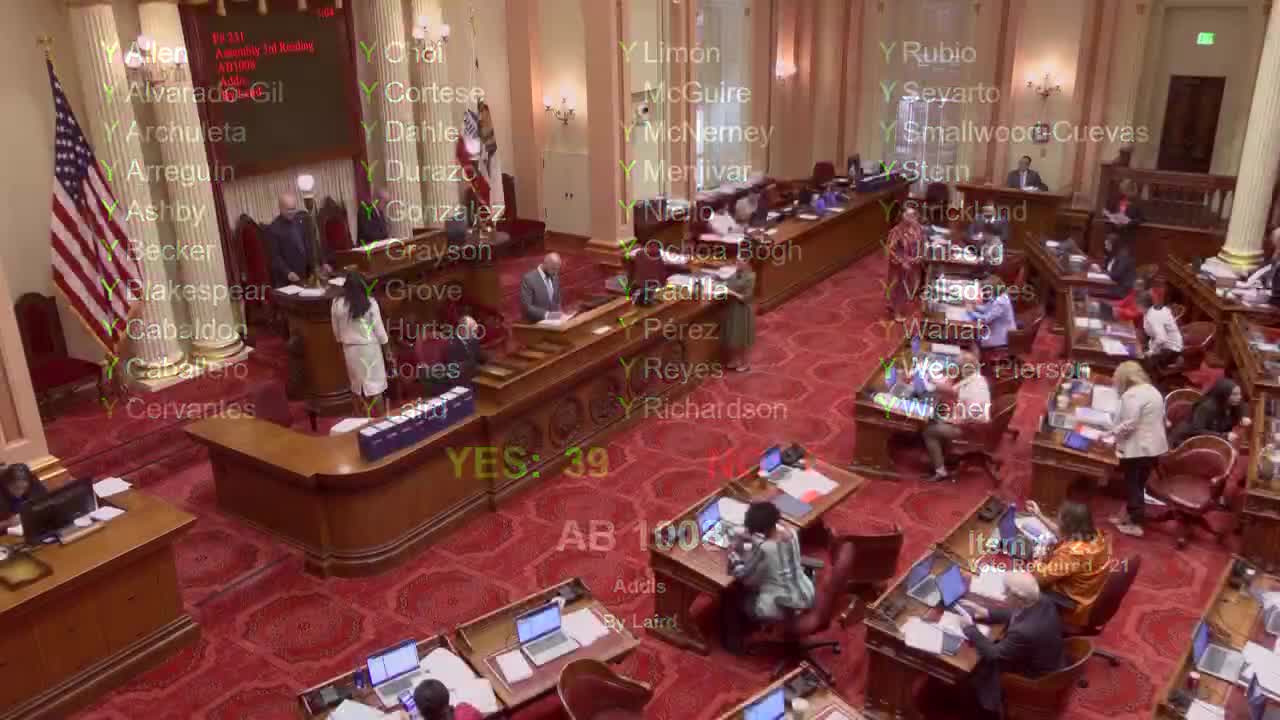 1MIN
Senate Floor
 1MIN
Assembly Floor
 5MIN
Assembly Standing Committee on Health
Bill Author

Bill Co-Author(s):