AB 654: Homelessness resource telephone system.
- Session Year: 2025-2026
- House: Assembly
- Latest Version Date: 2025-04-21
Current Status:
In Progress
(2025-08-29: In committee: Held under submission.)
Introduced
In Committee
Awaiting First Chamber Vote
Passed First Chamber
In Committee
Awaiting Second Chamber Vote
Passed Second Chamber
Enacted
Existing law authorizes a local public agency, as defined, to establish a nonemergency 311 telephone system structured to provide access to only public safety agencies or structured to provide access to public safety agencies and to all other services provided by a local public agency. Existing law generally provides for services for homeless individuals, including the Homeless Emergency Aid program, which provides localities with one-time flexible block grant funds to address their immediate homelessness challenges, the Emergency Housing and Assistance Program, which provides moneys for the provision of shelter to homeless persons, and authorization for a county to establish a homeless adult and family multidisciplinary personnel team with the goal of facilitating the expedited identification, assessment, and linkage of homeless individuals to housing and supportive services within that county.
This bill would authorize a local public agency require the County of Los Angeles to establish a homelessness resource telephone system to receive telephone calls regarding individuals who are experiencing, or at risk of experiencing, homelessness in order to provide those individuals with resources. By imposing new duties on the County of Los Angeles, the bill would impose a state-mandated local program.
This bill would make legislative findings and declarations as to the necessity of a special statute for the County of Los Angeles.
The California Constitution requires the state to reimburse local agencies and school districts for certain costs mandated by the state. Statutory provisions establish procedures for making that reimbursement.
This bill would provide that, if the Commission on State Mandates determines that the bill contains costs mandated by the state, reimbursement for those costs shall be made pursuant to the statutory provisions noted above.
Existing law authorizes a local public agency, as defined, to establish a nonemergency 311 telephone system structured to provide access to only public safety agencies or structured to provide access to public safety agencies and to all other services provided by a local public agency. Existing law generally provides for services for homeless individuals, including the Homeless Emergency Aid program, which provides localities with one-time flexible block grant funds to address their immediate homelessness challenges, the Emergency Housing and Assistance Program, which provides moneys for the provision of shelter to homeless persons, and authorization for a county to establish a homeless adult and family multidisciplinary personnel team with the goal of facilitating the expedited identification, assessment, and linkage of homeless individuals to housing and supportive services within that county.
This bill would authorize a local public agency to establish a homelessness resource telephone system to receive telephone calls regarding individuals who are experiencing, or at risk of experiencing, homelessness in order to provide those individuals with resources.
(a)For purposes of this article, the following definitions apply:
(1)Local public agency means a city, county, city and county, and joint powers authority that provides a public safety answering point (PSAP).(2)Homelessness homelessness resource telephone system means a system structured to provide access to resources provided by a local public agency to help address homelessness.
(b)A local public agency may The County of Los Angeles shall establish a homelessness resource telephone system to receive telephone calls regarding individuals who are experiencing, or at risk of experiencing, homelessness in order to provide those individuals with resources.
SEC. 2.The Legislature finds and declares that a special statute is necessary and that a general statute cannot be made applicable within the meaning of Section 16 of Article IV of the California Constitution because of the unique circumstances facing the County of Los Angeles with regard to homelessness.
SEC. 3.If the Commission on State Mandates determines that this act contains costs mandated by the state, reimbursement to local agencies and school districts for those costs shall be made pursuant to Part 7 (commencing with Section 17500) of Division 4 of Title 2 of the Government Code.
(a)For purposes of this article, the following definitions apply:
(1)Local public agency means a city, county, city and county, and joint powers authority that provides a public safety answering point (PSAP).
(2)Homelessness resource telephone system means a system structured to provide access to resources provided by a local public agency to help address homelessness.
(b)A local public agency may establish a homelessness resource telephone system to receive telephone calls regarding individuals who are experiencing, or at risk of experiencing, homelessness in order to provide those individuals with resources.
|
Date
|
Status
|
|---|---|
| Aug 29, 2025 | In committee: Held under submission. |
| Aug 18, 2025 | In committee: Referred to suspense file. |
| Jul 16, 2025 | From committee: Do pass and re-refer to Com. on APPR. (Ayes 5. Noes 2.) (July 16). Re-referred to Com. on APPR. |
| Jul 1, 2025 | From committee: Do pass and re-refer to Com. on L. GOV. (Ayes 4. Noes 1.) (June 30). Re-referred to Com. on L. GOV. |
| Jun 18, 2025 | Referred to Coms. on HUMAN S. and L. GOV. |
| Jun 4, 2025 | In Senate. Read first time. To Com. on RLS. for assignment. |
| Jun 3, 2025 | Read third time. Passed. Ordered to the Senate. (Ayes 61. Noes 14. Page 1975.) |
| May 27, 2025 | Read second time. Ordered to third reading. |
| May 23, 2025 | From committee: Do pass. (Ayes 12. Noes 2.) (May 23). |
| May 21, 2025 | In committee: Set, first hearing. Referred to APPR. suspense file. |
| May 21, 2025 | Joint Rule 62(a), file notice suspended. (Page 1627.) |
| May 14, 2025 | In committee: Hearing postponed by committee. |
| May 1, 2025 | From committee: Do pass and re-refer to Com. on APPR. (Ayes 8. Noes 2.) (April 30). Re-referred to Com. on APPR. |
| Apr 28, 2025 | From committee: Do pass and re-refer to Com. on C. & C. (Ayes 11. Noes 0.) (April 24). Re-referred to Com. on C. & C. |
| Apr 22, 2025 | Re-referred to Com. on H. & C.D. |
| Apr 21, 2025 | From committee chair, with author's amendments: Amend, and re-refer to Com. on H. & C.D. Read second time and amended. |
| Apr 10, 2025 | Assembly Rule 56 suspended. (Page 1123.) |
| Apr 10, 2025 | (Pending re-refer to Com. on C. & C.) |
| Mar 17, 2025 | Referred to Coms. on H. & C.D. and C. & C. |
| Feb 14, 2025 | From printer. May be heard in committee March 16. |
| Feb 13, 2025 | Read first time. To print. |
|
Date
|
Description
|
Location
|
Votes
|
|
|---|---|---|---|---|
| Aug 18, 2025 | Placed on suspense file | Senate Standing Committee on Appropriations |
Passed |
|
| Jul 16, 2025 | Do pass, but first be re-referred to the Committee on [Appropriations] | Senate Standing Committee on Local Government |
Passed |
|
| Jun 30, 2025 | Do pass, but first be re-referred to the Committee on [Local Government] | Senate Standing Committee on Human Services |
Passed |
|
| Jun 3, 2025 | AB 654 Caloza Assembly Third Reading | Assembly Floor |
Passed |
|
| May 23, 2025 | Do pass. | Assembly Standing Committee on Appropriations |
Passed |
|
| Apr 30, 2025 | Do pass and be re-referred to the Committee on [Appropriations] | Assembly Standing Committee on Communications and Conveyance |
Passed |
|
| Apr 24, 2025 | Do pass and be re-referred to the Committee on [Communications and Conveyance] | Assembly Standing Committee on Housing and Community Development |
Passed |
This list shows positions taken on this bill by organizations on the date displayed, which is linked to the original source.
Positions by individuals are not included.
|
Organization
|
Position
|
Date
|
|---|---|---|
| 2-1-1 Humboldt Info and Resource Center | ** Against | |
| 2-1-1 Humboldt Info and Resource Ctr | ** Against | |
| 211 Alameda | ** Against | |
| 211 California | ** Against | |
| 211 LA County | ** Against | |
| 211 San Diego | ** Against | |
| Community Action Partnership of Kern | ** Against | |
| Community Link Capitol Region | ** Against | |
| Contra Costa Crisis Center | ** Against | |
| Eden I&R, Inc. | ** Against | |
| Family Resource Center | ** Against | |
| Help Central INC / Butte-Glenn 211 | ** Against | |
| Inland Southern California United Way | ** Against | |
| Interface Children & Family Services | ** Against | |
| Los Angeles County Board of Supervisors, Supervisor Hilda Solis | ** Support | |
| Nevada Sierra Connecting Point Public Authority | ** Against | |
| Orange County United Way | ** Against | |
| united way bay area | ** Against | |
| United Way Fresno and Madera Counties | ** Against | |
| United Way Fresno Madera Counties | ** Against | |
| United Way Monterey County | ** Against | |
| United Way of Northern California | ** Against | |
| United Way of Stanislaus County | ** Against | |
| United Way of Tulare County | ** Against | |
| United Way Tulare County | ** Against | |
| United Ways Of California | ** Against |
SENATE COMMITTEE ON
Senator Anna Caballero, Chair
2025 - 2026 Regular Session
AB 654 (Caloza) - Homelessness resource telephone system
Version: | Policy Vote: |
Urgency: | Mandate: |
Hearing Date: | Consultant: |
Bill Summary:
AB 654 would require the County of Los Angeles to establish a homelessness resource telephone system to receive telephone calls regarding individuals who are experiencing, or at risk of experiencing, homelessness in order to provide those individuals with resources.
Fiscal Impact:
Unknown, ongoing costs for Los Angeles County to establish and maintain the system. Costs would be potentially reimbursable by the state, subject to a determination by the Commission on State Mandates.
Background:
The Federal Communications Commission designated 2-1-1 in 2000 as the number to obtain information and referrals to health and human services programs. In response to the Federal Communications Commission designating 2-1-1 as the number to obtain information and referrals, the California Public Utilities Commission (CPUC) issued Decision 03-02-029 (Decision) in 2002. This Decision determined that 2-1-1 services were to be rolled out by counties and created administrative procedures for implementing 2-1-1 dialing in California. In order to be able to provide information and referral services, organizations must apply to the CPUC for authority to use the 2-1-1 code. In 2003, Los Angeles became the first county to be granted such authority. Since then, the CPUC has authorized 2-1-1 dialing services in 53 of California’s 58 counties, covering 99.3 percent of California’s population.
Most of the contacts to the 2-1-1 network are from people looking for help to meet their basic needs such as food, housing, and transportation. During emergencies and natural disasters, 2-1-1 also provides critical public information, including information on shelters, evacuations, food distribution, utility outages, and road closures. However, due to staffing needs, the increased call volume during emergencies can overwhelm the system and lead to people being unable to access 2-1-1 services.
In Los Angeles County, 211 LA currently provides 2-1-1 services in the county. According to 211 LA’s 2024 Annual Report, “As the primary hotline for individuals and families experiencing homelessness in Los Angeles County, 211 LA serves as a critical access point to emergency shelter, crisis housing, and long-term support.”
Proposed Law:
Specific provisions of the bill would:
- Define “homelessness resource telephone system” to mean a system structured to provide access to resources provided by a local public agency to help address homelessness.
- Require the County of Los Angeles to establish a homelessness resource telephone system to receive telephone calls regarding individuals who are experiencing, or at risk of experiencing, homelessness in order to provide those individuals with resources.
-- END --
SENATE COMMITTEE ON LOCAL GOVERNMENT
Senator María Elena Durazo, Chair
2025 - 2026 Regular
Bill No: | AB 654 | Hearing Date: | 7/16/25 |
Author: | Caloza | Fiscal: | Yes |
Version: | 4/21/25 | Consultant: | Peterson |
Homelessness resource telephone system
Requires the County of Los Angeles to establish a homelessness resource telephone system to receive telephone calls regarding individuals experiencing, or at risk of experiencing homelessness.
Background
California’s homelessness crisis. In its December 2024 Annual Homelessness Assessment Report to Congress, the U.S. Department of Housing and Urban Development (HUD) estimated 187,084 Californians are experiencing homelessness, and California accounts for 24% of all people experiencing homelessness in the United States.
2-1-1 phone system. The Federal Communications Commission designated 2-1-1 in 2000 as a nationwide number to obtain information and referrals to health and human services programs. In response to the Federal Communications Commission designating 2-1-1 as the number to obtain information and referrals, the California Public Utilities Commission (CPUC) issued Decision 03-02-029 (Decision) in 2002. This Decision determined that 2-1-1 services were to be rolled out by counties and created administrative procedures for implementing 2-1-1 dialing in California. In order to be able to provide information and referral services, organizations must apply to the CPUC for authority to use the 2-1-1 code. In 2003, Los Angeles became the first county granted such authority. Since then, the CPUC has authorized 2-1-1 dialing services in 53 of California’s 58 counties, covering 99.3% of California’s population.
Most of the contacts to the 2-1-1 network are from people looking for help to meet their basic needs such as food, housing, and transportation. During emergencies and natural disasters, 2-1-1 also provides critical public information, including information on shelters, evacuations, food distribution, utility outages, and road closures. However, due to staffing needs, the increased call volume during emergencies can overwhelm the system and lead to people being unable to access 2-1-1 services. This was the case in February 2024 when winter storms caused damage throughout the Los Angeles region. According to one report, “more than 12,500 calls came through from February 1 through February 13, but with just 13 operators, they were only able to answer 38% of them.” The year before, 211 LA, the nonprofit funded by the city and county of Los Angeles that operates the 2-1-1 line, outlined major operational challenges from the 2022-23 winter shelter season, including having only “one-third of the resources necessary to handle the call volume.”[1] Many people who are unhoused call 2-1-1 to be referred to shelter and other resources.
The author wants LA County to create a dedicated phone line for homelessness services.
Proposed Law
Assembly Bill 654 requires the County of Los Angeles to establish a homelessness resource telephone system to receive telephone calls regarding individuals experiencing, or at risk of experiencing homelessness to provide those individuals resources.
Comments
1. Purpose of the bill. According to the author, “Los Angeles County is the epicenter of our homelessness crisis and our residents are desperate for more solutions and a coordinated response for how to help our most vulnerable. AB 654 provides local governments with a new tool - a dedicated homelessness response line managed by direct service providers - to ensure that people experiencing or at risk of homelessness can be connected to services more efficiently. This bill is a commonsense step to close a critical gap in our homelessness response systems and improve outcomes for some of our most vulnerable residents.”
2. Necessary? AB 654 requires Los Angeles County to create a homeless-specific telephone system. However, Los Angeles can already procure its own phone systems. In fact, it already has. Los Angeles County contracts with nonprofit to provide a 211 phone number that people can contract regarding many county services, including homelessness. It does not appear that LA County needs legislative authority to operate another phone system specific to homelessness. The current 211 system appears overwhelmed by call volume, which argues as much for giving more resources to the existing system as it does for diverting resources to create an entirely new one. Whether this new phone system duplicates or supplements its existing systems is something Los Angeles County residents can assess for themselves locally.
3. Mandate. The California Constitution requires the state to reimburse local governments for the costs of new or expanded state mandated local programs. Because AB 654 imposes new duties on local agencies, Legislative Counsel says it imposes a new state mandate. The measure states that if the Commission on State Mandates determines that the bill imposes a reimbursable mandate, then reimbursement must be made pursuant to existing statutory provisions.
AB 654 not only overrides local decisionmaking, but because it is a state mandate, the state could be on the hook for financing the phone system without any clear plan in place for when the County will do so, how much it will cost, or how it will measure the system’s effectiveness. Should the rest of the state pay for a phone system that Los Angeles County create on its own?
4. Special legislation. Section 16 of Article IV of the California Constitution prohibits special legislation when a general law can apply. AB 654 contains findings and declarations explaining the need for legislation that applies only to the County of Los Angeles because of unique circumstances facing the County of Los Angeles with regard to homelessness.
5. Incoming! The Senate Rules Committee has ordered a double referral of AB 654: first to the Committee on Human Services, which approved AB 654 at its June 30th hearing on a vote of 4-1, and second to the Committee on Local Government.
Assembly Actions
Assembly Housing and Community Development Committee: 11-0
Assembly Communications and Conveyance Committee: 8-2
Assembly Appropriations Committee: 12-2
Assembly Floor: 61-14
Support and Opposition
(7/11/25)
Support: Los Angeles County Board of Supervisors, Supervisor Hilda Solis
Opposition: 2-1-1 Humboldt Info and Resource Ctr
211 Alameda
211 California
211 LA County
211 San Diego
Community Action Partnership of Kern
Community Link Capitol Region
Contra Costa Crisis Center
Eden I&r, INC.
Family Resource Center
Help Central INC / Butte-glenn 211
Inland Southern California United Way
Interface Children & Family Services
Nevada Sierra Connecting Point Public Authority
Orange County United Way
United Way Bay Area
United Way Fresno and Madera Counties
United Way Fresno Madera Counties
United Way Monterey County
United Way of Northern California
United Way of Stanislaus County
United Way of Tulare County
United Way Tulare County
United Ways of California
-- END --
https://laist.com/news/housing-homelessness/211-emergency-winter-shelter-long-wait-times ↑
SENATE COMMITTEE ON HUMAN SERVICES
Senator Arreguín, Chair
2025 - 2026 Regular
Bill No: | AB 654 | ||
Author: | Caloza | ||
Version: | April 21, 2025 | Hearing Date: | June 30, 2025 |
Urgency: | No | Fiscal: | Yes |
Consultant: | Naima Ford Antal | ||
Subject: Homelessness resource telephone system
SUMMARY
This bill requires the County of Los Angeles to establish a homelessness resource telephone system to receive telephone calls regarding individuals who are experiencing, or at risk of experiencing, homelessness in order to provide those individuals with resources.
ABSTRACT
Existing Law:
- Defines, “homeless”, “homeless individual”, and “homeless person” as:
- An individual or family who lacks a fixed, regular, and adequate nighttime residence
- An individual or family with a primary nighttime residence that is a public or private place not designed for or ordinarily used as a regular sleeping accommodation for human beings, including a car, park, abandoned building, bus or train station, airport, or camping ground
- An individual or family living in a supervised publicly or privately operated shelter designated to provide temporary living arrangements
- An individual who resided in a shelter or place not meant for human habitation and who is exiting an institution where he or she temporarily resided
- An individual or family who:
- Will imminently lose their housing, including housing they own, rent, or live in without paying rent, are sharing with others, and rooms in hotels or motels not paid for by Federal, State, or local government programs for low-income individuals or by charitable organizations; and
- Has no subsequent residence identified; and
- Lacks the resources or support networks needed to obtain other permanent housing;
- Unaccompanied youth and homeless families with children and youth defined as homeless under other Federal statutes. (42 USC 11302)
- States that all laws of a general nature have uniform operation. A local or special statute is invalid in any case if a general statute can be made applicable. (California Constitution Article 4 Section 16)
- Allows counties to create homeless adult and family multidisciplinary personnel team consisting of relevant local agencies to expedite identification, assessment, and linkage of homeless individuals to housing and supportive services. (Welfare and Institutions Code (WIC) 18999.8)
- Allows a homeless adult and family multidisciplinary personnel team in the Counties of Los Angeles, Orange, Riverside, San Bernardino, San Diego, San Mateo, Santa Clara, and Ventura to additionally have the goal of facilitating the expedited identification, assessment, and linkage of individuals at risk of homelessness to housing and supportive services within that county, and the goal of facilitating the expedited prevention of homelessness for those individuals. (WIC 18999.81)
- Assigns 2-1-1 as a national abbreviated dialing code to be used for access to community information and referral services. Delegates to state commissions, including the California Public Utilities Commission (CPUC), the authority to certify informational and referral providers that will enable them to receive calls from those who dial 2-1-1. Requires all local exchange carriers to provide 2-1-1 call origination services at reasonable rates in those territories that will be served by 2-1-1 (Federal Communications Commission N11 Third Report and Order)
- Allocates $1,500,000 from the California Teleconnect Fund Administrative Committee Fund for one-time costs to help close 2-1-1 service gaps in counties lacking access to disaster preparedness, response, and recovery information and referral services, where technically feasible, through available 2-1-1 service. (Public Utilities Code 280 (g))
- Provides that the CPUC may supervise and regulate every public utility in the State and may do all things which are necessary and convenient in the exercise of such power and jurisdiction. (Public Utilities Code 701).
This Bill:
- Defines a “homelessness resource telephone system” to mean a system structured to provide access to resources provided by a local public agency to help address homelessness.
- Requires the County of Los Angeles to establish a homelessness resource telephone system to receive telephone calls regarding individuals who are experiencing, or at risk of experiencing, homelessness in order to provide those individuals with resources.
- Finds and declares that a special statute is necessary and that a general statute cannot be made applicable within the meaning of Section 16 of Article IV of the California Constitution because of the unique circumstances facing the County of Los Angeles with regard to homelessness.
FISCAL IMPACT
According to the Assembly Appropriations Committee, “Costs to the County of Los Angeles of an unknown amount, but potentially greater than $150,000, to establish and implement a homelessness resource telephone system and establish or connect to a community referral system. The county has a “211” service number that provides access to local community services and is available in multiple languages. It is unclear to what extent the phone system proposed by this bill might be integrated or separate from the existing “211” service. These costs are potentially reimbursable by the state, subject to a determination by the Commission on State Mandates.”
BACKGROUND AND DISCUSSION
Purpose of the Bill:
According to the author, "Los Angeles County is the epicenter of our homelessness crisis and our residents are desperate for more solutions and a coordinated response for how to help our most vulnerable. AB 654 provides local governments with a new tool - a dedicated homelessness response line managed by direct service providers - to ensure that people experiencing or at risk of homelessness can be connected to services more efficiently. This bill is a commonsense step to close a critical gap in our homelessness response systems and improve outcomes for some of our most vulnerable residents."
California Homelessness Data
Since 2016, homelessness in America, and particularly in California, has been growing at an increasing rate. Homelessness has been correlated with a number of negative effects, including high rates of chronic disease and acute illness, a broad range of mental health and substance use issues, greater exposure to violence, malnutrition, extreme weather, and criminal charges. The health, personal, and economic challenges that chronically homeless individuals and families face and the lack of effective, coordinated services to address these problems often lead to a cycle of housing instability and health deterioration. Persistent homelessness impedes access to needed health and employment services. Additionally, the conditions of homelessness often make it more difficult to exit homelessness, by creating barriers to the resources necessary to obtain income through training, education, and employment.
Each January, the U.S. Department of Housing and Urban Development (HUD) has local community Continuums of Care conduct a Point in Time count of people experiencing homelessness. HUD defines homelessness as either “sheltered” or “unsheltered”. Sheltered homelessness is when a person is living in a temporary place, such as a temporary shelter and unsheltered homelessness is living out in the open or in places not designated for, or ordinarily used as, a regular sleeping accommodation for people (i.e. the streets, vehicles, or parks). The Point in Time count is required by HUD as a condition of receiving federal funding. According to the 2024 Point in Time count, 187,084 people experienced homelessness in California, representing 28 percent of the nation’s homelessness population. Additionally, California also had the highest rate of unsheltered people at 66%.
Homelessness in Los Angeles
Los Angeles County has been the focus of a lot of attention when the topic of increasing homelessness is raised. The city of Los Angeles and Skid Row are at the center of that discussion. The 2024 Point in Time Count identified 75,312 people experiencing homelessness in Los Angeles County and 45,252 in the city of Los Angeles. Many efforts have been made to decrease homelessness over the years. The Los Angeles Homeless Services Authority was created in 1990s to create a coordinated approach to decreasing homelessness in the city. More recently, Los Angles Mayor Karen Bass declared a homelessness crisis and created a number of initiatives in partnership with other organizations and local governments to combat the rise of people living unhoused. These programs connect unhoused people with temporary and interim shelter, as well as services. According to Los Angeles Homeless Services Authority, the 2024 Point in Time count showed a decrease in people experiencing homelessness for the first time in six years, a 17% decrease.
2-1-1 System
The Federal Communications Commission designated 2-1-1 in 2000 as the number to obtain information and referrals to health and human services programs. In response to the Federal Communications Commission designating 2-1-1 as the number to obtain information and referrals, the CPUC issued Decision 03-02-029 (Decision) in 2002. This Decision determined that 2-1-1 services were to be rolled out by counties and created administrative procedures for implementing 2-1-1 dialing in California. In order to be able to provide information and referral services, organizations must apply to the CPUC for authority to use the 2-1-1 code. In 2003, Los Angeles became the first county to be granted such authority. Since then, the CPUC has authorized 2-1-1 dialing services in 53 of California’s 58 counties, covering 99.3% of California’s population.
Most of the contacts to the 2-1-1 network are from people looking for help to meet their basic needs such as food, housing, and transportation. During emergencies and natural disasters, 2-1-1 also provides critical public information, including information on shelters, evacuations, food distribution, utility outages, and road closures. However, due to staffing needs, the increased call volume during emergencies can overwhelm the system and lead to people being unable to access 2-1-1 services. This was the case in February 2024 when winter storms caused damage throughout the Los Angeles region. According to one report, “more than 12,500 calls came through from February 1 through February 13, but with just 13 operators, they were only able to answer 38% of them.” The year before 211 LA, the nonprofit funded by the city and county of Los Angeles that operates the 2-1-1 line, outlined major operational challenges from the 2022-23 winter shelter season, including having only “one-third of the resources necessary to handle the call volume.”[1] Many people who were unhoused called 2-1-1 to be referred to shelter and other resources. AB 654 would create a homeless resource telephone system that is dedicated to addressing the needs of people experiencing homelessness at all times, including disasters, by connecting them with resources created for people experiencing homelessness in in the County of Los Angeles.
Related/Prior Legislation:
SB 318 (Ochoa Bogh, 2023) would have required CDSS to establish, develop, implement, and administer the 2-1-1 Support Services Grant Program. SB 318 was held on the Assembly Appropriations suspense file.
SB 1212 (Hueso, Chapter 841, Statutes of 2016) authorized the California Public Utilities Commission (CPUC) to expend up to $1.5 million from the California Teleconnect Fund (CTF) Administrative Committee to help close telephone service gaps in counties lacking access to 2-1-1 referral service, including implementation of a coordinated publicly owned database.
COMMENTS
AB 654 would create a phone line dedicated to the needs of people experiencing homelessness in Los Angeles County. Los Angeles County has a significant portion of California’s homeless population and has various agencies, nonprofit organizations, dedicated funding streams and pilot programs to help address the issue. The county is not alone in the growth it has experienced of the number of people experiencing homelessness but the scope is unique. This bill seeks to add another “tool to the toolbox” for Los Angeles County. However, it is unclear whether the overlap of services between the phone line this bill would create and 2-1-1 will cause confusion. It is also unclear how the author will ensure the phone line remains adequately resourced and does not experience the same staffing challenges the 2-1-1 system faces.
Double Referral: This bill has been double referred. Should this bill pass out of this Committee, it will be referred to the Senate Committee on Local Government.
PRIOR VOTES
| |
Assembly Floor: | 61 - 14 |
Assembly Appropriations Committee: | 12 - 2 |
Assembly Housing and Community Development Committee: | 11 - 0 |
POSITIONS
Support:
Supervisor Hilda Solis, Los Angeles County Board of Supervisors
Oppose:
None received
-- END --
https://laist.com/news/housing-homelessness/211-emergency-winter-shelter-long-wait-times ↑
ASSEMBLY THIRD READING
ATR Bill Id:AB 654
Author:(Caloza)
As Amended Ver:April 21, 2025
Majority vote
SUMMARY
Requires Los Angeles County to establish a homelessness resource telephone system to receive telephone calls regarding individuals who are experiencing, or at risk of experiencing, homelessness in order to provide those individuals with resource.
Major Provisions
- Defines "homelessness resource telephone system" means a system structured to provide access to resources provided by a local public agency to help address homelessness.
- Declares the need for a special statute to and that a general statute cannot be made applicable within the meaning of Section 16 of Article IV of the California Constitution because of the unique circumstances facing the County of Los Angeles with regard to homelessness.
COMMENTS
Homelessness in California: Based on the 2024 point in time count, 187,000 people are experiencing homelessness on any given night California. Many of those people, 66% or 126,420 are unsheltered, meaning they are living outdoors and not in temporary shelters. Nearly half of all unsheltered people in the country were in California during the 2024 count. However, homelessness grew at a higher rate in the nation (18%) than in California (3%) from 2023 to 2024, driven by a 25% jump in sheltered homelessness in the US compared to 9% in California. The homelessness crisis is driven by the lack of affordable rental housing for lower income people. In the current market, 2.2 million extremely low-income and very low-income renter households are competing for 664,000 affordable rental units. Of the six million renter households in the state, 1.7 million are paying more than 50% of their income toward rent. The National Low Income Housing Coalition estimates that the state needs an additional 1.5 million housing units affordable to very-low income Californians.
The High Cost of Housing: The high cost of housing is the cause of homelessness in California. Other states with higher rates of overdose but lower costs of housing report much lower rates of homelessness. West Virginia leads overdose deaths per capita but has one of the lowest homelessness rates in the country. A study by the National Low Income Housing Coalition found that West Virginia has 50 affordable and available rental homes for every 100 extremely-low-income households, more than double the number that California has. A family in West Virginia can afford a two-bedroom rental on less than $17 an hour – the second-lowest figure in the nation. In California a family would need more than $40 per hour to be able to afford an average two-bedroom rental.
California needs an additional 2.5 million units of housing to meet the state's need, including 643,352 for very low-income households and 394,910 for lower income households. Since 2018, California has permitted 890,000 units of new housing, with 126,000 of those being low- and very low-income units. The Legislature has passed major legislation in recent years to allow affordable housing to be built on almost any site in the state. However, the lack of housing overall and in particular the continued lack of sufficient affordable housing is a problem that is decades in the making. Millions of Californians, who are disproportionately lower income and people of color, must make hard decisions about paying for housing at the expense of food, health care, child care, and transportation—one in three households in the state doesn't earn enough money to meet their basic needs. Currently, according to HDIS data, for every five individuals who access homelessness services in California, only one is housed each year, leaving four unhoused.
"211" Program – The FCC designated "211" to be used to access non-emergency community information and referral (I&R) providers. "211" is a free telephone number providing access to local community services and is available in multiple languages, allowing those in need to access information and obtain referrals to physical and mental health resources; housing, utility, food, and employment assistance; and suicide and crisis interventions. "211" also provides disaster preparedness, response, and recovery during declared emergencies.
Upon dialing "211," a caller is routed to a referral service and then to an agency that can provide information concerning social services such as housing assistance, programs to assist with utility bills, food assistance and other less urgent situations not currently addressed by either "911" or "311" service. In 2003 the CPUC adopted the regulatory policies and procedures needed to implement "211" dialing, whereby Californians can obtain information about, and referral to, community social services via the "211" abbreviated dialing code. The "211" is supported by United Way, public and private funders, and city and county agencies. There are no surcharges on telecommunication customers to support "211". Federal approval is needed to establish a three digit number. In order to effectuate the policy in this bill, the County will need to get federal approval.
The City and County of Los Angeles fund the region's LA 211, which is operated by United Way of Greater Los Angeles which maintains and curates a database of approximately 50,000 health and social services available to Los Angeles County residents for free or at a low cost. These services include housing, transportation, employment, legal assistance, mental health, food and more. According to recent reports, more than 12,500 calls came through from Feb. 1 through Feb. 13, but with just 13 operators, they were only able to answer 38% of them. The number of calls increases significantly during poor weather when people are looking to come indoors. LA 211 has identified major resources challenges and estimates only having one-third of the resources necessary to respond to calls.
According to the Author
According to the author, "Los Angeles County and communities across California are facing a growing crisis at the intersection of homelessness, mental health, and public safety. AB 654 provides local governments with a new tool - a dedicated homelessness response line - to ensure that people experiencing or at risk of homelessness can be connected to appropriate services more efficiently. This bill is a commonsense step to close a critical gap in our emergency and outreach systems and improve outcomes for some of our most vulnerable residents."
Arguments in Support
According to Los Angeles County Supervisor Hilda Solis, "Los Angeles County is facing an urgent and persistent crisis at the intersection of homelessness, mental health, and public safety. In 2024 alone, over 75,000 individuals experienced homelessness across LA County -a staggering number straining existing responses spanning multiple departments and jurisdictions, including those under the purview of the County and those overseen by 88 incorporated cities. Many calls for assistance are funneled through 911 and 211, as well as dedicated lines through various County entities including the Department of Mental Health and the Department of Health Services.
Too often, calls related to encampments, individuals in visible distress, or requests for shelter support face excessive wait times or delayed responses. 211 assists residents with more than 100 different types of requests including utility assistance, sidewalk repairs, tree removals and more. In 2023, 23.8% or over 739,000 of all contacts with 211 Los Angeles County were related to individuals seeking emergency housing or homeless support services. While 211 is an important resource, the volume of homelessness-related inquiries requires a dedicated service line to adequately respond to the needs of our constituents. This system would also allow other emergency services to focus on other issues."
Arguments in Opposition
Organizations that operate "211" numbers, are opposed to this bill, they write, "We applaud the Author's goal of ensuring easy, prompt access to live support and resource connections for people experiencing homelessness. This is a goal shared by 2-1-1 and our local partners. However, the solution for locations where homeless callers to 2-1-1 experience long wait times during weather events or due to high volumes of calls is not to create a separate system, but to fund the capacity to meet the demand of the current system. 211 California and over 60 partners and supporters have submitted a budget request to the Assembly and Senate that would address this need and add capacity to the 2-1-1 system. This is the simple solution to address this issue."
FISCAL COMMENTS
According to the Assembly Appropriations Committee,
Costs to the County of Los Angeles of an unknown amount, but potentially greater than $150,000, to establish and implement a homelessness resource telephone system and establish or connect to a community referral system. The county has a "211" service number that provides access to local community services and is available in multiple languages. It is unclear to what extent the phone system proposed by this bill might be integrated or separate from the existing "211" service. These costs are potentially reimbursable by the state, subject to a determination by the Commission on State Mandates.
VOTES
ASM HOUSING AND COMMUNITY DEVELOPMENT: 11-0-1
YES: Haney, Patterson, Ávila Farías, Caloza, Garcia, Kalra, Lee, Quirk-Silva, Ta, Wicks, Wilson
ABS, ABST OR NV: Tangipa
ASM COMMUNICATIONS AND CONVEYANCE: 8-2-0
YES: Boerner, Ahrens, Bonta, Caloza, Garcia, Lowenthal, Rogers, Blanca Rubio
NO: Hoover, Castillo
ASM APPROPRIATIONS: 12-2-1
YES: Wicks, Arambula, Calderon, Caloza, Elhawary, Fong, Mark González, Hart, Pacheco, Pellerin, Solache, Ta
NO: Dixon, Tangipa
ABS, ABST OR NV: Sanchez
UPDATED
VERSION: April 21, 2025
CONSULTANT: Lisa Engel / H. & C.D. / (916) 319-2085 FN: 0000587
Date of Hearing: May 21, 2025
ASSEMBLY COMMITTEE ON APPROPRIATIONS
Buffy Wicks, Chair
ABPCA Bill Id:AB 654
Author:(Caloza) – As Amended Ver:April 21, 2025
Policy Committee: | Housing and Community Development | Vote: | 11 - 0 |
Communications and Conveyance | 8 - 2 | ||
|
|
Urgency: No State Mandated Local Program: Yes Reimbursable: Yes
SUMMARY:
This bill requires the County of Los Angeles to establish a homelessness resource telephone system to receive telephone calls regarding individuals who are experiencing, or at risk of experiencing, homelessness to provide those individuals with resources. The bill defines “homelessness resource telephone system” to mean a system structured to provide access to resources provided by a local public agency to help address homelessness
FISCAL EFFECT:
Costs to the County of Los Angeles of an unknown amount, but potentially greater than $150,000, to establish and implement a homelessness resource telephone system and establish or connect to a community referral system. The county has a “211” service number that provides access to local community services and is available in multiple languages. It is unclear to what extent the phone system proposed by this bill might be integrated or separate from the existing “211” service. These costs are potentially reimbursable by the state, subject to a determination by the Commission on State Mandates.
COMMENTS:
- Purpose. According to the author:
Los Angeles County and communities across California are facing a growing crisis at the intersection of homelessness, mental health, and public safety. [This bill] provides local governments with a new tool - a dedicated homelessness response line - to ensure that people experiencing or at risk of homelessness can be connected to appropriate services more efficiently. This bill is a commonsense step to close a critical gap in our emergency and outreach systems and improve outcomes for some of our most vulnerable residents.
- Background. “211” Program. The Federal Communications Commission (FCC)-designated “211” is used to access non-emergency community information and referral (I&R) providers. “211” is a free telephone number providing access to local community services in multiple languages, allowing those in need to access information and obtain referrals to physical and mental health resources; housing, utility, food, and employment assistance; and suicide and crisis interventions. “211” also provides disaster preparedness, response, and recovery during declared emergencies.
The City and County of Los Angeles fund the region’s LA 211, operated by United Way of Greater Los Angeles, which maintains and curates a database of approximately 50,000 health and social services available to Los Angeles County residents at no charge or for a low cost. These services include housing, transportation, employment, legal assistance, mental health, food and more. According to recent reports, more than 12,500 calls came through from February 1 through February 13, but with just 13 operators, they were only able to answer 38% of them. LA 211 has identified major resources challenges and estimates only having one-third of the resources necessary to respond to calls.
This bill requires the County of Los Angeles to establish a similar telephone system dedicated exclusively to providing resources to those experiencing, or at risk of experiencing, homelessness.
According to the Assembly Communication and Conveyance Committee’s analysis:
While this bill does not address the specifics of the type of telephone system the County would be required to establish, in general establishing a 3-digit phone number would be difficult or impossible. The FCC has exclusive jurisdiction over telephone numbering in the United States but has delegated specific authority to state regulatory agencies. The policies governing numbering are designed to promote competitive markets and ensure the efficient use of numbers. Given this constraint, the County would likely need to implement a 10-digit phone number, which may be more difficult to remember or utilize for individuals experiencing homelessness.
- Arguments in Support: Supervisor Hilda Solis, Los Angeles County Board of Supervisors asserts:
Too often, calls related to encampments, individuals in visible distress, or requests for shelter support face excessive wait times or delayed responses. 211 assists residents with more than 100 different types of requests including utility assistance, sidewalk repairs, tree removals and more. In 2023, 23.8% of over 739,000 of all contacts with 211 Los Angeles County were related to individuals seeking emergency housing or homeless support services. While 211 is an important resource, the volume of homelessness-related inquiries requires a dedicated service line to adequately respond to the needs of our constituent. This system would also allow other emergency services to focus on other issues.
- Arguments in Opposition. Organizations that operate “211” numbers, are opposed to this bill. They collectively write:
We applaud the Author’s goal of ensuring easy, prompt access to live support and resource connections for people experiencing homelessness. This is a goal shared by 2-1-1 and our local partners. However, the solution for locations where homeless callers to 2-1-1 experience long wait times during weather events or due to high volumes of calls is not to create a separate system, but to fund the capacity to meet the demand of the current system. 211 California and over 60 partners and supporters have submitted a budget request to the Assembly and Senate that would address this need and add capacity to the 2-1-1 system. This is the simple solution to address this issue.
Analysis Prepared by: Jennifer Swenson / APPR. / (916) 319-2081
Date of Hearing: April 30, 2025
ASSEMBLY COMMITTEE ON COMMUNICATIONS AND CONVEYANCE
Tasha Boerner, Chair
ABPCA Bill Id:AB 654 (
Author:Caloza) – As Amended Ver:April 21, 2025
SUBJECT: Homelessness resource telephone system
SUMMARY: Requires Los Angeles County to establish a homelessness resource telephone system to receive telephone calls regarding individuals who are experiencing, or at risk of experiencing, homelessness in order to provide those individuals with resource
Specifically, this bill:
- Defines “homelessness resource telephone system” means a system structured to provide access to resources provided by a local public agency to help address homelessness.
- Declares the need for a special statute to and that a general statute cannot be made applicable within the meaning of Section 16 of Article IV of the California Constitution because of the unique circumstances facing the County of Los Angeles with regard to homelessness.
EXISTING LAW:
- Establishes the Warren-911-Emergency Assistance Act, which requires every public agency to have in operation a telephone service which automatically connects a person dialing the digits “911” to an established public safety answering point (PSAP) from any communications device; requires every “911” system to include police, firefighting, and emergency medical, and ambulance services. (Government Code Section 53100 et seq.)
- Designates “988” as the 3-digit dialing code for the National Suicide Prevention Lifeline (NSPL) and requires that service providers transmit all calls initiated by an end user dialing “988” to the current toll free access number for the NSPL no later than July 16, 2022, and pay for the costs of doing so. (Federal Communications Commission (FCC) 20-100)
- Establishes the federal National Suicide Hotline Designation (NSHD) Act, designating the three-digit telephone number “988” as the universal number within the United States for the purpose of the national suicide prevention and mental health crisis hotline system operating through the NSPL maintained by the Assistant Secretary of the Department of Health and Human Services’ Substance Abuse and Mental Health Services Administration (SAMHSA) and the Veterans Crisis line maintained by the Secretary of Veterans Affairs. (Public Law No: 116-172, 10/17/2020)
- Specifies that county mental health services should be organized to provide immediate response to individuals in pre-crisis and crisis and to members of the individual’s support system, on a 24-hour, seven-day-a-week basis and authorizes provision of crisis services offsite, as in mobile services.
FISCAL EFFECT: Unknown. This bill is keyed fiscal by the Legislative Counsel.
COMMENTS:
- Author’s Statement: According to the author, "Los Angeles County and communities across California are facing a growing crisis at the intersection of homelessness, mental health, and public safety. AB 654 provides local governments with a new tool - a dedicated homelessness response line - to ensure that people experiencing or at risk of homelessness can be connected to appropriate services more efficiently. This bill is a commonsense step to close a critical gap in our emergency and outreach systems and improve outcomes for some of our most vulnerable residents."
- Homelessness in California and Los Angeles County: Based on the 2024 point in time count, 187,000 people are experiencing homelessness on any given night California. Many of those people, 66% or 126,420 are unsheltered, meaning they are living outdoors and not in temporary shelters. Nearly half of all unsheltered people in the country were in California during the 2024 count, and a large part of that population is within Los Angeles County in particular. According to the Greater Los Angeles Homeless County, there were 75,312 homeless individuals in Los Angeles County alone. The homelessness crisis is driven by the lack of affordable rental housing for lower income people. In the current market, 2.2 million extremely low-income and very low-income renter households are competing for 664,000 affordable rental units. Of the six million renter households in the state, 1.7 million are paying more than 50% of their income toward rent. The National Low Income Housing Coalition estimates that the state needs an additional 1.5 million housing units affordable to very-low income Californians. Given the particularly dire impact of homelessness in Los Angeles County, the author’s approach to narrow this bill’s requirements to that County are reasonable.
- Homelessness is a problem, will another phone number help? The high cost of housing is the cause of homelessness in California, and the high cost of housing is due in part to low inventory. California needs an additional 2.5 million units of housing to meet the state’s need, including 643,352 for very low-income households and 394,910 for lower income households. While this bill is obviously not intended to address the root causes of homelessness, the author’s intent is to connect individuals experiencing homelessness to resources that may provide temporary shelter or other assistance. Under state and federal policies, the “211” number is already designated for this type of purpose.
“211” is a free telephone number providing access to local community services and is available in multiple languages, allowing those in need to access information and obtain referrals to physical and mental health resources; housing, utility, food, and employment assistance; and suicide and crisis interventions. “211” also provides disaster preparedness, response, and recovery during declared emergencies. Upon dialing “211,” a caller is routed to a referral service and then to an agency that can provide information concerning social services such as housing assistance and other less urgent situations not currently addressed by either “911” “988”, or “311” service.
While “211” is intended to be a resource for individuals experiencing homelessness, in practice there are challenges, especially in Los Angeles County. The City and County of Los Angeles fund the region’s LA 211, which is operated by United Way of Greater Los Angeles which maintains and curates a database of approximately 50,000 health and social services available to Los Angeles County residents for free or at a low cost. According to recent reports, more than 12,500 calls came through from Feb. 1 through Feb. 13, but with just 13 operators, they were only able to answer 38% of them. The number of calls increases significantly during poor weather when people are looking to come indoors. LA 211 has identified major resources challenges and estimates only having one-third of the resources necessary to respond to calls. Nonetheless, this bill does not propose a solution to addressing the existing LA 211 backlog. Instead, this bill as written seemingly proposes to require the County to create a different number for homeless resources specifically.
- Establishing a 3-digit phone number would require federal approval. While this bill does not address the specifics of the type of telephone system the County would be required to establish, in general establishing a 3-digit phone number would be difficult or impossible. The Federal Communications Commission (FCC) has exclusive jurisdiction over telephone numbering in the United States but has delegated specific authority to state regulatory agencies. The policies governing numbering are designed to promote competitive markets and ensure the efficient use of numbers. Given this constraint, the County would likely need to implement a 10-digit phone number, which may be more difficult to remember or utilize for individuals experiencing homelessness. Should this bill move forward, the author may wish to clarify the type of phone system that would be required by the County and to what extent that phone system might be integrated or separate from the existing “211” service.
- Double referral. This bill was previously heard in the Assembly Housing and Community Development Committee. The vote was 10-0.
- Similar/related legislation.
- AB 3020 (Reyes) of 2024 would have established the 2-1-1 Strategic Advisory Committee, for the general purpose of improving the state’s 2-1-1 system. The bill was held in Assembly Appropriation Committee.
- SB 319 (Ochoa-Bough) of 2023 would have required, upon appropriation, the California Department of Social Services (CDSS) to develop and administer the 2-1-1 Support Services Grant Program to stabilize, support, and expand 2-1-1 service to all areas of California. The bill was held in Assembly Appropriations Committee.
- SB 74 (Mitchell), Chapter 6, Statutes of 2020, & AB 74 (Ting), Chapter 23, Statutes of 2019, appropriated $1.5 million for encumbrance or expenditure until June 30, 2024, for payment of claims related to expanding 2-1-1 services to unserved and underserved areas, and appropriated $1.5 million for liquidation of encumbrances until June 30, 2026, related to expanding 2-1-1 services to unserved and underserved areas.
c. SB 1212 (Hueso), Chapter 841, Statutes of 2016, authorized the CPUC to expend up to $1.5 million from the California Teleconnect Fund (CTF) Administrative Committee to help close telephone service gaps in counties lacking access to 2-1-1 referral service, including implementation of a coordinated publicly owned database.
REGISTERED SUPPORT / OPPOSITION:
Support
Supervisor Hilda Solis, Los Angeles County Board of Supervisors
Opposition
None on file.
Analysis Prepared by: Emilio Perez / C. & C. / (916) 319-2637
Date of Hearing: April 24, 2025
ASSEMBLY COMMITTEE ON HOUSING AND COMMUNITY DEVELOPMENT
Matt Haney, Chair
ABPCA Bill Id:AB 654 (
Author:Caloza) – As Amended Ver:April 21, 2025
SUBJECT: Homelessness resource telephone system
SUMMARY: Requires Los Angeles County to establish a homelessness resource telephone system to receive telephone calls regarding individuals who are experiencing, or at risk of experiencing, homelessness in order to provide those individuals with resource. Specifically, this bill:
- Defines “homelessness resource telephone system” means a system structured to provide access to resources provided by a local public agency to help address homelessness.
- Declares the need for a special statute to and that a general statute cannot be made applicable within the meaning of Section 16 of Article IV of the California Constitution because of the unique circumstances facing the County of Los Angeles with regard to homelessness.
EXISTING LAW:
- Establishes the Warren-911-Emergency Assistance Act, which requires every public agency to have in operation a telephone service which automatically connects a person dialing the digits “911” to an established public safety answering point (PSAP) from any communications device; requires every “911” system to include police, firefighting, and emergency medical, and ambulance services. (Government Code Section 53100 et seq.)
- Sets a fee on each telephone access line, not to exceed $0.80 per access line per month, to fund the “911” emergency system overseen by the Governor’s Office of Emergency Services (OES). (Revenue & Taxation Code Section 41030)
- Directs the California Public Utilities Commission (CPUC) to fund six public purpose programs through the assessment of surcharges on telecommunications customers which are collectively 7.749 percent of a customer’s provider charges as of December 2020. (Public Utilities Code Section 280 et seq. and 873)
- Designates “988” as the 3-digit dialing code for the National Suicide Prevention Lifeline (NSPL) and requires that service providers transmit all calls initiated by an end user dialing “988” to the current toll free access number for the NSPL no later than July 16, 2022, and pay for the costs of doing so. (Federal Communications Commission (FCC) 20-100)
- Establishes the federal National Suicide Hotline Designation (NSHD) Act, designating the three-digit telephone number “988” as the universal number within the United States for the purpose of the national suicide prevention and mental health crisis hotline system operating through the NSPL maintained by the Assistant Secretary of the Department of Health and Human Services’ Substance Abuse and Mental Health Services Administration (SAMHSA) and the Veterans Crisis line maintained by the Secretary of Veterans Affairs. (Public Law No: 116-172, 10/17/2020)
- Specifies that county mental health services should be organized to provide immediate response to individuals in pre-crisis and crisis and to members of the individual’s support system, on a 24-hour, seven-day-a-week basis and authorizes provision of crisis services offsite, as in mobile services.
FISCAL EFFECT: None.
COMMENTS:
Author’s Statement: According to the author, "Los Angeles County and communities across California are facing a growing crisis at the intersection of homelessness, mental health, and public safety. AB 654 provides local governments with a new tool - a dedicated homelessness response line - to ensure that people experiencing or at risk of homelessness can be connected to appropriate services more efficiently. This bill is a commonsense step to close a critical gap in our emergency and outreach systems and improve outcomes for some of our most vulnerable residents."
Homelessness in California: Based on the 2024 point in time count, 187,000 people are experiencing homelessness on any given night California. Many of those people, 66% or 126,420 are unsheltered, meaning they are living outdoors and not in temporary shelters. Nearly half of all unsheltered people in the country were in California during the 2024 count. However, homelessness grew at a higher rate in the nation (18%) than in California (3%) from 2023 to 2024, driven by a 25% jump in sheltered homelessness in the US compared to 9% in California. The homelessness crisis is driven by the lack of affordable rental housing for lower income people. In the current market, 2.2 million extremely low-income and very low-income renter households are competing for 664,000 affordable rental units. Of the six million renter households in the state, 1.7 million are paying more than 50% of their income toward rent. The National Low Income Housing Coalition estimates that the state needs an additional 1.5 million housing units affordable to very-low income Californians.
The High Cost of Housing: The high cost of housing is the cause of homelessness in California. Other states with higher rates of overdose but lower costs of housing report much lower rates of homelessness. West Virginia leads overdose deaths per capita but has one of the lowest homelessness rates in the country. A study by the National Low Income Housing Coalition found that West Virginia has 50 affordable and available rental homes for every 100 extremely-low-income households, more than double the number that California has. A family in West Virginia can afford a two-bedroom rental on less than $17 an hour – the second-lowest figure in the nation. In California a family would need more than $40 per hour to be able to afford an average two-bedroom rental.
California needs an additional 2.5 million units of housing to meet the state’s need, including 643,352 for very low-income households and 394,910 for lower income households. Since 2018, California has permitted 890,000 units of new housing, with 126,000 of those being low- and very low-income units. The Legislature has passed major legislation in recent years to allow affordable housing to be built on almost any site in the state. However, the lack of housing overall and in particular the continued lack of sufficient affordable housing is a problem that is decades in the making. Millions of Californians, who are disproportionately lower income and people of color, must make hard decisions about paying for housing at the expense of food, health care, child care, and transportation—one in three households in the state doesn't earn enough money to meet their basic needs. Currently, according to HDIS data, for every five individuals who access homelessness services in California, only one is housed each year, leaving four unhoused.
“211” Program – The FCC designated “211” to be used to access non-emergency community information and referral (I&R) providers. “211” is a free telephone number providing access to local community services and is available in multiple languages, allowing those in need to access information and obtain referrals to physical and mental health resources; housing, utility, food, and employment assistance; and suicide and crisis interventions. “211” also provides disaster preparedness, response, and recovery during declared emergencies.
Upon dialing “211,” a caller is routed to a referral service and then to an agency that can provide information concerning social services such as housing assistance, programs to assist with utility bills, food assistance and other less urgent situations not currently addressed by either “911” or “311” service. In 2003 the CPUC adopted the regulatory policies and procedures needed to implement “211” dialing, whereby Californians can obtain information about, and referral to, community social services via the “211” abbreviated dialing code.[1] The “211” is supported by United Way, public and private funders, and city and county agencies. There are no surcharges on telecommunication customers to support “211”. Federal approval is needed to establish a 3-digit number. In order to effectuate the policy in this bill, the County will need to get federal approval.
The City and County of Los Angeles fund the region’s LA 211, which is operated by United Way of Greater Los Angeles which maintains and curates a database of approximately 50,000 health and social services available to Los Angeles County residents for free or at a low cost. These services include housing, transportation, employment, legal assistance, mental health, food and more. According to recent reports, more than 12,500 calls came through from Feb. 1 through Feb. 13, but with just 13 operators, they were only able to answer 38% of them.[2] The number of calls increases significantly during poor weather when people are looking to come indoors. LA 211 has identified major resources challenges and estimates only having one-third of the resources necessary to respond to calls.
Arguments in Support: None on file.
Arguments in Opposition: Organizations that operate “211” numbers, are opposed to this bill, they write, “We applaud the Author’s goal of ensuring easy, prompt access to live support and resource connections for people experiencing homelessness. This is a goal shared by 2-1-1 and our local partners. However, the solution for locations where homeless callers to 2-1-1 experience long wait times during weather events or due to high volumes of calls is not to create a separate system, but to fund the capacity to meet the demand of the current system. 211 California and over 60 partners and supporters have submitted a budget request to the Assembly and Senate that would address this need and add capacity to the 2-1-1 system. This is the simple solution to address this issue.”
Double-referred: This bill was also referred to the Assembly Committee on Communications and Conveyance where it will be heard should it pass out of this committee.
REGISTERED SUPPORT / OPPOSITION:
Support
None on file.
Opposition
2-1-1 Humboldt Info and Resource Center
211 California
211 LA County
211 San Diego
Community Action Partnership of Kern
Community Link Capitol Region
Contra Costa Crisis Center
Eden I&R, INC.
Family Resource Center
Help Central INC / Butte-Glenn 211
Interface Children & Family Services
Nevada Sierra Connecting Point Public Authority
Orange County United Way
United Way Bay Area
United Way Fresno Madera Counties
United Way Monterey County
United Way of Northern California
United Way of Stanislaus County
United Way Tulare County
United Ways of California
Analysis Prepared by: Lisa Engel / H. & C.D. / (916) 319-2085
Discussed in Hearing
 13MIN
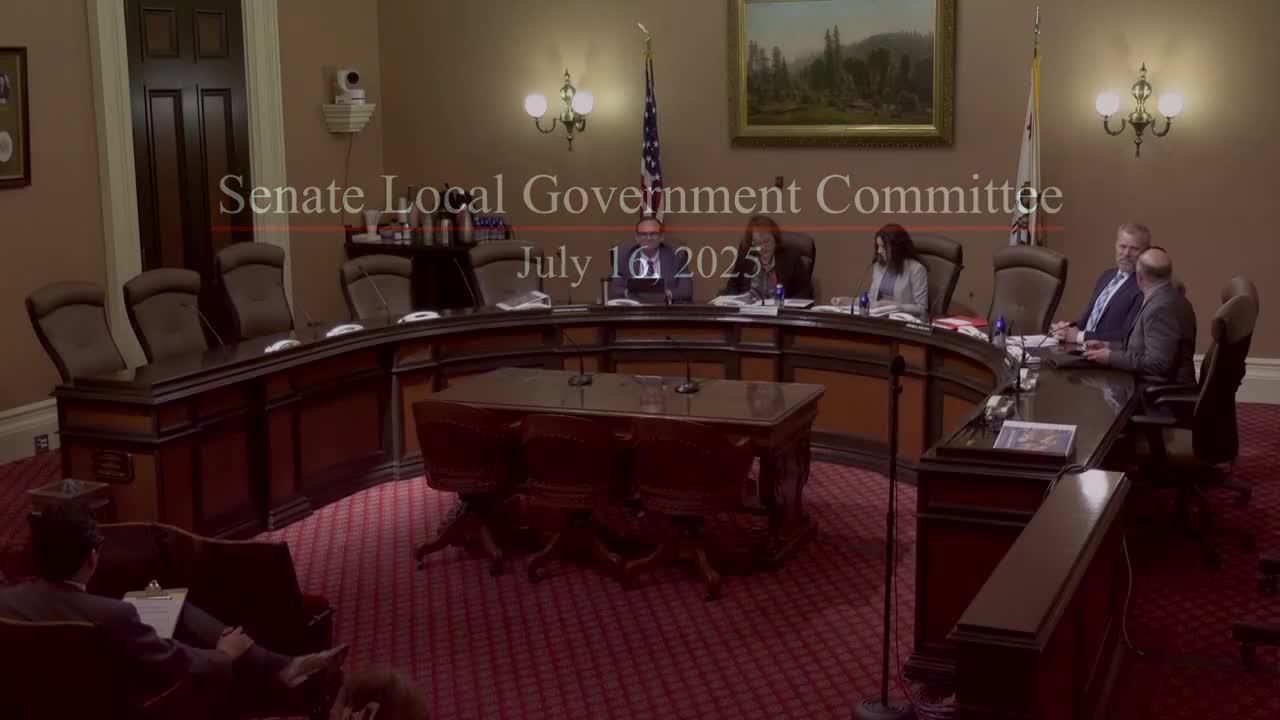
Senate Standing Committee on Local Government
 19MIN
Senate Standing Committee on Human Services
 1MIN
Assembly Floor
 4MIN
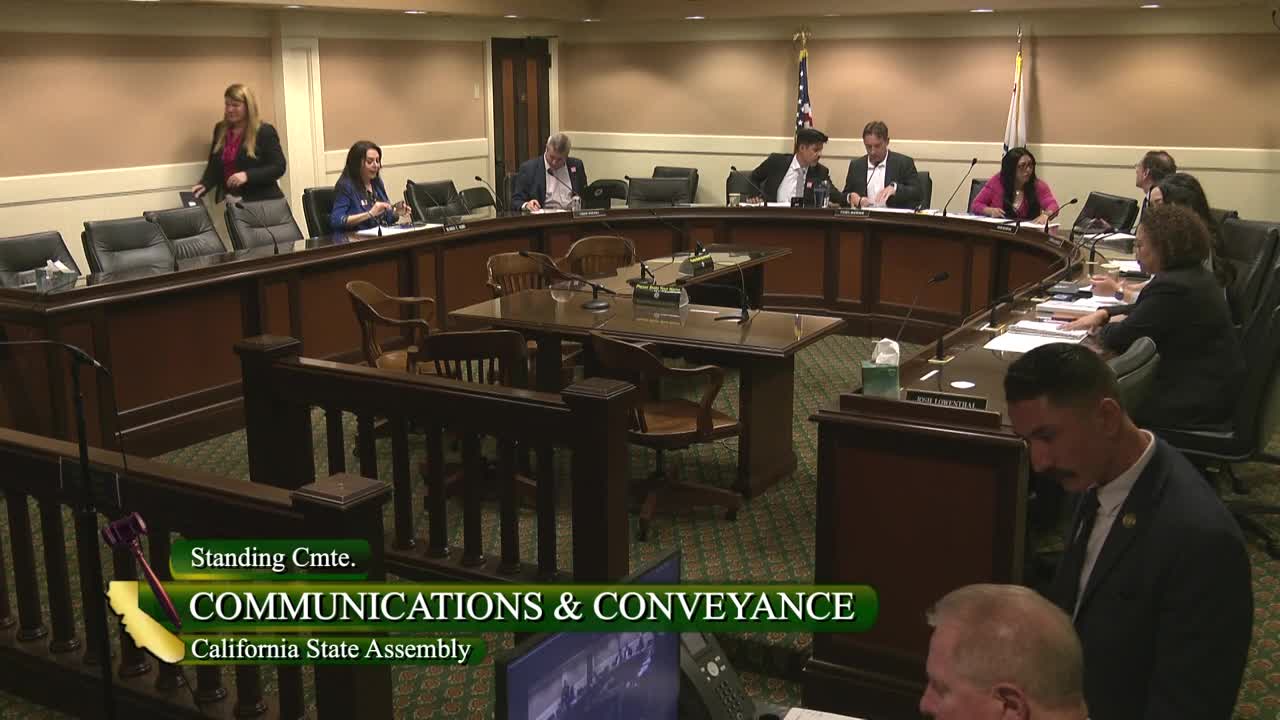
Assembly Standing Committee on Communications and Conveyance
Bill Author

Bill Co-Author(s):