AB 771: Financing statements: mortgages.
- Session Year: 2025-2026
- House: Assembly
- Latest Version Date: 2025-07-14
Current Status:
Passed
(2025-07-14: Chaptered by Secretary of State - Chapter 43, Statutes of 2025.)
Introduced
In Committee
Awaiting First Chamber Vote
Passed First Chamber
In Committee
Awaiting Second Chamber Vote
Passed Second Chamber
Enacted
What does this bill do?
This bill changes when a recorded mortgage counts as a financing statement for fixture filings and for as‑extracted collateral (things taken from land) or timber. It says a mortgage record names an individual debtor if it shows the individual's full name or the surname and first personal name, even if the person has an unexpired DMV driver’s license or ID.
The summary is provided by generative AI which can make mistakes. For original language, please view the details in the table below.
Existing law, the Uniform Commercial Code-Secured Transactions (UCC), provides that a financing statement is sufficient only if it provides, among other things, the name of the debtor and that, if the debtor is an individual to whom the Department of Motor Vehicles has issued a drivers license that has not expired or an identification card that has not expired, a financing statement sufficiently provides the name of the debtor only if it provides the name of the individual indicated on that drivers license or identification card, as specified.
Existing law makes a record of a mortgage effective, from the date of recording, as a financing statement filed as a fixture filing or as a financing statement covering as-extracted collateral or timber to be cut only if certain conditions are met, including that the record satisfies the conditions for a financing statement referenced above, as specified.
This bill would, instead, provide that a record of a mortgage sufficiently names the debtor who is an individual if it provides the individual name of the debtor or the surname and first personal name of the debtor, even if the debtor is an individual to whom the Department of Motor Vehicles has issued an unexpired drivers license or identification card.
Existing law, the Uniform Commercial Code-Secured Transactions (UCC), provides that a financing statement is sufficient only if it provides, among other things, the name of the debtor and that, if the debtor is an individual to whom the Department of Motor Vehicles has issued a drivers license that has not expired or an identification card that has not expired, a financing statement sufficiently provides the name of the debtor only if it provides the name of the individual indicated on that drivers license or identification card, as specified.
Existing law makes a record of a mortgage effective, from the date of recording, as a financing statement filed as a fixture filing or as a financing statement covering as-extracted collateral or timber to be cut only if certain conditions are met, including that the record satisfies the conditions for a financing statement referenced above, as specified.
This bill would, instead, provide that a record of a mortgage sufficiently names the debtor who is an individual if it provides the individual name of the debtor or the surname and first personal name of the debtor, even if the debtor is an individual to whom the Department of Motor Vehicles has issued an unexpired drivers license or identification card.
Existing law, the Uniform Commercial Code-Secured Transactions (UCC), provides that a financing statement is sufficient only if it provides, among other things, the name of the debtor and that, if the debtor is an individual to whom the Department of Motor Vehicles has issued a drivers license that has not expired or an identification card that has not expired, a financing statement sufficiently provides the name of the debtor only if it provides the name of the individual indicated on that drivers license or identification card, as specified.
Existing law makes a record of a mortgage effective, from the date of recording, as a financing statement filed as a fixture filing or as a financing statement covering as-extracted collateral or timber to be cut only if certain conditions are met, including that the record satisfies the conditions for a financing statement referenced above, as specified.
This bill would, instead, provide that a record of a mortgage sufficiently names the debtor who is an individual if it provides the individual name of the debtor or the surname and first personal name of the debtor, even if the debtor is an individual to whom the Department of Motor Vehicles has issued an unexpired drivers license or identification card.
(a)Subject to subdivision (b), a financing statement is sufficient only if it satisfies all of the following conditions:
(1)It provides the name of the debtor.
(2)It provides the name of the secured party or a representative of the secured party.
(3)It indicates the collateral covered by the financing statement.
(b)Except as otherwise provided in subdivision (b) of Section 9501, to be sufficient, a financing statement that covers as-extracted collateral or timber to be cut, or which is filed as a fixture filing and covers goods that are or are to become fixtures, must satisfy subdivision (a) and also satisfy all of the following conditions:
(1)Indicate that it covers this type of collateral.
(2)Indicate that it is to be recorded in the real property records.
(3)Provide a description of the real property to which the collateral is related sufficient to give constructive notice of a mortgage under the law of this state if the description were contained in a record of the mortgage of the real property.
(4)If the debtor does not have an interest of record in the real property, provide the name of a record owner.
(c)A record of a mortgage is effective, from the date of recording, as a financing statement filed as a fixture filing or as a financing statement covering as-extracted collateral or timber to be cut only if all of the following conditions are satisfied:
(1)The record indicates the goods or accounts that it covers.
(2)The goods are or are to become fixtures related to the real property described in the record or the collateral is related to the real property described in the record and is as-extracted collateral or timber to be cut.
(3)The record satisfies the requirements for a financing statement in this section, except that both of the following apply:
(A)The record need not indicate that it is to be filed in the real property records.
(B)The record sufficiently provides the name of a debtor who is an individual if it provides the individual name of the debtor or the surname and first personal name of the debtor, even if the debtor is an individual to whom paragraph (4) of subdivision (a) of Section 9503 applies.
(4)The record is duly recorded.
(d)A financing statement may be filed before a security agreement is made or a security interest otherwise attaches.
(a)Subject to subdivision (b), a financing statement is sufficient only if it satisfies all of the following conditions:
(1)It provides the name of the debtor.
(2)It provides the name of the secured party or a representative of the secured party.
(3)It indicates the collateral covered by the financing statement.
(b)Except as otherwise provided in subdivision (b) of Section 9501, to be sufficient, a financing statement that covers as-extracted collateral or timber to be cut, or which is filed as a fixture filing and covers goods that are or are to become fixtures, must satisfy subdivision (a) and also satisfy all of the following conditions:
(1)Indicate that it covers this type of collateral.
(2)Indicate that it is to be recorded in the real property records.
(3)Provide a description of the real property to which the collateral is related sufficient to give constructive notice of a mortgage under the law of this state if the description were contained in a record of the mortgage of the real property.
(4)If the debtor does not have an interest of record in the real property, provide the name of a record owner.
(c)A record of a mortgage is effective, from the date of recording, as a financing statement filed as a fixture filing or as a financing statement covering as-extracted collateral or timber to be cut only if all of the following conditions are satisfied:
(1)The record indicates the goods or accounts that it covers.
(2)The goods are or are to become fixtures related to the real property described in the record or the collateral is related to the real property described in the record and is as-extracted collateral or timber to be cut.
(3)The record satisfies the requirements for a financing statement in this section, except that both of the following apply:
(A)The record need not indicate that it is to be filed in the real property records.
(B)The record sufficiently provides the name of a debtor who is an individual if it provides the individual name of the debtor or the surname and first personal name of the debtor, even if the debtor is an individual to whom paragraph (4) of subdivision (a) of Section 9503 applies.
(4)The record is duly recorded.
(d)A financing statement may be filed before a security agreement is made or a security interest otherwise attaches.
(a)Subject to subdivision (b), a financing statement is sufficient only if it satisfies all of the following conditions:
(1)It provides the name of the debtor.
(2)It provides the name of the secured party or a representative of the secured party.
(3)It indicates the collateral covered by the financing statement.
(b)Except as otherwise provided in subdivision (b) of Section 9501, to be sufficient, a financing statement that covers as-extracted collateral or timber to be cut, or which is filed as a fixture filing and covers goods that are or are to become fixtures, must satisfy subdivision (a) and also satisfy all of the following conditions:
(1)Indicate that it covers this type of collateral.
(2)Indicate that it is to be recorded in the real property records.
(3)Provide a description of the real property to which the collateral is related sufficient to give constructive notice of a mortgage under the law of this state if the description were contained in a record of the mortgage of the real property.
(4)If the debtor does not have an interest of record in the real property, provide the name of a record owner.
(c)A record of a mortgage is effective, from the date of recording, as a financing statement filed as a fixture filing or as a financing statement covering as-extracted collateral or timber to be cut only if all of the following conditions are satisfied:
(1)The record indicates the goods or accounts that it covers.
(2)The goods are or are to become fixtures related to the real property described in the record or the collateral is related to the real property described in the record and is as-extracted collateral or timber to be cut.
(3)The record satisfies the requirements for a financing statement in this section other than an indication that it is to be filed in the real property records. section, except that both of the following apply:
(A)The record need not indicate that it is to be filed in the real property records.
(B)The record sufficiently provides the name of a debtor who is an individual if it provides the individual name of the debtor or the surname and first personal name of the debtor, even if the debtor is an individual to whom paragraph (4) of subdivision (a) of Section 9503 applies.
(4)The record is duly recorded.
(d)A financing statement may be filed before a security agreement is made or a security interest otherwise attaches.
|
Date
|
Status
|
|---|---|
| Jul 14, 2025 | Chaptered by Secretary of State - Chapter 43, Statutes of 2025. |
| Jul 14, 2025 | Approved by the Governor. |
| Jul 2, 2025 | Enrolled and presented to the Governor at 2 p.m. |
| Jun 24, 2025 | In Assembly. Ordered to Engrossing and Enrolling. |
| Jun 23, 2025 | Read third time. Passed. Ordered to the Assembly. (Ayes 37. Noes 0. Page 1706.). |
| Jun 18, 2025 | Read second time. Ordered to Consent Calendar. |
| Jun 17, 2025 | From committee: Do pass. To Consent Calendar. (Ayes 12. Noes 0.) (June 17). |
| May 21, 2025 | Referred to Com. on JUD. |
| May 13, 2025 | In Senate. Read first time. To Com. on RLS. for assignment. |
| May 12, 2025 | Read third time. Passed. Ordered to the Senate. (Ayes 75. Noes 0. Page 1515.) |
| May 7, 2025 | Read second time. Ordered to third reading. |
| May 6, 2025 | From committee: Do pass. (Ayes 9. Noes 0.) (May 5). |
| Mar 17, 2025 | Referred to Com. on B.&F. |
| Feb 19, 2025 | From printer. May be heard in committee March 21. |
| Feb 18, 2025 | Read first time. To print. |
|
Date
|
Description
|
Location
|
Votes
|
|
|---|---|---|---|---|
| Jun 23, 2025 | Consent Calendar 2nd AB771 Macedo | Senate Floor |
Passed |
|
| Jun 17, 2025 | Do pass and be ordered to the Consent Calendar | Senate Standing Committee on Judiciary |
Passed |
|
| May 12, 2025 | AB 771 Macedo Assembly Third Reading | Assembly Floor |
Passed |
|
| May 5, 2025 | Do pass. | Assembly Standing Committee on Banking and Finance |
Passed |
This list shows positions taken on this bill by organizations on the date displayed, which is linked to the original source.
Positions by individuals are not included.
|
Organization
|
Position
|
Date
|
|---|---|---|
| California Lawyers Association, Business Law Section | ** Support |
SENATE RULES COMMITTEE Office of Senate Floor Analyses (916) 651-1520 Fax: (916) 327-4478 | AB 771 |
CONSENT
Bill No: AB 771
Author: Macedo (R)
Introduced: 2/18/25
Vote: 21
SENATE JUDICIARY COMMITTEE: 12-0, 6/17/25
AYES: Umberg, Niello, Allen, Arreguín, Caballero, Durazo, Laird, Stern, Valladares, Wahab, Weber Pierson, Wiener
NO VOTE RECORDED: Ashby
ASSEMBLY FLOOR: 75-0, 5/12/25 - See last page for vote
SUBJECT: Financing statements: mortgages
SOURCE: California Lawyers Association – Business Law Section
DIGEST:
This bill permits a record of mortgage to be used as a financing statement filed as a fixture filing or a financing statement covering as-extracted collateral or timber to be cut, when the debtor is an individual, if it provides the individual name of the debtor or the debtor’s surname and first personal name.
ANALYSIS:
Existing law:
- Defines “fixtures” as goods that are so related to particular real property that an interest in them arises under real property law. (Uniform Commercial (U. Com.) Code § 9102(a)(41).)
- Defines “fixture filing” to mean the filing of a financing statement covering goods that are or are to become fixtures and that satisfies specified statutory requirements. (U. Com. Code § 9102(a)(40).)
- Specifies that a financing statement is sufficient only if it satisfies all of the following conditions:
- It provides the name of the debtor;
- It provides the name of the secured party or a representative of the secured party; and
- It indicates the collateral covered by the financing statement. (U. Com. Code § 9502(a).)
- Specifies that, except as specified, a financing statement that covers as-extracted collateral or timber to be cut, or which is filed as a fixture filing and covers goods that are or are to become fixtures, is sufficient as a financing statement if it:
- Indicates that it covers this type of collateral;
- Indicates that it is to be recorded in the real property records;
- Provides a description of the real property to which the collateral is related sufficient to give constructive notice of a mortgage if the description was contained in a record of mortgage of the real property; and
- If the debtor does not have an interest of record in the real property, provides the name of a record owner. (U. Com. Code § 9502(b).)
- Specifies that a record of a mortgage is effective, from the date it is recorded, as a financing statement filed as a fixture filing or as a financing statement covering as-extracted collateral or timber to be cut, only if all of the following conditions are satisfied:
- The record indicates the goods or accounts that it covers;
- The goods are or are to become fixtures related to the real property described in the record, or the collateral is related to the real property and is as-extracted collateral or timber to be cut;
- The record satisfies the requirements for a financing statement in (4), above, other than the requirement that it indicate that it is to be filed in the real property records; and
- the record is duly recorded. (U. Com. Code § 9502(c).)
- Specifies that a financing statement sufficiently provides the name of the debtor, for a debtor who is an individual, only if:
- For a debtor to whom the Department of Motor Vehicles has issued a driver’s license or identification card that has not expired, the financing statement provides the name of the individual as indicated on the individual’s driver’s license or identification card;
- For a debtor without a driver’s license or identification card, the financing statement provides the individual name of the debtor, or the surname and first personal name of the debtor. (U. Com. Code § 9503(a)(4)-(5).)
- Specifies that a financing statement substantially satisfying the above requirements is effective, even if it has minor errors or omissions, unless those errors or omissions make the financing statement seriously misleading. Specifies that a financing statement that fails sufficiently to provide the name of the debtor as required by 6), above is seriously misleading, except if a search of the records of the filing office using the debtor’s correct name would disclose the financing statement. (U. Com. Code § 9506.)
This bill specifies that, for a record of mortgage to be effective as a financing statement filed as a fixture filing or as a financing statement covering as-extracted collateral or timber to be cut, the record sufficiently provides the name of an individual debtor if it either provides the individual name of the debtor, or the surname and first personal name of the debtor.
Background:
The Uniform Commercial Code and secured transactions for fixtures on real property. The Uniform Law Commission (ULC) was established in 1892 to create and recommend to states uniform state laws in a variety of areas of state law. Uniformity of state laws can be tremendously beneficial, as it creates consistency between the states and ensures that state laws are well-crafted with the input from legal expertise across the county. The ULC is comprised of members appointed by state governments, the District of Columbia, Puerto Rico, and the U.S. Virgin Islands. For California, the California Commission on Uniform State Laws represents the state on the ULC.
One of the areas of law created by the ULC is the Uniform Commercial Code (UCC), which is a comprehensive set of uniform laws governing commercial transactions. All states have adopted the UCC, with some modifications. In 2010, the ULC amended Article 9 of the UCC, an Article that regulates secured transactions. A secured transaction is created when a lender (called the creditor) lends a borrower money and requires that the borrower ensure that the creditor is repaid by providing the creditor a security interest in the borrower’s personal or real property. If the borrower fails to repay the debt, the creditor may recover what they’re owed by seizing or selling the borrower’s property in which the creditor holds the security interest. In order for this security interest and the debt it guarantees to be known to other creditors and maintain its claim on the property, an official document must be filed and recorded with the county that describes the debt and security interest held by the creditor. This document is typically a financing statement, called a UCC-1 form, though it can also be a mortgage or deed of trust (to be discussed further below). Article 9 of the UCC has been incorporated into state law in California Uniform Commercial Code Section 9101 through 9907.
A creditor may have a security interest in real property, or in personal property. Sometimes, a creditor’s security interest is in what are called fixtures, which are goods that are so related to particular real property that an interest in them arises under real property law. (U. Com. Code § 9102(a)(41).) Examples of fixtures can include heating and conditioning units, built-in appliances, and rooftop-mounted solar panels. Because the fixture is so related to the real property upon which it’s attached, a creditor’s interest in the fixture will be affected by any sale of or interest in the real property. Thus, it is important for a creditor with an interest in a fixture to file a particular financing statement called a “fixture filing” to notice their interest in the fixtures on the real property. If they do not, they could lose their interest in the fixture if the real property is sold or foreclosed upon by a creditor with an interest in the real property itself.
The UCC includes various rules regarding the filing of financing statements and fixture filings. It specifies that a financing statement is sufficient if it: provides the name of the borrower; provides the name of the secured party (the creditor) or their representative; and indicates the collateral covered by the financing statement. (UCC § 9-502(a) (2010).) When the financing statement is a fixture filing, it must also: indicate that it covers that type of collateral; indicate that it is to be filed in the real property records; provide a description of the real property to which the collateral is related; and provide the name of the owner of the real property, if not the borrower. (UCC § 9-502(b) (2010).)
Prior to amendments to the UCC in 2010, a mortgage or deed of trust also was permitted to be a fixture filing: if it indicated the goods or accounts that it covers; if the goods were or would become fixtures to the real property described in the record; if the record satisfied all of the requirements for a financing statement, except for the requirement that it indicate that is to be filed with the real property records; and if the record was recorded. (UCC § 9-502(c) (1998).) The pre-2010 UCC also included section 9-503, which specified when a financing statement sufficiently provides the name of the borrower. For individual borrowers, the pre-2010 provisions only required that financing statements provide the borrower’s legal name.
The 2010 amendments to the UCC Article 9 made changes to these provisions to address issues that arose regarding how the borrower’s name must be provided on a financing statement for it to be effective. They provided two alternative amendments to Section 9-503 regarding when a financing statement sufficiently provides an individual borrower’s name: Alternative A and Alternative B. Alternative A, known as the “only-if” rule, requires the financing statement to provide an individual borrower’s name as it appears on the borrower’s driver’s license, if the borrower has a valid driver’s license. If the borrower does not have a driver’s license, their name may appear as their legal name, or as their surname and first name. Alternative B, known as the “safe harbor” rule, allows the financing statement to use either the borrower’s name as it appears on their driver’s license, or their first name and surname.
Importantly, a note to the amendments to UCC Section 9-503 recommended that, if a state adopts Alternative A, it should also adopt the amendments made to UCC Section 9-502 (UCC § 9-503, Leg. Note 1.) The amendments to UCC Section 9-502 amended the provisions allowing a mortgage or deed of trust to serve as a fixture filing when the borrower is an individual. Those amendments specified that a mortgage or deed of trust can meet the requirements that it name the borrower if it provides the legal name of the borrower, or their first name and surname, notwithstanding UCC Section 9-503’s requirements. Thus, the amendments to UCC Section 9-502 served to ensure that, even if a state adopted the stricter standard in Alternative A, the more restrictive requirements that an individual borrower’s name match their name as it appears on their driver’s license would not apply to a mortgage or deed of trust filed as a fixture filing.
AB 771 aligns state law with the full 2010 UCC amendments. When California adopted the 2010 amendments to Article 9 of the UCC through AB 1858 (Perea, Chapter 284, Statutes of 2014) in 2014, it did not adopt all of the changes as recommended by the ULC. Specifically, while the state adopted Alternative A for UCC Section 9-503 (as U. Com. Code § 9503), it did not correspondingly adopt the amendment to UCC Section 9-502 that allow for mortgages or deeds of trust serving as fixture filings to only list the borrower’s legal name or first name and surname.
AB 771 proposes to correct this oversight and align California law with the 2010 UCC amendments. It does so by adding the amendments to UCC Section 9-502 to California’s corresponding statute, while keeping the Alternative A language that the state chose to adopt through AB 1858. This is important, according to the author, not only to align California’s law with the UCC, but also to eliminate the otherwise redundant filings that are currently sometimes required for fixture filings due to the omission in the state’s law.
FISCAL EFFECT: Appropriation: No Fiscal Com.: No Local: No
SUPPORT: (Verified 6/18/25)
California Lawyers Association – Business Law Section (source)
OPPOSITION: (Verified 6/18/25)
None received
ARGUMENTS IN SUPPORT:
According to the California Lawyers Association, Business Law Section, which is the sponsor of AB 771:
AB 771 would amend provisions of California’s Uniform Commercial Code (UCC) that address the manner in which a debtor’s name must appear on specified documents, to conform to the uniform version of the UCC and eliminate unnecessary burdens and costs, as well as a trap for the unwary.
By way of background, a mortgage or deed of trust is executed by a debtor using the name under which the debtor takes title to the real property subject to the mortgage or deed of trust. That name may not be exactly the same as the name on the debtor’s California ID (often, but not necessarily, a California Driver’s License). For example, the California ID may contain the debtor’s entire first name, entire middle name, and entire last name, but the debtor may take title using only their middle initial instead of their entire middle name.
A mortgage or deed of trust on its own can also be effective as a “fixture filing” (a financing statement that perfects a lender’s security interest in personal property that is or will become fixtures to the real property). However, under California’s version of the UCC, a mortgage or deed of trust can be effective as a fixture filing only if it contains the name of the debtor exactly as shown on the individual’s California ID. Therefore, if the name on the mortgage or deed of trust does not exactly match the name on the California ID, it is necessary to file a separate financing statement containing the name exactly as shown on the debtor’s California ID.
The 2010 amendments to the uniform version of Article 9 of the UCC, as adopted by the Uniform Law Commission (also known as the National Conference of Commissioners on Uniform State Laws), provided alternatives for the requirements applicable to the manner in which the name of a debtor must appear on a financing statement. These were known as “Alternative A” and “Alternative B.”
Alternative A is also referred to as the “only if” approach because, under this alternative, the name on the financing statement is deemed sufficient only if it provides the debtor’s name as it appears on their driver’s license or state-issued identification card. If the debtor has not been issued a driver’s license or state ID card, a financing statement is sufficient if it provides the individual name of the debtor or the surname and first personal name of the debtor. Under Alternative B, referred to as the “safe harbor” approach, a financing statement sufficiently provides the name of the debtor if it provides the individual name of the debtor; provides the surname and first name of the debtor; or provides the name of the debtor as indicated on a driver’s license or other qualifying state-issued identification card.
In 2014, California enacted Alternative A (AB 1858, Stats. 2014, Ch. 284, Sec. 1). A Legislative Note to the 2010 amendments to the uniform version of Article 9 of the UCC provides: “A State that enacts Alternative A of the amendments to this section should also enact the amendments to Section 9-502.” The referenced amendments provide that a mortgage or deed of trust can be effective as a fixture filing if it provides the individual name of the debtor or the surname and first personal name of the debtor, the same language that would be enacted in California by this bill. California did not enact this additional language for reasons that are not clear (possibly an oversight).
California is currently an outlier. Forty-four states, the District of Columbia, and Puerto Rico have enacted Alternative A. Of these 46 jurisdictions, California is one of only three that has failed to include language this bill seeks to enact. The other two are Louisiana, which does not have the language because it does not permit a mortgage or deed of trust to serve as a fixture filing, and Puerto Rico. The other states have enacted Alternative B. AB 771 amends Section 9502 of California’s Commercial Code to make it consistent with the uniform version of the UCC’s Alternative A, as enacted in almost every other state.
ARGUMENTS IN OPPOSITION:
ASSEMBLY FLOOR: 75-0, 5/12/25
AYES: Addis, Aguiar-Curry, Ahrens, Alanis, Alvarez, Arambula, Ávila Farías, Bains, Bauer-Kahan, Bennett, Berman, Boerner, Bonta, Bryan, Calderon, Caloza, Carrillo, Castillo, Chen, Connolly, Davies, DeMaio, Dixon, Elhawary, Ellis, Flora, Fong, Gabriel, Gallagher, Garcia, Gipson, Jeff Gonzalez, Mark González, Hadwick, Haney, Hart, Hoover, Irwin, Jackson, Kalra, Krell, Lackey, Lowenthal, Macedo, McKinnor, Muratsuchi, Nguyen, Ortega, Pacheco, Papan, Patel, Patterson, Pellerin, Petrie-Norris, Quirk-Silva, Ramos, Ransom, Celeste Rodriguez, Michelle Rodriguez, Rogers, Blanca Rubio, Sanchez, Schiavo, Sharp-Collins, Solache, Soria, Ta, Tangipa, Valencia, Wallis, Ward, Wicks, Wilson, Zbur, Rivas
NO VOTE RECORDED: Harabedian, Lee, Schultz, Stefani
Prepared by: Ian Dougherty / JUD. / (916) 651-4113
6/19/25 16:25:45
**** END ****
Senator Thomas Umberg, Chair
2025-2026 Regular Session
Bill No: AB 771 (Author:Macedo)
Version: February 18, 2025
Hearing Date: June 17, 2025
Fiscal: No
Urgency: No
Consultant: ID
SUBJECT
Financing statements: mortgages
DIGEST
This bill permits a record of mortgage to be used as a financing statement filed as a fixture filing or a financing statement covering as-extracted collateral or timber to be cut, when the debtor is an individual, if it provides the individual name of the debtor or the debtor’s surname and first personal name.
EXECUTIVE SUMMARY
The Uniform Law Commission (ULC) was established in 1892 to create and recommend to states uniform laws in a variety of areas of state law. Uniformity of state laws can be tremendously beneficial, as it creates consistency between the states and ensures that state laws are well-crafted with the input from legal expertise across the county. One of the areas of law created by the ULC is the Uniform Commercial Code (UCC), which is a comprehensive set of uniform laws governing commercial transactions. All states have adopted the UCC, with some modifications. In 2010, the ULC amended Article 9 of the UCC, an Article that regulates secured transactions. Those amendments made changes to address issues that arose regarding how the borrower’s name must be provided on a financing statement for it to be effective. They provided two alternative amendments to UCC Section 9-503 regarding when a financing statement sufficiently provides an individual borrower’s name: Alternative A and Alternative B. The amendments also included a note that recommended that states that adopt Alternative B also adopt specified amendments to another, related provision of the UCC. However, when California adopted Alternative B in 2014, it failed to make the additional, recommended changes to its uniform commercial code. AB 771 corrects this error and conforms California law to the recommendations of the ULC. AB 771 is sponsored by the California Lawyer’s Association, Business Law Division. The Committee has received no other timely letters of support or opposition.
PROPOSED CHANGES TO THE LAW
Existing law:
- Defines “fixtures” as goods that are so related to particular real property that an interest in them arises under real property law. (U. Com. Code § 9102(a)(41).)
- Defines “fixture filing” to mean the filing of a financing statement covering goods that are or are to become fixtures and that satisfies specified statutory requirements. (U. Com. Code § 9102(a)(40).)
- Specifies that a financing statement is sufficient only if it satisfies all of the following conditions:
- it provides the name of the debtor;
- it provides the name of the secured party or a representative of the secured party; and
- it indicates the collateral covered by the financing statement. (U. Com. Code § 9502(a).)
- Specifies that, except as specified, a financing statement that covers as-extracted collateral or timber to be cut, or which is filed as a fixture filing and covers goods that are or are to become fixtures, is sufficient as a financing statement if it:
- indicates that it covers this type of collateral;
- indicates that it is to be recorded in the real property records;
- provides a description of the real property to which the collateral is related sufficient to give constructive notice of a mortgage if the description was contained in a record of mortgage of the real property; and
- if the debtor does not have an interest of record in the real property, provides the name of a record owner. (U. Com. Code § 9502(b).)
- Specifies that a record of a mortgage is effective, from the date it is recorded, as a financing statement filed as a fixture filing or as a financing statement covering as-extracted collateral or timber to be cut, only if all of the following conditions are satisfied:
- the record indicates the goods or accounts that it covers;
- the goods are or are to become fixtures related to the real property described in the record, or the collateral is related to the real property and is as-extracted collateral or timber to be cut;
- the record satisfies the requirements for a financing statement in (4), above, other than the requirement that it indicate that it is to be filed in the real property records; and
- the record is duly recorded. (U. Com. Code § 9502(c).)
- Specifies that a financing statement sufficiently provides the name of the debtor, for a debtor who is an individual, only if:
- for a debtor to whom the Department of Motor Vehicles has issued a driver’s license or identification card that has not expired, the financing statement provides the name of the individual as indicated on the individual’s driver’s license or identification card;
- for a debtor without a driver’s license or identification card, the financing statement provides the individual name of the debtor, or the surname and first personal name of the debtor. (U. Com. Code § 9503(a)(4)-(5).)
- Specifies that a financing statement substantially satisfying the above requirements is effective, even if it has minor errors or omissions, unless those errors or omissions make the financing statement seriously misleading. Specifies that a financing statement that fails sufficiently to provide the name of the debtor as required by (6), above is seriously misleading, except if a search of the records of the filing office using the debtor’s correct name would disclose the financing statement. (U. Com. Code § 9506.)
This bill:
- Specifies that, for a record of mortgage to be effective as a financing statement filed as a fixture filing or as a financing statement covering as-extracted collateral or timber to be cut, the record sufficiently provides the name of an individual debtor if it either provides the individual name of the debtor, or the surname and first personal name of the debtor.
COMMENTS
- Author’s statement
According to the author:
Getting mortgages approved has become increasingly difficult for Californians. Technical barriers especially need to be cleared to allow Californians easier access to get into their dream homes. AB 771 updates California’s Uniform Commercial Code (UCC) to match the national standard used in 44 states, simplifying how debtor names are recorded on mortgage-related documents. Currently, California requires an exact name match to a state ID, leading to unnecessary filings and costs. AB 771 corrects this by allowing mortgages or deeds of trust to serve as fixture filings without an exact match, reducing paperwork, saving money, and easing administrative burdens for borrowers and lenders. This reform will streamline commercial transactions and ensure California’s laws align with modern business practices.
- The Uniform Commercial Code and secured transactions for fixtures on real property
The Uniform Law Commission (ULC) was established in 1892 to create and recommend to states uniform state laws in a variety of areas of state law. Uniformity of state laws can be tremendously beneficial, as it creates consistency between the states and ensures that state laws are well-crafted with the input from legal expertise across the county. The ULC is comprised of members appointed by state governments, the District of Columbia, Puerto Rico, and the U.S. Virgin Islands. For California, the California Commission on Uniform State Laws (CCUSL) represents the state on the ULC.
One of the areas of law created by the ULC is the Uniform Commercial Code (UCC), which is a comprehensive set of uniform laws governing commercial transactions. All states have adopted the UCC, with some modifications. In 2010, the ULC amended Article 9 of the UCC, an Article that regulates secured transactions. A secured transaction is created when a lender (called the creditor) lends a borrower money and requires that the borrower ensure that the creditor is repaid by providing the creditor a security interest in the borrower’s personal or real property. If the borrower fails to repay the debt, the creditor may recover what they’re owed by seizing or selling the borrower’s property in which the creditor holds the security interest. In order for this security interest and the debt it guarantees to be known to other creditors and maintain its claim on the property, an official document must be filed and recorded with the county that describes the debt and security interest held by the creditor. This document is typically a financing statement, called a UCC-1 form, though it can also be a mortgage or deed of trust (to be discussed further below). Article 9 of the UCC has been incorporated into state law in California Uniform Commercial Code Section 9101 through 9907.
A creditor may have a security interest in real property, or in personal property. Sometimes, a creditor’s security interest is in what are called fixtures, which are goods that are so related to particular real property that an interest in them arises under real property law. (U. Com. Code § 9102(a)(41).) Examples of fixtures can include heating and conditioning units, built-in appliances, and rooftop-mounted solar panels. Because the fixture is so related to the real property upon which it’s attached, a creditor’s interest in the fixture will be affected by any sale of or interest in the real property. Thus, it is important for a creditor with an interest in a fixture to file a particular financing statement called a “fixture filing” to notice their interest in the fixtures on the real property. If they do not, they could lose their interest in the fixture if the real property is sold or foreclosed upon by a creditor with an interest in the real property itself.
The UCC includes various rules regarding the filing of financing statements and fixture filings. It specifies that a financing statement is sufficient if it: provides the name of the borrower; provides the name of the secured party (the creditor) or their representative; and indicates the collateral covered by the financing statement. (UCC § 9-502(a) (2010).) When the financing statement is a fixture filing, it must also: indicate that it covers that type of collateral; indicate that it is to be filed in the real property records; provide a description of the real property to which the collateral is related; and provide the name of the owner of the real property, if not the borrower. (UCC § 9-502(b) (2010).)
Prior to amendments to the UCC in 2010, a mortgage or deed of trust also was permitted to be a fixture filing: if it indicated the goods or accounts that it covers; if the goods were or would become fixtures to the real property described in the record; if the record satisfied all of the requirements for a financing statement, except for the requirement that it indicate that is to be filed with the real property records; and if the record was recorded. (UCC § 9-502(c) (1998).) The pre-2010 UCC also included section 9-503, which specified when a financing statement sufficiently provides the name of the borrower. For individual borrowers, the pre-2010 provisions only required that financing statements provide the borrower’s legal name.
The 2010 amendments to the UCC Article 9 made changes to these provisions to address issues that arose regarding how the borrower’s name must be provided on a financing statement for it to be effective. They provided two alternative amendments to Section 9-503 regarding when a financing statement sufficiently provides an individual borrower’s name: Alternative A and Alternative B. Alternative A, known as the “only-if” rule, requires the financing statement to provide an individual borrower’s name as it appears on the borrower’s driver’s license, if the borrower has a valid driver’s license. If the borrower does not have a driver’s license, their name may appear as their legal name, or as their surname and first name. Alternative B, known as the “safe harbor” rule, allows the financing statement to use either the borrower’s name as it appears on their driver’s license, or their first name and surname.
Importantly, a note to the amendments to UCC Section 9-503 recommended that, if a state adopts Alternative A, it should also adopt the amendments made to UCC Section 9-502 (UCC § 9-503, Leg. Note 1.) The amendments to UCC Section 9-502 amended the provisions allowing a mortgage or deed of trust to serve as a fixture filing when the borrower is an individual. Those amendments specified that a mortgage or deed of trust can meet the requirements that it name the borrower if it provides the legal name of the borrower, or their first name and surname, notwithstanding UCC Section 9-503’s requirements. Thus, the amendments to UCC Section 9-502 served to ensure that, even if a state adopted the stricter standard in Alternative A, the more restrictive requirements that an individual borrower’s name match their name as it appears on their driver’s license would not apply to a mortgage or deed of trust filed as a fixture filing.
- AB 771 aligns state law with the full 2010 UCC amendments
When California adopted the 2010 amendments to Article 9 of the UCC through AB 1858 (Perea, Ch. 284, Stats. 2014) in 2014, it did not adopt all of the changes as recommended by the ULC. Specifically, while the state adopted Alternative A for UCC Section 9-503 (as U. Com. Code § 9503), it did not correspondingly adopt the amendment to UCC Section 9-502 that allow for mortgages or deeds of trust serving as fixture filings to only list the borrower’s legal name or first name and surname.
AB 771 proposes to correct this oversight and align California law with the 2010 UCC amendments. It does so by adding the amendments to UCC Section 9-502 to California’s corresponding statute, while keeping the Alternative A language that the state chose to adopt through AB 1858. This is important, according to the author, not only to align California’s law with the UCC, but also to eliminate the otherwise redundant filings that are currently sometimes required for fixture filings due to the omission in the state’s law.
- Arguments in support
According to the California Lawyers Association, Business Law Section, which is the sponsor of AB 771:
AB 771 would amend provisions of California’s Uniform Commercial Code (UCC) that address the manner in which a debtor’s name must appear on specified documents, to conform to the uniform version of the UCC and eliminate unnecessary burdens and costs, as well as a trap for the unwary.
By way of background, a mortgage or deed of trust is executed by a debtor using the name under which the debtor takes title to the real property subject to the mortgage or deed of trust. That name may not be exactly the same as the name on the debtor’s California ID (often, but not necessarily, a California Driver’s License). For example, the California ID may contain the debtor’s entire first name, entire middle name, and entire last name, but the debtor may take title using only their middle initial instead of their entire middle name.
A mortgage or deed of trust on its own can also be effective as a “fixture filing” (a financing statement that perfects a lender’s security interest in personal property that is or will become fixtures to the real property). However, under California’s version of the UCC, a mortgage or deed of trust can be effective as a fixture filing only if it contains the name of the debtor exactly as shown on the individual’s California ID. Therefore, if the name on the mortgage or deed of trust does not exactly match the name on the California ID, it is necessary to file a separate financing statement containing the name exactly as shown on the debtor’s California ID.
The 2010 amendments to the uniform version of Article 9 of the UCC, as adopted by the Uniform Law Commission (also known as the National Conference of Commissioners on Uniform State Laws), provided alternatives for the requirements applicable to the manner in which the name of a debtor must appear on a financing statement. These were known as “Alternative A” and “Alternative B.”
Alternative A is also referred to as the “only if” approach because, under this alternative, the name on the financing statement is deemed sufficient only if it provides the debtor’s name as it appears on their driver’s license or state-issued identification card. If the debtor has not been issued a driver’s license or state ID card, a financing statement is sufficient if it provides the individual name of the debtor or the surname and first personal name of the debtor. Under Alternative B, referred to as the “safe harbor” approach, a financing statement sufficiently provides the name of the debtor if it provides the individual name of the debtor; provides the surname and first name of the debtor; or provides the name of the debtor as indicated on a driver’s license or other qualifying state-issued identification card.
In 2014, California enacted Alternative A (AB 1858, Stats. 2014, Ch. 284, Sec. 1). A Legislative Note to the 2010 amendments to the uniform version of Article 9 of the UCC provides: “A State that enacts Alternative A of the amendments to this section should also enact the amendments to Section 9-502.” The referenced amendments provide that a mortgage or deed of trust can be effective as a fixture filing if it provides the individual name of the debtor or the surname and first personal name of the debtor, the same language that would be enacted in California by this bill. California did not enact this additional language for reasons that are not clear (possibly an oversight).
California is currently an outlier. Forty-four states, the District of Columbia, and Puerto Rico have enacted Alternative A. Of these 46 jurisdictions, California is one of only three that has failed to include language this bill seeks to enact. The other two are Louisiana, which does not have the language because it does not permit a mortgage or deed of trust to serve as a fixture filing, and Puerto Rico. The other states have enacted Alternative B. AB 771 amends Section 9502 of California’s Commercial Code to make it consistent with the uniform version of the UCC’s Alternative A, as enacted in almost every other state.
SUPPORT
California Lawyers Association, Business Law Section (sponsor)
OPPOSITION
None received
RELATED LEGISLATION
Pending Legislation: None known.
Prior Legislation:
AB 1858 (Perea, Ch. 284, Stats. 2014) revised the California Uniform Commercial Code to adopt Alternative A of the 2010 ULC amendments to UCC Section 9-503, without making the corresponding changes to UCC Section 9-502 recommended by the ULC.
AB 502 (Wagner, Ch. 531, Stats. 2013) adopted a variation of the UCC Alternative B amendments for UCC Section 9-503 proposed by the 2010 amendments to the UCC, and made other changes to the California Uniform Commercial Code.
SB 2002 (Committee on Judiciary, Ch. 1003, Stats. 2000) made numerous technical corrections to changes to the California Uniform Commercial Code made by AB 45 the year before.
AB 45 (Sher, Ch. 991 , Stats. 1999) adopted the ULC’s 1998 amendments to Article 9 of the UCC.
PRIOR VOTES:
Assembly Floor (Ayes 75, Noes 0)
Assembly Banking and Finance Committee (Ayes 9, Noes 0)
**************
ASSEMBLY THIRD READING
ATR Bill Id:AB 771
Author:(Macedo)
As Introduced Ver:February 18, 2025
Majority vote
SUMMARY
Allows a mortgage fixture filing to be used as a financing statement if it provides the individual name of the debtor or the debtor's surname and first personal name.
Major Provisions
COMMENTS
A fixture filing is a type of Uniform Commercial Code (UCC) financing statement used when a creditor claims a security interest in goods that are or will become fixtures — meaning items attached to real property in such a way that they become part of the real estate. (Uniform Commercial Code Section (UCC) 9-102(a)(41)). Examples include kitchen equipment or ventilation systems.
In 2013, AB 502 (Wagner, Chapter 531, Statutes of 2013) incorporated the 2010 amendments to the UCC Article 9, which governs security interests in personal property. Specifically, AB 502 incorporated the naming of the debtor on a financing statement only if it does so in accordance with specified rules, known as Alternative A.
Alternative A, the "only if" rule, requires the debtor's name on a financing statement to exactly match their unexpired driver's license or state ID. Suppose a person uses their middle initial instead of their full middle name as found on their driver's license or state ID. In that case, it results in filing a separate financing statement containing the name exactly as shown on the debtor's California ID.
By contrast, Alternative B, also known as the "safe harbor rule," would instead allow (a) the driver's license as specified by Alternative A, in addition to (b) the individual name of the debtor, as under current Article 9, and (c) the debtor's surname and first personal name.
AB 771 proposes using Alternative B for mortgage fixture filings as financial statements to eliminate filing a separate financing statement every five years.
According to the Author
Getting mortgages approved has become increasingly difficult for Californians. Technical barriers especially need to be cleared to allow Californians easier access to get into their dream homes. AB 771 updates California's Uniform Commercial Code (UCC) to match the national standard used in 44 states, simplifying how debtor names are recorded on mortgage-related documents. Currently, California requires an exact name match to a state ID, leading to unnecessary filings and costs. AB 771 corrects this by allowing mortgages or deeds of trust to serve as fixture filings without an exact match, reducing paperwork, saving money, and easing administrative burdens for borrowers and lenders. This reform will streamline commercial transactions and ensure California's laws align with modern business practices.
Arguments in Support
The California Lawyers Association writes:
California is currently an outlier. Forty-four states, the District of Columbia, and Puerto Rico have enacted Alternative A. Of these 46 jurisdictions, California is one of only three that has failed to include language this bill seeks to enact. The other two are Louisiana, which does not have the language because it does not permit a mortgage or deed of trust to serve as a fixture filing, and Puerto Rico. The other states have enacted Alternative B. AB 771 amends Section 9502 of California's Commercial Code to make it consistent with the uniform version of the UCC's Alternative A, as enacted in almost every other state.
Arguments in Opposition
No opposition on file.
FISCAL COMMENTS
This bill is keyed non-fiscal.
VOTES
ASM BANKING AND FINANCE: 9-0-0
YES: Valencia, Chen, Dixon, Fong, Krell, Michelle Rodriguez, Blanca Rubio, Schiavo, Soria
UPDATED
VERSION: February 18, 2025
CONSULTANT: Darci Sears / B. & F. / (916) 319-3081 FN: 0000349
Date of Hearing: May 5, 2025
ASSEMBLY COMMITTEE ON BANKING AND FINANCE
Avelino Valencia, Chair
ABPCA Bill Id:AB 771 (
Author:Macedo) – As Introduced Ver:February 18, 2025
SUBJECT: Financing statements: mortgages
SUMMARY: Allows a mortgage filing to be used as a financing statement if it provides the individual name of the debtor or the debtor's surname and first personal name.
EXISTING LAW:
- Provides that a financing statement is sufficient only if it provides the name of the debtor and the name of the secured party or a representative of the secured party, and indicates the collateral covered by the financing statement. (Commercial Code Section 9502.)
- With respect to a debtor that is an individual, provides that a financing statement is sufficient only if it provides either the individual name of the debtor, or the surname and first personal name of the debtor. (Section 9503(a)(5).)
- Provides that a financing statement that otherwise provides the name of the debtor in accordance with these provisions is not rendered ineffective by the absence of either of the following:
- A trade name or other name of the debtor.
- The names of partners, members, associates, or other persons comprising the debtor, unless otherwise required, as specified. (Section 9503(b).)
- A trade name or other name of the debtor.
- Provides that a person is liable for damages in the amount of any loss caused by a failure to comply with Article 9 of the UCC, and that loss caused by a failure to comply may include loss resulting from the debtor’s inability to obtain, or increased costs of, alternative financing. (Section 9625(b).)
FISCAL EFFECT: This bill is keyed non-fiscal.
COMMENTS:
- Purpose. According to the author:
Getting mortgages approved has become increasingly difficult for Californians. Technical barriers especially need to be cleared to allow Californians easier access to get into their dream homes. AB 771 updates California’s Uniform Commercial Code (UCC) to match the national standard used in 44 states, simplifying how debtor names are recorded on mortgage-related documents. Currently, California requires an exact name match to a state ID, leading to unnecessary filings and costs. AB 771 corrects this by allowing mortgages or deeds of trust to serve as fixture filings without an exact match, reducing paperwork, saving money, and easing administrative burdens for borrowers and lenders. This reform will streamline commercial transactions and ensure California’s laws align with modern business practices. - Uniform Commercial Code. The California Commission on Uniform State Laws (CCUSL), established in 1897, represents California on the Uniform Law Commission and ensures the state's unique concerns are considered. The CCUSL recommends legislation for legislation on uniform acts recommended by the National Conference of Commissioner on Uniform State Laws.[1]
In 2013, AB 502 (Wagner, Chapter 531, Statutes of 2013) incorporated the 2010 amendments to the Uniform Commercial Code (UCC) Article 9, which governs security interests in personal property. Specifically, AB 502 incorporated the naming of the debtor on a financing statement only if it does so in accordance with specified rules, known as Alternative A.
Alternative A, the "only if" rule, requires the debtor's name on a financing statement to exactly match their unexpired driver's license or state ID. Suppose a person uses their middle initial instead of their full middle name as found on their driver's license or state ID. In that case, it results in filing a separate financing statement containing the name exactly as shown on the debtor's California ID.
By contrast, Alternative B, also known as the "safe harbor rule," would instead allow (a) the driver's license as specified by Alternative A, in addition to (b) the individual name of the debtor, as under current Article 9, and (c) the debtor's surname and first personal name. AB 771 proposes using Alternative B for mortgage fixture filings as financial statements to eliminate additional filing.[2]
ARGUMENTS IN SUPPORT
The California Lawyers Association writes:
California is currently an outlier. Forty-four states, the District of Columbia, and Puerto Rico have enacted Alternative A. Of these 46 jurisdictions, California is one of only three that has failed to include language this bill seeks to enact. The other two are Louisiana, which does not have the language because it does not permit a mortgage or deed of trust to serve as a fixture filing, and Puerto Rico. The other states have enacted Alternative B. AB 771 amends Section 9502 of California’s Commercial Code to make it consistent with the uniform version of the UCC’s Alternative A, as enacted in almost every other state.
REGISTERED SUPPORT / OPPOSITION:
Support
California Lawyers Association, Business Law Section (Sponsor)
Opposition
None on file.
Analysis Prepared by: Darci Sears / B. & F. / (916) 319-3081
Discussed in Hearing
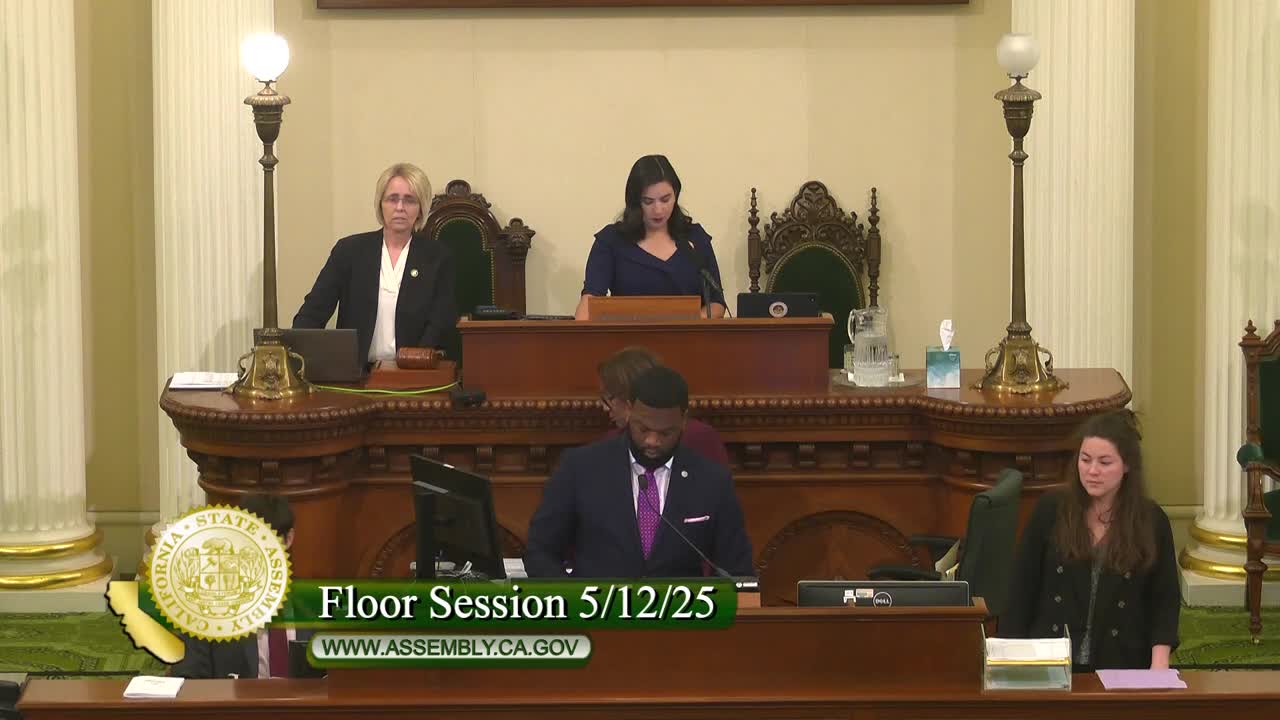 2MIN
Assembly Floor
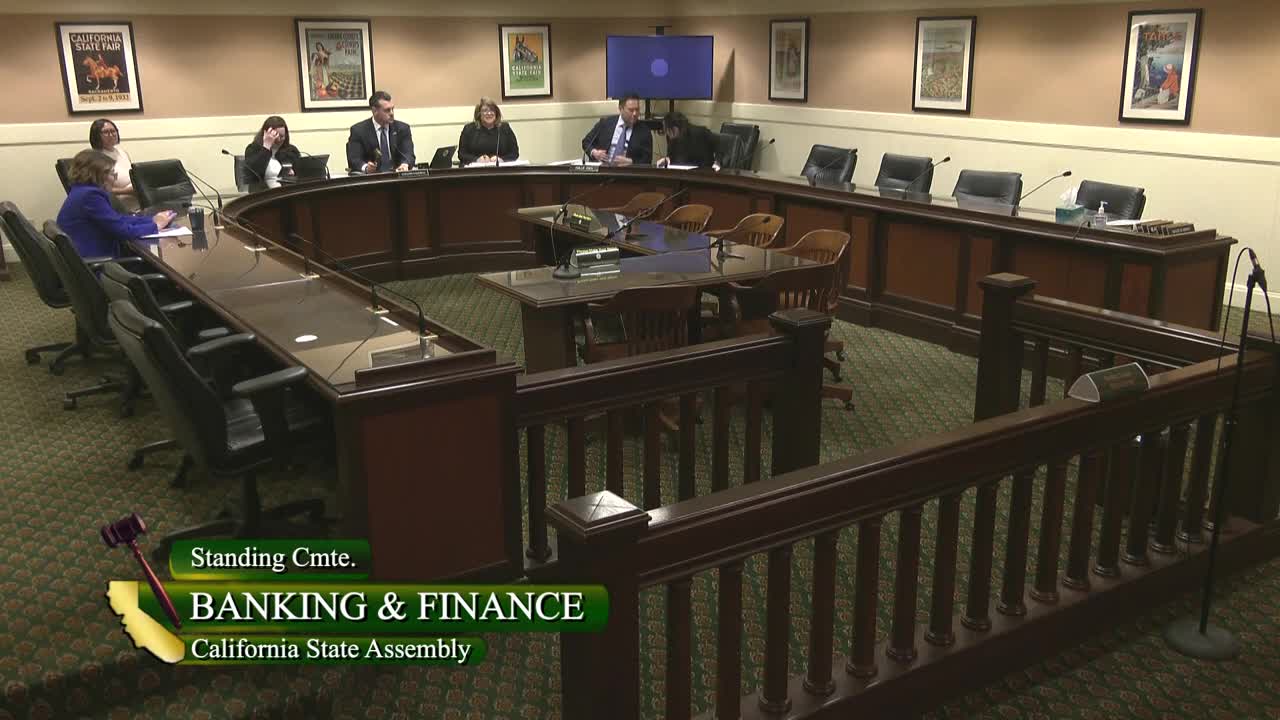 6MIN
Assembly Standing Committee on Banking and Finance
Bill Author

Bill Co-Author(s):