AB 859: Civil Procedure: recovery of defense costs.
- Session Year: 2025-2026
- House: Assembly
- Latest Version Date: 2025-02-19
Current Status:
In Progress
(2025-08-29: In committee: Held under submission.)
Introduced
In Committee
Awaiting First Chamber Vote
Passed First Chamber
In Committee
Awaiting Second Chamber Vote
Passed Second Chamber
Enacted
What does this bill do?
The bill lets a defendant or cross-defendant who wins a demurrer (a formal objection that a complaint fails to state a claim) in Government Claims Act cases or in actions for indemnity or contribution ask the court to decide whether the plaintiff brought the case in good faith and, if not, to award the defendant reasonable defense costs. Defense costs may include reasonable attorney fees, expert witness fees, and consultant or expert service expenses.
The summary is provided by generative AI which can make mistakes. For original language, please view the details in the table below.
Existing law permits a defendant or a cross-defendant in a civil proceeding under the Government Claims Act, or in any civil action for indemnity or contribution, to seek from the court, at the time of the granting of a motion for summary judgment, directed verdict, motion for judgment in a nonjury trial, or nonsuit dismissing the moving party other than the plaintiff, petitioner, cross-complainant, or intervenor, to determine whether the plaintiff, petitioner, cross-complainant, or intervenor brought their proceeding in good faith and with reasonable cause. If the court determines that the proceeding was not brought in good faith or with reasonable cause, existing law requires the court to decide the reasonable and necessary defense costs incurred by party opposing the proceeding and to render judgment in favor of that party. Existing law applies these provisions only if the defendant or cross-defendant has made a motion for summary judgment, a motion for directed verdict, a motion for judgment in a nonjury trial, or nonsuit.
This bill would expand the above provision to apply to a demurrer brought by a defendant or cross-defendant.
(a)In any civil proceeding under the Government Claims Act (Division 3.6 (commencing with Section 810) of Title 1 of the Government Code) or for express or implied indemnity or for contribution in any civil action, the court, upon motion of the defendant or cross-defendant, shall, at the time of the granting of any objection by demurrer, summary judgment, motion for directed verdict, motion for judgment under Section 631.8, or any nonsuit dismissing the moving party other than the plaintiff, petitioner, cross-complainant, or intervenor, or at a later time set forth by rule of the Judicial Council adopted under Section 1034, determine whether or not the plaintiff, petitioner, cross-complainant, or intervenor brought the proceeding with reasonable cause and in the good faith belief that there was a justifiable controversy under the facts and law which warranted the filing of the complaint, petition, cross-complaint, or complaint or answer in intervention. If the court should determine that the proceeding was not brought in good faith and with reasonable cause, an additional issue shall be decided as to the defense costs reasonably and necessarily incurred by the party or parties opposing the proceeding, and the court shall render judgment in favor of that party in the amount of all reasonable and necessary defense costs, in addition to those costs normally awarded to the prevailing party. An award of defense costs under this section shall not be made except on notice contained in a partys papers and an opportunity to be heard.
(b)Defense costs, as used in this section, shall include reasonable attorneys fees, expert witness fees, the expense of services of experts, advisers, and consultants in defense of the proceeding, and where reasonably and necessarily incurred in defending the proceeding.
(c)This section shall be applicable only on motion made before the discharge of the jury or entry of judgment, and any party requesting the relief pursuant to this section waives any right to seek damages for malicious prosecution. Failure to make the motion shall not be deemed a waiver of the right to pursue a malicious prosecution action.
(d)This section shall only apply if the defendant or cross-defendant has made a an objection by demurrer, motion for summary judgment, judgment under Section 631.8, directed verdict, or nonsuit and the demurrer or motion is granted.
|
Date
|
Status
|
|---|---|
| Aug 29, 2025 | In committee: Held under submission. |
| Jul 7, 2025 | In committee: Referred to APPR. suspense file. |
| Jun 25, 2025 | From committee: Do pass and re-refer to Com. on APPR. with recommendation: To Consent Calendar. (Ayes 12. Noes 0.) (June 24). Re-referred to Com. on APPR. |
| May 7, 2025 | Referred to Coms. on JUD. and APPR. |
| Apr 21, 2025 | In Senate. Read first time. To Com. on RLS. for assignment. |
| Apr 21, 2025 | Read third time. Passed. Ordered to the Senate. (Ayes 73. Noes 0. Page 1176.) |
| Apr 9, 2025 | Read second time. Ordered to Consent Calendar. |
| Apr 8, 2025 | From committee: Do pass. To Consent Calendar. (Ayes 12. Noes 0.) (April 8). |
| Mar 3, 2025 | Referred to Com. on JUD. |
| Feb 20, 2025 | From printer. May be heard in committee March 22. |
| Feb 19, 2025 | Read first time. To print. |
|
Date
|
Description
|
Location
|
Votes
|
|
|---|---|---|---|---|
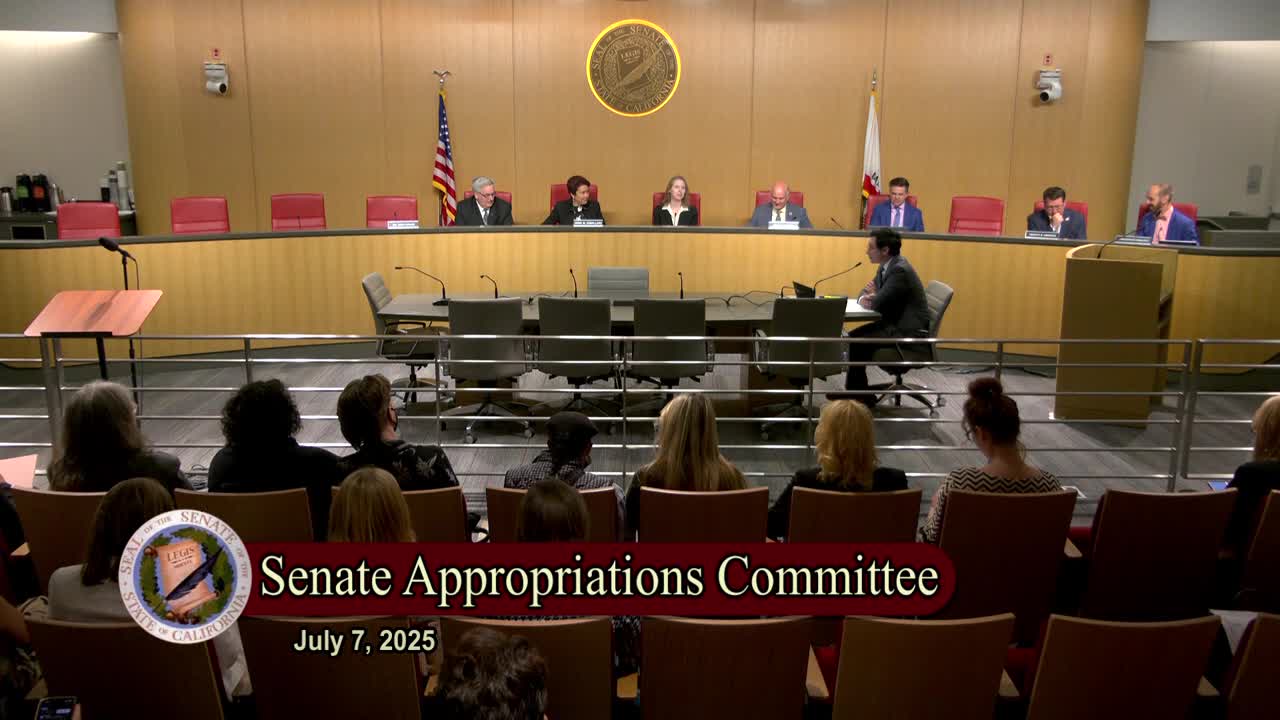
| Jul 7, 2025 | Placed on suspense file | Senate Standing Committee on Appropriations |
Passed |
|
| Jun 24, 2025 | Do pass, but first be re-referred to the Committee on [Appropriations] with the recommendation: To Consent Calendar | Senate Standing Committee on Judiciary |
Passed |
|
| Apr 21, 2025 | AB 859 Macedo Consent Calendar Second Day Regular Session | Assembly Floor |
Passed |
|
| Apr 8, 2025 | Do pass. To Consent Calendar. | Assembly Standing Committee on Judiciary |
Passed |
This list shows positions taken on this bill by organizations on the date displayed, which is linked to the original source.
Positions by individuals are not included.
|
Organization
|
Position
|
Date
|
|---|---|---|
| California Chamber Of Commerce | ** Support | |
| California State Association Of Counties | ** Support | |
| Civil Justice Association Of California | ** Support | |
| County of Tulare | ** Support |
Senator Thomas Umberg, Chair
2025-2026 Regular Session
Bill No: AB 859 (Author:Macedo)
Version: February 19, 2025
Hearing Date: June 24, 2025
Fiscal: No
Urgency: No
Consultant: CK
SUBJECT
Civil Procedure: recovery of defense costs
DIGEST
This bill extends the statutory authorization for the recovery of defense costs for specified motions made in actions brought pursuant to the Government Claims Act to include objections by demurrer.
EXECUTIVE SUMMARY
An increase in litigation costs for local governmental entities has spurred a series of legislative measures designed to provide some measure of financial relief. This includes bills designed to provide more flexibility to local governments in paying out settlements or judgements against them, limiting the liability of certain governmental entities, and other measures designed to deter bad faith claims against local governments.
Section 1038 of the Code of Civil Procedure permits a defendant or cross-defendant, in a civil action brought pursuant to the Government Claims Act, to recoup certain costs associated with motions made therein. Specifically, if the court determines that the proceeding was not brought in good faith and with reasonable cause, the court must determine the defense costs reasonably and necessarily incurred by the party opposing the proceeding, and the court shall render judgment in favor of that party in the amount of all reasonable and necessary defense costs, in addition to those costs normally awarded to the prevailing party. However, currently this provision only applies if the defendant or cross-defendant has made a motion for summary judgment, judgment under Section 631.8, directed verdict, or nonsuit, and the motion is granted.
This bill now adds objections by demurrer to this list.
This bill is author-sponsored. It is supported by industry groups and the California State Association of Counties. No timely opposition was received by the Committee.
PROPOSED CHANGES TO THE LAW
Existing law:
- Permits a defendant or a cross-defendant in a civil proceeding under the Government Claims Act, or in any civil action for indemnity or contribution, to seek from the court, at the time of the granting of a motion for summary judgment, directed verdict, motion for judgment in a nonjury trial, or nonsuit dismissing the moving party other than the plaintiff, petitioner, cross-complainant, or intervenor, a determination as to whether the plaintiff, petitioner, cross-complainant, or intervenor brought their proceeding in good faith and with reasonable cause. If the court finds the action was not brought in good faith or with reasonable cause, it must determine and award the reasonable and necessary defense costs incurred by the party opposing the proceeding and to render judgment in favor of that party. (Code Civ. Proc. § 1038.)
- Defines “defense costs” for purposes of the above to include reasonable attorney’s fees, expert witness fees, the expense of services of experts, advisers, and consultants in defense of the proceeding, and where reasonably and necessarily incurred in defending the proceeding. (Code Civ. Proc. § 1038(b).)
- Provides that after a party has completed their presentation of evidence in a trial by the court, the other party, without waiving their right to offer evidence in support of their defense or in rebuttal in the event the motion is not granted, may move for a judgment. The court as trier of the facts shall weigh the evidence and may render a judgment in favor of the moving party, either fully or in part, in which case the court shall make a statement of decision as provided, or may decline to render any judgment until the close of all the evidence. If the motion is granted, unless the court in its order for judgment otherwise specifies, such judgment operates as an adjudication upon the merits. (Code Civ. Proc. § 631.8.)
This bill adds objections by demurrer to the list of eligible motions for seeking defense costs in Government Claims Act actions.
COMMENTS
- Extending the allowance for recovery of defense costs
The Government Tort Claims Act (the Act) generally governs damage claims brought against public entities. (Gov. Code § 815 et seq.) In addition to any time limitations placed by other statutes on such claims, the Act requires that a claim that is brought against a public entity relating to a cause of action for death or for injury to a person be presented in writing to the public entity not later than six months after accrual of the cause or causes of action. (Gov. Code § 911.2.)
Section 1058 of the Code of Civil Procedure allows for the recovery of defense costs reasonably and necessarily incurred by a prevailing defendant in cases brought pursuant to the Act upon the granting of specified motions in the defendant’s favor and where the court determines that the proceeding was not brought in good faith and with reasonable cause by the plaintiff. This currently includes motions for summary judgment, judgment under Section 631.8 of the Code of Civil Procedure, directed verdict, or nonsuit. This bill adds to this list objections by demurrer in order to allow prevailing public entity defendants or cross-defendants to recover whatever costs are incurred if litigation is brought in bad faith or without reasonable cause.
According to the author:
Local governments are grappling with budget challenges; they must use every tax dollar wisely. AB 859 helps to ensure that precious tax dollars are not wasted on frivolous lawsuits. AB 859 allows counties to recover legal expenses when a demur is granted so they can put those resources in serving our communities. This measure will cut down wasteful spending, reduce current court backlogs, and promote more efficiency in our legal system.
It should be noted that SB 577 (Laird, 2025), which makes a series of changes to relevant law to mitigate the fiscal impact of childhood sexual assault claims against public entities, including limitations on refiling actions and shortening relevant statutes of limitations, reforms to the remittitur process, and flexibility in paying judgments and issuing financing bonds, also includes the same language as this bill.
- Stakeholder positions
Writing in support, the California Chamber of Commerce states:
Under present law, a defendant or a cross-defendant in any civil action for indemnity or contribution can seek from the court, at the time of the granting of a motion for summary judgment, directed verdict, motion for judgment in a nonjury trial, or nonsuit dismissing the moving party other than the plaintiff, to determine whether the plaintiff, petitioner, cross-complainant, or intervenor brought their proceeding in good faith and with reasonable cause. If the court determines that the proceeding was not brought in good faith or with reasonable cause, existing law requires the court to decide the reasonable and necessary defense costs incurred by party opposing the proceeding and to render judgment in favor of that party. Existing law applies these provisions only if the defendant or cross-defendant has made a motion for summary judgment, a motion for directed verdict, a motion for judgment in a nonjury trial, or nonsuit.
AB 859 would expand that list of motions that a defendant may use to recover fees against a bad-faith plaintiff to include a demurrer. Substantively, this will help disincentivize bad faith lawsuits and ensure defendants can respond to those who would abuse the legal process by recovering their costs.
SUPPORT
California Chamber of Commerce
California State Association of Counties
Civil Justice Association of California
County of Tulare
OPPOSITION
None known
RELATED LEGISLATION
Pending Legislation:
SB 413 (Allen, 2025) clarifies and adds to the list of persons who may view a juvenile case file without a court order, to ensure that counsel for parties in a case filed by a minor or former minor can expeditiously view the file, including claims made pursuant to Section 340.1 of the Code of Civil Procedure for the recovery of damages suffered as a result of childhood sexual assault. SB 413 is currently in the Assembly Judiciary Committee.
SB 577 (Laird, 2025) See Comment 1. SB 577 is currently in the Assembly Judiciary Committee.
SB 832 (Allen, 2025) responds to the same issues as SB 577 by, among other things, streamlining the judicial obligation bond process and creating a presumption of validity, extending local payment intercept mechanisms to local educational agencies, extend emergency apportionment loan payments, and changes the standard of proof in specified childhood sexual assault cases and requires, in such cases, corroborating evidence other than the victim’s testimony. SB 832 is currently in this Committee.
Prior Legislation: None known.
PRIOR VOTES:
Assembly Floor (Ayes 73, Noes 0)
Assembly Judiciary Committee (Ayes 12, Noes 0)
**************
Date of Hearing: April 8, 2025
ASSEMBLY COMMITTEE ON JUDICIARY
Ash Kalra, Chair
ABPCA Bill Id:AB 859
Author:(Macedo) – As Introduced Ver:February 19, 2025
proposed consent
SUBJECT: Civil Procedure: recovery of defense costs
KEY ISSUE: should a public entity that is sued under the Government Claims Act recover defense costs if it prevails on an objection for demurrer and the court determines that the action was brought without good faith or without reasonable cause?
SYNOPSIS
The Government Claims Act outlines the process for filing a tort action against public entities. Existing law permits a defendant in such an action to recover defense costs, but only if the court determines that a plaintiff, petitioner, cross-complainant, or intervenor did not bring their action in good faith and with reasonable cause. Existing law applies these provisions only if the defendant or cross-defendant has made one of the following dispositive motions: a motion for summary judgment, a motion for directed verdict, a motion for judgment in a nonjury trial, or a motion for nonsuit. This author-sponsored bill would add to this list of dispositive motions an objection on demurrer. According the author, this bill would allow local governments to recover legal expenses when a demurrer is granted, but only if the court determines that the proceeding was not brought in good faith and with reasonable cause.
The bill is supported by the California Chamber of Commerce and the Civil Justice Association of California. There is no registered opposition at the time of this writing. As noted in the analysis, this bill is identical to a provision in SB 577 (Laird), a bill that contains other provisions as well. If this bill moves forward, the authors may wish to combine the two bills for the sake of efficiency.
SUMMARY: Adds an objection by demurrer to the list of dispositive motions in which a defendant or a cross-defendant in a civil proceeding under the Government Clams Act may recover defense costs. Specifically, this bill:
- Permits a defendant or a cross-defendant in a civil proceeding under the Government Claims Act, or in any civil action for indemnity or contribution, to seek from the court, at the time of the granting of a motion for any objection by demurrer, summary judgment, directed verdict, motion for judgment in a nonjury trial, or nonsuit a determination as to whether the plaintiff, petitioner, cross-complainant, or intervenor brought their proceeding in good faith and with reasonable cause.
- Requires the court, if it determines that the proceeding described in 1) above was not brought in good faith or with reasonable cause, to decide the reasonable and necessary defense costs incurred by the party opposing the proceeding and to render judgment in favor of that party.
- Specifies that 1) and 2) above only apply if the defendant or cross-defendant has made an objection by demurrer, a motion for summary judgment, a motion for directed verdict, a motion for judgment in a nonjury trial, or a motion for nonsuit.
EXISTING LAW:
- Permits a defendant or a cross-defendant in a civil proceeding under the Government Claims Act, or in any civil action for indemnity or contribution, to seek from the court, at the time of the granting of a motion for summary judgment, directed verdict, motion for judgment in a nonjury trial, or nonsuit dismissing the moving party other than the plaintiff, petitioner, cross-complainant, or intervenor, a determination as to whether the plaintiff, petitioner, cross-complainant, or intervenor brought their proceeding in good faith and with reasonable cause. (Code of Civil Procedure Section 1038(a); all subsequent references are to this code.)
- Requires the court, if it determines that an action referenced above was not brought in good faith or with reasonable cause, to determine the reasonable and necessary defense costs incurred by the party opposing the proceeding and to render judgment in favor of that party. (Id)
- Specifies that 1) and 2) above apply only on motion made before the discharge of the jury or entry of judgment, as specified, and only if the defendant or cross-defendant has made a motion for summary judgment, a motion for a judgment in a non-jury trial, a motion for directed verdict, or a motion for nonsuit, and the motion is granted. (Section 1038(c) and (d).)
- Defines “defense costs” for purposes of the above to include reasonable attorney’s fees, expert witness fees, the expense of services of experts, advisers, and consultants in defense of the proceeding, and where reasonably and necessarily incurred in defending the proceeding. (Code of Civil Procedure Section 1038(b).)
FISCAL EFFECT: As currently in print this bill is keyed non-fiscal.
COMMENTS: According to the author: “Local governments are grappling with budget challenges; they must use every tax dollar wisely. AB 859 helps to ensure that precious tax dollars are not wasted on frivolous lawsuits. AB 859 allows counties to recover legal expenses when a demur is granted so they can put those resources in serving our communities. This measure will cut down wasteful spending, reduce current court backlogs, and promote more efficiency in our legal system.”
The Government Claims Act. California’s Government Claims Act – formerly known as the Tort Claims Act – sets forth the procedures for filing a claim for damages against a governmental entity. Rooted in the concept of sovereign immunity, the Act provides public entities with immunity from liability for the acts of omissions of the public entity or its employees, unless there is an exception provided by statute. Even where liability has been imposed by statute, the Act determines when and how claims must be presented and filed and includes a requirement that the claim must be “presented” to the government entity at least six months (and in some cases one year) before the claimant can file a civil suit in court. Like many other aspects of the Act, the purpose of the presentation requirement is to forestall litigation and preserve public funds. Consistent with the purpose of preserving public funds – and most relevant to this bill – existing law permits a defendant to recover defense costs at various stages of the pre-trial proceedings if the court determines that a plaintiff, petitioner, cross-complainant, or intervenor has brought the action in bad faith and without reasonable cause. The Act applies this provision, however, only where the defendant or cross-defendant has made one of the following dispositive motions: a motion for summary judgment, a motion for directed verdict, a motion for judgment in a nonjury trial, or a motion for nonsuit. (A “dispositive motion” is any motion that resolves – or disposes of – a claim or legal issue, ending the case before a full trial.)
This bill would add an “objection by demurrer” to the list of dispositive motions for which a government claims defendant may recover its defense costs. According to the author, this bill will allow local governments to recover legal expenses when a demurrer is granted; but only if the court determines that the proceeding was brought in bad faith or without reasonable cause. It is not entirely clear why the Legislature omitted a demurrer, which, like the other motions on the list, is considered to be a dipositive motion. It could be that the demurrer generally comes earlier than the other motions, and presumably defense costs would not be as great as they might be for motions that come later in the proceedings. However, the author contends, even when the proceedings are resolved at an early stage, the government entity may still have incurred considerable legal costs. The author believes that the government entity has a right to recover these costs, especially when the court determines that the action was not brought in good faith and with reasonable cause.
This bill is duplicative of pending legislation. The language in the bill is identical to a provision within SB 577, which was recently referred to the Senate Judiciary Committee. SB 577 does three things. Its first two provisions would (1) modify the time for refiling an action that was dismissed without prejudice in certain childhood sexual assault cases and (2) modify the time for determining the validity of “refunding bonds” related to refunding tort judgments against a public entity. The third provision of SB 577 amends Code of Civil Procedure Section 1038 in exactly the same manner as this bill. In the interest of efficiency, the Committee generally frowns upon moving bills that have identical provisions, and instead prefers the authors combine the bills and become co-authors, or that one author drop the duplicative part. This is especially true of the bill before the Committee, which contains nothing other than the provision in the more comprehensive bill. The author may wish to consider working with the author of SB 577 to avoid the inefficiency of moving identical provisions, including by dropping this bill and, perhaps, co-authoring SB 577 if the author supports its other provisions.
ARGUMENTS IN SUPPORT: According to the California Chamber of Commerce:
Some context on the litigation process is necessary to understand AB 859’s benefits. Under present law, a defendant may recover their costs for defending against an action brought without reasonable cause and in bad faith. However, such a motion may only be brought if the defendant prevails in certain late-stage challenges to the case – such as a motion for summary judgment (which is brought after discovery is complete) or a motion for judgment (which occurs after the plaintiff fails to produce sufficient evidence at trial). Effectively, that means a defendant cannot recover for their costs if they manage to defeat an unreasonable suit with an earlier challenge (such as a demurrer, which challenges whether the plaintiff’s allegations as written even for a legal claim). Or, taken from the bad faith plaintiff’s perspective: you cannot be held liable for the costs you impose on a defendant, so long as they stop your bad-faith suit relatively early in the process.
AB 859 would expand that list of motions that a defendant may use to recover fees against a bad-faith plaintiff to include a demurrer. Substantively, this will help [discourage] bad faith lawsuits and ensure defendants can respond to those who would abuse the legal process by recovering their costs.
REGISTERED SUPPORT / OPPOSITION:
Support
California Chamber of Commerce
California Civil Justice Association
Opposition
None on file
Analysis Prepared by: Tom Clark / JUD. / (916) 319-2334
Discussed in Hearing
 53SEC
Senate Standing Committee on Appropriations
Bill Author

Bill Co-Author(s):