AB 888: California Safe Homes grant program.
- Session Year: 2025-2026
- House: Assembly
- Latest Version Date: 2025-10-10
Current Status:
Passed
(2025-10-10: Chaptered by Secretary of State - Chapter 536, Statutes of 2025.)
Introduced
In Committee
Awaiting First Chamber Vote
Passed First Chamber
In Committee
Awaiting Second Chamber Vote
Passed Second Chamber
Enacted
Existing law creates the Department of Insurance, headed by the Insurance Commissioner, and prescribes the departments powers and duties. Existing law directs the department and commissioner to administer various grant programs that, among other things, defray property retrofitting costs.
This bill would establish the California Safe Homes grant program to be developed by the department to reduce local and statewide wildfire losses, among other things. The bill would require the department to prioritize specified needs when awarding grant funds, and would require eligible program applicants, which would include individuals, cities, counties, and special districts, to meet specified criteria. The bill would establish the Sustainable Insurance Account within the Insurance Fund and would make the funds available to the department for the program upon appropriation by the Legislature or upon receipt of federal or other grants or funds. The bill would require the department to collect specified information about the performance of the program and, on or before January 1, 2027, and every 2 years thereafter, to publish a performance report that would be posted to its internet website and submitted to the Legislature.
Existing law creates the Department of Insurance, headed by the Insurance Commissioner, and prescribes the departments powers and duties. Existing law directs the department and commissioner to administer various grant programs that, among other things, defray property retrofitting costs.
This bill would establish the California Safe Homes grant program to be developed by the department to reduce local and statewide wildfire losses, among other things. The bill would require the department to prioritize specified needs when awarding grant funds, and would require eligible program applicants, which would include individuals, cities, counties, and special districts, to meet specified criteria. The bill would establish the Sustainable Insurance Account within the Insurance Fund and would make the funds available to the department for the program upon appropriation by the Legislature. Legislature or upon receipt of federal or other grants or funds. The bill would require the department to collect specified information about the performance of the program and, on or before January 1, 2027, and every 2 years thereafter, to publish a performance report that would be posted to its internet website and submitted to the Legislature.
Existing law creates the Department of Insurance, headed by the Insurance Commissioner, and prescribes the departments powers and duties. Existing law directs the department and commissioner to administer various grant programs that, among other things, defray property retrofitting costs. Existing law requires an insurer doing business in this state to pay an annual tax based on the amount of gross premiums the insurer received during that year.
This bill would establish the California Safe Homes grant program to be developed by the department to reduce local and statewide wildfire losses, among other things. The bill would require the department to prioritize specified needs when awarding grant funds, and would require eligible program applicants, which would include individuals, cities, counties, and special districts, to meet specified criteria. The bill would establish the Sustainable Insurance Account within the Insurance Fund, which would be continuously appropriated to fund the program. The bill would require 40% of the amount of the gross premiums tax collected from property and casualty insurance above the amount collected from those insurers in 2023 to be deposited into the account. By depositing general fund moneys into a continuously appropriated account, the bill would make an appropriation. Fund and would make the funds available to the department upon appropriation by the Legislature. The bill would require the department to collect specified information about the performance of the program and, on or before January 1, 2027, and every 2 years thereafter, to publish a performance report that would be posted to its internet website and submitted to the Legislature.
Existing law creates the Department of Insurance, headed by the Insurance Commissioner, and prescribes the departments powers and duties. Existing law directs the department and commissioner to administer various grant programs that, among other things, defray property retrofitting costs. Existing law requires an insurer doing business in this state to pay an annual tax based on the amount of gross premiums the insurer received during that year.
This bill would establish the California Safe Homes grant program to be developed by the department to reduce local and statewide wildfire losses, among other things. The bill would require the department to prioritize specified needs when awarding grant funds, and would require eligible program applicants, which would include individuals, cities, counties, and special districts, to meet specified criteria. The bill would establish the Sustainable Insurance Account within the Insurance Fund, which would be continuously appropriated to fund the program. The bill would require 40% of the amount of the gross premiums tax collected from property and casualty insurance above the amount collected from those insurers in 2023 to be deposited into the account. By depositing general fund moneys into a continuously appropriated account, the bill would make an appropriation. The bill would require the department to collect specified information about the performance of the program and, on or before January 1, 2027, and every 2 years thereafter, to publish a performance report that would be posted to its internet website and submitted to the Legislature.
The Legislature finds and declares all of the following:
(a)Since 2006, the state has funded and undertaken four comprehensive climate change assessments designed to assess the impacts and risks from climate change. In the most recent, Californias Fourth Climate Change Assessment identified that if greenhouse gas emissions continue to increase, the frequency of extreme wildfires will increase.
(b)Climate change and development into wildland areas has increased the frequency and severity of wildfires in California, posing increased risks to lives and property.
(c)The Insurance Commissioner promulgated the first wildfire safety regulatory incentives, known as Safer from Wildfires, in October 2022.
(d)Home hardening and community mitigation actions, like those in the Safer from Wildfires regulations, are important to reduce the risk of loss from wildfires, and, consequently, to improve the insurability of communities in areas of the state with increased wildfire risk.
(e)Multiple state governments have successfully used grant programs to reduce local risk to structure losses and build a culture of resilience among contractors, building codes, and homeowner actions.
(f)Home hardening is essential to community risk mitigation and future insurability in communities that face the threats of wildfires.
(g)Communitywide implementation of structure hardening and forest and watershed management are critical to long-term mitigation of insured losses.
SEC. 2.Section 2033 is added to the Insurance Code, immediately following Section 2032, to read:2033.(a)The California Safe Homes grant program is hereby established to be developed and administered by the department for the purpose of achieving the following goals:
(1)Reducing local and statewide wildfire losses.
(2)Improving insurability and resilience of vulnerable communities.
(3)Home hardening of insurable properties to mitigate wildfire risk and enable consumers to get access to insurance premium incentives offered by insurance companies and in alignment with the departments rules.
(b)(1)The Sustainable Insurance Account is hereby established within the Insurance Fund. Funds in the Sustainable Insurance Account shall be available to the department for the program upon appropriation by the Legislature, upon receipt of federal grants or funds, or upon receipt of other sources of grants or funds.
(2)Special funds in the Sustainable Insurance Account shall not be redistributed. Funds shall be used to support activities necessary to carry out the functions and purposes of the program.
(c)The department may adopt rules and establish eligibility requirements and additional procedures as necessary for the effective administration of the program and in accordance with any conditions associated with grants or funds received by the program. The department may contract with a third party to assist with program administration.
(d)When awarding grant funds under the program, the department shall prioritize the following, in descending order:
(1)The replacement of roofs to align with the standards specified in the departments Safer from Wildfires regulations (Section 2644.9 of Title 10 of California Code of Regulations).
(2)The creation of a five-foot noncombustible zone around the structure, to align with the standards specified in the departments Safer from Wildfires regulations (Section 2644.9 of Title 10 of California Code of Regulations).
(3)Projects that improve communitywide mitigation to reduce the risk of losses caused by wildfires, with consideration of all of the following priorities:
(A)Collective actions that mitigate risks before a disaster occurs by addressing risk factors on structures and in the surrounding area that exacerbate insurable wildfire losses.
(B)Alignment with existing risk mitigations identified in Section 2644.4.5 or 2644.9 of Title 10 of California Code of Regulations.
(C)Anticipated benefit to insurance policyholders.
(e)Eligible program applicants shall be qualifying individuals and qualifying cities, counties, and special districts, as follows:
(1)For a qualifying individual, grant funds related to incentives specified in paragraphs (1) and (2) of subdivision (d) may be awarded if the following criteria are met:
(A)The property of the applicant is covered by an admitted insurer or the California FAIR Plan Association.
(B)The property of the applicant is in a ZIP Code that overlaps with a high or very high fire hazard severity zone, as shown on current maps published by the Department of Forestry and Fire Protection.
(C)The income of the applicant is no higher than the low-income limit for the county in which they reside, as designated by the Department of Housing and Community Development.
(2)For a qualifying city, county, or special district, the applicant shall demonstrate the alignment of the use of grant funds to enhance and expand the priorities stated in subdivision (d) and the criteria for tracking performance.
(f)The department shall collect information to account for the performance of the program over time, including both of the following:
(1)The department shall require that grantees provide subsequent information on the use of grant funds, including receipt for contractor services, if appropriate, written attestation of work done by the recipient, and documentation that demonstrates if the grantee qualified for wildfire incentives from their insurance company after the grant funds were used to reduce wildfire risk of loss to the home.
(2)Regional information on the geographic distribution of grant funding.
(g)The California FAIR Plan Association shall submit an annual report to the department stating the number of policyholders that have qualified for each of the wildfire mitigation rating factors specified in the departments Safer from Wildfires regulations (Section 2644.9 of Title 10 of California Code of Regulations).
(h)On or before January 1, 2027, and every two years thereafter, the department shall publish a performance report using aggregate information collected from grantees and metrics for the beneficial impacts of the grants awarded, including an accounting of the funding for each of the mitigation actions, geographic distributions, and present recommendations on how to improve the implementation of the program. The report shall be posted on the departments internet website and submitted to the Legislature pursuant to Section 9795 of the Government Code.
The Legislature finds and declares all of the following:
(a)Since 2006, the state has funded and undertaken four comprehensive climate change assessments designed to assess the impacts and risks from climate change. In the most recent, Californias Fourth Climate Change Assessment identified that if greenhouse gas emissions continue to increase, the frequency of extreme wildfires will increase.
(b)Climate change and development into wildland areas has increased the frequency and severity of wildfires in California, posing increased risks to lives and property.
(c)The Insurance Commissioner promulgated the first wildfire safety regulatory incentives, known as Safer from Wildfires, in October 2022.
(d)Home hardening and community mitigation actions, like those in the Safer from Wildfires regulations, are important to reduce the risk of loss from wildfires, and, consequently, to improve the insurability of communities in areas of the state with increased wildfire risk.
(e)Multiple state governments have successfully used grant programs to reduce local risk to structure losses and build a culture of resilience among contractors, building codes, and homeowner actions.
(f)Home hardening is essential to community risk mitigation and future insurability in communities that face the threats of wildfires.
(g)Communitywide implementation of structure hardening and forest and watershed management are critical to long-term mitigation of insured losses.
SEC. 2.Section 2033 is added to the Insurance Code, immediately following Section 2032, to read:2033.(a)The California Safe Homes grant program is hereby established to be developed and administered by the department for the purpose of achieving the following goals:
(1)Reducing local and statewide wildfire losses.
(2)Improving insurability and resilience of vulnerable communities.
(3)Home hardening of insurable properties to mitigate wildfire risk and enable consumers to get access to insurance premium incentives offered by insurance companies and in alignment with the departments rules.
(b)(1)The Sustainable Insurance Account is hereby established within the Insurance Fund. Funds in the Sustainable Insurance Account shall be available to the department for the program upon appropriation by the Legislature. Legislature, upon receipt of federal grants or funds, or upon receipt of other sources of grants or funds.
(2)Special funds in the Sustainable Insurance Account shall not be redistributed. Funds shall be used to support activities necessary to carry out the functions and purposes of the program.
(c)The department may adopt rules and establish eligibility requirements and additional procedures as necessary for the effective administration of the program and in accordance with any conditions associated with grants or funds received by the program. The department may contract with a third party to assist with program administration.
(d)When awarding grant funds under the program, the department shall prioritize the following, in descending order:
(1)The replacement of roofs to align with the standards specified in the departments Safer from Wildfires regulations (Section 2644.9 of Title 10 of California Code of Regulations).
(2)The creation of a five-foot noncombustible zone around the structure, to align with the standards specified in the departments Safer from Wildfires regulations (Section 2644.9 of Title 10 of California Code of Regulations).
(3)Projects that improve communitywide mitigation to reduce the risk of losses caused by wildfires, with consideration of all of the following priorities:
(A)Collective actions that mitigate risks before a disaster occurs by addressing risk factors on structures and in the surrounding area that exacerbate insurable wildfire losses.
(B)Alignment with existing risk mitigations identified in Section 2644.4.5 or 2644.9 of Title 10 of California Code of Regulations.
(C)Anticipated benefit to insurance policyholders.
(e)Eligible program applicants shall be qualifying individuals and qualifying cities, counties, and special districts, as follows:
(1)For a qualifying individual, grant funds related to incentives specified in paragraphs (1) and (2) of subdivision (d) may be awarded if the following criteria are met:
(A)The property of the applicant is covered by an admitted insurer or the California FAIR Plan Association.
(B)The property of the applicant is in a ZIP Code that overlaps with a high or very high fire hazard severity zone, as shown on current maps published by the Department of Forestry and Fire Protection.
(C)The income of the applicant is no higher than the low-income limit for the county in which they reside, as designated by the Department of Housing and Community Development.
(2)For a qualifying city, county, or special district, the applicant shall demonstrate the alignment of the use of grant funds to enhance and expand the priorities stated in subdivision (d) and the criteria for tracking performance.
(f)The department shall collect information to account for the performance of the program over time, including both of the following:
(1)The department shall require that grantees provide subsequent information on the use of grant funds, including receipt for contractor services, if appropriate, written attestation of work done by the recipient, and documentation that demonstrates if the grantee qualified for wildfire incentives from their insurance company after the grant funds were used to reduce wildfire risk of loss to the home.
(2)Regional information on the geographic distribution of grant funding.
(g)The California FAIR Plan Association shall submit an annual report to the department stating the number of policyholders that have qualified for each of the wildfire mitigation rating factors specified in the departments Safer from Wildfires regulations (Section 2644.9 of Title 10 of California Code of Regulations).
(h)On or before January 1, 2027, and every two years thereafter, the department shall publish a performance report using aggregate information collected from grantees and metrics for the beneficial impacts of the grants awarded, including an accounting of the funding for each of the mitigation actions, geographic distributions, and present recommendations on how to improve the implementation of the program. The report shall be posted on the departments internet website and submitted to the Legislature pursuant to Section 9795 of the Government Code.
The Legislature finds and declares all of the following:
(a)Since 2006, the state has funded and undertaken four comprehensive climate change assessments designed to assess the impacts and risks from climate change. In the most recent, Californias Fourth Climate Change Assessment identified that if greenhouse gas emissions continue to increase, the frequency of extreme wildfires will increase.
(b)Climate change and development into wildland areas has increased the frequency and severity of wildfires in California, posing increased risks to lives and property.
(c)The Insurance Commissioner promulgated the first wildfire safety regulatory incentives, known as Safer from Wildfires, in October 2022.
(d)Home hardening and community mitigation actions, like those in the Safer from Wildfires regulations, are important to reduce the risk of loss from wildfires, and, consequently, to improve the insurability of communities in areas of the state with increased wildfire risk.
(e)Multiple state governments have successfully used grant programs to reduce local risk to structure losses and build a culture of resilience among contractors, building codes, and homeowner actions.
(f)Home hardening is essential to community risk mitigation and future insurability in communities that face the threats of wildfires.
(g)Communitywide implementation of structure hardening and forest and watershed management are critical to long-term mitigation of insured losses.
SEC. 2.Section 2033 is added to the Insurance Code, immediately following Section 2032, to read:2033.(a)The California Safe Homes grant program is hereby established to be developed and administered by the department for the purpose of achieving the following goals:
(1)Reducing local and statewide wildfire losses.
(2)Improving insurability and resilience of vulnerable communities.
(3)Home hardening of insurable properties to mitigate wildfire risk and enable consumers to get access to insurance premium incentives offered by insurance companies and in alignment with the departments rules.
(b)The Sustainable Insurance Account is hereby established within the Insurance Fund. Funds in the Sustainable Insurance Account shall be available to the department upon appropriation by the Legislature.
(1)The Sustainable Insurance Account may receive moneys from the insurance premium tax pursuant to paragraph (2) and from appropriations established by the federal government.(2)If the amount of the annual tax collected in a given year from property and casualty insurers pursuant to Section 28 of Article XIII of the California Constitution exceeds the amount of that tax that was collected from property and casualty insurers in 2023, 40 percent of the amount of that tax collected above the 2023 threshold shall be deposited into the Sustainable Insurance Account.(3)Notwithstanding Section 13340 of the Government Code, moneys in the Sustainable Insurance Account shall be continuously appropriated to fund the California Safe Homes grant program, without regard to fiscal years.(c)The department may contract with a third party to assist with program administration.
(d)When awarding grant funds under the program, the department shall prioritize the following, in descending order:
(1)The replacement of roofs to align with the standards specified in the departments Safer from Wildfires regulations (Section 2644.9 of Title 10 of California Code of Regulations).
(2)The creation of a five-foot noncombustible zone around the structure, to align with the standards specified in the departments Safer from Wildfires regulations (Section 2644.9 of Title 10 of California Code of Regulations).
(3)Projects that improve communitywide mitigation to reduce the risk of losses caused by wildfires, with consideration of all of the following priorities:
(A)Collective actions that mitigate risks before a disaster occurs by addressing risk factors on structures and in the surrounding area that exacerbate insurable wildfire losses.
(B)Alignment with existing risk mitigations identified in Section 2644.4.5 or 2644.9 of Title 10 of California Code of Regulations.
(C)Anticipated benefit to insurance policyholders.
(e)Eligible program applicants shall be qualifying individuals and qualifying cities, counties, and special districts, as follows:
(1)For a qualifying individual, grant funds related to incentives specified in paragraphs (1) and (2) of subdivision (d) may be awarded if the following criteria are met:
(A)The property of the applicant is covered by an admitted insurer or the California FAIR Plan Association.
(B)The property of the applicant is in a ZIP Code that overlaps with a high or very high fire hazard severity zone, as shown on current maps published by the Department of Forestry and Fire Protection.
(C)The income of the applicant is no higher than the low-income limit for the county in which they reside, as designated by the Department of Housing and Community Development.
(2)For a qualifying city, county, or special district, the applicant shall demonstrate the alignment of the use of grant funds to enhance and expand the priorities stated in subdivision (d) and the criteria for tracking performance.
(f)The department shall collect information to account for the performance of the program over time, including both of the following:
(1)The department shall require that grantees provide subsequent information on the use of grant funds, including receipt for contractor services, if appropriate, written attestation of work done by the recipient, and documentation that demonstrates if the grantee qualified for wildfire incentives from their insurance company after the grant funds were used to reduce wildfire risk of loss to the home.
(2)Regional information on the geographic distribution of grant funding.
(g)The California FAIR Plan Association shall submit an annual report to the department stating the number of policyholders that have qualified for each of the wildfire mitigation rating factors specified in the departments Safer from Wildfires regulations (Section 2644.9 of Title 10 of California Code of Regulations).
(h)On or before January 1, 2027, and every two years thereafter, the department shall publish a performance report using aggregate information collected from grantees and metrics for the beneficial impacts of the grants awarded, including an accounting of the funding for each of the mitigation actions, geographic distributions, and present recommendations on how to improve the implementation of the program. The report shall be posted on the departments internet website and submitted to the Legislature pursuant to Section 9795 of the Government Code.
REVISIONS: HeadingLine 2.The Legislature finds and declares all of the following:
(a)Since 2006, the state has funded and undertaken four comprehensive climate change assessments designed to assess the impacts and risks from climate change. In the most recent, Californias Fourth Climate Change Assessment identified that if greenhouse gas emissions continue to increase, the frequency of extreme wildfires will increase.
(b)Climate change and development into wildland areas has increased the frequency and severity of wildfires in California, posing increased risks to lives and property.
(c)The Insurance Commissioner promulgated the first wildfire safety regulatory incentives, known as Safer from Wildfires, in October 2022.
(d)Home hardening and community mitigation actions, like those in the Safer from Wildfires regulations, are important to reduce the risk of loss from wildfires, and, consequently, to improve the insurability of communities in areas of the state with increased wildfire risk.
(e)Multiple state governments have successfully used grant programs to reduce local risk to structure losses and build a culture of resilience among contractors, building codes, and homeowner actions.
(f)Home hardening is essential to community risk mitigation and future insurability in communities that face the threats of wildfires.
(g)Communitywide implementation of structure hardening and forest and watershed management are critical to long-term mitigation of insured losses.
SEC. 2.Section 2033 is added to the Insurance Code, immediately following Section 2032, to read:2033.(a)The California Safe Homes grant program is hereby established to be developed and administered by the department for the purpose of achieving the following goals:
(1)Reducing local and statewide wildfire losses.
(2)Improving insurability and resilience of vulnerable communities.
(3)Home hardening of insurable properties to mitigate wildfire risk and enable consumers to get access to insurance premium incentives offered by insurance companies and in alignment with the departments rules.
(b)The Sustainable Insurance Account is hereby established within the Insurance Fund.
(1)The Sustainable Insurance Account may receive moneys from the insurance premium tax pursuant to paragraph (2) and from appropriations established by the federal government.
(2)If the amount of the annual tax collected in a given year from property and casualty insurers pursuant to Section 28 of Article XIII of the California Constitution exceeds the amount of that tax that was collected from property and casualty insurers in 2023, 40 percent of the amount of that tax collected above the 2023 threshold shall be deposited into the Sustainable Insurance Account.
(3)Notwithstanding Section 13340 of the Government Code, moneys in the Sustainable Insurance Account shall be continuously appropriated to fund the California Safe Homes grant program, without regard to fiscal years.
(c)The department may contract with a third party to assist with program administration.
(d)When awarding grant funds under the program, the department shall prioritize the following, in descending order:
(1)The replacement of roofs to align with the standards specified in the departments Safer from Wildfires regulations (Section 2644.9 of Title 10 of California Code of Regulations).
(2)The creation of a five-foot noncombustible zone around the structure, to align with the standards specified in the departments Safer from Wildfires regulations (Section 2644.9 of Title 10 of California Code of Regulations).
(3)Projects that improve communitywide mitigation to reduce the risk of losses caused by wildfires, with consideration of all of the following priorities:
(A)Collective actions that mitigate risks before a disaster occurs by addressing risk factors on structures and in the surrounding area that exacerbate insurable wildfire losses.
(B)Alignment with existing risk mitigations identified in Section 2644.4.5 or 2644.9 of Title 10 of California Code of Regulations.
(C)Anticipated benefit to insurance policyholders.
(e)Eligible program applicants shall be qualifying individuals and qualifying cities, counties, and special districts, as follows:
(1)For a qualifying individual, grant funds related to incentives specified in paragraphs (1) and (2) of subdivision (d) may be awarded if the following criteria are met:
(A)The property of the applicant is covered by an admitted insurer or the California FAIR Plan Association.
(B)The property of the applicant is in a ZIP Code that overlaps with a high or very high fire hazard severity zone, as shown on current maps published by the Department of Forestry and Fire Protection.
(C)The income of the applicant is no higher than the low-income limit for the county in which they reside, as designated by the Department of Housing and Community Development.
(2)For a qualifying city, county, or special district, the applicant shall demonstrate the alignment of the use of grant funds to enhance and expand the priorities stated in subdivision (d) and the criteria for tracking performance.
(f)The department shall collect information to account for the performance of the program over time, including both of the following:
(1)The department shall require that grantees provide subsequent information on the use of grant funds, including receipt for contractor services, if appropriate, written attestation of work done by the recipient, and documentation that demonstrates if the grantee qualified for wildfire incentives from their insurance company after the grant funds were used to reduce wildfire risk of loss to the home.
(2)Regional information on the geographic distribution of grant funding.
(g)The California FAIR Plan Association shall submit an annual report to the department stating the number of policyholders that have qualified for each of the wildfire mitigation rating factors specified in the departments Safer from Wildfires regulations (Section 2644.9 of Title 10 of California Code of Regulations).
(h)On or before January 1, 2027, and every two years thereafter, the department shall publish a performance report using aggregate information collected from grantees and metrics for the beneficial impacts of the grants awarded, including an accounting of the funding for each of the mitigation actions, geographic distributions, and present recommendations on how to improve the implementation of the program. The report shall be posted on the departments internet website and submitted to the Legislature pursuant to Section 9795 of the Government Code.
|
Date
|
Status
|
|---|---|
| Oct 10, 2025 | Chaptered by Secretary of State - Chapter 536, Statutes of 2025. |
| Oct 10, 2025 | Approved by the Governor. |
| Sep 24, 2025 | Enrolled and presented to the Governor at 3 p.m. |
| Sep 18, 2025 | Enrolled measure version corrected. |
| Sep 13, 2025 | In Assembly. Ordered to Engrossing and Enrolling. |
| Sep 13, 2025 | Read third time. Passed. Ordered to the Assembly. (Ayes 37. Noes 0. Page 3046.). |
| Sep 3, 2025 | Ordered to third reading. |
| Sep 3, 2025 | From special consent calendar. |
| Sep 2, 2025 | Ordered to special consent calendar. |
| Aug 29, 2025 | Read second time. Ordered to third reading. |
| Aug 29, 2025 | From committee: Do pass. (Ayes 7. Noes 0.) (August 29). |
| Aug 18, 2025 | In committee: Referred to suspense file. |
| Jul 10, 2025 | From committee: Do pass and re-refer to Com. on APPR. with recommendation: To Consent Calendar. (Ayes 7. Noes 0.) (July 9). Re-referred to Com. on APPR. |
| Jun 18, 2025 | Referred to Com. on INS. |
| Jun 4, 2025 | In Senate. Read first time. To Com. on RLS. for assignment. |
| Jun 3, 2025 | Read third time. Passed. Ordered to the Senate. (Ayes 79. Noes 0. Page 1983.) |
| May 29, 2025 | Read third time and amended. Ordered to third reading. (Page 1788.) |
| May 27, 2025 | Read second time. Ordered to third reading. |
| May 23, 2025 | From committee: Do pass. (Ayes 14. Noes 0.) (May 23). |
| May 14, 2025 | In committee: Set, first hearing. Referred to APPR. suspense file. |
| Apr 30, 2025 | From committee: Do pass and re-refer to Com. on APPR. (Ayes 16. Noes 0.) (April 30). Re-referred to Com. on APPR. |
| Apr 30, 2025 | Coauthors revised. |
| Apr 23, 2025 | Re-referred to Com. on INS. |
| Apr 22, 2025 | From committee chair, with author's amendments: Amend, and re-refer to Com. on INS. Read second time and amended. |
| Mar 10, 2025 | Referred to Com. on INS. |
| Feb 20, 2025 | From printer. May be heard in committee March 22. |
| Feb 19, 2025 | Read first time. To print. |
|
Date
|
Description
|
Location
|
Votes
|
|
|---|---|---|---|---|
| Sep 13, 2025 | Assembly 3rd Reading AB888 Calderon et al. By Grayson | Senate Floor |
Passed |
|
| Sep 12, 2025 | Assembly 3rd Reading AB888 Calderon et al. By Grayson | Senate Floor |
Passed |
|
| Aug 29, 2025 | Do pass | Senate Standing Committee on Appropriations |
Passed |
|
| Aug 18, 2025 | Placed on suspense file | Senate Standing Committee on Appropriations |
Passed |
|
| Jul 9, 2025 | Do pass, but first be re-referred to the Committee on [Appropriations] with the recommendation: To Consent Calendar | Senate Standing Committee on Insurance |
Passed |
|
| Jun 3, 2025 | AB 888 Calderon Assembly Third Reading | Assembly Floor |
Passed |
|
| May 23, 2025 | Do pass. | Assembly Standing Committee on Appropriations |
Passed |
|
| Apr 30, 2025 | Do pass and be re-referred to the Committee on [Appropriations] | Assembly Standing Committee on Insurance |
Passed |
This list shows positions taken on this bill by organizations on the date displayed, which is linked to the original source.
Positions by individuals are not included.
|
Organization
|
Position
|
Date
|
|---|---|---|
| American Property Casualty Insurance Association | ** Support | |
| ASSOCIATION OF CALIFORNIA CITIES - ORANGE COUNTY (ACC-OC) | ** Support | |
| BERKELEY; CITY OF | ** Support | |
| Brea; City of | ** Support | |
| BURBANK/BURBANK REDEVELOPMENT AGENCY; CITY OF | ** Support | |
| California Association Of Realtors | ** Support | |
| California Democratic Party Rural Caucus | ** Support | |
| California State Association Of Counties | ** Support | |
| Ceres, Inc. | ** Support | |
| City of Agoura Hills | ** Support | |
| City of Arcadia | ** Support | |
| City of La Verne | ** Support | |
| City of Los Alamitos | ** Support | |
| city of paramount | ** Support | |
| City of San Luis Obispo | ** Support | |
| City of Thousand Oaks | ** Support | |
| Independent Insurance Agents & Brokers of California, Inc. | ** Support | |
| Insurance Commissioner Ricardo Lara/California Department of Insurance (Source) | ** Support | |
| James Hardie | ** Support | |
| James Hardie Building Products | ** Support | |
| League Of California Cities | ** Support | |
| Little Hoover Commission | ** Support | |
| Los Angeles County Division, League of California Cities | ** Support | |
| Marin Wildfire Prevention Authority | ** Support | |
| Mayor Todd Gloria, City of San Diego | ** Support | |
| Megafire Action | ** Support | |
| National Association of Mutual Insurance Companies | ** Support | |
| Orange County Council of Governments | ** Support | |
| ORINDA; CITY OF | ** Support | |
| Pacific Association Of Domestic Insurance Companies | ** Support | |
| Personal Insurance Federation Of California | ** Support | |
| San Francisco Bay Area Planning and Urban Research Association | ** Support | |
| San Gabriel Valley Council Of Governments | ** Support | |
| San Gabriel Valley Economic Partnership | ** Support | |
| SAN RAFAEL/MARIN COUNTY COUNCIL OF MAYORS & COUNCIL MEMBERS; CITY OF | ** Support | |
| South Bay Cities Council of Governments | ** Support | |
| Southern California Association Of Governments | ** Support | |
| Tri-Valley Cities of Dublin, Livermore, Pleasanton, San Ramon and the Town of Danville | ** Support | |
| United Policyholders | ** Support |
SENATE RULES COMMITTEE Office of Senate Floor Analyses (916) 651-1520 Fax: (916) 327-4478 | AB 888 |
THIRD READING
Bill No: AB 888
Author: Calderon (D), et al.
Amended: 5/29/25 in Assembly
Vote: 21
SENATE INSURANCE COMMITTEE: 7-0, 7/9/25
AYES: Rubio, Niello, Becker, Caballero, Jones, Padilla, Wahab
SENATE APPROPRIATIONS COMMITTEE: 7-0, 8/29/25
AYES: Caballero, Seyarto, Cabaldon, Dahle, Grayson, Richardson, Wahab
ASSEMBLY FLOOR: 79-0, 6/3/25 - See last page for vote
SUBJECT: California Safe Homes grant program
SOURCE: Insurance Commissioner Ricardo Lara/California Department of Insurance
DIGEST:
This bill creates the California Safe Homes grant program within the California Department of Insurance (CDI) with the goals of reducing local and statewide wildfire losses, improving the insurability and resilience of vulnerable communities, and home hardening to mitigate wildfire risk and reduce the cost of insurance.
ANALYSIS:
Existing law:
- Establishes the “Safer from Wildfires” Framework within the California Code of Regulations, with the goal of reducing wildfire risk and making homes and businesses more resilient to wildfires.
- Authorizes formation of a joint powers agreement between the Department of Forestry and Fire Protection (CAL FIRE) and the Office of Emergency Services (CAL OES) to administer the California Wildfire Mitigation Financial Assistance Program, known as the California Wildfire Mitigation Program (CWMP) that focuses on offering financial assistance to vulnerable populations in wildfire-prone areas, as well as cost-effective structure hardening and retrofitting to create fire-resistant homes, defensible space, and vegetation management activities.
- Requires the joint powers authority to develop eligibility criteria for property owners, community organizations, and local governments that may receive financial assistance under the wildfire mitigation program.
This bill:
- Establishes the California Safe Homes Grant Program (Program), to be developed and administered by CDI for the purposes of:
- Reducing local and statewide wildfire losses
- Improving insurability and resilience of vulnerable communities
- Home hardening of insurable properties to mitigate wildfire risk and enable consumers to get access to insurance premium incentives offered by insurance companies in alignment with CDI’s rules
- Creates the Sustainable Insurance Account within the Insurance Fund. Specifies that funds in the account shall be available upon appropriation by the Legislature or upon receipt of federal, or other grants or funds, and that these funds cannot be redistributed.
- States that CDI may adopt rules and establish eligibility requirements and additional procedures for the administration of the Program, and in accordance with any conditions associated with grants or funds received by the Program. Additionally, CDI may contract with a third party to assist with Program administration.
- Requires CDI, when awarding grant funds, to prioritize the following:
- Replacement roofs to align with the standards specified in the Safer from Wildfires regulations
- Creation of a five-foot non-combustible zone around the structure to align with the standards specified in the Safer from Wildfires regulations
- Projects that improve community mitigation to reduce the risk of losses caused by wildfires, with consideration to collective actions that mitigate risks by addressing risk factors on structures in the surrounding area that exacerbate insurable wildfire losses, alignment with existing risk mitigation, and anticipated benefit to insurance policyholders
- Provides that eligible individuals must meet the following criteria:
- The property is covered by an admitted insurer or the California FAIR Plan Association (FAIR Plan)
- The property is in a ZIP Code that overlaps with a high or very high fire hazard severity zone
- The income of the applicant is no higher than the low-income limit for the county in which they reside
- Provides that eligible cities, counties, and special districts must demonstrate the alignment of the use of grant funds to enhance and expand the grant funding priorities mentioned above and the criteria for tracking performance.
- Requires CDI to collect information on the use of the grant funds, including receipt for contractor services, written attestation of work done by recipient, and documentation that demonstrates if the grantee qualified for wildfire incentives from their insurance company, as well as regional information on the geographic distribution of grant funding.
- Requires the FAIR Plan to submit an annual report to CDI stating the number of policyholders that have qualified for each of the wildfire mitigation rating factors specified under the Safer from Wildfires regulations.
- Requires CDI, on or before January 1, 2027, and every two years thereafter to publish a performance report using aggregate information collected from grantees and metrics for the beneficial impacts of the grants awarded, including the funding for each of the mitigation actions, geographic distributions, and recommendations on how to improve the implementation of the program. This report will be submitted to the Legislature and posted on CDI's website.
Background
Safer From Wildfires Framework. Announced in 2022 by CDI and instituted in regulations, the Safer from Wildfires Framework directs insurers to provide discounts to consumers and businesses if they take specified mitigation measures. To produce this regulation, CDI worked with emergency preparedness agencies in the Governor’s Administration, including CAL FIRE, Cal OES, the Governor’s Office of Planning and Research, and the California Public Utilities Commission. The Framework is founded on a “ground-up” approach for wildfire resilience with three layers of protection for the structure, the immediate surroundings, and the community. Insurance companies operating in California must recognize and offer discounts to homeowners and businesses that undertake wildfire mitigation efforts as part of the state's Safer from Wildfires Framework. Insurance companies must also provide consumers with their property’s “wildfire risk score” and a right to appeal that score.
Related/Prior Legislation
SB 616 (Rubio, Cortese, Stern, 2025). Would create an independent Community Hardening Commission within CDI, with the goals of developing a unified and centralized fire mitigation standard for all levels of government across the state, as well as generating guidelines to enable the creation of a wildfire data sharing platform.
AB 1 (Connolly, 2025). Would require, by January 1, 2030, and every five years thereafter, CDI to consider whether to update the Safer from Wildfires regulations to include certain building hardening measures.
FISCAL EFFECT: Appropriation: No Fiscal Com.: Yes Local: No
According to the Senate Appropriations Committee:
“Unknown General Fund cost pressures, likely in the millions of dollars to fund the grant program. The bill specifies program operation will be upon appropriation by the Legislature, upon receipt of federal grants or funds, or upon receipt of other sources of grants or funds. While it is unknown at what level the program would be funded at, or what non-state funds the program may receive, CDI estimates the initial funding required to operate the program at $3 million General Fund.”
SUPPORT: (Verified 8/29/25)
Insurance Commissioner Ricardo Lara/California Department of Insurance (Source)
American Property Casualty Insurance Association
Association of California Cities - Orange County (ACC-OC)
Berkeley; City of
Brea; City of
Burbank/Burbank Redevelopment Agency; City of
California Association of Realtors
California State Association of Counties
California Democratic Party Rural Caucus
Ceres, INC.
City of Agoura Hills
City of Arcadia
City of La Verne
City of Los Alamitos
City of Paramount
City of San Luis Obispo
City of Thousand Oaks
East Bay Wildfire Coalition of Governments
Independent Insurance Agents & Brokers of California, INC.
James Hardie
League of California Cities
Little Hoover Commission
Los Angeles County Division, League of California Cities
Marin Wildfire Prevention Authority
Mayor Todd Gloria, City of San Diego
Megafire Action
National Association of Mutual Insurance Companies
Orange County Council of Governments
Orinda; City of
Pacific Association of Domestic Insurance Companies
Personal Insurance Federation of California
San Francisco Bay Area Planning and Urban Research Association
San Gabriel Valley Council of Governments
San Gabriel Valley Economic Partnership
San Rafael/Marin County Council of Mayors & Council Members; City of
South Bay Cities Council of Governments
Southern California Association of Governments
Tri-Valley Cities of Dublin, Livermore, Pleasanton, San Ramon, and Town of Danville
United Policyholders
OPPOSITION: (Verified 8/29/25)
None received
ARGUMENTS IN SUPPORT:
According to the bill’s sponsor, Insurance Commissioner Ricardo Lara:
“There are very few existing funding sources for Californians to replace a roof with one that would decrease their fire risk. Replacement roofs are among the costliest yet most effective wildfire mitigation measures a homeowner can take. Current programs have strict eligibility criteria, limited funding, and allocate funds across a variety of mitigation efforts. AB 888 would fill this gap by specifically targeting two critical measures: replacing roofs with fire-safe options, and creating a non-combustible zone in the first five feet – two of the most expensive mitigation actions that can bring down the fire risk for the entire community. Because risk mitigation benefits not only the homeowner replacing their roof but contributes to the safety of the community as a whole, the grant program will also benefit consumers that do not directly receive the grant funds.
Drawing from Alabama and Louisiana's success with similar initiatives, a goal of the bill is to influence consumer and contractor behavior, encouraging broader adoption of fire-safety beyond the scope of the program. AB 888 has the potential for significant and broad impact, encouraging widespread adoption of fire-resistant measures across California.”
ASSEMBLY FLOOR: 79-0, 6/3/25
AYES: Addis, Aguiar-Curry, Ahrens, Alanis, Alvarez, Arambula, Ávila Farías, Bains, Bauer-Kahan, Bennett, Berman, Boerner, Bonta, Bryan, Calderon, Caloza, Carrillo, Castillo, Chen, Connolly, Davies, DeMaio, Dixon, Elhawary, Ellis, Flora, Fong, Gabriel, Gallagher, Garcia, Gipson, Jeff Gonzalez, Mark González, Hadwick, Haney, Harabedian, Hart, Hoover, Irwin, Jackson, Kalra, Krell, Lackey, Lee, Lowenthal, Macedo, McKinnor, Muratsuchi, Nguyen, Ortega, Pacheco, Papan, Patel, Patterson, Pellerin, Petrie-Norris, Quirk-Silva, Ramos, Ransom, Celeste Rodriguez, Michelle Rodriguez, Rogers, Blanca
Rubio, Sanchez, Schiavo, Schultz, Sharp-Collins, Solache, Soria, Stefani, Ta, Tangipa, Valencia, Wallis, Ward, Wicks, Wilson, Zbur, Rivas
Prepared by: Brandon Seto / INS. / (916) 651-4110
8/29/25 20:41:29
**** END ****
SENATE COMMITTEE ON
Senator Anna Caballero, Chair
2025 - 2026 Regular Session
AB 888 (Calderon) - California Safe Homes grant program
Version: | Policy Vote: |
Urgency: | Mandate: |
Hearing Date: | Consultant: |
Bill Summary:
AB 888 establishes a grant program, to be administered by the California Department of Insurance (CDI) with the goals of reducing local and statewide wildfire losses, improving insurability and resilience of vulnerable communities, and home hardening to mitigate wildfire risk.
Fiscal Impact:
Unknown General Fund cost pressures, likely in the millions of dollars to fund the grant program. The bill specifies program operation will be upon appropriation by the Legislature, upon receipt of federal grants or funds, or upon receipt of other sources of grants or funds. While it is unknown at what level the program would be funded at, or what non-state funds the program may receive, CDI estimates the initial funding required to operate the program at $3 million General Fund.
Background:
Announced in 2022 by CDI and instituted in regulations, the Safer from Wildfires Framework directs insurers to provide discounts to consumers and businesses if they take specified mitigation measures. To produce this regulation, CDI worked with emergency preparedness agencies in the Governor’s Administration, including CAL FIRE, CAL OES, the Governor’s Office of Planning and Research, and the California Public Utilities Commission. The Framework is founded on a “ground-up” approach for wildfire resilience with three layers of protection for the structure, the immediate surroundings, and the community.
Insurance companies operating in California must recognize and offer discounts to homeowners and businesses that undertake wildfire mitigation efforts as part of the state's Safer from Wildfires Framework. Insurance companies must also provide consumers with their property’s “wildfire risk score” and a right to appeal that score. The specific mitigation measures that may be taken include:
- Class-A fire-rated roof: Roofs that qualify include asphalt shingles, concrete, brick, or masonry tiles, and metal shingles or sheets.
- Five-foot ember-resistant zone: Removing greenery and replacing wood chips with stone or decomposed granite five feet around the home helps prevents fire from reaching the home.
- Ember- and fire-resistant vents: Installing 1/16 to 1/8 inch non-combustible, corrosion-resistant metal mesh screens over exterior vents can keep wind-blown embers out of the house.
- Non-combustible area six inches at the bottom of exterior walls: Having a minimum of six vertical inches measured from the ground up, and from any attached horizontal surface, like a deck, can stop embers from accumulating and igniting the walls. Non-combustible materials include brick, stone, fiber-cement siding, or concrete.
- Enclosed eaves to prevent heat and embers from getting trapped and igniting.
- Upgraded windows: Multi-paned windows are more resistant to breaking during a wildfire, which helps keep flames from entering. Multi-paned glass or added shutters all qualify.
- Cleared vegetation, weeds, and debris from under decks: Non-combustible materials like concrete, gravel, or bare soil are permitted.
- Removal of combustible sheds and other outbuildings to a distance of at least 30 feet: These include sheds, gazebos, accessory dwelling units (ADUs), covered structures with a solid roof, dog houses, and playhouses.
- Defensible space compliance: Following state and local laws requiring defensible space, including trimming trees and removing of brush and debris from yards.
- Being safer together: Safer from Wildfires recognizes two community-wide programs, Firewise USA and Fire Risk Reduction. Communities as small as eight dwelling units or as big as 2,500 can create a mitigation action plan.
Proposed Law:
- Establishes the California Safe Homes grant program, to be developed and administered by CDI for the purpose of achieving the following goals:
- Reducing local and statewide wildfire losses.
- Improving insurability and resilience of vulnerable communities.
- Home hardening of insurable properties to mitigate wildfire risk and enable consumers to get access to insurance premium incentives offered by insurance companies and in alignment with the department’s rules.
- Creates the Sustainable Insurance Account within the Insurance Fund for operation of the program, upon appropriation by the Legislature, upon receipt of federal grants or funds, or upon receipt of other sources of grants or funds.
- Authorizes CDI to adopt rules and establish eligibility requirements and additional procedures to administer the program. Authorizes CDI to contract with a third party to assist with program administration.
- Specifies criteria for CDI to prioritize applications when awarding grant funds.
- Specifies eligible program applicants.
- Requires CDI to collect specified information to account for the performance of the program over time.
- Requires the California FAIR Plan Association to submit an annual report to CDI stating the number of policyholders that have qualified for each of the wildfire mitigation rating factors specified in CDI’s Safer from Wildfires regulations.
- By January 1, 2027 and every two years thereafter, requires CDI to public a performance report using aggregate information collected from grantees and metrics for the beneficial impacts of the grants awarded.
- States legislative findings and declarations.
Related Legislation:
AB 1 (Connolly, 2025) requires CDI to consider updating the Safer from Wildfires regulations to include additional building hardening measures for property-level mitigation efforts and communitywide wildfire mitigation programs, as specified. AB 1 is pending in this committee.
-- END --
SENATE COMMITTEE ON INSURANCE
Senator Susan Rubio, Chair
2025 - 2026 Regular
Bill No: AB 888 Hearing Date: July 9, 2025
Author: | Calderon | ||
Version: | May 29, 2025 Amended | ||
Urgency: | No | Fiscal: | Yes |
Consultant: | Brandon Seto | ||
SUBJECT: California Safe Homes grant program
DIGEST:
Creates the California Safe Homes grant program within the California Department of Insurance (CDI) with the goals of reducing local and statewide wildfire losses, improving the insurability and resilience of vulnerable communities, and home hardening to mitigate wildfire risk and reduce the cost of insurance.
ANALYSIS:
Existing law:
- Establishes the “Safer from Wildfires” Framework within the California Code of Regulations, with the goal of reducing wildfire risk and making homes and businesses more resilient to wildfires.
- Authorizes formation of a joint powers agreement between the Department of Forestry and Fire Protection (CAL FIRE) and the Office of Emergency Services (CAL OES) to administer the California Wildfire Mitigation Financial Assistance Program, known as the California Wildfire Mitigation Program (CWMP) that focuses on offering financial assistance to vulnerable populations in wildfire-prone areas, as well as cost-effective structure hardening and retrofitting to create fire-resistant homes, defensible space, and vegetation management activities.
- Requires the joint powers authority to develop eligibility criteria for property owners, community organizations, and local governments that may receive financial assistance under the wildfire mitigation program.
This bill:
- Establishes the California Safe Homes Grant Program (Program), to be developed and administered by CDI for the purposes of:
- Reducing local and statewide wildfire losses
- Improving insurability and resilience of vulnerable communities
- Home hardening of insurable properties to mitigate wildfire risk and enable consumers to get access to insurance premium incentives offered by insurance companies in alignment with CDI’s rules
- Creates the Sustainable Insurance Account within the Insurance Fund. Specifies that funds in the account shall be available upon appropriation by the Legislature or upon receipt of federal, or other grants or funds, and that these funds cannot be redistributed.
- States that CDI may adopt rules and establish eligibility requirements and additional procedures for the administration of the Program, and in accordance with any conditions associated with grants or funds received by the Program. Additionally, CDI may contract with a third party to assist with Program administration.
- Requires CDI, when awarding grant funds, to prioritize the following:
- Replacement roofs to align with the standards specified in the Safer from Wildfires regulations
- Creation of a five-foot non-combustible zone around the structure to align with the standards specified in the Safer from Wildfires regulations
- Projects that improve community mitigation to reduce the risk of losses caused by wildfires, with consideration to the following:
- Collective actions that mitigate risks by addressing risk factors on structures in the surrounding area that exacerbate insurable wildfire losses
- Alignment with existing risk mitigation
- Anticipated benefit to insurance policyholders
- Provides that eligible individuals must meet the following criteria:
- The property is covered by an admitted insurer or the California FAIR Plan Association (FAIR Plan)
- The property is in a ZIP Code that overlaps with a high or very high fire hazard severity zone
- The income of the applicant is no higher than the low-income limit for the county in which they reside
- Provides that eligible cities, counties, and special districts must demonstrate the alignment of the use of grant funds to enhance and expand the grant funding priorities mentioned above and the criteria for tracking performance.
- Requires CDI to collect the following information:
- Information on the use of the grant funds, including receipt for contractor services, written attestation of work done by recipient, and documentation that demonstrates if the grantee qualified for wildfire incentives from their insurance company
- Regional information on the geographic distribution of grant funding
- Requires the FAIR Plan to submit an annual report to CDI stating the number of policyholders that have qualified for each of the wildfire mitigation rating factors specified under the Safer from Wildfires regulations.
- Requires CDI, on or before January 1, 2027, and every two years thereafter to publish a performance report using aggregate information collected from grantees and metrics for the beneficial impacts of the grants awarded, including the funding for each of the mitigation actions, geographic distributions, and recommendations on how to improve the implementation of the program. This report will be submitted to the Legislature and posted on CDI's website.
- Makes affiliated findings and declarations.
Background
According to the Author:
"This measure is necessary to create a state-wide program focused on the costliest home-hardening renovations. Californians need assistance to make these beneficial upgrades and this measure will encourage just that."
Safer from Wildfires Framework
Announced in 2022 by CDI and instituted in regulations, the Safer from Wildfires Framework directs insurers to provide discounts to consumers and businesses if they take specified mitigation measures. To produce this regulation, CDI worked with emergency preparedness agencies in the Governor’s Administration, including CAL FIRE, CAL OES, the Governor’s Office of Planning and Research, and the California Public Utilities Commission. The Framework is founded on a “ground-up” approach for wildfire resilience with three layers of protection for the structure, the immediate surroundings, and the community.
Insurance companies operating in California must recognize and offer discounts to homeowners and businesses that undertake wildfire mitigation efforts as part of the state's Safer from Wildfires Framework. Insurance companies must also provide consumers with their property’s “wildfire risk score” and a right to appeal that score. The specific mitigation measures that may be taken include:
- Class-A fire-rated roof: Roofs that qualify include asphalt shingles, concrete, brick, or masonry tiles, and metal shingles or sheets.
- Five-foot ember-resistant zone: Removing greenery and replacing wood chips with stone or decomposed granite five feet around the home helps prevents fire from reaching the home.
- Ember- and fire-resistant vents: Installing 1/16 to 1/8 inch non-combustible, corrosion-resistant metal mesh screens over exterior vents can keep wind-blown embers out of the house.
- Non-combustible area six inches at the bottom of exterior walls: Having a minimum of six vertical inches measured from the ground up, and from any attached horizontal surface, like a deck, can stop embers from accumulating and igniting the walls. Non-combustible materials include brick, stone, fiber-cement siding, or concrete.
- Enclosed eaves to prevent heat and embers from getting trapped and igniting.
- Upgraded windows: Multi-paned windows are more resistant to breaking during a wildfire, which helps keep flames from entering. Multi-paned glass or added shutters all qualify.
- Cleared vegetation, weeds, and debris from under decks: Non-combustible materials like concrete, gravel, or bare soil are permitted.
- Removal of combustible sheds and other outbuildings to a distance of at least 30 feet: These include sheds, gazebos, accessory dwelling units (ADUs), covered structures with a solid roof, dog houses, and playhouses.
- Defensible space compliance: Following state and local laws requiring defensible space, including trimming trees and removing of brush and debris from yards.
- Being safer together: Safer from Wildfires recognizes two community-wide programs, Firewise USA and Fire Risk Reduction. Communities as small as eight dwelling units or as big as 2,500 can create a mitigation action plan.
Related/Prior Legislation
SB 616 (Rubio, Cortese, Stern): Would create an independent Community Hardening Commission within CDI, with the goals of developing a unified and centralized fire mitigation standard for all levels of government across the state, as well as generating guidelines to enable the creation of a wildfire data sharing platform. This bill is pending in Assembly Emergency Management Committee.
AB 1 (Connolly): Requires, by January 1, 2030, and every five years thereafter, CDI to consider whether to update the Safer from Wildfires regulations to include certain building hardening measures. This bill is pending in Senate Appropriations Committee.
ARGUMENTS IN SUPPORT:
According to the bill’s sponsor, Insurance Commissioner Ricardo Lara:
“There are very few existing funding sources for Californians to replace a roof with one that would decrease their fire risk. Replacement roofs are among the costliest yet most effective wildfire mitigation measures a homeowner can take. Current programs have strict eligibility criteria, limited funding, and allocate funds across a variety of mitigation efforts. AB 888 would fill this gap by specifically targeting two critical measures: replacing roofs with fire-safe options, and creating a non-combustible zone in the first five feet – two of the most expensive mitigation actions that can bring down the fire risk for the entire community. Because risk mitigation benefits not only the homeowner replacing their roof but contributes to the safety of the community as a whole, the grant program will also benefit consumers that do not directly receive the grant funds.
My Department is already leading efforts to incentivize wildfire risk mitigation through the Safer from Wildfires regulations. These regulations provide insurance premium discounts to homeowners who take mitigation actions, like replacing a roof with a fire-safe option. This bill complements the regulations by offering financial support for fire-resistant roofs, which benefits not only the homeowners but also their neighbors by lowering the community’s overall wildfire risk. A California program would incorporate the lessons learned from other states who already have successful, similar programs. Drawing from Alabama and Louisiana's success with similar initiatives, a goal of the bill is to influence consumer and contractor behavior, encouraging broader adoption of fire-safety beyond the scope of the program. AB 888 has the potential for significant and broad impact, encouraging widespread adoption of fire-resistant measures across California.”
ARGUMENTS IN OPPOSITION:
None received.
SUPPORT:
Insurance Commissioner Ricardo Lara / California Department of Insurance (Sponsor)
American Property Casualty Insurance Association
Brea; City of
California Association of Realtors
California State Association of Counties (CSAC)
California Democratic Party, Rural Caucus
Ceres, INC.
City of Agoura Hills
City of Arcadia
City of La Verne
City of Los Alamitos
City of Paramount
City of San Luis Obispo
City of Thousand Oaks
Independent Insurance Agents & Brokers of California, INC.
James Hardie Building Products
League of California Cities
Little Hoover Commission
Los Angeles County Division, League of California Cities
Marin Wildfire Prevention Authority
National Association of Mutual Insurance Companies
Orange County Council of Governments
Orinda; City of
Pacific Association of Domestic Insurance Companies
Personal Insurance Federation of California
San Francisco Bay Area Planning and Urban Research Association (SPUR)
San Gabriel Valley Council of Governments
San Rafael/Marin County Council of Mayors & Council Members; City of
South Bay Cities Council of Governments
Southern California Association of Governments (SCAG)
United Policyholders
OPPOSITION:
None.
-- END --
ASSEMBLY THIRD READING
ATR Bill Id:AB 888
Author:(Calderon)
As Amended Ver:May 29, 2025
Majority vote
SUMMARY
Creates the California Safe Homes grant program within the California Department of Insurance (CDI).
Major Provisions
- Establishes the following goals:
- Reduce local and statewide wildfire losses;
- Improve insurability and resilience of vulnerable communities; and,
- Home hardening of insurable properties to mitigate wildfire risk and enable consumers to get access to insurance premium incentives offered by insurance companies and in alignment with CDI's rules.
- Establishes the Sustainable Insurance Account within the Insurance Fund. Specifies that funds in the account shall be available upon appropriation by the Legislature or upon receipt of federal or other grants or funds.
- Specifies special funds in the Sustainable Insurance Account cannot be redistributed.
- Allows CDI to contract with a third party to assist with program administration.
- Requires CDI, when awarding grant funds, to prioritize the following:
- Replacement roofs.
- Creation of a five-foot noncombustible zone around the structure.
- Projects that improve communitywide mitigation to reduce the risk of losses caused by wildfires, with consideration to the following:
- Collective actions that mitigate risks before disaster occurs by addressing risk factors on structures in the surrounding area that exacerbate insurable wildfire losses.
- Alignment with existing risk mitigation.
- Anticipate benefit to insurance policyholders.
- Provides that eligible individuals must meet the following criteria:
- The property is covered by an admitted insurer or the California FAIR Plan Association.
- The property is in a zip code that overlaps with a high or very high fire hazard severity zone.
- The income of the applicant is no higher than the low-income limit for the county in which they reside.
- Provides that eligible cities, counties and special districts must meet the following criteria:
- Demonstrate the alignment of the use of grant funds to enhance and expand the priorities discussed in 4 above and the criteria for tracking performance.
- Requires CDI to collect the following information:
- Information on the use of the grant funds, including receipt for contractor services, written attestation of work done by recipient, and documentation that demonstrates if the grantee qualified for wildfire incentives from their insurance company.
- Regional information on the geographic distribution of grant funding.
- Requires the FAIR Plan to submit an annual report to CDI stating the number of policyholders that have qualified for each of the wildfire mitigation rating factors specified under the Safer from Wildfires framework.
- Requires CDI, on or before January 1, 2027, and every two years thereafter to publish a performance report using aggregate information collected from grantees and metrics for the beneficial impacts of the grants awarded. This report will be posted on CDI's internet website.
- Makes findings and declarations.
COMMENTS
This measure would establish a grant program within the CDI to support qualifying residents in obtaining new or replacement fire-safe roofs, clearing the first five feet around their home, and building resilient communities. Applicants could receive funding to cover all or part of the costs.
There are very few existing funding programs available for Californians that could cover the cost of replacing a firesafe roof, including the CA Wildfire Mitigation Program, the San Rafael CA Fire Department Wildfire Grant Program, and USDA Rural Development Grants. These programs have strict eligibility criteria, limited funding, and allocate funds across a variety of mitigation efforts. None of them have a specific focus on new or replacement roofs - one of the costliest, yet most effective wildfire mitigation measures.
Programs similar to this proposal exist in several states, including Louisiana, Alabama, and Florida. For example, in 2011, Alabama introduced the Strengthen Alabama Homes Act to help homeowners with building modifications, with roofs specifically identified, that reduce property damage from hurricanes and other catastrophic windstorms. Funded primarily through premium taxes, the Alabama Department of Insurance offers financial assistance to qualified homeowners for retrofitting roof costs. Homes with hardened roofs have been determined to be more valuable on average than those without.
CDI Safer from Wildfires Framework: In 2022, CDI announced the "Safer from Wildfires" framework, which directs insurers to provide discounts to consumers and businesses if they take specified mitigation measures. In crafting this regulation, CDI worked with emergency preparedness agencies in the Governor's Administration, including CAL FIRE, Cal OES, the Governor's Office of Planning and Research, and the California Public Utilities Commission.
The framework provides a list of home and community wildfire mitigation measures that consumers and businesses can take to provide protection for the structure, the immediate surroundings, and the community. Under the regulation, the more "Safer from Wildfires" steps a consumer takes, the more they may be able to save on their insurance.
The regulation required insurance companies to submit new rate filings incorporating the wildfire safety standards created by CDI, and also requires insurance companies to provide consumers with their property's "wildfire risk score" and a right to appeal that score. Steps a consumer can take to help mitigate their property under this framework include:
- Class-A fire rated roof: Most roofs qualify, including asphalt shingles, concrete, brick, or masonry tiles, and metal shingles or sheets.
- Five foot ember resistant zone, including fencing: Removing greenery and replacing wood chips with stone or decomposed granite five feet around the home prevents fire from getting a foot in the door.
- Ember- and fire-resistant vents: Installing 1/16 to 1/8 inch noncombustible, corrosion-resistant metal mesh screens over exterior vents can keep wind-blown embers out of the house.
- Non-combustible six inches at the bottom of exterior walls: Having a minimum of six vertical inches measured from the ground up and from any attached horizontal surface like a deck can stop embers from accumulating and igniting the walls. Noncombustible materials include brick, stone, fiber-cement siding or concrete.
- Enclosed eaves: Installing soffits under your eaves can prevent heat and embers from getting trapped and igniting. When enclosing eaves, non-combustible or ignition resistant materials are recommended.
- Upgraded windows: Multi-paned windows are more resistant to breaking during a wildfire, which helps keep flames from entering. Multi-paned glass or added shutters all qualify.
- Cleared vegetation, weeds and debris from under decks: Noncombustible materials like concrete, gravel, or bare soil are permitted.
- Removal of combustible sheds and other outbuildings to at least a distance of 30 feet: These include sheds, gazebos, accessory dwelling units (ADUs), and open covered structures with a solid roof, dog houses and playhouses.
- Defensible space compliance: Following state and local laws requiring defensible space including trimming trees and removal of brush and debris from yard.
- Being safer together: Safer from Wildfires recognizes two community-wide programs, Firewise USA and Fire Risk Reduction Communities as small as eight dwelling units or as big as 2,500 can create an action plan and start being safer together.
According to the Author
According to the author, "This measure is necessary to create a state-wide program focused on the costliest home-hardening renovations. Californians need assistance to make these beneficial upgrades and this measure will encourage just that."
Arguments in Support
According to the Sponsor, California's Insurance Commissioner, Ricardo Lara, "This bill would create a new program within the California Department of Insurance to help qualifying residents replace fire-risk roofs, clear the first five feet around their homes, and build more resilient communities. The program would provide grants to cover all or part of the costs for these fire mitigation measures."
Arguments in Opposition
None on file.
FISCAL COMMENTS
According to the Assembly Appropriations Committee, One-time General Fund (GF) cost pressures of an unknown amount, likely in the millions of dollars, depending on the amount of the appropriation made by the Legislature to CDI for the grant program. The author and sponsor of this bill, Insurance Commissioner (IC) Ricardo Lara, is requesting a one-time $3 million GF appropriation for this purpose in the 2025-26 state budget. CDI would also incur costs to administer the grant program, generally equal to approximately 5% of the overall program amount appropriated, or contract with a third-party administrator.
VOTES
ASM INSURANCE: 16-0-1
YES: Calderon, Wallis, Addis, Alvarez, Ávila Farías, Berman, Chen, Ellis, Gipson, Hadwick, Harabedian, Krell, Nguyen, Petrie-Norris, Michelle Rodriguez, Valencia
ABS, ABST OR NV: Ortega
ASM APPROPRIATIONS: 14-0-1
YES: Wicks, Arambula, Calderon, Caloza, Dixon, Elhawary, Fong, Mark González, Hart, Pacheco, Pellerin, Solache, Ta, Tangipa
ABS, ABST OR NV: Sanchez
UPDATED
VERSION: May 29, 2025
CONSULTANT: Kathleen O'Malley / INS. / (916) 319-2086 FN: 0000941
ASSEMBLY THIRD READING
ATR Bill Id:AB 888
Author:(Calderon)
As Amended Ver:April 22, 2025
Majority vote
SUMMARY
Creates the California Safe Homes grant program within the California Department of Insurance (CDI).
Major Provisions
- Establishes the following goals:
- Reduce local and statewide wildfire losses;
- Improve insurability and resilience of vulnerable communities; and,
- Home hardening of insurable properties to mitigate wildfire risk and enable consumers to get access to insurance premium incentives offered by insurance companies and in alignment with CDI′s rules.
- Establishes the Sustainable Insurance Account within the Insurance Fund. Specifies that funds in the account shall be available upon appropriation by the Legislature.
- Allows CDI to contract with a third party to assist with program administration.
- Requires CDI, when awarding grant funds, to prioritize the following:
- Replacement roofs.
- Creation of a five-foot noncombustible zone around the structure.
- Projects that improve communitywide mitigation to reduce the risk of losses caused by wildfires, with consideration to the following:
- Collective actions that mitigate risks before disaster occurs by addressing risk factors on structures in the surrounding area that exacerbate insurable wildfire losses.
- Alignment with existing risk mitigation.
- Anticipate benefit to insurance policyholders.
- Provides that eligible individuals must meet the following criteria:
- The property is covered by an admitted insurer or the California FAIR Plan Association.
- The property is in a zip code that overlaps with a high or very high fire hazard severity zone.
- The income of the applicant is no higher than the low-income limit for the county in which they reside.
- Provides that eligible cities, counties and special districts must meet the following criteria:
- Demonstrate the alignment of the use of grant funds to enhance and expand the priorities discussed in 4 above and the criteria for tracking performance.
- Requires CDI to collect the following information:
- Information on the use of the grant funds, including receipt for contractor services, written attestation of work done by recipient, and documentation that demonstrates if the grantee qualified for wildfire incentives from their insurance company.
- Regional information on the geographic distribution of grant funding.
- Requires the FAIR Plan to submit an annual report to CDI stating the number of policyholders that have qualified for each of the wildfire mitigation rating factors specified under the Safer from Wildfires framework.
- Requires CDI, on or before January 1, 2027, and every 2 years thereafter to publish a performance report using aggregate information collected from grantees and metrics for the beneficial impacts of the grants awarded. This report will be posted on CDI′s internet website.
- Makes findings and declarations.
COMMENTS
This measure would establish a grant program within the CDI to support qualifying residents in obtaining new or replacement fire-safe roofs, clearing the first 5-feet around their home, and building resilient communities. Applicants could receive funding to cover all or part of the costs.
There are very few existing funding programs available for Californians that could cover the cost of replacing a firesafe roof, including the CA Wildfire Mitigation Program, the San Rafael CA Fire Department Wildfire Grant Program, and USDA Rural Development Grants. These programs have strict eligibility criteria, limited funding, and allocate funds across a variety of mitigation efforts. None of them have a specific focus on new or replacement roofs - one of the costliest, yet most effective wildfire mitigation measures.
Programs similar to this proposal exist in several states, including Louisiana, Alabama, and Florida. For example, in 2011, Alabama introduced the Strengthen Alabama Homes Act to help homeowners with building modifications, with roofs specifically identified, that reduce property damage from hurricanes and other catastrophic windstorms. Funded primarily through premium taxes, the Alabama Department of Insurance offers financial assistance to qualified homeowners for retrofitting roof costs. Homes with hardened roofs have been determined to be more valuable on average than those without.
CDI Safer from Wildfires Framework: In 2022, CDI announced the ″Safer from Wildfires″ framework, which directs insurers to provide discounts to consumers and businesses if they take specified mitigation measures. In crafting this regulation, CDI worked with emergency preparedness agencies in the Governor′s Administration, including CAL FIRE, Cal OES, the Governor′s Office of Planning and Research, and the California Public Utilities Commission.
The framework provides a list of home and community wildfire mitigation measures that consumers and businesses can take to provide protection for the structure, the immediate surroundings, and the community.Under the regulation, the more ″Safer from Wildfires″ steps a consumer takes, the more they may be able to save on their insurance.
The regulation required insurance companies to submit new rate filings incorporating the wildfire safety standards created by CDI, and also requires insurance companies to provide consumers with their property′s ″wildfire risk score″ and a right to appeal that score. Steps a consumer can take to help mitigate their property under this framework include:
Class-A fire rated roof: Most roofs qualify, including asphalt shingles, concrete, brick, or masonry tiles, and metal shingles or sheets.
- 5-foot ember resistant zone, including fencing: Removing greenery and replacing wood chips with stone or decomposed granite 5 feet around the home prevents fire from getting a foot in the door.
- Ember- and fire-resistant vents: Installing 1/16 to 1/8 inch noncombustible, corrosion-resistant metal mesh screens over exterior vents can keep wind-blown embers out of the house.
- Non-combustible 6 inches at the bottom of exterior walls: Having a minimum of 6 vertical inches measured from the ground up and from any attached horizontal surface like a deck can stop embers from accumulating and igniting the walls. Noncombustible materials include brick, stone, fiber-cement siding or concrete.
- Enclosed eaves: Installing soffits under your eaves can prevent heat and embers from getting trapped and igniting. When enclosing eaves, non-combustible or ignition resistant materials are recommended.
- Upgraded windows: Multi-paned windows are more resistant to breaking during a wildfire, which helps keep flames from entering. Multi-paned glass or added shutters all qualify.
- Cleared vegetation, weeds and debris from under decks: Noncombustible materials like concrete, gravel, or bare soil are permitted.
- Removal of combustible sheds and other outbuildings to at least a distance of 30 feet: These include sheds, gazebos, accessory dwelling units (ADUs), and open covered structures with a solid roof, dog houses and playhouses.
- Defensible space compliance: Following state and local laws requiring defensible space including trimming trees and removal of brush and debris from yard.
- Being safer together: Safer from Wildfires recognizes two community-wide programs, Firewise USA and Fire Risk Reduction Communities as small as 8 dwelling units or as big as 2,500 can create an action plan and start being safer together.
According to the Author
According to the author, ″This measure is necessary to create a state-wide program focused on the costliest home-hardening renovations. Californians need assistance to make these beneficial upgrades and this measure will encourage just that.″
Arguments in Support
According to the Sponsor, California′s Insurance Commissioner, Ricardo Lara, ″This bill would create a new program within the California Department of Insurance to help qualifying residents replace fire-risk roofs, clear the first five feet around their homes, and build more resilient communities. The program would provide grants to cover all or part of the costs for these fire mitigation measures.″
Arguments in Opposition
None on file.
FISCAL COMMENTS
According to the Assembly Appropriations Committee, One-time General Fund (GF) cost pressures of an unknown amount, likely in the millions of dollars, depending on the amount of the appropriation made by the Legislature to CDI for the grant program. The author and sponsor of this bill, Insurance Commissioner (IC) Ricardo Lara, is requesting a one-time $3 million GF appropriation for this purpose in the 2025-26 state budget. CDI would also incur costs to administer the grant program, generally equal to approximately five% of the overall program amount appropriated, or contract with a third-party administrator.
VOTES
ASM INSURANCE: 16-0-1
YES: Calderon, Wallis, Addis, Alvarez, Ávila Farías, Berman, Chen, Ellis, Gipson, Hadwick, Harabedian, Krell, Nguyen, Petrie-Norris, Michelle Rodriguez, Valencia
ABS, ABST OR NV: Ortega
ASM APPROPRIATIONS: 14-0-1
YES: Wicks, Arambula, Calderon, Caloza, Dixon, Elhawary, Fong, Mark González, Hart, Pacheco, Pellerin, Solache, Ta, Tangipa
ABS, ABST OR NV: Sanchez
.0
.
UPDATED
VERSION: April 22, 2025
CONSULTANT: Kathleen O′Malley / INS. / (916) 319-2086 FN: 0000544
Date of Hearing: May 14, 2025
ASSEMBLY COMMITTEE ON APPROPRIATIONS
Buffy Wicks, Chair
ABPCA Bill Id:AB 888
Author:(Calderon) – As Amended Ver:April 22, 2025
Policy Committee: | Insurance | Vote: | 16 - 0 |
|
| ||
|
|
Urgency: No State Mandated Local Program: No Reimbursable: No
SUMMARY:
This bill establishes the California Safe Homes grant program under the Department of Insurance (CDI) to reduce wildfire losses, improve insurability and resilience of vulnerable communities, and support home hardening measures.
Specifically, this bill:
- Requires CDI to establish the grant program and prioritize grant awards for certain purposes in the following order: (a) the replacement of roofs in alignment with CDI’s Safer from Wildfires regulations, (b) the creation of a five-foot non-combustible zone in alignment with CDI’s Safer from Wildfires regulations, and (c) certain projects that improve communitywide mitigation. Eligible program applicants are qualifying low-income individuals with property in a high or very high fire hazard severity zone, and qualifying cities, counties, and special districts. CDI may contract with a third-party for program administration.
- Establishes the Sustainable Insurance Account within the Insurance Fund, with account funds available to CDI upon appropriation.
- Requires the California FAIR Plan Association to submit an annual report to CDI stating the number of policyholders who have qualified for each of the wildfire mitigation rating factors specified in CDI’s Safer from Wildfires regulations.
- Requires CDI to collect specified grant program performance data and, by January 1, 2027, and every two years thereafter, publish a performance report with program recommendations.
FISCAL EFFECT:
One-time General Fund (GF) cost pressures of an unknown amount, likely in the millions of dollars, depending on the amount of the appropriation made by the Legislature to CDI for the grant program. The author and sponsor of this bill, Insurance Commissioner (IC) Ricardo Lara, is requesting a one-time $3 million GF appropriation for this purpose in the 2025-26 state budget. CDI would also incur costs to administer the grant program, generally equal to approximately 5% of the overall program amount appropriated, or contract with a third-party administrator.
COMMENTS:
- Purpose. According to the author, “This measure is necessary to create a state-wide program focused on the costliest home-hardening renovations. Californians need assistance to make these beneficial upgrades and this measure will encourage just that.” This bill is sponsored by IC Ricardo Lara and supported by United Policyholders, insurance industry associations, and local government associations.
- Background. Home Hardening. Home hardening includes vegetation management compliance and building materials used to resist the intrusion of flames or embers projected by a wildland fire. Such measures may be applied to new construction or when retrofitting an older home. California Building Standards Code Chapter 7A, developed with the SFM, provides for ignition resistant construction standards, such as fire-resistant siding, tempered glass, and ignition-resistant roofs, in the wildland urban interface.
California Wildfire Mitigation Program (CWMP). AB 38 (Wood), Chapter 391, Statutes of 2019, created the CWMP, a joint powers authority between the Office of Emergency Services (OES) and the Department of Forestry and Fire Protection (CAL FIRE) to develop and administer a comprehensive wildfire mitigation program to encourage cost-effective structure hardening and retrofitting in high-risk, socially vulnerable communities and provide financial assistance for low- and moderate-income households.
On April 23, 2025, the Legislative Analyst’s Office (LAO) noted in a presentation to the Assembly Budget Subcommittee on Climate Crisis, Resources, Energy and Transportation that “CWMP has been slow to launch. Despite receiving funding starting in 2020-21, recent reports indicate that roughly 20 homes have completed retrofits. The average cost per home has been roughly $50,000.” The LAO added:
The state lacks clear cost-effectiveness data both on how pursuing defensible space and home hardening efforts compares to other risk-reduction activities, as well as on the relative performance of different programs designed to improve defensible space compliance and home hardening adoption. [AB 38], as subsequently modified, requires CalFire and [OES] to submit a report evaluating the cost-effectiveness of the [CWMP] compared to other programs by July 2028, which may help provide insights.
Safer from Wildfires. The Safer from Wildfires framework (Framework) was created in February 2022 in partnership between CDI, OES, CAL FIRE, and other agencies. The Framework provides a list of home and community wildfire mitigation measures that a consumer may take to protect a structure, immediate surroundings, and community, such as adopting a Class-A fire-rated roof, a five-foot ember resistant zone, ember- and fire-resistant vents, or upgraded windows. Under subsequent regulations proposed by IC Ricardo Lara, which took effect on October 14, 2022, a consumer who adopts more Framework mitigation steps may save more money on insurance costs. This bill establishes a grant program administered by CDI to support qualifying residents in obtaining fire-safe roofs in alignment with the Safer from Wildfires regulations, as a first priority, as such roofs are one of the costliest, yet most effective wildfire mitigation measures. Other home hardening measures supported by the grant program include defensible space and communitywide mitigation projects.
- Related Legislation. AB 1 (Connolly) requires CDI to consider whether to update the Safer from Wildfires regulations to include certain building hardening measures. AB 1 is pending on this committee’s suspense file.
AB 1143 (Bennett) requires the State Fire Marshal’s Wildfire Mitigation Advisory Committee to develop a home hardening certification program. AB 1143 is pending on this committee’s suspense file.
AB 1236 (Celeste Rodriguez) requires CDI to establish the Climate and Sustainability Insurance and Risk Reduction Grant Program. AB 1236 is pending hearing by this committee.
SB 616 (Rubio) establishes the Community Hardening Commission, chaired by the IC, to develop new wildfire community hardening standards to reduce fire risk and improve access to fire insurance. SB 616 is pending on the Senate Appropriations Committee’s suspense file.
Analysis Prepared by: Irene Ho / APPR. / (916) 319-2081
Date of Hearing: April 30, 2025
ASSEMBLY COMMITTEE ON INSURANCE
Lisa Calderon, Chair
ABPCA Bill Id:AB 888 (
Author:Calderon) – As Amended Ver:April 22, 2025
SUBJECT: California Safe Homes grant program
SUMMARY: Creates the California Safe Homes grant program within the California Department of Insurance (CDI). Specifically, this bill:
- Establishes the following goals:
- Reduce local and statewide wildfire losses;
- Improve insurability and resilience of vulnerable communities; and,
- Home hardening of insurable properties to mitigate wildfire risk and enable consumers to get access to insurance premium incentives offered by insurance companies and in alignment with CDI’s rules.
- Establishes the Sustainable Insurance Account within the Insurance Fund. Specifies that funds in the account shall be available upon appropriation by the Legislature.
- Allows CDI to contract with a third party to assist with program administration.
- Requires CDI, when awarding grant funds, to prioritize the following:
- Replacement roofs.
- Creation of a five-foot noncombustible zone around the structure.
- Projects that improve communitywide mitigation to reduce the risk of losses caused by wildfires, with consideration to the following:
- Collective actions that mitigate risks before disaster occurs by addressing risk factors on structures in the surrounding area that exacerbate insurable wildfire losses.
- Alignment with existing risk mitigation.
- Anticipate benefit to insurance policyholders.
- Provides that eligible individuals must meet the following criteria:
- The property is covered by an admitted insurer or the California FAIR Plan Association.
- The property is in a zip code that overlaps with a high or very high fire hazard severity zone.
- The income of the applicant is no higher than the low-income limit for the county in which they reside.
- Provides that eligible cities, counties and special districts must meet the following criteria:
- Demonstrate the alignment of the use of grant funds to enhance and expand the priorities discussed in 4 above and the criteria for tracking performance.
- Requires CDI to collect the following information:
- Information on the use of the grant funds, including receipt for contractor services, written attestation of work done by recipient, and documentation that demonstrates if the grantee qualified for wildfire incentives from their insurance company.
- Regional information on the geographic distribution of grant funding.
- Requires the FAIR Plan to submit an annual report to CDI stating the number of policyholders that have qualified for each of the wildfire mitigation rating factors specified under the Safer from Wildfires framework.
- Requires CDI, on or before January 1, 2027, and every 2 years thereafter to publish a performance report using aggregate information collected from grantees and metrics for the beneficial impacts of the grants awarded. This report will be posted on CDI’s internet website.
- Makes findings and declarations.
EXISTING LAW:
- Provides for the regulation of insurers, agents and brokers, and other insurance-like organizations by the Insurance Commissioner, and imposes a broad range of financial solvency, licensing, and market behavior requirements, as set forth in the Insurance Code.
- Establishes the “Safer from Wildfires” Framework. (Section 2644.9 of Title 10 of the California Code of Regulations)
- Under the California Emergency Services Act, establishes the California Office of Emergency Services (Cal OES) within the office of the Governor for the purpose of mitigating the effects of natural, manmade, or war-caused emergencies. (Government Code, Section 8550)
- Requires CAL OES to enter into a joint powers agreement with the Department of Forestry and Fire Protection, to develop and administer a comprehensive wildfire mitigation program to, among other things, encourage cost-effective structure hardening and retrofitting to create fire-resistant homes, businesses, and public buildings. (Government Code, Section 8654.4)
- Requires the joint powers authority to develop eligibility criteria for property owners, community organizations, and local governments that may receive financial assistance under the wildfire mitigation program. (Government Code, Section 8654.4)
FISCAL EFFECT: Unknown
COMMENTS:
- Purpose of the bill: According to the author, “This measure is necessary to create a state-wide program focused on the costliest home-hardening renovations. Californians need assistance to make these beneficial upgrades and this measure will encourage just that.”
- AB 888: This measure would establish a grant program within the CDI to support qualifying residents in obtaining new or replacement fire-safe roofs, clearing the first 5-feet around their home, and building resilient communities. Applicants could receive funding to cover all or part of the costs.
There are very few existing funding programs available for Californians that could cover the cost of replacing a firesafe roof, including the CA Wildfire Mitigation Program, the San Rafael CA Fire Department Wildfire Grant Program, and USDA Rural Development Grants. These programs have strict eligibility criteria, limited funding, and allocate funds across a variety of mitigation efforts. None of them have a specific focus on new or replacement roofs - one of the costliest, yet most effective wildfire mitigation measures.
Programs similar to this proposal exist in several states, including Louisiana, Alabama, and Florida. For example, in 2011, Alabama introduced the Strengthen Alabama Homes Act to help homeowners with building modifications, with roofs specifically identified, that reduce property damage from hurricanes and other catastrophic windstorms. Funded primarily through premium taxes, the Alabama Department of Insurance offers financial assistance to qualified homeowners for retrofitting roof costs. Homes with hardened roofs have been determined to be more valuable on average than those without.
- CDI Safer from Wildfires Framework: In 2022, CDI announced the “Safer from Wildfires” framework, which directs insurers to provide discounts to consumers and businesses if they take specified mitigation measures. In crafting this regulation, CDI worked with emergency preparedness agencies in the Governor’s Administration, including CAL FIRE, Cal OES, the Governor’s Office of Planning and Research, and the California Public Utilities Commission.
The framework provides a list of home and community wildfire mitigation measures that consumers and businesses can take to provide protection for the structure, the immediate surroundings, and the community. Under the regulation, the more “Safer from Wildfires” steps a consumer takes, the more they may be able to save on their insurance.
The regulation required insurance companies to submit new rate filings incorporating the wildfire safety standards created by CDI, and also requires insurance companies to provide consumers with their property’s “wildfire risk score” and a right to appeal that score. Steps a consumer can take to help mitigate their property under this framework include:
- Class-A fire rated roof: Most roofs qualify, including asphalt shingles, concrete, brick, or masonry tiles, and metal shingles or sheets.
- 5-foot ember resistant zone, including fencing: Removing greenery and replacing wood chips with stone or decomposed granite 5 feet around the home prevents fire from getting a foot in the door.
- Ember- and fire-resistant vents: Installing 1/16 to 1/8 inch noncombustible, corrosion-resistant metal mesh screens over exterior vents can keep wind-blown embers out of the house.
- Non-combustible 6 inches at the bottom of exterior walls: Having a minimum of 6 vertical inches measured from the ground up and from any attached horizontal surface like a deck can stop embers from accumulating and igniting the walls. Noncombustible materials include brick, stone, fiber-cement siding or concrete.
- Enclosed eaves: Installing soffits under your eaves can prevent heat and embers from getting trapped and igniting. When enclosing eaves, non-combustible or ignition resistant materials are recommended.
- Upgraded windows: Multi-paned windows are more resistant to breaking during a wildfire, which helps keep flames from entering. Multi-paned glass or added shutters all qualify.
- Cleared vegetation, weeds and debris from under decks: Noncombustible materials like concrete, gravel, or bare soil are permitted.
- Removal of combustible sheds and other outbuildings to at least a distance of 30 feet: These include sheds, gazebos, accessory dwelling units (ADUs), and open covered structures with a solid roof, dog houses and playhouses.
- Defensible space compliance: Following state and local laws requiring defensible space including trimming trees and removal of brush and debris from yard.
- Being safer together: Safer from Wildfires recognizes two community-wide programs, Firewise USA and Fire Risk Reduction Communities as small as 8 dwelling units or as big as 2,500 can create an action plan and start being safer together.
- Related Legislation: AB 1 (Connolly) requires, by January 1, 2030, and every five years thereafter, the CDI to consider whether to update the Safer from Wildfires regulations to include certain building hardening measures. Pending on the Assembly Appropriations Suspense File.
SB 616 (Rubio, Cortese & Stern) establishes the Community Hardening Commission as an independent unit within the CDI to, among other things, develop new wildfire community hardening. Pending in Senate Appropriations Committee.
REGISTERED SUPPORT / OPPOSITION:
Support
American Property Casualty Insurance Association
Brea; City of
Independent Insurance Agents & Brokers of California, INC.
Insurance Commissioner Ricardo Lara / California Department of Insurance
League of California Cities
Little Hoover Commission
National Association of Mutual Insurance Companies
Pacific Association of Domestic Insurance Companies
Personal Insurance Federation of California
San Gabriel Valley Council of Governments
South Bay Cities Council of Governments
United Policyholders
Opposition
None on file.
Analysis Prepared by: Kathleen O'Malley / INS. / (916) 319-2086
Discussed in Hearing
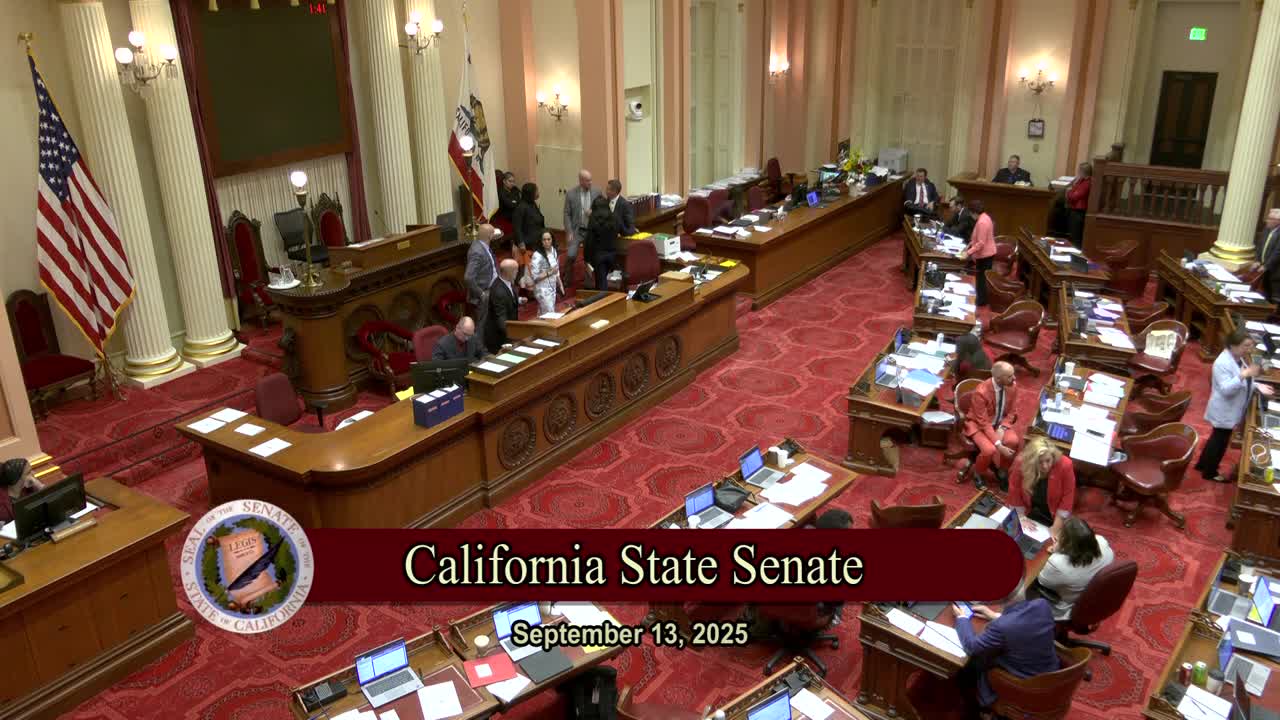 1MIN
Senate Floor
 41SEC
Senate Standing Committee on Appropriations
 1MIN
Assembly Floor
 24MIN
Assembly Standing Committee on Insurance
Bill Author
Bill Co-Author(s):