AB 953: Political Reform Act of 1974: contributions and expenditures by foreign nationals.
- Session Year: 2025-2026
- House: Assembly
- Latest Version Date: 2025-10-01
Current Status:
Passed
(2025-10-01: Chaptered by Secretary of State - Chapter 170, Statutes of 2025.)
Introduced
In Committee
Awaiting First Chamber Vote
Passed First Chamber
In Committee
Awaiting Second Chamber Vote
Passed Second Chamber
Enacted
The Political Reform Act of 1974 provides for the comprehensive regulation of political campaigns, lobbying, and other matters relating to governmental ethics and elections. The act prohibits a foreign government or foreign principal from making any contribution, expenditure, or independent expenditure in connection with the qualification or support of, or opposition to, a state or local ballot measure or an election for a state or local office. The act prohibits a person or committee from soliciting or accepting a contribution from a foreign government or foreign principal for the same purposes. The act makes a violation of these prohibitions a misdemeanor.
This bill would expand the prohibitions described above to apply to foreign nationals. The bill would define foreign national as a person who is not a citizen of the United States and who is not a lawfully admitted permanent resident. The bill would exclude from this definition a person who has been granted deferred action, and whose deferred action has not expired, under the federal Deferred Action for Childhood Arrivals (DACA) program, as described in guidelines issued by the United States Department of Homeland Security.
By expanding the scope of an existing crime, the bill would impose a state-mandated local program.
The California Constitution requires the state to reimburse local agencies and school districts for certain costs mandated by the state. Statutory provisions establish procedures for making that reimbursement.
This bill would provide that no reimbursement is required by this act for a specified reason.
The Political Reform Act of 1974, an initiative measure, provides that the Legislature may amend the act to further the acts purposes upon a 2/3 vote of each house of the Legislature and compliance with specified procedural requirements.
This bill would declare that it furthers the purposes of the act.
The Political Reform Act of 1974 provides for the comprehensive regulation of political campaigns, lobbying, and other matters relating to governmental ethics and elections. The act prohibits a foreign government or foreign principal from making any contribution, expenditure, or independent expenditure in connection with the qualification or support of, or opposition to, a state or local ballot measure or an election for a state or local office. The act prohibits a person or committee from soliciting or accepting a contribution from a foreign government or foreign principal for the same purposes. The act makes a violation of these prohibitions a misdemeanor.
This bill would state the intent of the Legislature to enact legislation relating to the Political Reform Act of 1974. expand the prohibitions described above to apply to foreign nationals. The bill would define foreign national as a person who is not a citizen of the United States and who is not a lawfully admitted permanent resident. The bill would exclude from this definition a person who has been granted deferred action, and whose deferred action has not expired, under the federal Deferred Action for Childhood Arrivals (DACA) program, as described in guidelines issued by the United States Department of Homeland Security.
By expanding the scope of an existing crime, the bill would impose a state-mandated local program.
The California Constitution requires the state to reimburse local agencies and school districts for certain costs mandated by the state. Statutory provisions establish procedures for making that reimbursement.
This bill would provide that no reimbursement is required by this act for a specified reason.
The Political Reform Act of 1974, an initiative measure, provides that the Legislature may amend the act to further the acts purposes upon a 2/3 vote of each house of the Legislature and compliance with specified procedural requirements.
This bill would declare that it furthers the purposes of the act.
The Political Reform Act of 1974 provides for the comprehensive regulation of political campaigns, lobbying, and other matters relating to governmental ethics and elections.
This bill would state the intent of the Legislature to enact legislation relating to the Political Reform Act of 1974.
The Legislature finds and declares the following:
(a)The First Amendment rights of speech and association, as they relate to participating in elections, are core values in the United States. The Supreme Court of the United States has repeatedly held that these freedoms include the right to make campaign contributions in support of candidates and ballot measures at the federal, state, and local levels.
(b)In accordance with federal law, the right to participate in elections is solely reserved for citizens and permanent legal residents of the United States, whether they act as individuals or in association. The First Amendments protection of political speech does not apply to foreign nationals, who are forbidden under Section 30121 of Title 52 of the United States Code from directly or indirectly making political contributions, expenditures, or independent expenditures in connection with federal, state, or local elections. Furthermore, federal law prohibits a person from knowingly soliciting or receiving contributions from a foreign national.
(c)Individual states must also safeguard and bolster this restriction on foreign influence in our state and local elections by prohibiting contributions, expenditures, and independent expenditures from foreign nationals in connection with federal, state, and local elections.
SEC. 2.Section 85320 of the Government Code is amended to read:85320.(a)A foreign government, foreign principal, or foreign national shall not make, directly or through any other person, a contribution, expenditure, or independent expenditure in connection with the qualification or support of, or opposition to, any state or local ballot measure or in connection with the election of a candidate to state or local office.
(b)A person or a committee shall not solicit or accept a contribution from a foreign government, foreign principal, or foreign national in connection with the qualification or support of, or opposition to, any state or local ballot measure or in connection with the election of a candidate to state or local office.
(c)For the purposes of this section, the following terms have the following meanings:
(1)(A)Foreign national means a person who is not a citizen of the United States and who is not a lawfully admitted permanent resident.
(B)Foreign national does not include a person who has been granted deferred action, and whose deferred action has not expired, under the federal Deferred Action for Childhood Arrivals (DACA) program, as described in guidelines issued by the United States Department of Homeland Security.
(2)Foreign principal includes any of the following:
(A)A foreign political party.
(B)A person outside the United States, unless either of the following is established:
(i)The person is an individual and a citizen of the United States.
(ii)The person is not an individual and is organized under or created by the laws of the United States or of any state or other place subject to the jurisdiction of the United States and has its principal place of business within the United States.
(C)A partnership, association, corporation, organization, or other combination of persons organized under the laws of or having its principal place of business in a foreign country.
(D)A domestic subsidiary of a foreign corporation if the decision to contribute or expend funds is made by an officer, director, or management employee of the foreign corporation who is neither a citizen of the United States nor a lawfully admitted permanent resident of the United States.
(d)This section shall not prohibit a contribution, expenditure, or independent expenditure made by a lawfully admitted permanent resident.
(e)Any person who violates this section shall be guilty of a misdemeanor and shall be fined an amount equal to the amount contributed or expended.
SEC. 3.No reimbursement is required by this act pursuant to Section 6 of Article XIIIB of the California Constitution because the only costs that may be incurred by a local agency or school district will be incurred because this act creates a new crime or infraction, eliminates a crime or infraction, or changes the penalty for a crime or infraction, within the meaning of Section 17556 of the Government Code, or changes the definition of a crime within the meaning of Section 6 of Article XIIIB of the California Constitution.
SEC. 4.The Legislature finds and declares that this bill furthers the purposes of the Political Reform Act of 1974 within the meaning of subdivision (a) of Section 81012 of the Government Code.
The Legislature finds and declares the following:
(a)The First Amendment protects the freedoms rights of speech and association, particularly in relation to participation in the electoral process. In considering such core values, the as they relate to participating in elections, are core values in the United States. The Supreme Court of the United States has repeatedly held that these freedoms include the right to make campaign contributions in support of candidates and ballot measures at the federal, state, and local levels.
(b)In accordance with federal law, the rights described in subdivision (a) are right to participate in elections is solely reserved for citizens and permanent legal residents of the United States, whether they act as individuals or in association. The First Amendments protection of political speech does not apply to foreign nationals, who are forbidden under Section 30121 of Title 52 of the United States Code from directly or indirectly making political contributions, expenditures, or independent expenditures in connection with federal, state, or local elections. Furthermore, federal law prohibits a person from knowingly soliciting or receiving contributions from a foreign national.
(c)Individual states must also safeguard and bolster this restriction on foreign influence in our state and local elections by prohibiting contributions, expenditures, and independent expenditures from foreign nationals in connection with federal, state, and local elections.
SEC. 2.Section 85320 of the Government Code is amended to read:85320.(a)A foreign government, foreign principal, or foreign national shall not make, directly or through any other person, a contribution, expenditure, or independent expenditure in connection with the qualification or support of, or opposition to, any state or local ballot measure or in connection with the election of a candidate to state or local office.
(b)A person or a committee shall not solicit or accept a contribution from a foreign government, foreign principal, or foreign national in connection with the qualification or support of, or opposition to, any state or local ballot measure or in connection with the election of a candidate to state or local office.
(c)For the purposes of this section, the following terms have the following meanings:
(1)(A)Foreign national means a person who is not a citizen of the United States and who is not a lawfully admitted permanent resident.
(B)Foreign national does not include a person who has been granted deferred action, and whose deferred action has not expired, under the federal Deferred Action for Childhood Arrivals (DACA) program, as described in guidelines issued by the United States Department of Homeland Security.
(2)Foreign principal includes any of the following:
(A)A foreign political party.
(B)A person outside the United States, unless either of the following is established:
(i)The person is an individual and a citizen of the United States.
(ii)The person is not an individual and is organized under or created by the laws of the United States or of any state or other place subject to the jurisdiction of the United States and has its principal place of business within the United States.
(C)A partnership, association, corporation, organization, or other combination of persons organized under the laws of or having its principal place of business in a foreign country.
(D)A domestic subsidiary of a foreign corporation if the decision to contribute or expend funds is made by an officer, director, or management employee of the foreign corporation who is neither a citizen of the United States nor a lawfully admitted permanent resident of the United States.
(d)This section shall not prohibit a contribution, expenditure, or independent expenditure made by a lawfully admitted permanent resident.
(e)Any person who violates this section shall be guilty of a misdemeanor and shall be fined an amount equal to the amount contributed or expended.
SEC. 3.No reimbursement is required by this act pursuant to Section 6 of Article XIIIB of the California Constitution because the only costs that may be incurred by a local agency or school district will be incurred because this act creates a new crime or infraction, eliminates a crime or infraction, or changes the penalty for a crime or infraction, within the meaning of Section 17556 of the Government Code, or changes the definition of a crime within the meaning of Section 6 of Article XIIIB of the California Constitution.
SEC. 4.The Legislature finds and declares that this bill furthers the purposes of the Political Reform Act of 1974 within the meaning of subdivision (a) of Section 81012 of the Government Code.
The Legislature finds and declares the following:
(a)The First Amendment protects the freedoms of speech and association, particularly in relation to participation in the electoral process. In considering such core values, the Supreme Court of the United States has repeatedly held that these freedoms include the right to make campaign contributions in support of candidates and ballot measures at the federal, state, and local levels.
(b)In accordance with federal law, the rights described in subdivision (a) are solely reserved for citizens and permanent legal residents of the United States, whether they act as individuals or in association. The First Amendments protection of political speech does not apply to foreign nationals, who are forbidden under Section 30121 of Title 52 of the United States Code from directly or indirectly making political contributions, expenditures, or independent expenditures in connection with federal, state, or local elections. Furthermore, federal law prohibits a person from knowingly soliciting or receiving contributions from a foreign national.
(c)Individual states must also safeguard and bolster this restriction on foreign influence in our state and local elections by prohibiting contributions, expenditures, and independent expenditures from foreign nationals in connection with federal, state, and local elections.
SEC. 2.Section 85320 of the Government Code is amended to read:85320.(a)A foreign government, foreign principal, or foreign national shall not make, directly or through any other person, a contribution, expenditure, or independent expenditure in connection with the qualification or support of, or opposition to, any state or local ballot measure or in connection with the election of a candidate to state or local office.
(b)A person or a committee shall not solicit or accept a contribution from a foreign government or government, foreign principal principal, or foreign national in connection with the qualification or support of, or opposition to, any state or local ballot measure or in connection with the election of a candidate to state or local office.
(c)For the purposes of this section, the following terms have the following meanings:
(1)(A)Foreign national means a person who is not a citizen of the United States and who is not a lawfully admitted permanent resident.
(B)Foreign national does not include a person who has been granted deferred action, and whose deferred action has not expired, under the federal Deferred Action for Childhood Arrivals (DACA) program, as described in guidelines issued by the United States Department of Homeland Security.
(2)Foreign principal includes any of the following:
(A)A foreign political party.
(B)A person outside the United States, unless either of the following is established:
(i)The person is an individual and a citizen of the United States.
(ii)The person is not an individual and is organized under or created by the laws of the United States or of any state or other place subject to the jurisdiction of the United States and has its principal place of business within the United States.
(C)A partnership, association, corporation, organization, or other combination of persons organized under the laws of or having its principal place of business in a foreign country.
(D)A domestic subsidiary of a foreign corporation if the decision to contribute or expend funds is made by an officer, director, or management employee of the foreign corporation who is neither a citizen of the United States nor a lawfully admitted permanent resident of the United States.
(d)This section shall not prohibit a contribution, expenditure, or independent expenditure made by a lawfully admitted permanent resident.
(e)Any person who violates this section shall be guilty of a misdemeanor and shall be fined an amount equal to the amount contributed or expended.
SEC. 3.No reimbursement is required by this act pursuant to Section 6 of Article XIIIB of the California Constitution because the only costs that may be incurred by a local agency or school district will be incurred because this act creates a new crime or infraction, eliminates a crime or infraction, or changes the penalty for a crime or infraction, within the meaning of Section 17556 of the Government Code, or changes the definition of a crime within the meaning of Section 6 of Article XIIIB of the California Constitution.
SEC. 4.The Legislature finds and declares that this bill furthers the purposes of the Political Reform Act of 1974 within the meaning of subdivision (a) of Section 81012 of the Government Code.
The Legislature finds and declares the following:
(a)The First Amendment protects the freedoms of speech and association, particularly in relation to participation in the electoral process. In considering such core values, the Supreme Court of the United States has repeatedly held that these freedoms include the right to make campaign contributions in support of candidates and ballot measures at the federal, state, and local levels.
(b)In accordance with federal law, the rights described in subdivision (a) are solely reserved for citizens and permanent legal residents of the United States, whether they act as individuals or in association. The First Amendments protection of political speech does not apply to foreign nationals, who are forbidden under Section 30121 of Title 52 of the United States Code from directly or indirectly making political contributions, expenditures, or independent expenditures in connection with federal, state, or local elections. Furthermore, federal law prohibits a person from knowingly soliciting or receiving contributions from a foreign national.
(c)Individual states must also safeguard and bolster this restriction on foreign influence in our state and local elections by prohibiting contributions, expenditures, and independent expenditures from foreign nationals in connection with federal, state, and local elections.
SEC. 2.Section 85320 of the Government Code is amended to read:85320.(a)A foreign government or government, foreign principal principal, or foreign national shall not make, directly or through any other person, a contribution, expenditure, or independent expenditure in connection with the qualification or support of, or opposition to, any state or local ballot measure or in connection with the election of a candidate to state or local office.
(b)A person or a committee shall not solicit or accept a contribution from a foreign government or foreign principal in connection with the qualification or support of, or opposition to, any state or local ballot measure or in connection with the election of a candidate to state or local office.
(c)For the purposes of this section, a foreign principal includes the following: the following terms have the following meanings:
(1)(A)Foreign national means a person who is not a citizen of the United States and who is not a lawfully admitted permanent resident.
(B)Foreign national does not include a person who has been granted deferred action, and whose deferred action has not expired, under the federal Deferred Action for Childhood Arrivals (DACA) program, as described in guidelines issued by the United States Department of Homeland Security.
(2)Foreign principal includes any of the following:
(1)(A)A foreign political party.
(2)(B)A person outside the United States, unless either of the following is established:
(A)(i)The person is an individual and a citizen of the United States.
(B)(ii)The person is not an individual and is organized under or created by the laws of the United States or of any state or other place subject to the jurisdiction of the United States and has its principal place of business within the United States.
(3)(C)A partnership, association, corporation, organization, or other combination of persons organized under the laws of or having its principal place of business in a foreign country.
(4)(D)A domestic subsidiary of a foreign corporation if the decision to contribute or expend funds is made by an officer, director, or management employee of the foreign corporation who is neither a citizen of the United States nor a lawfully admitted permanent resident of the United States.
(d)This section shall not prohibit a contribution, expenditure, or independent expenditure made by a lawfully admitted permanent resident.
(e)Any person who violates this section shall be guilty of a misdemeanor and shall be fined an amount equal to the amount contributed or expended.
SEC. 3.No reimbursement is required by this act pursuant to Section 6 of Article XIIIB of the California Constitution because the only costs that may be incurred by a local agency or school district will be incurred because this act creates a new crime or infraction, eliminates a crime or infraction, or changes the penalty for a crime or infraction, within the meaning of Section 17556 of the Government Code, or changes the definition of a crime within the meaning of Section 6 of Article XIIIB of the California Constitution.
SEC. 4.The Legislature finds and declares that this bill furthers the purposes of the Political Reform Act of 1974 within the meaning of subdivision (a) of Section 81012 of the Government Code.
SECTION 1.It is the intent of the Legislature to enact legislation relating to the Political Reform Act of 1974.It is the intent of the Legislature to enact legislation relating to the Political Reform Act of 1974.
|
Date
|
Status
|
|---|---|
| Oct 1, 2025 | Chaptered by Secretary of State - Chapter 170, Statutes of 2025. |
| Oct 1, 2025 | Approved by the Governor. |
| Sep 16, 2025 | Enrolled and presented to the Governor at 2 p.m. |
| Sep 9, 2025 | Senate amendments concurred in. To Engrossing and Enrolling. (Ayes 80. Noes 0. Page 3115.). |
| Sep 8, 2025 | In Assembly. Concurrence in Senate amendments pending. |
| Sep 8, 2025 | Read third time. Passed. Ordered to the Assembly. (Ayes 39. Noes 0. Page 2608.). |
| Jul 17, 2025 | Ordered to third reading. |
| Jul 17, 2025 | From Consent Calendar. |
| Jul 15, 2025 | Read second time. Ordered to Consent Calendar. |
| Jul 14, 2025 | From committee: Be ordered to second reading file pursuant to Senate Rule 28.8 and ordered to Consent Calendar. |
| Jul 2, 2025 | Read second time and amended. Re-referred to Com. on APPR. |
| Jul 1, 2025 | From committee: Amend, and do pass as amended and re-refer to Com. on APPR. with recommendation: To Consent Calendar. (Ayes 5. Noes 0.) (July 1). |
| Jun 18, 2025 | Referred to Com. on E. & C.A. |
| May 23, 2025 | In Senate. Read first time. To Com. on RLS. for assignment. |
| May 23, 2025 | Read third time. Passed. Ordered to the Senate. (Ayes 71. Noes 0. Page 1663.) |
| May 15, 2025 | Read second time. Ordered to Consent Calendar. |
| May 14, 2025 | From committee: Do pass. To Consent Calendar. (Ayes 15. Noes 0.) (May 14). |
| May 5, 2025 | Re-referred to Com. on APPR. |
| May 1, 2025 | Read second time and amended. |
| Apr 30, 2025 | From committee: Amend, and do pass as amended and re-refer to Com. on APPR. with recommendation: To Consent Calendar. (Ayes 7. Noes 0.) (April 30). |
| Mar 25, 2025 | Re-referred to Com. on ELECTIONS. |
| Mar 24, 2025 | Referred to Com. on ELECTIONS. |
| Mar 24, 2025 | From committee chair, with author's amendments: Amend, and re-refer to Com. on ELECTIONS. Read second time and amended. |
| Feb 21, 2025 | From printer. May be heard in committee March 23. |
| Feb 20, 2025 | Read first time. To print. |
|
Date
|
Description
|
Location
|
Votes
|
|
|---|---|---|---|---|
| Sep 9, 2025 | AB 953 Pacheco Concurrence in Senate Amendments | Assembly Floor |
Passed |
|
| Sep 8, 2025 | Assembly 3rd Reading AB953 Pacheco et al. By Umberg | Senate Floor |
Passed |
|
| Jul 1, 2025 | Do pass as amended, but first amend, and re-refer to the Committee on [Appropriations] with the recommendation: To Consent Calendar | Senate Standing Committee on Elections and Constitutional Amendments |
Passed |
|
| May 23, 2025 | AB 953 Pacheco Consent Calendar Second Day Regular Session | Assembly Floor |
Passed |
|
| May 14, 2025 | Do pass. To Consent Calendar. | Assembly Standing Committee on Appropriations |
Passed |
|
| Apr 30, 2025 | Do pass as amended, and be re-referred to the Committee on [Appropriations] with recommendation: To Consent Calendar | Assembly Standing Committee on Elections |
Passed |
This list shows positions taken on this bill by organizations on the date displayed, which is linked to the original source.
Positions by individuals are not included.
|
Organization
|
Position
|
Date
|
|---|---|---|
| Fair Political Practices Commission | ** Support |
CONCURRENCE IN SENATE AMENDMENTS
CSA1 Bill Id:AB 953
Author:(Pacheco and Alanis)
As Amended Ver:July 02, 2025
2/3 vote
SUMMARY
Prohibits foreign nationals, except for Deferred Action for Childhood Arrivals recipients, from making campaign contributions or expenditures in connection with state and local elections, and prohibits the solicitation of contributions from such foreign nationals.
Senate Amendments
Make clarifying changes.
COMMENTS
Federal law prohibits foreign nationals from making campaign contributions or expenditures in connection with federal, state, and local elections. Until 2002, this restriction specifically applied to contributions and expenditures made "in connection with an election to any political office." Because that language was limited to elections for office, it was the position of the Federal Election Commission (FEC) that contributions and expenditures from foreign nationals relating exclusively to ballot measures were not restricted by federal law. In 2002, the restriction was amended to make it applicable to any contribution or expenditure made "in connection with a Federal, State, or local election," though it is unclear whether that change was intended to cover ballot measure elections. In a 2024 advisory opinion, the FEC concluded that ballot initiatives and referenda are not "Federal, State, or local election[s]" for the purpose of the federal prohibition on campaign contributions by foreign nationals.
In 1997, the Legislature approved and Governor Wilson signed SB 109 (Kopp), Chapter 67, Statutes of 1997, to prohibit foreign governments or foreign principals from making campaign contributions or expenditures in connection with state or local ballot measures. While SB 109 was modeled after the federal restrictions on campaign contributions and expenditures, it did not seek to regulate foreign contributions made in connection with elections for office because such contributions were already restricted by federal law. Instead, SB 109 was limited to foreign spending in connection with ballot measure elections, thereby restricting foreign spending that was not covered by federal law.
More recently, AB 319 (Valladares), Chapter 313, Statutes of 2021, amended state law to prohibit campaign contributions and expenditures by foreign governments and foreign principals in connection with candidate elections. Even though such contributions and expenditures were already prohibited under federal law, AB 319 imposed similar restrictions under state law due to concerns about the FEC's willingness and ability to bring prompt enforcement actions under federal law for violations related to campaign contributions and expenditures by foreign governments and foreign principals.
While state and federal law similarly restrict foreign spending made in connection with candidate elections, those laws differ slightly with respect to the individuals covered. Specifically, while federal law restricts contributions and expenditures by individuals who are not citizens or nationals of the United States (US) and who are not lawfully admitted for permanent residence in the US, state law does not restrict contributions or expenditures by individuals who are legally present in the US, even if those individuals are not legal permanent residents. As a result, certain foreign nationals who are legally present in the US—including people in the US temporarily on work and student visas, and certain refugees and asylees—are not prohibited by state law from making campaign contributions or expenditures in connection with candidate elections, even though such contributions and expenditures are prohibited under federal law. Relatedly, state law does not restrict those individuals from making contributions or expenditures in connection with ballot measure elections.
California voters passed an initiative, Proposition 9, in 1974 that created the Fair Political Practices Commission (FPPC) and codified significant restrictions and prohibitions on candidates, officeholders, and lobbyists. That initiative is commonly known as the Political Reform Act (PRA). Amendments to the PRA that are not submitted to the voters, such as those contained in this bill, must further the purposes of the initiative and require a two-thirds vote of both houses of the Legislature.
Please see the policy committee analysis for a full discussion of this bill.
According to the Author
"Under current law, there are no restrictions prohibiting foreign nationals from making monetary contributions or expenditures to support or oppose ballot measures in California. Because the definition of 'foreign principal' in state law is based on the location of the individual (outside the United States), state law would permit a foreign national to enter the country and make a contribution, expenditure, or independent expenditure in connection with a ballot measure, even though that person would be prohibited from making the contribution or expenditure if they were located outside of the United States. AB 953 closes this critical gap by prohibiting foreign nationals from making contributions or expenditures related to state and local ballot measures, regardless of their physical location."
Arguments in Support
The sponsor of this bill, the FPPC, writes in support, "Now more than ever, our democracy is facing significant challenges, including threats from foreign influence in our elections, undermining the ability to govern ourselves and make independent decisions. Under current law, there is no prohibition on foreign nationals making monetary contributions or expenditures to support or oppose ballot measures in California… AB 953 would close this gap in state law to prohibit a foreign national from making a contribution, expenditure, or independent expenditure in connection with a state or local ballot measure, consistent with state and federal law that prohibits foreign nationals from making contributions or expenditures in connection with candidates. The bill would make an appropriate exemption to this prohibition for a person granted deferred action under the federal Deferred Action for Childhood Arrivals (DACA) program."
Arguments in Opposition
None received.
FISCAL COMMENTS
According to the Senate Appropriations Committee, pursuant to Senate Rule 28.8, negligible state costs.
VOTES:
ASM ELECTIONS: 7-0-0
YES: Pellerin, Macedo, Bennett, Berman, Solache, Stefani, Lackey
ASM APPROPRIATIONS: 15-0-0
YES: Wicks, Sanchez, Arambula, Calderon, Caloza, Dixon, Elhawary, Fong, Mark González, Hart, Pacheco, Pellerin, Solache, Ta, Tangipa
ASSEMBLY FLOOR: 71-0-8
YES: Addis, Aguiar-Curry, Ahrens, Alanis, Alvarez, Arambula, Ávila Farías, Bains, Bauer-Kahan, Bennett, Berman, Boerner, Bonta, Calderon, Caloza, Carrillo, Castillo, Connolly, Davies, DeMaio, Dixon, Elhawary, Flora, Fong, Gabriel, Gallagher, Garcia, Gipson, Jeff Gonzalez, Mark González, Hadwick, Haney, Harabedian, Hart, Hoover, Irwin, Jackson, Kalra, Krell, Lackey, Lee, Lowenthal, Macedo, McKinnor, Muratsuchi, Ortega, Pacheco, Papan, Patel, Patterson, Pellerin, Petrie-Norris, Quirk-Silva, Ramos, Ransom, Celeste Rodriguez, Michelle Rodriguez, Rogers, Blanca Rubio, Schiavo, Solache, Soria, Stefani, Ta, Tangipa, Valencia, Wallis, Ward, Wilson, Zbur, Rivas
ABS, ABST OR NV: Bryan, Chen, Ellis, Nguyen, Sanchez, Schultz, Sharp-Collins, Wicks
UPDATED
VERSION: July 02, 2025
CONSULTANT: Ethan Jones / ELECTIONS / (916) 319-2094 FN: 0001159
SENATE RULES COMMITTEE Office of Senate Floor Analyses (916) 651-1520 Fax: (916) 327-4478 | AB 953 |
THIRD READING
Bill No: AB 953
Author: Pacheco (D) and Alanis (R)
Amended: 7/2/25 in Senate
Vote: 27
SENATE ELECTIONS & C.A. COMMITTEE: 5-0, 7/1/25
AYES: Cervantes, Choi, Allen, Limón, Umberg
SENATE APPROPRIATIONS COMMITTEE: Senate Rule 28.8
ASSEMBLY FLOOR: 71-0, 5/23/25 (Consent) - See last page for vote
SUBJECT: Political Reform Act of 1974: contributions and expenditures by foreign nationals
SOURCE: California Fair Political Practices Commission
DIGEST:
This bill prohibits a foreign national, other than a Deferred Action for Childhood Arrivals (DACA) recipient, from making campaign contributions or expenditures in state and local elections.
ANALYSIS:
Existing law:
- Prohibits a foreign government or foreign principal from making a contribution, expenditure, or independent expenditure in connection with the qualification, support of, or opposition to a state or local ballot measure or the election of a candidate to state or local office.
- Prohibits a person or campaign committee from soliciting or accepting a contribution from a foreign government or foreign principal in connection with the qualification, support of, or opposition to a state or local ballot measure or the election of a candidate to state or local office.
- Defines a foreign principal as:
- A foreign political party.
- A person outside of the United States (U.S.), unless the person is an individual and a U.S. citizen or the person is not an individual but is organized under U.S. federal or state law and has its principal place of business in the U.S.
- A partnership, association, corporation, organization, or other combination of persons organized under the laws or having its principal place of business outside of the U.S.
- A domestic subsidiary or a foreign corporation, if the decision to contribute or expend is made by an officer, director, or manager of the foreign corporation who is neither a U.S. citizen nor an admitted permanent resident.
- Makes the violations of these prohibitions a misdemeanor punishable by a fine equal to the amount contributed or expended.
This bill:
- Expands the prohibitions on contributions and expenditures in 1) and 2) of existing law above to foreign nationals.
- Defines “foreign national” as a person who is not a citizen of the United States and who is not a lawfully admitted permanent resident.
- Excludes from foreign national a person who has been granted deferred action that has not expired under DACA.
Background
California Political Reform Act. Proposition 9, which appeared on the June 1974 ballot, created the California Political Reform Act (PRA) and established California’s campaign finance and disclosure laws for state and local campaigns, candidates, officeholders, and ballot measures. Prop 9 created the Fair Political Practices Commission (FPPC) to implement, administer, and enforce the PRA. Among its enforcement authorities, the FPPC in general may impose administrative penalties of up to $5,000 per violation of the PRA. The PRA also provides for civil penalties through civil actions brought by the FPPC or a district attorney or an elected city attorney.
Federal Law, Foreign Campaign Spending, and Previous Legislation. Federal law prohibits foreign nationals from making contributions in connection with federal, state, and local elections. According to information from the Federal Elections Commission (FEC), Congress first enacted this ban in 1966 as part of a statute intended to minimize foreign intervention in U.S. elections. The federal law included registration requirements for the agents of foreign principals and a general prohibition on political contributions by foreign nationals. In 1974, the FEC was given jurisdiction over its enforcement and interpretation.
Until 2002, the federal restrictions on contributions by foreign nationals specifically applied to contributions made “in connection with an election to any political office.” Due to that language, the FEC asserted that federal law did not restrict foreign nationals from making contributions or expenditures related exclusively to ballot measures. In 2002, the federal government amended the restriction on foreign contributions to make it applicable to any contribution made “in connection with a Federal, State, or local election” and thus, to apply to ballot measures.
California legislation. In 1997, the Legislature passed and Governor Pete Wilson signed SB 109 (Kopp, Chapter 67, Statutes 1997) to prohibit foreign governments or foreign principals from making contributions, expenditures, or independent expenditures in connection with state or local ballot measures. SB 109 did not seek to regulate foreign contributions made in connection with elections for office because federal law already prohibited such contributions. Instead, SB 109 was limited to foreign spending in connection with ballot measure elections, thereby restricting foreign spending that was not covered by federal law at that time. In 2000, the Legislature passed and Governor Davis signed AB 746 (Papan, Chapter 349, Statutes of 2000) to clarify that the ban on foreign contributions and expenditures did not apply to U.S. citizens living abroad.
In 2021, AB 319 (Valladares, Chapter 313 Statutes of 2021) expanded the PRA to also ban foreign contributions and expenditures in candidate elections, as described in existing law above.
The differences between state and federal law. State and federal law differ, however, in one important respect. While federal law prohibits contributions and expenditures by individuals who are not citizens or nationals of the U.S. and who are not lawfully admitted for permanent residence in the U.S., state law allows contributions or expenditures by individuals who are legally present in the U.S., even if those individuals are not legal permanent residents.
Comments
Author’s Statement. Our democracy is facing significant challenges, including threats from foreign influence in our elections, undermining our ability to govern ourselves and make independent decisions. Under current law, there are no restrictions prohibiting foreign nationals while in California from making monetary contributions or expenditures to support or oppose ballot measures. State law permits a foreign national to enter the country and make a contribution, expenditure, or independent expenditure in connection with a ballot measure, even though that person would be prohibited from making the contribution or expenditure if they were located outside of the United States. This bill closes this critical gap by prohibiting foreign nationals from making contributions or expenditures related to state and local ballot measures, regardless of their physical location.
Related/Prior Legislation
AB 319 (Valladares, Chapter 313, Statutes of 2021) prohibits contributions, expenditures, and independent expenditures by foreign governments and foreign principals in connection with state and local candidate elections.
AB 746 (Papan, Chapter 349, Statutes of 2000) clarified the definition of “foreign principal” to permit U.S. citizens living abroad to continue to make contributions to ballot measure campaigns.
SB 109 (Kopp, Chapter 67, Statutes of 1997) prohibited foreign governments and foreign principals, as defined, from making contributions, expenditures, or independent expenditures in connection with state or local ballot measures.
FISCAL EFFECT: Appropriation: No Fiscal Com.: Yes Local: Yes
SUPPORT: (Verified 7/14/25)
California Fair Political Practices Commission (Source)
OPPOSITION: (Verified 7/14/25)
None received
ARGUMENTS IN SUPPORT:
This bill’s sponsor, the FPPC, writes in support:
Because the definition of “foreign principal” in state law is centered on the location of the individual (outside the United States), state law permits a foreign national to enter the country and make a contribution, expenditure, or independent expenditure in connection with a ballot measure, even though that person would be prohibited from making the contribution or expenditure if they were located outside of the United States. Ballot measures can add to, significantly change, or repeal the very laws that govern Californians. Foreign interference in state and local laws poses a threat to our stability and democracy. [This bill] would close this gap in state law to prohibit a foreign national from making a contribution, expenditure, or independent expenditure in connection with a state or local ballot measure, consistent with state and federal law that prohibits foreign nationals from making contributions or expenditures in connection with candidates.
ASSEMBLY FLOOR: 71-0, 5/23/25
AYES: Addis, Aguiar-Curry, Ahrens, Alanis, Alvarez, Arambula, Ávila Farías, Bains, Bauer-Kahan, Bennett, Berman, Boerner, Bonta, Calderon, Caloza, Carrillo, Castillo, Connolly, Davies, DeMaio, Dixon, Elhawary, Flora, Fong, Gabriel, Gallagher, Garcia, Gipson, Jeff Gonzalez, Mark González, Hadwick, Haney, Harabedian, Hart, Hoover, Irwin, Jackson, Kalra, Krell, Lackey, Lee, Lowenthal, Macedo, McKinnor, Muratsuchi, Ortega, Pacheco, Papan, Patel, Patterson, Pellerin, Petrie-Norris, Quirk-Silva, Ramos, Ransom, Celeste Rodriguez, Michelle Rodriguez, Rogers, Blanca Rubio, Schiavo, Solache, Soria, Stefani, Ta, Tangipa, Valencia, Wallis, Ward, Wilson, Zbur, Rivas
NO VOTE RECORDED: Bryan, Chen, Ellis, Nguyen, Sanchez, Schultz, Sharp-Collins, Wicks
Prepared by: Carrie Cornwell / E. & C.A. / (916) 651-4106
7/17/25 11:25:04
**** END ****
SENATE RULES COMMITTEE Office of Senate Floor Analyses (916) 651-1520 Fax: (916) 327-4478 | AB 953 |
CONSENT
Bill No: AB 953
Author: Pacheco (D) and Alanis (R)
Amended: 7/2/25 in Senate
Vote: 27
SENATE ELECTIONS & C.A. COMMITTEE: 5-0, 7/1/25
AYES: Cervantes, Choi, Allen, Limón, Umberg
SENATE APPROPRIATIONS COMMITTEE: Senate Rule 28.8
ASSEMBLY FLOOR: 71-0, 5/23/25 (Consent) - See last page for vote
SUBJECT: Political Reform Act of 1974: contributions and expenditures by foreign nationals
SOURCE: California Fair Political Practices Commission
DIGEST:
This bill prohibits a foreign national, other than a Deferred Action for Childhood Arrivals (DACA) recipient, from making campaign contributions or expenditures in state and local elections.
ANALYSIS:
Existing law:
- Prohibits a foreign government or foreign principal from making a contribution, expenditure, or independent expenditure in connection with the qualification, support of, or opposition to a state or local ballot measure or the election of a candidate to state or local office.
- Prohibits a person or campaign committee from soliciting or accepting a contribution from a foreign government or foreign principal in connection with the qualification, support of, or opposition to a state or local ballot measure or the election of a candidate to state or local office.
- Defines a foreign principal as:
- A foreign political party.
- A person outside of the United States (U.S.), unless the person is an individual and a U.S. citizen or the person is not an individual but is organized under U.S. federal or state law and has its principal place of business in the U.S.
- A partnership, association, corporation, organization, or other combination of persons organized under the laws or having its principal place of business outside of the U.S.
- A domestic subsidiary or a foreign corporation, if the decision to contribute or expend is made by an officer, director, or manager of the foreign corporation who is neither a U.S. citizen nor an admitted permanent resident.
- Makes the violations of these prohibitions a misdemeanor punishable by a fine equal to the amount contributed or expended.
This bill:
- Expands the prohibitions on contributions and expenditures in 1) and 2) of existing law above to foreign nationals.
- Defines “foreign national” as a person who is not a citizen of the United States and who is not a lawfully admitted permanent resident.
- Excludes from foreign national a person who has been granted deferred action that has not expired under DACA.
Background
California Political Reform Act. Proposition 9, which appeared on the June 1974 ballot, created the California Political Reform Act (PRA) and established California’s campaign finance and disclosure laws for state and local campaigns, candidates, officeholders, and ballot measures. Prop 9 created the Fair Political Practices Commission (FPPC) to implement, administer, and enforce the PRA. Among its enforcement authorities, the FPPC in general may impose administrative penalties of up to $5,000 per violation of the PRA. The PRA also provides for civil penalties through civil actions brought by the FPPC or a district attorney or an elected city attorney.
Federal Law, Foreign Campaign Spending, and Previous Legislation. Federal law prohibits foreign nationals from making contributions in connection with federal, state, and local elections. According to information from the Federal Elections Commission (FEC), Congress first enacted this ban in 1966 as part of a statute intended to minimize foreign intervention in U.S. elections. The federal law included registration requirements for the agents of foreign principals and a general prohibition on political contributions by foreign nationals. In 1974, the FEC was given jurisdiction over its enforcement and interpretation.
Until 2002, the federal restrictions on contributions by foreign nationals specifically applied to contributions made “in connection with an election to any political office.” Due to that language, the FEC asserted that federal law did not restrict foreign nationals from making contributions or expenditures related exclusively to ballot measures. In 2002, the federal government amended the restriction on foreign contributions to make it applicable to any contribution made “in connection with a Federal, State, or local election” and thus, to apply to ballot measures.
California legislation. In 1997, the Legislature passed and Governor Pete Wilson signed SB 109 (Kopp, Chapter 67, Statutes 1997) to prohibit foreign governments or foreign principals from making contributions, expenditures, or independent expenditures in connection with state or local ballot measures. SB 109 did not seek to regulate foreign contributions made in connection with elections for office because federal law already prohibited such contributions. Instead, SB 109 was limited to foreign spending in connection with ballot measure elections, thereby restricting foreign spending that was not covered by federal law at that time. In 2000, the Legislature passed and Governor Davis signed AB 746 (Papan, Chapter 349, Statutes of 2000) to clarify that the ban on foreign contributions and expenditures did not apply to U.S. citizens living abroad.
In 2021, AB 319 (Valladares, Chapter 313 Statutes of 2021) expanded the PRA to also ban foreign contributions and expenditures in candidate elections, as described in existing law above.
The differences between state and federal law. State and federal law differ, however, in one important respect. While federal law prohibits contributions and expenditures by individuals who are not citizens or nationals of the U.S. and who are not lawfully admitted for permanent residence in the U.S., state law allows contributions or expenditures by individuals who are legally present in the U.S., even if those individuals are not legal permanent residents.
Comments
Author’s Statement. Our democracy is facing significant challenges, including threats from foreign influence in our elections, undermining our ability to govern ourselves and make independent decisions. Under current law, there are no restrictions prohibiting foreign nationals while in California from making monetary contributions or expenditures to support or oppose ballot measures. State law permits a foreign national to enter the country and make a contribution, expenditure, or independent expenditure in connection with a ballot measure, even though that person would be prohibited from making the contribution or expenditure if they were located outside of the United States. This bill closes this critical gap by prohibiting foreign nationals from making contributions or expenditures related to state and local ballot measures, regardless of their physical location.
Related/Prior Legislation
AB 319 (Valladares, Chapter 313, Statutes of 2021) prohibits contributions, expenditures, and independent expenditures by foreign governments and foreign principals in connection with state and local candidate elections.
AB 746 (Papan, Chapter 349, Statutes of 2000) clarified the definition of “foreign principal” to permit U.S. citizens living abroad to continue to make contributions to ballot measure campaigns.
SB 109 (Kopp, Chapter 67, Statutes of 1997) prohibited foreign governments and foreign principals, as defined, from making contributions, expenditures, or independent expenditures in connection with state or local ballot measures.
FISCAL EFFECT: Appropriation: No Fiscal Com.: Yes Local: Yes
SUPPORT: (Verified 7/14/25)
California Fair Political Practices Commission (Source)
OPPOSITION: (Verified 7/14/25)
None received
ARGUMENTS IN SUPPORT:
This bill’s sponsor, the FPPC, writes in support:
Because the definition of “foreign principal” in state law is centered on the location of the individual (outside the United States), state law permits a foreign national to enter the country and make a contribution, expenditure, or independent expenditure in connection with a ballot measure, even though that person would be prohibited from making the contribution or expenditure if they were located outside of the United States. Ballot measures can add to, significantly change, or repeal the very laws that govern Californians. Foreign interference in state and local laws poses a threat to our stability and democracy. [This bill] would close this gap in state law to prohibit a foreign national from making a contribution, expenditure, or independent expenditure in connection with a state or local ballot measure, consistent with state and federal law that prohibits foreign nationals from making contributions or expenditures in connection with candidates.
ASSEMBLY FLOOR: 71-0, 5/23/25
AYES: Addis, Aguiar-Curry, Ahrens, Alanis, Alvarez, Arambula, Ávila Farías, Bains, Bauer-Kahan, Bennett, Berman, Boerner, Bonta, Calderon, Caloza, Carrillo, Castillo, Connolly, Davies, DeMaio, Dixon, Elhawary, Flora, Fong, Gabriel, Gallagher, Garcia, Gipson, Jeff Gonzalez, Mark González, Hadwick, Haney, Harabedian, Hart, Hoover, Irwin, Jackson, Kalra, Krell, Lackey, Lee, Lowenthal, Macedo, McKinnor, Muratsuchi, Ortega, Pacheco, Papan, Patel, Patterson, Pellerin, Petrie-Norris, Quirk-Silva, Ramos, Ransom, Celeste Rodriguez, Michelle Rodriguez, Rogers, Blanca Rubio, Schiavo, Solache, Soria, Stefani, Ta, Tangipa, Valencia, Wallis, Ward, Wilson, Zbur, Rivas
NO VOTE RECORDED: Bryan, Chen, Ellis, Nguyen, Sanchez, Schultz, Sharp-Collins, Wicks
Prepared by: Carrie Cornwell / E. & C.A. / (916) 651-4106
7/16/25 16:22:45
**** END ****
SENATE COMMITTEE ON
ELECTIONS AND CONSTITUTIONAL AMENDMENTS
Senator Sabrina Cervantes, Chair
2025 - 2026 Regular
Bill No: 953 Hearing Date: 7/1/25
Author: | Pacheco and Alanis | ||
Version: |
| ||
Urgency: | Fiscal: | ||
Consultant: | |||
Subject:
DIGEST
This bill prohibits a foreign national, other than a Deferred Action for Childhood Arrivals (DACA) recipient, from making campaign contributions or expenditures in state and local elections.
ANALYSIS
Existing law:
- Prohibits a foreign government or foreign principal from making a contribution, expenditure, or independent expenditure in connection with the qualification, support of, or opposition to a state or local ballot measure or the election of a candidate to state or local office.
- Prohibits a person or campaign committee from soliciting or accepting a contribution from a foreign government or foreign principal in connection with the qualification, support of, or opposition to a state or local ballot measure or the election of a candidate to state or local office.
- Defines a foreign principal as:
- A foreign political party.
- A person outside of the United States, unless the person is an individual and a U.S. citizen or the person is not an individual but is organized under U.S. federal or state law and has its principal place of business in the U.S.
- A partnership, association, corporation, organization, or other combination of persons organized under the laws or having its principal place of business outside of the U.S.
- A domestic subsidiary or a foreign corporation, if the decision to contribute or expend is made by an officer, director, or manager of the foreign corporation who is neither a U.S. citizen nor an admitted permanent resident.
- Makes the violations of these prohibitions a misdemeanor punishable by a fine equal to the amount contributed or expended.
This bill:
- Makes legislative findings and declarations that:
- The First Amendment’s protections of the freedoms of speech and association are solely reserved for citizens and permanent residents of the United States.
- The First Amendment’s protection of political speech does not apply to foreign nationals.
- Individual states must safeguard and bolster federal law’s restrictions on foreign influence in state and local elections by prohibiting contributions and expenditures from foreign nationals in connections with federal, state, and local elections.
- Expands the prohibitions on contributions and expenditures in 1) and 2) of existing law above to foreign nationals.
- Defines “foreign national” as a person who is not a citizen of the United States and who is not a lawfully admitted permanent resident.
- Excludes from foreign national a person who has been granted deferred action that has not expired under DACA.
BACKGROUND
California Political Reform Act. Proposition 9, which appeared on the June 1974 ballot, created the California Political Reform Act (PRA) and established California’s campaign finance and disclosure laws for state and local campaigns, candidates, officeholders, and ballot measures. Prop 9 created the Fair Political Practices Commission (FPPC) to implement, administer, and enforce the PRA. Among its enforcement authorities, the FPPC in general may impose administrative penalties of up to $5,000 per violation of the PRA. The PRA also provides for civil penalties through civil actions brought by the FPPC or a district attorney or an elected city attorney.
Federal Law, Foreign Campaign Spending, and Previous Legislation. Federal law prohibits foreign nationals from making contributions in connection with federal, state, and local elections. According to information from the Federal Elections Commission (FEC), Congress first enacted this ban in 1966 as part of a statute intended to minimize foreign intervention in U.S. elections. The federal law included registration requirements for the agents of foreign principals and a general prohibition on political contributions by foreign nationals. In 1974, the FEC was given jurisdiction over its enforcement and interpretation.
Until 2002, the federal restrictions on contributions by foreign nationals specifically applied to contributions made “in connection with an election to any political office.” Due to that language, the FEC asserted that federal law did not restrict foreign nationals from making contributions or expenditures related exclusively to ballot measures. In 2002, the federal government amended the restriction on foreign contributions to make it applicable to any contribution made “in connection with a Federal, State, or local election” and thus, to apply to ballot measures.
California legislation. In 1997, the Legislature passed and Governor Pete Wilson signed SB 109 (Kopp), Chapter 67, to prohibit foreign governments or foreign principals from making contributions, expenditures, or independent expenditures in connection with state or local ballot measures. SB 109 did not seek to regulate foreign contributions made in connection with elections for office because federal law already prohibited such contributions. Instead, SB 109 was limited to foreign spending in connection with ballot measure elections, thereby restricting foreign spending that was not covered by federal law at that time. In 2000, the Legislature passed and Governor Davis signed AB 746 (Papan), Chapter 349, Statutes of 2000, to clarify that the ban on foreign contributions and expenditures did not apply to U.S. citizens living abroad.
In 2021, AB 319 (Valladares), Chapter 313, expanded the PRA to also ban foreign contributions and expenditures in candidate elections, as described in existing law above.
The differences between state and federal law. State and federal law differ, however, in one important respect. While federal law prohibits contributions and expenditures by individuals who are not citizens or nationals of the U.S. and who are not lawfully admitted for permanent residence in the U.S., state law allows contributions or expenditures by individuals who are legally present in the U.S., even if those individuals are not legal permanent residents.
COMMENTS
- Author’s Statement. Our democracy is facing significant challenges, including threats from foreign influence in our elections, undermining our ability to govern ourselves and make independent decisions. Under current law, there are no restrictions prohibiting foreign nationals while in California from making monetary contributions or expenditures to support or oppose ballot measures. State law permits a foreign national to enter the country and make a contribution, expenditure, or independent expenditure in connection with a ballot measure, even though that person would be prohibited from making the contribution or expenditure if they were located outside of the United States. This bill closes this critical gap by prohibiting foreign nationals from making contributions or expenditures related to state and local ballot measures, regardless of their physical location.
- Arguments in Support. The bill’s sponsor, the FPPC, writes in support:
Because the definition of “foreign principal” in state law is centered on the location of the individual (outside the United States), state law permits a foreign national to enter the country and make a contribution, expenditure, or independent expenditure in connection with a ballot measure, even though that person would be prohibited from making the contribution or expenditure if they were located outside of the United States. Ballot measures can add to, significantly change, or repeal the very laws that govern Californians. Foreign interference in state and local laws poses a threat to our stability and democracy. [This bill] would close this gap in state law to prohibit a foreign national from making a contribution, expenditure, or independent expenditure in connection with a state or local ballot measure, consistent with state and federal law that prohibits foreign nationals from making contributions or expenditures in connection with candidates.
- Suggested Amendment. The findings and declarations in this bill imply that the First Amendment freedoms of speech and association are reserved solely to U.S. citizens and permanent residents. This is not accurate, as those freedoms generally apply to any person in the U.S. When they are applied to political speech and specifically making campaign contributions, those freedoms are, however, limited to U.S. citizens and permanent residents. Therefore, the committee may wish to amend the bill to delete the findings and declarations or to rewrite them to be clear that the rights reserved to citizens and permanent residents of the U.S. are the rights to make campaign contributions.
RELATED/PRIOR LEGISLATION
AB 319 (Valladares), Chapter 313, Statutes of 2021, prohibits contributions, expenditures, and independent expenditures by foreign governments and foreign principals in connection with state and local candidate elections.
AB 746 (Papan), Chapter 349, Statutes of 2000, clarified the definition of “foreign principal” to permit U.S. citizens living abroad to continue to make contributions to ballot measure campaigns.
SB 109 (Kopp), Chapter 67, Statutes of 1997, prohibited foreign governments and foreign principals, as defined, from making contributions, expenditures, or independent expenditures in connection with state or local ballot measures.
PRIOR ACTION
Assembly Floor: | 71 - 0 |
Assembly Appropriations Committee: | 15 - 0 |
Assembly Committee: | 7 - 0 |
POSITIONS
Sponsor: California Fair Political Practices Commission
Support: None received
Oppose: None received
-- END --
Date of Hearing: May 14, 2025
ASSEMBLY COMMITTEE ON APPROPRIATIONS
Buffy Wicks, Chair
ABPCA Bill Id:AB 953
Author:(Pacheco) – As Amended Ver:May 1, 2025
Policy Committee: | Elections | Vote: | 7 - 0 |
|
| ||
|
|
Urgency: No State Mandated Local Program: Yes Reimbursable: No
SUMMARY:
This bill prohibits a foreign national from making a contribution or expenditure in connection with state and local elections, and prohibits the solicitation of a contribution from a foreign national.
This bill provides that a “foreign national” does not include a person who has been granted deferred action, and whose deferred action has not expired, under the federal Deferred Action for Childhood Arrivals (DACA) program.
FISCAL EFFECT:
Minor and absorbable costs to the Fair Political Practices Commission (FPPC) to update educational materials and regulations.
COMMENTS:
- Purpose. According to the author:
Because the definition of “foreign principal” in state law is based on the location of the individual (outside the United States), state law would permit a foreign national to enter the country and make a contribution, expenditure, or independent expenditure in connection with a ballot measure, even though that person would be prohibited from making the contribution or expenditure if they were located outside of the United States.
AB 953 closes this critical gap by prohibiting foreign nationals from making contributions or expenditures related to state and local ballot measures, regardless of their physical location.
This bill is sponsored by the FPPC.
- Foreign Influence in Elections. Existing law prohibits foreign governments and foreign principals from making a direct or indirect contribution, expenditure, or independent expenditure in connection with a state or local candidate or ballot measure. However, while certain foreign nationals legally present in the United States, such as people in the country temporarily on work and student visas, are prohibited under federal law from making campaign contributions or expenditures in connection with candidate elections, there is no similar prohibition under state law. Relatedly, state law does not restrict those individuals from making contributions or expenditures in connection with ballot measure elections. This bill prohibits a foreign national from making a contribution or expenditure in connection with state and local elections, and prohibits the solicitation of a contribution from a foreign national. According to the Assembly Elections Committee’ analysis of this bill, “Committee staff is unaware of evidence that ballot measure campaigns in California are being legally funded by foreign nationals who are temporarily legally present in the country.”
Analysis Prepared by: Irene Ho / APPR. / (916) 319-2081
Date of Hearing: April 30, 2025
ASSEMBLY COMMITTEE ON ELECTIONS
Gail Pellerin, Chair
ABPCA Bill Id:AB 953 (
Author:Pacheco) – As Amended Ver:March 24, 2025
SUBJECT: Political Reform Act of 1974: contributions and expenditures by foreign nationals.
SUMMARY: Prohibits foreign nationals, except for Deferred Action for Childhood Arrivals (DACA) recipients, from making contributions or expenditures in connection with state and local elections. Specifically, this bill:
- Expands a provision of law that prohibits foreign governments and foreign principals, as defined, from making, directly or through any other person, a contribution, expenditure, or independent expenditure (IE) in connection with the qualification or support of, or opposition to, a state or local ballot measure, or in connection with the election of a candidate to state or local office, such that the prohibition also applies to foreign nationals, as defined.
- Defines "foreign national," for the purposes of this bill, as a person who is not a citizen of the United States (US) and who is not lawfully admitted for permanent residence, but provides that the term “foreign national,” does not include a person who has been granted deferred action, and whose deferred action has not expired, under the federal DACA program, as described in guidelines issued by the US Department of Homeland Security.
- Makes various findings and declarations, and makes corresponding and technical changes.
EXISTING STATE LAW:
- Creates the Fair Political Practices Commission (FPPC), and makes it responsible for the impartial, effective administration and implementation of the Political Reform Act (PRA). (Government Code §§83100, 83111)
- Prohibits a foreign government or foreign principal from making, directly or through any other person, a contribution, expenditure, or IE in connection with the qualification or support of, or opposition to, a state or local ballot measure, or in connection with the election of a candidate to state or local office. Prohibits a person or a committee from soliciting or accepting a contribution from a foreign government or a foreign principal in connection with the qualification or support of, or opposition to, any state or local ballot measure, or in connection with the election of a candidate to state or local office.
- Defines "foreign principal," for the purposes of these restrictions, to include the following:
- A foreign political party;
- A person outside the US, unless either of the following is established:
- The person is an individual and a citizen of the US; or,
- The person is not an individual, and is organized under or created by the laws of the US or of any state or other place subject to the jurisdiction of the US and has its principal place of business within the US;
- A partnership, association, corporation, organization, or other combination of persons organized under the laws of or having its principal place of business in a foreign country; or,
- A domestic subsidiary of a foreign corporation if the decision to contribute or expend funds is made by an officer, director, or management employee of the foreign corporation who is neither a citizen of the US nor a lawfully admitted permanent resident of the US.
- Provides that these restrictions do not prohibit a contribution, expenditure, or IE made by a lawfully admitted permanent resident.
- Provides that a person who violates these provisions is guilty of a misdemeanor and shall be fined an amount equal to the amount contributed or expended. (Government Code §85320)
- Defines "foreign principal," for the purposes of these restrictions, to include the following:
- Permits the FPPC to impose administrative penalties of up to $5,000 per violation of the PRA. (Government Code §83116)
EXISTING FEDERAL LAW:
- Prohibits a foreign national, directly or indirectly, from doing either of the following in connection with a federal, state, or local election:
- Making a contribution or donation of money or other thing of value, or an express or implied promise to make a contribution or donation; or,
- Making an expenditure, IE, or disbursement for an electioneering communication. (52 USC §30121(a)(1))
- Making a contribution or donation of money or other thing of value, or an express or implied promise to make a contribution or donation; or,
- Prohibits a person from soliciting, accepting, or receiving a contribution or donation made by a foreign national in connection with a federal, state, or local election. (52 USC §30121(a)(2))
- Defines "foreign national," for the purposes of the prohibitions described above, as either of the following:
- A government of a foreign country; a foreign political party; or a partnership, association, corporation, organization, or other combination of persons organized under the laws of or having its principal place of business in a foreign country; or,
- An individual who is not a citizen or a national of the US and who is not lawfully admitted for permanent residence in the US. (52 USC §30121(b))
- Establishes the Federal Election Commission (FEC), and makes it responsible for the administration and enforcement of the Federal Election Campaign Act (FECA), including the restrictions on contributions and expenditures by foreign nationals described above. (52 USC §30106)
FISCAL EFFECT: Unknown. State-mandated local program; contains a crimes and infractions disclaimer.
COMMENTS:
- Purpose of the Bill: According to the author:
Now more than ever, our democracy is facing significant challenges, including threats from foreign influence in our elections – undermining our ability to govern ourselves and make independent decisions. Under current law, there are no restrictions prohibiting foreign nationals from making monetary contributions or expenditures to support or oppose ballot measures in California.
Because the definition of “foreign principal” in state law is based on the location of the individual (outside the United States), state law would permit a foreign national to enter the country and make a contribution, expenditure, or independent expenditure in connection with a ballot measure, even though that person would be prohibited from making the contribution or expenditure if they were located outside of the United States.
AB 953 closes this critical gap by prohibiting foreign nationals from making contributions or expenditures related to state and local ballot measures, regardless of their physical location.
- Foreign Campaign Spending, Federal Law, and Previous Legislation: As detailed above, federal law prohibits foreign nationals from making contributions in connection with federal, state, and local elections. Under this federal law, the term “foreign national” is defined to include not only individuals who are not citizens or nationals of the US and who are not lawfully admitted for permanent residence in the US, but also to include foreign governments, foreign political parties, and certain associations of individuals that are organized under the laws of or that have their principal place of business in a foreign country. According to information from the FEC, "[t]he ban on political contributions and expenditures by foreign nationals was first enacted in 1966 as part of the amendments to the Foreign Agents Registration Act (FARA), an 'internal security' statute. The goal of the FARA was to minimize foreign intervention in US elections by establishing a series of limitations on foreign nationals. These included registration requirements for the agents of foreign principals and a general prohibition on political contributions by foreign nationals. In 1974, the prohibition was incorporated into [FECA], giving the [FEC] jurisdiction over its enforcement and interpretation."
Until 2002, the restriction on contributions by foreign nationals specifically applied to contributions made "in connection with an election to any political office." Because that language was limited to elections for office, it was the position of the FEC that contributions from foreign nationals relating exclusively to ballot measures were not restricted by federal law. In 2002, the restriction on foreign contributions was amended to make it applicable to any contribution made "in connection with a Federal, State, or local election," though it is unclear whether that change was intended to cover ballot measure elections. In a 2024 advisory opinion, the FEC concluded that ballot initiatives and referenda are not “Federal, State, or local election[s]” for the purpose of the federal prohibition on campaign contributions by foreign nationals.
In 1997, the Legislature approved and Governor Wilson signed SB 109 (Kopp), Chapter 67, Statutes of 1997, to prohibit foreign governments or foreign principals from making contributions, expenditures, or IEs in connection with state or local ballot measures. While SB 109 was modeled after the federal restrictions on campaign contributions and expenditures, it did not seek to regulate foreign contributions made in connection with elections for office because such contributions were already restricted by federal law. Instead, SB 109 was limited to foreign spending in connection with ballot measure elections, thereby restricting foreign spending that was not covered by federal law.
More recently, AB 319 (Valladares), Chapter 313, Statutes of 2021, amended state law to prohibit contributions, expenditures, and IEs by foreign governments and foreign principals in connection with candidate elections. Even though such contributions and expenditures were already prohibited under federal law, AB 319 imposed similar restrictions under state law due to concerns about the FEC’s willingness and ability to bring prompt enforcement actions under federal law for violations related to campaign contributions and expenditures by foreign governments and foreign principals. - Contributions and Expenditures by Individual Foreign Nationals and Previous Legislation: While state and federal law similarly restrict foreign spending made in connection with candidate elections, those laws differ slightly with respect to the individuals covered. Specifically, while federal law restricts contributions and expenditures by individuals who are not citizens or nationals of the US and who are not lawfully admitted for permanent residence in the US, state law does not restrict contributions or expenditures by individuals who are legally present in the US, even if those individuals are not legal permanent residents. The initial version of SB 109 (and an unsuccessful bill from the preceding legislative session) would have restricted contributions by foreign nationals who were legally present in the US but who did not have legal permanent residency. That restriction was amended out of the bill to address opposition: specifically, the Mexican American Legal Defense and Educational Fund (MALDEF) and the American Civil Liberties Union of California (ACLU-California) alleged that the restriction on contributions by foreign nationals who were legally admitted into the US was an unconstitutional limitation on the rights of free speech of those individuals. In their opposition letters, MALDEF and ACLU-California both noted that courts had held that foreign nationals who were legally admitted into the US had the same First Amendment Rights as citizens in Rafeedie v. INS (1992), 795 F.Supp. 13.
As a result, certain foreign nationals who are legally present in the US—including people in the US temporarily on work and student visas, and certain refugees and asylees—are not prohibited by state law from making campaign contributions or expenditures in connection with candidate elections, even though such contributions and expenditures are prohibited under federal law. Relatedly, state law does not restrict those individuals from making contributions or expenditures in connection with ballot measure elections.
AB 774 (Harper) of 2017, sought to prohibit foreign nationals who are legally present in the US, but who are not legal permanent residents, from making contributions, expenditures, or IEs in connection with state or local candidates and ballot measures. AB 774 failed passage in the Assembly Elections & Redistricting Committee (the predecessor to this committee) on a 3-1 vote. - Potential Constitutional Issues: As detailed above, prior efforts to restrict the ability of foreign nationals who are legally present in the US to make contributions and expenditures in connection with ballot measures were unsuccessful due in part to concerns that such restrictions were unconstitutional. While federal courts upheld the federal restrictions that prohibit foreign nationals who are not legal permanent residents from making contributions in connection with candidate races in Bluman v. Federal Election Commission (2011), 800 F. Supp. 2d 281, it appears that federal courts have not had the opportunity to determine whether similar limitations on contributions and expenditures in connection with ballot measure races would be permissible.
The distinction between contributions and expenditures made in connection with candidate races and those made in connection with ballot measures is not inconsequential, as courts have been willing to uphold restrictions on contributions to candidates while striking down similar restrictions on contributions in connection with ballot measures. For instance, courts have upheld the constitutionality of monetary limits on contributions to candidates (Buckely v. Valeo (1976), 424 US 1), but found similar monetary limits on contributions to ballot measure campaigns to be unconstitutional (Citizens Against Rent Control v. Berkeley (1981), 454 U.S. 290). In fact, when upholding the restriction on foreign nationals making candidate contributions in Bluman, the court rejected the argument that its ruling necessarily meant that bans on issue advocacy by foreign nationals would be upheld against a constitutional challenge.
In light of the court’s ruling in Bluman, it appears likely that this bill’s restrictions on campaign spending by foreign nationals in connection with candidate elections would be safe from a federal constitutional challenge. It is less clear, however, whether the restrictions on campaign spending in connection with ballot measure elections would be upheld if challenged. While this bill includes findings noting that federal law prohibits foreign nationals from making contributions and expenditures in connection with federal, state, and local elections, those findings do not address the distinction between spending in connection with candidate elections (which are covered by federal law) and spending in connection with ballot measure elections (which, based on the FEC’s advisory opinion discussed above, are not covered by federal law).
The author notes that an Appellate Court opinion in Washington State upheld a similar Washington law that restricts campaign contributions and expenditures by foreign nationals both in connection with candidate elections and ballot measure elections. While the decision did uphold the law, finding that it serves a compelling government interest of excluding non-citizens from participating in the state’s political processes, the opinion did not distinguish between contribution and expenditures made in connection with candidate elections and those made in connection with ballot measure elections. - Is There a Problem? Notwithstanding the author’s concern about the possibility that state law could allow a foreign national to enter the country and make a contribution, expenditure, or IE in connection with a ballot measure, it is unclear whether such activity is actually occurring. Committee staff is unaware of evidence that ballot measure campaigns in California are being legally funded by foreign nationals who are temporarily legally present in the country.
- FPPC Enforcement Action Related to Foreign Contributions: In 2015, the FPPC brought an enforcement action for the first time in a case involving foreign contributions made in connection with a ballot measure. That enforcement action was initiated after the FEC considered an enforcement action of its own, and declined to take action in that case.
Measure B was a Los Angeles County initiative dealing with adult film production that appeared on the ballot at the November 2012 general election. In October 2012, one of the proponents of Measure B filed a complaint with the FEC alleging that the committee opposing Measure B had received contributions made by a foreign national, and further alleging that those contributions violated the FECA. In August 2014, the Associate General Counsel of the FEC recommended dismissing the complaint due in part to a "lack of clear legal guidance" on whether federal law restricts contributions made by foreign nationals in connection with ballot measures. The FEC was equally divided on whether to dismiss the complaint, and in March 2015, it ultimately closed the file on the complaint without taking further action.
In July 2015, after the FEC's action to close its file, the FPPC received a sworn complaint in connection with the same matter. In December 2015, the FPPC reached a stipulated settlement in that case. As detailed in that settlement, Manwin USA, a Delaware-based subsidiary of Manwin International, a Luxembourg-based corporation, made contributions totaling more than $268,000 to the committee opposing Measure B. In addition, Froytal, a Cyprus-based subsidiary of Manwin International, made a contribution of $75,000 to the committee opposing Measure B, although that contribution subsequently was returned by the committee. Even though Manwin USA was incorporated under Delaware-law, its contributions violated California law because it was a subsidiary of a foreign corporation and the decision to contribute funds was made by an officer of the foreign corporation who was neither a US citizen nor a lawfully admitted permanent resident of the US.
The FPPC fined Manwin USA a total of $20,000 for the unlawful contributions that it made, fined Froytal $5,000 for the unlawful contribution that it made, and fined the committee opposing Measure B and its treasurer a total of $20,000 for accepting unlawful contributions made by foreign principals. The FPPC also imposed an additional $16,500 in fines for violations of reporting and disclosure laws that occurred in connection with the unlawful foreign contributions. This case remains the only enforcement action that the FPPC has brought for a violation of the provision of state law that prohibits foreign contributions and expenditures in connection with a ballot measure. - Arguments in Support: The sponsor of this bill, the Fair Political Practices Commission, writes in support:
Under current law, there is no prohibition on foreign nationals making monetary contributions or expenditures to support or oppose ballot measures in California.
Because the definition of “foreign principal” in state law is centered on the location of the individual (outside the United States), state law permits a foreign national to enter the country and make a contribution, expenditure, or independent expenditure in connection with a ballot measure, even though that person would be prohibited from making the contribution or expenditure if they were located outside of the United States.
Ballot measures can add to, significantly change, or repeal the very laws that govern Californians. Foreign interference in state and local laws poses a threat to our stability and democracy.
AB 953 would close this gap in state law to prohibit a foreign national from making a contribution, expenditure, or independent expenditure in connection with a state or local ballot measure, consistent with state and federal law that prohibits foreign nationals from making contributions or expenditures in connection with candidates.
- Suggested Amendment: The existing state law that limits campaign contributions and expenditures by foreign governments and foreign principals not only prohibits those entities from making such contributions and expenditures, but it also prohibits a person or committee from soliciting or accepting a contribution from those entities. While this bill similarly would prohibit foreign nationals from making campaign contributions and expenditures, it would not prohibit a person or committee from soliciting or accepting a contribution from foreign nationals. The reason for this distinction is unclear.
Accordingly, to ensure consistency in state law related to campaign contributions from foreign entities, committee staff recommends that this bill be amended to prohibit a person or committee from soliciting or accepting a contribution from a foreign national in connection with a state or local ballot measure or in connection with the election of a candidate to state or local office. - Political Reform Act of 1974: California voters passed an initiative, Proposition 9, in 1974 that created the FPPC and codified significant restrictions and prohibitions on candidates, officeholders, and lobbyists. That initiative is commonly known as the PRA. Amendments to the PRA that are not submitted to the voters, such as those contained in this bill, must further the purposes of the initiative and require a two-thirds vote of both houses of the Legislature.
REGISTERED SUPPORT / OPPOSITION:
Support
Fair Political Practices Commission (Sponsor)
Opposition
None on file.
Analysis Prepared by: Ethan Jones / ELECTIONS / (916) 319-2094
Discussed in Hearing
View Older Hearings
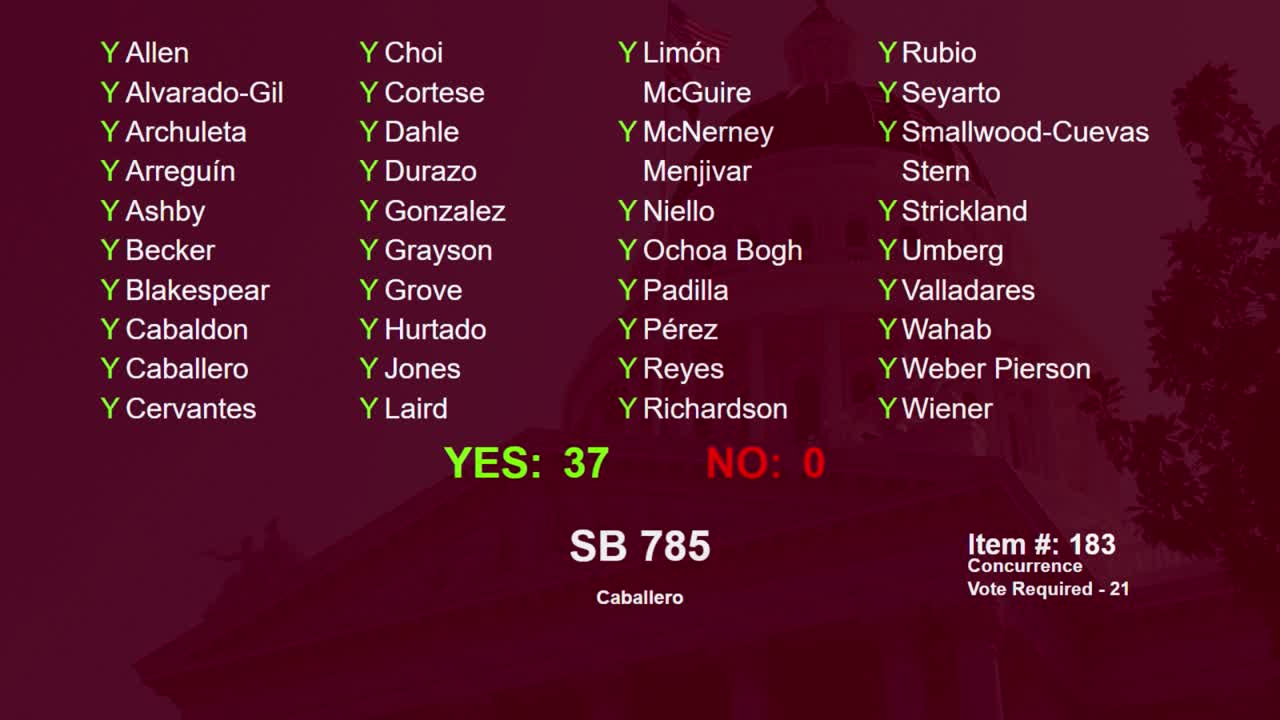


Bill Co-Author(s):