AB 96: Mental health services: peer support specialist certification.
- Session Year: 2025-2026
- House: Assembly
- Latest Version Date: 2026-09-27
Current Status:
Passed
(2026-09-27: Chaptered by Secretary of State - Chapter 497, Statutes of 2026.)
Introduced
In Committee
Awaiting First Chamber Vote
Passed First Chamber
In Committee
Awaiting Second Chamber Vote
Passed Second Chamber
Enacted
What does this bill do?
The bill removes the rule that applicants must have a high school diploma or GED to become certified peer support specialists under Medi‑Cal, affecting people who seek that certification. Applicants would still need to be 18 or older, have lived experience with recovery, complete the required training, and pass a department‑approved certification exam.
The summary is provided by generative AI which can make mistakes. For original language, please view the details in the table below.
Existing law establishes the Medi-Cal program, which is administered by the State Department of Health Care Services and under which qualified low-income persons receive health care benefits. The Medi-Cal program is, in part, governed and funded by federal Medicaid program provisions. Existing law establishes a schedule of benefits under the Medi-Cal program and provides for various services, including behavioral and mental health services that are rendered by Medi-Cal enrolled providers.
Existing law authorizes a county, or an agency representing the county, to develop a peer support specialist certification program, subject to department approval. Existing law imposes specified requirements on applicants for certification as a peer support specialist, including that the applicant be at least 18 years of age and possess a high school diploma or equivalent degree.
This bill would remove the requirement of possessing a high school diploma or equivalent degree from the requirements necessary for an applicant to receive certification.
Existing law required the Department of Health Care Access and Information, on or before July 1, 2023, to develop and approve statewide requirements for community health worker certificate programs. Existing law requires the department, as part of developing those requirements, to, among other things, determine the necessary curriculum to meet certificate program objectives. Existing law defines community health worker for these purposes to mean a liaison, link, or intermediary between health and social services and the community to facilitate access to services and to improve the access and cultural competence of service delivery. Existing law specifies that community health worker include Promotores, Promotores de Salud, Community Health Representatives, navigators, and other nonlicensed health workers with the qualifications developed by the department. This bill would also specify for these purposes that a community health worker includes a peer support specialist and would deem a certified peer support specialist to have satisfied all education and training requirements developed by the department for certification as a community health worker.Existing law required the Department of Health Care Access and Information, on or before July 1, 2023, to develop and approve statewide requirements for community health worker certificate programs. Existing law requires the department, as part of developing those requirements, to, among other things, determine the necessary curriculum to meet certificate program objectives. Existing law defines community health worker for these purposes to mean a liaison, link, or intermediary between health and social services and the community to facilitate access to services and to improve the access and cultural competence of service delivery. Existing law specifies that community health worker include Promotores, Promotores de Salud, Community Health Representatives, navigators, and other nonlicensed health workers with the qualifications developed by the department.
This bill would also specify for these purposes that a community health worker includes a peer support specialist. specialist and would deem a certified peer support specialist to have satisfied all education and training requirements developed by the department for certification as a community health worker.
Existing law required the Department of Health Care Access and Information, on or before July 1, 2023, to develop and approve statewide requirements for community health worker certificate programs. Existing law defines community health worker for these purposes to mean a liaison, link, or intermediary between health and social services and the community to facilitate access to services and to improve the access and cultural competence of service delivery. Existing law specifies that community health worker include Promotores, Promotores de Salud, Community Health Representatives, navigators, and other nonlicensed health workers with the qualifications developed by the department.
This bill would also specify for these purposes that a community health worker includes a peer support specialist.
(a)To receive a certification under this article, an applicant shall meet all of the following requirements:
(1)Be at least 18 years of age.
(2)Be self-identified as having experience with the process of recovery from mental illness or substance use disorder either as a consumer of these services or as the parent or family member of the consumer.
(3)Be willing to share their experience.
(4)Have a strong dedication to recovery.
(5)Agree, in writing, to adhere to a code of ethics.
(6)Successfully complete the curriculum and training requirements for a peer support specialist.
(7)Pass a certification examination approved by the department for a peer support specialist.
(b)To maintain certification under this article, a certified peer support specialist shall meet both of the following requirements:
(1)Adhere to the code of ethics and biennially sign an affirmation.
(2)Complete any required continuing education, training, and recertification requirements.
(a)To receive a certification under this article, an applicant shall meet all of the following requirements:
(1)Be at least 18 years of age.
(2)Possess a high school diploma or equivalent degree.(3)(2)Be self-identified as having experience with the process of recovery from mental illness or substance use disorder either as a consumer of these services or as the parent or family member of the consumer.
(4)(3)Be willing to share their experience.
(5)(4)Have a strong dedication to recovery.
(6)(5)Agree, in writing, to adhere to a code of ethics.
(7)(6)Successfully complete the curriculum and training requirements for a peer support specialist.
(8)(7)Pass a certification examination approved by the department for a peer support specialist.
(b)To maintain certification under this article, a certified peer support specialist shall meet both of the following requirements:
(1)Adhere to the code of ethics and biennially sign an affirmation.
(2)Complete any required continuing education, training, and recertification requirements.
SECTION 1.Section 18998 of the Welfare and Institutions Code is amended to read:18998.For purposes of this chapter, the following terms have the following meanings:(a)Community-defined means a set of practices that communities have used and found to yield positive results, as determined by community consensus over time. These practices may or may not have been measured empirically, but have reached a level of acceptance by the community.(b)Community health worker means a liaison, link, or intermediary between health and social services and the community to facilitate access to services and to improve the access and cultural competence of service delivery. A community health worker is a frontline health worker either trusted by, or who has a close understanding of, the community served. Community health workers include Promotores, Promotores de Salud, Community Health Representatives, navigators, peer support specialists, as defined in Section 14045.12, and other nonlicensed health workers with the qualifications developed pursuant to this chapter, including violence prevention professionals. A community health workers lived experience shall align with and provide a connection to the community being served.(c)Core competencies means the foundational and essential knowledge, skills, and abilities required for community health workers, which include all of the following:(1)Communication skills.(2)Interpersonal and relationship-building skills.(3)Service coordination and navigation skills.(4)Capacity building skills.(5)Advocacy skills.(6)Education and facilitation skills.(7)Individual and community assessment skills.(8)Outreach skills.(9)Professional skills and conduct.(10)Evaluation and research skills.(11)Knowledge base, including knowledge of basic public health principles, and social determinants of health and related disparities, of the community to be served.(d)Cultural competence means a set of congruent behaviors, attitudes, and policies that come together in a system or agency that enables that system or agency to work effectively in cross-cultural situations. A culturally competent system of care acknowledges and incorporates, at all levels, the importance of language and culture, intersecting identities, assessment of cross-cultural relations, knowledge and acceptance of dynamics of cultural differences, expansion of cultural knowledge, and adaptation of services to meet culturally unique needs to provide services in a culturally competent manner.(e)Department means the Department of Health Care Access and Information.(f)Lived experience means personal knowledge of a specific health condition or circumstance, which may include, but not be limited to, Alzheimers and other related dementia, climate impact on health, disability, foster system placement, homelessness, justice involved, LGBTQ+ status, mental health conditions, substance use, military service, pregnancy, and birth. A community health worker may draw on their lived experience to assist other individuals with navigation to treatment and services. A community health worker with lived experience involving a behavioral health or other health condition may need additional training on how to appropriately use this lived experience to assist other individuals with their recovery from that condition.(g)Specialty certificate means the next level of training that concentrates on specific program focus areas, with learning objectives and topics tailored to the skills required for distinct program and population needs.SEC. 2.Section 18998.1 of the Welfare and Institutions Code is amended to read:18998.1.(a)On or before July 1, 2023, the department shall do all of the following:(1)Develop statewide requirements for community health worker certificate programs in consultation with stakeholders, including, but not limited to, the State Department of Health Care Services, the State Department of Public Health, community health workers, Promotores and Promotores de Salud, or representative organizations. In developing the requirements, the department shall do all of the following:(A)Consult evidenced-based and community-defined materials.(B)Determine necessary curriculum to meet certificate program objectives.(C)Determine criteria for specialty certificate programs and specialized training requirements that build on the lived experience of community health workers.(D)Determine a structure of statewide oversight that reduces barriers to training.(E)Determine how past experience as a community health worker may provide a pathway to certification, and how to verify past experience.(2)Approve statewide requirements for the development of certificate programs for community health workers.(3)Approve the curriculum required for programs to certify community health workers.(4)Review, approve, or renew evidence-based curricula and community-defined curricula for core competencies, specialized programs, and training.(b)Notwithstanding subdivision (a), a peer support specialist certified pursuant to Article 1.4 (commencing with Section 14045.10) of Chapter 7 of Part 3 shall be deemed to have satisfied all education and training requirements developed by the department for certification as a community health worker.For purposes of this chapter, the following terms have the following meanings:
(a)Community-defined means a set of practices that communities have used and found to yield positive results, as determined by community consensus over time. These practices may or may not have been measured empirically, but have reached a level of acceptance by the community.
(b)Community health worker means a liaison, link, or intermediary between health and social services and the community to facilitate access to services and to improve the access and cultural competence of service delivery. A community health worker is a frontline health worker either trusted by, or who has a close understanding of, the community served. Community health workers include Promotores, Promotores de Salud, Community Health Representatives, navigators, peer support specialists, as defined in Section 14045.12, and other nonlicensed health workers with the qualifications developed pursuant to this chapter, including violence prevention professionals. A community health workers lived experience shall align with and provide a connection to the community being served.
(c)Core competencies means the foundational and essential knowledge, skills, and abilities required for community health workers, which include all of the following:
(1)Communication skills.
(2)Interpersonal and relationship-building skills.
(3)Service coordination and navigation skills.
(4)Capacity building skills.
(5)Advocacy skills.
(6)Education and facilitation skills.
(7)Individual and community assessment skills.
(8)Outreach skills.
(9)Professional skills and conduct.
(10)Evaluation and research skills.
(11)Knowledge base, including knowledge of basic public health principles, and social determinants of health and related disparities, of the community to be served.
(d)Cultural competence means a set of congruent behaviors, attitudes, and policies that come together in a system or agency that enables that system or agency to work effectively in cross-cultural situations. A culturally competent system of care acknowledges and incorporates, at all levels, the importance of language and culture, intersecting identities, assessment of cross-cultural relations, knowledge and acceptance of dynamics of cultural differences, expansion of cultural knowledge, and adaptation of services to meet culturally unique needs to provide services in a culturally competent manner.
(e)Department means the Department of Health Care Access and Information.
(f)Lived experience means personal knowledge of a specific health condition or circumstance, which may include, but not be limited to, Alzheimers and other related dementia, climate impact on health, disability, foster system placement, homelessness, justice involved, LGBTQ+ status, mental health conditions, substance use, military service, pregnancy, and birth. A community health worker may draw on their lived experience to assist other individuals with navigation to treatment and services. A community health worker with lived experience involving a behavioral health or other health condition may need additional training on how to appropriately use this lived experience to assist other individuals with their recovery from that condition.
(g)Specialty certificate means the next level of training that concentrates on specific program focus areas, with learning objectives and topics tailored to the skills required for distinct program and population needs.
SEC. 2.Section 18998.1 of the Welfare and Institutions Code is amended to read:18998.1.(a)On or before July 1, 2023, the department shall do all of the following:
(a)(1)Develop statewide requirements for community health worker certificate programs in consultation with stakeholders, including, but not limited to, the State Department of Health Care Services, the State Department of Public Health, community health workers, Promotores and Promotores de Salud, or representative organizations. In developing the requirements, the department shall do all of the following:
(1)(A)Consult evidenced-based and community-defined materials.
(2)(B)Determine necessary curriculum to meet certificate program objectives.
(3)(C)Determine criteria for specialty certificate programs and specialized training requirements that build on the lived experience of community health workers.
(4)(D)Determine a structure of statewide oversight that reduces barriers to training.
(5)(E)Determine how past experience as a community health worker may provide a pathway to certification, and how to verify past experience.
(b)(2)Approve statewide requirements for the development of certificate programs for community health workers.
(c)(3)Approve the curriculum required for programs to certify community health workers.
(d)(4)Review, approve, or renew evidence-based curricula and community-defined curricula for core competencies, specialized programs, and training.
(b)Notwithstanding subdivision (a), a peer support specialist certified pursuant to Article 1.4 (commencing with Section 14045.10) of Chapter 7 of Part 3 shall be deemed to have satisfied all education and training requirements developed by the department for certification as a community health worker.
For purposes of this chapter, the following terms have the following meanings:
(a)Community-defined means a set of practices that communities have used and found to yield positive results, as determined by community consensus over time. These practices may or may not have been measured empirically, but have reached a level of acceptance by the community.
(b)Community health worker means a liaison, link, or intermediary between health and social services and the community to facilitate access to services and to improve the access and cultural competence of service delivery. A community health worker is a frontline health worker either trusted by, or who has a close understanding of, the community served. Community health workers include Promotores, Promotores de Salud, Community Health Representatives, navigators, peer support specialists, as defined in Section 14045.12, and other nonlicensed health workers with the qualifications developed pursuant to this chapter, including violence prevention professionals. A community health workers lived experience shall align with and provide a connection to the community being served.
(c)Core competencies means the foundational and essential knowledge, skills, and abilities required for community health workers, which include all of the following:
(1)Communication skills.
(2)Interpersonal and relationship-building skills.
(3)Service coordination and navigation skills.
(4)Capacity building skills.
(5)Advocacy skills.
(6)Education and facilitation skills.
(7)Individual and community assessment skills.
(8)Outreach skills.
(9)Professional skills and conduct.
(10)Evaluation and research skills.
(11)Knowledge base, including knowledge of basic public health principles, and social determinants of health and related disparities, of the community to be served.
(d)Cultural competence means a set of congruent behaviors, attitudes, and policies that come together in a system or agency that enables that system or agency to work effectively in cross-cultural situations. A culturally competent system of care acknowledges and incorporates, at all levels, the importance of language and culture, intersecting identities, assessment of cross-cultural relations, knowledge and acceptance of dynamics of cultural differences, expansion of cultural knowledge, and adaptation of services to meet culturally unique needs to provide services in a culturally competent manner.
(e)Department means the Department of Health Care Access and Information.
(f)Lived experience means personal knowledge of a specific health condition or circumstance, which may include, but not be limited to, Alzheimers and other related dementia, climate impact on health, disability, foster system placement, homelessness, justice involved, LGBTQ+ status, mental health conditions, substance use, military service, pregnancy, and birth. A community health worker may draw on their lived experience to assist other individuals with navigation to treatment and services. A community health worker with lived experience involving a behavioral health or other health condition may need additional training on how to appropriately use this lived experience to assist other individuals with their recovery from that condition.
(g)Specialty certificate means the next level of training that concentrates on specific program focus areas, with learning objectives and topics tailored to the skills required for distinct program and population needs.
|
Date
|
Status
|
|---|---|
| Sep 27, 2026 | Chaptered by Secretary of State - Chapter 497, Statutes of 2026. |
| Sep 27, 2026 | Approved by the Governor. |
| Sep 3, 2026 | Enrolled and presented to the Governor at 4 p.m. |
| Aug 26, 2026 | In Assembly. Ordered to Engrossing and Enrolling. |
| Aug 26, 2026 | Read third time. Passed. Ordered to the Assembly. (Ayes 40. Noes 0.). |
| Jun 16, 2026 | Read second time. Ordered to third reading. |
| Jun 15, 2026 | From committee: Be ordered to second reading pursuant to Senate Rule 28.8. |
| Jun 4, 2026 | From committee: Do pass and re-refer to Com. on APPR. (Ayes 9. Noes 0.) (June 3). Re-referred to Com. on APPR. |
| May 6, 2026 | Referred to Com. on HEALTH. |
| Jan 27, 2026 | In Senate. Read first time. To Com. on RLS. for assignment. |
| Jan 26, 2026 | Read third time. Passed. Ordered to the Senate. (Ayes 73. Noes 0. Page 3828.) |
| Jan 22, 2026 | Read second time. Ordered to third reading. |
| Jan 22, 2026 | From committee: Do pass. (Ayes 15. Noes 0.) (January 22). |
| Jan 22, 2026 | Assembly Rule 63 suspended. (Page 3806.) |
| Jan 13, 2026 | From committee: Do pass and re-refer to Com. on APPR. with recommendation: To Consent Calendar. (Ayes 15. Noes 0.) (January 13). Re-referred to Com. on APPR. |
| Jan 6, 2026 | Re-referred to Com. on HEALTH. |
| Jan 5, 2026 | From committee chair, with author's amendments: Amend, and re-refer to Com. on HEALTH. Read second time and amended. |
| Feb 12, 2025 | Re-referred to Com. on HEALTH. |
| Feb 11, 2025 | From committee chair, with author's amendments: Amend, and re-refer to Com. on HEALTH. Read second time and amended. |
| Feb 3, 2025 | Referred to Com. on HEALTH. |
| Jan 8, 2025 | From printer. May be heard in committee February 7. |
| Jan 7, 2025 | Read first time. To print. |
|
Date
|
Description
|
Location
|
Votes
|
|
|---|---|---|---|---|
| Aug 26, 2026 | Assembly 3rd Reading AB96 Jackson By Pérez | Senate Floor |
Passed |
|
| Jun 3, 2026 | Do pass, but first be re-referred to the Committee on [Appropriations] | Senate Standing Committee on Health |
Passed |
|
| Jan 26, 2026 | AB 96 Jackson Assembly Third Reading | Assembly Floor |
Passed |
|
| Jan 22, 2026 | Do pass. | Assembly Standing Committee on Appropriations |
Passed |
|
| Jan 13, 2026 | Do pass and be re-referred to the Committee on [Appropriations] with recommendation: To Consent Calendar | Assembly Standing Committee on Health |
Passed |
This list shows positions taken on this bill by organizations on the date displayed, which is linked to the original source.
Positions by individuals are not included.
|
Organization
|
Position
|
Date
|
|---|---|---|
| Alameda County Behavioral Health Department | ** Support | |
| Be Mom Aware | ** Support | |
| Black Leadership Council | ** Support | |
| Black Men Speak, Inc. | ** Support | |
| Cal Voices | ** Support | |
| California Alliance Of Child And Family Services | ** Support | |
| California Association of Mental Health Peer Run Organizations | ** Support | |
| California Association of Peer Professionals | ** Support | |
| California Behavioral Health Association | ** Support | |
| California Behavioral Health Directors Association | ** Support | |
| California Behavioral Health Planning Council | ** Support | |
| California Coalition For Youth | ** Support | |
| California Consortium of Addiction Programs and Professionals | ** Against | |
| California Democratic Socialists of America | ** Support | |
| California Pan-Ethnic Health Network | ** Support | |
| California Peer Watch | ** Support | |
| California Senior Legislature | ** Support | |
| Commission for Behavioral Health | ** Support | |
| Communities Voices | ** Support | |
| Community Action Marin | ** Support | |
| Community Living Coalition | ** Support | |
| County Behavioral Health Directors Association | ** Support | |
| County of Humboldt | ** Support | |
| County Of San Diego | ** Support | |
| County of Santa Clara | ** Support | |
| County of Tulare | ** Support | |
| County Welfare Directors Association of California | ** Support | |
| Disability Rights California | ** Support | |
| Drug Policy Alliance | ** Support | |
| HealthRight 360 | ** Support | |
| Help is Hope | ** Support | |
| Hmong Cultural Center of Butte County | ** Support | |
| Interim, INC. | ** Support | |
| Law Foundation of Silicon Valley | ** Support | |
| Los Angeles Recovery Connect | ** Support | |
| Los Angeles Trust for Children’s Health | ** Support | |
| Marin Center for Independent Living | ** Support | |
| mental health advocacy services | ** Support | |
| Mental Health America of California | ** Support | |
| Mental Health Association of San Francisco | ** Support | |
| National Alliance on Mental Illness | ** Support | |
| Painted Brain | ** Support | |
| Parents Anonymous, Inc. | ** Support | |
| Peer Recovery Art Project | ** Support | |
| Peer Recovery Services | ** Support | |
| Peer Voices United | ** Support | |
| Project Return Peer Support Network | ** Support | |
| Racial and Ethnic Mental Health Disparities Coalition | ** Support | |
| Steinberg Institute | ** Support | |
| Sterling Solutions | ** Support | |
| Sunrays of Hope | ** Support | |
| Sunrays of Hope, Inc. | ** Support | |
| Sustainable Wellness Solutions | ** Support | |
| The Arc and United Cerebral Palsy California Collaboration | ** Support | |
| The Children’s Partnership | ** Support | |
| The Happier Life Project | ** Support | |
| The Purpose of Recovery INC | ** Support | |
| Therapeutic Play Foundation | ** Support | |
| youth for change | ** Support |
SENATE RULES COMMITTEE Office of Senate Floor Analyses (916) 651-4171 | AB 96 |
THIRD READING
Bill No: AB 96
Author: Jackson (D)
Amended: 1/5/26 in Assembly
Vote: 21
SENATE HEALTH COMMITTEE: 9-0, 6/3/26
AYES: Weber Pierson, Valladares, Caballero, Durazo, Gonzalez, Grove, Menjivar, Padilla, Pérez
NO VOTE RECORDED: Rubio, Smallwood-Cuevas
SENATE APPROPRIATIONS COMMITTEE: Senate Rule 28.8
ASSEMBLY FLOOR: 73-0, 1/26/26 - See last page for vote
SUBJECT: Mental health services: peer support specialist certification
SOURCE: Cal Voices
County Behavioral Health Directors Association
DIGEST:
This bill deletes the requirement that a certified peer support specialist applicant possess a high school diploma or equivalent degree.
ANALYSIS:
Existing law:
- Establishes the Medi-Cal program, administered by the Department of Health Care Services (DHCS), under which qualified low-income individuals receive health care services. [Welfare & Institutions Code (WIC) §14001.1]
- Requires DHCS to perform the following functions regarding peer support specialist (PSS) certification:
- Establish statewide requirements for counties, or an agency representing counties, to use in developing certification programs;
- Define the qualifications, range of responsibilities, practice guidelines, and supervision standards;
- Determine curriculum and core competencies, including curriculum that may be offered in areas of specialization and various core competencies-based elements, such as the concepts of hope, recovery, and wellness; trauma-informed care; group facilitation skills; cooccurring disorders of mental health and substance use; documentation skills and standards; and, confidentiality;
- Specify employment training requirements, including core-competencies-based training and specialized training;
- Establish a code of ethics;
- Determine continuing education requirements for biennial certification renewal;
- Determine the process for initial certification issuance and biennial certification renewal;
- Determine a process for investigation of complaints and corrective action, including suspension and revocation of certification and appeals;
- Determine a process for an individual employed as a PSS prior to January 1, 2022, to obtain certification;
- Determine requirements for PSS certification reciprocity between counties, and for PSS from out of state; and,
- Seek any federal approvals, related to the statewide certification standards, necessary to implement a PSS certification program. For any federal approvals that DHCS deems necessary related to the statewide certification standards, the PSS certification program is implemented only if and to the extent that DHCS obtains those federal approvals. [WIC §14045.13]
- Permits a county, or an agency representing the county, upon DHCS approval, to develop a PSS certification program, which that county or representing agency is responsible for overseeing and enforcing the certification requirements. [WIC §14045.14]
- Requires a PSS certification applicant to possess a high school diploma or equivalent degree, in addition to specified age, training, and continuing education requirements. [WIC §14045.15]
- Does not authorize a PSS to diagnose an illness, prescribe medication, or provide clinical services. [WIC §14045.16]
This bill deletes the requirement that a certified PSS applicant possess a high school diploma or equivalent degree.
Comments
According to the author of this bill:
This bill will strengthen California’s behavioral health workforce and enhance care for those in need. Requiring a high school diploma or equivalent may create artificial barriers to entry and limit access for individuals with the potential to excel in peer support roles. The lived experience of PSS in recovering from mental illness and substance use disorders is the crucial component of their role, enabling them to save lives and empower individuals with behavioral health conditions to lead fulfilling lives.
Background
In July 2021, DHCS released PSS certification standards for the specialty mental health and substance use disorder delivery systems (known as County Behavioral Health Plans). These plans designated the California Mental Health Services Authority (CalMHSA) as the certifying entity for PSS. CalMHSA is responsible for implementing and monitoring a statewide training and certification program and assisting county behavioral health plans to meet requirements. In February 2024, RAND released a report on the early implementation of the PSS certification program that was requested by CalMHSA. RAND noted that one of the chief barriers to obtaining certification, per various program participants, was obtaining necessary documentation to support that an applicant had a high school diploma or equivalent degree—the other complaint being the financial cost. RAND stated that obstacles mentioned were requesting diplomas from school districts that have unclear instructions, for peers who completed high school in another state, and for peers who completed high school many years ago. Obtaining copies of diplomas was also difficult for peers whose education was delayed or negatively affected by their lived experience. One peer noted that she had dropped out of high school, and it took her many years to go back and complete her general education diploma. As she put it, “sometimes not getting a diploma is a part of the person’s journey.”
Federal guidance. On August 15, 2007, via SMDL#07-11, the Centers for Medicare and Medicaid Services (CMS) sent a letter to all State Medicaid Directors to provide guidance to states interested in PSS services under the Medicaid program, citing the increasing emphasis on recovery from even the most serious mental illnesses, and states’ desire to cover PSS as a distinct provider type in order to draw down federal financial participation. CMS reiterated that PSS services are an evidence-based mental health model of care that consists of a qualified PSS who assists individuals with their recovery from mental illness and substance use disorders. CMS recognized that the experiences of PSS, as consumers of mental health and substance use services, can be an important component in a state’s delivery of effective treatment. CMS also reaffirmed its commitment to state flexibility, increased innovation, consumer choice, self-direction, recovery, and consumer protection through approval of these services, and provided policy guidance that included requirements for supervision, care-coordination, and minimum training criteria for PSS. CMS further encouraged states to consider comprehensive programs but noted that regardless of how a state models its mental health and substance use disorder service delivery system, the State Medicaid agency continues to have the authority to determine the service delivery system, medical necessity criteria, and to define the amount, duration, and scope of the service. As part of the minimum requirements for PSS certification, CMS required the training and credentialing component, stating that PSS must complete training and certification as defined by each state’s certification program. Training must provide PSS with a basic set of competencies necessary to perform the peer support function. The peer must demonstrate the ability to support the recovery of others from mental illness and/or substance use disorders. And similar to other provider types, ongoing continuing educational requirements for PSS must be in place. CMS’s guidance did not set a high school diploma or equivalent degree as a qualifying criterion.
What is a PSS? According to the federal Substance Abuse and Mental Health Services Administration (SAMHSA), the role of the peer has been defined as “offering and receiving help, based on shared understanding, respect, and mutual empowerment between people in similar situations.” Peer support has been described as “a system of giving and receiving help” based on key principles that include “shared responsibility, and mutual agreement of what is helpful.” Peer support workers engage in a wide range of activities, including advocacy, linkage to resources, sharing of experience, community and relationship building, group facilitation, skill building, mentoring, goal setting, and more. They may also plan and develop groups, services or activities, supervise other peer workers, provide training, gather information on resources, administer programs or agencies, educate the public and policymakers, and work to raise awareness. SAMHSA further states the development of additional core competencies may be needed to guide the provision of PSS to specific groups who also share common experiences, such as family members. The shared experience of being in recovery from a mental or substance use disorder or being a family member of a person with a behavioral health condition is the foundation on which the peer recovery support relationship is built in the behavioral health arena.
PSS core competencies. In 2015, SAMHSA led an effort to identify the knowledge, skills, and abilities (leading to core competencies) needed by anyone who provides PSS services to people with or in recovery from a mental health or substance use disorder. Via its Bringing Recovery Supports to Scale Technical Assistance Center Strategy project, SAMHSA convened diverse stakeholders from the mental health consumer and substance use disorder recovery movements and, with subject matter experts, conducted research to identify core competencies for peer workers in behavioral health. The core competencies are intended to apply to all forms of peer support provided to people living with or in recovery from mental health and/or substance use disorders and delivered by or to adults, young adults, family members, and youth. The competencies may also apply to other forms of peer support provided by other roles known as peer specialists, recovery coaches, parent support providers, or youth specialists. SAMHSA notes the following are not a complete set of competencies for every context in which peer workers provide services and support but can serve as the foundation upon which additional competencies for specific settings that practice peer support and/or for specific groups could be developed in the future:
- Engages peers in collaborative and caring relationships;
- Provides support;
- Shares lived experiences of recovery;
- Personalizes peer support;
- Supports recovery planning;
- Links peers to resources, services, and supports;
- Provides information about skills related to health, wellness, and recovery;
- Helps peers to manage crises;
- Values communication;
- Supports collaboration and teamwork;
- Promotes leadership and advocacy; and,
- Promotes growth and development.
Qualifications for equivalent roles. The California Department of Health Care Access and Information (HCAI) maintains a website for the Community Health Workers, Promotores, and Representatives (CHW/P/R) Initiative. DHCS’s All Plan Letter 22-016 outlines the Medi-Cal CHW Services benefit and notes CHWs may include individuals known by a variety of job titles, such as promotores, community health representatives, navigators, and other non-licensed public health workers, including violence prevention professionals. As part of the CHW minimum qualifications, HCAI states on its website that CHWs must have lived experience that aligns with and provides a connection between the CHW and the patient or population being served. This may include, but is not limited to, experience related to incarceration, military service, pregnancy and birth, disability, foster system placement, homelessness, mental health conditions or substance use, or being a survivor of domestic or intimate partner violence or abuse and exploitation. Lived experience may also include shared race, ethnicity, sexual orientation, gender identity, language, or cultural background with one or more linguistic, cultural, or other groups in the community for which the CHW is providing services. Supervising providers (the organizations employing or otherwise overseeing the CHWs with which a managed care plan contracts) are encouraged to work with CHWs who are familiar with and/or have experience in the geographic communities they are serving. Supervising providers must maintain evidence of a CHW’s stated experience. A high school diploma or equivalent degree is not noted in any of the listed requirements.
FISCAL EFFECT: Appropriation: No Fiscal Com.: Yes Local: No
Senate Rule 28.8
SUPPORT: (Verified 6/15/26)
Cal Voices (co-source)
County Behavioral Health Directors Association (co-source)
Alameda County Behavioral Health Department
Black Leadership Council
Black Men Speak, Inc.
California Alliance of Child and Family Services
California Association of Mental Health Peer Run Organizations
California Behavioral Health Association
California Behavioral Health Planning Council
California Coalition for Youth
California Pan-Ethnic Health Network
Commission for Behavioral Health
Communities Voices
County of Humboldt
County of San Diego
County of Santa Clara
County of Tulare
County Welfare Directors Association of California
Disability Rights California
Drug Policy Alliance
Help is Hope
Interim, Inc.
Law Foundation of Silicon Valley
Los Angeles Trust for Children’s Health
Mental Health Advocacy Services
Mental Health America of California
Mental Health Association of San Francisco
National Alliance on Mental Illness
Painted Brain
Peer Recovery Services
Peer Voices United
Racial and Ethnic Mental Health Disparities Coalition
Steinberg Institute
Sunrays of Hope, Inc.
Sustainable Wellness Solutions
The Children’s Partnership
The Happier Life Project
Youth for Change
OPPOSITION: (Verified 6/15/26)
California Consortium of Addiction Programs and Professionals
One individual
ARGUMENTS IN SUPPORT:
Cal Voices and the County Behavioral Health Directors Association, as co-sponsors, and other supporters from the mental health advocacy realm, state that the primary qualification for PSS is lived experience with mental health or substance use challenges, not formal education. A high school diploma or its equivalent is not essential to meeting the state-defined core competencies. Supporters argue PSS play a vital role in supporting individuals with behavioral health conditions on their recovery journeys, using personal lived experience to build trust and understanding, and that PSS services are a recognized evidence-based practice integrated within various medical and treatment settings, including peer-led organizations, respite centers, outpatient services, inpatient care, and mobile crisis teams. PSS are evaluated on their ability to connect with consumers, facilitate recovery, and provide support. Skills like communication, empathy, relatability, cultural competence, self-awareness, and conflict resolution are crucial and can be developed outside traditional high school settings. Supporters argue requiring a high school diploma or equivalent may create artificial barriers to entry and limit access for individuals with the potential to excel in peer support roles. Currently, 8,014 PSS serve across California, embodying diversity in age, race, culture, and gender. They are crucial to addressing the mental health crisis by providing PSS services, which have been shown to decrease hospitalization rates and lower overall Medicaid costs. Supporters state California has a statewide shortage across all behavioral health roles and an imbalanced racial representation of providers relative to the population. To address these challenges, HCAI recommends a multi-pronged approach to supporting the behavioral health workforce, including funding peer and mentor networks for behavioral health professionals.
ARGUMENTS IN OPPOSITION:
The California Consortium of Addiction Programs and Professionals (CCAPP) states they support expanding access to the peer workforce; however, removing the high school diploma requirement must be paired with strengthened training and competency standards to ensure alignment with national peer support certification expectations. CCAPP urges the following amendments, which would ensure California maintains a qualified, nationally aligned peer workforce capable of meeting federal billing and service quality expectations:
- Adoption of SAMHSA Core Content Areas and the National Model Standards as the foundation for California’s curriculum;
- Enhanced training hours to ensure adequate competency development;
- Prerequisite demonstration of proficiency in documentation and digital health literacy; and,
- Annual continuing education in documentation and digital literacy.
ASSEMBLY FLOOR: 73-0, 1/26/26
AYES: Addis, Aguiar-Curry, Ahrens, Alanis, Alvarez, Ávila Farías, Bauer-Kahan, Bennett, Berman, Boerner, Bonta, Bryan, Calderon, Caloza, Carrillo, Chen, Connolly, Davies, DeMaio, Dixon, Elhawary, Ellis, Flora, Fong, Gabriel, Gallagher, Garcia, Gipson, Jeff Gonzalez, Mark González, Hadwick, Haney, Harabedian, Hart, Hoover, Irwin, Jackson, Johnson, Kalra, Krell, Lee, Lowenthal, Macedo, McKinnor, Muratsuchi, Nguyen, Ortega, Pacheco, Patel, Patterson, Pellerin, Petrie-Norris, Quirk-Silva, Ramos, Ransom, Michelle Rodriguez, Rogers, Blanca Rubio, Sanchez, Schiavo, Schultz, Sharp-Collins, Solache, Soria, Stefani, Tangipa, Valencia, Wallis, Ward, Wicks, Wilson, Zbur, Rivas
NO VOTE RECORDED: Arambula, Bains, Castillo, Lackey, Papan, Celeste Rodriguez, Ta
Prepared by: Reyes Diaz / HEALTH / (916) 651-4111
6/16/26 16:42:58
**** END ****
SENATE COMMITTEE ON HEALTH
Senator Akilah Weber Pierson, Chair
BILL NO: AB 96
AUTHOR: | Jackson | ||
VERSION: | January 5, 2026 | ||
HEARING DATE: | June 3, 2026 | ||
CONSULTANT: | Reyes Diaz | ||
SUBJECT: Mental health services: peer support specialist certification
SUMMARY:
Deletes the requirement that a certified peer support specialist applicant possess a high school diploma or equivalent degree.
Existing law:
- Establishes the Medi-Cal program, administered by the Department of Health Care Services (DHCS), under which qualified low-income individuals receive health care services. [WIC §14001.1]
- Requires DHCS to perform the following functions regarding peer support specialist (PSS) certification:
- Establish statewide requirements for counties, or an agency representing counties, to use in developing certification programs;
- Define the qualifications, range of responsibilities, practice guidelines, and supervision standards;
- Determine curriculum and core competencies, including curriculum that may be offered in areas of specialization and various core competencies-based elements, such as the concepts of hope, recovery, and wellness; trauma-informed care; group facilitation skills; cooccurring disorders of mental health and substance use; documentation skills and standards; and, confidentiality;
- Specify employment training requirements, including core-competencies-based training and specialized training;
- Establish a code of ethics;
- Determine continuing education requirements for biennial certification renewal;
- Determine the process for initial certification issuance and biennial certification renewal;
- Determine a process for investigation of complaints and corrective action, including suspension and revocation of certification and appeals;
- Determine a process for an individual employed as a PSS prior to January 1, 2022, to obtain certification;
- Determine requirements for PSS certification reciprocity between counties, and for PSS from out of state; and,
- Seek any federal approvals, related to the statewide certification standards, necessary to implement a PSS certification program. For any federal approvals that DHCS deems necessary related to the statewide certification standards, the PSS certification program is implemented only if and to the extent that DHCS obtains those federal approvals. [WIC §14045.13]
- Permits a county, or an agency representing the county, upon DHCS approval, to develop a PSS certification program, which that county or representing agency is responsible for overseeing and enforcing the certification requirements. [WIC §14045.14]
- Requires a PSS certification applicant to possess a high school diploma or equivalent degree, in addition to specified age, training, and continuing education requirements. [WIC §14045.15]
- Does not authorize a PSS to diagnose an illness, prescribe medication, or provide clinical services. [WIC §14045.16]
This bill: Deletes the requirement that a certified PSS applicant possess a high school diploma or equivalent degree.
FISCAL EFFECT:
According to the Assembly Appropriations Committee, this bill results in absorbable costs to DHCS.
PRIOR VOTES:
Assembly Floor: | 73 - 0 |
Assembly Appropriations Committee: | 15 - 0 |
Assembly Health Committee: | 15 - 0 |
COMMENTS:
- Author’s statement. According to the author, this bill will strengthen California’s behavioral health workforce and enhance care for those in need. Requiring a high school diploma or equivalent may create artificial barriers to entry and limit access for individuals with the potential to excel in peer support roles. The lived experience of PSS in recovering from mental illness and substance use disorders is the crucial component of their role, enabling them to save lives and empower individuals with behavioral health conditions to lead fulfilling lives.
- Background. In July 2021, DHCS released PSS certification standards for the specialty mental health and substance use disorder delivery systems (known as County Behavioral Health Plans). These plans designated the California Mental Health Services Authority (CalMHSA) as the certifying entity for PSS. CalMHSA is responsible for implementing and monitoring a statewide training and certification program and assisting county behavioral health plans to meet requirements. In February 2024, RAND released a report on the early implementation of the PSS certification program that was requested by CalMHSA. RAND noted that one of the chief barriers to obtaining certification, per various program participants, was obtaining necessary documentation to support that an applicant had a high school diploma or equivalent degree—the other complaint being the financial cost. RAND stated that obstacles mentioned were requesting diplomas from school districts that have unclear instructions, for peers who completed high school in another state, and for peers who completed high school many years ago. Obtaining copies of diplomas was also difficult for peers whose education was delayed or negatively affected by their lived experience. One peer noted that she had dropped out of high school, and it took her many years to go back and complete her general education diploma. As she put it, “sometimes not getting a diploma is a part of the person’s journey.”
- Federal guidance. On August 15, 2007, via SMDL#07-11, the Centers for Medicare and Medicaid Services (CMS) sent a letter to all State Medicaid Directors to provide guidance to states interested in PSS services under the Medicaid program, citing the increasing emphasis on recovery from even the most serious mental illnesses, and states’ desire to cover PSS as a distinct provider type in order to draw down federal financial participation. CMS reiterated that PSS services are an evidence-based mental health model of care that consists of a qualified PSS who assists individuals with their recovery from mental illness and substance use disorders. CMS recognized that the experiences of PSS, as consumers of mental health and substance use services, can be an important component in a state’s delivery of effective treatment. CMS also reaffirmed its commitment to state flexibility, increased innovation, consumer choice, self-direction, recovery, and consumer protection through approval of these services, and provided policy guidance that included requirements for supervision, care-coordination, and minimum training criteria for PSS. CMS further encouraged states to consider comprehensive programs but noted that regardless of how a state models its mental health and substance use disorder service delivery system, the State Medicaid agency continues to have the authority to determine the service delivery system, medical necessity criteria, and to define the amount, duration, and scope of the service. As part of the minimum requirements for PSS certification, CMS required the training and credentialing component, stating that PSS must complete training and certification as defined by each state’s certification program. Training must provide PSS with a basic set of competencies necessary to perform the peer support function. The peer must demonstrate the ability to support the recovery of others from mental illness and/or substance use disorders. And similar to other provider types, ongoing continuing educational requirements for PSS must be in place. CMS’s guidance did not set a high school diploma or equivalent degree as a qualifying criterion.
- What is a PSS? According to the federal Substance Abuse and Mental Health Services Administration (SAMHSA), the role of the peer has been defined as “offering and receiving help, based on shared understanding, respect, and mutual empowerment between people in similar situations.” Peer support has been described as “a system of giving and receiving help” based on key principles that include “shared responsibility, and mutual agreement of what is helpful.” Peer support workers engage in a wide range of activities, including advocacy, linkage to resources, sharing of experience, community and relationship building, group facilitation, skill building, mentoring, goal setting, and more. They may also plan and develop groups, services or activities, supervise other peer workers, provide training, gather information on resources, administer programs or agencies, educate the public and policymakers, and work to raise awareness. SAMHSA further states the development of additional core competencies may be needed to guide the provision of PSS to specific groups who also share common experiences, such as family members. The shared experience of being in recovery from a mental or substance use disorder or being a family member of a person with a behavioral health condition is the foundation on which the peer recovery support relationship is built in the behavioral health arena.
- PSS core competencies. In 2015, SAMHSA led an effort to identify the knowledge, skills, and abilities (leading to core competencies) needed by anyone who provides PSS services to people with or in recovery from a mental health or substance use disorder. Via its Bringing Recovery Supports to Scale Technical Assistance Center Strategy project, SAMHSA convened diverse stakeholders from the mental health consumer and substance use disorder recovery movements and, with subject matter experts, conducted research to identify core competencies for peer workers in behavioral health. The core competencies are intended to apply to all forms of peer support provided to people living with or in recovery from mental health and/or substance use disorders and delivered by or to adults, young adults, family members, and youth. The competencies may also apply to other forms of peer support provided by other roles known as peer specialists, recovery coaches, parent support providers, or youth specialists. SAMHSA notes the following are not a complete set of competencies for every context in which peer workers provide services and support but can serve as the foundation upon which additional competencies for specific settings that practice peer support and/or for specific groups could be developed in the future:
- Engages peers in collaborative and caring relationships;
- Provides support;
- Shares lived experiences of recovery;
- Personalizes peer support;
- Supports recovery planning;
- Links peers to resources, services, and supports;
- Provides information about skills related to health, wellness, and recovery;
- Helps peers to manage crises;
- Values communication;
- Supports collaboration and teamwork;
- Promotes leadership and advocacy; and,
- Promotes growth and development.
- Qualifications for equivalent roles. The California Department of Health Care Access and Information (HCAI) maintains a website for the Community Health Workers, Promotores, and Representatives (CHW/P/R) Initiative. DHCS’s All Plan Letter 22-016 outlines the Medi-Cal CHW Services benefit and notes CHWs may include individuals known by a variety of job titles, such as promotores, community health representatives, navigators, and other non-licensed public health workers, including violence prevention professionals. As part of the CHW minimum qualifications, HCAI states on its website that CHWs must have lived experience that aligns with and provides a connection between the CHW and the patient or population being served. This may include, but is not limited to, experience related to incarceration, military service, pregnancy and birth, disability, foster system placement, homelessness, mental health conditions or substance use, or being a survivor of domestic or intimate partner violence or abuse and exploitation. Lived experience may also include shared race, ethnicity, sexual orientation, gender identity, language, or cultural background with one or more linguistic, cultural, or other groups in the community for which the CHW is providing services. Supervising providers (the organizations employing or otherwise overseeing the CHWs with which a managed care plan contracts) are encouraged to work with CHWs who are familiar with and/or have experience in the geographic communities they are serving. Supervising providers must maintain evidence of a CHW’s stated experience. A high school diploma or equivalent degree is not noted in any of the listed requirements.
- Prior legislation. SB 964 (Wiener of 2022) would have, among other things, changed the PSS certification program as an optional benefit to a statewide benefit and for DHCS to seek federal approval. SB 964 was amended to remove this provision.
SB 803 (Beall, Chapter 150, Statutes of 2020) enacted the county option to establish a PSS certification program as a Medi-Cal benefit.
SB 10 (Beall of 2019), SB 906 (Beall of 2018), and SB 614 (Hertzberg of 2015) were substantially similar to SB 803. SB 10 was vetoed by Governor Newsom who stated that counties may currently opt to use PSS for the delivery of Medicaid specialty mental health services and as the state works to transform the behavioral health care delivery system, we have an opportunity to more comprehensively include PSS in these transformation plans. SB 906 was vetoed by Governor Brown who stated PSS are currently used as providers in Medi-Cal without a state certificate, and SB 906 would have imposed a costly new program, which would have permitted some individuals to continue providing services but shut others out. Governor Brown urged stakeholders and DHCS to improve upon the existing framework while allowing all PSS to continue to work. SB 614 was amended on August 18, 2016, on the Assembly Floor to a new purpose.
- Support. Cal Voices and the County Behavioral Health Directors Association, as co-sponsors, and other supporters from the mental health advocacy realm, state that the primary qualification for PSS is lived experience with mental health or substance use challenges, not formal education. A high school diploma or its equivalent is not essential to meeting the state-defined core competencies. Supporters argue PSS play a vital role in supporting individuals with behavioral health conditions on their recovery journeys, using personal lived experience to build trust and understanding, and that PSS services are a recognized evidence-based practice integrated within various medical and treatment settings, including peer-led organizations, respite centers, outpatient services, inpatient care, and mobile crisis teams. PSS are evaluated on their ability to connect with consumers, facilitate recovery, and provide support. Skills like communication, empathy, relatability, cultural competence, self-awareness, and conflict resolution are crucial and can be developed outside traditional high school settings. Supporters argue requiring a high school diploma or equivalent may create artificial barriers to entry and limit access for individuals with the potential to excel in peer support roles. Currently, 8,014 PSS serve across California, embodying diversity in age, race, culture, and gender. They are crucial to addressing the mental health crisis by providing PSS services, which have been shown to decrease hospitalization rates and lower overall Medicaid costs. Supporters state California has a statewide shortage across all behavioral health roles and an imbalanced racial representation of providers relative to the population. To address these challenges, HCAI recommends a multi-pronged approach to supporting the behavioral health workforce, including funding peer and mentor networks for behavioral health professionals.
- Opposition. The California Consortium of Addiction Programs and Professionals (CCAPP) states they support expanding access to the peer workforce; however, removing the high school diploma requirement must be paired with strengthened training and competency standards to ensure alignment with national peer support certification expectations. CCAPP urges the following amendments, which would ensure California maintains a qualified, nationally aligned peer workforce capable of meeting federal billing and service quality expectations:
- Adoption of SAMHSA Core Content Areas and the National Model Standards as the foundation for California’s curriculum;
- Enhanced training hours to ensure adequate competency development;
- Prerequisite demonstration of proficiency in documentation and digital health literacy; and,
- Annual continuing education in documentation and digital literacy.
SUPPORT AND OPPOSITION:
Support: Cal Voices (co-sponsor)
County Behavioral Health Directors Association (co-sponsor)
Alameda County Behavioral Health Department
Black Leadership Council
Black Men Speak, Inc.
California Alliance of Child and Family Services
California Association of Mental Health Peer Run Organizations
California Behavioral Health Planning Council
California Coalition for Youth
California Pan-Ethnic Health Network
Commission for Behavioral Health
Communities Voices
County of Humboldt
County of San Diego
County of Santa Clara
County of Tulare
Disability Rights California
Drug Policy Alliance
Help is Hope
Interim, Inc.
Law Foundation of Silicon Valley
Mental Health Advocacy Services
Mental Health America of California
Mental Health Association of San Francisco
National Alliance on Mental Illness
Painted Brain
Peer Recovery Services
Peer Voices United
Racial and Ethnic Mental Health Disparities Coalition
Steinberg Institute
Sunrays of Hope, Inc.
Sustainable Wellness Solutions
The Happier Life Project
Youth for Change
Oppose: California Consortium of Addiction Programs and Professionals (unless amended)
One individual
-- END --
ASSEMBLY THIRD READING
ATR Bill Id:AB 96
Author:(Jackson)
As Amended Ver:January 5, 2026
Majority vote
SUMMARY
Eliminates the minimum educational standard (possession of a high school diploma or equivalent degree) for a person applying for certification as a Medi-Cal Peer Support Specialist (PSS).
Major Provisions
COMMENTS
Peer Services. According to the federal Substance Abuse and Mental Health Service Administration, in the context of mental health and substance use disorder (SUD) services, a peer is a person who uses lived experience of recovery from mental illness and/or a SUD, plus skills learned in formal training, to deliver services in behavioral health settings to promote recovery and resiliency. This mixture of personal experience plus formal training is a distinguishing characteristic of peer support, as peers are specifically trained to use their own experience to help others recover from severe mental health conditions or SUD. PSS is the term formalized in California law to describe peers who work in this capacity.
Evidence suggests peer services can increase social support and functioning, decrease psychotic symptoms, reduce hospital stays, and decrease substance use and depression, among other positive outcomes.
PSS Certification and Services in California. SB 803 (Beall), Chapter 150, Statutes of 2020, established PSS certification in state law. PSSs worked in various capacities in county-administered behavioral health systems prior to the passage of the bill, but Medi-Cal did not reimburse for these services and the state lacked consistent standards for certification. Prior legislative attempts in 2015, 2018, and 2019 to implement PSS certification at the state level were unsuccessful, leaving the "county opt-in" model as a viable path forward to establish a certification program and coverage of PSS as a Medi-Cal benefit. This structure is unusual compared to other states, which often certify and cover PSS at the state level. The state Department of Health Care Services launched the Medi-Cal Peer Support Services benefit in July 2022, in compliance with SB 803.
Certifying Entity. Although certification is a county responsibility, counties joined together to designate the California Mental Health Services Authority (CalMHSA), a joint powers authority, to operate the Medi-Cal PSS Certification Program. As the certifying body, CalMHSA is responsible for certification, examination, and enforcement of professional standards for certified Medi-Cal PSS, on behalf of participating counties.
High School Diploma Requirement Poses Barriers and Delays for Otherwise Qualified Applicants and Reduces Funding Opportunities for Counties. SB 803 established minimum requirements for PSS certification, including a requirement that applicants possess a high school diploma or equivalent.
In 2024, RAND released an evaluation report that was commissioned by CalMHSA on the early implementation of California's PSS certification. RAND found that interviewees described the requirement to provide a high school transcript as especially challenging for two reasons. First, many applicants who graduated high school encountered administrative obstacles and delays in receiving a transcript. For instance, interviewees described difficulty requesting diplomas from school districts that have unclear instructions or obtaining diplomas that are decades old or from out of state. Second, some individuals who suffer from addiction had their formal education derailed, either by the addiction itself or by other challenging life circumstances. These individuals may otherwise be qualified to work as a certified PSS but for the requirement for a high school diploma. These observations are consistent with anecdotes from organizations that train and employ PSS, including those supporting this bill. In fact, counties report that some peers they employ are highly capable in their roles but cannot meet the high school diploma requirement to become certified. Since certification is a requirement for Medi-Cal federal matching funding, counties are losing out on federal matching funding for peer services that would otherwise be available if the peer was formally certified as a PSS.
According to the Author
This bill will strengthen California's behavioral health workforce and enhance care for those in need. Requiring a high school diploma or equivalent may create artificial barriers to entry and limit access for individuals with the potential to excel in peer support roles. The lived experience of PSS in recovering from mental illness and substance use disorders is the crucial component of their role, enabling them to save lives and empower individuals with behavioral health conditions to lead fulfilling lives.
Arguments in Support
Supporters of this bill, including CalVoices, the California Behavioral Health Directors Association, and other organizations who train or employ peers argue that the primary qualification for PSS is lived experience with mental health or substance use challenges, not formal education. They note a high school diploma or its equivalent is not essential to meeting the state-defined core competencies for Certified Medi-Cal PSS. Supporters note peers are evaluated on their ability to connect with consumers, facilitate recovery, and provide support, rather than on their academic achievements. Skills like communication, empathy, relatability, cultural competence, self-awareness, and conflict resolution are crucial and can be developed outside traditional high school settings. Supporters conclude that requiring a high school diploma or equivalent may create artificial barriers to entry and limit access for individuals with the potential to excel in peer support roles, while this bill would do the opposite, eliminating barriers and expanding work opportunities and access to behavioral health treatment from qualified PSS.
Arguments in Opposition
The California Consortium of Addiction Programs and Professionals (CCAPP) write with an oppose unless amended position stating they support expanding access to the peer workforce; however, removing the high school diploma requirement must be paired with strengthened training and competency standards to ensure alignment with national peer support certification expectations. CCAPP continues that if the diploma requirement is eliminated, they urge amendments to require: 1) Adoption of SAMHSA Core Content Areas and the National Model Standards as the foundation for California's curriculum; 2) Enhanced training hours to ensure adequate competency development; 3) Prerequisite demonstration of proficiency in documentation and digital health literacy; and 4) Annual continuing education in documentation and digital literacy.
FISCAL COMMENTS
According to the Assembly Committee on Appropriations, absorbable costs to the California Department of Health Care Services.
VOTES
ASM HEALTH: 15-0-1
YES: Bonta, Chen, Addis, Aguiar-Curry, Caloza, Carrillo, Mark González, Krell, Patel, Patterson, Sanchez, Schiavo, Sharp-Collins, Stefani, Gallagher
ABS, ABST OR NV: Celeste Rodriguez
ASM APPROPRIATIONS: 15-0-0
YES: Wicks, Hoover, Stefani, Calderon, Caloza, Dixon, Fong, Mark González, Krell, Bauer-Kahan, Pacheco, Pellerin, Solache, Ta, Tangipa
UPDATED
VERSION: January 5, 2026
CONSULTANT: Lisa Murawski / HEALTH / (916) 319-2097 FN: 0002257
Date of Hearing: January 22, 2026
ASSEMBLY COMMITTEE ON APPROPRIATIONS
Buffy Wicks, Chair
ABPCA Bill Id:AB 96
Author:(Jackson) – As Amended Ver:January 5, 2026
Policy Committee: | Health | Vote: | 15 - 0 |
|
| ||
|
|
Urgency: No State Mandated Local Program: No Reimbursable: No
This bill removes the requirement that an applicant for certification as a Medi-Cal peer support specialist (MCPSS) possess a high school diploma or equivalent.
FISCAL EFFECT:
Absorbable costs to the California Department of Health Care Services (DHCS).
COMMENTS:
- Purpose. This bill is sponsored by Cal Voices. According to the author:
Requiring a high school diploma or equivalent may create artificial barriers to entry and limit access for individuals with the potential to excel in peer support roles. The lived experience of [MCPSSes] in recovering from mental illness and substance use disorders is a crucial component of their role, enabling them to save lives and empower individuals with behavioral health conditions to lead fulfilling lives.
- Background. A certified MCPSS provides services under Medi-Cal programs for specialty mental health services and the Drug Medi-Cal Organized Delivery System (DMC-ODS). According to the California Mental Health Services Authority (CalMHSA), peer support workers are individuals who have lived experience with the process of recovery from behavioral health disorders, or family members of such individuals, and are dedicated to helping others facing similar challenges. Peer support workers’ shared experiences with behavioral health disorders foster understanding, respect, and mutual empowerment, enabling them to effectively engage with and support individuals in their recovery journeys.
SB 903 (Beall), Chapter 150, Statutes of 2020, required DHCS to establish statewide MCPSS certification requirements. CalMHSA implements the MCPSS certification program on behalf of counties. To seek certification as an MCPSS, an individual must be at least 18 years old, possess a high school diploma or equivalent degree, and self-identify as having experience with the process of recovery as described above, among other characteristics. The certification process includes 80 hours of training and a certification exam, among other requirements.
Analysis Prepared by: Allegra Kim / APPR. / (916) 319-2081
Date of Hearing: January 13, 2026
ASSEMBLY COMMITTEE ON HEALTH
Mia Bonta, Chair
ABPCA Bill Id:AB 96
Author:(Jackson) – As Amended Ver:January 5, 2026
SUBJECT: Mental health services: peer support specialist certification.
SUMMARY: Eliminates the minimum educational standard (possession of a high school diploma or equivalent degree) for a person applying for certification as a Medi-Cal Peer Support Specialist (PSS).
EXISTING LAW:
- Establishes a state-defined and county-administered system for certifying PSS, at county option, for purposes of the Medi-Cal program, as follows:
- Requires the Department of Health Care Services (DHCS) to establish statewide requirements for counties, or an agency representing counties, to use in developing certification programs for the certification of PSS;
- Requires DHCS to define the qualifications, range of responsibilities, practice guidelines, supervision standards, curriculum, and core competencies for PSS certification; and,
- Permits a county or agency representing a county to develop, oversee, and enforce a certification program. [Welfare and Institutions Code (WIC) § 14045.10, et seq.]
- Defines PSS as an individual who is 18 years of age or older, who has self-identified as having lived experience with the process of recovery from mental illness, substance use disorder (SUD), or both, either as a consumer of these services or as the parent or family member of the consumer, and who has been granted certification under a county PSS certification program. [WIC § 14045.12]
- Requires an applicant for PSS certification to meet all the following:
- Be at least 18 years of age;
- Possess a high school diploma or equivalent degree;
- Be self-identified as having experience with the process of recovery from mental illness or SUD, either as a consumer of these services or as the parent or family member of the consumer;
- Be willing to share their experience;
- Have a strong dedication to recovery;
- Agree, in writing, to adhere to a code of ethics;
- Successfully complete the curriculum and training requirements for a PSS; and,
- Pass a certification examination approved by DHCS for a PSS. [WIC § 14045.15]
- Requires DHCS to seek any federal waivers it deems necessary to establish a demonstration or pilot project for the provision of PSS in a county that opts to participate in a demonstration or pilot program to certify PSS and cover PSS services under the Medi-Cal program. Requires such a county to fund the nonfederal share of the program costs. Prohibits General Fund moneys from being used to fund the nonfederal share of program costs. [WIC § 14045.19]
FISCAL EFFECT: Unknown. This bill has not yet been analyzed by a fiscal committee.
COMMENTS:
- PURPOSE OF THIS BILL. According to the author, this bill will strengthen California's behavioral health workforce and enhance care for those in need. The author argues requiring a high school diploma or equivalent may create artificial barriers to entry and limit access for individuals with the potential to excel in peer support roles. The author concludes that the lived experience of PSS in recovering from mental illness and substance use disorders is the crucial component of their role, enabling them to save lives and empower individuals with behavioral health conditions to lead fulfilling lives.
- BACKGROUND.
- Peer Services. According to the federal Substance Abuse and Mental Health Service Administration, in the context of mental health and SUD services, a peer is a person who uses lived experience of recovery from mental illness and/or a SUD, plus skills learned in formal training, to deliver services in behavioral health settings to promote recovery and resiliency. This mixture of personal experience plus formal training is a distinguishing characteristic of peer support, as peers are specifically trained to use their own experience to help others recover from severe mental health conditions or SUD. PSS is the term formalized in California law to describe peers who work in this capacity.
Evidence suggests peer services can increase social support and functioning, decrease psychotic symptoms, reduce hospital stays, and decrease substance use and depression, among other positive outcomes.
- PSS Certification and Services in California. SB 803 (Beall), Chapter 150, Statutes of 2020, established PSS certification in state law. PSSs worked in various capacities in county-administered behavioral health systems prior to the passage of the bill, but Medi-Cal did not reimburse for these services and the state lacked consistent standards for certification. Prior legislative attempts in 2015, 2018, and 2019 to implement PSS certification at the state level were unsuccessful, leaving the “county opt-in” model as a viable path forward to establish a certification program and coverage of PSS as a Medi-Cal benefit. This structure is unusual compared to other states, which often certify and cover PSS at the state level. DHCS launched the Medi-Cal Peer Support Services benefit in July 2022, in compliance with SB 803.
- Federal Authority. California’s State Plan Amendment 21-0051 added PSS as a distinct provider type in Medi-Cal and added PSS services as a rehabilitative mental health service. However, the delivery of PSS services is approved under the state’s “1915(b) waiver” authority, which allows the state to implement the “county opt-in” model. PSS services are covered as a Medi-Cal service at the option of each county under the federally approved 1915(b) waiver application.
- Certifying Entity. Although certification is a county responsibility, counties joined together to designate the California Mental Health Services Authority (CalMHSA), a joint powers authority, to operate the Medi-Cal PSS Certification Program. As the certifying body, CalMHSA is responsible for certification, examination, and enforcement of professional standards for certified Medi-Cal PSS, on behalf of participating counties.
- County Implementation. As of December 2025, DHCS lists 53 of 58 counties as participating in PSS services, most of which provide PSS services in both mental health and SUD treatment services. Since PSS is an optional service for counties, the nonfederal share of benefit costs is funded with local funds (non-General Fund).
- High School Diploma Requirement Poses Barriers and Delays for Otherwise Qualified Applicants and Reduces Funding Opportunities for Counties. SB 803 established minimum requirements for PSS certification, including a requirement that applicants possess a high school diploma or equivalent.
- PSS Certification and Services in California. SB 803 (Beall), Chapter 150, Statutes of 2020, established PSS certification in state law. PSSs worked in various capacities in county-administered behavioral health systems prior to the passage of the bill, but Medi-Cal did not reimburse for these services and the state lacked consistent standards for certification. Prior legislative attempts in 2015, 2018, and 2019 to implement PSS certification at the state level were unsuccessful, leaving the “county opt-in” model as a viable path forward to establish a certification program and coverage of PSS as a Medi-Cal benefit. This structure is unusual compared to other states, which often certify and cover PSS at the state level. DHCS launched the Medi-Cal Peer Support Services benefit in July 2022, in compliance with SB 803.
In 2024, RAND released an evaluation report that was commissioned by CalMHSA on the early implementation of California’s PSS certification. To inform the evaluation, RAND interviewed a diverse group of stakeholders involved in PSS certification, including PSS themselves and people applying to be PSS. RAND found that interviewees described the requirement to provide a high school transcript as especially challenging for two reasons. First, many applicants who graduated high school encountered administrative obstacles and delays in receiving a transcript. For instance, interviewees described difficulty requesting diplomas from school districts that have unclear instructions or obtaining diplomas that are decades old or from out of state. Second, some individuals who suffer from addiction had their formal education derailed, either by the addiction itself or by other challenging life circumstances. These individuals may otherwise be qualified to work as a certified PSS but for the requirement for a high school diploma. These observations are consistent with anecdotes from organizations that train and employ PSS, including those supporting this bill. In fact, counties report that some peers they employ are highly capable in their roles but cannot meet the high school diploma requirement to become certified. Since certification is a requirement for Medi-Cal federal matching funding, counties are losing out on federal matching funding for peer services that would otherwise be available if the peer was formally certified as a PSS.
- SUPPORT. Supporters of this bill, including CalVoices, the California Behavioral Health Directors Association, and other organizations who train or employ peers argue that the primary qualification for PSS is lived experience with mental health or substance use challenges, not formal education. They note a high school diploma or its equivalent is not essential to meeting the state-defined core competencies for Certified Medi-Cal PSS. Supporters note peers are evaluated on their ability to connect with consumers, facilitate recovery, and provide support, rather than on their academic achievements. Skills like communication, empathy, relatability, cultural competence, self-awareness, and conflict resolution are crucial and can be developed outside traditional high school settings. Supporters conclude that requiring a high school diploma or equivalent may create artificial barriers to entry and limit access for individuals with the potential to excel in peer support roles, while this bill would do the opposite, eliminating barriers and expanding work opportunities and access to behavioral health treatment from qualified PSS.
- PREVIOUS LEGISLATION.
- SB 803 (Beall) established the PSS certification program described in Existing Law, above.
- SB 10 (Beall) of 2019, SB 906 (Beall) of 2018, and SB 614 (Leno) of 2015 were prior legislative attempts to establish a state program to certify peers. SB 10 was vetoed by Governor Newsom, who stated that counties may currently opt to use PSS for the delivery of Medicaid specialty mental health and noted opportunities to include PSS in comprehensive mental health transformation plans. SB 906 was vetoed by Governor Brown, who stated PSS were currently used as providers in Medi-Cal without a state certificate, and SB 906 would have imposed a costly new program that would have permitted some individuals to continue providing services but shut others out. Governor Brown urged stakeholders and DHCS to improve upon the existing framework while allowing all PSS to continue to work. SB 614 was amended on August 18, 2016, on the Assembly Floor to a new purpose.
REGISTERED SUPPORT / OPPOSITION:
Support
Cal Voices (co-sponsor)
California Behavioral Health Directors Association (co-sponsor)
Be Mom Aware
California Alliance of Child and Family Services
California Association of Peer Professionals
California Behavioral Health Association
California Behavioral Health Planning Council
California Democratic Socialists of America
California Pan - Ethnic Health Network
California Peer Watch
California Senior Legislature
Community Action Marin
Community Living Coalition
Disability Rights California
Healthright 360
Hmong Cultural Center of Butte County
Los Angeles Recovery Connect
Marin Center for Independent Living
Mental Health Advocacy Services
Mental Health Association of San Francisco
Painted Brain
Parents Anonymous, Inc.
Peer Recovery Art Project
Project Return Peer Support Network
Racial and Ethnic Mental Health Disparities Coalition
Steinberg Institute
Sterling Solutions
Sunrays of Hope
The Arc and United Cerebral Palsy California Collaboration
The Purpose of Recovery Inc.
Therapeutic Play Foundation
Opposition
None on file
Analysis Prepared by: Lisa Murawski / HEALTH / (916) 319-2097
Discussed in Hearing
 4MIN
Senate Floor
 12MIN
Senate Standing Committee on Health
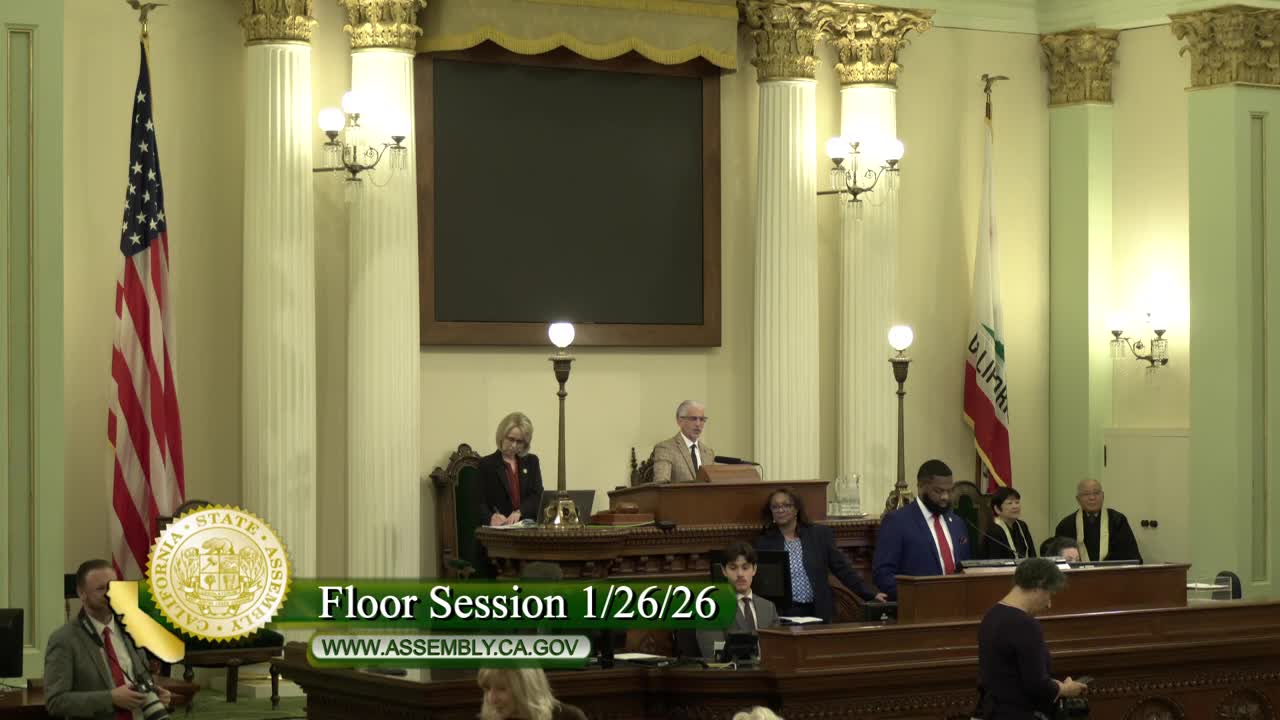 45SEC
Assembly Floor
 1MIN
Assembly Standing Committee on Appropriations
Bill Author

Bill Co-Author(s):