AB 961: Hazardous materials: California Land Reuse and Revitalization Act of 2004.
- Session Year: 2025-2026
- House: Assembly
- Latest Version Date: 2025-10-01
Current Status:
Passed
(2025-10-01: Chaptered by Secretary of State - Chapter 173, Statutes of 2025.)
Introduced
In Committee
Awaiting First Chamber Vote
Passed First Chamber
In Committee
Awaiting Second Chamber Vote
Passed Second Chamber
Enacted
What does this bill do?
This bill extends the expiration of the California Land Reuse and Revitalization Act from 2027 to 2037, preserving its cleanup-immunity rules for innocent landowners, bona fide purchasers (buyers who did not cause the contamination), and neighboring property owners. Anyone who qualifies for that immunity before 2037 will continue to have it afterward as long as they follow the act’s approved cleanup plans and other applicable laws.
The summary is provided by generative AI which can make mistakes. For original language, please view the details in the table below.
The California Land Reuse and Revitalization Act of 2004 provides, among other things, that an innocent landowner, bona fide purchaser, or contiguous property owner, as defined, qualifies for immunity from liability from certain state statutory and common laws for pollution conditions caused by a release or threatened release of a hazardous material if specified conditions are met, including entering into an agreement for a specified site assessment and response plan. The act prohibits the Department of Toxic Substances Control, the State Water Resources Control Board, and a California regional water quality control board from requiring one of those persons to take a response action under certain state laws, except as specified. Existing law repeals the act on January 1, 2027. Existing law provides that a person who qualifies for immunity under the act before January 1, 2027, shall continue to have that immunity on and after January 1, 2027, if the person continues to be in compliance with the requirements of the former act.
This bill would extend the repeal date of the act to January 1, 2037, and would provide that a person who qualifies for immunity under the act before January 1, 2037, shall continue to have that immunity on and after January 1, 2037, if the person continues to be in compliance with the requirements of the former act.
This chapter shall remain in effect only until January 1, 2037, and as of that date is repealed, unless a later enacted statute, that is enacted before January 1, 2037, deletes or extends that date.
SEC. 2.Section 25395.110 of the Health and Safety Code is amended to read:25395.110.(a)A person who, before January 1, 2037, qualifies for immunity pursuant to Chapter 6.82 (commencing with Section 25395.60), as that chapter read on December 31, 2036, shall continue to have that immunity on and after January 1, 2037, if the person continues to be in compliance with the requirements of former Chapter 6.82 (commencing with Section 25395.60), including, but not limited to, compliance with all response plans approved pursuant to Article 6 (commencing with Section 25395.90) of former Chapter 6.82, and compliance with all other applicable laws.
(b)This article shall become operative on January 1, 2037.
This chapter shall remain in effect only until January 1, 2027, 2037, and as of that date is repealed, unless a later enacted statute, that is enacted before January 1, 2027, 2037, deletes or extends that date.
SEC. 2.Section 25395.110 of the Health and Safety Code is amended to read:25395.110.(a)A person who, before January 1, 2027, 2037, qualifies for immunity pursuant to Chapter 6.82 (commencing with Section 25395.60), as that chapter read on December 31, 2026, 2036, shall continue to have that immunity on and after January 1, 2027, 2037, if the person continues to be in compliance with the requirements of former Chapter 6.82 (commencing with Section 25395.60), including, but not limited to, compliance with all response plans approved pursuant to Article 6 (commencing with Section 25395.90) of former Chapter 6.82, and compliance with all other applicable laws.
(b)This article shall become operative January 1, 2027. 2037.
|
Date
|
Status
|
|---|---|
| Oct 1, 2025 | Chaptered by Secretary of State - Chapter 173, Statutes of 2025. |
| Oct 1, 2025 | Approved by the Governor. |
| Sep 23, 2025 | Enrolled and presented to the Governor at 4 p.m. |
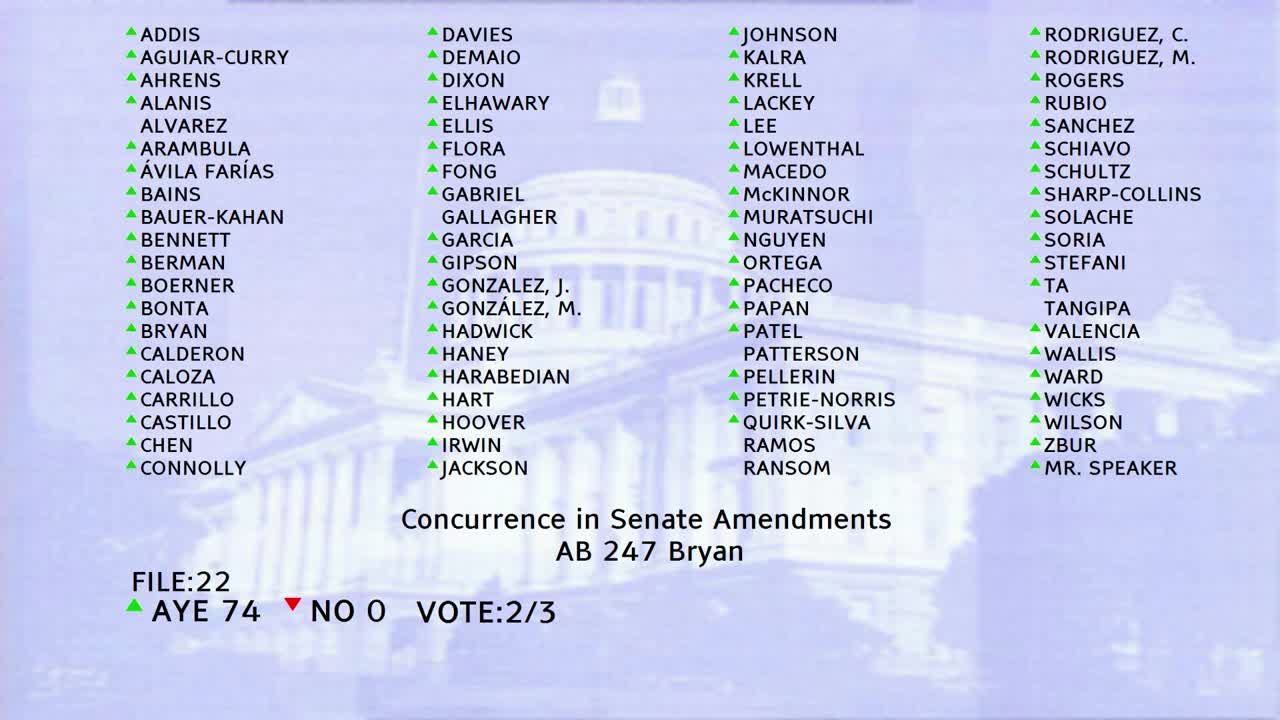
| Sep 11, 2025 | Senate amendments concurred in. To Engrossing and Enrolling. (Ayes 80. Noes 0. Page 3305.). |
| Sep 10, 2025 | In Assembly. Concurrence in Senate amendments pending. |
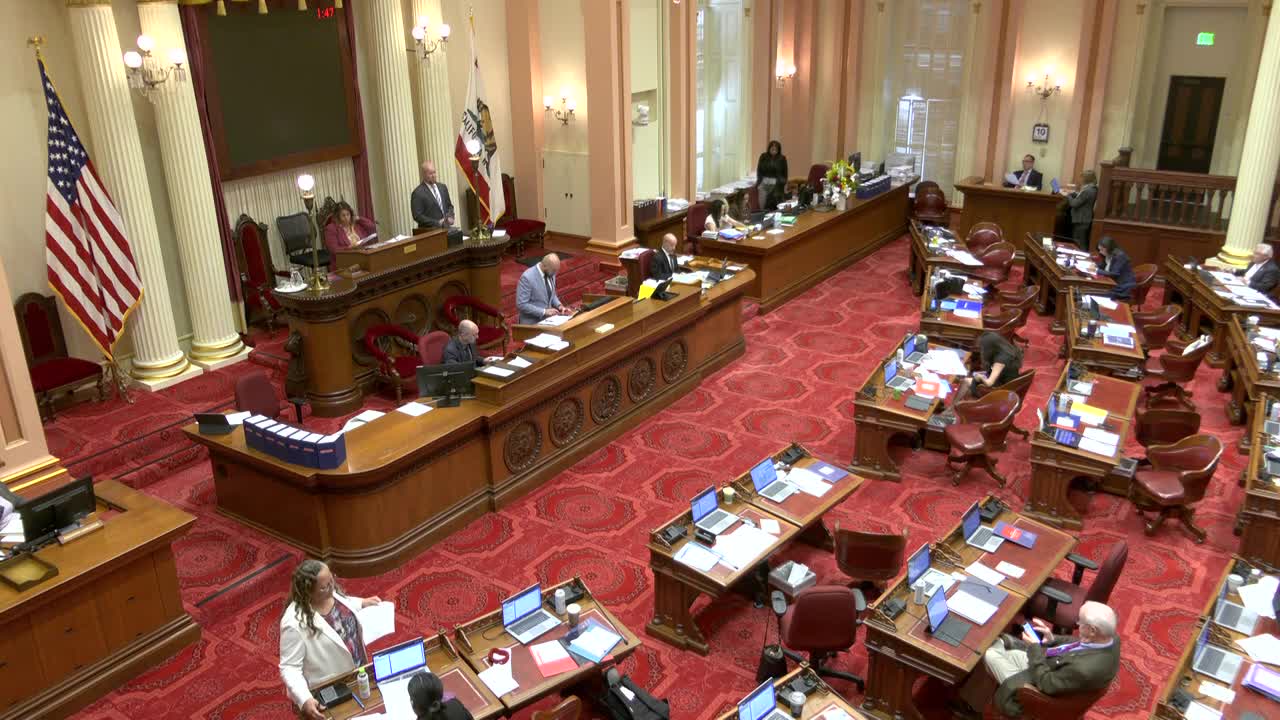
| Sep 10, 2025 | Read third time. Passed. Ordered to the Assembly. (Ayes 40. Noes 0. Page 2824.). |
| Sep 8, 2025 | Read second time. Ordered to third reading. |
| Sep 5, 2025 | Read third time and amended. Ordered to second reading. |
| Sep 4, 2025 | Ordered to third reading. |
| Sep 4, 2025 | From special consent calendar. |
| Sep 2, 2025 | Ordered to special consent calendar. |
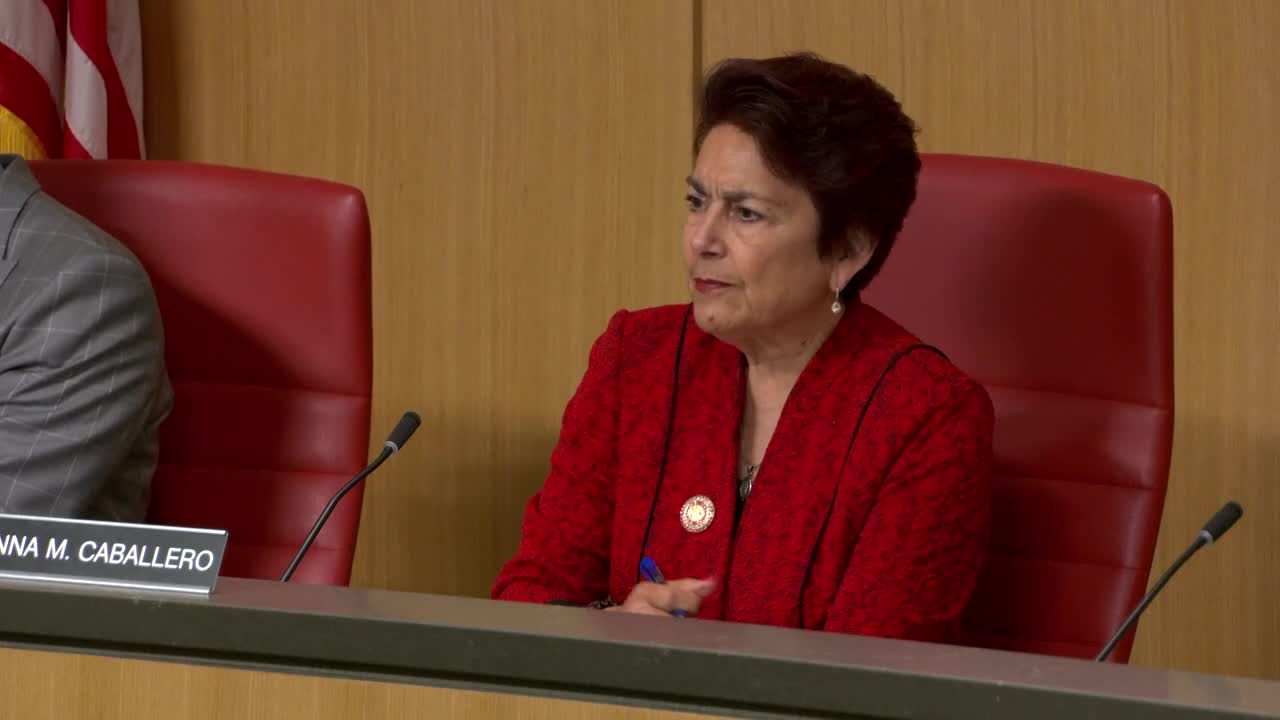
| Aug 29, 2025 | From committee: Do pass. (Ayes 7. Noes 0.) (August 29). |
| Aug 29, 2025 | Read second time. Ordered to third reading. |
| Aug 18, 2025 | In committee: Referred to suspense file. |
| Jul 9, 2025 | From committee: Do pass and re-refer to Com. on APPR. with recommendation: To Consent Calendar. (Ayes 13. Noes 0.) (July 8). Re-referred to Com. on APPR. |
| Jul 2, 2025 | From committee: Do pass and re-refer to Com. on JUD. with recommendation: To Consent Calendar. (Ayes 8. Noes 0.) (July 2). Re-referred to Com. on JUD. |
| Jun 11, 2025 | Referred to Coms. on E.Q. and JUD. |
| Jun 3, 2025 | In Senate. Read first time. To Com. on RLS. for assignment. |
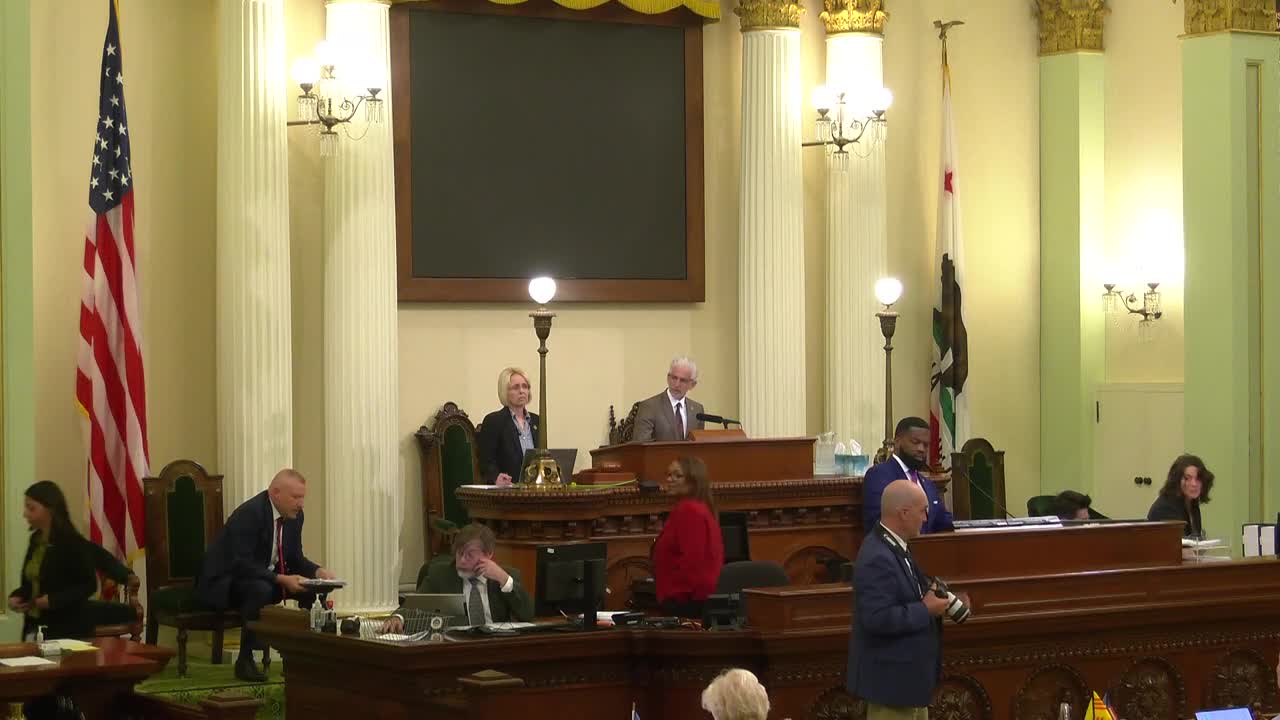
| Jun 2, 2025 | Read third time. Passed. Ordered to the Senate. (Ayes 79. Noes 0. Page 1869.) |
| May 27, 2025 | Read second time. Ordered to third reading. |
| May 23, 2025 | From committee: Do pass. (Ayes 14. Noes 0.) (May 23). |
| Apr 9, 2025 | In committee: Set, first hearing. Referred to APPR. suspense file. |
| Mar 26, 2025 | From committee: Do pass and re-refer to Com. on APPR. with recommendation: To Consent Calendar. (Ayes 7. Noes 0.) (March 25). Re-referred to Com. on APPR. |
| Mar 10, 2025 | Referred to Com. on E.S & T.M. |
| Feb 21, 2025 | From printer. May be heard in committee March 23. |
| Feb 20, 2025 | Read first time. To print. |
|
Date
|
Description
|
Location
|
Votes
|
|
|---|---|---|---|---|
| Sep 11, 2025 | AB 961 Ávila Farías Concurrence in Senate Amendments | Assembly Floor |
Passed |
|
| Sep 10, 2025 | Assembly 3rd Reading AB961 Ávila Farías et al. By Grayson | Senate Floor |
Passed |
|
| Aug 29, 2025 | Do pass | Senate Standing Committee on Appropriations |
Passed |
|
| Aug 18, 2025 | Placed on suspense file | Senate Standing Committee on Appropriations |
Passed |
|
| Jul 8, 2025 | Do pass, but first be re-referred to the Committee on [Appropriations] with the recommendation: To Consent Calendar | Senate Standing Committee on Judiciary |
Passed |
|
| Jul 2, 2025 | Do pass, but first be re-referred to the Committee on [Judiciary] with the recommendation: To Consent Calendar | Senate Standing Committee on Environmental Quality |
Passed |
|
| Jun 2, 2025 | AB 961 Ávila Farías Assembly Third Reading | Assembly Floor |
Passed |
|
| May 23, 2025 | Do pass. | Assembly Standing Committee on Appropriations |
Passed |
|
| Mar 25, 2025 | Do pass and be re-referred to the Committee on [Appropriations] with recommendation: To Consent Calendar | Assembly Standing Committee on Environmental Safety and Toxic Materials |
Passed |
This list shows positions taken on this bill by organizations on the date displayed, which is linked to the original source.
Positions by individuals are not included.
|
Organization
|
Position
|
Date
|
|---|---|---|
| Abundant Housing LA | ** Support | |
| Bay Area Council | ** Support | |
| California Building Industry Association | ** Support | |
| California Council For Environmental And Economic Balance | ** Support | |
| California YIMBY | ** Support | |
| Circulate San Diego | ** Support | |
| Inner City Law Center | ** Support | |
| Lieutenant Governor Eleni Kounalakis | ** Support | |
| SPUR | ** Support | |
| The Two Hundred | ** Support |
CONCURRENCE IN SENATE AMENDMENTS
CSA1 Bill Id:AB 961
Author:(Ávila Farías)
As Amended Ver:September 05, 2025
Majority vote
SUMMARY
Extends the sunset on the California Land Reuse and Revitalization Act (Act) from January 1, 2027, to January 1, 2037.
Senate Amendments
Add Assemblymember Wicks as a co-author.
COMMENTS
Brownfield cleanup: Brownfields are properties that are contaminated, or thought to be contaminated, and are underutilized due to perceived remediation costs and liability concerns. Many of these properties are in the urban core, near transit, and often in underserved communities with housing and economic development needs. Cleaning up brownfield properties not only eliminates the threat to residents and neighborhoods from hazardous substances, it frees abandoned or underutilized land for productive reuse. Redevelopment of brownfields also takes development pressures off previously undeveloped property, thereby preserving open space and agricultural land.
Brownfields remain a problem in California and nationwide, as abandoned, idled, or under-used sites formerly utilized for industrial or commercial purposes result in perceived or actual contamination that deters redevelopment of the site. As cleanup costs can be expensive, especially when uncovering unexpected hazardous materials during the cleaning of the site, many of the sites remain vacant for many years.
California Land Reuse and Revitalization Act of 2004 (Act): Traditionally, federal and state law provided that both current and previous owners of a property are potentially liable for the cost of cleanup of hazardous materials released on the property. In 2002, federal law was modified to grant conditional immunity to innocent and prospective purchasers and to innocent contiguous property owners for previously occurring contamination for which the innocent or prospective purchaser had no responsibility.
In 2004, California enacted AB 389 (Montanez), Chapter 705, Statutes of 2004, which created the Act, providing qualified immunity to innocent landowners, bona fide purchasers, and contiguous property owners who did not cause or contribute to a release of contaminants. Under the Act, in order to take advantage of the provided immunity, qualifying individuals must enter into an agreement with an oversight agency that would require the individual to undertake various tasks relating to cleanup of the hazardous materials on the property. The Act then provides liability protections to bona fide purchasers, innocent landowners, contiguous property owners, prospective purchasers, and bona fide ground tenants. This is intended to promote the cleanup and redevelopment of blighted contaminated properties. The Act establishes a process for eligible property owners to obtain statutory immunity, conduct a site assessment, and implement a response action, if necessary, to ensure that the property is ready for reuse. The original sunset date for the enacting legislation, AB 389, was in 2010.
Subsequent changes to the Act: Since enactment of the Act, there have been a few additions to the protections provided by the Act, as well as extending the protections of the program several times. SB 989 (Senate Environmental Quality), Chapter 510, Statutes of 2006 made the immunity protections available to a bona fide ground tenant. SB 143 (Cedillo), Chapter 167, Statutes of 2009 authorized a prospective purchaser who is in contract to acquire a site and who qualifies as a bona fide purchaser to enter into an agreement that provides them with immunity upon site acquisition. Additionally, SB 143 extended the sunset for the program from January 1, 2010, until January 1, 2017. Lastly, SB 820 (Hertzberg), Chapter 166, Statutes of 2016, extended the Act until January 1, 2027.
Without a legislative sunset extension, the Act will expire on January 1, 2027.
This bill: This bill extends the immunity protections under the Act, for bona fide purchasers, innocent landowners, contiguous property owners, prospective purchasers, and bona fide ground tenants, until January 1, 2037.
According to the Author
"AB 961 extends the sunset date of the California Land Reuse and Revitalization Act (Act) from January 1, 2027, to January 1, 2037. The Act has been a critical tool since 2005 for transforming contaminated and underutilized properties—often in disadvantaged communities—into spaces that can support housing, commercial activity, and community development.
By providing limited liability protections to innocent landowners, prospective purchasers, and adjacent property owners, the Act makes it possible to clean up and reuse properties that would otherwise remain vacant and blighted. These protections encourage private investment and streamline the process of environmental remediation by allowing agreements with the Department of Toxic Substances Control or Regional Water Boards.
Without this extension, communities would lose a proven pathway to revitalization. AB 961 ensures California maintains this important tool for supporting infill development, environmental justice, and sustainable land use in areas that need it most."
Arguments in Support
According to the California Council for Environmental and Economic Balance,
"AB 961 would extend the sunset date for the Act from January 1, 2027, to January 1, 2037, and provide that a person who qualifies for immunity under the Act before January 1, 2037, shall continue to have that immunity on and after that date if the person continues to be in compliance with the requirements of the former Act.
The Act has served as a critical tool for supporting the redevelopment of previously contaminated properties whereby prospective purchasers, owners or adjacent property owners can enter an agreement with the Department of Toxic Substances Control (DTSC) or the regional water boards to evaluate and remediate the contamination located on the site. The agreement, upon approval, provides participating entities with limited immunity from further liability for the contamination. Importantly, this limited immunity can then be passed on to future owners, users and lenders, which greatly enhances the opportunities for redevelopment or reuse of the affected property, as well as the overall value."
Arguments in Opposition
None on file.
FISCAL COMMENTS
According to the Assembly Appropriations Committee, enactment of this bill creates ongoing annual costs to DTSC and the State Water Resources Control Board that are unknown but likely in excess of $150,000 annually.
VOTES:
ASM ENVIRONMENTAL SAFETY AND TOXIC MATERIALS: 7-0-0
YES: Connolly, Hadwick, Bauer-Kahan, Castillo, Lee, McKinnor, Papan
ASM APPROPRIATIONS: 14-0-1
YES: Wicks, Arambula, Calderon, Caloza, Dixon, Elhawary, Fong, Mark González, Hart, Pacheco, Pellerin, Solache, Ta, Tangipa
ABS, ABST OR NV: Sanchez
ASSEMBLY FLOOR: 79-0-0
YES: Addis, Aguiar-Curry, Ahrens, Alanis, Alvarez, Arambula, Ávila Farías, Bains, Bauer-Kahan, Bennett, Berman, Boerner, Bonta, Bryan, Calderon, Caloza, Carrillo, Castillo, Chen, Connolly, Davies, DeMaio, Dixon, Elhawary, Ellis, Flora, Fong, Gabriel, Gallagher, Garcia, Gipson, Jeff Gonzalez, Mark González, Hadwick, Haney, Harabedian, Hart, Hoover, Irwin, Jackson, Kalra, Krell, Lackey, Lee, Lowenthal, Macedo, McKinnor, Muratsuchi, Nguyen, Ortega, Pacheco, Papan, Patel, Patterson, Pellerin, Petrie-Norris, Quirk-Silva, Ramos, Ransom, Celeste Rodriguez, Michelle Rodriguez, Rogers, Blanca Rubio, Sanchez, Schiavo, Schultz, Sharp-Collins, Solache, Soria, Stefani, Ta, Tangipa, Valencia, Wallis, Ward, Wicks, Wilson, Zbur, Rivas
UPDATED
VERSION: September 05, 2025
CONSULTANT: Josh Tooker / E.S. & T.M. / (916) 319-3965 FN: 0001835
SENATE RULES COMMITTEE Office of Senate Floor Analyses (916) 651-1520 Fax: (916) 327-4478 | AB 961 |
THIRD READING
Bill No: AB 961
Author: Ávila Farías (D)
Amended: 9/5/25
Vote: 21
SENATE ENVIRONMENTAL QUALITY COMMITTEE: 8-0, 7/2/25
AYES: Blakespear, Valladares, Dahle, Gonzalez, Hurtado, Menjivar, Padilla, Pérez
SENATE JUDICIARY COMMITTEE: 13-0, 7/8/25
AYES: Umberg, Niello, Allen, Arreguín, Ashby, Caballero, Durazo, Laird, Stern, Valladares, Wahab, Weber Pierson, Wiener
SENATE APPROPRIATIONS COMMITTEE: 7-0, 8/29/25
AYES: Caballero, Seyarto, Cabaldon, Dahle, Grayson, Richardson, Wahab
ASSEMBLY FLOOR: 79-0, 6/2/25 - See last page for vote
SUBJECT: Hazardous materials: California Land Reuse and Revitalization Act of 2004
SOURCE: Bay Area Council
DIGEST:
This bill extends the sunset on the California Land Reuse and Revitalization Act from January 1, 2027, to January 1, 2037.
Senate Floor Amendments of 9/5/25 add Assemblymember Wicks as a coauthor.
ANALYSIS:
Existing law:
- Establishes the California Land Reuse and Revitalization Act (Act) to cleanup and reuse hazardous material contaminated sites in a manner protective of public health and safety and the environment, and to encourage the development and redevelopment of unused or underused properties in urban areas. (Health & Safety Code (HSC) § 25395.60, et seq.)
- Provides immunity from liability for response costs or other damages associated with a release or threatened release of hazardous materials at a site for a bona fide purchaser, innocent landowner, or contiguous property owner, except as specified and if specified conditions are met. (HSC § 25395.81, et seq.)
- Provides immunity from liability for response costs or other relief associated with the release or threatened release of a hazardous material at a site for a bona fide ground tenant, except as specified. (HSC § 25395.104)
- Sunsets the Act on January 1, 2027. (HSC § 25395.109)
- Authorizes a person who, before January 1, 2027, qualifies for immunity to continue to have that immunity on and after January 1, 2027, if the person continues to be in compliance with the requirements of the Act. (HSC § 25395.110)
This bill:
- Extends, from January 1, 2027, to January 1, 2037, the sunset on the Act.
- Extends, from January 1, 2027, to January 1, 2037, the sunset on the qualification for immunity under the Act.
Background
- Cleaning up contaminated sites. Properties that are contaminated, or thought to be contaminated, and are underutilized due to perceived remediation cost and liability concerns are known as brownfields. Many of these properties are in the urban core, near transit, and often in underserved communities with housing and economic development needs. Cleaning up brownfield properties not only eliminates the threat to residents and neighborhoods from hazardous substances, it frees abandoned or underutilized land for productive reuse. Redevelopment of brownfields also takes development pressures off previously undeveloped property, thereby preserving open space and agricultural land.
Brownfields remain a continuing problem in California and nationwide, as abandoned, idled, or under-used sites formerly utilized for industrial or commercial purposes result in perceived or actual contamination that deters redevelopment of the site. As cleanup costs can be expensive, especially when uncovering unexpected hazardous materials during the cleaning of the site, many of the sites remain vacant for many years.
- Providing immunity to innocent landowners. Traditionally, federal and state law provided that both current and previous owners of a property are potentially liable for the cost of cleanup of hazardous materials released on the property. In 2002, federal law was modified to grant conditional immunity to innocent and prospective purchasers and to innocent contiguous property owners for previously occurring contamination for which the innocent or prospective purchaser had no responsibility.
In 2004, California enacted AB 389 (Montanez, Chapter 705, Statutes of 2004), which created the Act, providing qualified immunity to innocent landowners, bona fide purchasers, and contiguous property owners who did not cause or contribute to a release of contaminants. Under the Act, in order to take advantage of the provided immunity, qualifying individuals must enter into an agreement with an oversight agency that would require the individual to undertake various tasks relating to cleanup of the hazardous materials on the property. The Act then provides liability protections to bona fide purchasers, innocent landowners, contiguous property owners, prospective purchasers, and bona fide ground tenants. This is intended to promote the cleanup and redevelopment of blighted contaminated properties. The Act establishes a process for eligible property owners to obtain statutory immunity, conduct a site assessment, and implement a response action, if necessary, to ensure that the property is ready for reuse. The original sunset date for the enacting legislation, AB 389, was in 2010.
- Subsequent changes to the Act. Since enactment of the Act, there have been a few additions to the protections provided by the Act, as well as extending the protections of the program several times. SB 989 (Senate Environmental Quality, Chapter 510, Statutes of 2006) made the immunity protections available to a bona fide ground tenant. SB 143 (Cedillo, Chapter 167, Statutes of 2009) authorized a prospective purchaser who is in contract to acquire a site and who qualifies as a bona fide purchaser to enter into an agreement that provides the qualified bona fide prospective purchaser with immunity upon site acquisition. Additionally, SB 143 extended the sunset for the program from January 1, 2010 until January 1, 2017. Lastly, SB 820 (Hertzberg, Chapter 166, Statutes of 2016), extended the Act until January 1, 2027.
Without a legislative sunset extension, the Act will expire on January 1, 2027.
Comments
Purpose of Bill. According to the author, “AB 961 extends the sunset date of the California Land Reuse and Revitalization Act (CLRRA) from January 1, 2027, to January 1, 2037. CLRRA has been a critical tool since 2005 for transforming contaminated and underutilized properties—often in disadvantaged communities—into spaces that can support housing, commercial activity, and community development. By providing limited liability protections to innocent landowners, prospective purchasers, and adjacent property owners, CLRRA makes it possible to clean up and reuse properties that would otherwise remain vacant and blighted. These protections encourage private investment and streamline the process of environmental remediation by allowing agreements with the Department of Toxic Substances Control or Regional Water Boards. Without this extension, communities would lose a proven pathway to revitalization. AB 961 ensures California maintains this important tool for supporting infill development, environmental justice, and sustainable land use in areas that need it most.”
FISCAL EFFECT: Appropriation: No Fiscal Com.: Yes Local: No
Because this bill would extend the sunset on and authorize continued operation of the CLRRA, this analysis attributes the future costs of administering the program to the bill. The ongoing annual costs to the Department of Toxic Substances Control (DTSC) and the State Water Resources Control Board (State Water Board) are unknown but would be likely in excess of $150,000 annually (special funds).
SUPPORT: (Verified 9/5/25)
Bay Area Council (source)
Abundant Housing LA
California Building Industry Association
California Council for Environmental & Economic Balance
California Yimby
Circulate San Diego
Inner City Law Center
Lieutenant Governor Eleni Kounalakis
Spur
The Two Hundred
OPPOSITION: (Verified 9/5/25)
None received
ASSEMBLY FLOOR: 79-0, 6/2/25
AYES: Addis, Aguiar-Curry, Ahrens, Alanis, Alvarez, Arambula, Ávila Farías, Bains, Bauer-Kahan, Bennett, Berman, Boerner, Bonta, Bryan, Calderon, Caloza, Carrillo, Castillo, Chen, Connolly, Davies, DeMaio, Dixon, Elhawary, Ellis, Flora, Fong, Gabriel, Gallagher, Garcia, Gipson, Jeff Gonzalez, Mark González, Hadwick, Haney, Harabedian, Hart, Hoover, Irwin, Jackson, Kalra, Krell, Lackey, Lee, Lowenthal, Macedo, McKinnor, Muratsuchi, Nguyen, Ortega, Pacheco, Papan, Patel, Patterson, Pellerin, Petrie-Norris, Quirk-Silva, Ramos, Ransom, Celeste Rodriguez, Michelle Rodriguez, Rogers, Blanca Rubio, Sanchez, Schiavo, Schultz, Sharp-Collins, Solache, Soria, Stefani, Ta, Tangipa, Valencia, Wallis, Ward, Wicks, Wilson, Zbur, Rivas
Prepared by: Taylor McKie / E.Q. / (916) 651-4108
9/8/25 21:29:47
**** END ****
SENATE RULES COMMITTEE Office of Senate Floor Analyses (916) 651-1520 Fax: (916) 327-4478 | AB 961 |
THIRD READING
Bill No: AB 961
Author: Ávila Farías (D)
Introduced: 2/20/25
Vote: 21
SENATE ENVIRONMENTAL QUALITY COMMITTEE: 8-0, 7/2/25
AYES: Blakespear, Valladares, Dahle, Gonzalez, Hurtado, Menjivar, Padilla, Pérez
SENATE JUDICIARY COMMITTEE: 13-0, 7/8/25
AYES: Umberg, Niello, Allen, Arreguín, Ashby, Caballero, Durazo, Laird, Stern, Valladares, Wahab, Weber Pierson, Wiener
SENATE APPROPRIATIONS COMMITTEE: 7-0, 8/29/25
AYES: Caballero, Seyarto, Cabaldon, Dahle, Grayson, Richardson, Wahab
ASSEMBLY FLOOR: 79-0, 6/2/25 - See last page for vote
SUBJECT: Hazardous materials: California Land Reuse and Revitalization Act of 2004
SOURCE: Bay Area Council
DIGEST:
This bill extends the sunset on the California Land Reuse and Revitalization Act from January 1, 2027, to January 1, 2037.
ANALYSIS:
Existing law:
- Establishes the California Land Reuse and Revitalization Act (Act) to cleanup and reuse hazardous material contaminated sites in a manner protective of public health and safety and the environment, and to encourage the development and redevelopment of unused or underused properties in urban areas. (Health & Safety Code (HSC) § 25395.60, et seq.)
- Provides immunity from liability for response costs or other damages associated with a release or threatened release of hazardous materials at a site for a bona fide purchaser, innocent landowner, or contiguous property owner, except as specified and if specified conditions are met. (HSC § 25395.81, et seq.)
- Provides immunity from liability for response costs or other relief associated with the release or threatened release of a hazardous material at a site for a bona fide ground tenant, except as specified. (HSC § 25395.104)
- Sunsets the Act on January 1, 2027. (HSC § 25395.109)
- Authorizes a person who, before January 1, 2027, qualifies for immunity to continue to have that immunity on and after January 1, 2027, if the person continues to be in compliance with the requirements of the Act. (HSC § 25395.110)
This bill:
- Extends, from January 1, 2027, to January 1, 2037, the sunset on the Act.
- Extends, from January 1, 2027, to January 1, 2037, the sunset on the qualification for immunity under the Act.
Background
- Cleaning up contaminated sites. Properties that are contaminated, or thought to be contaminated, and are underutilized due to perceived remediation cost and liability concerns are known as brownfields. Many of these properties are in the urban core, near transit, and often in underserved communities with housing and economic development needs. Cleaning up brownfield properties not only eliminates the threat to residents and neighborhoods from hazardous substances, it frees abandoned or underutilized land for productive reuse. Redevelopment of brownfields also takes development pressures off previously undeveloped property, thereby preserving open space and agricultural land.
Brownfields remain a continuing problem in California and nationwide, as abandoned, idled, or under-used sites formerly utilized for industrial or commercial purposes result in perceived or actual contamination that deters redevelopment of the site. As cleanup costs can be expensive, especially when uncovering unexpected hazardous materials during the cleaning of the site, many of the sites remain vacant for many years.
- Providing immunity to innocent landowners. Traditionally, federal and state law provided that both current and previous owners of a property are potentially liable for the cost of cleanup of hazardous materials released on the property. In 2002, federal law was modified to grant conditional immunity to innocent and prospective purchasers and to innocent contiguous property owners for previously occurring contamination for which the innocent or prospective purchaser had no responsibility.
In 2004, California enacted AB 389 (Montanez, Chapter 705, Statutes of 2004), which created the Act, providing qualified immunity to innocent landowners, bona fide purchasers, and contiguous property owners who did not cause or contribute to a release of contaminants. Under the Act, in order to take advantage of the provided immunity, qualifying individuals must enter into an agreement with an oversight agency that would require the individual to undertake various tasks relating to cleanup of the hazardous materials on the property. The Act then provides liability protections to bona fide purchasers, innocent landowners, contiguous property owners, prospective purchasers, and bona fide ground tenants. This is intended to promote the cleanup and redevelopment of blighted contaminated properties. The Act establishes a process for eligible property owners to obtain statutory immunity, conduct a site assessment, and implement a response action, if necessary, to ensure that the property is ready for reuse. The original sunset date for the enacting legislation, AB 389, was in 2010.
- Subsequent changes to the Act. Since enactment of the Act, there have been a few additions to the protections provided by the Act, as well as extending the protections of the program several times. SB 989 (Senate Environmental Quality, Chapter 510, Statutes of 2006) made the immunity protections available to a bona fide ground tenant. SB 143 (Cedillo, Chapter 167, Statutes of 2009) authorized a prospective purchaser who is in contract to acquire a site and who qualifies as a bona fide purchaser to enter into an agreement that provides the qualified bona fide prospective purchaser with immunity upon site acquisition. Additionally, SB 143 extended the sunset for the program from January 1, 2010 until January 1, 2017. Lastly, SB 820 (Hertzberg, Chapter 166, Statutes of 2016), extended the Act until January 1, 2027.
Without a legislative sunset extension, the Act will expire on January 1, 2027.
Comments
- Purpose of Bill. According to the author, “AB 961 extends the sunset date of the California Land Reuse and Revitalization Act (CLRRA) from January 1, 2027, to January 1, 2037. CLRRA has been a critical tool since 2005 for transforming contaminated and underutilized properties—often in disadvantaged communities—into spaces that can support housing, commercial activity, and community development. By providing limited liability protections to innocent landowners, prospective purchasers, and adjacent property owners, CLRRA makes it possible to clean up and reuse properties that would otherwise remain vacant and blighted. These protections encourage private investment and streamline the process of environmental remediation by allowing agreements with the Department of Toxic Substances Control or Regional Water Boards. Without this extension, communities would lose a proven pathway to revitalization. AB 961 ensures California maintains this important tool for supporting infill development, environmental justice, and sustainable land use in areas that need it most.”
FISCAL EFFECT: Appropriation: No Fiscal Com.: Yes Local: No
Because this bill would extend the sunset on and authorize continued operation of the CLRRA, this analysis attributes the future costs of administering the program to the bill. The ongoing annual costs to the Department of Toxic Substances Control (DTSC) and the State Water Resources Control Board (State Water Board) are unknown but would be likely in excess of $150,000 annually (special funds).
SUPPORT: (Verified 8/29/2025)
Bay Area Council (source)
Abundant Housing LA
California Building Industry Association
California Council for Environmental & Economic Balance
California Yimby
Circulate San Diego
Inner City Law Center
Lieutenant Governor Eleni Kounalakis
Spur
The Two Hundred
OPPOSITION: (Verified 8/29/2025)
None received
ASSEMBLY FLOOR: 79-0, 6/2/25
AYES: Addis, Aguiar-Curry, Ahrens, Alanis, Alvarez, Arambula, Ávila Farías, Bains, Bauer-Kahan, Bennett, Berman, Boerner, Bonta, Bryan, Calderon, Caloza, Carrillo, Castillo, Chen, Connolly, Davies, DeMaio, Dixon, Elhawary, Ellis, Flora, Fong, Gabriel, Gallagher, Garcia, Gipson, Jeff Gonzalez, Mark González, Hadwick, Haney, Harabedian, Hart, Hoover, Irwin, Jackson, Kalra, Krell, Lackey, Lee, Lowenthal, Macedo, McKinnor, Muratsuchi, Nguyen, Ortega, Pacheco, Papan, Patel, Patterson, Pellerin, Petrie-Norris, Quirk-Silva, Ramos, Ransom, Celeste Rodriguez, Michelle Rodriguez, Rogers, Blanca Rubio, Sanchez, Schiavo, Schultz, Sharp-Collins, Solache, Soria, Stefani, Ta, Tangipa, Valencia, Wallis, Ward, Wicks, Wilson, Zbur, Rivas
Prepared by: Taylor McKie / E.Q. / (916) 651-4108
8/29/25 20:41:33
**** END ****
SENATE COMMITTEE ON
Senator Anna Caballero, Chair
2025 - 2026 Regular Session
AB 961 (Ávila Farías) - Hazardous materials: California Land Reuse and Revitalization Act of 2004
Version: | Policy Vote: |
Urgency: | Mandate: |
Hearing Date: | Consultant: |
Bill Summary:
This bill would extend the sunset date for the California Land Reuse and Revitalization Act (CLRRA) from January 1, 2027, to January 1, 2037, and provide that a person who qualifies for immunity under the CLRRA before January 1, 2037, shall continue to have that immunity on and after that date if the person continues to be in compliance with the requirements of the former CLRRA.
Fiscal Impact:
- Because this bill would extend the sunset on and authorize continued operation of the CLRRA, this analysis attributes the future costs of administering the program to the bill. The ongoing annual costs to the Department of Toxic Substances Control (DTSC) and the State Water Resources Control Board (State Water Board) are unknown but would be likely in excess of $150,000 annually (special funds).
Background:
Cleaning up contaminated sites. Properties that are contaminated, or thought to be contaminated, and are underutilized due to perceived remediation cost and liability concerns are known as brownfields. Many of these properties are in the urban core, near transit, and often in underserved communities with housing and economic development needs. Cleaning up brownfield properties not only eliminates the threat to residents and neighborhoods from hazardous substances, it frees abandoned or underutilized land for productive reuse. Redevelopment of brownfields also takes development pressures off previously undeveloped property, thereby preserving open space and agricultural land.
Brownfields remain a continuing problem in California and nationwide, as abandoned, idled, or under-used sites formerly utilized for industrial or commercial purposes result in perceived or actual contamination that deters redevelopment of the site. As cleanup costs can be expensive, especially when uncovering unexpected hazardous materials during the cleaning of the site, many of the sites remain vacant for many years.
Providing immunity to innocent landowners. Traditionally, federal and state law provided that both current and previous owners of a property are potentially liable for the cost of cleanup of hazardous materials released on the property. In 2002, federal law was modified to grant conditional immunity to innocent and prospective purchasers and to innocent contiguous property owners for previously occurring contamination for which the innocent or prospective purchaser had no responsibility.
In 2004, California enacted AB 389 (Montanez, Chapter 705, Statutes of 2004), which created the Act, providing qualified immunity to innocent landowners, bona fide purchasers, and contiguous property owners who did not cause or contribute to a release of contaminants. Under the Act, in order to take advantage of the provided immunity, qualifying individuals must enter into an agreement with an oversight agency that would require the individual to undertake various tasks relating to cleanup of the hazardous materials on the property. The Act then provides liability protections to bona fide purchasers, innocent landowners, contiguous property owners, prospective purchasers, and bona fide ground tenants. This is intended to promote the cleanup and redevelopment of blighted contaminated properties. The Act establishes a process for eligible property owners to obtain statutory immunity, conduct a site assessment, and implement a response action, if necessary, to ensure that the property is ready for reuse. The original sunset date for the enacting legislation, AB 389, was in 2010.
Subsequent changes to the Act. Since enactment of the Act, there have been a few additions to the protections provided by the Act, as well as extending the protections of the program several times. SB 989 (Senate Environmental Quality, Chapter 510, Statutes of 2006) made the immunity protections available to a bona fide ground tenant. SB 143 (Cedillo, Chapter 167, Statutes of 2009) authorized a prospective purchaser who is in contract to acquire a site and who qualifies as a bona fide purchaser to enter into an agreement that provides the qualified bona fide prospective purchaser with immunity upon site acquisition. Additionally, SB 143 extended the sunset for the program from January 1, 2010 until January 1, 2017. Lastly, SB 820 (Hertzberg, Chapter 166, Statutes of 2016), extended the Act until January 1, 2027.
Without a legislative sunset extension, the Act will expire on January 1, 2027.
Proposed Law:
This bill would:
- Extend, from January 1, 2027, to January 1, 2037, the sunset on the Act.
- Extend, from January 1, 2027, to January 1, 2037, the sunset on the qualification for immunity under the Act.
Related Legislation:
SB 820 (Hertzberg, Chapter 166, Statutes of 2016) extended the sunset date for the Act from January 1, 2017, to January 1, 2027, and makes corresponding changes to provide continued immunity after the repeal of the Act.
SB 143 (Cedillo, Chapter 167, Statutes of 2009) extended the sunset date of the Act from January 1, 2010, to January 1, 2017, and extends the provisions for continued immunity after the Act is repealed. Authorized a prospective purchaser who is in contract to acquire a site and who qualifies as a bona fide purchaser to receive immunity under specified conditions.
SB 989 (Senate Environmental Quality, Chapter 510, Statutes of 2006) added to the Act qualified immunity for bona fide ground tenants under specified conditions.
AB 389 (Montanez, Chapter 705, Statutes of 2004) enacted the Act, which provides qualified immunity to innocent landowners, bona fide purchasers, and contiguous property owners who did not cause or contribute to a release of contaminants. Sunset the Act on January 1, 2010.
Staff Comments:
Under CLRRA, an entity that enters into an agreement with DTSC reimburses the department for its cleanup oversight costs via a fee-for-service agreement and pays for the cleanup of the land, including any local or state fees related to the generation of hazardous waste. Currently, there are 60 active and 30 closed CLRRA projects under DTSC’s purview. CLRRA sites represent a small fraction of the department’s brownfield cleanup sites, and CLRRA agreements are only one type of voluntary agreement that DTSC offers. Statewide, DTSC typically has more than 1,000 active cleanup projects and currently has approximately 600 sites under various voluntary agreements. Approximately 50 staff positions are assigned to these programs. DTSC notes that while it bills approximately $20 million annually via standard voluntary cleanups, it does not know, at this time, the portion attributed to CLRRA agreements.
-- END --
ASSEMBLY THIRD READING
ATR Bill Id:AB 961
Author:(Ávila Farías)
As Introduced Ver:February 20, 2025
Majority vote
SUMMARY
Extends the sunset on the California Land Reuse and Revitalization Act (Act).
Major Provisions
- Extends, from January 1, 2027, to January 1, 2037, the sunset on the Act.
- Extends, from January 1, 2027, to January 1, 2037, the sunset on the qualification for immunity under the Act.
COMMENTS
Brownfield cleanup: Brownfields are properties that are contaminated, or thought to be contaminated, and are underutilized due to perceived remediation costs and liability concerns. Many of these properties are in the urban core, near transit, and often in underserved communities with housing and economic development needs. Cleaning up brownfield properties not only eliminates the threat to residents and neighborhoods from hazardous substances, it frees abandoned or underutilized land for productive reuse. Redevelopment of brownfields also takes development pressures off previously undeveloped property, thereby preserving open space and agricultural land.
Brownfields remain a continuing problem in California and nationwide, as abandoned, idled, or under-used sites formerly utilized for industrial or commercial purposes result in perceived or actual contamination that deters redevelopment of the site. As cleanup costs can be expensive, especially when uncovering unexpected hazardous materials during the cleaning of the site, many of the sites remain vacant for many years.
California Land Reuse and Revitalization Act of 2004 (Act): Traditionally, federal and state law provided that both current and previous owners of a property are potentially liable for the cost of cleanup of hazardous materials released on the property. In 2002, federal law was modified to grant conditional immunity to innocent and prospective purchasers and to innocent contiguous property owners for previously occurring contamination for which the innocent or prospective purchaser had no responsibility.
In 2004, California enacted AB 389 (Montanez), Chapter 705, Statutes of 2004, which created the Act, providing qualified immunity to innocent landowners, bona fide purchasers, and contiguous property owners who did not cause or contribute to a release of contaminants. Under the Act, in order to take advantage of the provided immunity, qualifying individuals must enter into an agreement with an oversight agency that would require the individual to undertake various tasks relating to cleanup of the hazardous materials on the property. The Act then provides liability protections to bona fide purchasers, innocent landowners, contiguous property owners, prospective purchasers, and bona fide ground tenants. This is intended to promote the cleanup and redevelopment of blighted contaminated properties. The Act establishes a process for eligible property owners to obtain statutory immunity, conduct a site assessment, and implement a response action, if necessary, to ensure that the property is ready for reuse. The original sunset date for the enacting legislation, AB 389, was in 2010.
Subsequent changes to the Act: Since enactment of the Act, there have been a few additions to the protections provided by the Act, as well as extending the protections of the program several times. SB 989 (Senate Environmental Quality), Chapter 510, Statutes of 2006 made the immunity protections available to a bona fide ground tenant. SB 143 (Cedillo), Chapter 167, Statutes of 2009 authorized a prospective purchaser who is in contract to acquire a site and who qualifies as a bona fide purchaser to enter into an agreement that provides the qualified bona fide prospective purchaser with immunity upon site acquisition. Additionally, SB 143 extended the sunset for the program from January 1, 2010 until January 1, 2017. Lastly, SB 820 (Hertzberg), Chapter 166, Statutes of 2016, extended the Act until January 1, 2027.
Without a legislative sunset extension, the Act will expire on January 1, 2027.
This bill: extends the immunity protections under the Act, for bona fide purchasers; innocent landowners; contiguous property owners; prospective purchasers; and bona fide ground tenants, until January 1, 2037.
According to the Author
"AB 961 extends the sunset date of the California Land Reuse and Revitalization Act (Act) from January 1, 2027, to January 1, 2037. The Act has been a critical tool since 2005 for transforming contaminated and underutilized properties—often in disadvantaged communities—into spaces that can support housing, commercial activity, and community development.
By providing limited liability protections to innocent landowners, prospective purchasers, and adjacent property owners, the Act makes it possible to clean up and reuse properties that would otherwise remain vacant and blighted. These protections encourage private investment and streamline the process of environmental remediation by allowing agreements with the Department of Toxic Substances Control or Regional Water Boards.
Without this extension, communities would lose a proven pathway to revitalization. AB 961 ensures California maintains this important tool for supporting infill development, environmental justice, and sustainable land use in areas that need it most."
Arguments in Support
According to the California Council for Environmental and Economic Balance,
"AB 961 would extend the sunset date for the Act from January 1, 2027, to January 1, 2037, and provide that a person who qualifies for immunity under the Act before January 1, 2037, shall continue to have that immunity on and after that date if the person continues to be in compliance with the requirements of the former Act.
The Act has served as a critical tool for supporting the redevelopment of previously contaminated properties whereby prospective purchasers, owners or adjacent property owners can enter an agreement with the Department of Toxic Substances Control (DTSC) or the regional water boards to evaluate and remediate the contamination located on the site. The agreement, upon approval, provides participating entities with limited immunity from further liability for the contamination. Importantly, this limited immunity can then be passed on to future owners, users and lenders, which greatly enhances the opportunities for redevelopment or reuse of the affected property, as well as the overall value."
Arguments in Opposition
None on file.
FISCAL COMMENTS
According to the Assembly Appropriations Committee, enact of this bill creates ongoing annual costs to DTSC and the State Water Board that are unknown but likely in excess of $150,000 annually.
VOTES
ASM ENVIRONMENTAL SAFETY AND TOXIC MATERIALS: 7-0-0
YES: Connolly, Hadwick, Bauer-Kahan, Castillo, Lee, McKinnor, Papan
ASM APPROPRIATIONS: 14-0-1
YES: Wicks, Arambula, Calderon, Caloza, Dixon, Elhawary, Fong, Mark González, Hart, Pacheco, Pellerin, Solache, Ta, Tangipa
ABS, ABST OR NV: Sanchez
UPDATED
VERSION: February 20, 2025
CONSULTANT: Josh Tooker / E.S. & T.M. / (916) 319-3965 FN: 0000494
Date of Hearing: April 9, 2025
ASSEMBLY COMMITTEE ON APPROPRIATIONS
Buffy Wicks, Chair
ABPCA Bill Id:AB 961
Author:(Ávila Farías) – As Introduced Ver:February 20, 2025
Policy Committee: | Environmental Safety and Toxic Materials | Vote: | 7 - 0 |
|
| ||
|
|
Urgency: No State Mandated Local Program: No Reimbursable: No
SUMMARY:
This bill extends the sunset date for the California Land Reuse and Revitalization Act (CLRRA) from January 1, 2027, to January 1, 2037, and provides that a person who qualifies for immunity under the CLRRA before January 1, 2037, shall continue to have that immunity on and after that date if the person continues to be in compliance with the requirements of the former CLRRA.
FISCAL EFFECT:
Because this bill extends the sunset on and authorizes continued operation of the CLRRA, this analysis attributes the future costs of administering the program to the bill. The ongoing annual costs to the Department of Toxic Substances Control (DTSC) and the State Water Resources Control Board (State Water Board) are unknown but likely in excess of $150,000 annually (special funds).
Under CLRRA, an entity that enters into an agreement with DTSC reimburses the department for its cleanup oversight costs via a fee-for-service agreement and pays for the cleanup of the land, including any local or state fees related to the generation of hazardous waste. Currently, there are 60 active and 30 closed CLRRA projects under DTSC’s purview. CLRRA sites represent a small fraction of the department’s brownfield cleanup sites, and CLRRA agreements are only one type of voluntary agreement that DTSC offers. Statewide, DTSC typically has more than 1,000 active cleanup projects and currently has approximately 600 sites under various voluntary agreements. Approximately 50 staff positions are assigned to these programs. DTSC notes that while it bills approximately $20 million annually via standard voluntary cleanups, it does not know, at this time, the portion attributed to CLRRA agreements.
COMMENTS:
1) Purpose. According to the author:
CLRRA has been a critical tool since 2005 for transforming contaminated and underutilized properties—often in disadvantaged communities—into spaces that can support housing, commercial activity, and community development. By providing limited liability protections to innocent landowners, prospective purchasers, and adjacent property owners, CLRRA makes it possible to clean up and reuse properties that would otherwise remain vacant and blighted.
2) Background. According to DTSC, the CLRRA provides liability protections to bona fide purchasers, innocent landowners, contiguous property owners, prospective purchasers, and bona fide ground tenants. This qualified immunity is to promote the cleanup and redevelopment of blighted contaminated properties. The law establishes a process for an eligible property owner to obtain immunities, conduct a site assessment, and implement a response action as necessary, to ensure that the property can be reused or redeveloped. The CLRRA was established in 2005, and the sunset date for the original act has been extended multiple times. The current sunset date is January 1, 2027; this bill extends this sunset date to January 1, 2037, and makes corresponding changes to provide continued immunity after the repeal of the CLRRA under certain conditions. Under the CLRRA, in order to take advantage of the liability protections, a qualifying individual must enter into an agreement with an oversight agency such as DTSC or the State Water Board that requires the individual to undertake various tasks relating to cleanup of the hazardous materials on the property.
The California Building Industry Association writes in support:
The CLRRA offers a critical path for prospective purchasers, innocent owners or adjacent property owners to enter an agreement with the Department of Toxic Substances Control or Regional Water Quality Control Board to evaluate and remediate contaminated sites. Once the terms of the agreement have been fulfilled, participants are afforded limited immunity from further liability for the contamination. This immunity can then be passed on to future owners, users and lenders, which greatly enhances the opportunities for redevelopment or reuse of the affected property.
Analysis Prepared by: Nikita Koraddi / APPR. / (916) 319-2081
Date of Hearing: March 25, 2025
ASSEMBLY COMMITTEE ON ENVIRONMENTAL SAFETY AND TOXIC MATERIALS
Damon Connolly, Chair
ABPCA Bill Id:AB 961 (
Author:Ávila Farías) – As Introduced Ver:February 20, 2025
SUBJECT: Hazardous materials: California Land Reuse and Revitalization Act of 2004
SUMMARY: Extends the sunset on the California Land Reuse and Revitalization Act (Act). Specifically, this bill:
- Extends, from January 1, 2027, to January 1, 2037, the sunset on the Act.
- Extends, from January 1, 2027, to January 1, 2037, the sunset on the qualification for immunity under the Act.
EXISTING LAW:
- Establishes the Act to cleanup and reuse hazardous material contaminated sites in a manner protective of public health and safety and the environment, and to encourage the development and redevelopment of unused or underused properties in urban areas. (Health & Safety Code (HSC) § 25395.61, et seq.)
- Sunsets the Act on January 1, 2027. (HSC § 25395.109)
- Provides immunity from response costs or other relief associated with the release or threatened release of a hazardous material at a site for a bona fide ground tenant. (HSC § 25395.104)
- Authorizes a person who, before January 1, 2027, qualifies for immunity to continue to have that immunity on and after January 1, 2027, if the person continues to be in compliance with the requirements of the Act. (HSC § 25395.110)
FISCAL EFFECT: Unknown.
COMMENTS:
Need for the bill: According to author: "AB 961 extends the sunset date of the California Land Reuse and Revitalization Act (CLRRA) from January 1, 2027, to January 1, 2037. CLRRA has been a critical tool since 2005 for transforming contaminated and underutilized properties—often in disadvantaged communities—into spaces that can support housing, commercial activity, and community development.
By providing limited liability protections to innocent landowners, prospective purchasers, and adjacent property owners, CLRRA makes it possible to clean up and reuse properties that would otherwise remain vacant and blighted. These protections encourage private investment and streamline the process of environmental remediation by allowing agreements with the Department of Toxic Substances Control or Regional Water Boards.
Without this extension, communities would lose a proven pathway to revitalization. AB 961 ensures California maintains this important tool for supporting infill development, environmental justice, and sustainable land use in areas that need it most."
Brownfield cleanup: Brownfields are properties that are contaminated, or thought to be contaminated, and are underutilized due to perceived remediation cost and liability concerns. Many of these properties are in the urban core, near transit, and often in underserved communities with housing and economic development needs. Cleaning up brownfield properties not only eliminates the threat to residents and neighborhoods from hazardous substances, it frees abandoned or underutilized land for productive reuse. Redevelopment of brownfields also takes development pressures off previously undeveloped property, thereby preserving open space and agricultural land.
Brownfields remain a continuing problem in California and nationwide, as abandoned, idled, or under-used sites formerly utilized for industrial or commercial purposes result in perceived or actual contamination that deters redevelopment of the site. As cleanup costs can be expensive, especially when uncovering unexpected hazardous materials during the cleaning of the site, many of the sites remain vacant for many years.
California Land Reuse and Revitalization Act of 2004 (Act): Traditionally, federal and state law provided that both current and previous owners of a property are potentially liable for the cost of cleanup of hazardous materials released on the property. In 2002, federal law was modified to grant conditional immunity to innocent and prospective purchasers and to innocent contiguous property owners for previously occurring contamination for which the innocent or prospective purchaser had no responsibility.
In 2004, California enacted AB 389 (Montanez, Chapter 705, Statutes of 2004), which created the Act, providing qualified immunity to innocent landowners, bona fide purchasers, and contiguous property owners who did not cause or contribute to a release of contaminants. Under the Act, in order to take advantage of the provided immunity, qualifying individuals must enter into an agreement with an oversight agency that would require the individual to undertake various tasks relating to cleanup of the hazardous materials on the property. The Act then provides liability protections to bona fide purchasers, innocent landowners, contiguous property owners, prospective purchasers, and bona fide ground tenants. This is intended to promote the cleanup and redevelopment of blighted contaminated properties. The Act establishes a process for eligible property owners to obtain statutory immunity, conduct a site assessment, and implement a response action, if necessary, to ensure that the property is ready for reuse. The original sunset date for the enacting legislation, AB 389, was in 2010.
Subsequent changes to the Act: Since enactment of the Act, there have been a few additions to the protections provided by the Act, as well as extending the protections of the program several times. SB 989 (Senate Environmental Quality, Chapter 510, Statutes of 2006) made the immunity protections available to a bona fide ground tenant. SB 143 (Cedillo, Chapter 167, Statutes of 2009) authorized a prospective purchaser who is in contract to acquire a site and who qualifies as a bona fide purchaser to enter into an agreement that provides the qualified bona fide prospective purchaser with immunity upon site acquisition. Additionally, SB 143 extended the sunset for the program from January 1, 2010 until January 1, 2017. Lastly, SB 820 (Hertzberg, Chapter 166, Statutes of 2016), extended the Act until January 1, 2027.
Without a legislative sunset extension, the Act will expire on January 1, 2027.
This bill: AB 961 extends the protections under the Act, for bona fide purchasers; innocent landowners; contiguous property owners; prospective purchasers; and bona fide ground tenants, until January 1, 2037.
Related legislation:
1) SB 820 (Hertzberg, Chapter 166, Statutes of 2016). Extends the sunset date for the Act from January 1, 2017 to January 1, 2027, and makes corresponding changes to provide continued immunity after the repeal of the Act.
2) SB 143 (Cedillo, Chapter 167, Statutes of 2009). Extends the sunset date of the Act from January 1, 2010, to January 1, 2017, and extends the provisions for continued immunity after the Act is repealed. Authorizes a prospective purchaser who is in contract to acquire a site and who qualifies as a bona fide purchaser to receive immunity under specified conditions.
3) SB 989 (Senate Environmental Quality, Chapter 510, Statutes of 2006). Adds to the Act qualified immunity for bona fide ground tenants under specified conditions.
4) AB 389 (Montanez, Chapter 705, Statutes of 2004). Enacted the Act, which provides qualified immunity to innocent landowners, bona fide purchasers, and contiguous property owners who did not cause or contribute to a release of contaminants. Sunsets the Act on January 1, 2010.
REGISTERED SUPPORT / OPPOSITION:
Support
None on file
Opposition
None on file
Analysis Prepared by: Josh Tooker / E.S. & T.M. / (916) 319-3965
Discussed in Hearing
 51SEC
Assembly Floor
 2MIN
Senate Floor
 12SEC
Senate Standing Committee on Appropriations
 1MIN
Assembly Floor
Bill Author

Bill Co-Author(s):
