SB 359: Use Fuel Tax Law: Diesel Fuel Tax Law: exempt bus operation.
- Session Year: 2025-2026
- House: Senate
- Latest Version Date: 2025-10-01
Current Status:
Passed
(2025-10-01: Chaptered by Secretary of State. Chapter 217, Statutes of 2025.)
Introduced
In Committee
Awaiting First Chamber Vote
Passed First Chamber
In Committee
Awaiting Second Chamber Vote
Passed Second Chamber
Enacted
The Use Fuel Tax Law imposes a state excise tax at specified rates, generally $0.18 per gallon, on the use of fuel, as defined, and establishes various exemptions from those taxes, including an exemption for any transit district, transit authority, or city owning and operating a local transit system, as provided.
This bill would additionally apply this exemption to a county that owns and operates a local transit system, as provided.
The California Constitution provides for the establishment of the State Board of Equalization, which, before July 1, 2017, had primary responsibility for most of the states duties, powers, and responsibilities regarding the administration of taxes and fees. Existing law, on July 1, 2017, transferred to the California Department of Tax and Fee Administration various duties, powers, and responsibilities of the State Board of Equalization, including administration of the Use Fuel Tax Law, as specified.
This bill would change references in the Use Fuel Tax Law provisions described above from the State Board of Equalization to the California Department of Tax and Fee Administration to reflect the transfer of the boards duties, powers, and responsibilities to the department.
The Diesel Fuel Tax Law imposes taxes at a specified rate with respect to the distribution or delivery of each gallon of diesel fuel, and establishes various exemptions from those taxes, including an exemption for an exempt bus operation that consists of, among other things, a transit district, transit authority, or city owning and operating a local transit system, as provided.
This bill would additionally apply this exemption to a county that owns and operates a local transit system, as provided.
This bill would take effect immediately as a tax levy, but its operative date would depend on its effective date.
The Use Fuel Tax Law imposes a state excise tax at specified rates, generally $0.18 per gallon, on the use of fuel, as defined, and establishes various exemptions from those taxes, including an exemption for any transit district, transit authority, or city owning and operating a local transit system, as provided.
This bill would additionally apply this exemption to a county that owns and operates a local transit system, as provided.
The California Constitution provides for the establishment of the State Board of Equalization, which, before July 1, 2017, had primary responsibility for most of the states duties, powers, and responsibilities regarding the administration of taxes and fees. Existing law, on July 1, 2017, transferred to the California Department of Tax and Fee Administration various duties, powers, and responsibilities of the State Board of Equalization, including administration of the Use Fuel Tax Law, as specified.
This bill would change references in the Use Fuel Tax Law provisions described above from the State Board of Equalization to the California Department of Tax and Fee Administration to reflect the transfer of the boards duties, powers, and responsibilities to the department.
The Diesel Fuel Tax Law imposes taxes at a specified rate with respect to the distribution or delivery of each gallon of diesel fuel, and establishes various exemptions from those taxes, including an exemption for an exempt bus operation that consists of, among other things, a transit district, transit authority, or city owning and operating a local transit system, as provided.
This bill would additionally apply this exemption to a county that owns and operates a local transit system, as provided.
This bill would take effect immediately as a tax levy, but its operative date would depend on its effective date.
The Use Fuel Tax Law imposes a state excise tax at specified rates, generally $0.18 per gallon, on the use of fuel, as defined, and establishes various exemptions from those taxes, including an exemption for any transit district, transit authority, or city owning and operating a local transit system, as provided.
This bill would additionally apply this exemption to a county that owns and operates a local transit system, as provided.
The California Constitution provides for the establishment of the State Board of Equalization, which, before July 1, 2017, had primary responsibility for most of the states duties, powers, and responsibilities regarding the administration of taxes and fees. Existing law, on July 1, 2017, transferred to the California Department of Tax and Fee Administration various duties, powers, and responsibilities of the State Board of Equalization, including administration of the Use Fuel Tax Law, as specified.
This bill would change references in the Use Fuel Tax Law provisions described above from the State Board of Equalization to the California Department of Tax and Fee Administration to reflect the transfer of the boards duties, powers, and responsibilities to the department.
The Diesel Fuel Tax Law imposes taxes at a specified rate with respect to the distribution or delivery of each gallon of diesel fuel, and establishes various exemptions from those taxes, including an exemption for an exempt bus operation that consists of, among other things, a transit district, transit authority, or city owning and operating a local transit system, as provided.
This bill would additionally apply this exemption to a county that owns and operates a local transit system, as provided.
This bill would take effect immediately as a tax levy, but its operative date would depend on its effective date.
The Use Fuel Tax Law imposes a state excise tax at specified rates, generally $0.18 per gallon, on the use of fuel, as defined, and establishes various exemptions from those taxes, including an exemption for any transit district, transit authority, or city owning and operating a local transit system, as provided.
This bill would additionally apply this exemption to a county that owns and operates a local transit system, as provided.
The Diesel Fuel Tax Law imposes taxes at a specified rate with respect to the distribution or delivery of each gallon of diesel fuel, and establishes various exemptions from those taxes, including an exemption for an exempt bus operation that consists of, among other things, a transit district, transit authority, or city owning and operating a local transit system, as provided.
This bill would additionally apply this exemption to a county that owns and operates a local transit system, as provided.
This bill would take effect immediately as a tax levy.This bill would take effect immediately as a tax levy, but its operative date would depend on its effective date.
The Diesel Fuel Tax Law imposes taxes at a specified rate with respect to the distribution or delivery of each gallon of diesel fuel, and establishes various exemptions from those taxes, including an exemption for an exempt bus operation that consists of, among other things, a transit district, transit authority, or city owning and operating a local transit system, as provided.
This bill would additionally apply this exemption to a county that owns and operates a local transit system, as provided.
This bill would take effect immediately as a tax levy.
(a)This section shall be known and may be cited as the Mills-Hayes Act.
(b)No tax shall be imposed upon fuel used by:
(1)Any transit district, transit authority, city, or county owning and operating a local transit system itself or through a wholly owned nonprofit corporation.
(2)Any private entity providing transportation services for the transportation of people under contract or agreement, except general franchise agreements, with a public agency authorized to provide public transportation services, only for fuels consumed while providing services under such contracts or agreements entered into subsequent to the effective date of this act.
(3)Any passenger stage corporation subject to the jurisdiction of the Public Utilities Commission when the motor vehicles of such passenger stage corporation are exclusively operated in urban or suburban areas or between cities in close proximity for the transportation of persons for hire, compensation, or profit, provided, however, that the exemption is not extended to any line or lines operated by such passenger stage corporation which shall exceed 50 miles of one-way route mileage.
(4)Any common carrier of passengers operating exclusively on any line or lines within the limits of a single city between fixed termini or over a regular route, 98 percent of whose operations, as measured by total route mileage operated, are exclusively within the limits of a single city, and who by reason thereof is not a passenger stage corporation subject to the jurisdiction of the Public Utilities Commission.
(5)Any school district, community college district, or county superintendent of schools owning, leasing, or operating buses for the purpose of transporting pupils to and from school and for other school or college activities involving pupils, including, but not limited to, field trips and athletic contests.
(6)Any private entity providing transportation services for the purposes specified in paragraph (5) under contract or agreement with a school district, community college district, or county superintendent of schools, only for fuels consumed while providing services under those contracts or agreements entered into subsequent to the effective date of the act adding this paragraph.
(c)Notwithstanding the exemption provided for by subdivision (b), any system, corporation, or carrier using fuel exempt under the provisions of subdivision (b) shall, for the privilege of operating vehicles on state highways and freeways, make a payment equal to one cent ($0.01) for each gallon of such exempt fuel used. The payments required by this subdivision shall be paid to the California Department of Tax and Fee Administration in the manner prescribed by the department, and such payments shall be treated as a tax for all purposes of this part.
(d)The exemption provided for in subdivision (b) and the payments provided for in subdivision (c) shall not be applicable to fuel used by a charter-party carrier of passengers. The term charter-party carrier of passengers has the same meaning as that specified in Section 5360 of the Public Utilities Code and shall further include those transportation services described in subdivisions (a) and (e) of Section 5353 of the Public Utilities Code, if such transportation service is rendered as contract carriage and not as common carriage of passengers.
(e)There are in the State of California many local bus transit operators in need of financial assistance from sources other than the local property tax. These operators are performing essential public transit service as a vital counterpart of the streets and highways. It is the purpose of this section to provide relief from the payment of use fuel tax for local transit operators and it is the intent of the Legislature that the funds accruing to such operators shall be used for the improvement of their transit operations and to aid in providing better transit service to and from places of employment.
There are also in the State of California many private entities providing public transportation services for the transportation of people in vehicles other than buses under contract or agreement with local government, transit districts or local bus transit operators. It is the purpose of this section to provide relief from the payment of use fuel taxes for diesel fuel for those private entities only for fuel consumed while providing these services.
SEC. 2.Section 60039 of the Revenue and Taxation Code is amended to read:60039.(a)Exempt bus operation consists of the following:
(1)Any transit district, transit authority, city, or county owning and operating a local transit system itself or through a wholly owned nonprofit corporation.
(2)Any private entity providing transportation services for the transportation of people under contract or agreement, except general franchise agreements, with a public agency authorized to provide public transportation services, only for diesel fuel consumed while providing services under those contracts or agreements entered into subsequent to January 1, 1979.
(3)Any passenger stage corporation subject to the jurisdiction of the Public Utilities Commission when the motor vehicles of the passenger stage corporation are exclusively operated in urban or suburban areas or between cities in close proximity for the transportation of persons for hire, compensation, or profit. However, the exemption is not extended to any line or lines operated by the passenger stage corporation that exceed 50 miles of one-way route mileage.
(4)Any common carrier of passengers operating exclusively on any line or lines within the limits of a single city between fixed termini or over a regular route, 98 percent of whose operations, as measured by total route mileage operated, are exclusively within the limits of a single city, and who by reason thereof is not a passenger stage corporation subject to the jurisdiction of the Public Utilities Commission.
(5)Any school district, community college district, or county superintendent of schools owning, leasing, or operating buses for the purpose of transporting pupils to and from school and for other school or college activities involving pupils, including, but not limited to, field trips and athletic contests.
(6)Any private entity providing transportation services for the purposes specified in paragraph (5) under contract or agreement with a school district, community college district, or county superintendent of schools, only for diesel fuel consumed while providing services under those contracts or agreements entered into subsequent to September 30, 1984.
(b)Exempt bus operation as defined in subdivision (a), shall not be applicable to a charter-party carrier of passengers. The term charter-party carrier of passengers has the same meaning as that specified in Section 5360 of the Public Utilities Code and shall further include those transportation services described in subdivisions (a) and (e) of Section 5353 of the Public Utilities Code, if that transportation service is rendered as contract carriage and not as common carriage of passengers.
SEC. 3.This act provides for a tax levy within the meaning of Article IV of the California Constitution and shall go into immediate effect. However, the provisions of this act shall become operative on the first day of the first calendar quarter commencing more than 90 days after the effective date of this act.
(a)This section shall be known and may be cited as the Mills-Hayes Act.
(b)No tax shall be imposed upon fuel used by:
(1)Any transit district, transit authority, city, or county owning and operating a local transit system itself or through a wholly owned nonprofit corporation.
(2)Any private entity providing transportation services for the transportation of people under contract or agreement, except general franchise agreements, with a public agency authorized to provide public transportation services, only for fuels consumed while providing services under such contracts or agreements entered into subsequent to the effective date of this act.
(3)Any passenger stage corporation subject to the jurisdiction of the Public Utilities Commission when the motor vehicles of such passenger stage corporation are exclusively operated in urban or suburban areas or between cities in close proximity for the transportation of persons for hire, compensation, or profit, provided, however, that the exemption is not extended to any line or lines operated by such passenger stage corporation which shall exceed 50 miles of one-way route mileage.
(4)Any common carrier of passengers operating exclusively on any line or lines within the limits of a single city between fixed termini or over a regular route, 98 percent of whose operations, as measured by total route mileage operated, are exclusively within the limits of a single city, and who by reason thereof is not a passenger stage corporation subject to the jurisdiction of the Public Utilities Commission.
(5)Any school district, community college district, or county superintendent of schools owning, leasing, or operating buses for the purpose of transporting pupils to and from school and for other school or college activities involving pupils, including, but not limited to, field trips and athletic contests.
(6)Any private entity providing transportation services for the purposes specified in paragraph (5) under contract or agreement with a school district, community college district, or county superintendent of schools, only for fuels consumed while providing services under those contracts or agreements entered into subsequent to the effective date of the act adding this paragraph.
(c)Notwithstanding the exemption provided for by subdivision (b), any system, corporation, or carrier using fuel exempt under the provisions of subdivision (b) shall, for the privilege of operating vehicles on state highways and freeways, make a payment equal to one cent ($0.01) for each gallon of such exempt fuel used. The payments required by this subdivision shall be paid to the California Department of Tax and Fee Administration in the manner prescribed by the department, and such payments shall be treated as a tax for all purposes of this part.
(d)The exemption provided for in subdivision (b) and the payments provided for in subdivision (c) shall not be applicable to fuel used by a charter-party carrier of passengers. The term charter-party carrier of passengers has the same meaning as that specified in Section 5360 of the Public Utilities Code and shall further include those transportation services described in subdivisions (a) and (e) of Section 5353 of the Public Utilities Code, if such transportation service is rendered as contract carriage and not as common carriage of passengers.
(e)There are in the State of California many local bus transit operators in need of financial assistance from sources other than the local property tax. These operators are performing essential public transit service as a vital counterpart of the streets and highways. It is the purpose of this section to provide relief from the payment of use fuel tax for local transit operators and it is the intent of the Legislature that the funds accruing to such operators shall be used for the improvement of their transit operations and to aid in providing better transit service to and from places of employment.
There are also in the State of California many private entities providing public transportation services for the transportation of people in vehicles other than buses under contract or agreement with local government, transit districts or local bus transit operators. It is the purpose of this section to provide relief from the payment of use fuel taxes for diesel fuel for those private entities only for fuel consumed while providing these services.
SEC. 2.Section 60039 of the Revenue and Taxation Code is amended to read:60039.(a)Exempt bus operation consists of the following:
(1)Any transit district, transit authority, city, or county owning and operating a local transit system itself or through a wholly owned nonprofit corporation.
(2)Any private entity providing transportation services for the transportation of people under contract or agreement, except general franchise agreements, with a public agency authorized to provide public transportation services, only for diesel fuel consumed while providing services under those contracts or agreements entered into subsequent to January 1, 1979.
(3)Any passenger stage corporation subject to the jurisdiction of the Public Utilities Commission when the motor vehicles of the passenger stage corporation are exclusively operated in urban or suburban areas or between cities in close proximity for the transportation of persons for hire, compensation, or profit. However, the exemption is not extended to any line or lines operated by the passenger stage corporation that exceed 50 miles of one-way route mileage.
(4)Any common carrier of passengers operating exclusively on any line or lines within the limits of a single city between fixed termini or over a regular route, 98 percent of whose operations, as measured by total route mileage operated, are exclusively within the limits of a single city, and who by reason thereof is not a passenger stage corporation subject to the jurisdiction of the Public Utilities Commission.
(5)Any school district, community college district, or county superintendent of schools owning, leasing, or operating buses for the purpose of transporting pupils to and from school and for other school or college activities involving pupils, including, but not limited to, field trips and athletic contests.
(6)Any private entity providing transportation services for the purposes specified in paragraph (5) under contract or agreement with a school district, community college district, or county superintendent of schools, only for diesel fuel consumed while providing services under those contracts or agreements entered into subsequent to September 30, 1984.
(b)Exempt bus operation as defined in subdivision (a), shall not be applicable to a charter-party carrier of passengers. The term charter-party carrier of passengers has the same meaning as that specified in Section 5360 of the Public Utilities Code and shall further include those transportation services described in subdivisions (a) and (e) of Section 5353 of the Public Utilities Code, if that transportation service is rendered as contract carriage and not as common carriage of passengers.
SEC. 3.This act provides for a tax levy within the meaning of Article IV of the California Constitution and shall go into immediate effect. However, the provisions of this act shall become operative on the first day of the first calendar quarter commencing more than 90 days after the effective date of this act.
(a)This section shall be known and may be cited as the Mills-Hayes Act.
(b)No tax shall be imposed upon fuel used by:
(1)Any transit district, transit authority, city, or county owning and operating a local transit system itself or through a wholly owned nonprofit corporation.
(2)Any private entity providing transportation services for the transportation of people under contract or agreement, except general franchise agreements, with a public agency authorized to provide public transportation services, only for fuels consumed while providing services under such contracts or agreements entered into subsequent to the effective date of this act.
(3)Any passenger stage corporation subject to the jurisdiction of the Public Utilities Commission when the motor vehicles of such passenger stage corporation are exclusively operated in urban or suburban areas or between cities in close proximity for the transportation of persons for hire, compensation, or profit; profit, provided, however, that the exemption is not extended to any line or lines operated by such passenger stage corporation which shall exceed 50 miles of one-way route mileage.
(4)Any common carrier of passengers operating exclusively on any line or lines within the limits of a single city between fixed termini or over a regular route, 98 percent of whose operations, as measured by total route mileage operated, are exclusively within the limits of a single city, and who by reason thereof is not a passenger stage corporation subject to the jurisdiction of the Public Utilities Commission.
(5)Any school district, community college district, or county superintendent of schools owning, leasing, or operating buses for the purpose of transporting pupils to and from school and for other school or college activities involving pupils, including, but not limited to, field trips and athletic contests.
(6)Any private entity providing transportation services for the purposes specified in paragraph (5) under contract or agreement with a school district, community college district, or county superintendent of schools, only for fuels consumed while providing services under those contracts or agreements entered into subsequent to the effective date of the act adding this paragraph.
(c)Notwithstanding the exemption provided for by subdivision (b), any system, corporation, or carrier using fuel exempt under the provisions of subdivision (b) shall, for the privilege of operating vehicles on state highways and freeways, make a payment equal to one cent ($0.01) for each gallon of such exempt fuel used. The payments required by this subdivision shall be paid to the State Board of Equalization California Department of Tax and Fee Administration in the manner prescribed by the board, department, and such payments shall be treated as a tax for all purposes of this part.
(d)The exemption provided for in subdivision (b) and the payments provided for in subdivision (c) shall not be applicable to fuel used by a charter-party carrier of passengers. The term charter-party carrier of passengers has the same meaning as that specified in Section 5360 of the Public Utilities Code and shall further include those transportation services described in subdivisions (a) and (e) of Section 5353 of the Public Utilities Code, if such transportation service is rendered as contract carriage and not as common carriage of passengers.
(e)There are in the State of California many local bus transit operators in need of financial assistance from sources other than the local property tax. These operators are performing essential public transit service as a vital counterpart of the streets and highways. It is the purpose of this section to provide relief from the payment of use fuel tax for local transit operators and it is the intent of the Legislature that the funds accruing to such operators shall be used for the improvement of their transit operations and to aid in providing better transit service to and from places of employment.
There are also in the State of California many private entities providing public transportation services for the transportation of people in vehicles other than buses under contract or agreement with local government, transit districts or local bus transit operators. It is the purpose of this section to provide relief from the payment of use fuel taxes for diesel fuel for those private entities only for fuel consumed while providing these services.
SEC. 2.Section 60039 of the Revenue and Taxation Code is amended to read:60039.(a)Exempt bus operation consists of the following:
(1)Any transit district, transit authority, city, or county owning and operating a local transit system itself or through a wholly owned nonprofit corporation.
(2)Any private entity providing transportation services for the transportation of people under contract or agreement, except general franchise agreements, with a public agency authorized to provide public transportation services, only for diesel fuel consumed while providing services under those contracts or agreements entered into subsequent to January 1, 1979.
(3)Any passenger stage corporation subject to the jurisdiction of the Public Utilities Commission when the motor vehicles of the passenger stage corporation are exclusively operated in urban or suburban areas or between cities in close proximity for the transportation of persons for hire, compensation, or profit. However, the exemption is not extended to any line or lines operated by the passenger stage corporation that exceed 50 miles of one-way route mileage.
(4)Any common carrier of passengers operating exclusively on any line or lines within the limits of a single city between fixed termini or over a regular route, 98 percent of whose operations, as measured by total route mileage operated, are exclusively within the limits of a single city, and who by reason thereof is not a passenger stage corporation subject to the jurisdiction of the Public Utilities Commission.
(5)Any school district, community college district, or county superintendent of schools owning, leasing, or operating buses for the purpose of transporting pupils to and from school and for other school or college activities involving pupils, including, but not limited to, field trips and athletic contests.
(6)Any private entity providing transportation services for the purposes specified in paragraph (5) under contract or agreement with a school district, community college district, or county superintendent of schools, only for diesel fuel consumed while providing services under those contracts or agreements entered into subsequent to September 30, 1984.
(b)Exempt bus operation as defined in subdivision (a), shall not be applicable to a charter-party carrier of passengers. The term charter-party carrier of passengers has the same meaning as that specified in Section 5360 of the Public Utilities Code and shall further include those transportation services described in subdivisions (a) and (e) of Section 5353 of the Public Utilities Code, if that transportation service is rendered as contract carriage and not as common carriage of passengers.
SEC. 3.This act provides for a tax levy within the meaning of Article IV of the California Constitution and shall go into immediate effect. However, the provisions of this act shall become operative on the first day of the first calendar quarter commencing more than 90 days after the effective date of this act.
(a)This section shall be known and may be cited as the Mills-Hayes Act.
(b)No tax shall be imposed upon fuel used by:
(1)Any transit district, transit authority, or city city, or county owning and operating a local transit system itself or through a wholly owned nonprofit corporation.
(2)Any private entity providing transportation services for the transportation of people under contract or agreement, except general franchise agreements, with a public agency authorized to provide public transportation services, only for fuels consumed while providing services under such contracts or agreements entered into subsequent to the effective date of this act.
(3)Any passenger stage corporation subject to the jurisdiction of the Public Utilities Commission when the motor vehicles of such passenger stage corporation are exclusively operated in urban or suburban areas or between cities in close proximity for the transportation of persons for hire, compensation, or profit; provided, however, that the exemption is not extended to any line or lines operated by such passenger stage corporation which shall exceed 50 miles of one-way route mileage.
(4)Any common carrier of passengers operating exclusively on any line or lines within the limits of a single city between fixed termini or over a regular route, 98 percent of whose operations, as measured by total route mileage operated, are exclusively within the limits of a single city, and who by reason thereof is not a passenger stage corporation subject to the jurisdiction of the Public Utilities Commission.
(5)Any school district, community college district, or county superintendent of schools owning, leasing, or operating buses for the purpose of transporting pupils to and from school and for other school or college activities involving pupils, including, but not limited to, field trips and athletic contests.
(6)Any private entity providing transportation services for the purposes specified in paragraph (5) under contract or agreement with a school district, community college district, or county superintendent of schools, only for fuels consumed while providing services under those contracts or agreements entered into subsequent to the effective date of the act adding this paragraph.
(c)Notwithstanding the exemption provided for by subdivision (b), any system, corporation, or carrier using fuel exempt under the provisions of subdivision (b) shall, for the privilege of operating vehicles on state highways and freeways, make a payment equal to one cent ($0.01) for each gallon of such exempt fuel used. The payments required by this subdivision shall be paid to the State Board of Equalization in the manner prescribed by the board, and such payments shall be treated as a tax for all purposes of this part.
(d)The exemption provided for in subdivision (b) and the payments provided for in subdivision (c) shall not be applicable to fuel used by a charter-party carrier of passengers. The term charter-party carrier of passengers has the same meaning as that specified in Section 5360 of the Public Utilities Code and shall further include those transportation services described in subdivisions (a) and (e) of Section 5353 of the Public Utilities Code, if such transportation service is rendered as contract carriage and not as common carriage of passengers.
(e)There are in the State of California many local bus transit operators in need of financial assistance from sources other than the local property tax. These operators are performing essential public transit service as a vital counterpart of the streets and highways. It is the purpose of this section to provide relief from the payment of use fuel tax for local transit operators and it is the intent of the Legislature that the funds accruing to such operators shall be used for the improvement of their transit operations and to aid in providing better transit service to and from places of employment.
There are also in the State of California many private entities providing public transportation services for the transportation of people in vehicles other than buses under contract or agreement with local government, transit districts or local bus transit operators. It is the purpose of this section to provide relief from the payment of use fuel taxes for diesel fuel for those private entities only for fuel consumed while providing these services.
SECTION 1.SEC. 2.Section 60039 of the Revenue and Taxation Code is amended to read:60039.(a)Exempt bus operation consists of the following:
(1)Any transit district, transit authority, city, or county owning and operating a local transit system itself or through a wholly owned nonprofit corporation.
(2)Any private entity providing transportation services for the transportation of people under contract or agreement, except general franchise agreements, with a public agency authorized to provide public transportation services, only for diesel fuel consumed while providing services under those contracts or agreements entered into subsequent to January 1, 1979.
(3)Any passenger stage corporation subject to the jurisdiction of the Public Utilities Commission when the motor vehicles of the passenger stage corporation are exclusively operated in urban or suburban areas or between cities in close proximity for the transportation of persons for hire, compensation, or profit. However, the exemption is not extended to any line or lines operated by the passenger stage corporation that exceed 50 miles of one-way route mileage.
(4)Any common carrier of passengers operating exclusively on any line or lines within the limits of a single city between fixed termini or over a regular route, 98 percent of whose operations, as measured by total route mileage operated, are exclusively within the limits of a single city, and who by reason thereof is not a passenger stage corporation subject to the jurisdiction of the Public Utilities Commission.
(5)Any school district, community college district, or county superintendent of schools owning, leasing, or operating buses for the purpose of transporting pupils to and from school and for other school or college activities involving pupils, including, but not limited to, field trips and athletic contests.
(6)Any private entity providing transportation services for the purposes specified in paragraph (5) under contract or agreement with a school district, community college district, or county superintendent of schools, only for diesel fuel consumed while providing services under those contracts or agreements entered into subsequent to September 30, 1984.
(b)Exempt bus operation as defined in subdivision (a), shall not be applicable to a charter-party carrier of passengers. The term charter-party carrier of passengers has the same meaning as that specified in Section 5360 of the Public Utilities Code and shall further include those transportation services described in subdivisions (a) and (e) of Section 5353 of the Public Utilities Code, if that transportation service is rendered as contract carriage and not as common carriage of passengers.
SEC. 2.This act provides for a tax levy within the meaning of Article IV of the California Constitution and shall go into immediate effect.SEC. 3.This act provides for a tax levy within the meaning of Article IV of the California Constitution and shall go into immediate effect. However, the provisions of this act shall become operative on the first day of the first calendar quarter commencing more than 90 days after the effective date of this act.
(a)Exempt bus operation consists of the following:
(1)Any transit district, transit authority, or city city, or county owning and operating a local transit system itself or through a wholly owned nonprofit corporation.
(2)Any private entity providing transportation services for the transportation of people under contract or agreement, except general franchise agreements, with a public agency authorized to provide public transportation services, only for diesel fuel consumed while providing services under those contracts or agreements entered into subsequent to January 1, 1979.
(3)Any passenger stage corporation subject to the jurisdiction of the Public Utilities Commission when the motor vehicles of the passenger stage corporation are exclusively operated in urban or suburban areas or between cities in close proximity for the transportation of persons for hire, compensation, or profit. However, the exemption is not extended to any line or lines operated by the passenger stage corporation that exceed 50 miles of one-way route mileage.
(4)Any common carrier of passengers operating exclusively on any line or lines within the limits of a single city between fixed termini or over a regular route, 98 percent of whose operations, as measured by total route mileage operated, are exclusively within the limits of a single city, and who by reason thereof is not a passenger stage corporation subject to the jurisdiction of the Public Utilities Commission.
(5)Any school district, community college district, or county superintendent of schools owning, leasing, or operating buses for the purpose of transporting pupils to and from school and for other school or college activities involving pupils, including, but not limited to, field trips and athletic contests.
(6)Any private entity providing transportation services for the purposes specified in paragraph (5) under contract or agreement with a school district, community college district, or county superintendent of schools, only for diesel fuel consumed while providing services under those contracts or agreements entered into subsequent to September 30, 1984.
(b)Exempt bus operation as defined in subdivision (a), shall not be applicable to a charter-party carrier of passengers. The term charter-party carrier of passengers has the same meaning as that specified in Section 5360 of the Public Utilities Code and shall further include those transportation services described in subdivisions (a) and (e) of Section 5353 of the Public Utilities Code, if that transportation service is rendered as contract carriage and not as common carriage of passengers.
SEC. 2.This act provides for a tax levy within the meaning of Article IV of the California Constitution and shall go into immediate effect.
|
Date
|
Status
|
|---|---|
| Oct 1, 2025 | Chaptered by Secretary of State. Chapter 217, Statutes of 2025. |
| Oct 1, 2025 | Approved by the Governor. |
| Sep 17, 2025 | Enrolled and presented to the Governor at 2 p.m. |
| Sep 10, 2025 | Assembly amendments concurred in. (Ayes 40. Noes 0. Page 2818.) Ordered to engrossing and enrolling. |
| Sep 8, 2025 | In Senate. Concurrence in Assembly amendments pending. |
| Sep 8, 2025 | Read third time. Passed. (Ayes 78. Noes 0. Page 2991.) Ordered to the Senate. |
| Sep 2, 2025 | Read second time. Ordered to third reading. |
| Aug 29, 2025 | From committee: Do pass. (Ayes 15. Noes 0.) (August 29). |
| Aug 20, 2025 | August 20 set for first hearing. Placed on APPR. suspense file. |
| Jul 15, 2025 | From committee: Do pass and re-refer to Com. on APPR. (Ayes 7. Noes 0.) (July 14). Re-referred to Com. on APPR. |
| Jun 26, 2025 | From committee with author's amendments. Read second time and amended. Re-referred to Com. on REV. & TAX. |
| Jun 24, 2025 | June 23 set for first hearing. Placed on REV. & TAX. suspense file. |
| Jun 5, 2025 | Referred to Com. on REV. & TAX. |
| May 29, 2025 | In Assembly. Read first time. Held at Desk. |
| May 29, 2025 | Read third time. Passed. (Ayes 38. Noes 0. Page 1325.) Ordered to the Assembly. |
| May 27, 2025 | Ordered to special consent calendar. |
| May 23, 2025 | Read second time. Ordered to third reading. |
| May 23, 2025 | From committee: Do pass. (Ayes 6. Noes 0. Page 1197.) (May 23). |
| May 20, 2025 | Set for hearing May 23. |
| May 19, 2025 | May 19 hearing: Placed on APPR. suspense file. |
| May 15, 2025 | Set for hearing May 19. |
| May 14, 2025 | From committee: Do pass and re-refer to Com. on APPR. with recommendation: To consent calendar. (Ayes 5. Noes 0. Page 1082.) (May 14). Re-referred to Com. on APPR. |
| Apr 8, 2025 | From committee with author's amendments. Read second time and amended. Re-referred to Com. on REV. & TAX. |
| Mar 18, 2025 | Set for hearing May 14. |
| Feb 26, 2025 | Referred to Com. on REV. & TAX. |
| Feb 14, 2025 | From printer. May be acted upon on or after March 16. |
| Feb 13, 2025 | Introduced. Read first time. To Com. on RLS. for assignment. To print. |
|
Date
|
Description
|
Location
|
Votes
|
|
|---|---|---|---|---|
| Sep 10, 2025 | Unfinished Business SB359 Niello Concurrence | Senate Floor |
Passed |
|
| Sep 8, 2025 | SB 359 Niello Senate Third Reading By Patterson | Assembly Floor |
Passed |
|
| Aug 29, 2025 | Do pass. | Assembly Standing Committee on Appropriations |
Passed |
|
| Jul 14, 2025 | Do pass and be re-referred to the Committee on [Appropriations] | Assembly Standing Committee on Revenue and Taxation |
Passed |
|
| May 29, 2025 | Special Consent SB359 Niello | Senate Floor |
Passed |
|
| May 23, 2025 | Do pass | Senate Standing Committee on Appropriations |
Passed |
|
| May 19, 2025 | Placed on suspense file | Senate Standing Committee on Appropriations |
Passed |
|
| May 14, 2025 | Do pass, but first be re-referred to the Committee on [Appropriations] with the recommendation: To Consent Calendar | Senate Standing Committee on Revenue and Taxation |
Passed |
This list shows positions taken on this bill by organizations on the date displayed, which is linked to the original source.
Positions by individuals are not included.
|
Organization
|
Position
|
Date
|
|---|---|---|
| California Association for Coordinated Transportation | ** Support | |
| California Transit Association | ** Support | |
| local government and transit associations | ** Support | |
| Placer County Board of Supervisors | ** Support | |
| Rural County Representatives of California | ** Support |
SENATE RULES COMMITTEE Office of Senate Floor Analyses (916) 651-1520 Fax: (916) 327-4478 | SB 359 |
UNFINISHED BUSINESS
Bill No: SB 359
Author: Niello (R)
Amended: 6/26/25 in Assembly
Vote: 21
SENATE REVENUE AND TAXATION COMMITTEE: 5-0, 5/14/25
AYES: McNerney, Valladares, Ashby, Grayson, Umberg
SENATE APPROPRIATIONS COMMITTEE: 6-0, 5/23/25
AYES: Caballero, Seyarto, Cabaldon, Grayson, Richardson, Wahab
NO VOTE RECORDED: Dahle
SENATE FLOOR: 38-0, 5/29/25
AYES: Allen, Alvarado-Gil, Archuleta, Arreguín, Ashby, Becker, Blakespear, Cabaldon, Caballero, Cervantes, Choi, Cortese, Dahle, Durazo, Gonzalez, Grayson, Grove, Hurtado, Jones, Laird, McGuire, McNerney, Menjivar, Niello, Ochoa Bogh, Padilla, Pérez, Richardson, Rubio, Seyarto, Smallwood-Cuevas, Stern, Strickland, Umberg, Valladares, Wahab, Weber Pierson, Wiener
NO VOTE RECORDED: Limón, Reyes
ASSEMBLY FLOOR: 78-0, 9/8/25 - See last page for vote
SUBJECT: Use Fuel Tax Law: Diesel Fuel Tax Law: exempt bus operation
SOURCE: Placer County Board of Supervisors
DIGEST:
This bill adds counties into the definition of exempt bus operator in the Diesel Fuel and Use Fuel Tax Laws.
Assembly Amendments
of 6/26/25 (1) replace a reference from the Board of Equalization (BOE) with the California Department of Tax and Fee Administration (CDTFA), and (2) make a grammatical changes.
ANALYSIS:
Existing law:
- Enacts the Diesel Fuel Tax Law, which imposes a tax on diesel suppliers of $0.454 per gallon, that applies whenever:
- Fuel is removed from a refinery;
- Fuel enters the state for use in California;
- Fuel is sold or removed in California to an unregistered person; or
- Fuel is sold or removed in California to a blender.
- Sets forth several exemptions from the Diesel Fuel Tax for “exempt bus operators,” which includes:
- Any passenger stage corporation subject to the jurisdiction of the California Public Utilities Commission when the motor vehicles of the passenger stage corporation are exclusively operated in urban or suburban areas or between cities in close proximity.
- Any common carrier of passengers operating exclusively on any line or lines within the limits of a single city between fixed termini or over a regular route, 98% of whose operations, as measured by total route mileage operated, are exclusively within the limits of a single city.
- Any school district, community college district, or county superintendent of schools owning, leasing, or operating buses for the purpose of transporting pupils to and from school and for other school or college activities involving pupils.
- Any private entity providing transportation services for the transportation of people under contract or agreement, except general franchise agreements, with a public agency authorized to provide public transportation services.
- Any transit district, transit authority, or city owning and operating a local transit system itself or through a wholly owned nonprofit corporation is also exempt from the tax, which leaves out county-run systems. However, any county-run system could avoid the tax by contracting with any of the exempt entities set forth above.
- Enacts the Use Fuel Tax, which applies to users of specified alternative fuels, including alcohol fuels, liquefied petroleum gas, compressed or liquefied natural gas, as well as kerosene, distillate, and stove oil, among others.
- Imposes different tax rates for each of the above fuels.
- Provides that the Use Fuel Tax does not apply when a different fuel tax does.
- Exempts the same bus operators from the Use Fuel Tax as the Diesel Fuel Tax.
- Enacts Taxpayer Transparency and Fairness Act of 2017, which created the CDTFA, and shifted all of BOE’s statutory tax administration functions to CDTFA (AB 102, Committee on Budget, Chapter 16, Statutes of 2017).
This bill:
- Adds counties into the definition of exempt bus operator in the Diesel Fuel and Use Fuel Tax Laws.
- Provides that its provisions become operative on the first day of the first calendar quarter commencing more than 90 days after this bill’s effective date.
- Replace a reference from BOE to CDTFA.
- Make a grammatical change.
- Provides that it takes effect immediately as a tax levy.
Background:
When the Legislature established the current list of exemptions, it excluded county-run systems. Recently, CDTFA audited Placer County, asserting that the County should have paid diesel and use fuel taxes, even though it is a public agency offering public transportation services, and would be exempt if it were a city, had collaborated with other public agencies under a joint exercise of powers agreement, or had contracted with a private operator.
It seems odd that county systems were not included in an exemption from a tax which applies to all other public entities and specified private operators. However, in 2006, when an unnamed county asserted they were eligible for the exemption to the Board of Equalization, which administered the tax at the time, BOE responded that the exclusion of counties from the exemption was indeed intentional. Senator Jim Mills, who authored the 1968 Mills-Hayes Act which enacted the exemptions, wrote to then Governor Ronald Reagan in support of the bill, arguing that the exemption would benefit taxpayers who would have to pay increased property taxes due to the fuel tax obligation (at the time, property tax rates were determined when public agencies established annual budgets). The BOE response notes that in 1968, the only transit operations in the state were located in cities.
FISCAL EFFECT: Appropriation: No Fiscal Com.: Yes Local: No
According to the Assembly Appropriations Committee:
- Total annual revenue loss of approximately $572,000 (special funds), with a $462,000 loss in diesel fuel tax revenues, $93,000 loss in use fuel tax revenues from buses using compressed natural gas (CNG), and $17,000 loss in use fuel tax revenues from buses using liquefied petroleum gas (LPG).
- Absorbable costs to the Department of Tax and Fee Administration (CDTFA) to license additional counties as exempt bus operations, update published information, and answer inquiries.
SUPPORT: (Verified 9/3/25)
Placer County Board of Supervisors (Source)
California Association for Coordinated Transportation
California Transit Association
Rural County Representatives of California
OPPOSITION: (Verified 9/3/25)
None received
ARGUMENTS IN SUPPORT: According to the author, “SB 359 establishes clear guidelines for the California Department of Tax and Fee Administration (CDTFA), confirming that the existing tax exemptions for fuels—like diesel and compressed natural gas (CNG)—used by public transit operators also apply to counties that operate their own transit services directly. Several counties in California run their own transit systems through county departments such as public works or community development. These are not independent transit authorities, but they perform the same public service. Due to a lack of clarity in current law, these counties are required to pay taxes on transit fuel that other public transit operators are exempt from. However, CDTFA has never collected this tax from any country public transit, until recently when Placer County was ordered to pay this seemingly new tax. This is an inconsistency that results in unfair treatment of some country public transits. These counties have never budgeted for this tax because historically, they haven’t had to pay it. For small, rural counties in particular, an unexpected cost can significantly affect local transit budgets and services. SB 359 amends Sections 60039 and 8655 of the Revenue and Taxation Code to explicitly include county-run transit systems in the fuel tax exemption—aligning the law with its intent and ensuring all public transit services are treated equitably. This adjustment in the code will not result in a loss of revenue for the state because this tax has never been collected by the state. This is about fairness, clarity, and protecting essential transit services in our counties.”
AYES: Addis, Aguiar-Curry, Ahrens, Alanis, Alvarez, Arambula, Ávila Farías, Bains, Bauer-Kahan, Bennett, Berman, Boerner, Bonta, Bryan, Calderon, Caloza, Carrillo, Castillo, Chen, Connolly, Davies, DeMaio, Dixon, Elhawary, Ellis, Flora, Fong, Gabriel, Gallagher, Garcia, Gipson, Jeff Gonzalez, Mark González, Hadwick, Haney, Harabedian, Hart, Hoover, Irwin, Jackson, Johnson, Kalra, Krell, Lackey, Lowenthal, Macedo, McKinnor, Muratsuchi, Ortega, Pacheco, Papan, Patel, Patterson, Pellerin, Petrie-Norris, Quirk-Silva, Ramos, Ransom, Celeste Rodriguez, Michelle Rodriguez, Rogers, Blanca Rubio, Sanchez, Schiavo, Schultz, Sharp-Collins, Solache, Soria, Stefani, Ta, Tangipa, Valencia, Wallis, Ward, Wicks, Wilson, Zbur, Rivas
NO VOTE RECORDED: Lee, Nguyen
Prepared by: Colin Grinnell / REV. & TAX. / (916) 651-4117
9/8/25 19:42:24
**** END ****
SENATE THIRD READING
STR Bill Id:SB 359
Author:(Niello)
As Amended Ver:June 26, 2025
Majority vote
SUMMARY
Modifies the definition of ″exempt bus operator″ for purposes of the Diesel Fuel Tax Law and Use Fuel Tax Law to include counties, as specified.
Major Provisions
- Adds a county that owns and operates a local transit system to the list of local government entities considered to be an ″exempt bus operator″ for purposes of the Diesel Fuel Tax Law and Use Fuel Tax Law.
- Takes immediate effect as a tax levy, however, the changes made by this bill would become operative on the first day of the first calendar quarter commencing more than 90 days after the effective date, if enacted.
- Updates a reference from the State Board of Equalization (BOE) to the California Department of Tax and Fee Administration (CDTFA) to reflect the transfer of the board’s duties, powers, and responsibilities to the department.
COMMENTS
- Diesel and alternative fuel taxes: California imposes a number of excise taxes on motor vehicle fuels, including on diesel and specified alternative fuels – such as LNG and CNG – when they are used to propel vehicles down public roads and highways. The current diesel fuel tax rate is $0.454 per gallon and the current use fuel tax rate is $0.180 per gallon
- Exempt bus operations: Enacted in 1968, the Mills-Hayes Act created the exempt bus operation exemption under the Use Fuel Tax Law.[1] This legislation exempted the following bus operations from fuel taxes:
- A transit district, transit authority, or local city transit system;
- A private company transporting people under contract or agreement with a public agency authorized to provide public transportation services, but only for diesel fuel consumed when operating under the agreement or contract;
- A passenger stage corporation licensed by the PUC to operate exclusively in urban or suburban areas or between cities in close proximity for transportation of people for hire, compensation, or profit. The exemption does not apply to one-way routes that exceed 50 miles;
- A common carrier of passengers operating within the limits of a single city over a regular route, 98% of whose operations are exclusively within the limits of a single city, who does not qualify as a passenger stage corporation due to the 98% operation limitation;
- A school district, community college district, or county superintendent of schools owning, leasing, or operating buses for the purpose of transporting pupils to and from school and for other school or college activities involving pupils, including field trips and athletic contests; and,
- A private entity providing transportation services under contract or agreement for the purposes of transporting pupils to and from school and for other school or college activities involving pupils, including field trips and athletic contests, but only for diesel fuel consumed while operating under that contract or agreement.
- To qualify for this exemption, an exempt bus operator must register for an exempt bus operator license with the CDTFA, file the Exempt Bus Operator Diesel Fuel Tax Return (CDTFA-501-DB), and pay a tax of one cent for each gallon of diesel fuel used in an exempt bus operation. Additionally, the exempt bus operator must provide their vendor with a Certificate of Exempt Bus Operation (CDTFA-231-DB) when purchasing diesel fuel for an exempt purpose.
- Are county-run transit systems exempt? In a memorandum dated September 5, 2006, the BOE, which administered motor vehicle fuel taxes prior to the creation of the CDTFA in 2017, directly addressed whether a county-run transit system qualified as an exempt bus operator.[2] The BOE memorandum cites a letter from Senator James R. Mills to Governor Ronald Reagan urging the Governor to sign the bill, where he describes the purpose of the legislation as assisting transit systems in metropolitan areas of California and providing property tax relief ″to those property owners whose local property tax dollars had been tapped to subsidize metropolitan transit.″ Accordingly, BOE staff concluded that the Legislature intended to reduce the amount of fuel taxes paid by specified bus operators, stating:
- While the attitudes toward public transportation may have changed since 1968, and, while the tax on diesel fuel and the exemption for exempt bus operations have been moved from the Use Fuel Tax Law to the Diesel Fuel Tax Law, the language of the exemption has remained substantially the same… Taxpayer does not qualify as an exempt bus operation under section 60039, subdivision (a)(1), because it is a county, not a transit district, transit authority, or a city.
- It should be noted that the Mills-Hayes Act explicitly allowed the exemption for private companies transporting people under contract or agreement with a public agency, which could be a county government. Proponents of this bill may see this as evidence that the intent of the Legislature in passing the Mills-Hayes Act did in fact consider county-wide transportation systems as worthy of an exemption.
According to the Author
The author has provided the following statement in support of this bill:
SB 359 establishes clear guidelines for the California Department of Tax and Fee Administration (CDTFA), confirming that the existing tax exemptions for fuels—like diesel and compressed natural gas (CNG)—used by public transit operators also apply to counties that operate their own transit services directly. Several counties in California run their own transit systems through county departments such as public works or community development. These are not independent transit authorities, but they perform the same public service. Due to a lack of clarity in current law, these counties are required to pay taxes on transit fuel that other public transit operators are exempt from. However, CDTFA has never collected this tax from any county public transit, until recently when Placer County was ordered to pay this seemingly new tax. This is an inconsistency that results in unfair treatment of some county public transits. These counties have never budgeted for this tax because historically, they haven’t had to pay it. For small, rural counties in particular, an unexpected cost can significantly affect local transit budgets and services.
SB 359 amends Sections 60039 and 8655 of the Revenue and Taxation Code to explicitly include county-run transit systems in the fuel tax exemption—aligning the law with its intent and ensuring all public transit services are treated equitably. This adjustment in the code will not result in a loss of revenue for the state because this tax has never been collected by the state. This is about fairness, clarity, and protecting essential transit services in our counties.
Arguments in Support
Writing in support of this bill, the Placer County Board of Supervisors notes, in part:
Current law does not consider that several counties operate their own transit system that are not separate authorities or agencies, but operated by a county department such as public works. Recently, the State has indicated that because the word ″County″ is not included in the language of the exemption, these counties that operate their own transit systems do not qualify for the exemption, although they are a public transit operator providing public transit services. This means that counties that operate their transit system are required to pay a tax that other public transit operators are not subject to while providing the same public services.
By adding the word ″County″ to Revenue and Taxation Code 60039 and 8655, SB 359 will ensure that county transit districts are treated fairly and are added to the list of entities that do not pay sales and use tax on fuels (diesel and CNG). This is extremely important as the State is experiencing a transit operations funding crisis, and the pandemic's impact on changing commute patterns and the loss of fare revenue remain huge challenges. Therefore, SB 359 will help Placer County operate its transit system that continues delivering safe, frequent, and reliable transit service to the communities it serves.
Arguments in Opposition
None on file.
FISCAL COMMENTS
According to the Assembly Committee on Appropriations:
- Total annual revenue loss of approximately $572,000 (special funds), with a $462,000 loss in diesel fuel tax revenues, $93,000 loss in use fuel tax revenues from buses using compressed natural gas (CNG), and $17,000 loss in use fuel tax revenues from buses using liquefied petroleum gas (LPG).
- Absorbable costs to the Department of Tax and Fee Administration (CDTFA) to license additional counties as exempt bus operations, update published information, and answer inquiries.
VOTES
SENATE FLOOR: 38-0-2
YES: Allen, Alvarado-Gil, Archuleta, Arreguín, Ashby, Becker, Blakespear, Cabaldon, Caballero, Cervantes, Choi, Cortese, Dahle, Durazo, Gonzalez, Grayson, Grove, Hurtado, Jones, Laird, McGuire, McNerney, Menjivar, Niello, Ochoa Bogh, Padilla, Pérez, Richardson, Rubio, Seyarto, Smallwood-Cuevas, Stern, Strickland, Umberg, Valladares, Wahab, Weber Pierson, Wiener
ABS, ABST OR NV: Limón, Reyes
ASM REVENUE AND TAXATION: 7-0-0
YES: Gipson, Ta, Bains, Carrillo, DeMaio, McKinnor, Quirk-Silva
ASM APPROPRIATIONS: 15-0-0
YES: Wicks, Sanchez, Arambula, Calderon, Caloza, Dixon, Elhawary, Fong, Mark González, Ahrens, Pacheco, Pellerin, Solache, Ta, Tangipa
UPDATED
VERSION: June 26, 2025
CONSULTANT: Wesley Whitaker / REV. & TAX. / (916) 319-2098 FN: 0001383
Up until July 1, 1995, the excise tax on diesel fuel was imposed under the Use Fuel Tax Law. ↑
Johnstone, Exempt Bus Operation Opinion Request, State Board of Equalization Legal Department (September 5, 2006). https://www.cdtfa.ca.gov/lawguides/annotations/local-public-transit-system-operated-by-county.pdf. ↑
Date of Hearing: August 20, 2025
ASSEMBLY COMMITTEE ON APPROPRIATIONS
Buffy Wicks, Chair
SBPCA Bill Id:SB 359
Author:(Niello) – As Amended Ver:June 26, 2025
Policy Committee: | Revenue and Taxation | Vote: | 7 - 0 |
|
| ||
|
|
Urgency: No State Mandated Local Program: No Reimbursable: No
SUMMARY:
This bill adds a county that owns and operates a local transit system to the list of local government entities exempt from tax under the Diesel Fuel Tax Law and Use Fuel Tax Law.
FISCAL EFFECT:
- Total annual revenue loss of approximately $572,000 (special funds), with a $462,000 loss in diesel fuel tax revenues, $93,000 loss in use fuel tax revenues from buses using compressed natural gas (CNG), and $17,000 loss in use fuel tax revenues from buses using liquefied petroleum gas (LPG).
- Absorbable costs to the Department of Tax and Fee Administration (CDTFA) to license additional counties as exempt bus operations, update published information, and answer inquiries.
COMMENTS:
- Purpose. According to the author, several counties run their own transit systems, but, “Due to a lack of clarity in current law, these counties are required to pay taxes on transit fuel that other public transit operators are exempt from.” The author continues:
However, CDTFA has never collected this tax from any county public transit, until recently when Placer County was ordered to pay this seemingly new tax. This is an inconsistency that results in unfair treatment of some county public transits. These counties have never budgeted for this tax because historically, they haven’t had to pay it. For small, rural counties in particular, an unexpected cost can significantly affect local transit budgets and services.
This bill is sponsored by the Placer County Board of Supervisors and supported by local government and transit associations.
- Fuel Taxes. Existing law imposes a number of excise taxes on motor vehicle fuels, including diesel and specified alternative fuels (such as CNG and LPG) when used to propel vehicles on public roads and highways. The current diesel and use fuel tax rates are $0.454 per gallon and $0.180 per gallon, respectively.
The 1968 Mills-Hayes Act (Act) exempted certain bus operations from fuel taxes, including a transit district, transit authority, or local city transit system. In a 2006 memorandum, the State Board of Equalization (BOE), which administered fuel taxes prior to the creation of CDTFA, directly addressed whether a county-run transit system qualified as an exempt bus operation. The memorandum cites a letter from one of the Act’s authors urging Governor Ronald Reagan to sign the bill, in which the author describes the purpose of the legislation as assisting transit systems in metropolitan areas of California and providing property tax relief to property owners whose tax dollars “had been tapped to subsidize metropolitan transit.” Thus, BOE staff determined the Legislature intended to reduce the amount of fuel taxes paid by specific bus operators only, concluding, “Taxpayer does not qualify as an exempt bus operation under section 60039, subdivision (a)(1), because it is a county, not a transit district, transit authority, or a city.” This bill includes a county as an exempt bus operation.
Analysis Prepared by: Irene Ho / APPR. / (916) 319-2081
Date of Hearing: July 14, 2025
ASSEMBLY COMMITTEE ON REVENUE AND TAXATION
Mike Gipson, Chair
SBPCA Bill Id:SB 359
Author:(Niello) – As Amended Ver:June 26, 2025
SUSPENSE
Majority vote. Tax levy. Fiscal committee.
SENATE VOTE: 38-0
SUBJECT: Use Fuel Tax Law: Diesel Fuel Tax Law: exempt bus operation
SUMMARY: Modifies the definition of "exempt bus operator" for purposes of the Diesel Fuel Tax Law and Use Fuel Tax Law to include counties, as specified. Specifically, this bill:
- Adds a county that owns and operates a local transit system to the list of local government entities considered to be an "exempt bus operator" for purposes of the Diesel Fuel Tax Law and Use Fuel Tax Law.
- Takes immediate effect as a tax levy, however, the changes made by this bill would become operative on the first day of the first calendar quarter commencing more than 90 days after the effective date, if enacted.
- Updates a reference from the State Board of Equalization (BOE) to the California Department of Tax and Fee Administration (CDTFA) to reflect the transfer of the board’s duties, powers, and responsibilities to the department.
EXISTING LAW:
- Imposes, as part of the Diesel Fuel Tax Law, an excise tax at a rate of $0.454 on each gallon of diesel fuel when any of the following occurs:
- Diesel fuel is removed from any refinery in this state, as specified;
- Diesel fuel enters into the state for sale, consumption, use, or warehousing, as specified;
- Diesel fuel is sold or removed in this state to an unlicensed person, as specified; or,
- Blended diesel fuel is sold or removed in this state by the blender. (Revenue and Taxation Code (R&TC) Sections 60051 and 60052.)
- Provides a partial ($0.444 per gallon) exemption to the Diesel Fuel Tax Law to an "exempt bus operation", which includes all of the following:
- A transit district, transit authority, or local city transit system;
- A private company transporting people under contract or agreement with a public agency authorized to provide public transportation services, but only for diesel fuel consumed when operating under the agreement or contract;
- A passenger stage corporation licensed by the Public Utilities Commission (PUC) to operate exclusively in urban or suburban areas or between cities in close proximity for transportation of people for hire, compensation, or profit. The exemption does not apply to one-way routes that exceed 50 miles;
- A common carrier of passengers operating within the limits of a single city over a regular route, 98% of whose operations are exclusively within the limits of a single city, who does not qualify as a passenger stage corporation due to the 98% operation limitation;
- A school district, community college district, or county superintendent of schools owning, leasing, or operating buses for the purpose of transporting pupils to and from school and for other school or college activities involving pupils, including field trips and athletic contests; and,
- A private entity providing transportation services under contract or agreement for the purposes of transporting pupils to and from school and for other school or college activities involving pupils, including field trips and athletic contests, but only for diesel fuel consumed while operating under that contract or agreement. (R&TC Sections 60039 and 60502.2.)
- Imposes, as part of the Use Fuel Tax Law, an excise tax on the use of specified alternative fuels[1] when either of the following occur:
- Specified alternative fuel is placed into any receptacle on a motor vehicle from which fuel is supplied for the propulsion of the vehicle; or,
- Specified alternative fuel that is brought into this state in any such receptacle is consumed in this state. (R&TC Section 8607.)
- Provides a partial exemption to the Use Fuel Tax Law for bus operations that would be exempt under the Diesel Fuel Tax Law. (R&TC Section 8655.)
- Provides that the Use Fuel Tax is not imposed on fuel subject to the Motor Vehicle Fuel Tax or the Diesel Fuel Tax. (R&TC Section 7301.)
- Requires those seeking to operate as exempt bus operators to apply for a license with the CDTFA and present an exemption certificate to purchase untaxed fuel from an ultimate vendor. (R&TC Sections 60036, 60040, 60141, and 60503.)
- Requires exempt bus operators to file quarterly returns with the CDTFA and pay one cent ($0.01) per gallon of diesel fuel tax on exempt diesel fuel purchases and one cent ($0.01) per gallon (or equivalent) of alternative exempt fuel used. (R&TC Sections 8655 and 60502.2.)
FISCAL EFFECT: The CDTFA estimates that this bill would result in a $461,582 reduction in diesel fuel tax, a $93,430 reduction in use fuel tax from CNG buses, and a $17,176 reduction in use fuel tax from LPG buses, for a combined revenue loss of $572,188.
COMMENTS:
- The author has provided the following statement in support of this bill:
SB 359 establishes clear guidelines for the California Department of Tax and Fee Administration (CDTFA), confirming that the existing tax exemptions for fuels—like diesel and compressed natural gas (CNG)—used by public transit operators also apply to counties that operate their own transit services directly. Several counties in California run their own transit systems through county departments such as public works or community development. These are not independent transit authorities, but they perform the same public service. Due to a lack of clarity in current law, these counties are required to pay taxes on transit fuel that other public transit operators are exempt from.
However, CDTFA has never collected this tax from any county public transit, until recently when Placer County was ordered to pay this seemingly new tax. This is an inconsistency that results in unfair treatment of some county public transits. These counties have never budgeted for this tax because historically, they haven’t had to pay it. For small, rural counties in particular, an unexpected cost can significantly affect local transit budgets and services.
SB 359 amends Sections 60039 and 8655 of the Revenue and Taxation Code to explicitly include county-run transit systems in the fuel tax exemption—aligning the law with its intent and ensuring all public transit services are treated equitably. This adjustment in the code will not result in a loss of revenue for the state because this tax has never been collected by the state. This is about fairness, clarity, and protecting essential transit services in our counties.
- In support of this bill, the Placer County Board of Supervisors notes, in part:
Current law does not consider that several counties operate their own transit system that are not separate authorities or agencies, but operated by a county department such as public works. Recently, the State has indicated that because the word “County” is not included in the language of the exemption, these counties that operate their own transit systems do not qualify for the exemption, although they are a public transit operator providing public transit services. This means that counties that operate their transit system are required to pay a tax that other public transit operators are not subject to while providing the same public services.
By adding the word “County” to Revenue and Taxation Code 60039 and 8655, SB 359 will ensure that county transit districts are treated fairly and are added to the list of entities that do not pay sales and use tax on fuels (diesel and CNG). This is extremely important as the State is experiencing a transit operations funding crisis, and the pandemic's impact on changing commute patterns and the loss of fare revenue remain huge challenges. Therefore, SB 359 will help Placer County operate its transit system that continues delivering safe, frequent, and reliable transit service to the communities it serves.
- Committee Staff Comments:
- Diesel and alternative fuel taxes: California imposes a number of excise taxes on motor vehicle fuels, including on diesel and specified alternative fuels – such as LNG and CNG – when they are used to propel vehicles down public roads and highways. The current diesel fuel tax rate is $0.454 per gallon and the current use fuel tax rate is $0.180 per gallon.
- Diesel and alternative fuel taxes: California imposes a number of excise taxes on motor vehicle fuels, including on diesel and specified alternative fuels – such as LNG and CNG – when they are used to propel vehicles down public roads and highways. The current diesel fuel tax rate is $0.454 per gallon and the current use fuel tax rate is $0.180 per gallon.
The diesel excise tax is generally collected by fuel suppliers before they deliver fuel to retail stations. The Diesel Fuel Tax Law generally applies when diesel is removed from a refinery or a terminal rack, is brought into the state, or is sold to an unlicensed person. The excise tax also applies to the sale of blended diesel fuel by the blender. Fuel suppliers must register with the CDTFA, obtain the relevant license(s), and file quarterly returns and schedules documenting their sales and paying the required amount of tax.
The Use Fuel Tax applies to any combustible gas or liquid used in an internal combustion engine for the generation of power to propel a motor vehicle on the highway, but does not include fuel that is subject to the tax imposed by the Motor Vehicle Fuel Tax Law or the Diesel Fuel Tax Law. Alternative fuels used exclusively for non-vehicular uses such as heating, lighting, or cooking are not subject to the Use Fuel Tax. Additionally, alternative fuels used exclusively for off-highway operation of a vehicle are exempt, which includes various types of agricultural and construction equipment. As an alternative to paying use fuel tax to vendors, an operator of a vehicle powered by LPG, DME, DME-LPG blends, LNG, and CNG may pay an annual flat rate through the Flat Rate Fuel Decal Program, where the tax is based on the type and weight of the vehicle.
- Exempt bus operations: Enacted in 1968, the Mills-Hayes Act created the exempt bus operation exemption under the Use Fuel Tax Law.[2] This legislation exempted the following bus operations from fuel taxes:
- A transit district, transit authority, or local city transit system;
- A private company transporting people under contract or agreement with a public agency authorized to provide public transportation services, but only for diesel fuel consumed when operating under the agreement or contract;
- A passenger stage corporation licensed by the PUC to operate exclusively in urban or suburban areas or between cities in close proximity for transportation of people for hire, compensation, or profit. The exemption does not apply to one-way routes that exceed 50 miles;
- A common carrier of passengers operating within the limits of a single city over a regular route, 98% of whose operations are exclusively within the limits of a single city, who does not qualify as a passenger stage corporation due to the 98% operation limitation;
- A school district, community college district, or county superintendent of schools owning, leasing, or operating buses for the purpose of transporting pupils to and from school and for other school or college activities involving pupils, including field trips and athletic contests; and,
- A private entity providing transportation services under contract or agreement for the purposes of transporting pupils to and from school and for other school or college activities involving pupils, including field trips and athletic contests, but only for diesel fuel consumed while operating under that contract or agreement.
To qualify for this exemption, an exempt bus operator must register for an exempt bus operator license with the CDTFA, file the Exempt Bus Operator Diesel Fuel Tax Return (CDTFA-501-DB), and pay a tax of one cent for each gallon of diesel fuel used in an exempt bus operation. Additionally, the exempt bus operator must provide their vendor with a Certificate of Exempt Bus Operation (CDTFA-231-DB) when purchasing diesel fuel for an exempt purpose.
- Are county-run transit systems exempt? In a memorandum dated September 5, 2006, the State Board of Equalization (BOE), which administered motor vehicle fuel taxes prior to the creation of the CDTFA in 2017, directly addressed whether a county-run transit system qualified as an exempt bus operator.[3] The BOE memorandum cites a letter from Senator James R. Mills to Governor Ronald Reagan urging the Governor to sign the bill, where he describes the purpose of the legislation as assisting transit systems in metropolitan areas of California and providing property tax relief "to those property owners whose local property tax dollars had been tapped to subsidize metropolitan transit." Accordingly, BOE staff concluded that the Legislature intended to reduce the amount of fuel taxes paid by specified bus operators, stating:
While the attitudes toward public transportation may have changed since 1968, and, while the tax on diesel fuel and the exemption for exempt bus operations have been moved from the Use Fuel Tax Law to the Diesel Fuel Tax Law, the language of the exemption has remained substantially the same… Taxpayer does not qualify as an exempt bus operation under section 60039, subdivision (a)(1), because it is a county, not a transit district, transit authority, or a city.
It should be noted that the Mills-Hayes Act explicitly allowed the exemption for private companies transporting people under contract or agreement with a public agency, which could be a county government. Proponents of this bill may see this as evidence that the intent of the Legislature in passing the Mills-Hayes Act did in fact consider county-wide transportation systems as worthy of an exemption.
- What problem is this bill trying to solve? According to the author and sponsor, Placer County operates a bus service composed of a fleet of vehicles using both diesel and alternative fuels to travel on public highways. Recently, the County was notified by the CDTFA that they did not qualify as an exempt bus operation because the statute did not explicitly include "counties" as one of the exempt entities.
SB 359 adds "counties" to the definition of exempt bus operator in the Diesel Fuel and Use Fuel Tax Laws. This bill provides that its provisions become operative on the first day of the first calendar quarter commencing more than 90 days after the bill’s effective date.
- What problem is this bill trying to solve? According to the author and sponsor, Placer County operates a bus service composed of a fleet of vehicles using both diesel and alternative fuels to travel on public highways. Recently, the County was notified by the CDTFA that they did not qualify as an exempt bus operation because the statute did not explicitly include "counties" as one of the exempt entities.
REGISTERED SUPPORT / OPPOSITION:
Support
California Association for Coordinated Transportation (CALACT)
California Transit Association
County of Placer
Placer County Board of Supervisors
Rural County Representatives of California (RCRC)
Opposition
None on file
Analysis Prepared by: Wesley Whitaker / REV. & TAX. / (916) 319-2098
"Specified alternative fuels" include alcohol fuels, liquefied petroleum gas (LPG), dimethyl ether (DME), and DME-LPG Blends, liquid natural gas (LNG), compressed natural gas (CNG), and kerosene, stove oil, and other fuels. ↑
Up until July 1, 1995, the excise tax on diesel fuel was imposed under the Use Fuel Tax Law. ↑
Johnstone, Exempt Bus Operation Opinion Request, State Board of Equalization Legal Department (September 5, 2006). https://www.cdtfa.ca.gov/lawguides/annotations/local-public-transit-system-operated-by-county.pdf. ↑
Date of Hearing: June 23, 2025
ASSEMBLY COMMITTEE ON REVENUE AND TAXATION
Mike Gipson, Chair
SBPCA Bill Id:SB 359
Author:(Niello) – As Amended Ver:April 8, 2025
Majority vote. Tax levy. Fiscal committee.
SENATE VOTE: 38-0
SUBJECT: Use Fuel Tax Law: Diesel Fuel Tax Law: exempt bus operation
SUMMARY: Modifies the definition of "exempt bus operator" for purposes of the Diesel Fuel Tax Law and Use Fuel Tax Law to include counties, as specified. Specifically, this bill:
- Adds a county that owns and operates a local transit system to the list of local government entities considered to be an "exempt bus operator" for purposes of the Diesel Fuel Tax Law and Use Fuel Tax Law.
- Takes immediate effect as a tax levy, however, the changes made by this bill would become operative on the first day of the first calendar quarter commencing more than 90 days after the effective date, if enacted.
EXISTING LAW:
- Imposes, as part of the Diesel Fuel Tax Law, an excise tax at a rate of $0.454 on each gallon of diesel fuel when any of the following occurs:
- Diesel fuel is removed from any refinery in this state, as specified;
- Diesel fuel enters into the state for sale, consumption, use, or warehousing, as specified;
- Diesel fuel is sold or removed in this state to an unlicensed person, as specified; or,
- Blended diesel fuel is sold or removed in this state by the blender. (Revenue and Taxation Code (R&TC) Sections 60051 and 60052.)
- Provides a partial ($0.444 per gallon) exemption to the Diesel Fuel Tax Law to an "exempt bus operation", which includes all of the following:
- A transit district, transit authority, or local city transit system;
- A private company transporting people under contract or agreement with a public agency authorized to provide public transportation services, but only for diesel fuel consumed when operating under the agreement or contract;
- A passenger stage corporation licensed by the Public Utilities Commission (PUC) to operate exclusively in urban or suburban areas or between cities in close proximity for transportation of people for hire, compensation, or profit. The exemption does not apply to one-way routes that exceed 50 miles;
- A common carrier of passengers operating within the limits of a single city over a regular route, 98% of whose operations are exclusively within the limits of a single city, who does not qualify as a passenger stage corporation due to the 98% operation limitation;
- A school district, community college district, or county superintendent of schools owning, leasing, or operating buses for the purpose of transporting pupils to and from school and for other school or college activities involving pupils, including field trips and athletic contests; and,
- A private entity providing transportation services under contract or agreement for the purposes of transporting pupils to and from school and for other school or college activities involving pupils, including field trips and athletic contests, but only for diesel fuel consumed while operating under that contract or agreement. (R&TC Sections 60039 and 60502.2.)
- Imposes, as part of the Use Fuel Tax Law, an excise tax on the use of specified alternative fuels[1] when either of the following occur:
- Specified alternative fuel is placed into any receptacle on a motor vehicle from which fuel is supplied for the propulsion of the vehicle; or,
- Specified alternative fuel that is brought into this state in any such receptacle is consumed in this state. (R&TC Section 8607.)
- Provides a partial exemption to the Use Fuel Tax Law for bus operations that would be exempt under the Diesel Fuel Tax Law. (R&TC Section 8655.)
- Provides that the Use Fuel Tax is not imposed on fuel subject to the Motor Vehicle Fuel Tax or the Diesel Fuel Tax. (R&TC Section 7301.)
- Requires those seeking to operate as exempt bus operators to apply for a license with the California Department of Tax and Fee Administration (CDTFA) and present an exemption certificate to purchase untaxed fuel from an ultimate vendor. (R&TC Sections 60036, 60040, 60141, and 60503.)
- Requires exempt bus operators to file quarterly returns with the CDTFA and pay one cent ($0.01) per gallon of diesel fuel tax on exempt diesel fuel purchases and one cent ($0.01) per gallon (or equivalent) of alternative exempt fuel used. (R&TC Sections 8655 and 60502.2.)
FISCAL EFFECT: The CDTFA estimates that this bill would result in a $461,582 reduction in diesel fuel tax, a $93,430 reduction in use fuel tax from CNG buses, and a $17,176 reduction in use fuel tax from LPG buses, for a combined revenue loss of $572,188.
COMMENTS:
- The author has provided the following statement in support of this bill:
SB 359 establishes clear guidelines for the California Department of Tax and Fee Administration (CDTFA), confirming that the existing tax exemptions for fuels—like diesel and compressed natural gas (CNG)—used by public transit operators also apply to counties that operate their own transit services directly. Several counties in California run their own transit systems through county departments such as public works or community development. These are not independent transit authorities, but they perform the same public service. Due to a lack of clarity in current law, these counties are required to pay taxes on transit fuel that other public transit operators are exempt from.
However, CDTFA has never collected this tax from any county public transit, until recently when Placer County was ordered to pay this seemingly new tax. This is an inconsistency that results in unfair treatment of some county public transits. These counties have never budgeted for this tax because historically, they haven’t had to pay it. For small, rural counties in particular, an unexpected cost can significantly affect local transit budgets and services.
SB 359 amends Sections 60039 and 8655 of the Revenue and Taxation Code to explicitly include county-run transit systems in the fuel tax exemption—aligning the law with its intent and ensuring all public transit services are treated equitably. This adjustment in the code will not result in a loss of revenue for the state because this tax has never been collected by the state. This is about fairness, clarity, and protecting essential transit services in our counties.
- In support of this bill, the Placer County Board of Supervisors notes, in part:
Current law does not consider that several counties operate their own transit system that are not separate authorities or agencies, but operated by a county department such as public works. Recently, the State has indicated that because the word “County” is not included in the language of the exemption, these counties that operate their own transit systems do not qualify for the exemption, although they are a public transit operator providing public transit services. This means that counties that operate their transit system are required to pay a tax that other public transit operators are not subject to while providing the same public services.
By adding the word “County” to Revenue and Taxation Code 60039 and 8655, SB 359 will ensure that county transit districts are treated fairly and are added to the list of entities that do not pay sales and use tax on fuels (diesel and CNG). This is extremely important as the State is experiencing a transit operations funding crisis, and the pandemic's impact on changing commute patterns and the loss of fare revenue remain huge challenges. Therefore, SB 359 will help Placer County operate its transit system that continues delivering safe, frequent, and reliable transit service to the communities it serves.
- Committee Staff Comments:
- Diesel and alternative fuel taxes: California imposes a number of excise taxes on motor vehicle fuels, including on diesel and specified alternative fuels – such as LNG and CNG – when they are used to propel vehicles down public roads and highways. The current diesel fuel tax rate is $0.454 per gallon and the current use fuel tax rate is $0.180 per gallon.
- Diesel and alternative fuel taxes: California imposes a number of excise taxes on motor vehicle fuels, including on diesel and specified alternative fuels – such as LNG and CNG – when they are used to propel vehicles down public roads and highways. The current diesel fuel tax rate is $0.454 per gallon and the current use fuel tax rate is $0.180 per gallon.
The diesel excise tax is generally collected by fuel suppliers before they deliver fuel to retail stations. The Diesel Fuel Tax Law generally applies when diesel is removed from a refinery or a terminal rack, is brought into the state, or is sold to an unlicensed person. The excise tax also applies to the sale of blended diesel fuel by the blender. Fuel suppliers must register with the CDTFA, obtain the relevant license(s), and file quarterly returns and schedules documenting their sales and paying the required amount of tax.
The Use Fuel Tax applies to any combustible gas or liquid used in an internal combustion engine for the generation of power to propel a motor vehicle on the highway, but does not include fuel that is subject to the tax imposed by the Motor Vehicle Fuel Tax Law or the Diesel Fuel Tax Law. Alternative fuels used exclusively for non-vehicular uses such as heating, lighting, or cooking are not subject to the Use Fuel Tax. Additionally, alternative fuels used exclusively for off-highway operation of a vehicle are exempt, which includes various types of agricultural and construction equipment. As an alternative to paying use fuel tax to vendors, an operator of a vehicle powered by LPG, DME, DME-LPG blends, LNG, and CNG may pay an annual flat rate through the Flat Rate Fuel Decal Program, where the tax is based on the type and weight of the vehicle.
- Exempt bus operations: Enacted in 1968, the Mills-Hayes Act created the exempt bus operation exemption under the Use Fuel Tax Law.[2] This legislation exempted the following bus operations from fuel taxes:
- A transit district, transit authority, or local city transit system;
- A private company transporting people under contract or agreement with a public agency authorized to provide public transportation services, but only for diesel fuel consumed when operating under the agreement or contract;
- A passenger stage corporation licensed by the PUC to operate exclusively in urban or suburban areas or between cities in close proximity for transportation of people for hire, compensation, or profit. The exemption does not apply to one-way routes that exceed 50 miles;
- A common carrier of passengers operating within the limits of a single city over a regular route, 98% of whose operations are exclusively within the limits of a single city, who does not qualify as a passenger stage corporation due to the 98% operation limitation;
- A school district, community college district, or county superintendent of schools owning, leasing, or operating buses for the purpose of transporting pupils to and from school and for other school or college activities involving pupils, including field trips and athletic contests; and,
- A private entity providing transportation services under contract or agreement for the purposes of transporting pupils to and from school and for other school or college activities involving pupils, including field trips and athletic contests, but only for diesel fuel consumed while operating under that contract or agreement.
To qualify for this exemption, an exempt bus operator must register for an exempt bus operator license with the CDTFA, file the Exempt Bus Operator Diesel Fuel Tax Return (CDTFA-501-DB), and pay a tax of one cent for each gallon of diesel fuel used in an exempt bus operation. Additionally, the exempt bus operator must provide their vendor with a Certificate of Exempt Bus Operation (CDTFA-231-DB) when purchasing diesel fuel for an exempt purpose.
- Are county-run transit systems exempt? In a memorandum dated September 5, 2006, the State Board of Equalization (BOE), which administered motor vehicle fuel taxes prior to the creation of the CDTFA in 2017, directly addressed whether a county-run transit system qualified as an exempt bus operator.[3] The BOE memorandum cites a letter from Senator James R. Mills to Governor Ronald Reagan urging the Governor to sign the bill, where he describes the purpose of the legislation as assisting transit systems in metropolitan areas of California and providing property tax relief "to those property owners whose local property tax dollars had been tapped to subsidize metropolitan transit." Accordingly, BOE staff concluded that the Legislature intended to reduce the amount of fuel taxes paid by specified bus operators, stating:
While the attitudes toward public transportation may have changed since 1968, and, while the tax on diesel fuel and the exemption for exempt bus operations have been moved from the Use Fuel Tax Law to the Diesel Fuel Tax Law, the language of the exemption has remained substantially the same… Taxpayer does not qualify as an exempt bus operation under section 60039, subdivision (a)(1), because it is a county, not a transit district, transit authority, or a city.
It should be noted that the Mills-Hayes Act explicitly allowed the exemption for private companies transporting people under contract or agreement with a public agency, which could be a county government. Proponents of this bill may see this as evidence that the intent of the Legislature in passing the Mills-Hayes Act did in fact consider county-wide transportation systems as worthy of an exemption.
- What problem is this bill trying to solve? According to the author and sponsor, Placer County operates a bus service composed of a fleet of vehicles using both diesel and alternative fuels to travel on public highways. Recently, the County was notified by the CDTFA that they did not qualify as an exempt bus operation because the statute did not explicitly include "counties" as one of the exempt entities.
SB 359 adds "counties" to the definition of exempt bus operator in the Diesel Fuel and Use Fuel Tax Laws. This bill provides that its provisions become operative on the first day of the first calendar quarter commencing more than 90 days after the bill’s effective date.
- What problem is this bill trying to solve? According to the author and sponsor, Placer County operates a bus service composed of a fleet of vehicles using both diesel and alternative fuels to travel on public highways. Recently, the County was notified by the CDTFA that they did not qualify as an exempt bus operation because the statute did not explicitly include "counties" as one of the exempt entities.
REGISTERED SUPPORT / OPPOSITION:
Support
California Association for Coordinated Transportation (CALACT)
California Transit Association
County of Placer
Placer County Board of Supervisors
Rural County Representatives of California (RCRC)
Opposition
None on file
Analysis Prepared by: Wesley Whitaker / REV. & TAX. / (916) 319-2098
"Specified alternative fuels" include alcohol fuels, liquefied petroleum gas (LPG), dimethyl ether (DME), and DME-LPG Blends, liquid natural gas (LNG), compressed natural gas (CNG), and kerosene, stove oil, and other fuels. ↑
Up until July 1, 1995, the excise tax on diesel fuel was imposed under the Use Fuel Tax Law. ↑
Johnstone, Exempt Bus Operation Opinion Request, State Board of Equalization Legal Department (September 5, 2006). https://www.cdtfa.ca.gov/lawguides/annotations/local-public-transit-system-operated-by-county.pdf. ↑
SENATE RULES COMMITTEE Office of Senate Floor Analyses (916) 651-1520 Fax: (916) 327-4478 | SB 359 |
THIRD READING
Bill No: SB 359
Author: Niello (R)
Amended: 4/8/25
Vote: 21
SENATE REVENUE AND TAXATION COMMITTEE: 5-0, 5/14/25
AYES: McNerney, Valladares, Ashby, Grayson, Umberg
SENATE APPROPRIATIONS COMMITTEE: 6-0, 5/23/25
AYES: Caballero, Seyarto, Cabaldon, Grayson, Richardson, Wahab
NO VOTE RECORDED: Dahle
SUBJECT: Use Fuel Tax Law: Diesel Fuel Tax Law: exempt bus operation
SOURCE: Placer County Board of Supervisors
DIGEST:
This bill adds counties into the definition of exempt bus operator in the Diesel Fuel and Use Fuel Tax Laws.
ANALYSIS:
Existing Law:
- Enacts the Diesel Fuel Tax Law, which imposes a tax on diesel suppliers of $0.454 per gallon, that applies whenever:
- Fuel is removed from a refinery;
- Fuel enters the state for use in California;
- Fuel is sold or removed in California to an unregistered person; or
- Fuel is sold or removed in California to a blender.
- Sets forth several exemptions from the Diesel Fuel Tax for “exempt bus operators,” which includes:
- Any passenger stage corporation subject to the jurisdiction of the California Public Utilities Commission when the motor vehicles of the passenger stage corporation are exclusively operated in urban or suburban areas or between cities in close proximity.
- Any common carrier of passengers operating exclusively on any line or lines within the limits of a single city between fixed termini or over a regular route, 98% of whose operations, as measured by total route mileage operated, are exclusively within the limits of a single city.
- Any school district, community college district, or county superintendent of schools owning, leasing, or operating buses for the purpose of transporting pupils to and from school and for other school or college activities involving pupils.
- Any private entity providing transportation services for the transportation of people under contract or agreement, except general franchise agreements, with a public agency authorized to provide public transportation services.
- Any transit district, transit authority, or city owning and operating a local transit system itself or through a wholly owned nonprofit corporation is also exempt from the tax, which leaves out county-run systems. However, any county-run system could avoid the tax by contracting with any of the exempt entities set forth above.
- Enacts the Use Fuel Tax, which applies to users of specified alternative fuels, including alcohol fuels, liquefied petroleum gas, compressed or liquefied natural gas, as well as kerosene, distillate, and stove oil, among others.
- Imposes different tax rates for each of the above fuels.
- Provides that the Use Fuel Tax does not apply when a different fuel tax does.
- Exempts the same bus operators from the Use Fuel Tax as the Diesel Fuel Tax.
- Directs the California Department of Tax and Fee Administration (CDTFA) to administer the Diesel Fuel and Use Fuel Tax Laws.
This bill:
- Adds counties into the definition of exempt bus operator in the Diesel Fuel and Use Fuel Tax Laws.
- Provides that its provisions become operative on the first day of the first calendar quarter commencing more than 90 days after the bill’s effective date.
Background:
When the Legislature established the current list of exemptions, it excluded county-run systems. Recently, CDTFA audited Placer County, asserting that the County should have paid diesel and use fuel taxes, even though it is a public agency offering public transportation services, and would be exempt if it were a city, had collaborated with other public agencies under a joint exercise of powers agreement, or had contracted with a private operator.
It seems odd that county systems were not included in an exemption from a tax which applies to all other public entities and specified private operators. However, in 2006, when an unnamed county asserted they were eligible for the exemption to the Board of Equalization, which administered the tax at the time, they responded that the exclusion of counties from the exemption was indeed intentional. Senator Jim Mills, who authored the 1968 Mills-Hayes Act which enacted the exemptions, wrote to then Governor Ronald Reagan in support of the bill, arguing that the exemption would benefit taxpayers who would have to pay increased property taxes due to the fuel tax obligation (at the time, property tax rates were determined when public agencies established annual budgets). The BOE response notes that in 1968, the only transit operations in the state were located in cities.
FISCAL EFFECT: Appropriation: No Fiscal Com.: Yes Local: No
According to the Senate Appropriations Committee, “CDTFA estimates that this bill would result in an annual revenue loss of $572,000 (Motor Vehicle Fuel Account). CDTDA’s administrative costs would be minor and absorbable.”
SUPPORT: (Verified 5/23/25)
Placer County Board of Supervisors (source)
California Association for Coordinated Transportation
California Transit Association
Rural County Representatives of California
OPPOSITION: (Verified 5/23/25)
None received
ARGUMENTS IN SUPPORT: According to the author, “SB 359 establishes clear guidelines for the California Department of Tax and Fee Administration (CDTFA), confirming that the existing tax exemptions for fuels—like diesel and compressed natural gas (CNG)—used by public transit operators also apply to counties that operate their own transit services directly. Several counties in California run their own transit systems through county departments such as public works or community development. These are not independent transit authorities, but they perform the same public service. Due to a lack of clarity in current law, these counties are required to pay taxes on transit fuel that other public transit operators are exempt from. However, CDTFA has never collected this tax from any country public transit, until recently when Placer County was ordered to pay this seemingly new tax. This is an inconsistency that results in unfair treatment of some country public transits. These counties have never budgeted for this tax because historically, they haven’t had to pay it. For small, rural counties in particular, an unexpected cost can significantly affect local transit budgets and services. SB 359 amends Sections 60039 and 8655 of the Revenue and Taxation Code to explicitly include county-run transit systems in the fuel tax exemption—aligning the law with its intent and ensuring all public transit services are treated equitably. This adjustment in the code will not result in a loss of revenue for the state because this tax has never been collected by the state. This is about fairness, clarity, and protecting essential transit services in our counties.”
Prepared by: Colin Grinnell / REV. & TAX. / (916) 651-4117
5/25/25 16:15:04
**** END ****
SENATE COMMITTEE ON APPROPRIATIONS
Senator Anna Caballero, Chair
2025 - 2026 Regular Session
SB 359 (Niello) - Use Fuel Tax Law: Diesel Fuel Tax Law: exempt bus operation
Version: April 8, 2025 | Policy Vote: REV. & TAX. 5 - 0 |
Urgency: No | Mandate: No |
Hearing Date: May 19, 2025 | Consultant: Robert Ingenito |
Bill Summary:
SB 359 would add counties into the definition of exempt bus operator in the Diesel Fuel and Use Fuel Tax Laws.
Fiscal Impact:
The California Department of Tax and Fee Administration (CDTFA) estimates that this bill would result in an annual revenue loss of $572,000 (Motor Vehicle Fuel Account). CDTDA’s administrative costs would be minor and absorbable.
Background:
The Legislature first enacted fuel taxes in 1923, followed by an excise tax on use fuel (diesel and other non-gasoline vehicle fuels) four years later. Today, in addition to the Motor Vehicle Fuel Taxes, the Revenue & Taxation Code establishes both the Use Fuel Tax Law and the Diesel Fuel Tax Law as separate laws. CDFTA administers both taxes.
The State collects excise taxes from diesel suppliers before they deliver fuel to retail stations. Diesel fuel tax of $0.454 per gallon applies whenever fuel (1) is removed from a refinery, (2) enters the state for use in California, (3) is sold or removed in California to an unregistered person, and (4) is sold or removed in California to a blender.
State law sets forth several exemptions from the Diesel Fuel Tax for “exempt bus operators,” which include:
- Any passenger stage corporation subject to the jurisdiction of the California Public Utilities Commission when the motor vehicles of the passenger stage corporation are exclusively operated in urban or suburban areas or between cities in close proximity.
- Any common carrier of passengers operating exclusively on any line or lines within the limits of a single city between fixed termini or over a regular route, 98 percent of whose operations, as measured by total route mileage operated, are exclusively within the limits of a single city.
- Any school district, community college district, or county superintendent of schools owning, leasing, or operating buses for the purpose of transporting pupils to and from school and for other school or college activities involving pupils.
- Any private entity providing transportation services for the transportation of people under contract or agreement, except general franchise agreements, with a public agency authorized to provide public transportation services
Additionally, any transit district, transit authority, or city owning and operating a local transit system itself or through a wholly owned nonprofit corporation is also exempt from the tax, which leaves out county-run systems. However, any county-run system could avoid the tax by contracting with any of the exempt entities set forth above. Exempt bus operators must present an exemption certificate issued by CDTFA to purchase untaxed fuel from an ultimate vendor.
The Use Fuel Tax applies to users of specified alternative fuels, including alcohol fuels, liquefied petroleum gas, compressed or liquefied natural gas, as well as kerosene, distillate, and stove oil, among others. Use Fuel Tax does not apply when the fuel is subject to a different fuel tax. Different tax rates apply to distinct fuel categories. Fuel users must register with CDTFA and file quarterly returns. The Use Fuel Tax Law contains an identical list of exemptions as the Diesel Fuel Tax.
When the Legislature established the current list of exemptions, it excluded county-run systems. Recently, CDTFA audited Placer County, asserting that the County should have paid diesel and use fuel taxes, even though it is a public agency offering public transportation services, and would be exempt if it were a city, collaborated with other public agencies under a joint exercise of powers agreement, or contracted with a private operator.
Proposed Law:
This bill would add counties into the definition of exempt bus operator in the Diesel Fuel and Use Fuel Tax Laws, as specified.
Related Legislation:
- AB 1907 (Ridley-Thomas, Chapter 805, Statutes of 2014) required compressed natural gas sold at retail to the public for use as a motor vehicle fuel to be sold in a gasoline gallon equivalent and imposed an excise tax upon natural gas at the rate of $0.0887 for each gasoline gallon equivalent used.
- SB 840 (Presley, Chapter 912, Statutes of 1994) partially exempted from diesel fuel tax bus operations for transit districts, transit authorities, and cities, limiting the tax to $0.01 per gallon of exempt diesel fuel.
- SB 2231 (Committee on Revenue and Taxation, Chapter 350, Statutes of 1998) clarified refund provisions for tax paid on diesel fuel used in a non-taxable manner and required exemption certificates for farmers and bus operators be in the form prescribed by the State Board of Equalization (CDTFA’s predecessor).
Staff Comments: As noted above, county systems were not included in the exemption that applies to all other public entities and specified private operators. Available information indicates that, originally, the only applicable transit operations in the State were located in cities.
-- END --
SENATE COMMITTEE ON REVENUE AND TAXATION
Senator Jerry McNerney, Chair
2025 - 2026 Regular
Bill No: | SB 359 | Hearing Date: | 5/14/25 |
Author: | Niello | Tax Levy: | Yes |
Version: | 4/8/25 Amended | Fiscal: | Yes |
Consultant: | Grinnell | ||
Use Fuel Tax Law: Diesel Fuel Tax Law: exempt bus operation
Adds counties into the definition of exempt bus operator in the Diesel Fuel and Use Fuel Tax Laws.
Background
The Legislature first enacted fuel taxes in 1923, quickly followed by an excise tax on use fuel (diesel and other non-gasoline vehicle fuels) in 1927. Today, in addition to the Motor Vehicle Fuel Taxes, the Revenue & Taxation Code establishes both the Use Fuel Tax Law and the Diesel Fuel Tax Law as separate laws. The California Department of Tax and Fee Administration (CDFTA) administers both taxes.
Diesel Fuel Tax Law. In California, the state collects excise taxes from diesel suppliers before they deliver fuel to retail stations. Diesel fuel tax of $0.454 per gallon applies whenever:
- Fuel is removed from a refinery;
- Fuel enters the state for use in California;
- Fuel is sold or removed in California to an unregistered person;
- Fuel is sold or removed in California to a blender.
State law sets forth several exemptions from the Diesel Fuel Tax for “exempt bus operators,” which includes:
- Any passenger stage corporation subject to the jurisdiction of the California Public Utilities Commission when the motor vehicles of the passenger stage corporation are exclusively operated in urban or suburban areas or between cities in close proximity.
- Any common carrier of passengers operating exclusively on any line or lines within the limits of a single city between fixed termini or over a regular route, 98 percent of whose operations, as measured by total route mileage operated, are exclusively within the limits of a single city.
- Any school district, community college district, or county superintendent of schools owning, leasing, or operating buses for the purpose of transporting pupils to and from school and for other school or college activities involving pupils.
- Any private entity providing transportation services for the transportation of people under contract or agreement, except general franchise agreements, with a public agency authorized to provide public transportation services.
Additionally, any transit district, transit authority, or city owning and operating a local transit system itself or through a wholly owned nonprofit corporation is also exempt from the tax, which leaves out county-run systems. However, any county-run system could avoid the tax by contracting with any of the exempt entities set forth above. Exempt bus operators must present an exemption certificate issued by CDTFA to purchase untaxed fuel from an ultimate vendor.
Use Fuel Tax. The Use Fuel Tax applies to users of specified alternative fuels, including alcohol fuels, liquefied petroleum gas, compressed or liquefied natural gas, as well as kerosene, distillate, and stove oil, among others. Use Fuel Tax does not apply when the fuel is subject to a different fuel tax. Different tax rates apply to distinct fuel categories. Fuel users must register with CDTFA and file quarterly returns. The Use Fuel Tax Law contains an identical list of exemptions as the Diesel Fuel Tax. To purchase fuel without payment of tax, users must first receive authorization from CDTFA and must provide a certificate of authorization to the vendor.
When the Legislature established the current list of exemptions, it excluded county-run systems. Recently, CDTFA audited Placer County, asserting that the County should have paid diesel and use fuel taxes, even though it is a public agency offering public transportation services, and would be exempt if it were a city, collaborated with other public agencies under a joint exercise of powers agreement, or contracted with a private operator. Placer County wants to add county-run bus systems onto the list of entities exempt from Diesel Fuel and Use Fuel Taxes.
Proposed Law
Senate Bill 359 adds counties into the definition of exempt bus operator in the Diesel Fuel and Use Fuel Tax Laws. The bill provides that its provisions become operative on the first day of the first calendar quarter commencing more than 90 days after the bill’s effective date.
State Revenue Impact
According to CDTFA, SB 359 results in revenue losses of $638,059 annually.
Comments
1. Purpose of the bill. According to the author, “SB 359 establishes clear guidelines for the California Department of Tax and Fee Administration (CDTFA), confirming that the existing tax exemptions for fuels—like diesel and compressed natural gas (CNG)—used by public transit operators also apply to counties that operate their own transit services directly. Several counties in California run their own transit systems through county departments such as public works or community development. These are not independent transit authorities, but they perform the same public service. Due to a lack of clarity in current law, these counties are required to pay taxes on transit fuel that other public transit operators are exempt from. However, CDTFA has never collected this tax from any country public transit, until recently when Placer County was ordered to pay this seemingly new tax. This is an inconsistency that results in unfair treatment of some country public transits. These counties have never budgeted for this tax because historically, they haven’t had to pay it. For small, rural counties in particular, an unexpected cost can significantly affect local transit budgets and services. SB 359 amends Sections 60039 and 8655 of the Revenue and Taxation Code to explicitly include county-run transit systems in the fuel tax exemption—aligning the law with its intent and ensuring all public transit services are treated equitably. This adjustment in the code will not result in a loss of revenue for the state because this tax has never been collected by the state. This is about fairness, clarity, and protecting essential transit services in our counties.”
2. Being intentional. It seems odd that county systems were not included in an exemption from a tax which applies to all other public entities and specified private operators. However, in 2006, when an unnamed county asserted they were eligible for the exemption to the Board of Equalization, which administered the tax at the time, they responded that the exclusion of counties from the exemption was indeed intentional. Senator Jim Mills, who authored the 1968 Mills-Hayes Act which enacted the exemptions, wrote to then Governor Ronald Reagan in support of the bill, arguing that the exemption would benefit taxpayers who would have to pay increased property taxes due to the fuel tax obligation (at the time, property tax rates were determined when public agencies established annual budgets). The BOE response notes that in 1968, the only transit operations in the state were located in cities.
3. Onward! SB 359’s change applies at the beginning of the first calendar quarter after its effective date if enacted. As a result, it changes the law prospectively and cannot be used to relieve counties of any taxes due to any previously purchased fuels.
Support and Opposition
(5/9/25)
Support: Placer County Board of Supervisors (Sponsor)
California Transit Association
Rural County Representatives of California
Opposition: None received.
-- END --
Discussed in Hearing
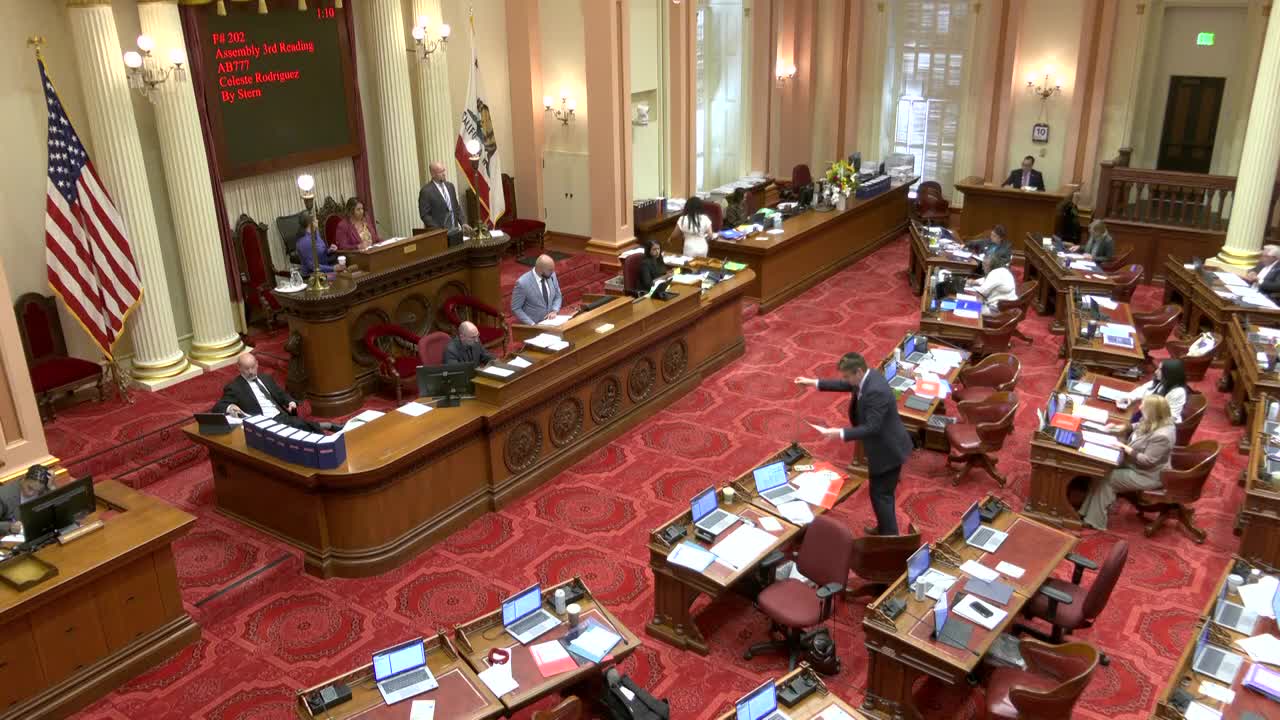 1MIN
Senate Floor
 1MIN
Assembly Floor
 6MIN
Assembly Standing Committee on Revenue and Taxation
 6SEC
Senate Standing Committee on Appropriations
Bill Author
Bill Co-Author(s):