SB 412: Home care aides.
- Session Year: 2025-2026
- House: Senate
- Latest Version Date: 2025-10-06
Current Status:
Passed
(2025-10-06: Chaptered by Secretary of State. Chapter 414, Statutes of 2025.)
Introduced
In Committee
Awaiting First Chamber Vote
Passed First Chamber
In Committee
Awaiting Second Chamber Vote
Passed Second Chamber
Enacted
Existing law, the Home Care Services Consumer Protection Act, requires a home care organization, as defined, to ensure that an affiliated home care aide completes specified training requirements prior to providing home care services, including annual training related to the aides clients rights and safety and how to provide for a clients daily living needs. A violation of the act is a misdemeanor.
This bill would, beginning on January 1, 2027, additionally require a home care organization to ensure that a home care aide completes, prior to providing home care and annually thereafter, training related to the special care needs of clients with dementia. Because the bill creates new crimes by expanding the act to include additional requirements for home care organizations, the bill would impose a state-mandated local program.
The California Constitution requires the state to reimburse local agencies and school districts for certain costs mandated by the state. Statutory provisions establish procedures for making that reimbursement.
This bill would provide that no reimbursement is required by this act for a specified reason.
Existing law, the Home Care Services Consumer Protection Act, requires a home care organization, as defined, to ensure that an affiliated home care aide completes specified training requirements prior to providing home care services, including annual training related to the aides clients rights and safety and how to provide for a clients daily living needs. A violation of the act is a misdemeanor.
This bill would would, beginning on January 1, 2027, additionally require a home care organization to ensure that a home care aide completes, prior to providing home care and annually thereafter, training related to the special care needs of clients with dementia. Because the bill creates new crimes by expanding the act to include additional requirements for home care organizations, the bill would impose a state-mandated local program.
The California Constitution requires the state to reimburse local agencies and school districts for certain costs mandated by the state. Statutory provisions establish procedures for making that reimbursement.
This bill would provide that no reimbursement is required by this act for a specified reason.
Existing law, the Home Care Services Consumer Protection Act, requires a home care organization, as defined, to ensure that an affiliated home care aide completes specified training requirements prior to providing home care services, including annual training related to the aides clients rights and safety and how to provide for a clients daily living needs. Existing law provides for the registration of unaffiliated home care aides, and conditions the registration renewal of an unaffiliated home care aide on compliance with specified requirements, including that the aide submits a registration renewal application form and pays a fee. A violation of the act is a misdemeanor.
This bill would additionally require a home care organization to ensure that a home care aide completes, prior to providing home care and annually thereafter, training related to the special care needs of clients with dementia. The bill would additionally require an unaffiliated home care aide to submit, as a condition of the registration renewal, a signed affidavit that the home care aide attended or viewed an online training video on caring for individuals with dementia. By requiring the signing of an affidavit, the bill would expand the crime of perjury, thereby imposing a state-mandated local program. Because the bill creates new crimes by expanding the act to include additional requirements for home care organizations, the bill would impose a state-mandated local program.
The California Constitution requires the state to reimburse local agencies and school districts for certain costs mandated by the state. Statutory provisions establish procedures for making that reimbursement.
This bill would provide that no reimbursement is required by this act for a specified reason.
Existing law, the Home Care Services Consumer Protection Act, requires a home care organization, as defined, to ensure that an affiliated home care aide completes specified training requirements prior to providing home care services, including annual training related to the aides clients rights and safety and how to provide for a clients daily living needs. Existing law provides for the registration of unaffiliated home care aides, and conditions the registration renewal of an unaffiliated home care aide on compliance with specified requirements, including that the aide submits a registration renewal application form and pays a fee.
This bill would additionally require a home care organization to ensure that a home care aide completes, prior to providing home care and annually thereafter, training related to the special care needs of clients with dementia. The bill would additionally require an unaffiliated home care aide to submit, as a condition of the registration renewal, a signed affidavit that the home care aide attended or viewed an online training video on caring for individuals with dementia. By requiring the signing of an affidavit, the bill would expand the crime of perjury, thereby imposing a state-mandated local program.
The California Constitution requires the state to reimburse local agencies and school districts for certain costs mandated by the state. Statutory provisions establish procedures for making that reimbursement.
This bill would provide that no reimbursement is required by this act for a specified reason.
(a)A licensee shall ensure that prior to providing home care services, an affiliated home care aide shall complete the training requirements specified in this section.
(b)An affiliated home care aide shall complete a minimum of five hours of entry-level training prior to presence with a client, as follows:
(1)Two hours of orientation training regarding their role as home care aide and the applicable terms of employment.
(2)Three hours of safety training, including basic safety precautions, emergency procedures, and infection control.
(c)In addition to the requirements in subdivision (b), an affiliated home care aide shall complete a minimum of five hours of annual training. The annual training shall relate to core competencies and be population specific, which shall include, but not be limited to, the following areas:
(1)Clients rights and safety.
(2)How to provide for, and respond to, a clients daily living needs.
(3)How to report, prevent, and detect abuse and neglect.
(4)How to assist a client with personal hygiene and other home care services.
(5)If transportation services are provided, how to safely transport a client.
(d)The entry-level training and annual training described in subdivisions (b) and (c) may be completed through an online training program.
(e)This section shall remain in effect only until January 1, 2027, and as of that date is repealed.
SEC. 2.Section 1796.44 is added to the Health and Safety Code, to read:1796.44.(a)A licensee shall ensure that prior to providing home care services, an affiliated home care aide shall complete the training requirements specified in this section.
(b)An affiliated home care aide shall complete a minimum of five hours of entry-level training prior to presence with a client, as follows:
(1)Two hours of orientation training regarding their role as home care aide and the applicable terms of employment.
(2)Three hours of safety training, including basic safety precautions, emergency procedures, and infection control.
(c)In addition to the requirements in subdivision (b), an affiliated home care aide shall complete a minimum of five hours of annual training. The annual training shall relate to core competencies and be population specific, which shall include, but not be limited to, the following areas:
(1)Clients rights and safety.
(2)How to provide for, and respond to, a clients daily living needs.
(3)How to report, prevent, and detect abuse and neglect.
(4)How to assist a client with personal hygiene and other home care services.
(5)If transportation services are provided, how to safely transport a client.
(6)The special care needs of clients with dementia.
(d)The entry-level training and annual training described in subdivisions (b) and (c) may be completed through an online training program.
(e)This section shall become operative on January 1, 2027.
SEC. 3.No reimbursement is required by this act pursuant to Section 6 of Article XIIIB of the California Constitution because the only costs that may be incurred by a local agency or school district will be incurred because this act creates a new crime or infraction, eliminates a crime or infraction, or changes the penalty for a crime or infraction, within the meaning of Section 17556 of the Government Code, or changes the definition of a crime within the meaning of Section 6 of Article XIIIB of the California Constitution.
(a)A licensee shall ensure that prior to providing home care services, an affiliated home care aide shall complete the training requirements specified in this section.
(b)An affiliated home care aide shall complete a minimum of five hours of entry-level training prior to presence with a client, as follows:
(1)Two hours of orientation training regarding their role as caregiver home care aide and the applicable terms of employment.
(2)Three hours of safety training, including basic safety precautions, emergency procedures, and infection control.
(c)In addition to the requirements in subdivision (b), an affiliated home care aide shall complete a minimum of five hours of annual training. The annual training shall relate to core competencies and be population specific, which shall include, but not be limited to, the following areas:
(1)Clients rights and safety.
(2)How to provide for, and respond to, a clients daily living needs.
(3)How to report, prevent, and detect abuse and neglect.
(4)How to assist a client with personal hygiene and other home care services.
(5)If transportation services are provided, how to safely transport a client.
(6)The special care needs of clients with dementia.(d)The entry-level training and annual training described in subdivisions (b) and (c) may be completed through an online training program.
(e)This section shall remain in effect only until January 1, 2027, and as of that date is repealed.
SEC. 2.Section 1796.44 is added to the Health and Safety Code, to read:1796.44.(a)A licensee shall ensure that prior to providing home care services, an affiliated home care aide shall complete the training requirements specified in this section.
(b)An affiliated home care aide shall complete a minimum of five hours of entry-level training prior to presence with a client, as follows:
(1)Two hours of orientation training regarding their role as home care aide and the applicable terms of employment.
(2)Three hours of safety training, including basic safety precautions, emergency procedures, and infection control.
(c)In addition to the requirements in subdivision (b), an affiliated home care aide shall complete a minimum of five hours of annual training. The annual training shall relate to core competencies and be population specific, which shall include, but not be limited to, the following areas:
(1)Clients rights and safety.
(2)How to provide for, and respond to, a clients daily living needs.
(3)How to report, prevent, and detect abuse and neglect.
(4)How to assist a client with personal hygiene and other home care services.
(5)If transportation services are provided, how to safely transport a client.
(6)The special care needs of clients with dementia.
(d)The entry-level training and annual training described in subdivisions (b) and (c) may be completed through an online training program.
(e)This section shall become operative on January 1, 2027.
SEC. 2.SEC. 3.No reimbursement is required by this act pursuant to Section 6 of Article XIIIB of the California Constitution because the only costs that may be incurred by a local agency or school district will be incurred because this act creates a new crime or infraction, eliminates a crime or infraction, or changes the penalty for a crime or infraction, within the meaning of Section 17556 of the Government Code, or changes the definition of a crime within the meaning of Section 6 of Article XIIIB of the California Constitution.
(a)A licensee shall ensure that prior to providing home care services, an affiliated home care aide shall complete the training requirements specified in this section.
(b)An affiliated home care aide shall complete a minimum of five hours of entry-level training prior to presence with a client, as follows:
(1)Two hours of orientation training regarding their role as caregiver and the applicable terms of employment.
(2)Three hours of safety training, including basic safety precautions, emergency procedures, and infection control.
(c)In addition to the requirements in subdivision (b), an affiliated home care aide shall complete a minimum of five hours of annual training. The annual training shall relate to core competencies and be population specific, which shall include, but not be limited to, the following areas:
(1)Clients rights and safety.
(2)How to provide for, and respond to, a clients daily living needs.
(3)How to report, prevent, and detect abuse and neglect.
(4)How to assist a client with personal hygiene and other home care services.
(5)If transportation services are provided, how to safely transport a client.
(6)The special care needs of clients with dementia.
(d)The entry-level training and annual training described in subdivisions (b) and (c) may be completed through an online training program.
SEC. 3.SEC. 2.No reimbursement is required by this act pursuant to Section 6 of Article XIIIB of the California Constitution because the only costs that may be incurred by a local agency or school district will be incurred because this act creates a new crime or infraction, eliminates a crime or infraction, or changes the penalty for a crime or infraction, within the meaning of Section 17556 of the Government Code, or changes the definition of a crime within the meaning of Section 6 of Article XIIIB of the California Constitution.
(a)To remain on the home care aide registry, a registered home care aide shall renew his or her their registration every two years.
(1)A registered home care aides registration shall expire every two years, on the anniversary date of the initial registration date. If the registration is not renewed on or prior to its expiration date, the registration shall be forfeited pursuant to subdivision (b) of Section 1796.26.
(2)To renew a registration, the registered home care aide shall, on or before the registration expiration date, request renewal by submitting to the department the registration renewal application form and paying the nonrefundable registration renewal application fee in the amount determined by the department.
(b)Renewal of a registered home care aides registration is conditioned on compliance with all of the following:
(1)Submitting a complete registration renewal application form and payment of the nonrefundable renewal fee, both of which shall be postmarked on or before the expiration of the registration.
(2)Continuing to satisfy the requirements set forth in this chapter.
(3)Cooperating with the department in the completion of the renewal process. Failure of the registered home care aide to cooperate shall result in the withdrawal of the registration renewal application by the department. For purposes of this section, failure to cooperate means that the information described in this chapter and in any rules and regulations promulgated under this chapter has not been provided, or has not been provided in the form requested by the department, or both.
(4)A signed affidavit that the home care aide attended or viewed an online training video on caring for individuals with dementia.
(c)(1)The department shall notify a registered home care aide in writing of his or her registration expiration date and the process of renewal.
(2)Written notification pursuant to this subdivision shall be mailed to the registered home care aides mailing address of record at least 60 days before the registration expiration date.
SEC. 2.Section 1796.44 of the Health and Safety Code is amended to read:1796.44.(a)A licensee shall ensure that prior to providing home care services, an affiliated home care aide shall complete the training requirements specified in this section.
(b)An affiliated home care aide shall complete a minimum of five hours of entry-level training prior to presence with a client, as follows:
(1)Two hours of orientation training regarding his or her their role as caregiver and the applicable terms of employment.
(2)Three hours of safety training, including basic safety precautions, emergency procedures, and infection control.
(c)In addition to the requirements in subdivision (b), an affiliated home care aide shall complete a minimum of five hours of annual training. The annual training shall relate to core competencies and be population specific, which shall include, but not be limited to, the following areas:
(1)Clients rights and safety.
(2)How to provide for, and respond to, a clients daily living needs.
(3)How to report, prevent, and detect abuse and neglect.
(4)How to assist a client with personal hygiene and other home care services.
(5)If transportation services are provided, how to safely transport a client.
(6)The special care needs of clients with dementia.
(d)The entry-level training and annual training described in subdivisions (b) and (c) may be completed through an online training program.
SEC. 3.No reimbursement is required by this act pursuant to Section 6 of Article XIIIB of the California Constitution because the only costs that may be incurred by a local agency or school district will be incurred because this act creates a new crime or infraction, eliminates a crime or infraction, or changes the penalty for a crime or infraction, within the meaning of Section 17556 of the Government Code, or changes the definition of a crime within the meaning of Section 6 of Article XIIIB of the California Constitution.
|
Date
|
Status
|
|---|---|
| Oct 6, 2025 | Chaptered by Secretary of State. Chapter 414, Statutes of 2025. |
| Oct 6, 2025 | Approved by the Governor. |
| Sep 9, 2025 | Enrolled and presented to the Governor at 2 p.m. |
| Sep 4, 2025 | Assembly amendments concurred in. (Ayes 39. Noes 0. Page 2510.) Ordered to engrossing and enrolling. |
| Aug 28, 2025 | In Senate. Concurrence in Assembly amendments pending. |
| Aug 28, 2025 | Read third time. Passed. (Ayes 76. Noes 0. Page 2768.) Ordered to the Senate. |
| Jul 3, 2025 | Read second time. Ordered to third reading. |
| Jul 2, 2025 | From committee: Do pass. (Ayes 14. Noes 0.) (July 2). |
| Jun 18, 2025 | Read second time and amended. Re-referred to Com. on APPR. |
| Jun 17, 2025 | From committee: Do pass as amended and re-refer to Com. on APPR. (Ayes 7. Noes 0.) (June 17). |
| May 19, 2025 | Referred to Com. on HUM. S. |
| May 8, 2025 | In Assembly. Read first time. Held at Desk. |
| May 8, 2025 | Read third time. Passed. (Ayes 36. Noes 0. Page 1050.) Ordered to the Assembly. |
| May 6, 2025 | Read second time. Ordered to consent calendar. |
| May 5, 2025 | From committee: Be ordered to second reading pursuant to Senate Rule 28.8 and ordered to consent calendar. |
| Apr 25, 2025 | Set for hearing May 5. |
| Apr 22, 2025 | From committee: Do pass and re-refer to Com. on APPR. with recommendation: To consent calendar. (Ayes 5. Noes 0. Page 812.) (April 21). Re-referred to Com. on APPR. |
| Apr 10, 2025 | From committee with author's amendments. Read second time and amended. Re-referred to Com. on HUMAN S. |
| Apr 4, 2025 | Set for hearing April 21. |
| Apr 2, 2025 | April 7 hearing postponed by committee. |
| Mar 13, 2025 | Set for hearing April 7. |
| Feb 26, 2025 | Referred to Com. on HUMAN S. |
| Feb 18, 2025 | From printer. May be acted upon on or after March 17. |
| Feb 14, 2025 | Introduced. Read first time. To Com. on RLS. for assignment. To print. |
|
Date
|
Description
|
Location
|
Votes
|
|
|---|---|---|---|---|
| Sep 4, 2025 | Unfinished Business SB412 Limón et al. Concurrence | Senate Floor |
Passed |
|
| Aug 28, 2025 | SB 412 Limón Senate Third Reading By Stefani | Assembly Floor |
Passed |
|
| Jul 2, 2025 | Do pass. | Assembly Standing Committee on Appropriations |
Passed |
|
| Jun 17, 2025 | Do pass as amended and be re-referred to the Committee on [Appropriations] | Assembly Standing Committee on Human Services |
Passed |
|
| May 8, 2025 | Consent Calendar 2nd SB412 Limón | Senate Floor |
Passed |
|
| Apr 21, 2025 | Do pass, but first be re-referred to the Committee on [Appropriations] with the recommendation: To Consent Calendar | Senate Standing Committee on Human Services |
Passed |
This list shows positions taken on this bill by organizations on the date displayed, which is linked to the original source.
Positions by individuals are not included.
|
Organization
|
Position
|
Date
|
|---|---|---|
| AARP | ** Support | |
| Alzheimer's Association (Source) | ** Support | |
| Alzheimer'S Association, State Policy Office | ** Support | |
| California Association For Health Services At Home | ** Support | |
| California Coalition on Family Caregiving | ** Support | |
| California Senior Legislature | ** Support | |
| Family Caregiver Alliance | ** Support | |
| Home Care Assocaition of America | ** Support | |
| Home Care Association Of America | ** Support | |
| LeadingAge California | ** Support | |
| Santa Barbara Women's Political Committee | ** Support |
SENATE RULES COMMITTEE Office of Senate Floor Analyses (916) 651-1520 Fax: (916) 327-4478 | SB 412 |
UNFINISHED BUSINESS
Bill No: SB 412
Author: Limón (D), et al.
Amended: 6/18/25
Vote: 21
SENATE HUMAN SERVICES COMMITTEE: 5-0, 4/21/25
AYES: Arreguín, Ochoa Bogh, Becker, Limón, Pérez
SENATE APPROPRIATIONS COMMITTEE: Senate Rule 28.8
SENATE FLOOR: 36-0, 5/8/25 (Consent)
AYES: Allen, Alvarado-Gil, Archuleta, Arreguín, Ashby, Becker, Blakespear, Cabaldon, Caballero, Cervantes, Choi, Cortese, Dahle, Durazo, Gonzalez, Grayson, Grove, Jones, Laird, Limón, McGuire, McNerney, Menjivar, Niello, Ochoa Bogh, Padilla, Pérez, Richardson, Seyarto, Smallwood-Cuevas, Stern, Strickland, Umberg, Wahab, Weber Pierson, Wiener
NO VOTE RECORDED: Hurtado, Reyes, Rubio, Valladares
ASSEMBLY FLOOR: 76-0, 8/28/25 - See last page for vote
SUBJECT: Home care aides
SOURCE: Alzheimer's Association, State Policy Office
DIGEST:
This bill requires affiliated home care aides to complete training in the special care needs of clients with dementia as part of their annual five hours of training requirement.
Assembly Amendments
of 6/18/25 make these requirements effective as of January 1, 2027.
ANALYSIS:
Existing law:
- Creates the Home Care Services Consumer Protection Act administered and enforced by the Department of Social Services (DSS). (Health and Safety Code Section (HSC) 1796.10 et seq.)
- Defines “affiliate home care aide” to mean an adult individual who is employed by a home care organization to provide home care services to a client and is listed on the home care registry. (HSC 1796.12(a))
- Defines “home care organization” to mean an adult individual or entity that arranges for home care services by an affiliated home care aide to a client and is licensed. (HSC 1796.12(j))
- Defines “home care services” as nonmedical services and assistance provided by a registered home care aide to a client who, due to advanced age or physical or mental disability cannot perform these services and uses such services to remain in his or her residence. (HSC 1796.12(n))
- Defines services that can be performed by a home care aide as including, but not limited to, the following: assisting with bathing, dressing, feeding, exercising, personal hygiene and grooming, transferring, ambulating, positioning, toileting and incontinence care, assisting with medication that the client self-administers, housekeeping, meal planning and preparation, laundry, transportation, correspondence, making telephone calls, shopping for personal care items or groceries, and companionship. (HSC 1796.12(n))
- Defines “independent home care aide” to mean an adult individual who is not employed by a home care organization but who is listed on the home care aide registry and is providing home care services through a direct agreement with a client. (HSC 1796.12(p))
- Defines “registered home care aide” to mean an affiliated home care aide or independent home care aide who is listed on the home care aide registry. (HSC 1796.12(o))
- Requires home care aides to renew their registration every two years to remain on the home care aide registry. (HSC 1796.31(a))
- Provides that affiliated home care aides shall complete a minimum of five hours of entry-level training prior to presence with a client. (HSC 1796.44)
- Requires affiliated home care aides to complete a minimum of five hours of annual training relating to core competencies and be population specific, including, but not limited to:
- Clients’ rights and safety.
- How to provide for, and response to, a client’s dialing living needs.
- How to report, prevent, and detect abuse and neglect.
- How to assist a client with personal hygiene and other home care services.
- If transportation services are provided, how to safely transport a client. (HSC 1796.44(c))
This bill requires affiliated home care aides to have training, as part of their annual five hour training requirements, in the special care needs of clients with dementia beginning January 1, 2027.
Background
Dementia. Dementia is a general term used to describe a variety of cognitive, functional, and behavioral symptoms that are caused by specific diseases. Alzheimer’s is the most common of the diseases, accounting for 60 to 80 percent of dementia cases. Cognitive decline alone is not always considered dementia; the dementia must be driven by an underlying progressive neurodegenerative disease. Dementia is associated with a decline in reasoning, memory, or other thinking skills. The National Institute of Health estimates that in California approximately 720,000 people have dementia. These numbers will likely rise as California’s population of those 60 and older grows larger each year. In California, by the year 2030, one in four Californians will be over the age of 60.[1] The Centers for Disease Control estimate 80 percent of adults with dementia receive their care in their home, increasing the need for caregivers with specialized training to their unique needs. Caring for those with dementia requires a special set of skills, taking into account that those with dementia often have trouble remembering things and can become agitated and anxious.
Home Care Aides. Home care aides assist elderly and disabled individuals with activities of daily living and fall into one of three categories – unaffiliated and unregistered, unaffiliated and registered, and affiliated and registered. Those that are unaffiliated and unregistered have no training requirements and can be hired by a private party to provide services. Aides that are unaffiliated and registered have passed a background check and completed a registration form for DSS.
Home care aides that are affiliated are always registered. The registration for affiliated home care aides has the additional benefit of the organization they are affiliated through receiving any updates to their background that may come up, whereas private parties hiring on their own will not receive such information. Affiliated and registered home care aides are also required to receive training. That training takes place at two points – before working with a client and annual training. The aides must complete at least five hours of training prior to working with a client; two hours regarding their role as caregiver and the terms of employment and three hours of safety training. In addition, aides must complete five hours of annual training on topics including but not limited to: clients’ rights and safety; how to provide for, and respond to, a client’s daily living needs; how to report, prevent, and detect abuse and neglect; how to assist a client with personal hygiene and other home are services; and if transportation services are provided, how to safely transport a client. This bill would add “special care needs of clients with dementia” to the topics the annual five hours of training must cover.
Master Plan on Aging. In January 2021, the Newsom Administration published its Master Plan for Aging, which is intended to be a ten-year blueprint for state government, local government, the private sector, and philanthropy to prepare the state for the coming demographic changes and “continue California’s leadership in aging, disability, and equity.” The Master Plan for Aging outlines five goals, 23 strategies, and over 100 initiatives. Goal two of the Master Plan, “Health Reimagined”, focuses on ensuring that older adults have access to the care and services needed to optimize health and quality of life and continue to live where they choose. The Master Plan notes that over half of older adults, especially women, will eventually need home care or adult day health care to assist with daily activities such as meal preparation, physical activity, and bathing. One of the key strategies outlined under “Health Reimagined” is “Bridging Health Care with Home”, including testing models of health care delivery that maximize access to services and avoid unnecessary institutionalization. Goal three of the Master Plan, “Inclusion and Equity, not Isolation”, focuses on opportunities for community engagement and protection from isolation. Home care aides help support these strategies outlined in the Master Plan by providing services that reduce isolation and allow older adults to receive care while remaining in their homes and communities. This desire to age in place (AIP) not only has benefits to the individual, but is also economically beneficial. In a four-year analysis of AIP, the total care costs for residents were thousands less than traditional care options. Costs for living and health care never approached the costs for nursing homes and assisted-living services. In addition, AIP residents had improved mental and physical health outcomes.[2] By insuring home care aides have training in dementia care, this bill will help those with dementia AIP.
Related/Prior Legislation
SB 639 (Limón, Chapter 336, Statutes of 2024) requires all general internists and family physicians, nurse practitioners, and physician assistants with a patient population where 25 percent of their patients are 65 years or older to complete at least 20 percent of their continuing medical education (CME) or continuing education (CE) requirements in the field of gerontology, the special care needs of patients with dementia, or the care of older patients.
AB 385 (Ta, 2023) would have required the California Department of Public Health to provide a public awareness campaign to educate health care providers, unpaid caregivers, family and friends who provide care to someone with Alzheimer’s disease or dementia. AB 385 was held in Assembly Appropriations Committee.
SB 861 (Limón, 2022) would have established the Dementia Care Navigator Grant Pilot Program under the California Department of Aging for the purpose of incentivizing local organizations to provide dementia care navigation training services, and would have required the Department of Aging to develop the pilot program in partnership with organizations with expertise using community health workers, promotores, and health navigators, and to award grants on a competitive basis, with priority given to organizations serving underserved communities. SB 861 was vetoed by the Governor.
AB 1684 (Voepel, 2022) would have required the California Department of Public Health to implement a public awareness campaign on Alzheimer's disease that includes education for unpaid caregivers, including family and friends who provide care to someone with Alzheimer's or dementia. AB 1684 was held in Senate Appropriations Committee.
AB 1217 (Lowenthal, Chapter 790, Statutes of 2013) enacts the Home Care Services Consumer Protection Act, which provides, on and after January 1, 2015, for the licensure and regulation of home care organizations by DSS, and the registration of home care aides.
FISCAL EFFECT: Appropriation: No Fiscal Com.: Yes Local: Yes
According to the Assembly Appropriations Committee:
The California Department of Social Services anticipates minor and absorbable costs.
SUPPORT: (Verified 8/28/25)
Alzheimer's Association (Source)
AARP
Alzheimer's Association, State Policy Office
California Association for Health Services At Home
California Coalition on Family Caregiving
California Senior Legislature
Family Caregiver Alliance
Home Care Assocaition of America
Leadingage California
Santa Barbara Women's Political Committee
OPPOSITION: (Verified 8/28/25)
None received
ASSEMBLY FLOOR: 8/28/25, 76-0
Ayes: Addis, Aguiar-Curry, Ahrens, Alanis, Arambula, Ávila Farías, Bains, Bauer-Kahan, Bennett, Boerner, Bonta, Bryan, Calderon, Caloza, Carrillo, Castillo, Chen, Connolly, Davies, DeMaio, Dixon, Elhawary, Ellis, Flora, Fong, Gabriel, Gallagher, Garcia, Gipson, Jeff Gonzalez, Mark González, Hadwick, Haney, Harabedian, Hart, Hoover, Irwin, Jackson, Kalra, Krell, Lackey, Lee, Lowenthal, Macedo, McKinnor, Muratsuchi, Nguyen, Ortega, Pacheco, Papan, Patel, Patterson, Pellerin, Petrie-Norris, Quirk-Silva, Ramos, Ransom, Celeste Rodriguez, Michelle Rodriguez, Rogers, Blanca Rubio, Sanchez, Schiavo, Schultz, Sharp-Collins, Solache, Soria, Stefani, Ta, Tangipa, Wallis, Ward, Wicks, Wilson, Zbur, Rivas
Noes:
No Vote Recorded: Alvarez, Berman, Valencia
Prepared by: Heather Hopkins / HUM. S. / (916) 651-1524
10/13/26 11:36:29
**** END ****
https://www.aging.ca.gov/download.ashx?lE0rcNUV0zZ4fIvtjh8hzg%3d%3d ↑
Science Daily - Aging in place preserves seniors' independence, reduces care costs, researchers find ↑
SENATE RULES COMMITTEE Office of Senate Floor Analyses (916) 651-1520 Fax: (916) 327-4478 | SB 412 |
UNFINISHED BUSINESS
Bill No: SB 412
Author: Limón (D), et al.
Amended: 6/18/25 in Assembly
Vote: 21
SENATE HUMAN SERVICES COMMITTEE: 5-0, 4/21/25
AYES: Arreguín, Ochoa Bogh, Becker, Limón, Pérez
SENATE APPROPRIATIONS COMMITTEE: Senate Rule 28.8
SENATE FLOOR: 36-0, 5/8/25 (Consent)
AYES: Allen, Alvarado-Gil, Archuleta, Arreguín, Ashby, Becker, Blakespear, Cabaldon, Caballero, Cervantes, Choi, Cortese, Dahle, Durazo, Gonzalez, Grayson, Grove, Jones, Laird, Limón, McGuire, McNerney, Menjivar, Niello, Ochoa Bogh, Padilla, Pérez, Richardson, Seyarto, Smallwood-Cuevas, Stern, Strickland, Umberg, Wahab, Weber Pierson, Wiener
NO VOTE RECORDED: Hurtado, Reyes, Rubio, Valladares
ASSEMBLY FLOOR: 76-0, 8/28/25 - See last page for vote
SUBJECT: Home care aides
SOURCE: Alzheimer's Association, State Policy Office
DIGEST:
This bill requires affiliated home care aides to complete training in the special care needs of clients with dementia as part of their annual five hours of training requirement.
Assembly Amendments
of 6/18/25 make these requirements effective as of January 1, 2027.
ANALYSIS:
Existing Law:
- Creates the Home Care Services Consumer Protection Act administered and enforced by the Department of Social Services (DSS). (Health abd Safety Code (HSC) 1796.10 et seq.)
- Defines “affiliate home care aide” to mean an adult individual who is employed by a home care organization to provide home care services to a client and is listed on the home care registry. (HSC 1796.12(a))
- Defines “home care organization” to mean an adult individual or entity that arranges for home care services by an affiliated home care aide to a client and is licensed. (HSC 1796.12(j))
- Defines “home care services” as nonmedical services and assistance provided by a registered home care aide to a client who, due to advanced age or physical or mental disability cannot perform these services and uses such services to remain in his or her residence. (HSC 1796.12(n))
- Defines services that can be performed by a home care aide as including, but not limited to, the following: assisting with bathing, dressing, feeding, exercising, personal hygiene and grooming, transferring, ambulating, positioning, toileting and incontinence care, assisting with medication that the client self-administers, housekeeping, meal planning and preparation, laundry, transportation, correspondence, making telephone calls, shopping for personal care items or groceries, and companionship. (HSC 1796.12(n))
- Defines “independent home care aide” to mean an adult individual who is not employed by a home care organization but who is listed on the home care aide registry and is providing home care services through a direct agreement with a client. (HSC 1796.12(p))
- Defines “registered home care aide” to mean an affiliated home care aide or independent home care aide who is listed on the home care aide registry. (HSC 1796.12(o))
- Requires home care aides to renew their registration every two years to remain on the home care aide registry. (HSC 1796.31(a))
- Provides that affiliated home care aides shall complete a minimum of five hours of entry-level training prior to presence with a client. (HSC 1796.44)
- Requires affiliated home care aides to complete a minimum of five hours of annual training relating to core competencies and be population specific, including, but not limited to:
- Clients’ rights and safety.
- How to provide for, and response to, a client’s dialing living needs.
- How to report, prevent, and detect abuse and neglect.
- How to assist a client with personal hygiene and other home care services.
- If transportation services are provided, how to safely transport a client. (HSC 1796.44(c))
This bill requires affiliated home care aides to have training, as part of their annual five hour training requirements, in the special care needs of clients with dementia beginning January 1, 2027.
Background
Dementia. Dementia is a general term used to describe a variety of cognitive, functional, and behavioral symptoms that are caused by specific diseases. Alzheimer’s is the most common of the diseases, accounting for 60 to 80 percent of dementia cases. Cognitive decline alone is not always considered dementia; the dementia must be driven by an underlying progressive neurodegenerative disease. Dementia is associated with a decline in reasoning, memory, or other thinking skills. The National Institute of Health estimates that in California approximately 720,000 people have dementia. These numbers will likely rise as California’s population of those 60 and older grows larger each year. In California, by the year 2030, one in four Californians will be over the age of 60.[1] The Centers for Disease Control estimate 80 percent of adults with dementia receive their care in their home, increasing the need for caregivers with specialized training to their unique needs. Caring for those with dementia requires a special set of skills, taking into account that those with dementia often have trouble remembering things and can become agitated and anxious.
Home Care Aides. Home care aides assist elderly and disabled individuals with activities of daily living and fall into one of three categories – unaffiliated and unregistered, unaffiliated and registered, and affiliated and registered. Those that are unaffiliated and unregistered have no training requirements and can be hired by a private party to provide services. Aides that are unaffiliated and registered have passed a background check and completed a registration form for DSS.
Home care aides that are affiliated are always registered. The registration for affiliated home care aides has the additional benefit of the organization they are affiliated through receiving any updates to their background that may come up, whereas private parties hiring on their own will not receive such information. Affiliated and registered home care aides are also required to receive training. That training takes place at two points – before working with a client and annual training. The aides must complete at least five hours of training prior to working with a client; two hours regarding their role as caregiver and the terms of employment and three hours of safety training. In addition, aides must complete five hours of annual training on topics including but not limited to: clients’ rights and safety; how to provide for, and respond to, a client’s daily living needs; how to report, prevent, and detect abuse and neglect; how to assist a client with personal hygiene and other home are services; and if transportation services are provided, how to safely transport a client. This bill would add “special care needs of clients with dementia” to the topics the annual five hours of training must cover.
Master Plan on Aging. In January 2021, the Newsom Administration published its Master Plan for Aging, which is intended to be a ten-year blueprint for state government, local government, the private sector, and philanthropy to prepare the state for the coming demographic changes and “continue California’s leadership in aging, disability, and equity.” The Master Plan for Aging outlines five goals, 23 strategies, and over 100 initiatives. Goal two of the Master Plan, “Health Reimagined”, focuses on ensuring that older adults have access to the care and services needed to optimize health and quality of life and continue to live where they choose. The Master Plan notes that over half of older adults, especially women, will eventually need home care or adult day health care to assist with daily activities such as meal preparation, physical activity, and bathing. One of the key strategies outlined under “Health Reimagined” is “Bridging Health Care with Home”, including testing models of health care delivery that maximize access to services and avoid unnecessary institutionalization. Goal three of the Master Plan, “Inclusion and Equity, not Isolation”, focuses on opportunities for community engagement and protection from isolation. Home care aides help support these strategies outlined in the Master Plan by providing services that reduce isolation and allow older adults to receive care while remaining in their homes and communities. This desire to age in place (AIP) not only has benefits to the individual, but is also economically beneficial. In a four-year analysis of AIP, the total care costs for residents were thousands less than traditional care options. Costs for living and health care never approached the costs for nursing homes and assisted-living services. In addition, AIP residents had improved mental and physical health outcomes.[2] By insuring home care aides have training in dementia care, this bill will help those with dementia AIP.
Related/Prior Legislation
SB 639 (Limón, Chapter 336, Statutes of 2024) requires all general internists and family physicians, nurse practitioners, and physician assistants with a patient population where 25 percent of their patients are 65 years or older to complete at least 20 percent of their continuing medical education (CME) or continuing education (CE) requirements in the field of gerontology, the special care needs of patients with dementia, or the care of older patients.
AB 385 (Ta, 2023) would have required the California Department of Public Health to provide a public awareness campaign to educate health care providers, unpaid caregivers, family and friends who provide care to someone with Alzheimer’s disease or dementia. AB 385 was held in Assembly Appropriations Committee.
SB 861 (Limón, 2022) would have established the Dementia Care Navigator Grant Pilot Program under the California Department of Aging for the purpose of incentivizing local organizations to provide dementia care navigation training services, and would have required the Department of Aging to develop the pilot program in partnership with organizations with expertise using community health workers, promotores, and health navigators, and to award grants on a competitive basis, with priority given to organizations serving underserved communities. SB 861 was vetoed by the Governor.
AB 1684 (Voepel, 2022) would have required the California Department of Public Health to implement a public awareness campaign on Alzheimer's disease that includes education for unpaid caregivers, including family and friends who provide care to someone with Alzheimer's or dementia. AB 1684 was held in Senate Appropriations Committee.
AB 1217 (Lowenthal, Chapter 790, Statutes of 2013) enacts the Home Care Services Consumer Protection Act, which provides, on and after January 1, 2015, for the licensure and regulation of home care organizations by DSS, and the registration of home care aides.
FISCAL EFFECT: Appropriation: No Fiscal Com.: Yes Local: Yes
According to the Assembly Appropriations Committee:
The California Department of Social Services anticipates minor and absorbable costs.
SUPPORT: (Verified 8/28/25)
Alzheimer's Association (Source)
AARP
Alzheimer's Association, State Policy Office
California Association for Health Services At Home
California Coalition on Family Caregiving
California Senior Legislature
Family Caregiver Alliance
Home Care Assocaition of America
Leadingage California
Santa Barbara Women's Political Committee
OPPOSITION: (Verified 8/28/25)
None received
Prepared by: Heather Hopkins / HUMAN S. / (916) 651-1524
8/28/25 16:50:06
**** END ****
https://www.aging.ca.gov/download.ashx?lE0rcNUV0zZ4fIvtjh8hzg%3d%3d ↑
Science Daily - Aging in place preserves seniors' independence, reduces care costs, researchers find ↑
Date of Hearing: June 17, 2025
ASSEMBLY COMMITTEE ON HUMAN SERVICES
Alex Lee, Chair
SBPCA Bill Id:SB 412
Author:(Limón) – As Amended Ver:April 10, 2025
SENATE VOTE: 36-0
SUBJECT: Home care aides
SUMMARY: Requires home care organizations to ensure an affiliated home care aide completes annual training on the special care needs of clients with dementia.
EXISTING LAW:
- Establishes the Home Care Services Consumer Protection Act. (Health and Safety Code [HSC] §§1796.10 - 1796.70)
- Requires home care organizations to ensure, prior to providing home care services, that an affiliated home care aide complete a minimum of five hours of entry level training as follows:
- Two hours of orientation training regarding his or her role as caregiver and the applicable terms of employment; and,
- Three hours of safety training, including basic safety precautions, emergency procedures, and infection control. (HSC § 1796.44(b))
- Requires, annually, affiliated home care aides to complete a minimum of five hours of population-specific training on core competencies, in the following subjects:
- Clients’ rights and safety;
- How to provide for, and respond to, a client’s daily living needs;
- How to report, prevent, and detect abuse and neglect;
- How to assist a client with personal hygiene and other home care services; and,
- If transportation services are provided, how to safely transport a client. (HSC § 1796.44(c))
FISCAL EFFECT: According to the Senate Appropriations Committee, pursuant to Senate Rule 28.8, the current version of this bill would result in negligible state costs.
COMMENTS:
Background: Home Care Services Consumer Protection Act. Home care refers to a range of nonmedical services provided to individuals in their own homes to help them manage their health, personal needs, and activities of daily living. Home care organizations are prohibited from arranging medical services for a client, and registered home care aides are not authorized to provide medical services to a client. The goal of home care is to support individuals who may have chronic illnesses, disabilities, or are recovering from surgeries or medical procedures, allowing them to remain in the comfort of their own home rather than in a hospital or nursing facility. Home care services can be short-term or long-term, depending on the needs of the individual. The types of services provided by a home care aide employed by a home care organization are nonmedical and include the following:
- Assistance with daily living activities such as bathing, dressing, grooming, and eating.
- Help with housekeeping tasks like cleaning, cooking, and laundry.
- Support with mobility and companionship.
After several attempts to require a licensing scheme for home care organizations, AB 1217 (Lowenthal), Chapter 790, Statutes of 2013, enacted the Home Care Services Consumer Protection Act which requires home care organizations to be licensed and creates a public online registry for home care aides who have been background checked. The California Department of Social Services (CDSS) is responsible for the licensure and registry compliance.
The law provides for numerous exemptions to licensure and registry. Exemptions include, but are not limited to: home health agencies, hospices, health facilities, In-Home Supportive Services providers, an organization vendored or contracted through a regional center or the Department of Developmental Services (DDS) to provide services and supports for persons with developmental disabilities when funding for those services is provided through DDS and for more than 50% of the recipients of the home care services, independent home care aides, nonrelative extended family members, clinics, alcoholism or drug recovery facilities, and foster homes. The organizations listed are not precluded from voluntarily becoming licensed. Similarly, individuals who provide services through the listed exempt organizations are still permitted to be listed on the registry on a voluntary basis. Those exempt are not required to complete initial or annual training.
Under the Act, licensed home care organizations are responsible for developing and administering the required annual training for affiliated home care aides. This training covers core competencies such as clients' rights, safety, abuse prevention, personal hygiene assistance, and emergency procedures, and must be completed prior to an aide’s presence with a client. In addition, home care aides are required to complete a minimum of five hours of annual training on specified core competencies which may be completed though an online training program. The current topics that are required to be included in the annual training include a client’s rights and safety, how to provide for, and respond to a client’s daily living needs, how to report, prevent, and detect abuse and neglect, how to assist a client with personal hygiene and other home care services, and how to safely transport a client if needed.
This bill would add the special care needs of clients with dementia to the existing annual five hour competency training for home care aides.
Caregiving for Those with Dementia. Dementia is a symptom that refers to a decline in memory, thinking, and reasoning skills. The World Health Organization describes dementia as a “syndrome that can be caused by a number of diseases which over time destroy nerve cells and damage the brain, typically leading to deterioration in cognitive function (i.e. the ability to process thought) beyond what might be expected from the usual consequences of biological ageing.” Alzheimer’s disease is the most common disease that causes dementia. There is no cure for dementia; however, to maintain quality of life, the World Health Organization recommends being physically active and taking part in activities and social interactions that stimulate the brain and maintain daily function. Those living with dementia typically need help with self-care tasks, personal safety, and getting proper nutrition.
Author’s Statement: According to the Author, “[This bill] better prepares home care aides to handle the challenges with care-giving for an individual with Alzheimer’s disease. Providing training will build a baseline understanding of Alzheimer’s disease that can improve the care of the client, reduce caregiver burden, and provide peace of mind for families.”
Equity Implications: According to The World Health Organization, “Women are disproportionately affected by dementia, both directly and indirectly. Women experience higher disability-adjusted life years and mortality due to dementia, but also provide 70% of care hours for people living with dementia.” In addition, because home care aides are not currently required to receive dementia training, it can lead to inconsistent or suboptimal care for patients living with dementia. Often, dementia patients require structured routines to mitigate the anxiety and frustration they experience as well as simplified communication, secure spaces to prevent wandering, and different types of engagement and stimulation to improve cognitive function. Adding training requirements for registered health care aides may increase the quality of care for clients with dementia.
Policy Considerations: This bill will take effect on January 1, 2026, if signed into law, which would require the new training component to have been completed by that date.
Should this bill move forward, the Author may wish to consider delaying the implementation of this bill in order to provide licensed home care organizations sufficient time to develop the new training.
Proposed Committee Amendments: The Committee proposes amendments to address the policy consideration stated above to do the following:
- Delaying implementation until January 1, 2027
RELATED AND PRIOR LEGISLATION:
SB 639 (Limón), Chapter 336, Statutes of 2024, required all general internists and family physicians, nurse practitioners, and physician assistants with a patient population where 25% of their patients are 65 years of age or older to complete at least 20% of their continuing medical education or continuing education requirements in the field of gerontology, the special care needs of patients with dementia, or the care of older patients.
SB 861 (Limón) of 2022, would have established the Dementia Care Navigator Grant Pilot Program under the California Department of Aging for the purpose of incentivizing local organizations to provide dementia care navigation training services, and would have required the Department of Aging to develop the pilot program in partnership with organizations with expertise using community health workers, promotores, and health navigators, and to award grants on a competitive basis, with priority given to organizations serving underserved communities. SB 861 was vetoed by Governor Newsom.
AB 1217 (Lowenthal), Chapter 790, Statutes of 2013, created the Home Care Services Consumer Protection Act, which provided, on and after January 1, 2015, for the licensure and regulation of home care organizations by CDSS and the registration of home care aides.
AB 322 (Yamada) of 2013, would have established the Home Care Services Act of 2013 to license and regulate home care organizations providing services for the elderly, frail, and persons with disabilities. AB 322 was held on the Assembly Committee on Appropriations suspense file.
SB 411 (Price) of 2011, would have established the Home Care Services Act of 2011, which would have required the Department of Public Health to license and regulate home care organizations. SB 411 was vetoed by Governor Brown.
AB 899 (Yamada) of 2011, would have established the Home Care Services Act of 2013 to license and regulate home care organizations providing services for the elderly, frail, and persons with disabilities. AB 899 was held on the Assembly Committee on Appropriations suspense file.
AB 853 (Jones) of 2007, would have established the Home Care Services Act to license and regulate home care services for the elderly, frail, and persons with disabilities. AB 853 was held on the Assembly Committee on Appropriations suspense file.
REGISTERED SUPPORT / OPPOSITION:
Support
Alzheimer's Association, State Policy Office (Sponsor)
AARP
Alzheimer's Association
Alzheimer's Greater Los Angeles
Alzheimer's Orange County
Alzheimer's San Diego
California Association for Health Services at Home
California Coalition on Family Caregiving
Home Care Association of America
Opposition
None on file.
Analysis Prepared by: Alexandria Smith / HUM. S. / (916) 319-2089
SENATE RULES COMMITTEE Office of Senate Floor Analyses (916) 651-1520 Fax: (916) 327-4478 | SB 412 |
CONSENT
Bill No: SB 412
Author: Limón (D)
Amended: 4/10/25
Vote: 21
SENATE HUMAN SERVICES COMMITTEE: 5-0, 4/21/25
AYES: Arreguín, Ochoa Bogh, Becker, Limón, Pérez
SENATE APPROPRIATIONS COMMITTEE: Senate Rule 28.8
SUBJECT: Home care aides
SOURCE: Alzheimer’s Association
DIGEST:
This bill requires affiliated home care aides to complete training in the special care needs of clients with dementia as part of their annual five hours of training requirement.
ANALYSIS:
Existing Law:
- Creates the Home Care Services Consumer Protection Act administered and enforced by the Department of Social Services (DSS). (Health and Safety Code (HSC) 1796.10 et seq.)
- Defines “affiliate home care aide” to mean an adult individual who is employed by a home care organization to provide home care services to a client and is listed on the home care registry. (HSC 1796.12(a))
- Defines “home care organization” to mean an adult individual or entity that arranges for home care services by an affiliated home care aide to a client and is licensed. (HSC 1796.12(j))
- Defines “home care services” as nonmedical services and assistance provided by a registered home care aide to a client who, due to advanced age or physical or mental disability cannot perform these services and uses such services to remain in his or her residence. (HSC 1796.12(n))
- Defines services that can be performed by a home care aide as including, but not limited to, the following: assisting with bathing, dressing, feeding, exercising, personal hygiene and grooming, transferring, ambulating, positioning, toileting and incontinence care, assisting with medication that the client self-administers, housekeeping, meal planning and preparation, laundry, transportation, correspondence, making telephone calls, shopping for personal care items or groceries, and companionship. (HSC 1796.12(n))
- Defines “independent home care aide” to mean an adult individual who is not employed by a home care organization but who is listed on the home care aide registry and is providing home care services through a direct agreement with a client. (HSC 1796.12(p))
- Defines “registered home care aide” to mean an affiliated home care aide or independent home care aide who is listed on the home care aide registry. (HSC 1796.12(o))
- Requires home care aides to renew their registration every two years to remain on the home care aide registry. (HSC 1796.31(a))
- Provides that affiliated home care aides shall complete a minimum of five hours of entry-level training prior to presence with a client. (HSC 1796.44)
- Requires affiliated home care aides to complete a minimum of five hours of annual training relating to core competencies and be population specific, including, but not limited to:
- Clients’ rights and safety.
- How to provide for, and response to, a client’s dialing living needs.
- How to report, prevent, and detect abuse and neglect.
- How to assist a client with personal hygiene and other home care services.
- If transportation services are provided, how to safely transport a client. (HSC 1796.44(c))
This bill requires affiliated home care aides to have training, as part of their annual five hour training requirements, in the special care needs of clients with dementia.
Comments
According to the author. “SB 412 better prepares home care aides to handle the challenges with caregiving for an individual with Alzheimer’s disease. Providing training will build a baseline understanding of Alzheimer’s disease that can improve the care of the client, reduce caregiver burden, and provide peace of mind for families.”
Dementia. Dementia is a general term used to describe a variety of cognitive, functional, and behavioral symptoms that are caused by specific diseases. Alzheimer’s is the most common of the diseases, accounting for 60-80% of dementia cases. Cognitive decline alone is not always considered dementia; the dementia must be driven by an underlying progressive neurodegenerative disease. Dementia is associated with a decline in reasoning, memory, or other thinking skills. The National Institute of Health estimates that in California approximately 720,000 people have dementia. These numbers will likely rise as California’s population of those 60 and older grows larger each year. In California, by the year 2030, one in four Californians will be over the age of 60.[1] The Centers for Disease Control estimate 80% of adults with dementia receive their care in their home, increasing the need for caregivers with specialized training to their unique needs.
Caring for those with dementia requires a special set of skills, taking into account that those with dementia often have trouble remembering things and can become agitated and anxious. The National Institute on Aging outlines a number of suggestions[2] to help caregivers of people with dementia including:
- Try to keep a routine – eating, bathing and dressing at the same time each day.
- Be gentle and respectful. Tell the person what you are going to do, step by step while you help them bathe or get dressed.
- Serve meals in a consistent, familiar place and give the person enough time to eat.
- Build quiet times into the day, along with activities.
- Keep well-loved objects and photographs around the house to help the person feel more secure.
- Remind the person who you are if he or she doesn’t remember, but try not to say, “Don’t you remember?”
- Try distracting the person with an activity, such as a familiar book or photo album, if you are having trouble communicating with words.
- Insert safety plugs into unused electrical outlets and consider safety latches on cabinet doors.
- Clear away unused items and remove small rugs, electrical cords, and other items the person may trip over.
- Make sure all rooms and outdoor areas the person visits have good lighting.
- Remove curtains and rugs with busy patterns that may confuse the person.
Home Care Aides. Home care aides assist elderly and disabled individuals with activities of daily living and fall into one of three categories – unaffiliated and unregistered, unaffiliated and registered, and affiliated and registered. Those that are unaffiliated and unregistered have no training requirements and can be hired by a private party to provide services. Aides that are unaffiliated and registered have passed a background check and completed a registration form for DSS.
Home care aides that are affiliated are always registered. The registration for affiliated home care aides has the additional benefit of the organization they are affiliated through receiving any updates to their background that may come up, whereas private parties hiring on their own will not receive such information. Affiliated and registered home care aides are also required to receive training. That training takes place at two points – before working with a client and annual training. The aides must complete at least five hours of training prior to working with a client; two hours regarding their role as caregiver and the terms of employment and three hours of safety training. In addition, aides must complete five hours of annual training on topics including but not limited to: clients’ rights and safety; how to provide for, and respond to, a client’s daily living needs; how to report, prevent, and detect abuse and neglect; how to assist a client with personal hygiene and other home are services; and if transportation services are provided, how to safely transport a client. This bill would add “special care needs of clients with dementia” to the topics the annual five hours of training must cover.
Master Plan on Aging. In January 2021, the Newsom Administration published its Master Plan for Aging, which is intended to be a ten-year blueprint for state government, local government, the private sector, and philanthropy to prepare the state for the coming demographic changes and “continue California’s leadership in aging, disability, and equity.” The Master Plan for Aging outlines five goals, 23 strategies, and over 100 initiatives. Goal two of the Master Plan, “Health Reimagined”, focuses on ensuring that older adults have access to the care and services needed to optimize health and quality of life and continue to live where they choose. The Master Plan notes that over half of older adults, especially women, will eventually need home care or adult day health care to assist with daily activities such as meal preparation, physical activity, and bathing. One of the key strategies outlined under “Health Reimagined” is “Bridging Health Care with Home”, including testing models of health care delivery that maximize access to services and avoid unnecessary institutionalization. Goal three of the Master Plan, “Inclusion and Equity, not Isolation”, focuses on opportunities for community engagement and protection from isolation. Home care aides help support these strategies outlined in the Master Plan by providing services that reduce isolation and allow older adults to receive care while remaining in their homes and communities. This desire to age in place (AIP) not only has benefits to the individual, but is also economically beneficial. In a four-year analysis of AIP, the total care costs for residents were thousands less than traditional care options. Costs for living and health care never approached the costs for nursing homes and assisted-living services. In addition, AIP residents had improved mental and physical health outcomes.[3] By insuring home care aides have training in dementia care, this bill will help those with dementia AIP.
Related/Prior Legislation:
SB 639 (Limón, Chapter 336, Statutes of 2024) requires all general internists and family physicians, nurse practitioners, and physician assistants with a patient population where 25% of their patients are 65 years or older to complete at least 20% of their continuing medical education or continuing education requirements in the field of gerontology, the special care needs of patients with dementia, or the care of older patients.
AB 385 (Ta) of 2023 would have required the California Department of Public Health to provide a public awareness campaign to educate health care providers, unpaid caregivers, family and friends who provide care to someone with Alzheimer’s disease or dementia. AB 385 was held in Assembly Appropriations Committee.
SB 861 (Limón) of 2022 would have established the Dementia Care Navigator Grant Pilot Program under the California Department of Aging for the purpose of incentivizing local organizations to provide dementia care navigation training services, and would have required the Department of Aging to develop the pilot program in partnership with organizations with expertise using community health workers, promotores, and health navigators, and to award grants on a competitive basis, with priority given to organizations serving underserved communities. SB 861 was vetoed by the Governor.
AB 1684 (Voepel) of 2022 would have required the California Department of Public Health to implement a public awareness campaign on Alzheimer's disease that includes education for unpaid caregivers, including family and friends who provide care to someone with Alzheimer's or dementia. AB 1684 was held in Senate Appropriations Committee.
AB 1217 (Lowenthal, Chapter 790, Statutes of 2013) enacts the Home Care Services Consumer Protection Act, which provides, on and after January 1, 2015, for the licensure and regulation of home care organizations by DSS, and the registration of home care aides.
FISCAL EFFECT: Appropriation: No Fiscal Com.: Yes Local: Yes
SUPPORT: (Verified 5/5/25)
Alzheimer's Association (Source)
AARP
California Association for Health Services At Home
California Coalition on Family Caregiving
California Senior Legislature
Family Caregiver Alliance
Home Care Association of America
Leadingage California
Santa Barbara Women's Political Committee
OPPOSITION: (Verified 5/5/25)
None received
Prepared by: Heather Hopkins / HUMAN S. / (916) 651-1524
5/7/25 16:02:18
**** END ****
https://www.aging.ca.gov/download.ashx?lE0rcNUV0zZ4fIvtjh8hzg%3d%3d ↑
https://www.alzheimers.gov/life-with-dementia/tips-caregivers ↑
Science Daily - Aging in place preserves seniors' independence, reduces care costs, researchers find ↑
SENATE COMMITTEE ON HUMAN SERVICES
Senator Arreguín, Chair
2025 - 2026 Regular
Bill No: | SB 412 | ||
Author: | Limón | ||
Version: | April 10, 2025 | Hearing Date: | April 21, 2025 |
Urgency: | No | Fiscal: | Yes |
Consultant: | Heather Hopkins | ||
Subject: Home care aides
SUMMARY
This bill requires affiliated home care aides to complete training in the special care needs of clients with dementia as part of their annual five hours of training requirement.
ABSTRACT
Existing Law:
- Creates the Home Care Services Consumer Protection Act administered and enforced by the Department of Social Services (DSS). (HSC 1796.10 et seq.)
- Defines “affiliate home care aide” to mean an adult individual who is employed by a home care organization to provide home care services to a client and is listed on the home care registry. (HSC 1796.12(a))
- Defines “home care organization” to mean an adult individual or entity that arranges for home care services by an affiliated home care aide to a client and is licensed. (HSC 1796.12(j))
- Defines “home care services” as nonmedical services and assistance provided by a registered home care aide to a client who, due to advanced age or physical or mental disability cannot perform these services and uses such services to remain in his or her residence. (HSC 1796.12(n))
- Defines services that can be performed by a home care aide as including, but not limited to, the following: assisting with bathing, dressing, feeding, exercising, personal hygiene and grooming, transferring, ambulating, positioning, toileting and incontinence care, assisting with medication that the client self-administers, housekeeping, meal planning and preparation, laundry, transportation, correspondence, making telephone calls, shopping for personal care items or groceries, and companionship. (HSC 1796.12(n))
- Defines “independent home care aide” to mean an adult individual who is not employed by a home care organization but who is listed on the home care aide registry and is providing home care services through a direct agreement with a client. (HSC 1796.12(p))
- Defines “registered home care aide” to mean an affiliated home care aide or independent home care aide who is listed on the home care aide registry. (HSC 1796.12(o))
- Requires home care aides to renew their registration every two years to remain on the home care aide registry. (HSC 1796.31(a))
- Provides that affiliated home care aides shall complete a minimum of five hours of entry-level training prior to presence with a client. (HSC 1796.44)
- Requires affiliated home care aides to complete a minimum of five hours of annual training relating to core competencies and be population specific, including, but not limited to:
- Clients’ rights and safety.
- How to provide for, and response to, a client’s dialing living needs.
- How to report, prevent, and detect abuse and neglect.
- How to assist a client with personal hygiene and other home care services.
- If transportation services are provided, how to safely transport a client. (HSC 1796.44(c))
This Bill:
- Requires affiliated home care aides to have training, as part of their annual five hour training requirements, in the special care needs of clients with dementia.
FISCAL IMPACT
This bill has not yet been analyzed by a fiscal committee.
BACKGROUND AND DISCUSSION
Purpose of the Bill:
According to the author, “SB 412 better prepares home care aides to handle the challenges with caregiving for an individual with Alzheimer’s disease. Providing training will build a baseline understanding of Alzheimer’s disease that can improve the care of the client, reduce caregiver burden, and provide peace of mind for families.”
Dementia
Dementia is a general term used to describe a variety of cognitive, functional, and behavioral symptoms that are caused by specific diseases. Alzheimer’s is the most common of the diseases, accounting for 60 to 80 percent of dementia cases. Cognitive decline alone is not always considered dementia; the dementia must be driven by an underlying progressive neurodegenerative disease. Dementia is associated with a decline in reasoning, memory, or other thinking skills. The National Institute of Health estimates that in California approximately 720,000 people have dementia. These numbers will likely rise as California’s population of those 60 and older grows larger each year. In California, by the year 2030, one in four Californians will be over the age of 60.[1] The Centers for Disease Control estimate 80 percent of adults with dementia receive their care in their home, increasing the need for caregivers with specialized training to their unique needs.
Caring for those with dementia requires a special set of skills, taking into account that those with dementia often have trouble remembering things and can become agitated and anxious. The National Institute on Aging outlines a number of suggestions[2] to help caregivers of people with dementia including:
- Try to keep a routine – eating, bathing and dressing at the same time each day.
- Be gentle and respectful. Tell the person what you are going to do, step by step while you help them bathe or get dressed.
- Serve meals in a consistent, familiar place and give the person enough time to eat.
- Build quiet times into the day, along with activities.
- Keep well-loved objects and photographs around the house to help the person feel more secure.
- Remind the person who you are if he or she doesn’t remember, but try not to say, “Don’t you remember?”
- Try distracting the person with an activity, such as a familiar book or photo album, if you are having trouble communicating with words.
- Insert safety plugs into unused electrical outlets and consider safety latches on cabinet doors.
- Clear away unused items and remove small rugs, electrical cords, and other items the person may trip over.
- Make sure all rooms and outdoor areas the person visits have good lighting.
- Remove curtains and rugs with busy patterns that may confuse the person.
Home Care Aides
Home care aides assist elderly and disabled individuals with activities of daily living and fall into one of three categories – unaffiliated and unregistered, unaffiliated and registered, and affiliated and registered. Those that are unaffiliated and unregistered have no training requirements and can be hired by a private party to provide services. Aides that are unaffiliated and registered have passed a background check and completed a registration form for DSS.
Home care aides that are affiliated are always registered. The registration for affiliated home care aides has the additional benefit of the organization they are affiliated through receiving any updates to their background that may come up, whereas private parties hiring on their own will not receive such information. Affiliated and registered home care aides are also required to receive training. That training takes place at two points – before working with a client and annual training. The aides must complete at least five hours of training prior to working with a client; two hours regarding their role as caregiver and the terms of employment and three hours of safety training. In addition, aides must complete five hours of annual training on topics including but not limited to: clients’ rights and safety; how to provide for, and respond to, a client’s daily living needs; how to report, prevent, and detect abuse and neglect; how to assist a client with personal hygiene and other home are services; and if transportation services are provided, how to safely transport a client. This bill would add “special care needs of clients with dementia” to the topics the annual five hours of training must cover.
Master Plan on Aging
In January 2021, the Newsom Administration published its Master Plan for Aging, which is intended to be a ten-year blueprint for state government, local government, the private sector, and philanthropy to prepare the state for the coming demographic changes and “continue California’s leadership in aging, disability, and equity.” The Master Plan for Aging outlines five goals, 23 strategies, and over 100 initiatives. Goal two of the Master Plan, “Health Reimagined”, focuses on ensuring that older adults have access to the care and services needed to optimize health and quality of life and continue to live where they choose. The Master Plan notes that over half of older adults, especially women, will eventually need home care or adult day health care to assist with daily activities such as meal preparation, physical activity, and bathing. One of the key strategies outlined under “Health Reimagined” is “Bridging Health Care with Home”, including testing models of health care delivery that maximize access to services and avoid unnecessary institutionalization. Goal three of the Master Plan, “Inclusion and Equity, not Isolation”, focuses on opportunities for community engagement and protection from isolation. Home care aides help support these strategies outlined in the Master Plan by providing services that reduce isolation and allow older adults to receive care while remaining in their homes and communities. This desire to age in place (AIP) not only has benefits to the individual, but is also economically beneficial. In a four-year analysis of AIP, the total care costs for residents were thousands less than traditional care options. Costs for living and health care never approached the costs for nursing homes and assisted-living services. In addition, AIP residents had improved mental and physical health outcomes.[3] By insuring home care aides have training in dementia care, this bill will help those with dementia AIP.
Related/Prior Legislation:
SB 639 (Limón, Chapter 336, Statutes of 2024) requires all general internists and family physicians, nurse practitioners, and physician assistants with a patient population where 25 percent of their patients are 65 years or older to complete at least 20 percent of their continuing medical education (CME) or continuing education (CE) requirements in the field of gerontology, the special care needs of patients with dementia, or the care of older patients.
AB 385 (Ta, 2023) would have required the California Department of Public Health to provide a public awareness campaign to educate health care providers, unpaid caregivers, family and friends who provide care to someone with Alzheimer’s disease or dementia. AB 385 was held in Assembly Appropriations Committee.
SB 861 (Limón, 2022) would have established the Dementia Care Navigator Grant Pilot Program under the California Department of Aging for the purpose of incentivizing local organizations to provide dementia care navigation training services, and would have required the Department of Aging to develop the pilot program in partnership with organizations with expertise using community health workers, promotores, and health navigators, and to award grants on a competitive basis, with priority given to organizations serving underserved communities. SB 861 was vetoed by the Governor.
AB 1684 (Voepel, 2022) would have required the California Department of Public Health to implement a public awareness campaign on Alzheimer's disease that includes education for unpaid caregivers, including family and friends who provide care to someone with Alzheimer's or dementia. AB 1684 was held in Senate Appropriations Committee.
AB 1217 (Lowenthal, Chapter 790, Statutes of 2013) enacts the Home Care Services Consumer Protection Act, which provides, on and after January 1, 2015, for the licensure and regulation of home care organizations by DSS, and the registration of home care aides.
COMMENTS
California’s population of people aged 65 and older is growing at a rapid rate. As this population continues to grow, emphasis must be placed on how to care for them and allow those who want to, to age in place. By providing instruction specific to the unique needs of those with dementia, this bill helps to ensure seniors with dementia are getting care to address their specific needs.
POSITIONS
Support:
Alzheimer's Association, State Policy Office (Sponsor)
AARP
California Association for Health Services At Home
California Coalition on Family Caregiving
California Senior Legislature
Family Caregiver Alliance (FCA)
Home Care Association of America
Leadingage California
Oppose:
None
-- END --
https://www.aging.ca.gov/download.ashx?lE0rcNUV0zZ4fIvtjh8hzg%3d%3d ↑
https://www.alzheimers.gov/life-with-dementia/tips-caregivers ↑
Science Daily - Aging in place preserves seniors' independence, reduces care costs, researchers find ↑
Discussed in Hearing
 1MIN
Senate Floor
 2MIN
Assembly Floor
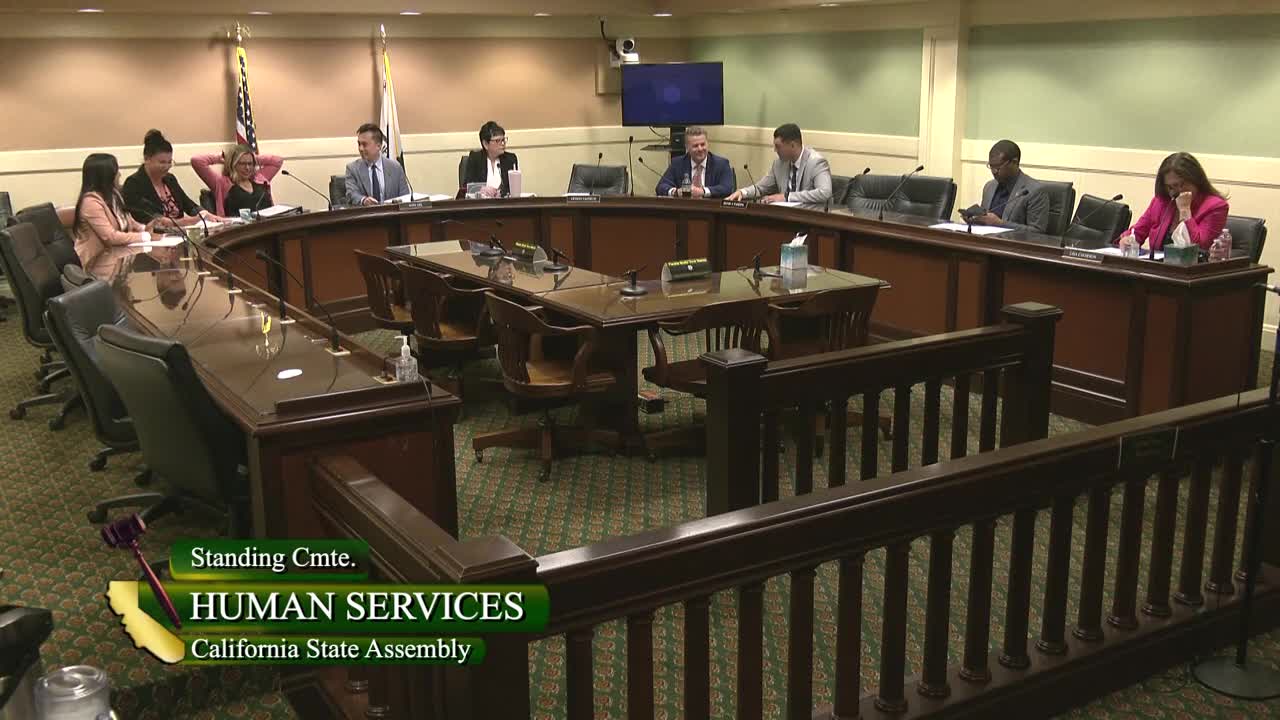 5MIN
Assembly Standing Committee on Human Services
Bill Author