SB 416: Student financial aid: Cal Grants: qualifying institutions: financial aid offer letter template.
- Session Year: 2025-2026
- House: Senate
- Latest Version Date: 2025-03-26
Current Status:
Failed
(2026-02-02: Returned to Secretary of Senate pursuant to Joint Rule 56.)
Introduced
In Committee
Awaiting First Chamber Vote
Passed First Chamber
In Committee
Awaiting Second Chamber Vote
Passed Second Chamber
Enacted
Existing law establishes the University of California, under the administration of the Regents of the University of California, the California State University, under the administration of the Trustees of the California State University, the California Community Colleges, under the administration of the Board of Governors of the California Community Colleges, independent institutions of higher education, and private postsecondary educational institutions as the segments of postsecondary education in this state.
Existing law establishes the Student Aid Commission as the primary state agency for the administration of state-authorized student financial aid programs available to students attending all segments of postsecondary education. Existing law, the Cal Grant Program, establishes the Cal Grant A Entitlement Awards, the Cal Grant B Entitlement Awards, the California Community College Expanded Entitlement Awards, the California Community College Transfer Entitlement Awards, the Competitive Cal Grant A and B Awards, the Cal Grant C Awards, and the Cal Grant T Awards under the administration of the commission. Existing law establishes eligibility requirements for awards under the Cal Grant Program for participating students attending qualifying postsecondary educational institutions, and prescribes requirements that postsecondary educational institutions must comply with in order to be a qualifying postsecondary educational institution for purposes of the Cal Grant Program, including, among others, certain disclosure requirements.
This bill would require, on or before April 1, 2026, the commission to convene a workgroup. The bill would require the workgroup to include, but not be limited to, the commission, all segments of postsecondary education, student organizations, and experts. The bill would require the workgroup to identify the common terms, definitions, and structure of financial aid offer letters sent by postsecondary educational institutions, and would require, on or before July 1, 2027, the workgroup to create a financial aid offer letter template. The bill would also require, on or before July 1, 2027, the workgroup to submit a report to the Legislature that includes the financial aid offer letter template. The bill would require, as part of the criteria to be a qualifying institution under the Cal Grant Program, an institution, by the start of the 202829 academic year, to use the financial aid offer letter template for all conditional offers of attendance, as specified.
Existing law establishes the Student Aid Commission as the primary state agency for the administration of state-authorized student financial aid programs available to students attending all segments of postsecondary education. Existing law prohibits a student from receiving a grant or fellowship administered by the commission if the student has previously defaulted on any student loan, or has failed to repay a federal or state student grant where required to do so, unless the student has made satisfactory arrangements to repay the previous student loan or grant.This bill would make nonsubstantive changes to the latter provision.Existing law establishes the Student Aid Commission as the primary state agency for the administration of state-authorized student financial aid programs available to students attending all segments of postsecondary education. Existing law prohibits a student from receiving a grant or fellowship administered by the commission if the student has previously defaulted on any student loan, or has failed to repay a federal or state student grant where required to do so, unless the student has made satisfactory arrangements to repay the previous student loan or grant.
This bill would make nonsubstantive changes to the latter provision.
As used in this chapter, the following terms have the following meanings:
(a)An academic year is July 1 to June 30, inclusive. The starting date of a session shall determine the academic year in which it is included.
(b)Access costs means living expenses and expenses for transportation, supplies, technology, and books.
(c)Award year means one academic year, or the equivalent, of attendance at a qualifying institution.
(d)College grade point average and community college grade point average mean a grade point average calculated on the basis of all college work completed, except for nontransferable units and courses not counted in the computation for admission to a California public institution of higher education that grants a baccalaureate degree.
(e)Commission means the Student Aid Commission.
(f)Enrollment status means part- or full-time status.
(1)Part time, for purposes of Cal Grant eligibility, means 6 to 11 semester units, inclusive, or the equivalent.
(2)Full time, for purposes of Cal Grant eligibility, means 12 or more semester units or the equivalent.
(g)Expected family contribution, with respect to an applicant, shall be determined using the federal methodology pursuant to subdivision (a) of Section 69506 (as established by Title IV of the federal Higher Education Act of 1965, as amended (20 U.S.C. Sec. 1070 et seq.)) and applicable rules and regulations adopted by the commission.
(h)High school grade point average means a grade point average calculated on a 4.0 scale, using all academic coursework, for the sophomore year, the summer following the sophomore year, the junior year, and the summer following the junior year, excluding physical education, Reserve Officers Training Corps (ROTC), and remedial courses, and computed pursuant to regulations of the commission. However, for high school graduates who apply after their senior year, high school grade point average includes senior year coursework.
(i)Instructional program of not less than one academic year means a program of study that results in the award of an associate or baccalaureate degree or certificate requiring at least 24 semester units or the equivalent, or that results in eligibility for transfer from a community college to a baccalaureate degree program.
(j)Instructional program of not less than two academic years means a program of study that results in the award of an associate or baccalaureate degree requiring at least 48 semester units or the equivalent, or that results in eligibility for transfer from a community college to a baccalaureate degree program.
(k)(1)Maximum household income and asset levels means the applicable household income and household asset levels for participants, including new applicants and renewing recipients, in the Cal Grant Program, as defined and adopted in regulations by the commission for the 200102 academic year, which shall be set pursuant to the following income and asset ceiling amounts:
CAL GRANT PROGRAM INCOME CEILINGS |
Cal Grant A, | Cal Grant B | |
Dependent and Independent students with dependents* | ||
Family Size | ||
Six or more | $74,100 | $40,700 |
Five | $68,700 | $37,700 |
Four | $64,100 | $33,700 |
Three | $59,000 | $30,300 |
Two | $57,600 | $26,900 |
| ||
Single, no dependents | $23,500 | $23,500 |
Married | $26,900 | $26,900 |
*Applies to independent students with dependents other than a
spouse.
CAL GRANT PROGRAM ASSET CEILINGS |
Cal Grant A, | Cal Grant B | |
|
|
|
Independent | $23,600 | $23,600 |
**Applies to independent students with dependents other than a
spouse.
(2)The commission shall annually adjust the maximum household income and asset levels based on the percentage change in the cost of living within the meaning of paragraph (1) of subdivision (e) of Section 8 of Article XIIIB of the California Constitution. The maximum household income and asset levels applicable to a renewing recipient shall be the greater of the adjusted maximum household income and asset levels or the maximum household income and asset levels at the time of the renewing recipients initial Cal Grant award. For a recipient who was initially awarded a Cal Grant for an academic year before the 201112 academic year, the maximum household income and asset levels shall be the greater of the adjusted maximum household income and asset levels or the 201011 academic year maximum household income and asset levels. An applicant or renewal recipient who qualifies to be considered under the simplified needs test established by federal law for student assistance shall be presumed to meet the asset level test under this section. Before disbursing any Cal Grant funds, a qualifying institution shall be obligated, under the terms of its institutional participation agreement with the commission, to resolve any conflicts that may exist in the data the institution possesses relating to that individual.
(l)(1)Qualifying institution means an institution that complies with paragraphs (2) to (4), (5), inclusive, and is any of the following:
(A)A California private or independent postsecondary educational institution that participates in the Pell Grant Program and in at least two of the following federal student aid programs:
(i)Federal Work-Study Program.
(ii)Federal Stafford Loan Program.
(iii)Federal Supplemental Educational Opportunity Grant Program.
(B)A nonprofit institution headquartered and operating in California that certifies to the commission that 10 percent of the institutions operating budget, as demonstrated in an audited financial statement, is expended for purposes of institutionally funded student financial aid in the form of grants, that demonstrates to the commission that it has the administrative capacity to administer the funds, that is accredited by the Western Association of Schools and Colleges, and that meets any other state-required criteria adopted by regulation by the commission in consultation with the Department of Finance. A regionally accredited institution that was deemed qualified by the commission to participate in the Cal Grant Program for the 200001 academic year shall retain its eligibility as long as it maintains its existing accreditation status.
(C)A California public postsecondary educational institution.
(2)(A)The institution shall provide information on where to access California license examination passage rates for the most recent available year from graduates of its undergraduate programs leading to employment for which passage of a California licensing examination is required, if that data is electronically available through the internet website of a California licensing or regulatory agency. For purposes of this paragraph, provide may exclusively include placement of an internet website address labeled as an access point for the data on the passage rates of recent program graduates on the internet website where enrollment information is also located, on an internet website that provides centralized admissions information for postsecondary educational systems with multiple campuses, or on applications for enrollment or other program information distributed to prospective students.
(B)The institution shall be responsible for certifying to the commission compliance with the requirements of subparagraph (A).
(3)(A)The commission shall certify by November 1 of each year the institutions latest official three-year cohort default rate and graduation rate as most recently reported by the United States Department of Education. For purposes of this section, the graduation rate is the percentage of full-time, first-time degree or certificate-seeking undergraduate students who graduate in 150 percent or less of the expected time to complete degree requirements as most recently reported publicly in any format, including preliminary data records, by the United States Department of Education.
(B)For purposes of the 201112 academic year, an otherwise qualifying institution with a three-year cohort default rate reported by the United States Department of Education that is equal to or greater than 24.6 percent shall be ineligible for initial and renewal Cal Grant awards at the institution.
(C)For purposes of the 201213 academic year, and every academic year thereafter, an otherwise qualifying institution with a three-year cohort default rate that is equal to or greater than 15.5 percent, as certified by the commission on October 1, 2011, and every year thereafter, shall be ineligible for initial and renewal Cal Grant awards at the institution.
(D)(i)An otherwise qualifying institution that becomes ineligible under this paragraph for initial and renewal Cal Grant awards shall regain its eligibility for the academic year for which it satisfies the requirements established in subparagraph (B), (C), or (F), as applicable.
(ii)If the United States Department of Education corrects or revises an institutions three-year cohort default rate or graduation rate that originally failed to satisfy the requirements established in subparagraph (B), (C), or (F), as applicable, and the correction or revision results in the institutions three-year cohort default rate or graduation rate satisfying those requirements, that institution shall immediately regain its eligibility for the academic year to which the corrected or revised three-year cohort default rate or graduation rate would have been applied.
(E)An otherwise qualifying institution for which no three-year cohort default rate or graduation rate has been reported by the United States Department of Education shall be provisionally eligible to participate in the Cal Grant Program until a three-year cohort default rate or graduation rate has been reported for the institution by the United States Department of Education.
(F)For purposes of the 201213 academic year, and every academic year thereafter, an otherwise qualifying institution with a graduation rate of 30 percent or less, as certified by the commission pursuant to subparagraph (A), shall be ineligible for initial and renewal Cal Grant awards at the institution, except as provided for in subparagraph (H).
(G)Notwithstanding any other law, the requirements of this paragraph shall not apply to institutions with 40 percent or less of undergraduate students borrowing federal student loans, using information reported to the United States Department of Education for the academic year two years before the academic year in which the commission is certifying the three-year cohort default rate or graduation rate pursuant to subparagraph (A).
(H)Notwithstanding subparagraph (F), an otherwise qualifying institution that maintains a three-year cohort default rate that is less than 15.5 percent and a graduation rate above 20 percent for students taking 150 percent or less of the expected time to complete degree requirements, as certified by the commission pursuant to subparagraph (A), shall be eligible for initial and renewal Cal Grant awards at the institution through the 201617 academic year.
(I)Notwithstanding subparagraph (D), for the 202425 academic year, the commission shall use the three-year cohort default rate certified in 2020 to certify an otherwise qualifying institution pursuant to this paragraph.
(J)The commission shall do all of the following:
(i)Notify initial Cal Grant recipients seeking to attend, or attending, an institution that is ineligible for initial and renewal Cal Grant awards under subparagraph (C) or (F) that the institution is ineligible for initial Cal Grant awards for the academic year for which the student received an initial Cal Grant award.
(ii)Notify renewal Cal Grant recipients attending an institution that is ineligible for initial and renewal Cal Grant awards at the institution under subparagraph (C) or (F) that the students Cal Grant award will be reduced by 20 percent, or eliminated, as appropriate, if the student attends the ineligible institution in an academic year in which the institution is ineligible.
(iii)Provide initial and renewal Cal Grant recipients seeking to attend, or attending, an institution that is ineligible for initial and renewal Cal Grant awards at the institution under subparagraph (C) or (F) with a complete list of all California postsecondary educational institutions at which the student would be eligible to receive an unreduced Cal Grant award.
(iv)(I)Establish an appeal process for an otherwise qualifying institution that fails to satisfy the three-year cohort default rate and graduation rate requirements in subparagraphs (C) and (F), respectively.
(II)The commission may grant an appeal for an academic year only if the commission has determined the institution has a cohort size of 20 individuals or less and the cohort is not representative of the overall institutional performance.
(4)By the start of the 202425 academic year, the institution shall develop and implement policies defining satisfactory academic progress in a manner that is consistent with the federal standards published in Title 34 of the Code of Federal Regulations. The institution shall also comply with all of the following requirements:
(A)Set the standards for grade point average and pace of completion at the minimum federal standards as determined by Section 668.34(a) of Title 34 of the Code of Federal Regulations.
(B)Provide information to students about the institutions satisfactory academic progress standards and financial aid appeals process during new student orientation and include student-friendly language on the institutions internet website and financial aid award letters regarding the standards and appeals process. The institution shall request its faculty to include student-friendly language on course syllabi regarding the standards and appeals process.
(C)Notify a student when the student has not achieved the satisfactory academic progress standards following every term of enrollment, regardless of the frequency at which satisfactory academic progress is formally evaluated. This subparagraph does not preclude an institution from conducting the formal evaluation annually.
(D)Evaluate whether a student satisfies the grade point average and pace of completion standards set forth in subparagraph (A) based on cumulative measures. An institution shall not require a student to satisfy the minimum grade point average and pace of completion standards for each individual term. This paragraph does not preclude an institution from requiring a student on financial aid probation as defined by Section 668.34(b) of Title 34 of the Code of Federal Regulations to comply with the terms of the students academic plan in order to maintain financial aid eligibility.
(E)Exclude remedial coursework from maximum timeframe calculations if the institution offers remedial coursework.
(F)Allow a student who fulfills the terms and conditions of the students academic plan to remain on financial aid probation as defined by Section 668.34(b) of Title 34 of the Code of Federal Regulations, including continuing to receive financial aid for any term for which the student fulfills the terms and conditions of the students academic plan.
(G)In the case of a satisfactory academic progress determination for a transfer student, when calculating maximum timeframe as defined by Section 668.34(b) of Title 34 of the Code of Federal Regulations, only include those credits from other institutions that count towards the students current program of study.
(H)Accept both electronic and hard copy financial aid appeals for any student who is ineligible to receive financial aid due to the determination that the student did not meet satisfactory academic progress, as defined by the institution where the student is enrolled, subject to all of the following:
(i)A student who loses financial aid eligibility may appeal the determination during any subsequent term following loss of financial aid eligibility. The institution shall not limit the total number of appeals that may be submitted by a student throughout the duration of the students enrollment. The institution may limit the number of appeals per term, but each appeal that is denied shall be subject to the second review process pursuant to clause (vi). The institution shall not impose deadlines for submitting an appeal that are earlier than three weeks before the end of each term.
(ii)A student who previously disenrolled while being ineligible to receive financial aid may appeal the loss of financial aid upon reenrollment, and the timing for consideration of the appeal shall allow the student, if the student meets the criteria for financial aid reinstatement, to qualify for reinstatement upon the first term of reenrollment.
(iii)The institution shall provide a student who is ineligible to receive financial aid with written notice of the financial aid appeals process, including the process for a student to file an appeal, information about the second review process for an appeal that is denied as described in clause (vi), and how a student may request a second review.
(iv)In reviewing a students appeal, the institution may consider any additional special circumstances that the institution deems appropriate, and shall consider a broad range of special circumstances, including, but not limited to, any of the following:
(I)Death of a relative or other significant person.
(II)Injury or illness, including, but not limited to, behavioral health conditions, of the student or a relative or other significant person.
(III)Pregnancy or birth of a child.
(IV)Homelessness.
(V)Loss of childcare.
(VI)Loss or change in employment.
(VII)Loss of access to personal or public transportation.
(VIII)Being a victim of a serious crime, including, but not limited to, domestic abuse, even if the crime was not reported or did not result in criminal prosecution or civil liability.
(IX)Natural disaster.
(X)Change of major.
(v)The institution shall review a students appeal and notify the student of the appeal decision within 45 days of submission of a complete appeal. The institution shall not disenroll a student for nonpayment of tuition and fees while the students appeal is pending.
(vi)The institution shall provide a second review process for an appeal that is denied if requested by the student. The second review shall be conducted by a reviewer who did not participate in the first review.
(vii)The institution shall waive any requirement for third-party written documentation of the special circumstances forming the basis of an appeal if that documentation cannot be reasonably obtained by the student and the student signs a statement attesting to the veracity of the special circumstances presented as the grounds for appeal.
(viii)This subparagraph shall not be interpreted to require institutions to provide retroactive financial aid for a term preceding the term in which a student reenrolls.
(5)(A)On or before April 1, 2026, the commission shall convene a workgroup. The workgroup shall include, but not be limited to, the commission, all segments of postsecondary education, student organizations, and experts. The workgroup shall do all of the following:
(i)Identify the common terms, definitions, and structure of financial aid offer letters sent by postsecondary educational institutions to students upon acceptance.
(ii)On or before July 1, 2027, create a financial aid offer letter template.
(iii)On or before July 1, 2027, submit a report to the Legislature that includes the financial aid offer letter template created pursuant to clause (ii). The report shall be submitted in compliance with Section 9795 of the Government Code.
(B)By the start of the 202829 academic year, all institutions, as a condition of being a qualifying institution, shall use the financial aid offer letter template created pursuant to subparagraph (A) for all conditional offers of attendance at the institution.
(m)Satisfactory academic progress means those criteria required by applicable federal standards published in Title 34 of the Code of Federal Regulations.
SECTION 1.Section 69507.5 of the Education Code is amended to read:69507.5.(a)Except as provided in subdivision (b), a student shall not receive a grant or fellowship administered by the commission if the student has previously defaulted on any student loan, or has failed to repay a federal or state student grant where required to do so.(b)If a student has made satisfactory arrangements to repay a default on a previous student loan, or to repay grant funds where required to do so, the student may be eligible to receive a grant or fellowship administered by the commission.(a)Except as provided in subdivision (b), no a student shall not receive a grant or fellowship administered by the Student Aid Commission commission if he or she the student has previously defaulted on any student loan, or has failed to repay a federal or state student grant where required to do so.
(b)If a student has made satisfactory arrangements to repay a default on a previous student loan, or to repay grant funds where required to do so, the student may be eligible to receive a grant or fellowship administered by the Student Aid Commission. commission.
|
Date
|
Status
|
|---|---|
| Feb 2, 2026 | Returned to Secretary of Senate pursuant to Joint Rule 56. |
| May 23, 2025 | May 23 hearing: Held in committee and under submission. |
| May 16, 2025 | Set for hearing May 23. |
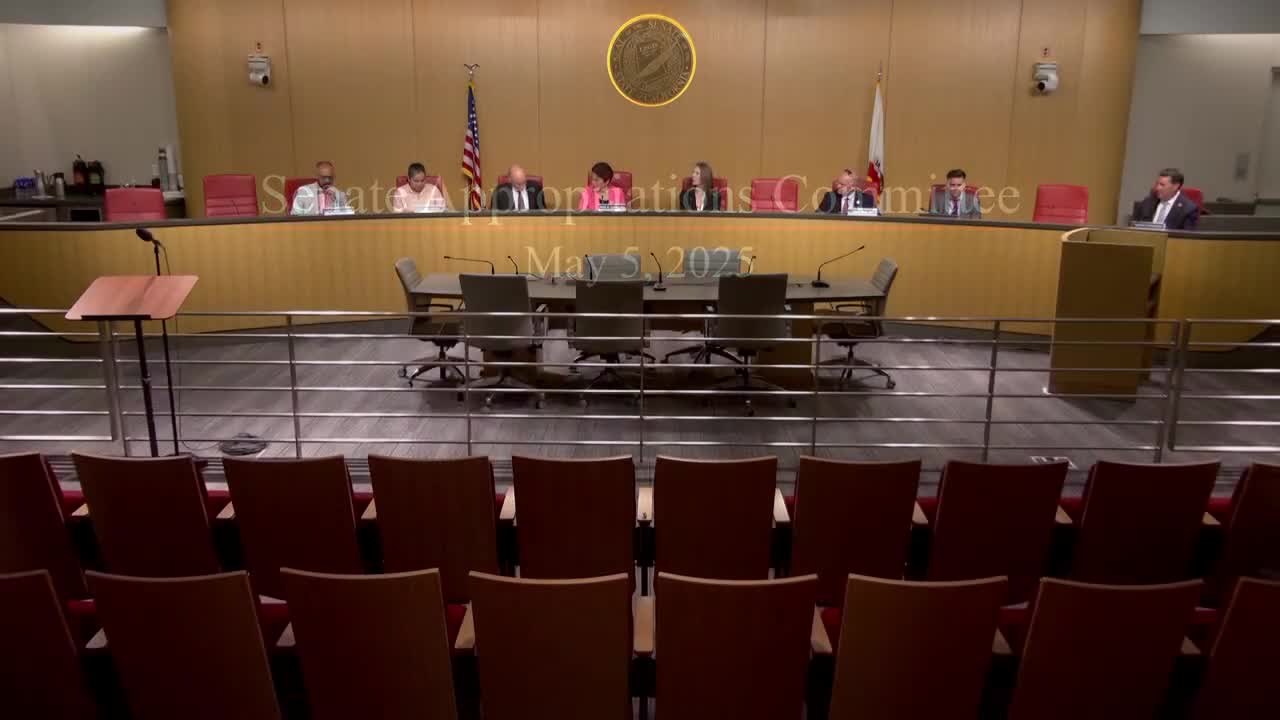
| May 5, 2025 | May 5 hearing: Placed on APPR. suspense file. |
| Apr 25, 2025 | Set for hearing May 5. |
| Apr 23, 2025 | From committee: Do pass and re-refer to Com. on APPR. with recommendation: To consent calendar. (Ayes 7. Noes 0. Page 865.) (April 23). Re-referred to Com. on APPR. |
| Apr 4, 2025 | Set for hearing April 23. |
| Apr 2, 2025 | Re-referred to Com. on ED. |
| Mar 26, 2025 | From committee with author's amendments. Read second time and amended. Re-referred to Com. on RLS. |
| Feb 26, 2025 | Referred to Com. on RLS. |
| Feb 18, 2025 | From printer. May be acted upon on or after March 17. |
| Feb 14, 2025 | Introduced. Read first time. To Com. on RLS. for assignment. To print. |
|
Date
|
Description
|
Location
|
Votes
|
|
|---|---|---|---|---|
| May 5, 2025 | Placed on suspense file | Senate Standing Committee on Appropriations |
Passed |
|
| Apr 23, 2025 | Do pass, but first be re-referred to the Committee on [Appropriations] with the recommendation: To Consent Calendar | Senate Standing Committee on Education |
Passed |
This list shows positions taken on this bill by organizations on the date displayed, which is linked to the original source.
Positions by individuals are not included.
|
Organization
|
Position
|
Date
|
|---|---|---|
| California Chamber Of Commerce | ** Support | |
| California Student Aid Commission | ** Support | |
| Los Angeles Urban Foundation | ** Support | |
| NextGen California | ** Support | |
| Northern California College Promise Coalition | ** Support | |
| Parent Institute for Quality Education | ** Support | |
| Southern California College Attainment Network | ** Support | |
| uAspire | ** Support |
SENATE COMMITTEE ON APPROPRIATIONS
Senator Anna Caballero, Chair
2025 - 2026 Regular Session
SB 416 (Pérez) - Student financial aid: Cal Grants: qualifying institutions: financial aid offer letter template
Version: March 26, 2025 | Policy Vote: ED. 7 - 0 |
Urgency: No | Mandate: No |
Hearing Date: May 5, 2025 | Consultant: Lenin Del Castillo |
Bill Summary:
This bill requires the California Student Aid Commission (CSAC) to convene a working group to standardize and create a template for financial aid offer letters sent by postsecondary educational institutions to students. It further requires all institutions, as a condition of being a qualifying Cal Grant user, to use the financial aid offer letter template created by the work group.
Fiscal Impact:
- The CSAC estimates that the bill’s requirements could result in one-time General Fund costs of approximately $80,000. This estimate includes the cost to convene a workgroup, gather and synthesize information produced from the workgroup into a single model financial aid model offer letter for all Cal Grant eligible institutions, and produce the legislative report.
- The University of California (UC) estimates General Fund costs of $440,000 to $715,000 depending on the number of representatives serving on the workgroup to develop the template. The lower end of the range assumes there would be one representative from the UC Office of the President (UCOP) and two from campuses, while the higher cost assumes that each campus would have one representative and one from the UCOP. Additionally, the UC indicates there could significant, unknown system upgrade costs.
- The California State University (CSU) indicates that the staffing costs to participate in the workgroup should be absorbable within existing resources. However, to the extent that its software and IT systems would need to be changed to comply with the bill’s requirement in order to use the financial aid offer letter template that would be created , there could be additional, unknown General Fund costs.
Background:
Existing law establishes the CSAC as the state agency charged with administering state financial aid programs to qualifying students enrolled in qualifying institutions of higher education throughout the state. The law requires CSAC to prescribe the use of standardized student financial aid applications for California.
Existing law requires each UC, CSU, California Community College campus, each independent institution of higher education, and each private postsecondary education subject to the California Private Postsecondary Education Act of 2009 that participates in federal financial aid or veterans financial aid programs, to provide students with the Financial Aid Shopping Sheet developed by the United States Department of Education to inform admitted or potential students about financial aid award packages.
Proposed Law:
This bill requires the CSAC, by April 1, 2026, to convene a workgroup that includes, but is not limited to, all segments of postsecondary education, student organizations, and experts. The workgroup would be required to do all of the following:
- Identify the common terms, definitions, and structure of financial aid offer letters sent by postsecondary educational institutions to students upon acceptance.
- Create a template for financial aid offer letters by July 1, 2027.
- By, July 2027, submit a report to the legislature that includes the financial aid offer letter template created.
This bill requires all institutions, by the 2028-2029 academic year, as a condition of being a qualifying institution, to use the financial aid offer letter template created by the working group for all conditional offers of attendance at the institution.
Related Legislation:
SB 305 (Reyes, 2025) requires the community colleges to provide students with specified information related to completing and submitting the FAFSA and CADAA. SB 305 is pending in this Committee.
SB 323 (Perez, 2025) requires CSAC to amend the California Dream Act application and any of its grant processing systems to ensure that it can be used by any student eligible for state financial aid programs, regardless of their eligibility for federal financial aid. SB 323 is pending in this Committee.
Staff Comments:
While current state law requires California private and public higher education institutions to provide students with the Shopping Sheet (now known as the College Financing Plan) which is a standardized financial award letter template, the degree to which the institutions provide standardized information in financial aid award offer letters is unclear. According to the author, “There are inconsistent formats, definitions and general presentation of financial aid award offer letters across California’s post-secondary institutions that create confusion among students and families.” This bill is intended to create a student financial aid uniformity working group that brings an array of partners to the table to ensure our students see consistent and clear provisions in all their financial aid offer when deciding on where to attend for college. The author indicates that students and families have a right to clear information when it can affect their finances and future.
-- END --
SENATE COMMITTEE ON EDUCATION
Senator Sasha Renée Pérez, Chair
2025 - 2026 Regular
Bill No: Hearing Date: April 23, 2025
Author: | Pérez | ||
Version: |
| ||
Urgency: | Fiscal: | ||
Consultant: | |||
Subject: .
SUMMARY
This bill requires the California Student Aid Commission (CSAC) to convene a working group to standardize and create a template for financial aid offer letters sent by postsecondary educational institutions to students. It further requires all institutions, as a condition of being a qualifying Cal Grant user, to use the financial aid offer letter template created by the work group.
BACKGROUND
Existing law:
- Establishes CSAC as the state agency charged with administering state
financial aid programs to qualifying students enrolled in qualifying institutions of higher education throughout the state. It requires CSAC to prescribe the use of standardized student financial aid applications for California. (Education Code (EC) § 69510 et seq. and EC § 69433)
- Establishes the California State University (CSU) under the administration of the Trustees of the CSU, the University of California (UC), under the administration of the Regents of the UC, the California Community Colleges (CCC), under the administration of the Board of Governors of the CCC, and independent institutions of higher education as four segments of postsecondary education in the state. (EC § 66010, § 70900, § 66600, and California Constitution, Article IX, Section 9)
- Requires each UC, CSU, CCC campus, each independent institution of higher education, and each private postsecondary education subject to the California Private Postsecondary Education Act of 2009 (Act) that participates in federal financial aid or veterans financial aid programs to provide students with the Financial Aid Shopping Sheet (Shopping Sheet) developed by the United States Department of Education (USDE) to inform admitted or potential students about financial aid award packages. (EC § 66021.3, § 69514 and § 94912.5)
ANALYSIS
This bill:
- Requires CSAC, by April 1, 2026, to convene a workgroup that includes, but is not limited to, all segments of postsecondary education, student organizations, and experts.
- Requires the workgroup to do all of the following:
- Identify the common terms, definitions, and structure of financial aid offer
letters sent by postsecondary educational institutions to students upon acceptance.
- Create a template for financial aid offer letters by July 1, 2027.
- By, July 2027, submit a report to the legislature that includes the financial
aid offer letter template created.
- Require all institutions, by the 2028-2029 academic year, as a condition of being a qualifying institution, to use the financial aid offer letter template created by the working group for all conditional offers of attendance at the institution.
STAFF COMMENTS
- Need for the bill. According to the author, “There are inconsistent formats, definitions and general presentation of financial aid award offer letters across California’s post-secondary institutions that create confusion among students and families.” The author further contends, “SB 416 will create a student financial aid uniformity working group that brings an array of partners to the table to ensure our students see consistent and clear provisions in all their financial aid offer when deciding on where to attend for college. Students and families have a right to clear information when it can affect their finances and future. This is imperative in supporting our students, especially our first generation students who don’t have the same support in this process and need to be able to read a financial aid offer and confidently accept the offer ensuring they understand the financial commitment.”
- Demand for award offer letter standardization. Higher education institutions provide current and prospective students with financial aid offers that can include state, federal, and institutional aid. These offers help students and families understand the costs associated with colleges and the types and amounts of financial aid for which they are eligible. Students use the information in these offers to make important educational and financial decisions, such as whether to pursue higher education, which college to attend, and how to fund their education. Proponents of this measure contend that there is variability in financial aid offers provided to students, raising concerns about their effectiveness in communicating costs and financial aid information. A nationwide study conducted by New American and uAspire in 2018 found that award letters lack consistency and transparency. However, the degree to which California higher education institutions provide students standardized information in financial aid award offer letters is unclear, as current state law requires California private and public higher education institutions to provide students with the Shopping Sheet (now known as the College Financing Plan), a standardized financial award letter template.
- Standardization is already required in California. In 2012, the USDE partnered with the Consumer Financial Protection Bureau to develop the Financial Aid Shopping Sheet to promote transparency in student financial aid disclosures. Similar to the goals of this bill, the Shopping Sheet was designed with the goal of ensuring that families have an easy-to-read form that enables them to compare institutions in terms of grant and scholarship amounts, net costs, graduation rates, loan default rates, median borrowing, and estimated monthly loan payments after graduation. State statute, established by AB 1858 (Calderon, Chapter 671, Statutes of 2018), mandated its use by California public and private institutions. It is unclear if the workgroup outcomes coincide with existing requirements. Given that it appears there is interest in revisiting award offer standardization in California to promote greater uniformity and clarity for students, the author may wish to consider whether the bill’s provisions should also require the workgroup to develop recommendations for periodically reviewing and revising the financial aid offer letter template, common terms, definitions, and overall format of these letters.
- Other efforts aimed to assist students. The bill requires that the workgroup be composed of all segments of postsecondary education. Staff understands that within the past year, the CSU system signed on to the College Cost Transparency Initiative, as did all but two UC campuses. The initiative is led by a national taskforce made up of higher education leaders and financial aid experts who established a set of principles and standards to which institutions can commit. It includes the following principles:
- The primary purpose of student financial aid offers is to provide clear, accurate, consumer-friendly information about college costs and financial aid eligibility.
- Financial aid offers should be transparent, ensuring that costs are understandable for students and their families. Financial aid offers should include the most accurate estimate possible of a student’s costs.
- All types of aid offered should be described and explained using standardized, plain language.
- Colleges and universities should strive to embrace the use of innovative technologies to create financial offers in formats that best serve the needs of their unique student populations, which may include dynamic and interactive components.
As a result, CSU has invested in new software and technology for each campus, including a new, revised award notice format. The author may wish to consider ensuring that the workgroup’s efforts are guided by the College Cost Transparency Initiative’s principles to avoid hindering CSU and other California institutions’ progress in achieving similar goals.
- Related legislation.
SB 305 (Reyes, 2025) requires the CCC, under the Student Success Act, to provide, commencing with the 2026–27 academic year, students with specified information related to completing and submitting the FAFSA and CADAA, and to confirm, commencing with the 2027–28 academic year, that students who have not opted out have completed and submitted the FAFSA or the CADAA, as specified. SB 305 is set to be heard by this committee on April 23.
SB 323 (Perez, 2025) requires CSAC, commencing with the 2026–27 financial aid cycle, to amend the California Dream Act application (CADAA) and any of its grant processing systems to clarify and ensure that the CADAA can be used by any student eligible for state financial aid programs, regardless of their eligibility for federal financial aid. It also requires CSAC to consult the segments of postsecondary education in promoting the CADAA in a manner that maximizes the amount of federal aid that students may access while apprising students of the choices available regarding which application they and their families may use. SB 323 is set to be heard by this committee on April 23.
SB 837 (Reyes, 2025) requires CSAC, by July 1, 2027, to develop guidance as specified for local educational agencies and public libraries on how to use online technology platforms to assist low-income, foster youth, and undocumented families accessing student financial aid. It also requires CSAC to offer a training program on the developed guidance and implement a multimedia campaign to raise awareness of available online technology platforms relating to the developed guidance. SB 837 is set to be heard by this committee on April 30.
SUPPORT
California Student Aid Commission (co-sponsor)
NextGen California (co-sponsor)
uAspire (co-sponsor)
California Chamber of Commerce
Los Angeles Urban Foundation
Northern California College Promise Coalition
Parent Institute for Quality Education
Southern California College Attainment Network
OPPOSITION
None received
-- END --
Discussed in Hearing
 2MIN
Senate Standing Committee on Appropriations
Bill Author

Bill Co-Author(s):