SB 656: Small business: small business liaison.
- Session Year: 2025-2026
- House: Senate
- Latest Version Date: 2025-04-21
Current Status:
Failed
(2026-02-02: Returned to Secretary of Senate pursuant to Joint Rule 56.)
Introduced
In Committee
Awaiting First Chamber Vote
Passed First Chamber
In Committee
Awaiting Second Chamber Vote
Passed Second Chamber
Enacted
Existing law establishes the Office of Small Business Advocate within the Governors Office of Business and Economic Development to advocate for causes of small businesses and to provide small businesses with the information they need to survive in the marketplace. Existing law marketplace and requires the Governor to appoint a Small Business Advocate, and requires the advocate, among other duties, to prepare and submit a written annual report to the Governor and to the Legislature that describes the activities and recommendations of the office, including an evaluation of the efforts of specified state agencies to assist minority and other small business enterprises. Existing law requires each agency of the state to furnish to the advocate the reports, documents, and information that are public records and that the advocate deems necessary to carry out the advocates functions. Advocate.
This bill would require only an agency under the direct authority of the Governor to furnish to the advocate those reports, documents, and information, and would require an agency under the direct authority of another elected statewide constitutional officer to provide those reports, documents, and information to either the advocate or to the Legislature, as provided.Executive Order No. S-02-06 establishes a 25% small business participation goal for the states procurement and contracting processes. Existing law requires a state agency that significantly regulates small business or that significantly impacts small business to designate at least one person to serve as a small business liaison. Existing law requires the small business liaison to be responsible for specified duties relating to interactions between the state agency and small businesses, including assisting the agency secretary, department director, or executive officer of the state agency in ensuring that the procurement and contracting processes of the state agency are administered in order to meet or exceed the 25% small business participation goal, and developing and sharing innovative procurement and contracting practices from the public and private sectors to increase opportunities for small businesses.
This bill would require all state agencies to designate at least one person to serve as a small business liaison. The bill would revise the duty described above to instead require the small business liaison to assist the agency secretary, department director, or executive officer in ensuring that the procurement and contracting processes of the state agency are administered properly. The bill would also require a small business liaison to annually submit certain information to the advocate, including a list of all current contracts between the state agency and a small business, all contracts of the state agency that include a subcontract with a small business, and the total dollar amount paid to a small business under those contracts or subcontracts. The bill would require the advocate to post the information on its internet website.
Existing law requires a state agency, department, officer, or other state governmental entity to meet an annual statewide participation goal of not less than 3% for disabled veteran business enterprises for specified contracts entered into by the awarding department during the year.This bill would increase that participation goal to 5%.Existing law requires that certain contracts awarded by the Secretary of the Department of Corrections and Rehabilitation or the Director of the Youth Authority have annual statewide participation goals of not less than 15% for minority business enterprises and 5% for women business enterprises.This bill would expand the annual statewide participation goal for minority business enterprises to all contracts awarded by any state agency, department, officer, or governmental entity for construction, professional services, materials, supplies, equipment, alteration, repair, or improvement. The bill would also increase the participation goal for minority business enterprises to 25%.Existing law establishes the Office of Small Business Advocate within the Governors Office of Business and Economic Development to advocate for causes of small businesses and to provide small businesses with the information they need to survive in the marketplace. Existing law requires the Governor to appoint a Small Business Advocate, and requires the advocate, among other duties, to prepare and submit a written annual report to the Governor and to the Legislature that describes the activities and recommendations of the office, including an evaluation of the efforts of specified state agencies to assist minority and other small business enterprises. Existing law requires each agency of the state to furnish to the advocate the reports, documents, and information that are public records and that the advocate deems necessary to carry out the advocates functions.
This bill would require only an agency under the direct authority of the Governor to furnish to the advocate those reports, documents, and information, and would require an agency under the direct authority of another elected statewide constitutional officer to provide those reports, documents, and information to either the advocate or to the Legislature, as provided.
Executive Order No. S-02-06 establishes a 25% small business participation goal for the states procurement and contracting processes. Existing law requires a state agency that significantly regulates small business or that significantly impacts small business to designate at least one person to serve as a small business liaison. Existing law requires the small business liaison to be responsible for specified duties relating to interactions between the state agency and small businesses, including assisting the agency secretary, department director, or executive officer of the state agency in ensuring that the procurement and contracting processes of the state agency are administered in order to meet or exceed the 25% small business participation goal, and developing and sharing innovative procurement and contracting practices from the public and private sectors to increase opportunities for small businesses.
This bill would require all state agencies to designate at least one person to serve as a small business liaison. The bill would revise the duty described above to instead require the small business liaison to assist the agency secretary, department director, or executive officer in ensuring that the procurement and contracting processes of the state agency are administered properly. The bill would also require a small business liaison to annually submit certain information to the advocate, including a list of all current contracts between the state agency and a small business, all contracts of the state agency that include a subcontract with a small business, and the total dollar amount paid to a small business under those contracts or subcontracts. The bill would require the advocate to post the information on its internet website.
Existing law requires a state agency, department, officer, or other state governmental entity to meet an annual statewide participation goal of not less than 3% for disabled veteran business enterprises for specified contracts entered into by the awarding department during the year.
This bill would increase that participation goal to 5%.
Existing law requires that certain contracts awarded by the Secretary of the Department of Corrections and Rehabilitation or the Director of the Youth Authority have annual statewide participation goals of not less than 15% for minority business enterprises and 5% for women business enterprises.
This bill would expand the annual statewide participation goal for minority business enterprises to all contracts awarded by any state agency, department, officer, or governmental entity for construction, professional services, materials, supplies, equipment, alteration, repair, or improvement. The bill would also increase the participation goal for minority business enterprises to 25%.
Existing law, the Small Business Procurement and Contract Act, provides for various programs to encourage the participation of small businesses in state agency contracts, as specified. In order to facilitate the participation of small business in the provision of goods, information technology, and services to the state, and in the construction of state facilities, existing law requires the directors of the Department of General Services and other state agencies that enter those contracts to meet specified requirements.This bill would make nonsubstantive changes to those provisions.Existing law, the Small Business Procurement and Contract Act, provides for various programs to encourage the participation of small businesses in state agency contracts, as specified. In order to facilitate the participation of small business in the provision of goods, information technology, and services to the state, and in the construction of state facilities, existing law requires the directors of the Department of General Services and other state agencies that enter those contracts to meet specified requirements.
This bill would make nonsubstantive changes to those provisions.
(a)It is the intent of the Legislature in enacting this article to assist small businesses in this state in complying with regulatory standards designed to protect the public.
(b)It is the further intent of the Legislature:
(1)That, to improve compliance results, information be provided by regulatory agencies by printed material or electronically, including at each agencys internet website, to all small businesses, as defined for that purpose, that would state in clear, plain language the actions required to comply with the regulation.
(2)That each agency designate at least one individual to serve as the small business liaison with the role and responsibility of ombudsman ombudsperson for that agency.
SEC. 2.Section 11148.5 of the Government Code is amended to read:11148.5.(a)A state agency shall designate at least one person who shall serve as a small business liaison. The agency shall utilize existing personnel and resources to perform the duties of small business liaison.
(b)A state agency shall widely publicize the position of small business liaison in appropriate agency publications and by prominently displaying the name and contact information of the small business liaison on the agencys website if the agency has a website.
(c)The small business liaison shall be responsible for all of the following:
(1)Receiving and responding to complaints received by the agency from small businesses.
(2)Providing technical advice and assisting small businesses in resolving problems and questions regarding compliance with the agencys regulations and relevant statutes.
(3)Reporting small business concerns and, if appropriate, reporting recommendations to the agency secretary or to the agency head, as defined in Section 11405.40.
(4)Reviewing and updating, on a semiannual basis, content on the agency website that is accessible through the small business link provided on the State of California Internet internet web portal pursuant to Section 11541.5.
(5)Assisting the agency secretary, department director, or executive officer, as applicable, in ensuring that the procurement and contracting processes of the applicable entity are properly administered. administered in order to meet or exceed the 25-percent small business participation goal, and developing and sharing innovative procurement and contracting practices from the public and private sectors to increase opportunities for small businesses.
(6)Developing an economic equity first action plan and policy for the agency, which will provide, among other things, direction, recommendations, and strategies as to how best ensure that small businesses pursuant to Section 14837, including women-owned, minority-owned, and LGBTQ-owned businesses, are effectively involved in, and benefiting from, the procurement process of the agency. The action plan and policy shall be adopted by January 1, 2024. The action plan shall include, as part of a general outreach effort to all small businesses, education, outreach, and stakeholder engagement with representative business organizations and business enterprises owned by women, minorities, and members of the LGBTQ community.
(d)The small business liaison shall not advocate for or against the adoption, amendment, or repeal of any regulation or intervene in any pending investigation or enforcement action.
(e)A state agency shall notify the Office of Small Business Advocate within the Governors Office of Business and Economic Development and the Department of General Services of each of the following:
(1)The name and contact information of the person or persons who have been designated as the agencys small business liaison, on or before March 1, 2018.
(2)An occurrence of a vacancy in the position of small business liaison, within 15 working days of the occurrence of the vacancy. The state agency shall designate a small business liaison within three months after providing notice of the vacancy.
(f)For purposes of this section, small business has the same meaning as set forth in Section 11342.610.
SEC. 3.Section 11149 is added to the Government Code, to read:11149.(a)The small business liaison for each state agency shall annually submit the following information to the Small Business Advocate:
(1)A list of all current contracts between the state agency and a small business and all contracts of the state agency that include a subcontract with a small business.
(2)The total dollar amount of each contract described in paragraph (1).
(3)The total dollar amount paid to a small business under a contract or subcontract described in paragraph (1).
(b)The Small Business Advocate shall post the information received pursuant to subdivision (a) on its internet website.
All matter omitted in this version of the bill appears in the bill as amended in the Senate, March 25, 2025. (JR11)(a)It is the intent of the Legislature in enacting this article to assist small businesses in this state in complying with regulatory standards designed to protect the public.
(b)It is the further intent of the Legislature:
(1)That, to improve compliance results, information be provided by regulatory agencies by printed material or electronically, including at each agencys Internet Web site, internet website, to all small businesses, as defined for that purpose, that would state in clear, plain language the actions required to comply with the regulation.
(2)That each agency that significantly regulates small business designate at least one individual to serve as the small business liaison with the role and responsibility of ombudsman for that agency.
SEC. 2.Section 11148.5 of the Government Code is amended to read:11148.5.(a)A state agency that significantly regulates small business or that significantly impacts small business shall designate at least one person who shall serve as a small business liaison. The agency shall utilize existing personnel and resources to perform the duties of small business liaison.
(b)A state agency that significantly regulates small business or that significantly impacts small business shall widely publicize the position of small business liaison in appropriate agency publications and by prominently displaying the name and contact information of the small business liaison on the agencys website if the agency has a website.
(c)The small business liaison shall be responsible for all of the following:
(1)Receiving and responding to complaints received by the agency from small businesses.
(2)Providing technical advice and assisting small businesses in resolving problems and questions regarding compliance with the agencys regulations and relevant statutes.
(3)Reporting small business concerns and, if appropriate, reporting recommendations to the agency secretary or to the agency head, as defined in Section 11405.40.
(4)Reviewing and updating, on a semiannual basis, content on the agency website that is accessible through the small business link provided on the State of California Internet portal pursuant to Section 11541.5.
(5)Assisting the agency secretary, department director, or executive officer, as applicable, in ensuring that the procurement and contracting processes of the applicable entity are administered in order to meet or exceed the 25 percent small business participation goal, and developing and sharing innovative procurement and contracting practices from the public and private sectors to increase opportunities for small businesses. properly administered.
(6)Developing an economic equity first action plan and policy for the agency, which will provide, among other things, direction, recommendations, and strategies as to how best ensure that small businesses pursuant to Section 14837, including women-owned, minority-owned, and LGBTQ-owned businesses, are effectively involved in, and benefiting from, the procurement process of the agency. The action plan and policy shall be adopted by January 1, 2024. The action plan shall include, as part of a general outreach effort to all small businesses, education, outreach, and stakeholder engagement with representative business organizations and business enterprises owned by women, minorities, and members of the LGBTQ community.
(d)The small business liaison shall not advocate for or against the adoption, amendment, or repeal of any regulation or intervene in any pending investigation or enforcement action.
(e)A state agency that significantly regulates small business or that significantly impacts small business shall notify the Office of Small Business Advocate within the Governors Office of Business and Economic Development and the Department of General Services of each of the following:
(1)The name and contact information of the person or persons who have been designated as the agencys small business liaison, on or before March 1, 2018.
(2)An occurrence of a vacancy in the position of small business liaison, within 15 working days of the occurrence of the vacancy. The state agency shall designate a small business liaison within three months after providing notice of the vacancy.
(f)For purposes of this section, small business has the same meaning as set forth in Section 11342.610.
SEC. 3.Section 11149 is added to the Government Code, to read:11149.(a)The small business liaison for each state agency shall annually submit the following information to the Small Business Advocate:
(1)A list of all current contracts between the state agency and a small business and all contracts of the state agency that include a subcontract with a small business.
(2)The total dollar amount of each contract described in paragraph (1).
(3)The total dollar amount paid to a small business under a contract or subcontract described in paragraph (1).
(b)The Small Business Advocate shall post the information received pursuant to subdivision (a) on its internet website.
SEC. 4.Section 12098.4 of the Government Code is amended to read:12098.4.(a)(1)Each agency of the state under the direct authority of the Governor shall furnish to the advocate the reports, documents, and information that are public records and that the advocate deems necessary to carry out the advocates functions under this chapter.
(2)An agency under the direct authority of an elected state constitutional officer, other than the Governor, shall provide the reports, documents, and information described in subdivision (a) to either the advocate or to the Legislature.
(A)Any reports, documents, or information submitted to the Legislature pursuant to this paragraph shall be submitted in compliance with Section 9795.
(B)If an agency submits the reports, documents, and information to the Legislature pursuant to this paragraph, the agency shall also post the information on the agencys internet website.
(b)(1)The advocate shall prepare and submit a written annual report to the Governor and to the Legislature that describes the activities and recommendations of the office, including an evaluation of the efforts of state agencies and, where appropriate, specific departments, that significantly regulate small businesses to assist minority and other small business enterprises, and making recommendations that may be appropriate to assist the development and strengthening of minority and other small business enterprises.
(2)The annual report prepared by the advocate shall also include details regarding the offices activities to support procurement participation by small businesses, microbusinesses, disabled veteran business enterprises, and businesses owned by women, minorities, or members of the LGBTQ community that also qualify as a small business, microbusiness, or disabled veteran business enterprise. The report shall also include information on state agency compliance and implementation of economic equity first action plans and policies, developed pursuant to Section 11148.5, by state agency liaisons and advocates. Each state agency shall provide information regarding its activities to the advocate upon request.
(c)(1)The advocate may establish a centralized interactive telephone referral system and internet website to assist small and minority businesses in their operations, including governmental requirements, such as taxation, accounting, and pollution control, and to provide information concerning the agency from which more specialized assistance may be obtained.
(2)The advocate shall establish on the GO-Biz internet website or the advocates internet website an internet web portal that includes, at a minimum, all of the following:
(A)Information on how to receive assistance in identifying and understanding the states regulatory requirements. This information shall include:
(i)The name, telephone number, internet website, and email of the small business liaison designated pursuant to Section 11148.5 to assist small businesses with understanding and adhering to the regulatory requirements of the state entities in which they serve.
(ii)The internet website developed and maintained by GO-Biz to identify licensing, permitting, and registration requirements of state agencies, pursuant to the requirements of Section 12097.1.
(B)Information on how to receive assistance in certifying as a small business or disabled veteran business enterprise, and identifying and participating in state procurement opportunities shall be easily accessible from the home page of the GO-Biz internet website. This information shall include:
(i)The name, telephone number, internet website, and email of the small business advocate designated pursuant to Section 14846 to assist small businesses in contracting with the state entities in which they serve.
(ii)Contact information for the Office of Small Business and Disabled Veteran Business Enterprise Services established pursuant to Section 14839.
(iii)A link to the procurement web page required by Section 14842.1.
(iv)Links to interactive web pages, where known, that support small businesses in identifying current and upcoming procurement opportunities offered through state government and any public utility, as defined by Section 216 of the Public Utilities Code.
(C)Information about emergency preparedness, responses to emergencies, and recovery strategies for small businesses. This information shall be developed and updated in consultation with relevant state agencies and emergency responders.
(D)A link to the Energy Upgrade California internet website to assist small business owners in accessing information on the availability of various programs promoting the efficient use of energy.
(E)Information on programs administered through the statewide network of small business financial development corporations. Programs covered shall include loan guarantees, direct lending, surety bond guarantees, and disaster loans. Information shall be presented in a manner appropriate to address the needs of both small businesses and existing and potential financial institutions and financial companies.
(F)Information on how to identify and access services provided through the statewide network of small business technical assistance centers, including, but not limited to, small business development centers, women business centers, veteran business outreach centers, procurement technical assistance centers, and the Manufacturing Extension Partnership. Beginning on or before February 15, 2024, this information shall also include a list with links to current awardees of the California Small Business Development Technical Assistance Act of 2022 (Article 7 (commencing with Section 12100.60) of Chapter 1.6 of Part 2).
(G)Information on and links to financial resources and business incentives offered by the state to small businesses. In addition to other methods for displaying this information, as funding is available, the advocate shall make the information searchable through an interactive web-based tool to assist small businesses in identifying available resources and incentives for which those small businesses may be eligible. There shall also be a link to the internet web portal maintained by the California State Library, as described in Section 8333.1.
(d)The office shall ensure that the internet web portal required by subdivision (c) is accessible and provides helpful information to a diverse set of small businesses, including women-, minority-, and veteran-owned businesses in disadvantaged or low-income communities.
SEC. 5.Section 999 of the Military and Veterans Code is amended to read:999.(a)This article shall be known as, and may be cited as, the California Disabled Veteran Business Enterprise Program. The California Disabled Veteran Business Enterprise Program is established to address the special needs of disabled veterans seeking rehabilitation and training through entrepreneurship and to recognize the sacrifices of Californians disabled during military service. It is the intent of the Legislature that every state procurement authority honor Californias disabled veterans by taking all practical actions necessary to meet or exceed the disabled veteran business enterprise participation goal of a minimum of 3 5 percent of total contract value.
(b)As used in this article, the following definitions apply:
(1)Administering agency means the Treasurer, in the case of contracts for professional bond services, and the Department of General Services Office of Small Business and Disabled Veteran Business Enterprise Services, in the case of contracts governed by Section 999.2.
(2)Awarding department means a state agency, department, governmental entity, or other officer or entity empowered by law to issue bonds or enter into contracts on behalf of the state.
(3)Bonds means bonds, notes, warrants, certificates of participation, and other evidences of indebtedness issued by, or on behalf of, the state.
(4)Contract includes any agreement or joint agreement to provide professional bond services to the State of California or an awarding department. Contract also includes any agreement or joint development agreement to provide labor, services, materials, supplies, or equipment in the performance of a contract, franchise, concession, or lease granted, let, or awarded for, and on behalf of, the state.
(5)(A)Contractor means a person or persons, regardless of race, color, creed, national origin, ancestry, sex, marital status, disability, religious or political affiliation, age, or any sole proprietorship, firm, partnership, joint venture, corporation, or combination thereof that submits a bid and enters into a contract with a representative of a state agency, department, governmental entity, or other officer empowered by law to enter into contracts on behalf of the state. Contractor includes a provider of professional bond services who enters into a contract with an awarding department.
(B)Disabled veteran business enterprise contractor, subcontractor, or supplier means a person or entity that has been certified by the administering agency pursuant to this article and that performs a commercially useful function, as defined in clause (i), in providing services or goods that contribute to the fulfillment of the contract requirements:
(i)A person or an entity is deemed to perform a commercially useful function if a person or entity does all of the following:
(I)Is responsible for the execution of a distinct element of the work of the contract.
(II)Carries out the obligation by actually performing, managing, or supervising the work involved.
(III)Performs work that is normal for its business services and functions.
(IV)Is responsible, with respect to products, inventories, materials, and supplies required for the contract, for negotiating price, determining quality and quantity, ordering, installing, if applicable, and making payment.
(V)Is not further subcontracting a portion of the work that is greater than that expected to be subcontracted by normal industry practices.
(ii)A contractor, subcontractor, or supplier will not be considered to perform a commercially useful function if the contractors, subcontractors, or suppliers role is limited to that of an extra participant in a transaction, contract, or project through which funds are passed in order to obtain the appearance of a disabled veteran business enterprise participation.
(6)Disabled veteran means a veteran of the military, naval, or air service of the United States, including, but not limited to, the Philippine Commonwealth Army, the Regular Scouts, Old Scouts, and the Special Philippine Scouts, New Scouts, who has at least a 10-percent service-connected disability and who is domiciled in the state.
(7)(A)Disabled veteran business enterprise means a business certified by the administering agency as meeting all of the following requirements:
(i)It is a sole proprietorship at least 51 percent owned by one or more disabled veterans or, in the case of a publicly owned business, at least 51 percent of its stock is unconditionally owned by one or more disabled veterans; a subsidiary that is wholly owned by a parent corporation, but only if at least 51 percent of the voting stock of the parent corporation is unconditionally owned by one or more disabled veterans; or a joint venture in which at least 51 percent of the joint ventures management, control, and earnings are held by one or more disabled veterans.
(ii)The management and control of the daily business operations are by one or more disabled veterans. The disabled veterans who exercise management and control are not required to be the same disabled veterans as the owners of the business.
(iii)It is a sole proprietorship, corporation, or partnership with its home office located in the United States, which is not a branch or subsidiary of a foreign corporation, foreign firm, or other foreign-based business.
(B)Notwithstanding subparagraph (A), after the death or the certification of a permanent medical disability of a disabled veteran who is a majority owner of a business that qualified as a disabled veteran business enterprise prior to that death or certification of a permanent medical disability, that business shall be deemed to be a disabled veteran business enterprise for a period not to exceed three years after the date of that death or certification of a permanent medical disability, if the business is inherited or controlled by the spouse or child of the majority owner, or by both of those persons. A business is a disabled veteran business enterprise pursuant to this subparagraph under either of the following circumstances:
(i)For the duration of any contract entered into prior to the death or certification of permanent medical disability for the sole purpose of fulfilling the requirements of that contract.
(ii)After the date of the majority owners death or certification of permanent medical disability established by this subparagraph for the sole purpose of providing sufficient time to make orderly and equitable arrangements for the disposition of the business, except that the business shall not enter into any new contract as a disabled veteran business enterprise for purposes of the program if the contract would not be completed within the three-year period.
(8)Foreign corporation, foreign firm, or foreign-based business means a business entity that is incorporated or has its principal headquarters located outside the United States of America.
(9)Goal means a numerically expressed objective that awarding departments and contractors are required to make efforts to achieve.
(10)Management and control means effective and demonstrable management of the business entity.
(11)Professional bond services include services as financial advisers, bond counsel, underwriters in negotiated transactions, underwriters counsel, financial printers, feasibility consultants, and other professional services related to the issuance and sale of bonds.
SEC. 6.Section 999.1 of the Military and Veterans Code is amended to read:999.1.(a)(1)Notwithstanding any other provision of law, each awarding department shall have annual statewide participation goals of not less than 3 5 percent for disabled veteran business enterprises for contracts entered into by the awarding department during the year for professional bond services. This section shall not apply if a contract for professional bond services of an underwriter is to be obtained by competitive bid. However, each awarding department shall establish goals for contracts to be obtained by competitive bid for professional bond services.
(2)These goals shall apply to the overall dollar amount expended by the awarding department with respect to the contracts for professional bond services relating to the issuance of bonds by the awarding department, including amounts spent as underwriters discounts.
(b)In attempting to meet the goals set forth in subdivision (a), the awarding department shall consider establishing cocounsel, joint venture, and subcontracting relationships, including disabled veteran business enterprises, in all contracts for professional bond services. It shall be the responsibility of the head of each awarding department to be supportive of the Treasurers program for assigning representative portions of professional bond services contracts for purposes of meeting the goals established pursuant to this section. However, nothing in this article shall preclude the awarding department from achieving the goals set forth in this section without requiring joint ventures, cocounsel, or subcontracting arrangements.
(c)This section shall not limit the ability of any awarding department to meet a goal higher than those set forth in subdivision (a) for the participation of disabled veteran business enterprises in contracts awarded by the awarding department.
SEC. 7.Section 999.2 of the Military and Veterans Code is amended to read:999.2.(a)Notwithstanding any other law, contracts awarded by any state agency, department, officer, or other state governmental entity, including school districts when they are expending state funds for construction, professional services (except those subject to Chapter 6 (commencing with Section 16850) of Part 3 of Division 4 of Title 2 of the Government Code), materials, supplies, equipment, alteration, repair, or improvement shall have statewide participation goals of not less than 3 5 percent for disabled veteran business enterprises. These goals apply to the overall dollar amount expended each year by the awarding department.
(b)For purposes of this section:
(1)Broker or agent means any individual or entity, or any combination thereof, that does not have title, possession, control, and risk of loss of materials, supplies, services, or equipment provided to an awarding department, unless one or more certified disabled veterans has 51 percent ownership of the quantity and value of the materials, supplies, services, and of each piece of equipment provided under the contract.
(2)Equipment means any piece of equipment that is used or provided for rental to any state agency, department, officer, or other state governmental entity, including equipment for which operators are provided.
(3)Equipment broker means any broker or agent who rents equipment to an awarding department.
(c)A disabled veteran business enterprise that rents equipment to an awarding department shall be deemed to be an equipment broker unless one or more disabled veterans has 51-percent ownership of the quantity and the value of each piece of equipment. If the equipment is owned by one or more disabled veterans, each disabled veteran owner shall, prior to performance under any contract, submit to the awarding department a declaration signed by the disabled veteran owner stating that the owner is a disabled veteran and providing the name, address, telephone number, and tax identification number of the disabled veteran owner. Each disabled veteran owner shall submit their federal income tax returns to the administering agency pursuant to subdivision (g) as if they were a disabled veteran business enterprise. The disabled veteran business enterprise of a disabled veteran owner who fails to submit their tax returns will be deemed to be an equipment broker.
(d)A disabled veteran business enterprise that rents equipment to an awarding department shall, prior to performing the contract, submit to the awarding department a declaration signed by each disabled veteran owner and manager of the enterprise stating that the enterprise obtained the contract by representing that the enterprise was a disabled veteran business enterprise meeting and maintaining all of the requirements of a disabled veteran business enterprise. The declaration shall include the name, address, telephone number, and tax identification number of the owner of each piece of equipment identified in the contract.
(e)State funds expended for equipment rented from equipment brokers pursuant to contracts awarded under this section shall not be credited toward the 3-percent 5-percent goal.
(f)A disabled veteran business enterprise that is a broker or agent and that obtains a contract pursuant to subdivision (a) shall, prior to performing the contract, disclose to the awarding department that the business is a broker or agent. The disclosure shall be made in a declaration signed and executed by each disabled veteran owner and manager of the enterprise, declaring that the enterprise is a broker or agent, and identifying the name, address, and telephone number of the principal for whom the enterprise is acting as a broker or agent.
(g)(1)A disabled veteran business enterprise, and each owner thereof, shall, at the time of certification, submit to the administering agency complete copies of the enterprises federal income tax returns for the three previous tax years.
(2)A disabled veteran business enterprise, and each owner thereof, shall submit to the administering agency complete copies of the enterprises federal income tax returns that have a postcertification due date, on or before the due date, including extensions.
(3)A disabled veteran business enterprise that, and each owner thereof who, has not submitted to the administering agency complete copies of the enterprises federal income tax returns for the three tax years preceding certification nor for each postcertification tax year for which a return was required to be filed, shall have 90 days to submit those returns.
(4)A disabled veteran business enterprise that fails to comply with any provision of this subdivision shall be prohibited from participating in any state contract until the disabled veteran business enterprise complies with the provisions of this subdivision. Funds expended involving a disabled veteran business enterprise during any period in which that enterprise is not in compliance with the provisions of this subdivision shall not be credited toward the awarding departments 3-percent 5-percent goal.
(h)A disabled veteran business enterprise that fails to maintain the certification requirements set forth in this article shall immediately notify the awarding department and the administering agency of that failure by filing a notice of failure that states with particularity each requirement the disabled veteran business enterprise has failed to maintain.
SEC. 8.Section 999.5 of the Military and Veterans Code is amended to read:999.5.(a)The administering agency for the California Disabled Veteran Business Enterprise Program is the Department of General Services, except in the case of contracts for professional bond services. The Department of General Services shall consult with the California Disabled Veteran Business Enterprise Program Advocate, appointed by the Secretary of the Department of Veterans Affairs pursuant to Section 999.11, on all matters relating to the California Disabled Veteran Business Enterprise Program. The Director of General Services shall adopt written policies and guidelines establishing a uniform process for state contracting that would provide a disabled veteran business enterprise participation incentive to bidders. The incentive program shall be used by all state agencies when awarding contracts.
(b)The Department of Veterans Affairs shall do all of the following, as further described in Section 999.11:
(1)Establish a method of monitoring adherence to the goals specified in Sections 999.1 and 999.2.
(2)Promote the California Disabled Veteran Business Enterprise Program to the fullest extent possible.
(3)Maintain complete records of its promotional efforts.
(4)Establish a system to track the effectiveness of its efforts to promote the California Disabled Veteran Business Enterprise Program, which shall include regular, periodic surveys of newly certified disabled veteran business enterprises to determine how they learned of the program, why they became certified, and what their experience with awarding departments has been.
(c)An awarding department shall not credit toward the departments 3-percent 5-percent goal state funds expended on a contract with a disabled veteran business enterprise that is not certified at the time of the award or does not meet and maintain the certification requirements.
(d)Upon completion of an awarded contract for which a commitment to achieve a disabled veteran business enterprise goal was made, an awarding department shall require the prime contractor that entered into a subcontract with a disabled veteran business enterprise to certify to the awarding department all of the following:
(1)The total amount the prime contractor received under the contract.
(2)The name and address of the disabled veteran business enterprise that participated in the performance of the contract and the contract number.
(3)The amount and percentage of work the prime contractor committed to provide to one or more disabled veteran business enterprises under the requirements of the contract and the amount each disabled veteran business enterprise received from the prime contractor.
(4)That all payments under the contract have been made to the disabled veteran business enterprise. Upon request by the awarding department, the prime contractor shall provide proof of payment for the work.
(e)An awarding department shall keep the certification required pursuant to subdivision (d) on file.
(f)A person or entity that knowingly provides false information shall be subject to a civil penalty for each violation in the minimum amount of two thousand five hundred dollars ($2,500) and the maximum amount of twenty-five thousand dollars ($25,000). An action for a civil penalty under this subdivision may be brought by any public prosecutor in the name of the people of the State of California and the penalty imposed shall be enforceable as a civil judgment.
(g)After being awarded a contract, the prime contractor shall use the disabled veteran business enterprise subcontractors or suppliers proposed in the bid or proposal to the state unless a substitution is requested and approved. The prime contractor shall request the substitution in writing to the awarding department and receive approval from both the awarding department and the Department of General Services in writing prior to the commencement of any work by the proposed subcontractor or supplier. A substitution pursuant to this subdivision shall additionally comply with regulations adopted by the Department of General Services.
(h)The administering agency shall adopt rules and regulations for the purpose of implementing this section.
SEC. 9.Section 999.12 of the Military and Veterans Code is amended to read:999.12.Each awarding department shall appoint an agency Disabled Veteran Business Enterprise Program Advocate. This person shall be the same individual appointed pursuant to Section 14846 of the Government Code. The agency Disabled Veteran Business Enterprise Program Advocate shall do all of the following:
(a)Assist certified disabled veteran business enterprises in participating in that agencys contracting process.
(b)Assist contract officers in seeking disabled veteran business enterprises to participate in the agencys contract and procurement opportunities by performing outreach efforts to recruit certified disabled veteran business enterprises to offer their services as either a prime contractor or subcontractor on any contract proposed by the awarding department that requires disabled veteran business enterprise participation, and by other feasible means.
(c)Meet regularly with the contract and procurement staffs of their departments to disseminate information about the California Disabled Veteran Business Enterprise Program, learn of future contracting opportunities, and identify the types of goods, services, and information technology contracts for which the contract and procurement staff is having or anticipates having difficulty in identifying potential certified disabled veteran business enterprise contractors or subcontractors.
(d)Serve as an advocate for the disabled veteran business enterprises that are utilized as the agencys contractors or subcontractors.
(e)Report to the Office of Small Business and Disabled Veteran Business Enterprise Services regarding any violation of this article.
(f)Coordinate and meet, on a regular basis, with the California Disabled Veteran Business Enterprise Program Advocate at the Department of Veterans Affairs in an effort to meet the statewide 3-percent 5-percent goal provided for in Section 999.2.
SEC. 10.Section 1104 of the Military and Veterans Code is amended to read:1104.(a)Upon appropriation by the Legislature, money in the fund shall be used by the Department of Veterans Affairs for the purpose of designing and constructing veterans homes in California and completing a comprehensive renovation of the Veterans Home at Yountville. Funding from this bond shall be allocated to fund the states matching requirement to construct or renovate those veterans homes in former Section 1011 first, and then fund any additional homes established under this section. These homes shall be in addition to sites authorized under former Section 1011.
(b)Notwithstanding any other provision of law, construction contracts awarded for veterans homes shall have a statewide participation goal of not less than 3 percent 5 percent for disabled veteran business enterprises, as defined in subdivision (g) of Section 999.
SEC. 11.Section 10115 of the Public Contract Code is amended to read:10115.(a)The Legislature finds and declares all of the following:
(1)The essence of the American economic system of private enterprise is free competition. Only through full and free competition can free markets, reasonable and just prices, free entry into business, and opportunities for the expression and growth of personal initiative and individual judgment be assured. The preservation and expansion of that competition is basic to the economic well-being of this state and that well-being cannot be realized unless the actual and potential capacity of minority, women, and disabled veteran business enterprises is encouraged and developed. Therefore, it is the declared policy of the state to aid the interests of minority, women, and disabled veteran business enterprises in order to preserve reasonable and just prices and a free competitive enterprise, to ensure that a fair proportion of the total number of contracts or subcontracts for commodities, supplies, technology, property, and services are awarded to minority, women, and disabled veteran business enterprises, and to maintain and strengthen the overall economy of the state.
(2)The opportunity for full participation in our free enterprise system by minority, women, and disabled veteran business enterprises is essential if this state is to attain social and economic equality for those businesses and improve the functioning of the state economy.
(3)State agencies which have established short- and long-range minority, women, and disabled veteran participation goals are awarding 23 percent or more of their contracts to these business enterprises.
(4)It is in the states interest to expeditiously improve the economically disadvantaged position of minority, women, and disabled veteran business enterprises.
(5)The economic position of these businesses can be improved by providing long-range substantial goals for procurement by state agencies of commodities, professional services, and construction work from minority, women, and disabled veteran businesses.
(6)Procurement by state agencies of goods and services from these businesses also benefits the state agencies and the citizens of the state by encouraging the expansion of the number of vendors for procurements, thereby encouraging competition among the vendors and promoting economic efficiency in the process.
(b)It is the purpose of this article to do all of the following:
(1)Encourage greater economic opportunity for minority, women, and disabled veteran business enterprises.
(2)Promote competition among state agencies in order to enhance long-term economic efficiency in the procurement of construction, commodities, and professional services contracts.
(3)Clarify and expand the program for the procurement by state agencies of commodities, professional services, and construction work from minority, women, and disabled veteran business enterprises.
(c)Notwithstanding any other provision of law, contracts awarded by any state agency, department, officer, or other state governmental entity for construction, professional services (except those subject to Chapter 6 (commencing with Section 16850) of Part 3 of Division 4 of Title 2 of the Government Code), materials, supplies, equipment, alteration, repair, or improvement shall have statewide participation goals of not less than 15 percent for minority business enterprises, not less than 5 percent for women business enterprises and 3 5 percent for disabled veteran business enterprises. These goals apply to the overall dollar amount expended each year by the awarding department, as defined by Section 10115.1, pursuant to this article.
SEC. 12.Section 10115.13 of the Public Contract Code is amended to read:10115.13.Notwithstanding any other provision of law, contracts awarded by any state agency, department, officer, or other state governmental entity for the purchase of general public advertisements shall have statewide participation goals of not less than 15 percent for minority business enterprises, not less than five percent for women business enterprises, and three 5 percent for disabled veteran business enterprises. These goals apply to the overall dollar amount expended each year by the awarding state agency, department, offices, or other state governmental entity.
SEC. 13.Section 10115.15 of the Public Contract Code is amended to read:10115.15.(a)Notwithstanding Section 10115.2, when awarding contracts for materials, supplies, or equipment, including electronic data processing goods and services, an awarding department shall accept the submission by a bidder of a minority, women, and disabled veteran business enterprise utilization plan that has been approved prior to the solicitation due date by the Department of General Services. A business utilization plan shall be considered approved by the Department of General Services as of the date submitted to the department so long as the plan meets the minimum criteria established in paragraphs (1) to (12), inclusive, and shall be valid for a period of one year, unless the department has audited the utilization plan, as authorized under subdivision (b), and disapproves it for reasons specified under subdivision (c). The decision of whether to establish a minority, women, and disabled veteran business enterprise utilization plan shall be at the option of the vendor. If a bidder cites an approved utilization plan in response to the minority, women, and disabled veteran business enterprise participation requirements of a solicitation that calls for 15 percent minority-owned, 5 percent women-owned, and 3 5 percent disabled veteran-owned business participation, then that utilization plan shall be considered responsive to the participation goals of the solicitation document. If a solicitation specifies higher participation goals than those in the bidders utilization plan, the bidder shall meet the goals in the solicitation. At a minimum, the utilization plan shall include the following information:
(1)A statement of the vendors minority, women, and disabled veteran business enterprise utilization plan, including the primary objectives of the utilization plan.
(2)An explanation showing sufficient business reasons why the vendor did not meet minority, women, and disabled veteran business enterprise participation goals set forth in the vendors minority, women, and disabled veteran business utilization plan submitted to, and approved by, the Department of General Services in the previous year, if applicable. Further, if the vendor did not meet the minority, women, and disabled veteran business participation goals in the previous year, the vendor shall also identify remedial steps it will take to meet the goals in the current utilization plan.
(3)A statement of the vendors minority, women, and disabled veteran business utilization goals for the succeeding year. At a minimum, these utilization goals shall be equal to the statewide participation goals set forth in subdivision (c) of Section 10115.
(4)Estimated total dollars to be subcontracted by the vendor for sales within the United States for the succeeding year.
(5)Estimated total dollars to be subcontracted by the vendor for sales within the State of California for the succeeding year.
(6)Total dollars expressed as a percentage of the amount estimated pursuant to paragraph (4), intended to be subcontracted with each of the following:
(A)Minority business enterprises.
(B)Women business enterprises.
(7)Total dollars, expressed as a percentage of the amount estimated pursuant to paragraph (5), intended to be subcontracted with disabled veteran-owned business enterprises.
(8)A representative listing of the products and services that the vendor anticipates subcontracting, including an identification of the types of subcontracting planned for minority, women, and disabled veteran business enterprises.
(9)The name of the individual employed by the vendor who will administer the vendors utilization plan, including a description of the duties of the individual.
(10)A description of the efforts that the vendor will undertake to ensure that minority, women, and disabled veteran business enterprises will have an equitable opportunity to compete for contracts.
(11)A listing of the records and reports that the vendor will maintain to demonstrate the practices and procedures that have been adopted to comply with the requirements and goals of the utilization plan.
(12)Affirmation that the vendor met the statewide minority, women, and disabled veteran business enterprise utilization goals for the previous year, if applicable.
(b)The Department of General Services shall conduct random audits of the submitted utilization plans to determine compliance with this article, and shall retain on file all submitted utilization plans for auditing purposes. During any audit of a submitted utilization plan, the Department of General Services may ask a vendor to submit a list of all the minority, women, and disabled veteran business enterprises included as subcontractors in the vendors plan for the previous year. This information shall remain confidential. Nothing in this section shall be construed to require the Department of General Services to audit all of the minority, women, and disabled veteran business enterprise utilization plans submitted by individual vendors. The Department of General Services may establish appropriate fees to cover the actual costs of conducting random audits and retaining on file all submitted plans.
(c)(1)At any time, the Department of General Services may disapprove a vendors minority, women, and disabled veteran business enterprise utilization plan for any of the following reasons:
(A)The utilization plan fails to evidence a vendors intention to comply fully with the statewide minority, women, and disabled veteran business enterprise goals for the succeeding year, as indicated by failure of the utilization plan to contain the information specified in subdivision (a).
(B)The utilization plan fails to evidence sufficient business reasons for failure to achieve the minority, women, and disabled veteran business enterprise goals set forth in a utilization plan submitted in the previous year, if applicable.
(C)The utilization plan fails to evidence sufficient remedial steps the vendor will take if the vendor did not meet the minority, women, and disabled veteran business participation goals in the previous year, if applicable.
(2)If a vendors utilization plan is disapproved, the vendor may not submit a new utilization plan to the department for a period of one year from the date of disapproval. Prior to disapproval of a vendors utilization plan, the vendor shall be entitled to a public hearing and to five days notice of the time and place thereof. The notice shall state the reasons for the hearing.
(3)A vendor that submits a minority, women, and disabled veteran business utilization plan that is approved by the Department of General Services, and that is subsequently awarded a contract to which the vendor would not otherwise have been entitled, and who fails to evidence intention to fully comply with the minority, women, and disabled veteran business enterprise goals in the utilization plan, or fails to evidence sufficient business reasons for failing to achieve the minority, women, and disabled veteran business enterprise goals set forth in the utilization plan, shall:
(A)Pay to the state any difference between the contract amount and what the states cost would have been if the contract had been properly awarded.
(B)In addition to the amount specified in subparagraph (A), be assessed a penalty in an amount of not more than 10 percent of the amount of the contract involved.
(C)Be ineligible to transact any business with the state for a period of not less than three months and not more than 24 months.
Prior to imposition of any sanction under this chapter, the contractor or vendor shall be entitled to a public hearing and to five days notice of the time and place thereof. The notice shall state the reasons for the hearing.
SEC. 14.Section 10471 of the Public Contract Code is amended to read:10471.Notwithstanding any other provision of law, all contracts awarded pursuant to Section 2910 of the Penal Code or Section 1753.3 of the Welfare and Institutions Code by any state agency, department, officer, or governmental entity for construction, professional services, materials, supplies, equipment, alteration, repair, or improvement shall have statewide participation goals of not less than 15 25 percent for minority business enterprises, and not less than 5 percent for women business enterprises. These goals are also applicable to the overall dollar amount expended each year by the awarding department designated for those purposes.
SEC. 15.Section 10471.5 is added to the Public Contract Code, to read:10471.5.Notwithstanding any other law, all contracts awarded by any state agency, department, officer, or governmental entity for construction, professional services, materials, supplies, equipment, alteration, repair, or improvement shall have statewide participation goals of not less than 25 percent for minority business enterprises. These goals are also applicable to the overall dollar amount expended each year by the awarding department designated for those purposes.
SECTION 1.Section 14838 of the Government Code is amended to read:14838.In order to facilitate the participation of small business, including microbusiness, in the provision of goods, information technology, and services to the state, and in the construction, including alteration, demolition, repair, or improvement, of state facilities, the directors of the department and other state agencies that enter those contracts, each within their respective areas of responsibility, shall do all of the following:(a)Establish a minimum goal of 25 percent procurement participation for small businesses, including microbusinesses, in the provision of goods, information technology, and services to the state, and in the construction of state facilities.(b)Provide for small business preference, or nonsmall business preference for bidders that provide for small business and microbusiness subcontractor participation, in the award of contracts for goods, information technology, services, and construction, as follows:(1)In solicitations in which an award is to be made to the lowest responsible bidder meeting specifications, the preference to small business and microbusiness shall be 5 percent of the lowest responsible bidder meeting specifications. The preference to nonsmall business bidders that provide for small business or microbusiness subcontractor participation shall be, up to a maximum of 5 percent of the lowest responsible bidder meeting specifications, determined according to rules and regulations established by the Department of General Services.(2)In solicitations in which an award is to be made to the highest scored bidder based on evaluation factors in addition to price, the preference to small business or microbusiness shall be 5 percent of the highest responsible bidders total score. The preference to nonsmall business bidders that provide for small business or microbusiness subcontractor participation shall be up to a maximum 5 percent of the highest responsible bidders total score, determined according to rules and regulations established by the Department of General Services.(3)The preferences under paragraphs (1) and (2) shall not be awarded to a noncompliant bidder and shall not be used to achieve any applicable minimum requirements.(4)The preference under paragraph (1) shall not exceed fifty thousand dollars ($50,000) for any bid, and the combined cost of preferences granted pursuant to paragraph (1) and any other law shall not exceed one hundred thousand dollars ($100,000). In bids in which the state has reserved the right to make multiple awards, this fifty-thousand-dollar ($50,000) maximum preference cost shall be applied, to the extent possible, so as to maximize the dollar participation of small businesses, including microbusinesses, in the contract award.(c)Give special consideration to small businesses and microbusinesses, by both:(1)Reducing the experience required.(2)Reducing the level of inventory normally required.(d)Give special assistance to small businesses and microbusinesses in the preparation and submission of the information requested in Section 14310.(e)Under the authorization granted in Section 10163 of the Public Contract Code, make awards, whenever feasible, to small business and microbusiness bidders for each project bid upon within their prequalification rating. This may be accomplished by dividing major projects into subprojects so as to allow a small business or microbusiness contractor to qualify to bid on these subprojects.(f)Make continuous efforts to expand the pool of small businesses and microbusinesses that participate in the departments and other state agencies contracts by regularly seeking out and identifying small businesses and microbusinesses that have not previously done business with the department or other state agency or that are not regularly used by the department or other state agency, and including those small businesses and microbusinesses in the agencys solicitations.(g)Small business and microbusiness bidders qualified in accordance with this chapter shall have precedence over nonsmall business bidders in that the application of a bidder preference for which nonsmall business bidders may be eligible under this section or any other law shall not result in the denial of the award to a small business or microbusiness bidder. In the event of a precise tie between the low responsible bid of a bidder meeting specifications of a small business or microbusiness, and the low responsible bid of a bidder meeting the specifications of a disabled veteran-owned small business or microbusiness, the contract shall be awarded to the disabled veteran-owned small business or microbusiness. This provision applies if the small business or microbusiness bidder is the lowest responsible bidder, as well as if the small business or microbusiness bidder is eligible for award as the result of application of the small business and microbusiness bidder preference granted by subdivision (b).(h)If the directors of the department and other state agencies that enter into those contracts are unable to reach the goals established under subdivision (a) in the year in which the changes made by the act that added this subdivision become operative, the directors of the department and other state agencies may count towards that goal, contracts with firms that would be considered a small business or microbusiness under the amendments made to Section 14837 by the act adding this subdivision. This subdivision shall become operative on January 1, 2019.In order to facilitate the participation of small business, including microbusiness, in the provision of goods, information technology, and services to the state, and in the construction, including alteration, demolition, repair, or improvement, of state facilities, the directors of the department and other state agencies that enter those contracts, each within their respective areas of responsibility, shall do all of the following:
(a)Establish a minimum goal of 25 percent procurement participation for small businesses, including microbusinesses, in the provision of goods, information technology, and services to the state, and in the construction of state facilities.
(b)Provide for small business preference, or nonsmall business preference for bidders that provide for small business and microbusiness subcontractor participation, in the award of contracts for goods, information technology, services, and construction, as follows:
(1)In solicitations where in which an award is to be made to the lowest responsible bidder meeting specifications, the preference to small business and microbusiness shall be 5 percent of the lowest responsible bidder meeting specifications. The preference to nonsmall business bidders that provide for small business or microbusiness subcontractor participation shall be, up to a maximum of 5 percent of the lowest responsible bidder meeting specifications, determined according to rules and regulations established by the Department of General Services.
(2)In solicitations where in which an award is to be made to the highest scored bidder based on evaluation factors in addition to price, the preference to small business or microbusiness shall be 5 percent of the highest responsible bidders total score. The preference to nonsmall business bidders that provide for small business or microbusiness subcontractor participation shall be up to a maximum 5 percent of the highest responsible bidders total score, determined according to rules and regulations established by the Department of General Services.
(3)The preferences under paragraphs (1) and (2) shall not be awarded to a noncompliant bidder and shall not be used to achieve any applicable minimum requirements.
(4)The preference under paragraph (1) shall not exceed fifty thousand dollars ($50,000) for any bid, and the combined cost of preferences granted pursuant to paragraph (1) and any other provision of law shall not exceed one hundred thousand dollars ($100,000). In bids in which the state has reserved the right to make multiple awards, this fifty-thousand-dollar ($50,000) maximum preference cost shall be applied, to the extent possible, so as to maximize the dollar participation of small businesses, including microbusinesses, in the contract award.
(c)Give special consideration to small businesses and microbusinesses, by both:
(1)Reducing the experience required.
(2)Reducing the level of inventory normally required.
(d)Give special assistance to small businesses and microbusinesses in the preparation and submission of the information requested in Section 14310.
(e)Under the authorization granted in Section 10163 of the Public Contract Code, make awards, whenever feasible, to small business and microbusiness bidders for each project bid upon within their prequalification rating. This may be accomplished by dividing major projects into subprojects so as to allow a small business or microbusiness contractor to qualify to bid on these subprojects.
(f)Make continuous efforts to expand the pool of small businesses and microbusinesses that participate in the departments and other state agencies contracts by regularly seeking out and identifying small businesses and microbusinesses that have not previously done business with the department or other state agency or that are not regularly used by the department or other state agency, and including those small businesses and microbusinesses in the agencys solicitations.
(g)Small business and microbusiness bidders qualified in accordance with this chapter shall have precedence over nonsmall business bidders in that the application of a bidder preference for which nonsmall business bidders may be eligible under this section or any other provision of law shall not result in the denial of the award to a small business or microbusiness bidder. In the event of a precise tie between the low responsible bid of a bidder meeting specifications of a small business or microbusiness, and the low responsible bid of a bidder meeting the specifications of a disabled veteran-owned small business or microbusiness, the contract shall be awarded to the disabled veteran-owned small business or microbusiness. This provision applies if the small business or microbusiness bidder is the lowest responsible bidder, as well as if the small business or microbusiness bidder is eligible for award as the result of application of the small business and microbusiness bidder preference granted by subdivision (b).
(h)If the directors of the department and other state agencies that enter into those contracts are unable to reach the goals established under subdivision (a) in the year in which the changes made by the act that added this subdivision become operative, the directors of the department and other state agencies may count towards that goal, contracts with firms that would be considered a small business or microbusiness under the amendments made to Section 14837 by the act adding this subdivision. This subdivision shall become operative on January 1, 2019.
|
Date
|
Status
|
|---|---|
| Feb 2, 2026 | Returned to Secretary of Senate pursuant to Joint Rule 56. |
| May 23, 2025 | May 23 hearing: Held in committee and under submission. |
| May 16, 2025 | Set for hearing May 23. |
| May 12, 2025 | May 12 hearing: Placed on APPR. suspense file. |
| May 2, 2025 | Set for hearing May 12. |
| Apr 28, 2025 | From committee: Do pass and re-refer to Com. on APPR. (Ayes 11. Noes 0. Page 917.) (April 28). Re-referred to Com. on APPR. |
| Apr 24, 2025 | Set for hearing April 28. |
| Apr 22, 2025 | From committee: Do pass and re-refer to Com. on B. P. & E.D. (Ayes 12. Noes 0. Page 830.) (April 22). Re-referred to Com. on B. P. & E.D. |
| Apr 21, 2025 | From committee with author's amendments. Read second time and amended. Re-referred to Com. on G.O. |
| Apr 11, 2025 | Set for hearing April 22. |
| Apr 2, 2025 | Re-referred to Coms. on G.O. and B. P. & E.D. |
| Mar 25, 2025 | From committee with author's amendments. Read second time and amended. Re-referred to Com. on RLS. |
| Mar 5, 2025 | Referred to Com. on RLS. |
| Feb 21, 2025 | From printer. May be acted upon on or after March 23. |
| Feb 20, 2025 | Introduced. Read first time. To Com. on RLS. for assignment. To print. |
|
Date
|
Description
|
Location
|
Votes
|
|
|---|---|---|---|---|
| May 12, 2025 | Placed on suspense file | Senate Standing Committee on Appropriations |
Passed |
|
| Apr 28, 2025 | Do pass, but first be re-referred to the Committee on [Appropriations] | Senate Standing Committee on Business, Professions and Economic Development |
Passed |
|
| Apr 22, 2025 | Do pass, but first be re-referred to the Committee on [Business, Professions and Economic Development] | Senate Standing Committee on Governmental Organization |
Passed |
This list shows positions taken on this bill by organizations on the date displayed, which is linked to the original source.
Positions by individuals are not included.
|
Organization
|
Position
|
Date
|
|---|---|---|
| DUAL-REFERRAL: Senate Governmental Organization Committee & Senate Business, Professions & Economic Development Committee | ** Against |
SENATE COMMITTEE ON APPROPRIATIONS
Senator Anna Caballero, Chair
2025 - 2026 Regular Session
SB 656 (Richardson) - Small business: small business liaison
Version: April 21, 2025 | Policy Vote: G.O. 12 - 0, B., P. & E.D. 11 - 0 |
Urgency: No | Mandate: No |
Hearing Date: May 12, 2025 | Consultant: Janelle Miyashiro |
Bill Summary:
SB 656 extends the requirement for certain state agencies to designate at least one person as a small business liaison to all state agencies and requires the Small Business Advocate (SBA) within the Governor’s Office of Business and Economic Development (GO-Biz) to post specified information received by each state agency’s small business liaison on its website.
Fiscal Impact:
- Unknown total fiscal impact to GO-Biz to address workload related to the increase in the scale of the small business liaison network. To the extent this increase is significant, there may be cost pressures to the Office of the SBA (OSBA). However, GO-Biz anticipates overall costs to be absorbable, as OSBA currently has permanent, dedicated program staff to intake, track, and evaluate data from existing small business liaisons as part of its Equity in Procurement team.
- Unknown total fiscal impact across all state agencies to designate a small business liaison and report specified information to OSBA (various special funds). Fiscal impacts to state agencies may range from absorbable to more significant cost pressures. The actual impact to each state agency will depend on, among other things, whether a state agency already has staff acting in a small business liaison position, and if not, the extent that a new liaison’s activities can be absorbed within the agency’s existing resources.
For example, a small sample of departments—the Department of General Services (DGS), California Department of Food and Agriculture, Department of Consumer Affairs, and Department of Real Estate—anticipate costs associated with this bill to be minimal. This is because these departments already have a liaison and processes in place to report information on small business contracting activities, particularly through the Small Business/Disabled Veteran Business Enterprise Services program administered by DGS.
Background:
Current law requires a state agency that significantly regulates small businesses or that significantly impacts small businesses to designate at least one person to serve as a small business liaison utilizing existing personnel and resources. State agencies are required to widely publicize the position of small business liaison on the agency’s website. The Office of the SBA is also required to establish a web portal that includes the name, telephone number, internet website, and email of the small business liaison.
The small business liaison is responsible for specified duties relating to interactions between the state agency and small businesses, including assisting the head of the state agency in ensuring that the procurement and contracting processes of the state agency are administered in order to meet or exceed a 25 percent small businesses participation goal, and developing and sharing innovative procurement and contracting practices from the public and private sectors to increase small business participation in state contracting and procurement.
Other responsibilities include receiving and responding to complaints received by the agency from small businesses, providing technical advice and assisting small businesses resolving problems and questions regarding compliance with the agency’s regulations and statutes, and reporting small business concerns, and if appropriate, reporting recommendations to the agency secretary or to the agency head.
Proposed Law:
- Extends the requirement for the designation of at least one person as a small business liaison to all state agencies.
- Requires the small business liaison for each state agency to annually submit the following information to the SBA:
- A list of all current contracts between the state agency and a small business and all contracts of the state agency that include a subcontract with a small business.
- The total dollar amount of each contract described above.
- The total dollar amount paid to a small business under a contract or subcontract described above.
- Requires the SBA to post the information received by each state agency’s small business liaison on its internet website.
- Makes other technical and conforming changes
-- END --
SENATE COMMITTEE ON
BUSINESS, PROFESSIONS AND ECONOMIC DEVELOPMENT
Senator Angelique Ashby, Chair
2025 - 2026 Regular
Bill No: SB 656 Hearing Date: April 28, 2025
Author: | Richardson | ||
Version: |
| ||
Urgency: | Fiscal: | ||
Consultant: | |||
Subject: Small business: small business liaison
SUMMARY:
Requires all state agencies to designate at least one person to serve as a small business liaison, updating current law which requires state agencies that significantly regulate small businesses or that significantly impact small businesses to designate a small business liaison. Requires the small business liaison to annually submit specified information to the Office of Small Business Advocate (OSBA).
NOTE: This bill was previously heard in the Senate Governmental Organization Committee on April 22, 2025 and passed 12-0.
Existing law:
- Establishes GO-Biz within the Governor's office for the purpose of serving as the lead state entity for economic strategy and marketing of California on issues relating to business development, private sector investment and economic growth. (Government Code (GC) §§ 12096 et. seq.)
- Requires the Governor to appoint a Small Business Advocate who is Director of OSBA and outlines the duties and functions of the Small Business Advocate, including, but not limited to:
- Representing the views and interests of small businesses before other state agencies whose policies and activities may affect small businesses;
- Collaborating with the Office of Small Business and Disabled Veteran Business Enterprise Services in their activities under the Small Business Procurement and Contract Act, including, but not limited to, promoting small business certification and undertaking reasonable means to assist state agencies in improving small business participation. Among other activities, the advocate shall maintain, publicize, and distribute an annual list of persons serving as a small business advocate, designated pursuant to Section 14846, throughout state government;
- Collaborating with the California Disabled Veteran Enterprise Program Advocate, regarding the implementation of the California Disabled Veteran Business Enterprise Program, including, but not limited to, promoting disabled veteran business enterprise certification to veteran entrepreneurs and veteran-owned small businesses and undertaking reasonable means to assist state agencies in improving small business and disabled business enterprise procurement participation. (GC §§ 12098-12098.7)
- Requires each state agency that significantly regulates or impacts small business to designate at least one person to serve as a small business liaison for the agency. Requires the small business liaison to be responsible for, among other things, receiving and responding to complaints received by the agency from small businesses and assisting in ensuring that the procurement and contracting processes of the entity are administered in order to meet or exceed the goal of 25% small business participation. (GC § 11148.5)
This bill:
- Requires all state agencies to designate at least one person to serve as a small business liaison, updating from current law that requires only state agencies that significantly regulate small businesses or that significantly impact small businesses to designate a small business liaison.
- Requires the small business liaison to annually submit the following to OSB which OSBA must post on its website:
- A list of current contracts between the state agency and a small business and all contracts of the state agency that include a subcontract with a small business.
- The total amount of each contract
- The total dollar amount paid to a small business under a contract or subcontract
FISCAL EFFECT:
Unknown. This bill is keyed fiscal by Legislative Counsel.
COMMENTS:
- Purpose. The California State Controller’s Office is the Sponsor of this bill. According to the Author, “ California small businesses are drivers of economic growth and mobility, creating 2/3 of net new jobs in the state and employing nearly half of all private sector employees, building communities, income, innovating to solve global problems, and launching future growth industries. California leads the nation in the number of patents, quantity of research institutions, investment, and deploys more venture and equity capital than any other state. Unfortunately, almost 20% of small businesses fail within their first year and almost 50% fail within 5 years. While current law attempts to address access and participation opportunities through the use of small business liaisons. However, current law only requires large state agencies and departments to designate a small business liaison. SB 656 seeks to increase small business participation by requiring every state agency to designate a staff person to assist as a small business liaison.” The Author states that current law attempts to address access and participation opportunities through the use of small business liaisons, however, current law only requires large state agencies and departments to designate a small business liaison.
- Background.
GO-Biz. In February 2010, the Little Hoover Commission undertook a review of the state's economic and workforce development programs. In its final report, Making up for Lost Ground: Creating a Governor's Office of Economic Development, it analyzed the status and effectiveness of current programs since the 2003 demise of the Technology, Trade and Commerce Agency and recommended the creation of a new governmental entity to fill the void left by the dismantled agency.
The report called for a single entity that would promote greater economic development, foster job creation, serve as a policy advisor and deliver specific services (i.e., permitting, tax, regulatory, and other information) directly to the California business community. In April 2010, Governor Schwarzenegger issued Executive Order S-05-10 as a means to operationalize the report recommendations, including the creation of the Governor's Office of Economic Development (GOED).
In October 2011, the Governor signed AB 29 (John A. Pérez, Chapter 475, Statutes of 2011), which effectively codified GOED and changed its name to GO-Biz. Since its inception, the office has served thousands of businesses, 95 percent of which are small businesses. The most frequent types of assistance include help with permit streamlining, starting a business, relocation and expansion of businesses, and regulatory challenges.
In March 2012, Governor Brown initiated a reorganization process to realign the state's administrative structure. Key changes include dismantling of the Business, Transportation and Housing Agency and the shifting of a number of key programs to GO-Biz including the Small Business Loan Guarantee Program, the California Travel and Tourism Commission, the California Film Commission, the Film California First Program, and the Infrastructure and Economic Development Bank (IBank). Currently, GO-Biz administers the following programs and units:
- Made In California program for the purpose of encouraging consumer product awareness and to foster the purchases of products manufactured in California.
- The California Inclusive Innovation Hub Program (iHub2) to incubate and/or accelerate technology and science-based firms, with a focus on underserved regions and communities.
- The California Competes Tax Credit Program under which “businesses who want to come to California or stay and grow in California” can receive an income tax credit.
- The California Business Investment Services Unit, which provides no-fee, tailored site selection services to employers and others who may be considering California for relocation or expansion.
- The California Business Portal, which provides information to California businesses about common questions, permitting, financial options, and more.
- The California Community Reinvestment Grants Program, which was included in Proposition 64, authorized GO-Biz to award grants to local health departments and certain nonprofit organizations to support communities disproportionately affected by the War on Drugs.
- OSBA which provides information and assistance to small businesses.
- The Zero Emission Vehicles (ZEV) Infrastructure Unit which works to accelerate the deployment of ZEV infrastructure.
- The International Affairs and Business Development Unit, which serves as California’s primary point of contact for expanding international trade and investment relations. This unit focuses on foreign direct investment (services for foreign investors, foreign investment technical assistance, and the EB-5 Investor Visa Program), international trade promotion (STEP program, trade missions, export assistance, and the California-China Trade Office), and international agreements.
Office of Small Business Advocate. Since its inception, GO-Biz has served thousands of businesses, 95 percent of which are small businesses. The most frequent types of assistance include help with permit streamlining, starting a business, relocation and expansion of businesses, and regulatory challenges. In addition to economic development programs, GO-Biz is responsible for specialized assistance to small businesses through the OSBA. OSBA directly serves the small business community through hosting summits, forums, and interagency meetings; maintaining resources for technical assistance, financing, and state procurement; holding webinars, and other outreach methods. OSBA oversees the Capital Infusion Program, which enables the California Small Business Development Center Networks to expand their one-to-one, no-cost, confidential consulting to small business owners. From its inception in 2014 to 2016, the Capital Infusion Program resulted in roughly $379 million in documented capital infusion and served over 20,000 small business owners across the state. In 2015, GO-Biz launched a new California Business Portal; the site includes a Business Navigator feature, which provides custom information regarding permits, licenses, and incentives that relate specifically to the user’s business. OSBA also provides emergency preparedness resources on its website, and is involved in facilitating disaster relief financing efforts for small businesses due to California wildfires.
Small Business Liaison. Current law requires a state agency that significantly regulates small businesses or that significantly impacts small businesses to designate at least one person to serve as a small business liaison utilizing existing personnel and resources. State agencies are required to widely publicize the position of small business liaison on the agency’s website. OSBA is also required to establish a web portal that includes the name, telephone number, internet website, and email of the small business liaison.
The small business liaison is responsible for specified duties relating to interactions between the state agency and small businesses, including assisting the head of the state agency in ensuring that the procurement and contracting processes of the state agency are administered in order to meet or exceed the 25 percent small businesses participation goal, and developing and sharing innovative procurement and contracting practices from the public and private sectors to increase small business participation in state contracting and procurement.
Other responsibilities include receiving and responding to complaints received by the agency from small businesses, providing technical advice and assisting small businesses resolving problems and questions regarding compliance with the agency’s regulations and statutes, and reporting small business concerns, and if appropriate, reporting recommendations to the agency secretary or to the agency head.
SUPPORT AND OPPOSITION:
Support:
None received
Opposition:
None received
-- END --
SENATE COMMITTEE ON GOVERNMENTAL ORGANIZATION
Senator Steve Padilla
Chair
2025 - 2026 Regular
Bill No: SB Hearing Date: 4/22/2025
Author: | Richardson | ||
Version: | Amended | ||
Urgency: | Fiscal: | ||
Consultant: | |||
SUBJECT:
DIGEST: This bill requires all state agencies to designate at least one person to serve as a small business liaison, as specified. Additionally, the bill requires the small business liaison to annually submit specified information to the Office of the Small business Advocate (Advocate), as specified.
ANALYSIS:
Existing law:
- Requires, under the Small Business Procurement and Contract Act (Act), state agencies to take certain actions in order to facilitate the participation of small businesses and microbusinesses in the provisions of goods, information technology, and services to the state, and in the construction of state facilities.
- Defines a “small business” to mean an independently owned and operated business that is not dominant in its field of operation, the principal office of which is located in California, the officers of which are domiciled in California, and which, together with affiliates, has 100 or fewer employees, and average annual gross receipts of $10 million or less over the previous three years, or is a manufacturer, as defined, and has 100 or fewer employees.
- Requires a state agency that significantly regulates small business or that significantly impacts small business to designate at least one person to serve as a small business liaison.
- Requires the small business liaison to be responsible for specified duties relating to interactions between the state agency and small businesses, including assisting the head of the agency in ensuring that the procurement and contracting processes of the state agency are administered in order to meet or exceed the 25% small business participation goal, and developing and sharing innovative procurement and contracting practices from the public and private sectors to increase small businesses.
- Establishes the Advocate within the Governor’s Office of Business and Economic Development (GOBiz) to advocate for causes of small businesses and to provide small businesses with information they need to survive in the marketplace.
This bill:
- Requires all state agencies to designate at least one person to serve as a small business liaison. Current law requires only those state agencies that significantly regulates small business or that significantly impacts small business to designate a small business liaison.
- Requires the small business liaison to annually submit the following information to the Advocate and for the Advocate to post the following information on the Advocate’s internet website:
- A list of current contracts between the state agency and a small business and all contracts of the state agency that include a subcontract with a small business.
- The total amount of each contract described above.
- The total dollar amount paid to a small business under a contract or subcontract described above.
Background
Author Statement. According to the author’s office, “small businesses are drivers of economic growth and mobility, creating 2/3 of net new jobs in the state and employing nearly half of all private sector employees, building wealth, innovating to solve global problems, launching future growth industries, and defining main streets across our local communities. California small businesses are significant contributors to the California economy. California leads the nation in the number of patents, quantity of research institutions, investment, and deploys more venture and equity capital than any other state. However, economic disparities remain for small businesses when it comes to government contracting with state and local agencies. Several challenges result from capital needed for startup, growth and management, especially innovation-based enterprises.”
Small Business Liaison. Current law requires a state agency that significantly regulates small businesses or that significantly impacts small businesses to designate at least one person to serve as a small business liaison utilizing existing personnel and resources. State agencies are required to widely publicize the position of small business liaison on the agency’s website. The Advocate is also required to establish a web portal that includes the name, telephone number, internet website, and email of the small business liaison.
The small business liaison is responsible for specified duties relating to interactions between the state agency and small businesses. This includes assisting the head of the state agency in ensuring that the procurement and contracting processes of the state agency are administered in order to meet or exceed the 25% small businesses participation goal, and developing and sharing innovative procurement and contracting practices from the public and private sectors to increase small business participation in state contracting and procurement.
Other responsibilities include being responsible for receiving and responding to complaints received by the agency from small businesses, providing technical advice and assisting small businesses resolving problems and questions regarding compliance with the agency’s regulations and statutes, and reporting small business concerns, and if appropriate, reporting recommendations to the agency secretary or to the agency head.
This bill would require every state agency to designate at least one person as a small business liaison utilizing existing personnel and resources. The bill would also require the small business to annually submit specified contract information to the Advocate and for the Advocate to post that information on the Advocate’s internet website.
Office of Small Business Advocate. Housed within GOBiz, the Advocate was created by AB 29 (John A. Perez, Chapter 475, Statutes of 2011) “in order to advocate the causes of small business and to provide small businesses with the information they need to survive in the marketplace.”
The advocate is responsible as serving as the principal advocate in the state on behalf of small business. This includes advisory participation in the consideration of all legislation and administrative regulations that affects small businesses, and advocacy on state policy and programs related to small businesses, and representing the views and interest of small businesses before other state agencies whose policies and activities may affect small businesses. The Advocate is also required to seek the assistance and cooperation of all state agencies and departments providing services to, or affecting, small business, including the small business liaison, to ensure coordination of state efforts.
Small Business Eligibility Requirements. In order for a small business to be eligible for certification, the small business must be independently owned and operated; not dominant in its field of operation; and, its principal office must be located in California. In addition, the business must be either a business with 100 or fewer employees and an average annual gross receipts of $15 million or less over the last three tax years; a manufacturer, as defined, with 100 or fewer employees; or, a microbusiness. A small business will automatically be designated as microbusiness, if gross annual receipts are less than $3.5 million; or the small business is a manufacturer with 25 or fewer employees.
Upon meeting eligibility requirements, certified small businesses and microbusinesses are entitled, to among other things, a five percent bid preference. The goal of the preference is to help small and micro businesses to be more competitive in the bid process, thereby enhancing state contract awards directly or indirectly to these types of businesses. The preference is only used for computation purposes to determine the winning bidder, the contract is awarded at the actual bid amount.
In addition, certified small businesses are eligible for the State’s Business Participation Program, which sets a goal for the use of small businesses in at least 25% of the state’s overall annual contract dollars.
Prior/Related Legislation
SB 2019 (Petrie-Norris, Chapter 730, Statutes of 2022) codified, among other things, a 25% small business goal for state procurement and proposes a number of actions to enhance the ability and commitment of state agencies to include small business, including microbusinesses in state contracting, as specified.
AB 29 (John A. Perez, Chapter 475, Statutes of 2011) created GO-Biz and established specific tasks and duties for the office, including reorganizing such entities as the Advocate into this new office. Additionally the bill required state agencies to furnish the Advocate the reports, document, and information that are public records and that the advocate deems necessary to carry out the Advocate’s functions.
FISCAL EFFECT: Appropriation: No Fiscal Com.: Yes Local: No
SUPPORT:
None received
OPPOSITION:
None received
DUAL-REFERRAL: Senate Governmental Organization Committee & Senate Business, Professions & Economic Development Committee
Discussed in Hearing
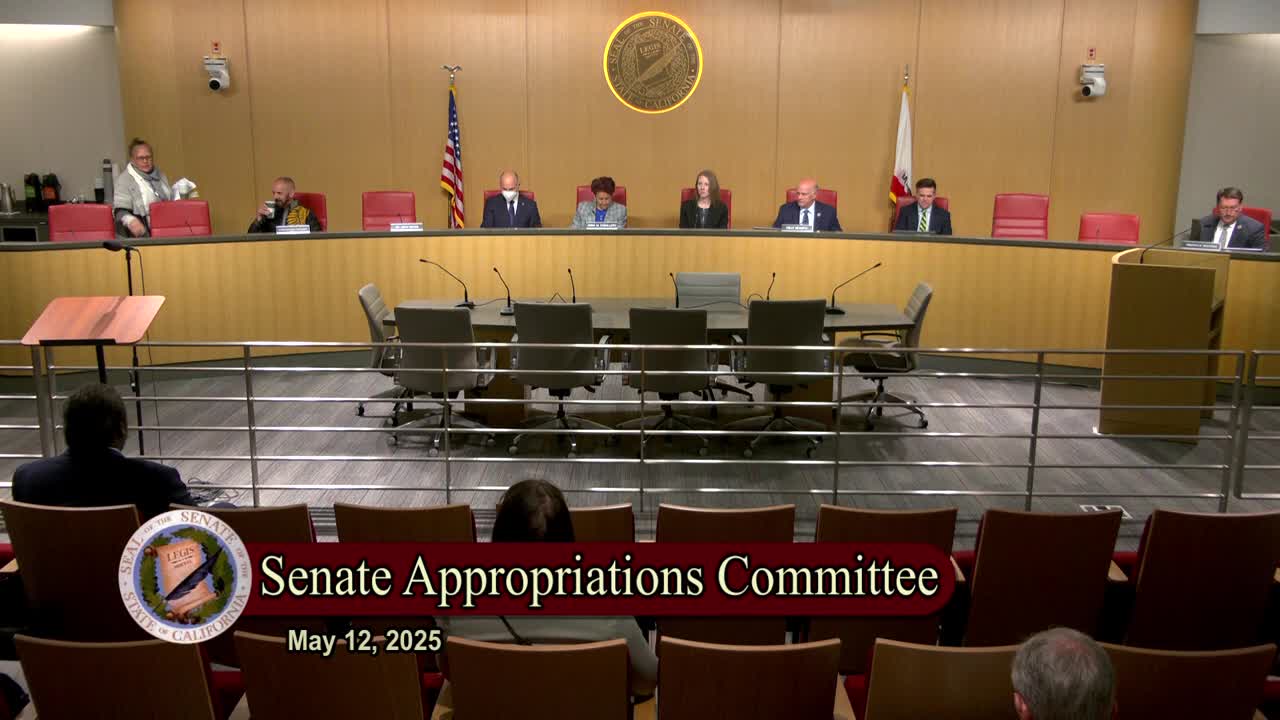 5SEC
Senate Standing Committee on Appropriations
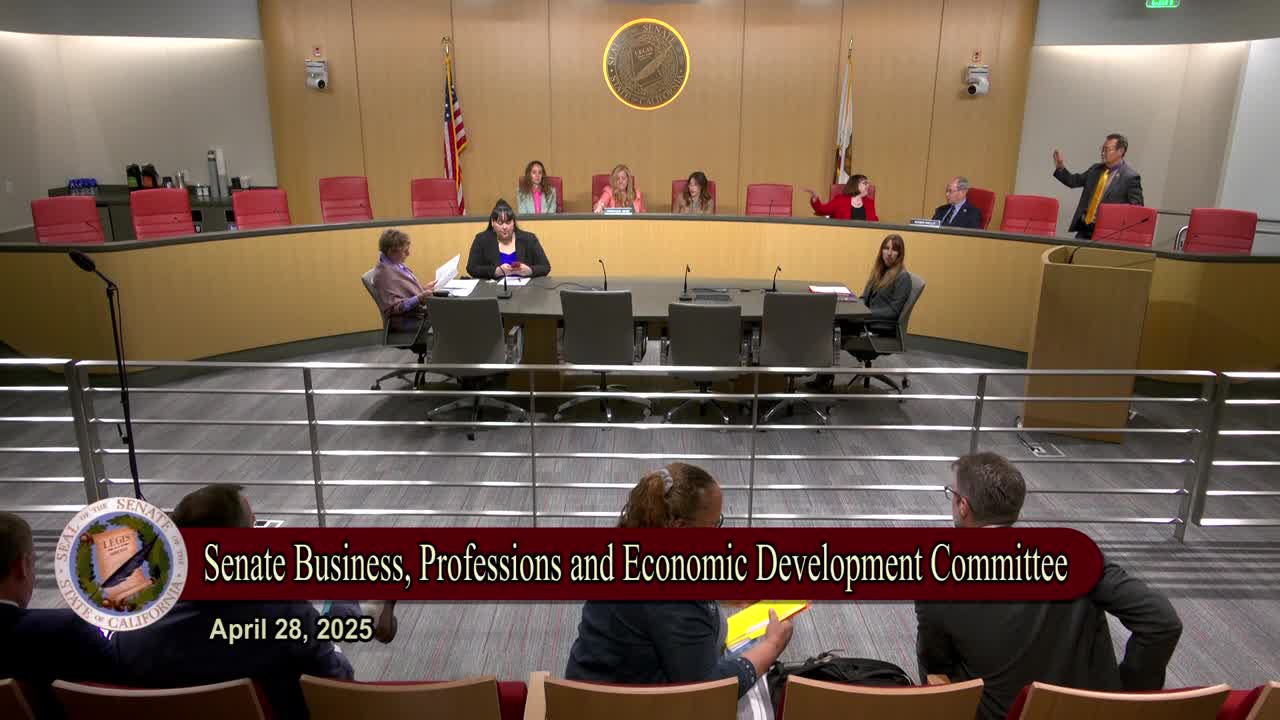 13MIN
Senate Standing Committee on Business, Professions and Economic Development
 19MIN
Senate Standing Committee on Governmental Organization
Bill Author

Bill Co-Author(s):