SB 734: Criminal procedure: discrimination.
- Session Year: 2025-2026
- House: Senate
- Latest Version Date: 2025-10-13
Current Status:
Passed
(2025-10-13: Chaptered by Secretary of State. Chapter 784, Statutes of 2025.)
Introduced
In Committee
Awaiting First Chamber Vote
Passed First Chamber
In Committee
Awaiting Second Chamber Vote
Passed Second Chamber
Enacted
Existing law, the Public Safety Officers Procedural Bill of Rights Act, grants certain employment rights to public safety officers, as defined. The act prohibits, among other things, any punitive action against a public safety officer, denial of promotion on grounds other than merit, or threat of such treatment, because of the lawful exercise of the rights granted under the act, or the exercise of any rights under any existing administrative grievance procedure.
Existing law, the California Racial Justice Act of 2020, prohibits the state from seeking a criminal conviction or sentence on the basis of race, ethnicity, or national origin. Existing law authorizes a defendant to file a motion in the trial court or, if judgment has been imposed, to file a petition for writ of habeas corpus to allege a violation of this prohibition.
Existing law authorizes the Commission on Peace Officer Standards and Training to revoke the certification of a peace officer if the officer has, while employed as a peace officer, engaged in serious misconduct including, among other things, demonstrating bias on the basis of race, national origin, religion, gender identity or expression, housing status, sexual orientation, mental or physical disability, or other protected status in violation of law or department policy or inconsistent with a peace officers obligation to carry out their duties in a fair and unbiased manner.
This bill would prohibit a punitive action, denial of promotion on grounds other than merit, or a revocation of certification proceeding from being undertaken against any public safety officer on the basis of a court finding made in a challenge brought under the California Racial Justice Act of 2020, and would prohibit those court findings from being introduced for any purpose in any administrative appeal of a punitive action. The bill would require, if the defendant is represented by an attorney in a case brought under the California Racial Justice Act of 2020, in the prosecution of a writ of habeas corpus, or in the filing of a motion to vacate a conviction or sentence based on a violation of the California Racial Justice Act of 2020, and the motion or petition is based, in whole or in part, on the conduct of a law enforcement officer, the attorney to serve a copy of the motion on the law enforcement agency employing the officer.
This bill would incorporate additional changes to Sections 745, 1473, and 1473.7 of the Penal Code proposed by AB 1071 to be operative only if this bill and AB 1071 are enacted and this bill is enacted last.
Existing law, the Public Safety Officers Procedural Bill of Rights Act, grants certain employment rights to public safety officers, as defined. The act prohibits, among other things, any punitive action against a public safety officer, denial of promotion on grounds other than merit, or threat of such treatment, because of the lawful exercise of the rights granted under the act, or the exercise of any rights under any existing administrative grievance procedure.
Existing law, the California Racial Justice Act of 2020, prohibits the state from seeking a criminal conviction or sentence on the basis of race, ethnicity, or national origin. Existing law authorizes a defendant to file a motion in the trial court or, if judgment has been imposed, to file a petition for writ of habeas corpus to allege a violation of this prohibition.
Existing law authorizes the Commission on Peace Officer Standards and Training to revoke the certification of a peace officer if the officer has, while employed as a peace officer, engaged in serious misconduct including, among other things, demonstrating bias on the basis of race, national origin, religion, gender identity or expression, housing status, sexual orientation, mental or physical disability, or other protected status in violation of law or department policy or inconsistent with a peace officers obligation to carry out their duties in a fair and unbiased manner.
This bill would prohibit a punitive action, denial of promotion on grounds other than merit, or a revocation of certification proceeding from being undertaken against any public safety officer on the basis of a court finding made in a challenge brought under the California Racial Justice Act of 2020, and would prohibit those court findings from being introduced for any purpose in any administrative appeal of a punitive action. The bill would require, if the defendant is represented by an attorney in a case brought under the California Racial Justice Act of 2020, in the prosecution of a writ of habeas corpus, or in the filing of a motion to vacate a conviction or sentence based on a violation of the California Racial Justice Act of 2020, and the motion or petition is based, in whole or in part, on the conduct of a law enforcement officer, the attorney to serve a copy of the motion on the law enforcement agency employing the officer.
Existing law, the Public Safety Officers Procedural Bill of Rights Act, grants certain employment rights to public safety officers, as defined. The act prohibits, among other things, any punitive action against a public safety officer, denial of promotion on grounds other than merit, or threat of such treatment, because of the lawful exercise of the rights granted under the act, or the exercise of any rights under any existing administrative grievance procedure.
Existing law, the California Racial Justice Act of 2020, prohibits the state from seeking a criminal conviction or sentence on the basis of race, ethnicity, or national origin. Existing law authorizes a defendant to file a motion in the trial court or, if judgment has been imposed, to file a petition for writ of habeas corpus to allege a violation of this prohibition.
Existing law authorizes the Commission on Peace Officer Standards and Training to revoke the certification of a peace officer if the officer has, while employed as a peace officer, engaged in serious misconduct including, among other things, demonstrating bias on the basis of race, national origin, religion, gender identity or expression, housing status, sexual orientation, mental or physical disability, or other protected status in violation of law or department policy or inconsistent with a peace officers obligation to carry out their duties in a fair and unbiased manner.
This bill would prohibit a punitive action, denial of promotion on grounds other than merit, or a revocation of certification proceeding from being undertaken against any public safety officer solely on the basis of a court finding made in a challenge brought under the California Racial Justice Act of 2020, and would prohibit those court findings from being introduced for any purpose in any administrative appeal of a punitive action. The bill would require, if the defendant is represented by an attorney in a case brought under the California Racial Justice Act of 2020, in the prosecution of a writ of habeas corpus, or in the filing of a motion to vacate a conviction or sentence based on a violation of the California Racial Justice Act of 2020, and the motion or petition is based, in whole or in part, on the conduct of a law enforcement officer, the attorney to serve a copy of the motion on the law enforcement agency employing the officer.
Existing law, the Public Safety Officers Procedural Bill of Rights Act, grants certain employment rights to public safety officers, as defined. The act prohibits, among other things, any punitive action against a public safety officer, denial of promotion on grounds other than merit, or threat of such treatment, because of the lawful exercise of the rights granted under the act, or the exercise of any rights under any existing administrative grievance procedure.
Existing law, the California Racial Justice Act, Act of 2020, prohibits the state from seeking a criminal conviction or sentence on the basis of race, ethnicity, or national origin. Existing law authorizes a defendant to file a motion in the trial court or, if judgment has been imposed, to file a petition for writ of habeas corpus to allege a violation of this prohibition.
Existing law authorizes the Commission on Peace Officer Standards and Training to revoke the certification of a peace officer if the officer has, while employed as a peace officer, engaged in serious misconduct including, among other things, demonstrating bias on the basis of race, national origin, religion, gender identity or expression, housing status, sexual orientation, mental or physical disability, or other protected status in violation of law or department policy or inconsistent with a peace officers obligation to carry out their duties in a fair and unbiased manner.
This bill would prohibit a punitive action, denial of promotion on grounds other than merit, or a revocation of certification proceeding from being undertaken against any public safety officer solely on the basis of a court finding made in a challenge brought under the California Racial Justice Act, Act of 2020, and would prohibit those court findings from being introduced for any purpose in any administrative appeal of a punitive action. The bill would require require, if the defendant is represented by an attorney in a case brought under the California Racial Justice Act to provide notice of a hearing pursuant to the act to any person accused of bias or racial animus in the proceeding, and would authorize any person accused of bias or racial animus in those proceedings, or any interested party on behalf of those persons or of the defendant, to submit an amicus brief to the court. of 2020, and the motion is based, in whole or in part, on the conduct of a law enforcement officer, the attorney to serve a copy of the motion on the law enforcement agency employing the officer.
Existing law, the Public Safety Officers Procedural Bill of Rights Act, grants certain employment rights to public safety officers, as defined. The act prohibits, among other things, any punitive action against a public safety officer, denial of promotion on grounds other than merit, or threat of such treatment, because of the lawful exercise of the rights granted under the act, or the exercise of any rights under any existing administrative grievance procedure.
Existing law law, the Racial Justice Act, prohibits the state from seeking a criminal conviction or sentence on the basis of race, ethnicity, or national origin. Existing law authorizes a defendant to file a motion in the trial court or, if judgment has been imposed, to file a petition for writ of habeas corpus to allege a violation of this prohibition.
Existing law authorizes the Commission on Peace Officer Standards and Training to revoke the certification of a peace officer if the officer has, while employed as a peace officer, engaged in serious misconduct including, among other things, demonstrating bias on the basis of race, national origin, religion, gender identity or expression, housing status, sexual orientation, mental or physical disability, or other protected status in violation of law or department policy or inconsistent with a peace officers obligation to carry out their duties in a fair and unbiased manner.
This bill would prohibit a punitive action, denial of promotion on grounds other than merit, or a revocation of certification proceeding from being undertaken against any public safety officer solely on the basis of a court finding made in a challenge brought under the Racial Justice Act, and would prohibit those court findings from being introduced for any purpose in any administrative appeal of a punitive action. The bill would require the defendant in a case brought under the Racial Justice Act to provide notice of a hearing pursuant to these provisions the act to any person accused of bias or racial animus in the proceeding, and would require the person accused of bias or racial animus to be given the right to representation during the hearing, including, but not limited to, the right for their representative to test the sufficiency of the evidence by asking questions of the witnesses. authorize any person accused of bias or racial animus in those proceedings, or any interested party on behalf of those persons or of the defendant, to submit an amicus brief to the court.
Existing law prohibits the state from seeking a criminal conviction or sentence on the basis of race, ethnicity, or national origin. Existing law authorizes a defendant to file a motion in the trial court or, if judgment has been imposed, to file a petition for writ of habeas corpus to allege a violation of this prohibition.
This bill would require the defendant to provide notice of a hearing pursuant to these provisions to any person accused of bias or racial animus in the proceeding, and would require the person accused of bias or racial animus to be given the right to representation during the hearing, including, but not limited to, the right for their representative to test the sufficiency of the evidence by asking questions of the witnesses.
(a)A punitive action or denial of promotion on grounds other than merit shall not be undertaken by any public agency against any public safety officer because of a court finding made in a challenge brought pursuant to Section 745 of the Penal Code.
(b)This section does not prohibit a public agency from taking punitive action, denying promotion on grounds other than merit, or taking other personnel action against a public safety officer based on the underlying acts or omissions which formed the basis of the action brought pursuant to Section 745 of the Penal Code, if the actions taken by the public agency otherwise conform to all the rules and procedures applicable to those proceedings, and the officer is accorded all due process protections provided in those proceedings.
(c)Evidence of a court finding of a violation of Section 745 of the Penal Code shall not be introduced for any purpose in any administrative appeal of a punitive action.
(d)This section does not grant immunity for civil or criminal liability for the underlying acts or omissions which formed the basis of the action brought under Section 745 of the Penal Code.
SEC. 2.Section 745 of the Penal Code is amended to read:745.(a)The state shall not seek or obtain a criminal conviction or seek, obtain, or impose a sentence on the basis of race, ethnicity, or national origin. A violation is established if the defendant proves, by a preponderance of the evidence, any of the following:
(1)The judge, an attorney in the case, a law enforcement officer involved in the case, an expert witness, or juror exhibited bias or animus towards the defendant because of the defendants race, ethnicity, or national origin.
(2)During the defendants trial, in court and during the proceedings, the judge, an attorney in the case, a law enforcement officer involved in the case, an expert witness, or juror, used racially discriminatory language about the defendants race, ethnicity, or national origin, or otherwise exhibited bias or animus towards the defendant because of the defendants race, ethnicity, or national origin, whether or not purposeful. This paragraph does not apply if the person speaking is relating language used by another that is relevant to the case or if the person speaking is giving a racially neutral and unbiased physical description of the suspect.
(3)The defendant was charged or convicted of a more serious offense than defendants of other races, ethnicities, or national origins who have engaged in similar conduct and are similarly situated, and the evidence establishes that the prosecution more frequently sought or obtained convictions for more serious offenses against people who share the defendants race, ethnicity, or national origin in the county where the convictions were sought or obtained.
(4)(A)A longer or more severe sentence was imposed on the defendant than was imposed on other similarly situated individuals convicted of the same offense, and longer or more severe sentences were more frequently imposed for that offense on people that share the defendants race, ethnicity, or national origin than on defendants of other races, ethnicities, or national origins in the county where the sentence was imposed.
(B)A longer or more severe sentence was imposed on the defendant than was imposed on other similarly situated individuals convicted of the same offense, and longer or more severe sentences were more frequently imposed for the same offense on defendants in cases with victims of one race, ethnicity, or national origin than in cases with victims of other races, ethnicities, or national origins, in the county where the sentence was imposed.
(b)A defendant may file a motion pursuant to this section, or a petition for writ of habeas corpus or a motion under Section 1473.7, in a court of competent jurisdiction, alleging a violation of subdivision (a). For claims based on the trial record, a defendant may raise a claim alleging a violation of subdivision (a) on direct appeal from the conviction or sentence. The defendant may also move to stay the appeal and request remand to the superior court to file a motion pursuant to this section. If the motion is based in whole or in part on conduct or statements by the judge, the judge shall disqualify themselves from any further proceedings under this section.
(c)If a motion is filed in the trial court and the defendant makes a prima facie showing of a violation of subdivision (a), the trial court shall hold a hearing. A motion made at trial shall be made as soon as practicable upon the defendant learning of the alleged violation. A motion that is not timely may be deemed waived, in the discretion of the court.
(1)At the hearing, evidence may be presented by either party, including, but not limited to, statistical evidence, aggregate data, expert testimony, and the sworn testimony of witnesses. The court may also appoint an independent expert. For the purpose of a motion and hearing under this section, out-of-court statements that the court finds trustworthy and reliable, statistical evidence, and aggregated data are admissible for the limited purpose of determining whether a violation of subdivision (a) has occurred.
(2)The defendant shall have the burden of proving a violation of subdivision (a) by a preponderance of the evidence. The defendant does not need to prove intentional discrimination.
(3)If the defendant is represented by an attorney and the motion alleges a violation of paragraph (1) or (2) of subdivision (a), based in whole or in part on the conduct of one or more law enforcement officers, the attorney shall serve a copy of the motion on the law enforcement agency or agencies that employed the officer or officers.
(4)At the conclusion of the hearing, the court shall make findings on the record.
(d)A defendant may file a motion requesting disclosure to the defense of all evidence relevant to a potential violation of subdivision (a) in the possession or control of the state. A motion filed under this section shall describe the type of records or information the defendant seeks. Upon a showing of good cause, the court shall order the records to be released. Upon a showing of good cause, and in order to protect a privacy right or privilege, the court may permit the prosecution to redact information prior to disclosure or may subject disclosure to a protective order. If a statutory privilege or constitutional privacy right cannot be adequately protected by redaction or a protective order, the court shall not order the release of the records.
(e)Notwithstanding any other law, except as provided in subdivision (k), or for an initiative approved by the voters, if the court finds, by a preponderance of evidence, a violation of subdivision (a), the court shall impose a remedy specific to the violation found from the following list:
(1)Before a judgment has been entered, the court may impose any of the following remedies:
(A)Declare a mistrial, if requested by the defendant.
(B)Discharge the jury panel and empanel a new jury.
(C)If the court determines that it would be in the interest of justice, dismiss enhancements, special circumstances, or special allegations, or reduce one or more charges.
(2)(A)After a judgment has been entered, if the court finds that a conviction was sought or obtained in violation of subdivision (a), the court shall vacate the conviction and sentence, find that it is legally invalid, and order new proceedings consistent with subdivision (a). If the court finds that the only violation of subdivision (a) that occurred is based on paragraph (3) of subdivision (a), the court may modify the judgment to a lesser included or lesser related offense. On resentencing, the court shall not impose a new sentence greater than that previously imposed.
(B)After a judgment has been entered, if the court finds that only the sentence was sought, obtained, or imposed in violation of subdivision (a), the court shall vacate the sentence, find that it is legally invalid, and impose a new sentence. On resentencing, the court shall not impose a new sentence greater than that previously imposed.
(3)When the court finds there has been a violation of subdivision (a), the defendant shall not be eligible for the death penalty.
(4)The remedies available under this section do not foreclose any other remedies available under the United States Constitution, the California Constitution, or any other law.
(f)This section also applies to adjudications and dispositions in the juvenile delinquency system and adjudications to transfer a juvenile case to adult court.
(g)This section shall not prevent the prosecution of hate crimes pursuant to Sections 422.6 to 422.865, inclusive.
(h)As used in this section, the following definitions apply:
(1)More frequently sought or obtained or more frequently imposed means that the totality of the evidence demonstrates a significant difference in seeking or obtaining convictions or in imposing sentences comparing individuals who have engaged in similar conduct and are similarly situated, and the prosecution cannot establish race-neutral reasons for the disparity. The evidence may include statistical evidence, aggregate data, or nonstatistical evidence. Statistical significance is a factor the court may consider, but is not necessary to establish a significant difference. In evaluating the totality of the evidence, the court shall consider whether systemic and institutional racial bias, racial profiling, and historical patterns of racially biased policing and prosecution may have contributed to, or caused differences observed in, the data or impacted the availability of data overall. Race-neutral reasons shall be relevant factors to charges, convictions, and sentences that are not influenced by implicit, systemic, or institutional bias based on race, ethnicity, or national origin.
(2)Prima facie showing means that the defendant produces facts that, if true, establish that there is a substantial likelihood that a violation of subdivision (a) occurred. For purposes of this section, a substantial likelihood requires more than a mere possibility, but less than a standard of more likely than not.
(3)Relevant factors, as that phrase applies to sentencing, means the factors in the California Rules of Court that pertain to sentencing decisions and any additional factors required to or permitted to be considered in sentencing under state law and under the state and federal constitutions.
(4)Racially discriminatory language means language that, to an objective observer, explicitly or implicitly appeals to racial bias, including, but not limited to, racially charged or racially coded language, language that compares the defendant to an animal, or language that references the defendants physical appearance, culture, ethnicity, or national origin. Evidence that particular words or images are used exclusively or disproportionately in cases where the defendant is of a specific race, ethnicity, or national origin is relevant to determining whether language is discriminatory.
(5)State includes the Attorney General, a district attorney, or a city prosecutor.
(6)Similarly situated means that factors that are relevant in charging and sentencing are similar and do not require that all individuals in the comparison group are identical. A defendants conviction history may be a relevant factor to the severity of the charges, convictions, or sentences. If it is a relevant factor and the defense produces evidence that the conviction history may have been impacted by racial profiling or historical patterns of racially biased policing, the court shall consider the evidence.
(i)A defendant may share a race, ethnicity, or national origin with more than one group. A defendant may aggregate data among groups to demonstrate a violation of subdivision (a).
(j)This section applies as follows:
(1)To all cases in which judgment is not final.
(2)Commencing January 1, 2023, to all cases in which, at the time of the filing of a petition pursuant to subdivision (e) of Section 1473 raising a claim under this section, the petitioner is sentenced to death or to cases in which the motion is filed pursuant to Section 1473.7 because of actual or potential immigration consequences related to the conviction or sentence, regardless of when the judgment or disposition became final.
(3)Commencing January 1, 2024, to all cases in which, at the time of the filing of a petition pursuant to subdivision (e) of Section 1473 raising a claim under this section, the petitioner is currently serving a sentence in the state prison or in a county jail pursuant to subdivision (h) of Section 1170, or committed to the Division of Juvenile Justice for a juvenile disposition, regardless of when the judgment or disposition became final.
(4)Commencing January 1, 2025, to all cases filed pursuant to Section 1473.7 or subdivision (e) of Section 1473 in which judgment became final for a felony conviction or juvenile disposition that resulted in a commitment to the Division of Juvenile Justice on or after January 1, 2015.
(5)Commencing January 1, 2026, to all cases filed pursuant to Section 1473.7 or subdivision (e) of Section 1473 in which judgment was for a felony conviction or juvenile disposition that resulted in a commitment to the Division of Juvenile Justice, regardless of when the judgment or disposition became final.
(k)For petitions that are filed in cases for which judgment was entered before January 1, 2021, and only in those cases, if the petition is based on a violation of paragraph (1) or (2) of subdivision (a), the petitioner shall be entitled to relief as provided in subdivision (e), unless the state proves beyond a reasonable doubt that the violation did not contribute to the judgment.
SEC. 2.5.Section 745 of the Penal Code is amended to read:745.(a)The state shall not seek or obtain a criminal conviction or seek, obtain, or impose a sentence on the basis of race, ethnicity, or national origin. A violation is established if the defendant proves, by a preponderance of the evidence, any of the following:
(1)The judge, an attorney in the case, a law enforcement officer involved in the case, an expert witness, or juror exhibited bias or animus towards the defendant because of the defendants race, ethnicity, or national origin.
(2)During the defendants trial, in court and during the proceedings, the judge, an attorney in the case, a law enforcement officer involved in the case, an expert witness, or juror, used racially discriminatory language about the defendants race, ethnicity, or national origin, or otherwise exhibited bias or animus towards the defendant because of the defendants race, ethnicity, or national origin, whether or not purposeful. This paragraph does not apply if the person speaking is relating language used by another that is relevant to the case or if the person speaking is giving a racially neutral and unbiased physical description of the suspect.
(3)The defendant was charged or convicted of a more serious offense than defendants of other races, ethnicities, or national origins who have engaged in similar conduct and are similarly situated, and the evidence establishes that the prosecution more frequently sought or obtained convictions for more serious offenses against people who share the defendants race, ethnicity, or national origin in the county where the convictions were sought or obtained.
(4)(A)A longer or more severe sentence was imposed on the defendant than was imposed on other similarly situated individuals convicted of the same offense, and longer or more severe sentences were more frequently imposed for that offense on people that share the defendants race, ethnicity, or national origin than on defendants of other races, ethnicities, or national origins in the county where the sentence was imposed.
(B)A longer or more severe sentence was imposed on the defendant than was imposed on other similarly situated individuals convicted of the same offense, and longer or more severe sentences were more frequently imposed for the same offense on defendants in cases with victims of one race, ethnicity, or national origin than in cases with victims of other races, ethnicities, or national origins, in the county where the sentence was imposed.
(b)A defendant may file a motion pursuant to this section, or a petition for writ of habeas corpus or a motion under Section 1473.7, in a court of competent jurisdiction, alleging a violation of subdivision (a). For claims based on the trial record, a defendant may raise a claim alleging a violation of subdivision (a) on direct appeal from the conviction or sentence. The defendant may also move to stay the appeal and request remand to the superior court to file a motion pursuant to this section. If the motion is based in whole or in part on conduct or statements by the judge, the judge shall disqualify themselves from any further proceedings under this section.
(c)If a motion is filed in the trial court and the defendant makes a prima facie showing of a violation of subdivision (a), the trial court shall hold a hearing. A motion made at trial shall be made as soon as practicable upon the defendant learning of the alleged violation. A motion that is not timely may be deemed waived, in the discretion of the court.
(1)At the hearing, evidence may be presented by either party, including, but not limited to, statistical evidence, aggregate data, expert testimony, and the sworn testimony of witnesses. The court may also appoint an independent expert. For the purpose of a motion and hearing under this section, out-of-court statements that the court finds trustworthy and reliable, statistical evidence, and aggregated data are admissible for the limited purpose of determining whether a violation of subdivision (a) has occurred.
(2)The defendant shall have the burden of proving a violation of subdivision (a) by a preponderance of the evidence. The defendant does not need to prove intentional discrimination.
(3)If the defendant is represented by an attorney and the motion alleges a violation of paragraph (1) or (2) of subdivision (a), based in whole or in part on the conduct of one or more law enforcement officers, the attorney shall serve a copy of the motion on the law enforcement agency or agencies that employed the officer or officers.
(4)At the conclusion of the hearing, the court shall make findings on the record.
(d)In any proceeding alleging a violation of subdivision (a), a defendant or petitioner may file a motion requesting disclosure to the defense of all evidence relevant to a potential violation of subdivision (a) in the possession or control of the state. A motion filed under this section, a motion under paragraph (2) of subdivision (e) of Section 1473, or a motion under paragraph (3) of subdivision (a) of Section 1473.7 shall describe the type of records or information the defendant seeks. Upon a showing of good cause, the court shall order the records to be released. Upon a showing of good cause, and in order to protect a privacy right or privilege, the court may permit the prosecution to redact information prior to disclosure or may subject disclosure to a protective order. If a statutory privilege or constitutional privacy right cannot be adequately protected by redaction or a protective order, the court shall not order the release of the records.
(e)Notwithstanding any other law, except as provided in subdivision (k), or for an initiative approved by the voters, if the court finds, by a preponderance of evidence, a violation of subdivision (a), the court shall impose a remedy specific to the violation found from the following list:
(1)Before a judgment has been entered, the court shall impose any of the following remedies:
(A)Grant a defendants request for a mistrial.
(B)Discharge the jury panel and empanel a new jury.
(C)If the court determines that it would be in the interest of justice, dismiss enhancements, special circumstances, or special allegations, or reduce one or more charges.
(D)Any other remedy not prohibited by another law.
(2)(A)After a judgment has been entered, if the court finds that a conviction was sought or obtained in violation of subdivision (a), the court shall vacate the conviction and sentence, find that it is legally invalid, and order new proceedings consistent with subdivision (a). If the court finds that the only violation of subdivision (a) that occurred is based on paragraph (3) of subdivision (a), the court may modify the judgment to a lesser included or lesser related offense. On resentencing, the court shall not impose a new sentence greater than that previously imposed.
(B)After a judgment has been entered, if the court finds that only the sentence was sought, obtained, or imposed in violation of subdivision (a), the court shall vacate the sentence, find that it is legally invalid, and impose a new sentence. On resentencing, the court shall not impose a new sentence greater than that previously imposed.
(3)The remedies available under this section do not foreclose any other remedies available under the United States Constitution, the California Constitution, or any other law.
(f)This section also applies to adjudications and dispositions in the juvenile delinquency system and adjudications to transfer a juvenile case to adult court.
(g)This section shall not prevent the prosecution of hate crimes pursuant to Sections 422.6 to 422.865, inclusive.
(h)As used in this section and for the purposes of a petition pursuant to subdivision (e) of Section 1473 or a motion pursuant to paragraph (3) of subdivision (a) of Section 1473.7, the following definitions apply:
(1)More frequently sought or obtained or more frequently imposed means that the totality of the evidence demonstrates a significant difference in seeking or obtaining convictions or in imposing sentences comparing individuals who have engaged in similar conduct and are similarly situated, and the prosecution cannot establish race-neutral reasons for the disparity. The evidence may include statistical evidence, aggregate data, or nonstatistical evidence. Statistical significance is a factor the court may consider, but is not necessary to establish a significant difference. In evaluating the totality of the evidence, the court shall consider whether systemic and institutional racial bias, racial profiling, and historical patterns of racially biased policing and prosecution may have contributed to, or caused differences observed in, the data or impacted the availability of data overall. Race-neutral reasons shall be relevant factors to charges, convictions, and sentences that are not influenced by implicit, systemic, or institutional bias based on race, ethnicity, or national origin.
(2)Prima facie showing means that the defendant produces facts that, if true, establish that there is a substantial likelihood that a violation of subdivision (a) occurred. For purposes of this section, a substantial likelihood requires more than a mere possibility, but less than a standard of more likely than not.
(3)Relevant factors, as that phrase applies to sentencing, means the factors in the California Rules of Court that pertain to sentencing decisions and any additional factors required to or permitted to be considered in sentencing under state law and under the state and federal constitutions.
(4)Racially discriminatory language means language that, to an objective observer, explicitly or implicitly appeals to racial bias, including, but not limited to, racially charged or racially coded language, language that compares the defendant to an animal, or language that references the defendants physical appearance, culture, ethnicity, or national origin. Evidence that particular words or images are used exclusively or disproportionately in cases where the defendant is of a specific race, ethnicity, or national origin is relevant to determining whether language is discriminatory.
(5)State includes the Attorney General, a district attorney, or a city prosecutor.
(6)Similarly situated means that factors that are relevant in charging and sentencing are similar and do not require that all individuals in the comparison group are identical. A defendants conviction history may be a relevant factor to the severity of the charges, convictions, or sentences. If it is a relevant factor and the defense produces evidence that the conviction history may have been impacted by racial profiling or historical patterns of racially biased policing, the court shall consider the evidence.
(i)A defendant may share a race, ethnicity, or national origin with more than one group. A defendant may aggregate data among groups to demonstrate a violation of subdivision (a).
(j)This section applies as follows:
(1)To all cases in which judgment is not final.
(2)Commencing January 1, 2023, to all cases in which, at the time of the filing of a petition pursuant to subdivision (e) of Section 1473 raising a claim under this section, the petitioner is sentenced to death or to cases in which the motion is filed pursuant to Section 1473.7 because of actual or potential immigration consequences related to the conviction or sentence, regardless of when the judgment or disposition became final.
(3)Commencing January 1, 2024, to all cases in which, at the time of the filing of a petition pursuant to subdivision (e) of Section 1473 raising a claim under this section, the petitioner is currently serving a sentence in the state prison or in a county jail pursuant to subdivision (h) of Section 1170, or committed to the Division of Juvenile Justice for a juvenile disposition, regardless of when the judgment or disposition became final.
(4)Commencing January 1, 2025, to all cases filed pursuant to Section 1473.7 or subdivision (e) of Section 1473 in which judgment became final for a felony conviction or juvenile disposition that resulted in a commitment to the Division of Juvenile Justice on or after January 1, 2015.
(5)Commencing January 1, 2026, to all cases filed pursuant to Section 1473.7 or subdivision (e) of Section 1473 in which judgment was for a felony conviction or juvenile disposition that resulted in a commitment to the Division of Juvenile Justice, regardless of when the judgment or disposition became final.
(k)For petitions that are filed in cases for which judgment was entered before January 1, 2021, and only in those cases, if the petition is based on a violation of paragraph (1) or (2) of subdivision (a), the petitioner shall be entitled to relief as provided in subdivision (e), unless the state proves beyond a reasonable doubt that the violation did not contribute to the judgment.
(l)When the court finds there has been a violation of subdivision (a), the defendant shall not be eligible for the death penalty.
SEC. 3.Section 1473 of the Penal Code is amended to read:1473.(a)A person unlawfully imprisoned or restrained of their liberty, under any pretense, may prosecute a writ of habeas corpus to inquire into the cause of the imprisonment or restraint.
(b)(1)A writ of habeas corpus may be prosecuted for, but not limited to, the following reasons:
(A)False evidence that is material on the issue of guilt or punishment was introduced against a person at a hearing or trial relating to the persons incarceration.
(B)False physical evidence, believed by a person to be factual, probative, or material on the issue of guilt, which was known by the person at the time of entering a plea of guilty, which was a material factor directly related to the plea of guilty by the person.
(C)(i)New evidence exists that is presented without substantial delay, is admissible, and is sufficiently material and credible that it more likely than not would have changed the outcome of the case.
(ii)For purposes of this section, new evidence means evidence that has not previously been presented and heard at trial and has been discovered after trial.
(D)A significant dispute has emerged or further developed in the petitioners favor regarding expert medical, scientific, or forensic testimony that was introduced at trial or a hearing and that expert testimony more likely than not affected the outcome of the case.
(i)For purposes of this section, the expert medical, scientific, or forensic testimony includes the experts conclusion or the scientific, forensic, or medical facts upon which their opinion is based.
(ii)For purposes of this section, the significant dispute may be as to the reliability or validity of the diagnosis, technique, methods, theories, research, or studies upon which a medical, scientific, or forensic expert based their testimony.
(iii)Under this section, a significant dispute can be established by credible expert testimony or declaration, or by peer reviewed literature showing that experts in the relevant medical, scientific, or forensic community, substantial in number or expertise, have concluded that developments have occurred that undermine the reliability or validity of the diagnosis, technique, methods, theories, research, or studies upon which a medical, scientific, or forensic expert based their testimony.
(iv)In assessing whether a dispute is significant, the court shall give great weight to evidence that a consensus has developed in the relevant medical, scientific, or forensic community undermining the reliability or validity of the diagnosis, technique, methods, theories, research, or studies upon which a medical, scientific, or forensic expert based their testimony or that there is a lack of consensus as to the reliability or validity of the diagnosis, technique, methods, theories, research, or studies upon which a medical, scientific, or forensic expert based their testimony.
(v)The significant dispute must have emerged or further developed within the relevant medical, scientific, or forensic community, which includes the scientific community and all fields of scientific knowledge on which those fields or disciplines rely and shall not be limited to practitioners or proponents of a particular scientific or technical field or discipline.
(vi)If the petitioner makes a prima facie showing that they are entitled to relief, the court shall issue an order to show cause why relief shall not be granted. To obtain relief, all the elements of this subparagraph must be established by a preponderance of the evidence.
(2)For purposes of this subdivision, false evidence includes opinions of experts that have either been repudiated by the expert who originally provided the opinion at a hearing or trial or that have been undermined by the state of scientific knowledge or later scientific research or technological advances.
(3)Any allegation that the prosecution knew or should have known of the false nature of the evidence is immaterial to the prosecution of a writ of habeas corpus brought under subparagraph (A) or (B) of paragraph (1).
(4)This subdivision does not create additional liabilities, beyond those already recognized, for an expert who repudiates the original opinion provided at a hearing or trial or whose opinion has been undermined by scientific research, technological advancements, or because of a reasonable dispute within the experts relevant scientific community as to the validity of the methods, theories, research, or studies upon which the expert based their opinion.
(c)This section does not change the existing procedures for habeas relief.
(d)This section does not limit the grounds for which a writ of habeas corpus may be prosecuted or preclude the use of any other remedies.
(e)(1)Notwithstanding any other law, a writ of habeas corpus may also be prosecuted after judgment has been entered based on evidence that a criminal conviction or sentence was sought, obtained, or imposed in violation of subdivision (a) of Section 745, if that section applies based on the date of judgment as provided in subdivision (j) of Section 745. A petition raising a claim of this nature for the first time, or on the basis of new discovery provided by the state or other new evidence that could not have been previously known by the petitioner with due diligence, shall not be deemed a successive or abusive petition. If the petitioner has a habeas corpus petition pending in state court, but it has not yet been decided, the petitioner may amend the existing petition with a claim that the petitioners conviction or sentence was sought, obtained, or imposed in violation of subdivision (a) of Section 745. The petition shall state if the petitioner requests appointment of counsel and the court shall appoint counsel if the petitioner cannot afford counsel and either the petition alleges facts that would establish a violation of subdivision (a) of Section 745 or the State Public Defender requests counsel be appointed. Newly appointed counsel may amend a petition filed before their appointment. The court shall review a petition raising a claim pursuant to Section 745 and shall determine if the petitioner has made a prima facie showing of entitlement to relief. If the petitioner makes a prima facie showing that the petitioner is entitled to relief, the court shall issue an order to show cause why relief shall not be granted and hold an evidentiary hearing, unless the state declines to show cause. The defendant may appear remotely, and the court may conduct the hearing through the use of remote technology, unless counsel indicates that the defendants presence in court is needed. If the court determines that the petitioner has not established a prima facie showing of entitlement to relief, the court shall state the factual and legal basis for its conclusion on the record or issue a written order detailing the factual and legal basis for its conclusion.
(2)If the defendant is represented by an attorney and the petition alleges a violation of paragraph (1) or (2) of subdivision (a) of Section 745, based in whole or in part on the conduct of one or more law enforcement officers, the attorney shall serve a copy of the motion on the law enforcement agency or agencies that employed the officer or officers.
(f)If the court holds an evidentiary hearing and the petitioner is incarcerated in state prison, the petitioner may choose not to appear for the hearing with a signed or oral waiver on record, or they may appear remotely through the use of remote technology, unless counsel indicates that the defendants presence in court is needed.
(g)For purposes of this section, if the district attorney in the county of conviction or the Attorney General concedes or stipulates to a factual or legal basis for habeas relief, there shall be a presumption in favor of granting relief. This presumption may be overcome only if the record before the court contradicts the concession or stipulation or it would lead to the court issuing an order contrary to law.
(h)(1)If after the court grants postconviction relief under this section and the prosecuting agency elects to retry the petitioner, the petitioners postconviction counsel may be appointed as counsel or cocounsel to represent the petitioner on the retrial if both of the following requirements are met:
(A)The petitioner and postconviction counsel both agree for postconviction counsel to be appointed.
(B)Postconviction counsel is qualified to handle trials.
(2)Counsel shall be paid under the applicable pay scale for appointed counsel. Otherwise, the court shall appoint other appropriate counsel.
SEC. 3.5.Section 1473 of the Penal Code is amended to read:1473.(a)A person unlawfully imprisoned or restrained of their liberty, under any pretense, may prosecute a writ of habeas corpus to inquire into the cause of the imprisonment or restraint.
(b)(1)A writ of habeas corpus may be prosecuted for, but not limited to, the following reasons:
(A)False evidence that is material on the issue of guilt or punishment was introduced against a person at a hearing or trial relating to the persons incarceration.
(B)False physical evidence, believed by a person to be factual, probative, or material on the issue of guilt, which was known by the person at the time of entering a plea of guilty, which was a material factor directly related to the plea of guilty by the person.
(C)(i)New evidence exists that is presented without substantial delay, is admissible, and is sufficiently material and credible that it more likely than not would have changed the outcome of the case.
(ii)For purposes of this section, new evidence means evidence that has not previously been presented and heard at trial and has been discovered after trial.
(D)A significant dispute has emerged or further developed in the petitioners favor regarding expert medical, scientific, or forensic testimony that was introduced at trial or a hearing and that expert testimony more likely than not affected the outcome of the case.
(i)For purposes of this section, the expert medical, scientific, or forensic testimony includes the experts conclusion or the scientific, forensic, or medical facts upon which their opinion is based.
(ii)For purposes of this section, the significant dispute may be as to the reliability or validity of the diagnosis, technique, methods, theories, research, or studies upon which a medical, scientific, or forensic expert based their testimony.
(iii)Under this section, a significant dispute can be established by credible expert testimony or declaration, or by peer reviewed literature showing that experts in the relevant medical, scientific, or forensic community, substantial in number or expertise, have concluded that developments have occurred that undermine the reliability or validity of the diagnosis, technique, methods, theories, research, or studies upon which a medical, scientific, or forensic expert based their testimony.
(iv)In assessing whether a dispute is significant, the court shall give great weight to evidence that a consensus has developed in the relevant medical, scientific, or forensic community undermining the reliability or validity of the diagnosis, technique, methods, theories, research, or studies upon which a medical, scientific, or forensic expert based their testimony or that there is a lack of consensus as to the reliability or validity of the diagnosis, technique, methods, theories, research, or studies upon which a medical, scientific, or forensic expert based their testimony.
(v)The significant dispute must have emerged or further developed within the relevant medical, scientific, or forensic community, which includes the scientific community and all fields of scientific knowledge on which those fields or disciplines rely and shall not be limited to practitioners or proponents of a particular scientific or technical field or discipline.
(vi)If the petitioner makes a prima facie showing that they are entitled to relief, the court shall issue an order to show cause why relief shall not be granted. To obtain relief, all the elements of this subparagraph must be established by a preponderance of the evidence.
(2)For purposes of this subdivision, false evidence includes opinions of experts that have either been repudiated by the expert who originally provided the opinion at a hearing or trial or that have been undermined by the state of scientific knowledge or later scientific research or technological advances.
(3)Any allegation that the prosecution knew or should have known of the false nature of the evidence is immaterial to the prosecution of a writ of habeas corpus brought under subparagraph (A) or (B) of paragraph (1).
(4)This subdivision does not create additional liabilities, beyond those already recognized, for an expert who repudiates the original opinion provided at a hearing or trial or whose opinion has been undermined by scientific research, technological advancements, or because of a reasonable dispute within the experts relevant scientific community as to the validity of the methods, theories, research, or studies upon which the expert based their opinion.
(c)This section does not change the existing procedures for habeas relief, except as provided in subdivision (e).
(d)This section does not limit the grounds for which a writ of habeas corpus may be prosecuted or preclude the use of any other remedies.
(e)Notwithstanding any other law, a writ of habeas corpus may also be prosecuted after judgment has been entered based on evidence that a criminal conviction or sentence was sought, obtained, or imposed in violation of subdivision (a) of Section 745, if that section applies based on the date of judgment as provided in subdivision (j) of Section 745.
(1)Any and all definitions and legal thresholds specified in Section 745 are controlling for purposes of claims alleging a violation of subdivision (a) of Section 745 contained within a habeas petition filed under this section.
(2)A petitioner, or their counsel, may file a motion for relevant evidence under subdivision (d) of Section 745 upon the prosecution of a petition under this subdivision, or in preparation to file a petition.
(3)A petition raising a claim of this nature for the first time, or on the basis of new discovery provided by the state or other new evidence that could not have been previously known by the petitioner with due diligence, shall not be deemed a successive or abusive petition.
(4)If the petitioner has a habeas corpus petition pending in state court, but it has not yet been decided, the petitioner may amend the existing petition with a claim that the petitioners conviction or sentence was sought, obtained, or imposed in violation of subdivision (a) of Section 745.
(5)The petition shall state if the petitioner requests appointment of counsel and the court shall appoint counsel if the petitioner cannot afford counsel and either the petition pleads a plausible allegation of a violation of subdivision (a) of Section 745 or the State Public Defender requests counsel be appointed. Newly appointed counsel may amend a petition filed before their appointment.
(6)If the defendant is represented by an attorney and the petition alleges a violation of paragraph (1) or (2) of subdivision (a) of Section 745, based in whole or in part on the conduct of one or more law enforcement officers, the attorney shall serve a copy of the motion on the law enforcement agency or agencies that employed the officer or officers.
(7)(A)The court shall review a petition raising a claim pursuant to Section 745 and shall determine if the petitioner has made a prima facie showing. A prima facie determination shall be based on the petitioners showing and the record. The court may request an informal response from the state.
(B)If the petitioner makes a prima facie showing, the court shall issue an order to show cause why relief shall not be granted and hold an evidentiary hearing, unless the state declines to show cause. The defendant may appear remotely, and the court may conduct the hearing through the use of remote technology, unless counsel indicates that the defendants presence in court is needed.
(C)If the court determines that the petitioner has not established a prima facie showing, the court shall state the factual and legal basis for its conclusion on the record or issue a written order detailing the factual and legal basis for its conclusion.
(8)If the court finds a violation of subdivision (a), the court shall impose one or more of the applicable remedies as outlined in subdivision (e) of Section 745.
(f)If the court holds an evidentiary hearing and the petitioner is incarcerated in state prison, the petitioner may choose not to appear for the hearing with a signed or oral waiver on record, or they may appear remotely through the use of remote technology, unless counsel indicates that the defendants presence in court is needed.
(g)For purposes of this section, if the district attorney in the county of conviction or the Attorney General concedes or stipulates to a factual or legal basis for habeas relief, there shall be a presumption in favor of granting relief. This presumption may be overcome only if the record before the court contradicts the concession or stipulation or it would lead to the court issuing an order contrary to law.
(h)(1)If after the court grants postconviction relief under this section and the prosecuting agency elects to retry the petitioner, the petitioners postconviction counsel may be appointed as counsel or cocounsel to represent the petitioner on the retrial if both of the following requirements are met:
(A)The petitioner and postconviction counsel both agree for postconviction counsel to be appointed.
(B)Postconviction counsel is qualified to handle trials.
(2)Counsel shall be paid under the applicable pay scale for appointed counsel. Otherwise, the court shall appoint other appropriate counsel.
SEC. 4.Section 1473.7 of the Penal Code is amended to read:1473.7.(a)A person who is no longer in criminal custody may file a motion to vacate a conviction or sentence for any of the following reasons:
(1)The conviction or sentence is legally invalid due to prejudicial error damaging the moving partys ability to meaningfully understand, defend against, or knowingly accept the actual or potential adverse immigration consequences of a conviction or sentence. A finding of legal invalidity may, but need not, include a finding of ineffective assistance of counsel.
(2)Newly discovered evidence of actual innocence exists that requires vacation of the conviction or sentence as a matter of law or in the interests of justice.
(3)(A)A conviction or sentence was sought, obtained, or imposed on the basis of race, ethnicity, or national origin in violation of subdivision (a) of Section 745.
(B)If the motion alleges a violation of paragraph (1) or (2) of subdivision (a) of Section 745, based in whole or in part on the conduct of one or more law enforcement officers, the person shall serve a copy of the motion on the law enforcement agency or agencies that employed the officer or officers.
(b)(1)Except as provided in paragraph (2), a motion pursuant to paragraph (1) of subdivision (a) shall be deemed timely filed at any time in which the individual filing the motion is no longer in criminal custody.
(2)A motion pursuant to paragraph (1) of subdivision (a) may be deemed untimely filed if it was not filed with reasonable diligence after the later of the following:
(A)The moving party receives a notice to appear in immigration court or other notice from immigration authorities that asserts the conviction or sentence as a basis for removal or the denial of an application for an immigration benefit, lawful status, or naturalization.
(B)Notice that a final removal order has been issued against the moving party, based on the existence of the conviction or sentence that the moving party seeks to vacate.
(c)A motion pursuant to paragraph (2) or (3) of subdivision (a) shall be filed without undue delay from the date the moving party discovered, or could have discovered with the exercise of due diligence, the evidence that provides a basis for relief under this section or Section 745.
(d)All motions shall be entitled to a hearing. Upon the request of the moving party, the court may hold the hearing without the personal presence of the moving party provided that it finds good cause as to why the moving party cannot be present. If the prosecution has no objection to the motion, the court may grant the motion to vacate the conviction or sentence without a hearing.
(e)When ruling on the motion:
(1)The court shall grant the motion to vacate the conviction or sentence if the moving party establishes, by a preponderance of the evidence, the existence of any of the grounds for relief specified in subdivision (a). For a motion made pursuant to paragraph (1) of subdivision (a), the moving party shall also establish that the conviction or sentence being challenged is currently causing or has the potential to cause removal or the denial of an application for an immigration benefit, lawful status, or naturalization.
(2)There is a presumption of legal invalidity for the purposes of paragraph (1) of subdivision (a) if the moving party pleaded guilty or nolo contendere pursuant to a statute that provided that, upon completion of specific requirements, the arrest and conviction shall be deemed never to have occurred, where the moving party complied with these requirements, and where the disposition under the statute has been, or potentially could be, used as a basis for adverse immigration consequences.
(3)If the court grants the motion to vacate a conviction or sentence obtained through a plea of guilty or nolo contendere, the court shall allow the moving party to withdraw the plea.
(4)When ruling on a motion under paragraph (1) of subdivision (a), the only finding that the court is required to make is whether the conviction is legally invalid due to prejudicial error damaging the moving partys ability to meaningfully understand, defend against, or knowingly accept the actual or potential adverse immigration consequences of a conviction or sentence. When ruling on a motion under paragraph (2) of subdivision (a), the court shall specify the basis for its conclusion.
(f)An order granting or denying the motion is appealable under subdivision (b) of Section 1237 as an order after judgment affecting the substantial rights of a party.
(g)A court may only issue a specific finding of ineffective assistance of counsel as a result of a motion brought under paragraph (1) of subdivision (a) if the attorney found to be ineffective was given timely advance notice of the motion hearing by the moving party or the prosecutor, pursuant to Section 416.90 of the Code of Civil Procedure.
SEC. 4.5.Section 1473.7 of the Penal Code is amended to read:1473.7.(a)A person who is no longer in criminal custody may file a motion to vacate a conviction or sentence for any of the following reasons:
(1)The conviction or sentence is legally invalid due to prejudicial error damaging the moving partys ability to meaningfully understand, defend against, or knowingly accept the actual or potential adverse immigration consequences of a conviction or sentence. A finding of legal invalidity may, but need not, include a finding of ineffective assistance of counsel.
(2)Newly discovered evidence of actual innocence exists that requires vacation of the conviction or sentence as a matter of law or in the interests of justice.
(3)(A)A conviction or sentence was sought, obtained, or imposed on the basis of race, ethnicity, or national origin in violation of subdivision (a) of Section 745.
(B)If the motion alleges a violation of paragraph (1) or (2) of subdivision (a) of Section 745, based in whole or in part on the conduct of one or more law enforcement officers, the person shall serve a copy of the motion on the law enforcement agency or agencies that employed the officer or officers.
(b)(1)Except as provided in paragraph (2), a motion pursuant to paragraph (1) of subdivision (a) shall be deemed timely filed at any time in which the individual filing the motion is no longer in criminal custody.
(2)A motion pursuant to paragraph (1) of subdivision (a) may be deemed untimely filed if it was not filed with reasonable diligence after the later of the following:
(A)The moving party receives a notice to appear in immigration court or other notice from immigration authorities that asserts the conviction or sentence as a basis for removal or the denial of an application for an immigration benefit, lawful status, or naturalization.
(B)Notice that a final removal order has been issued against the moving party, based on the existence of the conviction or sentence that the moving party seeks to vacate.
(c)A motion pursuant to paragraph (2) or (3) of subdivision (a) shall be filed without undue delay from the date the moving party discovered, or could have discovered with the exercise of due diligence, the evidence that provides a basis for relief under this section or Section 745.
(d)All motions shall be entitled to a hearing. Upon the request of the moving party, the court may hold the hearing without the personal presence of the moving party provided that it finds good cause as to why the moving party cannot be present. If the prosecution has no objection to the motion, the court may grant the motion to vacate the conviction or sentence without a hearing.
(e)In preparation for the filing of a motion pursuant to paragraph (3) of subdivision (a), the defendant may file a motion to obtain discovery as outlined in subdivision (d) of Section 745.
(f)When ruling on the motion:
(1)The court shall grant the motion to vacate the conviction or sentence if the moving party establishes, by a preponderance of the evidence, the existence of any of the grounds for relief specified in subdivision (a). For a motion made pursuant to paragraph (1) of subdivision (a), the moving party shall also establish that the conviction or sentence being challenged is currently causing or has the potential to cause removal or the denial of an application for an immigration benefit, lawful status, or naturalization.
(2)There is a presumption of legal invalidity for the purposes of paragraph (1) of subdivision (a) if the moving party pleaded guilty or nolo contendere pursuant to a statute that provided that, upon completion of specific requirements, the arrest and conviction shall be deemed never to have occurred, where the moving party complied with these requirements, and where the disposition under the statute has been, or potentially could be, used as a basis for adverse immigration consequences.
(3)If the court grants the motion to vacate a conviction or sentence obtained through a plea of guilty or nolo contendere, the court shall allow the moving party to withdraw the plea.
(4)When ruling on a motion under paragraph (1) of subdivision (a), the only finding that the court is required to make is whether the conviction is legally invalid due to prejudicial error damaging the moving partys ability to meaningfully understand, defend against, or knowingly accept the actual or potential adverse immigration consequences of a conviction or sentence. When ruling on a motion under paragraph (2) of subdivision (a), the court shall specify the basis for its conclusion.
(5)If the court grants a motion made pursuant to paragraph (3) of subdivision (a), the court shall impose one or more of the applicable remedies as outlined in subdivision (e) of Section 745.
(g)An order granting or denying the motion is appealable under subdivision (b) of Section 1237 as an order after judgment affecting the substantial rights of a party.
(h)A court may only issue a specific finding of ineffective assistance of counsel as a result of a motion brought under paragraph (1) of subdivision (a) if the attorney found to be ineffective was given timely advance notice of the motion hearing by the moving party or the prosecutor, pursuant to Section 416.90 of the Code of Civil Procedure.
SEC. 5.Section 13510.8 of the Penal Code is amended to read:13510.8.(a)(1)The commission shall revoke the certification of a certified peace officer if the person is or has become ineligible to hold office as a peace officer pursuant to Section 1029 of the Government Code.
(2)The commission may suspend or revoke the certification of a peace officer if the person has been terminated for cause from employment as a peace officer for, or has, while employed as a peace officer, otherwise engaged in, any serious misconduct as described in subdivision (b).
(3)The commission may cancel the certificate or proof of eligibility of a peace officer if the commission determines that there was fraud or misrepresentation made by an applicant at any time during the application process that resulted in the issuance of the certification.
(b)By January 1, 2023, the commission shall adopt by regulation a definition of serious misconduct that shall serve as the criteria to be considered for ineligibility for, or revocation of, certification. This definition shall include all of the following:
(1)Dishonesty relating to the reporting, investigation, or prosecution of a crime, or relating to the reporting of, or investigation of misconduct by, a peace officer or custodial officer, including, but not limited to, false statements, intentionally filing false reports, tampering with, falsifying, destroying, or concealing evidence, perjury, and tampering with data recorded by a body-worn camera or other recording device for purposes of concealing misconduct.
(2)Abuse of power, including, but not limited to, intimidating witnesses, knowingly obtaining a false confession, and knowingly making a false arrest.
(3)Physical abuse, including, but not limited to, the excessive or unreasonable use of force.
(4)Sexual assault, as described in subdivision (b) of Section 832.7.
(5)Demonstrating bias on the basis of race, national origin, religion, gender identity or expression, housing status, sexual orientation, mental or physical disability, or other protected status in violation of law or department policy or inconsistent with a peace officers obligation to carry out their duties in a fair and unbiased manner. This paragraph does not limit an employees rights under the First Amendment to the United States Constitution.
(6)Acts that violate the law and are sufficiently egregious or repeated as to be inconsistent with a peace officers obligation to uphold the law or respect the rights of members of the public, as determined by the commission.
(7)Participation in a law enforcement gang. For the purpose of this paragraph, a law enforcement gang means a group of peace officers within a law enforcement agency who may identify themselves by a name and may be associated with an identifying symbol, including, but not limited to, matching tattoos, and who engage in a pattern of on-duty behavior that intentionally violates the law or fundamental principles of professional policing, including, but not limited to, excluding, harassing, or discriminating against any individual based on a protected category under federal or state antidiscrimination laws, engaging in or promoting conduct that violates the rights of other employees or members of the public, violating agency policy, the persistent practice of unlawful detention or use of excessive force in circumstances where it is known to be unjustified, falsifying police reports, fabricating or destroying evidence, targeting persons for enforcement based solely on protected characteristics of those persons, theft, unauthorized use of alcohol or drugs on duty, unlawful or unauthorized protection of other members from disciplinary actions, and retaliation against other officers who threaten or interfere with the activities of the group.
(8)Failure to cooperate with an investigation into potential police misconduct, including an investigation conducted pursuant to this chapter. For purposes of this paragraph, the lawful exercise of rights granted under the United States Constitution, the California Constitution, or any other law shall not be considered a failure to cooperate.
(9)Failure to intercede when present and observing another officer using force that is clearly beyond that which is necessary, as determined by an objectively reasonable officer under the circumstances, taking into account the possibility that other officers may have additional information regarding the threat posed by a subject.
(c)(1)Beginning no later than January 1, 2023, each law enforcement agency shall be responsible for the completion of investigations of allegations of serious misconduct by a peace officer, regardless of their employment status.
(2)The division shall promptly review any grounds for decertification described in subdivision (a) received from an agency. The division shall have the authority to review any agency or other investigative authority file, as well as to conduct additional investigation, if necessary. The division shall have the authority to inspect or duplicate any criminal history information, criminal offender record information, or criminal justice information, including information contained in or derived from the California Law Enforcement Telecommunications System and any other information that would otherwise be confidential, privileged, or subject to any other restriction on disclosure when that information is included as part of an investigation involving a matter within the commissions jurisdiction. The division shall only have authority to review and investigate allegations for purposes of decertification.
(3)(A)The board, in their discretion, may request that the division review an investigative file or recommend that the commission direct the division to investigate any potential grounds for decertification of a peace officer. Those requests and recommendations from the board to the division or commission must be based upon a decision by a majority vote.
(B)The commission, in its discretion, may direct the division to review an investigative file. The commission, either upon its own motion or in response to a recommendation from the board, may direct the division to investigate any potential grounds for decertification of a peace officer.
(C)The division, in its discretion, may investigate without the request of the commission or board any potential grounds for revocation of certification of a peace officer.
(4)The division, in carrying out any investigation initiated pursuant to this section or any other duty shall have all of the powers of investigation granted pursuant to Article 2 (commencing with Section 11180) of Chapter 2 of Part 1 of Division 3 of Title 2 of the Government Code.
(5)Notwithstanding any other law, the investigation shall be completed within three years after the receipt of the completed report of the disciplinary or internal affairs investigation from the employing agency pursuant to Section 13510.9, however, no time limit shall apply if a report of the conduct was not made to the commission. An investigation shall be considered completed upon a notice of intent to deny, suspend, or revoke certification issued pursuant to paragraph (1) of subdivision (a) of Section 13510.85. The time limit shall be tolled during the appeal of a termination or other disciplinary action through an administrative or judicial proceeding or during any criminal prosecution of the peace officer. The commission shall consider the peace officers prior conduct and service record, and any instances of misconduct, including any incidents occurring beyond the time limitation for investigation in evaluating whether to revoke certification for the incident under investigation.
(6)An action by an agency or decision resulting from an appeal of an agencys action does not preclude action by the commission to investigate, suspend, or revoke a peace officers certification pursuant to this section. Whether a particular factual or legal determination in a prior appeal proceeding shall have preclusive effect in proceedings under this chapter shall be governed by the existing law of collateral estoppel.
(d)Upon arrest or indictment of a peace officer for any crime described in Section 1029 of the Government Code, or discharge from any law enforcement agency for grounds set forth in subdivision (a), or separation from employment of a peace officer during a pending investigation into allegations of serious misconduct, the executive director shall order the immediate temporary suspension of any certificate or proof of eligibility held by that peace officer upon the determination by the executive director that the temporary suspension is in the best interest of the health, safety, or welfare of the public. The order of temporary suspension shall be made in writing and shall specify the basis for the executive directors determination. Following the issuance of a temporary suspension order, proceedings of the commission in the exercise of its authority to discipline any peace officer shall be promptly scheduled as provided for in this section. The temporary suspension shall continue in effect until issuance of the final decision on revocation pursuant to this section or until the order is withdrawn by the executive director.
(e)Records of an investigation of any person by the commission shall be retained for 30 years following the date that the investigation is deemed concluded by the commission. The commission may destroy records prior to the expiration of the 30-year retention period if the subject is deceased and no action upon the complaint was taken by the commission beyond the commissions initial intake of the complaint.
(f)Any peace officer may voluntarily surrender their certification permanently. Voluntary permanent surrender of certification pursuant to this subdivision shall have the same effect as revocation. Voluntary permanent surrender is not the same as placement of a valid certification into inactive status during a period in which a person is not actively employed as a peace officer. A permanently surrendered certification cannot be reactivated.
(g)(1)The commission may initiate proceedings to revoke or suspend a peace officers certification for conduct that occurred before January 1, 2022, only for either of the following:
(A)Serious misconduct pursuant to paragraph (1) or (4) of subdivision (b) or pursuant to paragraph (3) of subdivision (b) for the use of deadly force that results in death or serious bodily injury.
(B)If the employing agency makes a final determination regarding its investigation of the misconduct after January 1, 2022.
(2)Nothing in this subdivision prevents the commission from considering the peace officers prior conduct and service record in determining whether suspension or revocation is appropriate for serious misconduct.
(h)(1)A revocation of certification shall not be undertaken pursuant to this section because of a court finding made in a challenge brought pursuant to Section 745.
(2)This subdivision does not prohibit revocation based on the underlying acts or omissions which formed the basis of the action brought pursuant to Section 745, if the revocation otherwise conforms to all the rules and procedures applicable to those proceedings, and the officer is accorded all due process protections provided in those proceedings.
SEC. 6.(a)Section 2.5 of this bill incorporates amendments to Section 745 of the Penal Code proposed by both this bill and Assembly Bill 1071. That section of this bill shall only become operative if (1) both bills are enacted and become effective on or before January 1, 2026, (2) each bill amends Section 745 of the Penal Code, and (3) this bill is enacted after Assembly Bill 1071, in which case Section 2 of this bill shall not become operative.
(b)Section 3.5 of this bill incorporates amendments to Section 1473 of the Penal Code proposed by both this bill and Assembly Bill 1071. That section of this bill shall only become operative if (1) both bills are enacted and become effective on or before January 1, 2026, (2) each bill amends Section 1473 of the Penal Code, and (3) this bill is enacted after Assembly Bill 1071, in which case Section 3 of this bill shall not become operative.
(c)Section 4.5 of this bill incorporates amendments to Section 1473.7 of the Penal Code proposed by both this bill and Assembly Bill 1071. That section of this bill shall only become operative if (1) both bills are enacted and become effective on or before January 1, 2026, (2) each bill amends Section 1473.7 of the Penal Code, and (3) this bill is enacted after Assembly Bill 1071, in which case Section 4 of this bill shall not become operative.
(a)A punitive action or denial of promotion on grounds other than merit shall not be undertaken by any public agency against any public safety officer because of a court finding made in a challenge brought pursuant to Section 745 of the Penal Code.
(b)This section does not prohibit a public agency from taking punitive action, denying promotion on grounds other than merit, or taking other personnel action against a public safety officer based on the underlying acts or omissions which formed the basis of the action brought pursuant to Section 745 of the Penal Code, if the actions taken by the public agency otherwise conform to all the rules and procedures applicable to those proceedings, and the officer is accorded all due process protections provided in those proceedings.
(c)Evidence of a court finding of a violation of Section 745 of the Penal Code shall not be introduced for any purpose in any administrative appeal of a punitive action.
(d)This section does not grant immunity for civil or criminal liability for the underlying acts or omissions which formed the basis of the action brought under Section 745 of the Penal Code.
SEC. 2.Section 745 of the Penal Code is amended to read:745.(a)The state shall not seek or obtain a criminal conviction or seek, obtain, or impose a sentence on the basis of race, ethnicity, or national origin. A violation is established if the defendant proves, by a preponderance of the evidence, any of the following:
(1)The judge, an attorney in the case, a law enforcement officer involved in the case, an expert witness, or juror exhibited bias or animus towards the defendant because of the defendants race, ethnicity, or national origin.
(2)During the defendants trial, in court and during the proceedings, the judge, an attorney in the case, a law enforcement officer involved in the case, an expert witness, or juror, used racially discriminatory language about the defendants race, ethnicity, or national origin, or otherwise exhibited bias or animus towards the defendant because of the defendants race, ethnicity, or national origin, whether or not purposeful. This paragraph does not apply if the person speaking is relating language used by another that is relevant to the case or if the person speaking is giving a racially neutral and unbiased physical description of the suspect.
(3)The defendant was charged or convicted of a more serious offense than defendants of other races, ethnicities, or national origins who have engaged in similar conduct and are similarly situated, and the evidence establishes that the prosecution more frequently sought or obtained convictions for more serious offenses against people who share the defendants race, ethnicity, or national origin in the county where the convictions were sought or obtained.
(4)(A)A longer or more severe sentence was imposed on the defendant than was imposed on other similarly situated individuals convicted of the same offense, and longer or more severe sentences were more frequently imposed for that offense on people that share the defendants race, ethnicity, or national origin than on defendants of other races, ethnicities, or national origins in the county where the sentence was imposed.
(B)A longer or more severe sentence was imposed on the defendant than was imposed on other similarly situated individuals convicted of the same offense, and longer or more severe sentences were more frequently imposed for the same offense on defendants in cases with victims of one race, ethnicity, or national origin than in cases with victims of other races, ethnicities, or national origins, in the county where the sentence was imposed.
(b)A defendant may file a motion pursuant to this section, or a petition for writ of habeas corpus or a motion under Section 1473.7, in a court of competent jurisdiction, alleging a violation of subdivision (a). For claims based on the trial record, a defendant may raise a claim alleging a violation of subdivision (a) on direct appeal from the conviction or sentence. The defendant may also move to stay the appeal and request remand to the superior court to file a motion pursuant to this section. If the motion is based in whole or in part on conduct or statements by the judge, the judge shall disqualify themselves from any further proceedings under this section.
(c)If a motion is filed in the trial court and the defendant makes a prima facie showing of a violation of subdivision (a), the trial court shall hold a hearing. A motion made at trial shall be made as soon as practicable upon the defendant learning of the alleged violation. A motion that is not timely may be deemed waived, in the discretion of the court.
(1)At the hearing, evidence may be presented by either party, including, but not limited to, statistical evidence, aggregate data, expert testimony, and the sworn testimony of witnesses. The court may also appoint an independent expert. For the purpose of a motion and hearing under this section, out-of-court statements that the court finds trustworthy and reliable, statistical evidence, and aggregated data are admissible for the limited purpose of determining whether a violation of subdivision (a) has occurred.
(2)The defendant shall have the burden of proving a violation of subdivision (a) by a preponderance of the evidence. The defendant does not need to prove intentional discrimination.
(3)If the defendant is represented by an attorney and the motion alleges a violation of paragraph (1) or (2) of subdivision (a), based in whole or in part on the conduct of one or more law enforcement officers, the attorney shall serve a copy of the motion on the law enforcement agency or agencies that employed the officer or officers.
(4)At the conclusion of the hearing, the court shall make findings on the record.
(d)A defendant may file a motion requesting disclosure to the defense of all evidence relevant to a potential violation of subdivision (a) in the possession or control of the state. A motion filed under this section shall describe the type of records or information the defendant seeks. Upon a showing of good cause, the court shall order the records to be released. Upon a showing of good cause, and in order to protect a privacy right or privilege, the court may permit the prosecution to redact information prior to disclosure or may subject disclosure to a protective order. If a statutory privilege or constitutional privacy right cannot be adequately protected by redaction or a protective order, the court shall not order the release of the records.
(e)Notwithstanding any other law, except as provided in subdivision (k), or for an initiative approved by the voters, if the court finds, by a preponderance of evidence, a violation of subdivision (a), the court shall impose a remedy specific to the violation found from the following list:
(1)Before a judgment has been entered, the court may impose any of the following remedies:
(A)Declare a mistrial, if requested by the defendant.
(B)Discharge the jury panel and empanel a new jury.
(C)If the court determines that it would be in the interest of justice, dismiss enhancements, special circumstances, or special allegations, or reduce one or more charges.
(2)(A)After a judgment has been entered, if the court finds that a conviction was sought or obtained in violation of subdivision (a), the court shall vacate the conviction and sentence, find that it is legally invalid, and order new proceedings consistent with subdivision (a). If the court finds that the only violation of subdivision (a) that occurred is based on paragraph (3) of subdivision (a), the court may modify the judgment to a lesser included or lesser related offense. On resentencing, the court shall not impose a new sentence greater than that previously imposed.
(B)After a judgment has been entered, if the court finds that only the sentence was sought, obtained, or imposed in violation of subdivision (a), the court shall vacate the sentence, find that it is legally invalid, and impose a new sentence. On resentencing, the court shall not impose a new sentence greater than that previously imposed.
(3)When the court finds there has been a violation of subdivision (a), the defendant shall not be eligible for the death penalty.
(4)The remedies available under this section do not foreclose any other remedies available under the United States Constitution, the California Constitution, or any other law.
(f)This section also applies to adjudications and dispositions in the juvenile delinquency system and adjudications to transfer a juvenile case to adult court.
(g)This section shall not prevent the prosecution of hate crimes pursuant to Sections 422.6 to 422.865, inclusive.
(h)As used in this section, the following definitions apply:
(1)More frequently sought or obtained or more frequently imposed means that the totality of the evidence demonstrates a significant difference in seeking or obtaining convictions or in imposing sentences comparing individuals who have engaged in similar conduct and are similarly situated, and the prosecution cannot establish race-neutral reasons for the disparity. The evidence may include statistical evidence, aggregate data, or nonstatistical evidence. Statistical significance is a factor the court may consider, but is not necessary to establish a significant difference. In evaluating the totality of the evidence, the court shall consider whether systemic and institutional racial bias, racial profiling, and historical patterns of racially biased policing and prosecution may have contributed to, or caused differences observed in, the data or impacted the availability of data overall. Race-neutral reasons shall be relevant factors to charges, convictions, and sentences that are not influenced by implicit, systemic, or institutional bias based on race, ethnicity, or national origin.
(2)Prima facie showing means that the defendant produces facts that, if true, establish that there is a substantial likelihood that a violation of subdivision (a) occurred. For purposes of this section, a substantial likelihood requires more than a mere possibility, but less than a standard of more likely than not.
(3)Relevant factors, as that phrase applies to sentencing, means the factors in the California Rules of Court that pertain to sentencing decisions and any additional factors required to or permitted to be considered in sentencing under state law and under the state and federal constitutions.
(4)Racially discriminatory language means language that, to an objective observer, explicitly or implicitly appeals to racial bias, including, but not limited to, racially charged or racially coded language, language that compares the defendant to an animal, or language that references the defendants physical appearance, culture, ethnicity, or national origin. Evidence that particular words or images are used exclusively or disproportionately in cases where the defendant is of a specific race, ethnicity, or national origin is relevant to determining whether language is discriminatory.
(5)State includes the Attorney General, a district attorney, or a city prosecutor.
(6)Similarly situated means that factors that are relevant in charging and sentencing are similar and do not require that all individuals in the comparison group are identical. A defendants conviction history may be a relevant factor to the severity of the charges, convictions, or sentences. If it is a relevant factor and the defense produces evidence that the conviction history may have been impacted by racial profiling or historical patterns of racially biased policing, the court shall consider the evidence.
(i)A defendant may share a race, ethnicity, or national origin with more than one group. A defendant may aggregate data among groups to demonstrate a violation of subdivision (a).
(j)This section applies as follows:
(1)To all cases in which judgment is not final.
(2)Commencing January 1, 2023, to all cases in which, at the time of the filing of a petition pursuant to subdivision (e) of Section 1473 raising a claim under this section, the petitioner is sentenced to death or to cases in which the motion is filed pursuant to Section 1473.7 because of actual or potential immigration consequences related to the conviction or sentence, regardless of when the judgment or disposition became final.
(3)Commencing January 1, 2024, to all cases in which, at the time of the filing of a petition pursuant to subdivision (e) of Section 1473 raising a claim under this section, the petitioner is currently serving a sentence in the state prison or in a county jail pursuant to subdivision (h) of Section 1170, or committed to the Division of Juvenile Justice for a juvenile disposition, regardless of when the judgment or disposition became final.
(4)Commencing January 1, 2025, to all cases filed pursuant to Section 1473.7 or subdivision (e) of Section 1473 in which judgment became final for a felony conviction or juvenile disposition that resulted in a commitment to the Division of Juvenile Justice on or after January 1, 2015.
(5)Commencing January 1, 2026, to all cases filed pursuant to Section 1473.7 or subdivision (e) of Section 1473 in which judgment was for a felony conviction or juvenile disposition that resulted in a commitment to the Division of Juvenile Justice, regardless of when the judgment or disposition became final.
(k)For petitions that are filed in cases for which judgment was entered before January 1, 2021, and only in those cases, if the petition is based on a violation of paragraph (1) or (2) of subdivision (a), the petitioner shall be entitled to relief as provided in subdivision (e), unless the state proves beyond a reasonable doubt that the violation did not contribute to the judgment.
SEC. 2.5.Section 745 of the Penal Code is amended to read:745.(a)The state shall not seek or obtain a criminal conviction or seek, obtain, or impose a sentence on the basis of race, ethnicity, or national origin. A violation is established if the defendant proves, by a preponderance of the evidence, any of the following:
(1)The judge, an attorney in the case, a law enforcement officer involved in the case, an expert witness, or juror exhibited bias or animus towards the defendant because of the defendants race, ethnicity, or national origin.
(2)During the defendants trial, in court and during the proceedings, the judge, an attorney in the case, a law enforcement officer involved in the case, an expert witness, or juror, used racially discriminatory language about the defendants race, ethnicity, or national origin, or otherwise exhibited bias or animus towards the defendant because of the defendants race, ethnicity, or national origin, whether or not purposeful. This paragraph does not apply if the person speaking is relating language used by another that is relevant to the case or if the person speaking is giving a racially neutral and unbiased physical description of the suspect.
(3)The defendant was charged or convicted of a more serious offense than defendants of other races, ethnicities, or national origins who have engaged in similar conduct and are similarly situated, and the evidence establishes that the prosecution more frequently sought or obtained convictions for more serious offenses against people who share the defendants race, ethnicity, or national origin in the county where the convictions were sought or obtained.
(4)(A)A longer or more severe sentence was imposed on the defendant than was imposed on other similarly situated individuals convicted of the same offense, and longer or more severe sentences were more frequently imposed for that offense on people that share the defendants race, ethnicity, or national origin than on defendants of other races, ethnicities, or national origins in the county where the sentence was imposed.
(B)A longer or more severe sentence was imposed on the defendant than was imposed on other similarly situated individuals convicted of the same offense, and longer or more severe sentences were more frequently imposed for the same offense on defendants in cases with victims of one race, ethnicity, or national origin than in cases with victims of other races, ethnicities, or national origins, in the county where the sentence was imposed.
(b)A defendant may file a motion pursuant to this section, or a petition for writ of habeas corpus or a motion under Section 1473.7, in a court of competent jurisdiction, alleging a violation of subdivision (a). For claims based on the trial record, a defendant may raise a claim alleging a violation of subdivision (a) on direct appeal from the conviction or sentence. The defendant may also move to stay the appeal and request remand to the superior court to file a motion pursuant to this section. If the motion is based in whole or in part on conduct or statements by the judge, the judge shall disqualify themselves from any further proceedings under this section.
(c)If a motion is filed in the trial court and the defendant makes a prima facie showing of a violation of subdivision (a), the trial court shall hold a hearing. A motion made at trial shall be made as soon as practicable upon the defendant learning of the alleged violation. A motion that is not timely may be deemed waived, in the discretion of the court.
(1)At the hearing, evidence may be presented by either party, including, but not limited to, statistical evidence, aggregate data, expert testimony, and the sworn testimony of witnesses. The court may also appoint an independent expert. For the purpose of a motion and hearing under this section, out-of-court statements that the court finds trustworthy and reliable, statistical evidence, and aggregated data are admissible for the limited purpose of determining whether a violation of subdivision (a) has occurred.
(2)The defendant shall have the burden of proving a violation of subdivision (a) by a preponderance of the evidence. The defendant does not need to prove intentional discrimination.
(3)If the defendant is represented by an attorney and the motion alleges a violation of paragraph (1) or (2) of subdivision (a), based in whole or in part on the conduct of one or more law enforcement officers, the attorney shall serve a copy of the motion on the law enforcement agency or agencies that employed the officer or officers.
(3)(4)At the conclusion of the hearing, the court shall make findings on the record.
(d)A defendant In any proceeding alleging a violation of subdivision (a), a defendant or petitioner may file a motion requesting disclosure to the defense of all evidence relevant to a potential violation of subdivision (a) in the possession or control of the state. A motion filed under this section section, a motion under paragraph (2) of subdivision (e) of Section 1473, or a motion under paragraph (3) of subdivision (a) of Section 1473.7 shall describe the type of records or information the defendant seeks. Upon a showing of good cause, the court shall order the records to be released. Upon a showing of good cause, and in order to protect a privacy right or privilege, the court may permit the prosecution to redact information prior to disclosure or may subject disclosure to a protective order. If a statutory privilege or constitutional privacy right cannot be adequately protected by redaction or a protective order, the court shall not order the release of the records.
(e)Notwithstanding any other law, except as provided in subdivision (k), or for an initiative approved by the voters, if the court finds, by a preponderance of evidence, a violation of subdivision (a), the court shall impose a remedy specific to the violation found from the following list:
(1)Before a judgment has been entered, the court may shall impose any of the following remedies:
(A)Declare a mistrial, if requested by the defendant. Grant a defendants request for a mistrial.
(B)Discharge the jury panel and empanel a new jury.
(C)If the court determines that it would be in the interest of justice, dismiss enhancements, special circumstances, or special allegations, or reduce one or more charges.
(D)Any other remedy not prohibited by another law.
(2)(A)After a judgment has been entered, if the court finds that a conviction was sought or obtained in violation of subdivision (a), the court shall vacate the conviction and sentence, find that it is legally invalid, and order new proceedings consistent with subdivision (a). If the court finds that the only violation of subdivision (a) that occurred is based on paragraph (3) of subdivision (a), the court may modify the judgment to a lesser included or lesser related offense. On resentencing, the court shall not impose a new sentence greater than that previously imposed.
(B)After a judgment has been entered, if the court finds that only the sentence was sought, obtained, or imposed in violation of subdivision (a), the court shall vacate the sentence, find that it is legally invalid, and impose a new sentence. On resentencing, the court shall not impose a new sentence greater than that previously imposed.
(3)When the court finds there has been a violation of subdivision (a), the defendant shall not be eligible for the death penalty.(4)(3)The remedies available under this section do not foreclose any other remedies available under the United States Constitution, the California Constitution, or any other law.
(f)This section also applies to adjudications and dispositions in the juvenile delinquency system and adjudications to transfer a juvenile case to adult court.
(g)This section shall not prevent the prosecution of hate crimes pursuant to Sections 422.6 to 422.865, inclusive.
(h)As used in this section, the section and for the purposes of a petition pursuant to subdivision (e) of Section 1473 or a motion pursuant to paragraph (3) of subdivision (a) of Section 1473.7, the following definitions apply:
(1)More frequently sought or obtained or more frequently imposed means that the totality of the evidence demonstrates a significant difference in seeking or obtaining convictions or in imposing sentences comparing individuals who have engaged in similar conduct and are similarly situated, and the prosecution cannot establish race-neutral reasons for the disparity. The evidence may include statistical evidence, aggregate data, or nonstatistical evidence. Statistical significance is a factor the court may consider, but is not necessary to establish a significant difference. In evaluating the totality of the evidence, the court shall consider whether systemic and institutional racial bias, racial profiling, and historical patterns of racially biased policing and prosecution may have contributed to, or caused differences observed in, the data or impacted the availability of data overall. Race-neutral reasons shall be relevant factors to charges, convictions, and sentences that are not influenced by implicit, systemic, or institutional bias based on race, ethnicity, or national origin.
(2)Prima facie showing means that the defendant produces facts that, if true, establish that there is a substantial likelihood that a violation of subdivision (a) occurred. For purposes of this section, a substantial likelihood requires more than a mere possibility, but less than a standard of more likely than not.
(3)Relevant factors, as that phrase applies to sentencing, means the factors in the California Rules of Court that pertain to sentencing decisions and any additional factors required to or permitted to be considered in sentencing under state law and under the state and federal constitutions.
(4)Racially discriminatory language means language that, to an objective observer, explicitly or implicitly appeals to racial bias, including, but not limited to, racially charged or racially coded language, language that compares the defendant to an animal, or language that references the defendants physical appearance, culture, ethnicity, or national origin. Evidence that particular words or images are used exclusively or disproportionately in cases where the defendant is of a specific race, ethnicity, or national origin is relevant to determining whether language is discriminatory.
(5)State includes the Attorney General, a district attorney, or a city prosecutor.
(6)Similarly situated means that factors that are relevant in charging and sentencing are similar and do not require that all individuals in the comparison group are identical. A defendants conviction history may be a relevant factor to the severity of the charges, convictions, or sentences. If it is a relevant factor and the defense produces evidence that the conviction history may have been impacted by racial profiling or historical patterns of racially biased policing, the court shall consider the evidence.
(i)A defendant may share a race, ethnicity, or national origin with more than one group. A defendant may aggregate data among groups to demonstrate a violation of subdivision (a).
(j)This section applies as follows:
(1)To all cases in which judgment is not final.
(2)Commencing January 1, 2023, to all cases in which, at the time of the filing of a petition pursuant to subdivision (e) of Section 1473 raising a claim under this section, the petitioner is sentenced to death or to cases in which the motion is filed pursuant to Section 1473.7 because of actual or potential immigration consequences related to the conviction or sentence, regardless of when the judgment or disposition became final.
(3)Commencing January 1, 2024, to all cases in which, at the time of the filing of a petition pursuant to subdivision (e) of Section 1473 raising a claim under this section, the petitioner is currently serving a sentence in the state prison or in a county jail pursuant to subdivision (h) of Section 1170, or committed to the Division of Juvenile Justice for a juvenile disposition, regardless of when the judgment or disposition became final.
(4)Commencing January 1, 2025, to all cases filed pursuant to Section 1473.7 or subdivision (e) of Section 1473 in which judgment became final for a felony conviction or juvenile disposition that resulted in a commitment to the Division of Juvenile Justice on or after January 1, 2015.
(5)Commencing January 1, 2026, to all cases filed pursuant to Section 1473.7 or subdivision (e) of Section 1473 in which judgment was for a felony conviction or juvenile disposition that resulted in a commitment to the Division of Juvenile Justice, regardless of when the judgment or disposition became final.
(k)For petitions that are filed in cases for which judgment was entered before January 1, 2021, and only in those cases, if the petition is based on a violation of paragraph (1) or (2) of subdivision (a), the petitioner shall be entitled to relief as provided in subdivision (e), unless the state proves beyond a reasonable doubt that the violation did not contribute to the judgment.
(l)When the court finds there has been a violation of subdivision (a), the defendant shall not be eligible for the death penalty.
SEC. 3.Section 1473 of the Penal Code is amended to read:1473.(a)A person unlawfully imprisoned or restrained of their liberty, under any pretense, may prosecute a writ of habeas corpus to inquire into the cause of the imprisonment or restraint.
(b)(1)A writ of habeas corpus may be prosecuted for, but not limited to, the following reasons:
(A)False evidence that is material on the issue of guilt or punishment was introduced against a person at a hearing or trial relating to the persons incarceration.
(B)False physical evidence, believed by a person to be factual, probative, or material on the issue of guilt, which was known by the person at the time of entering a plea of guilty, which was a material factor directly related to the plea of guilty by the person.
(C)(i)New evidence exists that is presented without substantial delay, is admissible, and is sufficiently material and credible that it more likely than not would have changed the outcome of the case.
(ii)For purposes of this section, new evidence means evidence that has not previously been presented and heard at trial and has been discovered after trial.
(D)A significant dispute has emerged or further developed in the petitioners favor regarding expert medical, scientific, or forensic testimony that was introduced at trial or a hearing and that expert testimony more likely than not affected the outcome of the case.
(i)For purposes of this section, the expert medical, scientific, or forensic testimony includes the experts conclusion or the scientific, forensic, or medical facts upon which their opinion is based.
(ii)For purposes of this section, the significant dispute may be as to the reliability or validity of the diagnosis, technique, methods, theories, research, or studies upon which a medical, scientific, or forensic expert based their testimony.
(iii)Under this section, a significant dispute can be established by credible expert testimony or declaration, or by peer reviewed literature showing that experts in the relevant medical, scientific, or forensic community, substantial in number or expertise, have concluded that developments have occurred that undermine the reliability or validity of the diagnosis, technique, methods, theories, research, or studies upon which a medical, scientific, or forensic expert based their testimony.
(iv)In assessing whether a dispute is significant, the court shall give great weight to evidence that a consensus has developed in the relevant medical, scientific, or forensic community undermining the reliability or validity of the diagnosis, technique, methods, theories, research, or studies upon which a medical, scientific, or forensic expert based their testimony or that there is a lack of consensus as to the reliability or validity of the diagnosis, technique, methods, theories, research, or studies upon which a medical, scientific, or forensic expert based their testimony.
(v)The significant dispute must have emerged or further developed within the relevant medical, scientific, or forensic community, which includes the scientific community and all fields of scientific knowledge on which those fields or disciplines rely and shall not be limited to practitioners or proponents of a particular scientific or technical field or discipline.
(vi)If the petitioner makes a prima facie showing that they are entitled to relief, the court shall issue an order to show cause why relief shall not be granted. To obtain relief, all the elements of this subparagraph must be established by a preponderance of the evidence.
(2)For purposes of this subdivision, false evidence includes opinions of experts that have either been repudiated by the expert who originally provided the opinion at a hearing or trial or that have been undermined by the state of scientific knowledge or later scientific research or technological advances.
(3)Any allegation that the prosecution knew or should have known of the false nature of the evidence is immaterial to the prosecution of a writ of habeas corpus brought under subparagraph (A) or (B) of paragraph (1).
(4)This subdivision does not create additional liabilities, beyond those already recognized, for an expert who repudiates the original opinion provided at a hearing or trial or whose opinion has been undermined by scientific research, technological advancements, or because of a reasonable dispute within the experts relevant scientific community as to the validity of the methods, theories, research, or studies upon which the expert based their opinion.
(c)This section does not change the existing procedures for habeas relief.
(d)This section does not limit the grounds for which a writ of habeas corpus may be prosecuted or preclude the use of any other remedies.
(e)(1)Notwithstanding any other law, a writ of habeas corpus may also be prosecuted after judgment has been entered based on evidence that a criminal conviction or sentence was sought, obtained, or imposed in violation of subdivision (a) of Section 745, if that section applies based on the date of judgment as provided in subdivision (j) of Section 745. A petition raising a claim of this nature for the first time, or on the basis of new discovery provided by the state or other new evidence that could not have been previously known by the petitioner with due diligence, shall not be deemed a successive or abusive petition. If the petitioner has a habeas corpus petition pending in state court, but it has not yet been decided, the petitioner may amend the existing petition with a claim that the petitioners conviction or sentence was sought, obtained, or imposed in violation of subdivision (a) of Section 745. The petition shall state if the petitioner requests appointment of counsel and the court shall appoint counsel if the petitioner cannot afford counsel and either the petition alleges facts that would establish a violation of subdivision (a) of Section 745 or the State Public Defender requests counsel be appointed. Newly appointed counsel may amend a petition filed before their appointment. The court shall review a petition raising a claim pursuant to Section 745 and shall determine if the petitioner has made a prima facie showing of entitlement to relief. If the petitioner makes a prima facie showing that the petitioner is entitled to relief, the court shall issue an order to show cause why relief shall not be granted and hold an evidentiary hearing, unless the state declines to show cause. The defendant may appear remotely, and the court may conduct the hearing through the use of remote technology, unless counsel indicates that the defendants presence in court is needed. If the court determines that the petitioner has not established a prima facie showing of entitlement to relief, the court shall state the factual and legal basis for its conclusion on the record or issue a written order detailing the factual and legal basis for its conclusion.
(2)If the defendant is represented by an attorney and the petition alleges a violation of paragraph (1) or (2) of subdivision (a) of Section 745, based in whole or in part on the conduct of one or more law enforcement officers, the attorney shall serve a copy of the motion on the law enforcement agency or agencies that employed the officer or officers.
(f)If the court holds an evidentiary hearing and the petitioner is incarcerated in state prison, the petitioner may choose not to appear for the hearing with a signed or oral waiver on record, or they may appear remotely through the use of remote technology, unless counsel indicates that the defendants presence in court is needed.
(g)For purposes of this section, if the district attorney in the county of conviction or the Attorney General concedes or stipulates to a factual or legal basis for habeas relief, there shall be a presumption in favor of granting relief. This presumption may be overcome only if the record before the court contradicts the concession or stipulation or it would lead to the court issuing an order contrary to law.
(h)(1)If after the court grants postconviction relief under this section and the prosecuting agency elects to retry the petitioner, the petitioners postconviction counsel may be appointed as counsel or cocounsel to represent the petitioner on the retrial if both of the following requirements are met:
(A)The petitioner and postconviction counsel both agree for postconviction counsel to be appointed.
(B)Postconviction counsel is qualified to handle trials.
(2)Counsel shall be paid under the applicable pay scale for appointed counsel. Otherwise, the court shall appoint other appropriate counsel.
SEC. 3.5.Section 1473 of the Penal Code is amended to read:1473.(a)A person unlawfully imprisoned or restrained of their liberty, under any pretense, may prosecute a writ of habeas corpus to inquire into the cause of the imprisonment or restraint.
(b)(1)A writ of habeas corpus may be prosecuted for, but not limited to, the following reasons:
(A)False evidence that is material on the issue of guilt or punishment was introduced against a person at a hearing or trial relating to the persons incarceration.
(B)False physical evidence, believed by a person to be factual, probative, or material on the issue of guilt, which was known by the person at the time of entering a plea of guilty, which was a material factor directly related to the plea of guilty by the person.
(C)(i)New evidence exists that is presented without substantial delay, is admissible, and is sufficiently material and credible that it more likely than not would have changed the outcome of the case.
(ii)For purposes of this section, new evidence means evidence that has not previously been presented and heard at trial and has been discovered after trial.
(D)A significant dispute has emerged or further developed in the petitioners favor regarding expert medical, scientific, or forensic testimony that was introduced at trial or a hearing and that expert testimony more likely than not affected the outcome of the case.
(i)For purposes of this section, the expert medical, scientific, or forensic testimony includes the experts conclusion or the scientific, forensic, or medical facts upon which their opinion is based.
(ii)For purposes of this section, the significant dispute may be as to the reliability or validity of the diagnosis, technique, methods, theories, research, or studies upon which a medical, scientific, or forensic expert based their testimony.
(iii)Under this section, a significant dispute can be established by credible expert testimony or declaration, or by peer reviewed literature showing that experts in the relevant medical, scientific, or forensic community, substantial in number or expertise, have concluded that developments have occurred that undermine the reliability or validity of the diagnosis, technique, methods, theories, research, or studies upon which a medical, scientific, or forensic expert based their testimony.
(iv)In assessing whether a dispute is significant, the court shall give great weight to evidence that a consensus has developed in the relevant medical, scientific, or forensic community undermining the reliability or validity of the diagnosis, technique, methods, theories, research, or studies upon which a medical, scientific, or forensic expert based their testimony or that there is a lack of consensus as to the reliability or validity of the diagnosis, technique, methods, theories, research, or studies upon which a medical, scientific, or forensic expert based their testimony.
(v)The significant dispute must have emerged or further developed within the relevant medical, scientific, or forensic community, which includes the scientific community and all fields of scientific knowledge on which those fields or disciplines rely and shall not be limited to practitioners or proponents of a particular scientific or technical field or discipline.
(vi)If the petitioner makes a prima facie showing that they are entitled to relief, the court shall issue an order to show cause why relief shall not be granted. To obtain relief, all the elements of this subparagraph must be established by a preponderance of the evidence.
(2)For purposes of this subdivision, false evidence includes opinions of experts that have either been repudiated by the expert who originally provided the opinion at a hearing or trial or that have been undermined by the state of scientific knowledge or later scientific research or technological advances.
(3)Any allegation that the prosecution knew or should have known of the false nature of the evidence is immaterial to the prosecution of a writ of habeas corpus brought under subparagraph (A) or (B) of paragraph (1).
(4)This subdivision does not create additional liabilities, beyond those already recognized, for an expert who repudiates the original opinion provided at a hearing or trial or whose opinion has been undermined by scientific research, technological advancements, or because of a reasonable dispute within the experts relevant scientific community as to the validity of the methods, theories, research, or studies upon which the expert based their opinion.
(c)This section does not change the existing procedures for habeas relief. relief, except as provided in subdivision (e).
(d)This section does not limit the grounds for which a writ of habeas corpus may be prosecuted or preclude the use of any other remedies.
(e)Notwithstanding any other law, a writ of habeas corpus may also be prosecuted after judgment has been entered based on evidence that a criminal conviction or sentence was sought, obtained, or imposed in violation of subdivision (a) of Section 745, if that section applies based on the date of judgment as provided in subdivision (j) of Section 745.
(1)Any and all definitions and legal thresholds specified in Section 745 are controlling for purposes of claims alleging a violation of subdivision (a) of Section 745 contained within a habeas petition filed under this section.
(2)A petitioner, or their counsel, may file a motion for relevant evidence under subdivision (d) of Section 745 upon the prosecution of a petition under this subdivision, or in preparation to file a petition.
(3)A petition raising a claim of this nature for the first time, or on the basis of new discovery provided by the state or other new evidence that could not have been previously known by the petitioner with due diligence, shall not be deemed a successive or abusive petition.
(4)If the petitioner has a habeas corpus petition pending in state court, but it has not yet been decided, the petitioner may amend the existing petition with a claim that the petitioners conviction or sentence was sought, obtained, or imposed in violation of subdivision (a) of Section 745.
(5)The petition shall state if the petitioner requests appointment of counsel and the court shall appoint counsel if the petitioner cannot afford counsel and either the petition pleads a plausible allegation of a violation of subdivision (a) of Section 745 or the State Public Defender requests counsel be appointed. Newly appointed counsel may amend a petition filed before their appointment.
(6)If the defendant is represented by an attorney and the petition alleges a violation of paragraph (1) or (2) of subdivision (a) of Section 745, based in whole or in part on the conduct of one or more law enforcement officers, the attorney shall serve a copy of the motion on the law enforcement agency or agencies that employed the officer or officers.
(7)(A)The court shall review a petition raising a claim pursuant to Section 745 and shall determine if the petitioner has made a prima facie showing. A prima facie determination shall be based on the petitioners showing and the record. The court may request an informal response from the state.
(e)Notwithstanding any other law, a writ of habeas corpus may also be prosecuted after judgment has been entered based on evidence that a criminal conviction or sentence was sought, obtained, or imposed in violation of subdivision (a) of Section 745, if that section applies based on the date of judgment as provided in subdivision (j) of Section 745. A petition raising a claim of this nature for the first time, or on the basis of new discovery provided by the state or other new evidence that could not have been previously known by the petitioner with due diligence, shall not be deemed a successive or abusive petition. If the petitioner has a habeas corpus petition pending in state court, but it has not yet been decided, the petitioner may amend the existing petition with a claim that the petitioners conviction or sentence was sought, obtained, or imposed in violation of subdivision (a) of Section 745. The petition shall state if the petitioner requests appointment of counsel and the court shall appoint counsel if the petitioner cannot afford counsel and either the petition alleges facts that would establish a violation of subdivision (a) of Section 745 or the State Public Defender requests counsel be appointed. Newly appointed counsel may amend a petition filed before their appointment. The court shall review a petition raising a claim pursuant to Section 745 and shall determine if the petitioner has made a prima facie showing of entitlement to relief. If the petitioner makes a prima facie showing that the petitioner is entitled to relief, the(B)If the petitioner makes a prima facie showing, the court shall issue an order to show cause why relief shall not be granted and hold an evidentiary hearing, unless the state declines to show cause. The defendant may appear remotely, and the court may conduct the hearing through the use of remote technology, unless counsel indicates that the defendants presence in court is needed. If the court determines that the petitioner has not established a prima facie showing of entitlement to relief, the court shall state the factual and legal basis for its conclusion on the record or issue a written order detailing the factual and legal basis for its conclusion.
(C)If the court determines that the petitioner has not established a prima facie showing, the court shall state the factual and legal basis for its conclusion on the record or issue a written order detailing the factual and legal basis for its conclusion.
(8)If the court finds a violation of subdivision (a), the court shall impose one or more of the applicable remedies as outlined in subdivision (e) of Section 745.
(f)If the court holds an evidentiary hearing and the petitioner is incarcerated in state prison, the petitioner may choose not to appear for the hearing with a signed or oral waiver on record, or they may appear remotely through the use of remote technology, unless counsel indicates that the defendants presence in court is needed.
(g)For purposes of this section, if the district attorney in the county of conviction or the Attorney General concedes or stipulates to a factual or legal basis for habeas relief, there shall be a presumption in favor of granting relief. This presumption may be overcome only if the record before the court contradicts the concession or stipulation or it would lead to the court issuing an order contrary to law.
(h)(1)If after the court grants postconviction relief under this section and the prosecuting agency elects to retry the petitioner, the petitioners postconviction counsel may be appointed as counsel or cocounsel to represent the petitioner on the retrial if both of the following requirements are met:
(A)The petitioner and postconviction counsel both agree for postconviction counsel to be appointed.
(B)Postconviction counsel is qualified to handle trials.
(2)Counsel shall be paid under the applicable pay scale for appointed counsel. Otherwise, the court shall appoint other appropriate counsel.
SEC. 4.Section 1473.7 of the Penal Code is amended to read:1473.7.(a)A person who is no longer in criminal custody may file a motion to vacate a conviction or sentence for any of the following reasons:
(1)The conviction or sentence is legally invalid due to prejudicial error damaging the moving partys ability to meaningfully understand, defend against, or knowingly accept the actual or potential adverse immigration consequences of a conviction or sentence. A finding of legal invalidity may, but need not, include a finding of ineffective assistance of counsel.
(2)Newly discovered evidence of actual innocence exists that requires vacation of the conviction or sentence as a matter of law or in the interests of justice.
(3)(A)A conviction or sentence was sought, obtained, or imposed on the basis of race, ethnicity, or national origin in violation of subdivision (a) of Section 745.
(B)If the motion alleges a violation of paragraph (1) or (2) of subdivision (a) of Section 745, based in whole or in part on the conduct of one or more law enforcement officers, the person shall serve a copy of the motion on the law enforcement agency or agencies that employed the officer or officers.
(b)(1)Except as provided in paragraph (2), a motion pursuant to paragraph (1) of subdivision (a) shall be deemed timely filed at any time in which the individual filing the motion is no longer in criminal custody.
(2)A motion pursuant to paragraph (1) of subdivision (a) may be deemed untimely filed if it was not filed with reasonable diligence after the later of the following:
(A)The moving party receives a notice to appear in immigration court or other notice from immigration authorities that asserts the conviction or sentence as a basis for removal or the denial of an application for an immigration benefit, lawful status, or naturalization.
(B)Notice that a final removal order has been issued against the moving party, based on the existence of the conviction or sentence that the moving party seeks to vacate.
(c)A motion pursuant to paragraph (2) or (3) of subdivision (a) shall be filed without undue delay from the date the moving party discovered, or could have discovered with the exercise of due diligence, the evidence that provides a basis for relief under this section or Section 745.
(d)All motions shall be entitled to a hearing. Upon the request of the moving party, the court may hold the hearing without the personal presence of the moving party provided that it finds good cause as to why the moving party cannot be present. If the prosecution has no objection to the motion, the court may grant the motion to vacate the conviction or sentence without a hearing.
(e)When ruling on the motion:
(1)The court shall grant the motion to vacate the conviction or sentence if the moving party establishes, by a preponderance of the evidence, the existence of any of the grounds for relief specified in subdivision (a). For a motion made pursuant to paragraph (1) of subdivision (a), the moving party shall also establish that the conviction or sentence being challenged is currently causing or has the potential to cause removal or the denial of an application for an immigration benefit, lawful status, or naturalization.
(2)There is a presumption of legal invalidity for the purposes of paragraph (1) of subdivision (a) if the moving party pleaded guilty or nolo contendere pursuant to a statute that provided that, upon completion of specific requirements, the arrest and conviction shall be deemed never to have occurred, where the moving party complied with these requirements, and where the disposition under the statute has been, or potentially could be, used as a basis for adverse immigration consequences.
(3)If the court grants the motion to vacate a conviction or sentence obtained through a plea of guilty or nolo contendere, the court shall allow the moving party to withdraw the plea.
(4)When ruling on a motion under paragraph (1) of subdivision (a), the only finding that the court is required to make is whether the conviction is legally invalid due to prejudicial error damaging the moving partys ability to meaningfully understand, defend against, or knowingly accept the actual or potential adverse immigration consequences of a conviction or sentence. When ruling on a motion under paragraph (2) of subdivision (a), the court shall specify the basis for its conclusion.
(f)An order granting or denying the motion is appealable under subdivision (b) of Section 1237 as an order after judgment affecting the substantial rights of a party.
(g)A court may only issue a specific finding of ineffective assistance of counsel as a result of a motion brought under paragraph (1) of subdivision (a) if the attorney found to be ineffective was given timely advance notice of the motion hearing by the moving party or the prosecutor, pursuant to Section 416.90 of the Code of Civil Procedure.
SEC. 4.5.Section 1473.7 of the Penal Code is amended to read:1473.7.(a)A person who is no longer in criminal custody may file a motion to vacate a conviction or sentence for any of the following reasons:
(1)The conviction or sentence is legally invalid due to prejudicial error damaging the moving partys ability to meaningfully understand, defend against, or knowingly accept the actual or potential adverse immigration consequences of a conviction or sentence. A finding of legal invalidity may, but need not, include a finding of ineffective assistance of counsel.
(2)Newly discovered evidence of actual innocence exists that requires vacation of the conviction or sentence as a matter of law or in the interests of justice.
(3)(A)A conviction or sentence was sought, obtained, or imposed on the basis of race, ethnicity, or national origin in violation of subdivision (a) of Section 745.
(B)If the motion alleges a violation of paragraph (1) or (2) of subdivision (a) of Section 745, based in whole or in part on the conduct of one or more law enforcement officers, the person shall serve a copy of the motion on the law enforcement agency or agencies that employed the officer or officers.
(b)(1)Except as provided in paragraph (2), a motion pursuant to paragraph (1) of subdivision (a) shall be deemed timely filed at any time in which the individual filing the motion is no longer in criminal custody.
(2)A motion pursuant to paragraph (1) of subdivision (a) may be deemed untimely filed if it was not filed with reasonable diligence after the later of the following:
(A)The moving party receives a notice to appear in immigration court or other notice from immigration authorities that asserts the conviction or sentence as a basis for removal or the denial of an application for an immigration benefit, lawful status, or naturalization.
(B)Notice that a final removal order has been issued against the moving party, based on the existence of the conviction or sentence that the moving party seeks to vacate.
(c)A motion pursuant to paragraph (2) or (3) of subdivision (a) shall be filed without undue delay from the date the moving party discovered, or could have discovered with the exercise of due diligence, the evidence that provides a basis for relief under this section or Section 745.
(d)All motions shall be entitled to a hearing. Upon the request of the moving party, the court may hold the hearing without the personal presence of the moving party provided that it finds good cause as to why the moving party cannot be present. If the prosecution has no objection to the motion, the court may grant the motion to vacate the conviction or sentence without a hearing.
(e)In preparation for the filing of a motion pursuant to paragraph (3) of subdivision (a), the defendant may file a motion to obtain discovery as outlined in subdivision (d) of Section 745.
(e)(f)When ruling on the motion:
(1)The court shall grant the motion to vacate the conviction or sentence if the moving party establishes, by a preponderance of the evidence, the existence of any of the grounds for relief specified in subdivision (a). For a motion made pursuant to paragraph (1) of subdivision (a), the moving party shall also establish that the conviction or sentence being challenged is currently causing or has the potential to cause removal or the denial of an application for an immigration benefit, lawful status, or naturalization.
(2)There is a presumption of legal invalidity for the purposes of paragraph (1) of subdivision (a) if the moving party pleaded guilty or nolo contendere pursuant to a statute that provided that, upon completion of specific requirements, the arrest and conviction shall be deemed never to have occurred, where the moving party complied with these requirements, and where the disposition under the statute has been, or potentially could be, used as a basis for adverse immigration consequences.
(3)If the court grants the motion to vacate a conviction or sentence obtained through a plea of guilty or nolo contendere, the court shall allow the moving party to withdraw the plea.
(4)When ruling on a motion under paragraph (1) of subdivision (a), the only finding that the court is required to make is whether the conviction is legally invalid due to prejudicial error damaging the moving partys ability to meaningfully understand, defend against, or knowingly accept the actual or potential adverse immigration consequences of a conviction or sentence. When ruling on a motion under paragraph (2) of subdivision (a), the court shall specify the basis for its conclusion.
(5)If the court grants a motion made pursuant to paragraph (3) of subdivision (a), the court shall impose one or more of the applicable remedies as outlined in subdivision (e) of Section 745.
(f)(g)An order granting or denying the motion is appealable under subdivision (b) of Section 1237 as an order after judgment affecting the substantial rights of a party.
(g)(h)A court may only issue a specific finding of ineffective assistance of counsel as a result of a motion brought under paragraph (1) of subdivision (a) if the attorney found to be ineffective was given timely advance notice of the motion hearing by the moving party or the prosecutor, pursuant to Section 416.90 of the Code of Civil Procedure.
SEC. 5.Section 13510.8 of the Penal Code is amended to read:13510.8.(a)(1)The commission shall revoke the certification of a certified peace officer if the person is or has become ineligible to hold office as a peace officer pursuant to Section 1029 of the Government Code.
(2)The commission may suspend or revoke the certification of a peace officer if the person has been terminated for cause from employment as a peace officer for, or has, while employed as a peace officer, otherwise engaged in, any serious misconduct as described in subdivision (b).
(3)The commission may cancel the certificate or proof of eligibility of a peace officer if the commission determines that there was fraud or misrepresentation made by an applicant at any time during the application process that resulted in the issuance of the certification.
(b)By January 1, 2023, the commission shall adopt by regulation a definition of serious misconduct that shall serve as the criteria to be considered for ineligibility for, or revocation of, certification. This definition shall include all of the following:
(1)Dishonesty relating to the reporting, investigation, or prosecution of a crime, or relating to the reporting of, or investigation of misconduct by, a peace officer or custodial officer, including, but not limited to, false statements, intentionally filing false reports, tampering with, falsifying, destroying, or concealing evidence, perjury, and tampering with data recorded by a body-worn camera or other recording device for purposes of concealing misconduct.
(2)Abuse of power, including, but not limited to, intimidating witnesses, knowingly obtaining a false confession, and knowingly making a false arrest.
(3)Physical abuse, including, but not limited to, the excessive or unreasonable use of force.
(4)Sexual assault, as described in subdivision (b) of Section 832.7.
(5)Demonstrating bias on the basis of race, national origin, religion, gender identity or expression, housing status, sexual orientation, mental or physical disability, or other protected status in violation of law or department policy or inconsistent with a peace officers obligation to carry out their duties in a fair and unbiased manner. This paragraph does not limit an employees rights under the First Amendment to the United States Constitution.
(6)Acts that violate the law and are sufficiently egregious or repeated as to be inconsistent with a peace officers obligation to uphold the law or respect the rights of members of the public, as determined by the commission.
(7)Participation in a law enforcement gang. For the purpose of this paragraph, a law enforcement gang means a group of peace officers within a law enforcement agency who may identify themselves by a name and may be associated with an identifying symbol, including, but not limited to, matching tattoos, and who engage in a pattern of on-duty behavior that intentionally violates the law or fundamental principles of professional policing, including, but not limited to, excluding, harassing, or discriminating against any individual based on a protected category under federal or state antidiscrimination laws, engaging in or promoting conduct that violates the rights of other employees or members of the public, violating agency policy, the persistent practice of unlawful detention or use of excessive force in circumstances where it is known to be unjustified, falsifying police reports, fabricating or destroying evidence, targeting persons for enforcement based solely on protected characteristics of those persons, theft, unauthorized use of alcohol or drugs on duty, unlawful or unauthorized protection of other members from disciplinary actions, and retaliation against other officers who threaten or interfere with the activities of the group.
(8)Failure to cooperate with an investigation into potential police misconduct, including an investigation conducted pursuant to this chapter. For purposes of this paragraph, the lawful exercise of rights granted under the United States Constitution, the California Constitution, or any other law shall not be considered a failure to cooperate.
(9)Failure to intercede when present and observing another officer using force that is clearly beyond that which is necessary, as determined by an objectively reasonable officer under the circumstances, taking into account the possibility that other officers may have additional information regarding the threat posed by a subject.
(c)(1)Beginning no later than January 1, 2023, each law enforcement agency shall be responsible for the completion of investigations of allegations of serious misconduct by a peace officer, regardless of their employment status.
(2)The division shall promptly review any grounds for decertification described in subdivision (a) received from an agency. The division shall have the authority to review any agency or other investigative authority file, as well as to conduct additional investigation, if necessary. The division shall have the authority to inspect or duplicate any criminal history information, criminal offender record information, or criminal justice information, including information contained in or derived from the California Law Enforcement Telecommunications System and any other information that would otherwise be confidential, privileged, or subject to any other restriction on disclosure when that information is included as part of an investigation involving a matter within the commissions jurisdiction. The division shall only have authority to review and investigate allegations for purposes of decertification.
(3)(A)The board, in their discretion, may request that the division review an investigative file or recommend that the commission direct the division to investigate any potential grounds for decertification of a peace officer. Those requests and recommendations from the board to the division or commission must be based upon a decision by a majority vote.
(B)The commission, in its discretion, may direct the division to review an investigative file. The commission, either upon its own motion or in response to a recommendation from the board, may direct the division to investigate any potential grounds for decertification of a peace officer.
(C)The division, in its discretion, may investigate without the request of the commission or board any potential grounds for revocation of certification of a peace officer.
(4)The division, in carrying out any investigation initiated pursuant to this section or any other duty shall have all of the powers of investigation granted pursuant to Article 2 (commencing with Section 11180) of Chapter 2 of Part 1 of Division 3 of Title 2 of the Government Code.
(5)Notwithstanding any other law, the investigation shall be completed within three years after the receipt of the completed report of the disciplinary or internal affairs investigation from the employing agency pursuant to Section 13510.9, however, no time limit shall apply if a report of the conduct was not made to the commission. An investigation shall be considered completed upon a notice of intent to deny, suspend, or revoke certification issued pursuant to paragraph (1) of subdivision (a) of Section 13510.85. The time limit shall be tolled during the appeal of a termination or other disciplinary action through an administrative or judicial proceeding or during any criminal prosecution of the peace officer. The commission shall consider the peace officers prior conduct and service record, and any instances of misconduct, including any incidents occurring beyond the time limitation for investigation in evaluating whether to revoke certification for the incident under investigation.
(6)An action by an agency or decision resulting from an appeal of an agencys action does not preclude action by the commission to investigate, suspend, or revoke a peace officers certification pursuant to this section. Whether a particular factual or legal determination in a prior appeal proceeding shall have preclusive effect in proceedings under this chapter shall be governed by the existing law of collateral estoppel.
(d)Upon arrest or indictment of a peace officer for any crime described in Section 1029 of the Government Code, or discharge from any law enforcement agency for grounds set forth in subdivision (a), or separation from employment of a peace officer during a pending investigation into allegations of serious misconduct, the executive director shall order the immediate temporary suspension of any certificate or proof of eligibility held by that peace officer upon the determination by the executive director that the temporary suspension is in the best interest of the health, safety, or welfare of the public. The order of temporary suspension shall be made in writing and shall specify the basis for the executive directors determination. Following the issuance of a temporary suspension order, proceedings of the commission in the exercise of its authority to discipline any peace officer shall be promptly scheduled as provided for in this section. The temporary suspension shall continue in effect until issuance of the final decision on revocation pursuant to this section or until the order is withdrawn by the executive director.
(e)Records of an investigation of any person by the commission shall be retained for 30 years following the date that the investigation is deemed concluded by the commission. The commission may destroy records prior to the expiration of the 30-year retention period if the subject is deceased and no action upon the complaint was taken by the commission beyond the commissions initial intake of the complaint.
(f)Any peace officer may voluntarily surrender their certification permanently. Voluntary permanent surrender of certification pursuant to this subdivision shall have the same effect as revocation. Voluntary permanent surrender is not the same as placement of a valid certification into inactive status during a period in which a person is not actively employed as a peace officer. A permanently surrendered certification cannot be reactivated.
(g)(1)The commission may initiate proceedings to revoke or suspend a peace officers certification for conduct that occurred before January 1, 2022, only for either of the following:
(A)Serious misconduct pursuant to paragraph (1) or (4) of subdivision (b) or pursuant to paragraph (3) of subdivision (b) for the use of deadly force that results in death or serious bodily injury.
(B)If the employing agency makes a final determination regarding its investigation of the misconduct after January 1, 2022.
(2)Nothing in this subdivision prevents the commission from considering the peace officers prior conduct and service record in determining whether suspension or revocation is appropriate for serious misconduct.
(h)(1)A revocation of certification shall not be undertaken pursuant to this section because of a court finding made in a challenge brought pursuant to Section 745.
(2)This subdivision does not prohibit revocation based on the underlying acts or omissions which formed the basis of the action brought pursuant to Section 745, if the revocation otherwise conforms to all the rules and procedures applicable to those proceedings, and the officer is accorded all due process protections provided in those proceedings.
SEC. 6.(a)Section 2.5 of this bill incorporates amendments to Section 745 of the Penal Code proposed by both this bill and Assembly Bill 1071. That section of this bill shall only become operative if (1) both bills are enacted and become effective on or before January 1, 2026, (2) each bill amends Section 745 of the Penal Code, and (3) this bill is enacted after Assembly Bill 1071, in which case Section 2 of this bill shall not become operative.
(b)Section 3.5 of this bill incorporates amendments to Section 1473 of the Penal Code proposed by both this bill and Assembly Bill 1071. That section of this bill shall only become operative if (1) both bills are enacted and become effective on or before January 1, 2026, (2) each bill amends Section 1473 of the Penal Code, and (3) this bill is enacted after Assembly Bill 1071, in which case Section 3 of this bill shall not become operative.
(c)Section 4.5 of this bill incorporates amendments to Section 1473.7 of the Penal Code proposed by both this bill and Assembly Bill 1071. That section of this bill shall only become operative if (1) both bills are enacted and become effective on or before January 1, 2026, (2) each bill amends Section 1473.7 of the Penal Code, and (3) this bill is enacted after Assembly Bill 1071, in which case Section 4 of this bill shall not become operative.
(a)A punitive action or denial of promotion on grounds other than merit shall not be undertaken by any public agency against any public safety officer because of a court finding made in a challenge brought pursuant to Section 745 of the Penal Code.
(b)This section does not prohibit a public agency from taking punitive action, denying promotion on grounds other than merit, or taking other personnel action against a public safety officer based on the underlying acts or omissions which formed the basis of the action brought pursuant to Section 745 of the Penal Code, if the actions taken by the public agency otherwise conform to all the rules and procedures applicable to those proceedings, and the officer is accorded all due process protections provided in those proceedings.
(c)Evidence of a court finding of a violation of Section 745 of the Penal Code shall not be introduced for any purpose in any administrative appeal of a punitive action.
(d)This section does not grant immunity for civil or criminal liability for the underlying acts or omissions which formed the basis of the action brought under Section 745 of the Penal Code.
SEC. 2.Section 745 of the Penal Code is amended to read:745.(a)The state shall not seek or obtain a criminal conviction or seek, obtain, or impose a sentence on the basis of race, ethnicity, or national origin. A violation is established if the defendant proves, by a preponderance of the evidence, any of the following:
(1)The judge, an attorney in the case, a law enforcement officer involved in the case, an expert witness, or juror exhibited bias or animus towards the defendant because of the defendants race, ethnicity, or national origin.
(2)During the defendants trial, in court and during the proceedings, the judge, an attorney in the case, a law enforcement officer involved in the case, an expert witness, or juror, used racially discriminatory language about the defendants race, ethnicity, or national origin, or otherwise exhibited bias or animus towards the defendant because of the defendants race, ethnicity, or national origin, whether or not purposeful. This paragraph does not apply if the person speaking is relating language used by another that is relevant to the case or if the person speaking is giving a racially neutral and unbiased physical description of the suspect.
(3)The defendant was charged or convicted of a more serious offense than defendants of other races, ethnicities, or national origins who have engaged in similar conduct and are similarly situated, and the evidence establishes that the prosecution more frequently sought or obtained convictions for more serious offenses against people who share the defendants race, ethnicity, or national origin in the county where the convictions were sought or obtained.
(4)(A)A longer or more severe sentence was imposed on the defendant than was imposed on other similarly situated individuals convicted of the same offense, and longer or more severe sentences were more frequently imposed for that offense on people that share the defendants race, ethnicity, or national origin than on defendants of other races, ethnicities, or national origins in the county where the sentence was imposed.
(B)A longer or more severe sentence was imposed on the defendant than was imposed on other similarly situated individuals convicted of the same offense, and longer or more severe sentences were more frequently imposed for the same offense on defendants in cases with victims of one race, ethnicity, or national origin than in cases with victims of other races, ethnicities, or national origins, in the county where the sentence was imposed.
(b)A defendant may file a motion pursuant to this section, or a petition for writ of habeas corpus or a motion under Section 1473.7, in a court of competent jurisdiction, alleging a violation of subdivision (a). For claims based on the trial record, a defendant may raise a claim alleging a violation of subdivision (a) on direct appeal from the conviction or sentence. The defendant may also move to stay the appeal and request remand to the superior court to file a motion pursuant to this section. If the motion is based in whole or in part on conduct or statements by the judge, the judge shall disqualify themselves from any further proceedings under this section.
(c)If a motion is filed in the trial court and the defendant makes a prima facie showing of a violation of subdivision (a), the trial court shall hold a hearing. A motion made at trial shall be made as soon as practicable upon the defendant learning of the alleged violation. A motion that is not timely may be deemed waived, in the discretion of the court.
(1)At the hearing, evidence may be presented by either party, including, but not limited to, statistical evidence, aggregate data, expert testimony, and the sworn testimony of witnesses. The court may also appoint an independent expert. For the purpose of a motion and hearing under this section, out-of-court statements that the court finds trustworthy and reliable, statistical evidence, and aggregated data are admissible for the limited purpose of determining whether a violation of subdivision (a) has occurred.
(2)The defendant shall have the burden of proving a violation of subdivision (a) by a preponderance of the evidence. The defendant does not need to prove intentional discrimination.
(3)If the defendant is represented by an attorney and the motion alleges a violation of paragraph (1) or (2) of subdivision (a), based in whole or in part on the conduct of one or more law enforcement officers, the attorney shall serve a copy of the motion on the law enforcement agency or agencies that employed the officer or officers.
(4)At the conclusion of the hearing, the court shall make findings on the record.
(d)A defendant may file a motion requesting disclosure to the defense of all evidence relevant to a potential violation of subdivision (a) in the possession or control of the state. A motion filed under this section shall describe the type of records or information the defendant seeks. Upon a showing of good cause, the court shall order the records to be released. Upon a showing of good cause, and in order to protect a privacy right or privilege, the court may permit the prosecution to redact information prior to disclosure or may subject disclosure to a protective order. If a statutory privilege or constitutional privacy right cannot be adequately protected by redaction or a protective order, the court shall not order the release of the records.
(e)Notwithstanding any other law, except as provided in subdivision (k), or for an initiative approved by the voters, if the court finds, by a preponderance of evidence, a violation of subdivision (a), the court shall impose a remedy specific to the violation found from the following list:
(1)Before a judgment has been entered, the court may impose any of the following remedies:
(A)Declare a mistrial, if requested by the defendant.
(B)Discharge the jury panel and empanel a new jury.
(C)If the court determines that it would be in the interest of justice, dismiss enhancements, special circumstances, or special allegations, or reduce one or more charges.
(2)(A)After a judgment has been entered, if the court finds that a conviction was sought or obtained in violation of subdivision (a), the court shall vacate the conviction and sentence, find that it is legally invalid, and order new proceedings consistent with subdivision (a). If the court finds that the only violation of subdivision (a) that occurred is based on paragraph (3) of subdivision (a), the court may modify the judgment to a lesser included or lesser related offense. On resentencing, the court shall not impose a new sentence greater than that previously imposed.
(B)After a judgment has been entered, if the court finds that only the sentence was sought, obtained, or imposed in violation of subdivision (a), the court shall vacate the sentence, find that it is legally invalid, and impose a new sentence. On resentencing, the court shall not impose a new sentence greater than that previously imposed.
(3)When the court finds there has been a violation of subdivision (a), the defendant shall not be eligible for the death penalty.
(4)The remedies available under this section do not foreclose any other remedies available under the United States Constitution, the California Constitution, or any other law.
(f)This section also applies to adjudications and dispositions in the juvenile delinquency system and adjudications to transfer a juvenile case to adult court.
(g)This section shall not prevent the prosecution of hate crimes pursuant to Sections 422.6 to 422.865, inclusive.
(h)As used in this section, the following definitions apply:
(1)More frequently sought or obtained or more frequently imposed means that the totality of the evidence demonstrates a significant difference in seeking or obtaining convictions or in imposing sentences comparing individuals who have engaged in similar conduct and are similarly situated, and the prosecution cannot establish race-neutral reasons for the disparity. The evidence may include statistical evidence, aggregate data, or nonstatistical evidence. Statistical significance is a factor the court may consider, but is not necessary to establish a significant difference. In evaluating the totality of the evidence, the court shall consider whether systemic and institutional racial bias, racial profiling, and historical patterns of racially biased policing and prosecution may have contributed to, or caused differences observed in, the data or impacted the availability of data overall. Race-neutral reasons shall be relevant factors to charges, convictions, and sentences that are not influenced by implicit, systemic, or institutional bias based on race, ethnicity, or national origin.
(2)Prima facie showing means that the defendant produces facts that, if true, establish that there is a substantial likelihood that a violation of subdivision (a) occurred. For purposes of this section, a substantial likelihood requires more than a mere possibility, but less than a standard of more likely than not.
(3)Relevant factors, as that phrase applies to sentencing, means the factors in the California Rules of Court that pertain to sentencing decisions and any additional factors required to or permitted to be considered in sentencing under state law and under the state and federal constitutions.
(4)Racially discriminatory language means language that, to an objective observer, explicitly or implicitly appeals to racial bias, including, but not limited to, racially charged or racially coded language, language that compares the defendant to an animal, or language that references the defendants physical appearance, culture, ethnicity, or national origin. Evidence that particular words or images are used exclusively or disproportionately in cases where the defendant is of a specific race, ethnicity, or national origin is relevant to determining whether language is discriminatory.
(5)State includes the Attorney General, a district attorney, or a city prosecutor.
(6)Similarly situated means that factors that are relevant in charging and sentencing are similar and do not require that all individuals in the comparison group are identical. A defendants conviction history may be a relevant factor to the severity of the charges, convictions, or sentences. If it is a relevant factor and the defense produces evidence that the conviction history may have been impacted by racial profiling or historical patterns of racially biased policing, the court shall consider the evidence.
(i)A defendant may share a race, ethnicity, or national origin with more than one group. A defendant may aggregate data among groups to demonstrate a violation of subdivision (a).
(j)This section applies as follows:
(1)To all cases in which judgment is not final.
(2)Commencing January 1, 2023, to all cases in which, at the time of the filing of a petition pursuant to subdivision (e) of Section 1473 raising a claim under this section, the petitioner is sentenced to death or to cases in which the motion is filed pursuant to Section 1473.7 because of actual or potential immigration consequences related to the conviction or sentence, regardless of when the judgment or disposition became final.
(3)Commencing January 1, 2024, to all cases in which, at the time of the filing of a petition pursuant to subdivision (e) of Section 1473 raising a claim under this section, the petitioner is currently serving a sentence in the state prison or in a county jail pursuant to subdivision (h) of Section 1170, or committed to the Division of Juvenile Justice for a juvenile disposition, regardless of when the judgment or disposition became final.
(4)Commencing January 1, 2025, to all cases filed pursuant to Section 1473.7 or subdivision (e) of Section 1473 in which judgment became final for a felony conviction or juvenile disposition that resulted in a commitment to the Division of Juvenile Justice on or after January 1, 2015.
(5)Commencing January 1, 2026, to all cases filed pursuant to Section 1473.7 or subdivision (e) of Section 1473 in which judgment was for a felony conviction or juvenile disposition that resulted in a commitment to the Division of Juvenile Justice, regardless of when the judgment or disposition became final.
(k)For petitions that are filed in cases for which judgment was entered before January 1, 2021, and only in those cases, if the petition is based on a violation of paragraph (1) or (2) of subdivision (a), the petitioner shall be entitled to relief as provided in subdivision (e), unless the state proves beyond a reasonable doubt that the violation did not contribute to the judgment.
SEC. 3.Section 1473 of the Penal Code is amended to read:1473.(a)A person unlawfully imprisoned or restrained of their liberty, under any pretense, may prosecute a writ of habeas corpus to inquire into the cause of the imprisonment or restraint.
(b)(1)A writ of habeas corpus may be prosecuted for, but not limited to, the following reasons:
(A)False evidence that is material on the issue of guilt or punishment was introduced against a person at a hearing or trial relating to the persons incarceration.
(B)False physical evidence, believed by a person to be factual, probative, or material on the issue of guilt, which was known by the person at the time of entering a plea of guilty, which was a material factor directly related to the plea of guilty by the person.
(C)(i)New evidence exists that is presented without substantial delay, is admissible, and is sufficiently material and credible that it more likely than not would have changed the outcome of the case.
(ii)For purposes of this section, new evidence means evidence that has not previously been presented and heard at trial and has been discovered after trial.
(D)A significant dispute has emerged or further developed in the petitioners favor regarding expert medical, scientific, or forensic testimony that was introduced at trial or a hearing and that expert testimony more likely than not affected the outcome of the case.
(i)For purposes of this section, the expert medical, scientific, or forensic testimony includes the experts conclusion or the scientific, forensic, or medical facts upon which their opinion is based.
(ii)For purposes of this section, the significant dispute may be as to the reliability or validity of the diagnosis, technique, methods, theories, research, or studies upon which a medical, scientific, or forensic expert based their testimony.
(iii)Under this section, a significant dispute can be established by credible expert testimony or declaration, or by peer reviewed literature showing that experts in the relevant medical, scientific, or forensic community, substantial in number or expertise, have concluded that developments have occurred that undermine the reliability or validity of the diagnosis, technique, methods, theories, research, or studies upon which a medical, scientific, or forensic expert based their testimony.
(iv)In assessing whether a dispute is significant, the court shall give great weight to evidence that a consensus has developed in the relevant medical, scientific, or forensic community undermining the reliability or validity of the diagnosis, technique, methods, theories, research, or studies upon which a medical, scientific, or forensic expert based their testimony or that there is a lack of consensus as to the reliability or validity of the diagnosis, technique, methods, theories, research, or studies upon which a medical, scientific, or forensic expert based their testimony.
(v)The significant dispute must have emerged or further developed within the relevant medical, scientific, or forensic community, which includes the scientific community and all fields of scientific knowledge on which those fields or disciplines rely and shall not be limited to practitioners or proponents of a particular scientific or technical field or discipline.
(vi)If the petitioner makes a prima facie showing that they are entitled to relief, the court shall issue an order to show cause why relief shall not be granted. To obtain relief, all the elements of this subparagraph must be established by a preponderance of the evidence.
(2)For purposes of this subdivision, false evidence includes opinions of experts that have either been repudiated by the expert who originally provided the opinion at a hearing or trial or that have been undermined by the state of scientific knowledge or later scientific research or technological advances.
(3)Any allegation that the prosecution knew or should have known of the false nature of the evidence is immaterial to the prosecution of a writ of habeas corpus brought under subparagraph (A) or (B) of paragraph (1).
(4)This subdivision does not create additional liabilities, beyond those already recognized, for an expert who repudiates the original opinion provided at a hearing or trial or whose opinion has been undermined by scientific research, technological advancements, or because of a reasonable dispute within the experts relevant scientific community as to the validity of the methods, theories, research, or studies upon which the expert based their opinion.
(c)This section does not change the existing procedures for habeas relief.
(d)This section does not limit the grounds for which a writ of habeas corpus may be prosecuted or preclude the use of any other remedies.
(e)(1)Notwithstanding any other law, a writ of habeas corpus may also be prosecuted after judgment has been entered based on evidence that a criminal conviction or sentence was sought, obtained, or imposed in violation of subdivision (a) of Section 745, if that section applies based on the date of judgment as provided in subdivision (j) of Section 745. A petition raising a claim of this nature for the first time, or on the basis of new discovery provided by the state or other new evidence that could not have been previously known by the petitioner with due diligence, shall not be deemed a successive or abusive petition. If the petitioner has a habeas corpus petition pending in state court, but it has not yet been decided, the petitioner may amend the existing petition with a claim that the petitioners conviction or sentence was sought, obtained, or imposed in violation of subdivision (a) of Section 745. The petition shall state if the petitioner requests appointment of counsel and the court shall appoint counsel if the petitioner cannot afford counsel and either the petition alleges facts that would establish a violation of subdivision (a) of Section 745 or the State Public Defender requests counsel be appointed. Newly appointed counsel may amend a petition filed before their appointment. The court shall review a petition raising a claim pursuant to Section 745 and shall determine if the petitioner has made a prima facie showing of entitlement to relief. If the petitioner makes a prima facie showing that the petitioner is entitled to relief, the court shall issue an order to show cause why relief shall not be granted and hold an evidentiary hearing, unless the state declines to show cause. The defendant may appear remotely, and the court may conduct the hearing through the use of remote technology, unless counsel indicates that the defendants presence in court is needed. If the court determines that the petitioner has not established a prima facie showing of entitlement to relief, the court shall state the factual and legal basis for its conclusion on the record or issue a written order detailing the factual and legal basis for its conclusion.
(2)If the defendant is represented by an attorney and the petition alleges a violation of paragraph (1) or (2) of subdivision (a) of Section 745, based in whole or in part on the conduct of one or more law enforcement officers, the attorney shall serve a copy of the motion on the law enforcement agency or agencies that employed the officer or officers.
(f)If the court holds an evidentiary hearing and the petitioner is incarcerated in state prison, the petitioner may choose not to appear for the hearing with a signed or oral waiver on record, or they may appear remotely through the use of remote technology, unless counsel indicates that the defendants presence in court is needed.
(g)For purposes of this section, if the district attorney in the county of conviction or the Attorney General concedes or stipulates to a factual or legal basis for habeas relief, there shall be a presumption in favor of granting relief. This presumption may be overcome only if the record before the court contradicts the concession or stipulation or it would lead to the court issuing an order contrary to law.
(h)(1)If after the court grants postconviction relief under this section and the prosecuting agency elects to retry the petitioner, the petitioners postconviction counsel may be appointed as counsel or cocounsel to represent the petitioner on the retrial if both of the following requirements are met:
(A)The petitioner and postconviction counsel both agree for postconviction counsel to be appointed.
(B)Postconviction counsel is qualified to handle trials.
(2)Counsel shall be paid under the applicable pay scale for appointed counsel. Otherwise, the court shall appoint other appropriate counsel.
SEC. 4.Section 1473.7 of the Penal Code is amended to read:1473.7.(a)A person who is no longer in criminal custody may file a motion to vacate a conviction or sentence for any of the following reasons:
(1)The conviction or sentence is legally invalid due to prejudicial error damaging the moving partys ability to meaningfully understand, defend against, or knowingly accept the actual or potential adverse immigration consequences of a conviction or sentence. A finding of legal invalidity may, but need not, include a finding of ineffective assistance of counsel.
(2)Newly discovered evidence of actual innocence exists that requires vacation of the conviction or sentence as a matter of law or in the interests of justice.
(3)(A)A conviction or sentence was sought, obtained, or imposed on the basis of race, ethnicity, or national origin in violation of subdivision (a) of Section 745.
(B)If the motion alleges a violation of paragraph (1) or (2) of subdivision (a) of Section 745, based in whole or in part on the conduct of one or more law enforcement officers, the person shall serve a copy of the motion on the law enforcement agency or agencies that employed the officer or officers.
(b)(1)Except as provided in paragraph (2), a motion pursuant to paragraph (1) of subdivision (a) shall be deemed timely filed at any time in which the individual filing the motion is no longer in criminal custody.
(2)A motion pursuant to paragraph (1) of subdivision (a) may be deemed untimely filed if it was not filed with reasonable diligence after the later of the following:
(A)The moving party receives a notice to appear in immigration court or other notice from immigration authorities that asserts the conviction or sentence as a basis for removal or the denial of an application for an immigration benefit, lawful status, or naturalization.
(B)Notice that a final removal order has been issued against the moving party, based on the existence of the conviction or sentence that the moving party seeks to vacate.
(c)A motion pursuant to paragraph (2) or (3) of subdivision (a) shall be filed without undue delay from the date the moving party discovered, or could have discovered with the exercise of due diligence, the evidence that provides a basis for relief under this section or Section 745.
(d)All motions shall be entitled to a hearing. Upon the request of the moving party, the court may hold the hearing without the personal presence of the moving party provided that it finds good cause as to why the moving party cannot be present. If the prosecution has no objection to the motion, the court may grant the motion to vacate the conviction or sentence without a hearing.
(e)When ruling on the motion:
(1)The court shall grant the motion to vacate the conviction or sentence if the moving party establishes, by a preponderance of the evidence, the existence of any of the grounds for relief specified in subdivision (a). For a motion made pursuant to paragraph (1) of subdivision (a), the moving party shall also establish that the conviction or sentence being challenged is currently causing or has the potential to cause removal or the denial of an application for an immigration benefit, lawful status, or naturalization.
(2)There is a presumption of legal invalidity for the purposes of paragraph (1) of subdivision (a) if the moving party pleaded guilty or nolo contendere pursuant to a statute that provided that, upon completion of specific requirements, the arrest and conviction shall be deemed never to have occurred, where the moving party complied with these requirements, and where the disposition under the statute has been, or potentially could be, used as a basis for adverse immigration consequences.
(3)If the court grants the motion to vacate a conviction or sentence obtained through a plea of guilty or nolo contendere, the court shall allow the moving party to withdraw the plea.
(4)When ruling on a motion under paragraph (1) of subdivision (a), the only finding that the court is required to make is whether the conviction is legally invalid due to prejudicial error damaging the moving partys ability to meaningfully understand, defend against, or knowingly accept the actual or potential adverse immigration consequences of a conviction or sentence. When ruling on a motion under paragraph (2) of subdivision (a), the court shall specify the basis for its conclusion.
(f)An order granting or denying the motion is appealable under subdivision (b) of Section 1237 as an order after judgment affecting the substantial rights of a party.
(g)A court may only issue a specific finding of ineffective assistance of counsel as a result of a motion brought under paragraph (1) of subdivision (a) if the attorney found to be ineffective was given timely advance notice of the motion hearing by the moving party or the prosecutor, pursuant to Section 416.90 of the Code of Civil Procedure.
SEC. 5.Section 13510.8 of the Penal Code is amended to read:13510.8.(a)(1)The commission shall revoke the certification of a certified peace officer if the person is or has become ineligible to hold office as a peace officer pursuant to Section 1029 of the Government Code.(2)The commission may suspend or revoke the certification of a peace officer if the person has been terminated for cause from employment as a peace officer for, or has, while employed as a peace officer, otherwise engaged in, any serious misconduct as described in subdivision (b).(3)The commission may cancel the certificate or proof of eligibility of a peace officer if the commission determines that there was fraud or misrepresentation made by an applicant at any time during the application process that resulted in the issuance of the certification.(b)By January 1, 2023, the commission shall adopt by regulation a definition of serious misconduct that shall serve as the criteria to be considered for ineligibility for, or revocation of, certification. This definition shall include all of the following:(1)Dishonesty relating to the reporting, investigation, or prosecution of a crime, or relating to the reporting of, or investigation of misconduct by, a peace officer or custodial officer, including, but not limited to, false statements, intentionally filing false reports, tampering with, falsifying, destroying, or concealing evidence, perjury, and tampering with data recorded by a body-worn camera or other recording device for purposes of concealing misconduct.(2)Abuse of power, including, but not limited to, intimidating witnesses, knowingly obtaining a false confession, and knowingly making a false arrest.(3)Physical abuse, including, but not limited to, the excessive or unreasonable use of force.(4)Sexual assault, as described in subdivision (b) of Section 832.7.(5)Demonstrating bias on the basis of race, national origin, religion, gender identity or expression, housing status, sexual orientation, mental or physical disability, or other protected status in violation of law or department policy or inconsistent with a peace officers obligation to carry out their duties in a fair and unbiased manner. This paragraph does not limit an employees rights under the First Amendment to the United States Constitution.(6)Acts that violate the law and are sufficiently egregious or repeated as to be inconsistent with a peace officers obligation to uphold the law or respect the rights of members of the public, as determined by the commission.(7)Participation in a law enforcement gang. For the purpose of this paragraph, a law enforcement gang means a group of peace officers within a law enforcement agency who may identify themselves by a name and may be associated with an identifying symbol, including, but not limited to, matching tattoos, and who engage in a pattern of on-duty behavior that intentionally violates the law or fundamental principles of professional policing, including, but not limited to, excluding, harassing, or discriminating against any individual based on a protected category under federal or state antidiscrimination laws, engaging in or promoting conduct that violates the rights of other employees or members of the public, violating agency policy, the persistent practice of unlawful detention or use of excessive force in circumstances where it is known to be unjustified, falsifying police reports, fabricating or destroying evidence, targeting persons for enforcement based solely on protected characteristics of those persons, theft, unauthorized use of alcohol or drugs on duty, unlawful or unauthorized protection of other members from disciplinary actions, and retaliation against other officers who threaten or interfere with the activities of the group.(8)Failure to cooperate with an investigation into potential police misconduct, including an investigation conducted pursuant to this chapter. For purposes of this paragraph, the lawful exercise of rights granted under the United States Constitution, the California Constitution, or any other law shall not be considered a failure to cooperate.(9)Failure to intercede when present and observing another officer using force that is clearly beyond that which is necessary, as determined by an objectively reasonable officer under the circumstances, taking into account the possibility that other officers may have additional information regarding the threat posed by a subject.(c)(1)Beginning no later than January 1, 2023, each law enforcement agency shall be responsible for the completion of investigations of allegations of serious misconduct by a peace officer, regardless of their employment status.(2)The division shall promptly review any grounds for decertification described in subdivision (a) received from an agency. The division shall have the authority to review any agency or other investigative authority file, as well as to conduct additional investigation, if necessary. The division shall only have authority to review and investigate allegations for purposes of decertification.(3)(A)The board, in their discretion, may request that the division review an investigative file or recommend that the commission direct the division to investigate any potential grounds for decertification of a peace officer. Those requests and recommendations from the board to the division or commission must be based upon a decision by a majority vote.(B)The commission, in its discretion, may direct the division to review an investigative file. The commission, either upon its own motion or in response to a recommendation from the board, may direct the division to investigate any potential grounds for decertification of a peace officer.(C)The division, in its discretion, may investigate without the request of the commission or board any potential grounds for revocation of certification of a peace officer.(4)The division, in carrying out any investigation initiated pursuant to this section or any other duty shall have all of the powers of investigation granted pursuant to Article 2 (commencing with Section 11180) of Chapter 2 of Part 1 of Division 3 of Title 2 of the Government Code.(5)Notwithstanding any other law, the investigation shall be completed within three years after the receipt of the completed report of the disciplinary or internal affairs investigation from the employing agency pursuant to Section 13510.9, however, no time limit shall apply if a report of the conduct was not made to the commission. An investigation shall be considered completed upon a notice of intent to deny, suspend, or revoke certification issued pursuant to paragraph (1) of subdivision (a) of Section 13510.85. The time limit shall be tolled during the appeal of a termination or other disciplinary action through an administrative or judicial proceeding or during any criminal prosecution of the peace officer. The commission shall consider the peace officers prior conduct and service record, and any instances of misconduct, including any incidents occurring beyond the time limitation for investigation in evaluating whether to revoke certification for the incident under investigation.(6)An action by an agency or decision resulting from an appeal of an agencys action does not preclude action by the commission to investigate, suspend, or revoke a peace officers certification pursuant to this section. Whether a particular factual or legal determination in a prior appeal proceeding shall have preclusive effect in proceedings under this chapter shall be governed by the existing law of collateral estoppel.(d)Upon arrest or indictment of a peace officer for any crime described in Section 1029 of the Government Code, or discharge from any law enforcement agency for grounds set forth in subdivision (a), or separation from employment of a peace officer during a pending investigation into allegations of serious misconduct, the executive director shall order the immediate temporary suspension of any certificate or proof of eligibility held by that peace officer upon the determination by the executive director that the temporary suspension is in the best interest of the health, safety, or welfare of the public. The order of temporary suspension shall be made in writing and shall specify the basis for the executive directors determination. Following the issuance of a temporary suspension order, proceedings of the commission in the exercise of its authority to discipline any peace officer shall be promptly scheduled as provided for in this section. The temporary suspension shall continue in effect until issuance of the final decision on revocation pursuant to this section or until the order is withdrawn by the executive director.(e)Records of an investigation of any person by the commission shall be retained for 30 years following the date that the investigation is deemed concluded by the commission. The commission may destroy records prior to the expiration of the 30-year retention period if the subject is deceased and no action upon the complaint was taken by the commission beyond the commissions initial intake of the complaint.(f)Any peace officer may voluntarily surrender their certification permanently. Voluntary permanent surrender of certification pursuant to this subdivision shall have the same effect as revocation. Voluntary permanent surrender is not the same as placement of a valid certification into inactive status during a period in which a person is not actively employed as a peace officer. A permanently surrendered certification cannot be reactivated.(g)(1)The commission may initiate proceedings to revoke or suspend a peace officers certification for conduct that occurred before January 1, 2022, only for either of the following:(A)Serious misconduct pursuant to paragraph (1) or (4) of subdivision (b) or pursuant to paragraph (3) of subdivision (b) for the use of deadly force that results in death or serious bodily injury.(B)If the employing agency makes a final determination regarding its investigation of the misconduct after January 1, 2022.(2)Nothing in this subdivision prevents the commission from considering the peace officers prior conduct and service record in determining whether suspension or revocation is appropriate for serious misconduct.(h)(1)A revocation of certification shall not be undertaken pursuant to this section because of a court finding made in a challenge brought pursuant to Section 745.(2)This subdivision does not prohibit revocation based on the underlying acts or omissions which formed the basis of the action brought pursuant to Section 745, if the revocation otherwise conforms to all the rules and procedures applicable to those proceedings, and the officer is accorded all due process protections provided in those proceedings.SEC. 5.Section 13510.8 of the Penal Code is amended to read:13510.8.(a)(1)The commission shall revoke the certification of a certified peace officer if the person is or has become ineligible to hold office as a peace officer pursuant to Section 1029 of the Government Code.
(2)The commission may suspend or revoke the certification of a peace officer if the person has been terminated for cause from employment as a peace officer for, or has, while employed as a peace officer, otherwise engaged in, any serious misconduct as described in subdivision (b).
(3)The commission may cancel the certificate or proof of eligibility of a peace officer if the commission determines that there was fraud or misrepresentation made by an applicant at any time during the application process that resulted in the issuance of the certification.
(b)By January 1, 2023, the commission shall adopt by regulation a definition of serious misconduct that shall serve as the criteria to be considered for ineligibility for, or revocation of, certification. This definition shall include all of the following:
(1)Dishonesty relating to the reporting, investigation, or prosecution of a crime, or relating to the reporting of, or investigation of misconduct by, a peace officer or custodial officer, including, but not limited to, false statements, intentionally filing false reports, tampering with, falsifying, destroying, or concealing evidence, perjury, and tampering with data recorded by a body-worn camera or other recording device for purposes of concealing misconduct.
(2)Abuse of power, including, but not limited to, intimidating witnesses, knowingly obtaining a false confession, and knowingly making a false arrest.
(3)Physical abuse, including, but not limited to, the excessive or unreasonable use of force.
(4)Sexual assault, as described in subdivision (b) of Section 832.7.
(5)Demonstrating bias on the basis of race, national origin, religion, gender identity or expression, housing status, sexual orientation, mental or physical disability, or other protected status in violation of law or department policy or inconsistent with a peace officers obligation to carry out their duties in a fair and unbiased manner. This paragraph does not limit an employees rights under the First Amendment to the United States Constitution.
(6)Acts that violate the law and are sufficiently egregious or repeated as to be inconsistent with a peace officers obligation to uphold the law or respect the rights of members of the public, as determined by the commission.
(7)Participation in a law enforcement gang. For the purpose of this paragraph, a law enforcement gang means a group of peace officers within a law enforcement agency who may identify themselves by a name and may be associated with an identifying symbol, including, but not limited to, matching tattoos, and who engage in a pattern of on-duty behavior that intentionally violates the law or fundamental principles of professional policing, including, but not limited to, excluding, harassing, or discriminating against any individual based on a protected category under federal or state antidiscrimination laws, engaging in or promoting conduct that violates the rights of other employees or members of the public, violating agency policy, the persistent practice of unlawful detention or use of excessive force in circumstances where it is known to be unjustified, falsifying police reports, fabricating or destroying evidence, targeting persons for enforcement based solely on protected characteristics of those persons, theft, unauthorized use of alcohol or drugs on duty, unlawful or unauthorized protection of other members from disciplinary actions, and retaliation against other officers who threaten or interfere with the activities of the group.
(8)Failure to cooperate with an investigation into potential police misconduct, including an investigation conducted pursuant to this chapter. For purposes of this paragraph, the lawful exercise of rights granted under the United States Constitution, the California Constitution, or any other law shall not be considered a failure to cooperate.
(9)Failure to intercede when present and observing another officer using force that is clearly beyond that which is necessary, as determined by an objectively reasonable officer under the circumstances, taking into account the possibility that other officers may have additional information regarding the threat posed by a subject.
(c)(1)Beginning no later than January 1, 2023, each law enforcement agency shall be responsible for the completion of investigations of allegations of serious misconduct by a peace officer, regardless of their employment status.
(2)The division shall promptly review any grounds for decertification described in subdivision (a) received from an agency. The division shall have the authority to review any agency or other investigative authority file, as well as to conduct additional investigation, if necessary. The division shall have the authority to inspect or duplicate any criminal history information, criminal offender record information, or criminal justice information, including information contained in or derived from the California Law Enforcement Telecommunications System and any other information that would otherwise be confidential, privileged, or subject to any other restriction on disclosure when that information is included as part of an investigation involving a matter within the commissions jurisdiction. The division shall only have authority to review and investigate allegations for purposes of decertification.
(3)(A)The board, in their discretion, may request that the division review an investigative file or recommend that the commission direct the division to investigate any potential grounds for decertification of a peace officer. Those requests and recommendations from the board to the division or commission must be based upon a decision by a majority vote.
(B)The commission, in its discretion, may direct the division to review an investigative file. The commission, either upon its own motion or in response to a recommendation from the board, may direct the division to investigate any potential grounds for decertification of a peace officer.
(C)The division, in its discretion, may investigate without the request of the commission or board any potential grounds for revocation of certification of a peace officer.
(4)The division, in carrying out any investigation initiated pursuant to this section or any other duty shall have all of the powers of investigation granted pursuant to Article 2 (commencing with Section 11180) of Chapter 2 of Part 1 of Division 3 of Title 2 of the Government Code.
(5)Notwithstanding any other law, the investigation shall be completed within three years after the receipt of the completed report of the disciplinary or internal affairs investigation from the employing agency pursuant to Section 13510.9, however, no time limit shall apply if a report of the conduct was not made to the commission. An investigation shall be considered completed upon a notice of intent to deny, suspend, or revoke certification issued pursuant to paragraph (1) of subdivision (a) of Section 13510.85. The time limit shall be tolled during the appeal of a termination or other disciplinary action through an administrative or judicial proceeding or during any criminal prosecution of the peace officer. The commission shall consider the peace officers prior conduct and service record, and any instances of misconduct, including any incidents occurring beyond the time limitation for investigation in evaluating whether to revoke certification for the incident under investigation.
(6)An action by an agency or decision resulting from an appeal of an agencys action does not preclude action by the commission to investigate, suspend, or revoke a peace officers certification pursuant to this section. Whether a particular factual or legal determination in a prior appeal proceeding shall have preclusive effect in proceedings under this chapter shall be governed by the existing law of collateral estoppel.
(d)Upon arrest or indictment of a peace officer for any crime described in Section 1029 of the Government Code, or discharge from any law enforcement agency for grounds set forth in subdivision (a), or separation from employment of a peace officer during a pending investigation into allegations of serious misconduct, the executive director shall order the immediate temporary suspension of any certificate or proof of eligibility held by that peace officer upon the determination by the executive director that the temporary suspension is in the best interest of the health, safety, or welfare of the public. The order of temporary suspension shall be made in writing and shall specify the basis for the executive directors determination. Following the issuance of a temporary suspension order, proceedings of the commission in the exercise of its authority to discipline any peace officer shall be promptly scheduled as provided for in this section. The temporary suspension shall continue in effect until issuance of the final decision on revocation pursuant to this section or until the order is withdrawn by the executive director.
(e)Records of an investigation of any person by the commission shall be retained for 30 years following the date that the investigation is deemed concluded by the commission. The commission may destroy records prior to the expiration of the 30-year retention period if the subject is deceased and no action upon the complaint was taken by the commission beyond the commissions initial intake of the complaint.
(f)Any peace officer may voluntarily surrender their certification permanently. Voluntary permanent surrender of certification pursuant to this subdivision shall have the same effect as revocation. Voluntary permanent surrender is not the same as placement of a valid certification into inactive status during a period in which a person is not actively employed as a peace officer. A permanently surrendered certification cannot be reactivated.
(g)(1)The commission may initiate proceedings to revoke or suspend a peace officers certification for conduct that occurred before January 1, 2022, only for either of the following:
(A)Serious misconduct pursuant to paragraph (1) or (4) of subdivision (b) or pursuant to paragraph (3) of subdivision (b) for the use of deadly force that results in death or serious bodily injury.
(B)If the employing agency makes a final determination regarding its investigation of the misconduct after January 1, 2022.
(2)Nothing in this subdivision prevents the commission from considering the peace officers prior conduct and service record in determining whether suspension or revocation is appropriate for serious misconduct.
(h)(1)A revocation of certification shall not be undertaken pursuant to this section because of a court finding made in a challenge brought pursuant to Section 745.
(2)This subdivision does not prohibit revocation based on the underlying acts or omissions which formed the basis of the action brought pursuant to Section 745, if the revocation otherwise conforms to all the rules and procedures applicable to those proceedings, and the officer is accorded all due process protections provided in those proceedings.
(a)A punitive action or denial of promotion on grounds other than merit shall not be undertaken by any public agency against any public safety officer solely because of a court finding made in a challenge brought pursuant to Section 745 of the Penal Code.
(b)This section does not prohibit a public agency from taking punitive action, denying promotion on grounds other than merit, or taking other personnel action against a public safety officer based on the underlying acts or omissions which formed the basis of the action brought pursuant to Section 745 of the Penal Code, if the actions taken by the public agency otherwise conform to all the rules and procedures applicable to those proceedings, and the officer is accorded all due process protections provided in those proceedings.
(c)Evidence of a court finding of a violation of Section 745 of the Penal Code shall not be introduced for any purpose in any administrative appeal of a punitive action.
(d)This section does not grant immunity for civil or criminal liability for the underlying acts or omissions which formed the basis of the action brought under Section 745 of the Penal Code.
SEC. 2.Section 745 of the Penal Code is amended to read:745.(a)The state shall not seek or obtain a criminal conviction or seek, obtain, or impose a sentence on the basis of race, ethnicity, or national origin. A violation is established if the defendant proves, by a preponderance of the evidence, any of the following:
(1)The judge, an attorney in the case, a law enforcement officer involved in the case, an expert witness, or juror exhibited bias or animus towards the defendant because of the defendants race, ethnicity, or national origin.
(2)During the defendants trial, in court and during the proceedings, the judge, an attorney in the case, a law enforcement officer involved in the case, an expert witness, or juror, used racially discriminatory language about the defendants race, ethnicity, or national origin, or otherwise exhibited bias or animus towards the defendant because of the defendants race, ethnicity, or national origin, whether or not purposeful. This paragraph does not apply if the person speaking is relating language used by another that is relevant to the case or if the person speaking is giving a racially neutral and unbiased physical description of the suspect.
(3)The defendant was charged or convicted of a more serious offense than defendants of other races, ethnicities, or national origins who have engaged in similar conduct and are similarly situated, and the evidence establishes that the prosecution more frequently sought or obtained convictions for more serious offenses against people who share the defendants race, ethnicity, or national origin in the county where the convictions were sought or obtained.
(4)(A)A longer or more severe sentence was imposed on the defendant than was imposed on other similarly situated individuals convicted of the same offense, and longer or more severe sentences were more frequently imposed for that offense on people that share the defendants race, ethnicity, or national origin than on defendants of other races, ethnicities, or national origins in the county where the sentence was imposed.
(B)A longer or more severe sentence was imposed on the defendant than was imposed on other similarly situated individuals convicted of the same offense, and longer or more severe sentences were more frequently imposed for the same offense on defendants in cases with victims of one race, ethnicity, or national origin than in cases with victims of other races, ethnicities, or national origins, in the county where the sentence was imposed.
(b)A defendant may file a motion pursuant to this section, or a petition for writ of habeas corpus or a motion under Section 1473.7, in a court of competent jurisdiction, alleging a violation of subdivision (a). For claims based on the trial record, a defendant may raise a claim alleging a violation of subdivision (a) on direct appeal from the conviction or sentence. The defendant may also move to stay the appeal and request remand to the superior court to file a motion pursuant to this section. If the motion is based in whole or in part on conduct or statements by the judge, the judge shall disqualify themselves from any further proceedings under this section.
(c)If a motion is filed in the trial court and the defendant makes a prima facie showing of a violation of subdivision (a), the trial court shall hold a hearing. A motion made at trial shall be made as soon as practicable upon the defendant learning of the alleged violation. A motion that is not timely may be deemed waived, in the discretion of the court.
(1)At the hearing, evidence may be presented by either party, including, but not limited to, statistical evidence, aggregate data, expert testimony, and the sworn testimony of witnesses. The court may also appoint an independent expert. For the purpose of a motion and hearing under this section, out-of-court statements that the court finds trustworthy and reliable, statistical evidence, and aggregated data are admissible for the limited purpose of determining whether a violation of subdivision (a) has occurred.
(2)The defendant shall have the burden of proving a violation of subdivision (a) by a preponderance of the evidence. The defendant does not need to prove intentional discrimination.
(3)If the defendant is represented by an attorney and the motion alleges a violation of paragraph (1) or (2) of subdivision (a), based in whole or in part on the conduct of one or more law enforcement officers, the attorney shall serve a copy of the motion on the law enforcement agency or agencies that employed the officer or officers.
(4)At the conclusion of the hearing, the court shall make findings on the record.
(d)A defendant may file a motion requesting disclosure to the defense of all evidence relevant to a potential violation of subdivision (a) in the possession or control of the state. A motion filed under this section shall describe the type of records or information the defendant seeks. Upon a showing of good cause, the court shall order the records to be released. Upon a showing of good cause, and in order to protect a privacy right or privilege, the court may permit the prosecution to redact information prior to disclosure or may subject disclosure to a protective order. If a statutory privilege or constitutional privacy right cannot be adequately protected by redaction or a protective order, the court shall not order the release of the records.
(e)Notwithstanding any other law, except as provided in subdivision (k), or for an initiative approved by the voters, if the court finds, by a preponderance of evidence, a violation of subdivision (a), the court shall impose a remedy specific to the violation found from the following list:
(1)Before a judgment has been entered, the court may impose any of the following remedies:
(A)Declare a mistrial, if requested by the defendant.
(B)Discharge the jury panel and empanel a new jury.
(C)If the court determines that it would be in the interest of justice, dismiss enhancements, special circumstances, or special allegations, or reduce one or more charges.
(2)(A)After a judgment has been entered, if the court finds that a conviction was sought or obtained in violation of subdivision (a), the court shall vacate the conviction and sentence, find that it is legally invalid, and order new proceedings consistent with subdivision (a). If the court finds that the only violation of subdivision (a) that occurred is based on paragraph (3) of subdivision (a), the court may modify the judgment to a lesser included or lesser related offense. On resentencing, the court shall not impose a new sentence greater than that previously imposed.
(B)After a judgment has been entered, if the court finds that only the sentence was sought, obtained, or imposed in violation of subdivision (a), the court shall vacate the sentence, find that it is legally invalid, and impose a new sentence. On resentencing, the court shall not impose a new sentence greater than that previously imposed.
(3)When the court finds there has been a violation of subdivision (a), the defendant shall not be eligible for the death penalty.
(4)The remedies available under this section do not foreclose any other remedies available under the United States Constitution, the California Constitution, or any other law.
(f)This section also applies to adjudications and dispositions in the juvenile delinquency system and adjudications to transfer a juvenile case to adult court.
(g)This section shall not prevent the prosecution of hate crimes pursuant to Sections 422.6 to 422.865, inclusive.
(h)As used in this section, the following definitions apply:
(1)More frequently sought or obtained or more frequently imposed means that the totality of the evidence demonstrates a significant difference in seeking or obtaining convictions or in imposing sentences comparing individuals who have engaged in similar conduct and are similarly situated, and the prosecution cannot establish race-neutral reasons for the disparity. The evidence may include statistical evidence, aggregate data, or nonstatistical evidence. Statistical significance is a factor the court may consider, but is not necessary to establish a significant difference. In evaluating the totality of the evidence, the court shall consider whether systemic and institutional racial bias, racial profiling, and historical patterns of racially biased policing and prosecution may have contributed to, or caused differences observed in, the data or impacted the availability of data overall. Race-neutral reasons shall be relevant factors to charges, convictions, and sentences that are not influenced by implicit, systemic, or institutional bias based on race, ethnicity, or national origin.
(2)Prima facie showing means that the defendant produces facts that, if true, establish that there is a substantial likelihood that a violation of subdivision (a) occurred. For purposes of this section, a substantial likelihood requires more than a mere possibility, but less than a standard of more likely than not.
(3)Relevant factors, as that phrase applies to sentencing, means the factors in the California Rules of Court that pertain to sentencing decisions and any additional factors required to or permitted to be considered in sentencing under state law and under the state and federal constitutions.
(4)Racially discriminatory language means language that, to an objective observer, explicitly or implicitly appeals to racial bias, including, but not limited to, racially charged or racially coded language, language that compares the defendant to an animal, or language that references the defendants physical appearance, culture, ethnicity, or national origin. Evidence that particular words or images are used exclusively or disproportionately in cases where the defendant is of a specific race, ethnicity, or national origin is relevant to determining whether language is discriminatory.
(5)State includes the Attorney General, a district attorney, or a city prosecutor.
(6)Similarly situated means that factors that are relevant in charging and sentencing are similar and do not require that all individuals in the comparison group are identical. A defendants conviction history may be a relevant factor to the severity of the charges, convictions, or sentences. If it is a relevant factor and the defense produces evidence that the conviction history may have been impacted by racial profiling or historical patterns of racially biased policing, the court shall consider the evidence.
(i)A defendant may share a race, ethnicity, or national origin with more than one group. A defendant may aggregate data among groups to demonstrate a violation of subdivision (a).
(j)This section applies as follows:
(1)To all cases in which judgment is not final.
(2)Commencing January 1, 2023, to all cases in which, at the time of the filing of a petition pursuant to subdivision (e) of Section 1473 raising a claim under this section, the petitioner is sentenced to death or to cases in which the motion is filed pursuant to Section 1473.7 because of actual or potential immigration consequences related to the conviction or sentence, regardless of when the judgment or disposition became final.
(3)Commencing January 1, 2024, to all cases in which, at the time of the filing of a petition pursuant to subdivision (e) of Section 1473 raising a claim under this section, the petitioner is currently serving a sentence in the state prison or in a county jail pursuant to subdivision (h) of Section 1170, or committed to the Division of Juvenile Justice for a juvenile disposition, regardless of when the judgment or disposition became final.
(4)Commencing January 1, 2025, to all cases filed pursuant to Section 1473.7 or subdivision (e) of Section 1473 in which judgment became final for a felony conviction or juvenile disposition that resulted in a commitment to the Division of Juvenile Justice on or after January 1, 2015.
(5)Commencing January 1, 2026, to all cases filed pursuant to Section 1473.7 or subdivision (e) of Section 1473 in which judgment was for a felony conviction or juvenile disposition that resulted in a commitment to the Division of Juvenile Justice, regardless of when the judgment or disposition became final.
(k)For petitions that are filed in cases for which judgment was entered before January 1, 2021, and only in those cases, if the petition is based on a violation of paragraph (1) or (2) of subdivision (a), the petitioner shall be entitled to relief as provided in subdivision (e), unless the state proves beyond a reasonable doubt that the violation did not contribute to the judgment.
SEC. 3.Section 1473 of the Penal Code is amended to read:1473.(a)A person unlawfully imprisoned or restrained of their liberty, under any pretense, may prosecute a writ of habeas corpus to inquire into the cause of the imprisonment or restraint.
(b)(1)A writ of habeas corpus may be prosecuted for, but not limited to, the following reasons:
(A)False evidence that is material on the issue of guilt or punishment was introduced against a person at a hearing or trial relating to the persons incarceration.
(B)False physical evidence, believed by a person to be factual, probative, or material on the issue of guilt, which was known by the person at the time of entering a plea of guilty, which was a material factor directly related to the plea of guilty by the person.
(C)(i)New evidence exists that is presented without substantial delay, is admissible, and is sufficiently material and credible that it more likely than not would have changed the outcome of the case.
(ii)For purposes of this section, new evidence means evidence that has not previously been presented and heard at trial and has been discovered after trial.
(D)A significant dispute has emerged or further developed in the petitioners favor regarding expert medical, scientific, or forensic testimony that was introduced at trial or a hearing and that expert testimony more likely than not affected the outcome of the case.
(i)For purposes of this section, the expert medical, scientific, or forensic testimony includes the experts conclusion or the scientific, forensic, or medical facts upon which their opinion is based.
(ii)For purposes of this section, the significant dispute may be as to the reliability or validity of the diagnosis, technique, methods, theories, research, or studies upon which a medical, scientific, or forensic expert based their testimony.
(iii)Under this section, a significant dispute can be established by credible expert testimony or declaration, or by peer reviewed literature showing that experts in the relevant medical, scientific, or forensic community, substantial in number or expertise, have concluded that developments have occurred that undermine the reliability or validity of the diagnosis, technique, methods, theories, research, or studies upon which a medical, scientific, or forensic expert based their testimony.
(iv)In assessing whether a dispute is significant, the court shall give great weight to evidence that a consensus has developed in the relevant medical, scientific, or forensic community undermining the reliability or validity of the diagnosis, technique, methods, theories, research, or studies upon which a medical, scientific, or forensic expert based their testimony or that there is a lack of consensus as to the reliability or validity of the diagnosis, technique, methods, theories, research, or studies upon which a medical, scientific, or forensic expert based their testimony.
(v)The significant dispute must have emerged or further developed within the relevant medical, scientific, or forensic community, which includes the scientific community and all fields of scientific knowledge on which those fields or disciplines rely and shall not be limited to practitioners or proponents of a particular scientific or technical field or discipline.
(vi)If the petitioner makes a prima facie showing that they are entitled to relief, the court shall issue an order to show cause why relief shall not be granted. To obtain relief, all the elements of this subparagraph must be established by a preponderance of the evidence.
(2)For purposes of this subdivision, false evidence includes opinions of experts that have either been repudiated by the expert who originally provided the opinion at a hearing or trial or that have been undermined by the state of scientific knowledge or later scientific research or technological advances.
(3)Any allegation that the prosecution knew or should have known of the false nature of the evidence is immaterial to the prosecution of a writ of habeas corpus brought under subparagraph (A) or (B) of paragraph (1).
(4)This subdivision does not create additional liabilities, beyond those already recognized, for an expert who repudiates the original opinion provided at a hearing or trial or whose opinion has been undermined by scientific research, technological advancements, or because of a reasonable dispute within the experts relevant scientific community as to the validity of the methods, theories, research, or studies upon which the expert based their opinion.
(c)This section does not change the existing procedures for habeas relief.
(d)This section does not limit the grounds for which a writ of habeas corpus may be prosecuted or preclude the use of any other remedies.
(e)(1)Notwithstanding any other law, a writ of habeas corpus may also be prosecuted after judgment has been entered based on evidence that a criminal conviction or sentence was sought, obtained, or imposed in violation of subdivision (a) of Section 745, if that section applies based on the date of judgment as provided in subdivision (j) of Section 745. A petition raising a claim of this nature for the first time, or on the basis of new discovery provided by the state or other new evidence that could not have been previously known by the petitioner with due diligence, shall not be deemed a successive or abusive petition. If the petitioner has a habeas corpus petition pending in state court, but it has not yet been decided, the petitioner may amend the existing petition with a claim that the petitioners conviction or sentence was sought, obtained, or imposed in violation of subdivision (a) of Section 745. The petition shall state if the petitioner requests appointment of counsel and the court shall appoint counsel if the petitioner cannot afford counsel and either the petition alleges facts that would establish a violation of subdivision (a) of Section 745 or the State Public Defender requests counsel be appointed. Newly appointed counsel may amend a petition filed before their appointment. The court shall review a petition raising a claim pursuant to Section 745 and shall determine if the petitioner has made a prima facie showing of entitlement to relief. If the petitioner makes a prima facie showing that the petitioner is entitled to relief, the court shall issue an order to show cause why relief shall not be granted and hold an evidentiary hearing, unless the state declines to show cause. The defendant may appear remotely, and the court may conduct the hearing through the use of remote technology, unless counsel indicates that the defendants presence in court is needed. If the court determines that the petitioner has not established a prima facie showing of entitlement to relief, the court shall state the factual and legal basis for its conclusion on the record or issue a written order detailing the factual and legal basis for its conclusion.
(2)If the defendant is represented by an attorney and the petition alleges a violation of paragraph (1) or (2) of subdivision (a) of Section 745, based in whole or in part on the conduct of one or more law enforcement officers, the attorney shall serve a copy of the motion on the law enforcement agency or agencies that employed the officer or officers.
(f)If the court holds an evidentiary hearing and the petitioner is incarcerated in state prison, the petitioner may choose not to appear for the hearing with a signed or oral waiver on record, or they may appear remotely through the use of remote technology, unless counsel indicates that the defendants presence in court is needed.
(g)For purposes of this section, if the district attorney in the county of conviction or the Attorney General concedes or stipulates to a factual or legal basis for habeas relief, there shall be a presumption in favor of granting relief. This presumption may be overcome only if the record before the court contradicts the concession or stipulation or it would lead to the court issuing an order contrary to law.
(h)(1)If after the court grants postconviction relief under this section and the prosecuting agency elects to retry the petitioner, the petitioners postconviction counsel may be appointed as counsel or cocounsel to represent the petitioner on the retrial if both of the following requirements are met:
(A)The petitioner and postconviction counsel both agree for postconviction counsel to be appointed.
(B)Postconviction counsel is qualified to handle trials.
(2)Counsel shall be paid under the applicable pay scale for appointed counsel. Otherwise, the court shall appoint other appropriate counsel.
SEC. 4.Section 1473.7 of the Penal Code is amended to read:1473.7.(a)A person who is no longer in criminal custody may file a motion to vacate a conviction or sentence for any of the following reasons:
(1)The conviction or sentence is legally invalid due to prejudicial error damaging the moving partys ability to meaningfully understand, defend against, or knowingly accept the actual or potential adverse immigration consequences of a conviction or sentence. A finding of legal invalidity may, but need not, include a finding of ineffective assistance of counsel.
(2)Newly discovered evidence of actual innocence exists that requires vacation of the conviction or sentence as a matter of law or in the interests of justice.
(3)(A)A conviction or sentence was sought, obtained, or imposed on the basis of race, ethnicity, or national origin in violation of subdivision (a) of Section 745.
(B)If the motion alleges a violation of paragraph (1) or (2) of subdivision (a) of Section 745, based in whole or in part on the conduct of one or more law enforcement officers, the person shall serve a copy of the motion on the law enforcement agency or agencies that employed the officer or officers.
(b)(1)Except as provided in paragraph (2), a motion pursuant to paragraph (1) of subdivision (a) shall be deemed timely filed at any time in which the individual filing the motion is no longer in criminal custody.
(2)A motion pursuant to paragraph (1) of subdivision (a) may be deemed untimely filed if it was not filed with reasonable diligence after the later of the following:
(A)The moving party receives a notice to appear in immigration court or other notice from immigration authorities that asserts the conviction or sentence as a basis for removal or the denial of an application for an immigration benefit, lawful status, or naturalization.
(B)Notice that a final removal order has been issued against the moving party, based on the existence of the conviction or sentence that the moving party seeks to vacate.
(c)A motion pursuant to paragraph (2) or (3) of subdivision (a) shall be filed without undue delay from the date the moving party discovered, or could have discovered with the exercise of due diligence, the evidence that provides a basis for relief under this section or Section 745.
(d)All motions shall be entitled to a hearing. Upon the request of the moving party, the court may hold the hearing without the personal presence of the moving party provided that it finds good cause as to why the moving party cannot be present. If the prosecution has no objection to the motion, the court may grant the motion to vacate the conviction or sentence without a hearing.
(e)When ruling on the motion:
(1)The court shall grant the motion to vacate the conviction or sentence if the moving party establishes, by a preponderance of the evidence, the existence of any of the grounds for relief specified in subdivision (a). For a motion made pursuant to paragraph (1) of subdivision (a), the moving party shall also establish that the conviction or sentence being challenged is currently causing or has the potential to cause removal or the denial of an application for an immigration benefit, lawful status, or naturalization.
(2)There is a presumption of legal invalidity for the purposes of paragraph (1) of subdivision (a) if the moving party pleaded guilty or nolo contendere pursuant to a statute that provided that, upon completion of specific requirements, the arrest and conviction shall be deemed never to have occurred, where the moving party complied with these requirements, and where the disposition under the statute has been, or potentially could be, used as a basis for adverse immigration consequences.
(3)If the court grants the motion to vacate a conviction or sentence obtained through a plea of guilty or nolo contendere, the court shall allow the moving party to withdraw the plea.
(4)When ruling on a motion under paragraph (1) of subdivision (a), the only finding that the court is required to make is whether the conviction is legally invalid due to prejudicial error damaging the moving partys ability to meaningfully understand, defend against, or knowingly accept the actual or potential adverse immigration consequences of a conviction or sentence. When ruling on a motion under paragraph (2) of subdivision (a), the court shall specify the basis for its conclusion.
(f)An order granting or denying the motion is appealable under subdivision (b) of Section 1237 as an order after judgment affecting the substantial rights of a party.
(g)A court may only issue a specific finding of ineffective assistance of counsel as a result of a motion brought under paragraph (1) of subdivision (a) if the attorney found to be ineffective was given timely advance notice of the motion hearing by the moving party or the prosecutor, pursuant to Section 416.90 of the Code of Civil Procedure.
SEC. 3.SEC. 5.Section 13510.8 of the Penal Code is amended to read:13510.8.(a)(1)The commission shall revoke the certification of a certified peace officer if the person is or has become ineligible to hold office as a peace officer pursuant to Section 1029 of the Government Code.
(2)The commission may suspend or revoke the certification of a peace officer if the person has been terminated for cause from employment as a peace officer for, or has, while employed as a peace officer, otherwise engaged in, any serious misconduct as described in subdivision (b).
(3)The commission may cancel the certificate or proof of eligibility of a peace officer if the commission determines that there was fraud or misrepresentation made by an applicant at any time during the application process that resulted in the issuance of the certification.
(b)By January 1, 2023, the commission shall adopt by regulation a definition of serious misconduct that shall serve as the criteria to be considered for ineligibility for, or revocation of, certification. This definition shall include all of the following:
(1)Dishonesty relating to the reporting, investigation, or prosecution of a crime, or relating to the reporting of, or investigation of misconduct by, a peace officer or custodial officer, including, but not limited to, false statements, intentionally filing false reports, tampering with, falsifying, destroying, or concealing evidence, perjury, and tampering with data recorded by a body-worn camera or other recording device for purposes of concealing misconduct.
(2)Abuse of power, including, but not limited to, intimidating witnesses, knowingly obtaining a false confession, and knowingly making a false arrest.
(3)Physical abuse, including, but not limited to, the excessive or unreasonable use of force.
(4)Sexual assault, as described in subdivision (b) of Section 832.7.
(5)Demonstrating bias on the basis of race, national origin, religion, gender identity or expression, housing status, sexual orientation, mental or physical disability, or other protected status in violation of law or department policy or inconsistent with a peace officers obligation to carry out their duties in a fair and unbiased manner. This paragraph does not limit an employees rights under the First Amendment to the United States Constitution.
(6)Acts that violate the law and are sufficiently egregious or repeated as to be inconsistent with a peace officers obligation to uphold the law or respect the rights of members of the public, as determined by the commission.
(7)Participation in a law enforcement gang. For the purpose of this paragraph, a law enforcement gang means a group of peace officers within a law enforcement agency who may identify themselves by a name and may be associated with an identifying symbol, including, but not limited to, matching tattoos, and who engage in a pattern of on-duty behavior that intentionally violates the law or fundamental principles of professional policing, including, but not limited to, excluding, harassing, or discriminating against any individual based on a protected category under federal or state antidiscrimination laws, engaging in or promoting conduct that violates the rights of other employees or members of the public, violating agency policy, the persistent practice of unlawful detention or use of excessive force in circumstances where it is known to be unjustified, falsifying police reports, fabricating or destroying evidence, targeting persons for enforcement based solely on protected characteristics of those persons, theft, unauthorized use of alcohol or drugs on duty, unlawful or unauthorized protection of other members from disciplinary actions, and retaliation against other officers who threaten or interfere with the activities of the group.
(8)Failure to cooperate with an investigation into potential police misconduct, including an investigation conducted pursuant to this chapter. For purposes of this paragraph, the lawful exercise of rights granted under the United States Constitution, the California Constitution, or any other law shall not be considered a failure to cooperate.
(9)Failure to intercede when present and observing another officer using force that is clearly beyond that which is necessary, as determined by an objectively reasonable officer under the circumstances, taking into account the possibility that other officers may have additional information regarding the threat posed by a subject.
(c)(1)Beginning no later than January 1, 2023, each law enforcement agency shall be responsible for the completion of investigations of allegations of serious misconduct by a peace officer, regardless of their employment status.
(2)The division shall promptly review any grounds for decertification described in subdivision (a) received from an agency. The division shall have the authority to review any agency or other investigative authority file, as well as to conduct additional investigation, if necessary. The division shall only have authority to review and investigate allegations for purposes of decertification.
(3)(A)The board, in their discretion, may request that the division review an investigative file or recommend that the commission direct the division to investigate any potential grounds for decertification of a peace officer. Those requests and recommendations from the board to the division or commission must be based upon a decision by a majority vote.
(B)The commission, in its discretion, may direct the division to review an investigative file. The commission, either upon its own motion or in response to a recommendation from the board, may direct the division to investigate any potential grounds for decertification of a peace officer.
(C)The division, in its discretion, may investigate without the request of the commission or board any potential grounds for revocation of certification of a peace officer.
(4)The division, in carrying out any investigation initiated pursuant to this section or any other duty shall have all of the powers of investigation granted pursuant to Article 2 (commencing with Section 11180) of Chapter 2 of Part 1 of Division 3 of Title 2 of the Government Code.
(5)Notwithstanding any other law, the investigation shall be completed within three years after the receipt of the completed report of the disciplinary or internal affairs investigation from the employing agency pursuant to Section 13510.9, however, no time limit shall apply if a report of the conduct was not made to the commission. An investigation shall be considered completed upon a notice of intent to deny, suspend, or revoke certification issued pursuant to paragraph (1) of subdivision (a) of Section 13510.85. The time limit shall be tolled during the appeal of a termination or other disciplinary action through an administrative or judicial proceeding or during any criminal prosecution of the peace officer. The commission shall consider the peace officers prior conduct and service record, and any instances of misconduct, including any incidents occurring beyond the time limitation for investigation in evaluating whether to revoke certification for the incident under investigation.
(6)An action by an agency or decision resulting from an appeal of an agencys action does not preclude action by the commission to investigate, suspend, or revoke a peace officers certification pursuant to this section. Whether a particular factual or legal determination in a prior appeal proceeding shall have preclusive effect in proceedings under this chapter shall be governed by the existing law of collateral estoppel.
(d)Upon arrest or indictment of a peace officer for any crime described in Section 1029 of the Government Code, or discharge from any law enforcement agency for grounds set forth in subdivision (a), or separation from employment of a peace officer during a pending investigation into allegations of serious misconduct, the executive director shall order the immediate temporary suspension of any certificate or proof of eligibility held by that peace officer upon the determination by the executive director that the temporary suspension is in the best interest of the health, safety, or welfare of the public. The order of temporary suspension shall be made in writing and shall specify the basis for the executive directors determination. Following the issuance of a temporary suspension order, proceedings of the commission in the exercise of its authority to discipline any peace officer shall be promptly scheduled as provided for in this section. The temporary suspension shall continue in effect until issuance of the final decision on revocation pursuant to this section or until the order is withdrawn by the executive director.
(e)Records of an investigation of any person by the commission shall be retained for 30 years following the date that the investigation is deemed concluded by the commission. The commission may destroy records prior to the expiration of the 30-year retention period if the subject is deceased and no action upon the complaint was taken by the commission beyond the commissions initial intake of the complaint.
(f)Any peace officer may voluntarily surrender their certification permanently. Voluntary permanent surrender of certification pursuant to this subdivision shall have the same effect as revocation. Voluntary permanent surrender is not the same as placement of a valid certification into inactive status during a period in which a person is not actively employed as a peace officer. A permanently surrendered certification cannot be reactivated.
(g)(1)The commission may initiate proceedings to revoke or suspend a peace officers certification for conduct that occurred before January 1, 2022, only for either of the following:
(A)Serious misconduct pursuant to paragraph (1) or (4) of subdivision (b) or pursuant to paragraph (3) of subdivision (b) for the use of deadly force that results in death or serious bodily injury.
(B)If the employing agency makes a final determination regarding its investigation of the misconduct after January 1, 2022.
(2)Nothing in this subdivision prevents the commission from considering the peace officers prior conduct and service record in determining whether suspension or revocation is appropriate for serious misconduct.
(h)(1)A revocation of certification shall not be undertaken pursuant to this section solely because of a court finding made in a challenge brought pursuant to Section 745.
(2)This subdivision does not prohibit revocation based on the underlying acts or omissions which formed the basis of the action brought pursuant to Section 745, if the revocation otherwise conforms to all the rules and procedures applicable to those proceedings, and the officer is accorded all due process protections provided in those proceedings.
(a)A punitive action or denial of promotion on grounds other than merit shall not be undertaken by any public agency against any public safety officer solely because of a court finding made in a challenge brought pursuant to Section 745 of the Penal Code.
(b)This section does not prohibit a public agency from taking punitive action, denying promotion on grounds other than merit, or taking other personnel action against a public safety officer based on the underlying acts or omissions which formed the basis of the action brought pursuant to Section 745 of the Penal Code, if the actions taken by the public agency otherwise conform to all the rules and procedures applicable to those proceedings, and the officer is accorded all due process protections provided in those proceedings.
(c)Evidence of a court finding of a violation of Section 745 of the Penal Code shall not be introduced for any purpose in any administrative appeal of a punitive action, except as provided in subdivision (d). action.
(d)Evidence that a public safety officer violated Section 745 of the Penal Code may only be introduced if, during the administrative appeal of a punitive action against an officer, the underlying act or omission the officer allegedly committed is proven and the officer is found to be subject to some form of punitive action. If the hearing officer or other administrative appeal tribunal finds or determines that a public safety officer has committed the underlying acts or omissions that will result in a punitive action, denial of a promotion on grounds other than merit, or any other adverse personnel action, and evidence exists that a public safety officer violated Section 745 of the Penal Code, then the evidence shall be introduced for the sole purpose of determining the type or level of punitive action to be imposed.(e)(d)This section does not grant immunity for civil or criminal liability for the underlying acts or omissions which formed the basis of the action brought under Section 745 of the Penal Code.
SEC. 2.Section 745 of the Penal Code is amended to read:745.(a)The state shall not seek or obtain a criminal conviction or seek, obtain, or impose a sentence on the basis of race, ethnicity, or national origin. A violation is established if the defendant proves, by a preponderance of the evidence, any of the following:
(1)The judge, an attorney in the case, a law enforcement officer involved in the case, an expert witness, or juror exhibited bias or animus towards the defendant because of the defendants race, ethnicity, or national origin.
(2)During the defendants trial, in court and during the proceedings, the judge, an attorney in the case, a law enforcement officer involved in the case, an expert witness, or juror, used racially discriminatory language about the defendants race, ethnicity, or national origin, or otherwise exhibited bias or animus towards the defendant because of the defendants race, ethnicity, or national origin, whether or not purposeful. This paragraph does not apply if the person speaking is relating language used by another that is relevant to the case or if the person speaking is giving a racially neutral and unbiased physical description of the suspect.
(3)The defendant was charged or convicted of a more serious offense than defendants of other races, ethnicities, or national origins who have engaged in similar conduct and are similarly situated, and the evidence establishes that the prosecution more frequently sought or obtained convictions for more serious offenses against people who share the defendants race, ethnicity, or national origin in the county where the convictions were sought or obtained.
(4)(A)A longer or more severe sentence was imposed on the defendant than was imposed on other similarly situated individuals convicted of the same offense, and longer or more severe sentences were more frequently imposed for that offense on people that share the defendants race, ethnicity, or national origin than on defendants of other races, ethnicities, or national origins in the county where the sentence was imposed.
(B)A longer or more severe sentence was imposed on the defendant than was imposed on other similarly situated individuals convicted of the same offense, and longer or more severe sentences were more frequently imposed for the same offense on defendants in cases with victims of one race, ethnicity, or national origin than in cases with victims of other races, ethnicities, or national origins, in the county where the sentence was imposed.
(b)A defendant may file a motion pursuant to this section, or a petition for writ of habeas corpus or a motion under Section 1473.7, in a court of competent jurisdiction, alleging a violation of subdivision (a). For claims based on the trial record, a defendant may raise a claim alleging a violation of subdivision (a) on direct appeal from the conviction or sentence. The defendant may also move to stay the appeal and request remand to the superior court to file a motion pursuant to this section. If the motion is based in whole or in part on conduct or statements by the judge, the judge shall disqualify themselves from any further proceedings under this section.
(c)If a motion is filed in the trial court and the defendant makes a prima facie showing of a violation of subdivision (a), the trial court shall hold a hearing. A motion made at trial shall be made as soon as practicable upon the defendant learning of the alleged violation. A motion that is not timely may be deemed waived, in the discretion of the court.
(1)At the hearing, evidence may be presented by either party, including, but not limited to, statistical evidence, aggregate data, expert testimony, and the sworn testimony of witnesses. The court may also appoint an independent expert. For the purpose of a motion and hearing under this section, out-of-court statements that the court finds trustworthy and reliable, statistical evidence, and aggregated data are admissible for the limited purpose of determining whether a violation of subdivision (a) has occurred.
(2)The defendant shall have the burden of proving a violation of subdivision (a) by a preponderance of the evidence. The defendant does not need to prove intentional discrimination.
(3)(A)Any person accused of bias or racial animus in a proceeding pursuant to this section shall be provided notice of the allegations by the defendant prior to a motion being filed pursuant to this section.(B)Any person accused of bias or racial animus in a proceeding pursuant to this section, any interested party on behalf of a person accused of bias or racial animus in a proceeding pursuant to this section, or any interested party on behalf of a defendant may submit an amicus brief to the court.(3)If the defendant is represented by an attorney and the motion alleges a violation of paragraph (1) or (2) of subdivision (a), based in whole or in part on the conduct of one or more law enforcement officers, the attorney shall serve a copy of the motion on the law enforcement agency or agencies that employed the officer or officers.
(4)At the conclusion of the hearing, the court shall make findings on the record.
(d)A defendant may file a motion requesting disclosure to the defense of all evidence relevant to a potential violation of subdivision (a) in the possession or control of the state. A motion filed under this section shall describe the type of records or information the defendant seeks. Upon a showing of good cause, the court shall order the records to be released. Upon a showing of good cause, and in order to protect a privacy right or privilege, the court may permit the prosecution to redact information prior to disclosure or may subject disclosure to a protective order. If a statutory privilege or constitutional privacy right cannot be adequately protected by redaction or a protective order, the court shall not order the release of the records.
(e)Notwithstanding any other law, except as provided in subdivision (k), or for an initiative approved by the voters, if the court finds, by a preponderance of evidence, a violation of subdivision (a), the court shall impose a remedy specific to the violation found from the following list:
(1)Before a judgment has been entered, the court may impose any of the following remedies:
(A)Declare a mistrial, if requested by the defendant.
(B)Discharge the jury panel and empanel a new jury.
(C)If the court determines that it would be in the interest of justice, dismiss enhancements, special circumstances, or special allegations, or reduce one or more charges.
(2)(A)After a judgment has been entered, if the court finds that a conviction was sought or obtained in violation of subdivision (a), the court shall vacate the conviction and sentence, find that it is legally invalid, and order new proceedings consistent with subdivision (a). If the court finds that the only violation of subdivision (a) that occurred is based on paragraph (3) of subdivision (a), the court may modify the judgment to a lesser included or lesser related offense. On resentencing, the court shall not impose a new sentence greater than that previously imposed.
(B)After a judgment has been entered, if the court finds that only the sentence was sought, obtained, or imposed in violation of subdivision (a), the court shall vacate the sentence, find that it is legally invalid, and impose a new sentence. On resentencing, the court shall not impose a new sentence greater than that previously imposed.
(3)When the court finds there has been a violation of subdivision (a), the defendant shall not be eligible for the death penalty.
(4)The remedies available under this section do not foreclose any other remedies available under the United States Constitution, the California Constitution, or any other law.
(f)This section also applies to adjudications and dispositions in the juvenile delinquency system and adjudications to transfer a juvenile case to adult court.
(g)This section shall not prevent the prosecution of hate crimes pursuant to Sections 422.6 to 422.865, inclusive.
(h)As used in this section, the following definitions apply:
(1)More frequently sought or obtained or more frequently imposed means that the totality of the evidence demonstrates a significant difference in seeking or obtaining convictions or in imposing sentences comparing individuals who have engaged in similar conduct and are similarly situated, and the prosecution cannot establish race-neutral reasons for the disparity. The evidence may include statistical evidence, aggregate data, or nonstatistical evidence. Statistical significance is a factor the court may consider, but is not necessary to establish a significant difference. In evaluating the totality of the evidence, the court shall consider whether systemic and institutional racial bias, racial profiling, and historical patterns of racially biased policing and prosecution may have contributed to, or caused differences observed in, the data or impacted the availability of data overall. Race-neutral reasons shall be relevant factors to charges, convictions, and sentences that are not influenced by implicit, systemic, or institutional bias based on race, ethnicity, or national origin.
(2)Prima facie showing means that the defendant produces facts that, if true, establish that there is a substantial likelihood that a violation of subdivision (a) occurred. For purposes of this section, a substantial likelihood requires more than a mere possibility, but less than a standard of more likely than not.
(3)Relevant factors, as that phrase applies to sentencing, means the factors in the California Rules of Court that pertain to sentencing decisions and any additional factors required to or permitted to be considered in sentencing under state law and under the state and federal constitutions.
(4)Racially discriminatory language means language that, to an objective observer, explicitly or implicitly appeals to racial bias, including, but not limited to, racially charged or racially coded language, language that compares the defendant to an animal, or language that references the defendants physical appearance, culture, ethnicity, or national origin. Evidence that particular words or images are used exclusively or disproportionately in cases where the defendant is of a specific race, ethnicity, or national origin is relevant to determining whether language is discriminatory.
(5)State includes the Attorney General, a district attorney, or a city prosecutor.
(6)Similarly situated means that factors that are relevant in charging and sentencing are similar and do not require that all individuals in the comparison group are identical. A defendants conviction history may be a relevant factor to the severity of the charges, convictions, or sentences. If it is a relevant factor and the defense produces evidence that the conviction history may have been impacted by racial profiling or historical patterns of racially biased policing, the court shall consider the evidence.
(i)A defendant may share a race, ethnicity, or national origin with more than one group. A defendant may aggregate data among groups to demonstrate a violation of subdivision (a).
(j)This section applies as follows:
(1)To all cases in which judgment is not final.
(2)Commencing January 1, 2023, to all cases in which, at the time of the filing of a petition pursuant to subdivision (e) of Section 1473 raising a claim under this section, the petitioner is sentenced to death or to cases in which the motion is filed pursuant to Section 1473.7 because of actual or potential immigration consequences related to the conviction or sentence, regardless of when the judgment or disposition became final.
(3)Commencing January 1, 2024, to all cases in which, at the time of the filing of a petition pursuant to subdivision (e) of Section 1473 raising a claim under this section, the petitioner is currently serving a sentence in the state prison or in a county jail pursuant to subdivision (h) of Section 1170, or committed to the Division of Juvenile Justice for a juvenile disposition, regardless of when the judgment or disposition became final.
(4)Commencing January 1, 2025, to all cases filed pursuant to Section 1473.7 or subdivision (e) of Section 1473 in which judgment became final for a felony conviction or juvenile disposition that resulted in a commitment to the Division of Juvenile Justice on or after January 1, 2015.
(5)Commencing January 1, 2026, to all cases filed pursuant to Section 1473.7 or subdivision (e) of Section 1473 in which judgment was for a felony conviction or juvenile disposition that resulted in a commitment to the Division of Juvenile Justice, regardless of when the judgment or disposition became final.
(k)For petitions that are filed in cases for which judgment was entered before January 1, 2021, and only in those cases, if the petition is based on a violation of paragraph (1) or (2) of subdivision (a), the petitioner shall be entitled to relief as provided in subdivision (e), unless the state proves beyond a reasonable doubt that the violation did not contribute to the judgment.
SEC. 3.Section 13510.8 of the Penal Code is amended to read:13510.8.(a)(1)The commission shall revoke the certification of a certified peace officer if the person is or has become ineligible to hold office as a peace officer pursuant to Section 1029 of the Government Code.
(2)The commission may suspend or revoke the certification of a peace officer if the person has been terminated for cause from employment as a peace officer for, or has, while employed as a peace officer, otherwise engaged in, any serious misconduct as described in subdivision (b).
(3)The commission may cancel the certificate or proof of eligibility of a peace officer if the commission determines that there was fraud or misrepresentation made by an applicant at any time during the application process that resulted in the issuance of the certification.
(b)By January 1, 2023, the commission shall adopt by regulation a definition of serious misconduct that shall serve as the criteria to be considered for ineligibility for, or revocation of, certification. This definition shall include all of the following:
(1)Dishonesty relating to the reporting, investigation, or prosecution of a crime, or relating to the reporting of, or investigation of misconduct by, a peace officer or custodial officer, including, but not limited to, false statements, intentionally filing false reports, tampering with, falsifying, destroying, or concealing evidence, perjury, and tampering with data recorded by a body-worn camera or other recording device for purposes of concealing misconduct.
(2)Abuse of power, including, but not limited to, intimidating witnesses, knowingly obtaining a false confession, and knowingly making a false arrest.
(3)Physical abuse, including, but not limited to, the excessive or unreasonable use of force.
(4)Sexual assault, as described in subdivision (b) of Section 832.7.
(5)Demonstrating bias on the basis of race, national origin, religion, gender identity or expression, housing status, sexual orientation, mental or physical disability, or other protected status in violation of law or department policy or inconsistent with a peace officers obligation to carry out their duties in a fair and unbiased manner. This paragraph does not limit an employees rights under the First Amendment to the United States Constitution.
(6)Acts that violate the law and are sufficiently egregious or repeated as to be inconsistent with a peace officers obligation to uphold the law or respect the rights of members of the public, as determined by the commission.
(7)Participation in a law enforcement gang. For the purpose of this paragraph, a law enforcement gang means a group of peace officers within a law enforcement agency who may identify themselves by a name and may be associated with an identifying symbol, including, but not limited to, matching tattoos, and who engage in a pattern of on-duty behavior that intentionally violates the law or fundamental principles of professional policing, including, but not limited to, excluding, harassing, or discriminating against any individual based on a protected category under federal or state antidiscrimination laws, engaging in or promoting conduct that violates the rights of other employees or members of the public, violating agency policy, the persistent practice of unlawful detention or use of excessive force in circumstances where it is known to be unjustified, falsifying police reports, fabricating or destroying evidence, targeting persons for enforcement based solely on protected characteristics of those persons, theft, unauthorized use of alcohol or drugs on duty, unlawful or unauthorized protection of other members from disciplinary actions, and retaliation against other officers who threaten or interfere with the activities of the group.
(8)Failure to cooperate with an investigation into potential police misconduct, including an investigation conducted pursuant to this chapter. For purposes of this paragraph, the lawful exercise of rights granted under the United States Constitution, the California Constitution, or any other law shall not be considered a failure to cooperate.
(9)Failure to intercede when present and observing another officer using force that is clearly beyond that which is necessary, as determined by an objectively reasonable officer under the circumstances, taking into account the possibility that other officers may have additional information regarding the threat posed by a subject.
(c)(1)Beginning no later than January 1, 2023, each law enforcement agency shall be responsible for the completion of investigations of allegations of serious misconduct by a peace officer, regardless of their employment status.
(2)The division shall promptly review any grounds for decertification described in subdivision (a) received from an agency. The division shall have the authority to review any agency or other investigative authority file, as well as to conduct additional investigation, if necessary. The division shall only have authority to review and investigate allegations for purposes of decertification.
(3)(A)The board, in their discretion, may request that the division review an investigative file or recommend that the commission direct the division to investigate any potential grounds for decertification of a peace officer. Those requests and recommendations from the board to the division or commission must be based upon a decision by a majority vote.
(B)The commission, in its discretion, may direct the division to review an investigative file. The commission, either upon its own motion or in response to a recommendation from the board, may direct the division to investigate any potential grounds for decertification of a peace officer.
(C)The division, in its discretion, may investigate without the request of the commission or board any potential grounds for revocation of certification of a peace officer.
(4)The division, in carrying out any investigation initiated pursuant to this section or any other duty shall have all of the powers of investigation granted pursuant to Article 2 (commencing with Section 11180) of Chapter 2 of Part 1 of Division 3 of Title 2 of the Government Code.
(5)Notwithstanding any other law, the investigation shall be completed within three years after the receipt of the completed report of the disciplinary or internal affairs investigation from the employing agency pursuant to Section 13510.9, however, no time limit shall apply if a report of the conduct was not made to the commission. An investigation shall be considered completed upon a notice of intent to deny, suspend, or revoke certification issued pursuant to paragraph (1) of subdivision (a) of Section 13510.85. The time limit shall be tolled during the appeal of a termination or other disciplinary action through an administrative or judicial proceeding or during any criminal prosecution of the peace officer. The commission shall consider the peace officers prior conduct and service record, and any instances of misconduct, including any incidents occurring beyond the time limitation for investigation in evaluating whether to revoke certification for the incident under investigation.
(6)An action by an agency or decision resulting from an appeal of an agencys action does not preclude action by the commission to investigate, suspend, or revoke a peace officers certification pursuant to this section. Whether a particular factual or legal determination in a prior appeal proceeding shall have preclusive effect in proceedings under this chapter shall be governed by the existing law of collateral estoppel.
(d)Upon arrest or indictment of a peace officer for any crime described in Section 1029 of the Government Code, or discharge from any law enforcement agency for grounds set forth in subdivision (a), or separation from employment of a peace officer during a pending investigation into allegations of serious misconduct, the executive director shall order the immediate temporary suspension of any certificate or proof of eligibility held by that peace officer upon the determination by the executive director that the temporary suspension is in the best interest of the health, safety, or welfare of the public. The order of temporary suspension shall be made in writing and shall specify the basis for the executive directors determination. Following the issuance of a temporary suspension order, proceedings of the commission in the exercise of its authority to discipline any peace officer shall be promptly scheduled as provided for in this section. The temporary suspension shall continue in effect until issuance of the final decision on revocation pursuant to this section or until the order is withdrawn by the executive director.
(e)Records of an investigation of any person by the commission shall be retained for 30 years following the date that the investigation is deemed concluded by the commission. The commission may destroy records prior to the expiration of the 30-year retention period if the subject is deceased and no action upon the complaint was taken by the commission beyond the commissions initial intake of the complaint.
(f)Any peace officer may voluntarily surrender their certification permanently. Voluntary permanent surrender of certification pursuant to this subdivision shall have the same effect as revocation. Voluntary permanent surrender is not the same as placement of a valid certification into inactive status during a period in which a person is not actively employed as a peace officer. A permanently surrendered certification cannot be reactivated.
(g)(1)The commission may initiate proceedings to revoke or suspend a peace officers certification for conduct that occurred before January 1, 2022, only for either of the following:
(A)Serious misconduct pursuant to paragraph (1) or (4) of subdivision (b) or pursuant to paragraph (3) of subdivision (b) for the use of deadly force that results in death or serious bodily injury.
(B)If the employing agency makes a final determination regarding its investigation of the misconduct after January 1, 2022.
(2)Nothing in this subdivision prevents the commission from considering the peace officers prior conduct and service record in determining whether suspension or revocation is appropriate for serious misconduct.
(h)(1)A revocation of certification shall not be undertaken pursuant to this section solely because of a court finding made in a challenge brought pursuant to Section 745.
(2)This subdivision does not prohibit revocation based on the underlying acts or omissions which formed the basis of the action brought pursuant to Section 745, if the revocation otherwise conforms to all the rules and procedures applicable to those proceedings, and the officer is accorded all due process protections provided in those proceedings.
(a)A punitive action or denial of promotion on grounds other than merit shall not be undertaken by any public agency against any public safety officer solely because of a court finding made in a challenge brought pursuant to Section 745 of the Penal Code.
(b)This section does not prohibit a public agency from taking punitive action, denying promotion on grounds other than merit, or taking other personnel action against a public safety officer based on the underlying acts or omissions which formed the basis of the action brought pursuant to Section 745 of the Penal Code, if the actions taken by the public agency otherwise conform to all the rules and procedures applicable to those proceedings, and the officer is accorded all due process protections provided in those proceedings.
(c)Evidence of a court finding of a violation of Section 745 of the Penal Code shall not be introduced for any purpose in any administrative appeal of a punitive action, except as provided in subdivision (d).
(d)Evidence that a public safety officer violated Section 745 of the Penal Code may only be introduced if, during the administrative appeal of a punitive action against an officer, the underlying act or omission the officer allegedly committed is proven and the officer is found to be subject to some form of punitive action. If the hearing officer or other administrative appeal tribunal finds or determines that a public safety officer has committed the underlying acts or omissions that will result in a punitive action, denial of a promotion on grounds other than merit, or any other adverse personnel action, and evidence exists that a public safety officer violated Section 745 of the Penal Code, then the evidence shall be introduced for the sole purpose of determining the type or level of punitive action to be imposed.
(e)This section does not grant immunity for civil or criminal liability for the underlying acts or omissions which formed the basis of the action brought under Section 745 of the Penal Code.
SECTION 1.SEC. 2.Section 745 of the Penal Code is amended to read:745.(a)The state shall not seek or obtain a criminal conviction or seek, obtain, or impose a sentence on the basis of race, ethnicity, or national origin. A violation is established if the defendant proves, by a preponderance of the evidence, any of the following:
(1)The judge, an attorney in the case, a law enforcement officer involved in the case, an expert witness, or juror exhibited bias or animus towards the defendant because of the defendants race, ethnicity, or national origin.
(2)During the defendants trial, in court and during the proceedings, the judge, an attorney in the case, a law enforcement officer involved in the case, an expert witness, or juror, used racially discriminatory language about the defendants race, ethnicity, or national origin, or otherwise exhibited bias or animus towards the defendant because of the defendants race, ethnicity, or national origin, whether or not purposeful. This paragraph does not apply if the person speaking is relating language used by another that is relevant to the case or if the person speaking is giving a racially neutral and unbiased physical description of the suspect.
(3)The defendant was charged or convicted of a more serious offense than defendants of other races, ethnicities, or national origins who have engaged in similar conduct and are similarly situated, and the evidence establishes that the prosecution more frequently sought or obtained convictions for more serious offenses against people who share the defendants race, ethnicity, or national origin in the county where the convictions were sought or obtained.
(4)(A)A longer or more severe sentence was imposed on the defendant than was imposed on other similarly situated individuals convicted of the same offense, and longer or more severe sentences were more frequently imposed for that offense on people that share the defendants race, ethnicity, or national origin than on defendants of other races, ethnicities, or national origins in the county where the sentence was imposed.
(B)A longer or more severe sentence was imposed on the defendant than was imposed on other similarly situated individuals convicted of the same offense, and longer or more severe sentences were more frequently imposed for the same offense on defendants in cases with victims of one race, ethnicity, or national origin than in cases with victims of other races, ethnicities, or national origins, in the county where the sentence was imposed.
(b)A defendant may file a motion pursuant to this section, or a petition for writ of habeas corpus or a motion under Section 1473.7, in a court of competent jurisdiction, alleging a violation of subdivision (a). For claims based on the trial record, a defendant may raise a claim alleging a violation of subdivision (a) on direct appeal from the conviction or sentence. The defendant may also move to stay the appeal and request remand to the superior court to file a motion pursuant to this section. If the motion is based in whole or in part on conduct or statements by the judge, the judge shall disqualify themselves from any further proceedings under this section.
(c)If a motion is filed in the trial court and the defendant makes a prima facie showing of a violation of subdivision (a), the trial court shall hold a hearing. A motion made at trial shall be made as soon as practicable upon the defendant learning of the alleged violation. A motion that is not timely may be deemed waived, in the discretion of the court.
(1)At the hearing, evidence may be presented by either party, including, but not limited to, statistical evidence, aggregate data, expert testimony, and the sworn testimony of witnesses. The court may also appoint an independent expert. For the purpose of a motion and hearing under this section, out-of-court statements that the court finds trustworthy and reliable, statistical evidence, and aggregated data are admissible for the limited purpose of determining whether a violation of subdivision (a) has occurred.
(2)The defendant shall have the burden of proving a violation of subdivision (a) by a preponderance of the evidence. The defendant does not need to prove intentional discrimination.
(3)(A)Any person accused of bias or racial animus in a proceeding pursuant to this section shall be provided notice of the allegations by the defendant, and be given the right to representation during the hearing, including, but not limited to, the right for their representative to test the sufficiency of the evidence by asking questions of the witnesses. defendant prior to a motion being filed pursuant to this section.
(B)Any person accused of bias or racial animus in a proceeding pursuant to this section, any interested party on behalf of a person accused of bias or racial animus in a proceeding pursuant to this section, or any interested party on behalf of a defendant may submit an amicus brief to the court.
(4)At the conclusion of the hearing, the court shall make findings on the record.
(d)A defendant may file a motion requesting disclosure to the defense of all evidence relevant to a potential violation of subdivision (a) in the possession or control of the state. A motion filed under this section shall describe the type of records or information the defendant seeks. Upon a showing of good cause, the court shall order the records to be released. Upon a showing of good cause, and in order to protect a privacy right or privilege, the court may permit the prosecution to redact information prior to disclosure or may subject disclosure to a protective order. If a statutory privilege or constitutional privacy right cannot be adequately protected by redaction or a protective order, the court shall not order the release of the records.
(e)Notwithstanding any other law, except as provided in subdivision (k), or for an initiative approved by the voters, if the court finds, by a preponderance of evidence, a violation of subdivision (a), the court shall impose a remedy specific to the violation found from the following list:
(1)Before a judgment has been entered, the court may impose any of the following remedies:
(A)Declare a mistrial, if requested by the defendant.
(B)Discharge the jury panel and empanel a new jury.
(C)If the court determines that it would be in the interest of justice, dismiss enhancements, special circumstances, or special allegations, or reduce one or more charges.
(2)(A)After a judgment has been entered, if the court finds that a conviction was sought or obtained in violation of subdivision (a), the court shall vacate the conviction and sentence, find that it is legally invalid, and order new proceedings consistent with subdivision (a). If the court finds that the only violation of subdivision (a) that occurred is based on paragraph (3) of subdivision (a), the court may modify the judgment to a lesser included or lesser related offense. On resentencing, the court shall not impose a new sentence greater than that previously imposed.
(B)After a judgment has been entered, if the court finds that only the sentence was sought, obtained, or imposed in violation of subdivision (a), the court shall vacate the sentence, find that it is legally invalid, and impose a new sentence. On resentencing, the court shall not impose a new sentence greater than that previously imposed.
(3)When the court finds there has been a violation of subdivision (a), the defendant shall not be eligible for the death penalty.
(4)The remedies available under this section do not foreclose any other remedies available under the United States Constitution, the California Constitution, or any other law.
(f)This section also applies to adjudications and dispositions in the juvenile delinquency system and adjudications to transfer a juvenile case to adult court.
(g)This section shall not prevent the prosecution of hate crimes pursuant to Sections 422.6 to 422.865, inclusive.
(h)As used in this section, the following definitions apply:
(1)More frequently sought or obtained or more frequently imposed means that the totality of the evidence demonstrates a significant difference in seeking or obtaining convictions or in imposing sentences comparing individuals who have engaged in similar conduct and are similarly situated, and the prosecution cannot establish race-neutral reasons for the disparity. The evidence may include statistical evidence, aggregate data, or nonstatistical evidence. Statistical significance is a factor the court may consider, but is not necessary to establish a significant difference. In evaluating the totality of the evidence, the court shall consider whether systemic and institutional racial bias, racial profiling, and historical patterns of racially biased policing and prosecution may have contributed to, or caused differences observed in, the data or impacted the availability of data overall. Race-neutral reasons shall be relevant factors to charges, convictions, and sentences that are not influenced by implicit, systemic, or institutional bias based on race, ethnicity, or national origin.
(2)Prima facie showing means that the defendant produces facts that, if true, establish that there is a substantial likelihood that a violation of subdivision (a) occurred. For purposes of this section, a substantial likelihood requires more than a mere possibility, but less than a standard of more likely than not.
(3)Relevant factors, as that phrase applies to sentencing, means the factors in the California Rules of Court that pertain to sentencing decisions and any additional factors required to or permitted to be considered in sentencing under state law and under the state and federal constitutions.
(4)Racially discriminatory language means language that, to an objective observer, explicitly or implicitly appeals to racial bias, including, but not limited to, racially charged or racially coded language, language that compares the defendant to an animal, or language that references the defendants physical appearance, culture, ethnicity, or national origin. Evidence that particular words or images are used exclusively or disproportionately in cases where the defendant is of a specific race, ethnicity, or national origin is relevant to determining whether language is discriminatory.
(5)State includes the Attorney General, a district attorney, or a city prosecutor.
(6)Similarly situated means that factors that are relevant in charging and sentencing are similar and do not require that all individuals in the comparison group are identical. A defendants conviction history may be a relevant factor to the severity of the charges, convictions, or sentences. If it is a relevant factor and the defense produces evidence that the conviction history may have been impacted by racial profiling or historical patterns of racially biased policing, the court shall consider the evidence.
(i)A defendant may share a race, ethnicity, or national origin with more than one group. A defendant may aggregate data among groups to demonstrate a violation of subdivision (a).
(j)This section applies as follows:
(1)To all cases in which judgment is not final.
(2)Commencing January 1, 2023, to all cases in which, at the time of the filing of a petition pursuant to subdivision (e) of Section 1473 raising a claim under this section, the petitioner is sentenced to death or to cases in which the motion is filed pursuant to Section 1473.7 because of actual or potential immigration consequences related to the conviction or sentence, regardless of when the judgment or disposition became final.
(3)Commencing January 1, 2024, to all cases in which, at the time of the filing of a petition pursuant to subdivision (e) of Section 1473 raising a claim under this section, the petitioner is currently serving a sentence in the state prison or in a county jail pursuant to subdivision (h) of Section 1170, or committed to the Division of Juvenile Justice for a juvenile disposition, regardless of when the judgment or disposition became final.
(4)Commencing January 1, 2025, to all cases filed pursuant to Section 1473.7 or subdivision (e) of Section 1473 in which judgment became final for a felony conviction or juvenile disposition that resulted in a commitment to the Division of Juvenile Justice on or after January 1, 2015.
(5)Commencing January 1, 2026, to all cases filed pursuant to Section 1473.7 or subdivision (e) of Section 1473 in which judgment was for a felony conviction or juvenile disposition that resulted in a commitment to the Division of Juvenile Justice, regardless of when the judgment or disposition became final.
(k)For petitions that are filed in cases for which judgment was entered before January 1, 2021, and only in those cases, if the petition is based on a violation of paragraph (1) or (2) of subdivision (a), the petitioner shall be entitled to relief as provided in subdivision (e), unless the state proves beyond a reasonable doubt that the violation did not contribute to the judgment.
SEC. 3.Section 13510.8 of the Penal Code is amended to read:13510.8.(a)(1)The commission shall revoke the certification of a certified peace officer if the person is or has become ineligible to hold office as a peace officer pursuant to Section 1029 of the Government Code.
(2)The commission may suspend or revoke the certification of a peace officer if the person has been terminated for cause from employment as a peace officer for, or has, while employed as a peace officer, otherwise engaged in, any serious misconduct as described in subdivision (b).
(3)The commission may cancel the certificate or proof of eligibility of a peace officer if the commission determines that there was fraud or misrepresentation made by an applicant at any time during the application process that resulted in the issuance of the certification.
(b)By January 1, 2023, the commission shall adopt by regulation a definition of serious misconduct that shall serve as the criteria to be considered for ineligibility for, or revocation of, certification. This definition shall include all of the following:
(1)Dishonesty relating to the reporting, investigation, or prosecution of a crime, or relating to the reporting of, or investigation of misconduct by, a peace officer or custodial officer, including, but not limited to, false statements, intentionally filing false reports, tampering with, falsifying, destroying, or concealing evidence, perjury, and tampering with data recorded by a body-worn camera or other recording device for purposes of concealing misconduct.
(2)Abuse of power, including, but not limited to, intimidating witnesses, knowingly obtaining a false confession, and knowingly making a false arrest.
(3)Physical abuse, including, but not limited to, the excessive or unreasonable use of force.
(4)Sexual assault, as described in subdivision (b) of Section 832.7.
(5)Demonstrating bias on the basis of race, national origin, religion, gender identity or expression, housing status, sexual orientation, mental or physical disability, or other protected status in violation of law or department policy or inconsistent with a peace officers obligation to carry out their duties in a fair and unbiased manner. This paragraph does not limit an employees rights under the First Amendment to the United States Constitution.
(6)Acts that violate the law and are sufficiently egregious or repeated as to be inconsistent with a peace officers obligation to uphold the law or respect the rights of members of the public, as determined by the commission.
(7)Participation in a law enforcement gang. For the purpose of this paragraph, a law enforcement gang means a group of peace officers within a law enforcement agency who may identify themselves by a name and may be associated with an identifying symbol, including, but not limited to, matching tattoos, and who engage in a pattern of on-duty behavior that intentionally violates the law or fundamental principles of professional policing, including, but not limited to, excluding, harassing, or discriminating against any individual based on a protected category under federal or state antidiscrimination laws, engaging in or promoting conduct that violates the rights of other employees or members of the public, violating agency policy, the persistent practice of unlawful detention or use of excessive force in circumstances where it is known to be unjustified, falsifying police reports, fabricating or destroying evidence, targeting persons for enforcement based solely on protected characteristics of those persons, theft, unauthorized use of alcohol or drugs on duty, unlawful or unauthorized protection of other members from disciplinary actions, and retaliation against other officers who threaten or interfere with the activities of the group.
(8)Failure to cooperate with an investigation into potential police misconduct, including an investigation conducted pursuant to this chapter. For purposes of this paragraph, the lawful exercise of rights granted under the United States Constitution, the California Constitution, or any other law shall not be considered a failure to cooperate.
(9)Failure to intercede when present and observing another officer using force that is clearly beyond that which is necessary, as determined by an objectively reasonable officer under the circumstances, taking into account the possibility that other officers may have additional information regarding the threat posed by a subject.
(c)(1)Beginning no later than January 1, 2023, each law enforcement agency shall be responsible for the completion of investigations of allegations of serious misconduct by a peace officer, regardless of their employment status.
(2)The division shall promptly review any grounds for decertification described in subdivision (a) received from an agency. The division shall have the authority to review any agency or other investigative authority file, as well as to conduct additional investigation, if necessary. The division shall only have authority to review and investigate allegations for purposes of decertification.
(3)(A)The board, in their discretion, may request that the division review an investigative file or recommend that the commission direct the division to investigate any potential grounds for decertification of a peace officer. Those requests and recommendations from the board to the division or commission must be based upon a decision by a majority vote.
(B)The commission, in its discretion, may direct the division to review an investigative file. The commission, either upon its own motion or in response to a recommendation from the board, may direct the division to investigate any potential grounds for decertification of a peace officer.
(C)The division, in its discretion, may investigate without the request of the commission or board any potential grounds for revocation of certification of a peace officer.
(4)The division, in carrying out any investigation initiated pursuant to this section or any other duty shall have all of the powers of investigation granted pursuant to Article 2 (commencing with Section 11180) of Chapter 2 of Part 1 of Division 3 of Title 2 of the Government Code.
(5)Notwithstanding any other law, the investigation shall be completed within three years after the receipt of the completed report of the disciplinary or internal affairs investigation from the employing agency pursuant to Section 13510.9, however, no time limit shall apply if a report of the conduct was not made to the commission. An investigation shall be considered completed upon a notice of intent to deny, suspend, or revoke certification issued pursuant to paragraph (1) of subdivision (a) of Section 13510.85. The time limit shall be tolled during the appeal of a termination or other disciplinary action through an administrative or judicial proceeding or during any criminal prosecution of the peace officer. The commission shall consider the peace officers prior conduct and service record, and any instances of misconduct, including any incidents occurring beyond the time limitation for investigation in evaluating whether to revoke certification for the incident under investigation.
(6)An action by an agency or decision resulting from an appeal of an agencys action does not preclude action by the commission to investigate, suspend, or revoke a peace officers certification pursuant to this section. Whether a particular factual or legal determination in a prior appeal proceeding shall have preclusive effect in proceedings under this chapter shall be governed by the existing law of collateral estoppel.
(d)Upon arrest or indictment of a peace officer for any crime described in Section 1029 of the Government Code, or discharge from any law enforcement agency for grounds set forth in subdivision (a), or separation from employment of a peace officer during a pending investigation into allegations of serious misconduct, the executive director shall order the immediate temporary suspension of any certificate or proof of eligibility held by that peace officer upon the determination by the executive director that the temporary suspension is in the best interest of the health, safety, or welfare of the public. The order of temporary suspension shall be made in writing and shall specify the basis for the executive directors determination. Following the issuance of a temporary suspension order, proceedings of the commission in the exercise of its authority to discipline any peace officer shall be promptly scheduled as provided for in this section. The temporary suspension shall continue in effect until issuance of the final decision on revocation pursuant to this section or until the order is withdrawn by the executive director.
(e)Records of an investigation of any person by the commission shall be retained for 30 years following the date that the investigation is deemed concluded by the commission. The commission may destroy records prior to the expiration of the 30-year retention period if the subject is deceased and no action upon the complaint was taken by the commission beyond the commissions initial intake of the complaint.
(f)Any peace officer may voluntarily surrender their certification permanently. Voluntary permanent surrender of certification pursuant to this subdivision shall have the same effect as revocation. Voluntary permanent surrender is not the same as placement of a valid certification into inactive status during a period in which a person is not actively employed as a peace officer. A permanently surrendered certification cannot be reactivated.
(g)(1)The commission may initiate proceedings to revoke or suspend a peace officers certification for conduct that occurred before January 1, 2022, only for either of the following:
(A)Serious misconduct pursuant to paragraph (1) or (4) of subdivision (b) or pursuant to paragraph (3) of subdivision (b) for the use of deadly force that results in death or serious bodily injury.
(B)If the employing agency makes a final determination regarding its investigation of the misconduct after January 1, 2022.
(2)Nothing in this subdivision prevents the commission from considering the peace officers prior conduct and service record in determining whether suspension or revocation is appropriate for serious misconduct.
(h)(1)A revocation of certification shall not be undertaken pursuant to this section solely because of a court finding made in a challenge brought pursuant to Section 745.
(2)This subdivision does not prohibit revocation based on the underlying acts or omissions which formed the basis of the action brought pursuant to Section 745, if the revocation otherwise conforms to all the rules and procedures applicable to those proceedings, and the officer is accorded all due process protections provided in those proceedings.
(a)The state shall not seek or obtain a criminal conviction or seek, obtain, or impose a sentence on the basis of race, ethnicity, or national origin. A violation is established if the defendant proves, by a preponderance of the evidence, any of the following:
(1)The judge, an attorney in the case, a law enforcement officer involved in the case, an expert witness, or juror exhibited bias or animus towards the defendant because of the defendants race, ethnicity, or national origin.
(2)During the defendants trial, in court and during the proceedings, the judge, an attorney in the case, a law enforcement officer involved in the case, an expert witness, or juror, used racially discriminatory language about the defendants race, ethnicity, or national origin, or otherwise exhibited bias or animus towards the defendant because of the defendants race, ethnicity, or national origin, whether or not purposeful. This paragraph does not apply if the person speaking is relating language used by another that is relevant to the case or if the person speaking is giving a racially neutral and unbiased physical description of the suspect.
(3)The defendant was charged or convicted of a more serious offense than defendants of other races, ethnicities, or national origins who have engaged in similar conduct and are similarly situated, and the evidence establishes that the prosecution more frequently sought or obtained convictions for more serious offenses against people who share the defendants race, ethnicity, or national origin in the county where the convictions were sought or obtained.
(4)(A)A longer or more severe sentence was imposed on the defendant than was imposed on other similarly situated individuals convicted of the same offense, and longer or more severe sentences were more frequently imposed for that offense on people that share the defendants race, ethnicity, or national origin than on defendants of other races, ethnicities, or national origins in the county where the sentence was imposed.
(B)A longer or more severe sentence was imposed on the defendant than was imposed on other similarly situated individuals convicted of the same offense, and longer or more severe sentences were more frequently imposed for the same offense on defendants in cases with victims of one race, ethnicity, or national origin than in cases with victims of other races, ethnicities, or national origins, in the county where the sentence was imposed.
(b)A defendant may file a motion pursuant to this section, or a petition for writ of habeas corpus or a motion under Section 1473.7, in a court of competent jurisdiction, alleging a violation of subdivision (a). For claims based on the trial record, a defendant may raise a claim alleging a violation of subdivision (a) on direct appeal from the conviction or sentence. The defendant may also move to stay the appeal and request remand to the superior court to file a motion pursuant to this section. If the motion is based in whole or in part on conduct or statements by the judge, the judge shall disqualify themselves from any further proceedings under this section.
(c)If a motion is filed in the trial court and the defendant makes a prima facie showing of a violation of subdivision (a), the trial court shall hold a hearing. A motion made at trial shall be made as soon as practicable upon the defendant learning of the alleged violation. A motion that is not timely may be deemed waived, in the discretion of the court.
(1)At the hearing, evidence may be presented by either party, including, but not limited to, statistical evidence, aggregate data, expert testimony, and the sworn testimony of witnesses. The court may also appoint an independent expert. For the purpose of a motion and hearing under this section, out-of-court statements that the court finds trustworthy and reliable, statistical evidence, and aggregated data are admissible for the limited purpose of determining whether a violation of subdivision (a) has occurred.
(2)The defendant shall have the burden of proving a violation of subdivision (a) by a preponderance of the evidence. The defendant does not need to prove intentional discrimination.
(3)Any person accused of bias or racial animus in a proceeding pursuant to this section shall be provided notice of the allegations by the defendant, and be given the right to representation during the hearing, including, but not limited to, the right for their representative to test the sufficiency of the evidence by asking questions of the witnesses.
(3)(4)At the conclusion of the hearing, the court shall make findings on the record.
(d)A defendant may file a motion requesting disclosure to the defense of all evidence relevant to a potential violation of subdivision (a) in the possession or control of the state. A motion filed under this section shall describe the type of records or information the defendant seeks. Upon a showing of good cause, the court shall order the records to be released. Upon a showing of good cause, and in order to protect a privacy right or privilege, the court may permit the prosecution to redact information prior to disclosure or may subject disclosure to a protective order. If a statutory privilege or constitutional privacy right cannot be adequately protected by redaction or a protective order, the court shall not order the release of the records.
(e)Notwithstanding any other law, except as provided in subdivision (k), or for an initiative approved by the voters, if the court finds, by a preponderance of evidence, a violation of subdivision (a), the court shall impose a remedy specific to the violation found from the following list:
(1)Before a judgment has been entered, the court may impose any of the following remedies:
(A)Declare a mistrial, if requested by the defendant.
(B)Discharge the jury panel and empanel a new jury.
(C)If the court determines that it would be in the interest of justice, dismiss enhancements, special circumstances, or special allegations, or reduce one or more charges.
(2)(A)After a judgment has been entered, if the court finds that a conviction was sought or obtained in violation of subdivision (a), the court shall vacate the conviction and sentence, find that it is legally invalid, and order new proceedings consistent with subdivision (a). If the court finds that the only violation of subdivision (a) that occurred is based on paragraph (3) of subdivision (a), the court may modify the judgment to a lesser included or lesser related offense. On resentencing, the court shall not impose a new sentence greater than that previously imposed.
(B)After a judgment has been entered, if the court finds that only the sentence was sought, obtained, or imposed in violation of subdivision (a), the court shall vacate the sentence, find that it is legally invalid, and impose a new sentence. On resentencing, the court shall not impose a new sentence greater than that previously imposed.
(3)When the court finds there has been a violation of subdivision (a), the defendant shall not be eligible for the death penalty.
(4)The remedies available under this section do not foreclose any other remedies available under the United States Constitution, the California Constitution, or any other law.
(f)This section also applies to adjudications and dispositions in the juvenile delinquency system and adjudications to transfer a juvenile case to adult court.
(g)This section shall not prevent the prosecution of hate crimes pursuant to Sections 422.6 to 422.865, inclusive.
(h)As used in this section, the following definitions apply:
(1)More frequently sought or obtained or more frequently imposed means that the totality of the evidence demonstrates a significant difference in seeking or obtaining convictions or in imposing sentences comparing individuals who have engaged in similar conduct and are similarly situated, and the prosecution cannot establish race-neutral reasons for the disparity. The evidence may include statistical evidence, aggregate data, or nonstatistical evidence. Statistical significance is a factor the court may consider, but is not necessary to establish a significant difference. In evaluating the totality of the evidence, the court shall consider whether systemic and institutional racial bias, racial profiling, and historical patterns of racially biased policing and prosecution may have contributed to, or caused differences observed in, the data or impacted the availability of data overall. Race-neutral reasons shall be relevant factors to charges, convictions, and sentences that are not influenced by implicit, systemic, or institutional bias based on race, ethnicity, or national origin.
(2)Prima facie showing means that the defendant produces facts that, if true, establish that there is a substantial likelihood that a violation of subdivision (a) occurred. For purposes of this section, a substantial likelihood requires more than a mere possibility, but less than a standard of more likely than not.
(3)Relevant factors, as that phrase applies to sentencing, means the factors in the California Rules of Court that pertain to sentencing decisions and any additional factors required to or permitted to be considered in sentencing under state law and under the state and federal constitutions.
(4)Racially discriminatory language means language that, to an objective observer, explicitly or implicitly appeals to racial bias, including, but not limited to, racially charged or racially coded language, language that compares the defendant to an animal, or language that references the defendants physical appearance, culture, ethnicity, or national origin. Evidence that particular words or images are used exclusively or disproportionately in cases where the defendant is of a specific race, ethnicity, or national origin is relevant to determining whether language is discriminatory.
(5)State includes the Attorney General, a district attorney, or a city prosecutor.
(6)Similarly situated means that factors that are relevant in charging and sentencing are similar and do not require that all individuals in the comparison group are identical. A defendants conviction history may be a relevant factor to the severity of the charges, convictions, or sentences. If it is a relevant factor and the defense produces evidence that the conviction history may have been impacted by racial profiling or historical patterns of racially biased policing, the court shall consider the evidence.
(i)A defendant may share a race, ethnicity, or national origin with more than one group. A defendant may aggregate data among groups to demonstrate a violation of subdivision (a).
(j)This section applies as follows:
(1)To all cases in which judgment is not final.
(2)Commencing January 1, 2023, to all cases in which, at the time of the filing of a petition pursuant to subdivision (e) of Section 1473 raising a claim under this section, the petitioner is sentenced to death or to cases in which the motion is filed pursuant to Section 1473.7 because of actual or potential immigration consequences related to the conviction or sentence, regardless of when the judgment or disposition became final.
(3)Commencing January 1, 2024, to all cases in which, at the time of the filing of a petition pursuant to subdivision (e) of Section 1473 raising a claim under this section, the petitioner is currently serving a sentence in the state prison or in a county jail pursuant to subdivision (h) of Section 1170, or committed to the Division of Juvenile Justice for a juvenile disposition, regardless of when the judgment or disposition became final.
(4)Commencing January 1, 2025, to all cases filed pursuant to Section 1473.7 or subdivision (e) of Section 1473 in which judgment became final for a felony conviction or juvenile disposition that resulted in a commitment to the Division of Juvenile Justice on or after January 1, 2015.
(5)Commencing January 1, 2026, to all cases filed pursuant to Section 1473.7 or subdivision (e) of Section 1473 in which judgment was for a felony conviction or juvenile disposition that resulted in a commitment to the Division of Juvenile Justice, regardless of when the judgment or disposition became final.
(k)For petitions that are filed in cases for which judgment was entered before January 1, 2021, and only in those cases, if the petition is based on a violation of paragraph (1) or (2) of subdivision (a), the petitioner shall be entitled to relief as provided in subdivision (e), unless the state proves beyond a reasonable doubt that the violation did not contribute to the judgment.
|
Date
|
Status
|
|---|---|
| Oct 13, 2025 | Chaptered by Secretary of State. Chapter 784, Statutes of 2025. |
| Oct 13, 2025 | Approved by the Governor. |
| Sep 17, 2025 | Enrolled and presented to the Governor at 2 p.m. |
| Sep 9, 2025 | Assembly amendments concurred in. (Ayes 40. Noes 0. Page 2733.) Ordered to engrossing and enrolling. |
| Sep 8, 2025 | In Senate. Concurrence in Assembly amendments pending. |
| Sep 8, 2025 | Read third time. Passed. (Ayes 76. Noes 0. Page 2977.) Ordered to the Senate. |
| Sep 4, 2025 | Ordered to third reading. |
| Sep 4, 2025 | Read third time and amended. |
| Aug 26, 2025 | Read third time and amended. |
| Aug 26, 2025 | Ordered to third reading. |
| Jul 3, 2025 | Read second time. Ordered to third reading. |
| Jul 2, 2025 | From committee: Do pass. (Ayes 14. Noes 0.) (July 2). |
| Jun 17, 2025 | From committee: Do pass and re-refer to Com. on APPR. (Ayes 9. Noes 0.) (June 17). Re-referred to Com. on APPR. |
| Jun 5, 2025 | Referred to Com. on PUB. S. |
| May 28, 2025 | In Assembly. Read first time. Held at Desk. |
| May 28, 2025 | Read third time. Passed. (Ayes 36. Noes 0. Page 1272.) Ordered to the Assembly. |
| May 28, 2025 | Reconsideration granted. (Ayes 38. Noes 0. Page 1271.) |
| May 28, 2025 | Read third time. Passed. (Ayes 38. Noes 0. Page 1271.) Ordered to the Assembly. |
| May 28, 2025 | Motion to reconsider made by Senator Caballero. |
| May 12, 2025 | Read second time. Ordered to third reading. |
| May 8, 2025 | Read third time and amended. |
| May 8, 2025 | Ordered to second reading. |
| Apr 22, 2025 | Read second time. Ordered to third reading. |
| Apr 21, 2025 | From committee: Be ordered to second reading pursuant to Senate Rule 28.8. |
| Apr 4, 2025 | Set for hearing April 21. |
| Apr 2, 2025 | Read second time and amended. Re-referred to Com. on APPR. |
| Apr 1, 2025 | From committee: Do pass as amended and re-refer to Com. on APPR. (Ayes 6. Noes 0. Page 612.) (April 1). |
| Mar 24, 2025 | From committee with author's amendments. Read second time and amended. Re-referred to Com. on PUB. S. |
| Mar 18, 2025 | Set for hearing April 1. |
| Mar 12, 2025 | Referred to Com. on PUB. S. |
| Feb 24, 2025 | Read first time. |
| Feb 24, 2025 | From printer. May be acted upon on or after March 24. |
| Feb 21, 2025 | Introduced. To Com. on RLS. for assignment. To print. |
|
Date
|
Description
|
Location
|
Votes
|
|
|---|---|---|---|---|
| Sep 9, 2025 | Unfinished Business SB734 Caballero Concurrence | Senate Floor |
Passed |
|
| Sep 8, 2025 | SB 734 Caballero Senate Third Reading By Irwin | Assembly Floor |
Passed |
|
| Jul 2, 2025 | Do pass. | Assembly Standing Committee on Appropriations |
Passed |
|
| Jun 17, 2025 | Do pass and be re-referred to the Committee on [Appropriations] | Assembly Standing Committee on Public Safety |
Passed |
|
| May 28, 2025 | Senate 3rd Reading SB734 Caballero | Senate Floor |
Passed |
|
| May 28, 2025 | Senate 3rd Reading SB734 Caballero Reconsider | Senate Floor |
Passed |
|
| May 28, 2025 | Senate 3rd Reading SB734 Caballero | Senate Floor |
Passed |
|
| Apr 1, 2025 | Do pass as amended, but first amend, and re-refer to the Committee on [Appropriations] | Senate Standing Committee on Public Safety |
Passed |
This list shows positions taken on this bill by organizations on the date displayed, which is linked to the original source.
Positions by individuals are not included.
|
Organization
|
Position
|
Date
|
|---|---|---|
| Arcadia Police Officers' Association | ** Support | |
| Brea Police Association | ** Support | |
| Burbank Police Officers' Association | ** Support | |
| California Association Of Highway Patrolmen | ** Support | |
| California Association of School Police Chiefs | ** Support | |
| California Coalition of School Safety Professionals | ** Support | |
| California District Attorneys Association | ** Support | |
| California Narcotic Officers' Association | ** Support | |
| California Police Chiefs Association | ** Support | |
| California Reserve Peace Officers Association | ** Support | |
| Claremont Police Officers' Association | ** Support | |
| Corona Police Officers Association | ** Support | |
| County of Fresno | ** Support | |
| Culver City Police Officers' Association | ** Support | |
| Fullerton Police Officers' Association | ** Support | |
| Los Angeles School Police Management Association | ** Support | |
| los angeles school police officers association | ** Support | |
| Murrieta Police Officers' Association | ** Support | |
| Newport Beach Police Association | ** Support | |
| Palos Verdes Police Officers' Association | ** Support | |
| Peace Officers Research Association Of California | ** Support | |
| PLACER COUNTY DEPUTY SHERIFFS ASSOCIATION | ** Support | |
| Pomona Police Officers' Association | ** Support | |
| Riverside Police Officers' Association | ** Support | |
| Riverside Sheriffs' Association | ** Support | |
| San Francisco Police Officers Association | ** Support | |
| Santa Ana Police Officers Association | ** Support | |
| Secure Justice | ** Against |
SENATE RULES COMMITTEE Office of Senate Floor Analyses (916) 651-1520 Fax: (916) 327-4478 | SB 734 |
UNFINISHED BUSINESS
Bill No: SB 734
Author: Caballero (D)
Amended: 9/4/25 in Assembly
Vote: 21
SENATE PUBLIC SAFETY COMMITTEE: 6-0, 4/1/25
AYES: Arreguín, Seyarto, Caballero, Gonzalez, Pérez, Wiener
SENATE APPROPRIATIONS COMMITTEE: Senate Rule 28.8
SENATE FLOOR: 38-0, 5/28/25
AYES: Allen, Alvarado-Gil, Archuleta, Arreguín, Ashby, Becker, Blakespear, Cabaldon, Caballero, Choi, Cortese, Dahle, Durazo, Gonzalez, Grayson, Grove, Hurtado, Jones, Laird, Limón, McGuire, McNerney, Menjivar, Niello, Ochoa Bogh, Padilla, Pérez, Richardson, Rubio, Seyarto, Smallwood-Cuevas, Stern, Strickland, Umberg, Valladares, Wahab, Weber Pierson, Wiener
NO VOTE RECORDED: Cervantes, Reyes
ASSEMBLY FLOOR: 76-0, 9/8/25 - See last page for vote
SUBJECT: Criminal procedure: discrimination
SOURCE: Peace Officers Research Association of California
DIGEST:
This bill addresses due process issues for law enforcement related to the California Racial Justice Act.
Assembly Amendments
reflect the change in existing law made by AB 354 (Rodriguez) which had an urgency clause and is already chaptered.
ANALYSIS:
Existing law:
- Establishes the Racial Justice Act (RJA) which prohibits the state from seeking or obtaining a criminal conviction or seeking, obtaining or imposing a sentence on the basis of race, ethnicity, or national origin. (Penal (Pen.) Code, § 745, subdivision (subd.) (a).)
- Allows a defendant to file a motion in the trial court, or if judgement has been imposed, may file a petition for writ of habeas corpus or a motion to vacate the conviction or sentence in a court of competent jurisdiction alleging a violation of the RJA. (Pen. Code, § 745, subd. (b).)
- Requires the defendant to prove the violation by a preponderance of the evidence. (Pen. Code, § 745, subd. (c)(2).)
- States that the defendant does not need to prove intentional discrimination. (Pen. Code, § 745, subd. (c)(2).)
- Establishes the Public Safety Officers Procedural Bill of Rights Act (POBOR). (Government (Gov.) Code, § 3300 et seq.)
- States that, for purposes of the POBOR, "punitive action" means any action which may lead to dismissal, demotion, suspension, reduction in salary, written reprimand, or transfer for purposes of punishment. (Gov. Code, § 3303.)
- Prohibits any public agency from taking any punitive action against a public safety officer or denying a promotion on grounds other than merit of an officer because he or she is placed on a "Brady list," as specified. (Gov. Code, § 3305.5, subd. (a).)
- States that this prohibition does not prohibit a public agency from taking punitive action, denying promotion on grounds other than merit, or taking other personnel action against a public safety officer based on the underlying acts or omissions for which that officer’s name was placed on a “Brady list,” or may otherwise be subject to disclosure pursuant to Brady v. Maryland (1963) 373 U.S. 83, if the actions taken by the public agency otherwise conform to this chapter and to the rules and procedures adopted by the local agency. (Gov. Code, § 3305.5, subd. (b).)
- Requires the Commission on Peace Officer Standards and Training (POST) to establish a certification program for peace officers, as defined. (Pen. Code, § 13510.1, subd. (a).)
- Gives POST the authority to suspend, revoke, or cancel any certification. (Pen. Code, § 13510.1, subd. (f).)
- Allows POST to initiate proceedings to revoke or suspend a peace officer’s certification for serious misconduct. (Pen. Code, § 13510.8.)
This bill:
- Provides that if the defendant is represented by an attorney in a proceeding that alleges an RJA violation based in whole or in part on the conduct of one or more law enforcement officers, the attorney shall serve a copy of the motion or habeas writ on the law enforcement agency or agencies that employed the officer or officers.
- Prohibits a public agency from taking punitive action or denial of promotion on grounds other than merit against any public safety officer because of a court finding made in a challenge brought pursuant to the RJA.
- Allows a public agency to take punitive action, deny promotion on grounds other than merit, or take other personnel action against a public safety officer based on the underlying acts or omissions which formed the basis of the action brought under the RJA, if the actions taken by the public agency otherwise conform to all the rules and procedures applicable to those proceedings, and the officer is accorded all due process protections provided in those proceedings.
- Provides that evidence of a court finding of a violation of the RJA shall not be introduced for any purpose in any administrative appeal of a punitive action.
- Specifies that the above provisions do not grant immunity for civil or criminal liability for the underlying acts or omissions which formed the basis of the action brought under the RJA.
- Provides that a revocation of peace officer certification shall not be undertaken because of a court finding made in a challenge brought under the RJA.
- States that the above provision does not prohibit revocation based on the underlying acts or omissions which formed the basis of the action brought under the RJA, if the revocation otherwise conforms to all the rules and procedures applicable to those proceedings, and the officer is accorded all due process protections provided in those proceedings.
- Repeals and recasts provisions related to POST decertification to reflect changes enacted in AB 354 (Rodriguez, Chapter 32, Statutes of 2025).
Background
RJA. The RJA allows racial bias to be shown by, among other things, statistical evidence that convictions for an offense were more frequently sought or obtained against people who share the defendant’s race, ethnicity or national origin than for defendants of other races, ethnicities or national origin in the county where the convictions were sought or obtained; or longer or more severe sentences were imposed on persons based on their race, ethnicity or national origin or based on the victim’s race, ethnicity or national origin. Racial bias may also be shown by evidence that a judge or attorney, among other listed persons associated with the defendant’s case, exhibited bias towards the defendant, or, in court and during the trial proceedings, used racially discriminatory language or otherwise exhibited bias or animus, based on the defendant’s race, ethnicity or national origin. The Act does not require the discrimination to have been purposeful or to have had a prejudicial impact on the defendant’s case.
This bill seeks to provide a peace officer who is the subject of a RJA violation with notice of the allegation. This bill requires defense counsel to serve a copy of the RJA motion, or a habeas petition alleging an RJA violation, or a motion to vacation a conviction based on an RJA allegation on the law enforcement agency or agencies that employed the officer or officers.
Impact to POBOR. POBOR provides peace officers with procedural protections relating to investigation and interrogations of peace officers, self-incrimination, privacy, polygraph exams, searches, personnel files, and administrative appeals. If a law enforcement officer is accused of racial bias or animus during the course of their work, they can be subject to disciplinary proceedings.
This bill prohibits a public agency from relying on a court finding made in a motion under the RJA in order to take punitive action against a peace officer. However, this bill allows the agency to consider the underlying conduct as a basis for punitive action if the proceedings otherwise conform to all the applicable rules and procedures, and the officer is afforded their due process rights in those proceedings.
Impact to Peace Officer Decertification. POST is charged with conducting investigations into serious misconduct that may provide grounds for suspension or revocation of a peace officer’s certification. POST has defined “serious misconduct” to include “demonstrating bias on the basis of actual or perceived race, national origin, religion, gender identity or expression, housing status, sexual orientation, mental or physical disability, or other protected status in violation of law or department policy or inconsistent with a peace officer’s obligation to carry out their duties in a fair and unbiased manner.” (Tit. 11 CCR § 1205(a)(5).) Because one of the grounds for decertification is demonstrated bias, an allegation made under the RJA could potentially rise to the level of a ground for decertification.
This bill prohibits POST from relying on a court finding made in a motion under the RJA, but still allows POST to consider the underlying conduct as a basis for revocation, if the decertification proceedings otherwise conform to all the applicable rules and procedures, and the officer is afforded their due process rights in those proceedings.
FISCAL EFFECT: Appropriation: No Fiscal Com.: Yes Local: No
SUPPORT: (Verified 9/2/25)
Arcadia Police Officers' Association
Brea Police Association
Burbank Police Officers' Association
California Association of Highway Patrolmen
California Association of School Police Chiefs
California Coalition of School Safety Professionals
California District Attorneys Association
California Narcotic Officers' Association
California Police Chiefs Association
California Reserve Peace Officers Association
Claremont Police Officers Association
Corona Police Officers Association
County of Fresno
Culver City Police Officers' Association
Fullerton Police Officers' Association
Los Angeles School Police Management Association
Los Angeles School Police Officers Association
Murrieta Police Officers' Association
Newport Beach Police Association
Palos Verdes Police Officers Association
Peace Officers Research Association of California
Placer County Deputy Sheriffs' Association
Pomona Police Officers' Association
Riverside Police Officers Association
Riverside Sheriffs' Association
San Francisco Police Officers Association
Santa Ana Police Officers Association
OPPOSITION: (Verified 9/2/25)
Secure Justice
ARGUMENTS IN SUPPORT: According to the Peace Officers’ Research Association of California, the sponsor of this bill:
In the years following George Floyd’s death, Penal Code §745 (known as the Racial Justice Act) was passed with the goal of combatting systemic racism within the criminal justice system. The statute provides a procedural mechanism for a criminal defendant to claim, and eventually try to prove, that racism played a role in any stage of the criminal proceedings. The allegation need not be based on anything specific that someone did or said to the particular defendant; rather, the allegation can be based on a belief that there is some sort of systemic disparity at play….
The problem is that the statute utterly fails to provide any due process rights to the people who can be accused of racism through the use of PC §745.
SB 734 ensures that peace officers accused of bias or racial animus receive notice of the defendant’s Penal Code §745 motion and are not subject to punitive action or SB 2 decertification based on court findings resulting from a hearing in which the peace officer was not afforded the independent right to refute the allegations.
According to Secure Justice:
The California Police Officer’s Bill of Rights (“POBR”) has long been an obstacle towards holding accountable those that commit serious wrongdoing. The POBR has also helped obscure the records of problematic police officers that are able to move to a new police force that is ignorant of the past wrongdoing. Former Senator Nancy Skinner was instrumental in narrowing the nondisclosure provisions of the POBR.
Californians fought a multiyear battle to get the groundbreaking Racial Justice Act into law, and a similar lengthy battle for a decertification mechanism which most other states had long ago adopted. SB 734 is in opposition to all of the above victories and will only take California backwards.
AYES: Addis, Aguiar-Curry, Ahrens, Alanis, Alvarez, Arambula, Ávila Farías, Bains, Bauer-Kahan, Bennett, Berman, Bonta, Bryan, Calderon, Caloza, Carrillo, Castillo, Chen, Connolly, Davies, DeMaio, Dixon, Ellis, Flora, Fong, Gabriel, Gallagher, Garcia, Gipson, Jeff Gonzalez, Mark González, Hadwick, Haney, Harabedian, Hart, Hoover, Irwin, Jackson, Johnson, Kalra, Krell, Lackey, Lee, Lowenthal, Macedo, McKinnor, Muratsuchi, Pacheco, Papan, Patel, Patterson, Pellerin, Petrie-Norris, Quirk-Silva, Ramos, Ransom, Celeste Rodriguez, Michelle Rodriguez, Rogers, Blanca Rubio, Sanchez, Schiavo, Schultz, Sharp-Collins, Solache, Soria, Stefani, Ta, Tangipa, Valencia, Wallis, Ward, Wicks, Wilson, Zbur, Rivas
NOES:
NO VOTE RECORDED: Boerner, Elhawary, Nguyen, Ortega
Prepared by: Sandy Uribe / PUB. S. /
9/8/25 19:32:01
**** END ****
SENATE THIRD READING
STR Bill Id:SB 734
Author:(Caballero)
As Amended Ver:September 04, 2025
Majority vote
SUMMARY
Amends the Public Safety Officer Procedural Bill of Rights (″POBOR″) to prohibit a law enforcement officer from being subject to any punitive action, including reprimand, suspension, demotion, or termination, based on a court finding on a Racial Justice Act (RJA) claim.
Major Provisions
- Prohibits a punitive action or denial of promotion against any public safety officer because of a court finding made in a challenge brought pursuant RJA.
- Authorizes a public entity to take a punitive action against any public safety officer based on the underling acts or omissions which formed the basis of the action brought pursuant to the RJA if the officer is provided due process, as specified.
- Forbids any evidence of a court finding of a violation of the RJA from being introduced in any administrative appeal of a punitive action.
- States any prohibition regarding a court finding of a RJA violation does not grant any immunity for civil or criminal liability for the underlying acts or omissions forming the basis of the action brought pursuant to the RJA.
- Requires if a RJA motion or habeas petition where a defendant is represented by counsel based in whole or in part of any law enforcement officer conduct serve a copy of the motion or petition on the law enforcement agency that employs the officer or officers.
- Prohibits the Commission on Peace Officer Standards and Training (POST) from revoking an officer′s certification because of court finding made on a RJA claim, but does not prohibit revocation for any act or omission by an officer forming the basis of the RJA claim.
- Repeals and recasts provisions related to POST decertification to reflect changes enacted in AB 354 (Rodriguez), Chapter 32, Statutes of 2025.
- Double joins this bill with AB 1071 (Kalra) to avoid chaptering issues.
COMMENTS
According to the Author
According to the author, ″In 2020, the California Legislature, concerned with complaints of systemic racism in the criminal justice system, passed the California Racial Justice Act (CRJA). The procedures and remedies created under the CRJA were created to give defendants an opportunity to be heard, and gave judges an opportunity to provide relief to defendants, not to label others as bad actors.
″When a defendant raises a CRJA claim, they typically allege that someone involved in their case exhibited racial bias or animus towards them. When the person being accused of violating the CRJA is someone who is not involved in the daily activities of the trial, such as a witness or law enforcement officer, there is no legal obligation to inform them of the hearing. These individuals may be implicated and accused of bias without knowledge of the accusation and with no opportunity to respond.
″If a law enforcement officer is accused of racial bias or animus during the course of their work, they can be subject to decertification proceedings conducted by POST and could lose their right to work as a peace officer. If a finding that stems from a CRJA hearing can be used as the basis for decertification of a law enforcement officer the officer deserves basic due process protections such as notice, the right to cross examine, and the right to an attorney of their choice. SB 734 would ensure that law enforcement officers are provided with due process while maintaining the protections afforded to defendants under the CRJA.
Arguments in Support
According to the County of Fresno: Maintaining a fair and just criminal justice system is paramount for the County of Fresno. This includes ensuring that all participants, including law enforcement officers, are afforded appropriate due process. The California Racial Justice Act is a critical tool for addressing systemic bias and ensuring equitable outcomes. As this important law is implemented, it is essential to also ensure clarity and fairness in its application to all involved parties.
″SB 734 addresses a procedural gap by requiring that law enforcement agencies receive formal notice when an officer′s conduct is implicated in a CRJA claim. This provides a necessary opportunity for agencies to be aware of and respond to such allegations in a timely manner.
″SB 734′s provisions regarding the use of CRJA court findings in subsequent punitive actions against officers are important for ensuring that disciplinary processes are conducted with full due process. By clarifying that a CRJA finding alone cannot be the sole basis for punitive action, but that the underlying conduct can still be investigated through proper administrative channels, SB 734 aims to strike a balance between accountability and individual rights. This clarity can help ensure that internal disciplinary actions by agencies like the Fresno County Sheriff′s Office and local police departments are robust and legally sound. We believe that a well-defined and transparent process for addressing allegations of bias, while upholding due process for all, contributes to a more effective and trusted criminal justice system.
Arguments in Opposition
According to Secure Justice: The California Police Officer′s Bill of Rights (″POBR″) has long been an obstacle towards holding accountable those that commit serious wrongdoing. The POBR has also helped obscure the records of problematic police officers that are able to move to a new police force that is ignorant of the past wrongdoing.
″Former Senator Nancy Skinner was instrumental in narrowing the nondisclosure provisions of the POBR. Californians fought a multiyear battle to get the groundbreaking Racial Justice Act into law, and a similar lengthy battle for a decertification mechanism which most other states had long ago adopted. SB 734 is in opposition to all of the above victories and will only take California backwards.
FISCAL COMMENTS
According to the Assembly Appropriations Committee, ″no significant state costs.″
VOTES
SENATE FLOOR: 38-0-2
YES: Allen, Alvarado-Gil, Archuleta, Arreguín, Ashby, Becker, Blakespear, Cabaldon, Caballero, Choi, Cortese, Dahle, Durazo, Gonzalez, Grayson, Grove, Hurtado, Jones, Laird, Limón, McGuire, McNerney, Menjivar, Niello, Ochoa Bogh, Padilla, Pérez, Richardson, Rubio, Seyarto, Smallwood-Cuevas, Stern, Strickland, Umberg, Valladares, Wahab, Weber Pierson, Wiener
ABS, ABST OR NV: Cervantes, Reyes
ASM PUBLIC SAFETY: 9-0-0
YES: Schultz, Alanis, Mark González, Haney, Harabedian, Lackey, Nguyen, Ramos, Sharp-Collins
ASM APPROPRIATIONS: 14-0-1
YES: Wicks, Sanchez, Arambula, Calderon, Nguyen, Dixon, Elhawary, Aguiar-Curry, Hart, Pacheco, Pellerin, Solache, Ta, Tangipa
ABS, ABST OR NV: Mark González
SENATE FLOOR: 38-0-2
YES: Allen, Alvarado-Gil, Archuleta, Arreguín, Ashby, Becker, Blakespear, Cabaldon, Caballero, Choi, Cortese, Dahle, Durazo, Gonzalez, Grayson, Grove, Hurtado, Jones, Laird, Limón, McGuire, McNerney, Menjivar, Niello, Ochoa Bogh, Padilla, Pérez, Richardson, Rubio, Seyarto, Smallwood-Cuevas, Stern, Strickland, Umberg, Valladares, Wahab, Weber Pierson, Wiener
ABS, ABST OR NV: Cervantes, Reyes
SENATE FLOOR: 36-0-4
YES: Allen, Alvarado-Gil, Archuleta, Arreguín, Ashby, Becker, Blakespear, Cabaldon, Caballero, Choi, Cortese, Dahle, Durazo, Gonzalez, Grayson, Grove, Hurtado, Jones, Laird, Limón, McGuire, McNerney, Menjivar, Niello, Ochoa Bogh, Padilla, Pérez, Richardson, Rubio, Seyarto, Stern, Strickland, Umberg, Valladares, Wahab, Wiener
ABS, ABST OR NV: Cervantes, Reyes, Smallwood-Cuevas, Weber Pierson
UPDATED
VERSION: September 04, 2025
CONSULTANT: Kimberly Horiuchi / PUB. S. / (916) 319-3744 FN: 0001657
SENATE THIRD READING
STR Bill Id:SB 734
Author:(Caballero)
As Amended Ver:August 26, 2025
Majority vote
SUMMARY
Amends the Public Safety Officer Procedural Bill of Rights (″POBOR″) to prohibit a law enforcement officer from being subject to any punitive action, including reprimand, suspension, demotion, or termination, based on a court finding on a Racial Justice Act (RJA) claim.
Major Provisions
- Prohibits a punitive action or denial of promotion against any public safety officer because of a court finding made in a challenge brought pursuant RJA.
- Authorizes a public entity to take a punitive action against any public safety officer based on the underling acts or omissions which formed the basis of the action brought pursuant to the RJA if the officer is provided due process, as specified.
- Forbids any evidence of a court finding of a violation of the RJA from being introduced in any administrative appeal of a punitive action.
- States any prohibition regarding a court finding of a RJA violation does not grant any immunity for civil or criminal liability for the underlying acts or omissions forming the basis of the action brought pursuant to the RJA.
- Requires if a RJA motion or habeas petition where a defendant is represented by counsel based in whole or in part of any law enforcement officer conduct serve a copy of the motion or petition on the law enforcement agency that employs the officer or officers.
- Prohibits the Commission on Peace Officer Standards and Training (POST) from revoking an officer′s certification because of court finding made on a RJA claim, but does not prohibit revocation for any act or omission by an officer forming the basis of the RJA claim.
- Repeals and recasts provisions related to POST decertification to reflect changes enacted in AB 354 (Rodriguez), Chapter 32, Statutes of 2025.
COMMENTS
According to the Author
According to the author, ″In 2020, the California Legislature, concerned with complaints of systemic racism in the criminal justice system, passed the California Racial Justice Act (CRJA). The procedures and remedies created under the CRJA were created to give defendants an opportunity to be heard, and gave judges an opportunity to provide relief to defendants, not to label others as bad actors.
″When a defendant raises a CRJA claim, they typically allege that someone involved in their case exhibited racial bias or animus towards them. When the person being accused of violating the CRJA is someone who is not involved in the daily activities of the trial, such as a witness or law enforcement officer, there is no legal obligation to inform them of the hearing. These individuals may be implicated and accused of bias without knowledge of the accusation and with no opportunity to respond.
″If a law enforcement officer is accused of racial bias or animus during the course of their work, they can be subject to decertification proceedings conducted by POST and could lose their right to work as a peace officer. If a finding that stems from a CRJA hearing can be used as the basis for decertification of a law enforcement officer the officer deserves basic due process protections such as notice, the right to cross examine, and the right to an attorney of their choice. SB 734 would ensure that law enforcement officers are provided with due process while maintaining the protections afforded to defendants under the CRJA.
Arguments in Support
According to the County of Fresno: Maintaining a fair and just criminal justice system is paramount for the County of Fresno. This includes ensuring that all participants, including law enforcement officers, are afforded appropriate due process. The California Racial Justice Act is a critical tool for addressing systemic bias and ensuring equitable outcomes. As this important law is implemented, it is essential to also ensure clarity and fairness in its application to all involved parties.
″SB 734 addresses a procedural gap by requiring that law enforcement agencies receive formal notice when an officer′s conduct is implicated in a CRJA claim. This provides a necessary opportunity for agencies to be aware of and respond to such allegations in a timely manner.
″SB 734′s provisions regarding the use of CRJA court findings in subsequent punitive actions against officers are important for ensuring that disciplinary processes are conducted with full due process. By clarifying that a CRJA finding alone cannot be the sole basis for punitive action, but that the underlying conduct can still be investigated through proper administrative channels, SB 734 aims to strike a balance between accountability and individual rights. This clarity can help ensure that internal disciplinary actions by agencies like the Fresno County Sheriff′s Office and local police departments are robust and legally sound. We believe that a well-defined and transparent process for addressing allegations of bias, while upholding due process for all, contributes to a more effective and trusted criminal justice system.
Arguments in Opposition
According to Secure Justice: The California Police Officer′s Bill of Rights (″POBR″) has long been an obstacle towards holding accountable those that commit serious wrongdoing. The POBR has also helped obscure the records of problematic police officers that are able to move to a new police force that is ignorant of the past wrongdoing.
″Former Senator Nancy Skinner was instrumental in narrowing the nondisclosure provisions of the POBR. Californians fought a multiyear battle to get the groundbreaking Racial Justice Act into law, and a similar lengthy battle for a decertification mechanism which most other states had long ago adopted. SB 734 is in opposition to all of the above victories and will only take California backwards.
FISCAL COMMENTS
According to the Assembly Appropriations Committee, ″no significant state costs.″
VOTES
SENATE FLOOR: 38-0-2
YES: Allen, Alvarado-Gil, Archuleta, Arreguín, Ashby, Becker, Blakespear, Cabaldon, Caballero, Choi, Cortese, Dahle, Durazo, Gonzalez, Grayson, Grove, Hurtado, Jones, Laird, Limón, McGuire, McNerney, Menjivar, Niello, Ochoa Bogh, Padilla, Pérez, Richardson, Rubio, Seyarto, Smallwood-Cuevas, Stern, Strickland, Umberg, Valladares, Wahab, Weber Pierson, Wiener
ABS, ABST OR NV: Cervantes, Reyes
ASM PUBLIC SAFETY: 9-0-0
YES: Schultz, Alanis, Mark González, Haney, Harabedian, Lackey, Nguyen, Ramos, Sharp-Collins
ASM APPROPRIATIONS: 14-0-1
YES: Wicks, Sanchez, Arambula, Calderon, Nguyen, Dixon, Elhawary, Aguiar-Curry, Hart, Pacheco, Pellerin, Solache, Ta, Tangipa
ABS, ABST OR NV: Mark González
SENATE FLOOR: 38-0-2
YES: Allen, Alvarado-Gil, Archuleta, Arreguín, Ashby, Becker, Blakespear, Cabaldon, Caballero, Choi, Cortese, Dahle, Durazo, Gonzalez, Grayson, Grove, Hurtado, Jones, Laird, Limón, McGuire, McNerney, Menjivar, Niello, Ochoa Bogh, Padilla, Pérez, Richardson, Rubio, Seyarto, Smallwood-Cuevas, Stern, Strickland, Umberg, Valladares, Wahab, Weber Pierson, Wiener
ABS, ABST OR NV: Cervantes, Reyes
SENATE FLOOR: 36-0-4
YES: Allen, Alvarado-Gil, Archuleta, Arreguín, Ashby, Becker, Blakespear, Cabaldon, Caballero, Choi, Cortese, Dahle, Durazo, Gonzalez, Grayson, Grove, Hurtado, Jones, Laird, Limón, McGuire, McNerney, Menjivar, Niello, Ochoa Bogh, Padilla, Pérez, Richardson, Rubio, Seyarto, Stern, Strickland, Umberg, Valladares, Wahab, Wiener
ABS, ABST OR NV: Cervantes, Reyes, Smallwood-Cuevas, Weber Pierson
UPDATED
VERSION: August 26, 2025
CONSULTANT: Kimberly Horiuchi / PUB. S. / (916) 319-3744 FN: 0001265
Date of Hearing: June 17, 2025
Counsel: Kimberly Horiuchi
ASSEMBLY COMMITTEE ON PUBLIC SAFETY
Nick Schultz, Chair
SBPCA Bill Id:SB 734
Author:(Caballero) – As Amended Ver:May 8, 2025
SUMMARY: Amends the Public Safety Officer Procedural Bill of Rights (“POBOR”) to prohibit a law enforcement officer from being subject to any punitive action, including reprimand, suspension, demotion, or termination, based on a court finding on a Racial Justice Act (RJA) claim. Specifically, this bill:
- Prohibits a punitive action or denial of promotion against any public safety officer because of a court finding made in a challenge brought pursuant RJA.
- Authorizes a public entity to take a punitive action against any public safety officer based on the underling acts or omissions which formed the basis of the action brought pursuant to the RJA if the officer is provided due process, as specified.
- Forbids any evidence of a court finding of a violation of the RJA from being introduced in any administrative appeal of a punitive action.
- States any prohibition regarding a court finding of a RJA violation does not grant any immunity for civil or criminal liability for the underlying acts or omissions forming the basis of the action brought pursuant to the RJA.
- Requires if a RJA motion or habeas petition where a defendant is represented by counsel based in whole or in part of any law enforcement officer conduct serve a copy of the motion or petition on the law enforcement agency that employs the officer or officers.
- Prohibits the Commission on Peace Officer Standards and Training (POST) from revoking an officer’s certification because of court finding made on a RJA claim, but does not prohibit revocation for any act or omission by an officer forming the basis of the RJA claim.
EXISTING LAW:
- Establishes the Racial Justice Act (RJA) which prohibits the state from seeking or obtaining a criminal conviction or seeking, obtaining or imposing a sentence on the basis of race, ethnicity, or national origin. (Pen. Code, § 745, subd. (a).)
- Allows a defendant to file a motion in the trial court, or if judgement has been imposed, may file a petition for writ of habeas corpus or a motion to vacate the conviction or sentence in a court of competent jurisdiction alleging a violation of the RJA. (Pen. Code, § 745, subd. (b).)
- Requires the defendant to prove the violation by a preponderance of the evidence. (Pen. Code, § 745, subd. (c)(2).)
- States that the defendant does not need to prove intentional discrimination. (Pen. Code, § 745, subd. (c)(2).)
- Establishes the Public Safety Officers Procedural Bill of Rights Act (POBOR). (Government (Gov.) Code, § 3300 et seq.)
- States that, for purposes of the POBOR, "punitive action" means any action which may lead to dismissal, demotion, suspension, reduction in salary, written reprimand, or transfer for purposes of punishment. (Gov. Code, § 3303.)
- Prohibits any public agency from taking any punitive action against a public safety officer or denying a promotion on grounds other than merit of an officer because he or she is placed on a “Brady list,” as specified. (Gov. Code, § 3305.5, subd. (a).)
- States that this prohibition does not prohibit a public agency from taking punitive action, denying promotion on grounds other than merit, or taking other personnel action against a public safety officer based on the underlying acts or omissions for which that officer’s name was placed on a “Brady list,” or may otherwise be subject to disclosure pursuant to Brady v. Maryland (1963) 373 U.S. 83, if the actions taken by the public agency otherwise conform to this chapter and to the rules and procedures adopted by the local agency. (Gov. Code, § 3305.5, subd. (b).)
- Requires the Commission on Peace Officer Standards and Training (POST) to establish a certification program for peace officers, as defined. (Pen. Code, § 13510.1, subd. (a).)
- Gives POST the authority to suspend, revoke, or cancel any certification. (Pen. Code, § 13510.1, subd. (f).)
- Allows POST to initiate proceedings to revoke or suspend a peace officer’s certification for serious misconduct. (Pen. Code, § 13510.8.)
FISCAL EFFECT: Unknown.
COMMENTS:
- Author's Statement: According to the author, "In 2020, the California Legislature, concerned with complaints of systemic racism in the criminal justice system, passed the California Racial Justice Act (CRJA). The procedures and remedies created under the CRJA were created to give defendants an opportunity to be heard, and gave judges an opportunity to provide relief to defendants, not to label others as bad actors.
“When a defendant raises a CRJA claim, they typically allege that someone involved in their case exhibited racial bias or animus towards them. When the person being accused of violating the CRJA is someone who is not involved in the daily activities of the trial, such as a witness or law enforcement officer, there is no legal obligation to inform them of the hearing. These individuals may be implicated and accused of bias without knowledge of the accusation and with no opportunity to respond.
“If a law enforcement officer is accused of racial bias or animus during the course of their work, they can be subject to decertification proceedings conducted by POST and could lose their right to work as a peace officer. If a finding that stems from a CRJA hearing can be used as the basis for decertification of a law enforcement officer the officer deserves basic due process protections such as notice, the right to cross examine, and the right to an attorney of their choice. SB 734 would ensure that law enforcement officers are provided with due process while maintaining the protections afforded to defendants under the CRJA.
- POBOR: POBOR provides detailed due process rights to local and state peace officers and generally prohibits an employing agency from taking any “punitive” action against a peace officer without providing notice and meaningful opportunity to be heard. (Gov. Code, § 3303, subd. (a).) A punitive action includes any demotion, suspension, reprimand, termination, and, in some cases, transfers.
“The purpose of [POBOR] is to maintain stable employer-employee relations [] between public safety employees and their employers. … [Internal citation omitted.] [T]he act is concerned primarily with affording individual police officers certain procedural rights during the course of proceedings which might lead to the imposition of penalties against them. While granting certain rights to police officers, [POBOR] balances the interests of the public in maintaining the integrity of the police force with the interest of the police officer in receiving fair treatment. (City of L.A. v. Superior Court (Labio) (1997) 57 Cal.App.4th 1506, 1512, citing Los Angeles Police Protective League v. City of Los Angeles (1995) 35 Cal. App. 4th 1535, 1540, quoting White v. County of Sacramento (1982) 31 Cal. 3d 676, 681.)
Procedural rights include the right to be advised of their rights before any questioning that may result in disciplinary action, the right to appeal, the right to limit interrogations to reasonable hours and limit the number of interrogators to two people, the right to timely issuance of discipline to no more than one year from the period when a person in a position to commence an investigation learns of the alleged misconduct, the right to be informed of the nature of the investigation, the right to review and comment on any adverse comments on their personnel file, among other rights. (See Gov. Code, §§ 3303, subds. (a)-(j); 3304, subd. (d)(1); See Department of Corrections & Rehabilitation v. State Personnel Bd. (2016) 247 Cal. App. 4th 700, 712.)
Peace officer misconduct is usually based on violations of public entity personnel rules or disciplinary rules set forth in a negotiated labor agreement such as a Memorandum of Understanding (MOU). Peace officers are also entitled to the same Labor Code protections as any other employee, including a prohibition against termination based simply on an arrest. (See Lab. Code, § 432.7, subd. (a).) A public entity must prove that the officer’s conduct harms the public service, and the conduct is likely to be repeated. (See Skelly v. State Personnel Board (1975) 15 Cal.3d 194.) Peace officers are held to the highest standards of conduct within the public service and discipline may only be imposed when a detailed explanation of the harm caused by their conduct is approved by a arbitrator or civil service commission.
“A deputy sheriff's job is a position of trust. A deputy sheriff is held to the highest standards of behavior. His honesty and credibility are crucial to proper performance of his duties. (Paulino v. Civil Serv. Com (1985) 175 Cal.App.3d 962, 972, citing Ackerman v. State Personnel Bd. (1983) 145 Cal.App.3d 395, 400.)
As a practical matter, the entity will also need to demonstrate that discipline is consistent with actions taken against other peace officers in similar circumstances or at least other city or county employees.
Since the enactment of the RJA, claims based on alleged racial bias of a peace officer involved in the case have presented a few issues for public entities. First, demonstrable racial bias is now grounds for decertification and prevents a person who demonstrates racial bias from becoming a peace officer. (See Pen. Code, §13510.8, subd. (g); Gov. Code, § 1031, subd. (f).) If the RJA allegations are based on comments or conduct of racial bias by an officer involved the prosecution, that could constitute a violation of local anti-discrimination policies and personnel rules and result in discipline. If the allegations are based on racial bias by other members of the police department, it could negatively affect any officer’s disciplinary appeal since the agency must prove harm to the public service. If local police agencies are already under fire for misconduct, any alleged misconduct touching on race may result in serious discipline.
Perhaps the best known instance of the interplay between the RJA and law enforcement played out in the City of Antioch and the City of Pittsburg between 2023 and January 2025.[1] The United States Department of Justice under President Biden filed indictments against at least ten Antioch and Pittsburg police officers for violation of suspects’ civil rights, racial bias in communications, discriminatory policing, and corruption.[2] As a result, numerous RJA claims were filed alleging law enforcement racism resulted in unfair enforcement of laws or even allegations of false arrests based on the officer’s racial bias.[3] Courts have granted some of these petitions resulting in dismissing enhancements and allowing defendants to plead to lesser charges.[4]
This bill does not appear to prohibit local agencies or POST from taking punitive action against officers whose conduct is directly at issue – only that if a court were to find a violation of the RJA without reference to a specific act or anything an identified officer did, that alone cannot used to discipline an officer.
- RJA and POBOR: The RJA was initially enacted in 2020 and amended again in 2021. It generally authorizes a criminal defendant to file a motion in court alleging they suffered racial bias in the charging, or sentencing of a defendant. Specifically, the RJA allows racial bias to be shown by, among other things, statistical evidence that convictions for an offense were more frequently sought or obtained against people who share the defendant’s race, ethnicity or national origin than for defendants of other races, ethnicities, or national origin in the county where the convictions were sought or obtained; or longer or more severe sentences were imposed on persons based on their race, ethnicity or national origin or based on the victim’s race, ethnicity or national origin. The defendant must demonstrate a prima facie case that defendants similarly situated of other races are less likely be charged or sentenced in a specific manner.[5]
Racial bias may also be shown by evidence that a prosecutor, police officer, expert witness, judge or attorney associated with the defendant’s case, exhibited bias towards the defendant; or, in court and during the trial proceedings, used racially discriminatory language or otherwise exhibited bias or animus, based on the defendant’s race, ethnicity or national origin. The RJA does not require the discrimination to have been purposeful or to have had a prejudicial impact on the defendant’s case.
As noted above, POBOR requires that law enforcement be granted the right to appeal any disciplinary action from a written reprimand to a termination. (See James v. City of Coronado (2003) 106 Cal.App.4th 905, 912; Riverside Sheriffs' Assn. v. County of Riverside (2009) 173 Cal.App.4th 1410, 1426.) This bill arguably clarifies the rights at issue when a peace officer is accused of racial bias in an RJA claim. The officer is not a party to the action and does not receive notice. While it seems likely that the district attorney arguing the RJA motion would notify the officer, if that does not occur, the officer may be left with little remedy.
POBOR requires an officer be granted the opportunity to review and comment on any adverse comment placed in their file, but if such information is never included in their file, they may not know about the allegations levied against them. (See Gov. Code, § 3306.) While there are other actors in the criminal justice arena that do not receive notice when an attorney alleges they engaged in racial bias (including a defense attorney, juror, and expert witness), law enforcement have a staggering number of employment rights in this state. It makes sense to notify the agency to determine what, if any, action must be taken.
- Argument in Support: According to the County of Fresno: Maintaining a fair and just criminal justice system is paramount for the County of Fresno. This includes ensuring that all participants, including law enforcement officers, are afforded appropriate due process. The California Racial Justice Act is a critical tool for addressing systemic bias and ensuring equitable outcomes. As this important law is implemented, it is essential to also ensure clarity and fairness in its application to all involved parties.
“SB 734 addresses a procedural gap by requiring that law enforcement agencies receive formal notice when an officer's conduct is implicated in a CRJA claim. This provides a necessary opportunity for agencies to be aware of and respond to such allegations in a timely manner.
“SB 734's provisions regarding the use of CRJA court findings in subsequent punitive actions against officers are important for ensuring that disciplinary processes are conducted with full due process. By clarifying that a CRJA finding alone cannot be the sole basis for punitive action, but that the underlying conduct can still be investigated through proper administrative channels, SB 734 aims to strike a balance between accountability and individual rights. This clarity can help ensure that internal disciplinary actions by agencies like the Fresno County Sheriff's Office and local police departments are robust and legally sound. We believe that a well-defined and transparent process for addressing allegations of bias, while upholding due process for all, contributes to a more effective and trusted criminal justice system.
- Argument in Opposition: According to Secure Justice: The California Police Officer’s Bill of Rights (“POBR”) has long been an obstacle towards holding accountable those that commit serious wrongdoing. The POBR has also helped obscure the records of problematic police officers that are able to move to a new police force that is ignorant of the past wrongdoing.
“Former Senator Nancy Skinner was instrumental in narrowing the nondisclosure provisions of the POBR. Californians fought a multiyear battle to get the groundbreaking Racial Justice Act into law, and a similar lengthy battle for a decertification mechanism which most other states had long ago adopted. SB 734 is in opposition to all of the above victories and will only take California backwards.
- Related Legislation: AB 1071 (Kalra) amends the Racial Justice Act of 2020 (RJA) to clarify when and how a defendant may file for relief depending on the procedural posture of the defendant’s case, conviction, or sentence. AB 1071 is pending in the Senate Committee on Public Safety.
- Prior Legislation:
- AB 2542 (Kalra), Chapter 317, Statutes of 2020 prohibits the state from seeking or obtaining a conviction or sentence on the basis of race, ethnicity, or national origin by establishing the Racial Justice Act of 2020.
- AB 256 (Kalra), Chapter 739, Statutes of 2022, makes the California Racial Justice Act of 2020 (CRJA), which prohibits the state from seeking or obtaining a conviction or sentence on the basis of race, ethnicity, or national origin, apply retroactively and makes other changes.
- SB 133 (Committee on Budget), Chapter 34, Statutes of 2023 require Judicial Council to promulgate standards for appointment of private counsel in superior court for claims where an individual has not been sentenced to death and require those standards to include a minimum requirement of 10 hours of training in the California Racial Justice Act of 2020 approved for Minimum Continuing Legal Education credit by the State Bar of California.
- AB 2542 (Kalra), Chapter 317, Statutes of 2020 prohibits the state from seeking or obtaining a conviction or sentence on the basis of race, ethnicity, or national origin by establishing the Racial Justice Act of 2020.
REGISTERED SUPPORT / OPPOSITION:
Support
California Association of Highway Patrolmen
California District Attorneys Association
California Police Chiefs Association
County of Fresno
Peace Officers Research Association of California (PORAC)
San Francisco Police Officers Association
Oppose
Secure Justice
Analysis Prepared by: Kimberly Horiuchi / PUB. S. / (916) 319-3744
https://www.cbsnews.com/sanfrancisco/news/department-justice-agreement-antioch-police-department-racism-investigation/ ↑
https://www.kqed.org/news/11985781/antioch-police-targeted-black-people-with-dogs-and-40mm-launchers-suit-alleges ↑
https://www.nbcnews.com/news/us-news/justice-department-resolves-investigation-antioch-police-department-ra-rcna186218 ↑
https://www.kqed.org/news/11975584/californias-groundbreaking-racial-justice-act-cuts-its-teeth-in-contra-costa ↑
See Mosby v. Superior Court (People) (2024) 99 Cal.App.5th 106 [holding a petition for relief under the RJA made a prima facie showing of a violation, thus requiring an evidentiary hearing, because statistical evidence showing a history of racial disparity in charges sought by the district attorney's office, in addition to evidence of similar conduct by similarly situated defendants of other races who were charged with lesser crimes, showed more than a mere possibility that a violation of [the RJA], had occurred; and statistical analysis of racial disparities alone did not suffice to establish a prima facie case because the plain statutory language required a petitioner to provide evidence of similar conduct and similarly situated defendants, after which the district attorney could present race-neutral reasons for the disparities by showing the factors relevant to the charging decisions.].) ↑
SENATE RULES COMMITTEE Office of Senate Floor Analyses (916) 651-1520 Fax: (916) 327-4478 | SB 734 |
THIRD READING
Bill No: SB 734
Author: Caballero (D)
Amended: 5/8/25
Vote: 21
SENATE PUBLIC SAFETY COMMITTEE: 6-0, 4/1/25
AYES: Arreguín, Seyarto, Caballero, Gonzalez, Pérez, Wiener
SENATE APPROPRIATIONS COMMITTEE: Senate Rule 28.8
SUBJECT: Criminal procedure: discrimination
SOURCE: Peace Officers Research Association of California
DIGEST:
This bill addresses due process issues for law enforcement related to the California Racial Justice Act.
Senate Floor Amendments add provisions requiring notice by a defendant's attorney to law enforcement when either a habeas corpus petition or a motion to vacate alleges an RJA violation based on the conduct of law enforcement officers. The amendments also clarify that public agency is prohibited from taking punitive action or denial of promotion on grounds other than merit against any public safety officer because of a court finding made in a challenge brought pursuant to the RJA. Similarly the amendments clarify that a revocation of peace officer certification shall not be undertaken because of a court finding brought under the RJA.
ANALYSIS:
Existing Law:
- Establishes the Racial Justice Act (RJA) which prohibits the state from seeking or obtaining a criminal conviction or seeking, obtaining or imposing a sentence on the basis of race, ethnicity, or national origin. (Penal (Pen.) Code, § 745, subdivision (subd.) (a).)
- Allows a defendant to file a motion in the trial court, or if judgement has been imposed, may file a petition for writ of habeas corpus or a motion to vacate the conviction or sentence in a court of competent jurisdiction alleging a violation of the RJA. (Pen. Code, § 745, subd. (b).)
- Requires the defendant to prove the violation by a preponderance of the evidence. (Pen. Code, § 745, subd. (c)(2).)
- States that the defendant does not need to prove intentional discrimination. (Pen. Code, § 745, subd. (c)(2).)
- Establishes the Public Safety Officers Procedural Bill of Rights Act (POBOR). (Government (Gov.) Code, § 3300 et seq.)
- States that, for purposes of the POBOR, "punitive action" means any action which may lead to dismissal, demotion, suspension, reduction in salary, written reprimand, or transfer for purposes of punishment. (Gov. Code, § 3303.)
- Prohibits any public agency from taking any punitive action against a public safety officer or denying a promotion on grounds other than merit of an officer because he or she is placed on a "Brady list," as specified. (Gov. Code, § 3305.5, subd. (a).)
- States that this prohibition does not prohibit a public agency from taking punitive action, denying promotion on grounds other than merit, or taking other personnel action against a public safety officer based on the underlying acts or omissions for which that officer’s name was placed on a “Brady list,” or may otherwise be subject to disclosure pursuant to Brady v. Maryland (1963) 373 U.S. 83, if the actions taken by the public agency otherwise conform to this chapter and to the rules and procedures adopted by the local agency. (Gov. Code, § 3305.5, subd. (b).)
- Requires the Commission on Peace Officer Standards and Training (POST) to establish a certification program for peace officers, as defined. (Pen. Code, § 13510.1, subd. (a).)
- Gives POST the authority to suspend, revoke, or cancel any certification. (Pen. Code, § 13510.1, subd. (f).)
- Allows POST to initiate proceedings to revoke or suspend a peace officer’s certification for serious misconduct. (Pen. Code, § 13510.8.)
This bill:
- Provides that if the defendant is represented by an attorney in a proceeding that alleges an RJA violation based in whole or in part on the conduct of one or more law enforcement officers, the attorney shall serve a copy of the motion or habeas writ on the law enforcement agency or agencies that employed the officer or officers.
- Prohibits a public agency from taking punitive action or denial of promotion on grounds other than merit against any public safety officer because of a court finding made in a challenge brought pursuant to the RJA.
- Allows a public agency to take punitive action, deny promotion on grounds other than merit, or take other personnel action against a public safety officer based on the underlying acts or omissions which formed the basis of the action brought under the RJA, if the actions taken by the public agency otherwise conform to all the rules and procedures applicable to those proceedings, and the officer is accorded all due process protections provided in those proceedings.
- Provides that evidence of a court finding of a violation of the RJA shall not be introduced for any purpose in any administrative appeal of a punitive action.
- Specifies that the above provisions do not grant immunity for civil or criminal liability for the underlying acts or omissions which formed the basis of the action brought under the RJA.
- Provides that a revocation of peace officer certification shall not be undertaken because of a court finding made in a challenge brought under the RJA.
- States that the above provision does not prohibit revocation based on the underlying acts or omissions which formed the basis of the action brought under the RJA, if the revocation otherwise conforms to all the rules and procedures applicable to those proceedings, and the officer is accorded all due process protections provided in those proceedings.
Background
RJA. The RJA allows racial bias to be shown by, among other things, statistical evidence that convictions for an offense were more frequently sought or obtained against people who share the defendant’s race, ethnicity or national origin than for defendants of other races, ethnicities or national origin in the county where the convictions were sought or obtained; or longer or more severe sentences were imposed on persons based on their race, ethnicity or national origin or based on the victim’s race, ethnicity or national origin. Racial bias may also be shown by evidence that a judge or attorney, among other listed persons associated with the defendant’s case, exhibited bias towards the defendant, or, in court and during the trial proceedings, used racially discriminatory language or otherwise exhibited bias or animus, based on the defendant’s race, ethnicity or national origin. The Act does not require the discrimination to have been purposeful or to have had a prejudicial impact on the defendant’s case.
This bill seeks to provide a peace officer who is the subject of a RJA violation with notice of the allegation. This bill requires defense counsel to serve a copy of the RJA motion, or a habeas petition alleging an RJA violation, or a motion to vacation a conviction based on an RJA allegation on the law enforcement agency or agencies that employed the officer or officers.
Impact to POBOR. POBOR provides peace officers with procedural protections relating to investigation and interrogations of peace officers, self-incrimination, privacy, polygraph exams, searches, personnel files, and administrative appeals. If a law enforcement officer is accused of racial bias or animus during the course of their work, they can be subject to disciplinary proceedings.
This bill prohibits a public agency from relying on a court finding made in a motion under the RJA in order to take punitive action against a peace officer. However, this bill allows the agency to consider the underlying conduct as a basis for punitive action if the proceedings otherwise conform to all the applicable rules and procedures, and the officer is afforded their due process rights in those proceedings.
Impact to Peace Officer Decertification. POST is charged with conducting investigations into serious misconduct that may provide grounds for suspension or revocation of a peace officer’s certification. POST has defined “serious misconduct” to include “demonstrating bias on the basis of actual or perceived race, national origin, religion, gender identity or expression, housing status, sexual orientation, mental or physical disability, or other protected status in violation of law or department policy or inconsistent with a peace officer’s obligation to carry out their duties in a fair and unbiased manner.” (Tit. 11 CCR § 1205(a)(5).) Because one of the grounds for decertification is demonstrated bias, an allegation made under the RJA could potentially rise to the level of a ground for decertification.
This bill prohibits POST from relying on a court finding made in a motion under the RJA, but still allows POST to consider the underlying conduct as a basis for revocation, if the decertification proceedings otherwise conform to all the applicable rules and procedures, and the officer is afforded their due process rights in those proceedings.
FISCAL EFFECT: Appropriation: No Fiscal Com.: Yes Local: No
SUPPORT: (Verified 5/8/25)
Peace Officers Research Association of California (Source) |
California Police Chiefs Association |
San Francisco Police Officers Association |
OPPOSITION: (Verified 5/8/25)
Secure Justice
ARGUMENT IN SUPPORT:
According to the Peace Officers’ Research Association of California, the sponsor of this bill:
In the years following George Floyd’s death, Penal Code §745 (known as the Racial Justice Act) was passed with the goal of combatting systemic racism within the criminal justice system. The statute provides a procedural mechanism for a criminal defendant to claim, and eventually try to prove, that racism played a role in any stage of the criminal proceedings. The allegation need not be based on anything specific that someone did or said to the particular defendant; rather, the allegation can be based on a belief that there is some sort of systemic disparity at play….
The problem is that the statute utterly fails to provide any due process rights to the people who can be accused of racism through the use of PC §745.
SB 734 ensures that peace officers accused of bias or racial animus receive notice of the defendant’s Penal Code §745 motion and are not subject to punitive action or SB 2 decertification based on court findings resulting from a hearing in which the peace officer was not afforded the independent right to refute the allegations.
According to Secure Justice:
The California Police Officer’s Bill of Rights (“POBR”) has long been an obstacle towards holding accountable those that commit serious wrongdoing. The POBR has also helped obscure the records of problematic police officers that are able to move to a new police force that is ignorant of the past wrongdoing. Former Senator Nancy Skinner was instrumental in narrowing the nondisclosure provisions of the POBR.
Californians fought a multiyear battle to get the groundbreaking Racial Justice Act into law, and a similar lengthy battle for a decertification mechanism which most other states had long ago adopted. SB 734 is in opposition to all of the above victories and will only take California backwards.
Prepared by: Sandy Uribe / PUB. S. /
5/12/25 16:06:21
**** END ****
SENATE RULES COMMITTEE Office of Senate Floor Analyses (916) 651-1520 Fax: (916) 327-4478 | SB 734 |
THIRD READING
Bill No: SB 734
Author: Caballero (D)
Amended: 4/2/25
Vote: 21
SENATE PUBLIC SAFETY COMMITTEE: 6-0, 4/1/25
AYES: Arreguín, Seyarto, Caballero, Gonzalez, Pérez, Wiener
SUBJECT: Criminal procedure: discrimination
SOURCE: Peace Officers Research Association of California
DIGEST:
This bill addresses due process issues for law enforcement related to the California Racial Justice Act.
ANALYSIS:
Existing Law:
- Establishes the Racial Justice Act (RJA) which prohibits the state from seeking or obtaining a criminal conviction or seeking, obtaining or imposing a sentence on the basis of race, ethnicity, or national origin. (Penal (Pen.) Code, § 745, subdivision (subd.) (a).)
- Allows a defendant to file a motion in the trial court, or if judgement has been imposed, may file a petition for writ of habeas corpus or a motion to vacate the conviction or sentence in a court of competent jurisdiction alleging a violation of the RJA. (Pen. Code, § 745, subd. (b).)
- Requires the defendant to prove the violation by a preponderance of the evidence. (Pen. Code, § 745, subd. (c)(2).)
- States that the defendant does not need to prove intentional discrimination. (Pen. Code, § 745, subd. (c)(2).)
- Establishes the Public Safety Officers Procedural Bill of Rights Act (POBOR). (Government (Gov.) Code, § 3300 et seq.)
- States that, for purposes of the POBOR, "punitive action" means any action which may lead to dismissal, demotion, suspension, reduction in salary, written reprimand, or transfer for purposes of punishment. (Gov. Code, § 3303.)
- Prohibits any public agency from taking any punitive action against a public safety officer or denying a promotion on grounds other than merit of an officer because he or she is placed on a "Brady list," as specified. (Gov. Code, § 3305.5, subd. (a).)
- States that this prohibition does not prohibit a public agency from taking punitive action, denying promotion on grounds other than merit, or taking other personnel action against a public safety officer based on the underlying acts or omissions for which that officer’s name was placed on a “Brady list,” or may otherwise be subject to disclosure pursuant to Brady v. Maryland (1963) 373 U.S. 83, if the actions taken by the public agency otherwise conform to this chapter and to the rules and procedures adopted by the local agency. (Gov. Code, § 3305.5, subd. (b).)
- Requires the Commission on Peace Officer Standards and Training (POST) to establish a certification program for peace officers, as defined. (Pen. Code, § 13510.1, subd. (a).)
- Gives POST the authority to suspend, revoke, or cancel any certification. (Pen. Code, § 13510.1, subd. (f).)
- Allows POST to initiate proceedings to revoke or suspend a peace officer’s certification for serious misconduct. (Pen. Code, § 13510.8.)
This bill:
- Provides that if the defendant is represented by an attorney at an RJA motion that alleges a violation based in whole or in part on the conduct of one or more law enforcement officers, the attorney shall serve a copy of the motion on the law enforcement agency or agencies that employed the officer or officers.
- Prohibits a public agency from taking punitive action or denial of promotion on grounds other than merit against any public safety officer because of a court finding made in a challenge brought pursuant to the RJA.
- Allows a public agency to take punitive action, deny promotion on grounds other than merit, or take other personnel action against a public safety officer based on the underlying acts or omissions which formed the basis of the action brought under the RJA, if the actions taken by the public agency otherwise conform to all the rules and procedures applicable to those proceedings, and the officer is accorded all due process protections provided in those proceedings.
- Provides that evidence of a court finding of a violation of the RJA shall not be introduced for any purpose in any administrative appeal of a punitive action.
- Specifies that the above provisions do not grant immunity for civil or criminal liability for the underlying acts or omissions which formed the basis of the action brought under the RJA.
- Provides that a revocation of peace officer certification shall not be undertaken solely because of a court finding made in a challenge brought under the RJA.
- States that the above provision does not prohibit revocation based on the underlying acts or omissions which formed the basis of the action brought under the RJA, if the revocation otherwise conforms to all the rules and procedures applicable to those proceedings, and the officer is accorded all due process protections provided in those proceedings.
Background
RJA. The RJA allows racial bias to be shown by, among other things, statistical evidence that convictions for an offense were more frequently sought or obtained against people who share the defendant’s race, ethnicity or national origin than for defendants of other races, ethnicities or national origin in the county where the convictions were sought or obtained; or longer or more severe sentences were imposed on persons based on their race, ethnicity or national origin or based on the victim’s race, ethnicity or national origin. Racial bias may also be shown by evidence that a judge or attorney, among other listed persons associated with the defendant’s case, exhibited bias towards the defendant, or, in court and during the trial proceedings, used racially discriminatory language or otherwise exhibited bias or animus, based on the defendant’s race, ethnicity or national origin. The Act does not require the discrimination to have been purposeful or to have had a prejudicial impact on the defendant’s case.
This bill seeks to provide a peace officer who is the subject of a RJA violation with notice of the allegation. This bill requires defense counsel to serve a copy of the motion on the law enforcement agency or agencies that employed the officer or officers.
Impact to Peace Officer Bill of Rights (POBOR). POBOR provides peace officers with procedural protections relating to investigation and interrogations of peace officers, self-incrimination, privacy, polygraph exams, searches, personnel files, and administrative appeals. If a law enforcement officer is accused of racial bias or animus during the course of their work, they can be subject to disciplinary proceedings.
This bill prohibits a public agency from relying solely on a court finding made in a motion under the RJA in order to take punitive action against a peace officer. However, this bill allows the agency to consider the underlying conduct as a basis for punitive action if the proceedings otherwise conform to all the applicable rules and procedures, and the officer is afforded their due process rights in those proceedings.
Impact to Peace Officer Decertification. POST is charged with conducting investigations into serious misconduct that may provide grounds for suspension or revocation of a peace officer’s certification. POST has defined “serious misconduct” to include “demonstrating bias on the basis of actual or perceived race, national origin, religion, gender identity or expression, housing status, sexual orientation, mental or physical disability, or other protected status in violation of law or department policy or inconsistent with a peace officer’s obligation to carry out their duties in a fair and unbiased manner.” (Tit. 11 CCR § 1205(a)(5).) Because one of the grounds for decertification is demonstrated bias, an allegation made under the RJA could potentially rise to the level of a ground for decertification.
This bill prohibits POST from relying solely on solely a court finding made in a motion under the RJA, but still allows POST to consider the underlying conduct as a basis for revocation, if the decertification proceedings otherwise conform to all the applicable rules and procedures, and the officer is afforded their due process rights in those proceedings.
FISCAL EFFECT: Appropriation: No Fiscal Com.: Yes Local: No
SUPPORT: (Verified 4/21/25)
Peace Officers Research Association of California (Source)
California District Attorneys Association
California Police Chiefs Association
San Francisco Police Officers Association
OPPOSITION: (Verified 4/21/25)
Secure Justice
ARGUMENTS IN SUPPORT:
According to the Peace Officers’ Research Association of California, the sponsor of this bill:
In the years following George Floyd’s death, Penal Code §745 (known as the Racial Justice Act) was passed with the goal of combatting systemic racism within the criminal justice system. The statute provides a procedural mechanism for a criminal defendant to claim, and eventually try to prove, that racism played a role in any stage of the criminal proceedings. The allegation need not be based on anything specific that someone did or said to the particular defendant; rather, the allegation can be based on a belief that there is some sort of systemic disparity at play….
The problem is that the statute utterly fails to provide any due process rights to the people who can be accused of racism through the use of PC §745.
SB 734 ensures that peace officers accused of bias or racial animus receive notice of the defendant’s Penal Code §745 motion and are not subject to punitive action or SB 2 decertification based on court findings resulting from a hearing in which the peace officer was not afforded the independent right to refute the allegations.
ARGUMENTS IN OPPOSITION:
According to Secure Justice:
The California Police Officer’s Bill of Rights (“POBR”) has long been an obstacle towards holding accountable those that commit serious wrongdoing. The POBR has also helped obscure the records of problematic police officers that are able to move to a new police force that is ignorant of the past wrongdoing. Former Senator Nancy Skinner was instrumental in narrowing the nondisclosure provisions of the POBR.
Californians fought a multiyear battle to get the groundbreaking Racial Justice Act into law, and a similar lengthy battle for a decertification mechanism which most other states had long ago adopted. SB 734 is in opposition to all of the above victories and will only take California backwards.
Prepared by: Sandy Uribe / PUB. S. /
4/23/25 16:30:27
**** END ****
SENATE COMMITTEE ON PUBLIC SAFETY
Senator Jesse Arreguín, Chair
2025 - 2026 Regular
Bill No: SB 734 Hearing Date: April 1, 2025
Author: | Caballero | ||
Version: | March 24, 2025 | ||
Urgency: | No | Fiscal: | Yes |
Consultant: | SU | ||
Subject: Criminal procedure: discrimination
HISTORY
Source: Peace Officers Research Association of California (PORAC)
Prior Legislation: SB 449 (Bradford), Ch. 397, Stats. of 2023
AB 256 (Kalra), Ch. 739, Stats. of 2022
SB 2 (Bradford), Ch. 397, Stats. of 2021
AB 2542 (Kalra), Ch. 317, Stats. of 2020
SB 313 (De Leon), Ch. 779, Stats. of 2013
Support: California District Attorneys Association; California Police Chiefs Association; San Francisco Police Officers Association
Opposition: Secure Justice
AS PROPOSED TO BE AMENDED IN COMMITTEE
PURPOSE
The purpose of this bill is to address due process issues for law enforcement related to the California Racial Justice Act.
Existing law establishes the Racial Justice Act (RJA) which prohibits the state from seeking or obtaining a criminal conviction or seeking, obtaining or imposing a sentence on the basis of race, ethnicity, or national origin. A violation is established if the defendant proves, by a preponderance of the evidence, any of the following:
- The judge, an attorney in the case, a law enforcement officer involved in the case, an expert witness, or juror exhibited bias or animus towards the defendant because of the defendant’s race, ethnicity, or national origin;
- During the trial in a court and during the proceedings, the judge, an attorney in the case, a law enforcement officer involved in the case, an expert witness, or juror, used racially discriminatory language about the defendant’s race, ethnicity, or national origin, or otherwise exhibited bias or animus towards the defendant because of the defendant’s race, ethnicity, or national origin, whether or not purposeful, except as specified;
- The defendant was charged or convicted of a more serious offense than defendants of other races, ethnicities, or national origins who commit similar offenses and are similarly situated and the evidence establishes that the prosecution more frequently sought or obtained convictions for more serious offenses against people who share the defendant’s race, ethnicity, or national origin in the county where the convictions were sought or obtained;
- A longer or more severe sentence was imposed on the defendant than was imposed on other similarly situated individuals convicted of the same offense, and longer or more severe sentences were more frequently imposed for that offense on people that share the defendant’s race, ethnicity, or national origin than on defendants of other races, ethnicities, or national origins in the county where the sentence was imposed; or,
- A longer or more severe sentence was imposed on the defendant than was imposed on other similarly situated individuals convicted of the same offense, and longer or more severe sentences were more frequently imposed for the same offense on defendants in cases with victims of one race, ethnicity, or national origin than in cases with victims of other races, ethnicities, or national origins in the county where the sentence was imposed. (Pen. Code, § 745, subd. (a).)
Existing law allows a defendant to file a motion in the trial court, or if judgement has been imposed, may file a petition for writ of habeas corpus or a motion to vacate the conviction or sentence in a court of competent jurisdiction alleging a violation of the RJA. (Pen. Code, § 745, subd. (b).)
Existing law states that if a motion is filed in the trial court and the defendant makes a prima facie showing of a violation of the RJA, the court shall hold a hearing as soon as practicable. (Pen. Code, § 745, subd. (c).)
Existing law provides that at the hearing, either party may present evidence, including, but not limited to, statistical evidence, aggregate data, expert testimony, and the sworn testimony of witnesses. The court may also appoint an independent investigator. (Pen. Code, § 745, subd. (c)(1).)
Existing law requires the defendant to prove the violation by a preponderance of the evidence. (Pen. Code, § 745, subd. (c)(2).)
Existing law states that the defendant does not need to prove intentional discrimination. (Pen. Code, § 745, subd. (c)(2).)
Existing law requires the court to make findings on the record at the conclusion of the hearing. (Pen. Code, § 745, subd. (c)(3).)
Existing law provides that a defendant may file a motion requesting disclosure of all evidence relevant to a potential violation of the RJA that is in the possession or control of the state. Upon a showing of good cause, the court shall order the records to be released. Upon a showing of good cause, and if the records are not privileged, the court may permit the prosecution to redact information prior to disclosure. (Pen. Code, § 745, subd. (d).)
Existing law prohibits the court from releasing records if a statutory privilege or constitutional privacy right cannot be adequately protected by redaction or a protective order. (Pen. Code, § 745, subd. (d).)
Existing law provides that notwithstanding any other law, except for an initiative approved by the voters, if the court finds by a preponderance of evidence a violation of the RJA, the court shall impose a remedy specific to the violation found from a specified list of remedies. (Pen. Code, § 745, subd. (e).)
Existing law states that the RJA also applies to juvenile delinquency cases. (Pen. Code, § 745, subd. (f).)
This bill provides that if the defendant is represented by an attorney and the RJA motion alleges a violation based in whole or in part on the conduct of one or more law enforcement officers, the attorney shall serve a copy of the motion on the law enforcement agency or agencies that employed the officer or officers.
This bill states that the court may, in its discretion, accept amicus briefs from any interested party related to the motion.
Existing law establishes the Public Safety Officers Procedural Bill of Rights Act (POBOR). (Gov. Code, § 3300 et seq.)
Existing law provides that when any public safety officer is under investigation and subjected to interrogation by his or her commanding officer, or any other member of the employing public safety department, that could lead to punitive action, the interrogation shall be conducted under the specified conditions. (Gov. Code, § 3303.)
Existing law states that, for purposes of the POBOR, "punitive action" means any action which may lead to dismissal, demotion, suspension, reduction in salary, written reprimand, or transfer for purposes of punishment. (Gov. Code, § 3303.)
Existing law prohibits any public agency from taking any punitive action against a public safety officer or denying a promotion on grounds other than merit of an officer because he or she is placed on a "Brady list," as specified. (Gov. Code, § 3305.5, subd. (a).)
Existing law states that this prohibition does not prohibit a public agency from taking punitive action, denying promotion on grounds other than merit, or taking other personnel action against a public safety officer based on the underlying acts or omissions for which that officer’s name was placed on a “Brady list,” or may otherwise be subject to disclosure pursuant to Brady v. Maryland (1963) 373 U.S. 83, if the actions taken by the public agency otherwise conform to this chapter and to the rules and procedures adopted by the local agency. (Gov. Code, § 3305.5, subd. (b).)
Existing law prohibits the introduction of evidence that a public safety officer's name has been placed on a “Brady list,” or may otherwise be subject to disclosure pursuant to Brady v. Maryland, supra, in any administrative appeal of a punitive action. (Gov. Code, § 3305.5, subd. (c).)
Existing law provides that evidence that a public safety officer's name was placed on a “Brady list” may only be introduced if, during the administrative appeal of a punitive action against an officer, the underlying act or omission for which the officer's name was placed on a “Brady list” is proven and the officer is subject to some form of punitive action. If the hearing officer or other administrative appeal tribunal finds or determines that a public safety officer has committed the underlying acts of omissions that will result in a punitive action, denial of a promotion on grounds other than merit, or any other adverse personnel action, and evidence exists that a public safety officer's name has been placed on a “Brady list,” or may otherwise be subject to disclosure pursuant to Brady v. Maryland, supra, then the evidence shall be introduced for the sole purpose of determining the type or level of punitive action to be imposed. (Gov. Code, § 3305.5, subd. (d).)
Existing law defines “Brady list” as “any system, index, list, or other record containing the names of peace officers whose personnel files are likely to contain evidence of dishonesty or bias, which is maintained by a prosecutorial agency or office in accordance with the holding in Brady v. Maryland (1963) 373 U.S. 83.” (Gov. Code, § 3305.5, subd. (e).)
This bill prohibits a public agency from taking punitive action or denial of promotion on grounds other than merit against any public safety officer because of a court finding made in a challenge brought pursuant to the RJA.
This bill allows a public agency to take punitive action, deny promotion on grounds other than merit, or take other personnel action against a public safety officer based on the underlying acts or omissions which formed the basis of the action brought under the RJA, if the actions taken by the public agency otherwise conform to all the rules and procedures applicable to those proceedings, and the officer is accorded all due process protections provided in those proceedings.
This bill provides that Evidence of a court finding of a violation of the RJA shall not be introduced for any purpose in any administrative appeal of a punitive action.
This bill specifies that the above provisions do not grant immunity for civil or criminal liability for the underlying acts or omissions which formed the basis of the action brought under the RJA.
Existing law requires the Commission on Peace Officer Standards and Training (POST) to establish a certification program for peace officers, as defined. (Pen. Code, § 13510.1, subd. (a).)
Existing law gives POST the authority to suspend, revoke, or cancel any certification. (Pen. Code, § 13510.1, subd. (f).)
Existing law provides that an agency that employs peace officers shall employ as a peace officer only individuals with current, valid certification, except that an agency may provisionally employ a person for up to 24 months, pending certification by POST, provided that the person has received certification and has not previously been certified or denied certification. (Pen. Code, § 13510.1, subd. (g)(1).)
Existing law provides that POST may initiate proceedings to revoke or suspend a peace officer’s certification for serious misconduct. (Pen. Code, § 13510.8.)
Existing law defines “serious misconduct” as specified. (Pen. Code, § 13510.8.)
This bill provides that a revocation of peace officer certification shall not be undertaken solely because of a court finding made in a challenge brought under the RJA.
This bill states that the above provision does not prohibit revocation based on the underlying acts or omissions which formed the basis of the action brought under the RJA, if the revocation otherwise conforms to all the rules and procedures applicable to those proceedings, and the officer is accorded all due process protections provided in those proceedings.
COMMENTS
- Need for this Bill
According to the author:
In 2020, the California Legislature, concerned with complaints of systemic racism in the criminal justice system, passed the California Racial Justice Act (CRJA). The procedures and remedies created under the CRJA were created to give defendants an opportunity to be heard, and gave judges an opportunity to provide relief to defendants, not to label others as bad actors.
When a defendant raises a CRJA claim, they typically allege that someone involved in their case exhibited racial bias or animus towards them. When the person being accused of violating the CRJA is someone who is not involved in the daily activities of the trial, such as a witness or law enforcement officer, there is no legal obligation to inform them of the hearing. These individuals may be implicated and accused of bias without knowledge of the accusation and with no opportunity to respond.
If a law enforcement officer is accused of racial bias or animus during the course of their work, they can be subject to decertification proceedings conducted by POST and could lose their right to work as a peace officer. If a finding that stems from a CRJA hearing can be used as the basis for decertification of a law enforcement officer the officer deserves basic due process protections such as notice, the right to cross examine, and the right to an attorney of their choice. SB 734 would ensure that law enforcement officers are provided with due process while maintaining the protections afforded to defendants under the CRJA.
- Background on RJA
The RJA allows racial bias to be shown by, among other things, statistical evidence that convictions for an offense were more frequently sought or obtained against people who share the defendant’s race, ethnicity or national origin than for defendants of other races, ethnicities or national origin in the county where the convictions were sought or obtained; or longer or more severe sentences were imposed on persons based on their race, ethnicity or national origin or based on the victim’s race, ethnicity or national origin. Racial bias may also be shown by evidence that a judge or attorney, among other listed persons associated with the defendant’s case, exhibited bias towards the defendant, or, in court and during the trial proceedings, used racially discriminatory language or otherwise exhibited bias or animus, based on the defendant’s race, ethnicity or national origin. The Act does not require the discrimination to have been purposeful or to have had a prejudicial impact on the defendant’s case.
The RJA was passed in response to racial inequity in California’s criminal justice system. In its first published report, the Committee on Revision of the Penal Code discussed this inequity: “The current system has deep racial inequity at its core. New data published for the first time in this report reveals that racial disparities may be even worse than many imagined. Data obtained by the Committee for this report confirms people of color are disproportionately punished under state laws — from traffic infractions to serious and violent felonies.” (http://www.clrc.ca.gov/CRPC/Pub/Reports/CRPC_AR2020.pdf at p. 6 [as of March 24, 2025].)
The committee further concluded: “Despite [recent] reforms, and California’s sustained decrease in crime rates, people of color — Black men in particular — and people with mental health issues continue to be incarcerated disproportionately. …. There is no reason California cannot maintain historically low crime rates while correcting glaring racial inequities in our criminal justice system.” (http://www.clrc.ca.gov/CRPC/Pub/Reports/CRPC_AR2020.pdf at p. 10.)
This bill seeks to provide a peace officer who is the subject of a RJA violation with notice of the allegation. As proposed to be amended in committee, this bill requires defense counsel to serve a copy of the motion on the law enforcement agency or agencies that employed the officer or officers. This bill also clarifies that a court considering an RJA motion may, in its discretion, accept amicus briefs by interested parties.
- Impact to Peace Officer Bill of Rights (POBOR)
POBOR provides peace officers with procedural protections relating to investigation and interrogations of peace officers, self-incrimination, privacy, polygraph exams, searches, personnel files, and administrative appeals. When the Legislature enacted POBOR in 1976, it found and declared “that the rights and protections provided to peace officers under this chapter constitute a matter of statewide concern.” While the purpose of POBOR is to maintain stable employer-employee relations and thereby assure effective law enforcement, it also seeks to balance the competing interests of fair treatment to officers with the need for swift internal investigations to maintain public confidence in law enforcement agencies. (Pasadena Police Officers Assn. v. City of Pasadena (1990) 51 Cal.3d 564.)
For purposes of the POBOR, "punitive action" means any action which may lead to dismissal, demotion, suspension, reduction in salary, written reprimand, or transfer for purposes of punishment. (Gov. Code, § 3303.) If a law enforcement officer is accused of racial bias or animus during the course of their work, they can be subject to disciplinary proceedings.
This bill prohibits a public agency from relying solely on solely a court finding made in a motion under the RJA in order to take punitive action against a peace officer. However, this bill allows the agency to consider the underlying conduct as a basis for punitive action if the proceedings otherwise conform to all the applicable rules and procedures, and the officer is afforded their due process rights in those proceedings.
- Impact to Peace Officer Decertification
In 2021, the Legislature passed sweeping legislation requiring POST to create a new, mandatory certification process for peace officers. (SB 2 (Bradford), Chapter 409, Statutes of 2021.) Under SB 2, POST was directed to create a certification program for peace officers, who must receive a proof of eligibility and a basic certificate in order to serve in that capacity. (Pen. Code, Section 13510.1; see https://post.ca.gov/Certification .) Additionally, SB 2 provided a new mechanism by which POST may investigate and review allegations of "serious misconduct" against an officer. The measure empowered POST to make a determination on whether, at the conclusion of that investigation, to suspend or revoke the officer's certification. Under the new law, once an officer is decertified, they can no longer be hired as a police officer in the state of California. Their name will also be added to the National Decertification Index (NDI), a national database that tracks decertified officers across state lines.
POST has defined “serious misconduct” to include “demonstrating bias on the basis of actual or perceived race, national origin, religion, gender identity or expression, housing status, sexual orientation, mental or physical disability, or other protected status in violation of law or department policy or inconsistent with a peace officer’s obligation to carry out their duties in a fair and unbiased manner.” (Tit. 11 CCR § 1205(a)(5).)
Because one of the grounds for decertification is demonstrated bias, an allegation made under the RJA could potentially rise to the level of a ground for decertification. This bill prohibits POST from relying solely on solely a court finding made in a motion under the RJA, but still allows POST to consider the underlying conduct as a basis for revocation, if the decertification proceedings otherwise conform to all the applicable rules and procedures, and the officer is afforded their due process rights in those proceedings.
- Argument in Support
According to the Peace Officers’ Research Association of California (PORAC), the sponsor of this bill:
In the years following George Floyd’s death, Penal Code §745 (known as the Racial Justice Act) was passed with the goal of combatting systemic racism within the criminal justice system. The statute provides a procedural mechanism for a criminal defendant to claim, and eventually try to prove, that racism played a role in any stage of the criminal proceedings. The allegation need not be based on anything specific that someone did or said to the particular defendant; rather, the allegation can be based on a belief that there is some sort of systemic disparity at play. If the defendant makes a “prima facie” case the court holds a hearing to determine if any of the following occurred:
- A judge, an attorney in the case, a law enforcement officer involved in the case, an expert witness, or juror exhibited bias or animus towards the defendant.
- During the trial, someone used discriminatory language or exhibited bias.
- The defendant was charged with or convicted of more serious offenses than defendants of other races.
- The defendant received a more severe sentence than people of other races.
If the court finds by a mere preponderance of the evidence (very low standard) that a judge, juror, police officer, expert witness, lawyer, or juror exhibited either actual or unconscious bias toward the defendant, many remedies can be imposed, including declaring a mistrial, dismissing or reducing charges, overturning a jury’s verdict, and reducing sentences.
The problem is that the statute utterly fails to provide any due process rights to the people who can be accused of racism through the use of PC §745. As presently worded, the statute contains no requirement that “notice” be provided to the judge, juror, attorney, police officer, etc., accused of racism. Neither does it allow those accused persons to participate in the evidentiary hearing that will be held to determine whether they display bias or racial animus.
Prosecutors do not represent the interests of the person, and of course neither does the defense attorney. With no advocate in the room to assist them with telling their side of the story, the accused is prevented from participating in their own defense against stigmatizing allegations of displaying bias or racial animus. In the case of a peace officer, an adverse ruling of racism from such a hearing could lead to SB 2 decertification by the state and loss of that officer’s career. (“racist policing” is considered “serious misconduct” under SB 2 and is grounds for decertification.)
SB 734 ensures that peace officers accused of bias or racial animus receive notice of the defendant’s Penal Code §745 motion and are not subject to punitive action or SB 2 decertification based on court findings resulting from a hearing in which the peace officer was not afforded the independent right to refute the allegations.
- Argument in Opposition
According to Secure Justice:
The California Police Officer’s Bill of Rights (“POBR”) has long been an obstacle towards holding accountable those that commit serious wrongdoing. The POBR has also helped obscure the records of problematic police officers that are able to move to a new police force that is ignorant of the past wrongdoing. Former Senator Nancy Skinner was instrumental in narrowing the nondisclosure provisions of the POBR.
Californians fought a multiyear battle to get the groundbreaking Racial Justice Act into law, and a similar lengthy battle for a decertification mechanism which most other states had long ago adopted. SB 734 is in opposition to all of the above victories and will only take California backwards
-- END –
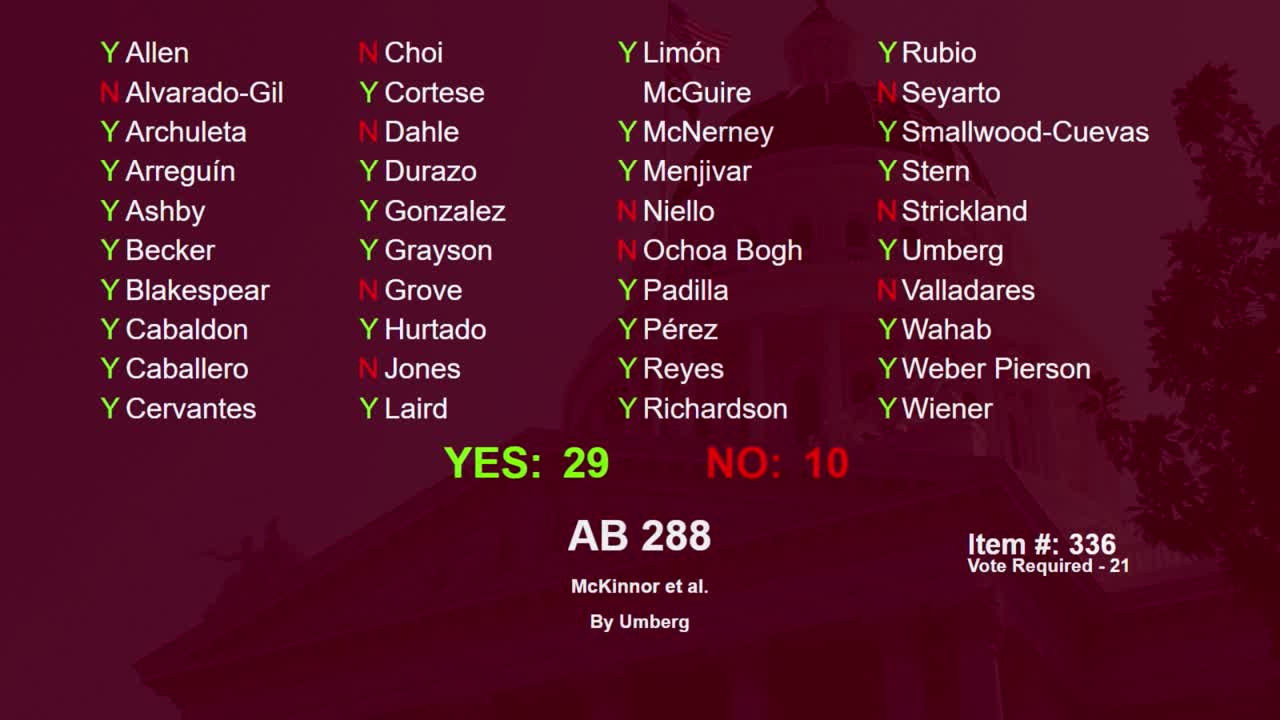
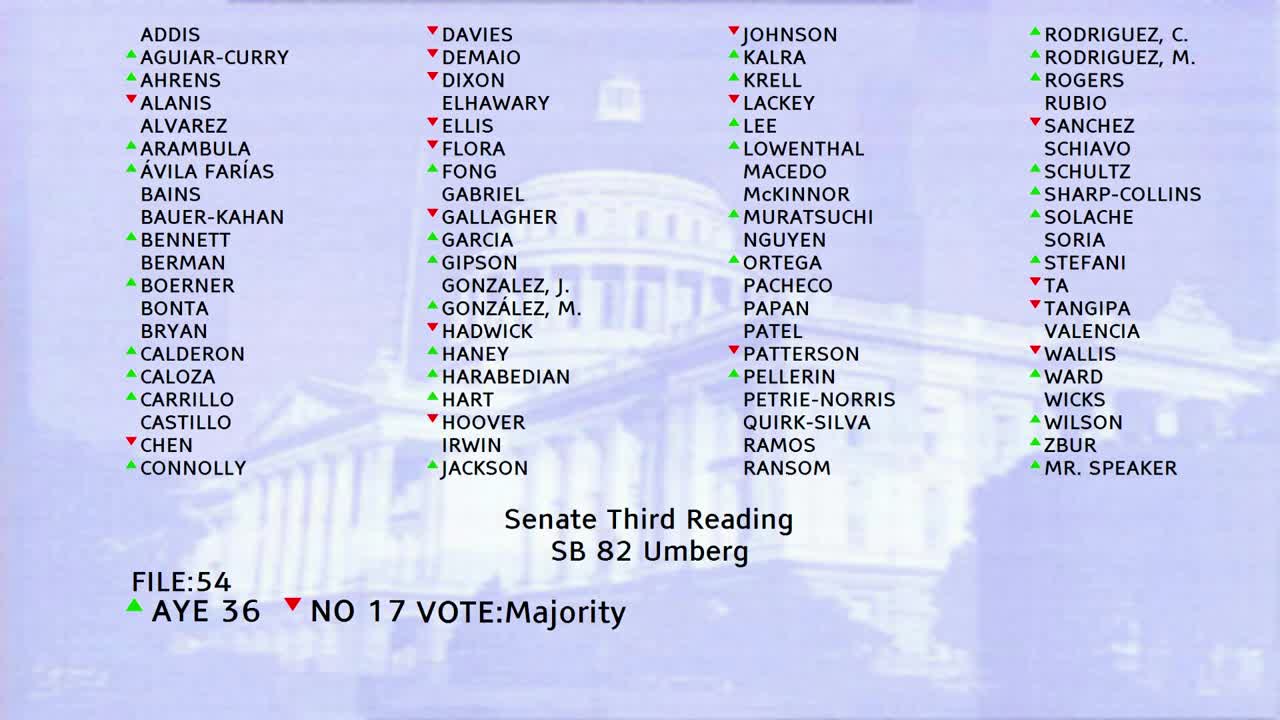
Bill Author

Bill Co-Author(s):