SB 76: Vehicles: registration fees and penalties.
- Session Year: 2025-2026
- House: Senate
- Latest Version Date: 2025-09-08
Current Status:
Failed
(2026-03-02: Veto sustained.)
Introduced
In Committee
Awaiting First Chamber Vote
Passed First Chamber
In Committee
Awaiting Second Chamber Vote
Passed Second Chamber
Enacted
Existing law imposes renewal fee penalties for late payment of vehicle registration except in limited specified cases. Existing law authorizes the Department of Motor Vehicles to waive the registration penalties accrued before the purchase of a vehicle upon payment for the fees for registration due, if the transferee or purchaser was not aware that the fees were unpaid. Existing law also authorizes the department to waive the registration fees that became due before the purchase of the vehicle if the transferee or purchaser was not aware that the fees were unpaid and the license plate assigned to the vehicle displays a validating device issued by the department that contains the year number of the registration year for which the transferee or purchaser is requesting a waiver of fees. Existing law further provides that these unpaid fees and penalties are the personal debt of the transferor of the vehicle and may be collected by the department in an appropriate civil action if the department has waived the fees and penalties.
This bill would instead require the department to waive delinquent registration fees and penalties when a transferee or purchaser of a vehicle applies for a transfer of registration if the department determines that the fees became due or the penalties accrued before the purchase of the vehicle. The bill would require the department to create a system to collect these delinquent fees and penalties from the seller or transferor. The bill would repeal the provision authorizing the department to collect the waived fees and penalties in a civil action. These provisions would become operative on January 1, 2030.
(a)When a transferee or purchaser of a vehicle applies for transfer of registration, as provided in Section 5902, and it is determined by the department that registration penalties accrued before the purchase of the vehicle, and that the transferee or purchaser was not cognizant of the nonpayment of the fees for registration for the current or prior registration years, the department may waive the registration penalties upon payment of the fees for registration due.
(b)Other provisions of this code notwithstanding, the director may, at their discretion, investigate into the circumstances of any application for registration to ascertain if penalties had accrued through no fault or intent of the owner. If the director determines that the circumstances justify it, the director may waive any penalties upon payment of the fees for registration then due.
(c)When a transferee or purchaser of a vehicle applies for transfer of registration of a vehicle, and it is determined by the department that fees for registration of the vehicle for any year are unpaid and due, that the fees became due before the transfer or purchase of the vehicle by the transferee or purchaser and that the transferee or purchaser was not cognizant of the fact that the fees were unpaid and due, the department may waive the fees and any penalty thereon if the license plate assigned to the vehicle displays a validating device issued by the department and the validating device contains the year number of the registration year for which the transferee or purchaser is requesting a waiver of fees and penalties.
(d)Upon the transfer of a vehicle for which fees for registration and any penalties thereon are unpaid and due, the fees and penalties are, notwithstanding the provisions of Article 6 (commencing with Section 9800) of this chapter, the personal debt of the transferor of the vehicle who did not pay the fees and penalties when they became due or accrued. The fees and penalties may be collected by the department in an appropriate civil action if the department has waived the fees and penalties pursuant to subdivision (c).
(e)This section shall remain in effect only until January 1, 2030, and as of that date is repealed.
SEC. 2.Section 9562 is added to the Vehicle Code, to read:9562.(a)When a transferee or purchaser of a vehicle applies for transfer of registration, as provided in Section 5902, and the department determines that registration fees for any year are unpaid and due, or that registration penalties have accrued, but the fees became due or the penalties accrued before the purchase of the vehicle, the department shall waive the delinquent registration fees and penalties.
(b)(1)Upon the transfer of a vehicle for which fees for registration and any penalties thereon are unpaid and due, the fees and penalties are, notwithstanding the provisions of Article 6 (commencing with Section 9800) of this chapter, the personal debt of the seller or transferor of the vehicle who did not pay the fees and penalties when they became due or accrued.
(2)The department shall create a system to collect these delinquent fees and penalties from the seller or transferor. The department shall collect the delinquent fees and penalties when the seller or transferor registers another car or applies for a renewal of a license.
(c)This section shall become operative on January 1, 2030.
(a)When a transferee or purchaser of a vehicle applies for transfer of registration, as provided in Section 5902, and it is determined by the department that registration penalties accrued prior to before the purchase of the vehicle, and that the transferee or purchaser was not cognizant of the nonpayment of the fees for registration for the current or prior registration years, the department may waive the registration penalties upon payment of the fees for registration due.
(b)Other provisions of this code notwithstanding, the director may, at his or her their discretion, investigate into the circumstances of any application for registration to ascertain if penalties had accrued through no fault or intent of the owner. If the director determines that the circumstances justify it, he or she the director may waive any penalties upon payment of the fees for registration then due.
(c)When a transferee or purchaser of a vehicle applies for transfer of registration of a vehicle, and it is determined by the department that fees for registration of the vehicle for any year are unpaid and due, that the fees became due prior to before the transfer or purchase of the vehicle by the transferee or purchaser and that the transferee or purchaser was not cognizant of the fact that the fees were unpaid and due, the department may waive the fees and any penalty thereon if the license plate assigned to the vehicle displays a validating device issued by the department and the validating device contains the year number of the registration year for which the transferee or purchaser is requesting a waiver of fees and penalties.
(d)Upon the transfer of a vehicle for which fees for registration and any penalties thereon are unpaid and due, the fees and penalties are, notwithstanding the provisions of Article 6 (commencing with Section 9800) of this chapter, the personal debt of the transferor of the vehicle who did not pay the fees and penalties when they became due or accrued. The fees and penalties may be collected by the department in an appropriate civil action if the department has waived the fees and penalties pursuant to subdivision (c).
(e)This section shall remain in effect only until January 1, 2030, and as of that date is repealed.
SEC. 2.Section 9562 is added to the Vehicle Code, to read:9562.(a)When a transferee or purchaser of a vehicle applies for transfer of registration, as provided in Section 5902, and the department determines that registration fees for any year are unpaid and due, or that registration penalties have accrued, but the fees became due or the penalties accrued before the purchase of the vehicle, the department shall waive the delinquent registration fees and penalties.
(b)(1)Upon the transfer of a vehicle for which fees for registration and any penalties thereon are unpaid and due, the fees and penalties are, notwithstanding the provisions of Article 6 (commencing with Section 9800) of this chapter, the personal debt of the seller or transferor of the vehicle who did not pay the fees and penalties when they became due or accrued.
(2)The department shall create a system to collect these delinquent fees and penalties from the seller or transferor. The department shall collect the delinquent fees and penalties when the seller or transferor registers another car or applies for a renewal of a license.
(c)This section shall become operative on January 1, 2030.
|
Date
|
Status
|
|---|---|
| Mar 2, 2026 | Veto sustained. |
| Mar 2, 2026 | Stricken from file. |
| Oct 1, 2025 | In Senate. Consideration of Governor's veto pending. |
| Oct 1, 2025 | Vetoed by the Governor. |
| Sep 10, 2025 | Enrolled and presented to the Governor at 2 p.m. |
| Sep 4, 2025 | In Senate. Ordered to engrossing and enrolling. |
| Sep 4, 2025 | Read third time. Passed. (Ayes 75. Noes 0. Page 2906.) Ordered to the Senate. |
| Sep 2, 2025 | Read second time. Ordered to third reading. |
| Aug 29, 2025 | From committee: Do pass. (Ayes 15. Noes 0.) (August 29). |
| Aug 20, 2025 | August 20 set for first hearing. Placed on APPR. suspense file. |
| Jul 15, 2025 | From committee: Do pass and re-refer to Com. on APPR. with recommendation: To consent calendar. (Ayes 16. Noes 0.) (July 14). Re-referred to Com. on APPR. |
| Jun 5, 2025 | Referred to Com. on TRANS. |
| May 29, 2025 | In Assembly. Read first time. Held at Desk. |
| May 29, 2025 | Read third time. Passed. (Ayes 38. Noes 0. Page 1323.) Ordered to the Assembly. |
| May 27, 2025 | Ordered to special consent calendar. |
| May 23, 2025 | Read second time. Ordered to third reading. |
| May 23, 2025 | From committee: Do pass. (Ayes 6. Noes 0. Page 1191.) (May 23). |
| May 16, 2025 | Set for hearing May 23. |
| Apr 7, 2025 | April 7 hearing: Placed on APPR. suspense file. |
| Mar 28, 2025 | Set for hearing April 7. |
| Mar 26, 2025 | From committee: Do pass and re-refer to Com. on APPR. (Ayes 14. Noes 0. Page 534.) (March 25). Re-referred to Com. on APPR. |
| Mar 11, 2025 | Set for hearing March 25. |
| Jan 29, 2025 | Referred to Com. on TRANS. |
| Jan 16, 2025 | From printer. May be acted upon on or after February 15. |
| Jan 15, 2025 | Introduced. Read first time. To Com. on RLS. for assignment. To print. |
|
Date
|
Description
|
Location
|
Votes
|
|
|---|---|---|---|---|
| Sep 4, 2025 | SB 76 Seyarto Senate Third Reading By Chen | Assembly Floor |
Passed |
|
| Aug 29, 2025 | Do pass. | Assembly Standing Committee on Appropriations |
Passed |
|
| Jul 14, 2025 | Do pass and be re-referred to the Committee on [Appropriations] with recommendation: To Consent Calendar | Assembly Standing Committee on Transportation |
Passed |
|
| May 29, 2025 | Special Consent SB76 Seyarto | Senate Floor |
Passed |
|
| May 23, 2025 | Do pass | Senate Standing Committee on Appropriations |
Passed |
|
| Apr 7, 2025 | Placed on suspense file | Senate Standing Committee on Appropriations |
Passed |
|
| Mar 25, 2025 | Do pass, but first be re-referred to the Committee on [Appropriations] | Senate Standing Committee on Transportation |
Passed |
This list shows positions taken on this bill by organizations on the date displayed, which is linked to the original source.
Positions by individuals are not included.
|
Organization
|
Position
|
Date
|
|---|---|---|
| AAA Northern California, Nevada & Utah | ** Support | |
| Automobile Club of Southern California | ** Support | |
| Chino Valley Chamber of Commerce | ** Support | |
| Consumers For Auto Reliability & Safety | ** Support |
SENATE RULES COMMITTEE Office of Senate Floor Analyses (916) 651-1520 Fax: (916) 327-4478 | SB 76 |
VETO
Bill No: SB 76
Author: Seyarto (R)
Enrolled: 9/8/25
Vote: 27
SENATE TRANSPORTATION COMMITTEE: 14-0, 3/25/25
AYES: Cortese, Strickland, Archuleta, Arreguín, Blakespear, Cervantes, Gonzalez, Grayson, Limón, Menjivar, Richardson, Seyarto, Umberg, Valladares
NO VOTE RECORDED: Dahle
SENATE APPROPRIATIONS COMMITTEE: 6-0, 5/23/25
AYES: Caballero, Seyarto, Cabaldon, Grayson, Richardson, Wahab
NO VOTE RECORDED: Dahle
SENATE FLOOR: 38-0, 5/29/25
AYES: Allen, Alvarado-Gil, Archuleta, Arreguín, Ashby, Becker, Blakespear, Cabaldon, Caballero, Cervantes, Choi, Cortese, Dahle, Durazo, Gonzalez, Grayson, Grove, Hurtado, Jones, Laird, McGuire, McNerney, Menjivar, Niello, Ochoa Bogh, Padilla, Pérez, Richardson, Rubio, Seyarto, Smallwood-Cuevas, Stern, Strickland, Umberg, Valladares, Wahab, Weber Pierson, Wiener
NO VOTE RECORDED: Limón, Reyes
ASSEMBLY FLOOR: 75-0, 9/4/25 - See last page for vote
SUBJECT: Vehicles: registration fees and penalties
SOURCE: Author
DIGEST:
This bill requires the Department of Motor Vehicles (DMV), by January 1, 2030, to waive delinquent registration fees and penalties when a transferee (purchaser) of a used vehicle applies for a transfer of registration and DMV determines that the fees and penalties accrued prior to the purchase of the vehicle. Any such delinquent fees and penalties would become the personal debt of the transferor (seller) of the vehicle, and would be subject to collection by DMV, as specified.
ANALYSIS:
Existing law:
- Establishes various vehicle registration fees to be paid to DMV and deposited in accounts for spending on priorities including regulating vehicles, administrating registration, maintaining streets and highways, and supporting the California Highway Patrol (CHP). (VEH §9250-§9808)
- Specifies that vehicle fees are delinquent whenever the application for renewal of registration is made after midnight of the expiration day of the registration or 60 days after the registered owner is notified by DMV, whichever is later. (VEH §9552)
- Establishes a schedule of penalties to be collected for any late registration alongside the original fee that have higher cost penalties for longer delinquency periods. (VEH §9554 and §9554.5)
- Authorizes DMV to waive registration penalties when a transferee or purchaser of a vehicle applies for transfer of registration if the penalties accrued prior to the purchase of the vehicle, the transferee or purchaser was not aware of the nonpayment, and the original fees are paid. (VEH §9562)
- Authorizes DMV to waive vehicle registration fees and penalties for a vehicle if the fees became due prior to the purchase of the vehicle and the transferee or purchaser was not aware of the nonpayment and the license plate assigned to the vehicle displays a valid registration. (VEH §9562)
- Specifies that, if the outstanding fees have been waived, the unpaid fees and penalties are the personal debt of the transferor of the vehicle and may be collected by DMV in appropriate civil action. (VEH §9562)
This bill:
- Requires, beginning January 1, 2030, DMV to waive delinquent registration fees and any penalties that have accrued on fees due prior to the purchase of a vehicle when a transferee or purchaser of a vehicle applies for transfer of registration.
- Requires, beginning January 1, 2030, the DMV to create a system to collect the waived fees from the seller or transferor of the vehicle when the seller or transferor registers another car or applies for a renewal of license.
Comments
- Purpose of this bill. According to the author, “Transportation is commonly the second-biggest expenditure for the average family. California families hit by surprise fees can be left without transportation, or in a worse financial position. This measure will shield consumers from predatory practices and unexpected financial distress by enhancing consumer protections for the increasingly common practice of the private sales of vehicles; ensuring fair treatment and greater financial stability for California families.”
- Vehicle registration fees. It is illegal to operate an unregistered vehicle on public roads in California. At the time of registration DMV collects a variety of registration fees. Most of these fees are deposited in the Motor Vehicle Account (MVA) where they are used to support the key functions of DMV and CHP. There are also additional fees that have been added over time to support other state priorities, such as a $3 fee for the California Transportation Program.
Registration fees and penalties are tied to a vehicle, not the vehicle owner. If a vehicle is not re-registered before the registration expires, DMV levies late penalties pursuant to a statutorily established schedule, ranging from $10 for a delinquency period of 10 days or less, to a penalty of $100 for a delinquency period of more than two years. DMV does not offer a grace period for paying annual vehicle registration fees. Even though license plates display only the month and year, vehicle registration expires on a specific day. DMV sends billing notices approximately 50 days before a vehicle’s registration expires.
- Buyer beware. Currently, during vehicle transactions between private parties it is the onus of the buyer to assess the vehicle’s condition, including unpaid registration fees, and determine if it meets their needs. The DMV’s website has a readily accessible fee calculator where anyone can enter a vehicle’s identification number (VIN) and determine the amount of fees and penalties that would need to be paid to register the vehicle. Additionally, the registration sticker affixed to the vehicle’s license plate indicates whether the vehicle has been registered and is a visible indication to a buyer of the registration status.
Currently, if a vehicle is sold with outstanding unpaid registration fees and penalties it is the responsibility of the new owner to pay these outstanding fees when they register the vehicle. This bill would change that system by forgiving outstanding fees and penalties that accrued prior to the sale of the vehicle. The seller of a vehicle would instead retain responsibility for paying any registration fees or penalties that accrued prior to the sale. DMV would have to collect those delinquent fees when that person next registers a vehicle or renews a license. Due to the existing consumer protections for vehicles purchased from licensed dealers, the provisions of this bill would only apply to used car buyers purchasing vehicles from a private parties.
- Waiving penalties. DMV has a statutory mechanism available to waive unpaid registration penalties if the buyer signs a statement of fact asserting that they did not know the penalties were outstanding at the time of purchase. The process and form for this wavier is available on the DMV website. However this authority is discretionary— DMV could choose not to waive the penalties. DMV does not track how often people request penalties to be waived through this mechanism or how often these requests are granted.
The circumstances when DMV may waive fees are more limited than those for waiving penalties. Statute allows DMV to waive registration fees for a buyer only when all of the following conditions are met:
- The buyer applies for transfer and it is determined that the registration fees became due prior to the transferee’s date of purchase;
- The buyer was not aware that the fees were unpaid and due; and,
- The license plate assigned to the vehicle displays a valid year sticker issued by DMV that matches the year for which the buyer is requesting a waiver of fees and penalties.
The waiver is intended to address the situation when a vehicle was displaying a current registration sticker on the plate when it was sold, but it turns out later that it owed fees. Unlike in most cases when the vehicle’s registration is visibly expired, under these unique circumstances there is an implication that the buyer was misled by the seller.
- MVA insolvency. Registration fees and penalties make up a substantial part of the MVA. A February 2025 Legislative Analyst’s Office (LAO) report found that for 2025‑26, MVA revenues are estimated to total about $5 billion. Of this amount, over $4 billion is projected to come from vehicle registration fees. MVA is the primary funding source for CHP and DMV. According to the LAO, the MVA is “rapidly heading for insolvency” as expenditures continue to outpace revenues. Specifically, the MVA is projected to become insolvent in 2025‑26 with deficits increasing in future years. As such, the LAO recommends the Legislature set a high bar for considering approval of any proposals that create additional MVA cost pressures and accelerate the risk of insolvency.
Related/Previous Legislation
SB 932 (Seyarto, 2024) – Would have required DMV to waive unpaid registration fees and penalties if they accrued prior to the vehicle being purchased. The bill failed passage in the Senate Appropriations Committee.
AB 3243 (Ta, 2024) – Would have, until January 1, 2026, required DMV to accept 20% of an outstanding registration amount in lieu of delinquent vehicle registration fees if an individual is below a certified income threshold. The bill failed passage in the Assembly Appropriations Committee.
AB 281 (Donnelly, 2013) – Would have required DMV to waive unpaid registration fees and penalties if they accrued prior to the vehicle being purchased. The bill failed passage in the Assembly Transportation Committee.
FISCAL EFFECT: Appropriation: No Fiscal Com.: Yes Local: No
According to the Senate Appropriations Committee:
- Unknown, likely significant one-time DMV costs to make IT systems changes to provide for fee and penalty waivers, capture delinquent debt amounts, and transfer them to a prior registered owner’s vehicle registration and driver’s license records. These costs are unknown because the changes must be implemented prior to January 1, 2030, which is after the completion of DMV’s current IT modernization efforts that are scheduled to be complete prior to the bill’s implementation date. DMV cannot predict the costs to modify systems post modernization because its functionalities are currently under development. DMV would also incur one-time costs to establish new processes and procedures for collection of delinquent fees and penalties from prior owners. (Motor Vehicle Account – MVA)
- Unknown, significant ongoing annual DMV administrative costs beginning in 2029-30, primarily as a result of the requirement for staff to cross check vehicle registration records of prior owners and match them to that person’s other vehicle registrations and driver’s license records to conduct collections of delinquent fees and penalties. DMV indicates that this process would be a manual and labor-intensive process, and that there is currently no internal link between vehicle ownership and driver’s license records, which may be recorded under different names. In some cases these costs would exceed the amount of delinquent charges that could potentially be collected. (MVA)
- DMV anticipates major vehicle registration fee and penalty losses as a result of the mandatory waiver of delinquent fees and penalties upon transfer of ownership. Precise revenue losses are unknown, but likely in the millions annually. Staff notes that these revenue losses could be partially offset to the extent the department is able to successfully collect delinquent fees and penalties from sellers when they attempt to register another vehicle or renew a driver’s license. (primarily MVA and Motor Vehicle License Fee Account, but also local funds and other special funds)
SUPPORT: (Verified 10/3/25)
AAA Northern California, Nevada & Utah
Automobile Club of Southern California
Chino Valley Chamber of Commerce
Consumers for Auto Reliability & Safety
OPPOSITION: (Verified 10/3/25)
None received
GOVERNOR'S VETO MESSAGE:
Beginning January 1, 2030, this bill would require the Department of Motor
Vehicles (DMV) to waive delinquent vehicle registration fees and penalties that became due before a private vehicle sale when the purchaser applied for transfer. The DMV would instead be required to recover those fees and penalties from the seller or transferor when they next register another vehicle or renew a driver's license.
This bill would exacerbate the structural insolvency of the Motor Vehicle
Account (MVA), the primary funding source for the DMV and CHP. Shifting collection responsibility away from purchasers would reduce revenues, increase administrative costs, and deepen long-term deficits. In doing so, it would diminish resources available to support the CHP's critical public safety initiatives— including newly launched Crime Suppression Teams and regional crime-reduction partnerships — while also straining the DMV's digital transformation by imposing new duties even as funding is reduced.
As with other measures affecting the MVA, moving the operative date to a future year does not solve the underlying fiscal challenges — it only delays them.
We must set a very high bar for any significant new fiscal commitments until the MVA structural deficit is addressed in a sustainable way.
For these reasons, I cannot sign this bill.
ASSEMBLY FLOOR: 75-0, 9/4/25
AYES: Addis, Aguiar-Curry, Alanis, Arambula, Ávila Farías, Bains, Bauer-Kahan, Bennett, Berman, Boerner, Bonta, Bryan, Calderon, Caloza, Carrillo, Castillo, Chen, Connolly, Davies, DeMaio, Dixon, Elhawary, Ellis, Flora, Fong, Gabriel, Gallagher, Garcia, Gipson, Jeff Gonzalez, Mark González, Hadwick, Haney, Harabedian, Hart, Hoover, Jackson, Kalra, Krell, Lackey, Lowenthal, Macedo, McKinnor, Muratsuchi, Nguyen, Ortega, Pacheco, Papan, Patel, Patterson, Pellerin, Petrie-Norris, Quirk-Silva, Ramos, Ransom, Celeste Rodriguez, Michelle Rodriguez, Rogers, Blanca Rubio, Sanchez, Schiavo, Schultz, Sharp-Collins, Solache, Soria, Stefani, Ta, Tangipa, Valencia, Wallis, Ward, Wicks, Wilson, Zbur, Rivas
NO VOTE RECORDED: Ahrens, Alvarez, Irwin, Lee
Prepared by: Isabelle LaSalle / TRANS. / (916) 651-4121
10/6/25 10:37:20
**** END ****
SENATE THIRD READING
STR Bill Id:SB 76
Author:(Seyarto)
As Introduced Ver:January 15, 2025
Majority vote
SUMMARY
Requires the Department of Motor Vehicles (DMV) to waive delinquent vehicle registration fees and penalties for a transferee or purchaser of a used vehicle in a private sale when the fees and penalties accrued before the purchase of the vehicle, starting in 2030.
Major Provisions
- Requires, beginning January 1, 2030, the DMV to waive delinquent registration fees and any penalties that have accrued on fees due prior to the purchase of a vehicle when a transferee or purchaser of a vehicle applies for transfer of registration.
- Requires, beginning January 1, 2030, the DMV to create a system to collect the waived fees from the seller or transferor of the vehicle when the seller or transferor registers another car or applies for a renewal of license.
COMMENTS
California law requires dealers to submit to the DMV all fees and penalties due for registration and transfer when a vehicle is sold. Private sales, however, do not have this requirement, and the onus of paying unpaid registration fees is on the DMV. The DMV website has a tool where anyone can enter a vehicle's identification number (VIN) and determine the amount of fees and penalties that would need to be paid to register the vehicle. Additionally, the registration sticker affixed to the vehicle's license plate indicates whether the vehicle has been registered and is a visible indication to a buyer of the registration status.
DMV will waive unpaid registration penalties if the buyer signs a statement of fact asserting that they did not know the penalties were outstanding at the time of purchase. The authority to waive the fees is discretionary, and generally is reserved for when a vehicle had valid registration stickers but it turned out later that fees were owed on the vehicle. In this instance, the buyer may have been mislead by the seller.
Committee concerns: While this bill imagines a new method for the DMV to recover unpaid fees from the original vehicle owner, there may be several circumstances where cost recovery is impossible. For example, if the original owner died or was a corporation that no longer exists, there will never be a way to recover the registration costs. If a person moves out of state and never registers another vehicle in California and renews their license out of state then there will not be a way for DMV to recover unpaid registration fees.
According to the Legislative Analyst Office (LAO), the Motor Vehicle Account (MVA), the primary funding source for DMV, is expected to fully exhaust its reserves and become insolvent in 2025-26. The LAO recommends the Legislature should consider MVA cost pressures when evaluating new proposals. LAO argues that "Until a plan is put in place to address MVA's structural deficit, we recommend the Legislature set a high bar for considering approval of any proposals that create additional MVA cost pressures and accelerate the risk of insolvency."
In the Governor's proposed 2025-2026 budget, the Governor warned that "Given the projected fiscal constraints in the MVA by 2025-26, the Administration will continue to prioritize fiscal discipline and will set a high bar for any new workload or initiatives beyond the DMV's existing operational priorities. By focusing on core operational priorities, the DMV will focus on serving Californians while navigating the MVA's fiscal constraints."
According to the Author
"Transportation is commonly the second-biggest expenditure for the average family. California families hit by surprise fees can be left without transportation, or in a worse financial position. This measure will shield consumers from predatory practices and unexpected financial distress by enhancing consumer protections for the increasingly common practice of the private sales of vehicles; ensuring fair treatment and greater financial stability for California families."
Arguments in Support
The Automobile Club of Southern California and AAA of Northern California write in support of this bill, arguing, "California already has established several consumer protections for sales of vehicles by licensed car dealers. However, these protections do not apply in private transactions between individuals. The AAA Clubs are concerned this difference in law disproportionately impacts working class and low-income motorists, many of whom rely on the used vehicle market for affordable purchases. While we recognize SB 76 may have a small impact on proceeds to the Motor Vehicle Account, we firmly believe state revenues should not rely on money from unsuspecting buyers who were never made aware of delinquent vehicle registration fees and penalties attached to their purchases."
Arguments in Opposition
No opposition on file.
FISCAL COMMENTS
According to Assembly Appropriations Committee:
- Substantial onetime cost to DMV, likely in the hundreds of thousands of dollars (Motor Vehicle Account (MVA)), at least, to modify computer programming and update forms and publications to allow for and reflect the fee and penalty waiver required by this bill. DMV contends it is unable to estimate these costs at this time because DMV's comprehensive, multi-year effort to update its computers is ongoing.
- Significant ongoing annual costs, likely in the hundreds of thousands to low millions of dollars (MVA), to DMV to attempt to recover fee and penalty revenue from vehicle sellers and transferors. DMV estimates these costs at $3 million annually.
- Lost or temporarily foregone revenue of a significant amount, likely in the millions of dollar (MVA) annually. DMV anticipates these costs to be "at least" $30 million annually.
VOTES
SENATE FLOOR: 38-0-2
YES: Allen, Alvarado-Gil, Archuleta, Arreguín, Ashby, Becker, Blakespear, Cabaldon, Caballero, Cervantes, Choi, Cortese, Dahle, Durazo, Gonzalez, Grayson, Grove, Hurtado, Jones, Laird, McGuire, McNerney, Menjivar, Niello, Ochoa Bogh, Padilla, Pérez, Richardson, Rubio, Seyarto, Smallwood-Cuevas, Stern, Strickland, Umberg, Valladares, Wahab, Weber Pierson, Wiener
ABS, ABST OR NV: Limón, Reyes
ASM TRANSPORTATION: 16-0-0
YES: Wilson, Davies, Aguiar-Curry, Ahrens, Carrillo, Harabedian, Hart, Hoover, Jackson, Lackey, Lowenthal, Macedo, Papan, Ransom, Rogers, Ward
ASM APPROPRIATIONS: 15-0-0
YES: Wicks, Sanchez, Arambula, Calderon, Caloza, Dixon, Elhawary, Fong, Mark González, Ahrens, Pacheco, Pellerin, Solache, Ta, Tangipa
UPDATED
VERSION: January 15, 2025
CONSULTANT: David Sforza / TRANS. / (916) 319-2093 FN: 0001326
Date of Hearing: August 20, 2025
ASSEMBLY COMMITTEE ON APPROPRIATIONS
Buffy Wicks, Chair
SBPCA Bill Id:SB 76
Author:(Seyarto) – As Introduced Ver:January 15, 2025
Policy Committee: | Transportation | Vote: | 16 - 0 |
|
| ||
|
|
Urgency: No State Mandated Local Program: No Reimbursable: No
SUMMARY:
This bill requires the Department of Motor Vehicles (DMV), beginning on January 1, 2030, to waive delinquent vehicle registration fees and penalties for a transferee or purchaser of a used vehicle in a private sale when the fees and penalties accrued before the purchase of the vehicle.
In addition, the bill makes any registration fees and penalties due for a vehicle at the time of the vehicle’s sale the personal debt of the seller or transferor of the vehicle who did not pay the fees and penalties when they became due or accrued.
The bill also directs DMV to create a system to collect these delinquent fees and penalties from the seller or transferor and to collect the delinquent fees and penalties when the seller or transferor registers another car or applies for a renewal of a license.
FISCAL EFFECT:
- Substantial onetime cost to DMV, likely in the hundreds of thousands of dollars (Motor Vehicle Account (MVA)), at least, to modify computer programming and update forms and publications to allow for and reflect the fee and penalty waiver required by this bill. DMV contends it is unable to estimate these costs at this time because DMV’s comprehensive, multi-year effort to update its computers is ongoing.
- Significant ongoing annual costs, likely in the hundreds of thousands to low millions of dollars (MVA), to DMV to attempt to recover fee and penalty revenue from vehicle sellers and transferors. DMV estimates these costs at $3 million annually.
- Lost or temporarily foregone revenue of a significant amount, likely in the millions of dollar (MVA) annually. DMV anticipates these costs to be “at least” $30 million annually.
The MVA is the primary funding account for DMV and the California Highway Patrol (CHP). DMV notes the MVA is facing insolvency and references a report by the Legislative Analyst’s Office (LAO), that recommended, “Until a plan is put in place to address MVA’s structural deficit, we recommend the Legislature set a high bar for considering approval of any proposals that create additional MVA cost pressures and accelerate the risk of insolvency.”
DMV further notes that the summary of the May revise to the 2025-26 Governor’s Budget observed:
Given the ongoing fiscal constraints in the MVA, the Administration will continue to prioritize fiscal discipline. This means limiting new workload or initiatives including those with delayed implementation dates that would create additional cost pressures over time. By focusing on core operational priorities, the DMV can serve Californians while staying within available MVA resources.
COMMENTS:
- Purpose. The author describes this bill as a consumer protection measure that will protect Californians from “surprise fees” and “predatory practices” that can leave them without transportation, or in a worse financial position as a result of what the author calls an “increasingly common practice of the private sales of vehicles.
- Background. Existing law generally requires a vehicle be registered with DMV for the vehicle to be operated legally on California roads and highways and requires a person or entity to pay several fees—commonly known as “registration fees”—before DMV will register a vehicle. Typical registration fees include:
- Registration fee—$71.
- CHP fee—$34.
- Alternative fuel fee—$3.
- Road improvement fees, paid only by a registrant of a zero-emission vehicle—$118.
- Transportation improvement fee—varies with vehicle value.
- Vehicle license fee—varies with vehicle value.
According to DMV, the average vehicle registration fees are $121 annually. Revenue generated by the fees fund, for the most part, though not exclusively, administrative functions of DMV and CHP.
The law authorizes DMV to assess penalties against a vehicle for which DMV has not received vehicle registration fee before the fee becomes due. Importantly for this bill, the penalties are tied to the vehicle, not to the vehicle owner. This means the purchaser of a vehicle with unpaid registration fees or penalties inherits the obligation to pay DMV what it is owed. The law requires a licensed vehicle dealer to submit to DMV all fees and penalties owed on a vehicle and to disclose those charges to the vehicle’s buyer at the time of sale. However, the law makes no such requirement of a private seller of a vehicle.
DMV’s website includes a feature that allows anyone to enter a vehicle’s unique vehicle identification number (VIN) to learn of any fees and penalties attached to the vehicle. And state law requires a vehicle license plate to display stickers that indicate the month year the vehicle’s registration fees were last paid. Nonetheless, a buyer of a vehicle from a private seller is sometimes caught unaware that they owe registration fees and penalties on the vehicle they purchased. This bill would change the law so that, in effect, outstanding vehicle registration fees and penalties are tied to the person who accrued those fees and penalties and not tied to the vehicle itself.
- Support and Opposition. This bill is supported by the Automobile Club of Southern California and AAA Northern California, Nevada & Utah (AAA Clubs), who write:
California already has established several consumer protections for sales of vehicles by licensed car dealers. However, these protections do not apply in private transactions between individuals. The AAA Clubs are concerned this difference in law disproportionately impacts working class and low-income motorists, many of whom rely on the used vehicle market for affordable purchases. While we recognize SB 76 may have a small impact on proceeds to the Motor Vehicle Account, we firmly believe state revenues should not rely on money from unsuspecting buyers who were never made aware of delinquent vehicle registration fees and penalties attached to their purchases.
There is no opposition registered against this bill.
Analysis Prepared by: Jay Dickenson / APPR. / (916) 319-2081
Date of Hearing: July 14, 2025
ASSEMBLY COMMITTEE ON TRANSPORTATION
Lori D. Wilson, Chair
SBPCA Bill Id:SB 76
Author:(Seyarto) – As Introduced Ver:January 15, 2025
SENATE VOTE: 38-0
SUBJECT: Vehicles: registration fees and penalties
SUMMARY: Requires the Department of Motor Vehicles (DMV) to waive delinquent vehicle registration fees and penalties for a transferee or purchaser of a used vehicle in a private sale when the fees and penalties accrued before the purchase of the vehicle, starting in 2030. Specifically, this bill:
- Requires, beginning January 1, 2030, the DMV to waive delinquent registration fees and any penalties that have accrued on fees due prior to the purchase of a vehicle when a transferee or purchaser of a vehicle applies for transfer of registration.
- Requires, beginning January 1, 2030, the DMV to create a system to collect the waived fees from the seller or transferor of the vehicle when the seller or transferor registers another car or applies for a renewal of license.
EXISTING LAW:
- Establishes various vehicle registration fees to be paid to the DMV and deposited in accounts for spending on priorities including regulating vehicles, administrating registration, maintaining streets and highways, and supporting the California Highway Patrol (CHP). (Vehicle Code section (VEH) 9250-§9808)
- Specifies that vehicle fees are delinquent whenever application for renewal of registration is made after midnight of the expiration day of the registration or 60 days after the registered owner is notified by the DMV, whichever is later. (VEH 9552)
- Establishes a schedule of penalties to be collected for any late registration alongside the original fee that have higher cost penalties for longer delinquency periods. (VEH 9554 and 9554.5)
- Requires any vehicle transferee who has received a properly endorsed certificate of ownership to forward the certificate with the proper transfer fee to the DMV within 10 days of receiving the certificate. (VEH 5902)
- Requires that when licensed dealers sell a vehicle they must submit to the DMV an application accompanied by all fees and penalties due for registration. (VEH 4556)
- Authorizes the DMV to waive registration penalties when a transferee or purchaser of a vehicle applies for transfer of registration if the penalties accrued prior to the purchase of the vehicle, the transferee or purchaser was not aware of the nonpayment, and the original fees are paid. (VEH 9562)
- Authorizes the DMV to waive vehicle registration fees and penalties for a vehicle if the fees became due prior to the purchase of the vehicle and the transferee or purchaser was not aware of the nonpayment and the license plate assigned to the vehicle displays a valid registration. (VEH 9562)
- Specifies that, if the outstanding fees have been waived, the unpaid fees and penalties are the personal debt of the transferor of the vehicle and may be collected by the DMV in appropriate civil action. (VEH 9562)
FISCAL EFFECT:
According to the Senate Appropriations Committee:
- Unknown, likely significant one-time DMV costs to make IT systems changes to provide for fee and penalty waivers, capture delinquent debt amounts, and transfer them to a prior registered owner’s vehicle registration and driver’s license records. These costs are unknown because the changes must be implemented prior to January 1, 2030, which is after the completion of DMV’s current IT modernization efforts that are scheduled to be complete prior to the bill’s implementation date. DMV cannot predict the costs to modify systems post modernization because its functionalities are currently under development. DMV would also incur one-time costs to establish new processes and procedures for collection of delinquent fees and penalties from prior owners. (Motor Vehicle Account – MVA)
- Unknown, significant ongoing annual DMV administrative costs beginning in 2029-30, primarily as a result of the requirement for staff to cross check vehicle registration records of prior owners and match them to that person’s other vehicle registrations and driver’s license records to conduct collections of delinquent fees and penalties. DMV indicates that this process would be a manual and labor-intensive process, and that there is currently no internal link between vehicle ownership and driver’s license records, which may be recorded under different names. In some cases these costs would exceed the amount of delinquent charges that could potentially be collected. (MVA)
- DMV anticipates major vehicle registration fee and penalty losses as a result of the mandatory waiver of delinquent fees and penalties upon transfer of ownership. Precise revenue losses are unknown, but likely in the millions annually. Staff notes that these revenue losses could be partially offset to the extent the department is able to successfully collect delinquent fees and penalties from sellers when they attempt to register another vehicle or renew a driver’s license. (primarily MVA and Motor Vehicle License Fee Account, but also local funds and other special funds)
COMMENTS: California law requires dealers to submit to the DMV all fees and penalties due for registration and transfer when a vehicle is sold. Private sales, however, do not have this requirement, and the onus of paying unpaid registration fees is on the DMV. The DMV website has a tool where anyone can enter a vehicle’s identification number (VIN) and determine the amount of fees and penalties that would need to be paid to register the vehicle. Additionally, the registration sticker affixed to the vehicle’s license plate indicates whether the vehicle has been registered and is a visible indication to a buyer of the registration status.
DMV will waive unpaid registration penalties if the buyer signs a statement of fact asserting that they did not know the penalties were outstanding at the time of purchase. The authority to waive the fees is discretionary, and generally is reserved for when a vehicle had valid registration stickers but it turned out later that fees were owed on the vehicle. In this instance, the buyer may have been mislead by the seller.
According to the author. “Transportation is commonly the second-biggest expenditure for the average family. California families hit by surprise fees can be left without transportation, or in a worse financial position. This measure will shield consumers from predatory practices and unexpected financial distress by enhancing consumer protections for the increasingly common practice of the private sales of vehicles; ensuring fair treatment and greater financial stability for California families.”
The Automobile Club of Southern California and AAA of Northern California write in support of this bill, arguing, “California already has established several consumer protections for sales of vehicles by licensed car dealers. However, these protections do not apply in private transactions between individuals. The AAA Clubs are concerned this difference in law disproportionately impacts working class and low-income motorists, many of whom rely on the used vehicle market for affordable purchases. While we recognize SB 76 may have a small impact on proceeds to the Motor Vehicle Account, we firmly believe state revenues should not rely on money from unsuspecting buyers who were never made aware of delinquent vehicle registration fees and penalties attached to their purchases.”
Committee concerns: While this bill imagines a new method for the DMV to recover unpaid fees from the original vehicle owner, there may be several circumstances where cost recovery is impossible. For example, if the original owner died or was a corporation that no longer exists, there will never be a way to recover the registration costs. If a person moves out of state and never registers another vehicle in California and renews their license out of state then there will not be a way for DMV to recover unpaid registration fees.
According to the Legislative Analyst Office (LAO), the Motor Vehicle Account (MVA), the primary funding source for DMV, is expected to fully exhaust its reserves and become insolvent in 2025-26. The LAO recommends the Legislature should consider MVA cost pressures when evaluating new proposals. LAO argues that “Until a plan is put in place to address MVA’s structural deficit, we recommend the Legislature set a high bar for considering approval of any proposals that create additional MVA cost pressures and accelerate the risk of insolvency.”
In the Governor’s proposed 2025-2026 budget, the Governor warned that “Given the projected fiscal constraints in the MVA by 2025-26, the Administration will continue to prioritize fiscal discipline and will set a high bar for any new workload or initiatives beyond the DMV’s existing operational priorities. By focusing on core operational priorities, the DMV will focus on serving Californians while navigating the MVA’s fiscal constraints.”
REGISTERED SUPPORT / OPPOSITION:
Support
AAA Northern California, Nevada & Utah
Auto Club of Southern California
Automobile Club of Southern California
Chino Valley Chamber of Commerce
Consumers for Auto Reliability & Safety
Opposition
None on file
Analysis Prepared by: David Sforza / TRANS. / (916) 319-2093
SENATE RULES COMMITTEE Office of Senate Floor Analyses (916) 651-1520 Fax: (916) 327-4478 | SB 76 |
THIRD READING
Bill No: SB 76
Author: Seyarto (R)
Introduced: 1/15/25
Vote: 21
SENATE TRANSPORTATION COMMITTEE: 14-0, 3/25/25
AYES: Cortese, Strickland, Archuleta, Arreguín, Blakespear, Cervantes, Gonzalez, Grayson, Limón, Menjivar, Richardson, Seyarto, Umberg, Valladares
NO VOTE RECORDED: Dahle
SENATE APPROPRIATIONS COMMITTEE: 6-0, 5/23/25
AYES: Caballero, Seyarto, Cabaldon, Grayson, Richardson, Wahab
NO VOTE RECORDED: Dahle
SUBJECT: Vehicles: registration fees and penalties
SOURCE: Author
DIGEST:
This bill requires the Department of Motor Vehicles (DMV), by January 1, 2030, to waive delinquent registration fees and penalties when a transferee (purchaser) of a used vehicle applies for a transfer of registration and DMV determines that the fees and penalties accrued prior to the purchase of the vehicle. Any such delinquent fees and penalties would become the personal debt of the transferor (seller) of the vehicle, and would be subject to collection by DMV, as specified.
ANALYSIS:
Existing law:
- Establishes various vehicle registration fees to be paid to DMV and deposited in accounts for spending on priorities including regulating vehicles, administrating registration, maintaining streets and highways, and supporting the California Highway Patrol (CHP). (Vehicle Code (VEH) §9250-§9808)
- Specifies that vehicle fees are delinquent whenever the application for renewal of registration is made after midnight of the expiration day of the registration or 60 days after the registered owner is notified by DMV, whichever is later. (VEH §9552)
- Establishes a schedule of penalties to be collected for any late registration alongside the original fee that have higher cost penalties for longer delinquency periods. (VEH §9554 and §9554.5)
- Authorizes DMV to waive registration penalties when a transferee or purchaser of a vehicle applies for transfer of registration if the penalties accrued prior to the purchase of the vehicle, the transferee or purchaser was not aware of the nonpayment, and the original fees are paid. (VEH §9562)
- Authorizes DMV to waive vehicle registration fees and penalties for a vehicle if the fees became due prior to the purchase of the vehicle and the transferee or purchaser was not aware of the nonpayment and the license plate assigned to the vehicle displays a valid registration. (VEH §9562)
- Specifies that, if the outstanding fees have been waived, the unpaid fees and penalties are the personal debt of the transferor of the vehicle and may be collected by DMV in appropriate civil action. (VEH §9562)
This bill:
- Requires, beginning January 1, 2030, DMV to waive delinquent registration fees and any penalties that have accrued on fees due prior to the purchase of a vehicle when a transferee or purchaser of a vehicle applies for transfer of registration.
- Requires, beginning January 1, 2030, the DMV to create a system to collect the waived fees from the seller or transferor of the vehicle when the seller or transferor registers another car or applies for a renewal of license.
Comments
- Purpose of the bill. According to the author, “Transportation is commonly the second-biggest expenditure for the average family. California families hit by surprise fees can be left without transportation, or in a worse financial position. This measure will shield consumers from predatory practices and unexpected financial distress by enhancing consumer protections for the increasingly common practice of the private sales of vehicles; ensuring fair treatment and greater financial stability for California families.”
- Vehicle registration fees. It is illegal to operate an unregistered vehicle on public roads in California. At the time of registration DMV collects a variety of registration fees. Most of these fees are deposited in the Motor Vehicle Account (MVA) where they are used to support the key functions of DMV and CHP. There are also additional fees that have been added over time to support other state priorities, such as a $3 fee for the California Transportation Program.
Registration fees and penalties are tied to a vehicle, not the vehicle owner. If a vehicle is not re-registered before the registration expires, DMV levies late penalties pursuant to a statutorily established schedule, ranging from $10 for a delinquency period of 10 days or less, to a penalty of $100 for a delinquency period of more than two years. DMV does not offer a grace period for paying annual vehicle registration fees. Even though license plates display only the month and year, vehicle registration expires on a specific day. DMV sends billing notices approximately 50 days before a vehicle’s registration expires.
- Buyer beware. Currently, during vehicle transactions between private parties it is the onus of the buyer to assess the vehicle’s condition, including unpaid registration fees, and determine if it meets their needs. The DMV’s website has a readily accessible fee calculator where anyone can enter a vehicle’s identification number and determine the amount of fees and penalties that would need to be paid to register the vehicle. Additionally, the registration sticker affixed to the vehicle’s license plate indicates whether the vehicle has been registered and is a visible indication to a buyer of the registration status.
Currently, if a vehicle is sold with outstanding unpaid registration fees and penalties it is the responsibility of the new owner to pay these outstanding fees when they register the vehicle. This bill would change that system by forgiving outstanding fees and penalties that accrued prior to the sale of the vehicle. The seller of a vehicle would instead retain responsibility for paying any registration fees or penalties that accrued prior to the sale. DMV would have to collect those delinquent fees when that person next registers a vehicle or renews a license. Due to the existing consumer protections for vehicles purchased from licensed dealers, the provisions of this bill would only apply to used car buyers purchasing vehicles from a private parties.
- Waiving penalties. DMV has a statutory mechanism available to waive unpaid registration penalties if the buyer signs a statement of fact asserting that they did not know the penalties were outstanding at the time of purchase. The process and form for this wavier is available on the DMV website. However this authority is discretionary— DMV could choose not to waive the penalties. DMV does not track how often people request penalties to be waived through this mechanism or how often these requests are granted.
The circumstances when DMV may waive fees are more limited than those for waiving penalties. Statute allows DMV to waive registration fees for a buyer only when all of the following conditions are met:
- The buyer applies for transfer and it is determined that the registration fees became due prior to the transferee’s date of purchase;
- The buyer was not aware that the fees were unpaid and due; and,
- The license plate assigned to the vehicle displays a valid year sticker issued by DMV that matches the year for which the buyer is requesting a waiver of fees and penalties.
The waiver is intended to address the situation when a vehicle was displaying a current registration sticker on the plate when it was sold, but it turns out later that it owed fees. Unlike in most cases when the vehicle’s registration is visibly expired, under these unique circumstances there is an implication that the buyer was misled by the seller.
- MVA insolvency. Registration fees and penalties make up a substantial part of the MVA. A February 2025 Legislative Analyst’s Office (LAO) report found that for 2025‑26, MVA revenues are estimated to total about $5 billion. Of this amount, over $4 billion is projected to come from vehicle registration fees. MVA is the primary funding source for CHP and DMV. According to the LAO, the MVA is “rapidly heading for insolvency” as expenditures continue to outpace revenues. Specifically, the MVA is projected to become insolvent in 2025‑26 with deficits increasing in future years. As such, the LAO recommends the Legislature set a high bar for considering approval of any proposals that create additional MVA cost pressures and accelerate the risk of insolvency.
Related/Prior Legislation
SB 932 (Seyarto, 2024) – Would have required DMV to waive unpaid registration fees and penalties if they accrued prior to the vehicle being purchased. The bill failed passage in the Senate Appropriations Committee.
AB 3243 (Ta, 2024) – Would have, until January 1, 2026, required DMV to accept 20% of an outstanding registration amount in lieu of delinquent vehicle registration fees if an individual is below a certified income threshold. The bill failed passage in the Assembly Appropriations Committee.
AB 281 (Donnelly, 2013) – Would have required DMV to waive unpaid registration fees and penalties if they accrued prior to the vehicle being purchased. The bill failed passage in the Assembly Transportation Committee.
FISCAL EFFECT: Appropriation: No Fiscal Com.: Yes Local: No
According to the Senate Appropriations Committee:
- Unknown, likely significant one-time DMV costs to make IT systems changes to provide for fee and penalty waivers, capture delinquent debt amounts, and transfer them to a prior registered owner’s vehicle registration and driver’s license records. These costs are unknown because the changes must be implemented prior to January 1, 2030, which is after the completion of DMV’s current IT modernization efforts that are scheduled to be complete prior to the bill’s implementation date. DMV cannot predict the costs to modify systems post modernization because its functionalities are currently under development. DMV would also incur one-time costs to establish new processes and procedures for collection of delinquent fees and penalties from prior owners. (Motor Vehicle Account – MVA)
- Unknown, significant ongoing annual DMV administrative costs beginning in 2029-30, primarily as a result of the requirement for staff to cross check vehicle registration records of prior owners and match them to that person’s other vehicle registrations and driver’s license records to conduct collections of delinquent fees and penalties. DMV indicates that this process would be a manual and labor-intensive process, and that there is currently no internal link between vehicle ownership and driver’s license records, which may be recorded under different names. In some cases these costs would exceed the amount of delinquent charges that could potentially be collected. (MVA)
- DMV anticipates major vehicle registration fee and penalty losses as a result of the mandatory waiver of delinquent fees and penalties upon transfer of ownership. Precise revenue losses are unknown, but likely in the millions annually. Staff notes that these revenue losses could be partially offset to the extent the department is able to successfully collect delinquent fees and penalties from sellers when they attempt to register another vehicle or renew a driver’s license. (primarily MVA and Motor Vehicle License Fee Account, but also local funds and other special funds)
SUPPORT: (Verified 5/23/25)
AAA Northern California, Nevada & Utah
Automobile Club of Southern California
Chino Valley Chamber of Commerce
Consumers for Auto Reliability & Safety
OPPOSITION: (Verified 5/23/25)
None received
Prepared by: Isabelle LaSalle / TRANS. / (916) 651-4121
5/25/25 13:17:07
**** END ****
SENATE COMMITTEE ON
Senator Anna Caballero, Chair
2025 - 2026 Regular Session
SB 76 (Seyarto) - Vehicles: registration fees and penalties
Version: | Policy Vote: |
Urgency: | Mandate: |
Hearing Date: | Consultant: |
Bill Summary:
SB 76 would, as of January 1, 2030, require the Department of Motor Vehicles (DMV) to waive delinquent registration fees and penalties when a transferee (purchaser) of a used vehicle applies for a transfer of registration and DMV determines that the fees and penalties accrued prior to the purchase of the vehicle. Any such delinquent fees and penalties would become the personal debt of the transferor (seller) of the vehicle, and would be subject to collection by DMV, as specified.
Fiscal Impact:
- Unknown, likely significant one-time DMV costs to make IT systems changes to provide for fee and penalty waivers, capture delinquent debt amounts, and transfer them to a prior registered owner’s vehicle registration and driver’s license records. These costs are unknown because the changes must be implemented prior to January 1, 2030, which is after the completion of DMV’s current IT modernization efforts that are scheduled to be complete prior to the bill’s implementation date. DMV cannot predict the costs to modify systems post modernization because its functionalities are currently under development. DMV would also incur one-time costs to establish new processes and procedures for collection of delinquent fees and penalties from prior owners. (Motor Vehicle Account – MVA)
- Unknown, significant ongoing annual DMV administrative costs beginning in 2029-30, primarily as a result of the requirement for staff to cross check vehicle registration records of prior owners and match them to that person’s other vehicle registrations and driver’s license records to conduct collections of delinquent fees and penalties. DMV indicates that this process would be a manual and labor-intensive process, and that there is currently no internal link between vehicle ownership and driver’s license records, which may be recorded under different names. In some cases these costs would exceed the amount of delinquent charges that could potentially be collected. (MVA)
- DMV anticipates major vehicle registration fee and penalty losses as a result of the mandatory waiver of delinquent fees and penalties upon transfer of ownership. Precise revenue losses are unknown, but likely in the millions annually. Staff notes that these revenue losses could be partially offset to the extent the department is able to successfully collect delinquent fees and penalties from sellers when they attempt to register another vehicle or renew a driver’s license. (primarily MVA and Motor Vehicle License Fee Account, but also local funds and other special funds)
Background:
Existing law generally requires that motor vehicles be registered annually and specifies certain fees and charges that must be paid to DMV at the time of registration, including a registration fee, vehicle license fee (VLF), applicable weight fees, applicable local fees, a California Highway Patrol fee, and a transportation improvement fee. If a vehicle registration expires prior to the due date for renewal, the DMV levies late penalties pursuant to a statutorily established schedule, ranging from $10 for a delinquency period of 10 days or less to a penalty of $100 for a delinquency period of more than two years. Registration fees and penalties are tied to a vehicle record, not the vehicle owner.
Upon transfer of ownership of a vehicle, the transferee (purchaser) must apply for a transfer of registration within ten days. Past due fees and penalties must be paid prior to registration of a vehicle where the fees or penalties may have been incurred by a party other than the current owner. Existing law authorizes the DMV to waive payment of past due fees and penalties if they became due before transfer of ownership, the transferee was unaware of the past due fees and penalties, and the transferee submits a license plate with the appropriate registration validating tab. Upon the transfer of a vehicle for which registration fees and penalties are due, those fees and penalties are the personal debt of the transferor who failed to pay the fees and penalties when they were due. Existing law authorizes DMV to collect fees and penalties from the transferor (seller) in a civil action if the department has provided a waiver of delinquent fees and charges to the purchaser of a vehicle. It can be an inefficient use of resources to file civil actions for the collection of relatively small sums, so collection through this option has been relatively rare.
Proposed Law:
SB 76 would, as of January 1, 2030, repeal current provisions authorizing DMV to waive registration fees and penalties that accrued prior to the transfer of a vehicle, as specified, and instead do the following:
- Require DMV to waive delinquent registration fees and penalties when the purchaser of a vehicle applies for transfer of registration, and DMV determines that registration fees for any year are unpaid and due, or that registration penalties have accrued, but the fees and penalties were owed and accrued before the purchase of the vehicle.
- Specify that any unpaid registration fees and penalties that are due when a purchaser of a vehicle applies for transfer of registration become the personal debt of the seller of the vehicle who did not pay the fees and penalties when they became due or accrued.
- Require DMV to create a system to collect delinquent fees and penalties from the seller, and to collect these fees and penalties when the seller registers another car or applies for a renewal of license.
Related Legislation:
SB 932 (Seyarto), which was held on this Committee’s Suspense File last year, was identical to this bill.
AB 3243 (Ta), which was held on the Assembly Appropriations Committee’s Suspense File last year, would have specified that a person who has a current income level to qualify for specified assistance programs would not be required to pay registration penalties in order to renew a vehicle registration, and would instead be authorized to delay payment of penalties up to the following expiration date of the vehicle’s registration.
AB 281 (Donnelly), which failed passage in the Assembly Transportation Committee in 2013, would have required DMV to waive unpaid registration fees and penalties if they accrued prior to the vehicle being purchased.
Staff Comments:
The DMV estimates that there are approximately 4 million private party vehicle sales each year that require a transfer of ownership. There is no data available on the number of these transfers that require the payment of delinquent registration fees and penalties. For illustrative purposes, if 5% of those transfers involve delinquencies that are over 30 days past due, but less than one year, and using the average combined registration late fee, CHP late fee, and late VLF fees of $121 for that delinquency duration, the revenue losses related to the bill’s waiver of those fees would be approximately $24 million. As noted above, revenue losses could be partially offset to the extent the department is able to successfully collect delinquent fees and penalties from sellers when they attempt to register another vehicle or renew a driver’s license.
The Motor Vehicle Account (MVA) is the primary funding source for the California Highway Patrol and DMV. The Legislative Analyst’s Office (LAO) published a report last year as part of its analysis of the Governor’s proposed 2024-25 Budget entitled “Insolvency Risks for Environmental and Transportation Special Funds” that includes an evaluation of the MVA. The report notes that between 2018-19 and 2023-24, MVA revenues have increased by $714 million while expenditures have increased by about $1 billion, and since 2021-22, annual expenditures have exceeded yearly revenues, resulting in a structural imbalance. The MVA is expected to fully exhaust its reserves in in 2025-26, with expenditures expected to exceed available resources by roughly $140 million. Staff notes that the Governor’s proposed 2025-26 Budget would address the issue on a one-time basis by transferring $85 million from the Air Pollution Control Fund and $81 million from the Greenhouse Gas Reduction Fund to the MVA to support the California Air Resources Board's Mobile Source Program, which has received MVA support in the past. Absent further actions to address the MVA fund condition, approving any new proposals that would increase MVA expenditures would exacerbate the current structural imbalance of the fund.
-- END --
SENATE COMMITTEE ON TRANSPORTATION
Senator Dave Cortese, Chair
2025 - 2026 Regular
Bill No: Hearing Date: 03/25/2025
Author: | Seyarto | ||
Version: | 1/15/2025 Introduced | ||
Urgency: | No | Fiscal: | Yes |
Consultant: | Isabelle LaSalle | ||
SUBJECT:
DIGEST: This bill would, beginning January 1, 2030, require the Department of Motor Vehicles (DMV) to waive delinquent vehicle registration fees and penalties for a transferee or purchaser of a used vehicle in a private sale when the fees and penalties accrued before the purchase of the vehicle. It also requires the DMV to create a system to collect these delinquent fees and penalties from the seller or transferor.
ANALYSIS:
Existing law:
- Establishes various vehicle registration fees to be paid to the DMV and deposited in accounts for spending on priorities including regulating vehicles, administrating registration, maintaining streets and highways, and supporting the California Highway Patrol (CHP). (VEH §9250-§9808)
- Specifies that vehicle fees are delinquent whenever application for renewal of registration is made after midnight of the expiration day of the registration or 60 days after the registered owner is notified by the DMV, whichever is later. (VEH §9552)
- Establishes a schedule of penalties to be collected for any late registration alongside the original fee that have higher cost penalties for longer delinquency periods. (VEH §9554 and §9554.5)
- Requires any vehicle transferee who has received a properly endorsed certificate of ownership to forward the certificate with the proper transfer fee to the DMV within 10 days of receiving the certificate. (VEH §5902)
- Requires that when licensed dealers sell a vehicle they must submit to the DMV an application accompanied by all fees and penalties due for registration. (VEH §4556)
- Authorizes the DMV to waive registration penalties when a transferee or purchaser of a vehicle applies for transfer of registration if the penalties accrued prior to the purchase of the vehicle, the transferee or purchaser was not aware of the nonpayment, and the original fees are paid. (VEH §9562)
- Authorizes the DMV to waive vehicle registration fees and penalties for a vehicle if the fees became due prior to the purchase of the vehicle and the transferee or purchaser was not aware of the nonpayment and the license plate assigned to the vehicle displays a valid registration. (VEH §9562)
- Specifies that, if the outstanding fees have been waived, the unpaid fees and penalties are the personal debt of the transferor of the vehicle and may be collected by the DMV in appropriate civil action. (VEH §9562)
This bill:
- Requires, beginning January 1, 2030, the DMV to waive delinquent registration fees and any penalties that have accrued on fees due prior to the purchase of a vehicle when a transferee or purchaser of a vehicle applies for transfer of registration.
- Requires, beginning January 1, 2030, the DMV to create a system to collect the waived fees from the seller or transferor of the vehicle when the seller or transferor registers another car or applies for a renewal of license.
COMMENTS:
- Purpose of the bill. According to the author, “Transportation is commonly the second-biggest expenditure for the average family. California families hit by surprise fees can be left without transportation, or in a worse financial position. This measure will shield consumers from predatory practices and unexpected financial distress by enhancing consumer protections for the increasingly common practice of the private sales of vehicles; ensuring fair treatment and greater financial stability for California families.”
- Vehicle registration fees. It is illegal to operate an unregistered vehicle on public roads in California. At the time of registration the DMV collects a variety of registration fees. Most of these fees are deposited in the Motor Vehicle Account (MVA) where they are used to support the key functions of the DMV and the CHP. There are also additional fees that have been added over time to support other state priorities, such as a $3 fee for the California Transportation Program.
Registration fees and penalties are tied to a vehicle, not the vehicle owner. If a vehicle is not re-registered before the registration expires, the DMV levies late penalties pursuant to a statutorily established schedule, ranging from $10 for a delinquency period of 10 days or less to a penalty of $100 for a delinquency period of more than two years. The DMV does not offer a grace period for paying annual vehicle registration fees. Even though license plates display only the month and year, vehicle registration expires on a specific day. The DMV sends billing notices approximately 50 days before a vehicle’s registration expires.
- Buyer beware. California has established several consumer protections for sales of vehicles by licensed car dealers that do not extend to transactions between private parties. Licensed dealers are required to submit to the DMV all fees and penalties due for registration and transfer when a vehicle is sold. The cost of these fees must be disclosed in the purchase agreement, so consumers should be aware when they purchase a used vehicle if they are paying for late registration penalties. However, when it comes to vehicle transactions between private parties, these protections do not apply. It is the onus of the buyer to assess the vehicle’s condition, including unpaid registration fees, and determine if it meets their needs. The DMV does have on their website a readily accessible fee calculator where anyone can enter a vehicle’s identification number (VIN) and determine the amount of fees and penalties that would need to be paid to register the vehicle. Additionally, the registration sticker affixed to the vehicle’s license plate indicates whether the vehicle has been registered and is a visible indication to a buyer of the registration status.
Currently, if a vehicle is sold with outstanding unpaid registration fees and penalties it is the responsibility of the new owner to pay these outstanding fees when they register the vehicle. This bill would change that system by forgiving outstanding fees and penalties that accrued prior to the sale of the vehicle. The seller of a vehicle would instead retain responsibility for paying any registration fees or penalties that accrued prior to the sale. DMV would have to collect those delinquent fees when that person next registers a vehicle or renews a license. Due to the existing consumer protections for vehicles purchased from licensed dealers, the provisions of this bill would only apply to used car buyers purchasing vehicles from a private parties.
- Waiving penalties. The DMV has a statutory mechanism available to waive unpaid registration penalties if the buyer signs a statement of fact asserting that they did not know the penalties were outstanding at the time of purchase. The process and form for this wavier is available on the DMV website. However this authority is discretionary—the DMV could choose not to waive the penalties. The DMV does not track how often people request penalties to be waived through this mechanism or how often these requests are granted.
The circumstances when the DMV may waive fees are more limited than those for waiving penalties. Statute allows the DMV to waive registration fees for a buyer only when all of the following conditions are met:
- The buyer applies for transfer and it is determined that the registration fees became due prior to the transferee’s date of purchase;
- The buyer was not aware that the fees were unpaid and due; and
- The license plate assigned to the vehicle displays a valid year sticker issued by DMV that matches the year for which the buyer is requesting a waiver of fees and penalties.
The waiver is intended to address the situation when a vehicle was displaying a current registration sticker on the plate when it was sold, but it turns out later that it owed fees. Unlike in most cases when the vehicle’s registration is visibly expired, under these unique circumstances there is an implication that the buyer was misled by the seller.
- Revenue loss. The DMV raised concerns about the feasibility of recouping lost revenue through the creation a system to collect these delinquent fees and penalties from the seller or transferor. According to the DMV, there would likely be cases when the cost to track down the vehicle’s previous owner and conduct collections actions against them would exceed the amount of delinquent charges that could potentially be collected. Ultimately, it is reasonable to assume this proposal may result in major vehicle registration fee and penalty losses.
- MVA insolvency. Registration fees and penalties make up a substantial part of the MVA. A February 2025 Legislative Analyst’s Office (LAO) report found that for 2025‑26, MVA revenues are estimated to total about $5 billion. Of this amount, over $4 billion is projected to come from vehicle registration fees. MVA is the primary funding source for CHP and DMV. According to the LAO, the MVA is “rapidly heading for insolvency” as expenditures continue to outpace revenues. Specifically, the MVA is projected to become insolvent in 2025‑26 with deficits increasing in future years. As such, the LAO recommends the Legislature set a high bar for considering approval of any proposals that create additional MVA cost pressures and accelerate the risk of insolvency.
Related/PREVIOUS Legislation:
SB 932 (Seyarto, 2024) would have required the DMV to waive unpaid registration fees and penalties if they accrued prior to the vehicle being purchased. The bill failed passage in the Senate Appropriations Committee.
AB 3243 (Ta, 2024) would have, until January 1, 2026, required the DMV to accept 20% of an outstanding registration amount in lieu of delinquent vehicle registration fees if an individual is below a certified income threshold. The bill failed passage in the Assembly Appropriations Committee.
AB 281 (Donnelly, 2013) would have required the DMV to waive unpaid registration fees and penalties if they accrued prior to the vehicle being purchased. The bill failed passage in the Assembly Transportation Committee.
FISCAL EFFECT: Appropriation: No Fiscal Com.: Yes Local: No
POSITIONS: (Communicated to the committee before noon on Wednesday, March 19, 2025.)
SUPPORT:
AAA Northern California, Nevada & Utah
Automobile Club of Southern California
Chino Valley Chamber of Commerce
Consumers for Auto Reliability & Safety
OPPOSITION:
None received
ARGUMENTS IN SUPPORT: According to the Chino Valley Chamber of Commerce, “Many buyers seek used vehicles from private sellers as a more cost-effective alternative to dealerships. However, under current law, these buyers can be unexpectedly held responsible for outstanding fees attached to the vehicle, creating financial hardship and uncertainty. SB-76 proposes a simple but critical reform: tying outstanding registration fees to an individual’s driver’s license rather than the vehicle itself. This common-sense approach ensures that the responsibility for delinquent fees remains with the seller, preventing unsuspecting buyers from being penalized. This practice aligns with how California already handles delinquent traffic ticket collections and will help prevent predatory sales practices that leave consumers financially vulnerable.”
ARGUMENTS IN OPPOSITION: None received
-- END --
Discussed in Hearing
View Older Hearings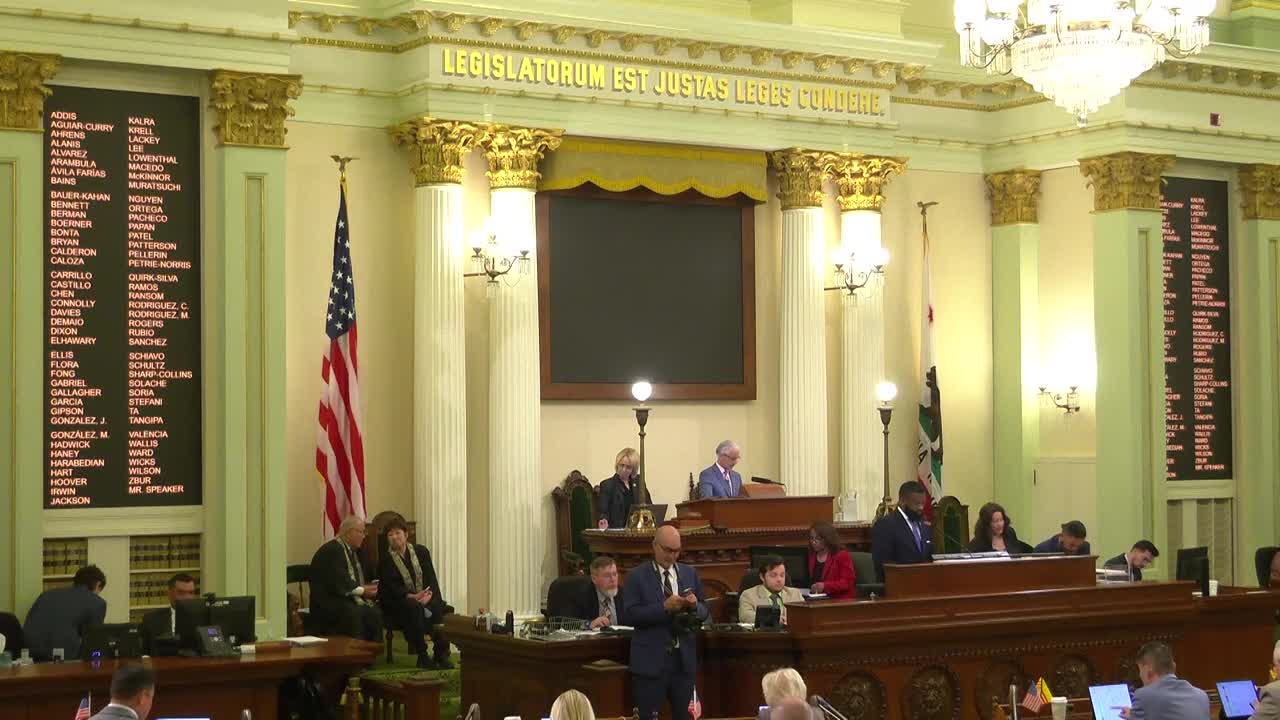
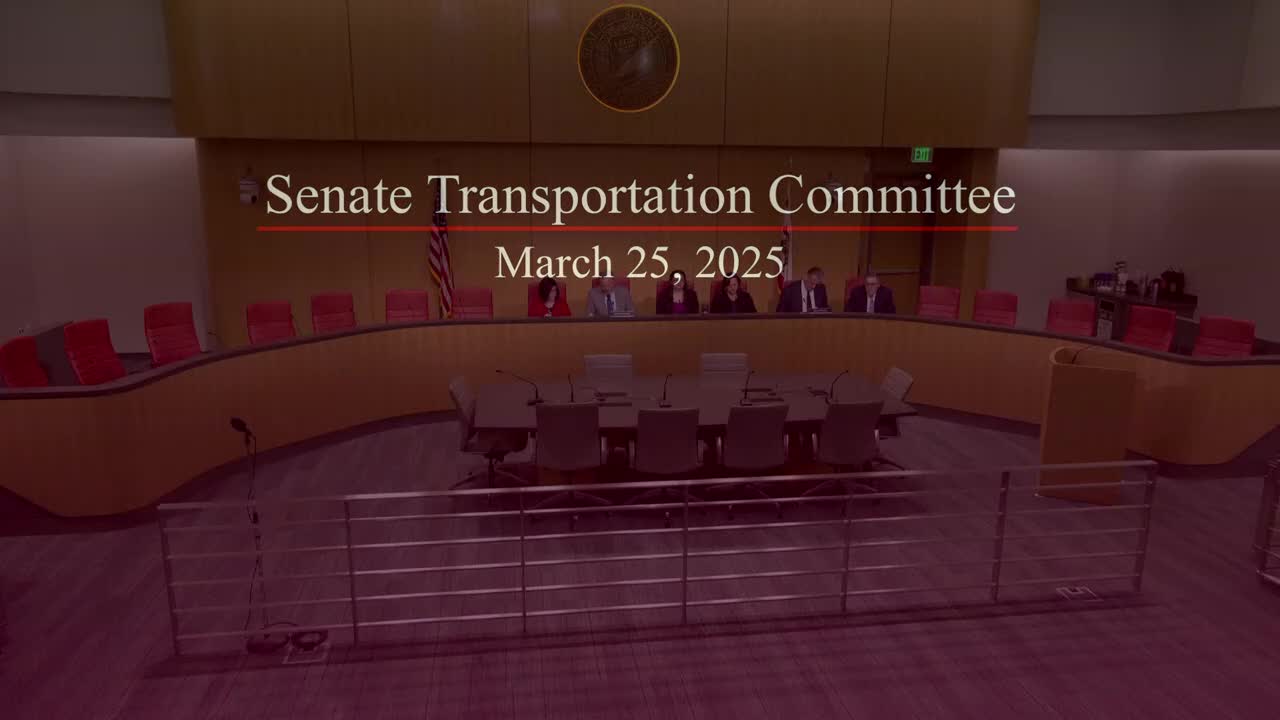
Bill Author
Bill Co-Author(s):