SB 847: Workers’ compensation: uninsured employer: transfer of real property.
- Session Year: 2025-2026
- House: Senate
- Latest Version Date: 2025-10-13
Current Status:
Passed
(2025-10-13: Chaptered by Secretary of State. Chapter 790, Statutes of 2025.)
Introduced
In Committee
Awaiting First Chamber Vote
Passed First Chamber
In Committee
Awaiting Second Chamber Vote
Passed Second Chamber
Enacted
Existing law establishes a workers compensation system, administered by the Administrative Director of the Division of Workers Compensation, to compensate an employee for injuries sustained in the course of employment. Under existing law, an employer is required to provide for the payment of workers compensation and if the employer has not secured the payment of compensation or is illegally uninsured, a lien may be filed against the employers property or the property of any person found to be parents or substantial shareholders of the employer.
This bill would authorize the director to determine whether a conveyance of real property by an uninsured employer or a substantial shareholder after a date of injury in a claim and prior to the recording of a certificate of lien was intended to retain a beneficial interest in that real property for the uninsured employer or substantial shareholder, resulting in a trust for the benefit of the uninsured employer. The bill would authorize the director to make a prima facie finding that the transaction resulted in a beneficial trust for the uninsured employer when specified circumstances are present, such as the deed indicates that the transfer was made as a gift or that no transfer tax to the county was paid, among others. The bill would require that when the director determines that such a trust exists, a certificate of lien shall be attached to the resulting trust and would require the director to mail written notices of that determination to the transferor and transferee, as prescribed.
(a)In a claim in which the uninsured employer or a substantial shareholder, as determined pursuant to this article, has caused to be recorded in a county a vesting deed conveying an ownership interest in real property after the date of the employees injury and prior to the recording of a certificate of lien in the county by the director pursuant to Section 3720, and provided that such property has not subsequently been transferred to a bona fide purchaser, the director may determine according to the evidence available to the director whether the transferor of such real property intended to retain a beneficial interest in the real property, such that a resulting trust for the benefit of the uninsured employer or substantial shareholder was created. A prima facie finding that the transaction created a resulting trust for the benefit of the uninsured employer or substantial shareholder may be made when the director determines that there is sufficient evidence to show either of the following circumstances are present:
(1)The recorded vesting deed indicates thereon that the transfer was made as a gift or that no transfer tax to the county was paid.
(2)The transferor made the transfer with actual intent to hinder, delay, or defraud collection of reimbursement for funds paid by the Uninsured Employers Benefits Trust Fund to or on behalf of an injured worker. A finding made pursuant to this paragraph may be made when at least three or more of the following circumstances are present:
(A)The transfer was to a personal or business associate or a relative by blood, affinity, or marriage of the transferor.
(B)The transferor maintains the real property as a place of residence or business after the transfer.
(C)The transferring parties did not employ an escrow or title company to close the transaction transferring the real property.
(D)The value of the consideration received by the transferor was not reasonably equivalent to the value of the real property transferred.
(E)The transferor failed to attend scheduled hearings and trials of the appeals board after the transfer.
(F)The transferor owns legal title to no other real property in the county.
(b)When the director determines pursuant to subdivision (a) that a transfer of real property by the uninsured employer or a substantial shareholder created a resulting trust for the benefit of such transferor, a certificate of lien recorded by the director pursuant to Section 3720 shall attach to that resulting trust in the property and shall constitute a valid lien against the property in favor of the director in the same manner as if the transfer had not occurred.
(c)When the director determines pursuant to subdivision (a) that a transfer created a resulting trust for benefit of the transferor, the director shall mail written notices of the prima facie determination of said resulting trust to the transferor and transferee at their addresses as shown on the recorded vesting deed, the official address record of the appeals board, and to any other more recent addresses the director may have. The notice shall advise the transferring parties of their right to appeal the finding, and that a lien may record and attach against the subject real property stating therein that, THE DIRECTOR HAS MADE A PRIMA FACIE DETERMINATION PURSUANT TO LABOR CODE SECTION 3720.2 THAT THE TRANSFEREE, [FIRST AND LAST NAME], HOLDS TITLE TO THE REAL PROPERTY AT [STREET ADDRESS, CITY AND PARCEL NUMBERS] ON BEHALF OF THE TRANSFEROR, [FIRST AND LAST NAME], IN A RESULTING TRUST in bold and uppercase letters on the certificate of lien.
(d)A person aggrieved by a prima facie finding of the director pursuant to subdivision (a) that the transferor of the property intended to retain a beneficial interest, such that a resulting trust was created, may request a hearing on the finding by filing a written request for hearing with the director. The director, through a hearing officer appointed by the director, shall hold a hearing on the matter within 20 days of the receipt of the request for hearing and shall mail a notice of time and place of hearing to the person requesting the hearing at least 10 days prior to the hearing. The hearing officer shall hear and receive evidence, and within 10 days of the hearing, file findings on whether there is sufficient evidence to constitute a prima facie case that the transfer of real property is subject to a resulting trust. The hearing officer shall serve with the findings a summary of evidence received and relied upon and the reasons for the findings. A party may at their own expense require that the hearing proceedings be recorded and transcribed.
(e)A party aggrieved by the findings of the hearing officer may within 20 days apply for a writ of mandate to the superior court. The venue shall lie in the county in which the real property is located.
(f)This section does not affect the interests, priorities, and ownership rights of bona fide encumbrancers and purchasers.
|
Date
|
Status
|
|---|---|
| Oct 13, 2025 | Chaptered by Secretary of State. Chapter 790, Statutes of 2025. |
| Oct 13, 2025 | Approved by the Governor. |
| Sep 3, 2025 | Enrolled and presented to the Governor at 11 a.m. |
| Aug 28, 2025 | In Senate. Ordered to engrossing and enrolling. |
| Aug 28, 2025 | Read third time. Passed. (Ayes 74. Noes 0. Page 2777.) Ordered to the Senate. |
| Aug 21, 2025 | Read second time. Ordered to consent calendar. |
| Aug 20, 2025 | From committee: Do pass. Ordered to consent calendar. (Ayes 15. Noes 0.) (August 20). |
| Jul 16, 2025 | From committee: Do pass and re-refer to Com. on APPR. with recommendation: To consent calendar. (Ayes 17. Noes 0.) (July 16). Re-referred to Com. on APPR. |
| Jul 2, 2025 | From committee: Do pass and re-refer to Com. on INS. with recommendation: To consent calendar. (Ayes 12. Noes 0.) (July 1). Re-referred to Com. on INS. |
| Jun 19, 2025 | Re-referred to Coms. on JUD. and INS. pursuant to Assembly Rule 96. |
| Jun 5, 2025 | Referred to Coms. on INS. and JUD. |
| May 29, 2025 | In Assembly. Read first time. Held at Desk. |
| May 29, 2025 | Read third time. Passed. (Ayes 38. Noes 0. Page 1334.) Ordered to the Assembly. |
| May 13, 2025 | Read second time. Ordered to third reading. |
| May 12, 2025 | From committee: Be ordered to second reading pursuant to Senate Rule 28.8. |
| May 2, 2025 | Set for hearing May 12. |
| Apr 30, 2025 | From committee: Do pass and re-refer to Com. on APPR. (Ayes 13. Noes 0. Page 944.) (April 29). Re-referred to Com. on APPR. |
| Apr 9, 2025 | From committee: Do pass and re-refer to Com. on JUD. (Ayes 5. Noes 0. Page 740.) (April 9). Re-referred to Com. on JUD. |
| Apr 8, 2025 | Set for hearing April 29 in JUD. pending receipt. |
| Mar 26, 2025 | Set for hearing April 9. |
| Mar 12, 2025 | Referred to Coms. on L., P.E. & R. and JUD. |
| Feb 24, 2025 | Read first time. |
| Feb 24, 2025 | From printer. May be acted upon on or after March 24. |
| Feb 21, 2025 | Introduced. To Com. on RLS. for assignment. To print. |
|
Date
|
Description
|
Location
|
Votes
|
|
|---|---|---|---|---|
| Aug 28, 2025 | SB 847 Reyes Consent Calendar Second Day Regular Session | Assembly Floor |
Passed |
|
| Aug 20, 2025 | Do pass. To Consent Calendar. | Assembly Standing Committee on Appropriations |
Passed |
|
| Jul 16, 2025 | Do pass and be re-referred to the Committee on [Appropriations] with recommendation: To Consent Calendar | Assembly Standing Committee on Insurance |
Passed |
|
| Jul 1, 2025 | Do pass and be re-referred to the Committee on [Insurance] with recommendation: To Consent Calendar | Assembly Standing Committee on Judiciary |
Passed |
|
| May 29, 2025 | Senate 3rd Reading SB847 Reyes By Cortese | Senate Floor |
Passed |
|
| Apr 29, 2025 | Do pass, but first be re-referred to the Committee on [Appropriations] | Senate Standing Committee on Judiciary |
Passed |
|
| Apr 9, 2025 | Do pass, but first be re-referred to the Committee on [Judiciary] | Senate Standing Committee on Labor, Public Employment and Retirement |
Passed |
This list shows positions taken on this bill by organizations on the date displayed, which is linked to the original source.
Positions by individuals are not included.
|
Organization
|
Position
|
Date
|
|---|---|---|
| a coalition of employer and insurer associations | ** Support | |
| a labor organization | ** Support | |
| American Property Casualty Insurance Association | ** Support | |
| California Applicant Attorneys Association | ** Support | |
| California Association of Wine Grape Growers | ** Support | |
| California Chamber Of Commerce | ** Support | |
| California Coalition On Workers Compensation | ** Support | |
| California Farm Bureau | ** Support |
Date of Hearing: August 20, 2025
ASSEMBLY COMMITTEE ON APPROPRIATIONS
Buffy Wicks, Chair
SBPCA Bill Id:SB 847
Author:(Reyes) – As Introduced Ver:February 21, 2025
Policy Committee: | Judiciary | Vote: | 12 - 0 |
Insurance | 17 - 0 | ||
|
|
Urgency: No State Mandated Local Program: No Reimbursable: No
SUMMARY:
This bill authorizes the Department of Industrial Relations (DIR) director to make a prima facie finding that a transfer of property by an uninsured employer was made to avoid the lawful imposition of a lien on the property.
Specifically, this bill:
- Allows the DIR director, when the director determines there is sufficient evidence to show one of two circumstances is present, to make a prima facie finding that an uninsured employer (or substantial shareholder) transferred real property with intent to retain a beneficial interest in the property, thus creating a resulting trust for the benefit of the uninsured employer.
- Provides that a certificate of lien previously recorded on the transferred property by the director attaches to the resulting trust in the property, constituting a valid lien against the property in favor of the director in the same manner as if the transfer had not occurred.
- Requires the director to mail written notices of the prima facie determination to the transferor. The notice must advise the transferor of their right to appeal the finding and that a lien may record and attach against the property.
- Authorizes a person aggrieved by the prima facie finding to request a hearing on the director’s finding, and authorizes a party aggrieved by the findings of the hearing officer to apply for a writ of mandate in superior court.
FISCAL EFFECT:
- Negligible costs to DIR. DIR notes that this bill’s provision of authority to the director does not substantially change the duties already performed by investigators, attorneys, and Uninsured Employers Benefits Trust Fund (UEBTF) collection specialists. DIR further notes the potential for cost savings to the extent this bill deters litigation when the director establishes an equitable trust against real property fraudulently transferred by an uninsured employer and collects reimbursement.
- Costs of an unknown, but likely minor and absorbable, amount to the courts by authorizing a party aggrieved by a hearing officer’s findings to apply for a writ of mandate.
COMMENTS:
- Purpose. According to the author:
SB 847 ensures that an employer who illegally does not carry [workers’ compensation] insurance, does not use loop holes to avoid punishment. By allowing [DIR] to administratively identify when property is being illegally shielded, SB 847 guarantees justice is served and protects the financial stability of the UEBTF while also providing long term, timely relief for injured workers.
This bill is sponsored by the California Applicant Attorneys’ Association, and supported by a labor organization and a coalition of employer and insurer associations.
- UEBTF. An employee of an employer that does not have valid workers’ compensation insurance at the time of an employee’s work-related injury is still entitled to medical treatment and other workers’ compensation benefits. If the illegally “uninsured employer” fails to pay for the benefits awarded to the injured employee by the Workers’ Compensation Appeals Board, the claim is paid from the UEBTF. The DIR director has the right to recover all benefits paid from the UEBTF, such as through recording a certificate of lien against the uninsured employer’s real property.
As part of the UEBTF collection process, the director has the authority to make a prima facie determination relating to two issues: (a) whether the employer was illegally operating without workers’ compensation insurance, and (b) if an individual who holds a 15% interest in the employer entity qualifies as a “substantial shareholder” of the entity. This bill provides a similar framework to allow the director to make a prima facie determination when an illegally insured employer or substantial shareholder transfers real property under certain circumstances to avoid the imposition of a lien on the property.
Analysis Prepared by: Irene Ho / APPR. / (916) 319-2081
Date of Hearing: July 16, 2025
ASSEMBLY COMMITTEE ON INSURANCE
Lisa Calderon, Chair
SBPCA Bill Id:SB 847
Author:(Reyes) – As Introduced Ver:February 21, 2025
SENATE VOTE: 38-0
SUBJECT: Workers’ compensation: uninsured employer: transfer of real property
SUMMARY: Authorizes the Director of the Department of Industrial Relations (DIR) to make a prima facie finding that a transfer of property by an “uninsured employer” was executed to avoid the lawful imposition lien on the property. Specifically, this bill:
- Authorizes the Director of the DIR to determine whether a transfer of real property by the uninsured employer, or a substantial shareholder, intended to retain a beneficial interest in the real property and created a resulting trust for the benefit of the transferor.
- Authorizes the Director to make a prima facie finding that the transaction created a resulting trust for the benefit of the uninsured employer or substantial shareholder when there is sufficient evidence to show either of the following circumstances are present:
- The recorded vesting deed indicates that the transfer was made as a gift or that no transfer tax to the county was paid.
- Certain factors, as enumerated, indicate that the transferor made the transfer with actual intent to hinder, delay, or defraud collection of reimbursement for funds paid by the Uninsured Employers Benefits Trust Fund to or on behalf of an injured worker.
- Requires the Director to record a certificate of lien attached to that resulting trust in the property, when the Director determines that a transfer of real property by the uninsured employer or a substantial shareholder created a resulting trust for the benefit of such transferor. This constitutes a valid lien against the property in the same manner as if the transfer had not occurred.
- Requires the Director to mail written notices of the prima facie determination of that resulting trust to the transferor and transferee at their address as shown on the recorded vesting deed, the official address record of the appeals board, and to any other more recent addresses the Director may have.
EXISTING LAW:
- Establishes a comprehensive system of workers’ compensation that provides a range of benefits for an employee who suffers from an injury or illness that arises out of and in the course of employment, regardless of fault. This system requires all employers to insure payment of benefits by either securing the consent of the DIR to self-insure or by obtaining insurance. (Labor Code Sections 3200-6002. Subsequent citations refer to this code.)
- Provides that if the employer has failed to pay workers’ compensation, the Director shall determine whether the employer was illegally uninsured. If the employer fails to provide a written statement within 10 days, if there is a written denial by the insurer, or if there is no existing record of the employer’s insurance with the Workers’ Compensation Insurance Rating Bureau, it shall constitute sufficient evidence for a prima facie case that the employer failed to secure the payment of compensation. (Section 3715 (c))
- Requires, when the Director determines that an employer was prima facie illegally uninsured, the Director to mail a written notice of the determination to the employer at their address on record. The notice must advise the employer of their right to appeal the finding, and that a lien may be placed against the employer’s and any parent corporation’s property, or the property of substantial shareholders of a corporate employer, as defined. An employer may appeal the finding by filing a petition before the appeals board. (Section 3715 (d))
- Provides that if an employer fails to pay workers’ compensation to a person entitled to it or fails to furnish a bond, then an award shall be paid to the injured employee or his or her dependents by the Director from the Uninsured Employers Benefits Trust Fund (UEBTF), which is continuously appropriated. (Section 3716)
- Provides that in the event the appeals board finds that a corporation is the employer of an injured employee, and that the corporation has failed to pay workers’ compensation, the following persons are jointly and severally liable with the corporation: 1) all persons who are a parent of the corporation, and 2) all persons who are substantial shareholders, as defined in subdivision (b), of the corporation or its parent. (Section 3717.)
- Defines “substantial shareholder” as a shareholder who owns at least 15 percent of the total value of all classes of stock, or, if no stock has been issued, who owns at least 15 percent of the beneficial interests in the corporation. (Section 3717 (b).)
- Provides that when the appeals board or Director determines that an employer has failed to pay workers’ compensation, or when the Director has determined that an employer is prima facie illegally uninsured, the Director may file a certificate of lien showing the date that the employer was determined to be illegally uninsured, or the date that the Director has determined that the employer was prima facie illegally uninsured, and the name and address of the employer against whom it was filed, as specified, in the office of the county recorder in the counties where the employer’s property is possibly located. (Section 3720.)
- Provides that in any claim in which the alleged uninsured employer is a corporation, for purposes of filing certificates of lien, the Director may determine whether a person is prima facie a parent or substantial shareholder. Any person aggrieved by a finding of the Director that they were prima facie a parent or substantial shareholder may request a hearing on the finding by filing a written request for hearing with the Director. (Section 3720.1.)
FISCAL EFFECT: Unknown.
COMMENTS:
- Purpose: According to the author, “SB 847 ensures that an employer who illegally does not carry unemployment insurance, does not use loop holes to avoid punishment. By allowing the Department of Industrial Relations to administratively identify when property is being illegally shielded, SB 847 guarantees justice is served and protects the financial stability of the UEBTF while also providing long term, timely relief for injured workers.”
- Uninsured Employers Benefits Trust Fund: If an employer does not have valid workers’ compensation insurance at the time of an employee’s work-related injury, the injured employee is still entitled to medical treatment and other benefits. When illegally uninsured employers fail to pay workers' compensation benefits awarded to their injured employees by the Workers' Compensation Appeals Board, the claim is paid from the UEBTF.
The UEBTF is a special fund used to pay the claims of employees who are injured or become ill while working for an illegally uninsured employer, including medical treatment. The UEBTF is not the employer’s insurance carrier or self-insured employer’s third party administrator. The Director of DIR has the right to recover all benefits paid from the fund to cover the injured worker’s claim, including by recording a certificate of lien against the uninsured employers’ real property. Once the lien is attached to the real property, the Director can collect the amount the UEBTF is owed when the employer sells or refinances their property.
The property lien has proven to be a successful method for the UEBTF to recoup its costs, but author and sponsors note that some of the worst offending uninsured employers transfer their residential and rental properties for little to no compensation to relatives and friends before the UEBTF is able to record its lien. This bill is intended to discourage and prevent the transfer of property by illegally uninsured employers to avoid paying what they owe to the UEBTF.
As part of this UEBTF collection process, the Director currently has the authority to make prima facie determinations on two issues: 1) whether the employer was illegally operating without workers’ compensation insurance, and 2) if an individual who holds a 15 percent interest in the employer entity qualifies as a “substantial shareholder” of the entity (i.e., a corporation or limited liability company).
SB 847 would provide a similar framework to use the same prima facie determination when the illegally uninsured employer or substantial shareholder transfers real property to a relative or friend for no or little compensation. The prima facie determinations may also be made under other circumstances including such as that the deed indicates that the transfer was made as a gift or that no transfer tax to the county was paid.
- Double Referral. This bill was previously heard in the Assembly Judiciary Committee and passed out on a 12-0 vote.
REGISTERED SUPPORT / OPPOSITION:
Support
California Applicants' Attorneys Association
Opposition
None on file.
Analysis Prepared by: Paul Riches / INS. / (916) 319-2086
Date of Hearing: July 1, 2025
ASSEMBLY COMMITTEE ON JUDICIARY
Ash Kalra, Chair
SBPCA Bill Id:SB 847
Author:(Reyes) – As Introduced Ver:February 21, 2025
PROPOSED CONSENT
SENATE VOTE: 38-0
SUBJECT: Workers’ compensation: uninsured employer: transfer of real property
KEY ISSUE: should the director of the department of industrial relations be authorized to make a prima facie finding that an employer who unlawfully fails to obtain workers’ compensation insurance – and who then transfers real property after an employee is injured but before the Director seeks a lien on the property – transferred the property to avoid the imposition of a lien?
SYNOPSIS
California’s worker’s compensation system provides benefits to workers who suffer work-related injuries. Existing law requires all employers to obtain workers’ compensation insurance, either through a private company or by self-insuring through the State Compensation Insurance Fund. If a worker is injured and the employer has failed to obtain insurance, and does not otherwise pay the amount awarded to the worker, the worker receives payments from the Uninsured Employers Benefits Trust Fund (UEBTF). In order to reimburse the funds spent by UEBTF, the Director of the Department of Industrial Relations may, among other methods of recovery, file a lien against the uninsured employer’s real property. According to the bill’s supporters, the lien is one of the most effective methods of collection at the Director’s disposal.
Unfortunately, some uninsured employers have tried to avoid the liens by quickly transferring real property to a friend, family member, or business associate. This bill would authorize the Director to make a prima facie finding that the transfer was made to shield the property from the lien if the uninsured property owner made the transfer after the worker’s injury but before the Director filed a certificate for a lien with the relevant county recorder’s office, subject to the transferor’s right to challenge the finding, as described in the analysis below.
This bill has not received any negative committee or floor votes. It is sponsored by the California Applicants Attorneys Association and supported by the California Chamber of Commerce and the California Farm Bureau, among others, who argue that this bill benefits workers, tax payers, and employers who follow the law and obtain insurance. Should the bill be approved by this Committee, it would be heard next in the Committee on Insurance.
SUMMARY: Authorizes the Director of the Department of Industrial Relations (DIR), under certain circumstances, to make a prima facie finding that a transfer of property by an “uninsured employer,” as defined, made the transfer to avoid the lawful imposition lien on the property. Specifically, this bill:
- Authorizes the Director of the DIR to determine, according to the evidence available to them, whether a transfer of real property by the uninsured employer or a substantial shareholder intended to retain a beneficial interest in the real property and created a resulting trust for the benefit of such transferor.
- Authorizes the Director to make a prima facie finding that the transaction created a resulting trust for the benefit of the uninsured employer or substantial shareholder when there is sufficient evidence to show either of the following circumstances are present:
- The recorded vesting deed indicates thereon that the transfer was made as a gift or that no transfer tax to the county was paid.
- Certain factors, as enumerated, indicate that the transferor made the transfer with actual intent to hinder, delay, or defraud collection of reimbursement for funds paid by the Uninsured Employers Benefits Trust Fund to or on behalf of an injured worker.
- Requires the Director to record a certificate of lien attached to that resulting trust in the property, when the Director determines that a transfer of real property by the uninsured employer or a substantial shareholder created a resulting trust for the benefit of such transferor. This constitutes a valid lien against the property in the same manner as if the transfer had not occurred.
- Requires the Director to mail written notices of the prima facie determination of that resulting trust to the transferor and transferee at their address as shown on the recorded vesting deed, the official address record of the appeals board, and to any other more recent addresses the Director may have, when the Director determines that a transfer of real property by the uninsured employer or a substantial shareholder created a resulting trust for the benefit of such transferor.
EXISTING LAW:
- Establishes a comprehensive system of workers’ compensation that provides a range of benefits for an employee who suffers from an injury or illness that arises out of and in the course of employment, regardless of fault. This system requires all employers to insure payment of benefits by either securing the consent of the Department of Industrial Relations (DIR) to self-insure or by obtaining insurance from a company authorized by the state. (Labor Code Sections 3200-6002. Subsequent citations refer to this code.)
- Provides that if the employer has failed to pay workers’ compensation, the Director of the Department of Industrial Relations shall determine, based on the evidence available, whether the employer was illegally uninsured. If the employer fails to provide a written statement within 10 days, if there is a written denial by the insurer, or if there is no existing record of the employer’s insurance with the Workers’ Compensation Insurance Rating Bureau, it shall constitute sufficient evidence for a prima facie case that the employer failed to secure the payment of compensation. (Section 3715 (c).)
- Requires, when the Director determines that an employer was prima facie illegally uninsured, the Director to mail a written notice of the determination to the employer at their address on record. The notice must advise the employer of their right to appeal the finding, and that a lien may be placed against the employer’s and any parent corporation’s property, or the property of substantial shareholders of a corporate employer, as defined. Any employer aggrieved by a finding of the Director may appeal the finding by filing a petition before the appeals board, as specified. (Section 3715 (d).)
- Provides that if an employer fails to pay workers’ compensation to a person entitled to it or fails to furnish a bond, then an award shall be paid to the injured employee or his or her dependents by the Director from the Uninsured Employers Benefits Trust Fund, which is continuously appropriated. (Section 3716.)
- Provides that in the event the appeals board finds that a corporation is the employer of an injured employee, and that the corporation has failed to pay workers’ compensation, the following persons are jointly and severally liable with the corporation: 1) all persons who are a parent, as defined in Section 175 of the Corporations Code, of the corporation, and 2) all persons who are substantial shareholders, as defined in subdivision (b), of the corporation or its parent. (Section 3717.)
- Defines “substantial shareholder” as a shareholder who owns at least 15 percent of the total value of all classes of stock, or, if no stock has been issued, who owns at least 15 percent of the beneficial interests in the corporation. (Section 3717 (b).)
- Provides that when the appeals board or Director determines that an employer has failed to pay workers’ compensation, or when the Director has determined that an employer is prima facie illegally uninsured, the Director may file a certificate of lien showing the date that the employer was determined to be illegally uninsured, or the date that the Director has determined that the employer was prima facie illegally uninsured, and the name and address of the employer against whom it was filed, as specified, in the office of the county recorder in the counties where the employer’s property is possibly located. (Section 3720.)
- Provides that in any claim in which the alleged uninsured employer is a corporation, for purposes of filing certificates of lien, the Director may determine, according to the evidence available, whether a person is prima facie a parent or substantial shareholder, as defined. Any person aggrieved by a finding of the Director that they were prima facie a parent or substantial shareholder may request a hearing on the finding by filing a written request for hearing with the Director, as specified. A party aggrieved by the findings of the hearing officer may within 20 days apply for a writ of mandate to the superior court, as specified. (Section 3720.1.)
FISCAL EFFECT: As currently in print this bill is keyed fiscal.
COMMENTS: According to the author, “SB 847 ensures that an employer who illegally does not carry unemployment insurance, does not use loop holes to avoid punishment. By allowing the Department of Industrial Relations to administratively identify when property is being illegally shielded, SB 847 guarantees justice is served and protects the financial stability of the UEBTF while also providing long term, timely relief for injured workers.”
Workers’ Compensation enforcement. California’s worker’s compensation system, administered by the Division of Workers’ Compensation (DWC), provides benefits to workers who suffer work-related injuries. These benefits may include the costs of medical care, temporary or permanent disability benefits, and job displacement benefits. The Workers Compensation system was developed in the early 20th century to benefit both workers and employers. It benefits workers by compensating them for all expenses associated with the work-related injury or illness; it benefits employers by ensuring them against the potentially greater and certainly less predictable costs of tort liability.
In order to pay for worker benefits, existing law requires all employers to obtain workers’ compensation insurance, either through a private insurance company, or by self-insuring through the State Compensation Insurance Fund. If a worker is injured and the employer has failed to obtain insurance, and the uninsured employer does not otherwise pay the amount awarded, the worker receives payments from the Uninsured Employers Benefits Trust Fund (UEBTF). In order to recoup the funds spent by UEBTF, the Director of the Department of Industrial Relations may, among other methods of recovery, file a lien against the uninsured employer’s real property, or in the case of a corporation, against a “substantial shareholder,” as defined in existing law. According to the California Chamber of Commerce and other supporters of this bill, the lien is one of the most effective methods of collection at the Director’s disposal.
Unfortunately, some employers – who have already violated the law by failing to obtain insurance – have tried to avoid the liens by quickly transferring real property to a friend, family member, or business associate. This bill would authorize the Director to make a prima facie finding that the transfer was made to shield the property from the lien if the uninsured property owner made the transfer after the worker’s injury and before the Director files a lien with the appropriate county recorder. The timing by itself does not justify the prima facie finding. The Director must find one or more additional factors, as enumerated in the bill, suggesting that the transfer was made to avoid the lien and defraud the UEBTF. For example, a transfer of residential property for minimal consideration, or the fact that the person continues to reside in the transferred residential property, might support such a finding.
The prima facie finding is not dispositive, but, instead, creates a rebuttable presumption that the timing and totality of circumstances of the transfer reasonably suggests that the employer made the transfer in order to avoid the effect of the lien. An employer who believes that the lien was improperly imposed – either because the employer did not fail to obtain insurance or did not make the transfer for improper purposes – may appeal to the Director for an administrative hearing. If the employer is not satisfied with the hearing officer’s decision, they may file for a writ of mandate with the appropriate superior court in order to remove the lien.
ARGUMENTS IN SUPPORT: The California Chamber of Commerce supports this bill because it will stop “uninsured employers from evading their responsibility to reimburse the Uninsured Employers Benefit Trust Fund (UEBTF).” The Chamber writes:
The most effective method of collection employed by the Director [of the Department of Industrial Relations] against uninsured employers is through recording a certificate of lien. Once the lien has been attached to the real property located in the county where the certificate was recorded, the lien has the same effect as a judgment lien. Typically, the Director collects the amounts UEBTF has expended when the employer closes a sale or refinance escrow. While this has proven to be a successful method by which UEBTF recoups those amounts it has expended, some of the worst offending employers have transferred their residential and rental properties for little to no compensation (or consideration) to relatives and friends (or insiders) before the UEBTF was able to record its lien. SB 847 would discourage and prevent such wrongful actions.
The Director currently has authority to make prima facie determinations on two issues: [First] whether the employer was illegally operating without workers’ compensation insurance; and [second] if an individual, holding a 15 percent interest in the employer entity, qualifies as a “substantial shareholder” of the entity (i.e., a corporation or limited liability company).
[However] in recent years, there has been an increase in the transfer of real properties after a workers’ compensation case is filed to avoid the lien. SB 847 would authorize the Director of the Department of Industrial Relations to make prima facie determination regarding whether the transferor intended to retain a beneficial interest in the property, thus creating a “resulting trust.” If DIR makes that finding, DIR can still attach a lien to the property. . . Prohibiting fraud within the workers’ compensation system and ensuring that all employers are insured is important to the employer community.
REGISTERED SUPPORT / OPPOSITION:
Support
California Applicants' Attorneys Association (sponsor)
American Property Casualty Insurance Association
California Association of Wine Grape Growers
California Chamber of Commerce
California Coalition on Workers Compensation
California Farm Bureau
Opposition
None on file
Analysis Prepared by: Tom Clark / JUD. / (916) 319-2334
SENATE RULES COMMITTEE Office of Senate Floor Analyses (916) 651-1520 Fax: (916) 327-4478 | SB 847 |
THIRD READING
Bill No: SB 847
Author: Reyes (D)
Introduced: 2/21/25
Vote: 21
SENATE LABOR, PUB. EMP. & RET. COMMITTEE: 5-0, 4/9/25
AYES: Smallwood-Cuevas, Strickland, Cortese, Durazo, Laird
SENATE JUDICIARY COMMITTEE: 13-0, 4/29/25
AYES: Umberg, Niello, Allen, Arreguín, Ashby, Caballero, Durazo, Laird, Stern, Valladares, Wahab, Weber Pierson, Wiener
SENATE APPROPRIATIONS COMMITTEE: Senate Rule 28.8
SUBJECT: Workers’ compensation: uninsured employer: transfer of real property
SOURCE: California Applicants’ Attorneys Association
DIGEST:
This bill (1) authorizes the Director of the Department of Industrial Relations (DIR) to determine whether a transfer of real property by an uninsured employer or a substantial shareholder, as specified, resulted in a trust for the benefit of the uninsured employer, (2) authorizes the Director to make a prima facie finding that the transaction resulted in a beneficial trust for the uninsured employer, under specified circumstances, (3) requires a certificate of lien to be attached to the resulting trust when the Director determines that such a trust exists, and (4) requires the Director to mail written notices of that determination to the transferor and transferee, as specified.
ANALYSIS:
Existing law:
- Establishes a comprehensive system of workers’ compensation that provides a range of benefits for an employee who suffers from an injury or illness that arises out of and in the course of employment, regardless of fault. This system requires all employers to insure payment of benefits by either securing the consent of the DIR to self-insure or by obtaining insurance from a company authorized by the state. (Labor Code §§3200-6002)
- Provides that if the employer has failed to pay workers’ compensation, the Director of the Department of Industrial Relations (Director) shall determine, based on the evidence available, whether the employer was illegally uninsured. If the employer fails to provide a written statement within 10 days, if there a written denial by the insurer, or if there is no existing record of the employer’s insurance with the Workers’ Compensation Insurance Rating Bureau, it shall constitute sufficient evidence for a prima facie case that the employer failed to secure the payment of compensation. (Labor Code §3715(c))
- Requires, when the Director determines that an employer was prima facie illegally uninsured, the Director to mail a written notice of the determination to the employer at their address on record. The notice must advise the employer of their right to appeal the finding, and that a lien may be placed against the employer’s and any parent corporation’s property, or the property of substantial shareholders of a corporate employer, as defined. Any employer aggrieved by a finding of the Director may appeal the finding by filing a petition before the appeals board, as specified. (Labor Code §3715(d))
- Provides that if an employer fails to pay workers’ compensation to a person entitled to it or fails to furnish a bond, then an award shall be paid to the injured employee or his or her dependents by the Director from the Uninsured Employers Benefits Trust Fund, which is continuously appropriated. (Labor Code §3716)
- Provides that in the event the appeals board finds that a corporation is the employer of an injured employee, and that the corporation has failed to pay workers’ compensation, the following persons are jointly and severally liable with the corporation: 1) all persons who are a parent, as defined in Section 175 of the Corporations Code, of the corporation, and 2) all persons who are substantial shareholders, as defined in subdivision (b), of the corporation or its parent. (Labor Code §3717)
- Defines “substantial shareholder” as a shareholder who owns at least 15% of the total value of all classes of stock, or, if no stock has been issued, who owns at least 15% of the beneficial interests in the corporation:
- Specifies that in determining the ownership of stock or beneficial interest in the corporation, in the determination of whether a person is a substantial shareholder of the corporation, the rules of attribution of ownership of Section 17384 of the Revenue and Taxation Code shall be applied.
- Provides that “corporation” does not include:
- Any corporation that is the issuer of any security that is exempted by Section 25101 of the Corporations Code from Section 25130 of the Corporations Code.
- Any corporation that is the issuer of any security exempted by subdivision (c), (d), or (i) of Section 25100 of the Corporations Code from Sections 25110, 25120, and 25130 of the Corporations Code.
- Any corporation that is the issuer of any security which has qualified either by coordination, as provided by Section 25111 of the Corporations Code, or by notification, as provided by Section 25112 of the Corporations Code. (Labor Code §3717)
- Provides that when the appeals board or Director determines that an employer has failed to pay workers’ compensation, or when the Director has determined that an employer is prima facie illegally uninsured, the Director may file a certificate of lien showing the date that the employer was determined to be illegally uninsured, or the date that the Director has determined that the employer was prima facie illegally uninsured, and the name and address of the employer against whom it was filed, as specified, in the office of the county recorder in the counties where the employer’s property is possibly located. (Labor Code §3720)
- Provides that in any claim in which the alleged uninsured employer is a corporation, for purposes of filing certificates of lien, the Director may determine, according to the evidence available, whether a person is prima facie a parent or substantial shareholder, as defined. Any person aggrieved by a finding of the Director that they were prima facie a parent or substantial shareholder may request a hearing on the finding by filing a written request for hearing with the Director, as specified. A party aggrieved by the findings of the hearing officer may within 20 days apply for a writ of mandate to the superior court, as specified. (Labor Code §3720.1)
This bill:
- Authorizes the Director of the DIR to determine, according to the evidence available to them, whether a transfer of real property by the uninsured employer or a substantial shareholder intended to retain a beneficial interest in the real property and created a resulting trust for the benefit of such transferor:
- This applies to a claim in which the uninsured employer or a substantial shareholder has a recorded vesting deed conveying ownership interest in real property, after the date of the employee’s injury and prior to the recording of a certificate of lien in the county by the director as specified, and provided that such property has not subsequently been transferred to a bona fide purchaser.
- Authorizes the Director to make a prima facie finding that the transaction created a resulting trust for the benefit of the uninsured employer or substantial shareholder when there is sufficient evidence to show either of the following circumstances are present:
- The recorded vesting deed indicates thereon that the transfer was made as a gift or that no transfer tax to the county was paid.
- The transferor made the transfer with actual intent to hinder, delay, or defraud collection of reimbursement for funds paid by the Uninsured Employers Benefits Trust Fund to or on behalf of an injured worker:
- A finding may be made when at least three or more of the following circumstances are present:
- The transfer was to a personal or business associate or a relative by blood, affinity, or marriage of the transferor.
- The transferor maintains the real property as a place of residence or business after the transfer.
- The transferring parties did not employ an escrow or title company to close the transaction transferring the real property.
- The value of the consideration received by the transferor was not reasonably equivalent to the value of the real property transferred.
- The transferor failed to attend scheduled hearings and trials of the appeals board after the transfer.
- The transferor owns legal title to no other real property in the county.
- A finding may be made when at least three or more of the following circumstances are present:
- Requires the Director to record a certificate of lien attached to that resulting trust in the property, when the Director determines that a transfer of real property by the uninsured employer or a substantial shareholder created a resulting trust for the benefit of such transferor. This constitutes a valid lien against the property in the same manner as if the transfer had not occurred.
- Requires the Director to mail written notices of the prima facie determination of that resulting trust of the transferor and transferee a their address as shown on the recorded vesting deed, the official address record of the appeals board, and to any other more recent addresses the director may have, when the Director determines that a transfer of real property by the uninsured employer or a substantial shareholder created a resulting trust for the benefit of such transferor.
- The notice shall advise the transferring parties of their right to appeal the finding, and that a lien may record and attach against the subject real property stating therein that, “THE DIRECTOR HAS MADE A PRIMA FACIE DETERMINATION PURSUANT TO LABOR CODE SECTION 3720.2 THAT THE TRANSFEREE, [FIRST AND LAST NAME], HOLDS TITLE TO THE REAL PROPERTY AT [STREET ADDRESS, CITY AND PARCEL NUMBERS] ON BEHALF OF THE TRANSFEROR, [FIRST AND LAST NAME], IN A RESULTING TRUST”, in bold and uppercase letters on the certificate of lien.
- Provides that a person aggrieved by a prima facie finding of the Director that the transferor of the property intended to retain a beneficial interest, such that a resulting trust was created, may request a hearing on the finding by filing a written request for hearing with the Director:
- The director, through a hearing officer appointed by the director, shall hold a hearing on the matter within 20 days of the receipt of the request for hearing and shall mail a notice of time and place of hearing to the person requesting the hearing at least 10 days prior to the hearing.
- The hearing officer shall hear and receive evidence, and within 10 days of the hearing, file findings on whether there is sufficient evidence to constitute a prima facie case that the transfer of real property is subject to a resulting trust.
- The hearing officer shall serve with the findings a summary of evidence received and relied upon and the reasons for the findings.
- A party may at their own expense require that the hearing proceedings be recorded and transcribed.
- Provides that a party aggrieved by the findings of the hearing officer may within 20 days apply for a writ of mandate to the superior court:
- The venue shall be in the county in which the real property is located.
- Provides that this section does not affect the interests, priorities, and ownership rights of bona fide encumbrancers and purchasers.
Background
Uninsured Employers Benefits Trust Fund. California law requires all employers to have workers’ compensation insurance. Employers can either get insurance from an insurance company or they can become self-insured through a state program. Even if an employer does not have a valid workers’ compensation insurance at the time of an employee’s work-related injury, the injured employee is still entitled to medical treatment and other benefits. When illegally uninsured employers fail to pay workers' compensation benefits awarded to their injured employees by the Workers' Compensation Appeals Board, a claim is paid from the Uninsured Employers Benefits Trust Fund (UEBTF).
The UEBTF is a special fund used to pay the claims of employees who are injured or become ill while working for an illegally uninsured employer, including medical treatment. The UEBTF is not the employer’s insurance carrier or self-insured employer’s third party administrator. The Director of DIR has the right to recover all benefits paid from the fund to cover the injured worker’s claim, including by recording a certificate of lien against the uninsured employers’ real property. Once the lien is attached to the real property, the Director can collect the amount the UEBTF is owed when the employer sells or refinances their property.
While a recorded certificate of lien has proven to be a successful method for the UEBTF to recoup what it expended, the author and sponsors note that some of the worst offending uninsured employers transfer their residential and rental properties for little to no compensation to relatives and friends before the UEBTF is able to record its lien. This bill, SB 847, is intended to discourage and prevent the transfer of property by illegally uninsured employers to avoid paying what they owe to the UEBTF.
Prima facie determinations in the UEBTF process. As part of this UEBTF collection process, the Director currently has the authority to make prima facie determinations[1] on two issues: 1) whether the employer was illegally operating without workers’ compensation insurance, and 2) if an individual who holds a 15% interest in the employer entity qualifies as a “substantial shareholder” of the entity (i.e., a corporation or limited liability company).
SB 847 provides a similar framework to use the same prima facie determination when the illegally uninsured employer or substantial shareholder transfers real property to a relative or friend for no or little compensation. The prima facie determinations may also be made under other specified circumstances such as that the deed indicates that the transfer was made as a gift or that no transfer tax to the county was paid.
Transfer of Real Properties and Workers’ Compensation Fraud. According to the author and sponsors, there has been an increase in the transfer of real properties after a worker is injured and a workers’ compensation case is filed in recent years. They claim that these transfers often reflect an intent by the illegally uninsured employer to avoid a certificate of lien’s attachment to their real property, and as such, an attempt to evade the UEBTF’s lawful efforts to collect reimbursement.
These types of real property transfers impede the ability of the Director to obtain lawful reimbursement of funds paid out by UEBTF, which negatively impact the UEBTF, law abiding employers who obtain insurance, and California taxpayers who are impacted by these costs.
Related/Prior Legislation:
AB 3758 (Conroy, Chapter 1226, Statutes of 1992) provided that in any case in which the findings and order, decision, or award of the appeals board is against an employer that has failed to secure the payment of compensation, the State of California on behalf of the Uninsured Employers Fund shall be entitled to have judgment entered not only against the employer, but also against any person found to be parents or substantial shareholders of the employer.
FISCAL EFFECT: Appropriation: No Fiscal Com.: Yes Local: No
SUPPORT: (Verified 5/13/25)
California Applicants' Attorneys Association (Source)
American Property Casualty Insurance Association
Calchamber
California Association of Winegrape Growers
California Chamber of Commerce
California Coalition on Workers Compensation
California Farm Bureau
OPPOSITION: (Verified 5/13/25)
None received
ARGUMENTS IN SUPPORT:
According to the sponsors, the California Applicants’ Attorneys Association, “In 2017, the State Auditor, at the direction of the Legislature, investigated the many forms of fraud in the Workers’ Compensation System. That Audit found that fraud committed by employers resulted in 700% more costs than all employee fraud combined. The Audit also found the State’s failure to effectively enforce the law resulted in 8,500 fraud cases being closed without any investigation. One enforcement bright spot was the Uninsured Employers Benefits Trust Fund (UEBTF), which operates under the Director of the Department of Industrial Relations (DIR). SB 847 takes another important step forward in battling fraud in the Workers’ Compensation system. Dishonest employers commit fraud when they stop paying for Workers’ Compensation Insurance or refuse to pay legitimate claims if they operate as self-insured businesses. Honest employers pay annual assessments totaling $142 million into both the Fraud Assessment Fund to assist local District Attorneys combat fraud and the UEBTF. […] SB 847 would stop this ‘fraud-on-fraud’ scheme by adding a section to the Labor Code authorizing the Director of the Department of Industrial Relations to attach a lien to property that has been fraudulently transferred by an illegally uninsured employer.”
ARGUMENTS IN OPPOSITION:
Prepared by: Jazmin Marroquin / L., P.E. & R. / (916) 651-1556
5/14/25 12:30:15
Prima facie means “at first sight” or “based on first impression.” ↑
Senator Thomas Umberg, Chair
2025-2026 Regular Session
Bill No: SB 847 (Author:Reyes)
Version: February 21, 2025
Hearing Date: April 29, 2025
Fiscal: Yes
Urgency: No
Consultant: AM
SUBJECT
Workers’ compensation: uninsured employer: transfer of real property
DIGEST
This bill authorizes the Director (Director) of the Department of Industrial Relations (DIR) to determine whether a transfer of real property by an uninsured employer or a substantial shareholder made after the date of an employee’s injury, but before the Director has recorded a certificate of lien, was intended to retain a beneficial interest in the real property in the transferor, such that a trust for the benefit of the uninsured employer or substantial shareholder was created. The bill, upon a determination by the Director that a transfer resulted in such a trust, authorizes the Director to record a certificate of lien against the resulting trust in the property in favor of the Director in the same manner as if the transfer had not occurred, as provided. The bill authorizes the Director to make a prima facie showing that the transfer resulted in such a trust being created if certain conditions exist. The bill provides an appeal procedure to contest the determination of the Director. The bill specifies it does not affect the interests, priorities, and ownership rights of bona fide encumbrancers and purchasers.
EXECUTIVE SUMMARY
Under existing law, all employers are required to obtain workers’ compensation insurance, either through an insurance company or by being self-insured in a state program. If an employee of an uninsured employer is injured and the illegally uninsured employer fails to pay the workers' compensation benefits awarded to the injured employee, that employee can have their claim paid from the Uninsured Employers Benefits Trust Fund (fund). The Director has the right to recover benefits paid from the fund, including by recording a certificate of lien against the uninsured employers’ real property. This bill authorizes the Director to record a certificate of lien against property transferred by an illegally uninsured employer or substantial shareholder if the transfer was made with the intention for the transferor to retain a beneficial interest in the real property. This will hopefully deter illegally uninsured employers from making transfers of real property to avoid having a lien attach for the unpaid workers’ compensation benefits, and also provide the Director with a means to recoup payments if such a scenario occurs.
The bill is sponsored by the California Applicant Attorneys’ Association and supported by various business associations and organizations, including the California Chamber of Commerce. No timely opposition was filed with the Committee. The bill passed the Senate Labor, Public Employment and Retirement Committee on a vote of 5 to 0.
PROPOSED CHANGES TO THE LAW
Existing law:
- Establishes a comprehensive system of workers’ compensation insurance that provides a range of benefits for an employee who suffers from an injury or illness that arises out of and in the course of employment, regardless of fault. This system requires all employers to insure payment of benefits by either securing the consent of the Department of Industrial Relations (DIR) to self-insure or by obtaining insurance from a company authorized by the state. (Lab. Code §§ 3200-6002.)
- Provides that if the employer has failed to pay workers’ compensation, the Director is to determine, based on the available evidence, whether the employer was prima facie illegally uninsured.
- A finding that the employer was prima facie illegally uninsured must be made when the Director determines that there is sufficient evidence to constitute a prima facie case that the employer employed an employee on the date of the alleged injury and failed to secure the payment of compensation, and that the employee was injured arising out of, and occurring in the course of, the employment.
- The following constitutes, in itself, sufficient evidence for a prima facie case that the employer failed to secure the payment of compensation:
- the employer failed to provide a written statement within 10 days from receiving a request for a statement;
- there is a written denial by the insurer named in the statement furnished by the employer;
- the nonexistence of a valid certificate of consent to self-insure for the time of the claimed injury, if the statement furnished by the employer claims the employer was self-insured; or
- there is no existing record of the employer’s insurance with the Workers’ Compensation Insurance Rating Bureau.
- The unrebutted written declaration under penalty of perjury by the injured employee, or applicant other than the employee, that the employee was employed by the employer at the time of the injury, and that the employee was injured in the course of their employment constitutes, in itself, sufficient evidence for a prima facie case that the employer employed the employee at the time of the injury, and that the employee was injured arising out of, and occurring in the course of, the employment. (Lab. Code § 3715(c).)
- Requires the Director, when they determine that an employer was prima facie illegally uninsured, to mail a written notice of the determination to the employer at the address as shown on the official address record of the appeals board, and to any other more recent address the Director may possess. The notice must advise the employer of its right to appeal the finding, and that a lien may be placed against the employer’s and any parent corporation’s property, or the property of substantial shareholders of a corporate employer. (Lab. Code § 3715(d).)
- Requires the Director, when an employer fails to pay a person entitled to worker’s compensation, to pay that person or their dependents from the Uninsured Employers Benefits Trust Fund (UEBTF). (Lab. Code § 3716.)
- Provides that in the event the Workers Compensation Appeals Board (Appeals Board) finds that a corporation is the employer of an injured employee, and that the corporation has failed to pay workers’ compensation, the following persons are jointly and severally liable with the corporation: 1) all persons who are a parent, as defined in Section 175 of the Corporations Code, of the corporation, and 2) all persons who are substantial shareholders of the corporation or its parent. (Lab. Code § 3717(a).)
- A “substantial shareholder” is defined as a shareholder who owns at least 15 percent of the total value of all classes of stock, or, if no stock has been issued, who owns at least 15 percent of the beneficial interests in the corporation. (Id. at subd. (b).)
- Provides that in determining the ownership of stock or beneficial interest in the corporation, in the determination of whether a person is a substantial shareholder of the corporation, the rules of attribution of ownership of Section 17384 of the Revenue and Taxation Code are to be applied. (Id. at subd. (c).)
- Authorizes the Director to file a certificate of lien and the name and address of the employer against whom it was filed, as specified, in the office of the county recorder in the counties where the employer’s property is possibly located when the Appeals Board or the Director determines that an employer has failed to pay workers’ compensation, or when the Director has determined that an employer is prima facie illegally uninsured. (Lab. Code § 3720.)
- Provides that in any claim in which the alleged uninsured employer is a corporation, for purposes of filing certificates of lien, the Director may determine, according to the evidence available, whether a person is prima facie a parent or substantial shareholder, as defined.
- Any person aggrieved by a finding of the Director that they were prima facie a parent or substantial shareholder may request a hearing on the finding by filing a written request for a hearing with the Director, as provided.
- A party aggrieved by the findings of the hearing officer may, within 20 days, apply for a writ of mandate to the superior court, as specified. (Lab. Code § 3720.1.)
This bill:
- Provides that if an uninsured employer or a substantial shareholder has recorded a vesting deed conveying an ownership interest in real property after the date of the employee’s injury and before the Director has recorded a certificate of lien pursuant to 6), above, the Director may determine whether the transferor of such real property intended to retain a beneficial interest in the real property, such that a resulting trust for the benefit of the uninsured employer or substantial shareholder was created.
- If the property has subsequently been transferred to a bona fide purchaser, the Director cannot make the determination above.
- The Director may make a prima facie finding that the transaction created a resulting trust for the benefit of the uninsured employer or substantial shareholder if the director determines that there is sufficient evidence to show either the following circumstances described in a) or b), below, are present.
- The recorded vesting deed indicates thereon that the transfer was made as a gift or that no transfer tax to the county was paid.
- The transferor made the transfer with actual intent to hinder, delay, or defraud collection of reimbursement for funds paid by the Uninsured Employers Benefits Trust Fund to or on behalf of an injured worker. A finding made pursuant to this paragraph may be made when at least three or more of the following circumstances are present:
- the transfer was to a personal or business associate or a relative by blood, affinity, or marriage of the transferor;
- the transferor maintains the real property as a place of residence or business after the transfer;
- the transferring parties did not employ an escrow or title company to close the transaction transferring the real property;
- the value of the consideration received by the transferor was not reasonably equivalent to the value of the real property transferred;
- the transferor failed to attend scheduled hearings and trials of the appeals board after the transfer; or
- the transferor owns legal title to no other real property in the county.
- Provides that if the Director determines that a transfer of real property by the uninsured employer or a substantial shareholder created a resulting trust for the benefit of such transferor, a certificate of lien recorded by the Director pursuant to 6), described in the existing law above, will attach to that resulting trust in the property and constitutes a valid lien against the property in favor of the Director in the same manner as if the transfer had not occurred.
- The director must mail written notices of the prima facie determination of said resulting trust to the transferor and transferee at their addresses as shown on the recorded vesting deed, the official address record of the Appeals Board, and to any other more recent addresses the Director may have.
- The notice must advise the transferring parties of their right to appeal the finding, and that a lien may record and attach against the subject real property stating therein that, “THE DIRECTOR HAS MADE A PRIMA FACIE DETERMINATION PURSUANT TO LABOR CODE SECTION 3720.2 THAT THE TRANSFEREE, [FIRST AND LAST NAME], HOLDS TITLE TO THE REAL PROPERTY AT [STREET ADDRESS, CITY AND PARCEL NUMBERS] ON BEHALF OF THE TRANSFEROR, [FIRST AND LAST NAME], IN A RESULTING TRUST” in bold and uppercase letters on the certificate of lien.
- Authorizes a person aggrieved by a prima facie finding of the Director under 3), above, to request a hearing in writing.
- Requires the Director to hold a hearing, through a hearing officer appointed by the Director, within 20 days of the receipt of the request for hearing and must mail a notice of the time and place of the hearing to the person who requested it at least 10 days prior to the hearing.
- The hearing officer must hear and receive evidence, and within 10 days of the hearing, file findings on whether there is sufficient evidence to constitute a prima facie case that the transfer of real property is subject to a resulting trust.
- The hearing officer must serve with the findings a summary of evidence received and relied upon and the reasons for the findings. A party may at their own expense require that the hearing proceedings be recorded and transcribed.
- A party aggrieved by the findings of the hearing officer may, within 20 days, apply for a writ of mandate to the superior court. The venue will lie in the county in which the real property is located.
- Specifies that these provisions do not affect the interests, priorities, and ownership rights of bona fide encumbrancers and purchasers.
COMMENTS
- The stated need for the bill
The author writes:
SB 847 ensures that an employer who illegally does not carry unemployment insurance, does not use loop holes to avoid punishment. By allowing the Department of Industrial Relations to administratively identify when property is being illegally shielded, SB 847 guarantees justice is served and protects the financial stability of the [Uninsured Employers Benefit Trust Fund] UEBTF while also providing long term, timely relief for injured workers.
- Uninsured Employers Benefits Trust Fund
The Senate Labor, Public Employment and Retirement Committee analysis provides useful background on the Uninsured Employers Benefits Trust Fund (UEBTF), noting it is a special fund “used to pay the claims of employees who are injured or become ill while working for an illegally uninsured employer, including medical treatment. The UEBTF is not the employer’s insurance carrier or self-insured employer’s third party administrator. The Director has the right to recover all benefits paid from the fund to cover the injured worker’s claim, including by recording a certificate of lien against the uninsured employers’ real property. Once the lien is attached to the real property, the Director can collect the amount the UEBTF is owed when the employer sells or refinances their property.”[1]
The existing lien process has proven to be a successful mechanism for the UEBTF to recoup what it pays out. However, the author and sponsor note that some of the worst offending uninsured employers are transferring their residential and rental properties for little to no compensation to relatives and friends before the Director is able to record the lien. This bill seeks to discourage and prevent transfers of property by illegally uninsured employers in order to avoid paying what they owe. The sponsor of the bill argues these “types of real property transfers undermine the ability of the Director to secure reimbursement of funds paid out by the UEBTF, which in turn causes continuing and lasting harm to the UEBTF and leads to higher costs for law abiding employers who obtain insurance and California taxpayers who absorb these costs.”
Under existing law, the Director can make a prima facie showing on two issues related to the UEBTF: (1) whether the employer was illegally operating without workers’ compensation insurance; and (2) if an individual who holds a 15 percent interest in the employer entity qualifies as a “substantial shareholder” of the entity. (Lab. Code § 3715.) This bill would allow the Director to make a prima facie showing that a trust for the benefit of the uninsured employer or substantial shareholder was created by a transfer of real property if sufficient evidence shows the transfer was made as a gift or that no transfer tax to the county was paid. Additionally, a prima facie showing can be made if the transfer was made with actual intent to hinder, delay, or defraud collection of reimbursement for funds paid by the UEBTF if at least three of certain circumstances exist, including:
- the value received by the transferor was not reasonably equivalent to the value of the real property transferred;
- the transferor maintains the real property as a place of residence or business after the transfer; and
- the transfer was to a personal or business associate or a relative by blood, affinity, or marriage.
The bill contains notice requirements and provides for a hearing upon a written request for appeal. A person may apply for a writ of mandate in superior court after the hearing by the Director or their designee. The bill also specifies that it does not affect the interests, priorities, and ownership rights of bona fide encumbrancers and purchasers of the real property at issue. This will ensure that a bona fide purchaser or creditor is not affected by a lien placed on the property by the Director, as they were not party to any fraud.
- Statements in support
The California Applicant Attorneys’ Association, the sponsor of the bill, writes:
The most effective method of collection employed by the Director against uninsured employers is through recording a certificate of lien. Once the lien has been attached to the real property located in the county where the certificate was recorded, the lien has the same effect as a judgment lien. Typically, the Director collects the amounts the UEBTF has expended when the employer closes a sale or refinances the property. While this has proven to be a successful method by which the UEBTF recoups those amounts it has expended, some of the worst offending employers have transferred their residential and rental properties for little to no compensation (or consideration) to relatives and friends (or insiders) before the UEBTF was able to record its lien. SB 847 is intended to discourage and prevent such wrongful actions.
In recent years, there has been an increase in the transfer of real properties after a worker is injured and a workers’ compensation case is filed. These transfers often reflect an intent by the illegally uninsured employer to avoid a certificate of lien’s attachment to their real property, and a corresponding intent to evade the UEBTF’s lawful demands and efforts to collect reimbursement for funds paid out to the injured worker.
SB 847 would stop this “fraud-on-fraud” scheme by adding a section to the Labor Code authorizing the Director of the Department of Industrial Relations to attach a lien to property that has been fraudulently transferred by an illegally uninsured employer.
SUPPORT
California Applicant Attorneys’ Association (sponsor)
American Property Casualty Insurance Association
California Association of Winegrape Growers
California Chamber of Commerce
California Coalition on Workers Compensation
California Farm Bureau
OPPOSITION
None received
RELATED LEGISLATION
Pending Legislation: None known.
Prior Legislation:
AB 3758 (Conroy, Ch. 1226, Stats. 1992) provided that in any case in which the findings and order, decision, or award of the Appeals Board is against an employer that has failed to secure the payment of compensation, the State of California on behalf of the Uninsured Employers Fund is entitled to have judgment entered, not only against the employer, but also against any person found to be parents or substantial shareholders of the employer.
PRIOR VOTES:
Senate Labor, Public Employment and Retirement Committee (Ayes 5, Noes 0)
**************
Sen. Lab., Pub. Empl. and Retirement Comm. analysis of SB 847 (2025-26 reg. sess.) as introduced Feb. 21, 2025 at p. 4. ↑
SENATE COMMITTEE ON LABOR, PUBLIC EMPLOYMENT AND RETIREMENT
Senator Lola Smallwood-Cuevas, Chair
2025 - 2026 Regular
Bill No: SB 847 Hearing Date: April 9, 2025
Author: | Reyes | ||
Version: | February 21, 2025 | ||
Urgency: | No | Fiscal: | Yes |
Consultant: | Jazmin Marroquin | ||
SUBJECT: Workers’ compensation: uninsured employer: transfer of real property
KEY ISSUE
This bill 1) authorizes the Director of DIR to determine whether a transfer of real property by an uninsured employer or a substantial shareholder, after a date of injury in a claim and prior to the recording of a certificate of lien, resulted in a trust for the benefit of the uninsured employer, 2) authorizes the Director to make a prima facie finding that the transaction resulted in a beneficial trust for the uninsured employer, under specified circumstances, and 3) requires that when the Director determines that such a trust exists, a certificate of lien shall be attached to the resulting trust and would require the director to mail written notices of that determination to the transferor and transferee, as specified.
ANALYSIS
Existing law:
- Establishes a comprehensive system of workers’ compensation that provides a range of benefits for an employee who suffers from an injury or illness that arises out of and in the course of employment, regardless of fault. This system requires all employers to insure payment of benefits by either securing the consent of the Department of Industrial Relations (DIR) to self-insure or by obtaining insurance from a company authorized by the state. (Labor Code §§3200-6002)
- Provides that if the employer has failed to pay workers’ compensation, the Director of the Department of Industrial Relations (Director) shall determine, based on the evidence available, whether the employer was illegally uninsured. If the employer fails to provide a written statement within 10 days, if there a written denial by the insurer, or if there is no existing record of the employer’s insurance with the Workers’ Compensation Insurance Rating Bureau, it shall constitute sufficient evidence for a prima facie case that the employer failed to secure the payment of compensation. (Labor Code §3715(c))
- Requires, when the Director determines that an employer was prima facie illegally uninsured, the Director to mail a written notice of the determination to the employer at their address on record. The notice must advise the employer of their right to appeal the finding, and that a lien may be placed against the employer’s and any parent corporation’s property, or the property of substantial shareholders of a corporate employer, as defined. Any employer aggrieved by a finding of the Director may appeal the finding by filing a petition before the appeals board, as specified. (Labor Code §3715(d))
- Provides that if an employer fails to pay workers’ compensation to a person entitled to it or fails to furnish a bond, then an award shall be paid to the injured employee or his or her dependents by the Director from the Uninsured Employers Benefits Trust Fund, which is continuously appropriated. (Labor Code §3716)
- Provides that in the event the appeals board finds that a corporation is the employer of an injured employee, and that the corporation has failed to pay workers’ compensation, the following persons are jointly and severally liable with the corporation: 1) all persons who are a parent, as defined in Section 175 of the Corporations Code, of the corporation, and 2) all persons who are substantial shareholders, as defined in subdivision (b), of the corporation or its parent. (Labor Code §3717)
- Defines “substantial shareholder” as a shareholder who owns at least 15 percent of the total value of all classes of stock, or, if no stock has been issued, who owns at least 15 percent of the beneficial interests in the corporation.
- Specifies that in determining the ownership of stock or beneficial interest in the corporation, in the determination of whether a person is a substantial shareholder of the corporation, the rules of attribution of ownership of Section 17384 of the Revenue and Taxation Code shall be applied.
- Provides that “corporation” does not include:
- Any corporation that is the issuer of any security that is exempted by Section 25101 of the Corporations Code from Section 25130 of the Corporations Code.
- Any corporation that is the issuer of any security exempted by subdivision (c), (d), or (i) of Section 25100 of the Corporations Code from Sections 25110, 25120, and 25130 of the Corporations Code.
- Any corporation that is the issuer of any security which has qualified either by coordination, as provided by Section 25111 of the Corporations Code, or by notification, as provided by Section 25112 of the Corporations Code. (Labor Code §3717)
- Provides that when the appeals board or Director determines that an employer has failed to pay workers’ compensation, or when the Director has determined that an employer is prima facie illegally uninsured, the Director may file a certificate of lien showing the date that the employer was determined to be illegally uninsured, or the date that the Director has determined that the employer was prima facie illegally uninsured, and the name and address of the employer against whom it was filed, as specified, in the office of the county recorder in the counties where the employer’s property is possibly located. (Labor Code §3720)
- Provides that in any claim in which the alleged uninsured employer is a corporation, for purposes of filing certificates of lien, the Director may determine, according to the evidence available, whether a person is prima facie a parent or substantial shareholder, as defined. Any person aggrieved by a finding of the Director that they were prima facie a parent or substantial shareholder may request a hearing on the finding by filing a written request for hearing with the Director, as specified. A party aggrieved by the findings of the hearing officer may within 20 days apply for a writ of mandate to the superior court, as specified. (Labor Code §3720.1)
This bill:
- Authorizes the Director of the DIR to determine, according to the evidence available to them, whether a transfer of real property by the uninsured employer or a substantial shareholder intended to retain a beneficial interest in the real property and created a resulting trust for the benefit of such transferor.
- This applies to a claim in which the uninsured employer or a substantial shareholder has a recorded vesting deed conveying ownership interest in real property, after the date of the employee’s injury and prior to the recording of a certificate of lien in the county by the director as specified, and provided that such property has not subsequently been transferred to a bona fide purchaser.
- Authorizes the Director to make a prima facie finding that the transaction created a resulting trust for the benefit of the uninsured employer or substantial shareholder when there is sufficient evidence to show either of the following circumstances are present:
- The recorded vesting deed indicates thereon that the transfer was made as a gift or that no transfer tax to the county was paid.
- The transferor made the transfer with actual intent to hinder, delay, or defraud collection of reimbursement for funds paid by the Uninsured Employers Benefits Trust Fund to or on behalf of an injured worker.
- A finding may be made when at least three or more of the following circumstances are present:
- The transfer was to a personal or business associate or a relative by blood, affinity, or marriage of the transferor.
- The transferor maintains the real property as a place of residence or business after the transfer.
- The transferring parties did not employ an escrow or title company to close the transaction transferring the real property.
- The value of the consideration received by the transferor was not reasonably equivalent to the value of the real property transferred.
- The transferor failed to attend scheduled hearings and trials of the appeals board after the transfer.
- The transferor owns legal title to no other real property in the county.
- A finding may be made when at least three or more of the following circumstances are present:
- Requires the Director to record a certificate of lien attached to that resulting trust in the property, when the Director determines that a transfer of real property by the uninsured employer or a substantial shareholder created a resulting trust for the benefit of such transferor. This constitutes a valid lien against the property in the same manner as if the transfer had not occurred.
- Requires the Director to mail written notices of the prima facie determination of that resulting trust of the transferor and transferee a their address as shown on the recorded vesting deed, the official address record of the appeals board, and to any other more recent addresses the director may have, when the Director determines that a transfer of real property by the uninsured employer or a substantial shareholder created a resulting trust for the benefit of such transferor.
- The notice shall advise the transferring parties of their right to appeal the finding, and that a lien may record and attach against the subject real property stating therein that, “THE DIRECTOR HAS MADE A PRIMA FACIE DETERMINATION PURSUANT TO LABOR CODE SECTION 3720.2 THAT THE TRANSFEREE, [FIRST AND LAST NAME], HOLDS TITLE TO THE REAL PROPERTY AT [STREET ADDRESS, CITY AND PARCEL NUMBERS] ON BEHALF OF THE TRANSFEROR, [FIRST AND LAST NAME], IN A RESULTING TRUST”, in bold and uppercase letters on the certificate of lien.
- Provides that a person aggrieved by a prima facie finding of the Director that the transferor of the property intended to retain a beneficial interest, such that a resulting trust was created, may request a hearing on the finding by filing a written request for hearing with the Director.
- The director, through a hearing officer appointed by the director, shall hold a hearing on the matter within 20 days of the receipt of the request for hearing and shall mail a notice of time and place of hearing to the person requesting the hearing at least 10 days prior to the hearing.
- The hearing officer shall hear and receive evidence, and within 10 days of the hearing, file findings on whether there is sufficient evidence to constitute a prima facie case that the transfer of real property is subject to a resulting trust.
- The hearing officer shall serve with the findings a summary of evidence received and relied upon and the reasons for the findings.
- A party may at their own expense require that the hearing proceedings be recorded and transcribed.
- Provides that a party aggrieved by the findings of the hearing officer may within 20 days apply for a writ of mandate to the superior court.
- The venue shall be in the county in which the real property is located.
- Provides that this section does not affect the interests, priorities, and ownership rights of bona fide encumbrancers and purchasers.
COMMENTS
1. Background:
Uninsured Employers Benefits Trust Fund
California law requires all employers to have workers’ compensation insurance. Employers can either get insurance from an insurance company or they can become self-insured through a state program. Even if an employer does not have a valid workers’ compensation insurance at the time of an employee’s work-related injury, the injured employee is still entitled to medical treatment and other benefits. When illegally uninsured employers fail to pay workers' compensation benefits awarded to their injured employees by the Workers' Compensation Appeals Board, a claim is paid from the Uninsured Employers Benefits Trust Fund (UEBTF).
The UEBTF is a special fund used to pay the claims of employees who are injured or become ill while working for an illegally uninsured employer, including medical treatment. The UEBTF is not the employer’s insurance carrier or self-insured employer’s third party administrator. The Director of DIR has the right to recover all benefits paid from the fund to cover the injured worker’s claim, including by recording a certificate of lien against the uninsured employers’ real property. Once the lien is attached to the real property, the Director can collect the amount the UEBTF is owed when the employer sells or refinances their property.
While a recorded certificate of lien has proven to be a successful method for the UEBTF to recoup what it expended, the author and sponsors note that some of the worst offending uninsured employers transfer their residential and rental properties for little to no compensation to relatives and friends before the UEBTF is able to record its lien. This bill, SB 847, is intended to discourage and prevent the transfer of property by illegally uninsured employers to avoid paying what they owe to the UEBTF.
Prima facie determinations in the UEBTF process
As part of this UEBTF collection process, the Director currently has the authority to make prima facie determinations[1] on two issues: 1) whether the employer was illegally operating without workers’ compensation insurance, and 2) if an individual who holds a 15 percent interest in the employer entity qualifies as a “substantial shareholder” of the entity (i.e., a corporation or limited liability company).
SB 847 would provide a similar framework to use the same prima facie determination when the illegally uninsured employer or substantial shareholder transfers real property to a relative or friend for no or little compensation. The prima facie determinations may also be made under other specified circumstances such as that the deed indicates that the transfer was made as a gift or that no transfer tax to the county was paid.
Transfer of real properties and workers’ compensation fraud
According to the author and sponsors, there has been an increase in the transfer of real properties after a worker is injured and a workers’ compensation case is filed in recent years. They claim that these transfers often reflect an intent by the illegally uninsured employer to avoid a certificate of lien’s attachment to their real property, and as such, an attempt to evade the UEBTF’s lawful efforts to collect reimbursement.
These types of real property transfers impede the ability of the Director to obtain lawful reimbursement of funds paid out by UEBTF, which negatively impact the UEBTF, law abiding employers who obtain insurance, and California taxpayers who are impacted by these costs.
2. Need for this bill?
According to the author:
“Nurses and other hospital workers face similar risks of exposure to diseases, injuries, and trauma as other first responder professions but are not granted the same presumptive eligibility protections. This discrepancy creates an unequal system where some male-dominated first responder professions receive automatic protections, while other women-dominated frontline professions who perform equally essential, high-risk jobs face barriers to accessing timely benefits and medical care.
Without presumptive eligibility, nurses and other hospital workers must prove that their illnesses or injuries were directly caused by their job, which can be challenging for conditions like infectious diseases, back injuries, or post-traumatic stress injury (PTSI) that may be difficult to trace to a specific workplace incident.
Nurses report that they often face delays or denials in workers' compensation claims, leading to postponed treatment. These delays can worsen their health conditions, increase medical costs, and prolong time away from work – ultimately exacerbating the staffing crisis in hospitals. Many nurses must hire lawyers to appeal claims, adding financial and emotional strain, while others forgo filing claims altogether, shouldering the costs themselves.”
3. Proponent Arguments:
According to the California Applicants Attorneys’ Association (CAAA):
“In 2017, the State Auditor, at the direction of the Legislature, investigated the many forms of fraud in the Workers’ Compensation System. That Audit found that fraud committed by employers resulted in 700% more costs than all employee fraud combined. The Audit also found the State’s failure to effectively enforce the law resulted in 8,500 fraud cases being closed without any investigation. One enforcement bright spot was the Uninsured Employers Benefits Trust Fund (UEBTF), which operates under the Director of the Department of Industrial Relations (DIR).
SB 847 takes another important step forward in battling fraud in the Workers’ Compensation system. Dishonest employers commit fraud when they stop paying for Workers’ Compensation Insurance or refuse to pay legitimate claims if they operate as self-insured businesses. Honest employers pay annual assessments totaling $142 million into both the Fraud Assessment Fund to assist local District Attorneys combat fraud and the UEBTF.
[…]
SB 847 would stop this ‘fraud-on-fraud’ scheme by adding a section to the Labor Code
authorizing the Director of the Department of Industrial Relations to attach a lien to property that has been fraudulently transferred by an illegally uninsured employer.”
4. Opponent Arguments:
None received.
5. Double Referral:
This bill has been double referred and if approved by this Committee today, will be sent to Senate Judiciary Committee for a hearing.
6. Prior Legislation:
AB 3758 (Conroy, Chapter 1226, Statutes of 1992) provided that in any case in which the findings and order, decision, or award of the appeals board is against an employer that has failed to secure the payment of compensation, the State of California on behalf of the Uninsured Employers Fund shall be entitled to have judgment entered not only against the employer, but also against any person found to be parents or substantial shareholders of the employer.
SUPPORT
California Applicant Attorneys’ Association (Sponsor)
California Chamber of Commerce
OPPOSITION
None received.
-- END --
Prima facie means “at first sight” or “based on first impression.” ↑
Discussed in Hearing
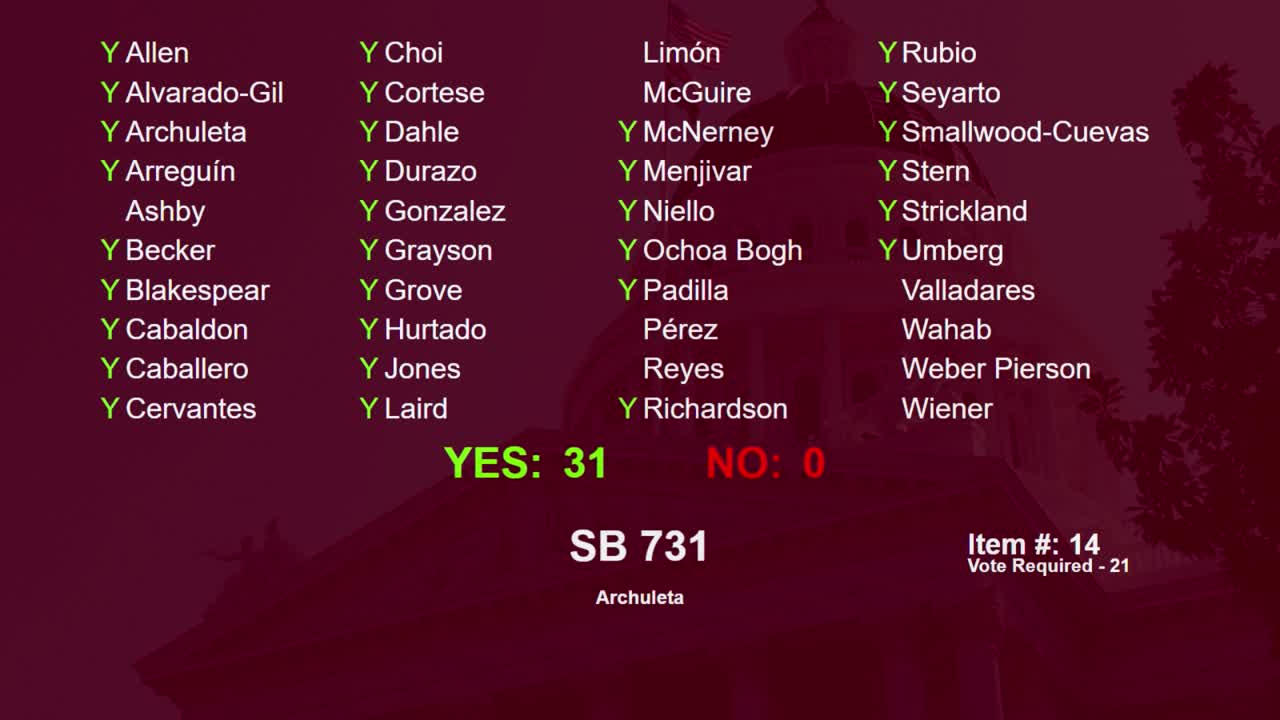 2MIN
Senate Floor
 4MIN
Senate Standing Committee on Labor, Public Employment and Retirement
Bill Author

Bill Co-Author(s):