SB 852: Political Reform Act of 1974: Citizens Redistricting Commission.
- Session Year: 2025-2026
- House: Senate
- Latest Version Date: 2025-10-03
Current Status:
Passed
(2025-10-03: Chaptered by Secretary of State. Chapter 331, Statutes of 2025.)
Introduced
In Committee
Awaiting First Chamber Vote
Passed First Chamber
In Committee
Awaiting Second Chamber Vote
Passed Second Chamber
Enacted
(1)The Political Reform Act of 1974 provides for the comprehensive regulation of political campaigns, lobbying, and other matters relating to governmental ethics and elections. The act is an initiative measure that authorizes the Legislature to amend its provisions by enactment of a bill by a 2/3 vote of each house if that bill furthers the acts purposes and, at least 8 days before passage, or at least 12 days before passage if the previous form of the bill did not amend the act, the bill in its final form has been delivered to the Fair Political Practices Commission for distribution to the news media and every person who has requested a copy from the commission. The act requires the Legislative Counsel, through a specified electronic system, to allow the public to sign up to receive an email alert any time a bill that would amend the act is, among other things, introduced, amended, referred to the floor or committee, or voted on.
This bill would eliminate the requirement that a bill amending the act must be delivered to the commission for distribution to the news media and every person who has requested a copy, instead requiring an otherwise proper amendment of the act to be printed, distributed to the Members of the Legislature, and published on the internet. The bill would declare that it furthers the purposes of the act.
The act also regulates conflicts of interest of public officials and requires that public officials file periodic statements of economic interest that disclose certain information regarding income, investments, and other financial data. The act provides that the Fair Political Practices Commission is the filing officer for statewide elected officers and candidates and other specified public officials, and requires those officers, candidates, and officials to file their statements of economic interest using the commissions electronic filing system.
This bill would add public officials who manage public investments to the list of individuals for whom the commission is the filing officer for statements of economic interest and would require those officials to file their statements of economic interest using the commissions electronic filing system.
The act also prohibits the receipt, delivery, or attempted delivery of a contribution in the State Capitol, any state office building, or any office for which the state pays the majority of the rent other than a legislative district office.
This bill would expand that prohibition to apply to local government office buildings and offices for which the state or a local government pays rent. The bill would also eliminate the exception for legislative district offices.
A violation of the Political Reform Act of 1974 is punishable as a misdemeanor. By establishing new requirements for the filing of statements of economic interests and by expanding the scope of restrictions on contributions, this bill would expand the scope of existing crimes, and therefore would impose a state-mandated local program.
(2)The Voters FIRST Act, an initiative measure approved by the electors as Proposition 11 at the November 4, 2008, statewide general election, requires the Citizens Redistricting Commission to draw district lines for the election of members of the State Senate, Assembly, Congress, and the State Board of Equalization. The act requires new members of the commission to be chosen in each year ending in 0 according to a specified selection process. Under existing law, any vacancy on the commission that occurs prior to December 31 of a year ending in 2 must be filled by the commission within 30 days and any vacancy that occurs on or after December 31 of a year ending in 2 must be filled within 90 days, as specified.
This bill would eliminate the requirement for the commission to fill a vacancy that occurs on or after December 31 of a year ending in 2 within 90 days and would instead authorize the commission to fill that vacancy.
The Voters FIRST Act authorizes the Legislature to amend the statutory provisions of the act by a statute that (1) is approved by a 2/3 vote of each house of the Legislature and signed by the Governor, (2) furthers the acts purposes, and (3) complies with specified procedural requirements.
(3)This bill would declare that it furthers the purposes of the Voters FIRST Act and the purposes of the Political Reform Act of 1974.
(4)The California Constitution requires the state to reimburse local agencies and school districts for certain costs mandated by the state. Statutory provisions establish procedures for making that reimbursement.
This bill would provide that no reimbursement is required by this act for a specified reason.
(1)The Political Reform Act of 1974 provides for the comprehensive regulation of political campaigns, lobbying, and other matters relating to governmental ethics and elections. The act is an initiative measure that authorizes the Legislature to amend its provisions by enactment of a bill by a 2/3 vote of each house if that bill furthers the acts purposes and, at least 8 days before passage, or at least 12 days before passage if the previous form of the bill did not amend the act, the bill in its final form has been delivered to the Fair Political Practices Commission for distribution to the news media and every person who has requested a copy from the commission. The act requires the Legislative Counsel, through a specified electronic system, to allow the public to sign up to receive an email alert any time a bill that would amend the act is, among other things, introduced, amended, referred to the floor or committee, or voted on.
This bill would eliminate the requirement that a bill amending the act must be delivered to the commission for distribution to the news media and every person who has requested a copy, instead requiring an otherwise proper amendment of the act to be printed, distributed to the Members of the Legislature, and published on the internet. The bill would declare that it furthers the purposes of the act.
The act also regulates conflicts of interest of public officials and requires that public officials file periodic statements of economic interest that disclose certain information regarding income, investments, and other financial data. The act provides that the Fair Political Practices Commission is the filing officer for statewide elected officers and candidates and other specified public officials, and requires those officers, candidates, and officials to file their statements of economic interest using the Commissions commissions electronic filing system.
This bill would add public officials who manage public investments to the list of individuals for whom the Commission commission is the filing officer for statements of economic interest and would require those officials to file their statements of economic interest using the Commissions commissions electronic filing system.
Any person who knowingly or willfully violates the Political Reform Act of 1974 is guilty of a misdemeanor. By imposing new requirements on certain public officials when filing their statements of economic interests, the bill would expand the scope of an existing crime and thereby impose a state-mandated local program.The act also prohibits the receipt, delivery, or attempted delivery of a contribution in the State Capitol, any state office building, or any office for which the state pays the majority of the rent other than a legislative district office.
This bill would expand that prohibition to apply to local government office buildings and offices for which the state or a local government pays rent. The bill would also eliminate the exception for legislative district offices.
A violation of the Political Reform Act of 1974 is punishable as a misdemeanor. By establishing new requirements for the filing of statements of economic interests and by expanding the scope of restrictions on contributions, this bill would expand the scope of existing crimes, and therefore would impose a state-mandated local program.
(2)The Voters FIRST Act, an initiative measure approved by the electors as Proposition 11 at the November 4, 2008, statewide general election, requires the Citizens Redistricting Commission to draw district lines for the election of members of the State Senate, Assembly, Congress, and the State Board of Equalization. The act requires new members of the commission to be chosen in each year ending in 0 according to a specified selection process. Under existing law, any vacancy on the commission that occurs prior to December 31 of a year ending in 2 must be filled by the commission within 30 days and any vacancy that occurs on or after December 31 of a year ending in 2 must be filled within 90 days, as specified.
This bill would eliminate the requirement for the commission to fill a vacancy that occurs on or after December 31 of a year ending in 2 within 90 days and would instead authorize the commission to fill that vacancy.
The Voters FIRST Act authorizes the Legislature to amend the statutory provisions of the act by a statute that (1) is approved by a 2/3 vote of each house of the Legislature and signed by the Governor, (2) furthers the acts purposes, and (3) complies with specified procedural requirements.
(3)This bill would declare that it furthers the purposes of the Voters FIRST Act and the purposes of the Political Reform Act of 1974.
(4)The California Constitution requires the state to reimburse local agencies and school districts for certain costs mandated by the state. Statutory provisions establish procedures for making that reimbursement.
This bill would provide that no reimbursement is required by this act for a specified reason.
(1)The Political Reform Act of 1974 provides for the comprehensive regulation of political campaigns, lobbying, and other matters relating to governmental ethics and elections. The act is an initiative measure that authorizes the Legislature to amend its provisions by enactment of a bill by a 2/3 vote of each house if that bill furthers the acts purposes and, at least 8 days before passage, or at least 12 days before passage if the previous form of the bill did not amend the act, the bill in its final form has been delivered to the Fair Political Practices Commission for distribution to the news media and every person who has requested a copy from the commission. The act requires the Legislative Counsel, through a specified electronic system, to allow the public to sign up to receive an email alert any time a bill that would amend the act is, among other things, introduced, amended, referred to the floor or committee, or voted on.
This bill would eliminate the requirement that a bill amending the act must be delivered to the commission for distribution to the news media and every person who has requested a copy, instead requiring an otherwise proper amendment of the act to be printed, distributed to the Members of the Legislature, and published on the internet. The bill would declare that it furthers the purposes of the act.
The act also regulates conflicts of interest of public officials and requires that public officials file periodic statements of economic interest that disclose certain information regarding income, investments, and other financial data. The act provides that the Fair Political Practices Commission is the filing officer for statewide elected officers and candidates and other specified public officials, and requires those officers, candidates, and officials to file their statements of economic interest using the Commissions electronic filing system.
This bill would add public officials who manage public investments to the list of individuals for whom the Commission is the filing officer for statements of economic interest and would require those officials to file their statements of economic interest using the Commissions electronic filing system.
Any person who knowingly or willfully violates the Political Reform Act of 1974 is guilty of a misdemeanor. By imposing new requirements on certain public officials when filing their statements of economic interests, the bill would expand the scope of an existing crime and thereby impose a state-mandated local program.
(2)The Voters FIRST Act, an initiative measure approved by the electors as Proposition 11 at the November 4, 2008, statewide general election, requires the Citizens Redistricting Commission to draw district lines for the election of members of the State Senate, Assembly, Congress, and the State Board of Equalization. The act requires new members of the commission to be chosen in each year ending in 0 according to a specified selection process. Under existing law, any vacancy on the commission that occurs prior to December 31 of a year ending in 2 must be filled by the commission within 30 days and any vacancy that occurs on or after December 31 of a year ending in 2 must be filled within 90 days, as specified.
This bill would eliminate the requirement for the commission to fill a vacancy that occurs on or after December 31 of a year ending in 2 within 90 days and would instead authorize the commission to fill that vacancy.
The Voters FIRST Act authorizes the Legislature to amend the statutory provisions of the act by a statute that (1) is approved by a 2/3 vote of each house of the Legislature and signed by the Governor, (2) furthers the acts purposes, and (3) complies with specified procedural requirements.
(3)This bill would declare that it furthers the purposes of the Voters FIRST Act and the purposes of the Political Reform Act of 1974.
(4)The California Constitution requires the state to reimburse local agencies and school districts for certain costs mandated by the state. Statutory provisions establish procedures for making that reimbursement.
This bill would provide that no reimbursement is required by this act for a specified reason.
The Political Reform Act of 1974 provides for the comprehensive regulation of political campaigns, lobbying, and other matters relating to governmental ethics and elections. The act is an initiative measure that authorizes the Legislature to amend its provisions by enactment of a bill by a 2/3 vote of each house if that bill furthers the acts purposes and, at least 8 days before passage, or at least 12 days before passage if the previous form of the bill did not amend the act, the bill in its final form has been delivered to the Fair Political Practices Commission for distribution to the news media and every person who has requested a copy from the commission. The act requires the Legislative Counsel, through a specified electronic system, to allow the public to sign up to receive an email alert any time a bill that would amend the act is, among other things, introduced, amended, referred to the floor or committee, or voted on.
This bill would eliminate the requirement that a bill amending the act must be delivered to the commission for distribution to the news media and every person who has requested a copy, instead requiring an otherwise proper amendment of the act to be printed, distributed to the Members of the Legislature, and published on the internet. The bill would declare that it furthers the purposes of the act.
Citizens Redistricting Commission Vacancy, Removal, Resignation, Absence.
(a)In the event of substantial neglect of duty, gross misconduct in office, or inability to discharge the duties of office, a member of the commission may be removed by the Governor with the concurrence of two-thirds of the Members of the Senate after having been served written notice and provided with an opportunity for a response. A finding of substantial neglect of duty or gross misconduct in office may result in referral to the Attorney General for criminal prosecution or the appropriate administrative agency for investigation.
(b)(1)Any vacancy, whether created by removal, resignation, or absence, in the 14 commission positions that occurs prior to December 31 of a year ending in the number two shall be filled by the commission within the 30 days after the vacancy occurs, from the subpool of applicants of the same voter registration category as the vacating nominee that was remaining after all legislative leaders exercised their strikes pursuant to subdivision (e) of Section 8252.
(2)Any vacancy, whether created by removal, resignation, or absence, in the 14 commission positions that occurs on or after December 31 of a year ending in the number two may be filled by the commission from the subpool of applicants of the same voter registration category as the vacating nominee that was remaining after all legislative leaders exercised their strikes pursuant to subdivision (e) of Section 8252.
(3)If none of those remaining applicants are available for service, the State Auditor shall establish a new subpool for the same voter registration category in accordance with Section 8252.
SEC. 2.Section 81012 of the Government Code is amended to read:81012.This title may be amended or repealed by the procedures set forth in this section. If any portion of subdivision (a) is declared invalid, then subdivision (b) shall be the exclusive means of amending or repealing this title.
(a)This title may be amended to further its purposes by statute, passed in each house by rollcall vote entered in the journal, two-thirds of the membership concurring and signed by the Governor, if at least 8 days before passage in each house, or at least 12 days before passage in each house if the previous form of the bill did not amend this title, the bill in its final form has been printed, distributed to the Members of the Legislature, and published on the internet.
(b)This title may be amended or repealed by a statute that becomes effective only when approved by the electors.
SEC. 3.Section 84309 of the Government Code is amended to read:84309.(a)A person shall not receive or personally deliver or attempt to deliver a contribution in the State Capitol, any state or local government office building, or any office for which the state or a local government pays rent.
(b)For purposes of this section:
(1)Personally deliver means delivery of a contribution in person or causing a contribution to be delivered in person by an agent or intermediary.
(2)Receive includes the receipt of a campaign contribution delivered in person.
(3)State or local government office building means any building owned by the state or a local government in which more than 50 percent of the total floor area is used as office space for government employees.
SEC. 4.Section 87500 of the Government Code is amended to read:87500.(a)(1)A statement of economic interests filed by a public official, for whom the Commission is the filing officer, shall be filed with the Commission using the Commissions electronic filing system.
(2)The Commission shall be the filing officer for statements of economic interests filed by all of the following:
(A)A statewide elected officer or candidate for statewide elective office.
(B)A member of, or candidate for, the Legislature or State Board of Equalization.
(C)A member of the Public Utilities Commission, State Energy Resources Conservation and Development Commission, or California Coastal Commission.
(D)A member of a state licensing or regulatory board, bureau, or commission.
(E)A person appointed to a state board, commission, or similar multimember body of the state if the Commission has been designated as the filing officer in the conflict of interest code of the respective board, commission, or body.
(F)A person holding, or candidate for, the office of district attorney, county counsel, county treasurer, or county board of supervisors.
(G)A city manager or, if there is no city manager, the chief administrative officer.
(H)A person holding, or candidate for, the office of city council member, city treasurer, city attorney, or mayor.
(I)A county planning commissioner or city planning commissioner.
(J)A county chief administrative officer.
(K)A judge, court commissioner, or candidate for judge.
(L)A head of a local government agency or member of a local government board or commission, for which the Commission is the code reviewing body, if the Commission has been designated as the filing officer in the conflict of interest code of the respective agency, board, or commission.
(M)A designated employee of the Legislature directed to file directly with the Commission by the house of the Legislature by which the designated employee is employed.
(N)A designated employee of more than one joint powers insurance agency who elects to file a multiagency statement pursuant to Section 87350.
(O)A public official who manages public investments.
(b)A statement of economic interests filed by a public official, for whom the Commission is not the filing officer, shall be filed as follows:
(1)Members of the Commission shall file electronically using the Commissions electronic filing system and the Commission shall send a copy of the filing to the office of the Attorney General, which shall be the filing officer.
(2)Except as provided in subparagraph (L) of paragraph (2) of subdivision (a) and this paragraph, a head of a local government agency, member of a local government agency board or commission, or member of a board or commission not under the jurisdiction of a local legislative body shall file one original with the agency, board, or commission, which shall make and retain a copy and forward the original to the code reviewing body, which shall be the filing officer. The code reviewing body may require that the original be filed directly with the code reviewing body and that no copy be retained by the agency, board, or commission.
(3)Except as provided in subparagraph (M) of paragraph (2) of subdivision (a), a designated employee of the Legislature shall file one original with the house of the Legislature by which the designated employee is employed.
(c)A person not otherwise designated in this section shall file one original with the agency or with the code reviewing body, as provided by the code reviewing body in the agencys conflict of interest code.
SEC. 5.The Legislature finds and declares that Section 1 of this bill furthers the purposes of the Voters FIRST Act within the meaning of paragraph (4) of subdivision (c) of Section 8251 of the Government Code.
SEC. 6.The Legislature finds and declares that Sections 2, 3, and 4 of this bill further the purposes of the Political Reform Act of 1974 within the meaning of subdivision (a) of Section 81012 of the Government Code.
SEC. 7.No reimbursement is required by this act pursuant to Section 6 of Article XIIIB of the California Constitution because the only costs that may be incurred by a local agency or school district will be incurred because this act creates a new crime or infraction, eliminates a crime or infraction, or changes the penalty for a crime or infraction, within the meaning of Section 17556 of the Government Code, or changes the definition of a crime within the meaning of Section 6 of Article XIIIB of the California Constitution.
Citizens Redistricting Commission Vacancy, Removal, Resignation, Absence.
(a)In the event of substantial neglect of duty, gross misconduct in office, or inability to discharge the duties of office, a member of the commission may be removed by the Governor with the concurrence of two-thirds of the Members of the Senate after having been served written notice and provided with an opportunity for a response. A finding of substantial neglect of duty or gross misconduct in office may result in referral to the Attorney General for criminal prosecution or the appropriate administrative agency for investigation.
(b)(1)Any vacancy, whether created by removal, resignation, or absence, in the 14 commission positions that occurs prior to December 31 of a year ending in the number two shall be filled by the commission within the 30 days after the vacancy occurs, from the subpool of applicants of the same voter registration category as the vacating nominee that was remaining after all legislative leaders exercised their strikes pursuant to subdivision (e) of Section 8252.
(2)Any vacancy, whether created by removal, resignation, or absence, in the 14 commission positions that occurs on or after December 31 of a year ending in the number two may be filled by the commission from the subpool of applicants of the same voter registration category as the vacating nominee that was remaining after all legislative leaders exercised their strikes pursuant to subdivision (e) of Section 8252.
(3)If none of those remaining applicants are available for service, the State Auditor shall establish a new subpool for the same voter registration category in accordance with Section 8252.
SEC. 2.Section 81012 of the Government Code is amended to read:81012.This title may be amended or repealed by the procedures set forth in this section. If any portion of subdivision (a) is declared invalid, then subdivision (b) shall be the exclusive means of amending or repealing this title.
(a)This title may be amended to further its purposes by statute, passed in each house by rollcall vote entered in the journal, two-thirds of the membership concurring and signed by the Governor, if at least 8 days before passage in each house, or at least 12 days before passage in each house if the previous form of the bill did not amend this title, the bill in its final form has been printed, distributed to the Members of the Legislature, and published on the internet.
(b)This title may be amended or repealed by a statute that becomes effective only when approved by the electors.
SEC. 3.Section 84309 of the Government Code is amended to read:84309.(a)No A person shall not receive or personally deliver or attempt to deliver a contribution in the State Capitol, in any state or local government office building, or in any office for which the state pays the majority of the rent other than a legislative district office. or a local government pays rent.
(b)For purposes of this section:
(1)Personally deliver means delivery of a contribution in person or causing a contribution to be delivered in person by an agent or intermediary.
(2)Receive includes the receipt of a campaign contribution delivered in person.
(3)State or local government office building means any building owned by the state or a local government in which more than 50 percent of the total floor area is used as office space for government employees.
SEC. 3.SEC. 4.Section 87500 of the Government Code is amended to read:87500.(a)(1)A statement of economic interests filed by a public official, for whom the Commission is the filing officer, shall be filed with the Commission using the Commissions electronic filing system.
(2)The Commission shall be the filing officer for statements of economic interests filed by all of the following:
(A)A statewide elected officer or candidate for statewide elective office.
(B)A member of, or candidate for, the Legislature or State Board of Equalization.
(C)A member of the Public Utilities Commission, State Energy Resources Conservation and Development Commission, or California Coastal Commission.
(D)A member of a state licensing or regulatory board, bureau, or commission.
(E)A person appointed to a state board, commission, or similar multimember body of the state if the Commission has been designated as the filing officer in the conflict of interest code of the respective board, commission, or body.
(F)A person holding, or candidate for, the office of district attorney, county counsel, county treasurer, or county board of supervisors.
(G)A city manager or, if there is no city manager, the chief administrative officer.
(H)A person holding, or candidate for, the office of city council member, city treasurer, city attorney, or mayor.
(I)A county planning commissioner or city planning commissioner.
(J)A county chief administrative officer.
(K)A judge, court commissioner, or candidate for judge.
(L)A head of a local government agency or member of a local government board or commission, for which the Commission is the code reviewing body, if the Commission has been designated as the filing officer in the conflict of interest code of the respective agency, board, or commission.
(M)A designated employee of the Legislature directed to file directly with the Commission by the house of the Legislature by which the designated employee is employed.
(N)A designated employee of more than one joint powers insurance agency who elects to file a multiagency statement pursuant to Section 87350.
(O)A public official who manages public investments.
(b)A statement of economic interests filed by a public official, for whom the Commission is not the filing officer, shall be filed as follows:
(1)Members of the Commission shall file electronically using the Commissions electronic filing system and the Commission shall send a copy of the filing to the office of the Attorney General, which shall be the filing officer.
(2)Except as provided in subparagraph (L) of paragraph (2) of subdivision (a) and this paragraph, a head of a local government agency, member of a local government agency board or commission, or member of a board or commission not under the jurisdiction of a local legislative body shall file one original with the agency, board, or commission, which shall make and retain a copy and forward the original to the code reviewing body, which shall be the filing officer. The code reviewing body may require that the original be filed directly with the code reviewing body and that no copy be retained by the agency, board, or commission.
(3)Except as provided in subparagraph (M) of paragraph (2) of subdivision (a), a designated employee of the Legislature shall file one original with the house of the Legislature by which the designated employee is employed.
(c)A person not otherwise designated in this section shall file one original with the agency or with the code reviewing body, as provided by the code reviewing body in the agencys conflict of interest code.
SEC. 4.SEC. 5.The Legislature finds and declares that Section 1 of this bill furthers the purposes of the Voters FIRST Act within the meaning of paragraph (4) of subdivision (c) of Section 8251 of the Government Code.
SEC. 5.SEC. 6.The Legislature finds and declares that Sections 2 and 3 2, 3, and 4 of this bill further the purposes of the Political Reform Act of 1974 within the meaning of subdivision (a) of Section 81012 of the Government Code.
SEC. 6.SEC. 7.No reimbursement is required by this act pursuant to Section 6 of Article XIIIB of the California Constitution because the only costs that may be incurred by a local agency or school district will be incurred because this act creates a new crime or infraction, eliminates a crime or infraction, or changes the penalty for a crime or infraction, within the meaning of Section 17556 of the Government Code, or changes the definition of a crime within the meaning of Section 6 of Article XIIIB of the California Constitution.
Citizens Redistricting Commission Vacancy, Removal, Resignation, Absence.
(a)In the event of substantial neglect of duty, gross misconduct in office, or inability to discharge the duties of office, a member of the commission may be removed by the Governor with the concurrence of two-thirds of the Members of the Senate after having been served written notice and provided with an opportunity for a response. A finding of substantial neglect of duty or gross misconduct in office may result in referral to the Attorney General for criminal prosecution or the appropriate administrative agency for investigation.
(b)(1)Any vacancy, whether created by removal, resignation, or absence, in the 14 commission positions that occurs prior to December 31 of a year ending in the number two shall be filled by the commission within the 30 days after the vacancy occurs, from the subpool of applicants of the same voter registration category as the vacating nominee that was remaining after all legislative leaders exercised their strikes pursuant to subdivision (e) of Section 8252.
(2)Any vacancy, whether created by removal, resignation, or absence, in the 14 commission positions that occurs on or after December 31 of a year ending in the number two shall may be filled by the commission within the 90 days after the vacancy occurs, from the subpool of applicants of the same voter registration category as the vacating nominee that was remaining after all legislative leaders exercised their strikes pursuant to subdivision (e) of Section 8252.
(3)If none of those remaining applicants are available for service, the State Auditor shall establish a new subpool for the same voter registration category in accordance with Section 8252.
SECTION 1.SEC. 2.Section 81012 of the Government Code is amended to read:81012.This title may be amended or repealed by the procedures set forth in this section. If any portion of subdivision (a) is declared invalid, then subdivision (b) shall be the exclusive means of amending or repealing this title.
(a)This title may be amended to further its purposes by statute, passed in each house by rollcall vote entered in the journal, two-thirds of the membership concurring and signed by the Governor, if at least 8 days before passage in each house, or at least 12 days before passage in each house if the previous form of the bill did not amend this title, the bill in its final form has been printed, distributed to the Members of the Legislature, and published on the internet.
(b)This title may be amended or repealed by a statute that becomes effective only when approved by the electors.
SEC. 3.Section 87500 of the Government Code is amended to read:87500.(a)(1)A statement of economic interests filed by a public official, for whom the Commission is the filing officer, shall be filed with the Commission using the Commissions electronic filing system.
(2)The Commission shall be the filing officer for statements of economic interests filed by all of the following:
(A)A statewide elected officer or candidate for statewide elective office.
(B)A member of, or candidate for, the Legislature or State Board of Equalization.
(C)A member of the Public Utilities Commission, State Energy Resources Conservation and Development Commission, or California Coastal Commission.
(D)A member of a state licensing or regulatory board, bureau, or commission.
(E)A person appointed to a state board, commission, or similar multimember body of the state if the Commission has been designated as the filing officer in the conflict of interest code of the respective board, commission, or body.
(F)A person holding, or candidate for, the office of district attorney, county counsel, county treasurer, or county board of supervisors.
(G)A city manager or, if there is no city manager, the chief administrative officer.
(H)A person holding, or candidate for, the office of city council member, city treasurer, city attorney, or mayor.
(I)A county planning commissioner or city planning commissioner.
(J)A county chief administrative officer.
(K)A judge, court commissioner, or candidate for judge.
(L)A head of a local government agency or member of a local government board or commission, for which the Commission is the code reviewing body, if the Commission has been designated as the filing officer in the conflict of interest code of the respective agency, board, or commission.
(M)A designated employee of the Legislature directed to file directly with the Commission by the house of the Legislature by which the designated employee is employed.
(N)A designated employee of more than one joint powers insurance agency who elects to file a multiagency statement pursuant to Section 87350.
(O)A public official who manages public investments.
(b)A statement of economic interests filed by a public official, for whom the Commission is not the filing officer, shall be filed as follows:
(1)Members of the Commission shall file electronically using the Commissions electronic filing system and the Commission shall send a copy of the filing to the office of the Attorney General, which shall be the filing officer.
(2)Except as provided in subparagraph (L) of paragraph (2) of subdivision (a) and this paragraph, a head of a local government agency, member of a local government agency board or commission, or member of a board or commission not under the jurisdiction of a local legislative body shall file one original with the agency, board, or commission, which shall make and retain a copy and forward the original to the code reviewing body, which shall be the filing officer. The code reviewing body may require that the original be filed directly with the code reviewing body and that no copy be retained by the agency, board, or commission.
(3)Except as provided in subparagraph (M) of paragraph (2) of subdivision (a), a designated employee of the Legislature shall file one original with the house of the Legislature by which the designated employee is employed.
(c)A person not otherwise designated in this section shall file one original with the agency or with the code reviewing body, as provided by the code reviewing body in the agencys conflict of interest code.
SEC. 4.The Legislature finds and declares that Section 1 of this bill furthers the purposes of the Voters FIRST Act within the meaning of paragraph (4) of subdivision (c) of Section 8251 of the Government Code.
SEC. 2.SEC. 5.The Legislature finds and declares that Sections 2 and 3 of this bill furthers further the purposes of the Political Reform Act of 1974 within the meaning of subdivision (a) of Section 81012 of the Government Code.
SEC. 6.No reimbursement is required by this act pursuant to Section 6 of Article XIIIB of the California Constitution because the only costs that may be incurred by a local agency or school district will be incurred because this act creates a new crime or infraction, eliminates a crime or infraction, or changes the penalty for a crime or infraction, within the meaning of Section 17556 of the Government Code, or changes the definition of a crime within the meaning of Section 6 of Article XIIIB of the California Constitution.
This title may be amended or repealed by the procedures set forth in this section. If any portion of subdivision (a) is declared invalid, then subdivision (b) shall be the exclusive means of amending or repealing this title.
(a)This title may be amended to further its purposes by statute, passed in each house by rollcall vote entered in the journal, two-thirds of the membership concurring and signed by the Governor, if at least 8 days before passage in each house, or at least 12 days before passage in each house if the previous form of the bill did not amend this title, the bill in its final form has been delivered to the commission for distribution to the news media and to every person who has requested the commission to send copies of such bills to that person. printed, distributed to the Members of the Legislature, and published on the internet.
(b)This title may be amended or repealed by a statute that becomes effective only when approved by the electors.
SEC. 2.The Legislature finds and declares that this bill furthers the purposes of the Political Reform Act of 1974 within the meaning of subdivision (a) of Section 81012 of the Government Code.
|
Date
|
Status
|
|---|---|
| Oct 3, 2025 | Chaptered by Secretary of State. Chapter 331, Statutes of 2025. |
| Oct 3, 2025 | Approved by the Governor. |
| Sep 22, 2025 | Enrolled and presented to the Governor at 11 a.m. |
| Sep 11, 2025 | Assembly amendments concurred in. (Ayes 40. Noes 0. Page 2878.) Ordered to engrossing and enrolling. |
| Sep 10, 2025 | From committee: That the Assembly amendments be concurred in. (Ayes 5. Noes 0. Page 2844.) |
| Sep 9, 2025 | Re-referred to Com. on RLS. pursuant to Senate Rule 29.10(d). |
| Sep 9, 2025 | From committee: Be re-referred to Com. on E. & C.A. pursuant to Senate Rule 29.10(d). (Ayes 5. Noes 0. Page 2641.) Re-referred to Com. on E. & C.A. |
| Sep 8, 2025 | In Senate. Concurrence in Assembly amendments pending. |
| Sep 8, 2025 | Read third time. Passed. (Ayes 78. Noes 0. Page 2982.) Ordered to the Senate. |
| Aug 27, 2025 | Read third time and amended. |
| Aug 27, 2025 | Ordered to third reading. |
| Aug 18, 2025 | Ordered to third reading. |
| Aug 18, 2025 | From consent calendar on motion of Assembly Member Aguiar-Curry. |
| Jul 17, 2025 | Read second time. Ordered to consent calendar. |
| Jul 16, 2025 | From committee: Do pass. Ordered to consent calendar. (Ayes 13. Noes 0.) (July 16). |
| Jul 2, 2025 | From committee: Do pass and re-refer to Com. on APPR. with recommendation: To consent calendar. (Ayes 7. Noes 0.) (July 2). Re-referred to Com. on APPR. |
| Jun 17, 2025 | From committee with author's amendments. Read second time and amended. Re-referred to Com. on ELECTIONS. |
| May 29, 2025 | Referred to Com. on ELECTIONS. |
| May 15, 2025 | In Assembly. Read first time. Held at Desk. |
| May 15, 2025 | Read third time. Passed. (Ayes 34. Noes 0. Page 1092.) Ordered to the Assembly. |
| May 13, 2025 | Read second time. Ordered to consent calendar. |
| May 12, 2025 | From committee: Be ordered to second reading pursuant to Senate Rule 28.8 and ordered to consent calendar. |
| May 2, 2025 | Set for hearing May 12. |
| Apr 29, 2025 | From committee: Do pass and re-refer to Com. on APPR. with recommendation: To consent calendar. (Ayes 5. Noes 0. Page 934.) (April 29). Re-referred to Com. on APPR. |
| Apr 4, 2025 | Set for hearing April 29. |
| Mar 12, 2025 | Referred to Com. on E. & C.A. |
| Feb 28, 2025 | From printer. May be acted upon on or after March 30. |
| Feb 27, 2025 | Introduced. Read first time. To Com. on RLS. for assignment. To print. |
|
Date
|
Description
|
Location
|
Votes
|
|
|---|---|---|---|---|
| Sep 11, 2025 | Unfinished Business SB852 E. & C.A. (Cervantes) Concurrence | Senate Floor |
Passed |
|
| Sep 10, 2025 | That the Assembly amendments be concurred in | Senate Standing Committee on Elections and Constitutional Amendments |
Passed |
|
| Sep 8, 2025 | SB 852 Elections and Constitutio Senate Third Reading By PELLERIN | Assembly Floor |
Passed |
|
| Jul 16, 2025 | Do pass. To Consent Calendar. | Assembly Standing Committee on Appropriations |
Passed |
|
| Jul 2, 2025 | Do pass and be re-referred to the Committee on [Appropriations] with recommendation: To Consent Calendar | Assembly Standing Committee on Elections |
Passed |
|
| May 15, 2025 | Consent Calendar 2nd SB852 E. & C.A. (Cervantes) | Senate Floor |
Passed |
|
| Apr 29, 2025 | Do pass, but first be re-referred to the Committee on [Appropriations] with the recommendation: To Consent Calendar | Senate Standing Committee on Elections and Constitutional Amendments |
Passed |
This list shows positions taken on this bill by organizations on the date displayed, which is linked to the original source.
Positions by individuals are not included.
|
Organization
|
Position
|
Date
|
|---|---|---|
| California Citizens Redistricting Commission | ** Support | |
| California FAIR Political Practices Commission | ** Support | |
| Citizens Redistricting Commission | ** Support |
SENATE RULES COMMITTEE Office of Senate Floor Analyses (916) 651-1520 Fax: (916) 327-4478 | SB 852 |
UNFINISHED BUSINESS
Bill No: SB 852
Author: Committee on Elections and Constitutional Amendments
Amended: 8/27/25
Vote: 27
PRIOR SENATE VOTES NOT RELEVANT
SENATE ELECTIONS & C.A. COMMITTEE: 5-0, 9/10/25
AYES: Cervantes, Choi, Allen, Limón, Umberg
ASSEMBLY FLOOR: 78-0, 9/8/25 - See last page for vote
SUBJECT: Political Reform Act of 1974: Citizens Redistricting Commission
SOURCE: California Fair Political Practices Commission
Citizens Redistricting Commission
DIGEST:
This bill makes noncontroversial changes to the Political Reform Act (PRA) on various matters and to the Voters FIRST Act on how a vacancy on the Citizens Redistricting Commission (CRC) is filled.
Assembly Amendments
add provisions of the bill prohibiting campaign contributions in legislative district offices and local government offices; requiring public officials who manage public investments to file statements of economic interest electronically; and permitting, rather than requiring, the filling of specified vacancies on the CRC.
ANALYSIS:
Existing law:
- Includes the PRA, which establishes California’s campaign finance and disclosure laws for state and local campaigns, candidates, officeholders, and ballot measures and which created the Fair Political Practices Commission (FPPC) to implement, administer, and enforce the PRA.
- Prohibits, through the PRA, a person from receiving, delivering, or attempting to deliver a campaign contribution in the State Capitol, any state office building, or any office for which the state pays the majority of the rent other than a legislative district office.
- Allows the Legislature to amend the PRA provided that it does so in a manner that furthers the purposes of the PRA; by a two-thirds vote of each house and with the governor’s signature; with the final version of the bill in print for at least eight days prior to the final floor vote in each house, or 12 days if the final set of amendments add PRA provisions; and after delivering the bill in its final form to the FPPC, which distributes it via email to the news media and to every person who has requested copies of such bills.
- Requires Legislative Counsel to make available and expeditiously send emails alerting that a bill to amend the PRA has been introduced, referred to committee, voted upon, amended, or acted upon by the governor.
- Requires a specified list of high ranking officials to electronically file statements of economic interest, also known as Form 700s, rather than on paper.
- Creates the 14-member CRC and requires the members of the CRC to fill any CRC vacancy that occurs on or after December 31 of a year ending in the two within the 90 days after the vacancy occurs.
This bill:
- Includes local government offices and legislative district offices among the locations where a person cannot receive nor deliver a campaign contribution.
- Deletes the requirement for the FPPC to distribute copies of bills that amend the PRA.
- Adds public officials who manage public investments to those who must file their Form 700s electronically.
- Permits rather than requires the CRC to fill a vacancy in its membership that occurs after a year ending in a two.
Comments
Committee Bill. This bill is one of the Senate Committee on Elections and Constitutional Amendments’ committee bills that makes changes to the Government Code. The bill contains three changes to the PRA at the request of the FPPC and one change to the governance of the CRC at the request of the CRC.
The FPPC provisions:
- Eliminate an obsolete requirement for the FPPC to send a notification to those who subscribe to inform them of bills that would amend the PRA, as Legislative Counsel does this now;
- Fix a drafting error in AB 1170 (Valencia, Chapter 211, Statutes of 2024) that omitted public officials who manage public investments from those who must file their Form 700s electronically; and
- Include local government offices and legislative district offices among the locations where a person cannot receive nor deliver a campaign contribution.
The CRC provision permits, rather than requires, the CRC to fill a vacancy that occurs on the CRC after it completes its redistricting work. The CRC fills vacancies itself and had to do so earlier this year, as last year a member of the 2021 CRC passed away. Under existing law, the CRC had to meet to fill that vacancy, even though it had finished its work in 2022.
When it met, the CRC also voted to request legislation to change the requirement to fill a vacancy to simple authority to do so, when it occurs after a year ending in two. The CRC continues in existence until the next decade’s census when a new CRC is formed. The next CRC will form in 2031, so the 2021 CRC remains in existence until then.
Recent Amendments. SB 280 (Cervantes, Chapter 97, Statutes of 2025) would have included local government offices and legislative district offices among the locations where a person cannot receive nor deliver a campaign contribution. SB 280 was amended to address a different topic. The most recent amendments add the original provisions of SB 280 to this bill.
Related/Prior Legislation
SB 681 (Allen, Chapter 499, Statutes of 2023) required Legislative Counsel to make available email alerts advising that a bill to amend the PRA has been introduced, referred to committee, voted upon, amended, or acted upon by the governor.
AB 1170 (Valencia, Chapter 211, Statutes of 2024) required a specified list of public officials to file their Form 700s electronically
FISCAL EFFECT: Appropriation: No Fiscal Com.: Yes Local: Yes
According to the Assembly Committee on Appropriations:
- Potential minor cost savings to the CRC by no longer requiring the CRC to urgently vet potential commissioners and meet to fill a vacancy.
- Minor cost savings to the FPPC by no longer requiring the FPPC to distribute copies of bills amending the PRA, and minor and absorbable costs to the FPPC to receive additional electronic SEIs.
SUPPORT: (Verified 9/10/25)
California Fair Political Practices Commission (co-source)
Citizens Redistricting Commission (co-source)
OPPOSITION: (Verified 9/10/25)
None received
ASSEMBLY FLOOR: 78-0, 9/8/25
AYES: Addis, Aguiar-Curry, Ahrens, Alanis, Alvarez, Arambula, Ávila Farías, Bains, Bauer-Kahan, Bennett, Berman, Boerner, Bonta, Bryan, Calderon, Caloza, Carrillo, Castillo, Chen, Connolly, Davies, DeMaio, Dixon, Elhawary, Ellis, Flora, Fong, Gabriel, Gallagher, Garcia, Gipson, Jeff Gonzalez, Mark González, Hadwick, Haney, Harabedian, Hart, Hoover, Irwin, Jackson, Johnson, Kalra, Krell, Lackey, Lee, Lowenthal, Macedo, McKinnor, Muratsuchi, Ortega, Pacheco, Papan, Patel, Patterson, Pellerin, Petrie-Norris, Quirk-Silva, Ramos, Ransom, Celeste Rodriguez, Michelle Rodriguez, Rogers, Blanca Rubio,
Sanchez, Schiavo, Schultz, Sharp-Collins, Solache, Soria, Stefani, Ta, Tangipa, Valencia, Ward, Wicks, Wilson, Zbur, Rivas
NO VOTE RECORDED: Nguyen, Wallis
Prepared by: Carrie Cornwell / E. & C.A. / (916) 651-4106
9/10/25 11:12:10
SENATE COMMITTEE ON
ELECTIONS AND CONSTITUTIONAL AMENDMENTS
Senator Sabrina Cervantes, Chair
2025 - 2026 Regular
Bill No: 852 Hearing Date: 9/10/25
Author: | Committee on Elections and Constitutional Amendments | ||
Version: |
| ||
Urgency: | Fiscal: | ||
Consultant: | |||
Subject: Redistricting Commission
DIGEST
This bill makes noncontroversial changes to the Political Reform Act (PRA) on various matters and to the Voters FIRST Act on how a vacancy on the Citizens Redistricting Commission (CRC) is filled.
ANALYSIS
Existing law:
- Includes the PRA, which establishes California’s campaign finance and disclosure laws for state and local campaigns, candidates, officeholders, and ballot measures and which created the Fair Political Practices Commission (FPPC) to implement, administer, and enforce the PRA.
- Prohibits, through the PRA, a person from receiving, delivering, or attempting to deliver a campaign contribution in the State Capitol, any state office building, or any office for which the state pays the majority of the rent other than a legislative district office.
- Allows the Legislature to amend the PRA provided that it does so in a manner that furthers the purposes of the PRA; by a two-thirds vote of each house and with the governor’s signature; with the final version of the bill in print for at least eight days prior to the final floor vote in each house, or 12 days if the final set of amendments add PRA provisions; and after delivering the bill in its final form to the FPPC, which distributes it via email to the news media and to every person who has requested copies of such bills.
- Requires Legislative Counsel to make available and expeditiously send emails alerting that a bill to amend the PRA has been introduced, referred to committee, voted upon, amended, or acted upon by the governor.
- Requires a specified list of high ranking officials to electronically file statements of economic interest, also known as Form 700s, rather than on paper.
- Creates the 14-member CRC and requires the members of the CRC to fill any CRC vacancy that occurs on or after December 31 of a year ending in the two within the 90 days after the vacancy occurs.
This bill:
- Includes local government offices and legislative district offices among the locations where a person cannot receive nor deliver a campaign contribution.
- Deletes the requirement for the FPPC to distribute copies of bills that amend the PRA.
- Adds public officials who manage public investments to those who must file their Form 700s electronically.
- Permits rather than requires the CRC to fill a vacancy in its membership that occurs after a year ending in a two.
COMMENTS
Committee Bill. This bill is one of the Senate Committee on Elections and Constitutional Amendments’ committee bills that makes changes to the Government Code. The bill contains three changes to the PRA at the request of the FPPC and one change to the governance of the CRC at the request of the CRC.
The FPPC provisions:
- Eliminate an obsolete requirement for the FPPC to send a notification to those who subscribe to inform them of bills that would amend the PRA, as Legislative Counsel does this now;
- Fix a drafting error in AB 1170 (Valencia), Chapter 211, Statutes of 2024, that omitted public officials who manage public investments from those who must file their Form 700s electronically; and
- Include local government offices and legislative district offices among the locations where a person cannot receive nor deliver a campaign contribution.
The CRC provision permits, rather than requires, the CRC to fill a vacancy that occurs on the CRC after it completes its redistricting work. The CRC fills vacancies itself and had to do so earlier this year, as last year a member of the 2021 CRC passed away. Under existing law, the CRC had to meet to fill that vacancy, even though it had finished its work in 2022.
When it met, the CRC also voted to request legislation to change the requirement to fill a vacancy to simple authority to do so, when it occurs after a year ending in two. The CRC continues in existence until the next decade’s census when a new CRC is formed. The next CRC will form in 2031, so the 2021 CRC remains in existence until then.
Recent Amendments. SB 280 (Cervantes), Chapter 97, Statutes of 2025, would have included local government offices and legislative district offices among the locations where a person cannot receive nor deliver a campaign contribution. SB 280 was amended to address a different topic. The most recent amendments add the original provisions of SB 280 to this bill.
RELATED/PRIOR LEGISLATION
SB 681 (Allen), Chapter 499, Statutes of 2023, required Legislative Counsel to make available email alerts advising that a bill to amend the PRA has been introduced, referred to committee, voted upon, amended, or acted upon by the governor.
AB 1170 (Valencia), Chapter 211, Statutes of 2024, required a specified list of public officials to file their Form 700s electronically
PRIOR ACTION
Assembly Floor: | 78 - 0 |
Assembly Appropriations Committee: | 13 - 0 |
Assembly Committee: | 7 - 0 |
POSITIONS
Sponsor: California Fair Political Practices Commission
Citizens Redistricting Commission
Support: None received
Oppose: None received
-- END --
SENATE THIRD READING
STR Bill Id:SB 852
Author:(Committee on Elections and Constitutional Amendments)
As Amended Ver:August 27, 2025
2/3 vote
SUMMARY
Makes it discretionary, rather than mandatory, for the California Citizens Redistricting Commission (CRC) to fill a vacancy that occurs after the end of a year ending in the number two. Expands an existing law that prohibits a person from receiving or delivering a campaign contribution at the State Capitol or state government office building such that it applies to local government offices and legislative district offices.
Major Provisions
- Expands an existing law that prohibits a person from receiving or personally delivering or attempting to deliver a campaign contribution in the State Capitol or any state office building, or any office for which the state pays the majority of the rent, such that the law also applies to any local government office building or any office for which a local government pays rent. Deletes provisions of law that exempt legislative district offices from the existing prohibition, thereby making this prohibition applicable to legislative district offices.
- Eliminates a requirement for the Fair Political Practices Commission (FPPC) to distribute copies of bills that propose to amend the Political Reform Act (PRA) to the news media and to other persons who requested such copies. Requires, instead, that each such bill in its final form be printed, distributed to Members of the Legislature, and published on the internet for a specified number of days before final passage in each house of the Legislature.
- Requires a public official who manages public investments to file their statement of economic interests (SEI) using the FPPC's electronic filing system.
- Repeals a requirement for the CRC to fill any vacancy that occurs on or after December 31 of a year ending in the number two within 90 days, and instead permits the CRC to fill such a vacancy
COMMENTS
In the aftermath of the Watergate scandal, California was the first state to pass a comprehensive political reform package. California voters passed an initiative, Proposition 9, also commonly known as the PRA, in 1974 that codified significant restrictions and prohibitions on candidates, officeholders, and lobbyists and created the FPPC to implement, administer, and enforce the PRA.
The voters adopted Proposition 9 partly in reaction to scandals involving campaign finance, including the delivery of campaign contributions in the offices of elected officials, particularly in the State Capitol. However, the PRA did not originally include prohibitions on receiving campaign contributions in the office of elected officials or the State Capitol. AB 3502 (Agnos), Chapter 920, Statues of 1982, was signed into law and prohibited a person from receiving, delivering, or attempting to deliver a campaign contribution in the State Capitol, any state office building, or any office for which the state pays the majority of the rent other than a legislative district office. It is unclear why AB 3502 exempted legislative district offices.
This bill expands this prohibition to apply to any local government office building, any office which local government pays rent, and legislative district office buildings (which were previously exempt). These provisions previously were contained in the April 10, 2025, version of SB 280, which was heard in and approved by the Assembly Elections Committee by a 7-0 vote. After SB 280 was amended and used for another purpose, the provisions of the April 10, 2025, version of that bill were amended into this bill.
To prevent conflicts of interest by public officials, the PRA requires certain high-level state and local officials (87200 filers) to file SEIs (commonly referred to as a Form 700). AB 1170 (Valencia), Chapter 211, Statutes of 2024, required individuals who file their SEIs with the FPPC to do so electronically. However, one group of high-level officials—public officials who manage public investments—was inadvertently excluded. This bill would close that gap by requiring public officials who manage public investments to file their SEIs electronically using the FPPC's system.
When an initiative statute is enacted into law by California voters, that statute can be amended or repealed by another statute that becomes effective when approved by the electors. Alternately, an initiative may allow for it to be amended by the Legislature without voter approval, and may set conditions for any such amendments. When California voters passed Proposition 9 in 1974, it allowed the PRA to be amended without voter approval if certain conditions were met. One condition for such amendments was a requirement that the bill in its final form be delivered to the FPPC for distribution to the news media and interested persons by a specified number of days before the final vote. In accordance with that requirement, FPPC staff send manual notifications by email whenever a PRA bill is introduced or amended. According to the FPPC, three individuals are currently signed up for that email list.
Last session, the Legislature enacted and Governor Newsom signed SB 681 (Allen), Chapter 499, Statutes of 2023. Among other provisions, SB 681 required the Legislative Counsel to allow the public to receive email alerts of legislative activity related to bills to amend the PRA. In light of this new tracking service, this bill eliminates the requirement for the FPPC to manually notify interested persons about bills that propose to amend the PRA without being submitted to the voters.
Proposition 11, which was approved by the voters at the 2008 statewide general election, created the CRC, and gave it the responsibility for establishing district lines for Assembly, Senate, and the Board of Equalization. Proposition 11 also modified the criteria to be used when drawing district lines. Proposition 20, which was approved by the voters at the 2010 statewide general election, gave the CRC the responsibility for establishing lines for California's congressional districts, and made other changes to the procedures and criteria to be used by the CRC.
Proposition 11 included a procedure for filling vacancies on the CRC. Under that procedure (as modified by SB 1096 (Elections & Constitutional Amendments Committee), Chapter 271, Statutes of 2012, the CRC has 30 days to fill a vacancy that occurs before December 31 of a year ending in the number two, and has 90 days to fill a vacancy occurring after that point.
In December 2024, one of the members of the CRC passed away. The CRC subsequently held a public meeting on March 28, 2025, at which the CRC discussed the resulting vacancy. The CRC filled the vacancy at that meeting, and also voted unanimously (with two members absent from the vote) to propose statutory amendments to make it discretionary, rather than mandatory, for the CRC to fill a vacancy that occurs on or after December 31 in the year ending in the number two.
The language included in this bill that proposes to change state law governing CRC vacancies is the exact language that was unanimously approved by the CRC at its March 28, 2025 meeting, and that provision was included in this bill at the request of the CRC.
Proposed statutory changes that are not submitted to the voters for their consideration, and that amend the PRA or state statutes governing the operation of the CRC, must comply with various conditions, including a requirement that the amendments be approved by a two-thirds vote of both houses of the Legislature. Accordingly, this bill has been keyed by the Legislative Counsel as requiring a two-thirds vote of each house of the Legislature for final passage.
According to the Author
"This bill is the Senate Committee on Elections and Constitutional Amendments' Government Code omnibus bill and contains three changes to the PRA that the FPPC requested as well as a change the Citizens' Redistricting Commission (CRC) requested to its own governance. These changes eliminate an obsolete requirement for the FPPC to send a notification to subscribers to inform them of bills that would amend the PRA; fix a drafting error in AB 1170 of 2024 that omitted public officials who manage public investments from those who must file their Form 700s electronically; include local government offices and legislative district offices among the locations where a person cannot receive nor deliver a campaign contribution; and permit, rather than require, the CRC to fill a vacancy that occurs on the commission after its work is completed."
Arguments in Support
In support of a prior version of this bill, the California Citizens Redistricting Commission wrote, "Government Code Section 8252.5 notes any vacancy that occurs on or after December 31 of a year ending in the number two shall be filled by the Commission within the 90 days after the vacancy occurs. This timeline would be after the Commission has approved the final maps which is the primary responsibility of the Commission. As such, once the maps are drawn and approved, the Commission typically does not meet as frequently. Requiring the Commission to fill a vacancy within 90 days puts an unneeded burden on the Commissioners to meet when it may not be necessary to meet or necessary to fill a vacancy. The bill language change would allow the Commission the ability to decide if, and when, to fill a vacancy."
Arguments in Opposition
None received.
FISCAL COMMENTS
According to the Assembly Appropriations Committee analysis of the June 17, 2025, version of this bill:
- Potential minor cost savings to the CRC by no longer requiring the CRC to urgently vet potential commissioners and meet to fill a vacancy.
- Minor cost savings to the FPPC by no longer requiring the FPPC to distribute copies of bills amending the PRA, and minor and absorbable costs to the FPPC to receive additional electronic SEIs.
Subsequent to that Appropriations Committee analysis, this bill was amended to add the contents of the April 10, 2025, version of SB 280. According to the Assembly Appropriations Committee analysis of that version of SB 280, that bill had minor and absorbable costs to the FPPC.
VOTES
SENATE FLOOR: 34-0-6
YES: Allen, Archuleta, Arreguín, Ashby, Becker, Blakespear, Cabaldon, Caballero, Choi, Cortese, Dahle, Durazo, Gonzalez, Grayson, Hurtado, Jones, Laird, Limón, McGuire, McNerney, Menjivar, Niello, Ochoa Bogh, Pérez, Richardson, Seyarto, Smallwood-Cuevas, Stern, Strickland, Umberg, Valladares, Wahab, Weber Pierson, Wiener
ABS, ABST OR NV: Alvarado-Gil, Cervantes, Grove, Padilla, Reyes, Rubio
ASM ELECTIONS: 7-0-0
YES: Pellerin, Macedo, Bennett, Berman, Solache, Stefani, Tangipa
ASM APPROPRIATIONS: 13-0-2
YES: Wicks, Sanchez, Calderon, Caloza, Dixon, Elhawary, Fong, Mark González, Hart, Pacheco, Solache, Ta, Tangipa
ABS, ABST OR NV: Arambula, Pellerin
UPDATED
VERSION: August 27, 2025
CONSULTANT: Ethan Jones & Nichole Becker / ELECTIONS / (916) 319-2094 FN: 0001275
SENATE THIRD READING
STR Bill Id:SB 852
Author:(Committee on Elections and Constitutional Amendments)
As Amended Ver:June 17, 2025
2/3 vote
SUMMARY
Makes it discretionary, rather than mandatory, for the California Citizens Redistricting Commission (CRC) to fill a vacancy that occurs after the end of a year ending in the number two. Makes various minor changes to the Political Reform Act (PRA).
Major Provisions
- Eliminates a requirement for the Fair Political Practices Commission (FPPC) to distribute copies of bills that propose to amend the PRA to the news media and to other persons who requested such copies. Requires, instead, that each such bill in its final form be printed, distributed to Members of the Legislature, and published on the internet for a specified number of days before final passage in each house of the Legislature.
- Requires a public official who manages public investments to file their statement of economic interests (SEI) using the FPPC's electronic filing system.
- Repeals a requirement for the CRC to fill any vacancy that occurs on or after December 31 of a year ending in the number two within 90 days, and instead permits the CRC to fill such a vacancy.
COMMENTS
As part of the PRA's comprehensive framework to prevent conflicts of interest by public officials, existing law requires certain high-level state and local officials (87200 filers) to file SEIs (commonly referred to as a Form 700). AB 1170 (Valencia), Chapter 211, Statutes of 2024, required individuals who file their SEIs with the FPPC to do so electronically. However, one group of high-level officials—public officials who manage public investments—was inadvertently excluded. This bill would close that gap by requiring public officials who manage public investments to file their SEIs electronically using the FPPC's system.
When an initiative statute is enacted into law by California voters, that statute can be amended or repealed by another statute that becomes effective when approved by the electors. Alternately, an initiative may allow for it to be amended by the Legislature without voter approval, and may set conditions for any such amendments. When California voters passed Proposition 9 in 1974, which created the PRA and established the FPPC, it allowed the PRA to be amended without voter approval if certain conditions were met. One condition for such amendments was a requirement that the bill in its final form be delivered to the FPPC for distribution to the news media and interested persons by a specified number of days before the final vote. In accordance with that requirement, FPPC staff send manual notifications by email whenever a PRA bill is introduced or amended. According to the FPPC, three individuals are currently signed up for that email list.
Last session, the Legislature enacted and Governor Newsom signed SB 681 (Allen), Chapter 499, Statutes of 2023. Among other provisions, SB 681 required the Legislative Counsel to allow the public to receive email alerts of legislative activity related to bills to amend the PRA. In light of this new tracking service, this bill eliminates the requirement for the FPPC to manually notify interested persons about bills that propose to amend the PRA without being submitted to the voters.
Proposition 11, which was approved by the voters at the 2008 statewide general election, created the CRC, and gave it the responsibility for establishing district lines for Assembly, Senate, and the Board of Equalization. Proposition 11 also modified the criteria to be used when drawing district lines. Proposition 20, which was approved by the voters at the 2010 statewide general election, gave the CRC the responsibility for establishing lines for California's congressional districts, and made other changes to the procedures and criteria to be used by the CRC.
Proposition 11 included a procedure for filling vacancies on the CRC. Under that procedure (as modified by SB 1096 (Elections & Constitutional Amendments Committee), Chapter 271, Statutes of 2012), the CRC has 30 days to fill a vacancy that occurs before December 31 of a year ending in the number two, and has 90 days to fill a vacancy occurring after that point.
In December 2024, one of the members of the CRC passed away. The CRC subsequently held a public meeting on March 28, 2025, at which the CRC discussed the resulting vacancy. The CRC filled the vacancy at that meeting, and also voted unanimously (with two members absent from the vote) to propose statutory amendments to make it discretionary, rather than mandatory, for the CRC to fill a vacancy that occurs on or after December 31 in the year ending in the number two.
The language included in this bill that proposes to change state law governing CRC vacancies is the exact language that was unanimously approved by the CRC at its March 28, 2025 meeting, and that provision was included in this bill at the request of the CRC.
Proposed statutory changes that are not submitted to the voters for their consideration, and that amend the PRA or state statutes governing the operation of the CRC, must comply with various conditions, including a requirement that the amendments be approved by a two-thirds vote of both houses of the Legislature. Accordingly, this bill has been keyed by the Legislative Counsel as requiring a two-thirds vote of each house of the Legislature for final passage.
According to the Author
"This bill is the Senate Committee on Elections and Constitutional Amendments' Government Code omnibus bill and contains two changes to the PRA that the FPPC requested as well as a change the Citizens' Redistricting Commission (CRC) requested to its own governance. These changes eliminate an obsolete requirement for the FPPC to send a notification to subscribers to inform them of bills that would amend the PRA; fix a drafting error in AB 1170 of 2024 that omitted public officials who manage public investments from those who must file their Form 700s electronically; and permit, rather than require, the CRC to fill a vacancy that occurs on the commission after its work is completed."
Arguments in Support
In support of this bill, the California Citizens Redistricting Commission writes, "Government Code Section 8252.5 notes any vacancy that occurs on or after December 31 of a year ending in the number two shall be filled by the Commission within the 90 days after the vacancy occurs. This timeline would be after the Commission has approved the final maps which is the primary responsibility of the Commission. As such, once the maps are drawn and approved, the Commission typically does not meet as frequently. Requiring the Commission to fill a vacancy within 90 days puts an unneeded burden on the Commissioners to meet when it may not be necessary to meet or necessary to fill a vacancy. The bill language change would allow the Commission the ability to decide if, and when, to fill a vacancy."
Arguments in Opposition
None received.
FISCAL COMMENTS
According to the Assembly Appropriations Committee:
- Potential minor cost savings to the CRC by no longer requiring the CRC to urgently vet potential commissioners and meet to fill a vacancy.
- Minor cost savings to the FPPC by no longer requiring the FPPC to distribute copies of bills amending the PRA, and minor and absorbable costs to the FPPC to receive additional electronic SEIs.
VOTES
SENATE FLOOR: 34-0-6
YES: Allen, Archuleta, Arreguín, Ashby, Becker, Blakespear, Cabaldon, Caballero, Choi, Cortese, Dahle, Durazo, Gonzalez, Grayson, Hurtado, Jones, Laird, Limón, McGuire, McNerney, Menjivar, Niello, Ochoa Bogh, Pérez, Richardson, Seyarto, Smallwood-Cuevas, Stern, Strickland, Umberg, Valladares, Wahab, Weber Pierson, Wiener
ABS, ABST OR NV: Alvarado-Gil, Cervantes, Grove, Padilla, Reyes, Rubio
ASM ELECTIONS: 7-0-0
YES: Pellerin, Macedo, Bennett, Berman, Solache, Stefani, Tangipa
ASM APPROPRIATIONS: 13-0-2
YES: Wicks, Sanchez, Calderon, Caloza, Dixon, Elhawary, Fong, Mark González, Hart, Pacheco, Solache, Ta, Tangipa
ABS, ABST OR NV: Arambula, Pellerin
UPDATED
VERSION: June 17, 2025
CONSULTANT: Ethan Jones / ELECTIONS / (916) 319-2094 FN: 0001170
Date of Hearing: July 16, 2025
ASSEMBLY COMMITTEE ON APPROPRIATIONS
Buffy Wicks, Chair
SBPCA Bill Id:SB 852
Author:(Committee on Elections and Constitutional Amendments) – As Amended Ver:June 17, 2025
Policy Committee: | Elections | Vote: | 7 - 0 |
|
| ||
|
|
Urgency: No State Mandated Local Program: Yes Reimbursable: No
SUMMARY:
This bill makes various changes to the administration of the California Citizens Redistricting Commission (CRC) and the Political Reform Act (PRA).
Specifically, this bill:
- Repeals the requirement in certain years that the CRC fill a vacant commissioner position within 90 days, and instead generally authorizes the CRC to fill the vacancy.
- Repeals the requirement that a bill amending the PRA must be delivered to the Fair Political Practices Commission (FPPC) for distribution to the news media and other interested persons, and instead requires the bill be printed and distributed to the Members of the Legislature and published on the internet.
- Adds public officials who manage public investments to the list of individuals for whom the FPPC is the filing officer for statements of economic interest (SEIs) and requires those officials to electronically file their SEIs with the FPPC.
FISCAL EFFECT:
- Potential minor cost savings to the CRC by no longer requiring the CRC to urgently vet potential commissioners and meet to fill a vacancy.
- Minor cost savings to the FPPC by no longer requiring the FPPC to distribute copies of bills amending the PRA, and minor and absorbable costs to the FPPC to receive additional electronic SEIs.
COMMENTS:
- Purpose. According to the author:
This bill is the Senate Committee on Elections and Constitutional Amendments’ Government Code omnibus bill and contains two changes to the PRA that the FPPC requested as well as a change the [CRC] requested to its own governance. These changes eliminate an obsolete requirement for the FPPC to send a notification to subscribers to inform them of bills that would amend the PRA; fix a drafting error in AB 1170 of 2024 that omitted public officials who manage public investments from those who must file their Form 700s electronically; and permit, rather than require, the CRC to fill a vacancy that occurs on the commission after its work is completed.
This bill is supported by the CRC and FPPC.
- Background. CRC. The CRC was enacted via an initiative measure to draw the district lines for various elective offices every 10 years. Existing law requires the CRC to fill a vacancy within 30 days if the vacancy occurs before December 31 of a year ending in the number “two,” and within 90 days for a vacancy occurring after that point in time. In December 2024, one of the CRC commissioners passed away, which required the CRC to subsequently hold a public meeting on March 28, 2025, to discuss and fill the resulting vacancy. The CRC also voted at that meeting to change existing law to make it discretionary, rather than mandatory, for the CRC to quickly fill a vacancy that occurs later in the decade. This bill enacts the change proposed by the CRC.
PRA. When the PRA was first enacted in 1974, the initiative measure provided two processes by which it could be amended: (a) through a statute that takes effect only when approved by voters and (b) through a statute without voter approval if the bill’s amendments further the purpose of the initiative, the bill is approved by a two-thirds vote of each house of the Legislature, and the bill in its final form is delivered to the FPPC for distribution to the news media and interested persons at least 40 days prior to passage in each house. Since that time, the 40-day final form requirement has been reduced to 20 days, then 12 days, and then to the current 8-day requirement. SB 681 (Allen), Chapter 499, Statutes of 2023, set the eight-day final form requirement and required the Legislative Counsel to allow the public to subscribe to receive email updates about the status of bills amending the PRA. In light of this new public tracking service, this bill ends the FPPC’s related distribution requirement.
The PRA requires certain elected and other state and local officials and candidates to file SEIs. The information that must be disclosed on an SEI and filing location of the SEI varies depending on the filer’s position. AB 1170 (Valencia), Chapter 211, Statute of 2024, eliminated the paper filing option for individuals who file their SEIs with the FPPC and required such filers to use the FPPC’s electronic filing system. According to the FPPC, which sponsored AB 1170, one category of high-level public officials – those who manage public investments – were inadvertently excluded from AB 1170. This bill adds public officials who manage public investments to the FPPC’s electronic filing requirement.
Analysis Prepared by: Irene Ho / APPR. / (916) 319-2081
SENATE RULES COMMITTEE Office of Senate Floor Analyses (916) 651-1520 Fax: (916) 327-4478 | SB 852 |
CONSENT
Bill No: SB 852
Author: Committee on Elections and Constitutional Amendments
Introduced: 2/27/25
Vote: 27
SENATE ELECTIONS & C.A. COMMITTEE: 5-0, 4/29/25
AYES: Cervantes, Choi, Allen, Limón, Umberg
SENATE APPROPRIATIONS COMMITTEE: Senate Rule 28.8
SUBJECT: Political Reform Act of 1974: amendments
SOURCE: Fair Political Practices Commission
DIGEST:
This bill deletes the requirement for the Fair Political Practices Commission (FPPC) to distribute copies of bills that amend the Political Reform Act (PRA).
ANALYSIS:
Existing law:
- Creates the PRA, which establishes:
- California’s campaign finance and disclosure laws for state and local campaigns, candidates, officeholders, and ballot measures; and
- The FPPC to implement and administer the PRA.
- Allows the Legislature to amend the PRA provided that it does so:
- By a two-thirds vote of each house and with the governor’s signature;
- With the final version of the bill in print for at least eight days prior to the final floor vote in each house, or 12 days if the final set of amendments add the PRA provisions;
- In a manner that furthers the purposes of the PRA: and
- After delivering the bill in its final form to the FPPC, which distributes it to the news media and to every person who has requested copies of such bills.
- Requires Legislative Counsel to make available and expeditiously send email alerts advising that a bill to amend the PRA has been introduced, referred to committee, voted upon, amended, or acted upon by the governor.
This bill deletes the requirement for the FPPC to distribute copies of bills that amend the PRA.
Comments
Committee Bill. This bill is the Senate Committee on Elections and Constitutional Amendments’ PRA omnibus bill and contains a change to the PRA that the FPPC requested. This change eliminates the obsolete requirement for the FPPC to send a notification to subscribers to inform them of bills that would amend the PRA.
Purpose of the Bill. In accordance with the requirement in existing law, FPPC staff send manual notifications by email whenever a PRA bill is introduced or amended. Five individuals are currently signed up for this email list. As of January 1, 2024, leginfo.legislature.ca.gov has an automatic notice function for changes to all PRA bills as required by SB 681 (Allen, Chapter 499, Statutes of 2023). Due to the ease and speed of obtaining copies of bills online, and the ability to sign up for automatic updates through the Legislative Information website, this required notification is no longer necessary.
Related/Prior Legislation
SB 681 (Allen, Chapter 499, Statutes of 2023) required Legislative Counsel to make available email alerts advising that a bill to amend the PRA has been introduced, referred to committee, voted upon, amended, or acted upon by the governor.
FISCAL EFFECT: Appropriation: No Fiscal Com.: Yes Local: No
SUPPORT: (Verified 5/12/25)
Fair Political Practices Commission (source)
OPPOSITION: (Verified 5/12/25)
Prepared by: Carrie Cornwell / E. & C.A. / (916) 651-4106
5/14/25 12:30:16
**** END ****
SENATE COMMITTEE ON
ELECTIONS AND CONSTITUTIONAL AMENDMENTS
Senator Sabrina Cervantes, Chair
2025 - 2026 Regular
Bill No: SB Hearing Date: 4/29/25
Author: | |||
Version: | 2/27/25 | ||
Urgency: | No | Fiscal: | Yes |
Consultant: | Carrie Cornwell | ||
Subject: Political Reform Act of 1974: amendments
DIGEST
This bill deletes the requirement for the Fair Political Practices Commission (FPPC) to distribute copies of bills that amend the Political Reform Act (PRA).
ANALYSIS
Existing law:
- Creates the PRA, which establishes:
- California’s campaign finance and disclosure laws for state and local campaigns, candidates, officeholders, and ballot measures; and
- The FPPC to implement and administer the PRA.
- Allows the Legislature to amend the PRA provided that it does so:
- By a two-thirds vote of each house and with the governor’s signature;
- With the final version of the bill in print for at least eight days prior to the final floor vote in each house, or 12 days if the final set of amendments add the PRA provisions;
- In a manner that furthers the purposes of the PRA: and
- After delivering the bill in its final form to the FPPC, which distributes it to the news media and to every person who has requested copies of such bills.
- Requires Legislative Counsel to make available and expeditiously send email alerts advising that a bill to amend the PRA has been introduced, referred to committee, voted upon, amended, or acted upon by the governor.
This bill deletes the requirement for the FPPC to distribute copies of bills that amend the PRA.
COMMENTS
Committee Bill. This bill is the Senate Committee on Elections and Constitutional Amendments’ PRA omnibus bill and contains a change to the PRA that the FPPC requested. This change eliminates the obsolete requirement for the FPPC to send a notification to subscribers to inform them of bills that would amend the PRA.
Purpose of the Bill. In accordance with the requirement in existing law, FPPC staff send manual notifications by email whenever a PRA bill is introduced or amended. Five individuals are currently signed up for this email list. As of January 1, 2024, leginfo.legislature.ca.gov has an automatic notice function for changes to all PRA bills as required by SB 681 (Allen), Chapter 499, Statutes of 2023. Due to the ease and speed of obtaining copies of bills online, and the ability to sign up for automatic updates through the Legislative Information website, this required notification is no longer necessary.
RELATED/PRIOR LEGISLATION
SB 681 (Allen), Chapter 499, Statutes of 2023, required Legislative Counsel to make available email alerts advising that a bill to amend the PRA has been introduced, referred to committee, voted upon, amended, or acted upon by the governor.
POSITIONS
Sponsor: Fair Political Practices Commission
Support: None received
Oppose: None received
-- END --
Discussed in Hearing
 54SEC
Senate Floor
 5MIN
Senate Standing Committee on Elections and Constitutional Amendments
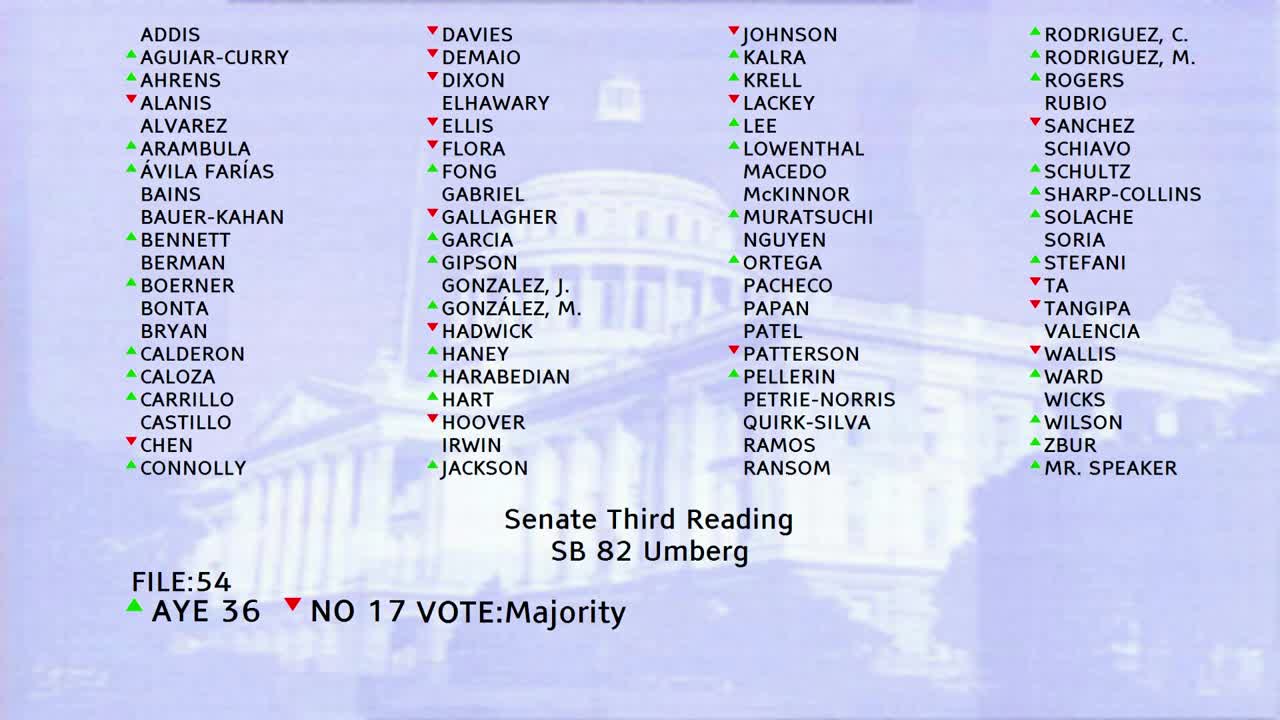 1MIN
Assembly Floor
Bill Author
Bill Co-Author(s):