SB 920: The Gambling Control Act: regulatory fees.
- Session Year: 2025-2026
- House: Senate
- Latest Version Date: 2026-09-14
Current Status:
Passed
(2026-09-14: Chaptered by Secretary of State. Chapter 225, Statutes of 2026.)
Introduced
In Committee
Awaiting First Chamber Vote
Passed First Chamber
In Committee
Awaiting Second Chamber Vote
Passed Second Chamber
Enacted
Existing law, the Gambling Control Act, provides for the licensure and regulation of various legalized gambling activities and establishments by the California Gambling Control Commission and the investigation and enforcement of those activities and establishments by the Department of Justice. Existing law establishes the Gambling Control Fund within the State Treasury for the receipt and deposit of fees and revenue collected pursuant to the act. Under the act, specified licensing fees are required to be paid for the issuance or renewal of a state gambling license, as specified. Existing law requires that all fees and revenue collected pursuant to the act, except all fines and penalties, be available, upon appropriation by the Legislature, for expenditure exclusively for the support of the department and the commission in carrying out their duties and responsibilities under the act.
This bill would require the commission or the department, upon the adoption or amendment of a fee that is deposited into the Gambling Control Fund, to post on its public internet website a detailed statement of the need for, purpose of, and authorized use of the fee, including the general activities the fee is intended to support, along with reference to publicly available rulemaking materials. The bill would state that these provisions do not apply to a fee adopted or amended prior to January 1, 2027.
Existing law, the Gambling Control Act, provides for the licensure and regulation of various legalized gambling activities and establishments by the California Gambling Control Commission and the investigation and enforcement of those activities and establishments by the Department of Justice. Existing law establishes the Gambling Control Fund within the State Treasury for the receipt and deposit of fees and revenue collected pursuant to the act. Under the act, specified licensing fees are required to be paid for the issuance or renewal of a state gambling license, as specified. Existing law requires that all fees and revenue collected pursuant to the act, except all fines and penalties, be available, upon appropriation by the Legislature, for expenditure exclusively for the support of the department and the commission in carrying out their duties and responsibilities under the act.
This bill would require the commission or the department, upon the adoption or adjustment amendment of a fee that is deposited into the Gambling Control Fund, to maintain a regulation that states the authorized purpose and use of the fee, including the program activities funded and the categories of costs covered, among other things. The bill would prohibit a fee or adjustment to a fee from taking effect until the required regulation is adopted or amended. post on its public internet website a detailed statement of the need for, purpose of, and authorized use of the fee, including the general activities the fee is intended to support, along with reference to publicly available rulemaking materials. The bill would state that these provisions do not apply to any a fee adopted or amended prior to the bills enactment. January 1, 2027.
Existing law, the Gambling Control Act, provides for the licensure and regulation of various legalized gambling activities and establishments by the California Gambling Control Commission and the investigation and enforcement of those activities and establishments by the Department of Justice. Existing law establishes the Gambling Control Fund within the State Treasury for the receipt and deposit of fees and revenue collected pursuant to the act. Under the act, specified licensing fees are required to be paid for the issuance or renewal of a state gambling license, as specified. Existing law requires that all fees and revenue collected pursuant to the act, except all fines and penalties, be available, upon appropriation by the Legislature, for expenditure exclusively for the support of the department and the commission in carrying out their duties and responsibilities under the act.
This bill would require the commission or the department, upon the adoption or adjustment of a fee that is deposited into the Gambling Control Fund, to maintain a regulation that states the authorized purpose and use of the fee, including the program activities funded and the categories of costs covered, among other things. The bill would prohibit a fee or adjustment to a fee from taking effect until the required regulation is adopted or amended and would require that revenues from a fee subject to these provisions be expended only for the activities and purposes identified in regulation. amended. The bill would state that these provisions do not apply to any fee adopted or amended prior to the bills enactment.
Existing law, the Gambling Control Act, provides for the licensure and regulation of various legalized gambling activities and establishments by the California Gambling Control Commission and the investigation and enforcement of those activities and establishments by the Department of Justice. Existing law establishes the Gambling Control Fund within the State Treasury for the receipt and deposit of fees and revenue collected pursuant to the act. Under the act, specified licensing fees are required to be paid for the issuance or renewal of a state gambling license, as specified. Existing law requires that all fees and revenue collected pursuant to the act, except all fines and penalties, be available, upon appropriation by the Legislature, for expenditure exclusively for the support of the department and the commission in carrying out their duties and responsibilities under the act.
This bill would require the commission or the department, upon the adoption or adjustment of a fee that is deposited into the Gambling Control Fund, to maintain a regulation that states the authorized purpose and use of the fee, including the program activities funded and the categories of costs covered, among other things. The bill would state that prohibit a fee or adjustment to a fee shall not take from taking effect until the required regulation is adopted or amended and would require that revenues from a fee subject to these provisions be expended only for the activities and purposes identified in regulation. The bill would state that these provisions do not apply to any fee adopted or amended prior to the bills enactment.
Existing law, the Gambling Control Act, provides for the licensure and regulation of various legalized gambling activities and establishments by the California Gambling Control Commission and the investigation and enforcement of those activities and establishments by the Department of Justice. Existing law establishes the Gambling Control Fund within the State Treasury for the receipt and deposit of fees and revenue collected pursuant to the act. Under the act, specified licensing fees are required to be paid for the issuance or renewal of a state gambling license, as specified. Existing law requires that all fees and revenue collected pursuant to the act, except all fines and penalties, be available, upon appropriation by the Legislature, for expenditure exclusively for the support of the department and the commission in carrying out their duties and responsibilities under the act.
This bill would require the commission or the department, upon the adoption or adjustment of a fee that is deposited into the Gambling Control Fund, to maintain a regulation that states the authorized purpose and use of the fee, including the program activities funded and the categories of costs covered, among other things. The bill would state that a fee or adjustment to a fee shall not take effect until the required regulation is adopted or amended and would require that revenues from a fee subject to these provisions be expended only for the activities and purposes identified in regulation. The bill would state that these provisions do not apply to any fee adopted or amended prior to the bills enactment.
(a)Upon the adoption or amendment of a fee that is deposited into the Gambling Control Fund, the commission or the department shall post on its public internet website a detailed statement of the need for, purpose of, and authorized use of the fee, including the general activities the fee is intended to support, along with reference to publicly available rulemaking materials.
(b)This section does not apply to a fee adopted or amended prior to January 1, 2027.
(a)Upon the adoption or adjustment amendment of a fee that is deposited into the Gambling Control Fund, the commission or the department shall do both of the following: post on its public internet website a detailed statement of the need for, purpose of, and authorized use of the fee, including the general activities the fee is intended to support, along with reference to publicly available rulemaking materials.
(1)Adopt and maintain a regulation that states the authorized purpose and use of the fee, including the program activities funded and the categories of costs covered, including any shared administrative or support costs. The cost allocation methodology may be incorporated by reference to materials in the rulemaking record.(2)Post on its public internet website the purpose and use statement and a brief cost basis summary related to that fee.(b)A fee or adjustment to a fee shall not take effect until the regulation required by this section is adopted or amended. (c)(b)This section does not apply to any a fee adopted or amended prior to the effective date of the act that added this section. January 1, 2027.
(a)Upon the adoption or adjustment of a fee that is deposited into the Gambling Control Fund, the commission or the department shall do both of the following:
(1)Adopt and maintain a regulation that states the authorized purpose and use of the fee, including the program activities funded and the categories of costs covered, including any shared administrative or support costs. The cost allocation methodology may be incorporated by reference to materials in the rulemaking record.
(2)Post on its public internet website the purpose and use statement and a brief cost basis summary related to that fee.
(b)A fee or adjustment to a fee shall not take effect until the regulation required by this section is adopted or amended.
(c)Except as otherwise authorized by statute and identified by regulation, fees established for licensing activities shall not be used to fund nonlicensing activities.(d)Except as otherwise authorized by statute and identified by regulation, revenues from a fee subject to this section shall be expended only for the activities and purposes stated for that fee in the applicable regulation adopted pursuant to this section. (e)(c)This section does not apply to any fee adopted or amended prior to the effective date of the act that added this section.
(a)Upon the adoption or adjustment of a fee that is deposited into the Gambling Control Fund, the commission or the department shall do both of the following:
(1)Adopt and maintain a regulation that states the authorized purpose and use of the fee, including the program activities funded and the categories of costs covered, including any indirect costs. shared administrative or support costs. The cost allocation methodology may be incorporated by reference to materials in the rulemaking record.
(2)Post on its public internet website the purpose and use statement and a brief cost basis summary related to that fee.
(b)A fee or adjustment to a fee shall not take effect until the regulation required by this section is adopted or amended.
(c)Except as described in subdivision (e) or otherwise authorized by statute and identified by regulation, fees established for licensing activities shall not be used to fund nonlicensing activities and fees established for nonlicensing regulatory activities shall not be used to fund licensing activities. activities.
(d)Except as described in subdivision (e) or otherwise authorized by statute and identified by regulation, revenues from a fee subject to this section shall be expended only for the activities and purposes stated for that fee in the applicable regulation adopted pursuant to this section.
(e)The commission and the department shall implement this section with existing resources and may use existing fee revenues appropriated from the Gambling Control Fund to cover any marginal administrative cost. (f)(e)This section does not apply to any fee adopted or amended prior to the effective date of the act that added this section.
(a)Upon the adoption or adjustment of a fee that is deposited into the Gambling Control Fund, the commission or the department shall do both of the following:
(1)Adopt and maintain a regulation that states the authorized purpose and use of the fee, including the program activities funded and the categories of costs covered, including any indirect costs. The cost allocation methodology may be incorporated by reference to materials in the rulemaking record.
(2)Post on its public internet website the purpose and use statement and a brief cost basis summary related to that fee.
(b)A fee or adjustment to a fee shall not take effect until the regulation required by this section is adopted or amended.
(c)Except as described in subdivision (e) or otherwise authorized by statute and identified by regulation, fees established for licensing activities shall not be used to fund nonlicensing activities and fees established for nonlicensing regulatory activities shall not be used to fund licensing activities.
(d)Except as described in subdivision (e) or otherwise authorized by statute and identified by regulation, revenues from a fee subject to this section shall be expended only for the activities and purposes stated for that fee in the applicable regulation adopted pursuant to this section.
(e)The commission and the department shall implement this section with existing resources and may use existing fee revenues appropriated from the Gambling Control Fund to cover any marginal administrative cost.
(f)This section does not apply to any fee adopted or amended prior to the effective date of the act that added this section.
|
Date
|
Status
|
|---|---|
| Sep 14, 2026 | Chaptered by Secretary of State. Chapter 225, Statutes of 2026. |
| Sep 14, 2026 | Approved by the Governor. |
| Sep 2, 2026 | Enrolled and presented to the Governor at 3 p.m. |
| Aug 27, 2026 | Assembly amendments concurred in. (Ayes 40. Noes 0. Page 6021.) Ordered to engrossing and enrolling. |
| Aug 27, 2026 | Assembly amendments concurred in. (Ayes 39. Noes 0.) Ordered to engrossing and enrolling. |
| Aug 25, 2026 | In Senate. Concurrence in Assembly amendments pending. |
| Aug 25, 2026 | Read third time. Passed. (Ayes 78. Noes 0. Page 6493.) Ordered to the Senate. |
| Aug 25, 2026 | Read third time. Passed. Ordered to the Senate. |
| Aug 17, 2026 | Read second time. Ordered to third reading. |
| Aug 13, 2026 | Read second time and amended. Ordered to second reading. |
| Aug 13, 2026 | From committee: Do pass as amended. (Ayes 11. Noes 0.) (August 13). |
| Aug 13, 2026 | Assembly Rule 63 suspended. |
| Jun 24, 2026 | June 24 set for first hearing. Placed on suspense file. |
| Jun 10, 2026 | From committee: Do pass and re-refer to Com. on APPR. (Ayes 18. Noes 0.) (June 10). Re-referred to Com. on APPR. |
| Jun 1, 2026 | Referred to Com. on G.O. |
| May 22, 2026 | In Assembly. Read first time. Held at Desk. |
| May 22, 2026 | Read third time. Passed. (Ayes 29. Noes 1.) Ordered to the Assembly. |
| May 22, 2026 | Read third time. Passed. (Ayes 29. Noes 1. Page 4414.) Ordered to the Assembly. |
| May 18, 2026 | Read second time. Ordered to third reading. |
| May 14, 2026 | Read second time and amended. Ordered to second reading. |
| May 14, 2026 | From committee: Do pass as amended. (Ayes 6. Noes 0.) (May 14). |
| May 14, 2026 | From committee: Do pass as amended. (Ayes 6. Noes 0. Page 4257.) (May 14). |
| May 8, 2026 | Set for hearing May 14. |
| Apr 13, 2026 | April 13 hearing: Placed on APPR. suspense file. |
| Mar 27, 2026 | Set for hearing April 13. |
| Mar 24, 2026 | From committee: Do pass and re-refer to Com. on APPR. (Ayes 14. Noes 0.) (March 24). Re-referred to Com. on APPR. |
| Mar 24, 2026 | From committee: Do pass and re-refer to Com. on APPR. (Ayes 14. Noes 0. Page 3657.) (March 24). Re-referred to Com. on APPR. |
| Mar 16, 2026 | Set for hearing March 24. |
| Mar 12, 2026 | From committee with author's amendments. Read second time and amended. Re-referred to Com. on G.O. |
| Feb 11, 2026 | Referred to Com. on G.O. |
| Jan 29, 2026 | From printer. May be acted upon on or after February 28. |
| Jan 28, 2026 | Introduced. Read first time. To Com. on RLS. for assignment. To print. |
|
Date
|
Description
|
Location
|
Votes
|
|
|---|---|---|---|---|
| Aug 27, 2026 | Unfinished Business SB920 Archuleta Concurrence | Senate Floor |
Passed |
|
| Aug 25, 2026 | SB 920 Archuleta Senate Third Reading By Mark González | Assembly Floor |
Passed |
|
| Aug 13, 2026 | Do pass as amended. | Assembly Standing Committee on Appropriations |
Passed |
|
| Jun 10, 2026 | Do pass and be re-referred to the Committee on [Appropriations] | Assembly Standing Committee on Governmental Organization |
Passed |
|
| May 22, 2026 | Senate 3rd Reading SB920 Archuleta | Senate Floor |
Passed |
|
| May 14, 2026 | Do pass as amended | Senate Standing Committee on Appropriations |
Passed |
|
| Apr 13, 2026 | Placed on suspense file | Senate Standing Committee on Appropriations |
Passed |
|
| Mar 24, 2026 | Do pass, but first be re-referred to the Committee on [Appropriations] | Senate Standing Committee on Governmental Organization |
Passed |
This list shows positions taken on this bill by organizations on the date displayed, which is linked to the original source.
Positions by individuals are not included.
|
Organization
|
Position
|
Date
|
|---|---|---|
| Communities For California Cardrooms | ** Support |
SENATE RULES COMMITTEE Office of Senate Floor Analyses (916) 651-4171 | SB 920 |
UNFINISHED BUSINESS
Bill No: SB 920
Author: Archuleta (D)
Amended: 8/13/26
Vote: 21
SENATE GOVERNMENTAL ORG. COMMITTEE: 14-0, 3/24/26
AYES: Rubio, Valladares, Alvarado-Gil, Archuleta, Blakespear, Cervantes, Dahle, Hurtado, Ochoa Bogh, Padilla, Richardson, Smallwood-Cuevas, Wahab, Weber Pierson
NO VOTE RECORDED: Ashby
SENATE APPROPRIATIONS COMMITTEE: 6-0, 5/14/26
AYES: Cervantes, Cabaldon, Dahle, Grayson, Richardson, Wahab
NO VOTE RECORDED: Seyarto
SENATE FLOOR: 29-1, 5/22/26
AYES: Archuleta, Arreguín, Ashby, Blakespear, Cabaldon, Caballero, Cervantes, Cortese, Dahle, Durazo, Gonzalez, Grayson, Laird, Limón, McGuire, McNerney, Menjivar, Ochoa Bogh, Pérez, Reyes, Richardson, Rubio, Seyarto, Smallwood-Cuevas, Strickland, Umberg, Wahab, Weber Pierson, Wiener
NOES: Jones
NO VOTE RECORDED: Allen, Alvarado-Gil, Becker, Choi, Grove, Hurtado, Niello, Padilla, Stern, Valladares
ASSEMBLY FLOOR: 78-0, 8/25/26 - See last page for vote
SUBJECT: The Gambling Control Act: regulatory fees
SOURCE: Communities for California Cardrooms
DIGEST:
This bill requires the California Gambling Control Commission (Commission) and the Department of Justice (DOJ), upon the adoption or amendment of a fee that is deposited into the Gambling Control Fund (Fund), the Commission or DOJ to post on its public internet website a detailed statement of the need for, purpose of, and authorized use of the fee, as specified.
Assembly Amendments
delete the requirement that the Commission and DOJ adopt and maintain a regulate that states the authorized purpose and use of the fee.
ANALYSIS:
Existing law:
- Establishes, under the Gambling Control Act (Act), the Commission, which is responsible for licensing and regulating various gambling activities and establishments. Under the Act, the Bureau of Gambling Control (Bureau), under DOJ, is responsible for investigating any violations of, and enforcing controlled gaming activities under the Act. (Business and Professions Code section 19800 et seq.)
- Vests DOJ with the responsibility to investigate violations of prohibitions against specified gambling activities, as enumerated in the Penal Code, including, among others, prohibitions against lotteries, certain games played with cards, dice or any device, or money, and slot machines.
- Establishes the Fund within the State Treasury and provides that funds shall be available, upon appropriation by the Legislature, for expenditure by DOJ and the Commission exclusively for the support of DOJ and the Commission in carrying out their duties and responsibilities under the Act.
- Requires, with respect to fees, the regulations to include a prescribed manner and method for the collection and payment of fees and issuance of licenses.
This bill:
- Requires the Commission and DOJ, upon the adoption or amendment of a fee that is deposited into the Fund, to post on its public internet website a detailed statement of the need for, purpose of, and authorized use of the fee, as specified.
- Provides that the provisions of this bill do not apply to any fee adopted or amended prior to January 1, 2027
Background
Author Statement. According to the author’s office, “SB 920 will ensure that all fees collected under the [Act] are clearly tied to their specified regulatory purposes and that stakeholders – including licensees, public officials, and the public – can readily understand how fee revenues are used to support the oversight responsibilities of the [Commission] and the [DOJ]. Under current law, when fees are set or adjusted, the purpose and cost basis aren’t consistently laid out in regulation. This makes budgeting opaque, invites cross-subsidies, and fuels friction in rulemaking. An audit report on Fund fees completed in 2018 identified this as an issue and recommended that the Legislature take action. SB 920 implements that recommendation and ensures transparency surrounding Act fees.”
California’s Cardrooms. California’s cardrooms have operated in some capacity since the Gold rush era. Currently, there are approximately 83 cardrooms that operate in 32 counties in California. There are approximately 2,203 tables licensed for play statewide, many of which are located in Los Angeles, the Central Coast, the Bay Area, and the Central Valley. A small percentage are large in scale, the rest are smaller operations, sometimes as small as one table, scattered throughout the state. The industry generates roughly $850 million in revenue after winnings. Cardrooms and their owners are subject to state business and income taxes. Additionally, about $24 million in fees are projected to be collected annually from the industry to support state regulatory and problem gaming costs.
The Act provides the Commission with jurisdiction over the operation of gambling establishments in California. The Act requires every owner, lessee, or employee of a gambling establishment to obtain and maintain a valid state gambling license and assigns the Commission with responsibility of assuring that gambling licenses are not issued to, or held by, unqualified or disqualified persons, or by persons whose operations are conducted in a manner that is harmful to the public health, safety, or welfare. The Act directs the Commission to issue licenses only to those persons of good character, honesty and integrity; whose prior activities, criminal record, if any, reputation, habits, and associations do not pose a threat to the public interest of this state.
The DOJ, through the Bureau, monitors the conduct of gaming operations to ensure compliance with state gambling laws and conducts extensive background investigations of applicants seeking a state gambling license. The Bureau also conducts background checks for all key employees and state gambling licensees and vendor applications. The Bureau also inspects premises where gambling is conducted, examines gambling equipment, audits papers, books, and records of the gambling establishment, investigates suspected violations of gambling laws, and is ultimately responsible for enforcing compliance with all state laws pertaining to gambling.
Existing law establishes the Fund in the State Treasury and provides that funds should be used, upon appropriation by the Legislature, for expenditure by DOJ and the Commission exclusively for the support of DOJ and the Commission in carrying out their duties and responsibilities under the Act.
State Auditor Report. In May 2019, the California State Auditor (Auditor) released a report titled, Bureau of Gambling Control and California Gambling Control Commission: Their Licensing Processes are Inefficient and Foster Unequal Treatment of Applicants. The audit examined how the DOJ’s and the Commission’s process licenses for individuals and businesses working in California’s cardroom gaming industry.
The audit concluded that both agencies have implemented fee structures that result in unequal treatment of license applicants. Although the audit did not find evidence of discrimination by either entity based on applicants’ ethnicity or other protected characteristics, it determined that the DOJ’s incomplete and inconsistent procedures led to disparities in the level of scrutiny applied to different applicants. Relevant to this bill, the audit also found that neither the DOJ nor the Commission has addressed the misalignment between the fees they collect and the actual costs of providing regulatory oversight. The audit noted that this misalignment has contributed to a substantial surplus in the Fund and may raise questions regarding the legality of certain fees.
In order to ensure that all fees that generate revenue for the Fund have a clear, stated purpose limiting their use, the Auditor recommends that, “the Legislature should require that when updating fee amounts, the commission and the bureau must also update their regulations to include clear statements about the need for an appropriate use of each type of fee.” Based on that recommendation, this bill would require the Commission and DOJ, upon the adoption or amendment of a fee that is deposited into the Fund, the Commission or DOJ to post on its public internet website a detailed statement of the need for, purpose of, and authorized use of the fee, as specified.
Related/Prior Legislation
SB 451 (Archuleta, Chapter 584, Statutes of 2025) clarifies the DOJ’s authority to investigate suspected violations of illegal gambling activities conducted outside of licensed cardrooms, irrespective of whether the suspected violation involves licensees.
AB 553 (Ramos, Chapter 533, Statutes of 2023) requires DOJ to develop and implement a policy and procedure for employees assigned to the Bureau to formally track those house and other expenses that can be charged to the Indian Gaming Special Distribution Fund, as specified.
AB 1268 (Patterson) of 2022 would have required the Commission and DOJ, when increasing a fee amount, to include a clear statement justifying the need for the fee increase and explaining how the funds will be used in the regulation updating the fee. (Never Heard in the Assembly Governmental Organization Committee)
FISCAL EFFECT: Appropriation: No Fiscal Com.: Yes Local: No
According to the Assembly Appropriations Committee, costs to the Commission to update regulations to reflect the collection of new or adjusted fees and post related information on the CGCC’s website (Gambling Control Fund). However, the Commission notes that this bill places regulatory burdens on the Commission beyond what other agencies face when setting fees, which may delay future annual fee adjustment rulemaking proceedings and result in a temporary overcollection or under collection of outdated fee amounts that may not align with the most recent cost and fee data. The Commission further notes that such outdated fee amounts would temporarily result in a proportionate surplus or shortall of an unknown magnitude in the Gambling Control Fund until regulations are appropriately updated through the regular rulemaking process, which includes specified public comment and review periods.
Additionally, minor absorbable costs to DOJ to similarly update regulations and post information online. However, potential impact of an unknown magnitude to the Gambling Control Fund to the extent DOJ also faces delays when adopting or adjusting fees as a result of this bill.
SUPPORT: (Verified 8/20/26)
Communities for California Cardrooms (source)
OPPOSITION: (Verified 8/20/26)
None received
ARGUMENTS IN SUPPORT: According to the Communities for California Cardrooms, “this provision is an important step toward ensuring that all fees collected under the [Act] are clearly tied to their specified regulatory purposes and that stakeholders – including licensees, public officials, and the public – can readily understand how fee revenues are used to support the oversight responsibilities of the [Commission] and the [Bureau]. By requiring published statements of purpose and cost basis summaries, SB 920 advances good governance practices and promote greater transparency in fee adoption and expenditure and protect the integrity of regulatory funding mechanisms.”
ASSEMBLY FLOOR: 78-0, 8/25/26
AYES: Addis, Aguiar-Curry, Ahrens, Alanis, Alvarez, Arambula, Ávila Farías, Bains, Bauer-Kahan, Bennett, Berman, Boerner, Bonta, Bryan, Calderon, Caloza, Carrillo, Castillo, Chen, Connolly, Davies, DeMaio, Dixon, Elhawary, Ellis, Flora, Fong, Gabriel, Garcia, Gipson, Jeff Gonzalez, Mark González, Hadwick, Haney, Harabedian, Hart, Hoover, Irwin, Jackson, Johnson, Kalra, Krell, Lackey, Lee, Lowenthal, Macedo, Muratsuchi, Nguyen, Ortega, Pacheco, Papan, Patel, Patterson, Pellerin, Petrie-Norris, Quirk-Silva, Ramos, Ransom, Celeste Rodriguez, Michelle Rodriguez, Rogers, Blanca Rubio, Sanchez, Schiavo, Schultz, Sharp-Collins, Solache, Soria, Stefani, Ta, Tangipa, Valencia, Wallis, Ward, Wicks, Wilson, Zbur, Rivas
NO VOTE RECORDED: McKinnor
Prepared by: Felipe Lopez / G.O. / (916) 651-1530
9/30/26 14:47:27
**** END ****
SENATE RULES COMMITTEE Office of Senate Floor Analyses (916) 651-4171 | SB 920 |
UNFINISHED BUSINESS
Bill No: SB 920
Author: Archuleta (D)
Amended: 8/13/26
Vote: 21
SENATE GOVERNMENTAL ORG. COMMITTEE: 14-0, 3/24/26
AYES: Rubio, Valladares, Alvarado-Gil, Archuleta, Blakespear, Cervantes, Dahle, Hurtado, Ochoa Bogh, Padilla, Richardson, Smallwood-Cuevas, Wahab, Weber Pierson
NO VOTE RECORDED: Ashby
SENATE APPROPRIATIONS COMMITTEE: 6-0, 5/14/26
AYES: Cervantes, Cabaldon, Dahle, Grayson, Richardson, Wahab
NO VOTE RECORDED: Seyarto
SENATE FLOOR: 29-1, 5/22/26
AYES: Archuleta, Arreguín, Ashby, Blakespear, Cabaldon, Caballero, Cervantes, Cortese, Dahle, Durazo, Gonzalez, Grayson, Laird, Limón, McGuire, McNerney, Menjivar, Ochoa Bogh, Pérez, Reyes, Richardson, Rubio, Seyarto, Smallwood-Cuevas, Strickland, Umberg, Wahab, Weber Pierson, Wiener
NOES: Jones
NO VOTE RECORDED: Allen, Alvarado-Gil, Becker, Choi, Grove, Hurtado, Niello, Padilla, Stern, Valladares
ASSEMBLY FLOOR: Passed, 8/25/26
SUBJECT: The Gambling Control Act: regulatory fees
SOURCE: Communities for California Cardrooms
DIGEST:
This bill requires the California Gambling Control Commission (Commission) and the Department of Justice (DOJ), upon the adoption or amendment of a fee that is deposited into the Gambling Control Fund (Fund), the Commission or DOJ to post on its public internet website a detailed statement of the need for, purpose of, and authorized use of the fee, as specified.
Assembly Amendments
delete the requirement that the Commission and DOJ adopt and maintain a regulate that states the authorized purpose and use of the fee.
ANALYSIS:
Existing law:
- Establishes, under the Gambling Control Act (Act), the Commission, which is responsible for licensing and regulating various gambling activities and establishments. Under the Act, the Bureau of Gambling Control (Bureau), under DOJ, is responsible for investigating any violations of, and enforcing controlled gaming activities under the Act. (Business and Professions Code section 19800 et seq.)
- Vests DOJ with the responsibility to investigate violations of prohibitions against specified gambling activities, as enumerated in the Penal Code, including, among others, prohibitions against lotteries, certain games played with cards, dice or any device, or money, and slot machines.
- Establishes the Fund within the State Treasury and provides that funds shall be available, upon appropriation by the Legislature, for expenditure by DOJ and the Commission exclusively for the support of DOJ and the Commission in carrying out their duties and responsibilities under the Act.
- Requires, with respect to fees, the regulations to include a prescribed manner and method for the collection and payment of fees and issuance of licenses.
This bill:
- Requires the Commission and DOJ, upon the adoption or amendment of a fee that is deposited into the Fund, to post on its public internet website a detailed statement of the need for, purpose of, and authorized use of the fee, as specified.
- Provides that the provisions of this bill do not apply to any fee adopted or amended prior to January 1, 2027
Background
Author Statement. According to the author’s office, “SB 920 will ensure that all fees collected under the [Act] are clearly tied to their specified regulatory purposes and that stakeholders – including licensees, public officials, and the public – can readily understand how fee revenues are used to support the oversight responsibilities of the [Commission] and the [DOJ]. Under current law, when fees are set or adjusted, the purpose and cost basis aren’t consistently laid out in regulation. This makes budgeting opaque, invites cross-subsidies, and fuels friction in rulemaking. An audit report on Fund fees completed in 2018 identified this as an issue and recommended that the Legislature take action. SB 920 implements that recommendation and ensures transparency surrounding Act fees.”
California’s Cardrooms. California’s cardrooms have operated in some capacity since the Gold rush era. Currently, there are approximately 83 cardrooms that operate in 32 counties in California. There are approximately 2,203 tables licensed for play statewide, many of which are located in Los Angeles, the Central Coast, the Bay Area, and the Central Valley. A small percentage are large in scale, the rest are smaller operations, sometimes as small as one table, scattered throughout the state. The industry generates roughly $850 million in revenue after winnings. Cardrooms and their owners are subject to state business and income taxes. Additionally, about $24 million in fees are projected to be collected annually from the industry to support state regulatory and problem gaming costs.
The Act provides the Commission with jurisdiction over the operation of gambling establishments in California. The Act requires every owner, lessee, or employee of a gambling establishment to obtain and maintain a valid state gambling license and assigns the Commission with responsibility of assuring that gambling licenses are not issued to, or held by, unqualified or disqualified persons, or by persons whose operations are conducted in a manner that is harmful to the public health, safety, or welfare. The Act directs the Commission to issue licenses only to those persons of good character, honesty and integrity; whose prior activities, criminal record, if any, reputation, habits, and associations do not pose a threat to the public interest of this state.
The DOJ, through the Bureau, monitors the conduct of gaming operations to ensure compliance with state gambling laws and conducts extensive background investigations of applicants seeking a state gambling license. The Bureau also conducts background checks for all key employees and state gambling licensees and vendor applications. The Bureau also inspects premises where gambling is conducted, examines gambling equipment, audits papers, books, and records of the gambling establishment, investigates suspected violations of gambling laws, and is ultimately responsible for enforcing compliance with all state laws pertaining to gambling.
Existing law establishes the Fund in the State Treasury and provides that funds should be used, upon appropriation by the Legislature, for expenditure by DOJ and the Commission exclusively for the support of DOJ and the Commission in carrying out their duties and responsibilities under the Act.
State Auditor Report. In May 2019, the California State Auditor (Auditor) released a report titled, Bureau of Gambling Control and California Gambling Control Commission: Their Licensing Processes are Inefficient and Foster Unequal Treatment of Applicants. The audit examined how the DOJ’s and the Commission’s process licenses for individuals and businesses working in California’s cardroom gaming industry.
The audit concluded that both agencies have implemented fee structures that result in unequal treatment of license applicants. Although the audit did not find evidence of discrimination by either entity based on applicants’ ethnicity or other protected characteristics, it determined that the DOJ’s incomplete and inconsistent procedures led to disparities in the level of scrutiny applied to different applicants. Relevant to this bill, the audit also found that neither the DOJ nor the Commission has addressed the misalignment between the fees they collect and the actual costs of providing regulatory oversight. The audit noted that this misalignment has contributed to a substantial surplus in the Fund and may raise questions regarding the legality of certain fees.
In order to ensure that all fees that generate revenue for the Fund have a clear, stated purpose limiting their use, the Auditor recommends that, “the Legislature should require that when updating fee amounts, the commission and the bureau must also update their regulations to include clear statements about the need for an appropriate use of each type of fee.” Based on that recommendation, this bill would require the Commission and DOJ, upon the adoption or amendment of a fee that is deposited into the Fund, the Commission or DOJ to post on its public internet website a detailed statement of the need for, purpose of, and authorized use of the fee, as specified.
Related/Prior Legislation
SB 451 (Archuleta, Chapter 584, Statutes of 2025) clarifies the DOJ’s authority to investigate suspected violations of illegal gambling activities conducted outside of licensed cardrooms, irrespective of whether the suspected violation involves licensees.
AB 553 (Ramos, Chapter 533, Statutes of 2023) requires DOJ to develop and implement a policy and procedure for employees assigned to the Bureau to formally track those house and other expenses that can be charged to the Indian Gaming Special Distribution Fund, as specified.
AB 1268 (Patterson) of 2022 would have required the Commission and DOJ, when increasing a fee amount, to include a clear statement justifying the need for the fee increase and explaining how the funds will be used in the regulation updating the fee. (Never Heard in the Assembly Governmental Organization Committee)
FISCAL EFFECT: Appropriation: No Fiscal Com.: Yes Local: No
According to the Assembly Appropriations Committee, costs to the Commission to update regulations to reflect the collection of new or adjusted fees and post related information on the CGCC’s website (Gambling Control Fund). However, the Commission notes that this bill places regulatory burdens on the Commission beyond what other agencies face when setting fees, which may delay future annual fee adjustment rulemaking proceedings and result in a temporary overcollection or under collection of outdated fee amounts that may not align with the most recent cost and fee data. The Commission further notes that such outdated fee amounts would temporarily result in a proportionate surplus or shortall of an unknown magnitude in the Gambling Control Fund until regulations are appropriately updated through the regular rulemaking process, which includes specified public comment and review periods.
Additionally, minor absorbable costs to DOJ to similarly update regulations and post information online. However, potential impact of an unknown magnitude to the Gambling Control Fund to the extent DOJ also faces delays when adopting or adjusting fees as a result of this bill.
SUPPORT: (Verified 8/20/26)
Communities for California Cardrooms (source)
OPPOSITION: (Verified 8/20/26)
None received
ARGUMENTS IN SUPPORT: According to the Communities for California Cardrooms, “this provision is an important step toward ensuring that all fees collected under the [Act] are clearly tied to their specified regulatory purposes and that stakeholders – including licensees, public officials, and the public – can readily understand how fee revenues are used to support the oversight responsibilities of the [Commission] and the [Bureau]. By requiring published statements of purpose and cost basis summaries, SB 920 advances good governance practices and promote greater transparency in fee adoption and expenditure and protect the integrity of regulatory funding mechanisms.”
Prepared by: Felipe Lopez / G.O. / (916) 651-1530
8/25/26 15:24:58
**** END ****
SENATE THIRD READING
STR Bill Id:SB 920
Author:(Archuleta)
As Amended Ver:August 13, 2026
Majority vote
SUMMARY
This bill would require the California Gambling Control Commission (CGCC) or the Department of Justice (DOJ), upon the adoption or amendment of a fee that is deposited into the Gambling Control Fund (Fund), to post on its public internet website a detailed statement of the need for, purpose of, and authorized use of the fee, including the general activities the fee is intended to support, along with reference to publicly available rulemaking materials.
Major Provisions
- Provides, upon the adoption or amendment of a fee that is deposited into the Fund, the CGCC or DOJ shall post on its public internet website a detailed statement of the need for, purpose of, and authorized use of the fee, including the general activities the fee is intended to support, along with reference to publicly available rulemaking materials.
- Provides this provision does not apply to a fee adopted or amended prior to January 1, 2027.
COMMENTS
Background.
Under the Act, the CGCC is responsible for licensing and regulating various gambling activities and establishments and DOJ's Bureau of Gambling Control (Bureau) is responsible for investigating violations and enforcing controlled gambling activities. These efforts of the CGCC and DOJ are supported by appropriations from the Fund.
Existing law establishes the Fund within the State Treasury and provides that, upon appropriation by the Legislature, monies in the Fund shall be expended by DOJ and the CGCC exclusively to support their respective duties and responsibilities under the Act.
2019 California State Auditor Report. In May 2019, the California State Auditor (Auditor) released a report titled, Bureau of Gambling Control and California Gambling Control Commission: Their Licensing Processes are Inefficient and Foster Unequal Treatment of Applicants. The audit examined how the DOJ’s and the Commission's process licenses for individuals and businesses working in California's cardroom gaming industry.
The audit concluded that both agencies have implemented fee structures that result in unequal treatment of license applicants. Although the audit did not find evidence of discrimination by either entity based on applicants' ethnicity or other protected characteristics, it determined that the DOJ's incomplete and inconsistent procedures led to disparities in the level of scrutiny applied to different applicants. Relevant to this bill, the audit also found that neither the DOJ nor the CGCC has addressed the misalignment between the fees they collect and the actual costs of providing regulatory oversight. The audit noted that this misalignment has contributed to a substantial surplus in the Fund and may raise questions regarding the legality of certain fees.
In order to ensure that all fees that generate revenue for the Fund have a clear, stated purpose limiting their use, the Auditor recommended that, "the Legislature should require that when updating fee amounts, the commission and the bureau must also update their regulations to include clear statements about the need for an appropriate use of each type of fee."
The Auditor's report further recommended a cost analysis to assess whether DOJ and CGCC should adjust their regulatory fees to match actual administrative costs. In response to the Auditor's recommendation, the Commission and DOJ contracted with a third-party consulting company to conduct a cost and fee study. The study, which was finalized on June 9, 2021, led the Commission to change its methodology for calculating annual fees.
According to the Author
According to the author's, "SB 920 will ensure that all fees collected under the Act are clearly tied to their specified regulatory purposes and that stakeholders – including licensees, public officials, and the public – can readily understand how fee revenues are used to support the oversight responsibilities of the CGCC and the DOJ. Under current law, when fees are set or adjusted, the purpose and cost basis aren’t consistently laid out in regulation. This makes budgeting opaque, invites cross-subsidies, and fuels friction in rulemaking. An audit report on Fund fees completed in 2018 identified this as an issue and recommended that the Legislature take action. This bill implements that recommendation and ensures transparency surrounding Act fees."
Arguments in Support
According to the Communities for California Cardrooms, "By requiring published statements of purpose and cost basis summaries, SB 920 advances good governance practices that promote greater transparency in fee adoption and expenditure and protect the integrity of regulatory funding mechanisms. This bill is an important step toward ensuring that all fees collected under the Act are clearly tied to their specified regulatory purposes and that stakeholders — including licensees, public officials, and the public — can readily understand how fee revenues are used to support the oversight responsibilities of the CGCC and the DOJ."
Arguments in Opposition
None on file.
FISCAL COMMENTS
According to the Assembly Committee on Appropriations analysis, "Minor and absorbable costs to the CGCC and DOJ to post fee information online."
VOTES
SENATE FLOOR: 29-1-10
YES: Archuleta, Arreguín, Ashby, Blakespear, Cabaldon, Caballero, Cervantes, Cortese, Dahle, Durazo, Gonzalez, Grayson, Laird, Limón, McGuire, McNerney, Menjivar, Ochoa Bogh, Pérez, Reyes, Richardson, Rubio, Seyarto, Smallwood-Cuevas, Strickland, Umberg, Wahab, Weber Pierson, Wiener
NO: Jones
ABS, ABST OR NV: Allen, Alvarado-Gil, Becker, Choi, Grove, Hurtado, Niello, Padilla, Stern, Valladares
ASM GOVERNMENTAL ORGANIZATION: 18-0-3
YES: Blanca Rubio, Davies, Alvarez, Berman, Bryan, Dixon, Fong, Gabriel, Gipson, McKinnor, Nguyen, Pacheco, Ramos, Michelle Rodriguez, Solache, Soria, Ta, Wallis
ABS, ABST OR NV: Carrillo, Macedo, Valencia
ASM APPROPRIATIONS: 11-0-4
YES: Wicks, Arambula, Calderon, Caloza, Fong, Mark González, Krell, Pacheco, Pellerin, Sharp-Collins, Solache
ABS, ABST OR NV: Hoover, Dixon, Ta, Tangipa
UPDATED
VERSION: August 13, 2026
CONSULTANT: Eric Johnson / G.O. / (916) 319-2531 FN: 0003635
Date of Hearing: June 24, 2026
ASSEMBLY COMMITTEE ON APPROPRIATIONS
Buffy Wicks, Chair
SBPCA Bill Id:SB 920
Author:(Archuleta) – As Amended Ver:May 14, 2026
Policy Committee: | Governmental Organization | Vote: | 18 - 0 |
|
| ||
|
|
Urgency: No State Mandated Local Program: No Reimbursable: No
SUMMARY:
This bill requires the California Gambling Control Commission (CGCC) or the Department of Justice (DOJ) to have a regulation regarding the authorized purpose and use of a fee deposited into the Gambling Control Fund.
Specifically, this bill:
- Requires the CGCC and DOJ, upon the adoption or adjustment of a fee deposited into the Gambling Control Fund after this bill’s effective date, to: (a) adopt and maintain a regulation regarding the authorized purpose and use of the fee, including the program activities funded and certain categories of costs covered by the fee, and (b) post online the fee’s purpose and use statement and related cost basis summary.
- Prohibits such a fee or adjustment from taking effect until the required regulation is adopted or amended.
FISCAL EFFECT:
- Absorbable costs to the CGCC to update regulations to reflect the collection of new or adjusted fees and post related information on the CGCC’s website (Gambling Control Fund). However, the CGCC notes that this bill places regulatory burdens on the CGCC beyond what other agencies face when setting fees, which may delay future annual fee adjustment rulemaking proceedings and result in a temporary overcollection or under collection of outdated fee amounts that may not align with the most recent cost and fee data. The CGCC further notes that such outdated fee amounts would temporarily result in a proportionate surplus or shortall of an unknown magnitude in the Gambling Control Fund until regulations are appropriately updated through the regular rulemaking process, which includes specified public comment and review periods.
- Minor and absorbable costs to DOJ to similarly update regulations and post information online. However, potential impact of an unknown magnitude to the Gambling Control Fund to the extent DOJ also faces delays when adopting or adjusting fees as a result of this bill.
COMMENTS:
- Purpose. According to the author:
SB 920 will ensure that all fees collected under the [Gambling Control Act (Act)] are clearly tied to their specified regulatory purposes and that stakeholders – including licensees, public officials, and the public – can readily understand how fee revenues are used to support the oversight responsibilities of the [CGCC] and the DOJ. Under current law, when fees are set or adjusted, the purpose and cost basis aren’t consistently laid out in regulation. This makes budgeting opaque, invites cross-subsidies, and fuels friction in rulemaking. An audit report on [Gambling Control] Fund fees completed in 2018 identified this as an issue and recommended that the Legislature take action. This bill implements that recommendation and ensures transparency surrounding Act fees.
This bill is sponsored by Communities for California Cardrooms.
- Background. Gambling Control Act. Under the Act, the CGCC is responsible for licensing and regulating various gambling activities and establishments and DOJ’s Bureau of Gambling Control (Bureau) is responsible for investigating violations and enforcing controlled gambling activities. These efforts of the CGCC and DOJ are supported by appropriations from the Gambling Control Fund.
State Auditor Report. In May 2019, the California State Auditor released an audit examining the CGCC’s and DOJ’s licensing processes for individuals and businesses in the cardroom gaming industry. The audit concluded that both agencies had fee structures that resulted in unequal treatment of license applicants and neither agency had addressed the misalignment between fees collected and the actual costs of providing regulatory oversight, contributing to a substantial surplus in the Gambling Control Fund. The audit recommended the CGCC and DOJ undertake a cost analysis to assess whether regulatory fees need to be adjusted to match actual administrative costs. In response, the CGCC and DOJ contracted with a third-party consulting company to conduct such a study, which was finalized on June 9, 2021, and prompted the CGCC to change its methodology for calculating annual fees.
Another audit recommendation was that “the Legislature should require that when updating fee amounts, the commission and the bureau must also update their regulations to include clear statements about the need for an appropriate use of each type of fee.” This bill provides such a requirement, but further details the specific information that must be disclosed in the regulation, including the categories of costs covered, such as shared administrative or support costs, and prohibits a fee from taking effect until the regulation is updated.
- Prior Legislation. AB 553 (Ramos), Chapter 533, Statutes of 2023, required DOJ to develop and implement a policy and procedure for Bureau employees to formally track expenses charged to the Indian Gaming Special Distribution Fund.
Analysis Prepared by: Irene Ho / APPR. / (916) 319-2081
Date of Hearing: June 10, 2026
ASSEMBLY COMMITTEE ON GOVERNMENTAL ORGANIZATION
Blanca Rubio, Chair
SBPCA Bill Id:SB 920
Author:(Archuleta) – As Amended Ver:May 14, 2026
SENATE VOTE: 29-1
SUBJECT: The Gambling Control Act: regulatory fees
SUMMARY: This bill would require the California Gambling Control Commission (Commission or CGCC) or the Department of Justice (DOJ), upon the adoption or adjustment of a fee that is deposited into the Gambling Control Fund (Fund), to maintain a regulation that states the authorized purpose and use of the fee, including the program activities funded and the categories of costs covered, among other things. Specifically, this bill:
1) Requires, upon the adoption or adjustment of a fee that is deposited into the Fund, the CGCC or the DOJ shall do both of the following:
- Adopt and maintain a regulation that states the authorized purpose and use of the fee, including the program activities funded and the categories of costs covered, including any shared administrative or support costs. The cost allocation methodology may be incorporated by reference to materials in the rulemaking record.
- Post on its public internet website the purpose and use statement and a brief cost basis summary related to that fee.
2) Provides a fee or adjustment to a fee shall not take effect until the regulation required by this measure is adopted or amended.
3) Provides that the provisions of this bill do not apply to any fee adopted or amended prior to the effective date of this bill.
EXISTING LAW:
1) Provides, under the Gambling Control Act (Act), the CGCC is responsible for licensing and regulating various gambling activities and establishments. Under the Act, the Bureau of Gambling Control (Bureau), under DOJ, is responsible for investigating any violations of, and enforcing controlled gaming activities under the Act (Business and Professions Code section 19800 et seq.), including, among others, prohibitions against (1) lotteries, (2) certain games played with cards, dice, or any device, for money, and (3) slot machines.
2) Establishes the Fund within the State Treasury and provides that funds shall be available, upon appropriation by the Legislature, for expenditure by DOJ and the CGCC exclusively for the support of DOJ and the Commission in carrying out their duties and responsibilities under the Act.
3) States that all fees and revenue collected pursuant to the Act, except all fines and penalties, be available, upon appropriation by the Legislature, for expenditure exclusively for the support of the Bureau and the CGCC in carrying out their duties and responsibilities under the Act.
4) Authorizes the Bureau to require an applicant to deposit money adequate to pay the costs of an investigation associated with an application for a license, and allows the department to require additional funds to be deposited during the investigation, as needed. The Act requires the department, at the conclusion of the investigation, to refund any unused portion of this deposit and to provide a written accounting of costs and charges.
FISCAL EFFECT: This bill is keyed fiscal by Legislative Counsel.
COMMENTS:
Purpose of the bill. According to the author’s, this bill “SB 920 will ensure that all fees collected under the Act are clearly tied to their specified regulatory purposes and that stakeholders – including licensees, public officials, and the public – can readily understand how fee revenues are used to support the oversight responsibilities of the Commission and the DOJ. Under current law, when fees are set or adjusted, the purpose and cost basis aren’t consistently laid out in regulation. This makes budgeting opaque, invites cross-subsidies, and fuels friction in rulemaking. An audit report on Fund fees completed in 2018 identified this as an issue and recommended that the Legislature take action. This bill implements that recommendation and ensures transparency surrounding Act fees.”
Background.
California’s Cardrooms. California’s cardrooms have operated in various forms since the Gold Rush era. Today, approximately 83 cardrooms operate across 32 counties statewide. Together, they host more than 2,200 licensed tables, concentrated primarily in Los Angeles, the Central Coast, the Bay Area, and the Central Valley. Only a small share of these establishments are large-scale venues; the majority are modest operations—some with just a single table—dispersed throughout the state.
The industry generates roughly $850 million in revenue after winnings. Cardrooms and their owners are subject to state business and income taxes. Additionally, about $24 million in fees are projected to be collected annually from the industry to support state regulatory and problem gaming costs.
The Act provides the Commission with jurisdiction over the operation of gambling establishments in California. The Act requires every owner, lessee, or employee of a gambling establishment to obtain and maintain a valid state gambling license and assigns the Commission with responsibility of assuring that gambling licenses are not issued to, or held by, unqualified or disqualified persons, or by persons whose operations are conducted in a manner that is harmful to the public health, safety, or welfare. The Act directs the CGCC to issue licenses only to those persons of good character, honesty and integrity; whose prior activities, criminal record, if any, reputation, habits, and associations do not pose a threat to the public interest of this state.
The DOJ, through the Bureau, monitors the conduct of gaming operations to ensure compliance with state gambling laws and conducts extensive background investigations of applicants seeking a state gambling license. The Bureau also conducts background checks for all key employees and state gambling licensees and vendor applications. The Bureau also inspects premises where gambling is conducted, examines gambling equipment, audits papers, books, and records of the gambling establishment, investigates suspected violations of gambling laws, and is ultimately responsible for enforcing compliance with all state laws pertaining to gambling.
Existing law establishes the Fund within the State Treasury and provides that, upon appropriation by the Legislature, monies in the Fund shall be expended by DOJ and the CGCC exclusively to support their respective duties and responsibilities under the Act.
2019 California State Auditor Report. In May 2019, the California State Auditor (Auditor) released a report titled, Bureau of Gambling Control and California Gambling Control Commission: Their Licensing Processes are Inefficient and Foster Unequal Treatment of Applicants. The audit examined how the DOJ’s and the Commission’s process licenses for individuals and businesses working in California’s cardroom gaming industry.
The audit concluded that both agencies have implemented fee structures that result in unequal treatment of license applicants. Although the audit did not find evidence of discrimination by either entity based on applicants’ ethnicity or other protected characteristics, it determined that the DOJ’s incomplete and inconsistent procedures led to disparities in the level of scrutiny applied to different applicants. Relevant to this bill, the audit also found that neither the DOJ nor the CGCC has addressed the misalignment between the fees they collect and the actual costs of providing regulatory oversight. The audit noted that this misalignment has contributed to a substantial surplus in the Fund and may raise questions regarding the legality of certain fees.
In order to ensure that all fees that generate revenue for the Fund have a clear, stated purpose limiting their use, the Auditor recommended that, “the Legislature should require that when updating fee amounts, the commission and the bureau must also update their regulations to include clear statements about the need for an appropriate use of each type of fee.”
The Auditor’s report further recommended a cost analysis to assess whether DOJ and CGCC should adjust their regulatory fees to match actual administrative costs. In response to the Auditor’s recommendation, the Commission and DOJ contracted with a third-party consulting company to conduct a cost and fee study. The study, which was finalized on June 9, 2021, led the Commission to change its methodology for calculating annual fees.
In support. According to the Communities for California Cardrooms, “By requiring published statements of purpose and cost basis summaries, SB 920 advances good governance practices that promote greater transparency in fee adoption and expenditure and protect the integrity of regulatory funding mechanisms. This bill is an important step toward ensuring that all fees collected under the Act are clearly tied to their specified regulatory purposes and that stakeholders — including licensees, public officials, and the public — can readily understand how fee revenues are used to support the oversight responsibilities of the CGCC and the DOJ.”
Prior legislation. SB 451 (Archuleta), Chapter 584, Statutes of 2025. Clarified the DOJ’s authority to investigate suspected violations of illegal gambling activities conducted outside of licensed cardrooms, irrespective of whether the suspected violation involves licensees.
AB 553 (Ramos), Chapter 533, Statutes of 2023. Required DOJ to develop and implement a policy and procedure for employees assigned to the Bureau to formally track those house and other expenses that can be charged to the Indian Gaming Special Distribution Fund, as specified.
AB 1268 (Patterson) of 2022. This bill would have required the CGCC and DOJ, when increasing a fee amount, to include a clear statement justifying the need for the fee increase and explaining how the funds will be used in the regulation updating the fee. (Assembly Committee on Governmental Organization)
REGISTERED SUPPORT / OPPOSITION:
Support
Communities for California Cardrooms (Sponsor)
Opposition
None on file
Analysis Prepared by: Eric Johnson / G.O. / (916) 319-2531
SENATE COMMITTEE ON
Senator Sabrina Cervantes, Chair
2025 - 2026 Regular Session
SB 920 (Archuleta) - The Gambling Control Act: regulatory fees
Version: | Policy Vote: |
Urgency: | Mandate: |
Hearing Date: | Consultant: |
Bill Summary:
SB 920 requires the California Gambling Control Commission (Commission) and the Department of Justice (DOJ), upon the adoption or adjustment of a fee, to maintain a regulation that states the authorized purpose and use of the fee. SB 920 also prohibits the use of fees for nonlicensing activities.
*********** ANALYSIS ADDENDUM – SUSPENSE FILE ***********
The following information is revised to reflect amendments
adopted by the committee on May 14, 2026
Fiscal Impact:
- Unknown fiscal impact to the Commission to maintain a regulation and post on its website a use statement detailing its fee methodologies and associated cost bases (Gambling Control Fund). To the extent the Commission may already document and report on this information, the fiscal impact may be absorbable.
- The DOJ does not anticipate a significant fiscal impact.
Committee Amendments:
- Remove provisions restricting the use of fee revenues.
-- END --
SENATE RULES COMMITTEE Office of Senate Floor Analyses (916) 651-4171 | SB 920 |
THIRD READING
Bill No: SB 920
Author: Archuleta (D)
Amended: 3/12/26
Vote: 21
SENATE GOVERNMENTAL ORG. COMMITTEE: 14-0, 3/24/26
AYES: Rubio, Valladares, Alvarado-Gil, Archuleta, Blakespear, Cervantes, Dahle, Hurtado, Ochoa Bogh, Padilla, Richardson, Smallwood-Cuevas, Wahab, Weber Pierson
NO VOTE RECORDED: Ashby
SENATE APPROPRIATIONS COMMITTEE: 6-0, 5/14/26
AYES: Cervantes, Cabaldon, Dahle, Grayson, Richardson, Wahab
NO VOTE RECORDED: Seyarto
SUBJECT: The Gambling Control Act: regulatory fees
SOURCE: Communities for California Cardrooms
DIGEST:
This bill requires the California Gambling Control Commission (Commission) and the Department of Justice (DOJ), upon the adoption or adjustment of a fee, to maintain a regulation that states the authorized purpose and use of the fee, as specified.
ANALYSIS:
Existing law:
- Establishes, under the Gambling Control Act (Act), the Commission, which is responsible for licensing and regulating various gambling activities and establishments. Under the Act, the Bureau of Gambling Control (Bureau), under DOJ, is responsible for investigating any violations of, and enforcing controlled gaming activities under the Act. (Business and Professions Code section 19800 et seq.)
- Vests DOJ with the responsibility to investigate violations of prohibitions against specified gambling activities, as enumerated in the Penal Code, including, among others, prohibitions against lotteries, certain games played with cards, dice or any device, or money, and slot machines.
- Establishes the Gambling Control Fund (Fund) within the State Treasury and provides that funds shall be available, upon appropriation by the Legislature, for expenditure by DOJ and the Commission exclusively for the support of DOJ and the Commission in carrying out their duties and responsibilities under the Act.
- Requires, with respect to fees, the regulations to include a prescribed manner and method for the collection and payment of fees and issuance of licenses.
This bill:
- Requires, upon adoption or adjustment of a fee that is deposited in the Fund, the Commission or the DOJ to do both of the following:
- Adopt and maintain a regulation that states the authorized purpose and use of the fee, including the program activities funded and the categories of costs covered, including shared administrative or support costs. The cost allocation methodology may be incorporated by reference to materials in the rulemaking record.
- Post on its public internet website the purpose and use statement and a brief cost basis summary related to that fee.
- Prohibits a fee or adjustment to take effect until the regulation required by this bill is adopted or amended.
- Provides that the provisions of this bill do not apply to any fee adopted or amended prior to the effective date of this bill.
Background
Author Statement. According to the author’s office, “SB 920 will ensure that all fees collected under the [Act] are clearly tied to their specified regulatory purposes and that stakeholders – including licensees, public officials, and the public – can readily understand how fee revenues are used to support the oversight responsibilities of the [Commission] and the [DOJ]. Under current law, when fees are set or adjusted, the purpose and cost basis aren’t consistently laid out in regulation. This makes budgeting opaque, invites cross-subsidies, and fuels friction in rulemaking. An audit report on Fund fees completed in 2018 identified this as an issue and recommended that the Legislature take action. SB 920 implements that recommendation and ensures transparency surrounding Act fees.”
California’s Cardrooms. California’s cardrooms have operated in some capacity since the Gold rush era. Currently, there are approximately 83 cardrooms that operate in 32 counties in California. There are approximately 2,203 tables licensed for play statewide, many of which are located in Los Angeles, the Central Coast, the Bay Area, and the Central Valley. A small percentage are large in scale, the rest are smaller operations, sometimes as small as one table, scattered throughout the state. The industry generates roughly $850 million in revenue after winnings. Cardrooms and their owners are subject to state business and income taxes. Additionally, about $24 million in fees are projected to be collected annually from the industry to support state regulatory and problem gaming costs.
The Act provides the Commission with jurisdiction over the operation of gambling establishments in California. The Act requires every owner, lessee, or employee of a gambling establishment to obtain and maintain a valid state gambling license and assigns the Commission with responsibility of assuring that gambling licenses are not issued to, or held by, unqualified or disqualified persons, or by persons whose operations are conducted in a manner that is harmful to the public health, safety, or welfare. The Act directs the Commission to issue licenses only to those persons of good character, honesty and integrity; whose prior activities, criminal record, if any, reputation, habits, and associations do not pose a threat to the public interest of this state.
The DOJ, through the Bureau, monitors the conduct of gaming operations to ensure compliance with state gambling laws and conducts extensive background investigations of applicants seeking a state gambling license. The Bureau also conducts background checks for all key employees and state gambling licensees and vendor applications. The Bureau also inspects premises where gambling is conducted, examines gambling equipment, audits papers, books, and records of the gambling establishment, investigates suspected violations of gambling laws, and is ultimately responsible for enforcing compliance with all state laws pertaining to gambling.
Existing law establishes the Fund in the State Treasury and provides that funds should be used, upon appropriation by the Legislature, for expenditure by DOJ and the Commission exclusively for the support of DOJ and the Commission in carrying out their duties and responsibilities under the Act.
State Auditor Report. In May 2019, the California State Auditor (Auditor) released a report titled, Bureau of Gambling Control and California Gambling Control Commission: Their Licensing Processes are Inefficient and Foster Unequal Treatment of Applicants. The audit examined how the DOJ’s and the Commission’s process licenses for individuals and businesses working in California’s cardroom gaming industry.
The audit concluded that both agencies have implemented fee structures that result in unequal treatment of license applicants. Although the audit did not find evidence of discrimination by either entity based on applicants’ ethnicity or other protected characteristics, it determined that the DOJ’s incomplete and inconsistent procedures led to disparities in the level of scrutiny applied to different applicants. Relevant to this bill, the audit also found that neither the DOJ nor the Commission has addressed the misalignment between the fees they collect and the actual costs of providing regulatory oversight. The audit noted that this misalignment has contributed to a substantial surplus in the Fund and may raise questions regarding the legality of certain fees.
In order to ensure that all fees that generate revenue for the Fund have a clear, stated purpose limiting their use, the Auditor recommends that, “the Legislature should require that when updating fee amounts, the commission and the bureau must also update their regulations to include clear statements about the need for an appropriate use of each type of fee.” Based on that recommendation, this bill would require that, when adopting or adjusting any fee deposited into the Fund, the Commission and the DOJ must adopt and maintain a regulation specifying the authorized purpose and use of the fee. This bill also requires the Commission and DOJ to post on its public websites the fee’s purpose and use statement along with a brief summary of the cost basis supporting the fee. This bill makes it clear that the requirements of this bill do not apply to any fee adopted or amended prior to the effective date of this bill.
Related/Prior Legislation
SB 451 (Archuleta, Chapter 584, Statutes of 2025) clarifies the DOJ’s authority to investigate suspected violations of illegal gambling activities conducted outside of licensed cardrooms, irrespective of whether the suspected violation involves licensees.
AB 553 (Ramos, Chapter 533, Statutes of 2023) requires DOJ to develop and implement a policy and procedure for employees assigned to the Bureau to formally track those house and other expenses that can be charged to the Indian Gaming Special Distribution Fund, as specified.
AB 1268 (Patterson) of 2022 would have required the Commission and DOJ, when increasing a fee amount, to include a clear statement justifying the need for the fee increase and explaining how the funds will be used in the regulation updating the fee. (Never Heard in the Assembly Governmental Organization Committee)
FISCAL EFFECT: Appropriation: No Fiscal Com.: Yes Local: No
According to the Senate Appropriations Committee, unknown fiscal impact to the Commission to maintain a regulation and post on its website a use statement detailing its fee methodologies and associated costs bases (Gambling Control Fund). To the extent the Commission may already document and report on this information, the fiscal impact may be absorbable. The DOJ does not anticipate a significant impact.
SUPPORT: (Verified 5/12/26)
Communities for California Cardrooms (source)
OPPOSITION: (Verified 5/12/26)
None received
ARGUMENTS IN SUPPORT: According to the Communities for California Cardrooms, “this provision is an important step toward ensuring that all fees collected under the [Act] are clearly tied to their specified regulatory purposes and that stakeholders – including licensees, public officials, and the public – can readily understand how fee revenues are used to support the oversight responsibilities of the [Commission] and the [Bureau]. By requiring published statements of purpose and cost basis summaries, SB 920 advances good governance practices and promote greater transparency in fee adoption and expenditure and protect the integrity of regulatory funding mechanisms.”
Prepared by: Felipe Lopez / G.O. / (916) 651-1530
5/14/26 16:26:34
**** END ****
SENATE COMMITTEE ON
Senator Sabrina Cervantes, Chair
2025 - 2026 Regular Session
SB 920 (Archuleta) - The Gambling Control Act: regulatory fees
Version: | Policy Vote: |
Urgency: | Mandate: |
Hearing Date: | Consultant: |
Bill Summary:
SB 920 requires the California Gambling Control Commission (Commission) and the Department of Justice (DOJ), upon the adoption or adjustment of a fee, to maintain a regulation that states the authorized purpose and use of the fee. SB 920 also prohibits the use of fees for nonlicensing activities.
Fiscal Impact:
- Unknown, potentially significant fiscal impact to the Commission to revise its cost and fee methodology for direct and annual fees (Gambling Control Fund). Costs include analyzing workload data related to application reviews and Commission meetings to differentiate licensing from nonlicensing activities.
- The DOJ does not anticipate a significant fiscal impact.
Background:
2019 California State Auditor Report. In May 2019, the California State Auditor (Auditor) released a report titled, Bureau of Gambling Control and California Gambling Control Commission: Their Licensing Processes are Inefficient and Foster Unequal Treatment of Applicants. The audit examined how the DOJ and the Commission process licenses for individuals and businesses working in California’s cardroom gaming industry.
The audit concluded that both agencies have implemented fee structures that result in unequal treatment of license applicants. Although the audit did not find evidence of discrimination by either entity based on applicants’ ethnicity or other protected characteristics, it determined that the DOJ’s incomplete and inconsistent procedures led to disparities in the level of scrutiny applied to different applicants. Relevant to this bill, the audit also found that neither the DOJ nor the Commission has addressed the misalignment between the fees they collect and the actual costs of providing regulatory oversight. The audit noted that this misalignment has contributed to a substantial surplus in the Fund and may raise questions regarding the legality of certain fees.
In order to ensure that all fees that generate revenue for the Fund have a clear, stated purpose limiting their use, the Auditor recommended that, “the Legislature should require that when updating fee amounts, the commission and the bureau must also update their regulations to include clear statements about the need for an appropriate use of each type of fee.”
The Auditor’s report also included a recommendation to conduct a cost analysis to, among other things, reset DOJ’s and the Commission’s regulatory fees to reflect their actual administrative costs. In response to the Auditor’s recommendation, the Commission and DOJ contracted with a third-party consulting company to conduct a cost and fee study. The study, which was finalized on June 9, 2021, led the Commission to change its methodology for calculating annual fees.
Proposed Law:
- Upon adoption or adjustment of a fee that is deposited into the Fund, requires the Commission or the DOJ to do both of the following:
- Adopt and maintain a regulation that states the authorized purpose and use of the fee, including the program activities funded and the categories of costs covered, including any shared administrative or support costs. The cost allocation methodology may be incorporated by reference to materials in the rulemaking record.
- Post on its public internet website the purpose and use statement and a brief cost basis summary related to that fee.
- Prohibits a fee or adjustment from taking effect until the regulation proscribed above is adopted or amended.
- Provides that, except as otherwise authorized by statute and identified by regulation:
- Fees established for licensing activities are prohibited from being used to fund nonlicensing activities.
- Revenues from fees shall only be expended for the activities and purposes stated for that fee in the applicable regulation.
- Provides that the provisions of this bill do not apply to any fee adopted or amended prior to the effective date of this bill.
Staff Comments:
This bill introduces a fiscal and operational challenge by explicitly requiring a distinction between the Commission’s “licensing” and “nonlicensing” activities and prohibiting the use of licensing fees for any of the latter. Current law lacks a uniform statutory definition or prescriptive framework for distinguishing between “licensing” and “nonlicensing” activities. It is unclear if licensing activities constitute only those functions that are applicant- or licensee-specific, or if they encompass broader regulatory tasks that support the general licensing framework. In practice, these activities are administratively intertwined; staff resources often support licensing and nonlicensing functions simultaneously when reviewing applications, analyzing data, developing policy, setting fees, conducting meetings, and performing general administrative tasks.
Staff notes that because the bill does not define what is considered “licensing” and “nonlicensing” activities and it is sometimes functionally impractical to clearly demarcate these activities for cost-allocation purposes, the bill may create a situation where the Commission’s broader mandate remains underfunded. To the extent this bill creates new cost pressures for the Commission, there may be an impact on its operating costs, future budget requests, or license fees.
-- END --
SENATE COMMITTEE ON GOVERNMENTAL ORGANIZATION
Senator Susan Rubio
Chair
2025 - 2026 Regular
Bill No: Hearing Date: 3/24/2026
Author: | |||
Version: | Amended | ||
Urgency: | Fiscal: | ||
Consultant: | |||
SUBJECT:
DIGEST: This bill requires the California Gambling Control Commission (Commission) and the Department of Justice (DOJ), upon the adoption or adjustment of a fee, to maintain a regulation that states the authorized purpose and use of the fee, as specified.
ANALYSIS:
Existing law:
- Establishes, under the Gambling Control Act (Act), the Commission, which is responsible for licensing and regulating various gambling activities and establishments. Under the Act, the Bureau of Gambling Control (Bureau), under DOJ, is responsible for investigating any violations of, and enforcing controlled gaming activities under the Act. (Business and Professions Code section 19800 et seq.)
- Vests DOJ with the responsibility to investigate violations of prohibitions against specified gambling activities, as enumerated in the Penal Code, including, among others, prohibitions against lotteries, certain games played with cards, dice or any device, or money, and slot machines.
- Establishes the Gambling Control Fund (Fund) within the State Treasury and provides that funds shall be available, upon appropriation by the Legislature, for expenditure by DOJ and the Commission exclusively for the support of DOJ and the Commission in carrying out their duties and responsibilities under the Act.
- Requires, with respect to fees, the regulations to include a prescribed manner and method for the collection and payment of fees and issuance of licenses.
This bill:
- Requires, upon adoption or adjustment of a fee that is deposited in the Fund, the Commission or the DOJ to do both of the following:
- Adopt and maintain a regulation that states the authorized purpose and use of the fee, including the program activities funded and the categories of costs covered, including shared administrative or support costs. The cost allocation methodology may be incorporated by reference to materials in the rulemaking record.
- Post on its public internet website the purpose and use statement and a brief cost basis summary related to that fee.
- Prohibits a fee or adjustment to take effect until the regulation required by this bill is adopted or amended.
- Provides that unless otherwise authorized by statute and identified by regulation, fees established for licensing activities shall not be used to fund nonlicensing activities.
- Provides that fees subject to this bill shall only be expended for the activities and purposes stated for that fee in the applicable regulation adopted pursuant to this section.
- Provides that the provisions of this bill do not apply to any fee adopted or amended prior to the effective date of this bill.
Background
Author Statement. According to the author’s office, “SB 920 will ensure that all fees collected under the [Act] are clearly tied to their specified regulatory purposes and that stakeholders – including licensees, public officials, and the public – can readily understand how fee revenues are used to support the oversight responsibilities of the [Commission] and the [DOJ]. Under current law, when fees are set or adjusted, the purpose and cost basis aren’t consistently laid out in regulation. This makes budgeting opaque, invites cross-subsidies, and fuels friction in rulemaking. An audit report on Fund fees completed in 2018 identified this as an issue and recommended that the Legislature take action. SB 920 implements that recommendation and ensures transparency surrounding Act fees.”
California’s Cardrooms. California’s cardrooms have operated in some capacity since the Gold rush era. Currently, there are approximately 83 cardrooms that operate in 32 counties in California. There are approximately 2,203 tables licensed for play statewide, many of which are located in Los Angeles, the Central Coast, the Bay Area, and the Central Valley. A small percentage are large in scale, the rest are smaller operations, sometimes as small as one table, scattered throughout the state. The industry generates roughly $850 million in revenue after winnings. Cardrooms and their owners are subject to state business and income taxes. Additionally, about $24 million in fees are projected to be collected annually from the industry to support state regulatory and problem gaming costs.
The Act provides the Commission with jurisdiction over the operation of gambling establishments in California. The Act requires every owner, lessee, or employee of a gambling establishment to obtain and maintain a valid state gambling license and assigns the Commission with responsibility of assuring that gambling licenses are not issued to, or held by, unqualified or disqualified persons, or by persons whose operations are conducted in a manner that is harmful to the public health, safety, or welfare. The Act directs the Commission to issue licenses only to those persons of good character, honesty and integrity; whose prior activities, criminal record, if any, reputation, habits, and associations do not pose a threat to the public interest of this state.
The DOJ, through the Bureau, monitors the conduct of gaming operations to ensure compliance with state gambling laws and conducts extensive background investigations of applicants seeking a state gambling license. The Bureau also conducts background checks for all key employees and state gambling licensees and vendor applications. The Bureau also inspects premises where gambling is conducted, examines gambling equipment, audits papers, books, and records of the gambling establishment, investigates suspected violations of gambling laws, and is ultimately responsible for enforcing compliance with all state laws pertaining to gambling.
Existing law establishes the Fund in the State Treasury and provides that funds should be used, upon appropriation by the Legislature, for expenditure by DOJ and the Commission exclusively for the support of DOJ and the Commission in carrying out their duties and responsibilities under the Act.
State Auditor Report. In May 2019, the California State Auditor (Auditor) released a report titled, Bureau of Gambling Control and California Gambling Control Commission: Their Licensing Processes are Inefficient and Foster Unequal Treatment of Applicants. The audit examined how the DOJ’s and the Commission’s process licenses for individuals and businesses working in California’s cardroom gaming industry.
The audit concluded that both agencies have implemented fee structures that result in unequal treatment of license applicants. Although the audit did not find evidence of discrimination by either entity based on applicants’ ethnicity or other protected characteristics, it determined that the DOJ’s incomplete and inconsistent procedures led to disparities in the level of scrutiny applied to different applicants. Relevant to this bill, the audit also found that neither the DOJ nor the Commission has addressed the misalignment between the fees they collect and the actual costs of providing regulatory oversight. The audit noted that this misalignment has contributed to a substantial surplus in the Fund and may raise questions regarding the legality of certain fees.
In order to ensure that all fees that generate revenue for the Fund have a clear, stated purpose limiting their use, the Auditor recommend that, “the Legislature should require that when updating fee amounts, the commission and the bureau must also update their regulations to include clear statements about the need for an appropriate use of each type of fee.” Based on that recommendation, this bill would require that, when adopting or adjusting any fee deposited into the Fund, the Commission and the DOJ must adopt and maintain a regulation specifying the authorized purpose and use of the fee. The bill also requires the Commission and DOJ to post on its public websites the fee’s purpose and use statement along with a brief summary of the cost basis supporting the fee. The bill makes it clear that the requirements of this bill do not apply to any fee adopted or amended prior to the effective date of this bill.
Prior/Related Legislation
SB 451 (Archuleta, Chapter 584, Statutes of 2025) clarifies the DOJ’s authority to investigate suspected violations of illegal gambling activities conducted outside of licensed cardrooms, irrespective of whether the suspected violation involves licensees.
AB 553 (Ramos, Chapter 533, Statutes of 2023) requires DOJ to develop and implement a policy and procedure for employees assigned to the Bureau to formally track those house and other expenses that can be charged to the Indian Gaming Special Distribution Fund, as specified.
AB 1268 (Patterson, 2022) would have required the Commission and DOJ, when increasing a fee amount, to include a clear statement justifying the need for the fee increase and explaining how the funds will be used in the regulation updating the fee. (Never Heard in the Assembly Governmental Organization Committee)
FISCAL EFFECT: Appropriation: Fiscal Com.: Local:
SUPPORT:
Communities of the Communities for California Cardrooms (Source)
OPPOSITION:
None received
ARGUMENTS IN SUPPORT: According to the Communities for California Cardrooms, “this provision is an important step toward ensuring that all fees collected under the [Act] are clearly tied to their specified regulatory purposes and that stakeholders – including licensees, public officials, and the public – can readily understand how fee revenues are used to support the oversight responsibilities of the [Commission] and the [Bureau]. By requiring published statements of purpose and cost basis summaries, SB 920 advances good governance practices and promote greater transparency in fee adoption and expenditure and protect the integrity of regulatory funding mechanisms.”
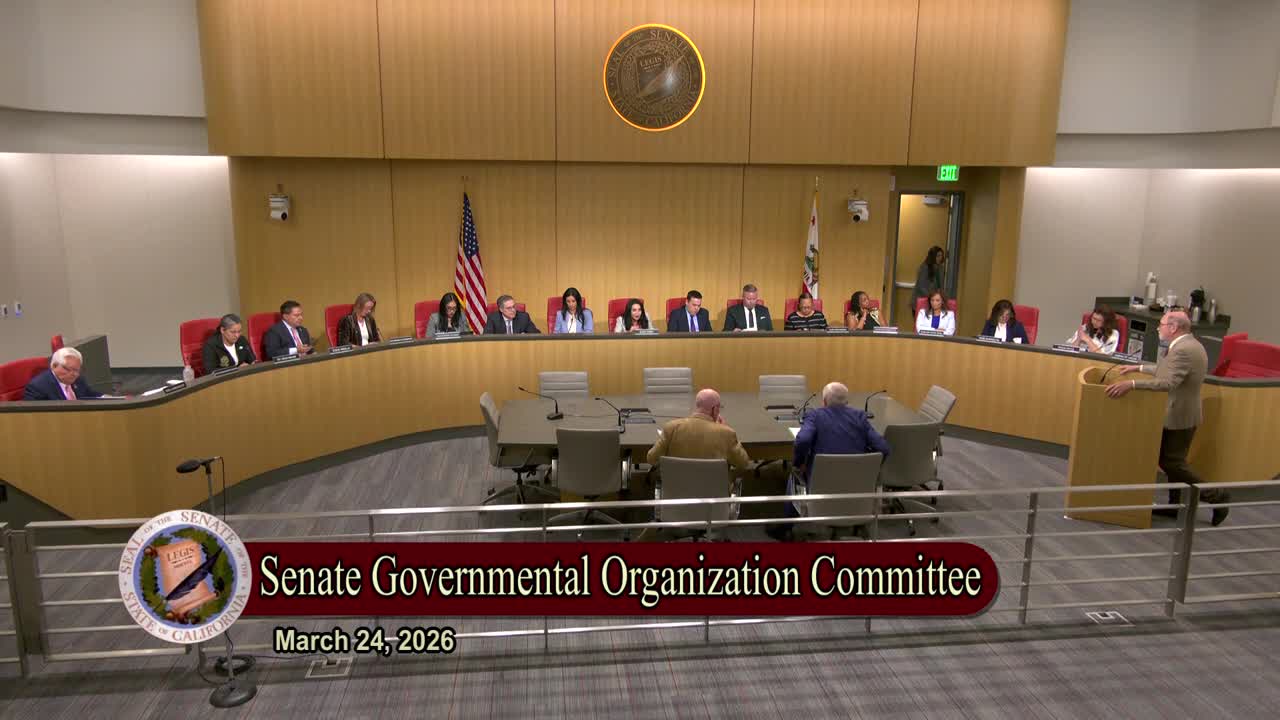
Bill Author

Bill Co-Author(s):