AB 1044: School employees: reduction in workforce.
- Session Year: 2015-2016
- House: Assembly
- Latest Version Date: 2015-02-26
(1)Under existing law, when school employees are terminated pursuant to a reduction in workforce, a school district is required to terminate the employees in order of seniority. Existing law authorizes a school district to deviate from the order of seniority for those purposes for specified reasons.
This bill would make these provisions inoperative on July 1, 2018, and would repeal them as of January 1, 2019.
(2)Existing law authorizes the governing board of a school district to terminate the services of any permanent or probationary certificated employees of the school district during the time period between 5 days after the enactment of the Budget Act and August 15 of the fiscal year to which the Budget Act applies if the governing board of the school district determines that its total revenue limit per unit of average daily attendance for the fiscal year of that Budget Act has not increased by at least 2%, and if the governing board of the school district determines it is therefore necessary to decrease the number of permanent employees in the school district.
This bill would make these provisions inoperative on July 1, 2018, and would repeal them as of January 1, 2019.
(3)Existing law provides that, when the services of permanent or probationary employees are terminated pursuant to a reduction in workforce, those terminated employees have a preferred right to reappointment and an opportunity for substitute service in order of seniority, as specified.
This bill would make these provisions inoperative on July 1, 2018, and would repeal them as of January 1, 2019.
(4)Existing law prohibits, for purposes of complying with those procedures, a school district from including time spent employed in an administrative position by a certificated employee, who transfers to a teaching position and who was initially employed in an administrative position on or after July 1, 1983, in determining seniority, except in the case of a schoolsite administrator, as specified.
This bill would make these provisions inoperative on July 1, 2018, and would repeal them as of January 1, 2019.
(5)Existing law prohibits a school district from counting as a part of the service required as a condition precedent to the classification of the employee as a permanent employee of the school district the period of absence for certain terminated probationary employees.
This bill would make these provisions inoperative on July 1, 2018, and would repeal them as of January 1, 2019.
(6)Existing law extends the effective period of specified rights, and provides additional rights to certain permanent certificated employees, as specified.
This bill would make these provisions inoperative on July 1, 2018, and would repeal them as of January 1, 2019.
(7)Existing law provides that certain statutory layoff provisions are inapplicable to certain probationary certificated employees who are covered by a collective agreement which contains provisions for the layoff and reassignment of those employees.
This bill would make these provisions inoperative on July 1, 2018, and would repeal them as of January 1, 2019.
(8)This bill would require, by July 1, 2018, each governing board of a school district, in consultation with the exclusive representative of the certificated staff, if any, to adopt policies regarding the dismissal of permanent and probationary employees when a reduction in workforce is required due to declining enrollment or insufficient funding to be used commencing with the 201819 school year. The bill would require those adopted policies to include as a significant factor in determining the order of dismissal the evaluation rating of certificated employees, as specified. The bill would permit a school district to deviate from using the evaluation rating of certificated employees as a significant factor in determining the order of dismissal of certificated employees if the school district demonstrates specified conditions. By requiring school districts to perform additional duties, this bill would impose a state-mandated local program. The bill would provide that, to the extent these provisions conflict with any provision of a collective bargaining agreement entered into before January 1, 2016, by a public school employer and an exclusive bargaining representative, the provisions shall not apply to the school district until the expiration or renewal of that collective bargaining agreement.
(9)The California Constitution requires the state to reimburse local agencies and school districts for certain costs mandated by the state. Statutory provisions establish procedures for making that reimbursement.
This bill would provide that, if the Commission on State Mandates determines that the bill contains costs mandated by the state, reimbursement for those costs shall be made pursuant to these statutory provisions.
(a)No A permanent employee shall not be deprived of his or her position for causes other than those specified in Sections 44907 and 44923, and Sections 44932 to 44947, inclusive, and no a probationary employee shall not be deprived of his or her position for cause other than as specified in Sections 44948 to 44949, inclusive.
(b)Whenever (1)If in any a school year the average daily attendance in all of the schools of a school district for the first six months in which that school is in session shall have declined below the corresponding period of either of the previous two school years, whenever if the governing board of a school district determines that attendance in a school district will decline in the following year as a result of the termination of an interdistrict tuition agreement as defined described in Section 46304, whenever if a particular kind of service is to be reduced or discontinued not later than the beginning of the following school year, or whenever if the amendment of state law requires the modification of curriculum, and when in the opinion of if the governing board of the school district determines it shall have become necessary by reason of any of these conditions to decrease the number of permanent employees in the school district, the governing board of the school district may terminate the services of not more than a corresponding percentage of the certificated employees of the school district, permanent as well as probationary, at the close of the school year. Except as otherwise provided by statute, the services of no a permanent employee may shall not be terminated under the provisions of this section while any a probationary employee, or any other employee with less seniority, is retained to render a service which said that the permanent employee is certificated and competent to render.
In
(2)In computing a decline in average daily attendance for purposes of this section subdivision for a newly formed or reorganized school district, each school of the school district shall be deemed to have been a school of the newly formed or reorganized school district for both of the two previous school years.
As
(3)As between employees who first rendered paid service to the school district on the same date, the governing board of the school district shall determine the order of termination solely on the basis of needs of the school district and the students thereof. pupils of the school district. Upon the request of any an employee whose order of termination is so determined, the governing board of the school district shall furnish in writing writing, no later than five days prior to before the commencement of the hearing held in accordance with Section 44949, a statement of the specific criteria used in determining the order of termination and the application of the criteria in ranking each employee relative to the other employees in the group. This The requirement that the governing board of the school district provide, on request, a written statement of reasons for determining the order of termination shall not be interpreted to give affected employees any legal right or interest that would not exist without such a the requirement.
(c)(1)Notice of such the termination of services shall be given before the 15th of May in the manner prescribed in May 15 pursuant to Section 44949, and services of such those employees shall be terminated in the inverse of the order in which they were employed, as determined by the governing board of the school district in accordance with the provisions of Sections 44844 and 44845. In the event that If a permanent or probationary employee is not given the notices and a right to a hearing as provided for in Section 44949, he or she shall be deemed reemployed for the ensuing school year.
The
(2)The governing board of the school district shall make assignments and reassignments in such a manner that employees shall be retained to render any service which their seniority and qualifications entitle them to render. However, prior to before assigning or reassigning any a certificated employee to teach a subject which that he or she has not previously taught, and for which he or she does not have a teaching credential or which that is not within the employees major area of postsecondary study or the equivalent thereof, the governing board of the school district shall require the employee to pass a subject matter competency test in the appropriate subject.
(d)Notwithstanding subdivision (b), a school district may deviate from terminating a certificated employee in order of seniority for either of the following reasons:
(1)The school district demonstrates a specific need for personnel to teach a specific course or course of study, or to provide services authorized by a services credential with a specialization in either pupil personnel services or health for a school nurse, and that the certificated employee has special training and experience necessary to teach that course or course of study or to provide those services, which that others with more seniority do not possess.
(2)For purposes of maintaining or achieving compliance with constitutional requirements related to equal protection of the laws.
(e)This section shall become inoperative on July 1, 2018, and, as of January 1, 2019, is repealed, unless a later enacted statute, that becomes operative on or before January 1, 2019, deletes or extends the dates on which it becomes inoperative and is repealed.
SEC. 2.Section 44955.5 of the Education Code is amended to read:44955.5.(a)During the time period between five days after the enactment of the Budget Act and August 15 of the fiscal year to which that Budget Act applies, if the governing board of a school district determines that its total revenue limit per unit of average daily attendance for the fiscal year of that Budget Act has not increased by at least 2 percent, and if in the opinion of the governing board of the school district determines it is therefore necessary to decrease the number of permanent employees in the school district, the governing board of the school district may terminate the services of any permanent or probationary certificated employees of the school district, including employees holding a position that requires an administrative or supervisory credential. The termination shall be pursuant to Sections 44951 and 44955 but, notwithstanding anything to the contrary in Sections 44951 and 44955, in accordance with a schedule of notice and hearing adopted by the governing board. board of the school district.
(b)This section is inoperative from July 1, 2002, to July 1, 2003, inclusive, and from July 1, 2011, to July 1, 2012, inclusive.
(b)This section shall become inoperative on July 1, 2018, and, as of January 1, 2019, is repealed, unless a later enacted statute, that becomes operative on or before January 1, 2019, deletes or extends the dates on which it becomes inoperative and is repealed.
SEC. 3.Section 44956 of the Education Code is amended to read:44956.Any A permanent employee whose services have been terminated as provided in Section 44955 shall have the following rights:
(a)For the period of 39 months from the date of the termination, any an employee who in the meantime has not attained the age of 65 years shall have the preferred right to reappointment, in the order of original employment as determined by the governing board of the school district in accordance with Sections 44831 to 44855, inclusive, if the number of employees is increased or the discontinued service is reestablished, with no requirements that were not imposed upon other employees who continued in service; provided, that no probationary or other employee with less seniority shall be employed to render a service that the employee is certificated and competent to render. However, prior to before reappointing any an employee to teach a subject that he or she has not previously taught, and for which he or she does not have a teaching credential or that is not within the employees major area of postsecondary study or the equivalent thereof, the governing board of the school district shall require the employee to pass a subject matter competency test in the appropriate subject.
(b)The right to reappointment described in subdivision (a) may be waived by the employee, without prejudice, for not more than one school year, unless the governing board of the school district extends this right, but the waiver shall not deprive the employee of his or her right to subsequent offers of reappointment.
(c)Notwithstanding subdivision (a), a school district may deviate from reappointing a certificated employee in order of seniority for either of the following reasons:
(1)The school district demonstrates a specific need for personnel to teach a specific course or course of study, or to provide services authorized by a services credential with a specialization in either pupil personnel services or health for a school nurse, and that the employee has special training and experience necessary to teach that course or course of study, or to provide those services, that others with more seniority do not possess.
(2)For purposes of maintaining or achieving compliance with constitutional requirements related to equal protection of the laws.
(d)As to any an employee who is reappointed, the period of his or her absence shall be treated as a leave of absence and shall not be considered as a break in the continuity of his or her service, he or she shall retain the classification and order of employment he or she had when his or her services were terminated, and credit for prior service under any state or school district retirement system shall not be affected by such the termination, but the period of his or her absence shall not count as a part of the service required for retirement.
(e)During the period of his or her preferred right to reappointment, an employee shall, in the order of original employment, be offered prior opportunity for substitute service during the absence of any other employee who has been granted a leave of absence or who is temporarily absent from duty; provided, that his or her services may be terminated upon the return to duty of the other employee and that substitute service shall not affect the retention of his or her previous classification and rights. If, in any school year the employee serves as a substitute in any position requiring certification for 21 days or more within a period of 60 schooldays, the compensation the employee receives for substitute service in that 60-day period, including his or her first 20 days of substitute service, shall be not be less than the amount the employee would receive if he or she were being reappointed.
(f)(1)During the period of the employees preferred right to reappointment, the governing board of the school district, if it is also the governing board of one or more other school districts, may assign him or her to service, which he or she is certificated and competent to render, in another school district or districts; provided, that the compensation he or she receives therefor for the service may, in the discretion of the governing board, board of the school district, be the same as he or she would have received had he or she been serving in the school district from which his or her services were terminated, that his or her service in the other school district or districts shall be counted toward the period required for both state and local retirement as though rendered in the school district from which his or her services were terminated, and that no permanent employee in the other school district or districts shall be displaced by him or her.
(2)It is the intent of this subdivision that the employees of a school district, the governing board of which is also the governing board of one or more other school districts, shall not be at a disadvantage as compared with employees of a unified school district.
(g)At any time prior to before the completion of one year after his or her return to service, he or she may continue or make up, with interest, his or her own contributions to any state or school district retirement system, system for the period of his or her absence, but it shall not be obligatory on the state or school district to match those contributions.
(h)Should he or she become disabled or reach retirement age at any time before his or her return to service, he or she shall receive, in any state or school district retirement system of which he or she was a member, all benefits to which he or she would have been entitled had such event occurred at the time of his or her termination of service, plus any benefits he or she may have qualified for thereafter, after his or her termination of service, as though still employed.
(i)This section shall become inoperative on July 1, 2018, and, as of January 1, 2019, is repealed, unless a later enacted statute, that becomes operative on or before January 1, 2019, deletes or extends the dates on which it becomes inoperative and is repealed.
SEC. 4.Section 44956.5 of the Education Code is amended to read:44956.5.(a)For a certificated employee initially employed in an administrative position on or after July 1, 1983, who transfers to a teaching position, the period of employment in the administrative position shall not be included in determining seniority for purposes of Sections 44955 and 44956, except for school site schoolsite administrators who shall earn up to a maximum of three years seniority while serving as site administrators.
(b)This section shall become inoperative on July 1, 2018, and, as of January 1, 2019, is repealed, unless a later enacted statute, that becomes operative on or before January 1, 2019, deletes or extends the dates on which it becomes inoperative and is repealed.
SEC. 5.Section 44957 of the Education Code is amended to read:44957.Any A probationary employee whose services have been terminated as provided in Section 44955 shall have the following rights:
(a)For the period of 24 months from the date of such the termination, any an employee who in the meantime has not attained the age of 65 years shall have the preferred right to reappointment, subject to the prior rights to reappointment by all permanent employees as set forth in Section 44956, in the order of original employment as determined by the governing board of the school district in accordance with the provisions of Sections 44831 to 44855, inclusive, if the number of employees is increased or the discontinued service is reestablished, with no requirements that were not imposed upon other employees who continued in service. Except as otherwise provided, no a probationary or temporary employee with less seniority shall not be employed to render a service which such that the employee is certificated and competent to render and provided that such an the employee shall be given a priority over employees whose right to a position is derived pursuant to Section 44918. However, prior to before reappointing any an employee to teach a subject which that he or she has not previously taught, and for which he or she does not have a teaching credential or which that is not within the employees major area of postsecondary study or the equivalent thereof, the governing board of the school district shall require the employee to pass a subject matter competency test in the appropriate subject.
(b)Notwithstanding subdivision (a), a school district may deviate from reappointing a probationary employee in order of seniority for either of the following reasons:
(1)The school district demonstrates a specific need for personnel to teach a specific course or course of study, or to provide services authorized by a services credential with a specialization in either pupil personnel services or health for a school nurse, and that the employee has special training and experience necessary to teach that course or course of study, or to provide those services, which that others with more seniority do not possess.
(2)For purposes of maintaining or achieving compliance with constitutional requirements related to equal protection of the laws.
(c)As to any such an employee who is reappointed, the period of his or her absence shall be treated as a leave of absence and shall not be considered as a break in the continuity of his or her service, he or she shall retain the classification and order of employment he or she had when his or her services were terminated, and credit for prior service under any state or school district retirement system shall not be affected by such the termination; provided, however, that the period of his or her absence shall not be counted as a part of the service required for attaining permanent status in the school district or, except as provided in subdivision (e), for retirement purposes.
(d)During the period of his or her preferred right to reappointment, any such the employee shall, in the order of original employment, and subject to the rights of permanent employees as set forth in Section 44956, be offered prior opportunity for substitute service during the absence of any other employee who has been granted leave of absence or who is temporarily absent from duty; provided, that his or her services may be terminated upon a return to duty of such the other employee, that such substitute service shall not affect the retention of his or her previous classification and rights, and that such an employee shall be given a priority over employees whose right to a substitute position is derived pursuant to Section 44918.
(e)At any time prior to before the completion of one year after his or her return to service, an employee reappointed under the provisions of this section may elect to continue or to reinstate his or her membership and interest in any state or school district retirement system and to receive retirement benefits as if no absence from service had occurred. In the event of such that election the employee shall pay into the retirement system the amount of his or her share of contribution and the school districts share of contribution attributable to the period of absence and the amount of any contributions withdrawn, plus interest.
(f)This section shall become inoperative on July 1, 2018, and, as of January 1, 2019, is repealed, unless a later enacted statute, that becomes operative on or before January 1, 2019, deletes or extends the dates on which it becomes inoperative and is repealed.
SEC. 6.Section 44958 of the Education Code is amended to read:44958.(a)(1)If the services of any a probationary employee are terminated, or if such employee is dismissed, because of a reduction in the attendance of pupils or the discontinuance of a particular kind of service, and such the employee is reemployed within a period of 39 months from the last day of the school year within which his or her service was so terminated, or within 39 months after the cessation of hostilities, if such reduction in attendance or discontinuance of service was due to war conditions, the period of his or her absence shall not count as a part of the service required as a condition precedent to the classification of such the employee as a permanent employee of the school district, but such absence shall not be construed as a break in the continuity of the service of such the employee.
Every
(2)Every such probationary employee who has been reemployed as indicated in this section shall have all of the rights enumerated in Sections 44955 to 44961, inclusive, for permanent employees, except the right of reappointment, subject only to the prior rights of permanent employees.
The
(3)The provisions of this section shall apply to any a probationary employee who shall be or who shall have been dismissed or terminated after January 1, 1949, because of reduction in attendance or discontinuance of a particular kind of service.
(b)This section shall become inoperative on July 1, 2018, and, as of January 1, 2019, is repealed, unless a later enacted statute, that becomes operative on or before January 1, 2019, deletes or extends the dates on which it becomes inoperative and is repealed.
SEC. 7.Section 44959 of the Education Code is amended to read:44959.As to any (a)A permanent certificated employee whose services have been terminated because of the effect of wars in which the United States is engaged upon the attendance of pupils or upon the maintenance of a particular kind of service, the effective period covered by all rights enumerated in Section 44956 is extended until two years after the cessation of hostilities, and in addition thereto for a like for the same period these employees shall have the following additional rights:
(a)
(1)He or she may voluntarily accept termination of service in other than the order of original employment and retain all of the other rights herein provided. provided by this section.
(b)
(2)If he or she is engaged in any form of civilian or military war service, any credential or certificate he or she holds is continued in full force and effect until 90 days after the termination of his or her employment therein. civilian or military war service.
(c)
(3)If, either before or after such termination, he or she engages in any form of war service for which provision is made in Section 44800 or elsewhere in the laws of this state, he or she shall retain all rights granted by that war service legislation as though still employed. However, the right to reappointment shall be in the order of original employment, as determined in accordance with the provisions of Sections 44844 and 44845.
(b)This section shall become inoperative on July 1, 2018, and, as of January 1, 2019, is repealed, unless a later enacted statute, that becomes operative on or before January 1, 2019, deletes or extends the dates on which it becomes inoperative and is repealed.
SEC. 8.Section 44959.5 of the Education Code is amended to read:44959.5.(a)The layoff provisions of Sections 44955, 44956, 44957, 44958 44958, and 44959 shall not be applicable to probationary certificated employees who are covered by a collective agreement which that contains provisions for the layoff and reassignment of such those employees.
(b)If layoff proceedings are commenced under procedures prescribed by any of the sections referred to in subdivision (a), such those proceedings shall continue in accordance with the statutory procedures, notwithstanding the subsequent adoption of a collective agreement or the inclusion in the coverage thereof of employees not so covered at the time such those proceedings commenced.
(c)If layoff proceedings are commenced under a collective agreement which that contains provisions for the layoff of probationary certificated employees, such those proceedings shall continue in accordance with the agreement, notwithstanding the subsequent termination of the agreement.
(d)This section shall only apply to a school district in which the average daily attendance is 400,000 pupils or more and shall not be interpreted to apply to the termination of any a probationary certificated employee pursuant to Section 44948 or Section 44949.
(e)This section shall become inoperative on July 1, 2018, and, as of January 1, 2019, is repealed, unless a later enacted statute, that becomes operative on or before January 1, 2019, deletes or extends the dates on which it becomes inoperative and is repealed.
SEC. 9.Section 45000 is added to the Education Code, to read:45000.(a)By July 1, 2018, each governing board of a school district, in consultation with the exclusive representative of the certificated staff, if any, shall adopt policies regarding the dismissal of permanent and probationary employees when a reduction in workforce is required due to declining enrollment or insufficient funding to be used commencing with the 201819 school year.
(b)Policies adopted pursuant to subdivision (a) shall include as a significant factor in determining the order of dismissal the evaluation rating of certificated employees pursuant to Section 44664.
(c)A school district may deviate from using the evaluation rating of certificated employees as a significant factor in determining the order of dismissal of certificated employees if the school district demonstrates a specific need for personnel to teach a specific course or course of study, or to provide services authorized by a services credential with a specialization in either pupil personnel services or health for a school nurse, and that the certificated employee has special training and experience necessary to teach that course or course of study or to provide those services that others with higher evaluation ratings do not possess.
(d)To the extent that the provisions of this section conflict with a provision of a collective bargaining agreement entered into by a public school employer and an exclusive bargaining representative before January 1, 2016, pursuant to Chapter 10.7 (commencing with Section 3540) of Division 4 of Title 1 of the Government Code, the provisions of this section shall not apply to the school district until expiration or renewal of that collective bargaining agreement.
SEC. 10.If the Commission on State Mandates determines that this act contains costs mandated by the state, reimbursement to local agencies and school districts for those costs shall be made pursuant to Part 7 (commencing with Section 17500) of Division 4 of Title 2 of the Government Code.
|
Date
|
Status
|
|---|---|
| Feb 26, 2015 | Read first time. To print. |
| Feb 27, 2015 | From printer. May be heard in committee March 29. |
| Apr 9, 2015 | Referred to Com. on ED. |
| May 4, 2015 | From committee: That the measure be retained in committee, and that the subject matter be referred to the Committee on Rules for assignment to the proper committee for study. (Ayes 4. Noes 3.) (April 29). |
| Jan 31, 2016 | Died pursuant to Article IV, Sec. 10(c) of the Constitution. |
| Feb 1, 2016 | From committee: Filed with the Chief Clerk pursuant to Joint Rule 56. |
|
Date
|
Description
|
Location
|
Votes
|
|
|---|---|---|---|---|
| Apr 29, 2015 | Bill measure be retained in committee, and subject matter be referred to Rules Committee for assignment to the proper committee. | Assembly Standing Committee on Education |
Passed |
This list shows positions taken on this bill by organizations on the date displayed, which is linked to the original source.
Positions by individuals are not included.
|
Organization
|
Position
|
Date
|
|---|---|---|
| American Federation of State, County and Municipal Employees | ** Against | Apr 29, 2015 |
| Antioch Education Association | * Against | Apr 29, 2015 |
| Antioch Unified School District | * Against | Apr 29, 2015 |
| Brentwood Union School District | * Against | Apr 29, 2015 |
| Cajon Valley Education Association | * Against | Apr 29, 2015 |
| CalChamber | * Support | Apr 29, 2015 |
| California Chamber Of Commerce | * Support | Apr 29, 2015 |
| California Federation Of Teachers | * Against | Apr 29, 2015 |
| California Professional Firefighters | ** Against | Apr 29, 2015 |
| California School Employees Association | * Against | Apr 29, 2015 |
| California Teachers Association | * Against | Apr 29, 2015 |
| Cupertino Education Association | * Against | Apr 29, 2015 |
| Edvoice | * Support | Apr 29, 2015 |
| Fontana School District | * Against | Apr 29, 2015 |
| Fresno Teachers Association | * Against | Apr 29, 2015 |
| Grossmont Union High School District, San Diego, CA | * Against | Apr 29, 2015 |
| Hayward Education Association | * Against | Apr 29, 2015 |
| Heart District Teachers Association | * Against | Apr 29, 2015 |
| Houston High School | * Support | Apr 29, 2015 |
| Hueneme Unified School District | * Against | Apr 29, 2015 |
| Irvington High School, Fremont, CA | * Against | Apr 29, 2015 |
| Kings Canyon Unified School District | * Against | Apr 29, 2015 |
| Livermore Valley Joint Unified School District | * Against | Apr 29, 2015 |
| Martinez Unified School District | * Against | Apr 29, 2015 |
| Mt. Diablo Education Association | * Against | Apr 29, 2015 |
| Mt. Diablo Unified School District | * Against | Apr 29, 2015 |
| N/A | * Neutral | Apr 29, 2015 |
| Orange Unified School District, Santa Ana, Orange County, Ca | * Against | Apr 29, 2015 |
| Orinda Union School District | * Against | Apr 29, 2015 |
| Paradise Unified School District, Paradise, CA | * Against | Apr 29, 2015 |
| Parkmont Elementary School, Fremont, CA | * Against | Apr 29, 2015 |
| Penn Valley Union Elementary School District | * Against | Apr 29, 2015 |
| Pittsburg Unified School District | * Against | Apr 29, 2015 |
| San Ramon Valley Education Association | * Against | Apr 29, 2015 |
| Savannah School District, Anaheim, CA | * Against | Apr 29, 2015 |
| Service Employees International Union California | * Against | Apr 29, 2015 |
| Stockton Teachers Association | * Against | Apr 29, 2015 |
| Students First | * Support | Apr 29, 2015 |
| Students Matter | * For If Amend | Apr 29, 2015 |
| Studentsfirst | ** Support | Apr 29, 2015 |
| Sweetwater Union High School District | * Against | Apr 29, 2015 |
| United Teachers Los Angeles | * Against | Apr 29, 2015 |
| William S. Heart Unified School District | * Against | Apr 29, 2015 |
AB 1044
Page 7
Date of Hearing: April 29, 2015
ASSEMBLY COMMITTEE ON EDUCATION
Patrick O'Donnell, Chair
AB 1044
(Baker) – As Introduced February 26, 2015
SUBJECT: School employees: reduction in workforce
SUMMARY: Requires, by July 1, 2018, school districts to adopt layoff policies that include a teacher's evaluation rating as a significant factor in determining the order of dismissal. Specifically, this bill:
Requires, by July 1, 2018, each governing board of a school district, in consultation with the exclusive representative of the certificated staff, if any, to adopt policies regarding the dismissal of permanent and probationary employees when a reduction in workforce is required due to declining enrollment or insufficient funding to be used commencing with the 2018–19 school year.
Requires policies adopted to include as a significant factor in determining the order of dismissal the evaluation rating of certificated employees.
Authorizes a school district to deviate from using the evaluation rating of certificated employees as a significant factor in determining the order of dismissal of certificated employees if the school district demonstrates a specific need for personnel to teach a specific course or course of study, or to provide services authorized by a services credential with a specialization in either pupil personnel services or health for a school nurse, and that the certificated employee has special training and experience necessary to teach that course or course of study or to provide those services that others with higher evaluation ratings do not possess.
Specifies to the extent that the provisions of the bill conflict with a provision of a collective bargaining agreement entered into by a public school employer and an exclusive bargaining representative before January 1, 2016, pursuant to Chapter 10.7 (commencing with Section 3540) of Division 4 of Title 1 of the Government Code, the provisions of this section shall not apply to the school district until expiration or renewal of that collective bargaining agreement.
Repeals the following provisions as of July 1, 2018:
When school employees are terminated pursuant to a reduction in workforce, a school district shall terminate the employees in order of seniority. Authorizes a school district to deviate from the order of seniority for the following reasons:
The school district demonstrates a specific need for personnel to teach a specific course or course of study, or to provide services authorized by a services credential with a specialization in either pupil personnel services or health for a school nurse, and that the certificated employee has special training and experience necessary to teach that course or course of study or to provide those services, that others with more seniority do not possess.
For purposes of maintaining or achieving compliance with constitutional requirements related to equal protection of the laws.
The governing board of a school district may terminate the services of any permanent or probationary certificated employees of the school district during the time period between 5 days after the enactment of the Budget Act and August 15 of the fiscal year to which the Budget Act applies if the governing board of the school district determines that its total revenue limit per unit of average daily attendance for the fiscal year of that Budget Act has not increased by at least 2%, and if the governing board of the school district determines it is therefore necessary to decrease the number of permanent employees in the school district.
When the services of permanent employees are terminated pursuant to a reduction in workforce, those terminated employees have a preferred right to reappointment for 39 months and an opportunity for substitute service in order of seniority, as specified.
For purposes of complying with those procedures, a school district is prohibited from including time spent employed in an administrative position by a certificated employee, who transfers to a teaching position and who was initially employed in an administrative position on or after July 1, 1983, in determining seniority, except in the case of a schoolsite administrator, who shall earn up to a maximum of three years of seniority.
When the services of probationary employees are terminated pursuant to a reduction in workforce, those terminated employees have a preferred right to reappointment for 24 months and an opportunity for substitute service in order of seniority, as specified.
If a probationary employee is terminated, due to reduction in attendance or discontinuance of a particular kind of service and the employee is reemployed within a 39 month period, that time shall not count as part of his or her service and shall not count as a break in the continuity of service, as specified.
Particular rights for permanent employees who services are terminated because of the effect of wars in which the United States is engaged or upon the maintenance of a particular kind of service, as specified.
Certain statutory layoff provisions are inapplicable to certain probationary certificated employees who are covered by a collective agreement which contains provisions for the layoff and reassignment of those employees.
EXISTING LAW:
Requires, when school employees are terminated pursuant to a reduction in workforce, a school district to terminate the employees in order of seniority. Authorizes a school district to deviate from the order of seniority for the following reasons:
The school district demonstrates a specific need for personnel to teach a specific course or course of study, or to provide services authorized by a services credential with a specialization in either pupil personnel services or health for a school nurse, and that the certificated employee has special training and experience necessary to teach that course or course of study or to provide those services, that others with more seniority do not possess.
For purposes of maintaining or achieving compliance with constitutional requirements related to equal protection of the laws. (Education Code (EC) 44955)
Authorizes the governing board of a school district to terminate the services of any permanent or probationary certificated employees of the school district during the time period between 5 days after the enactment of the Budget Act and August 15 of the fiscal year to which the Budget Act applies if the governing board of the school district determines that its total revenue limit per unit of average daily attendance for the fiscal year of that Budget Act has not increased by at least 2%, and if the governing board of the school district determines it is therefore necessary to decrease the number of permanent employees in the school district. (EC 44955.5)
Specifies when the services of permanent employees are terminated pursuant to a reduction in workforce, those terminated employees have a preferred right to reappointment for 39 months and an opportunity for substitute service in order of seniority, as specified. (EC 44956)
Prohibits, for purposes of complying with those procedures, a school district from including time spent employed in an administrative position by a certificated employee, who transfers to a teaching position and who was initially employed in an administrative position on or after July 1, 1983, in determining seniority, except in the case of a schoolsite administrator, who shall earn up to a maximum of three years of seniority. (EC 44956.5)
Specifies when the services of probationary employees are terminated pursuant to a reduction in workforce, those terminated employees have a preferred right to reappointment for 24 months and an opportunity for substitute service in order of seniority, as specified. (EC 44957)
Specifies that if a probationary employee is terminated, due to reduction in attendance or discontinuance of a particular kind of service and the employee is reemployed within a 39 month period, that time shall not count as part of his or her service and shall not count as a break in the continuity of service, as specified. (EC 44958)
Specifies particular rights for permanent employees who services are terminated because of the effect of wars in which the United States is engaged or upon the maintenance of a particular kind of service, as specified. (EC 44959)
Specifies that certain statutory layoff provisions are inapplicable to certain probationary certificated employees who are covered by a collective agreement which contains provisions for the layoff and reassignment of those employees. (EC 44959.5)
Specifies notwithstanding Section 44955 of the Education Code, the public school employer and the exclusive representative shall, upon request of either party, meet and negotiate regarding procedures and criteria for the layoff of certificated employees for lack of funds. If the public school employer and the exclusive representative do not reach mutual agreement, Section 44955 of the Education Code shall apply. (Government Code 3543.2)
FISCAL EFFECT: Legislative counsel has keyed this bill as a state mandated local program.
COMMENTS: This bill requires school districts to adopt layoff policies that include a teacher's evaluation rating as a significant factor in determining the order of dismissal, by July 1, 2018.
According to the author, this bill promotes local control and the retention of effective teaching staff by repealing the statutory last in first out (LIFO) requirements. By repealing LIFO and allowing school districts to consider more than just seniority, we create an opportunity for teachers, administrators, and community leaders to design a system that’s good for both teachers and students. The bill empowers local governing boards, in consultation with the exclusive representative of the certified staff, where applicable, to adopt policies regarding the dismissal of permanent and temporary employees when a reduction in force (RIF) is required due to declining enrollment or insufficient funding. This allows schools to consider teaching performance, school needs and student needs, not just seniority in making RIF decisions. Additionally, this bill honors existing collective bargaining agreements, in place before January 1, 2016, until those agreements expire. LIFO contains no consideration of anything other than seniority for RIF decisions. Last-in, first-out, allows no reflection of how gifted a junior teacher may be, and no consideration of school needs. This leads to irrational results. For example, in 2012, Sacramento Teacher of the Year, Michelle Apperson, was laid off during RIF layoffs due to budget constraints. This illustration of LIFO labor reductions demonstrates a lack of essential consideration of a teacher’s effectiveness and the wellbeing of students as the highest priority.
Vergara v. California: In 2012, nine students, including Beatriz Vergara filed a lawsuit in Los Angeles Superior Court against the State arguing their civil rights were being violated under the equal protection clause of the California Constitution based on the following three teacher laws:
Seniority and Layoffs - Basing layoffs on seniority status also known as Last In, First Out (LIFO).
Permanent Status - Granting permanent status after two years of employment.
Dismissal - The process for dismissing an ineffective teacher.
In
June 2014, the Los Angeles Superior Court issued a tentative ruling
in favor of the students on all three issues. The final judgment
detailing arguments supporting the ruling was issued in August 2014.
The Judge's ruling was stayed pending appeal, but if upheld this
decision would strike down these laws statewide. The ruling was as
follows:
Seniority and Lay-Offs – The Judge ruled that lay-offs based solely on seniority are unconstitutional because the system removes junior teachers who may be more effective, while retaining senior teachers who may be ineffective. The Judge's ruling didn't rely on the fact that districts can stray from seniority under existing law.
Permanent Status - The Judge ruled that both students and teachers are unfairly and unnecessarily disadvantaged by the permanent employment statutes. The Judge ruled that the current two year probationary period is not a long enough period of time to evaluate a new teacher.
Dismissal – The Judge ruled the current dismissal system to be too complex, time consuming and expensive; and, ruled that the current dismissal process for classified employees provides an alternative process that protects due process rights.
In September 2014, Governor Brown and Attorney General Harris filed an appeal of the decision. The California Teachers Association (CTA) and the California Federation of Teachers (CFT), formal interveners in the case, also filed an appeal of the decision. The appeal is awaiting hearing at the appellate court level and a decision is expected in the fall of 2015.
The author references the Vergara lawsuit in the background worksheet, but it is unclear whether adding teacher evaluation ratings to the layoff process will address the concerns raised in the Vergara case. Also, without a consistent state-wide evaluation system, it is unclear how this will be implemented at districts across the state. The committee should consider whether a uniform teacher evaluation system should first be implemented before making uniform changes to the teacher layoff system.
Districts can already negotiate a different layoff process. Government Code Section 3543.2(c) authorizes districts and unions to negotiate a different layoff procedure, if they mutually agree. If no agreement is reached then Education Code Section 44955 (seniority based layoffs) applies. This bill repeals Education Code Section 44955, making that authorization to negotiate something different, invalid. The provisions of this bill would be the only authorized layoff procedure state-wide. It is unclear whether any districts have negotiated different layoff procedures, but it is possible. The committee should consider how this bill might affect districts that may have already negotiated a different layoff procedure and whether the committee wishes to keep the existing statute authorizing such a negotiated procedure to remain in place.
The committee should also consider that while this bill requires the new layoff procedures to be negotiated with the exclusive representative of certificated staff, if the district and the union do not mutually agree, then the district is authorized to impose the policy of their choosing.
Collective Bargaining Agreements: This bill specifies that to the extent that the provisions conflict with a provision of a collective bargaining agreement entered into by a public school employer and an exclusive bargaining representative before January 1, 2016, pursuant to Chapter 10.7 (commencing with Section 3540) of Division 4 of Title 1 of the Government Code, the provisions of this section shall not apply to the school district until expiration or renewal of that collective bargaining agreement. State statute cannot supersede a collective bargaining contract, therefore, the committee should consider whether this bill should instead state that the provisions of the bill shall be implemented on July 1, 2018 or upon the adoption of a successor collective bargaining agreement, if such an agreement exists on July 1, 2018.
Layoff Decisions based on Seniority and Evaluations. This bill requires school districts to adopt layoff policies that include a teacher's evaluation rating as a significant factor in determining the order of dismissal. While many, if not a majority of school districts use the California Standards for the Teaching Profession as a basis for their evaluations, it is not clear that there is uniformity in the evaluation forms or the rating rubrics. Moreover, it is not clear that there would be consistency and fairness among administrators in evaluating teachers. What it would take to be rated “superior” by one principal may be different than what it would take to earn that same rating by a different principal in the same school district. To ensure that layoff decisions based whole or in part on performance evaluations are defensible, a district would need to ensure the evaluations are valid and reliable assessments of teacher effectiveness. Such a ranking system would most certainly require significant and on-going training and may need to account for site-specific circumstances that may also impact teacher effectiveness. Otherwise the system could allow discrimination and/or arbitrary decisions, which would create an invitation for lawsuits. The committee should consider whether it is appropriate to authorize districts to make staffing decisions based on evaluation systems that do not currently exist. The committee should also consider whether it is more appropriate for the state to establish a uniform teacher evaluation system before authorizing districts to use this type of information in the layoff process.
Opponents argue that educational scholar Richard Rothstein has long pointed out that the evaluation model within the public school system is inadequate because principals are often tasked with evaluating twenty or more teachers on top of the rest of their management responsibilities. In the private sector, six-to-one evaluation process of supervisors to subordinates is the highest ratio for effective mentoring and evaluations. For this reason, and a myriad of others, it is not surprising that the evaluation process is the most flawed of measurement for professional educators. The committee should consider whether administrators are competent to perform uniform evaluation without further training and whether they have the time to do a thorough evaluation of so many teachers.
Layoffs & Skipping. According to a 2012 survey and report by the Legislative Analyst's Office (LAO) entitled A Review of the Teacher Layoff Process in California, "The majority of districts in our survey report developing criteria to “skip” junior teachers with specialized credentials or experience. State law allows school districts to retain certain junior employees if the district can prove certain types of trained and experienced teachers meet a specific need within the district. The most common types of teachers protected under this skipping criteria are special education teachers and language specialists. Whereas almost all survey respondents develop tie-breaking criteria (94 percent), about two-thirds of survey respondents deviated from seniority to skip junior employees."
The LAO also states, "Chapter 498, Statutes of 1983 (SB 813, Hart), amended the original 1976 teacher layoff statute to allow districts to deviate from seniority-based layoffs “for purposes of maintaining and achieving compliance with constitutional requirements related to equal protection of the laws.” When this clause was added, the provision was intended primarily to “ensure that the teaching force reflects the multicultural makeup of the state.” Since Proposition 209 (approved by voters in 1996) constitutionally banned discrimination against or preferential treatment of any individual or group on the basis of race, sex, color, ethnicity, or national origin in public employment—including public education employment—a district no longer can skip certain teachers during the layoff process in an effort to maintain cultural diversity. Districts recently have begun to use the equal protection provision to skip certain teachers employed at certain schools serving disadvantaged students. In some instances, seniority-based layoffs result in some schools laying off a significant proportion of their teachers. Some public advocates have raised concern that such high proportions of layoffs in these schools, coupled with other educational disadvantages, cause major disruption for students and the quality and continuity of their education program—threatening students’ equal protection of the laws."
Further the LAO states, "Of the districts we surveyed, very few report exploring their discretion to deviate from seniority for the purpose of equal protection of the laws. Only five districts reported having used this discretion in developing criteria to break ties amongst employees with the same start date. Another four reported developing skipping criteria for this purpose. For layoffs operative in the 2012-13, one district to date has ventured in this direction. San Francisco Unified School District (SFUSD) conducted their layoff determinations and used the equal protection clause to protect junior teachers in 14 schools they classify as having high-need students with low academic performance."
Arguments in Support: StudentsFirst supports the bill and states, "Under AB 1044, California school districts would be mandated to use the evaluation rating of teachers as a "significant factor" in layoff decisions, but would not be required to make it the most important factor in the decision. The bill does not prohibit seniority from being the most important factor in the decision and does not define "significant factor," so districts would likely still be able to use seniority as the primary factor in layoff decisions. Prohibiting the use of seniority as the primary factor in determining layoffs and clearly defining "significant factor" would strengthen the law by ensuring performance, and not seniority is driving layoff decisions at the local level."
Arguments in Opposition: California School Employees Association opposes the bill and states, "Seniority is a way to objectively release employees, in order to prevent subjective retaliation, nepotism, graft and retain the most experienced teaching professionals. This long-standing policy prevents termination policies that single out and abuse workers to circumvent the collective bargaining process. Seniority based layoff and reappointement procedures have been validated as an equitable process that protects the rights of all employees."
REGISTERED SUPPORT / OPPOSITION:
Support
CalChamber
StudentsFirst
Opposition
American Federation of State, County and Municipal Employees (AFSCME)
California Federation of Teachers
California Labor Federation
California Professional Firefighters
California School Employees Association
California Teachers Association
Public Employees Union Local 1
Service Employees International Union
Analysis Prepared by: Chelsea Kelley / ED. / (916) 319-2087
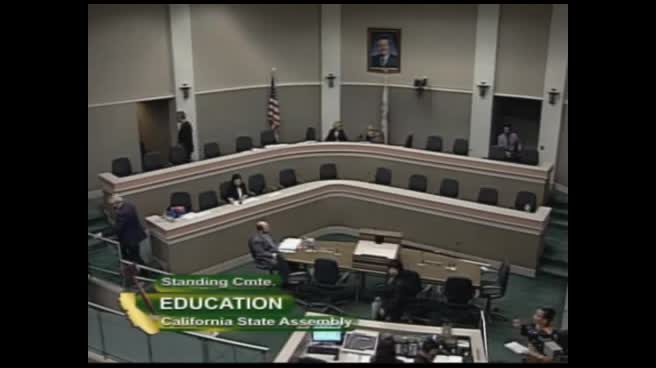
Discussed in Hearing
 34MIN