AB 1809: CalWORKs eligibility: asset limits.
- Session Year: 2015-2016
- House: Assembly
- Latest Version Date: 2016-06-15
Existing federal law provides for allocation of federal funds through the federal Temporary Assistance for Needy Families (TANF) block grant program to eligible states, with Californias version of this program being known as the California Work Opportunity and Responsibility to Kids (CalWORKs) program. Under the CalWORKs program, each county provides cash assistance and other benefits to qualified low-income families and individuals who meet specified eligibility criteria, including limitations on income and assets generally applicable to public assistance programs. Existing law continuously appropriates money from the General Fund to pay for a share of aid grant costs under the CalWORKs program.
This bill would repeal those limitations on assets with regard to eligibility for CalWORKs, thereby eliminating the consideration of an individuals or familys assets as a condition of eligibility for CalWORKs. The bill would also make conforming changes. By increasing the duties of counties administering the CalWORKs program, the bill would impose a state-mandated local program. The bill would declare that no appropriation would be made for purposes of the bill pursuant to the provision continuously appropriating funds for the CalWORKs program.
The California Constitution requires the state to reimburse local agencies and school districts for certain costs mandated by the state. Statutory provisions establish procedures for making that reimbursement.
This bill would provide that, if the Commission on State Mandates determines that the bill contains costs mandated by the state, reimbursement for those costs shall be made pursuant to these statutory provisions.
Existing federal law provides for allocation of federal funds through the federal Temporary Assistance for Needy Families (TANF) block grant program to eligible states, with Californias version of this program being known as the California Work Opportunity and Responsibility to Kids (CalWORKs) program. Under the CalWORKs program, each county provides cash assistance and other benefits to qualified low-income families and individuals who meet specified eligibility criteria, including limitations on income and assets generally applicable to public assistance programs. Existing law continuously appropriates money from the General Fund to pay for a share of aid grant costs under the CalWORKs program.
This bill would repeal those limitations on assets with regard to eligibility for CalWORKs, thereby, thereby eliminating the consideration of an individuals or familys assets as a condition of eligibility for CalWORKs. The bill would also make conforming changes. By increasing the duties of counties administering the CalWORKs program, the bill would impose a state-mandated local program. The bill would declare that no appropriation would be made for purposes of the bill pursuant to the provision continuously appropriating funds for the CalWORKs program.
The California Constitution requires the state to reimburse local agencies and school districts for certain costs mandated by the state. Statutory provisions establish procedures for making that reimbursement.
This bill would provide that, if the Commission on State Mandates determines that the bill contains costs mandated by the state, reimbursement for those costs shall be made pursuant to these statutory provisions.
Existing federal law provides for allocation of federal funds through the federal Temporary Assistance for Needy Families (TANF) block grant program to eligible states, with Californias version of this program being known as the California Work Opportunity and Responsibility to Kids (CalWORKs) program. Under the CalWORKs program, each county provides cash assistance and other benefits to qualified low-income families and individuals who meet specified eligibility criteria, including limitations on income and assets generally applicable to public assistance programs. Existing law continuously appropriates money from the General Fund to pay for a share of aid grant costs under the CalWORKs program.
This bill would repeal those limitations on assets with regard to eligibility for CalWORKs, thereby, eliminating the consideration of an individuals or familys assets as a condition of eligibility for CalWORKs. The bill would also make conforming changes. By increasing the duties of counties administering the CalWORKs program, the bill would impose a state-mandated local program. The bill would declare that no appropriation would be made for purposes of the bill pursuant to the provision continuously appropriating funds for the CalWORKs program.
The California Constitution requires the state to reimburse local agencies and school districts for certain costs mandated by the state. Statutory provisions establish procedures for making that reimbursement.
This bill would provide that, if the Commission on State Mandates determines that the bill contains costs mandated by the state, reimbursement for those costs shall be made pursuant to these statutory provisions.
The Legislature finds and declares all of the following:
(a)In 1996, the United States Congress passed the Personal Responsibility and Work Opportunity Reconciliation Act (PRWORA), known as welfare reform, which created the Temporary Assistance to Needy Families (TANF) program. TANF gives states power to design their own programs, including establishing asset limits. The California Work Opportunity and Responsibility to Kids (CalWORKs) program is Californias program that implements federal welfare reform provisions.
(b)In California, to qualify for public assistance under CalWORKs, impoverished families must demonstrate that they are both income- and asset- poor. asset-poor. Under current law, a low-income family will not qualify for assistance if the family has savings or other assets, excluding a home and a vehicle of a specific value, exceeding the asset limit of $2,000. The asset test has been removed for both CalFresh and Medi-Cal.
(c)Research published in 2015 shows that very few families (0.1 percent) applying for or receiving CalWORKs assistance are found to exceed the vehicle and cash asset test.
(d)Other states, realizing that very few families had assets over the limit, have removed the limit with the goal of streamlining the eligibility process and cutting down on administrative costs. In Virginia, this decision has saved the state an estimated $400,000 annually, and to date, the State of Virginia has reported no negative impacts. A study published in 2015 has estimated that if California were to repeal the CalWORKs asset limit, there would be minimal to no increase in caseloads and an annual $6.4 million in administrative savings allowing county case workers to spend less time reviewing the value of vehicles and savings and more time helping people get the resources they need to get back to work.
(e)Asset limits were intended to ensure that public assistance programs provide benefits only to those with too few resources to support themselves. But years of research and practitioner experience has proven that personal savings and assets are precisely the kinds of resources that allow people to move off public benefits programs. Without being able to maintain or build up a small savings cushion, these families are highly vulnerable to falling into debt in the event of an emergency or other unexpected expense.
(f)It is the intent of the Legislature to repeal the asset test for the CalWORKs program, thereby aligning program rules with Medi-Cal and CalFresh, making the program more efficient, and increasing the capacity of poor families to exit poverty.
SEC. 2.Section 95504 of the Government Code is amended to read:95504.(a)The nonprofit facilitator shall subcontract with service providers to implement the project around the state. The nonprofit facilitator shall make an attempt to select service providers for programs of different size, geographical distribution, and target population to be served. Additionally, the nonprofit facilitator may consider giving special consideration to service providers that demonstrate partnerships with local public agencies.
(b)The service providers shall perform all of the following duties in implementing the project:
(1)Recruit and select participants who meet the following criteria:
(A)The individual is at least 18 years of age.
(B)The individual is a member of a household with an income of not more than 80 percent of the area median income based on United States Department of Housing and Urban Development guidelines at the time of program enrollment.
(C)The individual is not a dependent of another person for federal income tax purposes.
(D)The individual is not a debtor for a judgment resulting from nonpayment of a court-ordered child support obligation.
(E)The individual meets eligibility criteria as defined by the funding source for the program created under this title.
(2)Develop and sign contracts with each participant, to include all program requirements and policies governing the participants account.
(3)Assist participants in opening individual development accounts. The accounts shall be established using an account structure parallel to a restricted account as described in former Section 11155.2 of the Welfare and Institutions Code that meets both of the following requirements:
(A)One separate account shall be established for each participant in a federally or state insured financial institution, community development financial institution, any financial institution eligible to hold an individual retirement account, or community development credit union, in which each participants savings are deposited and maintained. The program participant may withdraw his or her own savings at any time.
(B)Another separate, parallel account shall be established and maintained by service providers in which the matching funds from state, federal, and private donations are kept. The parallel account may contain all matching funds for a pool of any service providers participants.
(4)Help individuals receive their matching funds at the conclusion of the program.
(5)Provide participants with a minimum of 12 hours of financial education and training. The education and training shall include, but need not be limited to, all of the following:
(A)Household and personal budget management.
(B)Economic literacy.
(C)Credit repair.
(6)Develop a program dismissal process for participants who do not fulfill program participation requirements, and seek to ensure that matching funds are used for their intended purposes.
(7)Collect and maintain information about their programs, in a manner that provides the capacity to report semiannually all of the following information to the department:
(A)The number and demographic characteristics of participants enrolled in the program.
(B)The number of accounts established.
(C)The individual and aggregate savings level of participants.
(D)The number of participants who closed accounts and the amount of associated savings.
(E)The actual and proposed program budget.
(F)The size and origin of matching pool funds received, obligated, and paid to participants.
(G)The program achievements and obstacles.
(H)Twelve-month program and financial projections.
(I)At least one participant profile.
SEC. 3.Section 11151 of the Welfare and Institutions Code is amended to read:11151.An applicant or recipient shall be ineligible to receive public assistance unless the property he or she owns is held for the following purposes:
(a)The property is used to provide the applicant or recipient with a home and conforms to the provisions of Section 11152.
(b)The property is producing income for the support of the applicant or recipient and conforms to the provisions of Section 11153.7.
(c)The property is held as a reserve to meet a contingent need, not included within the standard of assistance for which an aid payment is made, and conforms to the provisions of Section 11154.
(d)The property is personal in nature, or meets a special need of the applicant or recipient, or is part of a self-care or rehabilitation plan, or is not available for expenditure or disposition by the applicant or recipient.
SEC. 4.Section 11155 of the Welfare and Institutions Code is repealed.SEC. 5.Section 11155.1 of the Welfare and Institutions Code is repealed.SEC. 6.Section 11155.2 of the Welfare and Institutions Code is repealed.SEC. 7.Section 11155.6 of the Welfare and Institutions Code is repealed.SEC. 8.Section 11157.5 of the Welfare and Institutions Code is repealed.SEC. 9.Section 11257 of the Welfare and Institutions Code is repealed.SEC. 10.Section 11257.5 of the Welfare and Institutions Code is repealed.SEC. 11.Section 11260 of the Welfare and Institutions Code is repealed.SEC. 12.Section 11322.5 of the Welfare and Institutions Code is amended to read:11322.5.(a)It is the intent of the Legislature to do each of the following:
(1)Maximize the ability of CalWORKs recipients to benefit from the federal Earned Income Tax Credit (EITC), including retroactive EITC credits and the Advance EITC, take advantage of the earned-income disregard to increase their CalFresh Program benefits, and accumulate credit toward future social security income.
(2)Educate and empower all CalWORKs participants who receive the federal EITC to save or invest part or all of their credits in instruments such as individual development accounts, 401(k) plans, 403(b) plans, IRAs, 457 plans, Coverdell ESA plans, or 529 plans, and to take advantage of the federal Assets for Independence program and other matching funds, tools, and training available from public or private sources, in order to build their assets.
(b)It is the intent of the Legislature that counties encourage CalWORKs recipients to participate in activities that will maximize their receipt of the EITC. To this end, counties may do all of the following:
(1)Structure welfare-to-work activities pursuant to subdivisions (a) to (j), inclusive, of Section 11322.6 to give recipients the option of maximizing the portion of their CalWORKs benefits that meets the definition of earned income in Section 32(c)(2) of the Internal Revenue Code.
(2)Inform CalWORKs recipients of each of the following:
(A)That earned income, either previous or future, may make them eligible for the federal EITC, including retroactive EITC credits and the Advance EITC, increase their CalFresh Program benefits, and accumulate credit toward future social security income.
(B)That recipients, as part of their welfare-to-work plans, have the option of engaging in subsidized employment and grant-based on-the-job training, as specified in Section 11322.6, and that participating in these activities will increase their earned income to the extent that they meet the requirements of federal law.
(C)That receipt of the federal EITC does not affect their CalWORKs grant and is additional tax-free income for them.
(D)That a CalWORKs recipient who receives the federal EITC may invest these funds in an individual development account, 401(k) plan, 403(b) plan, IRA, 457 plan, 529 college savings plan, or Coverdell ESA, and that investments in these accounts will not make the recipient ineligible for CalWORKs benefits or reduce the recipients CalWORKs benefits.
(3)At each regular eligibility redetermination, the county shall ask a recipient whether the recipient is eligible for and takes advantage of the EITC. If the recipient may be eligible and does not participate, the county shall give the recipient the federal EITC form and encourage and assist the recipient to take advantage of it.
SEC. 13.Section 11375 of the Welfare and Institutions Code is amended to read:11375.The following shall apply to any child or nonminor in receipt of state-funded Kin-GAP benefits:
(a)He or she is eligible to request and receive independent living services pursuant to Section 10609.3.
(b)He or she may retain cash savings, not to exceed ten thousand dollars ($10,000), including interest, in addition to any other property accumulated pursuant to former Section 11257 or Section 11257.5.
(c)He or she shall have earned income disregarded pursuant to Section 11008.15.
SEC. 14.Section 11450 of the Welfare and Institutions Code, as added by Section 4 of Chapter 632 of the Statutes of 2014, is amended to read:11450.(a)(1)(A)Aid shall be paid for each needy family, which shall include all eligible brothers and sisters of each eligible applicant or recipient child and the parents of the children, but shall not include unborn children, or recipients of aid under Chapter 3 (commencing with Section 12000), qualified for aid under this chapter. In determining the amount of aid paid, and notwithstanding the minimum basic standards of adequate care specified in Section 11452, the familys income, exclusive of any amounts considered exempt as income or paid pursuant to subdivision (e) or Section 11453.1, determined for the prospective semiannual period pursuant to Sections 11265.1, 11265.2, and 11265.3, and then calculated pursuant to Section 11451.5, shall be deducted from the sum specified in the following table, as adjusted for cost-of-living increases pursuant to Section 11453 and paragraph (2). In no case shall the amount of aid paid for each month exceed the sum specified in the following table, as adjusted for cost-of-living increases pursuant to Section 11453 and paragraph (2), plus any special needs, as specified in subdivisions (c), (e), and (f):
Number of | Maximum |
1 | $326 |
2 | 535 |
3 | 663 |
4 | 788 |
5 | 899 |
6 | 1,010 |
7 | 1,109 |
8 | 1,209 |
9 | 1,306 |
10 or more | 1,403 |
(B)If, when, and during those times that the United States government increases or decreases its contributions in assistance of needy children in this state above or below the amount paid on July 1, 1972, the amounts specified in the above table shall be increased or decreased by an amount equal to that increase or decrease by the United States government, provided that no increase or decrease shall be subject to subsequent adjustment pursuant to Section 11453.
(2)The sums specified in paragraph (1) shall not be adjusted for cost of living for the 199091, 199192, 199293, 199394, 199495, 199596, 199697, and 199798 fiscal years, and through October 31, 1998, nor shall that amount be included in the base for calculating any cost-of-living increases for any fiscal year thereafter. Elimination of the cost-of-living adjustment pursuant to this paragraph shall satisfy the requirements of former Section 11453.05, and no further reduction shall be made pursuant to that section.
(b)(1)When the family does not include a needy child qualified for aid under this chapter, aid shall be paid to a pregnant child who is 18 years of age or younger at any time after verification of pregnancy, in the amount that would otherwise be paid to one person, as specified in subdivision (a), if the child and her child, if born, would have qualified for aid under this chapter. Verification of pregnancy shall be required as a condition of eligibility for aid under this subdivision.
(2) Notwithstanding paragraph (1), when the family does not include a needy child qualified for aid under this chapter, aid shall be paid to a pregnant woman for the month in which the birth is anticipated and for the six-month period immediately prior to the month in which the birth is anticipated, in the amount that would otherwise be paid to one person, as specified in subdivision (a), if the woman and child, if born, would have qualified for aid under this chapter. Verification of pregnancy shall be required as a condition of eligibility for aid under this subdivision.
(3)Paragraph (1) shall apply only when the Cal-Learn Program is operative.
(c)The amount of forty-seven dollars ($47) per month shall be paid to pregnant women qualified for aid under subdivision (a) or (b) to meet special needs resulting from pregnancy if the woman and child, if born, would have qualified for aid under this chapter. County welfare departments shall refer all recipients of aid under this subdivision to a local provider of the Women, Infants, and Children program. If that payment to pregnant women qualified for aid under subdivision (a) is considered income under federal law in the first five months of pregnancy, payments under this subdivision shall not apply to persons eligible under subdivision (a), except for the month in which birth is anticipated and for the three-month period immediately prior to the month in which delivery is anticipated, if the woman and child, if born, would have qualified for aid under this chapter.
(d)For children receiving AFDC-FC under this chapter, there shall be paid, exclusive of any amount considered exempt as income, an amount of aid each month that, when added to the childs income, is equal to the rate specified in Section 11460, 11461, 11462, 11462.1, or 11463. In addition, the child shall be eligible for special needs, as specified in departmental regulations.
(e)In addition to the amounts payable under subdivision (a) and Section 11453.1, a family shall be entitled to receive an allowance for recurring special needs not common to a majority of recipients. These recurring special needs shall include, but not be limited to, special diets upon the recommendation of a physician for circumstances other than pregnancy, and unusual costs of transportation, laundry, housekeeping services, telephone, and utilities. The recurring special needs allowance for each family per month shall not exceed that amount resulting from multiplying the sum of ten dollars ($10) by the number of recipients in the family who are eligible for assistance.
(f)After a family has used all available liquid resources, both exempt and nonexempt, in excess of one hundred dollars ($100), the family shall also be entitled to receive an allowance for nonrecurring special needs.
(1)An allowance for nonrecurring special needs shall be granted for replacement of clothing and household equipment and for emergency housing needs other than those needs addressed by paragraph (2). These needs shall be caused by sudden and unusual circumstances beyond the control of the needy family. The department shall establish the allowance for each of the nonrecurring special needs items. The sum of all nonrecurring special needs provided by this subdivision shall not exceed six hundred dollars ($600) per event.
(2)(A)Homeless assistance is available to a homeless family seeking shelter when the family is eligible for aid under this chapter. Homeless assistance for temporary shelter is also available to homeless families that are apparently eligible for aid under this chapter. Apparent eligibility exists when evidence presented by the applicant, or that is otherwise available to the county welfare department, and the information provided on the application documents indicate that there would be eligibility for aid under this chapter if the evidence and information were verified. However, an alien applicant who does not provide verification of his or her eligible alien status, or a woman with no eligible children who does not provide medical verification of pregnancy, is not apparently eligible for purposes of this section.
(B)A family is considered homeless, for the purpose of this section, when the family lacks a fixed and regular nighttime residence; or the family has a primary nighttime residence that is a supervised publicly or privately operated shelter designed to provide temporary living accommodations; or the family is residing in a public or private place not designed for, or ordinarily used as, a regular sleeping accommodation for human beings. A family is also considered homeless for the purpose of this section if the family has received a notice to pay rent or quit. The family shall demonstrate that the eviction is the result of a verified financial hardship as a result of extraordinary circumstances beyond their control, and not other lease or rental violations, and that the family is experiencing a financial crisis that could result in homelessness if preventative assistance is not provided.
(C)(i)A nonrecurring special needs benefit of sixty-five dollars ($65) a day shall be available to families of up to four members for the costs of temporary shelter, subject to the requirements of this paragraph. The fifth and additional members of the family shall each receive fifteen dollars ($15) per day, up to a daily maximum of one hundred twenty-five dollars ($125). County welfare departments may increase the daily amount available for temporary shelter as necessary to secure the additional bedspace needed by the family.
(ii)This special needs benefit shall be granted or denied immediately upon the familys application for homeless assistance, and benefits shall be available for up to three working days. The county welfare department shall verify the familys homelessness within the first three working days and if the family meets the criteria of questionable homelessness established by the department, the county welfare department shall refer the family to its early fraud prevention and detection unit, if the county has such a unit, for assistance in the verification of homelessness within this period.
(iii)After homelessness has been verified, the three-day limit shall be extended for a period of time, which when added to the initial benefits provided, provided does not exceed a total of 16 calendar days. This extension of benefits shall be done in increments of one week and shall be based upon searching for permanent housing, which shall be documented on a housing search form, good cause, or other circumstances defined by the department. Documentation of a housing search shall be required for the initial extension of benefits beyond the three-day limit and on a weekly basis thereafter as long as the family is receiving temporary shelter benefits. Good cause shall include, but is not limited to, situations in which the county welfare department has determined that the family, to the extent it is capable, has made a good faith but unsuccessful effort to secure permanent housing while receiving temporary shelter benefits.
(D)(i)A nonrecurring special needs benefit for permanent housing assistance is available to pay for last months rent and security deposits when these payments are reasonable conditions of securing a residence, or to pay for up to two months of rent arrearages, when these payments are a reasonable condition of preventing eviction.
(ii)The last months rent or monthly arrearage portion of the payment (I) shall not exceed 80 percent of the familys total monthly household income without the value of CalFresh benefits or special needs benefit for a family of that size and (II) shall only be made to families that have found permanent housing costing no more than 80 percent of the familys total monthly household income without the value of CalFresh benefits or special needs benefit for a family of that size.
(iii)However, if the county welfare department determines that a family intends to reside with individuals who will be sharing housing costs, the county welfare department shall, in appropriate circumstances, set aside the condition specified in subclause (II) of clause (ii).
(E)The nonrecurring special needs benefit for permanent housing assistance is also available to cover the standard costs of deposits for utilities that are necessary for the health and safety of the family.
(F)A payment for or denial of permanent housing assistance shall be issued no later than one working day from the time that a family presents evidence of the availability of permanent housing. If an applicant family provides evidence of the availability of permanent housing before the county welfare department has established eligibility for aid under this chapter, the county welfare department shall complete the eligibility determination so that the denial of or payment for permanent housing assistance is issued within one working day from the submission of evidence of the availability of permanent housing, unless the family has failed to provide all of the verification necessary to establish eligibility for aid under this chapter.
(G)(i)Except as provided in clauses (ii) and (iii), eligibility for the temporary shelter assistance and the permanent housing assistance pursuant to this paragraph shall be limited to one period of up to 16 consecutive calendar days of temporary assistance and one payment of permanent assistance. Any family that includes a parent or nonparent caretaker relative living in the home who has previously received temporary or permanent homeless assistance at any time on behalf of an eligible child shall not be eligible for further homeless assistance. Any person who applies for homeless assistance benefits shall be informed that the temporary shelter benefit of up to 16 consecutive days is available only once in a lifetime, with certain exceptions, and that a break in the consecutive use of the benefit constitutes permanent exhaustion of the temporary benefit.
(ii)A family that becomes homeless as a direct and primary result of a state or federally declared natural disaster shall be eligible for temporary and permanent homeless assistance.
(iii)A family shall be eligible for temporary and permanent homeless assistance when homelessness is a direct result of domestic violence by a spouse, partner, or roommate; physical or mental illness that is medically verified that shall not include a diagnosis of alcoholism, drug addiction, or psychological stress; or, the uninhabitability of the former residence caused by sudden and unusual circumstances beyond the control of the family including natural catastrophe, fire, or condemnation. These circumstances shall be verified by a third-party governmental or private health and human services agency, except that domestic violence may also be verified by a sworn statement by the victim, as provided under Section 11495.25. Homeless assistance payments based on these specific circumstances may not be received more often than once in any 12-month period. In addition, if the domestic violence is verified by a sworn statement by the victim, the homeless assistance payments shall be limited to two periods of not more than 16 consecutive calendar days of temporary assistance and two payments of permanent assistance. A county may require that a recipient of homeless assistance benefits who qualifies under this paragraph for a second time in a 24-month period participate in a homelessness avoidance case plan as a condition of eligibility for homeless assistance benefits. The county welfare department shall immediately inform recipients who verify domestic violence by a sworn statement of the availability of domestic violence counseling and services, and refer those recipients to services upon request.
(iv)If a county requires a recipient who verifies domestic violence by a sworn statement to participate in a homelessness avoidance case plan pursuant to clause (iii), the plan shall include the provision of domestic violence services, if appropriate.
(v)If a recipient seeking homeless assistance based on domestic violence pursuant to clause (iii) has previously received homeless avoidance services based on domestic violence, the county shall review whether services were offered to the recipient and consider what additional services would assist the recipient in leaving the domestic violence situation.
(vi)The county welfare department shall report necessary data to the department through a statewide homeless assistance payment indicator system, as requested by the department, regarding all recipients of aid under this paragraph.
(H)The county welfare departments, and all other entities participating in the costs of the CalWORKs program, have the right in their share to any refunds resulting from payment of the permanent housing. However, if an emergency requires the family to move within the 12-month period specified in subparagraph (G), the family shall be allowed to use any refunds received from its deposits to meet the costs of moving to another residence.
(I)Payments to providers for temporary shelter and permanent housing and utilities shall be made on behalf of families requesting these payments.
(J)The daily amount for the temporary shelter special needs benefit for homeless assistance may be increased if authorized by the current years Budget Act by specifying a different daily allowance and appropriating the funds therefor.
(K)No payment shall be made pursuant to this paragraph unless the provider of housing is a commercial establishment, shelter, or person in the business of renting properties who has a history of renting properties.
(g)The department shall establish rules and regulations ensuring the uniform statewide application of this section.
(h)The department shall notify all applicants and recipients of aid through the standardized application form that these benefits are available and shall provide an opportunity for recipients to apply for the funds quickly and efficiently.
(i)(1)Except for the purposes of Section 15200, the amounts payable to recipients pursuant to Section 11453.1 shall not constitute part of the payment schedule set forth in subdivision (a).
(2)The amounts payable to recipients pursuant to Section 11453.1 shall not constitute income to recipients of aid under this section.
(j)For children receiving Kin-GAP pursuant to Article 4.5 (commencing with Section 11360) or Article 4.7 (commencing with Section 11385) there shall be paid, exclusive of any amount considered exempt as income, an amount of aid each month, which, when added to the childs income, is equal to the rate specified in Sections 11364 and 11387.
(k)(1)A county shall implement the semiannual reporting requirements in accordance with Chapter 501 of the Statutes of 2011.
(2)Upon completion of the implementation described in paragraph (1), each county shall provide a certificate to the director certifying that semiannual reporting has been implemented in the county.
(3)Upon filing the certificate described in paragraph (2), a county shall comply with the semiannual reporting provisions of this section.
SEC. 15.Section 11450.5 of the Welfare and Institutions Code is amended to read:11450.5.For purposes of computing and paying aid grants under this chapter, the director shall adopt regulations establishing a budgeting system consistent with Sections 11265.1, 11265.2, and 11265.3. This section, Sections 11004 and 11450, or any other provision of this code, shall not be interpreted to prohibit the establishment of, or otherwise restricting restrict the operation of, any budgeting system adopted by the director.
SEC. 16.Section 14140 of the Welfare and Institutions Code is amended to read:14140.The following definitions shall apply to the provisions of this article:
(a)Net worth means:
(1)Personal property, which consists of cash, savings accounts, securities, and similar items; notes, mortgages, and deeds of trust; the cash surrender value of life insurance on the life of the applicant or beneficiary, on the life of the spouse or any member of the family, except as provided in Section 11158; motor vehicles, except one that meets the transportation needs of the person or family; and any other property or equity other than real estate.
(2)Real property, including any interest in land of more than nominal interest that does not constitute the home of the applicant for aid under this chapter. The home of the applicant shall be exempt from consideration as net worth under this section to the extent of ten thousand dollars ($10,000) in assessed valuation, as assessed by the county assessor.
(3)Income that consists of the sum of adjusted gross income as used for purposes of the Federal Income Tax Law.
(b)Family unit means:
(1)In the case of an unmarried patient under 21 years of age living with his or her parent or parents, the patient and his or her parents.
(2)In the case of a married patient under 21 years of age, the patient and his or her spouse.
(3)In the case of a patient over 21, 21 years of age, the patient, and if married, the patients wife. his or her spouse.
SEC. 17.Section 18923 of the Welfare and Institutions Code is amended to read:18923.(a)The State Department of Social Services shall submit a request to the United States Department of Agriculture for a waiver to permit a CalFresh household to retain funds in the restricted savings account as specified in subdivision (a) of former Section 11155.2 and as accumulated while participating in the Aid to Families with Dependent Children program. The participation requirements for this specific savings account as specified in subdivision (a) of former Section 11155.2 shall apply to CalFresh. Penalties for nonqualifying withdrawal of these funds shall result in a calculation of a period of ineligibility for all persons in the CalFresh household, to be determined by dividing the balance in the account immediately prior to the withdrawal by the CalFresh allotment to which the household is entitled. The resulting whole number shall be the number of months of ineligibility. The period of ineligibility may be reduced when the divisor, which is the CalFresh allotment, increases as a result of a cost-of-living adjustment.
(b)The director may waive, with federal approval, the enforcement of specific federal Supplemental Nutrition Assistance Program requirements, regulations, and standards necessary to implement this provision.
SEC. 18.No appropriation pursuant to Section 15200 of Welfare and Institutions Code shall be made for the purposes of this act.
SEC. 19.If the Commission on State Mandates determines that this act contains costs mandated by the state, reimbursement to local agencies and school districts for those costs shall be made pursuant to Part 7 (commencing with Section 17500) of Division 4 of Title 2 of the Government Code.
The Legislature finds and declares all of the following:
(a)In 1996, the United States Congress passed the Personal Responsibility and Work Opportunity Reconciliation Act (PRWORA), known as welfare reform, which created the Temporary Assistance to Needy Families (TANF) program. TANF gives states power to design their own programs, including establishing asset limits. The California Work Opportunity and Responsibility to Kids (CalWORKs) program is Californias program that implements federal welfare reform provisions.
(b)In California, to qualify for public assistance under CalWORKs, impoverished families must demonstrate that they are both income- and asset- poor. Under current law, a low-income family will not qualify for assistance if the family has savings or other assets, excluding a home and a vehicle of a specific value, exceeding the asset limit of $2,000. The asset test has been removed for both CalFresh and Medi-Cal.
(c)Research published in 2015 shows that very few families (0.1 percent) applying for or receiving CalWORKs assistance are found to exceed the vehicle and cash asset test.
(d)Other states, realizing that very few families had assets over the limit, have removed the limit with the goal of streamlining the eligibility process and cutting down on administrative costs. In Virginia, this decision has saved the state an estimated $400,000 annually, and to date, the State of Virginia has reported no negative impacts. A study published in 2015 has estimated that if California were to repeal the CalWORKs asset limit, there would be minimal to no increase in caseloads and an annual $6.4 million in administrative savings allowing county case workers to spend less time reviewing the value of vehicles and savings and more time helping people get the resources they need to get back to work.
(e)Asset limits were intended to ensure that public assistance programs provide benefits only to those with too few resources to support themselves. But years of research and practitioner experience has proven that personal savings and assets are precisely the kinds of resources that allow people to move off public benefits programs. Without being able to maintain or build up a small savings cushion, these families are highly vulnerable to falling into debt in the event of an emergency or other unexpected expense.
(f)It is the intent of the Legislature to repeal the asset test for the CalWORKs program, thereby aligning program rules with Medi-Cal and CalFresh, making the program more efficient, and increasing the capacity of poor families to exit poverty.
SEC. 2.Section 95504 of the Government Code is amended to read:95504.(a)The nonprofit facilitator shall subcontract with service providers to implement the project around the state. The nonprofit facilitator shall make an attempt to select service providers for programs of different size, geographical distribution, and target population to be served. Additionally, the nonprofit facilitator may consider giving special consideration to service providers that demonstrate partnerships with local public agencies.
(b)The service providers shall perform all of the following duties in implementing the project:
(1)Recruit and select participants who meet the following criteria:
(A)The individual is at least 18 years of age.
(B)The individual is a member of a household with an income of not more than 80 percent of the area median income based on United States Department of Housing and Urban Development guidelines at the time of program enrollment.
(C)The individual is not a dependent of another person for federal income tax purposes.
(D)The individual is not a debtor for a judgment resulting from nonpayment of a court-ordered child support obligation.
(E)The individual meets eligibility criteria as defined by the funding source for the program created under this title.
(2)Develop and sign contracts with each participant, to include all program requirements and policies governing the participants account.
(3)Assist participants in opening individual development accounts. The accounts shall be established using an account structure parallel to a restricted account as described in former Section 11155.2 of the Welfare and Institutions Code that meets both of the following requirements:
(A)One separate account shall be established for each participant in a federally or state insured financial institution, community development financial institution, any financial institution eligible to hold an individual retirement account, or community development credit union, in which each participants savings are deposited and maintained. The program participant may withdraw his or her own savings at any time.
(B)Another separate, parallel account shall be established and maintained by service providers in which the matching funds from state, federal, and private donations are kept. The parallel account may contain all matching funds for a pool of any service providers participants.
(4)Help individuals receive their matching funds at the conclusion of the program.
(5)Provide participants with a minimum of 12 hours of financial education and training. The education and training shall include, but need not be limited to, all of the following:
(A)Household and personal budget management.
(B)Economic literacy.
(C)Credit repair.
(6)Develop a program dismissal process for participants who do not fulfill program participation requirements, and seek to ensure that matching funds are used for their intended purposes.
(7)Collect and maintain information about their programs, in a manner that provides the capacity to report semiannually all of the following information to the department:
(A)The number and demographic characteristics of participants enrolled in the program.
(B)The number of accounts established.
(C)The individual and aggregate savings level of participants.
(D)The number of participants who closed accounts and the amount of associated savings.
(E)The actual and proposed program budget.
(F)The size and origin of matching pool funds received, obligated, and paid to participants.
(G)The program achievements and obstacles.
(H)Twelve-month program and financial projections.
(I)At least one participant profile.
SEC. 3.Section 11151 of the Welfare and Institutions Code is amended to read:11151.An applicant or recipient shall be ineligible to receive public assistance unless the property he or she owns is held for the following purposes:
(a)The property is used to provide the applicant or recipient with a home and conforms to the provisions of Section 11152.
(b)The property is producing income for the support of the applicant or recipient and conforms to the provisions of Section 11153.7.
(c)The property is held as a reserve to meet a contingent need, not included within the standard of assistance for which an aid payment is made, and conforms to the provisions of Section 11154.
(d)The property is personal in nature, or meets a special need of the applicant or recipient, or is part of a self-care or rehabilitation plan, or is not available for expenditure or disposition by the applicant or recipient.
SEC. 4.Section 11155 of the Welfare and Institutions Code is repealed.SEC. 5.Section 11155.1 of the Welfare and Institutions Code is repealed.SEC. 6.Section 11155.2 of the Welfare and Institutions Code is repealed.SEC. 7.Section 11155.6 of the Welfare and Institutions Code is repealed.SEC. 8.Section 11157.5 of the Welfare and Institutions Code is repealed.SEC. 9.Section 11257 of the Welfare and Institutions Code is repealed.SEC. 10.Section 11257.5 of the Welfare and Institutions Code is amended to read:11257.5.A family may retain, for nine months, real property if the family is making a good faith effort to sell the real property. However, any aid payable to the family for the nine-month period shall be conditioned upon the sale. At the time of the sale any aid payments made during the nine-month period shall be considered overpayments to the extent they would not have been made had the sale occurred at the beginning of the nine-month period. Notwithstanding Section 11004 overpayments shall be recouped from the proceeds of the sale.
Notwithstanding Section 11007 as a condition to the granting of aid pursuant to this section, the family shall grant the county a lien upon the real property as security for the aid to be paid. The lien shall be used to recoup any overpayments incurred pursuant to this section. Notwithstanding any other law, the lien shall not be enforceable by the sale of the secured property by the county. The lien of the county shall be paid upon the sale of the property.
The department shall define good faith effort in regulation.
SEC. 10.Section 11257.5 of the Welfare and Institutions Code is repealed.11257.5.Notwithstanding the property limitations in subdivision (a) of Section 11257, a family may retain, for nine months, real property if the family is making a good faith effort to sell the real property. However, any aid payable to the family for the nine-month period shall be conditioned upon the sale. At the time of the sale any aid payments made during the nine-month period shall be considered overpayments to the extent they would not have been made had the sale occurred at the beginning of the nine-month period. Notwithstanding Section 11004 overpayments shall be recouped from the proceeds of the sale. If the real property has not been sold at the end of the nine-month period, the family shall be ineligible for aid if the combined net value of the real and personal property owned by the family exceeds the one thousand dollar ($1,000) limitation in Section 11257.
Notwithstanding Section 11007 as a condition to the granting of aid pursuant to this section, the family shall grant the county a lien upon the real property as security for the aid to be paid. The lien shall be used to recoup any overpayments incurred pursuant to this section. Notwithstanding any other provision of law, the lien shall not be enforceable by the sale of the secured property by the county. The lien of the county shall be paid upon the sale of the property.
The department shall define good faith effort in regulation.
SEC. 11.Section 11260 of the Welfare and Institutions Code is repealed.SEC. 12.Section 11322.5 of the Welfare and Institutions Code is amended to read:11322.5.(a)It is the intent of the Legislature to do each of the following:
(1)Maximize the ability of CalWORKs recipients to benefit from the federal Earned Income Tax Credit (EITC), including retroactive EITC credits and the Advance EITC, take advantage of the earned-income disregard to increase their CalFresh Program benefits, and accumulate credit toward future social security income.
(2)Educate and empower all CalWORKs participants who receive the federal EITC to save or invest part or all of their credits in instruments such as individual development accounts, 401(k) plans, 403(b) plans, IRAs, 457 plans, Coverdell ESA plans, or 529 plans, and to take advantage of the federal Assets for Independence program and other matching funds, tools, and training available from public or private sources, in order to build their assets.
(b)It is the intent of the Legislature that counties encourage CalWORKs recipients to participate in activities that will maximize their receipt of the EITC. To this end, counties may do all of the following:
(1)Structure welfare-to-work activities pursuant to subdivisions (a) to (j), inclusive, of Section 11322.6 to give recipients the option of maximizing the portion of their CalWORKs benefits that meets the definition of earned income in Section 32(c)(2) of the Internal Revenue Code.
(2)Inform CalWORKs recipients of each of the following:
(A)That earned income, either previous or future, may make them eligible for the federal EITC, including retroactive EITC credits and the Advance EITC, increase their CalFresh Program benefits, and accumulate credit toward future social security income.
(B)That recipients, as part of their welfare-to-work plans, have the option of engaging in subsidized employment and grant-based on-the-job training, as specified in Section 11322.6, and that participating in these activities will increase their earned income to the extent that they meet the requirements of federal law.
(C)That receipt of the federal EITC does not affect their CalWORKs grant and is additional tax-free income for them.
(D)That a CalWORKs recipient who receives the federal EITC may invest these funds in an individual development account, 401(k) plan, 403(b) plan, IRA, 457 plan, 529 college savings plan, or Coverdell ESA, and that investments in these accounts will not make the recipient ineligible for CalWORKs benefits or reduce the recipients CalWORKs benefits.
(3)At each regular eligibility redetermination, the county shall ask a recipient whether the recipient is eligible for and takes advantage of the EITC. If the recipient may be eligible and does not participate, the county shall give the recipient the federal EITC form and encourage and assist the recipient to take advantage of it.
SEC. 13.Section 11375 of the Welfare and Institutions Code is amended to read:11375.The following shall apply to any child or nonminor in receipt of state-funded Kin-GAP benefits:
(a)He or she is eligible to request and receive independent living services pursuant to Section 10609.3.
(b)He or she may retain cash savings, not to exceed ten thousand dollars ($10,000), including interest, in addition to any other property accumulated pursuant to former Section 11257 or Section 11257.5.
(c)He or she shall have earned income disregarded pursuant to Section 11008.15.
SEC. 14.Section 11450 of the Welfare and Institutions Code, as added by Section 4 of Chapter 632 of the Statutes of 2014, is amended to read:11450.(a)(1)(A)Aid shall be paid for each needy family, which shall include all eligible brothers and sisters of each eligible applicant or recipient child and the parents of the children, but shall not include unborn children, or recipients of aid under Chapter 3 (commencing with Section 12000), qualified for aid under this chapter. In determining the amount of aid paid, and notwithstanding the minimum basic standards of adequate care specified in Section 11452, the familys income, exclusive of any amounts considered exempt as income or paid pursuant to subdivision (e) or Section 11453.1, determined for the prospective semiannual period pursuant to Sections 11265.1, 11265.2, and 11265.3, and then calculated pursuant to Section 11451.5, shall be deducted from the sum specified in the following table, as adjusted for cost-of-living increases pursuant to Section 11453 and paragraph (2). In no case shall the amount of aid paid for each month exceed the sum specified in the following table, as adjusted for cost-of-living increases pursuant to Section 11453 and paragraph (2), plus any special needs, as specified in subdivisions (c), (e), and (f):
Number of | Maximum |
1 | $326 |
2 | 535 |
3 | 663 |
4 | 788 |
5 | 899 |
6 | 1,010 |
7 | 1,109 |
8 | 1,209 |
9 | 1,306 |
10 or more | 1,403 |
(B)If, when, and during those times that the United States government increases or decreases its contributions in assistance of needy children in this state above or below the amount paid on July 1, 1972, the amounts specified in the above table shall be increased or decreased by an amount equal to that increase or decrease by the United States government, provided that no increase or decrease shall be subject to subsequent adjustment pursuant to Section 11453.
(2)The sums specified in paragraph (1) shall not be adjusted for cost of living for the 199091, 199192, 199293, 199394, 199495, 199596, 199697, and 199798 fiscal years, and through October 31, 1998, nor shall that amount be included in the base for calculating any cost-of-living increases for any fiscal year thereafter. Elimination of the cost-of-living adjustment pursuant to this paragraph shall satisfy the requirements of former Section 11453.05, and no further reduction shall be made pursuant to that section.
(b)(1)When the family does not include a needy child qualified for aid under this chapter, aid shall be paid to a pregnant child who is 18 years of age or younger at any time after verification of pregnancy, in the amount that would otherwise be paid to one person, as specified in subdivision (a), if the child and her child, if born, would have qualified for aid under this chapter. Verification of pregnancy shall be required as a condition of eligibility for aid under this subdivision.
(2) Notwithstanding paragraph (1), when the family does not include a needy child qualified for aid under this chapter, aid shall be paid to a pregnant woman for the month in which the birth is anticipated and for the six-month period immediately prior to the month in which the birth is anticipated, in the amount that would otherwise be paid to one person, as specified in subdivision (a), if the woman and child, if born, would have qualified for aid under this chapter. Verification of pregnancy shall be required as a condition of eligibility for aid under this subdivision.
(3)Paragraph (1) shall apply only when the Cal-Learn Program is operative.
(c)The amount of forty-seven dollars ($47) per month shall be paid to pregnant women qualified for aid under subdivision (a) or (b) to meet special needs resulting from pregnancy if the woman and child, if born, would have qualified for aid under this chapter. County welfare departments shall refer all recipients of aid under this subdivision to a local provider of the Women, Infants, and Children program. If that payment to pregnant women qualified for aid under subdivision (a) is considered income under federal law in the first five months of pregnancy, payments under this subdivision shall not apply to persons eligible under subdivision (a), except for the month in which birth is anticipated and for the three-month period immediately prior to the month in which delivery is anticipated, if the woman and child, if born, would have qualified for aid under this chapter.
(d)For children receiving AFDC-FC under this chapter, there shall be paid, exclusive of any amount considered exempt as income, an amount of aid each month that, when added to the childs income, is equal to the rate specified in Section 11460, 11461, 11462, 11462.1, or 11463. In addition, the child shall be eligible for special needs, as specified in departmental regulations.
(e)In addition to the amounts payable under subdivision (a) and Section 11453.1, a family shall be entitled to receive an allowance for recurring special needs not common to a majority of recipients. These recurring special needs shall include, but not be limited to, special diets upon the recommendation of a physician for circumstances other than pregnancy, and unusual costs of transportation, laundry, housekeeping services, telephone, and utilities. The recurring special needs allowance for each family per month shall not exceed that amount resulting from multiplying the sum of ten dollars ($10) by the number of recipients in the family who are eligible for assistance.
(f)After a family has used all available liquid resources, both exempt and nonexempt, in excess of one hundred dollars ($100), the family shall also be entitled to receive an allowance for nonrecurring special needs.
(1)An allowance for nonrecurring special needs shall be granted for replacement of clothing and household equipment and for emergency housing needs other than those needs addressed by paragraph (2). These needs shall be caused by sudden and unusual circumstances beyond the control of the needy family. The department shall establish the allowance for each of the nonrecurring special needs items. The sum of all nonrecurring special needs provided by this subdivision shall not exceed six hundred dollars ($600) per event.
(2)(A)Homeless assistance is available to a homeless family seeking shelter when the family is eligible for aid under this chapter. Homeless assistance for temporary shelter is also available to homeless families that are apparently eligible for aid under this chapter. Apparent eligibility exists when evidence presented by the applicant, or that is otherwise available to the county welfare department, and the information provided on the application documents indicate that there would be eligibility for aid under this chapter if the evidence and information were verified. However, an alien applicant who does not provide verification of his or her eligible alien status, or a woman with no eligible children who does not provide medical verification of pregnancy, is not apparently eligible for purposes of this section.
(B)A family is considered homeless, for the purpose of this section, when the family lacks a fixed and regular nighttime residence; or the family has a primary nighttime residence that is a supervised publicly or privately operated shelter designed to provide temporary living accommodations; or the family is residing in a public or private place not designed for, or ordinarily used as, a regular sleeping accommodation for human beings. A family is also considered homeless for the purpose of this section if the family has received a notice to pay rent or quit. The family shall demonstrate that the eviction is the result of a verified financial hardship as a result of extraordinary circumstances beyond their control, and not other lease or rental violations, and that the family is experiencing a financial crisis that could result in homelessness if preventative assistance is not provided.
(C)(i)A nonrecurring special needs benefit of sixty-five dollars ($65) a day shall be available to families of up to four members for the costs of temporary shelter, subject to the requirements of this paragraph. The fifth and additional members of the family shall each receive fifteen dollars ($15) per day, up to a daily maximum of one hundred twenty-five dollars ($125). County welfare departments may increase the daily amount available for temporary shelter as necessary to secure the additional bedspace needed by the family.
(ii)This special needs benefit shall be granted or denied immediately upon the familys application for homeless assistance, and benefits shall be available for up to three working days. The county welfare department shall verify the familys homelessness within the first three working days and if the family meets the criteria of questionable homelessness established by the department, the county welfare department shall refer the family to its early fraud prevention and detection unit, if the county has such a unit, for assistance in the verification of homelessness within this period.
(iii)After homelessness has been verified, the three-day limit shall be extended for a period of time, which when added to the initial benefits provided, does not exceed a total of 16 calendar days. This extension of benefits shall be done in increments of one week and shall be based upon searching for permanent housing, which shall be documented on a housing search form, good cause, or other circumstances defined by the department. Documentation of a housing search shall be required for the initial extension of benefits beyond the three-day limit and on a weekly basis thereafter as long as the family is receiving temporary shelter benefits. Good cause shall include, but is not limited to, situations in which the county welfare department has determined that the family, to the extent it is capable, has made a good faith but unsuccessful effort to secure permanent housing while receiving temporary shelter benefits.
(D)(i)A nonrecurring special needs benefit for permanent housing assistance is available to pay for last months rent and security deposits when these payments are reasonable conditions of securing a residence, or to pay for up to two months of rent arrearages, when these payments are a reasonable condition of preventing eviction.
(ii)The last months rent or monthly arrearage portion of the payment (I) shall not exceed 80 percent of the familys total monthly household income without the value of CalFresh benefits or special needs benefit for a family of that size and (II) shall only be made to families that have found permanent housing costing no more than 80 percent of the familys total monthly household income without the value of CalFresh benefits or special needs benefit for a family of that size.
(iii)However, if the county welfare department determines that a family intends to reside with individuals who will be sharing housing costs, the county welfare department shall, in appropriate circumstances, set aside the condition specified in subclause (II) of clause (ii).
(E)The nonrecurring special needs benefit for permanent housing assistance is also available to cover the standard costs of deposits for utilities that are necessary for the health and safety of the family.
(F)A payment for or denial of permanent housing assistance shall be issued no later than one working day from the time that a family presents evidence of the availability of permanent housing. If an applicant family provides evidence of the availability of permanent housing before the county welfare department has established eligibility for aid under this chapter, the county welfare department shall complete the eligibility determination so that the denial of or payment for permanent housing assistance is issued within one working day from the submission of evidence of the availability of permanent housing, unless the family has failed to provide all of the verification necessary to establish eligibility for aid under this chapter.
(G)(i)Except as provided in clauses (ii) and (iii), eligibility for the temporary shelter assistance and the permanent housing assistance pursuant to this paragraph shall be limited to one period of up to 16 consecutive calendar days of temporary assistance and one payment of permanent assistance. Any family that includes a parent or nonparent caretaker relative living in the home who has previously received temporary or permanent homeless assistance at any time on behalf of an eligible child shall not be eligible for further homeless assistance. Any person who applies for homeless assistance benefits shall be informed that the temporary shelter benefit of up to 16 consecutive days is available only once in a lifetime, with certain exceptions, and that a break in the consecutive use of the benefit constitutes permanent exhaustion of the temporary benefit.
(ii)A family that becomes homeless as a direct and primary result of a state or federally declared natural disaster shall be eligible for temporary and permanent homeless assistance.
(iii)A family shall be eligible for temporary and permanent homeless assistance when homelessness is a direct result of domestic violence by a spouse, partner, or roommate; physical or mental illness that is medically verified that shall not include a diagnosis of alcoholism, drug addiction, or psychological stress; or, the uninhabitability of the former residence caused by sudden and unusual circumstances beyond the control of the family including natural catastrophe, fire, or condemnation. These circumstances shall be verified by a third-party governmental or private health and human services agency, except that domestic violence may also be verified by a sworn statement by the victim, as provided under Section 11495.25. Homeless assistance payments based on these specific circumstances may not be received more often than once in any 12-month period. In addition, if the domestic violence is verified by a sworn statement by the victim, the homeless assistance payments shall be limited to two periods of not more than 16 consecutive calendar days of temporary assistance and two payments of permanent assistance. A county may require that a recipient of homeless assistance benefits who qualifies under this paragraph for a second time in a 24-month period participate in a homelessness avoidance case plan as a condition of eligibility for homeless assistance benefits. The county welfare department shall immediately inform recipients who verify domestic violence by a sworn statement of the availability of domestic violence counseling and services, and refer those recipients to services upon request.
(iv)If a county requires a recipient who verifies domestic violence by a sworn statement to participate in a homelessness avoidance case plan pursuant to clause (iii), the plan shall include the provision of domestic violence services, if appropriate.
(v)If a recipient seeking homeless assistance based on domestic violence pursuant to clause (iii) has previously received homeless avoidance services based on domestic violence, the county shall review whether services were offered to the recipient and consider what additional services would assist the recipient in leaving the domestic violence situation.
(vi)The county welfare department shall report necessary data to the department through a statewide homeless assistance payment indicator system, as requested by the department, regarding all recipients of aid under this paragraph.
(H)The county welfare departments, and all other entities participating in the costs of the CalWORKs program, have the right in their share to any refunds resulting from payment of the permanent housing. However, if an emergency requires the family to move within the 12-month period specified in subparagraph (G), the family shall be allowed to use any refunds received from its deposits to meet the costs of moving to another residence.
(I)Payments to providers for temporary shelter and permanent housing and utilities shall be made on behalf of families requesting these payments.
(J)The daily amount for the temporary shelter special needs benefit for homeless assistance may be increased if authorized by the current years Budget Act by specifying a different daily allowance and appropriating the funds therefor.
(K)No payment shall be made pursuant to this paragraph unless the provider of housing is a commercial establishment, shelter, or person in the business of renting properties who has a history of renting properties.
(g)The department shall establish rules and regulations ensuring the uniform statewide application of this section.
(h)The department shall notify all applicants and recipients of aid through the standardized application form that these benefits are available and shall provide an opportunity for recipients to apply for the funds quickly and efficiently.
(i)(1)Except for the purposes of Section 15200, the amounts payable to recipients pursuant to Section 11453.1 shall not constitute part of the payment schedule set forth in subdivision (a).
(2)The amounts payable to recipients pursuant to Section 11453.1 shall not constitute income to recipients of aid under this section.
(j)For children receiving Kin-GAP pursuant to Article 4.5 (commencing with Section 11360) or Article 4.7 (commencing with Section 11385) there shall be paid, exclusive of any amount considered exempt as income, an amount of aid each month, which, when added to the childs income, is equal to the rate specified in Sections 11364 and 11387.
(k)(1)A county shall implement the semiannual reporting requirements in accordance with Chapter 501 of the Statutes of 2011.
(2)Upon completion of the implementation described in paragraph (1), each county shall provide a certificate to the director certifying that semiannual reporting has been implemented in the county.
(3)Upon filing the certificate described in paragraph (2), a county shall comply with the semiannual reporting provisions of this section.
SEC. 15.Section 11450.5 of the Welfare and Institutions Code is amended to read:11450.5.For purposes of computing and paying aid grants under this chapter, the director shall adopt regulations establishing a budgeting system consistent with Sections 11265.1, 11265.2, and 11265.3. This section, Sections 11004 and 11450, or any other provision of this code, shall not be interpreted to prohibit the establishment of, or otherwise restricting the operation of, any budgeting system adopted by the director.
SEC. 16.Section 14140 of the Welfare and Institutions Code is amended to read:14140.The following definitions shall apply to the provisions of this article:
(a)Net worth means:
(1)Personal property, which consists of cash, savings accounts, securities, and similar items; notes, mortgages, and deeds of trust; the cash surrender value of life insurance on the life of the applicant or beneficiary, on the life of the spouse or any member of the family, except as provided in Section 11158; motor vehicles, except one that meets the transportation needs of the person or family; and any other property or equity other than real estate.
(2)Real property, including any interest in land of more than nominal interest that does not constitute the home of the applicant for aid under this chapter. The home of the applicant shall be exempt from consideration as net worth under this section to the extent of ten thousand dollars ($10,000) in assessed valuation, as assessed by the county assessor.
(3)Income that consists of the sum of adjusted gross income as used for purposes of the Federal Income Tax Law.
(b)Family unit means:
(1)In the case of an unmarried patient under 21 years of age living with his parent or parents, the patient and his parents.
(2)In the case of a married patient under 21 years of age, the patient and his spouse.
(3)In the case of a patient over 21, the patient, and if married, the patients wife.
SEC. 17.Section 18923 of the Welfare and Institutions Code is amended to read:18923.(a)The State Department of Social Services shall submit a request to the United States Department of Agriculture for a waiver to permit a CalFresh household to retain funds in the restricted savings account as specified in subdivision (a) of former Section 11155.2 and as accumulated while participating in the Aid to Families with Dependent Children program. The participation requirements for this specific savings account as specified in subdivision (a) of former Section 11155.2 shall apply to CalFresh. Penalties for nonqualifying withdrawal of these funds shall result in a calculation of a period of ineligibility for all persons in the CalFresh household, to be determined by dividing the balance in the account immediately prior to the withdrawal by the CalFresh allotment to which the household is entitled. The resulting whole number shall be the number of months of ineligibility. The period of ineligibility may be reduced when the divisor, which is the CalFresh allotment, increases as a result of a cost-of-living adjustment.
(b)The director may waive, with federal approval, the enforcement of specific federal Supplemental Nutrition Assistance Program requirements, regulations, and standards necessary to implement this provision.
SEC. 18.No appropriation pursuant to Section 15200 of Welfare and Institutions Code shall be made for the purposes of this act.
SEC. 19.If the Commission on State Mandates determines that this act contains costs mandated by the state, reimbursement to local agencies and school districts for those costs shall be made pursuant to Part 7 (commencing with Section 17500) of Division 4 of Title 2 of the Government Code.
The Legislature finds and declares all of the following:
(a)In 1996, the United States Congress passed the Personal Responsibility and Work Opportunity Reconciliation Act (PRWORA), known as welfare reform, which created the Temporary Assistance to Needy Families (TANF) program. TANF gives states power to design their own programs, including establishing asset limits. The California Work Opportunity and Responsibility to Kids (CalWORKs) program is Californias program that implements federal welfare reform provisions.
(b)In California, to qualify for public assistance under CalWORKs, impoverished families must demonstrate that they are both income- and asset- poor. Under current law, a low-income family will not qualify for assistance if the family has savings or other assets, excluding a home and a vehicle of a specific value, exceeding the asset limit of $2,000. The asset test has been removed for both CalFresh and Medi-Cal.
(c)Research published in 2015 shows that very few families (0.1 percent) applying for or receiving CalWORKs assistance are found to exceed the vehicle and cash asset test.
(d)Other states, realizing that very few families had assets over the limit, have removed the limit with the goal of streamlining the eligibility process and cutting down on administrative costs. In Virginia, this decision has saved the state an estimated $400,000 annually, and to date, the State of Virginia has reported no negative impacts. A study published in 2015 has estimated that if California were to repeal the CalWORKs asset limit, there would be minimal to no increase in caseloads and an annual $6.4 million in administrative savings allowing county case workers to spend less time reviewing the value of vehicles and savings and more time helping people get the resources they need to get back to work.
(e)Asset limits were intended to ensure that public assistance programs provide benefits only to those with too few resources to support themselves. But years of research and practitioner experience has proven that personal savings and assets are precisely the kinds of resources that allow people to move off public benefits programs. Without being able to maintain or build up a small savings cushion, these families are highly vulnerable to falling into debt in the event of an emergency or other unexpected expense.
(f)It is the intent of the Legislature to repeal the asset test for the CalWORKs program, thereby aligning program rules with Medi-Cal and CalFresh, making the program more efficient, and increasing the capacity of poor families to exit poverty.
SEC. 2.Section 95504 of the Government Code is amended to read:95504.(a)The nonprofit facilitator shall subcontract with service providers to implement the project around the state. The nonprofit facilitator shall make an attempt to select service providers for programs of different size, geographical distribution, and target population to be served. Additionally, the nonprofit facilitator may consider giving special consideration to service providers that demonstrate partnerships with local public agencies.
(b)The service providers shall perform all of the following duties in implementing the project:
(1)Recruit and select participants who meet the following criteria:
(A)The individual is at least 18 years of age.
(B)The individual is a member of a household with an income of not more than 80 percent of the area median income based on United States Department of Housing and Urban Development guidelines at the time of program enrollment.
(C)The individual is not a dependent of another person for federal income tax purposes.
(D)The individual is not a debtor for a judgment resulting from nonpayment of a court-ordered child support obligation.
(E)The individual meets eligibility criteria as defined by the funding source for the program created under this title.
(2)Develop and sign contracts with each participant, to include all program requirements and policies governing the participants account.
(3)Assist participants in opening individual development accounts. The accounts shall be established using an account structure parallel to a restricted account as described in former Section 11155.2 of the Welfare and Institutions Code that meets both of the following requirements:
(A)One separate account shall be established for each participant in a federally or state insured financial institution, community development financial institution, any financial institution eligible to hold an individual retirement account, or community development credit union, in which each participants savings are deposited and maintained. The program participant may withdraw his or her own savings at any time.
(B)Another separate, parallel account shall be established and maintained by service providers in which the matching funds from state, federal, and private donations are kept. The parallel account may contain all matching funds for a pool of any service providers participants.
(4)Help individuals receive their matching funds at the conclusion of the program.
(5)Provide participants with a minimum of 12 hours of financial education and training. The education and training shall include, but need not be limited to, all of the following:
(A)Household and personal budget management.
(B)Economic literacy.
(C)Credit repair.
(6)Develop a program dismissal process for participants who do not fulfill program participation requirements, and seek to ensure that matching funds are used for their intended purposes.
(7)Collect and maintain information about their programs, in a manner that provides the capacity to report semiannually all of the following information to the department:
(A)The number and demographic characteristics of participants enrolled in the program.
(B)The number of accounts established.
(C)The individual and aggregate savings level of participants.
(D)The number of participants who closed accounts and the amount of associated savings.
(E)The actual and proposed program budget.
(F)The size and origin of matching pool funds received, obligated, and paid to participants.
(G)The program achievements and obstacles.
(H)Twelve-month program and financial projections.
(I)At least one participant profile.
SEC. 3.Section 11151 of the Welfare and Institutions Code is amended to read:11151.An applicant or recipient shall be ineligible to receive public assistance unless the property he or she owns is held for the following purposes:
(a)The property is used to provide the applicant or recipient with a home and conforms to the provisions of Section 11152.
(b)The property is producing income for the support of the applicant or recipient and conforms to the provisions of Section 11153.7.
(c)The property is held as a reserve to meet a contingent need, not included within the standard of assistance for which an aid payment is made, and conforms to the provisions of Section 11154.
(d)The property is personal in nature, or meets a special need of the applicant or recipient, or is part of a self-care or rehabilitation plan, or is not available for expenditure or disposition by the applicant or recipient.
SEC. 4.Section 11155 of the Welfare and Institutions Code is repealed.SEC. 5.Section 11155.1 of the Welfare and Institutions Code is repealed.SEC. 6.Section 11155.2 of the Welfare and Institutions Code is repealed.SEC. 7.Section 11155.6 of the Welfare and Institutions Code is repealed.SEC. 8.Section 11157.5 of the Welfare and Institutions Code is repealed.SEC. 9.Section 11257 of the Welfare and Institutions Code is repealed.SEC. 10.Section 11257.5 of the Welfare and Institutions Code is amended to read:11257.5.A family may retain, for nine months, real property if the family is making a good faith effort to sell the real property. However, any aid payable to the family for the nine-month period shall be conditioned upon the sale. At the time of the sale any aid payments made during the nine-month period shall be considered overpayments to the extent they would not have been made had the sale occurred at the beginning of the nine-month period. Notwithstanding Section 11004 overpayments shall be recouped from the proceeds of the sale.
Notwithstanding Section 11007 as a condition to the granting of aid pursuant to this section, the family shall grant the county a lien upon the real property as security for the aid to be paid. The lien shall be used to recoup any overpayments incurred pursuant to this section. Notwithstanding any other law, the lien shall not be enforceable by the sale of the secured property by the county. The lien of the county shall be paid upon the sale of the property.
The department shall define good faith effort in regulation.
SEC. 11.Section 11260 of the Welfare and Institutions Code is repealed.SEC. 12.Section 11322.5 of the Welfare and Institutions Code is amended to read:11322.5.(a)It is the intent of the Legislature to do each of the following:
(1)Maximize the ability of CalWORKs recipients to benefit from the federal Earned Income Tax Credit (EITC), including retroactive EITC credits and the Advance EITC, take advantage of the earned-income disregard to increase their CalFresh Program benefits, and accumulate credit toward future social security income.
(2)Educate and empower all CalWORKs participants who receive the federal EITC to save or invest part or all of their credits in instruments such as individual development accounts, 401(k) plans, 403(b) plans, IRAs, 457 plans, Coverdell ESA plans, or 529 plans, and to take advantage of the federal Assets for Independence program and other matching funds, tools, and training available from public or private sources, in order to build their assets.
(b)It is the intent of the Legislature that counties encourage CalWORKs recipients to participate in activities that will maximize their receipt of the EITC. To this end, counties may do all of the following:
(1)Structure welfare-to-work activities pursuant to subdivisions (a) to (j), inclusive, of Section 11322.6 to give recipients the option of maximizing the portion of their CalWORKs benefits that meets the definition of earned income in Section 32(c)(2) of the Internal Revenue Code.
(2)Inform CalWORKs recipients of each of the following:
(A)That earned income, either previous or future, may make them eligible for the federal EITC, including retroactive EITC credits and the Advance EITC, increase their CalFresh Program benefits, and accumulate credit toward future social security income.
(B)That recipients, as part of their welfare-to-work plans, have the option of engaging in subsidized employment and grant-based on-the-job training, as specified in Section 11322.6, and that participating in these activities will increase their earned income to the extent that they meet the requirements of federal law.
(C)That receipt of the federal EITC does not affect their CalWORKs grant and is additional tax-free income for them.
(D)That a CalWORKs recipient who receives the federal EITC may invest these funds in an individual development account, 401(k) plan, 403(b) plan, IRA, 457 plan, 529 college savings plan, or Coverdell ESA, and that investments in these accounts will not make the recipient ineligible for CalWORKs benefits or reduce the recipients CalWORKs benefits.
(3)At each regular eligibility redetermination, the county shall ask a recipient whether the recipient is eligible for and takes advantage of the EITC. If the recipient may be eligible and does not participate, the county shall give the recipient the federal EITC form and encourage and assist the recipient to take advantage of it.
SEC. 13.Section 11375 of the Welfare and Institutions Code is amended to read:11375.The following shall apply to any child or nonminor in receipt of state-funded Kin-GAP benefits:
(a)He or she is eligible to request and receive independent living services pursuant to Section 10609.3.
(b)He or she may retain cash savings, not to exceed ten thousand dollars ($10,000), including interest, in addition to any other property accumulated pursuant to former Section 11257 or Section 11257.5.
(c)He or she shall have earned income disregarded pursuant to Section 11008.15.
SEC. 14.Section 11450 of the Welfare and Institutions Code, as added by Section 4 of Chapter 632 of the Statutes of 2014, is amended to read:11450.(a)(1)(A)Aid shall be paid for each needy family, which shall include all eligible brothers and sisters of each eligible applicant or recipient child and the parents of the children, but shall not include unborn children, or recipients of aid under Chapter 3 (commencing with Section 12000), qualified for aid under this chapter. In determining the amount of aid paid, and notwithstanding the minimum basic standards of adequate care specified in Section 11452, the familys income, exclusive of any amounts considered exempt as income or paid pursuant to subdivision (e) or Section 11453.1, determined for the prospective semiannual period pursuant to Sections 11265.1, 11265.2, and 11265.3, and then calculated pursuant to Section 11451.5, shall be deducted from the sum specified in the following table, as adjusted for cost-of-living increases pursuant to Section 11453 and paragraph (2). In no case shall the amount of aid paid for each month exceed the sum specified in the following table, as adjusted for cost-of-living increases pursuant to Section 11453 and paragraph (2), plus any special needs, as specified in subdivisions (c), (e), and (f):
Number of | Maximum |
|---|---|
1 | $326 |
2 | 535 |
3 | 663 |
4 | 788 |
5 | 899 |
6 | 1,010 |
7 | 1,109 |
8 | 1,209 |
9 | 1,306 |
10 or more | 1,403 |
(B)If, when, and during those times that the United States government increases or decreases its contributions in assistance of needy children in this state above or below the amount paid on July 1, 1972, the amounts specified in the above table shall be increased or decreased by an amount equal to that increase or decrease by the United States government, provided that no increase or decrease shall be subject to subsequent adjustment pursuant to Section 11453.
(2)The sums specified in paragraph (1) shall not be adjusted for cost of living for the 199091, 199192, 199293, 199394, 199495, 199596, 199697, and 199798 fiscal years, and through October 31, 1998, nor shall that amount be included in the base for calculating any cost-of-living increases for any fiscal year thereafter. Elimination of the cost-of-living adjustment pursuant to this paragraph shall satisfy the requirements of former Section 11453.05, and no further reduction shall be made pursuant to that section.
(b)(1)When the family does not include a needy child qualified for aid under this chapter, aid shall be paid to a pregnant child who is 18 years of age or younger at any time after verification of pregnancy, in the amount that would otherwise be paid to one person, as specified in subdivision (a), if the child and her child, if born, would have qualified for aid under this chapter. Verification of pregnancy shall be required as a condition of eligibility for aid under this subdivision.
(2) Notwithstanding paragraph (1), when the family does not include a needy child qualified for aid under this chapter, aid shall be paid to a pregnant woman for the month in which the birth is anticipated and for the six-month period immediately prior to the month in which the birth is anticipated, in the amount that would otherwise be paid to one person, as specified in subdivision (a), if the woman and child, if born, would have qualified for aid under this chapter. Verification of pregnancy shall be required as a condition of eligibility for aid under this subdivision.
(3)Paragraph (1) shall apply only when the Cal-Learn Program is operative.
(c)The amount of forty-seven dollars ($47) per month shall be paid to pregnant women qualified for aid under subdivision (a) or (b) to meet special needs resulting from pregnancy if the woman and child, if born, would have qualified for aid under this chapter. County welfare departments shall refer all recipients of aid under this subdivision to a local provider of the Women, Infants, and Children program. If that payment to pregnant women qualified for aid under subdivision (a) is considered income under federal law in the first five months of pregnancy, payments under this subdivision shall not apply to persons eligible under subdivision (a), except for the month in which birth is anticipated and for the three-month period immediately prior to the month in which delivery is anticipated, if the woman and child, if born, would have qualified for aid under this chapter.
(d)For children receiving AFDC-FC under this chapter, there shall be paid, exclusive of any amount considered exempt as income, an amount of aid each month that, when added to the childs income, is equal to the rate specified in Section 11460, 11461, 11462, 11462.1, or 11463. In addition, the child shall be eligible for special needs, as specified in departmental regulations.
(e)In addition to the amounts payable under subdivision (a) and Section 11453.1, a family shall be entitled to receive an allowance for recurring special needs not common to a majority of recipients. These recurring special needs shall include, but not be limited to, special diets upon the recommendation of a physician for circumstances other than pregnancy, and unusual costs of transportation, laundry, housekeeping services, telephone, and utilities. The recurring special needs allowance for each family per month shall not exceed that amount resulting from multiplying the sum of ten dollars ($10) by the number of recipients in the family who are eligible for assistance.
(f)After a family has used all available liquid resources, both exempt and nonexempt, in excess of one hundred dollars ($100), the family shall also be entitled to receive an allowance for nonrecurring special needs.
(1)An allowance for nonrecurring special needs shall be granted for replacement of clothing and household equipment and for emergency housing needs other than those needs addressed by paragraph (2). These needs shall be caused by sudden and unusual circumstances beyond the control of the needy family. The department shall establish the allowance for each of the nonrecurring special needs items. The sum of all nonrecurring special needs provided by this subdivision shall not exceed six hundred dollars ($600) per event.
(2)(A)Homeless assistance is available to a homeless family seeking shelter when the family is eligible for aid under this chapter. Homeless assistance for temporary shelter is also available to homeless families that are apparently eligible for aid under this chapter. Apparent eligibility exists when evidence presented by the applicant, or that is otherwise available to the county welfare department, and the information provided on the application documents indicate that there would be eligibility for aid under this chapter if the evidence and information were verified. However, an alien applicant who does not provide verification of his or her eligible alien status, or a woman with no eligible children who does not provide medical verification of pregnancy, is not apparently eligible for purposes of this section.
(B)A family is considered homeless, for the purpose of this section, when the family lacks a fixed and regular nighttime residence; or the family has a primary nighttime residence that is a supervised publicly or privately operated shelter designed to provide temporary living accommodations; or the family is residing in a public or private place not designed for, or ordinarily used as, a regular sleeping accommodation for human beings. A family is also considered homeless for the purpose of this section if the family has received a notice to pay rent or quit. The family shall demonstrate that the eviction is the result of a verified financial hardship as a result of extraordinary circumstances beyond their control, and not other lease or rental violations, and that the family is experiencing a financial crisis that could result in homelessness if preventative assistance is not provided.
(C)(i)A nonrecurring special needs benefit of sixty-five dollars ($65) a day shall be available to families of up to four members for the costs of temporary shelter, subject to the requirements of this paragraph. The fifth and additional members of the family shall each receive fifteen dollars ($15) per day, up to a daily maximum of one hundred twenty-five dollars ($125). County welfare departments may increase the daily amount available for temporary shelter as necessary to secure the additional bedspace needed by the family.
(ii)This special needs benefit shall be granted or denied immediately upon the familys application for homeless assistance, and benefits shall be available for up to three working days. The county welfare department shall verify the familys homelessness within the first three working days and if the family meets the criteria of questionable homelessness established by the department, the county welfare department shall refer the family to its early fraud prevention and detection unit, if the county has such a unit, for assistance in the verification of homelessness within this period.
(iii)After homelessness has been verified, the three-day limit shall be extended for a period of time which, time, which when added to the initial benefits provided, does not exceed a total of 16 calendar days. This extension of benefits shall be done in increments of one week and shall be based upon searching for permanent housing housing, which shall be documented on a housing search form, good cause, or other circumstances defined by the department. Documentation of a housing search shall be required for the initial extension of benefits beyond the three-day limit and on a weekly basis thereafter as long as the family is receiving temporary shelter benefits. Good cause shall include, but is not limited to, situations in which the county welfare department has determined that the family, to the extent it is capable, has made a good faith but unsuccessful effort to secure permanent housing while receiving temporary shelter benefits.
(D)(i)A nonrecurring special needs benefit for permanent housing assistance is available to pay for last months rent and security deposits when these payments are reasonable conditions of securing a residence, or to pay for up to two months of rent arrearages, when these payments are a reasonable condition of preventing eviction.
(ii)The last months rent or monthly arrearage portion of the payment (I) shall not exceed 80 percent of the familys total monthly household income without the value of CalFresh benefits or special needs benefit for a family of that size and (II) shall only be made to families that have found permanent housing costing no more than 80 percent of the familys total monthly household income without the value of CalFresh benefits or special needs benefit for a family of that size.
(iii)However, if the county welfare department determines that a family intends to reside with individuals who will be sharing housing costs, the county welfare department shall, in appropriate circumstances, set aside the condition specified in subclause (II) of clause (ii).
(E)The nonrecurring special needs benefit for permanent housing assistance is also available to cover the standard costs of deposits for utilities which that are necessary for the health and safety of the family.
(F)A payment for or denial of permanent housing assistance shall be issued no later than one working day from the time that a family presents evidence of the availability of permanent housing. If an applicant family provides evidence of the availability of permanent housing before the county welfare department has established eligibility for aid under this chapter, the county welfare department shall complete the eligibility determination so that the denial of or payment for permanent housing assistance is issued within one working day from the submission of evidence of the availability of permanent housing, unless the family has failed to provide all of the verification necessary to establish eligibility for aid under this chapter.
(G)(i)Except as provided in clauses (ii) and (iii), eligibility for the temporary shelter assistance and the permanent housing assistance pursuant to this paragraph shall be limited to one period of up to 16 consecutive calendar days of temporary assistance and one payment of permanent assistance. Any family that includes a parent or nonparent caretaker relative living in the home who has previously received temporary or permanent homeless assistance at any time on behalf of an eligible child shall not be eligible for further homeless assistance. Any person who applies for homeless assistance benefits shall be informed that the temporary shelter benefit of up to 16 consecutive days is available only once in a lifetime, with certain exceptions, and that a break in the consecutive use of the benefit constitutes permanent exhaustion of the temporary benefit.
(ii)A family that becomes homeless as a direct and primary result of a state or federally declared natural disaster shall be eligible for temporary and permanent homeless assistance.
(iii)A family shall be eligible for temporary and permanent homeless assistance when homelessness is a direct result of domestic violence by a spouse, partner, or roommate; physical or mental illness that is medically verified that shall not include a diagnosis of alcoholism, drug addiction, or psychological stress; or, the uninhabitability of the former residence caused by sudden and unusual circumstances beyond the control of the family including natural catastrophe, fire, or condemnation. These circumstances shall be verified by a third-party governmental or private health and human services agency, except that domestic violence may also be verified by a sworn statement by the victim, as provided under Section 11495.25. Homeless assistance payments based on these specific circumstances may not be received more often than once in any 12-month period. In addition, if the domestic violence is verified by a sworn statement by the victim, the homeless assistance payments shall be limited to two periods of not more than 16 consecutive calendar days of temporary assistance and two payments of permanent assistance. A county may require that a recipient of homeless assistance benefits who qualifies under this paragraph for a second time in a 24-month period participate in a homelessness avoidance case plan as a condition of eligibility for homeless assistance benefits. The county welfare department shall immediately inform recipients who verify domestic violence by a sworn statement of the availability of domestic violence counseling and services, and refer those recipients to services upon request.
(iv)If a county requires a recipient who verifies domestic violence by a sworn statement to participate in a homelessness avoidance case plan pursuant to clause (iii), the plan shall include the provision of domestic violence services, if appropriate.
(v)If a recipient seeking homeless assistance based on domestic violence pursuant to clause (iii) has previously received homeless avoidance services based on domestic violence, the county shall review whether services were offered to the recipient and consider what additional services would assist the recipient in leaving the domestic violence situation.
(vi)The county welfare department shall report necessary data to the department through a statewide homeless assistance payment indicator system, as requested by the department, regarding all recipients of aid under this paragraph.
(H)The county welfare departments, and all other entities participating in the costs of the CalWORKs program, have the right in their share to any refunds resulting from payment of the permanent housing. However, if an emergency requires the family to move within the 12-month period specified in subparagraph (G), the family shall be allowed to use any refunds received from its deposits to meet the costs of moving to another residence.
(I)Payments to providers for temporary shelter and permanent housing and utilities shall be made on behalf of families requesting these payments.
(J)The daily amount for the temporary shelter special needs benefit for homeless assistance may be increased if authorized by the current years Budget Act by specifying a different daily allowance and appropriating the funds therefor.
(K)No payment shall be made pursuant to this paragraph unless the provider of housing is a commercial establishment, shelter, or person in the business of renting properties who has a history of renting properties.
(g)The department shall establish rules and regulations ensuring the uniform statewide application of this section.
(h)The department shall notify all applicants and recipients of aid through the standardized application form that these benefits are available and shall provide an opportunity for recipients to apply for the funds quickly and efficiently.
(i)(1)Except for the purposes of Section 15200, the amounts payable to recipients pursuant to Section 11453.1 shall not constitute part of the payment schedule set forth in subdivision (a).
(2)The amounts payable to recipients pursuant to Section 11453.1 shall not constitute income to recipients of aid under this section.
(j)For children receiving Kin-GAP pursuant to Article 4.5 (commencing with Section 11360) or Article 4.7 (commencing with Section 11385) there shall be paid, exclusive of any amount considered exempt as income, an amount of aid each month, which, when added to the childs income, is equal to the rate specified in Sections 11364 and 11387.
(k)(1)A county shall implement the semiannual reporting requirements in accordance with Chapter 501 of the Statutes of 2011.
(2)Upon completion of the implementation described in paragraph (1), each county shall provide a certificate to the director certifying that semiannual reporting has been implemented in the county.
(3)Upon filing the certificate described in paragraph (2), a county shall comply with the semiannual reporting provisions of this section.
SEC. 15.Section 11450.5 of the Welfare and Institutions Code is amended to read:11450.5.For purposes of computing and paying aid grants under this chapter, the director shall adopt regulations establishing a budgeting system consistent with Sections 11265.1, 11265.2, and 11265.3. Nothing in this This section, or Sections 11004 and 11450, or any other provision of this code, shall not be interpreted as prohibiting to prohibit the establishment of, or otherwise restricting the operation of, any budgeting system adopted by the director.
SEC. 16.Section 14140 of the Welfare and Institutions Code is amended to read:14140.The following definitions shall apply to the provisions of this article:
(a)Net worth means:
(1)Personal property, which consists of cash, savings accounts, securities, and similar items; notes, mortgages mortgages, and deeds of trust; the cash surrender value of life insurance on the life of the applicant or beneficiary, on the life of the spouse or any member of the family, except as provided in Section 11158; motor vehicles, except one which that meets the transportation needs of the person or family; and any other property or equity other than real estate.
(2)Real property, including any interest in land of more than nominal interest which that does not constitute the home of the applicant for aid under this chapter. The home of the applicant shall be exempt from consideration as net worth under this section to the extent of ten thousand dollars ($10,000) in assessed valuation, as assessed by the county assessor.
(3)Income which that consists of the sum of adjusted gross income as used for purposes of the Federal Income Tax Law.
(b)Family unit means:
(1)In the case of an unmarried patient under 21 years of age living with his parent or parents, the patient and his parents.
(2)In the case of a married patient under 21 years of age, the patient and his spouse.
(3)In the case of a patient over 21, the patient, and if married, the patients wife.
SEC. 17.Section 18923 of the Welfare and Institutions Code is amended to read:18923.(a)The State Department of Social Services shall submit a request to the United States Department of Agriculture for a waiver to permit a CalFresh household to retain funds in the restricted savings account as specified in subdivision (a) of former Section 11155.2 and as accumulated while participating in the Aid to Families with Dependent Children program. The participation requirements for this specific savings account as specified in subdivision (a) of former Section 11155.2 shall apply to CalFresh. Penalties for nonqualifying withdrawal of these funds shall result in a calculation of a period of ineligibility for all persons in the CalFresh household, to be determined by dividing the balance in the account immediately prior to the withdrawal by the CalFresh allotment to which the household is entitled. The resulting whole number shall be the number of months of ineligibility. The period of ineligibility may be reduced when the divisor, which is the CalFresh allotment, increases as a result of a cost-of-living adjustment.
(b)The director may waive, with federal approval, the enforcement of specific federal Supplemental Nutrition Assistance Program requirements, regulations, and standards necessary to implement this provision.
SEC. 18.No appropriation pursuant to Section 15200 of Welfare and Institutions Code shall be made for the purposes of this act.
SEC. 19.If the Commission on State Mandates determines that this act contains costs mandated by the state, reimbursement to local agencies and school districts for those costs shall be made pursuant to Part 7 (commencing with Section 17500) of Division 4 of Title 2 of the Government Code.
The Legislature finds and declares all of the following:
(a)In 1996, the United States Congress passed the Personal Responsibility and Work Opportunity Reconciliation Act (PRWORA), known as welfare reform, which created the Temporary Assistance to Needy Families (TANF) program. TANF gives states power to design their own programs, including establishing asset limits. The California Work Opportunity and Responsibility to Kids (CalWORKs) program is Californias program that implements federal welfare reform provisions.
(b)In California, to qualify for public assistance under CalWORKs, impoverished families must demonstrate that they are both income- and asset- poor. Under current law, a low-income family will not qualify for assistance if the family has savings or other assets, excluding a home and a vehicle of a specific value, exceeding the asset limit of $2,000. The asset test has been removed for both CalFresh and Medi-Cal.
(c)Research published in 2015 shows that very few families (0.1 percent) applying for or receiving CalWORKs assistance are found to exceed the vehicle and cash asset test.
(d)Other states, realizing that very few families had assets over the limit, have removed the limit with the goal of streamlining the eligibility process and cutting down on administrative costs. In Virginia, this decision has saved the state an estimated $400,000 annually, and to date, the State of Virginia has reported no negative impacts. A study published in 2015 has estimated that if California were to repeal the CalWORKs asset limit, there would be minimal to no increase in caseloads and an annual $6.4 million in administrative savings allowing county case workers to spend less time reviewing the value of vehicles and savings and more time helping people get the resources they need to get back to work.
(e)Asset limits were intended to ensure that public assistance programs provide benefits only to those with too few resources to support themselves. But years of research and practitioner experience has proven that personal savings and assets are precisely the kinds of resources that allow people to move off public benefits programs. Without being able to maintain or build up a small savings cushion, these families are highly vulnerable to falling into debt in the event of an emergency or other unexpected expense.
(f)It is the intent of the Legislature to repeal the asset test for the CalWORKs program, thereby aligning program rules with Medi-Cal and CalFresh, making the program more efficient, and increasing the capacity of poor families to exit poverty.
SEC. 2.Section 95504 of the Government Code is amended to read:95504.(a)The nonprofit facilitator shall subcontract with service providers to implement the project around the state. The nonprofit facilitator shall make an attempt to select service providers for programs of different size, geographical distribution, and target population to be served. Additionally, the nonprofit facilitator may consider giving special consideration to service providers that demonstrate partnerships with local public agencies.
(b)The service providers shall perform all of the following duties in implementing the project:
(1)Recruit and select participants who meet the following criteria:
(A)The individual is at least 18 years of age.
(B)The individual is a member of a household with an income of not more than 80 percent of the area median income based on United States Department of Housing and Urban Development guidelines at the time of program enrollment.
(C)The individual is not a dependent of another person for federal income tax purposes.
(D)The individual is not a debtor for a judgment resulting from nonpayment of a court-ordered child support obligation.
(E)The individual meets eligibility criteria as defined by the funding source for the program created under this title.
(2)Develop and sign contracts with each participant, to include all program requirements and policies governing the participants account.
(3)Assist participants in opening individual development accounts. CalWORKs recipients participating in the project may consider using a restricted account as described in Section 11155.2 of the Welfare and Institutions Code. Otherwise, the The accounts shall be established using a parallel an account structure parallel to a restricted account as described in former Section 11155.2 of the Welfare and Institutions Code that meets both of the following requirements:
(A)One separate account shall be established for each participant in a federally or state insured financial institution, community development financial institution, any financial institution eligible to hold an individual retirement account, or community development credit union, in which each participants savings are deposited and maintained. The program participant may withdraw his or her own savings at any time.
(B)Another separate, parallel account shall be established and maintained by service providers in which the matching funds from state, federal, and private donations are kept. The parallel account may contain all matching funds for a pool of any service providers participants.
(4)Help individuals receive their matching funds at the conclusion of the program.
(5)Provide participants with a minimum of 12 hours of financial education and training. The education and training shall include, but need not be limited to, all of the following:
(A)Household and personal budget management.
(B)Economic literacy.
(C)Credit repair.
(6)Develop a program dismissal process for participants who do not fulfill program participation requirements, and seek to ensure that matching funds are used for their intended purposes.
(7)Collect and maintain information about their programs, in a manner that provides the capacity to report semiannually all of the following information to the department:
(A)The number and demographic characteristics of participants enrolled in the program.
(B)The number of accounts established.
(C)The individual and aggregate savings level of participants.
(D)The number of participants who closed accounts and the amount of associated savings.
(E)The actual and proposed program budget.
(F)The size and origin of matching pool funds received, obligated, and paid to participants.
(G)The program achievements and obstacles.
(H)Twelve-month program and financial projections.
(I)At least one participant profile.
SEC. 3.Section 11151 of the Welfare and Institutions Code is amended to read:11151.An applicant or recipient shall be ineligible to receive public assistance unless the property he owns is held for the following purposes:
1.
(a)The property is used to provide the applicant or recipient with a home and conforms to the provisions of Section 11152 of this code.
2.
(b)The property is producing income for the support of the applicant or recipient and conforms to the provisions of Section 11153.7 of this code.
3.
(c)The property is held as a reserve to meet a contingent need, not included within the standard of assistance for which an aid payment is made, and conforms to the provisions of Section 11154 of this code.
4.
(d)The property is personal in nature, or meets a special need of the applicant or recipient, or is part of a self-care or rehabilitation plan, or is not available for expenditure or disposition by the applicant or recipient and conforms to provisions of Section 11155 of this code.
SEC. 4.Section 11155 of the Welfare and Institutions Code is repealed.11155.(a)Notwithstanding Section 11257, in addition to the personal property or resources permitted by other provisions of this part, and to the extent permitted by federal law, an applicant or recipient for aid under this chapter including an applicant or recipient under Chapter 2 (commencing with Section 11200) may retain countable resources in an amount equal to the amount permitted under federal law for qualification for the federal Supplemental Nutrition Assistance Program, administered in California as CalFresh.
(b)The county shall determine the value of exempt personal property other than motor vehicles in conformance with methods established under CalFresh.
(c)(1)(A)The value of each motor vehicle that is not exempt under paragraph (4) shall be the equity value of the vehicle, which shall be the fair market value less encumbrances.
(B)Any motor vehicle with an equity value of nine thousand five hundred dollars ($9,500) or less shall not be attributed to the familys resource level.
(C)For each motor vehicle with an equity value of more than nine thousand five hundred dollars ($9,500), the equity value that exceeds nine thousand five hundred dollars ($9,500) shall be attributed to the familys resource level.
(2)The equity threshold described in paragraph (1) of nine thousand five hundred dollars ($9,500) shall be adjusted upward annually by the increase, if any, in the United States Transportation Consumer Price Index for All Urban Consumers published by the United States Department of Labor, Bureau of Labor Statistics.
(3)The county shall determine the fair market value of the vehicle in accordance with a methodology determined by the department. The applicant or recipient shall self-certify the amount of encumbrance, if any.
(4)The entire value of any motor vehicle shall be exempt if any of the following apply:
(A)It is used primarily for income-producing purposes.
(B)It annually produces income that is consistent with its fair market value, even if used on a seasonal basis.
(C)It is necessary for long distance travel, other than daily commuting, that is essential for the employment of a family member.
(D)It is used as the familys residence.
(E)It is necessary to transport a physically disabled family member, including an excluded disabled family member, regardless of the purpose of the transportation.
(F)It would be exempted under any of subparagraphs (A) to (D), inclusive, but the vehicle is not in use because of temporary unemployment.
(G)It is used to carry fuel for heating for home use, when the transported fuel or water is the primary source of fuel or water for the family.
(H)Ownership of the vehicle was transferred through a gift, donation, or family transfer, as defined by the Department of Motor Vehicles.
(d)This section shall become operative on January 1, 2014.
SEC. 5.Section 11155.1 of the Welfare and Institutions Code is repealed.11155.1.(a)Notwithstanding Sections 11155 and 11257, the department shall seek any federal approvals necessary to conduct a demonstration program increasing the value of personal property that may be retained by a recipient of aid under Chapter 2 (commencing with Section 11200) to two thousand dollars ($2,000) and increasing the value of the exemption for an automobile to four thousand five hundred dollars ($4,500). The increased property limits shall not apply to applicants.
(b)This section shall be implemented only if the director executes a declaration, that shall be retained by the director, stating that federal approval for the implementation of this section has been obtained and specifying the duration of that approval.
SEC. 6.Section 11155.2 of the Welfare and Institutions Code is repealed.11155.2.(a)In addition to the personal property permitted by this part, recipients of aid under CalWORKs shall be permitted to retain savings and interest thereon for specified purposes. Interest earned from these savings and deposited into a restricted account shall be considered exempt as income for purposes of determining eligibility for aid and grant amounts if the interest is retained in the account. If the interest is not deposited by the financial institution into the account, the interest shall be treated as a nonqualifying withdrawal of funds from the account as specified in subdivision (b). This section shall not apply to applicants. Funds may be used by the family for education or job training expenses for the accountholder or his or her dependents, for starting a business, for the purchase of a home, or for costs associated with securing permanent rental housing or to make rent payments to overcome an episode of homelessness. Recipients who wish to retain savings for these purposes shall enter into a written agreement with the county to establish a separate account with a financial institution, with the account to be used solely for the purpose of accumulating funds for later withdrawal for a qualifying expenditure. A qualifying expenditure shall be defined by department regulations and shall be verified by the recipient. The recipient shall agree to provide periodic verification of account activity, as required by department regulations. The agreement shall notify the recipient of the penalty for nonqualifying withdrawal of funds.
(b)Any nonqualifying withdrawal of funds from the account shall result in a calculation of a period of ineligibility for all persons in the assistance unit, to be determined by dividing the balance in the account immediately prior to the withdrawal by the minimum basic standard of adequate care for the members of the assistance unit, as set forth in Section 11452. The resulting whole number shall be the number of months of ineligibility. The period of ineligibility may be reduced when the minimum basic standard of adequate care of the assistance unit, including special needs, increases.
(c)If the California Savings and Asset Project is established pursuant to Chapter 17 (commencing with Section 50897) of Part 2 of Division 31 of the Health and Safety Code, then to the extent permitted by federal law, a recipient shall be eligible to receive matching funds derived from federal contributions for the purpose of establishing an individual account in an amount not to exceed three thousand dollars ($3,000) in addition to the amounts specified in subdivision (a) and a fiduciary organization may provide amounts in excess of the first three thousand dollars ($3,000) limitation if contributed solely through private sources.
SEC. 7.Section 11155.6 of the Welfare and Institutions Code is repealed.11155.6.(a)(1)The principal and interest in a 401(k) plan, 403(b) plan, or 457 plan shall be excluded from consideration as property when determining eligibility and the amount of assistance with respect to an applicant for benefits who is not a recipient of CalWORKs benefits.
(2)The principal and interest in a 401(k) plan, 403(b) plan, IRA, 457 plan, 529 college savings plan, or Coverdell ESA, shall be excluded from consideration as property when redetermining eligibility and the amount of assistance for recipients of CalWORKs benefits.
(b)For purposes of this section, the following terms have the following meanings:
(1)401(k) plan means a deferred compensation plan that satisfies the requirements of Section 401(k) of the Internal Revenue Code.
(2)403(b) plan means a qualified annuity plan that satisfies the requirements of Section 403(b) of the Internal Revenue Code.
(3)IRA means an individual retirement account that satisfies the requirements of Section 408 of the Internal Revenue Code.
(4)457 plan means a deferred compensation plan that satisfies the requirements of Section 457 of the Internal Revenue Code.
(5)529 college savings plan means a qualified tuition program that satisfies the requirements of Section 529 of the Internal Revenue Code.
(6)Coverdell ESA means an education savings account that satisfies the requirements of Section 530 of the Internal Revenue Code.
SEC. 8.Section 11157.5 of the Welfare and Institutions Code is repealed.11157.5.The receipt of aid under Chapter 2 (commencing with Section 11200) shall not impose any limitation or restriction upon a recipients right to sell, exchange, or change, the form of property holdings. However, a gift or any other transfer of assets, including income and resources, by a recipient for less than fair market value shall result in a period of ineligibility for aid under Chapter 2 (commencing with Section 11200) for the number of months, rounded down to the nearest whole number, that equals the quotient of the difference between the fair market value of the asset and the amount received for the asset divided by the standard of need applicable to the family under Section 11452. This section shall only apply to transfer of income or resources that would otherwise affect a recipients eligibility for benefits or the amount of benefits to which he or she would be entitled.
SEC. 9.Section 11257 of the Welfare and Institutions Code is repealed.11257.(a)To the extent not inconsistent with Sections 11265.1, 11265.2, 11265.3, and 11004.1, no aid under this chapter shall be granted or paid for any child who has real or personal property, the combined market value reduced by any obligations or debts with respect to this property of which exceeds one thousand dollars ($1,000), or for any child or children in one family who have, or whose parents have, or the child or children and parents have, real and personal property the combined market value reduced by any obligations or debts with respect to this property which exceeds one thousand dollars ($1,000).
For purposes of this subdivision, real and personal property shall be considered both when actually available and when the applicant or recipient has a legal interest in a liquidated sum and has the legal ability to make that sum available for support and maintenance.
(b)Notwithstanding subdivision (a) above, an applicant or recipient may retain the following:
(1)Personal or real property owned by him or her, or in combination with any other person, without reference to its value, if it serves to provide the applicant or recipient with a home. If the basic home is a unit in a multiple dwelling, then only that unit shall be exempt.
For the purposes of paragraph (1), if an applicant has entered into a marital separation for the purpose of trial or legal separation or dissolution, real property which was the usual home of the applicant shall be exempt for three months following the end of the month in which aid begins. If the recipient was receiving aid when the marital separation occurred, the period of exemption shall be three months following the end of the month in which the separation occurs. To remain exempt following this three-month period, the home must be occupied by the recipient, or be unavailable for use, control, and possession due to legal proceedings affecting a property settlement or sale of the property.
(2)Personal property consisting of one automobile with maximum equity value as permitted by federal law.
(3)In addition to the foregoing, the director may at his or her discretion, and to the extent permitted by federal law, exempt other items of personal property not exempted under this section.
SEC. 10.Section 11257.5 of the Welfare and Institutions Code is amended to read:11257.5.Notwithstanding the property limitations in subdivision (a) of Section 11257, a A family may retain, for nine months, real property if the family is making a good faith effort to sell the real property. However, any aid payable to the family for the nine-month period shall be conditioned upon the sale. At the time of the sale any aid payments made during the nine-month period shall be considered overpayments to the extent they would not have been made had the sale occurred at the beginning of the nine-month period. Notwithstanding Section 11004 overpayments shall be recouped from the proceeds of the sale. If the real property has not been sold at the end of the nine-month period, the family shall be ineligible for aid if the combined net value of the real and personal property owned by the family exceeds the one thousand dollar ($1,000) limitation in Section 11257.
Notwithstanding Section 11007 as a condition to the granting of aid pursuant to this section, the family shall grant the county a lien upon the real property as security for the aid to be paid. The lien shall be used to recoup any overpayments incurred pursuant to this section. Notwithstanding any other provision of law, the lien shall not be enforceable by the sale of the secured property by the county. The lien of the county shall be paid upon the sale of the property.
The department shall define good faith effort in regulation.
SEC. 11.Section 11260 of the Welfare and Institutions Code is repealed.11260.A childs share of any estate, which share has not been distributed and of which he has no present economic use, does not constitute property for the purpose of this chapter.
SEC. 12.Section 11322.5 of the Welfare and Institutions Code is amended to read:11322.5.(a)It is the intent of the Legislature to do each of the following:
(1)Maximize the ability of CalWORKs recipients to benefit from the federal Earned Income Tax Credit (EITC), including retroactive EITC credits and the Advance EITC, take advantage of the earned-income disregard to increase their federal Food Stamp CalFresh Program benefits, and accumulate credit toward future social security income.
(2)Educate and empower all CalWORKs participants who receive the federal EITC to save or invest part or all of their credits in instruments such as individual development accounts, 401(k) plans, 403(b) plans, IRAs, 457 plans, Coverdell ESA plans, restricted accounts pursuant to subdivision (a) of Section 11155.2, or 529 plans, and to take advantage of the federal Assets for Independence program and other matching funds, tools, and training available from public or private sources, in order to build their assets.
(b)It is the intent of the Legislature that counties encourage CalWORKs recipients to participate in activities that will maximize their receipt of the EITC. To this end, counties may do all of the following:
(1)Structure welfare-to-work activities pursuant to subdivisions (a) to (j), inclusive, of Section 11322.6 to give recipients the option of maximizing the portion of their CalWORKs benefits that meets the definition of earned income in Section 32(c)(2) of the Internal Revenue Code.
(2)Inform CalWORKs recipients of each of the following:
(A)That earned income, either previous or future, may make them eligible for the federal EITC, including retroactive EITC credits and the Advance EITC, increase their federal Food Stamp CalFresh Program benefits, and accumulate credit toward future social security income.
(B)That recipients, as part of their welfare-to-work plans, have the option of engaging in subsidized employment and grant-based on-the-job training, as specified in Section 11322.6, and that participating in these activities will increase their earned income to the extent that they meet the requirements of federal law.
(C)That receipt of the federal EITC does not affect their CalWORKs grant and is additional tax-free income for them.
(D)That a CalWORKs recipient who receives the federal EITC may invest these funds in an individual development account, 401(k) plan, 403(b) plan, IRA, 457 plan, 529 college savings plan, or Coverdell ESA, or restricted account, and that investments in these accounts will not make the recipient ineligible for CalWORKs benefits or reduce the recipients CalWORKs benefits.
(3)At each regular eligibility redetermination, the county shall ask a recipient whether the recipient is eligible for and takes advantage of the EITC. If the recipient may be eligible and does not participate, the county shall give the recipient the federal EITC form and encourage and assist the recipient to take advantage of it.
(c)(1)No later than December 1, 2008, the State Department of Social Services shall develop guidelines that counties may adopt to carry out the intent of this section and shall present options to the Governor and Legislature for any legislation necessary to further carry out the intent of this section.
(2)In developing the guidelines and legislative options, the department shall consult and convene at least one meeting of subject-matter experts, including representatives from the Assembly and Senate Committees on Human Services, Assets for All Alliance, Asset Policy Initiative of California, California Budget Project, California Catholic Conference, California Council of Churches, California Family Resource Association, California State Association of Counties, CFED, County Welfare Directors Association of California, Federal Reserve Bank of San Francisco, Legislative Analysts Office, Lifetime, National Council of Churches, Insight Center for Community Economic Development, New America Foundation, Public Policy Institute of California, University of California at Los Angeles School of Law, United States Internal Revenue Service, and Western Center on Law and Poverty. Nothing in this section requires the department to compensate or pay expenses for any person it consults or invites to the meeting or meetings.
SEC. 13.Section 11375 of the Welfare and Institutions Code is amended to read:11375.The following shall apply to any child or nonminor in receipt of state-funded Kin-GAP benefits:
(a)He or she is eligible to request and receive independent living services pursuant to Section 10609.3.
(b)He or she may retain cash savings, not to exceed ten thousand dollars ($10,000), including interest, in addition to any other property accumulated pursuant to former Section 11257 or Section 11257.5.
(c)He or she shall have earned income disregarded pursuant to Section 11008.15.
SEC. 14.Section 11450 of the Welfare and Institutions Code, as added by Section 4 of Chapter 632 of the Statutes of 2014, is amended to read:11450.(a)(1)(A)Aid shall be paid for each needy family, which shall include all eligible brothers and sisters of each eligible applicant or recipient child and the parents of the children, but shall not include unborn children, or recipients of aid under Chapter 3 (commencing with Section 12000), qualified for aid under this chapter. In determining the amount of aid paid, and notwithstanding the minimum basic standards of adequate care specified in Section 11452, the familys income, exclusive of any amounts considered exempt as income or paid pursuant to subdivision (e) or Section 11453.1, determined for the prospective semiannual period pursuant to Sections 11265.1, 11265.2, and 11265.3, and then calculated pursuant to Section 11451.5, shall be deducted from the sum specified in the following table, as adjusted for cost-of-living increases pursuant to Section 11453 and paragraph (2). In no case shall the amount of aid paid for each month exceed the sum specified in the following table, as adjusted for cost-of-living increases pursuant to Section 11453 and paragraph (2), plus any special needs, as specified in subdivisions (c), (e), and (f):
Number of | Maximum |
|---|---|
1 | $326 |
2 | 535 |
3 | 663 |
4 | 788 |
5 | 899 |
6 | 1,010 |
7 | 1,109 |
8 | 1,209 |
9 | 1,306 |
10 or more | 1,403 |
(B)If, when, and during those times that the United States government increases or decreases its contributions in assistance of needy children in this state above or below the amount paid on July 1, 1972, the amounts specified in the above table shall be increased or decreased by an amount equal to that increase or decrease by the United States government, provided that no increase or decrease shall be subject to subsequent adjustment pursuant to Section 11453.
(2)The sums specified in paragraph (1) shall not be adjusted for cost of living for the 199091, 199192, 199293, 199394, 199495, 199596, 199697, and 199798 fiscal years, and through October 31, 1998, nor shall that amount be included in the base for calculating any cost-of-living increases for any fiscal year thereafter. Elimination of the cost-of-living adjustment pursuant to this paragraph shall satisfy the requirements of former Section 11453.05, and no further reduction shall be made pursuant to that section.
(b)(1)When the family does not include a needy child qualified for aid under this chapter, aid shall be paid to a pregnant child who is 18 years of age or younger at any time after verification of pregnancy, in the amount that would otherwise be paid to one person, as specified in subdivision (a), if the child and her child, if born, would have qualified for aid under this chapter. Verification of pregnancy shall be required as a condition of eligibility for aid under this subdivision.
(2) Notwithstanding paragraph (1), when the family does not include a needy child qualified for aid under this chapter, aid shall be paid to a pregnant woman for the month in which the birth is anticipated and for the six-month period immediately prior to the month in which the birth is anticipated, in the amount that would otherwise be paid to one person, as specified in subdivision (a), if the woman and child, if born, would have qualified for aid under this chapter. Verification of pregnancy shall be required as a condition of eligibility for aid under this subdivision.
(3)Paragraph (1) shall apply only when the Cal-Learn Program is operative.
(c)The amount of forty-seven dollars ($47) per month shall be paid to pregnant women qualified for aid under subdivision (a) or (b) to meet special needs resulting from pregnancy if the woman and child, if born, would have qualified for aid under this chapter. County welfare departments shall refer all recipients of aid under this subdivision to a local provider of the Women, Infants, and Children program. If that payment to pregnant women qualified for aid under subdivision (a) is considered income under federal law in the first five months of pregnancy, payments under this subdivision shall not apply to persons eligible under subdivision (a), except for the month in which birth is anticipated and for the three-month period immediately prior to the month in which delivery is anticipated, if the woman and child, if born, would have qualified for aid under this chapter.
(d)For children receiving AFDC-FC under this chapter, there shall be paid, exclusive of any amount considered exempt as income, an amount of aid each month that, when added to the childs income, is equal to the rate specified in Section 11460, 11461, 11462, 11462.1, or 11463. In addition, the child shall be eligible for special needs, as specified in departmental regulations.
(e)In addition to the amounts payable under subdivision (a) and Section 11453.1, a family shall be entitled to receive an allowance for recurring special needs not common to a majority of recipients. These recurring special needs shall include, but not be limited to, special diets upon the recommendation of a physician for circumstances other than pregnancy, and unusual costs of transportation, laundry, housekeeping services, telephone, and utilities. The recurring special needs allowance for each family per month shall not exceed that amount resulting from multiplying the sum of ten dollars ($10) by the number of recipients in the family who are eligible for assistance.
(f)After a family has used all available liquid resources, both exempt and nonexempt, in excess of one hundred dollars ($100), with the exception of funds deposited in a restricted account described in subdivision (a) of Section 11155.2, the family shall also be entitled to receive an allowance for nonrecurring special needs.
(1)An allowance for nonrecurring special needs shall be granted for replacement of clothing and household equipment and for emergency housing needs other than those needs addressed by paragraph (2). These needs shall be caused by sudden and unusual circumstances beyond the control of the needy family. The department shall establish the allowance for each of the nonrecurring special needs items. The sum of all nonrecurring special needs provided by this subdivision shall not exceed six hundred dollars ($600) per event.
(2)(A)Homeless assistance is available to a homeless family seeking shelter when the family is eligible for aid under this chapter. Homeless assistance for temporary shelter is also available to homeless families that are apparently eligible for aid under this chapter. Apparent eligibility exists when evidence presented by the applicant, or that is otherwise available to the county welfare department, and the information provided on the application documents indicate that there would be eligibility for aid under this chapter if the evidence and information were verified. However, an alien applicant who does not provide verification of his or her eligible alien status, or a woman with no eligible children who does not provide medical verification of pregnancy, is not apparently eligible for purposes of this section.
(B)A family is considered homeless, for the purpose of this section, when the family lacks a fixed and regular nighttime residence; or the family has a primary nighttime residence that is a supervised publicly or privately operated shelter designed to provide temporary living accommodations; or the family is residing in a public or private place not designed for, or ordinarily used as, a regular sleeping accommodation for human beings. A family is also considered homeless for the purpose of this section if the family has received a notice to pay rent or quit. The family shall demonstrate that the eviction is the result of a verified financial hardship as a result of extraordinary circumstances beyond their control, and not other lease or rental violations, and that the family is experiencing a financial crisis that could result in homelessness if preventative assistance is not provided.
(A)
(C)(i)A nonrecurring special needs benefit of sixty-five dollars ($65) a day shall be available to families of up to four members for the costs of temporary shelter, subject to the requirements of this paragraph. The fifth and additional members of the family shall each receive fifteen dollars ($15) per day, up to a daily maximum of one hundred twenty-five dollars ($125). County welfare departments may increase the daily amount available for temporary shelter as necessary to secure the additional bedspace needed by the family.
(ii)This special needs benefit shall be granted or denied immediately upon the familys application for homeless assistance, and benefits shall be available for up to three working days. The county welfare department shall verify the familys homelessness within the first three working days and if the family meets the criteria of questionable homelessness established by the department, the county welfare department shall refer the family to its early fraud prevention and detection unit, if the county has such a unit, for assistance in the verification of homelessness within this period.
(iii)After homelessness has been verified, the three-day limit shall be extended for a period of time which, when added to the initial benefits provided, does not exceed a total of 16 calendar days. This extension of benefits shall be done in increments of one week and shall be based upon searching for permanent housing which shall be documented on a housing search form, good cause, or other circumstances defined by the department. Documentation of a housing search shall be required for the initial extension of benefits beyond the three-day limit and on a weekly basis thereafter as long as the family is receiving temporary shelter benefits. Good cause shall include, but is not limited to, situations in which the county welfare department has determined that the family, to the extent it is capable, has made a good faith but unsuccessful effort to secure permanent housing while receiving temporary shelter benefits.
(B)
(D)(i)A nonrecurring special needs benefit for permanent housing assistance is available to pay for last months rent and security deposits when these payments are reasonable conditions of securing a residence, or to pay for up to two months of rent arrearages, when these payments are a reasonable condition of preventing eviction.
(ii)The last months rent or monthly arrearage portion of the payment (I) shall not exceed 80 percent of the familys total monthly household income without the value of CalFresh benefits or special needs benefit for a family of that size and (II) shall only be made to families that have found permanent housing costing no more than 80 percent of the familys total monthly household income without the value of CalFresh benefits or special needs benefit for a family of that size.
(iii)However, if the county welfare department determines that a family intends to reside with individuals who will be sharing housing costs, the county welfare department shall, in appropriate circumstances, set aside the condition specified in subclause (II) of clause (ii).
(C)
(E)The nonrecurring special needs benefit for permanent housing assistance is also available to cover the standard costs of deposits for utilities which are necessary for the health and safety of the family.
(D)
(F)A payment for or denial of permanent housing assistance shall be issued no later than one working day from the time that a family presents evidence of the availability of permanent housing. If an applicant family provides evidence of the availability of permanent housing before the county welfare department has established eligibility for aid under this chapter, the county welfare department shall complete the eligibility determination so that the denial of or payment for permanent housing assistance is issued within one working day from the submission of evidence of the availability of permanent housing, unless the family has failed to provide all of the verification necessary to establish eligibility for aid under this chapter.
(E)
(G)(i)Except as provided in clauses (ii) and (iii), eligibility for the temporary shelter assistance and the permanent housing assistance pursuant to this paragraph shall be limited to one period of up to 16 consecutive calendar days of temporary assistance and one payment of permanent assistance. Any family that includes a parent or nonparent caretaker relative living in the home who has previously received temporary or permanent homeless assistance at any time on behalf of an eligible child shall not be eligible for further homeless assistance. Any person who applies for homeless assistance benefits shall be informed that the temporary shelter benefit of up to 16 consecutive days is available only once in a lifetime, with certain exceptions, and that a break in the consecutive use of the benefit constitutes permanent exhaustion of the temporary benefit.
(ii)A family that becomes homeless as a direct and primary result of a state or federally declared natural disaster shall be eligible for temporary and permanent homeless assistance.
(iii)A family shall be eligible for temporary and permanent homeless assistance when homelessness is a direct result of domestic violence by a spouse, partner, or roommate; physical or mental illness that is medically verified that shall not include a diagnosis of alcoholism, drug addiction, or psychological stress; or, the uninhabitability of the former residence caused by sudden and unusual circumstances beyond the control of the family including natural catastrophe, fire, or condemnation. These circumstances shall be verified by a third-party governmental or private health and human services agency, except that domestic violence may also be verified by a sworn statement by the victim, as provided under Section 11495.25. Homeless assistance payments based on these specific circumstances may not be received more often than once in any 12-month period. In addition, if the domestic violence is verified by a sworn statement by the victim, the homeless assistance payments shall be limited to two periods of not more than 16 consecutive calendar days of temporary assistance and two payments of permanent assistance. A county may require that a recipient of homeless assistance benefits who qualifies under this paragraph for a second time in a 24-month period participate in a homelessness avoidance case plan as a condition of eligibility for homeless assistance benefits. The county welfare department shall immediately inform recipients who verify domestic violence by a sworn statement of the availability of domestic violence counseling and services, and refer those recipients to services upon request.
(iv)If a county requires a recipient who verifies domestic violence by a sworn statement to participate in a homelessness avoidance case plan pursuant to clause (iii), the plan shall include the provision of domestic violence services, if appropriate.
(v)If a recipient seeking homeless assistance based on domestic violence pursuant to clause (iii) has previously received homeless avoidance services based on domestic violence, the county shall review whether services were offered to the recipient and consider what additional services would assist the recipient in leaving the domestic violence situation.
(vi)The county welfare department shall report necessary data to the department through a statewide homeless assistance payment indicator system, as requested by the department, regarding all recipients of aid under this paragraph.
(F)
(H)The county welfare departments, and all other entities participating in the costs of the CalWORKs program, have the right in their share to any refunds resulting from payment of the permanent housing. However, if an emergency requires the family to move within the 12-month period specified in subparagraph (E), (G), the family shall be allowed to use any refunds received from its deposits to meet the costs of moving to another residence.
(G)
(I)Payments to providers for temporary shelter and permanent housing and utilities shall be made on behalf of families requesting these payments.
(H)
(J)The daily amount for the temporary shelter special needs benefit for homeless assistance may be increased if authorized by the current years Budget Act by specifying a different daily allowance and appropriating the funds therefor.
(I)
(K)No payment shall be made pursuant to this paragraph unless the provider of housing is a commercial establishment, shelter, or person in the business of renting properties who has a history of renting properties.
(g)The department shall establish rules and regulations ensuring the uniform statewide application of this section.
(h)The department shall notify all applicants and recipients of aid through the standardized application form that these benefits are available and shall provide an opportunity for recipients to apply for the funds quickly and efficiently.
(i)(A)(1)Except for the purposes of Section 15200, the amounts payable to recipients pursuant to Section 11453.1 shall not constitute part of the payment schedule set forth in subdivision (a).
(B)
(2)The amounts payable to recipients pursuant to Section 11453.1 shall not constitute income to recipients of aid under this section.
(j)For children receiving Kin-GAP pursuant to Article 4.5 (commencing with Section 11360) or Article 4.7 (commencing with Section 11385) there shall be paid, exclusive of any amount considered exempt as income, an amount of aid each month, which, when added to the childs income, is equal to the rate specified in Sections 11364 and 11387.
(k)(1)A county shall implement the semiannual reporting requirements in accordance with Chapter 501 of the Statutes of 2011 no later than October 1, 2013. 2011.
(2)Upon completion of the implementation described in paragraph (1), each county shall provide a certificate to the director certifying that semiannual reporting has been implemented in the county.
(3)Upon filing the certificate described in paragraph (2), a county shall comply with the semiannual reporting provisions of this section.
(l)This section shall become operative on July 1, 2015.
SEC. 15.Section 11450.5 of the Welfare and Institutions Code is amended to read:11450.5.For purposes of computing and paying aid grants under this chapter, the director shall adopt regulations establishing a budgeting system consistent with Sections 11265.1, 11265.2, and 11265.3. Nothing in this section, or Sections 11004, 11257 11004 and 11450, or any other provision of this code, shall be interpreted as prohibiting the establishment of, or otherwise restricting the operation of, any budgeting system adopted by the director.
SEC. 16.Section 14140 of the Welfare and Institutions Code is amended to read:14140.The following definitions shall apply to the provisions of this article:
(a)Net worth means:
(1)Personal property, which consists of cash, savings accounts, securities, and similar items; notes, mortgages and deeds of trust; the cash surrender value of life insurance on the life of the applicant or beneficiary, on the life of the spouse or any member of the family, except as provided in Section 11158; motor vehicles, except one which meets the transportation needs of the person or family; any other property or equity other than real estate, except that property specified in subdivisions (1), (2) and (3) of Section 11155. estate.
(2)Real property, including any interest in land of more than nominal interest which does not constitute the home of the applicant for aid under this chapter. The home of the applicant shall be exempt from consideration as net worth under this section to the extent of ten thousand dollars ($10,000) in assessed valuation, as assessed by the county assessor.
(3)Income which consists of the sum of adjusted gross income as used for purposes of the Federal Income Tax Law.
(b)Family unit means:
(1)In the case of an unmarried patient under 21 years of age living with his parent or parents, the patient and his parents.
(2)In the case of a married patient under 21 years of age, the patient and his spouse.
(3)In the case of a patient over 21, the patient, and if married, the patients wife.
SEC. 17.Section 18923 of the Welfare and Institutions Code is amended to read:18923.(a)The State Department of Social Services shall submit a request to the United States Department of Agriculture for a waiver to permit a CalFresh household to retain funds in the restricted savings account as specified in subdivision (a) of former Section 11155.2 and as accumulated while participating in the Aid to Families with Dependent Children program. The participation requirements for this specific savings account as specified in subdivision (a) of former Section 11155.2 shall apply to CalFresh. Penalties for nonqualifying withdrawal of these funds shall result in a calculation of a period of ineligibility for all persons in the CalFresh household, to be determined by dividing the balance in the account immediately prior to the withdrawal by the CalFresh allotment to which the household is entitled. The resulting whole number shall be the number of months of ineligibility. The period of ineligibility may be reduced when the divisor, which is the CalFresh allotment, increases as a result of a cost-of-living adjustment.
(b)The director may waive, with federal approval, the enforcement of specific federal Supplemental Nutrition Assistance Program requirements, regulations, and standards necessary to implement this provision.
SEC. 18.No appropriation pursuant to Section 15200 of Welfare and Institutions Code shall be made for the purposes of this act.
SEC. 19.If the Commission on State Mandates determines that this act contains costs mandated by the state, reimbursement to local agencies and school districts for those costs shall be made pursuant to Part 7 (commencing with Section 17500) of Division 4 of Title 2 of the Government Code.
|
Date
|
Status
|
|---|---|
| May 31, 2016 | Read second time. Ordered to third reading. |
| Aug 11, 2016 | In committee: Held under submission. |
| Aug 1, 2016 | In committee: Referred to APPR. suspense file. |
| Jun 29, 2016 | From committee: Do pass and re-refer to Com. on APPR. (Ayes 4. Noes 1.) (June 28). Re-referred to Com. on APPR. |
| Jun 15, 2016 | From committee chair, with author's amendments: Amend, and re-refer to committee. Read second time, amended, and re-referred to Com. on HUMAN S. |
| Jun 9, 2016 | Referred to Com. on HUMAN S. |
| Jun 6, 2016 | In Senate. Read first time. To Com. on RLS. for assignment. |
| Jun 2, 2016 | Read third time. Passed. Ordered to the Senate. (Ayes 52. Noes 28.) |
| Jun 2, 2016 | Read third time. Passed. Ordered to the Senate. (Ayes 52. Noes 28. Page 5183.) |
| Jun 2, 2016 | Read third time. Passed. Ordered to the Senate. |
| Feb 8, 2016 | Read first time. To print. |
| May 27, 2016 | From committee: Do pass. (Ayes 14. Noes 6.) (May 27). |
| Apr 27, 2016 | In committee: Set, first hearing. Referred to APPR. suspense file. |
| Apr 7, 2016 | Re-referred to Com. on APPR. |
| Apr 6, 2016 | Read second time and amended. |
| Apr 5, 2016 | From committee: Amend, and do pass as amended and re-refer to Com. on APPR. (Ayes 5. Noes 1.) (March 29). |
| Mar 29, 2016 | Re-referred to Com. on HUM. S. |
| Mar 28, 2016 | From committee chair, with author's amendments: Amend, and re-refer to Com. on HUM. S. Read second time and amended. |
| Feb 25, 2016 | Referred to Com. on HUM. S. |
| Feb 9, 2016 | From printer. May be heard in committee March 10. |
|
Date
|
Description
|
Location
|
Votes
|
|
|---|---|---|---|---|
| Aug 1, 2016 | Placed on suspense file | Senate Standing Committee on Appropriations |
Passed |
|
| Jun 28, 2016 | Do pass, but first be re-referred to the Committee on [Appropriations] | Senate Standing Committee on Human Services |
Passed |
|
| Jun 2, 2016 | AB 1809 LOPEZ Assembly Third Reading | Assembly Floor |
Passed |
|
| May 27, 2016 | Do pass. | Assembly Standing Committee on Appropriations |
Passed |
|
| Mar 29, 2016 | Do pass as amended and be re-referred to the Committee on [Appropriations] | Assembly Standing Committee on Human Services |
Passed |
This list shows positions taken on this bill by organizations on the date displayed, which is linked to the original source.
Positions by individuals are not included.
|
Organization
|
Position
|
Date
|
|---|---|---|
| 2 Gen Equity | ** Support | Jun 28, 2016 |
| 2Gen Equity 2.11 | ** Support | Mar 29, 2016 |
| Advocate | * Indeterminate | Aug 1, 2016 |
| Alameda County Board of Supervisors | ** Support | Jun 28, 2016 |
| Alameda County Community Asset Network | ** Support | Jun 28, 2016 |
| Alameda County Social Services Agency | * Support | Jun 28, 2016 |
| Asset Building Strategies | ** Support | Jun 28, 2016 |
| Board of Supervisors Santa Clara County | * Support | Jun 28, 2016 |
| Brighter Beginnings | ** Support | Jun 28, 2016 |
| California Alternative Payment Program Association | ** Support | Jun 28, 2016 |
| California Asset Building Coalition | ** Support | Jun 28, 2016 |
| California Catholic Conference | ** Support | Jun 28, 2016 |
| California Community College CalWORKs Association | ** Support | Jun 28, 2016 |
| California Employment Opportunity Network, Inc. | * Support | Jun 28, 2016 |
| California Food Policy Advocates | * Support | Jun 28, 2016 |
| California Immigrant Policy Center | ** Support | Jun 28, 2016 |
| California Reinvestment Coalition | ** Support | Jun 28, 2016 |
| California Urban Partnership | ** Support | Jun 28, 2016 |
| Capital Region Assets | * Support | Jun 28, 2016 |
| Capital Region Assets & Opportunity | ** Support | Mar 29, 2016 |
| CFED | ** Support | Jun 28, 2016 |
| Children'S Defense Fund | ** Support | Jun 28, 2016 |
| City and County of San Francisco | * Support | Apr 27, 2016 |
| Coalition of California Welfare Rights Organizations | * Support | Jun 28, 2016 |
| Community Financial Resources | ** Support | Jun 28, 2016 |
| County Of Alameda | ** Support | Jun 28, 2016 |
| County Welfare Association of California | * Indeterminate | Aug 1, 2016 |
| County Welfare Directors Association of California | * Support | Jun 28, 2016 |
| County Welfare Directors Association Of California (Cwda) | * Support | Jun 28, 2016 |
| Courage Campaign | ** Support | Jun 28, 2016 |
| Earn | * Indeterminate | Aug 1, 2016 |
| EARN - sponsor | ** Support | Mar 29, 2016 |
| Ella Baker Center For Human Rights | ** Support | Mar 29, 2016 |
| Family Economic Security Partnership | ** Support | Jun 28, 2016 |
| Family Paths, Inc. | ** Support | Jun 28, 2016 |
| First 5 Association Of California | ** Support | Jun 28, 2016 |
| First Place for Youth | ** Support | Mar 29, 2016 |
| Fremont Family Resource Center | ** Support | Jun 28, 2016 |
| Hunger Action LA | ** Support | Jun 28, 2016 |
| Koreatown Youth and Community Center | ** Support | Jun 28, 2016 |
| Lift-Los Angeles | ** Support | Jun 28, 2016 |
| MidPen Housing | ** Support | Jun 28, 2016 |
| Mission Asset Fund | ** Support | Jun 28, 2016 |
| Mission Economic Developer Agency | ** Support | Mar 29, 2016 |
| Mission Economic Development Agency | ** Support | Jun 28, 2016 |
| National Association of Social Workers | * Indeterminate | Aug 1, 2016 |
| National Association Of Social Workers, California Chapter | * Support | Jun 28, 2016 |
| National Council Of La Raza | ** Support | Jun 28, 2016 |
| non-profit Earn | * Support | Apr 27, 2016 |
| Non-profit Housing Association of California | ** Support | Jun 28, 2016 |
| Non-Profit Housing Association of Northern CA | ** Support | Mar 29, 2016 |
| Office of Mayor Ed Lee | * Support | Apr 27, 2016 |
| Opportunity Fund | ** Support | Jun 28, 2016 |
| PolicyLink | ** Support | Jun 28, 2016 |
| Santa Clara County Board of Supervisors | * Support | Jun 28, 2016 |
| St Anthony Foundation | ** Support | Jun 28, 2016 |
| Treasure Island Homeless Development Initiative | ** Support | Jun 28, 2016 |
| United Way Capitol Region Assets & Opportunity | ** Support | Jun 28, 2016 |
| United Ways Of California | * Support | Jun 28, 2016 |
| Urban Strategies Council | ** Support | Jun 28, 2016 |
| Western Center On Law And Poverty Inc. | * Indeterminate | Aug 1, 2016 |
SENATE COMMITTEE ON APPROPRIATIONS
Senator Ricardo Lara, Chair
2015 - 2016 Regular Session
AB 1809 (Lopez) - CalWORKs eligibility: asset limits
Version: June 15, 2016 | Policy Vote: HUMAN S. 4 - 1 |
Urgency: No | Mandate: Yes |
Hearing Date: August 1, 2016 | Consultant: Debra Cooper |
This bill meets the criteria for referral to the Suspense File.
Bill Summary:
AB 1809 would eliminate asset limitations for CalWORKs program eligibility and participation, and makes conforming changes.
Fiscal Impact:
- Estimated costs of $12 million in fiscal year 2016-17 and ongoing costs of $81.8 million per year due to administrative costs for cases that would be newly eligible and no longer discontinued and for associated grant costs (including CalWORKs assistance, CalWORKs Employment Services, and CalWORKs Child Care). (TANF/GF)
- Unknown, but likely significant costs to the Department of Social Services (DSS) for automation changes.
- Potential cost savings for counties of $0.8 million in fiscal year 2016-17 and ongoing savings of $1.5 million per year due to a reduction in administrative workload for determining a family’s assets.
Background:
The CalWORKs program, which implements the federal TANF program, is a welfare program that gives cash aid and employment-related services to eligible California families. DSS is charged with program supervision at the state level, and counties administer the caseloads at the local level. The CalWORKs program is funded with a mix of federal, state, and county funds. The average monthly cash grant for a family of three on CalWORKs (one parent and two children) for 2016-17 is $497.35 and the maximum monthly grant if the family has no other income and lives in a high-cost county is $704. According to recent data from DSS, approximately 497,000 families rely on CalWORKs.
California’s CalWORKs asset rules were enacted in 1997 when the state’s 1996 Welfare Reform Act was implemented. California’s asset test for CalWORKs participation limits the value of assets or resources that a family may own. The asset test requires families to have no more than $2,000 in specified assets ($3,250 if there is a person over 60 years old in the household) and requires a family’s vehicle, if they own one, to have a value of no more than $9,500. A family’s home, cash value of life insurance policies, and pensions funds are excluded from consideration. The asset test for CalFresh eligibility was eliminated in July 2009.
Based on the CalWORKs Report on Reasons for Discontinuances of Cash Grant (CW 253) and the CalWORKs Report on Reasons for Denials and Other Non-Approvals of Applications (CW 255) for the time period of April 2014 through March 2015, the cases discontinued and application denials represents approximately 0.1% of the overall CalWORKs caseload each month (cumulatively, approximately an average of 5,500 cases per year).
According to a 2015 report from Howard University, eight states have eliminated their TANF asset tests and, in states where there were sufficient data, eliminated asset tests for TANF did not result in an increased caseload. The report found that California spends an estimated $6.4 million per year on asset test verification. Furthermore, only 2% of the intake cases exceeded the cash asset limit and 0.001% exceeded the vehicle asset limit.
Proposed Law:
This bill would repeal various sections of the Welfare and Institutions Code that specify allowable values and nature of personal property, savings, and motor vehicles for purposes of determining eligibility for the CalWORKs program, as specified.
Related Legislation:
AB 197 (Stone, 2013) would have eliminated the requirement that county welfare departments assess the value of a vehicle when determining eligibility for CalWORKs participation. This bill was held in the Assembly Appropriations Committee.
AB 2353 (Hernandez, 2012) would have eliminated the requirement that county welfare departments assess the value of a vehicle when determining eligibility for CalWORKs participation. This bill was held in the Assembly Appropriations Committee.
AB 1182 (Hernandez, 2011) would have eliminated the requirement that county welfare departments assess the value of a vehicle when determining eligibility for CalWORKs participation. This bill was vetoed by Governor Brown.
AB 1058 (Beall, 2009) would have eliminated the requirement that county welfare departments assess the value of a vehicle when determining eligibility for CalWORKs participation. This bill was held in the Senate Appropriations Committee.
AB 2368 (Fuentes, 2008) would have eliminated the requirement that county welfare departments assess the value of a vehicle when determining eligibility for CalWORKs participation. This bill was held in the Assembly Appropriations Committee.
AB 167 (Bass, 2007) would have repealed the asset test for CalWORKs eligibility if a household contained a member who was aged or has a disability. This bill was held in the Senate Appropriations Committee.
Staff Comments: Potential costs savings are based on county eligibility workers spending approximately 7.5 minutes determining assets for each case. Counties receive a single allocation to administer their CalWORKs programs. This bill will save time and reduce workload for county eligibility workers; however the state will only achieve cost savings if a county’s single allocation is further reduced, which is unlikely as county welfare departments have sustained hundreds of millions of dollars in cuts in recent years.
-- END --
SENATE COMMITTEE ON HUMAN SERVICES
Senator McGuire, Chair
2015 - 2016 Regular
Bill No: AB 1809
Author: | Lopez | ||
Version: | June 15, 2016 | Hearing Date: | June 28, 2016 |
Urgency: | No | Fiscal: | Yes |
Consultant: | Taryn Smith | ||
Subject: CalWORKs eligibility: asset limits
SUMMARY
This bill repeals the asset limitations for CalWORKs eligibility, which eliminates the consideration of an individual’s or family’s assets as a condition of eligibility for CalWORKs, and makes conforming changes.
ABSTRACT
Existing law:
- Establishes the federal Temporary Assistance for Needy Families (TANF) program, which permits states to implement the program under a state plan. (42 USC § 601 et seq.)
- Establishes in state law the CalWORKs program to provide cash assistance and other social services for low-income families through the federal TANF program. Under CalWORKs, each county provides assistance through a combination of state, county and federal TANF funds. (WIC 10530)
- Establishes income, asset and real property limits used to determine eligibility for the program, including net income below the Maximum Aid Payment (MAP), based on family size and county of residence, which is around 40% of the Federal Poverty Level. (WIC 11150 to 11160, 11450 et seq.)
- Imposes limits on the amount of income and personal and real property an individual or family may possess in order to be eligible for aid under the CalWORKs program, as specified. (WIC 11155 et seq.)
- Provides that receipt of aid shall not impose limitations or restrictions on recipient’s right to sell, exchange, or chance the form of property holdings. (WIC 11157.5)
- Provides that no aid shall be paid to a family with real or personal property valued at $1,000 or more, as specified. (WIC 11257)
- Provides that a CalFresh recipient family may retain real property for nine months if they make good faith effort to sell the real property. (WIC 11257.5)
- Provides that a child’s share of any estate which has not been distributed and of which he has no present economic use, does not constitute property for purposes of determining CalWORKs eligibility. (WIC 11260)
- Establishes legislative intent regarding CalWORKs recipients’ eligibility and participation in the federal Earned income Tax Credit. (WIC 11322.5)
- Establishes the California Savings and Asset Project and provides for CalWORKs recipients to participate in the program, as specified. (GOV 95504)
This bill:
- Makes Legislative findings and declarations relating to the establishment of CalWORKs, the asset test as a requirement for eligibility, and estimated cost savings to the State if it were to repeal the CalWORKs asset limit.
- States Legislative intent to repeal the asset test for the CalWORKs program, thereby aligning program rules with Medi-Cal and CalFresh, making the program more efficient and increasing the capacity of poor families to exit poverty.
- Repeals various sections of the Welfare and Institutions Code that stipulate the allowable value and nature of personal property, savings, and motor vehicles for purposes of determining eligibility for CalWORKs, as specified.
- Amends legislative intent regarding CalWORKs recipients’ eligibility and participation in the federal Earned income Tax Credit to delete outdated language.
- Makes technical conforming changes.
FISCAL IMPACT
According to an analysis prepared by the Assembly Appropriations committee, this bill may result in increased CalWORKs grants, services, child care, and administrative costs potentially in the millions of dollars (TANF/MOE) for increased CalWORKs caseload, and existing cases that would have otherwise become ineligible. To the extent the CalWORKs budget exceeds available TANF/MOE funds, any increased costs above the base MOE would be funded with General Fund. For a caseload increase of 520 cases, the estimated total costs would be $3.1 million ($0.2 million GF) in FY 2016-17 and $6.3 million ($0.4 million GF) in FY 2017-18 and on-going.
The analysis also notes potential savings due to reduced county administrative workload. It is estimated that a county eligibility worker spends approximately 30 minutes per case on average determining the value of a family's assets. The scope of this task varies by county, but this process takes a substantial amount of time because it must be completed for every CalWORKs case. Counties receive a single allocation to administer CalWORKs programs. While this bill will save time and reduce workload for county eligibility workers, the state will only achieve actual savings if a county’s single allocation is further reduced. This action is unlikely given that this work is currently underfunded and county welfare departments have sustained hundreds of millions of dollars in cuts over the past several years.
Per the Appropriations’ analysis, there may be potentially substantial future and indirect savings as a result of this bill. The aggregate amount of time saved by eligibility workers will be substantial. This bill could sufficiently reduce county workload to allow these employees to be redirected to providing employment services, resulting in transitioning recipients to work more quickly, thereby potentially reducing grant costs and time on aid, resulting in significant future CalWORKs cost savings.
BACKGROUND AND DISCUSSION
Purpose of the bill:
According to the author, the CalWORKs asset limit forces families with modest savings who are working their way off of public assistance to stop saving, and punishes families that do save any savings amount over $2,000. On rare occasions, some families lose their benefits if they accrue savings beyond $2,000, per the author. The author also states that by inhibiting low-income families from accumulating and maintaining savings and assets, California is preventing families from achieving economic self-sufficiency. And yet, according to the author, the current $2,000 threshold is not enough for a family to survive outside of the CalWORKs program for more than one or two months.
According to the author, this bill gives families a meaningful and more realistic financial foundation needed for survival within CalWORKs and better ensures economic mobility after they leave the program. The author also states that AB 1809 is a cost-effective way to streamline the CalWORKs application process, achieve an estimated $6.4 million in administrative savings and subsequently realize a decrease in cases, which would be similar to other states.
Poverty
California has the highest poverty rate in the nation – just under one-quarter of residents are living at or below the federal poverty level (FPL) according to the national Supplemental Poverty Measure. According to California Public Policy Institute, 23.9 percent of California’s children were living in poverty in 2013. These families earn no more than $20,160 per year for a family of three. During and after the Great Recession, California saw growing rates of childhood deep poverty – those living below 50 percent of the federal poverty line. According to the Public Policy Institute of California, the 2014 poverty rate in the state is 16.4 percent a 4 percent increase from the pre-recession levels of 2007.
Recovery from the recession has been unequally distributed, with Black and Latino communities living in poverty at higher rates than the total state population. About 78 percent of impoverished families have an adult working full time.
CalWORKs
CalWORKs implements the federal TANF program in California. The California Department of Social Services (CDSS) is charged with program supervision at the state level. The counties are responsible for administering the caseloads at the local level. The CalWORKs program is funded with a mix of federal, state and counties funds. According to data from CDSS, about 497,000 families rely on CalWORKs, including more than one million children. Nearly 60 percent of CalWORKs cases include children under 6 years of age.
CalWORKs seeks to address poverty through an array of services designed to assist families in various states of need and to address the facets of need for each family. CalWORKs provides temporary cash assistance to help qualified low income families meet their basic needs, such as rent, clothing, utility bills, food and other items needed to ensure children are cared for at home and safely remain with their families. In addition to cash assistance, CalWORKs provides education, employment and training programs for adult CalWORKs recipients that are designed to help remove barriers to work.
State law provides for a cumulative 48-month lifetime limit on CalWORKs cash aid for adults. During those 48 months, adults may receive a total of 24 months of Welfare-to-Work (WTW) services, which are intended to help adult CalWORKs recipients address issues that may prevent or make it difficult to obtain employment. These WTW activities include subsidized and unsubsidized employment, community service, adult basic education, job skills, training, mental health counseling, substance abuse treatment and other activities necessary to assist recipients in obtaining employment. Once the 24 months of WTW activities have been exhausted, adults must meet stricter federal work participation requirements that may include increased weekly hours and participation in fewer qualifying activities. For example, substance abuse treatment is not a qualifying activity under the federal requirements.
Children of adults who exhaust the 48-month lifetime limit may continue to receive cash aid, if otherwise eligible, until they reach 18 years of age. However, if an adult CalWORKs recipient who is not exempt from participation does not meet his or her welfare-to-work requirements, the recipient is sanctioned for noncompliance, and that recipient’s portion of the family's grant subtracted from the amount provided to the family to meet basic needs.
CalWORKs Asset Test
California's CalWORKs asset test requires families to have no more than $2,000 in specified assets ($3,250 if there is a person over 60 years old in the household), and requires a family's vehicle, if they have one, to have a value of no more than $9,500. The asset test for CalFresh eligibility was eliminated in July 2009.
Eight states (Ohio, Virginia, Hawaii, Louisiana, Alabama, Maryland, Illinoi, and Colorado) have completely eliminated their TANF asset tests and have seen very minimal or no increase in TANF cases. According to data presented in a 2015 report prepared by the Howard University Center on Race and Wealth in collaboration with Californians for Shared Prosperity[1] eliminated asset tests for TANF did not result in an increase in caseload, except in Alabama and Colorado, states in which the study did not have enough data to be conclusive.
The same report found that California spends an estimated $6.4 million per year on cash and vehicle-asset test verification of about one million CalWORKs cases. Furthermore, during the initial intake application process, only 2 percent of the intake cases exceeded the cash asset limit and only .001% exceeded the vehicle asset limit. Of reevaluated cases, only 1 percent was discontinued after asset test verification. The report also predicts that asset accumulation due to the elimination of asset testing guidelines will lead to a reduction in the CalWORKs caseload within the first year by an estimated 5 percent, or about 26,000 cases.
According to the Howard University report, interview results with case managers and workers in California revealed that if they were not allocating their time to the asset testing verification process, they would have more time to dedicate to other duties required of their position. The asset verification time could be allocated to clearing reports and system alerts, reviewing cases for unreported income, reviewing previous cases to determine if any changes occurred with clients’ employment status, and adhering to other verification requirements needed during the intake and renewal processes. Overall, the interviews revealed that freeing up case manager and worker time by removing asset test verification would allow better monitoring and more oversight of CalWORKs’ applicants and recipients in their progress under the program.
Savings
According to the Corporation for Enterprise Development, a household of one in California with less than $2,943 on hand is asset poor and doesn’t have enough money saved to get by at the poverty level in the event that an emergency left them without income. Additionally, lack of savings is a problem for 46 percent of California’ households that do not have sufficient liquid assets to subsist at the poverty level for three months in the absence of income.[2]
According to a report issued by the Upward Mobility Project of the Pew Charitable Trust, “people who have higher savings experience greater upward mobility. In particular, the results show that savings is potentially an important factor in advancing one’s children and oneself up the income ladder, especially for those households who start at the bottom of the income distribution … Using public policy to promote savings, then, would appear to be a potentially beneficial strategy for enhancing upward economic mobility, especially among low-income families and households.”[3]
Related legislation:
AB 197 (Stone, 2013) would have eliminated the requirement that county welfare departments assess the value of a vehicle when determining eligibility for CalWORKs participation. This bill was held in the Assembly Appropriations Committee.
AB 2352 (Hernández, 2012) would have eliminated the requirement that county welfare departments assess the value of a vehicle when determining eligibility for CalWORKs participation. This bill was held in the Assembly Appropriations Committee.
AB 1182 (Hernández, 2011) would have eliminated the requirement that county welfare departments assess the value of a vehicle when determining eligibility for CalWORKs participation. This bill was vetoed by the Governor.
AB 1058 (Beall, 2009) would have eliminated the use of a motor vehicle valued at more than $4,500 when determining eligibility for CalWORKs. This bill was held in the Senate Appropriations Committee.
AB 2368 (Fuentes, 2008) would have eliminated the vehicle asset test as a condition of eligibility for CalWORKs. This bill was held in the Assembly Appropriations Committee.
AB 167 (Bass, 2007) would have repealed the asset test for CalWORKs eligibility if a household contained a member who was aged or has a disability. This bill was held in the Senate Appropriations Committee.
COMMENTS
This bill seeks to eliminate the CalWORKs asset test and to allow recipients and applicants to maintain modest savings that will help them gain greater financial stability. The CalWORKs asset test can prevent families from being able to save sufficient funds to cover important and common costs such as paying the deposit and the first month's rent on an apartment, making necessary car repairs, or dealing with unforeseen emergencies. Studies have indicated that discouraging asset development is counter to core goals of CalWORKs aimed at offering short-term aid and services to facilitate long-term self-sufficiency.
Modernizing the asset test for the CalWORKs program aligns program rules with Medi-Cal and CalFresh, making the program more efficient, and increasing the capacity of poor families to exit poverty.
PRIOR VOTES
Assembly Floor: | 52 - 28 |
Assembly Appropriations Committee: | 14 - 6 |
Assembly Human Services Committee: | 5 - 1 |
POSITIONS
Support:
EARN (Sponsor)
Western Center on Law and Poverty (Sponsor)
2 Gen Equity
2 Individuals
Alameda County Board of Supervisors
Alameda County Community Asset Network
Alameda County Social Services Agency
Asset Building Strategies
Brighter Beginnings
California Alternative Payment Program Association
California Asset Building Coalition
California Catholic Conference
California Community College CalWORKs Association
California Food Policy Advocates
California Immigrant Policy Center
California Reinvestment Coalition
California Urban Partnership
CFED
Children’s Defense Fund
California Immigrant Policy Center
Community Financial Resources
County of Alameda
County Welfare Directors Association of California
Courage Campaign
Family Economic Security Partnership
Family Paths, Inc.
First 5 Association of California
Fremont Family Resource Center
Hunger Action LA
Koreatown Youth and Community Center
Lift-Los Angeles
MidPen Housing
Mission Asset Fund
Mission Economic Development Agency
National Association of Social Workers
National Council of La Raza
Non-Profit Housing Association of California
Opportunity Fund
PolicyLink
Santa Clara County Board of Supervisors
St Anthony Foundation
The California Catholic Conference
The City and County of San Francisco
The City and County of San Francisco Human Services Agency
The Coalition of Welfare Rights Organizations
The Ella Baker Center for Human Rights
Treasure Island Homeless Development Initiative
United Way Capitol Region Assets & Opportunity
United way of the Bay Area
United Ways of California
Urban Strategies Council
2 Individuals
Oppose:
None.
-- END –
ASSEMBLY THIRD READING
ATR Bill Id:AB 1809
Author:(Lopez)
As Amended Ver:April 6, 2016
Majority vote
Committee | Votes | Ayes | Noes |
Human Services | 5-1 | Bonilla, Calderon, Lopez, Mark Stone, Thurmond | Maienschein |
Appropriations | 14-6 | Gonzalez, Bloom, Bonilla, Bonta, Calderon, Daly, Eggman, Eduardo Garcia, Roger Hernández, Holden, Quirk, Santiago, Weber, Wood | Bigelow, Chang, Gallagher, Jones, Obernolte, Wagner |
SUMMARY: Eliminates the asset limit test as a requirement for California Work Opportunity and Responsibility to Kids (CalWORKs) program eligibility and participation. Specifically, this bill:
- Makes a number of Legislative findings and declarations relating to the establishment of CalWORKs, the asset test as a requirement for eligibility, and estimated cost savings to the State if it were to repeal the CalWORKs asset limit.
- States Legislative intent to repeal the asset test for the CalWORKs program, thereby, among other things, improving program efficiency and increasing the capacity of poor families to exit poverty.
- Repeals various sections of the Welfare and Institutions Code that stipulate the allowable value and nature of personal property, savings, and motor vehicles for purposes of determining eligibility for CalWORKs, as specified.
- Makes technical changes.
EXISTING LAW:
- Establishes under federal law the Temporary Assistance for Needy Families (TANF) program to provide aid and welfare-to-work services to eligible families and, in California, provides that TANF funds for welfare-to-work services are administered through the CalWORKs program. (42 United States Code Section (U.S.C.) 601 et seq., Welfare and Institutions Code Section (WIC) 11200 et seq.)
- Establishes income, asset, and real property limits used to determine eligibility for the CalWORKs, including net income below the Maximum Aid Payment (MAP), based on family size and county of residence, which is around 40% of the Federal Poverty Level. (WIC 11454, 11322.85)
- Imposes limits on the amount of income and personal and real property an individual or family may possess in order to be eligible under aid for the CalWORKs program, as specified. (WIC 11155 et seq.)
FISCAL EFFECT: According to the Assembly Appropriations Committee, this bill may result in the following costs:
- Increased CalWORKs grants, services, child care, and administrative costs potentially in the millions of dollars (TANF/MOE [Maintenance of Effort]) for increased CalWORKs caseload, both new as well as existing cases that would have otherwise become ineligible. To the extent the CalWORKs budget exceeds available TANF/MOE funds, any increased costs above the base MOE requirement would be funded with General Fund. For a caseload increase of 520 cases, the estimated total costs would be $3.1 million ($0.2 million General Fund) in Fiscal Year 2016-17 and $6.3 million ($0.4 million General Fund) in Fiscal Year 2017-18 and on-going.
- Potential savings due to reduced county administrative workload. It is estimated that a county eligibility worker spends approximately 30 minutes per case on average determining the value of a family's assets. The scope of this task varies by county, but this process takes a substantial amount of time because it must be completed for every CalWORKs case. Counties receive a single allocation to administer their CalWORKs programs. While this bill will save time and reduce workload for county eligibility workers, the state will only achieve actual savings if a county's single allocation is further reduced. This action is unlikely given that this work is currently underfunded and county welfare departments have sustained hundreds of millions of dollars in cuts over the past several years.
- Potentially substantial future and indirect savings. The aggregate amount of time saved by eligibility workers will be substantial. This bill could sufficiently reduce county workload to allow these employees to be redirected to providing employment services, resulting in transitioning recipients to work more quickly, thereby potentially reducing grant costs and time on aid, resulting in significant future CalWORKs cost savings.
COMMENTS:
CalWORKs: The California Work Opportunity and Responsibility to Kids (CalWORKs) program provides monthly income assistance and employment-related services aimed at moving children out of poverty and helping families meet basic needs. Federal funding for CalWORKs comes from the Temporary Assistance for Needy Families (TANF) block grant. The average 2015-16 monthly cash grant for a family of three on CalWORKs (one parent and two children) is $506.55, and the maximum monthly grant amount for a family of three, if the family has no other income and lives in a high-cost county, is $704. According to recent data from the California Department of Social Services, over 497,000 families rely on CalWORKs, including over one million children. Nearly 60% of cases include children under 6 years old.
Maximum grant amounts in high-cost counties of $704 per month for a family of three with no other income means $23.46 per day, per family, or $7.82 per family member, per day to meet basic needs, including rent, clothing, utility bills, food, and anything else a family needs to ensure children can be cared for at home and safely remain with their families. This grant amount puts the annual household income at $8,448 per year, or 42% of poverty. Federal Poverty Guidelines for 2016 show that 100% of poverty for a family of three is $20,160 per year.
Asset tests for CalWORKs: In the early 1980s, social welfare policy shifted towards the elimination of wealth accumulation while on public assistance. However, in the last decade, there has been increased attention given to the role that assets development plays in facilitating the improved economic security of low-income individuals and their families. Asset limits in public assistance have been associated with low savings rates among low-income families, which may hinder families seeking to transition off of public assistance.
Currently California's asset test for CalWORKs requires families to have no more than $2,250 in specified assets ($3,250 if there is a person over 60 years old in the household), and requires a family's vehicle, if they have one, to have a value of no more than $9,500. Eight states, including Ohio, Virginia, Hawaii, Louisiana, Alabama, Maryland, Illinoi, and Colorado, have eliminated asset tests for TANF in order to reduce administrative costs. The elimination of asset tests was initially met with concerns about increases in caseload to unmanageable levels. However, according to data presented in a 2015 report prepared by the Howard University Center on Race and Wealth in collaboration with Californians for Shared Prosperity, "The Cost of Asset Testing for the CalWORKs Program," states that eliminated asset tests for TANF did not experience an increase in caseload, with the exception of Alabama, for which the study did not have enough data to be conclusive.
Need for this bill: The CalWORKs asset limits currently in place can cause some families to be dependent on less-reliable modes of transportation, and prevent them from being able to save up sufficient funds to cover important and common costs such as paying the deposit and the first month's rent on an apartment, making necessary car repairs, or dealing with unforeseen emergencies. Indeed, the discouragement of asset development is arguably counter to core goals of CalWORKs aimed at offering short-term aid and services to facilitate long-term self-sufficiency.
According to the author, "[This bill] gives families a meaningful and more realistic financial foundation needed for survival within CalWORKs and better ensures economic mobility after they leave CalWORKs. [This bill] is a cost effective way to streamline the CalWORKs application process and achieve an estimated $6.4 million in administrative savings and subsequently realize a decrease in cases, which would be similar to other states."
PRIOR LEGISLATION:
AB 197 (Stone), of 2013, would have eliminated the requirement that county welfare departments assess the value of a vehicle when determining eligibility for CalWORKs participation. This bill died in the Assembly Appropriations Committee.
AB 2352 (Hernández), of 2012, would have eliminated the requirement that county welfare departments assess the value of a vehicle when determining eligibility for CalWORKs participation. This bill died in the Assembly Appropriations Committee.
AB 1182 (Hernández), of 2011, would have eliminated the requirement that county welfare departments assess the value of a vehicle when determining eligibility for CalWORKs participation. This bill was vetoed by the Governor.
AB 1058 (Beall), of 2009, would have eliminated the use of a motor vehicle valued at more than $4,500 when determining eligibility for CalWORKs. This bill died in the Senate Appropriations Committee.
AB 2368 (Fuentes), of 2008, would have eliminated the vehicle asset test as a condition of eligibility for CalWORKs benefits. This bill died in the Assembly Appropriations Committee.
AB 167 (Bass), of 2007, would have repealed the asset test for CalWORKs eligibility if a household contained a member who is aged or has a disability. This bill died in the Senate Appropriations Committee.
Analysis Prepared by: Kelsy Castillo / HUM. S. / (916) 319-2089 FN: 0003208
Date of Hearing: April 27, 2016
ASSEMBLY COMMITTEE ON APPROPRIATIONS
Lorena Gonzalez, Chair
ABPCA Bill Id:AB 1809
Author:(Lopez) – As Amended Ver:April 6, 2016
Policy Committee: | Human Services | Vote: | 5 - 1 |
|
| ||
|
|
Urgency: No State Mandated Local Program: Yes Reimbursable: Yes
SUMMARY:
This bill eliminates the asset limit test as a requirement for California Work Opportunity and Responsibility to Kids (CalWORKs) program eligibility and participation.
FISCAL EFFECT:
- Increased CalWORKs grants, services, child care, and administrative costs potentially in the millions of dollars (TANF/MOE) for increased CalWORKs caseload, both new as well as existing cases that would have otherwise become ineligible. To the extent the CalWORKs budget exceeds available TANF/MOE funds, any increased costs above the base MOE requirement would be funded with General Fund. For a caseload increase of 520 cases, the estimated total costs would be $3.1 million ($0.2 million GF) in FY 2016-17 and $6.3 million ($0.4 million GF) in FY 2017-18 and on-going.
- Potential savings due to reduced county administrative workload. It is estimated that a county eligibility worker spends approximately 30 minutes per case on average determining the value of a family's assets. The scope of this task varies by county, but this process takes a substantial amount of time because it must be completed for every CalWORKs case. Counties receive a single allocation to administer their CalWORKs programs. While this bill will save time and reduce workload for county eligibility workers, the state will only achieve actual savings if a county’s single allocation is further reduced. This action is unlikely given that this work is currently underfunded and county welfare departments have sustained hundreds of millions of dollars in cuts over the past several years.
- Potentially substantial future and indirect savings. The aggregate amount of time saved by eligibility workers will be substantial. This bill could sufficiently reduce county workload to allow these employees to be redirected to providing employment services, resulting in transitioning recipients to work more quickly, thereby potentially reducing grant costs and time on aid, resulting in significant future CalWORKs cost savings.
COMMENTS:
- Purpose. The primary goal of the CalWORKs program is to move families out of poverty toward self-sufficiency. In the early 1980s, social welfare policy shifted towards the elimination of wealth accumulation while on public assistance. However, in the last decade, there has been increased attention given to the role that asset development plays in facilitating the improved economic security of low-income individuals and their families. Asset limits in public assistance have been associated with low savings rates among low-income families, which may hinder families seeking to transition off of public assistance. According to the author, “This bill gives families a meaningful and more realistic financial foundation needed for survival within CalWORKs, and better ensures economic mobility after they leave CalWORKs.”
- Background. The California Work Opportunity and Responsibility to Kids (CalWORKs) program provides monthly income assistance and employment-related services aimed at moving children out of poverty and helping families meet basic needs. Federal funding for CalWORKs comes from the Temporary Assistance for Needy Families (TANF) block grant. The average 2015-16 monthly cash grant for a family of three on CalWORKs (one parent and two children) is $506.55, and the maximum monthly grant amount for a family of three, if the family has no other income and lives in a high-cost county, is $704. According to recent data from the California Department of Social Services, over 497,000 families rely on CalWORKs, including over one million children. Nearly 60% of cases include children under 6 years old.
- California Asset Rules. CalWORKs asset rules were enacted in 1997 when the state implemented the 1996 federal welfare reform act. Under California’s asset test for CalWORKs, families are limited in the value of assets or resources they may own. The program incorporates federal food stamp rules, which limits resources to $2,250 per household, or $3,250 if a family has a member who is aged or disabled. Some assets, such as the family's home are excluded from consideration in the determination of a family's resources. A family’s vehicle, if they have one, can have a value of no more than $9,500. Also excluded are assets that are not available to a household, such as the cash value of life insurance policies and pension funds.
- Prior legislation.
- AB 197 (Stone), 2013, AB 2352 (Hernández), 2012, and AB 1182 (Hernández), 2011, were all virtually identical to this bill. AB 197 was held in the Assembly Appropriations Committee, AB 2352 was held in the Senate Appropriations Committee and AB 1182 was vetoed by the Governor.
- AB 1058 (Beall), 2009, would have deleted the requirement that county welfare departments assess the value of a vehicle when determining a CalWORKs' application or recertification. That bill was held on the Senate Appropriations Committee Suspense File.
- AB 2368 (Fuentes), 2008, would have exempted motor vehicles from assets that must be considered by county welfare departments when they are determining a family's eligibility for CalWORKs. That bill was held on the Senate Appropriations Committee Suspense File.
- AB 167 (Bass), 2007, would have repealed the asset test for CalWORKs eligibility if a household contained a member who is aged or has a disability. That bill was held in the Senate Appropriations Committee.
Analysis Prepared by: Jennifer Swenson / APPR. / (916) 319-2081
Date of Hearing: March 29, 2016
ASSEMBLY COMMITTEE ON HUMAN SERVICES
Susan Bonilla, Chair
ABPCA Bill Id:AB 1809 (
Author:Lopez) – As Amended Ver:March 28, 2016
SUBJECT: CalWORKs eligibility: asset limits
SUMMARY: Eliminates the asset limit test as a requirement for California Work Opportunity and Responsibility to Kids (CalWORKs) program eligibility and participation. Specifically, this bill:
- Makes a number of Legislative findings and declarations relating to the establishment of CalWORKs, the asset test as a requirement for eligibility, and estimated cost savings to the State if it were to repeal the CalWORKs asset limit.
- States Legislative intent to repeal the asset test for the CalWORKs program, thereby, among other things, improving program efficiency and increasing the capacity of poor families to exit poverty.
- Repeals various sections of the Welfare and Institutions Code that stipulate the allowable value and nature of personal property, savings, and motor vehicles for purposes of determining eligibility for CalWORKs, as specified.
- Makes technical changes.
EXISTING LAW:
- Establishes under federal law the Temporary Assistance for Needy Families (TANF) program to provide aid and welfare-to-work services to eligible families and, in California, provides that TANF funds for welfare-to-work services are administered through the CalWORKs program. (42 U.S.C. 601 et seq., WIC 11200 et seq.)
- Establishes income, asset, and real property limits used to determine eligibility for the CalWORKs, including net income below the Maximum Aid Payment (MAP), based on family size and county of residence, which is around 40% of the Federal Poverty Level. (WIC 11454, 11322.85)
- Imposes limits on the amount of income and personal and real property an individual or family may possess in order to be eligible under aid for the CalWORKs program, as specified. (WIC 11155 et seq.)
FISCAL EFFECT: Unknown.
COMMENTS:
CalWORKs: The California Work Opportunity and Responsibility to Kids (CalWORKs) program provides monthly income assistance and employment-related services aimed at moving children out of poverty and helping families meet basic needs. Federal funding for CalWORKs comes from the Temporary Assistance for Needy Families (TANF) block grant. The average 2015-16 monthly cash grant for a family of three on CalWORKs (one parent and two children) is $506.55, and the maximum monthly grant amount for a family of three, if the family has no other income and lives in a high-cost county, is $704. According to recent data from the California Department of Social Services, over 497,000 families rely on CalWORKs, including over one million children. Nearly 60% of cases include children under 6 years old.
Maximum grant amounts in high-cost counties of $704 per month for a family of three with no other income means $23.46 per day, per family, or $7.82 per family member, per day to meet basic needs, including rent, clothing, utility bills, food, and anything else a family needs to ensure children can be cared for at home and safely remain with their families. This grant amount puts the annual household income at $8,448 per year, or 42% of poverty. Federal Poverty Guidelines for 2016 show that 100% of poverty for a family of three is $20,160 per year.
Asset tests for CalWORKs: In the early 1980s, social welfare policy shifted towards the elimination of wealth accumulation while on public assistance. However, in the last decade, there has been increased attention given to the role that assets development plays in facilitating the improved economic security of low-income individuals and their families. Asset limits in public assistance have been associated with low savings rates among low-income families, which may hinder families seeking to transition off of public assistance.
Currently California’s asset test for CalWORKs requires families to have no more than $2,250 in specified assets ($3,250 if there is a person over 60 years old in the household), and requires a family’s vehicle, if they have one, to have a value of no more than $9,500. Eight states, including Ohio, Virginia, Hawaii, Louisiana, Alabama, Maryland, Illinoi, and Colorado, have eliminated asset tests for TANF in order to reduce administrative costs. The elimination of asset tests was initially met with concerns about increases in caseload to unmanageable levels. However, according to data presented in a 2015 report prepared by the Howard University Center on Race and Wealth in collaboration with Californians for Shared Prosperity, “The Cost of Asset Testing for the CalWORKs Program,” states that eliminated asset tests for TANF did not experience an increase in caseload, with the exception of Alabama, for which the study did not have enough data to be conclusive.
Need for this bill: The CalWORKs asset limits currently in place can cause some families to be dependent on less-reliable modes of transportation, and prevent them from being able to save up sufficient funds to cover important and common costs such as paying the deposit and the first month’s rent on an apartment, making necessary car repairs, or dealing with unforeseen emergencies. Indeed, the discouragement of asset development is arguably counter to core goals of CalWORKs aimed at offering short-term aid and services to facilitate long-term self-sufficiency.
According to the author, “[This bill] gives families a meaningful and more realistic financial foundation needed for survival within CalWORKs and better ensures economic mobility after they leave CalWORKs. [This bill] is a cost effective way to streamline the CalWORKs application process and achieve an estimated $6.4 million in administrative savings and subsequently realize a decrease in cases, which would be similar to other states.”
Suggested amendments:
For matters of clarification, and to ensure consistency with the intent of the bill, committee staff recommends the following amendments:
- On page 6, strike lines 5-21, inclusive.
PRIOR LEGISLATION:
AB 197 (Stone), 2013, would have eliminated the requirement that county welfare departments assess the value of a vehicle when determining eligibility for CalWORKs participation. This bill died in the Assembly Appropriations Committee.
AB 2352 (Hernández), 2012, would have eliminated the requirement that county welfare departments assess the value of a vehicle when determining eligibility for CalWORKs participation. This bill died in the Assembly Appropriations Committee.
AB 1182 (Hernández), 2011, would have eliminated the requirement that county welfare departments assess the value of a vehicle when determining eligibility for CalWORKs participation. This bill was vetoed by the Governor.
AB 1058 (Beall), 2009, would have eliminated the use of a motor vehicle valued at more than $4,500 when determining eligibility for CalWORKs. This bill died in the Senate Appropriations Committee.
AB 2368 (Fuentes), 2008, would have eliminated the vehicle asset test as a condition of eligibility for CalWORKs benefits. This bill died in the Assembly Appropriations Committee.
AB 167 (Bass), 2007, would have repealed the asset test for CalWORKs eligibility if a household contained a member who is aged or has a disability. This bill died in the Senate Appropriations Committee.
REGISTERED SUPPORT / OPPOSITION:
Support
2Gen Equity 2.11
Alameda County Social Services Agency
Asset Building Strategies
Brighter Beginning
California Alternative Payment Program Association (CAPPA)
California Asset Building Coalition
California Catholic Conference
California Community College CalWORKs Associates
California Immigrant Policy Center (CIPC)
California Reinvestment Coalition
California Urban Partnership (CUP)
Capital Region Assets & Opportunity (A&O)
CFED (Corporation for Enterprise Development)
Children’s Defense Fund – CA (CDF-CA)
Coalition of California Welfare Rights Organizations, Inc.
Community Financial Resources
County of Alameda
County Welfare Directors Association of CA (CWDA)
Courage Campaign
EARN – sponsor
Ella Baker Center for Human Rights
Family Paths, Inc.
First Place for Youth
Hunger Action Los Angeles
Koreatown Youth and Community Center (KYCCL)
LIFT-Los Angeles
MidPen Housing
Mission Asset Fund
Mission Economic Developer Agency (MEDA)
National Council of La Raza (NCLR)
Non-Profit Housing Association of Northern CA (NPH)
Opportunity Fund
PolicyLink
St. Anthony Foundation
Treasure Island Homeless Development Initiative
United Way of California
United Way of the Bay Area
Urban Strategies Council
Western Center on Law and Poverty
1 individual
Opposition
None on File.
Analysis Prepared by: Kelsy C. Castillo / HUM. S. / (916) 319-2089
Discussed in Hearing
 3MIN
Senate Standing Committee on Appropriations
 7MIN
Senate Standing Committee on Human Services
 4MIN
Assembly Floor
 4MIN
Assembly Standing Committee on Appropriations
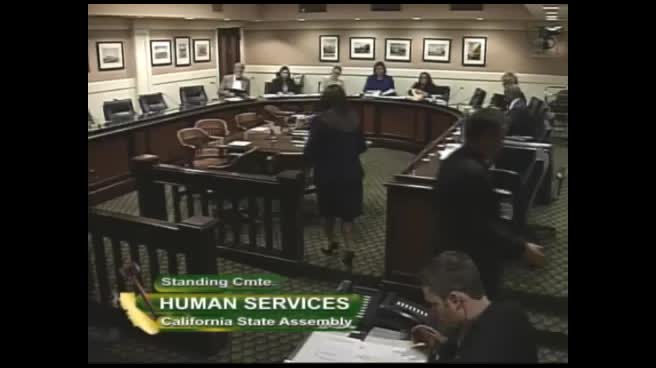 5MIN
Assembly Standing Committee on Human Services
Bill Author